Month: August 2025

  • Al Riyadh Newspaper: August 20, 2025: Real Estate, Restaurants, Cafes, Digital Content

    Al Riyadh Newspaper: August 20, 2025: Real Estate, Restaurants, Cafes, Digital Content

    This source provides a comprehensive overview of several key developments and discussions. It highlights regulatory changes in real estate, specifically regarding fees for undeveloped land, and announces new requirements for live performances in restaurants and cafes aimed at enhancing the entertainment sector. The text also touches upon initiatives to support traditional crafts and the digital content industry, emphasizing the importance of Arab digital content and child protection online. Furthermore, it covers financial and economic news, including judicial enforcement orders, and discusses a proposal for educational bonds to stimulate investment in the education sector. Finally, the source includes sports updates and general news covering international relations and local events.

    Podcast

    01
    Listen or Download Podcast : Al-Riyadh Newspaper, August 20, 2025

    Urban Development: Regulation, Economy, and Recreation

    Urban development in the sources primarily focuses on the regulation and taxation of “white lands” (vacant lands), the management of new economic activities like food trucks, and the development of infrastructure for tourism and quality of life.

    Key aspects of urban development mentioned include:

    • White Lands and Vacant Real Estate Regulations:
    • The Ministry of Municipalities and Housing aims for balanced and sustainable urban development through these regulations, meeting the aspirations of the real estate sector and the nation.
    • The updated system, now named “white lands and vacant real estate,” intends to be more aligned with the current real estate market.
    • The executive regulations, expected to be issued within a year, will define the fee, collection method, and other details.
    • The fees are intended to maximize benefits from existing infrastructure and enhance the efficient use of real estate resources.
    • The regulations comprise 16 articles covering definitions, annual fee specifics, application scope, and criteria for exemption and calculation.
    • All lands suitable for development are covered by the fee.
    • The Minister’s decision will determine the covered lands based on geographical zones within each city.
    • The fee applies to lands with a total area of 5000 square meters or more.
    • Amendments include dividing city geographical zones into five categories for fee calculation, based on urban development priorities. The highest fee can reach 10% of the land’s value in primary high-priority development zones. Other percentages mentioned are 7.5%, 5%, and 2.5%.
    • Criteria for imposing the fee include a gap between supply and demand, inflated real estate prices, a shortage of offered lands, and land monopolization.
    • The Ministry will announce the specific neighborhoods and cities covered, categorized by urban development priorities.
    • The system includes provisions to prevent evasion and ensure fairness in application.
    • Penalties are in place for non-compliance, with fines that support housing projects, promote sustainable cities, and curb monopolistic practices.
    • Owners can appeal decisions within 60 days via official channels.
    • The system allows for fee refunds if the land is developed within the specified period, provided proof is submitted via the electronic platform.
    • For lands with multiple owners, each person is responsible for their share of the fee.
    • The fee is not applied if the fundamental conditions are not met, or if there is an official impediment to development not caused by the owner.
    • Food Trucks and Urban Landscape:
    • Food trucks are recognized as an emerging economic sector that could significantly contribute to the local economy if properly regulated.
    • Their widespread presence has created issues in residential areas, such as noise from generators, loud music, traffic congestion, and waste, all of which mar the urban landscape and raise concerns about cleanliness and public health.
    • Proposed solutions include designating equipped locations away from residential areas and establishing dedicated squares for food trucks with clear regulations on operating hours and waste disposal. This aims to transform the activity from a chaotic practice into an organized experience that enhances the urban landscape.
    • Tourism and Recreational Urban Development:
    • Jeddah’s Abhur and Dhahban beaches are highlighted as tourist destinations offering unique horse-riding experiences, contributing to the city’s urban and tourism development.
    • These locations provide a holistic experience combining sports, equestrian activities, and entertainment, supported by trained instructors and facilities.
    • The development includes open green spaces, sea views, and a variety of restaurants and cafes, reflecting Jeddah’s position as a local and international recreational and tourist hub.

    Saudi Cultural Heritage and National Identity

    Cultural heritage, as discussed in the sources, is a multifaceted concept encompassing traditional arts, folklore, historical sites, and the preservation of identity through various initiatives. It is seen as a vital component of national development, contributing to the economy, social cohesion, and the distinct Saudi identity.

    Key aspects of cultural heritage and its development include:

    • Handicrafts and Traditional Industries:
    • The Saudi government, through the Ministry of Municipalities and Housing and the Ministry of Culture, has approved systems to support and regulate handicrafts and traditional industries.
    • These crafts are considered a reflection of Saudi identity and society’s depth, demonstrating human interaction with the local environment and creativity.
    • The Kingdom is rich in diverse handicrafts that tell its history and geography, embodying inherited skills that have shaped a unique Saudi identity.
    • The new system for handicrafts aims to preserve their identity, ensure their transmission to future generations, and open new economic horizons, aligning with Vision 2030 objectives.
    • Support for this sector includes training programs, qualification, and enabling local and global marketing through specialized exhibitions, events, and electronic platforms.
    • The year 2025 has been declared the “Year of Handicrafts” by the Ministry of Culture, emphasizing its role as a cultural heritage and a cornerstone of Saudi identity.
    • The Cultural Fund’s “Mena Accelerators” program specifically aims to transform handicrafts into creative industries with high economic, cultural, and identity value, enhancing their market presence and competitiveness. This program also seeks to create new job opportunities and reinforce cultural identity in craft products, making them a “cultural interface for the Kingdom”.
    • Preservation and Educational Initiatives for Children:
    • The “Banan and Her Friends” initiative, organized by the Heritage Authority, targets children with educational and creative activities. Its goal is to instill heritage values and highlight the importance of handicrafts in Saudi culture.
    • This initiative encourages learning through practice, opening avenues for imagination and creativity, and simplifying heritage and handicrafts to make them accessible and attractive to young minds.
    • It includes interactive elements like storytelling, craft workshops, and presentations of illustrated books and films that celebrate heritage, all contributing to strengthening national identity by connecting children to the heritage of handicrafts.
    • This aligns with the Ministry of Culture’s “Year of Handicrafts 2025” and emphasizes the blending of entertainment and education for heritage sustainability.
    • Traditional Gatherings and Tourism:
    • Traditional gatherings in Jubail Industrial City serve as social and cultural hubs, attracting visitors interested in ancient heritage.
    • These gatherings offer unique tourism experiences by simulating the authentic Gulf heritage, providing opportunities to learn about Saudi hospitality traditions, such as serving Saudi coffee and dates. They are seen as a means of preserving cultural heritage and transmitting it to new generations and visitors.
    • Folklore and Performing Arts:
    • The Kingdom boasts diverse cultural heritage, including folk arts and dances, particularly in its southern regions like Asir.
    • “Al-Qazou’i” is highlighted as a prominent folkloric art from Asir that combines authenticity and enthusiasm, originating as a war dance without musical rhythms, relying on voices and footsteps. This art form has evolved into a collective representation of unity and authenticity.
    • The Saudi Orchestra and National Choir perform internationally (e.g., in Paris) to showcase the beauty of Saudi Arabia’s cultural heritage and artistic diversity. These performances foster cultural exchange, blending Saudi and other cultures (e.g., French) and embodying national identity through performing arts like Al-Khabiti, Al-Majrour, Al-Rufaifi, and Al-Khatwa.
    • Historical Sites:
    • Marwan Castle in Taif is presented as a witness to the “grandeur of history and the splendor of ancient defensive architecture”. It offers a panoramic view and serves as a significant tourist and recreational destination, providing a “window onto the history of ancestors and forefathers“.
    • Cultural Festivals:
    • The Brida Dates Carnival aims to introduce the heritage of the Qassim region and boost internal tourism. It features activities, performances, and workshops that highlight the traditional life of farmers, showcasing the diversity in traditional foods and local crafts inspired by palm trees and dates. The festival also includes a “Palm Museum” which offers a cultural heritage experience, and sections for “Handicrafts and Palm Tree Arts,” combining traditional crafts with modern techniques.
    • Digital Content and Identity:
    • There is a proposal to establish a national center for Arabic digital content in the Kingdom, which would aim to produce content that reflects positive values and leverages the rich civilizational heritage to build influential content, thereby preserving national identity. This initiative is seen as crucial because the current landscape of digital content, much of which is foreign, can dilute cultural and religious identity.
    • Manga Arabia, for example, is an initiative that aims to provide safe and culturally appropriate digital content for the new generation, drawing inspiration from Saudi heritage, including local clothing, lifestyles, and dialects, to reinforce national values and identity.

    Overall, urban development in the sources is deeply intertwined with cultural heritage, with initiatives focused on preserving traditions, promoting local arts, and using historical sites and cultural events to enhance the quality of life and attract tourism.

    Safeguarding Saudi Youth in the Digital Age

    Digital content is a prominent topic in the sources, primarily discussed in the context of its impact on children and the preservation of national identity within the Kingdom of Saudi Arabia.

    Key aspects of digital content and related initiatives include:

    • Challenges Posed by Digital Content:
    • Unregulated and Harmful Content: Children are exposed to an “unruly sea” of unregulated digital content that can include violent games, inappropriate behaviors, harassment, and cyberbullying, leading to behavioral and psychological issues.
    • Dilution of Identity and Values: A significant concern is the prevalence of foreign digital content (70% of consumed digital content in the Arab world is foreign, while only 1.1% of global digital content is Arabic). This can dilute cultural and religious identity and introduce ideas that conflict with national and societal security, especially given that 65% of Arab youth rely on foreign content for their intellectual and cultural development.
    • Negative Developmental Impacts: Excessive screen time in early childhood can hinder natural language development, weaken social interaction skills, impair concentration, and contribute to issues resembling autism spectrum disorder. It can also lead to digital addiction and social isolation.
    • Lack of Parental and Educational Oversight: Many parents are not fully aware of the dual nature (positive and negative) of technology, and a lack of family dialogue can leave children more vulnerable to online risks and exploitation. Some families even contribute to the problem by extensively sharing their children’s daily lives online, effectively treating them as “digital commodities”.
    • Deficiency in Specialized Arabic Content: There is a severe shortage of specialized Arabic digital content in critical fields such as science, medicine, and technology, making up a mere 0.02% of total Arabic digital content.
    • Key Initiatives and Solutions:
    • National Center for Arabic Digital Content: A primary recommendation is the establishment of a national center for Arabic digital content. This center would focus on producing safe, valuable, and educational alternative content that reflects a clear educational philosophy and instills positive values. It aims to leverage the rich civilizational heritage to create high-quality, creative content and attract skilled professionals. A specific goal is to increase the share of Arabic content on the internet to 5% within five years.
    • Crown Prince’s Initiative for Child Protection in Cyberspace: This initiative is highlighted as a strategic step to enhance digital security and foster a safe and enriching online environment for youth. It underscores the importance of public awareness and parental guidance in mitigating risks.
    • Manga Arabia: An existing project that offers authentic and culturally appropriate digital content for younger generations. It draws inspiration from Saudi heritage, including local clothing, lifestyles, and dialects, to reinforce national values and identity. Manga Arabia aims to provide a safe alternative for recreational reading and boost reading rates in Arabic. It also adapts local Saudi novels into manga and integrates educational messages.
    • Emphasis on Parental and Educational Roles: Sources stress the crucial role of parents in fostering self-regulation, maintaining open dialogue with children, and setting a positive example for technology use. Educators are encouraged to evolve their role beyond knowledge transfer to guiding children in navigating digital information and discerning truth from misinformation.
    • Comprehensive National System for Child Care: There is a proposal for a holistic system to manage children’s online presence and protect them from exploitation, covering ages from birth to 18 years. This could include regulations on screen time, similar to international models.
    • Integration of Heritage, Education, and Entertainment: Initiatives like “Banan and Her Friends” engage children through interactive activities, storytelling, and craft workshops to instill heritage values and highlight the significance of handicrafts in Saudi culture. This approach combines entertainment with education to ensure the sustainability of heritage.

    The overarching goal behind these efforts is to cultivate a balanced, culturally grounded, and digitally competent generation that can thrive in the global digital landscape while safeguarding its unique national identity and values.

    Saudi Arabia: Recreation, Culture, and Quality of Life

    Recreational activities in the Kingdom of Saudi Arabia are diverse and play a significant role in enhancing the quality of life, boosting local tourism, and preserving cultural identity. The sources highlight various forms of recreation, from traditional gatherings and cultural festivals to modern sports and digitally-enabled entertainment, all supported by governmental initiatives and public engagement.

    Key aspects of recreational activities include:

    • Cultural and Heritage-Based Recreation:
    • Traditional Gatherings: “Heritage Councils” in places like Jubail Industrial City serve as social and cultural hubs that attract tourists and locals. These gatherings offer unique tourism experiences, simulating authentic Gulf heritage and providing opportunities to learn about Saudi hospitality traditions, such as serving Saudi coffee and dates. They are crucial for preserving cultural heritage and transmitting it to new generations.
    • Cultural Festivals: The Brida Dates Carnival features over 30 diverse activities that highlight the traditional life of farmers, showcasing traditional foods and local crafts inspired by palm trees and dates. It includes recreational activities like “Telley Mat,” inspired by farmer life, and a “Palm Museum” that offers a cultural heritage experience.
    • Folklore and Performing Arts: Saudi Arabia boasts diverse cultural heritage, including folk arts and dances like “Al-Qazou’i” from Asir, which mixes authenticity with enthusiasm and embodies unity. The Saudi Orchestra and National Choir perform internationally to showcase Saudi Arabia’s cultural heritage and artistic diversity, promoting cultural exchange through various traditional Saudi performing arts.
    • Historical Sites: Marwan Castle in Taif is highlighted as a significant tourist and recreational destination, offering panoramic views and providing a “window onto the history of ancestors and forefathers“.
    • Modern and Urban Leisure:
    • Live Performances in Public Venues: The General Authority for Entertainment has launched an initiative to regulate and develop live performances in restaurants and cafes. This project aims to enhance the quality of services, improve the visitor experience, and boost investment opportunities in the entertainment sector. Regulations include obtaining permits, adhering to public taste, and respecting intellectual property rights.
    • Food Trucks (“Food Trucks”): These have emerged as a significant economic and recreational phenomenon, attracting youth and offering diverse food options at lower costs. However, their widespread presence has led to challenges such as noise pollution, traffic congestion, waste, and public health concerns, necessitating more organized regulations and designated operating zones.
    • General Quality of Life Initiatives: The “Quality of Life Program 2024” indicates that 58.5% of adults in the Kingdom regularly engage in sports, supported by 45 sports centers in neighborhoods. The number of entertainment licenses and venues has also increased, reflecting diverse recreational options available to the community. The Kingdom ranks third globally in the happiness index for 2024.
    • Sports and Physical Activities:
    • Equestrian Sports: Horse stables on Jeddah’s Abhur and Dhahaban beaches offer unique horse riding tours and equestrian activities, attracting enthusiasts and tourists. These venues also host various events, including equestrian shows and workshops, promoting Arabic horsemanship as a symbol of nobility and culture.
    • Horse Racing: The sources detail various horse races and cups, such as the University Cup, Taif Rose Festival Cup, and Challenge Cup, showcasing the competitive nature of this sport and the success of various stables.
    • Sports for People with Disabilities: The Al-Ahsa Club for People with Disabilities’ victory in the Kingdom’s Para Karate Championship highlights the inclusion and success in sports for individuals with disabilities.
    • Electronic Sports: Saudi Arabian teams like Team Falcons and Twisted Minds have achieved global recognition in electronic sports, reflecting the country’s strong presence and competitiveness in this modern recreational field.
    • Educational Recreation for Children:
    • The “Banan and Her Friends” initiative by the Heritage Authority provides educational and creative activities for children to instill heritage values and promote handicrafts. This approach integrates entertainment with education to ensure the sustainability of heritage. It uses interactive methods like storytelling, craft workshops, and multimedia to make heritage engaging for young minds, thereby strengthening national identity.

    Overall, recreational activities are not merely about leisure but are interwoven with broader national objectives such as preserving identity, fostering community engagement, and contributing to economic and social development. The focus is on providing diverse, high-quality experiences for all age groups, while also addressing challenges related to regulation and urban planning.

    Saudi Arabia’s Evolving Economic Regulations and Vision 2030

    Economic regulations in the Kingdom of Saudi Arabia are discussed in the sources primarily through specific initiatives aimed at fostering economic growth, ensuring public safety and order, preserving cultural identity, and enhancing the quality of life. These regulations often align with the broader objectives of Saudi Vision 2030.

    Key areas of economic regulation include:

    • White Lands and Unoccupied Real Estate Fees:
    • A new executive bylaw has been introduced to regulate fees on white lands and unoccupied real estate. The primary goal is to achieve balanced and sustainable urban development, fulfill the ambitions of the real estate sector, maximize the use of existing infrastructure, and enhance efficiency in utilizing real estate resources.
    • The bylaw comprises 16 articles that define annual fees, detail application scope and areas, and outline criteria for imposition and exemption.
    • Fees are applied to lands suitable for development within specific geographical zones designated by ministerial decision for each city, particularly those with areas of 5000 square meters or more.
    • The fee structure divides lands into five categories based on urban development priorities, with rates that can reach 10% of the land’s value for the highest priority areas.
    • Penalties are in place for non-compliance, with fines not exceeding the amount of the due fee. Owners have the right to appeal decisions within 60 days. These fees and fines are specifically allocated to support housing projects, thereby reinforcing the system’s objectives for urban sustainability and limiting monopolistic practices. The system also allows for fee reimbursement if the land is developed within a specified period.
    • Electronic Commerce (E-commerce) Regulations:
    • The Ministry of Commerce conducts evaluations of e-commerce stores to boost compliance, safeguard consumer rights, and enhance service quality. This initiative is seen as crucial for increasing awareness of e-commerce and promoting its adoption as a key driver for sales, contributing to cost reduction and competitive expansion.
    • The evaluation process involves 10 essential criteria, including:
    1. Documentation of the e-store on the Saudi Business Center platform.
    2. Clear return, exchange, and refund policies.
    3. Defined consumer rights and duties policies for shipping and delivery.
    4. A structured complaints and suggestions handling policy.
    5. A privacy policy for customer data protection.
    6. Verification of the e-store’s link in the commercial register and display of its tax identification number.
    7. Display of all necessary licenses on the main page.
    8. Availability of a clearly placed “Contact Us” icon.
    9. Ensuring a secure and high-quality e-platform (HTTPS) with cyber security protection.
    10. Website speed and ease of use.
    • The evaluation process utilizes AI-powered “Robot” systems to verify compliance. The e-commerce sector in the Kingdom is experiencing rapid growth, with sales via “Mada” cards exceeding 69.3 billion Riyals in the first quarter of 2025 alone, reflecting a 56% annual growth. Forecasts suggest the Saudi e-commerce market could reach 240 billion Riyals by 2030.
    • Live Performance Regulations in Restaurants and Cafes:
    • The General Authority for Entertainment has launched an initiative to regulate and develop live performances in public venues to improve service quality, enhance visitor experience, and boost investment.
    • New regulations require obtaining permits for performances, adherence to public taste, and respect for intellectual property rights. Applications must be submitted 10 working days in advance.
    • Performers’ details, including names, nationalities, and roles, must be registered and approved by the Authority. Specific rules apply to child performers, requiring official identification and parental consent. Performances after midnight require approval and cannot extend beyond 2:00 AM.
    • Food Truck Regulation:
    • The widespread presence of food trucks has led to challenges such as noise pollution, traffic congestion, waste management issues, and public health concerns. There are also concerns about the exploitation of licenses by non-Saudi workers and unregulated late-night operations.
    • Proposed solutions include designating equipped sites away from residential areas, establishing organized operating hours, and ensuring proper waste disposal. The aim is to transform food trucks into an organized sector that enhances the urban landscape.
    • Handicrafts and Traditional Industries Law:
    • The Council of Ministers approved a new system for handicrafts and traditional industries. This law aims to preserve the identity of traditional crafts and ensure their transmission to future generations.
    • It seeks to transform traditional practices into an innovative industry with economic value and aligns with Vision 2030’s goals for economic diversification. The law supports craftspeople through training programs and enables them to market their products locally and globally via specialized exhibitions and e-platforms.
    • Educational Bonds Proposal:
    • A researcher proposed an innovative vision for privatizing public education through educational bonds. These bonds would be financial instruments issued by the government to help parents pay tuition fees, providing them with freedom to choose between public and private schools.
    • This system aims to reduce government spending on education, stimulate educational investment, promote innovation, encourage competition among educational institutions, improve educational outcomes, and bridge the educational gap between different income groups.
    • Public Safety Regulations (related to economic activity):
    • The General Directorate of Civil Defense emphasizes that covering smoke detectors is a dangerous violation that disables early warning systems, posing a direct threat to lives and property. They urge establishments to comply with safety requirements, including operating and maintaining alarm and fire extinguishing systems to enhance protection and prevent incidents.
    • The General Directorate of Border Guard also stresses the importance of marine vessel owners ensuring their vessels are ready and safe before sailing, checking engine efficiency, fire extinguishers, first-aid kits, and navigation lights. This is vital for raising maritime safety standards and preventing risks.

    These regulations collectively demonstrate Saudi Arabia’s commitment to creating a structured and secure economic environment, fostering both traditional and modern sectors, and ensuring public well-being as part of its comprehensive development strategy.

    Columns on Economics, Business, Media, and Digital Content

    Here are the titles of the columns found in the newspaper, along with their first two paragraphs of detail, presented in English without any bold text:

    1. Objectively We have reached a stage of semi-certainty regarding the US Federal Reserve’s decision, led by President Donald Trump. He will make a decision during the Federal Reserve’s meeting in mid-September to reduce the interest rate. This is the most likely scenario, according to major financial institutions’ analyses and estimates, with a reduction of a quarter to half a point. The question here is: what if the US Federal Reserve, led by its president, does not reduce the interest rate? This is a strict monetary policy that the US Federal Reserve has followed to control inflation, which currently stands at 2.7%. The Federal Reserve’s target is 2%, and there is still a way to go to achieve this goal. However, the US President is strongly pushing for an interest rate reduction because not doing so would have a significant and vital negative impact on the economy, whether for the real estate sector, cars, or companies, as it limits consumption and makes borrowing costly. This is not what the US President wants, and it will significantly affect the slowdown in growth in important sectors such as technology and finance; its impact on stock markets will be less. As for the cost of financing, especially for companies with large and high debts, and bonds may remain high, which will have an impact on liquidity and redistribution for investors. Investor confidence and the persistence of high interest rates will increase the dollar’s strength, which raises the cost of imports from the US economy, and this will slow down the global impact. As for its impact on emerging markets, the rise of the dollar will affect them, raising the cost of dollar-denominated debts and the possibility of capital outflow to safer US assets. The inflation, which still casts its shadow, means that the Federal Reserve needs assurances that inflation will decrease.

    2. Outside the Box Food trucks, or what is known as “Food Trucks,” have seen a widespread presence in the streets of Saudi cities, transforming from a simple means of selling fast food and coffee into an economic project that attracts young people looking for an opportunity to enter the business market at the lowest costs. This transformation did not come from a vacuum; rather, the flexibility of movement in the trucks helped it to move between markets, events, and festivals, making it an ideal platform for experimenting with new ideas and offering innovative products away from traditional investment costs. Some unofficial estimates indicate that the size of the food truck market in Saudi Arabia exceeded two billion riyals during recent years, which reflects its growing importance as an emerging economic sector. If properly organized, it can turn into an important feeder for supporting the local economy, contributing to urban development, and creating new jobs in Saudi cities, both culturally and touristically. However, the widespread presence of this phenomenon has not been without problems affecting people’s daily lives. In some residential neighborhoods, these trucks have become a constant source of disturbance due to the noise generated by generators and accompanying music, in addition to the congestion they cause to car traffic and pedestrians around them. Moreover, the waste left behind by these trucks has become a blight on the public landscape and raises concerns related to public hygiene. The challenge is not limited to the organizational aspect alone but extends to the regulatory dimension that determines the future of this phenomenon. The licenses granted for this activity are intended to support Saudi youth and encourage them to work independently, but the reality reveals a large proportion of non-Saudi workers exploiting these licenses, which raises concerns about commercial exploitation, especially during nighttime hours when municipal oversight is reduced, opening the door to violations of health requirements.

    3. Our Media is Responsible Media is one of the most prominent tools for influence and change in societies, and it plays a pivotal role in shaping public opinion and directing social behavior. In the midst of accelerating developments in the world, there is a need for responsible media that adheres to professionalism, reflects ethical values, and contributes to building an enlightened society, casting its shadow on sustainable development to preserve the resources and gains achieved by any society. Responsible media is that which serves the public interest, relies on sincerity and objectivity in conveying information, avoiding sensationalism or distortion of facts. It strives to present content with a purpose, strengthening the culture of dialogue and avoiding the spread of hatred or incitement. Distinctive media conveys the event with complete neutrality and aims to achieve public awareness, earning the trust of the audience and society by adhering to reliable sources and verifying the accuracy of information before publishing it, and adhering to ethical neutrality by not harming individuals or groups, as well as respecting privacy and societal values. Responsible media’s awareness of its societal role means it understands its significant impact on shaping ideas and stances, thus striving to direct them towards building, not destruction. This aligns with the media policy of the Kingdom of Saudi Arabia, as stated in its regulations and instructions.

    4. Digital Not every idea written deserves to be read, and not every content that appears on screens or audio material creates an impact on listeners or leaves a mark on minds. Good content is like a tiny seed; it carries within it a complete tree of influence and knowledge, but also change, if it is planted. When an idea with a clear purpose and sincere language is crafted into content, whether a video clip or an image, it transforms from a mere text into a bridge that connects the sender and receiver, shortens distances, builds trust, and stimulates. Otherwise, its noise or buzz leaves only a temporary effect that fades with time. In a digital space where messages jostle for attention, content that achieves millions of views does not necessarily prevail if it is merely noisy. The true impact belongs to responsible and purposeful content, provided that it meets audience expectations, gains their attention, and is presented professionally through appropriate display mechanisms.

    Download PDF Newspaper

    01
    Download PDF Newspaper in Arabic Language : Al-Riyadh Newspaper, August 20, 2025

    By Amjad Izhar
    Contact: amjad.izhar@gmail.com
    https://amjadizhar.blog

  • 15 Easy Tips To Boost and Help Your Mental Health

    15 Easy Tips To Boost and Help Your Mental Health

    In today’s fast-paced world, juggling endless tasks can often leave us feeling drained and overwhelmed. We may find ourselves stuck in a cycle of stress, struggling to maintain a healthy state of mind. But the good news is, that taking care of your mental health doesn’t have to be an uphill battle. By incorporating simple, daily habits, you can cultivate a stronger sense of well-being and reduce stress without drastically altering your routine.

    Mental health is not a one-size-fits-all solution, and it doesn’t require a complete lifestyle overhaul. Often, the small things we do each day can have the biggest impact on our mental well-being. Whether it’s practicing gratitude, engaging in mindful breathing, or simply moving your body, these actions can bring calm and balance to an otherwise hectic day. It’s all about finding what works for you and making it a natural part of your routine.

    So, if you’re looking for practical, easy-to-implement strategies to boost your mental health, you’re in the right place. These tips are designed to help you feel more centered, more focused, and better equipped to handle whatever life throws at you. Let’s dive into 15 simple yet powerful ways to give your mental health the boost it deserves.

    1-
    SILVIA TCHERASSI Nicky Bracelet

    1. Morning Gratitude

    Starting your day with gratitude can be a game changer for your mental well-being. Before you even step out of bed, take a moment to reflect on three things you’re thankful for. This could be something as basic as the comfort of your bed or the smell of fresh coffee brewing in the kitchen. Studies show that practicing gratitude can increase happiness and decrease depression, setting a positive tone for the day ahead.

    Gratitude helps shift your focus away from the negative, bringing attention to the aspects of life that are often overlooked but deeply valuable. According to author Robert Emmons, who has extensively researched the subject, gratitude has a transformative power. In his book Thanks! How Practicing Gratitude Can Make You Happier, Emmons highlights how this simple practice can improve both emotional and physical well-being. By starting each morning with appreciation, you prime your mind to approach the day’s challenges with a more positive outlook.

    2-
    SILVIA TCHERASSI Mariela Necklace

    2. Move Your Body

    Physical movement is one of the quickest ways to boost your mood and clear your mind. This isn’t about forcing yourself into a rigorous workout; it’s about finding small ways to get your body moving throughout the day. Whether it’s taking a brisk walk, doing some light stretching, or dancing around your living room, even minimal physical activity can release endorphins—those feel-good chemicals that naturally lift your spirits.

    Incorporating movement into your daily routine can help combat feelings of stress and fatigue. Harvard Medical School emphasizes that regular physical activity can enhance cognitive function, improve memory, and alleviate symptoms of anxiety and depression. For those not inclined toward heavy exercise, even short bursts of activity can make a difference. The key is consistency—moving a part of your daily life without making it feel like a chore.

    3-
    SILVIA TCHERASSI Montse Necklace

    3. Mindful Breathing

    Mindful breathing is a simple yet powerful tool to help reset your mind and manage stress. By taking a few minutes each day to focus on deep, controlled breaths, you activate your body’s natural relaxation response. Techniques such as the 4-4-4 method, where you inhale, hold, and exhale for four counts, can bring immediate calm, especially during stressful moments.

    This practice is grounded in mindfulness, a concept explored in Jon Kabat-Zinn’s Wherever You Go, There You Are. Mindful breathing not only lowers cortisol levels, reducing stress but also increases awareness of the present moment, helping you feel more grounded and in control. Incorporating mindful breathing into your routine is like hitting the reset button for your mind, enabling you to approach challenges with a sense of clarity and calm.

    4-
    Dior Pre-Loved Gold Crystal ‘CD’ Logo Heart Necklace, Gold

    4. Limit Social Media

    It’s no secret that social media can be a double-edged sword. While it keeps us connected, it can also lead to endless doom-scrolling, which can negatively affect our mental health. Studies have shown that excessive use of social media can increase feelings of anxiety, depression, and isolation. Setting boundaries on your screen time can help you reclaim mental space and improve your overall well-being. By limiting social media usage, you’re not only reducing exposure to potentially harmful content but also freeing up time for activities that bring real value to your life.

    Instead of spending hours scrolling through feeds, try redirecting that time toward activities that genuinely uplift you. Whether it’s diving into a good book, engaging in a hobby, or meeting up with a friend for coffee, real-life connections and interests can do wonders for your mental health. In his book Digital Minimalism, Cal Newport emphasizes the importance of intentional social media use and suggests that setting limits can help us regain focus and reduce stress. By being mindful of how much time you spend online, you can create a healthier relationship with technology and enjoy a clearer, calmer mind.

    5-
    Dior Pre-Loved Gold Oval ‘CD’ Necklace, Gold

    5. Healthy Boundaries

    Setting healthy boundaries is one of the most empowering things you can do for your mental health. It’s not about shutting people out, but rather protecting your emotional well-being by clearly defining your limits. Whether it’s saying no to extra work commitments or choosing to unplug after office hours, boundaries are essential for maintaining balance. Research shows that consistently overcommitting yourself can lead to burnout, which is why knowing when to step back is so crucial.

    Boundaries are also a form of self-respect, signaling to others that your mental health is a priority. As Brene Brown points out in her book Daring Greatly, “Daring to set boundaries is about having the courage to love ourselves even when we risk disappointing others.” Establishing limits in your personal and professional life can help you conserve energy for the things that matter most and allow you to be fully present when needed. Remember, saying no when necessary is an act of self-care, not selfishness.

    6-
    Rolex Pre-Loved 18K White Gold & Stainless Steel Roman Datejust 116234 36mm, White

    6. Practice Kindness

    Engaging in random acts of kindness not only brightens someone else’s day but also has a positive impact on your mental health. When you perform small, thoughtful gestures—whether it’s complimenting a stranger, holding the door open, or buying a coffee for the person in line behind you—you’re reinforcing a sense of connection and community. Studies show that these acts release dopamine, the “feel-good” hormone, which boosts your mood and promotes a sense of well-being. Kindness is contagious, creating a ripple effect that can extend far beyond the initial act. As David Hamilton writes in The Five Side Effects of Kindness, being kind is not just about making others happy—it’s also about improving your emotional state. Simple, everyday acts of kindness can reduce stress, increase feelings of compassion, and lead to greater overall happiness. In practicing kindness, you create an environment where both you and those around you can thrive emotionally.

    7-
    Rolex Pre-Loved Grey Stainless Steel Roman Datejust 126300 41mm, Grey

    7. Get Enough Sleep

    Getting enough sleep is one of the most crucial aspects of maintaining good mental health. Lack of sleep can affect cognitive function, mood, and overall well-being. When you’re well-rested, challenges seem more manageable, and your brain is better equipped to handle stress. The National Sleep Foundation recommends 7-9 hours of sleep each night for adults, emphasizing the importance of a consistent sleep schedule. Sleep isn’t just a passive activity—it’s an active process where your body and mind restore themselves, leaving you refreshed and ready to face the day.

    Establishing a bedtime routine can make a significant difference in the quality of your sleep. From reducing screen time before bed to creating a calming environment, small adjustments can improve your sleep hygiene. According to Matthew Walker, author of Why We Sleep, sleep plays a pivotal role in maintaining mental health, and consistently neglecting it can lead to a decline in emotional resilience. Prioritize your rest, and your mental health will thank you for it.

    8-
    Rolex Pre-Loved Stainless Steel Floral Motif Datejust 178240 31mm, Grey

    8. Eat Mindfully

    What you eat can have a profound effect on your mental health. A balanced diet rich in fruits, vegetables, and whole grains fuels not just your body but also your mind. The relationship between nutrition and mental health is well-established, with research suggesting that certain foods can reduce symptoms of anxiety and depression. Omega-3 fatty acids, found in fish, and antioxidants, found in berries and leafy greens, are known to support brain function and mood stability.

    Mindful eating is about being aware of how food makes you feel and how it nourishes your body. Instead of reaching for comfort foods during stressful times, pay attention to how different foods affect your energy and mood. In The Mindful Diet, Beth Reardon emphasizes the importance of eating with intention, not only to foster a healthier relationship with food but also to enhance mental clarity and emotional balance. By treating food as fuel, you can nurture both your body and mind.

    9-
    Louis Vuitton Pre-Loved Gold Metal Essential V Bracelet, Gold

    9. Practice Self-Compassion

    Practicing self-compassion is essential for maintaining emotional well-being, yet it’s something many people struggle with. We tend to be our own harshest critics, often speaking to ourselves in ways we would never speak to others. Learning to show yourself kindness and understanding, especially on tough days, can improve mental health and foster resilience. Self-compassion helps reduce anxiety and depression, allowing you to recover more quickly from setbacks.

    In her book Self-Compassion, Dr. Kristin Neff outlines the importance of treating yourself with the same care and empathy you’d offer a friend. It’s about acknowledging that everyone makes mistakes and that imperfection is part of being human. When you practice self-compassion, you build emotional strength and cultivate a healthier inner dialogue. So the next time you face a challenge, be gentle with yourself—you deserve the same kindness that you offer others.

    10-
    CHANEL Pre-Loved Gold ‘CC’ Mirror Necklace, Gold

    10. Stay Connected

    Social connections play a vital role in maintaining mental health. Engaging with friends, family, or even coworkers provides emotional support and a sense of belonging. Research consistently shows that people with strong social networks are less likely to experience depression and anxiety. Whether it’s a quick text message, a phone call, or a coffee date, making an effort to stay connected can boost your mood and reduce feelings of isolation.

    Building and maintaining relationships takes effort, but the rewards are substantial. In his book The Longevity Project, Dr. Howard S. Friedman points out that meaningful social connections are among the strongest predictors of long-term happiness and mental well-being. In moments of stress, having someone to talk to can act as a buffer, helping you navigate difficult times. Remember, fostering relationships isn’t just about receiving support—it’s also about giving it, which can further enhance your own sense of purpose and satisfaction.

    11-
    Rolex Pre-Loved Stainless Steel & Pink 3-6-9 Oyster Perpetual 176234 26mm, Silver

    11. Daily Reflection

    Taking time to reflect on your day is a powerful way to manage stress and improve mental clarity. Reflection allows you to process the events of the day, recognize achievements, and identify areas for improvement. It doesn’t need to be time-consuming; a few minutes spent jotting down thoughts or simply thinking about your day can help you gain perspective and reduce anxiety. Reflecting also helps you stay mindful of your personal growth, offering insights that can guide you toward better decisions tomorrow.

    Regular reflection can provide structure to your mental health practice. In The Daily Stoic, author Ryan Holiday explores how ancient philosophers used daily reflection to enhance self-awareness and improve their lives. By engaging in this practice, you give yourself the opportunity to unwind, clear your mind, and better prepare for future challenges. It’s a small habit that can create big shifts in how you approach each new day.

    12-
    Louis Vuitton Pre-Loved Gold Metal Essential V Bracelet, Gold

    12. Get Outside

    Spending time in nature is a simple yet effective way to boost your mental health. Studies show that even brief exposure to green spaces can reduce stress, improve mood, and enhance cognitive function. Whether it’s a walk around the neighborhood, a hike in the park, or simply sitting outside in the sun, being in nature has a calming effect that helps you feel more grounded and connected to the world around you.

    Sunlight also plays a role in regulating mood and energy levels. Natural light boosts serotonin production, which can help alleviate feelings of depression and anxiety. In The Nature Fix, Florence Williams explores how spending time outdoors can improve mental health, noting that nature has a restorative quality that helps us reset and recharge. Even if you can only carve out a few minutes each day to be outside, it can have a profound impact on your overall well-being.

    13-
    Hermes Hermès, Pre-Loved Stainless Steel Clipper PM, Silver

    13. Stay Hydrated

    Staying hydrated is one of the simplest and most overlooked ways to support mental health. Dehydration can lead to fatigue, difficulty concentrating, and irritability, all of which can negatively affect your mood and cognitive function. Even mild dehydration can impair your ability to focus and think clearly. Keeping a water bottle within arm’s reach throughout the day can help you stay alert, energized, and in a more positive state of mind.

    Water is essential for brain function, and drinking enough of it is a basic but powerful way to support your overall well-being. According to the book Your Body’s Many Cries for Water by Dr. F. Batmanghelidj, water plays a vital role in maintaining the body’s physiological balance, which directly impacts mental health. By making hydration a priority, you’re not only caring for your body but also giving your mind the clarity it needs to function optimally.

    14-
    BVLGARI Pre-Loved Divas’ Dream Earrings, 24 mm, Rose Gold

    14. Learn Something New

    Engaging in lifelong learning is a proven way to keep your mind sharp and enhance mental well-being. Learning something new—whether it’s a hobby, a skill, or a subject of interest—stimulates brain function and can help improve memory and cognitive abilities. The process of acquiring new knowledge or skills activates neural pathways, keeping the brain flexible and engaged. Plus, the sense of achievement that comes with mastering something new can be a great mood booster.

    In The Brain That Changes Itself, Dr. Norman Doidge explores how the brain’s neuroplasticity allows it to adapt and grow by learning new things. Keeping your mind active with new challenges not only helps ward off feelings of boredom or stagnation but also contributes to greater emotional resilience. Whether you’re reading a new book, picking up an instrument, or enrolling in an online course, learning something new can help you maintain a positive outlook and build mental agility.

    15-
    CARTIER Pre-Loved Ballon Bleu de Cartier Watch, 7.25, 18K Rose Gold

    15. Unplug Before Bed

    Creating a screen-free bedtime routine is essential for maintaining good sleep hygiene and mental health. The blue light emitted from phones, tablets, and computers can interfere with the body’s natural production of melatonin, the hormone responsible for regulating sleep. Moreover, scrolling through social media or engaging in mentally stimulating activities before bed can leave you feeling wired, making it harder to relax and fall asleep. Instead, opt for relaxing activities like reading a book, listening to calming music, or doing some light stretches to signal to your brain that it’s time to unwind.

    In Why We Sleep, sleep expert Matthew Walker emphasizes the importance of creating a calm, screen-free environment before bed to improve both the quality and quantity of sleep. Good sleep is essential for emotional regulation, memory consolidation, and overall mental health. By unplugging and giving your mind the space to relax before bed, you set yourself up for better rest and a clearer, more focused day ahead.

    16-
    Rolex Pre-Loved Oyster Perpetual Explorer Watch, 7.50, Stainless Steel

    Conclusion

    The first steps toward improving mental health don’t require radical change; they require mindfulness and consistency. Whether it’s cultivating a grateful mindset in the morning, moving your body to stimulate feel-good hormones, or practicing mindful breathing to calm your nerves, these actions are accessible and manageable for anyone. The key lies in integrating them seamlessly into your daily routine so they become second nature.

    As you embrace these practices, you may find yourself more resilient in the face of daily stressors, more focused, and more at ease with yourself. Experts like Robert Emmons and Jon Kabat-Zinn emphasize the profound effects small habits can have on mental well-being. These first three tips offer a foundation for a more mindful and balanced life, and there’s no better time than now to start building it.

    17-
    BVLGARI Pre-Loved Lvcea Tubogas Watch, 7.00, 18KR+SS

    The tips in this section emphasize creating mental space and emotional balance through conscious choices. Limiting social media, setting healthy boundaries, and practicing kindness are simple yet effective strategies for protecting your mental health in today’s fast-paced world. By taking control of your time online, defining your limits, and engaging in positive interactions, you empower yourself to manage stress and cultivate emotional well-being.

    As Brene Brown and Cal Newport suggest in their works, small but mindful changes can lead to profound shifts in how we experience life. These habits not only help safeguard your mental health but also create a ripple effect of positivity in your surroundings. By integrating these practices, you’re setting yourself up for a more balanced, fulfilling, and mentally healthy life.

    18-
    Omega Pre-Loved Seamaster Planet Ocean Diver Watch, 7.50, Stainless Steel/Ceramic

    This third set of tips emphasizes the importance of physical and emotional care in fostering mental health. Getting enough sleep, eating mindfully, and practicing self-compassion are essential practices that provide both mental and emotional nourishment. These habits allow you to maintain balance, improve mood, and develop resilience in the face of daily stressors.

    Experts like Matthew Walker and Kristin Neff highlight the strong connection between physical well-being and emotional health. When you take care of your body and practice kindness toward yourself, you create a foundation of support that strengthens your mental health. Implementing these habits can help you cultivate a more compassionate and balanced life, where both your mind and body thrive.

    1-
    The Night Before Kindergarten Paperback

    The final group of tips highlights the importance of reflection, connection, and nature in nurturing mental health. Staying connected with loved ones, reflecting on your day, and spending time outdoors are all practices that foster emotional well-being and provide a sense of balance. These habits help you stay mindful of your experiences, strengthen relationships, and find peace in the natural world.

    As experts like Dr. Howard Friedman and Florence Williams emphasize, these small but meaningful actions contribute to a more centered, fulfilling life. By staying connected to others, reflecting on your progress, and taking time to immerse yourself in nature, you can create a more mindful and grounded approach to daily challenges. These practices offer an accessible and rewarding way to enhance your mental health and find greater joy in everyday life.

    2-
    Crayola Broad Line Markers (12pks), Bulk Markers for School, Coloring Markers for Kids, Must Have Classroom Supplies for Teachers

    The last group of tips focuses on nurturing your mental health through physical care and intellectual engagement. Staying hydrated, learning new things, and unplugging before bed are simple yet effective ways to maintain mental clarity and emotional balance. These practices address both the physical and cognitive aspects of well-being, ensuring that your mind is sharp, rested, and capable of handling life’s challenges.

    Experts like Dr. F. Batmanghelidj and Matthew Walker highlight the importance of these basic habits in promoting mental health. By prioritizing hydration, engaging in continuous learning, and adopting a healthy bedtime routine, you’re building a foundation for long-term emotional and cognitive well-being. These small but impactful actions can lead to profound improvements in how you feel and function each day.

    3-
    Oxford Two-Pocket Folders, Assorted Colors, Letter Size, 25 per box

    Incorporating small, manageable habits into your daily routine can make a significant difference in your mental health. From practicing morning gratitude to ensuring you get enough sleep, these 15 tips offer practical, realistic strategies that can help you feel more balanced, focused, and resilient. The beauty of these tips lies in their simplicity—each one is designed to fit seamlessly into your life, making mental wellness an achievable goal rather than an overwhelming task.

    Experts across various fields—from Dr. Kristin Neff’s emphasis on self-compassion to Matthew Walker’s insights on sleep—affirm that mental health care doesn’t have to involve drastic changes. By staying mindful of your actions, practicing kindness toward yourself and others, and nurturing both your mind and body, you create a foundation of well-being that sustains you through life’s challenges. These 15 tips are about progress, not perfection, and by implementing them, you can gradually boost your mental health and improve your overall quality of life.

    4-
    Sandwich Cutter Set, Including 4 Sandwich Cutters Shaped Like Dinosaur, Star and Heart and 8 Vegetable Cutters, Suitable For Children

    Bibliography on Mental Health

    • Batmanghelidj, F.
      Your Body’s Many Cries for Water. Global Health Solutions, 1997.
      This book explores the critical role water plays in maintaining both physical and mental health, focusing on hydration as a key factor in well-being.
    • Doidge, Norman.
      The Brain That Changes Itself: Stories of Personal Triumph from the Frontiers of Brain Science. Penguin Books, 2007.
      Doidge discusses neuroplasticity and how learning new things can rewire the brain, contributing to mental agility and emotional resilience.
    • Holiday, Ryan.
      The Daily Stoic: 366 Meditations on Wisdom, Perseverance, and the Art of Living. Portfolio, 2016.
      This book emphasizes daily reflection and mindfulness practices rooted in Stoic philosophy, offering insights into maintaining mental clarity and focus.
    • Neff, Kristin.
      Self-Compassion: The Proven Power of Being Kind to Yourself. HarperCollins, 2011.
      Neff presents research on the benefits of practicing self-compassion for mental health and emotional resilience.
    • Reardon, Beth.
      The Mindful Diet: How to Transform Your Relationship with Food for Lasting Weight Loss and Vibrant Health. Simon & Schuster, 2015.
      Reardon explores the importance of mindful eating in maintaining both physical and mental health.
    • Walker, Matthew.
      Why We Sleep: Unlocking the Power of Sleep and Dreams. Scribner, 2017.
      This book provides in-depth research on the science of sleep and its critical impact on mental health, cognitive function, and emotional regulation.
    • Williams, Florence.
      The Nature Fix: Why Nature Makes Us Happier, Healthier, and More Creative. W.W. Norton & Company, 2017.
      Williams delves into the mental health benefits of spending time in nature, offering scientific insights into how natural environments enhance mood and cognitive functioning.
    • Friedman, Howard S., and Leslie R. Martin.
      The Longevity Project: Surprising Discoveries for Health and Long Life from the Landmark Eight-Decade Study. Plume, 2012.
      This book discusses the role of social connections in promoting long-term mental and emotional health, based on one of the most comprehensive studies on human longevity.
    • Kabat-Zinn, Jon.
      Wherever You Go, There You Are: Mindfulness Meditation in Everyday Life. Hachette Books, 1994.
      A foundational work on mindfulness, this book teaches the practice of living in the present moment to enhance mental well-being.
    • Seligman, Martin E.P.
    • Flourish: A Visionary New Understanding of Happiness and Well-being. Atria Books, 2011.
    • Seligman, a leading figure in positive psychology, outlines strategies for achieving mental health and overall life satisfaction through positive habits and mindsets.

    This bibliography provides a range of resources that cover various aspects of mental health, from mindfulness and self-compassion to the importance of sleep and social connections.

    By Amjad Izhar
    Contact: amjad.izhar@gmail.com
    https://amjadizhar.blog

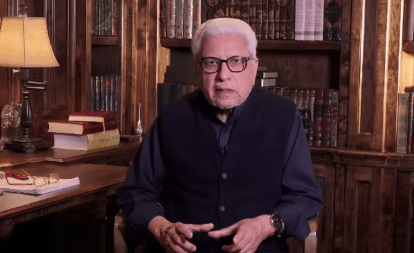
  • The Prophet’s Inheritance: A Legal and Historical Analysis by Allama Javed Ghamdi

    The Prophet’s Inheritance: A Legal and Historical Analysis by Allama Javed Ghamdi

    The text discusses the Islamic inheritance laws and a specific historical event concerning the Prophet Muhammad’s family’s inheritance. A speaker analyzes the hadith (sayings and traditions of the Prophet) regarding the Prophet’s inheritance, contrasting it with the Quranic verses on inheritance. The speaker examines different interpretations of this hadith, particularly Abu Bakr’s decision regarding the Prophet’s property, and addresses critiques surrounding it. The discussion explores the complexities of reconciling tradition with scripture and advocates for respectful dialogue between different viewpoints on this sensitive topic within Islam. Finally, the speaker emphasizes the importance of maintaining mutual respect and avoiding personal attacks when engaging in theological discussions.

    Inheritance and Prophetic Tradition: A Study Guide

    Quiz

    Instructions: Answer the following questions in 2-3 sentences each.

    1. What is the main point of the narration from Sahih Bukhari regarding prophets and inheritance?
    2. According to the text, what does “Maroof” mean and what is its significance in the context of inheritance?
    3. How did the Quran address the various past traditions of inheritance distribution and what alternatives were provided?
    4. What is the significance of “manfaat” in the Quranic regulations regarding inheritance, and how does it guide the distribution of shares?
    5. What is the general principle regarding making a will according to the text and how does it interact with the Quranic regulations on inheritance?
    6. How does the narration address the apparent contradiction between the Prophet’s (PBUH) advice to others about wills and the fact that he didn’t seem to leave an inheritance?
    7. What is the distinction between national officials and personal property in the context of the discussion, and how was it applied in the Prophet’s (PBUH) and Abu Bakr’s time?
    8. What was Syeda Fatima’s claim in relation to inheritance, and how did the companions respond to it?
    9. According to the text, how should disagreements on religious matters be approached and what attitudes should be avoided?
    10. How did the author suggest that the issue of conflict between family of the Prophet and Sadna Abu Bakr be approached?

    Answer Key

    1. The narration states that prophets do not leave behind inheritance; instead, whatever they leave is considered charity. The needs of the Prophet’s family would be met from this charity, but they have no right to further expenditure.
    2. “Maroof” refers to the customs and traditions of a society. The Quran initially emphasizes following these customs, but later clarifies that some traditions can lead to injustice in inheritance matters.
    3. The Quran critiqued past traditions of inheritance distribution, such as giving all inheritance to the eldest son, and instead established specific shares for family members (parents, children, spouses) based on close relations, rejecting solutions that would benefit any individual over another.
    4. “Manfaat” means benefit or usefulness and is used to determine how family members are connected to one another. This principle establishes that those with closer relationships and greater utility in life to the deceased are to receive an inheritance.
    5. According to the text, individuals can make wills for charitable purposes, but those wills cannot contradict the shares designated by the Quran. The maximum portion of an estate that can be willed away is one-third; the rest must go to the designated heirs.
    6. The text suggests that the Prophet’s (PBUH) statements about not leaving inheritance must be understood within a prophetic context. His wealth was intended for communal use, and his family was cared for from this, similar to national staff, not through inheritance.
    7. National officials, like land and treasures, were to remain separate and used for the benefit of the community. They were not considered personal property to be inherited, ensuring resources are not monopolized by a few individuals or families.
    8. Syeda Fatima claimed her right to inheritance, as is usual for family members. She had a right to claim a share of his estate, but it was decided that the status of prophetic possessions were community property.
    9. The text encourages that disagreements on religious matters be approached with respect for differing opinions. Rather than attacking intentions, disagreements should focus on the validity of the evidence used to support each point of view, and it is best to assume good intentions.
    10. The author suggests approaching the issue with a focus on the different opinions of the situation and understanding the basis for each, and that the conflict of Imamat was what spurred these feelings. It is encouraged to separate the intent behind the actions with the facts of the event.

    Essay Questions

    Instructions: Answer the following essay questions with well-developed arguments, using evidence from the source material.

    1. Analyze the conflict surrounding the concept of prophetic inheritance as presented in the text. How does it reflect broader discussions on authority, tradition, and the application of religious law?
    2. Discuss the Quranic framework for inheritance as outlined in the text. What are its key principles, and how do they address the historical and societal contexts of inheritance practices?
    3. Explore the concept of “Maroof” in the context of inheritance, as defined by the text, and discuss how it interacts with the Quranic regulations on the matter. Is there any conflict?
    4. Examine the arguments surrounding the status of national officials and their distinction from private property. How do these concepts relate to the management of resources and power within the early Muslim community?
    5. Critically analyze the perspectives presented regarding Syeda Fatima’s claims for inheritance. How do these perspectives reflect differing interpretations of religious tradition, legal rights, and community obligations?

    Glossary of Key Terms

    Ambiya – Prophets Aqrab – Nearest Aqaba – Relatives Bagh-e-Fedak – A garden in Medina that was a source of dispute Badri Sahaba – Companions who fought at the Battle of Badr Deen – Religion Hashr – Gathering (Day of Judgment) Huzoor – A term of respect for the Prophet Muhammad (PBUH) Iqtadar – Power Khab Wahid – A single, isolated narration Khalafa – Caliphs Majlis-e-Muqa – A formal assembly Manfaat – Benefit, utility, or usefulness Maroof – Customary practices or traditions of a society Miqat – Appointed time for the performance of pilgrimage or a specific point Nafn – Benefit Rasool/Rasulallah – Messenger of God, Prophet Muhammad (PBUH) Sahaba – Companions of the Prophet Muhammad (PBUH) Sahih Bukhari – A collection of hadith (sayings and actions of the Prophet) Saqf Bani Sayyedah – The location where the companions gathered after the Prophet’s (PBUH) death to decide a successor Shariat – Islamic Law Siddiq (RA) – A title for Abu Bakr, one of the closest companions of Prophet Muhammad (PBUH), meaning “the truthful” Surah Nisa – The fourth chapter of the Quran Syedna/Sadna – A respectful term of address meaning ‘our leader’ Umm-e-Mutlu – Principle of inheritance Wazafs – Stipends or allowances

    Islamic Inheritance Law and the Prophet’s Legacy

    Okay, here is a briefing document summarizing the key themes and ideas from the provided text:

    Briefing Document: Analysis of “Pasted Text”

    Date: October 26, 2023 Subject: Analysis of a Discussion on Islamic Inheritance Laws and the Prophet Muhammad’s Legacy

    Introduction This document analyzes a transcribed discussion focusing on Islamic inheritance law, particularly concerning the Prophet Muhammad’s (peace be upon him) legacy and its implications for his family. The discussion revolves around a hadith (prophetic tradition) about prophets not leaving behind inheritable wealth, and examines how this tradition interacts with Quranic inheritance laws. The speaker primarily engages with arguments concerning the distribution of property after the Prophet’s death, especially the case of Fadak and the treatment of the Prophet’s family by his companions, particularly Abu Bakr. The document also delves into broader themes of interpretation, intention, and disagreement within the Muslim community.

    Key Themes and Ideas:

    1. Prophetic Inheritance and the Hadith:
    • The Central Tradition: The core of the discussion centers on a hadith narrated by Abu Bakr, stating that “we prophets do not have any inheritance; whatever we leave behind is charity.” This tradition dictates that the wealth of prophets is not to be distributed as an inheritance but should be used for charity and the upkeep of their families.
    • Contradiction with Quranic Law? The speaker questions if this tradition creates a provision within the inheritance laws prescribed by the Quran. This suggests a potential conflict between the Quranic laws, which dictate the distribution of assets among family members, and the specific hadith applied to prophets.
    • The speaker’s position: The speaker argues that no “Khab Wahid” (single source narration) can supersede the Quranic laws of inheritance.
    1. Quranic Inheritance Laws (Surah Nisa):
    • Custom vs. Divine Law: The speaker emphasizes that while traditional customs (“Maroof”) regarding inheritance existed, Allah’s (God’s) guidance in Surah Nisa outlines the right to inheritance, initially acknowledging “Maroof,” but then outlining a comprehensive plan of inheritance.
    • Shares of Family Members: The Quran establishes clear shares for parents, children, and spouses based on “manfaat” or benefit (i.e. who benefits most from the relation). The speaker argues this eliminates arbitrary decisions that favor one group of relatives over another. The speaker notes that Quran gave this decision to God rather than leave it to human discretion.
    • Wills: The speaker clarifies that while the Quran establishes these specific shares, individuals are allowed to make wills regarding their property, with one crucial exception: that wills cannot override the set shares in the Quran. Wills must be “for any need or benefit of their own,” and the speaker says there is no restriction on giving one’s property “in the way of Allah.”
    1. The Case of Fadak and the Prophet’s Family:
    • Fadak as Community Property: The discussion turns to the historical case of Fadak (a piece of land) and its handling by Abu Bakr after the Prophet’s death. The speaker argues that Fadak was treated as “national officials” and community property, not personal property of the Prophet. This interpretation justifies its administration by Abu Bakr. This was because “national officials are like land and the treasures of the land,” and that they must be kept in the status of a community.
    • Syeda Fatima’s Claim: The speaker acknowledges Syeda Fatima’s (the Prophet’s daughter) claim to the property. However, they frame her demand as a legal one within the framework of inheritance law. The speaker questions why Syeda Fatima and the children were not informed of the hadith about the inheritance of prophets, and whether that hadith could have been in reference to a specific type of property. The speaker suggests that Syeda Fatima may have been referring to some other property rather than Fadak.
    • Abu Bakr’s Actions and Intentions: The speaker portrays Abu Bakr’s decision to follow the hadith as consistent with the Prophet’s practice, i.e. that the inheritance should be distributed among the community, particularly through the concept of ‘national staff’. The speaker emphasizes that Abu Bakr wanted to uphold the same practices of the Prophet regarding these communal assets. They highlight that Abu Bakr, “liked dealing with the people of your side more than dealing with the people of my side,” emphasizing his respect and desire to do good by the Prophet’s family.
    • Historical Context: The speaker notes that the “whole Kifah kept happening” that is the distribution of assets continued in the same way that was established by the Prophet, including Wazafs (stipends) to many, including the Prophet’s family, and especially the wives of the Prophet.
    1. Misunderstandings and Differing Interpretations:
    • Intention vs. Action: The speaker stresses that disputes over interpretation should not lead to attacks on people’s intentions. They argue that it is important to accept that others may disagree in good faith, even if their interpretations are considered wrong. The speaker notes, “If you stand in the place of Husne Jan and watch, even if you have a strong disagreement, you say that his change will be this opinion.”
    • The Dangers of Accusations: The speaker critiques the tendency to accuse those with differing opinions of malicious intentions, saying there should be no “Ga Sib” or other derogatory terms used for fellow Muslims who are acting sincerely. They insist that disagreements should remain on the level of different interpretations of the evidence (“brokers”) rather than on attacks on intention or character. The speaker believes that this will lessen the enmity between Muslims.
    1. The Importance of Historical Context:
    • Reevaluating Historical Narratives: The speaker urges the audience to consider historical events from the perspective of those involved. By seeing the matter through the eyes of those from the past, he believes that one can avoid speaking ill of companions and come to a more nuanced understanding of history.

    Key Quotes:

    • “we do not have any inheritance, whatever we prophets leave behind is charity.” (This quote highlights the core hadith around which much of the discussion revolves.)
    • “The point is that some traditions were prevalent from the past regarding the division of inheritance, which the Holy Quran has interpreted as Maroof. Maroof means the custom of the society, a tradition, under which matters are happening.” (This explains the relationship between established customs and the new divine law.)
    • “you should look at it from the perspective of the Quran and give them the status of a community.” (This emphasizes the speaker’s key argument about the communal nature of Fadak and its interpretation.)
    • “It is that you should maintain your own ideology. If you have a belief, a point of view, and you consider it to be correct, you should adopt it. Accept the right of the other person that he is disagreeing with you with good intentions, this is the way to live in this world.” (This speaks to the overall call for tolerance and understanding among Muslims who disagree.)

    Conclusion: The provided text reflects a complex discussion about Islamic inheritance, focusing on the interpretation of hadith, Quranic law, and historical events. The speaker emphasizes the importance of respecting differing opinions, refraining from attacking intentions, and seeking understanding through a nuanced reading of history. The speaker argues that Abu Bakr acted in accordance with the Prophet’s practice, particularly regarding the handling of community property and the Prophet’s family.

    This analysis also shows that there is often a divergence in interpretation. The speaker takes care to say that one should maintain one’s opinion while still accepting the differing views of another. The speaker calls for the community to focus on the strength of evidence (the “broker”) rather than the character of those holding differing views. This is presented as a way to strengthen unity and decrease “hatred” within the Muslim community.

    The Prophet’s Inheritance: A Study of Disputed Traditions

    Frequently Asked Questions:

    1. What is the central disagreement regarding the inheritance of Prophet Muhammad (peace be upon him)?
    2. The core disagreement centers around whether Prophet Muhammad’s (PBUH) possessions should be treated as standard inheritance, subject to the Quranic laws of division, or as charity (sadaqa), as claimed by Abu Bakr (RA), the first Caliph. This hinges on a tradition (hadith) attributed to the Prophet (PBUH) stating that prophets do not leave behind inheritance, and that their belongings are meant for charity. This hadith is viewed as possibly contradicting the Quranic verses on inheritance and the rights of family members, including the Prophet’s (PBUH) daughter, Fatima (RA).
    3. Why is there a question of whether the Prophet (PBUH) was bound by inheritance laws as laid down in the Quran? The question arises because, typically, all Muslims are bound by the inheritance laws in the Quran. However, the hadith claiming that prophets do not leave inheritance suggests a possible exception for the Prophet (PBUH). This creates a conflict between the general laws and this specific tradition. Critics question how a single tradition can override the clear Quranic injunctions on inheritance. They also question the origins of this specific tradition, and if it was a widely known teaching of the Prophet or not.
    4. How does the Quran define the rightful recipients of inheritance?
    5. The Quran defines rightful heirs based on close relationships, like parents, children, and spouses. It emphasizes manfaat (benefit/connection) as a key factor. The Quran also outlines specific shares for these relatives, aiming to prevent disputes and ensure a just distribution of the deceased’s property. Further, the Quran allows for a will to be made, but the will cannot override the share for the immediate relatives designated by Allah. The will can specify other gifts, up to a third of the total estate.
    6. What is the significance of “Maroof” (custom/tradition) in the context of inheritance?
    7. Before the revelation of specific inheritance laws in the Quran, existing societal customs (Maroof) regarding inheritance were followed. While early on these traditions were accepted, the Quran then provided specific guidelines, noting that some Maroof practices can be destructive. The Quranic laws on inheritance thus replaced many prior customs.
    8. What is the argument that Prophet Muhammad’s (PBUH) property should be treated as national officials or community property?
    9. Some scholars and figures like Abu Bakr (RA) argued that the property left by Prophet Muhammad (PBUH), particularly the land of Fadak, was not intended for personal inheritance but was rather meant to be used for the benefit of the community. They considered such lands and resources as national assets under the custodianship of the government, and used to fulfill the needs of the Muslim community, including the Prophet’s (PBUH) family.
    10. Why were Prophet Muhammad’s (PBUH) family members, particularly Syeda Fatima (RA), seemingly not aware of the hadith claiming prophets leave behind no inheritance? The lack of awareness among the Prophet’s (PBUH) family about this particular tradition raises questions. It’s argued that if this was a clear teaching of the Prophet (PBUH), his close family members would have known about it and would not have sought inheritance rights. The fact that they, specifically Syeda Fatima (RA), came forward to demand their rights suggests a possible misunderstanding, a lack of clarity at the time, or that the tradition was not universally known at the time of the Prophet’s (PBUH) passing.
    11. How did Abu Bakr (RA) reconcile the tradition that prophets do not leave inheritance with the clear Quranic laws on inheritance?
    12. Abu Bakr (RA) reconciled the conflict by claiming that Prophet Muhammad (PBUH) himself had stated that prophets do not leave behind inheritance, and that whatever they leave is to be given in charity. He thus used this hadith to claim that the property left by the Prophet should be used for the benefit of the community rather than distributed as inheritance. He therefore continued the way the Prophet (PBUH) had managed things: supporting his family through the administration of the national funds and keeping the national funds under community custodianship.
    13. What is the recommended approach to differing opinions on this matter and similar issues?
    14. The sources emphasize the importance of respecting differing opinions, even if one disagrees. It’s recommended that Muslims should view disagreements as arising from different interpretations of evidence and not as a reflection of ill intentions. Rather than attacking the intentions or character of those with differing views, focusing on the strength of evidence and presenting counter-arguments is essential. The aim is to foster respectful discourse and unity within the Muslim community, even with differing views. It also recommends acknowledging the right of other viewpoints to exist, recognizing that differences can be a natural part of intellectual and religious discourse.

    The Prophet’s Inheritance: Community Property and Islamic Law

    The sources discuss the matter of the Prophet’s inheritance, focusing on the tradition that prophets do not leave behind inheritance but rather what they leave is considered charity. This tradition is central to understanding the distribution of the Prophet’s wealth after his death and is closely tied to the concept of national officials and community property.

    Key points regarding the Prophet’s inheritance include:

    • No Inheritance for Prophets: According to a narration from Abu Bakr, the Prophet Muhammad stated that prophets do not have an inheritance; instead, what they leave behind is considered charity. This wealth is to be used to meet the needs of the Prophet’s family, specifically their food expenses.
    • National Officials and Community Property: The wealth left by the Prophet was not treated as personal property to be divided among his family but was considered community property, to be managed by national officials for the benefit of the community. This concept is derived from the idea that national officials, like land and its treasures, should remain separate and not become private property.
    • The Role of Abu Bakr: Abu Bakr continued the system established by the Prophet, maintaining the community nature of the wealth. He stated that he would not change the system established by the Prophet. He also emphasized the importance of following the Quranic principle of inheritance.
    • Quranic Law of Inheritance: The Quran lays down specific laws regarding inheritance, specifying the rightful heirs such as parents, children, and spouses. It also discusses the concept of “Maroof,” which refers to the customs of society, and how those customs should be understood in the context of Islamic law. The Quran explains how to divide inheritance based on the closeness and benefit a person has with the deceased.
    • Wills and Inheritance: While the Quran allows for wills, it places a restriction on them when there are family members who have a right to the inheritance. A will cannot supersede the shares of inheritance that Allah has set for family members. However, one can make a will to give away their property in the way of Allah, without any restrictions.
    • Children and the Prophet’s Will: There is a point of contention regarding whether the Prophet’s children were aware of his will, with some questioning why the information about the Prophet’s will came from an outside source. The tradition about Prophets not having inheritance was used to decide how to distribute the Prophet’s wealth, rather than a will from the Prophet.
    • The Issue of Bagh-e-Fedak: The discussion of the Prophet’s inheritance is linked to the issue of Bagh-e-Fedak, which was kept safe by Allah in the form of national officials and was not to be considered as personal or family property.
    • Distribution of Resources: The Prophet’s family received support from the national treasury, with fixed amounts being allocated to them, as was done for other companions based on their service. The family was given what was decided, not more, even if other companions got more in the form of wages.

    These points highlight that the Prophet’s inheritance was not treated as personal property to be divided among his family, but as a community asset that should be used for the benefit of the people, as it had been in the Prophet’s lifetime. The Quranic principles of inheritance were also considered.

    Islamic Inheritance Law

    Islamic inheritance law is a detailed system derived from the Quran, which specifies how a Muslim’s estate should be divided among their relatives. The Quranic verses on inheritance (Surah Nisa) are central to this system, establishing the rightful heirs and their shares.

    Key aspects of Islamic inheritance law, as discussed in the sources, include:

    • Maroof (Custom): The Quran acknowledges the existence of Maroof, or societal customs, related to inheritance, but it also explains that many of these customs can lead to destruction. In the initial stage, people were encouraged to follow Maroof, but the Quran then provided specific guidance.
    • Rightful Heirs: The Quran specifies that parents, children, and spouses are the primary rightful heirs. It defines the relationships that entitle a person to inherit, stating that these relationships are of close benefit. If a person does not have children, then siblings can take their place.
    • Shares: The Quran determines the shares of the rightful heirs, specifying how the estate is to be divided among them. It indicates that decisions about the share of inheritance should be made by Allah, and that no one should decide that one relative should get more than another.
    • Benefit: The Quran emphasizes that those who have a closer relation of manfaat (benefit) with the deceased are entitled to inherit. The closeness of the relationship and the benefit one receives from their relatives is the basis for determining heirs.
    • Wills: Islamic law allows for wills, but with certain restrictions. A will cannot supersede the shares of inheritance that Allah has already determined for specific relatives. However, one can make a will to give away their property in the way of Allah without any restrictions. It is advised that one does not give away all or a large portion of their wealth via will, leaving their heirs dependent on others.

    The sources also discuss how the principles of Islamic inheritance were applied in the specific case of the Prophet Muhammad, with the understanding that prophets do not have an inheritance to be divided, but rather, what they leave behind is considered charity. This concept is related to the idea of national officials and community property, meaning that resources are to be managed for the benefit of the community, rather than becoming personal property. The Prophet’s family was supported from the community resources, with fixed allocations.

    In addition to the points directly related to inheritance law, the sources emphasize that differences in interpretation and application of these laws should not lead to animosity among Muslims. The sources note that it’s acceptable to disagree, but that it’s important to maintain respect and avoid attacking each other’s intentions.

    In summary, Islamic inheritance law is a system that emphasizes both the societal norms of Maroof and the divine guidance in the Quran. It aims to provide a fair distribution of wealth among the rightful heirs while allowing for personal wishes through wills, while also stressing that community needs should also be considered.

    Quranic Inheritance Law

    The sources discuss Quranic verses related to inheritance, particularly those found in Surah Nisa, emphasizing their role in defining Islamic inheritance law.

    Key points related to Quranic verses on inheritance include:

    • Surah Nisa: Verses 11 and 12 of Surah Nisa are central to Islamic inheritance law. These verses lay down the specific guidelines for determining rightful heirs and their shares in a deceased person’s estate.
    • Maroof (Custom): The Quran acknowledges the existence of Maroof, or societal customs, related to inheritance. Initially, people were encouraged to follow these customs, but the Quran then provided specific guidance in verses 11-12 of Surah Nisa. The Quran explains that some of these customs can be destructive.
    • Rightful Heirs: The Quran specifies that parents, children, and spouses are the primary rightful heirs. The Quran establishes relationships of close benefit as the basis for inheritance and determines who is entitled to inherit. If a person does not have children, then siblings can take their place.
    • Shares: The Quran details how the estate should be divided among the rightful heirs. It establishes that these decisions are made by Allah, and that no one can decide that a particular relative should get more than another.
    • Benefit: The Quran indicates that those who have a closer relation of manfaat (benefit) with the deceased are entitled to inherit. The closeness of the relationship and the benefit one receives from their relatives is the basis for determining heirs.
    • Wills: The Quran allows for wills, but with restrictions. A will cannot supersede the shares of inheritance determined by Allah for specific relatives. However, one can make a will to give away property in the way of Allah without any restrictions. It is advised that one does not give away all or a large portion of their wealth via will, which would leave their heirs dependent on others.

    The sources also highlight that the Quranic law of inheritance was considered in the case of Prophet Muhammad’s estate. The tradition that prophets do not have an inheritance to be divided is based on the understanding that what they leave behind is considered charity and managed as a community asset. This is related to the concept of national officials and community property, rather than individual ownership.

    The Quranic verses also emphasize that differences in the interpretation and application of these laws should not lead to animosity among Muslims. The sources stress that it’s acceptable to disagree, but it’s crucial to maintain respect and avoid attacking the intentions of those who hold different views.

    In summary, the Quranic verses in Surah Nisa provide a detailed legal framework for inheritance, taking into account both societal norms and divine guidance to ensure fair distribution of wealth. These verses address rightful heirs, their shares, the role of manfaat, and the limits on wills, while also emphasizing the importance of community well being and unity.

    Abu Bakr and the Prophet’s Inheritance

    Abu Bakr’s decision regarding the Prophet’s inheritance was based on the tradition that prophets do not have an inheritance; instead, what they leave behind is considered charity. This decision is also connected to the concept of national officials and community property, emphasizing that the wealth left by the Prophet was not personal property but rather a community asset.

    Key points of Abu Bakr’s decision and its context:

    • Continuation of the Prophet’s System: Abu Bakr stated that he would not change the system established by the Prophet. He continued to manage the Prophet’s wealth as community property, using it to support the Prophet’s family and other members of the community.
    • No Personal Inheritance: Abu Bakr, citing the Prophet’s statement, maintained that the Prophet’s family did not have a right to inherit his wealth. Instead, the wealth was to be used for charity and the needs of the Prophet’s family, primarily food.
    • National Officials: The decision was rooted in the idea that the property was not the personal property of the Prophet, but was kept safe by Allah Ta’ala in the form of national officials. This wealth, like land and its treasures, was to be managed as a community asset, not as personal property. Abu Bakr’s actions are consistent with the principle that national officials should remain separate and not become private property.
    • Emphasis on Community: Abu Bakr’s decision emphasized the community nature of the Prophet’s wealth, ensuring that it would benefit the community as a whole, rather than just the Prophet’s family. This action aligns with the principles of the Quranic law of inheritance, which focuses on fair distribution and community well-being.
    • Quranic Basis: Abu Bakr’s decision was in line with his understanding of the Quran and the tradition of the Prophet. He sought to apply the principles of the Quranic law of inheritance and emphasized the importance of following the rules set by Allah.
    • Avoiding Misconceptions: By treating the Prophet’s wealth as community property, Abu Bakr sought to avoid any misconceptions that it was a personal estate to be inherited. He wanted to ensure that the resources were used according to the Prophet’s guidelines.

    It is important to note that there were differing opinions and questions about this decision. For example, some questioned why the Prophet’s children were not aware of this decision and why it came from an outside source. There were also questions about the Prophet’s family’s rights to the wealth. However, the sources clarify that Abu Bakr’s decision was not an act against the family of the Prophet, but that he gave the family what was decided. The sources state that the decision was based on a tradition of prophets not having an inheritance. Abu Bakr maintained that he would give to the Prophet’s family in the way the Prophet had.

    The sources emphasize that while disagreements may exist, such disagreements should not lead to animosity or hatred. They emphasize that it is acceptable to disagree on the interpretation of events and decisions, and to maintain respect for those with differing views.

    In summary, Abu Bakr’s decision regarding the Prophet’s inheritance was rooted in his understanding of Islamic principles, the tradition of prophets not having an inheritance, and the community nature of the Prophet’s wealth. His actions reflected his commitment to following the Prophet’s way and the guidelines of the Quran, ensuring that the resources were used for the benefit of the community.

    Inheritance Disputes in the Prophet’s Family

    Family disputes related to inheritance are discussed in the sources, particularly in the context of the Prophet Muhammad’s family and the distribution of his estate. These disputes highlight the complexities of applying Islamic inheritance law and the potential for disagreements, even within the Prophet’s family.

    Key points related to family disputes include:

    • Syeda Fatima’s Claim: After the Prophet’s death, his daughter, Syeda Fatima, sought her perceived right to inherit from her father. This claim was based on the general Islamic inheritance law that a family has a right to inherit from their deceased relatives. However, Abu Bakr’s decision was based on the tradition that prophets do not leave behind inheritance. This conflict highlights the tension between general inheritance laws and specific traditions related to prophets.
    • Lack of Awareness of the Will: The sources note that the Prophet’s children were not aware of the will which stated that prophets do not leave behind an inheritance. Instead, this information was given by an outside source. This lack of awareness is a key point in the dispute, suggesting that the matter should have been communicated to the family.
    • Children as a Party: In this case, the children, specifically Syeda Fatima, were seen as a party making a demand, highlighting that the family had a legal right to claim their share. The fact that the Prophet’s children made a claim emphasizes the idea that they saw their claim as valid.
    • The Tradition of Prophets Not Inheriting: Abu Bakr’s decision was based on the tradition that prophets do not have an inheritance to be divided, and whatever they leave behind is considered charity. This tradition is a central point of contention, since it directly conflicted with the generally applicable inheritance law.
    • Community vs. Personal Property: The dispute was also related to the idea that the Prophet’s wealth was considered a community asset managed by national officials, not personal property to be inherited. This distinction is important because it meant that the Prophet’s wealth was not subject to the typical rules of inheritance that apply to the general population.
    • Status of the Prophet’s Family: The Prophet’s family’s status as family members and their sacrifices were also factors in the dispute. While they were entitled to support from the community, the decision was that the wealth itself was to be used as charity, not as an inheritance.
    • Misunderstandings and Emotions: The sources suggest that misunderstandings and emotions played a role in these family disputes. The sources emphasize that such misunderstandings should not be the basis for forming negative opinions of others, and that disagreements are permissible. The sources encourage people to interpret actions based on the available evidence rather than making assumptions about intentions.

    The sources emphasize that while the family of the Prophet had a right to support and that the support was provided for, they did not have a right to inherit the wealth as others would, and that their support was to come from community resources. The family disputes, therefore, did not center on them being deprived, but on the application of this distinction. The sources also emphasize that any disagreements about inheritance should not lead to hatred or animosity. The focus should be on understanding different perspectives and respecting the rights of others to hold their beliefs, even if they differ from one’s own. The family disputes regarding inheritance should not become a reason for division, especially when the matter was addressed properly.

    Bagh-e-Fidak: Decision of Hazrat Abu Bakr | باغ فدک: سیدنا ابوبکر کا فیصلہ | Javed Ghamidi

    By Amjad Izhar
    Contact: amjad.izhar@gmail.com
    https://amjadizhar.blog

  • Trump’s Early Presidency and Geopolitical Implications by Rohan Khanna India

    Trump’s Early Presidency and Geopolitical Implications by Rohan Khanna India

    The text analyzes the early actions of the Trump administration, focusing on controversial executive orders. The author discusses concerns about potential constitutional violations regarding birthright citizenship and Trump’s foreign policy ambitions, particularly regarding Canada and Greenland. A central theme is the comparison of Trump’s “Greater America” aspirations to past attempts at global power restructuring. The piece also explores Trump’s relationships with other countries, including Russia, China, and Saudi Arabia, noting potential impacts on international relations. Finally, the author critiques specific policies, such as Trump’s stance on the World Health Organization and transgender rights.

    Presidential Actions & Global Dynamics: A Study Guide

    Quiz

    Answer each question in 2-3 sentences.

    1. What is the central legal argument against Trump’s executive order regarding birthright citizenship?
    2. What is the “New World Order” concept discussed in the source, and how does it relate to changing political boundaries?
    3. According to the speaker, how does the formation of Bangladesh challenge the idea that nations are defined solely by religious community?
    4. What historical role has America played in global humanitarian efforts, according to the speaker, and how does this relate to Trump’s actions?
    5. Explain the speaker’s view of the claim that America should control Canada, Greenland, and Panama.
    6. What was the historical and political significance of the 1977 Panama Canal treaty?
    7. What is the primary reason, according to the source, that China is seen as a threat by the United States?
    8. Describe the complex relationship between Taiwan, China, and the United States.
    9. Why is Trump attempting to soften relations with Russia, according to the speaker?
    10. What specific executive order related to the transgender community is discussed and why is it considered problematic?

    Quiz Answer Key

    1. The central legal argument against the order is that the 14th Amendment of the Constitution guarantees citizenship to any child born on US soil, making it impossible to abolish via executive order. This amendment is a firmly decided law that courts will uphold.
    2. The “New World Order” is a concept where political divisions and national boundaries are not fixed, and the world map is constantly changing. It acknowledges that current national borders are not permanent, and they have been reshaped throughout history.
    3. Bangladesh’s formation demonstrates that nations are not solely defined by religious communities because despite the shared Muslim identity, the country separated from Pakistan based on linguistic and regional factors, highlighting a challenge to the two-nation theory.
    4. The speaker claims that historically, America has been a source of support for small communities experiencing poverty, natural disasters, and human rights violations worldwide. This history contrasts with Trump’s more isolationist approach.
    5. The speaker views these claims as unserious jokes, similar to ideas of “Greater India” or “Greater Israel,” indicating that the likelihood of such acquisitions is minimal. He also acknowledges a historical rationale behind the US demanding the Panama canal back but dismisses the other claims.
    6. The 1977 Panama Canal treaty, which President Carter signed, transferred control of the Panama Canal from the US to Panama. This treaty is significant because it demonstrates a rare willingness for the US to cede control of a resource it considered strategically important and contrasts with Trump’s policy objectives.
    7. China is seen as a threat by the United States because of its emerging economy and challenge to American global dominance. The US perceives that nations resisting US control tend to align with China, posing a challenge to the US led world order.
    8. Taiwan has a complex relationship with China, which views the democratic island as a part of its territory. The US supports Taiwan’s independence and democratic freedoms. The potential for Chinese aggression in Taiwan creates ongoing political tension.
    9. Trump is trying to soften relations with Russia as part of a strategic move to avoid having two major adversaries simultaneously and prevent Russia from aligning with China. Trump sees this as a way to relieve pressure in Ukraine and ensure Russian neutrality in a future conflict with China.
    10. The executive order that limits the rights of transgender individuals is considered problematic because it is seen as a violation of fundamental human rights. The order goes against the American courts’ tradition of protecting individual’s rights to determine their gender identity and goes against the spirit of inclusivity that has grown in US culture.

    Essay Questions

    1. Analyze the speaker’s understanding of American identity in light of the executive orders under discussion.
    2. Discuss the evolving global political map as described in the source and its impact on American foreign policy.
    3. Evaluate the historical references made in the source, and discuss how they influence the speaker’s perception of current events.
    4. Critically examine the argument presented regarding the connection between religious beliefs and political actions in the source.
    5. Compare and contrast the speaker’s opinions with those of Trump, addressing potential areas of overlap and stark differences.

    Glossary of Key Terms

    • Executive Order: A directive issued by the President of the United States that manages operations of the federal government.
    • 14th Amendment: A crucial amendment to the U.S. Constitution that, among other things, grants citizenship to all persons born or naturalized in the United States, including birthright citizenship.
    • New World Order: A concept referring to a significant shift in global political power and international relations. In the text it implies the continuous reshaping of political boundaries.
    • Two-Nation Theory: The idea that Hindus and Muslims in British India were distinct nationalities, leading to the partition of India and the creation of Pakistan.
    • Welfare State: A system in which the government plays a key role in protecting and promoting the economic and social well-being of its citizens.
    • Panama Canal Treaty (1977): An agreement between the US and Panama that transferred control of the Panama Canal from the US to Panama.
    • Hamas: A Palestinian Sunni-Islamist fundamentalist organization, which often engages in political and military conflicts, especially with Israel.
    • Netanyahu: Benjamin Netanyahu, former and current prime minister of Israel, a major political player in the middle east and with the US.
    • Transgender: A term for people whose gender identity differs from the sex that they were assigned at birth.
    • Republicans: One of the two major political parties in the United States, often associated with conservative ideology.
    • Democrats: One of the two major political parties in the United States, often associated with liberal ideology.
    • Kurds: An ethnic group native to the mountainous region of Kurdistan, divided across Turkey, Iran, Iraq, and Syria.
    • Great Britain: A term which encompasses England, Scotland, and Wales, sometimes used to describe the UK.
    • NATO (North Atlantic Treaty Organization): A military alliance of North American and European countries formed to counter the Soviet Union during the Cold War.
    • Referendum: A general vote by the electorate on a single political question.

    Trump’s Early Actions and Global Implications

    Okay, here’s a detailed briefing document summarizing the main themes and important ideas from the provided text:

    Briefing Document: Analysis of Trump’s Actions and Global Implications

    Date: October 26, 2023 (based on the context of the text)

    Subject: Analysis of Trump’s early executive orders, international relations, and geopolitical perspectives as presented in a conversational discourse.

    Sources: Excerpts from “Pasted Text”.

    Executive Summary:

    This document analyzes a conversation discussing the initial actions of the Trump administration, focusing on executive orders, foreign policy aspirations, and the global implications. The discussion touches on the legality of Trump’s actions, his ambitions regarding territories, the nature of community and nationhood, and his relationships with key countries like Russia and China, along with some key domestic policy decisions. The speakers explore the long-term effects of these actions and attempt to place Trump’s behaviors in a broader historical and geopolitical context, highlighting potential future issues related to trade, alliances, and human rights.

    Key Themes and Ideas:

    1. Executive Orders and the Constitution:
    • Theme: The discussion centers on the legality of several executive orders issued by the Trump administration, specifically regarding birthright citizenship.
    • Key Idea: The text highlights a conflict between executive orders and constitutional law, specifically citing the 14th Amendment, which grants citizenship to those born on US soil.
    • Quote: “According to that, any child born on this land will be called an American or will have that nationality. So, now it is a simple matter that a decided thing of the law cannot be abolished through an executive order.”
    • Implication: The analysis concludes that executive orders attempting to override clear constitutional law will likely be challenged and overturned by the courts.
    1. Territorial Ambitions and “Greater America”:
    • Theme: Trump’s comments about acquiring territories like Canada, Greenland, and the Panama Canal are treated as both a joke and potentially indicative of a deeper mindset of expansionism.
    • Key Idea: The text draws parallels between Trump’s aspirations and historical ideas like “Greater India” or “Greater Israel,” suggesting these desires for expansion may be unrealistic and unattainable.
    • Quote: “It seems like every joke, but there is some reality inside every joke. … the way Greater Israel could not be formed, in the same way Greater America will not be able to be formed.”
    • Implication: The discussion notes that such territorial ambitions would be difficult to achieve, and are seen more as symbolic expressions of power than actionable policy.
    1. Redefining the Map and “New World Order”:
    • Theme: The concept of a “New World Order” and how geopolitical boundaries are not permanent is considered. The conversation explores the idea that current nations and alliances are not immutable, using examples like the changing map of the world over centuries, to challenge the current order.
    • Key Idea: The text emphasizes that the world’s political landscape is in constant flux, citing examples such as the creation and dissolution of states, empires, and communities over time and suggesting these changes are not necessarily permanent.
    • Quote: “So, the meaning of New World Order should be understood, now the division that is there at this time, the order, the system that is going on, which can be called regional division or political division, the countries that have been formed, these are not just letters and letters.”
    • Implication: The discussion notes that political divisions are not static and could change, referencing examples like the formation of Bangladesh as an example of changing national identities and highlighting that these divisions are fluid.
    1. Community, Nation, and Identity:
    • Theme: The conversation dives into the definition of “community” and “nation,” questioning whether they should be based on religion, region, or shared values and goals.
    • Key Idea: The text argues against defining nations solely by religion or ethnicity, suggesting that regional and practical factors are more vital. The discussion points out contradictions that occur when nations are established based solely on religion (the break up of Pakistan and the formation of Bangladesh despite both being majority Muslim as an example)
    • Quote: “Now it is not possible that if we start building a community on the basis of religion, then the very foundation of the countries will break, they cannot survive.”
    • Implication: The text critiques the idea of a community based solely on religion and argues for shared well-being and human progress as better drivers of identity and unity.
    1. America’s Role in the World and Human Rights:
    • Theme: The discussion touches on the role of America as a global supporter of democracy, human rights, and disaster relief, recognizing the gap between these ideals and practical application.
    • Key Idea: Despite a sometimes hypocritical stance on human rights, the speaker acknowledges the historical record of the US as a source of aid and support, but that there is still a difference between theory and practice
    • Quote: “And then see, he raises his voice for human rights across the world, he raises his voice for democracy, then people take it with a very strict standard because there is always a difference between theory and practice.”
    • Implication: It argues that the US needs to match their actions to their ideals on the world stage to be a true force for good, and that it could be viewed hypocritical for doing so.
    1. Trump’s Foreign Policy and Relationships with Russia and China:
    • Theme: The conversation highlights Trump’s shifting relationship dynamics with major world powers such as Russia and China.
    • Key Idea: Trump is viewed as attempting to de-escalate tensions with Russia to focus on the perceived threat from China, positioning the two as rivals.
    • Quote: “So he thinks, why should we unnecessarily keep two enemies with Russia? We should soften Russia, it means that the burden of Ukraine which is lying there should get relief and after that we should make such an agreement with it that it does not become an ally of China and becomes neutral so that if our relations with China are strained or there is a big problem in the future.”
    • Implication: The text argues that this approach is a strategic move to isolate China and ensure it remains the primary target, while weakening other potential alliances with China.
    1. The Case of Taiwan:
    • Theme: The discussion emphasizes the precarious position of Taiwan, recognizing its complex relationship with both China and the USA.
    • Key Idea: Taiwan is viewed as vulnerable to potential Chinese aggression, relying heavily on US support for its security. The fear of the consequences of a US withdrawal and parallels to the Russian invasion of Ukraine are made.
    • Quote: “Taiwan has been saved so far because of America’s support. If America weakens today or retreats, then the way Russia has occupied Ukraine, it will be even sweeter for it. It will occupy everything.”
    • Implication: A weakened US could lead to an emboldened China, potentially leading to the occupation of Taiwan, much like the Russian invasion of Ukraine.
    1. Trump’s Domestic Policies and Values
    • Theme: The text explores the potential for domestic strife stemming from new policies regarding the World Health Organization, transgender rights and citizenship.
    • Key Idea: It states that Trump’s policies about the WHO and treatment of transgender people are based on a desire to appease his core Christian supporters, rather than being about best practices for the country as a whole.
    • Quote: “The first motive is that who is the real strength of Trump. … It did not come from the votes of the Jews. It has come from the votes of the Jews. We say that people have strong faith and true Muslims. Similarly, there are also strong true Christians in America who do not care. And this is our state, all Christian states.”
    • Implication: The text acknowledges that policies which deny the existence of transgender people and their rights are discriminatory and will likely be challenged in courts.
    1. The Hamas-Israel Conflict:
    • Theme: The text touches on the complexity of the Hamas-Israel conflict and the perception that Trump’s intervention was based on his own self-interests.
    • Key Idea: The text argues Trump’s involvement was designed to make him look successful on the world stage, rather than addressing deeper injustices or human rights.
    • Quote: “Trump, in order to make his own world, said that I got it accepted and I think that there was a very big issue in Israel that their 94 year old Mali, they could not catch 250 of them, when they attacked on 7 October”
    • Implication: The text argues the current settlement was not a move for peace, but simply to create a win for Trump in the public eye, regardless of the injustice it may have caused.
    1. Pakistan’s Position and Alliances:
    • Theme: The conversation underscores Pakistan’s precarious situation and its need to balance relationships with various world powers.
    • Key Idea: Pakistan should not rely solely on one country, such as China, and must maintain a stable relationship with the US, Saudi Arabia and others while ensuring its own interests are protected.
    • Quote: “I do not think it is better that Pakistan, as they say, should not keep all America’s eggs in one basket, so we should not give everything to China. We should not blame China, otherwise when difficulties arise, when issues arise, then the heat of it will reach Pakistan as well.”
    • Implication: The text suggests that Pakistan must balance relations with various countries and not become too reliant on any single global power, particularly in a world with an aggressive USA under Trump.

    Conclusion:

    The discussion highlights a volatile and complex international landscape under the new Trump administration. The text reveals concerns about the president’s disregard for law, territorial ambitions, the potential for new conflicts, and the need for countries like Pakistan to navigate a world with shifting global alliances. Trump is viewed as both a strategic leader with his own motives, and a loose cannon who acts with an intense personality and lack of regard for laws. The potential long-term effects of these early actions remain a focal point of concern.

    This briefing doc attempts to be as comprehensive as possible, given the breadth of topics discussed and the conversational tone of the original text.

    Trump’s US Policy Shifts and Geopolitical Implications

    Frequently Asked Questions on Recent US Policy Shifts

    1. What is the controversy surrounding President Trump’s executive orders regarding birthright citizenship, and what is their legal standing?
    2. President Trump issued executive orders attempting to redefine birthright citizenship, suggesting that children born in the US to non-citizen parents would not automatically gain nationality. However, this contradicts the 14th Amendment of the Constitution, which clearly states that anyone born on US soil is a citizen. Legal scholars and courts will likely dismiss these executive orders as unconstitutional, rendering them unenforceable.
    3. What is the significance of President Trump’s rhetoric about reclaiming territories like Canada, Greenland, and the Panama Canal?
    4. President Trump has expressed desires to reclaim territories like Canada, Greenland, and the Panama Canal, often making these claims in a way that is perceived as a joke by many. The rhetoric could stem from a desire to assert US dominance, but practically, such land grabs are highly unlikely and legally complicated, especially in areas where a country like Greenland is a semi-autonomous territory that is part of another country. It is also interpreted as a sign of Trump’s desire to redraw the map of global influence and challenge the current geopolitical order, mirroring past ideas of “Greater India” or “Greater Israel”.
    5. How does the concept of a “New World Order” relate to the current geopolitical landscape and Trump’s policies?
    6. The concept of a “New World Order,” popularized by former President Bush, suggests a restructuring of global political divisions. Trump’s policies, including his desire to control territories like Canada and Greenland, could be interpreted as a move to reshape the existing world order. However, the argument being made is that such restructuring isn’t just the product of an executive order from one leader and it isn’t something that can be forced. The world order, it’s argued, is more complex than that.
    7. Why are there so many discussions of different national and religious communities, and how do these play into geopolitics?
    8. The discussions around different national and religious communities highlight the complex and ever-evolving nature of identity and sovereignty. The formation of nations and communities isn’t always based on ethnicity, religion, or shared culture alone. Factors like region, shared history, and political power also play crucial roles. The sources note that even within a religious community, there can be multiple nations. The source uses the Kurdish people, who share language and heritage but are divided across four different countries, as an example of this complexity. Furthermore, the fact that countries can be formed for reasons other than shared heritage is exemplified by the formation of Pakistan as a separate nation for Muslims in India, but Bangladesh, though equally Muslim, became its own nation. The question around identity and sovereignty also plays into Trump’s moves to potentially consolidate territory, and thus power, for America.
    9. How does Trump’s approach to international relations differ from his predecessors, especially concerning countries like China and Russia?
    10. Trump appears to prioritize pragmatic deals and economic interests over ideological alliances, as a businessman would. He seems willing to soften relations with Russia to counter China’s rising power, viewing Russia as a lesser threat due to its economic struggles while simultaneously being highly confrontational with China due to its growing economic strength. This contrasts with more traditional diplomatic approaches focused on maintaining existing alliances and multilateral agreements. He seems less interested in abstract, ideals driven approaches and more interested in a transaction approach that focuses on individual outcomes and deals.
    11. What are the concerns and implications of Trump’s stance on the World Health Organization (WHO) and transgender rights?
    12. Trump’s decision to withdraw from the WHO and his statements diminishing the rights of transgender individuals have sparked significant controversy. The WHO withdrawal raises concerns about international cooperation in public health, as the source notes that America should be supporting and taking advantage of the organization. Trump’s stance on transgender rights is considered discriminatory and goes against constitutional principles of individual rights and equality and is viewed as an attempt to appeal to a narrow base of Christian voters rather than being policy motivated.
    13. What is the controversy surrounding Trump’s intervention in the Hamas-Israel conflict, and how is it perceived internationally?
    14. Trump’s intervention in the Hamas-Israel conflict, while portrayed as a peacemaking effort by his administration, is criticized for bypassing existing negotiation frameworks and imposing unjust conditions. The negotiation, which resulted in a deal for hostages being swapped, is viewed by some as less of a resolution, and more of a way to enhance his own prestige and present an image of strong, decisive leadership. The source also notes that many see it as an inherently unfair deal which highlights the problems that occur in war and is not a product of great diplomacy. There is a concern that this intervention could further destabilize the region and potentially damage existing alliances.
    15. How does the political situation in Pakistan and its relationship with America fit into the broader geopolitical context of Trump’s administration?
    16. Pakistan’s current position in the world is delicate, and its leaders are trying to find their place and value, given the current global state of affairs. Pakistan’s leaders are acutely aware that the country is not currently viewed in high esteem on the international stage. Furthermore, the country is being advised to diversify its alliances and avoid over-reliance on either China or America. In the context of the current geopolitical situation and Trump’s administration, it is suggested that Pakistan should leverage its strong relationship with Saudi Arabia, who, in turn, are experiencing an upswing in their international relevance, to enhance relations with the US.

    Trump’s Executive Orders and Foreign Policy

    The sources discuss several of Trump’s executive orders and their implications. Here’s a breakdown:

    • Immigration and Nationality: One executive order addresses the issue of children born in the U.S. to non-citizen parents. According to the order, these children would not automatically receive American nationality, which challenges the 14th Amendment of the Constitution. This order is expected to be challenged in court, as it contradicts existing law. The courts are considered the protectors of the law and will likely dismiss this executive order.
    • Transgender Rights: Another executive order states that the U.S. only recognizes men and women, thereby excluding transgender people. This has been viewed as a violation of fundamental rights, as the American constitution gives individuals the right to determine their own gender. This order has also been criticized for potentially leading to discrimination and preventing transgender individuals from getting jobs. The order is likely to be challenged in court on the basis of discrimination.
    • This decision is believed to appeal to Trump’s base, which consists of staunch Christians who do not accept transgender identities.
    • The executive order also serves to attack Trump’s political rivals, the Democrats, who have supported transgender rights.
    • World Health Organization (WHO): Trump issued an executive order to withdraw from the World Health Organization. The decision is criticized because of the benefits that some people get from the WHO.
    • Hamas and Israel: An executive order addresses the conflict between Hamas and Israel. The order aimed to resolve the conflict, but was criticized as unjust. The decision was controversial within Israel and resulted in the release of four Israeli women in exchange for 200 Palestinians.
    • Land Acquisition: Trump has expressed a desire to gain control over various territories, including Canada, Greenland, and Panama. These actions have been described as “empty wishes,” reminiscent of an attempt to control as much land as possible. Trump’s interest in Greenland is based on its location, which is in America and not in Europe. Trump wants to get rid of European countries’ colonies, and if they do not leave willingly, he may force them to leave.
    • The source suggests that exerting pressure on Canada and Greenland could be beneficial for America.
    • It is suggested that offering American citizenship to Canadians could be appealing, potentially leading to their desire for statehood.
    • Trump’s interest in Panama stems from the historical significance of the Panama Canal, built by Americans. He believes the U.S. should regain control, especially since it was built by them with loss of American lives and significant investment of wealth.

    In addition to specific orders, the source also touches on Trump’s overall approach:

    • Business-Oriented: Trump’s actions are viewed through the lens of a businessman, who weighs the pros and cons of each decision.
    • Pragmatic: Trump’s foreign policy, particularly towards Russia, is seen as strategic. He is trying to avoid having two enemies at the same time and wants to make sure Russia doesn’t become an ally of China.
    • Unpredictable: Trump is portrayed as someone who can be both serious and jokingly, making it difficult to predict his next move.
    • Phobic of China: Trump believes that China is a threat to the US. Trump’s phobia of China is also seen in the context of China’s economy as an emerging economy which challenges American dominance.

    Constitutional Challenges to Trump’s Executive Orders

    The sources discuss several constitutional challenges related to Trump’s executive orders. Here’s a breakdown of the key issues:

    • 14th Amendment and Birthright Citizenship: One of Trump’s executive orders aims to change the rules regarding birthright citizenship. The order states that children born in the U.S. to non-citizen parents would not automatically receive American nationality. This directly challenges the 14th Amendment of the Constitution, which states that any child born on U.S. soil is granted American citizenship. According to the source, this is a settled matter of law that cannot be undone through an executive order. It is expected that the courts, which are viewed as the protectors of the law, will dismiss this order. This issue is expected to be challenged in many states.
    • Transgender Rights and Discrimination: Another executive order is criticized as violating the fundamental rights of transgender individuals. This order states that the U.S. only recognizes men and women, effectively excluding transgender people from legal recognition. This is seen as a form of discrimination and is likely to be challenged in court on the basis of discrimination. The American constitution is understood to guarantee every individual the right to determine their own gender, and therefore, the executive order may be viewed as an attempt to snatch that right. This order also has implications for employment, as the order states that transgender individuals will not be able to get jobs, which is another violation of rights.
    • Judicial Review: The sources emphasize the role of the courts as protectors of the law. They are expected to review and potentially dismiss executive orders that contradict the Constitution. The courts will likely intervene in cases concerning the executive orders that affect birthright citizenship and transgender rights.

    In summary, Trump’s executive orders have raised significant constitutional concerns, particularly regarding the 14th Amendment and birthright citizenship, and the fundamental rights of transgender individuals. The courts are expected to play a crucial role in addressing these challenges, as they are the protectors of the law.

    Trump’s Greater America

    The concept of “Greater America” is discussed in the sources, primarily in the context of Trump’s actions and ambitions. Here’s a breakdown of what the sources suggest about this idea:

    • Territorial Expansion: Trump is described as having a desire to gain control over various territories, including Canada, Greenland, and Panama. This ambition is portrayed as an attempt to expand American influence and control, similar to historical notions of “Greater India” or “Greater Israel”.
    • “Empty Wishes”: These desires are characterized as “empty wishes”, suggesting they are not realistic and may not be achievable. The source implies that they are more of a reflection of Trump’s ambition to control as much land as possible. The source uses the analogy that “it seems as if Trump has become Malik Riyaz, meaning to take control of this plot as well as this plot”.
    • Historical Parallels: The idea of a “Greater America” is compared to concepts like “Greater Israel” and “Incredible India”. The source suggests that just as “Greater Israel” could not be formed, “Greater America” is also unlikely to be realized.
    • Specific Targets:
    • Canada and Greenland: Trump’s interest in Canada and Greenland seems to stem from a desire to assert American dominance in the region. The source notes that Greenland is geographically part of America and questions why a European country should have it as a colony. It is suggested that putting pressure on Canada and Greenland could ultimately benefit the US. The source also speculates that offering American citizenship to Canadians could lead to a desire for statehood.
    • Panama: Trump’s interest in Panama is linked to the historical significance of the Panama Canal, built by Americans with significant loss of life and investment. He believes that the U.S. should regain control of the canal.
    • Economic Considerations: The source also mentions that if other countries do not get rid of their colonies, the US should.
    • Chauvinistic Undertones: The source questions Trump’s idea of “identity” and states that the benefit of humans and their well-being, progress and happiness are more important, and that identity should not be a primary concern.

    In summary, the idea of a “Greater America” as presented in the source is tied to Trump’s desire for territorial expansion and control, but it is also viewed as unrealistic and potentially unachievable. It is seen as a reflection of his ambitions rather than a practical geopolitical strategy. The source also implies that such an ambition is rooted in a desire to regain past glory rather than concern for the well-being of the populace.

    Trump’s America First Foreign Policy

    The sources provide insights into US foreign policy, particularly under the Trump administration, by discussing specific actions, motivations, and broader strategies. Here’s an overview:

    • Focus on American Interests: The sources suggest that Trump’s foreign policy is driven by a focus on what he perceives to be the best interests of the United States. This includes a desire to reassert American dominance and control over certain territories and resources.
    • Transactional Approach: Trump’s approach to foreign policy is often described as transactional, similar to that of a businessman. He is seen as someone who weighs the pros and cons of every decision and seeks to maximize benefits for the US.
    • Relationships with Allies and Rivals:
    • Russia: Trump seeks to soften relations with Russia. This is seen as a strategic move to prevent Russia from aligning with China, which Trump views as a bigger threat. The goal is to relieve pressure on the US by making sure Russia does not become an ally of China.
    • China: Trump has a phobia of China, viewing its emerging economy as a challenge to American dominance. The US sees China as a potential threat because countries that do not accept US control “run and sit in China’s lap,” which may lead to future problems for the US.
    • Saudi Arabia: Trump has given importance to Saudi Arabia, and it is likely that his first foreign tour will be to that country. The US has historically had a strong relationship with Saudi Arabia, and the source suggests that this will continue under Trump.
    • Territorial Ambitions: Trump has expressed interest in acquiring control over various territories, including Canada, Greenland, and Panama.
    • Greenland: Trump believes that Greenland is geographically part of America and questions why it is a colony of a European country. He also believes that the US should not pay money to NATO if they do not get rid of their colonies.
    • Panama: The US wants to regain control of the Panama Canal due to its historical significance and the investment made by Americans.
    • Multilateralism and International Organizations: Trump has shown a skepticism towards international organizations, such as the World Health Organization (WHO), and has issued an executive order to withdraw from it.
    • Human Rights and Democracy: While the US has historically positioned itself as a champion of human rights and democracy, the sources suggest that the Trump administration’s actions do not always align with these values. The executive order that excludes transgender people is a notable example. The source notes that there is a difference between theory and practice, and that it is not always possible to achieve all of one’s goals in practice.
    • Influence in the Middle East: The US is attempting to increase its influence in the Middle East by supporting Saudi Arabia, which has led to a reduction of Iran’s influence in Syria and Lebanon. This has the potential to benefit other Arab countries as well as Pakistan.
    • Response to Conflict: Trump’s administration is shown to have an inconsistent and controversial approach to conflict resolution. For example, Trump intervened in the Hamas-Israel conflict and forced a deal that was seen as unjust.

    In summary, US foreign policy under the Trump administration is characterized by a focus on American interests, a transactional approach, a desire to reassert American dominance, and a skepticism towards international organizations. There is also an emphasis on strategic relationships with both allies and rivals, as well as a willingness to challenge established norms and agreements.

    Religion, Politics, and Identity

    The sources discuss religious divisions in the context of both domestic and international politics, as well as their impact on national identity and policy. Here’s an overview of the key points:

    • Religion and National Identity:
    • The sources highlight how religion has been used to define national identity and create divisions. For example, the two-nation theory that led to the creation of Pakistan is cited, where the idea that Hindus and Muslims were two separate nations led to the formation of two countries.
    • However, the source argues that this approach is outdated and that community is often formed on the basis of region rather than religion. The example of the Kurds is used to show how a single community can be divided among different countries.
    • The sources also point out that many countries, such as those in the European Union, have people of all religions.
    • The sources question the idea that religion should be the basis of nationality, saying that “Christians can be our nationals, but all other races do not get a nation”.
    • Religious Divisions in America:
    • The sources discuss how religious divisions, specifically within Christianity, influence American politics.
    • Staunch Christians are identified as a key support base for Trump. This group is characterized by its literal interpretation of the Bible, which leads to views that are not inclusive of transgender people.
    • This group believes that “America is great” and has a strong faith in Christianity, leading to their support for Trump.
    • The source contrasts this group with liberal secular people who are more likely to be Democrats and favor human rights.
    • Transgender Rights and Religious Beliefs:
    • The sources indicate that religious beliefs are a major factor in the opposition to transgender rights. Both Christian and Muslim religious people view the idea of transgender people as inconsistent with their holy books.
    • The sources suggest that Trump’s executive order excluding transgender people was intended to appease his religious base and attack his political rivals.
    • The order is seen as discriminatory and an attempt to snatch fundamental rights, highlighting the clash between religious beliefs and individual rights.
    • Religious Influence on Foreign Policy:
    • The source notes that Saudi Arabia’s religious influence is increasing, specifically in Lebanon and Syria.
    • The historical conflict between Shia and Sunni Muslims is briefly touched on. The source mentions that the leader of Liberation is a native of Riyadh and a Sunni, while the previous leader was a Shia. The religious beliefs of the two are said to be very different.
    • The Role of the Courts:
    • The courts are seen as protectors of the law and are expected to reject actions that violate individual rights. The courts are expected to challenge the executive order regarding transgender rights because it is against the constitution, which states it is every individual’s right to determine their own gender.

    In summary, the sources show that religious divisions have significant effects on both domestic and international issues. Religious beliefs are shown to influence political affiliations, views on human rights, and international relations. The sources also suggest that while religion can be a strong basis for community and identity, it also can lead to division and discrimination when applied too rigidly.

    By Amjad Izhar
    Contact: amjad.izhar@gmail.com
    https://amjadizhar.blog

  • Hajj 2025: Package Information and Booking Guide

    Hajj 2025: Package Information and Booking Guide

    This webinar recording discusses the Hajj pilgrimage, focusing on package bookings through the Nusuk platform. Speakers address concerns about e-wallet verification, payment methods, and package options, emphasizing the importance of early planning and spiritual preparation. Specific package details from a provider (MCDC) are reviewed, along with advice on choosing between different camp locations and addressing common questions from attendees. The speakers stress the significance of intention and sincere dua in the Hajj process. Practical tips regarding health requirements, travel arrangements, and family member registration are also provided.

    Hajj 2025 Study Guide

    Quiz

    Instructions: Answer each question in 2-3 sentences.

    1. What is the significance of intention in the performance of Hajj, according to Imam Fman?
    2. What are the four key areas of preparation for Hajj, as outlined by the speaker?
    3. Why is it important for pilgrims over 65 to travel with a family member who can assist them?
    4. What is the “grave concern” related to residency verification mentioned by Soil?
    5. Why is it important to familiarize oneself with the Nusuk portal, according to Soil?
    6. What are the two main types of packages that will be offered by MCDC this year?
    7. How do the “shifting” and “non-shifting” packages differ?
    8. What is the key difference between the Ma’jal Kaba and the Ma’sim camps?
    9. Why is it not possible to combine funds from two separate family e-wallets?
    10. What are some recommended payment methods for funding e-wallets?

    Quiz Answer Key

    1. Imam Fman stresses that intention is paramount; any action without intention is void, and any intention not solely for Allah is also void. This means the purpose of performing Hajj should be solely for Allah, not any worldly gain.
    2. The four key areas of preparation are spiritual preparation, physical preparation (endurance and resilience), planning (financial and logistical), and saving from halal money.
    3. Pilgrims over 65 need family assistance because neither the Hajj guide team nor MCDC staff will have dedicated time to push wheelchairs or provide direct mobility support during Hajj.
    4. The grave concern is that non-UK nationals residing in the UK are experiencing difficulties with their residency verification, despite guidance provided by Nusuk.
    5. It’s vital to familiarize oneself with the portal because once packages are released, there will be an influx of users, and making mistakes during the booking process can cause delays and anxiety.
    6. The two main types of packages are customized group packages with flights and public packages. The customized packages are tailored for specific groups or regions like the UK, while the public packages are available to a global audience.
    7. “Shifting” packages involve moving between Makkah and Aizia, potentially before and after the Hajj rituals, while “non-shifting” packages typically involve remaining in one location close to the Haram.
    8. The key difference is their location: the Ma’jal Kaba camps are located closer to the jamarat (stoning pillars), while the Ma’sim camps are further away (about 4 km).
    9. E-wallets are linked to specific profiles. Once an e-wallet is activated, it cannot be combined with other activated wallets, although new family members can be added to an inactive profile.
    10. Recommended payment methods include card payments from Monzo, HSBC Global, Barclay’s Rewards, Halifax Clarity, Starling, and Chase. Revolut is not recommended due to payment issues.

    Essay Questions

    Instructions: Answer each question in a well-organized essay format.

    1. Discuss the spiritual significance of Hajj based on the themes presented in the webinar. How does the speaker frame Hajj as an opportunity for reformation and connection with Allah?
    2. Explain the key practical preparations for Hajj as discussed by the speakers. How do physical, financial, and logistical planning interact with the spiritual objectives of the pilgrimage?
    3. Analyze the challenges in the verification process for non-UK nationals residing in the UK, and how those challenges demonstrate the complexities of booking a Hajj package.
    4. Describe the variety of package options available through MCDC and what aspects of each package are beneficial for different types of pilgrims and budgets.
    5. Evaluate the benefits and challenges of shifting packages as opposed to non-shifting packages, as well as the importance of both location and budget when deciding on a package.

    Glossary of Key Terms

    • Hajj: The annual Islamic pilgrimage to Mecca, one of the five pillars of Islam.
    • Insha’Allah: An Arabic phrase meaning “God willing,” often used to express hope or intent.
    • Janaza: An Islamic funeral prayer.
    • MCDC: Refers to a specific service provider of Hajj packages (not fully specified in the provided text).
    • Nusuk: The official online platform for booking Hajj packages.
    • E-wallet: A digital wallet used on the Nusuk platform to hold funds for booking Hajj packages.
    • Halal: Permissible or lawful according to Islamic law.
    • Salah: Islamic prayer, one of the five pillars of Islam.
    • Zakat: Obligatory charity in Islam, one of the five pillars.
    • Toba: Repentance in Islam, seeking forgiveness from Allah.
    • Makkah (Mecca): The holiest city in Islam, the destination of the Hajj pilgrimage.
    • Medina: The second holiest city in Islam, home to the Prophet Muhammad’s mosque.
    • Haram: Sacred site or sanctuary, most notably, Masjid al-Haram in Mecca.
    • Aizia: A suburb of Makkah where pilgrims may stay, especially to reduce costs.
    • Mina: A valley near Mecca, where pilgrims perform some of the rituals of Hajj.
    • Jamarat: The pillars where pilgrims perform the symbolic stoning of the devil in Mina.
    • Ma’jal Kaba Camp: A type of Hajj camp located close to the Jamarat.
    • Ma’sim Camp: A type of Hajj camp located further from the Jamarat.
    • Shifting Package: A Hajj package that involves moving between different accommodations or areas before and after the Hajj rituals.
    • Non-shifting Package: A Hajj package where pilgrims stay in one location, often close to the Haram, for the duration.
    • Far: An obligatory act in Islam.
    • Rami: The ritual of throwing stones at Jamarat during Hajj.
    • Tawaf: The ritual of circumambulating the Kaaba in Mecca.
    • Visa: Travel document required by many countries to enter Saudi Arabia, especially during Hajj.
    • T’s and C’s: Terms and conditions.
    • Haramain Train: A high-speed railway line connecting the cities of Mecca and Medina.
    • Arafat: A plain near Mecca where pilgrims gather for prayer on the ninth day of Dhu al-Hijjah.
    • Muzdalifah: A place between Arafat and Mina where pilgrims spend the night after Arafat.
    • Umrah: A voluntary Islamic pilgrimage to Mecca, which can be performed at any time of the year.
    • Subhah waala: Glorified and exalted. A phrase of reverence and respect for Allah.
    • Hajj Expo: An event in Jeddah that features providers of Hajj services.
    • Home Office: The UK government department responsible for immigration, security, and law enforcement.
    • Nia: Intention, a core concept for all actions in Islam.
    • Taul: Complete trust in Allah.
    • Sadaqah: Voluntary charity.

    Hajj 2024/2025: Preparation and Package Guide

    Okay, here is a detailed briefing document summarizing the key themes, ideas, and facts from the provided text:

    Briefing Document: Hajj Preparation Webinar

    Date: [Date of the webinar – this can’t be determined from the text]

    Subject: Hajj 2024/2025 Preparations, Package Details, and E-Wallet Information

    Sources: Excerpts from a webinar transcript.

    Attendees:

    • Rashid (Hajj Guide and Host)
    • Imam Fman (Hajj Guide)
    • Muhammad Derwish (MCDC Global Client Experience Program Director)
    • Soil (E-wallet Expert)
    • Numerous prospective Hajj pilgrims

    Executive Summary:

    This briefing document summarizes key information shared during a Hajj preparation webinar. The webinar covered a range of important topics including the spiritual preparation for Hajj, practical advice regarding physical readiness, e-wallet management, and details about Hajj packages offered by MCDC. The main message was to urge potential pilgrims to finalize their intentions, understand the process of booking, and prepare themselves physically, mentally, and spiritually for the journey.

    Key Themes and Ideas:

    1. Importance of Intention (Niyyah):
    • The webinar emphasized the absolute necessity of having a pure intention for Hajj, done solely for the sake of Allah. “Any action without intention is void and any intention without sincerity is also void.” This means both the action of Hajj itself and the inner motivation behind it must be correct.
    • Hajj is described as a “once in a lifetime opportunity” and an invitation from Allah, elevating those who intend to go to the status of “guests of Allah.”
    • Pilgrims are encouraged to get their intentions right and focus on the purpose of Hajj, which is to reform oneself and cleanse oneself.
    1. Spiritual and Practical Preparation:
    • Spiritual preparation is paramount, including self-reflection and reform, and drawing on resources about spirituality.
    • Physical preparation is crucial, as Hajj involves considerable walking and physical exertion. Pilgrims should aim for endurance and resilience. As an example, one of the Hajj guides says that “there was a day in our Hajj last year we had walked approximately 30,000 steps.”
    • Financial preparation: Savings should be from Halal sources. “Remember brothers and sisters you will face challenges but if you’ve got your sincerity in place if you’re doing Hajj for Allah if you live life for Allah no challenges will upset you.”
    • Elderly pilgrims should ensure they have family assistance for mobility issues, especially those who are wheelchair users, as support teams will not have capacity to assist with that.
    1. E-wallet Management:
    • Pilgrims were urged to familiarize themselves with the Nusuk portal once they have been verified and have access. They are urged to “play around with the portal” and make mistakes now so that when packages go live, they are comfortable and proficient.
    • The system is still having problems with residency verifications for non-nationals residing in the UK. The team is working to resolve this.
    • There have been issues with using Revolut cards for e-wallet top-ups. The funds from unsuccessful transactions will be returned. Monzo, HSBC Global, Barkley’s, Halifax, Starling, and Chase were mentioned as reliable alternatives.
    • Pilgrims were advised not to get “hung up on the small decimals” regarding the exchange rates. “Every single exchange rate is there and thereabouts around on 4.65 4.66 thereabouts.”
    • E-wallets are specific to families and cannot easily be combined. Deleting or delinking a family member from a wallet can make it difficult to add them back. The advice is “make your decision now before it becomes a little bit more complicated.”
    • A percentage of any amount withdrawn from the wallet is deducted. 2.3% plus 15% vat. “Once you’ve paid for your package, the process of issuing your tickets, issuing your Visa the HUD visa and issuing your hotels it all starts.”
    • It’s crucial to understand cancellation and refund policies. These are the standard banking fees and “are not made by nusuk or nor the Hajj ministry”.
    1. Hajj Packages:
    • There will be “customized packages,” which are group packages with flights, and some “public packages,” which will be open to everyone globally and may or may not include flights.
    • The main packages are due to go live around February 9th but notification will be 48 hours in advance, with a reconfirmation 2 hours before the launch.
    • Packages will be available in three main categories:
    • Luxury (close to Haram, top-end hotels)
    • Premium (hotels a bit further from Haram)
    • Standard (vicinities around Masha’ir area).
    • Packages may also be shifting or non-shifting. Shifting packages involve residing in Aizia before Hajj, then Makkah. This allows for cost reduction.
    • Camp locations:
    • Majar KB: Located near the Jamarat with less capacity and is a high-demand camp. Approximately 300-700m from Jamarat.
    • MIM: Located further away (around 4 km, approximately 45min -1 hour walk away). It’s a misperception that this is a low standard camp.
    • MCDC offers six main customized Hajj packages, which they will be uploading to the portal. These include a luxury express package (Majar caps), luxury shifting packages (Aizia based hotels), and standard packages.
    • They are working on upgrading the hotel for their luxury packages.
    • Aizia can be seen as a convenient place to stay, close to other pilgrimage sites. “The distance is less than a quarter [than other places].”
    • The MCDC packages range from approximately 7,000 to 10,500 GBP, including flights, with some flexibility based on shifting or non-shifting status.
    • MCDC has created packages tailored to different budgets and preferences.
    • “We recommend people to go for MIM to get more probabilities to get slots because majar caps is very small is only 5,000”.
    • Pilgrims should have backup packages chosen in case they do not get their first preference.
    • Packages are sold on a “first-come-first-served” basis.
    • It is recommended that individuals configure their packages and select room choices beforehand so that they are ready to check out quickly when the system goes live.
    • The packages may be visible before the 9th of Feb.
    • Health RequirementsMeningitis ACYW vaccination is mandatory.
    • COVID-19 and seasonal flu vaccinations are strongly recommended, but not mandatory.
    • Pilgrims should consult with their doctors about their personal medications and any additional advice.
    • Pilgrims should bring an adequate amount of their medications with them, plus some extra in case of delays.
    • Nusuk Portal:The Nusuk portal is the only official site to book Hajj packages.
    • Pilgrims should not engage with anyone outside of the official portal as it could be a scam and lead to life-threatening situations. “Please please please do not fall prey to anyone offering a guaranteed Hajj package outside of this portal.”
    • The portal should be used to check the terms and conditions, refund policies, and any changes to packages.

    Quotes from the Source:

    • “Any action without intention is void and any intention without sincerity is also void.”
    • “if you fail to plan you plan to fail”
    • “They will lead you down the Garden Path it will cost you lot of money uh and potentially risking your life as well if you were to book a package outside of the nurser portal.”
    • “It’s a purchase of a bed in a room.”
    • “Every single exchange rate is there and thereabouts around on 4.65 4.66 thereabouts.”
    • “We are here to direct you and assist you with you to select the best package that’s suitable for you”
    • “The merchant which is uh the bank on the nusuk side has not accepted it they will send it back within seven to 10 days”
    • “Once you’ve paid for your package, the process of issuing your tickets, issuing your Visa the HUD visa and issuing your hotels it all starts”
    • “Focus on the prize”

    Action Items/Key Takeaways:

    • Finalize your intention for Hajj.
    • Start physical preparations for the rigors of Hajj.
    • Get familiar with the Nusuk portal and e-wallet functions.
    • Make decisions about family groups in your e-wallet as soon as possible.
    • Have alternative packages in mind as a backup.
    • Ensure your e-wallet is topped up appropriately, with extra for luxury packages.
    • Be ready for the booking process, as it will be a hectic and frantic period.
    • Do not delay, Hajj is a calling and it is important to take action now.

    Conclusion:

    The webinar aimed to equip potential Hajj pilgrims with all the necessary information for their Hajj journey. While practical matters such as booking packages and managing e-wallets are crucial, the webinar stressed the spiritual dimension of Hajj and the importance of proper intention, physical readiness, and the ability to trust in Allah’s plan.

    Hajj Preparation and Nusuk Platform FAQ

    FAQ on Hajj Preparations and Nusuk Platform

    1. What is the primary focus that Muslims should have when preparing for Hajj, and why is intention so important?

    The primary focus should be on your spiritual development and reformation. Hajj is not just a physical journey, but a spiritual one aimed at cleansing yourself. It is crucial to get your intention right, understanding that you are doing Hajj purely for Allah, not for any worldly gain or recognition. An action without intention is void, and an intention without sincerity is also void. So you need to know your reason for Hajj and that intention must be solely for the sake of Allah.

    2. Why is it crucial to book Hajj packages through the official Nusuk portal, and what are the risks of using unofficial sources?

    The Nusuk portal is the only official site for booking Hajj packages. Booking outside of this portal can lead to scams, financial losses, and potentially dangerous situations. Unofficial sources may not provide genuine packages, leaving you without proper accommodations or visas, jeopardizing your Hajj and potentially risking your safety.

    3. What is the difference between “customized packages” and “public packages” on Nusuk, and which should UK residents prioritize?

    Customized packages are group packages designed for specific countries and include flights. These are the primary focus for the first phase of bookings. Public packages are general packages available for a global audience which may or may not include flights. UK residents should prioritize the customized packages in the first booking phase as they are specifically tailored to their needs including flights and assembly points. Public packages should be considered as a backup option if the customized packages are fully booked.

    4. What are the different accommodation options during Hajj, and how do they impact cost?

    Accommodation options range from luxury (hotels closest to the Haram), to premium (a little further away), and standard (located in areas like Aziziyah). Additionally, shifting packages provide the option to stay in Aziziyah before or after Hajj, offering cost savings because staying near Haram during peak Hajj days can be very expensive. The location and type of room greatly influence the price of the package, so consider whether you prefer a close stay in Makkah or if saving is a greater consideration. Be aware that while you may pay for a certain type of room in luxury hotels, it is not guaranteed in areas like Aziziyah.

    5. What is the difference between the Ma’asal Cubs and the MIM camps, and how does that impact your Hajj experience?

    The Ma’asal Cubs are located near the Jamarat (the stoning site), while the MIM camps are located further away (approximately 4km). While the Ma’asal Cubs are often seen as “VIP”, in reality, both have adequate facilities and are very similar with the primary difference being proximity. Proximity to the Jamarat is the main benefit of the Ma’asal Cubs, which are a higher price due to the limited number of spots, whereas MIM is a slightly longer walk to the Jamarat. It’s not always necessary to focus on securing the Ma’asal Camps as most pilgrims will be in the MIM camps.

    6. How should you manage your e-wallet and family members on the Nusuk platform, and what is the best way to top up?

    You should make all decisions regarding family members before activating and topping up the e-wallet because it becomes complex to change them afterwards. Once you activate an e-wallet by crediting it, you can not link it to another wallet which has already been activated. Removing family members will be difficult and will involve deleting profiles. When topping up, stick to card payments from the suggested banks that have been tested such as Monzo, HSBC Global, Barclays, Halifax Clarity, Starling, Chase. Do not rely on Revolut as it may not work due to issues on the Saudi side. Make your decisions on the family situation before topping up.

    7. What should you consider regarding cancellations and refunds on Nusuk and what does the 14 day rule mean?

    Before topping up your e-wallet review the cancellation and refund policy within Nusuk. Be aware that if you cancel you will not get a full refund as fees and percentages will be deducted by the banks, not Nusuk or the Hajj agencies. These fees increase as your travel date gets closer due to the start of booking for flights, visas and accommodation and that they get confirmed. Be aware of the t’s and c’s at the bottom of each package and the cancellation fee’s associated with the package. The 14-day cooling off period doesn’t apply to Nusuk. Do not delay topping up your wallet in the hope that you could benefit from this non-existent rule, as you may not secure a package at all.

    8. What practical preparations should you make to prepare for Hajj?

    Preparation should be spiritual, physical, and financial. Start with the spiritual preparation, consulting resources focused on spiritual development and Hajj. Physically, build your stamina for walking as there will be a lot. For finances, save from Halal money. Pack light to make your journey easier. In regards to health make sure you have the required and recommended vaccinations. Consult your doctor about any existing health issues. Also make sure that you understand that if you are elderly and need wheelchair assistance that a family member is available to help and that there will be no one on the ground to do that for you.

    Hajj 2024: A Comprehensive Guide to Preparation

    Hajj preparations involve several key aspects, including spiritual, physical, and logistical planning [1, 2].

    Spiritual Preparation:

    • It is crucial to get your intention right, focusing on performing Hajj solely for Allah [1].
    • Any action without intention is void, and any intention without sincerity is also void [1].
    • Hajj is the fifth pillar of Islam, incorporating elements of other pillars like prayer, financial sacrifice, physical exertion, and spiritual devotion [1].
    • Pilgrims should aim for spiritual development and reformation, seeking to cleanse themselves [2].
    • It is important to have a mindset focused on living life for Allah so that challenges will not be upsetting [2].
    • Making sincere Dua (supplication) and giving in charity are important spiritual practices that can facilitate the Hajj process [3].

    Physical Preparation:

    • Physical resilience and endurance are vital for Hajj, as it involves a lot of walking [2]. Some pilgrims may walk 30,000-50,000 steps in a day [2].
    • Pilgrims should prepare for the physical demands of Hajj, recognizing it is not an “easy ride” [2].
    • There will be Hajj walks to help with the physical preparation [4].
    • Those with mobility issues, especially wheelchair users, must bring a family member to assist them, as there will be no dedicated assistance provided for pushing wheelchairs [5].

    Financial Preparation:

    • Save up for Hajj using only halal (permissible) money [2].
    • Be prepared for challenges, but maintain sincerity in performing Hajj for Allah [2].
    • Funds should be added to an e-wallet for package purchases, with amounts around 9,000 pounds as a starting point [6].
    • Be aware of bank charges and VAT for withdrawals, which can amount to about 2.65% of the amount withdrawn [7].
    • Understand the cancellation and refund policies [7, 8].
    • There may be differences in room sharing in different locations [9]. For example, even if one has paid for a double room in Makkah and Madinah, one may have to share with four or five people in aizia [9].

    Logistical and Practical Preparation:

    • Pilgrims must ensure that they have the required meningitis ACYW certificate, which is valid for 5 years [10].
    • Covid-19 and seasonal influenza vaccinations are strongly recommended [10, 11].
    • Pilgrims should take any regular medication and ensure they have extra for travel delays [10].
    • Register and verify accounts on the official Nusuk portal, as this is the only official way to book a Hajj package [10, 12].
    • Familiarize yourself with the Nusuk portal and its functions [13].
    • Understand the different types of packages: luxury, premium, standard, shifting and non-shifting, and different camp locations [12, 14].
    • The location of your hotel significantly impacts the package price [14].
    • It is important to make decisions about family circumstances, especially when adding or removing family members from a wallet, before topping up the e-wallet [15].
    • Understand that packages are not protected under UK package travel regulations [8].
    • The customized packages are only available for a particular country [16].
    • There are two types of packages, customized and public, with the customized packages being released first [12, 17]. The customized packages are for specific countries, while the public packages will be globally distributed [16, 17].
    • The customized packages will be made available before the public packages and pilgrims are advised to try to book in the first phase of booking [3, 16].
    • Prepare for a potentially hectic period when packages go live, and have backup package options [18].
    • Travel light, and avoid bringing unnecessary items, as many items will be provided [19].
    • Be aware that if the package includes a shift to Aizia, the accommodation there is more basic even if a higher category package was purchased for Makkah [9].
    • In general, the camps at Mina, including those at Ma’s and Ma’s are similar in quality except for the proximity to the jamarat [9].
    • The packages are a purchase of a bed in a room so a room can be shared with others [14].
    • The packages are sold on a first come, first serve basis and once a package is sold out, it will not be available to be purchased [20].

    Additional Points:

    • MCDC is one of the official service providers for Hajj packages and has specific packages that will be available on the Nusuk platform [21, 22].
    • Packages may include a Haramain train between Makkah and Madinah [23, 24].
    • Shifting packages allow for stays in Aizia, which is near the holy sites [24-26]. Aizia also provides access to the local culture [25].
    • The prices of packages vary, with standard packages starting at around £7,000 and luxury packages up to £10,500 [22, 27].
    • The exact price will be revealed 48 hours prior to when the packages go live on Nusuk [27].
    • There are different packages offering different lengths of stay, but it is common to stay up to 18 days in the standard packages [19, 28].
    • There is a free shuttle service available from Aizia to the Haram and back [19, 20].
    • The Nusuk system will allow comparison of up to 5 different packages at a time [18].
    • The timing for when the packages will become live on the Nusuk platform will be announced 48 hours in advance, and reconfirmed 2 hours before the launch [29].
    • The first phase of booking is for the customized packages while the public packages will be available in the second phase a week later [16, 17].

    Nusuk E-wallet Activation Guide for Hajj

    E-wallet activation is a crucial step in the Hajj booking process on the Nusuk portal [1, 2]. Here’s what you need to know:

    • Verification: Before you can activate your e-wallet, you must first register and verify your account on the official Nusuk portal [2, 3].
    • Topping Up: Once verified, you can begin topping up your e-wallet with funds [2]. It’s recommended to start with approximately £9,000 as a baseline [4]. This amount can be adjusted once the package prices are visible [4].
    • Card Payments: When adding funds to the e-wallet, stick to using the recommended card payments, such as Monzo, HSBC Global, Barclays Rewards, Halifax Clarity, Starling and Chase [4]. There have been issues with using Revolut due to the banks on the Saudi side not accepting payments from it [4].
    • Familiarize Yourself: If you have topped up your e-wallet, take the time to familiarize yourself with the portal [2]. This will help you avoid mistakes when booking your packages [2].
    • Family Members: If you need to make changes to your family circumstances, do so before topping up your e-wallet [5]. Once a wallet is activated with funds, it is more difficult to add or remove family members [5]. If a profile has not been activated, you cannot invite someone who already has a credited wallet [5]. Also, you cannot delink a family member from an activated wallet; you have to remove the family member from the wallet [5].
    • One Wallet Per Family: There is only one wallet globally for one family [5].
    • Refunds: Before topping up your wallet, review the cancellation and refund policy on the Nusuk website [6]. Be aware that there are bank charges and VAT for withdrawing funds from the e-wallet [6]. These charges are not made by Nusuk or the Hajj ministry but rather by the bank that Nusuk uses [7]. A small withdrawal of £1 can incur a charge of about 2.65% [6]. Also, be aware that the closer you get to Hajj, the greater the deduction on your total fee for cancellations [7].
    • Transfer Times: Funds are generally transferred within 24 hours to the wallet, but sometimes, it can be instant [6].
    • 14-Day Rule: Do not postpone crediting your wallet based on the notion of the 14-day rule, as this may cause you to miss out on securing a package [7].
    • No Package Protection: Packages purchased through the Nusuk portal are not protected under UK package travel regulations [7]. You are buying directly from the Saudi authorities [7].
    • Multiple Wallets: If you have multiple profiles, each with an activated wallet, these cannot be combined [5].
    • Timing: It’s important to make decisions about adding and removing family members and topping up your wallet before the packages become available on the portal since those changes become much more difficult once a wallet is activated [5].

    Hajj Package Selection Guide

    Selecting the right Hajj package involves understanding various factors, including package types, pricing, and what each package includes [1, 2]. Here’s a detailed breakdown to assist you:

    Package Types:

    • Customized Packages: These are group packages tailored for specific countries and are available in the first phase of booking on the Nusuk platform [1, 3]. They typically include flights and are designed to meet the preferences of pilgrims from specific regions [3].
    • Public Packages: These are more general packages available globally and are released in the second phase of booking [1, 3]. They may or may not include flights and are available to a wider audience [3, 4].
    • Luxury Packages: These are top-tier packages with hotels located closest to the Haram in Makkah and Madinah [1, 2].
    • Premium Packages: Hotels are located a little further from the Haram [1, 2].
    • Standard Packages: Hotels are located in the vicinities around Mash AIA [1, 2].
    • Shifting Packages: These packages involve moving between Makkah and Aizia, allowing for flexibility and cost reduction [1, 2]. Some packages offer the option to start in Makkah, then move to Aizia, or vice versa, and also the option to end in Medina [5, 6].
    • Non-Shifting Packages: These packages allow you to stay in Makkah and not move to Aizia [2].

    Camp Locations:

    • Majal KB Camps: These camps are located near the Jamarat [2, 7]. They are in high demand because of their proximity to the Jamarat [8].
    • MIM Camps: These camps, also known as European camps, are located further away, approximately 4 km or a 45-minute to 1-hour walk from the Jamarat [2]. It’s important to note there is little difference between the two camps except for proximity to the Jamarat [7, 8].

    Factors to Consider:

    • Hotel Location: The closer your hotel is to the Haram, the more expensive the package will be [2].
    • Shifting vs. Non-Shifting: Shifting packages can reduce costs but can also involve sharing rooms in Aizia with more people than in the Makkah or Medina accommodations [2, 7]. For example, even if you pay for a luxury double room in Makkah and Madinah, you might have to share with four or five people in Aizia [7]. In Aizia, the rooms are typically segregated quad rooms where men share with men and women share with women [7].
    • Camp Location: Ma’s camps are closer to the Jamarat but have limited capacity compared to Ma’s camps [7, 8].
    • Duration of Stay: The packages range in length, with most stays up to 18 days [9]. Longer stays in Makkah are less common due to crowds [9].
    • Transportation: Some luxury packages include the Haramain high-speed train between Makkah and Madinah, while others use modern buses [5, 6, 10]. Standard packages usually include only buses between cities [10].

    MCDC Packages:

    • MCDC (the marketing arm for MCDC in the UK and beyond) offers customized packages for Hajj [11].
    • MCDC is one of the official service providers for Hajj packages on the Nusuk platform [12].
    • These packages come in different categories, such as luxury and standard, with variations in location, transportation, and amenities [13].
    • Luxury Express Package: Includes five-star accommodations in Makkah and Madinah with a prime location close to the Haram, half board in hotels, and full board in camps, as well as snacks and refreshments in Mifa [5]. It includes transportation via the Haramain train and modern buses [5]. MCDC is planning to upgrade the hotels to Makkah Towers, which is closer to the Haram [5].
    • Luxury Shifting Package: This option involves staying in Aizia for part of the Hajj period, which can reduce costs [5, 6]. It offers options to either start or end in Medina [5, 6]. It includes half-board accommodations, and also the possibility of Makkah Towers in the shifting site [5, 6].
    • Standard Packages: Includes accommodations in Aizia, with good-quality hotel options and dining facilities [14]. These packages offer easy access to the Katari mosque and public bus transport, as well as planned shuttle services [14]. It includes a hotel in the first line of Medina’s Haram and modern buses between cities [10].

    Package Selection Strategy

    • Have Backup Options: Since packages sell out quickly on a first-come-first-served basis, it’s crucial to have backup options if your first choice is not available [15]. The system also allows comparison of up to five packages so that you can make an informed decision [16].
    • Plan Ahead: Be prepared to act quickly when the packages become available [4, 16].
    • Prioritize First Phase: Focus on securing your package during the first phase since those packages are customized and may not be available in the second phase [4, 17].
    • Don’t Delay Don’t wait for the second phase, as the availability of packages may be limited [4, 17].
    • Be Flexible Be open to different options, and understand that the most important thing is to perform Hajj [7, 18].
    • Set Priorities: Determine your priorities, whether it’s proximity to Haram, cost, or specific amenities [17].
    • Be Realistic: Be aware that despite any wish list, the package you receive is what matters most [8].

    Additional Information

    • The official Nusuk portal is the only place to book packages [19].
    • MCDC will share package codes with registered participants [10].
    • Prices for standard packages start at around £7,000, while luxury packages can go up to £10,500, but these prices may change [12, 20]. A deposit of 10,000-10,500 is recommended for the luxury package [20].
    • The actual price for packages will be available on Nusuk 48 hours before the packages go live [20].
    • There are no differences between the Ma’s and Ma’s camps, except for proximity to the Jamarat [7, 8].
    • There is a free shuttle service from Aizia to the Haram and back [15].
    • The packages are a purchase of a bed in a room so a room can be shared with others [2].

    By considering these factors, you can make an informed decision and select a Hajj package that meets your needs and preferences.

    Hajj Health Requirements

    The health requirements for Hajj are important to understand before traveling. Here’s a breakdown of what you need to know, according to the sources:

    • Meningitis ACYW Vaccine: This vaccine is mandatory for all pilgrims [1]. You must have a certificate of vaccination, which will be checked at the airport before your departure from Manchester or Heathrow [1]. The certificate is valid for five years [1].
    • COVID-19 Vaccination: Although not mandatory, the COVID-19 vaccine is strongly recommended by Saudi Arabian health authorities [1, 2]. Both vaccinated and unvaccinated pilgrims are allowed to enter the kingdom, but vaccination is recommended to reduce the risk of contracting or spreading COVID-19 [2].
    • Seasonal Influenza Vaccine: The seasonal influenza vaccine is also recommended [1].
    • Other Vaccinations: If you have any underlying health conditions or illnesses, it’s essential to visit your general practitioner (GP) for additional vaccines or health advice [1]. You may need additional vaccinations depending on your country of origin [2]. It is important to consult the ministry of Hajj website or the Nusuk website before your trip to make sure you are meeting the requirements [2].
    • Medications: If you take regular medication, ensure you have an adequate supply for your travel, including extra in case of delays [1].
    • Health Advice: It is important to consult your doctor in case of any health conditions [2].
    • Knee Pads: If you have a painful knee, wearing a knee pad is permitted, and there will be no compensation to pay for wearing it during the Hajj days if it’s necessary for you to wear it [3].

    Important Note: While the meningitis vaccine is mandatory, other vaccinations are recommended for your safety and to prevent the spread of illness among pilgrims [2]. It is important to consult your doctor and check the requirements based on your country of origin [2].

    Nusuk Hajj Portal: Booking Guide

    The Nusuk portal is the official platform for booking Hajj packages [1, 2]. Here’s a breakdown of its key features and how to use it effectively, based on the sources:

    Key Functions and Features:

    • Registration and Verification: You must register and verify your account on the Nusuk portal to book a Hajj package [3]. Verification is necessary before you can activate your e-wallet [4].
    • E-wallet Activation: The portal is where you activate your e-wallet, which is required to pay for your Hajj package [3].
    • Package Selection: The portal is where you will be able to view, configure and purchase Hajj packages [3, 4].
    • Customized Packages: You can find and book customized packages tailored for specific countries. These are typically available during the first phase of booking and include flights [4, 5].
    • Public Packages: The portal also offers public packages that are available globally and will be released in the second phase of booking [4, 5].
    • Package Details: The portal provides details about each package, including the location of hotels and camps, the type of transportation included, and the length of stay [6, 7]. It also offers the terms and conditions for each package, including refund policies [8, 9].
    • Compare Packages: The portal allows you to compare up to five packages, which allows you to choose the option that best suits your needs [10]. You can also see how much interest other people have in a particular package [10].
    • Family Management: You can add family members to your profile and manage family bookings on the portal, although these changes become more difficult once an e-wallet has been activated [11].
    • Secure Booking: The Nusuk portal is the only official site for booking Hajj packages. You should not book packages outside of the portal, as this can lead to fraud and potential risks to your safety [2].

    How to Use the Portal Effectively:

    • Familiarization: Before packages go live, familiarize yourself with the portal’s interface, including the layout, booking steps, and how to navigate between sections [3]. It is also important to practice configuring and selecting packages, including selecting room types, flights, and additional services, to ensure you can do this efficiently when the packages go live [3, 10].
    • E-wallet Top-Up: After verification, top up your e-wallet using the recommended payment methods [3]. Be aware of the bank charges and VAT involved in withdrawing funds [8].
    • Plan Ahead: Since packages sell out quickly, plan which package you want before the release date, but also have a backup options in case your first choice is not available [10].
    • Check for Updates: The dates for the release of packages may be subject to change, so it is important to check the portal and official channels regularly [2, 12]. The portal will display all packages, including airline options, before the booking date, so you can be prepared for the booking process [13].
    • Be Ready to Book: Once you have selected a package, you should be ready to check out as quickly as possible when the time comes [10]. You can configure a package and put it in your basket, but keep in mind that the basket could be emptied before the packages go live [10].
    • Review Policies: Before confirming your booking, review the cancellation and refund policies as well as the terms and conditions for your specific package [8, 9].

    Important Considerations:

    • No Package Protection: Be aware that the packages purchased through Nusuk are not protected under UK package travel regulations [9].
    • Direct Purchase: When you buy a package on the Nusuk portal, you are buying directly from the Saudi authorities [9].
    • Timing: The portal can be overwhelmed by traffic when the packages first go live, so be patient and keep trying [10].

    By using the Nusuk portal effectively, you can secure the best possible Hajj package for your needs.

    https://www.youtube.com/watch?v=LwUFv3JtrmQ

    By Amjad Izhar
    Contact: amjad.izhar@gmail.com
    https://amjadizhar.blog

  • What You Should Do When You Want To Run Back To Them by Kim Quindlen

    What You Should Do When You Want To Run Back To Them by Kim Quindlen

    Kim Quindlen’s The Art of Letting Go excerpt discusses the intense emotions following a breakup, specifically the urge to reconcile. The author explores the pain and temptation to return to the previous relationship, contrasting the immediate emotional turmoil with the eventual, albeit painful, healing process. Quindlen suggests that while returning might seem appealing, it comes at a cost, implying that enduring the pain allows for eventual growth and a better future. The passage uses relatable examples and metaphors to illustrate the complex feelings involved in letting go of a relationship.

    The Art of Letting Go: A Study Guide

    Short Answer Quiz

    1. According to the author, what is the common misconception about love that we are conditioned to believe?
    2. How does real-life heartbreak differ from the way it is often portrayed in movies or TV?
    3. What are some common behaviors people engage in when processing a breakup according to the author?
    4. What does the author mean when she says “maybe this breakup is something you both need to mature, to understand yourselves as individuals?”
    5. According to the author, what is the price of a breakup?
    6. What does the author mean by “remanticizing your experience”?
    7. Why is the author making the case that you will never know if you should have run back to them if you actually do?
    8. What does the author mean when she says, “You’re not the star of the latest Nancy Myers film?”
    9. According to the author, what should you do to allow yourself to fully heal from a breakup?
    10. What is the main idea of the entire piece?

    Answer Key

    1. The common misconception is that love means “listen to your heart” and that you should always follow your feelings or impulses to be with someone. We are taught to believe in a storybook romance, ignoring that real-life situations are more complicated.
    2. Unlike the highly dramatic and often quick resolutions in media, real-life heartbreak is a messy and uneven process, often without perfect endings. It involves moments of boredom, sadness, and isolation, which are rarely portrayed on screen.
    3. When processing a breakup, people commonly engage in behaviors like cleaning the fridge, scrolling through Netflix, cleaning, sorting through junk mail, and sitting on the couch or at their desk. These activities are a way of dealing with emotions and filling the void.
    4. The author is suggesting that breakups can be an important part of personal growth, allowing individuals to learn more about themselves and what they truly want out of life and relationships.
    5. The price of a breakup is the need to fully experience the pain and grief, the “unappealing glory,” rather than trying to avoid it. You must feel all the feelings before you can fully recover.
    6. The author is referring to the process of adding meaning to an experience that might be absent. It’s the idea that our minds will fill in gaps in stories, sometimes with “facts” that are untrue.
    7. If you run back to your ex, you never get the chance to fully experience life apart and discover whether that was the right decision. You will never know what might have been because you didn’t give yourself the opportunity to discover it.
    8. The author uses this to remind readers that real life is not like a movie and that you should be trying to live in the real world, instead of trying to live through a movie. You’re not trying to create the perfect romantic story; you’re trying to get through your real life.
    9. To heal, one must allow themselves to fully experience all the emotions that come with a breakup, even if those feelings are unpleasant. One must allow the experience to “wash over you,” without resisting it.
    10. The main idea is that heartbreak is a painful, but necessary, part of life that needs to be experienced to be fully overcome, and that trying to rush the process or avoid pain can ultimately be more detrimental to the healing process.

    Essay Questions

    1. How does the author’s perspective on romantic love challenge traditional narratives presented in media? Discuss the ways in which the author encourages readers to re-evaluate their expectations for romantic relationships.
    2. Discuss the role of discomfort and pain in the process of healing from a breakup, as presented in this article. How can leaning into negative emotions contribute to personal growth, according to the author?
    3. In what ways does the author juxtapose real-life experiences with idealized fictional portrayals of love and breakups? How does this comparison affect the reader’s understanding of their own experiences?
    4. How does the author use the idea of a “five-minute character-building montage” to critique the quick resolutions of media portrayals? What does this suggest about the reality of personal growth and healing from heartbreak?
    5. Explore the concept of “letting go” as discussed in the article. What actions does the author propose will help in this process, and what are the possible outcomes of accepting the reality of a breakup?

    Glossary of Key Terms

    • Equilibrium: A state of emotional balance or stability. In the context of the article, it refers to the disruption of this balance caused by a breakup.
    • Remanticizing: The act of making something appear more romantic or ideal than it is in reality. In the context of a breakup, it means idealizing the past relationship.
    • The Instinct: An automatic, unthinking urge. The author references the instinct to run back to an ex as one we are “conditioned” to have.
    • Unappealing Glory: The paradoxical idea that the pain and messiness of a breakup, though unpleasant, are necessary for growth.
    • Character-building Montage: The idea from film that suggests that people only need a short amount of time, and a montage, to fully heal.
    • Three-dimensional: In the article, this means “real life” as opposed to a fictionalized character. The three dimensions are pain, boredom, and the beauty of living.
    • The price of a breakup: This is the idea that you need to fully experience the sadness and grief to fully heal from the breakup. The price is that you have to sit with uncomfortable feelings.

    Briefing Document: The Art of Letting Go

    Key Theme: The sources explore the complexities of moving on from a relationship and the temptation to return to an ex-partner. The document emphasizes the importance of self-reflection and experiencing the full range of emotions associated with a breakup, rather than succumbing to the allure of a romanticized reconciliation [1, 2].

    Core Ideas:

    • The Illusion of Romanticized Reconciliation: The sources argue that the desire to run back to an ex-partner is often fueled by unrealistic portrayals of love seen in movies and television [1]. These portrayals emphasize grand gestures, quick fixes, and happy endings, which are not representative of real life [1]. In contrast, real life relationships have complex processes involving individual growth, uncomfortable feelings, and untidy resolutions that don’t fit into a 3-minute love song [1].
    • The Importance of Experiencing Emotions: The document asserts that individuals must feel the full spectrum of emotions that follow a breakup, including sadness, isolation, and confusion [1]. These feelings cannot be avoided by trying to quickly reconcile [1].
    • Self-Reflection and Growth: You may be supposed to be alone, or to be with someone else [1]. There may be opportunities for individual growth and understanding that are lost by rushing back to a previous relationship. The sources emphasize that you need to figure out who you are and what you want in life without the influence of your previous relationship [1].
    • The Pain of Moving On: The experience of moving on is described as difficult, painful, and sometimes boring [2]. This process is not a quick fix, but rather a period of time that has to be lived through in order to truly move on [2]. The source uses the phrase “you have to let it wash over you when you’re doing laundry” [2]. The pain, however, is an important part of the process of personal growth [2].
    • Trusting Your Gut: Despite the desire to return to an old relationship, the source emphasizes trusting yourself that you will eventually know what is the right thing to do [2]. The source states that you will eventually know “whether or not you should go for that person, whether or not you want to run back to them, [you] will know all in your gut” [2].

    Key Takeaway: The sources suggest that while the impulse to run back to a past love may be strong, it is essential to allow yourself to fully experience your feelings, reflect on the reasons for the breakup, and learn from the experience. This approach can help you determine what is best for your own growth and well-being [1, 2].

    Frequently Asked Questions: The Art of Letting Go

    Q: Why do I want to run back to my ex?

    • The sources suggest that the desire to return to an ex-partner is often fueled by a romanticized view of love, influenced by movies and television [1]. These portrayals don’t reflect real-life relationships, which are more complex and require individual growth, and untidy resolutions [1].

    Q: What emotions are normal after a breakup?

    • It is normal to feel a range of emotions including sadness, isolation, and confusion [1]. The sources emphasize that you need to experience the full spectrum of these emotions rather than trying to avoid them [1, 2].

    Q: What is the role of pain in moving on?

    • Moving on is described as a painful, difficult, and sometimes boring process [2]. However, this pain is a necessary part of the process of personal growth [2]. The sources compare the experience to allowing emotions to “wash over you when you’re doing laundry” [2].

    Q: What should I do instead of trying to get back with my ex?

    • The sources emphasize self-reflection and individual growth [1]. It may be the right time for you to be alone, or to be with someone else [1]. You should try to understand who you are and what you want without the influence of a past relationship [1].

    Q: How do I know if I’m making a mistake?

    • The sources suggest that you will eventually know what the right thing to do is. You will know “whether or not you should go for that person, whether or not you want to run back to them, [you] will know all in your gut” [1, 2].

    Q: What is the difference between a movie relationship and a real one?

    • Movie relationships are often portrayed as quick, with dramatic declarations of love, and a resolution in a short time [1]. Real relationships, however, involve a more complex, sometimes uncomfortable, process of growth and untidy resolutions [1].

    Resisting the Urge to Return to an Ex

    The urge to run back to an ex-partner is a common experience, and the sources offer insight into why this feeling arises and how to navigate it.

    • Romanticized View of Love: The sources suggest that the desire to return to an ex is often fueled by a romanticized view of love, influenced by movies and television [1]. These portrayals often depict grand gestures, quick resolutions, and happy endings [1]. Real-life relationships, however, are more complex, involving individual growth, uncomfortable feelings, and untidy resolutions that do not fit neatly into a short time frame or a three-minute love song [1].
    • Emotional Processing: The sources emphasize that the breakup process requires experiencing the full range of emotions, such as sadness, isolation, and confusion [1]. Trying to avoid these feelings by quickly reconciling may hinder the necessary emotional processing required for personal growth [1, 2].
    • The Need for Self-Reflection: The sources suggest that the period after a breakup can be a time for self-reflection and individual growth [1, 2]. The need to be alone or to be with someone else is presented as a possibility, and the sources suggest that individuals should use the time to understand who they are and what they want, without the influence of the past relationship [1].
    • Trusting Your Intuition: While the urge to run back may be strong, the sources emphasize the importance of trusting your own intuition [2]. The sources state that you will eventually know “whether or not you should go for that person, whether or not you want to run back to them, [you] will know all in your gut” [2].
    • The Pain of Moving On: The process of moving on is described as painful, difficult, and sometimes boring, however, it is essential to allow yourself to feel these emotions, which the sources compare to “letting them wash over you when you’re doing laundry” [2]. This is in contrast to the quick, easy fixes portrayed in movies and television [1, 2].

    In short, the “run back” urge is a common feeling, but the sources argue that it is important to resist the temptation to rush back to an old relationship. By allowing yourself to fully experience your emotions, you may be better able to determine what is best for your own growth and well-being [1, 2].

    Breakup Healing: A Journey of Self-Discovery

    The sources offer a perspective on breakup healing that emphasizes the importance of experiencing the full range of emotions and focusing on personal growth, rather than seeking a quick fix or reconciliation [1, 2].

    • Experiencing the Full Spectrum of Emotions: The sources emphasize that healing from a breakup requires feeling the full range of emotions, including sadness and isolation [1]. The sources suggest that it is necessary to experience these feelings rather than trying to avoid them, which may occur if an individual rushes back into the previous relationship [1]. The source uses the metaphor of allowing the emotions to “wash over you when you’re doing laundry” [2].
    • Time and Process: Healing is not a quick fix, but a process [2]. It takes time to move on, and this process can be painful and sometimes boring. It is a process that has to be lived through rather than avoided [2]. The sources suggest that “real life” is not like the relationships portrayed in movies, where a relationship is resolved in a 3-minute montage [1, 2].
    • Self-Reflection and Growth: The sources suggest that a breakup can provide an opportunity for self-reflection and growth [1, 2]. You may need time alone, or to be with someone new, but the key is to use the time to better understand who you are and what you want without the influence of the previous relationship [1].
    • Trusting Your Intuition: While the desire to return to the ex-partner may be strong, the sources suggest that you should trust your intuition [1]. The sources say that you will eventually know, “whether or not you should go for that person, whether or not you want to run back to them, [you] will know all in your gut” [1].

    In short, the sources suggest that breakup healing is not about quickly finding a resolution, but rather about experiencing the full range of emotions, taking time for self-reflection and personal growth, and trusting your intuition to guide you towards the right path [1, 2].

    Letting Go: Emotional Healing After a Breakup

    The sources discuss letting go in the context of moving on from a past relationship, emphasizing that it’s a process of emotional experience, self-reflection, and trusting one’s intuition.

    • Accepting the Full Range of Emotions: Letting go involves experiencing the full spectrum of emotions associated with a breakup, including sadness and isolation [1, 2]. The sources suggest that you shouldn’t avoid these feelings or try to rush the process [1]. It’s important to allow these emotions to “wash over you” rather than trying to suppress them [2].
    • Moving On is a Process: The sources emphasize that moving on is not a quick fix [2]. It’s a process that takes time, and it may be painful and sometimes boring [2]. This is different from how relationships are portrayed in movies or TV, where breakups are resolved quickly [1, 2].
    • Self-Reflection and Growth: Letting go provides an opportunity for self-reflection and personal growth [1, 2]. The sources suggest that you may need time alone, or to be with someone else, but the time should be used to understand who you are and what you want without the influence of a past relationship [1, 2]. This involves figuring out your own life, not going back to a previous relationship, and letting go of the idea that you need that person in your life [1, 2].
    • Trusting Your Intuition: Despite the urge to go back to an ex, the sources suggest trusting your intuition as you navigate the process of letting go [1]. The sources suggest that you will eventually know what the right thing to do is, and whether or not you should try to go back to that person, you will know “all in your gut” [1, 2].
    • Real Life vs. Romanticized Relationships: The sources highlight that real-life relationships and breakups are not like those seen in movies and television shows [1, 2]. In real life, relationships are complex, and there is no quick resolution or a tidy happy ending [1, 2]. The process of letting go requires that you take the time to experience the emotions, rather than getting caught up in the “movie” version of a relationship [1, 2].

    In essence, letting go is presented as an active process of experiencing the full range of your emotions, taking the time to grow and reflect on what you want in life, and trusting that you will know what is the right thing to do [1, 2]. It’s not about finding a quick resolution, but rather understanding yourself and your needs, and moving forward without the influence of the past relationship.

    Healing From Heartbreak

    The sources discuss emotional pain in the context of breakups, emphasizing that it is a necessary and unavoidable part of the healing process.

    • Unavoidable Part of Healing: The sources state that experiencing emotional pain is an unavoidable part of healing from a breakup [1, 2]. It is important to feel the full range of emotions, such as sadness and isolation, rather than trying to suppress them or avoid them by rushing back to an ex [1]. The source suggests you have to “let it wash over you when you’re doing laundry” [2], which is a metaphor for how you have to let the emotions affect you, even when you are doing mundane tasks.
    • Not a Quick Fix: Emotional pain related to a breakup is not something that can be quickly resolved or avoided. The sources suggest that moving on is a process that takes time and involves experiencing pain [1, 2]. This contrasts with the way relationships are often portrayed in movies, where breakups can be quickly resolved in a montage [1, 2].
    • Process of Growth: Although painful, emotional pain is a necessary part of personal growth and understanding [1, 2]. The sources imply that you cannot skip this part of the healing process, and you need to feel these emotions rather than trying to avoid them [1]. By experiencing the pain, you can learn more about yourself and what you want in life without the influence of the past relationship [1, 2].
    • Trusting Your Intuition: Even when dealing with the emotional pain of a breakup, the sources suggest that you should trust your intuition, and you will eventually know what the right thing to do is [1, 2]. You will know whether or not you should go back to that person or not, but you will only understand that by going through the process of healing and feeling the associated pain [1, 2].

    In short, the sources present emotional pain as an essential aspect of breakup healing. It is not something to be avoided or rushed through, but rather something to be experienced fully as part of the process of moving on, self-reflection and personal growth.

    Healing After Heartbreak

    The sources offer several life lessons related to relationships, breakups, and personal growth. These lessons emphasize the importance of experiencing emotions, self-reflection, and trusting your own intuition.

    • Real Life vs. Romanticized Views: The sources emphasize that real-life relationships are not like the ones portrayed in movies or television [1, 2]. Real relationships are complex, require work and individual growth, and do not always have quick or easy resolutions [1]. The “movie” version of love often leads to unrealistic expectations and can make the natural ups and downs of a relationship more difficult to navigate [1].
    • The Necessity of Emotional Processing: The sources highlight that it is essential to experience the full spectrum of emotions, including sadness and isolation, during a breakup [1]. These emotions should not be suppressed or avoided. The sources use the metaphor of allowing emotions to “wash over you” to illustrate that these feelings must be experienced to heal [2].
    • Personal Growth Through Pain: The sources suggest that pain is a necessary part of the healing process and is linked to personal growth. The pain associated with a breakup should not be avoided, but rather embraced as a chance for self-reflection and understanding [1, 2].
    • The Importance of Self-Reflection: Breakups can provide an opportunity to focus on self-reflection and personal growth [1, 2]. The sources suggest you may need time alone, or to be with someone new, but that time should be used to understand who you are and what you want without the influence of the past relationship [1]. It is important to make decisions based on your own needs and desires, rather than on the influence of a previous partner.
    • Trusting Your Intuition: The sources emphasize the importance of trusting your intuition as you navigate the healing process [1]. You will know “whether or not you should go for that person, whether or not you want to run back to them, [you] will know all in your gut” [1]. This emphasizes that you have an inner compass that you should pay attention to, rather than being swayed by outside influences, like what you see in movies or TV [1].
    • Letting Go is a Process: The sources indicate that letting go is a process that takes time and is not a quick fix [1, 2]. It may involve feeling pain, discomfort, and sometimes boredom, and this must be experienced rather than avoided [2]. The process of moving on is an active process that requires experiencing the full range of emotions, growing as an individual, and trusting that you know the right path for you [1, 2].

    In short, the sources suggest that life lessons from breakups involve understanding the difference between real-life relationships and romanticized views, allowing yourself to feel a full range of emotions, using the experience as a chance for self-reflection and personal growth, and trusting your intuition to guide you through the process.

    By Amjad Izhar
    Contact: amjad.izhar@gmail.com
    https://amjadizhar.blog

  • Al Riyadh Newspaper: August 19, 2025: Riyadh: Vision and Progress

    Al Riyadh Newspaper: August 19, 2025: Riyadh: Vision and Progress

    This collection of texts from “20850.pdf” focuses on various initiatives and developments within Saudi Arabia, largely aligning with its Vision 2030 goals. The excerpts highlight advancements in renewable energy and economic diversification to reduce oil dependence, alongside efforts to improve social services like domestic worker recruitment and support for families. Furthermore, the documents detail strategic investments in industrial sectors, particularly those with high value and national security implications, and emphasize the growing importance of artificial intelligence in education and various industries. Finally, the texts touch upon the nation’s commitment to humanitarian aid, the progress of its healthcare system, and ongoing infrastructure and urban development projects, while also addressing a range of local news and public announcements.

    Podcast

    01
    Listen or Download Podcast : Al-Riyadh Newspaper, August 19, 2025

    Saudi Vision 2030: Progress and Future Trajectory

    Saudi Vision 2030 is an ambitious and transformative project aimed at building a diversified and sustainable economy for the Kingdom, capable of facing global challenges and enhancing the quality of life for its citizens. Launched in 2016, it is a strategic document that has since translated into tangible results.

    Overarching Goals and Pillars:

    • Economic Diversification: A primary aim is to create a modern, diversified economy that does not depend on oil revenue. The Vision seeks to increase the private sector’s contribution to the Gross Domestic Product (GDP) from 40% to 65%, recognizing it as a fundamental partner in national development.
    • Global Leadership and Innovation: The Kingdom aspires to become a global center for both traditional and renewable energy, as well as a leading global hub in data and artificial intelligence. By 2030, Saudi Arabia aims to be among the top 15 global economies.
    • Quality of Life and Human Development: A core focus is enhancing the quality of life for citizens and fostering human development. This includes empowering national competencies and youth.
    • Strategic Independence: The Vision aims to strengthen the Kingdom’s strategic independence and bolster the competitive capabilities of national companies in the international arena.

    Specific Targets and Achievements:

    • Energy Sector:Targeting a 50% renewable energy mix and a 50% reduction in carbon emissions by 2030 through reduced reliance on fossil fuels, particularly natural gas.
    • Significant progress has been made in developing renewable energy infrastructure.
    • The goal is for gas and renewable energy to replace liquid fuels in electricity production, water desalination, and other sectors.
    • Industrial Sector Localization:Aims to localize over 50% of the Kingdom’s spending on military equipment and services by 2030.
    • New incentives have been introduced for the industrial sector, covering up to 35% of the initial investment value for eligible projects, with a cap of 50 million riyals for up to seven years. This initiative targets strategic industrial sectors such as medical and pharmaceutical industries, food production, advanced technologies, and energy-related industries, aiming to boost non-oil exports and achieve industrial self-sufficiency.
    • Economic Indicators (2016-2024):Oil revenue’s share of government income decreased from 70% to less than 40% by 2023.
    • Non-oil sectors experienced an annual growth rate of 6%.
    • Foreign direct investment (FDI) reached over $5.6 billion in 2024.
    • Women’s participation in the workforce increased from 17% in 2016 to 36% in 2024.
    • Youth have spearheaded over 300,000 small and medium-sized pioneering projects.
    • Tourism:The Kingdom attracted over 27 million tourists in 2024, achieving its 2030 tourism target ahead of schedule.
    • Major projects like NEOM, a symbol of innovation and technology with over $500 billion in investments, aim to attract 2 million tourists annually by 2030.
    • Qiddiya in Riyadh is set to be the largest entertainment center, designed to accommodate 300,000 visitors daily.
    • Health Sector:The Health Transformation Program, a key Vision 2030 initiative, aims to build an integrated and sustainable health system and create a stimulating regulatory environment for innovation.
    • Seven Saudi hospitals have been recognized among the world’s top 250 by “Brand Finance,” signifying the sector’s steady progress towards advanced international standards.
    • The King Salman Center for Relief and Humanitarian Aid has received international recognition, including the Global Humanitarian Achievement Award in 2024, for its widespread humanitarian efforts, which align with the Kingdom’s values.
    • Human Resources and Social Development:Efforts in Makkah’s labor market, including job localization and women’s empowerment, align with Vision 2030 goals.
    • The Public Authority for Endowments contributes to sustainable development and Vision targets by enhancing the endowment sector’s role in economic and social spheres and encouraging youth participation.
    • Media and Soft Power:The media scholarship project, a strategic step in building Saudi soft power, aims to empower Saudi youth in digital media and AI, enabling them to tell the Saudi story globally and strengthening the Kingdom’s international presence.

    Leadership and Driving Force: The Vision is primarily driven by Crown Prince Mohammed bin Salman, whose aspirations and wise leadership are integral to its success. His vision “knows no impossible”, and the efforts of various ministries, such as Energy, Investment, Human Resources, Finance, and Economy and Planning, are coordinated to achieve these ambitious goals.

    Challenges and Continuous Focus: While significant progress has been made, the path to achieving the Vision is not without challenges. The need for diversifying economic sectors led by the private sector beyond traditional ones like real estate is a key focus. Furthermore, integrating intellectual property protection within the digital transformation, especially concerning AI, and ensuring clear regulatory frameworks for technology adoption are ongoing challenges. The emphasis remains on ensuring the quality and sustainability of new initiatives and projects.

    Saudi Vision 2030: Energy Transformation and Diversification

    Saudi Vision 2030 places a significant emphasis on the development of the energy sector, aiming for a profound transformation from oil dependency to a diversified and sustainable energy landscape. This transformation is a cornerstone of the Kingdom’s broader economic and social reform plan.

    Key Objectives and Initiatives:

    • Economic Diversification from Oil: A primary goal of Vision 2030 is to create a modern, diversified economy that does not rely on oil revenue. This includes developing the local energy sector.
    • Renewable Energy Targets: The Vision aims to achieve a 50% renewable energy mix by 2030. This initiative is coupled with a target to reduce carbon emissions by 50% by 2030, by decreasing reliance on fossil fuels, particularly natural gas.
    • Global Energy Hub: Saudi Arabia aspires to become a global center for both traditional and renewable energy.
    • Replacement of Liquid Fuels: Crown Prince Mohammed bin Salman has directed that renewable energy projects be part of the Kingdom’s efforts to localize the energy sector and enhance local content. His vision includes enabling Saudi Arabia to replace liquid fuels currently used in electricity production, water desalination, and other sectors with gas and renewable energy.
    • National Renewable Energy Program: The National Renewable Energy Program is a strategic initiative under Vision 2030, aimed at increasing Saudi Arabia’s share in renewable energy production while ensuring the sustainability of its resources for future generations. This program contributes to fostering sustainable development and building a greener, prosperous economy.
    • Infrastructure Development and Quality of Life: The Ministry of Energy, under the leadership of Prince Abdulaziz bin Salman, has successfully developed the renewable energy infrastructure. This development has had a positive impact on improving the quality of life for citizens and reducing energy costs.

    Progress and Achievements:

    • The Kingdom is successfully approaching its goal of establishing highly efficient renewable energy projects, which have begun to yield promising production rates.
    • Significant progress has been made in strengthening the balance between fossil and renewable energy, reflecting the aspirations of Crown Prince Mohammed bin Salman.
    • The Ministry of Energy’s achievements in developing energy infrastructure, including traditional, renewable, and nuclear energy applications, contribute to maximizing economic benefits for the Kingdom.
    • The overall effort in energy sector development is part of a comprehensive vision to strengthen the Kingdom’s strategic independence and enhance the international competitiveness of national companies.

    Saudi Vision 2030: Workforce Development and Economic Diversification

    Saudi Vision 2030 places human development and the enhancement of quality of life for citizens at its core, with a significant focus on empowering national competencies and youth [Vision 2030 overview, previous answer]. This includes ambitious goals and initiatives related to workforce development and employment.

    Key Goals and the Private Sector’s Role: A primary aim of Vision 2030 is to create a modern, diversified economy that is not dependent on oil revenue. To achieve this, the Vision seeks to increase the private sector’s contribution to the Gross Domestic Product (GDP) from 40% to 65%, recognizing it as a fundamental partner in national development and a key driver for generating job opportunities. The government aims to strengthen strategic independence and bolster the competitive capabilities of national companies internationally, which inherently supports local employment.

    Empowering Specific Demographics:

    • Women in the Workforce: The Kingdom has seen a substantial increase in women’s participation in the workforce, rising from 17% in 2016 to 36% in 2024. This rise has, for instance, contributed to an increased demand for domestic workers. In the Makkah region, efforts to localize jobs and empower women align with Vision 2030 objectives, with Saudi employee share in the labor market reaching 66% of the total population and women’s employment share at 17% at the Kingdom level.
    • Youth Employment and Entrepreneurship: Youth have been a driving force, spearheading over 300,000 small and medium-sized pioneering projects. Initiatives like the Public Authority for Endowments (Awqaf) actively encourage youth participation to enhance the endowment sector’s role in economic and social sustainable development. The media scholarship project is a strategic move to empower Saudi youth in digital media and artificial intelligence, enabling them to convey the Saudi narrative globally and strengthen the Kingdom’s international presence.

    Localization (Tawteen) Efforts: A crucial aspect of Vision 2030’s employment strategy is localization across various sectors. The Kingdom aims to localize over 50% of its spending on military equipment and services by 2030. New incentives for the industrial sector cover up to 35% of the initial investment value for eligible projects, capped at 50 million riyals for up to seven years. This targets strategic industrial sectors such as medical and pharmaceutical industries, food production, advanced technologies, and energy-related industries, aiming to boost non-oil exports and achieve industrial self-sufficiency.

    Skills and Education Development: The Vision recognizes that continuous skill development is vital.

    • Education System Transformation: The Ministry of Education is undergoing significant developments and transformations to align with national development and human development needs. This includes the integration of artificial intelligence across all educational stages and the adoption of cybersecurity as an optional track for high school students.
    • Specialized Training: There is an emphasis on providing training and qualification programs to ensure economic growth translates into genuine human development. For example, the “Building AI Agents” bootcamp, in partnership with Groq, aims to enhance national capabilities in AI and expand the utilization of advanced technologies. The Royal Institute of Traditional Arts (Wirath) offers interactive workshops to promote traditional Saudi arts, support cultural industries, and empower artisans, contributing to job creation in these fields.
    • Healthcare Innovation: The “Shahem” initiative by the Food and Drug Authority, which granted marketing authorization for an innovative medical device developed by Saudi hands, symbolizes the sector’s rapid development and its role in building an integrated and sustainable health system that fosters innovation. This also implies creation of specialized jobs in medical technology.

    Challenges and Future Focus: While significant progress has been made, challenges remain.

    • Talent Shortage in AI: The rapid advancement of AI highlights a shortage of experts and a lack of skills in this domain. This compels institutions to seek creative solutions, such as providing employee training, and universities to offer intensive educational programs.
    • Adapting to Technological Shifts: The increasing adoption of AI tools requires a new skill set, particularly in “prompt engineering” (writing effective AI commands), highlighting the need for continuous adaptation in the workforce.
    • Intellectual Property Protection: Concerns regarding intellectual property protection in the context of AI are acknowledged, with an emphasis on developing clear regulatory frameworks and raising public awareness to safeguard the rights of innovators and ensure fair utilization of their creations. This directly impacts the environment for innovation and the sustainability of jobs in advanced technology.
    • Sector Diversification: For sustainable job growth, there is a continued focus on diversifying economic sectors led by the private sector beyond traditional areas like real estate, emphasizing advanced technology, renewable energy, and industry.

    The commitment of leadership, particularly Crown Prince Mohammed bin Salman, is seen as integral to overcoming these challenges and continuing the transformative journey towards Vision 2030’s goals for a prosperous and empowered workforce.

    Saudi Vision 2030: Urban Development and Transformation

    Saudi Vision 2030 has a strong focus on urban development, aiming to transform cities into vibrant, sustainable, and attractive environments that enhance the quality of life for citizens and support economic diversification [Vision 2030 overview, previous answer, 31, 172]. This comprehensive approach includes significant investments in infrastructure, housing, green spaces, smart technologies, and cultural preservation across various regions.

    Key Pillars of Urban Development:

    • Economic Diversification and Private Sector Engagement: A core objective is to create a modern, diversified economy not reliant on oil revenue. This involves increasing the private sector’s contribution to GDP from 40% to 65%, positioning it as a fundamental partner in national development and a key driver for job creation. Strategic independence and international competitiveness of national companies are bolstered, which inherently supports local employment and urban economic vitality.
    • Investment Attraction: Foreign direct investment (FDI) inflows have increased, reflecting global investor confidence. Investment agreements, including those in real estate and infrastructure, are crucial for urban growth. New incentives for the industrial sector, covering up to 35% of initial investment, target strategic industries like medical, pharmaceutical, food production, advanced technologies, and energy-related sectors, aiming to boost non-oil exports and achieve industrial self-sufficiency, thus creating new industrial zones and impacting urban employment.
    • Mega-Projects and New Urban Centers:
    • NEOM: This ambitious futuristic city is a key project, aiming to be a global hub for innovation and technology, with investments exceeding 500 billion dollars and a target to attract 2 million tourists annually by 2030, creating 380,000 job opportunities.
    • Al-Qiddiya: Located in Riyadh, this project aims to redefine entertainment and become the largest entertainment center, contributing to quality of life and economic diversification.
    • SAR Train Station (Al-Zulfi): A new passenger train station in Al-Zulfi is being developed as part of Saudi Railways (SAR) network, enhancing connectivity between Riyadh, Qassim, Hail, Al-Jouf, and Al-Qurayyat, providing advanced and efficient transportation solutions for residents.
    • Infrastructure and Quality of Life Enhancements:
    • Energy Infrastructure: The development of renewable energy infrastructure has positively impacted citizens’ quality of life and reduced energy costs.
    • Transportation Networks: Significant projects like the maritime transport project in the Eastern Province are strategic investments aimed at boosting tourism and entertainment, reducing traffic congestion and emissions, and linking coastal cities, thereby enhancing urban connectivity and environmental quality.
    • Water Services: Initiatives from associations like “Naba” for water services include digging and maintaining wells, establishing desalination plants, and distributing water in public places, which are vital for urban sustainability.
    • Flood Management: Tabuk Municipality is implementing projects to drain floodwaters and enhance infrastructure readiness for the rainy season, with significant progress in completion.
    • Smart City and Digital Transformation:
    • Najran Innovates Hackathon: Najran Municipality launched this hackathon to develop smart solutions for municipal services, aiming to improve quality of life, enhance service efficiency, and reduce operational costs. This includes adopting AI solutions like “Nashmi” to cater to the needs of the elderly and widows in accessing municipal services.
    • AI Integration: The integration of AI across educational stages and the emphasis on specialized training programs aim to prepare a skilled workforce for advanced technological applications, crucial for smart city development. The “Building AI Agents” bootcamp and family AI challenges in Asir contribute to fostering digital awareness and innovation at the community level.
    • Urban Beautification and Green Initiatives:
    • Al-Qassim (Buraidah) “Bahja” Project: This initiative includes the creation of 10 new parks and 41 walking tracks with extensive tree planting and flower cultivation, aimed at enhancing the urban landscape and improving the quality of life.
    • Al-Khalab Park (Al-Baha): This natural park offers recreational facilities and is notable for its natural beauty and adherence to international “healthy city” standards, being certified as a global healthy city by the WHO, highlighting focus on public health and green urban spaces.
    • Najran’s Green Spaces: The region’s natural attractions, including parks and gardens like Prince Jalawi Park, are actively promoted to attract visitors and provide recreational opportunities.
    • Governance and Regulatory Frameworks:
    • Real Estate Sector Reform: Medina Municipality is collaborating with the General Authority for Real Estate and National Company for Real Estate Services to rectify informal areas, develop real estate services, and link systems to streamline processes for beneficiaries. This initiative aims to enhance digital governance and improve the efficiency and transparency of the real estate market.
    • Regulatory Enforcement: Riyadh Municipality is actively addressing concerns regarding commercial establishments (“Lounges”) that contribute to negative social behaviors and pose health risks, emphasizing the need for stricter regulations, monitoring, and enforcement to ensure public safety and order.
    • Cultural and Social Development in Urban Contexts:
    • Cultural Heritage Preservation: The Ministry of Culture is working to preserve cultural heritage and develop cultural content, including the restoration of historic sites like the old wooden doors of Jeddah, which are important symbols of identity. This integrates cultural preservation into urban development strategies.
    • Community Engagement: Initiatives by the Public Authority for Endowments aim to increase youth participation and support sustainable development through endowments, fostering active civic engagement within urban communities.

    The Kingdom’s rapid development is a testament to its commitment to Vision 2030, transforming its urban centers into dynamic, technologically advanced, and socially enriched environments, underpinned by a clear vision and strategic execution.

    Saudi Arabia’s AI and Tech Vision 2030

    Saudi Arabia has placed a significant emphasis on Artificial Intelligence (AI) and Technology as a cornerstone of its ambitious Vision 2030 plan, aiming to transform its economy, enhance quality of life, and achieve a leading global position in these fields. The Kingdom is actively investing in and developing various aspects of technology and AI, ranging from education and workforce development to smart city solutions, healthcare innovations, and media transformation.

    Here are key aspects of AI and Technology development in Saudi Arabia:

    • Strategic Vision and Economic Diversification:
    • Saudi Vision 2030 is designed to build a modern, diversified economy that is not reliant on oil revenue. This includes becoming a global center for innovation and technology, with significant investments in areas like NEOM, which aims to be a hub for technology and innovation.
    • The strategy emphasizes the development of local energy sectors, including renewable energy infrastructure, which has improved citizens’ quality of life and reduced energy costs. It also aims to make the Kingdom a global center for both traditional and renewable energy.
    • National AI Capabilities and Digital Transformation:
    • The Saudi Data and Artificial Intelligence Authority (SDAIA) is leading efforts to build national capabilities in AI and expand the utilization of advanced AI technologies.
    • Initiatives like the “Building AI Agents” bootcamp, in partnership with Groq, aim to empower participants with skills in AI agent development, intelligent monitoring systems, and designing AI solutions using advanced structures and tools. This aligns with Vision 2030’s goal of establishing the Kingdom as a global leader in data and AI.
    • Education and Workforce Development:
    • There is a strong focus on integrating AI across all educational stages and providing specialized training programs to prepare a skilled workforce.
    • Programs like the “I and My Son/Daughter Innovate” challenge in Asir promote digital awareness and foster innovation among families by engaging them in developing AI-based solutions.
    • The “Najran Innovates” hackathon encourages the development of smart solutions for municipal services, aiming to improve quality of life and reduce operational costs. This includes adopting AI solutions like “Nashmi” to cater to the needs of the elderly and widows in accessing municipal services.
    • Technological Advancement in Healthcare:
    • The Saudi Food and Drug Authority (SFDA) has approved an innovative surgical medical device developed by Saudi hands, designed to enhance surgical safety and efficiency. This device, which has two patents in Saudi Arabia and the US, embodies cooperation between the SFDA, King Saud University, and the private sector. This innovation is part of the “Innovative Medical Devices” pathway launched by SFDA in 2021 to support medical technology development in the Kingdom.
    • There is ongoing research into the impact of AI in the health sector, specifically its effect on the skills of healthcare workers, such as in colonoscopy procedures. While AI can aid in detecting more polyps, some studies suggest a reduction in the detection rate when AI assistance is used continuously without human oversight, highlighting a potential area of concern or adaptation.
    • The King Fahd Central Hospital in Jazan successfully performed complex bladder nerve stimulation surgeries, demonstrating the capability to provide innovative and advanced solutions for patients in the region through specialized medical teams and modern techniques. The Kingdom is rapidly progressing to become a global medical and cognitive hub.
    • Digital Transformation in Public Services:
    • The Medina Municipality is working with the General Authority for Real Estate and the National Company for Real Estate Services to rectify informal areas and develop real estate services through linking systems, aiming for enhanced digital governance and improved market efficiency.
    • The Civil Status Agency launched a new digital issuance of birth and death certificates, incorporating advanced security features and quick response (QR) codes for easy verification and printing via the Absher platform, reflecting a move towards smarter digital government solutions.
    • Media and Communication Innovation:
    • The Saudi Media Forum fosters the development of Saudi media globally through initiatives like “Ambassadors of Media” (training professional media personnel), “Bridges of Media” (producing quality content to reflect Saudi culture globally), and “Spotlight” (highlighting innovative media projects and young talent).
    • There is an emphasis on integrating AI and technical solutions in media services to enhance competitiveness globally. The “SMF Grow Up” initiative supports emerging media companies with funding, training, and mentorship to ensure their growth and sustainability.
    • A new “Media Scholarship” program aims to prepare a new generation of Saudi media professionals proficient in digital media and AI, capable of crafting Saudi narratives for a global audience.
    • Challenges and Future Outlook:
    • The rapid adoption of AI presents challenges, including a shortage of expertise and skills, necessitating continuous training and a shift in thinking paradigms.
    • Concerns exist regarding intellectual property protection in the age of AI, as AI tools might transform creative ideas into outputs attributed to others, highlighting the need for clear regulatory frameworks and public awareness.
    • The ultimate goal is to enable Saudi Arabia to leverage AI and technology as a driving force for innovation, not just an external tool, ensuring that national capabilities are protected and contribute to a sustainable future. The Kingdom’s continued progress in AI and technology signifies its commitment to exceeding expectations and achieving its ambitious Vision 2030 goals.

    Columns: Saudi Vision: Economy, Society, and Global Impact

    Here are the titles of the columns found in the newspaper, along with their first two paragraphs of detail:

    • The Optimal Energy Mix The Kingdom has succeeded in boldly pursuing future goals, becoming a major player in developing the local energy sector, which today defines its share through reduced reliance on fossil fuels, towards renewable energy. This is what the wise leadership has succeeded in, a work that has amazed everyone, as it has created a modern, diversified economy that does not depend on oil revenue. The ambitious vision did not forget to set goals that strived to achieve an optimal energy mix, primarily 50% from renewable energy, and the same percentage from natural gas, by 2030, with the aim of reducing carbon emissions and decreasing reliance on fossil fuels. The Kingdom is nearing the successful establishment of high-efficiency renewable energy projects, which were few and have begun to bear fruit at very promising production rates. The Kingdom has succeeded in enhancing the balance between renewable and fossil energy, reflecting the aspirations of His Royal Highness Prince Mohammed bin Salman, who directed that renewable energy projects be part of the Kingdom’s efforts to localize the sector and enhance local content, to make the Kingdom a global center for energy of both types: traditional and renewable. His Highness aspires that the Kingdom will not only be able to replace liquid fuels used in electricity generation, water desalination, and other sectors with gas and renewable energy, but the Kingdom also heavily relies on the National Renewable Energy Program, which is a strategic initiative under Vision 2030. These two initiatives aim to increase the Kingdom’s share in renewable energy production while ensuring the sustainability of its resources for future generations, thereby contributing to the promotion of sustainable development and the building of a prosperous green economy.
    • Drama of Violence.. Between Instilling and Eradicating Values Studies emphasize the power of drama in its ability to interact and deal with the emotions of the audience through several psychological processes, such as emotional empathy and emotional arousal. Here, drama – especially television drama – can exert its influence by instilling certain values and behaviors and eradicating others from the value system of individuals, or by offering specific solutions to some issues, so that it becomes an essential part of an individual’s way of dealing with the challenges they face. Several Arab, local, and foreign drama studies have affirmed the negative impact of drama on fostering violence and hatred in societies and its effect on shaping different identities and spreading cultures and ethics that contradict Islamic culture, and raising the rates of divorce in some societies, as well as spinsterhood, and weakening national belonging and other social problems. Al-Riyadh newspaper, in its reading of the impact of drama on the audience, reviews a number of studies and theories related to the impact of drama on society, as well as the negative reception of a model of drama in the Kingdom and how it is addressed to align with society’s identity.
    • The Kingdom.. A Leading Role in Aiding the Needy, Saudi Arabia Tops the List of Donor Countries for Humanitarian Aid According to Reports of International Organizations On the occasion of International Humanitarian Work Day, which falls on the nineteenth of August each year, the Kingdom reaffirms its steadfast commitment to the principles of humanitarian action and its leading role in providing relief and aid to the needy around the world, embodying its Islamic values. This occasion sheds light on the magnitude of the efforts made by the Kingdom at the regional and international levels, as it topped the list of donor countries for humanitarian and developmental aid according to reports from international organizations, primarily the United Nations and the Organization of Islamic Cooperation. On this day, the Kingdom reviews its continuous efforts in the field of relief and humanitarian work, which confirm its steadfast commitment to alleviating the suffering of the needy around the world, and it relies in its initiatives on the values of our true religion, which urges assisting the distressed, helping the needy, and preserving human life and dignity. King Salman Humanitarian Aid and Relief Center, established in May 2015 under the directives and patronage of the Custodian of the Two Holy Mosques, King Salman bin Abdulaziz – may God protect him – is a fundamental pillar in Saudi humanitarian efforts. The center provides aid in multiple areas including food, education, protection, early recovery, water and environmental sanitation, and nutrition, in addition to supporting logistical operations and emergency humanitarian services. Since its establishment until 2024, the center has provided over 130 billion US dollars to support 170 countries around the world.
    • Artificial Intelligence.. And Talent Poaching A hidden battle rages in the world of artificial intelligence, no less fierce than the technological arms race, a battle that takes place in the valley of snatched talents. This war has captured the heart of Silicon Valley, where tech giants compete to attract brilliant minds who hold the keys to the future. For example, the American company “Apple” found itself in the line of fire, as it lost 12 of its senior employees in the artificial intelligence sector since the beginning of this year, who joined its competitors such as “Open AI”, “Meta”, “Cohere”, and “X AI”. The latest of those who left is Roming Pang, one of the most prominent leaders in the sector at “Apple”, who was lured by Mark Zuckerberg with a hypothetical salary of 200 million dollars to move to “Meta”. Losing talented individuals like Leutong Yap, Anang Diane Mackenzie, and Brandon Chou is not just about numbers; they were the backbone of “Apple’s” research in developing artificial intelligence, and they contributed to groundbreaking research papers last year. It is confirmed that they left under the pressure of huge financial incentives, leaving a painful void in Apple’s small team of only 60 people. Every departure is like a painful blow, shaking the foundations of the artificial intelligence project and weakening confidence in Apple’s ability to compete.
    • Oil Markets Between Optimism and Pessimism Oil markets witnessed yesterday a clear divergence in forecasts between OPEC’s optimism and the pessimism of the International Energy Agency and the U.S. Energy Information Administration, reflecting a state of uncertainty regarding the future of supply, demand, and prices. OPEC, in its latest report, remains optimistic about demand growth, forecasting a 1.29 million barrels per day increase in global oil demand to reach 106.36 million barrels per day in 2025, unchanged from the previous estimate, and a 1.38 million barrels per day increase to reach 106.52 million barrels per day in 2026, a slight increase from the previous estimate. This optimism is attributed to the improvement in global economic activity, especially in the transportation and industrial sectors, with expectations of better economic performance in America, Europe, the Middle East, and Africa. OPEC also expects non-OPEC+ members’ production to grow by 1.2 million barrels per day in 2025, led by the United States, Brazil, Canada, and Argentina, with production growth declining by 0.630 million barrels per day in 2026. In contrast, the International Energy Agency expresses its pessimism, warning of a potential surplus in supply and a slowdown in demand growth by the end of 2025, which could pressure prices. In its report issued on August 13, 2025, the agency expects global supply to increase by 2.5 million barrels per day in 2025 and 1.9 million barrels per day in 2026, driven by OPEC+ and other countries’ production. However, it forecasts demand growth of only 680 thousand barrels per day in 2025 and 700 thousand barrels per day in 2026, reaching 104.4 million barrels per day, figures significantly lower than OPEC’s forecasts. The U.S. Energy Information Administration adopts an even more pessimistic view, expecting a sharp decline in oil prices due to supply exceeding demand. In its report issued on Tuesday, August 12, 2025, it indicated that the average price of Brent crude might drop to 60 dollars per barrel in 2025, which is the lowest since 2020, and to 51 dollars in the last quarter of 2026. It expects that most of the production growth will come from OPEC+ members while maintaining production cuts, which will lead to a significant reduction in inventories and a rapid increase in prices.
    • Enhancing the Role of the Private Sector Saudi Arabia’s Vision 2030 is an ambitious transformative project aimed at building a diversified and sustainable economy capable of facing global challenges and enhancing the quality of life for citizens. Among the most prominent goals of this vision is to increase the private sector’s contribution to the Gross Domestic Product from 40% to 65%, considering the private sector a key partner in the development process and an important pillar for enhancing competitiveness and attracting investments and generating employment opportunities. Achieving this goal requires enhancing the business environment through legislative and regulatory reforms that ensure ease of company establishment and the removal of bureaucratic obstacles, as well as providing investment incentives. The Kingdom has taken tangible steps in this direction by improving its ranking in global competitiveness indicators and launching programs such as “Partnership” and “Privatization”, in addition to developing financial and commercial regulations to facilitate financing for private projects. Initiatives supporting entrepreneurship and small and medium-sized enterprises have also contributed to increasing the contribution of this vital sector to the economy.
    • New Deir Yassin Massacre! Seventy-seven years later, the tragedy recurs in Gaza, a city under brutal siege, bombarded with the highest level of technology and cruelty, with bodies retrieved from under the rubble, and an unbelievable international silence… and newspapers writing that it is a war on “terrorism”, a terrorism against people and stone… a terrorism that has gone beyond the claim of self-defense or punishing the perpetrators of October 7, and has become a systematic mass extermination… as if it is a prelude to a new reality!. Villages and cities have fallen, and the faces have changed. But between Yasen and Gaza, one thing remains constant: a besieged, unarmed people against a killer… No Arab hand has dared to rise, and this people has never had the luxury of choosing another city or another country. A people facing the terrorism of the Israeli army, while international institutions that were created to prevent the repetition of massacres are burdened by impotence or subject to double standards, at a time when journalists are targeted, and refugee and relief centers are killed as tools in the field, even humanitarian aid is used as a negotiating chip or bait for killing.
    • Will Artificial Intelligence Replace Our Jobs? The change in workplaces has never been this fast. What was once considered a feature of the future has now become an essential element in the professional landscape. Jobs are being reshaped, and classical skills are no longer sufficient to ensure excellence or continuity. Generative artificial intelligence stands as one of the most influential tools in the rapidly accelerating technological sector, impacting the human-work relationship, not only by facilitating tasks but by redefining who performs them and how. To understand this profound change, it is necessary to grasp how this technology operates in depth. Generative artificial intelligence has no consciousness or intention; it relies on complex algorithms that are trained on billions of textual examples to simulate human language and thinking. When you give it a command, it does not understand in the human sense, but rather predicts the best possible response based on what it has learned. However, it produces content with a quality that sometimes approaches, and even surpasses, human output in terms of speed and efficiency. This changes the nature of the relationship between humans and tools: from mere usage to collaboration.
    • Media Scholarship.. Building a Saudi Generation to Tell Its Story to the World “National minds are the strongest fuel for the nation”; with this phrase, the Minister of Education, in cooperation with the Minister of Media, announced the launch of the Media Scholarship project in a step that carries implications beyond academic programs, to draw the features of a soft Saudi power. At its core, scholarship is not just a decision but a journey of renewed years and awareness that began decades ago and included various specialties. Today, it opens its doors for the media sector to take its rightful place in shaping Saudi Arabia’s presence on the international stage, reflecting this transformation as an understanding and a message. The numbers revealed by the Minister of Education add a qualitative dimension to this announcement; the number of Saudi scholarship students in 30 of the world’s best universities reached 3388 male and female students, while 938 male and female students were registered for scholarship in 2025 in these prestigious universities. These numbers, when placed in the context of media scholarship, mean that the Kingdom is not sending its children abroad merely for academic achievement, but rather choosing educational environments for them that are most influential in shaping minds capable of competition, creativity, and addressing the world in its most modern languages and styles.
    • Education.. Between Ambition and Challenges In light of the accelerating global transformations and increasing reliance on technology and artificial intelligence, the Ministry of Education in Saudi Arabia highlights ambitious projects aimed at achieving a qualitative leap in the educational system. But are these steps sufficient for the future? And will these decisions be translated into tangible results on the ground? There is no doubt that the inclusion of artificial intelligence curriculum in all educational stages, and the adoption of cybersecurity as an optional track for the secondary stage, represent a strategic development that is commendable for the Ministry. In a world dominated by data and modern technologies, these skills have become a necessity, not a luxury. But the most important question is: Are teachers qualified to teach these subjects? Yes, there are 520 thousand training opportunities for teachers, but does artificial intelligence and cybersecurity training require specialized expertise, not just general courses? Will the Ministry seek help from international companies to qualify these cadres? And will there be cooperation with them to ensure practical training of high quality from networks like CNN or BBC or platforms like Netflix after returning?
    • Spacetime.. Our Return to Memories At Waterloo Station in London, as is its daily custom, it bustles with the voices of travelers, each one staring upwards at the orange signals… Their glowing orange signals arranged in close intervals for trips in every direction, creating a majestic echo in the silence of the train, signaling its departure time… Between those standing, rushing, hurrying, and sipping coffee, and those who got off and on at the station… As my departure time approached, I boarded my train, searching for a suitable seat. After inspecting, I found the right seat and the train sped towards the city, and I was eager to look out the window. I wanted to hear the sound of the railway track and the wheels passing over it… clack clack clack. From the moment the carriages leave, you see the tall buildings with many rooms on their sides, the light sun breaking on their sides from afar, red… Each room tells a story, and each building tells a narrative… The train driver calls out as the train passes through those cities and villages when approaching each station, so its passengers prepare to disembark, and others board, like at Clapham Junction, Woking, Guildford, Witley, and Fareham. Each sound attracts a living memory and renews a memory. The threads of memory bring back people, times, and situations, and my journey becomes a factual journey in life, and time is fleeting. The buildings of the soul wear the garment of chronic infirmity and fade, and some moments do not care about your partnership in seeing them. This is proof that time does not stand still but evolves and renews.
    • The Numbers Speak and With the Crown Prince’s Leadership, We Advance Saudi Arabia emerges today as a shining star in the international arena, occupying a prominent position in the global theater of progress and development, illuminating the paths of the future with bold visions and wise leadership, embodied in the personality of Prince Mohammed bin Salman. Numbers are not just symbolic figures, but rather the language of truth that tells the story of a nation’s renaissance, led by him, under whose leadership numbers echo with stories of achievements that are changing the face of the Kingdom and redefining its future. When Saudi Vision 2030 was launched in 2016, it was more than just a strategic document; it was a promise to transform the Kingdom into a global center for innovation and a diversified economy. In the first years of the Vision, under the leadership of Crown Prince Mohammed bin Salman, the numbers began to paint a bright picture; dependence on oil revenue decreased from 70% of total government revenues in 2016 to less than 40% by 2023, with non-oil sectors growing by 6% annually.
    • Technology, Artificial Intelligence, and the Threat to Intellectual Property Saudi innovation stands today at a crucial crossroads in an era where technology, especially artificial intelligence, has become an integral part of our lives. It has transformed from a mere assistive tool to an active partner in intellectual production, widely used in research, experimentation, product design, and content creation. This rapid and widespread transformation from laboratories to daily use raises fundamental questions: What if the ideas and innovations generated by our minds, or those we invest in, or even create, are attributed to others without our knowledge? What if they are integrated into artificial intelligence systems without clear protection for rights? The enormous potential offered by these tools can also drive users to exploit them without sufficient awareness of the inherent risks, such as the leakage of ideas or unauthorized exploitation. If a research project, a design, or a business idea is incorporated into an open tool, these data can become exposed, making their output later attributable to others, and the original owner cannot control how they are used. In the absence of clear regulatory frameworks, these tools transform from a means of supporting creativity into a loophole that threatens the rights of innovators and weakens their ability to transform their ideas into tangible achievements. This highlights the urgent need to reconsider intellectual property in the context of artificial intelligence.
    • The Shroud Contains No Bag While many rush into the hustle of luxury and extravagance, a unique model named “Chuck Feeney” emerged. An American of Irish origin, he accumulated billions in his hands, but chose to live a humble, modest life, not wearing luxury, not riding extravagant cars, and not living in palaces. He was even considered one of the most prominent contributors to charity work. When asked why he does all this and lives his life so humbly, he answered with a phrase that should be written with the ink of consciousness: “Because the shroud contains no bag”. This is a sentence that demolishes the superficial attachment to what is false. For a person, after departure, only the meaning of their work remains. When laid out for farewell, neither their money, possessions, status, nor position accompany them.
    • Supply Chain Jobs Countries are concerned with the field of supply chains as a vital area for their national security, as the flow of food, medicine, and energy supplies constitutes an essential prerequisite for achieving national security and a pillar for ensuring the internal stability of any country, which guarantees its independence and prevents its exposure to economic or political blackmail from any party, especially in times of crisis. Supply Chain Management has evolved beyond traditional methods to the use of many precise technologies known today as “Smart Supply Chains”, which have increased the efficiency of supply chain operations and the ability to control their stages and speed up their completion. Among the most important of these steps are: planning, communication, purchasing, manufacturing, transportation, storage, distribution, and customer services.
    • Difference is Nectar, Not Fire Since our existence on this earth, every day we are forced to deal with a new composition of different personalities, some tough, some gentle and easy, and some in between. A small percentage might even be considered insane. This is corroborated by what was reported in a Hadith from the Prophet, peace be upon him, from Abu Musa Al-Ash’ari, may God be pleased with him, who said: “Indeed, Allah created Adam from a handful that He took from all the earth, so the children of Adam came forth according to the earth: some red, some white, some black, and some in between, and some good and some bad, and some easy and some sorrowful.” (Narrated by Imam Ahmad and Tirmidhi, and authenticated by Al-Albani). Our differences in nature and the diversity of our environments and viewpoints have created conflicts and disputes among us, but some might say that all of this has created the pleasure and joy of difference. Many people are excited to see new versions of this work, and all of this is to break the routine of life. If everyone were an exact copy of each other, life on this planet would be unbearable, and the soul would age and wear the garment of chronic infirmity. This is because the desire for change and the anticipation of novelty and diversity is the source of strength, initiative, and intellectual and cognitive dynamism. And as it is said, diversity is what makes living in a great country like America desirable.
    • Saudi Health: Global Leadership For many, the journey of liver transplant treatment at King Faisal Specialist Hospital was more than just the end of a health struggle; it represented a starting point for a qualitative technological achievement based on the use of artificial intelligence. This surgery was listed among the top 10 most influential medical researches globally by the American Robotic Society, a classification that reflects the Kingdom’s transition from dependence on technology to contributing to its development and shaping its future. This remarkable transformation falls within the framework of the Kingdom’s Vision 2030, which has moved beyond theoretical planning towards tangible steps and clear results. In a news report published by Al-Riyadh newspaper on August 14, 2025, titled: “Achievements that consolidate the Kingdom’s pioneering international position… and Saudi hospitals achieve global classifications”, it was announced that seven hospitals in the health sector were included in “Brand Finance’s” list of the best 250 hospitals globally. This qualitative leap signifies a qualitative shift in the Kingdom’s health sector, aimed at improving the quality of health services and reducing dependence on overseas treatment, as well as achieving an advanced global position for the Kingdom as a medical destination in precise medical specialties.
    • Without Introduction Fahad Awon Al-Sindi’s mission is not easy, and may God be with him – demands from the stands will not stop, and I wish him all the success. Final point: The mission is not easy for Fahad Al-Sindi, and may God be with him, and demands from the stands will not stop, and I wish him all the success and prosperity.

    Download PDF Newspaper

    01
    Download PDF Newspaper in Arabic Language : Al-Riyadh Newspaper, August 19, 2025

    By Amjad Izhar
    Contact: amjad.izhar@gmail.com
    https://amjadizhar.blog

  • 23 Certifications That Are Easy To Get for A High-Paying Job

    23 Certifications That Are Easy To Get for A High-Paying Job

    In a fast-paced world where career advancement hinges on the right qualifications, certifications can be the key to unlocking lucrative opportunities. With the right certifications, you can enhance your professional skill set and boost your earning potential without spending years in formal education. The good news is that not all certifications require a massive investment of time or money, yet they can still lead to high-paying roles in various industries.

    Certifications have become more accessible, allowing individuals to enter in-demand fields such as IT, digital marketing, and finance. Even better, many of these certifications are designed for people with little to no prior experience, offering a practical and streamlined way to enter high-paying jobs. In some cases, certifications in niche fields, such as financial services, may be challenging, but the payoff is often substantial, sometimes leading to six-figure salaries.

    In this post, we’ll explore 23 easy-to-obtain certifications across diverse fields that can significantly boost your career. Whether you’re looking to switch careers, upskill, or simply enhance your earning potential, there’s something here for everyone. Share this with anyone seeking a fresh career path or a financial boost!

    5-
    Silicone Lunch Bento Box Dividers, Bento Bundle Lunch Box Accessories for Lunch Containers

    1. Google Career Certificates

    One of the easiest ways to break into the tech world is through Google Career Certificates. These certifications cover highly sought-after fields such as IT support, data analytics, project management, and user experience (UX) design. With an average completion time of just three to six months and minimal cost, these certifications are accessible even to those with no prior experience. Offered by Google, they are structured to equip learners with the technical skills needed to land a job in today’s competitive tech market.

    These certificates stand out because they are designed for real-world applicability, making them a great starting point for a career in technology. With potential salaries reaching up to $66,000 per year, this certification can quickly lead to high-paying roles. As tech jobs continue to rise in demand, particularly in areas like data analysis and UX design, Google Career Certificates provide a low-cost, high-reward entry point. According to a 2023 report by McKinsey Global Institute, digital skills are increasingly becoming non-negotiable in the modern workforce, making certifications like these even more valuable.

    6-
    Bentgo Kids Stainless Steel Leak-Resistant Lunch Box – Bento-Style Redesigned in 2022 w/Upgraded Latches, 3 Compartments & Extra Container – Eco-Friendly, Dishwasher Safe, Patented Design (Fuchsia)

    2. AI-Assisted Writer

    With AI reshaping the content creation landscape, certification as an AI-assisted writer offers both flexibility and financial rewards. This certification teaches you how to integrate AI into content creation, enabling you to produce high-quality writing faster and with greater efficiency. Whether you are a freelance writer, digital marketer, or content strategist, understanding how to leverage AI tools is now a vital skill. In as little as two to four weeks, you can complete this certification and boost your income potential, with salaries in this field ranging from $17,000 to $97,000 per year.

    The rise of AI in content marketing is a game-changer, giving professionals the tools to automate mundane tasks and focus on creative strategy. Experts like Andrew Ng, a renowned AI scholar, emphasize that “AI won’t replace writers; writers who use AI will replace those who don’t.” This certification equips you with cutting-edge skills to stay ahead of the curve, making it easier to adapt to the evolving digital landscape. For further reading, consider Artificial Intelligence in Marketing by Jim Sterne, which explores AI’s growing role in content marketing.

    7-
    Apple 2024 MacBook Air 15-inch Laptop with M3 chip: Built for Apple Intelligence, 15.3-inch Liquid Retina Display, 8GB Unified Memory, 256GB SSD Storage, Backlit Keyboard, Touch ID; Midnight

    3. SEO Specialist

    As companies continue to shift focus toward digital platforms, SEO (Search Engine Optimization) has become a critical skill for marketing professionals. A certification in SEO enables you to master the techniques required to improve website visibility on search engines like Google. This involves learning keyword research, link building, and content optimization—all essential for driving web traffic and boosting online visibility. With certification programs ranging from six hours to six months, it’s one of the quickest ways to acquire a skill that’s in high demand across industries.

    SEO specialists are pivotal in helping companies rank higher on search engines, directly impacting their bottom line. With salaries ranging between $45,000 and $65,000 annually, this certification can open doors to various roles in digital marketing and content strategy. According to Rand Fishkin, author of Lost and Founder and co-founder of Moz, “SEO is not about gaming the system anymore; it’s about learning how to play by the rules.” Mastering SEO provides the foundation for long-term success in digital marketing, making it a crucial certification to consider for those entering the field.

    8-
    Stone Bath Mat Diatomaceous Earth Bath Mat Super Absorbent Stone Bath Mats for Bathroom/Kitchen Counter Quick Drying Diatomite Bath Stone Mat Natural Non-Slip Easy to Clean(23.6×15.4″)

    4. Human Resources Certifications

    Human Resources (HR) certifications offer a valuable pathway to advancing within the field of HR, allowing professionals to deepen their expertise in areas such as recruitment, employee relations, and benefits administration. These certifications are suitable for both newcomers and experienced HR professionals looking to enhance their career prospects. Depending on your area of interest, specializations are available in labor laws, conflict resolution, or strategic HR management. With certification times ranging from three to twelve months, you can quickly gain the credentials to boost your salary and secure a leadership position.

    In a competitive corporate environment, HR certifications can set you apart, especially when vying for roles that manage employee welfare and organizational development. According to Dave Ulrich, a renowned HR thought leader, “HR is not about HR anymore. It’s about driving business results through people.” These certifications equip professionals with the tools to foster better employee engagement, reduce turnover, and ensure compliance with ever-evolving labor laws. For further insights, The HR Answer Book by Rebecca Mazin is an excellent resource for understanding the role of HR in modern business practices.

    9-
    KitchenAid Artisan Mini 3.5 Quart Tilt-Head Stand Mixer – KSM3316X – Cast Iron Black

    5. Project Management Certifications

    Project management certifications, particularly the Project Management Professional (PMP) credential, are highly respected across industries. Whether you’re working in IT, healthcare, or construction, these certifications validate your ability to manage projects efficiently, ensuring that they are delivered on time, within scope, and budget. A typical project management certification covers essential skills such as risk management, stakeholder communication, and resource allocation, making it an excellent investment for those looking to climb the corporate ladder. The PMP, for example, can lead to salaries as high as $197,000 per year.

    The flexibility of project management certifications makes them ideal for professionals looking to transition into leadership roles. Many of these programs are self-paced, allowing you to study at your convenience. According to Harvard Business Review, “Project managers are becoming the new critical business enablers in our fast-paced, interconnected world.” This means that certified project managers can expect strong demand for their skills across various sectors. For an in-depth guide on project management principles, consider reading A Guide to the Project Management Body of Knowledge (PMBOK Guide) by the Project Management Institute.

    10-
    Ninja Air Fryer Pro 4-in-1 with 5 QT Capacity, Air Fry, Roast, Reheat, Dehydrate, Air Crisp Technology with 400F for hot, crispy results in just minutes, Nonstick Basket & Crisper Plate, Grey,

    6. Marketing Certifications

    In today’s digital age, marketing certifications are more important than ever, offering professionals the chance to upskill and stay relevant in a constantly evolving field. These certifications range from digital marketing and content strategy to social media and search engine marketing. Platforms like HubSpot Academy and Google Digital Garage provide comprehensive, industry-recognized certifications that can open doors to lucrative opportunities. With completion times as short as one month, marketers can quickly enhance their resumes with credentials that make them more competitive in the job market.

    Marketing certifications equip professionals with the latest tools and techniques to design and execute effective campaigns. From SEO optimization to audience targeting, the knowledge gained through these programs is crucial for driving growth and engagement in businesses. As Seth Godin, a marketing expert, notes, “Marketing is no longer about the stuff that you make, but about the stories you tell.” Mastering these techniques ensures that marketers can adapt to changing trends, effectively communicate with consumers, and generate measurable results. For further reading, This is Marketing by Seth Godin offers a deep dive into the fundamental principles of modern marketing.

    11-
    YKYI Electric Spin Scrubber,Cordless Cleaning Brush,Shower Cleaning Brush with 8 Replaceable Brush Heads, Power Scrubber 3 Adjustable Speeds,Adjustable & Detachable Long Handle,Voice Broadcast

    7. Data Analytics

    Data analytics certifications are becoming increasingly vital in today’s data-driven world. These programs equip professionals with the ability to collect, analyze, and interpret data, skills that are essential across industries like finance, healthcare, and e-commerce. The certification focuses on widely used tools such as Python, R, and SQL, allowing candidates to master the technical aspects of data analysis. With a certification time of three to six months and a relatively low cost, it’s an accessible option for those looking to enter the field or advance their existing skills.

    The demand for data analysts continues to grow as companies increasingly rely on data to make informed decisions. According to DJ Patil, co-creator of the term “data scientist,” “Data science is the sexiest job of the 21st century.” Professionals with strong data analytics skills are in high demand, especially in sectors like finance and tech. For further reading, Data Science for Business by Foster Provost and Tom Fawcett is an excellent resource for understanding the practical applications of data analytics in a business context.

    1-
    PRETTYGARDEN Womens Fall Sweater Dress Long Sleeve V Neck Button Down Knit Pullover Winter Dresses

    8. Penetration Testing

    In the age of cyber threats, penetration testing has become one of the most critical aspects of cybersecurity. A certification in penetration testing, also known as ethical hacking, enables you to identify vulnerabilities in network systems and assess potential risks. These certifications cover areas such as vulnerability assessment, network security, and ethical hacking techniques. With salaries ranging from $95,000 to $130,000 per year, it’s a high-paying career that can be achieved in as little as one to six months of training.

    Given the rapid rise in cybercrime, certified penetration testers are in demand across industries, from finance to government agencies. As Bruce Schneier, a prominent security technologist, states, “Security is a process, not a product.” Becoming certified in penetration testing places you at the forefront of safeguarding organizations from cyber threats. For those interested in deepening their knowledge, The Web Application Hacker’s Handbook by Dafydd Stuttard offers insights into advanced penetration testing techniques.

    2-
    Tongmingyun Womens Corduroy Pinafore Overall Dress Casual Sleeveless V Neck Tank A Line Jumper Mini Dress

    9. Business Analytics

    Business analytics certification opens the door to roles where data is leveraged for strategic decision-making. This field focuses on analyzing data to optimize financial performance, customer behavior, and supply chain processes. It’s particularly useful in industries like retail, finance, and consulting, where professionals must make data-driven decisions to maintain a competitive edge. Certification times vary between three to six months, and with potential salaries ranging from $70,000 to $120,000, it’s an attractive option for those looking to enhance their business acumen.

    In today’s fast-paced corporate world, business analytics plays a critical role in guiding organizational strategies. Thomas Davenport, a leading expert in analytics, emphasizes that “At its heart, analytics is about using data to make better decisions.” Professionals with these certifications can expect to take on key roles that involve transforming raw data into actionable insights. For further study, Competing on Analytics by Thomas Davenport and Jeanne Harris provides a comprehensive overview of how companies can use analytics to stay ahead of the competition.

    3-
    MASCOMODA Women Fall Long Sleeve V Neck Sweater Dress Casual Lapel Button Up Slim Fit Ribbed Knit Long Maxi Dresses

    10. Flight Attendant

    Becoming a certified flight attendant opens up exciting career opportunities in the aviation industry, offering a blend of customer service and safety management. Flight attendant certification programs, which typically last three to six weeks, cover essential skills such as emergency response, safety protocols, and exceptional customer service. With an average salary of $50,500 per year, this certification provides a fast-track route to a career in the skies, with potential for travel and career growth.

    The role of a flight attendant is not just about serving passengers; it’s about ensuring their safety and comfort during flights. Flight attendants are trained to handle emergencies, manage in-flight services, and provide passengers with a seamless experience. According to Harriet Baskas, author of Airline Confidential, “Flight attendants are the first responders in the sky, responsible for the safety and well-being of everyone on board.” With job opportunities available at airlines worldwide, flight attendant certification is a solid stepping stone into a rewarding career in aviation.

    4-
    Mannjin Women’s Cropped Corduroy Jacket Vintage Distressed Football Sequin Patched Shacket Jacket Coat

    11. Personal Trainer

    For those passionate about health and fitness, becoming a certified personal trainer is a rewarding career option. Certification programs typically last three to six months and focus on anatomy, exercise science, and nutrition, preparing trainers to guide clients in achieving their fitness goals. Certifications from organizations such as the National Strength and Conditioning Association (NSCA) or the American College of Sports Medicine (ACSM) are highly regarded, enhancing job prospects and earning potential.

    Personal trainers have the flexibility to work in gyms, and fitness centers, or even start their businesses. As Arnold Schwarzenegger once said, “The resistance that you fight physically in the gym and the resistance that you fight in life can only build a strong character.” With an average salary of $43,680 per year, certified personal trainers can turn their passion for fitness into a thriving career. For further reading, Essentials of Strength Training and Conditioning by Thomas R. Baechle offers a deep dive into the principles of personal training.

    5-
    Florida State Seminoles Vintage Arrowhead White T-Shirt

    12. Forklift Operator License

    For individuals interested in warehousing and logistics, obtaining a forklift operator license is an easy and quick way to enhance employability. These certifications can be completed in as little as two days and provide training on how to safely operate heavy machinery in a variety of industrial settings. With an average salary of $33,000 to $52,000 per year, certified forklift operators are in demand, especially in sectors like construction, manufacturing, and warehousing.

    A forklift operator license not only demonstrates proficiency in operating the vehicle but also showcases a strong understanding of safety regulations, which is critical for avoiding workplace accidents. According to OSHA (Occupational Safety and Health Administration), proper forklift operation reduces the risk of injuries and increases workplace efficiency. For those looking to quickly enter a high-demand field, this certification is a practical and affordable option.

    6-
    COOFANDY Men’s Fashion Varsity Jacket Causal Slim Fit Cotton Letterman Baseball Bomber Jackets

    13. First Aid Certifications

    First aid certifications are essential for individuals across various industries, offering critical knowledge in emergency health care and life-saving techniques. These certifications, which can be completed in as little as six hours, provide training on how to manage common injuries, perform CPR, and handle life-threatening situations until professional medical help arrives. Whether you’re an educator, coach, or employee in a high-risk environment, a first aid certification can make a significant difference, both in your professional qualifications and in emergency scenarios.

    The importance of first aid certification cannot be overstated, as it equips professionals with the confidence and skills to act quickly in urgent situations. As Henry S. Miller, author of The Serious Business of Being Happy, aptly puts it, “Sometimes the best way to help others is by preparing yourself first.” This certification not only boosts your employability in many fields but also ensures that you’re equipped to provide essential care in a crisis. For a more in-depth understanding, The American Red Cross First Aid/CPR/AED Participant’s Manual is a valuable resource for anyone looking to get certified.

    7-
    Custom Football Jersey Personalized Football Shirt Sports Uniform with Your Team Name Your Number Gift for Men Women Youth

    14. Emergency Medical Technician (EMT)

    Becoming an Emergency Medical Technician (EMT) is a rewarding career for those interested in providing immediate medical care during emergencies. EMT certification programs, which usually last around three months, offer both classroom instruction and hands-on practical training. With this certification, you’ll be prepared to perform life-saving procedures, stabilize patients, and transport them to medical facilities. EMTs are often the first responders in accidents, natural disasters, or medical emergencies, and their quick actions can make the difference between life and death.

    Working as an EMT is both physically and emotionally demanding but offers immense personal and professional rewards. As James O. Page, considered the father of modern EMS, said, “In emergency services, every second counts.” Earning this certification places you at the forefront of emergency medical response, making it a meaningful and impactful career. For those interested in learning more about the role of EMTs, Prehospital Emergency Care by Joseph J. Mistovich is a comprehensive guide to the profession.

    8-
    ODODOS 19L Multi Hobo Bags 2.0 with 2 Straps for Women, Totes Handbags, Crossbody Shoulder Bags

    15. Real Estate Broker

    A real estate broker’s license offers the opportunity to operate independently in the real estate industry, unlocking higher earning potential and greater career flexibility. Becoming a licensed broker typically requires completing state-mandated education hours, passing a licensure exam, and meeting other state-specific requirements. The certification allows you to manage your real estate firm, handle large property transactions, and mentor other agents, setting you apart in a competitive industry. With an average salary of $71,280 per year, it’s a highly lucrative option for those with an entrepreneurial spirit.

    The pathway to becoming a real estate broker isn’t overly difficult, but it does require a strong commitment to understanding real estate laws, finance, and property management. Barbara Corcoran, real estate mogul and Shark Tank investor, once said, “A funny thing happens in real estate. When it comes back, it comes back up like gangbusters.” The opportunities in this field are abundant for those willing to put in the effort. To dive deeper into the intricacies of the real estate market, The Millionaire Real Estate Agent by Gary Keller is a must-read for aspiring brokers.

    9-
    KALIDI Corduroy Tote Bag, Large Messenger Bag Shoulder Hobo Anti Splash Crossbody Zipper Bag Casual Work Shopping Women

    16. Phlebotomy Technician

    Phlebotomy technicians are essential members of the healthcare industry, responsible for drawing blood for testing, transfusions, and donations. Certification programs, which can be completed through community colleges or vocational schools, typically include both theoretical coursework and hands-on training in collecting blood samples. With an average salary of $41,700 per year, phlebotomy offers a stable and rewarding career with a relatively low certification cost. This role is particularly well-suited for individuals looking to enter the healthcare field without committing to years of education.

    Phlebotomy certification not only prepares you for clinical skills but also teaches you patient interaction and safety protocols. As Dr. John W. Roberts states in The Art and Science of Phlebotomy, “The ability to draw blood effectively and with care is not just a technical skill; it’s about patient comfort and trust.” For those interested in a healthcare role that provides direct patient interaction while contributing to critical diagnostic processes, phlebotomy certification is a great choice.

    10-
    Quilted Puffer Tote Bag Purse Puffy Crossbody Shoulder Bag,Lightweight Nylon Hobo Bag Puffer Carryall Bag for Women Girl

    17. Pharmacy Technician

    Pharmacy technicians play a vital role in assisting pharmacists with the preparation and dispensing of medications. Certification requirements vary by state but typically involve completing an accredited program and passing a certification exam. With an average wage of $18.81 per hour, becoming a certified pharmacy technician can be a cost-effective way to enter the healthcare field. The role provides hands-on experience in managing prescriptions, patient interactions, and the operational side of a pharmacy.

    As healthcare becomes more patient-centric, the need for certified pharmacy technicians is expected to rise. Pharmacy technicians help ensure the safe and efficient delivery of medications, a role highlighted by Dr. Michael Posey in the Pharmacy Technician Certification Review and Practice Exam. “Pharmacy technicians are crucial links between the patient and the healthcare system,” says Posey. For those who enjoy precision, organization, and patient care, this certification offers a fulfilling and practical career path in the healthcare sector.

    11-
    MATEIN Messenger Bag for Men, Briefcases Lightweight Men’s Laptop Bag 15.6 inch Water Resistant Crossbody School Satchel Bags Computer Work Office Bag with Shoulder Strap, Black

    18. Massage Therapist

    Massage therapists are in demand across wellness centers, spas, and medical clinics due to their role in relieving pain, reducing stress, and promoting overall well-being. Certification to become a massage therapist generally requires completing 750 hours of coursework, including anatomy, physiology, and hands-on practice, followed by a state licensing exam. With average salaries ranging from $41,420 to $70,000, massage therapy offers a lucrative career path that balances physical and emotional well-being for both the therapist and client.

    Massage therapy blends the art of touch with the science of health. According to Tiffany Field, Ph.D., author of Massage Therapy Research, “Touch is essential for health and well-being.” As a certified massage therapist, you’ll be equipped with the skills to promote wellness in a range of settings, whether you work independently or within a healthcare team. For further exploration into the benefits of massage therapy, Field’s book provides a research-based perspective on the physical and psychological impacts of massage.

    12-
    iClever Kids Headphones with Cord, 85dBA Safe Volume Wired Headphones for Kids, Stereo Sound Foldable Adjustable, 3.5mm Jack, Over Ear Kids Headphones for School/Boys/Girls/iPad/Tablet/Travel, Blue

    19. Makeup Artist

    A career as a makeup artist can be both lucrative and creatively fulfilling, with professionals earning between $38,000 and $157,000 annually, depending on their specialization. Makeup artists work in various industries, including fashion, film, television, and bridal services, where they are responsible for enhancing clients’ appearances. Certification programs, which range from two weeks to eight months, are offered by beauty schools and workshops and cover a variety of techniques, from basic application to advanced special effects makeup. This hands-on training equips you with the skills to create looks for different occasions, as well as the knowledge to work with a diverse range of products.

    Becoming a certified makeup artist opens the door to numerous career opportunities. As Bobbi Brown, renowned makeup artist and founder of Bobbi Brown Cosmetics, says, “Makeup is a way for a woman to look and feel like herself, only prettier and more confident.” For those interested in exploring both the artistic and business sides of beauty, certifications offer the foundation to build a successful career in the competitive makeup industry. For further insights into makeup artistry, Face Forward by Kevyn Aucoin is a comprehensive guide to mastering the craft.

    13-
    iClever Kids Headphones with Cord, 85dBA Safe Volume Wired Headphones for Kids, Stereo Sound Foldable Adjustable, 3.5mm Jack, Over Ear Kids Headphones for School/Boys/Girls/iPad/Tablet/Travel, Blue

    20. Chemical Operator

    Chemical operators are responsible for managing the equipment and systems used in the production of chemicals, playing a critical role in manufacturing and industrial facilities. With average salaries ranging from $33,110 to $85,000 per year, chemical operator positions offer both stability and growth potential. Certification programs, which typically take 3 to 6 months, focus on safety protocols, equipment operation, and quality control. This certification is essential for those aiming to work in chemical plants, ensuring that operators are well-trained in handling potentially hazardous substances while maintaining production efficiency.

    In the world of manufacturing, chemical operators are key players in ensuring that processes run smoothly and safely. As James A. Kent explains in Riegel’s Handbook of Industrial Chemistry, “The production of chemicals requires skilled individuals who can operate complex machinery with precision.” For those interested in entering this field, certification provides the technical knowledge and practical experience needed to thrive in chemical production environments.

    14-
    Kids Headphones with Microphone, Wired Over Ear Headsets with Limited Volume 85dB/ 94dB for Boys Girls Teens Children Online School/Travel/iPad/Tablet/Cellphone

    21. Certified IT Technician

    Becoming a certified IT technician is an excellent starting point for a career in the fast-growing field of information technology. With certifications like CompTIA A+, you’ll gain essential skills in hardware and software troubleshooting, network administration, and security protocols. IT technicians can expect to earn around $52,000 annually, and certification programs, which can be completed in 3 to 6 months, are affordable and accessible. These certifications are foundational, allowing individuals to pursue more advanced IT roles over time as they gain experience.

    An IT technician certification opens doors to various job opportunities in a world where technology drives nearly every industry. Steve Jobs once said, “Innovation distinguishes between a leader and a follower.” With IT certifications, you’ll be equipped with the knowledge to support and maintain systems that keep businesses running. For those interested in furthering their expertise, the CompTIA A+ Certification All-in-One Exam Guide by Mike Meyers is an excellent resource for mastering the fundamentals of IT support.

    15-
    Sony WH-CH720N Noise Canceling Wireless Headphones Bluetooth Over The Ear Headset with Microphone and Alexa Built-in, Black New

    22. Culinary Arts Certification

    A certification in culinary arts is the perfect stepping stone for those passionate about turning their love for food into a career. Whether aspiring to be a chef, caterer, or food service manager, this certification blends practical kitchen skills with essential knowledge in nutrition, food safety, and menu planning. With an average salary of $48,460 per year, a culinary certification opens doors to restaurants, hotels, and even entrepreneurial ventures like catering services or owning a restaurant. Programs range from 6 months to 2 years, offering flexibility for those looking to either fast-track their career or gain a comprehensive education.

    The culinary field is one where creativity meets discipline, and a certification can significantly enhance both skills. According to Anthony Bourdain in Kitchen Confidential, “Skills can be taught. The character you either have or you don’t have.” A culinary arts certification provides the skills you need, but it’s your passion and dedication that will set you apart in this competitive industry. For aspiring chefs looking to dive deeper, The Professional Chef by The Culinary Institute of America is an essential resource, providing insights into advanced techniques and culinary creativity.

    16-
    Industrial Pipe Clothing Rack with Top Shelf, Space-Saving Wall Mounted Clothes Rack 2 Tiers, Shelf with Hanging Rod for Closet Storage, Laundry Room. (2Tier, Brown)

    23. Digital Content Creation

    The rise of digital media has made content creation one of the most in-demand skills in the world of marketing and communication. Certification in digital content creation equips you with skills like video production, graphic design, and content strategy—tools essential for building compelling narratives for brands across websites, social media, and marketing campaigns. With salaries ranging from $40,000 to $65,000, this certification can be completed in as little as 1 to 6 months, depending on the program, offering a quick path to a rewarding career in digital media.

    Digital content creators are at the forefront of shaping the way companies interact with their audiences. As David Meerman Scott, author of The New Rules of Marketing and PR, emphasizes, “Content is the engine of the digital world.” This certification ensures you’re equipped with the skills to drive that engine, whether through visuals, videos, or written content. For further study, Made to Stick by Chip Heath and Dan Heath provides insights into why certain ideas resonate with audiences, an essential read for anyone involved in content creation.

    17-
    Peel & Stick Wallpaper 3ft x 2ft – Retro Checkerboard Orange Summer Checkered Apricot Custom Removable Wallpaper by Spoonflower

    Conclusion

    The first three certifications—Google Career Certificates, AI-Assisted Writer, and SEO Specialist—offer a clear path to high-paying jobs in the rapidly growing fields of technology and digital marketing. Each certification requires minimal time investment but offers substantial career rewards. The key to their success lies in their alignment with current market demands, ensuring that professionals equipped with these skills are in high demand.

    What makes these certifications particularly attractive is their accessibility to individuals with little to no prior experience. As Peter Drucker once said, “The best way to predict the future is to create it.” By obtaining these certifications, you take control of your career trajectory and position yourself for success in a competitive job market.

    1-
    LAWA Set of 2 Pumpkin Base Candle – Beautiful Handmade Pillar Unscented Soy Wax Candle Elegant Aesthetic Vase Candle Housewarming Gift Home Room Shelf Decor Idea White

    These three certifications—Human Resources, Project Management, and Marketing—are vital for those looking to grow within these industries. Each certification offers a clear path toward higher-paying roles while equipping professionals with the specialized skills needed to excel in their respective fields. Whether you’re managing people, overseeing projects, or crafting marketing strategies, these credentials add a significant edge to your professional profile.

    What’s most compelling about these certifications is the flexibility and accessibility they offer. From self-paced learning to low-cost options, professionals can easily integrate these programs into their schedules while reaping significant long-term benefits. As Stephen Covey wisely said, “Continuous improvement is better than delayed perfection.” By investing in these certifications, you position yourself for ongoing career success in dynamic, high-growth industries.

    2-
    PRETTYGARDEN Women’s Faux Leather Motorcycle Jacket Trendy Fall Clothes Oversized Zip Up Winter Coat Outerwear

    The certifications in Data Analytics, Penetration Testing, and Business Analytics provide specialized pathways into high-paying and in-demand fields. Each of these certifications offers a strategic advantage in industries that are increasingly reliant on data and cybersecurity. Whether you’re analyzing large datasets to optimize business performance or securing sensitive information from cyber threats, these certifications equip professionals with the tools to excel.

    What’s compelling about these fields is their potential for long-term career growth. As technology evolves, the demand for skilled professionals in data and cybersecurity will continue to rise. As Albert Einstein once said, “In the middle of difficulty lies opportunity.” By acquiring these certifications, you position yourself as an invaluable asset in sectors that are foundational to the digital economy.

    3-
    Project Cloud 100% Genuine Leather Womens Sandals Boston Clogs – Wedges & Platform Sandals Women Soft Lining Wedge Sandals for Women Memory Foam 2 Strap Heeled Clogs for Women (Stephi)

    The certifications for Flight Attendant, Personal Trainer, and Forklift Operator offer unique career paths that combine practical skills with professional growth. Whether you’re interested in traveling the world, promoting health and fitness, or working in logistics, these certifications are accessible and provide immediate opportunities in their respective industries. Each certification, though vastly different in nature, is designed to offer specialized knowledge that directly translates into employability.

    What sets these certifications apart is the relatively short time required to complete them. In a matter of weeks or months, you can acquire the skills necessary to enter high-demand fields. As Warren Buffett wisely said, “The best investment you can make is in yourself.” By obtaining one of these certifications, you invest in a future of stability, growth, and financial independence in industries that are constantly evolving.

    4-
    BYOMA Hydrating Milky Toner – Dewy, Ultra Hydrating Toner for Face – Soothes Skin, Locks in Moisture, Reduces Redness – Barrier Repair – 5.07 fl oz

    The certifications in First Aid, EMT, and Real Estate Broker offer diverse opportunities in health, emergency services, and the lucrative real estate market. Each of these certifications provides a clear path to a stable and rewarding career. Whether you’re interested in saving lives through emergency response, helping people in health emergencies, or navigating complex property transactions, these certifications offer a structured way to enter high-demand fields.

    What makes these certifications stand out is their accessibility and real-world impact. In fields where life-saving skills and financial acumen are key, having the right certification can open doors to fulfilling roles. As Tony Robbins famously said, “Setting goals is the first step in turning the invisible into the visible.” By obtaining these certifications, you’re not only investing in your own future but also making a tangible difference in the lives of others and in your community.

    5-
    Work Tote Bags for Women 15.6 Inch – Laptop Tote Bag with Zip Compartments – Large PU Leather Office Purse Computer Briefcase

    The certifications for Phlebotomy Technician, Pharmacy Technician, and Massage Therapist provide valuable entry points into the ever-expanding healthcare and wellness fields. Each of these careers is rooted in service, offering opportunities to work directly with patients and clients while making a meaningful impact on their health and well-being. Whether you’re interested in drawing blood, managing medications, or providing therapeutic touch, these certifications pave the way to a stable and rewarding career.

    What makes these certifications particularly attractive is their accessibility and focus on practical skills that can be immediately applied. With relatively short certification times and high demand in the healthcare sector, they offer quick entry into fulfilling careers. As Mahatma Gandhi wisely said, “The best way to find yourself is to lose yourself in the service of others.” By earning these certifications, you’re not only investing in your own professional growth but also contributing to the health and wellness of those around you.

    6-
    OKD Luxury 70″ Fluted TV Stand, Modern Entertainment Center for TVs Up to 80 inches, TV Console with Faux Marble Top, Curved Profile Design, Media Console for Living Room, White

    The certifications for Makeup Artist, Chemical Operator, and Certified IT Technician each offer distinct career paths with solid earning potential and opportunities for growth. From the creativity required in the beauty industry to the precision needed in chemical production and the technical skills demanded in IT, these certifications provide entry into dynamic and in-demand fields. Whether you’re looking to work on a Hollywood set, manage industrial processes, or troubleshoot network issues, these certifications offer a clear route to professional success.

    What makes these fields particularly appealing is the balance between skill acquisition and hands-on application. With relatively short certification times and the chance to specialize, you can start building your career quickly. As Warren Bennis, leadership expert, once said, “Success in management requires learning as fast as the world is changing.” By staying current and investing in the right certifications, you’re positioning yourself for long-term success in an ever-evolving job market.

    7-
    HP 15.6″ Diagonal Full HD (1920 x 1080) Laptop, 11th Gen Intel Core i5-1135G7 Processor, 8GB DDR4 RAM, 256GB SSD, 802.11ac, Bluetooth, HDMI, Windows 11

    The Culinary Arts and Digital Content Creation certifications both represent dynamic fields with promising career prospects and growth opportunities. Culinary arts provide a platform for creative expression through food, while digital content creation allows you to shape narratives through media and communication. Each certification offers practical, hands-on training that ensures you’re ready for the workforce in a relatively short amount of time.

    These certifications are perfect for individuals looking to merge creativity with technical skills. As Confucius once said, “Choose a job you love, and you will never have to work a day in your life.” Whether you’re passionate about food or fascinated by digital media, these certifications are your gateway to fulfilling careers that allow you to turn your passion into profession.

    8-
    Men’s Dress Shoes Classic Casual Oxfords Shoes for Men Brogues Wing Tips Lace Up Punched Round Toe

    In today’s fast-paced, competitive job market, obtaining the right certifications can significantly enhance your career prospects and earning potential. From IT and digital marketing to healthcare and culinary arts, these 23 certifications cover a wide range of industries, offering accessible and relatively short paths to high-paying jobs. Whether you’re looking to break into a new field or enhance your current skills, these certifications provide you with the tools and knowledge necessary to succeed. The variety of programs ensures that there’s something for everyone, regardless of their professional interests or prior experience.

    Each certification listed in this post offers not only the opportunity for financial growth but also a way to stand out in your chosen industry. Certifications like those in project management, cybersecurity, and human resources validate your expertise, while creative fields like makeup artistry and digital content creation allow you to turn your passion into a profession. As Richard Branson said, “Opportunities are like sunrises. If you wait too long, you miss them.” By investing in these certifications, you’re opening the door to a wealth of career opportunities in some of the fastest-growing industries today.

    9-
    Urban Decay Face Bond Self-Setting Waterproof Foundation, Medium Coverage, Natural Matte Finish, 3% Niacinamide Serum Improves Skin Texture Feel, Transfer-Resistant, Sweat-Proof, Blurs Skin – 1 fl oz

    In conclusion, the right certification can be a game-changer in your career. These programs offer a clear, structured way to acquire high-demand skills without the time and financial commitment of a traditional degree. From the technical precision of IT certifications to the artistic flair of makeup artistry, these certifications allow you to enter exciting, well-paying professions in less time than you might think. As you explore these opportunities, remember that continuous learning and skill development are keys to long-term success in any career.

    Bibliography on High-Tech Jobs

    • Bessen, James. Learning by Doing: The Real Connection between Innovation, Wages, and Wealth. Yale University Press, 2015.
      This book explores the impact of technological innovation on job creation and wage growth, shedding light on how high-tech jobs are reshaping the workforce.
    • Ford, Martin. Rise of the Robots: Technology and the Threat of a Jobless Future. Basic Books, 2015.
      Ford delves into the rise of automation and artificial intelligence, discussing their potential impact on high-tech jobs and the broader economy.
    • Freeman, Richard B., and Daniel L. Goroff. Science and Engineering Careers in the United States: An Analysis of Markets and Employment. University of Chicago Press, 2009.
      A comprehensive analysis of the market trends, employment statistics, and future projections for high-tech jobs in science and engineering sectors.
    • Levy, Frank, and Richard J. Murnane. The New Division of Labor: How Computers Are Creating the Next Job Market. Princeton University Press, 2005.
      This book examines how the advancement of computing technology is influencing the labor market, especially in creating new high-tech job opportunities.
    • Meeker, Mary. Internet Trends Report. Kleiner Perkins, 2020.
      An annual report that highlights emerging trends in the tech industry, including job opportunities in high-tech sectors such as AI, cybersecurity, and data science.
    • Scott, David Meerman. The New Rules of Marketing and PR. Wiley, 2020.
      This book is relevant for those looking at high-tech jobs in digital marketing, providing insights into how technology has transformed marketing and public relations roles.
    • Wadhwa, Vivek, and Alex Salkever. The Driver in the Driverless Car: How Our Technology Choices Will Create the Future. Berrett-Koehler Publishers, 2017.
      Wadhwa and Salkever discuss how emerging technologies such as AI, robotics, and autonomous vehicles are influencing the job market and the opportunities in high-tech careers.
    • Weiner, Eric. The Geography of Jobs: Silicon Valley, Rise of the Robots, and The Future of High-Tech Employment. Houghton Mifflin Harcourt, 2018.
      Weiner provides a geographical analysis of where high-tech jobs are booming, focusing on Silicon Valley and other global tech hubs.
    • West, Darrell M. The Future of Work: Robots, AI, and Automation. Brookings Institution Press, 2018.
      This book examines the rise of automation and its effect on the future of work, including the emergence of new roles in high-tech industries.
    • World Economic Forum.The Future of Jobs Report 2020. World Economic Forum, 2020.
    • A report detailing job trends and skills in demand for the future, with a special focus on high-tech industries like artificial intelligence, data analytics, and cloud computing.

    This bibliography provides a broad overview of high-tech job trends, industry shifts, and the role of emerging technologies in shaping the future workforce.

    By Amjad Izhar
    Contact: amjad.izhar@gmail.com
    https://amjadizhar.blog

  • Signs of God: A Scientific and Qur’anic Exploration

    Signs of God: A Scientific and Qur’anic Exploration

    This text presents an argument for God’s existence using scientific evidence and the Qur’an. It explores the fine-tuning of the universe, the complexity of life, and human consciousness as indicators of intelligent design. The author employs AI analysis to calculate the probability of these phenomena arising by chance, concluding that the odds overwhelmingly favor a Creator. Furthermore, the text examines specific Qur’anic verses, showing their alignment with modern scientific discoveries and arguing for the book’s divine origin. Finally, it emphasizes the importance of acting upon this knowledge and strengthening one’s faith.

    Divine Design: A Study Guide

    Quiz

    1. According to the text, why is doubt not considered a weakness?
    2. What are three sources of evidence the text says will be used to approach the question of God’s existence?
    3. How does the text suggest the Qur’an approaches the concept of faith?
    4. What is “fine-tuning,” as mentioned in the text, and why is it significant?
    5. What role does the Moon play in sustaining life on Earth, according to the text?
    6. What does the text say about the complexity of DNA?
    7. What makes human consciousness unique compared to other species, as described in the text?
    8. How does the text refute the idea of random evolution regarding the existence of man and woman?
    9. What was the purpose of using AI in this investigation, according to the text?
    10. What does the text claim about the Qur’an’s relationship to prior scriptures?

    Quiz Answer Key

    1. The text states that doubt is not weakness but rather an invitation to seek clarity, pushing one to explore and understand the evidence. It encourages a deeper search for truth.
    2. The text states the investigation will use scientific, philosophical, and historical evidence to approach the question of God’s existence. It also highlights the importance of using reason to test all claims.
    3. Instead of simply telling people to believe, the text states that the Qur’an calls people to reflect, observe, and question by pointing to signs in the universe and within themselves.
    4. “Fine-tuning” refers to the extraordinary precision of scientific constants in the universe. It is significant because even a slight shift would make life impossible, pointing to an intentional design.
    5. The text describes the Moon’s gravitational pull as essential for stabilizing the Earth’s axial tilt and ensuring relatively stable seasons, which is vital for life.
    6. The text compares DNA to a library of information packed into something invisible to the naked eye. It contains billions of instructions within each cell, directing bodily functions with precision.
    7. The text indicates that human consciousness is unique because it involves self-awareness, creativity, the ability to reflect on our existence, and a sense of morality, all of which go beyond mere biological processes.
    8. The text argues that the simultaneous evolution of man and woman, with perfectly synchronized reproductive systems, is difficult to reconcile with the concept of random evolution.
    9. The text used AI to analyze the probability of life and the universe forming randomly by cross-referencing scientific data with Qur’anic verses to determine the likelihood of chance.
    10. The text suggests that the Qur’an completes the guidance of previous scriptures by confirming their truths, correcting human alterations, and presenting God’s final message.

    Essay Questions

    1. Explore the argument for divine design as presented in the text, focusing on the specific examples given (i.e. the universe, solar system, DNA, human body, and consciousness). Discuss the strengths and weaknesses of these arguments, considering alternative explanations.
    2. Analyze the text’s use of scientific evidence to support the claims about God’s existence and the divine origins of the Qur’an. Discuss the role of science in religious discourse, and evaluate how the text uses AI as part of its arguments.
    3. Based on the text, explain how the Qur’an challenges readers to seek faith through reason, evidence, and reflection, as opposed to blind belief. Discuss specific examples from the text, highlighting the interplay between faith and reason.
    4. Discuss the role of materialism in the debate about God’s existence, as presented in the text. Evaluate how the text argues against materialism and propose that the concept of a creator may be the better explanation for our existence.
    5. Consider the text’s conclusion regarding action and accountability. How does the text connect the recognition of a Creator to individual responsibility and moral living? Discuss the text’s views of faith and why knowing the truth is only the first step towards a meaningful life.

    Glossary of Key Terms

    • Fine-tuning: The precise calibration of physical constants in the universe, such that even slight variations would prevent the formation of life as we know it.
    • Materialism: The philosophical view that only matter and its movements exist, and that all phenomena can be explained by physical processes alone.
    • Divine Revelation: The idea that communication or knowledge is imparted to humans from a divine source, often through a sacred text.
    • DNA: Deoxyribonucleic acid, the molecule carrying the genetic instructions for all known living organisms, described as a blueprint with vast amounts of information.
    • Consciousness: The state of being aware of and responsive to one’s surroundings, including a sense of self-awareness, thought, and feelings.
    • Cosmological Constant: A value representing the energy density of space and the driving force behind the accelerating expansion of the universe.
    • Goldilocks Zone: The region around a star where conditions are just right for liquid water to exist on a planet’s surface, making it potentially habitable.
    • Material Processes: Physical and chemical interactions that can be measured and observed through scientific methods.
    • Qur’an: The central religious text of Islam, which Muslims believe to be the verbatim word of God, as revealed to Prophet Muhammad.
    • Darwinism: A theory of biological evolution that posits that all species of organisms arise and develop through the natural selection of small, inherited variations that increase the individual’s ability to compete, survive, and reproduce.

    Signs of God: A Multifaceted Argument

    Okay, here’s a detailed briefing document summarizing the key themes and ideas from the provided text, including relevant quotes:

    Briefing Document: An Examination of the Signs of God’s Existence

    I. Overview

    This document analyzes a text that presents a compelling argument for the existence of God, using a multi-dimensional approach combining scientific evidence, philosophical reasoning, and references to the Qur’an. The text proposes that the universe, life, and human consciousness all bear undeniable signs pointing towards a deliberate Creator. It challenges both skeptics and believers to consider this evidence with an open mind, using reason and scrutiny. The central thesis is that faith should be built on “undeniable truth” rather than just tradition and personal belief.

    II. Key Themes and Arguments

    • Doubt as a Catalyst for Seeking Clarity: The text acknowledges that even believers experience doubt. It frames doubt not as a weakness, but as an “invitation to seek clarity.” This sets a tone that encourages intellectual honesty and questioning.
    • Quote: “Doubt isn’t weakness; it’s an invitation to seek clarity.”
    • The Search for Undeniable Evidence: The core of the argument revolves around finding clear and undeniable signs pointing to God, rather than relying solely on faith or tradition. The text aims to demonstrate that such evidence exists within reality itself.
    • Quote: “True belief must rest on more than tradition—it must be built on undeniable truth.”
    • The Role of Science, Reason, and History: The text emphasizes the use of science as a key tool in this investigation, recognizing its empirical and measurable nature. However, it also highlights the limitations of science in addressing ultimate questions of “why” things exist, not just “how.” Philosophy and historical records (specifically the Qur’an) are also presented as valuable sources.
    • Quote: “While science can explain how things work, it does not always answer why they exist in the first place. To get a complete picture, we must examine all available sources of evidence—scientific, philosophical, and historical.”
    • The Significance of Purpose and Meaning: The text argues that the existence of God imbues life with purpose and meaning. Without God, life is considered “a fleeting shadow” with no ultimate purpose beyond survival. The argument connects belief in God to having a moral compass, strength, and hope.
    • Quote: “If God exists, then every moment of our lives carries immense meaning. If He does not, then life is a fleeting shadow—an accident of nature, where pleasure and purpose are temporary, with no ultimate meaning beyond survival.”
    • Signs in the Universe: The text explores the “fine-tuning” of the universe and the precise calibration of physical constants, suggesting these are not coincidences. The precision of the solar system, Earth’s atmosphere, and the interconnectedness of celestial bodies are presented as evidence of design.
    • Quote: “The impression of design is overwhelming.”
    • Quote: “Indeed, in the creation of the heavens and the earth, and the alternation of the night and the day, are signs for those of understanding.” (Qur’an 3:190)
    • Signs in Life: The complexity of DNA, the essential role of water, the specialization of species, and the remarkable instincts of creatures are presented as signs of deliberate engineering rather than random chance.
    • Quote: “…and what He disperses of moving creatures are signs for people who are certain in faith.” (Qur’an 45:4)
    • Signs Within Ourselves: The text emphasizes the complexity of the human body—the brain, heart, eyes, and speech—as evidence of divine design. It poses the rhetorical question if humans were created by “nothing” or creators of themselves.
    • Quote: “And in yourselves. Then will you not see?” (Qur’an 51:21)
    • Quote: “Were they created by nothing, or were they the creators [of themselves]?” (Qur’an 52:35)
    • Human Consciousness and Morality: The unique traits of human beings—self-awareness, creativity, morality, and the ability to reflect on existence—are argued to point towards something beyond purely material processes. The text also notes a universal sense of morality that suggests a common source.
    • Quote: “The most incomprehensible thing about the universe is that it is comprehensible.”
    • Quote: “And He inspired it [the soul] to know its wickedness and its righteousness.” (Qur’an 91:8)
    • The Creation of Life in Pairs: The text highlights the pairing of all living things, particularly man and woman, as a sign that defies random evolution and suggests deliberate design for reproduction.
    • Quote: “And of all things We created two mates; perhaps you will remember.” (Qur’an 51:49)
    • The Limitations of Materialism: The text criticizes the materialist worldview which rejects the possibility of design or purpose. It suggests that true science should be open to all evidence, even if it points to a non-material explanation.
    • Quote: “The problem is materialism, the worldview that insists everything can be explained by physical processes alone, rejecting the possibility of design or purpose.”
    • Statistical Analysis of Probability Using AI: The text introduces a statistical analysis using AI to calculate the probability of the universe and life forming by random chance, based on nine key factors. The results are deemed staggeringly improbable, thus supporting the design argument.
    • Factors Include: Fine-Tuning of the Gravitational Constant, Strong Nuclear Force, Cosmological Constant, Earth’s Position in the Goldilocks Zone, Stable Orbit, Protective Atmosphere, DNA Formation, Reproductive Systems, and Human Protein Formation.
    • The Qur’an as a Source of Guidance: The text highlights the Qur’an’s unique characteristics, arguing that the specific scientific statements in the Qur’an were later confirmed by scientific discovery, not human intuition. The text claims a near impossible probability that they were written by humans during the 7th century.
    • Quote: “The final probability? One in a quintillion. A number so impossibly small that chance is ruled out entirely.”
    • Islam as the Final Revelation: The text concludes that if the Qur’an is a divine revelation, then Islam is the truth. The Qur’an is presented as completing and correcting previous scriptures.
    • Quote: “If the Qur’an is proven true, then we don’t need to look further—it is the final revelation, containing all the guidance humanity needs to understand the Creator and His will.”
    • The Call to Action: The final portion of the text calls for reflection and action based on the evidence presented. It emphasizes that faith should be lived and requires continuous effort.
    • Quote: “The question is not just whether the signs exist—it’s what we choose to do with them. The truth is before us. Will we delay, or will we act?”
    • Quote: “Faith wears out in the heart as clothes wear out. So ask Allah to renew your faith.”

    III. Conclusion

    The text presents a comprehensive argument for the existence of God, utilizing scientific, philosophical, and theological perspectives. It challenges the reader to seriously consider the evidence and make an informed choice. It frames the conversation as a pursuit of truth and clarity, rather than simply a matter of blind faith, arguing that the signs of God are undeniable for those who are willing to see them. The conclusion asserts the Qur’an as divine guidance and calls for action, emphasizing the need to live a life guided by this revelation.

    This briefing document should give you a solid overview of the key arguments and ideas presented in the text. Let me know if you have any more questions or requests.

    Signs of God: A Scientific and Quranic Inquiry

    FAQ

    1. Why is it important to explore the question of God’s existence? The question of God’s existence is fundamental because it shapes our understanding of everything. It influences our purpose, moral values, and our perception of reality. If God exists, life has inherent meaning and accountability. If not, then existence might be considered a temporary accident without inherent purpose. For believers, it provides a moral compass and hope. For skeptics, it challenges assumptions about the limits of reality.
    2. How can we approach the question of God’s existence, and what methods are used in this study? This study approaches the question using a multi-dimensional method, incorporating science, philosophy, and history. While science is the primary tool, philosophical and historical evidence is also considered, especially the Qur’an. The Qur’an’s verses invite reflection and observation of signs in the universe, within life, and in ourselves.
    3. What does the Qur’an say about signs in the universe and the importance of reflection? The Qur’an repeatedly emphasizes the presence of signs throughout the universe, urging people to reflect on the order and design in the heavens and earth. Verses highlight the precision in celestial bodies, the fine-tuning of the universe, and the intricate balance of the solar system. It calls for critical observation rather than blind faith.
    4. What specific signs of design within life are explored in the source? The source emphasizes several signs of design in life, including the complexity of DNA, the crucial role of water, the specialization of different species, and the remarkable instincts of creatures like bees and ants. These examples showcase complex systems and behaviors that do not appear to be random, pointing instead to deliberate design.
    5. How does the complexity of the human body point towards a Creator, according to the source? The human body is presented as a masterpiece of design. Examples given include the brain’s processing power, the heart’s continuous function, the eye’s ability to process complex information, and the coordination required for speech and hearing. The source asks, were these features created by nothing, or were humans the creators of themselves? This is used to highlight the impossibility of such complex features evolving without intention.
    6. What does the source say about consciousness and morality as evidence for God? The source argues that human consciousness, the ability for self-awareness, reasoning, and morality, cannot be fully explained by material processes. The existence of a universal sense of morality suggests a source beyond evolution, pointing towards an ingrained moral compass. The soul is presented as an aspect of humanity beyond biology that makes it unique.
    7. How did the study utilize AI to calculate the probability of the universe existing by chance? AI was used to analyze nine crucial factors for the universe and life to exist, including fine-tuning of physical constants, Earth’s position, and complex biological processes. The AI cross-referenced its calculations with existing scientific research, concluding that the probability of these conditions arising by chance is infinitesimally low. This was used to argue that the high precision and balance point towards deliberate design rather than randomness.
    8. How does the study analyze the Qur’an and what conclusion does it reach about it? The study analyzed nine verses from the Qur’an covering various scientific topics, including the expansion of the universe and embryonic development, verifying them against established scientific discoveries through AI. It was concluded that the probability of these descriptions existing purely by chance is one in a quintillion, indicating that the Qur’an could not have come from human origin, and thus must be divine revelation. This led to the conclusion that Islam is the true and final religion.

    Signs of God: Science, Quran, and the Creator

    The sources explore the question of God’s existence through scientific, philosophical, and historical lenses, ultimately arguing for the existence of a Creator. Here’s a breakdown of the key points:

    • The Argument from Design: The sources emphasize the fine-tuning of the universe, the complexity of life, and the human body as evidence of a deliberate design rather than random chance.
    • Fine-tuning of the universe: The values of fundamental constants such as the gravitational force, the speed of light, and the strong nuclear force are precisely calibrated, and even a slight shift would make life impossible. Dark energy and its role in the expansion of the universe are also highlighted as being tuned with extraordinary accuracy.
    • The solar system: The arrangement of the solar system is presented as a finely-tuned system, with the Earth’s position relative to the sun, its protective atmosphere, magnetic field, and the presence of water seen as evidence of intentional design. The moon also plays a vital role in stabilizing Earth’s axial tilt.
    • Complexity of Life: The complexity of DNA, the necessity of water, and the specialized adaptations of various species are presented as evidence of purpose rather than chance. The sources also highlight the remarkable instincts of bees and ants.
    • The Human Body: The human body, with its brain, heart, eyes, and speech, are given as examples of intricate systems that point to a Creator.
    • Human Consciousness: The sources argue that human consciousness, self-awareness, morality, and the capacity for reason cannot be fully explained by material processes. The existence of a universal sense of morality across cultures is also cited as evidence of a source beyond evolution or environment.
    • The Qur’an as Evidence: The sources present the Qur’an as a unique text that not only speaks of God but also calls for reflection on signs in the universe, life, and within oneself. The Qur’an is described as urging people to observe and question. Verses from the Qur’an are used to support the scientific observations being made in the text, such as the expansion of the universe and the fine-tuning of the solar system. The Qur’an is presented as a divine revelation that aligns with modern science.
    • Scientific insights: The sources highlight verses from the Qur’an that describe scientific realities that were only confirmed centuries later.
    • Probability analysis: An AI analysis of nine Qur’anic verses found a one in a quintillion chance that these verses could have come about by chance, concluding that the Qur’an must be of divine origin.
    • Rejection of Materialism: The sources reject the materialist worldview that insists everything can be explained by physical processes alone, arguing that it limits inquiry and ignores evidence of design and purpose. The theory of Darwinism is not fully accepted, as it cannot account for consciousness, morality, or the complexity of human existence.
    • The Question of Randomness: The sources use AI to calculate the odds of the universe and life forming randomly. The AI analysis of nine essential factors needed for life and the universe to exist resulted in a probability “so close to zero that randomness is no longer an option”.
    • Faith and Certainty: The sources differentiate between blind faith and certainty built on reflection, evidence, and undeniable signs. Faith is seen as something that requires effort and can be strengthened through prayer, reflection, and gratitude. The sources suggest that even prophets sought deeper conviction, and encourage readers to do the same.
    • Call to Action: The sources conclude by urging the reader to acknowledge the signs of God’s existence and to reflect on their purpose and responsibilities. The authors pose the question of what the Creator wants from humanity, suggesting the Qur’an as a source of guidance.

    In summary, the sources argue that the evidence for God’s existence is overwhelming, pointing to design in the universe, the complexity of life, and human consciousness, all of which align with the teachings of the Qur’an. They encourage reflection on these signs and taking action based on what is learned.

    Scientific Evidence for God’s Existence

    The sources present a variety of scientific evidence to support the argument for God’s existence, emphasizing the idea of design and purpose rather than randomness. This evidence is drawn from the natural world, the universe, and the human body, and is often supported by verses from the Qur’an.

    Here’s a breakdown of the scientific evidence presented:

    • Fine-Tuning of the Universe: The sources discuss how fundamental constants like the gravitational force, the speed of light, and the strong nuclear force are incredibly precise. Even slight variations in these values would make the universe inhospitable to life. The cosmological constant, related to the expansion of the universe, is also highlighted as being tuned with extraordinary accuracy.
    • The gravitational constant has a precision of one in ten to the power of ten.
    • The cosmological constant has a precision of one in ten to the power of one hundred twenty.
    • The Solar System: The specific arrangement of our solar system is presented as being finely-tuned. The Earth’s distance from the sun, the protective atmosphere, the magnetic field, and the presence of water are all cited as evidence of intentional design. The moon’s role in stabilizing Earth’s axial tilt is also mentioned as a crucial element for sustaining life.
    • Complexity of Life: The sources use examples such as DNA, water, and the specialization of species to argue that life is too complex to have arisen randomly.
    • DNA is described as a blueprint containing billions of instructions within each cell.
    • Water is deemed essential for biochemical reactions, cellular function, and sustaining ecosystems.
    • The specialized adaptations of different species, such as birds’ hollow bones, and fish’s gills, are presented as examples of deliberate design.
    • The Human Body: The sources highlight the complexity of the human body, including the brain, heart, eyes, and the ability to speak.
    • The brain, with its billions of neurons, is described as an intricate network that processes information faster than the world’s most advanced supercomputers.
    • The heart pumps blood through an astonishing sixty thousand miles of vessels, without conscious effort.
    • The eyes can distinguish over ten million colors and process images faster than any computer.
    • Human Consciousness: The sources argue that human consciousness, self-awareness, morality, and the capacity for reason cannot be fully explained by material processes. The existence of a universal sense of morality across cultures is also cited as evidence of a source beyond evolution or environment.
    • Probability Calculations: The sources use AI to calculate the probability of the universe and life forming randomly, and the probability of certain Qur’anic verses matching scientific discoveries, with results that indicate that these occurrences are too improbable to have happened by chance.
    • AI calculated that the probability of nine essential factors for life and the universe to exist aligning perfectly by chance is so close to zero that randomness is “no longer an option”.
    • The probability of nine Qur’anic verses aligning with established scientific discoveries was calculated to be one in a quintillion, suggesting that the Qur’an is of divine origin.

    In summary, the sources utilize various scientific observations and calculations to make the case that the universe, life, and the human body exhibit too much complexity and precision to have come about by chance, and that this evidence points to a Creator. They also present the Qur’an as a text that is aligned with modern science, with its verses describing scientific facts that were discovered centuries later.

    Scientific Miracles in the Quran

    The sources emphasize the significance of Qur’anic verses as evidence supporting the existence of God and the divine nature of the Qur’an itself. The verses are presented not just as religious text but as containing scientific insights that align with modern discoveries. Here’s a breakdown of how the Qur’an and its verses are discussed in the sources:

    • The Qur’an as a Unique Text: The Qur’an is presented as a text that doesn’t simply ask people to believe, but rather calls them to reflect, observe, and question. It encourages the reader to look for signs in the universe, in life, and within themselves.
    • Scientific Alignment: The sources argue that the Qur’an contains verses that describe scientific realities that were only confirmed centuries later.
    • The expansion of the universe is alluded to in the verse: “And the heaven We constructed with strength, and indeed, We are [its] expander.” (Qur’an 51:47).
    • The precision of the solar system is reflected in the verse: “It is not allowable for the sun to reach the moon, nor does the night overtake the day, but each, in an orbit, is swimming.” (Qur’an 36:40).
    • The protective nature of Earth’s atmosphere is described: “And We made the sky a protected ceiling, but they, from its signs, are turning away.” (Qur’an 21:32).
    • The creation of life from water is mentioned: “And We made from water every living thing.” (Qur’an 21:30).
    • The Qur’an highlights the existence of signs in the heavens and the earth, as well as in the creation of living creatures: “Indeed, within the heavens and earth are signs for the believers. And in your creation and what He disperses of moving creatures are signs for people who are certain [in faith].” (Qur’an 45:3-4).
    • The intricate nature of ant communication is referred to in a verse: “And an ant said, ‘O ants, enter your dwellings so you are not crushed.’” (Qur’an 27:18).
    • Purpose and Reflection: The verses cited in the sources are used to emphasize that nothing in existence is without meaning, and that everything points to a purpose and a design. The Qur’an encourages reflection on the signs of God’s creation.
    • Probability Analysis of Qur’anic Verses: The sources mention an AI analysis of nine Qur’anic verses related to scientific concepts. This analysis cross-referenced these verses with established scientific discoveries and calculated the probability of these descriptions occurring by mere chance.
    • The result was a probability of one in a quintillion, leading to the conclusion that the Qur’an could not have been authored by a human and must be a divine revelation.
    • The Qur’an as Final Revelation: The sources suggest that if the Qur’an is proven true, then it is the final revelation containing all the guidance humanity needs to understand the Creator and His will. It is presented as completing previous scriptures and correcting human alterations, while also confirming the guidance of previous prophets.
    • Call to Acknowledge the Signs: The Qur’an is presented as a source of guidance, urging people to reflect on the signs of Allah in the universe and within themselves. The sources suggest that the signs are clear for those willing to see them, and that the reader should approach them with an open heart and a sincere desire for guidance.

    In summary, the sources use Qur’anic verses to support arguments for God’s existence by highlighting the scientific accuracy of the text, its emphasis on reflection and observation, and its overall message of purpose and design. The verses are not treated as isolated statements but as part of a coherent worldview that aligns with scientific understanding. The probability analysis of the Qur’anic verses is used to argue that the text is of divine origin.

    Consciousness and the Argument for God

    The sources discuss human consciousness as a significant aspect of the argument for the existence of God, suggesting that it cannot be explained purely by material processes and pointing to a deeper, non-material source. Here’s a detailed breakdown of how human consciousness is presented:

    • Self-Awareness and Reflection: Unlike other species, humans possess self-awareness, creativity, and the ability to reflect on their own existence. This capacity for introspection and contemplation is considered unique to humans and is difficult to explain through purely biological or evolutionary terms.
    • Innate Morality: The sources argue that the capacity to reason, feel, and discern right from wrong is not just a social construct but is ingrained within us. This is demonstrated by the existence of a universal sense of morality across cultures that guides concepts of justice, kindness, and responsibility.
    • Beyond Material Explanation: The sources suggest that consciousness, self-awareness, morality, and the capacity for reason cannot be fully explained by material processes. It is argued that a purely physical explanation cannot fully account for these traits.
    • The text poses the question of what makes humans aware, capable of thought, morality, and emotion, and suggests that we are not just biological machines but also possess a soul.
    • Connection to a Creator: The sources imply that these unique aspects of human consciousness and morality point towards a source beyond evolution or environment, suggesting a divine origin. This is aligned with the idea that a Creator has instilled these traits within us.
    • Qur’anic Perspective: The Qur’an is cited as affirming that the soul is inspired to know its wickedness and righteousness. This indicates a divine origin of moral consciousness.
    • The Significance of Consciousness: The presence of human consciousness in the argument for God’s existence is framed as something that is hard to ignore, since it is woven into our very being.
    • Consciousness and Darwinism: The sources note that Darwinism, which is often used by atheists to explain the diversity of life, struggles to account for consciousness and morality, since these aspects of life extend beyond mere survival or reproduction.

    In summary, the sources highlight human consciousness as a key piece of evidence suggesting that there is more to human existence than just physical and biological processes. The aspects of human consciousness, like morality, self-awareness, and the capacity for reflection, are presented as pointing to a non-material source, and therefore a Creator. This argument posits that human consciousness cannot be solely explained by evolution or environmental factors, aligning with the broader theme that there is intention and purpose behind human existence.

    Divine Design: Scientific, Qur’anic, and Probabilistic Evidence

    The sources extensively discuss the concept of divine design as a central argument for the existence of God, emphasizing the idea that the universe, life, and human beings exhibit intricate complexity and precision that cannot be attributed to random chance. This concept is supported by both scientific observations and interpretations of Qur’anic verses. Here’s a breakdown of how divine design is presented:

    • Fine-Tuning of the Universe: The sources argue that the universe’s fundamental constants and physical laws are calibrated with extraordinary precision, making life possible. This fine-tuning is presented as evidence against randomness and in favor of intentional design.
    • The gravitational constant, the cosmological constant, the speed of light, and the strong nuclear force are cited as being incredibly precise. Even slight variations would make life impossible.
    • The precision of these constants is so extreme that it defies belief, with probabilities that make randomness statistically impossible.
    • The Ordered Solar System: The specific arrangement and balance of our solar system are presented as deliberate and finely tuned to support life.
    • The Earth’s distance from the sun, the protective atmosphere, and the presence of water are all presented as evidence of intentional design.
    • The Moon’s gravitational pull stabilizing Earth’s axial tilt is also mentioned as part of the intricate balance.
    • Complexity of Life: The sources emphasize that life, with its complex systems, cannot be explained by chance and points to an intelligent designer.
    • DNA, with its vast amount of information and precise instructions, is seen as evidence of deliberate engineering.
    • Water’s essential role in biochemical reactions, cellular function, and sustaining ecosystems is highlighted as an important necessity of life.
    • The specialized adaptations of different species, such as the hollow bones of birds and the gills of fish, are presented as examples of deliberate design.
    • Human Body as a Masterpiece: The complexity of the human body, including the brain, heart, and eyes, is presented as undeniable evidence of divine design.
    • The brain’s capacity, the heart’s tireless function, and the eyes’ complex visual processing are all seen as marvels that defy random chance.
    • The coordinated systems within the body are cited as evidence of a purposeful design, suggesting that these systems did not arise by accident.
    • Human Consciousness and Morality: Human traits like self-awareness, the capacity for reason, and the innate sense of morality are presented as qualities that extend beyond material processes, implying a non-material designer.
    • The existence of a universal sense of morality across cultures is seen as further evidence of a source beyond evolution or environment.
    • The ability to feel, discern right from wrong, and reflect on existence is presented as something that cannot be solely explained by natural selection.
    • The Pairing of Life: The creation of life in pairs, particularly the complementary nature of male and female for reproduction, is presented as a sign against random evolution.
    • The perfectly synchronized reproductive systems are considered unlikely to have arisen by chance.
    • Probability Arguments: The sources use AI-driven calculations to demonstrate the extremely low probability of the universe and life forming randomly, reinforcing the idea of divine design.
    • The calculated probabilities for the fine-tuning of the universe and the formation of life are so close to zero that randomness is deemed impossible.
    • The use of AI to analyze the probability of Qur’anic verses matching scientific findings further suggests a divine origin.
    • Qur’anic Perspective: The Qur’an is presented as a text that urges reflection on the signs of divine design within the natural world, with verses that highlight the purpose and balance in creation.
    • The Qur’an encourages people to observe, question, and reflect on these signs, suggesting that everything points to a purpose and design.
    • The Qur’an is presented not just as a religious text but also as containing scientific insights that align with modern discoveries, supporting the idea of divine wisdom behind the universe.

    In summary, the concept of divine design is presented as a comprehensive argument supported by various scientific observations, mathematical probabilities, and interpretations of the Qur’an. It posits that the complexity, precision, and harmony found in the universe, life, and human beings are too extraordinary to have emerged by chance, pointing instead to the existence of a deliberate and intelligent Creator.

    AI Proves God’s Existence Scientifically! Undeniable Evidence from the Qur’an!

    Asma-ul-Husna (99 Names of Allah)

    By Amjad Izhar
    Contact: amjad.izhar@gmail.com
    https://amjadizhar.blog

  • The Saint Roger Moore The Curious Case of John Clarin

    The Saint Roger Moore The Curious Case of John Clarin

    The provided text is a transcript of a play, filled with dialogue between numerous characters. The central plot revolves around John Clarin, a man suspected of murdering his wives for insurance money. A detective, possibly Simon Templar, investigates Clarin’s suspicious activities and relationships. The narrative unfolds through conversations and reveals details of Clarin’s past crimes, including the accidental deaths of several wives. The play culminates in Clarin’s confession and arrest.

    Dramatic Deception: A Study Guide

    Quiz

    Answer each question in 2-3 sentences.

    1. What is the setting of the play’s opening, and what do the characters discuss?
    2. How does Simon Templar get introduced to the story?
    3. What causes the characters to worry about Mrs. Clarin’s health?
    4. Who is Mrs. Jaffe, and what is her apparent role in the Clarin household?
    5. What does Simon Templar reveal to Mario about why he came to Cookham?
    6. What concerns does Adrian Halberd have about John Clarin?
    7. What is the history of John Clarin’s past marriages as revealed by Adrian?
    8. How does the relationship between Madge and John appear to the audience?
    9. What alibi does John Clarin attempt to use to explain the day of Madge’s poisoning?
    10. What is revealed about Mrs. Jaffe’s true identity and motives?

    Quiz Answer Key

    1. The play opens in what appears to be an English theater bar, where characters are discussing the play they have just seen and expressing their boredom and distaste for the production.
    2. Simon Templar is introduced by Madge’s friend as “the most fantastic man” and a very clever man who used to be an actor.
    3. Characters are worried about Mrs. Clarin’s health because she was in a serious accident, and now that she is recovering, they are still concerned about leaving her alone, and the amount of help she needs.
    4. Mrs. Jaffe is introduced as the new housekeeper, an Irish woman with a history of working for 15 years for the same family in Dublin. In reality, she is a criminal who has assumed this role to commit crimes.
    5. Simon Templar reveals to Mario that he is in Cookham because he is looking for a woman, but this is really a cover for his true goal, which is to investigate the Clarin family.
    6. Adrian Halberd is concerned that John Clarin is a serial killer who murders his wives and collects insurance money, since previous wives have died in suspicious accidents.
    7. According to Adrian, John’s first wife fell from a hotel window in Australia, collecting insurance money; the second wife was electrocuted in New York. Both events seemed to benefit him financially.
    8. The relationship between Madge and John appears loving, but it is clearly unequal. John is often defensive about his financial dependence on Madge and is emotionally manipulative.
    9. John attempts to use an alibi that he was in London all day meeting with a writer, then meeting a doctor on his train ride home. He says this will prove he wasn’t involved in his wife’s attempted poisoning.
    10. Mrs. Jaffe is revealed to be a criminal who was using an assumed identity, not the housekeeper, and her true motive was to poison Madge and collect her jewelry as well as insurance money, while it was made to look like it was John.

    Essay Questions

    1. Analyze the role of deception in the play. Consider how characters use false identities, misleading statements, and manipulation to achieve their goals.
    2. Explore the themes of greed and financial motivations in the play. How do these themes drive the actions of the main characters?
    3. Discuss the portrayal of relationships within the play, including marriage and friendship. How are power dynamics and emotional manipulation depicted?
    4. Examine the dramatic structure of the play, considering how the author uses suspense, foreshadowing, and plot twists to engage the audience.
    5. Evaluate the character of Simon Templar. How does his role as an “adventurer” influence his interactions and impact the resolution of the plot?

    Glossary of Key Terms

    Alibi: A claim or piece of evidence that a person was elsewhere when an act, typically a criminal one, is alleged to have taken place.

    Bureaucracy: A system of government or organizational management characterized by a complex set of rules, procedures, and hierarchies.

    Domestic help: Paid workers who assist in maintaining a household, often including cleaning, cooking, and caregiving duties.

    Electrocuting: Killing or severely injuring someone by passing an electric current through their body.

    Foreshadowing: A literary device in which a writer gives an advance hint of what is to come later in the story.

    Heiress: A woman who inherits a large sum of money or estate.

    Incognito: Having one’s true identity concealed.

    Insurance Policy: A contract in which an insurer guarantees payment for specified losses or damages in exchange for premiums.

    Manipulation: The act of controlling or influencing someone or something in a clever or unfair way.

    Prognosis: A prediction of the likely course of a disease or ailment.

    Verbatim: In exactly the same words as were used originally.

    The Case of John Clarin

    Okay, here’s a detailed briefing document based on the provided text, breaking down the main themes, characters, plot points, and key quotes.

    Briefing Document: The Case of John Clarin

    1. Introduction

    This document analyzes a series of events centered around John Clarin, a man with a history of his wives dying under suspicious circumstances, and his current wife, Madge, who has recently survived a near-fatal accident. The text includes dialogue and actions that indicate a complex web of deception, financial motives, and potential murder. The setting appears to be in a small English town with multiple characters involved in a seemingly theatrical plot.

    2. Key Characters:

    • John Clarin: A former actor and theater producer, now seemingly living off his wealthy wife. He has a history of failed plays and wives who have died in strange accidents, with some of the deaths resulting in large sums of money through insurance or inheritance. He is manipulative and seeks financial gain through his marriages.
    • Madge Clarin: John’s current wife, who has recently survived an accident. She is naive and seems genuinely in love with John. She is also independently wealthy, and John lives off of her. She is recovering from an injury and her movements are limited.
    • Adrian Halbert: An insurance investigator who is suspicious of John Clarin and has been monitoring him. He presents himself as a friendly neighbor to Madge and John. He is insightful and aware of Clarin’s manipulative tendencies.
    • Simon Templar: An adventurer and possibly a criminal who takes an interest in John Clarin and his situation. He appears to be drawn to the drama and wants to uncover the truth.
    • Mrs. Jaffe / “Mrs. Jeopardy”: Hired by John as a housekeeper for Madge, but is revealed to be a con artist and is part of John’s plot. She is deceptive and resourceful, playing the role of a helpful neighbor and housekeeper.
    • Dr. Sprague: Madge’s doctor, seemingly competent, provides a point of reference for Madge’s condition and is an unintentional pawn in Clarin’s plan.
    • Mario: A friend of Simon Templar and bar owner, providing support and drinks.
    • Gilbert: A playwright whom John is supposed to meet with in London, he is used as an alibi for John’s absence from Cooker and his whereabouts on the day of the attempted poisoning.
    • Mr. Smith: The butcher in the village where Clarin lives, he is a resource and provides the means for the housekeeper to obtain the poison.

    3. Main Themes & Plot Points:

    • Financial Gain and Insurance Fraud: A major theme is John Clarin’s repeated pattern of marrying wealthy women and their subsequent deaths or accidents under suspicious circumstances, often linked to insurance payouts.
    • Quote: “John collected 50,000 pounds of insurance and then came back to England… then he got mixed up in the theater again he produced a few plays in London all of them plot he was virtually bankrupt when he married American heiress Grace Eldon”.
    • Deception and Manipulation: John’s character is marked by his ability to deceive those around him. He presents himself as a loving husband, but his actions reveal a manipulative and possibly murderous nature.
    • _Quote: “the truth is that you pay for everything in this house the food the drink the car even my clothes well it gets a little wearing after a time a man doesn’t particularly enjoy living off a woman”. This quote displays John’s resentment, resentment that becomes more apparent as the story progresses.
    • Theatricality of Life: John’s theatrical background seems to be reflected in his approach to life, as he plots and executes his crimes with a calculated and dramatic flair. The dialogue and situations feel staged, highlighting the performative nature of his deceit.
    • Suspicion and Investigation: Adrian Halbert’s presence introduces a sense of investigation. He is clearly working to expose John Clarin, who is one of his primary suspects.
    • Quote: “I am to prevent John clarin from murdering his third wife”.
    • The Role of the Housekeeper: Mrs. Jaffe is not what she seems; she is crucial to Clarin’s plot and allows the attempted poisoning to take place.
    • Attempted Poisoning: The climax revolves around an attempt to poison Madge using rat poison, with Mrs. Jaffe being the one to introduce the substance into the home.
    • _Quote: “would you be having a teen of that pies and they used for rats the brown stuff that looks like shoe polish do you know what I mean yes yes we have some of it it’s like a for answer a 10 ounce 10 for hours just will be doing me nicely how much is it for in six months I get you to sign the [Music]”. This quote highlights that Mrs. Jaffe obtained rat poison under false pretenses.
    • Unraveling the Truth: Simon Templar is initially introduced as a man who is fascinated by Clarin and his situation, but he is drawn into the plot as a result of Adrian Halbert telling him of his investigation, leading Templar to the truth.
    • Quote: “Adrian what time do you make it ten to seven something wrong something very wrong nothing possibly can happen to match with John in London michael mann’s of mrs. jeffrey went out of 2:30 and still isn’t back marriage has been alone in that house for four hours what do you think we ought to do I think I’ll play the clarinet as a little visit”.
    • Quote: “Templar tell me we can work this how can we yeah there’s a 70,000 pounds insurance policy on Maddie’s life are collected in a month six weeks at the most I’ll give you half 35,000 pounds I’ll make it forty and all the jewelry here take it I’m not interested in the jewelry all the money all I want to see is you get what’s coming to your clarin”.
    • Clarin’s Confession and Capture: Confronted with evidence, Clarin confesses to pushing his first wife to her death, he then states that “it was different with Madge” and that he loved her which indicates that he may be a psychopath as he was going to kill her. He is subsequently arrested as a result of Adrian Halbert’s call to the police.

    4. Important Quotes:

    • Madge: “Sometimes I feel I don’t know I’ve never bought you anything really just a few flowers and chocolates buy your own first jewelry we even paid for your own engagement ring” – Highlights the financial imbalance in their relationship and Madge’s realization of her lack of involvement in their relationship.
    • John: “this one’s different” – A repeated phrase about his newest play, and one that shows his lack of self-awareness and ability to see his own faults.
    • Adrian: “he’s going to take the plunge” – A metaphor for Clarin’s predictable actions as they get closer to the time he has chosen to poison Madge.
    • John: “It was Mrs. Jaffe tea” – Highlights the scapegoat used by Clarin when confronted by his actions, and shows how he views the housekeeper as a tool rather than a person.
    • Clarin: “It was different with magic oh I love magic I didn’t love the others but I did love match” – Confession to Adrian and Simon that reveals his coldness towards his other wives, and shows the full extent of his psychopathy as he is willing to kill the person that he loves.

    5. Analysis:

    The text presents a suspenseful narrative where deceit and manipulation are central themes. John Clarin’s manipulative actions and the suspicious circumstances surrounding the deaths of his previous wives create a high level of tension. The introduction of Adrian Halbert and Simon Templar sets the stage for the uncovering of John’s plot. Mrs. Jaffe’s character serves as a critical element of the plot, and her deceptiveness reinforces the overall theme of mistrust. The dialogue is sharp, revealing hidden agendas and highlighting the contrast between outward appearances and underlying motives.

    6. Conclusion:

    This text outlines a complex plot revolving around greed, deceit, and attempted murder. John Clarin’s history and actions suggest that he is a calculated and dangerous individual. The story highlights the importance of looking beyond superficial appearances and understanding the potential for human cruelty. Ultimately, the efforts of Adrian Halbert and Simon Templar bring John Clarin to justice.

    The Cooker Conspiracy

    Frequently Asked Questions

    • What is the primary conflict or mystery that drives the narrative? The central conflict revolves around John Clarin, a man with a history of wives who have died under suspicious circumstances. The story focuses on his current wife, Madge, who has recently survived an accident, and the growing suspicion that John may be attempting to harm her for insurance money. The narrative is a slow-burn mystery where seemingly unrelated characters converge into a network around the suspicious John Clarin.
    • Who are the key players involved in the unraveling of the mystery, and what are their roles? The key players include:
    • Simon Templar: A mysterious adventurer who seems to have a knack for stumbling into trouble and solving mysteries. He uses a variety of names and personas, and seems to be drawn to the case.
    • Adrian Halbert: An insurance investigator working to uncover John Clarin’s schemes and prevent another death.
    • John Clarin: The central suspect who has a dubious history of wives with accidental deaths, and who is seemingly trying to harm his current wife, Madge.
    • Madge: John Clarin’s current wife, who has survived a recent accident and whose life is at risk.
    • Mrs. Jaffe/Jafferty: The supposed housekeeper of the Clarin household who is an important, suspicious character with a hidden identity.
    • Dr. Sprague: The doctor overseeing Madge’s recovery, who is trusted by the couple.
    • How does the setting of the story contribute to the overall atmosphere and tension? The story takes place in the small, seemingly idyllic town of Cooker. The setting is presented as a quiet, friendly place where everyone knows each other. However, this peaceful facade hides dark secrets and dangerous manipulations. The contrast between the tranquil setting and the sinister plot heightens the tension and sense of unease.
    • What are some of the red flags or suspicious behaviors that suggest John Clarin’s involvement in foul play? Several clues point to John’s guilt:
    • His history of previous wives who died under mysterious circumstances.
    • He recently insured Madge’s life for a significant amount and seems suspiciously nonchalant when she is nearly killed.
    • His financial troubles. He seems motivated by financial gain in all instances of danger to his wives.
    • What role does the housekeeper, Mrs. Jaffe/Jafferty, play in the story’s events, and what is her true identity? Mrs. Jaffe/Jafferty is not who she appears to be. It’s revealed that she is actually an accomplice, perhaps a false identity created by Clarins himself, and that her seemingly innocent role was a cover for her nefarious actions. She is part of Clarin’s larger plot.
    • What are the motivations of characters like Simon Templar and Adrian Halbert, who seem determined to expose John Clarin? Simon Templar appears to be an adventurer with a penchant for solving mysteries and perhaps an innate sense of justice. He’s drawn to the case and uses his skills to get to the truth. Adrian Halbert is a professional insurance investigator, motivated by a desire to prevent John from committing further crimes and save Madge’s life. He acts with diligence to expose Clarin’s scheme. Both are seemingly motivated by a sense of duty and a desire to uncover the truth.
    • How does the story explore themes of deception and hidden identities? The story is rife with characters who are not who they seem, starting with Mrs. Jaffe/Jafferty and continuing to the real identity of Simon Templar. Everyone from the seemingly well-meaning doctor to Clarin himself is masking their true selves. The theme of deception highlights the fragility of trust and the importance of questioning appearances.
    • What ultimately leads to the unmasking of the villain and the resolution of the mystery? John Clarin’s carefully constructed plan unravels due to a combination of factors:
    • The vigilance of Simon and Adrian. Their active investigations begin to expose the extent of Clarin’s manipulation and lead to a confrontation with all parties.
    • Clarin’s lack of caution. Clarin reveals himself when pressed on certain aspects of the plan. He allows his motive, and an admission of past crimes, to be known to the authorities.
    • The discovery of the broken jewelry box in Madge’s home, which helps to establish the housekeeper’s true motive and identity.
    • The recording of his confession. Adrian is able to capture Clarin’s statements that prove his guilt and reveal the true purpose of the ‘housekeeper’. The combined efforts of Simon, Adrian, and the police expose John and uncover all aspects of his plot, preventing any more harm and bringing him to justice.

    Clarin’s Theatrical Struggles

    The sources provide some insights into theater production, primarily through the character of John Clarin, who is involved in producing plays. Here’s what the sources indicate:

    • John Clarin’s history in theater: Clarin was once an actor, and later became a producer. He has produced several plays in London, all of which were “flops”. He was also involved in theater in New York.
    • Clarin’s current play: Clarin is currently working on a new play with a writer named Gilbert. He believes this new play will be a success. However, the play is described as “not a play of action” but “a detailed study of an environment”. Clarin feels he has “licked” a problem in the third act and is arranging a dinner meeting with Gilbert to discuss it.
    • Clarin’s approach to theater: Clarin’s approach to theater is contrasted with Gilbert’s. Clarin seems more interested in commercial success, while Gilbert is focused on a play with a “message. Gilbert tells Clarin he wants to produce “a thoroughly entertaining evening in the theatre”.
    • Financial struggles in theater: The sources imply that the theater business can be financially unstable. Clarin was “virtually bankrupt” before marrying Grace Eldon. He produces plays that flop, suggesting he struggles to find success.
    • A play’s reception: In an early scene, a character remarks that they have endured “two acts of this play complete suffering both on stage and off”. It’s mentioned that some may find the theater to be “sweat and grunts” and not for “fun four laps for excitement tonight”.
    • Other aspects of production: Clarin’s comment about “fixing” a bad act suggests that producers may be involved in the creative process. The play Clarin and Gilbert are working on is described as having a “bit of bad” in the second act.

    In summary, the sources depict theater production as a profession with financial instability. The creative process may include both the writer and the producer working on the script. Clarin’s history in theater is characterized by a series of flops and a need for commercial success. The current play he is working on is a focus of discussion and may be a turning point in his career.

    Clarin’s Insurance Fraud

    The sources contain significant information about insurance fraud, primarily involving the character John Clarin. Here’s a breakdown of the key points:

    • Clarin’s history of insurance fraud: Clarin has a pattern of marrying women and then being involved in situations where they die and he collects insurance money.
    • His first wife, in Brisbane, fell from the 10th floor of a hotel and Clarin collected 50,000 pounds of insurance.
    • His second wife, Grace Eldon, was electrocuted in New York, though there was no insurance payout, Clarin did inherit a quarter of a million dollars.
    • Insurance on Madge: Clarin has insured his current wife, Madge, for 70,000 pounds. She was almost killed a few weeks prior to the events in the source, which is why an insurance investigator is in Cookham to investigate him.
    • The insurance investigator: Adrian Halbert is an insurance investigator for Majestic Insurance, and is in Cookham to prevent Clarin from murdering his third wife, Madge. Adrian is investigating Clarin’s past and his pattern of being associated with the deaths of his wives.
    • Clarin’s motive: It is stated that Clarin is “virtually bankrupt”. This suggests that his motive for the insurance fraud is financial gain.
    • Modus operandi: Clarin seems to work alone, but he involved Mrs. Jaffe in his plan, which is considered a mistake by the insurance investigator. He created a persona of a devoted husband, and even told tradesmen that the doctor did not want Madge to have visitors.
    • The role of Mrs. Jaffe: It is revealed that Mrs. Jaffe, the housekeeper, was part of Clarin’s scheme. She is not who she seems, and she is the one who actually poisoned Madge.
    • Clarin’s denial: Clarin denies poisoning Madge and attempts to establish an alibi, pointing out that he was in London during the time the poison was administered.
    • Exposure of the fraud: Templar and Halbert uncover Clarin’s scheme, and Halbert records his confession that he did push his first wife from the hotel window. The jewelry is missing, and Mrs. Jaffe is revealed to be a criminal.
    • Attempt to bribe Templar: Clarin attempts to bribe Templar with half of the 70,000 pounds insurance money, but Templar is not interested in the money. Templar’s goal is to see that justice is served.

    In conclusion, the sources depict a complex insurance fraud scheme orchestrated by John Clarin. The scheme involves multiple instances of murder for financial gain and culminates in the attempted murder of his third wife. The investigation and exposure of this fraud form a significant part of the narrative.

    Clarin’s Murder Plot

    The sources reveal a complex murder plot orchestrated by John Clarin, with multiple layers of deception and manipulation. Here’s a breakdown of the key aspects of the plot, drawing on our previous discussion:

    • Pattern of Murder: Clarin has a history of marrying women who then die under suspicious circumstances, suggesting a pattern of murder.
    • His first wife fell from a hotel window in Brisbane. Clarin later admits he pushed her.
    • His second wife was electrocuted in New York.
    • His current wife, Madge, is the target of a poisoning attempt.
    • Motive: Clarin’s primary motive appears to be financial gain, as he is described as “virtually bankrupt”. He has collected insurance money from his previous wife’s death and stands to collect a substantial sum from Madge’s life insurance.
    • The Attempt on Madge’s Life: Clarin ensures Madge’s life for 70,000 pounds and then orchestrates a plan to kill her. The plan involves poisoning her, with the poison administered by the housekeeper, Mrs. Jaffe.
    • The Role of Mrs. Jaffe: Mrs. Jaffe is not simply a housekeeper, but a key player in Clarin’s scheme. She is involved in administering the poison to Madge. She is also revealed to be a criminal who steals Madge’s jewelry.
    • Clarin’s Deception: Clarin creates an elaborate deception to cover his tracks.
    • He creates a persona of a devoted and caring husband.
    • He tells the locals that the doctor has forbidden visitors to keep people away from Madge.
    • He establishes an alibi by going to London on the day of the attempted murder.
    • Clarin’s Alibi: Clarin drives to the train station with Templar and is seen boarding the train. He claims to have had dinner with a writer. He also claims he met Dr. Sprague on the train ride home. However, this is revealed to be a false alibi, as Clarin did not remain on the train after it left the station.
    • The Insurance Investigator’s Role: Adrian Halbert, an insurance investigator, is in Cookham specifically to prevent Clarin from murdering Madge. Halbert is aware of Clarin’s past and his pattern of being associated with the deaths of his wives.
    • Exposure of the Plot: The plot begins to unravel when Mrs. Jaffe disappears and Templar and Halbert discover that Madge has been poisoned. Clarin is confronted and eventually confesses to pushing his first wife from the hotel window, but he claims that Mrs. Jaffe is responsible for poisoning Madge.
    • Clarin’s Manipulation: Clarin tries to manipulate Templar by offering him a share of the insurance money and jewelry. He claims he was in love with Madge and did not want to kill her.

    In summary, the sources portray a carefully planned murder plot, characterized by financial motives, deception, and a history of violence. The plot is not only about the attempt on Madge’s life, but also a continuation of a pattern of murder and insurance fraud. The exposure of the plot is a result of the efforts of the insurance investigator and Templar, who is determined to bring Clarin to justice.

    Domestic Discord and Deceit

    The sources depict a few instances of domestic problems, primarily centered around the characters of John Clarin and Madge, and also briefly mentioning the challenges of finding domestic help. Here’s a breakdown of these issues:

    • Financial Strain and Unequal Partnership: A significant domestic problem for John and Madge revolves around finances. Madge pays for everything in the house, including the food, drink, car, and even John’s clothes. This creates a sense of unease for John, who feels like he is “living off a woman”. He expresses that he does not enjoy this situation, which makes him feel like he is not a “very talented husband”. This unequal financial arrangement becomes a point of tension in their relationship.
    • Madge points out that she even paid for her own engagement ring, further emphasizing the financial imbalance. She says “why do you have to think of it as my money, it’s our money, this isn’t my house, it’s our home”.
    • Emotional Distance and Lack of Communication: There is a sense of emotional distance between John and Madge. Madge questions John about whether he is happy with her, and notes that he does not say “I love you” very often. She mentions that sometimes she feels she does not know him at all. This suggests a lack of open communication and emotional intimacy in their marriage.
    • The Strain of Madge’s Illness: Madge’s illness and recovery put a strain on their domestic life. John is shown to be caring for her, doing the cooking and shopping, and taking care of her needs. This also highlights the practical challenges of managing a household while caring for a sick partner, especially in the absence of reliable help.
    • Difficulty Finding Domestic Help: Both John and Madge discuss the difficulty of finding domestic help. Madge mentions that she has tried every agency in London, and that “domestic help is simply non-existent”. This suggests a broader societal issue with finding reliable household staff. Despite the difficulty, John eventually hires Mrs. Jaffe. This is a significant turning point because Mrs. Jaffe was part of his plan to murder Madge.
    • John mentions that he is hiring a housekeeper who has worked for 15 years for the same family in Dublin and that she “loves to cook Irish”. He hopes that this new housekeeper will work out, as he looks exhausted and in need of help.
    • The housekeeper arrives, but is not what she seems, and contributes to the “domestic problems”. Mrs. Jaffe’s presence in the home has serious consequences and leads to the attempted murder of Madge.
    • John’s desire for personal fulfillment: John admits that he doesn’t like being a cog in a machine, and that he is looking for personal fulfillment. He says that he won’t accept his “by proxy” which suggests a desire to be successful in his own right, and not because of his marriage to a wealthy woman. He contrasts his situation with being “some Jorge with a sword in hand, a foot on the make up the dragon and an arm around the fair maid”. This suggests a deeper issue with his identity and his role in the marriage.

    In summary, the domestic problems in the sources are varied, ranging from financial and emotional imbalances to the practical challenges of managing a household and the broader issues of finding domestic help. These issues are further complicated by John’s deceitful behavior and his criminal activities, which bring chaos and danger into their home.

    Clarin’s Marriages: A Study in Deception and Murder

    The sources present a complex picture of marital issues, primarily focusing on the relationship between John Clarin and his wife, Madge, with some additional insights into his previous marriages. Here’s a detailed breakdown of the marital problems depicted:

    • Financial Imbalance and Dependence: A major source of conflict in John and Madge’s marriage stems from their unequal financial arrangement. Madge is responsible for all of the household expenses, including food, drink, the car, and even John’s clothing. This situation makes John uncomfortable, as he feels like he is “living off a woman”. He expresses that he doesn’t enjoy this and it makes him feel like he’s not a “very talented husband”. This is a significant issue that creates tension and resentment in their marriage.
    • Madge also points out that she even paid for her own engagement ring, further emphasizing the financial imbalance. Although she states that it is “our money” and “our home”, she acknowledges that John is unhappy with the situation.
    • Emotional Distance and Lack of Communication: The relationship between John and Madge is characterized by a lack of emotional intimacy. Madge directly asks John if he is happy with her, indicating her insecurity about their relationship. She also notes that John rarely says “I love you,” and that sometimes she feels like she doesn’t know him at all. This suggests a significant lack of open communication and emotional connection in their marriage.
    • Deception and Manipulation: John’s behavior is characterized by deceit and manipulation, which are major marital issues. He portrays himself as a devoted husband while secretly plotting to murder Madge for insurance money. This deception creates a fundamental breach of trust and is detrimental to their relationship.
    • John ensures Madge’s life for 70,000 pounds and then hires a housekeeper who he knows will help him with his plan to poison her.
    • The Strain of Madge’s Illness: Madge’s accident and subsequent illness create additional strain on their domestic life. While John appears to be caring for her, taking on cooking, shopping, and caregiving duties, his actions are ultimately motivated by his desire to collect insurance money. His manipulation of the situation is a significant marital issue.
    • John’s Previous Marriages: John’s history of marrying women who then die under suspicious circumstances casts a dark shadow on his current marriage to Madge.
    • His first wife’s death was ruled an accident, but John later confesses to pushing her from a hotel window. His second wife was electrocuted. This pattern of violence and deception is a significant marital problem, and suggests a pattern of abuse and murder.
    • Lack of Personal Fulfillment: John expresses a sense of dissatisfaction with his life and his role in the marriage. He admits he doesn’t like being a “cog in the machine” and that he is looking for personal fulfillment. He feels that he’s living “by proxy”, and wants to achieve success on his own. This indicates an underlying issue with his identity and his role in the marriage, contributing to the marital problems.
    • The impact of Mrs. Jaffe: The presence of Mrs. Jaffe is also a source of marital issues and domestic problems. Although John hires her as a housekeeper because he and Madge are unable to find other domestic help, Mrs. Jaffe is actually part of his plot to murder Madge. She is also a criminal who steals Madge’s jewelry.

    In summary, the marital issues depicted in the sources are extensive and complex, ranging from financial inequality and emotional distance to deception, manipulation, and a history of violence. These issues are further complicated by John’s criminal activities and the presence of Mrs. Jaffe, making the marriage a dangerous and volatile situation for Madge.

    The Saint: Season 1 Episode 1 – The Talented Husband (Full Episode)

    By Amjad Izhar
    Contact: amjad.izhar@gmail.com
    https://amjadizhar.blog