This text is an excerpt from an article, published in 2003, that explores the complex relationship between the United States, Israel, and the Arab world. The author questions America’s unwavering support for Israel, examining historical and religious perspectives to understand the motivations behind this alliance. The article also discusses the historical connection of the Jewish people to the land of Canaan/Palestine, drawing on biblical narratives and Islamic scripture to support its claims. Furthermore, it analyzes the perspectives of various groups, including Palestinians, Israelis, and Americans, in order to shed light on this multifaceted conflict. Finally, the author proposes that the conflict’s resolution requires a deeper understanding of these interconnected historical, religious, and political dynamics.
Israel and American Foreign Policy: A Study Guide
Quiz
Instructions: Answer the following questions in 2-3 sentences each.
According to the author, what historical event led to the assassination of Egyptian President Anwar Sadat?
What specific actions taken by the U.S. in the past have made the anti-Israel policies of Islamic countries ineffective, according to the author?
What does the author say is a misconception regarding the possibility of altering the borders of Israel?
According to the author, why does America’s support for Israel go beyond merely protecting its oil interests in the Middle East?
According to the text, how does the American public’s love for Christ relate to their perception of Israel?
What is the author’s view on the idea that the Jews control American politics through their wealth and media influence?
According to the author, what is the source of the moral foundation for a state’s long-term survival?
How does the author contrast the views of some Muslims on the Israeli-Palestinian issue with the views of the American people?
According to the author, how is the land of Canaan connected to Abraham and his descendants?
What Quranic verses does the author cite to argue for the legitimacy of Jewish claims to the land?
Quiz Answer Key
The author states that Anwar Sadat was assassinated for accepting the reality of Israel and visiting the holy land. This action was seen as a betrayal by some in the Arab world.
The author suggests that the U.S. has taken a turn that makes anti-Israel policies of Islamic countries meaningless. This shift involved building alliances and normalizing relations between Saudi Arabia, Israel, and other Arab nations.
The author claims it is a misconception that the Israeli border can be reduced or taken back. He argues that Israel has firmly established itself, and there is no realistic chance of reversing its territorial gains.
The text indicates the reason for America’s support of Israel is not merely because of oil interest but that the American people have an affinity with the Jewish people and believe in a shared moral code.
The author suggests the American people’s love for Christ makes them feel closer to the Jewish people since they believe the Jews gave a false statement about the message of Jesus Christ which in their view means that those who are in favor of Christ are therefore against his enemies, which they see as the Muslims.
The author acknowledges there is some weight in this idea but concludes it is not as much as it is being made out to be. He posits that while the Jews have wealth and influence in the media, they are outnumbered by the Christian population who largely support Israel.
The author states a moral basis or truth is the essential foundation of any group or state that survives for the long-term. In contrast to this, they argue that a state built on oppression and deception will ultimately crumble.
The author states some Muslims view Israel as an illegitimate state, while the American public is largely supportive of Israel. This difference in perspective highlights the clash in values.
The author connects the land of Canaan to Abraham through God’s covenant, promising it to Abraham and his descendants, specifically Isaac and Jacob (Israel). This land is presented as the ancestral homeland of the Jewish people.
The author references Surah Bani Israel, verse 104, in which God declares for Bani Israel to settle in the land and in Surah Maidah in which God tells Musa that the holy land, Arz Muqaddas, is written for Bani Israel. These verses, they say, point to the legitimacy of Jewish claims to the land according to the Quran.
Essay Questions
Analyze the author’s argument that America’s support for Israel is not primarily driven by its own strategic interests in the region.
Compare and contrast the author’s interpretation of the Bible and the Quran in relation to the Israeli-Palestinian conflict.
Explore the author’s perspective on the role of religious identity and moral values in shaping America’s foreign policy toward Israel.
Discuss the author’s use of historical context and events in framing the current political situation.
Evaluate the author’s reasoning on whether the American support of Israel is justified in a morally or ethically defensible way.
Glossary of Key Terms
OIC (Organization of Islamic Cooperation): An international organization founded in 1969, consisting of 57 member states, with a collective voice in the Muslim world.
Two-State Formula: A proposed solution to the Israeli-Palestinian conflict calling for the creation of an independent Palestinian state alongside Israel.
Ibrahimi Accord: Refers to the Abraham Accords, a series of normalization agreements between Israel and several Arab nations.
Syedna Masih (Jesus Christ): Refers to Jesus Christ and his role as a key figure in Christianity, which is mentioned to emphasize that Americans are largely Christian.
Mashrak West/Middle East: The author uses both terms to refer to the region where Israel is situated and which is at the center of the Israeli-Palestinian conflict.
Bani Israel: The “Children of Israel,” a term referring to the descendants of Jacob (also named Israel) in Abrahamic religious texts and to the Jewish people more generally.
Canaan: The historical name for a region in the ancient Near East, encompassing parts of modern-day Israel, Palestine, Lebanon, and Syria. It is central to the Abrahamic religions and seen as the promised land in Jewish tradition.
Ahadnama: This term refers to the Old Testament in the Bible which is also called “Kitab Atiq” which means “ancient book”.
Arz Muqaddas: An Arabic term meaning “holy land” that has religious significance for Muslims, this refers to the land promised to the Jewish people in the Quran.
Katab: An Arabic word meaning “written” or “prescribed,” often used in the Quran to indicate divine decrees or obligations.
America, Israel, and the Arab World: A Reassessment
Okay, here is a detailed briefing document reviewing the main themes and important ideas from the provided text, including quotes from the original source:
Briefing Document: Analysis of “Pasted Text” on America, Israel, and the Arab World
Date: October 26, 2023
Subject: In-Depth Analysis of “Pasted Text” – Perspectives on America-Israel Relations, Arab World Dynamics, and Historical Claims to the Holy Land.
Executive Summary:
This document analyzes a complex and opinionated text, seemingly written from a Pakistani Muslim perspective, addressing the historical and contemporary relationship between the United States and Israel, the dynamics within the Arab world, and the theological and historical basis for Jewish claims to the land of Israel/Palestine. The text challenges commonly held beliefs about the motivations behind American support for Israel, delves into the complexities of Arab political and sectarian divides, and offers a detailed theological argument supporting Jewish claims to the land based on the Bible and the Quran. The author seems to be arguing against the standard anti-Israel viewpoints common in some Muslim communities by suggesting that America’s support for Israel has a moral element, and that the Jewish claim to Israel has biblical and Quranic roots.
Main Themes and Key Ideas:
America’s Support for Israel: Beyond Simple Geopolitics
The text challenges the common narrative that American support for Israel is solely driven by strategic interests or a desire to control Arab resources. The author states: “But when we test this knowledge on the touchstone of truth, the hollowness of this simple argument becomes apparent to us immediately; rather, it becomes clear to us that it is not true. It seems that if Israel was not present in the Mashrak West or the Middle East, then America would have been in a much better position to achieve its interests over the Arabs.”
Instead, the text suggests a deeper, more complex motivation, hinting at a shared moral or even spiritual element, with the author noting, “The entire American community worships Israel with all their heart and soul and looks at the actions of the Palestinians and Kush attacks with dislike, pain and anger. This is the thing that Darvesh liked the most about the American community. This is their self-respect against oppression.”
The author also suggests that America sees the establishment of a Jewish state as a positive act that supports freedom movements, stating: “This is the reason why the American government has been openly or secretly supporting the freedom movements going on all over the world.”
Arab World Dynamics: Internal Divisions and the Palestinian Issue
The author highlights the internal divisions within the Arab world, arguing that hatred between Arabs “on the basis of leftist sectarianism in the historical past against their own Shia people is probably also found against the Jews.” This complicates the picture of a united Arab front against Israel.
The author also notes that the Arab world has largely accepted Israel’s existence: “At present, the situation in America is such that people like us have accepted the existence of Israel.” The text indicates that many Arab nations are moving toward normalizing relations with Israel which is described as a “turn that the anti-Israel policy of all the Islamic countries will become meaningless”.
The text suggests that focusing solely on the Palestinian cause may be misguided and that such a focus could lead to destruction: “If the Arabs maintain a peaceful relationship with each other on the ground, then Palestine will be destroyed and there will be no peace.”
Theological Basis for Jewish Claims to the Land:
The text presents a detailed argument, rooted in both the Bible and the Quran, for the Jewish people’s right to the land of Canaan/Israel/Palestine. The author makes a direct comparison of Abraham and his two sons to argue that God gave Canaan to the line of Isaac and Jacob, while God gave Arabia to the line of Ishmael (the prophet Muhammad’s line). The author says, “…the way God ordered Ibrahim or Ibrahim to settle Ismail in Arabia Mecca, and established Banu Ismail here In the same way, or even more than this, he had sworn to give Canaan to Sayyedna Ibrahim’s second son and grandson Yakub whose title is Israel and according to the Bible this oath was eternal and permanent…”
The author emphasizes the Quranic view that God promised the land to the descendants of Jacob/Israel, stating: “…the earth belongs to Allah. Whoever among his servants wants can own it. He makes them his heirs and the final success is only for those who fear him.”
The author cites verses from both the Old Testament and the Quran to bolster this point, pointing out that many verses in the Quran “have accepted that even in the present circumstances, its sources are seen coming from the same place from where the Quran came.”
Challenging Common Muslim Perspectives
The text directly confronts common narratives within certain Muslim communities, particularly the view of Israel as a “dagger in the chest of Islam.” The author says “Such jokes are often spoken in our country that some powers, while conspiring against the Muslims in 1917 through the Declaration Bill, thrust the dagger of Israel into the chest of Islam.”
The author dismisses arguments about Jews having a powerful hold over American politics, stating: “As strong as the Jews are, their numbers are still much higher than the Muslims in the whole of America.”
The author seems to try and push for a more nuanced and open-minded view by emphasizing shared heritage, stating “when we say this It is said that the People of the Book, Jews and Sara are our cousins, then this is not against the truth, the ancestor of all of us is Syedna Ibrahim…”
The author challenges the notion of a singular, monolithic Muslim view on the issue, noting that “Our people oppose Israel only on religious grounds.” and that “Anyway, there is a difference of sky and earth between the body of Hazrat Allama on Israel and the body of our Hazrat Aama.”
The Concept of a “Moral Basis” for Success
The author repeatedly alludes to the idea that long-term success must have a moral base. The author says, “any such viewpoint, any thinking which is not backed by moral support may fool people for a while but it cannot be sustained forever.” This reinforces the idea that, in the author’s opinion, America’s support for Israel and Israel’s success has a sound and defensible moral base.
Key Quotes:
“It is not that Palestinians should definitely get rights, but they will neither be at the cost of Israel nor will it be done to make the situation worse.”
“By becoming the protector of Israel, America will bring the curse and blame of the whole world upon itself. I am feeling ashamed and the question arises that why is he getting his face blackened by the brokerage of coal and he is neither feeling ashamed nor repenting about it…”
“The Jews followed the same message, which the Jews gave a false statement and did not even care about being put on their lap, then how can the love for Christ and the love for the enemies of Christ stay together in the same heart?”
“We Palestinians have no status, they should have their own country, but the way we Muslim Palestinians think, if the same way is thought about Jews, then why do we feel bad…”
“Then God appeared to Ibrahim and said that I will give this country to your descendants and he There for the God who appeared to him, a sacrifice was made…”
“The original Quranic words are Allah ti Katab Allah Lakam which means that God has made this land necessary for you.”
Conclusion:
The provided text offers a provocative and unorthodox perspective on the Israeli-Palestinian conflict. The author challenges established narratives within certain Muslim circles, emphasizing a need for deeper understanding of both theological and historical arguments. The analysis goes beyond simplistic political and economic motives and presents a complex, nuanced view of the conflict that recognizes both a theological basis for Jewish claims to Israel and a moral dimension behind American support for the Jewish state. The text ultimately urges a more open-minded and religiously sensitive approach to this issue.
America, Israel, and the Israeli-Palestinian Conflict
FAQ on America’s Relationship with Israel and the Israeli-Palestinian Conflict
Why does the United States consistently support Israel despite widespread criticism, especially from the Islamic world?
The text suggests several interwoven reasons for America’s support of Israel. These include a complex blend of perceived shared values, cultural and historical ties, and strategic considerations. Some argue that American Christians, with a deep understanding of the Bible, develop a natural inclination towards the Jewish people, who are seen as the descendants of the figures in their holy book, leading to significant empathy for the Jewish state. Additionally, the text hints that while the influence of the American Jewish community may play a role in US politics, it’s not the sole reason. Some within the U.S. see Israel as a Westernized, democratic ally in the Middle East and their support is rooted in a shared belief in ideals such as freedom and democracy. While other theories exist that claim US support for Israel is tied to resource control or as a means to counter Arab power, the article presents these views as incomplete and lacking truth.
How have Arab nations historically viewed Israel, and has this view changed?
Historically, many Arab nations held a stance of strong opposition to Israel, viewing it as an imposition on Palestinian land. This opposition was often rooted in the displacement of Palestinians during the creation of the state of Israel, and religious and political tensions. The text details the assassination of Egyptian President Anwar Sadat for recognizing Israel, showing a clear example of historical opposition. However, there’s evidence of a shift, with some Arab nations, including Saudi Arabia and Jordan, establishing or seeking closer ties with Israel, driven by practical considerations such as regional stability and trade. This shift doesn’t negate the existing tensions but does signal a significant change in dynamics from prior years. Some also see the conflict as being rooted in the sectarian divisions of the region, noting how historical hatreds between Sunni and Shia Muslims often mirror the animosity directed towards Jews.
What is the significance of the “two-state solution” in the Israeli-Palestinian conflict, according to the text?
The two-state solution, which proposes an independent Palestinian state alongside Israel, is mentioned as a point of discussion but not necessarily seen as the end goal. While the text notes that Palestinians should have rights, the author clearly emphasizes that it should not come at the cost of Israel’s security or destabilizing the region. It is noted that America has reached a point where they accept the existence of Israel. This suggests a move away from a completely pro-Palestinian stance to one that recognizes both Israel and Palestinian rights, though the text doesn’t endorse the idea that it’s the only way forward, or even a likely reality. The author presents a more realist approach, understanding the difficulty in dislodging Israel, suggesting that while the aspirations for Palestinian autonomy are valid, they must coexist with Israel.
The text mentions a shift in Arab countries towards accepting Israel. What factors have contributed to this change?
The text identifies several factors that contribute to this change. Firstly, political and strategic shifts have led countries like Saudi Arabia and Jordan to seek pragmatic relationships with Israel. They also see that it is virtually impossible to take land away from Israel. Secondly, the text subtly hints that regional political realities, and possibly a shared understanding of the futility of continuous conflict, have played a part. Thirdly, the growing acceptance by the international community of Israel’s legitimacy has led many to accept that it’s here to stay. The normalization trend is also driven by common interests like counter-terrorism and economic cooperation, overriding historical animosities. The text points out that many Arab nations have already surrendered before half a century, and have been involved in establishing political, religious and cultural relations with Israel.
How does the text address the view that the US supports Israel because of Jewish influence in America?
The text acknowledges the argument that Jewish influence plays a role, but argues that the explanation is limited and insufficient. While recognizing that American Jews may have influence through media and money, the text dismisses the idea that they have complete control over American politics. It presents the perspective that the American people have overwhelmingly come to believe in the importance of supporting the Jewish state and feel this is right. The text argues that it doesn’t fully explain the depth of support among the broader American population, particularly the Christian community, as it notes that America has largely purged the sort of religious biases that exist in other nations. The influence may be there, but it’s not the core driver of US policy.
What does the text say about the moral or religious justifications for Israel’s existence, especially within the context of the Bible and Quran?
The text dives deeply into the religious justifications of Israel’s existence, using references from the Bible and Quran. From the biblical perspective, it cites verses from Genesis that suggest God promised the land of Canaan to Abraham and his descendants. It notes how these promises are reiterated through his son Isaac and grandson Jacob (Israel). From the Islamic perspective, the text argues that Islam accepts the validity of previous Abrahamic scriptures and that there are similar links between Abraham, his sons, and the promise to give Canaan to his descendants. It acknowledges the Quranic acceptance of the prophets of the Bible, including Jacob, and notes that Muslims must accept what is in their own scripture about the connections between the prophets and holy lands. The author argues that because of this there should be a general sympathy, not condemnation, of Israel’s existence.
How does the text describe the American attitude toward the Israeli-Palestinian conflict, beyond simple political calculations?
The text argues that the American support for Israel isn’t solely driven by political gains or strategic alliances. It emphasizes that the American people themselves harbor deep-seated sympathy for Israel and an aversion to oppression. It suggests that Americans have a moral compass that guides them to side with Israel, seeing the Palestinians and their violence as a form of oppression. This explains their tendency to support freedom movements worldwide, as they view the creation and continued presence of Israel as a right that has now been justified through time. The author sees this as a sign of moral superiority of the American people.
What is the author’s conclusion regarding the permanence of Israel and the future of the conflict?
The author presents the view that the State of Israel is a permanent reality that has been given the full support of America. This has been cemented through historical and religious ties, and the author suggests that these bonds make it unlikely to disappear. While they acknowledge that Palestinian grievances must be addressed, they emphasize that Israel cannot be removed from the equation. They point out that while the creation of the State may have been unjust initially, time and God’s promises have solidified its place as a country. The author urges readers to understand the history and religious underpinnings of the conflict, rather than simply blaming or attempting to eliminate Israel.
A History of the Arab-Israeli Conflict
Okay, here is a detailed timeline and cast of characters based on the provided text:
Timeline of Events
Ancient Times:
Abraham (Ibrahim): God commands Abraham to settle in Canaan (later known as Israel/Palestine), promising the land to his descendants.
Ishmael (Ismail): Abraham has a son Ishmael with Hagar who is sent to Arabia, founding the line of Banu Ismail.
Isaac (Izaak): Abraham has another son, Isaac, with Sarah. God reaffirms the promise of Canaan to his descendants, establishing a covenant.
Jacob (Yaqoob): Isaac’s son, Jacob (also known as Israel), has 12 sons who become the founders of the 12 tribes of Israel. God reiterates the promise of Canaan to him and his descendants.
Joseph (Yusuf): Jacob’s son, Joseph, is sold into slavery in Egypt. He rises to prominence and becomes caretaker of the Egyptian treasures.
Bani Israel in Egypt: The descendants of Jacob, Bani Israel, settle in Egypt for 430 years.
Oppression in Egypt: A period of oppression and harsh treatment of the Bani Israel begins under new rulers in Egypt.
Moses (Musa): God chooses Moses to lead the Bani Israel out of Egypt. He receives revelations and the word of God.
The Exodus: The Bani Israel are led by Moses out of Egypt. God drowns Pharaoh and his army when they pursue the fleeing Israelites.
Promise of Canaan: God directs the Bani Israel to settle in the land of Canaan as promised to their ancestors.
More recent events mentioned
1917: The text mentions the Balfour Declaration, implying an origin for the conflict during the British Mandate period.
Anwar Sadat Assassination President Anwar Sadat of Egypt is assassinated for accepting the reality of Israel and traveling to the holy land.
1997 Washington wire is issued
1998 Al Khalil wire is issued
1999 Sham Sheikh Madeh with American Israeli Palestinian and Egyptian customs
2003: The original article that this excerpt is taken from was written between 2003 and July 14, 2003
Debate Over US Support for Israel: The author discusses the lack of Islamic support for Israel, the questioning of why the US is so supportive, and the historical context of Arab/Israeli relations.
Saudi-Israeli Meeting in Riyadh: A high-level Saudi delegation attends a UN-sponsored conference in Riyadh with Israeli leaders in attendance, including a public display of flags.
Israeli PM’s UN Address: The Israeli Prime Minister shows the UN General Assembly a map that included a route to an Israeli port through Saudi Arabia.
Ongoing (as of the writing of the article):
US-Israel Relationship: The US remains a staunch supporter of Israel.
Palestinian-Israeli Conflict: The text mentions the two-state solution but notes the violence and conflict ongoing between Palestine and Israel. The text also notes the ongoing struggle and oppression of the Palestinian people
Arab Divisions: The text describes deep divisions among Arabs, including sectarian conflict, and animosity.
Muslim Opposition to Israel: The text notes that the majority of opposition to Israel is coming from religious grounds.
Cast of Characters
Afzal Rehan: Author of the article the excerpts come from.
Anwar Sadat: Bold and outspoken President of Egypt, assassinated for accepting the reality of Israel and travelling to the Holy Land.
King Abdullah bin Abdul Aziz: Participated in the end of Saudi Arabia.
Darwish: Author of an article published 20 years before, discussing America’s love for Israel.
Clinton: President of the United States of America. His era of governance is referenced by the author of the text.
Abraham (Ibrahim): A patriarch considered foundational to Judaism, Christianity, and Islam. God promised him the land of Canaan for his descendants.
Ishmael (Ismail): Abraham’s son by Hagar. Considered the progenitor of the Arabs.
Isaac (Izaak): Abraham’s son by Sarah. An important patriarch in Jewish history.
Jacob (Yaqoob/Israel): Isaac’s son, whose name was changed to Israel, and is the father of the 12 tribes of Israel.
Joseph (Yusuf): Jacob’s son who was sold into slavery in Egypt and becomes an important leader in that country.
Moses (Musa): A prophet in Judaism, Christianity and Islam who led the Israelites out of slavery in Egypt.
Jesus Christ/Syedna Masih: (Religious figure from the Christian religion, and is considered to be a prophet in Islam). Mentioned as a significant figure in American culture, and how this makes their support for Israel confounding to the writer.
Allama Iqbal (Muslim philosopher and poet): Quoted questioning Jewish rights to Palestine and referencing rights to Spain and three fruits.
Dr. Sarman: A Muslim scholar with whom the author had a conversation about the Israel/Palestine conflict.
Holy Maryam (Mary): Mother of Jesus, a descendant of Bani Israel.
Prophet Dawood (David): An ancestor of Mary and an important figure in both the Jewish and Christian traditions.
Key Themes & Analysis
The sources present a complex picture of the Arab-Israeli conflict. Here are some of the key themes:
Religious and Historical Claims: The text repeatedly refers to the Bible, Quran, and their narratives, showing how religious and historical claims are used to support both Jewish and Arab claims to the land. The importance of religious scripture to various factions is noted.
American Support for Israel: The core question posed in the text is why the US supports Israel despite Israel’s actions and perceived injustices towards Palestinians.
Arab Disunity: The text underscores that the Arab world is divided by internal conflicts (sectarian, political) and this division weakens their position and strategy against the state of Israel.
Moral Justification: The author notes the importance of moral basis for any cause, implying that the US support for Israel may not be ultimately sustainable if it lacks moral grounding.
The Two-State Solution: The text acknowledges the concept of a two-state solution but suggests that deep-seated issues make implementation difficult.
External Influences: The text implies that external influences, like America, are strongly influencing the Israel-Palestine conflict.
Let me know if you would like a deeper analysis of any of these points.
US-Israel Relations: A Complex History
The sources discuss US-Israel relations, noting that the US is a strong supporter of Israel, and exploring reasons for this support [1, 2].
Key points about US-Israel relations mentioned in the sources:
US Support for Israel: The US is a strong supporter of Israel, and this support is a key factor in Israel’s survival [1, 2]. Some sources claim that without the US, Israel could not have been established or continued to exist, especially given the wealth of natural resources in the surrounding Arab nations [2].
US Motivations: The sources explore multiple explanations for why the US supports Israel [2]:
Challenging Simple Explanations: The idea that America wants to suppress Arabs through Israel is considered too simplistic, and it is suggested that the US could achieve its interests more easily without the burden of supporting Israel [2].
Jewish Influence: Another explanation suggests that the Jewish community in America is very powerful and influences American politicians through campaign contributions and media control [2, 3]. However, one source argues that while the Jewish community is influential, it is not as powerful as some believe, especially compared to the large Christian population in America [3].
Shared Values and Culture: The sources suggest that the US and Israel may have similar values, culture, and interests, contributing to a strong relationship [3]. Some sources also imply the US’s affinity for Israel is related to shared religious traditions and reverence for the Bible, in which Jewish people are part of the story [4, 5].
Moral Basis: Despite the perceived injustice towards Palestinians, the sources suggest that the US public generally supports Israel due to their self-respect against oppression [6]. This view is related to the idea that there is some moral basis for Israel’s existence, which resonates with the American public [6].
Historical Context: The sources mention that the US support for Israel has evolved over time. There was a time when it was not widely accepted [1, 7]. The sources point out that there was opposition to Israel from many Islamic countries and that some leaders like Anwar Sadat were killed for accepting the reality of Israel [1]. Some believe that the US and Britain conspired to establish Israel [8].
Impact on the Arab World: The US’s pro-Israel stance is seen as a major point of contention in the Arab world [1]. Some believe the US has damaged its relationship with Arab countries because of its support of Israel [2]. Some also believe that the US has allowed Israel to oppress Palestinians [2].
In conclusion, the sources suggest that the US-Israel relationship is complex, based on a combination of political, economic, religious, and cultural factors. While there are various explanations for US support of Israel, there is also acknowledgement that this support has significant implications in the Middle East.
The Israeli-Palestinian Conflict
The sources discuss the Israeli-Palestinian conflict, highlighting the historical, religious, and political dimensions of the issue. Here’s a breakdown of key points:
Historical Claims and the Land: The sources note that the land in question is historically significant to both Israelis and Palestinians [1, 2]. The land, referred to as Canaan, is considered the ancestral homeland of the Jewish people [1, 3, 4]. According to the Bible, God promised this land to Abraham and his descendants, specifically through Isaac and Jacob (also known as Israel), whose children formed the twelve tribes of Israel [2, 3, 5]. The sources also acknowledge that Palestinians have a claim to the land. Some believe that the establishment of Israel in Palestine was a forced act [6].
Religious Significance: The conflict is deeply intertwined with religious beliefs [3, 7]. The sources point out the significance of the land to Judaism, Christianity, and Islam, as it is considered holy by all three Abrahamic religions [1]. For Jews, the land is their promised homeland, while for Christians, it is significant as the land where Jesus lived [1, 7]. For Muslims, it’s a holy place, with connections to the prophets [1, 3]. The sources also note that the Quran recognizes the connection between Bani Israel (the children of Jacob) and the holy land [1].
Palestinian Perspective: The sources convey the Palestinian perspective, including a sense of injustice and oppression due to the creation of Israel [6, 8, 9]. Some consider the establishment of Israel to be a “dagger in the chest of Islam” [10]. Some Muslims feel that Palestinians have no status and should have their own country [1, 10]. The sources refer to the suffering of Palestinians and the “mountains of audacity that Israel unleashes on the oppressed Palestinian Muslims” [8].
Two-State Solution: One of the sources mentions the “two-state formula” without going into detail [8]. It also notes that some people believe the only way to solve the conflict is to establish a separate Palestinian state [9].
American Role and Support for Israel: The sources examine America’s role in the conflict, noting its strong support for Israel [6, 8, 9, 11]. Some suggest that without US backing, Israel could not have been established or maintained its existence [6]. The US is criticized for being “blind, deaf and dumb” when it comes to the plight of the Palestinians [8]. It is also noted that America’s support of Israel has damaged its relationship with the Arab world [6]. The sources also present other viewpoints, including the idea that the US supports Israel because the American public views them as standing against oppression, which appeals to the American sense of self-respect [9]. The view that the American public supports Israel is supported in the sources by the statement that “The entire American community worships Israel with all their heart and soul and looks at the actions of the Palestinians and Kush attacks with dislike, pain and anger” [9].
Arab Views on Israel: The sources discuss that some Arabs oppose Israel on religious grounds [8], but also note that there is division among Arabs, with some having established relations with Israel [8, 11]. There are also those who believe that the hatred for Jews among Arabs is rooted in historical and sectarian divisions and may not be based on the true facts of the situation [11].
Moral Considerations: The sources raise questions about the moral implications of the conflict [7, 9]. Some sources question how a nation that claims to champion human rights can support Israel, given its actions towards the Palestinians [8]. However, other sources suggest that the American support for Israel is rooted in a perceived moral foundation for Israel’s existence [7, 9].
In summary, the Israeli-Palestinian conflict is depicted as a complex issue with deep historical, religious, and political roots. The sources emphasize the competing claims to the land, the suffering of the Palestinians, the significant role of the US in the conflict, and the various moral questions that arise from the situation.
The Israeli-Palestinian Conflict
The sources discuss the Israeli-Palestinian conflict, highlighting the historical, religious, and political dimensions of the issue. Here’s a breakdown of key points:
Historical Claims and the Land: The sources note that the land in question is historically significant to both Israelis and Palestinians [1, 2]. The land, referred to as Canaan, is considered the ancestral homeland of the Jewish people [1, 3, 4]. According to the Bible, God promised this land to Abraham and his descendants, specifically through Isaac and Jacob (also known as Israel), whose children formed the twelve tribes of Israel [2, 3, 5]. The sources also acknowledge that Palestinians have a claim to the land. Some believe that the establishment of Israel in Palestine was a forced act [6].
Religious Significance: The conflict is deeply intertwined with religious beliefs [3, 7]. The sources point out the significance of the land to Judaism, Christianity, and Islam, as it is considered holy by all three Abrahamic religions [1]. For Jews, the land is their promised homeland, while for Christians, it is significant as the land where Jesus lived [1, 7]. For Muslims, it’s a holy place, with connections to the prophets [1, 3]. The sources also note that the Quran recognizes the connection between Bani Israel (the children of Jacob) and the holy land [1].
Palestinian Perspective: The sources convey the Palestinian perspective, including a sense of injustice and oppression due to the creation of Israel [6, 8, 9]. Some consider the establishment of Israel to be a “dagger in the chest of Islam” [10]. Some Muslims feel that Palestinians have no status and should have their own country [1, 10]. The sources refer to the suffering of Palestinians and the “mountains of audacity that Israel unleashes on the oppressed Palestinian Muslims” [8].
Two-State Solution: One of the sources mentions the “two-state formula” without going into detail [8]. It also notes that some people believe the only way to solve the conflict is to establish a separate Palestinian state [9].
American Role and Support for Israel: The sources examine America’s role in the conflict, noting its strong support for Israel [6, 8, 9, 11]. Some suggest that without US backing, Israel could not have been established or maintained its existence [6]. The US is criticized for being “blind, deaf and dumb” when it comes to the plight of the Palestinians [8]. It is also noted that America’s support of Israel has damaged its relationship with the Arab world [6]. The sources also present other viewpoints, including the idea that the US supports Israel because the American public views them as standing against oppression, which appeals to the American sense of self-respect [9]. The view that the American public supports Israel is supported in the sources by the statement that “The entire American community worships Israel with all their heart and soul and looks at the actions of the Palestinians and Kush attacks with dislike, pain and anger” [9].
Arab Views on Israel: The sources discuss that some Arabs oppose Israel on religious grounds [8], but also note that there is division among Arabs, with some having established relations with Israel [8, 11]. There are also those who believe that the hatred for Jews among Arabs is rooted in historical and sectarian divisions and may not be based on the true facts of the situation [11].
Moral Considerations: The sources raise questions about the moral implications of the conflict [7, 9]. Some sources question how a nation that claims to champion human rights can support Israel, given its actions towards the Palestinians [8]. However, other sources suggest that the American support for Israel is rooted in a perceived moral foundation for Israel’s existence [7, 9].
In summary, the Israeli-Palestinian conflict is depicted as a complex issue with deep historical, religious, and political roots. The sources emphasize the competing claims to the land, the suffering of the Palestinians, the significant role of the US in the conflict, and the various moral questions that arise from the situation.
Arab-Israeli Relations and the Prospects for Peace
The sources discuss various aspects of Arab-Israeli relations and the prospects for peace, highlighting both challenges and potential shifts in the dynamics of the conflict. Here’s a summary of the key points:
Historical Opposition: Historically, many Arab nations have opposed Israel, with some even considering its existence to be a “dagger in the chest of Islam” [1]. This opposition is partly rooted in religious beliefs, with some Muslims viewing the land as rightfully belonging to Palestinians [1, 2]. There is also a sense of injustice among some Arabs regarding the displacement of Palestinians, with some feeling they have no status [3].
Shifting Dynamics: Despite historical opposition, the sources suggest a shift in the dynamics of Arab-Israeli relations [2, 4]. Some Arab countries have begun to establish ties with Israel [2, 4]. For example, a top Saudi delegation reportedly attended a UN conference in Riyadh where Israeli leaders were present [4]. The sources also mention that Egypt and Jordan have seemingly accepted the existence of Israel [2].
Two-State Solution: The concept of a “two-state formula” is mentioned as a possible solution, though the details are not provided [2]. This refers to the idea of establishing a separate Palestinian state alongside Israel, but the complexities of this solution are not discussed in detail.
Internal Arab Divisions: The sources also note that there are divisions among Arabs regarding the conflict, with some of the hatred for Jews rooted in historical and sectarian issues, rather than on the facts of the current situation [4]. This suggests that a unified Arab stance against Israel may not be as strong as it once was.
US Influence: The sources emphasize the significant role of the US in the conflict [2, 5]. The US’s strong support for Israel has been a major point of contention in the Arab world, with some believing that America’s backing has allowed Israel to oppress Palestinians [5, 6]. However, it is also noted that the US has been a key player in the peace process, and that some believe that America is the only nation that could ensure the survival of Israel [5].
Challenges to Peace: The sources also suggest that there are significant challenges to achieving peace. One source suggests that any peace will not come at the expense of Israel [2]. Another concern is that if the Arabs achieve peace among themselves it would lead to the destruction of Palestine [4].
Religious Perspectives: The sources note that the land is holy to all three Abrahamic religions, which could pose an obstacle to peace negotiations [3]. The sources also discuss that both the Bible and the Quran recognize the connection between the Jewish people and the land, as well as with the Muslim people, as they are considered to be cousins, descended from Ibrahim [7, 8]. These connections may suggest that, even though the religions have different views of the conflict, there may also be common ground on which to build a peace, and an end to the conflict [3, 7].
In conclusion, the sources paint a complex picture of the Arab-Israeli conflict, with both historical tensions and potential shifts in relations. While there are significant challenges to achieving peace, there are also indications that some Arab nations are willing to engage with Israel. The role of the US remains crucial, as its support for Israel continues to influence the dynamics of the conflict.
Abrahamic Faiths and the Israeli-Palestinian Conflict
The sources discuss religious perspectives related to the Israeli-Palestinian conflict, highlighting the significance of the land to Judaism, Christianity, and Islam [1, 2]. Here’s a breakdown of the key religious viewpoints:
Judaism: The land, referred to as Canaan, is considered the ancestral homeland of the Jewish people, and is believed to have been promised to Abraham and his descendants through Isaac and Jacob (Israel) by God [2, 3]. This promise is a cornerstone of Jewish belief, and the establishment of Israel is seen by many as a fulfillment of this promise [2]. The sources indicate that the Jewish connection to this land is recorded in the Bible [1].
Christianity: The sources suggest that Christian Americans have an affinity for the Jewish people, because of the shared history of the two religions [4]. The sources also discuss that Jesus, who Christians believe is the Messiah, is himself part of the lineage of Bani Israel through his mother Mary [2]. The sources mention that the American people are “overwhelmed with love for Syedna Masih” [4]. This shared religious history leads to an affinity toward the Jewish people and the land that they also consider to be a holy place [4].
Islam: The sources acknowledge the Islamic perspective, noting that the land is holy to Muslims as well [1, 2]. The Quran recognizes the connection between the “Bani Israel” (the children of Jacob) and the holy land [1]. However, some Muslims also believe that the land rightfully belongs to the Palestinians, and that the establishment of Israel was an injustice, a “dagger in the chest of Islam” [5]. The sources also point out that Muslims revere many of the same prophets as Jews and Christians, with both Muslim and Jewish people tracing their lineage to Abraham [1, 2]. The sources mention that in Islam, Abraham is believed to have settled his son Ismail in Mecca, and it is from that line that Prophet Muhammad is descended [2]. The sources also refer to the Quranic verses describing the promise of the land of Canaan to the descendants of Jacob, which is the same promise made in the Bible [6, 7].
Shared Lineage: The sources emphasize that all three Abrahamic religions have roots in the same land and the same lineage, and all have a connection to Abraham and his descendants, with Muslims considering themselves to be cousins with the Jewish people [2]. This shared lineage and recognition of the same prophets and holy figures are points of common ground, despite the conflicting views regarding the current conflict [1, 2].
Moral and Spiritual Dimensions: The sources explore the moral and spiritual aspects of the conflict, mentioning that the American people’s support of Israel is based in part on their “self-respect against oppression” [8]. Some also consider the affinity that Americans feel toward Israel to be a “natural and spiritual act”, because of their shared religious traditions [2]. This viewpoint is based in part on the idea that Israel is a moral nation that defends itself against its enemies [8]. The sources also discuss that some Muslims believe that it would be wrong to deny the Jewish people their homeland, as that would be similar to having their own religious homeland taken from them [1].
In summary, the religious perspectives on the Israeli-Palestinian conflict are complex and multifaceted. While the land holds deep religious significance for all three Abrahamic faiths, the interpretations of the historical events and the current political situation are different. The sources acknowledge that the conflict is deeply rooted in religious beliefs and historical claims that are not easily reconciled. However, the sources also suggest that the shared lineage and commonalities among the religions could provide a basis for understanding and reconciliation [1, 2].
A History of the Israeli-Palestinian Conflict
The sources provide a rich historical context for the Israeli-Palestinian conflict, discussing the ancient origins of the conflict as well as more recent historical events that have shaped the present situation. Here’s a breakdown of the key historical elements:
Ancient Origins and the Land of Canaan: The sources describe the land, referred to as Canaan, as having ancient significance for the Jewish people. The land was promised to Abraham and his descendants through Isaac and Jacob (also known as Israel) [1, 2]. Jacob’s twelve sons are said to be the founders of the twelve tribes of Israel [3]. The sources mention the biblical accounts of God’s promise to Abraham and his descendants, and the land’s significance as their ancestral homeland [1, 2]. This historical connection forms a key part of the Jewish claim to the land. The sources also mention that the land has also been called Palestine [4].
Bani Israel in Egypt: The sources describe how the children of Israel, also known as Bani Israel, were in Egypt for 430 years [5]. The sources note that they were eventually led out of Egypt by Moses, who according to the Quran and Bible, was instructed to lead them back to their ancestral homeland, Canaan [5, 6]. The sources note that it was the will of Yusuf that his bones be brought back to Canaan, which demonstrates the importance of that land to the descendants of Jacob [5].
The Establishment of the State of Israel: The sources also discuss the more recent history of the establishment of the State of Israel in Palestine [7]. Some sources suggest that the establishment of Israel was a forced act, and was done without consideration of the rights of the Palestinians [7]. The sources describe this act as a “dagger in the chest of Islam” [8]. One source indicates that the establishment of Israel could not have happened without the support of the United States [7].
The Role of the United States: The sources emphasize the significant role of the US in the conflict [7, 9]. The sources note that the United States has been a key supporter of Israel, and that without this support, it is unlikely that the State of Israel would have survived [7]. The sources note that the United States has also been a key player in the peace process, although the success of this is questioned [9]. The sources also suggest that the United States may have damaged its relationships in the Arab world because of its support of Israel [7].
Arab Perspectives and Opposition: The sources also discuss the historical opposition of some Arab countries toward Israel, with some considering its existence to be an injustice to the Palestinians [8, 10]. Some Muslims believe that the land rightfully belongs to the Palestinians [8]. The sources mention that there have been attempts to create peace, and that some Arab countries have begun to establish ties with Israel [9, 10]. However, the sources also indicate that there are internal divisions within the Arab world regarding Israel, with some of the hatred for Jews rooted in historical and sectarian issues, rather than on the facts of the current situation [10].
The Two-State Solution: The sources briefly mention the idea of a “two-state formula”, which involves the establishment of a separate Palestinian state alongside Israel [9]. The sources suggest that this idea has been around for some time, but they do not provide details on the history of how the idea has been proposed, nor any specific details on attempts to implement this solution.
In summary, the historical context of the Israeli-Palestinian conflict is complex and deeply rooted in both ancient religious claims and more recent political developments. The sources highlight the significance of the land to both Jews and Palestinians, the impact of the establishment of Israel, the role of the United States, and the ongoing efforts to find a peaceful resolution to this conflict. The sources suggest that the conflict cannot be understood without considering the long history of the claims to the land, from the ancient times to the present day.
Affiliate Disclosure: This blog may contain affiliate links, which means I may earn a small commission if you click on the link and make a purchase. This comes at no additional cost to you. I only recommend products or services that I believe will add value to my readers. Your support helps keep this blog running and allows me to continue providing you with quality content. Thank you for your support!
Attraction is a complex interplay of emotions and behaviors, and astrology offers a fascinating lens through which to explore how different zodiac signs express their interest in others. Each sign possesses unique traits that influence their approach to love and attraction, revealing a rich tapestry of gestures, words, and attitudes that signal romantic interest. Understanding these nuances can help individuals navigate the often confusing landscape of relationships and discern the signs of affection from their potential partners.
Aries, known for their adventurous spirit and assertiveness, is unafraid to make the first move. Their attraction is loud and clear; they pursue what they want with enthusiasm and confidence. If an Aries is interested, they will not hesitate to express their feelings openly, inviting their crush to join in their fun and spontaneous adventures. This straightforward approach can be refreshing, as it eliminates ambiguity and sets the tone for an exciting connection.
Taurus: The Affectionate Romantic
Taurus embodies romance through thoughtful gestures rather than grand declarations. When a Taurus is attracted to someone, they show their affection through acts of service, such as preparing a cozy dinner or giving thoughtful gifts. Their sensual nature leads them to seek physical closeness, making their partners feel cherished and appreciated. This nurturing quality creates a warm and inviting atmosphere, allowing love to blossom in a comfortable environment.
Gemini: The Playful Flirt
Gemini’s flirtatious and playful demeanor makes them engaging partners. They express attraction through witty banter and intellectual conversations, often using humor to break the ice. If a Gemini is interested, they will ask questions to learn more about you and keep the dialogue lively. Their sociable nature ensures that interactions are filled with excitement, making it easy for their partners to feel drawn in by their charm.
Cancer: The Attentive Listener
Cancer’s approach to attraction is deeply emotional and intuitive. They pay close attention to the details, remembering small preferences and nuances about their crush. A Cancer in love will prioritize their partner’s comfort and happiness, often inviting them into their safe and nurturing space. This attention to detail fosters a sense of security and connection, making their partners feel truly seen and valued.
Leo: The Generous Complimenter
Leos are known for their warmth and generosity, especially when it comes to expressing attraction. They shower their love interests with compliments and affection, often using grand gestures to demonstrate their feelings. A Leo will not shy away from publicly declaring their admiration, making their partners feel like royalty. This exuberant display of affection creates a vibrant and passionate connection that can be hard to resist.
Virgo: The Thoughtful Planner
Virgo’s reserved nature often masks their deep capacity for love. When attracted, they begin to share their more vulnerable side and may engage in practical acts of service, such as planning future outings together. Their desire for stability and commitment becomes evident as they include their crush in their long-term plans. This careful approach highlights their serious intentions and dedication to building a meaningful relationship.
Libra: The Social Connector
Libra thrives in social settings and expresses attraction by integrating their love interests into their social circles. When a Libra is interested, they will invite their crush to gatherings and events, showcasing their charm and sociability. Their focus on quality time and shared experiences creates a strong bond, allowing their partner to feel special and valued within their vibrant social life.
Scorpio: The Intense Protector
Scorpios are known for their intensity and depth of emotion. When they are attracted to someone, they often reveal their secrets and vulnerabilities, seeking to forge a deep emotional connection. Their protective nature may also manifest as jealousy, indicating their strong feelings. This complex interplay of emotions creates an atmosphere of passion and intrigue, drawing their partners into their world.
Sagittarius: The Adventurous Spirit
Sagittarius embodies a free-spirited and adventurous approach to attraction. They express their interest through fun and laughter, often inviting their crush on spontaneous adventures. Their honesty and directness ensure that their feelings are known, but they also seek to test the chemistry before committing fully. This playful exploration of love makes their relationships exciting and full of potential.
Capricorn: The Committed Planner
Capricorns approach attraction with a sense of purpose and seriousness. They may take their time to assess compatibility, but when they are interested, they will start to include their crush in their long-term plans. Their dedication to building a stable and secure relationship becomes evident as they prioritize their partner’s importance in their life. This slow and steady approach can lead to profound and lasting connections.
Aquarius: The Independent Thinker
Aquarius is known for their independence and unconventional approach to relationships. If they are interested, they will invite their crush on a second date, signaling their desire to explore the connection further. Their unique perspective on love often means they value individuality and seek partners who are equally distinctive. This blend of independence and curiosity creates a dynamic
In conclusion, understanding how each zodiac sign demonstrates attraction can provide valuable insights into the nuances of romantic relationships. From the bold and adventurous Aries to the sensitive and intuitive Cancer, each sign brings its unique flavor to the expression of interest and affection. While some signs, like Leo and Taurus, may show their love through grand gestures and nurturing acts, others, like Capricorn and Aquarius, emphasize deeper connections and shared experiences. By recognizing these distinct traits, individuals can better interpret the signals of attraction from their partners and navigate the complexities of love more effectively. Ultimately, astrology offers a fun and engaging way to explore the diverse expressions of attraction, enriching our understanding of ourselves and those we seek to connect with.
Bibliography
Astrology for the Soul Jan Spiller. 1997. This book provides insights into the deeper aspects of astrology, including how different signs express love and attraction.
The Only Astrology Book You’ll Ever Need Joanna Martine Woolfolk. 2005. This comprehensive guide covers various astrological topics, including relationships and attraction based on zodiac signs.
Zodiac Love Signs: How to Attract the Sign You Want Linda Goodman. 1987. A classic text that explores the dynamics of how each zodiac sign approaches romance and attraction.
Psychoastrology: How to Read and Use Your Birth Chart Karen K. Kuehn. 1996. This book dives into the psychological aspects of astrology, including relationship compatibility and attraction cues.
The Astrology of Love: A Guide to Your Personal Relationships Liz Greene. 1992. Greene’s work offers a thorough exploration of how astrological signs interact in relationships and convey feelings of attraction.
Astrology: Using the Wisdom of the Stars in Your Everyday Life Joan Quigley. 1998. This book provides practical applications of astrological concepts to daily life, including understanding attraction and interpersonal connections.
Astrological Love: How to Attract the Right Partner David Pond. 2005. This guide focuses on using astrology to navigate love and relationships, detailing how to attract partners based on their zodiac signs.
Your Zodiac Soulmate: Finding Love in Each Sign Lauren O. 2020. A modern take on zodiac compatibility and attraction, this book helps readers understand how to connect with their perfect match according to astrological signs.
The Complete Book of Astrology: Understand Yourself, Your Partner, and Your Life Through Astrology Julia & Derek Parker. 2004. This book provides an accessible overview of astrology, including how each sign interacts in romantic settings.
Astrology for Relationships: The Guide to Better Love Connections Margaret Hone. 1997. This resource emphasizes relationship dynamics and how different zodiac signs show attraction and affection.
These resources encompass a range of perspectives and analyses on astrology, attraction, and relationships, offering valuable insights for anyone interested in understanding how zodiac signs influence romantic connections.
Affiliate Disclosure: This blog may contain affiliate links, which means I may earn a small commission if you click on the link and make a purchase. This comes at no additional cost to you. I only recommend products or services that I believe will add value to my readers. Your support helps keep this blog running and allows me to continue providing you with quality content. Thank you for your support!
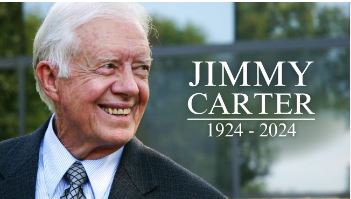
Jimmy Carter, the 24th President of the United States, is a figure whose impact transcends the political landscape. Born on October 1, 1924, in Plains, Georgia, Carter’s journey through life has been marked by a commitment to humanitarianism, diplomacy, and public service. His presidency, which lasted from January 20, 1977, to January 20, 1981, occurred during a tumultuous era characterized by significant global events, including the Iranian Revolution and the Soviet invasion of Afghanistan. However, Carter’s legacy extends far beyond his time in office, encompassing his lifelong dedication to human rights, peace, and community service.
Carter’s roots as a farmer in Georgia shaped his values and work ethic. He was raised in a family that emphasized the importance of service and compassion, principles that would guide him throughout his life. After serving in the Navy, he returned to Georgia to run the family peanut farm. His business experience provided him with a practical understanding of economic issues, which would later inform his policies as a governor and president. In 1966, he began his political career by winning a seat in the Georgia State Senate, eventually serving as the governor of Georgia from 1971 to 1975. Jimmy Carter was born on October 1, 1924, in Plains, Georgia, a small town that played a significant role in shaping his character and aspirations. He was the first of four children born to Bessie and James Earl Carter Sr. His upbringing in a closely-knit family laid the foundation for his strong work ethic and deep commitment to community service.
Growing Up in Georgia
Carter’s early life was influenced by the agricultural lifestyle of his hometown. His family owned a peanut farm, where he learned the values of hard work, perseverance, and self-sufficiency. The Great Depression severely impacted Plains, instilling in Carter a sense of empathy for those suffering economic hardships. The struggles faced by his family during that era shaped his understanding of poverty and social injustice, which would later inform his political and humanitarian efforts. As a child, Carter exhibited a keen interest in education. He was an avid reader, frequently immersing himself in literature, particularly works related to history and science. His mother, Bessie, who was a registered nurse, encouraged his curiosity and nurtured his love for learning. This early exposure to education would prove crucial in his later pursuits, both academically and politically.
Military Service
After graduating from high school in 1941, Carter attended Georgia Southwestern College for a year before transferring to the United States Naval Academy in 1943. His time at the Academy coincided with World War II, and after graduation in 1946, he served in the Navy as a submariner. His military service instilled in him strong leadership qualities and a sense of duty. Carter often transferred the lessons learned in the Navy to his future roles in public service, emphasizing discipline and responsibility.
Return to Plains and Agricultural Career
Following his military service, Carter returned to Plains and took over the family peanut farming business after the death of his father in 1953. He initially struggled to make the business profitable, but through sheer determination and innovation, he succeeded in turning the family farm into a thriving enterprise. Carter’s experiences as a farmer deepened his understanding of the economic challenges faced by rural Americans, influencing his later policies concerning agriculture and farm management. During this time, Carter also became active in his community, participating in various local organizations. His involvement with the Chamber of Commerce and community service groups ingrained in him a sense of responsibility to address social issues within his locality. This engagement would eventually lead him to pursue a career in politics, as he sought to bring about meaningful change in the lives of his fellow Georgians.
Political Beginnings
Carter’s political career began in earnest in the late 1960s. He entered the political sphere when he campaigned for a position in the Georgia State Senate in 1966. His platform emphasized progressive reforms, including better education, health care, and social services. His commitment to these issues resonated with voters, and he won the election. As a state senator, Carter distinguished himself as a reform-minded politician. He worked to combat racial segregation and promote civil rights, earning respect from his constituents and colleagues alike. His performance in the State Senate paved the way for his later election as Governor of Georgia in 1970.
Governorship and National Recognition
Carter served as Governor of Georgia from 1971 to 1975. His governorship was marked by a series of reforms, especially relating to education, mental health, and environmental conservation. He was a staunch advocate for the integration of schools and fought to improve access to education for all Georgians. Additionally, he championed the establishment of the Georgia State Department of Natural Resources, reflecting his commitment to environmental stewardship.
During his tenure as governor, Carter gained national recognition for his progressive policies and his willingness to tackle controversial issues head-on. His unique approach to governance, often characterized by openness and accountability, resonated with an increasingly politically engaged public. By the mid-1970s, Carter was well-positioned to run for the presidency, and he formally announced his candidacy for the Democratic nomination in 1976.
Conclusion
Jimmy Carter’s early life and career laid the groundwork for his future as a prominent political figure and humanitarian. His humble beginnings in Plains, Georgia, shaped his values and his understanding of the challenges that ordinary Americans face. As he transitioned from farmer to politician, Carter’s commitment to public service grew stronger, eventually leading him to the White House and establishing him as one of the most influential advocates for human rights and peace in the modern era.
Presidency and Global Challenges
Carter’s presidency was marked by significant foreign policy challenges. He navigated the complexities of the Cold War, particularly the relationship between the United States and the Soviet Union. His administration is often credited with laying the groundwork for the eventual dissolution of the Soviet Union, although this achievement would not be fully realized until the Reagan administration. One of Carter’s notable accomplishments was the Camp David Accords, a peace agreement between Israel and Egypt that aimed to stabilize a volatile region. This achievement, however, came with its own set of challenges and criticisms, particularly concerning the reactions of other Arab nations.
The Iranian Revolution in 1979 and the subsequent hostage crisis profoundly impacted Carter’s presidency. The U.S. embassy in Tehran was stormed, and 52 American diplomats and citizens were held hostage for 444 days. This event not only strained U.S.-Iran relations but also contributed to Carter’s declining popularity and ultimately led to his defeat in the 1980 election.
Jimmy Carter’s presidency, which spanned from January 20, 1977, to January 20, 1981, came at a pivotal moment in history, marked by significant global tensions and complex challenges that tested his leadership. His administration sought to navigate moral and ethical dimensions in both domestic and international affairs. The era was characterized by a combination of optimism for progress and uncertainty stemming from geopolitical conflicts.
Domestic Challenges
Carter’s presidency coincided with several domestic challenges, including economic instability marked by high inflation and unemployment—termed “stagflation.” Early in his term, he faced an energy crisis that stemmed from OPEC’s oil embargo, causing gas prices to soar and creating widespread anxiety about energy accessibility. In response, Carter implemented energy conservation measures and began promoting the development of alternative energy sources, such as solar power.
Carter also focused on domestic reform, emphasizing human rights and social justice. He aimed to improve the welfare of marginalized groups, including Native Americans, and sought to rectify historical injustices. His administration undertook initiatives to enhance civil liberties and combat discrimination, setting a tone of compassion and equality that permeated his governing philosophy.
Foreign Policy Initiatives
Carter’s approach to foreign policy was heavily influenced by his belief in the importance of human rights as a guiding principle. He emphasized ethical diplomacy, striving for a foreign policy that aligned with the values of liberty and justice. This was evident in a significant shift from previous administrations, which often prioritized strategic interests over humanitarian concerns. One of Carter’s notable foreign policy achievements was the Camp David Accords in 1978, a groundbreaking peace agreement between Israel and Egypt. The negotiations, facilitated by Carter, brought together Israeli Prime Minister Menachem Begin and Egyptian President Anwar Sadat. The agreement led to the normalization of relations between the two nations and set a precedent for future peace efforts in the Middle East. Carter’s commitment to diplomacy and peace earned him praise, ultimately resulting in his receipt of the Nobel Peace Prize in 2002.
Challenges in the Middle East
While the Camp David Accords marked a significant success for Carter, the broader Middle Eastern context remained fraught with tension. The Iranian Revolution in 1979 presented one of Carter’s most formidable challenges. The overthrow of the Shah, a U.S. ally, led to the establishment of an Islamic Republic under Ayatollah Khomeini. The revolution incited significant upheaval, and anti-American sentiment surged in Iran.
In November 1979, the U.S. embassy in Tehran was stormed, resulting in 52 American diplomats and citizens being taken hostage. This crisis not only strained U.S.-Iran relations but also dominated media coverage and public opinion during Carter’s remaining time in office. The prolonged hostage situation, which lasted for 444 days, severely impacted his presidency and contributed to rising dissatisfaction among the American public.
Soviet Union and Afghanistan
Simultaneously, geopolitical tensions between the United States and the Soviet Union escalated. In December 1979, Soviet forces invaded Afghanistan, triggering international condemnation. Carter viewed this invasion as an overarching threat to freedom and a potential expansion of Soviet influence. In response, he took decisive actions that would come to define his foreign policy stance. Carter implemented an economic embargo against the Soviet Union, boycotting the 1980 Moscow Olympics and working to bolster military support for Afghan resistance fighters, known as the Mujahideen. This decision positioned the U.S. in direct opposition to Soviet efforts in Central Asia and laid the groundwork for future American involvement in the region. Carter’s policies during this crisis aimed to contain communism and support the pursuit of freedom, aligning with his moral stance on human rights.
Legacy and Reflection
Carter’s presidency was a complex interplay of achievements and challenges, marked by significant advancements in peace efforts but also overshadowed by crises that tested his leadership. Despite facing substantial adversity, he remained committed to his ideals of human rights and ethical governance. However, his responses to the challenges in Iran and Afghanistan damaged his popularity and contributed to his defeat in the 1980 presidential election against Ronald Reagan.
In retrospect, Jimmy Carter’s presidency can be seen through multiple lenses: as a period of aspiration for peace and justice and as an era that exemplified the limitations and difficulties of implementing these ideals amid geopolitical realities. His commitment to human rights has endured in the narratives of contemporary foreign policy, positioning him as a figure in American history who sought to align moral principles with global diplomacy. Moreover, his post-presidential humanitarian efforts have solidified his legacy as a compassionate leader dedicated to improving lives worldwide.
Humanitarian Efforts and Philanthropy
Despite the challenges he faced during his presidency, Carter’s post-presidential years have defined his legacy as a humanitarian. He and his wife, Rosalynn Carter, dedicated themselves to various charitable efforts, including Habitat for Humanity, which aims to provide affordable housing for those in need. The establishment of the Carter Center in 1982 further exemplifies his commitment to global health, democracy, and human rights. The Center has monitored elections in numerous countries, promoting transparency and fairness in democratic processes.
Carter’s approach to humanitarianism was deeply rooted in his Christian faith, which emphasized service to others. He often spoke about the importance of compassion and empathy, values he sought to embody throughout his life. His work in health initiatives, conflict resolution, and advocacy for human rights earned him the Nobel Peace Prize in 2002, solidifying his status as a global leader dedicated to improving the lives of others. Jimmy Carter’s commitment to humanitarian efforts and philanthropy has defined much of his post-presidential life, reflecting his deep sense of responsibility and empathy for those in need. Following his exit from the White House in 1981, Carter embarked on a journey of service that would take him around the globe, addressing critical issues such as poverty, healthcare, human rights, and democratic governance.
The Carter Center
Founded in 1982, the Carter Center in Atlanta, Georgia, serves as a central hub for Carter’s humanitarian work. His vision was to create a nonprofit organization focused on improving global health, promoting democracy, and advancing human rights. The Center operates on the belief that all individuals have the right to live in freedom and dignity.
Global Health Initiatives:
The Carter Center has tackled numerous health issues worldwide, including diseases that disproportionately affect impoverished populations. One of its most significant achievements has been the fight against Guinea worm disease. The Center, in collaboration with local governments and organizations, launched a comprehensive eradication program that has reduced reported cases dramatically, from an estimated 3.5 million cases in the 1980s to just a handful in recent years. Additionally, the Center has worked on initiatives to combat river blindness and malaria, two diseases that severely impact public health in Africa and other regions. Through education, health promotion, and treatment programs, the Carter Center has made strides in improving health outcomes and preventing disease in vulnerable communities.
Promoting Democracy and Human Rights
The Carter Center has also been a staunch advocate for democracy and free elections. It has monitored over 100 elections in various countries, ensuring that electoral processes are transparent and fair. Carter and his team believe that free and fair elections are fundamental to a functioning democracy. Their monitoring activities span from observing polling places to assessing the overall political landscape, with the goal of fostering democratic governance and accountability. Carter’s dedication to human rights has extended beyond election monitoring. He has continuously advocated for civil liberties and social justice, addressing issues of racism, gender equality, and the rights of marginalized communities. In many instances, Carter has traveled to conflict zones, engaging in dialogue with influential leaders and advocating for peaceful resolutions to disputes.
Habitat for Humanity
One of the most visible aspects of Carter’s humanitarian work is his long-standing partnership with Habitat for Humanity, a nonprofit organization founded in 1976 that focuses on building affordable housing for those in need. Carter and his wife, Rosalynn, became involved with Habitat for Humanity in the early 1980s, and they have since participated in countless building projects across the United States and internationally.
Carter’s hands-on approach to volunteering has drawn significant attention to the need for affordable housing. He has worked alongside families, helping to build homes and advocating for more inclusive housing policies. His involvement with Habitat for Humanity is emblematic of his philosophy that everyone deserves a safe and decent place to live, reflecting the values of service and community.
Global Advocacy and Education
Beyond direct humanitarian work, Carter has used his platform to advocate for education and awareness about critical global issues. He has been vocal about the importance of tackling climate change, emphasizing that environmental degradation disproportionately affects the poorest communities. His writings, speeches, and public appearances have sought to motivate individuals and governments to take action in pursuit of a sustainable future.
Carter has also addressed issues related to global food security and agricultural practices. He has highlighted the need for sustainable farming methods and equitable access to food resources, recognizing the interconnectedness of health, nutrition, and economic well-being.
Legacy of Compassion
Carter’s humanitarian efforts have garnered international acclaim and respect. In 2002, he was awarded the Nobel Peace Prize for his decades-long dedication to promoting peace, democracy, and human rights. The Nobel Committee recognized his efforts to find peaceful solutions to conflicts, as well as his commitment to humanitarian work through the Carter Center.
Even in his later years, Carter has continued to advocate for human rights and social justice, earning praise for his unwavering commitment to service. His example has inspired countless individuals to engage in charitable work and social activism, reinforcing the power of empathy and community in effecting change.
Conclusion
Jimmy Carter’s humanitarian efforts and philanthropy reflect a profound dedication to improving the lives of others, driven by his Christian beliefs and the values instilled in him during his upbringing. Through the establishment of the Carter Center, his active involvement with Habitat for Humanity, and his advocacy for global health and democracy, Carter has left an indelible mark on the world. His legacy as a champion for human rights and social justice continues to influence and inspire new generations, showcasing the impact of compassion and service in creating a better world for all.
Jimmy Carter’s life and career illustrate the profound impact one individual can have on both national and global scales. His presidency, while marked by significant challenges, laid the foundation for future diplomatic efforts and highlighted the importance of humanitarian work. Carter’s legacy is a testament to the power of service, compassion, and the pursuit of peace, principles that continue to resonate in today’s world. As we reflect on his contributions, it is clear that Jimmy Carter will be remembered not only as a former president but as a tireless advocate for humanity.
Here’s a bibliography of notable books and resources that cover various aspects of Jimmy Carter’s life and career, including his presidency, humanitarian efforts, and post-presidential activities.
Bibliography
Books by Jimmy Carter
Carter, Jimmy.An Hour Before Daylight: Memories of a Rural Boyhood. New York: Simon & Schuster, 2001.
Carter, Jimmy.The Hornet’s Nest. New York: Simon & Schuster, 2003.
A historical novel about the American Revolution, showcasing Carter’s literary skills and interest in history.
Carter, Jimmy.Our Endangered Values: America’s Moral Crisis. New York: Simon & Schuster, 2005.
An exploration of the moral and ethical dilemmas faced by American society and leadership.
Carter, Jimmy.A Full Life: Reflections at Ninety. New York: Random House, 2015.
A reflective memoir covering Carter’s life, including personal anecdotes and insights into his presidency and philanthropy.
Biographies
Blow, Charles M.The Devil You Know: A Black Manifesto for Change. New York: Amistad, 2021.
Ambrose, Stephen E.Jimmy Carter. New York: Simon & Schuster, 1998.
A concise biography of Carter’s life and presidency, detailing his political and humanitarian endeavors.
Landsberg, H.The Politics of Hope: Jimmy Carter and the Politics of Change. New York: Holt, Rinehart and Winston, 1977.
An analysis of Carter’s presidency, focusing on his political strategies and the challenges he faced.
Historical Context and Analysis
Brinkley, Douglas.American Moonshot: John F. Kennedy and the Great Space Race. New York: HarperCollins, 2019.
Dallek, Robert.Camelot’s Court: Inside the Kennedy White House. New York: HarperCollins, 2018.
Provides context about the Johnson and Kennedy administrations, offering a backdrop to Carter’s rise in American politics.
Zelizer, Julian E.The Presidency of Jimmy Carter. Lawrence: University Press of Kansas, 1998.
A scholarly examination of Carter’s presidency, covering his policies and challenges in detail.
Humanitarian Work and Post-Presidency
Carter, Jimmy, and Rosalynn Carter.The Virtues of Aging. New York: Random House, 1998.
Krauthammer, Charles.Things That Matter: Three Decades of Passions, Pastimes and Politics. New York: Crown Forum, 2013.
Includes essays that discuss various presidents, including their views on Carter’s influence on human rights and healthcare.
Carter Center – About Jimmy Carter. The Carter Center. Link.
This bibliography offers a range of perspectives on Jimmy Carter’s life, from his early years to his post-presidential humanitarian work, providing insights into his legacy and influence on American society and global humanitarian efforts.
Affiliate Disclosure: This blog may contain affiliate links, which means I may earn a small commission if you click on the link and make a purchase. This comes at no additional cost to you. I only recommend products or services that I believe will add value to my readers. Your support helps keep this blog running and allows me to continue providing you with quality content. Thank you for your support!
This transcript records a panel discussion at the International Islamic University exploring the complex relationship between Muslim identity, Islamic teachings, and Western influence. The speakers debate the challenges of reconciling traditional Islamic values with modernity, particularly concerning Western liberalism and secularism. They discuss the impact of Western ideologies on Muslim youth, the role of technology in shaping perceptions of Islam, and the dangers of both complete rejection and uncritical acceptance of Western culture. Accusations of Muslim exclusivism are addressed, and the speakers analyze the strategies used to counter negative narratives about Islam. Ultimately, the conversation centers on finding a balanced approach to navigating a globalized world while preserving Islamic identity.
Unpacking Muslim Identity, Islam, and Western Influence: A Study Guide
Quiz
Instructions: Answer the following questions in 2-3 sentences each, based on the provided source text.
According to the speakers, what is the simple definition of a Muslim?
What is the meaning of La Ilaha Illallah beyond the literal, according to Qaiser Ahmed Raja?
What are the two primary ways in which “the devil” causes misguidance, according to Khalid Mahmood Abbasi?
What is meant by the term “Gulu” in the text? Give an example provided in the text.
How did the speakers characterize the Jadid movement?
What is the Bretton Woods System and what is it used for according to the text?
What is the claim about the West’s actions during the first and second wars?
What are some of the reasons given for the rising trend of Ilha (apostasy) among those with religious backgrounds?
According to the speakers, what are some examples of the failures of liberalism in recent times?
What does the speaker say about the use of technology and Islam?
Quiz Answer Key
A Muslim is simply defined as someone who believes in Tauheed (the oneness of God) and the finality of prophethood, and who lives their life according to the rules given by Allah. It’s about faith and adherence to divine guidance.
Beyond the literal, La Ilaha Illallah means that no system is worthy of worship or should be followed except the system of Allah. It entails not only belief in God’s oneness but also adherence to divine law in daily life.
The devil causes misguidance by creating Gulu in good things, taking them to extremes, and by diverting feelings that should be directed towards Allah to creation. An example of this is the elevation of Prophet Isa to the status of the Son of God.
“Gulu” refers to taking something good to an extreme, thereby distorting it. In the text, the example given is how love for Prophet Isa was taken to the extreme of deifying him.
The Jadid movement is described as dangerous, a form of reform that seeks to make Islam palatable to the West, like the vision of Sir Syed Ahmed Khan. It is seen as undermining traditional Islamic beliefs.
The Bretton Woods System, created in 1940, is described as an economic system put in place to control countries’ economies, foreign policy, and decision-making through institutions like the IMF and the World Bank, ensuring they remained dependent even after gaining theoretical independence.
The speakers claim that the West caused holocaust, dropped nuclear bombs, and killed large numbers of innocent people during the first and second world wars, yet tries to act like a moral authority.
The rising trend of Ilha is attributed to the imposition of a Ghalib culture, lack of feeling, and material interpretations of religion rather than spiritual understanding. This is due to confusion over what Islam actually is.
Some examples of the failures of liberalism include Brexit, the rise of conservative populist governments in countries such as Hungary, Austria and Italy, and the election of Donald Trump. These events are seen as signs that liberalism is on the decline globally.
Technology is seen as value-neutral, in that it’s not inherently tied to any particular culture or religion. Its impact depends on how it is used, and the speakers advocate for using technology to spread Islamic teachings and values effectively.
Essay Questions
Instructions: Answer the following questions in a well-developed essay using information found in the provided sources.
Analyze the speakers’ perspectives on the relationship between Islam and Western culture. How do they view the influence of the West on Muslim identity, and what solutions do they propose?
Discuss the concept of “exclusivity” as it is used in the text. How do the speakers understand the idea of being exclusive in religion, and what arguments do they make for or against it?
Explore the arguments made in the text about the dangers of liberalism and secularism. What specific criticisms do they raise, and what alternatives do they suggest?
Compare and contrast the speakers’ analysis of modern societal issues. What are the common themes they address, and where do their viewpoints differ?
How do the speakers believe that technology should be used in relation to Islam and Islamic values, and how does that relate to their critique of western culture?
Glossary of Key Terms
Tauheed: The Islamic concept of the oneness of God; the absolute monotheism in Islam.
Prophethood: The state of being a prophet; Muslims believe in a line of prophets, the last of whom is Muhammad.
La Ilaha Illallah: The central tenet of Islam, often translated as “There is no god but Allah.” This statement is a declaration of monotheism and devotion.
Gulu: The concept of taking something good or religious to an extreme, thereby distorting its true meaning.
Jadid Movement: A reformist movement in Islam aimed at modernizing Islamic thought and practice in response to Western influence.
Bretton Woods System: An economic system established in 1940 to regulate the international monetary and financial order, which included the creation of institutions like the IMF and World Bank.
Ilha: The term used to refer to apostasy, the renunciation of Islam by a Muslim.
Dajjal: In Islamic eschatology, an evil figure who will appear before the Day of Judgment, often associated with deception and false messiahship.
Sirat Mustaqeem: The straight path; the righteous path that Muslims are encouraged to follow, according to Islamic teachings.
Maghrib: The Arabic term for the West.
Ikamat Deen: Establishing the religion; the concept of implementing Islamic law and governance.
Mushara: A collective term for society or community.
Sajdah: Prostration in prayer; an act of submission to Allah.
Kuli Khair/Kuli Shar: Terms meaning complete good and complete evil, respectively.
Liberalism: A political and social ideology that emphasizes individual rights and freedoms.
Secularism: The principle of separation of the state from religious institutions.
Transderm/Transient: Terms related to the nature of things that can be appreciated but not brought under the control of the intellect, often used in theological discussions.
Immanent: The opposite of transderm/transient, referring to things that are within the realm of human understanding, including the material world.
Hijrat: Migration, often referring to the Islamic concept of emigrating to a place where one can practice Islam freely.
Unpacking Muslim Identity: Islam and Western Influence
Okay, here is a detailed briefing document reviewing the main themes and important ideas from the provided text excerpts.
Briefing Document: Analysis of “Unpacking Muslim Identity, Islam and Western Influence” Discussion
Date: October 26, 2023
Subject: Analysis of a discussion on Muslim Identity, Islam and Western Influence
Sources: Excerpts from a discussion transcript titled “Unpacking Muslim Identity, Islam and Western Influence,”
Overview
This document summarizes the key themes and arguments presented in a transcribed discussion concerning Muslim identity, Islam, and Western influence. The discussion features several speakers, including Qaiser Ahmed Raja, Khalid Mahmood Abbasi, and Zubair Safdar, who offer their perspectives on the challenges facing the Muslim community in the modern world. The discussion covers topics ranging from secularism and liberalism to the role of technology and the concept of Dajjal (the Antichrist) within an Islamic context.
Key Themes and Ideas
The Simplicity of Islamic Identity vs. Modern Confusion:
Core Definition: Speakers emphasize the simplicity of Islamic identity: believing in the oneness of God (Tauheed) and the finality of the Prophet Muhammad, then following the rules given by Allah. Qaiser Ahmed Raja states, “The simple thing is that every person who believes in Tauheed and ends in Prophethood. One has faith and after that he spends the rest of his life according to the rules given by Allah, he becomes a Muslim. It is simple.”
Confusion Arises from Mixing Systems: The speakers argue that confusion arises when Muslims try to integrate other ideologies (e.g., liberalism, capitalism, socialism) into their faith. They posit that trying to please too many belief systems leads to internal conflict. They use an analogy of a boat, suggesting that trying to be on multiple “boats” of different ideologies at once leads to problems, that the straight path is that of Allah and following multiple leads to multiple prostrations.
“Prostration to Darwinism”: If Muslims reject the order of Allah, they are forced to prostrate before a multiplicity of ideas, including “Darwinism,” implying a loss of faith as a consequence of modern ideologies.
Exclusivity: Speakers assert that Islam is an exclusive belief system. Qaiser Ahmed Raja states, “…if we don’t face any blame then we should snatch this title on our chest that yes we are exclusive jam wala dat.” It is seen as natural for any group to have exclusive markers.
Critique of Western Influence:
Rejection of “Maghrib”: There’s a strong critique of Western culture (“Maghrib”), which is seen as a source of corruption and misguidance. They cite Western actions such as the Holocaust and dropping of nuclear bombs to demonstrate the perceived moral failings of the West.
Historical Dependency: It’s argued that Muslim societies became dependent on Western powers due to historical circumstances such as Imperialism, which has resulted in contemporary economic and political issues. They also cite the Bretton Woods system of the IMF and World Bank as examples of continuing forms of Western economic control.
Rejection of Western Values: The speakers criticize what they perceive as Western values of individualism, secularism, and liberalism, believing they undermine traditional Islamic structures.
The West’s Decline: It is stated that the West is declining, and that its liberal foundations are failing. They refer to Brexit, the rise of conservative governments in Europe, and the election of Trump as evidence of the failure of liberalism.
The Problem of “Jadid” (Modernism) and Ilha (Atheism):
Jadid as a Threat: The “Jadid” movement is seen as a dangerous effort to reform Islam to align with Western values, a sentiment described as like a “disease”.
Ilha and Transderm: Speakers posit that modernism has eroded the concept of the “transcendent” (God) in favor of the “immanent,” leading to atheism.
Funded Narratives: It’s argued that Sufi narratives are being funded to promote a diluted version of Islam. Similarly, funding is given to other movements to create equality between the religious and nonreligious.
Deception and Dajjal: Modernist movements are viewed as potentially deceptive, part of a broader effort associated with Dajjal (the Antichrist), who will use deception and religious narrative to mislead. Abbasi says, “Dajjal will or will not use deception, he will not be liberal, he will be like me, then you will be deceived.”
Navigating the Complexities of the Muslim Community:
Categories of Muslims: The discussion identifies different types of Muslims: liberals, “secular” Muslims, cultural Muslims, religious Muslims, and those who are considered “brokers” for the West.
The Danger of Extremism: While advocating for a firm stance on Islam, the speakers are cautious about labeling and alienating large segments of society, noting that “we should not go into this exclusive world like this.”
The Importance of Unity: They express the importance of uniting the Muslim community by bringing all Muslims to the faith, not simply insulting or labeling them, a call to empathy.
Technology and Its Impact:
Value Neutrality of Technology: While the speakers don’t universally condemn Western technology, there is an acknowledgment that it isn’t value-neutral.
Use and Misuse: The emphasis is on how technology is used, not on the technology itself; technology can be a tool for good or ill depending on the values of the person using it.
Communication and Influence: Technology and communication is said to have a significant impact on how information is spread and how it shapes the youth. The modern communications technology can lead people astray.
Islamic Institutions as Sources of Dajjal: There is concern about the decline of Islamic institutions, such as Islamic universities, and how they have become sources for a weakened and misrepresented view of Islam.
Liberalism, Freedom and Anarchy
The Limits of Freedom: The speakers argue that “liberal freedom” can lead to anarchy as the rejection of all structures. Liberalism is seen as having created many negative outcomes, and the rise of traditionalist figures in Western politics is a reaction to these failures.
Liberal Hypocrisy: The speakers accuse liberals of being intolerant and hypocritical, noting that they don’t give others freedom within their own value structures; as such, they are not free.
The West’s Exploitation and Deciet
The West as exploitative: The speakers argue that the West has not given their resources freely, but to make money, and that whatever they have given to the Muslim world is in fact leftover or outdated.
The West’s “Holocaust” The speakers state the West has committed horrific violence, not only against Muslims, but other peoples as well.
Quotes of Note
“If you leave the order of Allah then you If you have to pay sajdah at many places, then you will have to pay sajdah to Darwinism.” – Emphasizes the perceived loss of religious faith due to secular ideologies.
“There is no change in the world unless there is polarization first. Hate becomes a reason. Without this polarization, revolution does not come.” – Suggests that conflict and polarization are necessary for change.
“We are teaching Islam to the masses and by giving information to people by putting a label on it, we are misleading them into thinking that we have understood the whole of Islam from Ghadi Saheb which is mine.” – Criticizes shallow, labeled understandings of Islam.
“The difference is that if you study this Jadid movement, you will know how dangerous their work is, we have failed in the world, not the religion.” – The fault lies with Muslims, not Islam itself.
“The very first thing you should do if you want to exist with someone is that you are that person and we are this person.” – Justifies exclusivity in terms of group identity.
“…when you become against every structure, then the state is also a structure. You have to live under it…” – Critique of the Anarchic nature of absolute liberalism.
“Now you see, the situation has started to develop. Just now there was talk of funding, so one thing like that. Funds are being given to build a narrative and secondly , funds are being given to build a narrative of Sufi Jama on religious basis.” – Suggests outside funding to manipulate the Muslim community.
Conclusion
The discussion reflects a strong concern for the preservation of Islamic identity in the face of perceived Western cultural and ideological threats. There’s an emphasis on the purity and simplicity of Islamic teachings and a call for greater adherence to its principles. The speakers view the modern world as a battleground of competing ideologies, with Western liberalism as a significant source of confusion and misguidance, and that the current issues are the result of human error and not an issue with Islam. The discussion also warns against the deception of Dajjal and the subtle ways it can influence the Muslim community. They also acknowledge the complexity and need for empathy when engaging with those who have been led astray. The overall tone is a call for increased awareness, greater dedication to Islam, and a firm rejection of what are seen as harmful outside influences.
Muslim Identity in a Western World
FAQ: Unpacking Muslim Identity, Islam, and Western Influence
What is the core, uncomplicated definition of a Muslim identity?
The fundamental definition of a Muslim is someone who believes in the Oneness of God (Tauheed) and the finality of prophethood, and who lives their life according to the rules and principles given by Allah. The issue arises when people try to mix or integrate other worldviews or systems, causing confusion and deviation.
Why does confusion arise when trying to integrate multiple systems of belief and practice?
Confusion arises when individuals attempt to adhere to multiple, conflicting systems simultaneously. This is likened to trying to travel in several boats at once – one being the system of Allah, and the others being materialistic science, socialism, liberalism, or individualism. This deviation from the straight path (Sirat Mustaqeem) leads to internal conflict and a loss of focus on the Islamic system.
What is meant by the accusation that some Muslims are “exclusivists” and why is this not a negative thing in this context?
The accusation of “exclusivism” arises when Muslims assert the distinctiveness of their faith and system, which is seen as exclusionary. However, the speakers here argue that all ideologies are exclusive in their nature. Every identity or system has boundaries. Asserting the distinctiveness of Islam is necessary for its preservation and is not inherently negative when it comes to differentiating belief systems. Islam is a clear system separate from other systems, and its boundaries must be acknowledged.
How do Western influences, particularly the Bretton Woods System and post-9/11 media, contribute to the identity crisis among some Muslims?
Western systems, such as the Bretton Woods System (including the IMF and World Bank), have created economic dependencies that can limit national autonomy. Furthermore, post-9/11 media narratives have contributed to an identity crisis by creating confusion, promoting certain viewpoints, and diminishing the Islamic worldview. This has led to a feeling that the Islamic system is not comprehensive and needs to be replaced with a Western paradigm.
What are the different reactions to Western influence among Muslims, and why are they problematic?
There are various reactions to Western influence, including complete rejection, complete acceptance, and a moderate middle ground. Both complete rejection and acceptance are seen as problematic. The middle ground, which involves sorting through good and bad aspects, is seen as a difficult but necessary task, though those attempting it often find themselves caught between extremes of thought.
How do the speakers understand secularism, liberalism, and their impact on society?
Secularism and liberalism are viewed as having a negative impact by weakening religious structures, especially the family, and leading to a decline in moral values. Liberalism’s pursuit of absolute individual freedom and rejection of structure is seen as leading towards anarchy, which is contrary to the need for structure in a globalized world. The speakers argue that the rejection of all structures inevitably destabilizes societies, and these ideologies are ultimately self-destructive.
How is the concept of “Dajjal” (Antichrist) interpreted in the context of contemporary society?
The “Dajjal” is not seen as a monstrous figure with horns but rather as a charismatic and deceptive force that will use religious narratives to mislead people. Dajjal’s deception may include miracles and attractive ideas that mask the real intention of taking control. The speakers warn against the appeal of figures who appear religiously sound but are actually serving secular or Western agendas. They will use deception, and will not be liberal or secular, rather they will appear to be aligned with traditional and religious values.
How should Muslims approach technology, and what is the critique of Western technology and its origins?
Technology is seen as value-neutral in itself. It’s the use and underlying ideology that make it good or bad. The speakers reject the idea that Western technology comes as a favor; rather it is primarily for Western benefit and secondly sold as a byproduct. They note that technology is developed based on the values of the culture that created it. However, Muslims should use technology without being defined by its values and with the goal of advancing the interests of Islam.
The Crisis of Islamic Identity in the Modern World
Okay, here’s a detailed timeline and cast of characters based on the provided text:
Timeline of Main Events & Ideas Discussed
Past (Historical/Religious Context)
Divergence from Allah’s Path: The discussion begins by asserting that deviations from the path of Allah lead to multiple forms of “prostration” or subservience (e.g., to Darwinism, materialism, socialism, liberalism, capitalism).
Gulu (Extremism) and Diversion: The text argues that some misinterpretations of Islam take the form of excessive devotion (Gulu), and the diversion of love and sacrifice that should be directed to Allah to other entities (example given of Jesus/Hazrat Masih).
British Colonial Influence: The British presence in India led to two opposing reactions: the resistance of Darul Uloom Deoband and the total acceptance by Aligarh (Sir Syed Ahmed Khan).
Jadid Movement: The Jadid movement is described as a dangerous attempt to reform Islam to make it palatable to the West, likened to Sir Syed Ahmed Khan and Gandhi’s approach.
Fall of USSR & Impact: The fall of the USSR and its influence on Islamic regions is briefly mentioned, suggesting a negative impact on Muslim societies.
Bretton Woods System (1940s): The establishment of institutions like the IMF and World Bank is seen as a way to control the economies and policies of nominally independent nations, a form of Western Imperialism.
Post-9/11: The period after 9/11 is noted as a time when a lot of “content” was produced that led to identity crises amongst Muslim children.
Historical Atrocities by the West: The text references historical atrocities committed by the West like the Holocaust, dropping nuclear bombs, and other wars, as examples of Western hypocrisy and barbarity.
Present (Contemporary Issues)
Confusion of Muslim Identity: A major theme is the complexity of Muslim identity, with Muslims categorized as: liberal, secular, culturally Muslim, religious, “brokers” of religious ideas, common Muslims, and fanatical Muslims.
Exclusivity in Identity: The speakers argue that embracing exclusivity in religious identity is natural and necessary for maintaining religious boundaries. They point out that all political ideologies, secular or otherwise, have exclusive claims.
Critique of Secularism & Liberalism: The speakers express strong criticism of secularism and liberalism, arguing that they lead to moral decay, anarchy, and the weakening of traditional structures. They discuss the idea that secularization has failed and that religion cannot be eliminated.
Western Influence on Muslims: Concern is expressed about the negative impacts of Western culture and ideology, the effects of the Maghrib, particularly its technology and values, on Muslim societies and individuals.
Funding of Anti-Islam Narratives: The discussion references the idea that funds are being given by the US to spread anti-Islamic narratives in the guise of promoting equality between religious and non-religious groups and to build narratives around Sufism.
Liberal “Machetes”: The text discusses how some see liberals as being “free machetes” but argues that they are equally or more coercive than some elements within the religious community.
Decline of Liberalism: The speakers point out the perceived decline of liberalism globally, citing examples like Brexit, the rise of populist governments in Europe, and Trump’s presidency.
Dajjal: The speakers discuss the concept of Dajjal as a form of deception, who will appear attractive and use religious language to deceive people.
Critique of Islamic Education System: The Islamic education system is criticized for not doing enough to explain the political/social aspects of Islam or guiding how Islam should be applied in daily life and for failing to combat the rising influence of the West.
Technology & Values: The argument is made that technology is value-neutral, and it is the way it is used that matters, while emphasizing their stance that they are not against technology and science, just how the West uses it.
Hijrat: The question of why Muslims seek to leave Muslim countries and migrate to the West is also raised.
Future (Concerns & Challenges)
Polarization: The speakers assert that polarization is necessary for revolution and social change.
Potential for Religious Conflict: A concern that a new problem may arise within the religious community itself, where some are influenced by modernizing forces and might pose an obstacle for the traditionalists.
Need for Clear Religious Vision: The text emphasizes the importance of having a clear understanding of Islam, particularly its concepts of tradition (Sunnah) and the implementation of Islam, and that the Islamic movement needs to adapt a unified approach and should make the effort to connect with every person, rather than just labeling everyone with special titles, that way they can bring them to Islam.
Cast of Characters
Qaiser Ahmed Raja: A prominent figure who is known for his work on social media where he harasses secular people. He is concerned with the effects of Western influence and its cancellation on Pakistan. He believes Islam is simple and that following Tauheed and the Prophethood is all that is needed to define a Muslim. He argues that religious identity should be exclusive, and that the problem is mixing various ideologies, which he illustrates with an analogy about boats.
Khalid Mahmood Abbasi: A person who spent a significant part of his life in the company of Dr. Israr Ahmed and resigned from it. He is interested in topics like the Islamic movement, Iqamat Deen (establishment of religion), and the negative aspects of Western culture. He argues that current religious practices are not open to other points of view. He states that people have become overly focused on personal interpretation, often influenced by worldly desires. He believes Dajjal will not appear to be secular or liberal, but will instead utilize religious language to deceive.
Zubair Safdar: The Nazim of Jamiat Talba and leader of Jamaat Islami Halka Islamabad. He is interested in the attitudes and positions of the youth on these issues. He believes the current situation is not as serious as some believe. He states that the spirit of the Dai is still within the Muslim community and that people should try to unite everyone, rather than label people.
Dr. Israr Ahmed: Although not present at the discussion, his influence is mentioned as being a mentor to Khalid Mahmood Abbasi. He is mentioned as a prominent figure within the Islamic movement.
Syed Muzammil Sahab, Faran Alam Sahab, Professor Asim Sajjad Sahab: These individuals were invited to represent secular perspectives but were unable to attend, as they felt it would be difficult to face Qaiser Ahmed Raja.
Sir Syed Ahmed Khan: A figure who is mentioned as one of the two reactions to the British influence on India, who embraced Western culture (specifically, the Aligarh movement).
Allama Iqbal, Abul Kalam Azad, Maulana Abul Aala Moudi: These are mentioned as significant Muslim figures who took the good things from the West but had to reconcile the bad with the good, and who did not agree with the idea of total rejection.
Hazrat Isa al- Salam: Refers to Jesus, whose story is used as an example of how religious figures can be elevated beyond their proper status.
Mohammed bin Salman: Mentioned briefly for his efforts in “modernizing” the Arab world, and the impact that has on other countries.
Trump: The former US President is cited as a reaction against liberalism, representing a return to traditional values and rejecting liberal principles as promoting anarchy.
Rousseau and John Locke: Rousseau is mentioned in the context of intellectual discussions of social contract theory, as something the “liberals” in Pakistan are not able to understand.
Lenin, Stalin, Mao: These figures are cited as examples of how political ideologies such as socialism are “exclusive.”
Peter Berger and John Murr Schumer: These Western thinkers who have written on secularization are cited as thinkers who acknowledge the failure of liberalism and the inability to eliminate religion from the world.
Dr. Musaddiq: He is a figure whose overthrow the speakers state the West is responsible for.
Analysis & Summary
The text presents a strongly conservative and critical view of Western influence on Muslim societies. It emphasizes the importance of a clear and exclusive Islamic identity and the need to resist Western values like liberalism, secularism, and individualism. The speakers see these as detrimental forces leading to moral decline and a weakening of the Islamic faith. The discussion highlights concerns about the influence of money, technology, and global events on the Muslim world. A lot of concern is expressed about the way the Muslim educational system is failing the youth and setting them up for failure. It also references the historical harms the West has done to Muslim nations. The dialogue underscores the tension between tradition and modernity and calls for a revitalization of Islamic principles in all aspects of life.
Let me know if you have any further questions!
Muslim Identity in a Globalized World
Muslim identity is a complex issue with varying perspectives, and the sources discuss several aspects of it [1].
Defining Muslim Identity:
A simple definition of a Muslim is someone who believes in Tauheed (the oneness of God) and the finality of Prophethood, and lives their life according to the rules given by Allah [1].
However, when people try to reconcile different viewpoints or please multiple perspectives, confusion about identity arises [1]. This is because Islam has a clear boundary of what is Deen (religion) and what is not [2].
The sources also acknowledge that there are different types of Muslims, including those who identify as liberals, secular, or those who are culturally Muslim [1]. Some Muslims are seen as brokers for the West and others as strict or fanatic [1].
Challenges to Muslim Identity
Western influence is a major theme, with concerns about its effects on Muslim countries and the potential for it to lead to an identity crisis [3, 4].
The sources discuss the idea that the West’s system is based on individualism, while the Islamic system is based on collectivism, and when these systems mix it can lead to confusion and a need to bow before other systems like liberalism and capitalism [5].
Dependence on Western systems is also a concern. The Bretton Woods System, IMF and World Bank are cited as examples of mechanisms that capture a country’s economy, decision making and foreign policy [4].
The sources express concern that Muslims have not presented Islam in its grand context or explained why it is better than Western systems [4]. This has led to Muslims adopting Western paradigms which cause misunderstanding [4].
Exclusivity:
Some Muslims are accused of being exclusivist, but the sources argue that exclusivity is inherent in any identity badge. They claim that liberalism and secularism are also exclusive [2].
The sources suggest that the boundary of Islam is very clear, and if one is not exclusive, then they will follow both liberal and socialist ideologies, while also trying to practice Islam. This is seen as a problem because Islam requires following the system of Allah alone [2].
One of the main points of the sources is that there is no change in the world unless there is first polarization [6], and that hate can be a reason for polarization, and it is needed for a revolution [6, 7].
There is an idea that those who do not adhere to the system of Allah will have to pay prostration in other places [6].
Internal Divisions:
The sources point out divisions within the Muslim community, with some adhering to traditional interpretations and others embracing modern views [8, 9].
The speakers in the sources discuss how the conflict between those who totally reject Western culture, those who totally accept it, and those who try to take the good aspects from it has created internal division [10].
There’s a view that some religious leaders have become too focused on their own sect, and are not open to other viewpoints [11].
The Role of Technology:
Technology is seen as a tool that is value-neutral, and can be used for good or bad purposes depending on the ideology it is based on [12-14].
The sources argue that the issue is not the technology itself but how it is being used, and what is being spread through it [13].
They point out that technology can be used to spread both Islamic and anti-Islamic narratives [13].
The Importance of Unity:
There is an emphasis on the importance of uniting the Muslim community by connecting with people and bringing them closer to Deen (religion) [15, 16].
The sources suggest that labeling people is not the correct approach; instead the focus should be on bringing people closer to Islam and warning them about their weaknesses [16].
It is noted that the Muslim community is meant to unite everyone, and not insult anyone [15].
Dajjal (The Deceiver)
The concept of Dajjal is introduced as a powerful deceiver who will use a religious narrative and have many miracles to attract people [17].
It is suggested that the Dajjal will not be secular or liberal, but rather will appear as someone who is like “us,” deceiving people into following them [17].
The sources also suggest that the Dajjal will use funding to create a narrative and build a following on a religious basis [12].
The Importance of the “Sirat Mustaqeem” (Straight Path)
The “Sirat Mustaqeem,” or the straight path, is referenced as the correct way of life for Muslims [5-7].
The sources argue that if a person deviates from this path, they do so because of a love of the world which results from lack of faith in the end [7].
The sources suggest that if you want to follow Sirat Mustaqeem you must make sacrifices at every step [7].
In conclusion, the sources present a complex view of Muslim identity, shaped by various influences and internal divisions. There is an emphasis on maintaining a clear Islamic identity while being wary of Western influences and the deception of Dajjal, as well as the importance of unity and following the Sirat Mustaqeem. The sources also argue for a deeper understanding of Islam and a more proactive approach to spreading its message, while acknowledging the challenges of navigating a world with diverse ideologies and strong competing narratives.
Western Influence and the Muslim World
Western influence is a significant concern in the sources, with discussions focusing on its impact on Muslim identity, culture, and political systems [1-4]. The sources highlight several key aspects of this influence:
Cultural Impact: The sources express concern that Western culture can lead to an identity crisis for Muslims [3]. There is a perception that Western systems, which are based on individualism, clash with the collectivist values of Islam, causing confusion and a need to compromise [5, 6]. The sources also suggest that Muslims who are influenced by Western culture may end up abandoning Islamic principles and traditions, and may even end up “bowing before individualism” [6].
Economic and Political Control: The sources argue that Western powers exert control over Muslim countries through economic and political structures such as the Bretton Woods System, the IMF, and the World Bank [3]. It is suggested that these institutions can capture a country’s economy, decision-making processes, and foreign policy, thereby limiting their independence [3]. The sources also mention how Western powers have interfered with Muslim countries through wars and political regime change [7, 8].
Clash of Ideologies: The sources discuss the conflict between those who see Western culture as entirely bad and those who see it as entirely good, and those in between who attempt to pick and choose the good parts, and how this creates division [9, 10]. It is argued that the West’s secular and liberal ideologies are incompatible with Islam, and that trying to reconcile them leads to confusion and a departure from the “Sirat Mustaqeem” (straight path) [5, 6, 11]. The sources present the idea that Muslims who are influenced by the West may adopt liberal and socialist ideas, as well as try to practice Islam, which is presented as a contradiction [12].
Technology as a Tool: While technology is seen as value-neutral, the sources acknowledge that it can be used to spread Western cultural values, which can negatively impact the Muslim world [13-15]. There is concern that technology is being used to promote narratives that are not in line with Islam [14, 16]. It is argued that Muslims must learn to use technology in a way that promotes their own values and beliefs rather than those of the West [14].
The Deception of Dajjal: The sources introduce the idea of Dajjal, the deceiver, as being connected to Western influence. It is suggested that the Dajjal will not be secular or liberal, but will use a religious narrative to deceive people, using funding to build his following [13, 17]. The sources present the idea that the Dajjal will use a form of Western logic and thinking while appearing to be a religious leader [13].
Rejection vs. Acceptance: The sources describe a historical pattern of reactions to Western influence, with some Muslims choosing to totally reject it, while others totally accept it [4, 9]. It is argued that neither of these approaches is correct, but instead, Muslims must learn to discern between the good and bad aspects of Western culture, retaining their own identity while also benefiting from its positive elements [9, 18].
The Failure of Liberalism: The sources claim that liberalism is failing in the West and that its emphasis on freedom leads to anarchy [19, 20]. They argue that the rise of populist and conservative movements in the West demonstrates that liberal ideology is not sustainable [7, 21]. The sources suggest that the West’s own rejection of liberalism further undermines its claim to global dominance [22].
Need for Islamic Alternatives: The sources suggest that Muslims need to present Islam in its grand context and explain why it is better than Western systems [3]. This includes emphasizing the merits of the Islamic political and judicial systems and explaining the value of Islamic culture [3, 22]. The sources advocate for a strong Islamic identity and argue that Muslims should not compromise their principles in an attempt to please Western powers [5, 6, 12].
In summary, the sources express deep concern about Western influence, viewing it as a threat to Muslim identity, values, and political autonomy. They advocate for a strong, independent Islamic identity, and argue that Muslims must resist Western encroachment and work towards the implementation of Islamic principles in all aspects of life. The sources also suggest that Western systems are in decline and are not sustainable, and that Islam offers a better alternative for the future [7, 21, 22].
Islamic Movements: Responses to Western Influence
The sources discuss Islamic movements primarily in the context of their responses to Western influence and their efforts to define and assert Muslim identity. Here’s a breakdown of key points:
Response to Westernization: The sources portray Islamic movements as a reaction to the perceived negative impacts of Western culture, including cultural imperialism, economic exploitation, and political interference. These movements seek to counter Western influence and reclaim Islamic values [1-4].
The sources mention a historical split in the Muslim world between those who wanted to boycott the West, like Darul Uloom Deoband, and those who wanted total acceptance of Western culture, like Aligarh. Islamic movements are presented as a reaction to those positions, where some attempt to take the good aspects of Western culture while retaining their Muslim identity [4, 5].
Emphasis on “Ikamat Deen”: The concept of “Ikamat Deen,” which means establishing or implementing the religion of Islam, is a recurring theme. This suggests that many Islamic movements aim to not only preserve Islamic identity but also to actively establish Islamic systems of governance and justice [2, 6].
Rejection of Secularism and Liberalism: Many Islamic movements, according to the sources, are critical of secularism and liberalism, viewing them as ideologies that are incompatible with Islam. These movements often advocate for the implementation of Islamic law (Sharia) and a rejection of Western legal and political systems [1, 7].
The sources claim that liberalism is failing in the West and that its emphasis on freedom leads to anarchy and that this indicates that liberal ideology is not sustainable [8, 9].
Focus on Education and Da’wah: The sources discuss the importance of education and “Da’wah” (inviting people to Islam) as tools for strengthening the Muslim community and countering Western narratives. There is a sense that Muslims have failed to adequately convey the teachings of Islam and have instead adopted Western paradigms [3, 6].
The sources mention the need to utilize technology to promote Islamic values and counter anti-Islamic narratives. Technology is seen as a tool that is value neutral but can be used to promote Western cultural values [10].
Internal Divisions: The sources highlight internal divisions within Islamic movements, including disagreements on the best way to respond to the West and how to define Muslim identity. These divisions include differing views on the value of Western culture and technology, and the role of tradition and modernity in Islamic practice [11-13].
There are different views on whether to totally reject, totally accept, or try to synthesize different aspects of Western culture [4, 5, 12].
There is a critique of some religious leaders as being too focused on their own sect, which results in narrow viewpoints [7].
The Concept of Polarization: The sources emphasize the idea that polarization is necessary for change, and that hate can be a reason for polarization. This suggests a belief among some Islamic movements that confrontation with opposing forces is necessary for a revolution [14, 15].
Accusations of Exclusivity: The sources mention that Islamic movements are often accused of being exclusivist. However, the speakers in the sources argue that exclusivity is inherent in any identity and that liberalism and secularism are also exclusive [16].
Concerns about “Dajjal”: The sources connect Islamic movements to the concept of “Dajjal” (the deceiver) which is framed as a figure that will use a religious narrative and deception to lead people astray. This suggests that some Islamic movements are concerned about the possibility of being misled by false leaders or narratives [17, 18]. The sources indicate that this figure will use a form of Western logic and thinking while appearing to be a religious leader [17].
Critique of Modernity: The sources discuss the idea that the modern world is characterized by “the love of the world,” which is seen as a result of a lack of faith. This is presented as a reason why some people move towards secularism, liberalism, and other modern ideologies. [15] The sources argue that it is necessary to make sacrifices at every step to follow the straight path [15, 17].
Critique of specific Islamic groups: There are also some critical statements of Sufism, as some see funds being given to create a narrative of Sufism on its foundation [14].
In summary, the sources portray Islamic movements as diverse responses to Western influence, characterized by a desire to reclaim Islamic identity and implement Islamic principles. These movements are often critical of secularism, liberalism, and other Western ideologies, and they seek to establish Islamic systems of governance and justice. The sources also highlight the internal divisions and challenges faced by these movements, including concerns about exclusivism and the deception of “Dajjal”, as well as the love of the world that drives people from the straight path.
Islamic Narratives and the West
Religious narratives are a central theme in the sources, often discussed in the context of Islam, its relationship with the West, and the challenges faced by Islamic movements. Here’s a comprehensive overview of the key aspects of religious narratives discussed in the sources:
The Core of Islamic Narrative: The sources emphasize that the core of the Islamic religious narrative is the belief in “Tauheed” (the oneness of God) and the finality of prophethood. According to the sources, a Muslim is one who believes in these principles and lives according to the rules given by Allah [1]. This is presented as a simple and straightforward definition of a Muslim, which contrasts with the complexities and confusions created by Western influences [1]. The practical meaning of “La Ilaha Illallah” (There is no god but Allah) is presented as the idea that no system is worthy of worship except the system of Allah, which should be followed except the system of Allah [2].
Religious Narratives vs. Western Narratives: The sources present a conflict between Islamic religious narratives and Western secular narratives. They argue that the West has imposed its own narrative on the world through cultural, economic, and political means, and that this has led to a crisis of identity for Muslims [3-5]. The sources suggest that Western narratives often contradict Islamic teachings, and that Muslims should not compromise their religious values in order to please Western powers [1, 2, 6].
The Dajjal Narrative: The sources introduce the concept of the “Dajjal” (the deceiver) as a key figure in a deceptive religious narrative. It is suggested that the Dajjal will not be secular or liberal, but rather will use a religious narrative to deceive people. He will be an attractive and charismatic figure, using miracles and religious language to lead people astray [7]. This narrative also involves the idea that the Dajjal will use a form of Western logic and thinking, but within a religious context [7]. The sources also suggest that the Dajjal will use funding to promote his own narrative, including funding of Sufi Jama [8].
The Importance of a Clear Religious Identity: The sources argue that Muslims need to have a clear understanding of their religious identity. It is argued that the confusion that arises when people mix Islam with other ideologies can be solved by adhering to a simple religious identity [1]. The sources criticize Muslims who mix Islamic practices with liberal and socialist ideas, calling it a contradiction and stating that you cannot serve two masters [1, 2, 6, 9].
Critique of Religious Practices: The sources criticize some traditional religious practices, claiming that they have become customs that are not in line with the true spirit of Islam. They cite examples of how some practices such as Gulu have become exaggerated, while others have become diversions from the path of Allah [5, 6]. The sources also suggest that some religious leaders are too focused on their own sects, resulting in narrow viewpoints [10].
The Role of Polarization in Religious Narrative: The sources present the idea that polarization is necessary for change and that hate can be a reason for polarization. This suggests a belief among some Islamic movements that confrontation with opposing forces is necessary for a revolution [11]. The sources indicate that this approach is necessary to bring about change in the world, but that it is also important to not become like those who issue such statements for their own benefit [12].
The Love of the World and Religious Narrative: The sources identify the “love of the world” as a key factor that causes people to deviate from the “Sirat Mustaqeem” (the straight path). This is presented as a reason why some people are attracted to secularism, liberalism, and other modern ideologies. The sources argue that it is necessary to make sacrifices at every step to follow the straight path, which includes being willing to sacrifice worldly possessions, careers, or even the desire for heaven in this world [11].
The Use of Technology in Religious Narratives: While technology is seen as value-neutral, the sources acknowledge that it is being used to spread both Islamic and anti-Islamic narratives. There is concern that technology is being used to promote narratives that are not in line with Islam, and the sources state that Muslims need to use technology in a way that promotes their own values and beliefs rather than those of the West [4, 13, 14]. The sources mention that some people are using technology to mislead people about the true meaning of Islam [14].
The Narrative of Western Failure: The sources present a narrative of the West’s decline, arguing that liberalism is failing and that the rise of populist and conservative movements in the West indicates that liberal ideology is not sustainable. It is argued that the West has lost its moral authority and that the Islamic world should not look to it for guidance [15, 16]. This is contrasted with the Islamic narrative that they present as a stronger and more stable system [14, 17].
In summary, religious narratives, particularly within Islam, are portrayed as central to understanding identity, values, and the relationship with the West. The sources emphasize the need to adhere to the core principles of Islam, resist the influence of deceptive narratives like that of the Dajjal, and promote the teachings of Islam through education and technology. They also highlight the importance of being aware of the different ways that narratives are being used to influence people and to make sure that the correct messages are being spread, and that people are not being led astray.
The Decline of Liberalism
The sources discuss liberalism’s decline primarily in the context of its perceived failures and the rise of opposing ideologies and movements. Here’s a breakdown of the key points:
Liberalism as a Failing Ideology: The sources present a narrative of liberalism’s decline, arguing that it is an ideology that is failing in the West and that its emphasis on freedom leads to anarchy [1, 2].
It is suggested that the rise of populist and conservative movements in the West indicates that liberal ideology is not sustainable [1].
The sources claim that liberalism’s emphasis on individual freedom undermines social structures and leads to a breakdown of order [2].
Critique of Liberal Values: The sources criticize some of the core values associated with liberalism.
It is argued that liberalism’s focus on individual rights and freedoms is excessive and that it neglects the importance of social responsibility and community [2].
The sources suggest that liberal societies are unable to tolerate those who do not adhere to its values, such as practicing Muslims, and therefore are not truly liberal [3].
The sources also accuse liberalism of being an exclusive ideology, similar to other ideologies [4].
The Rise of Populism and Conservatism: The sources suggest that the decline of liberalism has led to the rise of populist and conservative movements in the West [1].
The election of Donald Trump and the rise of conservative governments in Europe are cited as examples of this trend [1, 2].
These movements are presented as a reaction to the perceived failures of liberalism and a desire for a return to traditional values [2, 5].
Liberalism’s Inherent Contradictions: The sources argue that liberalism is inherently contradictory, as it promotes individual freedom while also requiring a certain level of social order and structure [2].
The sources claim that liberalism’s emphasis on individual freedom undermines the role of the state and leads to chaos [2].
The sources state that a global village requires a one world order, while liberalism is pushing for individual freedom which opposes any kind of structure [2].
Liberalism and Western Influence: The sources often frame liberalism as a Western ideology that has been imposed on the rest of the world through cultural, economic, and political means.
The sources suggest that the decline of liberalism in the West indicates a decline in Western influence as a whole [6].
It is also argued that liberalism is not a universal value and that it is incompatible with Islamic principles [2, 5].
The “Failure of Secularization”: The sources refer to the “hypothesis of secularization” as a failure, indicating a view that the predicted decline of religion in modern society has not occurred [1]. This suggests that the narrative of secularization, which is often tied to liberalism, is being challenged by the continuing importance of religion in society [1].
Technology as a Challenge to Liberalism: The sources note that while technology is value neutral, it can be used to promote a variety of worldviews. There is a concern that technology is being used to undermine the values of the traditional world, including Islam, but also that these technologies are being used within liberal societies [7, 8].
The sources state that there is a debate about whether technology is value neutral or not [9].
The inevitability of change: The sources suggest that world orders change and that liberalism will be replaced by a new order [10].
In summary, the sources present a view of liberalism as an ideology that is in decline, facing challenges both from within and from without. The sources are critical of liberal values, pointing to the rise of populism and conservatism, internal contradictions, and the ongoing importance of religion as evidence that liberalism is not a sustainable model for society. The sources indicate that a new world order is coming as the decline of liberalism continues.
Western Influence and the Muslim Identity Crisis
The speaker in the sources critiques Western influence on Muslim identity from multiple angles, viewing it as a significant threat to the core principles of Islam and the well-being of the Muslim community. Here’s a breakdown of the key elements of this critique:
Imposition of Western Narratives: The speaker argues that the West has imposed its narratives on the world through cultural, economic, and political dominance, leading to a crisis of identity for Muslims [1-3]. This imposition is seen as a form of “slavery,” where Muslims become dependent on Western systems and ideas [2]. The speaker is critical of the fact that many Muslims have adopted Western values and lifestyles, which they see as a betrayal of their own traditions.
Secularism and Liberalism as Threats:Secularism and liberalism are identified as key components of this Western influence and are viewed as fundamentally incompatible with Islam [4-7]. The speaker asserts that these ideologies undermine religious values and lead to moral decay [4, 8, 9]. They believe that these ideologies promote individualism at the expense of community and that they encourage people to question and reject traditional structures [4, 8].
Rejection of Western Values: The speaker rejects the idea that Western values are universally applicable or superior to Islamic values. They argue that the West has its own problems and contradictions, and that its moral authority is in decline [2, 10-14]. The speaker points to the rise of populist and conservative movements in the West as evidence of the failure of liberalism [9, 10]. The speaker is critical of the West’s history of violence and oppression, especially against Muslim populations [11, 14, 15].
The Dajjal Narrative: The speaker uses the concept of the “Dajjal” (the deceiver) to explain how Western influence operates [4, 16]. They argue that the Dajjal will use a deceptive religious narrative, possibly incorporating elements of Western thinking, to lead people astray [16, 17]. This narrative serves to illustrate the perceived dangers of Western influence, framing it as a subtle and dangerous form of deception [16]. This suggests that the speaker views Western narratives as a sophisticated and attractive form of deception that can be difficult to recognize [16, 17].
Economic and Technological Dependence: The speaker is also critical of the economic and technological dependence of Muslim countries on the West [2, 14, 18]. They argue that this dependence makes Muslim countries vulnerable to Western influence and exploitation [2, 14, 17, 19]. The speaker points out that even when Muslim countries adopt Western technology, they are not free of Western influence [17, 19]. They are critical of the fact that Western countries provide technology for profit, not as a favor to the Muslim world [14, 19].
The Erosion of Islamic Identity: The speaker believes that Western influence leads to the erosion of Islamic identity [2, 20]. They assert that many Muslims have become confused about their identity due to the conflicting messages they receive from the West and from within their own communities [2, 20, 21]. The speaker suggests that some Muslims have become “victims of identity crisis” because of Western narratives [2]. They call on Muslims to have a clear understanding of their religious identity by sticking to the core principles of Islam [8, 20].
The Love of the World: The speaker attributes the attraction to Western ideas to the “love of the world” and a lack of faith in the hereafter [4, 16, 22]. This love of the world is seen as a cause for deviation from the “Sirat Mustaqeem” (the straight path) [22]. The speaker suggests that true adherence to Islam requires a willingness to sacrifice worldly desires for the sake of faith [22].
Call for Exclusivity: The speaker advocates for a more exclusive understanding of Islamic identity, arguing that Muslims should not compromise their religious values to please the West [4, 6, 7]. They see the idea of exclusivity not as a negative thing but as a clear definition of their identity and boundaries [7]. They believe that this kind of exclusivist attitude is necessary to protect Muslims from Western influence and to maintain the integrity of their faith [7].
In summary, the speaker’s critique of Western influence is comprehensive, touching on cultural, political, economic, and religious dimensions. The speaker views Western influence as a threat to the core principles of Islam and the integrity of Muslim identity, and advocates for a return to traditional Islamic values as a means of resisting this influence.
The Jadid Movement: A Critique
The speaker in the sources characterizes the Jadid movement as a dangerous and deceptive force that seeks to undermine traditional Islamic values and promote Western influence [1]. Here’s a breakdown of the speaker’s views on the Jadid movement:
A Threat to Islam: The speaker views the Jadid movement as a serious threat to Islam [1]. They believe that it is a movement that seeks to change the fundamental principles of Islam and to replace them with Western ideas [2]. The speaker also suggests that the Jadid movement is a dangerous force that can lead to the destruction of Islamic societies [1].
A Tool of Westernization: The speaker sees the Jadid movement as a tool of Westernization [1, 3]. They believe that the movement is a way for the West to impose its values and culture on Muslim societies [3]. The speaker is critical of the fact that many Muslims have embraced the Jadid movement, which they see as a sign of the decline of Islamic influence [3].
A Deceptive Movement: The speaker considers the Jadid movement to be deceptive in that it uses religious language and concepts to promote its own agenda [1, 4]. The speaker suggests that the Jadid movement presents itself as a reform movement, but its true goal is to undermine Islam from within [2]. They believe that the movement is using a “narrative of Sufism” as a foundation and that it is misleading people into thinking they have understood Islam [2].
A Historical Perspective: The speaker traces the origins of the Jadid movement to Central Asia and associates it with figures like Sir Syed Ahmed Khan [3]. They suggest that the movement was initially an attempt to reform Islam in a way that would be compatible with the West, with the practical approach of reforming the day in such a way as to look good with the West [3]. The speaker also connects the Jadid movement to the suppression of Islam in the USSR, noting that the movement was used as a tool to undermine Islam in those regions [3].
A Precursor to Ilha (Atheism): The speaker connects the Jadid movement to the rise of atheism in the West and suggests that it is a precursor to the loss of faith. They argue that the Jadid movement seeks to undermine the concept of the transsensual (things that can be appreciated but not brought under the control of intellect) by giving a material interpretation of religious concepts [1]. The speaker states that this shift from the transsensual to the immanent is a key factor in the movement toward Ilha (atheism) [1].
A Counter Narrative to Traditional Islam: The speaker contrasts the Jadid movement with what they see as true Islam. They argue that the Jadid movement promotes a superficial understanding of Islam that focuses on the material world, while true Islam is concerned with the spiritual world and the hereafter [4, 5]. They believe that the Jadid movement is a deviation from the “Sirat Mustaqeem” and that Muslims must resist its influence in order to maintain their faith [2, 5].
In summary, the speaker views the Jadid movement as a dangerous and deceptive force that seeks to undermine traditional Islamic values and promote Western influence, by using religious language and narratives to promote its agenda. They see it as a historical movement that paved the way for the rise of atheism in the West, and a counter-narrative to true Islam [1-3].
Liberalism’s Failures: A Muslim Critique
The speaker in the sources presents a strong critique of liberalism, viewing it as a destructive force that undermines both religious and social order. Here’s a breakdown of the key criticisms:
Incompatibility with Islam: The speaker sees liberalism as fundamentally incompatible with Islam [1, 2]. They argue that liberalism promotes values and principles that contradict core Islamic teachings and beliefs [3-5]. They believe that liberalism encourages individualism and secularism, which undermines religious faith and community values [4, 6].
Moral Decay: The speaker associates liberalism with moral decay and the erosion of traditional values [7]. They suggest that liberalism encourages people to question and reject established norms and traditions, which leads to social disorder and chaos [8]. The speaker criticizes the way in which liberal values have been imposed on Muslim societies, leading to a crisis of identity and a loss of faith [6].
A Threat to Structure: The speaker criticizes liberalism for its opposition to structure and authority. They argue that liberalism’s emphasis on individual freedom undermines the need for societal structures, such as government and family, and that it inevitably leads to anarchy [8]. They note that liberalism is against “every structure” and therefore destabilizes the very concept of government and social organization [7, 8].
Hypocrisy and Double Standards: The speaker criticizes liberalism for its perceived hypocrisy and double standards [9]. They argue that while liberals promote freedom of speech, they are intolerant of views that challenge their own values [9]. The speaker points out that liberals often criticize religious restrictions but impose similar restrictions when it comes to issues they deem important, such as the Holocaust [9]. They suggest that liberals are not willing to extend freedom outside their own “value structure” [9].
Anarchy and Chaos: The speaker associates liberalism with anarchy and chaos [8]. They argue that liberalism’s emphasis on individual freedom without any sense of responsibility or accountability leads to social breakdown. They believe that liberalism’s tendency towards “absolute freedom” is self-destructive and destabilizes society [8].
Western Origins and Imposition: The speaker sees liberalism as a Western import that has been imposed on Muslim societies [6, 10]. They believe that this imposition is a form of cultural imperialism that undermines Muslim identity and autonomy [6]. They also suggest that liberalism is a tool used by Western powers to maintain their dominance and exploit other countries [6, 11].
Failure in the West: The speaker argues that liberalism has failed in the West itself [12]. They point to the rise of populist and conservative movements as evidence of the limitations and failures of liberalism [10, 12]. The speaker suggests that liberalism is on the decline in the West and that this decline is an indication of its inherent weaknesses and flaws [13, 14]. They note that the very things that liberalism has tried to eliminate, like religion, are returning to the West [12].
The “Dajjal” Connection: The speaker connects liberalism with the idea of the “Dajjal,” a figure of deception and false promises [7, 15, 16]. The speaker implies that liberalism is a deceptive ideology that attracts people with promises of freedom and progress, but ultimately leads them astray [15]. They suggest that the Dajjal will not be easily recognized and may even appear to be good or righteous [15].
In summary, the speaker’s criticisms of liberalism are multi-faceted, arguing that it is an ideology that is incompatible with Islam, leads to moral decay and anarchy, is hypocritical, and is ultimately a failed and destructive force. They see it as a Western import that has been imposed on Muslim societies and is now failing even in the West itself. The speaker argues that liberalism’s true nature is deceptive, as implied by its connection to the concept of the “Dajjal.”
Muslim Migration to the West
The speaker in the sources offers several reasons for Muslim migration to the West, often framing it as a complex issue stemming from both internal and external pressures [1]. These reasons include:
Economic Hardship and Lack of Opportunity: The speaker suggests that people migrate to the West due to economic hardship and a lack of opportunity in their home countries [1]. They imply that when countries are mismanaged, or have systems that crush the economy, people will be compelled to leave to seek better lives. The speaker notes that the Pakistani economy is crushed due to the way it handles its banking and oil industries [1].
Political and Social Instability: The speaker indicates that people migrate to the West to save their lives [1]. This suggests that political and social instability, including wars and persecution, are factors that drive Muslims to seek refuge in Western countries [2]. The speaker references the destruction of Muslim countries through wars and violence as a cause for migration [2]. They also make reference to the historical role of Western Imperialism in subjugating Muslim populations and creating conditions that led to migration [3, 4].
Perceived Superiority of the West: The speaker notes that people go to the West for better opportunities, and also because they view the West as an “upgrade” [1]. This suggests that the perceived economic and social advantages of the West act as a pull factor, attracting individuals seeking a better quality of life with good cars, good houses, and low taxes [1]. The speaker states that some people in the West are “killed in the nether ends” by high taxes, which causes them to migrate to places like Dubai [1].
Compulsion and Lack of Choice: The speaker emphasizes that migration is often driven by compulsion rather than free choice [1]. They suggest that people do not want to leave their homes and families, but are often forced to do so because of circumstances beyond their control. They state, “Who wants to leave his/her parents when? Who wants to leave his/her mother?” [1]. The speaker argues that the need to save their lives or to make a living pushes people to migrate [1].
Influence of Western Systems: The speaker argues that Western powers have created global financial systems, like the Bretton Wood System, which are designed to capture countries’ economies and decision-making power [3]. They suggest that these systems create dependency which drives people to seek better prospects in the West [3]. The speaker also argues that Western powers have created international standards of law and governance that undermine the sovereignty of Muslim countries, thus forcing them to be dependent on the West [3].
Mismanagement in Muslim Countries: The speaker implies that the mismanagement of Muslim countries contributes to migration. They state that decisions about interest rates and oil policies, for example, hinder economic growth, and drive people to migrate in search of better lives [1]. The speaker notes that people do not want to leave their homes, but are often driven to do so by bad economies and political conditions [1].
Distorted View of Islam: According to the speaker, some Muslims have a distorted view of Islam because of Western influence which contributes to migration to the West [3]. This suggests that a lack of understanding of true Islamic teachings can make some Muslims more susceptible to Western values and lifestyles, which can lead to migration [3].
Critique of Western “Freedom”: While not explicitly stated as a reason for migration, the speaker does criticize the concept of “freedom” in the West, noting that it has led to anarchy and a breakdown of structure [5]. This suggests that those who migrate to the West in search of freedom, may not find what they expect. The speaker also notes that Western cultures have their own limitations in the expression of freedom.
In summary, the speaker attributes Muslim migration to a combination of push factors such as economic hardship, political instability, and a lack of opportunity in Muslim countries, and pull factors such as the perceived advantages and opportunities in the West. The speaker also stresses that migration is not always a matter of choice but is often driven by compulsion and a need to survive. The speaker implies that western economic and political systems, as well as the imposition of liberal culture on Muslim societies, have contributed to creating conditions that lead to Muslim migration to the West [3].
Liberalism’s Failure: An Islamic Critique
The speaker in the sources expresses strong criticisms of liberalism, viewing it as a destructive force that undermines religious and social order [1-7]. These criticisms are multifaceted and include:
Incompatibility with Islam: The speaker argues that liberalism is fundamentally incompatible with Islam [1, 4, 8]. They suggest that liberalism promotes values that contradict core Islamic teachings, such as individualism and secularism, which undermine religious faith and community values [1, 4, 9]. According to the speaker, a Muslim must believe in one God and follow his rules [8]. Trying to please too many viewpoints or systems at the same time creates confusion and goes against this fundamental principle [8]. The speaker states that when one leaves the system of Allah, one is forced to “pay prostration at many places,” such as to “Materialistic Science Atheistron Jam,” socialism, or liberalism and capitalism [9].
Moral Decay: The speaker associates liberalism with moral decay and the erosion of traditional values [1, 4, 10, 11]. They suggest that liberalism encourages people to question established norms, leading to social disorder [1, 9, 12]. The speaker believes that the imposition of liberal values on Muslim societies has resulted in a crisis of identity and loss of faith [10]. They suggest that liberalism is an ideology that creates a distorted view of Islam [13].
A Threat to Structure: The speaker criticizes liberalism for its opposition to structure and authority [1, 11]. They claim that liberalism’s emphasis on individual freedom undermines necessary societal structures like government and family, leading to anarchy [11]. The speaker states that if one is against “every structure,” the very name of the government will end [1]. They believe that every person being “free” is not workable, and that a structure or system is necessary to function [11].
Hypocrisy and Double Standards: The speaker criticizes liberalism for hypocrisy and double standards [12]. They argue that liberals, while promoting free speech, are intolerant of views that challenge their values [12]. They suggest that liberals criticize religious restrictions but impose similar restrictions on issues they deem important [12]. For example, the speaker notes that liberals might allow insulting prophets but not the Holocaust [12]. They are not willing to extend freedom outside their “value structure” [12].
Anarchy and Chaos: The speaker associates liberalism with anarchy and chaos [11]. They contend that liberalism’s emphasis on individual freedom, without responsibility or accountability, leads to social breakdown [11]. They believe that liberalism’s tendency towards “absolute freedom” is self-destructive [11]. The speaker notes that the current direction of liberalism is leading toward “fiesta” [11, 14].
Western Origins and Imposition: The speaker sees liberalism as a Western import that has been imposed on Muslim societies [1, 2, 5, 15-17]. They believe it’s a form of cultural imperialism that undermines Muslim identity [1, 10]. They also suggest liberalism is a tool used by Western powers to maintain dominance and exploit other countries [10, 15]. According to the speaker, Western powers have created global financial systems that capture countries’ economies and decision-making power [10]. They note that these systems create dependence on the West [10, 15].
Failure in the West: The speaker argues that liberalism has failed in the West [11, 17-19]. They point to the rise of populist and conservative movements as evidence of the limitations and failures of liberalism [18, 20]. The speaker suggests that liberalism is declining in the West, and this decline is an indication of its inherent weaknesses [17, 18]. They note that many in the West are acknowledging the failure of the “Hypothesis of Secularization” and that “Liberalism has failed” [18]. They indicate that the very things liberalism has tried to eliminate, like religion, are returning to the West [18].
The “Dajjal” Connection: The speaker connects liberalism with the idea of the “Dajjal,” a figure of deception [21, 22]. The speaker implies that liberalism is a deceptive ideology that attracts people with promises of freedom and progress but ultimately leads them astray [21]. They suggest that the Dajjal will be attractive and handsome, and may even appear to be righteous, making the deception more dangerous [21]. The speaker also implies that those who support liberalism may be funded by outside groups [20, 22].
In summary, the speaker’s criticisms of liberalism are extensive, arguing that it’s incompatible with Islam, leads to moral decay and anarchy, is hypocritical, is a Western import, and is ultimately a failed and destructive force. The speaker connects liberalism with the concept of the “Dajjal,” suggesting that it is a deceptive ideology.
Dajjal: Deception and the End Times
The speaker characterizes the concept of Dajjal as a deceptive and attractive figure who will lead people astray, particularly through religious narratives [1]. The speaker’s description of Dajjal includes:
Deceptive Nature: The speaker emphasizes that Dajjal will use deception, not through overt evil, but by appearing to be like those he seeks to deceive [1]. He will not be “secular” or “liberal,” but rather will appear to be aligned with the values and beliefs of those he is targeting. The speaker uses the example of Satan deceiving Adam in heaven to illustrate that deception can come in the form of a seemingly “good man” [1].
Attractiveness and Charisma: Dajjal will be “attractive and handsome” with “a lot of attraction in him” [1]. This suggests that Dajjal will be charismatic and persuasive, making it difficult for people to recognize his true nature and resist his influence.
Religious Narrative: Dajjal’s deception will be based on a religious narrative [1]. This implies that he will use religious language and symbols to gain support and manipulate people’s beliefs, using the cover of religion to further his own goals [1]. The speaker notes that funds are being given to build a narrative of Sufi Jama on religious basis [2].
Use of Miracles: The speaker notes that Dajjal will perform “many miracles” [1]. This implies that Dajjal’s influence will be further enhanced by his ability to perform seemingly supernatural acts, which can cause people to believe he is righteous and worthy of following.
Connection to Worldly Desires: Dajjal will exploit people’s love for the world, including their desires for food and material comforts [1]. The speaker suggests that people will be drawn to Dajjal because they seek worldly benefits, and this desire will blind them to his deception. The speaker suggests that the love of the world is the result of a lack of faith in the end of faith [3]. This means that those who cannot sacrifice worldly things will be more vulnerable to Dajjal’s influence.
A Figure in the Religious Class: The speaker indicates that the Dajjal might come from the religious class. They suggest that Dajjal might be an “old man in Karamat,” a regular character at a Khanka, where both men and women will gather. They indicate that women will be the first ones to be attracted to Dajjal [2].
Relevance to Current Events: The speaker implies that the “coming events are cast before the shadows which we have started to see” [1]. They suggest that the signs of Dajjal’s emergence are already visible in the world, as evidenced by the current narrative and the funding of Sufi movements [2]. The speaker also indicates that the “fait of Dajjal is the whole world,” which means the whole world will move toward him for food and the world [1].
In summary, the speaker’s characterization of Dajjal is not that of a simple evil figure, but a complex and deceptive personality who will exploit religious sentiments and worldly desires to mislead people. The speaker suggests that Dajjal will use deception, charisma, religious rhetoric and miracles to gain influence and control. The speaker also implies that the signs of Dajjal’s emergence are already present, making it essential for people to be aware and cautious of these deceptions.
The Jadid Movement: A Critique
The speaker expresses a negative view of the Jadid movement, characterizing it as dangerous and a threat to Islam [1]. The speaker’s perspective on the Jadid movement includes:
Dangerous Nature: The speaker believes the Jadid movement is dangerous and that its work is harmful [2]. They suggest that studying the Jadid movement will reveal the extent of its threat [1].
Link to Westernization: The Jadid movement is associated with attempts to reform Islam in a way that aligns with Western ideals [3]. The speaker states that the Jadid approach is to reform the day “in such a way that you look good with the West” [3]. The movement is also associated with Sir Syed Ahmed Khan’s vision [3].
Historical Context: The Jadid movement is placed in the context of Central Asia, where it was a movement led by young people. It is also noted that the Jadid movement occurred during a time of Russian influence, and it was followed by the persecution of Muslims by the USSR [3]. The speaker also notes that the USSR captured Muslim countries and imposed restrictions on Islam [3].
A Bridge to Ilha: The speaker sees the Jadid movement as a bridge or pathway toward ‘Ilha’ (atheism) [1]. The movement is described as a bridge from Christianity to atheism, where “the transderm concept came to an end and the immanent remained behind” [1]. The speaker also suggests that the movement attempts to give material interpretations to things that cannot be understood, which has led to the acceptance of things like men and women joining hands and the rejection of the veil [1].
Contrast with Traditional Islam: The Jadid movement is presented as a deviation from traditional Islam. The speaker implies that the movement seeks to modernize Islam by adopting Western values [1, 3].
Misleading the Masses: The speaker criticizes the Jadid movement for misleading the masses by putting a label on Islam, giving light information, and drowning them in a dilemma that they understand the whole of Islam [2, 4].
In summary, the speaker views the Jadid movement as a dangerous and deceptive force that attempts to corrupt Islam by incorporating Western ideals and paving the way for atheism. The speaker suggests that studying the movement will reveal how harmful it is and that it is important to distinguish between traditional Islam and this movement. The speaker connects the Jadid movement to the West and the undermining of Islam.
Technology, Ideology, and the Dajjal
The speaker’s views on technology are nuanced, acknowledging its power and neutrality while also emphasizing its potential for misuse and its connection to broader ideological and cultural forces. Here are the key aspects of the speaker’s thoughts on the role of technology:
Technology as Value-Neutral: The speaker asserts that technology is inherently value-neutral, stating that “any technology is not related to any such culture.” [1] They believe that technology, like a mobile phone, is simply a tool and that its impact depends on how it is used. The speaker argues that no religion has control over technology and that once a technology is created, it can be used for a variety of purposes. [1]
Technology as a Tool for Spreading Ideologies: While technology is neutral, it can be used to promote specific ideologies or narratives. The speaker notes that the internet and communication technologies are used to spread information, and this can be for good or ill. [1, 2] The speaker says that technology can be used to spread a positive message about Islam, but it can also be used to promote a negative view of Islam or any other ideology. [1] The speaker seems to be particularly concerned about how technology can be used to influence young people. [1]
Technology and Western Influence: The speaker notes that much of current technology originates from the West. However, they do not see this as inherently negative, but instead as a practical reality. They argue that technology is not given freely but rather sold for profit or as a means of filling accounts. [3] According to the speaker, Western nations create technology for their own benefit first, and then sell or give it to other countries as “waste” once they have moved on to something else. [3]
Technology and the “Dajjal”: The speaker links the misuse of technology to the deceptive influence of the “Dajjal”. The speaker suggests that the “Dajjal” will use technology and communication to attract people and spread his message. The speaker says that new technology is like the “miracles” of the “Dajjal” which have “started to develop”. [2] They indicate that through technology, the Dajjal’s deception will take the form of a “religious narrative.” [4]
Technology as a Tool for Good: Despite the potential for misuse, the speaker also suggests that technology can be a tool for positive change. They mention that technology can help convey information, and they use the example of the communication methods used by the Prophet Muhammad. [2] They argue that technology should be used to spread the teachings of Islam and counter the negative narratives of the West. [1]
Critique of Uncritical Technology Use: The speaker cautions against the uncritical acceptance of technology, stating that one must not blindly accept the “vision” that comes along with technology. [5] The speaker suggests that users should use technology with a clear understanding of the values and ideologies that are also being spread along with it. [5, 6]
The Need for Discernment: The speaker emphasizes the importance of discernment when it comes to technology and the need to be aware of the underlying ideologies, values, and intentions that may be attached to its use. The speaker believes it is important to use technology in a way that aligns with Islamic principles. [1]
In summary, the speaker views technology as a powerful but neutral tool that can be used for both good and evil. They do not reject technology outright but warn against its misuse and the uncritical adoption of Western technologies. The speaker believes that technology is a tool that can be used to further both sides of the conflict: it can be used to spread Islam, or it can be used by the Dajjal. The speaker emphasizes that the key lies in how technology is used, and for what purpose. The speaker also believes that technology does not come from a vacuum and that users should consider the underlying ideas, values, and agendas that might be tied to it.
Islam and Technology: A Critical Approach
The speaker presents a complex view of the relationship between Islam and technology, asserting that while technology is inherently neutral, its use is deeply intertwined with ideological, cultural, and even spiritual considerations [1]. Here’s a breakdown of the speaker’s key points:
Technology is Value-Neutral: The speaker emphasizes that technology is not inherently good or bad, stating that “any technology is not related to any such culture” [1]. They view technology as a tool that can be used for various purposes, and its impact depends on how it is used [1]. The speaker uses the example of a mobile phone as a tool that is not tied to any specific culture [1].
Technology as a Tool for Spreading Ideologies: Although technology is neutral, it becomes a powerful tool for disseminating ideologies and narratives [1]. The speaker acknowledges that technology, especially the internet and communication technologies, is being used to spread information, and this can be for good or ill [1]. According to the speaker, technology can be used to spread a positive message about Islam [1], but also to promote negative views or any other ideology [1]. The speaker seems concerned about the impact of technology on the youth and the narratives they are being exposed to [1].
Technology and Western Influence: The speaker notes that much of the technology in use today has originated in the West, and they do not necessarily view this as a negative thing [1]. However, the speaker also points out that this technology is often not given freely but rather sold for profit or as a means of filling accounts [2]. The speaker suggests that Western nations create technology for their own benefit first, and then sell or give it to other countries as “waste” once they have moved on to something else [2].
Technology and the “Dajjal”: The speaker connects the misuse of technology to the deceptive influence of the “Dajjal” (a figure in Islamic eschatology who is considered an antichrist) [1, 3]. They suggest that the “Dajjal” will use technology and communication to attract people and spread his message [3]. The speaker compares new technology to the “miracles” of the “Dajjal,” suggesting that the “Dajjal’s” deception will use a “religious narrative” [1, 3].
Technology as a Tool for Good: The speaker recognizes the potential of technology to be used for positive change [1]. They indicate that technology can help convey information and use the example of the communication methods of Prophet Muhammad [1]. The speaker suggests that technology should be used to spread the teachings of Islam and to counter the negative narratives of the West [1].
Critique of Uncritical Technology Use: The speaker cautions against the uncritical adoption of technology and suggests that one must be aware of the underlying ideologies and values that may come with it [1, 4]. They believe that users should be aware of the “vision” that comes with the use of technology [4]. They also believe that technology should be used in a way that is in line with Islamic principles [1, 5].
The Need for Discernment: The speaker emphasizes the importance of being able to make distinctions when it comes to technology and the need to be aware of the underlying ideologies, values, and intentions that may be attached to its use [1, 4, 5]. The speaker believes it is important to use technology in a way that aligns with Islamic principles [5].
Technology is not unique to any culture: The speaker notes that technology itself is not unique to any culture and not related to any specific religion [1].
Technology can be used by anyone: The speaker acknowledges that anyone can use technology and that once a technology is made, it can be used by anyone [1].
In essence, the speaker does not outright reject technology but instead advocates for a critical and discerning approach to its use within an Islamic framework. They view technology as a powerful but neutral tool that can be used for good or evil, depending on its application and the intentions behind it [1, 5]. The speaker believes that Muslims should use technology to spread the message of Islam and counter negative influences, while remaining mindful of the potential for misuse and the need to uphold Islamic values. The speaker believes that while technology is not inherently related to any culture or religion, it can be used to promote ideologies, and thus it is necessary to be aware of the underlying values and agendas that might be tied to its use [1, 4].
Technology, Ideology, and Islam
The speaker views technology as a neutral tool that can be used for either good or ill, depending on the underlying ideology and intentions of the user [1-3]. While technology itself is not inherently tied to any culture or religion, it becomes a powerful instrument for spreading ideologies and narratives [2, 3]. Here’s a breakdown of the speaker’s perspective on the interplay between technology and ideology:
Technology is value-neutral: The speaker repeatedly states that technology, in and of itself, is neither good nor bad [2, 3]. It is a tool that is not tied to any specific culture, religion or ideology [2, 4]. According to the speaker, technology can be used for various purposes [1-3].
Technology as a means to propagate ideology: The speaker is very concerned with the role of technology in spreading ideologies [1]. The speaker notes that technology can be used to spread a positive message about Islam, but also to promote negative views or any other ideology [2]. The speaker views the internet and communication technologies as powerful means for disseminating information, which could be for good or for ill [1, 2]. The speaker seems particularly concerned about the impact of technology on the youth and the narratives to which they are being exposed [2]. The speaker notes that technology has the ability to move information from one place to another [1].
Western technology: Much of the technology in use today has originated in the West [5-7]. The speaker points out that this technology is often not given freely, but is rather sold for profit or as a means of filling accounts [6-8]. The speaker suggests that Western nations create technology for their own benefit first, and then sell or give it to other countries as “waste” once they have moved on to something else [7].
Technology and the “Dajjal”: The speaker connects the misuse of technology with the deceptive influence of the “Dajjal”, whom they describe as a figure in Islamic eschatology who is considered an antichrist [1, 2, 9, 10]. The speaker suggests that the “Dajjal” will use technology and communication to attract people and spread his message [1, 10]. The speaker seems to equate new technology with the “miracles” of the “Dajjal”, who will use a “religious narrative” to deceive people [1, 10].
Technology as a tool for good: The speaker recognizes the potential for technology to be used for positive change, noting that technology can help convey information, referencing the communication methods of Prophet Muhammad [1, 2]. The speaker suggests that technology should be used to spread the teachings of Islam and to counter the negative narratives of the West [2].
Critique of uncritical adoption of technology: The speaker warns against the uncritical adoption of technology and suggests one must be aware of the underlying ideologies and values that come with it [3, 4]. The speaker believes users should be aware of the “vision” that comes with the use of technology and that technology should be used in a way that is in line with Islamic principles [3, 4]. According to the speaker, technology should not be used to criticize other views [3, 4].
The need for discernment: The speaker emphasizes the importance of being able to make distinctions when it comes to technology and the need to be aware of the underlying ideologies, values, and intentions that may be attached to its use [4]. The speaker believes it is important to use technology in a way that aligns with Islamic principles [3].
Technology is not unique to any culture: The speaker notes that technology itself is not unique to any culture [4] and not related to any specific religion [2].
Technology can be used by anyone: The speaker acknowledges that anyone can use technology and that once a technology is made, it can be used by anyone [2].
The speaker emphasizes that while technology is neutral, ideology is not. The speaker seems concerned that various ideologies, particularly those from the West, are being spread through technology [5, 9]. For instance, the speaker sees liberalism as an ideology that undermines traditional values and religious principles [8, 11, 12]. The speaker suggests that technology can be used to promote ideologies that are in conflict with Islamic principles, such as secularism and liberalism [8, 11, 12]. The speaker believes that those who control technology can use it to promote their own agendas [1].
In summary, the speaker sees technology as a powerful tool that is not inherently good or evil, but which can be used to promote a variety of ideologies and worldviews [2]. According to the speaker, the way technology is used is dependent on the values and principles of the user, and thus technology must be used with awareness, caution, and discernment [3, 4]. The speaker believes that Muslims should be conscious of the potential for technology to be used for negative purposes, such as the propagation of non-Islamic ideologies, and should strive to use technology in a way that aligns with their religious principles.
Countering Negative Narratives about Islam
The speaker suggests several strategies for countering negative narratives about Islam, focusing on the importance of understanding Islam’s true teachings, promoting its values, and actively engaging with and challenging opposing viewpoints [1-7]. Here’s a breakdown of those strategies:
Emphasize the simplicity and clarity of Islam: The speaker asserts that the core tenets of Islam are simple [8, 9]. They argue that a Muslim is someone who believes in the oneness of God and the prophethood of Muhammad, and lives according to the rules of Allah. The speaker suggests that this simplicity is often obscured by complex and confusing interpretations, particularly from those with a “love of the world” [8, 10, 11].
Promote a correct understanding of Islam: The speaker stresses the importance of teaching the masses the correct understanding of Islam [1]. This involves going beyond surface-level knowledge and conveying the true spirit of Islam [4, 12]. The speaker criticizes the current system of education for limiting Islam to a few credits and not providing a comprehensive understanding of the faith [12, 13]. They believe that a proper education in Islam would enable people to understand its superiority and to counter the false narratives of the West [4]. The speaker laments that the teachings of Islam are not being spread from mosques and madrassas [4].
Counter Western Influence: The speaker emphasizes the need to be wary of Western influence, which they see as a major source of negative narratives about Islam [1, 2]. They believe that Western culture and ideologies, such as liberalism and secularism, undermine Islamic values and principles [1, 3, 14, 15]. The speaker suggests that Muslims should be aware of the “vision” that comes with Western technology and ideologies, and should strive to use technology in a way that aligns with Islamic principles [16]. The speaker specifically calls out the danger of the “Jadid movement,” which they see as a tool to make Islam more acceptable to the West [1, 17, 18].
Engage in Dialogue and Debate: The speaker advocates for active engagement with those who hold opposing views [2, 19]. They believe that Muslims should not shy away from confronting and challenging negative narratives [2, 20]. The speaker stresses that it is important for Muslims to ask questions and to not be afraid of accusations of being exclusive [10, 20, 21]. They also believe that Muslims should not be afraid of confrontation [2]. The speaker criticizes those who only debate amongst themselves or only seek out one-sided views [2, 22, 23]. They also highlight the importance of unity among Muslims in countering opposing viewpoints [6, 7].
Be Courageous and Stand Firm in Faith: The speaker believes that Muslims should be confident and courageous in their faith, and should not be afraid to express their beliefs [2, 7]. The speaker suggests that Muslims should be “exclusive” in their adherence to Islam and should not compromise their principles [21]. The speaker also notes that Muslims should be tolerant, but must also be firm in their beliefs [23, 24]. According to the speaker, Muslims must not be afraid of being called exclusive or narrow-minded [10, 21].
Promote Islamic Values: The speaker suggests that Muslims must promote Islamic values and that Islam is a complete system [3, 12, 25]. The speaker emphasizes that Islam provides a way of life that is superior to other systems. According to the speaker, Islam encompasses all aspects of life, including political, social, and economic systems. The speaker believes that by presenting Islam as a comprehensive system of life, Muslims can counter negative narratives [4].
Utilize Technology: The speaker advocates for the use of technology to spread the message of Islam and to counter negative narratives [25]. They also acknowledge that technology can be used to spread negative narratives, and that Muslims need to be aware of the underlying ideologies and values that may be attached to its use [16, 25]. The speaker recognizes the power of technology to reach a wide audience and believes that it should be used to spread the teachings of Islam [25].
Be aware of deception: The speaker believes that many negative narratives are spread through deception and that Muslims need to be aware of this [11, 13]. According to the speaker, the “Dajjal” will use deception to lead people away from Islam [11]. The speaker warns that the “Dajjal” will not appear as a demonic figure, but rather as an attractive and charismatic leader. The speaker notes that the “Dajjal’s” deception will be based on a “religious narrative” [11].
Recognize the need for sacrifice: The speaker suggests that the “love of the world” is a primary reason for deviation from the correct path of Islam [1, 10]. The speaker notes that those who are not ready to sacrifice worldly things are more likely to be swayed by negative narratives [10, 11]. The speaker believes that Muslims need to be willing to make sacrifices in order to follow the path of Islam and stand against opposing viewpoints [10, 11].
In summary, the speaker believes that countering negative narratives about Islam requires a multifaceted approach that combines a deep understanding of Islamic teachings, a strong commitment to Islamic values, a critical awareness of Western influences, and an active engagement with those who hold opposing views. The speaker emphasizes the importance of using technology to spread the message of Islam, while also being aware of its potential for misuse. The speaker believes that it is essential for Muslims to be courageous, confident, and unwavering in their faith.
The Decline of Liberalism
The speaker views liberalism as a failing ideology that is on the decline worldwide [1-3]. Here’s a detailed breakdown of the speaker’s assessment:
Liberalism is inherently flawed: The speaker believes that liberalism’s core principles lead to negative outcomes [3]. They see liberalism as an ideology that undermines traditional values and religious principles, and as a source of “anarchy” because it opposes all structures [3]. The speaker criticizes the idea of absolute freedom, arguing that it leads to a lack of discipline, organization, and respect for authority [3].
Liberalism is failing globally: The speaker claims that liberalism is in decline in the West, pointing to the rise of populist and conservative movements in various countries as evidence [1-3]. They cite examples such as Brexit, the strong conservative governments in Hungary, Austria and Italy, and the election of Donald Trump in the United States as examples of liberalism’s failures [1]. The speaker states that there is a debate in the West about how much time is left before liberalism collapses [4].
Liberalism’s “freedom” is not genuine: The speaker suggests that the “freedom” promised by liberalism is not genuine, as liberals impose their own restrictions on what can and cannot be said or tolerated [5]. They note that liberals often criticize religious restrictions, but then impose similar restrictions on things like holocaust denial, or on Muslim women who wear a hijab [5].
Liberalism is a cause of societal problems: According to the speaker, liberalism is responsible for many of the problems that plague modern society [3]. They view liberalism as an ideology that promotes individualism at the expense of community and that ultimately leads to chaos and disorder [3]. The speaker states that it was liberal thinking that led to things like the idea that no one should be punished and that the death penalty should be abolished [3].
Liberalism is a Western construct: The speaker argues that liberalism is not a universal value but a product of Western culture and history [6]. The speaker implies that liberalism is being imposed on non-Western cultures through funding and various forms of influence [7, 8]. The speaker believes that the West is using liberalism to further its own agenda and undermine other cultures, particularly Islam [7].
Liberalism leads to moral decay: The speaker is concerned that liberalism promotes moral relativism and the rejection of traditional values. The speaker sees liberalism as a cause of the decline of religion and the rise of atheism [9, 10]. The speaker suggests that liberalism’s emphasis on individual freedom and self-expression has led to moral decay and social breakdown [3]. The speaker claims that liberal ideology leads to people being more concerned with the world and worldly things rather than faith and the hereafter [11].
Liberalism will be replaced: The speaker believes that liberalism’s failures will lead to its eventual replacement by a new world order [2]. They suggest that this new order will likely be more structured and less tolerant of individual freedom [3, 4]. The speaker notes that the world is being pulled towards a system that is the opposite of liberalism, where freedom will be curtailed [3, 12]. The speaker notes that if Islam does not take the place of liberalism, something else will, and that the result could be that no one will have freedom of speech [12].
Hypocrisy of Liberalism: The speaker sees hypocrisy in the way that liberals behave [13]. They note that many who claim to be liberal do not seem to have an intellectual understanding of what it means to be liberal [13]. The speaker points out how some radical feminists who support transgender rights are completely unaware of the fact that those two groups often have contradictory views [13]. The speaker claims that some liberals “just choose labels” without actually understanding them [13].
In summary, the speaker views liberalism as a failed ideology that is on the decline due to its inherent flaws and its negative impact on society. The speaker believes that liberalism is a destructive force that promotes anarchy and undermines traditional values and that its decline is inevitable [3]. The speaker believes that liberalism will be replaced with a new system that will be less tolerant of individual freedom [3, 12].
Critique of Liberalism and Secularism from an Islamic
The speaker expresses numerous criticisms of both liberalism and secularism, viewing them as harmful ideologies that undermine Islamic values and lead to societal decay [1-9]. The speaker argues that these ideologies are Western constructs being imposed on other cultures and that they are ultimately failing [6, 7, 9-12].
Here’s a breakdown of the speaker’s criticisms:
Rejection of Traditional Values: The speaker believes that liberalism and secularism reject traditional values and religious principles [1, 8, 9]. They argue that these ideologies promote individualism at the expense of community and undermine the family structure [1, 9, 13]. The speaker notes that liberalism opposes any kind of structure, including religious, societal and governmental [1, 9].
Promotion of Anarchy and Disorder: The speaker suggests that liberalism’s emphasis on individual freedom leads to anarchy and disorder [1, 9]. They argue that absolute freedom is not a good thing, and that it results in a lack of discipline and respect for authority. According to the speaker, a society based on liberal principles will not be able to function because it will lack any kind of organization [9].
Hypocrisy of Liberal Values: The speaker criticizes the hypocrisy of those who identify as liberal [8]. They note that while liberals often advocate for freedom of speech and expression, they often impose their own restrictions and limitations on what can be said or tolerated [8]. The speaker points out that liberals often criticize religious restrictions, but then impose similar restrictions on things like holocaust denial, or on Muslim women who wear a hijab [8].
Moral Decay: The speaker is concerned that liberalism promotes moral relativism and the rejection of traditional values, which they claim lead to moral decay and social breakdown [1, 6, 8, 9]. The speaker argues that liberalism is a cause of the decline of religion and the rise of atheism [6]. They suggest that liberalism’s emphasis on individual freedom and self-expression has led to moral decay and social breakdown [1, 6, 9].
Western Constructs: The speaker views liberalism and secularism as Western constructs being imposed on non-Western cultures through funding and various forms of influence [2, 4, 7, 10-12, 14]. The speaker implies that the West is using these ideologies to further its own agenda and undermine other cultures, particularly Islam [1, 4-7, 10, 15-17]. The speaker also suggests that the West provides technology to other countries as a kind of waste, not as a benefit, after they have already improved on the technology for themselves [2, 18].
Failure as Ideologies: The speaker claims that both liberalism and secularism are failing ideologies, pointing to the rise of populist and conservative movements in the West as evidence [7, 9, 11]. The speaker suggests that these ideologies have led to societal problems and that their decline is inevitable [7, 9]. According to the speaker, the world is being pulled in the opposite direction of liberalism [9].
Superficiality and Lack of Depth: The speaker criticizes many people who identify as liberal for lacking intellectual depth and understanding of what it means to be liberal [19, 20]. The speaker notes how some radical feminists who support transgender rights are completely unaware of the fact that those two groups often have contradictory views [20]. The speaker claims that some liberals “just choose labels” without actually understanding them [20].
Deception and the Dajjal: The speaker links liberalism and secularism to the concept of the Dajjal, who they believe will use deception to lead people away from Islam [1, 21, 22]. The speaker suggests that the Dajjal will not appear as a demonic figure, but as an attractive and charismatic leader who will use a religious narrative [21]. The speaker states that this is already happening with the creation of Sufi narratives that are designed to distract Muslims from traditional understandings of Islam [22].
In summary, the speaker views liberalism and secularism as inherently flawed and failing ideologies that are detrimental to society and incompatible with Islamic principles [1-9]. The speaker believes that these ideologies are part of a larger Western agenda to undermine Islam and impose its own values on the world [1, 4-7, 10, 15-17].
The Dajjal’s Deception: A Test of Faith
The speaker characterizes the Dajjal as a figure who will use deception to lead people away from Islam, and this deception will be particularly dangerous because it will be based on a religious narrative [1]. Here’s a detailed breakdown of the speaker’s characterization of the Dajjal and the dangers associated with it:
Deceptive Appearance: The speaker emphasizes that the Dajjal will not appear as a demonic or obviously evil figure, but rather as an attractive, charismatic, and “handsome” leader [1]. This is a key aspect of the Dajjal’s deception, as people will be drawn to them and will not recognize the danger they pose [1]. The speaker notes that Satan did not appear to Adam in a demonic form, but rather as a “shaguft type of personality”, implying that the Dajjal will also be very appealing [1].
Religious Narrative: The speaker believes that the Dajjal will use a religious narrative to deceive people, rather than a worldly one [1]. This means that the Dajjal will likely appear to be a religious figure and will use religious language and concepts to gain followers [1]. The speaker notes that funds are being given to build a narrative based on Sufism, which the speaker seems to believe is a form of Dajjal’s deception [2]. The speaker states that those who are drawn to the Dajjal will be attracted by a religious merchant who will “bring it”, and that the coming events are like “shadows” of what is to come [1].
Use of Miracles: The speaker suggests that the Dajjal will perform miracles to further deceive people [1]. This will make it even more difficult for people to recognize the Dajjal’s true nature and to resist their influence [1].
Exploitation of Worldly Desires: The speaker states that the Dajjal will exploit people’s love for the world and their desire for worldly things [1]. According to the speaker, the Dajjal will promise people food and worldly benefits, and that people will flock to them for these things [1].
Connection to Current Trends: The speaker believes that the conditions are currently developing for the Dajjal to appear [1]. They point to the funding of narratives, such as Sufism, as evidence that the Dajjal’s deception is already underway [2]. The speaker also suggests that the Dajjal may appear as a person of high status, such as an old man with “karamat,” who will attract men and women [2]. The speaker also suggests that the Dajjal will seek to create a world that is made “only for me”, and that they will be very exclusive [2].
The Dajjal’s Deception as a Test of Faith: According to the speaker, the Dajjal is not someone who will obviously appear as a deceiver or someone who is not liberal, but will rather appear as someone who seems like them, which will make the deception all the more effective [1]. The speaker states that people who are not willing to sacrifice worldly things for faith will be more susceptible to being deceived by the Dajjal [3]. The speaker states that people are being deceived by smooth words and waxy philosophies that are far from religion [4].
In summary, the speaker characterizes the Dajjal as a highly deceptive figure who will use religious narratives, miracles, and the exploitation of worldly desires to lead people away from Islam. The speaker believes that the Dajjal’s deception is already underway and that people must be vigilant to avoid being led astray. The speaker emphasizes that the Dajjal will not appear as a traditional villain, but rather as someone who is appealing and charismatic, which makes the deception all the more dangerous. The speaker implies that the Dajjal is an ultimate test of faith.
Technology, Ideology, and Islamic Discourse
The speaker’s view on technology’s neutrality is that technology itself is value-neutral, but its use and the ideology behind it are not [1-4]. This means that technology can be used for good or bad purposes, depending on the values and intentions of those who are using it [4]. The speaker emphasizes that technology is always dependent on ideology [1].
Here’s a more detailed breakdown of the speaker’s view:
Technology as a Tool: The speaker views technology as a tool that can be used for various purposes, and it is not inherently good or bad [1, 4]. The speaker states that the technology can be used in any way [1]. They use the example of transportation to illustrate how technology can be used to achieve goals. The speaker notes that technology such as the internet can spread information quickly [1].
Ideology and Technology: The speaker asserts that technology is not neutral because it is developed and used within a specific ideological framework [1, 3]. This means that the technology will reflect the values and beliefs of the people who create it. The speaker states that the ideology that is the basis for technology will prevail [1].
Technology as a Means of Influence: The speaker is concerned that technology is being used to spread certain values and beliefs, especially those that are harmful to Islam [2]. The speaker is concerned about the impact that technology is having on the youth [2]. The speaker notes that technology can also be used to spread the teachings of Islam [2].
The Importance of Discernment: The speaker argues that it is important to be discerning about how technology is being used and to avoid being swept away by its influence [2]. The speaker emphasizes that it is important to understand the impact that technology is having, and to use it to spread good rather than harmful influences [2].
Technology and Western Influence: The speaker notes that much of the current technology has come from the West, but that does not mean that technology itself is harmful [1, 4]. According to the speaker, the West did not give technology as a favor, but in order to fill their own accounts, and that they often give other countries technology after they have already improved it [5].
Critique of the Liberal View of Technology: The speaker critiques the liberal view of technology as value-neutral, arguing that this is a superficial and naive understanding [3]. The speaker states that the use of technology requires a deeper analysis and understanding of the values and beliefs behind it [3]. The speaker makes an analogy to the way that the West criticizes China for human rights abuses while using products from China, arguing that the use of products indicates an implicit endorsement of the values that are behind that product [6].
The Need to Use Technology Wisely: The speaker believes that Muslims should learn to use technology to their advantage [2]. The speaker argues that technology is not controlled by any one religion or culture, and therefore it is important to understand how it works and how it can be used [2]. The speaker calls for a deeper examination of how technology can be used to further Islamic goals [3].
In summary, the speaker does not believe that technology is inherently good or bad, but that its use is shaped by the values and ideologies of those who create and utilize it. The speaker emphasizes the importance of being aware of the ideological influences behind technology and using it for good purposes. The speaker suggests that Muslims should strive to use technology to spread the teachings of Islam and to counter the negative effects of Western influence [2].
Polarization and Revolution
According to the speaker, polarization is a necessary precursor to revolution [1, 2]. The speaker argues that change cannot happen without polarization and that hate becomes a reason for polarization [1, 2].
Here’s a breakdown of the speaker’s view on the role of polarization:
Polarization as a Catalyst: The speaker explicitly states that “there is no change in the world unless there is polarization first” [1]. This indicates that polarization is not just a side effect of revolution, but a crucial step that must happen before any significant change can occur.
Hate as a Driver: The speaker notes that “hate becomes a reason” for the necessary polarization that is needed for revolution [1, 2]. This implies that strong emotions and divisions are necessary to mobilize people and create a climate for change. The speaker also notes that the “bias of polarization” can be caused by love, such as the “love” of tauhid, which is the viewpoint of Islam [2].
Rejection of Middle Ground: The speaker’s emphasis on polarization suggests a rejection of compromise or middle-ground solutions. According to the speaker, revolutions require clear divisions and a willingness to take sides [1]. The speaker views the world as being divided by different systems and that people must take sides [3].
Revolution and Change: The speaker implies that polarization is the mechanism through which revolution happens and that change will not occur without it [1, 2]. In other words, the speaker believes that significant societal shifts require a process of division and conflict. The speaker notes that when people are not willing to take sides, their “pendulum starts swinging” between faith and the world, leading to problems [4].
The Necessity of Conflict: The speaker’s view suggests that conflict is a necessary part of the process of change, and that polarization is the means through which that conflict occurs. The speaker notes that “we have to tolerate the accusations that come” as a result of taking sides [2].
In summary, the speaker views polarization as an essential component of revolution, arguing that it is necessary for significant change to occur. According to the speaker, hate and division are often the catalyst of polarization and a necessary component of revolution. The speaker seems to believe that compromise and neutrality are not conducive to creating change.
Technology, Ideology, and the Dajjal
The speaker views technology as a value-neutral tool that can be used for various purposes, but is shaped by the values and ideologies of those who create and use it [1-3]. Here’s a more detailed breakdown of the speaker’s view on the role of technology in society:
Technology is a tool: The speaker states that technology itself is neither good nor bad, but rather a tool that can be used in any way [1, 2]. They use the example of transportation and communication technology, such as trains, electricity, and the internet, to illustrate how technology has revolutionized the world [1, 2]. The speaker also notes that the internet can spread information quickly [1].
Technology is shaped by ideology: The speaker asserts that technology is not neutral because it is developed and used within a specific ideological framework [3]. The speaker is concerned about the impact that technology is having on the youth, and the speaker notes that technology can also be used to spread the teachings of Islam [2].
Technology and Western Influence: The speaker notes that much of the current technology has come from the West [1, 4]. However, the speaker also notes that the West did not give technology as a favor, but in order to fill their own accounts, and that they often give other countries technology after they have already improved it [5].
Technology can be used for good or bad: The speaker emphasizes that technology can be used for good or bad purposes, depending on the values and intentions of those who are using it [1, 2]. The speaker states that technology is always dependent on ideology, and the ideology that is the basis for technology will prevail [1]. The speaker states that Muslims should strive to use technology to spread the teachings of Islam and to counter the negative effects of Western influence [2].
The Need to Use Technology Wisely: The speaker believes that Muslims should learn to use technology to their advantage [1, 2]. According to the speaker, technology is not controlled by any one religion or culture, and therefore it is important to understand how it works and how it can be used [2]. The speaker calls for a deeper examination of how technology can be used to further Islamic goals [2].
Critique of the Liberal View of Technology: The speaker critiques the liberal view of technology as value-neutral, arguing that this is a superficial and naive understanding [6]. The speaker states that the use of technology requires a deeper analysis and understanding of the values and beliefs behind it [6]. The speaker makes an analogy to the way that the West criticizes China for human rights abuses while using products from China, arguing that the use of products indicates an implicit endorsement of the values that are behind that product [6].
Technology and the Dajjal: The speaker suggests that the Dajjal will use technology as a tool of deception and influence [7]. According to the speaker, technology is increasingly being used to spread harmful narratives, such as the narrative of Sufism [1, 7]. The speaker notes that funds are being given to build these narratives [1]. The speaker is concerned that people may be drawn to the Dajjal through the use of technology [7].
In summary, the speaker believes that technology itself is neither good nor bad but rather a tool that is shaped by the values and intentions of those who use it, and that it is always dependent on ideology [1-3]. The speaker emphasizes the importance of being aware of the ideological influences behind technology and using it for good purposes, and that Muslims should strive to use technology to spread the teachings of Islam and counter the negative effects of Western influence [2]. The speaker suggests that the Dajjal may use technology to deceive people [7].
Islam and Liberalism in the West
The sources highlight several key tensions between Islamic traditions and liberal values in the West, focusing on differing views on systems of governance, individual freedoms, and cultural values.
Clash of Systems and Values:
The core tension lies in the differing worldviews [1]. The sources argue that Islam, at its core, requires a belief in one God (Tauheed) and adherence to the rules set by Allah, with the Prophet Muhammad as the final prophet [1]. In contrast, Western liberalism, in its extreme form, is seen as promoting individual freedom and rejecting traditional structures [2].
The concept of ‘La Ilaha Illallah’ is central to the Islamic perspective. It means that “no system is worthy of worship except the system of Allah,” [3] which is interpreted as requiring adherence to a divinely ordained system. This clashes with the liberal emphasis on individual autonomy and the rejection of absolute authority.
The sources suggest that attempts to blend Islamic principles with secular, liberal values create confusion and contradictions [1]. The sources argue that trying to please multiple systems at the same time leads to a loss of identity and a deviation from the straight path of Islam [1].
Freedom and its Limits:
Liberalism is criticized for its emphasis on absolute freedom, which the speakers argue leads to anarchy [2]. The speakers argue that when one becomes against every structure, including the state, it leads to chaos [2]. In contrast, Islamic tradition emphasizes obedience to God and to a divinely ordained system [4].
The sources note that liberal societies often fail to tolerate practicing Muslims, such as women wearing hijabs, which contradicts their claims of tolerance and inclusivity [5]. This highlights a tension between the stated values of liberalism and the realities of how it is practiced.
The sources claim that liberal societies place restrictions on certain forms of speech, such as denying the Holocaust, while allowing the insult of prophets, suggesting that liberal freedom is not absolute, and that it is limited by the value structure of liberalism [5].
Cultural Differences and Western Influence:
The speakers perceive Western culture as a threat to traditional Islamic values [6, 7]. They argue that Western imperialism has led to dependency and a crisis of identity among Muslims [7]. They view the West as seeking to capture Muslim economies and influence their decision-making [7].
The sources point to a conflict between two groups of Muslims, one that sees Western culture as “Kuli Khair” (totally good) and another that sees it as “Kuli Shar” (totally evil) [8]. The speaker notes that a more nuanced approach is required in order to assess the good and bad elements of Western culture.
Western technology is also viewed with suspicion, although the speaker concedes that technology itself is neutral [9, 10]. The concern is that technology is used to spread Western values, particularly those that conflict with Islamic teachings [10]. The speaker notes that Western technology is given to other countries not as a favor but in order to fill the accounts of Western countries [11].
The speaker critiques the liberal view of technology as value-neutral, arguing that it is always dependent on ideology [9, 10, 12]. The speaker notes that technology is used to spread harmful narratives, such as the narrative of Sufism [9].
The sources suggest that the West often does not respect those who do not respect themselves [13]. The speaker argues that Muslims should challenge the West rather than trying to explain that they are good people [13].
Exclusivity and Identity:
The concept of exclusivity is a key point of contention [14]. The speaker notes that all systems have some element of exclusivity and that Islam, like other systems, has a clear boundary between what is considered “Deen” (religion) and what is not [14]. This is seen as conflicting with the liberal idea of inclusivity and universalism.
The sources suggest that Muslims who try to identify as liberal or secular are often seen as “brokers” of Western values [1]. The speakers advocate for a clear understanding of Muslim identity and a rejection of attempts to blend it with other identities [1].
The sources argue that Muslims should maintain their own identity and not lose themselves in the West, but that working with people of other beliefs can be beneficial [14]. The speaker emphasizes that it is important to maintain boundaries between different communities, while still working together when possible [14].
Overall, the sources paint a picture of deep-seated tensions between Islamic traditions and liberal values in the West. These tensions stem from differing worldviews, approaches to freedom, and the perceived cultural and political dominance of the West. The speakers advocate for a clear and uncompromising understanding of Islamic identity and a critical approach to Western influence.
Technology, Ideology, and the Muslim World
The sources present a complex view of technology, acknowledging its potential benefits while also highlighting its role in spreading what the speakers see as harmful Western values and ideologies. Here’s a breakdown of the role of technology in their arguments:
Technology as a Neutral Tool: The speakers concede that technology, in itself, is value-neutral [1, 2]. This means that a tool or technology is not inherently good or bad; rather, its value depends on how it is used and the underlying ideology that drives its application [3]. For example, a mobile phone is not inherently tied to any specific culture or religion, but can be used to spread different messages and values [1].
Technology as a Carrier of Ideology: While technology itself is considered neutral, the sources emphasize that it is always dependent on ideology [2, 4]. The speakers argue that technology is often used to spread specific values, and that these values are not always beneficial. The speakers contend that technology is being used to spread what they see as a harmful narrative of Sufism [4].
Technology as a Means of Western Influence: The speakers are critical of how Western technology is used to promote Western values and culture [1, 2]. They suggest that the West is giving technology to other countries not as a favor, but to benefit themselves financially [5]. They argue that this use of technology can lead to a crisis of identity among Muslims and a weakening of Islamic traditions [1, 6].
Technology and the Spread of Information: The speakers acknowledge the power of technology to spread information, noting that it has revolutionized communication [1, 4]. They argue that technology can be used to spread both good and bad ideas. They compare the internet to the streets of Mecca during the time of the Prophet, where both positive and negative information was spread [1]. The speakers are concerned about how this ability to spread information can be used to promote anti-Islamic views and narratives [7].
Technology as a Double-Edged Sword: The speakers recognize that technology is a double-edged sword. While it has the potential to be used for good, it can also be used to reinforce negative narratives. The sources say that the Muslim community should not be weak regarding the use of technology but should instead find the best ways to use it [1].
Critique of Technology Adoption: The speakers criticize the uncritical adoption of Western technology by Muslims. They contend that many Muslims have adopted a Western paradigm due to a lack of understanding about Islam, which has created misunderstandings [6]. They suggest that Muslims should develop their own paradigm, rather than simply adopting Western ideas [2, 6].
Technology and the Dajjal: The speakers connect technology to the idea of the Dajjal, suggesting that the Dajjal will use technology and a religious narrative to deceive people [8]. They note that the Dajjal will be attractive and that many people will be drawn to him [8]. They connect technology with the Dajjal by claiming that a narrative is being created by those who are spreading the ideas of Sufism [4]. The speakers claim that the Dajjal will use deception to bring people to him and the Dajjal will not be liberal [8].
Technology and the Educational System: The speakers also criticize how the educational system has failed to teach the correct teachings of Islam. They note that the educational system has limited Islam to a few “credits” and that this has forced people to have a wrong opinion of Islam [7]. They criticize the educational system for using technology to spread a false idea of Islam [7].
Technology and Economic Exploitation: The speakers suggest that Western countries have given technology to other countries to fill their accounts, rather than as a favor [5]. They say that Western countries have given their waste to other countries after using it for themselves [5].
Technology and the Muslim Community: The speakers stress the importance of the Muslim community understanding and using technology in a way that is consistent with Islamic values. They encourage people who like Islam to think about how to best use technology [1]. They also note that they use technology to interact with people and to spread positive messages about Islam [9].
In summary, the speakers view technology as a powerful and pervasive force that can be used for good or evil. While they acknowledge its neutrality, they are primarily concerned with its use to spread Western values, undermine Islamic traditions, and advance the agendas of those they see as opposed to Islam. They encourage Muslims to be critical of technology and to use it in a way that is consistent with their faith. They also emphasize the importance of using technology to promote the correct teachings of Islam and combat the negative narratives that are being spread.
Critiques of Exclusive Islamic Views
The speakers face several criticisms regarding their views on Islam, primarily centered around accusations of exclusivity, intolerance, and a narrow-minded approach to both their faith and the modern world [1, 2].
Accusations of Exclusivity: The speakers are accused of being exclusivists, suggesting they believe their interpretation of Islam is the only correct one [2]. They are criticized for creating divisions within the Muslim community by labeling those with differing views as “secular” or “liberal” and thus, not truly Muslim [1, 3, 4]. They are accused of excluding people from the Muslim community [4]. The speakers embrace the term “exclusivist” [5]. They argue that having a distinct identity makes one “exclusive,” and that this is not necessarily a negative thing [5]. They say that Islam has clear boundaries between what is “Deen” and what is not [5].
Intolerance and Narrow-Mindedness: The speakers are described as having a narrow-minded approach because they seem unwilling to consider other viewpoints or engage in dialogue [6]. They are criticized for being closed off to outside influences and for not tolerating those who do not share their exact views [6]. The speakers are accused of being like those who are “enclosed in their own dome of Bismillah,” unwilling to see beyond their own beliefs [6]. It is suggested that they do not give freedom to people outside of their own value structure [6].
Rejection of Modernity: The speakers are accused of rejecting all aspects of Western culture and technology, despite using these tools themselves [7, 8]. They are criticized for their selective rejection of Western concepts, using Western technology while criticizing Western values [7, 8]. It is pointed out that they benefit from the modern world, while criticizing it [7]. They are also criticized for saying that Western technology is “Godless” [7].
Hypocrisy and Double Standards: The speakers are seen as hypocritical because they criticize Western culture, while at the same time, they are reliant on its technology and conveniences [7]. They are criticized for not bringing depth to their arguments [8]. It is pointed out that they say Western technology is a waste product, but still make use of it [9].
Misrepresenting Islam: Some of the speakers are accused of misrepresenting the true nature of Islam by promoting a narrow and exclusionary vision of the faith [10]. They are accused of creating confusion about Islam by giving people light information and labeling it as the complete truth [11]. They are accused of limiting Islam to only a few credits within the education system [10]. The speakers are criticized for creating a negative perception of Islam [10].
Divisiveness and Disunity: The speakers are criticized for creating division and disunity within the Muslim community [4]. By labeling some Muslims as “secular” or “liberal,” they create an “us vs. them” mentality that is harmful to the overall unity of the Muslim community [3, 4]. They are also criticized for dividing the masses into groups [12].
Lack of Intellectual Depth: The speakers are criticized for a lack of intellectual depth in their arguments [13]. They are accused of simply choosing labels to define people, without truly understanding the nuances of different viewpoints [13]. It is pointed out that they do not understand the concepts they are criticizing [13, 14].
Promoting a “Victim Mentality”: The speakers are criticized for focusing on historical grievances and portraying Muslims as victims of Western oppression [15]. They are accused of dwelling on the past instead of finding ways to move forward and to improve their own communities [15, 16]. They are seen as not accepting responsibility for their own faults [16, 17].
Conspiracy Theories: The speakers are criticized for promoting conspiracy theories [15]. They claim that there are multiple NGOs that are funded to spread anti-Islamic ideas [15]. They claim that Sufism is a narrative being promoted by outside groups [7]. They also claim that the Dajjal will use deception to lead people astray [18].
Ignoring the Complexity of the Modern World: The speakers are seen as failing to appreciate the complexities of the modern world and for having a simplistic approach to issues [3]. They are criticized for not recognizing the benefits of Western culture [19]. They are accused of not recognizing that there is both good and bad in Western culture [19].
In summary, the speakers face criticism for their rigid and exclusionary approach to Islam, their rejection of the modern world, and their lack of intellectual depth in their arguments [1, 2, 7, 8, 13]. They are often seen as divisive, intolerant, and hypocritical in their views [4, 6-9]. The criticisms also highlight a tension between traditional religious views and the need for Muslims to engage with the complexities of the contemporary world [1, 3].
Islamic Traditions vs. Western Liberalism
The sources highlight several key tensions between Islamic traditions and liberal values in the West, primarily focusing on the clash between religious and secular worldviews, individual freedom versus communal values, and differing views on authority and societal structures.
Religious vs. Secular Worldviews: A central tension arises from the conflict between the religious foundation of Islamic traditions and the secular principles that often underpin liberal values in the West [1-6]. The speakers emphasize that Islam is a complete way of life that encompasses all aspects of existence [4, 7]. In contrast, Western liberalism often promotes a separation of church and state and prioritizes individual autonomy over religious dogma [2]. The speakers criticize this separation, arguing that it leads to a decline in morality and a loss of connection to God [1, 5, 7, 8].
Individualism vs. Communalism: Another key tension lies in the differing emphasis on individualism versus communalism. Western liberalism champions individual rights and freedoms, often at the expense of traditional communal values [7, 9, 10]. The speakers, however, express a preference for the collectivist nature of Islamic society [7]. They criticize the excessive individualism in the West, arguing that it leads to societal breakdown and a loss of family values. They see this individualism as a deviation from the Islamic way of life [4, 7].
Authority and Structure: Liberal values often challenge traditional authority structures, advocating for a more egalitarian society [1, 3, 7]. Islamic traditions, on the other hand, emphasize the importance of established religious and social hierarchies [5, 6]. The speakers argue that liberalism’s rejection of authority leads to anarchy and chaos, citing the breakdown of traditional family structures and the rise of social unrest [11, 12].
Freedom vs. Order: The concept of freedom itself is a point of contention. Liberalism promotes freedom of speech, expression, and individual autonomy, often without limitations. The speakers see this as problematic, arguing that it can lead to moral decay and a disregard for religious and social norms [11-13]. They argue that absolute freedom leads to a rejection of all structures [12]. They emphasize that in Islam, freedom is balanced with a responsibility to God and community [5, 6, 14]. They also claim that liberal societies do not truly offer freedom, but instead have “out-of-bounds” areas where there is no freedom [11].
The Role of Tradition: The speakers argue that tradition is crucial for maintaining a stable society, while liberalism often challenges traditions in favor of progress [1, 3, 4, 6, 7, 10]. The sources argue that the West’s departure from its own traditions has led to social problems. The speakers argue that traditional societies have more stability than liberal societies. The speakers also criticize Muslims who follow tradition blindly, saying that they should follow Islam in its true spirit [5, 7].
Technology and Western Influence: Technology is seen as a vehicle for the spread of Western liberal values, further exacerbating the tension between Islamic traditions and the West [1, 8, 15, 16]. The speakers argue that Western technology carries with it an underlying ideology that can be harmful to Islamic values and culture [8, 17, 18]. The speakers view the adoption of Western technology as a sign of dependence and a rejection of Islamic traditions [8].
Exclusivity vs. Inclusivity: The speakers are accused of being “exclusivist” in their views, suggesting that their interpretation of Islam is the only valid one. This stance contrasts with the liberal ideal of inclusivity and tolerance for diverse viewpoints [5, 13, 14, 19, 20]. However, the speakers argue that their “exclusivity” is a necessary part of maintaining their identity [13]. They claim that there are clear boundaries between Islam and other value systems [11, 13].
Perceived Western Hypocrisy: The speakers point out the perceived hypocrisy of the West, particularly in the areas of freedom and human rights [1, 2, 21-23]. They highlight historical events like the Holocaust, the use of nuclear bombs, and the killing of civilians in wars to show that Western nations have also engaged in violence and oppression. They see this as evidence that the West’s claim to be the champions of freedom and human rights is not genuine [22, 23]. They also note that liberal societies do not allow for free speech on certain topics [11].
In summary, the tension between Islamic traditions and liberal values in the West stems from fundamental differences in their core principles. Islamic traditions emphasize the importance of religious law, community, and tradition, while Western liberalism prioritizes individual freedom, secularism, and progress. These differing worldviews lead to clashes in how societies are structured, how individuals behave, and how people understand the world. The speakers view the spread of Western liberal values as a direct threat to the Islamic way of life.
Islam in the Modern West
Navigating the complexities of modern Western society while maintaining faith, according to the sources, requires a multifaceted approach that balances adherence to Islamic principles with a critical engagement with Western values and practices. The speakers offer several strategies and insights for Muslims seeking to reconcile their faith with the challenges of the modern world:
Understanding and Adhering to the Core Principles of Islam: The speakers emphasize that a clear understanding of Islam’s core principles is essential for Muslims living in the West [1, 2]. They stress the importance of belief in Tauhid (the oneness of God) and the Prophethood of Muhammad, as well as following the rules and guidelines provided by Allah [1]. They also say that Muslims should understand that the practical meaning of La Ilaha Illallah is that no system other than the system of Allah is worthy of worship [2]. This foundation provides a framework for navigating the challenges of modern society while staying grounded in faith [1].
Maintaining a Distinct Identity: The speakers stress the need for Muslims to maintain a distinct identity in the face of Western cultural influence [1, 3]. They argue that Muslims should not attempt to blend in with Western culture or compromise their values to gain acceptance [3]. Instead, they should be proud of their Islamic identity and unapologetic about their beliefs [3]. The sources suggest that this clear sense of identity helps Muslims resist the pull of Western secularism and materialism [1]. This also means that Muslims need to be clear that there are boundaries between Islam and other systems of thought [3].
Critical Engagement with Western Values: The speakers encourage Muslims to engage critically with Western values, rather than blindly accepting them [4, 5]. They suggest that Muslims should be aware of the underlying ideologies and assumptions that shape Western culture, and should not simply adopt Western practices without considering their implications [4, 6]. They claim that some Muslims have become “brokers” of the West, and are promoting western values instead of Islam [1]. They should examine their own traditions and values critically as well [2]. They emphasize that it is important for Muslims to differentiate between what is good and bad in Western culture [7, 8]. The speakers cite Allama Iqbal, Abul Kalam Azad, and Maulana Abul Aala Moudi as examples of people who have taken the good things from the West and left the bad things [7].
Recognizing the Limitations of Liberalism: The sources critique liberalism and its emphasis on individual autonomy and freedom without limits. They argue that liberalism’s rejection of structure and authority leads to anarchy and chaos [9]. The speakers assert that liberalism’s claim to be a path to freedom is false, and that it actually imposes restrictions of its own [10]. They argue that when you go against every structure, including the state, that there will be a societal breakdown [4]. They state that absolute freedom is not a good thing [10]. They note that many of the problems in the modern world are the result of liberal thinking [9].
Using Technology with Discernment: The speakers recognize the power of technology, but they also caution against its uncritical adoption. They believe that technology should be used as a tool to further Islamic values and not as a vehicle for spreading Western ideologies [11, 12]. They suggest that Muslims should be aware of the messages and narratives that are being transmitted through technology and should use technology in a way that is consistent with Islamic principles [13].
Focusing on Education and Da’wah: The speakers emphasize the importance of education in transmitting Islamic knowledge to the next generation [14, 15]. They also stress the importance of Da’wah (inviting people to Islam) as a way to counter the negative influences of Western culture [16, 17]. This requires using all available means of communication, including technology, to convey the message of Islam.
Avoiding Extremism and Division: The speakers call for unity among Muslims [16]. They caution against extremism and sectarianism, which they believe weakens the Muslim community [18, 19]. They argue that Muslims should focus on their commonalities and not allow themselves to be divided by differences of opinion [18, 19]. They also argue that Muslims should not label large sections of society with special titles, because that pushes them away from Islam [17]. They also claim that they do not wish to insult anyone, and wish to bring everyone closer to their faith [16].
Acknowledging the Reality of Western Influence: The speakers acknowledge that the West has had a significant impact on Muslim countries [14]. They also recognize that there are many good things in the West, and they do not want to reject everything from the West [7, 8]. They suggest that Muslims must be aware of the West’s influence in order to navigate it, but must be careful not to be exploited by that influence [8, 14, 20].
Maintaining Hope and Perseverance: Despite the many challenges, the speakers express optimism about the future of Islam [17, 21]. They believe that if Muslims remain steadfast in their faith, they can overcome the challenges of the modern world and contribute to the betterment of society [16]. They argue that Muslims should continue their movement with a strong mindset, despite what others say [16]. They believe that the quality of hearing and knowledge of Islam is increasing, even amidst the confusion of modern culture [16].
In conclusion, the speakers suggest that navigating the challenges of modern Western society while maintaining faith requires a balanced approach, characterized by a deep understanding of Islamic principles, critical engagement with Western values, and a commitment to spreading the message of Islam. This approach is not about retreating from the world, but about living within it as a faithful Muslim, while maintaining a distinct identity and striving to create a more just and equitable world, guided by Islamic teachings.
Islam and Modernity: Critical Perspectives
The sources present several criticisms leveled against Muslims regarding their approach to modernity, often framed within the context of their interactions with the West and their efforts to reconcile faith with modern life. These criticisms come both from within the Muslim community and from external perspectives.
Exclusivism and Intolerance: Muslims are criticized for being “exclusivists” who reject other viewpoints and fail to engage with those outside their faith [1-3]. The speakers in the sources acknowledge this accusation, noting that their emphasis on the unique truth of Islam can be seen as exclusionary. They counter that all systems are exclusive, and they are not ashamed of the exclusivity of Islam [3]. They argue that maintaining a distinct Islamic identity requires drawing clear boundaries between Islam and other systems [3]. However, this stance can be interpreted as intolerance towards other beliefs and practices [2]. Additionally, it’s noted that some Muslims are unwilling to listen to other viewpoints, particularly those from different sects or interpretations within Islam [4].
Rejection of Modernity and Technology: Some criticize Muslims for what is seen as a rejection of modernity and technology, particularly when it comes from the West [5, 6]. The sources reveal a tension regarding the adoption of Western technology, with some Muslims viewing it as a vehicle for spreading harmful Western values and ideologies [5, 7]. They are criticized for using technology while simultaneously denouncing its origins in the West [8, 9]. However, the speakers clarify that their concern is not with technology itself, but with its use and the ideologies it carries [6, 7]. They argue that technology is value-neutral and can be used for good if employed in accordance with Islamic principles [5, 8, 9]. They also claim that technology is not related to any specific culture [7].
Failure to Adapt and Engage: Muslims are also criticized for a failure to adapt to the modern world and engage with its challenges constructively [10-12]. The sources indicate that some Muslims have become passive recipients of Western culture, adopting its values and practices without critical reflection [10]. Some have become “brokers” of the West, promoting its values instead of Islam [13]. They have also failed to present Islam in a way that makes sense to modern people. There is criticism of the educational system for limiting Islam to a few credit hours in school [8, 12]. It is also said that Muslims do not engage in critical thought and blindly follow traditions [10, 14].
Internal Division and Sectarianism: The sources reveal criticism of internal divisions within the Muslim community, with sectarianism and narrow-mindedness hindering its progress and unity [4]. It is said that each guru is enclosed in his own dome of bismillah, unwilling to look outside of it [4]. This lack of unity is seen as a weakness that makes Muslims more vulnerable to external pressures.
Hypocrisy and Inconsistency: Some Muslims are criticized for hypocrisy, particularly when they condemn Western culture but still benefit from its technology and systems [5]. There is also a critique of those who adopt a “pick and choose” approach to Islam, following traditions they like while ignoring others [14]. Additionally, Muslims are accused of having a narrow view of the world, while also being quick to criticize others [4]. They are also accused of inconsistency, because they use technology that comes from the West while also condemning the West [9].
Lack of Intellectual Depth: Some Muslims are criticized for lacking intellectual depth, especially those who adopt labels without understanding their meaning [15]. It is said that some Muslims merely put on labels, without any intellectual understanding of the meaning behind the labels.
Misinterpretation of Islam: Some Muslims are criticized for misinterpreting or misrepresenting Islam, leading to harmful practices and distorted views of the faith [12]. This also includes a criticism of those who present Islam as merely a set of rituals, rather than as a complete way of life [10]. They are also accused of focusing on the history of Islam instead of applying its teachings to modern life [10]. They are also criticized for giving only a small amount of information about Islam, and misleading people into thinking they understand the entirety of Islam [1, 8].
In summary, the criticisms leveled against Muslims regarding their approach to modernity highlight the tensions between tradition and change, faith and reason, and the struggle to maintain a distinct identity in a globalized world. These criticisms come from both internal and external sources, and reflect the diverse viewpoints and experiences of Muslims navigating the complexities of modern life.
Islam in the Modern West
To navigate the challenges of modern Western society while maintaining their faith, Muslims, according to the sources, should adopt a comprehensive approach that involves a deep understanding of Islamic principles, critical engagement with Western values, and a commitment to spreading the message of Islam [1-35]. This approach is not about retreating from the world but living within it as faithful Muslims, maintaining a distinct identity, and working towards a more just and equitable world guided by Islamic teachings.
Here are some key strategies and insights that the sources offer:
Embrace the Core Principles of Islam: Muslims should have a firm grasp of Islam’s core principles, such as belief in Tauhid (the oneness of God) and the Prophethood of Muhammad, and should follow the rules given by Allah [4]. The practical meaning of La Ilaha Illallah should be understood as the belief that no system other than that of Allah is worthy of worship [5]. This foundation allows Muslims to navigate modern challenges while remaining grounded in their faith [4, 5].
Maintain a Distinct Identity: Muslims should maintain a clear and distinct identity rather than blending in with Western culture [4]. They should be proud of their Islamic identity and unapologetic about their beliefs [14]. This approach will help them resist the pull of Western secularism and materialism [4]. Muslims should be aware that there are clear boundaries between Islam and other systems of thought [14].
Engage Critically With Western Values: It is essential for Muslims to critically analyze Western values rather than blindly accepting them [3]. They should be aware of the underlying ideologies that shape Western culture and avoid adopting practices without considering their implications. Some Muslims are accused of being “brokers” of the West and promoting its values instead of Islam [4]. Muslims should also be critical of their own traditions and values [6, 14]. They should differentiate what is good and bad within Western culture [9].
Recognize the Limitations of Liberalism: The sources criticize liberalism and its emphasis on individual autonomy and freedom without limits, arguing that it leads to anarchy and chaos [32]. Liberalism’s claim to be a path to freedom is viewed as false, with its own restrictions [31, 32]. Muslims should understand that when people reject every structure, including the state, that societal breakdown will result [1, 32]. They should also understand that absolute freedom is not a good thing [32]. Many problems in the modern world are said to be the result of liberal thinking [32].
Use Technology With Discernment: Technology should be viewed as a tool that can be used to further Islamic values and not as a means for spreading Western ideologies [22, 23]. Muslims should be aware of the messages transmitted through technology and ensure that its use aligns with Islamic principles [23]. The speakers argue that technology itself is not related to any specific culture and is value-neutral [23, 25].
Focus on Education and Da’wah: Education is crucial for transmitting Islamic knowledge to future generations [6]. Muslims should also focus on Da’wah (inviting people to Islam) to counter the negative influence of Western culture, using all communication means, including technology [12, 23, 25].
Avoid Extremism and Division: Muslims must strive for unity and avoid extremism and sectarianism which weakens the community [11, 12]. They should focus on their commonalities and resist being divided by differences of opinion [10, 12]. They should not label large sections of society with special titles that push them away from Islam [13]. The sources also claim that they do not wish to insult anyone, and wish to bring everyone closer to their faith [13].
Acknowledge the Reality of Western Influence: Muslims must acknowledge the significant impact that the West has had on their countries and be aware of its influence so they are not exploited by it [6]. However, it is also important to recognize the many good things that have come from the West, and avoid rejecting everything from that culture [9].
Maintain Hope and Perseverance: Despite the challenges, Muslims should be optimistic about the future of Islam [3]. They should remain steadfast in their faith and continue their movement with a strong mindset [12]. They should also recognize that the quality of hearing and knowledge of Islam is increasing, despite the confusion of modern culture [12].
The sources suggest that Muslims need a balanced approach that integrates their faith with the realities of the modern world [1-35]. This approach is not about retreating from the world, but rather about living in it as faithful Muslims, maintaining a distinct identity, and striving to create a more just and equitable world based on Islamic teachings [4, 5, 14, 15, 23].
Affiliate Disclosure: This blog may contain affiliate links, which means I may earn a small commission if you click on the link and make a purchase. This comes at no additional cost to you. I only recommend products or services that I believe will add value to my readers. Your support helps keep this blog running and allows me to continue providing you with quality content. Thank you for your support!
The sources largely focus on various aspects of Saudi Arabia, highlighting the Kingdom’s commitment to Vision 2030 across multiple sectors. Several articles detail initiatives and advancements within Saudi Arabia, such as the launch of “Nusuk Umrah” for direct pilgrim applications, the development of King Salman Royal Reserve’s digital platform, and improvements in urban infrastructure, including road projects in Riyadh and the expansion of the Al-Khobar Corniche. There are also pieces on educational reforms, like the new academic year calendar, and the economic landscape, including the Public Investment Fund’s growth and merger and acquisition activities in the region. Furthermore, the texts cover international relations and humanitarian efforts, with reports on Saudi assistance to Palestinians in Gaza and a scientific program for Kenyan preachers. The sources also touch upon regional conflicts and global economic trends, specifically discussing the Israel-Gaza conflict and the dynamics of oil markets and international trade.
Saudi Vision 2030: Education and Societal Development
The sources indicate that the educational vision in Saudi Arabia is closely intertwined with Saudi Vision 2030, aiming for comprehensive development and empowerment across various sectors. This vision is characterized by:
Universities’ Role in Societal Awareness: Universities, such as Um Al-Qura University, are seen as having a significant responsibility in enhancing values and intellectual awareness. A conference on this topic aims to “draw a futuristic vision for Saudi universities’ responsibility in this regard” and serves as a national platform to “enhance the role of universities in building an aware society”.
Alignment with Labor Market Needs: Initiatives like “Kafa’ah” aim to “align education and training outcomes with labor market needs” and to “empower national cadres to engage in various specialized jobs, thus enhancing Saudization”. This also includes “creating balanced paths between education and the labor market”.
Enhancing Medical Education and Cadres: The medical skills and simulation center at Princess Nourah bint Abdulrahman University renewed its accreditation, a move that “contributes to raising the efficiency of medical cadres and improving the quality of services provided to patients” and “supports simulation-based medical education and advances its educational outcomes to align with the goals of Saudi Vision 2030”.
Supporting Children with Disabilities: There’s an emphasis on “enhancing joint cooperation in protecting and caring for the rights of children with disabilities” through initiatives that “contribute to serving children with disabilities and protecting their rights, in line with the goals of Vision 2030 for sustainable development”.
Improving the Academic System: The adoption of a new two-semester system for the academic year (2025-2026) has been praised by parents for promoting “stability and flexibility” and enabling “better utilization of study time” with a “balanced distribution of holidays.” This reform is seen as reflecting the “wisdom of the leadership” and having positive effects on students and families.
Promoting a Reading Culture: The slogan “Read” is used in cultural activities by the Ministry of Culture to “connect individuals with their society, and strengthen the presence of reading as a fundamental pillar for Vision 2030.” The goal is to make reading a “lifestyle,” enriching cultural and creative activity and transforming it from an individual practice to a societal culture, viewed as a “key to progress” and a “lever for intellectual and cultural renaissance”.
Empowering Youth for a Bright Future: The Kingdom places “great importance to youth as a fundamental pillar in achieving its ambitious Vision 2030.” This includes initiatives to empower youth in the labor market, support their community, cultural, and volunteer initiatives, and “invest their energies to build a bright future.” Youth are considered the “architects of change” and are provided with “golden opportunities” in entrepreneurship, education, and innovation, with Vision 2030 making youth empowerment its “nucleus”.
Linguistic Rights of Children: The King Salman Complex for the Arabic Language is focused on “establishing the linguistic rights of the child within a comprehensive and institutional cognitive framework” through various projects. This stems from its role in “formulating linguistic policies and empowering the Arabic language in early childhood stages,” recognizing it as a “pivotal element in building identity and developing capabilities”.
Overall, the educational vision aims for a future-oriented, holistic approach that not only focuses on academic excellence but also on societal well-being, national identity, economic contribution, and global engagement, all under the umbrella of Vision 2030.
Saudi Arabia’s Vision 2030: Investment Landscape and Challenges
Foreign investment in Saudi Arabia is a key component of Saudi Vision 2030, aimed at fostering comprehensive economic development and diversification. The Kingdom is actively working to enhance its attractiveness for investors and align educational and economic outcomes with labor market needs.
Key Aspects of Foreign Investment in Saudi Arabia:
Regulatory Framework for Securities Investment:
The rules for organized foreign investment in financial securities and investment funds stipulate that eligible foreign investors or their groups must have assets totaling SAR 1.875 billion (or equivalent) or more when applying to open an investment account. The Capital Market Authority may reduce this minimum limit.
This condition does not apply to pension funds or endowment funds that primarily aim to provide grants for scientific, educational, and cultural purposes.
Both resident and non-resident foreign natural and legal persons are permitted to invest in listed financial securities and debt instruments, provided they adhere to these regulations.
Restrictions on ownership include a 10% limit for individual non-resident foreign investors (excluding strategic investors) in any issuer’s shares. The total ownership for all foreign investors across all categories is capped at 49% of any issuer’s shares or convertible debt instruments, in addition to other statutory and regulatory restrictions.
Challenges and Investor Concerns:
Investors often perceive “capital as timid,” noting that investments can flee due to minor incidents or changes, even those intended for good.
Difficulties include the ease of obtaining an initial investment license not being matched by the complexity of completing subsequent requirements with other government entities.
There is also concern about the weak follow-up from relevant authorities after licenses are issued, sometimes leading to neglect.
Frequent changes in legislation and procedures are seen to disrupt the market, increase investor hesitation, and potentially reinforce desires to withdraw investments.
Decisions, such as protecting national industries (which might raise prices for protected goods) or imposing export bans, can create dilemmas for ministries like Commerce and Investment, highlighting a need for better coordination.
A suggestion is made for a unified economic committee to govern legislation, procedures, and decisions, bringing together officials from various economic sectors and representatives from business federations to ensure alignment with market realities.
Efforts to Attract and Facilitate Investment:
The Kingdom’s vision for sectors like aviation, as demonstrated by granting VistaJet (a foreign private aircraft operator) an operating license, reflects a commitment to attracting “qualitative investments” and enhancing the sector’s growth and competitiveness. This aligns with the strategic goal of making Saudi Arabia a leading aviation hub in the Middle East by 2030.
The Public Investment Fund (PIF) plays a pivotal role in Saudi Arabia’s economic transformation, driving growth and diversifying sources of income. The PIF’s strong financial performance, with assets under management growing by 19% annually to reach $913 billion by the end of 2024, demonstrates its capability and commitment to long-term investment strategies. Its focus on priority sectors and global partnerships strengthens Saudi Arabia’s position in the global economy.
Mergers and Acquisitions (M&A) Activity (EY Report H1 2025):
The MENA and Africa region saw significant M&A activity, with 425 deals valued at $58.7 billion in the first half of 2025, marking a 31% increase in volume and 19% in value compared to the same period in 2024.
The UAE and Saudi Arabia maintained their positions as top target destinations, recording $25.4 billion and $2.5 billion in deals respectively. These deals primarily focused on the chemicals, industrial products, and real estate sectors.
Cross-border deals were prominent, accounting for 55% of the total deal volume and 78% of the total value ($45.9 billion). This represents a 40% increase in volume and 7% in value compared to H1 2024.
Inbound M&A activity (foreign investment into the region) saw a 53% increase in volume to 107 deals, totaling $21.5 billion. The UAE was a major recipient, capturing 50% of the volume and 98% of the value.
Outbound M&A activity (investments by regional entities abroad) also increased, with 126 deals valued at $24.4 billion. The UAE and Saudi Arabia together accounted for 87% of this value, with government-related entities and sovereign wealth funds being key drivers. Notable examples include ADNOC OMV AG’s acquisition in Nova Chemicals and Saudi Aramco’s acquisition in Premian.
The strong outlook for M&A activity is attributed to stable oil prices, ongoing infrastructure development, and a strategic emphasis on technology, chemicals, and other industrial sectors.
Regional Context:
In a broader regional context, Iraq’s Prime Minister announced the signing of a framework agreement with the American company Chevron regarding oil projects, indicating a different approach to engaging major oil companies and their investments to rebuild its energy sector. This includes agreements with TotalEnergies and BP, attracting over $50 billion in new investments.
In summary, Saudi Arabia’s educational vision and broader economic strategies are designed to create a vibrant and attractive environment for both local and foreign investment, addressing challenges and capitalizing on opportunities to achieve the ambitious goals of Vision 2030.
Nusuk Umrah: Digitalizing Pilgrimage for Saudi Vision 2030
The Umrah Visa process has been significantly enhanced through new digital services launched by the Ministry of Hajj and Umrah, particularly the “Nusuk Umrah” service. This initiative aims to streamline the application and booking process for pilgrims from outside the Kingdom and align with Saudi Vision 2030’s goals.
Here are the key aspects of the Umrah Visa and related services:
Direct Application: The “Nusuk Umrah” service enables pilgrims outside Saudi Arabia to apply directly for an Umrah visa and book associated services without needing an intermediary. This is a qualitative step to enhance and enrich the experience for the “Guests of Rahman” (pilgrims).
Online Platform: The service is accessible via the platform https://umrah.nusuk.sa, where all procedures, from application to obtaining the entry visa, can be completed electronically.
Flexible Service Options:
Pilgrims can choose to apply directly for the visa.
Alternatively, they can select integrated packages or independent services through the “Nusuk Umrah” platform.
These packages/services can include the visa, accommodation, transportation, enrichment tours, and supporting services.
There is also the possibility to customize packages according to individual preferences and aspirations.
Technological Support: The service utilizes modern technology that supports seven different languages, ensuring a unified and smooth digital experience for users.
Multiple Payment Options: It offers various payment options to suit different segments of pilgrims.
Alignment with Vision 2030: The launch of “Nusuk Umrah” is part of the Ministry’s efforts to achieve the objectives of Saudi Vision 2030. The goal is to host a greater number of Muslims and enable them to perform Umrah with ease and simplicity, providing high-quality services that elevate the experience of pilgrims in the Kingdom.
Saudi Arabia’s Vision 2030: Economic Growth & Diversification
Economic growth in Saudi Arabia is intricately linked to Saudi Vision 2030, which aims for comprehensive economic development, diversification, and global competitiveness. The Kingdom is actively implementing strategies to attract investment, enhance human capital, and develop various sectors beyond oil.
Key aspects of Saudi Arabia’s approach to economic growth include:
Public Investment Fund (PIF) as a Growth Engine:
The Public Investment Fund (PIF), the Kingdom’s sovereign wealth fund, plays a central role in driving economic transformation and diversifying income sources.
Its financial performance is strong, with assets under management (AUM) growing by 19% annually to reach $913 billion by the end of 2024.
The PIF is on track to achieve its strategic goal of reaching SAR 4 trillion (approximately $1.06 trillion) in AUM by the end of 2025.
It has contributed significantly to Saudi Arabia’s non-oil GDP, with a cumulative total of SAR 910 billion between 2021 and 2024.
The PIF maintains robust liquidity and stable cash reserves, reflecting its financial strength and commitment to long-term investment strategies.
Its efficiency in establishing and managing companies, with a strategic focus on priority sectors, strengthens its global presence and positive impact on the Saudi economy and labor market. By the end of 2024, the PIF’s portfolio included around 225 companies, 103 of which were established by the fund itself.
In 2024 alone, the PIF directed SAR 213 billion towards priority sectors, bringing total investments in these sectors since 2021 to SAR 642 billion.
The fund has received credit rating upgrades from agencies like Moody’s (from A1 to Aa3) and Fitch (affirmed A+ with a stable outlook), which enables it to diversify its funding sources.
Attracting and Facilitating Foreign Investment:
The Kingdom’s strategy is to attract “qualitative investments” to enhance sector growth and competitiveness. For instance, granting VistaJet, a foreign private aircraft operator, an operating license aligns with the goal of making Saudi Arabia a leading aviation hub in the Middle East by 2030.
Rules for organized foreign investment in financial securities require eligible foreign investors or their groups to possess assets of SAR 1.875 billion (or equivalent) or more when applying to open an investment account, though this limit can be reduced by the Capital Market Authority and doesn’t apply to certain pension or endowment funds. Individual non-resident foreign investors are generally limited to 10% ownership in any issuer’s shares, while total foreign ownership is capped at 49%.
Mergers and Acquisitions (M&A) activity in the MENA and Africa region saw 425 deals valued at $58.7 billion in the first half of 2025, a 31% increase in volume and 19% in value from the previous year. The UAE and Saudi Arabia remained top target destinations, with deals totaling $25.4 billion and $2.5 billion, respectively, primarily in chemicals, industrial products, and real estate. Cross-border deals were significant, accounting for 55% of volume and 78% of value ($45.9 billion), with inbound M&A increasing by 53% in volume and outbound M&A also seeing a rise, driven by government-related entities and sovereign wealth funds. The strong M&A outlook is supported by stable oil prices, ongoing infrastructure development, and a focus on technology, chemicals, and industrial sectors.
Addressing Investor Concerns:
Investors often view “capital as timid,” emphasizing that investments can flee due to minor incidents or frequent legislative changes.
Challenges include the ease of obtaining an initial investment license not being matched by the complexity of subsequent requirements with other government entities, and weak follow-up from authorities.
A suggestion was made for a unified economic committee to govern legislation, procedures, and decisions, involving officials from various economic sectors and business federations, to ensure alignment with market realities and avoid dilemmas for ministries.
Human Capital and Labor Market Alignment:
The “Kafa’ah” initiative aims to align education and training outcomes with labor market needs and empower national cadres to engage in specialized jobs, thereby enhancing Saudization and creating balanced paths between education and the labor market. This is a direct investment in human capital for economic productivity.
The Kingdom places “great importance to youth as a fundamental pillar in achieving its ambitious Vision 2030,” supporting them in the labor market, community initiatives, and fostering entrepreneurship and innovation to build a “bright future”.
Infrastructure and Urban Development:
Amanat Al Riyadh (Riyadh Municipality) is executing 14 projects to develop streets and roads across the capital, aimed at enhancing infrastructure, raising the efficiency of the road network, and improving the quality of life, aligning with Vision 2030.
The Khobar Corniche extension project spans 2 kilometers over 40,000 square meters, aiming to transform the site into a vibrant, attractive destination with recreational and aesthetic elements, supporting the city’s tourism and quality of life goals under Vision 2030.
Sectoral Development:
The “Dates Diplomacy” initiative, originating from the Buraidah Date Carnival, aims to strengthen international cooperation and promote the Saudi date sector, positioning dates as an economic, cultural, and diplomatic symbol.
The medical skills and simulation center at Princess Nourah bint Abdulrahman University renewed its accreditation, which “contributes to raising the efficiency of medical cadres and improving the quality of services provided to patients” and supports medical education outcomes to align with Vision 2030.
In conclusion, Saudi Arabia’s economic growth strategy is multifaceted, driven by the PIF’s significant investments, a focus on attracting and streamlining foreign capital, strategic development of key sectors, and robust investment in human capital and infrastructure, all guided by the ambitious targets of Vision 2030.
Gaza: Escalation, Casualties, and Humanitarian Crisis
The Gaza conflict continues to be a devastating humanitarian crisis, marked by intensive Israeli military operations, significant civilian casualties, and severe economic and social impacts on the region. International bodies and Palestinian authorities have called for urgent action to address the escalating situation.
Recent Escalations and Casualties: The Gaza Strip has recently endured “a new bloody night” with extensive Israeli occupation army raids and artillery shelling. These attacks have targeted residential homes, displacement camps, and areas where humanitarian aid is gathered, leading to dozens of martyrs and injured individuals, predominantly children and women.
Specific incidents reported include:
Al-Awda Hospital in Gaza confirmed the martyrdom of 7 Palestinians who were seeking humanitarian aid due to occupation forces’ actions.
Near the Wadi Gaza bridge, north of the Strip, repeated and targeted firing resulted in the death of a child and several injuries among civilians waiting for aid.
In Khan Younis, two children, Sama (10 years old) and Sajed (3 years old) from the Abulhol family, were martyred after their home in the Western Camp was shelled. This was followed by reports of three more martyrs from the same family and injuries to other children.
The Nuseirat camp also saw a child martyred and dozens injured from shelling, with two additional martyrs near the Sawarka cemetery.
A man and his wife were killed in shelling in the same Nuseirat area.
A “horrific massacre” was reported in the Al-Shati area northwest of Gaza, where five members of the Daour family, including three children (Mu’taz, 4; Mu’ath, 7; Maria, 9) and their parents Attia and Asmaa Daour, were martyred after a displacement tent they inhabited was shelled.
The Ministry of Endowments building in Al-Zaytoun neighborhood, Gaza City, which housed displaced people, was shelled by occupation planes, resulting in more martyrs and injured, including children.
Further shellings targeted displacement tents near the Islamic University in Gaza and the Mawasi area west of Khan Younis, causing casualties among children.
In Jabalia and northern Gaza, occupation forces demolished residential homes using booby-trapped robots and launched intensive raids on eastern Gaza City, Al-Shujaiya neighborhood, Al-Samar intersection, and the city center.
Continued artillery and aerial shelling, along with helicopter and Egyptian aircraft raids, led to a rapid increase in martyrs and injuries across various neighborhoods and camps.
Israeli Military Strategy and Expansion:
Israeli Defense Minister Yisrael Katz has approved a plan to occupy Gaza City, following consultations with Chief of Staff Eyal Zamir.
This plan, named “Gideon’s Chariots 2,” aims to execute a series of operations within Gaza City, adhering to the military leadership’s strategy.
Israeli media indicated that the army would issue evacuation notices for targeted areas in Gaza City before military operations commence.
The military’s strategy includes besieging and storming the city, with specific targets being the Jabalia camp and Al-Shujaiya neighborhood, which would be entered for the first time.
The operation is planned to involve five military combat teams, potentially requiring the call-up of 130,000 reserve soldiers for deployment across Gaza and other regions.
Reports from Yediot Aharonot indicate an expedited call-up of 60,000 reserve soldiers and an extension of service for 20,000 others for an additional 40 days.
This plan is a follow-up to a government decision on August 8 to gradually reoccupy the Gaza Strip, starting with Gaza City.
The strategy involves displacing almost a million Palestinians to southern Gaza before the siege and incursions into residential areas.
On August 11, the first phase of this large-scale attack was reportedly initiated in the Al-Zaytoun neighborhood, involving explosions, shelling, and the use of robots, alongside short-term displacement.
Economic Impact on Israel:
The occupation government has approved a significant increase in the army’s budget while cutting budgets for other ministries, citing the war on Gaza and the occupation plan.
An additional 30.8 billion shekels (approximately $3.43 billion) was allocated to the army. This is projected to increase the budget deficit from 4.9% to 5.2%.
Extensive cuts were approved in coalition agreements and government ministry budgets, with over half a billion shekels deducted from coalition agreements.
The Ministry of Security’s budget is expected to surpass 128.9 billion shekels, potentially reaching 140 billion shekels.
An additional 1.7 billion shekels will cover interest payments on government loans, further contributing to the deficit.
Hamas’s Stance and Failed Negotiations:
Families of Israeli captives in Gaza have criticized the Israeli government’s discussion of occupation plans, describing it as a “stab in their hearts” that undermines a “ready-to-implement” deal.
They urged Prime Minister Netanyahu to acknowledge that conditions for a deal are “ripe” and that the matter is “in his hands,” but noted his insistence on continuing the war and not responding to Hamas’s acceptance of the proposed deal.
Hamas has reiterated its willingness to release Israeli captives in a single exchange in return for an end to the war, the withdrawal of the Israeli army from Gaza, and the release of hundreds of Palestinian prisoners.
However, Netanyahu has reportedly introduced new conditions, including the disarming of Hamas and the insistence on occupying Gaza City.
International and Humanitarian Responses:
The Palestinian Ministry of Foreign Affairs and Expatriates affirmed that the international community holds the “legal and ethical responsibility” to protect humanitarian workers.
A ministry statement on the International Day of Humanitarian Work highlighted the martyrdom of over 500 humanitarian workers in Gaza since October 7, 2023, according to UN reports. This was labeled a “full-fledged crime” added to Israel’s record of war crimes and severe violations of international law.
The ministry emphasized that calls for action, regardless of their intensity, do not relieve the international community of its duty to stop the “ongoing starvation and genocide” by compelling Israel to end its aggression and hold it accountable for its crimes.
Israel’s “continuous impunity” was cited as a factor fueling these repeated crimes, prompting calls for urgent international action to protect civilians and aid workers.
The targeting and killing of humanitarian workers was described as a “full-fledged crime” and clear evidence of Israel’s use of starvation as a weapon of war. Providing international protection for humanitarian workers in Gaza is seen as a crucial test of the international community’s seriousness.
The King Salman Humanitarian Aid and Relief Center (KSrelief) has played a significant role in humanitarian efforts, dispatching over 7,180 tons of food, medical, and shelter materials to Gaza via air and sea bridges and 8 aircraft. They also provided 20 ambulances to the Palestinian Red Crescent and signed agreements worth over $350 million with international organizations for relief projects, including air drops in partnership with Jordan to circumvent closed crossings.
Other Related Incidents:
Settlers reportedly destroyed olive trees and stole agricultural equipment in Attara village, northwest of Ramallah. They vandalized surveillance cameras and fired weapons into 6 dunams of land, destroying crops and trees. This area is near a settlement outpost that had been repeatedly re-established after demolition.
Since early July, settlers have attempted to establish 15 new outposts on agricultural and pastoral lands across the Hebron Governorate and other areas like Salfit, Bethlehem, Ramallah, Jericho, Tubas, and Jenin.
Contemporary Perspectives: Dialogue, Investment, Art, and Life
Here are the titles of the columns and their two paragraphs of detail, as found in the newspaper:
Tolerance, the Language of the Future Since the dawn of creation, humanity has given great importance to dialogue, realizing its value since the beginning of consciousness. Peoples quickly resorted to dialogue as a bridge to reach understanding, and from here, dialogue, tolerance, and acceptance prevailed. This was able to extinguish the fires of strife and fighting under any pretext, and peoples and tribes, despite their differences in ideas and beliefs, tried hard to make consciousness and humanity prevail for the other. Understanding that dialogue has become more eloquent and effective than thousands of weapons. It is no secret to any observer and reader of history that humanity has witnessed wars and disputes, and only dialogue and the language of tolerance, which triumphed over the power of the sword, could extinguish them. Perhaps the most important thing is the affirmation that tolerance and dialogue are deeply rooted values in our true religion, which emerged from the heart of our land, Mecca Al-Mukarramah, to spread its radiance throughout the world.
Border Guard: Fishing Permit Saves You from Penalties The General Directorate of Border Guards affirmed the importance for fishermen to obtain legal permits before practicing marine fishing, emphasizing that this contributes to regulating marine activity, preserving natural resources, and preventing violators from exposure to stipulated penalties. The Directorate explained that the permit designated for marine fishing allows the fisherman to practice their activity easily according to approved controls and in various areas that ensure the safety of lives and the protection of the marine environment, confirming that field teams continuously monitor compliance with these regulations.
The Investor’s Predicament The first rule that comes to mind whenever investment is mentioned is that capital is timid. Yes, it is, and more than we can imagine or see. Investment flees, and investors follow, due to a simple incident or an update or modification intended for good, even if it wasn’t. Through my meetings with a number of investors, whose opinion I assert forms a cornerstone of high horizons and a far-sighted vision derived from the market, one of them told me, saying: ‘The security and safety of the region and its stability and expansion are the most attractive elements for investment or for exiting.’ And another mentioned to me that the ease of obtaining an investment license is not complete for some, with conditions and requirements that need to be followed up with ease by other government agencies in some countries. Another investor sees weakness in communication from the relevant authority after obtaining the license when there is a challenge, and sometimes neglect from the authority. And another sees weakness in the level of communication from the authority when meeting, or lack of knowledge of the subject and its details, and sometimes even lack of desire to discuss it, and this is natural in any proposals and complaints that vary and multiply in the world.
Distinguished Financial Performance of the Public Investment Fund The Public Investment Fund (PIF), the sovereign investment fund of the Kingdom of Saudi Arabia, confirmed its distinguished performance in leading the economic transformation in the Kingdom, in addition to its active role in shaping the future of the global economy. The Fund’s annual financial report for 2024 confirmed its ambitious journey, as financial results showed an annual growth in assets under management (AUM) reaching 19%, totaling 913 billion US dollars (approximately 3.42 trillion Saudi Riyals) by the end of 2024, nearing its target of reaching 4 trillion Saudi Riyals by the end of 2025, which reflects continuous progress in implementing its long-term investment strategy. The Fund also achieved a total shareholder return of 7.2% on an annual basis since 2017, in addition to a 25% increase in total revenues, with continued strong levels of cash assets and their stability on an annual basis. These strong financial indicators clearly reflect the rapid growth path that the Fund is pursuing towards achieving sustainable financial growth, affirming its pivotal role in supporting the economic and financial transformation witnessed by the Kingdom within the framework of Vision 2030, and further emphasizes its increasing contribution to the non-oil domestic product, which cumulatively reached 910 billion Saudi Riyals for the period from 2021 to 2024, reflecting the Fund’s portfolio focus on diversifying the Saudi economy, alongside its commitment to strengthening global partnerships.
Differences Between a Writer and an Author If we want to reflect on the two words: ‘writer/author’, do we find a distinction between them? In contemporary usage, we find a relative distinction between a writer and an author, although the two terms often overlap. A writer: is usually applied to someone who writes regularly, whether it’s a profession or a hobby in thought, literature, or journalism, even if they don’t publish books. So a writer may write opinion articles or general articles, or short stories, or scattered texts. As for an author: this term is usually used to denote someone who specifically authors a book, meaning they compile a complete literary or scientific/academic work. While ‘writing’ can remain a partial or incomplete practice, ‘authorship’ is linked to the achievement of producing a book. Thus, one says ‘so-and-so is a journalist’ while one says ‘so-and-so is the author of such-and-such a book’.
Art Around the World.. Art comes as an inclination and elevation beyond the usual orbits, and as a sharing and transfer of personality, and an extension to the world. It is the soil for the artist’s method, and the impact and communication, and a language for the soul to achieve purposes for concepts to others, and a natural exploration of the hidden secrets of the surroundings, and a means to understand the world where life, society, and spiritual experience are manifested, to embody the expanses of accumulated feelings and translate them with greater breadth and comprehensiveness, and to enrich them with interacting bridges with global artistic experiences of the other, and to read artistic trends and crystallize them. In the Kingdom, human endeavor has produced creative individuals, among them the artist ‘Abdulaziz Al-Najim’ who emerged as a unique creative act, a fertile ground with stylistic specificity and conceptual depth for an authentic artist constantly searching and experimenting. He established a modernizing movement that celebrated Saudi society’s images from the natural, architectural, and environmental aspects, committed to freedom for imagination with a style far from the constraints of monotony and stereotype.
Historical Writing and Digitization It has been customary for the historian to gather his cognitive and referential sources, extract information from them, and then refine and present his historical product in a historical narrative format. If this product was to be published as a research article in a specialized peer-reviewed journal, the researcher would receive feedback from two reviewers to evaluate and review what was presented in his research. However, if the publication was in the form of a book, he would often not receive feedback from his readers until after publication, and this process, as those specializing in it know, is painstaking. With the advent of the digital age, some historians, especially in Western countries, have tried to utilize the data of this era for the benefit of their historical writing. Here we can recall the ‘Digital History’ project, an experimental project that lasted for a month in October 2010, aiming to rethink traditional practices of research, writing, and publishing, as well as the impact of digital technology on the historian’s profession.
Small Details “I hurt my feelings” is a simple film about relationships, directed and written by Nicole Holofcener. Amidst all this, a quiet film that captures hearts, this type of film, which is rare in Hollywood films about superheroes and noisy action films, talks with sarcasm and understanding about the relationship between a man and his wife. Perhaps what captivated me at first was that the character on which the film is based is a writer, and I watch films to see the suffering she goes through to convince her publisher with her book. All these things made me feel empathy for Julia Louis-Dreyfus and placed the film in the category of admiration. But there are other things that make you admire it beyond its profession, there are deeper things that all humans belong to, this intimate relationship between husband and wife, a sense of intimacy, love, and respect. Do you feel that the person who loves you must love your work? And if he doesn’t love it, do you feel betrayed? Do you feel he doesn’t respect you?.
Why do we delay? Suddenly I looked at the time and felt that I had stumbled in making my decision. I wondered: why did I delay in choosing the right book, in general? We delay simply because we have not chosen anything clear in our minds, and because randomness leads us lightly, until the path seems young to us, without us colliding with an obstacle that stops us!. And we delay because we have lost the compass, so the north has gone south, and the east west! And because we have not yet understood, and do not realize that we have not understood! And because we believe that what we want will find its way to us, without us moving a limb!.
Affiliate Disclosure: This blog may contain affiliate links, which means I may earn a small commission if you click on the link and make a purchase. This comes at no additional cost to you. I only recommend products or services that I believe will add value to my readers. Your support helps keep this blog running and allows me to continue providing you with quality content. Thank you for your support!
Launching a business venture can feel like stepping into uncharted waters, full of excitement but also uncertainty. It’s easy to get caught up in the whirlwind of ideas and enthusiasm, only to find yourself unsure of which direction to take. Many entrepreneurs fall into the trap of diving in without fully understanding the path ahead, leading to costly mistakes that could have been avoided with proper foresight. To turn your business idea into a successful reality, it’s crucial to arm yourself with key knowledge before leaping.
Understanding the fundamentals of starting a business is more than just knowing the product or service you’re offering; it’s about laying a solid foundation that can weather the inevitable storms. This involves everything from knowing your market to having a concrete business plan to ensuring that your venture meets legal and regulatory standards. Preparation is not just an option—it’s a necessity. As the saying goes, “Failing to plan is planning to fail,” and nowhere is this truer than in the world of entrepreneurship.
To help you avoid the common pitfalls and set yourself up for success, this blog post outlines five critical things you must know before starting your business. With this knowledge in hand, you’ll be better equipped to turn your entrepreneurial dreams into a sustainable and thriving business.
1. Know Your Market
A deep understanding of your market is the bedrock of any successful business venture. You can’t effectively sell a product or service if you don’t know who you’re selling to. Conducting thorough market research helps you identify the pain points, preferences, and behavior of your target audience. It’s essential to get into the mindset of your potential customers—what problems do they face, and how can your offering provide a unique solution? Market research also involves understanding demographic details like age, income, and location, which will allow you to tailor your marketing strategies accordingly.
In addition to customer analysis, competitor research is equally crucial. No business operates in isolation, and knowing your competition helps you spot gaps in the market that you can capitalize on. By studying their strengths, weaknesses, pricing models, and customer feedback, you gain insights into what works and what doesn’t. This knowledge enables you to position your business in a way that sets it apart, giving you a competitive edge. As Peter Drucker, a renowned business scholar, once said, “Marketing aims to know and understand the customer so well the product or service fits them and sells itself.”
Once you have a clear understanding of your market, the next logical step is to create a well-thought-out business plan. A business plan acts as a comprehensive guide, detailing every aspect of your business from your goals to your financial projections. It’s more than just a formality; it’s a strategic tool that can make or break your success. Investors, banks, and stakeholders will often look at your business plan to determine whether your venture is worth supporting. A well-crafted plan not only provides direction but also ensures that you stay focused as your business grows.
Choosing the right business structure is another critical step that influences everything from your tax obligations to your legal responsibilities. Whether you opt for a sole proprietorship, partnership, LLC, or corporation, each structure has its advantages and drawbacks. For instance, an LLC offers liability protection but might involve more administrative paperwork compared to a sole proprietorship. Assess your needs carefully and consult with legal or business advisors to ensure you’re making an informed decision. “Business opportunities are like buses; there’s always another one coming,” said Richard Branson, highlighting the importance of being prepared to seize the right opportunity.
After determining your business structure, the next step is formal registration, which is essential to operate legally. This process usually involves obtaining necessary licenses, permits, and tax identification numbers from the relevant government bodies. The requirements may vary depending on your location and the nature of your business, so it’s important to be thorough. Failure to comply with registration and licensing rules can result in fines or even business closure. Therefore, it’s wise to consult with a legal professional who can guide you through the necessary steps.
Legal counsel is also beneficial when dealing with contracts, intellectual property protection, and regulatory compliance. Even though not all businesses require legal assistance at the start, having an expert review important documents can save you from future legal headaches. According to the book The Entrepreneur’s Guide to Law and Strategy by Constance E. Bagley, understanding legal matters is a key aspect of building a strong business foundation. Taking the time to ensure you’re on solid legal ground will give you peace of mind as you focus on growing your business.
Securing the necessary funding is one of the most significant hurdles for any entrepreneur, yet it’s also one of the most essential. Whether you plan to bootstrap your business using personal savings, seek loans from financial institutions, or pitch to potential investors, it’s crucial to evaluate each option carefully. Different funding sources come with varying conditions, and each has its impact on the future of your business. For instance, bank loans may offer immediate capital but come with the pressure of repayments and interest, while investors might provide funding but require a share in your business equity.
Moreover, crafting accurate financial projections is key to convincing potential investors or lenders of your business’s viability. These projections serve as a roadmap for your expected revenues, expenses, and profits, giving financial backers confidence that their money will be put to good use. Keeping a close eye on these forecasts is equally important as you move forward. By consistently monitoring your actual performance against projected numbers, you can make the necessary adjustments to ensure your business stays financially stable. As entrepreneur Warren Buffett advises, “Rule No. 1: Never lose money. Rule No. 2: Never forget Rule No. 1.”
No business thrives on the efforts of one person alone. As your business expands, so will your need to build a competent team that complements your skills and contributes to the company’s growth. Hiring the right people is more than just filling positions; it’s about finding individuals who bring diverse perspectives, expertise, and a shared commitment to your company’s vision. The dynamics of a successful team often lie in the ability of each member to contribute their unique skills while working harmoniously with others.
Developing a cohesive team requires understanding the strengths and weaknesses of each individual and leveraging these for the benefit of the business. A good leader fosters an environment that encourages continuous learning and growth. You may also find that becoming a better leader requires ongoing training, and there’s no shame in that. Running a business is a learning process not only for your team but for you as well. As leadership expert John C. Maxwell puts it, “A leader knows the way, goes the way, and shows the way.” The better you lead, the more your team will thrive, which directly correlates to the overall success of your business.
Starting a business is a multi-layered process that requires a solid understanding of various aspects, from market research to legal registration. By investing time and effort into knowing your audience, creating a robust business plan, and ensuring legal compliance, you are setting yourself up for long-term success. Each of these steps is critical in its own right, and neglecting any one of them could lead to difficulties down the road.
Preparation is the key to avoiding many of the common pitfalls faced by new entrepreneurs. With careful planning and a clear strategy, you’ll be in a strong position to navigate the challenges that come with running a business. Remember, the success of your venture largely depends on how well you equip yourself before diving in.
As you move past the initial stages of market research, planning, and legal formalities, the importance of securing funding and building a competent team becomes ever more apparent. Financial backing is the lifeblood of any business, and the right funding choices will set the pace for your venture’s growth. Whether through loans, investors, or personal savings, understanding your financial needs and ensuring solid projections are key to attracting the right support.
Equally important is your team. No entrepreneur can do it all alone, and having a group of skilled, motivated individuals at your side will allow your business to flourish. By cultivating an environment of learning, collaboration, and leadership, you ensure that your business is not only profitable but also adaptable to changing market conditions. Both funding and a strong team are critical pillars of business success, and focusing on these will help you build a foundation for long-term growth.
Starting a new business is a multifaceted endeavor that requires careful planning, strategic thinking, and a firm understanding of various foundational elements. From knowing your market to building your team, every step plays a critical role in determining the success or failure of your venture. Market research lays the groundwork by helping you understand your customers’ needs and your competition’s landscape, allowing you to position your business in a way that fills gaps and solves real problems. Without this knowledge, even the best business ideas can struggle to gain traction.
Once you’ve identified your market, the next logical steps involve planning and funding. A well-structured business plan serves as your roadmap, guiding your decisions and helping you stay focused on long-term goals. Securing the right funding ensures that your vision has the financial backing it needs to grow. Whether through loans, investors, or your capital, making informed choices about your funding sources can set the pace for your company’s growth and stability. Finally, building a skilled, motivated team is essential for scaling your business. The right people, when managed effectively, will bring innovation, efficiency, and dedication to the table.
By covering these five critical areas—knowing your market, planning and structuring your business, registering legally, securing funding, and building a strong team—you’re setting your business up for long-term success. Each element is interconnected, forming the foundation upon which your business will stand. The road to entrepreneurship is full of challenges, but with the right preparation and a solid strategy, you can turn your business dream into a thriving reality.
Bibliography
Bagley, Constance E. The Entrepreneur’s Guide to Law and Strategy. Cengage Learning, 2018. This book provides valuable insights into the legal aspects of entrepreneurship, from forming a business structure to navigating contracts and compliance.
Drucker, Peter F. Innovation and Entrepreneurship: Practice and Principles. HarperBusiness, 2006. Drucker’s classic text offers a foundational understanding of market analysis, competition, and entrepreneurial strategies.
Branson, Richard.Business Stripped Bare: Adventures of a Global Entrepreneur. Virgin Books, 2008. Richard Branson shares his experiences in starting and running successful businesses, focusing on leadership, risk-taking, and innovation.
Hisrich, Robert D., Michael P. Peters, and Dean A. Shepherd. Entrepreneurship. McGraw-Hill Education, 2020. A comprehensive guide covering the core principles of entrepreneurship, including market research, business planning, and financial management.
Maxwell, John C.The 21 Irrefutable Laws of Leadership: Follow Them and People Will Follow You. HarperCollins Leadership, 2007. This book focuses on the importance of leadership in building a strong, cohesive team that contributes to the long-term success of a business.
Mullins, John W. The New Business Road Test: What Entrepreneurs and Executives Should Do Before Launching a Lean Start-Up. Pearson, 2017. Mullins’ book explores market testing and validation, offering practical advice on how to evaluate your business idea before launching.
Blank, Steve. The Startup Owner’s Manual: The Step-by-Step Guide for Building a Great Company. K&S Ranch, 2012. A practical guide that offers step-by-step strategies for turning a business idea into a thriving company, with a focus on customer development and lean startup methodologies.
Scarborough, Norman M., and Jeffrey R. Cornwall. Essentials of Entrepreneurship and Small Business Management. Pearson, 2020. This text provides detailed coverage of planning, funding, and managing a small business, with real-world examples and case studies.
Ries, Eric. The Lean Startup: How Today’s Entrepreneurs Use Continuous Innovation to Create Radically Successful Businesses. Crown Business, 2011. This book introduces the concept of lean startup methodology, emphasizing the importance of continuous innovation, testing, and adapting in the early stages of a business.
Kawasaki, Guy.The Art of the Start 2.0: The Time-Tested, Battle-Hardened Guide for Anyone Starting Anything. Portfolio, 2015. Kawasaki’s guide offers practical advice on launching and growing a business, with a focus on planning, pitching, and funding in the modern entrepreneurial landscape.
This bibliography lists valuable resources that provide a wealth of information on starting and managing a business, from planning to leadership and legal compliance. These additional resources expand on innovative and strategic approaches for startups, offering fresh perspectives on business success.
Affiliate Disclosure: This blog may contain affiliate links, which means I may earn a small commission if you click on the link and make a purchase. This comes at no additional cost to you. I only recommend products or services that I believe will add value to my readers. Your support helps keep this blog running and allows me to continue providing you with quality content. Thank you for your support!
The text analyzes Pakistan’s two-party system, criticizing its immaturity and susceptibility to external influence (“third umpire”). It highlights the historical context, including the Charter of Democracy, and the negative impacts of political infighting and reliance on smaller parties to gain power. The author advocates for strengthening the two major parties to enhance political stability and prevent the undermining of democracy by external forces. This requires improved cooperation between the major parties and a focus on good governance to discourage the rise of third parties. Ultimately, the text argues for a more mature and self-reliant democratic system in Pakistan.
Political Dynamics in Pakistan: A Study Guide
Quiz
Instructions: Answer each question in 2-3 sentences.
According to the text, what is the primary problem that plagues Pakistani politics, and how does it manifest?
What is the “third umpire,” and why do politicians look to them?
How does the text describe the relationship between the establishment and politicians?
What is the significance of the Charter of Democracy (Misaq Jamhooriyat)?
According to the author, what should the two major political parties in Pakistan do to strengthen democracy?
How does the text describe the role of the “establishment” in Pakistani politics?
Why is the two-party system considered so important, according to the source?
How does the author characterize Bilawal Bhutto Zardari’s role in politics?
What does the text mean when it refers to “horse trading” in politics?
According to the author, what is the danger of a third political party in Pakistan?
Quiz – Answer Key
The primary problem is the lack of political maturity, which results in a reliance on external forces (like the military) and an unstable democracy. This manifests as politicians seeking intervention from the “third umpire” instead of building a strong, self-reliant system.
The “third umpire” is a euphemism for the military or other powerful, non-elected forces in Pakistan. Politicians turn to them, seeking their support in power struggles, often due to the politicians’ lack of public trust.
The text describes the relationship as exploitative, with the establishment using politicians (“horses”) for their own purposes. Once a politician becomes powerful independently, the establishment seeks to control them or discard them for a new “horse.”
The Charter of Democracy (Misaq Jamhooriyat) was a significant attempt by the two main political parties to agree on democratic principles and strengthen the political system. However, it has not been fully respected or implemented.
The two major political parties should prioritize national interests over personal ones. They should create a united front against any threat to democracy and create strong performances so that there is no room for the “third force” to manipulate.
The “establishment” is characterized as a powerful force that intervenes in politics to serve its own interests. It is seen as a major cause of political instability as they seek to undermine the democratic process.
The two-party system is considered crucial as it is seen as a sign of a healthy democracy, fostering political maturity and stability. The text suggests that strengthening the two-party system will prevent instability and reduce the third umpire’s influence.
The author describes Bilawal as a novice politician with good intentions for the nation. While he may make mistakes, he has not stooped to the personal attacks common among other politicians.
“Horse trading” refers to politicians seeking power through illicit means. This often involves the establishment of third parties that will be beholden to the establishment and undermine democracy.
A third party is a danger because it gives the establishment a way to manipulate politics. According to the text, the establishment uses third parties as pawns to serve their own interests, undermining the democratic process.
Essay Questions
Analyze the role of the “third umpire” in Pakistani politics, according to the text. Discuss how this external force affects democratic processes and political stability in Pakistan.
Explore the significance of the Charter of Democracy (Misaq Jamhooriyat) as described in the text. Why was it important, and why hasn’t it been fully effective in strengthening democracy?
Discuss how the text characterizes the relationship between the political establishment and the major political parties. How has this relationship contributed to the political landscape of Pakistan?
Evaluate the argument that a strong two-party system is crucial for political stability in Pakistan. What are the benefits and challenges to achieving a stronger two-party system in the current political climate?
In what ways does the text suggest that external forces and internal divisions weaken Pakistani democracy? How might these obstacles be overcome?
Glossary of Key Terms
Establishment: A term used to describe powerful, non-elected forces in Pakistan, often referring to the military and intelligence agencies. They are viewed as having undue influence in politics.
Third Umpire: A euphemism for the establishment, implying its role as an external arbitrator or intervener in political disputes, often against the interests of democracy.
Charter of Democracy (Misaq Jamhooriyat): A political document created by the two main parties, the PPP and PML-N, to strengthen democracy. It outlined the need for civilian rule, free and fair elections, and freedom of expression.
Two-Party System: A political system where two major parties dominate the political landscape. This is seen as a sign of democratic maturity, because of the ability to form stable governing structures.
Horse Trading: A term referring to political maneuvering where politicians seek power through means not supported by popular opinion or democratic processes. This includes forming new parties that can be manipulated by the establishment.
Mashallah: An Arabic phrase that expresses appreciation for something good. In the context of the source material, the text uses it as an example of a tradition that has lost significance in Pakistani politics.
Parliament (Lok Sabha): The legislative body in India. The text mentions India’s Parliament to provide an example of a well-functioning parliamentary system.
Public Servant: The text references this term to distinguish the role of military officers. Their duty is to serve the public rather than be influenced by personal or political aspirations.
Pressure Groups: Smaller political parties that exert influence through political pressure and lobbying rather than by holding a significant number of elected offices.
Pakistan’s Fragile Democracy: Establishment Influence and the Two-Party System
Okay, here’s a briefing document summarizing the key themes and ideas from the provided text:
Briefing Document: Analysis of “Pasted Text” on Pakistani Politics
Date: October 26, 2023
Subject: Analysis of Pakistani Political Dynamics, Establishment Influence, and the Two-Party System.
Introduction:
This document analyzes an excerpt of text focusing on the political landscape of Pakistan, particularly concerning the dynamics between political parties, the influence of the “establishment” (likely referring to the military or other powerful non-elected institutions), and the challenges to democratic stability. The author expresses concern over the recurring interference of unelected forces in the political process and advocates for a stronger two-party system as a way to bolster democracy.
Key Themes and Ideas:
The Fragility of Democracy and the Shadow of “Swords and Guns”:
The text argues that Pakistan’s democracy remains constantly threatened by external forces, preventing it from achieving maturity. This is symbolized by the phrase “under the shadow of swords and guns.”
The author laments the repeated cycle of “Mashallah” (a phrase used to ward off the evil eye) implying that democracy is constantly vulnerable and in need of protection.
Quote: “it remains under the shadow of swords and guns all the time, due to this, it could not attain the required maturity.”
The Blame Game and the “Third Umpire”:
The text criticizes politicians for their infighting and tendency to seek the intervention of a “third umpire,” a reference to the establishment. This highlights a lack of self-reliance and a desire for external validation rather than resolving issues internally.
It argues that seeking intervention from outside institutions stems from a political culture of indiscipline and a reliance on established “bad traditions.”
Quote: “On one hand, if the politicians are blamed for this that in order to degrade each other or by being involved in personal matters, they start looking towards the third umpire with greedy and tempting eyes”
The Power of the Establishment and its “Horses”:
The author uses a powerful metaphor: the establishment as a “Brahma establishment” that searches for “horses” (politicians) to ride to power. These politicians are initially controlled by the establishment but once they gain their own strength they want to rule without the “iron saddle”.
The establishment tightens its reins or throws the horse out depending on how well it aligns with its interests.
Quote: “The Brahma establishment is already on the lookout for such horses. When they find a genuine non-breed or fake horse of this type, they call it their horse in various ways and put their saddle on it.”
The Example of India and Civilian Supremacy:
The author contrasts Pakistan with India, highlighting Pandit Nehru’s example of asserting civilian control over the military. Nehru’s reminder to an Army Chief to remain within his bounds and follow protocol of the chain of command demonstrates a clear hierarchy that upholds civilian supremacy.
The author suggests this clarity on the roles and the power of the people contributes to a healthy democracy.
Quote: “when an Army Chief tried to meet him directly, Pandit ji, while admonishing him to stay within his limits, reminded him that you are a public servant and you are prohibited from being influenced by the government.”
The Charter of Democracy (Misaq Jamhooriyat):
The Charter of Democracy is presented as a significant attempt by the two major parties to overcome their differences and work against the establishment’s interference. However, the author laments its lack of importance in Pakistan’s political culture.
The author acknowledges the political maturity both parties displayed by creating it.
Quote: “Charter of Democracy or Misaq Jamhooriyat is the battle or masterpiece of this political bitterness or childish vision which was not given the importance in the politics of Missile State which this unique document deserves.”
The Need for a Strong Two-Party System:
The text argues that a robust two-party system is vital for strengthening democracy and reducing political instability. In developed democracies, this system tends to be more resilient.
The author believes that when democracy is weakened, the two-party system gets stronger naturally which provides a glimmer of hope.
Quote: “It is very important to make the two party system stronger and stronger. This is the nature of democracy. Whenever it moves towards the end, the two party system gets stronger.”
The Problem of the “Third Party” and Establishment Influence:
The author states that the establishment uses a third (weaker) party to advance its interests, thereby undermining democracy. This reinforces the notion of political actors being manipulated by external forces.
The establishment uses these parties as pressure groups, making it hard for political stability to exist in the nation.
Call for Unity and Responsibility:
The text concludes by urging the two major parties to unite against interference and improve their governance. The author proposes that any leader who undermines democracy should be met with unity to prevent further interference of external forces.
The author also urges them to refrain from insulting or demeaning each other in the face of the challenges to democracy.
Conclusion:
This text presents a critical view of Pakistan’s political system, highlighting the persistent challenges to democracy posed by the influence of the “establishment,” the lack of internal unity and accountability among political parties, and the need for a more robust two-party system. The author emphasizes that the two-party system must form a unified front against those who do not respect the power of the people and democracy. The text is a call for political maturity, self-reliance, and a stronger commitment to democratic principles.
Pakistan’s Democratic Struggle: Establishment Interference and the Path to Stability
Okay, here’s an 8-question FAQ based on the provided text, formatted with markdown:
FAQ
What is the central issue plaguing Pakistani politics, as described in the text?
The central issue is the persistent interference of the “establishment” (often referring to the military or other non-civilian power structures) in the democratic process. This interference manifests in various ways, including supporting or manipulating political parties, influencing the government, and undermining the authority of elected officials. The text highlights a cycle of politicians seeking the establishment’s favor and the establishment, in turn, exploiting the weaknesses of political actors. This situation hinders the development of a mature and stable democracy.
What is meant by the “third umpire” in the context of Pakistani politics?
The “third umpire” is a metaphor for the establishment, especially the military or other unelected power structures. Politicians, when they fail to gain public trust or face internal conflicts, often turn to this “umpire” for support, rather than building consensus or resolving matters through democratic processes. This reliance on a non-democratic entity undermines the legitimacy of the elected government.
How does the text characterize the relationship between the major political parties and the establishment?
The text describes a dysfunctional, almost addictive, dynamic. Political parties, often driven by personal agendas and a thirst for power, readily seek the support of the establishment. The establishment, in turn, exploits this dependence by “saddling” and “reining” these parties, using them to its own advantage, and discarding them when they become too independent. This creates a cycle of instability and prevents the political parties from genuinely representing the people’s will.
What is the “Charter of Democracy” (Misaq Jamhooriyat) and why is it significant?
The “Charter of Democracy” is a document born out of political bitterness, developed by the two major parties, that can be seen as a “masterpiece” of an effort to overcome the power struggles in Pakistan. It represents a significant step towards political maturity, as it shows a mutual understanding of the establishment’s manipulative tactics, and highlights the need to collaborate in order to resist its interference. Its intent is that the major parties should not give the establishment any chance to exploit them. It is considered a unique document, which however, was not given the importance it deserves in Missile State Politics. Its significance also lies in the fact that it enabled the ruling government of PP to complete its term. However, the text criticizes the lack of respect for this charter among the PP members.
What does the author suggest is the path toward a more stable and mature democracy in Pakistan?
The author argues that a stronger two-party system is crucial for the health of democracy. The two main political parties should prioritize collaboration over personal feuds, especially when the democratic process is threatened by external interference. The text stresses that these parties need to improve their performance and leadership, preventing the establishment and any third party from exploiting any weakness in their standing. The text proposes the parties should agree on the principle that they will stand united when democracy is threatened, irrespective of their own differences.
Why are the minor political parties considered to be ineffective?
The minor political parties are seen as “pressure groups” rather than having any real power to effect change. They are more vulnerable to being manipulated by the establishment to further its goals. This weakens democracy by allowing the establishment to manipulate the political landscape. These groups are considered to be illegitimate pawns used by the establishment to undermine democracy.
What specific advice does the author give to the leaders of the major parties?
The author urges the leaders of the major political parties to act with greater maturity, tolerance, and statesmanship. They should refrain from personal attacks and infighting, and should instead focus on collaborative efforts to protect democracy from manipulation. They should recognize the importance of the opposing party, even with its faults, as a vital component of the country’s political system and be willing to support them, even when they have fallen due to their own mistakes. They are also called to control their own ministers that engage in illegal activities.
How does the text connect the strength of the two-party system to the stability of democracy?
The text explicitly links the strength of the two-party system to the stability of the country’s democracy. It argues that as democracy matures, the two-party system strengthens. A strong two-party system provides stability by preventing the establishment from using smaller parties to undermine democracy. It creates a more balanced and accountable system where the focus is on policy debates and public service rather than on personal power struggles and reliance on unelected actors.
Pakistan’s Two-Party System and Democratic Stability
The two-party system in Pakistan is discussed in the source as a key element of the nation’s political landscape and its struggle for democratic stability. Here are some key points:
Instability and the “Third Umpire”: The source suggests that Pakistan’s two-party system is often undermined by the influence of a “third umpire,” which seems to refer to the military or establishment. This interference is seen as a threat to the country’s democratic maturity and stability.
Political Immaturity and Blame: Politicians are criticized for prioritizing personal matters and for seeking the intervention of the “third umpire”. The source also argues that once a pattern of indiscipline or reliance on external forces is established, it becomes difficult to break.
Tradition vs. Law: The source notes that while Pakistan is a tradition-oriented society, laws and principles must be upheld. The example of Pandit Nehru’s firm stance with an Army Chief in India is given to illustrate the importance of civilian control and adherence to protocol. This contrasts with Pakistan’s political situation where such standards appear to be lacking.
The Establishment and “Horses”: The source uses an analogy of the establishment seeking “horses” (political figures) to gain power. When these “horses” gain strength and seek independence, the establishment tightens control or replaces them. This suggests a cycle of manipulation and control in Pakistani politics.
Charter of Democracy: The Charter of Democracy (Misaq Jamhooriyat) is highlighted as an attempt by the two major parties to overcome their political bitterness and establish a united front against the establishment. However, the source also notes that this charter has not been given the importance it deserves.
Importance of Unity: The source emphasizes the need for the two major parties to unite against any threat to democracy and to resolve issues through mutual agreement. It calls for an end to personal attacks and urges the parties to support each other, even when mistakes are made.
Strengthening Democracy: The source argues that a strong two-party system is essential for strengthening democracy and ending political instability. It suggests that as democracy evolves, the two-party system should become more robust.
Third Party Role: The source mentions the third party is used by the establishment to serve their interests which it sees as harmful for democracy. It asserts that even if other parties exist, they will likely function as pressure groups and not as serious contenders for power.
Challenge to Parties: The source states that the major parties need to perform well enough that third parties do not get an opportunity to undermine democracy.
Pakistan’s Democratic Struggle
Pakistani politics, as depicted in the source, is characterized by a struggle between democratic ideals and the influence of the “establishment,” often referred to as the “third umpire”. Here’s a breakdown of key themes:
The Two-Party System: The source focuses on the two-party system in Pakistan and how it is undermined by the interference of the “third umpire,” hindering the country’s democratic maturity. It’s suggested that the strengthening of this two-party system is essential for political stability and a robust democracy, drawing comparisons with developed democracies.
Political Immaturity: Politicians are criticized for being self-serving and for inviting the intervention of the “third umpire,” indicating a lack of political maturity. This is exacerbated by an established tradition of indiscipline and reliance on external forces, making it difficult for the political system to evolve.
Influence of the Establishment: The “establishment” is portrayed as a powerful force that manipulates the political landscape. It seeks out and supports political figures (“horses”) to maintain control, replacing them when they become too independent. This cycle of manipulation and control is detrimental to the growth of a truly democratic system.
Charter of Democracy (Misaq Jamhooriyat): This document is seen as an attempt by the two major parties to overcome their past conflicts and form a united front against the establishment. However, the source suggests that this charter has not been given the importance it deserves and that its principles have not been fully implemented.
Need for Unity and Cooperation: The source emphasizes the importance of unity between the two major parties to safeguard democracy, urging them to resolve issues through mutual agreement and to refrain from personal attacks. The text indicates the need for the parties to support each other, even when mistakes occur, highlighting a need for political tolerance.
Third Party Dynamics: The establishment has been using the third weak party to serve its own interests, which is seen as detrimental to democracy. Although many parties may exist, they will likely act as pressure groups rather than real contenders for power.
Challenge to Major Parties: The major parties need to improve their performance to prevent third parties from gaining opportunities to undermine democracy. The political stability of the country depends on the two major parties and their ability to work together.
Public Authority and Law: The source points out that the public authority is being insulted when conditions are imposed on the elected parliament. This is seen as a blot on democracy, with the law and the people being disrespected.
In summary, the source portrays Pakistani politics as a complex interplay between the two-party system, the influence of the “establishment,” and the struggle for democratic stability. The key to strengthening the system is seen as unity, cooperation, and improved political maturity of the major parties to overcome the manipulation of the “third umpire.”
Pakistan’s Political Stability: Two-Party System and the “Third Umpire”
Political stability in Pakistan, as discussed in the source, is closely tied to the strength of the two-party system and the influence of the “establishment” or “third umpire”. Here’s a breakdown of how the source addresses political stability:
Two-Party System as a Stabilizer: The source emphasizes that strengthening the two-party system is crucial for political stability and a robust democracy. It draws a parallel with developed democracies where a strong two-party system is seen as a key feature of a stable political landscape. The source argues that as democracy matures, the two-party system should also become stronger.
Threat of the “Third Umpire”: The influence of the “third umpire,” which appears to be the establishment or military, is seen as a major threat to political stability. This interference undermines democratic processes and prevents the political system from reaching maturity. The source suggests that the “establishment” seeks to control politics through manipulation and interference, which creates instability.
Political Immaturity: The political immaturity of politicians, who are often criticized for prioritizing personal matters and inviting the intervention of the “third umpire”, is also seen as a factor that hinders political stability. This immaturity is exacerbated by a tradition of indiscipline and reliance on external forces, making it difficult for the political system to stabilize.
Need for Unity: The source highlights the importance of unity and cooperation between the two major parties as essential for political stability. It urges them to resolve issues through mutual agreement and to avoid personal attacks. The source indicates that the parties should support each other, even when mistakes are made, promoting political tolerance.
Undermining Public Authority: Imposing conditions on the elected parliament is seen as a sign of political instability and disrespect for the rule of law and the will of the people. The source argues that undermining public authority in this way is a blot on democracy.
Third Party Dynamics: The establishment has been using a third weak party to serve its own interests, which has been detrimental to democracy and political stability. The source suggests that any number of parties might exist but many will likely only serve as pressure groups, and the two major parties must unify and take responsibility to preserve the nation’s political stability.
Challenge to Parties: According to the source, it is the responsibility of the two major political parties to ensure that they are performing well enough to ensure that third parties do not get an opportunity to undermine democracy. Political stability is reliant on these two parties and their ability to work together.
In summary, the source suggests that political stability in Pakistan depends on the ability of the two major parties to unite and overcome the negative influence of the “establishment” and the “third umpire.” A strong two-party system is seen as a prerequisite for a stable and functioning democracy. The source also points out that the political immaturity of politicians and the lack of respect for public authority contribute to instability.
Pakistan’s Democratic Deficit
Democracy in Pakistan faces significant challenges, according to the source, primarily stemming from the interference of the “establishment” and the political immaturity of its leaders. Here’s a breakdown of these challenges:
Influence of the “Third Umpire”: The most prominent challenge to democracy is the constant interference of a “third umpire,” which the source suggests is the military or establishment. This interference undermines the democratic process, prevents the political system from maturing, and creates instability. The source indicates that the establishment seeks to control politics through manipulation, supporting and replacing political figures (“horses”) as needed.
Political Immaturity: Politicians are criticized for prioritizing personal matters over national interests, often seeking the intervention of the “third umpire”. This lack of political maturity and an established tradition of indiscipline and reliance on external forces further weakens the democratic process.
Undermining Public Authority: The source points out that imposing conditions on the elected parliament is a sign of disrespect for the rule of law and the will of the people. This undermining of public authority is seen as a significant challenge to democracy.
Weak Two-Party System: Although a strong two-party system is crucial for a stable democracy, the source suggests that the existing system in Pakistan is weakened by the influence of the “third umpire”. This interference prevents the two-party system from effectively functioning as a stabilizing force.
Lack of Unity: The source emphasizes the need for unity and cooperation between the two major parties. However, it suggests that personal attacks and a lack of mutual support create divisions and prevent the parties from presenting a unified front against threats to democracy.
Manipulation by the Establishment: The source indicates that the establishment uses a third weak party to serve its interests, which further undermines democracy.
Performance of Major Parties: The source states that it is crucial for the major parties to improve their performance so that third parties do not get opportunities to undermine democracy. The future of democracy and political stability is reliant on these two parties and their ability to work together.
Tradition vs. Law: The source notes that while Pakistan is a tradition-oriented society, it is essential to uphold laws and principles. The interference of the “third umpire” and the political immaturity of leaders suggest a failure to do this. The source cites an example from India where an Army Chief was admonished to stay in his lane by Pandit Nehru as an example of respect for civilian control and adherence to protocol, suggesting a contrast with the political situation in Pakistan.
The Charter of Democracy: While the Charter of Democracy (Misaq Jamhooriyat) was an attempt by the two major parties to unite against the establishment, the source indicates it has not been given the importance it deserves and has not been fully implemented. This suggests a missed opportunity to address some of the challenges to democracy.
In summary, the source portrays the challenges to democracy in Pakistan as stemming from the undue influence of the “establishment,” the political immaturity of leaders, a weakened two-party system, a lack of unity, and a disregard for democratic principles. The source suggests that overcoming these challenges requires strengthening the two-party system, fostering political maturity, and establishing a unified front against the “third umpire.”
The Charter of Democracy in Pakistan
The Charter of Democracy, or Misaq Jamhooriyat, is presented in the source as a significant, yet underutilized, attempt to strengthen democracy in Pakistan. Here’s a breakdown of its role and significance as discussed in the source:
A Response to Political Bitterness: The Charter of Democracy is described as a “battle or masterpiece” born out of the political bitterness and “childish vision” of the two major parties. It is portrayed as an effort by these parties to move past their conflicts and unite against the influence of the “establishment”.
Aims to Overcome Establishment Interference: The charter was created as a way to overcome the manipulation of the “establishment” which is described as constantly looking for “horses” to control. It was meant to allow the parties to take decisions according to their own will, without the influence of the “third umpire,” or “Brahma establishment,” with the law and the people being the only guiding factors.
Lack of Importance: Despite its significance, the Charter of Democracy was not given the importance it deserved in the politics of the “Missile State”. The source indicates that the ruling government of the PP (Pakistan People’s Party) treated the charter as if it was not important, and that the charter has not been fully implemented. This lack of importance is a missed opportunity to address challenges to democracy.
Potential for Political Stability: The source suggests that if the charter had been given due importance and its principles respected, there would have been more political stability. The fact that the PP’s government completed its term is attributed to the charter, but it could have had a more significant impact if fully utilized.
Missed Opportunity for Unity: The source suggests that if the barrister of the PP had respected the charter as much as the Senate Chairman, there would have been political progress. This points to a missed opportunity for the two major parties to present a united front and strengthen democracy.
Need for Implementation: The source implies that the principles of the Charter of Democracy should be implemented to safeguard democracy. The Charter represents an agreement between the two major parties to stand together against the undermining forces of the “establishment”, which is a key factor in ensuring political stability and a functioning democracy.
In summary, the Charter of Democracy is presented as a crucial agreement between the two major parties in Pakistan, designed to overcome their past differences and stand together against the interference of the “establishment.” However, the source emphasizes that the charter has been underutilized and not given the importance it deserves, representing a missed opportunity to strengthen democracy and achieve political stability in the country. The source suggests that if the principles of the charter were respected and implemented, it could play a key role in strengthening the two party system, and in preventing the “third umpire” from undermining the democratic process.
The Original Text
पाकिस्तान में दो पार्टी सिस्टम की अफ़ा दियत आर्टिक अलहाजा जंग में शाया हुआ इस मुल्क के बदनसीब की कौमी सियासत या जम्हूरियत का एक मखम या अलमिया है कि यह हर वक्त तलवारों और बंदूकों के साय में रहती है इस वजह से इसमें अनूज मतलूब मैच्योरिटी नहीं आ पाई इस इशू पर हमारे दानिश्वर में बहुत बहस हुई हैं कि आखिर हमारे ही मुल्क में बार-बार माशाल्लाह क्यों लगते हैं और जब नहीं लगते तब भी जम्हूरियत बूटो की चाप के खौफ से डरी सहमी हुई क्यों रहती है इसका इल्जाम एक तरफ अगर सियासत दानों पर धरा जाता है कि वह एक दूसरे को नीचा दिखाने के लिए या हिस्सो हफ्स इक्त में मुब्तला होकर थर्ड अंपायर की तरफ ललचा और लुभाई हुई नजरों से देखना शुरू कर देते हैं तो दूसरी तरफ यह भी कहा जाता है कि जब एक बार किसी के मुंह को मशरू बे तहूर की लत लग जाए तो फिर इसके लिए इस स्वास्थ से पीछा छुड़ाना मुश्किल हो जाता है या यूं कह लीजिए कि एक बार जो रिवायत पड़ जाएं अच्छी या बुरी तो फिर ताकतवर लोग इनको अपना हक ख्याल करने लगते हैं हालांकि जिस सोसाइटी में आईनो कानून की हुक्मरान का नजरिया पुख्ता हो जाए वहां गलत रवाया को दम तोड़ते देर नहीं लगती अंग्रेजों से बढ़कर रिवायत प्रस्त कौन सी कौम होगी लेकिन किसी इशू पर जब पार्लियामेंट स्टैंड ले ले तो रिवाय तों की ऐसी तैसी हो जाती है ज्यादा दूर जाने की बात नहीं हमारी अमसाय कीी में पंडित नेहरू के हवाले से बयान किया जाता है कि किसी आर्मी चीफ ने उन्हें डायरेक्ट मिलने की कोशिश की तो पंडित जी ने उसे औकात में रहने की तल कीन करते हुए याद दिलाया कि तुम एक पब्लिक सर्वेंट हो और तुम पर सरकारी दबते की पाबंदी है मेरे तहत रिक्षा मंत्री या डिफेंस मिनिस्टर है इसके नीचे डिफेंस सेक्रेटरी है तुम इसके मता हो लिहाजा कोई भी मसला है तो डिफेंस सेक्रेटरी से बात करो यही वजह है कि सात डाइयां गुजरने के बावजूद इंडिया में इक्त आला के आमल आवाम हैं और आवामी वोट की ताकत से मुंतखाब होने वाली पार्लियामेंट या लोकसभा के सामने तमाम अधारे सगू हैं और प्राइम मिनिस्टर की ताकत का मंबा लोकसभा या पार्लियामेंट है असल में होता यह है कि सियासत में जो शख्स आवामी एतमाद के हसूल से महरूम रह जाता है इसके साथ अगर व इक्त दार में आने का हद दर्जे हरीश है तो वो मुख्तलिफ शॉर्टकट्स ढूंढता है कि किसी तरह किसी भी कीमत पर लैला इक्त दार से हम आगोश हो जाए ऊपर ब्रामा एस्टेब्लिशमेंट तो पहले ही ऐसे घोड़ों की तलाश में होती है जब उन्हें इस ढब का असली गैर नसली या जाली घोड़ा मिलता है तो वो मुख्तलिफ तरीकों से उसे अपना घोड़ा करार देते हुए इस पर अपनी काठी डाल देते हैं लेकिन जब यह घोड़ा इतना तवाना हो जाता है कि आज खुद अपने बल बोते पर रेस में शरीक हो सके या जीत सके तो वो अपने ऊपर डली हुई लोहे की काठी उतरवाना चाहता है वो चाहता है कि आप वो अपनी मर्जी से फैसले करें आईन कानून या आवाम की काठी के अलावा इस पर कोई काठी ना हो और ना ही कोई लगाम ऐसी सूरत में एस्टेब्लिशमेंट इसकी लगाम मजीद कसती है और काठी भी मजीद मजबूत कर देती है ब सूरते दीगर उसे इवानी इदार से कहीं दूर फेंकते हुए नए घोड़े का बंदोबस्त कर लेती है इस तजार स्थान में पहले तो स्नो की हास ट्रेडिंग जोरों पर थी और दोनों बड़ी पार्टियां एक दूसरे पर सिक्योरिटी रिस्क जैसे इल्जा मात से भरकर इस लेवल पर पहुंच जाती थी कि एक दूसरे का जिक्र करने पर भी इनका का खून खोलने लगता था तमाम तर धक्के खाने और जिल तों का बोझ उठाने के बाद इस जबरस्त की दो नामवर शख्सियत में इतनी सियासी मैच्योरिटी आ गई कि वोह एस्टेब्लिशमेंट की तमाम चालों को समझते हुए इनसे छुटकारा पाने की तदबीर सोचने लगे चार्टर ऑफ डेमोक्रेसी या मिसाक जम्हूरियत इसी सियासी खार या बालक नजरी का समर या शाहकार है जिसे मिसाइल स्तान की सियासत में हनस वो अहमियत नहीं दी गई जिसकी यह मुनफरीद दस्तावेज हकदार है मोहतरमा बेनजीर की शहादत के बावजूद पीपी की साबत जूरी हुकूमत ने वो जैसी तैसी भी थी अगर मियाद पूरी की थी तो वह इसी दस्तावेज का फैजान था और आज भी अगर पीपी के बरिस्टर इसकी अहमियत का राख चेयरमैन सेनेट जितना ही कर लेते तो सियासी खलबली जम्हूर इस्तकाम्या वक्त लेकर बरिस्टर साहब से अलाद कीी में मुलाकात भी की जिस पर अलग कॉलम में बात होगी पनामा लीक्स करप्शन के हवाले से आपके जो भी मुतालबा हैं अब मामला पूरी तरह सुप्रीम जुडिशरी की प्रोसीडिंग में है लिहाजा आप बराह कर्म पर्सनल होने से तराज फरमाएं इशू यह है कि चार्टर ऑफ डेमोक्रेसी लागू होने के बावजूद हमारे यहां सियासी और जम्हूर अदम इस्तकाम्या कि थर्ड अंपायर की दुहाईयां शुरू हो जाती हैं और उंगली उठने या ना उठने पर शर्तें लगने लगती हैं यह तो मुंतखाब पार्लियामेंट की तस्ली है आवामी इक्त दार आला पर धब्बा है आईन और आवाम की इससे ज्यादा तोहीन हो ही नहीं सकती अपने तमाम तर खलाफा के बावजूद दोनों बड़ी पार्टियां इस इशू पर सर जोड़ कर बैठें और इसका काबले अमल हल निकालें एक दूसरे को तहज फराम करते हुए अमेट करें बा हम एक दूसरे को नीचा दिखाने या जलील करने की रव छोड़ दें अगर किसी जानवर से कोई नारवा बात हो भी जाती है तो लाजिम नहीं कि इसका तुर्की ब तुर्की जवाब दिया जाए या दन दन शिकन मौक इख्तियार किया जाए बिलावल हनू सियासत में नौ वाद बच्चा है लेकिन मुल्कों कौम के लिए अच्छे एसासा रखता है अगर वो कोई गलती भी कर जाए तो नून लीग के वजरा में हौसले और बर्दाश्त का मादा होना चाहिए जबी इल्जाम तराश के लिए क्या आपके पास साबिक खिलाड़ी काफी नहीं है और वो खिलाड़ी आप लोगों के खिलाफ जिस सतह तक चले जाता है बिलावल तो अपनी तमाम तर कोशिशों के बावजूद इतना नहीं गिर सकता लिहाज आप लोग अपने मुंह टेढ़े क्यों करते हैं आप इस वक्त इक्दर्म जोर पोलूशन में है आप सबको पीपी की दिलज करनी चाहिए अगरचे वह अपनी गलतियों और कताई हों की वजह से गिरी पड़ी है लेकिन बहरहाल वह एक मुल्क गीर कौमी सियासी पार्टी है एक सूबे में ही नहीं सेनेट में भी इसकी आवामी ताकत है कौमी असेंबली में वह कायदे हिज्ब इलाफ है मुस्लिम लीग नून को लाजिम है कि वह पीपी के साथ अपने तर्ज अमल को बेहतर बनाए बिलख सूस अपने वजीर दाखिला नसल अली को कंट्रोल करें कि वह गैस में दिराना छेड़खानी से बाज रहे डॉक्टर आसम और अयान अली के हवाले से आप लोगों की जो भी मजबूरियां थी अब इता में नवंबर तक इनमें तब्दीलियां आ जानी चाहिए दरवेश ने मुल्क में सियासी अदम इस्तकाम्या टू पार्टी सिस्टम को मजबूत से मजबूत तर बनाया जाना अहज जरूरी है जम्हूरियत का यह वस्फ है जब भी वह ब्लोद की तरफ बढ़ती है तो टू पार्टी सिस्टम मजबूत होता चला जाता है इस तजा स्थान में टू पार्टी सिस्टम सिस्टम को मजबूत करने का मतलब यह होगा कि आप तरकी याफ्ता डेमोक्रेसीज की तरह अपनी डेमोक्रेसी को मजबूत कर रहे हैं और पॉलिटिकल अन स्टेबिलिटी का खात्मा कर रहे हैं ब सूरते दीगर तीसरी पार्टी अपनी नाजायज सपोर्ट के लिए थर्ड अंपायर को आवाजें देने से कभी बाज नहीं आएगी चाहे साबिक खिलाड़ी मैदान सियासत से कुली आउट भी हो जाए फिर भी सियासत में तीन चार छोड़ चाहे 50 पार्टियां मौजूद रहे लेकिन इनकी अमली हैसियत प्रेशर ग्रुप्स की सी होगी और यही होनी चाहिए ऐसी आइडियल सूरत हाल किसी कानून साजी से मुमकिन नहीं है क्योंकि सियासत करना या सियासी पार्टी बनाना हर शहरी का बुनियादी सियासी हक है लेकिन बिल फेल हमारे जैसे मुल्क में तीसरी कमजोर पार्टी को एस्टेब्लिशमेंट अपना उल्लू सीधा करने के लिए इस्तेमाल करती रही है और कर रही है और करती रहेगी जिससे जम्हूरियत की जड़ें खोखली की जाती हैं इससे बचाओ की यही वह तदबीर है कि दोनों पार्टियां अपने सियासी और कौमी मफा दत के लिए अपनी-अपनी जगह पूरी जद्दोजहद करते हुए एक असूल तय कर दें कि जब भी डेमोक्रेसी को तिरछी नजर से देखा जाएगा वह बाहर सूरत इसके खिलाफ एका कायम करते हुए किसी तालिमा को मौका नहीं देंगे इससे भी बड़ा चैलेंज यह है कि वह अपनी कारक दगी इतनी बेहतर बनाएं कि किसी तीसरी ताकत को शहादत करने का मौका ही ना मिल सके
پاکستان میں دو جماعتی نظام کا چلن اس بدقسمت ملک کی قومی سیاست یا جمہوریت کی علامت ہے جس کی وجہ یہ ہے کہ یہ ہمیشہ تلواروں اور بندوقوں کے سائے میں رہتا ہے جس کی وجہ سے یہ وہ پختگی حاصل نہیں کرسکا کہ جب ہمارے ملک میں جمہوریت کا دھبہ دوبارہ کیوں نہ ہو جائے تو پھر ایسا کیوں ہوتا ہے؟ ایک طرف تو سیاستدانوں پر الزام لگایا جاتا ہے کہ وہ ایک دوسرے کو نیچا دکھانے یا ذاتی معاملات میں الجھنے کے لیے تھرڈ امپائر کو لالچی نظروں سے دیکھنا شروع کر دیتے ہیں تو دوسری طرف یہ بھی کہا جاتا ہے کہ جب کسی کو بے راہ روی کا عادی ہو جائے تو پھر اس عادت سے چھٹکارا پانا شروع ہو جاتا ہے یا پھر اس عادت سے چھٹکارا پانا شروع کر دیتے ہیں۔ لالچی اور دلکش آنکھوں کے ساتھ بند روایت اچھی ہو یا بری تو طاقتور لوگ اسے اپنا حق سمجھنا شروع کر دیتے ہیں، جس معاشرے میں حکمرانوں کا نظریہ مضبوط ہو، وہاں یہ غلط روایت مرنے میں دیر نہیں لگتی کہ کون سی قوم انگریزوں سے زیادہ روایت پسند ہو گی، لیکن جب پارلیمنٹ کسی معاملے پر مؤقف اختیار کرتی ہے، تو یہ بات تو دور کی بات نہیں کہ آرمی چیف نے کہا ان سے براہ راست ملاقات کریں، انہیں اپنی حدود میں رہنے کی تلقین کرتے ہوئے یاد دلایا کہ آپ ایک عوامی خدمتگار ہیں اور میرے تحت وزیر دفاع ہیں، آپ ان کے ماتحت ہیں، اس لیے اگر کوئی مسئلہ ہے تو اس کے باوجود پارلیمنٹ کے ساتوں لوگوں کے پاس کھڑے ہیں۔ سبھا جو عوام کے ووٹ کی طاقت سے منتخب ہوتی ہے۔ وزیر اعظم کی طاقت کا سرچشمہ لوک سبھا یا پارلیمنٹ ہوتا ہے جو کہ سیاست میں عوامی اعتماد سے محروم ہوتا ہے اور اگر وہ اقتدار حاصل کرنے کے لیے بے چین ہوتا ہے تو برہما اسٹیبلشمنٹ پہلے ہی ایسے گھوڑوں کی تلاش میں رہتی ہے جب وہ اسے اپنے گھوڑے پر چڑھا دیتے ہیں۔ لیکن جب یہ گھوڑا اتنا مضبوط ہو جائے کہ وہ اس سے آہنی کاٹھی ہٹا لے تو یہ چاہتا ہے کہ اس پر قانون یا عوام کی کاٹھی کے علاوہ کوئی اور لگام نہ ہو۔ کاٹھی بھی مضبوط ہوتی ہے، دوسرے معاملات میں اسے اسٹیبلشمنٹ سے بہت دور کر دیا جاتا ہے اور اس علاقے میں پہلے ہارس ٹریڈنگ زوروں پر تھی اور دونوں بڑی پارٹیاں سیکیورٹی رسک جیسے الزامات سے بھری ہوئی تھیں اور اس نہج پر پہنچ گئی تھیں کہ ایک دوسرے کے تذکرے پر بھی ان کا خون جوش مارتا تھا اور ان دونوں نے سیاسی اسٹیبلشمنٹ کا اتنا بوجھ اٹھانا شروع کر دیا تھا۔ ان سے جان چھڑانے کے لیے چارٹر آف ڈیموکریسی یا مصائق جمہوریت اس سیاسی وحشی یا بچگانہ وژن کا شاہکار ہے جسے میزائل سٹیٹ کی سیاست میں وہ اہمیت نہیں دی گئی جس کی یہ انوکھی دستاویز میڈم بے نظیر کی شہادت کے باوجود جس طرح بھی ہوتی تھی، اس کا نتیجہ یہ نکلتا تھا۔ آج بھی ، اگر پی پی کا بیرسٹر اس کی اہمیت کو اتنا ہی سمجھ گیا ہے کہ میں نے جمہوری استحکام کے لئے وقت نکالا تھا اور اس کے باوجود آپ کو جمہوری طور پر بدعنوانی کا مطالبہ کیا جائے گا۔ ، سیاسی اور جمہوری استحکام کی اپیلیں شروع کردی گئیں یا نہیں ، یہ منتخب کردہ پارلیمنٹ کی تصدیق ہے۔ دیگر شور مچانے کو چھوڑیں، اگر کسی جانور کے ساتھ کوئی بدتمیزی ہو جائے تو یہ ضروری نہیں کہ بلاول سیاست میں نوخیز ہیں، لیکن ان کے اندر ملک اور برادری کے لیے نیک نیتی ہے، کیا آپ کے پاس اتنی ہمت اور بردباری نہیں ہونی چاہیے کہ آپ لوگ اس کے خلاف کردار ادا کریں۔ اس کی تمام تر کوششوں کے باوجود آپ لوگ منہ کیوں موڑ رہے ہیں، آپ سب کو پی پی کا ساتھ دینا چاہیے، حالانکہ وہ اپنی غلطیوں اور جھوٹوں کی وجہ سے گر گئی ہے، لیکن یہ ایک قومی، قومی سیاسی جماعت ہے، نہ صرف ریاست میں بلکہ سینیٹ میں بھی۔
Affiliate Disclosure: This blog may contain affiliate links, which means I may earn a small commission if you click on the link and make a purchase. This comes at no additional cost to you. I only recommend products or services that I believe will add value to my readers. Your support helps keep this blog running and allows me to continue providing you with quality content. Thank you for your support!
According to the source, what is science’s position on the existence of life after death?
Why does the text argue that the question of life after death is not just a philosophical one?
How does the text use the analogy of two travelers to illustrate the impact of beliefs about the afterlife on behavior?
According to the source, what role does the heart play in understanding the possibility of an afterlife, when science fails to provide answers?
What comparison is made to illustrate the need for a system that can fully account for the consequences of human actions, both good and bad?
What does the text mean by the idea that “the present company of the world in our current system has not done anything with nature”?
How is the concept of reward and punishment connected to the idea of an afterlife?
How does the text use the example of rain bringing life to dry land to support the idea of an afterlife?
Why does the text criticize those who claim there is no life after death?
What does the text suggest about how the nature of the afterlife would differ from the current world?
Quiz Answer Key
The source states that science cannot definitively confirm or deny the existence of life after death, as it lacks the means to investigate such a realm. Thus, the question is outside the scope of science.
The text argues that the question of life after death profoundly impacts family life and moral choices, shaping one’s attitude and actions. The belief in an afterlife changes the way one acts in the present.
The analogy shows that if a traveler thinks their journey ends in Mumbai, they will act differently than if they believe Mumbai is just a stop on a longer journey with a final destination and judgement. This highlights the way one’s beliefs about the afterlife influence present behavior.
The source suggests that when science fails to offer an answer, we should consult our heart. The heart can guide us and provides a way to connect with that which cannot be directly known through scientific means.
The text notes that human bodies are composed of the same elements as the universe and therefore need to be treated with respect. The idea of using the universe as a model suggests that, just as all forces of nature act according to universal laws, so too should the effects of good and evil.
The current world is run with systems that do not take into account the laws and order of nature, including the laws of morality.
The text asserts that the present system cannot fully reward the good or punish the bad. The promise of an afterlife ensures justice where actions will ultimately be weighed for their moral value.
The analogy of rain giving life to dry land is used to illustrate the idea that just as life can reappear in unexpected ways, so too might it be possible for life to exist again after death.
The source argues that those who deny life after death do so without a basis to do so and their denial ignores the possibility that people can be resurrected and given a final judgement.
The text suggests that the afterlife would have a different nature than this world; with different rewards, punishments, and judgements according to a higher standard, where truth is the only thing valued and not worldly wealth or power.
Essay Questions
Discuss the relationship between science and faith as presented in the text. How does the text use the limitations of science to justify exploring the possibility of life after death through other means?
Analyze the various examples and analogies used in the text to illustrate the impact of beliefs about the afterlife on moral behavior.
Examine the text’s critique of the current world system and its inability to fully account for the consequences of human actions. How does the idea of an afterlife serve as a solution to this inadequacy?
Discuss the significance of the text’s claim that the question of life after death is not just a mental or philosophical one, but has a profound impact on family life and social interactions.
Explore the nature of justice in the current world versus the justice that is promised in the afterlife, according to this text. What are some of the specific ways the text suggests this other form of justice is different?
Glossary of Key Terms
Scientific Attitude: An approach that relies on empirical evidence and observation to understand the world, limiting conclusions to what can be proven through scientific methods.
Naseer (and “This Matter”): Terms used in the text to represent different sources of knowledge or understanding, indicating that the answer is not necessarily found through one way of knowing. This demonstrates the author’s belief that some things must be approached through science and other matters must be approached through other sources, like the heart.
Family Life: Refers to the interpersonal dynamics, obligations, and social codes within a family structure, and how they are influenced by beliefs about life after death, rather than just logic.
Sovereignty of Action: The power or authority to make choices and act based on a guiding belief system, such as whether this life is the first and last, or one of many lives.
Bhavani: The term used for the system or law that dictates how natural elements and human bodies operate, which suggests order and that results should match behaviors.
Akhtar and Oil: Used to represent the different ways we approach the question of the afterlife: Akhtar, representing rational inquiry, and oil, representing intuition and the heart.
Akhlaq Khan: A name used to represent the standard of ethical behavior or moral integrity which will be valued above all other things in the afterlife.
Haq: Refers to those who are in denial of the afterlife.
Raqesh of Khusro: Used in the text to show how impossible it is that something of this earth was not meant for a different reality than what we live.
La Mahala: The condition of existing in two remarks, highlighting the text’s argument that people are either on one side or the other when it comes to the nature of the universe.
Life, Death, and the Afterlife
Okay, here’s a detailed briefing document summarizing the main themes and ideas from the provided text.
Briefing Document: Exploration of Life, Death, and Afterlife
Introduction
This document analyzes a philosophical text grappling with the profound questions of life, death, and the possibility of an afterlife. The text emphasizes the limitations of science in addressing these questions and explores the impact of beliefs about an afterlife on morality and human behavior. It ultimately argues for the existence of an afterlife based on inherent human needs for justice and the apparent incompleteness of earthly existence.
Main Themes and Key Ideas
The Limits of Scientific Knowledge:
The text asserts that science is incapable of proving or disproving the existence of an afterlife. It uses strong language to suggest that the tools and methods of scientific inquiry are not equipped to “peep beyond the border of death.”
Quote: “That there is a moment after life, whether there is another life after death or not and if yes, then what is it like, this question is really far from the kitchen of our knowledge… as far as science is concerned, This question is absolutely out of the scope of this question.”
It criticizes those who claim scientific certainty about the absence of an afterlife, stating that such claims are “unscientific.”
It acknowledges that while a “scientific attitude” might be to deny an afterlife due to lack of evidence, this attitude is not always practical or suitable for life.
The Impact of Afterlife Beliefs on Morality:
The author argues that belief in an afterlife profoundly shapes moral behavior and decision-making. Whether one believes this life is all there is or that there is a subsequent accounting significantly impacts a person’s actions and attitude towards life.
Quote: “If I am ready to believe that the life which If there is only this life of this world and there is no other life after this, then my attitude is of a different kind or if I think that there is another life after this in which I will have to give an account of my present life…”
The text uses the analogy of travelers journeying to Mumbai and beyond, to illustrate this point: someone who thinks that their journey is done when they get to Mumbai will have a much different attitude compared to a person who knows they are going to go to another country after the journey. One plans only for Mumbai while the other plans for the other country as well. The author also states that the idea of a continued journey beyond earthly life, with moral accounting, encourages behavior aimed towards a more important final destination.
The author states that our minimum expectations and how we operate in the world is drastically different based on whether this is our first and last life, or if there is a subsequent life.
Human Intuition and the Need for Justice:
The text emphasizes that human nature inherently seeks justice and order which are often not found in this life.
Quote: “There is the etiquette of good and bad, there is the capacity to do good and bad, and its nature demands that the bad consequences of good and evil should be made visible…”
It highlights the seeming unfairness of earthly existence, where those who commit great evil often escape adequate punishment, while those who perform great good may not receive sufficient reward during their lifetime.
Quote: “Is it possible that such people can get the full reward of their initiative in this world? Can we imagine that in the present world Inside the rise of Tayy Qabbani A person can get the full reward of his deeds whose repercussions have spread to thousands of years and countless people after his death…”
The text argues that the human moral compass and innate understanding of good and evil would require that good and bad both reach their natural consequence. This innate sense cannot be logically explained as it originates outside of this realm.
The author mentions the Quran which states that the world will be destroyed and a new one will be created where all those who ever lived will be gathered to account for their actions.
The author emphasizes that the rewards and punishments we see in the current world is based on “gold and silver”, while the reward of the afterlife is based on “truth and the fire of Akhlaq Khan”.
The Incompleteness of This World:
The text posits that the human experience seems incomplete within the confines of this earthly life.
Quote: “This shows that the current destruction is enough for the switch of the Sangh and the demon Nasir in the world under the command of Phil Dawood. But this world is not enough for his All India Mission, therefore a second Ninja world is required for him…”
It suggests that there’s a “second Ninja world” or a new system required to fully realize the potential for moral justice and the full consequences of human actions. It points out that this world operates on different standards (money and power) compared to the afterlife (morality).
The limited scope of earthly time, compared to the long-lasting consequences of actions, further underscores the need for another life where the scales of justice can be properly balanced.
The Analogy of Nature:
The author points to the life cycle of plants as evidence for an afterlife.
Quote: “that Allah rains water from the sky and suddenly puts its ugly life into the dead body lying on the ground, surely there is a sign in this for the listeners”
Just as seemingly dead plants come back to life every rainy season, the author argues that human beings can also be resurrected after death.
The Error of Denying the Afterlife:The author states that it’s illogical and foolish to deny the possibility of an afterlife, especially since no one can scientifically prove that there is nothing after death.
Quote: “although none of his lecturers had any way of knowing earlier, nor is there any now, nor will it ever be possible, that there is no other life after death. But these foolish people have always claimed this with great force, although there is no single basis to deny it…”
Those who think they have the answer to the question of the afterlife are in fact, foolish as no one can possibly have the complete answer to something that is completely outside of science.
Conclusion
The text concludes by emphasizing the necessity of an afterlife to fulfill the demands of human nature for justice, and to provide a complete accounting of life. It uses the analogy of nature and the cycles of life to suggest that the resurrection and afterlife is a distinct possibility, not a far-fetched or impossible one. It is critical for the reader to engage with this subject on a deeper level than just the scientific, and to understand that a failure to do so would be a huge detriment.
Life After Death: Justice, Morality, and the Human Condition
FAQ: Life, Death, and Morality
1. According to science, can we definitively say whether or not there is life after death?
Science, as a discipline, cannot definitively answer the question of whether there is life after death. We lack the tools and methods to observe or measure anything beyond the boundary of death. Therefore, from a scientific perspective, the question is considered outside the realm of what can be studied. Someone claiming scientific evidence against afterlife is just as unscientific as someone claiming scientific evidence for it. Science doesn’t yet have a way to approach the question.
2. If science can’t answer the question of life after death, what are other approaches we can take to understand this complex topic?
Since science is limited, we can consider other avenues, such as looking inward and consulting our hearts and intuition. Observing the world and human nature can also provide clues, as well as engaging with religious or philosophical ideas that attempt to grapple with this question. This text suggests that our deeply held moral feelings about justice and retribution are a valid starting point.
3. How does the belief or disbelief in an afterlife impact our actions in this life?
Whether we believe this life is the only one, or that there’s a life after death, has a profound impact on our daily choices. If we think this life is all there is, our focus may be on immediate gratification, or this world’s rewards and punishments. Conversely, if we believe in an afterlife with consequences for our earthly actions, we might prioritize long-term moral goals and consider our actions in terms of their implications beyond this life. The text provides the analogy of two travelers with different destinations who behave differently based on their long-term goals.
4. Why does the text suggest our concept of life after death is not just a philosophical question but deeply relevant to family life?
Our view of life after death is not just an abstract idea, it’s fundamentally linked to how we live and interact with our families. If we believe our current actions will have consequences beyond this life, that changes our perspective on the value of our relationships and how we act within them. Our ethical framework and sense of responsibility are largely shaped by our views on the continuity of life, whether one thinks of only the life on this Earth or a life to come as well. A family attitude cannot be based in doubt.
5. What does the text suggest about the nature of human justice and its limitations in this world?
The world’s system of justice is often imperfect and incomplete. Those who commit great harm may not receive proportional punishments, while those who perform great good may not receive full recognition. The long-term impacts of actions, whether positive or negative, often extend beyond a single human lifespan, meaning that traditional earthly legal systems can never be sufficient for total justice. In other words the rewards and punishments we see in this world seem insufficient.
6. According to the text, how does nature itself point to the possibility of another system of justice beyond this world?
The text argues that nature, in the process of life, death, and rebirth, hints at the possibility of a larger system. Just as rain can cause dead earth to come alive, similarly justice will have its moment. The text uses the example of seeds, growing, and then dying in winter, only to be reborn in the spring. This, the text suggests, points to the plausibility of a second life, governed by the rules of absolute moral justice. The text suggests the fact that people are born with ideas of justice and injustice also points to this ultimate system.
7. What is the text’s view of the purpose of a potential afterlife?
An afterlife, according to this text, would be a place where true justice can be realized. Those who have caused great harm will receive the full measure of their due, and those who have acted justly will receive their full reward. This is described as a world where there is no escape from responsibility, no death, sickness, or old age, and therefore no escaping the consequences of one’s actions. This other world is where our moral intuitions can be satisfied.
8. What common misconception does the text point out about claims regarding life after death?
The text points out that many people claim with certainty that there is no life after death, despite the lack of evidence either for or against it. They claim this while not being able to know if this life is our only life. This, the text argues, is as much a leap of faith as believing in an afterlife, and that this claim is made without any basis. It is arrogant for one to assume they have enough information to completely deny such a concept.
Justice, Morality, and the Afterlife
Okay, here is the timeline and cast of characters based on the provided text:
Timeline of Main Events
This text primarily deals with a philosophical and theological discussion about life after death, morality, and justice. There are no specific historical events described, but rather a presentation of arguments and viewpoints. Therefore, the timeline will reflect key concepts discussed in the text:
Beginning of Time/Human Existence: The text begins with the fundamental question of the existence of an afterlife and the scientific limits of our understanding about it. It establishes that science cannot prove or disprove an afterlife.
The Impact of Belief on Moral Life: The text then explores how belief in an afterlife dramatically shapes one’s actions in the present life, drawing comparisons between those who believe in only one life (a “Mumbai” destination) and those who believe in a subsequent life (a journey beyond the “ocean”).
Moral Choices & Accountability: The discussion progresses to the idea that our actions are deeply influenced by our belief in an afterlife and that this should guide our moral conduct. The text asserts that the current world is insufficient to provide perfect justice and therefore suggests the need for another system.
Critique of Current World System: The text criticizes the current world’s limitations in delivering justice, pointing out that consequences are often delayed or not fully realized in a single lifetime. It gives examples of arsonists and warmongers to illustrate this idea.
Arguments for an Afterlife: The text presents the view that a second “Ninja” world is necessary to provide the complete justice demanded by human nature. This afterlife is described as a place where the laws of morality are supreme, and where past actions will have their full consequences. It also states that this view is supported by the Quran.
Resurrection and Judgement: The text presents a scenario where all humans who have ever existed will be resurrected and judged by God. The concept of having to face consequences from actions is emphasized.
Analogies of Nature: The author uses the analogy of rain resurrecting barren land to support the concept of life after death and resurrection. It’s also used to criticize those who claim death is the end.
Critique of Atheism: The text argues that the denial of an afterlife is a fundamental mistake based on foolishness, and not actual knowledge or proof. It also says that the denial of absolute justice is also against wisdom.
Cast of Characters
This text doesn’t present characters as individuals in a story, but rather as conceptual archetypes or figures:
Naseer: A figure mentioned as someone to consult when trying to understand difficult issues where one doesn’t have personal knowledge. (Likely metaphorical/hypothetical, not a real individual from the text itself.)
Chuck: An unknown person used as an example to illustrate the necessity of making a decision about their honesty when interacting with them, whether one is certain or not. (Likely metaphorical/hypothetical, not a real individual.)
Ala Mahala: This seems to be a type of approach or person, perhaps a denier of truth, and this approach should not be followed.
Amarkant: This seems to be an event that needed to be organized, due to the doubts of the approach of Ala Mahala.
Bhavani: Described as the force or “government” of the universe, implying a natural law or system of operation. It is found throughout the universe and also within humans.
Kar Verma: A force or principle that is powerful and dominates the living, as well as humanity. This being controls the good and bad choices that people make.
Madan: Used as a reference to humanity and where the battle of good and bad are always at play. This reference may be meant to have the same meaning as “Kar Verma” as well.
Chandra Khas: An example of a political leader or warmonger who abuses power and causes widespread harm, but does not receive just punishment in this life. (Likely metaphorical/hypothetical.)
Gidda: Is a type of work, specifically warmongering, that Chandra Khas used to manipulate people into action.
Tayy Qabbani: An example of a person of virtue whose actions continue to help others, however it is not possible to get the full reward in this world. (Likely metaphorical/hypothetical.)
Eknath The current system of law is defined as running under the principles of this being.
Mahesh: Is a helper of the company that will work under the second Ninja world.
Akhlaq Khan: A symbol of truth and morality that is found within the afterlife.
Allah Ta’ala: Refers to God, who is described as the judge of humankind in the afterlife, who will create them again.
Adam: The first man, used to illustrate the argument for resurrection.
Raqesh of Khusro: A reference to a work of art, or something of great beauty, where its creator is not responsible for its actions.
Kartik Used as an example of a person who is bold and says either the human is irresponsible, or he thinks he is creating a whole new universe for humankind.
Hakim: Is used to criticize a fool who makes the wrong judgement.
Amy and Bill: Used as examples of people required for the “Queen Hit Broker”
Prophet (peace be upon him): The religious figure whose words about resurrection are affirmed by the author.
“The Poor”: Refers to humanity, who will be resurrected and judged.
Haq: Is referenced as being the fundamental misguidance that people fall into when they claim there is no afterlife.
Note: Many of the “characters” are presented as archetypes or hypothetical figures used to illustrate arguments. They are not characters in a narrative with a plot.
This timeline and cast of characters should provide a structured overview of the main topics and figures discussed within the provided text.
Life After Death: A Quranic Perspective
The sources discuss the concept of life after death, noting that it is a question that science cannot answer [1]. Here’s a breakdown of key ideas:
Limits of Scientific Knowledge: The sources emphasize that there is no scientific way to know what happens after death [1]. There are no “eyes” to see beyond the border of death, nor “ears” to hear sounds from there [1].
The Question of Attitude: The belief, or disbelief, in an afterlife significantly impacts how one lives in the present life [2]. If someone believes this life is the only one, their attitude and actions will be different than someone who believes in an afterlife where they will be held accountable [2]. The question of life after death is not just philosophical, but has a deep connection with our family life and moral decisions [2, 3].
Moral Implications: The sources suggest that our moral actions and choices are tied to our beliefs about life after death. Whether one considers this life the first and last, or if there is a subsequent life with consequences, it greatly influences the decisions one makes [3].
The Need for Justice: The current system of the world does not allow for complete justice, as the consequences of one’s actions can last for generations [4]. The sources posit that a second world might be necessary for a system where the full consequences of actions can be realized [5]. The intellect and nature demand that there should be a state where all the actions of a person, good or bad, have their consequences [5].
A Second World: The concept of another world is introduced, where the laws of morality reign and where those who have died can be completely free to receive the consequences of their actions [5]. This world is described as being very different, where truth holds value, and where people will experience the full impact of their choices [5].
The Quran’s Perspective: The sources reference the Quran, which states that the current world will be destroyed and a new system will be formed [5]. In this new system, all humans who have ever lived will be brought before God and made to account for their actions [5]. Every action will be felt, and those responsible will be judged [5, 6]. The rewards for good and punishment for evil will be carried out fully, without the limitations of the current world, including death [6].
Signs of a Creator: The world around us and the cycle of life and death offer signs for those willing to see [7]. For example, the fact that life springs from dead land after the rains suggests the possibility of a resurrection [7].
The Problem of Injustice: The sources highlight the injustice in the world, where those who have caused great harm or done great good might not experience the full consequences of their actions in this lifetime. Those who have guided humanity towards the right and the path and those who have spread misery will receive a reward or punishment in another world [4, 6].
Rejection of Denial: The sources argue that it’s foolish to claim definitively that there is no life after death, as there is no way to know this [8].
Science and the Afterlife
The sources discuss scientific attitude in the context of the question of life after death, noting its limitations and how it should be applied [1]. Here are some key points regarding scientific attitude, as presented in the sources:
Limitations of Science: The sources state that science is not equipped to answer the question of whether there is life after death. It is described as being “out of the scope” of scientific inquiry [1]. The tools of science, such as observation with eyes or ears, and measurement with devices, cannot be used to explore the realm beyond death [1].
Scientific Neutrality: From a scientific perspective, it can’t be said that there is life after death, but it also can’t be said definitively that there is no life after death. The sources state that someone who claims there is no life after death is not being scientific, they are expressing a personal opinion [1]. The correct scientific attitude would be to acknowledge the uncertainty until a sure way to get salvation is found [1].
Denial vs. Acceptance: The sources suggest that a scientific attitude may lead to a denial of life after death until there is proof, but this attitude is difficult to maintain when the matter is deeply connected to one’s life. In such cases, one may be forced to either accept or deny the existence of an afterlife, even without proof [1].
Doubt and its Limitations: The source explains that doubt about life after death can be like poison because a family attitude cannot be based on doubt. The source makes an analogy that when dealing with a person, one cannot remain in doubt about whether the person is honest or not, one must either consider them honest or dishonest [1].
Need for a Broader Perspective: Because science has its limits, the source suggests seeking help from the heart when it comes to questions that science cannot address [2]. This indicates a need to go beyond scientific inquiry when dealing with fundamental questions of existence and life after death.
In summary, the sources propose that while a scientific attitude is important, it has limitations, especially in existential questions like the existence of an afterlife. The sources suggest that scientific neutrality is crucial, and that one must not deny or accept an idea just because there is no scientific proof [1].
Moral Life and the Afterlife
The sources emphasize a strong connection between beliefs about life after death and one’s moral life, noting that these beliefs profoundly influence actions and decisions [1]. Here’s a breakdown of how the sources discuss moral life:
Impact of Beliefs on Actions: The sources state that the actions taken in life are directly influenced by whether a person believes this life is the only one, or if they believe in a subsequent life where they will be held accountable [1]. For instance, if a person believes this life is the only one, their actions and attitudes will be very different from someone who believes in an afterlife where they will have to give an account of their present life [1].
Moral Decisions and Consequences: According to the sources, the question of life after death is not just philosophical, it has a very deep connection with our family life and moral decisions. Whether one considers this life as the first and last or believes in another life with consequences greatly influences the moral choices one makes [1]. The sources make the point that a person’s “minimum” standard of behavior will be different depending on their belief in an afterlife [2].
The Need for Justice and Morality: The sources argue that the current world does not always provide a just system where individuals experience the full consequences of their actions [3, 4]. It’s noted that the effects of a person’s actions can last for generations, and it’s not possible for the current system to ensure that those responsible for good or bad deeds are adequately rewarded or punished [4]. The sources suggest that a second world is required where the ruling law is of domestic morality and where the full consequences of actions can be realized [5].
Human Nature and Morality: The sources propose that human nature itself demands that there be a state where the consequences of good and evil are made visible [3]. The inherent sense of right and wrong, justice and injustice, and the capacity to do both good and bad indicate a need for a system that can properly address these moral aspects of life [3].
Moral Responsibility: The sources highlight the moral responsibility that comes with being human [6]. A person’s choices, whether for good or bad, have consequences. The sources state that the universe does not seem designed to let individuals be completely free of responsibility for these choices and that another world is necessary to ensure there are consequences for these actions [6].
The Limitations of the Present System: The sources suggest that the current system of law and justice in the world is not capable of fully addressing the moral implications of human actions [4]. They point out that the repercussions of a person’s actions can be far-reaching and extend beyond their lifetime [4]. This limitation indicates the necessity for a system beyond the current one to provide justice [4].
Rewards and Punishments: According to the sources, in the present world the good and bad deeds of an individual often go without appropriate reward or punishment. Therefore, another world is necessary for a system where justice can be done. In this world, those who did good will be rewarded, and those who did evil will be punished in full measure [5]. The sources state that the current system of law does not have the capacity to deliver full justice [4].
Focus on Truth: In this other world, the sources indicate that the focus will be on truth and not on worldly measures such as wealth [5]. This emphasis on truth as the primary measure of value and moral standing is a contrast to the current world where material success may be prioritized [5].
In summary, the sources present a view that moral life is inextricably linked to beliefs about life after death. The concept of an afterlife provides a framework for understanding moral responsibility, the consequences of actions, and the need for ultimate justice.
Human Nature, Morality, and the Afterlife
The sources discuss human nature by exploring its inherent qualities, its relationship to morality, and its implications for the concept of an afterlife. Here’s an overview of how the sources address human nature:
Dual Nature of Humans: The sources describe human nature as having a dual aspect, capable of both good and evil [1]. It’s noted that humans have the capacity to do good, as well as the capacity to do bad, and they are aware of the difference [1]. This awareness includes an understanding of etiquette, and the consequences of both good and bad [1].
Innate Sense of Morality: According to the sources, human nature strongly demands that the consequences of good and evil be made visible, just as the immediate results of actions are visible in this world [1]. The sources suggest an innate sense of justice and a desire for accountability [1]. This sense is reflected in the concepts of truth, lies, oppression, justice, right, wrong, kindness, ungratefulness, trust, and betrayal [1].
Moral Responsibility: The sources emphasize that humans are morally responsible for their actions [1]. They argue that the universe does not seem designed to allow individuals to be completely free of responsibility for their choices [1]. The actions of human beings have moral implications, and there is an expectation that those actions will have consequences [1-3].
The Need for Justice: The sources argue that human nature demands justice. The desire for justice is not fully satisfied in the present world, where it is not always possible to see the full consequences of actions [1, 2]. The sources suggest that this need for justice is a part of human nature and it is not fully addressed by the current system [2, 4].
The consequences of actions can extend far beyond a person’s lifetime, and a just system requires the full results to be visible [1, 2]. This includes both the good and bad impacts of an individual’s choices [1].
The current system is limited in its capacity to deliver complete justice and accountability, so a second system is needed where actions can be addressed justly [2, 4].
Connection to the Afterlife: The sources connect the concept of human nature to the belief in an afterlife, suggesting that the existence of moral qualities and a desire for justice point toward a need for a system beyond the current world [3-6]. The sources argue that there must be a place or time where the good deeds are rewarded and the bad deeds are punished fully [2, 5].
The human intellect and nature demand a state where all actions have their consequences [4].
The sources mention that a second world is needed to satisfy these inherent aspects of human nature [4].
Human Fallibility: The sources also acknowledge human weaknesses, noting that these weaknesses can exacerbate the negative effects of current systems, making the need for a system beyond the current one even more significant [7].
Limitations of Current System: The sources highlight that the present world is not designed to handle the far-reaching effects of human actions [2]. The limitations in the current system make the need for an afterlife more apparent [2, 4].
The consequences of an action can span generations, making it impossible for the current system to ensure justice [2].
The current system is considered to be insufficient for dealing with the full impact of human choices and actions [2].
In summary, the sources portray human nature as complex, with an innate capacity for both good and evil, and a deep-seated sense of morality and justice. They propose that this inherent nature requires a system beyond the current world to fully address the consequences of human actions, leading to the need for the concept of an afterlife. The duality of human nature is critical, as it is described as having both the capacity for good and evil, and this duality drives the necessity for justice and an afterlife.
Divine Justice and the Afterlife
The sources discuss divine justice primarily in the context of the limitations of earthly justice and the necessity of an afterlife to fulfill the demands of fairness and morality [1-3]. Here’s a breakdown of how divine justice is presented in the sources:
Limitations of earthly justice: The sources argue that the current systems of law and justice in the world are inadequate to ensure that individuals receive the full consequences of their actions [2, 3]. The impacts of human actions can be far-reaching and extend beyond their lifetimes, making it impossible for earthly systems to deliver complete and appropriate justice [2]. For example, the actions of someone who starts a war can affect millions of people for generations [2, 4]. Similarly, those who have guided humanity toward good may have a positive impact for generations [2]. The current systems are not capable of fully rewarding the good or punishing the bad in proportion to the impact of those actions [2].
Need for a second world: The sources propose that a second world is needed to ensure the implementation of divine justice [3]. This world would have a system of domestic morality that would operate with a different set of laws than the present world [3]. This world is needed because the present world is not enough for the full implementation of divine justice [3]. In this second world, the actions of humans will be fully accounted for [3].
Full accounting of actions: According to the sources, in the second world, there will be a complete record of every person’s actions [3]. In this world, individuals will be fully aware of all of their actions and the full consequences of those actions [3, 5]. The sources describe a scene where every action is laid bare, and no one can hide the impacts of their deeds [5]. Even the body parts like hands, feet, and eyes will reveal how they have been used, and every witness that was affected by the actions will be present [5].
Rewards and punishments: The sources indicate that divine justice will involve the appropriate reward and punishment for every action, in a way that is impossible in the current system [3, 5]. Those who have done good will be fully rewarded, and those who have done bad will be fully punished, and that process will occur on such a large scale that it cannot be compared to what is possible in the current world [5]. The rewards and punishments will be proportionate to the actions performed, ensuring that justice is complete and fair [5]. The consequences of both good and evil will be fully realized without the limitations of death, sickness, or old age interrupting the experience of those consequences [5].
Emphasis on Truth: In the context of divine justice, truth is the primary measure of value and moral standing [3]. Unlike the present world where wealth and power are often considered, in the second world the only important thing is truth [3]. The sources suggest that this focus on truth is essential for divine justice to be realized.
Human intellect and nature: The sources mention that both human intellect and nature demand that there should be a state where all actions receive appropriate consequences [3]. This indicates that the concept of divine justice is not arbitrary, but is a response to the inherent moral understanding and sense of justice that is part of human nature [3, 6, 7]. The sources emphasize that the human desire for justice is not fully satisfied in the present world, and it needs to be addressed in another world.
In summary, the sources present a concept of divine justice that is necessary because of the limitations of earthly justice. Divine justice will be implemented in a second world where all actions will be accounted for, and individuals will receive the full consequences of their actions, either as rewards or punishments. This system will be based on truth, and it will align with the innate human desire for justice.
Afterlife Beliefs and Moral Choices
Belief in an afterlife significantly shapes moral choices by influencing a person’s understanding of accountability and the consequences of their actions [1]. The sources emphasize that whether one believes in an afterlife or not will lead to different attitudes and actions in the present life [1, 2].
Here’s how the sources explain the impact of belief in an afterlife on moral choices:
Different attitudes: The belief that this life is the only one leads to a different attitude than the belief that there is another life after death where one will be held accountable for their actions [1]. If a person believes that there is no life after death, they may be more inclined to focus on immediate gratification and may not consider the long-term moral consequences of their actions [1]. Conversely, if a person believes that their actions will be judged in an afterlife, they are more likely to act in a way that is morally upright [1].
Moral responsibility and accountability: The belief in an afterlife introduces the idea that one will have to give an account of their present life [1]. If a person believes their actions will have consequences beyond this life, they are more likely to act responsibly and consider the moral implications of their choices [1, 3]. The sources suggest that the idea of an afterlife is essential to ensure that individuals are held accountable for their good and bad actions, as the present world does not always allow for a full accounting [1, 2, 4, 5].
Motivation for actions: The belief in an afterlife provides a framework for understanding the true profit and loss of one’s actions [1]. The sources explain that those who believe in an afterlife see the present life as a journey toward a destination where they will be judged, and this belief significantly influences their motivation [1]. They will be concerned with their actions as they will be judged in the afterlife and this impacts how they make moral choices [1].
Impact on moral decision-making: The belief in an afterlife affects how people make decisions in their moral lives [1]. The sources explain that the way a person acts will depend on whether they think of this life as the only one or as a precursor to another life [6]. If they believe in an afterlife, they are more likely to make decisions that align with the values of truth, justice, and morality [1, 3].
Concept of reward and punishment: The belief in an afterlife introduces the idea that there will be a system of rewards and punishments based on one’s actions in this life [3, 7]. If a person believes that there will be consequences for their actions after they die, they are more likely to be motivated to act in ways that they believe will lead to a positive outcome in the afterlife [1, 7]. The sources describe that in this system there will be a full accounting of every person’s actions and that both rewards and punishments will be carried out fully and fairly [3, 7].
Just and moral actions: The sources indicate that belief in an afterlife influences whether a person chooses to work towards justice, morality and good behavior [1, 3, 7]. Those who believe in an afterlife are motivated to act in a way that will bring about positive consequences in the afterlife [1, 3, 7].
Emphasis on long-term consequences: The belief in an afterlife shifts the focus from short-term outcomes to long-term consequences [1, 3]. Those who believe in an afterlife will take a longer-term perspective and realize that the real profit and loss is not in the first stage of the journey but in the last stage [1]. The belief in the afterlife helps people look beyond the immediate moment and consider the impact of their actions on the bigger picture [1, 3, 7].
In summary, the sources suggest that belief in an afterlife strongly influences moral choices by providing a framework for accountability, justice, and long-term consequences. The belief in an afterlife emphasizes that moral choices extend beyond immediate results in this world and that there are future repercussions for both good and bad actions, therefore it is a critical factor in guiding moral behavior [1, 3, 7].
Afterlife Beliefs and Moral Action
The text illustrates how differing beliefs about the afterlife dramatically impact one’s actions, moral framework, and understanding of justice and consequences [1]. Here’s how:
Differing Actions Based on Beliefs: The text provides the example of two travelers going to Mumbai to demonstrate how beliefs about the afterlife change a person’s behavior. The traveler who believes the journey ends in Mumbai will focus solely on the immediate trip, while the traveler who believes the Mumbai trip is followed by another journey where they will be judged, will prepare for both parts of their journey. This example illustrates that belief in an afterlife leads to different priorities and actions [1].
Moral Implications: The text argues that the belief in an afterlife shapes moral behavior because if a person believes they will be held accountable for their actions after death, they are more likely to act morally in their present life [1]. This is because the belief in a future reckoning creates a sense of accountability that extends beyond earthly consequences [1]. Conversely, someone who does not believe in an afterlife might feel less constrained by moral considerations, as they would not believe they would be judged for their actions after death. The text suggests that the way people approach their moral life is informed by what they think about life after death [1, 2].
Understanding of Justice and Consequences: The text emphasizes that earthly systems of justice are insufficient to address the full scope of consequences for both good and bad actions [3-5]. It argues that because of this, belief in an afterlife is required for true justice to be achieved. For example, the text notes that the actions of tyrannical leaders who cause immense suffering cannot be adequately punished in this world, and similarly, those who have guided humanity toward good cannot be fully rewarded [5]. The text notes that, “the present system of Eknath is running under which it is not possible in any way that they can get punishment equal to their crime” [5]. This highlights the text’s argument that the belief in an afterlife is necessary for a complete and just system of consequences.
Influence on Attitude Toward Truth: The text states that the attitude adopted towards truth in life is similar to the acceptance or denial of an afterlife [2]. This means that if one has a skeptical or doubtful view of the afterlife, they may also be skeptical towards truth in this life [2]. This implies that belief in an afterlife is not just a metaphysical consideration but has implications for one’s broader worldview and approach to truth and morality.
The inadequacy of this world: The text uses examples of positive and negative actions that reverberate across generations to illustrate that the current world is not enough for people to be fully rewarded or punished for the consequences of their actions [5-7]. The text notes that “whatever a person does in a few years of his life, the chain of its repercussion is so long and continues for such a long time that the consequences of that only are not fulfilled. Thousands of years of life are required to reap the full results and it is impossible for a man under the current captaincy to live that long” [5]. This is used to illustrate how the belief in an afterlife accounts for a system that can bring about adequate consequences.
In summary, the text illustrates that differing beliefs about the afterlife lead to significantly different actions, moral frameworks, and understandings of justice. The belief in an afterlife provides a basis for accountability and moral behavior, while a lack of such belief might diminish these considerations. The text suggests that the current world is inadequate to fully account for the consequences of one’s actions, and that faith in an afterlife is needed to complete the chain of actions and consequences.
Justice and the Afterlife
The text uses several examples to illustrate its arguments about consequences, both in this life and in the afterlife. These examples emphasize the idea that actions have far-reaching effects, and that true justice requires a system where these effects are fully accounted for [1-3].
Here are some key examples from the text:
The traveler to Mumbai: This example compares two people traveling to Mumbai [1]. One believes that the journey ends in Mumbai, while the other believes that Mumbai is just a stop on a longer journey to a place where they will be judged. The person who believes their journey ends in Mumbai will only focus on that part of the journey, while the person who believes in an afterlife will prepare for both parts of their journey. This illustrates how the belief in an afterlife changes a person’s actions and focus [1].
The Arsonist: The text describes a person who sets fire to another person’s house [4]. The text argues that the consequences of this action should extend beyond the immediate damage of the fire, to include the impact on the future generations of the family. If the arsonist is caught and punished, that punishment is unlikely to be equal to the damage that they caused to the family. This example highlights how the justice system in this world is often inadequate to provide full consequences for harmful actions [4].
Tyrannical leaders: The text discusses individuals who use their power to oppress and harm others [3]. It uses the example of leaders who start wars, suppress countries, and force millions to live miserable lives. The text poses the question of whether those leaders can ever receive a punishment in this world that is equal to the harm that they caused to so many people. This example argues that no earthly punishment is sufficient to rectify the extensive harm caused by such people, and that there must be an afterlife to account for their actions [3].
Benefactors of humanity: The text contrasts the examples of destructive leaders with those who have guided humanity toward good [3]. The text argues that there is no system in place in this world that can fully reward the people who have shown the way to millions of people for centuries. This example shows that the positive impact of actions can also extend far beyond one’s lifetime, and the current system does not have the capacity to offer appropriate rewards [3].
The rainy season and the dead land: The text uses the example of the rainy season revitalizing dead land to illustrate the possibility of life after death. It describes how lifeless land springs back to life during the rainy season, with plants and life suddenly emerging [5]. The text suggests that just as life returns to the land after appearing dead, so too will humans be brought back to life. This example uses a natural phenomenon as evidence to prompt consideration of how the afterlife could be possible [5].
These examples illustrate the text’s broader arguments about consequences by:
Demonstrating the Limitations of This World: The examples highlight how the current world’s systems and timelines are insufficient to fully account for all the consequences of human actions [1, 3, 4].
Showing the Need for a Complete System of Justice: The examples illustrate the necessity of a system, such as an afterlife, where actions can have their full consequences [1, 3].
Emphasizing the Long-Term Impact of Actions: The examples underscore the idea that actions have repercussions that extend beyond a person’s lifetime [1-3].
Illustrating the Necessity of a Moral Framework: The examples emphasize that a moral framework that includes the concept of an afterlife is necessary to achieve true justice and to account for all actions, good and bad [1, 3].
In summary, the text uses examples of travelers, arsonists, leaders, and nature to argue that the consequences of actions are not fully realized in this world. It suggests that a system is needed to account for both the immediate and far-reaching impacts of human choices, providing a strong argument for the necessity of an afterlife.
Faith and the Afterlife
The text uses faith as a necessary component for understanding the concept of an afterlife, particularly when science cannot provide answers [1]. Here’s how faith plays a role in the text’s reasoning:
Faith as a Complement to Science: The text acknowledges that science cannot provide definitive answers about the existence or nature of an afterlife [1]. It states that we lack the “eyes” and “ears” to perceive beyond death, and that scientific tools are unable to prove or disprove its existence [1]. Given this limitation, the text suggests turning to faith, using the “heart” to understand such matters [2]. This implies that faith fills the gap where scientific knowledge ends.
Heart as a Source of Understanding: The text proposes that when scientific knowledge is lacking, one should turn to their “heart” for guidance [2]. This suggests that intuition, personal conviction, and faith are valid ways to understand the possibility of an afterlife, alongside or in place of empirical data. The text indicates that when dealing with questions related to life, and death, consulting both reason and faith (“Naseer” and “this matter”) may be appropriate [1].
Acceptance vs. Doubt: The text argues that in matters of life, death, and the possibility of an afterlife, one cannot remain in a state of doubt [1]. It uses the analogy of dealing with a person whose honesty is not known, stating that when it comes to matters of consequence, one must either accept or deny, as doubt can be “poison” [1]. This implies that faith is an active choice to accept or deny, that will ultimately influence one’s actions and understanding of the world.
Faith as a Basis for Moral Action: The text highlights the significance of the belief in an afterlife for shaping moral behavior [3]. It argues that if a person believes there is an afterlife where they will be held accountable for their actions, they will act differently in their current life [3]. The text suggests that faith in an afterlife provides a moral compass that guides actions, as a sense of accountability goes beyond this life. The text states that the way people approach their moral life is informed by what they think about life after death [3].
Divine Justice and the Quran: The text presents the Quran as a source of support for the concept of an afterlife. It states that according to the Quran, the current world will be destroyed, and a new system will be created where all humans will be judged for their actions [4]. The text suggests that this belief is not just about a reward or punishment but about a fundamental aspect of divine justice, where all actions are accounted for. The text implies that faith in the Quran’s teachings provides a basis for believing in an afterlife and the full accounting of deeds.
Natural Signs as Evidence of the Divine: While not scientific proof, the text uses natural phenomena to suggest the possibility of an afterlife [5]. It draws a parallel between the revitalization of dead land during the rainy season and the possibility of resurrection, arguing that if life can emerge from apparent death in nature, then it could be possible for humans [5]. The text suggests that these signs in nature should evoke a sense of wonder and faith that affirms the possibility of an afterlife.
In summary, the text doesn’t present faith as an alternative to reason, but as a necessary complement to it. Faith is portrayed as a source of knowledge and understanding, especially in areas where scientific inquiry cannot reach. It provides a foundation for accepting the possibility of an afterlife, which in turn influences moral behavior and one’s understanding of justice and consequences. The text uses faith in conjunction with reason, intuition, and signs in nature to make its case for the necessity of an afterlife.
Afterlife Beliefs and Justice
The text provides several examples to illustrate how beliefs about the afterlife impact actions and the understanding of justice and consequences [1]. Here are some of the key examples:
The Two Travelers: The text uses the analogy of two travelers going to Mumbai [1]. One traveler believes that the journey ends in Mumbai, while the other believes that after reaching Mumbai, they will have to travel across the ocean to another country where they will be judged [1]. The first traveler focuses solely on the immediate trip to Mumbai, while the second traveler prepares for both parts of the journey [1]. This illustrates that beliefs about the afterlife drastically change a person’s focus, priorities, and actions [1].
Moral Behavior: The text states that if a person believes there is an afterlife where they will be held accountable for their actions, they are more likely to act morally in their present life [1]. This is because the belief in a future reckoning creates a sense of accountability that extends beyond earthly consequences [1]. Conversely, someone who does not believe in an afterlife might feel less constrained by moral considerations because they do not believe their actions will be judged after death [1]. This highlights how beliefs about the afterlife are directly tied to moral decision-making and behavior [1].
Actions of Tyrannical Leaders: The text argues that earthly systems of justice are inadequate to address the full scope of consequences for both good and bad actions [2]. The text provides the example of tyrannical leaders who cause immense suffering and whose actions affect generations, pointing out that it is impossible for them to receive punishment equal to the harm they have caused during their lifetimes [2]. The text notes that “the present system of Eknath is running under which it is not possible in any way that they can get punishment equal to their crime” [2]. This suggests that the belief in an afterlife is necessary for true justice to be achieved, where individuals are held fully accountable for their actions [2].
Actions of Benevolent Guides: The text states that those who have guided humanity towards good and whose decisions benefit countless people for centuries cannot receive full reward in their lifetimes [2]. It emphasizes that the positive impact of their actions continues long after their death. This serves as another example of how the current world is limited in its ability to provide complete reward or punishment for the scope of actions and consequences, which is why a system in the afterlife is needed [2].
The Inadequacy of the Present System: The text argues that “whatever a person does in a few years of his life, the chain of its repercussion is so long and continues for such a long time that the consequences of that only are not fulfilled. Thousands of years of life are required to reap the full results and it is impossible for a man under the current captaincy to live that long” [2]. This serves as a further example of how the current world is unable to provide a system in which the full consequences of human actions can be accounted for, illustrating the need for a system of justice beyond this life [2].
Arsonist Example: The text uses the example of a person who sets fire to another person’s house, noting that while punishment might be meted out in this world, that punishment might not be equal to the damage done [3]. The text argues that if all conditions are not met (such as apprehending the arsonist or the court being able to determine the extent of the damage) the consequences for their actions might either be invisible, or incomplete, and the arsonist might live and enjoy their life despite their actions [3]. This example illustrates how earthly justice systems may not fully account for the consequences of actions, in contrast to what might be achievable in an afterlife [3].
In summary, these examples demonstrate that beliefs about the afterlife significantly impact how individuals live their lives, how they understand moral responsibility, and how they view the concept of justice. The text suggests that the idea of an afterlife is necessary for a complete system of consequences that transcends the limitations of the present world.
Afterlife Beliefs and Human Action
The text uses several examples to illustrate its central argument that beliefs about the afterlife profoundly impact actions, moral frameworks, and the understanding of justice and consequences [1]. Here are key examples from the text:
The Two Travelers [1]: This analogy compares two people traveling to Mumbai. One believes the journey ends in Mumbai, while the other believes that Mumbai is just a stop before continuing on to another destination where they will be judged [1]. The first traveler only focuses on the immediate trip, while the second prepares for both parts of the journey. This example demonstrates how differing beliefs about the afterlife change a person’s priorities, actions, and overall approach to life [1].
Moral Behavior [1]: The text argues that a person who believes in an afterlife with accountability is more likely to act morally in their present life [1]. This belief creates a sense of responsibility that extends beyond earthly consequences [1]. Conversely, someone who does not believe in an afterlife may feel less constrained by moral considerations because they do not believe there will be a future reckoning [1]. This example illustrates that beliefs about the afterlife directly influence moral decision-making and behavior [1].
Actions of Tyrannical Leaders [2, 3]: The text points out that earthly systems of justice cannot adequately punish leaders who inflict immense suffering [3]. These leaders may not face consequences equal to the harm they have caused in their lifetimes [3]. The text states that “the present system of Eknath is running under which it is not possible in any way that they can get punishment equal to their crime” [3]. This highlights the idea that a belief in an afterlife is necessary for true justice to be achieved, where individuals are fully accountable for their actions [2, 3].
Actions of Benevolent Guides [3]: The text also considers the opposite, stating that those who have guided humanity towards good and whose decisions have benefitted countless people throughout history cannot receive full reward in their lifetimes [3]. The positive impact of their actions continues long after they die. This illustrates how the current world is limited in its capacity to provide complete reward or punishment for the scope of actions and consequences, emphasizing the need for a system of justice beyond this life [3].
The Inadequacy of the Present System [3]: The text notes that “whatever a person does in a few years of his life, the chain of its repercussion is so long and continues for such a long time that the consequences of that only are not fulfilled. Thousands of years of life are required to reap the full results and it is impossible for a man under the current captaincy to live that long” [3]. This highlights the text’s argument that the present world cannot provide a system in which the full consequences of human actions can be accounted for, indicating the necessity for an afterlife [3].
Arsonist Example [4]: The text discusses a person who sets fire to another’s house [4]. While the arsonist might receive some punishment in this world, the text points out that the punishment may not be equal to the damage done [4]. If certain conditions are not met (such as identifying and convicting the arsonist or the court understanding the full extent of the damage) the consequences may be invisible, incomplete, and the arsonist may continue to enjoy their life [4]. This illustrates how earthly justice systems might not fully account for the consequences of actions, and it emphasizes the need for an afterlife system that can provide complete justice [4].
In summary, these examples collectively illustrate the text’s argument that beliefs about the afterlife are fundamental in shaping human behavior, moral considerations, and views on justice [1]. The text suggests that the idea of an afterlife is essential for a comprehensive system of consequences that goes beyond the limitations of the present world [3].
Afterlife and Moral Action
The author connects the belief in an afterlife to moral action by arguing that it significantly influences how people behave and make decisions [1, 2]. The text suggests that a belief in an afterlife where one will be held accountable for their actions creates a sense of responsibility that extends beyond earthly consequences, thus encouraging moral behavior [1].
Here’s a more detailed breakdown of how the author makes this connection:
Accountability and Moral Behavior: The text proposes that if individuals believe their actions will be judged in an afterlife, they are more likely to act morally in their present life [1]. This is because the belief in a future reckoning introduces a powerful incentive for ethical conduct [1, 2]. Conversely, the text suggests that someone who does not believe in an afterlife may feel less constrained by moral considerations, since they do not think their actions will be judged after death [1, 3].
The Two Travelers Analogy: The text uses the analogy of two travelers going to Mumbai to highlight how differing beliefs about the afterlife change a person’s perspective and actions [1]. One traveler believes the journey ends in Mumbai, while the other believes that after reaching Mumbai, they will have to travel to another country where they will be judged [1]. The first traveler only focuses on the immediate trip, while the second prepares for both parts of the journey. This illustrates that beliefs about the afterlife drastically affect a person’s priorities, and therefore their behavior [1].
Consequences and Justice: The author argues that earthly systems of justice are often inadequate to address the full scope of consequences for both good and bad actions [4-6]. The text gives the example of tyrannical leaders who cause immense suffering and whose actions affect generations, noting that it is impossible for them to receive a punishment equal to the harm they have caused during their lifetimes [6]. Similarly, the text points out that individuals who have positively impacted humanity for centuries also cannot receive full reward in their lifetime [6]. Because the current system is not capable of fully delivering justice, the text implies that the belief in an afterlife becomes necessary, to ensure that all actions, good and bad, are ultimately accounted for [6, 7].
The Inadequacy of the Present System: The text emphasizes that the repercussions of human actions can extend far beyond a person’s lifetime, stating that “whatever a person does in a few years of his life, the chain of its repercussion is so long and continues for such a long time that the consequences of that only are not fulfilled” [6]. It is argued that the current world is unable to provide a system in which the full consequences of human actions can be accounted for, which is why a system in the afterlife is needed to provide complete justice [6, 7].
The Arsonist Example: The text provides the example of an arsonist, arguing that if the conditions of earthly justice are not fully met (such as if the arsonist is not caught, or if the court is unable to assess the full extent of the damage), they may not receive a punishment that matches their actions, and may even continue to live and enjoy their life [5]. This example serves as further evidence that the earthly system of justice may not fully account for consequences, in contrast to what might be possible in an afterlife [5].
In summary, the text connects the belief in an afterlife to moral action by suggesting that the belief in future accountability encourages individuals to behave ethically [1]. The limitations of the present world, where consequences for actions may be incomplete or unseen, further highlight the need for an afterlife where true justice can be achieved [6, 7]. The text implies that without a belief in an afterlife, there is less incentive to behave morally because the consequences of one’s actions may not be fully realized in this life [1, 3].
Afterlife and Moral Action
The author connects the belief in an afterlife to moral action by arguing that it significantly influences how people behave and make decisions [1, 2]. The text suggests that a belief in an afterlife where one will be held accountable for their actions creates a sense of responsibility that extends beyond earthly consequences, thus encouraging moral behavior [1].
Here’s a more detailed breakdown of how the author makes this connection:
Accountability and Moral Behavior: The text proposes that if individuals believe their actions will be judged in an afterlife, they are more likely to act morally in their present life [1]. This is because the belief in a future reckoning introduces a powerful incentive for ethical conduct [1, 2]. Conversely, the text suggests that someone who does not believe in an afterlife may feel less constrained by moral considerations, since they do not think their actions will be judged after death [1, 3].
The Two Travelers Analogy: The text uses the analogy of two travelers going to Mumbai to highlight how differing beliefs about the afterlife change a person’s perspective and actions [1]. One traveler believes the journey ends in Mumbai, while the other believes that after reaching Mumbai, they will have to travel to another country where they will be judged [1]. The first traveler only focuses on the immediate trip, while the second prepares for both parts of the journey. This illustrates that beliefs about the afterlife drastically affect a person’s priorities, and therefore their behavior [1].
Consequences and Justice: The author argues that earthly systems of justice are often inadequate to address the full scope of consequences for both good and bad actions [4-6]. The text gives the example of tyrannical leaders who cause immense suffering and whose actions affect generations, noting that it is impossible for them to receive a punishment equal to the harm they have caused during their lifetimes [6]. Similarly, the text points out that individuals who have positively impacted humanity for centuries also cannot receive full reward in their lifetime [6]. Because the current system is not capable of fully delivering justice, the text implies that the belief in an afterlife becomes necessary, to ensure that all actions, good and bad, are ultimately accounted for [6, 7].
The Inadequacy of the Present System: The text emphasizes that the repercussions of human actions can extend far beyond a person’s lifetime, stating that “whatever a person does in a few years of his life, the chain of its repercussion is so long and continues for such a long time that the consequences of that only are not fulfilled” [6]. It is argued that the current world is unable to provide a system in which the full consequences of human actions can be accounted for, which is why a system in the afterlife is needed to provide complete justice [6, 7].
The Arsonist Example: The text provides the example of an arsonist, arguing that if the conditions of earthly justice are not fully met (such as if the arsonist is not caught, or if the court is unable to assess the full extent of the damage), they may not receive a punishment that matches their actions, and may even continue to live and enjoy their life [5]. This example serves as further evidence that the earthly system of justice may not fully account for consequences, in contrast to what might be possible in an afterlife [5].
In summary, the text connects the belief in an afterlife to moral action by suggesting that the belief in future accountability encourages individuals to behave ethically [1]. The limitations of the present world, where consequences for actions may be incomplete or unseen, further highlight the need for an afterlife where true justice can be achieved [6, 7]. The text implies that without a belief in an afterlife, there is less incentive to behave morally because the consequences of one’s actions may not be fully realized in this life [1, 3].
Science, Religion, and the Afterlife
The author contrasts scientific and religious perspectives on the afterlife by highlighting their differing approaches to the question and the types of evidence they consider valid [1]. Here’s a breakdown of the contrast:
Scientific Perspective:
The author states that, from a scientific viewpoint, the question of whether there is life after death is “absolutely out of the scope” of science [1]. Science, according to the text, lacks the tools or methods to investigate this question, noting that “we do not have those eyes with which we can peep beyond the border of death” [1].
The author mentions that science can neither prove nor disprove the existence of an afterlife [1]. Therefore, someone who claims “in the name of science that there is no life after death” is speaking unscientifically [1].
The text suggests that a proper scientific attitude would be to remain agnostic on the issue until a reliable method for investigating it is found [1].
The scientific approach, as described, emphasizes empirical evidence and verifiable methods, which are currently unavailable for questions about the afterlife.
Religious Perspective:
The author suggests that when science cannot provide an answer, one should seek help from the heart, and that religion, specifically the Quran, can provide insight [2, 3].
The religious perspective, as described in the text, asserts the existence of an afterlife as a matter of faith and divine revelation. The Quran, in this context, suggests that there will be another system after the destruction of the present world, where all humans will be resurrected and judged for their actions [3].
The text indicates that in this afterlife, a full accounting of each person’s actions will be made, and that this system is intended to provide complete justice where the current world cannot [3, 4]. This includes rewards for good and punishment for evil [4].
The religious view, unlike the scientific one, is not based on empirical evidence, but on faith and the conviction that the universe operates according to a divine plan and includes an afterlife where justice will be served.
The limitations of each perspective:
The text acknowledges the limitations of the scientific approach in dealing with questions about the afterlife, as science does not have the tools to verify claims related to it.
The author also implies that relying solely on the scientific approach might be insufficient for addressing questions about the meaning of life and justice, particularly because “family attitude can never be based on doubt” [1].
The text implies that the religious view offers a framework for understanding the purpose of life and the need for ultimate justice that extends beyond the limitations of this world.
In summary, the text contrasts science and religion by showing that they operate under different epistemological frameworks, particularly in addressing the question of an afterlife. Science is portrayed as reliant on empirical observation and verification, and therefore unable to confirm or deny the existence of life after death, while religion relies on faith and divine revelation to assert that it exists. The text implies that while the scientific perspective is limited by its methods, the religious one offers a framework for understanding the need for justice and meaning beyond the earthly realm [1, 3, 4].
Faith and Action: The Afterlife’s Influence
The author ascribes a significant role to faith in determining one’s actions, particularly in relation to the belief in an afterlife [1, 2]. The text emphasizes that whether one believes in an afterlife profoundly influences their behavior, moral framework, and understanding of justice [1]. Here’s how the author connects faith and action:
Faith as a Foundation for Moral Behavior: The author argues that if an individual believes in an afterlife where they will be held accountable, they are more likely to act morally in their present life [1]. This is because the belief in future judgment creates a powerful incentive for ethical conduct [1, 2]. Conversely, if one does not believe in an afterlife, they may feel less constrained by moral considerations, as they do not think their actions will be judged after death [1]. The text suggests that “the whole philosophy of our story is based on this question” of life after death, which highlights the fundamental role of faith in shaping moral attitudes [1].
Faith in the Inadequacy of Earthly Justice: The text notes that earthly systems of justice are often inadequate, as they cannot fully address the consequences of actions, whether good or bad [2, 3]. The text emphasizes that “whatever a person does in a few years of his life, the chain of its repercussion is so long and continues for such a long time that the consequences of that only are not fulfilled. Thousands of years of life are required to reap the full results,” and that it is impossible to have such long lives in the present system [3]. Therefore, faith in an afterlife where true justice will be served becomes essential [2, 3].
Faith as a Source of Meaning: The author suggests that when science cannot provide answers about the afterlife, one should turn to their heart and to religion, specifically the Quran [2, 4]. The religious view, as presented in the text, asserts the existence of an afterlife based on faith and divine revelation [2]. This perspective offers a framework for understanding the purpose of life and the need for ultimate justice that extends beyond earthly limitations [2]. Faith, in this context, provides a sense of meaning and purpose that guides actions [2].
Faith in the Afterlife as a Guide for Actions: The analogy of the two travelers highlights how beliefs about the afterlife change priorities and actions [1]. One traveler, believing the journey ends in Mumbai, only focuses on the immediate trip, while the other, believing in another destination after Mumbai, prepares for both parts of the journey [1]. This analogy illustrates that faith in an afterlife dramatically influences how a person lives their life, including their preparation and focus [1].
Faith in a System of Reward and Punishment: The text emphasizes that in the afterlife, a full accounting of each person’s actions will be made, with rewards for good and punishment for evil [2, 5]. This belief in a future system of divine justice strongly encourages moral action in the present, since individuals believe they will ultimately be held accountable for their choices [5]. The author states that “the effects of man’s policies are visible in thousands of places in the world Years pass and he will be able to reap their full reward without death, sickness and old age being able to break his chain of enjoyment” and that similarly “the evils of man which have been reaching countless people in this world for thousands of years, will be rewarded with their reward. He will suffer the entire punishment without death or unconsciousness coming to save him from the pain” [5].
In summary, the author argues that faith, particularly faith in an afterlife, is a critical factor in determining one’s actions. It provides a foundation for moral behavior, offers a sense of meaning and purpose, guides priorities and preparations, and motivates actions by instilling a sense of accountability and a belief in future justice. The text suggests that faith is not just a matter of belief, but a powerful force that shapes how people live their lives.
Science and the Afterlife: An Agnostic Perspective
The author views the scientific understanding of the afterlife as limited and ultimately outside the scope of its methodology [1]. Here’s a breakdown of the author’s perspective:
Science Lacks the Tools: The author states that science does not possess the necessary “eyes” or “ears” to perceive or gather information about the realm beyond death [1]. The author argues that science does not have a “device” to determine if something exists beyond death [1].
Neither Proof Nor Disproof: The author emphasizes that science is incapable of proving or disproving the existence of an afterlife [1]. Therefore, anyone claiming that science proves there is no life after death is not speaking scientifically [1]. According to the author, it is unscientific to claim that there is no life after death [1].
Agnosticism as a Scientific Stance: The text suggests that the correct scientific approach would be to maintain an attitude of agnosticism until a “sure way to get salvation” or a reliable method for investigating the afterlife is discovered [1]. This suggests that science cannot make a definitive statement about the afterlife given its limitations [1].
Limitations of Empirical Evidence: The author suggests that science relies on empirical evidence, which is not applicable to questions about the afterlife [1]. The author indicates that current scientific tools and methods cannot investigate the question of what happens after death [1].
Science and the Limits of Understanding: The author uses the metaphor of “the kitchen of our knowledge” to describe the limits of science in understanding the afterlife [1]. This metaphor suggests that questions about life after death are beyond the current reach of scientific inquiry [1].
In summary, the author views the scientific approach as valuable for the study of the natural world but ultimately inadequate when dealing with the question of the afterlife. The author believes that science cannot offer conclusive answers about what, if anything, happens after death due to its limitations in investigating non-empirical phenomena [1]. The author suggests that other avenues of inquiry, such as faith, may be more appropriate when grappling with questions about the afterlife [2].
Divine Justice and the Quran
The Quran plays a significant role in the author’s argument, primarily as a source of authority and guidance regarding the afterlife and divine justice [1]. Here’s a breakdown of the Quran’s role:
Providing Answers Beyond Science: The author suggests that when science is unable to provide answers about the afterlife, individuals should turn to their “heart” and to religion, specifically the Quran [1, 2]. This indicates that the Quran is presented as a source of knowledge that complements, and in some cases, surpasses the limitations of science [2, 3].
Assertion of an Afterlife: According to the author, the Quran asserts the existence of an afterlife, where a system will be established after the destruction of the current world [1]. This is a central tenet in the author’s argument, as the belief in an afterlife is fundamental to the author’s understanding of justice and moral behavior.
Description of Divine Justice: The author uses the Quranic perspective to emphasize that in the afterlife, there will be a full accounting of each person’s actions, with rewards for good and punishment for evil [1]. This concept is highlighted as a means to address the inadequacies of earthly justice systems [4, 5]. The Quran, in this context, provides a framework in which to understand that true and complete justice is not limited to the present world.
Framework for Moral Behavior: The author implies that the Quran provides a basis for moral behavior [1]. The belief that one will be judged in the afterlife, as taught by the Quran, serves as a strong motivator for ethical conduct in the present life [6]. This belief shapes how individuals perceive their responsibilities and actions [6].
A Source of Truth: The Quran is presented not just as a religious text but as a source of truth regarding the nature of reality and the human condition [1]. The author uses the Quran to support claims about the nature of the afterlife and the fairness of divine judgment.
Counter to Skepticism: The Quran serves as a counter to those who might be skeptical about the afterlife [7]. The author uses the Quran to argue against those who believe that the current world is the only reality. The Quran’s authority provides reassurance and validation for the idea of an afterlife. The author notes that the Quran states “that whatever your intellect and your nature demand, The fruits are to be distributed and the present world which is built on the basis of speech and health will be destroyed in a certain time, after which another system will be formed in which the earth, sky and all the things will be in a different manner” [1].
Evidence of Resurrection: The author draws on the Quran’s description of resurrection to illustrate how those who have died will be brought back to life to face their judgment [1]. This concept further reinforces the belief in an afterlife and provides an image of how divine justice will be enacted [1, 8].
In summary, the Quran plays a crucial role in the author’s argument by providing a framework for understanding the afterlife, divine justice, and the importance of moral action. It serves as a source of authority, guidance, and truth, offering answers to questions that science cannot address and providing a foundation for the author’s claims [1].
Science and the Afterlife: A Question of Methodology
The author views the scientific understanding of the afterlife as limited and ultimately outside the scope of its methodology [1]. Here’s a breakdown of the author’s perspective, drawing on the sources and our conversation history:
Science Lacks the Tools: The author asserts that science does not have the necessary “eyes” or “ears” to perceive or gather information about the realm beyond death, nor does it have a “device” to determine if something exists beyond death [1]. This indicates a fundamental limitation in science’s ability to investigate the afterlife.
Inability to Prove or Disprove: The author argues that science is incapable of proving or disproving the existence of an afterlife [1]. Thus, any claim made in the name of science that there is no life after death is not a scientifically valid statement [1].
Agnosticism as the Proper Scientific Stance: According to the author, the correct scientific approach would be to maintain an agnostic position regarding the afterlife, at least until a reliable method for investigating it is discovered [1]. This stance underscores the limitations of scientific inquiry in this specific area.
Limitations of Empirical Evidence: The author implies that science, which relies on empirical evidence, is not applicable to questions about the afterlife, as current scientific tools and methods cannot investigate what happens after death [1]. This suggests that the nature of the afterlife is beyond empirical observation.
Science and the Limits of Understanding: The author uses the metaphor of “the kitchen of our knowledge” to illustrate the limits of science in understanding the afterlife, suggesting that this topic is beyond the reach of current scientific inquiry [1].
Alternative Avenues of Inquiry: The author proposes that when science cannot provide answers about the afterlife, individuals should turn to their heart and to religion, specifically the Quran [2, 3]. This emphasizes the author’s belief that faith offers a more appropriate means of understanding the afterlife than science [2].
In summary, the author believes that the scientific method, while valuable for understanding the natural world, is fundamentally inadequate for addressing the question of the afterlife [1]. The author believes that science cannot offer conclusive answers due to its limitations in investigating non-empirical phenomena [1]. The author indicates that other ways of knowing such as faith, and specifically the Quran, may be more appropriate for understanding this topic [2, 3].
The Limitations of Earthly Justice
The author uses several examples to illustrate the limitations of earthly justice, highlighting how it often fails to deliver appropriate consequences for both good and bad actions [1-3]. Here are the key examples:
The Arsonist: The author describes a scenario where a person sets fire to another’s house [2]. According to the author, earthly justice may fail to fully address this crime in several ways. If the police cannot find the arsonist, the court cannot prove them guilty, or if the full extent of the damage to the family and future generations is not recognized, the arsonist may not receive a punishment equal to their crime [2]. The author notes that the arsonist may even continue to enjoy their life, while the victims suffer [2]. This example highlights how earthly justice can fail to deliver a punishment that matches the severity of the crime and how the system can be limited by practical issues of proof and understanding the long-term impacts of an action.
The Tyrannical Leader: The author also provides the example of a leader who uses patriotism to incite wars and oppress millions of people [3]. Despite causing immense suffering, such leaders may be praised and honored during their lifetime [3]. Even if they are punished by humans, their punishment can never be equal to the harm they have caused to countless people across generations [3]. The author argues that the existing system of earthly justice is inadequate to deliver an appropriate punishment that matches the scale of the harm caused by the leader [3]. This example highlights the limitations of earthly justice in addressing crimes that have a wide impact over time, and the system’s inability to fully account for the long-term effects of a person’s actions.
The Righteous Guide: On the other side of the coin, the author discusses individuals who have guided humanity towards good and whose decisions have benefitted countless generations [3]. According to the author, these individuals cannot receive full credit for the positive impacts of their actions in the present world [3]. The author argues that the current system does not have the scope or duration needed to give full rewards to such people, whose influence can extend over millennia [3]. This example illustrates how earthly justice fails to provide adequate rewards for acts of great good, as their influence and effects may extend beyond the scope of any earthly system. The author also highlights that, under current systems, there isn’t enough time for a person to live to experience the full impact of the consequences of their actions [3].
In summary, the author’s examples illustrate that earthly justice is limited by its scope, its inability to fully assess the consequences of actions, and the practical constraints of human systems [1-3]. The author suggests that the current system is inadequate for providing justice, as it can neither fully punish those who have done immense evil nor completely reward those who have performed immense good [3]. This is why the author believes that a system of justice that extends beyond the confines of earthly existence is needed [4].
Science and the Afterlife
The author presents several arguments against purely scientific views on the afterlife, primarily focusing on the limitations of science in addressing this particular question [1]. Here’s a breakdown of the author’s arguments:
Lack of Empirical Tools: The author contends that science lacks the necessary tools to investigate the afterlife [1]. Science relies on observation, measurement, and empirical evidence, but the author claims that the realm beyond death is not accessible through these methods [1]. The author specifically mentions the absence of “eyes” or “ears” capable of perceiving anything beyond death and further argues that there is no “device” to even ascertain if something exists there [1]. This indicates a fundamental limitation of science when investigating non-empirical phenomena.
Inability to Prove or Disprove: According to the author, science is incapable of proving or disproving the existence of an afterlife [1]. The author states that anyone claiming that science has disproven life after death is speaking unscientifically [1]. This assertion underscores the limitations of scientific inquiry in addressing questions that are beyond the scope of empirical validation.
Agnosticism as the Scientific Stance: The author suggests that the correct scientific approach would be to maintain an attitude of agnosticism towards the afterlife [1]. The author believes that scientists should neither affirm nor deny the existence of the afterlife until a “sure way to get salvation” or a reliable method for investigating the afterlife is discovered [1]. This highlights the author’s view that science should not overstep its boundaries or make definitive claims when lacking evidence.
Limitations of the “Kitchen of our Knowledge”: The author uses the metaphor of “the kitchen of our knowledge” to illustrate the limits of science in understanding the afterlife [1]. This metaphor suggests that questions about life after death are beyond the current reach of scientific inquiry, implying that science is confined to specific areas of investigation and lacks the capacity to address all questions about existence.
Need for Alternative Approaches: The author posits that when science cannot provide answers about the afterlife, individuals should turn to other sources of knowledge, specifically, one’s “heart” and religion [2]. This position emphasizes the author’s belief that faith and other non-scientific approaches offer more appropriate means of understanding the afterlife [2]. The author uses the Quran to support claims about the nature of the afterlife and the fairness of divine judgment [3]. The Quran is presented as a source of truth regarding the afterlife [3].
Scientific Attitude is Not Always Followed: The author suggests that a purely scientific attitude may not be possible to maintain for people when dealing with the question of an afterlife, as this question has a deep connection with family life and morality [1, 4]. The author notes that people are forced to either accept or deny an afterlife rather than remain in a state of doubt [1]. The author also makes the point that the consequences of one’s actions should be made visible, just as the destruction of a file has visible results [5]. The author states that human nature demands that the consequences of good and evil are made visible [5]. The author also observes that the current system is inadequate to provide true justice [6].
In summary, the author argues against purely scientific views on the afterlife by highlighting the inherent limitations of science in investigating non-empirical phenomena. The author emphasizes that science cannot provide definitive answers to questions about the afterlife and suggests that other avenues of inquiry, such as faith, may be more appropriate [1, 2]. The author’s argument rests on the idea that science has a limited scope and that other forms of knowledge are necessary to grapple with questions that lie beyond its reach [1-3].
Science, Faith, and the Afterlife
The author contrasts scientific and faith-based perspectives on the afterlife by highlighting the limitations of science in addressing questions about life after death and presenting faith, particularly through the Quran, as a more suitable means of understanding this topic. Here’s a breakdown of the author’s contrasting views:
Scope and Methodology: The author argues that science lacks the necessary tools and methods to investigate the afterlife [1]. Science relies on empirical evidence, observation, and measurement, while the author suggests that the afterlife is beyond these methods [1]. The author uses the metaphor of not having the “eyes” or “ears” to perceive anything beyond death to emphasize this limitation [1]. In contrast, the author presents faith, particularly religious texts like the Quran, as a source of knowledge that can provide insight into the afterlife [2].
Ability to Prove or Disprove: According to the author, science is unable to definitively prove or disprove the existence of an afterlife [1]. The author states that those who claim science has disproven life after death are speaking unscientifically [1]. The author suggests the correct scientific approach to the question of an afterlife is agnosticism [1]. However, the author believes that faith, as expressed in the Quran, can provide definite answers about the afterlife [2].
Limitations of Empirical Inquiry: The author suggests that the empirical methods of science are inadequate to address questions about the afterlife, as they cannot investigate non-empirical phenomena [1]. The author uses the metaphor of “the kitchen of our knowledge” to illustrate the limits of science in understanding the afterlife [1]. In contrast, the author implies that faith, as expressed in the Quran, can provide truths about the afterlife that are beyond the scope of scientific inquiry [2].
Role of the “Heart”: The author suggests that when science fails to provide answers, individuals should turn to their “heart” for guidance [3]. This indicates that the author believes intuitive or emotional understanding plays a role in determining one’s beliefs about the afterlife. The author positions this “heart” knowing as a necessary supplement to the limitations of science.
Need for Alternative Approaches: The author proposes that when science cannot provide answers, individuals should turn to their faith [3]. Specifically, the author refers to the Quran as a source of truth about the afterlife [2]. The author also suggests that the Quran supports the idea that the fruits of good and evil actions will be distributed in the afterlife [2]. This contrasts with science which the author has noted does not have the scope to address the scale of justice required. The Quran is presented as a source of truth regarding the afterlife [2].
Justice and Morality: The author notes that the current earthly system is inadequate to provide true justice and implies that faith is required to make sense of the inherent need for complete justice [2, 4, 5]. The author believes that a system of justice that extends beyond earthly existence is needed, as current systems cannot fully reward good or punish evil [4]. The Quran, in this case, is used to support claims about the nature of the afterlife and the fairness of divine judgment [2]. The author implies that faith can provide a framework for understanding justice, as the current system cannot provide full justice in the span of one human life [2].
In summary, the author contrasts scientific and faith-based perspectives by arguing that science is limited in its ability to investigate the afterlife due to its reliance on empirical methods. The author presents faith, particularly through the Quran, as a more appropriate means of understanding the afterlife, emphasizing its capacity to provide answers about justice and morality beyond the scope of scientific inquiry. The author suggests that the limitations of science require individuals to use faith and intuition to understand the nature of life after death.
Divine Justice and the Afterlife
The author, identified as Maudoodi in the sources [1], uses observations from the natural world and human experiences to support arguments for the existence of an afterlife and the necessity of a divine system of justice. Here’s how the author uses these elements:
The Cycle of Life and Rebirth: The author draws a parallel between the natural cycle of death and rebirth in the world and the concept of resurrection in the afterlife [2]. The author points to the way land appears lifeless and barren during certain seasons, only to be revitalized by rain, with new life emerging from what seemed dead [2]. The author argues that just as dead plants and seeds come back to life, humans too can be resurrected after death. The author also uses the example of rain revitalizing the earth, showing the emergence of new life, and uses this as a sign for those who believe in the concept of resurrection after death [2]. This cyclical process in nature is presented as evidence that the concept of life after death is possible and aligns with the patterns of the universe.
The Incompleteness of Earthly Justice: The author argues that the human experience of injustice in the world points to a need for a system of justice beyond the earthly realm. The author notes how those who perpetrate great evils may not receive adequate punishment in their lifetime [3]. Similarly, those who have done immense good may not receive adequate recognition or rewards within the scope of earthly existence [3]. The author notes that these leaders may live comfortably despite the harm they cause and, even when punished, earthly justice is not sufficient to match the scale of harm done [3]. These examples of the limitations of earthly justice are used to argue that a more complete and fair system must exist beyond this life to ensure all actions have fitting consequences [4]. The author claims the current system is inadequate to provide true justice [4].
Human Nature and Moral Inclination: The author suggests that human beings have an inherent moral sense which requires that good and evil actions should have visible consequences [5]. The author believes this moral sense is part of human nature and points to a need for a system that can ensure complete justice and moral accountability [5]. The author notes that the “nature with which man is born strongly demands that just like the destruction of his file results are visible, in the same way the next PM’s result will also be visible” [5]. This is used to suggest that because human beings inherently seek a just outcome for moral actions, there must be a divine system in place to satisfy that need.
The Limitations of Human Systems: The author argues that human-created systems of justice and reward are insufficient and limited by their nature [3]. The author points out that human systems cannot fully address the long-term consequences of actions, as the repercussions of an action can extend across generations. In contrast, the author argues for the existence of a divine system of justice which can account for the full impact of one’s actions over time and ensure a just outcome [4]. The author notes that because one’s actions can have repercussions that extend for generations, only a system outside of earthly constraints can provide justice. This is used to show the limitations of human-created systems and support a divine system of justice where every action receives proper recompense.
The Argument from Design and Purpose: The author also hints at an argument from design, suggesting that the existence of complex systems and purpose in the universe points to a creator with wisdom. He asks why a “creature in this universe” with the ability to create and control many things would not create a system that ensured full justice [6]. The author questions why a creature with power over the universe would leave humans without a system for absolute justice [1]. This leads to the conclusion that the limitations of earthly justice point to the existence of a creator and a system of divine justice in the afterlife.
In summary, the author uses the natural world (the cycle of life and rebirth) and human experiences (the limitations of earthly justice and the innate moral sense) to argue for the existence of an afterlife. These observations are used to highlight the inadequacy of the present world in providing complete justice and to suggest that a divine system is needed to fulfill human nature and the inherent purpose of existence.
Maudoodi on Science and the Afterlife
In Maudoodi’s discussion of the afterlife, science plays a specific and limited role. Maudoodi does not see science as the primary means of understanding the afterlife but rather as a system with inherent limitations in this particular area [1]. Here’s a breakdown of the role science plays in Maudoodi’s argument:
Science is Limited in Scope: Maudoodi asserts that science is fundamentally limited in its capacity to investigate the afterlife [1]. The author uses the metaphor of “the kitchen of our knowledge” to show that the tools and methods of scientific inquiry are not equipped to probe beyond the realm of the observable and measurable world [1].
Lack of Empirical Tools: Science, according to Maudoodi, lacks the necessary “eyes,” “ears,” or “devices” to perceive or measure anything beyond the border of death [1]. The author argues that because science relies on empirical evidence and observation, it is unable to study the afterlife, as this is not a realm that can be accessed through these methods [1].
Inability to Prove or Disprove: Maudoodi contends that science can neither prove nor disprove the existence of life after death [1]. The author believes that any claim made in the name of science about the existence or non-existence of an afterlife is, therefore, unscientific [1].
Agnosticism as a Scientific Stance: According to Maudoodi, the correct scientific attitude regarding the afterlife is one of agnosticism. This means science should neither affirm nor deny the existence of an afterlife until a sure way to investigate it is found [1].
Focus on the Physical World: Maudoodi emphasizes that science is primarily concerned with the physical world and its laws. This focus limits its capacity to address moral and existential questions [1, 2]. According to the author, science is not equipped to answer questions about the purpose of life or the consequences of actions [3, 4].
Science Cannot Address Moral Questions: Maudoodi believes that science cannot address moral questions or concerns about justice. The author argues that human nature demands that there should be a system where the consequences of good and bad actions are made fully visible, something that science is not capable of exploring [4]. The author asserts that the limitations of earthly justice, for example, point to the need for a different kind of system, beyond the scope of science [5-7].
Science as a Starting Point: Despite its limitations, science can serve as a starting point for inquiry. Maudoodi uses the natural world to draw analogies and arguments about the possibility of life after death. The author uses the natural cycle of death and rebirth to support the concept of resurrection, demonstrating that science can still inform the discussion even while remaining limited in its capacity to study the afterlife directly [2, 8].
In summary, while Maudoodi acknowledges the value of science within its specific domain, the author believes that it is fundamentally incapable of addressing questions about the afterlife. According to Maudoodi, the limitations of scientific inquiry necessitate the use of other methods, such as faith, and the understanding of human moral and ethical needs to explore this realm [2, 6]. The author suggests that these other methods are better suited to addressing questions about justice and the consequences of good and evil, which are not within the scope of scientific inquiry [3-5]. Maudoodi primarily positions science as a tool with limited application when it comes to questions about the afterlife, requiring additional forms of knowledge for a more complete understanding [1, 2, 6].
Divine Accountability: Maudoodi’s Argument for an Afterlife
Maudoodi uses several examples to illustrate the concept of accountability after death, emphasizing that actions in this life have consequences in the afterlife. These examples highlight the limitations of earthly justice and the necessity of a divine system to ensure full accountability:
The Traveler Analogy: Maudoodi uses the analogy of two travelers to explain different perspectives on life and accountability [1]. One traveler believes that life ends in Mumbai, where no authority can reach him [1]. This person’s actions are thus only focused on the journey to Mumbai [1]. The other traveler believes his journey continues after Mumbai, to a place where he will be held accountable for his actions [1]. This second traveler prepares not only for the journey to Mumbai, but also for the subsequent journey where he will be judged [1]. The different approaches of these travelers illustrate how the belief in an afterlife shapes one’s actions and sense of responsibility [1]. The traveler who believes in an afterlife acts with a broader sense of accountability, knowing his actions will have future consequences [1].
The Arsonist Example: Maudoodi describes the scenario of a person who sets fire to another’s house [2]. According to the author, if earthly justice were perfect, the arsonist should receive a punishment equivalent to the damage caused, including the long-term impact on the victim’s family and future generations [2]. However, the author points out that the current justice system often fails to deliver such complete justice. The arsonist might escape punishment, receive only a light penalty, or even continue to enjoy life [2]. This example illustrates how the limitations of earthly justice require a system of accountability beyond this world [2]. The inadequacy of earthly justice highlights the necessity of an afterlife where full accountability can be ensured.
The Tyrannical Leader Example: Maudoodi uses the example of a leader who gains power by manipulating people with false patriotism and starting wars that cause immense suffering [2, 3]. Such a leader may be praised by his people during his lifetime, despite the harm he causes [3]. Even if such a leader is punished in this life, Maudoodi argues that it will never be equal to the scale of suffering he caused [3]. The limitations of earthly justice, in this case, serve to illustrate the necessity of a system beyond this world where true accountability and proportional punishment are possible.
The Example of Those Who Guide Humanity: The author also presents the opposite case of individuals who have guided humanity towards good [3]. These figures have had positive impacts on countless generations and continue to benefit people even after their death [3]. According to the author, it is impossible for such people to receive full rewards for their positive actions in this world [3]. The author notes that the impact of their deeds continues for generations, suggesting a need for a system outside of time’s constraints to provide adequate recompense [3]. This is used as another example of how the current system is insufficient and why there is a need for an afterlife where full reward and recognition can be granted.
The Quranic View: The Quran is cited as a source supporting the concept of accountability [4]. According to the Quranic view, the present world will be destroyed and another system will be formed where everyone will be resurrected and held accountable for their actions [4]. In this system, there is a record of every action, and individuals will be judged fairly. This divine judgment will ensure everyone will be held accountable for their actions in their earthly lives [4, 5]. This view offers a broader perspective on accountability by incorporating a divine framework of justice, emphasizing that there will be a complete and fair accounting of one’s actions [4, 5].
In summary, Maudoodi’s examples illustrate the concept of accountability by showing how earthly systems often fail to deliver true justice. The author uses these limitations to argue for the necessity of an afterlife, where every action is accounted for and where justice is fully realized [1-4]. These examples demonstrate that a divine system of accountability is needed to address the imperfections of earthly justice.
The Afterlife’s Impact on Life: Maudoodi’s Perspective
According to Maudoodi, believing in an afterlife has significant practical implications that deeply affect how one lives and acts in the present world [1]. Here are some of these implications:
Shaping of Attitudes and Actions: Belief in an afterlife fundamentally shapes a person’s attitudes and actions [1]. If one believes that this life is the only life, their actions will be different from those who believe in a future life where they will be held accountable [1]. This difference in belief leads to different approaches to morality, responsibility, and decision-making in daily life [1, 2].
Moral Responsibility and Accountability: The belief in an afterlife creates a sense of moral responsibility [1]. Those who believe in accountability in the afterlife are more likely to consider the long-term consequences of their actions, knowing they will have to answer for them [1]. This accountability extends beyond the present life and into the future, shaping a person’s actions and behavior [1, 2].
Motivation for Good Deeds: The belief in an afterlife with rewards motivates people to do good and avoid bad actions [1]. The idea that one will be rewarded for good deeds in the afterlife encourages people to live morally and ethically. Conversely, the fear of punishment in the afterlife acts as a deterrent against immoral behavior [1, 2].
Different Approaches to Justice: Believing in an afterlife influences one’s understanding of justice. If this life is the only life, then what matters is what one can achieve in this life. However, belief in an afterlife includes the idea of a final accounting of one’s deeds in the afterlife [1]. This perspective suggests that actions in this life have consequences beyond earthly outcomes [1]. Thus, earthly justice can be viewed as imperfect, pointing to the necessity of a system of justice in the afterlife [3, 4].
Perception of Success and Failure: The perception of success and failure is also influenced by belief in an afterlife [1]. If this life is the only life, then success is defined by what one can accomplish in their lifetime. However, in the context of an afterlife, true success includes preparing for the next life and ensuring one’s actions align with divine morality [1]. This means that worldly successes alone are not the ultimate goal, but rather a means to a more eternal goal [1, 4].
Family Life: The question of life, things and death is deeply connected with our family life [1]. The whole philosophy of our story is based on this question [1]. If one believes that this life is the only life, their attitudes will be different than if they believe there is another life where one will have to give an account of their actions [1].
Living with Purpose: Belief in an afterlife gives people a sense of purpose [5]. This purpose is tied to living a life that will be deemed worthy of reward in the afterlife. This purpose extends beyond earthly life and focuses on a higher goal of pleasing God or living according to divine laws [6].
Dealing with Uncertainty: When one is faced with uncertainty regarding life and death, there is a need to consult both the mind and the heart [7]. However, when the matter is related to our life, there is no option but to accept or deny it [7].
Need for a Complete System of Justice: The belief in an afterlife is connected to the belief that the current system of justice is incomplete [3, 4]. The author argues that there must be a system where people get the full reward of their good deeds and suffer the full consequences of their evil deeds [4, 8]. Such a system is not possible in this world [4]. This is why there is a need for an afterlife where justice can be fully realized [6].
Understanding Human Nature: According to Maudoodi, human nature demands a system where the consequences of good and bad actions are made fully visible [3]. The current system often fails to deliver complete justice or provide adequate rewards, pointing to the need for an afterlife [3, 4]. This also suggests that belief in the afterlife stems from a deep understanding of the inadequacies of the present system to account for human action [3].
Guidance in Life: The belief in an afterlife acts as a guide in one’s life [6]. The Quran helps in this regard [6]. It teaches that the present world, built on speech and health, will be destroyed after a certain time, and a new system will be formed where humans will be judged [6]. This belief provides guidance on how to live in this world, so that they can be successful in the next [6].
In summary, the belief in an afterlife is not merely a matter of abstract theology for Maudoodi. Instead, it deeply influences an individual’s moral, ethical, and practical choices in life. The implications are far-reaching, affecting one’s behavior, sense of responsibility, approach to justice, and overall understanding of life’s purpose [1-3].
Faith, Morality, and the Afterlife
The text connects faith and morality by asserting that belief in an afterlife directly influences one’s moral behavior and understanding of justice [1]. Here’s how this connection is developed:
Impact on Actions: The text argues that if a person believes this life is the only life, their actions will be different than if they believe there is another life where they will be held accountable for their actions [1]. This demonstrates that faith, specifically in an afterlife, has a practical impact on shaping a person’s daily conduct and moral choices.
Motivation for Moral Behavior: The text suggests that the belief in an afterlife with rewards motivates people to do good and avoid bad actions [1]. This implies that faith is a key motivator for adhering to moral principles. The concept of reward and punishment in the afterlife serves to reinforce ethical behavior.
Accountability: The belief in an afterlife creates a sense of moral responsibility. People who believe in accountability in the afterlife are more likely to consider the long-term consequences of their actions, knowing they will have to answer for them [1]. This sense of accountability extends beyond earthly life.
Limitations of Earthly Justice: According to the text, the belief in an afterlife arises partly from the limitations of earthly justice. It suggests that the current system often fails to deliver complete justice or provide adequate rewards [2, 3]. This implies that morality is not solely defined by earthly laws, but by a larger, divine system of justice.
Moral Examples: The text illustrates its point through examples that show the limitations of earthly justice:
Arsonist Example: The text describes a scenario of an arsonist who may not receive adequate punishment in this world [4]. This lack of earthly justice illustrates that there must be a system beyond this world to ensure justice is served.
Tyrannical Leader Example: The text discusses leaders who cause immense suffering but are praised during their lifetime. Even if these leaders are punished, it will never be equal to the scale of suffering they caused. This illustrates the necessity of a system beyond this world for true accountability and punishment [2].
Those Who Guide Humanity: Conversely, individuals who have guided humanity toward good cannot receive full rewards for their positive actions in this world. The impact of their deeds continues for generations, requiring a system outside time’s constraints to provide recompense [2].
A Divine Framework for Morality: The Quran is cited as a source supporting the idea of accountability [3]. According to this view, the present world will be destroyed, and another system will be formed where people will be judged fairly. This divine judgment ensures everyone is held accountable for their actions [3]. This reinforces the idea that faith provides a comprehensive moral framework that goes beyond human-made rules.
Human Nature and Morality: The text argues that human nature demands a system where the consequences of good and bad actions are made fully visible. [5] It is implied that humans have an innate sense of justice, which further supports the connection between faith and morality, suggesting a divine link between the two.
Guidance in Life: The belief in an afterlife acts as a guide in one’s life. The Quran helps in this regard by teaching that the present world will be destroyed after a certain time and a new system will be formed where humans will be judged [3]. This faith-based perspective provides guidance on how to live in this world to ensure success in the next.
Purpose in Life: The text suggests that a belief in an afterlife gives people a sense of purpose [1]. This purpose is tied to living a life that will be deemed worthy of reward in the afterlife. Thus, faith provides a framework for moral living by giving people a higher purpose beyond the present.
In summary, the text establishes a strong connection between faith and morality by arguing that belief in an afterlife is not just a theological concept, but a driving force behind moral behavior, ethical decision-making, and an understanding of justice [1, 3]. The text highlights the limitations of earthly justice and suggests that faith provides a more comprehensive framework for morality and accountability.
Afterlife Beliefs and Their Consequences
The sources indicate that different beliefs about the afterlife have significant consequences on how individuals perceive life, morality, and their actions [1]. Here are some key consequences:
Differing Attitudes and Actions: The sources emphasize that if a person believes this life is the only life, their attitudes and actions will differ greatly from someone who believes in a life after death where they will be held accountable [1, 2]. This difference in belief leads to distinct approaches to morality, responsibility, and decision-making [1, 3]. For example, if someone believes this life is all there is, they may prioritize immediate gratification, whereas someone who believes in an afterlife may consider the long-term consequences of their actions [1].
Moral Behavior and Accountability: Belief in an afterlife fosters a sense of moral responsibility and accountability. Those who believe they will be judged in the afterlife are more likely to act ethically, knowing they will have to answer for their actions [1, 3]. This accountability shapes their behavior and encourages them to consider the consequences of their actions. On the other hand, those who do not believe in an afterlife may not feel such a sense of responsibility [1].
Motivation for Good and Bad Actions: The belief in rewards and punishments in the afterlife motivates people to do good and avoid bad actions [1]. The anticipation of a positive outcome in the afterlife encourages moral and ethical behavior, while the fear of punishment acts as a deterrent against immoral behavior [1]. This framework links faith directly to ethical behavior.
Differing Perceptions of Justice: The sources suggest that belief in an afterlife shapes one’s understanding of justice. If this life is the only life, then what matters is what one can achieve in this life [1]. However, belief in an afterlife includes the idea of a final accounting of one’s deeds in the afterlife. This perspective suggests that actions in this life have consequences beyond earthly outcomes. Thus, earthly justice can be viewed as imperfect, pointing to the necessity of a system of justice in the afterlife [4, 5].
Limitations of Earthly Justice: The sources present examples to highlight the limitations of earthly justice and support the need for an afterlife. For example, they discuss an arsonist who might not receive adequate punishment, tyrannical leaders whose crimes cannot be matched by earthly penalties, and those who do good, but whose reward cannot be fully realized in their lifetime [5, 6]. These examples suggest that there must be a system of justice beyond this world to ensure that all actions are properly accounted for.
Different Views of Success and Failure: The perception of success and failure also varies depending on one’s belief in an afterlife [1, 2]. If this life is the only life, then success is defined by worldly achievements [1]. However, in the context of an afterlife, true success also includes preparing for the next life by aligning one’s actions with divine laws and morality [1, 7].
Purpose in Life: Belief in an afterlife provides a sense of purpose beyond earthly existence, focusing on a higher goal [7, 8]. This purpose involves striving for a life deemed worthy of reward in the afterlife. Those who do not believe in an afterlife might lack this sense of higher purpose and instead find purpose in worldly goals [1, 7].
Guidance in Life: The belief in an afterlife acts as a guide in one’s life [7]. The Quran helps in this regard, indicating that the present world will be destroyed after a certain time, and a new system will be formed where humans will be judged [7]. This belief provides guidance on how to live in this world, so that they can be successful in the next.
Family Life: The sources also mention that the question of life, things, and death is closely connected with our family life [1, 3]. If one believes that this life is the only life, their attitudes will be different than if they believe there is another life where one will have to give an account of their actions [1].
The Need for a Complete System of Justice: The belief in an afterlife is connected to the belief that the current system of justice is incomplete [5, 8]. The sources argue that there must be a system where people get the full reward of their good deeds and suffer the full consequences of their evil deeds [4, 5]. Such a system is not possible in this world. This reinforces the concept of an afterlife as a place where true justice will be realized [5, 9].
Understanding Human Nature: The text suggests that human nature demands a system where the consequences of good and bad actions are made fully visible [4]. The current system often fails to deliver complete justice, pointing to the need for an afterlife. This implies that belief in the afterlife stems from a deep understanding of the inadequacies of the present system to account for human action [4].
In summary, the consequences of different beliefs about the afterlife are profound. They affect how people perceive the world, make decisions, and conduct themselves in daily life [1]. Whether one believes in an afterlife with accountability and justice or not shapes the individual’s moral code, sense of purpose, and their approach to success and failure [1]. The belief in an afterlife also addresses the perceived limitations of justice in this world, offering a vision of a future where true accountability is realized [5].
Afterlife Beliefs and Justice
The text uses several examples to illustrate its arguments about the consequences of different beliefs about the afterlife. These examples highlight how one’s view of the afterlife influences their actions and understanding of justice [1]. Here are the main examples used, drawing on our conversation history:
The Traveler Analogy: The text uses the analogy of two people traveling to Mumbai, but with different beliefs about what comes after the trip [1].
One person believes that the journey to Mumbai is their final destination, where their journey ends forever, and they will be out of reach of any earthly power [1]. This person’s actions will focus solely on the journey to Mumbai, with no concern for what comes next [1].
The other person believes that the journey to Mumbai is just a stop, after which they will travel to another country where they will be judged according to the rules of their destination [1]. This person will not only prepare for the journey to Mumbai, but also for the journey beyond it [1]. Their actions and preparations will be shaped by the awareness of a future reckoning [1].
This analogy illustrates that believing in an afterlife leads to a different set of priorities and actions than not believing in one. It emphasizes that the perception of a final destination shapes an individual’s behavior in the present [1].
The Arsonist: The text presents the example of an arsonist who sets fire to someone’s house [2].
According to the text, the immediate consequence of such an action should be that the arsonist receives equal punishment for the harm they have caused. [2]. However, the text argues that the legal system is flawed and may not always lead to this outcome [2].
It highlights that in the current system, the arsonist might not be caught, or the court may not be able to fully comprehend the extent of the damage caused to the family and future generations [2]. The punishment, therefore, may be inadequate or non-existent [2].
The example serves to illustrate the limitations of earthly justice and supports the idea that a more complete system of justice is needed in the afterlife to ensure that all actions receive their due consequences [2]. It shows that earthly systems of justice are not comprehensive or guaranteed to fully address wrong actions [2].
The Tyrannical Leader: The text uses the example of leaders who gain power, use patriotism to start wars, suppress countries, and force millions of people to live miserable lives [3].
The text notes that these leaders might be praised by people during their lives for the power they wield, despite the suffering they cause [3].
Even if these leaders face punishment, it is very unlikely to match the immense harm they caused to so many people, their families, and the suffering that ripples through generations [3].
This example demonstrates the limitations of earthly justice. It highlights that even if they are punished on Earth, the punishment will not match the scale of their crimes [3]. It also highlights the need for an afterlife to serve as a place where these individuals can receive punishment proportionate to their actions [3]. This is used to show the incompleteness of justice on Earth [3].
Those Who Guide Humanity: The text also provides examples of individuals who have shown the right path to humanity, whose decisions have benefited countless generations [3].
The text asks whether such people can ever be fully rewarded for their good actions in the present world, or if it is possible for such people to receive a reward that would equal the scope of their positive contributions to humanity [3].
The text argues that in the current system, such individuals cannot receive the full reward for their actions due to the limited scope of earthly life.
This serves as an example of how earthly rewards and appreciation are often insufficient for actions that have a long-term and widespread impact [3]. The point is that the present system lacks the ability to give complete justice and rewards, thus illustrating the need for an afterlife [3].
The Mango Seed: The text also uses a metaphor of a mango seed, arguing that justice should be like a mango that grows from a mango seed [4].
It asserts that those who sow the seeds of rights should receive the benefit of their actions [4]. This metaphor supports the idea that just actions should naturally lead to just consequences.
This also ties into the concept of justice and how the good that people do should be rewarded and the bad should be punished. [4]
The Rainy Season: The text gives the example of how rain brings life to dead land, as a sign of the possibility of resurrection [5]. This example uses the natural world to illustrate how life can emerge from what appears to be lifelessness, suggesting a parallel to resurrection after death [5]. It emphasizes the power of creation and suggests a greater plan is at work [5].
These examples illustrate that the consequences of one’s beliefs about the afterlife are far-reaching, impacting their understanding of justice, their actions, and their sense of purpose. The examples highlight how a belief in an afterlife shapes an individual’s behavior and their understanding of justice, reward, and punishment [1-3].
Affiliate Disclosure: This blog may contain affiliate links, which means I may earn a small commission if you click on the link and make a purchase. This comes at no additional cost to you. I only recommend products or services that I believe will add value to my readers. Your support helps keep this blog running and allows me to continue providing you with quality content. Thank you for your support!
This transcript details a press briefing where a president announces several key decisions. These include numerous cabinet appointments, the reversal of policies concerning the Foreign Corrupt Practices Act and paper straws, a pardon for a former governor, and the reimposition of tariffs on steel and aluminum imports. Additionally, the president discusses his stance on the ongoing hostage situation in Gaza and other foreign policy matters, including his interactions with foreign leaders. Finally, he addresses domestic issues such as the Consumer Financial Protection Bureau and federal worker buyouts.
Review and Study Guide: Presidential Actions and Policy Shifts
Quiz
Instructions: Answer each question in 2-3 sentences.
What actions are being taken regarding the Foreign Corrupt Practices Act, and what reasoning is given for these changes?
What changes are being made regarding the use of paper straws and why?
What is the justification given for pardoning former Governor Rob Blagojevich?
What are the changes being made to tariffs on imported steel and what is the rationale behind these changes?
How are the new tariffs on imported steel expected to impact American steelworkers and businesses?
How are the tariffs on aluminum being modified and why?
What does the president mean by “reciprocal tariffs,” and what other industries will be affected?
What actions are being taken at the border and what is their stated impact on border crossings?
What is the president’s stance on the hostage situation in Gaza and what ultimatum has been delivered?
What actions are being taken regarding the Consumer Financial Protection Bureau and why?
Quiz Answer Key
The Department of Justice is being ordered to use prosecutorial discretion to lessen the negative effects of the Foreign Corrupt Practices Act. The reasoning is that it has hindered American business opportunities abroad, as it has led to investigations for Americans doing legitimate business in foreign countries and created an environment where foreign partners are hesitant to engage with Americans due to fear of being investigated.
The government is reversing the push for paper straws and returning to plastic straws. This is because paper straws are unpopular, ineffective, and have not been proven to be environmentally superior, causing dissatisfaction among consumers.
The former governor was allegedly “set up by bad people,” he is described as a “very nice person” with a “fantastic wife,” and he received what the president considers a terrible injustice with an 18-year sentence.
The order reinstates a 25% ad valorem tariff rate on all steel imports. This aims to protect the U.S. steel industry and bring back jobs, countering the negative effects of previous exclusions and exemptions that have hurt the domestic steel industry.
The tariffs are expected to lead to the return of 120,000 American steelworker jobs that have been lost due to exemptions and exclusions. It is believed that companies will be more likely to produce steel domestically without the tariff, leading to more American jobs.
The ad valorem tariff on aluminum is being increased from 10% to 25% with all exceptions and exemptions eliminated. This is to revitalize the American aluminum industry by encouraging domestic production.
“Reciprocal tariffs” means that the U.S. will match the tariffs other countries impose on American goods. This policy is not just for steel and aluminum but will be implemented in other sectors like cars, drugs, pharmaceuticals, and chips.
The military has been mobilized, physical barriers are being erected, agents are focused on law enforcement, weapons, drugs, and criminals are being interdicted, and illegal immigrants are being repatriated. Border crossings are reportedly down by approximately 95% as a result.
The president believes the hostages are being mistreated and in poor condition. An ultimatum has been delivered that if all hostages are not returned by Saturday at 12:00, all bets are off, suggesting further retaliation and that a previously considered ceasefire would be canceled.
The Consumer Financial Protection Bureau is being frozen and possibly eliminated as the president believes it is wasteful, corrupt, and was set up to destroy people. He aims to get rid of what he perceives as waste, fraud, and abuse.
Essay Questions
Instructions: Write an essay in response to each prompt.
Analyze the core economic philosophies and principles underlying the various trade and tariff policy changes outlined in the provided text. In what ways are these ideas consistent, and what underlying logic or assumption connects the different aspects of policy?
Compare and contrast the reasons provided for the reversal of policies relating to paper straws and the changes made to the Foreign Corrupt Practices Act. To what extent do these reasons show consistency or a similar underlying framework?
Evaluate the role of political rhetoric and framing in the president’s communications. How do the president’s characterizations of specific individuals, groups, or ideas contribute to shaping perceptions of the policies discussed?
Discuss the president’s approach to foreign policy issues, considering his statements regarding the hostage situation, the G20 Summit, and relations with other nations. How do his actions and statements reflect his views on international relations and the role of the United States in the world?
Examine the common themes and justifications used to implement various policies, focusing on aspects of patriotism, economic recovery, and efficiency in government. To what extent are these justifications effective and how does the rhetoric work together to form a coherent narrative?
Glossary of Key Terms
Sub Cabinet Level Appointments: Government appointments below the level of a Cabinet Secretary but still holding significant administrative roles within executive agencies.
Acting Designations: The appointment of an individual to temporarily lead a government office or agency, often while a permanent replacement is sought.
Office of Special Counsel: An office that handles allegations of wrongdoing by federal employees and other government ethics issues.
Office of Government Ethics: A United States federal agency whose mission is to foster high ethical standards for employees of the executive branch of the federal government.
Foreign Corrupt Practices Act: A U.S. law that prohibits American companies and individuals from bribing foreign officials to win or maintain business.
Prosecutorial Discretion: The authority of a government agency (such as the Department of Justice) to decide whether or not to prosecute a specific case.
Ad Valorem Tariff: A tariff based on a percentage of the value of the imported goods rather than a fixed amount per unit.
Tariff: A tax or duty imposed on imports or exports.
Exemptions and Exclusions (Tariffs): Specific exceptions to general tariff rules, allowing certain goods to be imported without duty or at a reduced rate.
Reciprocal Tariffs: Tariffs that a country imposes on another country, that match in rate the tariffs that the second country imposes on them.
Consumer Financial Protection Bureau (CFPB): A U.S. government agency responsible for consumer protection in the financial sector.
Woke: A term used to describe being alert to racial prejudice and injustice. Often used in political rhetoric as a pejorative term for liberal or progressive viewpoints.
Ad valorem: A Latin phrase meaning “according to value,” used to describe a tariff or tax based on the assessed value of goods.
Holocaust: The systematic, state-sponsored persecution and murder of six million Jews by the Nazi regime and its collaborators.
G20 Summit: An international forum for the governments and central bank governors from 19 of the world’s largest economies and the European Union.
Repatriating: The return of a person to their place of origin or citizenship.
Human Trafficking: The action or practice of illegally transporting people, especially for the purpose of forced labor or sexual exploitation.
Child Trafficking: The exploitation of children for labor or sexual purposes, often involving force or deception.
Presidential Policy Briefing: February 10, 2025
Okay, here is a detailed briefing document summarizing the key themes, ideas, and facts from the provided text:
Briefing Document: Summary of Key Policy Changes and Statements
Subject: Review of Policy Actions and Statements
Introduction: This briefing document summarizes the key policy changes, appointments, and statements made by the President during a recent press conference or announcement. The actions range across various sectors, including foreign policy, trade, domestic affairs, and national security.
1. Personnel and Appointments:
Sub-Cabinet Appointments: 56 sub-cabinet level appointments were made, including seven ambassadorial nominations that are the first ones sent to the Senate.
Quote: “first for your review we have uh 56 sub cabinet level appointments this includes probably most notably seven uh Ambassador appointments those will be the first ambassadors I believe that you’ve transmitted to the Senate”
Acting Designations: Doug Collins has been designated as the acting leader of both the Office of Special Counsel and the Office of Government Ethics.
Quote: “we’re actually designating Doug Collins to be the acting leader of both the office of special counsel and the office of government ethics”
Commentary: The president describes Collins as someone who “was in charge of the fake impeachment hearings” and repeats that he “won very conclusively fake charges by the radical left Democrats” suggesting a partisan leaning for the selection.
2. Government Spending and Bureaucracy:
Elimination of Training Program: The administration is eliminating a training program for senior-level government bureaucrats, citing it as wasteful and ineffective in ensuring stewardship of taxpayer dollars.
Quote: “Ser Johnson Administration to train senior level government bureaucrats… the senior levels of our federal government are not uh adequately serving as stewards of taxpayer dollars so we’re recommending uh zeroing out that program effectively”
3. Foreign Corrupt Practices Act (FCPA):
Executive Order: An executive order directs the Department of Justice to use its prosecutorial discretion to “ameliorate the negative effects” of the FCPA, arguing that it has hindered American business competitiveness abroad. The rationale provided is that the FCPA makes it too risky for American businesses to operate internationally, with the fear of investigation and indictment.
Quote: “we are essentially ordering the Department of Justice to use its prosecutorial discretion in a way to ameliorate the negative effects of the Foreign Corrupt Practices Act to allow Americans to do business abroad”
Commentary: The President criticizes the FCPA as a “disaster” that “hurts the country” because “nobody wants to do business with the Americans because of it”. He states “it turned out to be it sounds good on paper but in practicality it’s a disaster”
4. Environmental Policy & Paper Straws
Paper Straw Directive: The administration is directing federal departments and agencies to review their procurement processes related to paper straws, and they’ll be going back to plastic straws. It is implied the domestic policy council will look at this “holistically”. The President expresses frustration over the environmental impact of plastic versus paper straws, stating “The environmental impact of plastic straws versus paper straws is entirely unclear” and notes that paper straws “don’t work,” “break,” “explode,” and don’t last.
Quote: “we’re asking uh aspects of of the Federal Government Federal departments and agencies to look at their existing procurement processes and we’re asking your domestic policy Council to look holistically at this issue to address it” and “we’re going back to plastic straws”
5. Pardons:
Pardon of Rob Blagojevich: A full and unconditional pardon is granted to former Governor Rob Blagojevich of Illinois, whom the President believes was “set up by a lot of bad people.” He notes Blagojevich “was given a sentence of like 18 years and uh it was a sort of a terrible Injustice.”
Quote: “I’m signing this is a full part rodic… it’s my honor to do it I’ve watched him he was set up by a lot of bad people some of the same people that I had to deal with”
Commentary: The President mentions a past connection to Blagojevich from when he was on The Apprentice, and suggests “he’s now cleaner than anybody in this room” after the pardon.
6. Tariffs on Steel and Aluminum:
Reimposition of Tariffs: The administration is reinstating a 25% ad valorem tariff on steel imports and eliminating exemptions that had been previously implemented. This is framed as a move to support the American steel industry. Similarly, a 25% tariff has been reimposed on aluminum.
Quote: “this order would reimpose that 25% odorum tariff rate on Imports of Steel… essentially we’re this is another way of saying we’re doing a 25% tariff on steel and aluminum”
Quote: “this eliminates all of those and also increases the odorum Tariff rate uh from 10 to 25%”
Rationale: The President asserts this measure will lead to “making America rich again,” and create new jobs. The Commerce Secretary stated the previous imposition of tariffs led to 120,000 jobs, but exclusions led to 107,000 jobs lost, and this measure seeks to restore those jobs.
Quote: “This is the beginning of making America Rich again…so when you imposed uh the tariffs the first time you added 120,000 jobs and since that time it’s been picked away and nicked away and excluded away and we’ve lost 107,000 jobs”
Reciprocity: The policy will be “reciprocal,” implying that if other countries impose tariffs on the U.S., the U.S. will impose similar tariffs. If products are made in the US, they will not be subject to tariffs.
Quote: “If they charge us we charge them if they’re at 25 we’re at 25 if they’re at 10 we’re a 10 and if they’re much higher than 25 that’s what we are too.”
Future Tariffs: The President indicated that tariffs on other sectors such as cars, drugs, and pharmaceuticals are being considered.
Quote: “we’re going to be doing others on other subjects topics… we’ll be talking about other subjects like cars we’ll be talking about uh drugs and pharmaceuticals we’ll be discussing chips”
7. Hostage Situation in Gaza:
Saturday Deadline: The President has set a deadline of Saturday at 12:00 for Hamas to release all hostages. He suggests that if they are not all released by then, “all bets are off” and “hell will break loose.” The president believes “a lot of them are dead” and that the hostages released so far are in very poor condition, citing that they appear like Holocaust victims.
Quote: “as far as I’m concerned if all of the hostages aren’t returned by Saturday at 12:00 I think it’s an appropriate time I would say cancel it and all bets are off and uh let hell break out… Saturday at 12:00 and after that I would say uh all hell is going to break out”
Palestinian Relocation: The President stated that Palestinians would have a “nice place to live safely” and that they would want to leave Gaza, which is a “hell hole.” He is working with “various leaders of various countries” on finding land for them, and that they would not be guaranteed a return to Gaza.
Quote: “we’ve spoken to a lot of Palestinians they would love to leave Gaza if they could find a place to be…they would love to get out of Gaza but until now they never had an alternative now they have an alternative”
Potential Withholding of Aid: The President states that he would potentially withhold aid from Jordan and Egypt if they don’t agree to take in Palestinians.
Quote: “yeah maybe sure why not you mean if they don’t agree mention if they don’t agree I would I would conceivably withhold a”
8. Consumer Financial Protection Bureau (CFPB):
Criticism: The President heavily criticizes the CFPB and refers to it as “Pocahontas” (Elizabeth Warren)’s “personal agency to go around and Destroy people” He accuses Warren of being a “fake” and “nasty woman” and describes the CFPB as having “a vicious group of people” who “destroyed a lot of people”.
Quote: “Pocahontas Pocahontas the fake the faker… that was set up to destroy people she used that as her little uh personal agency to go around and Destroy people and she’s a fake”
Goals: The President suggests they are “trying to get rid of waste Fraud and Abuse” and his goal is to have it eliminated.
Quote: “I say yeah because we’re trying to get rid of waste Fraud and Abuse”
9. Approval Ratings, Immigration, and Common Sense:
High Approval: Despite actions deemed “controversial,” the president notes his “high approval ratings” are due to “common sense” policies.
Quote: “I have high approval ratings because I’m you know I’m using Common Sense”
Border Policy: The administration claims border crossings are down 95% due to the mobilization of the military, building of physical barriers, and enforcement. It is also claimed that people coming over are being prosecuted for “human trafficking and child trafficking.” The President asserts “they have to go through a process” legally to come into the country.
Quote: “since you issued your day one executive orders border crossings are down approximately 95%… there’s never been a lockdown like what you have implemented through your orders and vision since you took the O of office” and “we want people to come into our country but we want them to come illegally they have to go through a process”
“Woke” Culture: The President says that “woke” is costing the country “a fortune and cost us our reputation,” and the reputation is coming back “rapidly.”
Quote: “we’re going to make sure that it’s good and it’s it’s not going to be woke there’s no more woke in this country this woke has cost us a fortune and cost us our reputation but the reputation’s coming back very very rapidly”
Men in Women’s Sports: The President criticizes allowing men to compete in women’s sports as “ridiculous” and a 90% issue.
Quote: “whether it’s uh getting men out of women’s sports I mean have you seen what goes on with the boxers and with the weightlifters and with the swimmers and everything that’s so ridiculous”
10. Federal Employee Buyouts
Buyout program: The President believes that the buyout program was “very generous” and that the court case that has temporarily paused it cannot be won.
Quote: “I don’t know how you can lose a case like that we’re talking about people you know everybody I got elected on making government better more efficient and smaller and that’s what we’re doing and uh I think it was a very generous buyout actually”
Work from home: The President claims that working from home is ineffective because people will be doing other things, and he believes that workers have an obligation to go to the office and an obligation not to have a second job while getting paid by the federal government.
Quote: “I happen to be a believer that you have to go to work I don’t think you can work from a home… they have an obligation to work and they have an obligation not to have a second job when they’re supposed to be working for the federal government”
11. Other Notable Points:
South Africa: The President asserts the South African situation is “very, very dangerous” with “tremendously bad things going on” related to property confiscation, and suggests payments will be withheld until a determination can be made.
Quote: “the South African situation is very very dangerous and very bad for a lot of people uh there’s tremendously bad things going on and so including the confiscation of property and worse much worse than that you know what I’m talking about and we’re not making any payment until we find out what’s going on in South Africa”
Ukraine: The President claims that people are “making a deal” with Ukraine that allows the US to get minerals and oil. The President criticized previous aid to Ukraine that did not include such stipulations, and blames the start of the war on the current administration.
Quote: “we have people over there today who are making a deal that as we give money we get minerals and we get oil and we get all sorts of things because why are we doing this and uh all this money we’re in for maybe 350 billion and Europe’s in for 100 billion”
Kennedy Center: The President has taken over the Kennedy Center, citing that he did not like “what they were showing and various other things,” and states that it will “not be woke” under his direction. He has appointed Rick Grenell to handle it temporarily.
Quote: “we took over the Kennedy Center we didn’t like what they were showing and various other things and and uh I had a lot of the board members already as you know and we have uh some that will be replaced”
Conclusion: This document provides a comprehensive overview of the various actions and statements made by the President, highlighting a clear shift in several policy areas. The actions demonstrate a commitment to increased tariffs, a more restrictive immigration policy, a push to reduce the size and spending of government, and a combative stance against his critics. The President also appears to be setting a more aggressive tone in foreign policy, particularly related to the hostage situation in Gaza and aid to countries in the Middle East.
American Administration Policy Updates
Frequently Asked Questions
What are the key changes being made to the federal government’s personnel and structure?
The administration is making several significant changes. Firstly, 56 sub-cabinet level appointments have been made, including seven ambassador appointments. Secondly, Doug Collins has been designated as acting leader of both the Office of Special Counsel and the Office of Government Ethics. Additionally, a program designed to train senior-level government bureaucrats is being eliminated due to concerns about stewardship of taxpayer dollars. Finally, the administration is implementing a “buyout” program for federal employees, although this is facing legal challenges. There is a strong emphasis on reducing waste, fraud, and abuse within government agencies, with an expressed desire to shrink the size of government and make it more efficient. There is a concern that some federal employees have been working second jobs while collecting government paychecks.
How is the Foreign Corrupt Practices Act being modified, and why?
The administration is directing the Department of Justice to use its prosecutorial discretion to ameliorate the negative effects of the Foreign Corrupt Practices Act. The administration believes the act has been enforced in a way that is detrimental to American businesses, creating a disincentive to operate abroad. The concern is that the broad application of the act leads to investigations and indictments that discourage Americans and their partners from doing business, making it too risky to conduct deals internationally. The aim is to allow American businesses to compete more effectively in the global market.
What’s the rationale behind returning to plastic straws, and what’s the government’s broader approach to consumer goods?
The decision to return to plastic straws is based on the claim that the environmental impact of paper straws versus plastic straws is unclear. It’s also been deemed that the switch to paper straws has been costly and has led to consumer dissatisfaction. The broader approach appears to be one of prioritizing practicality and consumer satisfaction over environmental concerns in this particular issue. A holistic review of the issue is being initiated by the Domestic Policy Council. The administration views the whole paper straw debate as “ridiculous”.
What actions are being taken regarding tariffs on steel and aluminum?
The administration is reimposing a 25% ad valorem tariff on imports of steel and aluminum, eliminating all prior exclusions and exemptions. The goal is to revitalize the U.S. steel and aluminum industries, with a focus on bringing manufacturing jobs back to America. There is a strong emphasis on a “Buy American” policy, where American made materials will not be subject to tariffs. The administration is also focused on “reciprocity”, meaning that if other countries impose tariffs, the US will respond in kind. This policy is seen as the beginning of making America rich again.
What is the administration’s approach to the ongoing Israel-Hamas conflict and the hostage situation?
The administration views the hostage situation as a “great human tragedy” and condemns Hamas for the condition of the hostages released so far, citing severe mental and physical harm. A deadline has been issued, indicating that if all hostages are not returned by Saturday at 12:00 PM, “all bets are off,” suggesting potential retaliation. The administration expresses strong support for Israel and suggests that Hamas is trying to send the best-looking hostages in a calculated attempt to hide the severity of the harm done to them. There is also a call to cease releasing hostages in “drips and drabs” and demands that all be released simultaneously by the deadline.
What is the administration’s position on the future of Palestinians in Gaza?
The administration believes that many Palestinians in Gaza would prefer to leave and seek a better alternative. It plans to collaborate with other countries to find land to build a nice, safe place where Palestinians in Gaza would want to relocate. The goal is to offer them an option to leave what is described as a “hell hole.” However, there was no indication of forcibly relocating Palestinians from Gaza and also no mention of the status of Palestinian refugees being able to return to Gaza.
How is the administration addressing border security and immigration?
Border crossings are reportedly down by approximately 95% following the implementation of new policies, with the mobilization of military personnel and border agents. The focus is on law enforcement, national security, and the interdiction of weapons, drugs, and violent criminals. There is a zero tolerance approach towards people attempting to enter the country illegally. The administration is also rapidly deporting illegal immigrants and prosecuting those involved in human and child trafficking. The administration states it wants people to come into the country but through a process and legally, not illegally.
What are some of the other key areas of focus for the administration?
Beyond the issues mentioned above, the administration is focused on several other areas. These include getting men out of women’s sports, which is viewed as “ridiculous”. There is concern about “woke” policies and their negative impacts and this is part of the motivation for a change in the leadership at the Kennedy Center. Medicare fraud is also being addressed with a subcommittee hearing on that issue. The administration is also engaging in conversations with foreign leaders, such as Vladimir Putin, and attempting to negotiate deals, potentially involving minerals and oil. There is concern that US is paying disproportionately for supporting Ukraine and is seeking more equitable contributions from Europe. There is no intention to attend G20 in South Africa given bad conditions there including property confiscation.
Johnson Administration Appointments and Actions
The sources discuss a number of cabinet-level appointments and related actions:
56 sub-cabinet level appointments have been made, including seven ambassador appointments. These are described as “very good”. These are the first ambassador appointments transmitted to the Senate.
Doug Collins is being designated as the acting leader of both the Office of Special Counsel and the Office of Government Ethics. He is described as having been in charge of the “fake impeachment hearings”.
The Senior Johnson Administration program to train senior-level government bureaucrats is being eliminated. The rationale is that the senior levels of the federal government are not adequately serving as stewards of taxpayer dollars and that the program is a waste.
An executive order is being signed relating to the Foreign Corrupt Practices Act, directing the Department of Justice to use prosecutorial discretion to ameliorate the negative effects of the act, which has been described as devastating to American business opportunities and competitiveness abroad. The act is described as a “disaster” that has made it difficult for Americans to do business overseas.
A full and unconditional pardon was issued for former Governor Rob Bovich of Illinois. Although he was not appointed to a cabinet position, the person issuing the pardon stated he was “now cleaner than anybody in this room,” and was asked if he would be considered for ambassador to Serbia.
Rick Grenell is going to be handling the Kennedy Center on a temporary basis. It is also mentioned that the person issuing the statement will be the chairman of the Kennedy Center.
In addition to these specific appointments and actions, a number of statements were made that reflect on general government policies and personnel:
There is a belief that the federal government is filled with “bad people” and “stupid people,” and that many have been “destroyed” by a “vicious group of people”
There is an emphasis on removing waste, fraud, and abuse from the government and a desire to make the government “better, more efficient, and smaller”.
A desire to eliminate “woke” ideology from the country.
Government Ethics Reform
The sources discuss government ethics in a few specific contexts:
Doug Collins is being designated as the acting leader of both the Office of Special Counsel and the Office of Government Ethics. This is noteworthy given the claim that he was “in charge of the fake impeachment hearings”. This appointment could be seen as undermining the impartiality of these offices, given the prior association with a political process described as “fake”.
The Senior Johnson Administration program to train senior-level government bureaucrats is being eliminated due to the claim that these senior levels of government are not adequately serving as stewards of taxpayer dollars. This suggests a concern about ethical behavior and proper use of funds within the bureaucracy. The program is also described as a “waste”.
There is a concern that the Consumer Financial Protection Bureau was set up to “destroy people,” and that it was run by a “vicious group of people”. It is mentioned that someone made $38 million running the agency. There is a stated goal to have it totally eliminated because it is viewed as waste, fraud, and abuse. This speaks to concerns about government overreach and the ethical conduct of those running the agency.
The Foreign Corrupt Practices Act is being addressed through an executive order that directs the Department of Justice to use its prosecutorial discretion to ameliorate the negative effects of the act. The concern is that the act has been enforced in a way that is “devastating to American Business Opportunities and business competitiveness abroad”. This suggests a view that the ethical standards imposed by the act are too strict and are hindering economic activity. It also seems to imply that the prosecution of US businesses for foreign actions is itself unethical.
A full and unconditional pardon was issued for former Governor Rob Bovich of Illinois, who was described as being set up by “bad people”. This decision also touches on the theme of ethics, as it implies a belief that the justice system itself can be unethical. It also implies that a pardon can make someone “cleaner than anybody in this room”.
There are concerns about people working second jobs while also collecting a federal government check. This speaks to a view of ethical obligations of federal employees. It also relates to a general idea of the government being wasteful and inefficient. There is also the idea that it is important to show up to work and that working from home is not as effective as working in the office.
Overall, the discussion of government ethics in the sources reveals a perspective that is skeptical of the current state of affairs and seeks to drastically reform existing processes, personnel, and laws by eliminating or limiting their power. There is a belief that the government is riddled with waste, fraud, and abuse, and that ethical standards have been misapplied or used for political purposes.
American Steel Tariffs and Trade Policy
The sources discuss steel tariffs and related trade policies extensively:
In 2018, a 25% tariff on steel imports was imposed, which led to the creation of 120,000 jobs. However, subsequent exclusions and exceptions to this tariff rule have damaged the United States steel industry, resulting in the loss of 107,000 jobs.
An order is being implemented to reimpose the 25% tariff on all steel imports without any exclusions or exemptions, regardless of the country of origin.
If steel is made in the United States, there is no tariff. This is intended to encourage domestic production and create jobs.
The policy is described as “the beginning of making America rich again” and is presented as a way to protect the American steel worker.
The policy is intended to simplify tariffs on steel and aluminum so that everyone can understand them.
The move is described as a way to bring back American industries and jobs, with a focus on the “Resurgence of us manufacturing and production”.
The policy is described as “reciprocal” meaning that if other countries charge tariffs on US goods, the US will charge the same rate. This is not limited to steel and aluminum.
There is a prediction that prices will ultimately be reduced for consumers because foreign companies will move to the United States to make their steel and aluminum, thus avoiding the tariffs.
The tariffs are part of a broader policy to stop other countries from “dumping everything into our country”.
There is a suggestion that a possible exemption could be considered for Australia due to the fact that the US has a trade surplus with them.
It is argued that the US has been taken advantage of for years, and that it is time to be reciprocal.
The tariffs are supported by US steel workers.
Additionally, the sources mention some related actions:
The order also increases the odorum Tariff rate on aluminum from 10 to 25% with no exceptions.
There are plans to discuss tariffs on cars, drugs, and pharmaceuticals in the coming weeks.
The idea that Canada should become the 51st state is proposed.
Overall, the discussion of steel tariffs in the sources reflects a protectionist stance aimed at revitalizing American manufacturing and industry through the use of tariffs and reciprocal trade policies. The goal is to create jobs, protect American workers, and reduce dependence on foreign imports.
The Paper Straw Fiasco
The sources discuss the issue of paper straws as follows:
An executive order is being signed relating to the use of paper straws.
It is stated that “nobody really likes paper straws”.
It is claimed that the environmental impact of plastic straws versus paper straws is “entirely unclear”.
The switch to paper straws is described as having cost both the government and private industry “an absolute ton of money” and has left consumers “wildly dissatisfied”.
The government is asking aspects of federal departments and agencies to look at their existing procurement processes, and asking the domestic policy council to look holistically at the issue to address it.
The move to paper straws is described as something that affects ordinary Americans in their everyday lives.
The government is going back to plastic straws because paper straws “don’t work,” “break,” and “explode if something’s hot” and “don’t last very long”.
There is a statement that “plastic is not going to affect a shark very much”.
The paper straw issue was “number one trending for three days”.
The discussion of paper straws indicates a belief that the move to paper straws was a misguided policy that has negatively affected both businesses and consumers. The decision to return to plastic straws appears to be based on a combination of practical considerations and a skepticism of environmental claims.
Israel-Hamas Hostage Crisis
The sources discuss a hostage situation, likely in the context of the Israeli-Hamas conflict, in considerable detail:
There is a concern that Hamas was going to stop releasing Israeli hostages. This was in reaction to seeing the condition of the released hostages.
The released hostages are described as emaciated and looking like they came out of a concentration camp, “something out of the 1930s” or “out of the Holocaust”. It is suggested that the hostages that have been released are “the best” and that other hostages are in worse condition.
The released hostages are described as having been badly hurt, both mentally and physically. One woman had her hand blown off while trying to stop a bullet from being fired at her.
There is a deadline of Saturday at 12:00 for the return of all hostages. If all hostages are not returned by that time, “all bets are off” and “hell is going to break out”. This is described as a personal deadline, and it is acknowledged that Israel could override it.
It is stated that if the hostages are not returned by the deadline, the response will be something that Hamas will “find out what I mean”.
There is a concern that many of the hostages are dead.
There is a criticism that hostages are being released in “drips and drabs” and not all at once.
There is a description of a captor laughing when a hostage who thought his family was alive found out they were dead. This event is used as evidence that the captors are “sick people”.
It is suggested that the hostage situation would have never happened if the speaker had been president.
The hostage situation is described as a “great human tragedy”.
The sources also discuss related topics:
There is a discussion of a plan to build a “nice place” for Palestinians to live safely, indicating the desire for an alternative for Palestinians, some of whom would “love to leave Gaza”.
There is a mention of the possibility of withholding aid to Jordan and Egypt if they don’t agree to take in Palestinians.
There is also a statement that Palestinians in the West Bank are in a different situation from those in Gaza, with no plans to relocate them.
There is a reference to American hostages still being held and that it’s unknown whether they are alive.
It is noted that there is US involvement with saving the hostages and that an individual named “Steve Witkoff” has done an “amazing job”.
It is also mentioned that the Middle East is being changed and that there is support for Israel.
The overall tone of the discussion is one of urgency and anger. The speaker is clearly deeply concerned about the plight of the hostages, and there is a strong desire to see them released. There is also a sense that the speaker believes that strong action is needed to resolve the situation.
BREAKING NEWS: Trump Signs Raft Of New Executive Orders While Taking Questions From Reporters
Affiliate Disclosure: This blog may contain affiliate links, which means I may earn a small commission if you click on the link and make a purchase. This comes at no additional cost to you. I only recommend products or services that I believe will add value to my readers. Your support helps keep this blog running and allows me to continue providing you with quality content. Thank you for your support!
The provided sources offer an overview of common themes in Shakespearean works, exploring recurring ideas like love, conflict, deception, fate, and humanity’s relationship with nature. One source details specific plot points and character analyses for “The Tragedy of Hamlet, Prince of Denmark”, focusing on its narrative progression and key developments. Another addresses the differences between Shakespeare’s world and modern life, highlighting contrasting social norms, emotional expressions, and beliefs in the supernatural. Finally, a summary and excerpts from “Venus and Adonis” illustrate themes of unrequited love, desire, and the tragic consequences of resistance to affection, culminating in a prophecy about love’s future nature.
Shakespearean Love: Madness, Duty, and Transformation
The sources present love, desire, and affection as a prominent and complex theme, often leading to turmoil and transformation across many works.
The Irrational and Volatile Nature of Love: Love is frequently depicted as fickle, irrational, and even a “madness”. In A Midsummer Night’s Dream, Lysander’s affections shift abruptly, attributed initially to reason, but further complicated by Puck’s love-juice, causing characters to fall in and out of love “preposterously”. Helena observes that “truth kills truth” when vows are broken for new affections. Rosalind in As You Like It suggests love is a “madness” that deserves “a dark house and a whip,” and notes that even the “whippers are in love too,” implying its pervasive lunacy. The quick shifts in affection, like Romeo abandoning Rosaline for Juliet, might appear less grounded in modern understandings of relationship development.
Conflict with Reason, Duty, and Societal Expectations: Love often clashes with logic, established order, or personal vows.
In A Midsummer Night’s Dream, Lysander initially states that man’s will is swayed by reason, which dictates Helena as “the worthier maid,” leading him to regret time spent with Hermia, highlighting a tension between perceived rational choice and existing affections.
Falstaff in The Merry Wives of Windsor remarks that “Love use Reason for his physician, he admits him not for his counsellor,” suggesting that love operates outside of logical counsel.
The Comedy of Errors shows Adriana questioning Antipholus of Syracuse’s estrangement from her, his “dear self’s better part,” through their undeniable bond, while Luciana suggests male will should be “bridled by female accord”.
In Love’s Labour’s Lost, the King and his lords foreswear women for study, only to fall deeply in love, demonstrating that “Vows are but breath, and breath a vapour is”.
Portia in The Merchant of Venice feels her “will…curbed by the will of a dead father” regarding her choice of husband.
The Transformative Power of Love: Love can be both a source of immense joy and profound suffering.
Two Gentlemen of Verona describes love as a “deep story of a deeper love” but also a “folly bought with wit, Or else a wit by folly vanquished”. Valentine confesses that having “contemned Love” in the past, he was “punish’d” with “bitter fasts, with penitential groans, With nightly tears and daily heart-sore sighs”. Despite this, love offers “no such joy on earth”.
Julia describes how love, if “dammed up,” only burns more intensely, like a raging current.
Sonnets reflect that “ruin’d love, when it is built anew, Grows fairer than at first, more strong, far greater,” suggesting a deeper truth discovered through adversity.
Desire and its Boundless Nature: Desire is often portrayed as boundless, with its “execution confined”.
In Troilus and Cressida, Hector questions if Troilus’s “blood [is] so madly hot that no discourse of reason… Can qualify the same”.
The Merry Wives of Windsor mentions characters “boarded” in a “fury” of love.
Love in “Venus and Adonis”: The poem specifically details the myth of Venus’s unrequited passion for Adonis.
Venus, the goddess of love, desperately attempts to woo the young hunter Adonis, who rejects her advances due to his youthful disinterest in love and preference for hunting.
Venus emphasizes the duty of procreation to perpetuate beauty and fortify against decay, arguing that “beauty breedeth beauty” and that “Things growing to themselves are growth’s abuse”. She warns that Adonis’s body will become a “swallowing grave” if he does not produce posterity.
Adonis distinguishes love from lust, stating “I hate not love, but your device in love, That lends embracements unto every stranger”. He defines love as “comforteth like sunshine after rain,” a “gentle spring” that “always fresh remain[s],” and “all truth”. In contrast, he portrays lust as “tempest after sun,” a “winter” that “comes ere summer half be done,” and “full of forged lies,” dying like a glutton.
The poem concludes with Venus’s prophecy about love’s nature after Adonis’s death: it will be bittersweet, fickle, false, full of fraud, never equally settled, and often sorrowful. It will cause “war and dire events,” setting “dissension ‘twixt the son and sire,” and ensuring “They that love best their loves shall not enjoy”.
Transactional and Submissive Aspects: In Shakespeare’s world, love and marriage are sometimes depicted with practical and transactional considerations, and women often have less agency. Brabantio’s outrage at Desdemona’s elopement with Othello implies a paternal ownership over her romantic destiny. Katherina’s submission speech in The Taming of the Shrew states a wife owes her husband “Such duty as the subject owes the prince”.
Overall, the sources portray love as a multifaceted force, capable of inspiring profound affection and joy, but also leading to irrationality, conflict, and suffering when confronted by duty, societal norms, or the destructive forces of time and ambition.The sources reveal that love’s nature is a central and recurring theme across many of Shakespeare’s works, often presented as a profound and multifaceted force that leads to both turmoil and transformation.
Here are key aspects of love’s nature as presented in the sources:
Volatile and Irrational: Love is frequently depicted as fickle and irrational, capable of changing abruptly.
In A Midsummer Night’s Dream, Lysander’s affections shift suddenly, and Puck’s love-juice causes characters to fall in and out of love “preposterously”. Helena observes that when vows are broken for new affections, “truth kills truth”.
Rosalind in As You Like It describes love as “merely a madness” and a “lunacy”.
The Merry Wives of Windsor suggests that “Love use Reason for his physician, he admits him not for his counsellor,” indicating love operates outside of logical counsel.
Conflict with Reason, Duty, and Societal Expectations: Love often clashes with established order, personal vows, or practical considerations.
Lysander initially believes reason sways man’s will in A Midsummer Night’s Dream, leading him to Helena, highlighting a tension between rational choice and existing affections.
In Love’s Labour’s Lost, characters who foreswear women for study paradoxically fall deeply in love, showing that “Vows are but breath, and breath a vapour is”.
Portia’s will in The Merchant of Venice is “curbed by the will of a dead father” regarding her marriage choice.
The Comedy of Errors explores how an undeniable bond can be challenged when Antipholus of Syracuse becomes “estranged from thyself” to his wife.
Marriage can be transactional or involve submissive aspects for women, as seen in Katherina’s famous speech in The Taming of the Shrew, where a wife owes her husband “Such duty as the subject owes the prince”.
Transformative Power and Profound Suffering: Love is shown to be a source of both immense joy and profound suffering.
Valentine in Two Gentlemen of Verona confesses that love, once scorned, has “punish’d me With bitter fasts, with penitential groans, With nightly tears and daily heart-sore sighs” but also offers “no such joy on earth”.
Julia describes how love, if “dammed up,” only burns more intensely, like a current that rages when stopped.
Sonnets suggest that “ruin’d love, when it is built anew, Grows fairer than at first, more strong, far greater,” implying a deeper truth found through adversity.
Desire itself is depicted as “boundless” but its “execution confined”.
Relationship with Mortality and Time: Love is also explored in relation to the passage of time and the inevitability of decay.
The Tragedy of Hamlet suggests that “love is begun by time, And… Time qualifies the spark and fire of it,” implying its impermanence.
Sonnets express a desire for “increase” to perpetuate beauty and “Make war upon this bloody tyrant, Time” through procreation to fortify against decay.
The Nature of Love in Venus and Adonis: This poem offers a detailed exploration of love’s nature through the unrequited passion of Venus for Adonis.
Venus’s desperate pleas to Adonis include the argument that it is a natural duty to procreate (“beauty breedeth beauty”) to ensure posterity and prevent beauty from being “wasted”. She argues that “Things growing to themselves are growth’s abuse”.
Adonis, however, articulates a distinction between genuine love and lust, asserting that he “hate[s] not love, but your device in love” that “lends embracements unto every stranger”. He describes true love as comforting, a “gentle spring” that is “all truth,” while lust is tempestuous, fleeting, and “full of forged lies”.
Following Adonis’s death, Venus prophesies that love will be forever changed, becoming bittersweet, fickle, false, full of fraud, and a source of sorrow. She predicts that it will be a “cause of war and dire events” and that “They that love best their loves shall not enjoy”.
In sum, the sources depict love as a powerful, often contradictory force that shapes human experience, capable of both elevating and destroying, frequently at odds with reason and societal structures, and intimately connected to themes of mortality and personal agency.
The Nature and Impact of Conflict
War and conflict are prominent and recurring themes across many of the works, frequently serving as a central narrative drive and exploring the profound impact of disputes over power, territory, and honor. These conflicts often lead to widespread suffering and chaos, deeply affecting individuals, societies, and even the natural world.
Causes and Manifestations of Conflict:
Feuds and Ancient Grudges: Some conflicts are rooted in long-standing animosity, such as the “ancient grudge” between the Montague and Capulet households in The Tragedy of Romeo and Juliet, which results in “new mutiny” and “civil blood,” ultimately leading to the lovers’ deaths but also ending the parents’ strife.
Ambition and the Pursuit of Power: The pursuit and exercise of power frequently lead to political instability, rebellion, and warfare.
Usurpation and Treachery are common drivers. For example, in History of Richard III, Richard explicitly declares his determination to “prove a villain” and plots against his brothers to gain the crown, filling the play with “ambition, murder, and the pursuit of power,” often manifesting in “bloody wars”.
Hotspur in History of Henry IV, Part I is driven by a desire to “pluck bright honour from the pale-faced moon” and to seek revenge against the King, culminating in the central conflict of the Battle of Shrewsbury. Macbeth’s downfall is directly linked to his ambition, which is spurred by the Witches’ prophecies and Lady Macbeth’s influence.
Political Instability and Rebellion: Many narratives depict political unrest and internal strife.
History of Henry IV, Part II portrays “contention, like a horse Full of high feeding, madly hath broke loose,” bearing “down all before him”. Archbishop Scroop advocates for war to “establish peace” by bleeding the “diseas’d” state.
The Wars of the Roses are depicted in History of Henry VI, Part III, showing constant “strife” and “quarrel” among noble houses.
The Tragedy of Julius Caesar centers on the assassination of Caesar and the subsequent civil war, with Brutus reflecting on Caesar bleeding “in sport” for liberty and the urgency of their military campaign as the enemy “increaseth every day”.
Personal Disputes and Revenge: Conflicts can also stem from personal grievances. In The Tragedy of Othello, Moor of Venice, Iago instigates conflict through his “villany” and “revenge”. Titus Andronicus is driven by Titus’s quest for “Mortal revenge”.
Interstate and International Wars: Large-scale military campaigns are frequently depicted. History of Henry V directly portrays the English invasion of France, with King Henry V issuing dire warnings of “bloody constraint” and “impious war”. The Duke of Burgundy laments the desolation of “fertile France” due to prolonged war. Troilus and Cressida opens with the Trojan War over “ravish’d Helen”.
Consequences and Impacts of Conflict:
Widespread Suffering and Chaos: Conflict inevitably leads to suffering and chaos.
In A Midsummer Night’s Dream, even the “brawls” between Oberon and Titania cause natural disasters like “contagious fogs” and altered seasons, a “progeny of evils” stemming from their “debate, from our dissension”.
The devastation of war is highlighted in History of Henry V, where people “grow like savages” because they “nothing do but meditate on blood” due to prolonged conflict.
Moral and Societal Decay: Conflict can expose or exacerbate flaws in human nature and societal structures.
In Troilus and Cressida, Ulysses warns that if “degree is shaked,” chaos will follow, leading to “mutiny!” and “raging of the sea! shaking of earth! Commotion in the winds!” where “every thing includes itself in power, Power into will, will into appetite”.
The Tragedy of Timon of Athens reflects on the destructive nature of war, with Timon urging Alcibiades to “paint the ground, gules, gules” with man’s blood.
Personal Costs and Shifting Loyalties: War exacts a heavy personal toll. Scarus in Antony and Cleopatra laments that “The greater cantle of the world is lost… we have kiss’d away Kingdoms and provinces”. Shifting loyalties and betrayals are inherent in these conflicts, as seen in Prince John’s deceitful arrest of rebels in History of Henry IV, Part II.
Arbitrary Justice and Public Opinion: The legal and social systems often involve “swift, brutal, and sometimes arbitrary justice” in times of conflict. Public opinion can be fickle, as seen when the “common dog” (populace) who disgorged “royal Richard” now “wouldst eat thy dead vomit up” in History of Henry IV, Part II.
Philosophical Insights on Conflict:
The plays often present the idea that while war is destructive, it can also be a perceived necessity, as when Archbishop Scroop advocates for war to “establish peace” in History of Henry IV, Part II.
The importance of honor and reputation often fuels conflict, with characters like Mowbray in History of Richard II declaring, “Mine honour is my life; both grow in one: Take honour from me, and my life is done”. This emphasis on external reputation, often defended through duels or violent confrontation, was a direct and sometimes life-or-death matter.
The sources also touch on the idea of humanity’s inherent flaws and capacity for violence. Coriolanus views the populace as fickle and driven by a “sick man’s appetite”. Iago suggests that “our bodies are our gardens, to the which our wills are gardeners,” implying human capacity to cultivate both good and ill.
Overall, war and conflict are depicted as pervasive and multifaceted forces, arising from both grand political ambitions and intimate personal desires, consistently bringing about significant disruption and revealing fundamental aspects of the human condition.
Fate, Fortune, and Free Will in Literature
The relationship between fate, fortune, and human free will is a profound and frequently explored theme across the sources. Characters consistently grapple with whether their lives are predetermined by external forces or if their choices genuinely shape their destinies.
Here’s how this dynamic is presented:
1. Fate and Predetermination:
“Star-Cross’d” Destinies: In The Tragedy of Romeo and Juliet, the protagonists are explicitly referred to as “star-cross’d lovers” whose “piteous overthrows Do with their death bury their parents’ strife,” heavily implying a fated, tragic end. Despite their actions, their destiny seems inescapable.
Supernatural Influence and Omens: Many narratives feature supernatural forces directly intervening in human affairs, suggesting a world where fate can be manipulated or revealed.
The witches’ prophecies in Macbeth are a prime example, explicitly driving Macbeth’s ambition and actions and initially giving him a “false sense of invincibility” due to his literal misinterpretation. Banquo is also prophesied to be the father of a line of kings, influencing Macbeth’s murderous decisions.
In The Tragedy of King Lear, “late eclipses in the sun and moon” are seen to “portend no good,” suggesting a cosmic influence on earthly events and human relationships.
Brabantio in The Tragedy of Othello, Moor of Venice attributes Desdemona’s love for Othello to “spells and medicines bought of mountebanks” rather than her free will, reflecting a belief in magical coercion.
In History of King John, the appearance of “five moons” is considered a “dangerous omen,” leading people to “prophesy upon it dangerously“.
Fickleness of Fortune: Fortune is frequently personified as an unpredictable, often arbitrary force that influences human events.
In History of King John, Constance laments that Fortune “is corrupted, changed and won from thee; She adulterates hourly with thine uncle John,” depicting it as an unfaithful and uncontrollable entity.
Cardinal Pandulph in the same play states, “No, no; when Fortune means to men most good, She looks upon them with a threatening eye,” highlighting its capricious nature.
The Player King in The Tragedy of Hamlet, Prince of Denmark asserts that “Our wills and fates do so contrary run That our devices still are overthrown,” reflecting a sense of futility against destiny and “outrageous fortune”.
As You Like It features a debate between Rosalind and Celia about Fortune’s role versus Nature’s, with Rosalind arguing, “Fortune reigns in gifts of the world, not in the lineaments of Nature,” but Celia countering that a “fair creature…by Fortune fall into the fire”.
The Rape of Lucrece portrays Time as a powerful force that can “turn the giddy round of Fortune’s wheel“.
Limitations of Time and Mortality: The relentless march of time imposes inherent limits on human life and agency, emphasizing decay and the inevitable end.
Sonnets frequently address Time as a “bloody tyrant” that “doth transfix the flourish set on youth And delves the parallels in beauty’s brow“.
In History of Richard II, Richard laments that his “time is spent,” and the Duchess of York speaks of her “teeming date drunk up with time,” illustrating time’s unyielding progression.
Macbeth’s despairing soliloquy describes life as a “walking shadow” and a “tale Told by an idiot, full of sound and fury, Signifying nothing,” capturing the perceived meaninglessness of existence in the face of time and death.
2. Free Will and Human Agency:
Choices and Their Consequences: Despite the overarching presence of fate, characters often make choices that directly drive the plot and lead to profound consequences, even when those choices seem to align with a pre-ordained path.
Richard III explicitly declares his intention to “prove a villain” because he is “not shaped for sportive tricks,” initiating a series of machinations for power that he actively pursues, even as the ghosts of his victims later condemn him, suggesting a form of karmic justice.
In The Tragedy of Macbeth, Macbeth’s ambition is spurred by the Witches’ prophecies, but his decision to act on them and the subsequent “secret murders sticking on his hands” are his own choices, leading to his “distemper’d cause” and tyranny.
Helena in All’s Well That Ends Well actively pursues Bertram against his will, with her journey seemingly guided by fortune but clearly initiated by her own determination.
Shylock’s “unyielding humour” or “lodged hate” in The Merchant of Venice challenges the idea of his will being swayed, emphasizing his deliberate choice for revenge.
Rebellion Against Constraints: Characters sometimes defy societal expectations or external pressures, attempting to assert their individual will.
Hermia and Lysander in A Midsummer Night’s Dream attempt to escape Athenian law and paternal authority to marry, highlighting their agency against societal constraints. However, Puck’s magical interference, which makes things “befal preposterously,” ultimately dictates outcomes, blurring the lines of agency.
Florizel in The Winter’s Tale defies his father’s will, proclaiming, “I Am heir to my affection,” and choosing “madness over obedience to reason,” showcasing a struggle between individual desire and predetermined paths.
Iago in The Tragedy of Othello, Moor of Venice asserts, “our bodies are our gardens, to the which our wills are gardeners,” implying human capacity to cultivate their nature, whether for good or ill.
Internal Struggle and Moral Choice: Many characters experience internal conflict regarding their actions and the extent of their control.
Hamlet’s “To be or not to be” soliloquy directly questions human agency in the face of suffering and “outrageous fortune,” pondering whether to “suffer… or to take arms against a sea of troubles”. His later decision to alter the execution order for Rosencrantz and Guildenstern, for whom he felt “no remorse,” is a clear act of his own agency. He also accepts the fencing duel with Laertes, stating, “the readiness is all,” suggesting a fatalistic acceptance combined with a readiness to act.
In The Tragedy of King Lear, Cordelia asserts, “‘Tis thy business that I go about” to rectify Lear’s wrongs, portraying her active role in the face of an “unnatural” world.
In essence, the sources present a complex interplay where fate and fortune often set the stage and introduce challenges, but human characters consistently exercise their free will through choices, ambitions, and reactions, often navigating a tension between perceived destiny and their own decisive (or indecisive) actions. This dynamic reveals how individuals respond to, and are shaped by, forces both within and beyond their control.
Unveiling Deception: Appearance Versus Reality in Literature
The theme of appearance versus reality and the pervasive nature of deception are central to many of the narratives in the sources, often driving conflict and revealing complex aspects of the human condition. Characters frequently grapple with what is seen versus what is true, and plots are often propelled by deliberate falsehoods or unintentional misperceptions.
Key aspects of this theme include:
Deliberate Deception and Manipulation:
Overt Villainy: Some antagonists openly declare and revel in their deceptive intentions. Richard III is “determined to prove a villain” from the outset, plotting against his brothers and manipulating others, even attempting to persuade Queen Elizabeth to woo her own daughter for him by focusing on what he will be rather than what he has been. Iago in The Tragedy of Othello, Moor of Venice explicitly lays out his plans to “abuse Othello’s ear Even to madness” and use his “fool” (Othello) as his “purse,” revealing his villainy through soliloquies. Cardinal Wolsey in History of Henry VIII is exposed for his “false professions” and “extortion,” with Queen Katharine recognizing his manipulations.
Strategic Disguise and Trickery: Characters frequently employ disguises to achieve their goals or navigate difficult situations. Rosalind in As You Like It disguises herself as Ganymede to “cure” Orlando’s love by playing his mistress, embodying changeable and fantastical behavior, which also highlights the performative nature of love. Viola’s disguise as Cesario in Twelfth Night leads to mistaken identities and “strange” and “mad” situations.
Lawful Deceit:Helena in All’s Well That Ends Well uses “lawful deceit” to marry Bertram, and the character of Parolles in the same play is described as having “no kernel in this light nut; the soul of this man is his clothes,” implying his outward appearance is deceptive.
Political Dissemblance:Coriolanus reflects on the need for politicians to “dissemble with my nature” and speak words “of no allowance to your bosom’s truth” to appease the populace, showing how public figures might mask their true feelings for political gain. Prince Hal’s transformation from an “unthrifty son” to “more myself” is a central aspect of History of Henry IV, Part I, involving a deliberate masking of his true character until the opportune moment.
Illusions, Altered Perceptions, and Self-Deception:
Magical Illusion:A Midsummer Night’s Dream is rich with themes of illusion and dreams. Oberon’s love-juice makes Lysander perceive Helena as “Transparent,” believing “Nature shows art, That through thy bosom makes me see thy heart,” demonstrating how magic can alter perception. The lovers’ experiences in the wood are framed as something that will “seem a dream and fruitless vision” upon waking. Puck’s magical interference causes characters to fall in and out of love “preposterously,” further complicating the reality of their affections.
Supernatural Misdirection: The witches’ prophecies in Macbeth initially give him a “false sense of invincibility” because he misinterprets them literally, leading him to believe he is untouchable.
Fickle Public Opinion: The “common dog” (the populace) in History of Henry IV, Part II is depicted as fickle, having disgorged “royal Richard” and now wanting to “eat thy dead vomit up,” demonstrating how easily public perceptions are swayed.
Self-Delusion:Malvolio in Twelfth Night succumbs to a forged letter that makes him believe “some are born great, some achieve greatness, and some have greatness thrown upon them,” highlighting how easily self-deception can take root.
Misperception and Error:Iachimo deceives Posthumus about Imogen’s fidelity in Cymbeline, King of Britain, leading to dramatic misunderstandings. In Much Ado about Nothing, Claudio is easily deceived by Don John’s plot concerning Hero’s supposed infidelity, believing what he sees despite its falsity.
Appearance of Madness:Hamlet intends to “feign madness as a cover for his plans” to avenge his father’s murder. Polonius attributes Hamlet’s erratic behavior to “the very ecstasy of love”.
The Nature of Truth and Reality:
Internal Truth vs. External Show:Hamlet distinguishes between external displays of grief like an “inky cloak” or “fruited river in the eye” as mere “actions that a man might play,” contrasting them with the deeper “that within which passeth show”.
Corruption and Outward Façades:Angelo’s hypocrisy in Measure for Measure is a prime example, as he is outwardly a “worthy man” but inwardly corrupt. The Duke observes Vienna where “corruption boil and bubble” and “laws for all faults” stand “As much in mock as mark,” revealing a profound gap between stated law and actual practice.
Enduring Virtue: In Pericles, Prince of Tyre, Marina’s virtue and innocence sharply contrast with the corrupt world of the brothel, demonstrating that her true worth is not diminished by her surroundings or deceptive appearances.
Truth in Love and Vows:Love’s Labour’s Lost explores the paradox of vows, where “Vows are but breath, and breath a vapour is,” as the King and lords break their oaths to avoid love. In A Midsummer Night’s Dream, Helena notes how “truth kills truth” when vows are broken for new affections.
Time and Beauty’s Illusions: The Sonnets frequently address the transient nature of beauty and life in the face of time, and also touch on the idea that merely writing “you alone are you” dignifies the subject, implying a truth beyond elaborate praise.
Overall, the sources illustrate a world where appearances are frequently misleading, whether due to deliberate manipulation, magical intervention, or inherent human fallibility. This constant tension between what seems to be and what truly is serves to deepen the narratives and explore the complexities of human perception, morality, and the challenges of discerning truth.
The Enduring Tapestry of Human Nature
The sources offer a profound and multifaceted exploration of human nature, revealing its complexities, contradictions, and enduring qualities across various contexts. They consistently highlight both the noble and the flawed aspects of humanity, often showing how individuals grapple with internal desires, external pressures, and the impact of their choices on themselves and society.
Key aspects of human nature as depicted in the sources include:
Inherent Flaws and Darker Impulses:
Ambition and Treachery: Many characters are driven by a ruthless pursuit of power. Richard III is explicitly “determined to prove a villain” from the outset, plotting against his brothers to gain the crown. Iago in The Tragedy of Othello, Moor of Venice openly declares his “villainy” and plans to “abuse Othello’s ear Even to madness” and make him his “fool”. Macbeth’s ambition is spurred by the witches’ prophecies, leading him to commit “secret murders” and rule tyrannically. These examples illustrate an innate capacity for evil and manipulative intent.
Greed and Selfishness: The corruption of human nature by material desires is evident. King Henry IV observes “How quickly nature falls into revolt When gold becomes her object!”. Cardinal Wolsey is exposed for his “false professions” and “extortion” in History of Henry VIII.
Fickleness and Irrationality: Human beings are often portrayed as inconsistent and easily swayed. The “common dog” (the populace) in History of Henry IV, Part II is seen as fickle, having “disgorged royal Richard” and then wanting to “eat thy dead vomit up”. In Coriolanus, citizens change their minds “With every minute,” contrasting with Coriolanus’s “constant” nature. Love itself is frequently depicted as “fickle and irrational,” as seen with Lysander’s sudden shift in A Midsummer Night’s Dream due to the love-juice, causing love to “befal preposterously”.
Hypocrisy and Deceit: The discrepancy between outward appearance and inner truth is a pervasive aspect of human behavior. Angelo in Measure for Measure is outwardly a “worthy man” but inwardly corrupt. Bassanio in The Merchant of Venice remarks that “The world is still deceived with ornament” and that “There is no vice so simple but assumes Some mark of virtue on his outward parts”.
Emotional Depth and Expression:
Intense Public Emotion: Shakespearean characters often express profound emotions “dramatically and publicly,” such as Constance’s “profound grief” or Hamlet’s “public rants and exaggerated actions” in Ophelia’s grave, which might seem “over-the-top by modern standards”. While Hamlet distinguishes between external displays of grief as mere “actions that a man might play” and the deeper “that within which passeth show,” his own behavior still exemplifies this characteristic.
Internal Turmoil and Psychological States: Characters experience deep psychological torment, as seen in Macbeth’s “descent into psychological torment and moral corruption” after Duncan’s murder, leading to hallucinations. Lady Macbeth’s “mind diseased” is plagued by guilt and paranoia, an “unnatural troubles” beyond medical remedy. Hamlet’s “To be or not to be” soliloquy reveals an internal struggle with existence and “outrageous fortune”.
Human Agency and Its Limits:
Free Will vs. Fate: Characters often grapple with whether their lives are predetermined or if they can shape their own destinies. While some like Hotspur desire to “challenge fate”, others, like the Player King in The Tragedy of Hamlet, express a sense of futility, noting, “Our wills and fates do so contrary run That our devices still are overthrown”. The Sonnets frequently address the transient nature of beauty and life in the face of “bloody tyrant, Time”.
The Power of Will and Reason:Iago in Othello asserts that “our bodies are our gardens, to the which our wills are gardeners,” implying a significant capacity for human agency and the ability to cultivate one’s nature. However, love is also depicted as operating “outside of logical counsel” and being “swayed by reason” only in perception, not necessarily in reality, as seen in A Midsummer Night’s Dream.
Society’s Influence and Corruption:
Deviation from Natural Order: Human actions and societal constructs can corrupt the natural order. Goneril and Regan in King Lear are called “Tigers, not daughters” and “unnatural hags” for their cruelty, signifying a breakdown of natural relationships. The Duke of Burgundy in History of Henry V laments how prolonged war leads people to “grow like savages” who “nothing do but meditate on blood”.
Laws and Morality: The sources show how human societies create laws, but human nature often finds ways to circumvent or corrupt them. Vienna in Measure for Measure is depicted as boiling with “corruption” where “laws for all faults” are “in mock as mark”.
Perceptions of Self and Others:
Self-Deception: Characters can also deceive themselves, like Malvolio in Twelfth Night who falls victim to a forged letter making him believe he is “born great,” highlighting how easily self-delusion can take root.
Value and Worth: The importance of “public reputation and honor” often dictated actions in Shakespeare’s world, sometimes in ways that “modern humans might find extreme or even illogical”. Othello asserts he did “nought… in hate, but all in honour,” demonstrating how deeply self-perception was tied to public standing. Conversely, Marina’s virtue in Pericles, Prince of Tyre shines through the “corrupt world of the brothel,” showing that true worth can exist independently of surroundings.
In essence, the sources present human nature as a complex interplay of innate desires and flaws, the capacity for both great good and profound evil, and a constant struggle between personal agency and the forces of fate, time, and societal influence. The enduring relevance of these portrayals underscores the timeless aspects of the human condition.
Affiliate Disclosure: This blog may contain affiliate links, which means I may earn a small commission if you click on the link and make a purchase. This comes at no additional cost to you. I only recommend products or services that I believe will add value to my readers. Your support helps keep this blog running and allows me to continue providing you with quality content. Thank you for your support!