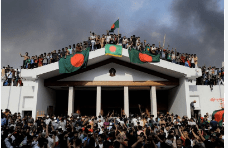
This text comprises news reports from ATN Bangla, covering diverse events in Bangladesh during the New Year. The reports include the opening of the Dhaka International Trade Fair, highlighting its potential for entrepreneurship and future expansion nationwide. Other stories detail the challenges of textbook distribution, political developments including election discussions and calls for reforms, and social initiatives like the July Shaheed Smriti Foundation aiding families affected by the July Uprising. Finally, it features celebrations of the New Year, alongside discussions of the Jasimuddin memorial’s poor condition and concerns about declining groundwater levels. The overall tone reflects a mix of celebratory New Year’s coverage and reports on ongoing political and social issues.
2025 News Review: A Study Guide
Quiz
Instructions: Answer each question in 2-3 sentences.
- What is the primary focus of the Dhaka International Trade Fair according to the provided text?
- What issue was raised regarding the distribution of textbooks at the start of the new academic year?
- What political party paid tribute to its founder on its 46th anniversary, and what key demand did they express?
- What is the stated goal of the July Shaheed Smriti Foundation?
- How did the people of Bangladesh celebrate the New Year despite some restrictions?
- What specific reforms are being demanded in the wake of the July revolution?
- What was the public reaction in rural Bangladesh to the events of the July revolution?
- Who is Prosecutor Tajul Islam and what does he claim about 2025?
- What is the Barendra Multipurpose Development Authority (BMDA) doing in response to the water shortage?
- What significant international event occurred in Zimbabwe according to this news?
Quiz Answer Key
- The Dhaka International Trade Fair is focused on promoting entrepreneurship and highlighting the potential of young entrepreneurs, with plans to expand the fair across the country in the future.
- There was a delay in handing out all the textbooks on the first day of the year due to a revision process, printing press issues, and past corruption associated with book festivals, leading to concerns about waste.
- The Jatiyatavadi Chhatra Dal paid tribute to BNP founder Ziaur Rahman and demanded that elections be organized soon, emphasizing the need for youth participation.
- The July Shaheed Smriti Foundation was formed to assist the families of those killed and injured in the July uprising, offering financial support and planning medical assistance.
- Despite a ban on loud noises, people celebrated the New Year with fireworks, colorful lanterns, and various gatherings, emphasizing new beginnings and dreams.
- The public demands immediate reforms relating to price control, freedom of expression, and the justice system, stemming from the July revolution and government corruption.
- Rural Bangladesh is hopeful about the changes after the July revolution but is also calling for free national elections and improvements in daily life and commodities.
- Prosecutor Tajul Islam states that 2025 will be the year to try former Prime Minister Sheikh Hasina and the Awami League for crimes against humanity, also indicating that investigations into the August incident are ongoing.
- The BMDA is dealing with water shortages by restricting deep tubewell usage, encouraging farmers to grow less water-intensive crops, and making decisions to protect groundwater.
- Zimbabwe officially abolished the death penalty, with a historic law signed by the president for 60 death row inmates while the death penalty will remain for special crimes.
Essay Questions
Instructions: Choose one of the following essay prompts and develop a well-supported argument.
- Analyze the interconnectedness of political events and public sentiment as portrayed in the news, particularly in relation to the July revolution and its aftermath. How has the revolution shaped public expectations for reform, justice, and future elections?
- Discuss the role of youth and student activism in the political and social developments of 2025, as represented in the news. In what ways do youth voice discontent?
- Examine the different ways in which organizations, such as the July Shaheed Smriti Foundation and the BMDA, are responding to the consequences of social and environmental issues. What does this reveal about the challenges facing Bangladesh in 2025?
- Compare and contrast the varying views expressed in the news regarding the upcoming elections and the reforms needed for them to be considered valid and acceptable. What key reforms are deemed necessary?
- Discuss the significance of cultural events in the context of the changing socio-political landscape of 2025, citing examples from the news.
Glossary of Key Terms
- Dhaka International Trade Fair: An annual event in Dhaka, Bangladesh, focused on promoting trade and entrepreneurship.
- BNP: Bangladesh Nationalist Party, one of the major political parties in Bangladesh.
- Jatiya Party: A significant political party in Bangladesh.
- July Revolution: A student-led political upheaval in Bangladesh, which took place before 2025, with far reaching consequences.
- July Shaheed Smriti Foundation: An organization formed to support the families of those killed and injured during the July uprising.
- MPO: A system of providing government aid to private educational institutions in Bangladesh.
- BMDA: Barendra Multipurpose Development Authority, an entity focused on developing agricultural resources in a specific region.
- Ziaur Rahman: A former president of Bangladesh and founder of the BNP.
- Sheikh Hasina: A former prime minister of Bangladesh who is slated to be prosecuted in 2025.
- Nakshi Kantha: A type of traditional embroidered quilt from Bengal.
- Fano: Lanterns used in celebrations.
Bangladesh News Briefing: January 1, 2025
Okay, here is a briefing document summarizing the key themes and ideas from the provided text:
Briefing Document: Bangladesh News – January 1, 2025
Date: January 1, 2025
Source: ATN Bangla News (Transcribed Text)
Overview:
This document provides a summary of various news items reported by ATN Bangla News on January 1, 2025, primarily focusing on events within Bangladesh. The news covers a range of topics, including the opening of the Dhaka International Trade Fair, the distribution of textbooks, political developments, the anniversary of the July revolution, New Year celebrations, and various other national and international news.
Key Themes & Ideas:
- Dhaka International Trade Fair 2025:
- The 29th Dhaka International Trade Fair has opened with a focus on promoting entrepreneurship. Dr. Mohammad Yunus, the Chief Advisor, inaugurated the fair, emphasizing the need to develop young entrepreneurs at the international level.
- The fair is expected to expand beyond Dhaka in the future and be held across the country.
- The opening day saw a good turnout, but many stalls were still under preparation, with expectations of larger crowds as the week progresses.
- Increased facilities were noted at the fair, and international participation was evident. There is a dedicated pavilion to commemorate the 36 revolution (student uprising).
- Organizers expect increased sales compared to last year due to improved economic conditions.
- Quote: “Chief Adviser Dr. Mohammad Yunus inaugurated the fair at the exhibition center while he said that trade fairs will be organized across the country in the future. He urged to use the potential of entrepreneurship through the trade fair. He also said that the government is working to develop multi-faceted young entrepreneurs at the international level.”
- Education Sector & Textbook Distribution:
- There is controversy surrounding the delayed distribution of textbooks for the new academic year. Only 60 million out of 410 million books were delivered on the first day of the year.
- The Education Advisor expressed regret, citing corruption and wastage in the past associated with book distribution festivals. This year was limited to an event inside in order to save money.
- Delays are attributed to the revision of textbooks, printing press issues, and a general crisis in the process. There were errors found in the textbooks that are being corrected, including the release of an online version of the books.
- The MPO retirement and welfare allowance of teachers were inaugurated.
- Quote: “Education Adviser Wahidu Mahmud expressed regret for not being able to hand over books to the students at the beginning of the year. On the first day of the year, 6 crore books out of 41 crore books have reached the hands of the students.” “Over the years there has been massive corruption and wastage in the name of book festival.”
- Political Landscape and Elections:
- The political situation in Bangladesh remains complex, with various parties holding differing views on the path forward.
- The BNP paid tribute to their founder, calling for the organization of elections. They believe reforms, including administrative, police, and election commission reforms, are necessary before or along with elections.
- The Jatiya Party has expressed their willingness to participate in elections if all parties are included and the election environment is neutral.
- The text indicates that many people are disappointed with the country’s political situation since independence. The common people believe that the political and economic situation of the country has not been good for the last 16 years. They seem to have hope that change can happen due to the student uprising.
- Quote: “If the participation of all parties in BNP is confirmed, the Jatiya Party will go to the polls and another new year has been added to the calendar.” “Elections should be organized soon.”
- July Revolution and its Aftermath:
- The anniversary of the July Revolution is a significant event, marked by remembrance and calls for justice. The July Shaheed Smriti Foundation is working to support families of the martyrs and injured from the July revolution, having disbursed a significant amount of aid (47 crores) so far.
- There are demands for trials of those responsible for the killings and unrest during this time, and there is also some demand for an exemplary trial for those who were behind the brutal killings of students and workers during the July Revolution.
- A special panel at the Trade Fair allows visitors to discuss their experiences and the impact of the July revolution. The expectation is that the youth will lead the country in the future as a result of the revolution.
- Quote: “The memory of the 36 revolution student uprising is to witness that memory but here A special panel is provided and the visitors are given the opportunity to talk about the horrors of the July revolution or the victory that was the final victory but there is an opportunity to have a pavilion and from that pavilion but you can see the vision.”
- New Year Celebrations:
- The country welcomed the new year with fireworks and colorful displays despite any restrictions on loud noises.
- People expressed hopes for a peaceful and prosperous year.
- There was also concern for animals in the neighborhood due to loud noises.
- Quote: “Even though loud noises are prohibited, lanterns are blown. Forgetting all the achievements of the outgoing year, the people of the country welcomed the new year with colorful arrangements at midnight.”
- Calls for Justice and Accountability:
- There is a widespread call for justice for the crimes committed during the last 16 years with a focus on completing a just trial of those responsible.
- The prosecutor, Tajul Islam, stated that 2025 will be the year of trial for former Prime Minister Sheikh Hasina and Awami League for crimes against humanity.
- The investigation into the August incident is still ongoing.
- There is a general consensus that no one will betray the blood of the martyrs.
- Quote: “Prosecutor Tajul Islam while exchanging New Year greetings with journalists said that 2025 will be the year of trial of former Prime Minister Sheikh Hasina and Awami League for crimes against humanity.” “Top priority There is a consensus from all those who are in charge of the state today. There is a consensus among the people that everyone wants to complete a fair and just trial of all the crimes against humanity committed in Bangladesh during the last 16 years.”
- Water Crisis:
- The Barendra region is facing a water crisis with declining underground water levels affecting agriculture, there is a fear of farmers losing a large amount of land in the coming Iri season.
- Farmers are being restricted from cultivating water-intensive crops.
- International News:
- The text briefly touched on international news, including New Year celebrations around the world, a claim of an Indian conspiracy to oust the Maldivian president, and Zimbabwe abolishing the death penalty.
- Cultural Event
- Rural poet Jasim Uddin’s 123rd birthday is marked, there is a call for better maintenance and development of his memorial to showcase his work.
Overall Significance:
The news items from January 1st, 2025, reveal a nation grappling with political divisions, economic challenges, and the legacy of past events, particularly the July Revolution. There is a strong desire for positive change, justice, and a more prosperous future, highlighted by the hope associated with the student uprising in 2024. The trade fair aims to encourage economic growth through entrepreneurship, while the education sector faces setbacks. The emphasis on reform, fair trials, and the aspirations of the youth suggest a country at a pivotal moment, with the potential for either significant progress or continued instability. The water crisis also poses a serious concern for the agricultural sector.
This briefing document is based on the provided text and may not reflect all aspects of the situation in Bangladesh on the given date.
Bangladesh in Early 2025: Key Events and Issues
FAQ: Key Events and Issues in Bangladesh in Early 2025
- What is the significance of the Dhaka International Trade Fair in 2025?
The 29th Dhaka International Trade Fair in 2025 is significant as it signifies the government’s push to promote entrepreneurship and trade. The fair aims to showcase the potential of young entrepreneurs in Bangladesh, and there are plans to organize similar fairs across the country in the future. It also highlights the increased participation of international companies and features a special pavilion dedicated to commemorating the student uprising of the “July 36 revolution,” a pivotal event that seems to have occurred in the previous year. The fair is expected to be very crowded as the week progresses.
- What are the key concerns surrounding the distribution of textbooks at the beginning of the 2025 academic year?
There are significant issues with the distribution of textbooks for the 2025 academic year. While some books were distributed, a large portion of the 41 crore books have not reached students by the first day of the year, with only 6 crore delivered. The Education Adviser has expressed regret for this, attributing it to delays in the revision process (September-November), printing press challenges, and issues related to updating the syllabus. There are also reports of widespread corruption and wastage associated with the annual book festival in previous years. Additionally, despite these problems, the online versions of the textbooks have been launched, and the ministry is moving ahead with the MPO retirement and welfare allowances of teachers.
- What is the political climate in Bangladesh like following the “July Revolution?”
The political climate in Bangladesh is tense and complex, characterized by a post-revolution landscape. There are demands for early and free national elections, alongside calls for reforms, such as those related to the administrative, police, and election commission. Many people are demanding reform before any election and are frustrated with the current political situation after 53 years of independence. A significant aspect of this climate is the “July 36 revolution,” which appears to be a major political turning point involving a student uprising and widespread change. There’s a widespread hope that the sacrifices of the students will not be betrayed. Political parties like the BNP and Jatiya Party are engaging in political maneuvers related to elections, while also expressing concerns about the current system’s inequities and failures.
- What is the July Shaheed Smriti Foundation, and what is its purpose?
The July Shaheed Smriti Foundation was established following the July revolution to support the families of martyrs and those injured during the uprising. It is a non-political and voluntary organization that has provided financial assistance to hundreds of affected families. It’s also working on fast-track medical services for the injured and plans to open offices in divisional cities. It highlights the far-reaching effects of the “July 36 Revolution” and the efforts to deal with its consequences. The foundation has received substantial donations and disbursed a significant portion as financial assistance.
- How did Bangladesh celebrate the New Year, and what sentiments were expressed by citizens?
Bangladesh welcomed the New Year 2025 with colorful celebrations, including fireworks, and cultural events, despite the ban on loud noises. The celebrations also featured colorful lanterns and gatherings on rooftops. There was a strong sentiment of hope and a desire for positive change in the new year, with people expressing a wish for peace, innovation, and a “beautiful Bangladesh.” People also sought to forget past enmities and build a new nation, showing a focus on moving forward and making improvements. However, there’s also recognition of the need for systemic changes and addressing the issues of the past.
- What are the concerns surrounding water scarcity in the Barendra area?
The Barendra area is facing a serious water scarcity issue. The underground water level has dropped drastically, causing deep tube wells to fail. As a result, farmers are facing bans on paddy cultivation, potentially leading to the loss of significant agricultural land. This is due to overuse of groundwater for cultivation and Barendra Multipurpose Development Authority (BMDA) has set new policies to tackle the crisis, such as reducing the amount of water being released for irrigation. The crisis reflects an environmental and agricultural challenge and requires farmers to shift to other less water-intensive crops.
- What are the key calls for justice and accountability regarding the “July Revolution” and other historical events?
There are significant demands for justice and accountability concerning the “July revolution” and past crimes. A consensus exists that there should be fair and just trials for those who committed crimes against humanity over the last 16 years. The year 2025 is seen as a time for the prosecution of major criminals, including former Prime Minister Sheikh Hasina and members of the Awami League. Additionally, there are calls for an exemplary trial for those involved in the killing of students and workers during the July uprising. These demands reflect a deep desire for closure and a commitment to addressing injustices.
- What was done to commemorate Rural Poet Jasim Uddin and what issues are being discussed?
The 123rd birthday of rural poet Jasim Uddin was commemorated but with some issues. Despite his contributions to literature, his dilapidated house and memorial are neglected, lacking proper maintenance and facilities for visitors, which causes disappointment among those who wish to honor him. There is a need for the state and local administration to take initiatives to restore and properly maintain his memorial to properly honor his memory and share his contributions to future generations.
Dhaka International Trade Fair 2024
The 29th Dhaka International Trade Fair is a major event that is being organized with the intention of expanding similar fairs across the country in the future [1, 2].
Here are some key details about the fair from the sources:
- Opening and Inauguration: The fair was inaugurated by Chief Advisor Dr. Mohammad Yunus, who emphasized the potential of entrepreneurship and the need to support young entrepreneurs [1]. He also highlighted that the government is working to develop multifaceted young entrepreneurs at the international level [1].
- Future Expansion: The trade fair is intended to be organized across the country in the future, with preparations ongoing throughout the year at the district and upazila levels [1, 2].
- Participation: The fair includes 11 institutions from seven countries, in addition to local Bangladeshi companies [1].
- Facilities: The facilities at the fair have been improved since the “July 36 revolution” [3].
- Crowds and Timing: The fair is expected to be crowded, especially on weekends [1, 3]. The opening day had a fair amount of visitors despite some stalls not being fully ready, and it is anticipated that crowds will increase from the second day onwards [1].
- Stalls: Various companies are showcasing their products, including those from outside the country [3]. Many stalls were still in the process of last-minute decorations on the first day [1].
- Sales Expectations: Organizers expect that the fair will be very successful in terms of sales, especially since the previous year’s fair was affected by a financial crisis [3].
- Special Features: The fair includes a special panel dedicated to the “36 revolution student uprising,” providing visitors with the opportunity to discuss the events [3].
The trade fair is seen as an important platform for showcasing products, encouraging entrepreneurship, and fostering economic growth, with a focus on youth and future expansion across the country [1].
Bangladesh’s New Year: Hope and Demands for Change
The sources describe various New Year’s events and related sentiments in Bangladesh and around the world. Here’s a summary of those events:
New Year Celebrations in Bangladesh:
- Fireworks and Festivities: The people of Bangladesh welcomed the New Year with fireworks and colorful displays at midnight [1, 2]. Despite restrictions on loud noises, lanterns were also released [2]. Various events were organized across the country, including at hotels and restaurants in the capital and on rooftops [2].
- New Year’s Eve: The New Year’s Eve was seen as a time to bid farewell to the old year and welcome the new one with new dreams and hopes [2].
- Hopes and Aspirations: Many expressed hope that the new year would bring peace to the country and that they would succeed in their work [2]. There is a desire to overcome the negative aspects of the past years and move forward positively [2].
- Rural Celebrations: Even in rural areas, people were hopeful for change, especially after the July 24th revolution [3]. They expressed a desire for early and fair national elections, freedom of expression, and improvements in commodity prices and law and order [3].
Global New Year Celebrations:
- Time Zones: The arrival of the New Year is marked by time zones around the world, with the Pacific island nations of Kiribati and Tongai being among the first to celebrate [4].
- International Celebrations: New Year’s celebrations are mentioned in various countries, including New Zealand, Australia, the UK, France, and Italy, with fireworks and cultural events [4]. Japan also celebrates the New Year with the ringing of temple bells [4].
Other Relevant Points:
- Christian New Year Ban: Though the Christian New Year is banned, the country still celebrated the new year with fireworks [1, 5].
- Post-Revolution Sentiments: The new year follows the “July 24th revolution,” which has increased expectations for the country, especially in rural areas [3]. There are calls for reforms and fair elections [3].
- Student Movement Impact: The student movement has given hope that Bangladesh will be held accountable [3]. People also demand a trial for those who killed students and workers during the July revolution [3].
- 2025 as a Year of Justice: Some, like Prosecutor Tajul Islam, have stated that 2025 will be the year for the trial of former Prime Minister Sheikh Hasina and the Awami League for crimes against humanity, and also expressed hope that there will be a remedy for the injustices of July and August [6].
The sources highlight that the New Year is not just a time for celebration but also for reflection, hope, and demands for change, particularly in the context of the recent political events in Bangladesh.
Bangladesh Textbook Distribution Crisis
The sources discuss issues surrounding the distribution of books to students at the beginning of the academic year in Bangladesh. Here’s a breakdown of the key points:
- Delays in Book Delivery: On the first day of the new year, not all students received their textbooks [1]. Only 6 crore out of 41 crore books had been distributed [1].
- Past Practices: In previous years, the distribution of books was a major festival for students. However, this year, the book distribution was limited to a smaller event [1, 2].
- Reasons for Delays:The revision process for textbooks, which takes place from September to November, has caused delays in printing [2].
- Various challenges, including printing press issues, have also made it difficult to revise the textbook syllabus [2].
- Corruption and Waste: The Education Adviser expressed regret for the delay and revealed that there has been widespread corruption and waste in the name of the book festival over the years [1, 2]. The decision to limit the distribution event was partly to save money [2].
- Textbook Errors: The sources note that there were some errors in the math and science textbooks, which are being corrected [2].
- Online Access: An online version of all textbooks was launched, which might be a measure to address the gaps created by the delays in physical distribution [2].
- MPO Retirement and Welfare: On the first day of the year, the MPO retirement and welfare allowance for secondary and higher secondary teachers was inaugurated [2].
In summary, the book distribution process in Bangladesh has faced significant challenges, including delays, corruption, and errors in the textbooks. The transition to a less public event and the provision of online versions of the books may be attempts to mitigate these issues and save resources [2].
Bangladesh’s Political Reform Movement
The sources discuss political reforms in Bangladesh, particularly in the context of recent events and the upcoming elections. Here’s an overview of the key points:
- Demands for Reform: Following the “July 24th revolution,” there’s a strong push for various political reforms [1]. These demands are coming from multiple sources including:
- The general public, especially in rural areas, who are hoping for significant changes after the recent political upheaval [1].
- Political parties who are calling for a fair and inclusive election [2].
- Student and labor groups who want to ensure that the sacrifices of the martyrs during the July revolution are not in vain [3].
- Specific Areas of Reform: The reforms being called for include:
- Administrative reforms, police reforms, and election commission reforms [2, 4].
- Ensuring freedom of expression [1].
- Improvement in commodity price control and law and order [1].
- A free and fair national election [1].
- Election Participation: There’s a strong emphasis on ensuring the participation of all political parties in the upcoming elections. The Jatiya Party has stated that they will participate in the elections if the participation of all parties is ensured [2, 5, 6].
- Reform Before or After Elections: There is some debate about whether reforms should be implemented before or after the elections [1, 4]. Some believe that reforms should be prioritized to ensure a fair election [1], while others suggest that reforms will continue regardless of the election [4].
- Youth Participation: There’s a recognition of the importance of the youth in shaping the future of the country. Some political leaders are urging the new generation to get educated and be qualified to lead the country [4]. There is also recognition that the youth did not get a chance to vote and are eager to do so [4].
- Accountability and Justice: There are strong demands for accountability and for the trial of those responsible for crimes against humanity, particularly those committed during the July revolution [1, 3]. Prosecutor Tajul Islam has stated that 2025 will be the year for the trial of former Prime Minister Sheikh Hasina and the Awami League for crimes against humanity [3].
- Political Instability: There’s a recognition that the country is facing political unrest [3], with pressure for reform on one hand and ongoing tensions on the other [3]. The general population has expressed disappointment with the political situation after 53 years of independence [1].
- Post-Revolution Expectations: The “July 24th revolution” has raised expectations, with many hoping that Bangladesh will become more accountable [1]. There’s a sentiment that the old ways are no longer acceptable, and a new, reformed Bangladesh is needed [1].
- Judicial Reform: There is a stated intent to address all the injustices of July and August [3]. A tribunal has issued an arrest warrant against a police constable in a murder case, highlighting efforts to ensure accountability within the police force and judiciary [3].
In summary, the sources indicate a strong desire for political change in Bangladesh, with a focus on free and fair elections, accountability for past injustices, and a more transparent and just system of governance. These reforms are seen as crucial for ensuring the stability and progress of the country, especially after the events of the July revolution.
Preserving Jasim Uddin’s Legacy
The sources discuss the current state of the house of rural poet Jasim Uddin and the need for its preservation [1]. Here’s a breakdown of the key points:
- Dilapidated Condition: Jasim Uddin’s house is described as being in a dilapidated state, suffering from careless neglect [1]. The house is not being maintained properly, leading to a state of disrepair [1].
- Memorial Museum: A Jasim Uddin memorial museum has been established, but it is not well-maintained or rich in content, leading to disappointment among visitors [1].
- Lack of Arrangements: There are no proper arrangements for visitors, and items from his life, including those related to COVID, are being wasted [1].
- Disappointment of Poet Devotees: Those who visit the house, especially poet devotees, are often disappointed due to the lack of upkeep and the poor condition of the museum [1]. The site does not adequately reflect the poet’s significance [1].
- Loss of Heritage: Due to this neglect, the root of his legacy is being lost [1].
- Call for Renovation: There are calls for renovation of the house and museum. This includes calls from poet lovers and the local administration [1]. There is a desire to see the house properly maintained so that it reflects Jasim Uddin’s importance [1].
- Need for a Cultural Center: There is a proposal to develop a full-fledged cultural center around Jasim Uddin’s house. This would include more allocation of resources and state support [1].
- Family Involvement: It’s noted that if Jasim Uddin’s family had been more involved, it would be possible to better showcase his legacy to future generations [1].
In summary, the sources indicate that Jasim Uddin’s house is in a state of disrepair and neglect, which is causing disappointment among visitors. There are calls for the state to support the house with renovations and more resources in order to preserve the poet’s legacy, and potentially to build a cultural center around the house [1].

By Amjad Izhar
Contact: amjad.izhar@gmail.com
https://amjadizhar.blog
Affiliate Disclosure: This blog may contain affiliate links, which means I may earn a small commission if you click on the link and make a purchase. This comes at no additional cost to you. I only recommend products or services that I believe will add value to my readers. Your support helps keep this blog running and allows me to continue providing you with quality content. Thank you for your support!

Leave a comment