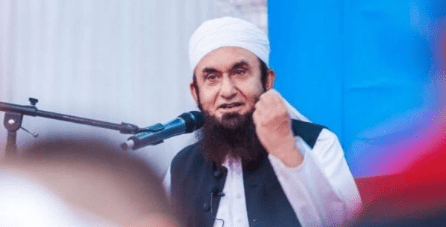
The source “01.pdf” details the decline in popularity and influence of Maulana Tariq Jameel, a once revered Islamic scholar known for his captivating speeches and widespread appeal across various demographics and sects. The text laments that while he previously commanded immense respect and drew large crowds, he is now allegedly barred from entering certain religious gatherings and his name is omitted from consultations, despite his past fame through cassettes, CDs, and online platforms. The source attributes this downfall to his perceived lenient stance towards enemies of the companions of the Prophet and his actions of engaging with them, contrasting this with his earlier teachings that emphasized the companions. Ultimately, the text urges Maulana Tariq Jameel to repent and return to his foundational principles within the Dawat-e-Tablighi movement, suggesting his current troubles stem from compromising on these core beliefs.
Maulana Tariq Jameel: From Acclaim to Adversity
Maulana Tariq Jameel, a prominent Islamic scholar, has had a profound impact on many people, gaining worldwide fame and acceptance, but he is currently facing significant challenges and criticisms.
Past Influence and Fame: Maulana Tariq Jameel was once incredibly popular and influential, known for his powerful speeches and ability to move audiences to tears and repentance.
- His cassettes were widely played, and there was often a rush at shops near Raivan Markaz when news of his statements leaked. People would listen to him in various settings, including shops and trains.
- His speeches were so impactful that people would “cry incessantly” and “repent after hearing the statement in solitude”. Listening to his descriptions of heaven would make one feel deserving of it.
- He achieved global recognition, with his videos and clips playing on TV channels and reaching “six Barre Azams” (continents). He was blessed with immense love and affection from people of all backgrounds, including common men, adults, minors, learned, and ignorant, without distinction of “colours, races, religion, nation, or sect”.
- He garnered fame exceeding that of “crores, perhaps even billions of people,” winning the love of every heart. His social media presence was significant, with millions of followers, and his videos reportedly touched millions in hours, making his name a “guarantee of the success of channels’ pages”. Channels would even compete for mic placement during his speeches.
- Maulana Tariq Jameel became famous by narrating incidents of the companions of the Prophet (Sahaba) and Jihad. He dedicated 50 years of his life to Tabligh (preaching) in six continents, connecting people to religion, building Madrasas (religious schools), and working to eradicate social issues like prostitution in his area, Talamba. He also arranged marriages for orphan girls and bore expenses for students. He is described as being blessed with wisdom, simplicity, and kindness.
Current Challenges and Criticisms: Despite his widespread past acclaim, Maulana Tariq Jameel is now reportedly facing significant opposition and restrictions, particularly within the Dawat-e-Tablighi movement, which was once his foundation and identity.
- The “paths of Dawat-e-Tablighi” are being closed for him, with “vehicles being parked,” “pits being dug,” “guards being posted,” and “messages being given” to send him back.
- He is reportedly unable to enter his own building or the places associated with Dawat-e-Tablighi, and his name is not included in consultations there. He has even been requested not to come for consultation at Faisalabad Markaz.
- It is reported that he “roams around Mir Khaur” where “no one even asks” about him, and he has lost some of his previous love, respect, and dignity. Roads have even been blocked to prevent his entry.
Reasons for the Current Situation: The primary reasons for his current difficulties stem from criticisms regarding his stance and interactions concerning the companions of the Prophet and their enemies, as well as perceived deviations from the strict protocols of the Dawat-e-Tablighi movement.
- Leniency Towards Enemies of Companions: A major point of criticism is his alleged leniency and embrace of individuals or groups considered “enemies of the companions” or “insolent people”.
- He reportedly met with leaders of groups like the “Quran believers,” “insolent companions,” and those who engage in “Al-Alahan Tabarra” (a form of cursing). These groups are explicitly linked to terrorism networks in Pakistan.
- During these meetings, he was seen hugging and possibly kissing their foreheads, impressing upon their members to work for religion.
- A significant accusation is that he stated, “no one becomes a Kafir by speaking ill of the Sahaba”. This statement is seen as a contradiction of the Sunnah Jamaat belief that “Man Bakar is a kafir” (one who abuses Abu Bakar is a disbeliever) because it denies a Quranic verse.
- His critics assert that he became “soft towards them” and even narrated stories for the “enemies of the companions,” a stark contrast to his earlier fame gained from narrating incidents of the companions and Jihad. This leniency, it is argued, has led Allah to “take away the love from the hearts of the creatures” for him.
- Deviation from Dawat-e-Tablighi Principles: His actions have also been seen as going against the established “poem” (system/discipline) of Dawat-e-Tablighi.
- He reportedly became angry when his name was not included in consultations and insisted on giving statements.
- There are leaked audio messages attributed to him, which contain “words of badmouthing, hypocrisy, hypocrites, [and] group of hypocrites”.
- His son reportedly sits on his channel and states that “these are not ground matters,” suggesting a disconnect from the movement’s core principles.
- The Dawat-e-Tablighi does not permit the uncoordinated use of media or social media for statements, and requires planning and consultation. While he was previously respected, even then he was “going against the etiquette”.
- His current difficulties are described as “not ground matters” or “ground level decisions,” but rather “decisions from somewhere else,” implying a divine consequence for his actions.
Calls for Repentance and Return: Mufti Abu Mohammad Saheb and others have advised Maulana Tariq Jameel to repent and return to his previous path.
- He is urged to repent to Allah for his actions, particularly for his “very lenient” attitude towards the companions and his “love” shown to their enemies.
- He has reportedly apologized for past mistakes, including to Allama Ali Sher Haidri (RA), but critics claim he subsequently made similar errors.
- He is encouraged to “go back in time and sing the songs of the companions and challenge Battil” (falsehood).
- The Dawat-e-Tablighi movement is said to be welcoming, and if he returns to its “entire system,” he would regain the love and status he once held.
- His current state is likened to a “disease of compassion” for which there is no “medicine” in his current approach of making complaints famous. He needs to understand this “disease” and its true “medicine”.
- There is a prayer that Allah “may bring you back once again” to his former eloquence and influence, but this requires repentance for his “great crime”.
Think of Maulana Tariq Jameel’s situation like a highly skilled and respected conductor of a grand orchestra. For years, he led magnificent performances that captivated audiences worldwide, following a specific, disciplined score (the principles of Dawat-e-Tablighi and respect for the companions). However, recently, he started improvising with sections of the orchestra that were known to play dissonant notes, and even embraced those who openly defied the core melodies. While his individual talent is still recognized, the orchestra (the Dawat-e-Tablighi and its followers) has stopped allowing him to conduct, feeling that his new direction is undermining the very harmony they strive for. His return to prominence, they suggest, depends on him acknowledging the dissonant notes he played and returning to the established, beloved score that once made him so universally cherished.
The Fading Light of Maulana Tariq Jameel
Maulana Tariq Jameel, who once commanded immense global respect and affection, is now reportedly facing a significant loss of this standing, particularly within the Dawat-e-Tablighi movement that was central to his identity.
Past Respect and Influence:
- There was a time when his cassettes were widely played in shops and trains, leading to crowds and a rush at shops near Raivan Markaz when news of his statements leaked. People would listen to him and “cry incessantly” and “repent after hearing the statement in solitude”.
- He achieved worldwide fame and acceptance, with his videos and clips reaching “six Barre Azams” (continents). Very few people were blessed with such love and affection, which came from common men, adults, minors, learned, and ignorant people alike, without distinction of “colours, races, religion, nation, or sect”.
- His fame reportedly exceeded that of “crores, perhaps even billions of people,” and he “won the love of every heart”. His name was a “guarantee of the success of channels’ pages” on social media, with millions of followers and videos touching millions in hours. Channels would even compete for mic placement during his speeches.
- He was blessed with wisdom, simplicity, and kindness, which made him dear to every heart.
Current Loss of Respect and Dignity:
- Currently, he “roams around Mir Khaur” where “no one even asks” about him, and his previous “love, respect and dignity was also lost”.
- The “paths of Dawat-e-Tablighi” are “being closed for him,” with “vehicles being parked,” “pits being dug,” “guards being posted,” and “messages being given” to send him back.
- He is reportedly unable to enter his own building or the places associated with Dawat-e-Tablighi, and his name is not included in consultations there. He has even been requested not to come for consultation at Faisalabad Markaz.
- Roads have been blocked to prevent his entry, and he has been seen yearning for a mic, in stark contrast to a time when channels would compete to place their microphones for him.
- This situation is described as “not ground matters” or “ground level decisions,” but rather “decisions from somewhere else,” implying a divine consequence.
Reasons for the Loss of Respect: The primary reasons cited for this decline in his standing relate to his actions and statements concerning the companions of the Prophet and their perceived enemies, as well as perceived deviations from the strict protocols of the Dawat-e-Tablighi movement:
- Leniency Towards Enemies of Companions: A major criticism is his alleged leniency and embrace of individuals or groups considered “enemies of the companions” or “insolent people”.
- He reportedly met with leaders of groups like the “Quran believers,” “insolent believers,” and those who engage in “Al-Alahan Tabarra,” which are linked to terrorism networks.
- During these meetings, he was seen hugging them, possibly kissing their foreheads, and impressing upon their members to work for religion.
- A significant accusation is that he stated, “no one becomes a Kafir by speaking ill of the Sahaba” (companions). This statement is seen as a contradiction of the Sunnah Jamaat belief that “Man Bakar is a kafir” (one who abuses Abu Bakar is a disbeliever) because it denies a Quranic verse.
- His critics assert that he became “soft towards them” and even narrated stories for the “enemies of the companions,” a stark contrast to his earlier fame gained from narrating incidents of the companions and Jihad. This leniency, it is argued, has led Allah to “take away the love from the hearts of the creatures” for him.
- Deviation from Dawat-e-Tablighi Principles: His actions have also been seen as going against the established “poem” (system/discipline) of Dawat-e-Tablighi.
- He reportedly became angry when his name was not included in consultations and insisted on giving statements.
- There are leaked audio messages attributed to him, which contain “words of badmouthing, hypocrisy, hypocrites, [and] group of hypocrites”.
- His son reportedly sits on his channel and states that “these are not ground matters,” suggesting a disconnect from the movement’s core principles.
- The Dawat-e-Tablighi does not permit the uncoordinated use of media or social media for statements and requires planning and consultation. While he was previously respected, even then he was “going against the etiquette”.
Path to Regaining Respect: Mufti Abu Mohammad Saheb and others have advised Maulana Tariq Jameel to repent and return to his previous path to regain his lost status.
- He is urged to repent to Allah for his actions, particularly for his “very lenient” attitude towards the companions and his “love” shown to their enemies.
- He is encouraged to “go back in time and sing the songs of the companions and challenge Battil” (falsehood).
- The Dawat-e-Tablighi movement is said to be welcoming, and if he returns to its “entire system,” he would regain the love and status he once held.
- His current state is likened to a “disease of compassion” for which there is no “medicine” in his current approach of making complaints famous. He needs to understand this “disease” and its true “medicine”.
- There is a prayer that Allah “may bring you back once again” to his former eloquence and influence, but this requires repentance for his “great crime”.
Think of it like a renowned craftsman who built a reputation for exquisite work using specific, time-honored techniques. His creations were beloved by all. However, he started incorporating materials and methods considered unorthodox or even detrimental to the tradition he represented, and began to praise those who openly defied the core principles of his craft. As a result, the guild that was his foundation has now distanced itself, no longer allowing him to work in their established workshops. To regain his esteemed place, he is advised to return to the foundational principles and sincerely regret the deviations, for only then can the love and admiration that once surrounded his artistry be restored.
Maulana Tariq Jameel: Disfavor and Disassociation
Maulana Tariq Jameel is described in the sources as facing a significant loss of respect and standing, particularly within the Dawat-e-Tablighi movement, due to perceived deviations from established religious teachings and the movement’s disciplinary protocols. These deviations are presented as the fundamental reasons for his current predicament.
Deviation from Core Religious Teachings and Beliefs: A primary criticism highlighted in the sources is Maulana Tariq Jameel’s alleged leniency and embrace of individuals or groups considered “enemies of the companions” of the Prophet Muhammad (peace be upon him) or “insolent people”.
- He reportedly met with leaders of groups such as “Quran believers,” “insolent believers,” and those who engage in “Al-Alahan Tabarra,” which are linked to terrorism networks. During these meetings, he was seen hugging them, possibly kissing their foreheads, and impressing upon their members to work for religion.
- A particularly significant accusation is that he stated, “no one becomes a Kafir by speaking ill of the Sahaba” (companions). This statement is seen as a direct contradiction of the Sunnah Jamaat belief that “Man Bakar is a kafir” (one who abuses Abu Bakar is a disbeliever), because it is interpreted as denying a Quranic verse.
- Critics argue that he became “soft towards them” and even narrated stories for these perceived “enemies of the companions”. This is a stark contrast to his earlier fame, which was gained from narrating incidents of the companions and Jihad.
- It is asserted that his adoption of a “light attitude towards the companions” and his embrace of their enemies, showering “such love” on them, is the primary reason for Allah to “take away the love from the hearts of the creatures” for him.
Deviation from Dawat-e-Tablighi Principles and Etiquette: His actions are also seen as a departure from the established “poem” (system/discipline) of the Dawat-e-Tablighi movement, which was central to his identity and from where he gained recognition.
- He reportedly became angry when his name was not included in consultations and insisted on giving statements, despite the movement’s requirement for planning and consultation before making public statements.
- There are references to leaked audio messages attributed to him that contain “words of badmouthing, hypocrisy, hypocrites, [and] group of hypocrites”. This is considered a significant deviation from his previous role as someone who taught “morals,” “gentleness,” “Salaahmi,” “love and gentleness”.
- His son’s statement on his channel, “O Tablighi people, these are not ground matters,” is seen as indicative of a disconnect from the movement’s core principles and a failure to understand the spiritual nature of the issues at hand.
- The Dawat-e-Tablighi does not permit the uncoordinated use of media or social media for statements and requires adherence to a “complete order”. While he was previously respected, even then he was described as “going against the etiquette”.
- As a consequence, the “paths of Dawat-e-Tablighi” are “being closed for him,” preventing his entry into places associated with the movement, and his name is not included in consultations there. He has even been requested not to come for consultation at Faisalabad Markaz.
The sources suggest that these deviations, particularly his perceived leniency towards the enemies of the companions and his disregard for the established protocols of the Dawat-e-Tablighi, have led to a divine withdrawal of the immense love and respect he once commanded globally. Mufti Abu Mohammad Saheb and others have advised him to repent to Allah, return to his previous path of defending the companions, and embrace the “entire system of Dawat and Tabligh” as the only way to regain his former status and influence.
Think of it like a conductor leading a world-renowned orchestra. For years, he was celebrated for his mastery of classical compositions and his adherence to the precise techniques of the craft. His concerts drew millions, and his name was synonymous with excellence. However, he then started introducing avant-garde interpretations that clashed with the orchestra’s fundamental classical principles, and openly praised musicians who derided the very composers foundational to their repertoire. Furthermore, he began improvising without consulting the orchestra’s established protocols, despite their long-standing rules of collaboration. Consequently, the orchestra, which was his very identity, has now distanced itself, no longer allowing him to lead their performances. To reclaim his place, he is advised to return to the original score, repent for the dissonant notes, and rejoin the orchestra’s harmonious system, for only then can the symphony of respect and admiration that once surrounded him be restored.
The Sacred Status of Prophet Muhammad’s Companions
The companions of the Prophet Muhammad (peace be upon him), known as the Sahaba, hold an exceptionally high and divinely guaranteed status within Islamic belief, particularly as understood by the Sunnah Jamaat. According to the sources, they are considered one of only two groups in the entire universe whose integrity and rectitude have been guaranteed by Allah Himself in the Holy Quran, the other being the Prophets of Allah (peace be upon them). Allah is said to have “agreed to all of them,” including the first Muhajireen and Ansar.
The sources repeatedly emphasize that the companions of the Prophet are very dear to Allah. The Quran is described as being “full” of their praise, stating that Allah “had put faith in their hearts” and “imprinted faith on their hearts,” thereby affirming their worthiness and blessedness.
Due to their exalted status, the sources convey several key points about their importance and the implications of one’s stance towards them:
- Divine Honor and Elevation: It is believed that “whoever takes the name of the companions, their flags will wave,” and “Allah will hoist flags of his honor” for them. This suggests that honoring the companions leads to divine recognition and elevation.
- Severity of Disrespect or Leniency Towards Enemies: Conversely, showing disrespect, leniency, or compromise towards the enemies of the companions is considered a grave matter. A core belief of the Sunnah Jamaat is that “Man Bakar is a kafir” (one who abuses Abu Bakar, a prominent companion, is a disbeliever) because such a statement is interpreted as a “denial” of a Quranic verse. The sources state that if one “becomes light there, will show leniency there, will compromise there and will embrace the enemies of the companions… Allah Taala will take away the love from the hearts of the creatures” for them.
- Source of Guidance and Inspiration: Maulana Tariq Jameel’s previous worldwide fame and acceptance were largely attributed to his “narrating incidents of the companions” and Jihad. This indicates that the stories and lives of the companions served as a powerful source of spiritual connection and guidance, through which he connected people to the religion. He was known for teaching “morals,” “gentleness,” and “love”.
Maulana Tariq Jameel’s current reported loss of respect and standing is explicitly linked to his perceived “light attitude towards the companions” and his embrace of their enemies. He is criticized for meeting and showing affection (hugging, possibly kissing foreheads) to leaders of groups described as “Quran believers,” “insolent believers,” and those who engage in “Al-Alahan Tabarra,” whom the sources identify as “enemies of the companions”. A particularly significant point of contention is his alleged statement that “no one becomes a Kafir by speaking ill of the Sahaba,” which directly contradicts the Sunnah Jamaat belief regarding the gravity of abusing companions.
The sources assert that by becoming “soft towards them” and even narrating stories for “the enemies of the companions” rather than focusing on the companions themselves, Maulana Tariq Jameel caused harm to “the believers of the Sahaba, the lovers… and that community”. The current predicament of losing immense love and respect from people is directly attributed to his actions concerning the companions and their enemies, suggesting a divine consequence for such perceived deviation.
The advice given to him by figures like Mufti Abu Mohammad Saheb is to “repent to Allah” for his “great crime” of being “very lenient in the companions and in the matter of the enemies of the companions”. He is urged to “go back in time and sing the songs of the companions and challenge Battil” (falsehood). This advice underscores that his return to his former high standing and influence is contingent upon his reaffirming and demonstrating profound respect and adherence to the sacred status of the companions within Islamic teachings.
Think of the companions as the cornerstones of a magnificent spiritual edifice. Their integrity, sacrifice, and unwavering faith formed the very foundation upon which the entire structure of Islam was built and continues to stand. To treat these cornerstones with anything less than utmost reverence, or to show leniency towards those who seek to chip away at them, is seen as directly undermining the entire edifice and, consequently, diminishing one’s own standing and the blessings associated with the building itself. The love and respect for the house are intrinsically linked to the honor given to its sacred and foundational components.
The Call for Maulana Tariq Jameel’s Repentance
The sources indicate a clear and strong call for repentance directed at Maulana Tariq Jameel, primarily from Mufti Abu Mohammad Saheb and implicitly from the Dawat-e-Tablighi movement. This call is presented as the essential path for him to regain the immense love, respect, and influence he once commanded globally.
Here are the key aspects of this call for repentance:
- Who is calling for repentance?
- Mufti Abu Mohammad Saheb is explicitly mentioned as giving “very good advice” and a “very correct opinion” that Maulana Tariq Jameel “should repent to Allah”.
- The overall narrative suggests that the withdrawal of love and the closure of Dawat-e-Tablighi paths are a consequence, and repentance is the solution to rectify this.
- Why is repentance being called for?
- The core reason for the call to repentance is Maulana Tariq Jameel’s perceived “great crime” of adopting a “light attitude towards the companions” of the Prophet Muhammad (peace be upon him).
- He is accused of being “very lenient in the matter of the companions and in the matter of the enemies of the companions”.
- Specifically, this leniency is demonstrated by his actions of embracing and showering “such love” (hugging, possibly kissing foreheads) upon individuals and groups described as “enemies of the companions”, “insolent people,” “Quran believers,” and “insolent believers” linked to “Al-Alahan Tabarra”.
- A critical point of contention is his alleged statement that “no one becomes a Kafir by speaking ill of the Sahaba”, which is seen as a direct contradiction and “denial” of the Sunnah Jamaat’s belief that “Man Bakar is a kafir”. This “compromise” with those who abuse the companions is a major grievance.
- Additionally, his deviation from the established “poem” (system/discipline) of the Dawat-e-Tablighi movement, including getting angry when his name wasn’t included in consultations, making public statements without proper order, and the leaked audio messages containing “badmouthing, hypocrisy, hypocrites,” are also factors. His son’s statement, “O Tablighi people, these are not ground matters,” further highlights a disconnect from the movement’s understanding of the spiritual nature of the issues.
- What is he being asked to repent for and return to?
- He is urged to “repent to Allah” with a “charitable heart”.
- He needs to “go back in time and sing the songs of the companions and challenge Battil” (falsehood). This implies a return to his previous focus on narrating incidents of the companions and Jihad, which earned him fame and respect.
- He is advised to “come back to the entire system of Dawat and Tabligh”. This means adhering to its established “poem,” “advice,” “greetings,” and “Nazam” (order), including the protocols regarding media use and public statements. The sources emphasize that Dawat-e-Tablighi has “no enmity with any single individual” and will “accept every individual of the world with open arms” if he returns to their system.
- What are the expected outcomes of repentance?
- The primary benefit is the restoration of the “love that you had before” from people. The current loss of affection is not a “ground matter” but a divine consequence, as “Allah Taala will take away the love from the hearts of the creatures” for those who are lenient towards the enemies of the companions.
- It is believed that if he straightens his “matters with the help of Allah,” Allah “will straighten out your matters with all the creatures”.
- A successful repentance is expected to lead to Allah bringing him “back once again” and showing him “the path of ritualism”.
- He may once again “fly like an eagle in the sky of speech and speech and eloquence”, regaining his influential position as a speaker.
The sources strongly assert that Maulana Tariq Jameel’s current predicament—the loss of respect, the closure of paths, and the inability to enter Dawat-e-Tablighi centers—is not a mundane issue but a divine consequence stemming from his deviation concerning the companions and their enemies. Therefore, the proposed solution is not a worldly negotiation but a spiritual act of repentance to Allah and a return to the foundational principles he seemingly abandoned.
Imagine a gardener known for cultivating the most beautiful and fragrant roses, admired worldwide for his dedication to their specific soil, sunlight, and pruning needs. Suddenly, he starts to neglect the roses, instead tending to invasive weeds, even praising their resilience and allowing them to intertwine with his precious blooms. The roses begin to wilt, their fragrance fades, and the public, once adoring, turns away. The call for repentance is like urging the gardener to uproot the weeds, re-nourish the soil, and return to the meticulous care of his roses, for only then will their beauty and the public’s admiration return.

By Amjad Izhar
Contact: amjad.izhar@gmail.com
https://amjadizhar.blog
Affiliate Disclosure: This blog may contain affiliate links, which means I may earn a small commission if you click on the link and make a purchase. This comes at no additional cost to you. I only recommend products or services that I believe will add value to my readers. Your support helps keep this blog running and allows me to continue providing you with quality content. Thank you for your support!

Leave a comment