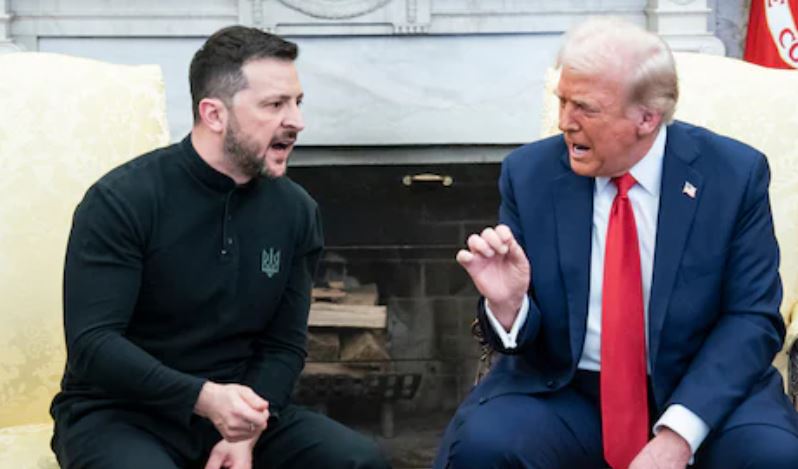
These sources discuss Donald Trump’s shifting policy toward the Russia-Ukraine war, detailing his initial reluctance to support Ukraine and his later decision to provide weaponry and threaten sanctions against Moscow. They analyze the reasons behind his policy changes, including his frustration with Vladimir Putin’s actions and the influence of figures like Melania Trump and Ukrainian officials. Several authors highlight the “Lippmann gap” in U.S. foreign policy, where global commitments outstrip military resources, forcing difficult trade-offs. The articles also portray the devastating impact of the conflict on Ukrainian civilians, particularly the relentless aerial bombardments affecting their daily lives and sleep, and express concerns that Ukraine could still lose the war due to factors like dwindling aid and Russia’s quantitative advantages. Finally, the texts note Ukraine’s efforts to reorganize its government to better engage with the Trump administration.
Podcast

Trump’s Shifting Ukraine Policy: From Ambivalence to Action
President Donald Trump’s Ukraine policy has been characterized by significant shifts, inconsistencies, and a reliance on improvisation and instinct, rather than a coherent strategic approach. Initially, his stance on Russia and Vladimir Putin was seen as vacillating, which was noted to hamper his chances of winning a Nobel Peace Prize.
Here’s a breakdown of his policy:
- Initial Stance and Peace Promises
- At the start of his second term, Trump’s stated Ukraine policy was, “I just want to see people stop getting killed”.
- He repeatedly pledged to end the war within 24 hours of returning to the White House, sometimes even before taking office, without providing specific details. He later claimed this “24-hour” comment was “a little bit sarcastic”.
- Before Russia’s 2022 invasion, Trump had praised Putin’s moves as “genius” and “savvy”. He also appeared to blame Ukraine for the war during a meeting with President Volodymyr Zelensky, echoing Kremlin narratives.
- His administration’s departure from U.S. strategic commitments and reliance on improvisation were deemed “antithetical to advancing peace initiatives” between Russia and Ukraine.
- Weapons Freezes and Reversals
- Trump’s administration has implemented multiple pauses or halts in weapon deliveries to Ukraine, which have then often been reversed.
- For example, the U.S. announced halting deliveries of air defense munitions to Ukraine, which Ukraine desperately needed, only to resume sending some weapons six days later. Similar freezes occurred in February and May, with Trump reversing Defense Secretary Pete Hegseth’s decisions.
- Reasons cited for these freezes included critical shortages in U.S. munitions stockpiles, with a need for them in the Middle East and the domestic arsenal, a concept known as the “Lippmann gap” where U.S. defense commitments exceed its military power. This suggests that Trump was making trade-offs between competing foreign policy priorities, prioritizing Israel over Ukraine at times.
- These pauses in aid were seen as projecting “weakness to Russia” and could have “devastating and irreversible consequences” for Ukraine.
- Recent Policy Shift and Tougher Stance
- More recently, Trump has shown a major shift toward Ukraine, announcing a plan to help Ukraine obtain advanced U.S.-made weaponry, including essential Patriot air defense systems.
- This shift came as his frustration mounted over Vladimir Putin’s continued bombardment of Ukraine and his unwillingness to seriously discuss an end to the war. Trump has stated, “talk doesn’t mean anything” after repeated fruitless conversations with Putin.
- He has also threatened 100 percent tariffs against Russia and countries that buy Russian oil, gas, and other energy products if a peace deal is not reached within 50 days. This contrasts with past “empty threats” where he left Russia off tariff lists.
- Trump has used uncharacteristically tough language toward Putin, accusing him of “a lot of bulls—” and saying he “has gone absolutely CRAZY!”. Senator Richard Blumenthal credited Trump with “taking off his rose-colored glasses when it comes to Vladimir Putin”.
- An interesting detail is that Melania Trump’s observations about continued attacks on Ukrainian cities after Trump’s “wonderful conversation” with Putin reportedly influenced his thinking on foreign policy.
- Under the new plan, the United States envisions European countries sending weaponry from their current stocks to Ukraine for immediate use, and then purchasing replacements from the U.S. defense industry. This system has drawn praise from European leaders.
- Ukrainian President Volodymyr Zelensky has expressed gratitude for Trump’s willingness to support Ukraine and work to stop the killings.
- Underlying Motivations and Political Considerations
- Trump’s approach is often described as improvisation and instinct, rather than a coherent strategy.
- He is seen as a populist politician, not necessarily a strategist focused on concepts like the Lippmann gap, but he makes “amoral political compromises” to allocate limited American military power.
- His preference is for “brief and decisive conflicts” over “long and indeterminate ones” like the war in Ukraine.
- His decisions have also been influenced by a desire to manage his Republican coalition, balancing the views of anti-interventionists and traditional foreign policy hawks. Taking a hard line on Iran while being softer on Russia had “obvious political advantages” from his perspective.
- He also previously avoided putting his “fingerprint on a conflict that he often said was ‘Biden’s war’”.
- Impact and Reactions
- Kyiv has been “buffeted by the back-and-forth from Washington” regarding military aid.
- The Ukrainian government has undergone a reshuffle, elevating Yulia Svyrydenko to prime minister, a move widely seen as a bid to improve communication with Trump and his administration due to her strong working relationship with U.S. Treasury Secretary Scott Bessent on a mineral resources deal.
- European allies have significantly increased their contributions to Ukraine’s war effort, and Trump has been congratulated for achieving a new NATO defense spending target of 5% of GDP.
- Despite Trump’s shifts, Russian officials have suggested that his policy changes are unlikely to alter their calculus.
In essence, Trump’s Ukraine policy has evolved from an initial stance of skepticism towards Ukrainian aid and a belief in a quick, personally brokered peace with Putin, to a more recent, tougher posture that includes substantial military aid and threats of severe economic sanctions against Russia, influenced by perceived intransigence from Putin and internal and external pressures.
Trump’s Shifting Ukraine Aid Policy
President Donald Trump’s approach to U.S. military aid for Ukraine has been marked by inconsistencies, pauses, and a recent significant shift toward more direct support, influenced by a complex interplay of strategic considerations, domestic political dynamics, and personal frustrations.
Here’s a detailed discussion of U.S. military aid under Trump:
- Initial Stance and Early Promises:
- At the beginning of his second term, Trump’s stated Ukraine policy was simply: “I just want to see people stop getting killed”.
- He repeatedly pledged to end the war within 24 hours of returning to the White House, sometimes even before taking office, without providing specific details. He later claimed this “24-hour” comment was “a little bit sarcastic”.
- Prior to Russia’s 2022 invasion, Trump had praised Vladimir Putin’s moves as “genius” and “savvy”. He also appeared to blame Ukraine for the war during a contentious meeting with President Volodymyr Zelensky in February, echoing Kremlin narratives.
- Weapon Freezes and Their Rationale:
- Trump’s administration has implemented multiple pauses or halts in weapon deliveries to Ukraine, which have then often been reversed.
- For example, the U.S. announced halting deliveries of air defense munitions to Ukraine, which the country desperately needed. Similar freezes occurred in February and May.
- A recent freeze in early June involved Patriot air defense missiles and precision-guided artillery shells, with some of these weapons already positioned in Poland. The freeze also included 155mm shells.
- Reasons cited for these freezes included critical shortages in U.S. munitions stockpiles, with a need for them in the Middle East and the domestic arsenal.
- This situation is linked to the “Lippmann gap,” a concept where U.S. defense commitments around the world exceed its military power, forcing presidents to make trade-offs between competing foreign policy priorities. Trump, as a populist politician, makes “amoral political compromises” to allocate limited American military power.
- The Pentagon notably initiated some of these freezes, with Defense Secretary Pete Hegseth signing off on decisions to halt certain aid, sometimes without initial coordination with the White House or Trump’s prior awareness. This caused surprise among Trump allies and Congress.
- The pauses were seen as projecting “weakness to Russia” and having “devastating and irreversible consequences” for Ukraine, particularly as Russia intensified its drone and missile attacks during these periods.
- Recent Policy Shift and Tougher Stance:
- More recently, Trump has demonstrated a major shift toward Ukraine, announcing a plan to help Ukraine obtain advanced U.S.-made weaponry, including essential Patriot air defense systems.
- This shift occurred as his frustration mounted over Vladimir Putin’s continued bombardment of Ukraine and his perceived unwillingness to seriously discuss an end to the war. Trump expressed that “talk doesn’t mean anything” after repeated fruitless conversations with Putin, and publicly stated Putin “has gone absolutely CRAZY!”.
- An interesting detail is that Melania Trump’s observations about continued attacks on Ukrainian cities, even after Trump’s “wonderful conversation” with Putin, reportedly influenced his thinking on foreign policy.
- Under the new plan, the United States envisions European countries sending weaponry from their current stocks to Ukraine for immediate use, and then purchasing replacements from the U.S. defense industry. This differs from the Biden administration’s approach of mostly donating weaponry directly.
- Trump has also threatened 100 percent tariffs against Russia and countries that buy Russian oil, gas, and other energy products if a peace deal is not reached within 50 days. This contrasts with past “empty threats” where he left Russia off tariff lists.
- He has used uncharacteristically tough language toward Putin, accusing him of “a lot of bulls—“. Senator Richard Blumenthal credited Trump with “taking off his rose-colored glasses when it comes to Vladimir Putin”.
- Ukrainian President Volodymyr Zelensky has expressed gratitude for Trump’s willingness to support Ukraine and work to stop the killings.
- European allies have significantly increased their contributions to Ukraine’s war effort, and Trump has been congratulated for achieving a new NATO defense spending target of 5 percent of GDP. The new U.S. plan has drawn praise from European leaders like German Chancellor Friedrich Merz.
- Underlying Motivations and Political Considerations:
- Trump’s approach is often described as driven by improvisation and instinct, rather than a coherent strategy.
- His decisions have been influenced by a desire to manage his Republican coalition, balancing the views of anti-interventionists and traditional foreign policy hawks. Taking a hard line on Iran while being softer on Russia had “obvious political advantages” from his perspective.
- He also previously avoided putting his “fingerprint on a conflict that he often said was ‘Biden’s war’”.
- Trump prefers “brief and decisive conflicts” over “long and indeterminate ones” like the war in Ukraine.
- Congress has been working on legislation to enable Trump to impose steep sanctions against buyers of Russian energy, with strong bipartisan support.
- Impact and Future Outlook:
- Kyiv has been “buffeted by the back-and-forth from Washington” regarding military aid.
- The Ukrainian government underwent a reshuffle, elevating Yulia Svyrydenko to prime minister, a move widely seen as a bid to improve communication with Trump and his administration due to her strong working relationship with U.S. Treasury Secretary Scott Bessent on a mineral resources deal.
- Despite Trump’s shifts, Russian officials have suggested that his policy changes are unlikely to alter their calculus.
- While Ukraine’s dependence on U.S. military aid has diminished in some areas as its battlefield needs evolved, it remains critical for others, and Europe can substitute or purchase new production from the U.S..
- There is a recognized need to ramp up production of Patriot missiles and other armaments, with the U.S. military quadrupling its procurement targets.
Trump’s Evolving Ukraine Strategy: Aid, Politics, and Putin
The Russia-Ukraine conflict, initiated three years ago by Russian President Vladimir Putin, continues as a grinding war of attrition that has inflicted horrific casualties on both sides. Despite the conventional wisdom that neither side can win, the sources indicate that Ukraine can still lose, with defeat potentially taking various forms, including being forced to sue for an unjust peace.
Russian Actions and Resilience: Russia’s war effort has intensified, marked by escalated drone and missile attacks on Ukrainian cities, including Kyiv. These attacks involve hundreds of drones and dozens of cruise and ballistic missiles fired in concert to overwhelm Ukraine’s air defenses. Putin has expressed maximalist territorial demands and rejected entreaties for a ceasefire. Despite colossal military and economic costs, Russia is capable of sustaining the conflict, partly due to its massive quantitative edge over Ukraine, including a nearly 4-1 population advantage. Russia has also been better able to replenish its ranks through various incentives and has largely shifted to a war economy.
Ukrainian Situation and Challenges: Ukraine has demonstrated ferocious resilience in fighting a war of survival. However, it faces critical shortages of weapons and soldiers, a high military casualty rate (roughly 400,000 soldiers), desertions, and the flight of young men overseas to avoid conscription. The intensified aerial bombardments have also had a severe impact on Ukrainian civilians, leading to persistent lack of sleep, increased anxiety, stress, and general depression among residents, particularly in Kyiv. Experts note a threefold increase in patients with acute sleep problems since the air attacks began in June. Ukraine’s dwindling Patriot air defense missile stocks have left its cities increasingly defenseless.
U.S. Military Aid and its Impact under President Donald Trump:
- Initial Stance and Promises: At the beginning of his second term, Trump’s stated Ukraine policy was “I just want to see people stop getting killed”. He had previously praised Vladimir Putin’s moves as “genius” and “savvy” after Russia’s 2022 invasion and echoed Kremlin narratives on the war’s start. Trump also repeatedly pledged to end the war within 24 hours of returning to the White House, sometimes even before taking office, without providing specifics. He later claimed this “24-hour” comment was “a little bit sarcastic”. He also appeared to blame Ukraine for the war during a contentious meeting with President Volodymyr Zelensky in February.
- Weapon Freezes and Their Rationale: Trump’s administration has implemented multiple pauses or halts in weapon deliveries to Ukraine, which have then often been reversed.
- For instance, the U.S. announced halting deliveries of air defense munitions, including Patriot missiles, and precision-guided artillery shells, which Ukraine desperately needed. Similar freezes occurred in February, May, and early June.
- Reasons cited for these freezes included critical shortages in U.S. munitions stockpiles, with a need for them in the Middle East and the domestic arsenal.
- This situation is linked to the “Lippmann gap,” a concept where U.S. defense commitments around the world exceed its military power, forcing presidents to make trade-offs between competing foreign policy priorities. Trump, as a populist politician, makes “amoral political compromises” when allocating limited American military power. For example, backing Israel while leaving Ukraine more exposed has “clear — if brutal — political and strategic appeal”.
- The Pentagon notably initiated some of these freezes, with Defense Secretary Pete Hegseth signing off on decisions to halt certain aid, sometimes without initial coordination with the White House or Trump’s prior awareness. This caused surprise among Trump allies and Congress.
- These pauses were seen as projecting “weakness to Russia” and having “devastating and irreversible consequences” for Ukraine, particularly as Russia intensified its drone and missile attacks during these periods.
- Recent Policy Shift and Tougher Stance: More recently, Trump has demonstrated a major shift toward Ukraine, announcing a plan to help Ukraine obtain advanced U.S.-made weaponry, including essential Patriot air defense systems.
- This shift occurred as his frustration mounted over Vladimir Putin’s continued bombardment of Ukraine and his perceived unwillingness to seriously discuss an end to the war. Trump publicly stated Putin “has gone absolutely CRAZY!”.
- An interesting detail is that Melania Trump’s observations about continued attacks on Ukrainian cities, even after Trump’s “wonderful conversation” with Putin, reportedly influenced his thinking on foreign policy.
- Under the new plan, the United States envisions European countries sending weaponry from their current stocks to Ukraine for immediate use, and then purchasing replacements from the U.S. defense industry. This differs from the Biden administration’s approach of mostly donating weaponry directly.
- Trump has also threatened 100 percent tariffs against Russia and countries that buy Russian oil, gas, and other energy products if a peace deal is not reached within 50 days. This contrasts with past “empty threats” where he left Russia off tariff lists.
- He has used uncharacteristically tough language toward Putin, accusing him of “a lot of bulls—“. Senator Richard Blumenthal credited Trump with “taking off his rose-colored glasses when it comes to Vladimir Putin”.
- Ukrainian President Volodymyr Zelensky has expressed gratitude for Trump’s willingness to support Ukraine and work to stop the killings.
- European allies have significantly increased their contributions to Ukraine’s war effort, and Trump has been congratulated for achieving a new NATO defense spending target of 5 percent of GDP. The new U.S. plan has drawn praise from European leaders like German Chancellor Friedrich Merz.
- Underlying Motivations and Political Considerations: Trump’s approach is often described as driven by improvisation and instinct, rather than a coherent strategy. His decisions have been influenced by a desire to manage his Republican coalition, balancing the views of anti-interventionists and traditional foreign policy hawks. He also previously avoided putting his “fingerprint on a conflict that he often said was ‘Biden’s war’”. Trump prefers “brief and decisive conflicts” over “long and indeterminate ones” like the war in Ukraine. Congress has been working on legislation to enable Trump to impose steep sanctions against buyers of Russian energy, with strong bipartisan support.
- Impact and Future Outlook: Kyiv has been “buffeted by the back-and-forth from Washington” regarding military aid. The Ukrainian government underwent a reshuffle, elevating Yulia Svyrydenko to prime minister, a move widely seen as a bid to improve communication with Trump and his administration due to her strong working relationship with U.S. Treasury Secretary Scott Bessent on a mineral resources deal. Despite Trump’s shifts, Russian officials have suggested that his policy changes are unlikely to alter their calculus. While Ukraine’s dependence on U.S. military aid has diminished in some areas as its battlefield needs evolved, it remains critical for others, and Europe can substitute or purchase new production from the U.S.. There is a recognized need to ramp up production of Patriot missiles and other armaments, with the U.S. military quadrupling its procurement targets.
Civilians Endure Relentless Russian Aerial Bombardments
The Russia-Ukraine conflict has had a profound and devastating impact on civilians, particularly due to Russia’s intensified aerial bombardments and the grinding nature of the war of attrition.
Key impacts on civilians include:
- Horrific Casualties: The conflict has inflicted horrific casualty tolls on both sides. While Russia has suffered approximately 1 million military casualties, including 250,000 killed, Ukraine also faces a high military casualty rate of roughly 400,000 soldiers. The sources highlight that Ukrainian civilians, despite remaining in their home cities, are continuously at risk of missile attacks.
- Intensified Aerial Bombardments: Russia has escalated its drone and missile attacks on Ukrainian cities, including Kyiv, in recent months. These attacks are described as “unprecedented waves of aerial attacks” and have “crescendoed in the past month, sowing terror”. These bombardments involve hundreds of drones and dozens of cruise and ballistic missiles fired in concert to overwhelm Ukraine’s air defenses. For example, in one week, Russia launched more than 1,800 drones, 1,200 glide bombs, and 83 missiles at Ukraine. Kyiv residents know that nearly every night is interrupted by air raid sirens or explosions, forcing them to scramble to bomb shelters or safer locations.
- Psychological and Physical Health Deterioration: The persistent lack of sleep due to nighttime attacks has become a significant issue for Kyiv residents.
- Civilians describe feeling drained, experiencing apathy, and a general sense of depression.
- Experts note a threefold increase in patients with acute sleep problems since air attacks began in June.
- Reasons for sleep deprivation include being woken by explosions, anxiety about needing to go to shelters, and general high levels of anxiety about potential attacks.
- This chronic sleep deprivation leads to elevated levels of stress, anxiety, short-term memory loss, headaches, mood decline, loss of concentration, and appetite, as well as acute hypertension and endocrine system problems.
- Children are particularly vulnerable, with interrupted sleep linked to increased anxiety, attention deficit syndrome, and hyperactivity, crucial for the development of their central nervous system. The emotional toll is evident in a common joke: “I’m not going to the bomb shelter, because I want to sleep more than I want to live,” reflecting the exhaustion and desire to not worry constantly.
- Displacement and Flight: The severe conditions have led some families, especially those with young children, to temporarily move to safer regions. There is also mention of the flight of many young men overseas to avoid conscription, contributing to Ukraine’s troop shortages.
The ability of Ukraine to defend its civilians from these attacks is heavily reliant on military aid, particularly Patriot air defense missiles, which have been in critical short supply. The vacillation in U.S. military aid, including pauses in weapon deliveries, has left Ukrainian cities increasingly defenseless against Russian ballistic missiles.
Shifting Sands of Ukraine Diplomacy
Diplomatic negotiations surrounding the Russia-Ukraine conflict have been characterized by shifting stances, unfulfilled promises, and deep-seated obstacles, particularly from the Russian side.
Donald Trump’s Evolving Approach to Negotiations
At the outset of his second term, President Donald Trump stated his Ukraine policy as: “I just want to see people stop getting killed”. He had previously praised Vladimir Putin’s moves as “genius” and “savvy” after Russia’s 2022 invasion and echoed Kremlin narratives on the war’s start. Trump also repeatedly pledged to end the war within 24 hours of returning to the White House, sometimes even before taking office, without providing specifics. He later claimed this “24-hour” comment was “a little bit sarcastic”. Trump’s approach has been described as lacking a “coherent strategy” and relying on “improvisation and instinct,” which is “antithetical to advancing peace initiatives”.
However, Trump’s stance has notably shifted. His frustration mounted over Vladimir Putin’s continued bombardment of Ukraine and his perceived unwillingness to seriously discuss an end to the war. He publicly stated Putin “has gone absolutely CRAZY!” and accused him of “a lot of bulls—“. An interesting detail is that Melania Trump’s observations about continued attacks on Ukrainian cities, even after Trump’s “wonderful conversation” with Putin, reportedly influenced his thinking on foreign policy. This shift led him to a “major shift toward Ukraine,” announcing a plan to help Ukraine obtain advanced U.S.-made weaponry and threatening tariffs against Moscow. Trump acknowledged that while he initially believed talks with Putin would be productive, the continued missile launches into Ukrainian cities made him realize “the talk doesn’t mean anything” and “it’s got to be action. It’s got to be results”.
Specific Diplomatic Initiatives and Proposals
- “24-Hour” Peace Plan: Trump’s highly publicized promise to end the war quickly has been a cornerstone of his rhetoric, though consistently vague on details. The Biden administration’s view, in contrast, was that talks would only begin once Russia demonstrated it would engage in substantive negotiations.
- Minerals Deal: A significant agreement was signed between the U.S. and Ukraine to permit U.S. companies to jointly develop Ukraine’s mineral resources, affirming a “long-term strategic alignment”. This deal was seen by Treasury Secretary Scott Bessent as signaling commitment to “a peace process centered on a free, sovereign, and prosperous Ukraine over the long term”. Ukraine’s recent government reshuffle, elevating Yulia Svyrydenko to prime minister, is widely seen as a bid to improve communication with Trump’s administration, particularly given her role in negotiating this mineral resources deal.
- Ceasefire Proposals:Ukraine accepted a 30-day ceasefire proposed by the United States, but Putin rejected it, agreeing only to a 30-day halt to attacks on energy infrastructure.
- In May, Russia and Ukraine held their first direct peace talks in Istanbul, but Putin sent only a low-level delegation, and talks ended quickly without a ceasefire agreement. The head of the Russian delegation stated, “Russia is ready to wage war forever”.
- Special envoy Steve Witkoff, Trump’s Ukraine negotiator, floated a proposal to recognize Russia’s illegal annexation of Crimea and freeze the war’s front lines as part of a peace agreement, in exchange for an eventual lifting of sanctions.
- Tariffs as Leverage: Trump has vowed to levy “secondary tariffs” of 100 percent against Russia and countries that buy Russian oil, gas, and other energy products if a peace deal is not reached within 50 days. Congress is actively working on legislation to enable such steep sanctions, with strong bipartisan support. This contrasts with past “empty threats” where he left Russia off tariff lists.
Putin’s Stance and Obstacles to Peace
Russian President Vladimir Putin has remained steadfast in his “maximalist territorial demands” and has rejected all entreaties for a ceasefire. His “mocking and stalling tactics” have been noted by U.S. senators. Putin’s core belief is that Moscow’s capacity for endurance will eventually wear down Kyiv and its Western allies. He has linked potential talks to the elimination of the “root causes” of the conflict, which is code for a replacement of the current Ukrainian government and a neutering of its military, aiming to effectively make Ukraine a client state. His conditions for a ceasefire include Ukraine’s complete withdrawal from the Donetsk, Luhansk, Kherson, and Zaporizhzhia regions, areas Russia only partially controls. Russian officials have suggested that Trump’s policy shifts are “unlikely to change their calculus”.
Ukraine’s Position
Ukraine has demonstrated “ferocious resilience” in fighting a “war of survival”. Ukrainian President Volodymyr Zelensky has expressed gratitude for Trump’s willingness to support Ukraine and work to “stop the killings and establish a lasting and just peace”. However, Ukraine, facing critical shortages of weapons and soldiers, has been unwilling to accept an “unjust peace” that would subjugate it to Putin’s will or force it to concede territory. Zelensky has sought to improve communication with the Trump administration through strategic government reshuffles, such as elevating Yulia Svyrydenko to prime minister.
Impact of U.S. Aid Decisions on Negotiations
The Trump administration’s decisions to pause or halt weapon deliveries to Ukraine have been seen as projecting “weakness to Russia” and having “devastating and irreversible consequences” for Ukraine. These freezes, sometimes initiated by the Pentagon without initial White House coordination, occurred as Russia intensified its drone and missile attacks. Such actions are believed to “vindicate the dictator’s core belief” that Moscow can outlast Western support, making Putin less inclined to negotiate.
Overall Assessment of Negotiations
The conflict continues as a “grinding war of attrition”. Despite claims of progress, the sources indicate that negotiations are largely “going nowhere”. Trump’s repeated optimism about a swift resolution has been unmet by Putin’s actions. Putin’s maximalist demands, which would effectively dismember Ukraine, make any productive talks difficult. If talks fail, Trump appears ready to “wash his hands of the conflict and let the war continue”. The current diplomatic landscape suggests a continued stalemate, with the immense human cost borne primarily by civilians.
Trump’s Shifting Ukraine Policy and the War’s Toll
The provided sources and our conversation history discuss a comprehensive range of topics related to the Russia-Ukraine conflict, focusing on Donald Trump’s evolving foreign policy, the provision of U.S. military aid, diplomatic negotiations, and the devastating impact on civilians.
Here are the key topics discussed in detail:
- Donald Trump’s Foreign Policy and Stance on Ukraine/Russia
- Initial Rhetoric and Actions: At the beginning of his second term, Trump stated his Ukraine policy was simply: “I just want to see people stop getting killed”. He had previously praised Vladimir Putin’s moves as “genius” and “savvy” after the 2022 invasion and echoed Kremlin narratives on the war’s start. Trump also repeatedly pledged to end the war within 24 hours of returning to the White House, though he later claimed this comment was “a little bit sarcastic”. His early approach was characterized by a lack of “coherent strategy” and reliance on “improvisation and instinct,” deemed “antithetical to advancing peace initiatives”. He initially held back from opening the U.S. arsenal for Ukraine, often calling it “Biden’s war”. Trump was perceived as putting more pressure on Ukraine to make concessions.
- Shift in Stance: Trump’s frustration mounted over Vladimir Putin’s continued bombardment of Ukraine and his perceived unwillingness to seriously discuss an end to the war. He publicly declared Putin “has gone absolutely CRAZY!” and accused him of “a lot of bulls—“. This shift was influenced by Melania Trump’s observations about continued attacks on Ukrainian cities, making him realize that “the talk doesn’t mean anything” and “it’s got to be action. It’s got to be results”. This led to a “major shift toward Ukraine,” where he announced plans to provide advanced U.S.-made weaponry and threatened tariffs against Moscow. Senator Richard Blumenthal credited Trump for “taking off his rose-colored glasses” and “seeing through Putin’s mocking and stalling tactics”.
- Motivation for Policy Shifts: Some analysis suggests his shifts are part of “GOP coalition management,” balancing the demands of hawks (e.g., support for Israel) and doves (e.g., aversion to long conflicts) within his political base. He is described as a populist politician, not a strategist, who makes “amoral political compromise” when rationing U.S. power.
- U.S. Military Aid to Ukraine
- Pauses and Freezes: The Trump administration repeatedly halted or paused weapon shipments to Ukraine. These freezes occurred in February, May, and June. Some decisions to halt aid reportedly originated from the Pentagon, sometimes without initial White House coordination. The rationale given for these pauses included dangerously low U.S. munitions stockpiles and the need for weapons in other U.S. priorities, particularly the Middle East (e.g., Patriot missiles used during the Israel-Iran conflict).
- Resumption and New Initiatives: Despite the pauses, the Trump administration eventually announced the resumption of some weapons deliveries. More recently, Trump unveiled a plan to send significant U.S.-made weaponry, including Patriot air defense systems, which Ukraine has long sought. This plan envisions European countries purchasing U.S. weaponry from their existing stocks and then buying replacements from the U.S. defense industry for immediate deployment to Ukraine. Germany and Norway are confirmed to send Patriot batteries, and other NATO countries like Finland, Denmark, Sweden, the Netherlands, and Canada intend to participate.
- Impact of Aid Decisions: Pauses in aid are seen as projecting “weakness to Russia” and leaving Ukrainian cities “increasingly defenseless” against Russian missile attacks. These actions are believed to “vindicate the dictator’s core belief” that Moscow can outlast Western support, making Putin less inclined to negotiate.
- Production and Capacity: Trump complained that defense contractors produce equipment “too slowly” and need to ramp up production. The U.S. military has quadrupled its procurement targets for Patriot interceptors, and manufacturers like Lockheed Martin plan to increase production.
- Diplomatic Negotiations
- Trump’s Peace Claims: Trump has consistently claimed he could end the war quickly, often within “24 hours,” and has expressed optimism that Putin would agree to a deal. He has also floated ideas such as freezing the front lines and recognizing Russia’s annexation of Crimea in exchange for sanctions relief.
- Putin’s Obstinacy: Russian President Vladimir Putin has remained steadfast in his “maximalist territorial demands” and has rejected all entreaties for a ceasefire. His actions, such as increased bombardments after news of U.S. aid halts, demonstrate “mocking and stalling tactics”. Putin’s conditions for a ceasefire include Ukraine’s complete withdrawal from partially controlled regions like Donetsk, Luhansk, Kherson, and Zaporizhzhia. He has indicated that Russia is “ready to wage war forever”.
- Ukrainian Stance: Ukraine has demonstrated “ferocious resilience” in fighting a “war of survival”. While Ukrainian President Volodymyr Zelensky has expressed gratitude for Trump’s willingness to support Ukraine and work to “stop the killings and establish a lasting and just peace”, Ukraine is unwilling to accept an “unjust peace” that would subjugate it or force territorial concessions.
- Specific Initiatives: Ukraine accepted a U.S.-proposed 30-day ceasefire, but Putin rejected it, agreeing only to a 30-day halt to attacks on energy infrastructure. Direct peace talks in Istanbul in May were short-lived and did not result in a ceasefire.
- Minerals Deal: A significant agreement was signed between the U.S. and Ukraine to allow U.S. companies to jointly develop Ukraine’s mineral resources, signaling a “long-term strategic alignment” and commitment to a “peace process centered on a free, sovereign, and prosperous Ukraine”. This deal is seen as a way to improve communication with the Trump administration.
- Tariffs as Leverage: Trump has vowed to levy “secondary tariffs” of 100 percent against Russia and countries that buy Russian oil and gas if a peace deal is not reached within 50 days. Congress is actively working on legislation to enable such steep sanctions.
- Overall Assessment: Despite various attempts and rhetoric, the sources indicate that diplomatic negotiations are largely “going nowhere“. If talks fail, Trump “appears ready to wash his hands of the conflict and let the war continue”.
- Impact on Civilians in Ukraine
- Casualties and Risk: The conflict has inflicted “horrific casualty tolls” on both sides, with Ukrainian civilians continuously at risk of missile attacks even in their home cities.
- Intensified Aerial Bombardments: Russia has escalated its drone and missile attacks on Ukrainian cities, including Kyiv, in “unprecedented waves of aerial attacks”. These involve “hundreds of drones and dozens of cruise and ballistic missiles fired in concert to overwhelm Ukraine’s air defenses”. Residents of Kyiv experience nightly interruptions by air raid sirens or explosions, forcing them to seek safety in bomb shelters or safer parts of their homes.
- Psychological and Physical Health Deterioration: The persistent lack of sleep due to nighttime attacks is a major issue. Civilians report feeling “drained, experiencing apathy, and a general sense of depression“. Sleep specialists in Kyiv have noted a threefold increase in patients with acute sleep problems since air attacks intensified in June. Reasons include being woken by explosions, anxiety about needing to go to shelters, and general high levels of anxiety about potential attacks. Chronic sleep deprivation leads to elevated levels of stress, anxiety, short-term memory loss, headaches, mood decline, loss of concentration, and appetite, as well as acute hypertension and endocrine system problems.
- Impact on Children: Children are particularly vulnerable, with interrupted sleep linked to increased anxiety, attention deficit syndrome, and hyperactivity, which are crucial for their central nervous system development.
- Coping Mechanisms and Displacement: The profound exhaustion is captured in a dark joke: “I’m not going to the bomb shelter, because I want to sleep more than I want to live”. Some families, especially those with young children, have temporarily moved to safer regions due to the severity of the attacks.
- The “Lippmann Gap” and U.S. Defense Commitments
- This concept refers to the challenge in American foreign policy where Washington’s defense commitments around the world exceed its military power. It forces presidents to make trade-offs between competing foreign policy priorities.
- Conflicts in different regions, such as the Middle East, draw resources away from others. The most precious commodity is air defense, like Patriot missiles, which are in high demand globally.
- The “biggest driver” of this gap is China’s military buildup in East Asia, as the Pentagon seeks to hoard weapons like Stinger missiles for deterrence in the Pacific. Trump’s approach, seen as an “amoral political compromise,” involves allocating limited military power, which may lead to allies like Israel winning at Ukraine’s expense.
- Ukrainian Government Reshuffle
- President Zelensky has reshuffled his government, a move widely interpreted as a bid to improve communication with President Donald Trump and his administration.
- Yulia Svyrydenko, currently Deputy Prime Minister and Economy Minister, was proposed as the new Prime Minister. She is a known figure to the Trump administration, having played a key role in negotiating the mineral resources deal with the U.S.. Her appointment is intended to signal Ukraine’s commitment to cooperation with the U.S., particularly on economic issues.
- The current Prime Minister, Denys Shmyhal, is expected to become defense minister.
- Russia’s Military and Economic Situation
- Russia has suffered “appalling losses,” with approximately 1 million military casualties, including 250,000 killed.
- However, Russia has been better able to replenish its ranks by offering cash incentives, recruiting ethnic minorities and migrants, and pardoning prisoners.
- Russia also benefits from a larger industrial base and has largely shifted to a war economy. It possesses a massive quantitative edge over Ukraine, including a nearly 4-1 advantage in population.
- European Allies’ Role
- European allies have greatly increased their contributions to Ukraine’s war effort. Europe surpassed the United States as Ukraine’s biggest donor of military aid in April.
- However, European nations face challenges, including low weapons stocks from decades of underinvestment and reliance on the U.S. for military procurement.
- Trump was congratulated for achieving a new NATO defense spending target of 5 percent of annual GDP, up from 2 percent.
- Ukraine’s Military Situation
- Ukraine continues to show “ferocious resilience” and has fought valiantly.
- Despite this, Ukraine faces critical shortages of weapons and soldiers. It has a high military casualty rate (roughly 400,000 soldiers) and troop shortages due to desertions and young men leaving the country to avoid conscription.
- Ukraine has engaged in innovative, low-cost, and low-tech asymmetric warfare, such as Operation Spiderweb, which used smuggled drones to target Russian airfields and strategic bombers. These operations, while boosting morale, have done little to change the dynamic on the front lines, where the conflict remains a “grinding war of attrition” with soldiers slogging over inches of territory in grueling, World War I-like conditions.
Download PDF Article


By Amjad Izhar
Contact: amjad.izhar@gmail.com
https://amjadizhar.blog
Affiliate Disclosure: This blog may contain affiliate links, which means I may earn a small commission if you click on the link and make a purchase. This comes at no additional cost to you. I only recommend products or services that I believe will add value to my readers. Your support helps keep this blog running and allows me to continue providing you with quality content. Thank you for your support!


Leave a comment