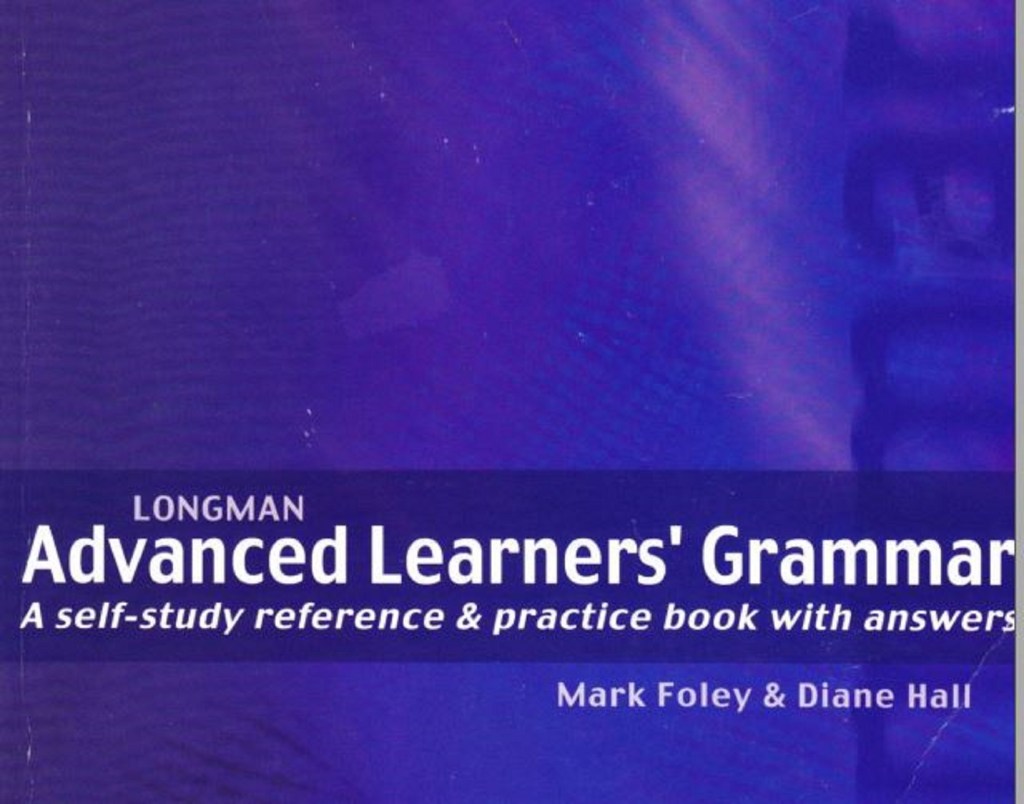
This document is a comprehensive English grammar textbook titled “Longman Advanced Learners’ Grammar: A self-study reference & practice book with answers,” authored by Mark Foley and Diane Hall. The book is structured into 36 units, each focusing on a specific grammar topic such as tenses, conditionals, passives, reported speech, and modal verbs. It includes diagnostic tests to assess understanding and offers a combination of reference material and practice exercises designed for self-study. The resource also provides an answer key and is aimed at advanced learners of English, including those preparing for the Cambridge Advanced or Proficiency examinations.

Advanced Learners’ English Grammar: A Comprehensive Guide
“Advanced Learners’ Grammar” by Mark Foley and Diane Hall is presented as a comprehensive, advanced-level grammar of the English language. It functions as a self-study reference and practice book with answers.
Key aspects and content of “Advanced Grammar” as described in the sources include:
- Structure and Content
- The book is divided into 36 units of grammar explanation, each accompanied by practice exercises.
- It includes 36 diagnostic tests and a test key to help learners identify areas of weakness. These diagnostic tests cover various grammatical topics, such as present tenses, past tenses, future forms, negation, questions, passives, reported speech, conditionals, subjunctive and ‘unreal’ past forms, -ing forms and infinitives, participle and infinitive phrases, multi-word verbs, dependent prepositions, modal verbs, auxiliaries, confusing verbs, adjectives, comparison, gradable and ungradable adjectives, adverbs, nouns and noun phrases, possessives and compound nouns, pronouns, determiners, prepositions, word order and verb patterns, relative clauses, contrast, introductory ‘there’ and ‘it’, emphatic structures and inversion, aspects of cohesion, and features of discourse.
- It features double-page ’round up’ sections for key areas of grammar, such as “Round up (Units 1–3): Present and past tenses” and “Round up (Units 4 and 5): The future”.
- An answer key for practice exercises is provided.
- Target Audience and Purpose
- The book is intended for students at or above the level of the Cambridge First Certificate Examination (or equivalent).
- It is suitable for those preparing for the Cambridge Advanced or Proficiency examinations, as well as for advanced students who are not preparing for specific exams.
- A primary goal is to examine the close relationship between grammar and vocabulary in English.
- Approach and Features
- Grammar explanations delve into areas like multi-word verbs, prepositions, and reporting verbs.
- It emphasizes common errors and areas of potential confusion, differentiating between British and American English usage.
- The importance of context and levels of formality is highlighted, with examples drawn from up-to-date, idiomatic speech and writing. Many examples are sourced from the BNC/Longman corpus.
- The book includes units on text structure and discourse, which are considered essential for advanced learners to progress beyond basic sentence structure.
- Practice exercises are extensive, with four pages of exercises for every four pages of grammar explanation.
- A variety of exercise types are included, such as gap-filling, matching, transformation tasks, and complex text manipulation. Each unit contains at least one exercise type commonly found in advanced level examinations.
- The book is co-authored by Mark Foley and Diane Hall.
In essence, “Advanced Learners’ Grammar” provides a detailed and practical guide to complex English grammar, specifically tailored for advanced learners and those preparing for high-level language examinations, with a focus on both theoretical understanding and practical application.
Advanced Learners’ Grammar: A Self-Study Guide
“Advanced Learners’ Grammar” by Mark Foley and Diane Hall is specifically designed to function as a self-study reference and practice book with answers. This format provides learners with the tools and structure necessary to learn and improve their English grammar independently.
Here’s a discussion of its features as a self-study guide:
- Comprehensive Structure: The book is organized into 36 units of grammar explanation, each of which is paired with corresponding practice exercises. This clear division allows learners to focus on specific grammatical areas.
- Diagnostic Assessment: A key feature for self-study is the inclusion of 36 diagnostic tests and a test key. These tests are designed to help learners “identify areas of weakness for a particular area of grammar”. For example, Diagnostic Test 1 covers “Present tenses”, Test 2 covers “Past tenses”, and so on, covering a wide range of topics from tenses and passives to reported speech, conditionals, multi-word verbs, and features of discourse.
- Targeted Practice and Review:
- After taking a diagnostic test, learners can check their answers in the test key.
- Crucially, the test key provides reference numbers to the specific grammar sections and sub-sections for any items answered incorrectly. This direct guidance enables learners to pinpoint exactly where they need to focus their study and practice.
- The book contains an answer key for all practice exercises, allowing learners to check their work and reinforce their understanding.
- It also includes double-page ’round up’ sections for key areas of grammar, such as “Round up (Units 1–3): Present and past tenses”, which serve as cumulative review points.
- Extensive Practice Opportunities: The “Advanced Learners’ Grammar” offers substantial practice, with four pages of exercises for every four pages of grammar explanation. These exercises are varied, including gap-filling, matching, transformation tasks, and complex text manipulation. Each unit contains at least one exercise type commonly found in advanced-level examinations, making it practical for test preparation.
- Practical Grammar Explanations: The grammar explanations are not merely theoretical; they delve into areas like multi-word verbs, prepositions, and reporting verbs. They highlight common errors and potential areas of confusion, and differentiate between British and American English usage.
- Real-World Examples and Context: To enhance understanding, the book emphasizes the importance of context and levels of formality, with many examples drawn from up-to-date, idiomatic speech and writing, often sourced from the BNC/Longman corpus.
- Focus on Discourse and Text Structure: For advanced learners, the book includes units on text structure and discourse, which are considered essential for progressing beyond basic sentence construction.
In summary, the design of “Advanced Learners’ Grammar” as a self-study guide empowers students to identify their grammar weaknesses, access targeted explanations and practice, and monitor their progress, making it a comprehensive resource for independent learning.
Advanced Learners’ Grammar: Practice Exercises Explained
The “Advanced Learners’ Grammar” by Mark Foley and Diane Hall is explicitly structured as a self-study reference and practice book with answers. A core component of its self-study design is its extensive collection of practice exercises, which are integrated throughout the book to reinforce learning and allow for independent skill development.
Here’s a detailed discussion of the practice exercises:
- Quantity and Integration
- The book is organized into 36 units, and each unit of grammar explanation is accompanied by practice exercises.
- There are four pages of practice exercises for every four pages of grammar explanation, indicating a substantial amount of practical application material.
- The exercises are directly linked to the grammar explanations, with specific references to sections and sub-sections, allowing learners to pinpoint areas for review.
- Variety of Exercise Types
- The book incorporates a wide variety of exercise types to cater to different learning styles and to simulate tasks found in advanced English examinations. These include:
- Gap-filling: Learners complete dialogues, texts, or sentences by filling in missing words or phrases, often with verbs in the correct form.
- Matching: Tasks involve matching phrases to explanations, sentences to their meanings, or different parts of conditional sentences.
- Transformation/Rewriting: Students rewrite sentences to convey a similar meaning, convert newspaper articles into headlines, change direct speech to reported speech, or alter sentences into negative or passive forms.
- Error Correction: These exercises require learners to identify and correct mistakes within texts, dialogues, or individual sentences, sometimes by underlining errors and providing the correct form.
- Multiple Choice: Learners select the best word, phrase, or option to complete sentences or passages.
- Other Formats: This also includes tasks like completing a crossword, or responding to picture-based prompts.
- Purpose and Target Audience
- The practice exercises are designed to help students solidify their understanding of the grammar explanations, particularly in areas like multi-word verbs, prepositions, and reporting verbs, which are often sources of confusion.
- They are tailored for students at or above the Cambridge First Certificate Examination level and are suitable for those preparing for advanced examinations like the Cambridge Advanced or Proficiency exams. Each unit includes at least one exercise type commonly found in these advanced-level examinations.
- The exercises also emphasize common errors and differentiate between British and American English usage where relevant.
- Support for Self-Study
- A critical feature for self-study is the provision of an answer key for all practice exercises. This allows learners to check their work independently and immediately receive feedback.
- While not practice exercises themselves, the diagnostic tests (36 in total) play a crucial role in directing self-study. After taking a diagnostic test, the test key not only provides answers but also reference numbers to specific grammar sections and sub-sections for any incorrect items. This enables learners to precisely identify their weaknesses and then focus their practice on the most relevant exercises.
- Content Sourcing
- Many examples used within the exercises and grammar explanations are drawn from up-to-date, idiomatic speech and writing, with a significant portion sourced from the BNC/Longman corpus. This ensures that the language practiced is current and authentic.
In essence, the practice exercises in “Advanced Learners’ Grammar” are a robust and varied set of tasks specifically designed to facilitate independent learning and mastery of complex English grammar, with a strong focus on practical application and examination preparation.
Advanced English Grammar and Usage Guide
The sources indicate that “Advanced Learners’ Grammar” by Mark Foley and Diane Hall is presented as a comprehensive, advanced-level grammar of the English language. The book’s primary purpose is to provide a detailed guide to English grammar for self-study and practice, particularly for students at or above the Cambridge First Certificate Examination level, including those preparing for Cambridge Advanced or Proficiency examinations.
Key insights into the English language, as conveyed by the sources through the nature and content of this grammar book, include:
- Complexity and Scope: The English language is presented as a subject with a deep and broad grammatical structure. The book covers a wide array of advanced grammatical topics, including various tenses (present, past, future), negation, questions, passive constructions, reported speech, conditionals, and subjunctive forms. It also delves into more nuanced areas such as -ing forms and infinitives, participle and infinitive phrases, multi-word verbs, dependent prepositions, modal verbs, auxiliaries, and confusing verbs. Furthermore, it addresses adjectives, adverbs, nouns, pronouns, determiners, prepositions, word order, relative clauses, contrast, introductory structures, emphatic structures, inversion, and aspects of cohesion and discourse. This extensive coverage highlights the complexity of English grammar for advanced learners.
- Interrelationship of Grammar and Vocabulary: The book “examines the close relationship between grammar and vocabulary in English”. This suggests that proficiency in English requires an understanding of how grammatical structures are intertwined with lexical choices.
- Common Challenges and Variations: The grammar explanations specifically “highlight common errors and areas of potential confusion” in English. This acknowledges that certain aspects of the language are particularly challenging for learners. Additionally, the book “differentiates between British and American English usage”, indicating the existence of significant variations within the global English language.
- Authenticity and Context: To ensure relevance, examples are drawn from “up-to-date, idiomatic speech and writing”. Many of these examples are sourced from the BNC/Longman corpus, emphasizing that the English presented is contemporary and authentic. The importance of understanding the “context and levels of formality” in English is also highlighted.
- Beyond Sentence Structure: For advanced learners, the English language necessitates an understanding beyond basic sentence construction. The book includes dedicated units on “text structure and discourse”, which are considered “essential for the advanced student to develop beyond the confines of simple grammar and sentence structure”. This suggests that mastering English at an advanced level involves comprehending how sentences connect to form coherent texts and how language is used in broader communicative contexts.
Advanced Learners’ Grammar: Diagnostic Tests for Self-Study
Diagnostic tests are a key feature of “Advanced Learners’ Grammar” by Mark Foley and Diane Hall, specifically designed to function as a self-study guide. They are integral to how learners can effectively use the book for independent grammar improvement.
Here’s a detailed discussion of the diagnostic tests:
- Quantity and Purpose: The book contains 36 diagnostic tests and a test key. Their primary purpose is to help learners “identify areas of weakness for a particular area of grammar”. This allows students to pinpoint exactly where they need to focus their study and practice.
- Structure and Content Linkage:
- Each diagnostic test is directly linked to one of the 36 grammar units in the book. For example:
- Diagnostic Test 1 covers “Present tenses”.
- Diagnostic Test 2 covers “Past tenses”.
- Diagnostic Test 3 covers “Past to present tenses”.
- Diagnostic Test 4 covers “The future (1)”.
- Diagnostic Test 5 covers “The future (2)”.
- Diagnostic Test 6 covers “Negation”.
- Diagnostic Test 7 covers “Questions”.
- Diagnostic Test 8 covers “Passives, causatives and get”.
- Diagnostic Test 9 covers “Reported speech”.
- Diagnostic Test 10 covers “Conditionals”.
- Diagnostic Test 11 covers “The subjunctive and ‘unreal’ uses of past forms”.
- Diagnostic Test 12 covers “-ing forms and infinitives”.
- Diagnostic Test 13 covers “Participle and infinitive phrases”.
- Diagnostic Test 14 covers “Multi-word verbs”.
- Diagnostic Test 15 covers “Dependent prepositions”.
- Diagnostic Tests 16, 17, and 18 cover “Modal verbs” (Parts 1, 2, and 3 respectively).
- Diagnostic Test 19 covers “Auxiliaries, have (got), do”.
- Diagnostic Test 20 covers “Confusing verbs”.
- Diagnostic Test 21 covers “Adjectives”.
- Diagnostic Test 22 covers “Comparison”.
- Diagnostic Test 23 covers “Gradable and ungradable adjectives”.
- Diagnostic Test 24 covers “Adverbs”.
- Diagnostic Test 25 covers “Nouns and noun phrases”.
- Diagnostic Test 26 covers “Possessives and compound nouns”.
- Diagnostic Test 27 covers “Pronouns”.
- Diagnostic Test 28 covers “Determiners”.
- Diagnostic Test 29 covers “Prepositions”.
- Diagnostic Test 30 covers “Word order and verb patterns”.
- Diagnostic Test 31 covers “Relative clauses”.
- Diagnostic Test 32 covers “Contrast”.
- Diagnostic Test 33 covers “Introductory there and it”.
- Diagnostic Test 34 covers “Emphatic structures and inversion”.
- Diagnostic Test 35 covers “Aspects of cohesion”.
- Diagnostic Test 36 covers “Features of discourse”.
- This direct correspondence allows for highly targeted self-assessment and remediation.
- Self-Study Process with Diagnostic Tests:
- Learners begin by taking a diagnostic test, such as Diagnostic Test 4 for “The future (1)”.
- After attempting the test, they can check their answers using the test key.
- A critical feature of the test key is that it provides “reference numbers to the specific grammar sections and sub-sections” for any items that were answered incorrectly. This direct guidance enables learners to pinpoint exactly where they need to focus their study and practice within the corresponding grammar unit.
- For example, if a learner struggles with “Present tenses” (Diagnostic Test 1), the test key will direct them to specific sections like 1.1A, 1.2B, etc., for targeted review.
- This systematic approach ensures that the learning is efficient and focused on actual areas of weakness, making the diagnostic tests a cornerstone of the book’s self-study methodology.

By Amjad Izhar
Contact: amjad.izhar@gmail.com
https://amjadizhar.blog
Affiliate Disclosure: This blog may contain affiliate links, which means I may earn a small commission if you click on the link and make a purchase. This comes at no additional cost to you. I only recommend products or services that I believe will add value to my readers. Your support helps keep this blog running and allows me to continue providing you with quality content. Thank you for your support!

Leave a comment