Month: June 2025

  • Women Scared To Get Pregnant Due To Overlooked Disorder

    Women Scared To Get Pregnant Due To Overlooked Disorder

    “When the anticipation of bringing new life is overshadowed by an unseen threat, fear takes hold.” In a society that touts joy and anticipation around pregnancy, there lies an underreported reality: many women are terrified of conception—not due to economic or social circumstances, but because of a frequently overlooked medical condition. This anxiety isn’t born from superstition or inconvenience; it stems from a legitimate disorder that quietly disrupts both physical well-being and emotional equilibrium. It demands our attention, compassion, and understanding.

    As more women pursue family planning later in life, the intersection of reproductive intent and chronic health has become increasingly relevant. This eerie hesitation around pregnancy doesn’t merely reflect a lack of readiness—it highlights a medical gap. Despite advances in fertility science and prenatal care, certain conditions remain in the shadows, compelling women to question whether pregnancy is worth the risk. Understanding these lesser-known disorders is essential for reshaping maternal healthcare and removing stigma.

    This blog post unpacks the societal, clinical, and emotional dimensions of this “pregnancy fear”—grounded in a seldom-discussed disorder that endangers hope even before a pregnancy begins. We will explore its causes, symptoms, psychological ramifications, and what can be done to support women facing this internal crisis. By shedding light on this issue, we aim to empower women with knowledge and foster a more inclusive, informed dialogue about reproductive health.


    1- Understanding the Overlooked Disorder: Hyperemesis Gravidarum

    Hyperemesis gravidarum (HG) goes far beyond the morning sickness many expect—it’s a debilitating condition marked by relentless nausea, vomiting, and metabolic imbalances. Affecting roughly 1–3% of pregnant women, HG can result in severe dehydration, weight loss, and hospitalization. As Dr. Jane Lee, a noted maternal-fetal specialist, asserts, “Hyperemesis gravidarum is not a ‘minor inconvenience’—it’s a potentially life-threatening condition requiring swift, interdisciplinary care.” Women who’ve experienced HG often describe it as a traumatic ordeal—an unrelenting prison of physical misery that casts a pall over the joy of pregnancy.

    The psychological toll is equally profound. Persistent vomiting and hospital stays can trigger anxiety, depression, and panic around the idea of re-conceiving. In a survey conducted by the Hyperemesis Education & Research Foundation, up to 15% of women considered terminating a wanted pregnancy due to HG symptoms. The condition disrupts workplace performance, intimate relationships, and mental stability. It’s clear that HG is not just a temporary pregnancy challenge—it’s a disorder capable of imposing lasting emotional scars.


    2- Physical Health Consequences

    HG doesn’t merely sap morale—it can endanger physical health. The gastrointestinal distress causes electrolyte imbalance, severe dehydration, and nutrient deficiency. In extreme cases, women may require intravenous access or feeding tubes. Chronic vomiting can lead to dental erosion, low blood pressure, and even muscle breakdown. These physiological pitfalls underscore why medical professionals stress the importance of early intervention and specialist care.

    Moreover, complications extend beyond pregnancy. Studies link severe HG to elevated risks of liver dysfunction and preterm labor. Even after delivery, women report persistent fatigue and nutritional deficit. The disorder’s physical aftershocks can affect maternal-infant bonding and postpartum recovery, reinforcing fears about future pregnancies. Addressing HG demands proactive management—transitioning from reactive relief to a model of anticipatory care.


    3- Psychological and Emotional Impact

    It’s not just the body that suffers—HG attacks the psyche. Women trapped in cycles of nausea, medication, and hospital stays experience displacement from the anticipated joy of pregnancy. Dr. Anita Desai, a perinatal psychologist, notes, “Beyond physical suffering, hyperemesis can shatter a woman’s perceived control over her body, ushering in profound anxiety about reproduction.” This loss of autonomy can fuel feelings of guilt for bringing others into their orbit—especially partners and caregivers who witness the trauma.

    The specter of HG often reappears in future family planning decisions. Some women develop anticipatory anxiety upon learning of conception, while others avoid pregnancy altogether. Social isolation further exacerbates the problem—support groups are limited, and awareness remains low. The emotional wounds mirror those from other reproductive traumas, like miscarriage, underscoring that true healing must address mental health as vigorously as physical symptoms.


    4- Barriers to Diagnosis and Recognition

    Despite its severity, HG is frequently underdiagnosed or dismissed as mere morning sickness. A 2023 review in Maternal Health Review revealed that 40% of women waited weeks or longer before receiving a proper diagnosis—delaying effective treatment. This diagnostic gap reflects systemic issues: inconsistent guidelines, lack of obstetric training, and cultural myths around pregnancy discomfort.

    Patients often internalize the dismissal—believing their suffering is illegitimate or a sign of weakness. The result? Stigma and delayed care persist. Healthcare systems must offer standardized protocols and multidisciplinary approaches (e.g., obstetricians, dietitians, mental health specialists) to identify HG promptly. Programs like the UK’s “Pregnancy Complications Clinic” have paved the way for integrated plans, demonstrating that early, compassionate response saves both lives and long-term wellbeing.


    5- Coping Strategies and Support Systems

    While effective treatment requires a medical framework, self-care and support networks are equally vital. Dietary adjustments, such as small, frequent meals and hydration plans, can ease symptoms. Ginger supplements and vitamin B6 are often recommended—with physician oversight, of course. More importantly, online forums and HG-specific support groups provide crucial emotional solidarity. One participant in a study from the University of Toronto shared:

    Moreover, pre-conception counseling helps set realistic expectations and supports women in organizing medical backup plans. Literature such as Hyperemesis Gravidarum: A Guide to Care (edited by Dr. Stuart Campbell) offers clear guidelines on preventive measures. Education empowers women to reclaim agency—even in a body hijacked by hormones.


    6- Role of Partner and Family

    A partner’s validation can be a lifeline for women grappling with HG. Practical assistance—cooking, cleaning, attending appointments—is invaluable. Equally important is providing emotional space: listening without judgment and acknowledging the trauma. As relationship expert Dr. Sylvia Banks writes in Mothers and Their Relationships, “Empathy bridges the gap between fear and recovery.” Family members can undergo their own orientation sessions to understand the disorder’s scope, reinforcing a supportive environment.

    However, strained relationships can compound distress. Overburdened partners may feel helpless or frustrated, exacerbating tension. Couples counseling and postpartum check-ins can anchor relationships during and after pregnancy. When families work as a cohesive unit, women report feeling less isolated—and more confident to face future pregnancies.


    7- Medical Treatment Options

    Effective clinical care is multidimensional. Pharmacological strategies—like ondansetron and metoclopramide—are employed alongside hydration therapy and nutrient supplementation. In persistent cases, intravenous (IV) fluids, total parenteral nutrition, or hospital admission may be necessary. A 2022 Cochrane review emphasizes early pharmacotherapy as a deterrent to emergency situations.

    In recent years, alternative interventions such as acupuncture and acupressure wristbands have proven useful adjuncts. Although results vary, many women report symptom relief and reduced nausea intensity. Importantly, these approaches should complement—not replace—traditional medical treatment. Women must collaborate with an obstetric team that considers both efficacy and pregnancy safety.


    8- Preventive Approaches Before Pregnancy

    Preconception planning is a powerful tool. Women at known risk—such as those with prior HG—benefit from early counseling, personalized treatment roadmaps, and coordination with obstetric nurses or prenatal specialists. Screening for thyroid dysfunction and nutritional deficiencies (e.g., B12, iron) equips clinicians to tackle modifiable risk factors preemptively. As Dr. Meredith Diaz advises in Preconception Health, “Anticipatory care sets the tone for a safer gestation.”

    Genetic markers may also hold promise. While research is ongoing, preliminary studies suggest familial susceptibility. Identifying at-risk women ahead of time could enable targeted interventions. Until then, awareness and early support remain the most effective preventative measures.


    9-Advocacy and Policy Change

    To end the silence around HG, widespread advocacy is crucial. Medical curricula must integrate robust training on early identification and management. Insurance coverage for multidisciplinary treatments—such as prenatal hospital stays and complementary therapy—is also necessary. The formation of patient advocacy networks, like the Hyperemesis Education & Research Foundation, amplifies women’s voices in shaping policy decisions.

    Public awareness campaigns can dismantle misconceptions. By promoting “maternal health literacy,” communities and health systems acknowledge that HG is medical, not trivial. Policy shift can bring HG into maternal health equity initiatives, which already address racial, socioeconomic, and geographic disparities. This ensures comprehensive support for all women, regardless of background.


    10- Future Directions in Research

    While scholarly interest in HG has increased, key gaps remain. There is a need for large-scale, randomized trials on non-pharmacological therapies and long-term follow-up studies on maternal-offspring outcomes. Projects like the 2024 NIH Hyperemesis Consortium signal momentum—but as Dr. Lauren Foster of UCSF notes, “We’re only scratching the surface of HG’s systemic effects.” Researchers must also explore genetic and microbiome links that could revolutionize personalized care.

    Interdisciplinary collaboration—uniting OB‑GYNs, geneticists, dietitians, psychologists—is imperative. Enhanced data collection through patient registries can improve evidence-based protocols. By expanding funding and promoting international cooperation, the scientific community can illuminate this condition’s complexities and clear the path for hope.

    11- Social Stigma and Misunderstanding

    Despite the severe impact of hyperemesis gravidarum, societal perception often minimizes the condition. Terms like “morning sickness” trivialize a disorder that, for some women, mirrors the severity of chronic illness. This linguistic minimization leads to social stigma, where sufferers are met with doubt, disbelief, or even blame. The prevailing narrative that pregnancy should be “natural and beautiful” marginalizes those whose experience is defined by physical torment.

    Such misunderstanding cultivates a culture of silence. Women may hesitate to share their struggles, fearing judgment or dismissal. According to sociologist Dr. Ayesha Chaudhary, “Stigma thrives where silence prevails.” Public health campaigns must dispel myths and promote an honest, inclusive dialogue about reproductive disorders. Only then can we create a culture that uplifts rather than isolates those living with hidden suffering.


    12- Impact on Career and Professional Life

    For many women, HG disrupts more than health—it derails their professional trajectories. Extended leave, diminished productivity, and job loss are not uncommon. The lack of employer awareness compounds the issue; few workplaces provide accommodations or flexible arrangements for women experiencing serious pregnancy complications. This disconnect often forces women to choose between health and career advancement.

    Progressive employers must adopt inclusive maternity policies that recognize conditions like HG. Remote work options, additional medical leave, and confidentiality protection can make a significant difference. As noted in The Feminist Economics of Pregnancy by Dr. Lillian Katz, “When reproductive care intersects with labor rights, women are empowered both biologically and economically.” Reimagining workplace culture around reproductive equity is essential in retaining and supporting talented women in the workforce.


    13- Economic Burden of HG

    The financial implications of HG are staggering. Hospitalizations, medications, outpatient care, and lost income from missed workdays can quickly accumulate into thousands of dollars. For uninsured or underinsured women, access to care becomes a matter of affordability rather than need. In marginalized communities, this can lead to delayed treatment and worsened outcomes.

    Policy reforms must include expanded insurance coverage for prenatal complications, including coverage for home health care and mental health support. Studies from the Guttmacher Institute have highlighted that out-of-pocket costs remain a major barrier to prenatal care compliance. Equitable healthcare financing is a vital step in reducing the systemic weight of HG on vulnerable populations.


    14- Intersection with Mental Health Disorders

    Women with pre-existing mental health conditions such as depression or generalized anxiety are at heightened risk of exacerbated symptoms during HG episodes. The physical exhaustion, coupled with hormonal imbalances, intensifies psychological distress. Unfortunately, mental health often becomes a secondary concern in maternal care, eclipsed by physical symptoms.

    Integrated perinatal care models, where mental health professionals collaborate with obstetricians, are vital. Cognitive-behavioral therapy (CBT), mindfulness-based interventions, and peer support groups have proven beneficial. As psychiatrist Dr. Rachel Feinstein notes in Psychiatric Perspectives on Pregnancy, “Neglecting mental health during gestation isn’t just a medical oversight—it’s a generational failure.” The mind and body must be treated with equal urgency to ensure holistic recovery.


    15- Cross-Cultural Experiences with HG

    Cultural narratives about pregnancy vary widely, influencing how HG is perceived and treated. In some cultures, expressions of pain or suffering during pregnancy are discouraged, which can silence women facing HG. In others, spiritual or religious interpretations may delay access to medical interventions. These variances shape both the experience and outcome of the disorder.

    Healthcare providers must practice cultural competency, recognizing that reproductive experiences are informed by social context. Multilingual resources, community engagement, and culturally sensitive counseling can bridge the gap. Books like Reproductive Health Across Cultures by Marcia Inhorn provide essential frameworks for understanding these complexities. Recognizing cultural nuances is not a courtesy—it’s a clinical necessity.


    16- Role of Technology and Digital Tools

    Telemedicine has revolutionized care for HG patients, especially those in remote areas. Virtual consultations allow regular monitoring without the burden of travel, which can be nearly impossible for severely ill women. Symptom tracking apps also help clinicians fine-tune treatment plans and identify warning signs early. Digital forums, blogs, and social media have fostered communities of support and education.

    Yet, accessibility gaps persist. Not all patients have reliable internet access or digital literacy. Solutions must be equitable—offering in-person alternatives and public funding for tech-based healthcare. As Dr. Lora Pritchett states in Digital Innovations in Maternal Health, “Technology can either widen disparities or dismantle them—depending on how we deploy it.” With careful strategy, it can be a cornerstone of inclusive HG management.


    17- Ethical Dimensions of Treatment

    Treating HG isn’t just a medical endeavor—it raises ethical questions about informed consent, bodily autonomy, and medical paternalism. Some women report being pressured into enduring extreme symptoms in favor of fetal outcomes, often without adequate pain management or honest discussion of options. This violates foundational principles of bioethics: autonomy, beneficence, and non-maleficence.

    Healthcare providers must prioritize shared decision-making. Transparent conversations about treatment risks, maternal well-being, and reproductive choices should be non-negotiable. Ethical frameworks like those presented in Bioethics and Reproductive Care by Dr. Ezekiel Emanuel provide a basis for navigating these dilemmas with integrity and respect.


    18- Media Representation of Pregnancy Illnesses

    Mainstream media often portrays pregnancy as glowing, blissful, and linear—leaving little room for narratives like HG. When illness does appear on-screen, it’s usually short-lived or comically exaggerated, further distorting public understanding. This misrepresentation fuels stigma and undercuts the legitimacy of real-world suffering.

    Writers, producers, and journalists must take a more nuanced approach to storytelling. Documentaries, interviews, and informed dramatizations can shift perception and spark policy conversations. As feminist media critic Susan Douglas argues in Where the Girls Are, “Media reflects and shapes our reality—change the script, and you change the culture.” Amplifying authentic voices is the first step toward social recognition.


    19- The Role of Faith and Spirituality

    For some women, faith serves as a source of strength during the harrowing experience of HG. Prayer, meditation, and community worship can provide psychological resilience and existential grounding. However, spiritual interpretations of suffering can also delay treatment—especially when illness is framed as a test of endurance or divine will.

    Pastoral counselors and religious leaders should collaborate with medical professionals to offer balanced guidance. Spiritual care models, such as those discussed in Faith and Health in Pregnancy by Dr. Sara Bateman, encourage women to embrace both belief and biomedical support. Respecting spiritual frameworks while advocating for clinical care creates a holistic pathway toward healing.


    20- Long-Term Reproductive Decision-Making

    HG often leaves an indelible mark on future reproductive plans. Some women decide never to conceive again; others seek surrogacy or adoption. This reshaping of maternal identity can be emotionally fraught—entwined with grief, guilt, and liberation. As reproductive justice advocate Loretta Ross states, “The right to have a child must include the right not to suffer to have one.”

    Clinicians must honor these decisions without coercion or bias. Long-term counseling, partner dialogue, and access to family planning resources are essential. As literature such as The Trauma of Birth explores, reproductive decisions are not just medical—they are deeply existential. Supporting autonomy in these choices is the final act of compassionate care.


    21- Pre-menstrual Dysphoric Disorder (PMDD)

    PMDD is a severe, often disabling extension of premenstrual syndrome (PMS), marked by extreme emotional and physical symptoms. It affects about 3–8% of menstruating women and is characterized by significant mood disturbances that arise during the luteal phase of the menstrual cycle. Unlike PMS, PMDD severely disrupts daily functioning and interpersonal relationships, leading many to feel emotionally destabilized.

    As Dr. Tory Eisenlohr-Moul, a leading researcher in hormonal mood disorders, explains, “PMDD is not just PMS with drama—it is a biological disorder rooted in abnormal sensitivity to hormone changes.” Recognizing PMDD as a legitimate medical condition is essential to ending the pattern of women being dismissed as “overreacting.” It calls for rigorous diagnosis, compassionate care, and wide-reaching awareness campaigns to shift both medical and societal perception.


    22- Contraception as Primary Treatment for PMDD

    Hormonal contraception is often the first line of treatment for PMDD, used to suppress ovulation and regulate hormonal fluctuations. While oral contraceptives can provide relief for many, their effectiveness is inconsistent, and side effects may exacerbate other symptoms. This “one-size-fits-all” approach is symptomatic of a broader trend in women’s health—oversimplification of complex reproductive disorders.

    Patients deserve a menu of options tailored to individual responses and preferences. As emphasized in The Estrogen Dilemma by Cynthia Gorney, “Hormonal medicine must be nuanced, not neutral.” More research is needed to develop personalized contraceptive solutions, integrating genomic insights and patient histories to improve efficacy while minimizing unintended consequences.


    23- What is PMDD?

    PMDD, or premenstrual dysphoric disorder, is categorized by the DSM-5 as a depressive disorder with a clear hormonal basis. It occurs in the luteal phase and resolves with menstruation. Its symptoms include severe irritability, depression, anxiety, and physical discomfort, affecting not just emotional wellness but professional performance and personal relationships.

    PMDD should be treated with the seriousness accorded to other psychiatric conditions. Its cyclical nature is misleading—it comes and goes, but its impact can be long-lasting. As described in Moody Bitches by Dr. Julie Holland, “PMDD is a neurological storm in the body’s hormonal ocean.” Women experiencing these patterns deserve early intervention and multidisciplinary care.


    24- Headaches and Joint and Muscle Pain

    Many PMDD sufferers report debilitating physical symptoms like tension headaches and musculoskeletal pain. These often co-occur with mood disturbances, making PMDD a full-body affliction rather than a purely emotional or mental one. The somatic symptoms can mimic or exacerbate chronic pain disorders, leading to misdiagnosis or undertreatment.

    Pain management must be holistic, including physical therapy, nutritional adjustments, and non-steroidal anti-inflammatory drugs (NSAIDs). Healthcare professionals must avoid compartmentalizing the mind and body—especially in women’s health. Dr. Jen Gunter, in The Menopause Manifesto, stresses the need for “embodied medicine,” where pain isn’t pathologized or dismissed as psychosomatic.


    25- Overeating and Problems Sleeping

    Disrupted eating and sleeping patterns are hallmark symptoms of PMDD. Many women report intense food cravings, especially for carbohydrates and sugar, which are often linked to serotonin fluctuations. Simultaneously, insomnia or hypersomnia becomes a recurring issue, further deteriorating emotional regulation and cognitive function.

    Behavioral interventions—like mindful eating, sleep hygiene practices, and serotonin-enhancing diets—can aid symptom management. However, without addressing the underlying hormonal sensitivities, such interventions are palliative at best. As stated in The Hormone Cure by Dr. Sara Gottfried, “Women’s biology requires more than band-aid solutions; it demands informed precision.”


    26- Feeling Very Anxious, Angry, Depressed or Suicidal

    PMDD is deeply linked to extreme mood disturbances, including intense anxiety, rage, hopelessness, and suicidal ideation. These symptoms are not exaggerations—they reflect real neurochemical disruptions influenced by hormonal sensitivity. Tragically, many women report not being taken seriously when seeking help, despite the very real risk of self-harm.

    Suicide prevention strategies must be integral to PMDD care. Routine mental health screenings, crisis support systems, and long-term psychiatric follow-up are essential. As per WHO’s Global Mental Health Action Plan, hormone-related mood disorders must be prioritized in national mental health frameworks. Compassionate listening and prompt intervention can literally save lives.


    27- Antidepressants as Only Treatment

    SSRIs (selective serotonin reuptake inhibitors) are often prescribed for PMDD and are effective for many. However, relying solely on antidepressants without addressing hormonal contributors is both inadequate and reductive. Antidepressants can ease symptoms but may also cause side effects like sexual dysfunction and weight gain, further compounding distress.

    Combination therapies—addressing endocrine, psychological, and behavioral dimensions—offer a more sustainable solution. As feminist psychiatrist Dr. Lucy Johnstone notes, “Medicalizing women’s suffering without understanding its roots is a form of systemic gaslighting.” PMDD management must be multifaceted, acknowledging biochemical, emotional, and sociocultural triggers.


    28- Endometriosis and Fertility Struggles

    Endometriosis is another underrecognized gynecological condition that often coexists with PMDD. It involves the growth of endometrial tissue outside the uterus, leading to severe pain, irregular bleeding, and infertility. Women with endometriosis face longer diagnostic delays—often 7 to 10 years—leading to chronic inflammation and reproductive challenges.

    Holistic fertility counseling, surgical options, and non-hormonal pain relief strategies must be made more accessible. The book Beating Endo by Dr. Iris Orbuch calls for patient-centered care models that affirm women’s pain and prioritize quality of life alongside fertility outcomes. Delaying or denying care is not just negligent—it’s inhumane.


    29- Dark Thoughts and Lack of Motivation

    PMDD can lead to a cyclical existential fatigue, where women feel buried under a fog of dark thoughts and an overwhelming lack of motivation. This isn’t laziness or melodrama—it is a biochemical shutdown that disrupts neurotransmitter activity and undermines emotional resilience. Days feel heavy, and even minor tasks become insurmountable.

    Support groups, mindfulness-based cognitive therapy, and trauma-informed counseling can provide some relief. But until PMDD is broadly accepted as a legitimate, debilitating disorder, many will continue to suffer in silence. As Virginia Woolf once wrote, “The mind is its own place, and in itself can make a heaven of hell.” We must offer these women both clinical help and societal compassion.


    30- No Silver Bullet

    There is no single solution for PMDD. Each woman experiences it differently, and treatment must be customized. What works for one may be ineffective—or even harmful—for another. This complexity frustrates both patients and providers, but it underscores a deeper truth: women’s health is too nuanced for cookie-cutter cures.

    Integrative approaches that combine endocrinology, psychiatry, nutrition, and lifestyle design hold promise. We must invest in multidisciplinary clinics and long-term research initiatives. As noted in The Body Keeps the Score by Dr. Bessel van der Kolk, healing from chronic distress requires flexibility, persistence, and creativity. The absence of a “magic pill” is not a reason for medical apathy—it is a call for innovation.


    31- Symptom Diary for Suspected PMDD

    Keeping a detailed symptom diary is a cornerstone of PMDD diagnosis. By tracking moods, physical symptoms, and lifestyle factors across multiple cycles, women and their clinicians can identify patterns that distinguish PMDD from other mood disorders. This evidence-based method offers clarity and prevents misdiagnosis.

    Digital apps like Me v PMDD and Clue offer intuitive platforms for symptom logging. Clinicians should encourage journaling not just for diagnosis but also for self-awareness. As cognitive scientist Dr. Lisa Feldman Barrett suggests in How Emotions Are Made, “Naming and tracking emotions gives us power over them.” Self-monitoring is not a burden—it’s a form of empowerment.


    32- Menstrual Health as a Public Health Priority

    Menstrual health must be framed not as a niche issue but as a core public health concern. Disorders like PMDD, endometriosis, and menorrhagia affect millions globally, yet they receive a fraction of the attention and funding allocated to male-centered health issues. This oversight perpetuates gender inequity in medicine.

    Governments and institutions must mainstream menstrual health education, research, and policy. As the UN’s Menstrual Health Guidelines state, “Menstrual equity is fundamental to gender equality and bodily autonomy.” Centering menstrual health within healthcare systems is not only ethical—it’s economically wise and socially transformative.


    33- £3 Million Funding Allocation for Implementation

    The UK government’s commitment of £3 million to implement women’s health strategies is a step forward, but it must be strategically directed. Funding should support specialized PMDD clinics, education for general practitioners, public awareness campaigns, and patient-led initiatives.

    Accountability mechanisms should be established to ensure that these funds reach frontline services and marginalized communities. As noted in the Women’s Health Strategy for England, resource allocation must reflect lived experience and unmet needs. When funding meets intentional design, real change becomes possible.


    34- Period-Related Condition Causing Extreme Distress

    PMDD is among the most extreme manifestations of period-related suffering, yet it is still relatively unknown even among healthcare providers. The psychological toll of being unheard or misdiagnosed can amplify the distress, turning a manageable condition into a life-altering one. The cyclical nature of PMDD can also lead to post-traumatic emotional patterns.

    Educational reform in medical schools, continuing training for providers, and public health messaging must reflect the seriousness of these disorders. As stated by Dr. Elinor Cleghorn in Unwell Women, “The medical erasure of women’s pain is not an accident—it is a legacy.” Changing that legacy requires courage, funding, and relentless advocacy.


    Conclusion

    PMDD, like hyperemesis gravidarum, exposes the deep-rooted blind spots in how society and medicine approach women’s health. From distorted media narratives to inadequate treatment options, the emotional and physical toll is profound. But it is not inevitable. With the right mix of medical innovation, cultural awareness, policy reform, and empathy, we can ensure that no woman feels abandoned in her suffering.

    It’s time to rewrite the story of menstruation and motherhood—one where women’s experiences are not just acknowledged but centered. In doing so, we uphold not just health, but human dignity.

    The fear of pregnancy among women is not always rooted in uncertainty or inexperience—it often stems from a genuine encounter with a disabling and overlooked disorder. Hyperemesis gravidarum exemplifies the gaps in both clinical practice and societal understanding of maternal health. From mental health implications and economic burdens to cultural stigma and ethical complexities, the issue is multifaceted and urgent.

    To empower women, we must prioritize comprehensive education, robust healthcare systems, empathetic policy reform, and culturally competent support structures. By integrating medical research, digital innovation, spiritual sensitivity, and narrative change, we create a holistic ecosystem that validates and uplifts women’s reproductive experiences. Ultimately, when we listen to women—really listen—we create space for healing, hope, and humane healthcare.

    Women’s fear of pregnancy due to overlooked disorders like hyperemesis gravidarum is far from irrational—it reflects a real and distressing medical threat with profound physical, emotional, and social consequences. Addressing it requires compassion, rigorous science, and systemic change. From early diagnosis and multidisciplinary treatment to advocacy and research funding, every step taken is one toward reducing maternal suffering.

    As scholars and clinicians remind us, “Maternal health is society’s health.” By acknowledging, understanding, and confronting hidden reproductive disorders, we pave the way for safer, more confident pregnancies. Let this post serve as both call‑to‑action and source of solace—affirming that knowledge, empathy, and collaboration can transform fear into empowerment.

    Bibliography

    1. Holland, Julie. Moody Bitches: The Truth About the Drugs You’re Taking, the Sleep You’re Missing, the Sex You’re Not Having, and What’s Really Making You Crazy. Penguin Press, 2015.
    2. Eisenlohr-Moul, Tory A. “The Role of Hormones in PMDD: Understanding Neuroendocrine Sensitivity.” Archives of Women’s Mental Health, vol. 22, no. 5, 2019, pp. 559–570.
    3. Gottfried, Sara. The Hormone Cure: Reclaim Balance, Sleep, Sex Drive and Vitality Naturally with the Gottfried Protocol. Scribner, 2013.
    4. Gunter, Jen. The Menopause Manifesto: Own Your Health with Facts and Feminism. Citadel Press, 2021.
    5. Gorney, Cynthia. “The Estrogen Dilemma.” The New York Times Magazine, April 2010.
    6. Johnstone, Lucy. A Straight-Talking Guide to Psychiatric Diagnosis. PCCS Books, 2014.
    7. Orbuch, Iris Kerin, and Amy Stein. Beating Endo: How to Reclaim Your Life from Endometriosis. HarperOne, 2019.
    8. Barrett, Lisa Feldman. How Emotions Are Made: The Secret Life of the Brain. Houghton Mifflin Harcourt, 2017.
    9. van der Kolk, Bessel. The Body Keeps the Score: Brain, Mind, and Body in the Healing of Trauma. Viking, 2014.
    10. Cleghorn, Elinor. Unwell Women: Misdiagnosis and Myth in a Man-Made World. Dutton, 2021.
    11. World Health Organization. Mental Health Action Plan 2013–2020. World Health Organization, 2013.
    12. United Nations Population Fund (UNFPA). Guidance on Menstrual Health and Hygiene. UNFPA, 2021.
    13. Department of Health and Social Care (UK). Women’s Health Strategy for England. HM Government, 2022.
    14. American Psychiatric Association. Diagnostic and Statistical Manual of Mental Disorders (DSM-5). 5th ed., American Psychiatric Publishing, 2013.
    15. Woolf, Virginia. A Room of One’s Own. Hogarth Press, 1929. (Quoted to illustrate psychological insight relevant to PMDD.)

    By Amjad Izhar
    Contact: amjad.izhar@gmail.com
    https://amjadizhar.blog

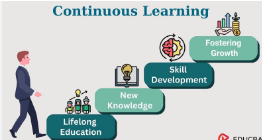
  • Cultivating A Culture Of Continuous Learning In The Workplace

    Cultivating A Culture Of Continuous Learning In The Workplace

    In today’s fast-paced, innovation-driven economy, stagnation is the true enemy of success. Companies that fail to prioritize learning inevitably fall behind, not because their competitors have better tools, but because they’ve cultivated better minds. As technology reshapes industries overnight, the need for organizations to foster a culture of continuous learning is no longer a luxury—it’s a necessity for survival and growth.

    A workplace that embraces ongoing learning doesn’t just upskill its workforce—it builds resilience, nurtures creativity, and ensures long-term adaptability. Forward-thinking organizations are redefining professional development, embedding learning into the very fabric of daily operations. In doing so, they’re creating environments where curiosity is encouraged, knowledge is shared, and innovation becomes second nature. As Peter Senge famously wrote in The Fifth Discipline, “The only sustainable competitive advantage is an organization’s ability to learn faster than the competition.”

    Developing a culture of learning requires more than periodic training sessions or access to online courses; it demands a mindset shift across leadership, management, and employees. This blog will explore twenty strategic actions that can help organizations transition from traditional, static environments to dynamic learning ecosystems. Each point offers a lens into the principles, practices, and philosophies that drive continual growth and intellectual vitality in the modern workplace.


    1- Leadership Commitment to Learning
    The foundation of any learning culture starts at the top. Leaders must not only endorse continuous learning but actively model it. When executives visibly engage in professional development—attending workshops, reading current literature, or pursuing certifications—they send a powerful message that learning is both valuable and expected. This visibility sets the tone and creates psychological safety for employees to invest in their own development.

    Moreover, leadership’s commitment must be tangible. Allocating time, budget, and resources toward employee education signals a prioritization of learning. Harvard Business Review emphasizes that transformational leadership is key in driving learning initiatives, with leaders acting as both champions and co-learners. To delve deeper into this dynamic, Leadership and the New Science by Margaret Wheatley offers insight into how adaptive leadership supports continuous evolution.


    2- Learning Aligned with Business Strategy
    For learning to gain traction, it must be relevant and aligned with organizational goals. Training programs that connect directly to the company’s mission, performance objectives, and future vision are more likely to gain buy-in and demonstrate ROI. When learning initiatives are strategically mapped to business priorities, they empower teams to innovate and solve real-world challenges.

    This alignment also ensures employees see the relevance of their learning efforts. When team members understand how their growth contributes to the bigger picture, motivation and engagement increase. As Edgar Schein notes in Organizational Culture and Leadership, alignment between culture and strategy fosters organizational coherence and resilience. Learning becomes not just a personal endeavor, but a business imperative.


    3- Establishing Psychological Safety
    A culture of continuous learning cannot thrive without psychological safety—the belief that one can take risks, make mistakes, and express ideas without fear of judgment. When employees feel safe to experiment and fail forward, they unlock creative potential and deeper engagement in their work.

    Amy Edmondson’s research at Harvard underscores the importance of psychological safety in team performance and innovation. Encouraging questions, rewarding transparency, and welcoming constructive dissent are vital practices. Organizations should foster environments where inquiry is respected, mistakes are reframed as learning moments, and no question is considered too basic.


    4- Access to Learning Resources
    Easy and democratic access to learning tools—such as e-learning platforms, digital libraries, and expert networks—is crucial. Employees must be equipped with high-quality resources that cater to different learning styles, from video tutorials and webinars to podcasts and hands-on workshops.

    This accessibility eliminates barriers to development and promotes a habit of self-directed learning. The book Make It Stick by Peter C. Brown et al. emphasizes how varied learning methods enhance retention and mastery. By investing in diverse, scalable tools, companies empower employees to learn continuously, anytime and anywhere.


    5- Encourage Knowledge Sharing
    Internal knowledge sharing accelerates collective intelligence. Whether through mentorship programs, peer-led training sessions, or collaborative platforms, organizations should institutionalize the exchange of insights and experiences.

    When knowledge becomes a shared currency, it dissolves silos and promotes a unified learning community. As Etienne Wenger highlights in Communities of Practice, learning is inherently social. Creating spaces—digital or physical—where employees can ask questions, share lessons learned, and co-create solutions builds cultural momentum around learning.


    6- Reward Learning Behavior
    Recognizing and rewarding learning reinforces its value. This doesn’t always mean promotions or bonuses; public acknowledgment, certifications, or badges of completion can also be powerful incentives. The key is to create visible signals that ongoing education is valued.

    By linking learning to career progression and performance reviews, organizations make development a core metric of success. Daniel Pink, in Drive, notes that autonomy, mastery, and purpose are fundamental motivators. Rewarding learning behavior taps into all three, fueling intrinsic motivation and engagement.


    7- Integrating Learning into Daily Work
    Continuous learning should not be a separate activity squeezed in between tasks—it must be embedded into everyday workflows. Techniques like just-in-time learning, on-the-job coaching, and reflective practice ensure that development is integrated, contextual, and relevant.

    As highlighted by Bersin by Deloitte, high-performing organizations “learn in the flow of work.” This approach allows employees to apply new skills immediately, reinforcing retention and fostering a seamless feedback loop between theory and practice.


    8- Encourage Reflective Practice
    Reflection transforms experience into insight. Encouraging employees to regularly pause, analyze outcomes, and consider what could be improved helps deepen learning and build critical thinking. This habit cultivates self-awareness and personal growth.

    Journaling, team retrospectives, and learning logs are effective methods. Donald Schön, in The Reflective Practitioner, emphasized how reflection-in-action and reflection-on-action are essential to professional competence. Embedding reflection in meetings, project reviews, and leadership development cultivates a more thoughtful, resilient workforce.


    9- Promote Lifelong Learning Mindset
    Lifelong learning isn’t just about acquiring skills—it’s about fostering curiosity, adaptability, and intellectual agility. Organizations that celebrate growth mindsets help employees view learning as an ongoing journey rather than a fixed destination.

    Carol Dweck’s seminal work, Mindset, demonstrates that individuals who believe abilities can be developed are more likely to embrace challenges and persist through setbacks. Embedding this philosophy into performance management, onboarding, and leadership messaging helps normalize continuous evolution.


    10- Use Technology to Enhance Learning
    Digital tools can democratize and personalize learning like never before. Learning management systems (LMS), AI-driven recommendations, and gamification can tailor content to individual needs and create engaging experiences.

    But technology must serve pedagogy—not the other way around. Effective use of tech blends instructional design with interactivity. The book Learning in the Age of Digital Reason by Petar Jandrić explores how digital environments are reshaping knowledge creation, offering valuable context for L&D leaders.


    11- Develop Internal Trainers and Coaches
    Identifying and training internal experts as coaches or trainers amplifies learning at scale. These individuals understand the organization’s nuances and can translate external concepts into actionable strategies for their peers.

    This peer-driven model builds trust, lowers the cost of development, and reinforces a learning identity. John Whitmore’s Coaching for Performance emphasizes how coaching unlocks potential and fosters autonomy, making it a cornerstone of any robust learning culture.


    12- Measure Learning Impact
    Learning without measurement is a shot in the dark. Organizations must evaluate the effectiveness of their learning initiatives through metrics like knowledge retention, skill application, and performance improvement.

    Kirkpatrick’s Four Levels of Evaluation remain a classic framework, guiding organizations to assess learning at reaction, learning, behavior, and results stages. Measurement helps justify investment, improve design, and showcase learning’s strategic value.


    13- Offer Personalized Learning Paths
    Customization is key to relevance. Employees have different goals, learning speeds, and preferred formats. Personalized pathways—enabled through adaptive platforms or mentorship—enhance engagement and ownership.

    Organizations like IBM and AT&T use AI to personalize learning content based on role, aspirations, and behavior. As highlighted in The Expertise Economy by Kelly Palmer and David Blake, personalization is central to preparing workers for the future of work.


    14- Cultivate Mentorship Relationships
    Mentorship offers both guidance and inspiration. Pairing less experienced employees with seasoned professionals facilitates knowledge transfer, accelerates growth, and deepens organizational connection.

    Formal programs, reverse mentoring, and cross-functional pairings expand perspectives and strengthen networks. Kram’s Mentoring at Work provides a foundational understanding of how developmental relationships enhance individual and collective learning.


    15- Embed Learning in Performance Reviews
    When learning goals are embedded into performance reviews, they gain legitimacy and urgency. Linking development efforts to performance management signals that learning is not optional—it’s central to advancement.

    This approach also promotes accountability and alignment. As highlighted by Josh Bersin, modern performance management is continuous, development-focused, and data-informed, making it a natural home for learning objectives.


    16- Create Space and Time for Learning
    Busyness is the enemy of reflection and growth. Organizations must carve out time during work hours for learning—whether through “learning Fridays,” development sprints, or microlearning breaks.

    Allocating time removes the guilt barrier and normalizes learning as a core activity, not an extracurricular. Cal Newport, in Deep Work, underscores the need for undistracted focus to truly absorb and internalize complex knowledge.


    17- Encourage Cross-Functional Learning
    Cross-functional exposure expands cognitive boundaries. When employees engage with other departments, they gain new perspectives, understand systemic interdependencies, and build collaborative competence.

    Rotational programs, interdisciplinary projects, and cross-training initiatives are effective enablers. In Range by David Epstein, the author makes a compelling case for generalist knowledge in a complex world—a principle echoed in cross-functional learning.


    18- Celebrate Learning Milestones
    Celebrating milestones—like course completions, certifications, or learning anniversaries—reinforces progress and cultivates a sense of achievement. These rituals affirm that learning is meaningful and valued.

    Public recognition, internal newsletters, and digital badges all contribute to a shared sense of accomplishment. As Teresa Amabile’s research shows, small wins significantly boost motivation and morale—a principle organizations should leverage in learning journeys.


    19- Leverage External Expertise
    Bringing in external thought leaders, trainers, and consultants injects fresh ideas and prevents intellectual insularity. These experts challenge assumptions, offer broader perspectives, and introduce new frameworks.

    Collaborating with universities, attending industry conferences, or hosting expert webinars are effective strategies. Books like The Innovator’s DNA by Jeff Dyer et al. showcase how external inspiration fuels innovation and learning inside organizations.


    20- Build a Learning Brand Internally and Externally
    Organizations that market their learning culture internally and externally attract top talent and retain curious minds. A strong learning brand signals a growth-oriented environment and positions the company as a talent magnet.

    Internally, storytelling and internal communications can spotlight learner journeys. Externally, promoting learning on LinkedIn or company websites reinforces the employer value proposition. As Simon Sinek puts it in Start With Why, people don’t buy what you do—they buy why you do it. A visible learning brand reflects a deeper purpose of human development.


    21- Opportunities that Spark Curiosity, Creativity, and Enthusiasm
    Creating learning opportunities that spark curiosity is central to igniting creativity and enthusiasm. This involves designing content that connects with real-world challenges, evokes personal interest, and allows for experimentation. Hands-on projects, exploratory research, and interactive simulations fuel intellectual excitement, making learning intrinsically rewarding.

    Albert Einstein famously said, “I have no special talent. I am only passionately curious.” Organizations must foster environments where such passion can thrive. Giving employees the freedom to explore their interests within a structured framework leads to meaningful innovation and engagement. Books like Drive by Daniel Pink reinforce that intrinsic motivation is rooted in autonomy, mastery, and purpose—key drivers in cultivating creativity.


    22- Anticipating Change Rather Than Reacting to It
    In a volatile global economy, reactive strategies are insufficient. Proactive organizations forecast trends, identify skill gaps early, and prepare their workforce accordingly. This anticipatory approach not only reduces downtime during transitions but positions companies as market leaders rather than followers.

    Strategic foresight—combined with agile learning—builds a future-proof culture. As Rita McGrath argues in Seeing Around Corners, the ability to spot inflection points early separates thriving companies from declining ones. Continuous learning becomes a radar system, detecting early signals of disruption and driving timely action.


    23- Embedding Learning into the Cultural DNA
    When continuous learning is deeply embedded in organizational culture, it becomes second nature. It’s not an obligation; it’s a shared value system. Employees don’t wait to be told when to learn—they instinctively seek knowledge as part of their everyday roles.

    Culture is transmitted through language, rituals, and shared narratives. Companies that spotlight learning in their town halls, recognize learner achievements, and encourage curiosity at every level institutionalize this value. As Schein states in Organizational Culture and Leadership, “Culture is what a group learns over a period of time.” When learning is constant, the culture becomes adaptive and robust.


    24- Beyond Periodic Courses and Certifications
    True continuous learning surpasses the boundaries of scheduled training. It’s about creating a dynamic environment where microlearning, informal coaching, and spontaneous discovery happen daily. Static, one-off sessions are no match for the demands of the modern workforce.

    The shift from episodic to ecosystemic learning means integrating knowledge into workflows. This approach ensures learning becomes habitual and immediate. Referencing Informal Learning by Jay Cross, we find that up to 80% of learning happens outside traditional settings—emphasizing the need to support spontaneous learning moments.


    25- Staying Ahead of Industry Shifts
    Industries evolve quickly, and staying current requires constant upskilling. Continuous learning ensures employees can adapt to regulatory changes, emerging technologies, and evolving consumer expectations. It builds a workforce that is not just reactive but future-ready.

    The World Economic Forum’s Future of Jobs Report highlights that reskilling and upskilling will be crucial to workforce sustainability. Organizations must view learning not as a perk, but as a strategic necessity that keeps them on the cutting edge of their industries.


    26- Benefits: Engagement, Innovation, Competitive Advantage
    Organizations that prioritize learning report consistently higher engagement scores. Employees who see growth opportunities are more loyal, motivated, and energized. Additionally, a learning-centric culture directly fuels innovation by encouraging experimentation and critical thinking.

    According to Deloitte’s Human Capital Trends, high-performing learning organizations are 92% more likely to innovate. These companies also enjoy stronger retention and better brand perception. Competitive advantage today is built not solely on products, but on people who think, adapt, and improve continuously.


    27- A Response to Accelerating Technological Change
    Technological advancement is relentless. From AI to blockchain to quantum computing, today’s innovations demand an agile and informed workforce. Continuous learning allows organizations to keep pace, preventing obsolescence and facilitating transformation.

    Books like The Second Machine Age by Erik Brynjolfsson and Andrew McAfee explore how digital disruption redefines business. Learning ecosystems that evolve in tandem with technology are essential for maintaining relevance in this new era.


    28- Skills That Foster Innovation and Agility
    Employees who regularly update their skills become change agents. They embrace new tools, think critically about process improvements, and are unafraid to pivot when necessary. These traits are the lifeblood of innovation and organizational agility.

    Encouraging such adaptability creates teams that can self-organize, collaborate across functions, and respond to emerging challenges swiftly. In Reinventing Organizations by Frederic Laloux, companies that empower learning at all levels are shown to be more resilient and transformational.


    29- Supporting Personal and Professional Growth
    People inherently seek progress. Organizations that support both personal and professional development foster deeper engagement and satisfaction. This includes offering pathways for leadership, wellness education, and creative pursuits.

    Supporting the whole individual—not just their job title—builds loyalty and enhances workplace morale. Books like First, Break All the Rules by Marcus Buckingham highlight how personal growth opportunities correlate with high employee performance.


    30- Tangible Organizational Benefits
    The impact of continuous learning can be measured in productivity metrics, innovation indices, and retention rates. Companies that champion learning see tangible improvements in employee output, team cohesion, and market adaptability.

    Learning drives business outcomes. McKinsey’s research indicates that organizations with effective L&D functions outperform their peers by as much as 30% in productivity. Knowledge is no longer a hidden asset—it’s a strategic differentiator.


    31- Proactive Response to Market Disruptions
    Being reactive is expensive. Continuous learning equips organizations to respond proactively, with strategic agility and informed confidence. Teams anticipate market shifts and innovate accordingly.

    This proactive stance is not about prediction—it’s about preparation. In Antifragile by Nassim Nicholas Taleb, organizations that thrive amid volatility are those that grow stronger from shocks, precisely because they’re always learning.


    32- Dialogue with Employees About Their Experiences
    Regular conversations about learning experiences humanize the process and surface valuable feedback. These dialogues help leaders understand what’s working, what’s not, and how employees feel about their growth journeys.

    This two-way communication fosters trust and ownership. Leaders who regularly engage in these discussions signal that learning isn’t top-down—it’s co-created. Feedback loops are a cornerstone of adaptive learning systems.


    33- Active Listening to Employee Feedback
    Listening is more than hearing; it’s about acting on insights. When leaders actively respond to feedback, they build credibility and momentum around learning programs. It shows that the organization is invested in its people.

    Active listening also uncovers hidden barriers to learning—time constraints, access issues, or content relevance. Addressing these pain points creates a more inclusive and effective learning environment.


    34- Self-Assessment and Supportive Environments
    Encouraging employees to evaluate their strengths and growth areas promotes ownership. Self-assessment tools like learning journals, 360-degree feedback, or reflection exercises deepen self-awareness and intentional learning.

    Pairing this with a supportive environment—where vulnerability is welcomed—amplifies development. As Brené Brown notes in Dare to Lead, psychological safety is essential for growth. Supportive cultures help employees view development as a shared journey, not a solitary pursuit.


    35- Foundational Elements for Consistent Growth
    A successful learning culture rests on key pillars: leadership buy-in, accessible resources, embedded reflection, and aligned strategy. These foundational elements create a stable platform on which consistent growth can flourish.

    When learning is structurally and philosophically supported, it becomes a repeatable and sustainable process. Referencing The Learning Organization by Peter Senge, growth is most effective when it is systemic, not situational.


    36- Leveraging Social Learning Platforms
    Platforms that facilitate collaborative learning—such as Slack, Microsoft Teams, or specialized LXP platforms—make learning social and scalable. Employees benefit from shared knowledge, crowdsourced answers, and peer validation.

    Social learning reduces knowledge bottlenecks and accelerates problem-solving. The book Social Learning by Tony Bingham and Marcia Conner argues that the most effective learning happens through conversation, not just consumption.


    37- Peer-Sharing Networks
    Establishing internal networks for peer learning ensures expertise is democratized. These can include communities of practice, knowledge cafés, or cross-functional guilds where colleagues teach and learn from each other.

    Peer networks foster mutual respect and collective intelligence. They reduce reliance on external trainers and create more sustainable, embedded learning practices. Collaborative ecosystems outperform siloed systems in both agility and innovation.


    38- Navigating Hurdles and Demonstrating Value
    Learning initiatives often face resistance—lack of time, unclear benefits, or cultural inertia. Addressing these hurdles head-on through transparent communication, quick wins, and leadership advocacy ensures momentum.

    Demonstrating ROI—through performance data, innovation metrics, or qualitative testimonials—helps secure ongoing investment. Continuous learning must be positioned not as a cost, but as a critical capability.


    39- Learning Fuels Innovation and Success
    The direct correlation between learning and innovation is well-documented. Learning creates the space for experimentation, the skills for execution, and the mindset for iteration. It fuels not just ideas, but sustainable success.

    As Thomas Friedman states in Thank You for Being Late, “The most important competitive advantage today is not IQ, but AQ—adaptability quotient.” Learning raises AQ across the organization, setting the stage for long-term success.


    40- Dedicate Time to Passion-Driven Projects
    Allocating a fifth of working hours to self-chosen projects can yield tremendous benefits. These initiatives foster creativity, reinforce autonomy, and often generate valuable business insights.

    Google’s famous “20% time” led to the creation of Gmail and AdSense. Allowing space for passion projects supports personal growth while often delivering organizational breakthroughs.


    41- Microsoft’s Regular Learning Days
    Microsoft sets aside specific days where employees focus solely on learning and development. These intentional pauses from routine allow for deeper immersion, reflection, and reinvigoration.

    Such rituals institutionalize learning and combat burnout. They create rhythm and recognition for growth, setting a precedent that learning is not secondary to performance—it is performance.


    42- LinkedIn and Unlimited Learning Access
    LinkedIn’s model of giving employees unlimited access to LinkedIn Learning empowers self-direction. It signals trust in the learner and provides a vast array of development tools at no additional effort.

    This strategy democratizes development and encourages exploration. Organizations can replicate this by offering open-access learning platforms curated to company goals and individual interests.


    43- A Culture of Curiosity and Self-Directed Growth
    Fostering curiosity means empowering employees to ask “why” and “what if” without fear. When individuals own their development paths, learning becomes not just efficient, but transformative.

    Self-directed learning creates accountability and relevance. According to The Adult Learner by Malcolm Knowles, adult learning is most effective when it’s self-initiated and problem-centered.


    44- Commitment Brings Lasting Results
    Organizations that genuinely commit to continuous learning don’t just see short-term benefits—they build lasting capability. They attract lifelong learners and develop resilient, future-ready teams.

    Commitment involves time, resources, and cultural alignment. It’s a strategic asset, not an HR function. Long-term learning investments consistently outperform reactive training approaches.


    45- Lead by Example
    Leadership must walk the talk. When executives participate in training, share their learning journeys, and publicly admit what they’re still learning, it fosters a culture of humility and growth.

    This visibility breaks down hierarchical barriers and normalizes development. As Simon Sinek suggests, “Leadership is not about being in charge. It is about taking care of those in your charge”—and modeling learning is a form of care.


    46- Foster Psychological Safety and Trust
    Without trust, learning halts. Teams must feel safe to question, fail, and express doubt. Psychological safety underpins curiosity and creativity, both vital for learning.

    Edmondson’s concept of a “learning zone” combines high accountability with high psychological safety. Creating this space is crucial for maximizing development and performance.


    47- Embed Learning into Daily Life
    Learning should not feel like an interruption. It should be part of meetings, goal-setting, project reviews, and daily routines. This makes development continuous and integrated.

    Every task becomes an opportunity to reflect, experiment, and grow. Embedding learning turns every job role into a learning role—scaling growth without formal training overhead.


    48- Celebrate Learning as a Journey
    Milestones matter, but so do small steps. Celebrating progress reinforces a growth mindset and cultivates momentum. Recognizing learning as a journey encourages persistence and patience.

    Whether it’s peer recognition, badges, or storytelling, honoring progress builds pride and connection. As Maya Angelou said, “Do the best you can until you know better. Then when you know better, do better.”


    49- Value Every Step Forward
    A culture of learning honors every act of growth. Whether mastering a new tool or gaining clarity from feedback, each step forward is a victory.

    This mindset nurtures grit and gratitude. Over time, small steps accumulate into transformational progress—both for individuals and the organization.


    50- A Culture of Continuous Learning Takes Time
    This culture isn’t built in a quarter or even a fiscal year. It evolves over time through consistent action, leadership, and values. Patience and persistence are critical.

    Building such a culture is akin to planting a forest—it starts small but grows into something powerful and enduring. With sustained investment, the rewards become exponential.


    Conclusion
    Building a culture of continuous learning is an enduring strategy for success. It’s not about a single program or platform but a holistic shift in how an organization thinks, acts, and grows. In a world defined by change, learning is the only constant. By embedding it deeply into daily operations, leadership practices, and organizational values, companies can thrive amid complexity.

    The rewards of such a culture—agility, innovation, engagement, and competitive advantage—are not theoretical; they are demonstrable and lasting. As the landscape of work continues to evolve, the organizations that learn will be the ones that lead.

    Cultivating a culture of continuous learning is not a one-time initiative—it is a long-term commitment to growth, innovation, and adaptability. Organizations that embed learning into their DNA are not only more agile in times of change but also more attractive to top talent and more resilient in the face of disruption. As Alvin Toffler said, “The illiterate of the 21st century will not be those who cannot read and write, but those who cannot learn, unlearn, and relearn.”

    This journey begins with intentional leadership and touches every layer of the organizational fabric—from strategy and structure to values and rituals. The future belongs to those who learn continuously. By following these twenty practical strategies, organizations can transform into living systems of knowledge, creativity, and sustained excellence.

    Bibliography

    1. Senge, Peter M. The Fifth Discipline: The Art & Practice of The Learning Organization. Doubleday/Currency, 2006.

    2. Brown, Brené. Dare to Lead: Brave Work. Tough Conversations. Whole Hearts. Random House, 2018.

    3. Pink, Daniel H. Drive: The Surprising Truth About What Motivates Us. Riverhead Books, 2009.

    4. Taleb, Nassim Nicholas. Antifragile: Things That Gain from Disorder. Random House, 2012.

    5. Schein, Edgar H. Organizational Culture and Leadership. 5th ed., Wiley, 2016.

    6. Cross, Jay. Informal Learning: Rediscovering the Natural Pathways That Inspire Innovation and Performance. Pfeiffer, 2006.

    7. McGrath, Rita Gunther. Seeing Around Corners: How to Spot Inflection Points in Business Before They Happen. Houghton Mifflin Harcourt, 2019.

    8. Brynjolfsson, Erik, and McAfee, Andrew. The Second Machine Age: Work, Progress, and Prosperity in a Time of Brilliant Technologies. W. W. Norton & Company, 2014.

    9. Friedman, Thomas L. Thank You for Being Late: An Optimist’s Guide to Thriving in the Age of Accelerations. Farrar, Straus and Giroux, 2016.

    10. Laloux, Frederic. Reinventing Organizations: A Guide to Creating Organizations Inspired by the Next Stage of Human Consciousness. Nelson Parker, 2014.

    11. Knowles, Malcolm S. The Adult Learner: The Definitive Classic in Adult Education and Human Resource Development. 8th ed., Routledge, 2015.

    12. Bingham, Tony, and Conner, Marcia. The New Social Learning: Connect. Collaborate. Work. Berrett-Koehler Publishers, 2010.

    13. Buckingham, Marcus, and Coffman, Curt. First, Break All the Rules: What the World’s Greatest Managers Do Differently. Gallup Press, 1999.

    14. Angelou, Maya. Wouldn’t Take Nothing for My Journey Now. Random House, 1993.

    15. Sinek, Simon. Leaders Eat Last: Why Some Teams Pull Together and Others Don’t. Portfolio, 2014.

    16. Edmondson, Amy C. The Fearless Organization: Creating Psychological Safety in the Workplace for Learning, Innovation, and Growth. Wiley, 2018.

    17. Kegan, Robert, and Lahey, Lisa Laskow. An Everyone Culture: Becoming a Deliberately Developmental Organization. Harvard Business Review Press, 2016.

    18. Drucker, Peter F. Management Challenges for the 21st Century. HarperBusiness, 1999.

    19. Argyris, Chris. On Organizational Learning. 2nd ed., Wiley-Blackwell, 1999.

    20. Kolb, David A. Experiential Learning: Experience as the Source of Learning and Development. 2nd ed., Pearson FT Press, 2014.

    By Amjad Izhar
    Contact: amjad.izhar@gmail.com
    https://amjadizhar.blog

  • Al-Riyadh Newspaper, June 19, 2025: Strategic Economic Initiatives, Environmental Commitment, Healthcare, Cultural Preservation Efforts

    Al-Riyadh Newspaper, June 19, 2025: Strategic Economic Initiatives, Environmental Commitment, Healthcare, Cultural Preservation Efforts

    These sources offer a multifaceted view of Saudi Arabia’s recent developments and global interactions. They detail strategic economic initiatives like bolstering industrial partnerships and tourism while addressing its environmental commitment through combating desertification and expanding green initiatives, aligning with Vision 2030. The texts also cover advancements in healthcare, including new medical facilities and drone technology for aid delivery during Hajj, and highlight cultural preservation efforts through the registration of historical sites and promotion of traditional crafts. Furthermore, the documents touch upon geopolitical tensions, specifically the ongoing conflict between Israel and Iran and its impact on global energy markets, alongside the global economic outlook affected by trade disputes and interest rate fluctuations.

    New Food Regulations: Transparency, Nutrition, and Health Choices

    The General Food and Drug Authority has announced the approaching date for the implementation of new technical food regulations. These regulations are designed to enhance nutritional transparency and provide consumers with sufficient information when dining out, empowering them to make informed and healthy food choices.

    Key details about these new regulations include:

    • Effective Date: The regulations are set to become effective starting July 1, 2025.
    • Scope of Application: These requirements will apply to all food menus, regardless of whether they are in paper or electronic format. This also includes electronic food ordering platforms.
    • Requirements for Food Establishments:Food establishments will be obligated to display general nutritional guidance information on their menus. This information will be presented as a “Malaḥah” or “Notice”.
    • They must also provide detailed nutritional information for meals high in salt.
    • Furthermore, establishments are required to disclose the caffeine content in beverages.
    • They must also clarify the estimated time needed to burn the calories consumed from a particular meal.
    • Objectives of the Regulations: The General Food and Drug Authority aims for these initiatives to:
    • Offer healthier food options.
    • Encourage the adoption of a balanced lifestyle.
    • Assist consumers in understanding the amounts of salt and caffeine they consume.
    • Alignment with International Recommendations: These regulations also seek to align with the health recommendations approved by the World Health Organization (WHO).
    • The WHO advises a sodium intake reduction, recommending that adults consume no more than 5 grams of salt daily (equivalent to one small teaspoon).
    • For caffeine, the WHO recommends that adults do not exceed 400 mg per day, and pregnant women should limit their intake to 200 mg per day.
    • Resources for Consumers: To facilitate understanding and adherence, the Authority provides tools for both food establishments (like restaurants and cafes) and consumers. For instance, a “Caffeine Calculator” is available on the Authority’s website (https://www.sfda.gov.sa/ar/body-calculators/caffeine-calculator) to easily determine caffeine levels in beverages. Additionally, consumers can access approved technical regulations for high-salt and caffeine meals, and for physical activities, through the “Mwasfah” electronic store (https://mwasfah.sfda.gov.sa/Home).

    Middle East Volatility: Iran, Israel, Gaza, and Global Impact

    The sources indicate a highly volatile situation in the Middle East, primarily focusing on escalating tensions between Iran and Israel and the ongoing conflict in Gaza. These conflicts are having significant humanitarian and economic impacts, and are drawing international attention and concern.

    Here’s a detailed breakdown of the tensions:

    1. Iran-Israel Conflict and Regional Escalation:

    • Direct Hostilities: Iran and Israel have exchanged new rocket attacks. Israeli military officials stated that over 50 Israeli fighter jets conducted a series of airstrikes on military targets in the Tehran area. Iran, in turn, announced that it launched approximately 400 rockets towards Israel, with about 40 of them penetrating Israeli air defenses, resulting in casualties.
    • Targeting Nuclear-Related Sites: The International Atomic Energy Agency (IAEA) reported that Israel bombed two sites in Iran that produce components for centrifuges used to enrich uranium. These facilities were reportedly under IAEA monitoring. Israel’s objective is to destroy Iran’s nuclear program, while Iran denies seeking nuclear weapons and asserts its right to peaceful nuclear technology.
    • US Involvement and Stance:US President Donald Trump called for Iran’s “unconditional surrender” and warned that the US “is running out of patience”. His messages have been described as “contradictory and sometimes ambiguous,” ranging from military threats to diplomatic initiatives.
    • The US military has deployed more fighter jets to the Middle East, including F-16, F-22, and F-35 aircraft, and expanded the deployment of other military aircraft. This deployment is described by the US Defense Secretary as defensive, aimed at protecting forces from potential Iranian retaliation.
    • There are reports that Trump is considering options including participating with Israel in striking Iranian nuclear sites. However, the British Prime Minister indicated no sign of Washington being on the verge of entering the conflict.
    • The US State Department formed a special task force to assist US citizens and diplomatic missions in the Middle East amidst the conflict.
    • The US has faced criticism for obstructing a “strongly worded” joint statement from the G7 summit condemning Russia regarding Ukraine, reportedly to maintain its ability to negotiate with Iran.
    • Iranian Response: Iran’s Supreme Leader, Ali Khamenei, stated that Iran would not accept Trump’s call for unconditional surrender and emphasized that peace or war cannot be imposed on the Islamic Republic. He warned that any US military intervention would result in “irreparable losses”. Iran has moved some ballistic missile launch platforms, but it’s unclear if they target US forces or Israel.
    • Regional Influence and Impact on Iran: Israeli airstrikes targeting military and security advisors close to Khamenei have created a significant void in his inner circle, increasing the risk of strategic errors. Iran’s influence in the region has reportedly declined since October 7, 2023, due to strong Israeli strikes against its allies, including Hamas, Hezbollah, and other armed factions.

    2. Gaza Conflict and Humanitarian Crisis:

    • Casualties and Destruction: 34 Palestinians were killed and dozens injured in Israeli shelling and shootings in Gaza. The Israeli occupation army continues its aggression and war of extermination on the Gaza Strip, causing hundreds of martyrs and wounded. Sources reported the martyrdom of 11 people and the injury of 100 more due to Israeli shelling targeting aid seekers.
    • Humanitarian Situation: Local sources report that five citizens were killed in an Israeli shelling that targeted displaced persons’ tents in Khan Yunis. The Israeli occupation forces have continued raids in eastern Gaza City and eastern Jabalia. Israeli forces have been targeting aid distribution points, leading to hundreds of casualties. The Gaza municipality reported that central city markets were destroyed during the war and require urgent rehabilitation.
    • Al-Aqsa Mosque and West Bank:Israeli occupation authorities are exploiting current political and military conditions, especially the aggression on Gaza, as a pretext to close Al-Aqsa Mosque and impose more restrictions, which is considered a “blatant aggression” on Muslim rights of worship. They aim to change the status quo in Al-Aqsa and impose Israeli sovereignty, part of a larger plan to Judaize Jerusalem.
    • The Israeli occupation forces continue their incursions into West Bank areas, including Jenin, Hebron, Bethlehem, and Nablus, conducting wide-scale arrests, house raids, and restricting movement. Over 60 Palestinians were arrested in the West Bank.
    • The number of Palestinian martyrs whose bodies are held by the occupation has risen to 47.
    • The occupation imposes a strict siege on Jerusalem through 84 checkpoints, impeding Palestinian movement and isolating the city geographically.

    3. Economic Impacts of Tensions:

    • Global Market Volatility: Economic experts anticipate negative repercussions on the global economy due to the ongoing conflict between Iran and Israel. The escalating tensions cause high anxiety in investment environments, impacting Gulf financial markets.
    • Oil and Gas Prices:Oil prices have risen due to fears that the Iran-Israel conflict could disrupt supplies. Analysts note that a significant portion of global oil (18-19 million barrels per day) passes through the Strait of Hormuz, and its closure could lead to sharp price increases. Iran has threatened to disrupt shipping through Hormuz if it is attacked.
    • European natural gas prices have also surged, driven by fears of supply disruptions and increased geopolitical risks. Europe’s heavy reliance on global liquefied natural gas (LNG) flows makes it vulnerable to sharp fluctuations.
    • The prolonged conflict would lead to a sharp rise in oil prices, potentially reaching $150 per barrel, although this would also put significant pressure on the global economy.
    • Saudi Economic Resilience: Despite the regional turmoil, the Saudi economy demonstrates resilience and confidence due to its strong economic and financial position. The Kingdom’s prudent policies have helped shield the region from the negative impact of the conflict, maintaining stable economic conditions without significant price hikes or trade disruptions.

    4. International Reactions and Saudi Arabia’s Role:

    • Gulf Cooperation Council (GCC): GCC states have condemned Israeli attacks on Iranian territory and reaffirmed their support for de-escalation efforts, emphasizing a peaceful resolution to conflicts through dialogue and understanding.
    • Turkey: Turkish President Erdoğan stated that Netanyahu has “surpassed Hitler” in crimes of genocide, condemning Israel’s aggressive practices and emphasizing Turkey’s commitment to stopping Israeli aggression.
    • Saudi Arabia’s Stance on Peace: Saudi Arabia is portrayed as a beacon of peace in a world of ongoing conflicts, striving for balance and peaceful resolution of disputes. The Kingdom emphasizes that its engagement in conflicts, like the Russia-Ukraine war, is not out of bias but as a mediator seeking de-escalation. Saudi Arabia’s assistance efforts span over 90 countries globally, reflecting a policy not confined by geography but driven by humanitarian principles.

    Saudi Arabia’s Resilient Economy and Diversification Amidst Geopolitical Tensions

    The sources provide a comprehensive overview of regional economic growth, particularly highlighting Saudi Arabia’s strong economic performance and ambitious diversification efforts amidst heightened geopolitical tensions in the Middle East.

    Here’s a detailed discussion:

    1. Saudi Arabia’s Economic Resilience and Global Standing:

    • A Leading Model: Saudi Arabia is depicted as a pioneering model at all levels, not just politically, but also economically, driven by a policy of stability, balance, and human values.
    • Financial Strength: Economic experts confirm that the Saudi economy enjoys a strong financial and economic position, acting as a “safe haven for capital” due to its robust economic and financial standing and prudent policies. This has allowed it to largely shield the region from the negative impacts of conflict, maintaining stable economic conditions without significant price hikes or trade disruptions.
    • Dominant Brand Power: The Kingdom has dominated the list of the strongest public commercial brands in the Middle East, with Saudi brands holding half of the top ten positions by market value according to the “Brand Finance” report. Saudi commercial brands within the top list reached a total value of $75.5 billion, representing 57% of the total market value of the top ten brands in the Middle East. Companies like Saudi Aramco lead the list for the sixth consecutive year, followed by STC, STC Bank, Al Rajhi Bank, and SABIC. This reflects massive investments, the adoption of digital transformation, and enhanced presence in global forums.
    • Vision 2030 Alignment: This economic success is directly linked to the Kingdom’s Vision 2030, which aims to empower the private sector and enhance its competitiveness.

    2. Impact of Regional Tensions on the Economy:

    • Global Economic Repercussions: Economic experts anticipate negative repercussions on the global economy due to the escalating Iran-Israel crisis, causing high anxiety in investment environments.
    • Oil and Gas Market Volatility:Oil prices have risen due to fears of supply disruptions from the Iran-Israel conflict. A significant portion of global oil (18-19 million barrels per day) passes through the Strait of Hormuz, and any disruption or closure, as threatened by Iran, could lead to sharp price increases, potentially reaching $150 per barrel.
    • European natural gas prices have also surged amidst fears of supply disruptions and increased geopolitical risks, especially given Europe’s heavy reliance on global liquefied natural gas (LNG) flows and reduced dependency on Russian pipeline gas. Disruptions in Qatari LNG exports through the Strait of Hormuz could push gas prices above 100 euros/MWh.
    • Increased Shipping Costs: The conflict contributes to increased shipping costs and insurance premiums, which impacts global trade.
    • Financial Market Fluctuations: Gulf financial markets have experienced initial drops, though described as “limited,” followed by signs of recovery, indicating market resilience. The US Federal Reserve’s stance on interest rates is also influenced by these tensions, with potential cuts to counter global slowdown.
    • Gold Prices: Gold prices have risen, driven by a retreat in the dollar and the escalating tensions, as investors seek safe-haven assets.

    3. Saudi Arabia’s Diversification and Investment Initiatives: The Kingdom is actively pursuing economic diversification away from oil, focusing on various sectors in line with Vision 2030:

    • Advanced Industrial Capabilities: The Industrial Fund for Investment has entered a strategic partnership with Investindustrial, a leading European investment group, to attract global institutional capital and advanced industrial capabilities to the Kingdom. This aims to strengthen Saudi Arabia’s position as a regional hub for high-value transformative industries. Collaboration focuses on vital sectors such as automation, medical devices, sustainable materials, consumer products, and food products. This partnership supports the “Made in Saudi” initiative and enables Saudi SMEs to integrate into global value chains. The Saudi Industry Forum 2025 is a key event reinforcing this drive for industrial transformation and global partnerships.
    • Tourism Sector Boom:Saudi Arabia is significantly investing in its tourism sector, leveraging its unique cultural and historical diversity.
    • Expo 2030 in Riyadh is a monumental event expected to add around 355 billion riyals to the non-oil GDP over 25 years, equivalent to about 19% of the 2023 non-oil GDP. It is also projected to generate over 38 billion riyals in visitor spending, creating thousands of jobs and stimulating the hospitality sector with an estimated 100,000 new hotel rooms in Riyadh.
    • Projects like NEOM and The Line are highlighted as massive developments that integrate advanced technologies and adhere to high environmental standards.
    • The Kingdom is also working to attract international students in tourism-related specialties, creating a unique educational and tourism destination.
    • Dates and Palm Industry: Investment in the dates trade is a “promising opportunity,” with significant government support and incentives for investors. The Kingdom is a leading global producer of dates with over 157 date factories, and its date exports increased by 15.9% in 2024 compared to 2023, reaching 1.695 billion riyals.
    • Energy Sector Expansion: Saudi Aramco is strengthening its global presence in the LNG market through strategic partnerships, aiming to secure a significant share. These steps are part of the company’s long-term strategy to diversify its investment portfolio and enhance global energy security, including clean energy.

    4. Overall Outlook: Despite global economic slowdowns and geopolitical conflicts, Saudi Arabia’s economy demonstrates resilience and confidence due to its proactive policies and strategic vision. Experts emphasize the importance of adopting diversified investment strategies and remaining informed about economic and geopolitical developments to make informed decisions. The Kingdom’s efforts in economic diversification and sustainable development, particularly under Vision 2030, are seen as key drivers for its continued growth and stability in the long term.

    Saudi Arabia’s Vision 2030 Healthcare Transformation

    Saudi Arabia has demonstrated a robust and forward-looking approach to healthcare initiatives, driven significantly by the ambitious targets of Vision 2030. The Kingdom’s efforts extend beyond traditional medical services to encompass public health, specialized treatments, and humanitarian care, often integrating advanced technologies and a focus on human well-being.

    Here are some key healthcare initiatives and achievements highlighted in the sources:

    • Comprehensive Healthcare for Pilgrims:
    • Saudi Arabia considers the hospitality and comfort of pilgrims a fundamental principle of state policy, not merely a seasonal task. This is backed by massive governmental efforts and significant financial investments, reflecting a profound religious and moral responsibility.
    • During the Hajj season, there has been a 60% increase in bed capacity compared to the previous year, with over 50,000 medical and technical staff dedicated to pilgrim care.
    • New facilities include an emergency center at Mina Hospital with 200 beds, and three additional field hospitals with a total capacity exceeding 1200 beds, established in cooperation with various ministries.
    • Extensive emergency response infrastructure includes 900 ambulances, 11 aircraft, 71 emergency points, and over 7500 paramedics and medical staff to ensure rapid and effective response in all conditions.
    • Innovative medical logistics have been introduced, such as drone technology for rapid medical supply delivery, which can reduce delivery times from hours to as little as 5 minutes in key medical facilities. Air ambulances are also utilized to bypass ground congestion.
    • Over 125,000 health services were provided, including over 4,800 hospitalizations, 2,156 intensive care cases, 16 open-heart surgeries, and numerous cardiac catheterization procedures.
    • Over 1.4 million pilgrims received preventive care at entry points.
    • The Health Center at Buraidah Pilgrims City provided therapeutic, preventive, and educational services to hundreds of beneficiaries, including vaccinations against meningitis and seasonal flu, and health awareness programs on proper nutrition and heatstroke prevention.
    • Smooth departure processes for pilgrims are ensured at airports like Prince Mohammed bin Abdulaziz International Airport in Medina, with continuous flights and efficient baggage handling under the supervision of the Permanent Committee for Hajj, Umrah, and Visit.
    • Advanced Medical Procedures and Technology:
    • Dr. Sulaiman Al-Habib Hospital in Al-Suwaidi successfully performed an advanced endoscopic surgery for a patient with a slipped disc and spinal canal stenosis, demonstrating the use of innovative two-portal endoscopy that offers less pain and faster recovery without the need for spinal fixation.
    • The Prince Sultan Center for Cardiac Surgery in Qassim achieved success in minimally invasive heart surgeries using endoscopy, avoiding the traditional sternum incision. These procedures for mitral valve conditions showcased the use of precise instruments and cameras, leading to quicker patient recovery.
    • The Medina Health Cluster highlighted the efficiency of its “Injuries and Accidents Pathway”, which demonstrated rapid response and coordinated care between emergency and specialized medical teams in critical cases of trauma.
    • Specialized Healthcare and Community Support:
    • The Qassim Health Cluster achieved accreditation for its Sleep Disorders Center at King Fahad Specialized Hospital in Buraidah. This center offers advanced diagnostic and treatment services for various sleep disorders, equipped with modern technology and a specialized medical team adhering to global standards.
    • The “Ta’afi” Charitable Association for Recovered Drug and Psychotropic Substance Addicts plays a crucial role in the rehabilitation of individuals recovering from addiction, helping them reintegrate as productive members of society. This initiative is part of broader governmental efforts to combat drug abuse through awareness and comprehensive care for addicts and their families.
    • The “Wiqayah” (Prevention) Public Health Office in Najran is responsible for licensing and qualifying health service providers, in addition to overseeing health awareness and education campaigns.
    • The Saudi Charitable Society for Liver Patients “Kabdak” in Qassim entered a partnership to provide integrated and specialized medical services to liver patients, including discounted medical tests and awareness programs, aiming for sustainable health development and community partnership.
    • The “Dam” Charitable Society for Friends of Blood Banks in Qassim is actively promoting a culture of blood donation and raising community awareness about its importance.
    • Public Health and Regulatory Measures:
    • The General Authority for Food and Drug is implementing new technical food regulations by July 2025. These regulations aim to enhance transparency by requiring food establishments to display nutritional information, including calorie counts, high-salt indicators, and caffeine content, to help consumers make informed and healthier choices. This also encourages a balanced lifestyle and aligns with global health recommendations for sodium and caffeine intake.
    • Holistic Well-being and Family Health:
    • A study indicated that strong family relationships contribute to children’s peaceful sleep. Parental involvement, shared family meals, and social activities were found to positively impact sleep patterns, while excessive electronic device use negatively affected them. This highlights a focus on holistic well-being that extends beyond clinical treatment to social and familial factors.

    Overall, Saudi Arabia’s healthcare initiatives are characterized by a strong commitment to quality, innovation, and comprehensive care, particularly evident in its extensive services for pilgrims and its adoption of advanced medical technologies. These efforts are part of a broader vision to enhance the quality of life and promote sustainable development across all sectors.

    Saudi Arabia’s Vision 2030: Cultural Heritage Initiatives

    Saudi Arabia is actively pursuing a comprehensive strategy to enhance and preserve its cultural heritage, a cornerstone of its ambitious Vision 2030. These initiatives span various domains, from safeguarding archaeological sites to revitalizing traditional arts and celebrating local customs.

    Here are some key aspects of Saudi Arabia’s cultural heritage initiatives:

    • Archaeological Site Preservation and Documentation
    • The Heritage Authority has significantly expanded the National Antiquities Register by adding 744 new archaeological sites. This brings the total number of registered sites to 10,061.
    • These newly registered sites are distributed across various regions of the Kingdom, including Makkah (253 sites), Riyadh (167), Al-Madinah Al-Munawwarah (11), Qassim (30), Eastern Province (13), Asir (64), Tabuk (72), Hail (13), Northern Borders (2), Jazan (23), Najran (86), and Al-Jouf (10).
    • This effort aims to document and protect historical and cultural sites, reinforcing the Kingdom’s commitment to preserving its cultural heritage for future generations.
    • The Heritage Authority encourages community participation in this endeavor, urging citizens and residents to report unregistered archaeological sites through the “Balagh” platform, official social media accounts, or the unified security operations center (911). This highlights the belief that community involvement is fundamental to protecting and developing national heritage.
    • Revitalization of Traditional Arts and Crafts
    • The year 2025 has been designated to celebrate handicrafts, underscoring their importance in shaping cultural identity and consciousness.
    • Al-Rawashin (traditional wooden windows): This art form is highlighted as a unique fusion of function, beauty, and technology. Its revival is seen as a means to refine public taste, stimulate the local economy, and strengthen cultural identity. The crafting process involves meticulous steps, from precise measurements and selection of durable woods to intricate cutting, skillful assembly, and diverse ornamentation, reflecting a high level of craftsmanship.
    • Al-Hasawi Bisht (traditional cloak from Al-Ahsa): This garment is a symbol of authenticity, luxury, and deep-rooted cultural identity. Al-Ahsa Governorate has a long history in crafting the Bisht, maintaining its quality, precision, and excellence across the Arab world despite the rise of automated manufacturing. Its intricate “Karmak” embroidery, using gold, silver, or silk threads, can take up to two weeks of skilled handwork. The Bisht’s global appeal and symbolic value, representing dignity, belonging, and elegance, contribute to the Ministry of Culture’s goal of establishing handicrafts as a sustainable economic and cultural pillar. It comes in various materials, including Kashmiri and Japanese fabrics with German zari, and different colors. Specialized winter Bishts are woven from camel wool, with the finest being a silk and wool blend. The craft’s secrets are largely preserved by traditional families in Al-Ahsa.
    • Religious and Historical Landmarks
    • Significant investments have been made in expanding religious sites, such as the Grand Mosque in Makkah, with costs exceeding 200 billion SAR.
    • The Prophet’s Mosque in Medina is adorned with 27 movable domes, each weighing around 80 tons, showcasing a unique architectural design that combines grandeur with smooth movement. These domes aid in sound distribution and temperature regulation within the mosque. The mosque also features 10 towering minarets, reflecting various stages of Islamic architectural development. The “South-Eastern Minaret” is particularly notable due to its proximity to the Green Dome.
    • Efforts are continuously made to ensure the smooth flow of visitors within the Prophet’s Mosque, especially in areas like Al-Rawdah Al-Sharifa. The Women’s Religious Affairs Agency has launched initiatives like “Al-Muhajjah in Dhul-Hijjah” to enrich the experience of female visitors by promoting Islamic values and moderation.
    • Cultural Expressions and Experiences
    • The coastal town of Omq offers a unique culinary heritage experience, famous for its traditional “Tannour” fish (Mifa fish), cooked in clay ovens and served with local bread. This highlights the preservation of traditional food practices and attracts visitors.
    • Literary works like “Ahadith Rakb Al-Hajeej Wal-Qawafil” delve into the historical narrative of regions like Rabigh and Al-Juhfa, connecting them to the sacred rites of Hajj and Umrah.
    • Cultural Infrastructure and Innovation
    • The establishment of the Diriyah Arts for the Future Center as the first specialized center for new media arts in the Middle East and North Africa region demonstrates a focus on contemporary cultural expression alongside traditional arts. Its program, including the “Mechanization: Archaeology of New Media Arts in the Arab World” exhibition, explores the innovative re-employment of technology in art.
    • There is a vision for future cultural development, with discussions around establishing fine arts museums in major cities like Riyadh and Jeddah, and potentially dedicated museums for pioneering artists, reflecting a desire to further institutionalize and promote the arts.

    Overall, Saudi Arabia’s cultural heritage initiatives are multifaceted, aiming not only to preserve its rich past but also to dynamically integrate it with contemporary advancements and foster a vibrant cultural future.

    By Amjad Izhar
    Contact: amjad.izhar@gmail.com
    https://amjadizhar.blog

  • Pakistan’s Political Crisis: An Urgent Appeal for Justice by Rohan Khanna India

    Pakistan’s Political Crisis: An Urgent Appeal for Justice by Rohan Khanna India

    This text is a transcript of a discussion about the Pakistani judicial system and the arrest of Imran Khan. The speakers express strong opinions regarding the fairness and impartiality of recent court decisions, criticizing the treatment of political figures and raising concerns about the rule of law. The conversation also touches upon broader political instability in Pakistan and the role of the media in shaping public perception. Overall, the discussion reveals deep divisions and anxieties within Pakistani society concerning its political and legal landscape.

    Political Discourse Analysis: A Study Guide

    Quiz

    Instructions: Answer each question in 2-3 complete sentences.

    1. According to the speaker, what is the issue with the way judges are treated within the judicial system?
    2. What specific criticisms are made regarding Imran Khan’s arrest and treatment?
    3. How does the speaker describe the current political climate, and what does the speaker feel is its cause?
    4. What does the speaker say about the role of media in the current political situation?
    5. According to the speaker, what is the problem with public support for political figures?
    6. What is the speaker’s position on political stability and the military’s influence in government?
    7. How does the speaker view the actions and behaviors of some political leaders?
    8. What is the speaker’s main criticism of the current political atmosphere in Pakistan?
    9. What historical event does the speaker reference when discussing the current political divisions in Pakistan?
    10. What solutions does the speaker propose for the political situation in Pakistan?

    Quiz Answer Key

    1. The speaker criticizes the lack of respect for judges, stating they are not being treated with dignity or with the proper regard for their role, comparing it to a lack of “Brahma of justice” being kept. The speaker says judges are sometimes treated disrespectfully, as though they are “naked.”
    2. The speaker criticizes Imran Khan’s arrest, stating he was taken from the Supreme Court in a terrifying manner, and a judge should show some humanity to anyone taken that way. Additionally, the speaker questions the conditions under which Khan was held.
    3. The speaker describes a political climate fueled by “cheap thinking” and an “atmosphere of awe” and a lack of respect within the system. The speaker suggests that political leaders’ self-serving behaviors are creating the tense environment.
    4. The speaker accuses the media of being sensationalist and biased, sometimes using propaganda and lies to incite hatred and cause devastation.
    5. The speaker suggests the public’s support for leaders is often based on lies and theatrics. Furthermore, the speaker believes the public is too easily fooled by individuals who are dishonest.
    6. The speaker advocates for political stability in society and believes the military’s interference in government needs to be reduced. Furthermore, the speaker believes political instability is a major deterrent to investment in the country.
    7. The speaker criticizes political leaders for being dishonest, manipulative, and for prioritizing personal gain over the well-being of the country. The speaker often describes their behavior as theatrics and dramatics.
    8. The speaker’s primary criticism is the lack of respect within the system, the use of violence, the spreading of misinformation, and the lack of accountability of government and political leaders.
    9. The speaker references the incidents of 1947 when discussing current divisions, suggesting that the current situation is causing the same kinds of destruction. The speaker notes that these historical incidents are still present in the minds of some people.
    10. The speaker proposes that the truth be valued, that people not be hateful, and that there should be political stability and less military influence on government. The speaker also argues that citizens must have the ability to recognize genuine leaders.

    Essay Questions

    1. Analyze the speaker’s critique of the Pakistani judicial system. What specific problems does the speaker identify, and what are the implications of these issues on public trust and the rule of law?
    2. Explore the speaker’s criticisms of political leadership in Pakistan. How does the speaker portray the actions and motivations of political figures, and what does this suggest about the state of Pakistani politics?
    3. Discuss the role of the media, according to the speaker, in shaping public opinion and political discourse. How does the speaker believe the media contributes to the current state of affairs in Pakistan, and what alternative role does the speaker seem to advocate for?
    4. How does the speaker understand the relationship between political leaders, the military, and political stability in Pakistan? What solutions does the speaker propose to address the military’s influence and achieve a more stable political environment?
    5. Using examples from the text, evaluate the speaker’s perception of the Pakistani people and their relationship to their political leaders. How does the speaker think the population should engage in politics, and what changes does the speaker suggest the people should make?

    Glossary of Key Terms

    Brahma of Justice: A reference to the Hindu concept of Brahma, the creator god, and his role in maintaining cosmic order. In this context, it refers to the idea of a higher, impartial force that ensures fairness and righteousness within the judicial system. Dramabaazi: A term used to describe theatrics, performance, or actions that are insincere, manipulative, or intended to create a false impression. Political Stability: A state of consistency and order in a government and its institutions, characterized by a lack of abrupt changes or disruption in political power. Military Interference: The involvement of the armed forces in the political processes of a country, including government actions, elections, or decisions of the judiciary. Cheap Thinking: A reference to shallow, self-serving or manipulative political tactics that prioritize personal gain or partisan interests over the good of the country. Human Seal: The use of people as shields or for protection in dangerous or conflict situations. In this context, it describes a method of protecting a leader by putting civilians in danger. Political Theives: A term for political actors who are corrupt or act in self-interest, often at the expense of their constituents. Executive Order: A directive issued by the president or head of state that carries the force of law. It is often used in situations where action is needed quickly. Qaumi Sata: Urdu term meaning “National Level”. In the context of the text, it refers to the status and conditions of things at the level of the nation. Dramabaaz: A person who engages in theatrics and manipulates situations.

    Pakistan’s Political and Judicial Crisis

    Okay, here is a detailed briefing document reviewing the main themes and important ideas from the provided text:

    Briefing Document: Analysis of “Pasted Text” Excerpts

    Document Overview:

    This document provides an analysis of a transcript, likely from a Pakistani media program, where individuals are discussing the current political and judicial landscape. The conversation is highly critical of the judiciary, the military, and certain political figures, particularly focusing on the arrest and treatment of Imran Khan and related events. The discussion is often passionate, using strong language and metaphors.

    Key Themes & Ideas:

    1. Criticism of the Judiciary and Justice System:
    • Loss of Faith: There is a pervasive sense of disappointment and disillusionment with the judiciary. The speaker criticizes the Supreme Court’s decisions and actions, suggesting that justice is not being served. One speaker argues the court has become “completely naked,” meaning without any semblance of justice or respect.
    • Lack of Respect & Integrity: The speaker is scandalized by reports of judges behaving improperly, suggesting they lack dignity and respect for the office. They suggest that some judges behave as if they are “wearing underwear” on the chair of justice, a metaphor for their lack of decorum.
    • Manipulation: The speaker alleges that the judiciary is being manipulated, citing examples of decisions that seem biased or pre-determined. They claim, “This is being managed, when this is a blot on the name of justice…”
    • Judicial Bias: The speaker expresses strong concerns about the judiciary’s treatment of individuals, particularly the perceived preferential treatment of some and the harsh treatment of others. A quote illustrates this: “when it is said that a Muslim is being presented in your court I and you are telling him that you are very happy to meet him so tell me after this there will be wishes, there will be peace, it is like the flower of spring.” The speaker here suggests the judiciary has bias, and is not meeting out justice impartially.
    1. The Arrest and Treatment of Imran Khan:
    • Unjust Treatment: The manner of Imran Khan’s arrest is heavily criticized, described as “terrifying,” and as if the person was “picked up in such a terrifying manner.” There is concern over how he was treated after his arrest and was not shown basic humanity.
    • Questions of Security: The speaker raises concerns about Imran Khan’s safety in custody, suggesting that he could be poisoned or otherwise harmed, “it is possible that Maqsood, who is like a peon in Jai, will poison me and in this way the extra person may kill me.”
    • Media Manipulation: The speaker also asserts that the narrative surrounding Imran Khan is being manipulated by the media to serve political ends; referring to him as being portrayed as “sitting on a wheelchair, it was not a pretense,” but then, “the next day when he had to appear in the Supreme Court, he was running and climbing the stairs.”
    1. Criticism of Political Leadership & Parties:
    • Lack of Genuine Leadership: The speaker argues that many political leaders are not genuine, that they are only looking out for themselves and will say anything to gain power.
    • Party Division and Weakness: They critique the current government, stating that the parliament is weak and easily manipulated, and the team is not united, “His team is not complete, then how can he talk to the whole?”
    • Political Opportunism: The speaker criticizes politicians for their shifting alliances and for using situations for their own personal gain.
    • Drama and Deception: The speaker accuses several leaders of engaging in “dramabaazi” (play-acting) and creating fake scenarios to garner sympathy or political advantage.
    1. Role of the Military:
    • Interference in Politics: The speaker suggests that the military is interfering too much in politics. They want less army interference, “that the interference of the army should be reduced so that the Murius can do well in a proper manner”
    • Accusations of Conspiracy: There are allusions to possible conspiracies by the military to harm political leaders like Imran Khan.
    • Allegations of Misconduct: The speaker suggests that some individuals in the army are involved in violence and destruction. A quote states, “The number of vehicles that have been stolen from the Army Cantonment, oh my god, look at the effect of those vehicles, so much destruction, I am sure after seeing it. I am feeling very sad”.
    1. Foreign Relations and International Perception
    • India as a Point of Comparison: India is used as a point of comparison, both in terms of its influence and to contrast Pakistan’s situation. The speaker indicates that Pakistan’s internal problems make them look bad in the world, “whenever there is a big connection, the name of India will come on every tongue”.
    • Concerns About External Perception: The speaker expresses worries about how Pakistan’s actions are viewed internationally, especially in light of accusations of human rights violations.
    1. Media’s Responsibility
    • Spread of Misinformation: The speaker suggests that the media has been spreading lies and hatred, rather than reporting truthful information, and is responsible for some of the tensions present in Pakistan, “Some have used it for hatred and you know the amount of devastation that has happened, it is so much sauce”
    • Need for Truth and Responsibility: The speaker urges media outlets to present facts responsibly and to prioritize truth over sensationalism and popularity.

    Specific Examples & Quotes:

    • On the Judiciary: “He is sitting on the chair of the sahab, he must be so ashamed that even after keeping the Brahma of justice, here even the Brahma is not being kept, here he is completely naked…”
    • On Imran Khan’s Arrest: “the way Imran Khan was arrested from outside the Supreme Court, after that, a feeling was developing that it is not known in what condition he will be kept…”
    • On Political Leaders’ Deception: “It’s all dramabaazi, he makes himself a plot…”
    • On the Military: “the interference of the army should be reduced so that the Murius can do well in a proper manner…”
    • On Media Responsibility: “Our media should make efforts to deal with this kind of culture, see, the more life and power there is in irrigation, the more it is beneficial. It is there and that is why we need to stick to the truth…”

    Overall Tone and Conclusion:

    The tone of the discussion is highly critical and pessimistic, expressing significant concern over the state of affairs in Pakistan. There is a strong call for accountability, truth, and a return to principles of justice and respect for the law. The speakers seem deeply frustrated by what they perceive as a breakdown of institutions and a lack of honest leadership. The document highlights a deep sense of political and social instability within Pakistan, suggesting a pressing need for reforms and authentic leadership.

    Pakistan’s Political Crisis: A Critical Analysis

    FAQ

    • What is the main criticism being leveled against the Supreme Court, according to the speaker?
    • The speaker expresses deep concern over the Supreme Court’s perceived lack of impartiality and justice. They cite instances like the treatment of Muslims in court, where a judge’s behavior seemed inappropriate and undermined the gravity of their role, and the way Imran Khan was arrested outside the court as evidence of injustice. The speaker feels that the judiciary is behaving in a nakedly partisan manner, abandoning any pretense of impartiality. There is also criticism that the court is not removing judges in a procedural way, and it’s being influenced by parties.
    • How does the speaker use historical examples to support their arguments?
    • The speaker draws parallels with the time of Hazrat Umar Farooq, emphasizing how he treated people with respect in court, regardless of their status. This historical precedent is contrasted with the current perceived disrespect shown by some members of the judiciary. They also mention Mahatma Gandhi, highlighting how he brought politics out of the elite drawing rooms and how this made him effective, suggesting that modern leaders should be more in touch with the real issues. Furthermore, they reference the events of 1947 to illustrate a history of violence and division in the region.
    • What issues does the speaker raise regarding the arrest and treatment of Imran Khan?

    The speaker questions the way Imran Khan was arrested outside the Supreme Court, describing it as terrifying and inhumane. They note a lack of basic humanity in how he was treated, contrasting this with the expected behavior of a judge. They question the narrative that he was in a wheelchair initially but then seen walking normally, implying that this was a staged act. They worry about the lack of security during his detention and fear that he is being purposely exposed to danger, suggesting foul play. Additionally, they question the rationale for his arrest and its impact on justice, given his position as a former leader.

    • What are some of the speaker’s concerns about the current political climate in Pakistan?
    • The speaker expresses deep concern about the instability in Pakistani politics, seeing a lack of respect and integrity among politicians. They critique those who seek power through manipulation and dramatic tactics rather than genuine leadership. The speaker feels that the Parliament is weak and susceptible to executive influence. There is a fear that the current political situation may result in bloodshed, and a widespread lack of faith in the system. They also criticize the current caretaker government’s inability to provide funds for elections, seeing it as a deliberate effort to stall the process.
    • What does the speaker imply about the role of the media in the current crisis?

    The speaker is critical of the media, suggesting that they are part of the problem, acting as a tool for manipulation. The speaker feels that the media is enabling “dramabaazi” by showcasing leaders’ manipulated image and actions, contributing to the spread of misinformation and hatred, rather than promoting truth and responsible reporting. The media’s role in creating emotional responses, rather than focusing on facts, is brought up as an issue.

    • What does the speaker say about the possibility of elections?

    The speaker is suspicious of the current election process, suggesting that the caretaker government’s lack of funds for elections and the timing of the election announcement are part of a strategy to manipulate the outcome. The speaker notes that the demand for elections may not be completed in 90 days, because they feel the people in power are working towards other objectives. There are concerns that the current leadership will take advantage of the situation for their own benefit. They want the focus to be on the future of the country, not just the elections themselves.

    • How does the speaker describe the need for honesty and integrity in leadership?
    • The speaker repeatedly emphasizes the need for truth, honesty, and integrity in leaders. They criticize leaders who use deceit and manipulation for personal gain and for spreading hatred. They see genuine leadership as being rooted in a respect for human dignity, logic, and justice. The speaker wants people to see through leaders who only make promises of grandeur without realistic plans. They encourage the public to hold leaders to account, and to demand integrity. They express hope that people will be able to recognize those that are genuine.
    • What does the speaker believe is the future of Pakistan based on the current trends they have been discussing?
    • The speaker is concerned about the future of Pakistan due to the current state of injustice, manipulation, and political instability. They see a lack of political stability which is crucial for the country to grow and attract investment, and fear that the country is on a path to ruin if these problems are not resolved. The speaker’s remarks suggest that they are deeply worried about the future of the country if the culture of corruption and dishonesty continues. They feel that people must learn to look at leadership and situations with logic rather than emotion in order for the country to progress. They want the focus to be on the future of the country, not just elections.

    Supreme Court Criticism and Reform

    The sources discuss criticism of the Supreme Court, particularly in relation to recent decisions and the perceived behavior of judges [1-4].

    Key points of criticism include:

    • Perceived bias and lack of impartiality: There is a perception that the Supreme Court is not acting impartially, especially in cases involving certain individuals [1]. Some feel that judges are not showing enough respect for individuals appearing before them [1]. One source notes that it is as if a Muslim is being presented in court and being told that the judge is very happy to see him, and that this behavior is inappropriate [1].
    • Questionable conduct of judges: Some sources describe behaviors of judges that are considered unbecoming, such as acting as if they have “underwear on” while in session, suggesting a lack of seriousness [1, 2]. There is discussion of judges holding parties, which is seen as compromising their ability to administer justice [1].
    • Arrest of individuals: The manner in which individuals like Imran Khan have been arrested, sometimes outside the Supreme Court, has led to concerns about the judiciary’s role [2]. There is a feeling that the judiciary is not showing enough humanity, especially in the treatment of those arrested [2].
    • Judicial System issues: The sources suggest there may be ways to remove a judge, but the process is long and complex [1, 5, 6]. The current methods of justice are questioned and viewed as having been compromised [3]. There are comments about how the judiciary system should be changed [4].
    • Influence of external factors: It is suggested that decisions may be influenced by external factors, such as pressure from crowds or political parties [3, 4]. There are comments that some individuals are “doing sushi” which is also affecting the judiciary [7].
    • Public perception and trust: The sources indicate a loss of trust in the judiciary, with people questioning their ability to deliver fair justice [3, 4]. There is a feeling that justice is being “murdered” by the current system and that there is a great injustice being done [4].
    • Comparison to the past: Some sources compare the current situation to the British rule, suggesting that the judiciary’s behavior has regressed [3].

    The criticisms in the sources cover issues of perceived bias, conduct, and the overall integrity of the justice system. The sources highlight a concern that justice is not being served fairly and that the system needs reform [1-4].

    Imran Khan’s Arrest and Judicial Concerns

    The sources discuss the arrest of Imran Khan and the circumstances surrounding it, raising concerns about the judiciary and the treatment of individuals [1].

    Key points regarding Imran Khan’s arrest include:

    • Manner of Arrest: Imran Khan’s arrest, particularly the way he was taken from outside the Supreme Court, is criticized as terrifying and inhumane [1]. The arrest is described as having been done in a “terrifying manner,” which is cause for concern about how he was treated [1].
    • Concerns About Treatment: There was worry about the conditions in which Imran Khan would be held after his arrest, with questions about whether he would be kept in a “scary yellow cell” [1]. There are also mentions of him being placed in “Mundkadiya,” a term that is not clearly defined in the sources, but seems to denote a disturbing situation [1].
    • Humanity of the Judiciary: The sources suggest that judges should have shown some humanity in handling Imran Khan’s case, especially given the manner of his arrest [1]. The sources question whether a judge is showing proper consideration and acting humanely [1].
    • Potential for Violence: One source indicates that there is a concern that leaders might be willing to have people killed in order to gain fame or to increase hatred and start movements [2]. The arrest is seen as a way to suppress leaders [2].
    • Security Concerns: There are mentions of Imran Khan admitting that he feels his life is in danger, with concerns that a peon could poison him [3]. He believes that he could be killed [3]. There are also concerns that security agencies are involved in his potential harm [3].
    • Use of a Wheelchair: One source questions the authenticity of Imran Khan’s use of a wheelchair, noting that he was seen walking and climbing stairs the day after it was said he could not walk [4]. It is suggested this is a drama he is staging [4]. The source indicates that he was seen running and climbing the stairs the next day [4].
    • Implications for the Judiciary: The arrest is described as part of a larger issue of the judiciary not acting justly. The perception is that the judiciary is not handling such cases fairly or impartially, particularly in cases where there is a public outcry and potential for unrest [1].

    In summary, the sources describe Imran Khan’s arrest as a catalyst for broader criticisms about the judiciary, raising concerns about the treatment of individuals, and the fairness of the legal process. The arrest is seen as inhumane and lacking proper consideration for the person being arrested.

    Pakistan’s Judiciary: Crisis of Impartiality and Trust

    The sources present a critical view of the Pakistani judiciary, raising concerns about its impartiality, conduct, and overall integrity. Here’s a breakdown of the key issues:

    • Lack of Impartiality and Bias: There’s a strong perception that the judiciary is not acting impartially, particularly in cases involving certain individuals [1, 2]. Some believe judges are biased and don’t treat everyone with equal respect [1]. One source notes a judge behaving as if he was very happy to see a Muslim person in court, which is viewed as inappropriate [1].
    • Questionable Conduct of Judges: The sources describe some judges’ behavior as unbecoming, including a lack of seriousness and holding parties, which could be compromising their ability to administer justice [1, 2]. One source mentions that a judge was acting as if he had “underwear on” while in session, indicating a lack of decorum [1].
    • Concerns About Arrests and Treatment: The manner of arrests, especially of individuals like Imran Khan, has raised significant concerns [2]. The arrest of Imran Khan, particularly how he was taken from outside the Supreme Court, is described as terrifying and inhumane [2]. The sources suggest a lack of humanity in the judiciary, with concerns about the conditions in which arrested individuals are held [2]. One source even mentions that there was concern about whether he would be kept in a “scary yellow cell” [2].
    • Judicial System Issues: The sources indicate that there are mechanisms to remove a judge, but the process is long and complex [1, 3]. The overall methods of justice are questioned and viewed as compromised [1, 4]. There are calls for changes to the judiciary system [5].
    • Influence of External Factors: The sources suggest that the judiciary’s decisions may be influenced by external pressures, such as from crowds or political parties [4]. There are mentions of individuals “doing sushi,” which seems to negatively affect the judiciary [2].
    • Public Perception and Trust: There’s a clear indication of a loss of public trust in the judiciary, with people questioning its ability to deliver fair justice [4, 5]. The system is described as “murdering” justice, and there’s a sense of “great injustice” being done [5].
    • Comparison to the Past: Some sources make unfavorable comparisons to the British rule, suggesting that the judiciary’s behavior has regressed [4].
    • Specific Cases and Incidents:
    • Imran Khan’s Arrest: The arrest of Imran Khan is a major focal point, with criticism of the way he was taken into custody and concerns about his treatment [2]. There are questions about the authenticity of his use of a wheelchair, which is seen as part of a “drama” [6].
    • Elections: There are mentions of the elections being conducted on the 14th and that they must be announced by the government one day before, but that the government does not have money for the elections [5, 7].
    • Removal of a Judge: One source questions the legality of the Parliament removing a judge in the way they did and that the process as set by the law is a long one [3, 8].
    • Weak Parliament: One source indicates that the parliament is weak and that all those who are used to it on TV have their own government so they benefit [9]. The parliament is described as making a face and giving it before it was made [8].

    In summary, the sources paint a picture of a Pakistani judiciary facing serious challenges related to its impartiality, conduct, and public trust. The concerns raised by the sources include perceptions of bias, questionable behavior by judges, inhumane treatment of individuals, and external influences impacting decisions. The sources clearly suggest a need for significant reforms in the system.

    Pakistan’s Political Instability

    The sources discuss several factors contributing to political instability in Pakistan, including issues with the judiciary, the parliament, and the actions of political leaders.

    Key points related to political instability include:

    • Weak Parliament: The sources describe the parliament as weak and easily manipulated [1]. It is suggested that those who are used to being on television are favored by the government, which is their own [1]. The parliament is also described as having made a face [2]. There are also comments about the parliament’s authority being challenged [2, 3].
    • Judiciary Issues: The sources reveal that the judiciary is perceived as being biased and not acting impartially, which leads to a loss of trust in the legal system [4-6]. There are concerns about the behavior of judges and that they are not acting with proper decorum, further undermining public confidence [4, 5, 7, 8]. The judiciary is also seen as being influenced by external pressures [6]. The sources also suggest that the judiciary is “murdering justice” [6].
    • Questionable Actions of Political Leaders: The sources criticize the actions of political leaders and suggest that they are contributing to the instability [9]. There are concerns about leaders using violence and hatred to gain fame [9]. The sources also mention that some leaders engage in “drama” and “lies”, which is also creating distrust in the political system [8, 10, 11].
    • Imran Khan’s Arrest: The manner of Imran Khan’s arrest and the concerns raised about his treatment has added to the instability in the country [7, 12]. The public perception that this arrest was inhumane has created distrust in the government [7].
    • Lack of Political Stability: One source states that there is no political stability in society [13]. The sources mention that until there is political stability, the problems in the country cannot be improved [11, 13]. The sources suggest that this instability is a scary thing [13].
    • Interference of the Army: There is a desire for the interference of the army to be reduced so that the country can function better [13]. One source states that Imran Khan has put all his missiles behind the army and that the army is responsible for some of the unrest [14]. The sources also indicate there is a chase on camera emergency and martial arts [15].
    • Elections: The sources mention that there is a demand for elections and that they should be done within 90 days [1, 14]. The sources also mention that the government does not have money to hold the elections [6].
    • Public Discontent: The sources indicate a general public discontent with the current situation and political leadership [4, 16-18]. There is a call for leaders to be genuine and not deceitful [11, 18].

    In summary, the sources indicate that political instability in Pakistan is caused by a combination of factors including a weak parliament, a biased judiciary, questionable behavior of political leaders, and a lack of public trust in the government. The sources suggest that political stability is essential for improving the overall situation in the country.

    Pakistan’s Justice Crisis

    The sources highlight numerous flaws in the Pakistani justice system, indicating a significant crisis of integrity and effectiveness. Here’s a breakdown of the key issues:

    • Lack of Impartiality and Bias: The sources strongly suggest that the judiciary is not acting impartially [1-3]. There’s a perception of bias in favor of certain individuals or groups, while others are treated unfairly [1]. One source notes a judge behaving as if he was very happy to see a Muslim person in court, which is viewed as inappropriate [1].
    • Questionable Conduct of Judges: The behavior of some judges is criticized as unbecoming and lacking in decorum [1, 4]. This includes instances of judges not taking their roles seriously [1, 4]. There are mentions of judges holding parties [1] and one source even notes a judge acting as if he had “underwear on” while in session, indicating a lack of professionalism [1]. These actions undermine the perception of justice and erode public trust.
    • Inhumane Treatment of Individuals: The manner of arrests, particularly that of Imran Khan, has raised significant concerns about the humanity of the justice system [4]. The sources describe the arrest of Imran Khan as “terrifying” and inhumane [4]. There were also concerns about whether he would be kept in a “scary yellow cell” and in “Mundkadiya” [4].
    • Flawed Procedures: The sources indicate that the process for removing a judge is long and complex [1, 3, 5]. There is a concern that the parliament is removing judges in a way that is not legal [3, 5].
    • Influence of External Factors: The judiciary is perceived to be susceptible to external pressures, such as from crowds or political parties [2]. The sources indicate that the judiciary is influenced by external factors [2].
    • Erosion of Public Trust: There’s a clear indication of a loss of public trust in the judiciary [2]. The public questions the system’s ability to deliver fair justice. The system is described as “murdering” justice [6].
    • Inadequate Legal Processes: The sources reveal that the legal processes themselves are seen as flawed. One source questions the legality of the Parliament removing a judge, stating that there is a long process that must be followed [3, 5]. The sources suggest the current methods of justice are not working and call for change [1].
    • Perception of Injustice: The sources indicate a widespread perception of injustice, with a sense that the system is not protecting the rights of all citizens [6]. There is a sense of “great injustice” being done [6].
    • Comparison to the Past: Some sources make unfavorable comparisons to the British rule, suggesting that the judiciary’s behavior has regressed [2].

    In summary, the sources paint a picture of a justice system plagued by serious flaws including bias, unprofessional conduct, inhumane treatment, external influences, flawed processes and an overall lack of public trust [1-4, 6]. The sources clearly suggest a need for significant reforms in the system [1, 6].

    By Amjad Izhar
    Contact: amjad.izhar@gmail.com
    https://amjadizhar.blog

  • UK: Will New School Rules Help Cut Violence In The Classroom?

    UK: Will New School Rules Help Cut Violence In The Classroom?

    In the quiet corners of British classrooms, a growing storm of disruption has been brewing — one that policymakers can no longer ignore. Classroom violence, once a marginal concern, has steadily risen to alarming levels, prompting the UK government to introduce a new set of school rules designed to restore order and discipline. These measures have sparked a vital national conversation: can regulation and reform meaningfully curb aggressive student behaviour?

    While some hail the changes as long overdue, others caution that rules alone may not address the deeper social, psychological, and institutional issues at play. The debate isn’t just about education; it’s about the very fabric of school culture and how we shape young minds for civil society. The significance of these rules lies not only in their content but also in how they are implemented and received by teachers, students, and parents alike.

    The challenge, then, is not only to enforce discipline but to do so in a way that promotes respect, engagement, and mental well-being. As philosopher John Dewey once noted, “Education is not preparation for life; education is life itself.” If violence continues unchecked, it is not only learning that suffers but the social foundation of future generations.


    1- The Rising Tide of Classroom Violence

    Classroom violence in the UK has become a focal point of concern for educators, parents, and policymakers alike. Recent statistics have shown a sharp increase in verbal abuse, physical aggression, and intimidation directed at both teachers and pupils. In many instances, these incidents are symptomatic of wider societal tensions — from mental health struggles to the erosion of authority within school settings. According to the National Education Union, nearly one in three teachers report having faced physical threats during their careers.

    This growing crisis undermines not only classroom safety but also the learning environment itself. When students and teachers operate under a constant shadow of disruption, educational outcomes invariably suffer. Renowned sociologist Emile Durkheim argued that discipline is a cornerstone of social cohesion. Without it, the classroom ceases to be a space of structured learning and becomes one of chaos and survival.


    2- Government’s Response: The New School Rules

    In response to these worrying trends, the UK government has introduced a raft of new school rules aimed at reinforcing discipline and reducing classroom violence. These include measures such as zero-tolerance policies for aggressive behaviour, more powers for headteachers to suspend or expel disruptive students, and increased use of in-school isolation rooms. Proponents argue these rules will empower schools to take swift, decisive action.

    However, critics argue that these top-down measures may lack nuance and fail to account for the root causes of behavioural issues. A rule-based approach, they contend, risks criminalising students rather than rehabilitating them. As educationalist Sir Ken Robinson wrote, “You cannot improve education by alienating the very people it’s supposed to engage.” The challenge is ensuring that discipline policies are balanced, just, and contextually sensitive.


    3- The Role of Teacher Authority

    The authority of teachers is pivotal in managing classroom dynamics. Unfortunately, this authority has been steadily undermined over the years due to shifting cultural attitudes, increased student rights, and a lack of institutional backing. When teachers are not supported in maintaining order, they are more likely to experience burnout and disillusionment.

    Restoring teacher authority does not mean reverting to authoritarian models, but rather affirming the teacher’s role as a guide, mentor, and leader. As Paulo Freire observed in Pedagogy of the Oppressed, true authority emerges not from domination, but from mutual respect and dialogue. Teacher training must therefore include conflict resolution skills, classroom management, and psychological insight.


    4- Influence of Family and Social Background

    A child’s behaviour in school is often a mirror of their home environment. Socioeconomic stress, lack of parental supervision, and exposure to domestic conflict can manifest in disruptive behaviours at school. These issues are particularly pronounced in deprived areas, where children may lack positive role models and emotional stability.

    Educational psychologist Dr. Tanya Byron asserts that “behaviour is communication,” and understanding what lies beneath the surface is key to addressing it effectively. Schools need to work closely with families and social services to provide holistic support for vulnerable children, recognising that discipline must be accompanied by care.


    5- Impact on Learning Outcomes

    Classroom violence is not just a disciplinary issue; it’s an academic one. Constant disruptions derail lesson plans, demoralise educators, and create an atmosphere of fear rather than curiosity. According to Ofsted, schools with high levels of behavioural issues tend to have lower achievement scores, regardless of the quality of teaching.

    Long-term exposure to a chaotic learning environment can have deep psychological effects on students. It diminishes their confidence, stifles participation, and fosters disengagement. As educational theorist Alfie Kohn notes in Punished by Rewards, environments that prioritise control over understanding often backfire, undermining intrinsic motivation to learn.


    6- The Role of Mental Health

    Mental health is a significant, though often overlooked, factor in classroom violence. Many students acting out are grappling with anxiety, depression, trauma, or undiagnosed neurodivergent conditions. A punitive response in these cases can exacerbate rather than resolve the issue.

    Investment in school counselling services, early intervention, and staff training in mental health awareness is essential. The Children’s Commissioner for England has repeatedly highlighted the gap in mental health provision for school-aged children. Addressing mental well-being is not ancillary to education—it is central to it.


    7- Peer Influence and School Culture

    Peer dynamics play a powerful role in shaping behaviour. In schools where violence or bullying is normalised, students may feel pressured to conform to disruptive group norms. Conversely, in schools with a strong culture of respect and mutual accountability, positive behaviour is reinforced naturally.

    School culture must be deliberately cultivated through clear values, consistent leadership, and student voice initiatives. Educational researcher Michael Fullan argues in Leading in a Culture of Change that cultural transformation requires deep engagement, not just rule enforcement. In other words, schools must be communities, not merely institutions.


    8- Support for Teachers

    Teachers are on the frontlines of this struggle, yet many feel ill-equipped or unsupported when it comes to managing violence. Professional development in classroom management and trauma-informed teaching is often inconsistent or inadequate.

    Moreover, schools must foster a culture where staff can report incidents without fear of judgment or bureaucratic inertia. Providing psychological support for teachers themselves, especially those in high-stress environments, is equally crucial. A resilient teacher body is a school’s best asset in confronting behavioural challenges.


    9- Role of School Leadership

    Effective school leadership is central to managing behaviour and implementing new rules with integrity and fairness. Strong leaders set the tone for what is acceptable and are proactive in addressing problems before they escalate. Their presence is felt not only in policy but in everyday interactions with staff and students.

    Leadership must also involve ethical decision-making. As leadership expert Dr. Andy Hargreaves notes, sustainable change comes from “moral purpose aligned with professional practice.” Headteachers must strike a balance between firmness and empathy, ensuring that discipline does not become synonymous with exclusion.


    10- Policy and Funding Issues

    Policy without funding is rhetoric without reality. The success of any new behavioural initiative depends heavily on the availability of resources — for staff training, student support services, and infrastructure. Yet many UK schools continue to struggle with underfunding.

    Educational reformer Diane Ravitch has warned that reform efforts often fail because they ignore the economic conditions in which schools operate. Without proper investment, the burden of discipline falls disproportionately on overstretched teachers, undermining the very goals these policies aim to achieve.


    11- Involvement of Parents and Community

    Parents and community members are essential partners in any effort to reduce school violence. When schools and families collaborate, students receive a consistent message about behaviour and responsibility. However, this partnership requires active outreach and trust-building.

    Community programmes that offer parenting support, mentorship, and youth engagement can help mitigate behavioural issues before they enter the classroom. As the African proverb goes, “It takes a village to raise a child.” School violence is not an isolated problem—it is a reflection of broader societal dynamics.


    12- Balancing Punishment and Rehabilitation

    A punitive approach may yield short-term compliance but often fails to foster long-term behavioural change. Effective discipline should be restorative, focusing on accountability, empathy, and reparation. Restorative justice programmes have shown promise in reducing recidivism and improving school climate.

    This approach is grounded in the belief that students should be active participants in resolving conflict. As Margaret Thorsborne, a pioneer in restorative practice, puts it: “Punishment disconnects; restoration reconnects.” Schools should aim to educate the whole child, not merely correct behaviour.


    13- Impact of Social Media and Technology

    The digital age has introduced new avenues for conflict among students. Cyberbullying, exposure to violent content, and social media-fueled peer drama often spill over into the classroom. Teachers now contend with a world where harmful interactions are no longer confined to the schoolyard.

    Digital literacy education and clear policies on device use can help, but parental involvement is equally crucial. Psychologist Sherry Turkle’s Alone Together highlights how online life alters our sense of empathy and presence — both critical for peaceful coexistence in shared spaces like schools.


    14- Case Studies from Other Countries

    Looking abroad, countries like Finland and Japan offer models worth examining. Finnish schools focus heavily on emotional intelligence and teacher autonomy, resulting in low rates of classroom violence. Japan, meanwhile, instils discipline through collective responsibility and moral education.

    These examples show that culture, pedagogy, and policy must work in harmony. Importing models wholesale is unwise, but adapting best practices within a local context can yield real benefits. The OECD’s comparative education studies provide valuable data for such international benchmarking.


    15- Student Voice and Engagement

    Students should not merely be the recipients of discipline; they should be collaborators in shaping school culture. When students have a say in rule-making, they are more likely to internalise those rules. School councils, peer mentoring, and feedback forums can amplify student voice.

    As educational reformer Deborah Meier observed, “Democracy has to be born anew every generation, and education is its midwife.” Engaging students as citizens of the school community promotes responsibility, empathy, and self-discipline.


    16- Training and Curriculum Reform

    To tackle violence at its roots, curriculum reform is essential. Subjects like PSHE (Personal, Social, Health and Economic education), ethics, and emotional literacy must be given more weight. Behaviour cannot be separated from values and understanding.

    Teacher training must also evolve. Conflict de-escalation, trauma-awareness, and inclusive practices should be core components of teacher education. As highlighted in The Courage to Teach by Parker J. Palmer, teaching is an act of moral and emotional presence, not mere instruction.


    17- Long-Term Cultural Change

    Tackling classroom violence is not about quick fixes but enduring change. Cultural transformation within schools takes time, consistency, and a shared vision. It involves altering how authority, respect, and learning are understood and practiced.

    This cultural shift requires leadership at all levels and must be anchored in trust, dialogue, and shared responsibility. In the words of James Comer, “No significant learning occurs without a significant relationship.” At the heart of lasting change lies the human connection.


    18- Challenges in Implementation

    Even the most well-intentioned rules can falter in implementation. Variability in school leadership, local funding disparities, and inconsistent training can all lead to uneven outcomes. Moreover, resistance from staff or students may emerge if reforms feel imposed rather than inclusive.

    Effective change management requires transparency, stakeholder buy-in, and ongoing evaluation. The Education Endowment Foundation stresses the importance of evidence-based strategies and pilot programmes before full-scale implementation.


    19- Metrics of Success

    Measuring the success of anti-violence initiatives must go beyond counting detentions or exclusions. True success lies in improved student engagement, teacher satisfaction, academic achievement, and a sense of safety and belonging.

    Qualitative data — including surveys, interviews, and behavioural observations — can offer insights that raw numbers cannot. A holistic evaluation framework ensures that progress is both real and sustainable.


    20- The Broader Educational Philosophy

    At the core of this issue lies a question of educational purpose. Are schools merely centres of compliance and exam results, or are they spaces of human development and societal transformation? Our response to violence in classrooms reveals what we truly value.

    Drawing from the works of thinkers like Nel Noddings and bell hooks, we are reminded that education must be an act of care, justice, and liberation. Rules matter, but the spirit behind them matters more. Schools must be places where every child is safe not only from harm, but also from indifference.


    21- Effective Teacher Responses to Disruptive Behaviour

    Teachers must strike a careful balance between authority and empathy when confronting disruptive behaviour. Reacting with excessive force or visible frustration often escalates conflict, whereas a calm, consistent approach tends to de-escalate tensions. Employing techniques such as proximity control, tactical ignoring, and assertive redirection can prevent minor disruptions from spiralling into major incidents. This aligns with the work of Dr. Bill Rogers, who advocates for “positive correction” and setting clear, respectful expectations.

    Additionally, teachers must document behavioural incidents accurately and involve support structures early. Collaboration with senior staff and pastoral teams ensures a unified, strategic response rather than fragmented firefighting. As the Department for Education has stressed, school-wide consistency is vital for behavioural frameworks to be effective and equitable across diverse classroom settings.


    22- Building Positive Relationships as Prevention

    Strong, trust-based relationships between teachers and students are a proven deterrent to violent behaviour. When students feel seen, respected, and understood, they are less likely to act out. These connections are built through daily interactions, active listening, and genuine care — not merely through rewards or sanctions. As Rita Pierson, the famed educator, once said, “Kids don’t learn from people they don’t like.”

    This relational approach not only prevents conflict but also fosters resilience and emotional regulation. Investing in social-emotional learning and peer mentoring can further reinforce these positive dynamics. The restorative model, which centres on relationships rather than retribution, has gained traction for its long-term impact on school culture and student well-being.


    23- Addressing Violent and Aggressive Behaviour

    When pupils exhibit violent or aggressive behaviour, an immediate response is essential — not only for safety but also to signal that such conduct is unacceptable. However, the response must be proportionate and rooted in policy. Safe restraint protocols, removal from class, and immediate debriefing are critical. Staff must never act out of fear or impulse but follow training procedures and risk assessments.

    Post-incident interventions are equally important. These include restorative conversations, individual behaviour plans, and referrals to psychological services if necessary. As highlighted in Behaviour and Discipline in Schools: A Guide for Teachers, effective interventions blend consistency with individualised support. Schools that ignore or minimise violent behaviour risk normalising it.


    24- Conservatives Dismissed It as “Waffle”

    The Conservative Party’s sharp dismissal of the new guidance as “waffle” underscores the ideological divide in education policy. Critics argue that the documents are heavy on jargon and light on actionable strategies, providing little reassurance to teachers battling daily disruption. They point to a lack of firm commitment to discipline, calling instead for a return to traditional authority structures.

    This political rejection reflects broader tensions between progressive educational philosophies and calls for stricter enforcement. However, both sides agree that teachers need clarity and support. Any guidance perceived as evasive or overly abstract risks losing credibility with the very professionals it aims to support.


    25- What’s the Problem?

    At its heart, the crisis in UK classrooms is a convergence of rising behavioural issues, insufficient support, and systemic underinvestment. The problem isn’t merely one of individual misconduct but a reflection of deeper societal stressors — including poverty, trauma, and digital overstimulation — manifesting in student behaviour.

    Educational theorist Sir Tim Brighouse asserts that “a school mirrors its society.” Thus, schools cannot be expected to solve these problems in isolation. A coordinated, well-funded, and contextually aware strategy is essential to move from reactive to preventative practices across the system.


    26- Boundaries That Are Impossible to Maintain

    A significant challenge faced by educators is the erosion of enforceable boundaries. Vague policies, inconsistent leadership, and fear of backlash have created a climate in which teachers hesitate to act decisively. This ambiguity undermines their authority and emboldens disruptive students.

    In Classroom Behaviour, Bill Rogers discusses the importance of “predictable consequences and relational authority” — without which, even the best teaching becomes unsustainable. Teachers must be empowered to set firm, fair boundaries, and know they will be supported when they do so.


    27- Teachers Leaving Due to Overwhelming Behaviour

    The exodus of educators due to student behaviour has become an alarming trend. Overwhelmed by relentless classroom disruptions and the emotional toll they take, many skilled teachers are leaving the profession altogether. A recent survey by the National Association of Head Teachers found that behaviour was cited as a top reason for burnout.

    This attrition represents not just a human cost but a systemic failure. Losing experienced educators reduces continuity and mentorship for newer staff, leading to a vicious cycle of instability. Retention strategies must prioritise mental health, workload reduction, and behavioural support to stem this tide.


    28- Nervous Children Avoiding School

    The impact of classroom disruption extends beyond staff; children themselves are becoming increasingly anxious about attending school. Witnessing or experiencing violence can lead to school avoidance, anxiety, and even school refusal syndrome. These pupils are the silent victims of behavioural breakdowns.

    The charity YoungMinds has repeatedly highlighted the rise in school-related anxiety among UK children. Preventing this fallout requires a safe, calm, and predictable learning environment where all students feel protected and supported — not just those acting out.


    29- Trauma Inflicted on Peers

    Children exposed to the violent or disruptive behaviour of their peers often suffer secondary trauma. These pupils may become hyper-vigilant, fearful, or withdrawn, hindering their cognitive development and social engagement. Schools must recognise these students as affected parties deserving of care.

    Trauma-informed schooling, as detailed in The Trauma-Sensitive Classroom by Patricia A. Jennings, calls for staff awareness, predictable routines, and safe spaces for expression. Behavioural issues cannot be treated in isolation; their ripple effects are wide and long-lasting.


    30- Summary of the New Guidance

    The UK government’s new guidance outlines a behaviour framework intended to support consistency and empower educators. Key recommendations include staged interventions, clear consequences, and greater school-level autonomy. The document also places emphasis on restorative practices and positive reinforcement.

    However, while comprehensive in scope, critics note that its language often lacks clarity and urgency. For effective implementation, this guidance must be translated into clear training modules, accessible tools, and strong leadership support.


    31- Staged Interventions in the Appendix

    The appendix provides a tiered approach to interventions, beginning with verbal reminders and escalating to isolation or exclusion where necessary. This structure mirrors the response models used in therapeutic education environments and is intended to ensure proportionality.

    Crucially, each stage also includes restorative elements and opportunities for pupil reflection. This dual approach—combining discipline and rehabilitation—is considered best practice by behavioural specialists and aims to reduce repeat incidents through understanding, not just consequence.


    32- Calming Spaces as De-Escalation Tools

    Taking disruptive students to a designated calm area can help de-escalate volatile situations before they become unmanageable. These spaces offer sensory regulation and time for reflection, preventing impulsive behaviour from spiralling into aggression.

    When used correctly, this approach fosters emotional intelligence and self-regulation. However, such strategies must be paired with staff training to avoid misuse or over-reliance. Done right, they serve as preventative tools rather than punitive ones.


    33- The Question of Exclusions

    Exclusions remain one of the most contentious tools in managing behaviour. While sometimes necessary for safety, their overuse can lead to alienation, educational disengagement, and increased risk of criminal involvement. Critics argue exclusions address the symptom, not the cause.

    Education experts like Professor Carl Parsons have long warned that exclusions disproportionately affect vulnerable and disadvantaged pupils. Schools must explore alternative sanctions where possible and ensure exclusions are used judiciously and transparently.


    34- Life-Changing Impact of Expulsion

    Being expelled from school can derail a young person’s entire trajectory. They face reduced access to education, social stigma, and fewer life chances. According to research from the IPPR, excluded children are four times more likely to end up in the criminal justice system.

    To mitigate this, alternative provision and reintegration programmes must be robust and well-funded. Education should never become a system that simply casts out its most troubled members — it must remain a space of redemption and opportunity.


    35- Exclusion as a Last Resort: Gilruth’s Stance

    Education Secretary Jenny Gilruth’s emphasis on exclusion as a “last resort” reflects a cautious, balanced position. It signals an intent to prioritise inclusion, yet preserve schools’ ability to respond decisively to serious incidents.

    Her statement underscores the need for comprehensive behavioural policies that include both preventative and reactive measures. The key will be ensuring this message is accompanied by tangible support, not just rhetorical framing.


    36- Guidance Permits Exclusion for Violence

    The guidance does explicitly state that exclusion is permitted in cases involving violence, offering clarity to schools that face high-risk scenarios. This inclusion reassures educators that their safety and authority remain protected within the policy framework.

    However, it also necessitates strong accountability to ensure exclusions are used fairly and not as an expedient means of managing complex cases. Clear documentation and independent review processes will be essential to uphold equity.


    37- Reaction to the Guidelines

    Responses to the new guidelines have been mixed. Teachers’ unions welcome the recognition of rising behavioural challenges but question whether the measures go far enough. Many remain sceptical about implementation, citing past failures and resource gaps.

    Public opinion is similarly divided, with some parents calling for stricter discipline and others urging caution against punitive approaches. For the guidelines to succeed, they must evolve in consultation with the very practitioners they seek to empower.


    38- Call for More Resources and Staff

    A recurring theme in the debate is the need for more resources — more staff, more counsellors, more training. Without this, even the best policies will fail at the ground level. Teachers cannot carry the burden of reform alone.

    The Education Policy Institute has repeatedly stressed that staff-to-student ratios and pastoral investment are directly linked to behavioural outcomes. A well-resourced school is not only more effective but more humane.


    39- Empowering Teachers: Gilruth’s Promise

    Jenny Gilruth has pledged that the new policies will empower teachers by providing clearer frameworks and more authority. This is a welcome shift from previous years, where teachers often felt sidelined in behaviour debates.

    To fulfil this promise, the government must ensure consistent policy rollout, funded training, and public support for educators. Empowerment is not a matter of statements — it must be felt in the daily reality of every classroom.


    40- Emotional Dysregulation and Classroom Chaos

    A growing number of students present with emotional dysregulation — rapid mood swings, impulsivity, and poor frustration tolerance — which frequently lead to disruptive episodes. These behaviours are often linked to neurodiversity or trauma and require specialised responses.

    Schools must integrate mental health training into their CPD offerings and work closely with child psychologists and behavioural therapists. As neuroscience advances, so too must our educational responses evolve beyond punishment into healing.


    41- Lack of Clear Rules Leaves Teachers Stranded

    Despite the fanfare, many teachers argue that the rules remain vague. The lack of enforceable standards leads to inconsistency, confusion, and reluctance to act. Without strong leadership and explicit boundaries, teachers are left navigating chaos alone.

    Education must be guided by a coherent philosophy, not merely buzzwords. As Aristotle once said, “We are what we repeatedly do. Excellence, then, is not an act but a habit.” Teachers need habits of clarity, not ambiguity.


    42- Last Resort Repeated But Rarely Defined

    Gilruth’s refrain that exclusion is a “last resort” is reiterated often — but what qualifies as a last resort is left open to interpretation. This ambiguity may result in inconsistent practice across schools, eroding trust in policy.

    Definitions must be precise. A last resort should follow a defined sequence of interventions, documented decisions, and accountability mechanisms. Otherwise, the phrase risks becoming a rhetorical placeholder.


    43- Dismissal of Behavioural Advice as “Waffle”

    Teachers frustrated by ambiguous advice—such as using eye contact, hand signals, or merit stickers—often dismiss such suggestions as impractical in volatile classrooms. These tools may work in low-disruption environments but appear disconnected from high-stakes reality.

    To rebuild confidence, behavioural advice must be grounded in frontline experience, not bureaucratic theory. The profession needs tools that work under pressure, not idealistic checklists.


    44- Holyrood Buzzwords Undermine Credibility

    Terms like “multi-agency collaboration,” “positivity,” and “inclusion” dominate the guidance but are often seen as vague platitudes rather than practical tools. Teachers are seeking structure, not semantics.

    Clarity, not complexity, should be the hallmark of policy. As George Orwell warned in Politics and the English Language, euphemism can obscure reality. Behavioural guidance should speak plainly and directly to the needs of those who must enact it.


    45- Stress Forcing Teachers into Career Changes

    The toll of behavioural stress is so high that some teachers are leaving the profession for completely unrelated fields. One notable case involved a teacher becoming a lorry driver — valuing predictability and peace over pedagogy.

    This anecdote reflects a deeper crisis in professional identity. Teaching, once seen as a calling, is becoming a risk. Reversing this trend requires restoring respect, reducing workload, and re-establishing schools as places where teachers can thrive.


    46- False Allegations Destroying Careers

    False accusations, including highly damaging ones like being labelled a paedophile, have devastated teachers’ lives and careers. These rare but catastrophic cases highlight the need for robust safeguarding that protects staff as well as students.

    Schools must ensure allegations are handled with due process, confidentiality, and legal rigour. As Lord Justice Woolf once wrote, “Justice delayed is justice denied.” Staff deserve both protection and recourse when their reputations are at stake.


    Conclusion

    The question of whether new school rules will reduce violence in UK classrooms is as complex as it is urgent. Discipline is not a silver bullet, nor is compassion a panacea. Real change requires a coherent philosophy, sufficient funding, expert training, and above all, unity of purpose among educators, families, and policymakers.

    Violence in schools is both a symptom and a cause of deeper dysfunctions. To fix it, we must address the roots—trauma, disengagement, and systemic neglect—with honesty and resolve. Only then can our classrooms become not just places of safety, but of transformation, where both learning and peace are possible.

    Addressing classroom violence in the UK requires more than a change in rules — it calls for a reimagining of the educational landscape. Discipline must be rooted in understanding, leadership must be anchored in moral purpose, and every policy must consider the human stories behind the statistics. The new rules may offer a framework, but it is the collective action of teachers, students, families, and policymakers that will determine whether schools become places of peace or battlegrounds of frustration.

    The success of this reform effort depends not on enforcement alone, but on empathy, engagement, and a deep commitment to the transformative power of education. As we seek to stem the tide of violence, we must remember that discipline without compassion is control, not education — and that the classroom must remain a sanctuary for growth, not a theatre of conflict.

    Bibliography

    1. Rogers, Bill. Classroom Behaviour: A Practical Guide to Effective Teaching, Behaviour Management and Colleague Support. SAGE Publications, 2015.

    2. Jennings, Patricia A. The Trauma-Sensitive Classroom: Building Resilience with Compassionate Teaching. W. W. Norton & Company, 2018.

    3. Brighouse, Tim. Education and the Urban Child. Institute of Education Press, 2003.

    4. Pierson, Rita. Every Kid Needs a Champion. TED Talk, 2013. [Available at: https://www.ted.com/talks/rita_pierson_every_kid_needs_a_champion]

    5. Parsons, Carl. Excluding Primary School Children: What Are the Costs? National Children’s Bureau, 2009.

    6. Orwell, George. Politics and the English Language. Horizon, 1946.

    7. Department for Education (DfE). Behaviour and Discipline in Schools: Advice for Headteachers and School Staff. UK Government, 2022.

    8. Education Policy Institute. Vulnerable Pupils and the Impact of School Closures. EPI, 2021.

    9. YoungMinds. Wise Up: Prioritising Wellbeing in Schools. YoungMinds Report, 2017.

    10. Ofsted. Managing Behaviour in Schools: Evidence Review. UK Government, 2022.

    11. Gill, Kiran, et al. Making the Difference: Breaking the Link Between School Exclusion and Social Exclusion. IPPR, 2017.

    12. Woolf, Lord Justice Harry. Access to Justice: Final Report. UK Judiciary, 1996.

    13. Cooper, Paul, and Jacobs, Barbara. From Inclusion to Engagement: Helping Students Engage with Schooling through Policy and Practice. Wiley-Blackwell, 2011.

    14. Tom Bennett. Creating a Culture: A Review of Behaviour in Schools. Department for Education, 2017.

    15. Gilruth, Jenny. Parliamentary statements and interviews on Scottish education policy, 2023–2025. [Available via Scottish Parliament website]

    16. House of Commons Education Committee. Forgotten Children: Alternative Provision and the Scandal of Ever-Increasing Exclusions. UK Parliament, 2018.

    17. Haydn, Terry. Managing Pupil Behaviour: Key Issues in Teaching and Learning. Routledge, 2013.

    18. UNESCO. Behind the Numbers: Ending School Violence and Bullying. UNESCO Report, 2019.

    By Amjad Izhar
    Contact: amjad.izhar@gmail.com
    https://amjadizhar.blog

  • Al-Riyadh Newspaper, June 18, 2025: Expo 2030, Economic Stability, Educational Grants, Privatization of Sports Clubs

    Al-Riyadh Newspaper, June 18, 2025: Expo 2030, Economic Stability, Educational Grants, Privatization of Sports Clubs

    This source, an issue of the Al-Riyadh newspaper from June 18, 2025, covers a diverse range of topics relevant to Saudi Arabia and the broader Middle East. It reports on the final approval of Riyadh’s bid for Expo 2030 and features articles on economic stability, energy security, and the Kingdom’s role in humanitarian aid, particularly in Syria and Yemen. The newspaper also highlights domestic initiatives like data classification training for government employees, educational grants for non-Saudis, and the privatization of sports clubs, reflecting the nation’s modernization efforts. Furthermore, it touches upon geopolitical tensions, with a focus on Saudi Arabia’s diplomatic stance regarding the Israeli-Iranian conflict, and includes general news on cultural events, sports, and local community matters.

    Riyadh Secures Expo 2030 Hosting Rights

    The file for “Expo 2030 Riyadh” has received final approval during the General Assembly meeting of the Bureau International des Expositions (BIE) in Paris, the French capital. This approval marks the final stage for the host country’s registration.

    The Kingdom’s delegation also received the flag of the International Expo. The delegation was led by His Excellency the Minister of State, Member of the Council of Ministers, and President of the Royal Commission for Riyadh City, Eng. Mohammed bin Ibrahim Al-Sultan, and was attended by the Ambassador of the Custodian of the Two Holy Mosques to the French Republic, Fahd bin Mayouf Al-Ruwaili, and other officials.

    During the meeting, the main components of the file were reviewed, which serve as a reference embodying the Kingdom’s vision to organize an exceptional edition of the exhibition. This vision reflects the Kingdom’s ambitions and is based on progress, innovation, and international cooperation.

    His Excellency expressed thanks and gratitude to the Custodian of the Two Holy Mosques, King Salman bin Abdulaziz Al Saud, and His Royal Highness Prince Mohammed bin Salman bin Abdulaziz Al Saud, Crown Prince and Chairman of the Council of Ministers, for their continuous support for the Kingdom’s hosting of this important global exhibition. The approval of the registration file in record time demonstrates the Kingdom’s leading position and strong international trust. It is also considered a significant step reflecting the professionalism of the teams involved in preparing and reviewing the file. This prepares the Kingdom for organizing an unprecedented and exceptional phase in the history of international Expos, aligning with the objectives of Vision 2030.

    Foundations of Global Energy Security

    Energy security is regarded not as a luxury, but as a fundamental pillar for achieving comprehensive development and growth. Its absence can disrupt essential sectors such as healthcare, education, economic productivity, environmental sustainability, and even critical processes like water extraction and food security.

    The importance of energy security has been heightened by ongoing geopolitical tensions, market fluctuations, and increasing global demand for energy. This evolving landscape necessitates a strategic approach that involves diversifying energy sources, investing in clean technologies, and implementing innovative financing solutions to accelerate access to energy and enhance long-term energy security.

    According to the Minister of Finance, Mohammed Al-Jadaan, addressing energy poverty, which affects approximately 2.2 billion people globally, is a key component of economic policies aimed at fostering prosperity and overcoming developmental challenges. He emphasizes that development banks must act effectively to tackle these challenges.

    Al-Jadaan outlined four main axes for multilateral development banks to enhance energy security:

    1. Supporting All Energy Sources Multilateral development banks should support all energy sources without bias. He cautioned against policies that are unrealistic in reducing emissions by excluding major energy sources or neglecting investments in them, as such approaches can lead to significant challenges in energy markets and have disproportionate negative impacts on developing nations.
    2. Providing Concessional Financing It is crucial for multilateral development banks to offer concessional financing to accelerate meeting energy access needs in regions suffering from shortages. Al-Jadaan highlighted initiatives like “Mission 300” in Africa, which aims to provide energy to 300 million people, and the “Forward 7” Clean Fuel Solutions initiative, which seeks to provide clean fuel solutions to millions worldwide. These initiatives are supported by various international partners, including the World Bank, Islamic Development Bank, OPEC Fund for International Development, and the International Islamic Trade Finance Corporation (ITFC).
    3. Reducing Investment Risks Efforts must be made to reduce investment risks within the energy sector to encourage greater private sector participation. This can be achieved through various tools, such as partial risk guarantees, political risk insurance, and blended finance structures, which help mitigate anticipated risks and improve the fundability of energy projects, particularly in low-income and high-risk countries.
    4. Investing in Emerging Technologies Increased investment in nascent energy technologies is essential, including carbon capture, utilization, and storage (CCUS) and more sustainable applications for hydrocarbon materials. These investments are vital for supporting the energy transition while simultaneously ensuring energy security on the path towards net-zero emissions.

    Al-Jadaan stressed that the repercussions of energy poverty are not geographically confined, affecting all countries through economic instability, increased humanitarian burdens, and rising migration pressures. Saudi Arabia is committed to working with all parties to enhance energy security and eradicate energy poverty, while persistently striving to address climate change. The Kingdom has set an ambitious goal to generate 50% of its electricity from renewable sources by 2030 and achieve net-zero emissions by 2060, aligning with the Circular Carbon Economy model. This cooperative approach among nations in strengthening energy security is seen as the optimal pathway for achieving fair and sustainable development that benefits everyone.

    Saudi Arabia: Stability Through Dialogue and Energy Security

    Regional stability is considered a fundamental pillar for achieving comprehensive development and growth. Its absence can disrupt essential sectors such as healthcare, education, economic productivity, environmental sustainability, and even critical processes like water extraction and food security.

    The importance of regional stability has been heightened by ongoing geopolitical tensions, market fluctuations, and increasing global demand for energy. This evolving landscape necessitates a strategic approach that involves diversifying energy sources, investing in clean technologies, and implementing innovative financing solutions to accelerate access to energy and enhance long-term energy security.

    Saudi Arabia’s Role and Vision: The Kingdom of Saudi Arabia adopts a clear and consistent approach in regional and international affairs, founded on principles of respect for sovereignty and non-interference in internal affairs. It consistently seeks to resolve disputes through dialogue and peaceful means.

    The Kingdom expresses deep concern over dangerous escalations, such as the one between Israel and Iran, recognizing the severe consequences this could have on the security and stability of the entire region. Saudi Arabia’s consistent calls for de-escalation and the prevailing of reason stem from a deep belief that regional stability can only be achieved through mutual understanding and self-restraint.

    Saudi Arabia’s foreign policy, particularly under the guidance of His Royal Highness Prince Mohammed bin Salman, Crown Prince and Chairman of the Council of Ministers, emphasizes strengthening stability and sustainable development, economic diversification, and regional cooperation, in alignment with Vision 2030 objectives. The Kingdom’s diplomatic efforts include continuous meetings and phone calls with international leaders to de-escalate tensions and promote stability.

    The Kingdom explicitly condemns actions that violate the sovereignty and security of nations, viewing such acts as gross violations of international laws and norms. It emphasizes the rejection of using force to settle disputes and reiterates the necessity of dialogue as a basis for resolving disagreements.

    Energy Security as a Pillar of Stability: According to the Minister of Finance, Mohammed Al-Jadaan, addressing energy poverty, which affects approximately 2.2 billion people globally, is a key component of economic policies aimed at fostering prosperity and overcoming developmental challenges. He stresses that multilateral development banks (MDBs) must act effectively to tackle these challenges.

    Al-Jadaan outlined four main axes for MDBs to enhance energy security, which in turn contributes to regional stability:

    1. Supporting All Energy Sources: MDBs should support all energy sources without bias. Policies that are unrealistic in reducing emissions by excluding major energy sources or neglecting investments in them can lead to significant challenges in energy markets and have disproportionate negative impacts on developing nations.
    2. Providing Concessional Financing: It is crucial for MDBs to offer concessional financing to accelerate meeting energy access needs in regions suffering from shortages. Al-Jadaan highlighted initiatives like “Mission 300” in Africa, aiming to provide energy to 300 million people, and the “Forward 7” Clean Fuel Solutions initiative, which seeks to provide clean fuel solutions to millions worldwide. These initiatives are supported by various international partners, including the World Bank, Islamic Development Bank, OPEC Fund for International Development, and the International Islamic Trade Finance Corporation (ITFC).
    3. Reducing Investment Risks: Efforts must be made to reduce investment risks within the energy sector to encourage greater private sector participation. This can be achieved through various tools, such as partial risk guarantees, political risk insurance, and blended finance structures, which help mitigate anticipated risks and improve the fundability of energy projects, particularly in low-income and high-risk countries.
    4. Investing in Emerging Technologies: Increased investment in nascent energy technologies is essential, including carbon capture, utilization, and storage (CCUS) and more sustainable applications for hydrocarbon materials. These investments are vital for supporting the energy transition while simultaneously ensuring energy security on the path towards net-zero emissions.

    Al-Jadaan emphasized that the repercussions of energy poverty are not geographically confined, affecting all countries through economic instability, increased humanitarian burdens, and rising migration pressures. Saudi Arabia is committed to working with all parties to enhance energy security and eradicate energy poverty, while persistently striving to address climate change. The Kingdom has set an ambitious goal to generate 50% of its electricity from renewable sources by 2030 and achieve net-zero emissions by 2060, aligning with the Circular Carbon Economy model. This cooperative approach among nations in strengthening energy security is seen as the optimal pathway for achieving fair and sustainable development that benefits everyone.

    Addressing Root Causes of Conflict: From a Saudi perspective, sustainable peace requires de-escalation of tensions, the involvement of all parties in a comprehensive dialogue, and addressing the root causes of conflicts such as economic disparity and political marginalization. Building national unity and providing equal opportunities for all citizens without discrimination are also highlighted as crucial steps to prevent external interventions and ensure stability. Alliances and cooperation are deemed important for territorial integrity, border security, and the flow of essential resources like water, contributing to stability and development.

    Saudi Arabia’s Digital Transformation for Vision 2030

    Digital Transformation is a fundamental aspect of Saudi Arabia’s Vision 2030, aiming for a comprehensive developmental transformation across various sectors. The Kingdom strives to become a global model in e-government and smart services, leveraging technology and innovation to achieve its ambitious goals.

    Key aspects of digital transformation and its impact include:

    • Vision 2030 as a Catalyst: The “Vision 2030” initiative, launched in 2016, is not merely a development plan but a comprehensive national project designed to reshape the nation’s future. It seeks to build a prosperous economy, a vibrant society, and an ambitious nation by diversifying income sources beyond oil, integrating new sectors such as technology, tourism, entertainment, renewable energy, and national industries. This vision aims to foster significant economic growth and create investment opportunities, leading to the highest economic growth rates in the region.
    • Data and Artificial Intelligence (AI): The Saudi Data and Artificial Intelligence Authority (SDAIA) plays a crucial role in enhancing national capabilities in data classification. SDAIA has launched a training program for over 400 government employees, covering fundamental concepts, benefits, risks, and regulatory tools related to data classification. This initiative aims to improve data governance and efficiency within government entities, ultimately supporting decision-making processes and contributing to Vision 2030 objectives.
    • Smart Cities and Infrastructure: Digital transformation is integral to the development of smart, sustainable cities. For instance, the “Infrastructure Projects Management Center” in Riyadh has implemented an automated notification service for residents and businesses. This service provides advance notice via text messages about ongoing infrastructure work (roads, water, electricity, telecommunications) in their vicinity, allowing for better planning and alternative route selection. This enhances transparency and aims to increase satisfaction with infrastructure projects by providing timely information. Smart operational designs are also being developed for public transport stations to facilitate movement, aligning with the goal of creating high-quality urban services.
    • Enhanced Public Services:
    • Judicial Services: The Virtual Notary Office has processed over 22,000 notarial operations remotely via the “Najiz” platform, including agencies, declarations, personal status, and real estate matters. This digital approach significantly reduces time and effort for beneficiaries, enabling them to access comprehensive notarial services 24/7 through secure digital channels.
    • Healthcare: The Qassim Health Cluster has renewed accreditation for several primary healthcare centers, demonstrating continuous efforts to improve healthcare quality and patient trust through integrated development programs and rehabilitation initiatives. These advancements align with the Health Transformation Program and Vision 2030, focusing on enhancing quality of life and healthcare service efficiency.
    • Sports and Entertainment: The Saudi sports media landscape is undergoing a radical shift with the adoption of digital platforms for broadcasting. The selection of “Thmanyah,” a company with no prior live broadcasting experience but a strong background in podcasts and audio storytelling, to manage broadcasting rights reflects a move towards smart sports broadcasting. This aims to transform the audience experience from passive viewing to active participation, providing a unified platform for all major tournaments in high-definition quality with flexible subscription models, archives, and interactive features. This transformation is supported by a significant increase in digital engagement with club accounts and international viewership.
    • Cultural Sector: The Ministry of Culture actively uses technology to redefine the cultural experience. The “Culture Field” in Jeddah integrates art, technology, and nature to create immersive experiences, transforming heritage into creative platforms. Similarly, the “Terhal” show combines theatrical performances with light, human, and AI technologies to present a narrative deeply rooted in Saudi culture and heritage, aiming to provide a globally competitive artistic experience. Saudi Arabia’s participation in international events like the Beijing International Book Fair also highlights the use of cultural exchange to promote Saudi literature and artistic talent globally.

    Overall, digital transformation in Saudi Arabia, driven by Vision 2030, is about harnessing technological advancements to foster economic diversification, improve public services, enhance quality of life, and strengthen the Kingdom’s global standing in various domains.

    Saudi Arabia’s Vision 2030 Sports Investment Transformation

    Sports investment in Saudi Arabia is a pivotal component of the nation’s ambitious Vision 2030, aimed at achieving comprehensive developmental transformation across various sectors. The Kingdom is actively reshaping its sports landscape, transitioning from a model reliant on government support to a self-sustaining, industry-driven approach that fosters economic growth, enhances quality of life, and elevates its global standing.

    Strategic Shift: From Support to Self-Sufficiency Historically, Saudi sports clubs depended heavily on government funding and contributions from honorary members. However, this model became insufficient to meet the evolving demands and ambitions of the sector. Vision 2030 initiated a fundamental change, embracing club privatization as a strategic move to stimulate the sports industry. The goal is to transform clubs into professional, investment-driven institutions capable of generating their own income, thereby reducing the financial burden on the state and ensuring long-term sustainability. This qualitative shift aims to make sports not just a game, but an integrated industry and economy.

    Economic Impact and Growth Indicators: The privatization and investment efforts have already yielded positive results.

    • Increased Fan Engagement and Viewership: There’s been a significant surge in digital engagement on club accounts, rising by 80% since mid-2023, and international viewership for the league has more than doubled, increasing by 126% in less than a year. This indicates a growing global interest in Saudi football.
    • Attracting Global Talent: The influx of world-class players like Ronaldo, Benzema, Kanté, Mahrez, Mané, and Firmino has significantly elevated the artistic, marketing, and media appeal of the Saudi League.
    • Market Growth: The global sports digital broadcasting market is projected to reach over $65 billion by 2028, growing at an annual rate exceeding 11%, demonstrating the vast potential for digital sports investments. Advertising spending on digital platforms is also expected to surpass $89 billion globally in 2025, driven by targeted advertising and behavioral data analysis, further enhancing the league’s attractiveness to advertisers.
    • Infrastructure Development: The transformation includes significant investment in infrastructure across the nation, supporting projects like metro systems, railways, and modern airports, which indirectly benefit sports infrastructure.

    Digital Transformation in Sports Broadcasting: A major aspect of sports investment is the radical shift in broadcasting from traditional television to digital platforms.

    • New Broadcasting Models: The selection of “Thmanyah,” a company known for podcasts and audio storytelling but new to live broadcasting, to manage broadcasting rights, signifies a move towards smart sports broadcasting. This aims to transform the audience experience from passive viewing to active participation.
    • Unified Digital Platforms: “Thmanyah” is set to offer a unified platform for major tournaments, including the Roshan League, King’s Cup, Super Cup, and Yelo League, in high-definition (FHD) and 4K quality. This platform will feature flexible subscription models, comprehensive archives, and interactive functionalities, similar to global platforms like DAZN and Apple TV.
    • Youth Preference: Reports indicate that a significant portion of younger audiences (18-34) prefer consuming sports content on mobile devices and digital platforms over traditional television.

    Challenges and Opportunities: Despite the rapid growth, the Saudi sports sector faces challenges:

    • Revenue Generation: Club revenues do not yet fully meet ambitions, partly due to factors like low ticket prices, which cater to a youth demographic with limited purchasing power.
    • Stadium Environment: The current stadium environment and services require further enhancement to attract larger audiences and improve the overall fan experience.
    • Counterfeit Products: Clubs’ retail operations are impacted by the prevalence of counterfeit merchandise in the market, reducing sales of original products.

    To address these challenges, specialized companies are encouraged to manage clubs, opening new avenues for revenue through smart marketing, sponsorships, and broadcasting rights. Expanding the fan base both locally and internationally, along with attracting more investors, are crucial opportunities. Tools like partial risk guarantees, political risk insurance, and blended finance structures can help mitigate investment risks and make energy (and by extension, other sectors like sports) projects more fundable.

    Governmental Support and Vision: The Saudi leadership, particularly under His Royal Highness Prince Mohammed bin Salman, Crown Prince and Chairman of the Council of Ministers, emphasizes strengthening stability, sustainable development, economic diversification, and regional cooperation, all aligned with Vision 2030 objectives. The “Quality of Life program,” a key Vision 2030 initiative, has driven significant improvements in sports, culture, and entertainment sectors. The Ministry of Culture also uses technology to redefine cultural experiences, linking art, technology, and nature to transform heritage into creative platforms.

    Ultimately, the privatization of Saudi clubs is seen as a crucial step towards transforming Saudi sports into a “soft power” that contributes to shaping a modern national identity based on efficiency, competition, and high ambition.

    By Amjad Izhar
    Contact: amjad.izhar@gmail.com
    https://amjadizhar.blog

  • Power BI: Data Analysis and Reporting

    Power BI: Data Analysis and Reporting

    This extensive guide explores Microsoft Power BI, a powerful business intelligence tool, covering its multifaceted capabilities from data import and transformation to advanced analytics and reporting. It details how to manage data sets, including refreshing and securing them, and explains the creation of calculated tables and columns using DAX functions. The content further extends to building interactive reports and dashboards, incorporating visualizations, slicers, and conditional formatting, and explores AI visuals like Q&A and key influencers. Finally, the source addresses workspace management, content sharing, app distribution, and paginated reports, emphasizing performance optimization and accessibility throughout.

    Power BI Reports: Creation, Features, and Distribution

    Power BI reports are a core feature of Microsoft Power BI, designed to compile and visualize data to provide insights and tell compelling stories.

    Creation and Environment Most of the work involved in creating Power BI reports is done within the Power BI Desktop application, which is a robust tool allowing connection to over 80 data sources, data transformation, analysis, shaping, modeling, and creation of calculations, visualizations, and reports. Reports can also be created and edited directly in the cloud-based Power BI service, which offers an interface very similar to the Desktop’s Report View. Report design can begin from scratch or be based on existing reports. Reports are structured with multiple “pages,” analogous to Excel sheet tabs, allowing users to add, delete, duplicate, or hide them.

    Key Components and Features Power BI reports incorporate various elements and functionalities:

    • Visualizations Reports are built around interactive data visualizations, such as pie charts, clustered column charts, stacked bar charts, multi-row cards, tables, scatter charts, and line charts.
    • Panes The Fields pane displays tables and their associated fields, which are dragged onto the “canvas” area to build visuals. The Visualizations pane allows users to select the type of visual and contains specific “fields wells” where data fields are placed for the selected visual. The Format well (represented by a paint roller icon) is used for extensive formatting options, including titles, background colors, shadow effects, and data labels, which vary based on the visualization type. The Filters pane enables the application of visual-level, page-level, or report-level filters, including filtering by fields not directly used in the visualization.
    • Tooltips When hovering over elements in a visualization, tooltips display the associated values and percentages, and additional pertinent fields can be added to them.
    • Slicers These are visual filters that can be synchronized across multiple report pages and can be configured as dropdowns for space efficiency.
    • Hierarchies Fields can be grouped into hierarchies (e.g., Region > State > City), enabling “drill-down” and “drill-up” functionality on visualizations to explore data at different levels of detail.
    • Conditional Formatting This feature allows applying color scales or other visual cues to fields within table or matrix visualizations based on their values, providing quick visual insights into data ranges.
    • Bookmarks Users can save specific filtered states of a report as bookmarks for quick navigation to frequently used views.
    • AI Visuals and Analytics Power BI reports support advanced analytics features and AI visuals, including:
    • Q&A: Allows users to ask natural language questions about their data, generating visualizations and insights.
    • Key Influencers: Identifies factors that influence a key metric’s increase or decrease.
    • Forecasting: Built into line charts, it enables predicting future values based on historical data, with configurable confidence intervals and seasonality.
    • Animated Scatter Charts: Can display data trends over time by animating changes based on a “play axis” (e.g., year).
    • Analyze Feature: Available on every report page, it can analyze data distribution and highlight factors causing changes.
    • Accessibility Features Power BI reports include various accessibility options:
    • Built-in (no configuration required): Keyboard navigation, screen reader compatibility (adopting Windows high contrast colors), Focus mode (to enlarge a visual), and the ability to show an underlying data table for a visual.
    • Configurable Features: Alt text for visuals (for screen readers), proper tab order for keyboard navigation, and the application of report themes, such as “colorblind safe” themes.
    • Custom Visualizations Users can add custom visualizations from the Power BI AppSource store, and these can be “pinned” to the visualizations pane for use across multiple Power BI files. An example provided is the “Violin Plot” for visualizing data distribution.

    Types of Reports: Standard vs. Paginated Power BI differentiates between standard Power BI reports and paginated reports:

    • Standard Power BI Reports: These are the typical interactive reports created in Power BI Desktop. If a table visualization within a standard report spans multiple pages, only the visible portion on the screen will print or export. Their icon in the service is typically a blue chart icon.
    • Paginated Reports: These are specifically designed for printing and publishing, often across multiple pages. They ensure that all data in a table, even if it spans many pages, will be fully printed or exported (e.g., to PDF, PowerPoint, Word, Excel). Paginated reports are only available in premium workspaces and must be authored using a separate application called Power BI Report Builder. In Report Builder, report titles (in text boxes) and column headings can be configured to repeat on every page, although the report title repetition may only apply when viewing online, not when printed or exported. They can also include “built-in fields” for dynamic information like execution time or page numbers. Paginated reports are not intended to be consumed directly on a dashboard but can be viewed within the Power BI service. Their icon in the service looks like a page with a folded upper right corner.

    Data Interaction and Optimization Reports are built on underlying “datasets”. Changes to the source data (e.g., Excel files, Access databases, web data) require a “refresh” in Power BI Desktop. If the report is published to the Power BI service, and the source data is stored locally, it must be republished to reflect changes. However, if the source data is cloud-stored (e.g., OneDrive, SharePoint), the dataset in the service can be refreshed directly, and the reports will then update. Parameters, set up in Power Query Editor, can be used in reports to dynamically filter data, and their values can be changed directly within the Power BI service for text or decimal number data types. Scheduled refreshes can be configured for datasets in the service, except for those linked to locally stored Excel files.

    Report performance can be optimized by applying the most restrictive filters, limiting the number of visuals on a single page, and evaluating the performance of custom visuals. Data modeling practices, such as breaking down large tables into fact and dimension tables, also enhance performance. Using DAX “measures” (virtual calculations) instead of calculated columns or tables can reduce file size, as measures only calculate when added to a visual. Furthermore, using “variables” in DAX functions can improve performance, readability, and simplify debugging of complex calculations. For very large or frequently changing data, “Direct Query” can be used to connect directly to the source repository without importing data into Power BI, significantly reducing file size and ensuring real-time data updates.

    Publishing and Distribution Once created, reports are published from Power BI Desktop to the Power BI service. In the service, reports can be shared with specific users or groups, with options to control whether recipients can re-share the report or build new content using the underlying dataset. Permissions can be managed to specify access levels like read, re-share, or build content. Reports can also be copied to different workspaces, and access to these workspaces can then be granted based on defined roles (Admin, Member, Contributor, Viewer). A powerful distribution method is to publish reports and dashboards as part of a Power BI “app,” which can be automatically installed for authorized users. Paginated reports specifically must be published to a premium workspace.

    DAX: The Language of Power BI Data Analysis

    Data Analysis Expressions, or DAX, is the powerful formula language used within Microsoft Power BI to create calculations and perform dynamic data analysis. It is a core component for data analysts working in Power BI, enabling them to connect to and transform data, create interactive visualizations, and uncover important insights.

    What is DAX? DAX is a collection of functions, operators, and constants that can be used in a formula or expression to calculate and return one or more values. While it shares some similarities with basic Excel functions, its structure is distinct. A key concept in DAX is “context,” which allows the results of a formula to dynamically change to reflect the current row or cell selection and any related data.

    Where DAX is Used in Power BI: DAX is primarily utilized within the Power BI Desktop application, especially in the context of data modeling. It’s used to create various calculated elements that enhance the underlying data model:

    • Calculated Tables: These are new tables added to the data model, whose contents are defined by a DAX expression. For example, the DISTINCT function can be used to create a one-column table containing only the unique order IDs from another table. Calculated tables become a permanent part of your dataset.
    • Calculated Columns: These are new columns added to existing tables in the data model, with each row’s value derived from a DAX formula. An example is calculating the “days to ship” by finding the difference between Order Date and Ship Date using the DATEDIFF function. Calculated columns also become part of your dataset.
    • Measures: Unlike calculated columns and tables, measures are “virtual calculations” that do not become part of your dataset directly. Instead, they calculate values only when they are added to a report visualization. This characteristic makes measures beneficial for optimizing file size. There are two variations of measures:
    • Quick Measures: These are templates that allow users to select common calculations (e.g., average sales per category) through a dialog box, and Power BI Desktop automatically generates the complex DAX formula.
    • Measures from Scratch: Users can write DAX formulas directly to create custom measures, such as calculating “average sales per product category” using functions like CALCULATE and ALLSELECTED.

    Key DAX Functions and Concepts Mentioned:

    • Aggregations: DAX is used to perform aggregations on data.
    • Time Intelligence Functions: These functions enable powerful time-based calculations (e.g., year-over-year growth). They require a “date table” in the data model, which can be created using functions like CALENDAR (needs explicit start and end dates) or CALENDARAUTO (scans the model for earliest and latest dates). The ADDCOLUMNS function can then be nested with CALENDARAUTO to add additional date-related columns like Year, Quarter, Month Name, and Month Number using functions like YEAR, QUARTER, FORMAT, and MONTH. Once created, the date table must be explicitly “marked as date table” and related to other tables for time intelligence functions to work correctly. Functions like ENDOFMONTH and ENDOFQUARTER can also be used to add calculated columns for month or quarter endings.
    • DISTINCT: Used to return a table with one column containing only the unique values from a specified column.
    • DATEDIFF: Calculates the difference between two dates in a specified interval (e.g., days, months, years).
    • RANKX: Assigns a rank to each row in a table based on an expression. It has options to determine the order (ascending/descending) and how ties are handled (e.g., SKIP by default, or DENSE to avoid skipping numbers).
    • CALCULATE: A highly versatile and frequently used function that evaluates an expression in a context modified by filters.
    • ALLSELECTED: Used within CALCULATE to return all rows in a table or values in a column, ignoring filters applied inside the query (like from the filters pane) but retaining filters applied from outside the query (like from a slicer visual).
    • Variables (VAR and RETURN): Variables allow storing the result of an expression as a named variable, which can then be referenced in other parts of the DAX formula. This improves performance by preventing recalculation, enhances readability, simplifies debugging, and reduces the complexity of compound expressions. Variables are declared using the VAR keyword and their scope is limited to the measure or calculated column they are defined within. The RETURN keyword specifies what the measure or calculated column will ultimately output using the declared variables.
    • Comments: Double forward slashes (//) can be used to add comments to DAX formulas, improving readability and aiding in understanding the calculation’s purpose.

    DAX and Row-Level Security (RLS) DAX expressions are also fundamental for implementing Row-Level Security (RLS) in Power BI. Filters defined within roles in the Power BI Desktop application use simple DAX expressions (e.g., [Region] = “East”) to restrict data access at the row level for assigned users.

    Overall, DAX is an essential language for anyone looking to perform advanced data analysis, create sophisticated calculations, and build robust data models and reports within Power BI.

    Power BI Data Management: A Comprehensive Guide

    Data management within Power BI is a comprehensive process that involves acquiring, cleaning, transforming, modeling, storing, securing, and distributing data to enable insightful analysis and reporting. It is a critical responsibility of a data analyst working within the Power BI application.

    Here are the key aspects of data management as discussed in the sources:

    1. Connecting and Importing Data Power BI Desktop allows users to identify and retrieve data from various data sources, supporting over 80 different options. There are two primary options for getting data into Power BI:

    • Connecting (Direct Query): This method connects directly to the original source repository (e.g., SQL Server, Azure Analysis Services) without importing any data into Power BI. When visualizations are created or refreshed, queries are sent to the underlying data source to retrieve the necessary data. This approach is beneficial for very large datasets or frequently changing data, as it optimizes file size and ensures reports reflect the latest data in real time. With Direct Query, Power BI Desktop only has Report View and Modeling View, as no data is actually imported.
    • Importing Data: This involves loading all or a large subset of data from a data source directly into Power BI Desktop. This creates a data set within Power BI, which is the data once it’s brought into the application, as opposed to the external data source. Importing is necessary for certain data types, such as Power Pivot or Power View data models from Excel, to ensure the underlying data model is fully accessible for analysis.

    2. Data Transformation and Cleaning Before data can be effectively analyzed, it often needs to be cleaned and transformed. This process, also known as data shaping, ensures the data is in the proper condition for loading into the model. Power Query Editor, accessible via the “Transform data” button in Power BI Desktop, is the primary tool for these operations. Key transformation steps include:

    • Profiling Data: Understanding the condition, size, and shape of the data, and identifying anomalies. Power Query Editor offers profiling tools like “column quality,” “column distribution,” and “column profile” for in-depth assessment.
    • Renaming: Renaming columns or tables for clarity (e.g., changing “users” to “managers” or “column one” to “region”).
    • Removing Columns: Decreasing the dataset size by removing unnecessary columns.
    • Promoting Headers: Setting the first row of data as column headers.
    • Duplicating and Replacing: Duplicating columns and replacing values within them to create new, useful fields (e.g., creating “manager first” and “manager last” names from an original “manager” column).
    • Filtering and Sorting: Applying filters to narrow down data to specific criteria (e.g., filtering for particular states) and sorting data in ascending or descending order.
    • Merging Queries: Combining information from multiple tables into a new query (table) based on common fields (e.g., merging orders and managers tables by “region”). Different join types are available for merging, such as “left outer,” “right outer,” “full outer,” and “inner” joins. All changes made in Power Query Editor must be “Closed and Applied” to update the data model in Power BI Desktop. Power Query Editor also tracks “applied steps,” allowing users to undo transformations if mistakes are made.

    3. Data Modeling Data modeling involves designing and developing the structure of data for proper performance and scalability, making the data as accurate and intentional as possible. Key aspects of data modeling include:

    • Calculations using DAX: Data Analysis Expressions (DAX) is the formula language used in Power BI to create calculations and perform dynamic data analysis. DAX formulas use functions, operators, and constants to return values, and DAX “context” allows results to change dynamically based on selections.
    • Calculated Tables: New tables created from DAX expressions (e.g., using DISTINCT to get unique order IDs).
    • Calculated Columns: New columns added to existing tables, with values derived from DAX formulas (e.g., “days to ship” using DATEDIFF, or sales rankings using RANKX).
    • Measures: “Virtual calculations” that do not become part of the dataset but calculate values only when added to a report visualization. This helps optimize file size. Measures can be created as “Quick Measures” (templates) or “from scratch” using functions like CALCULATE and ALLSELECTED.
    • Table Types (Fact and Dimension Tables): A best practice for optimizing performance is to break down large tables. Fact tables hold numeric data for aggregation (e.g., sales, profits), while dimension tables hold descriptive information used to slice and dice data (e.g., customer or product information). Dimension tables require a unique identifier called a “key field” or “primary key”.
    • Relationships and Cardinality: Power BI can auto-detect existing relationships when data is imported from databases or Power Pivot files. Users can also create relationships manually in “Model View” by dragging common fields between tables. Cardinality defines the nature of the relationship: one-to-one, one-to-many (most common), many-to-one, or many-to-many.
    • Hierarchies: A container for grouping related fields, allowing for drill-down and drill-up functionality in visualizations (e.g., a “region hierarchy” containing region, state, and city).
    • Date Tables: Essential for using time intelligence functions in DAX (e.g., year-over-year growth). Date tables can be generated automatically using CALENDARAUTO (scans data for earliest/latest dates) or specified with CALENDAR (requires start/end dates). Additional columns (year, quarter, month name, month number) can be added using ADDCOLUMNS. A created date table must be explicitly “marked as date table” and related to other tables for time intelligence functions to work.
    • Column Categorization: Categorizing location fields (e.g., region, state, city, postal code) for mapping purposes, which enhances location-based visualizations.

    4. Data Storage and Performance Optimization Efficient data management is crucial for optimal performance, especially with large datasets.

    • File Storage Location: The location of source Excel files (locally stored vs. cloud-stored like OneDrive or SharePoint) significantly impacts data refresh capabilities and performance. Cloud-stored files allow for automatic refreshes in the Power BI service, while locally stored ones do not.
    • DAX Variables: Using variables in DAX formulas can improve performance by storing the result of an expression once, preventing recalculation if the variable is referenced multiple times. Variables also enhance readability, simplify debugging, and reduce complexity.
    • Report Design Optimization: Limiting the number of visuals on a single report page and applying restrictive filters can optimize report performance.

    5. Data Refresh Keeping the data up-to-date is a core data management task.

    • On-Demand Refresh: Manually clicking the refresh button in Power BI Desktop or Power BI Service to update data.
    • Scheduled Refresh: For cloud-stored datasets, refreshes can be scheduled at set frequencies (daily or weekly, multiple times a day). This is not possible for locally stored Excel files in the service.
    • Parameters: Parameters can be set up in Power Query Editor to store reusable values, offering flexibility to dynamically change query output (e.g., filtering a report by region). These parameters can then be changed directly in the Power BI Service settings for the dataset, provided their data type is text or decimal number.

    6. Data Security and Governance Controlling who can access and manage data is paramount.

    • Row-Level Security (RLS): RLS restricts data access for specific users at the row level, meaning users only see the data they are authorized for. Filters are defined using simple DAX expressions within “roles” in Power BI Desktop, and users are assigned to these roles in the Power BI Service.
    • Workspaces: Workspaces are organizational containers for Power BI assets like datasets, reports, and dashboards. Access to workspaces can be managed by assigning different roles to users: Admin, Member, Contributor, and Viewer, each with varying capabilities for managing and interacting with content.
    • Sharing Content: Dashboards and reports can be shared with individual users or groups, with options to control whether recipients can reshare or build content with the underlying dataset. Reports can also be copied to other workspaces to grant specific access.
    • Publishing Apps: An app can be configured to include multiple dashboards and reports from a workspace, serving as a consolidated distribution method for content. Permissions for app access can be set for entire organizations or specific individuals/groups.

    7. Data Profiling and Quality Understanding the quality and characteristics of data is an ongoing part of data management. Power Query Editor’s data profiling tools provide insights into column quality (valid, errors, empty percentages), distribution (distinct vs. unique values), and column statistics (count, min, max, mean, standard deviation).

    In essence, effective data management in Power BI encompasses a continuous cycle of data preparation, modeling, optimization, refreshing, and securing, all working together to deliver reliable and insightful data to end-users.

    Power BI Report Visualization and Management

    Report visualization in Power BI is a fundamental aspect of data analysis, focusing on the design, creation, and enhancement of visual representations of data to tell a compelling story and derive insights. A data analyst’s role involves creating interactive data visualizations and uncovering important insights.

    Here’s a comprehensive discussion of report visualization within Power BI:

    1. Core Concepts of Report Design Report design involves selecting the correct visuals, designing page layouts, and applying critical functionality. There are various methods for designing a report, including drawing out designs on paper, using previously created reports as a basis, or designing from scratch. Reports are primarily created in Power BI Desktop, but can also be edited and created in the Power BI Service.

    2. The Report View Interface The default view when you first open Power BI Desktop or load data is the Report View, which features a blank area called the “canvas” where visuals are built. On the right side, there are three panes: Filters, Visualizations, and Fields. Page tabs, similar to Excel sheet tabs, allow adding, deleting, duplicating, and hiding pages.

    3. Types of Report Visualizations Power BI offers a host of options for choosing visualizations.

    • Pie Chart:
    • Displays regular sales units and markdown sales units.
    • Automatically shows values and percentages as tooltips when hovering over slices; additional relevant fields can be added to tooltips.
    • Allows toggling on/off legends and detail labels (often used to avoid redundancy).
    • Titles can be customized for clarity (e.g., “Regular Sales and Markdown Sales Units”) and aligned.
    • Background colors and shadow effects can be applied for visual appeal.
    • Clustered Column Chart:
    • Used to display data such as this year’s sales, last year’s sales, and total sales variance, often by categories like “Chain”.
    • Supports “small multiples” for breaking down data by additional fields (e.g., “Territory”), but this can lead to scrolling issues if too much data is present.
    • Data labels can be enabled to show the value of each column.
    • Background colors and shadow effects can be applied.
    • Card Visualization:
    • Used to show a single aggregate value, such as total sales.
    • Key Performance Indicator (KPI) Visualization:
    • A critical indicator of progress toward an intended result.
    • Requires an “indicator” (e.g., total units this year), a “trend axis” (e.g., fiscal month), and “target goals” (e.g., total units last year).
    • Cannot be sorted after it’s converted to a KPI visualization; sorting must be done on the initial chart before conversion.
    • The shaded area represents the goal, showing the value, goal, and percentage difference.
    • Tile alerts can be set on card, KPI, and gauge visualizations to notify users when data changes above or below set limits.
    • Table Visualization:
    • Can display various fields in a tabular format, such as customer segment by sales.
    • Useful for conditional formatting.
    • Slicer Visualization:
    • A visual filter that allows users to interactively filter report data.
    • Can be configured as a list with checkboxes or a dropdown, which is particularly useful for long lists of items.
    • Formatting options include background color and borders.
    • “Sync slicers” feature allows a single slicer to filter visuals across multiple report pages.
    • Multi-Row Card Visualization:
    • Displays multiple fields in a card format, useful for focusing on specific entities.
    • Can be given borders and background colors for visual interest.
    • Stacked Bar Chart:
    • Can be used to show categories like technology and experience. Often used in conjunction with drill-through features.
    • Histogram:
    • A custom visual that needs to be added from AppSource.
    • Represents data points in ranges or “bins” (e.g., salary ranges) to make data more understandable.
    • Uses “values” (e.g., monthly salary) and “frequency” (e.g., count of employees) fields.
    • Can be pinned to the visualizations pane for use across multiple Power BI files.
    • Animated Scatter Chart:
    • Allows visualization of data over time using a “play axis” (e.g., year) to animate the chart’s progression.
    • Line Chart (with Forecasting):
    • The only built-in visual that allows for forecasting.
    • Uses the “analytics well” to configure forecast settings like forecast length (points/years), ignoring last periods, confidence interval (e.g., 95% or 75%), and seasonality (e.g., 5-year cycle).
    • Forecasting data is typically represented by a distinct line and a shaded “confidence band”.
    • Q&A Visual (AI Visual):
    • Allows users to ask questions about their data in natural language (e.g., “show defect quantity supplies and total defect quantities”).
    • Available in both Power BI Desktop and Service.
    • Can display series of “tiles” with suggested questions based on the data.
    • Results can be pinned to a dashboard.
    • Key Influencers Visual (AI Visual):
    • Identifies the factors that influence a metric to increase or decrease (e.g., what influences sum of Revenue to increase).
    • Uses “analyze,” “explained by,” and “optionally expand by” fields.
    • Quick Insights (AI Feature):
    • Power BI analyzes all data in a dataset and provides a wide variety of visualizations and textual insights.
    • Insights can be pinned to dashboards.
    • Violin Plot (Custom AI Visual):
    • An advanced analytics visualization used to visualize the distribution of data.
    • Requires “sampling,” “measure data,” and optional “category” fields.
    • Shows median (white line) and mean (circle) values within the violin shape.

    4. Advanced Report Functionality

    • Filtering: Visualizations can be filtered by fields not directly used in the visual, using Visual-level, Page-level, or Report-level filters.
    • Sorting: Visualizations can be sorted in ascending or descending order based on various fields.
    • Grouping: Data fields (e.g., segments) can be grouped together within a visualization for different analytical perspectives. Grouped fields appear in the legend.
    • Binning: Similar to grouping but performed on numeric fields (e.g., years). It groups data points into defined ranges or “bins”.
    • Drill Down/Up: Requires a hierarchy (a container for related fields like region, state, city) within the visualization.
    • Allows users to navigate through different levels of detail (e.g., from region to state to city).
    • The “expand all down one level in the hierarchy” button combines levels.
    • Analyze Feature: Available by right-clicking on a visualization, it provides analytical insights into data distribution changes based on various filters. Insights can be added to the report page.
    • Conditional Formatting: Applies visual formatting (e.g., background color) to fields in table or matrix visualizations based on conditions (e.g., color scale based on minimum, center, and maximum values).
    • Bookmarks: Allows users to save specific filtered or sorted views of a report page for quick access.
    • Focus Mode: Expands a selected visualization to fill the entire canvas, allowing users to focus solely on that visual.
    • Show Data Table: A built-in feature that displays the underlying data for a visualization in a tabular format.

    5. Accessibility Features Designing for accessibility is an important topic in report creation.

    • Built-in (No Configuration): Includes keyboard navigation, screen reader compatibility, high contrast color application from Windows, and focus mode.
    • Configurable:Alt Text: Provides a detailed text description for screen readers, preventing generic descriptions.
    • Tab Order: Ensures correct navigation sequence for keyboard users. This can be configured in the “Selection” pane under the “View” tab.
    • Themes: Apply consistent design elements (colors, fonts). Built-in themes include “colorblind safe.” Custom themes can also be created, or background colors/images can be applied. Themes in the Power BI Service are fewer but include “dark” and “colorblind friendly”.

    6. Managing Reports and Dashboards

    • Publishing: Reports created in Power BI Desktop can be published to the Power BI Service. This publishes both the report and its underlying dataset.
    • Sharing: Reports and dashboards can be shared with individuals or groups via email, with options to control resharing and content building with the underlying dataset. Permissions can be managed to revoke or modify access.
    • Copying Reports: Reports can be copied to other workspaces, allowing different access permissions to the copied version.
    • Workspaces: Organizational containers for Power BI assets. Access is managed by assigning roles (Admin, Member, Contributor, Viewer), each with specific capabilities.
    • Apps: An app can be configured to include multiple dashboards and reports from a workspace, serving as a consolidated distribution method. Permissions for app access can be set for the entire organization or specific users/groups.
    • Dashboards vs. Reports: Dashboards are created in the Power BI Service (not Desktop) and can contain pinned report visualizations, videos, text boxes, audio files, and web content. Unlike reports, dashboards cannot be sorted once created, and individual visuals are pinned to them rather than the entire report page (for streaming data).
    • Mobile View: Dashboards can be configured for mobile layout, allowing users to select and arrange tiles for optimal viewing on phones or tablets.
    • Usage Metrics: Reports showing how dashboards are being used (views, unique viewers, shares, platforms) are available.
    • Featured/Favorite Dashboards: A single dashboard can be set as “featured” to open by default in the service. Multiple dashboards can be marked as “favorites” for easier navigation.

    7. Paginated Reports These are a distinct type of report designed primarily for printing and publishing, ensuring that all data in a table displays even if it spans multiple pages (unlike regular Power BI reports that only print what’s on screen).

    • Creation Tool: Paginated reports are created using Power BI Report Builder, a separate application.
    • Workspaces: Can only be published to “premium workspaces”.
    • Data Source: Connect to data sets in the Power BI Service (e.g., Supplier Quality Analysis data set).
    • Design: Allows designing multi-page layouts, defining data sources/datasets, and arranging fields (e.g., vendor, total defect quantity, total downtime minutes).
    • Repeating Elements: Report titles (text box objects) can be configured to repeat on every page for online consumption, while column headings repeat for both online consumption and printing/exporting.
    • Publishing & Exporting: Once created, they are published to the Power BI Service. They can be exported to various formats like PDF, PowerPoint, Word, and Excel. Print preview shows how they will look when printed.
    • Editing: Paginated reports can be edited directly from the Power BI Service, which re-launches Report Builder.

    8. Report Performance Optimization Optimization techniques for reports include applying restrictive filters to visualizations, limiting the number of visuals on a single report page, and evaluating the performance of custom visuals.

    Power BI Workspace Collaboration: Management and Sharing

    Workspace collaboration in Power BI focuses on how users can create, manage, and share content effectively within the Power BI Service. It involves organizing Power BI assets, assigning roles to users, and distributing content to a wider audience.

    Here’s a detailed discussion of workspace collaboration:

    1. What are Workspaces? Workspaces are organizational containers within the Power BI Service designed to hold various Power BI assets. These assets can include reports, dashboards, and datasets. The default workspace for a user with a free Power BI license is “My Workspace”.

    2. Creating and Managing Workspaces Users can create new workspaces. When creating a workspace, you provide a name (e.g., “streaming data set”) and an optional description (e.g., “contains all components of our streaming data”).

    3. Workspace Roles and Permissions Access to a workspace is managed by assigning specific roles to users. There are four primary roles available:

    • Admin: Has the most extensive capabilities, including publishing and unpublishing apps, sharing items and apps, managing data set permissions, and adding members with lower permissions.
    • Member: Can add members with lower permissions, publish, unpublish, and change app permissions.
    • Contributor: Has more limited permissions compared to Admins and Members, only able to perform certain actions if allowed.
    • Viewer: Has the most restricted access, generally only able to view content if allowed.

    When assigning roles, you enter an email address, choose their permission level, and then add them. Permissions can also be changed or removed from the actions ellipsis next to each user.

    4. Sharing Content within Workspaces

    • Sharing Dashboards:
    • Dashboards can be shared by entering individual email addresses or groups.
    • By default, recipients can re-share the dashboard and build content with its associated dataset, but these options can be unchecked to restrict permissions.
    • An optional email notification can be sent.
    • Permissions can be managed (e.g., revoking re-share privilege or total access) via the “Manage permissions” option. Shared content, including reports and underlying datasets, is listed.
    • Sharing Reports:
    • Reports can be shared similarly to dashboards, by entering names, email addresses, or groups.
    • Sharing options include sending a link for people in the organization to view and share, or specifying people with existing access.
    • Permissions can be controlled to allow or disallow re-sharing the report or building content with its associated data.
    • Links can also be copied for distribution via Outlook or Teams. Permissions can be managed and modified after sharing.
    • Copying Reports to Other Workspaces:
    • A report can be copied to another workspace, which allows for setting different access permissions for the copied version. After copying, you can navigate to the new workspace to manage its access.
    • Dataset Roles and Row-Level Security (RLS):
    • Data set roles are assigned in the Power BI Service.
    • RLS is configured in Power BI Desktop to restrict data access at the row level for specific users by defining filters within roles.
    • However, RLS does not restrict data access for members of a workspace, as they already have access to the datasets within that workspace.
    • Users are assigned to these roles in the Power BI Service.

    5. Distributing Content via Apps An app can be configured to include multiple dashboards and reports from a workspace, offering a consolidated method for content distribution.

    • When creating an app, you can choose which dashboards and reports from the workspace to include.
    • Apps have settings for navigation, adding a logo, choosing a theme color, and contact information.
    • Permissions for app access can be set for the entire organization or for specific individuals or groups.
    • Users can be allowed to connect to the app’s underlying datasets, make copies of reports, and even share the app itself.
    • Apps can also be configured to install automatically for permitted users.

    6. Premium Workspaces Paginated reports, which are designed for printing and publishing, can only be published to “premium workspaces”. A regular workspace can be converted to a premium workspace (e.g., “Premium per user” or “Premium per capacity”) via workspace settings. This change in workspace access means that only users with corresponding premium licenses will be able to access that workspace.

    Power BI Full Course Tutorial (8+ Hours)

    By Amjad Izhar
    Contact: amjad.izhar@gmail.com
    https://amjadizhar.blog

  • Power BI Dashboard Fundamentals

    Power BI Dashboard Fundamentals

    This extensive guide explores Power BI, a business intelligence tool, offering a comprehensive look at its interface and core functionalities. It walks users through report creation, beginning with understanding the canvas, ribbon, and panes for filters, visualizations, and data. The text progresses to data importation from various sources, data cleaning using Power Query Editor, and dashboard construction with diverse visualizations like bar charts, column charts, and scatter plots. Furthermore, it covers advanced topics such as DAX (Data Analysis Expressions) for complex calculations, creating data models with fact and dimensional tables, and using parameters for interactive dashboards. The guide concludes with advice on sharing dashboards and best practices for effective data presentation.

    Power BI Desktop: Interface and Fundamentals

    The Power BI interface, primarily referring to the Power BI Desktop application, is designed for data analysis and dashboard creation, drawing inspiration from car dashboards for quick insights. It has a distinct layout and terminology compared to tools like Excel.

    Key components of the Power BI interface include:

    • The Ribbon The ribbon is located at the top of the Power BI Desktop application, similar to other Microsoft products. It contains various tabs like Home, Insert, Modeling, View, Optimize, and Help, each offering different functionalities.
    • Home Tab: Primarily used for getting and editing data queries, connecting to various data sources like Excel workbooks, SQL Server, text files, and the internet. It also includes options to transform data, which opens the Power Query Editor, and to refresh queries.
    • Insert Tab: Allows users to insert new visuals, text boxes, shapes, and buttons into a report.
    • Modeling Tab: Used for creating measures, calculated columns, tables, and parameters, often utilizing the DAX language. It also includes options for managing relationships between tables.
    • View Tab: Enables changes to the report’s appearance, such as color themes (e.g., dark mode, light theme) and layout options. It also controls the visibility of various panes.
    • Optimize Tab: Contains tools like the Performance Analyzer to inspect and identify bottlenecks in report loading or cross-highlighting.
    • Help Tab: Provides access to help resources, though external chatbots like Gemini or ChatGPT are often recommended for more practical assistance.
    • Views: Located on the left-hand side, Power BI Desktop offers several views:
    • Report View: This is the primary area where users build their dashboards.
    • Table View: Allows users to view and inspect their loaded data in a tabular format, similar to a spreadsheet. It also enables formatting of data types and decimal places for columns.
    • Model View: Displays the data model, showing all loaded tables and the relationships between them. This view is crucial for understanding how different tables interact.
    • DAX Query View: A newer view that allows users to write and execute DAX queries to analyze data and define measures. It can also generate column statistics.
    • Panes: Located on the right-hand side, these provide interactive elements for report creation and data manipulation:
    • Filters Pane: Used to apply filters to visuals, specific pages, or all pages in a report.
    • Visualizations Pane: This is where users select different chart types (e.g., bar charts, line charts, pie charts, maps) and configure their properties, including axes, legends, and field wells. It also allows for formatting visuals, adding analytics features like trend lines, and toggling data labels.
    • Data Pane: Displays the data model, showing tables, columns, and measures that can be dragged into visuals.
    • Other Panes: Includes Bookmark Pane, Selection Pane, Performance Analyzer, and Sync Slicers, which are covered in more advanced lessons.
    • Canvas: The central area of the report view where dashboards are built and visuals are placed. Unlike Excel’s “worksheets,” Power BI reports consist of multiple “pages”.

    Initial Setup and Terminology Differences: Power BI Desktop is available for free from the Microsoft Store. Upon opening, users can start with a blank report. The application may prompt users about features like dark mode, though the source recommends the light theme for tutorials due to contrast. Power BI refers to its files as “reports” and the individual tabs within a report as “pages,” differentiating them from Excel’s “workbooks” and “sheets”.

    Interaction and Navigation: Users interact with the interface by selecting visuals, dragging fields between panes, and utilizing the various options on the ribbon. Navigation between pages can be done through page tabs at the bottom or by implementing buttons and bookmarks for more dynamic interaction.

    The Power BI Service, a cloud-based platform, complements the Desktop application by allowing users to publish and share dashboards with co-workers or to the web, ensuring a single source of truth for data. However, advanced sharing features in the Power BI Service often require a Power BI Pro license.The Power BI interface, primarily referring to the Power BI Desktop application, is designed for data analysis and dashboard creation, drawing inspiration from car dashboards for quick insights. It has a distinct layout and terminology compared to tools like Excel.

    Key components of the Power BI interface include:

    • The Ribbon: Located at the top of the Power BI Desktop application, similar to other Microsoft products, it contains various tabs like Home, Insert, Modeling, View, Optimize, and Help, each offering different functionalities.
    • Home Tab: Primarily used for getting and editing data queries, connecting to various data sources like Excel workbooks, SQL Server, text files, and the internet. It also includes options to transform data, which opens the Power Query Editor, and to refresh queries.
    • Insert Tab: Allows users to insert new visuals, text boxes, shapes, and buttons into a report.
    • Modeling Tab: Used for creating measures, calculated columns, tables, and parameters, often utilizing the DAX language. It also includes options for managing relationships between tables.
    • View Tab: Enables changes to the report’s appearance, such as color themes (e.g., dark mode, light theme) and layout options. It also controls the visibility of various panes.
    • Optimize Tab: Contains tools like the Performance Analyzer to inspect and identify bottlenecks in report loading or cross-highlighting.
    • Help Tab: Provides access to help resources, though external chatbots like Gemini or ChatGPT are often recommended for more practical assistance.
    • Views: Located on the left-hand side, Power BI Desktop offers several views:
    • Report View: This is the primary area where users build their dashboards.
    • Table View: Allows users to view and inspect their loaded data in a tabular format, similar to a spreadsheet. It also enables formatting of data types and decimal places for columns.
    • Model View: Displays the data model, showing all loaded tables and the relationships between them. This view is crucial for understanding how different tables interact.
    • DAX Query View: A newer view that allows users to write and execute DAX queries to analyze data and define measures. It can also generate column statistics.
    • Panes: Located on the right-hand side, these provide interactive elements for report creation and data manipulation:
    • Filters Pane: Used to apply filters to visuals, specific pages, or all pages in a report.
    • Visualizations Pane: This is where users select different chart types (e.g., bar charts, line charts, pie charts, maps) and configure their properties, including axes, legends, and field wells. It also allows for formatting visuals, adding analytics features like trend lines, and toggling data labels.
    • Data Pane: Displays the data model, showing tables, columns, and measures that can be dragged into visuals.
    • Other Panes: Includes Bookmark Pane, Selection Pane, Performance Analyzer, and Sync Slicers, which are covered in more advanced lessons.
    • Canvas: The central area of the report view where dashboards are built and visuals are placed. Unlike Excel’s “worksheets,” Power BI reports consist of multiple “pages”.

    Initial Setup and Terminology Differences: Power BI Desktop is available for free from the Microsoft Store. Upon opening, users can start with a blank report. The application may prompt users about features like dark mode, though the source recommends the light theme for tutorials due to contrast. Power BI refers to its files as “reports” and the individual tabs within a report as “pages,” differentiating them from Excel’s “workbooks” and “sheets”.

    Interaction and Navigation: Users interact with the interface by selecting visuals, dragging fields between panes, and utilizing the various options on the ribbon. Navigation between pages can be done through page tabs at the bottom or by implementing buttons and bookmarks for more dynamic interaction.

    The Power BI Service, a cloud-based platform, complements the Desktop application by allowing users to publish and share dashboards with co-workers or to the web, ensuring a single source of truth for data. However, advanced sharing features in the Power BI Service often require a Power BI Pro license.

    Power BI: Power Query and DAX for Data Mastery

    Data manipulation in Power BI is a crucial process, primarily handled through two powerful tools: Power Query for data extraction, transformation, and loading (ETL), and DAX (Data Analysis Expressions) for creating calculated data within the data model.

    Data Manipulation with Power Query

    Power Query is described as an ETL tool that allows users to extract data from various sources, transform it, and then load it into Power BI for visualization. It provides a graphical user interface (GUI) for performing these transformations without extensive coding, though it operates on a specialized language called M.

    Accessing Power Query Editor: The Power Query Editor can be accessed from the “Home” tab in Power BI Desktop by selecting “Transform data”. This opens a separate window with its own ribbon, data view area, queries pane, and query settings pane.

    Key Functionalities and Interface:

    1. Connecting to Data Sources: Power Query supports hundreds of data sources, categorized broadly into files (Excel, CSV, PDF, text), databases (SQL Server, BigQuery), cloud services (Salesforce, Snowflake), and web sources. Users can directly import data or choose to “Transform data” to open the Power Query Editor first.
    • Folder Connections: A common use case is combining multiple files (e.g., monthly Excel sheets) from a single folder into one table. This can be done by connecting to a “Folder” source and then using the “Combine and Load” or “Combine and Transform Data” options.
    • Web Sources: Data from web pages, particularly tables, can be easily imported by pasting the URL.
    • Database Connections: Power Query can connect to various databases, requiring credentials and allowing for optional SQL statements to extract specific subsets of data. When connecting to databases, users choose between “Import mode” (loads all data into the Power BI file, faster performance, larger file size) and “Direct Query” (data remains in the source, smaller file size, slower performance, limited DAX functionality). The source recommends using “Import mode” if possible for better performance and full functionality.
    1. Power Query Editor Interface and Analysis:
    • Ribbon Tabs: The editor has tabs like “Home,” “Transform,” and “Add Column,” each offering different functionalities.
    • Queries Pane: Lists all loaded queries (tables).
    • Applied Steps: This pane on the right tracks every transformation applied to the data. Users can review, modify, or delete steps, allowing for iterative and non-destructive data cleaning. Each step generates M language code.
    • Formula Bar: Displays the M language code for the currently selected step.
    • Data View Area: Shows a preview of the data after the applied transformations.
    • Column Profiling (View Tab): The “View” tab offers features like “Column Profile,” “Column Distribution,” and “Column Quality” to inspect data, identify unique/distinct values, errors, and empty cells. This helps in understanding data quality and guiding transformations. Column profiling can be set to the top 1,000 rows or the entire data set.
    1. Common Data Transformations in Power Query:
    • Data Type Conversion: Easily change data types (e.g., text to date/time, whole number to decimal). The editor asks if you want to replace the current step or add a new one.
    • Removing/Choosing Columns: Users can remove unnecessary columns or select specific columns to keep using “Remove Columns” or “Choose Columns”.
    • Replacing Values: Replace specific text or characters within a column (e.g., removing prefixes like “via” or cleaning up extraneous spaces).
    • Trimming/Formatting Text: “Format” options allow for changing case (uppercase, lowercase), and “Trim” removes leading and trailing whitespace.
    • Splitting Columns: Columns can be split by a delimiter into new columns or into new rows, which is particularly useful for handling multi-valued fields within a single cell.
    • Unpivoting Columns: Transforms columns into attribute-value pairs, useful when data is in a “pivot table” format and needs to be normalized.
    • Adding Custom Columns: Create new columns based on existing ones using formulas or conditional logic.
    • Standard Transformations (Add Column Tab): Perform mathematical operations like multiplication (e.g., calculating yearly salary from hourly pay).
    • Column from Example: Users provide examples of the desired output, and Power Query infers the M language code to generate the new column. This can be more intuitive for complex text manipulations or bucketing.
    • Conditional Columns: Create new columns based on “if-then-else” logic, similar to Excel’s IF function.
    • Custom Column (M Language): For more complex scenarios, users can write M language code directly to define new columns. AI chatbots like ChatGPT or Gemini can assist in generating this M language code.
    • Appending Queries: Combines rows from multiple tables with similar structures (same columns) by stacking them on top of each other. This is useful for consolidating data from different periods or sources.
    • Merging Queries: Combines columns from two or more tables based on matching values in common columns, similar to SQL joins. Different “Join Kinds” determine which rows are included (e.g., Left Outer, Right Outer, Inner, Full Outer, Left Anti, Right Anti). This is crucial for building star schemas by linking fact tables to dimensional tables.
    • Grouping Data (“Group By”): Aggregates data based on one or more columns, allowing for calculations like counts or sums for distinct groups, similar to pivot tables in Excel.
    1. M Language: The underlying functional programming language that powers Power Query. Every action taken in the GUI translates into M code, which can be viewed and edited in the “Advanced Editor”. Understanding M can help with troubleshooting and advanced transformations. AI chatbots are recommended for assistance with M language queries.

    Data Manipulation with DAX (Data Analysis Expressions)

    DAX is a formula language used after data is loaded into the Power BI data model. Unlike Power Query which focuses on data preparation, DAX focuses on creating new calculations and enriching the data model.

    Key Functionalities:

    1. Calculated Columns: New columns added directly to a table in the data model using DAX formulas. These calculations are performed during data import or refresh and are stored as part of the model. While possible, Power Query’s custom columns are generally preferred for efficiency and better compression.
    • Examples include creating an adjusted salary column or a combined yearly/hourly salary column.
    1. Calculated Tables: Entire new tables created using DAX formulas. This is useful for creating lookup tables (e.g., a distinct list of job titles) or date dimension tables.
    • The CALENDAR and CALENDARAUTO functions are specifically mentioned for creating date tables. The ADDCOLUMNS function can be used to add columns like year, month, or weekday name to a calculated table.
    1. Explicit Measures: Unlike implicit measures (automatically generated by dragging fields), explicit measures are explicitly defined using DAX formulas. They are highly recommended for complex calculations, ensuring reusability, and maintaining a “single source of truth” for calculations across a report. Measures are calculated at “query runtime” (when a visualization is built) and are not stored in the table directly.
    • Examples include Job Count, Median Yearly Salary, Skill Count, and Skills per Job.
    • DIVIDE function: A safer way to perform division, handling divide-by-zero errors.
    • CALCULATE function: One of the most powerful DAX functions, allowing expressions to be evaluated within a modified filter context. This is crucial for overriding or modifying existing filters and contexts.
    • ALL and ALLSELECTED functions: Used within CALCULATE to remove filters from a table or selected columns/rows, respectively, enabling calculations against totals or specific subsets.
    1. Parameters: While parameters are a user-facing feature, they rely on DAX to define their behavior.
    • Field Parameters: Allow users to dynamically switch the columns or measures displayed in a visual via a slicer. These parameters are created based on selected fields and generate DAX code.
    • Numeric Parameters (“What-if” Parameters): Enable users to input a numeric value (via a slider or field) that can then be used in DAX measures to perform “what-if” analysis (e.g., adjusting tax rates for take-home pay).

    Context in DAX: Understanding DAX requires comprehending “context,” which dictates how calculations are evaluated. There are three types, with precedence from highest to lowest:

    • Filter Context: Explicitly modified using DAX functions like CALCULATE.
    • Query Context: Determined by visual selections, relationships, and cross-filtering.
    • Row Context: Operates at an individual row level, typically seen in calculated columns.

    Best Practices and Considerations

    • Power Query for Cleaning, DAX for Calculations: Generally, it is recommended to perform extensive data cleaning and transformations in Power Query before loading data into the model, as it leads to better compression, smaller file sizes, and faster data model operations. DAX is best used for creating measures and calculated fields that enrich the analysis after the data is loaded.
    • Star Schema: Organizing data into fact and dimensional tables (star schema) is a recommended practice for efficient data modeling and analysis, especially when dealing with complex relationships like multiple skills per job posting.
    • Measure Organization: Store all explicit measures in a dedicated “measures” table for better organization and ease of access.
    • Commenting DAX: Use comments (single-line // or multi-line /* */) to document DAX measures, improving readability and maintainability.
    • Data Size: Be mindful of file size implications, especially when importing large datasets or creating many calculated columns, as this can affect performance and sharing capabilities.

    Power BI Data Visualization: A Comprehensive Guide

    Data visualization in Power BI is a core functionality that allows users to translate raw data into insightful, interactive reports and dashboards. It is a critical skill for data and business analysts, enabling them to communicate data-driven insights effectively.

    Power BI Desktop and Its Interface for Visualization

    The primary tool for creating visualizations is Power BI Desktop, a free application. When building reports, users interact with several key components:

    • Ribbon: Located at the top, it contains various tabs like “Home,” “Insert,” “Modeling,” “View,” “Optimize,” and “Help,” which offer tools for data manipulation and visualization.
    • Views: Power BI Desktop offers different views:
    • Report View: This is the central canvas where dashboards are built by adding and arranging visuals. Pages within a report are analogous to worksheets in Excel.
    • Table View: Allows users to inspect and verify the loaded data, view all values, and perform basic formatting like changing data types or currency formats.
    • Model View: Displays the data model, including tables, columns, measures, and, crucially, relationships between tables. This view helps in understanding how different tables interact.
    • DAX Query View: A newer feature that allows users to write and execute DAX queries to evaluate measures or view column statistics. It can assist in troubleshooting DAX formulas.
    • Panes: Located on the right-hand side, these panes are essential for building and refining visuals:
    • Filters Pane: Used to apply filters at the visual, page, or all-page level, controlling which data is displayed.
    • Visualizations Pane: Contains a gallery of available chart types and options to format selected visuals.
    • Data Pane: Shows the data model, listing all loaded tables, their columns, and measures, allowing users to drag fields into visual wells.
    • Bookmark Pane: Manages bookmarks, which capture specific states of a report page (filters, visible visuals).
    • Selection Pane: Controls the visibility and order of elements on the canvas, useful for managing layers in design.
    • Performance Analyzer: Helps identify bottlenecks and slow-performing visuals by recording the time taken for interactions.
    • Sync Slicers Pane: Manages the synchronization of slicer selections across different report pages.
    • Canvas: The central area where visuals are added, arranged, and interacted with.

    Chart Types and Their Applications

    Power BI offers a wide range of built-in visuals, and understanding when to use each is crucial.

    1. Column and Bar Charts:
    • Stacked Bar/Column Chart: Compares values across categories, with segments of bars/columns representing proportions of a whole.
    • Clustered Bar/Column Chart: Compares values across multiple categories side-by-side.
    • 100% Stacked Bar/Column Chart: Similar to stacked charts but shows the proportion of each segment relative to 100%, useful for visualizing percentages.
    • Often used for showing distributions or comparisons of categorical data, like “what are top data jobs” or “what are the type of data jobs”. Columns go vertically, bars horizontally.
    1. Line and Area Charts:
    • Line Chart: Ideal for showing trends over time, such as “what is the trend of jobs in 2024”. Trend lines can be added for further analysis.
    • Stacked Area Chart: Shows trends over time while also indicating the composition of a total, useful for breaking down categories over time.
    • 100% Stacked Area Chart: Displays the proportion of categories over time, emphasizing their relative contribution to a total.
    • Combo Chart (Line and Stacked Column/Clustered Column Chart): Combines columns and lines to compare different measures, like yearly vs. hourly median salary.
    1. Pie and Donut Charts:
    • Represent proportions of a whole.
    • Donut Charts: Similar to pie charts but with a hole in the middle.
    • Recommended for use with only “two to three values” to maintain readability. Examples include “what portion of postings don’t mention a degree” or “what portion of job postings are work from home”.
    1. Tree Maps:
    • Display hierarchical data as a set of nested rectangles. The size of the rectangle corresponds to the value.
    • Good for showing breakdowns and can be used to filter other visuals when clicked. Example: “what are the type of data jobs” (e.g., full-time, contractor).
    1. Scatter Plots:
    • Show the relationship between two numerical values, revealing trends or correlations.
    • Example: “hourly versus yearly salary of data jobs”. Trend lines can be added.
    1. Maps:
    • Map Visual: Displays geographical data as dots or bubbles on a map, with bubble size often representing a measure like job count. Can include legends for categorical breakdowns (e.g., degree mentioned). Requires enabling in security settings.
    • Filled Map: Colors regions on a map based on a measure or category. The source finds it “most useless” due to limited insights and distinct colors for all values.
    • ArcGIS for Power BI Map: Offers advanced mapping capabilities, allowing for color-coding based on values. However, sharing reports with this visual requires an ArcGIS subscription.
    1. Uncommon Charts:
    • Ribbon Chart: Shows rank over time, with ribbons connecting values. Can be visually cluttered with too many categories.
    • Waterfall Chart: Illustrates how an initial value is affected by a series of positive and negative changes, common in finance. Requires specific data formatting.
    • Funnel Chart: Visualizes stages in a sequential process, showing conversion rates or progression.
    1. Tables and Matrices:
    • Table: Displays data in rows and columns, similar to a spreadsheet. Useful for showing detailed information and allowing users to export data.
    • Matrix: Functions like an Excel pivot table, allowing for hierarchical aggregation and drill-down capabilities.
    • Both support Conditional Formatting (background color, font color, data bars, icons, web URLs) to highlight patterns.
    • Sparklines can be added to matrices to show trends within individual cells.
    1. Cards:
    • Display single key metrics or KPIs, typically placed prominently at the top of a dashboard.
    • Card (original): Simple display of a single value.
    • Card (new): Preferred due to its ability to display multiple values in a more intuitive layout and title placement.
    • Gauge Card: Visualizes a single value against a target or range, showing progress or performance (e.g., median salary with min/max/average).
    • Multi-row Card: Displays multiple values across several rows, useful for listing several key figures.
    • KPI Card: Shows a key performance indicator, often with a trend line and color-coding (green/red) based on performance against a target.

    Interactive Elements

    Power BI enhances interactivity through:

    • Slicers: Allow users to filter data dynamically by making selections.
    • Styles: Vertical list, tile buttons, or dropdown.
    • Selection: Single select (radio buttons) or multi-select (holding Ctrl/Cmd). “Show select all” option can be enabled.
    • Types: Can be used for categorical data (e.g., job title), numerical ranges (e.g., salary), or date ranges (e.g., “between” dates, “relative date/time”).
    • Search: Can be enabled for large lists of values.
    • Sync Slicers: Allows a single slicer’s selection to apply across multiple report pages.
    • Buttons: Can be configured to perform various actions.
    • Page Navigation: Navigate to different report pages.
    • Q&A Button: Provides a tool tip to guide users on how to interact (e.g., “press control while clicking a button”).
    • Clear All Slicers: Resets all slicers on a page or report, providing an intuitive way to clear filters.
    • Apply All Slicers: Delays filtering until the button is clicked, useful for large datasets to improve performance.
    • Bookmark Actions: Activate specific bookmarks.
    • Bookmarks: Capture the current state of a report page, including applied filters, visible visuals, and visual properties. They allow users to quickly switch between different views or hide/show elements.
    • Can be set to preserve data (filters) or display (visual visibility) properties.
    • Drill Through: Enables users to navigate from one report page to another, passing filter context based on a selected data point. For example, clicking on a job title in one report can show a detailed view for only that job title on a drill-through page. A “back arrow” button is automatically added for navigation.

    Formatting and Design Principles

    Effective visualization in Power BI extends beyond just selecting chart types to thoughtful design and formatting.

    • Titles and Labels: Descriptive titles and clear labels are crucial for guiding the user’s understanding.
    • Coloring: Use color palettes consistently and strategically to draw attention to key insights. Avoid excessive or distracting colors. Dark mode themes are an option.
    • Font and Size: Adjust font sizes for readability.
    • Decimal Places and Display Units: Format numerical values appropriately (e.g., currency, thousands).
    • Gridlines: Often removed to reduce visual clutter.
    • Tooltips: Enhance interactivity by displaying additional information when hovering over data points.
    • Borders and Shadows: Can be used to group related visuals and add visual appeal.
    • Backgrounds: Can be made transparent for visuals to sit on custom backgrounds.
    • Edit Interactions: Control how visuals interact with each other when filtered or highlighted.
    • Dashboard Design Best Practices:Problem-solving and Audience Focus: Always design with a clear problem and target audience in mind.
    • Simplicity: Keep designs simple and avoid overwhelming users with too many visuals or colors.
    • Symmetry and Layout: Symmetrical layouts, often with KPIs at the top and related visuals below, can improve intuitiveness.
    • Visual Cues: Use background shapes or grouping to create visual cues that associate related visuals and parameters.
    • Performance Analyzer: A tool to check the loading times of visuals and identify bottlenecks in report performance.

    Overall, data visualization in Power BI is a comprehensive process that involves selecting appropriate visuals, applying detailed formatting, and incorporating interactive elements, all while adhering to best practices for effective dashboard design.

    DAX: Power BI’s Calculation Engine

    DAX (Data Analysis Expressions) is a powerful formula language used in Power BI for performing calculations on data that has already been loaded into the data model. It is distinct from M language, which is a programming language used in Power Query for data manipulation and transformation before data is loaded into Power BI.

    Purpose and Usage of DAX DAX allows users to add calculations to their data models, enabling more in-depth analysis and dynamic reporting. It is not exclusive to Power BI and can also be used in other Microsoft tools like Microsoft Excel, Microsoft Fabric, SQL Server Analysis Services, and Azure Analysis Services. DAX is particularly effective for performing calculations on large datasets.

    Comparison with Excel Functions DAX functions share a similar syntax with Excel functions, but they operate differently. While Excel functions typically operate on a single cell or a range of cells, DAX can perform calculations on single rows, entire columns, or even whole tables. For instance, the SUM function in DAX is similar to Excel’s SUM, but in DAX, you typically insert a column name rather than a cell or range.

    Comparison with M Language DAX is a formula language (like SUM, AVERAGE), whereas M language is a more verbose programming language. Functions and structures in DAX are not interchangeable with those in M language; for example, concatenating text in DAX uses TEXTCOMBINE instead of a direct concatenation symbol as might be seen in M language.

    Types of DAX Functions and Their Applications DAX offers a wide range of functions categorized into:

    • Aggregation Functions: Such as AVERAGE, COUNT, MAX, MIN, and SUM.
    • Date and Time Functions: Including those for extracting day, minute, or month, and functions like CALENDAR and CALENDARAUTO for creating date tables.
    • Logical Functions: For operations like IF, AND, or OR statements.
    • Math and Trig Functions: For mathematical calculations.

    DAX can be applied in Power BI using four primary methods:

    1. Calculated Columns:
    • Calculated columns add new columns to an existing table in the data model.
    • They are computed immediately upon data import and are visible in both the data and report views.
    • Example: Creating a salary hour adjusted V2 column by multiplying salary hour average by 2080 (40 hours/week * 52 weeks/year). Another example is salary year and hour V2 which selects a value from either salary year average or salary hour adjusted V2 if the first is null.
    • Recommendation: While possible, it is generally recommended to perform data transformations and create new columns in Power Query using custom columns instead of DAX calculated columns. Power Query processes data before loading, leading to more efficient compression, smaller file sizes, and quicker data model operations. It also keeps all data cleaning in one centralized place.
    1. Calculated Tables:
    • Calculated tables create entirely new tables within the data model based on DAX expressions.
    • They are useful for creating lookup tables (e.g., job title dim using the DISTINCT function to get unique job titles) or date tables.
    • Example: Date Dimensional Table: A date dim table can be created using CALENDAR (specifying start and end dates) or CALENDARAUTO (which automatically detects dates from the model). Additional columns like year, month number, month name, weekday name, week number, and weekday number can be added using functions like YEAR, MONTH, FORMAT, and WEEKNUM.
    • Date tables can be marked as such in Power BI to enable automatic date-related functionalities. Sorting columns (e.g., weekday name by weekday number) helps ensure correct visual order.
    • Recommendation: Similar to calculated columns, creating and cleaning tables is often more beneficial to do in Power Query.
    1. Explicit Measures:
    • Measures are dynamic calculations that are not computed until they are queried (e.g., when a visual is built). They are not visible in the table view.
    • They provide a “single source of truth” for calculations across different reports, preventing inconsistencies that can arise from implicit measures (where aggregation is chosen directly in a visual).
    • Creation: Measures are defined with a name followed by an equals sign and a DAX formula (e.g., Job Count = COUNTROWS(‘Job Postings Fact’)).
    • Organization: Best practice is to create a dedicated table (e.g., _Measures) to store all explicit measures, improving organization.
    • Examples:Job Count: Calculates the total number of job postings using COUNTROWS.
    • Median Yearly Salary: Calculates the median yearly salary using the MEDIAN function. Measures can be pre-formatted (e.g., currency, decimal places).
    • Skill Count: Counts the total number of skills for job postings using COUNTROWS(‘Skills Job Dim’).
    • Skills Per Job: Calculates the ratio of Skill Count to Job Count using the DIVIDE function for safe division.
    • Job Percent: Calculates the percentage likelihood of a skill being in a job posting, demonstrating the CALCULATE and ALLSELECTED functions to manage filter context.
    • Median Yearly Take-Home Pay: Uses a numeric parameter to deduct a user-defined tax rate from the median yearly salary.
    • Commentation: Measures should be commented using // for single-line comments or /* … */ for multi-line comments to document their purpose and logic.
    1. Parameters (using DAX):
    • Parameters allow end-users to dynamically change inputs in a chart without needing to modify the underlying DAX code.
    • Field Parameters:Enable users to dynamically switch between different columns or measures on an axis of a visual.
    • Example: A select category parameter can let users switch the Y-axis of a chart between Job Title, Country, Skills, or Company. A select measure parameter can switch between Median Yearly Salary and Job Count on the X-axis.
    • Numeric Parameters:Allow for “what-if” analysis by providing a slider or input field for numerical values.
    • Example: A select deduction rate parameter allows users to adjust a tax rate (e.g., from 0% to 50%) to see its impact on “take-home pay” calculations.

    Context in DAX Understanding evaluation contexts is crucial for complex DAX calculations:

    • Row Context (Lowest Precedence): Refers to the current row a calculation is being applied to. Calculations in calculated columns typically operate at the row context level. The RELATEDTABLE function can be used to count related rows for the current row context.
    • Query Context: Determines which rows from a table are included in a calculation based on visual selections, relationships, slicers, and cross-filtering. This is an abstract context derived from the visual itself.
    • Filter Context (Highest Precedence): Applied on top of query and row contexts. It can explicitly modify the calculation environment, overriding other contexts. The CALCULATE function is a powerful tool used to explicitly modify filter context. The ALL and ALLSELECTED functions can remove existing filters from columns or tables within a CALCULATE expression.

    DAX Query View The DAX query view in Power BI Desktop allows users to write and execute DAX queries to evaluate measures or view column statistics. It can also be used to define and evaluate measures, and even update the data model. While it requires some DAX knowledge, it can be assisted by quick queries for basic evaluations.

    Learning and Troubleshooting DAX For learning and troubleshooting DAX, the source recommends consulting official DAX documentation and utilizing AI chatbots like Google Gemini or ChatGPT, which can provide step-by-step instructions and code for DAX formulas. Additional courses on DAX are also recommended for deeper learning.

    Power BI Dashboard Design and Sharing Guide

    Dashboard creation, particularly using Power BI, involves a structured approach that prioritizes understanding the user’s needs, careful planning, and effective utilization of Power BI’s features for data visualization and interaction.

    What is a Dashboard? Analytical dashboards are inspired by car dashboards, providing users with quick insights at a glance. They consolidate key information and visuals to help users understand data and identify patterns or anomalies efficiently.

    Tools for Dashboard Creation Power BI Desktop is a free and popular business intelligence tool specifically designed for creating dashboards. While Excel can be used to build dashboards, it comes with limitations regarding data manipulation, formula complexity for interactive elements, and sharing, which Power BI aims to solve. Power BI is noted as the second most popular BI tool and is gaining popularity over competitors like Tableau.

    Power BI Ecosystem for Dashboard Creation and Sharing The Power BI ecosystem consists primarily of two parts:

    • Power BI Desktop (App): This is the application where dashboards are built. It’s free to install and allows users to load data, build reports (which contain multiple pages, unlike Excel’s worksheets), and design visualizations.
    • Power BI Service: This is a cloud-based platform accessible via an internet browser, designed for sharing dashboards. Dashboards published to the Power BI Service can be accessed by co-workers within shared workspaces, or even published to the web for public access if the data is not confidential. While there is a free option, it is very limited; a Power BI Pro license (paid) is often needed for sharing and collaboration. Microsoft Fabric is also an umbrella platform that consolidates various data tools, including Power BI.

    Best Practices for Dashboard Design To create effective dashboards that users will actually utilize, consider the following:

    • Define the Problem and Audience: Always ask: “What problem are we trying to solve with this dashboard?” and “Who are we designing this dashboard for?”. Dashboards are ineffective if they don’t address the specific concerns or problems of the end consumer.
    • Simplicity and Clarity: Avoid overwhelming dashboards with too many visuals or distracting colors. Simple color palettes help guide the user’s eye to important information.
    • Key Performance Indicators (KPIs): Place cards displaying key metrics (KPIs) prominently at the top of the dashboard, as they provide immediate value and draw attention.
    • Symmetry and Layout: A symmetrical layout, often with KPIs at the top and equally spaced graphs below, can improve readability and intuitiveness. Visual cues like backgrounds and boxes can group related elements and draw attention.
    • Interactivity: Incorporate features that allow users to interact with the data, such as slicers, buttons, and drill-through options.

    Planning and Rough Drafting Before building, it’s recommended to sketch out a rough design of the dashboard, or at least rough draft it within Power BI itself. This allows for early feedback from stakeholders and helps ensure the design aligns with the intended purpose.

    Steps in Dashboard Creation (Power BI Desktop)

    1. Start a New Page: Create a dedicated page for your dashboard.
    2. Add a Title: Insert a text box for the dashboard title, formatting it appropriately for size and boldness.
    • Insert Slicers:Slicers enable users to interactively filter data.
    • Types include vertical list, tile, and dropdown.
    • Enable search functionality for long lists.
    • Allow multi-select (default with Ctrl/Cmd) or enforce single-select.
    • The “Show select all” option is useful.
    • Date and numeric slicers (between, before, after, relative) can be added, though some date slicer types may have known bugs.
    • Slicers can be synchronized across multiple pages using the “Sync slicers” pane.
    • A “Clear all slicers” button can be added for user convenience, often styled with visual cues like shadows and rounded corners. An “Apply all slicers” button can be useful for very large datasets to control refresh performance.
    • Add Cards (KPIs):Use card visuals (e.g., “Card (new)”) to display single, prominent data points like “Job Count,” “Median Yearly Salary,” or “Skills Per Job”.
    • New card visuals can display multiple fields.
    • Format callout values, labels, and remove borders as needed.
    • Other card types like Gauge cards (showing min, max, target values) and Multi-row cards are available. KPI cards show a value with a trend and color-coding based on goals.
    • Insert Charts/Visualizations:Choose appropriate chart types (e.g., bar charts for comparison, line charts for trends over time, scatter plots for relationships, tree maps for hierarchical breakdown).
    • Formatting: Adjust axes (labels, values, ranges), legends, titles, and data labels for clarity.
    • Conditional Formatting: Use data bars, background colors, or icons to highlight specific values based on conditions. This helps draw the user’s attention.
    • Trend Lines: Add trend lines to visualize patterns in data, especially in line charts or scatter plots.
    • Matrices and Tables: These are useful for displaying detailed data and can include conditional formatting and sparklines (mini-charts within cells) for quick trends.
    1. Implement Drill-through: This advanced feature allows users to right-click on a visual and navigate to a separate, detailed page filtered by their selection. A dedicated button can also be created for drill-through.
    • Use Parameters:Field Parameters: Allow end-users to dynamically switch columns or measures displayed in a visual (e.g., changing a chart’s axis from “Job Title” to “Country” or “Skill”).
    • Numeric Parameters: Enable “what-if” analysis by allowing users to adjust numerical inputs (e.g., a tax deduction rate) via a slider, which then affects calculations in visuals.
    1. Add Backgrounds and Organize Visually: Insert shapes (e.g., rounded rectangles) behind visuals to create visual groupings and a cohesive design. Set visual backgrounds to transparent to reveal these background shapes.
    2. Hide Header Icons: Turn off header icons on visuals by making their transparency 100% to clean up the design.
    3. Save Frequently: Power BI Desktop does not have an autosave feature, so frequent saving is crucial to prevent data loss.

    Data Preparation for Dashboards Effective dashboards rely on well-prepared data.

    • Power Query (M Language): Used for Extract, Transform, Load (ETL) operations before data is loaded into the Power BI data model. It’s recommended for data cleaning, shaping, and creating new columns or tables (e.g., combining data from multiple files in a folder, unpivoting data, cleaning text). Power Query transformations lead to more efficient data compression and smaller file sizes.
    • DAX (Data Analysis Expressions): A formula language used after data is loaded into the data model to add calculations. It is used for creating calculated columns, calculated tables, and explicit measures. While calculated columns and tables can be created with DAX, it’s generally recommended to do data transformations in Power Query for better performance and organization.
    • Explicit Measures: Dynamic calculations that are computed at query runtime (e.g., when a visual is built), providing a “single source of truth” for consistent calculations across reports. They are preferred over implicit measures (automatic aggregations) for complexity and control. Measures can be organized in a dedicated table and thoroughly commented for documentation.
    • Context in DAX: Understanding row context (individual row calculation), query context (visual/filter selection), and filter context (explicit modification, highest precedence) is crucial for complex DAX calculations.

    Sharing Dashboards After creation, dashboards can be shared in several ways:

    • Power BI File (.pbix): The dashboard file can be directly shared, but the recipient needs Power BI Desktop to open it, and version control can be an issue.
    • Power BI Service: Publishing to the Power BI Service allows for centralized access, sharing with specific groups (workspaces), and embedding reports (e.g., into websites). Admin settings may be required to enable features like “Publish to Web”.
    • GitHub: An online repository to store project files, including the Power BI file and a “readme” document that explains the project, showcases skills, and can link directly to the interactive dashboard in the Power BI Service. This method allows for version control and provides a professional portfolio for showcasing work.
    • LinkedIn: Projects hosted on platforms like GitHub or the Power BI Service can be linked and showcased on LinkedIn profiles, or shared directly via posts, to gain visibility and potential career opportunities.
    Power BI for Data Analytics – Full Course for Beginners

    By Amjad Izhar
    Contact: amjad.izhar@gmail.com
    https://amjadizhar.blog

  • Al-Riyadh Newspaper, June 17, 2025: Economic and Societal Development, Urban Development Initiative, Social Programs

    Al-Riyadh Newspaper, June 17, 2025: Economic and Societal Development, Urban Development Initiative, Social Programs

    The provided sources discuss a variety of topics primarily centered on Saudi Arabia’s economic and societal developments, particularly within the framework of Vision 2030. Several articles highlight the importance of oil and gas amidst geopolitical tensions, emphasizing Aramco’s role as a key economic pillar and its efforts towards diversification and sustainable energy solutions. Other texts touch upon urban development initiatives like the “City Walk” project and efforts to enhance public services, while also addressing social programs aimed at employment and community well-being. Furthermore, there are segments detailing international relations and regional conflicts, specifically the ongoing tensions between Iran and Israel and their impact on global oil markets, and the broader humanitarian implications in Gaza. Finally, the sources include reports on Saudi initiatives in media, sports, and cultural innovation, demonstrating a broad commitment to progress and global engagement.

    Oil Market Dynamics: Geopolitics, Supply, and Investment Challenges

    Oil market instability is currently a significant global concern, largely influenced by ongoing geopolitical conflicts, supply dynamics, and investment trends.

    Here’s a detailed discussion:

    • Impact of Geopolitical Conflicts:
    • The importance of oil and gas cannot be underestimated during times of conflict, a reality currently being observed. The history has shown that when conflicts occur, the significance of oil and gas cannot be downplayed.
    • Ongoing threats to energy security continue to raise global concern.
    • Recently, oil prices jumped after Israel carried out strikes on Iran, which heightened fears of an escalating regional conflict. The direct military confrontation between the two long-standing adversaries, Israel and Iran, has raised concerns among global leaders about a potential wider regional conflict.
    • This has led to increased volatility in oil prices, with Brent crude and West Texas Intermediate (WTI) crude experiencing fluctuations. Both benchmarks saw significant jumps, indicating market sensitivity to these tensions.
    • The potential for Iran to escalate the conflict by targeting Israeli interests or even choking the Strait of Hormuz could push global oil prices significantly higher, possibly to $100 per barrel.
    • The Strait of Hormuz is a critical choke point, a narrow waterway between Iran and Oman, through which nearly one-fifth of the world’s total oil consumption (around 20 million barrels per day) passes. Most crude oil from OPEC members like Saudi Arabia, the UAE, Kuwait, and Iraq passes through this strait, especially towards Asia.
    • Any Iranian action to close or delay transit through the Strait could trigger significant concern in energy markets and disrupt global oil and gas supplies.
    • Supply and Demand Dynamics:
    • Despite geopolitical tensions, one factor that could help keep crude oil prices in check is the current abundance of global oil supplies.
    • However, there are conflicting forecasts regarding future oil demand. The OPEC Secretary General stated that global oil demand will continue to grow without a foreseeable peak, expecting it to reach 120 million barrels per day by 2050.
    • In contrast, the International Energy Agency (IEA) forecasts that demand will peak at 102 million barrels per day by 2028 or before 2030, with production declining to 97 million barrels per day by 2050.
    • Investment and Production Challenges:
    • There is a significant underinvestment in the oil and gas industry. OPEC has warned about declining oil supplies from non-OPEC producers, including US shale oil, due to lower oil prices.
    • This lack of investment contributes to supply constraints and fuels oil price volatility. High government taxes on upstream investments have also reduced company profits, making investments less attractive.
    • The transition to net-zero emissions could cost up to $200 trillion, and renewable energy sources currently do not meet existing demand. As a result, energy security and cost affordability have recently joined sustainability as pivotal goals for the energy transition.
    • Saudi Aramco, as a global energy giant, continues to achieve strong results across all its upstream and downstream operations, including oil, gas, refining, chemicals, energy transition, and sustainability. The company reported significant net profit for Q1 2025, driven by higher sales volumes of crude oil, gas, and refined and chemical products.
    • Aramco is progressing with efforts to increase its gas production and expand its global retail business, alongside developing its petrochemical strategy and blue hydrogen initiatives.
    • The company’s reserve capacity provides the necessary flexibility to meet potential growth in oil demand. Saudi Aramco is also investing in long-term projects to increase its crude oil production capacity in the coming years to maintain its maximum sustained production capacity and ensure reliable energy supplies to its customers.

    Geopolitics, Oil, and Global Market Stability

    Geopolitical conflicts have a profound and destabilizing impact on the oil market, a reality currently being observed. Historically, the significance of oil and gas cannot be downplayed during times of conflict, and ongoing threats to energy security continue to raise global concern.

    Here’s a breakdown of the impact of geopolitical conflicts on oil market instability:

    • Direct Impact on Oil Prices and Volatility
    • Oil prices jumped significantly after Israel carried out strikes on Iran, which heightened fears of an escalating regional conflict.
    • This led to increased volatility in oil prices, with Brent crude and West Texas Intermediate (WTI) crude experiencing notable fluctuations. Both benchmarks saw significant jumps of more than $4 per barrel on Friday, reaching their highest levels since January.
    • The direct military confrontation between these long-standing adversaries, Israel and Iran, raises concerns among global leaders about a potential wider regional conflict.
    • The escalation could push global oil prices significantly higher, possibly to $100 per barrel, especially if Iran chooses to respond outside Israeli borders.
    • Threats to Critical Choke Points
    • The Strait of Hormuz is identified as the most sensitive and critical choke point for global oil shipping.
    • Nearly one-fifth of the world’s total oil consumption, approximately 20 million barrels per day, passes through this narrow waterway between Iran and Oman.
    • Most crude oil from OPEC members like Saudi Arabia, the UAE, Kuwait, and Iraq passes through this strait, especially towards Asia.
    • Any Iranian action to close or delay transit through the Strait could trigger significant concern in energy markets and disrupt global oil and gas supplies.
    • Such a scenario would likely lead to a sharp increase in oil prices, potentially pushing them into the triple digits.
    • While Saudi Arabia and the UAE have developed alternative pipelines to bypass the Strait of Hormuz, these routes may still be vulnerable to regional threats, such as attacks from Iran-backed Houthis in Yemen. For countries like Iraq and Kuwait, bypassing the Strait is considerably more difficult due to their geographical location.
    • Broader Economic and Market Reactions
    • The escalating conflict has increased demand for safe-haven assets like gold, reflecting heightened investor anxiety, even though gold prices might still experience profit-taking.
    • Despite the tensions, global stock markets, particularly in Asia, have shown some resilience, suggesting that investors might be pricing in a potential de-escalation rather than a prolonged conflict.
    • The strength of the dollar has also been noted, benefiting from increased demand for safe havens and its status as a currency of a major oil-exporting nation.
    • Supply Dynamics and Mitigating Factors
    • Despite geopolitical tensions, one factor that could help keep crude oil prices in check is the current abundance of global oil supplies.
    • However, ongoing geopolitical issues contribute to supply constraints and fuel oil price volatility due to underinvestment in the oil and gas industry.
    • Aramco’s Perspective and Resilience
    • Saudi Aramco, as a global energy giant, emphasizes that the importance of oil and gas cannot be underestimated during times of conflict.
    • The company has continued to achieve strong financial results despite market volatility, driven by its unique advantages such as size, reliability, low operating costs, and advanced technologies.
    • Aramco’s reserve capacity provides the necessary flexibility to meet potential growth in oil demand and utilize spare capacity to meet supply needs during disruptions.
    • The company is strategically investing in increasing its crude oil production capacity and expanding its gas production to ensure reliable energy supplies.
    • Saudi Arabia’s Stance on Conflict
    • Saudi Arabia has condemned the Israeli attacks on Iran, stating they are a blatant violation of Iran’s sovereignty and security and contravene international law.
    • The Kingdom stresses the importance of the international community taking responsibility to find political solutions and de-escalate tensions.
    • Saudi leadership actively engages in continuous communication with global leaders and influential parties to address regional developments and promote cooperation instead of conflict.
    • Saudi Arabia believes political and diplomatic solutions are the optimal path to ensure regional prosperity and integration, aiming to move the region from conflicts to cooperation and economic development. It sees itself as a fundamental pillar of stability and a key factor in promoting global peace.

    In summary, geopolitical conflicts, particularly the recent Israel-Iran tensions, significantly impact oil market instability by causing price volatility, raising fears of supply disruptions via critical choke points like the Strait of Hormuz, and influencing broader market sentiment. While the current abundance of global oil supplies might offer some cushioning, the underlying threats to energy security highlight the enduring importance of oil and gas and the need for diplomatic solutions to maintain regional and global stability.

    Saudi Arabia’s Vision 2030: Economic Diversification and Growth

    Economic diversification is a central pillar of Saudi Arabia’s strategic vision, primarily articulated through Vision 2030, aimed at reducing the Kingdom’s reliance on oil and fostering a more robust and sustainable economy. This long-term strategy seeks to build a modern and prosperous state with a powerful economic influence regionally and globally, specifically by diversifying sources of income and enhancing the Kingdom’s capacity to re-employ its potential.

    Here’s a detailed discussion of economic diversification, drawing on the provided sources:

    • Core Objectives and Rationale:
    • The primary goal is to reduce the Kingdom’s dependence on oil revenues, which historically have formed the largest portion of its income.
    • This diversification is a direct response to, and a buffer against, the instability and volatility inherent in oil markets. As mentioned in our previous conversation, oil market instability is a significant concern due to geopolitical conflicts and supply dynamics.
    • It aims to create a strong and influential economy that is less susceptible to fluctuations in global oil prices, thereby ensuring long-term stability and prosperity.
    • Key Strategies and Initiatives:
    • Vision 2030 as the Framework: The ambitious goals are pursued through a series of qualitative policies, programs, and plans under Vision 2030.
    • Structural Reforms and Investment Environment: Recent achievements are attributed to a series of structural reforms implemented as part of Vision 2030. These reforms have strengthened economic diversification, lessened reliance on oil, and created a safe and attractive environment for foreign investment. This includes enhancing investment facilities.
    • Role of the Public Investment Fund (PIF): The PIF plays a crucial role by harnessing the potential of promising local sectors to support economic diversification and contribute to the growth of the non-oil gross domestic product (GDP).
    • Private Sector Empowerment: The strategy emphasizes the private sector’s vital role in development and construction, which has propelled the Kingdom to advanced positions in global competitiveness indicators.
    • Diversification into New Sectors:
    • Construction and Infrastructure: The real estate and construction sectors are experiencing rapid activity, supported by anticipated expansion in major housing and infrastructure projects. This is evident in the 14% increase in cement sales in May 2025, reaching 4.8 million tons, reflecting robust activity and future growth driven by projects like the 2034 FIFA World Cup and Expo 2030.
    • Technology and Innovation: There is significant progress in the environment for entrepreneurship, especially in indicators of venture capital and infrastructure for the entrepreneurial ecosystem. This includes rising levels of innovation and investment in emerging technologies. Key sectors highlighted are Artificial Intelligence, financial technologies, cybersecurity, smart cities, and digital health, which are fundamental pillars of the Kingdom’s economic transformation plans.
    • Tourism and Aviation: Efforts are underway to strengthen the Kingdom’s position as a global center for aviation and tourism. Riyadh Air, for instance, aims to serve over 100 global destinations by 2030, contributing to the National Aviation and Tourism Strategies. Similarly, AviLease’s significant aircraft orders reinforce its commitment to sustainable aviation and aligns with PIF’s goals of supporting economic growth and diversifying income sources.
    • Media and Entertainment: The Saudi media sector has undergone a significant transformation, with its size projected to exceed $11 billion by 2030 from $6 billion in 2023. Its contribution to GDP is also expected to rise from $4 billion to $12 billion in the same period, with job creation increasing from 60,000 to 150,000. This includes the growth of Saudi films gaining international awards and the gaming sector expanding remarkably, demonstrated by events like “Gamers8” attracting 1.2 billion views.
    • Aramco’s Internal Diversification: Even Aramco, the national oil giant, is actively diversifying its own operations. It is increasing its gas production and expanding its global retail business, alongside developing its petrochemical strategy and blue hydrogen initiatives. Its reserve capacity provides flexibility to meet potential oil demand growth and to utilize spare capacity during disruptions. Aramco is also investing in long-term projects to increase its crude oil production capacity to maintain its maximum sustained production capacity and ensure reliable energy supplies.
    • Economic Outlook and Impact:
    • The Kingdom’s economy is moving confidently towards achieving the aspirations of Vision 2030, aiming to become one of the 15 largest economies in the world.
    • A World Bank report indicates that the Saudi economy is set to overcome a period of growth slowdown experienced in 2023 (due to voluntary oil production cuts) and will enter a phase of accelerating growth starting from the current year. This growth is largely driven by the expansion of non-oil sectors.
    • The diversified approach has allowed Saudi Arabia to achieve success and overcome challenges that have negatively affected other global economies.
    • Despite ongoing geopolitical tensions, the resilience of global stock markets, particularly in Asia, has been noted, suggesting that investors might be pricing in a potential de-escalation rather than a prolonged conflict, partly due to underlying robust economic policies including diversification.

    In summary, Saudi Arabia’s economic diversification, primarily driven by Vision 2030, involves a comprehensive strategy of structural reforms, significant investments in non-oil sectors like technology, tourism, aviation, media, and construction, and the empowerment of the private sector. These efforts are not only boosting economic growth and creating jobs but also strengthening the Kingdom’s resilience against the inherent volatilities of the global oil market, making its economy more robust and globally competitive.

    Saudi Vision 2030: Regional Economic Transformation

    Economic diversification is a cornerstone of Saudi Arabia’s Vision 2030, aiming to transform the Kingdom into a global economic powerhouse and reduce its historical dependence on oil revenues. Regional development projects are central to this strategy, designed to broaden income sources and leverage the Kingdom’s vast potential by fostering growth across diverse sectors and geographical areas.

    Here’s a discussion of key regional development projects and initiatives:

    • Infrastructure and Urban Development
    • The real estate and construction sectors are experiencing significant activity, driven by major housing and infrastructure projects across the Kingdom. This is evidenced by a 14% increase in cement sales in May 2025, reaching 4.8 million tons, reflecting robust construction, particularly in Riyadh where demand is expected to increase by 20%.
    • Preparations for hosting global events like the 2034 FIFA World Cup and Expo 2030 are major catalysts for this expansion.
    • Specific urban development includes efforts to improve Dammam’s entrances in the Eastern Region, focusing on enhancing the urban landscape to reflect architectural identity and improve quality of life.
    • Ongoing maintenance and improvement works in municipalities like Hafr Al-Batin are contributing to better public spaces, including gardens and streets. Similarly, Al-Baha Municipality has executed various service and supervisory works, including preparing 80 parks and organizing 50 events during Eid al-Adha, signifying a focus on local quality of life. Jazan Municipality’s volunteer efforts, involving over 26,000 volunteers contributing more than 419,000 hours, highlight community engagement in urban improvement, such as removing distortions and enhancing services.
    • Tourism and Hospitality Sector Growth
    • Vision 2030 aims to strengthen the Kingdom’s position as a global center for aviation and tourism.
    • Riyadh Air, a new national carrier, plans to serve over 100 global destinations by 2030, contributing approximately 75 billion SAR to the non-oil GDP and creating over 200,000 direct and indirect jobs. This initiative, along with AviLease’s significant aircraft orders (77 Airbus aircraft), reinforces the Kingdom’s commitment to developing a modern and sustainable aviation system.
    • Smart applications are reshaping the visitor experience, such as “Rouh Al-Saudia” for exploring diverse tourist sites and events, “Tawakkalna” for providing essential information and services to tourists, and “WeBook” for seamless event and facility booking. These digital tools enhance the tourism sector and underscore digital transformation efforts.
    • The Hajj season itself serves as a massive, annual regional development project. An integrated organizational apparatus involving over 450,000 individuals from government, private, and volunteer sectors ensures a smooth and safe experience for millions of pilgrims. This includes advanced logistical arrangements, healthcare facilities, transportation networks, waste management, and crowd control using cutting-edge technology. Innovations like the “Nusuk” smart card facilitate pilgrim services and movements.
    • Jeddah’s historic district continues to attract pilgrims for shopping and cultural experiences before their departure, showcasing efforts to leverage existing heritage for tourism.
    • Wadi Muharram, near Taif, is being developed as a tourist destination, with traditional farms being transformed into resorts that also promote local products like Taif roses, drawing both tourists and pilgrims.
    • In Jazan, efforts are underway to promote local cuisine and cultural heritage, integrating traditional Jazani dishes into global culinary arts training programs, thus fostering specialized tourism and hospitality skills in the region.
    • Technology and Innovation
    • Saudi Arabia has made a significant leap of 60 places globally in the environment for startup businesses, with Riyadh now ranking 23rd among 100 emerging business environments. This progress is supported by increased venture capital, improved entrepreneurial infrastructure, and rising levels of innovation, particularly in Artificial Intelligence, financial technologies, cybersecurity, smart cities, and digital health. These sectors are key pillars of the Kingdom’s economic transformation plans.
    • The concept of remote work is actively being considered and implemented, particularly in Riyadh, to manage urban growth, improve quality of life, and enhance productivity, supported by digital platforms like “Qowa” and “Musk” initiatives.
    • Cultural and Creative Industries
    • The Saudi media sector is undergoing a significant transformation, with its projected size expected to exceed $11 billion by 2030 (from $6 billion in 2023) and its GDP contribution rising to $12 billion (from $4 billion) in the same period. This growth is anticipated to create 150,000 jobs by 2030. The success of Saudi films and the gaming sector (e.g., “Gamers8” attracting 1.2 billion views) demonstrates this expansion.
    • The “Cultural Innovation Challenge” (Polisithon), overseen by the Ministry of Culture, fosters innovation in cultural policy design, covering themes like the Arabic language, cultural tourism, authentic customs, children’s cultural content, and national festivals. This initiative seeks to empower Saudi talents and contribute to the growth and sustainability of the cultural sector.
    • The “Year of Handicrafts” (2025) initiative aims to transform traditional crafts into a vibrant economic, cultural, and educational sector, promoting local artisans, providing training, and integrating crafts into the creative economy.
    • Agriculture and Food Security
    • In the Al-Jouf region, the Agricultural Development Fund actively supports farmers and animal wealth, aligning with Vision 2030’s goals for food and water security. This highlights regional efforts to diversify into sustainable agricultural practices.

    In essence, these regional development projects, underpinned by Vision 2030’s strategic reforms, aim to create a multifaceted, resilient economy that is less reliant on oil. By investing heavily in diverse sectors, fostering innovation, and empowering both public and private sectors, Saudi Arabia is actively transforming its various regions into dynamic hubs that contribute to national prosperity and global competitiveness.

    Humanitarian Aid in Crisis: Challenges and Consequences

    Humanitarian aid faces significant and escalating challenges, jeopardizing the ability of organizations to deliver critical assistance to populations in desperate need. These challenges are multifaceted, encompassing financial, logistical, and political obstacles, often intensified by ongoing conflicts and natural disasters.

    Key Humanitarian Aid Challenges:

    • Severe Funding Shortfalls: A major impediment to humanitarian efforts is the unprecedented decline in funding for aid operations. The UN Office for the Coordination of Humanitarian Affairs (OCHA) initially aimed to collect $44 billion for global humanitarian efforts in 2024, but this target was later reduced to $29 billion due to unmet pledges. By June, only $5.6 billion had been received, forcing a significant reduction in the number of people aid can reach, from an original target of 180 million to just 114 million. This drastic cut jeopardizes the lives of many, as agencies are unable to provide necessary support.
    • Impact of Conflict and Violence: Conflict and associated shocks are primary drivers of acute food crises globally. In contexts like Gaza, continuous military operations and sieges have left the entire population of 2.1 million people facing severe food insecurity, with nearly half a million at risk of starvation by the end of September. Similarly, the conflict in Sudan is expected to continue exacerbating the crisis and displacement, affecting approximately 25 million people. These environments make aid delivery extremely hazardous and complex.
    • Restricted Access and Deliberate Obstruction:In Gaza, aid distribution centers have reportedly become “death traps” due to bombardment and direct targeting, leading to high casualties among civilians awaiting aid.
    • The Israeli occupation forces have been accused of deliberately cutting internet and landline communications in Gaza repeatedly—for the ninth time—to obscure facts, deepen the humanitarian catastrophe, and prevent the outside world from witnessing the reality on the ground. These communication blackouts severely disrupt the work of medical and relief teams, preventing aid from reaching those in need and potentially leaving the wounded to die without intervention.
    • In Jenin, Israeli forces have reportedly converted dozens of homes into military barracks, imposing movement restrictions and temporary displacement on residents. This creates an environment of fear and tension, further complicating aid access and daily life.
    • Geopolitical Prioritization and Shifting Funds: Some countries have significantly cut their international aid budgets, with bodies like the UN High Commissioner for Human Rights noting that many donor states are redirecting their budgetary priorities from international institutions to military spending. This shift directly impacts the resources available for humanitarian assistance.
    • Exacerbating Factors: Beyond conflict, economic risks and climate change contribute to the severity of food crises. For instance, rising grain prices in Mali are placing 2,600 people at risk of starvation by the end of August.

    Consequences of Challenges:

    The combined effect of these challenges means that humanitarian organizations struggle to provide aid, leading to a deepening of crises in affected regions. The lack of resources and safe access means that even when needs are known, the ability to respond effectively is severely limited. This situation underlines the urgent need for increased funding, unimpeded access, and adherence to international humanitarian law to protect civilians and enable aid delivery in conflict zones.

    By Amjad Izhar
    Contact: amjad.izhar@gmail.com
    https://amjadizhar.blog

  • Trudeau’s Resignation: A Political Analysis by Rohan Khanna India

    Trudeau’s Resignation: A Political Analysis by Rohan Khanna India

    The text analyzes the political downfall of Canadian Prime Minister Justin Trudeau, focusing on strained relations with India stemming from Trudeau’s perceived leniency towards Sikh separatist groups. It details accusations of Canadian support for terrorism, Trudeau’s controversial statements, and the resulting diplomatic freeze. The text also discusses President Trump’s unsuccessful attempt to incorporate Canada into the United States and Trudeau’s subsequent resignation. Finally, the text uses Trudeau’s situation to illustrate broader political lessons about leadership, public opinion, and the importance of adapting to changing circumstances.

    Comprehensive Study Guide: Political Turmoil and International Relations

    Quiz

    Instructions: Answer the following questions in 2-3 sentences each.

    1. What is the significance of Pierre Trudeau in relation to Justin Trudeau’s political career?
    2. What is the Khalistan movement and how is it connected to the political tensions described in the text?
    3. Describe the incident involving Air India flight 182 and its connection to Canada?
    4. Why did relations between India and Canada sour recently?
    5. What role did intelligence reports from the United States and Britain play in the investigation of Hardeep Singh Nijjar’s death?
    6. What was President Trump’s offer to Justin Trudeau, and how was it perceived?
    7. Why did Justin Trudeau announce his resignation, according to the source text?
    8. What is the significance of the Panama Canal in the text?
    9. How did President Carter handle the Panama Canal differently than how President Trump would?
    10. According to the text, what is the fundamental drive behind the migration of people away from Pakistan, and what does that suggest about the importance of national identity?

    Quiz Answer Key

    1. Pierre Trudeau, Justin’s father, was a prominent figure in Canadian politics, having led the Liberal Party five times and served as Prime Minister twice. This legacy influenced Justin Trudeau’s own career, and he followed his father by becoming Prime Minister, himself.
    2. The Khalistan movement is a Sikh separatist movement with alleged ties to groups in India and Canada advocating for a separate Sikh state. Tensions arose because of the alleged presence of supporters and associated terrorist activities in Canada.
    3. In 1985, Khalistani Sikhs bombed an Air India flight over Ireland, killing all 329 passengers. This act of terrorism is connected to the region and the country because of its association with terrorist groups within the region.
    4. Relations between India and Canada soured due to accusations by Justin Trudeau that the Indian government was involved in the assassination of Sikh leader Hardeep Singh Nijjar. India viewed Canada as harboring terrorists.
    5. The intelligence reports from the United States and Britain helped the Canadian government investigate or evade charges related to the assassination of Hardeep Singh Nijjar, adding a layer of international intrigue to the situation.
    6. President Trump suggested that Canada become the 51st state of America, with Trudeau serving as its governor. This was perceived as an insulting and impossible proposition for Canada to accept.
    7. Justin Trudeau announced his resignation because of his declining popularity within Canada, caused by various internal political issues and the fallout from international incidents, especially involving India.
    8. The Panama Canal, built by the United States, is a vital waterway that connects the Atlantic and Pacific Oceans. It reduced shipping distances and became a symbolic location of power and ownership for the Americans.
    9. President Carter, in 1977, handed over the Panama Canal to the government of Panama, emphasizing respect and justice between nations. Trump, on the other hand, wanted to seize it back, demonstrating an attitude of power and control.
    10. According to the text, the fundamental drive behind migration away from Pakistan is the desire for progress and prosperity for themselves and their families, rather than religion. This suggests that economic and personal well-being often take precedence over national identity.

    Essay Questions

    Instructions: Answer the following essay questions, drawing on the material presented in the source text.

    1. Analyze the key factors that led to the decline in Justin Trudeau’s political standing, both domestically and internationally, as detailed in the text.
    2. Discuss the role of historical events and international relations in shaping the current tensions between India and Canada, focusing on specific examples from the text.
    3. Evaluate the different leadership styles of Jimmy Carter and Donald Trump, as portrayed through their actions concerning the Panama Canal, and how these actions reflect their broader political philosophies.
    4. Explore the arguments presented in the text regarding the concept of nationalism and community, particularly in the context of migration and the desire for economic advancement.
    5. Considering the information provided, discuss the author’s perspective on the interplay between international politics, domestic policy, and leadership in contemporary global affairs.

    Glossary of Key Terms

    Khalistan Movement: A Sikh separatist movement advocating for an independent Sikh state, primarily within India, but also with alleged support from diasporic populations, particularly in Canada and Europe.

    Liberal Party (Canada): One of the major political parties in Canada, historically associated with centrist and center-left politics. Justin Trudeau was the leader of this party.

    New Democratic Party (Canada): A social democratic political party in Canada, often considered the third major party in the Canadian political landscape.

    Conservative Party (Canada): One of the major political parties in Canada, historically associated with right-leaning politics.

    G-20 Conference: An international forum for the governments and central bank governors from 20 major economies, focused on addressing global economic issues.

    Sikh For Justice Organization: An organization that supports the Khalistan movement and advocates for the creation of a Sikh homeland in India.

    Two-Nation Theory: The theory, primarily used in the context of India, which suggests that Hindus and Muslims are two distinct nations, and was a significant argument for the partition of India and Pakistan in 1947.

    Panama Canal: A man-made waterway in Panama connecting the Atlantic and Pacific Oceans, serving as a critical passage for maritime trade.

    NATO: The North Atlantic Treaty Organization, a military alliance between North American and European countries for mutual defense.

    Mamlakandam Amara: (Likely a colloquial term from the source text) Refers to European or Western countries, often in the context of migration. Can also be used in a disparaging or cynical way.

    Trudeau’s Resignation and Geopolitical Tensions

    Okay, here’s a detailed briefing document summarizing the main themes and important ideas from the provided text:

    Briefing Document: Analysis of Justin Trudeau’s Resignation and Geopolitical Tensions

    Introduction: This document analyzes the provided text, which primarily focuses on the political challenges faced by Canadian Prime Minister Justin Trudeau, culminating in his resignation. It also explores the complex international relations involving Canada, India, and the United States, and touches on broader themes of national identity and global power dynamics.

    Key Themes and Ideas:

    1. Justin Trudeau’s Political Downfall:
    • Initial Success: The document acknowledges Trudeau’s initial popularity and success, noting his election as Prime Minister in 2015 and his family legacy (following his father, Pierre Trudeau, a prominent political figure). “He also has the distinction of being one of the greatest Canadian politicians who, following the legacy of his father, was elected Prime Minister of Canada thrice and was called the second youngest Prime Minister.”
    • Erosion of Support: His party’s performance declined in subsequent elections, forcing him into a coalition government with the New Democratic Party. This suggests a weakening of his political base and a need to rely on other parties to stay in power. “He was again elected Prime Minister in the next election, but in the next elections in 2009 and 2021, his party could not achieve the same success as in 2015.”
    • Internal Dissent: The text hints at internal opposition within his own Liberal Party, including the resignation of his Deputy Prime Minister, Chrystia Freeland, suggesting a growing lack of confidence in his leadership. “Why did such opposing voices arise from within his Liberal Party that even his own Deputy Prime Minister and French Minister Chrystia Freeland resigned?”
    • Resignation: Ultimately, the culmination of these issues led to Trudeau’s resignation from the party leadership and the Prime Minister’s office. “But looking at the worsening conditions, he himself today announced his resignation from the party presidency and the prime ministership.”
    • Strategic Timing: The resignation is portrayed as a strategic move aimed at allowing his party to choose a new leader. “If seen, this is a well thought out but correct decision of the Prime Minister. Looking at the nature of the situation, the step taken by him can prevent many new additions to your problems.”
    1. Canada-India Relations and the Khalistan Movement:
    • Sikh Separatism: The text highlights the presence of a significant Sikh community in Canada with connections to the Khalistan movement, which seeks a separate Sikh state. “In this situation, his attitude towards the Sikh community of Canada was more than necessary soft, since the Sikh community in Canada A considerable number of people reside in the Khalistan region.” The movement’s violent history, including the bombing of an Air India flight in 1985, is briefly mentioned, indicating a long-standing point of tension.
    • Allegations of Indian Interference: Trudeau’s accusations against the Indian government for the murder of Sikh leader Hardeep Singh Najar are a central point of contention. “The way Justin Trudeau stood inside the Parliament and linked it to the Modi government, he blamed the Indian ambassador and agent.” This severely strained relations between the two countries.
    • India’s Cold Response: The Indian government’s response is depicted as deliberately cold and dismissive, including ignoring Trudeau’s presence during the G-20 summit. “The current rift in relations has become a bias for Justin Todo to attend the 2023 G-20 conference When he came to Delhi, his meeting with Indian Prime Minister Narendra Modi was not pleasant. Instead, India adopted a cold attitude towards him.”
    • Perceived Indian Motivation: The text suggests that the Indian government desires Trudeau’s removal from power before relations can improve. “The Indian government was obviously hesitant to do anything in Canada on this issue…The Indians saw the restoration of these relations only in a situation when Justin Trudeau was removed from his top post.”
    1. Canada-US Relations and Donald Trump’s Offer:
    • Disrespect and Dominance: The text portrays Donald Trump as having a dismissive attitude toward Trudeau, addressing him as “Governor” rather than “Prime Minister,” and even offering to absorb Canada into the United States. “But Trump addressed him as Governor instead of Prime Minister, saying that why should we give any concession to Canada, tariff will be imposed on 25% if you suffer huge losses because of it. If it seems to be happening then let us solve the issue in such a way that you become one of our 51 states and there will be no issue.”
    • Threat of Tariffs: Trump uses the threat of tariffs to pressure Canada. This highlights the economic vulnerabilities Canada faces in its relationship with the US.
    • Absorbing Canada: The offer to make Canada the 51st US state and for Trudeau to become its governor is presented as both an insult and an example of US dominance. “He said to them that you people make Canada the 51st state of America and Toto you become its governor, the issue will end instantly, there will be no tariff, no tax…”
    1. Broader Themes of National Identity and Power:
    • Critique of Nationalistic Sentiment: The text critiques narrow nationalism, drawing comparisons with the partition of India and Pakistan. It argues that human progress and prosperity should take precedence over national or religious identity.
    • Multiculturalism as a Strength: The text contrasts the multi-ethnic nature of America with the division of India and Pakistan, suggesting that multiculturalism can lead to a stronger, unified nation.
    • Elite Control: The text suggests that powerful elites often perpetuate divisive ideologies for their own benefit, to maintain their status and control. “Without doubt, the powerful or elite class that has control over the leadership of any community never wants that the tradition of lowering the standards of thinking should be answered because in such a situation, their own arrogance, status or the fun of community leadership will come to an end.”
    • The importance of a people-focused approach: The text advocates for leaders to listen to and prioritize the needs of the people. “Instead of breaking the Parliament or the reality in an unconstitutional manner and clinging to power, if he had sensed the pulse of the kicks and the mood of the people and announced his immediate resignation, then the situation could have turned in his favour with the changed circumstances.”
    1. Other Geopolitical Elements:
    • Panama Canal: The text brings in the Panama canal and the transfer by Jimmy Carter to Panama and the possibility of Trump claiming it back. “There was a humanitarian President of America, Jimmy Carter, who on 7th September 1977, while talking to Panama, handed over the Panama Canal to them, although it was built by the Americans themselves…”
    • Greenland: Trump’s interest in buying Greenland from Denmark is presented as another example of his expansionist tendencies and the pursuit of resources. “President Trump wants to take back Denmark’s nine populated Greenland which is a part of America but it is controlled by Denmark, a NATO member European country Denmark.”

    Conclusion:

    The text portrays a tumultuous period in Canadian politics, marked by the decline of Justin Trudeau’s popularity and increasing geopolitical challenges. His resignation is presented as a consequence of his handling of both domestic and international issues. The document also raises important questions about national identity, the role of leaders, and the impact of power dynamics in the global arena. The author seems to be advocating for a more people-focused and collaborative approach, highlighting the importance of progress and prosperity over narrow nationalism. The underlying message seems to promote humanism over political or nationalistic fervor.

    Trudeau’s Resignation: A Crisis of Nationalism and Leadership

    FAQ

    • Why did Justin Trudeau resign as Prime Minister of Canada, according to the text?
    • The text suggests that Trudeau’s resignation stemmed from a decline in popularity due to a combination of factors, including internal dissent within his Liberal Party, strained relations with India, and the perceived negative impact of his policies on Canada. His handling of the situation with the Sikh community, accusations of Indian government involvement in the killing of a Sikh leader, and an increasingly hostile political climate, as well as an offer from Donald Trump to make Canada the 51st US state, contributed to his downfall. His loss of popularity made it difficult to govern effectively leading to his resignation announcement.
    • What was the source of tension between Canada and India during Trudeau’s time?

    The main source of tension was Canada’s perceived soft stance on the Khalistan movement, a separatist movement among some Sikhs. India views the Khalistan movement as a threat and accused Canada of harboring individuals involved in terrorist activities linked to the movement. This tension escalated after the killing of a Sikh leader in British Columbia, with Trudeau directly linking the Indian government to the assassination. This led to a diplomatic rift, with India adopting a “cold attitude” towards Trudeau and relations deteriorating significantly.

    • How did the Khalistan movement and its history contribute to the difficulties faced by Trudeau?
    • The Khalistan movement and its history, including the 1985 Air India bombing by Khalistan Sikhs and the earlier crushing of the movement in Punjab by Indira Gandhi, created a sensitive political landscape. The presence of a significant Sikh population in Canada, some of whom are associated with the Khalistan movement, required a delicate political approach. Trudeau’s attempts to balance freedom of expression and human rights with Indian security concerns backfired, exacerbating tensions with India and contributing to his political difficulties.
    • What role did other international figures and events play in Trudeau’s downfall?
    • Several international factors impacted Trudeau’s situation. Donald Trump’s attitude towards Canada, including his proposition that Canada become the 51st state of the U.S. with Trudeau as Governor, was insulting and revealed a lack of respect for Canadian sovereignty and contributed to a perception that Trudeau lacked strength on the global stage. There was also a case involving a Sikh For Justice leader in America that the text said was handled by Biden which further put Trudeau in a difficult position.
    • How does the text describe the broader issue of nationalism and community identity?
    • The text critiques narrow definitions of nationalism and community. It argues that these concepts are often manipulated by elites to maintain their power, rather than serving the interests of the people. It promotes a vision of progress and prosperity based on human rights and equality, emphasizing that shared humanity should supersede religious, ethnic, or national boundaries. The text points to the examples of both America and Europe to emphasize that multicultural, multireligious and multiethnic societies can be prosperous and successful, but the narrow thinking about nationalism is a roadblock to that success.
    • What is the main criticism of the “elite class” within the text?
    • The text criticizes the “elite class” for manipulating community identities and national narratives to maintain their status and power. It argues that these elites benefit from divisions and conflicts within society, as well as divisions between countries. They do not want standards of thinking to be lowered to include the public as they do not want to lose any control over the population. They will often put profit over the betterment of the community.
    • What is the example the text uses to demonstrate good leadership, and what does it suggest about how Trudeau should have handled the situation?
    • The text uses the example of former US President Jimmy Carter handing over the Panama Canal to Panama as an example of good leadership. It emphasizes acting justly and respecting the dignity and rights of smaller nations. The implication is that Trudeau should have acted with similar wisdom, understanding the “pulse” of the people and immediately taking responsibility for his perceived shortcomings. Had he listened to the public mood and stepped down rather than attempting to cling to power, he would have been seen more favorably.
    • According to the text, what are the primary concerns of the average person, regardless of national or religious identity?

    The text argues that the primary concerns of the average person are not rooted in religious or national identity, but in their basic needs for economic well-being. Issues such as poverty, unemployment, and the rising cost of living are cited as the real drivers of unrest and dissatisfaction. The text emphasizes that people want prosperity, progress, and respect, regardless of their background. It criticizes leaders who focus on divisive rhetoric instead of addressing these fundamental concerns.

    Trudeau’s Resignation: A Multifaceted Analysis

    Justin Trudeau’s resignation as Prime Minister of Canada is discussed in the sources, noting that it comes after a series of challenges and declining popularity [1, 2]. Here’s a breakdown of the factors contributing to his resignation:

    • Declining Popularity and Election Setbacks: While Trudeau initially led his Liberal Party to significant victories, he faced setbacks in subsequent elections [1]. His party had to form a coalition with the New Democratic Party after failing to achieve the same level of success as in 2015 [1]. This indicates a loss of political capital and growing dissatisfaction with his leadership.
    • Controversies Related to the Sikh Community: Trudeau’s perceived soft stance toward the Sikh community in Canada, particularly those associated with the Khalistan movement, created tensions [1]. This issue is complex, with historical roots in the Khalistan movement and terrorist activities such as the 1985 Air India bombing by Khalistan Sikhs [1, 3]. Trudeau’s public statements regarding the assassination of Sikh leader Hardeep Singh Najar and his allegations against the Indian government further strained relations with India [3].
    • Strained Relations with India: The relationship between Trudeau and Indian Prime Minister Narendra Modi deteriorated significantly, marked by a “cold attitude” from India during Trudeau’s visit for the 2023 G-20 conference [3]. India perceived Trudeau as harboring terrorists, while Trudeau defended his stance by citing freedom of expression and human rights [3]. This rift further weakened Trudeau’s position [3, 4].
    • Internal Party Challenges: There were “opposing voices” within Trudeau’s own Liberal Party, with even his Deputy Prime Minister, Chrystia Freeland, resigning [1]. This suggests a significant breakdown of support from within his own political ranks, further highlighting his weakened position.
    • Mockery by Donald Trump: U.S. President Donald Trump’s disrespectful treatment of Trudeau also played a role [4]. Trump addressed him as “Governor” instead of “Prime Minister” and suggested that Canada should become the 51st state of America, further undermining Trudeau’s standing on the international stage [2, 4]. Trump’s proposal to address trade tariffs by making Canada a US state was interpreted as impossible and further exacerbated Trudeau’s problems [2].
    • Resignation Decision: Faced with mounting problems, Trudeau announced his resignation from the party presidency and prime ministership [5]. He requested a parliamentary session in March so that his party could select a new leader [5]. The source suggests that this decision was a calculated move to mitigate his growing problems [5].

    In summary, Trudeau’s resignation appears to be the result of a combination of factors, including declining popularity, internal party dissent, strained international relations, and perceived missteps in handling sensitive issues such as the Khalistan movement.

    India-Canada Relations: A Deteriorating Partnership

    The sources describe a significant deterioration in India-Canada relations, primarily stemming from the Canadian government’s perceived support for Sikh separatists and related issues [1]. Here’s a breakdown of the key points:

    • Tensions over the Khalistan Movement: The presence of a considerable Sikh population in Canada, some of whom are associated with the Khalistan movement, has been a major point of contention between India and Canada [2]. The Khalistan movement seeks a separate Sikh state and has roots in the Indian Punjab region [2]. India has historically taken a firm stance against the movement, even sacrificing their own leader during suppression of the movement in 1984 [2].
    • Terrorist Activities and Allegations: The 1985 bombing of an Air India flight by Khalistan Sikhs is cited as a significant event that underscores the threat posed by this movement [1]. Despite efforts to eradicate the terrorist element from the Indian Punjab, these groups continue to operate in Canada [1]. India views Canada as a haven for these groups, a perspective that has caused friction between the two countries [1].
    • The Killing of Hardeep Singh Najar: The assassination of Sikh leader Hardeep Singh Najar in June 2023 in British Columbia has significantly strained relations [1]. Justin Trudeau publicly linked the killing to the Modi government, accusing Indian agents of involvement. This accusation led to further souring of relations and accusations against the Indian ambassador [1].
    • India’s Cold Attitude: During Justin Trudeau’s visit to India for the 2023 G-20 conference, India adopted a “cold attitude” towards him [1]. Indian officials reportedly ignored Trudeau, a sign of the level of the diplomatic frost between the two nations [1].
    • Differing Views on Freedom of Expression: Justin Trudeau has defended Canada’s position by citing freedom of expression and human rights, arguing that it is his duty as a Canadian citizen to protect those associated with the Khalistan movement [1]. India, on the other hand, views these individuals as terrorists and wants them to be treated accordingly [1].
    • Allegations of Indian Interference: The source also mentions that American and British intelligence reports helped the Canadian government in investigating the assassination of Hardeep Singh Najar and that the American President Joe Biden also raised issues with Prime Minister Modi about attacks on Sikh leaders [1]. These reports support Canada’s contention of Indian involvement, though the source does not take a clear position on their validity.
    • India’s Desire for Trudeau’s Removal: The source indicates that India would like to see Justin Trudeau removed from his position as Prime Minister, with Indians believing that relations will only improve once he is out of office [3]. The source further states that India is hesitant to take direct action in Canada to address their concerns [3].

    In summary, the relationship between India and Canada is currently strained due to Canada’s perceived soft stance on the Khalistan movement and the related issues. The assassination of Hardeep Singh Najar and the subsequent accusations by Justin Trudeau have further exacerbated the situation, creating a significant rift between the two countries.

    The Khalistan Movement and Indo-Canadian Relations

    The Khalistan movement is a significant factor in the current political climate, particularly in the context of India-Canada relations [1, 2]. Here’s a detailed discussion of the movement based on the sources:

    • Aims and Origins: The Khalistan movement seeks to create a separate Sikh state in the Punjab region of India [1, 2]. The movement has a history of activity and has been linked to violence and terrorism [2].
    • Historical Context: In 1984, the Indian government, led by Indira Gandhi, took strong action to suppress the Khalistan movement in Punjab [1]. Indira Gandhi herself was assassinated due to her actions in suppressing this movement [1]. Despite these efforts, the movement’s supporters have continued to operate in various countries, including Canada [2].
    • Sikh Community in Canada: There is a significant Sikh population in Canada, and some individuals are associated with the Khalistan movement [1, 2]. This has become a point of tension between India and Canada, with India viewing Canada as a safe haven for these groups [1, 2].
    • Terrorism and Violence: The Khalistan movement has been linked to terrorist acts, most notably the 1985 bombing of an Air India flight, which killed 329 passengers [2]. This act was carried out by Khalistan Sikhs in Canada. Despite efforts by India to eradicate the movement, it continues to pose a threat [2].
    • Justin Trudeau’s Stance: Justin Trudeau’s perceived soft stance towards the Sikh community in Canada, particularly those associated with the Khalistan movement, has been a point of contention [1]. He has defended his position by citing freedom of expression and human rights, arguing that it is his responsibility to protect them [2]. This stance has been interpreted by India as support for terrorist elements, further straining relations between the two countries [2].
    • Hardeep Singh Najar’s Assassination: The assassination of Sikh leader Hardeep Singh Najar in June 2023 has been linked to the Khalistan movement [2]. Trudeau publicly blamed the Indian government for the killing, which further escalated tensions between India and Canada [2].
    • International Implications: The Khalistan movement is not confined to India and Canada. The sources also refer to attacks on Sikh leaders in other countries like Britain and the US, and the American President raised concerns about such attacks with the Indian Prime Minister [2].
    • India’s Perspective: The Indian government views the Khalistan movement as a significant threat and believes that Canada is not taking adequate steps to address it [2]. India has expressed a desire to see Justin Trudeau removed from his position as Prime Minister, hoping that this would improve relations [3].

    In summary, the Khalistan movement is a complex issue with historical roots and international ramifications. It has led to significant tensions between India and Canada, particularly due to Canada’s perceived soft stance towards the movement and the assassination of Hardeep Singh Najar. The movement’s history of violence and terrorism, coupled with the large Sikh population in Canada, has created a challenging political and diplomatic situation.

    Trump’s Offer to Trudeau: A Catalyst for Political Decline

    Donald Trump’s offer to Justin Trudeau, as described in the sources, was a significant factor that contributed to the deterioration of Trudeau’s political standing [1]. Here’s a breakdown of Trump’s offer and its implications:

    • Context of the Offer: The offer was made during a meeting between Trump and Trudeau in Florida [1]. Trudeau went to the meeting to discuss tariffs that the US was planning to impose on Canada, which he viewed as a heavy burden [1].
    • The Offer: Instead of addressing the tariff issue, Trump proposed that Canada become the 51st state of the United States, with Justin Trudeau becoming its governor [1]. This offer was not a serious proposal, but rather a way for Trump to express his lack of respect for Trudeau and Canada’s sovereignty [1, 2].
    • Trump’s Disrespect: The source notes that Trump did not address Trudeau as “Prime Minister” but instead as “Governor” [2]. This, combined with the offer to make Canada a US state, highlights Trump’s disrespectful attitude towards the Canadian leader [1, 2].
    • Implications for Trudeau: Trump’s offer and disrespect further undermined Trudeau’s position both domestically and internationally [1]. It exacerbated the challenges he was already facing, including:
    • Internal political problems: The offer added to Trudeau’s existing difficulties with internal party opposition [1, 3].
    • Declining popularity: The proposal made him look weak, which further led to a decline in his popularity within Canada [1].
    • Strained relations with India: While not directly related, this added to the mounting pressure on Trudeau [4].
    • Canadian Reaction: The source explicitly states that the proposal was seen as impossible and that Canada would maintain its independent status and sovereignty until the end of time [1]. This indicates that Canadians viewed Trump’s offer as a serious affront.
    • Trump’s Motives: Trump’s offer appears to have been motivated by a desire to undermine Trudeau and assert dominance over Canada [1, 2]. He had suggested that if Canada suffered huge losses because of his tariffs, it could become one of the US states to solve the issue [2].

    In summary, Donald Trump’s offer to Justin Trudeau was not a genuine proposal but a display of disrespect that further weakened Trudeau’s position, both within Canada and internationally. The offer to make Canada the 51st state of the US, along with Trump’s demeaning language, significantly contributed to the issues that led to Trudeau’s eventual resignation [1, 2, 5].

    Trudeau’s Downfall: A Political Crisis

    The sources describe a significant period of political turmoil, particularly surrounding Justin Trudeau’s leadership in Canada. This turmoil is multifaceted, involving both domestic and international pressures that ultimately contributed to his resignation [1, 2]. Here’s a comprehensive overview of the political turmoil:

    • Decline in Trudeau’s Popularity and Political Capital: Justin Trudeau, initially a popular leader, experienced a significant decline in popularity [1]. His party’s failure to secure a majority in the 2019 and 2021 elections forced him to form a coalition with the New Democratic Party, indicating a weakening of his political power [1].
    • Internal Party Dissent: Trudeau faced “opposing voices” from within his own Liberal Party, with even his Deputy Prime Minister, Chrystia Freeland, resigning [1]. This internal strife suggests a significant loss of support and confidence within his own political ranks [1].
    • Controversies Related to the Sikh Community and Khalistan Movement: Trudeau’s perceived soft stance towards the Sikh community in Canada, particularly those associated with the Khalistan movement, became a major point of contention [1]. His public linking of the assassination of Sikh leader Hardeep Singh Najar to the Indian government further escalated tensions and contributed to the political turmoil [3].
    • Strained International Relations, Particularly with India: The relationship between Canada and India deteriorated significantly due to Trudeau’s perceived support for Sikh separatists [3]. India adopted a “cold attitude” towards Trudeau during the 2023 G-20 conference, and the source indicates that India would prefer to see Trudeau removed from his position [3].
    • Disrespectful Treatment by Donald Trump: U.S. President Donald Trump’s disrespectful treatment of Trudeau also played a role in the political turmoil [4]. Trump’s offer for Canada to become the 51st state of the U.S. and his addressing of Trudeau as “Governor” instead of “Prime Minister” undermined Trudeau’s standing on the international stage [4]. This also exacerbated his domestic problems and declining popularity [5].
    • Resignation as a Result of Mounting Pressures: Faced with these internal and external pressures, Trudeau announced his resignation from the party presidency and prime ministership [2]. He requested a parliamentary session in March to allow his party to choose a new leader [2]. This decision is portrayed as a strategic move to mitigate the growing challenges and potentially allow him to return to power at a later time [2, 6].
    • Wider Implications of Political Turmoil: The source suggests that political turmoil can lead to the downfall of leaders and even shift the dynamics of entire nations [2]. It also notes that it is the responsibility of individuals to act in the best interests of their communities [7, 8]. The source also notes the impact of public sentiment, contrasting a leader like Jimmy Carter, who respected international norms, with leaders who may use national pride for their own benefit [8].

    In summary, the political turmoil surrounding Justin Trudeau’s leadership is characterized by a combination of factors, including internal dissent, strained international relations, and missteps in handling sensitive issues. The sources depict a complex political situation where Trudeau’s authority is significantly undermined, ultimately leading to his resignation.

    By Amjad Izhar
    Contact: amjad.izhar@gmail.com
    https://amjadizhar.blog