Month: June 2025

  • Al Riyadh Newspaper – May 30, 2025: Focus on Hajj: Pilgrimage, Services, and Innovation

    Al Riyadh Newspaper – May 30, 2025: Focus on Hajj: Pilgrimage, Services, and Innovation

    This collection of sources from Al Riyadh newspaper highlights Saudi Arabia’s multifaceted efforts and achievements. Several articles focus on the preparations and implementation of the Hajj pilgrimage, emphasizing the use of technology and logistics, including initiatives like “Makkah Route” and the “Smart Hajj Card,” to enhance the experience and security of pilgrims. The text also features reports on the strength and growth of the Saudi Arabian economy, particularly its non-oil sectors and banking industry, aligning these advancements with the goals of Vision 2030. Finally, there are pieces on cultural and social aspects, such as the significance of hospitality, the historical development of coastal areas, the biography of a notable literary figure, and discussions on contemporary issues like traffic pollution and the state of Saudi sports.

    Managing the Hajj Pilgrimage: Saudi Arabia’s Comprehensive Approach

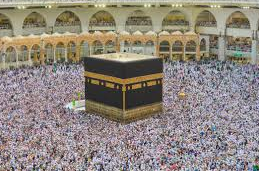
    The Hajj is considered the fifth pillar of Islam, a great religious obligation that gathers millions of Muslims from various parts of the earth annually in Mecca/Makkah Al-Mukarramah. It is performed at the end of every Hijri year. This annual event is a moment of great spiritual significance, embodying unity for Muslims who come from diverse backgrounds, languages, customs, and traditions, yet unite for one goal. The Hajj journey transcends cultural and geographical boundaries, serving as a powerful symbol of human unity and equality under the banner of faith.

    Managing this immense human gathering, involving millions from over 150 nationalities speaking dozens of languages, presents significant challenges. These challenges include managing high-density crowds, addressing diverse needs and languages, providing extensive services such as health, security, and logistics, minimizing environmental impact, and ensuring the safety of pilgrims by preventing unauthorized entry and managing potential health issues like those affecting bones and joints.

    The Kingdom of Saudi Arabia (KSA) considers serving the pilgrims a great honor and a religious, moral, and sovereign responsibility. KSA dedicates all its capabilities to ensure the comfort and safety of the pilgrims. These efforts are continuous, evolving year after year, and are integral to the objectives of Saudi Vision 2030, aiming to enhance the pilgrim experience.

    Saudi Arabia’s efforts to facilitate Hajj are comprehensive and multi-faceted, leveraging innovation and technology to manage the event efficiently and enhance the pilgrim experience:

    • Infrastructure and Logistics: Significant investments have been made in developing infrastructure, including roads, water distribution systems, housing, and transport networks. Major projects like the Jamarat facility, the Al-Mashaaer Train, and the Haramain Train are crucial for pilgrim movement. Modern tents, cooling systems, and wide passages contribute to comfort. Transport capacity is continuously increased across air and train networks.
    • Technology and Innovation (Smart Hajj): KSA extensively employs modern technology and innovation, particularly through initiatives like “Smart Hajj,” which is a clear model of this approach. Digital platforms and applications covering various aspects of the pilgrim’s journey, such as housing, transportation, health, and guidance, are widely used. The “Nusuk” platform/app is highlighted as a unified digital platform enabling pilgrims to plan their entire journey from booking to performing rituals. The Smart Hajj Card, or Sha’air Card, is a multi-functional electronic card containing pilgrim information, including health data and permit details, facilitating access to services and tracking movements. The “Makkah Road” initiative streamlines entry procedures from pilgrims’ home countries before arrival in Saudi Arabia, aiming to reduce travel time and effort. Artificial Intelligence (AI), cameras, and predictive analytics are used for sophisticated crowd management, identifying behavior patterns, predicting congestion, and enabling rapid intervention. AI is also crucial for providing translation services and guidance. AI-powered innovations include multi-lingual robots for religious guidance and medical consultations (“Holo Doctor”), smart sanitation devices, smart monitoring wristbands, and experimental smart transport options like flying taxis and electric scooters. Digital guidance screens and awareness campaigns further leverage technology to reach pilgrims effectively.
    • Security and Safety: A strict legal framework, including mandatory Hajj visas and permits, is enforced to regulate entry and ensure safety. Severe penalties are in place for violators and those who facilitate unauthorized entry. Security management involves trained forces, emergency plans, and surveillance via cameras and possibly satellites. Technology aids in tracking, identification, and coordination among security agencies. The necessity of permits is emphasized through public awareness campaigns, and the Council of Senior Scholars has affirmed that performing Hajj without a permit is not permissible.
    • Health Services: An integrated health system provides comprehensive care, with equipped hospitals and medical centers operating 24/7, supported by emergency teams and various ambulance types. Digital health services like telemedicine, smart monitoring devices, and access to electronic patient files are available. The Kingdom’s readiness for emergencies and epidemics is high, demonstrating its leadership in crowd medicine. Proactive measures like requiring vaccinations contribute to public health during the gathering.
    • Guidance and Awareness: Guidance and awareness are provided in multiple languages through various channels, including digital platforms, smart centers with translation services, and extensive volunteer programs. Broadcasting religious lessons live in different languages helps convey correct religious concepts. Educational campaigns include health guidance and tips for managing personal belongings. Environmental awareness is also integrated into guidance.
    • Environmental Sustainability: KSA is actively integrating environmental sustainability concepts into Hajj management, recognizing its importance for future generations. Initiatives like the Mashaaer Train and the use of clean energy aim to reduce carbon emissions. Waste management, promoting recycling, and encouraging responsible consumption of water and energy are key focus areas. Environmental volunteerism is encouraged, and technology is used for environmental monitoring and management. Innovative use of recycled materials, such as rubber asphalt for pedestrian paths, enhances comfort and contributes to sustainability.
    • Enhancing Pilgrim Experience: A primary goal is to allow pilgrims to focus on the spiritual aspects by reducing logistical and administrative burdens. Hospitality is evident from the moment of arrival, with traditional welcomes including coffee, dates, and smiles. Services are designed for comfort and ease, including psychological support. Reducing waiting times and improving navigation flow through technology are key aspects.

    Pilgrims and observers often praise the high level of organization, security, and quality of services provided during Hajj. Many describe the experience as transformative, deepening their sense of unity and faith. Anthropologically, Hajj is viewed as a collective rite of passage where social differences are temporarily set aside, reinforcing a shared identity. While technology is increasingly integrated, discussions arise regarding the balance between maintaining the spiritual essence of the ritual and embracing modern management tools. The media plays a significant role in conveying the Hajj experience to the world.

    Despite these extensive efforts, some voices raise criticisms, accusing the Kingdom of politicizing Hajj or citing perceived shortcomings. KSA refutes these by pointing to the openness in granting visas, the equality of services provided to all pilgrims regardless of nationality, testimonies from pilgrims themselves, and recognition from international bodies like the UN and WHO for its management of Hajj. Challenges persist, particularly in overcoming digital literacy gaps among some pilgrims, managing network strain during peak times, and ensuring accurate translation across a vast array of languages and dialects. Health challenges are also noted, especially regarding the physical strain of the pilgrimage and managing existing health conditions among pilgrims.

    In summary, Hajj is a monumental religious event that unites millions. Saudi Arabia has consistently demonstrated its profound commitment to facilitating this pilgrimage safely and comfortably, leveraging vast resources, advanced technology, and meticulous planning to manage the complex logistics and enhance the spiritual journey for all who attend.

    Saudi Vision 2030: Transformation and Development

    Saudi Vision 2030 represents a comprehensive and ambitious national strategy driving significant transformation across the Kingdom of Saudi Arabia. It places enhancing the pilgrim experience at the heart of its priorities, leveraging modern technology and innovation in the details of the Hajj season.

    The Vision encompasses several key areas aimed at achieving its overarching goals:

    1. Economic Diversification: A primary objective is to achieve economic diversification away from reliance on oil income. Increasing the contribution of non-oil sectors to the national income is a main entry point towards transforming Vision 2030 into reality. The growth in non-oil exports directly aligns with Vision 2030’s objective of diversifying income sources, and continuous growth in this area confirms the success of the Kingdom’s efforts to stimulate productive and export sectors. Vision 2030 aims to increase the percentage of non-oil exports from non-oil GDP, support innovation and national industry, contributing to a diversified and prosperous economy. The vision is the roadmap for developing non-oil exports and diversifying national income sources.
    2. Enhancing the Hajj and Umrah Experience: Improving the quality of services for pilgrims and Umrah performers is a continuous commitment and a key objective of Vision 2030. The Vision seeks to facilitate the performance of rituals and provide an exceptional spiritual experience for the millions of Muslims visiting the holy sites. Initiatives like the “Makkah Road” are explicitly part of Vision 2030 programs aimed at enhancing the pilgrim experience. Regulating Hajj through mandatory permits is also integral to achieving Vision 2030 goals related to pilgrim safety and security.
    3. Technology and Innovation: Vision 2030 embraces digital transformation and the adoption of modern technology. Initiatives like “Smart Hajj” and digital platforms such as Nusuk are extensions of this vision, aimed at enhancing the pilgrim experience through innovation. The use of AI, cameras, and predictive analytics in Hajj management demonstrates a national vision looking towards a smart future, aligning with Vision 2030 goals for efficiency and safety. The Kingdom’s achievement of ranking first globally in the growth of the innovation ecosystem and being named “Innovation State of the Year 2025” reflects national integrated efforts to support the innovation environment and develop a sustainable knowledge economy, stemming from ambitious national initiatives and strategies led under Vision 2030. This progress enhances the Kingdom’s position as a global investment and regional innovation center.
    4. Tourism Development: Developing beaches into global destinations is presented as an essential part of Saudi Vision 2030, aiming to promote sustainable tourism. Major projects like the Red Sea Project and NEOM are highlighted within this context.
    5. Sports Development: The sports sector has taken significant steps thanks to the support of the leadership, becoming an active icon in the country. The approach towards sports is integrated into the daily agenda and official vision, emphasizing its importance for building communities and strengthening connections, aligning with Vision 2030 goals. The “Innovation Award” in the transport and logistics sector is also seen as embodying an ambitious vision consistent with Vision 2030 goals to make this sector a global model for creativity and innovation. This investment in sports is viewed as a real investment in people.
    6. National Development and Global Positioning: Vision 2030 is driving growth and development in all fields, based on religious foundations and national constants. The success in organizing Hajj at high levels is an important part of Vision 2030’s objectives to strengthen the Kingdom’s position as a global center for hosting and serving pilgrims. The continuous development efforts across various sectors aim to achieve sustainable development and enhance the Kingdom’s global standing.

    The implementation of Vision 2030 relies on ambitious plans, developed projects, and modern technologies. It emphasizes comprehensive and multi-faceted efforts, including significant investments in infrastructure, leveraging innovation and technology (“Smart Hajj” initiatives), strengthening security and safety frameworks, enhancing health services, and integrating environmental sustainability concepts.

    Ultimately, Vision 2030 is presented as a continuous process of improvement and transformation, aimed at achieving economic prosperity, social well-being, and a leading global role, while upholding its responsibility to serve the Muslim world, particularly through facilitating Hajj and Umrah with the highest standards of efficiency, safety, and innovation.

    Saudi Vision 2030: Technology and Innovation

    Saudi Vision 2030 places a strong emphasis on technology and innovation as key drivers for national transformation. This focus is evident across multiple sectors, particularly in the enhancement of the Hajj and Umrah experience and broader economic diversification efforts.

    Here are some key aspects of technological innovation discussed in the sources:

    • Integration with Vision 2030: Digital transformation and the adoption of modern technology are core elements of Vision 2030. Initiatives like “Smart Hajj” and digital platforms are described as extensions of this vision aimed at improving the pilgrim experience. The Kingdom’s ranking in the global innovation ecosystem and being named “Innovation State of the Year 2025” reflects integrated national efforts stemming from ambitious strategies under Vision 2030 to support innovation and develop a sustainable knowledge economy.
    • Enhancing the Hajj Experience: Technology is extensively used to facilitate the performance of rituals and provide an exceptional spiritual experience for pilgrims.
    • Digital Platforms and Applications: Various digital platforms and applications have been launched covering multiple aspects of the pilgrim journey, including accommodation, transportation, health services, guidance, and religious awareness. These platforms provide instant information, interactive guidance, quick access to services in multiple languages, aiming to make the Hajj experience more organized and easier.
    • Nusuk Platform: Highlighted as a unified and comprehensive digital platform for pilgrims and Umrah performers, enabling full trip planning (flights, hotels, Haramain train) and managing bookings in one place. It also includes a digital guide with religious information, alerts for rituals, live broadcasts, and features like a digital prayer beads and Qibla direction. Acknowledged challenges include managing the immense system load during Hajj season.
    • Smart Hajj Card: This is a new technology developed under Nusuk, serving as an electronic multi-function card containing pilgrim’s personal, health, and permit data, utilizing NFC and QR codes for service access and movement management. It is seen as significantly enhancing control by verifying identity and permits, helping track pilgrim movement for efficient crowd management and rapid intervention in emergencies, and monitoring compliance with instructions. It offers benefits like ease of access, reduced waiting times, less reliance on paper documents, and aids authorities in better planning and responding to incidents.
    • Healthcare Technology: The Ministry of Health has implemented a digital system for pilgrim healthcare. Innovations include “Holo Doctor” for remote medical consultations via video with doctors in Riyadh, allowing diagnosis and e-prescriptions without needing to transport the patient. Virtual hospitals and smart bracelets/watches monitor vital signs and send alerts for health emergencies. The Saha Virtual Hospital app allows consultations anytime, anywhere, linking directly to holy sites hospitals. The Sehaty app provides access to medical files, appointments, and lab results.
    • Smart Transportation: Recent Hajj seasons have seen the introduction of innovative transport solutions, such as experimental autonomous air taxis for transport between holy sites, aiming to reduce congestion and save time/effort. Electric scooters have been designated on key paths within the holy sites to ease movement. These smart transport initiatives aim for efficiency and sustainability.
    • Guidance and Awareness Technology: Smart screens provide real-time information, movement paths, prayer times, and safety guidance in multiple languages. Smart guidance centers offer instant translation and multi-language support. Augmented reality through smart glasses is used for interactive guidance during rituals. Digital channels via mobile phones, including video clips and messages in various languages, are used for awareness campaigns covering health (vaccinations, hydration), practical tips (packing), and emergency procedures.
    • AI in Hajj Management: The use of Artificial Intelligence, cameras, and predictive analytics is considered a fundamental strategic shift in crowd and event management, moving beyond a simple technical addition. This involves high-precision cameras and AI-powered analytical systems for real-time monitoring, analyzing human behavior, identifying unusual patterns, detecting medical distress or congestion risks, and allowing for rapid, proactive intervention. AI supports strategic planning by analyzing historical data to predict crowd flow, anticipating potential problems like bottlenecks, and suggesting optimal responses or alternative routes. It acts as a decision-making center, providing instant data and recommendations to relevant authorities, significantly reducing response time. AI can also aid in managing resources and optimizing their allocation. Potential future uses include detecting physical distress and providing smart navigation.
    • Challenges in Technology Adoption for Hajj: Despite the advancements, challenges remain, such as linguistic difficulties (supporting local dialects and less common languages) and the potential for inaccuracies in religious interpretations through machine translation. Connectivity issues in crowded areas can also impact services relying on constant internet access.
    • Broader Impact and Diversification: Technological innovation is linked to the broader goal of economic diversification away from oil dependency. The growth in non-oil exports is seen as a direct result of efforts to stimulate productive and export sectors, aligning with the Vision 2030 objective of diversifying income sources. Innovation supports national industry and contributes to a diversified and prosperous economy.
    • Innovation Ecosystem: The Kingdom’s high ranking in global innovation indexes reflects efforts to develop a sustainable knowledge economy. This includes supporting startups and small/medium enterprises, fostering a culture of innovation, and enhancing the Kingdom’s position as a global investment and regional innovation center. Specific areas of strength mentioned include FinTech, delivery/logistics tech, digital payments, e-gaming, and EdTech.
    • Sports and Tourism: The sports sector is actively integrating technology. Major tourism projects like the Red Sea Project and NEOM are highlighted within the context of developing global destinations through sustainable tourism, implying the use of modern technology.

    Overall, the sources present technological innovation as a critical enabler for Saudi Vision 2030, not only transforming the Hajj experience but also driving economic diversification, strengthening the national innovation ecosystem, and enhancing the Kingdom’s global standing across various sectors.

    Saudi Economic Transformation Under Vision 2030

    Based on the sources and our conversation, the Saudi Arabian economy is undergoing a significant transformation guided by Saudi Vision 2030. A primary objective of the Vision is economic diversification away from reliance on oil income.

    Key aspects of the discussion on the economy and banking, as presented in the sources, include:

    • Economic Diversification: Vision 2030 aims to increase the contribution of non-oil sectors to the national income. The growth in non-oil exports is highlighted as a main entry point for transforming Vision 2030 into reality. Continuous growth in this area confirms the success of the Kingdom’s efforts to stimulate productive and export sectors.
    • Recent Trade Performance (as of March/Q1 2025):Non-oil exports (including re-exports) registered a notable increase of 13.4% in the first quarter of 2025 compared to the same period in 2024. In March 2025, non-oil exports grew by 10.7% compared to March 2024. This reflects the expanding contribution of non-oil sectors to the Kingdom’s foreign trade.
    • Total merchandise exports recorded a decrease of 3.2% in Q1 2025 and 9.8% in March 2025 compared to the corresponding periods in 2024.
    • Merchandise imports increased by 7.3% in Q1 2025 and 0.1% in March 2025 compared to the same periods in the previous year.
    • The trade balance saw a decrease of 28% in the first quarter and 34.2% in March.
    • The ratio of non-oil exports to imports improved, reaching 36.2% in Q1 2025 (up from 34.3% in Q1 2024) and 36.5% in March 2025 (up from 33% in March 2024).
    • The share of oil exports in total exports decreased to 71.8% in Q1 2025 (from 75.9% in Q1 2024) and 71.2% in March 2025 (compared to imports).
    • This trade data is based on administrative records from the Zakat, Tax and Customs Authority (for non-oil data) and the Ministry of Energy (for oil data).
    • Support for Non-Oil Exports: The objective is to increase the percentage of non-oil exports from non-oil GDP. “Saudi Exports” (Saudi Export Development Authority) employs its capabilities to improve the export environment and overcome challenges faced by exporters. They work on enhancing the readiness of exporting establishments, finding suitable export opportunities and markets, and connecting exporters with potential buyers. The sustained growth in non-oil exports underscores the success of stimulating production and export sectors and attracting foreign investments.
    • Sectors Contributing to Diversification:Tourism: Developing beaches into global destinations like the Red Sea Project and NEOM is presented as an essential part of Vision 2030. This aims to promote sustainable tourism and create job opportunities.
    • Sports: The sports sector is highlighted as a significant contributor to community and economic development and is seen as an investment in people. It is becoming an active icon in the country due to leadership support. Privatization is seen as a way for sports to become a self-sustaining industry.
    • Hajj/Umrah: The Hajj is described as a “huge economic force” driving various sectors like transportation, hospitality, tourism, and smart services. While primarily religious, it represents a point where religious values intersect with market logic and consumption patterns.
    • Innovation: The Kingdom’s high ranking in the global innovation ecosystem reflects national efforts to support innovation and develop a sustainable knowledge economy. Specific areas of strength mentioned include FinTech (2nd globally), delivery/logistics tech (2nd globally), and digital payments (3rd globally). This growth in innovation enhances the Kingdom’s position as a global investment and regional innovation center.
    • Banking and Financial Context:The sources mention Saudi Arabia’s global ranking in FinTech and digital payments, indicating activity and growth in these areas related to the banking sector.
    • Loan performance is mentioned, with net loan growth increasing by 4.1% in Q1 2025, reaching its highest growth rate in fifteen months. This performance is linked to the strong momentum in non-oil sectors.
    • The Riyadh Chamber of Commerce is mentioned for its role in social responsibility and supporting a housing association, indicating the business community’s engagement beyond purely economic activities.
    • Broader Economic Context (Global): The sources also touch upon global economic themes like rising bond yields, US budget deficits, debt ceiling issues, trade tensions, and central bank interest rate expectations, particularly in the US, Japan, and European countries. US inflation data for April 2025 is also reported. While this provides a broader economic backdrop, it’s not specifically focused on Saudi Arabia’s internal banking or economic policies beyond the points already mentioned.

    In summary, the sources indicate that Saudi Arabia is actively pursuing economic diversification under Vision 2030, with notable success in boosting non-oil exports and developing non-oil sectors like tourism, sports, and innovation, including areas like FinTech and digital payments. Recent data shows growth in non-oil trade and overall loan activity, although total exports decreased. The Hajj, while a religious duty, is also recognized as a significant economic contributor.

    Saudi Coastal Transformation for Vision 2030

    Based on the sources and our conversation history, coastal development in Saudi Arabia is a significant aspect of the Kingdom’s economic transformation.

    Coastal areas and beaches are considered an essential part of Saudi Vision 2030. A core objective of Vision 2030 is economic diversification away from reliance on oil income, and the development of these coastal regions is strongly linked to achieving this goal.

    Historically, coasts served as crucial areas for ports and fishing. Al Uqair port is noted as the first and oldest port in the country. Beaches like “Half Moon Bay” (Nisf Al-Qamar) on the Arabian Gulf coast were among the oldest known places for leisure and fishing for residents.

    Under Vision 2030, there has been a deliberate shift to transform coastal areas and beaches into global tourist destinations. This transformation aims to contribute significantly to increasing the non-oil sector’s contribution to the national income.

    Major development projects like the Red Sea Project and NEOM are highlighted as key initiatives in this coastal transformation. The Red Sea project specifically aims to attract millions of tourists by developing unique islands and beaches, and NEOM focuses on creating sustainable tourist destinations on the Gulf of Aqaba coast, emphasizing exploration and adventure. These projects aim to offer a variety of attractions, including sandy beaches and diving areas.

    The focus is not only on international tourism but also on boosting domestic tourism. Initiatives like the “Saudi Summer” program highlight coastal areas among the 10 targeted tourist destinations within the Kingdom. Examples of promoted coastal spots include Tabuk, Haql, Umluj (dubbed the “Maldives of Saudi Arabia”), Yanbu (referred to as the “Pearl of the Red Sea”), and Jeddah (called the “Bride of the Red Sea”).

    Specific existing coastal areas are also mentioned, such as Half Moon Bay, described for its distinctive shape, length (the longest on the Arabian Gulf coast), sections (Pearl, Shell, Oyster, Coral, Waves), recreational activities like sand sliding on nearby dunes, and tourist resorts. Al Fanateer beach in Jubail is also noted as a modern beach area on the eastern coast.

    This coastal development is expected to play a significant role in creating job opportunities within the tourism sector, thereby supporting Vision 2030’s economic development goals.

    Furthermore, Vision 2030’s attention to the environment includes efforts in tourist areas, and renewable energy projects are mentioned as part of the initiatives in coastal regions.

    In summary, coastal development is strategically important for Saudi Arabia’s economic future under Vision 2030, moving from traditional uses like ports and fishing to modern tourism hubs, driven by major projects, promoting both international and domestic visitors, and creating jobs, while also considering environmental aspects.

    By Amjad Izhar
    Contact: amjad.izhar@gmail.com
    https://amjadizhar.blog

  • Do Not Be Rich, Poor Man Enjoys Life Much More Than A Rich Person.

    Do Not Be Rich, Poor Man Enjoys Life Much More Than A Rich Person.

    What if the treasure you seek is actually the burden that steals your joy? In the relentless chase for wealth, many overlook a timeless truth: happiness is often found in simplicity, not in luxury. As society celebrates affluence, it forgets the peace of mind and soulful satisfaction often enjoyed by those who live with less.

    The illusion of success is frequently measured in material possessions—mansions, cars, and exclusive experiences. Yet, beneath the polished surface of the affluent lifestyle, many rich individuals wrestle with anxiety, isolation, and a sense of purposelessness. Meanwhile, people with modest means, anchored in strong relationships and gratitude, often live with deeper contentment. The rhythm of a life unburdened by endless ambition allows for appreciation of the present moment.

    Modern studies in psychology and behavioral economics echo ancient wisdom: wealth does not equate to happiness. Epictetus, a Stoic philosopher born a slave, famously said, “Wealth consists not in having great possessions, but in having few wants.” As we explore this perspective further, we’ll unpack why the poor man may, paradoxically, be the true winner in the game of life.


    1- The Illusion of Wealth and the Reality of Happiness

    Affluent individuals are frequently caught in an endless cycle of accumulation, mistaking wealth for a guaranteed route to happiness. This misconception is reinforced by a consumer-driven culture where value is associated with net worth rather than inner fulfillment. However, countless studies—including one by Princeton University—demonstrate that after a certain income threshold, more money doesn’t increase emotional well-being. The satisfaction curve flattens, and people start chasing ever-elusive goals.

    On the contrary, those with fewer material resources often cultivate joy from intangible assets—family, community, and personal freedom. Their sense of happiness comes from life’s little blessings: a shared meal, an evening of laughter, a simple act of kindness. These are the real wealth builders that don’t fluctuate with the stock market. As Harvard philosopher Michael Sandel noted, “A market economy is a tool… but a market society is a way of life. And that is where we must draw the line.”


    2- Time is the True Currency

    Rich people often find themselves time-poor despite being money-rich. High-pressure careers, tight schedules, and constant connectivity lead to a scarcity of leisure and reflection. The irony is brutal: in their quest to buy time through convenience and efficiency, they sacrifice the very time that could bring peace and joy.

    In contrast, those with modest incomes frequently have stronger control over their time. They may not travel first-class, but they enjoy the luxury of time spent with loved ones, time for hobbies, and moments of silence. In “Four Thousand Weeks: Time Management for Mortals,” Oliver Burkeman argues that time—not money—is the finite resource we must learn to cherish wisely.


    3- The Simplicity Principle

    There’s a quiet dignity in living simply, a lifestyle championed by sages across cultures. When life is less cluttered by possessions, it creates room for clarity, intention, and joy. Poorer individuals are often forced into simplicity, but many discover that it brings them a deeper sense of control and peace.

    Conversely, wealth tends to complicate life. Multiple properties, responsibilities, and social expectations consume mental and emotional bandwidth. As Henry David Thoreau wrote in Walden, “Our life is frittered away by detail… simplify, simplify.” This principle rings true now more than ever.


    4- Emotional Well-being and Mental Health

    Mental health challenges do not discriminate by income, but affluent individuals often suffer in silence due to social pressures. The drive to maintain appearances can lead to isolation and emotional suppression. High expectations, fear of loss, and a culture of comparison create mental turmoil.

    Poorer communities, despite economic hardships, often foster tight-knit relationships and collective resilience. Emotional support is more readily available through extended families and communal ties. Psychologist Martin Seligman, a pioneer of positive psychology, emphasized that meaningful relationships are the cornerstone of a fulfilling life—not financial status.


    5- Freedom from Social Comparison

    Wealth magnifies social comparison. The richer one becomes, the more they compare themselves to others at the same or higher level. This leads to a never-ending ladder of dissatisfaction. Social media and consumer culture exacerbate this psychological trap.

    Meanwhile, those who live modestly often escape this rat race. With fewer material benchmarks to maintain, they focus inward and develop intrinsic values. This cultivates self-acceptance and peace. In The Psychology of Money, Morgan Housel states, “Spending money to show people how much money you have is the fastest way to have less money.”


    6- Authentic Relationships

    People with great wealth often find it difficult to distinguish genuine relationships from transactional ones. Friendships become muddled with motives, and trust becomes elusive. Wealth can create walls instead of bridges between individuals.

    In contrast, people of limited means typically form relationships based on shared experiences, struggles, and sincerity. These bonds are often stronger and more enduring. As sociologist Robert Putnam emphasized in Bowling Alone, community and social capital play a critical role in personal well-being.


    7- Health and Lifestyle

    While the rich can afford the best healthcare, their lifestyles often contradict healthy living. High-stress jobs, excessive dining, and sedentary routines take a toll. The pursuit of wealth can come at the expense of sleep, nutrition, and exercise.

    Poorer individuals often engage in more physical labor, consume simpler meals, and lead more active lifestyles. Though they may lack access to premium health services, their habits may inadvertently support better health outcomes. As Hippocrates said, “Let food be thy medicine and medicine be thy food.”


    8- Connection with Nature

    The affluent may visit nature in curated experiences—luxury resorts, exotic safaris—but often remain disconnected from the natural world in daily life. Urban living, constant travel, and digital saturation remove them from Earth’s rhythms.

    Rural or modest urban living often offers daily encounters with nature—gardens, walks, open skies. These experiences foster mental balance and spiritual well-being. Richard Louv, in Last Child in the Woods, coined the term “nature-deficit disorder,” highlighting how detachment from nature impairs psychological health.


    9- Satisfaction from Work

    Wealthy individuals often find themselves trapped in high-status roles that offer prestige but little personal fulfillment. Their identity becomes tied to performance and position, not purpose. Burnout and disengagement are common.

    Conversely, those with modest incomes may pursue work that aligns with their values or provides visible impact. Job satisfaction, though less financially rewarding, can offer greater psychological payoff. Viktor Frankl in Man’s Search for Meaning writes, “Life is never made unbearable by circumstances, but only by lack of meaning and purpose.”


    10- Spiritual Fulfillment

    Spiritual growth often requires solitude, humility, and detachment from material concerns. The rich, distracted by endless options and obligations, may find it harder to engage in introspection or develop spiritual depth.

    People of limited means are more likely to turn to faith, rituals, and community worship for comfort and guidance. These spiritual frameworks offer emotional resilience and existential clarity. As the Bhagavad Gita asserts, “He who is content with the gift of chance, untouched by dualities, free from envy, balanced in success and failure, is not bound.”


    11- Gratitude Over Entitlement

    Wealth can breed entitlement—a sense of deservedness that blinds people to the beauty of ordinary life. The poor, living with fewer certainties, are more attuned to moments of grace and fortune. Gratitude becomes second nature.

    This attitude improves well-being significantly. Research by Robert Emmons, author of Thanks!, found that gratitude enhances mood, sleep, and interpersonal relationships. Recognizing blessings—however small—is the secret ingredient of a joyful life.


    12- Less is More: The Paradox of Choice

    Abundance brings complexity. Rich individuals often suffer from decision fatigue due to overwhelming choices—from investments to leisure options. Psychologist Barry Schwartz, in The Paradox of Choice, warns that too many options reduce satisfaction and increase anxiety.

    Limited resources simplify decisions, reduce stress, and help individuals focus on what truly matters. This restriction, rather than a limitation, often brings freedom. Simplicity nurtures clarity and contentment.


    13- Environmental Impact

    The wealthy consume far more resources per capita and contribute disproportionately to environmental degradation. Large homes, constant travel, and high consumption create a heavy ecological footprint.

    In contrast, the lifestyles of the poor are typically more sustainable—using fewer goods, repurposing items, and relying on local ecosystems. Their carbon footprint is minimal, making them unintentional stewards of the Earth. Philosopher Arne Naess’s deep ecology advocates for such harmony with nature.


    14- Children’s Upbringing

    Wealthy children may grow up in environments with excessive privilege, leading to entitlement, disconnection, or pressure to succeed. Emotional development may be compromised by over-scheduling and lack of authentic interaction.

    Children in modest households often learn values like empathy, resilience, and cooperation early on. They grow up seeing the value of effort, community, and perseverance. These life lessons outweigh material advantages in shaping character.


    15- Greater Appreciation of Joys

    When joy is a rare guest, it is welcomed more warmly. The poor savor simple pleasures—a good meal, a sunny day, shared laughter. These moments are not taken for granted.

    Wealth can dull appreciation. When everything is available at will, nothing feels special. The anticipation and fulfillment cycle—so essential to happiness—is lost. As C.S. Lewis wrote, “The sweetest thing in all my life has been the longing… to find the place where all beauty came from.”


    16- Community Bonding

    Affluent neighborhoods often lack social cohesion. Gated communities and isolated lifestyles reduce interpersonal connection and mutual support. Loneliness is ironically more common among the rich.

    Poorer communities, though economically strained, often display remarkable solidarity. Neighbors help each other, share resources, and celebrate life’s milestones together. These bonds form a powerful safety net that no insurance policy can match.


    17- Crisis Resilience

    Wealth may buffer against some crises, but it can’t protect from emotional devastation. Rich individuals may struggle to adapt due to overreliance on control and convenience. When that control fails, despair can follow.

    Those with fewer means often build psychological strength through repeated exposure to adversity. This emotional muscle prepares them for life’s unpredictability. Nassim Taleb’s Antifragile explores how systems—and people—grow stronger under pressure.


    18- Identity Beyond Possessions

    The affluent are often defined by what they own—cars, companies, real estate. This external identity can be fragile and hollow. Loss of wealth often leads to identity crises.

    In contrast, those with little build identities around who they are and what they believe. Their sense of self is rooted in character, not currency. This foundation offers lasting stability and self-worth.


    19- Philanthropy vs. Innate Generosity

    While the rich often donate large sums, these actions are sometimes driven by status, tax benefits, or guilt. True generosity stems from empathy, not excess.

    Poorer individuals frequently share what little they have. Their generosity is spontaneous and heartfelt. As Leo Tolstoy said, “Nothing can make our life, or the lives of other people, more beautiful than perpetual kindness.”


    20- The End Game: Death and Legacy

    Wealth offers no immunity from mortality. At life’s end, what matters is not what you owned, but how you lived and loved. The rich may leave behind assets, but often regret missed moments and neglected relationships.

    Those who lived simply often leave legacies of love, stories, and community impact. They are remembered for their presence, not their possessions. As the Talmud teaches, “At the end of your life, the only thing that matters is the soul you have built.”


    Conclusion

    In a world hypnotized by wealth and status, it is easy to forget that true richness lies in peace, relationships, and purpose. The poor may lack material abundance, but they often possess a wealth of spirit, time, and joy. By reexamining our definition of success and embracing a simpler, more connected way of living, we may find that the “poor man” has always been the one living the richest life of all.

    By Amjad Izhar
    Contact: amjad.izhar@gmail.com
    https://amjadizhar.blog

  • Rediscovering Islam: A Framework for Objective Thinking

    Rediscovering Islam: A Framework for Objective Thinking

    The text presents a lecture discussing the challenges of understanding truth and achieving objectivity. The speaker uses religious examples, particularly from Islam and Christianity, to illustrate how ingrained belief systems (frameworks) hinder the acceptance of new ideas or truths. He emphasizes the importance of breaking free from subjective biases to discover genuine understanding and live a meaningful life. The speaker critiques societal values that prioritize material gain over truth and advocates for self-reflection and a commitment to objective thinking as pathways to spiritual growth. He contrasts those who focus solely on material success with those who seek truth, highlighting the lasting fulfillment derived from the latter.

    History of Thought: A Study Guide

    Quiz

    1. According to the speaker, what is the main reason people reject prophets and their messages?
    2. How does the speaker define “objectivity” and why is it important?
    3. What happened at the Council of Nicaea in 325 AD and how did it impact Christianity?
    4. How does the speaker describe the Sufi influence on Islam in India?
    5. What does the speaker mean by the phrase “the greatest tragedy in history”?
    6. What is the speaker’s critique of the modern yoga movement and its promises?
    7. What does the speaker say is the most important question people should be asking?
    8. According to the speaker, what does it mean to be “a brother of Satan”?
    9. How does the speaker describe the importance of thinking before speaking?
    10. How does the speaker contrast the legacy of Saddam Hussein with that of Thomas Jefferson?

    Quiz Answer Key

    1. People reject prophets because they interpret their messages within their own pre-existing frameworks, which do not align with the prophet’s teachings. They are not receptive to anything that doesn’t fit their established understanding.
    2. Objectivity, according to the speaker, involves thinking outside one’s own personal framework and being able to understand things as they are, not as one wishes them to be. It is essential for understanding and accepting truth.
    3. The Council of Nicaea, heavily influenced by Roman rule and Greek philosophy, formalized key Christian doctrines. It introduced the concept of the Trinity, which is not directly from Christ’s teachings, and integrated Hellenistic thought into Christianity.
    4. Sufis, when they came to India, reinterpreted Islam through a Hindu lens, incorporating local traditions and making the religion more appealing to the Indian population. This led to mass conversions but deviated from the core tenets of Islam.
    5. The speaker defines the greatest tragedy as the distortion of truth and the creation of false models which then take over the real truth, leading to people believing in false realities. The change from the original truth is what he sees as the biggest problem.
    6. The speaker critiques the modern yoga movement, particularly the focus on achieving eternal youth, as unrealistic and distracting from more profound questions, such as life’s purpose and the afterlife. He sees yoga’s claim as false and without merit.
    7. The speaker says the most important question is not about physical health or earthly success, but about what happens after death, and whether there is any hope or meaning in the afterlife. This is the question that medical science doesn’t address.
    8. According to the speaker, those who waste their time and money are brothers of Satan because they are not using the resources that God has provided them towards a higher purpose. They’re using them for selfish and superficial means.
    9. The speaker argues that every word, especially thoughtless ones, can have profound consequences. One should think carefully before speaking because a thoughtless word can lead one to “hell”.
    10. The speaker contrasts Saddam Hussein’s legacy of political power and extravagance with Jefferson’s legacy of education and enlightenment. Hussein’s palaces are contrasted with Jefferson’s building of a university as examples of different types of legacies.

    Essay Questions

    1. Discuss the speaker’s concept of “frameworks” and how it shapes our understanding of truth and reality. Use specific examples from the text to support your arguments.
    2. Analyze the speaker’s critique of organized religion, particularly Christianity and Islam. What are his main concerns, and how does he propose that people move beyond these issues?
    3. Explore the speaker’s views on the nature of “truth,” and explain the challenges he identifies that prevents people from reaching it. What does it mean to be an “objective thinker” in his view?
    4. Examine the speaker’s argument against the pursuit of material wealth and fame. What does he propose as a more meaningful alternative, and why does he value it?
    5. How does the speaker utilize historical examples to illustrate his ideas on the “history of thought?” Explain your understanding of how his use of these examples serves his overall purpose.

    Glossary of Key Terms

    • Framework: The pre-existing mental structures, beliefs, and perspectives through which individuals interpret and understand the world. This acts as a lens or filter.
    • Objectivity: The ability to think and perceive reality outside of one’s own subjective framework, biases, or personal desires; understanding things “as they are”.
    • Hellenization: The process of adopting Greek culture, language, and thought, often used in the context of Christianity’s integration with Greek philosophy.
    • Sufi: A mystical branch of Islam focused on inner spiritual experiences, often characterized by practices that may be seen as unorthodox in mainstream Islam.
    • Mujha: A concept from the Quran that suggests a time when the core message of Islam will be diluted or distorted.
    • Satka Jariyagide: An Islamic concept referring to continuous charity, the good deeds that continue to benefit people after one’s death.
    • Rang Naam Ka Tamasha: A Hindi phrase that highlights the deceptive nature of appearances and superficial achievements.
    • Topia: An imaginary island or place; used to represent ideal states or societies that are divorced from the realities of the world.
    • Shirk: The Islamic concept of associating partners with God, considered a grave sin. It is to place something else equal to or above God.
    • Introspection: The process of self-examination and reflection, looking inward to understand one’s own thoughts and motivations.
    • Kariman Maglu: A concept explained by the speaker to mean a noble character is one who respects women (and people) and is not intimidated by them. This person is centered and maintains his positive process.
    • Hasad/Jalsi: Words in Urdu that can refer to envy or jealousy, one form of jealousy or envy leads to negative actions and the other leads to positive actions.

    Truth, Frameworks, and the Pursuit of a Mission

    Okay, here is a detailed briefing document analyzing the provided text, focusing on its main themes, ideas, and important facts, with relevant quotes:

    Briefing Document: Analysis of “Pasted Text”

    I. Overview

    This text presents a lecture or sermon-like discourse on the nature of truth, the challenges in its acceptance, and the importance of objective thinking. It explores why people often reject or distort truth, using examples from religious history (Christianity and Islam) and everyday life. The speaker emphasizes the need to break free from personal frameworks, the dangers of ego and the pursuit of worldly gains, and the necessity of living a life grounded in truth and a mission oriented towards a better understanding of the world. The overarching message is a call for personal transformation and a commitment to seeking and living by truth, which is tied to a concept of God and a specific interpretation of Islam.

    II. Key Themes & Ideas

    • The Subjectivity of Perception & “Frameworks”: The central idea is that people interpret information through their own “frameworks” of understanding, leading to misinterpretations and rejection of truth. This framework is shaped by personal experiences, cultural conditioning, and preconceived notions.
    • Quote: “Men think in their own framework have their own framework… And the right framework is that which belongs to God.”
    • Quote: “People take things in their own framework and when I don’t take it, I don’t take it because that don’t fit into their own framework.”
    • The Rejection of Truth: The speaker argues that history is replete with examples of prophets and truth-tellers being rejected because their message did not align with people’s existing frameworks.
    • Quote: “The picture of history in Takal ni Quran He is given this that in every era, in every age Consistent profits Aaye Suma Arsal Na Rasal Na tara But they always rejected the messengers.”
    • Quote: “Well, I understood from this that the most important thing to understand the truth is what is the condition is he is Objectivity can only be achieved by objective thinkers.”
    • Objectivity as Key to Understanding Truth: The speaker stresses that true understanding and acceptance of truth requires objective thinking, a detachment from personal biases and ego.
    • Quote: “Of The more lacking in objectivity there will be the less he will understand the truth.”
    • Distortion of Religion: Both Christianity and Islam are cited as examples where the original message was distorted to fit existing cultural frameworks. Christianity adopted Hellenistic thought, while Sufis in India “Hinduized” Islam.
    • Quote: “The church at that time in 325 A.D. what did what do they say helena ization o Christianity to Christianity He adapted his knowledge to Greek philosophy.”
    • Quote: “Sufis gave Islam a Hindu eye if you did it then you will see Dhadhar or lakhs of lakhs people became muslims because n ow they do not know Islam Found my own framework”
    • The Tragedy of Altered Truth: The speaker identifies the “greatest tragedy in history” as the alteration of truth to fit people’s frameworks, creating false models and a false sense of understanding.
    • Quote: “The greatest tragedy of history is that it is a series off tragic Events The biggest tragic event is this that the truth must be changed.”
    • Quote: “Satan cannot move away from the real truth So what does he do to people is he a man of truth builds a false model on that false model This tension makes people stand up and people take it look at that, we are on the truth.”
    • Critique of Materialism & Worldly Pursuits: The pursuit of money, fame, and power is criticized as a distraction from the pursuit of truth. These pursuits create “super losers” because they are ultimately unfulfilling and lead to death. True achievement lies in understanding and living by truth.
    • Quote: “The super achiever is the one who understands the truth If you wanted money, you got money The one who seeks truth, keeps the truth and is super Why worry if you found the truth”
    • Quote: “They Are Money Achievers money is anything Otherwise you would not be a super achiever.”
    • The Importance of a “Mission”: The speaker proposes a life guided by a mission, which consists of discovering the truth, living by it and sharing it with others. He further argues people should choose to either be fully committed to their mission, or balance it with other aspects of life.
    • Quote: “So the first thing is to set your mindset Set Your Mindset Making your thinking objective Objective Making is another live your life on that Molding which is called Amal in Quran Saleh is trying to live his life according to the truth mold and the third one is your responsibility”
    • Quote: “Many a times every man gets one of the two The choice is Either it should become one man one mission There should be no other concern except the mission The second mission of KE is to create one Mission is your one You have your own family, you have your own needs 50 on and 50 on missions for either 100% or 50”
    • The Value of Introspection and Self-Surrender: Introspection is critical to understanding one’s own framework and identifying biases, while self-surrender, especially in interpersonal conflicts, is seen as crucial for maintaining a positive mindset and continuing a path of truth.
    • Quote: “When you will come out of your ego and see I understand very well We will go and there is only one way to get out of this that is Introspection Introspection.”
    • Quote: “The greatest quality surrender seen in this to do is not to dominate others It is a big deal or dominance over others Make it no big deal”
    • Rejection of Superficially “Achievers”: The speaker uses the term “Super Achiever” in a sarcastic way, claiming most people who are called Super Achievers are in fact “Super Losers” because they are often driven by money and other worldly desires.
    • Quote: “But I would say that this color is a super loser Naaman Clacher hey those people are called super achievers this color Naman is clutch because if you do more Look deep inside they are super losers those people”
    • The Question of the Soul: The speaker acknowledges that the soul is a topic that is beyond human understanding, and people should focus instead on cultivating a positive spirit through positive thinking.
    • Quote: “Regarding Gaya Soul, it is mentioned in Quran No answer was given or it was not told Soul rather it was said that you are limited Knowledge was given this is due to your limited knowledge to understand”
    • Distinction Between Envy and Jealousy: The speaker contrasts envy, which is simply acknowledging that another person has something and being happy for them, with jealousy, which is wishing that another person didn’t have something and wishing that they would fail instead.
    • Quote: “So the jealousy is that you knowledge and are happy that your God gave this thing to a brother Di toh invi ho gaya hai (The one who is in this world does not think like this) The man that he got it but I didn’t, he’s happy Would and he who is a jealous man prays The jealous age begins to wish that they I met you.”
    • Critique of Excessive Laughter: Excessive laughter is seen as detrimental as it can decrease one’s sensitivity, distract from more serious issues, and remove the ability to discern true and important values in the world.
    • Quote: “Laughing too much is death for the heart look as far as I have understood this is in case sensitivity I have seen a man become so sensitive people talk to each other, they laugh a lot and these are Let’s go to Valus about the truth and about paradise.”
    • Critique of Dargahs (Sufi Shrines): The speaker criticizes the common practices at Sufi shrines as being against Islamic teachings and being based on false stories.
    • Quote: “If it is an empty building then it is not a dargah there would have been someone there covering someone Then it becomes a dargah (dargah), brother knows that There is a building standing there and someone calls it abut aata ho so malana are all darga of sufi I will tell you the cents.”
    • Quote: “There is absolutely not just one God in Islam This is a copy of this is worshiping god or Khuda is considered to be greater This is all the proofs that have come into this world”
    • Importance of Quran as the True Guidance: The speaker continuously emphasizes the Quran as the source for the truth, and encourages the audience to check their mindset with it.
    • Quote: “First, understand the framework that you have created break out Make yourself an objective thinker and earn profit used to pray often allah anal aya kama hey lam anal aya karne hai god give me things to it show me things as it is show me make objective thank you Think about it Allama Al Ayyaa God shows me things as they are”

    III. Important Facts & Examples

    • Historical Examples: The speaker uses Jesus and the Prophet Muhammad as key examples of figures whose teachings were rejected or distorted by people adhering to their established frameworks. The Nicea Council and the spread of Christianity are also used to illustrate the distortion of religious teachings through cultural assimilation. Sufism in India serves as another example of this, particularly their practice of dargahs.
    • Yoga & Health: A specific critique of a yoga instructor is given as an example of how people are easily swayed by words instead of using objective thinking. The speaker emphasizes his own natural health in comparison.
    • Saddam Hussein vs. Jefferson: The comparison between Saddam Hussein and Thomas Jefferson highlights the concept of lasting legacy and the difference between those pursuing fleeting power and those seeking to leave behind more lasting contributions. This is further explained by concepts of “Sadqa Jariyagide” in Islam.
    • The Story of Abbas Peer: The anecdote about the last Abbasid caliph, trapped with diamonds instead of food, shows the futility of material wealth without true purpose.
    • Novel Reading: Novel reading is cited as a distraction and a waste of time, and love novels in particular are seen as being devoid of a true message of love for humankind.
    • The History of Simple Objects: The evolution of clothes, cars, and furniture are used to illustrate the interconnectedness of humans across time, and how our current state of comfort is the result of thousands of years of progress and human sacrifice.

    IV. Conclusion

    This text presents a complex and challenging perspective on truth and human understanding. The core message revolves around the need for rigorous self-examination, the pursuit of objective thought, and the breaking down of mental frameworks that hinder acceptance of truth, with the ultimate goal of living a life guided by truth and working towards a mission bigger than oneself. The speaker’s specific interpretation of Islam informs his views on religion, materialism, and the human condition, which is both a critique of mainstream society and a call for a more personally responsible life lived in accordance with the perceived truth.

    Frameworks of Thought and the Pursuit of Truth

    FAQ on History of Thought, Frameworks, and Truth

    • What does the speaker mean by “History of Thought” and how is it being approached?
    • The speaker clarifies that when discussing the “History of Thought,” they are not approaching it as a professional academic discipline. Instead, they aim to explore how people’s frameworks of thinking affect their understanding and acceptance of ideas throughout history. It’s about touching upon the subject rather than offering a scientific or formal study. The purpose is to explore the challenges in recognizing and accepting the truth, by recognizing that personal frameworks filter how we percieve the world.
    • Why do prophets and messengers often face rejection despite their wisdom and compelling message?
    • According to the speaker, a key reason prophets are rejected is that people filter their message through their existing “frameworks” of understanding. These frameworks, unique to each individual, often clash with the new perspectives presented by the prophets. People interpret what they hear within their own established context and when new teachings do not fit their pre-existing ideas, they are likely to reject them. They are unable to understand the message because of their pre-conceived notions.
    • What is the importance of objectivity in understanding the truth, and how does a lack of objectivity affect our understanding?
    • Objectivity is paramount to understanding truth. People who lack objectivity will struggle to grasp and accept truths that challenge their pre-existing frameworks, often rejecting them without proper consideration. The speaker illustrates this with historical examples, such as Jesus’s rejection by many in Jerusalem and the subsequent interpretations of his teachings through a hellenistic (Greek philosophical) lens. The more subjective one is, the less likely they are to understand and accept truth, because they will only listen to that which aligns with their current way of thinking.
    • How does the speaker explain the spread of Christianity and Islam in historical contexts?
    • The speaker explains that Christianity spread by adapting itself to the prevailing Greek philosophy during the Roman era. The Church at the time used Greek thought to make the concept more palatable to the people, shaping Christianity from what it originally was to what was more widely accepted. Similarly, Islam spread in India through Sufis, who gave it a “Hindu eye,” adapting it to the local cultural frameworks by combining Islamic ideas with local ideas. These historical examples show how religious messages get interpreted and reshaped based on the frameworks and biases of the people receiving them.
    • What is meant by “Satan’s trick” and how is it related to the distortion of truth?
    • The speaker describes “Satan’s trick” as creating false models built on real truth. Satan doesn’t move away from the real truth entirely, but he changes the framing of the truth into a false model. People then adopt the false model as if it were the original truth. It creates an illusion of truth that causes people to become defensive and rigid in holding on to their false framework. It is through this that they lose touch with reality.
    • Why does the speaker emphasize the need to “break your framework” and what are some ways to do so?
    • Breaking one’s framework is essential to understanding truth. The speaker says that our minds create frameworks from childhood influenced by family and societal norms. These frameworks are not necessarily based in objective truth, but instead in societal norms and ideas. The speaker suggest introspective thinking to help us see our frameworks and overcome these barriers to understanding. He suggests breaking your own mindset with a “hammer” and becoming objective. One must realize that their views of the world are not natural or inherent to the world, but are created and constructed.
    • What does the speaker mean by “super achievers” vs. “money achievers,” and how does this relate to truth?
    • The speaker argues that people often wrongly call “money achievers” as “super achievers.” Money, as great as it is, has limitations and is not inherently tied to the attainment of true achievement. They define a true “super achiever” as someone who seeks and understands the truth. Money achievers are limited in what they can achieve, as they can not buy away death, and other things outside of their material grasp. In contrast, those who achieve truth will have happiness in simple things and not depend on material luxuries. A life devoted to truth is fulfilling for both life, and after-life.
    • What is the speaker’s perspective on how we should manage our time and money, and how is it related to “paradise”?
    • The speaker emphasizes that both time and money should be managed carefully and used for a purpose. They argue that those who waste time and money are “brothers of Satan”. Conversely, those who manage their time and money well are those who can achieve paradise. The speaker believes that paradise is a reward for being objective, and not wasting the time and money that God has given. The key to reaching paradise is through making the time and effort to find the truth. This means using ones resources wisely and with focus.

    Truth, Frameworks, and the Pursuit of Objectivity

    The sources discuss history of thought in the context of how people understand and interpret ideas, particularly religious ones, based on their own frameworks [1, 2]. The sources emphasize that people often reject new ideas or truths if they don’t fit within their existing framework [1, 2]. The most significant tragedy in history is that the truth gets changed, and people embrace the changed version while believing it’s the truth [3].

    Key points related to the history of thought from the sources include:

    • Frameworks: People interpret the world through their own unique mental frameworks [1]. These frameworks are shaped by their experiences, culture, and beliefs [1-3].
    • People tend to understand things within their own framework, and reject ideas that don’t fit into it [2].
    • This is why prophets were often rejected, even though they were “very high-minded people,” because their message did not align with the existing frameworks [1, 2].
    • For example, Jesus Christ was rejected in Jerusalem because his teachings did not align with the existing framework of the people at the time [2, 4].
    • Objectivity: The sources suggest that objectivity is crucial to understanding the truth [2]. Objective thinkers are more likely to grasp and accept the truth, while a lack of objectivity hinders understanding [2].
    • To understand the truth, one must break free from their own framework [5, 6].
    • This can be difficult, as people become very familiar with their own mental frameworks [6].
    • Changing Truth: Throughout history, people have changed the truth to fit their frameworks, and then proclaim that they are on the right path [3].
    • The sources give examples of how Christianity was molded to fit Greek philosophy which led to its spread in Europe and how Islam was given a “Hindu eye” by Sufis, leading to its spread in India [3, 4].
    • The most important thing to understand the truth is objective thinking [2].
    • The Role of Satan: Satan’s strategy is to build a false model on the real truth, making people believe they are on the right path [3].
    • This creates tension and makes people defend the false model as if it is the truth [3].
    • The Importance of Introspection: It is necessary to do introspection to examine one’s own mindset [7].
    • People are often egoistic without realizing it [7].
    • It’s important to recognize negative points, understand that they come from within, and not let them control you [8, 9].
    • Mission: The goal is to rediscover the truth, live it, and share it with others [3, 10].
    • One should strive to be an objective thinker and break free from their own mindset [10].
    • There are two options: either to focus entirely on the mission, or divide your time and resources between personal needs and the mission [10].
    • Dangers of False Stories: The sources criticize how false stories are used to support beliefs and practices, such as in the case of dargahs, which are often built on lies and false claims [11, 12].
    • Importance of Values: Laughing too much can lead to losing sensitivity and can hinder one’s connection with truth and values [13]. The sources emphasize the importance of positive thinking [13, 14].
    • The Nature of God: The sources posit that God is forgiving, compassionate, and loving [15, 16].
    • The Importance of Seeking Truth: The pursuit of truth is presented as the path to lasting happiness, peace, and fulfillment, both in this life and the afterlife [17, 18].
    • Super achievers are those who understand the truth, not those who have amassed wealth [17].
    • The truth provides hope for both life and death [17, 18].

    The sources consistently advocate for critical thinking, self-awareness, and objectivity in the pursuit of truth and understanding, as the history of thought is presented as a struggle between truth and misinterpretations based on flawed frameworks [1-3, 5-7].

    Objective Thinking: Truth, Growth, and Meaning

    Objective thinking is presented in the sources as a crucial element in understanding truth and achieving a meaningful life [1, 2]. The sources emphasize that people often interpret the world through their own subjective frameworks, which can lead to misinterpretations and the rejection of truth [1, 2]. Objective thinking, in contrast, allows individuals to perceive reality more accurately and break free from the limitations of their own biases and preconceived notions [2, 3].

    Here’s a breakdown of objective thinking as described in the sources:

    • Definition: Objective thinking involves seeing things as they truly are, without the influence of personal biases, ego, or pre-existing frameworks [1, 3]. It requires a conscious effort to step outside of one’s own mental constructs and consider different perspectives [4].
    • Importance:Understanding the Truth: Objective thinking is essential for understanding the truth and avoiding the pitfalls of misinterpretation and the acceptance of falsehoods [1, 2].
    • Acceptance of New Ideas: It allows individuals to be open to new ideas and concepts, even if they challenge their existing beliefs [2].
    • Personal Growth: It promotes personal growth and self-awareness by encouraging individuals to examine their own biases and limitations [5].
    • Effective Communication: Objective thinking helps one understand others better by understanding their perspective and framework, enabling more effective communication.
    • Avoiding Deception: It helps to avoid the traps set by false models of reality and the manipulation of truth [6].
    • Challenges to Objective Thinking:
    • Subjective Frameworks: People are naturally inclined to interpret information through their own subjective frameworks, making it difficult to achieve true objectivity [1].
    • Ego: The ego can be a major obstacle to objective thinking, as people often prioritize their own beliefs and opinions over the truth [5].
    • Emotional Attachments: Emotional attachments to certain ideas or beliefs can also hinder objective thinking [2].
    • Immediate Gratification: The pursuit of immediate gratification and material interests can prevent individuals from adopting an objective perspective [7].
    • How to Develop Objective Thinking:
    • Introspection: Regularly examining your own thoughts, feelings, and biases is key to identifying and overcoming subjective frameworks [5, 8].
    • Breaking Frameworks: Actively try to break free from your own mental frameworks and considering alternative points of view [4].
    • Self-Awareness: Recognize your own limitations and be willing to admit when you are wrong [5].
    • Focus on Truth: Prioritize the pursuit of truth over personal biases or agendas [1].
    • Positive Thinking: Cultivate positive thinking, as this nourishes the spiritual self and helps to maintain a balanced perspective. [9]
    • Comparison: Comparing different ideas can help one understand and identify their own biases [10].
    • The Role of God:
    • The sources suggest that God is the source of objective truth [3].
    • Praying to God for guidance and objective understanding can aid in the pursuit of truth [3].
    • Examples from the sources:The rejection of prophets by their contemporaries is attributed to the inability of people to think outside of their own frameworks [1].
    • The evolution of Christianity and Islam into different forms is due to their adaptation to existing cultural frameworks [6, 11].
    • The criticism of “super achievers” highlights how people are often misled by superficial measures of success, rather than objective assessments of their true worth [12, 13].

    In conclusion, objective thinking is portrayed as an essential skill for those seeking truth and a meaningful existence. It requires continuous effort and self-reflection, but the reward is a clearer understanding of reality and a more fulfilling life [3, 14].

    Religious Frameworks: Barriers and Pathways to Truth

    Religious frameworks are a key focus in the sources, which explore how people understand and interpret religious ideas based on their existing beliefs and mental constructs [1]. The sources emphasize that these frameworks often lead to misinterpretations and the rejection of core religious truths [1, 2].

    Here’s a breakdown of religious frameworks as discussed in the sources:

    • Definition: Religious frameworks are the established systems of beliefs, values, and practices through which individuals understand and relate to the divine [1]. These frameworks are shaped by personal experiences, cultural norms, and inherited traditions [1].
    • Impact on Interpretation:
    • Subjectivity: People tend to interpret religious texts and teachings through their own subjective lenses, leading to a diversity of interpretations [1]. This subjectivity can distort the original meaning of the religious message.
    • Rejection of Truth: When new religious ideas or prophets challenge existing frameworks, people are likely to reject them because they do not fit within their established beliefs [1, 2]. This is highlighted by the rejection of Jesus Christ in Jerusalem and the general rejection of prophets in every age [1, 2].
    • Adaptation and Modification: Religious frameworks are often modified and adapted to align with existing cultural and philosophical norms [3, 4]. This can lead to the dilution or distortion of the original teachings.
    • For example, Christianity was adapted to fit Greek philosophy, incorporating the concept of the Trinity, which was not originally part of Christ’s teachings [3]. Similarly, Sufis in India gave Islam a “Hindu eye,” blending Islamic and Hindu practices [4].
    • Examples of Religious Frameworks:
    • Christianity: The sources describe how the early Church adapted Christianity to fit into the framework of Greek philosophy, leading to the spread of Christianity in Europe [3]. This adaptation included the concept of the Trinity which was a concept adapted from Greek thought and not from the teachings of Christ [3].
    • Islam: The sources discuss how Sufis in India adapted Islam by incorporating Hindu elements, leading to mass conversions to Islam in India [4]. This is referred to as “Hindu Islam” [4].
    • Dargahs: The sources also criticize the dargah system, suggesting it is built on false stories and is not part of true Islam [5, 6]. Dargahs are often built on the graves of people thought to be holy, with the false belief that they can fulfill wishes [5, 6].
    • Problems with Religious Frameworks:
    • False Models: The sources argue that religious frameworks can become false models that obscure the true nature of reality and the divine [4, 7].
    • Pride and Ego: These frameworks can feed pride and ego, with people clinging to their particular interpretations as a matter of personal or cultural identity [8]. This is exemplified by those who take pride in their religion but do not live by the true values of their religion [8].
    • Rejection of Objective Truth: Religious frameworks often prevent people from thinking objectively about religious matters, leading to a stagnation of spiritual growth [2].
    • Shirk: The sources describe how attributing divine power to anyone other than God, such as the figures at Dargahs, is considered a form of shirk (idolatry) in Islam and will not be forgiven [6, 9].
    • Moving Beyond Religious Frameworks:
    • Objective Thinking: The sources consistently advocate for objective thinking as a way to understand religious truth [2]. By stepping outside of their existing frameworks and biases, individuals can gain a clearer understanding of the divine message [2].
    • Introspection: Regularly examine your own beliefs and assumptions is key to recognizing the limitations of your own framework and is necessary to discover the truth [2, 10].
    • Seeking Truth: The sources present the pursuit of truth as a journey that transcends individual and cultural frameworks [7, 11].
    • Focus on Core Values: The sources argue that the focus should be on the core values and principles of religion, rather than rigid adherence to tradition and dogma [11, 12]. This is the same as focusing on the character of the prophet rather than on the miracles associated with the prophet [8].
    • Breaking Frameworks: It is essential to actively work to break the limiting frameworks that are formed in childhood [13].

    In conclusion, the sources portray religious frameworks as both a necessary structure for understanding the divine and a potential barrier to true understanding. The sources suggest that while these frameworks may provide a sense of belonging and identity, they can also lead to misinterpretation, rigidity, and the rejection of objective truth. The path to spiritual growth requires that we break free from these frameworks by cultivating objective thinking, introspection, and a sincere pursuit of truth.

    Human Nature: Flaws, Potential, and the Pursuit of Truth

    Human nature is explored in the sources through the lens of how people think, behave, and relate to truth, with a particular emphasis on the challenges individuals face in achieving objective understanding and spiritual growth. The sources suggest that human nature is characterized by a tendency towards subjective thinking, ego, and a susceptibility to false models of reality.

    Here’s an analysis of human nature based on the sources:

    • Subjectivity:
    • Humans naturally interpret the world through their own subjective frameworks [1]. These frameworks, shaped by personal experiences, cultural norms, and inherited beliefs, can distort the perception of reality and hinder the understanding of truth [1].
    • This subjectivity leads to misinterpretations and the rejection of ideas that don’t fit within one’s existing mental constructs [1, 2].
    • Ego:
    • Ego is a major obstacle to objective thinking [2, 3]. People often prioritize their own beliefs and opinions over the truth, and are resistant to new ideas that challenge their established views [2, 3].
    • The ego can be a barrier to spiritual growth, as it leads to a focus on personal pride and worldly achievements rather than the pursuit of truth [4].
    • Susceptibility to False Models:
    • Humans are easily misled by false models of reality and the manipulation of truth [4]. This includes being attracted to superficial measures of success, like money and fame, rather than focusing on genuine spiritual achievements [5-7].
    • People often accept these false models as truth, which leads to a life based on incorrect assumptions [4].
    • Materialism and Immediate Gratification:
    • The pursuit of material interests and immediate gratification often prevents individuals from adopting an objective perspective and understanding the truth [6, 8, 9].
    • People often prioritize worldly gain over spiritual understanding, leading to a life of dissatisfaction and frustration [6, 7, 10]. This is demonstrated by the example of people who criticize America but send their children there because of the material benefits [9].
    • Inability to See Their Own Flaws:
    • Humans tend to be unaware of their own biases and limitations. They are often egoistic but do not know that they are egoistic [3]. This lack of self-awareness prevents individuals from recognizing the need for change and spiritual growth [3].
    • People also tend to focus on the flaws of others, rather than addressing their own shortcomings [8, 11].
    • Desire for External Validation:
    • Humans often seek external validation through praise, fame, and material success, which distracts them from seeking truth and a deeper purpose [6, 12].
    • Many are “power hungry,” “fame hungry,” or “money hungry” and base their lives around the pursuit of these things [12].
    • Duplicity and Contradictions:
    • Humans often display duplicity, especially when it comes to their own interests. They may break their frameworks when it comes to material gain, but refuse to do so when it comes to the truth [13].
    • People often live with internal contradictions, professing one thing and behaving differently [9].
    • Potential for Growth and Transformation:
    • Despite these challenges, human beings possess the potential for growth and transformation through objective thinking, introspection, and a sincere pursuit of truth [14, 15].
    • By breaking free from their subjective frameworks and ego, they can achieve a more accurate understanding of reality and achieve a more fulfilling life [16, 17].
    • The Importance of Positive Thinking:
    • Maintaining a positive mindset is essential for nurturing the spiritual self and staying on the path of truth. Negative thoughts and provocations constantly surround us, and it takes conscious effort to remain positive [15, 18].

    Key Points about Human Nature:

    • Frameworks: People interpret the world through pre-existing mental frameworks.
    • Subjectivity: Subjectivity can distort the perception of reality.
    • Ego: Ego is a major barrier to objective thinking.
    • Materialism: Humans are often driven by materialism and immediate gratification.
    • Self-Awareness: Lack of self-awareness prevents people from recognizing their flaws.
    • Duplicity: Humans often display duplicity and internal contradictions.
    • Potential: Despite these challenges, humans have the potential for growth.

    In conclusion, the sources depict human nature as inherently flawed, with a tendency towards subjective thinking, ego, and material desires. However, they also highlight the potential for growth and transformation through objective thinking, introspection, and a sincere pursuit of truth. The key to achieving a more fulfilling and meaningful existence is to break free from the limitations of one’s subjective frameworks, overcome ego, and seek a deeper understanding of reality and the divine.

    Truth Discovery: A Transformative Journey

    Truth discovery is presented in the sources as a challenging but essential process that requires individuals to overcome their inherent limitations and biases [1, 2]. The sources emphasize that discovering truth is not merely an intellectual exercise but a transformative journey that requires objective thinking, introspection, and a willingness to break free from existing frameworks [1-4].

    Here’s a breakdown of key concepts related to truth discovery:

    • The Nature of Truth: The sources suggest that truth is objective and universal, but it is often obscured by subjective interpretations and personal biases [1, 2]. The true nature of reality is often distorted by false models and the manipulation of information [3].
    • Frameworks as Obstacles:
    • Existing mental frameworks significantly hinder truth discovery [1, 2]. These frameworks, shaped by personal experiences, cultural norms, and inherited beliefs, act as filters that distort one’s perception of reality [1, 2].
    • People tend to interpret new information through their existing frameworks, rejecting anything that doesn’t fit their established views [1, 2]. This can lead to the rejection of prophets, distortion of religious teachings and stagnation of spiritual growth [1, 2].
    • Breaking free from these frameworks is essential for achieving an objective understanding of truth [2, 4].
    • Objective Thinking:
    • Objective thinking is crucial for truth discovery [2]. It involves stepping outside one’s own biases and assumptions to see things as they truly are [2, 4].
    • The sources emphasize that objectivity is not a natural state but a skill that needs to be cultivated through conscious effort [2, 4].
    • Objective thinkers are able to recognize the limitations of their own perspectives and are willing to change their views based on new evidence [2].
    • Introspection and Self-Awareness:
    • Introspection is a vital tool for truth discovery [5]. By regularly examining one’s thoughts, motives, and behaviors, individuals can gain insights into their own biases and limitations [5].
    • Self-awareness is key to recognizing the need for change and growth [5]. People are often unaware of their own ego, which can be a barrier to understanding the truth [5].
    • Through introspection and self-reflection, one can identify and challenge their subjective frameworks [5].
    • The Role of Ego:
    • Ego is a significant barrier to truth discovery [5]. People often prioritize their own beliefs and opinions over the truth, making them resistant to new ideas [5].
    • Ego leads to a focus on personal pride and worldly achievements, which distract from seeking a deeper understanding of reality [5].
    • The Importance of Humility:
    • The sources suggest that humility is essential for truth discovery [5]. By recognizing one’s limitations, individuals become more open to new perspectives and willing to surrender their preconceptions [5, 6].
    • Surrendering one’s ego and preconceived notions enables one to see the truth more clearly [6].
    • Challenges to Truth Discovery:
    • Materialism and immediate gratification can hinder the pursuit of truth [7]. People who are overly focused on worldly gains often neglect spiritual matters and avoid the discomfort of self-reflection [7].
    • False models of reality can also mislead individuals and prevent them from reaching the truth [3]. It is important to discern between truth and falsehood and recognize that sometimes what is popular is not necessarily true [3].
    • Duplicity and internal contradictions can also hinder truth discovery. People often act in ways that contradict their beliefs which makes it difficult to maintain integrity on the path to discovering truth [7].
    • The Process of Truth Discovery:
    • It is a continuous process of learning and growth [8]. It involves not only intellectual understanding but also transformation of one’s character and way of life [8].
    • It is a journey that requires constant effort to stay on the path and it does not come without hard work and sacrifice [8].
    • The process of discovering the truth also has three phases:
    • Setting your mindset by breaking your framework [4, 8].
    • Molding your life to the truth that you have found [8].
    • Sharing the truth you have found with others [8].
    • The Rewards of Truth Discovery:
    • Truth provides inner peace, contentment and a sense of purpose [9]. It allows individuals to live a more fulfilling and meaningful life by aligning one’s actions to that which is true [9].
    • Truth provides hope that goes beyond the present life into the afterlife and frees individuals from the fear of death and the unknown [9].
    • Truth is a path to paradise [6, 10].

    In conclusion, truth discovery is presented as a challenging but transformative process that requires a conscious effort to overcome the inherent limitations of human nature. The sources emphasize that it is not enough to simply acquire knowledge, one must also cultivate objective thinking, self-awareness, and a willingness to break free from the constraints of subjective frameworks. The journey to truth is not easy, but it is essential to living a life of purpose and discovering one’s own potential for spiritual growth.

    History of Thoughts | November 12, 2006 | Maulana Wahiduddin Khan

    By Amjad Izhar
    Contact: amjad.izhar@gmail.com
    https://amjadizhar.blog

  • Is Free-Will An Illusion?

    Is Free-Will An Illusion?

    What if the decisions you believe you’re making freely are actually the result of an intricate web of unconscious processes, neurochemical reactions, and environmental cues? The idea that free will might be an illusion isn’t merely a provocative philosophical thought experiment—it’s a position gaining traction in neuroscience, psychology, and even legal theory. As science delves deeper into the workings of the brain, the age-old debate between determinism and human freedom has resurfaced with new urgency and nuance.

    Throughout history, free will has been a cornerstone of human dignity, moral responsibility, and legal accountability. It’s the belief that individuals are the authors of their own actions, capable of choosing between alternatives. Yet, modern discoveries—from brain imaging that shows decisions being made before conscious awareness, to psychological studies that reveal the impact of priming and bias—are challenging this very notion. Scholars like Sam Harris argue that the feeling of autonomy is a mental construct, not a reality, unsettling long-held assumptions about agency and responsibility.

    This blog post will explore whether free will is genuinely ours to exercise, or a compelling illusion shaped by forces beyond our control. We’ll consider perspectives from neuroscience, philosophy, and cognitive science, engaging with both classical theories and modern arguments. For those willing to question the very foundation of human freedom, this exploration offers both intellectual rigor and existential weight.


    1- The Neuroscience of Decision-Making

    The last few decades have seen significant advances in neuroscience that cast doubt on the authenticity of free will. Notably, the experiments by Benjamin Libet in the 1980s revealed that brain activity predicting a decision—called the “readiness potential”—can be detected several hundred milliseconds before a person becomes consciously aware of making a choice. This suggests that the brain initiates actions before we are even aware of them, challenging the idea that our decisions are the result of conscious deliberation.

    Further studies by neuroscientists such as John-Dylan Haynes have demonstrated that decisions can be predicted up to seven seconds before conscious awareness, based on brain patterns. These findings imply that what we experience as “making a choice” may simply be a delayed narration of an already determined neural event. For deeper insight, readers can consult “Freedom Evolves” by Daniel Dennett, where he discusses the implications of neuroscience on our understanding of free will.


    2- Determinism vs. Indeterminism

    Determinism posits that every event, including human cognition and action, is the inevitable result of preceding causes. From this standpoint, our sense of autonomy may be more reflective of ignorance of the underlying causes than of actual agency. Thinkers like Baruch Spinoza and Pierre-Simon Laplace argued that, given complete knowledge of prior conditions, all future events could theoretically be predicted.

    However, indeterminism—especially as introduced through quantum mechanics—offers a different angle. It suggests that not all events are causally determined, but rather, some are probabilistic. Yet, randomness doesn’t equate to free will. As philosopher Galen Strawson observes, “If determinism is true, we are not free. If indeterminism is true, we are not free.” This paradox underscores that neither strict determinism nor pure chance easily accommodates the intuitive notion of free agency.


    3- The Illusion of Choice in Consumer Behavior

    Modern psychology and marketing research reveal that much of our behavior is influenced—if not outright manipulated—by external factors we seldom recognize. In consumer behavior, subtle cues such as product placement, color schemes, and social proof can sway decisions without our conscious awareness. This is exemplified by the work of psychologists like Daniel Kahneman and Amos Tversky, who exposed the extent to which heuristics and cognitive biases govern our decisions.

    When consumers believe they are making rational, independent choices, they are often simply reacting to pre-conditioned stimuli or subconscious nudges. Books like “Predictably Irrational” by Dan Ariely delve into these psychological traps. Such insights raise ethical questions about autonomy and decision-making in an increasingly algorithm-driven world, where “free choice” may merely be the illusion of control in a well-optimized system of persuasion.


    4- Consciousness and the Self

    The connection between consciousness and free will is pivotal, yet murky. Consciousness gives the impression of a centralized “self” that deliberates and decides, but contemporary research suggests the “self” might be a narrative construct. As philosopher Thomas Metzinger posits in “The Ego Tunnel”, the self is a virtual entity created by the brain—a model, not an agent.

    If consciousness is more observer than initiator, then the control we attribute to it may be overstated. Sam Harris, in “Free Will”, argues that conscious intentions are preceded by unconscious causes, and thus, we cannot take ultimate credit (or blame) for them. In this light, the conscious mind appears more like a commentator than a commander, describing decisions already made in the depths of the neural machinery.


    5- Free Will and Moral Responsibility

    Moral responsibility is deeply rooted in the belief in free will. If people are not truly free to choose, can they be held morally accountable for their actions? This question has significant implications for ethics and justice. Legal systems worldwide are premised on the notion of culpability, which requires the ability to choose between right and wrong.

    Compatibilist philosophers like Daniel Dennett argue that even if determinism is true, moral responsibility can still be preserved if actions stem from internal motivations rather than external coercion. However, skeptics like Derk Pereboom counter that genuine responsibility is incompatible with determinism, and society may need to reevaluate punitive approaches in favor of rehabilitation and prevention.


    6- Cultural and Religious Perspectives on Free Will

    Across cultures and religions, the concept of free will has been interpreted in diverse ways. In Christian theology, free will is often seen as a divine gift, central to moral judgment and salvation. Islamic thought also wrestles with the balance between divine predestination and human choice, particularly in schools of thought like Ash’arism and Mu’tazilism.

    Eastern philosophies such as Hinduism and Buddhism offer more nuanced or even dismissive takes on individual agency. The concept of karma in Hinduism implies a chain of cause and effect, while Buddhism emphasizes the illusion of self and desires. These perspectives highlight that the very premise of free will is not universally assumed or interpreted, pointing to its cultural contingency.


    7- Artificial Intelligence and Free Will

    The development of artificial intelligence forces us to reconsider what constitutes free will. Can a sufficiently advanced AI, capable of learning and adapting, be said to possess something akin to free will? If its decisions stem from internal data processing, is that fundamentally different from the way the human brain operates?

    Philosophers like Nick Bostrom and David Chalmers have explored whether consciousness and agency could arise in artificial systems. However, as of now, AI lacks self-awareness and genuine intentionality. Nevertheless, AI’s deterministic behavior—often indistinguishable from human decision-making—adds weight to the argument that human free will might also be the result of complex but determined processes.


    8- Free Will and Legal Systems

    Modern legal systems operate on the presumption that individuals have free will and can therefore be held accountable for their actions. Yet, if neuroscience undermines this assumption, should laws be reformed to reflect a more deterministic understanding of behavior?

    Some legal theorists advocate for a shift toward consequentialist models, where punishment is less about moral desert and more about societal outcomes. Neuroscientist David Eagleman, in “Incognito: The Secret Lives of the Brain”, argues for an evidence-based legal framework that considers biological predispositions and environmental factors. This approach could lead to a more humane and effective justice system.


    9- Cognitive Biases and Subconscious Influence

    Human cognition is riddled with biases—systematic patterns of deviation from norm or rationality. From confirmation bias to the Dunning-Kruger effect, these mental shortcuts skew our perception and decision-making, often without our awareness. Such biases suggest that many of our choices are less free and more reflexive.

    Psychologists like Jonathan Haidt argue that rational thought often serves to justify emotional or intuitive decisions rather than initiate them. In his book “The Righteous Mind”, he posits that reason is a press secretary, not a king. If our so-called “rational” decisions are post hoc rationalizations, the autonomy of our choices becomes deeply questionable.


    10- Genetics and Biological Determinism

    Advances in genetics show that many aspects of behavior, personality, and intelligence are heavily influenced by genes. Twin studies reveal high concordance rates for traits like impulsivity, addiction, and even political orientation, suggesting that our choices may be constrained by biological predispositions.

    This does not negate environmental influence, but it complicates the notion of a “blank slate” from which free will could operate. Robert Plomin’s “Blueprint: How DNA Makes Us Who We Are” offers a compelling case for genetic determinism, emphasizing that DNA is not destiny, but it significantly narrows the range of freedom we assume we possess.


    11- The Role of Environment and Upbringing

    Our early environment—family structure, education, socioeconomic status—plays a critical role in shaping who we become. Social scientists have long emphasized the lasting impact of childhood experiences on adult behavior. If these formative influences are outside our control, how much agency do we really have?

    Malcolm Gladwell’s “Outliers” underscores how success is often a product of context rather than individual talent alone. This perspective reinforces the idea that what we attribute to personal willpower may be more accurately understood as the confluence of opportunity, conditioning, and systemic factors.


    12- Philosophical Compatibilism

    Compatibilism offers a reconciliation between determinism and free will, arguing that freedom exists when actions align with one’s internal desires, regardless of whether those desires are themselves determined. This redefinition preserves moral and legal responsibility without denying causality.

    David Hume was an early proponent of this view, distinguishing between “liberty of spontaneity” and “liberty of indifference.” Modern philosophers like Susan Wolf have developed compatibilist models that emphasize the ability to act for reasons. However, critics argue that this simply reframes the issue without truly resolving it.


    13- The Experience of Agency

    Phenomenologically, we feel as though we are making choices, and this subjective experience is powerful. The sense of agency is central to our identity and our lived experience. However, neuroscience suggests that this sense may be a construction, not a reflection of reality.

    Michael Gazzaniga, in his split-brain research, found that the brain invents explanations for actions taken unconsciously. This interpretive process shows that while the experience of choice is real to us, its underlying mechanisms might be opaque and automatic. The illusion of agency may be evolutionarily advantageous, fostering cohesion and responsibility in social groups.


    14- The Role of Language and Thought

    Language shapes thought and, by extension, the perception of choice. The Sapir-Whorf hypothesis suggests that the structure of a language affects its speakers’ worldview. If our mental frameworks are linguistically constructed, then our capacity to envision alternatives may be inherently limited.

    Philosopher Ludwig Wittgenstein famously said, “The limits of my language mean the limits of my world.” This suggests that even our imagination of freedom is conditioned by linguistic and conceptual boundaries, casting further doubt on the scope of genuine free will.


    15- Self-Control and Willpower

    Willpower is often hailed as the hallmark of free will—the capacity to resist impulses and choose long-term goals over short-term gratification. Yet, studies show that willpower can be depleted like a muscle, and is influenced by factors like glucose levels and sleep.

    Psychologist Roy Baumeister, in “Willpower: Rediscovering the Greatest Human Strength”, explores the fragility of self-control. If our ability to exert free will is so easily undermined, it may be more accurate to view willpower as a resource than a sovereign faculty, further weakening the notion of unconstrained choice.


    16- The Role of Emotions in Decision-Making

    Emotions play a critical role in decision-making. Contrary to the rational actor model, people often make choices based on emotional resonance rather than logical calculation. Antonio Damasio’s work shows that individuals with damage to emotional centers in the brain struggle to make decisions, even when their reasoning faculties are intact.

    This underscores that emotion is not an obstacle to rationality but a precondition for decision-making. However, it also implies that much of what we deem “rational choice” is steered by feelings, making free will less a matter of deliberation and more a dance of affective triggers.


    17- The Influence of Technology

    Digital technologies, especially algorithms, have increasingly taken over decision-making domains—from suggesting what we watch to whom we date. These systems learn from our past behavior to predict and influence future actions, subtly narrowing our range of choices.

    Shoshana Zuboff, in “The Age of Surveillance Capitalism”, warns that behavioral prediction markets are eroding the very foundation of autonomy. As algorithms anticipate and shape our preferences, the notion of independent choice becomes murkier, raising ethical concerns about manipulation and control.


    18- The Challenge from Eastern Philosophies

    Eastern philosophical traditions often view the self—and by extension, the idea of autonomous choice—as an illusion. Buddhism teaches anatta, the doctrine of no-self, suggesting that what we experience as a stable “I” is a constantly changing stream of consciousness.

    This perspective aligns with the scientific view that the brain constructs the self. The spiritual practices in these traditions aim not to reinforce agency but to transcend it, suggesting liberation lies not in asserting free will, but in seeing through its illusion.


    19- Experimental Challenges to Free Will

    Beyond Libet’s experiments, numerous psychological studies have revealed how easily human behavior can be manipulated. From the Milgram obedience studies to the Stanford prison experiment, these findings show that situational forces often override individual intention.

    Such studies suggest that moral and personal choices are often circumstantial, undermining the idea that we act from stable, internal principles. If behavior can be predictably swayed by authority, group pressure, or role expectations, then the autonomy of those actions is suspect.


    20- Is There Any Room Left for Free Will?

    Despite the overwhelming evidence against unfettered free will, some argue for a nuanced version of freedom—one that acknowledges influence while preserving choice. Philosopher Daniel Dennett suggests that what matters is practical autonomy—the ability to reflect, learn, and act on reasons.

    Perhaps free will is not about being uncaused but about being responsive to reasons, self-aware, and capable of growth. While the metaphysical freedom of a “prime mover” may be a myth, a functional kind of freedom may yet be defensible within certain limits.


    21- Are We in Our Own Control?

    The belief that we are in control of our thoughts and actions is central to the concept of selfhood. Yet, psychological and neurological evidence suggests that our sense of control may be more illusion than reality. Experiments in behavioral psychology have demonstrated that people often rationalize decisions post hoc, giving reasons for choices that were driven by subconscious impulses or external stimuli. This dissonance between perceived and actual control calls into question the authenticity of our autonomy.

    Furthermore, cognitive science has revealed that much of our brain’s functioning occurs below conscious awareness. From walking to complex social interactions, we often operate on autopilot. As philosopher Thomas Metzinger notes, “Nobody ever had or will have a self.” If this is true, and our conscious control is partial at best, then the notion of being the ‘captain of our soul’ may be more poetic than practical.


    22- Subconscious is a Force That Looms Large

    The subconscious mind plays a profound role in shaping behavior, decisions, and even beliefs. Freud famously described it as the repository of repressed desires, but modern psychology sees it more broadly as the background processing center of the brain. It silently governs habits, preferences, fears, and associations, all without our conscious input.

    This invisible force influences everything from the people we trust to the products we buy. In his book “Thinking, Fast and Slow”, Daniel Kahneman distinguishes between System 1 (fast, subconscious thinking) and System 2 (slow, deliberate thinking). Most of our daily choices are governed by System 1, making it clear that the subconscious wields far more influence than we typically acknowledge.


    23- Free-Will is at the Basis of a Lot of Our Social Pillars

    Many societal institutions—justice, education, democracy—are built on the premise that individuals are free agents. This belief underpins moral responsibility, civic duty, and the notion of merit. If people are not truly free to choose their actions, then how can we justify praise or blame, reward or punishment?

    Philosopher Robert Kane, a leading proponent of libertarian free will, argues that “ultimate responsibility” is a cornerstone of a functioning society. Yet if neuroscience continues to erode the foundation of free choice, we may need to reevaluate these pillars, shifting from retributive to rehabilitative models in justice and from meritocracy to equity in education and economics.


    24- Our Legal System Presumes Some Kind of Freedom

    The legal doctrine of mens rea—a “guilty mind”—presupposes that individuals are capable of making rational choices. This foundational assumption is critical for assigning culpability. However, with the rise of neurocriminology, courts are increasingly considering brain scans and psychological evaluations when determining intent and responsibility.

    Legal theorists like Stephen Morse caution against the wholesale abandonment of accountability, arguing for a concept known as “compatibilist responsibility.” While free will may be constrained, people can still be held accountable if their actions stem from their own motivations and character. This middle path allows the legal system to adapt without collapsing under the weight of determinism.


    25- There Are Economic Theories That Assume the People Are Free to Make Their Own Decisions

    Classical economics rests on the idea of the rational actor: individuals who freely make decisions based on self-interest and available information. This assumption drives supply and demand models, consumer choice theory, and market predictions. However, behavioral economics has profoundly challenged this view.

    Scholars like Richard Thaler and Cass Sunstein have shown that cognitive biases and framing effects heavily influence economic behavior. Their concept of “nudging” recognizes that people often act irrationally, but in predictable ways. If economic decisions are swayed by non-rational factors, the assumption of individual economic freedom becomes deeply flawed.


    26- Our Freedom is Manipulated by Many Factors

    From targeted advertising to social media algorithms, modern life is replete with systems designed to influence our behavior. These manipulations are subtle and often go unnoticed, yet they shape everything from political opinions to personal preferences.

    Noam Chomsky’s concept of “manufacturing consent” is more relevant than ever. We may believe we’re making independent choices, but those decisions are frequently guided by engineered environments and persuasive technologies. Understanding these influences is essential if we hope to reclaim some measure of agency in an increasingly deterministic world.


    27- Interplay Between Conscious and Unconscious

    Human cognition is best understood as a dialogue between the conscious and unconscious mind. While consciousness gives us awareness, intention, and reflection, the unconscious provides intuition, automation, and efficiency. Together, they form a seamless system that governs our behavior.

    However, this interplay often tilts in favor of the unconscious, which initiates actions that the conscious mind later justifies. Neuroscientist Michael Gazzaniga describes the left brain as an “interpreter” that fabricates coherent narratives after the fact. This relationship complicates our understanding of free will, showing that we are not as deliberate as we might think.


    28- Consciousness and Free-Will

    Consciousness is often seen as the seat of free will, the space where deliberation occurs. But the two concepts are not synonymous. While we are conscious of our thoughts and intentions, that does not mean those thoughts originate from conscious processes.

    Antonio Damasio’s research suggests that consciousness arises from integrated brain activity but does not necessarily drive it. This distinction blurs the line between awareness and agency, implying that consciousness may be more about observing our mental life than directing it.


    29- What is Free-Will

    Free will can be defined in many ways, but most definitions involve the ability to choose between alternatives without coercion. Some view it metaphysically—as freedom from causality—while others adopt a more pragmatic definition involving personal autonomy and decision-making.

    Philosopher Harry Frankfurt introduced the idea of “second-order desires”—the capacity to reflect on and endorse our motivations—as the hallmark of true freedom. This reframing allows for a more realistic, yet meaningful, understanding of free will that aligns with our lived experience, even within a deterministic framework.


    30- Why We Laugh When a Joke Comes to Our Mind. Is This in Our Control?

    Laughter is an involuntary response triggered by cognitive incongruity and emotional resonance. When a joke spontaneously comes to mind and makes us laugh, we are not consciously deciding to find it funny—it simply arises.

    This illustrates the automatic nature of much of our mental life. Laughter, like many emotional responses, bypasses deliberate thought, suggesting that even our reactions are subject to forces outside conscious control. The spontaneous nature of humor further undermines the idea of complete self-governance.


    31- Benjamin Libet’s Experiments of Mind Control

    Libet’s experiments remain among the most cited challenges to free will. By showing that the brain’s readiness potential precedes conscious decision-making, Libet demonstrated that what we perceive as a choice is already in motion before we become aware of it.

    Although Libet allowed for a “veto” power—a conscious ability to cancel an impending action—this concession still implies that most actions originate unconsciously. Critics have debated the interpretation, but the implications are hard to ignore: our sense of volition may be a constructed afterthought.


    32- We Are Not Conscious of Our Movements

    Much of our motor activity is governed by procedural memory and automated routines. Walking, typing, or driving becomes second nature after practice, requiring little to no conscious involvement. This efficiency is neurologically advantageous but undermines the idea of constant conscious control.

    This phenomenon extends to more complex behaviors like conversation and emotional expression. As cognitive neuroscientist Stanislas Dehaene points out, the unconscious brain is a master at multitasking, performing operations without the need for conscious oversight.


    33- Testing the Brain Signals

    Advancements in neuroimaging now allow researchers to monitor brain activity in real time, identifying patterns that predict decisions before the subject is aware of them. These tests have consistently shown that brain signals precede conscious thought.

    Techniques like fMRI and EEG are used to detect prefrontal cortex activity related to intention and planning. The reliability of these predictions further supports the notion that consciousness is more of a latecomer than a prime mover in the decision-making process.


    34- Epilepsy Patients

    Research on epilepsy patients undergoing brain surgery has provided unique insights into consciousness and free will. When surgeons stimulate certain areas of the brain, patients report urges or movements they didn’t consciously initiate.

    This raises questions about the origin of volition. If external stimulation can produce desires and actions indistinguishable from naturally occurring ones, it suggests that the brain—not the self—is the true source of behavior.


    35- To Save Your Friend from a Burning Car

    Heroic acts often feel like evidence of free will. Yet, neuroscience suggests such split-second decisions are often reflexive and emotionally driven. The brain’s amygdala and limbic system initiate action far faster than the prefrontal cortex can reason.

    Thus, saving a friend may not be the result of a rational, conscious choice but of deeply ingrained social instincts and emotional circuitry. This doesn’t diminish the value of the act but reframes it as less of a moral calculation and more of a neurological impulse.


    36- Ulysses Fable. Ulysses Was Warned of the Sirens Ahead of Time

    The story of Ulysses binding himself to the mast to resist the Sirens is a classic allegory for precommitment—a strategy to align future behavior with present values. It reflects a sophisticated understanding of the limits of self-control.

    Modern applications of this principle include setting deadlines, using accountability partners, or blocking websites to resist distraction. These actions acknowledge the limits of free will and use foresight to guide behavior—a practical admission that freedom needs structure.


    37- Conscious and Unconscious Decisions

    Not all decisions are made consciously. In fact, many arise from unconscious deliberation that the conscious mind only later becomes aware of. This dual-process model of thinking, supported by Kahneman and others, reflects how much of our decision-making is automatic.

    Recognizing this helps clarify that “choice” is often the product of underlying systems we do not control. Yet, the conscious mind can sometimes override these processes, suggesting a complex but limited interplay between freedom and determinism.


    38- Forgiving Ourselves for Our Wrong Decisions

    Understanding the constraints on our free will can foster self-compassion. If choices are shaped by biology, environment, and unconscious drives, then mistakes are not always fully within our control.

    This does not excuse harm but contextualizes it, encouraging personal growth rather than guilt. As Carl Jung wrote, “Until you make the unconscious conscious, it will direct your life and you will call it fate.” Awareness is the first step toward reclaiming agency.


    39- Not Everything is in Our Control

    Life is full of variables beyond our influence: genetics, upbringing, societal norms, even random chance. Acknowledging this isn’t a surrender to fatalism, but an embrace of humility and perspective.

    Philosopher Epictetus distinguished between what is and isn’t within our power. This Stoic wisdom remains relevant, especially in an age when the boundaries of control are increasingly blurred by scientific discovery.


    40- Do I Have Free-Will Depends on the Definition

    The answer to whether we have free will hinges on how we define it. If we mean absolute independence from causality, the evidence is overwhelmingly against it. But if we define it as the ability to reflect, reason, and act in accordance with our values, then a form of free will may still be defensible.

    Philosopher Daniel Dennett calls this “freedom worth wanting”—a nuanced kind of agency that recognizes limitations while affirming human dignity. In this sense, free will becomes not an absolute, but a spectrum, shaped by biology, culture, and conscious effort.

    Conclusion

    The question of whether free will is an illusion strikes at the core of human identity and responsibility. While science increasingly reveals the hidden mechanisms behind our thoughts and choices, it also challenges us to redefine what it means to be free. The traditional notion of a wholly autonomous self may be untenable, but that does not render us mere automatons. Rather, our agency might lie in awareness, reflection, and the ability to shape our environment and responses—even within constraints.

    Ultimately, acknowledging the limits of free will need not lead to nihilism. As thinkers like Viktor Frankl have emphasized, in every situation, we retain the freedom to choose our attitude. By embracing this more grounded, realistic view of agency, we may foster a deeper, more compassionate understanding of ourselves and others—one rooted not in illusion, but in insight.

    The question of free will is not merely theoretical—it touches the deepest layers of what it means to be human. While science has exposed the unconscious forces that shape our decisions, it also offers tools for understanding and potentially guiding them. The illusion of absolute autonomy may be fading, but within that illusion lies a kernel of truth: the power to reflect, to learn, and to grow.

    Free will may not be total, but neither is it irrelevant. By embracing a more nuanced view of agency—one rooted in awareness rather than absolutes—we can still find meaning, accountability, and hope in the choices we make. In the end, perhaps the greatest freedom is to see clearly, act wisely, and forgive human frailty.

    Bibliography

    1. Kahneman, Daniel. Thinking, Fast and Slow. New York: Farrar, Straus and Giroux, 2011.
    2. Libet, Benjamin. Mind Time: The Temporal Factor in Consciousness. Cambridge, MA: Harvard University Press, 2004.
    3. Dennett, Daniel C. Freedom Evolves. New York: Viking Press, 2003.
    4. Kane, Robert. The Significance of Free Will. New York: Oxford University Press, 1996.
    5. Wegner, Daniel M. The Illusion of Conscious Will. Cambridge, MA: MIT Press, 2002.
    6. Eagleman, David. Incognito: The Secret Lives of the Brain. New York: Pantheon Books, 2011.
    7. Gazzaniga, Michael S. Who’s in Charge?: Free Will and the Science of the Brain. New York: Ecco, 2011.
    8. Dehaene, Stanislas. Consciousness and the Brain: Deciphering How the Brain Codes Our Thoughts. New York: Viking, 2014.
    9. Damasio, Antonio. Self Comes to Mind: Constructing the Conscious Brain. New York: Pantheon Books, 2010.
    10. Frankfurt, Harry G. The Importance of What We Care About: Philosophical Essays. Cambridge: Cambridge University Press, 1988.
    11. Metzinger, Thomas. The Ego Tunnel: The Science of the Mind and the Myth of the Self. New York: Basic Books, 2009.
    12. Jung, Carl G. The Undiscovered Self. Princeton, NJ: Princeton University Press, 1957.
    13. Chomsky, Noam. Media Control: The Spectacular Achievements of Propaganda. New York: Seven Stories Press, 2002.
    14. Sunstein, Cass R., and Thaler, Richard H. Nudge: Improving Decisions About Health, Wealth, and Happiness. New Haven, CT: Yale University Press, 2008.
    15. Morse, Stephen J. “Determinism and the Death of Folk Psychology: Two Challenges to Responsibility from Neuroscience.” Minnesota Journal of Law, Science & Technology 9, no. 1 (2008): 1–36.
    16. Epictetus. Discourses and Selected Writings. Translated by Robert Dobbin. London: Penguin Books, 2008.

    By Amjad Izhar
    Contact: amjad.izhar@gmail.com
    https://amjadizhar.blog

  • We Need Body Building Craze Once More For Our Children

    We Need Body Building Craze Once More For Our Children

    In a world increasingly driven by screens and sedentary routines, the sight of a child confidently lifting weights or engaging in physical training feels like a memory from a bygone era. The vigor and discipline once cultivated through bodybuilding and strength training among youth have slowly given way to passivity and digital escapism. What was once a symbol of resilience, health, and moral fortitude is now in danger of being dismissed as archaic or even unnecessary. But if we desire a generation that is both mentally and physically robust, it’s time we revisit and revive the bodybuilding ethos of the past.

    Strength training isn’t merely about brawn; it’s a disciplined lifestyle that molds character. It imbues children with a sense of purpose, determination, and accountability. The classical ideal of “a sound mind in a sound body,” echoed by philosophers from Socrates to Emerson, underlines how vital physical development is for intellectual and emotional growth. This balance is critical in a time where childhood obesity, mental health issues, and lethargy have reached alarming levels worldwide. The bodybuilding culture offers a framework not just for fitness but for cultivating excellence and resilience.

    Reintroducing a bodybuilding craze among youth isn’t about creating an army of athletes; it’s about restoring the virtues of self-mastery and physical well-being. The great educator John Dewey emphasized that education must touch the whole person—mind, body, and spirit. Ignoring the body in a child’s upbringing creates an imbalance that manifests in poor health and weaker life outcomes. As we explore each reason in detail, it will become evident that reviving the culture of bodybuilding for our children is not an option—it is a necessity for a stronger, wiser future generation.


    1- Foundation of Discipline and Structure

    Bodybuilding teaches children more than how to lift weights—it builds the foundation of a disciplined life. The regimentation of scheduled workouts, controlled diets, and consistent progress tracking teaches young individuals how to set goals and follow through. These lessons, when internalized early, carry over to academics, relationships, and career paths. Children accustomed to this structure are less prone to distractions and more focused on long-term achievements.

    According to Dr. Carol Dweck, author of Mindset: The New Psychology of Success, developing a growth mindset is critical for success, and structured physical activities like bodybuilding nurture this mindset. Children learn that effort leads to improvement and that consistency pays off. The early adoption of such structure helps inoculate them against the chaos and inconsistency that modern life often brings.


    2- Physical Health and Disease Prevention

    Introducing children to bodybuilding at a young age promotes lifelong health habits. Resistance training, when supervised properly, enhances bone density, improves cardiovascular function, and boosts metabolism. In an age where sedentary behavior has led to an epidemic of childhood obesity and type 2 diabetes, building a culture of physical fitness is an urgent public health need.

    Renowned physiologist Dr. Kenneth Cooper stated, “Fitness is a journey, not a destination.” Encouraging children to value strength and stamina fosters resilience against illnesses and reduces dependency on medication. Books like Spark: The Revolutionary New Science of Exercise and the Brain by John J. Ratey highlight how physical activity also enhances brain function, making bodybuilding an essential tool for holistic child development.


    3- Mental Toughness and Emotional Resilience

    Weight training is as much a mental endeavor as it is a physical one. Pushing through physical limits teaches children to manage stress, fight through adversity, and stay calm under pressure. These psychological benefits equip them to face academic, social, and emotional challenges with greater grit and maturity.

    In The Obstacle is the Way, Ryan Holiday draws from Stoic philosophy to show how challenges strengthen character. Similarly, bodybuilding ingrains the concept that pain, persistence, and patience lead to progress. Children who adopt this mindset early are more emotionally resilient and less likely to succumb to anxiety, peer pressure, or depression.


    4- Building Confidence and Self-Esteem

    Few things boost a child’s self-confidence like seeing measurable improvements in their strength and appearance. Bodybuilding helps children feel more in control of their bodies and, by extension, their lives. This sense of accomplishment translates into greater social confidence and academic engagement.

    Psychologist Dr. Nathaniel Branden, in The Six Pillars of Self-Esteem, argues that self-confidence comes from doing hard things and succeeding. Bodybuilding offers this exact framework—set a goal, work consistently, and see the result. This gives children proof of their own capability, which fuels long-term self-worth.


    5- Protection Against Bullying

    Physically strong children are less likely to be victims of bullying and more likely to intervene when others are bullied. The assertiveness and confidence that come from strength training empower them to stand up for themselves and others without resorting to violence.

    According to Dr. Michele Borba, author of End Peer Cruelty, Build Empathy, empowering children to defend themselves builds both courage and compassion. When children feel physically capable, they exude a quiet strength that often deters bullies and builds respect among peers.


    6- Developing Focus and Concentration

    Training the body trains the mind. The concentration required during workouts—proper form, breathing control, and repetition counting—sharpen a child’s attention span. This enhanced focus often spills into academics, allowing children to perform better in school.

    Educational psychologist Dr. Howard Gardner’s theory of multiple intelligences supports the link between bodily-kinesthetic intelligence and overall cognitive growth. Children who exercise regularly show improved executive function, memory, and decision-making—all of which are critical in a world full of distractions.


    7- Character Development Through Sacrifice

    Bodybuilding instills the value of sacrifice—skipping junk food, waking up early, or enduring discomfort for long-term gain. These small acts of self-denial build character and prepare children for the many sacrifices required in adult life.

    The philosopher Friedrich Nietzsche once said, “He who has a why to live can bear almost any how.” Children who train their bodies learn early that enduring temporary pain leads to permanent improvement—a lesson that builds moral and psychological strength.


    8- Reduction in Digital Dependency

    Today’s children are often glued to screens, losing hours daily to passive content. Bodybuilding offers an engaging alternative—one that’s active, social, and deeply rewarding. It replaces the dopamine highs of gaming or social media with natural endorphins and real-world achievement.

    In Digital Minimalism, Cal Newport argues for reclaiming focus and presence by cutting digital clutter. Encouraging children to lift, run, and train builds a sense of real accomplishment that no virtual achievement can match. The gym becomes a sanctuary from the overstimulating world of constant notifications.


    9- Strengthening Family and Community Bonds

    When families train together, they build stronger relationships. Shared fitness goals foster cooperation, mutual encouragement, and a healthy routine that replaces chaos with cohesion. Communities with youth fitness programs often experience reduced crime and increased civic pride.

    Sociologist Dr. Robert Putnam, in Bowling Alone, laments the decline of communal life. Reintroducing bodybuilding as a shared activity can help rebuild social capital, creating a new generation that values teamwork and community well-being.


    10- Alternative to Negative Peer Pressure

    Bodybuilding provides a positive peer group that encourages discipline, clean living, and personal development. This becomes a powerful alternative to groups that promote substance abuse or destructive behavior.

    As Dr. Thomas Lickona writes in Educating for Character, young people adopt the values of those they admire. A gym environment filled with disciplined, focused peers can guide at-risk youth away from poor choices and toward lives of purpose and integrity.


    11- Enhancing Academic Performance

    Regular physical training has been shown to improve cognitive function, memory, and classroom behavior. Students who exercise consistently often see higher grades and better focus during lessons.

    The book Brain Rules by John Medina outlines how exercise increases oxygen flow to the brain and enhances mental clarity. Bodybuilding, with its emphasis on discipline and focus, makes students more attentive and prepared to excel academically.


    12- Instilling Patriotism and National Pride

    Strong, disciplined youth contribute to the strength of a nation. Historical military training and national service often included physical conditioning as a means of building character and loyalty. Reviving this model instills not only fitness but civic responsibility.

    “Ask not what your country can do for you,” said John F. Kennedy, “ask what you can do for your country.” Cultivating a generation that values strength, service, and responsibility lays the foundation for a more resilient and unified nation.


    13- Fostering Leadership Qualities

    Bodybuilding helps children understand leadership from the inside out. They learn to lead themselves first, then support others in their journey. This internal leadership often manifests in peer mentorship, initiative, and influence.

    Leadership expert John Maxwell emphasizes, “A leader is one who knows the way, goes the way, and shows the way.” Children who succeed in physical training are naturally respected, giving them opportunities to inspire and lead others.


    14- Teaching Goal Setting and Time Management

    Weightlifting routines revolve around goal-setting—whether it’s lifting a heavier weight or improving endurance. Children learn how to set realistic objectives and break them into manageable steps, a skill that’s invaluable in life.

    Brian Tracy, in Goals!, outlines the critical role goal-setting plays in success. When children experience the satisfaction of reaching fitness goals, they become more confident in setting and achieving goals in every area of life.


    15- Cultivating Respect for the Human Body

    Strength training teaches reverence for the body and its capabilities. Children who understand how their muscles work, how nutrition fuels them, and how rest restores them are less likely to abuse their bodies with substances or neglect.

    The ancient Greeks held the human form in high regard, a value echoed in modern wellness. Books like The Body Keeps the Score by Bessel van der Kolk reinforce the intimate link between physical health and emotional well-being.


    16- Reducing Healthcare Costs Long-Term

    Encouraging bodybuilding from a young age can mitigate future health problems, reducing the national burden on healthcare systems. Preventive wellness through strength training lowers the risk of obesity, heart disease, and mental illness.

    The Centers for Disease Control and Prevention (CDC) consistently advocate for physical activity as a first line of defense against chronic illness. A nation that embraces youth fitness is investing in long-term economic and health sustainability.


    17- Elevating Aesthetic Appreciation and Self-Care

    Bodybuilding instills an appreciation for beauty, symmetry, and personal grooming. This cultivates habits of cleanliness, dress, and self-presentation that are critical in social and professional life.

    In The Art of Manliness, Brett McKay explores how self-care and aesthetics intersect with character. When children value how they look and feel, they are more likely to respect themselves and act accordingly.


    18- Empowering Children With a Sense of Control

    Bodybuilding gives children a sense of agency—they can change their bodies and, by extension, their lives. This fosters independence and a proactive mindset that is essential in an increasingly uncertain world.

    Viktor Frankl, in Man’s Search for Meaning, emphasized the importance of finding control even in constrained environments. Giving children tools to take charge of their bodies teaches them they are not helpless—they are capable of transformation.


    19- Creating a New Cultural Narrative

    We must shift from a culture of passive entertainment to one of active achievement. Reviving bodybuilding for children can be the cornerstone of a new societal ethic—one that values effort, strength, and integrity.

    As cultural critic Neil Postman argued in Amusing Ourselves to Death, passive entertainment erodes civic and personal virtue. Bodybuilding stands in contrast—it demands presence, participation, and progress, all of which uplift cultural standards.


    20- Preparing the Next Generation of Innovators

    Physical training sharpens the body and the mind, setting the stage for creative and intellectual breakthroughs. The discipline, focus, and resilience learned through bodybuilding are qualities found in many great thinkers and innovators.

    Steve Jobs once noted that creativity comes from connecting experiences. A child who engages in disciplined physical training carries those skills into every sphere—from science and technology to art and entrepreneurship. A fit body is the vessel for a visionary mind.


    Conclusion

    The call to reintroduce a bodybuilding culture for our children is more than nostalgia—it’s a visionary return to values that shape excellence. In an age of distraction, disease, and digital dependency, strength training offers an antidote grounded in discipline, health, and character. As we have seen, the benefits go far beyond the physical. They mold resilient minds, confident spirits, and upright citizens.

    As educators, parents, and leaders, we must reclaim the ancient wisdom that honored both the mind and the body. The gym can be as sacred as the classroom, as foundational as the home. Let us not merely build strong bodies—we must shape strong souls. And in doing so, we secure the promise of a stronger, nobler future.

    By Amjad Izhar
    Contact: amjad.izhar@gmail.com
    https://amjadizhar.blog

  • Acupuncture: The Ancient Chinese Practice That’s Changing Modern Medicine

    Acupuncture: The Ancient Chinese Practice That’s Changing Modern Medicine

    Needles and healing might seem like strange bedfellows to the modern mind, yet acupuncture—an age-old Chinese practice—is proving to be one of the most surprising allies of contemporary medicine. As healthcare increasingly seeks holistic approaches, acupuncture is shedding its exotic mystique and earning a respected seat in the realm of evidence-based treatments. No longer confined to Eastern clinics, it’s now discussed in university lectures, featured in peer-reviewed journals, and incorporated into integrative health strategies across the globe.

    Dating back over 2,000 years, acupuncture is rooted in the philosophy of balancing the body’s life energy, or Qi (pronounced “chee”). Traditionally, this was done by inserting thin needles into specific points along the body’s meridians. While this might once have been dismissed as pseudoscience, recent advances in neuroscience and physiology have opened the doors to deeper scientific inquiry, revealing tangible biochemical and neurological effects that make acupuncture more than just a placebo.

    From managing chronic pain to alleviating anxiety and even enhancing fertility, acupuncture’s list of benefits is growing. Medical professionals, once skeptical, are now embracing it as a complementary therapy, particularly for patients who seek alternatives to pharmaceuticals. As Harvard-trained physician Dr. Helene Langevin notes, “Acupuncture bridges the gap between Eastern traditions and modern science, offering new ways to think about healing.” With such endorsements, the ancient practice is not only surviving but thriving in today’s medical ecosystem.


    1- Historical Roots of Acupuncture

    The origins of acupuncture can be traced back to ancient Chinese medical texts such as the Huangdi Neijing (The Yellow Emperor’s Classic of Internal Medicine), a foundational work compiled around 200 BCE. This text outlines a sophisticated system of health rooted in the concept of Qi and the balance between yin and yang, the opposing forces believed to sustain life and health. At the time, acupuncture was part of a broader approach that included herbal medicine, massage (Tui Na), and dietetics, forming the backbone of Traditional Chinese Medicine (TCM).

    Over centuries, acupuncture evolved through empirical observation and clinical practice. It spread across Asia and later the West, where it faced skepticism until the 20th century. The 1971 visit of a New York Times journalist to China—during which he underwent acupuncture for post-operative pain—sparked international curiosity. This moment of cultural exchange catalyzed a wave of research and integration, laying the groundwork for acupuncture’s current role in modern healthcare systems worldwide.

    2- The Concept of Qi and Meridians

    Central to acupuncture is the belief that health is governed by the smooth flow of Qi through pathways known as meridians. These meridians form a complex map of the body, intersecting at over 350 acupuncture points. In TCM, blockages or imbalances in Qi are thought to cause illness; acupuncture aims to restore harmony by stimulating specific points that influence bodily functions.

    While modern science has not confirmed the existence of Qi or meridians in anatomical terms, researchers propose physiological explanations. Studies suggest that acupuncture points may coincide with high-density nerve bundles, connective tissue planes, or zones of electrical conductance. As Dr. Paul U. Unschuld, a leading scholar of Chinese medicine, notes in What Is Medicine? Western and Eastern Approaches to Healing, the value of acupuncture lies in its clinical outcomes rather than its metaphysical premises.

    3- Mechanisms of Action

    Scientific inquiry has revealed that acupuncture can stimulate the release of endorphins and neurotransmitters like serotonin and dopamine, contributing to its analgesic and mood-regulating effects. Additionally, brain imaging studies have shown that acupuncture activates specific regions of the brain associated with pain modulation and emotional regulation.

    Beyond neurochemistry, acupuncture also influences immune function and blood flow. Research published in the journal Nature Neuroscience demonstrates that needling certain points can dampen inflammatory responses by stimulating the vagus nerve. This suggests a bi-directional dialogue between the nervous and immune systems—one that acupuncture can modulate, offering a mechanistic foundation for its efficacy in treating diverse conditions.

    4- Acupuncture in Pain Management

    Chronic pain—whether from arthritis, migraines, or lower back issues—is among the most researched applications of acupuncture. Clinical trials and meta-analyses consistently show that acupuncture offers relief superior to sham treatments and comparable to conventional therapies, often with fewer side effects.

    Hospitals and pain clinics increasingly incorporate acupuncture into their treatment plans. Institutions like the Mayo Clinic and Cleveland Clinic offer it as part of integrative medicine programs. As Dr. Brian Berman of the University of Maryland notes, “Acupuncture not only reduces pain intensity but also enhances quality of life by addressing the psychological dimensions of pain.”

    5- Applications in Mental Health

    Acupuncture is also gaining traction as a complementary therapy for anxiety, depression, and PTSD. By modulating the hypothalamic-pituitary-adrenal (HPA) axis and increasing the release of feel-good neurotransmitters, it helps balance emotional states and reduce psychological distress.

    Mental health practitioners are beginning to integrate acupuncture into psychotherapeutic settings, recognizing its calming effects and potential to enhance resilience. The book The Spark in the Machine by Dr. Daniel Keown explores these intersections between traditional wisdom and neurobiology, providing a compelling argument for acupuncture’s place in mental health care.

    6- Use in Fertility and Reproductive Health

    Acupuncture has become a popular adjunct for couples undergoing assisted reproductive technologies (ART) like IVF. Studies show that acupuncture before and after embryo transfer can increase pregnancy rates by improving uterine blood flow and reducing stress-related hormonal interference.

    Reproductive endocrinologists also use acupuncture to help regulate menstrual cycles, improve ovarian function, and manage conditions like polycystic ovarian syndrome (PCOS). These effects are explained not only through TCM theories but also through modern understandings of hormonal regulation and systemic balance.

    7- Role in Cancer Care

    Cancer patients often turn to acupuncture to alleviate the side effects of chemotherapy, including nausea, fatigue, and peripheral neuropathy. Numerous clinical guidelines, including those from the National Cancer Institute, now recommend acupuncture as a supportive therapy.

    Acupuncture’s non-pharmacological approach is particularly valuable for patients who cannot tolerate additional medications. It helps maintain quality of life during and after treatment, offering physical and emotional comfort in a period often fraught with uncertainty.

    8- Immunological Effects

    Acupuncture has demonstrated immunomodulatory properties, making it potentially beneficial for autoimmune and inflammatory conditions. It can boost white blood cell counts, increase natural killer cell activity, and regulate cytokine production.

    Such effects position acupuncture as a valuable tool not only for treating illness but for promoting resilience. As the immune system becomes a focus in the prevention of chronic disease, acupuncture offers a unique, low-risk method for enhancing systemic equilibrium.

    9- Impact on Digestive Disorders

    From irritable bowel syndrome (IBS) to nausea and acid reflux, acupuncture has shown effectiveness in improving gastrointestinal function. It works by influencing the enteric nervous system, reducing inflammation, and promoting motility.

    Patients who prefer to avoid pharmaceuticals for chronic GI symptoms find acupuncture a viable alternative. Studies in World Journal of Gastroenterology suggest that it can even alter gut microbiota composition, opening new avenues in integrative gastroenterology.

    10- Integration into Western Medicine

    The integration of acupuncture into Western medicine has been facilitated by growing clinical evidence and increased practitioner collaboration. Hospitals now employ licensed acupuncturists as part of interdisciplinary care teams.

    Medical schools such as Harvard, Stanford, and UCLA offer coursework in acupuncture or integrative medicine, a sign of its rising legitimacy. This cross-pollination enriches both traditions, encouraging more holistic views of patient care.

    11- Training and Certification

    Becoming a licensed acupuncturist requires rigorous education, often including over 3,000 hours of coursework and clinical training. In the U.S., practitioners must pass the NCCAOM (National Certification Commission for Acupuncture and Oriental Medicine) exams.

    This professional standardization has enhanced acupuncture’s credibility, ensuring that patients receive safe and competent care. Some MDs and DOs also pursue training in medical acupuncture, blending Eastern techniques with Western diagnostics.

    12- Public Perception and Cultural Shifts

    Public interest in acupuncture has grown dramatically, spurred by the wellness movement and dissatisfaction with conventional treatments. Once regarded as fringe or alternative, it now enjoys mainstream acceptance, with celebrities and athletes endorsing its benefits.

    This cultural shift is mirrored by healthcare policies. Insurance providers increasingly cover acupuncture for conditions like back pain and nausea, reflecting its rising status in the therapeutic hierarchy.

    13- Insurance and Accessibility

    Insurance coverage remains uneven but is improving. Medicare, Medicaid in some states, and private insurers now reimburse for acupuncture, particularly when prescribed for chronic pain or post-operative recovery.

    Expanded coverage is crucial for broader access, especially among underserved populations. As cost barriers fall, more people can experience acupuncture’s potential to improve long-term health outcomes.

    14- Pediatric Acupuncture

    Acupuncture is also used in pediatric care for issues like colic, allergies, ADHD, and anxiety. Treatments are typically gentler and may use non-insertive techniques such as acupressure or laser acupuncture.

    Safety and efficacy are supported by a growing body of pediatric research. Parents often turn to acupuncture when seeking drug-free interventions, appreciating its gentle approach and minimal side effects.

    15- Veterinary Acupuncture

    Animals benefit from acupuncture too—especially for musculoskeletal disorders, arthritis, and post-surgical recovery. Veterinary acupuncture is practiced by licensed veterinarians with specialized training.

    It exemplifies how acupuncture transcends human boundaries, affirming its biological plausibility and therapeutic versatility. As Dr. Narda Robinson of Colorado State University notes, “When even animals respond to acupuncture, we must take notice.”

    16- Digital and Technological Innovations

    Modern technology has introduced electroacupuncture and laser acupuncture, enhancing traditional methods with precision and measurable outcomes. These innovations appeal to tech-savvy clinicians and patients seeking modernized approaches.

    Apps and wearable devices are also emerging to support acupuncture-based wellness tracking. These tools may help bridge the gap between ancient practice and data-driven medicine, fostering greater engagement and personalization.

    17- Challenges and Criticisms

    Despite its growing popularity, acupuncture faces criticism, particularly from those who demand higher standards of evidence. Some studies suffer from small sample sizes or methodological flaws, and placebo effects are hard to eliminate entirely.

    Skeptics argue that more rigorous trials are needed to delineate acupuncture’s true efficacy. However, as noted in The Science of the Placebo by Dr. Fabrizio Benedetti, even treatments with placebo components can yield real, meaningful health improvements.

    18- Acupuncture and Preventive Health

    Preventive health is a rising priority, and acupuncture plays a promising role in this domain. By fostering balance, reducing stress, and improving sleep and digestion, acupuncture helps maintain well-being before illness strikes.

    In TCM, the highest form of medicine is that which prevents disease. This aligns with modern public health goals, making acupuncture not just a treatment but a tool for cultivating long-term vitality.

    19- Global Perspectives and Practices

    Acupuncture is practiced worldwide, with variations seen in Korean, Japanese, and Vietnamese styles. The World Health Organization supports its use for a range of conditions, reflecting global validation.

    International cooperation continues to enhance acupuncture’s development. Global symposia and collaborative research projects bring diverse perspectives to bear, enriching the scientific dialogue and expanding acupuncture’s clinical relevance.

    20- Future Directions

    The future of acupuncture lies in integrative care models, precision medicine, and ongoing research. With the rise of AI and bioinformatics, we may soon understand individual responses to acupuncture at the genomic level.

    This ancient art has weathered millennia by adapting to new paradigms. As scientific tools advance, acupuncture stands ready not only to coexist with modern medicine but to shape it. As physician-scholar Ted Kaptchuk writes, “We are only beginning to rediscover what ancient medicine already knew.”


    21- The Origin of the Word

    The term “acupuncture” is derived from the Latin words acus, meaning “needle,” and punctura, meaning “to puncture” or “prick.” While the practice is Chinese in origin, the word itself was coined in Europe during the 17th century when Jesuit missionaries and physicians first encountered Chinese medicine and sought to interpret it within a Western linguistic and conceptual framework.

    This translation reveals how early observers tried to make sense of acupuncture through the lens of their own cultural and medical knowledge. Although the word highlights the physical act of needling, it omits the energetic and philosophical dimensions of Qi that are central to the traditional practice. This has led to both misunderstanding and gradual reinterpretation as acupuncture integrates into global medicine.

    22- Acupuncture Treats Pain

    Pain management remains one of acupuncture’s most extensively validated applications. Clinical trials have consistently demonstrated its efficacy in reducing various types of pain, including musculoskeletal, neuropathic, and postoperative pain. Acupuncture stimulates the central nervous system to release endorphins and other natural painkillers, offering a viable alternative to opioids.

    Organizations such as the American College of Physicians now recommend acupuncture as a first-line treatment for chronic low back pain. As Dr. A. Berman puts it in Integrative Medicine, acupuncture “reorients the body’s pain perception while engaging natural healing pathways,” making it a valuable tool in both acute and chronic pain management.

    23- Acupuncture May Help Treat More Conditions

    Beyond pain, acupuncture shows promise in treating a wide range of health issues—from migraines and allergies to menopausal symptoms and insomnia. The breadth of its application lies in its systemic approach: acupuncture doesn’t target symptoms in isolation, but rather addresses the underlying imbalances contributing to disease.

    Emerging research has linked acupuncture to improved outcomes in conditions such as hypertension, infertility, asthma, and even post-stroke rehabilitation. While more high-quality trials are needed, the growing body of evidence supports acupuncture’s versatility as a complementary medical approach.

    24- It Can Be Used to Treat the Side Effects of Some Issues

    Acupuncture is frequently used to mitigate side effects of mainstream medical treatments. Patients undergoing chemotherapy, for instance, often turn to acupuncture to reduce nausea, vomiting, fatigue, and neuropathy. These supportive benefits are especially important in cases where pharmaceutical options may be limited or carry additional risks.

    Furthermore, acupuncture is increasingly used in post-surgical care to aid recovery, minimize drug dependency, and enhance overall comfort. By promoting homeostasis and reducing inflammation, acupuncture supports the body’s natural healing mechanisms without introducing new chemical burdens.

    25- Qi Plays a Vital Role in Acupuncture

    The concept of Qi, or vital life energy, is foundational in acupuncture theory. According to Traditional Chinese Medicine, Qi flows through channels or meridians in the body, and its smooth, balanced movement is essential for health. When Qi is blocked or deficient, illness may result, and acupuncture seeks to restore its flow.

    While modern science has yet to detect Qi in measurable terms, its effects may be seen in physiological responses. Acupuncture’s influence on blood circulation, neural activation, and hormone regulation can all be interpreted as tangible manifestations of balanced Qi. As sinologist Joseph Needham noted in Science and Civilisation in China, the concept of Qi is “no less sophisticated than the humoral theories of ancient Western medicine.”

    26- Qi as a Word

    The word Qi (氣) is deeply rooted in Chinese culture and philosophy, symbolizing more than just “energy.” It also represents breath, air, or spirit. In classical Chinese thought, Qi connects the human body to the environment and cosmos, forming the basis for health, emotion, and consciousness.

    Translations of Qi often fall short because Western languages lack an exact equivalent. This has led scholars and practitioners to preserve the original term in acupuncture literature to retain its holistic and metaphysical nuance. In many ways, understanding Qi requires a shift from mechanistic to relational thinking about health.

    27- There Are Over 300 Acupuncture Points on the Body

    Acupuncture relies on a highly detailed map of the body, with more than 360 recognized points along 12 primary meridians and several secondary pathways. Each point has a name, number, and unique therapeutic function, and they are selected based on the individual’s symptoms and underlying imbalances.

    This complex system reflects millennia of empirical refinement. Points are chosen not randomly but according to diagnosis, often involving a personalized constellation of symptoms. The precision of point selection is a hallmark of skilled acupuncture, contributing to its safety and effectiveness.

    28- Acupuncture Points

    Each acupuncture point acts like a portal influencing specific organs, tissues, and bodily systems. For example, LI4 (Hegu) is commonly used to relieve pain and boost immune function, while ST36 (Zusanli) supports digestion and vitality. Points may be activated through needling, pressure, heat (moxibustion), or electrical stimulation.

    Many points lie near nerve clusters or vascular intersections, supporting the idea that traditional mappings align with modern anatomical and physiological structures. This intersection of old and new deepens respect for acupuncture’s design, bridging ancient insight and contemporary understanding.

    29- Acupuncture Has Very Few Side Effects

    When performed by a qualified professional, acupuncture is extremely safe, with minimal risk of side effects. Minor bruising, slight bleeding, or temporary soreness at needle sites may occur, but serious complications are rare. Unlike pharmaceutical treatments, acupuncture avoids systemic toxicity or dependency.

    The World Health Organization emphasizes acupuncture’s strong safety profile, particularly when conducted within regulated standards. This makes it a suitable option for patients who are sensitive to medications, pregnant, elderly, or managing chronic illness with complex prescriptions.

    30- Almost Anyone Can Benefit from Acupuncture

    Acupuncture’s gentle, non-invasive nature makes it suitable for a wide demographic—from infants to the elderly. Whether used for preventive care, symptom relief, or stress management, it adapts to individual needs without one-size-fits-all protocols.

    This flexibility is a key strength. By addressing both the symptoms and root causes of imbalance, acupuncture promotes sustainable health rather than quick fixes. It’s often particularly appreciated by patients seeking holistic or integrative approaches after exhausting conventional options.

    31- Even Animals Can Get Acupuncture

    Veterinary acupuncture is an expanding field, with growing use among pets, horses, and even zoo animals. Conditions treated include arthritis, paralysis, skin disorders, and anxiety. Like human acupuncture, it stimulates neurological and biochemical responses to enhance healing.

    The success of acupuncture in animals provides compelling evidence of its physiological basis. Since animals cannot be influenced by placebo in the human sense, their positive outcomes reinforce the legitimacy of this ancient practice as more than a psychosomatic intervention.

    32- Acupuncture Shouldn’t Hurt

    Despite common fears, acupuncture is generally a painless procedure. The needles used are extremely thin—often finer than a strand of hair—and are inserted with care and precision. Patients typically report sensations of warmth, tingling, or heaviness, which indicate effective point activation.

    Discomfort is minimal and transient, especially in the hands of a skilled practitioner. As the experience is meant to be therapeutic and calming, any pain is addressed immediately. Over time, many patients find the sessions deeply relaxing and even meditative.

    33- It Takes a Lot of Training to Become a Licensed Acupuncturist

    Acupuncturists undergo rigorous education, including anatomy, physiology, diagnostics, ethics, and hundreds of supervised clinical hours. In the U.S., a Master’s or Doctoral degree is typically required, along with certification by the NCCAOM.

    Such thorough training ensures patient safety and maintains high standards of care. Many practitioners also study Chinese philosophy and herbal medicine, offering a well-rounded approach. The academic rigor of acupuncture education underscores its professional credibility.

    34- It’s a Personalized Patient-Centered Treatment

    Acupuncture thrives on personalization. Practitioners take into account a person’s medical history, emotional state, lifestyle, and subtle diagnostic clues before tailoring treatment plans. Unlike conventional medicine, which may prescribe the same drug for everyone with a given condition, acupuncture seeks to understand the individual narrative.

    This patient-centered model fosters trust, empathy, and active participation in healing. It aligns with modern healthcare’s emphasis on personalized medicine and holistic care, making acupuncture increasingly relevant in today’s therapeutic landscape.

    35- Acupuncturists Look at Your Tongue and Feel Your Pulse

    Tongue and pulse diagnosis are cornerstone tools in TCM. The tongue reflects the internal organs’ condition, with variations in color, coating, and shape offering vital clues. Similarly, the radial pulse is examined for rhythm, strength, and quality across three positions.

    These diagnostic methods may seem foreign, but they reflect centuries of clinical observation and correlation. They provide insights that go beyond lab tests, revealing subtle patterns of disharmony and guiding point selection with remarkable precision.

    36- It Addresses How Root Imbalances Affect the Whole System

    Rather than suppress symptoms, acupuncture seeks to treat the root of illness. For example, recurring headaches may be linked to liver imbalances, digestive stagnation, or emotional stress—all of which require different treatments. This systemic thinking sets acupuncture apart from symptomatic medicine.

    By addressing root imbalances, acupuncture promotes long-term wellness rather than temporary relief. This perspective aligns with preventive and functional medicine, offering a depth of understanding that fosters true healing.

    37- Acupuncture Is Preventative Medicine

    One of acupuncture’s great strengths lies in prevention. Regular sessions help maintain internal balance, reduce stress, and strengthen immunity—factors that reduce vulnerability to disease. This preventive approach reflects the classical Chinese ideal that the best doctor prevents illness before it manifests.

    Modern wellness programs increasingly incorporate acupuncture as a tool for resilience and vitality. As our healthcare systems shift from reactive to proactive models, acupuncture’s value as preventive medicine becomes even more pronounced.

    38- Ancient Acupuncture Needles

    Historically, acupuncture needles were made from stone, bone, or bronze. These early tools were larger and used more aggressively than modern versions, often as much for lancing abscesses as for stimulating Qi. Over time, their use became more refined and precise.

    Archaeological finds from Han Dynasty tombs include slender metal needles that more closely resemble today’s instruments. This evolution in materials and technique reflects acupuncture’s long history of adaptation and advancement.

    39- Today’s Acupuncture Needles

    Modern acupuncture needles are made of stainless steel and are single-use, sterile, and disposable. They come in various lengths and gauges, allowing practitioners to customize treatment with pinpoint accuracy and minimal discomfort.

    The development of these high-quality instruments has contributed significantly to acupuncture’s safety, accessibility, and acceptance in clinical environments. Their precision enables targeted stimulation with minimal tissue disruption.

    40- Acupuncture Is Supported by the World Health Organization

    The World Health Organization (WHO) has recognized acupuncture as an effective treatment for more than 30 conditions, including pain, allergies, hypertension, and mental health disorders. This endorsement has propelled acupuncture into global medical frameworks and guidelines.

    The WHO continues to support research, education, and regulation of acupuncture as part of its strategy for traditional and complementary medicine. Such institutional support helps bridge cultural divides and expand access to integrative health services.

    41- Acupuncture Is Just One Part of a Broad System of Traditional Chinese Medicine

    Acupuncture is only one facet of Traditional Chinese Medicine (TCM), which also includes herbal therapy, dietary guidance, qigong (energy exercises), and lifestyle counseling. Together, these modalities form a holistic framework focused on harmony and balance.

    This integrative perspective encourages practitioners and patients alike to view health as a dynamic equilibrium rather than a binary of sick or well. Understanding acupuncture within this broader system reveals its deeper philosophical and therapeutic significance.

    42- A Session Doesn’t Take Long

    A typical acupuncture session lasts between 30 and 60 minutes, depending on the complexity of the case. Initial visits may take longer due to detailed intake and diagnosis. Despite the short duration, many patients report feeling lasting effects.

    The efficiency of acupuncture makes it suitable even for those with busy schedules. As sessions require no recovery time and offer relaxation, they can be easily incorporated into regular routines for ongoing wellness.

    43- Acupuncture Is Often Covered by Health Insurance

    Increasingly, health insurance plans—both public and private—offer coverage for acupuncture treatments, particularly for chronic pain and post-operative care. This trend reflects growing recognition of acupuncture’s cost-effectiveness and patient satisfaction.

    As policymakers and insurers seek non-pharmaceutical interventions to reduce healthcare costs and opioid dependency, acupuncture stands out as a practical and evidence-based solution. Patients are advised to verify coverage details with their providers.

    44- Acupuncture Isn’t Fake Medicine

    While critics once dismissed acupuncture as pseudoscience, it is now supported by a growing corpus of scientific literature. Functional MRI scans, biochemical studies, and randomized trials all demonstrate acupuncture’s physiological effects and clinical efficacy.

    Books like The Web That Has No Weaver by Ted Kaptchuk offer in-depth explanations of acupuncture’s theoretical underpinnings and modern relevance. Far from being “fake,” acupuncture is a legitimate, evolving discipline with global endorsement.

    45- When in Doubt, Ask

    Choosing acupuncture can raise questions, especially for newcomers. Patients are encouraged to ask about a practitioner’s credentials, methods, and safety protocols. Informed consent and clear communication are essential to a positive experience.

    Transparency builds trust and ensures that expectations align with the treatment approach. A reputable acupuncturist will welcome questions and provide detailed explanations, fostering a collaborative healing relationship.

    46- Things to Consider

    Before beginning acupuncture, patients should disclose their medical history, medications, and any current symptoms. This allows the practitioner to design a safe, personalized treatment plan. Pregnant individuals or those with bleeding disorders may require modified techniques.

    Consistency is also key. While some conditions respond quickly, others may require several sessions. Understanding this upfront helps patients approach acupuncture with realistic expectations and sustained commitment.

    47- Always Look for a Reputable Acupuncturist

    Choosing a licensed and experienced practitioner is crucial. Look for certification by recognized boards such as the NCCAOM, and verify that the acupuncturist uses sterile, single-use needles. Referrals and reviews can offer additional guidance.

    Reputable practitioners will adhere to ethical standards, maintain a clean clinical environment, and offer patient-centered care. Investing time in finding the right acupuncturist ensures a safer, more effective healing journey.

    Conclusion

    Acupuncture’s journey from ancient Chinese scrolls to the corridors of leading medical institutions speaks to its enduring power and adaptability. In a time when the search for holistic, patient-centered care has intensified, acupuncture offers a bridge between tradition and innovation. It reminds us that healing is not merely the absence of disease, but the restoration of harmony across body, mind, and spirit. As science continues to uncover the mechanisms behind this venerable practice, its role in modern medicine will likely expand—offering not just relief, but resilience in an increasingly complex health landscape.

    Acupuncture, with its roots in ancient philosophy and its branches reaching into modern science, exemplifies how timeless wisdom can harmonize with contemporary needs. Its integration into mainstream healthcare is not an anomaly but a natural progression driven by evidence, patient demand, and the search for holistic well-being. As the medical world becomes more interdisciplinary, acupuncture will likely continue to evolve, offering gentle yet profound solutions to both age-old ailments and modern complexities. This ancient practice—precisely because of its adaptability and depth—remains a beacon in the ever-expanding universe of medicine.

    Bibliography

    1. Kaptchuk, Ted J. The Web That Has No Weaver: Understanding Chinese Medicine. New York: McGraw-Hill, 2000.
    2. Deadman, Peter, Al-Khafaji, Mazin, and Baker, Kevin. A Manual of Acupuncture. Hove: Journal of Chinese Medicine Publications, 2001.
    3. Maciocia, Giovanni. The Foundations of Chinese Medicine: A Comprehensive Text for Acupuncturists and Herbalists. Edinburgh: Churchill Livingstone, 2005.
    4. Cheng, Xinnong (Editor). Chinese Acupuncture and Moxibustion. Beijing: Foreign Languages Press, 1999.
    5. Birch, Stephen, and Felt, Robert. Understanding Acupuncture. Edinburgh: Churchill Livingstone, 1999.
    6. Unschuld, Paul U. Medicine in China: A History of Ideas. Berkeley: University of California Press, 1985.
    7. World Health Organization (WHO). WHO Traditional Medicine Strategy: 2014–2023. Geneva: World Health Organization, 2013.
    8. Berman, Brian M., Langevin, Helene M., and Witt, Claudia M. “Acupuncture for Chronic Low Back Pain.” New England Journal of Medicine, vol. 363, no. 5, 2010, pp. 454–461.
    9. Needham, Joseph. Science and Civilisation in China, Vol. 6: Biology and Biological Technology, Part 6: Medicine. Cambridge: Cambridge University Press, 2000.
    10. Vickers, Andrew J., et al. “Acupuncture for Chronic Pain: Individual Patient Data Meta-analysis.” Archives of Internal Medicine, vol. 172, no. 19, 2012, pp. 1444–1453.
    11. White, Adrian, and Ernst, Edzard. A Brief History of Acupuncture. Oxford: Butterworth-Heinemann, 2004.
    12. Yin, Cindy, and Coppieters, Michel W. “The Influence of Acupuncture on Neuromuscular Disorders.” Journal of Bodywork & Movement Therapies, vol. 21, no. 2, 2017, pp. 248–256.
    13. Langevin, Helene M., and Wayne, Peter M. “What Is the Point? The Problem with Acupuncture Research That No One Wants to Talk About.” The Journal of Alternative and Complementary Medicine, vol. 24, no. 3, 2018, pp. 200–207.

    By Amjad Izhar
    Contact: amjad.izhar@gmail.com
    https://amjadizhar.blog

  • Poverty Is A Blessing. No Sins, No Corruption, No Tax, No Zakat, No Hajj, Entitled For Charity Donations

    Poverty Is A Blessing. No Sins, No Corruption, No Tax, No Zakat, No Hajj, Entitled For Charity Donations

    Poverty often conjures images of deprivation, hardship, and suffering—but what if this universal human condition carries within it profound spiritual privileges? In an age obsessed with wealth accumulation and material success, the idea that poverty could be a hidden blessing appears paradoxical. Yet, when examined through the lens of spiritual insight, ethical implications, and religious doctrine, poverty may offer a sanctified state that protects individuals from many moral pitfalls.

    Across philosophical traditions and religious teachings, poverty has often been regarded not as a punishment, but as a purifier—a shield against the corruption of the soul. Stripped of financial burdens, the poor escape the obligations that wealth demands: the calculation of taxes, the duties of zakat, and even the financial capability required for Hajj. Free from these responsibilities, they live closer to spiritual humility, naturally aligned with the Divine through dependence rather than dominance.

    The elite intellectuals of various ages have debated the paradoxes of affluence and austerity. According to Imam Al-Ghazali in Ihya Ulum al-Din, “Wealth is a burden unless it is spent in the way of Allah.” The poor, in contrast, are spiritually privileged; their state absolves them of worldly accountability and aligns them with a kind of moral innocence. In understanding this notion, we begin to recognize that poverty is not always a curse—it may very well be a concealed form of grace.


    1- No Sins of Wealth Accumulation

    Those living in poverty are often spared from the moral entanglements associated with the pursuit and preservation of wealth. The Quran frequently warns against the dangers of excessive wealth leading to arrogance and forgetfulness of God. When one is not entangled in financial gain, they are less likely to engage in greed, fraud, or exploitation. This natural insulation from the corruption of capitalism often leads to a purer conscience and a less distracted spiritual life.

    Renowned Islamic scholar Ibn Taymiyyah emphasized that “worldly riches are not evil in themselves, but the love of them corrupts the heart.” The impoverished are often far removed from this attachment, and thus, free from the spiritual decay that plagues the wealthy. For further reading, The Purification of the Soul by Ahmad Farid explores the internal consequences of materialism in depth.


    2- No Corruption from Power or Influence

    Poverty removes one from the realms of political and corporate power where corruption thrives. History is replete with examples of wealthy individuals using their resources to influence decisions, manipulate systems, or gain unfair advantages. The poor, having no such leverage, are often morally upright simply because they are uninvolved in the mechanisms of corruption.

    According to Friedrich Nietzsche, “He who fights with monsters should look to it that he himself does not become a monster.” The poor, having no role in the oppressive structures of society, maintain their integrity by default. For a sociological perspective, Max Weber’s The Protestant Ethic and the Spirit of Capitalism offers a critical look at how wealth and moral compromise often go hand in hand.


    3- No Tax Obligations

    Without taxable income or property, the poor are exempt from government levies. This freedom from financial obligations offers not just economic relief but also a kind of existential lightness. While the wealthy must navigate complex financial systems and often worry about audits or penalties, the poor remain untethered from these stresses.

    The burden of tax is not merely monetary—it is psychological and ethical. Often, individuals are pressured into dishonest declarations or evasion, compromising their moral integrity. The poor, in their simplicity, remain untainted by these temptations. John Stuart Mill’s Principles of Political Economy provides further insight into the ethical dilemmas associated with taxation and wealth.


    4- Exempt from Zakat (Charity Tax)

    Zakat, the third pillar of Islam, is obligatory only for those who meet a certain wealth threshold. The poor, not possessing the minimum nisab (threshold), are excused from this duty. Instead, they become eligible recipients, a role that demands humility but not financial sacrifice.

    This exemption reflects a divine mercy. As Sheikh Yusuf al-Qaradawi elaborates in Fiqh az-Zakat, the wisdom behind this pillar ensures that those already burdened by poverty are not further strained. Instead, they are uplifted by the collective obligation of the ummah (community), reinforcing social harmony and interdependence.


    5- No Responsibility for Hajj

    The pilgrimage to Mecca, while spiritually significant, is financially demanding. Islam makes Hajj obligatory only for those who can afford it. The poor, by virtue of their economic reality, are not held accountable for this act of worship, relieving them from the physical and fiscal demands it entails.

    This is not a denial of spiritual opportunity but a recognition of human limitation. As Allah mentions in the Quran (3:97), “And [due] to Allah from the people is a pilgrimage to the House—for whoever is able to find thereto a way.” This financial exemption is a form of divine understanding and compassion.


    6- Entitled to Receive, Not Give

    While the affluent are required to support others, the poor are recipients of societal goodwill. They benefit from zakat, sadaqah, and institutional charities. This support allows them to maintain dignity without enduring further hardship.

    This status is not a matter of shame but a mark of communal balance. As articulated in The Spirit of Islam by Syed Ameer Ali, charity in Islamic societies is not a handout but a right, and the poor are dignified by their rightful claim to it. This sacred economic order underscores their value in the eyes of the Divine.


    7- Shielded from Arrogance of Wealth

    Wealth often breeds pride, and pride is considered among the most dangerous spiritual diseases. The poor are less likely to develop arrogance or superiority. Their humility is not forced but cultivated by necessity, often resulting in stronger empathy and solidarity with others.

    In Kitab al-Zuhd (The Book of Asceticism) by Abdullah ibn Mubarak, it is emphasized that poverty helps maintain the humility required for piety. This humility is not just a virtue—it is a means to divine closeness, unclouded by the ego that affluence can inflate.


    8- Immune to Financial Envy

    The poor may experience envy, but they are not envied for material possessions. This removes a layer of social friction. Unlike the wealthy, who often become targets of jealousy and resentment, the poor maintain a kind of social invisibility that protects their peace of mind.

    Moreover, this absence of envy directed toward them preserves community cohesion. In Envy: Theory and Research by Richard H. Smith, envy is shown to be a corrosive social force, often leading to conflict and estrangement—dynamics the poor are naturally spared from.


    9- Greater Dependence on God

    Lacking material security, the poor are more likely to rely on divine providence. This dependence fosters a closer relationship with God, characterized by supplication, trust, and patience. Their spiritual lives are often more vibrant because their needs are more immediate.

    Ibn Qayyim al-Jawziyya noted in Madarij al-Salikin that the path to God is more direct for those who depend on Him fully. Poverty, therefore, becomes a medium through which divine connection is strengthened, rather than hindered.


    10- Detachment from Worldly Distractions

    Without the burdens of property, investment, and financial management, the poor are less preoccupied with worldly matters. This detachment can create space for intellectual, emotional, and spiritual growth. Time not spent chasing wealth can be used for reflection, learning, and prayer.

    As echoed by Socrates, “He is richest who is content with the least.” The simplicity of life in poverty often cultivates a sharper mind and a more peaceful heart, unburdened by the complexities that wealth demands.


    11- Living with Contentment

    Contentment, or qana’ah, is a prized state in Islamic ethics. The poor often embody this virtue more naturally, appreciating the little they have. This mindset not only reduces stress but also strengthens emotional resilience.

    Rumi once wrote, “Be like a tree and let the dead leaves drop.” The ability to live with less is a form of liberation—poverty becomes not deprivation, but a disciplined lifestyle that fosters inner wealth.


    12- Fewer Moral Dilemmas

    The poor face fewer ethical compromises. Without large-scale dealings, investments, or political decisions, they rarely encounter the grey zones where ethics are tested. This moral simplicity protects their integrity.

    Theologian Reinhold Niebuhr in Moral Man and Immoral Society argued that individuals are more ethical than institutions. Poverty keeps people rooted in the personal, rather than the institutional, preserving their moral compass.


    13- Experiencing Real Brotherhood

    Those in poverty often form deep, authentic bonds with others in similar circumstances. The absence of pretension and the shared struggle create stronger communities rooted in empathy, support, and equality.

    Victor Hugo in Les Misérables wrote, “To love or have loved, that is enough.” Among the poor, love is not transactional. It’s pure and communal, unmarred by the divisions that wealth can impose.


    14- Elevated Status in the Afterlife

    Islamic teachings emphasize that many of the poor will enter Paradise before the rich. The Prophet Muhammad (peace be upon him) said, “I looked into Paradise and saw that the majority of its people were the poor.” (Bukhari)

    This spiritual compensation highlights a divine justice system that balances worldly deprivation with eternal reward. In The Hereafter by Maulana Ashraf Ali Thanwi, this idea is explored with theological rigor.


    15- Less Temptation, More Resilience

    The poor are often less exposed to temptations that wealth affords—luxury, power, and indulgence. This limited access often builds stronger willpower and self-control, virtues highly regarded in both spiritual and philosophical traditions.

    Epictetus taught, “Freedom is the only worthy goal in life. It is won by disregarding things that lie beyond our control.” Poverty, by narrowing one’s options, paradoxically frees the soul from superficial desires.


    16- Opportunity for Intellectual Development

    Stripped of distractions, some of the greatest minds in history were born from humble beginnings. Poverty can sharpen focus and inspire creativity, as survival demands innovation and deep thought.

    Abraham Lincoln famously said, “I am a slow walker, but I never walk back.” His impoverished childhood did not hinder his intellectual ascent—it shaped it. For further insight, Outliers by Malcolm Gladwell explores how disadvantage often breeds excellence.


    17- A Life Closer to Nature

    Poverty often necessitates a lifestyle closer to the land, which fosters a deeper relationship with the environment. Living naturally without technological clutter can be mentally and spiritually enriching.

    Henry David Thoreau’s Walden glorifies this simplicity, suggesting that to live in poverty is to live truthfully and in alignment with nature’s rhythms. The poor often experience this harmony intuitively.


    18- Encourages Community Support Systems

    The poor rely on each other, forging support networks rooted in mutual aid rather than contracts or insurance policies. These bonds create a form of social security more enduring than institutional structures.

    As observed in Bowling Alone by Robert Putnam, modern wealth often leads to isolation, while poverty encourages collectivism. This return to communal living enhances both survival and emotional well-being.


    19- Stronger Faith Under Adversity

    Adversity is a test—and those who endure poverty with patience and gratitude are often spiritually elevated. Trials refine the soul, purging it of arrogance and instilling resilience.

    In the Quran (2:286), it is stated: “Allah does not burden a soul beyond that it can bear.” Those enduring poverty are recognized by the Divine, and their perseverance becomes a mark of honor.


    20- A Reminder of Life’s Transience

    Poverty constantly reminds individuals that this world is temporary. The lack of material stability serves as a daily prompt to focus on the eternal rather than the ephemeral.

    As highlighted in The Shortness of Life by Seneca, awareness of mortality often comes more easily to those without distractions. The poor live this truth daily, embodying a spiritual maturity that wealth can obscure.


    Conclusion

    Poverty, often misperceived as purely negative, can be a profound spiritual and ethical gift. It shields individuals from the moral corruption of wealth, liberates them from religious and financial burdens, and connects them more intimately with both community and Creator. In many ways, the poor are divinely favored—not because of what they lack, but because of what they are spared. Their lives, while difficult, are often closer to truth, resilience, and transcendence. In recognizing this, society must not merely pity the poor—but learn from them.

    By Amjad Izhar
    Contact: amjad.izhar@gmail.com
    https://amjadizhar.blog

  • Dictators Never Did Good To Humanity

    Dictators Never Did Good To Humanity

    History is replete with stories of tyranny draped in the guise of order and progress. Dictators, often emerging during times of chaos and uncertainty, promise stability, national pride, and economic growth—but their legacies are typically littered with suffering, repression, and moral decay. The iron grip of a dictator may silence dissent for a time, but it also chokes the very freedoms that form the foundation of a just and humane society.

    The record of authoritarian regimes, from ancient despots to modern autocrats, reveals a disturbing pattern: unchecked power leads to unchecked abuses. While some may argue that certain dictators brought infrastructure or military strength, these achievements were too often built on the bones of civil liberties, justice, and ethical governance. Nobel laureate Amartya Sen reminds us that “no famine has ever taken place in the history of the world in a functioning democracy”—a stark testament to how dictatorships fail their people in the most basic human rights.

    This blog explores twenty facets of how dictators have eroded, rather than enhanced, human progress. Drawing from history, political theory, and scholarly work, we aim to unpack why dictatorial regimes—regardless of ideological claim or economic promises—ultimately stand on the wrong side of humanity.


    1- Suppression of Freedom

    Dictatorships thrive on the eradication of individual freedoms, particularly freedom of speech, press, and assembly. By creating an atmosphere of fear and censorship, dictators ensure that no opposition voice gains momentum. George Orwell’s 1984 remains a chilling allegory of this, where thought is criminalized and truth is manipulated. Societies under dictators lose the ability to question, critique, or innovate, leading to intellectual stagnation.

    Authoritarian regimes equate criticism with betrayal, often punishing dissenters through imprisonment, torture, or forced exile. This destruction of civic freedom breeds apathy and silence. According to Freedom House, nations under autocratic rule consistently rank lowest in civil liberties and political rights, highlighting the systemic suppression embedded within such governments.


    2- Economic Exploitation

    Dictators often control economies not to build national wealth but to enrich themselves and consolidate power. From Mobutu Sese Seko’s plundering of Zaire’s treasury to Saddam Hussein’s exploitation of Iraq’s oil wealth, autocrats see state assets as personal property. The resulting economic disparities crush the middle class and impoverish the working masses.

    Such regimes are often rife with corruption, with nepotism and crony capitalism replacing fair market competition. This economic model breeds inefficiency and stagnation. Daron Acemoglu and James A. Robinson, in Why Nations Fail, argue that extractive institutions under dictatorships block innovation and inclusive growth, thus hindering long-term national prosperity.


    3- Cultural Destruction

    Dictators often manipulate, suppress, or rewrite cultural narratives to fit their propaganda. Artistic and literary freedom is frequently the first casualty. Stalin’s Russia saw the persecution of countless writers and poets; similar patterns followed in Mao’s China during the Cultural Revolution. By homogenizing culture, dictators eliminate diversity of thought.

    Moreover, cultural institutions—museums, theaters, universities—are often repurposed as tools of indoctrination. Independent art is dismissed as “degenerate” or “anti-national,” destroying centuries of rich heritage. The loss is not merely aesthetic; it’s civilizational. As philosopher Isaiah Berlin warned, “Total liberty for wolves is death to the lambs”—a reminder that true culture thrives only in freedom.


    4- Human Rights Violations

    Mass incarcerations, extrajudicial killings, torture, and forced disappearances are disturbingly common in dictatorships. These regimes use state machinery to terrorize populations and maintain control. According to the UN Human Rights Council, dictatorships are disproportionately represented in the world’s worst human rights violators.

    The case of Pinochet’s Chile and the torture chambers of Assad’s Syria offer grim examples. Human rights organizations like Amnesty International continuously document abuses in authoritarian countries. As Václav Havel once said, “The tragedy of modern man is not that he knows less and less about the meaning of his own life, but that it bothers him less and less”—a mindset dictators encourage through normalized brutality.


    5- Militarization of Society

    Dictators often glorify military strength while directing national resources toward armament at the expense of social services. This shift not only disrupts civilian life but also legitimizes violence as a means of governance. Hitler’s Germany and North Korea under the Kim dynasty exemplify this phenomenon.

    Such regimes foster a war mentality, using external enemies to justify internal repression. The militarized state prioritizes obedience over debate, uniformity over diversity. Hannah Arendt, in The Origins of Totalitarianism, notes that totalitarian regimes sustain themselves through perpetual war readiness, which becomes a self-fulfilling cycle of destruction.


    6- Indoctrination and Propaganda

    Propaganda under dictatorships is not just messaging—it is mental occupation. From Mussolini’s Italy to Xi Jinping’s China, state-controlled media crafts a singular, often mythologized narrative of the leader’s greatness. Educational systems are co-opted to teach loyalty rather than critical thinking.

    Children are often the first targets, conditioned from a young age to revere the dictator. This creates generational cycles of blind allegiance. Edward Bernays, the father of modern propaganda, acknowledged its manipulative power: “The conscious and intelligent manipulation of the organized habits and opinions of the masses is an important element in democratic society”—a tool even more potent in dictatorships.


    7- Elimination of Political Opposition

    One defining feature of dictatorship is the elimination of political plurality. Parties are banned, opposition leaders imprisoned or executed, and electoral processes manipulated. The 1934 Night of the Long Knives in Nazi Germany, where Hitler purged internal dissent, underscores the lethal lengths dictators go to maintain power.

    Without opposition, governance loses its accountability. Legislative bodies become rubber stamps rather than deliberative forums. Political theorist Karl Popper argued in The Open Society and Its Enemies that democracy thrives on the ability to replace bad leaders without violence—a mechanism dictatorships aggressively dismantle.


    8- Erosion of Rule of Law

    In dictatorships, laws serve the ruler, not the ruled. Legal institutions are weakened or co-opted, becoming tools of persecution rather than justice. Judges are either hand-picked loyalists or removed if they resist executive overreach. Legal scholar A.V. Dicey’s principle of the “rule of law” becomes a hollow concept in such regimes.

    This erosion has long-term consequences. Trust in public institutions collapses, and informal power structures—bribes, connections, fear—replace legal redress. Citizens, recognizing the futility of legal recourse, either disengage or revolt. This sets the stage for further instability and violence.


    9- Destruction of Intellectual Communities

    Dictators often view intellectuals with suspicion, considering them threats to absolute control. Universities are purged, academics exiled, and research agendas politically controlled. The Nazi book burnings and China’s crackdown on academic freedom illustrate the lengths to which regimes go to stifle intellectual independence.

    This results in a brain drain, with scholars fleeing to more open societies, weakening the nation’s future. John Stuart Mill warned that “the worth of a state in the long run is the worth of the individuals composing it”—a notion diametrically opposed to the collectivist suppression found under dictatorships.


    10- Use of Fear as Governance Tool

    Fear is the lifeblood of dictatorship. Through surveillance, arbitrary arrests, and public executions, regimes maintain a climate of dread. Citizens self-censor, neighbors spy on neighbors, and private conversations are curtailed. The Stasi in East Germany exemplified this pervasive culture of fear.

    Such governance fosters psychological trauma and communal distrust. People learn to survive, not to live. Vaclav Havel’s The Power of the Powerless outlines how fear cripples civil society, reducing individuals to mere shadows of their potential selves.


    11- Economic Mismanagement

    While some dictators showcase short-term gains, long-term economic policy under such regimes often leads to disaster. Centralized control limits entrepreneurship, deters foreign investment, and encourages black markets. Zimbabwe under Mugabe and Venezuela under Chávez are cautionary tales.

    Inflation, unemployment, and poverty surge when policy decisions are driven by political survival rather than economic logic. Friedrich Hayek, in The Road to Serfdom, argues that economic freedom is inseparable from political freedom—a reality dictators ignore at their peril.


    12- Environmental Degradation

    Dictators often pursue industrial or militaristic goals with no regard for environmental consequences. The Aral Sea disaster under the Soviet Union and deforestation in Myanmar under military rule show how autocrats sacrifice nature for control and revenue.

    With no public oversight or environmental activism allowed, ecological destruction becomes systemic. Rachel Carson’s Silent Spring may not have been aimed at dictatorships, but its core message resonates: unchecked authority is hazardous to both humanity and nature.


    13- International Isolation

    Dictatorships often face sanctions, diplomatic isolation, and global condemnation. North Korea’s pariah status or Myanmar’s recurring ostracization limits their people’s access to global knowledge, trade, and opportunity. Isolation only deepens the population’s misery.

    Furthermore, international isolation limits technological and educational exchange. As Fareed Zakaria notes, “A closed society is a stagnant one.” By walling themselves off, dictators harm their people far more than their political rivals.


    14- Ethnic and Religious Persecution

    Autocrats frequently scapegoat ethnic or religious minorities to consolidate power. Hitler’s genocide, China’s Uyghur internment camps, and Myanmar’s Rohingya crisis are tragic examples. Such persecution not only violates rights but ignites long-lasting intergenerational trauma.

    This systematic marginalization disrupts social cohesion and invites cycles of revenge. Philosopher Martha Nussbaum’s The New Religious Intolerance explores how fear-based governance breeds societal fracture—something dictators use to their advantage.


    15- Manipulation of History

    History under dictatorship becomes a weapon. Textbooks are rewritten, past atrocities erased, and a sanitized version of the past is taught to children. Stalin erased Trotsky from photographs; modern regimes engage in similar digital sanitization.

    This falsification detaches society from truth, robbing future generations of authentic learning. George Santayana’s famous warning—“Those who cannot remember the past are condemned to repeat it”—is ignored, deliberately and destructively, by every authoritarian state.


    16- Institutional Decay

    Dictators undermine or dismantle institutions that ensure democratic checks and balances. Parliaments become ceremonial, audit bodies are dissolved, and electoral commissions act as puppets. Over time, these hollow institutions collapse under the weight of one-man rule.

    Once institutions decay, rebuilding takes decades. Tunisia’s post-Arab Spring struggles show how deeply dictatorship can embed institutional fragility. Scholar Francis Fukuyama emphasizes in Political Order and Political Decay that institutions, not individuals, determine a nation’s fate.


    17- Cult of Personality

    A hallmark of dictatorship is the elevation of the leader to a near-divine status. Statues, slogans, and state rituals glorify the ruler, creating an illusion of indispensability. Kim Il-Sung, Stalin, and Gaddafi all exemplified this dangerous myth-making.

    Such cults distort rational governance. Loyalty to the leader replaces meritocracy, and critical decision-making is compromised. Eric Hoffer, in The True Believer, discusses how mass movements require sacred figures—a vulnerability dictators eagerly exploit.


    18- Silencing of Women

    Authoritarian regimes often reinforce patriarchal structures and suppress women’s rights. From the Taliban’s Afghanistan to Iran’s theocratic rule, women face legal and social restrictions that deny them autonomy and participation.

    Without freedom, gender equity cannot thrive. The late Ruth Bader Ginsburg stated, “Women belong in all places where decisions are being made”—a vision fundamentally at odds with the patriarchal hierarchies of dictatorial rule.


    19- Legacy of Trauma

    Even after dictators fall, their scars linger. Psychological trauma, institutional weakness, and societal polarization outlast the regime itself. Germany and South Africa took decades to reconcile their pasts through truth commissions and national dialogues.

    These traumas are often unspoken but deeply embedded. Primo Levi’s If This Is a Man testifies to the enduring wounds of dictatorial cruelty, highlighting the necessity of remembrance and reparation.


    20- Hindrance to Human Progress

    At its core, dictatorship is the antithesis of human progress. It limits imagination, enforces conformity, and prioritizes power over potential. The greatest advancements in science, art, philosophy, and civil rights have emerged from societies where freedom flourishes.

    Human progress requires openness, debate, and diversity of thought. As historian Yuval Noah Harari notes in Sapiens, our species’ success stems from cooperation and shared knowledge—traits suffocated under authoritarianism.


    Conclusion

    The seduction of dictatorship often lies in its promises: order, prosperity, pride. But history has consistently shown that these promises are mirages. The true legacy of authoritarianism is fear, oppression, and stagnation. While democratic systems are imperfect, they offer the possibility of correction, of growth, of voice. Dictatorships, by contrast, are built on silence. And in the silence of a people, humanity itself withers. Let us learn, reflect, and resist—because freedom is the soil where the future takes root.

    By Amjad Izhar
    Contact: amjad.izhar@gmail.com
    https://amjadizhar.blog

  • Quran, Bible, and Science: A Dialogue

    Quran, Bible, and Science: A Dialogue

    This text presents a debate between Dr. William Campbell and Dr. Zakir Naik regarding the compatibility of the Quran and the Bible with modern science. Campbell argues that both texts contain scientific inaccuracies, citing examples from embryology, geology, and astronomy. Naik counters by asserting that the Quran aligns perfectly with established scientific facts, while acknowledging potential interpretive issues in the Bible. The discussion includes detailed analyses of specific verses and scientific findings, with both speakers referencing historical and contemporary sources to support their positions. The debate also touches upon the different approaches to interpreting religious texts in light of scientific knowledge, with Campbell advocating a conflict approach and Naik preferring a concordance approach. The audience participates by asking questions related to these themes.

    A Comprehensive Study Guide on Science and Religion

    Quiz

    Instructions: Answer each question in 2-3 sentences.

    1. According to the source, what is the main problem with using modern definitions to understand ancient religious texts?
    2. What is the Quranic word for clot, and what are its various possible translations according to the provided text?
    3. What scientific claim did Dr. Bucaille make about the Quran’s description of embryology?
    4. How does the Quran describe the development of bones and muscles in the human embryo, and why is this problematic according to modern embryology?
    5. What are the main stages of embryological development according to Hippocrates, as presented in the text?
    6. How did Harith Ben Kalada’s medical education influence his knowledge of medicine?
    7. What role did Nader Ben Hari play in the context of the Quran’s development, and what was his fate?
    8. How does the Quran describe the mountains, and what did the people of Muhammad’s time understand about this description?
    9. What does the source say about the Quran’s claim regarding the moon’s light?
    10. What is problematic about the Quran’s statement that all animal communities are like human communities?

    Answer Key

    1. The main problem is that meanings of words can change over time, and applying modern definitions to ancient texts can lead to misinterpretations of the original intent. The text states that to understand the scriptures, one must use the meanings known at the time the text was written, which were based on the context of their time.
    2. The Quranic word for a clot is “alaka.” It can be translated as a clot of blood, a leech-like clot, or something that clings. The translation has changed to include clinging which is meant to reflect the attachment of the fetus to the uterus.
    3. Dr. Bucaille claimed that the word “alaka” should be translated as something which clings, referring to the fetus attached to the uterus via the placenta, and that previous translations as “clot” were incorrect. He also argues that no one had translated the Quran correctly before him.
    4. The Quran gives an impression of the skeleton forming first, then being closed with flesh, which differs from the scientific understanding of muscle and cartilage precursors forming simultaneously. This is scientifically problematic as cartilage and muscle develop alongside the cartilage precursors of bones.
    5. Hippocrates described embryology in stages: sperm comes from the whole body of each parent, coagulation of mother’s blood contains the seed embryo, flesh forms from the mother’s blood, and bones grow hard and send out branches.
    6. Harith Ben Kalada was educated at the medical school of Jundi Shapur in Persia, giving him an understanding of Greek medical teachings, specifically those of Aristotle, Hippocrates, and Galen. He brought that education back to Arabia and practiced medicine.
    7. Nader Ben Hari was a contemporary of Muhammad who had knowledge of Persian and music, but he was critical of some Quranic stories, which led to his execution after being taken prisoner. He was known to mock some of the stories in the Quran and was thus not sympathetic to Muhammad.
    8. The Quran describes mountains as firmly placed on Earth to prevent shaking, like tent pegs or anchors. The people of Muhammad’s time likely understood this to mean the mountains prevented the Earth from violent movements and earthquakes.
    9. The source argues that the Quran does not say that the moon reflects light. It uses the word “nur” (light), which, according to the source, indicates that the moon has its own light, just like Allah, and that the concept of reflected light was known well before Muhammad.
    10. The source argues that the Quran incorrectly states that all animal communities mirror human communities. It then cites examples of behaviors in some animal communities which are not present in human communities such as cannibalism of mates, the death of non-mating males, and the killing of offspring by invading males.

    Essay Questions

    Instructions: Please answer each question in essay format.

    1. Analyze the various interpretations of the word “alaka” within the Quran, and discuss how these interpretations highlight the intersection of linguistic analysis, scientific understanding, and religious interpretation.
    2. Compare and contrast the embryological theories of Hippocrates and the depiction of embryology in the Quran, and evaluate the claim that the Quran’s description of embryology was influenced by the Greek tradition.
    3. Discuss the significance of historical context and common knowledge when interpreting religious texts, using the Quran’s statements about embryology, mountains, and the moon as case studies.
    4. Evaluate the arguments for and against the notion that the Quran contains scientific miracles, focusing on claims related to embryology, the water cycle, and the moon’s light.
    5. Analyze the different approaches of Dr. William Campbell and Dr. Zakir Naik in their interpretation of both scientific and religious texts. Discuss the significance of methodology for the study of both religion and science.

    Glossary of Key Terms

    Alaka: An Arabic word from the Quran, often translated as “clot,” “leech-like substance,” or “something which clings;” used to describe an early stage of human embryonic development.

    Embryology: The study of the formation and development of embryos.

    Jundi Shapur: A historical city in Persia that had a major medical school which was a center for the translation of Greek medical texts.

    Concordist Approach: An approach that seeks to harmonize or reconcile different interpretations or perspectives, usually in reference to science and religion.

    Conflict Approach: An approach that views science and religion as fundamentally at odds with each other.

    Nuta: A Quranic term referring to a sperm drop.

    Mudgha: A Quranic term referring to a piece of chewed meat.

    Adam: A Quranic term referring to bones.

    Siraj: An Arabic word, used in the Quran, which translates to “lamp.”

    Munir/Nur: Arabic words, used in the Quran, which translate to “light” and are argued by some to indicate the reflection of light.

    Rasia: An Arabic term used in the Quran to describe the mountains as stable features of Earth.

    Barzakh: An Arabic word used in the Quran for a barrier which separates salt and fresh water.

    Plate Tectonics: The scientific theory describing the movement and interaction of Earth’s crustal plates.

    Hypothesis: A proposed explanation for a phenomenon that is yet to be proven.

    Falsification Test: A scientific test that seeks to disprove, rather than prove, a hypothesis.

    Quran, Bible, and Science: A Comparative Analysis

    Okay, here is a detailed briefing document summarizing the main themes and important ideas from the provided text.

    Briefing Document: Analysis of “Pasted Text” Excerpts

    Introduction:

    This document analyzes excerpts from a transcript of a presentation and subsequent discussion, primarily focused on the relationship between the Quran, the Bible, and modern scientific understanding. The core arguments revolve around interpreting religious texts, specifically regarding scientific claims, and whether these texts are consistent with current knowledge. Key figures include the speaker (presumably Dr. William Campbell), Dr. Zakir Naik, and various scientists and scholars referenced throughout.

    Main Themes and Ideas:

    1. The Importance of Historical Context in Textual Interpretation:
    • The speaker argues that interpreting religious texts, like the Bible and the Quran, must consider the original meaning of words at the time of their writing, within their specific historical context.
    • Quote: “if we are going to follow the truth we may not make up new meanings. If we are seriously after truth there are no permissible lies here.”
    • He uses the example of the word “pig” and how its meaning has evolved, demonstrating that modern interpretations should not be applied retroactively. He argues that “pigs” in the Quran cannot be interpreted to mean “police officers”.
    • This principle of contextual interpretation is applied to the embryological descriptions within the Quran.
    1. Analysis of Quranic Embryology:
    • The speaker analyzes the Quranic verses that describe the stages of human development, focusing on the word “alaka.” He highlights various translations of “alaka” (clot, leech-like clot, etc.), noting the scientific inaccuracy of the ‘clot’ translation
    • Quote: “…this word alaka has been translated as follows… three are in French where it says and or a clot of blood… five versions are English where it’s either clot or leech-like clot… as every reader who will study human reproduction will realize there is no stage as a clot during the formation of a fetus.”
    • He points out that current understanding of embryology does not support a ‘clot’ stage, highlighting what he sees as a major scientific problem in traditional Quranic interpretation.
    • He critiques Dr. Maurice Bucaille’s claim that “alaka” should be translated as “something which clings” to better align with modern embryology noting that even this interpretation does not align with the full process.
    • The Quranic description of bone formation followed by muscle development is also presented as inaccurate. He uses statements from Dr. Sadler and Dr. Moore to refute the notion that bones form before muscles.
    • He argues that these embryological ideas in the Quran mirror the common medical knowledge of the Greek physicians, such as Hippocrates, Aristotle, and Galen at the time of Muhammad.
    • He argues that people in the 7th century AD understood these ideas as common knowledge. He suggests that these descriptions were understood by Muhammad and his contemporaries based on the Greek medical concepts that they were exposed to, not based on divinely revealed knowledge.
    • He provides a detailed history of Harith ben Kalada, a physician trained in Jundi Shapur, who was a contemporary of Muhammad to demonstrate the Greek medical knowledge that was available at the time. He suggests Muhammad sent people to Harith when he was unable to treat them, showing the influence of the medical knowledge.
    1. Critique of the ‘Scientific Miracles’ Claims in the Quran:
    • The speaker challenges the claims of scientific foreknowledge in the Quran, specifically regarding the moon’s reflected light and the water cycle.
    • He highlights the arguments of those who claim that the Quranic description of the moon’s light as “reflected” is a scientific miracle because it was supposedly only recently discovered by science.
    • He then demonstrates that Aristotle knew and discussed this concept almost a thousand years before Muhammad and that the Quranic verses themselves do not actually support the claim that the moon reflects light.
    • He also notes that the Quran’s language describing the moon is used to describe Muhammad himself, which further muddies this interpretation.
    • He points out that the Quran does not describe the evaporation stage of the water cycle, although a biblical prophet Amos did at least a thousand years before the Quran, and this means there is no claim to scientific miracle on this topic.
    1. Analysis of Quranic Statements about Mountains:
    • The speaker examines Quranic verses that state that mountains are firm and immovable and were created to prevent the earth from shaking.
    • He argues that this view is not supported by modern geology, which shows that mountains are formed by tectonic movement and often cause earthquakes.
    • He states that the formation of mountains does not bring stability but is rather an evidence of instability.
    • He states, that like the embryology description of the Quran, the claims about mountains in the Quran are based on the common, but incorrect beliefs at the time the Quran was written.
    1. Critique of Other Quranic Concepts
    • The speaker then challenges other statements in the Quran, including a story about King Solomon that is historically improbable, as well as that milk is derived from intestines (when in fact it comes from mammory glands), and that all animal communities live like humans.
    • He refutes these points arguing they do not correspond with modern biological understanding.
    1. Dr. Zakir Naik’s Counterarguments:
    • The text then shifts to Dr. Zakir Naik’s counter-arguments, which included citing verses of the Quran describing the water cycle in detail, claiming that “many” geologists say that mountains provide stability to the earth.
    • He focuses his counter-arguments on the interpretation of “alaka”, claiming modern embryology reveals the early embryo looks like a leech. He also claims the embryo looks like a blood clot when blood is in closed vessels, and quotes Dr. Keith Moore, an embryologist, as evidence.
    • Dr. Naik argues that the Quran is for all of humanity and should be interpreted in the light of ongoing understanding, not just the understanding of the 7th century. He uses the analogy that the scientific description of “alak” in the Quran may not have been comprehensible until the scientific advancement of the current era.
    • He also argues that the descriptions of moon light as “munir” mean reflected light in arabic.
    • He also points out that the Quran does not say mountains prevent earthquakes, but that they prevent the Earth from shaking.
    • He argues that all scientific errors are with the Bible, not the Quran.
    1. The Role of Prophecy and Witnesses:
    • The speaker provides his explanation about his choice not to attempt the Bible’s test of faith, he argues that such a request would be tempting God.
    • The speaker turns to fulfilled prophecies as a key criteria for verifying scripture, referencing figures like Elijah, Isaiah, and Jesus.
    • He presents a mathematical probability analysis of 10 prophecies fulfilled by Jesus, claiming that they cannot be explained by chance.
    • He contrasts the “good news” of the Gospel with the “hard news” of the Quran, which he claims offers only a “maybe” of salvation.
    1. Dr. Naik’s Response to Prophecy:
    • Dr. Naik argues that prophecy is not a valid test and challenges the speaker by mentioning unfulfilled prophecies in the Bible,
    • He states that there is no value in comparing the Bible and Quran as if they both are equal. He argues that the third source from outside should be the one that decides. He states that it is not logical that if Bible says A and Quran says B, that Quran is wrong. Both can be right or wrong.
    1. The Mark 16 Test:
    • The speakers also disagree on the interpretation of the test of faith in Mark 16 (speaking in tongues, drinking poison, etc). Dr. Naik considers this a “falsification test” and challenges Dr. Campbell to perform it.
    • Dr. William Campbell states that he would never tempt God and points to his friend who kept his promise and drank poison but suffered, as evidence to his commitment to his faith.

    Conclusion:

    The text reveals a fundamental debate on the nature of religious texts and their relationship with science. The speaker emphasizes historical context, the limitations of ancient knowledge, and the need for consistency with modern science. Dr. Naik, on the other hand, emphasizes the eternal nature of the Quran, re-interpreting certain aspects to align them with modern scientific understanding. There is a debate about the meaning of key verses, and the validity of claims of scientific foreknowledge in religious texts. Both figures have strong opinions on the veracity of their own faith and the fallibility of the other’s. Ultimately, the debate centers on two fundamental questions: 1) How should religious texts be interpreted in light of scientific advancement, and 2) What are the criteria for determining the truth of a religious text?

    This briefing document is intended to provide a thorough overview of the arguments and themes presented in the source text and does not endorse either of the two conflicting positions.

    Science, Scripture, and Interpretation

    Frequently Asked Questions: Science, Scripture, and Interpretation

    1. How should we approach interpreting religious texts like the Bible and the Quran, particularly when they touch upon scientific matters?

    It’s crucial to understand these texts within their original historical and linguistic contexts. We must use the meanings of words as they were understood by the audiences at the time of revelation (e.g., 1st-century AD for the Gospels, the first century of the Hijra for the Quran). Imposing modern meanings or interpretations, especially when they contradict established scientific knowledge or even historical facts, can be misleading and inaccurate. New interpretations and meanings not present at that time are impermissible if we seek truth.

    2. The Quran uses the Arabic word “alaka” to describe a stage of embryonic development. What does this term mean, and how has it been interpreted?

    The word “alaka” has been translated in multiple ways including a clot of blood, a leech-like clot or something which clings. The original meaning of this word from the period in which the Quran was revealed was “clot or leech.” The Quran used this term which reflected the common understanding of embryology of that time, based on the teachings of Greek physicians. While some modern interpreters try to use “something that clings” to align with modern science, it is more accurate to understand the term within its original context, which is not scientifically correct, as there is no point where the embryo is a clot of blood.

    3. Does the Quran present a scientifically accurate picture of embryological development?

    The Quran describes stages like sperm, clot, a lump of flesh, bones, and muscles. However, this sequence aligns with the theories of Greek physicians like Hippocrates and Galen that were popular during that era not with modern science. Specifically the Quran gives the impression that bones are formed first, and then covered with muscles. This is scientifically inaccurate, as muscles and cartilage precursors of the bones develop at the same time. Modern interpretations of the Quran that attempt to claim scientific accuracy misrepresent the science of the time and rely on out-of-context interpretations.

    4. How does the Quran describe the moon’s light, and does it align with modern scientific understanding?

    The Quran uses words derived from the root “nur,” which can mean both light and reflected light when speaking about the moon. Some claim the use of these words shows a scientific miracle, by indicating the moon reflects the sun’s light. However, the Quran also describes the moon itself as “a light,” and “Allah” as “the light of the heavens and the Earth”. Furthermore the idea of the moon reflecting light was known long before Muhammad, through the study of lunar eclipses. The Quran’s primary emphasis isn’t scientific accuracy but using the knowledge of the time as a sign for the believer. These words should not be interpreted as proof of scientific prescience, as they are used in different contexts in the Quran with meanings specific to the text.

    5. The Quran describes mountains as “stakes” to prevent the Earth from shaking. How does this align with geological science?

    The Quran depicts mountains as anchors or tent pegs, intended to stabilize the earth and prevent earthquakes, and this was the common understanding during the time of the Quran’s revelation. However, this contradicts modern geological understanding where mountains are formed by the movement of tectonic plates, which cause earthquakes rather than prevent them. The folding process of mountains is evidence of instability not stability, and this scientific understanding is in contradiction with what was understood in the 7th century.

    6. How does the Quran describe the water cycle, and does it demonstrate scientific insight?

    The Quran describes rain coming from clouds but omits the crucial first stage of evaporation. While the Quran’s later stages of the water cycle were commonly understood, its lack of mention of the early stage makes it seem to be a description of known phenomena, not as evidence of pre-scientific knowledge.

    7. The Quran claims that communities of animals are “like” human communities. Does this claim hold up to scientific scrutiny?

    The Quran states that animals form communities “like” human communities. However, animal communities display different behaviors than humans do, with examples given of spiders consuming their mates and lion cubs being killed. The implication that all animal communities operate under social structures “like” humans is not supported by what is observed in the natural world.

    8. What are some of the major issues or problems related to the claims of scientific miracles in religious texts and how should we approach such claims?

    Claims that religious texts contain scientific miracles are often based on selective interpretation and imposition of modern scientific concepts onto ancient language and ideas. These claims tend to ignore the historical and linguistic contexts of the texts, as well as the common knowledge of the time. Such claims can also misrepresent current scientific findings. It’s more fruitful to approach these texts as spiritual and ethical guides, while recognizing that scientific understanding evolves and changes.

    Quranic Embryology: Science, Interpretation, and Historical Context

    The Quran describes the stages of embryological development using specific Arabic words, which have been interpreted and translated in different ways. The key terms and concepts related to Quranic embryology include:

    • Nutfah This word translates to a minute quantity of liquid, like a trickle, and is understood to refer to sperm [1, 2]. The Quran states that humans are created from nutfah [1]. It is also described as a mingled fluid [1, 3].
    • Alaq This word is translated as something which clings, leech-like substance, or a clot of blood [2, 4-6]. It is the second stage in the Quran’s description of embryological development [4]. The Quran also mentions that humans were created from Alaq [5].
    • Some translators and scholars interpret alaq as a blood clot [4, 7]. However, others argue that the word means “something which clings,” referring to the attachment of the fetus to the uterus [5]. It has also been described as a leech-like substance, or a clot of blood [6].
    • It has been argued that in its early stages, an embryo looks like a leech, and also behaves like a leech, receiving its blood supply from the mother [2]. It has also been described as looking like a clot of blood in its early stages where the blood is clotted within closed vessels and blood circulation does not yet take place [2].
    • Mudghah This term translates to a lump of flesh or a chewed-like substance [2, 4]. The Quran states that the alaq is then transformed into mudghah [2].
    • ‘Adam This refers to bones [2, 4]. According to the Quran, bones are formed after the mudghah stage [4].
    • The final stage In the final stage, the bones are clothed with flesh [3, 4]. The Quran also mentions that after the bones are formed they are covered with muscles [4].

    The Quranic verses describing embryology [4]:

    • State that humans are created from dust, then a sperm drop, and then a leech-like clot (alaq) [4].
    • Mention a process of development from a sperm drop to a clot, then to a lump of flesh (mudghah), then to bones and then the dressing of the bones with flesh [3, 4].
    • Describe the stages of development in order as: nutfah, alaq, mudghah, ‘adam, and the dressing of bones with muscles [4].
    • The Quran emphasizes the stages of creation and transformation of one state to another including the darknesses of the membranes [8].

    Interpretations and Scientific Perspectives:

    • Some modern interpretations of the Quranic verses on embryology claim they are in line with modern scientific understanding [5, 6].
    • Some argue that the word alaq should be translated as something which clings, referring to the fetus being attached to the uterus through the placenta [5].
    • Some scholars note the similarity in appearance between an early-stage embryo and a leech, in addition to its leech-like behavior in receiving blood from the mother [2].
    • It is also argued that during the third week of the embryo’s development, the blood circulation does not take place and therefore it assumes the appearance of a clot [2].
    • There are those who argue that the Quranic description is based on appearance. The stages are divided based on appearance, not on function [9].
    • It has been noted that the precursors of the muscles and cartilage, or bones, form together [9].
    • Some believe that the stages of embryological development as described in the Quran are superior to modern embryology’s stages [9].

    Historical Context:

    • The speaker in the sources argues that the Quran’s description of embryological development is not unique, as similar ideas were present in the writings of ancient Greek physicians like Hippocrates, Aristotle and Galen [3, 10].
    • The speaker says that these Greek physicians believed that the male sperm mixes with female menstrual blood, which then clots to form a baby. They also believed that there was a time when the fetus was formed and unformed, and that bones formed first and then were covered with muscle [11].
    • The Quran’s description of embryology is said to be similar to the theories of these physicians, and it is argued that the people of Muhammad’s time were familiar with these ideas [11, 12].
    • The speaker notes that Arab physicians after Muhammad continued to adhere to the embryological ideas of Aristotle, Hippocrates, and Galen up to the 1600s [8].
    • There is an argument in the source that no confirming examples have been provided from the Arab use in the centuries surrounding the “haera” that the word “alaq” can mean a 3mm embryo or “the thing that clings” [13].

    Points of Contention:

    • Some argue that the Quran is in complete error in describing the stages of embryological development [13].
    • One argument against the Quran’s description of embryology is that there is no stage during fetal development where it is a clot [4].
    • It is argued that the Quran is incorrect because bones do not form first before the muscles [13].
    • There is a debate about whether the word alaq should be translated as a clot, leech-like substance or something that clings [5, 6].
    • The translation and interpretation of these terms has led to various claims about the scientific accuracy of the Quran [4, 5].

    It is important to note that the scientific understanding of embryology has advanced significantly since the time of the Quran, and there are different viewpoints on whether the Quranic descriptions are consistent with modern science [5, 12].

    Scientific Claims in the Quran and Bible

    The sources present a discussion of alleged scientific errors in both the Quran and the Bible, focusing on claims made by Dr. William Campbell and Dr. Zakir Naik. The discussion covers topics such as embryology, astronomy, zoology, and other scientific concepts.

    Quranic Errors (as claimed by Dr. Campbell):

    • Embryology:The term alaq, which is translated as a clot, leech-like substance or something that clings, is a major point of contention. Dr. Campbell argues that there is no stage in fetal development where it is a clot, and that the word should be translated as ‘clot’ because that was the understanding of the word at the time the Quran was written [1-6]. He also argues that there is no evidence from the time of the Quran that the term alaq was understood to mean “a 3mm embryo or the thing that clings” [4].
    • Dr. Campbell states that the Quran is in error because bones are not formed before muscles [3-5]. He states that muscles begin to form from somites at the same time as cartilage models of bones [5, 6].
    • The Quran describes the stages as: nutfa (sperm), alaq, mudghah (a lump of flesh), bones, and then the dressing of bones with muscles [2, 7]. It has been argued that the stages are based on appearance [8].
    • Moonlight:The Quran uses different words for the light of the sun and the moon, which some Muslims claim indicates that the sun is a source of light while the moon only reflects light [6]. Dr. Campbell notes that this claim is made by Shabir Ali and Dr. Zakir Naik [6].
    • Milk Production:The Quran states that milk comes from between excretions and blood in the abdomen [9]. Dr. Campbell states that this is not correct because mammary glands are under the skin and not connected to the intestines or feces [9].
    • Animal Communities:The Quran states that animals form communities like humans [9]. Dr. Campbell notes that many animals do not form communities like humans (e.g., spiders, bees, lions), and the statement is not true [9].

    Biblical Errors (as claimed by Dr. Naik):

    • Creation:The Bible says that the universe was created in six days, with light created on the first day and the sun on the fourth day [10, 11]. Dr. Naik argues this is unscientific, as the cause of light cannot be created later than light itself [11].
    • The Bible states that the Earth was created on the third day, before the sun [11]. Dr. Naik argues that this is not scientifically accurate because the Earth cannot come into existence before the sun [11].
    • The Bible says that vegetation was created on the third day, before the sun, which is unscientific [11].
    • The Bible says that the sun and the moon are lamps and have their own light, which is in contradiction with scientific knowledge [11].
    • Hydrology:The Bible states that God placed a rainbow in the sky as a promise never to submerge the world again by water [12, 13]. Dr. Naik argues that rainbows occur due to the refraction of sunlight with rain or mist, and there were likely rainbows before Noah [13].
    • Zoology:The Bible says that the hare is a cud-chewer and that insects have four feet which is unscientific [14].
    • The Bible says that serpents eat dust [14].
    • The Bible describes ants as having no ruler, overseer, or chief, which contradicts the scientific understanding of ant societies [14].
    • The Bible mentions mythical animals such as unicorns [14].
    • Mathematics:Dr. Naik claims there are numerous mathematical contradictions in the Bible, listing discrepancies in numbers of people listed in different books [15-17]. For example, Dr. Naik states there are 18 contradictions in less than 60 verses in Ezra and Nehemiah [15, 16].
    • Dr. Naik argues there are contradictions regarding the age of certain figures in the Bible [18]. For example, he states that the Bible says that Ahaziah was both 22 and 42 when he began to reign [18]. He also notes a contradiction that the son was 2 years older than the father [17, 18].
    • There is a contradiction in the Bible about whether Michelle had sons or no sons [17].
    • There are contradictory genealogies of Jesus [17].
    • Medicine:The Bible gives instructions for disinfecting a house from leprosy using blood, which is unscientific [13].
    • The Bible says that a woman is unclean for a longer period if she gives birth to a female child than to a male child [13, 15].
    • The Bible describes a “bitter water test” for adultery [15].
    • Other:The Bible says that the Earth will both perish and abide forever, which is contradictory [19].
    • The Bible says that the heavens have pillars [20].
    • The Bible says that all plants are food, including poisonous ones [20].
    • The Bible describes a scientific test for a true believer, such as being able to drink poison and not be harmed [20]. Dr. Naik states that he has never met a Christian who can pass this test [12, 20].

    Points of Contention and Rebuttals:

    • Dr. Naik argues that the Bible is not the injeel revealed to Jesus, and that it contains words of prophets, historians, and absurdities, as well as scientific errors [10]. He states that a God’s revelation cannot contain scientific errors [10].
    • Dr. Campbell acknowledges some of the problems in the Bible, particularly with the creation account, but says they may be long periods of time [21-23]. He also states that he does not have good answers for them [21, 23]. He also says that he believes the Bible was written by God, and it is not up to him to explain what God said [24]. He argues that the Bible has fulfilled prophecies and valid history [18, 25].
    • Dr. Naik argues that the Quran does not contradict established science and that the Quran is the ultimate criteria [26]. He notes that the Quran may contradict scientific theories but not established facts [27]. He also argues that scientific facts, like that the world is spherical, are mentioned in the Quran [27, 28]. He also notes that the Quran’s description of stages of development of the embryo are based on appearance [8, 29].
    • Dr. Naik emphasizes that the Quran is the textbook of Arabic grammar and therefore cannot have a grammatical error [30]. He states that the eloquence of the Quran is superior and that what may seem to be grammatical errors are actually examples of high eloquence [31].
    • Dr. Naik and Dr. Campbell disagree about whether or not the Bible’s description of a barrier between salt and fresh water is accurate, with Dr. Campbell arguing there is not a physical barrier [21, 32].
    • Dr. Campbell argues that he is not willing to be tested by the Bible’s statements about being able to drink poison and not be harmed, as he does not want to tempt God [33].

    The sources present a debate about the scientific accuracy of the Quran and the Bible, with each side pointing out alleged errors in the other’s text and defending their own. It is important to note that the interpretation of religious texts and their relationship to science is a complex issue with diverse perspectives.

    Quranic Embryology: Science and Interpretation

    The sources discuss embryological stages as described in the Quran and compare them to both historical and modern scientific understandings [1-16]. There is a significant debate about the accuracy of the Quran’s descriptions of these stages, specifically focusing on the meaning of the Arabic word alaq [1-3].

    Quranic Stages of Embryological Development:

    • The Quran describes the stages of human development in several passages, most notably in Surah 23:12-14 [2, 15, 16]:
    • Nutfa: A drop of seed or sperm [2].
    • Alaq: This term is the center of much debate. It is variously translated as a clot, a leech-like clot, or something that clings. Dr. Campbell argues that the word means clot, and that the other meanings are modern interpretations that do not align with the historical understanding of the word [1-3, 5]. Dr. Zakir Naik says that it can be translated as something which clings or a leech-like substance [14, 15].
    • Mudghah: A lump of flesh, or something that is like a chewed substance [2, 16].
    • ‘Adam: Bones [2].
    • Dressing the bones with muscles [2, 15, 16].
    • These stages are presented in the Quran as a sign of God’s creation and as something to consider for those who have doubts about the resurrection [6].

    Interpretations and Scientific Challenges:

    • The meaning of alaq:
    • Dr. Campbell argues that the primary meaning of alaq is “clot,” and that this was the understanding of the word at the time the Quran was written [1-3, 5]. He says that there is no evidence to show that alaq could mean a 3mm embryo or something that clings in the language used during the time of Muhammad [5]. He claims that the other meanings were proposed later to harmonize the Quran with modern science [3].
    • Dr. Campbell quotes Dr. Morris Bucaille, who says that the majority of translations of the Quran describe man’s formation from a blood clot, which he says is unacceptable to scientists specializing in the field [3]. Dr. Bucaille suggests that alaq should be translated as “something which clings”, referring to the fetus being attached to the uterus through the placenta [3].
    • Dr. Campbell disputes this by pointing out that this doesn’t explain the next stage of the chewed meat, and that the thing which clings is attached by the placenta [3].
    • Dr. Zakir Naik argues that alaq can mean a “leech-like substance” or “something which clings” [14, 15]. He states that the early embryo resembles a leech, and that it receives blood from the mother like a blood sucker [15]. He also says that the embryo resembles a clot of blood because in the initial stages, the blood is clotted within closed vessels [15].
    • Bone and Muscle Development:The Quran’s description gives the impression that the skeleton forms first and then is covered with flesh [3].
    • Dr. Campbell asserts that this is incorrect, as muscles and the cartilage precursors of bones begin forming from the somites at the same time [3, 4, 10]. He cites Dr. T.W. Sadler and Dr. Keith Moore, who both agree that muscles are present and capable of movement before calcified bones [4].
    • Dr. Zakir Naik states that the Quran is describing stages based on appearance, not function, and that the precursors of muscles and bones form together [16]. He says that bones are formed after the 42nd day, and muscles are formed later [16].
    • Historical Context:
    • Dr. Campbell suggests that the Quran follows earlier theories of embryology put forth by Hippocrates, Aristotle and Galen [6-10]. These theories held that the fetus developed from the combination of semen and menstrual blood, and that bones formed before the muscles [6, 7].
    • Dr. Campbell notes that Arab physicians after Muhammad continued to use these older theories to explain the Quran [9, 10].

    Dr. Keith Moore’s perspective:

    • Dr. Moore is a scientist and author on embryology, who is mentioned several times in the sources [1, 5, 13, 14].
    • Dr. Moore is quoted in a pamphlet by Dr. Campbell, as saying that the idea of an embryo developing in stages was not discussed until the 15th century [1].
    • Dr. Moore is reported to have proposed that alaq should be understood as referring to the leech-like appearance and chewed-like stages of human development [5].
    • Dr. Naik states that Dr. Moore, after examining the early stages of an embryo under a microscope and comparing it with the photograph of a leech, was astonished at the resemblance [17]. He also says that Dr. Moore stated that the stages of embryology in the Quran are superior to the stages described in modern embryology [18]. He says that Dr. Moore accepted that Muhammad was a messenger of God and that the Quran was divine revelation [18].
    • Dr. Campbell notes that Dr. Moore agreed with Dr. Sadler’s statement that there is no time when calcified bones are formed and then the muscles are placed around them [4].
    • Dr. Campbell challenges Dr. Moore’s interpretation of alaq, stating that a 23 day embryo does not look like a leech [5].

    Key Points of Disagreement:

    • The interpretation of the Arabic word alaq and whether it is correctly translated as clot, leech-like substance, or something that clings.
    • The timing of bone and muscle development and whether the Quran’s description of the sequence is scientifically accurate.
    • Whether the Quran’s embryological descriptions are based on appearance, or if they are intended to be descriptions of the biological process.

    The sources present conflicting views on the accuracy of the Quran’s description of embryological stages. Dr. Campbell asserts that the Quran is in error when compared with modern science, while Dr. Naik contends that the Quran is compatible with modern science and that it is the Bible that contains scientific errors.

    Quran, Bible, and Science: A Comparative Study of the Water Cycle

    The sources discuss the water cycle, comparing descriptions in the Quran and the Bible with modern scientific understanding [1-5].

    Quranic Description of the Water Cycle:

    • The Quran describes the water cycle in detail, using several verses [4, 5].
    • Dr. Zakir Naik cites several verses that describe the various stages of the water cycle [6].
    • The Quran describes the water cycle, including how water evaporates, forms into clouds, and falls as rain [5, 6]. It also mentions the replenishment of the water table [6].
    • A key point of contention is whether the Quran explicitly mentions evaporation. Dr. William Campbell states that the Quran does not mention evaporation [3, 4].
    • Dr. Zakir Naik counters that Surah 86, verse 11, refers to the capacity of the heavens to return rain, which most commentators interpret as referring to evaporation [5]. He further argues that the verse is more accurate than simply mentioning evaporation because it also includes the returning of other beneficial matter and energy [5].
    • Dr. Naik also mentions that the Quran speaks of clouds joining together, stacking up, and producing thunder and lightning [6].

    Biblical Descriptions of the Water Cycle:

    • Dr. William Campbell presents verses from the Bible that mention parts of the water cycle [3].
    • He cites the prophet Amos, who describes God calling for the waters of the sea and pouring them out over the land, suggesting an understanding of the movement of water from the sea to the land [3].
    • He also cites the book of Job, which mentions God drawing up drops of water, distilling them from the mist as rain, and clouds pouring down moisture, which suggests the process of evaporation, cloud formation, and rain [3].
    • Dr. Campbell emphasizes that the Bible, specifically the book of Amos, describes the difficult-to-observe stage of evaporation, more than a thousand years before the Quran [3].
    • Dr. Naik argues that the biblical descriptions of the water cycle are incomplete. He notes that the description from the book of Amos refers to the “spray of the ocean” being picked up by the wind and falling as rain, without mention of clouds [5].

    Points of Agreement and Disagreement

    • Both the Quran and the Bible describe aspects of the water cycle [3-6].
    • The key disagreement is whether the Quran explicitly mentions evaporation [3, 5]. Dr. Campbell says that it does not [3]. Dr. Naik argues that a verse in the Quran describes the returning of rain and includes evaporation [5].
    • Dr. Naik contends that the Quran provides a more detailed and comprehensive description of the water cycle than the Bible, while Dr. Campbell suggests the Bible includes the difficult-to-observe aspect of evaporation [5, 6].
    • Dr. Naik also claims that the Bible’s description of rain formation is based on a 7th century BC philosophy that does not include cloud formation [5].

    Modern Scientific Understanding

    • The sources also describe the modern scientific understanding of the water cycle, which includes four key stages:
    1. Evaporation: Water turns into vapor.
    2. Cloud formation: Water vapor condenses into clouds.
    3. Precipitation: Water falls back to Earth as rain.
    4. Plant growth: Rain allows plants to grow and replenishes the water table [3].
    • The sources agree that stages 2-4 (cloud formation, rain, and plant growth) are well-known and easily observed [3].
    • The main difference between the biblical and Quranic descriptions is whether each includes or implies evaporation [3, 5].

    In summary, the discussion of the water cycle in the sources centers on whether the Quran and the Bible accurately describe the process of evaporation, cloud formation, rain, and replenishing of the water table. The main point of debate is the Quran’s description of evaporation, which Dr. Campbell claims is missing, and which Dr. Naik argues is implied in a verse about the “capacity of the heavens to return”. Dr. Naik presents a detailed description of the water cycle based on Quranic verses, while Dr. Campbell focuses on the biblical description that includes the difficult to observe stage of evaporation.

    Naik vs. Campbell: A Debate on Biblical Inerrancy

    The sources present a debate about the inerrancy of the Bible, with Dr. Zakir Naik arguing that it contains numerous scientific and other errors, while Dr. William Campbell defends its validity, emphasizing fulfilled prophecies and historical accuracy.

    Dr. Naik’s Arguments Against Biblical Inerrancy:

    • Scientific Errors: Dr. Naik points out numerous alleged scientific errors in the Bible [1-5].
    • He argues that the Bible’s description of creation in six days is unscientific, as is the order of creation. [2, 4]
    • He claims the Bible incorrectly states that the Earth has pillars and that the heavens have pillars [4, 5].
    • He states that the Bible says that the light of the moon is its own light [6].
    • He argues that the Bible says that all plants are safe to eat, without acknowledging poisonous plants [5, 6].
    • He says that the Bible incorrectly identifies the hare as a cud-chewer and insects as having four feet [3].
    • He says the Bible states that serpents eat dust [3].
    • He argues that the Bible contains an unscientific method of disinfecting a house from leprosy [6, 7]
    • He criticizes the Bible’s description of the rainbow as a sign of God’s promise never to submerge the world again, as rainbows are a natural phenomenon [6-8].
    • He says that the Bible contains a test for adultery that is not based on science [6, 7, 9].
    • Mathematical Contradictions: Dr. Naik highlights multiple mathematical contradictions in the Bible [6, 9-11].
    • He points to discrepancies in the numbers of people returning from exile in the books of Ezra and Nehemiah [6, 9, 10].
    • He notes differing accounts of the age of Jehoiachin when he began to reign [6, 10].
    • He also mentions conflicting accounts of the amount of water in Solomon’s molten sea [6, 10].
    • He says there are contradictions about the numbers of fighting men in the books of Samuel and Chronicles [12]
    • He points to a contradiction about whether Michelle, the daughter of Saul, had sons or not [12].
    • He also notes contradictions in the genealogy of Jesus [12]
    • Unfulfilled Prophecies: Dr. Naik argues that the Bible contains unfulfilled prophecies, which, according to him, disprove it as the word of God [13].
    • He claims that the prophecy in Genesis about Cain being a wanderer was not fulfilled because Cain built a city [13].
    • He states that a prophecy in Jeremiah about Jehoiakim not having anyone sit on his throne was not fulfilled [13].
    • He also argues that a prophecy in Isaiah about a virgin birth was not fulfilled [14].
    • Other Issues:Dr. Naik argues that the Bible is not the injeel (revelation) given to Jesus, and contains words of prophets, historians, absurdities, and obscenities [2].
    • He states that the Bible was only meant for the children of Israel, while the Quran is for all of humanity [15].
    • He states that the Bible contains errors that appear to be plagiarized from earlier Greek writers such as Hypocrites [16, 17].
    • He claims that there is no unequivocal statement in the Bible where Jesus says “I am God” or “Worship me” [18].
    • He claims that the Bible contains a description of the shape of the earth as flat [19, 20].
    • He argues that Jesus did not fulfill the sign of Jonah (three days and three nights in the earth), and that Jesus’ death and resurrection do not match the details of the story of Jonah [21, 22].
    • He contrasts the “hard news” of the Quran with the “good news” of the Gospel [23]. He states that in the Quran, even those who have done their best can only hope that they may be among the blessed, whereas in the Bible people are promised salvation through belief in Jesus [23].

    Dr. Campbell’s Defense of the Bible:

    • Prophecy: Dr. Campbell emphasizes the importance of fulfilled prophecies as evidence of the Bible’s truth [24, 25].
    • He presents a mathematical study of prophecies, using the theory of probabilities, to show the unlikelihood of prophecies being fulfilled by chance [25].
    • He cites specific prophecies, such as the one from Jeremiah about the Messiah coming from David’s line, which he says was fulfilled by Jesus [25].
    • He claims that there are 500 witnesses who saw Jesus after he rose from the dead [19, 23]
    • Historical Accuracy: Dr. Campbell highlights the archaeological evidence that supports the historical accounts in the Bible [11, 23].
    • He refers to ancient texts that support the Biblical accounts, such as the Cyrus Cylinder [25]
    • Interpretation: He suggests that some of the problems cited in the Bible stem from interpretation and that the days mentioned in the Bible can be long periods of time [26].
    • Faith: He emphasizes his belief that the Bible was written by God, and that God put the various stories and instructions in the Bible [27].
    • Jesus’ Divinity: Dr. Campbell says that Jesus did claim to be the Son of God and divine, citing specific passages where he says “I am” and “I and the Father are one” [28]. He also notes that the Bible says that Jesus is the word of God, and that the word was God [28].
    • Rebuttal of Scientific Claims:He challenges Dr. Naik’s interpretation of verses about the mountains [29] and the barriers between fresh and salt water [26].
    • He notes that a friend of his was protected from poison based on his trust in a verse from the Bible [30].
    • Textual Evidence:He states that the current Bible is the same as the original texts, citing the existence of texts from 180 AD [31].
    • He says that people alive at that time knew that the texts were based on the word of John, one of Jesus’ disciples [31].

    Points of Disagreement:

    • Scientific Accuracy: Dr. Naik argues that the Bible is full of scientific errors, while Dr. Campbell says that the Bible is consistent with science.
    • Mathematical Consistency: Dr. Naik says that the Bible contains numerous mathematical contradictions. Dr. Campbell does not directly address these points other than to say that there are some things in the Bible that he cannot explain [32].
    • Prophetic Fulfillment: Dr. Campbell emphasizes the fulfilled prophecies in the Bible. Dr. Naik argues that there are unfulfilled prophecies, and also questions the interpretation and validity of fulfilled prophecies.
    • Interpretation: Dr. Campbell suggests that some of the problems in the Bible stem from interpretation, while Dr. Naik suggests they are clear errors.
    • Jesus’ Divinity: Dr. Naik states that Jesus never claimed to be God. Dr. Campbell claims that the Bible says he is divine.

    In conclusion, the sources present a stark contrast between the views of Dr. Naik, who argues that the Bible is demonstrably flawed, and Dr. Campbell, who maintains its inerrancy. Dr. Naik uses scientific, mathematical, and historical arguments to challenge the Bible’s credibility, while Dr. Campbell relies on fulfilled prophecies, historical accuracy, and faith to support its validity.

    DEBATE : THE QUR’AN AND THE BIBLE IN THE LIGHT OF SCIENCE | TALK + REBUTTAL + Q & A | DR ZAKIR NAIK

    By Amjad Izhar
    Contact: amjad.izhar@gmail.com
    https://amjadizhar.blog

  • Atomic Weapons A Curse For Humanity

    Atomic Weapons A Curse For Humanity

    With a single blinding flash, Hiroshima was reduced to ashes — not just a city, but the very fabric of humanity was torn apart. The dawn of atomic weaponry marked a horrifying transformation in modern warfare, turning scientific progress into an existential threat. These weapons, capable of annihilating millions within seconds, remain the most terrifying innovation of the modern world.

    Despite diplomatic efforts and non-proliferation treaties, the looming specter of nuclear war still hovers over our global society. The atomic bomb is not merely a military tool but a symbol of mankind’s potential for self-destruction. Nations amass arsenals not for defense, but for deterrence, locked in a paradox where peace is maintained by the threat of annihilation. As scholar Jonathan Schell argued in The Fate of the Earth, humanity now lives with the knowledge that “its fate can be sealed in a moment of political misjudgment.”

    This blog delves into the moral, environmental, political, and social implications of atomic weapons, analyzing why they are not just tools of war but enduring curses on human civilization. By unpacking the wide-ranging consequences of nuclear armament, we can better understand why disarmament isn’t just a political ideal but a moral imperative.


    1- Historical Genesis of Atomic Weapons

    The atomic bomb was born out of the crucible of World War II, a product of the Manhattan Project — a secret initiative that brought together the brightest scientific minds, including Robert Oppenheimer and Enrico Fermi. While the project was spurred by fears of Nazi Germany developing such weapons first, its end result inaugurated a perilous new age. The bombings of Hiroshima and Nagasaki were not just military actions, but moral ruptures that changed the ethics of warfare forever.

    The aftermath was staggering: over 200,000 people perished, many instantly, others through prolonged suffering due to radiation. Historian Richard Rhodes, in The Making of the Atomic Bomb, described this as “the ultimate technological crime.” This historical moment underscored the vulnerability of civilization when science is divorced from ethical responsibility.


    2- Threat to Global Peace

    Atomic weapons undermine global stability by creating a false sense of security among nuclear-armed states. The doctrine of Mutually Assured Destruction (MAD) may deter direct conflict but it amplifies the stakes of every geopolitical tension. Each confrontation becomes a game of brinkmanship with potentially apocalyptic outcomes.

    Moreover, rogue states or non-state actors gaining access to nuclear weapons further destabilizes international peace. As former UN Secretary-General Kofi Annan once warned, “The world is over-armed and peace is under-funded.” The risk that nuclear weapons could fall into irresponsible hands cannot be overstated, and underscores the urgent need for global disarmament mechanisms.


    3- Humanitarian Consequences

    The immediate effects of a nuclear blast—heat, shockwave, and radiation—are catastrophic. But the long-term humanitarian consequences are even more harrowing. Survivors, known as hibakusha in Japan, suffer from chronic illnesses, genetic damage, and psychological trauma that span generations.

    Organizations like the International Committee of the Red Cross (ICRC) have stated that no adequate humanitarian response is possible in the event of a nuclear detonation. The destruction of infrastructure, hospitals, and emergency systems means that survivors are left without care or support, illustrating that nuclear warfare is inherently inhumane and indiscriminate.


    4- Environmental Devastation

    The detonation of atomic weapons causes irreversible environmental damage. The heat and radiation incinerate ecosystems, poison water supplies, and render fertile land barren. Fallout particles can travel thousands of miles, contaminating areas far from the detonation site.

    Additionally, scientists warn about the possibility of “nuclear winter”—a scenario in which multiple detonations could send soot into the atmosphere, blocking sunlight and drastically cooling the planet. As environmental scholar Alan Robock notes, “Even a limited nuclear war could disrupt global agriculture and threaten billions with famine.”


    5- Psychological Impact on Populations

    The mere existence of nuclear weapons casts a psychological shadow over humanity. Living under the constant threat of annihilation causes widespread anxiety, especially during geopolitical crises. Civil defense drills and the normalization of doomsday scenarios have deeply affected public consciousness.

    This collective anxiety can lead to apathy or fatalism, undermining civic engagement and trust in governance. Philosopher Günther Anders described this as the “inability to feel,” arguing that our psychological defenses numb us to the true horror of nuclear reality — a dangerous detachment from existential risk.


    6- Economic Burden of Nuclear Programs

    The costs of developing, maintaining, and modernizing nuclear arsenals run into billions annually. These are resources that could otherwise be directed toward education, healthcare, and sustainable development. The Stockholm International Peace Research Institute (SIPRI) estimates that global military spending exceeded $2 trillion in recent years, with nuclear programs consuming a significant share.

    Economists argue that nuclear investment is a poor allocation of national resources. Nobel laureate Joseph Stiglitz has pointed out that military spending, especially on nuclear arms, offers negligible returns in terms of social welfare or economic growth.


    7- Risk of Accidental Launch

    The complexity and speed of modern command-and-control systems raise the terrifying possibility of accidental nuclear launch. Historical incidents, like the 1983 Soviet false alarm where a satellite mistook sunlight reflecting off clouds as incoming missiles, nearly led to global catastrophe.

    Reliance on fallible technology and human judgment in high-stakes scenarios is a recipe for disaster. As Daniel Ellsberg revealed in The Doomsday Machine, even top military officials have questioned the reliability of these systems, making disarmament not only ideal but necessary.


    8- Proliferation Concerns

    Despite international treaties like the Non-Proliferation Treaty (NPT), the spread of nuclear weapons remains a persistent threat. States often pursue nuclear capabilities under the guise of civilian programs, blurring the line between peaceful and military use.

    This dual-use dilemma is exploited by nations seeking strategic leverage. The more actors that possess nuclear technology, the higher the risk of conflict escalation. As former US President John F. Kennedy feared, “Today, every inhabitant of this planet must contemplate the day when this planet may no longer be habitable.”


    9- Diplomatic Challenges

    Nuclear weapons complicate diplomatic relations. While they may prevent direct wars between superpowers, they also foster mistrust, secrecy, and hostility. Arms control negotiations are often stalled by accusations, geopolitical rivalries, and a lack of verification mechanisms.

    Moreover, the possession of nuclear weapons often emboldens aggressive behavior, knowing adversaries must tread lightly. This undermines the very idea of sovereign equality and creates a global order skewed in favor of nuclear powers.


    10- Violation of International Law

    The use of atomic weapons violates principles of international humanitarian law, particularly the rules of distinction and proportionality. In 1996, the International Court of Justice concluded that the use of nuclear weapons would generally be contrary to international law.

    Legal scholars like Richard Falk argue that nuclear arms “defy the moral and legal norms of civilization.” Their continued existence represents not just a military concern but a profound legal and ethical failing on the part of the international community.


    11- Technological Arms Race

    The possession of nuclear weapons has fueled a broader technological arms race, pushing nations to develop more advanced and lethal systems. Hypersonic missiles, space-based weapons, and AI-driven command systems are part of this dangerous spiral.

    This arms race undermines global stability and channels scientific talent into destructive ventures. As Albert Einstein famously warned, “The splitting of the atom has changed everything save our modes of thinking, and thus we drift toward unparalleled catastrophe.”


    12- Undermining Democratic Accountability

    The decision to launch nuclear weapons often rests in the hands of a few individuals, bypassing democratic institutions. This centralization of power creates an undemocratic and opaque framework where life-and-death decisions are shielded from public scrutiny.

    In countries like the United States and Russia, the president holds unilateral authority to launch nuclear weapons. This concentration of power erodes public trust and contradicts democratic principles of checks and balances.


    13- Cultural Impact and Normalization of Violence

    Nuclear weapons have seeped into popular culture through films, books, and games, sometimes glamorizing or trivializing their use. This desensitizes the public to their catastrophic consequences and normalizes violence on an unimaginable scale.

    The portrayal of nuclear war as a backdrop for entertainment dulls the seriousness of the issue. As Susan Sontag noted, modern culture often uses “apocalyptic imagery” as spectacle, reducing real dangers to cinematic tropes and eroding public concern.


    14- Hindrance to Global Disarmament Movements

    The continued modernization of nuclear arsenals undermines disarmament efforts. When major powers refuse to disarm, they send a message that nuclear weapons are essential for security, encouraging others to follow suit.

    This hypocrisy stymies global disarmament movements and alienates non-nuclear states. Efforts like the Treaty on the Prohibition of Nuclear Weapons face resistance not because of practicality, but due to entrenched power politics.


    15- Ethical and Moral Objections

    Many religious and philosophical traditions condemn the use of weapons capable of indiscriminate slaughter. The Vatican has declared nuclear weapons immoral, as they contradict the principles of human dignity and the sanctity of life.

    Moral philosophers like Michael Walzer argue that just war theory cannot justify nuclear warfare, which inevitably targets civilians. The ethical cost of possessing such weapons outweighs any strategic benefit.


    16- Generational Trauma

    The impact of nuclear weapons spans generations. Genetic mutations, psychological scars, and social stigmatization affect not just direct survivors, but their descendants. The hibakusha community continues to report health issues and societal exclusion.

    This intergenerational suffering highlights the enduring legacy of atomic warfare. No other weapon continues to harm long after the war is over, making nuclear arms uniquely malevolent.


    17- Political Manipulation and Power Projection

    Nuclear weapons are often used as tools of political theater. Leaders invoke their arsenals to boost national pride or intimidate adversaries, manipulating public sentiment for political gain.

    This turns weapons of mass destruction into instruments of propaganda. As historian Eric Hobsbawm noted, “Power exercised through fear is not just unjust—it is unstable.” Such manipulation increases global insecurity.


    18- Suppression of Scientific Dissent

    Many scientists who contributed to the development of nuclear weapons later opposed their use, only to be marginalized. Figures like Leo Szilard and Joseph Rotblat were sidelined for their ethical objections.

    This suppression of dissent discourages scientific conscience and critical thinking. When science serves politics without question, it risks becoming complicit in crimes against humanity.


    19- Incompatibility with Sustainable Development Goals

    The existence and funding of nuclear weapons contradict the United Nations’ Sustainable Development Goals (SDGs). Peace, environmental sustainability, and poverty alleviation are all compromised by nuclear programs.

    Redirecting nuclear budgets toward SDG initiatives could dramatically improve global welfare. As the UN Development Programme emphasizes, “There can be no sustainable development without peace, and no peace without sustainable development.”


    20- Call for Global Nuclear Disarmament

    The only path to true security is complete and verifiable disarmament. International cooperation, transparency, and public advocacy are essential in this endeavor. Civil society movements and NGOs like ICAN (International Campaign to Abolish Nuclear Weapons) play a critical role in maintaining momentum.

    Disarmament is not a utopian dream—it is a necessity for human survival. As former U.S. President Dwight D. Eisenhower said, “The world must devote its energies to peace, or face utter destruction.”


    Conclusion

    Atomic weapons, far from being deterrents or symbols of power, are ticking time bombs threatening all life on Earth. Their humanitarian, environmental, ethical, and psychological toll makes their existence an ongoing crisis. Despite efforts at arms control, the danger remains entrenched in global politics.

    The choice before humanity is stark: disarm or perish. It is our collective moral responsibility to advocate for a world free from the shadow of nuclear annihilation. Let history be our witness and the future our motivation. As Oppenheimer reflected after the first atomic test, quoting the Bhagavad Gita, “Now I am become Death, the destroyer of worlds.” Let us not fulfill that prophecy.

    By Amjad Izhar
    Contact: amjad.izhar@gmail.com
    https://amjadizhar.blog