Few decades have left as lasting a sartorial and cultural imprint as the 1990s—a time when fashion, music, and self-expression collided with unapologetic flair. From the kaleidoscope of colored hair to the rebellious denim jackets and iconic pop music acts, the ’90s weren’t just a decade; they were a vibe. This era’s eclectic aesthetics reflected the mood of a generation caught between analog nostalgia and digital awakening.
Fueled by economic optimism and cultural revolution, the 1990s served as a playground for style experimentation. The boldness of dyed hair in vivid blues and purples wasn’t merely cosmetic—it was a statement, a personal manifesto. Jean jackets, once symbols of rugged Americana, were reimagined with patches, graffiti, and a flair for rebellion. In parallel, pop music became a global language, giving rise to stars whose influence extended far beyond their lyrics.
As cultural critic Malcolm Gladwell once noted, “Trends are not just about fashion; they’re about context.” To understand the signature looks and sounds of the 1990s is to delve into a moment in time where identity and expression were paramount. This blog takes you on a journey through the unforgettable style signatures of that era, enriched with commentary from scholars and relevant literature for a deeper appreciation.
1- Colored Hair Revolution
The 1990s marked a seismic shift in hair trends with the mainstreaming of vividly colored hair. Once confined to subcultures like punk and goth, bright blue, fiery red, and electric green locks became fashion-forward choices for mainstream audiences. This evolution was partly driven by the decade’s growing emphasis on personal identity and self-expression. Influential celebrities like Gwen Stefani and Dennis Rodman sported bold hues, turning unconventional hair color into a badge of creativity and rebellion. The democratization of hair dye products also meant that this trend was accessible beyond the elite or fringe groups.
According to sociologist Dick Hebdige in Subculture: The Meaning of Style, style choices like colored hair are “deliberate forms of resistance.” In this light, the dyed hair phenomenon of the ’90s was not simply aesthetic but deeply cultural. It challenged societal norms of beauty and gender, laying the groundwork for today’s inclusive views on personal appearance. For further study, Hair Story: Untangling the Roots of Black Hair in America by Ayana D. Byrd and Lori L. Tharps provides a broader cultural context for hair as identity.
2- Jean Jackets as Statements
Jean jackets in the 1990s were no longer mere utilitarian apparel; they became canvases for political messages, pop culture references, and personal storytelling. Oversized, acid-washed, or ripped, these jackets were customized with pins, patches, and spray paint. This level of personalization reflected a desire to stand out in a homogenized media landscape. The garment served as a wearable billboard, broadcasting one’s affiliations, opinions, and attitudes.
Historian Valerie Steele, in her book The Berg Companion to Fashion, notes that denim’s evolution parallels cultural shifts in rebellion and youth movements. The jean jacket’s reinvention in the ’90s mirrored the era’s shift towards authenticity and anti-corporate sentiment. Wearing a jean jacket meant aligning with a larger cultural narrative—be it grunge, hip-hop, or DIY ethos.
3- The Rise of Pop Icons
The ’90s was a golden era for pop music, birthing mega-icons like Britney Spears, the Backstreet Boys, and NSYNC. These performers didn’t just sing—they packaged aspirational lifestyles. Their stylistic choices, from belly-baring tops to glittering accessories, were copied en masse by fans. The pop star look became a cultural template, defining a generation’s fashion sensibilities.
Cultural theorist Simon Frith, in Performing Rites: On the Value of Popular Music, argues that pop stars create “imagined communities” through their appeal. Their wardrobes, stage personas, and even hairstyles offered fans a way to affiliate with a broader cultural tribe. For those interested in exploring this further, Pop Music and the Press by Steve Jones provides a nuanced look at the intersection of media, fashion, and music.
4- Grunge Fashion Impact
Emerging from Seattle’s underground, grunge fashion epitomized a disheveled cool that was as much a political statement as a style. Flannel shirts, combat boots, and thrifted cardigans were worn by stars like Kurt Cobain, whose style rejected the glitz of 1980s glam rock. The grunge look symbolized a backlash against consumerism and corporate conformity.
Author Gina Arnold, in Route 666: On the Road to Nirvana, describes grunge fashion as “anti-fashion,” noting its deliberate refusal to please. This aesthetic resonated with youth disillusioned by polished media images. Today, grunge’s legacy lives on in streetwear and luxury fashion alike, its authenticity still influencing how rebellion is styled.
5- Minimalist Chic
Contrary to the maximalism of other trends, minimalist chic also defined the ’90s. Think slip dresses, muted palettes, and clean lines popularized by designers like Calvin Klein and celebrities such as Carolyn Bessette-Kennedy. This style was rooted in sophistication and a rejection of flamboyance, reflecting a quiet confidence.
In The Power of Style, Annette Tapert notes that minimalist fashion is about “editing rather than embellishing,” making it the perfect antidote to a decade teeming with competing aesthetics. The appeal lay in its universality and timelessness—principles that continue to influence contemporary fashion.
6- Hip-Hop Style Influence
Hip-hop culture exploded into mainstream consciousness during the ’90s, bringing with it a distinctive fashion language. Baggy jeans, oversized jerseys, and Timberland boots became iconic, as artists like Tupac Shakur and TLC used fashion to assert identity and cultural pride. These styles were both a reflection of and a response to the socio-political realities faced by Black communities.
Fashion scholar Monica L. Miller in Slaves to Fashion asserts that clothing in hip-hop acts as “a form of armor and self-definition.” The influence of ’90s hip-hop style is still palpable today, with luxury brands now collaborating with artists who were once considered outsiders to the fashion world.
7- Punk Revival
The 1990s witnessed a brief but impactful revival of punk aesthetics. Mohawks, studded leather jackets, and band tees resurfaced, especially among youth disillusioned by mainstream pop culture. This resurgence was less about pure rebellion and more about curating a vintage edge that signified authenticity.
In Lipstick Traces, Greil Marcus explores how punk refuses to die because “its spirit mutates.” The ’90s punk revival underscored the decade’s fluid relationship with the past—resurrecting subversive styles to critique contemporary issues like consumerism and conformity.
8- Platform Shoes Craze
The platform shoe craze gripped the 1990s, thanks in large part to the Spice Girls and club culture. These shoes were bold, fun, and defiant—serving as both fashion and performance. They became synonymous with female empowerment and pop bravado.
Catherine Horwood, in Keeping Up Appearances: Fashion and Class Between the Wars, argues that shoes have always been indicators of identity. Platform shoes in the ’90s exaggerated presence and visibility—literally elevating their wearers in both stature and cultural importance.
9- Crop Tops and Midriff Mania
Crop tops were a defining trend of ’90s pop fashion, showcased by stars like Britney Spears and Christina Aguilera. Often paired with low-rise jeans, this look was daring and youthful, breaking traditional norms around modesty in mainstream fashion.
As discussed in Fashion and Its Social Agendas by Diana Crane, the crop top movement was emblematic of shifting gender norms and body positivity. It turned the female midriff into a space of power rather than vulnerability, changing how the female form was represented in pop culture.
10- Tattoos and Body Art Acceptance
Body art gained immense popularity during the ’90s, transitioning from taboo to trend. Influencers and musicians flaunted tattoos as extensions of their identity, while body piercings gained mainstream acceptance.
Victoria Pitts-Taylor, in In the Flesh: The Cultural Politics of Body Modification, notes that body art serves as a medium for social commentary and personal narrative. In the ’90s, tattoos became a visual diary—documenting everything from rebellion to belonging.
11- Gender Fluidity in Fashion
The 1990s saw early steps toward gender-fluid fashion. Designers like Jean Paul Gaultier and stars like Prince blurred the lines between traditionally male and female attire, opening space for more inclusive expressions of self.
Judith Butler’s Gender Trouble offers a theoretical framework, positing that gender is a performance rather than a fixed identity. The androgynous fashion of the ’90s wasn’t just avant-garde; it was revolutionary in its refusal to conform.
12- Velvet and Sensory Textures
Velvet surged in popularity during the ’90s, appearing in everything from chokers to gowns. The fabric’s tactile appeal added a layer of sensuality and depth to otherwise simple outfits. It became the material of choice for both luxury and grunge aesthetics.
In The Fabric of Civilization, Virginia Postrel explores how materials shape human experience. Velvet in the ’90s symbolized both decadence and nostalgia—a reminder that fashion is as much about feel as it is about look.
13- The Accessory Boom
From butterfly clips to slap bracelets, accessories in the ’90s were whimsical and abundant. They offered a low-commitment way to express individuality and often carried cultural or emotional significance.
As noted in Adornment: The Art of Barbara Natoli Witt, accessories are “portable symbols of selfhood.” In the ’90s, these small additions often held big meanings, helping individuals navigate identity in a media-saturated world.
14- TV Shows Setting Trends
TV shows like Friends, Beverly Hills 90210, and The Fresh Prince of Bel-Air didn’t just entertain—they dictated fashion trends. What characters wore became almost as influential as the plotlines themselves.
Douglas Kellner, in Media Culture, emphasizes that media “produces and circulates cultural meanings.” The ’90s TV landscape acted as a real-time runway, shaping how viewers dressed, behaved, and perceived themselves.
15- Influence of Supermodels
Supermodels like Naomi Campbell, Kate Moss, and Cindy Crawford weren’t just runway fixtures—they were cultural icons. Their off-duty style, gracing tabloids and commercials, became templates for aspirational fashion.
As Susan Bordo writes in Unbearable Weight, the body becomes a site of cultural inscription. The supermodel ideal of the ’90s carved out a new aesthetic standard that merged high fashion with everyday influence.
16- The Club Kid Aesthetic
The Club Kids of New York brought theatricality to fashion with outrageous makeup, glitter, and exaggerated silhouettes. This scene, led by figures like Michael Alig, turned nightlife into an avant-garde fashion runway.
In Fashion and Its Social Agendas, Diana Crane describes club fashion as “subcultural armor.” The Club Kid look was a defiant celebration of queerness, creativity, and community in a world still wrestling with conservatism.
17- Baggy Clothes and Streetwear
Baggy clothing, championed by hip-hop artists and skaters, defined the ’90s urban fashion landscape. This look communicated ease, defiance, and cultural allegiance.
Jeff Chang’s Can’t Stop Won’t Stop documents how streetwear was both a product and producer of cultural change. The oversized aesthetic wasn’t just comfort-driven—it was political, challenging norms around class and respectability.
18- The Goth and Dark Glam Movement
The goth subculture in the ’90s embraced dark lace, corsets, and heavy eyeliner, drawing inspiration from Victorian mourning fashion and punk. It was expressive, dramatic, and deeply symbolic.
Carol Dyhouse in Glamour: Women, History, Feminism notes that gothic style captures the tension between attraction and fear. In the ’90s, goth aesthetics created a space for emotional expression and philosophical exploration.
19- Tech-Inspired Futurism
As the millennium approached, fashion turned to the future. Metallics, synthetic fabrics, and alien silhouettes reflected cultural anxieties and hopes about technology. Designers like Alexander McQueen fused the digital with the corporeal.
In Fashion Futures, Bradley Quinn discusses how tech trends mirror cultural transitions. The ’90s futurism wasn’t about practicality—it was about vision, dreaming of what humanity could become.
20- DIY Culture and Customization
From handmade chokers to reworked thrift finds, DIY fashion thrived in the ’90s. This movement reflected a rejection of mass-produced fashion and a yearning for authenticity.
In No Logo, Naomi Klein connects DIY culture with anti-globalization sentiment. Customizing clothing was a way to resist consumer culture and reclaim personal agency in a commodified world.
21- 1990 Trends
The 1990s were a melting pot of styles, where minimalism collided with maximalist pop and grunge aesthetics. The decade was characterized by a range of influences: from rave culture’s vibrant colors to the pared-down monochrome palettes of Calvin Klein. This fluidity made the era especially exciting, encouraging freedom of self-expression.
Fashion theorist Elizabeth Wilson, in Adorned in Dreams, states that “fashion thrives on contradiction.” The 1990s embodied this contradiction beautifully, with clean lines coexisting with chaotic prints and oversized silhouettes. Understanding these trends is essential for decoding the modern vintage renaissance, where ’90s looks dominate streetwear and high fashion alike.
22- Beautiful Era – Will Smith
Will Smith’s fashion in The Fresh Prince of Bel-Air became synonymous with bold prints, inverted baseball caps, and a joyful disregard for conformity. His style celebrated individuality and charisma, blending hip-hop influences with suburban cool.
Smith’s wardrobe choices were more than aesthetic—they symbolized a cultural shift. According to bell hooks in Black Looks: Race and Representation, visibility and fashion are key tools in cultural empowerment. Will Smith used this platform to redefine Black male style for a new generation.
23- Jeans Wear – Brad Pitt
Brad Pitt’s off-screen style in the ’90s embodied effortless cool. His rugged denim choices, often paired with plain white tees or leather jackets, projected masculinity with minimalist elegance. These looks helped cement denim as a staple of contemporary menswear.
In Men and Style by David Coggins, the actor’s style is cited as “an evolution of the James Dean archetype.” Pitt’s jeans weren’t just clothing—they were cultural symbols of laid-back rebellion, making denim central to aspirational masculinity in the 1990s.
24- Denim à la Beverly Hills
The cast of Beverly Hills, 90210 brought high-end polish to casual denim, mixing it with crop tops, suede boots, and blazers. This show redefined denim as a versatile canvas for youth culture and aspirational glamour.
Cultural analyst Henry Jenkins notes in Textual Poachers that TV characters become “style influencers through narrative immersion.” Beverly Hills’ version of denim helped elevate casualwear into mainstream fashion consciousness, blending Hollywood gloss with mall accessibility.
25- Jeans, Jeans, Jeans – Julia Roberts
Julia Roberts made denim a red carpet contender. Whether in distressed jeans or tailored jackets, she embodied an Americana that was confident, casual, and charismatic. Her look made denim aspirational, but relatable.
In Women and Fashion by Valerie Steele, Roberts is described as someone who “democratized glamour.” Her approach to jeans reflected the decade’s ethos—comfortable enough for everyday wear, yet polished enough for high fashion moments.
26- A Thousand and One Jeans – Keith Richards and Johnny Depp
Keith Richards and Johnny Depp channeled rock ‘n’ roll mystique through layered denim—patchy, worn-in, and full of character. Their aesthetic was less about trend and more about lived experience, making each jean a biographical artifact.
As explored in Fashion and Music by Janice Miller, rock icons often use clothing to “externalize inner rebellion.” Richards and Depp wore jeans not just for fashion, but as symbols of rugged nonconformity and creative freedom.
27- Crazy Dungarees – NSYNC
NSYNC turned overalls into pop performance gear. Their brightly colored dungarees, worn with cropped tops or baggy shirts, embodied the cheerful energy of ’90s boy bands and their massive youth appeal.
Scholar Tricia Rose in Black Noise suggests pop fashion uses exaggeration to reflect emotional vitality. NSYNC’s “crazy dungarees” amplified their playful identity, making utilitarian fashion joyful and theatrical.
28- XXL Jeans – Drew Barrymore
Drew Barrymore embraced oversized jeans as a form of personal rebellion and comfort. Paired with tight tops and layers, this look was distinctly ’90s—a pushback against hyper-feminine fashion.
As Camille Paglia wrote in Sex, Art, and American Culture, Barrymore symbolized a “cultural hinge” between innocence and rebellion. Her fashion, especially her baggy jeans, reflected a spirit of self-definition amidst public scrutiny.
29- 1993 Style – Tupac and Freedom Williams
Tupac and Freedom Williams defined the style of 1993 with bandanas, leather vests, and streetwear silhouettes. Their looks were both street-tough and spiritually charged, symbolizing defiance and resilience.
Bakari Kitwana’s Why White Kids Love Hip-Hop argues that artists like Tupac became “cultural translators,” using style to bridge art, politics, and fashion. The 1993 look they championed remains a blueprint for street credibility.
30- Baggy – Eminem
Eminem’s look—oversized hoodies, cargo pants, and white tees—was gritty and accessible. His fashion emphasized movement, functionality, and anonymity, paralleling his rise from obscurity to fame.
In The Hip Hop Wars by Tricia Rose, such aesthetics are described as “armor against institutional invisibility.” Eminem’s baggy look captured both vulnerability and resilience, now iconic in hip-hop fashion lore.
31- Baggy for All – Leonardo DiCaprio
Leonardo DiCaprio’s early ’90s style mirrored the baggy trend, combining youthful awkwardness with heartthrob appeal. His use of loose denim and oversized shirts made the trend mainstream across gender and age divides.
As noted by fashion historian Charlie Porter in What Artists Wear, clothing can signify an era’s energy. DiCaprio’s fashion was that of a young man balancing global fame with a deeply casual aesthetic.
32- Trending – Aaliyah
Aaliyah revolutionized fashion with her blend of menswear silhouettes and feminine allure. Baggy jeans with crop tops, bandanas, and sunglasses defined her signature look—elevated, edgy, and enigmatic.
Mimi Thi Nguyen, in The Gift of Freedom, describes Aaliyah as a “visual futurist.” Her trends forecasted a new archetype of empowered femininity and influenced everything from streetwear to red carpet attire.
33- Pop Culture – Backstreet Boys
The Backstreet Boys merged coordinated outfits with individual flair, often combining denim with metallics, leather, or sporty elements. Their music videos set fashion templates for millions of fans globally.
As discussed in Fashion and Celebrity Culture by Pamela Church Gibson, pop bands functioned as “cultural export models.” Their fashion spread American pop ideals and defined the global language of ’90s pop culture.
34- Eccentricity and Fashion – The Spice Girls
The Spice Girls each represented a fashion persona—from Scary’s animal prints to Posh’s bodycon chic. Their platform shoes and playful outfits broke rules and created a new standard for pop star branding.
In The Fashioned Body, Joanne Entwistle explores how celebrity fashion acts as both performance and commodity. The Spice Girls’ eccentric looks symbolized empowerment and diversity in identity.
35- Mid-Length Hair – Oasis
Oasis’s Liam and Noel Gallagher made mid-length, shaggy hair a rock staple. This understated style became part of Britpop’s DNA—unpolished yet intentional, anti-glam yet iconic.
David Buckley in Strange Fascination: David Bowie links hair with identity. The Gallaghers’ hair became visual shorthand for rebellion with an English twist, influencing a whole generation of fans.
36- Rock and Grungy – Keanu Reeves and Patrick Swayze
Both actors embraced a grungy rock style with layered flannels, worn-in jeans, and long hair. Their fashion choices echoed the era’s disillusionment with polished celebrity aesthetics.
As theorized by Susan Sontag in On Style, grunge symbolized “a collapse of the surface.” Reeves and Swayze wore clothing that defied polish, favoring depth and authenticity.
37- 1990 Rebels – Mickey Rourke and Johnny Depp
Rourke and Depp’s fashion was rugged, moody, and defiant. With leather, rings, and bohemian layers, they cultivated an image of controlled chaos that made rebellion stylish.
According to Fashion and Cultural Studies by Susan Kaiser, rebellion is not just opposition but “a construction of alternate realities.” These actors dressed in ways that resisted Hollywood’s aesthetic norms.
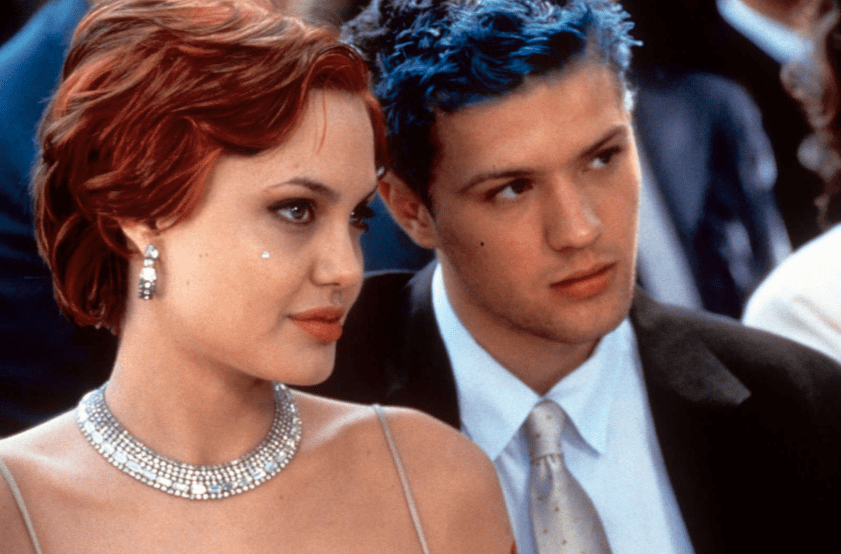
38- Colored Hair – Angelina Jolie and Ryan Phillippe
Both actors experimented with hair color, tapping into the trend of individuality through visual transformation. Their choices enhanced their alternative appeal, making them youth icons.
Victoria Sherrow in Encyclopedia of Hair explains that “hair color acts as a cultural signifier.” Jolie and Phillippe’s dyed hair became a tool for crafting an identity beyond mainstream Hollywood.
39- Ultra Stylish – No Doubt
Gwen Stefani and No Doubt redefined punk-inspired glam with plaid skirts, mesh tops, and red lips. Their style was genre-bending, merging ska, punk, and streetwear into a coherent look.
Gwen Stefani’s approach reflected what Roland Barthes would call “style as language.” Their wardrobe told stories of feminism, rebellion, and creativity that complemented their music.
40- Kilt Mania – Jennifer Aniston
Jennifer Aniston occasionally donned plaid skirts reminiscent of kilts, blending schoolgirl innocence with urban edge. This style flitted between classic and contemporary, making it a popular casual look.
In Dressed: A Philosophy of Clothes, Shahidha Bari discusses how garments like kilts carry cultural echoes. Aniston’s modern take on them helped repackage tradition as trend.
41- Bandana Deadband – Jennifer Lopez
Jennifer Lopez used bandanas not just as accessories but as defining statements. Whether on her head or around her wrist, the bandana became part of her Latin pop identity and street glam style.
Lopez exemplified what cultural theorist Stuart Hall calls “new ethnicities” in fashion—symbols that both reflect and shape diasporic identities through aesthetic choice.
42- The Bandana Top – Beyoncé
Beyoncé popularized the bandana top, making DIY fashion chic. Her look bridged the gap between hip-hop and high glamour, empowering young women to dress boldly yet creatively.
In Black Fashion: A Cultural History, Richard Thompson Ford explores how accessories like bandanas became part of “fashion rebellion.” Beyoncé’s styling turned humble cloth into high art.
43- Nirvana of Style
Nirvana defined anti-fashion: ripped jeans, thrifted sweaters, and an intentional disdain for commercial aesthetics. Kurt Cobain’s wardrobe wasn’t just style—it was protest.
In Fashion and Its Social Agendas, Diana Crane analyzes Nirvana’s impact as a “cultural correction” to consumer excess. Their grunge ethic still reverberates in fashion’s love of the unpolished.
44- For Young and Old – The Olsen Sisters
Mary-Kate and Ashley Olsen blended youth fashion with maturity, often sporting minimalist, oversized silhouettes that echoed adult sophistication with youthful undertones.
As covered in The Olsen Twins: Style File, their approach was a “bridge between eras.” Their influence laid the groundwork for today’s youth embracing and redefining classic fashion.
45- Matching Prints, Mom’s Design – Destiny’s Child
Destiny’s Child, often dressed in coordinated prints designed by Beyoncé’s mother, Tina Knowles, celebrated Black familial creativity and group identity through fashion.
In Stylin’ by Shane White, coordinated fashion is seen as “a strategy of unity.” These designs told a story of collaboration, community, and pride in cultural aesthetics.
46- Rap and R’n’B – Missy Elliott
Missy Elliott brought Afrofuturism into fashion, wearing inflated suits, metallics, and surreal silhouettes. Her look was as inventive as her music, making her a fashion pioneer.
Cultural critic Alondra Nelson in Afrofuturism cites Elliott as “a visual poet of Black futures.” Her wardrobe disrupted conventions and redefined what women in hip-hop could look like.
47- Jacket – Winona Ryder
Winona Ryder’s iconic black leather jacket became a symbol of ’90s alt-cool. Whether worn with dresses or jeans, it was the epitome of “grunge chic.”
In Fashioning the Bourgeoisie, Philippe Perrot argues jackets often denote power. Ryder’s leather look was understated yet commanding—a perfect emblem of her enigmatic persona.
48- The Tuxedo – Snoop Dogg and Tupac
Snoop Dogg and Tupac redefined the tuxedo, wearing it with swagger and defiance. These looks weren’t just formal—they were statements of dominance and respect.
As noted in The Tuxedo: A Cultural History by Deborah Nadoolman Landis, when rappers wear tuxedos, they subvert elite codes. Snoop and Tupac’s tuxedo looks were both homage and protest.
49- Mixed – Julia Roberts
Julia Roberts blended boho, business, and casual looks in ways that defied categorization. She wore what she wanted, creating a collage of style that felt organic and powerful.
In Fashion as Communication by Malcolm Barnard, mixed styles are “semiotic hybridity.” Roberts’ wardrobe was a mirror of the decade’s mix-and-match ethos.
50- XXL Tuxedo – Patrick Richard Grieco, Patrick Dempsey, Christian Slater and Costas Mandylor
This ensemble of stars made the oversized tuxedo a high-profile fashion moment. By loosening the fit, they turned formality into fluidity and masculinity into elegance.
Anne Hollander, in Sex and Suits, suggests the suit is a “code-switcher between power and play.” The XXL tuxedo gave the classic look a youthful, anti-authoritarian twist.
Conclusion
The 1990s were an era where fashion did more than clothe the body—it amplified identity, challenged norms, and echoed the rhythm of social transformation. Through oversized tuxedos, colored hair, denim revolutions, and pop couture, this decade crafted a visual language of freedom. Whether through the grunge of Nirvana, the glam of Destiny’s Child, or the quiet power of Julia Roberts, the 1990s remain a fashion epoch where everyone—from rockstars to rebels—had a voice, and style was its most eloquent expression.
As historian Christopher Breward once wrote, “Fashion is history’s mirror.” And in the 1990s, the mirror showed a society unapologetically exploring who it was—and who it could become.
The 1990s were more than just a decade of trends—they were a cultural crucible where fashion, music, and identity converged. From technicolor hair to subversive streetwear, each style offered a glimpse into a society undergoing rapid change. As we look back, it’s evident that the era’s aesthetic choices continue to resonate today, not merely as nostalgia but as enduring statements of self-expression.
In the words of Roland Barthes, “Clothing is an indirect language.” And in the 1990s, that language was rich, rebellious, and refreshingly real. For those seeking to understand the interplay between fashion and cultural identity, the ’90s remain an essential chapter.
Bibliography
1. Wilson, Elizabeth. Adorned in Dreams: Fashion and Modernity. University of California Press, 2003.
2. Steele, Valerie. Women and Fashion: A New Look. Yale University Press, 1998.
3. Jenkins, Henry. Textual Poachers: Television Fans and Participatory Culture. Routledge, 1992.
4. Coggins, David. Men and Style: Essays, Interviews and Considerations. Abrams Image, 2016.
5. Miller, Janice. Fashion and Music. Berg, 2011.
6. Rose, Tricia. Black Noise: Rap Music and Black Culture in Contemporary America. Wesleyan University Press, 1994.
7. Paglia, Camille. Sex, Art, and American Culture: Essays. Vintage, 1992.
8. Kitwana, Bakari. Why White Kids Love Hip-Hop: Wankstas, Wiggers, Wannabes, and the New Reality of Race in America. Basic Civitas Books, 2005.
9. Gibson, Pamela Church. Fashion and Celebrity Culture. Berg, 2012.
10. Entwistle, Joanne. The Fashioned Body: Fashion, Dress and Modern Social Theory. Polity Press, 2000.
11. Buckley, David. Strange Fascination: David Bowie – The Definitive Story. Virgin Books, 2005.
12. Sontag, Susan. On Style. Farrar, Straus and Giroux, 2005.
13. Kaiser, Susan B. Fashion and Cultural Studies. Berg, 2012.
14. Sherrow, Victoria. Encyclopedia of Hair: A Cultural History. Greenwood, 2006.
15. Barthes, Roland. The Language of Fashion. Berg, 2006.
16. Bari, Shahidha. Dressed: A Philosophy of Clothes. Jonathan Cape, 2019.
17. Hall, Stuart. Representation: Cultural Representations and Signifying Practices. Sage Publications, 1997.
18. Ford, Richard Thompson. Dress Codes: How the Laws of Fashion Made History. Simon & Schuster, 2021.
19. Nelson, Alondra. Afrofuturism: A Special Issue of Social Text. Duke University Press, 2002.
20. Perrot, Philippe. Fashioning the Bourgeoisie: A History of Clothing in the Nineteenth Century. Princeton University Press, 1994.
21. Landis, Deborah Nadoolman. Hollywood Costume. V&A Publishing, 2012.
22. Barnard, Malcolm. Fashion as Communication. Routledge, 2002.
23. Hollander, Anne. Sex and Suits. Knopf, 1994.
24. Crane, Diana. Fashion and Its Social Agendas: Class, Gender, and Identity in Clothing. University of Chicago Press, 2000.
25. Nguyen, Mimi Thi. The Gift of Freedom: War, Debt, and Other Refugee Passages. Duke University Press, 2012.
26. White, Shane. Stylin’: African American Expressive Culture from Its Beginnings to the Zoot Suit. Cornell University Press, 1998.
27. Breward, Christopher. The Culture of Fashion: A New History of Fashionable Dress. Manchester University Press, 1995.

By Amjad Izhar
Contact: amjad.izhar@gmail.com
https://amjadizhar.blog
Affiliate Disclosure: This blog may contain affiliate links, which means I may earn a small commission if you click on the link and make a purchase. This comes at no additional cost to you. I only recommend products or services that I believe will add value to my readers. Your support helps keep this blog running and allows me to continue providing you with quality content. Thank you for your support!

Leave a comment