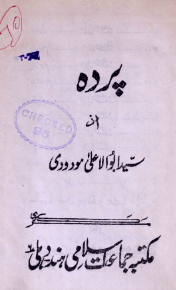
This document, titled “Pardah” by Sayyid Abul A’la Maududi, offers a comprehensive Islamic perspective on the concept of veiling and women’s roles within society. Published in June 2003 by Islamic Publications (Pvt) Limited in Lahore, Pakistan, the text provides a historical overview of women’s status in various ancient civilizations before contrasting it with Islamic teachings and the impact of modern Western thought. It discusses the origins and importance of hijab, addresses societal issues like moral decline and family breakdown, and explores Islamic principles for social order, including marriage, divorce, and women’s rights. The document critically examines Western concepts of freedom and their consequences on women and society, advocating for a return to Islamic guidelines for a balanced and prosperous community life.
Women’s Status: Western Decline vs. Islamic Preservation
The sources provide a detailed discussion on women’s issues, primarily contrasting the perceived outcomes of Western societal development with the principles and regulations of the Islamic social system.
Western Perspectives on Women’s Issues
The sources trace the evolution of women’s status through various historical periods in the West, portraying a pattern of initial moral decline followed by attempts at reform that ultimately led to new forms of societal problems.
- Ancient Greece: Initially, women held a respected social status, but their legal and social rights gradually diminished. Greek mythology, such as the story of Pandora, is cited as contributing to a view of women as the source of human problems. Respectable women were confined to their homes, while public life was dominated by slave women and prostitutes. Philosophers like Plato linked societal moral degradation to the decline in women’s morals. The promotion of “free friendship” between men and women led to moral decay and the destruction of the family unit.
- Roman Empire: Roman society initially had strict moral principles regarding marriage and family. Women were largely confined to the home with limited rights, dependent on men. As civilization progressed, women gained some independence, including rights to property and divorce, but this freedom is depicted as leading to moral decay, increased divorce rates, and family instability. Promiscuity became widespread, and moral corruption and sensuality contributed to the breakdown of modesty, ultimately leading to the decline of the Roman Empire.
- Christian Europe: Early Christian views often associated women with sin, portraying them as the cause of evil, akin to Eve. Figures like Tertullian are quoted as describing women as “the devil’s gateway,” and Chrysostom as a “desirable evil”. Marriage was often viewed negatively, with celibacy promoted as a higher spiritual state, leading to a devaluation of marriage and women. Women had limited economic rights and were treated as property. Prostitution was prevalent, and feudalism further oppressed women.
- Modern Europe and America: The sources argue that the ideas of “women’s freedom” and “equality” that emerged from the 18th and 19th centuries in Europe, particularly through movements advocating for women’s economic and social rights, have fundamentally reshaped society. The sources identify “three pillars” of this new Western society: the equality of men and women, the economic independence of women, and the resulting sexual anarchy.
- Consequences of “Freedom”: This new freedom is presented as leading to increased extramarital relationships and family breakdown, with the family system (considered the foundation of society) being destroyed. Marriage is reduced to a temporary contract. Sexual gratification and desire are highlighted as primary goals, contributing to a decline in modesty and a rise in promiscuity. High divorce rates, extramarital affairs, and sexually transmitted diseases are cited as evidence of this decay.
- “Race Suicide”: The sources specifically discuss “race suicide” (declining birth rates) as a significant national issue in countries like France and America, linking it directly to moral degradation, promiscuity, and family instability. France is mentioned as having a substantial increase in divorce rates and abortions.
- Societal Manifestations: The prevalence of promiscuity and prostitution in America is detailed, with reports on teenage sexual activity, the teaching of “homosexuality” and “masturbation” in schools, and various establishments serving as fronts for prostitution. The media and “art” are also accused of promoting obscenity and nudity, further fueling sexual desires and contributing to the spiritual and physical decline of individuals and nations.
Islamic Perspectives on Women’s Issues
The sources present the Islamic social system as a balanced and natural approach that protects women’s dignity, rights, and societal order, contrasting it with the perceived negative consequences of Western systems.
- Core Principles and Roles: Islam aims to keep human nature pure and free from destructive inclinations, emphasizing a balanced approach to the relationship between men and women based on natural laws and divine wisdom. Marriage is a foundational concept, as men and women are created in pairs to find peace and comfort in each other. Men and women have distinct natural abilities and complementary roles, crucial for the success of creation and the family unit. The sources argue against absolute equality in all aspects, recognizing differing but equally valuable functions. Human beings, possessing both physical and spiritual natures, have a greater responsibility for self-control.
- Rights of Women: Islam grants women extensive rights, including:
- Economic Rights: Women have the right to inherit property, manage their own wealth, and engage in business.
- Social Rights: Women have the right to choose their spouse, and a marriage without their consent is invalid. They also have rights concerning divorce and separation.
- Education: Education for women is deemed important and necessary.
- The sources highlight that Islam elevates the status of women, granting them dignity and honor, and does not view them as inferior or a source of sin, unlike historical perceptions in other cultures.
- Modesty and Social Regulations: These regulations are presented as essential for protecting women’s dignity and preventing moral decay.
- Haya (Modesty): Modesty is a fundamental aspect of human nature, requiring both men and women to control their desires and avoid temptation.
- Gaze: Both men and women are commanded to lower their gaze to protect their chastity.
- Speech and Voice: Women’s speech should be modest and not provocative, and their voices should not be used to incite lust.
- Perfume: Women should avoid wearing strong perfumes in public that attract attention.
- Nudity and Dress Code (Satr): Islam forbids nudity and mandates covering the body (satr) for both men and women. Specific guidelines are provided: for men, covering from the navel to the knee; for women, covering the entire body, with some interpretations allowing the face and hands to be uncovered. The purpose is to protect against temptation and maintain dignity.
- Purdah/Veil: The Quran commands Muslim women to draw their outer garments over themselves to be recognized and avoid harm, distinguishing respectable women and preventing harassment. The niqab (face veil) is mentioned as a customary practice during the Prophet’s time.
- Prohibition of Free Mixing, Seclusion, and Touching: The sources emphasize the importance of preventing free mixing between non-mahram men and women to maintain modesty. Seclusion (being alone together) and unnecessary physical contact between non-mahram individuals are prohibited to prevent temptation.
- Seeking Permission (Istidhan): Men are required to seek permission before entering women’s private spaces, including their own homes, to respect privacy and prevent impropriety.
- Difference between Mahrams and Non-Mahrams: Rules for interaction vary based on whether a person is a mahram (close relative whom one cannot marry) or non-mahram. Women may show adornment to mahrams but must conceal it from non-mahrams.
- Importance of Marriage and Family: Marriage is presented as the natural and divine way to establish relations, a pure and dignified bond, contrasting with promiscuity. A woman’s consent is crucial for marriage. The sources underscore the central role of the family unit, with the woman primarily responsible for household management and child-rearing, while the man is the provider. However, women are permitted to participate in public life when necessary, within specified boundaries.
The sources conclude that the Islamic approach offers a balanced and natural system that protects women’s dignity, rights, and roles, preserving societal order and moral purity, unlike the Western model which is presented as leading to societal ills.
Western and Islamic Social Systems: A Comparative View
The sources discuss social reforms primarily by contrasting historical developments and contemporary issues in Western societies with the principles of the Islamic social system. They present Western reforms as attempts that ultimately led to moral decline and societal problems, while the Islamic system is portrayed as a comprehensive and inherent framework for proper social order.
Social Reforms in Western Societies
The sources trace the trajectory of social changes in the West, particularly those related to women’s status, often framing them as reforms that eventually deteriorated societal morality.
- Ancient Civilizations (Greece and Rome): Initially, women in Ancient Greece held some social standing, but their legal and social rights declined over time. The promotion of “free friendship” between men and women is cited as a social shift that led to moral decay and the destruction of the family unit. Similarly, in the Roman Empire, as women gained more independence, including rights to property and divorce, this newfound freedom is depicted as contributing to moral corruption, increased divorce rates, and family instability. These historical shifts, though potentially seen as progress or reforms in their time, are presented as leading to societal breakdown.
- Christian Europe: During early Christianity, women were often viewed negatively, associating them with sin, which impacted their social standing and rights. Feudalism further oppressed women, treating them as property. While not explicitly detailing “reforms” in this period, the sources imply a stagnant or regressive social condition for women, where the Christian worldview did not uplift their status in the manner that Islam claims to do.
- Modern Europe and America: The 18th and 19th centuries saw the emergence of significant social reforms advocating for “women’s freedom” and “equality”. These movements championed women’s economic and social rights, aiming for their emancipation. The sources identify “three pillars” of this new Western social order that resulted from these reforms:
- Equality of Men and Women: This principle is seen as a fundamental reordering of gender roles.
- Economic Independence of Women: Women entering the workforce and gaining financial autonomy is highlighted as a major social shift.
- Sexual Anarchy: This is presented as a direct consequence of the pursuit of “freedom” and “equality” without moral or natural boundaries. The sources contend that these reforms, rather than improving society, led to severe negative consequences, including a rise in extramarital relationships, high divorce rates, and the breakdown of the family unit. The concept of “race suicide” (declining birth rates due to moral degradation and promiscuity) is presented as a significant national crisis in countries like France and America, directly linked to these social changes. The sources also point to the promotion of obscenity and nudity in media and art as further accelerating moral decay. The Neo-Malthusian Movement, advocating for birth control, is specifically criticized for promoting sexual freedom without responsibility, further contributing to moral decline.
Social Order and “Reform” in the Islamic System
In contrast to the perceived failures of Western social reforms, the sources present the Islamic social system as a naturally balanced and divinely guided framework that inherently promotes order, purity, and dignity for women, thereby serving as a comprehensive “social reform” that prevents societal ills.
- Foundational Principles: Islam aims to preserve human nature and society from destructive inclinations by establishing a balanced and complementary relationship between men and women, based on natural laws and divine wisdom. Marriage is considered the fundamental institution for establishing dignified relationships and building healthy families.
- “Inner Reform” (Islah-e-Batin): The sources explicitly mention “اصلاح باطن” (inner reform or purification) as a core aspect of Islamic social order. This emphasizes that true social well-being begins with individual spiritual and moral purity, fostering self-control over desires.
- Protection of Dignity and Chastity: Islam introduces specific regulations for both men and women to maintain modesty and prevent moral corruption, which are presented as essential social protective measures:
- Lowering the Gaze: Commands both men and women to lower their gaze to avoid inciting lust.
- Modesty in Speech and Voice: Women are advised to speak modestly, without a provocative tone, to prevent tempting others.
- Dress Code (Satr): The prohibition of nudity and the requirement to cover specific parts of the body (from navel to knee for men, entire body for women with some variations for face and hands) are fundamental to preserving modesty and preventing temptation.
- Purdah/Veil: Quranic injunctions instruct women to draw their outer garments over themselves to be recognized as respectable and avoid harassment, differentiating them from other women. The niqab (face veil) is mentioned as a customary practice in the Prophet’s time, though its strict requirement is debated by scholars.
- Prohibition of Free Mixing and Seclusion: Strict rules against unnecessary free mixing and seclusion (being alone together) between non-mahram men and women are implemented to prevent temptation and maintain moral boundaries.
- Women’s Rights and Roles: Islam grants women full economic rights, including the right to inherit, own property, and engage in business. Women also have significant social rights, such as choosing their spouse and the right to education. The sources emphasize that Islam elevated the status of women, granting them dignity and honor, rather than treating them as inferior or a source of evil, thereby presenting a truly transformative social framework for women’s standing.
In conclusion, the sources argue that Western social reforms, particularly those emphasizing absolute “freedom” and “equality” for women, have paradoxically led to societal degradation and moral decay. Conversely, the Islamic social system, with its emphasis on modesty, family, and distinct yet complementary roles for men and women, is presented as a divinely ordained and naturally harmonious social order that inherently prevents these issues and ensures the dignity and well-being of all individuals.
Islamic Social Order and Gender Roles
The sources extensively discuss Islamic teachings, primarily presenting them as a divinely ordained, comprehensive social system designed to maintain moral purity, family integrity, and societal well-being, contrasting it sharply with the perceived failures of Western social reforms.
Core Philosophy and Social System
Islam’s social system is based on fundamental principles derived from divine revelation and natural law, aiming to foster a balanced and harmonious society.
- Preservation of Human Nature: Islam seeks to preserve human nature from destructive inclinations and elevate human dignity by establishing a natural and balanced social order. It emphasizes the importance of controlling desires and inclinations that could lead to societal degradation.
- Balance and Moderation: The Islamic social system emphasizes moderation (اعتدال) in all aspects of life, recognizing both the spiritual and biological aspects of human beings. It is built upon a balanced distribution of rights and responsibilities between men and women, based on their inherent nature and roles.
- Family as the Foundation: Marriage is considered the fundamental institution for human relations and the cornerstone of a healthy society. The system prioritizes the organization and stability of the family (خاندان کی تنظیم) as essential for the upbringing of future generations and the continuity of the human race.
- “Inner Reform” (Islah-e-Batin): A crucial aspect of Islamic teaching is “اصلاح باطن” (inner reform or purification). This involves cultivating modesty (حیا), controlling the gaze (فتنہ نظر), modest speech (فتنہ زبان), and avoiding provocative sounds (فتنہ آواز) and fragrances (فتنہ خوشبو). This inner purity is seen as the foundation for external adherence to social norms.
Gender Roles, Rights, and Responsibilities
Islam defines distinct but complementary roles for men and women, aiming to ensure their dignity, rights, and the smooth functioning of society.
- Equality in Dignity, Complementarity in Roles: While men and women are seen as equal in human dignity and spiritual worth, their natural aptitudes and responsibilities differ. The concept of “زوجیت” (spousal relationship) signifies a pair where one is active (فاعل) and the other receptive (منفعل), both essential for the continuation of life.
- Men as “Qawwam” (Maintainers/Protectors): Men are designated as “Qawwam” over women, which means they are responsible for providing for and protecting the family. This role necessitates men’s physical strength and leadership in external affairs, while women’s primary domain is within the home and family nurturing.
- Women’s Domain and Dignity: Women’s “area of work” (دائرہ عمل) is primarily within the household, including managing the home and raising children, which is considered a noble and essential role. Islam elevated women’s status from a state of degradation in pre-Islamic societies (e.g., Greece, Rome) to one of honor and respect, granting them significant rights.
- Economic Rights: Islam grants women full economic rights (معاشی حقوق), including the right to own property, inherit, and manage their wealth independently. This contrasts with historical Western practices where women’s economic rights were often limited.
- Social and Educational Rights: Women have social rights (تمدنی حقوق) such as the right to choose their spouse and the right to education (عورتوں کی تعلیم). Their education is encouraged, and they can participate in society to fulfill needs that cannot be met by men alone, such as female-specific healthcare.
- Necessary Restrictions (ضروری پابندیاں): To preserve social morality and prevent promiscuity, certain restrictions are in place:
- Prohibition of Zina (Adultery/Fornication): Zina is strictly prohibited and carries severe penalties (حد زنا). False accusation of Zina (حد قذف) is also punishable.
- Prohibited Marriages (محرمات): Marriage to certain relatives (e.g., mother, sister, daughter) is strictly forbidden to maintain family sanctity and prevent sexual anarchy.
- Modesty and Dress Code (Satr): Both men and women are commanded to cover certain parts of their bodies (ستر). For men, it is from the navel to the knee. For women, it is the entire body, excluding the face and hands according to some interpretations, to preserve modesty and prevent temptation.
- Lowering the Gaze (غض بصر): Both men and women are commanded to lower their gaze to avoid inciting lust. This is seen as a primary preventative measure against immoral acts.
- Modest Conduct: Women are advised to speak in a non-provocative tone and avoid displaying adornments (زینت) in public. The use of strong perfumes by women in public is also discouraged.
- Prohibition of Nudity (عریانی): Nudity and excessive display of the body are strongly condemned as they lead to moral degradation.
- Purdah/Veil: Quranic injunctions (e.g., Al-Ahzab 33:59, An-Nur 24:30-31) instruct women to draw their outer garments over themselves when outside, so they are recognized as respectable and not harassed. The wearing of the niqab (face veil) is mentioned as a customary practice in the Prophet’s time, though its strict requirement is subject to scholarly debate.
- Restrictions on Free Mixing (آزادانہ اختلاط): Unnecessary free mixing of non-mahram men and women is discouraged to prevent moral corruption and illicit relationships. Seclusion (خلوت) of a man and a non-mahram woman is strictly prohibited.
- Rules for Going Out: Women are permitted to go out for necessities, such as attending mosque (with certain conditions), for Hajj, visiting graves, or participating in war to offer support (e.g., first aid), provided they adhere to Islamic dress codes and modesty rules.
Contrast with Western Societies
The sources continuously highlight that Islamic teachings provide a natural and inherent social framework that prevents the moral and societal decline observed in Western societies. They argue that Western ideals of “freedom” and “equality” (خاص طور سے مساوات، اقتصادی خود مختاری اور جنسی لاقید) led to “sexual anarchy,” increased divorce, declining birth rates (“race suicide”), and widespread moral degradation, which are precisely what Islamic teachings aim to prevent through their comprehensive social framework. The sources emphasize that Islamic law is designed not just for individuals but for the collective good of society, aiming to safeguard it from the consequences of unchecked desires.
The Islamic Family System: Foundations and Protection
The sources extensively discuss the Islamic family system as a fundamental and divinely ordained institution crucial for the preservation of human nature, moral purity, and societal well-being. This system is presented as a natural and balanced framework, contrasting sharply with perceived failures of Western social structures.
Foundational Principles of the Islamic Family System
The family unit (خاندان کی تنظیم) is considered the bedrock of human relations and the primary institution for the upbringing of future generations and the continuity of the human race.
- Marriage (Nikah) as the Core: Marriage is central to the Islamic social system. It is seen as the only legitimate way to fulfill human sexual inclinations while preserving dignity and ensuring the proper continuation of the human lineage. The sexual relationship (جنسی میلان) within marriage is divinely ordained and essential for the family system.
- “Zaujiat” (Spousal Relationship): The concept of “Zaujiat” is foundational, referring to the complementary pairing of male and female, where one is active (فاعل) and the other receptive (منفعل). This duality is observed throughout creation and is essential for the perpetuation of species and the establishment of human civilization. It signifies a harmonious balance of natural abilities and responsibilities between men and women, essential for life’s continuity.
- Preservation of Human Nature: The Islamic system aims to preserve human nature (فطرت انسانی کی حفاظت) from destructive inclinations and elevate human dignity. It sets limits to prevent the unchecked fulfillment of desires that could lead to widespread degradation.
Gender Roles and Rights within the Family
Islam defines distinct, yet complementary, roles and responsibilities for men and women, ensuring their individual rights while maintaining the family’s integrity.
- Equality in Dignity, Complementarity in Roles: Men and women are considered equal in human dignity and spiritual worth. However, their natural aptitudes and societal roles differ, contributing to the overall balance and functionality of the family and society.
- Men as “Qawwam” (Maintainers/Protectors): Men are designated as “Qawwam” over women, meaning they are responsible for providing financial support and protection for the family. This includes managing the family’s external affairs and ensuring its material well-being.
- Women’s Domain (Dairah-e-Amal): Women’s primary “area of work” (دائرہ عمل) is within the home, managing the household, and raising children. This role is seen as highly honorable and essential for society’s well-being. Women are considered the “queen of the house” (ملکہ خانہ).
- Women’s Rights:
- Economic Rights: Women possess full economic rights (معاشی حقوق), including the right to own, inherit, and manage property independently, contrasting with historical Western practices where women’s economic rights were often limited or nonexistent.
- Social Rights: Women have social rights (تمدنی حقوق), such as the right to choose their spouse. They are also encouraged to seek education (عورتوں کی تعلیم).
- Participation in Society: While their primary role is domestic, women are permitted to go out for necessities or for specific needs that cannot be met by men alone, such as female healthcare, attending the mosque (with conditions), Hajj, visiting graves, or participating in war for support (e.g., first aid).
Protective Measures for Family and Society
Islamic teachings include various restrictions and guidelines designed to protect the family system and societal morality, preventing sexual anarchy and moral decay.
- Prohibition of Zina (Adultery/Fornication): Zina is strictly forbidden and carries severe penalties (حد زنا). False accusation of Zina (حد قذف) is also punishable.
- Prohibited Marriages (Mahramat): Marriage to close relatives is forbidden to ensure family sanctity and prevent sexual chaos.
- Modesty and Dress Code (Satr): Both men and women are commanded to cover certain parts of their bodies (ستر). For men, it’s from the navel to the knee. For women, it generally covers the entire body, with scholarly debate regarding the face and hands. This is to preserve modesty and prevent temptation.
- Lowering the Gaze (Ghad-e-Basar): Both men and women are commanded to lower their gaze to prevent lustful thoughts and immoral actions. This is considered a primary preventative measure (اندادی تدابیر).
- Inner Reform (Islah-e-Batin): Beyond external rules, Islam emphasizes “اصلاح باطن” (inner reform), which includes cultivating modesty (حیا), controlling the gaze, modest speech, and avoiding provocative sounds and fragrances. Inner purity is foundational for external adherence.
- Modest Conduct: Women are advised to speak in a non-provocative tone and avoid displaying adornments (زینت) or using strong perfumes in public to prevent attracting unwanted attention.
- Prohibition of Nudity (Uryani): Nudity and excessive display of the body are strongly condemned as leading to moral degradation.
- Purdah/Veil: Quranic injunctions (e.g., Al-Ahzab 33:59, An-Nur 24:30-31) instruct women to draw their outer garments over themselves when outside so they are recognized as respectable and not harassed. The practice of wearing the niqab (face veil) is also mentioned as customary in the Prophet’s time, though its strict requirement is subject to scholarly interpretation.
- Restrictions on Free Mixing (Azadana Ikhtilat): Unnecessary free mixing of non-mahram (unmarriageable kin) men and women is discouraged to prevent moral corruption and illicit relationships. Seclusion (خلوت) of a man and a non-mahram woman is strictly prohibited.
Contrast with Western Societies
The sources repeatedly argue that Western concepts of “freedom” and “equality” (especially economic autonomy and sexual liberation) have led to “sexual anarchy,” increased divorce rates, declining birth rates (“race suicide”), and moral degradation. The Islamic system, conversely, is presented as an inherent (فطری) social structure designed to safeguard society from such outcomes through its comprehensive moral framework.
Islamic Moral Values and Societal Integrity
Moral values are presented in the sources as an intrinsic and vital component of the Islamic family system and societal structure, serving to protect human nature and foster a dignified society [i].
Foundations of Moral Values in Islam
The Islamic system is described as fundamentally geared towards preserving human nature (فطرت انسانی کی حفاظت) and elevating human dignity by setting limits on desires that could lead to widespread degradation [i, 15].
- Marriage (Nikah) and Dignity: Marriage is the only legitimate means for humans to fulfill their sexual inclinations, ensuring the preservation of dignity and the proper continuation of the human lineage [i, 194]. Any sexual activity outside of marriage (زنا) is strictly prohibited and seen as a severe moral transgression that leads to societal corruption and degradation [i, 144, 145, 146, 232, 238]. False accusations of such acts (قذف) are also punishable, highlighting the emphasis on protecting reputation and preventing social strife [i, 235].
- “Zaujiat” and Natural Harmony: The concept of “Zaujiat” (spousal relationship) signifies a natural, balanced, and complementary interaction between men and women, essential for the perpetuation of life and civilization. This inherent balance in creation is reflected in the ideal moral framework for human society [i, 181, 187, 188].
Mechanisms for Upholding Moral Values
Islam employs various measures to foster and protect moral purity within individuals and society:
- Inner Reform (Islah-e-Batin): Beyond external regulations, Islam emphasizes inner reform (اصلاح باطن), which involves cultivating intrinsic moral qualities like modesty (حیا), controlling the gaze (غض بصر), modest speech (فتنہ زبان), and avoiding provocative sounds (فتنہ آواز) and fragrances (فتنہ خوشبو) [i, 221, 222, 223, 224, 225, 226, 227, 228, 229]. This inner purity is considered foundational for adhering to external moral commands [i].
- Modesty and Dress Code (Satr): Commands for modesty in dress (ستر) for both men and women (e.g., from navel to knee for men, covering the body for women with differing views on face and hands) are crucial for preserving moral values and preventing temptation [i, 237, 238, 239, 240]. Women are specifically advised to avoid displaying adornments or using strong perfumes in public [i, 267, 268].
- Lowering the Gaze (Ghad-e-Basar): Both men and women are instructed to lower their gaze, serving as a primary preventative measure against lustful thoughts and immoral actions [i, 230, 231, 257, 258].
- Purdah/Veil: Quranic injunctions (e.g., Al-Ahzab 33:59, An-Nur 24:30-31) regarding women drawing their outer garments when outside aim to ensure they are recognized as respectable and not harassed, thereby protecting their honor and societal morality [i, 255, 256, 273, 278]. The practice of niqab (face veil) is also mentioned in the context of the Prophet’s time, though its strict requirement is subject to scholarly interpretation [i, 271, 272, 277, 278].
- Restrictions on Free Mixing (Azadana Ikhtilat): Unnecessary mixing of non-mahram (unmarriageable kin) men and women is discouraged to prevent moral corruption and illicit relationships. The seclusion (خلوت) of a man and a non-mahram woman is strictly prohibited [i, 247, 251, 252, 253]. These are “preventative measures” (اندادی تدابیر) to safeguard society from sexual anarchy [i, 38].
Contrast with Western Societies
The sources frequently draw a sharp contrast between the Islamic moral framework and the perceived outcomes of Western social systems. It is argued that Western notions of “freedom” and “equality,” particularly economic autonomy and sexual liberation, have led to a severe decline in moral values and significant social problems [i, 27, 43].
- Consequences of Moral Decay in the West: This perceived moral decline in Western societies is linked to “sexual anarchy” (جنسی آوارگی), high divorce rates (طلاق اور تفریق), declining birth rates (نسل کشی), widespread obscenity (فواحش کی کثرت), and an increase in sexually transmitted diseases (امراض خبیثہ) [i, 28, 29, 50, 52, 53, 54, 76, 92, 93, 100, 184]. The sources contend that attempts at social reform in the West have largely failed because they prioritize external legislation over inner moral purity.
- Moderation and Balance: The Islamic system is portrayed as a “law of moderation” (قانون اعتدال) and a “law of nature” (قوانین فطرت) that fosters a balanced and healthy society, in contrast to Western societies which are depicted as suffering from extremes (افراط و تفریط) and a breakdown of moral order [i, 15, 131, 154, 185, 186]. The purpose of Islamic laws regarding sexual attraction is to regulate it towards its true, dignified purpose of procreation and family formation, thereby preventing its destructive potential.
Download PDF Book

By Amjad Izhar
Contact: amjad.izhar@gmail.com
https://amjadizhar.blog
Affiliate Disclosure: This blog may contain affiliate links, which means I may earn a small commission if you click on the link and make a purchase. This comes at no additional cost to you. I only recommend products or services that I believe will add value to my readers. Your support helps keep this blog running and allows me to continue providing you with quality content. Thank you for your support!

Leave a comment