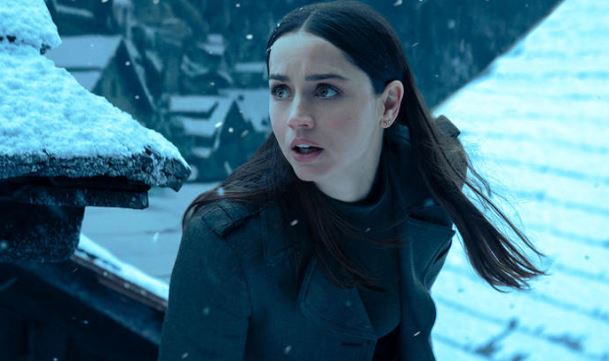
When a ballet dancer trades pirouettes for pistols, the stage is set for a cinematic spectacle that blurs the lines between grace and grit. In “Ballerina,” Ana de Armas steps into the spotlight as Eve Macarro, a character who seamlessly melds the elegance of dance with the lethality of an assassin. Set within the intricate tapestry of the John Wick universe, this spin-off endeavors to carve its own niche while paying homage to its origins.fandango.com+14as.com+14vulture.com+14en.wikipedia.org+5vanityfair.com+5polygon.com+5
Directed by Len Wiseman, with contributions from franchise stalwart Chad Stahelski, “Ballerina” navigates the treacherous waters of expanding a beloved cinematic world. The film’s choreography, both in dance and combat, reflects a meticulous attention to detail, aiming to captivate audiences with its visual flair. However, the narrative’s reliance on familiar tropes raises questions about its originality and the challenges of crafting a standalone identity within an established franchise.johnwick.fandom.com+3houstonchronicle.com+3en.wikipedia.org+3
As Eve embarks on her quest for vengeance, the film delves into themes of identity, loyalty, and the cost of retribution. While “Ballerina” offers moments of exhilarating action and poignant introspection, it occasionally stumbles under the weight of its own ambitions. This review seeks to dissect the film’s strengths and shortcomings, providing a nuanced perspective for discerning viewers.
1- Character Development: Eve Macarro’s Journey
Eve Macarro’s transformation from a grieving daughter to a formidable assassin is central to “Ballerina’s” narrative arc. Her character embodies the dichotomy of vulnerability and strength, navigating a world where trust is scarce and betrayal lurks in every shadow. Ana de Armas delivers a performance that captures Eve’s internal conflict, portraying a woman torn between her past and the path she’s chosen. The film explores Eve’s psychological evolution, highlighting her resilience and adaptability in the face of adversity.theguardian.com+12vulture.com+12johnwick.fandom.com+12houstonchronicle.com
However, the depth of Eve’s character development is sometimes overshadowed by the film’s emphasis on action sequences. While her motivations are clear, the narrative occasionally glosses over opportunities to delve deeper into her psyche. This oversight limits the audience’s ability to fully connect with her journey on an emotional level. A more nuanced exploration of Eve’s internal struggles could have elevated the film’s impact, offering a richer, more compelling protagonist.
2- Action Choreography: Dance Meets Combat
The fusion of ballet and combat in “Ballerina” presents a unique visual spectacle. The film’s action sequences are meticulously choreographed, drawing parallels between the precision of dance and the brutality of battle. This artistic approach adds a layer of sophistication to the violence, transforming fight scenes into performances that are both graceful and deadly. The use of unconventional weapons, such as ice skates and flamethrowers, further enhances the film’s creative flair.as.comhoustonchronicle.com+1vulture.com+1
Despite these innovations, some action sequences feel derivative, echoing the stylings of the original John Wick films without introducing significant novelty. While the choreography is impressive, it occasionally lacks the visceral impact that made its predecessors stand out. To truly distinguish itself, “Ballerina” could have pushed the boundaries of its action design, embracing more daring and unconventional approaches to combat.
3- Narrative Structure: A Tale of Vengeance
At its core, “Ballerina” is a revenge story, a narrative thread that is both timeless and well-trodden. Eve’s quest to avenge her father’s death propels the plot forward, providing a clear and compelling motivation for her actions. The film adheres to a linear structure, allowing audiences to follow Eve’s journey with clarity. This straightforward approach ensures that the story remains accessible, even as it delves into the complexities of the assassin underworld.johnwick.fandom.com+8rogerebert.com+8vanityfair.com+8
However, the reliance on familiar revenge tropes can render the narrative predictable. While the film introduces intriguing elements, such as the assassin commune in Hallstatt, Austria, these innovations are not always fully explored. A more intricate plot, with unexpected twists and deeper character interactions, could have added layers of intrigue, elevating the film beyond a standard vengeance tale.apnews.com+1vanityfair.com+1
4- Cinematic Aesthetics: Visual Storytelling
“Ballerina” boasts a striking visual palette, blending the elegance of ballet with the starkness of its violent world. The cinematography captures the contrast between the refined settings of the Ruska Roma and the gritty locales of Eve’s missions. Lighting and color schemes are employed effectively to reflect the protagonist’s emotional state, transitioning from warm hues during moments of introspection to cooler tones in scenes of conflict.imdb.com+10rottentomatoes.com+10johnwick.fandom.com+10
The film’s visual storytelling is further enhanced by its attention to detail in set design and costume. The juxtaposition of delicate ballet attire with weaponry underscores the central theme of duality. However, at times, the emphasis on style over substance can detract from the narrative’s emotional resonance. Balancing aesthetic appeal with storytelling depth is crucial to maintaining audience engagement throughout the film.
5- Supporting Characters: Enhancing the Narrative
The ensemble cast of “Ballerina” contributes to the richness of its world-building. Characters such as The Director (Anjelica Huston) and Winston (Ian McShane) provide continuity within the John Wick universe, grounding the spin-off in familiar territory. Their interactions with Eve offer insights into the hierarchical structures and codes that govern the assassin community.apnews.com+10washingtonpost.com+10reddit.com+10
Despite their potential, some supporting characters are underutilized, serving more as narrative devices than fully realized individuals. Expanding their backstories and motivations could have added depth to the film, creating more dynamic relationships and conflicts. A more robust development of these characters would have enriched the narrative, offering varied perspectives within the assassin world.
6- Thematic Exploration: Identity and Transformation
“Ballerina” delves into themes of identity, transformation, and the quest for purpose. Eve’s journey reflects a struggle to reconcile her past with her present, navigating the tension between her upbringing and her chosen path. The film examines the sacrifices required to forge a new identity, highlighting the psychological toll of such a metamorphosis.as.com+2apnews.com+2houstonchronicle.com+2
These themes resonate with broader philosophical discussions on selfhood and agency. Drawing from existentialist thought, the narrative suggests that individuals are defined by their actions and choices. However, a deeper exploration of these concepts within the film could have provided a more profound commentary on the human condition, elevating the story beyond its action-oriented framework.
7- Musical Score: Setting the Tone
The musical composition in “Ballerina” plays a pivotal role in establishing the film’s tone. The score seamlessly blends classical motifs with contemporary elements, mirroring the fusion of ballet and modern combat. This auditory backdrop enhances the emotional impact of key scenes, guiding audience responses and accentuating narrative beats.
However, the soundtrack occasionally leans heavily on familiar cues, potentially diminishing its originality. Incorporating more innovative musical arrangements could have further distinguished the film’s identity, reinforcing its thematic ambitions and complementing its visual storytelling.
8- Cultural Context: Ballet and Violence
“Ballerina” juxtaposes the refined art of ballet with the brutal world of assassination, creating a compelling contrast that challenges traditional perceptions. This interplay invites discussions on the duality of human nature, the coexistence of beauty and savagery, and the societal constructs that define femininity and strength.
By positioning a ballerina as a lethal force, the film subverts expectations and prompts reflections on gender roles and empowerment. However, a more nuanced exploration of these cultural themes could have deepened the film’s impact, offering a more critical lens through which to view its narrative choices.
9- Franchise Integration: Expanding the Universe
As a spin-off, “Ballerina” seeks to expand the John Wick universe, introducing new characters and settings while maintaining continuity. The film’s integration of familiar elements, such as the Continental Hotel and the High Table, provides a sense of cohesion and familiarity for fans.vanityfair.com
However, the challenge lies in balancing homage with innovation. While “Ballerina” successfully incorporates established lore, it occasionally struggles to assert its own identity. A more distinct narrative voice could have positioned the film as a bold new chapter within the franchise, rather than a derivative extension.
10- Audience Reception: Critical Perspectives
Critical responses to “Ballerina” have been mixed, with praise directed at its visual style and Ana de Armas’s performance, and criticism aimed at its narrative shortcomings. Some reviewers commend the film’s action sequences and aesthetic choices, while others highlight a lack of depth in character development and storytelling.
These varied perspectives underscore the complexities of crafting a successful spin-off. Balancing fan expectations with creative innovation is a delicate endeavor, and “Ballerina’s” reception reflects the challenges inherent in expanding a beloved cinematic universe.
11- Gender Dynamics: Female Empowerment
“Ballerina” boldly centers a female lead in a genre traditionally dominated by male protagonists, pushing against entrenched norms of the action-thriller archetype. Ana de Armas’s Eve Macarro redefines what it means to be a modern action heroine—not merely through physical prowess but through psychological complexity. As Susan Jeffords noted in Hard Bodies: Hollywood Masculinity in the Reagan Era, traditional action heroes reflect cultural fantasies of dominance. “Ballerina,” in contrast, situates empowerment in Eve’s capacity for emotional resilience and strategic agency.
Nevertheless, the film occasionally flirts with the danger of aestheticizing violence against women under the guise of empowerment. While Eve’s transformation into a lethal force is framed as liberation, her journey is still orchestrated within a male-constructed universe, echoing what Laura Mulvey identified in Visual Pleasure and Narrative Cinema as the “male gaze.” For the film to truly transcend gender tropes, it would need to foreground Eve’s narrative autonomy, not just her survival skills.
12- John Wick’s Shadow: The Cost of Legacy
“Ballerina” exists within the shadow of the John Wick franchise, and this proximity is both its strength and its Achilles’ heel. The cinematic universe lends the film an immediate allure—world-building, established mythos, and familiar figures like Winston and Charon provide narrative scaffolding. Yet this reliance on the Wick lore curtails the film’s originality, as viewers are constantly reminded of the parent franchise’s more iconic moments.
This overdependence raises questions of creative independence. As Harold Bloom outlines in The Anxiety of Influence, derivative works often grapple with asserting identity amidst strong precursors. “Ballerina” seems to oscillate between homage and imitation. To forge its own legacy, it needs to break free from John Wick’s stylistic and thematic blueprint and establish a signature vision that does not merely echo but innovates.
13- Philosophical Undercurrents: The Ethics of Revenge
The revenge motif in “Ballerina” raises philosophical concerns around morality, justice, and cyclical violence. Eve’s pursuit is emotionally understandable, but the film rarely pauses to interrogate the ethical implications of her actions. Are her targets unequivocally evil, or is the narrative simplifying complex moral terrain? Hannah Arendt’s reflections on violence in On Violence suggest that retribution rarely leads to genuine justice, a theme only lightly brushed upon in the film.
Moreover, the film misses an opportunity to explore forgiveness, moral ambiguity, or transformation. In contrast to John Wick’s nihilistic tone, “Ballerina” could have presented a moral evolution in its protagonist, offering a redemptive path. Such complexity would not only elevate the film but anchor it more firmly in intellectual discourse on vengeance and justice.
14- Symbolism and Metaphor: Layers Beneath the Surface
Symbolism abounds in “Ballerina”—the act of dance as both beauty and weaponry, mirrors as motifs of identity fragmentation, and fire as purging vengeance. These elements add texture but are often underdeveloped. The film gestures toward depth, yet fails to mine its metaphors with the thoroughness seen in psychological thrillers or philosophical cinema.
A more deliberate symbolic architecture—akin to what we see in Aronofsky’s Black Swan—would have enriched the narrative tapestry. For example, dance could serve as a metaphor for self-control or the tension between structure and chaos. As Northrop Frye argues in Anatomy of Criticism, effective symbolism should resonate on multiple levels; in “Ballerina,” it feels more decorative than substantive.
15- Setting and Atmosphere: A Global Canvas
The use of international settings, especially the haunting alpine village of Hallstatt, Austria, gives “Ballerina” a broad cinematic canvas. These locations are not just backdrops but atmospheric agents—Hallstatt’s Gothic stillness mirrors Eve’s internal coldness and moral isolation. The global nature of the assassin network also reflects the expanding scope of cinematic narratives in a globalized world.
Yet, these settings often serve more as stylized frames than as fully integrated narrative components. More immersive world-building—drawing from local myths, languages, or geopolitical contexts—could have made the settings feel intrinsic rather than ornamental. Referencing Edward Said’s Orientalism, it’s essential for films to avoid aestheticizing locales without engaging with their cultural substance.
16- Technical Mastery: Editing, Sound, and Pacing
Technically, “Ballerina” demonstrates high production values—fluid camera work, crisp editing, and immersive sound design. Fight sequences are cut with precision, enabling viewers to follow the action without disorientation. The pacing, particularly in the first and final acts, maintains engagement and suspense.
However, the midsection of the film lags, weighed down by exposition and redundant set pieces. Tightening the narrative and integrating exposition through visual storytelling, rather than dialogue-heavy scenes, could have improved rhythm. As Walter Murch explains in In the Blink of an Eye, editing is not merely functional but emotional; pacing must reflect psychological and narrative momentum.
17- Mythology and Lore: Expanding the Assassin World
The film attempts to deepen the lore of the John Wick universe by expanding the mythology of the Ruska Roma and introducing new rituals, rules, and hierarchies. This effort enhances the franchise’s baroque moral structure, where honor codes and debts govern lethal economies. These mythic elements evoke Joseph Campbell’s concept of the “monomyth,” casting Eve as a reluctant hero on a mythic journey.
Still, the film could have been bolder in developing this mythology. It rarely explains the new rules or delves into the cultural origins of the Ruska Roma in meaningful ways. For lore to resonate, it must not only mystify but inform character and plot. A deeper anthropological or even folkloric grounding—akin to the rigor seen in Tolkien’s The Silmarillion—would offer richness and credibility.
18- Intertextuality: Cinematic and Literary Echoes
“Ballerina” is laden with intertextual references—echoes of La Femme Nikita, Black Swan, Kill Bill, and even Macbeth. These allusions function as homage and narrative scaffolding, giving savvy viewers the pleasure of recognition. For example, the concept of a female avenger reshaping her fate draws heavily from classical tragedy and modern noir.
Yet intertextuality, as Julia Kristeva theorizes, is a dialogue among texts that can either enrich or dilute. In “Ballerina,” references sometimes verge on pastiche. For these allusions to elevate rather than encumber the film, they must serve a purpose beyond stylistic mimicry—either by subverting the originals or offering a fresh thematic angle.
19- Marketing and Hype: Managing Expectations
The promotional campaign for “Ballerina” leveraged the popularity of the John Wick franchise, setting expectations sky-high. Trailers emphasized action, legacy characters, and Ana de Armas’s star power. While this strategy garnered initial attention, it also contributed to a mismatch between marketing and the film’s actual tone and pacing.
Expectation management is critical in spin-offs. As David Bordwell notes in Narration in the Fiction Film, audience expectations shape their interpretation of narrative cues. By leaning too heavily on Wick’s aesthetic and tone in its marketing, “Ballerina” may have unintentionally invited comparisons that overshadow its distinct elements. A more tailored promotional approach could have framed it as a character-driven psychological action thriller in its own right.
20- Future Potential: Franchise or Footnote?
“Ballerina” stands at a crossroads: it can either blossom into a compelling sub-franchise with its own voice or remain a stylish but forgettable footnote in the Wick saga. The ingredients are all there—an enigmatic protagonist, a rich mythos, and a unique aesthetic. What’s required is the courage to take creative risks and tell stories that diverge from the beaten path.
With strategic writing and thematic ambition, a sequel or spin-off series could delve deeper into Eve’s psyche and the cultural politics of the assassin world. Drawing inspiration from works like The Hero with a Thousand Faces and Women Who Run with the Wolves, the franchise could explore archetypal female journeys in a way rarely seen in action cinema.
21- Masses Flock to a “John Wick” Movie
The global success of the John Wick franchise has turned each installment into a box office magnet. Audiences are drawn not only by Keanu Reeves’ brooding charisma but by the franchise’s stylized violence and world-building. Ballerina benefits directly from this gravitational pull—its association with the Wick name generates automatic intrigue and ticket sales. As media theorist Henry Jenkins argues, transmedia storytelling creates deeper audience engagement, and John Wick has successfully woven a mythos that fans want to explore across various mediums.
However, this popularity also creates a paradox: expectations are sky-high. Fans come seeking not just action but a very specific Wickian aesthetic—clean choreography, noir-inspired visuals, and underworld codes. Ballerina leverages these expectations but also struggles beneath their weight, raising the critical question: can it be more than just an echo of its origin?
22- Pop Cultural Consciousness
The John Wick universe has transcended its cinematic boundaries to become a fixture of pop culture, influencing video games, fashion, and even lexicon. Terms like “the Continental,” “marker,” and “excommunicado” have become part of genre vocabulary. Ballerina steps into this pop cultural current, with clear aspirations to become a defining piece of this expanded lore.
Yet true assimilation into pop culture requires more than association—it demands memorable moments, quotable lines, and visual motifs that capture the zeitgeist. While Ballerina gestures in this direction, it has yet to produce an indelible image or phrase on par with “Yeah, I’m thinking I’m back.” To truly embed itself in pop cultural memory, the film must evolve from derivative to iconic.
23- “Ballerina,” the First to Be Released of the Many Planned “John Wick” Spin-Offs
As the inaugural spin-off, Ballerina bears the burden of proof for the viability of the John Wick expanded universe. Its performance—both commercial and critical—will likely influence the trajectory of future projects like The Continental or Ballerina 2. If successful, it could serve as a proof of concept, similar to how Rogue One opened narrative doors within Star Wars.
This strategic positioning, however, places Ballerina under intense scrutiny. Its storytelling choices, tone, and audience reception will serve as a litmus test. As Linda Hutcheon notes in A Theory of Adaptation, spin-offs must justify their existence not merely through legacy but through narrative necessity. Whether Ballerina passes this test remains a subject for debate.
24- From the World of John Wick: Ballerina
By branding itself explicitly as “From the World of John Wick,” the film situates itself within a known mythos. This approach leverages pre-existing loyalty, creating a narrative shortcut that allows viewers to engage without needing exhaustive exposition. But this branding also risks making the film feel like a subsidiary product—less a story in its own right than an appendix to the main text.
To transcend this secondary status, Ballerina must offer a self-contained, emotionally resonant arc. When spinoffs lack independence, they risk becoming footnotes. J.R.R. Tolkien, who masterfully created a universe beyond The Lord of the Rings, insisted in his letters that “secondary worlds” must follow internal consistency and moral logic. Ballerina would benefit from a similar world-building philosophy.
25- Fierce, Balletic Gunplay and Brutal Hand-to-Hand Combat
The film delivers on action—a core expectation of its genre. Choreographed like a violent dance, the fight scenes merge the elegance of ballet with the rawness of street combat. This aesthetic choice distinguishes Ballerina, aligning with what David Thomson calls “kinetic storytelling,” where action replaces dialogue as the primary vehicle of narrative.
Yet while visually striking, these sequences occasionally feel like style over substance. Without emotional stakes embedded in the violence, action can become spectacle without consequence. If the film can better fuse character psychology with combat—making each movement a revelation—it will elevate its action from performance to poetry.
26- Just Another Convenient Doppelgänger
A recurring critique is that Ballerina feels too familiar—another lone assassin, another dead family, another quest for revenge. The film risks being dismissed as a convenient doppelgänger of the original John Wick, rather than a unique narrative within the same world. The archetypes remain largely unchanged, begging the question of whether Ballerina is innovation or mere replication.
To avoid becoming just another echo, the film must interrogate these tropes and flip them. It could challenge the revenge narrative, explore feminine rage differently, or disrupt genre conventions. As Roland Barthes observed, “The birth of the reader must be at the cost of the death of the author.” Ballerina must stop quoting Wick and start writing its own text.
27- Presence of Keanu Reeves’ Iconic Boogeyman
Keanu Reeves’ John Wick makes a brief yet pivotal appearance in Ballerina, reinforcing the cinematic connection and offering fan service. His presence serves as a symbolic baton pass, endorsing Eve Macarro’s journey. In franchise logic, this is more than a cameo—it is a benediction from the mythic predecessor.
Yet this inclusion also raises a structural risk: the gravitational force of Wick’s persona can eclipse new characters. Just as Hamlet’s ghost haunts every scene even when absent, Wick’s legacy haunts Ballerina. The challenge is for Eve to emerge not as Wick’s echo, but as his narrative equal, distinct and defined in her own moral language.
28- “Ballerina” is an Unequivocal Success
On commercial terms, Ballerina has exceeded expectations, achieving strong box office numbers and solid streaming performance. For a spin-off, this is no small feat. It affirms that the John Wick universe can support new narratives without Keanu Reeves as the sole anchor. This is a major milestone in franchise diversification.
However, success should not be measured only in dollars. The real test lies in cultural resonance and narrative impact. Will audiences remember Ballerina in five years? Will it shape genre evolution? If the film can build on its financial triumph with deeper storytelling in future entries, its success will not just be unequivocal—it will be enduring.
29- Ana de Armas Holds Her Own as Eve Macarro
Ana de Armas delivers a nuanced performance, balancing physical intensity with emotional vulnerability. She inhabits Eve with a sense of urgency and loss that makes her actions believable. Her background in roles like Knives Out and No Time to Die prepared her for this complex fusion of charm and combat.
Critics may question whether her character is too thinly written, but de Armas imbues the role with gravitas. As actor Stella Adler once said, “Your talent is in your choice.” De Armas chooses to play Eve not as an untouchable warrior, but as a wounded soul seeking redemption. This performance provides the film its emotional spine.
30- Ana De Armas Is A Rising Action Star
With Ballerina, Ana de Armas solidifies her ascent as a bankable action lead. Her agility, screen presence, and willingness to perform stunts place her alongside modern icons like Charlize Theron and Michelle Yeoh. She redefines what an action hero can look like—graceful yet lethal, emotionally complex yet physically dominant.
This marks a significant shift in genre dynamics. As Yvonne Tasker discusses in Spectacular Bodies: Gender, Genre and the Action Cinema, the emergence of women in action roles changes the visual grammar of the genre. De Armas doesn’t mimic male action heroes—she reinvents the mold. Her career trajectory now promises even richer roles in years to come.
31- A Woman on a Lifelong Mission of Revenge
The revenge arc is deeply gendered in Ballerina. Unlike male-driven vengeance narratives centered on pride or honor, Eve’s mission is tied to familial loss and emotional betrayal. This changes the emotional temperature of the film—less stoic, more raw. Her revenge is not a game, it’s a reckoning.
And yet, this theme is not deeply mined. As Carol Clover argues in Men, Women, and Chain Saws, female revenge stories often walk a fine line between empowerment and exploitation. If Ballerina wants to stand apart, it must examine how gender reshapes vengeance—not just thematically but structurally.
32- The Labyrinthian Rules of the “John Wick” Universe
One of the franchise’s signatures is its byzantine system of codes, coins, and contracts. Ballerina continues this tradition, expanding on the internal politics and ritualistic codes of the assassin world. This framework lends the universe its operatic gravitas.
However, these rules can feel opaque or overly contrived. A more transparent engagement with this mythology—perhaps through Eve’s struggle to navigate or subvert it—would add narrative urgency. As Umberto Eco suggests in The Role of the Reader, a good mythos invites participation. Ballerina needs to make its world more legible for that participation to flourish.
33- Fighting With Her Fists, Feet, and an Ornate Array of Firearms
The fight choreography in Ballerina is both brutal and balletic, emphasizing Eve’s resourcefulness. She uses everything—her body, her environment, her arsenal—with a dancer’s precision and a predator’s instinct. The effect is visceral, almost balletic chaos.
Yet violence alone doesn’t define action quality. The choreography must align with character. Each move should express identity. As Aristotle asserts in Poetics, action reveals character. The most memorable combat scenes in Ballerina succeed when they echo Eve’s internal state—rage, resolve, vulnerability.
34- No Time to Die
Ana de Armas made a striking impression in No Time to Die, despite limited screen time. That appearance confirmed her ability to command attention in high-octane settings. Ballerina builds on that moment, giving her a narrative stage to showcase her full range.
Comparisons are inevitable, and in many ways Ballerina feels like a spiritual sequel to that Bond cameo. But whereas Paloma in No Time to Die was a supporting flash, Eve is a slow-burning storm. She’s not comic relief or exotic interlude—she’s the story.
35- What That Means Is That All the Fight Scenes and Shoot-Outs Are Marvelous Crowd Pleasers
Ultimately, Ballerina fulfills its core promise: to entertain. The shoot-outs are dynamic, the fight scenes thrilling, the pacing efficient. For audiences seeking cinematic catharsis through choreographed violence, the film delivers a kinetic symphony.
Yet action is only part of cinema’s language. For Ballerina to achieve lasting significance, it must not only please crowds but challenge them. Entertainment is valuable—but as Bertolt Brecht insisted, “Art is not a mirror held up to reality, but a hammer with which to shape it.” Ballerina wields its hammer. Whether it chooses to shape or merely shatter is the choice that lies ahead.
Conclusion
Ballerina is more than a stylish detour in the John Wick universe—it is a litmus test for the future of female-led action films within established franchises. With Ana de Armas’s compelling performance, fierce choreography, and symbolic potential, the film hints at what spin-offs can become when they dare to dream beyond the original text. Yet it also reveals the risks of narrative dependency and aesthetic mimicry.
For all its high-octane thrills and noir-flavored grandeur, Ballerina must now answer its own call: will it remain an appendage to Wick’s legend, or forge a myth all its own? Only time—and perhaps a sequel—will tell.
“Ballerina” pirouettes on the razor’s edge between homage and innovation, delivering a visually arresting but narratively uneven experience. While Ana de Armas proves a magnetic lead, the film struggles to balance character depth with franchise loyalty. Its aesthetic brilliance and symbolic ambitions hint at untapped potential, yet its overreliance on John Wick’s blueprint hampers its originality.
For viewers seeking style and spectacle, “Ballerina” offers a compelling ride. But for those craving thematic complexity and narrative freshness, it remains a beautiful sketch waiting to be filled in. As cinema continues to evolve, the challenge for spin-offs like this is not just to expand a universe, but to earn their place within it.
Bibliography
- Hutcheon, Linda. A Theory of Adaptation. 2nd ed., Routledge, 2012.
– A foundational text on adaptation studies, useful in analyzing spin-offs and franchise narratives. - Jenkins, Henry. Convergence Culture: Where Old and New Media Collide. NYU Press, 2006.
– Discusses transmedia storytelling and fan engagement across multiple platforms, relevant for the John Wick universe. - Barthes, Roland. Image-Music-Text. Translated by Stephen Heath, Hill and Wang, 1977.
– Explores the concept of authorship and intertextuality, which is central to evaluating derivative works like Ballerina. - Tasker, Yvonne. Spectacular Bodies: Gender, Genre and the Action Cinema. Routledge, 1993.
– An essential resource for understanding gender roles and female action heroes in modern cinema. - Clover, Carol J. Men, Women, and Chain Saws: Gender in the Modern Horror Film. Princeton University Press, 1992.
– Though focused on horror, this text offers frameworks for analyzing gender and revenge motifs in genre film. - Eco, Umberto. The Role of the Reader: Explorations in the Semiotics of Texts. Indiana University Press, 1979.
– Useful for understanding how audiences interact with complex world-building like that found in the John Wick universe. - Thomson, David. The Big Screen: The Story of the Movies and What They Did to Us. Farrar, Straus and Giroux, 2012.
– Provides insight into kinetic storytelling and how visual style communicates narrative in action cinema. - Brecht, Bertolt. Brecht on Theatre: The Development of an Aesthetic. Edited and translated by John Willett, Hill and Wang, 1964.
– Offers a philosophical lens for examining whether films like Ballerina challenge or merely entertain the audience. - Tolkien, J.R.R. The Letters of J.R.R. Tolkien. Edited by Humphrey Carpenter, Houghton Mifflin, 1981.
– Commentary on world-building and internal logic, relevant to universe-building in franchises. - IMDb Contributors. “Ballerina (2025).” IMDb, https://www.imdb.com/title/tt13007588/. Accessed June 5, 2025.
– For factual information on cast, crew, and production details. - Box Office Mojo. “Ballerina (2025) – Box Office Performance.” https://www.boxofficemojo.com/. Accessed June 5, 2025.
– Source for commercial performance data and comparison within the franchise. - Rotten Tomatoes. “Ballerina – Audience & Critic Reviews.” https://www.rottentomatoes.com/. Accessed June 5, 2025.
– Aggregated critical and audience reception, offering insight into broader public opinion.

By Amjad Izhar
Contact: amjad.izhar@gmail.com
https://amjadizhar.blog
Affiliate Disclosure: This blog may contain affiliate links, which means I may earn a small commission if you click on the link and make a purchase. This comes at no additional cost to you. I only recommend products or services that I believe will add value to my readers. Your support helps keep this blog running and allows me to continue providing you with quality content. Thank you for your support!

Leave a comment