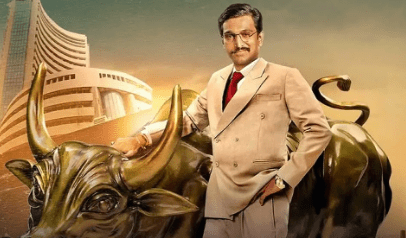
This collection of excerpts details the rise and fall of Harshad Mehta, a stockbroker who dramatically influenced the Indian stock market in the early 1990s. It highlights how he amassed wealth and prominence by utilizing questionable practices, particularly in the money market and through manipulating stock prices using insider information and bank funds obtained via fraudulent means, such as forged bank receipts (BRs). The text follows the investigation into his activities by journalist Sucheta Dalal and government bodies like the Central Bureau of Investigation (CBI) and the Reserve Bank of India (RBI), illustrating the systemic flaws and resistance encountered in uncovering and prosecuting the scam. Despite his initial denials and attempts to maintain his influence, the pressure from the investigation and the resulting market crash eventually led to his downfall and the implementation of reforms in the financial system.
1990s Stock and Money Market Operations
Based on the provided sources, here’s a discussion of stock market operations:
The central hub for stock market operations described is the Bombay Stock Exchange (BSE), specifically located on Dalal Street. The early 1990s saw a significant change, with the common man beginning to engage in the share market to change their fortunes.
Participants in the Market:
- Jobbers: Individuals who start with a job in the market, often dealing in penny stocks or cheap shares. They work by taking instructions from brokers or dealers (e.g., buy from a dealer, sell to a dealer) and earn a small profit or commission. Harshad Mehta began his career as a jobber. A jobber’s work is compared to a local train, moving intermittently based on signals from others.
- Brokers: These are intermediaries who facilitate transactions. They hold trading accounts for their clients and earn commissions. Some brokers are part of powerful groups or cartels.
- Dealers: People actively buying and selling stocks.
- Investors / Clients: Individuals or institutions who put their money into the market with the hope of profit. Small retail investors are identified as being particularly vulnerable.
- Bulls: Market players who believe prices will rise and take positions (buy) to push the market upwards. Harshad Mehta is consistently described as a “Big Bull”, known for always keeping the market above. The bull is said to kill by showing hope.
- Bears: Market players who believe prices will fall and take positions (sell, short) to pull the market downwards. Manu Mundra, known as the “Black Cobra,” is described as the biggest bear in the market. Bears hit downwards with their paws.
- Institutions: Large entities with significant funds, including entities like LIC, Unit Trust of India (UTI), and public sector units (PSUs). UTI, chaired by MJ Bherwani (referred to as “The Original Big Bull” before Harshad), had a large fund to invest. Foreign banks like Citibank are also major institutional players. These institutions can heavily influence the market.
- Regulators: Bodies like the Securities and Exchange Board of India (SEBI), initially a non-statutory body with limited powers, later gaining regulatory authority, and the Reserve Bank of India (RBI), which issues guidelines for banks and regulates the money market.
Key Concepts and Processes:
- Risk: The stock market is inherently risky. However, high risk is associated with the potential for high returns (“if there is a risk, then there is love”). Not taking risk is seen by some as the biggest risk in the market. New companies are considered riskier.
- Trading Account: Required for market transactions. Having one’s own trading account (as opposed to being a jobber) allows investing one’s own money and taking direct positions, leading to potentially greater profit but also greater personal risk.
- Market Dynamics (Bulls vs. Bears): The market is often described in terms of the conflict between bulls (buyers expecting prices to rise) and bears (sellers expecting prices to fall). The market can fluctuate rapidly (“boom boom, sometimes its price is up, sometimes its price is down”).
- Market Sentiment / Emotion: Understanding the sentiment of the market is important. Emotion can lead people to make mistakes.
- Research and Analysis: Market players use research and analysis to inform investment decisions. This can involve looking at company balance sheets, future plans, and insider information.
- Tips and Rumors: Information circulated in the market, ranging from informed tips based on research or insider news to baseless rumors. Rumors can be deliberately spread to manipulate prices or reputations.
- Insider Trading: Using non-public information about a company’s activities or decisions to trade its stock. This is described as illegal outside India. Harshad used insider information obtained from company workers or union people.
- Cornering Stocks: Buying a large quantity of a specific stock to control its price and influence the market. Harshad engaged in this practice.
- Short Selling (Shorting): Selling shares that one does not currently own, typically borrowed from a broker, with the expectation that the price will fall. The seller then buys the shares back at the lower price to return them to the lender, profiting from the price difference. Bears employ this strategy.
- Market Manipulation: Deliberately influencing stock prices or market activity through various means, such as spreading false rumors, using insider information, cornering stocks, or exploiting loopholes in the system. Citibank and its brokers are accused of manipulating the money market.
- PE Ratio: Price-to-Earnings ratio, a metric used in stock valuation. There is debate about whether high PE stocks can earn more money.
- Sensex: The main index of the BSE, used as an indicator of the overall market performance. Harshad is credited with taking the Sensex to “sky-high heights”.
- Bull Run: A sustained period of rising stock prices. Harshad’s activities were associated with a significant bull run.
- Market Crash/Fall: A sudden and sharp decline in market prices. A large crash in the market is described where the Sensex fell drastically.
- Settlement: The process of completing a trade, where money and shares are exchanged. A historical settlement cycle of 14 days is mentioned. “Settlement” also refers to agreements reached between market participants, like brokers and regulators.
- Margins: Funds required to cover potential losses on trading positions. Lowering margins can be used to help parties cover payment defaults.
- Portfolio Management Scheme (PMS): A service where a financial entity manages a client’s investments, often in the stock market. Banks and institutions offered PMS, which became a channel for funds to enter the market. PMS deals, particularly involving foreign banks like Citibank, are highlighted as problematic.
- IPO: An Initial Public Offering, where a company sells shares to the public for the first time. Harshad planned an IPO for his company, Growmore.
Connection to the Money Market:
The sources also detail the Money Market, which is distinct from the stock market but becomes intertwined through the events described. This market deals with short-term debt instruments like government securities and PSU bonds, rather than company shares.
- Key Instruments: SGL (Subsidiary General Ledger) Notes and BRs (Bank Receipts) are important documents used to transfer securities in the money market. A major issue arises when banks issue BRs without the underlying securities being delivered, essentially creating a form of unsecured lending. RBI guidelines aimed to ensure SGL/BR transactions were reflected on the same day and prohibited banks from using broker accounts for inter-bank deals.
- Cartels: The money market is described as being largely controlled by a cartel led by Citibank and its brokers (Ajay Kedia, Hitendra Shroff, Imendra Kapatiya), who have almost “cornered the entire money market”.
- Exploiting Loopholes (“Banker” Gimmick): Harshad discovered and exploited a loophole in the money market settlement system. Banks, needing securities later, would deposit funds into a broker’s account against an SGL note or BR. Due to the slow system, these funds could sit in the broker’s account for days or weeks. Harshad used these banking funds, parked in his account for money market deals, to take positions and drive up prices in the stock market. This strategy is referred to as “banker”. This allowed him to make large profits in the stock market while offering competitive rates in the money market.
Market Events and Practices Highlighted:
- The early 90s market was characterized by slowness in many areas, but speed in the Bombay Stock Exchange.
- Trading often involved physical interaction and shouting in the “ring” or on “Dalal Street,” sometimes chaotic like a “fish market”. Signals were used to communicate buy/sell orders and quantities.
- The market operates like a game with rules, but also involves betting and risk-taking.
- The market is subject to significant fluctuations, including major crashes and prolonged bull runs.
- Sources of funds are critical, and the flow of money, especially from institutions and potentially illegal sources, is a key factor in market movements. Harshad’s ability to access funds from PSUs via banks’ PMS and by exploiting the money market system became central to his strategy.
- Market players, particularly powerful brokers and institutions, can significantly influence prices and sentiment. This influence can be seen in actions like cornering markets or manipulating share prices.
- Regulatory bodies (SEBI, RBI) exist but faced challenges in effectively monitoring and controlling market activities, particularly irregularities involving banks and brokers. RBI guidelines were sometimes flaunted.
The sources paint a picture of the stock market in the early 1990s as a dynamic, risky, and sometimes chaotic environment, influenced by various players, strategies (both legal and illegal), and events, with increasing participation from the common public and large institutions, and significant interactions with the less transparent money market.
Banking System Irregularities and the Stock Market Exploitation
Based on the provided sources and our conversation history, the discussion of banking system irregularities reveals a complex picture of systemic flaws, loopholes, and improper practices that were exploited in the early 1990s, particularly in relation to the stock market operations described.
Here are some key irregularities highlighted in the sources:
- Misuse of Bank Receipts (BRs) and Subsidiary General Ledger (SGL) Notes: A significant irregularity involved banks issuing Bank Receipts (BRs) without possessing the underlying securities (SGL notes). The SGL is the RBI’s Subsidiary General Ledger, while the BR is a receipt issued by a bank confirming it holds securities. The money market preferred BRs over SGLs because SGL transactions were slow. This practice meant transactions could be done without the actual securities being immediately transferred. Issuing a BR without having the security was seen by some inside the system as a means of “survival” rather than inherently wrong, but it became problematic. Fake BRs were also mentioned as circulating in the market.
- Direct Fund Transfers to Brokers’ Accounts: Banks, instead of dealing directly with other banks or the RBI’s Public Day Office (PDO) for money market transactions, transferred large sums of money directly into the accounts of brokers like Harshad Mehta. For example, SBI issued checks directly in Harshad’s name. While described by some as an “accepted market practice” due to system inefficiency to speed up business, the sources also state that banks can only do transactions with other banks, making this direct transfer illegal. This gave brokers access to bank funds, which they could then invest elsewhere, notably the stock market. RBI guidelines explicitly prohibited banks from putting inter-bank transactions into broker accounts and from acting as agents for broker clients.
- Exploiting the Money Market Settlement System: Harshad Mehta discovered and exploited a loophole in the money market settlement system. The delay between a bank needing securities and receiving them, during which funds were deposited into a broker’s account against a BR/SGL note, allowed the broker to use those funds for days or weeks. Harshad referred to this strategy of using banking funds for stock market positions as “banker”. Banks were reportedly doing this “happily”.
- Channeling PSU Funds via Bank Portfolio Management Schemes (PMS): Large public sector units (PSUs) like ONGC, Coal India, NAPC, NTPC, and RFC had substantial funds sitting idle. Harshad proposed and facilitated these PSUs placing their funds into bank Portfolio Management Schemes (PMS). While direct investment of government money in the stock market wasn’t allowed, the funds were then invested in the share market indirectly through the banks’ PMS. This became a significant source of money for Harshad’s market operations. PMS deals, particularly involving foreign banks like Citibank, were highlighted as channels for problematic transactions.
- Lack of Transparency and Record Keeping: There were significant discrepancies between the securities recorded in banks’ own books and those reported in RBI’s PDO statements. In one instance at SBI, there was a difference of 574 crores between their books (1744 crores) and the RBI’s record (1170 crores), which was discovered because an entry in the RBI statement had been overwritten. Banks were also accused of maintaining records in a way that confused people, except those who created them. Missing shares from custodian reports added to this issue.
- Flouting RBI Guidelines and Regulations: Despite RBI issuing guidelines and circulars to regulate security transactions and bank dealings with brokers, banks and market players openly ignored or circumvented these rules. Powerful figures in the money market cartel dismissed RBI guidelines as not being law and felt “nothing happens here”. Even after RBI audits and directives, some banks continued to “floating rules”.
- Influence and Cartels within the Banking/Money Market System: The money market was described as being controlled by a cartel, notably led by Citibank and its associated brokers, who had “almost cornered the entire money market”. This cartel was accused of manipulating markets for their own benefit and not allowing outsiders. Market players also spoke of “greasing the palms of the bank officials” to get deals done. Allegations of foreign banks like Citibank influencing policy making in Delhi were also made.
- Unauthorized Use of Public Funds: Funds held by banks and PSUs, ultimately belonging to the public, were being used for speculative purposes in the stock market through these irregular channels. This was seen as treating public money as if it belonged to individuals.
The sources suggest that these irregularities were not isolated incidents caused by a single person like Harshad Mehta, but rather part of the banking system’s inherent flaws and accepted (though often illegal) practices that he openly misused. The lack of effective monitoring by the RBI in a pre-digital era, the limited initial powers of SEBI, and the difficulty in obtaining proof and cooperation from within the banks contributed to the problem. The exposure of these issues led to investigations and ultimately new rules, though the sources imply that the “ingenious criminal minds” found ways to continue operating.
The Meteoric Rise of Harshad Mehta
Based on the provided sources, the discussion of Harshad Mehta’s rise reveals a remarkable and rapid ascent from a modest background to becoming a dominant and celebrated figure in the Indian stock market in the early 1990s.
Here’s a breakdown of his rise as depicted in the sources:
- Humble Beginnings and Big Dreams: Harshad Shanti Lal Mehta came from a lower-middle-class family. He held various small jobs, such as a clerk for ₹600 a month and selling items like plastic, cement, and diamonds, but the money was never sufficient for his “very big” dreams. He felt constrained by his living situation, comparing his house to a “local train” with the feeling of constant movement and lack of space. Observing others making significant profits in the share market fueled his ambition. He was serious about the share market despite acknowledging its inherent risk, believing that history is made by taking risks. For a Gujarati, he believed business was bigger than religion.
- Entry into the Stock Market and Learning: Harshad began his career in the stock market as a jobber. He was introduced to the Bombay Stock Exchange (BSE) ring, the trading floor. Within a year, he became recognized as one of the best jobbers. He quickly learned about market dynamics and discovered the concept of insider trading, observing how price movements in stocks like Premier Auto were influenced by inside news. He realized that those with such news “print money”.
- Exploiting Insider Information and Market Dynamics: Harshad systematically used insider information to his advantage. If he received positive information about a company, he would corner those stocks (buy them in large quantities) before the news became public, and then sell them for a significant profit when the price increased. Conversely, if he received negative information (like about a strike), he would sell those stocks hoping the price would fall further, allowing him to buy them back cheaper later. He applied this strategy to various stocks, including Shree Synthetics, National Rayon, and Great Eastern Shipping. His profits grew consistently. He mastered operating as both a “bear” (profiting from falling prices) and, more often, a “bull” (profiting from rising prices).
- Transition to Independent Trading and “Grow More”: Harshad recognized that working for others as a jobber limited his profit potential. He decided to start his own trading account, which would allow him to invest his own money, take significant positions in the market, and manage them directly – a shift he likened to moving from a “local train” to a “direct Gujarat Express”. He partnered with his brother Ashwin, and they started their own company, “Grow More”, a name chosen to signify continuous growth. His ambition was to make Grow More so large that it wouldn’t need to constantly seek external funds.
- Scaling Up with Bank and PSU Funds: To operate on a much larger scale, Harshad needed access to substantial funds beyond his personal capital. He shifted his focus to institutional broking, targeting large entities like Unit Trust of India (UTI), which had a massive corpus fund of ₹20,000 crore for market investment. He successfully became an institutional broker, clearing money for institutions like LIC, GIC, and CAN Mutual and earning commissions. A pivotal development in his rise was discovering and exploiting the money market and its settlement system. He learned to identify which banks needed securities and when, managing demand and supply as a broker. He began “fronting the banks” and directly accessing banking funds, a practice he called “banker”. Banks, including SBI, reportedly engaged in this practice. Furthermore, he devised a plan to channel large sums of idle money from public sector units (PSUs) like ONGC, Coal India, NAPC, NTPC, and RFC into bank Portfolio Management Schemes (PMS), which were then indirectly invested in the share market. This provided him with an unprecedented source of funds for his market operations.
- Becoming the “Big Bull” and a Public Figure: With access to vast amounts of funds, Harshad began pushing the BSE index to “sky-high heights”. His influence grew to such an extent that he could reportedly change market trends with a single gesture. His rags-to-riches story captured the public imagination, turning him into a celebrity-like figure and a hero for the common man. People saw value in the shares he favored, even for unheard-of companies. He projected an image of immense wealth, buying expensive cars to show that he was on par with figures like Ambani and Tata. He actively cultivated his public image, using newspaper ads and posters to brand himself as the “Big Bull” and a symbol of market success and honesty. He became known as the “new market guru”. His success made him the country’s biggest advance tax payer. This rapid rise and dominance made him a significant threat to the established brokers and family-owned businesses that had previously held a monopoly in the market. Some even suggested he should become a finance minister.
In essence, Harshad Mehta’s rise, as described, was a combination of identifying opportunities in an inefficient market, leveraging insider information, transitioning to larger-scale operations through institutional and banking channels, and strategically cultivating a powerful public image as the “Big Bull.” He exploited systemic loopholes and regulatory gaps that existed in the early 1990s to gain access to significant funds, which he then used to inflate stock prices and amass enormous wealth and influence.
Investigating India’s 1990s Stock Market Scam
Based on the sources and our conversation history, the investigation into the scam in the early 1990s unfolded through multiple channels, facing significant challenges and revealing systemic irregularities.
Initial Awareness and RBI’s Early Steps:
The irregularities in the banking system, particularly concerning security dealings, were initially noticed by the Reserve Bank of India (RBI) by the end of 1990. This was a pre-digital era, making it difficult and time-consuming to trace transactions and locate relevant files. The RBI Governor began addressing these issues by giving informal warnings to foreign banks and later announcing a proper audit to confirm irregularities. Directive notes with strict guidelines for banks regarding security transactions, dealings with brokers, and ready forward deals were issued, and shared with the press. These guidelines stipulated that inter-bank transactions should not be put into broker’s accounts and banks should not act as agents for brokers’ clients. Transactions were supposed to be at market rates and reflected in investment accounts the same day. However, despite these directives, some banks were flouting the rules. RBI audits at banks like SBI revealed discrepancies between their books and the RBI’s Public Day Office (PDO) statements.
The Media’s Role as a Catalyst:
A pivotal moment occurred when Sharad Bellary, from the Public Relations (PR) department at SBI, alerted journalist Sucheta Dalal at The Times of India about a big fraud at SBI, specifically mentioning 500 crores missing and payments made without Bank Receipts (BRs) or corresponding Subsidiary General Ledger (SGL) notes. Bellary explained that SGL notes from the RBI’s PDO were not received, making it impossible to tally books. Although getting official confirmation and paper evidence was extremely difficult, and her editors were hesitant to print without solid proof, Sucheta Dalal persisted, relying on her sources. Her eventual story, published without paper evidence but cross-checked through multiple channels, acted as a major trigger, leading to widespread panic and a significant market crash. The RBI Governor held an unprecedented press conference to address her article, although he initially denied the scale of the scam.
RBI’s Formal Inquiry and Limited Scope:
Under pressure following the market crash and parliamentary debates, the government announced that the RBI would probe the event. The RBI formed a committee headed by Deputy Governor R Janaki Raman to investigate the scam. However, the RBI’s investigation faced limitations. The sources indicate the RBI Governor himself had difficulty answering questions about the extent of the problem with bonds, Unit 64, and fake BRs during the press conference. It was suggested that the RBI was trying to “save face” and contain the impact of the scam.
CBI Takes Over and Faces Challenges:
The government eventually decided to hand over the investigation to the Central Bureau of Investigation (CBI). K. Madhavan was appointed to lead the CBI’s efforts. Investigating a complex financial scam of this nature was a new challenge for the CBI, which had not previously handled such cases extensively. Madhavan aimed to focus on the “thieves” rather than getting lost in the complexities of the transactions.
Key actions by the CBI included:
- Gathering lists of banks Harshad Mehta had dealt with.
- Seeking leads from individuals within these banks.
- Tracing money movements, particularly focusing on Harshad Mehta’s SBI account which showed significant activity in crores.
- Raiding Harshad Mehta’s residence and office, although retrieving computer documents was initially hampered by password issues.
- Freezing Harshad Mehta’s bank accounts.
- Conducting interrogations of individuals within banks like SBI (Sitharaman, Khemani) and NHB (Pherwani). These interrogations were often confrontational, with officials denying responsibility or shifting blame.
- Arresting Harshad Mehta, Ashwin Mehta, and Mr. Khemani.
- Identifying multiple cases against Harshad Mehta, including those involving SBI, UCO Bank, bill discounting, and Maruti Udyog.
- Appointment of a custodian by a special court to attach Harshad Mehta’s assets, although concerns were raised about undervaluation and the custodian potentially being compromised.
Political Interference and Internal Conflict:
The investigation was heavily influenced by political pressures. There were allegations of powerful people in Delhi having connections to Harshad Mehta. When allegations involving the Prime Minister (PV Narasimha Rao) were raised (initially by Harshad’s lawyer and later publicly by Harshad himself), the case became highly politically sensitive. Madhavan was pressured to focus solely on Harshad Mehta and not investigate the allegations against the PM or other powerful figures. This led to Madhavan’s sudden resignation from the case, and the new officer was reportedly instructed to adhere to the official narrative.
Joint Parliamentary Committee (JPC) Investigation:
Following demands in Parliament, a Joint Parliamentary Committee (JPC) was formed to investigate the scam. While the JPC collected numerous files, its power over international banks and government companies was limited, and it was not an investigative body in the same sense as the CBI. However, the JPC reports reportedly confirmed that the “Harshad Mehta Scam was a part of the bigger irregularities in the banking system”. The reports highlighted that Harshad misused existing flaws rather than inventing them. Critically, the JPC reports suggested that alongside Harshad Mehta, banks, especially Citibank and its brokers, needed investigation to fully clean the system. The JPC noted that foreign banks made a “mockery of bank decisions”.
Challenges and Outcomes:
The investigation faced numerous challenges:
- Difficulty obtaining paper evidence and getting sources to go on record.
- Lack of cooperation and outright denial from individuals within the banks.
- Harshad Mehta’s initial denials and attempts to downplay the situation by returning funds.
- The complex nature of the financial transactions being investigated.
- Significant political pressure and interference.
- The scale of the scam, estimated to be around ₹5000 crore, requiring extensive auditing and accounting efforts.
Ultimately, while Harshad Mehta was arrested, charged, and his assets attached, the investigation into the broader systemic rot, particularly the role of banks and powerful individuals, faced significant hurdles and alleged political obstruction, notably highlighted by the resignation of the lead CBI investigator. The JPC reports confirmed the systemic nature of the irregularities, but the sources suggest that fully cleaning the system required deeper investigation into powerful entities like Citibank. Despite the investigations, some believe the “ingenious criminal minds” continued to operate, finding new ways around the rules [Source not explicitly cited, but reflects a general sentiment from the narrative].
Trust and Reputation in Finance
Based on the sources and our conversation history, the concepts of trust and reputation are central themes woven throughout the narrative, influencing business dealings, market dynamics, and the unfolding of the scam investigation.
Trust as a Precious Commodity:
The sources highlight trust as an incredibly valuable and, at times, scarce commodity in the financial world depicted.
- MJ Bherwani, the Chairman of Unit Trust of India (UTI), describes trust as the most precious thing in the world, in great demand but short supply. He explicitly states that he conducts business only with people he can trust.
- Harshad Mehta’s father echoes this sentiment, calling trust the “god of this religion” (business) and the “most expensive thing”.
- Despite this emphasis, the narrative shows instances where trust is misplaced or undervalued. For example, Mr. Khemani at SBI trusted his subordinate, Mr. Sitharaman, who ultimately lied to him regarding transactions.
- Conversely, CBI investigators express a lack of trust in some individuals they encounter during the investigation, labeling them as “crazy people” who “can do anything”.
- Even journalist Sucheta Dalal’s reliance on her sources for crucial information about the scam demonstrates a form of trust, though her editor requires independent confirmation due to the high stakes involved. Harshad himself questions her trustworthiness when she calls for his side of the story.
Reputation and Name as Strategic Assets and Targets:
An individual or entity’s reputation, or “name,” is depicted not just as a personal attribute but as a powerful tool that can impact business, investments, and even survival in the market.
- Early on, even when dealing with relatively small amounts, Harshad’s team is concerned with not “spoil[ing] the name of the company” (presumably Growmore).
- Harshad’s adversaries, particularly Manu Mundra’s group (the “bears”), actively sought to tarnish Harshad’s name and reputation. This was a deliberate strategy to shake investor trust and cause his stock holdings to fall. They spread rumors about his company (Gromor) lacking funds and potentially defaulting on payments.
- Recognizing the importance of his reputation, Harshad takes significant steps to protect and enhance it. He decided to clear all his dues before the settlement deadline, even incurring a large loss, specifically to counter the rumors and demonstrate that Gromor had sufficient funds. He wanted the market to know he “does not just talk” and clear “all the news in advance” so “no one can doubt the honesty of Mehta Brothers”. This action was widely discussed in the market, reinforcing his image.
- Harshad consciously builds his image and brand value. He creates a perception of his company (like Mazda) as a complete turnaround story, using advertisements and “puff piece[s]” to project a positive (and potentially false) image. Sucheta Dalal notes that he is not building the nation but his “fortune and image”.
- This carefully cultivated reputation helps him gain prominence and become seen as a “market guru” by some, attracting investors and becoming a threat to established players.
- Conversely, when allegations arise, his reputation is attacked (“people are calling us thieves”), and the numerous criminal and civil cases against him further tarnish his name.
- Experienced figures like Mr. Hirwani are acutely aware of the potential damage to their long-standing reputation if they engage in risky or improper dealings. Hirwani worries his “reputation of 40 years” could go “down the drain”.
- Even after facing legal troubles, Harshad attempts to leverage his past reputation as a “market guru” by starting a newspaper column, aiming to remain a “topic of discussion” and maintain visibility.
Interplay and Impact:
Trust and reputation are deeply intertwined. A strong reputation can build trust, while attacks on reputation are designed to erode trust and cause panic or withdrawal of investment. In the context of the scam, the manipulation of both trust and reputation was a key tactic. Harshad built a reputation as a successful, trustworthy figure to attract funds, while his opponents attacked his reputation to destabilize his operations. The subsequent investigation had to navigate this landscape, where official statements, media reports, and market gossip all contributed to the perception of individuals and institutions, impacting the willingness of sources to come forward and the ability of investigators to get to the truth. The JPC report, while noting systemic irregularities, also pointed to the need to investigate major players like Citibank and its brokers, suggesting that trust had been fundamentally broken across various entities in the system, not just by individuals.

By Amjad Izhar
Contact: amjad.izhar@gmail.com
https://amjadizhar.blog
Affiliate Disclosure: This blog may contain affiliate links, which means I may earn a small commission if you click on the link and make a purchase. This comes at no additional cost to you. I only recommend products or services that I believe will add value to my readers. Your support helps keep this blog running and allows me to continue providing you with quality content. Thank you for your support!


Leave a comment