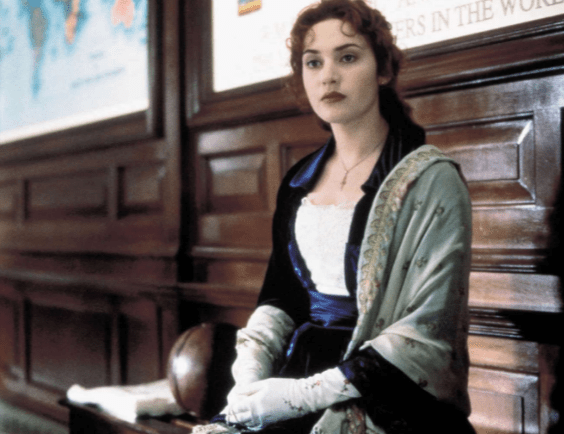
Some lines from the silver screen are so iconic that they echo across generations, transcending their original context to become part of everyday language and culture. Whether they’re whispered in moments of tension, shouted in triumph, or delivered with impeccable comedic timing, these quotes have a staying power that speaks to the heart of cinematic brilliance. They define characters, anchor plotlines, and etch themselves into our collective memory.
In the words of renowned film critic Roger Ebert, “A movie is not about what it’s about. It’s about how it’s about it.” That sentiment rings true when we consider these unforgettable quotes—not merely for what they say, but how they’re said and the worlds they summon in just a few words. These lines have turned ordinary scripts into extraordinary moments, shaping pop culture, influencing language, and even impacting fashion, politics, and psychology.
This list celebrates not just clever dialogue, but the power of storytelling at its finest. Drawing from a broad spectrum of genres—crime dramas, romantic epics, comedies, fantasy sagas, and more—we delve into 30 cinematic gems that left an indelible mark on film history. From mafia threats to teenage slang, these quotes continue to entertain, provoke thought, and inspire countless homages, parodies, and academic discussions.
1- ‘The Godfather’ (1972) – “I’m gonna make him an offer he can’t refuse.”
This line, delivered with quiet menace by Marlon Brando’s Don Vito Corleone, is more than a threat—it’s a declaration of power in the murky world of organized crime. It encapsulates the essence of The Godfather’s influence: a blend of family loyalty, business cunning, and unspoken violence. It’s not merely what’s said, but how it’s said—with chilling calm—that sends shivers down viewers’ spines.
Culturally, the quote has transcended its mafia origins and found a place in boardrooms and back alleys alike. According to Robert Kolker in A Cinema of Loneliness, this line underscores the seductive and corrupting influence of power. It’s a linguistic masterpiece in coercive diplomacy, often quoted to evoke dominance without overt aggression—proof of the quote’s enduring relevance in both film studies and pop culture.
2- ‘Mean Girls’ (2004) – “You can’t sit with us!”
This seemingly simple declaration captures the cruelty of high school cliques and the complexities of adolescent social hierarchies. Spoken by Gretchen Wieners, it marked the peak of teenage gatekeeping in early 2000s cinema. The quote has since become shorthand for exclusion, a digital-age meme, and a pop culture reference loaded with irony.
Scholars analyzing media and youth culture, such as Rosalind Wiseman in Queen Bees and Wannabes, have pointed to Mean Girls as a cultural touchstone that reflects and critiques the performative aspects of teen identity. The quote is often echoed humorously, yet it opens the door to conversations about belonging, identity, and power structures within youth subcultures.
3- ‘Forrest Gump’ (1994) – “Run, Forrest! Run.”
What begins as a child’s shout of encouragement evolves into a metaphor for endurance, transformation, and the unpredictable path of life. The phrase is emblematic of Forrest Gump’s journey from bullied boy to American icon, powered by innocence and relentless momentum.
This quote has become motivational lingo, often used to inspire perseverance in the face of obstacles. In The Hero with a Thousand Faces, Joseph Campbell’s monomyth framework helps interpret Forrest’s journey as a modern hero’s tale—his running as symbolic flight from and toward self-actualization. The line endures as an invitation to keep moving, no matter the odds.
4- ‘Airplane!’ (1980) – “Surely you can’t be serious?”
Deadpan delivery transforms this absurd exchange into comedic gold: “I am serious, and don’t call me Shirley.” The film’s success lies in its unrelenting parody, and this line stands as its crowning jewel. It’s a masterclass in timing, tone, and the element of surprise.
Humor theorists like Henri Bergson suggest that laughter springs from the mechanical encrusted upon the living. This quote, stiffly delivered in the face of chaos, is precisely that kind of incongruity. Over time, it’s become a staple in comedic lexicons, quoted by fans as a wink to the delightfully ridiculous.
5- ‘Pulp Fiction’ (1994) – “Now, if you’ll excuse me, I’m going to go home and have a heart attack.”
This line, spoken by Winston Wolfe (played by Harvey Keitel), wraps up a sequence of chaos with understated exhaustion. It’s quintessential Tarantino: cool under pressure, laced with sardonic wit, and imbued with layers of tension and relief.
In Pulp Fiction, dialogue does more than fill silence—it constructs character and augments plot. Film scholar David Bordwell argues that such lines embody postmodern narrative aesthetics, blending genre awareness with psychological realism. This quote reflects emotional fatigue amidst crime drama, making it strikingly human and darkly humorous.
6- ‘Austin Powers: International Man of Mystery’ (1997) – “Yeah, baby!”
This catchphrase became the defining expression of Mike Myers’ groovy secret agent. It captures the film’s nostalgic homage to 1960s British spy flicks and its playful irreverence. Delivered with exaggerated flair, it’s the verbal equivalent of a velvet suit and swinging London.
From a cultural perspective, the line embodies postmodern parody—layering irony atop affection. In Postmodern Hollywood: What’s New in Film and Why It Makes Us Feel So Strange, M. Keith Booker highlights how phrases like this play with genre familiarity to create humor. “Yeah, baby!” is more than a pickup line—it’s an exuberant expression of an era’s kitsch.
7- ‘Goodfellas’ (1990) – “As far back as I can remember, I always wanted to be a gangster.”
This opening line from Henry Hill immediately signals a descent into the seductive and violent underworld of mob life. It functions as both confession and mission statement, setting the tone for a film that glamorizes and critiques the American dream through a criminal lens.
Martin Scorsese’s narrative style, combining voice-over with cinematic realism, gives the line weight and introspection. According to Gangster Film Reader by Alain Silver and James Ursini, this quote reflects the allure of power in marginalized communities. It’s an unforgettable glimpse into aspiration shaped by violence.
8- ‘The Big Lebowski’ (1998) – “Calm down, you’re being very undude.”
The philosophy of “The Dude” is distilled in this offbeat reprimand. Jeff Bridges’ laid-back character offers more than comic relief—he presents a worldview. To be “undude” is to be anxious, aggressive, or uptight—a cardinal sin in the Church of Chill.
Cultural critics like Thomas Hibbs in Shows About Nothing argue that this film’s absurdism masks a deeper existential commentary. The line, humorous on the surface, questions contemporary masculinity and societal expectations. Its enduring appeal lies in its radical simplicity: chill, always.
9- ‘The Princess Bride’ (1987) – “You killed my father. Prepare to die.”
Delivered with burning conviction by Inigo Montoya, this line is a perfect fusion of drama, revenge, and dark comedy. Repetition throughout the film transforms it from a personal vendetta to a battle cry, imbuing it with emotional resonance and theatrical flair.
In The Uses of Enchantment, Bruno Bettelheim explores the cathartic power of fairy tale vengeance. Montoya’s line fits this mold—offering viewers a satisfying moral symmetry. Its legacy lies not only in its dramatic weight but in its ability to evoke both empathy and applause.
10- ‘The Wizard of Oz’ (1939) – “There’s no place like home.”
Few lines in cinema evoke nostalgia as profoundly as this one. Dorothy’s words, spoken while clicking her ruby slippers, have come to symbolize the comfort and safety of returning to one’s roots.
In The American Myth in Film, Robert Sklar explains how this quote underscores a fundamental national ideal—the home as sanctuary. It’s a line that transcends time and age, resonating with anyone who’s felt the pull of belonging.
11- ‘Monty Python and the Holy Grail’ (1975) – “Your mother was a hamster and your father smelled of elderberries.”
This absurd insult from a French soldier is quintessential Monty Python: nonsensical, theatrical, and outrageously funny. It stands as a high-water mark in comedic surrealism.
Philosopher Simon Critchley, in On Humour, notes that humor often lies in defying logic. This line does precisely that—its randomness makes it unforgettable. Rather than offend, it invites laughter through sheer absurdity.
12- ‘Apocalypse Now’ (1979) – “I love the smell of napalm in the morning.”
Spoken by Lt. Kilgore, this chilling line captures the surreal and dehumanizing madness of war. It’s delivered with a strange mixture of poetry and psychopathy, reflecting the psychological dissonance of combat.
In Dispatches by Michael Herr, the Vietnam War is portrayed as grotesque theater—this quote encapsulates that mood perfectly. It’s both a critique of desensitization and a grim symbol of military bravado.
13- ‘Bill & Ted’s Excellent Adventure’ (1989) – “Party on, dudes!”
This enthusiastic phrase exemplifies the film’s charming blend of stoner philosophy and time-travel hilarity. It’s a call to joy, silliness, and friendship, delivered with unshakeable positivity.
As noted in Generation Multiplex by Timothy Shary, Bill and Ted represent a generation’s optimistic resistance to cynicism. The line has lived on as a lighthearted mantra to keep spirits high, no matter how bizarre the journey.
14- ‘Bridesmaids’ (2011) – “Why can’t you be happy for me, and then go home and talk about me behind my back like a normal person?”
This quote nails the intricacies of female friendship with razor-sharp wit. Kristen Wiig’s line speaks to the passive-aggressiveness we often mask as social grace.
The humor here cuts deep, pointing to relational hypocrisy in modern society. Deborah Tannen’s You Just Don’t Understand discusses such dynamics in female communication. This line’s brilliance lies in its painful honesty disguised as comedy.
15- ‘Ferris Bueller’s Day Off’ (1986) – “The question isn’t ‘What are we going to do?’ The question is ‘What aren’t we going to do?’”
This quote encapsulates the rebellious, seize-the-day ethos that defines Ferris Bueller. It’s not just about skipping school—it’s about choosing spontaneity over conformity.
In Cultural Theory and Popular Culture, John Storey explores how youth films reflect resistance to societal structure. Ferris’ rhetorical twist challenges limits, urging viewers to embrace possibility over predictability.
16- ‘Clueless’ (1995) – “As if!”
Delivered with exaggerated disgust, this phrase defines a whole era of teen slang. Cher Horowitz’s tone turns this into a verbal eyeroll—dismissive, stylish, unforgettable.
Linguist Deborah Cameron discusses the performativity of gender and class in language in Verbal Hygiene. “As if!” is both defense and performance, showcasing how speech can construct identity.
17- ‘Taxi Driver’ (1976) – “You talkin’ to me? You talkin’ to me?”
Robert De Niro’s improvised monologue reflects Travis Bickle’s descent into paranoia and isolation. The line has become shorthand for unstable bravado.
In Acting in Film, Michael Caine emphasizes authenticity over dramatics. De Niro’s raw delivery is a masterclass in inhabiting a disturbed mind. The line’s legacy lies in its eerie believability.
18- ‘Titanic’ (1997) – “I want you to draw me like one of your French girls.”
This sultry, now-iconic line blurs vulnerability and seduction. Kate Winslet’s delivery signals trust and a breaking of societal norms.
In Ways of Seeing, John Berger examines how the female gaze is constructed and challenged in visual media. This quote reclaims artistic representation on the woman’s terms.
19- ‘The Terminator’ (1984) – “I’ll be back.”
Arnold Schwarzenegger’s robotic promise became the film’s defining line and a pop culture staple. Its clipped delivery is menacing yet oddly reassuring.
The phrase’s impact lies in its brevity and certainty. In The Philosophy of Science Fiction Film, Steven Sanders explores how repetition in AI speech reflects control and fate—this line exemplifies that perfectly.
20- ‘The Breakfast Club’ (1985) – “My god, are we gonna be like our parents?”
This existential question unites five archetypal teens in a moment of shared fear and reflection. It speaks to generational anxiety and the fear of conformity.
Scholar Henry Giroux, in Fugitive Cultures, discusses how youth cinema often critiques the adult world. This quote is a pivotal moment of realization, capturing the universal dread of becoming what we swore we’d never be.
21- Scarface (1983) – “I always tell the truth, even when I lie.”
This paradoxical line from Tony Montana in Scarface reveals the complex psychological fabric of the character. It’s a bold statement of self-deception, and yet, it strangely rings true for someone entrenched in the morally ambiguous world of power and crime. The brilliance of this line lies in its oxymoronic nature—it exposes the instability of identity when power, pride, and paranoia blur the lines of reality.
Film scholars such as Robert Warshow, in The Gangster as Tragic Hero, argue that gangsters often embody the contradictions of the American Dream. Montana’s quote is the epitome of that contradiction—where truth becomes subjective, and deception is survival. It’s unforgettable because it highlights how characters like Tony rationalize corruption through warped logic, making the audience question where authenticity really lies.
22- Caddyshack (1980) – “Thank you very little.”
This sarcastic twist on a polite phrase is the hallmark of deadpan humor, delivered with impeccable timing by Chevy Chase. Its genius lies in how it undermines social niceties with a razor-sharp wit. Rather than offering genuine gratitude, the phrase subtly mocks the recipient—flipping courtesy into comedy with a single word.
Humor theorist Simon Critchley, in On Humour, suggests that comedy often arises from contradiction and incongruity. “Thank you very little” exemplifies this perfectly. It’s a classic example of using verbal irony to express disdain while still cloaked in civility, making it endlessly quotable for those who enjoy sarcasm served with a straight face.
23- The Silence of the Lambs (1991) – “I ate his liver with some fava beans and a nice Chianti.”
This line chills to the bone not because of what is said, but how it’s said. Hannibal Lecter, the brilliant yet monstrous psychiatrist, delivers this statement with a calm so unnerving it becomes unforgettable. It pairs culinary refinement with cannibalism—juxtaposing class with brutality.
Psychiatrist and author Dr. Glenn D. Walters in The Criminal Personality explains that psychopaths often charm and terrify simultaneously, creating cognitive dissonance. Lecter’s line embodies that dynamic, becoming an iconic example of psychological horror at its most elegant and disturbing. It’s not just about fear—it’s about fascination with the mind that calmly justifies unspeakable acts.
24- This is Spinal Tap (1984) – “These go to 11.”
This line about an amplifier with a volume knob that surpasses the traditional ten is a satire of rockstar excess. On the surface, it’s a silly comment. But dig deeper, and it becomes a commentary on the obsession with superficial grandeur over actual substance. The humor is subtle, and that’s precisely why it works.
Cultural theorist Frederic Jameson wrote about postmodernism’s love for pastiche and parody. This is Spinal Tap thrives in that space, and “These go to 11” has become a metaphor for any endeavor that values flash over function. It’s a line that pokes fun at hyperbole and the human tendency to inflate importance, making it resonate in contexts far beyond music.
25- Back to the Future (1985) – “Roads? Where we’re going, we don’t need roads.”
With this line, Doc Brown doesn’t just promise a journey into the future—he declares liberation from conventional boundaries. It’s the ultimate expression of imaginative optimism and technological wonder. The fusion of narrative foresight and visual spectacle makes this one of the most aspirational quotes in film history.
Ray Bradbury, in The Illustrated Man, explored how visions of the future reflect our hopes and fears. This quote embodies the utopian side of futurism—a world where limits dissolve and anything becomes possible. It still resonates because it offers both a metaphor for progress and a literal cue to embrace the unknown.
26- Casablanca (1942) – “Of all the gin joints in all the towns in all the world, she walks into mine.”
This line drips with nostalgia, heartbreak, and the irony of fate. Rick’s lament captures the sting of unresolved love and the cruel coincidences life throws at us. It’s a timeless meditation on how the past has a habit of returning at the least opportune moment.
Literary theorist Roland Barthes, in A Lover’s Discourse, described how longing transforms ordinary phrases into sacred incantations. This line from Casablanca has become that kind of incantation—timeless and deeply human. It stands the test of time because it encapsulates the bittersweet irony that often accompanies real love.
27- Star Wars Episode IV – A New Hope (1977) – “Help me, Obi-Wan Kenobi. You’re my only hope.”
Princess Leia’s urgent plea encapsulates the classic hero’s call to action. It’s not just a transmission—it’s a spark that ignites a galaxy-wide adventure. The simplicity of the line, paired with its emotional intensity, makes it instantly iconic.
Joseph Campbell’s The Hero with a Thousand Faces defines the monomyth or hero’s journey, and Leia’s message is the archetypal inciting incident. It becomes a metaphor for trust in uncertain times, as well as a symbol of vulnerability and resistance. In today’s media-saturated world, it endures as a shorthand for desperation tinged with faith.
28- The Lord of the Rings: The Fellowship of the Ring (2001) – “If by my life or death I can protect you, I will.”
Aragorn’s oath is more than a promise—it’s a declaration of honor, loyalty, and sacrifice. It strikes a deeply chivalric tone that resonates with timeless themes of heroism. The cadence and sincerity of the line root it in classical storytelling traditions.
J.R.R. Tolkien, a scholar of medieval literature, infused his work with echoes of Beowulf and Arthurian legends. In The Road to Middle-Earth by Tom Shippey, this line is described as a modern echo of ancient vows. Its resonance lies in its purity—a vow spoken not out of duty, but love and allegiance. That’s why it still rings in the hearts of audiences worldwide.
29- Ghostbusters (1984) – “Back off man, I’m a scientist.”
Delivered with sly confidence, this quote flips the stereotypical image of the nerdy academic on its head. Here, science is cool, cocky, and combat-ready. It’s a perfect blend of humor and assertion, and it turns intellect into swagger.
In Science in Popular Culture, Marcel Chotkowski LaFollette argues that film can redefine how society views scientists. This quote does just that—it presents the researcher as a hero, not a recluse. It resonates because it challenges perceptions and makes intellect not just admirable, but badass.
30- Anchorman: The Legend of Ron Burgundy (2004) – “I’m kind of a big deal. People know me.”
Ron Burgundy’s inflated ego and self-delusion are hilariously encapsulated in this one-liner. It’s a send-up of vanity and fame, especially in an era when image often outweighs substance. The quote is so over-the-top that it becomes both a punchline and a commentary.
Sociologist Erving Goffman in The Presentation of Self in Everyday Life explores how individuals perform identity. Burgundy’s bravado is a caricature of that performance, making this line a subtle jab at how public figures often manufacture self-importance. It’s become part of pop culture because it reflects a universal truth: we all know someone who takes themselves a bit too seriously.
Conclusion
These final quotes underline the wide spectrum of human expression—ranging from dark humor to existential loyalty, from absurdity to undying love. Each line, regardless of its genre, stakes a claim in our collective consciousness by striking a chord with who we are or what we aspire to be.
What unites these quotes isn’t just clever phrasing—it’s emotional precision. They remind us of the power of words when delivered at the right moment, by the right character, under the right circumstances. As film critic Pauline Kael once said, “Movies are so rarely great art that if we cannot appreciate great trash, we have very little reason to be interested in them.” These quotes, both sublime and silly, are the heartbeat of cinema’s lasting impact.

By Amjad Izhar
Contact: amjad.izhar@gmail.com
https://amjadizhar.blog
Affiliate Disclosure: This blog may contain affiliate links, which means I may earn a small commission if you click on the link and make a purchase. This comes at no additional cost to you. I only recommend products or services that I believe will add value to my readers. Your support helps keep this blog running and allows me to continue providing you with quality content. Thank you for your support!

Leave a comment