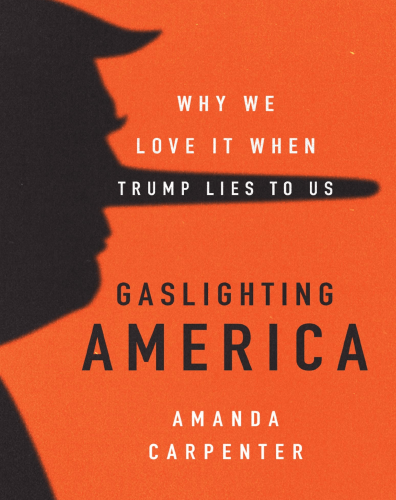
The provided text from “01.pdf” offers a critical perspective on the rise of Donald Trump and the political environment surrounding his 2016 campaign. The author recounts witnessing evangelical support for Trump despite his controversial personal history and past affiliations. Furthermore, the text examines the establishment’s reaction to outsider movements within the Republican party, using the examples of Senator DeMint’s clashes with McConnell. The author also analyzes Trump’s strategic use of “gaslighting” as a method of manipulation in politics and media. Finally, the text reflects on the dynamics of the 2016 election, including media complicity, Democratic miscalculations, and the effectiveness of negative campaigning, while also sharing the author’s personal experiences navigating this turbulent political landscape.
Gaslighting
psychological manipulation of a person usually over an extended period of time that causes the victim to question the validity of their own thoughts, perception of reality, or memories and typically leads to confusion, loss of confidence and self-esteem, uncertainty of one’s emotional or mental stability, and a dependency on the perpetrator
Gaslighting can be a very effective tool for the abuser to control an individual. It’s done slowly so the victim writes off the event as a one off or oddity and doesn’t realize they are being controlled and manipulated.—Melissa Spino
Gaslighting can happen in any relationship circumstance, including between friends and family members—not just in couple relationships.—Deena Bouknight
This is a classic gaslighting technique—telling victims that others are crazy and lying, and that the gaslighter is the only source for “true” information. It makes victims question their reality …—Stephanie Sarkis
the act or practice of grossly misleading someone especially for one’s own advantage
Election season can create emotions spanning from immense anxiety all the way to extreme apathy. The public arguing, divisiveness, and competition for votes, including political gaslighting, can be overwhelming and exhausting.—Vernita Perkins and Leonard A. Jason
As the midterm elections approach, Americans have gotten an earful both about crime itself and how the other side is distorting the news about it for political gain. “Cherry-picking!” “Fearmongering!” “Gaslighting!”—Chris Herrmann and Fritz Umbach
Intense gaslighting techniques are making it difficult for Montana’s commoners to discern what’s truth and what’s propaganda.—Steve Kelly
This corporate gaslighting effectively blames children for being addicted to social media and conveniently ignores how companies have intentionally designed their products to have addictive features …—Nancy Kim
Trump’s 2016 Campaign: Gaslighting and the Rise of an Unconventional Candidate
Donald Trump’s 2016 campaign was marked by his unconventional tactics and a focus on appealing to a specific segment of Republican voters who were disillusioned with the party establishment. The author of the source material observed devout evangelicals supporting Trump despite his controversial past. Many GOP candidates faced a choice: either endorse Trump’s “sleazy but effective precedent” or risk opposing him, a difficult decision given his grip on the party’s power.
A central theme of Trump’s campaign, according to the author, was “gaslighting” America, a tactic of brazenly lying to make people question reality. This was evident in the “birtherism” controversy, where Trump repeatedly questioned Barack Obama’s birthplace, even into his presidential campaign. This tactic resonated with Republican voters who were predisposed to distrust Obama. Trump’s “major statement” on Obama’s birth circumstances in September 2016 was ultimately a self-congratulatory event, likened to a “political Rick Roll,” but it effectively kept the issue alive.
The source highlights that Republican voters in 2016 were primarily driven by the desire to “beat liberalism,” even more so than simply “winning”. This created an environment where voters were willing to overlook Trump’s flaws if they believed he could achieve this goal. The rise of conservative media online provided an echo chamber for these sentiments, allowing Republican voters to bypass mainstream media. An essay describing a Hillary Clinton presidency as “Russian Roulette with a semi-auto” and Trump as a chance worth taking gained significant traction in conservative media, illustrating this mindset.
Trump’s campaign employed a consistent five-step method of gaslighting. This was evident in his attacks on his Republican primary rivals, particularly Jeb Bush. Trump’s goal was to “destroy Jeb Bush” by linking him to his brother’s unpopular policies, especially the Iraq War. He used tactics like suggesting Bush’s immigration stance was due to his Mexican-born wife and blaming George W. Bush for the 9/11 attacks. While denying these claims, he simultaneously advanced the narratives, a key element of his gaslighting method. Other Republican candidates initially stood aside, believing Trump would damage himself, but ultimately, they were defeated and even blamed for not holding him accountable. Trump’s victory in the South Carolina primary led to Bush’s withdrawal, signifying a win against the “establishment” in the eyes of some.
The author, a former conservative activist, personally experienced gaslighting from Trump supporters after publicly calling for a “blacklist” of Republicans who endorsed him. This illustrates how Trump’s influence extended to his base, creating a climate of unwavering support.
The source also details various strategies used by Trump’s surrogates to defend him, including:
- Whataboutism: Deflecting criticism by raising issues with Democrats, particularly Hillary Clinton.
- Trumpsplaining: Asserting that only Trump supporters can correctly interpret his statements.
- Play Pretend: Denying that Trump said controversial things.
- The Snowflake Treatment: Dismissing critics as overly sensitive.
- Sore Loserism: Attributing criticism to an inability to accept Trump’s success.
- Not Hillary: Arguing that any alternative was better than Hillary Clinton.
Trump also engaged in a “war” against the media, attempting to discredit any negative coverage and convince his base to trust him above all else. His attacks on Megyn Kelly after the first GOP debate and his boycott of a subsequent Fox News debate demonstrated his willingness to challenge even influential conservative media outlets. He promoted the narrative that the “system was rigged” against him, echoing his past claims about the Emmys and the 2012 election. This created suspense and kept the media focused on his claims.
Trump’s campaign frequently attacked Hillary Clinton, focusing on her emails, the Benghazi attack, and Bill Clinton’s past infidelities. Despite feigning respect for Chelsea Clinton, his campaign actively pushed the narrative of Bill Clinton’s accusers. During a debate, Trump dismissed his own lewd comments as “words” compared to Bill Clinton’s “action”. This strategy aimed to make Clinton the central issue, even at the cost of focusing on Trump’s own controversies.
Ultimately, Trump’s strategy of constantly attacking Clinton and the media, combined with his gaslighting tactics and appeal to anti-establishment sentiment, proved effective. His ability to “go big” with a simple slogan like “Make America Great Again” also contributed to his success. The author concludes that Trump’s 2016 victory was the “biggest gaslighting of his life,” as Clinton never fully understood the forces at play. The tactics used during the campaign laid the groundwork for his presidency and potential future campaigns.
Jim DeMint: Challenging the Republican Establishment
Jim DeMint’s political strategy, as portrayed in the sources, centered on challenging the Republican establishment and prioritizing conservative principles even at the risk of being an outcast within his own party. As a top staffer to both Jim DeMint and Ted Cruz, the author had firsthand experience with what it took to challenge the establishment and the resulting consequences.
DeMint’s strategy can be broken down into the following key aspects:
- Opposing Incumbents and Backing Outsiders: DeMint dared to oppose incumbent politicians and actively supported candidates willing to challenge the status quo in Washington. He famously backed Marco Rubio against the well-known and well-funded Charlie Crist in the Florida primary, and Pat Toomey against the incumbent Arlen Specter in the Pennsylvania GOP primary.
- Prioritizing Principled Conservatism over Electability: DeMint’s famous quote to then–Senate minority leader Mitch McConnell in 2010, “I’d rather have 30 Marco Rubios than 60 Arlen Specters,” epitomizes this strategy. He believed that a smaller, more principled conservative minority would be more effective in the long run than a larger group of moderate Republicans who were considered more “electable” by the establishment.
- Accepting the Consequences of Challenging the Establishment: DeMint was practically an outcast in Washington for his stance. His support for conservative challengers against establishment picks led to backlash and public relations efforts against him by McConnell’s allies. Despite this, DeMint stood firm in his beliefs.
- Focusing on Long-Term Impact over Immediate Power: DeMint and his allies believed that their party would be more effective with a principled minority, even if it meant waiting for a more favorable political landscape where their conservative principles could gain broader acceptance. They were less concerned with simply holding power and more focused on advancing a conservative agenda.
- Being Vindicated by the Actions of “Electable” Moderates: The author points out that the candidates McConnell preferred, Arlen Specter and Charlie Crist, eventually became Democrats when their chances for political success waned in the GOP. This, according to the author, proved DeMint right: these individuals were not truly Republican but opportunists who abandoned the party when it no longer served their ambitions. Despite this vindication, DeMint was still treated like a traitor by the establishment for challenging their choices.
In essence, DeMint’s political strategy was about ideological purity and a willingness to fight the Republican establishment to promote a more consistently conservative direction for the party, even if it meant short-term setbacks or personal criticism. His actions laid the groundwork for the rise of other anti-establishment conservatives within the GOP.
Trump’s Five-Step Gaslighting of America
Donald Trump’s political strategy heavily relied on what the author describes as “gaslighting” America, a tactic of brazenly lying to make people question reality. The author argues that Trump is a “professional gaslighter” with a “rote and methodical” approach that has been hiding in plain sight. This method, honed from his time as a New York City business mogul using made-up sources and bluffs, proved to be a terribly effective way of controlling and manipulating the press and, later, the public.
The source outlines a specific five-step method that Trump consistently employs in his political attacks, which was evident in his gaslighting about Barack Obama’s birth certificate and other instances:
- Step One: Stake a Claim: Trump identifies a political issue or action that competitors are unwilling to adopt and that will ensure a media frenzy. An example is the claim, “President Obama is not a U.S. citizen”. Another example was Trump openly flirting with a third-party bid, which was uncharted political territory. He also used unfair labeling of opponents, which helped him stake a claim over them.
- Step Two: Advance and Deny: Trump casts the issue into the public realm without taking direct responsibility. He does this by raising questions about or discussing what other people are saying, reporting, or thinking, often using tabloids, YouTube videos, tweets from unknown origins, and unverifiable Internet news stories as sources. For instance, he expressed sympathy toward “birthers” without explicitly stating he was one. Regarding the claim that George W. Bush was responsible for 9/11, Trump advanced the blame narrative while expressly denying it at the same time.
- Step Three: Create Suspense: Trump suggests that evidence is forthcoming that will soon get to the truth of the matter. He can remain in this mode for weeks, months, or even years. This was seen in the birtherism issue and later when he hinted at having tapes of his conversations with James Comey. His favorite words to use here are often: “We’ll see,” with information promised “soon” or in “two weeks”.
- Step Four: Discredit the Opponent: If critics gain traction, Trump attacks their motives and personal character, often using his Twitter account. Favorite adjectives include “loser,” “sad,” “weak,” “dumb,” “failing,” “overrated,” “phony,” and “crazy”. This was evident in his attacks on Megyn Kelly, branding her as “overrated,” “crazy,” “angry,” and “a bimbo” after she asked him questions he didn’t want to answer. He also labeled Ted Cruz as “Lyin’ Ted”.
- Step Five: Win: Trump declares victory, no matter the circumstances. This step usually takes a long time to reveal itself, and Trump will often engage it when he is ready to drop the matter. His election win itself is described as the “biggest gaslighting of his life”.
Trump’s motivations for using these tactics were multifaceted. It served to distract from negative press about his tax returns or business failings. It also allowed him to control the narrative and the emotional response of his supporters. The media, political parties, and voters were often incentivized to go along with the gaslighting for their own self-interested reasons, such as media outlets gaining viewership and rival candidates hoping Trump would damage their opponents. Trump also aimed to gain complete control over his environment and the people in it. By creating chaos and confusion, he forced his opponents into a defensive posture.
Trump’s surrogates played a crucial role in amplifying his gaslighting. They employed various strategies to defend him:
- Whataboutism: Deflecting criticism by raising issues with Democrats, particularly Hillary Clinton.
- Trumpsplaining: Asserting that only Trump supporters can correctly interpret his statements .
- Play Pretend: Denying that Trump said controversial things .
- The Snowflake Treatment: Dismissing critics as overly sensitive.
- Sore Loserism: Attributing criticism to an inability to accept Trump’s success .
- Not Hillary: Arguing that any alternative was better than Hillary Clinton .
The consequences of Trump’s gaslighting were significant. It helped him secure the Republican nomination by discrediting his rivals, as seen in his attacks on Jeb Bush, Marco Rubio, and Ted Cruz. His constant attacks on the media aimed to discredit negative coverage and build trust with his base. Ultimately, this strategy was effective in his 2016 presidential campaign, leading to his victory. The author suggests that these tactics continued during his presidency, such as in his claims of widespread voter fraud and his attacks on former FBI Director James Comey. The author emphasizes that understanding Trump’s gaslighting method is crucial for navigating the current political landscape.
The Media’s Role in Elections: Coverage, Gaslighting, and Trust
The media played a multifaceted and significant role in elections, as detailed in the sources, particularly in the context of the 2016 election.
Extensive Coverage and Amplification of Candidates and Issues: The media provided a platform for candidates to reach a wide audience. In the 2016 election, the media gave extensive coverage to Donald Trump, with one firm estimating it to be worth $2 billion in free media coverage. This coverage persisted even as Trump insulted the media. The media’s focus on Trump brought “eyeballs” to their platforms, which was beneficial for them. Even Trump’s GOP primary rivals and the Democrats engaged with Trump’s narratives, inadvertently amplifying his reach. The media also covered specific issues, such as the debate over Obamacare, giving oxygen to different perspectives.
The Spread of “Gaslighting” and its Consequences: The media became a crucial element in the dissemination of what the author terms Trump’s “gaslighting”. Trump’s five-step gaslighting method involved staking a claim, advancing and denying, creating suspense, discrediting opponents, and declaring victory. The media’s attempts to debunk Trump’s claims sometimes inadvertently extended their life, as seen with the birtherism controversy. Each step of Trump’s gaslighting process provided new material for the media to cover, ensuring a constant news cycle. This constant coverage, even negative, kept Trump in the spotlight and often benefited him.
Financial Incentives and Ratings: The sources suggest that the media had financial incentives to cover controversial figures like Trump. Trump was considered “good for the news business, period”. The New York Times CEO even thanked Trump for a boost in paid subscriptions attributed to the intense news cycle surrounding him. The need for “balance” in news segments led media outlets to seek out Trump supporters willing to defend his narratives, increasing their marketability.
The Rise of Conservative and Social Media: The media landscape evolved significantly with the growth of conservative media outlets online and the increasing reliance on social media for news. During the Obama years, right-wing websites flourished, catering to a right-of-center audience. By 2016, a majority of adults in the United States got their news via social media platforms like Facebook and Twitter. This shift presented both opportunities and challenges, as social media platforms often lacked the editorial accountability of traditional news sources, contributing to the spread of “fake news”.
The Impact of “Fake News” and Declining Trust: The 2016 election saw a significant problem with hoax news stories circulating online, sometimes outperforming real news in terms of engagement on Facebook. Despite the existence of fact-checking organizations, a significant portion of the American public expressed distrust in fact-checking of candidates’ comments. Trump’s repeated labeling of critical media as “fake news” further contributed to a decline in public trust in mass media, particularly among Republicans. This distrust was evident at Trump’s rallies, where he encouraged his supporters to heckle the press.
Media as a Target of Attacks: Candidates, particularly Trump, frequently attacked the media, aiming to discredit negative coverage and rally their base. Trump called the press “scum,” “horrible people,” “illegitimate,” and “terrible”. This strategy aimed to control the narrative and the emotional response of supporters. Some Trump allies also employed aggressive tactics against journalists.
The Role of Debates and Forums: Media-hosted debates and forums played a crucial role in the election process, providing platforms for candidates to present their views and engage with each other. However, the format and focus of these events were sometimes criticized for prioritizing media outlets’ interests over those of candidates and voters.
In summary, the media served as a critical, complex, and often controversial force in elections. It provided widespread coverage, amplified messages (both intentionally and unintentionally), faced financial incentives and declining trust, and became a frequent target of political attacks, all while navigating a rapidly evolving media landscape.
Trump and the Birther Conspiracy
The rise of birtherism, the conspiracy theory that President Barack Obama was not born in the United States, is detailed in the sources, particularly in the context of Donald Trump’s use of it as a political tactic.
Initially, the birther fervor broke out during President Barack Obama’s first presidential election in 2008. However, by 2011, this fervor had mostly died down, although it was still joked about by Republicans. Most considered birtherism a nonproductive waste of time, if not totally racist. Even conservative figures like Senator Jim DeMint dismissed it as “nonsense”. There were efforts within conservative circles to distance the Tea Party movement from birtherism.
Donald Trump played a crucial role in the revival and amplification of birtherism starting in 2011. The author describes Trump’s birtherism gambit as a “textbook example” of his political techniques. His method involved several steps:
- Step One: Stake a Claim: Trump identified birtherism as a political issue that other candidates considered risky but held significant potential. He saw it as an “empty building that might look unsavory but can be developed into something valuable”.
- Step Two: Advance and Deny: Trump raised questions about Obama’s birthplace without directly stating he was a birther himself. He expressed sympathy toward “birthers” and discussed what other people were saying and thinking. For example, he questioned why Obama didn’t show his birth certificate and claimed he was “starting to wonder myself whether or not he was born in this country”. This generated media attention and public speculation without Trump taking direct responsibility.
- Step Three: Create Suspense: Trump promised that evidence would come out “soon” to support his inquiries. He mentioned a supposed tape of Obama’s grandmother in Kenya stating Obama was born there, though this tape never materialized. This kept the media and the issue alive for an extended period.
- While Obama eventually released his birth certificate in April 2011, Trump continued to push the issue. He claimed an “extremely credible source” told his office Obama’s birth certificate was a fraud. In 2014, he was still calling on hackers to find Obama’s college records and place of birth.
The media played a role by covering Trump’s birther claims extensively, even as they tried to debunk them. Democrats also initially thought the issue would hurt Republicans by drawing sympathy to Obama.
Other GOP figures, like Texas Governor Rick Perry, later joined in, finding it a “good issue to keep alive”. Trump himself believed that pushing birtherism made him “very popular”.
By May 2016, a significant portion (77 percent) of Trump’s supporters believed President Obama was “definitely” or “probably” hiding important information about his early life. The author argues that birtherism undeniably put Trump on the political map, as Republican voters liked how he “needled Obama”. Trump continued to build suspense around the issue leading up to the 2016 election.
Finally, in September 2016, Trump held a press event where he stated, “President Obama was born in the United States period”. However, he also falsely claimed that Hillary Clinton’s campaign had started the birther controversy and that he had “finished it”. This marked Step Four (Discredit the Opponent) and Step Five (Declare Victory) of his gaslighting method.
The source suggests that Trump’s motivation behind birtherism was not to find factual documentation but to tap into the idea that Obama was not a legitimate president. He embraced birtherism to signal to the Republican base that he was willing to use any means to challenge the Democrats. The author notes that by the time Trump embraced birtherism in 2011, Republicans were already “infuriated” with Obama and “willing to get rid of him at any cost,” even if it meant going along with a “smear”.
Study Guide: Deconstructing Political Manipulation
Quiz (Short Answer)
- Describe Mitch McConnell’s preference for Republican candidates before the rise of Donald Trump. What kind of candidates did he typically support, and how did this contrast with figures like Jim DeMint?
- Explain the concept of “nounism” as it relates to Donald Trump’s political tactics. According to the text, how did Trump utilize this strategy against his opponents?
- Summarize the public reaction and official response to the Jade Helm military training exercises in Texas. What did this event reveal about the prevailing sentiments of some Texans regarding the federal government?
- Detail the three initial steps Donald Trump took to “gaslight” the Republican Party concerning a potential third-party run. What was the purpose of each of these steps?
- Define the rhetorical tactic of “whataboutism” and provide an example of its use by Donald Trump or his surrogates, as described in the text. Where did this technique originate?
- Explain the argument made by Kellyanne Conway regarding the media’s approach to covering Donald Trump. What distinction did she draw between taking him “seriously” and taking him “literally”?
- Describe the incident involving Omarosa Manigault on Fox Business and its significance in the context of surrogate strategies. What tactic did she employ to deflect from the discussion?
- Summarize the conflicting statements made by Ivana Trump and Michael Cohen regarding the term “rape” in the context of her marriage with Donald Trump. What legal argument did Cohen attempt to make?
- According to Jonah Berger’s study, what types of online content are most likely to go viral? How did this relate to the emotional responses of readers?
- Explain the concept of “kayfabe” as it was used to describe Alex Jones’s defense of his controversial statements. What is the underlying dynamic of this concept?
Quiz Answer Key
- Mitch McConnell preferred to run more “electable” Republican candidates, such as Arlen Specter and Charlie Crist, who were seen as having broader appeal. This contrasted with figures like Jim DeMint, who supported more ideologically conservative candidates willing to challenge the status quo and even oppose incumbents. McConnell often viewed DeMint’s choices as less likely to win general elections.
- “Nounism,” as described by Jeremy Sherman, is a tactic where someone uses “psychology as taxonomy,” labeling people as specific “sub-species” of winners or losers. Trump used this by assigning often unflattering and simplistic labels to his individual opponents, such as “Little Marco” or “Low Energy Jeb,” to define them in the eyes of the public and assert a form of dominance.
- The public reaction to Jade Helm in Texas involved widespread panic and conspiracy theories about the military preparing for war against the American people, leading to Governor Greg Abbott asking the Texas State Guard to monitor the exercises. This event revealed a deep suspicion and lack of trust in the federal government among a significant portion of Texans, across party lines.
- First, Trump openly flirted with a third-party bid, claiming uncharted political territory. Second, he advanced the idea that he might go third party but denied truly wanting to leave the GOP. Third, his confusing stance created suspense and uncertainty about his ultimate intentions, drawing the Republican National Committee into his game.
- “Whataboutism” is a rhetorical device, originating in the Soviet Union, that answers a criticism with a counter-accusation or question, deflecting from the original issue by pointing to perceived hypocrisy. An example is when Trump, questioned about Vladimir Putin being a “killer,” responded by saying, “There are a lot of killers. We’ve got a lot of killers. What do you think—our country’s so innocent?”
- Kellyanne Conway argued that the media consistently took Donald Trump “literally” but not “seriously.” She suggested that many Trump voters took his statements “seriously” in terms of understanding his broader intent (e.g., a more sensible immigration policy) but not “literally” as precise policy proposals.
- During a discussion about Black Lives Matter, Omarosa Manigault interrupted by mispronouncing a fellow panelist’s name and then making a derogatory comment about the size of her breasts. This tactic served to shut down the substantive discussion, distract from the topic, and allow Manigault’s talking points to go unchallenged in the ensuing awkwardness and laughter.
- Ivana Trump used the term “rape” to describe a marital encounter with Donald Trump, stating she felt violated due to the absence of love and tenderness, but later clarified she did not mean it in a literal or criminal sense. Michael Cohen initially claimed she was referring to emotional distress and then made the incorrect legal assertion that one cannot rape their spouse.
- Jonah Berger’s study found that online content that generates high physiological arousal, particularly awe and anger, is significantly more likely to be shared. This suggests that emotionally charged content, regardless of its intellectual depth, has a greater propensity to go viral due to the urge people feel to share strong emotional experiences.
- “Kayfabe” is a term from professional wrestling describing an unspoken agreement where something clearly fake is presented as real, allowing spectators to experience genuine emotion. Sociologist Nick Rogers used it to describe Alex Jones’s defense that his outrageous statements were satire, suggesting Jones was playing a character while his audience experienced real emotional responses.
Essay Format Questions
- Analyze the role of “gaslighting” as a political strategy, as outlined in the text. Discuss the five steps identified and evaluate their effectiveness in the context of Donald Trump’s rise and presidency.
- Compare and contrast the approaches of traditional Republican politicians like Mitch McConnell and Jim DeMint with Donald Trump’s approach to challenging the political establishment. How did their relationships with the Republican Party base and the media differ?
- Discuss the various surrogate strategies employed by Donald Trump’s allies, such as “whataboutism” and attacking the media. Analyze the effectiveness and ethical implications of these tactics in shaping public perception.
- Examine the role of conspiracy theories and the “paranoid style” in American politics, as presented in the text. How did figures like Alex Jones contribute to this phenomenon, and how did Donald Trump interact with and utilize such narratives?
- Analyze the concept of “truthful hyperbole” in the context of political communication. How does the text portray Donald Trump’s use of exaggeration and superlative language, and what are its potential impacts on political discourse and public trust?
Glossary of Key Terms
- Establishment: The traditional, mainstream political elite or ruling class within a party or government, often seen as resistant to radical change.
- Electability: The perceived likelihood of a candidate winning an election, often based on factors like moderate appeal, experience, and fundraising ability.
- Purist: An individual who adheres strictly to a particular ideology or set of values, often seen as unwilling to compromise for pragmatic political gains.
- Gaslighting: A form of manipulation that causes someone to doubt their sanity or perception of reality, often involving denial, misdirection, and false information. In a political context, it can be used to control the narrative and disorient the public.
- Birtherism: The false conspiracy theory that Barack Obama was not born in the United States and therefore was not a legitimate president.
- Nounism: A tactic of labeling individuals with simplistic and often negative terms to define them and undermine their credibility, as described in the context of Donald Trump’s rhetoric.
- Jade Helm: A multistate military training exercise that became the subject of conspiracy theories alleging it was a prelude to martial law in the United States.
- Whataboutism: A rhetorical technique of deflecting criticism by pointing out perceived similar faults in the accuser or a third party, often used to avoid addressing the original issue.
- Tu Quoque: A logical fallacy, also known as “appeal to hypocrisy,” where an argument is dismissed because the person making it is seen as hypocritical. “Whataboutism” is a form of tu quoque.
- Surrogate: A person who acts on behalf of another, often a political candidate, by speaking to the media and defending their views.
- Kayfabe: A term from professional wrestling referring to the presentation of staged events and feuds as genuine; used in the text to describe Alex Jones’s defense of his outlandish statements as performance art.
- Truthful Hyperbole: A term used by Donald Trump to describe exaggerated or embellished statements that he believes are essentially truthful in their underlying message or intent.
- Never Trumper: Individuals, primarily within the Republican Party, who strongly opposed Donald Trump’s candidacy and presidency.
- Deep State: A conspiracy theory referring to a shadowy, unelected group of individuals within government agencies who supposedly manipulate or control government policy behind the scenes.
Briefing Document: Deconstructing Trump’s Rise and Methods
This briefing document reviews the main themes and important ideas presented in the provided excerpts, focusing on the analysis of Donald Trump’s political strategies and the environment that enabled his rise. The author, a former top staffer to conservative Senators Jim DeMint and Ted Cruz, offers an insider’s perspective on the anti-establishment sentiment within the Republican party and how Trump capitalized on it, employing what the author terms “gaslighting” as a core tactic.
Main Themes:
- The Anti-Establishment Movement: The excerpts highlight a growing dissatisfaction with the Republican establishment, predating Trump’s arrival. Figures like Jim DeMint championed candidates willing to challenge the status quo, often clashing with more traditional leaders like Mitch McConnell who prioritized “electability” in a more conventional sense.
- “Before Trump came along, DeMint was the rare senator who dared to oppose incumbents and backed candidates willing to challenge the status quo in Washington. This made then–Senate minority leader Mitch McConnell, who preferred to run more “electable” candidates such as Arlen Specter and Charlie Crist, fume.”
- The examples of Arlen Specter and Charlie Crist switching to the Democratic party are presented as evidence that DeMint’s focus on ideological purity over perceived electability was correct. “Their actions proved that DeMint had been right all along. Those turncoats hadn’t been real Republicans; they had ditched the party the minute it no longer served their ambitions.”
- The Definition and Application of “Gaslighting” in Trump’s Politics: The author lays out a five-step “gaslighting method” attributed to Trump, arguing it’s his primary tool for gaining control and manipulating the environment.
- Step One: Stake a Claim: Introduce an extreme or unfounded narrative to grab attention.
- Step Two: Advance and Deny: Simultaneously promote the claim while feigning uncertainty or attributing it to others.
- Regarding birtherism: “‘Everybody that even gives a hint of being a birther . . . even a little bit of a hint, like, gee, you know, maybe just maybe this much of a chance, they label them as an idiot,’ he told ABC’s Good Morning America on March 17, 2011. Trump wasn’t exactly coming out and saying he was a birther, but he was using his platform to express sympathy toward the large number of birthers who could be watching.”
- Step Three: Create Suspense: Keep the narrative alive through ambiguity, unanswered questions, and manufactured drama. This was seen in Trump’s initial refusal to pledge support to the Republican nominee.
- “‘[I]f I do win, and I’m leading by quite a bit, that’s what I want to do. I can totally make that pledge. If I’m the nominee, I will pledge not to run as an independent. But—and I am discussing it with everybody, but I’m, you know, talking about a lot of leverage. We want to win, and we will win. But I want to win as the Republican. I want to be the Republican nominee.’”
- Step Four: Discredit the Opponent: Attack the motives and personal character of critics.
- Step Five: Declare Victory: Regardless of the outcome, Trump asserts he has won.
- “There it is, Trump’s gaslighting method, which he has used time and again. This is how he achieves the true goal of every megamanipulator: attaining complete control over his environment and the people in it.”
- Exploitation of Existing Grievances and Mistrust: Trump successfully tapped into pre-existing anxieties and distrust in institutions, including the government and the Republican party itself. The example of the Jade Helm military exercises highlights the widespread suspicion of the federal government, particularly among Republicans.
- “Daron Shaw, the codirector of the poll and a professor of government at the University of Texas at Austin, said, “It cuts into everybody’s suspicion. Nobody trusts the federal government. About a third of Democrats are concerned about the government going nuts. Among Republicans, it’s between 55 percent and two-thirds.””
- The author notes the low affinity for the Republican party among conservative voters in 2015, creating an opportunity for a rebel candidate: “Meaning, there were plenty of conservatives willing to vote for a GOP ticket, but a historically small number had any affinity for the party. These were the right conditions for a rebel candidate to thumb his nose at the GOP kingmakers and be rewarded for doing so. Which is exactly what Trump did.”
- The Role of Surrogates and Media Manipulation: Trump’s allies and surrogates played a crucial role in amplifying his narratives and deflecting criticism through various techniques.
- Whataboutism: Employing the Soviet-era tactic of responding to criticism with a counter-accusation.
- “Known as a type of logical fallacy called tu quoque, or “appeal to hypocrisy,” it boils down to answering a tough question with another question: “What about [this]?””
- Trump’s defense of Vladimir Putin against the “killer” accusation is cited as an example: “‘There are a lot of killers,’ Trump said. ‘We’ve got a lot of killers. What do you think—our country’s so innocent?’”
- Taking Trump Seriously but Not Literally: A strategy used by surrogates to explain away Trump’s controversial statements.
- “‘I think one thing that should be distinguished here is that the media is always taking Trump literally. It never takes him seriously, but it always takes him literally. . . . I think a lot of voters who vote for Trump take Trump seriously but not literally, so when they hear things like the Muslim comment or the wall comment, their question is not, “Are you going to build a wall like the Great Wall of China?” or, you know, “How exactly are you going to enforce these tests?” What they hear is we’re going to have a saner, more sensible immigration policy.’”
- Personal Attacks and Diversions: Surrogates sometimes resorted to crude tactics to shut down discussions or distract from unfavorable topics. The example of Omarosa Manigault’s comments about a fellow panelist’s appearance illustrates this.
- The Use of Conspiracy Theories and the Paranoid Style: The excerpts touch upon the prevalence of conspiracy theories in the American political landscape and how Trump and his allies sometimes embraced or amplified them.
- The birtherism conspiracy is a prime example.
- The author notes conversations with seemingly reasonable Republican voters who believe in Clinton-related murder conspiracies.
- Alex Jones’s claims about Obama and Hillary smelling like sulfur are cited as an example of the extreme rhetoric that found an audience.
- The concept of “kayfabe” from professional wrestling is used to describe the sometimes ambiguous line between genuine belief and performance in figures like Alex Jones. “‘We’ll present you with something clearly fake under the insistence that it’s real, and you will experience genuine emotion.’”
- Weaponizing the Scandals of Opponents: Trump strategically used past scandals involving Bill and Hillary Clinton to deflect criticism of his own behavior and create a sense of moral equivalency or even superiority.
- The focus on Bill Clinton’s accusers during the 2016 election is highlighted: “‘Mr. Trump has never treated women the way Hillary Clinton and her husband did when they actively worked to destroy Bill Clinton’s accusers. Hillary Clinton bullied and smeared women like Paula Jones, Gennifer Flowers, and Monica Lewinsky.’”
- Trump’s non-apology regarding his own “Access Hollywood” tape is framed as a way to pivot to the Clintons’ past. “‘I’ve said some foolish things, but there is a big difference between words and actions. Bill Clinton has actually abused women and Hillary has bullied, attacked, shamed and intimidated his victims. We will discuss this more in the coming days.’”
- Echoes of the Past: Nixon and Unwavering Loyalty: The excerpts draw parallels between Trump’s inner circle and the fiercely loyal aides of Richard Nixon, particularly figures like G. Gordon Liddy, highlighting the dangers of blind obedience to a leader.
- The author quotes Nixon’s directive: “‘We’re up against an enemy, a conspiracy. They’re using any means. We are going to use any means. Is that clear?’”
- Liddy’s extreme willingness to commit illegal acts, even murder, for Nixon demonstrates the potential consequences of such loyalty. “‘[T]he traditional backers of the Democratic Party among the media—The New York Times, The Washington Post, and networks—made it plain that we weren’t in for a campaign in ’72; it would be war. . . . I certainly had no reluctance to go to war. But it would be an undeclared war and what I would be doing was certainly illegal.’”
- The Importance of Appearing “Normal” and Relatable: The author suggests that Trump’s appeal was partly due to his ability to connect with voters in a way that traditional politicians often failed to do.
- The “beer-hall test” is used as a metaphor for relatability: “When people are polled about politicians they would like to have a beer with, what they are really being asked is who could they hang out with and talk about politics with in a way that is not painful, boring, or, worse, annoying. Trump, who doesn’t even drink, passes the beer-hall test. Hillary Clinton, no matter how many vodka shots she did with John McCain, could not walk into a watering hole without a $100,000 speaking fee, Huma, Secret Service protection, and a list of preapproved questions.”
- Hillary Clinton’s attempts to appear relatable, like wearing blackout sunglasses at Chipotle, are portrayed as inauthentic.
Key Ideas and Facts:
- The anti-establishment sentiment within the GOP was a significant factor predating and contributing to Trump’s rise.
- The author posits a five-step “gaslighting method” as central to Trump’s political strategy.
- Trump skillfully exploited existing mistrust in government and the Republican establishment.
- Surrogates employed “whataboutism” and the “taking Trump seriously but not literally” defense as key tactics.
- Conspiracy theories and the “paranoid style” played a role in shaping the political landscape Trump navigated.
- Trump strategically used past scandals of his opponents to deflect criticism.
- Parallels can be drawn between the unwavering loyalty within Trump’s circle and that of Nixon’s aides, with potential dangers.
- Appearing relatable and “normal” contributed to Trump’s connection with voters.
- Trump understood the power of generating buzz and speculation.
- Truthful hyperbole and exaggeration are part of Trump’s communication style.
Quotes for Emphasis:
- “I will not choose a politician over my values. For this, I’ve been accused of being a “purist” but it’s about something much bigger than that. I believe those kinds of choices make the difference between a life lived in freedom and a life lived in dictatorship.”
- “You can’t say tonight that you can make that pledge?” – Bret Baier questioning Trump’s commitment to support the GOP nominee.
- “Everybody has a way of interpreting the truth, or not truth. There’s no such thing, unfortunately, anymore of facts.” – Trump surrogate Scottie Nell Hughes.
- “I could stand in the middle of Fifth Avenue and shoot somebody and I wouldn’t lose voters.” – Donald Trump.
- “It is so farfetched. It’s so ridiculous. Honestly, I wish I had that power. I’d love to have that power, but Russia has no respect for our country.” – Donald Trump’s “nondenial denial” about Russian hacking.
This briefing provides a framework for understanding the author’s analysis of Donald Trump’s political rise, emphasizing his strategic use of “gaslighting” within a pre-existing anti-establishment environment, amplified by loyal surrogates and the exploitation of societal mistrust and the weaponization of opponents’ vulnerabilities. The parallels drawn with the Nixon era serve as a cautionary tale about the potential dangers of unchecked loyalty and the erosion of ethical boundaries in pursuit of political goals.
Frequently Asked Questions on the Dynamics of Political Power and Manipulation
1. How did figures like Jim DeMint challenge the Republican establishment before Donald Trump’s rise, and what were the consequences they faced?
Jim DeMint distinguished himself by actively opposing incumbent politicians and supporting candidates who aimed to disrupt the status quo in Washington. This put him at odds with establishment figures like then-Senate Minority Leader Mitch McConnell, who favored more conventional and “electable” candidates. DeMint’s approach was vindicated when some of McConnell’s preferred candidates, such as Arlen Specter and Charlie Crist, switched to the Democratic Party when their Republican prospects dimmed, proving their lack of core Republican values. Despite being correct in his assessments, DeMint was treated as a “traitor” by the establishment for challenging their authority, highlighting the intense resistance to those who defy the party line.
2. What does the author mean by “not choosing a politician over my values,” and how does this relate to the idea of oaths and loyalty in American politics?
The author emphasizes the importance of adhering to personal values and the Constitution over blind loyalty to any politician, candidate, or political party. They view the United States as founded on principles of liberty and justice, contrasting this with “cultish political regimes” where subservience to leaders is demanded. The author argues that public servants in America take an oath to support and defend the Constitution, which should be their primary allegiance, not a personal loyalty oath to any individual or group. This stance is presented as crucial for maintaining freedom and preventing a descent into authoritarianism.
3. Can you explain Donald Trump’s “gaslighting method” as described in the text, particularly the first two steps?
Trump’s gaslighting method is a strategy for gaining control over his environment and the people in it by manipulating their perception of reality. Step One involves staking a claim, often a controversial or even outrageous statement, usually made through a friendly outlet like Fox & Friends or via an early morning tweet to dominate the news cycle. Step Two is the “advance and deny” phase, where Trump addresses the incredulous reactions by both advancing the idea he initially floated (often by vaguely referencing unverified sources) and simultaneously denying he definitively believes it himself, creating confusion and keeping the issue in the public discourse without committing to a specific falsehood.
4. How did the “birther” controversy exemplify Trump’s gaslighting techniques, and what was his goal in engaging with it?
The “birther” controversy, where Trump questioned Barack Obama’s birthplace and thus his legitimacy as president, perfectly illustrates his gaslighting method. He began by raising doubts and insinuating that others were considering the possibility of Obama not being born in the U.S. (Step One). He then advanced this narrative by expressing sympathy for “birthers” while also denying that he was explicitly stating Obama wasn’t American, telling ABC News he wasn’t “exactly coming out and saying he was a birther” but was using his platform to express sympathy (Step Two). His goal was not necessarily to definitively prove Obama’s ineligibility but to fuel speculation, get people talking, and appeal to a segment of the population that harbored these doubts, thereby gaining political traction without having to fully own the claim.
5. What is “whataboutism,” and how was it used by Trump’s allies during his campaign and presidency?
“Whataboutism” is a rhetorical tactic originating from the Soviet Union, a logical fallacy also known as tu quoque or “appeal to hypocrisy.” It involves deflecting criticism by answering a tough question with another question that points to a perceived hypocrisy or wrongdoing by the critic or their side. Trump’s allies frequently used this technique to avoid directly addressing criticisms against him. For example, when questioned about Trump’s refusal to release his tax returns, a surrogate suggested Hillary Clinton was to blame for the complexity of the tax code because she had been in office for 30 years. Trump himself employed this, such as when he appeared to defend Vladimir Putin against the label of “killer” by saying, “There are a lot of killers. We’ve got a lot of killers. What do you think—our country’s so innocent?”
6. How did Trump and his allies attempt to discredit opponents or deflect criticism regarding controversial statements, such as the “Second Amendment people” remark or the Access Hollywood tape?
When faced with criticism of controversial statements, Trump and his allies employed several strategies to discredit opponents or deflect blame. One tactic was to attack the motives and personal character of critics (Step Four of his gaslighting method). In the case of the “Second Amendment people” remark, where some interpreted his words as a veiled threat against Hillary Clinton, his ally Kayleigh McEnany played pretend, suggesting he simply meant Second Amendment supporters could file amicus briefs. Regarding the Access Hollywood tape, the campaign attempted to downplay the significance of Trump’s words by contrasting them with Bill Clinton’s actions and Hillary Clinton’s alleged bullying of his accusers, thus shifting the focus and discrediting their opponents by highlighting past controversies.
7. What does the text reveal about the nature of loyalty demanded by Trump and how it compares to historical examples like G. Gordon Liddy’s loyalty to Richard Nixon or the events surrounding Martha Mitchell?
The text suggests that Trump cultivated a deep sense of personal loyalty among his supporters and staff, often testing the boundaries of this loyalty. His comment about being able to “shoot somebody on Fifth Avenue and not lose voters” illustrates this. This echoes the extreme loyalty exhibited by figures like G. Gordon Liddy to Richard Nixon, where Liddy was willing to commit illegal and even violent acts based on Nixon’s directives and his belief in a “war” against their political enemies. Similarly, the treatment of Martha Mitchell, who was discredited and forcibly silenced for revealing damaging information about the Nixon administration, shows the lengths to which some political operatives will go to protect their leader. These examples highlight a dangerous dynamic where loyalty to a leader can supersede ethical and legal boundaries, leading to the suppression of dissent and the normalization of extreme behaviors.
8. What advice does the author offer for “fireproofing” oneself against political gaslighting, particularly in the context of Trump’s methods?
The author advises several strategies for resisting political gaslighting. Firstly, it’s crucial to remain calm and analytical rather than succumbing to hysteria, as pushing people to hysterics is a goal of gaslighting. Secondly, when a new, outlandish claim is made, it’s important to question the objective behind it and what the real message might be. Thirdly, it’s essential to be aware of the tactics used, such as staking a claim, advancing and denying, creating suspense, and discrediting the opponent. Finally, the author implicitly suggests maintaining a connection to normalcy and common sense, as seen in the examples of the “beer-hall test” for relatability and the pitfalls of overly scripted or out-of-touch behavior by politicians. By understanding these methods and maintaining a critical perspective, individuals can better resist manipulation.

By Amjad Izhar
Contact: amjad.izhar@gmail.com
https://amjadizhar.blog
Affiliate Disclosure: This blog may contain affiliate links, which means I may earn a small commission if you click on the link and make a purchase. This comes at no additional cost to you. I only recommend products or services that I believe will add value to my readers. Your support helps keep this blog running and allows me to continue providing you with quality content. Thank you for your support!


Leave a comment