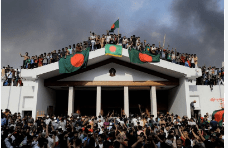
News reports from ATN Bangla News cover a range of crucial issues in Bangladesh. Political discussions dominate, focusing on upcoming elections, necessary reforms, and the roles of various political parties like the BNP and Awami League. Significant events are also reported, including a fire at the Bangladesh Secretariat, a nationwide cargo boat strike, and the ongoing conflict in neighboring Myanmar impacting border regions. Social and economic concerns are addressed, such as rising food prices and the condition of the education system. Finally, the death of Indian economist Manmohan Singh is briefly noted.

Bangladesh Politics and Society: A Study Guide
Quiz
Instructions: Answer the following questions in 2-3 sentences each.
- What is the main point of contention regarding upcoming elections in Bangladesh, as expressed by various political figures?
- What are the primary concerns surrounding the recent fire at the Bangladesh Secretariat?
- What is the basis of Attorney General Advocate Mohammad Asaduzzaman’s claim that individuals involved in the July revolution murders cannot participate in the elections?
- What specific reforms does the BNP suggest are necessary before elections can take place?
- What are the demands of the Bangladesh Naujan Sramik Federation, and what actions have they taken to pressure the government?
- What are the concerns of residents in the border areas due to the ongoing conflict in Myanmar?
- What economic challenges are highlighted in the report, particularly concerning food prices and inflation?
- What is the significance of Dr. Shafiqur Rahman’s statement about the Jamaat’s role in rebuilding Bangladesh?
- What is the stated purpose of the Forum for Bangladesh Studies dialogue, and what key figures participated?
- What are the main arguments for and against lowering the voting age to 17 in Bangladesh?

Answer Key
- The main point of contention is whether elections should occur before significant reforms are implemented. The Chief Advisor advocates for reforms as a prerequisite for meaningful elections, while the BNP insists on minimum reforms due to the practical nature of politics.
- The concerns are whether the fire was an accident or a planned act of sabotage. The simultaneous outbreaks at multiple locations and the slow response raise suspicions. Experts are investigating the cause and potential motives.
- The Attorney General claims that those involved in the July revolution murders are disqualified from participating based on their historical actions and perceived dictatorial tendencies, regardless of legal obstacles or acquittals in specific cases.
- The BNP proposes minimum reforms, including a bicameral Parliament and a balanced power structure between the Prime Minister and the President, outlining a 31-point reform plan.
- The Bangladesh Naujan Sramik Federation demands justice for the murder of seven workers, including the arrest of those responsible and compensation for affected families. They have initiated an indefinite nationwide strike to pressure the government into meeting their demands.
- Residents are concerned about their safety due to stray bullets, potential Rohingya infiltration, smuggling activities, and the risk of abduction. The ongoing conflict in Myanmar has created insecurity and fear in the border regions.
- The report highlights rising food prices, particularly for staples like potatoes, rice, and chicken. Consumers are struggling with inflation, and there are calls for government intervention to control prices and address potential syndicate manipulation.
- Dr. Shafiqur Rahman emphasizes the Jamaat’s commitment to establishing a just and equitable society in Bangladesh, suggesting that they aim to lead the rebuilding process through education and good governance.
- The Forum for Bangladesh Studies dialogue aims to foster a national consensus on reforms and elections. Participants included the Chief Advisor, political party leaders, including the BNP and Jamaat-e-Islami, and civil society representatives.
- Proponents argue that lowering the voting age to 17 empowers youth and leverages their technological proficiency. Opponents may express concerns about the maturity and informed decision-making abilities of younger voters.

Essay Questions
- Analyze the differing viewpoints regarding the necessity and extent of reforms before holding elections in Bangladesh. What are the potential consequences of each approach?
- Critically examine the allegations of planned sabotage in the Bangladesh Secretariat fire. What are the implications of such an act, and how should the government respond if evidence supports this claim?
- Discuss the role of the Bangladesh Naujan Sramik Federation in advocating for workers’ rights. How effective are their methods, and what challenges do they face in achieving their goals?
- Evaluate the impact of the conflict in Myanmar on Bangladesh’s border regions. What measures should the government implement to address security concerns and protect its citizens?
- Assess the current economic situation in Bangladesh, focusing on food price inflation and the challenges faced by consumers. What strategies can the government employ to alleviate the burden on the population?

Glossary of Key Terms
- Chief Advisor: The head of the interim government in Bangladesh, responsible for overseeing reforms and facilitating elections.
- BNP: Bangladesh Nationalist Party, a major political party in Bangladesh.
- Jamaat-e-Islami: A Bangladeshi Islamist political party.
- July Revolution: A historical event in Bangladesh, likely referring to a specific uprising or political upheaval.
- Caretaker Government System: A previous system in Bangladesh where a neutral caretaker government oversaw elections.
- Secretariat: The administrative headquarters of the Bangladesh government.
- Bangladesh Naujan Sramik Federation: A labor union representing workers in the shipping and transportation industry.
- Rohingya: A Muslim minority group from Myanmar facing persecution.
- Rehab Fair 2024: An event showcasing the housing and construction sector in Bangladesh.
- Forum for Bangladesh Studies: An organization promoting dialogue and research on issues relevant to Bangladesh.
This study guide provides a comprehensive overview of the source material, allowing you to deepen your understanding and prepare for potential assessments. Remember to review the quiz answers, engage with the essay questions, and familiarize yourself with the key terms. Good luck with your studies!

Bangladesh at a Crossroads: Reforms, Elections, and Justice
This briefing document analyzes recent developments in Bangladesh, drawing on a news report from ATN Bangla News. The report highlights several key themes: the need for reforms ahead of elections, the pursuit of justice for past crimes, and economic challenges facing the nation.
1. Reforms and Elections: A Delicate Balance
The Chief Adviser, Dr. Mohammad Yunus, emphasizes the importance of national unity and meaningful reforms as prerequisites for effective elections. He stresses that “reforms without unity or elections without reforms cannot move Bangladesh forward” and calls for a “society based on justice and unity.” He also proposes lowering the voting age to 17 to empower the youth and harness their technological proficiency.
However, the BNP Secretary General, Mirza Fakhrul Islam Alamgir, cautions against top-down reforms, arguing that “no reform will succeed without the people.” He advocates for “minimum reforms” before holding elections, suggesting a pragmatic approach. The BNP has already presented 31 reform proposals, including establishing a bicameral parliament and balancing power between the Prime Minister and President.
2. The Shadow of Past Crimes: Demands for Justice
The legacy of the July 1971 uprising continues to cast a shadow on Bangladesh’s political landscape. Mirza Fakhrul urges the nation not to forget the events of 1971, while Attorney General Mohammad Asaduzzaman asserts that those involved in the July revolution murders will be barred from participating in elections.
The Chairman of Debate for Democracy, Hasan Ahmed Chowdhury Kiran, demands accountability for the cancellation of the caretaker government system, calling for the trial of former Chief Justice Khairul Haque. He argues that those responsible for destroying the electoral system should be brought to justice.
3. Economic Challenges: Strikes and Rising Prices
The news report highlights economic struggles in Bangladesh, with a nationwide indefinite strike by the Bangladesh Naujan Sramik Federation. They demand justice for the murder of seven workers, increased wages, and measures to combat maritime terrorism and robbery. The strike has crippled cargo transportation, raising concerns about fuel shortages and supply chain disruptions.
Concurrently, consumers face rising prices for essential commodities like rice, edible oil, and poultry. Sellers attribute the price hikes to market manipulation and the presence of syndicates. The report calls for government intervention to break these syndicates and stabilize prices.
4. Security Concerns: Tensions on the Border
The ongoing conflict in Myanmar between the military junta and the Arakan Army spills over into Bangladesh’s border regions, creating fear and insecurity. The report details incidents of Rohingya infiltration attempts, smuggling, drug trafficking, mine detonations, and the abduction of fishermen. The Coast Guard and BGB have heightened security measures, but residents express concern over their safety and livelihoods.

5. Additional Developments
The news report covers other notable events, including:
- Secretariat Fire: A fire at the Bangladesh Secretariat raises concerns about sabotage. Experts call for a thorough investigation to determine the cause of the fire and ensure accountability.
- Akiz Basir Glass Industries: This company showcases its innovative products at Rehab Fair 2024, demonstrating its commitment to placing Bangladesh on the international market.
- Manmohan Singh’s Death: The Congress Party cancels all programs for seven days in honor of the former Prime Minister’s passing.
- India vs. Australia Test Match: The report provides an update on the ongoing Boxing Day Test, highlighting key performances and scores.

Conclusion:
Bangladesh faces a complex and dynamic situation, requiring careful navigation of political, economic, and security challenges. The upcoming elections present an opportunity for the nation to address these issues and move towards a more just, prosperous, and secure future. However, achieving these goals will depend on forging national consensus, implementing meaningful reforms, and upholding the rule of law.

Bangladesh News FAQ
1. What is the Chief Adviser’s stance on the upcoming elections?
The Chief Adviser, Dr. Mohammad Yunus, emphasizes the need for unity and reforms before holding elections. He believes that elections without reforms will not be effective and will not move Bangladesh forward. He also advocates for lowering the voting age to 17, arguing that the youth’s engagement is crucial for building a just society.
2. What is the BNP’s position on the proposed reforms and elections?
The BNP, represented by Secretary General Mirza Fakhrul Islam Alamgir, agrees on the necessity of democratic reforms but insists that they should be driven by the people’s will. The party advocates for holding elections only after implementing minimum reforms and has put forward a 31-point reform proposal. They also emphasize the importance of remembering the events of 1971 and learning from history.
3. What is the legal standpoint on the participation of individuals involved in the July Revolution murders in the upcoming elections?
Attorney General Advocate Mohammad Asaduzzaman states that those involved in the murders during the July Revolution will not be allowed to participate in the elections. However, he clarifies that there is no legal obstacle preventing BNP Chairperson Begum Khaleda Zia from participating.
4. What are the concerns surrounding the recent fire at the Bangladesh Secretariat?
The fire at the Secretariat has raised suspicions of foul play. Fire safety expert Dr. Maqsood Helali points out the unusual nature of the fire, with multiple simultaneous outbreaks at crucial locations, suggesting a planned arson attack. Investigations are underway to determine the exact cause of the fire.
5. What is the reason behind the ongoing nationwide strike of seafarers?
The Bangladesh Naujan Sramik Federation has called for an indefinite strike to demand justice for the murder of seven workers. They are seeking the arrest and trial of the perpetrators, compensation for the affected families, and measures to prevent future acts of violence and robbery at sea.
6. What is the current situation regarding food prices in the country?
While the price of potatoes has decreased, the prices of rice, edible oil, and chicken remain high. Consumers are concerned about the rising costs and are calling for government intervention to control prices and break syndicates that might be manipulating the market.
7. What impact is the ongoing conflict in Myanmar having on Bangladesh?
The conflict in Myanmar is creating tension and insecurity in the bordering areas of Bangladesh. There have been reports of Rohingya infiltration attempts, smuggling, drug trafficking, landmine explosions, and the abduction of fishermen. The Coast Guard and BGB have heightened security measures to address these concerns.
8. What significant development has Akiz Basir Glass Industries undertaken?
Akiz Basir Glass Industries is expanding its presence in the international market by focusing on purification and homogenization plants. They have established a large factory in Habiganj, demonstrating their commitment to growth and innovation.

Bangladesh Election Reform Debate
The Chief Advisor of Bangladesh, Dr. Mohammad Yunus, has called for national consensus on election reforms to ensure a society based on justice and unity [1]. He believes reforms are necessary for meaningful elections and that the country cannot move forward without them [1].
Here are some key points regarding election reforms being discussed in Bangladesh:
- BNP’s Stance: The Bangladesh Nationalist Party (BNP) supports democratic reforms but emphasizes that reforms should be driven by the people [2]. They believe in “minimum reforms” before elections, arguing that practical political experience is essential [2]. The BNP has already proposed 31 reform points, including a bicameral parliament and a balanced power structure between the Prime Minister and the President [2].
- Voting Age: Dr. Yunus suggests lowering the voting age to 17, arguing that youth possess strength and technological competence that should be incorporated into state formation [2].
- Election Commission: The Election Commission is simultaneously preparing for the elections and awaiting reports from 15 reform commissions, expected in January [2].
- Caretaker Government System: The cancellation of the caretaker government system is a point of contention. Debate for Democracy, a Bangladeshi organization, demands that former Chief Justice Khairul Haque be held accountable for abolishing this system, arguing that it destroyed the electoral system [3].

Concerns around Election Integrity:
- There are concerns that individuals involved in the “July Revolution” murders will be allowed to participate in the elections [2]. The Attorney General has stated that those involved in these murders will not be eligible to participate [3].
- Debate for Democracy highlights concerns about election fairness and advocates for investigating the Nurul Huda-led commission due to allegations of misconduct and financial irregularities during the national elections [3]. They believe that relying on external influence, such as from neighboring countries, will hinder fair and acceptable elections in Bangladesh [3].
Overall, the sources emphasize that election reforms are crucial for a democratic and just Bangladesh. The discussions highlight the need for unity, popular participation, and a focus on ensuring fair and inclusive elections.

Lowering the Voting Age in Bangladesh
The potential change to the voting age in Bangladesh is a key point of discussion in the ongoing election reform debate. The current Chief Advisor, Dr. Mohammad Yunus, proposes lowering the voting age from 18 to 17 years old [1, 2]. He believes this would allow the youth, who he sees as strong and technologically competent, to have a greater voice in shaping the state [2].
Dr. Yunus’s argument emphasizes the importance of incorporating young people’s perspectives and skills into the political process. He sees the youth as a valuable asset with the potential to contribute significantly to the country’s future. However, the sources do not provide any counterarguments or perspectives from those who might oppose lowering the voting age.

Bangladesh Election & the July Coup Murders
The sources mention the “July coup murders” in the context of individuals potentially being barred from participating in upcoming elections. The Attorney General of Bangladesh, Advocate Mohammad Asaduzzaman, has stated that those involved in these murders will not be allowed to participate in the elections. [1]
Mirza Fakhrul Islam Alamgir, Secretary General of the BNP, also referenced the July coup murders. He stated that BNP wants elections only after minimum reforms, and Sheikh Hasina and Awami League leaders will only be able to participate in the elections if the July murders are sentenced. [2] This statement implies that there is a demand for justice and accountability for the July coup murders before certain political figures can participate in elections.
The sources do not provide further details about the specific events of the July coup or the individuals involved. However, the statements suggest that these events represent a significant point of contention in the lead-up to the elections and raise concerns about fairness and accountability in the political process.

Bangladesh Secretariat Fire: Arson Investigation
The sources describe a fire that occurred at the Bangladesh Secretariat, a significant government building housing important ministries. The incident has sparked concerns and investigations, with experts pointing to potential arson.
Here’s what the sources say about the Secretariat fire:
- Multiple Fires and Potential Arson: Dr. Maqsood Helali, a fire safety expert, suggests that the fire may have been planned. He points out that simultaneous fires at three different locations are unusual and that the probability of short circuits in the Secretariat is low, especially at night when the electrical load is minimal [1]. The fact that the fire started in multiple locations and spread slowly, targeting key areas, raises suspicions of intentional arson [2].
- Investigation Underway: A high-level committee has been formed to investigate the fire incident [1]. The committee will submit its final report within 10 working days. The investigation will attempt to determine whether the fire was accidental or a result of sabotage. Experts are examining the crime scene, looking into the functionality of fire hydrants, and analyzing other factors to uncover the truth [1, 2].
- Public Concern and Questions: The fire incident has raised concerns and questions throughout Bangladesh. People are demanding answers and accountability, especially considering the fire occurred during ongoing investigations into various corruptions during the previous government [2].
The Secretariat fire is a significant event with potential implications for the political landscape. The ongoing investigation is crucial to determining the cause of the fire and addressing public concerns about potential foul play.

Bangladesh Seafarers’ Nationwide Strike
The sources describe an indefinite nationwide strike organized by the Bangladesh Naujan Sramik Federation, a workers’ union representing seafarers.
Here are the key details:
- Reasons for the strike: The strike is in response to several issues, including:
- The murder of seven workers, demanding justice and accountability for those responsible.
- A call to uncover the truth behind the worker killings on the Al Bakhera ship in Chandpur.
- Demands for compensation of Tk 20 lakh to be paid to each affected family.
- Concerns about low wages for seafarers.
- A need for effective measures to curb terrorism and robbery at sea.
- Impact of the strike: The strike has brought cargo boating to a halt across the country. The sources report on the strike’s impact at various locations, including:
- Chandpur: Workers at Chandpur’s Bara station are refusing to unload new ships, although they continue to process existing cargo.
- Barisal: Barges are lined up and inactive in Barisal, raising concerns about potential fuel shortages in the region.
- Baghabari seaport in Shahjadpur, Sirajganj: The strike is also impacting operations at this port.

The nationwide strike highlights the grievances of seafarers in Bangladesh and the urgent need to address issues related to safety, fair wages, and justice for victims of violence.

By Amjad Izhar
Contact: amjad.izhar@gmail.com
https://amjadizhar.blog
Affiliate Disclosure: This blog may contain affiliate links, which means I may earn a small commission if you click on the link and make a purchase. This comes at no additional cost to you. I only recommend products or services that I believe will add value to my readers. Your support helps keep this blog running and allows me to continue providing you with quality content. Thank you for your support!

Leave a comment