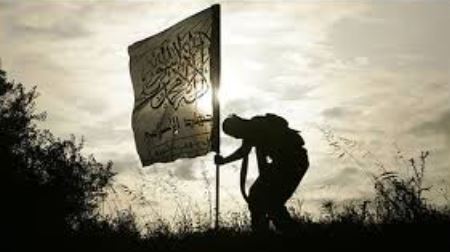
Patrick Cockburn’s The Age of Jihad examines the tumultuous state of the Middle East following the collapse of the Ottoman Empire. The book focuses on the destabilizing impact of the 2003 US invasion of Iraq, arguing that it exacerbated existing sectarian tensions and created a power vacuum exploited by various groups. Cockburn traces the evolution of conflicts in Iraq, Syria, Libya, and Afghanistan, highlighting the role of foreign intervention, sectarian violence, and the rise of militant Islamism. He analyzes the human cost of these wars, depicting the suffering of civilians caught in the crossfire and the lasting consequences of political instability and violence. The book concludes by considering the long-term implications of these conflicts on the region and the world.
The Age of Jihad: A Study Guide
Short Answer Quiz
- According to the author, what is at the heart of the book’s analysis of the Middle East and why?
- What is significant about the 1975 Algiers Agreement involving Saddam Hussein?
- How did the sanctions imposed on Iraq after the Gulf War affect its population?
- What did the author observe about the distribution of power in Afghanistan?
- How did the author describe the state of the Iraqi Army’s command structure along sectarian lines?
- What was the significance of al-Mutanabbi Street in Baghdad, and what did it symbolize about Iraqi society after sanctions?
- What is the meaning of the term “hawasimi” in the context of post-invasion Iraq?
- How did the author characterize the methods used by guerrillas in Iraq against U.S. forces?
- What specific details does the author use to illustrate the difficulties of life in Mosul under ISIS?
- What is “Somalianisation” and why is it described as an ominous trend?
Quiz Answer Key
- The invasion and occupation of Iraq by the U.S. is central because it destroyed Iraq as a united country, leading to a state of permanent conflict among its three main communities (Shia, Sunni, and Kurds) which has had a destabilizing effect on the entire region.
- The 1975 Algiers Agreement temporarily ended the Kurdish rebellion, as Saddam Hussein made a deal with the Shah of Iran, who, with U.S. backing, betrayed his former Kurdish allies.
- Sanctions caused immense suffering and unnecessary hardship to ordinary Iraqis, without causing the demise of Saddam Hussein’s rule. They led to severe shortages of essential goods, limited access to healthcare, and a decline in the standard of living.
- Power in Afghanistan is highly fragmented, with villages acting like independent republics. The author highlights that a foreign peacekeeping force must maintain strict neutrality to be successful.
- The Iraqi Army was deeply sectarian, with Shia soldiers never meeting Sunni private soldiers, and Shia soldiers not reaching the rank of officer. This highlights the existing social stratification within Iraq’s military.
- Al-Mutanabbi Street was the center of the book trade in Baghdad, and it displayed how the educated class sold off their personal libraries due to the economic hardships caused by sanctions. The books’ underlined and translated words reveal an attempt to connect with English literature.
- “Hawasimi,” meaning “finalists,” is a sarcastic reference to those who have gained from the collapse and occupation of Iraq. The term is often applied to new police recruits, and it points to the distrust and opportunism present during this era.
- Guerrillas used roadside bombs, which were difficult to detect because they were often camouflaged within garbage and detonate with command wires, car door openers, or mobile phones. They also created booby traps specifically designed to target bomb-defusing sappers.
- Mosul under ISIS is described as a city experiencing severe shortages of food, fuel, water, and electricity. Living conditions were likened to the “Stone Age,” with no mobiles, TV, cars, or consistent lighting. Public punishments were also common.
- “Somalianisation” refers to a permanent state of chaos and warfare stemming from a failed state. This term is used to describe the trends of destabilization and rebellion across various countries in the Middle East from 2001 onward.
Essay Questions
- Analyze the role of external actors, particularly the United States and its allies, in the destabilization of Iraq and Afghanistan, according to Cockburn’s analysis.
- Discuss the factors contributing to the rise of sectarian conflict in the Middle East, as presented in Cockburn’s work, and assess the impact of these conflicts on the populations of affected countries.
- How does Cockburn characterize the leadership of Saddam Hussein, and what does his trajectory reveal about the nature of power in the Middle East?
- Evaluate the effectiveness and unintended consequences of sanctions, as described in the book, using specific examples from the author’s observations in Iraq.
- Explore the significance of the concept of a caliphate and its implications for the Middle East and beyond, according to the text’s perspective on the rise of ISIS.
Glossary of Key Terms
- Algiers Agreement: A 1975 agreement between Iraq and Iran that temporarily ended the Kurdish rebellion, where Saddam Hussein made a deal with the Shah of Iran, who, with U.S. backing, betrayed his former Kurdish allies.
- Baath Party: A political party that held power in Iraq under Saddam Hussein, noted for its nationalist ideology and authoritarian rule.
- Caliphate: An Islamic state led by a religious and political successor to the prophet Muhammad, historically embodying religious and political unity.
- Fedayeen: Fighters loyal to the former Baathist regime of Saddam Hussein.
- Green Zone: A heavily fortified and secured area in Baghdad, housing the Iraqi government and international embassies, symbolizing the divide between the occupation forces and Iraqi society.
- Guerrilla Warfare: Unconventional warfare using tactics such as ambushes and sabotage, employed by non-state actors, including insurgents and rebels.
- Hawasimi: An Iraqi term for those who have profited from the chaos and occupation, highlighting the corruption and opportunism of post-invasion Iraq.
- Jihad: A religious duty of Muslims; can refer to the inner struggle to follow Islam or an external struggle to defend Islam.
- Kafir: An Arabic term meaning “disbeliever,” often used by extremist groups to label those considered non-believers of Islam.
- Kurdish Peshmerga: The military forces of the autonomous Kurdistan region, known for their effectiveness in fighting against ISIS.
- Mehdi Army: A Shia militia group in Iraq loyal to Muqtada al-Sadr, known for its involvement in sectarian violence and resistance against the U.S.-led occupation.
- Sanctions: Economic penalties or restrictions imposed on a country, in this case used by the United Nations against Iraq, impacting daily life and infrastructure.
- Sectarianism: Divisions and conflicts based on religious or ethnic affiliations, most prominent in the Middle East among Sunni, Shia, and Kurdish populations.
- Sharia: Islamic law derived from the Quran and the teachings of the prophet Muhammad, used as the legal and moral code by some groups, such as ISIS.
- Somalianisation: A term used to describe a state of permanent chaos and warfare resulting from a failed state, applicable to various unstable countries in the Middle East and Africa.
- Sunni Triangle: A region in Iraq primarily inhabited by Sunni Arabs, often associated with resistance against the U.S. occupation and the Shia-dominated government.
- Sykes-Picot Agreement: A secret 1916 agreement between Britain and France dividing up the Middle East after the collapse of the Ottoman Empire, leading to many borders and conflicts in the region.
- Taliban: A fundamentalist Islamic political and military organization that ruled Afghanistan and is known for its extremist ideology and strict enforcement of religious laws.
- Valmara: Italian-made antipersonnel landmines, which were widely dispersed in Iraq and caused many casualties.
- Wahhabism: A puritanical, fundamentalist movement within Sunni Islam originating in Saudi Arabia, often associated with intolerance and extremism.
Middle East and Afghanistan Conflicts: 2001-2015
Briefing Document: Key Insights from the Sources
This briefing document consolidates key information from the provided sources, focusing on the conflicts and political situations in the Middle East and Afghanistan from 2001 to 2015.
1. The Complexities of War Reporting and Analysis
- Challenges of Generalization: The sources caution against oversimplifying complex historical situations, emphasizing the danger of drawing parallels without full command of details [1]. This highlights the need for nuanced analysis rather than broad generalizations.
- Journalistic Limitations: War reporters face criticism from two extremes: being seen as “hotel journalists” or “war junkies” [2]. There’s also a tension between the need to cover actual fighting and the need to explain the underlying causes of the conflict. Journalists in the field are often contradicted by pundits and “talking heads” in their home offices, who may not have direct experience [3].
- Eyewitness Credibility: The “first draft of history” provided by journalists can be more credible than later interpretations, as it has not been “through the blender of received wisdom and academic interpretation” [3].
2. Afghanistan: The Taliban, Northern Alliance, and US Intervention
- Taliban’s Resurgence: The Taliban were not truly defeated initially, allowing them to make a significant comeback [2]. The initial reporting on the war may have missed this crucial long-term implication.
- Northern Alliance: The Northern Alliance, an Afghan opposition group, was initially isolated but gained importance after 9/11 when the US needed allies on the ground [4, 5]. The Northern Alliance controlled areas like the Panjshir valley [4].
- US reliance on allies: The US needed anti-Taliban allies on the ground in Afghanistan, and the first to move was General Dostum [5].
- Journalist Access: Journalists faced difficulties entering Afghanistan [6]. Some were able to gain access through the Northern Alliance, using an old Russian helicopter [6].
3. Iraq: Sanctions, the US Invasion, and the Rise of Insurgency
- Impact of Sanctions: UN sanctions imposed on Iraq in 1990 led to devastating consequences for the Iraqi people, including shortages of medicine and supplies [7, 8].
- Misguided Expectations: Some Iraqi expatriates gave the US false information before the invasion, including the expectation that US forces would be greeted with flowers and sweets [9].
- US Misunderstandings: US military and civil leaders often misunderstood Iraqi culture and politics [10, 11]. Some US commanders seemed to get their ideas about the Arab world from Hollywood [10].
- Insurgency and IEDs: Insurgents became increasingly confident, using improvised explosive devices (IEDs). US soldiers were not prepared for this type of warfare, having been trained for conventional warfare [12].
- Propaganda and Zarqawi: The US exaggerated the role of Abu Musab al-Zarqawi to explain the insurgency, though many Iraqis questioned if he even existed [13, 14]. This propaganda may have led the US to underestimate the broader Sunni resistance to the occupation [14].
- Civilian Casualties: US air power led to civilian casualties, increasing support for the insurgents [15].
- Loss of Control: The US struggled to control the provinces, with insurgents controlling Baquba [16]. There was also a lack of coordination and information sharing between different US commanders and offices [10, 17].
- Violence and Sectarianism: The conflict in Iraq intensified existing sectarian divisions between Shia and Sunni populations [18, 19].
4. Libya: The Fall of Gaddafi and Post-Conflict Chaos
- Rebel Infighting: The rebels fighting against Gaddafi were a mix of militias, some of whom were prone to paranoia [20]. There was also a lack of confidence in the new military leadership that was supported by Western powers [20].
- NATO bombing: There were cases of “friendly fire” by NATO forces, which caused anger among the rebels [21].
- Treatment of Black Africans: Libyan rebels were hostile to black Africans, and many were arrested because of their skin color [22].
- Torture and Human Rights Abuses: Both pro and anti-Gaddafi forces used torture [23, 24]. There was a lack of transparency regarding these human rights abuses and the UK was criticized for their involvement [25].
5. Other Conflicts and Human Rights Issues
- Yemen: The US and Britain supported an unpopular and corrupt government in Yemen, which allowed al-Qaeda to gain strength [26].
- Bahrain: Security forces were accused of torturing protesters and dissidents [27, 28]. The government also punished people for expressing sympathy for the protesters [29].
6. Rise of ISIS
- Early Warnings: In 2014, the author noted that ISIS’s growing strength in Iraq was the most important development in the region, though this observation was not widely shared by Syrian experts [1, 30].
- ISIS tactics: ISIS launched diversionary attacks with small groups before striking suddenly at a single target [30].
- Hashid Shaabi Weaknesses: The Shia militia, the Hashid Shaabi, was enthusiastic but poorly trained [31].
7. Saudi Arabia and the Sunni-Shia Divide
- Dual Policy: Saudi Arabia encouraged anti-Shia militancy abroad, but suppressed these groups at home [32].
- Financial Support for Terror Groups: Saudi Arabia has been a critical financial support base for al-Qaeda, the Taliban, and other terrorist groups [32].
- Proxy War: Saudi Arabia, Turkey, and the UAE promoted a proxy Sunni-Shia war in Syria, supporting extremist groups like al-Nusra and al-Qaeda [33].
8. The Impact of US Policies
- Lack of Control: The US failed to impose its control in both Iraq and Afghanistan, leaving behind very different political and military landscapes [34].
- Unintended Consequences: The US’s actions in the region had numerous unintended consequences, including strengthening groups they opposed [26, 34].
This briefing document highlights the complex and often contradictory nature of the conflicts discussed in the provided sources. The document also emphasizes the significance of understanding the local contexts, cultural sensitivities, and the long-term implications of interventionist policies.
Middle East & Afghanistan Conflicts: 2001-2015
Frequently Asked Questions (FAQ) Based on the Sources
This FAQ addresses common questions arising from the provided sources regarding the conflicts and political situations in the Middle East and Afghanistan between 2001 and 2015.
1. What were the main challenges faced by journalists covering these conflicts?
- Journalists often faced a credibility gap, with those in the field sometimes contradicted by pundits and “talking heads” who lacked direct experience [1].
- There was a tension between the need to cover the fighting and explaining the root causes of the conflicts [1].
- Access to conflict zones was often difficult [2]. In Afghanistan, journalists had to use unconventional methods to get into the country, such as an old Russian helicopter [2].
- Some journalists were criticized for being either “hotel journalists” or “war junkies,” highlighting the challenges of maintaining objectivity and focus in a conflict zone [1].
2. How did the Taliban regain power in Afghanistan after their initial defeat?
- The Taliban were not completely defeated initially, allowing them to regroup and make a significant comeback [1].
- The US underestimated the Taliban’s long-term resilience [1].
- The Taliban was able to exploit the existing political and social landscape [3].
- The Afghan opposition felt abandoned and alone [4].
3. What were the consequences of the UN sanctions on Iraq?
- The sanctions led to severe shortages of food, medicine, and other essential supplies [5, 6].
- Ordinary Iraqis suffered greatly, with many falling ill or dying due to lack of medical care [5].
- The “oil-for-food” program, intended to alleviate the crisis, failed to make a measurable difference [6].
4. Why did the US invasion of Iraq face so much resistance?
- The US had misguided expectations and were given false information by some Iraqi expatriates who predicted that US forces would be welcomed with flowers and sweets [7].
- The US military and Paul Bremer provoked confrontations with both the Shia and Sunni Arabs, who made up 80% of the population [8].
- The US occupation forces were seen as an unwelcome foreign presence [9].
- The US dissolved the Iraqi army which resulted in many unemployed soldiers who were willing to fight [10].
- The US military was not prepared for guerrilla warfare and underestimated the Iraqi insurgency [11].
5. What role did sectarianism play in the conflicts?
- Existing sectarian divisions between Shia and Sunni populations were intensified by the conflicts in Iraq [9].
- The Sunni Arabs felt they were being made second-class citizens which destabilized Iraq [12].
- In Bahrain, the Shia majority felt excluded from jobs in security forces [13].
- In Syria, Saudi Arabia encouraged anti-Shia militancy, which contributed to the proxy war [14].
6. How did ISIS gain power and influence?
- ISIS replaced al-Qaeda as the most extreme jihadi group [15].
- ISIS was effective in guerrilla warfare [15].
- ISIS gained support through propaganda and providing services, education and sermons [16].
- ISIS imposed its cultural agenda in areas under its control [17].
- Many people joined ISIS for economic reasons [17].
- ISIS used chilling videos to intimidate their enemies [15].
7. What were some of the common human rights abuses reported in these conflicts?
- Torture was widespread, often used to extract confessions [18, 19].
- Common methods included beatings, electric shocks, and suspension in contorted positions [18].
- There were reports of rape in prisons [19].
- Arbitrary arrests and detention without trial were also common [20].
- Civilians were often killed in airstrikes [21].
- People were punished for expressing sympathy for protestors [22].
- Many people were forced to flee their homes and become refugees [23].
8. What was the impact of US policies in the region?
- The US failed to impose control in both Iraq and Afghanistan [1].
- US actions often had unintended consequences, such as strengthening groups they opposed [1].
- The US was accused of making mistakes and misunderstanding the culture and politics in the region [24, 25].
- The US was criticized for their re-election strategy that prioritized political goals over the needs of the Iraqi people [25].
9. What role did foreign fighters play in these conflicts?
- Many foreign fighters joined ISIS, often from Tunisia [26].
- Some foreign fighters were motivated by religious beliefs, while others were driven by economic reasons [17].
- There was concern that Western intelligence operatives were worried about the influence of al-Qaeda and asked fighters why they were growing a beard [14].
This FAQ is intended to provide a comprehensive overview of the key themes and issues covered in the sources. The conflicts discussed are complex, and these answers provide only a starting point for deeper exploration.
Middle East Conflicts: 2001-2015
Okay, here’s a timeline of key events based on the sources, focusing on the conflicts in Afghanistan, Iraq, Libya, and other relevant events in the Middle East from 2001 to 2015:
Afghanistan
- 2001:The US and its allies launch military operations in Afghanistan following the 9/11 attacks, targeting the Taliban [1].
- The Northern Alliance, supported by US airstrikes, makes significant gains against the Taliban [2, 3].
- The Taliban retreat from Kabul to Kandahar, and their forces begin to break up [2].
- November 23: The Northern Alliance takes control of Kabul and prepares for talks with other Afghan leaders [3].
- 2002: The initial military operations against the Taliban are largely reported as a military victory [2].
- 2009-2012: The Taliban make a comeback in Afghanistan [4].
Iraq
- 1990-2003: Iraq is under UN sanctions, leading to severe humanitarian crises and a weakened state [4, 5].
- 2003:March: The US and its allies invade Iraq [6].
- April 28: US military checkpoint north of Kirkuk is disorganized [7].
- April: US forces enter Baghdad [6, 8].
- The US dissolves the Iraqi army [9].
- June: The US establishes the Coalition Provisional Authority (CPA) to govern Iraq [9].
- June: A US administrator disbands the 400,000-strong Iraqi army [9].
- June: Grand Ayatollah al-Sistani issues a fatwa saying those who frame Iraq’s new constitution must be elected rather than selected by the US and the defunct Iraq Governing Council [10].
- 2004:April 6: US Marines fight their way into Fallujah after the killing of four American civilian contractors [11].
- June: Sovereignty is formally handed back to a US-nominated Iraqi government [12].
- US military deaths in Iraq are very high: 848 soldiers killed and 8,002 wounded [13].
- 2005:US military deaths in Iraq remain high: 846 killed and 5,946 wounded [13].
- 2006:US military deaths in Iraq continue: 821 killed and 6,372 wounded [13].
- April: Nouri al-Maliki replaces Ibrahim al-Jaafari as Prime Minister [14].
- July: Abu Musab al-Zarqawi is killed [15].
- 2007-2010: US forces begin to draw down in Iraq [4].
- 2008:March: Nouri al-Maliki makes a brief visit outside the Green Zone to demonstrate the improved security situation [16].
- August: The Iraqi government rejects a draft security agreement with the US which would have preserved indefinitely the US right to conduct military operations inside the country [17].
- December: The Iraqi parliament votes in favor of a security agreement with the US to withdraw troops by 2011 [18].
- 2009:June: US military forces withdraw from Iraqi cities [19].
- 2010: US forces continue to withdraw, and US interest in Iraq wanes [20].
- 2012: Sunni protests against the Maliki government begin in western Iraq [21].
- 2013:March: Sunni demonstrations continue in Iraq against Nouri al-Maliki [21].
- December: ISIS gains power and is considered the most successful leader in the Middle East [22].
- 2014:
- January: ISIS seizes Fallujah [23].
- June: ISIS captures Mosul [6, 20].
Libya
- 2011:February: Protests against Gaddafi begin, spreading from Tunisia and Egypt [24].
- April: The conflict escalates, with rebel forces and pro-Gaddafi forces engaged in fighting [25].
- September: Rebel military control increases [26].
- The Gaddafi regime is overthrown and Gaddafi is killed [27, 28].
- Libyans find they have lost a functioning state and are at the mercy of predatory militiamen [27].
- 2012-2014: Libya descends into chaos and violence, becoming a fragmented state with competing militias [29].
- 2015 Libya, Syria and Yemen are being ravaged by warfare [28].
Other Middle East Conflicts and Events
- 2009-2015: The conflict in Yemen intensifies [29].
- 2011:April: The author travels to Cairo, debating whether to go to Benghazi or Bahrain [30].
- March: The ruling Sunni al-Khalifa monarchy in Bahrain, backed by Saudi troops, crushes mass protests by the Shia majority [30].
- June: Poet Ayat al-Gormezi is sentenced to one year in prison in Bahrain [31].
- 2011-2013: The Syrian civil war intensifies [29].
- The Arab Spring uprisings begin and spread across the Middle East and North Africa [32].
- Many authoritarian regimes are challenged by popular protests [32].
- There are some successful transitions of power, but most countries experience political instability and violence [28, 33].
General Trends
- Sectarianism: Sectarian tensions between Sunni and Shia communities are exacerbated by regional conflicts [34].
- Rise of Extremism: The rise of groups like ISIS demonstrates a shift towards more extreme forms of jihadism [5].
- Western Intervention: Western military interventions often have unintended consequences and exacerbate instability [8, 35].
- Human Rights Abuses: Torture, arbitrary arrests, and killings are widespread across the region [36-38].
- Journalism: Eyewitness reporting by journalists is valuable, but war coverage can be deceptive, particularly when it focuses solely on military victories [2, 20, 39].
This timeline highlights the complex and interconnected nature of the conflicts in the Middle East and Afghanistan from 2001 to 2015. It also underscores how the consequences of these events continue to shape the region today.
The Iraq War: Miscalculations and Devastation
The Iraq War, initiated by the US and its allies in 2003, is a central focus of the sources, which detail its profound and destabilizing consequences [1]. The invasion, though intended to remove Saddam Hussein, had far-reaching effects that continue to shape the region [2].
Key aspects of the Iraq War discussed in the sources:
- The Invasion and Its Aftermath: The invasion is described as a revolutionary act that ended centuries of Sunni Arab rule in Iraq [2]. The US dissolved the Iraqi army and security services, which were the main instruments of Sunni control over the Shia and Kurdish populations [2]. This action created a power vacuum and led to the rise of sectarian conflict [1]. The initial military campaign was swift, but the subsequent occupation was fraught with problems [3, 4].
- Sectarian Divisions: The war exacerbated existing tensions between Iraq’s three main communities—Shia, Sunni, and Kurds—leading to a state of permanent confrontation [1]. The US was not fully aware of the deep divisions between Sunni and Shia Muslims [5]. This lack of understanding significantly hampered their efforts to establish a stable government [6]. The war resulted in Baghdad becoming a largely Shia city, with Sunnis fleeing or living in enclaves [7].
- Sanctions and Their Impact: The sources highlight that pre-war sanctions had already severely damaged Iraq, creating conditions where Iraqis were more likely to engage in violence or embrace religious extremism [8]. UN sanctions are cited as a significant factor that weakened Iraq and made its population more prone to extremism [8, 9].
- US Miscalculations and Failures: The US military and political leaders made several miscalculations. They had unrealistic expectations and received faulty advice from Iraqi expatriates who believed that US forces would be welcomed [10]. The US also underestimated the depth of Iraqi nationalism, sectarian divisions, and the potential for resistance [6]. The failure to establish a stable, representative government is a recurring theme [11-13].
- The Rise of Resistance: The occupation faced increasing resistance from various groups, including former members of Saddam’s security forces and Islamic militants [14]. Attacks on US and British troops became more frequent and lethal, and the conflict became increasingly complex [14]. The US struggled to contain the insurgency [15].
- The Role of the US Occupation: The US occupation was plagued by a lack of political planning [3]. It failed to address the needs of the Iraqi people, and even charged thirsty villagers for bottles of water [3]. The US was also criticized for discouraging Iraqi involvement and ignoring the needs of the local population [5].
- Guerrilla Warfare: The sources detail the evolution of the resistance to the US occupation into a more organized and deadly guerrilla war, with bombings and ambushes becoming more sophisticated [14, 16]. The US military’s inability to effectively counter this resistance is a key factor in the war’s growing complexity [17].
- Iraqi Perspectives: The sources highlight the views of ordinary Iraqis, who initially had mixed reactions to the invasion but grew increasingly disillusioned [9, 16, 18]. Many Iraqis felt that the US was not committed to their liberation and was more interested in its own political goals [13]. They saw the US as occupiers rather than liberators, and this perception fueled resentment and resistance [16].
- Political and Social Instability: The war caused significant political and social instability in Iraq. The country was left deeply divided along sectarian lines, and the struggle for power among different groups led to continuous violence [1]. The government was seen by many Iraqis as a puppet of the US [19].
- The Impact of the “Surge”: The US troop surge was meant to increase security, but it had limited long-term impact [20, 21]. The violence continued despite the increase in troop numbers.
- The US Withdrawal: The US eventually withdrew its forces, but the Iraqi government was left with limited control over the country, and the conflicts continued [22, 23]. The US is seen to have largely provoked the civil war that raged across central Iraq [24].
- Civil War and Sectarian Violence: The war led to a civil war and widespread sectarian violence between Shia and Sunni, including bombings, assassinations and forced displacement of communities [23-26].
- The Rise of ISIS: The chaos and instability created by the Iraq war provided fertile ground for the rise of ISIS [27, 28]. ISIS gained power by exploiting existing sectarian tensions and capitalizing on the lack of a strong central government [29].
- Long-Term Consequences: The sources suggest that the Iraq War did not achieve its goals of creating a peaceful and prosperous country, and that the conflict had long-term consequences [30]. The war deepened the divisions within Iraq and created a vacuum that has been filled by sectarianism and extremism [31, 32]. The war also had a negative impact on the image of the US in the Middle East and around the world [13].
The sources portray the Iraq War as a deeply flawed endeavor with devastating consequences. They show a pattern of miscalculations, poor planning, and a failure to understand the complexities of the region.
The Islamic State: Rise, Ideology, and Impact
The Islamic State, also known as ISIS, ISIL, or Daesh, is a central focus of the sources, which detail its rise, ideology, and impact in the Middle East. The sources emphasize that the group’s emergence is a consequence of the chaos and instability created by the Iraq War and other regional conflicts [1].
Origins and Rise:
- Emergence from Instability: ISIS emerged from the chaos following the 2003 US-led invasion of Iraq, capitalizing on the power vacuum and sectarian tensions [1]. The group’s rise is linked to the broader conflicts in the Middle East, particularly in Iraq and Syria [2].
- Exploitation of Sectarianism: ISIS gained traction by exploiting the deep-seated sectarian divisions between Sunni and Shia Muslims, particularly the alienation of the Sunni community in Iraq [2, 3]. The group presented itself as a protector of Sunni Muslims against Shia-dominated governments [3].
- Evolution from Al-Qaeda: ISIS is described as having taken over from the al-Qaeda organization founded by Osama bin Laden as the most powerful and effective extreme jihadi group in the world [4]. However, it is also described as more violent and sectarian than al-Qaeda [4].
- Rapid Growth: Under the leadership of Abu Bakr al-Baghdadi, ISIS grew swiftly in strength, becoming highly organized and controlled from the center [2]. By 2014, ISIS controlled a vast territory in western Iraq and eastern Syria [4].
- Declaration of a Caliphate: In June 2014, ISIS declared itself a caliphate, a move with the potential to convulse many Islamic countries [5]. This declaration appealed to millions of young Sunni men who felt marginalized by the existing political and economic order [5].
Territorial Control and Expansion:
- Control of Key Cities: ISIS captured major cities like Fallujah, Mosul, Ramadi, and Palmyra, demonstrating their military capabilities [1, 4, 6, 7]. The capture of Mosul was described as an “earthquake” in the politics of Iraq and Syria [3].
- Expansion of Territory: ISIS expanded rapidly, seizing large territories in both Iraq and Syria, and by 2015 the territory it controlled was larger than Great Britain [5, 8].
- Strategic Importance of Territory: ISIS established control over oil and gas fields, providing it with a steady income. Control of crucial roads also helped to support the new state [8].
Ideology and Practices:
- Extreme Interpretation of Islam: ISIS enforces a strict and intolerant variant of Islam that is rejected by most Muslims, imposing it on all aspects of life, from women’s dress codes to the regulation of businesses [9]. The group’s ideology is a radical version of Wahhabism that includes extreme violence [10].
- Brutal Tactics: ISIS is known for its brutality, which includes mass executions, beheadings, amputations, and floggings [11]. They are known to kill Shia Muslims and Christians [4]. The group’s propaganda films often show the execution of non-Sunni Muslims [2].
- Enforcement of Strict Rules: ISIS imposes strict rules regarding clothing, social behavior, and religious practice. For example, women are required to wear the niqab and are not allowed to leave the house without a male relative [11, 12].
- Propaganda and Recruitment: ISIS uses sophisticated propaganda to attract recruits, often exploiting economic grievances and feelings of marginalization [13, 14]. They offer jobs and salaries to those who join them [14, 15].
Impact and Consequences:
- Sectarian Conflict: ISIS is a major catalyst for sectarian violence, with its attacks targeting Shia Muslims and other minorities, thereby deepening the divide between communities [16-18].
- Human Rights Abuses: ISIS is responsible for widespread human rights abuses, including the persecution of religious and ethnic minorities like Christians and Yazidis, and the enslavement of Yazidi women [11, 17, 19, 20].
- Displacement: ISIS’s brutal practices have led to the mass displacement of communities within the region [21]. Many people have fled from areas under their control, seeking safety in other regions [14, 21].
- Destabilization of the Region: The rise of ISIS has destabilized the Middle East, exacerbating existing conflicts and creating new ones, while also drawing countries like Turkey and Saudi Arabia into the conflict [8, 22, 23].
- Challenge to Existing States: ISIS seeks to replace existing nation-states with a caliphate that transcends national borders [5, 22]. It has challenged the legitimacy of Muslim rulers throughout the world [22].
Responses to ISIS:
- International Coalition: The US has formed a coalition of 60 countries to oppose ISIS, but the effectiveness of this coalition has been questioned [24].
- Military Operations: US-led air strikes have been conducted against ISIS targets, though their effectiveness is debated in the sources [25-28]. The US struggles to find reliable local partners on the ground [25, 26].
- Complex Alliances: The fight against ISIS is complicated by conflicting interests and alliances, as some countries, like Turkey, have focused on fighting Kurdish groups rather than ISIS itself [23]. Some of the countries that are supposedly fighting ISIS had previously supported the same jihadis in Syria and Iraq [24].
- Local Resistance: There is some local resistance to ISIS in the areas it controls, but people are often too terrified of retaliation to act openly against the group [21, 29, 30].
Challenges in Defeating ISIS:
- Distrust and Division: The distrust and division between the various groups opposing ISIS make it difficult to form a united front [30, 31].
- Local Support: Even though many fear ISIS, the group has some local support in Sunni communities [14, 32].
- Organizational Strength: ISIS’s efficient organization and ruthless tactics make it a difficult enemy to dislodge [19, 33].
- Lack of Clear Strategy: There is no clear strategy for dealing with ISIS beyond military action, as political and social factors are not effectively addressed [25].
In summary, the Islamic State is portrayed as a highly dangerous and complex organization that has emerged from the chaos of the Iraq War and other regional conflicts. Its extreme ideology, brutal tactics, and ability to exploit sectarian tensions have made it a major destabilizing force in the Middle East. The sources make clear that ISIS is not simply a terrorist group but a proto-state with significant resources and a clear vision for the future.
Middle East in Crisis
The Middle East is presented in the sources as a region undergoing a period of intense conflict and instability, with several interconnected issues contributing to the current state of affairs [1]. The sources emphasize that the current conflicts are not isolated events, but rather part of a larger pattern of instability that has been developing over the last century [2].
Key Themes and Issues:
- Widespread Conflict and Instability: The region is engulfed in armed conflicts ranging from full-scale wars to general breakdowns of security [1]. Central governments have collapsed, are weak, or face powerful insurgencies [1]. Civil wars are tearing apart countries like Iraq, Syria, and Yemen, with little prospect of them coming together again as unified states [1].
- Historical Context: The sources note that the region has never been truly stable since the fall of the Ottoman Empire, experiencing foreign invasions, Arab-Israeli wars, military coups, and conflicts between different groups [2]. The current era of civil wars is a major theme [3].
- Sectarian and Ethnic Divisions: Sectarian and ethnic struggles play a central, though not exclusive, role in the crises in Iraq, Syria, Turkey, Afghanistan, and Yemen [3]. These divisions, particularly between Sunni and Shia Muslims, have been exacerbated by regional conflicts and interventions [2]. The sources highlight how these divisions have become more militarized and deeper, with each conflict reinforcing the others, preventing solutions to individual issues [4].
- The Impact of the Iraq War: The 2003 US-led invasion of Iraq is described as an “earthquake” whose aftershocks are still being felt [5]. It energized existing conflicts and confrontations, and it also deepened the divisions within Iraq [5].
- The Rise of ISIS: The chaos and instability created by the Iraq War provided fertile ground for the rise of ISIS, which has further destabilized the region [5]. ISIS is not just a terrorist group but also a proto-state with significant resources and a clear vision for the future [6].
- The Role of External Powers: The sources emphasize the role of external powers, including the US, Russia, Iran, and Saudi Arabia, in exacerbating conflicts and shaping the region’s political landscape [4, 7]. The involvement of these powers often complicates the resolution of conflicts and leads to a “cat’s cradle of conflicting interests” [7]. The US, Britain, France, and the Sunni monarchies are seen as not wanting the war to end until they can declare victory [8].
- The Sunni-Shia Conflict: A major theme is the growing confrontation between Sunni and Shia, and between Saudi Arabia and its allies and Iran with its allies [4]. The sources indicate that this conflict is becoming more militarized and that it prevents solutions to individual issues [4].
- The “End of Sykes-Picot”: The sources mention the “end of Sykes-Picot” as a shorthand for the collapse of the old order established after World War I, with the implication that new boundaries and political arrangements may emerge [9, 10]. The reference is to the agreement of 1916 that divided up the spoils between Britain and France, but the sources note that this agreement ignored the wishes or existence of local inhabitants [9, 10].
- The Kurdish Question: The Kurds, who were left without a state after the Ottoman collapse, are now seeking independence in Iraq and greater autonomy in Syria [9]. This ambition is a significant factor in the current political landscape [9].
- Cross-Infection of Conflicts: The crises and wars in the region tend to cross-infect each other, with Iraq serving as a crucible for many of the troubles now affecting other Islamic countries [11]. The conflicts are interconnected, with events in one country impacting its neighbors [11]. For example, the uprising in Syria encouraged their neighbors in Iraq, and the revolts in the two countries are running in parallel [12].
- The Vulnerability of States: There is a growing feeling across the Middle East that the future of entire states is in doubt, which is a sentiment that hasn’t been felt since the carve-up of the Ottoman Empire after World War I [9].
- The Impact on Civilians: The sources emphasize the human cost of these conflicts, with millions of people displaced, in need of aid, and facing the threat of violence [2, 13]. Life has never been so dangerous and uncertain for the region’s inhabitants [2].
Specific Regional Issues:
- Iraq: The country is disintegrating under the pressure of a mounting political, social, and economic crisis [14]. The conflict between Shia, Sunni, and Kurds is deepening to a point just short of civil war [14]. The Iraqi government’s authority extends only a few miles north and west of Baghdad [15]. The sources detail how the US failed to establish a stable government after the invasion [16, 17].
- Syria: The country is in a state of civil war, with sectarian violence and the rise of jihadist groups like ISIS and Jabhat al-Nusra [18-20]. The conflict has become a proxy war between regional and international powers [7]. The war in Syria is spreading to neighboring countries [19]. The sources detail the increasing radicalization of the conflict and the displacement of millions of Syrians [2].
- Yemen: The country is being crushed by Saudi air strikes and a tight economic blockade [13]. The conflict has been framed in sectarian terms, with the Houthis, a Zaidi Shia rebel movement, pitted against a Saudi-led Sunni coalition [21]. This conflict has exacerbated the Sunni-Shia divide in the region and has led to a humanitarian disaster [13].
- Libya: The country has been reduced to a state of violence approaching that of Syria, Iraq, and Afghanistan, and that intervention by western powers has been a disaster [13]. The country is fragmented, with different militias vying for power [13].
- Bahrain: The country has seen mass protests by the Shia majority demanding democratic reform, which were crushed by the ruling Sunni monarchy with Saudi support [22]. The sources describe the Bahrain government as targeting the Shia community and deepening its sense of alienation [23].
- Turkey: The country is facing spillover violence from the Syrian conflict, and has also seen a renewal of the Turkish-Kurdish civil war [1, 24].
Long-Term Trends:
- The failure of Western Interventions: The sources emphasize that the interventions by Western powers in the Middle East have largely failed, and that they have often exacerbated the existing conflicts [8, 13].
- Shifting Power Dynamics: The sources note that the vast wealth of the oil states in the Gulf has turned into political power, with Sunni absolute monarchies now holding the leadership of the Arab world [5].
- The Spread of Sectarianism: The sources highlight the increasing spread of sectarianism as a major destabilizing factor in the region, which is being fueled by both local and external actors [4].
In conclusion, the Middle East is portrayed as a region in a state of profound crisis, with multiple interconnected conflicts, deep-seated sectarian and ethnic divisions, and the involvement of numerous external powers. The sources suggest that there is no easy path to peace and stability in the region, and that the long-term consequences of the current conflicts are likely to be severe. The region is undergoing a transformation whose ultimate outcome remains uncertain, but which is sure to shape global politics for the foreseeable future.
Regime Change in the Middle East
Regime change is a recurring theme in the sources, often associated with the destabilization of countries, the rise of sectarian conflict, and the unintended consequences of foreign intervention. The sources discuss regime change in the context of specific countries and the broader Middle East.
General Observations on Regime Change:
- Destabilizing Force: Regime change is frequently depicted as a destabilizing force in the region [1-3]. The removal of existing authoritarian governments has often led to power vacuums, civil wars, and the rise of extremist groups [3-5].
- Unintended Consequences: The sources suggest that regime change often produces unintended and negative consequences. For example, the removal of Saddam Hussein in Iraq did not lead to a stable democracy, but rather to sectarian violence and the rise of ISIS [6, 7]. Similarly, the intervention in Libya led to a fragmented state with various militias vying for power [8].
- External Influence: Regime change is often driven or influenced by external powers, such as the United States and its allies [6, 9, 10]. However, these interventions have been criticized for their lack of understanding of local dynamics and their failure to establish lasting stability [2, 5, 7, 9, 10].
- Rise of Extremism: Regime change has created power vacuums that have been exploited by extremist groups, such as ISIS, who then challenge the new order [1, 11, 12].
- Failure of Western Interventions: The sources suggest that Western interventions aimed at regime change have largely failed, and often exacerbated existing conflicts [9, 10, 13, 14].
Regime Change in Specific Countries:
- Iraq: The 2003 US-led invasion of Iraq resulted in the overthrow of Saddam Hussein’s regime [6]. However, this did not lead to a stable, democratic government. Instead, it created a power vacuum, which was filled with sectarian violence, a Sunni insurgency, and the rise of ISIS [9-11, 15]. The sources highlight the lack of a viable Iraqi opposition ready to take over [16]. The US was unable to create a government that was seen as legitimate by the majority of Iraqis [9, 10, 16]. The US preference for a Sunni dominated government was at odds with the Shia majority [7, 10].
- Libya: The 2011 uprising against Muammar Gaddafi, supported by NATO intervention, led to his overthrow and death [17, 18]. However, the country descended into chaos, with various militias vying for control and the government unable to assert its authority [8, 19]. The sources point out that the opposition to Gaddafi was dependent on external support and lacked a clear program beyond his removal [17, 18, 20].
- Syria: The sources show that the conflict in Syria started as a popular uprising against the government, but it quickly became a sectarian conflict [12]. The White House has stated that its top priority is regime change in Syria, but the sources note that this is a recipe for a long and drawn out conflict [21]. The rebels have not been able to overthrow the government [22].
- Yemen: The sources describe the possibility of regime change in Yemen as a result of the Arab Spring protests [23, 24]. However, the country is facing the possibility of a civil war, and a vacuum of power [23, 25].
Impact on Regional Stability:
- Sectarian Conflict: Regime change has often exacerbated sectarian tensions. In Iraq, the overthrow of Saddam Hussein led to increased conflict between Sunni and Shia communities [3, 7, 9, 10]. In Syria, the uprising against the Assad regime has taken on a sectarian character [12].
- Rise of Extremist Groups: The sources emphasize that the chaos created by regime change provides an opportunity for extremist groups to gain power and influence [1, 11].
- Regional Power Struggles: Regime change has also intensified regional power struggles [7, 9, 10]. Countries like Iran and Saudi Arabia have been vying for influence in the region, and have taken sides in conflicts such as the one in Syria [26].
- End of Old Order: Regime change is presented as a part of the “end of Sykes-Picot,” the old order established after World War I [27]. This suggests that the region is undergoing a fundamental transformation that could lead to new boundaries and political arrangements.
Challenges and Future Considerations:
- Lack of Viable Alternatives: The sources note a lack of viable, organized, and widely supported alternatives to the existing regimes [16]. In many cases, the opposition groups are weak, fragmented, and dependent on foreign powers [17, 20].
- Difficulty in Building Stable Governments: Even when regime change is achieved, building stable and legitimate governments is extremely difficult. The sources highlight the challenges of establishing a power-sharing agreement and a government that is supported by the population [3, 10].
- Need for Local Solutions: The sources imply that sustainable solutions to the conflicts in the Middle East must come from within the region and must address the underlying issues of sectarianism, inequality, and lack of political representation [3, 4, 10].
In conclusion, the sources portray regime change as a complex and often counterproductive process that has significantly destabilized the Middle East. The removal of existing regimes has frequently led to unforeseen consequences, including civil wars, sectarian violence, and the rise of extremist groups. The sources suggest that external interventions aimed at regime change have often failed, and that lasting peace and stability in the region require locally-driven solutions that address the underlying causes of conflict.
The Arab Spring: A Complex Revolution
The Arab Spring is presented in the sources as a complex series of events with both democratic aspirations and significant unintended consequences [1, 2]. It is described as a period of widespread popular protests in the Middle East and North Africa, beginning in 2011, that aimed to overthrow long-standing authoritarian regimes [3, 4]. However, the sources also emphasize that the term “Arab Spring” is misleading, as it overstates the progressive nature of these events [1, 2].
Initial Motivations and Goals:
- Desire for Democracy: Millions of people across the region sought an end to corrupt and brutal police states, and hoped to establish honest, accountable, law-bound governments [1].
- Demand for Civil Rights: Protesters called for free elections and an end to discrimination [1].
- Rejection of Authoritarianism: The uprisings were a direct challenge to the existing political order, where power was concentrated in the hands of a small, often corrupt elite [5].
Complications and Challenges:
- Sectarian Divisions: The sources emphasize that demands for democracy had different implications in various countries [1, 6]. In Bahrain, for example, democratic reforms would lead to the Shia majority taking power from the Sunni minority [1]. In Syria, the opposite would be true, with the Sunni majority replacing the ruling Alawite minority [1].
- Militant Islamism: The sources note that militant Islamism was always a part of the Arab Spring, and that it was not a purely progressive revolution that was later hijacked [4].
- External Influence: Some of the protests were influenced or manipulated by neighboring countries and foreign powers [7, 8].
- Militarization of Dissent: When peaceful protests were met with violence, the dissent became militarized, leading to civil wars and chaos [4].
Outcomes and Consequences:
- Mixed Results: The Arab Spring did not result in a uniform outcome. While it led to the overthrow of some leaders, it did not produce stable democracies in most cases [9].
- Authoritarian Resurgence: In several countries, such as Egypt and Bahrain, more repressive governments took power [9, 10].
- Civil Wars: Libya, Syria, and Yemen were ravaged by warfare [9]. The sources note that Libya, previously peaceful, descended into violence approaching the levels seen in Syria and Iraq [11].
- Increased Oppression: The clampdown on opposition grew ever more severe in many countries [12].
- Rise of Extremist Groups: The power vacuums created by the uprisings were often filled by extremist groups such as ISIS [7, 13].
- Disillusionment: Many people in the region felt deceived, and the term “Arab Spring” was replaced by “Arab Autumn” or “Arab Winter” in many media outlets [3].
Specific Country Examples:
- Libya: The uprising against Gaddafi was initially praised in the West, but the country descended into chaos after his removal [14]. The opposition was dependent on NATO and did not have the strength to fill the power vacuum [9, 15].
- Syria: The protests against the Assad regime quickly turned into a civil war. The conflict became a proxy war, with regional and international powers backing different sides [16].
- Bahrain: The Sunni monarchy, backed by Saudi troops, crushed mass protests by the Shia majority [17, 18]. The government brought in foreign Sunni to strengthen the security forces [18].
- Yemen: The largely peaceful transfer of power from President Ali Abdullah Saleh was initially seen as a positive result of the Arab Spring, but the country was later torn apart by civil war [19].
- Egypt: Despite the mass protests in Tahrir Square, the protesters never seized state power, and the country ended up under an even more repressive police state [10].
Role of Media:
- Initial Support for Protests: Foreign journalists and satellite television stations such as Al Jazeera Arabic played a role in publicizing the uprisings [20].
- Government Restrictions on Media: In response, governments restricted journalists by denying visas, expelling correspondents, or even arresting them [20].
- Misleading Portrayals: The Western media often portrayed the uprisings as “bourgeois” revolutions led by secular, pro-Western individuals, which was deceptive [7]. The sources note that the media was also credulous in broadcasting claims about government atrocities while dismissing government denials [14].
Overall Assessment:
- Not a Uniform Movement: The Arab Spring was not a single, unified movement, but a series of interconnected uprisings with diverse goals and outcomes [4].
- Failure to Achieve Lasting Change: While the uprisings initially sparked hope for democracy, they ultimately failed to create lasting democratic change in most of the countries affected [9].
- Exacerbation of Existing Conflicts: The Arab Spring exacerbated sectarian and political tensions, leading to violent conflict and instability [12].
In conclusion, the Arab Spring was a complex and multifaceted series of events that initially held great promise for democratic change, but ultimately resulted in a mix of outcomes, including increased authoritarianism, civil wars, and the rise of extremist groups [9]. The sources highlight the importance of understanding local contexts and the unintended consequences of foreign intervention when assessing these events. The Arab Spring is not a singular event, but rather a collection of uprisings with different goals and outcomes, the effects of which are still being felt in the Middle East [4, 13].

By Amjad Izhar
Contact: amjad.izhar@gmail.com
https://amjadizhar.blog
Affiliate Disclosure: This blog may contain affiliate links, which means I may earn a small commission if you click on the link and make a purchase. This comes at no additional cost to you. I only recommend products or services that I believe will add value to my readers. Your support helps keep this blog running and allows me to continue providing you with quality content. Thank you for your support!

Leave a comment