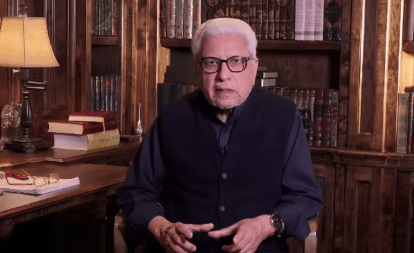
The text presents a critical commentary on Dr. Zakir Naik, a prominent Islamic preacher. The author expresses concern over Naik’s rising popularity in Pakistan, arguing that his conservative views and controversial statements about women pose a threat to a society already grappling with religious extremism. The author contrasts Naik’s reception in India with the potential negative consequences of his influence in Pakistan. Specific examples of Naik’s problematic rhetoric are cited, highlighting concerns about his views on women and his overall approach to religious discourse. Ultimately, the piece questions the uncritical celebration of Naik’s fame and advocates for a more discerning and critical assessment of his teachings.
Dr. Zakir Naik: A Study Guide
Quiz
Instructions: Answer the following questions in 2-3 sentences each.
Where was Dr. Zakir Naik born, and what was his academic background?
Who were the two influential figures who inspired and mentored Dr. Zakir Naik, and how did they differ in their advice to him?
What is “Taqabul Adiyan,” and how did it play a role in Dr. Zakir Naik’s career?
How did Dr. Zakir Naik’s fame spread in the 1990s, and what was his relationship to Sheikh Ahmed Deedat?
What are some criticisms that the author of the text has about Dr. Zakir Naik’s popularity and views?
According to the author, what is the state of intellectual discourse in Pakistani society regarding religious matters?
What specific actions and comments by Dr. Zakir Naik are criticized, and what do they reveal about his theology?
What are the criticisms of Dr. Zakir Naik’s views on women, and what alternative approaches does the author suggest?
How does the author use Dr. Zakir Naik’s experiences with Hindus in India to criticize Pakistani society?
How does the author contextualize Dr. Zakir Naik’s views on current events like the Israeli-Palestinian conflict?
Quiz Answer Key
Dr. Zakir Naik was born in Mumbai, India, and is the son of a religious scholar. Despite growing up in poverty, he pursued and earned an MBBS degree from Topiwala Medical College.
The two influential figures were Sheikh Ahmed Deedat and Dr. Israr Ahmed, both well-known Islamic scholars. Deedat influenced Naik as his disciple, but Dr. Ahmed advised him that being both a doctor and preacher was not advisable.
“Taqabul Adiyan” is the comparative study of religions, which became Dr. Zakir Naik’s favorite topic. He began giving lectures on this topic, which were pivotal in his rise to fame.
Dr. Zakir Naik became famous in the 1990s when he began lecturing on Taqabul Adiyan. While originally associated with Sheikh Ahmed Deedat, he was eventually considered separate from and more intellectually advanced than his teacher.
The author criticizes Dr. Zakir Naik for promoting religious fanaticism, and for using fame and popularity as proof of competence and truth. The author also highlights Dr. Zakir Naik’s harsh tone and controversial views.
According to the author, Pakistani society is facing intellectual stagnation in terms of traditional religious references. The author suggests that this creates an environment where Dr. Zakir Naik’s extremist rhetoric could flourish.
The author critiques Dr. Zakir Naik’s harsh tone and theological concepts, especially his views on women. Specific comments include his statements about women who do not find husbands becoming “public property” which the author finds offensive and disturbing.
The author criticizes Dr. Zakir Naik for his views that promote women marrying married men and seeing women as property, suggesting he should learn from examples of service like Mother Teresa or Edhi instead. They condemn his lack of respect for women.
The author contrasts the positive treatment Dr. Zakir Naik receives from Hindus in India with his negative perception of Pakistanis, highlighting that the religious tolerance of Hindus is exemplary for Muslims.
The author frames Dr. Zakir Naik’s views on events like the Israeli-Palestinian conflict as simplified and extremist, further demonstrating his intolerance. The author challenges Dr. Zakir Naik’s comments that the conflict is God’s will.
Essay Questions
Analyze the author’s critique of Dr. Zakir Naik’s rise to fame and how it relates to the broader issues of religious authority and popularity in the modern world.
Discuss the role of the author’s personal experiences and biases in shaping their overall assessment of Dr. Zakir Naik’s contributions and impact.
Compare and contrast the author’s analysis of the positive and negative impacts of Dr. Zakir Naik’s rhetoric on Pakistani society.
Explore the underlying tension in the text between religious fundamentalism and progressive thought, using specific examples from the article as illustration.
Assess the author’s overall argument regarding Dr. Zakir Naik’s impact, and evaluate the effectiveness of their rhetorical strategies in persuading the reader.
Glossary
MBBS: Bachelor of Medicine, Bachelor of Surgery, a medical degree.
Taqabul Adiyan: Comparative study of religions.
Rasikh ul Aqeedagi: Deeply rooted in faith or belief.
Salafi ul Aqeeda: Adherent to the Salafi branch of Sunni Islam.
Da’i Ali Al-Khair: Preacher or inviter to good.
Munazir Khatib: A skilled orator or debater.
Fiqhia: Relating to Islamic jurisprudence.
Maulvis: Religious scholars or clerics, often associated with traditional interpretations of Islam.
Astaghfirullah: An Islamic phrase meaning “I seek forgiveness from Allah.”
Fatwa: A religious ruling issued by an Islamic scholar.
Dr. Zakir Naik: A Critical Analysis
Okay, here’s a briefing document summarizing the key themes and ideas from the provided text about Dr. Zakir Naik:
Briefing Document: Analysis of Text on Dr. Zakir Naik
Introduction: This document summarizes the key themes, facts, and arguments presented in the provided text concerning Dr. Zakir Naik, an Indian Islamic preacher. The text offers a critical perspective on his career, beliefs, and impact, particularly within the context of Pakistani society.
Main Themes:
Early Life and Influences:
Born in Mumbai in 1965, Dr. Naik pursued a medical degree (MBBS) despite facing poverty.
He was influenced by prominent Islamic scholars Sheikh Ahmed Deedat and Dr. Israr Ahmed, with Deedat being a significant inspiration. “In 1987, he got the privilege of being a disciple of Sheikh Ahmed Deedat.”
The text notes his early struggles with public speaking but eventual mastery of English and Urdu oration.
He focused on “Taqabul Adiyan,” comparative religion, in his lectures.
Dr. Israr Ahmed advised him against pursuing both medicine and preaching, a path Naik did not follow.
Rise to Fame and “Peace TV”:
Dr. Naik’s fame grew in the 1990s through his lectures on comparative religion.
He was initially referred to as “Didat Plus” due to his association with Sheikh Ahmed Deedat.
He later established his own platform, “Peace TV.”
Critical Perspective:
The author of the text, referred to as “Darwish,” provides a critical analysis of Naik’s teachings and approach.
Darwish notes that despite Naik’s association with Deedat, he never became a favorite of Darwish because he considered him “a sectarian Rutto.”
Darwish finds Naik intellectually superior to Dr. Israr Ahmed but also accuses him of being an extreme follower of “Rasikh ul Aqeedagi,” implying a rigid and dogmatic approach.
Darwish points out his use of violent scenes, mimicking his teacher Ahmed Deedat,
Darwish expresses concern over Naik’s rise to popularity, arguing that “fame and popularity are considered as proof of competence and the criterion of truth,” a dangerous trend.
Concerns About Impact on Pakistani Society:The text expresses alarm over Naik’s visit to Pakistan, given the country’s existing religious fanaticism. “The concern is that religious fanaticism is already in full swing in Pakistan, leaving liberal seculars in general.”
Darwish fears that Naik’s presence will exacerbate extremism and make it harder for people to speak freely. “In this way, the existing extremism will increase by many times upon the arrival of Dr. Zakir.”
However, there is a recognition that Naik’s visit could also create some “commotion or vibration in a suffocated society.”
The author questions the need for Naik’s particular brand of preaching, asking, “What was the shortage of the first Mullahs in this country?”
He expresses concern that Naik’s teachings are further burdening a population “suffering from indigestion” due to existing religious discourse.
He compares Naik’s appeal to “the drums of the era” and suggests some young people are now seeing that his lectures are not the “gift” they once thought.
Critique of Naik’s Theology and Social Views:
The author specifically criticizes Naik’s views on women, highlighting his “harsh lips and tone” on the subject. “Especially the concepts of theology in relation to women have been exposed by these insignificant doctors Sahib is not criticizing Alia’s thoughts.”
Darwish notes Naik’s comment that women who cannot find husbands should become second or third wives of married men, and further condemns his characterization of unmarried women as “public property.”
The author contrasts Naik’s demeaning language with the work of social reformers such as Mother Teresa, and laments that Naik delivers “bad speeches” to women.
Darwish strongly disagrees with Naik’s remarks about the treatment of girls in religious studies, the “dirty concept of touching,” and his use of “sister” rather than “daughter” when speaking to young girls.
Darwish recalls an instance where a woman was criticized for questioning societal hypocrisy, instead of being supported.
Darwish says that Naik’s views on women are being rejected by media that opposes the dehumanization of women.
Naik’s Perceived Hypocrisy and Contradictions:
The author highlights contradictions in Naik’s statements, such as his positive comments about India while criticizing Pakistan, mentioning “How much better are the Indians than Pakistanis, India. That Hindus treat me so well,” while also saying, “Modi is wrong, India is not wrong, if a Hindu in India sees me, he will say Dr. Zakir Naik.”
Darwish says Naik claims Hindus treat him well while simultaneously calling Hindus “liars, false infidels, and atheists.”
The author also points out the hypocrisy in Naik’s fatwa banning YouTube income, while presumably having made income from using YouTube to propagate his views. “When you have issued the fatwa that YouTube income is haram, then all your loved ones. Tell the Islamic brothers to stop this forbidden act, other things will continue to be fine.”
Darwish questions Naik’s claim that Muslims in Pakistan live in a closer path to heaven than those in America.
He also criticizes Naik’s statement that the events in Gaza are “Allah’s plan,” suggesting that it absolves the human actors of responsibility.
Call for Change:
Darwish implores Naik to “get out of these troubles” and to consider that he has been banned in many countries.
He fears that Naik’s extremism will lead even his supporters to regret their association with him in the future.
Darwish argues that Muslims need to learn about tolerance from Hindus, rather than preach intolerance towards them.
Key Facts and Ideas:
Dr. Zakir Naik is a medical doctor turned Islamic preacher.
He is heavily influenced by Sheikh Ahmed Deedat and Dr. Israr Ahmed.
He rose to prominence in the 1990s through comparative religion lectures and later through “Peace TV.”
He is criticized for his rigid religious views and perceived sectarianism.
His visit to Pakistan is seen as a potential exacerbation of existing religious extremism.
His views on women are considered demeaning and outdated.
He is accused of hypocrisy and contradictions in his statements.
Conclusion:
The text provides a highly critical view of Dr. Zakir Naik, portraying him as a charismatic but ultimately problematic figure. It raises concerns about his impact on society, especially his potentially inflammatory rhetoric and his backward views on women. The author urges him to reconsider his positions and emphasizes the need for tolerance and inclusivity, contrasting them with Naik’s exclusionary and divisive statements.
Dr. Zakir Naik: A Critical Overview
Frequently Asked Questions about Dr. Zakir Naik
Who is Dr. Zakir Naik and what is his background?
Dr. Zakir Naik is an Indian citizen, born in Mumbai on October 18, 1965. He is a medical doctor (MBBS) by training, but is also known as a religious scholar and preacher. Despite initial difficulties in public speaking, he developed strong oratory skills in English and Urdu, with “Taqabul Adiyan” (comparative religion) being his main area of focus. He was inspired by and became a disciple of Sheikh Ahmed Deedat and was also influenced by Dr. Israr Ahmed, both prominent figures in Islamic scholarship and preaching. Notably, Dr. Israr Ahmed advised him to choose between a career in medicine and religious preaching, not to pursue both.
How did Dr. Naik gain prominence?
Dr. Zakir Naik’s fame began to spread in the 1990s, largely due to his lectures on comparative religion. He initially modeled his approach on Sheikh Ahmed Deedat, and was sometimes referred to as “Deedat Plus”. He later established his own platform, Peace TV, and his popularity extended beyond India.
What are some criticisms of Dr. Naik’s teachings?
Dr. Zakir Naik has faced criticism for what some perceive as sectarian, conservative, and sometimes violent rhetoric. He has been accused of using harsh tones and language in his speeches. His views on women, particularly his statements about women needing to become second or third wives if unmarried, and his use of derogatory terms, have drawn significant criticism. Additionally, his promotion of rigid religious interpretations has been questioned by those who advocate for more liberal interpretations.
What are some criticisms of Dr. Naik’s views on other religions and cultures?
Critics have pointed out that Dr. Naik often presents Muslims as superior and others as non-believers destined for hell. This view is seen as divisive and dismissive of other faiths and their followers. In his talks he has praised the respect he receives from Hindus in India.
What are some specific concerns about Dr. Naik’s impact in certain regions, such as Pakistan?
There is concern that Dr. Naik’s visits and speeches might exacerbate existing religious fanaticism in regions like Pakistan. His hardline rhetoric could potentially make it even more challenging to discuss or write about truth and promote tolerance there. However, it’s also argued that he might initiate some critical discourse in a society experiencing intellectual stagnation by offering an alternative point of view.
How has the media and others reacted to Dr. Naik’s views on women?
Many find his views on women as backward and offensive. He has made statements seen as demeaning and dismissive of women, that do not recognize their contributions to society. These views are strongly criticized by many for perpetuating inequality and undermining women’s rights.
What is the criticism of Dr. Naik’s statements regarding certain social issues?
Dr. Naik’s stances on societal issues are seen as extreme and insensitive. Some of these statements have included criticizing the earnings of YouTubers while he himself uses the platform, and views regarding what is happening in Gaza, with some claiming they are insensitive and incite harmful views.
Why is Dr. Naik’s legacy seen as complicated or controversial?
Dr. Naik’s legacy is complex due to the duality of his impact. While some view him as a powerful orator and a force for religious awareness, others see his teachings as divisive, intolerant, and harmful. His statements, particularly concerning women and non-Muslims, have led to significant controversy. His role in initiating debates about religion has also made him a significant, albeit divisive, figure.
Zakir Naik: A Controversial Life
Okay, here is a timeline of events and a cast of characters based on the provided text:
Timeline of Main Events
October 18, 1965: Zakir Naik is born in Mumbai, India to Abdul Karim Naik.
Early Life: Zakir Naik experiences poverty but works hard and becomes a qualified MBBS doctor from Topiwala Medical College
Early Career: Naik struggles initially with public speaking, eventually becoming fluent in English and Urdu. He develops a strong interest in comparative religion (“Taqabul Adiyan”).
1987: Zakir Naik becomes a disciple of Sheikh Ahmed Deedat.
1991:Zakir Naik travels to Pakistan and receives blessings from Dr. Israr Ahmed, who advises him to choose between being a doctor or a preacher.
Darwish becomes aware of Zakir Naik, having previously been close to Ghamdi Sahib and having met with Dr. Israr Ahmed.
1990s:Zakir Naik’s fame begins to spread through lectures on comparative religion.
He is initially called “Deedat Plus” by followers, after his mentor, Sheikh Ahmed Deedat.
Zakir Naik establishes his own Peace TV.
He is seen as intellectually surpassing Dr. Israr Ahmed in religious conviction by some.
Darwish observes Zakir Naik’s increasing fame, but holds a critical view of his religious consciousness.
Recent Past:Zakir Naik makes an official visit to Pakistan.
Concerns arise that his visit will increase religious fanaticism in Pakistan and further threaten the liberal secular community in Pakistan, who struggle to speak and write the truth.
Some believe Zakir Naik will spark intellectual debate in the stagnant religious society, potentially leading to constructive change by destruction of the status quo.
Some in Pakistan question why an “imported” preacher is being brought into the country when they already have many local religious leaders.
Some, who had previously enjoyed his lectures now find his “sweet dream” of his teachings to be broken with an opening of the eyes.
Zakir Naik criticizes how he was treated by Pakistan International Airlines during a flight, contrasting it with the positive treatment he receives in India from Hindus. He states the respect he receives in India is greater than in Pakistan, recounting Hindus touching his feet.
Zakir Naik is criticized for his statements, that are said to preach hate and intolerance, that non-Muslims are “liars, false infidels, and atheists” and “people of hell and hellfire.”
Zakir Naik is criticized for saying “Women who do not get unmarried men should become second and third wives of married men” and that a woman who doesn’t do this will be “public property” or a “market woman.”
Zakir Naik is also criticized for statements regarding orphan girls in care, which caused “sorrow and grief” to sensitive people who heard them.
He has allegedly been banned from many countries because of his extremism.
Zakir Naik has had many discussions with his former teacher Dr. Israr Ahmed on various issues.
Cast of Characters
Dr. Zakir Naik: The central figure of the text, an Indian citizen born in 1965. He is a qualified MBBS doctor, turned Islamic preacher, known for his lectures on comparative religion (Taqabul Adiyan). He is a disciple of Sheikh Ahmed Deedat and mentored by Dr. Israr Ahmed. He is now controversial for his statements about women and other religions and has faced criticism from many. He is the founder of Peace TV.
Abdul Karim Naik: Dr. Zakir Naik’s father, described as a religious scholar.
Sheikh Ahmed Deedat: A prominent South African debater and Islamic scholar, who was a mentor to Zakir Naik. Zakir Naik was initially called “Deedat Plus” by followers, after him.
Dr. Israr Ahmed: A Pakistani religious scholar, also an MBBS doctor, and Islamic preacher. He advised Zakir Naik to choose between medicine and preaching.
Darwish: The author or speaker of the text and someone who has known or been aware of Zakir Naik since 1991. Darwish has been critical of Zakir Naik and his teachings. Darwish was previously close to Ghamdi Sahib.
Ghamdi Sahib: A figure who was close to Darwish prior to him becoming aware of Zakir Naik.
Mr. Shami: A friend of Darwish, who at one time expressed displeasure regarding Darwish’s critical thoughts of Zakir Naik.
Modi: Likely refers to Narendra Modi, the Prime Minister of India. In the text, Dr. Naik states “Modi is wrong, India is not wrong,” referencing the positive treatment he received from Hindus in India in comparison to his treatment during a Pakistan International Airlines trip.
Edhi: Likely refers to Abdul Sattar Edhi, a renowned Pakistani philanthropist, who passed away in 2016 and whom Darwish wishes Zakir Naik could have learned from.
Unnamed Pakhtoon Girl in Karachi: A young woman, used in a story Darwish uses to illustrate the hypocrisy in Pakistani society. She was treated badly for questioning it, and the text uses her story as an example of the hypocritical ways of the society being discussed.
Unnamed Lady Anchor: A woman who was climbing toward Darwish while he was retreating. The story of this lady is used to illustrate the “dirty concept of touching” regarding women studying in religious studies and madrasas.
Unnamed Sweet Home Orphan Girls: Girls in the care of sweet home, who are referenced in the text, when recounting Zakir Naik’s controversial statements about women, especially those not married.
Lata Devi: Referenced as a example of a woman who has spent her life serving others, to illustrate the criticism Darwish has for Zakir Naik’s statements about women.
This information should give you a comprehensive overview of the events and individuals discussed in the text.
Zakir Naik: A Critical Biography
Dr. Zakir Naik is an Indian citizen, born in Mumbai on October 18, 1965, to a religious scholar named Abdul Karim Naik [1]. Despite experiencing extreme poverty, he earned an MBBS from Topiwala Medical College through hard work [1]. Although he initially struggled with language, he became proficient in English and Urdu oration and his favorite topic is Taqabul Adiyan (comparative religion) [1].
Dr. Naik was influenced by Sheikh Ahmed Deedat and Dr. Israr Ahmed [1]. He became a disciple of Sheikh Ahmed Deedat in 1987 and in 1991 he received blessings from Dr. Israr Ahmed [1]. Dr. Israr Ahmed, who was also an MBBS doctor and preacher of Islam, advised Dr. Zakir Naik that the roles of doctor and preacher should not be combined [1].
Darwish’s awareness of Dr. Zakir Naik began in 1991 [2]. Dr. Zakir Naik’s fame grew in the 1990s as he began lecturing on Taqabul Religion [2]. He started in the presence of Deedat in South Africa, who called him “Deedat Plus,” and later Dr. Naik created his own Peace TV [2]. Despite his qualities, Darwish notes that Dr. Zakir Naik never became a favorite, and Darwish considered him a sectarian because he was perceived to be intellectually superior to Dr. Israr Ahmed [2]. Darwish also recalls that when Dr. Naik’s fame spread beyond India, many young followers inquired about him, however, Darwish’s critical answers were not well-received [2].
Dr. Zakir Naik’s visit to Pakistan raised concerns about the potential increase of religious fanaticism, due to his strict interpretations of Islam [3]. Some have argued that Pakistan already has many religious leaders, and importing Dr. Naik is unnecessary [4]. Others argue that Dr. Naik’s arrival could create intellectual discourse in a stagnant society [4].
Some people who previously admired Dr. Naik have had a change of heart after listening to his speeches and his conservative views, especially regarding women [5]. Darwish notes that Dr. Naik’s views on women, where he stated that unmarried women who do not get a husband should become second or third wives of married men and that women who don’t do this are “public property”, have caused offense [6].
Additionally, Dr. Naik has been quoted as saying that Hindus in India treat him well and show him respect, touching his feet and calling him a man of God, and that he is treated better in India than in Pakistan [7]. Furthermore, Dr. Naik has been criticized for saying that Muslims are heavenly creatures and that it is easier to get to heaven from Pakistan than from America [6]. He has been accused of promoting a narrow view of Islam, declaring others as “liars, false infidels and atheists” [6].
Dr. Naik has also been criticized for his comments on the treatment of women, including the idea that men should call young girls their daughters rather than their sisters [8]. Darwish notes that Dr. Naik’s views are not new, and that they have been discussed with his teacher, Dr. Israr Ahmed, previously [8]. Some are worried that his extremism has led to him being banned in many countries and that his visit to Pakistan will bring further regret [8].
Dr. Zakir Naik and Religious Extremism in Pakistan
Religious extremism is a central concern in the provided sources, particularly in relation to Dr. Zakir Naik’s teachings and their potential impact [1, 2]. Here’s a breakdown of the key points:
Concerns about Dr. Naik’s Influence: Dr. Zakir Naik’s visit to Pakistan has raised fears about the potential rise of religious fanaticism, particularly due to his strict interpretations of Islam [1]. It’s noted that religious extremism is already prevalent in Pakistan, and Dr. Naik’s arrival could worsen the situation [1]. Some believe his presence will make it more difficult to speak and write the truth, further increasing existing extremism [1].
Critiques of Dr. Naik’s Views: Dr. Naik is described as a “strict Rasikh Fakir or Salafi ul Aqeeda Da’i Ali Al-Khair Preacher,” which suggests a rigid adherence to certain religious interpretations [3]. This is further emphasized by the criticism that Dr. Naik presents a narrow view of Islam, declaring others as “liars, false infidels and atheists,” and that only Muslims are heavenly creatures [4].
Extremism and Intolerance: The sources highlight that Dr. Naik’s teachings promote intolerance towards other religions and beliefs [4]. He is said to have stated that non-Muslims are “people of hell and hellfire” and that it is easier to reach heaven from Pakistan than from America [4]. This creates a divisive worldview, further contributing to religious extremism [4].
Controversial Statements: Dr. Naik’s comments on women, where he stated that unmarried women should become second or third wives to married men, and those that don’t are “public property,” have drawn significant criticism and are seen as further evidence of his extremist views [4].
Intellectual Stagnation and Extremism: There is a concern that Pakistan is facing intellectual stagnation in terms of religious understanding [3]. While some suggest Dr. Naik’s arrival could create some intellectual discussion, others worry that it will exacerbate the existing extremism in the country [3].
Critiques of Dr. Naik’s teaching methods Some are now criticizing the harsh tone and concepts of theology that Dr. Naik adopts [5]. These people who were once admirers of him, feel that his conservative views and pronouncements are harmful [5].
Banning and Regret: The sources mention that Dr. Naik has been banned in several countries due to his extremist views [2]. There are concerns that those who have invited him to Pakistan may also come to regret it in the future [2].
In summary, the sources portray Dr. Zakir Naik as a figure associated with religious extremism due to his strict interpretations of Islam, intolerance towards other beliefs, and controversial statements [1, 4]. His visit to Pakistan is seen as a potential catalyst for further extremism, rather than a source of positive change [1].
Zakir Naik’s Interpretation of Islam: A Critical Analysis
The sources discuss Islamic teachings primarily through the lens of Dr. Zakir Naik’s interpretations and their impact, particularly regarding religious extremism and intolerance [1, 2]. Here’s a breakdown of the key points related to Islamic teachings:
Strict Interpretations: Dr. Zakir Naik is portrayed as having a very strict, rigid, and narrow interpretation of Islam [2, 3]. He is described as a “strict Rasikh Fakir or Salafi ul Aqeeda Da’i Ali Al-Khair Preacher” [4]. This suggests he adheres to a specific, conservative school of thought within Islam.
Intolerance towards other beliefs: A major theme is Dr. Naik’s intolerance toward other religions [5]. He is criticized for declaring non-Muslims as “liars, false infidels and atheists” and “people of hell and hellfire” [5]. He also claims that only Muslims are “heavenly creatures” [5]. This viewpoint is presented as divisive and extremist.
Heaven and Hell: According to the sources, Dr. Naik has stated that it is easier to get to heaven from Pakistan than from America [5]. This idea reinforces a narrow, geographically-bound concept of salvation and suggests that religious practice in a specific location is more beneficial than in others, which also promotes a sense of religious superiority.
Controversial views about women: Dr. Naik’s teachings are criticized for their views on women [3, 5]. He is quoted as saying that unmarried women who do not find husbands should become second or third wives of married men, and if they don’t, they become “public property” [5]. These views are considered demeaning and demonstrate a lack of respect for women and are cited as examples of his extremism. The sources highlight that these views are not in line with the respect and dignity that many women embody and the contributions they make to society [5, 6].
Focus on ritual and obedience: The sources portray Dr. Naik’s teachings as emphasizing strict adherence to specific Islamic rules and practices, which some find problematic. For example, his fatwa against YouTube income is mentioned [5], suggesting that he focuses on specific practices in his teachings. This emphasis on the minutiae of rules is seen as a distraction from the broader principles of Islam [3].
Critique of traditional religious references: The sources mention that there is an intellectual stagnation within Pakistani society regarding traditional religious references [4]. The sources present the argument that people like Dr. Naik don’t help the situation by giving people more of the same rather than introducing new ideas [4].
Contrast with broader Islamic values: The sources implicitly contrast Dr. Naik’s teachings with broader values such as compassion, inclusivity, and respect for diversity [5]. It is mentioned that Hindus show Dr. Naik great respect, touching his feet and calling him “a man of God” [7]. The source questions why Muslims do not learn from the “wide and broad” hearts of Hindus [5].
Critiques of teaching style: The sources note that people are now criticizing the “harsh lips and tone” adopted by Dr. Naik in his speeches and the theology he presents [3]. Some of his former admirers have changed their minds after listening to his lectures and have now recognized the harm his conservative views cause [3].
In summary, the sources primarily present Islamic teachings through the critical lens of Dr. Zakir Naik’s interpretations. His teachings are characterized as narrow, intolerant, and extremist, emphasizing strict adherence to rules and promoting a divisive worldview. The sources also imply a contrast between Dr. Naik’s specific teachings and broader Islamic values like compassion and respect, but primarily focus on his problematic and controversial interpretations.
Pakistan: Religion, Extremism, and Intellectual Stagnation
The sources offer several insights into Pakistani society, particularly in relation to religious extremism, intellectual stagnation, and the role of religious figures like Dr. Zakir Naik. Here’s a breakdown of the key points:
Religious Fanaticism: The sources indicate that religious fanaticism is already widespread in Pakistan [1]. There is a concern that the arrival of figures like Dr. Zakir Naik, who is perceived as a strict and extremist preacher, will exacerbate this issue [1, 2]. This suggests that a segment of Pakistani society is already susceptible to, or actively engaged in, extremist religious views.
Intellectual Stagnation: The sources describe Pakistani society as facing “the worst intellectual stagnation” in terms of traditional religious references [2]. This suggests a lack of critical thinking and a tendency to adhere rigidly to established religious interpretations. The arrival of Dr. Naik is seen by some as a potential catalyst for change in this area, arguing that even disruptive ideas can create some intellectual movement [2]. However, others worry that Dr. Naik’s views will only add to the existing intellectual stagnation [2].
Fear and Threats: It is noted that in Pakistan, the “life of humans has become ephemeral,” with fear and threats making it “more difficult to speak and write the truth” [1]. This highlights an environment where freedom of expression is curtailed, and where dissenting views are suppressed, creating an environment that is conducive to the spread of extremism [1].
Reactions to Dr. Naik: There are differing views about Dr. Zakir Naik’s visit to Pakistan. Some fear that his presence will amplify religious extremism, while others hope his arrival will lead to intellectual discourse [1, 2]. This divergence in opinion indicates a polarized society with some members adhering to traditional religious interpretations while others seek intellectual evolution [2].
Critique of Religious Leaders: There is a critical perspective on the role of religious leaders in Pakistani society. Some question why a “strict Rasikh Fakir or Salafi ul Aqeeda Da’i Ali Al-Khair Preacher” like Dr. Zakir Naik is being imported when Pakistan already has many religious leaders [2]. This suggests that there are elements within Pakistani society who are dissatisfied with the existing religious leadership and teachings. There’s a sense that importing another religious figure will just provide “meals on top of his foods” and will not introduce new ideas [2].
Shifting Perceptions: The sources reveal that some individuals who once admired Dr. Naik have now become critical of his views and teaching style [3]. This indicates a growing awareness and questioning of extremist ideologies within the society. These people who once presented his teachings as references now find themselves disillusioned and questioning the conservative views that Dr. Naik promotes [3].
Treatment of Women: The sources discuss the problematic treatment of women in Pakistani society. This is highlighted by Dr. Naik’s comments about women becoming second or third wives, which have drawn significant criticism. This suggests that there are patriarchal norms and attitudes prevalent in the society [4]. Furthermore, the source notes the hypocrisy of the society when a young Pakhtoon girl in Karachi was treated badly for questioning that same hypocrisy [5].
Contrasting Views: There is also a mention of the respect that Hindus in India show towards Dr. Naik, with Hindus touching his feet and calling him a man of God [6]. This is contrasted with the treatment he receives in Pakistan, which is highlighted in an anecdote about an experience he had with PIA. The sources suggest that Pakistani society might learn from the “wide and broad” hearts of Hindus [4].
Calls for Change: The sources also show that there are elements within Pakistani society who are challenging traditional norms, advocating for a more inclusive and tolerant approach [7]. They criticize the negative way in which the media portrays women and point out the double standards related to how women are treated and spoken about [4, 5].
In summary, the sources portray a complex picture of Pakistani society marked by religious extremism, intellectual stagnation, and a struggle for freedom of expression. There are conflicting views about religious figures like Dr. Naik, indicating a society grappling with its religious identity and trying to find its way. Some within the society are aware of these problems and are calling for a more tolerant and inclusive approach to the challenges of the 21st century.
Dr. Naik, Women’s Rights, and Pakistani Society
The sources discuss women’s rights primarily through the lens of Dr. Zakir Naik’s controversial statements and the broader societal context in Pakistan [1-3]. Here’s a breakdown of the key points:
Dr. Naik’s Dehumanizing Views: Dr. Zakir Naik is heavily criticized for his demeaning views on women [1, 2]. He is quoted as saying that unmarried women who do not find husbands should become second or third wives of married men [2]. He further states that women who do not adhere to this become “public property” [2]. These statements are seen as deeply offensive and disrespectful [2]. These comments are not isolated incidents but are part of a broader pattern of negative statements he has made.
Contradiction of Values: These views are directly contrasted with the lives of women like Mother Teresa and Lata Devi who have dedicated their lives to service, implying that Dr. Naik’s comments are not only demeaning, but also do not reflect the positive contributions that many women make to society [2].
Societal Hypocrisy: The sources also highlight a broader societal hypocrisy in the treatment of women, exemplified by an incident involving a Pakhtoon girl in Karachi [3]. This suggests that despite claims of Islamic piety, women are often mistreated and silenced within Pakistani society. The source also notes how the media is against this kind of treatment of women but nothing changes because of it [2].
Patriarchal Norms: The comments made by Dr. Naik and the societal reactions they provoke, indicate that there are deeply entrenched patriarchal norms in the society [2, 3]. The sources highlight the issues with men referring to young girls as “sisters” instead of as “daughters,” suggesting a shallow way of relating to women, and a lack of respect for their inherent dignity and humanity [4].
Media’s Role: The sources also mention the media’s negative portrayal of women, highlighting that the media is against the mistreatment of women at every level [2]. This implies that despite some media outlets taking a stance against the mistreatment of women, it is still a pervasive problem.
Challenging Traditional Views: The sources suggest that there are people within society who are challenging these traditional norms and advocating for women’s rights [1, 2, 4]. These people are critical of the way women are treated and spoken about, which suggests a growing awareness of the need for gender equality. They are openly critical of Dr. Naik’s views and teachings.
Extremist Interpretation of Religion: Dr. Naik’s views on women are seen as part of his broader extremist interpretation of Islam [1, 2]. The source indicates that these extreme views are harmful to women and have no place in the 21st century [2].
In summary, the sources portray women’s rights as a significant point of contention within Pakistani society, exacerbated by figures like Dr. Zakir Naik who promote demeaning and extremist views on women. The sources highlight the existence of patriarchal norms, societal hypocrisy, and the struggle for equality, along with those who are actively challenging these norms.
Affiliate Disclosure: This blog may contain affiliate links, which means I may earn a small commission if you click on the link and make a purchase. This comes at no additional cost to you. I only recommend products or services that I believe will add value to my readers. Your support helps keep this blog running and allows me to continue providing you with quality content. Thank you for your support!
Several articles cover diverse topics related to Saudi Arabia and the wider region. One set of articles discusses the King Salman Humanitarian Aid and Relief Centre’s efforts, particularly in Yemen, and Saudi Arabia’s support for various countries and its focus on humanitarian work. Another group highlights Saudi Arabia’s economic developments, including the strong performance of ten Saudi banks, investment in the mining sector, and initiatives for the localization of accounting jobs. Regional issues are addressed through discussions on Lebanese-Syrian border security, Israeli military operations in Gaza and the West Bank, and potential impacts of US foreign policy in the Middle East. Finally, a collection of pieces focuses on cultural and social aspects, featuring Ramadan activities in Mecca and Medina, the historical significance of the Prophet’s Mosque and the appointment of the first muezzin, developments in Saudi sports, and the celebration of Saudi Arabia’s Vision 2030.
Study Guide: News Articles from March 2025
Quiz (Short Answer)
What is the primary focus of the “Mishaam” project, and what impact has it had in Yemen according to the article?
According to the article, what is the Saudi Ministry of Investment doing to attract investment in the mining sector?
What was the main purpose of the visit by the Lebanese Defense Minister to Damascus?
What is the new decision issued by the Saudi Ministry of Human Resources and Social Development regarding the localization of accounting professions? What is the target percentage and timeframe?
What incident occurred in Khartoum, Sudan, involving the Rapid Support Forces (RSF), as reported in the article?
What initiative has Israel reportedly approved concerning the Gaza Strip, and what is its stated purpose?
What were the key achievements highlighted in the annual report presented to the governor of Al-Qassim region by the Ministry of Sports?
What is the “We Are All Family” initiative launched in the Madinah region, and what is its main goal?
According to historical accounts mentioned in the article, who is considered the first Mu’adhdhin in Islam and what is the significance of this?
What is the historical significance of Al-Qal’ah Mosque in Al-Ahsa, and what are some of the characteristics of its construction?
Quiz Answer Key
The “Mishaam” project focuses on clearing land in Yemen of landmines and unexploded ordnance. It has successfully removed a large number of mines and cleared significant areas of land, aiming to ensure the safety of civilians and enable their return, which positively impacts the Yemeni economy.
The Saudi Ministry of Investment is working to develop the mining sector by launching a program in partnership with the Ministry of Industry and Mineral Resources to facilitate investment (both local and foreign), attract leading companies, and streamline investor journeys, all contributing to the goals of Vision 2030.
The main purpose of the Lebanese Defense Minister’s visit to Damascus was to discuss controlling the situation at the border between Lebanon and Syria, enhancing coordination, and preventing attacks from both sides, following recent clashes.
The new decision aims for the gradual localization of accounting professions to reach 70% Saudization within five years, starting from October 27, 2025, with a nine-month grace period. This is intended to increase job opportunities for qualified Saudi nationals in the private sector.
In Khartoum, Sudan, the Rapid Support Forces (RSF) shelled the city of Omdurman, resulting in the death of three civilians (two children and a woman) and the injury of eight others, with eyewitnesses reporting multiple rockets hitting civilian areas.
Israel has reportedly approved a proposal to establish a new administration to facilitate the “voluntary” emigration of Palestinians from the Gaza Strip to third countries. This was stated by a spokesperson for Prime Minister Benjamin Netanyahu.
The key achievements highlighted in the report included supporting sports activities, developing the sports sector, and enhancing sports programs in line with the Kingdom’s Vision 2030, aiming to create an attractive environment for talent and promote community participation.
The “We Are All Family” initiative in the Madinah region aims to provide a conducive environment for orphans, contribute to developing their cognitive skills and integration into society, and improve their quality of life.
Bilal ibn Rabah al-Habashi is considered the first Mu’adhdhin in Islam. This appointment followed a dream seen by Abdullah bin Zaid al-Khazraji and confirmed by Umar ibn al-Khattab, which the Prophet Muhammad (peace be upon him) recognized as a true vision, instructing Bilal to call the Adhan due to his melodious voice.
Al-Qal’ah Mosque in Al-Ahsa is a historical mosque built in the Najdi architectural style, characterized by its use of mud bricks made from a mixture of clay and straw, formed in wooden molds. It is part of a project to develop historical mosques across the Kingdom, aiming to rehabilitate them for worship, highlight their historical significance, and preserve the architectural heritage of Saudi Arabia.
Essay Format Questions
Analyze the various international humanitarian and developmental initiatives undertaken by Saudi Arabia as highlighted in the provided articles. Discuss their objectives, scope, and potential impact on the recipient countries.
Evaluate the Saudi government’s efforts, as presented in the articles, to diversify its economy beyond oil through initiatives in mining and the localization of professions like accounting. What are the stated goals and potential challenges of these strategies?
Discuss the regional political dynamics reflected in the articles, focusing on the discussions between Lebanon and Syria regarding border security and the Israeli-Palestinian situation, including the proposed “voluntary” emigration from Gaza.
Examine the role of cultural heritage and national identity as portrayed in the articles, referencing initiatives like the Jeddah Historical festival, the “Al-Faisal” magazine issue on heritage, and the historical drama series “Muawiya.” How do these initiatives contribute to preserving and promoting cultural narratives?
Based on the articles, analyze the Saudi government’s focus on social responsibility and community development through various initiatives related to orphans, Ramadan meal programs, and environmental conservation. What do these efforts indicate about the Kingdom’s broader societal goals?
Glossary of Key Terms
Localization (Tawteen): A policy aimed at increasing the proportion of Saudi nationals employed in various sectors of the economy.
Vision 2030: The Kingdom of Saudi Arabia’s ambitious strategic framework for economic and social development, aiming to diversify the economy, enhance public services, and improve the quality of life.
Humanitarian Aid: Assistance provided to people in need, often during or after crises such as natural disasters or conflicts, focused on alleviating suffering and meeting basic needs.
Developmental Projects: Initiatives undertaken to improve the economic and social well-being of a community or nation, often focused on infrastructure, education, healthcare, and economic growth.
Mining Sector: The industry involved in the extraction of valuable minerals and other geological materials from the earth.
Border Security: Measures taken to protect the integrity of a nation’s boundaries, including controlling the movement of people and goods.
Islamic Civilization: The cultural, intellectual, and scientific achievements of the Islamic world throughout history.
Cultural Heritage: The legacy of physical artifacts and intangible attributes of a group or society that are inherited from past generations, maintained in the present, and bestowed for the benefit of future generations.
Social Responsibility: The ethical framework and commitment of individuals, organizations, or governments to contribute to the well-being of society and the environment.
Ramadan: The ninth month of the Islamic calendar, observed by Muslims worldwide as a month of fasting, prayer, reflection, and community.
Mu’adhdhin: A person who calls Muslims to prayer (Salah) from a minaret of a mosque.
Najdi Architecture: A traditional architectural style prevalent in the Najd region of Saudi Arabia, often characterized by the use of mud bricks and practical designs suited to the desert climate.
Sanctions: Economic or political penalties imposed by one or more countries against a targeted country, group, or individual, typically to compel a change in behavior.
OPEC+: A group of oil-producing countries consisting of the 13 members of OPEC (Organization of the Petroleum Exporting Countries) and 10 of the world’s major non-OPEC oil-exporting nations.
Fiscal Year: A 12-month period used by governments and businesses for accounting and budgeting purposes, which may not necessarily align with the calendar year.
Non-Performing Loans: Loans for which the borrower has not made scheduled payments for a certain period, indicating a higher risk of default.
Inflation: A general increase in prices and fall in the purchasing value of money.
Geopolitical Tensions: Strained relationships or potential conflicts between countries or regions due to political, economic, or territorial factors.
Ceasefire: A temporary suspension of fighting, typically agreed upon by opposing sides in a conflict.
Collective Memory: The shared pool of knowledge, beliefs, and traditions held by a group or society, which often shapes their understanding of the past and present.
Genocide: The deliberate killing of a large number of people from a particular nation or ethnic group with the aim of destroying that nation or group.
Briefing Document: Review of Al-Riyadh Newspaper Excerpts (March 25, 2025)
Source: Excerpts from Al-Riyadh Newspaper, Issue 20723, Dated Tuesday, March 25, 2025
Overview:
This briefing document summarizes the main themes, important ideas, and key facts presented in the provided excerpts from Al-Riyadh newspaper dated March 25, 2025. The articles cover a diverse range of topics, including Saudi Arabia’s international humanitarian efforts, economic developments (mining, banking sector Saudization), regional political discussions (Lebanon-Syria border, Israeli-Palestinian issues), local developmental initiatives across Saudi regions, cultural events, religious activities during Ramadan, and sports news.
Main Themes and Important Ideas/Facts:
1. Saudi Arabia’s Humanitarian and Diplomatic Role:
Global Humanitarian Aid: The Kingdom continues its significant humanitarian work internationally. King Salman Center for Relief and Humanitarian Aid is highlighted as a leading organization in the region and globally, delivering aid projects worldwide.
Quote: “… King Salman Center for Relief and Humanitarian Aid, which has succeeded in being an icon of humanitarian and relief work in the Arab region and the world, through its diverse good projects that reach the farthest place on planet Earth.”
Support for Yemen: Saudi Arabia has provided substantial financial support to Yemen, amounting to around $12 billion between 2012 and 2023 for budget support, oil derivatives, and salary grants. The “Masam” project for demining Yemeni territories has cleared over 485,000 landmines and unexploded ordnance, clearing 65,880,374 square meters of land.
Quote: “The Saudi efforts made are reflected in the ‘Masam’ project, the Kingdom and its leadership’s keenness to secure the Yemeni lands from the danger of mines, and to enable civilians to return and protect their areas safely…”
Principled Stances: The Kingdom is portrayed as having “honorable stances” and providing aid to friendly and sisterly countries during crises.
Palestinian Issue: Saudi Arabia reaffirms that a lasting and just peace cannot be achieved without the Palestinian people obtaining their rights and establishing an independent Palestinian state on the 1967 borders with East Jerusalem as its capital, in accordance with international legitimacy resolutions.
Lebanon-Syria Border Security: Lebanon and Syria are engaged in discussions to control the situation at their shared border, enhance coordination, and prevent attacks from both sides following recent clashes. This marks the first visit of a Lebanese defense minister to Damascus since the formation of a new Lebanese government.
Quote: “The visit aims to ‘discuss controlling the situation at the borders, and enhancing coordination and preventing attacks from both sides.’”
2. Economic Developments and Vision 2030:
Mining Sector Investment: The Ministry of Investment is actively working to develop the mining sector by launching a program in partnership with the Ministry of Industry and Mineral Resources to attract local and international companies, aiming to achieve Vision 2030 goals.
Quote: “The Ministry of Investment supported the mining system with a package of incentives… contributing to attracting foreign investments in the promising economic sectors and developing them…”
First Mining Exploration Packages: The Ministry of Industry and Mineral Resources has granted the first packages of multiple mining exploration licenses to local and international companies, covering areas like Jabal Sayid and Al-Hujrah, totaling 4,788 square kilometers. This initiative is expected to boost investment and raise investment rates in the sector.
Saudization of Accounting Professions: Three government entities (Ministry of Human Resources and Social Development, Saudi Organization for Certified Public Accountants, and Ministry of Commerce) are implementing the gradual Saudization of accounting professions to enhance the presence of Saudi nationals in the private sector. The goal is to reach 70% Saudization within five years, starting from October 27, 2025, with a nine-month grace period.
Quote: “A new decision has been issued that aims to strengthen the presence of Saudi men and women by providing more job opportunities for qualified national cadres in the private sector…”
Strong Performance of Saudi Banks: Ten Saudi banks maintained strong performance levels in the fiscal year 2024. Loans and advances rose by 14.4% year-on-year, driven mainly by institutional loans. While deposit growth slowed, the loan-to-deposit ratio reached 104.7%.
Quote: “Ten Saudi banks continued to maintain strong performance levels characterized by strength.”
3. Local Development Initiatives:
Al-Qassim Region: The Governor of Al-Qassim received a report on the achievements and events of the Ministry of Sports branch in the region for 2024, emphasizing the importance of developing the sports sector in line with Vision 2030 and fostering a stimulating environment for talents.
Madinah Region: The Governor of Madinah launched 20 developmental initiatives worth 11 million riyals, organized by the Ministry of Human Resources and Social Development branch, focusing on providing a good environment for orphans, developing their skills, and integrating them into society.
Quote: “His Royal Highness the Governor of Madinah launched 20 developmental initiatives… aimed at providing a good environment for orphans, contributing to the development of their cognitive skills and their integration into society…”
Al-Jouf Region: The Governor of Al-Jouf approved the “Himmat Al-Jouf 25” initiative, which focuses on the meticulous planning and organization of various activities and events in the region under his patronage, aligning with Vision 2030 and enhancing community development and tourism.
Eastern Province: The Emir of the Eastern Province received members of the “Tawiq” association. Additionally, the “Journey of the Mobile Vendor” initiative, part of “Basta Khair Saudi Arabia,” aimed to educate mobile vendors on proper business practices according to health and municipal regulations.
Jazan Region: The “Khairia Ahad Al-Masarihah” association organized an iftar for orphans. The “Khair Al-Madinah” endowment provided over 1.4 million iftar and suhoor meals during Ramadan.
4. Ramadan and Religious Observances:
Promoting Tolerance and Solidarity: The Ministry of Islamic Affairs, Dawah and Guidance continued its programs during Ramadan, including iftar projects in various countries like Chad and South Africa, embodying the Kingdom’s leading role in serving Islam and Muslims and fostering brotherhood and compassion.
Quote: “The Ministry of Islamic Affairs, Dawah and Guidance continued, represented by its religious attachés and embassies of the Kingdom, the implementation of the Custodian of the Two Holy Mosques’ program for breaking the fast for fasting people…”
Development of Historical Mosques: The Prince Muhammad bin Salman Project for the Development of Historical Mosques continues, with the “Al-Qalaa” Mosque in Al-Ahsa being restored using traditional Najdi architectural style. The project aims to rehabilitate and preserve historical mosques, highlighting the Kingdom’s cultural heritage.
Adhan in the Prophet’s Mosque: Over 20 muezzins raise the call to prayer in the Prophet’s Mosque in Madinah, following a tradition that began over 1400 years ago with Bilal bin Rabah, the Prophet’s first muezzin.
Quote: “The adhan has been raised in the Prophet’s Mosque since that era until our present time, and 20 muezzins take turns raising the call and the iqama, and repeating after the imam, proclaiming the voice of truth from the minarets of the Holy Mosque…”
Iftar Project in Madinah: The “Khair Al-Madinah” endowment successfully implemented an iftar project providing over 1.4 million meals during the first twenty days of Ramadan, reaching various locations and beneficiaries.
5. Cultural and Intellectual Scene:
Jeddah Historical Celebrations: Historical Jeddah celebrated “Al-Shouna” during Ramadan, with a museum at Naseef House offering a cultural experience showcasing rare archaeological discoveries from the ancient Al-Souna site.
Al-Faisal Magazine: The new issue of Al-Faisal magazine focused on “Heritage and Identity,” addressing various aspects of Arab heritage and highlighting scholarly efforts in preserving manuscripts and understanding cultural transformations.
“Assila” Cultural Forum: The “Assila” cultural forum elected Hatim Al-Batawi as its new secretary-general, succeeding its founder Mohammed Aissa. The forum announced its upcoming activities, including art exhibitions and workshops.
Reflections on Ramadan TV: An article discusses the intense competition among TV channels during Ramadan to attract viewers with various programs.
Metaverse in Institutional Communication: An article explores the potential of the metaverse in transforming institutional communication, improving internal collaboration, enhancing customer engagement through interactive experiences, and providing virtual environments for training and events.
Historical Drama “Muawiya”: An analysis discusses the historical drama series “Muawiya,” produced by MBC, which addresses early Islamic history, sparking artistic and ideological debates. The series is compared to international productions and noted for its high production quality. The importance of presenting history responsibly and avoiding ideological manipulation is emphasized.
Role of Historical Drama: An article highlights the significant role of historical drama in reshaping collective memory, connecting the present with the past, and evoking emotions like justice, courage, and empathy in viewers. It also contributes to reviving heritage and making history accessible, especially to younger generations.
6. Regional Political Tensions:
Gaza Situation: Reports detail intense Israeli airstrikes on Gaza, resulting in civilian casualties. A proposed Egyptian ceasefire is mentioned. Nasser Medical Complex is described as being targeted, potentially constituting a war crime. Palestinian families in the “Tel Sultan” neighborhood are reported to be facing a “genocide.”
Quote: “Gaza: Martyrs in intense Israeli airstrikes and an Egyptian proposal for a ceasefire.”
Quote: “Targeting Nasser Complex is a war crime.”
Quote: “Palestinian families in the ‘Tel Sultan’ neighborhood are subjected to genocide.”
Jenin Operation: An Israeli occupation aggression on Jenin city and its camp resulted in 34 martyrs and dozens of injuries.
Accusations Against Shin Bet Chief: Israeli Prime Minister Netanyahu accused the head of the Shin Bet of trying to “overthrow the Yemeni government” (likely a mistranslation or misreporting, given the context usually relates to Israeli political levels or actions in Palestinian territories). Netanyahu also claimed the Shin Bet chief was gathering evidence against the political echelon in a legally questionable manner. The Shin Bet responded by stating its ongoing work against organizations designated as terrorist groups.
Detained Palestinians: Reports indicate a rising number of Palestinian detainees, including children, martyred in Israeli prisons, with their bodies often withheld.
7. Sports News:
Saudi National Football Team: The Saudi national football team concluded its preparations for the crucial Asian qualifiers for the 2026 World Cup against Japan. The team secured a recent win against China. Coach Hervé Renard emphasized the team’s readiness despite some player absences due to injury. The match against Japan is seen as a significant challenge in Group C. Japan leads the group, while Saudi Arabia is in third place. A Kuwaiti refereeing team was assigned to the match.
Quote (Renard): “We will face a strong and organized team, so we must be effective in seizing opportunities, especially since we were not in the last match against China.”
Quote (Renard): “We believe in our chances of qualifying, and this is our field today.”
Al-Adalah Friendly Match: Al-Adalah football club is preparing for upcoming league matches by playing a friendly against Al-Fateh.
Reflections on Saudi Club Performance: An article discusses the recent return to victories for the Saudi national team and the challenges faced by Saudi clubs in local and Asian competitions.
8. Other News:
Updated Hajj Health Requirements: The Ministry of Health announced updated health requirements for the Hajj season 1446 AH (2025 AD) to ensure the health and safety of pilgrims.
Abha Recognized for Air Quality: The city of Abha received the title of the “cleanest city” in the Kingdom for air purity in 2024, according to the National Center for Environmental Compliance. This achievement is seen as supporting Saudi Arabia’s bid to host the 2034 World Cup.
Quote: “Abha city obtained the title of the cleanest city for air purity in 2024, according to the assessment of the National Center for Environmental Compliance (NCEC) for Air.”
Concerns about Student Absenteeism: An article discusses the phenomenon of high student absenteeism, particularly at the beginning and end of semesters and before exams, suggesting a need to re-evaluate educational practices to ensure a more engaging learning environment.
Anniversary of Crown Prince’s Pledge of Allegiance: An article commemorates the eighth anniversary of the pledge of allegiance to Crown Prince Mohammed bin Salman, highlighting the Kingdom’s progress and achievements under his leadership and the Vision 2030 framework.
Makkah’s Kaakiya Market: The Kaakiya market in Makkah experiences increased activity during Ramadan.
Execution Court Announcement: An announcement from the Execution Court in Riyadh is included.
Conclusion:
These excerpts from Al-Riyadh newspaper provide a snapshot of Saudi Arabia in March 2025, highlighting its active role in international affairs, its commitment to economic diversification and development through Vision 2030, the diverse local initiatives underway across the Kingdom, the observance of Ramadan with its religious and cultural significance, and ongoing regional political tensions and sports activities. The overall tone suggests a Kingdom actively pursuing its vision for the future while addressing regional and global challenges.
Saudi Arabia: Humanitarian Aid, Mining, and Regional Affairs
FAQ based on the provided sources:
What are some of the key international humanitarian efforts undertaken by Saudi Arabia, as highlighted in the text? Saudi Arabia actively engages in providing aid and support to various countries facing crises and hardships. This includes significant financial contributions, such as the approximately $12 billion provided to Yemen between 2012 and 2023 to support its budget, oil derivatives, and salaries, as well as depositing reserves to stabilize the Yemeni Riyal. The King Salman Humanitarian Aid and Relief Centre plays a pivotal role in this, executing projects globally, including the “MASAM” project in Yemen, which has cleared over 485,000 landmines, unexploded ordnance, and booby traps, decontaminating over 65.8 million square meters of Yemeni land. These efforts reflect the Kingdom’s commitment to assisting those in need, irrespective of ethnicity or religion, and its proactive role in humanitarian initiatives.
What steps is Saudi Arabia taking to enhance investment in its mining sector, and what are the expected outcomes? The Ministry of Investment is implementing a range of incentives and developing the mining sector in partnership with the Ministry of Industry and Mineral Resources. The aim is to attract both local and international leading companies in the sector, facilitating investment and boosting exploration activities. The first batch of mining licenses has been granted for multiple exploration sites, including Jabal Sayid and Al-Hajla, covering an area of 4,788 square kilometers. This initiative is expected to significantly increase investment in the mining sector, raise production rates, and contribute to the goals of Saudi Vision 2030 by diversifying the economy and creating new opportunities.
What is the focus of the discussions between Lebanese and Syrian defense officials, as reported in the text? The Lebanese Minister of Defense visited Damascus to meet with his Syrian counterpart to discuss ways to control the situation at their shared border. This visit, the first of its kind since the formation of a new Lebanese government, aims to enhance coordination and prevent attacks from both sides. The border region has witnessed clashes, and there are concerns about smuggling of individuals, goods, and weapons across the 330-kilometer border, which includes many illegal crossings. Syria had also launched a security campaign in the Homs governorate to close smuggling routes.
What is the new Saudi initiative regarding the localization of accounting professions, and what are its objectives and timeline? Three governmental bodies—the Ministry of Human Resources and Social Development, the Saudi Organization for Certified Public Accountants, and the Ministry of Commerce—have launched a gradual localization plan for accounting professions. This new decision aims to increase the number of Saudi nationals in the private sector by creating more job opportunities for qualified Saudis. The plan targets reaching a 70% localization rate over five years, starting with the implementation of the first phase on October 27, 2025. The decision considers various factors, including the current labor market, the number of accounting graduates, and the private sector’s capacity to absorb national talent, aligning with the goals of Saudi Vision 2030.
What are the latest developments concerning the Israeli-Palestinian conflict and potential ceasefire efforts mentioned in the text? The text reports on intense Israeli airstrikes in Gaza, resulting in numerous casualties, and a proposed Egyptian initiative for a ceasefire. There are also reports of an Israeli plan to establish an administration to facilitate the “voluntary” emigration of Palestinians from the Gaza Strip. Additionally, tensions are highlighted by accusations from Israeli National Security Minister Itamar Ben-Gvir against the head of the Shin Bet, accusing him of attempting to undermine the political leadership. The situation remains highly volatile, with ongoing efforts to achieve a ceasefire and address the humanitarian crisis in Gaza.
How did the Al-Masjid an-Nabawi (Prophet’s Mosque) in Medina observe the month of Ramadan, according to the sources? During Ramadan, Al-Masjid an-Nabawi witnessed several significant activities. Twenty muezzins continued the tradition of calling to prayer, a practice that dates back over 1400 years to Bilal ibn Rabah, the Prophet’s first muezzin. The mosque also implemented a large-scale Iftar (breaking the fast) program, “Khair Al-Madinah,” which provided over 1.4 million Iftar meals during the first twenty days of Ramadan, benefiting more than 73,000 people daily. The distribution included dates, fruits, and vegetables, reaching various locations including the mosque, pilgrim stations, and hospitals, reflecting a commitment to serving those in need during the holy month.
What are some examples of Saudi Arabia’s efforts to promote tolerance and support Muslims internationally during Ramadan? Saudi Arabia, through the Ministry of Islamic Affairs, Dawah and Guidance, continues to implement the Custodian of the Two Holy Mosques’ program for breaking the fast in several countries. In Chad, approximately 30,000 fasting individuals benefited from Iftar tables organized by the Kingdom’s religious attaché. Similar initiatives were carried out in South Africa and Croatia, providing Iftar meals to thousands of Muslims. The Kingdom also distributed dates and copies of the Quran, underscoring its leading role in serving Islam and Muslims, fostering brotherhood, compassion, and embodying the values of tolerance during Ramadan.
What initiatives are being undertaken to preserve and promote historical mosques in Saudi Arabia? The Ministry of Islamic Affairs, Dawah and Guidance is undertaking a project to develop historical mosques across the Kingdom. This includes the restoration and rehabilitation of these mosques to preserve their historical and architectural significance, enhance their role in worship, and highlight the Kingdom’s cultural heritage. The project aims to develop the design of these mosques while retaining their original character. An example is the Al-Qalaa Mosque in Najran, which is being restored using traditional materials and techniques. This initiative aligns with Saudi Vision 2030’s focus on preserving national heritage and leveraging historical sites for cultural and religious enrichment.
King Salman Humanitarian Aid Center: Global Impact
Based on the sources, the King Salman Center for Relief and Humanitarian Aid is explicitly mentioned in.
Here’s what the sources say about it:
The Kingdom of Saudi Arabia intended for its humanitarian and relief initiatives to be managed without randomness or impulsiveness.
The King Salman Center for Relief and Humanitarian Aid was established in 2015.
It has become an icon of humanitarian and relief work in the Arab region and globally.
The center’s diverse and beneficial projects reach the farthest corners of the Earth.
One of its notable achievements is the “MASAM” project in Yemen.
Launched in 2018, the MASAM project had successfully cleared over 485,000 landmines, unexploded ordnance, and booby traps in Yemen by March of the current year.
It has decontaminated 65,880,374 square meters of Yemeni land that was polluted with explosives.
The MASAM project reflects the Kingdom’s and its leadership’s commitment to securing Yemeni lands from the danger of mines, allowing civilians to return and safeguarding their areas.
This effort is expected to have a positive impact on the Yemeni economy as it recovers.
Yemeni officials have expressed praise and appreciation for the Kingdom’s actions and the nobility of its leadership, as reflected in the MASAM project.
The sources also mention the broader context of the Kingdom’s humanitarian aid, noting that it provides assistance and stands by all sisterly and friendly nations during crises and hardships, offering the finest examples of aiding those in distress and responding to the calls of countries in need. The Kingdom generously spends on relief projects worldwide, driven by the principle of Arab solidarity and cooperation. This commitment is a continuation of the approach established by King Abdulaziz and followed by his successors, including King Salman.
Saudi Arabia: Global Humanitarian Relief Efforts
Based on the sources, the Kingdom of Saudi Arabia places a significant emphasis on humanitarian relief efforts and has established a strong framework for providing aid on a global scale.
Here are key aspects of these efforts, drawing from the sources and our previous discussion about the King Salman Center:
Principled Approach: The Kingdom’s humanitarian initiatives are driven by a sincere desire and a commitment to helping sisterly and friendly nations in times of crisis and hardship. This is rooted in the principle of Arab solidarity and cooperation.
Global Reach: Saudi Arabia generously spends on relief projects worldwide. Its aid is not limited by religion, gender, or ethnicity.
Managed and Organized: The Kingdom intended for its humanitarian and relief initiatives to be managed without randomness or impulsiveness, avoiding subjectivity.
King Salman Center for Relief and Humanitarian Aid: Established in 2015, the center has become a central pillar of the Kingdom’s relief efforts. It is recognized as an icon of humanitarian and relief work in the Arab region and globally, with its diverse and beneficial projects reaching the farthest corners of the Earth.
Examples of Aid:The Kingdom provides assistance and stands by all sisterly and friendly nations during crises and hardships, offering the finest examples of aiding those in distress and responding to the calls of countries in need.
Between 2012 and 2023, Saudi Arabia provided approximately $12 billion to support Yemen, including budgetary support, fuel derivatives, salary grants, and easing pressure on foreign currency reserves to stabilize the Yemeni Riyal.
The “MASAM” project in Yemen, launched by the King Salman Center in 2018, exemplifies these efforts. By March of the current year, MASAM had successfully cleared over 485,000 landmines, unexploded ordnance, and booby traps and decontaminated 65,880,374 square meters of Yemeni land polluted with explosives. This project reflects the Kingdom’s commitment to securing Yemeni lands and enabling the return of civilians.
Impact and Recognition: The MASAM project is expected to have a positive impact on the Yemeni economy. Yemeni officials have expressed praise and appreciation for the Kingdom’s actions and the nobility of its leadership as demonstrated by MASAM.
In summary, the Kingdom of Saudi Arabia is deeply involved in humanitarian relief efforts worldwide, guided by principles of solidarity and managed through organized entities like the King Salman Center. These efforts aim to provide significant assistance to nations in need, as evidenced by the substantial aid to Yemen and the impactful MASAM project.
Saudi Arabia’s International Support: Humanitarian, Investment, and Diplomacy
Saudi Arabia provides various forms of support to other nations and entities, as highlighted in the sources and our conversation history. This support spans humanitarian aid, investment, and efforts towards regional stability.
Regarding humanitarian support, Saudi Arabia demonstrates a strong and principled commitment to assisting sisterly and friendly nations in times of crisis and hardship. This is driven by a sincere desire and the principle of Arab solidarity and cooperation. The Kingdom generously contributes to relief projects worldwide, without discrimination based on religion, gender, or ethnicity. The King Salman Center for Relief and Humanitarian Aid, established in 2015, serves as a key institution managing and delivering this aid effectively. The center’s projects are diverse and far-reaching, as exemplified by the “MASAM” project in Yemen, which has made significant progress in clearing landmines and supporting the return of civilians. The Kingdom’s substantial financial aid to Yemen between 2012 and 2023, amounting to approximately $12 billion, further underscores its commitment to humanitarian support. Yemeni officials have expressed praise and appreciation for these efforts.
Beyond humanitarian aid, Saudi Arabia also provides investment support aimed at developing various sectors in the Kingdom and attracting foreign investment. The Ministry of Investment plays a crucial role in this by designing incentive packages to attract foreign investments in promising economic sectors. The ministry is working to develop all sectors, including the mining sector, through initiatives like the Exploration Licensing Program, in partnership with the Ministry of Industry and Mineral Resources. This program aims to facilitate investment by local and foreign leading companies in the mining sector, contributing to the goals of Vision 2030. The Kingdom is actively working to make itself a primary investment destination in the mining sector by offering attractive opportunities, streamlining procedures, and fostering cooperation between local and international investors.
Furthermore, the sources indicate Saudi Arabia’s support extends to efforts aimed at regional stability. For instance, the Kingdom expressed its strong condemnation of the Israeli occupation authorities’ announcement of establishing an agency to displace Palestinians from the Gaza Strip, reaffirming its rejection of these illegal and colonial practices. This demonstrates Saudi Arabia’s support for international law and the rights of the Palestinian people.
In summary, Saudi Arabia’s support is multifaceted, encompassing significant humanitarian relief efforts managed through the King Salman Center, active investment promotion across various sectors like mining, and consistent diplomatic stances in support of international law and regional stability. This reflects the Kingdom’s commitment to its values, its regional role, and its Vision 2030 objectives.
Yemen Mine Clearance: The MASAM Project
The “MASAM” project in Yemen is a significant initiative undertaken by the King Salman Center for Relief and Humanitarian Aid. It is explicitly mentioned in the sources as a notable achievement of the center.
Here’s a breakdown of the MASAM project based on the sources:
Origin and Launch: The MASAM project was launched in 2018 by the King Salman Center for Relief and Humanitarian Aid.
Objectives: The primary goal of the MASAM project is to clear Yemeni lands from the danger of mines, unexploded ordnance, and booby traps. This aims to ensure the safety of Yemeni civilians, allowing them to return to their lands and safeguarding their areas.
Achievements: As of March of the current year, the MASAM project has achieved significant results:
Over 485,000 landmines, unexploded ordnance, and booby traps have been successfully cleared.
65,880,374 square meters of Yemeni land that was polluted with explosives have been decontaminated.
Impact: The MASAM project is recognized for its crucial role in:
Securing Yemeni lands from the threat of explosives.
Enabling the return of civilians to their homes and land safely.
Expected to have a positive impact on the Yemeni economy as it recovers.
Recognition: The efforts of the Kingdom and its leadership, as demonstrated by the MASAM project, have been met with praise and appreciation from Yemeni officials, who have acknowledged the nobility of these actions.
In essence, the MASAM project stands as a key example of the humanitarian relief efforts led by the King Salman Center in Yemen. It directly addresses the critical issue of landmines, which pose a significant threat to the safety and well-being of the Yemeni population, and contributes to the long-term stability and economic recovery of the country.
Saudi Top Ten Banks: 2024 Performance Report
Based on the sources, a report by Andersen in cooperation with Marshall, specialized in providing advisory services in the Kingdom, announced the performance of the Saudi banking sector for the fiscal year 2024. The report stated that the top ten banks in Saudi Arabia maintained strong performance levels.
Here are some key highlights from the report regarding these ten banks:
Loan and Advances Growth: Loans and advances increased by 14.4% on a year-on-year basis in fiscal year 2024, primarily driven by a 17.7% year-on-year growth in corporate loans.
Deposit Growth Slowdown: The growth in deposit mobilization slowed down to 7.9% year-on-year, impacted by slower growth in time deposits, which only achieved a growth rate of 4.7% year-on-year.
Increase in Loan-to-Deposit Ratio: The loan-to-deposit ratio rose to 104.7%.
Rise in Funding Costs: Funding costs increased by 6%, reaching 55 basis points year-on-year to register 3.5%, leading to a slight decrease in the net interest margin to 3%.
Modest Operating Income Growth: The rate of operating income growth slightly decreased, recording a growth rate of 9.3%, reflecting the impact of higher net revenues from fees, commissions, and other operating revenues.
Healthy Net Profit Growth: The banks recorded healthy net profit growth of +11.8% year-on-year (compared to 13.5% in fiscal year 2023), reaching a total of 79.6 billion Saudi Riyals, driven by a decline in impairment provisions.
Improvement in Cost Efficiency: Cost efficiency levels improved, with the cost-to-income ratio decreasing to 31.3% (-63 basis points year-on-year) as operating income growth (+9.3% year-on-year) exceeded the growth rate of operating costs (+7.1% year-on-year).
Improved Cost of Risk: The cost of risk in Saudi banks improved slightly to reach 0.3% (-7 basis points year-on-year), with seven of the top ten banks recording an improvement in the cost of risk due to a 7.5% year-on-year decrease in impairment charges.
Decrease in Non-Performing Loans: Overall, the non-performing loan ratio to net loans decreased by 18 basis points year-on-year to register 1.1% in 2024.
Return on Equity: The return on shareholders’ equity increased to 14.5% (+72 basis points year-on-year).
Return on Assets: The return on assets remained stable at 2.0%.
According to Ali Al-Nasser, the publisher, this report demonstrates the stability and strength of the Saudi banking sector despite increased funding costs due to higher interest rates on deposits and loans. The banks improved their profits by raising net interest margins, reducing provisions, and enhancing liquidity efficiency.
The list of the ten banks included in the report comprises:
AlAhli Saudi Bank
Riyad Bank
Al Rajhi Bank
Saudi National Bank (SNB)
Saudi British Bank (SABB)
Banque Saudi Fransi
Alinma Bank
Arab National Bank
Saudi Investment Bank
Bank Albilad
AlJazira Bank
In conclusion, the top ten Saudi banks demonstrated resilience and strong performance in fiscal year 2024, characterized by loan growth, improved efficiency, and healthy profitability despite evolving market conditions.
Affiliate Disclosure: This blog may contain affiliate links, which means I may earn a small commission if you click on the link and make a purchase. This comes at no additional cost to you. I only recommend products or services that I believe will add value to my readers. Your support helps keep this blog running and allows me to continue providing you with quality content. Thank you for your support!
This source presents a religious narrative, seemingly analyzing historical events and interpreting them through a specific theological lens. It discusses figures referred to as prophets and messengers, their interactions with communities like Mecca, and divine laws or pronouncements related to them. The text references events such as migrations, battles (like Badr and Uhud), treaties (like Hudaybiyah), and the eventual conquest of Mecca, interpreting these as stages in a larger divine plan. It also addresses the responses of different groups, including believers, polytheists, and the “People of the Book,” to these events and the messages conveyed. The author examines concepts of punishment, respite, faith, hypocrisy, and the establishment of religious authority within this historical context. The narrative progresses through different periods, referencing specific years and the unfolding of events within the Arabian Peninsula and interactions with other powers.
Detailed Study Guide: Thematic Analysis of “Pasted Text”
This study guide is designed to help you review and understand the key themes, concepts, and historical references within the provided text excerpts. It includes a quiz to test your comprehension, essay format questions to encourage deeper analysis, and a glossary of important terms.
I. Quiz: Short Answer Questions
Answer the following questions in 2-3 sentences each, based on the provided text.
What was “Ummal Quraa” and what was its significance according to the text?
What was the stated condition in the Quran regarding punishment while the Prophet was present among the people?
Describe the debate between Ibrahim Al Salam and the angels regarding the destruction of a community. What was the key point of their discussion?
According to the text, what were the two statuses of Syedna Masih al-Salam (Jesus)?
What was the specific role assigned to the Arabian Peninsula and Mecca (“Umm Qura”) in the context of monotheism?
Explain the concept of “Muda Fana” attitude adopted during some of the early conflicts. What reason was given for this approach?
What was the purpose of the test that the Muslim community underwent, as mentioned in the context of battles like Uhud?
Describe the events surrounding the Treaty of Hudaibiya and its significance as a “Fatah Mubeen” (clear victory).
What was the nature of the ultimatum given in Surah Tauba to the “mushrik” (polytheist) Arabs after the conquest of Mecca?
According to the text, what was the outcome of the confrontations with the Jewish tribes (Banu Qainuqa, Banu Nadir, Banu Qurayza) in Medina?
II. Quiz Answer Key
“Ummal Quraa” refers to Mecca and signifies the central or mother settlement, which holds great importance in the Quran and as the focal point for the message brought by the Prophet Salam. The text indicates it was to be the center of monotheism for the world.
The Quran stated that as long as the Prophet was present among the people, “grift” (interpreted as punishment or divine retribution in this context) would not occur directly within that community. This provided a period of grace during the Prophet’s lifetime.
Ibrahim Al Salam questioned why Allah would show him a community destined for destruction, feeling concern for its inhabitants. The key point of the debate with the angels was that even the presence of a small number (e.g., ten) of righteous people could warrant giving the community a chance, implying divine justice and patience.
Syedna Masih al-Salam had one status as a messenger of Allah sent towards a specific community, completing his argument and announcing his departure and future return. His other status is implied as a figure whose eventual outcome serves as a precedent for the consequences faced by communities after their messenger.
The Arabian Peninsula, with Mecca as its center (“Umm Qura”), was specifically designated by Allah as the future center of monotheism. It was to be purified of polytheism, and the Kaaba was to be rebuilt as a house dedicated to the one God.
The “Muda Fana” attitude refers to a delay or deferment of immediate punishment despite transgressions. This approach was adopted because the implementation of divine law needed to be complete, allowing time for people to accept faith or for the consequences to unfold fully rather than immediate destruction.
The test that the Muslim community underwent, exemplified by the events at Uhud, served to distinguish between those who were truly committed (Sabik a Loon, mutt basans) and those who were hypocritical (jofa). It was a process of purification and assessment of their faith and obedience.
The Treaty of Hudaibiya, despite appearing unfavorable to some Muslims initially, is described as a “Fatah Mubeen” because it led to the formal recognition of the Islamic state by the Arabs for the first time, allowing for peaceful interactions and the spread of Islam without direct conflict.
The ultimatum in Surah Tauba announced that after a period of four months, the treaties with the “mushrik” Arabs would be terminated, and they would be confronted unless they embraced Islam. This marked a decisive shift towards the establishment of monotheism in the Arabian Peninsula.
The confrontations with the Jewish tribes in Medina resulted in their expulsion from the city due to acts of betrayal, conspiracy, and violation of agreements. The Banu Qainuqa were the first to be expelled, followed by the Banu Nadir, and finally, the Banu Qurayza faced severe consequences after their treachery during the Battle of the Trench.
III. Essay Format Questions
Consider the following questions for a more in-depth analysis of the provided text excerpts. Develop a thesis statement for each and outline the main points you would discuss, including specific examples and textual references.
Analyze the concept of divine justice and the timing of punishment as presented in the text. How are the ideas of respite, testing, and ultimate accountability interwoven throughout the narratives concerning different communities and prophets?
Discuss the evolving status and role of the Prophet Muhammad (peace be upon him) as depicted in the text. How does his mission progress from an individual calling in Mecca to leading a community, engaging in conflict, and establishing divine law in the Arabian Peninsula and beyond?
Examine the significance of key locations like Mecca (“Umm Qura”) and Medina in the unfolding narrative. How do these cities serve as centers for the development of the early Muslim community and the implementation of divine guidance?
Explore the interactions and conflicts between the early Muslim community and other groups, including the polytheist Arabs and the Jewish tribes. What were the primary causes of these conflicts, and what principles or strategies guided the Muslims’ actions and responses?
Analyze the role and interpretation of the Quran within the text excerpts. How is the Quran presented as a source of law, guidance, prophecy, and a means of understanding divine will in the various situations and historical events described?
IV. Glossary of Key Terms
Salam: Peace (often used after the name of a prophet as a blessing).
Ummal Quraa: The mother settlement; refers to Mecca.
Quran: The holy book of Islam, believed by Muslims to be the word of God revealed to Prophet Muhammad.
Allah: The Arabic word for God.
Risalat: Prophethood or the message of a prophet.
Tahheer: Purification.
Rasulallah: Messenger of Allah (an honorific title for Prophet Muhammad).
Companions: The early followers of Prophet Muhammad.
Hijrat: The migration of Prophet Muhammad and his followers from Mecca to Medina.
Ummah: The global community of Muslims.
Jazeera: Island or peninsula (often referring to the Arabian Peninsula).
Monotheism: The belief in one God (Tawheed in Arabic).
Shirk: The act of associating partners with God; polytheism or idolatry.
Baitullah: The House of God; refers to the Kaaba in Mecca.
Tawheed: The oneness of God; the central concept of monotheism in Islam.
Munkeen: Deniers (of the truth or faith).
Sirat: Biography, often referring to the biography of Prophet Muhammad.
Haram: Sacred, inviolable (often referring to the sacred months or the sanctuary of Mecca and Medina).
Mahda: An agreement, treaty, or truce.
Mushrik: One who commits shirk; a polytheist or idolater.
Ahle-Kitab: People of the Book (referring to Jews and Christians, who possess revealed scriptures).
Maju: Possibly referring to Zoroastrians in this context.
Nifaas: Hypocrisy.
Sabik a Loon: Those who are foremost or precedent (in faith and good deeds).
Mutt basans: Those who are firm or steadfast (in their faith).
Jofa: Weak or hypocritical (in faith).
Muda Fana: An attitude of delaying or not immediately enacting punishment.
Hudaibiya: The location where a significant treaty was made between the Muslims and the Meccans.
Fatah Mubeen: A clear victory.
Surah: A chapter of the Quran.
Tauba: Repentance (also the name of a chapter in the Quran).
Zul Hajj: The twelfth month of the Islamic lunar calendar, during which the Hajj pilgrimage takes place.
Muharram: The first month of the Islamic lunar calendar, which is one of the sacred months.
Jizya: A per capita tax historically levied by Islamic states on certain non-Muslim subjects who qualified for this status in lieu of military service.
Salafs: Pious predecessors or early generations of Muslims.
Iitma: A place of gathering or congregation (in this context, possibly referring to a theological or legal forum).
Nifaa: Hypocrisy.
Muhajireen: The early Muslim migrants from Mecca to Medina.
Ansar: The Muslim residents of Medina who supported the Muhajireen.
Ghazwa: A battle or military expedition led by Prophet Muhammad himself.
Briefing Document: Analysis of “Pasted Text” Excerpts
Date: October 26, 2023 Subject: Review of Themes and Ideas in Excerpts of a Religious Discourse Source: “Pasted Text” (Transcription of a speech or lecture)
Executive Summary:
The provided text excerpts appear to be a transcription of a detailed religious discourse, likely Islamic in origin, focusing heavily on the prophethood of Muhammad (peace be upon him) and its relationship with previous prophets, the community in Mecca (Umm al-Qura), the People of the Book (Jews and Christians), and the unfolding of divine law and punishment. Key themes include the nature of prophethood, the concept of divine respite before punishment, the establishment of monotheism in Arabia, the challenges faced by the early Muslim community, the interactions with other religious groups, the significance of specific events (like the Hijra, the battles of Badr and Uhud, and the Treaty of Hudaibiya), and the eventual triumph of Islam in the Arabian Peninsula. The speaker frequently references the Quran and interprets its verses in light of historical events and the mission of Prophet Muhammad.
Main Themes and Important Ideas/Facts:
The Nature and Culmination of Prophethood:
The speaker emphasizes the journey of Prophet Muhammad towards the people of Mecca, referring to Mecca as “Ummal Quraa (the one who is in the Quran).”
The idea that prophethood upon “Risalah ma Salam” (likely referring to a specific aspect or lineage of prophethood) is ending, and the era of “Imam Hujjat” (a significant figure in some Islamic traditions) on a world level is beginning.
Different statuses and privileges are associated with the prophethood of Muhammad compared to previous prophets, with his “Basharat’s Jihad of his mission is more than one.”
Examples of previous prophets like Noah, Lot, Ibrahim, Saleh, Hud, and Masih (Jesus) are used to draw parallels and highlight the continuity and progression of divine messages. For instance, the speaker notes that Syedna Masih al-Salam also had two statuses as a messenger to his community.
Divine Law, Respite, and Punishment:
A recurring theme is that Allah does not punish a community until a messenger has been sent and the message has been clearly delivered. The speaker states, “It was also stated that the Quran has It is said that Allah is present even in every Pharaoh The lock does not punish, that is, until it is known It does not happen that within the entire community there is no one.”
The concept of “tahheer” (purification) is linked to the timing of punishment. Punishment will not come until the practice of tahheer is complete.
The debate between Ibrahim Al Salam and the angels regarding the destruction of a community highlights the principle that even the presence of a few righteous individuals can delay or avert divine punishment. “This was stated in the debate that took place between them that even if there are 10 righteous people then Allah The lock will give them a chance, punishment does not come like this.”
The battles of Badr and Uhud are presented as forms of testing and sometimes as “the first installment of this punishment.” The speaker asks, “If the Sur Tauba is a surah of punishment for the non-Muslims who If it is going to come later then Anfa is actually Man Din But there is a mention of the punishment, it is mentioned in it that this is the first installment of this punishment.”
Establishment of Monotheism in Arabia:
Arabia, particularly Mecca, is designated as the center of monotheism (“This island which is called Arabia Allah had specifically made it clear that this The center of my monotheism will be shirk in it… This entire land should be purified”).
The role of Prophet Muhammad in purifying the land of idolatry and re-establishing Tawhid (monotheism) is emphasized.
Mecca (Markaz Basti) is seen as the central point (“Ummal Qura”) not just for the Arab people but for the whole world in terms of monotheism.
Challenges and Transformations of the Early Muslim Community:
The speaker discusses the initial fear and hidden faith of some individuals in Mecca (“A large number had either accepted faith or My head was afraid of expressing my faith, but my heart I had accepted it”).
The Hijra (migration) is mentioned as a significant event, after which the Prophet’s mission continued with a new dimension.
The battles of Badr and Uhud are analyzed in terms of tests, mistakes made by the Muslims, and divine intervention. The Quran’s commentary on these events in Surah Al-Imran is noted.
The Treaty of Hudaibiya is highlighted as a pivotal moment, described as a “Fat Mubeen” (clear victory) even though it appeared as a concession. It led to the recognition of the Islamic state by the Arabs and opened doors for alliances and the right for Muslims to visit Baitullah.
Interactions with the People of the Book:
The existence and locations of Jewish communities (Khyber, Jazeera Arabia, Iraq, Syria) and other groups like Majooz (Zoroastrians) and Saaban are acknowledged. These are collectively referred to as “Ahl-e-Kitab” (People of the Book).
The Quran’s address to both the original polytheists of Mecca (Mushrikin) and the People of the Book is mentioned.
Verses from Surah Tauba (specifically verse 29) are cited regarding fighting against those among the People of the Book who do not truly believe in Allah and the Last Day and do not abide by the prohibitions of Allah and His Messenger until they pay the “Jaziya” (a form of tax) with willing submission and feel subdued. “Apart from the polytheists, fight against the book also which is not Allah believes in the end everyday that which is forbidden by Allah and His Messenger They declare it haram and have no right to their religion… Pay the Mahkuta Jaziya, accept this mistake Accept the humiliation and Hum Sagar these words.”
The speaker details the conflicts and treaties with Jewish tribes in and around Medina (Banu Qaynuqa, Banu Nadir, Banu Qurayza), including their betrayals and the resulting consequences, such as expulsion and the battle of Banu Qurayza.
The Significance of the Treaty of Hudaibiya:
The speaker emphasizes that the peace established through the Treaty of Hudaibiya was a “glorious victory” (“It seems that this peace was a glorious victory How was this victory for Mubeen?”).
Key outcomes included the first-time acknowledgement of the Islamic state in Arabia, the establishment of alliances, and the acceptance of Muslims’ right to visit Baitullah.
The Conquest of Mecca and its Aftermath:
The conquest of Mecca in the 8th Hijri is seen as a fulfillment of divine will and a turning point.
Surah Tauba, revealed around the 9th Hijri after the conquest, is presented as the final verdict regarding the polytheists. Its unique characteristic of not beginning with “Bismillah ir Rahman Rahim” is noted, signifying its nature as a Surah of punishment.
The ultimatum given to the polytheists after the conquest, allowing them four months before facing consequences if they did not embrace Islam or leave, is discussed.
The Finality of Prophet Muhammad’s Message:
The speaker reiterates that after Prophet Muhammad, there will be no new prophet, and his message is the final guidance for humanity until the Day of Judgment.
The invitation letters sent by Prophet Muhammad to various rulers (Caesar of Rome, King of Persia, etc.) are mentioned as evidence of the universal scope of his message. The content of these letters called for the acceptance of Islam.
Quotes:
“Ummal Quraa (the one who is in the Quran)” (referring to Mecca)
“The Quran has stated as law that as long as The Prophet is present among the people till then grift would not have happened right in that”
“Allah does not punish until the time Till then the practice of tahheer is not complete”
“even if there are 10 righteous people then Allah The lock will give them a chance, punishment does not come like this”
“This island which is called Arabia Allah had specifically made it clear that this The center of my monotheism will be shirk in it”
“It seems that this peace was a glorious victory” (regarding the Treaty of Hudaibiya)
“Apart from the polytheists, fight against the book also which is not Allah believes in the end everyday that which is forbidden by Allah and His Messenger They declare it haram and have no right to their religion… Pay the Mahkuta Jaziya, accept this mistake Accept the humiliation and Hum Sagar these words.” (Interpretation of Surah Tauba, 9:29)
“The letter… I invite you to accept Islam Become a Muslim and you will be safe” (Sample of the letters sent to rulers)
“when Allah’s messenger arrives then just It is not that he gives guidance, He is the universal truth of Allah’s messengers It will keep reaching till the doomsday”
Conclusion:
The excerpts provide a rich and detailed exploration of early Islamic history and theology, as interpreted by the speaker. The discourse weaves together Quranic verses, accounts of prophetic actions, and historical events to illustrate key principles of Islamic faith, law, and the establishment of the Muslim community. The speaker emphasizes the unique status of Prophet Muhammad as the final messenger, the importance of adhering to divine law, and the ultimate triumph of monotheism in Arabia after periods of challenge and conflict with both polytheists and the People of the Book. The detailed recounting of interactions with different tribes and the analysis of significant events offer valuable insights into the formative years of Islam.
Frequently Asked Questions (FAQ) on the Provided Text
1. What was the primary mission of Prophet Salam in Mecca, and what significant event is associated with this period?
Prophet Salam’s primary mission in Mecca, referred to as Ummal Quraa (the one who is in the Quran), involved delivering good news (Risalat Ma You Salam). A significant aspect of this period was the fulfillment of his initial responsibility, after which it was divinely decided that he would leave the community. The text emphasizes that as long as the Prophet was physically present among the people, divine punishment (grift) would not occur within that community, a principle stated as law in the Quran.
2. How does the text explain Allah’s process of delivering punishment to a community, using the example of Prophet Ibrahim (Abraham) and Prophet Lut (Lot)?
The text highlights that Allah does not punish a community hastily or without reason. Drawing upon the encounter between angels sent to Lot and Ibrahim al-Salam, it explains that Ibrahim questioned the impending destruction of Lot’s community. A debate ensued, revealing a divine law: Allah will give a community a chance even if there are only ten righteous individuals within it. Punishment does not come arbitrarily; Allah waits until the practice of “tahheer” (purification or completion of the message) is complete. This illustrates that divine justice involves a process and opportunity for righteousness.
3. Why was punishment not immediately sent down upon those who rejected Prophet Muhammad (peace be upon him) in Mecca, despite his message?
The text provides several reasons for the delayed punishment in Mecca. Firstly, the Prophet (peace be upon him) was present among them. Secondly, a large number of people had either accepted faith or were concealing their belief due to fear or societal pressure. The concept of “mayal” is introduced, suggesting that faith can be born in someone’s heart even if not outwardly expressed. Furthermore, the text indicates a period of respite was granted, unlike some previous prophets where immediate reversal or destruction followed their rejection. This was because the mission of Prophet Muhammad (peace be upon him) involved a different set of circumstances and a larger number of potential believers.
4. How did the mission and status of Prophet Muhammad (peace be upon him) differ from those of previous prophets like Ibrahim (Abraham) and Jesus (Masih al-Salam)?
The text suggests that Prophet Muhammad (peace be upon him) had a more encompassing mission and potentially greater privileges than some preceding prophets. Syedna Ibrahim (Abraham) is cited as an example of having a unique role in the lineage of prophethood and the establishment of monotheism in Arabia. Syedna Masih al-Salam (Jesus) is described as having two statuses: one as a messenger to a specific community leading to his departure and a predicted future return similar to Prophet Noah, and another related to the protected status of Bani Israel. The mission of Prophet Muhammad (peace be upon him) is portrayed as culminating in the establishment of a global message and the purification of Arabia as the center of monotheism (Umm Qura for the world).
5. What is the significance of the Arabian island (Jazeera Arabia) in the context of Prophet Muhammad’s (peace be upon him) mission, according to the text?
The Arabian island held immense significance as it was specifically designated by Allah as the center of monotheism. Despite the emergence of polytheism (shirk) and the placement of idols in the Kaaba (Baitullah), the mission required the purification of this entire land. It was to serve as the central point (Markaz Basti, Mecca) from which the message of Tawheed (Oneness of God) would emanate to the world, playing the role of Umm Qura for humanity.
6. How does the text explain the “Muda Fana” (delayed or withheld punishment) attitude adopted during some of the early battles and conflicts faced by the Prophet (peace be upon him) and his followers?
The “Muda Fana” attitude, referring to the withholding of immediate punishment, was adopted despite provocations and attacks. The text explains this by stating that the full implementation of divine will had to be complete. It wasn’t merely about defending against attacks but allowing the process of purification (Tatheer) and the testing of the believers to unfold. Furthermore, it provided an opportunity for those who had accepted faith or were hesitant to declare it to remain within the community without immediate repercussions. The ultimate aim was the establishment of truth and the nullification of falsehood through a comprehensive process.
7. What were the key events and outcomes associated with the Treaty of Hudaybiyyah (Mahda of Hudaibiya) and the subsequent conquest of Mecca, as described in the text?
The Treaty of Hudaybiyyah is presented as a significant event where a 10-year peace agreement was made, even amidst opposition. Despite initial reluctance and perceived disadvantage by some Muslims, this treaty was later considered a “Fat Mubeen” (clear victory). The text highlights several reasons for this: the formal acknowledgment of the Islamic state by the Arabs, the opening of dialogue and alliances with various tribes, and the acceptance of Muslims’ right to visit the Kaaba. The conquest of Mecca, occurring later, is seen as a direct outcome of these developments, solidifying the dominance of Islam in Arabia.
8. How does the text describe the final phase of dealing with the polytheists (Mushrikeen) and the People of the Book (Ahl-e-Kitab) in Arabia, leading up to the announcement in Surah Tauba?
The text indicates a gradual process of dealing with both the Mushrikeen and the Ahl-e-Kitab. After the conquest of Mecca and the strengthening of the Muslim community, a decisive announcement was made, particularly regarding the polytheists. Surah Tauba is described as the “Surah of punishment” for them, marking the end of treaties and giving a four-month ultimatum to either accept Islam or face consequences. Regarding the People of the Book who did not embrace Islam, verse 29 of an unnamed Surah is mentioned, indicating a directive to fight them until they pay the Jizya (a tax) and acknowledge the dominance of Islam. This final phase aimed at establishing the singular authority of Allah and His religion in the Arabian Peninsula.
The Prophet’s Mission: Key Phases and Events
The journey of the Prophet (referred to as Salam or Rasulallah Sallallahu Salam in the sources) can be discussed in several key phases, marked by significant events and shifts in the mission.
1. The Early Period in Mecca (Umm al-Qura):
The Prophet’s mission began in Mecca, also known as Ummal Qura.
During his time in Mecca (approximately 12-13 years), he delivered his message and fulfilled his initial responsibility.
The Quran was revealed during this period. It is described as an “astonishing saying”.
Despite some individuals accepting Islam, many did not express their faith openly due to fear or social pressures.
It was stated that as long as the Prophet was present among the people, widespread punishment would not occur. A respite was given to the disbelievers (Munkeen).
2. The Migration to Medina (Hijrat and Establishment of a New Center):
The Prophet and his followers were eventually compelled to leave Mecca. This event is known as Hijrat and led them to Yathrib, which later became Medina.
In Medina (referred to as Yashraf in some instances), the Prophet established a new center for the Muslim community. This period saw the formation of a political entity known as Riyasat Madina (the kingdom of Risalat Maslam).
The Prophet made agreements (Mahida) with various groups in Medina, including the Jews, aiming for peaceful coexistence. The Misaaq Madina is mentioned in this context.
3. Conflict with the Quraish and the Early Battles:
The Quraish of Mecca continued to oppose the Prophet and the growing Muslim community in Medina, leading to conflicts.
The Battle of Badr was a significant early event, described as the “first installment” of Allah’s punishment against the Quraish leadership. Some sources suggest the Quraish initiated the confrontation. This battle is also referred to as Yaum ul Furqan (the day of distinction).
The Battle of Uhud followed, where Muslims faced setbacks and learned important lessons about obedience and the consequences of their actions.
4. The Treaty of Hudaibiya and its Aftermath:
In the sixth year after Hijrat, the Prophet and his followers attempted to perform Umrah but were prevented by the Quraish at Hudaibiya. This led to the signing of a treaty.
Although some companions were initially dissatisfied with the terms, the Treaty of Hudaibiya proved to be a significant turning point, leading to a period of relative peace and the increased spread of Islam.
During this time of peace, the Prophet sent letters to various rulers and leaders beyond Arabia, inviting them to Islam. Messengers were dispatched towards different regions, including Abyssinia, Egypt, Persia, and the Roman Empire. Some of these missions faced hostility, with messengers being killed.
The influence of Islam expanded, leading to events like the conquest of Khyber.
5. The Conquest of Mecca and the Consolidation of Islam in Arabia:
The Quraish violated the Treaty of Hudaibiya, which led to the Prophet leading a large army to Mecca in the eighth year of Hijrat, resulting in the peaceful conquest of the city.
After the conquest of Mecca, the city became the central point (Um Kura) for the entire Arabian Peninsula.
The Battle of Hunain took place shortly after the conquest, where the Muslims faced initial difficulties but ultimately achieved victory, further solidifying their control over Arabia.
6. The Revelation of Surah Tauba and the Final Phase:
In the ninth year of Hijrat, Surah Tauba was revealed, outlining the final stance towards the polytheists in Arabia.
A four-month grace period was granted to the polytheists with whom treaties existed. After this period, the agreements were terminated, and a clear directive against idolatry was established.
On the occasion of Hajj Akbar (the major pilgrimage), it was publicly declared that Allah and His Messenger were free from any obligations towards the polytheists.
The focus shifted towards the complete establishment of monotheism in Arabia and addressing the People of the Book.
Throughout his journey, the Prophet faced numerous challenges, including opposition, persecution, and warfare. The sources highlight the divine guidance he received, the resilience of his followers, and the gradual but eventual triumph of his mission in establishing Islam as the dominant force in Arabia. The journey also extended beyond the Arabian Peninsula through the sending of messengers, marking the beginning of Islam’s global outreach.
Quranic Law: Divine Legislation and Early Muslim Community
Quranic law, as depicted in the sources, is presented as divine legislation revealed by Allah and communicated through the Prophet Muhammad (peace be upon him). It served as a guiding framework for the early Muslim community, evolving and being implemented throughout the Prophet’s journey.
Key aspects of Quranic law discussed in the sources include:
Divine Origin and Authority: The Quran itself is stated as law. It is the word of Allah revealed to the Prophet. Allah reveals laws and makes decisions that are communicated through His messengers.
Purpose of Law: Quranic law aimed to guide the community, purify the land from polytheism (shirk), and establish justice.
Gradual Implementation and Respite: Allah does not punish until knowledge of wrongdoing is clear within the community. A period of respite (Nagji) was often granted to allow people to understand and accept the faith. Punishment is delayed until the practice of purification (tahheer) is complete. This was evident in the early Meccan period where widespread punishment did not occur while the Prophet was present.
Principles of Justice and Opportunity: Allah gives communities a chance, even if there are only a few righteous individuals. This was illustrated in the debate regarding the people of Lot.
Laws of War and Peace: Quranic law addresses situations of conflict, including the permission for and conduct of war. It also outlines the treatment of prisoners of war, suggesting options of release as a favor or in exchange for ransom. Treaties and agreements (Mahida) were established and governed by Quranic principles. However, when these treaties were violated, or a final stance was to be taken, Quranic law provided the framework for termination, as seen with the polytheists after the four-month grace period in Surah Tauba.
Laws Related to Religious Observances: The sources mention the importance of Hajj and Umrah and the impermissibility of obstructing those who wish to perform these pilgrimages.
Consequences of Accepting or Rejecting Faith: The Quran outlines consequences for those who accept faith and those who reject it. For the initial disbelievers (Munkeen), a respite was given, but eventual accountability and punishment were indicated. Humiliation (Ija) is mentioned as a form of punishment for those who deny the Prophet.
The Prophet’s Role as Implementer: The Prophet’s mission involved delivering and implementing Allah’s verdicts. His decisions and actions, such as the migration (Hijrat), engaging in battles like Badr, and entering into treaties like Hudaibiya, were all within the framework of divine guidance.
Testing and Trials (Fitna): Quranic law acknowledges that believers will be tested through fear, hunger, loss of wealth, lives, and fruits. These trials serve to distinguish the sincere believers.
Distinction Between Believers and Disbelievers (and Hypocrites): The Quran differentiates between the laws and outcomes for believers and disbelievers. It also addresses the issue of hypocrites (who outwardly profess faith but harbor disbelief), noting that their true nature would be revealed through trials.
The revelation and implementation of Quranic law were integral to the Prophet’s journey, shaping the development of the early Muslim community and ultimately leading to the establishment of Islam as a dominant force in Arabia. The sources emphasize that these laws are divine in origin and aim to establish justice and the worship of the one true God, Allah.
Divine Punishment: Concepts and Examples
Based on the sources and our conversation history, the concept of Divine punishment revolves around the consequences that Allah imposes upon those who reject faith, oppose His messengers, or engage in wrongdoing.
Here are key aspects of Divine punishment as discussed in the sources:
Source of Punishment: All punishment originates from Allah. The Quran itself contains accounts and pronouncements of Divine punishment.
Timing of Punishment:Divine punishment is not always immediate. Allah often grants a respite (Nagji) to individuals and communities to allow them time to understand and accept the message. This was partly because of the Prophet’s presence among his people.
Punishment is often delayed until the message has been clearly delivered and the “practice of purification (tahheer)” is complete.
However, when the time for the final verdict arrives, punishment will be implemented.
Reasons for Punishment:Rejection of faith (Kufr): Denying Allah and His messengers is a primary reason for Divine punishment.
Opposition to the Prophet: Those who rose up to fight against Allah and His Prophet faced punishment.
Disobedience and wrongdoing: Actions contrary to divine guidance can lead to punishment.
Violation of agreements (Mahida): Breaking treaties and acting treacherously can result in Divine retribution.
Obstructing the path of Allah: Preventing others from embracing Islam or performing religious duties like Hajj can incur punishment.
Forms of Punishment:Defeat in battle: The initial setback faced by the Muslims at the Battle of Uhud is presented as a consequence of their disobedience to the Prophet’s orders.
Humiliation (Ija/Saghar): The sources mention humiliation and disgrace as a form of Divine punishment, particularly for the People of the Book who rejected the Prophet. Living a life of humiliation and dying in humiliation are described.
Physical destruction: While the sources mention the potential for destruction (like the fate of the people of Noah or Lot), it is also stated that Allah’s punishment does not come arbitrarily. The presence of righteous individuals or the community embracing faith can avert such widespread destruction. The sky was considered a potential source of punishment, but it was decided that punishment would come “from the hands” of the believers.
Infliction by believers: Allah sometimes uses believers to carry out His punishment against those who oppose the faith. The Battle of Badr is a prime example.
Punishment in this life and the hereafter: For those who deny Allah and His Messenger, there is a punishment in this world and the punishment of the Fire in the hereafter.
Examples of Divine Punishment:The Battle of Badr: This is explicitly described as the “first installment” of Allah’s punishment against the Quraish leadership due to their opposition to the Prophet. The defeat and the loss of their leaders were seen as Divine retribution.
Abu Lahab: His demise after the Battle of Badr, marked by humiliation and rejection even by his own family, is portrayed as a form of Divine punishment for his staunch opposition to the Prophet.
The Banu Qurayza: The fate of this Jewish tribe in Medina, who violated their agreement, involved the killing of their men and the capture of their women and children, which is seen as a consequence of their betrayal.
Distinction in Punishment: The punishment for the polytheistic Arabs and the People of the Book is portrayed as different. While death was a consequence for some among the polytheists, the punishment for the People of the Book is emphasized as humiliation.
Punishment and Testing (Fitna): Sometimes what appears as hardship or conflict can also be a form of testing for the believers. This allows Allah to distinguish the sincere believers from the insincere or weak in faith.
In summary, Divine punishment in the sources is a multifaceted concept reflecting Allah’s justice and sovereignty. It is often delayed but ultimately certain for those who reject truth and engage in wrongdoing, taking various forms tailored to the nature of the transgression and the wisdom of Allah. The Prophet’s journey witnessed the unfolding of Divine punishment in specific historical contexts, serving as lessons and confirmations of Allah’s power and justice.
Early Muslim Community Faith: A Dynamic Evolution
Based on the sources and our conversation history, community faith during the time of the Prophet Muhammad (peace be upon him) was a dynamic and evolving phenomenon, marked by varying degrees of acceptance, internal struggles, and the eventual formation of a cohesive Muslim community (Ummah).
Here are key aspects of community faith as depicted in the sources:
Initial Stages in Mecca:
The Prophet’s mission in Mecca began with a call to monotheism (Tawheed) in a predominantly polytheistic society.
Initially, a small number of individuals accepted the faith openly.
Many others either accepted faith in their hearts but feared expressing it due to social pressures or persecution. Some were described as “mayal,” meaning inclined towards faith.
The ruling Quraish tribe largely rejected the message and subjected the early Muslims to hardship and oppression.
Despite the resistance, the Prophet continued to deliver the message, fulfilling his responsibility.
The Role of the Prophet:
The Prophet served as the central figure and the conduit of divine guidance, calling people to believe in Allah.
He delivered the “good news” (Risalat Ma You) and the “astonishing saying” (Quran).
His character and the divine nature of the Quran played a significant role in attracting people to Islam.
The Prophet also provided a model for the community through his actions and adherence to divine law.
Varying Levels of Faith:
The sources highlight that within the community, there were different levels of faith. Some were staunch believers who expressed their faith openly and faced persecution.
Others harbored faith in their hearts but were hesitant to declare it due to fear or social constraints.
The Quran also identifies hypocrites (Munafiqun), who outwardly professed Islam but held disbelief in their hearts. Their presence posed a challenge to the unity and sincerity of the community faith.
Development After Hijrat (Migration to Medina):
The migration to Medina marked a turning point, allowing the Muslim community to organize and establish a distinct identity.
In Medina, the community grew, including both the Muhajireen (emigrants from Mecca) and the Ansar (helpers from Medina).
Agreements and treaties (Mahida), such as the one with the Jews of Medina, were formed, outlining the rights and responsibilities within the community. These agreements aimed to foster cooperation and mutual support.
However, these agreements also revealed instances of betrayal and opposition from certain groups, testing the resilience and unity of the Muslim community’s faith.
Challenges to Community Faith:
External pressures from the Meccan polytheists and other Arab tribes led to conflicts and tests of faith.
Internal divisions arose due to the presence of hypocrites who sought to undermine the community from within. They spread rumors, sowed discord, and collaborated with the enemies of Islam.
Trials (Fitna) served to purify the community and distinguish the sincere believers from those with weak faith. Events like the Battle of Uhud highlighted the consequences of disobedience and the importance of adhering to the Prophet’s guidance.
Community Faith and Divine Intervention:
The sources suggest that the strength and sincerity of the community’s faith often correlated with divine support and protection. When the community embraced faith and followed the Prophet’s guidance, they were promised victory and success.
Conversely, disobedience and internal weaknesses could lead to setbacks and trials as a form of divine chastisement or testing.
The Battle of Badr is seen as an example of divine intervention in favor of the believers due to their faith and commitment.
The Formation of the Ummah:
Over time, the concept of a unified Muslim community (Ummah) based on shared faith in Allah and adherence to His laws took shape.
This community transcended tribal affiliations and geographical boundaries, united by their belief in the Prophet Muhammad as the final messenger and the Quran as the ultimate guide.
The conquest of Mecca and the subsequent spread of Islam across Arabia solidified the establishment of this Ummah.
In conclusion, community faith during the Prophet’s era was a complex tapestry woven with threads of deep conviction, hesitant acceptance, and outright rejection. The Prophet’s leadership, divine revelations, internal and external challenges, and instances of divine intervention all played crucial roles in shaping the faith of the early Muslim community and laying the foundation for the global Ummah. The sources underscore that true community faith requires not just belief in the heart but also outward expression, obedience to divine guidance, and unity in the face of adversity.
Tribal Dynamics in the Emergence of Islam
Based on the sources and our conversation history, tribal dynamics were a fundamental aspect of the social, political, and religious landscape during the emergence of Islam. The sources provide numerous examples of how tribal affiliations shaped events and influenced the early Muslim community.
Here are key aspects of tribal dynamics discussed in the sources:
Tribal Structure as the Basis of Society: Arabia at the time was largely organized along tribal lines. Individuals primarily identified with their tribe, which provided a framework for social interaction, governance, and defense. References to “tribal areas” and “tribal like state” highlight the significance of this structure.
Power and Prestige of Tribes: Certain tribes held more power and prestige than others. The Quraish tribe, being the custodians of the Kaaba in Mecca (Umm Qura), held a prominent position and wielded significant influence over other Arab tribes. Their leadership often dictated the initial response to the Prophet’s message.
Inter-Tribal Relations: Alliances and Conflicts: Tribes engaged in complex relationships, marked by both alliances and deep-seated rivalries. The sources mention attempts by the Quraish to rally other tribes against the Prophet, as well as instances where different tribes held their own distinct intentions and approaches. The historical animosity between tribes like Aus and Khazar is also highlighted, and the Prophet’s efforts to foster unity among them in Medina are noted.
The Prophet’s Engagement with Tribes: The Prophet’s mission involved extensive interaction with various tribes. He sent messages to their leaders, invited them to Islam, and formed treaties (Mahida) with them, particularly in Medina. These treaties aimed to establish peaceful coexistence and mutual obligations. The Constitution of Medina (Mahida) is presented as an effort to create a unified community encompassing different tribes, including the Jews.
Tribalism vs. the Emerging Muslim Community: The advent of Islam introduced a new basis for community identity – faith. This often created tension with existing tribal loyalties. Some individuals embraced Islam, sometimes against the wishes of their tribe’s leadership. The sources depict instances where the call to Islam transcended tribal boundaries, leading to the formation of a community (Ummah) based on shared belief. However, tribal sentiments and affiliations continued to influence events, as seen in the reactions of different Medinan tribes to conflicts and treaties.
Tribal Influence on Conflict: Tribal dynamics played a significant role in the conflicts faced by the early Muslim community. The Battle of the Trench (Ghazwa Khandaq) is described as a joint attack on Medina by many Arab tribes, instigated by leaders from the Banu Nazir who had tribal alliances. The loyalty and actions of different tribes in these conflicts often determined their outcome and the safety of the Muslim community.
The Jewish Tribes of Medina: The sources specifically discuss the dynamics involving the Jewish tribes of Medina: Banu Kanaka, Banu Nazir, and Banu Qurayza. These tribes had their own social structures and economic activities and entered into agreements with the Prophet. However, their interactions with the Muslim community were marked by periods of cooperation as well as instances of treachery and violation of treaties, ultimately leading to conflict and their expulsion or punishment. Their tribal identity and their relationships with other Arab tribes influenced their actions.
Tribal Customs and Laws: The sources allude to existing tribal customs and laws that sometimes clashed with Islamic teachings. For example, the practice of taking ransom for prisoners of war was a known tribal custom. The Prophet’s actions and the Quranic revelations often introduced new legal and ethical frameworks that sometimes superseded or modified these tribal norms.
Shifting Tribal Power Dynamics: The rise of Islam gradually shifted the power dynamics among the tribes in Arabia. The victories of the early Muslims and the consolidation of the Islamic state in Medina weakened the influence of those tribes that opposed Islam and strengthened the position of those who embraced it. The conquest of Khyber and the increasing influence of Islam over various Arab tribes illustrate this shift.
In conclusion, the sources reveal that tribal dynamics were a crucial lens through which to understand the events of the Prophet’s era. These dynamics shaped social interactions, political alliances, and the course of conflicts. The emergence of Islam presented both a challenge and a new framework for community building, interacting in complex ways with existing tribal structures and loyalties, ultimately leading to significant transformations in the Arabian Peninsula.
🔥 RASOOL ALLAH ﷺ KA MISSION ‼️ رسول اللہ ﷺ کا مشن || JAVED AHMAD GHAMIDI
The Original Text
The journey of the prophet Salam towards the people of Mecca That which happened was called Ummal Quraa (the one who is in the Quran) Risalat Ma You Salam spoke good news there A time came when I fulfilled my responsibility It has been decided that you will leave this community Let it go, I had requested that the Quran has stated as law that as long as The Prophet is present among the people till then grift would not have happened right in that It was also stated that the Quran has It is said that Allah is present even in every Pharaoh The lock does not punish, that is, until it is known It does not happen that within the entire community there is no one There is no more juice left, I had mentioned that When God’s angels were sent to Lot and His first meeting with Ibrahim Al Salam When we met, this is what happened there during the meeting Ibrāhīm al-Salam felt that This is a community, why has Allah shown this to them? having decided, angels have been sent that this If it is destroyed, then Allah is with you This was stated in the debate that took place between them that even if there are 10 righteous people then Allah The lock will give them a chance, punishment does not come like this Here I explained this as a law that Allah has revealed that this can’t be ma calla Allah does not punish until the time Till then the practice of tahheer is not complete and If this action is not completed then Then I am waiting for this application It was done with the face of Risalat Maslam Same case happened, hence its full details I told you in the last session that is Why was this done that Rasulallah Salam’s The companions were given the order that they should now No one can say anything, why did this happen that No punishment was sent down even through the angels it was not done because you were addressed A large number had either accepted faith or My head was afraid of expressing my faith, but my heart I had accepted it and or it is that it is mayal that means that Melan was born to her who went to believe in Allah creates in someone’s heart but the Like I’ve done this many times before It is right to say that it happens that What is the situation in our society Who are the people under whose pressure we are suffering or are we at a point of compulsion what is our status in society Will you express your point of view or your religion if you change it Don’t go ahead and express your faith If I had found it, I would have requested that this thing Its bias became that now time should be given i.e. It did not happen that as soon as you were in the messenger had stepped out in the same manner as Hazrat Saleh or Hazrat Hadar and after that the settlement Quran Majeed has told that it was reversed that there were many people who, even though they still had faith, but his faith was had entered the hearts and its full glory I thought that he would believe in one thing in this jail This also came under debate, even though the goods were There came a debate that in the messengership of you Sallallahu Salam Different statuses are also related to your mission I want to explain why we are Yes even the prophets who came before If you look at the praise, you will know that It so happens that his eagle also has a sharp eye on the opportunities. have had more status than them or their privileges and Basharat’s Jihad of his mission is more than one Syedna Ibrahim has been an example of this Alaihi Salam is the son of Ibrahim Alaihi Salam We all know that he is in the I was forced to argue on behalf of his community in the Iitma After that the curse of Allah’s punishment came He even got punished in Sur Tauba himself The Holy Quran has stated it from there came out after Hijrat but with this their The mission is not over, give them another mission was given and that mission was to Without the desire of creating a new Ummah from among the children and a portion of them he gave to Canaan and the other part is called Jazira Inhabit the Arabian desert and the Arabian sea He was told that here They are the center of the monotheism of Allah repairs have to be done and not only this They have to build a house with bricks and stones You want to build a house and take care of its floor we have to choose Ismail Al Salam for this waqf was made for the purpose and in this way It was like a second mission which could be achieved by After reaching there he departs from this world Syedna Masih al-Salam also has two statuses His one status was that he belonged to a community He was sent as Allah’s messenger towards that side So we saw that as a Rasool He came, he finished his argument and After that he told me that I was Now I am leaving, this is the decision of Allah He will give me death, but after me You won’t confirm that I’ll come And I will come the same way Noah came As if it was a beautiful interpretation that now the Rasool’s Whatever happens as a result is yours If it is going to happen then he told me this it was that the punishment of Allah would come and in the same way it will come just as it will come to the passengers in the boat was saved and the rest of the community was stirred up So this thing got completed in 70 A.D. Sayyedna Masih al-Salam and his companions was taken out and made through Romeo to Israel or to the people of their community or His right informant was punished This was one aspect, the other aspect was that the Those who were sent towards the community, that is one of them that he came to a community as a messenger of Allah One is that the community to which they were sent One of them was not an ordinary community, it became Israel and the Bani Israel had been elected The Holy Quran has given this from the side of Allah It is stated that Allah Ta’ala has given In the first stage of the stage, Allah’s The way was that he was a messenger to every community will send the medium of Ibrahim in the second stage and chose from among the sources of Ibrahim If Bani Israel was given a chance first, then Bani Israel received this privilege; they were elected His resignation was a special moment of the Holy Quran It is relevant that this was the case of such a community that now he has to be a Maju or on this position If one has to stay then it is as if their Majuli is also alamat tha means his status was such that he Allah’s messengers were on the side of one community and the other In other words, they had protected the Bani Israel from this God’s decision even in full historical status I had to go after surrendering, so you saw that I The verses of Surah Al-Imran which are presented before you It was also stated in it that with them now what is going to happen i.e. barah raast with no face and this other aspect is also valid The other aspect was done like this It was decided that now these will be made into Maju The position on which Israel was given Now, I have not been able to achieve that position, thanks to Allah The verdict has been given that the Masih al-Salam of death After that I will send your followers with you Those who have a relation, now they have to wait till doomsday I will keep praising Israel in another place It has also been stated that till the doomsday there will be another There is a law of punishment under which they live and are under his control till the Day of Judgment It has also been described in Surah Ara At this point, of course, we have time for this It is not possible for us to describe it in detail This is the second day of Bast of Syedna Masih al Salam I have talked about the aspect of Risalah Malam It was said that there are three aspects, i.e. one of these that you too are Allah’s messenger towards a community The same should be the case with that community which It has been stated in the affairs of the Rasools Which we have completed by quoting from Surah Yunus and realized that Allah is in him With direct address about Tala Rasool What do they do, how do they deliver their verdict There is no cruelty of any minor level in it This is one aspect of what is done, I have said the other It is right to do that Prophethood upon Risalah ma Salam It is ending and the prophethood is about to end This means that now Imam Hujjat is on the world level If the observance of the rule has been done then the Imam on the world level For the sake of argument it is obvious that your The mission’s Tausi was Nagji, that is, now he had to face that should be in a position that the whole surface is flush with the surface Let the world know that Allah’s last The Rasool came and the last Rasool of Allah This last bow has become apparent from the status of bow I told you about the third struggle This was that this island which is called Arabia Allah had specifically made it clear that this The center of my monotheism will be shirk in it A polytheistic community had already been born Idols were placed inside Baitullah itself This entire land should be purified and this The world once again as the centre of Tawheed Play the character of Umm Qura for That is, the way I had written this law that Allah does not do that when someone When a messenger is sent towards the community then that messenger is every He goes to the door and knocks on it send it to Ummal Qura i.e. one In Markaz colony you bow down to the Arab people Markaz Basti was Mecca and for the whole world If Markaz Basti itself is called Ijeera Arabia then This is the great status of the Arabian island You had to be reinstated in this capacity He had to leave these three behind him These three things are great and praiseworthy About your Prophethood with explanation There is a mention about you in the Quran as well This has also been stated in the hearings that took place in This tradition also came in great detail People are aware of them and they are very well aware of it since you know it too, that’s why I am going to say something on this All these things do not take much of your time Keeping this in mind, now see that the law How have we understood that law so far? it is happening from, that means now each and every thing of his We will carry forward the message of the prophet Muhammad (peace be upon him) What was our community supposed to do after coming under that law? According to the views and good fortune, you have more or less 12 I did it for 13 years in the same Umm al-Kura I did this while sitting, i.e. sitting in the corn My responsibility has been fulfilled, I have made this request had done that with the Prophet There is appearance of Maayat i.e. a big stranger there are small signs that come with it There is no need to go into details at this point of time The greatest thing among them appeared before the Quraish The Quran itself says that there was a Quran i.e. An astonishing saying from the mouth of the Prophet to be simple he talks in general he expresses his point of view He talks to his wives and his community He talks but one by one it is the word of Allah it comes out on his tongue and he is so Mumtaz is so diverse and so different that every person cries out that this If a person’s Kalam cannot be like this then It is like everyday prayer to Allah Juhur was shown and some other things along with it signs also appeared, until then The time has come for a decision to be taken It is a matter of Risalat maam I came out I requested that your community should not be destroyed because of this it was done as soon as you come out that there People are eager to have faith We are ready obviously if Hazrat Yunus’s If the whole community is having faith then Why will the punishment come in the same way if Hazrat Musa’s The whole community accepted you and followed you She stood up and was ready to migrate If it happens then why will punishment befall Bani Israel? there is no reason for it, that means the punishment is for that The time will come when people will be miserable when they When one stands up to the competition, by accepting Refuse, otherwise Rasool will be in for punishment The messenger does not come because he comes for a feast If he gives it and people accept his invitation, then it is very A large number of people came to accept the feast. but allow me to do so I would say that this thing is over and a It has become a reality that the whole community believes in faith Sawai is ready to bring a few Sardars And the best of their winds means this Rasulallah In the case of the situation is absolutely come in front when you look ahead you will see a You will actually become aware of one aspect The whole community is ready to believe There has been a dispute in expressing one’s faith that is, there are some people who have gone ahead and Some people believed in power and followed it Have you seen how great the Holy Quran is? Those who have taken the oath of power He said about those who are coming later They are called muta basan i.e. those with good qualities we are lobbying together and following behind As courage is increasing, people are gaining faith a large number are expressing that they are that she waited till the last stage and later Then when that scene came in front of you, in the messengership you Neither the rejection of the practices of Salam’s community is denied what happened means that situation did not occur that Lut al Like the community of Salam, two people are also of the same opinion or the community of Nuh al-Salam is not ready for like a passenger in a boat who believes The whole community is ready for this, actually they are ready when it is done then I requested that its Tadri Yes it is evident, now the question is that that community Why should the one who is ready be subjected to punishment? There was no reason to bring it, hence the time Nagji why is there a respite so that those people Get a chance and slowly gain faith If you keep on going from Taufiq to Baira Yaav Reading the Quran with vision problems If you read it, there is a similar Surah in Surah Al-Imran In Tauba and some other surahs Allah Tala repeatedly expresses his strength is that what is bad for Allah that Let there be a passion in these people and may Allah Show your mercy upon them and give them faith If you are given the opportunity then first understand this thing that It is being said again and again that when will the punishment come Why will there be punishment when the community comes to believe? It is ready, that means there is no reason except this It is important that people express their feelings if they want to express themselves If we won’t do it till the last stage then anyway Obviously fresh rain showered If the time is over then Nagur will be gone it was necessary that he be given some time I told you the details in the last post It is correct to say in it that Hijrat why was the order given to the people It was demanded that they leave their settlements Let them go out and settle in Yashraf So after explaining this aspect, now let us look at that aspect. Let’s go with the law, that is, what is a law now When the second mission is assigned to you So what has to happen now, the same thing has to happen there too All the choices are going to happen in these hours Now it is essential to address the other person who is the other person to address as well Now just look at the book that the Mushrikin of Arabia So what is the status of Ummal Qura? Where does Mecca get its due and where do the polytheists go They are mostly spread in Jazira Umay In Arabia, that is, this is a tribal area and here These people of the Book are spread out Risalat ma with you sallam there in yes There is a large number of Jews present In the times of Mecca, there was a feast from hash to nasa It has now reached the whole Jazeera of Arabia These are present inside also scattered in various places and If you look outside, you will see everything around you good exists i.e. people of the book These are the four groups of the book that are mentioned The Quran itself has done this by taking the name i.e. Jews exist and they exist in many places is present in Iraq is present in the evening In this way, Khyber is present in Jazeera Arabia The African hawk is present in many places Their addiction is present in very large numbers The Sultanate is still intact and is present all around I said that some of them have come He came to Mecca and believed in it Majooz admitted that it is also obvious that There are believers in the prophets, even though their A lot of the above is dated but it is Anyway those are the original people of the book and their There’s a jelly gang called Saaban All four of these gangs exist now Ahl-e-Kitab is the one who is facing it, i.e. who is there The original mushrikeen were addressing the Umm al-Qura The Quran Majeed was revealed in Mecca The status of his speaker in this world is Now the Mushrikin have access to the Holy Quran The face of Rasulallah has changed Therefore you have changed when you read the holy Quran If we look at the first chapter then it is like a mission is for the second part of the That means this goat, this family of Imran, this Nisa, Mayda who is addressing this, those people among them Those who are actually the people of the Book are facing If you are not a polytheist then you should support Rasulallah Salam The work that is done by the Prophet is done through this In the other part he is now the master of Izar and Basharat Work has begun for them, now it looks like this that became the face of that blessing and good news And for them, Yes needs a central settlement. The status has been achieved, the Prophet is present there what has to be and what has to be done is to do this that Allah Ta’ala has kept this for till the Doomsday Made the land a common place for the whole world That means the whole of the Arabian Sea may he achieve that status, sir If that status is achieved in life So in your life, on all your faces The argument will also be over before this thing Understand this very well, Imam Allah is doing messengership maslam yashraf have come in so I say that now one by one Take the gang first of all their Take the case when you have arrived in Yashraf and the decision to grant a reprieve has been made, and I told you from Quran Majeed that till the sixth Hijri Allah Ta’ala says that I gave you the command not to attack Mecca Because the result of the attack was sure to be victory. The Quraish will turn their backs and run away but after this I have told you that those with faith will be trampled I read and heard it from the Quran Majeed, that is, so long This situation continued for a long time in the later times and also keep this in mind that if the first round If the limit is 13 years, then this second phase will also be 10 years It is for 11 years and those who come from outside are included in it. There are people, I told you about them that Rasulallah Salam also invited them to Also Bara Raas means a message to their leaders It is certain that this message of the Prophet It is not his job to knock and go away If Markaz stays at the place then sit at the Markaz place You organized this party and even after 4 years that additional time was given to them, this time was not It is being said that it should be so There should be a place where people can meet the Prophet come to the prophet so that you can listen to the prophet and through the Prophet May the manifestation of the mother be seen by the creation of Allah We can look at this in great detail We have already talked about this so that people understand this that these views and good news which are being spread or The debate that is going on is not over with this The argument would have ended with the existence of the Prophet it is completed by the time given and with the personality of the Prophet and with his caste These jars are destroyed by the appearance of the banat The good news is actually meant to awaken There is debate and discussion as well So when you, the prophet, came to this world When I made my mark, I made this request It seemed that this Markaz was merely a refuge place not made from but juice A tribal like state came into existence which was called Now people also call this Riyasat Madina The kingdom of Risalat Maslam came into existence Now this is a big issue with status of Risalat It was that in this period of respite it was called Quraish How to save ourselves from the victory of Quraish They expelled the Prophet from his homeland did not allow the Quraish to remain what they wanted The leaders of the Quraish He did not send Risalat Masam to Mecca Let it remain your country, O God, glory has come to you If the kingdom came into being, then one situation It could have happened that the leader had understood that Brother, it’s ok, he has gone away from here now do your work we do our work but To justify the existence of this feast This era of respite is not ready now How to survive, it is obvious that he is going But they are hell-bent on doing it So what is the proof that he is in Badar the attackers were they attacked in Ud after that He brought the whole of Arabia into torment, that is, this I am not just talking about a misconception that I thought that he would do the right thing He implemented it but those who We are aware of the date that this is only He had come not just three times but for the fourth time as well But Abu Sufyan took them back That means after Badar he came to him once again usually called gajwa badar sani but This situation did not lead to war They have created this situation He is not the only one involved in creating, but Along with him he also brought the surrounding tribesmen They tried their best to make the Jews They have stood up against you I tried to bring together people from different tribes All these kinds of things start to become a tussle That date is not relevant to me at this moment I can read it in Seerat now for this what should be done i.e. what should be chosen Jaye Risalah Maslam has given respect to the tribal people While doing this I have given you many thanks I know that you have a Mahdi with the Jews So that we could live in peace, This would have been the Prophet’s first attempt to make it work that is, he does not come to kill or die So he comes with the message of life If he invites then it means peace with them of whom did he worship and it is known that he This type of misaak is also called madina Mahida Rasulallah Salam founded the kingdom of this presenting around What was his purpose in doing this so that the Quraish If you want to mix them together then His path could be blocked and they were invited Let’s go and give them a treat during this time That is, this Mahda is actually from a political aspect so that If we get a moment of peace on this occasion 10 year old Mahida did the same with him done with the spirit that okay someone There is no harm in this even if it lasts for 10 years If required, 10 years more can be given in which people are invited to faith and He is from the wrath of Allah If one survives, that means God’s last gift to him it should not appear like picking up the corn from the ground It should be thrown away if the situation cannot be improved Peaceful measures were taken to prevent this The Mahdi of Peace is a symbol of peace among many other tribes The intentions adopted by them were also different. There were the Mahdists who were hawks without any conditions The Mahdād were those who were free in whom the truth was revealed It was given that it will be there by a certain time Obviously there was some sandalwood from his side too Many of them followed tribal rules The hawks used to even turn against him Mahidad used to get this insult as well It is known that when the Quraish attacked the Mahdi of Hudaibiya when he protested against it then he also came to his aid If Mahid is retained, then this There is a situation which is arising in the surrounding world and it was inevitable that such a person should be born There are many matters concerning the Prophet (peace be upon him) Small fights had to be made with different tribes Baz Gajaba also got trapped i.e. in which had to attack in which the hawks were looking for opportunities People had to be sent upstairs with such statements too If you read in the Sirat you would have read that Baj tribal came and requested the messenger that Please send some people with us there They want to respect their teachings make arrangements and you know that in them Many people were murdered in a very brutal manner It was done in tens of thousands The companions met yesterday in which the Qanat of Naazila was to be recited Rasulallah Salam followed the method for one month I have kept it in my control, I have indicated this that situations like this have arisen recently This was the situation in which Allah Ta’ala also acknowledged that the Prophet’s There is an attack on caste, so it is known that some people themselves can finish you off in Madina This is the way the Jews tried to give If the Quraish have come, then the war should be postponed for now Peace be upon you from the Prophet of Allah the right to achieve this was made so that those people The path is open for those who have faith or We have become inclined towards him remove the walls so that they can move forward and For this purpose one can express one’s faith It is a long time, 5-6 years old, which is in great danger Muslims have lived by this, that is, they are followers of God If on God’s command, I become a sword of punishment If he had stood up, he would have brought joy to everything It was promised, you will remember this Sur The waist that I told you about is huge In the Sarto it was stated that the Quraish If you come into competition, you will turn your back and run away You have created a kind of a muda faana ravish I went so that they may come and celebrate, then I will die should be limited so that it does not happen that in future to do something greater NativaSpecial Go away because there are many Muslim men and There are Muslim women who are still there You will make them happy unknowingly The wisdom must be understood very well Hence this is the reason that the killer of Badar is in it There was also a mark of status in this There was also a blow of punishment and you know that I did not earn anything from the beating of Hazab He was even hesitant to go ahead and fight The blessing of Allah came and one Such a storm arose that it destroyed all the Quraish and Lashkaris from different tribes had come to their camps Even on this occasion, that storm picked me up and threw me away Aado could have become a storm of Thamud but God limited it to such an extent that it seemed as if God When there was talk from his side also, the matter remained till death They went back, that is, they were very scared of him Abu Sufyan dispersed the army and they returned The Quraish left but were not destroyed Although thousands of people came at that time So I have told you this in brief It is said that in these wars the attitude of ‘Muda Fana’ is Why the other aspect was adopted The aspect is that through the message of Prophet Muhammad If it is going to have such a big outcome then Then who got the honor in this result? it has to be achieved by that group that which She is having faith in him only, Allah Ta’ala has given He has stated his promise in Surah Noor that this of the land and the lands outside it I have decided to give the kingdom to you If you have taken it then those who are supposed to get this kingship They too have to pass exams, one The test became a nightmare for them A test wasfallen upon them at Uhud I had to digest some things too and told him this But by wondering what your mistakes are it was necessary to ponder over this because if If you want to get a judgement then there is an exam for that too It is necessary to learn a similar case of punishment My heart will be on the spot, the prophet is coming to me It was put forward and told that at that time For you in the caste of the Prophet of Allah What an extraordinary example the entire Muslim community It was told that the Jamaat is also being investigated going to see which of them is Sabik a Loon who are the mutt basans who are the people that jofa If you read the Quran, he is a hypocrite The entire practice of Tatheer would be displayed at various places If the human being is coming then this is the practice which is responsible for all this over a period of five, six, seven years If you look at these wars, there are two I have come for Badr in three He has come for just one year’s time You have come for punishment in five and this is for you It is known that at the end of six, that is, six Hijri At the end of the month Rasulallah sallam took this journey After which the Hudaibiya incident happened and Mecca was conquered in eight years, that is, in two years It is difficult to even get a year’s time In which some work can be done with peace A question that may arise is that in these wars Why did I adopt a ‘Muda Fana’ attitude It means that the punishment did not come immediately after So when they came for the attack, then Allah Why didn’t Tala pick them up and throw them away So the reason I told you this is that The implementation has to be complete in any case, so here It is not only this that in the case of the Sahaba It happened that the dead body was only defended Not only was the war fought but it went beyond that When Allah Ta’ala pushed them back in punishment When it was removed, there was still some time left If the point is completely gone So you can talk about the same thing which is in front of us. It’s the law, Majeed, move ahead and see what was the condition of his area I have said that the method of Mudha Fat was adopted and Allah Ta’ala The Prophet also adopted the same path If you also adopted the same method then it would be like this It feels like after suppressing and putting me to sleep I will come back For whom are all these matters being done? are for those Muslims whose mention I have narrated it to you but what about the Quraish What is the use of the Jews and that too from this it is not true that it is a must bath hence this During the whole time I have read a interpretation It is a matter of authority i.e. one thing is this that is possible he denied it not ready to accept and He is not doing any harm due to his status He is not even hostile in the competition It is obvious that common people are not coming to believe or to express what one has believed or if you have already been impressed then it will be more If we want to move ahead then these common people who do not know the Quran Majeed sometimes calls him a fool and sometimes he calls him a joker in the capacity of which he causes different This is what kind of interpretation they make, that is, those who wait We are doing it, let’s see if there is any result What shape does it form then I will give it an interpretation I will pay it from their side It is okay that we are not agreeing to it but They are not with us even in the sound, we are inside them from his leadership and the followers of that leadership that the Holy Quran has mentioned Abu Lahab by name mentioned the way hawks do with other people When we read the mention of this then the leadership of the Quraish Here the leadership of the Jews includes a whole group There is the memorial of Mut Fein of the doors and their shelters, that is, one alone There are many Kalils but the rest of the people have faith in their hearts A lonely and pure number has descended, It has descended on respect It has descended on grace These are the people who have become hostile When these people come into the grift, The whip of torture would be rained down upon them During the operation of the grace period itself It has happened many a times during these Someone comes into the grift obviously by paying a lot I haven’t done the work of taking in the grift yet But as one grifts The whip of torment is coming upon them I showered it on my darling, and made you happy I will tell you about the rest later because we are taking one step at a time Regarding the Quraish, let me first state that There is a respite for all the people of Quraish All this is a respite for the people of Quraish Precautions are being taken for them on the Hudbe is also being returned to the Sahaba but The leaders of Quraish cannot escape from this, so Quraish This was done in the case of the leaders of It is Allah who created these things so that they leader to express his voice otherwise I If you declare someone as a Manit, Karine’s There will be a debate on the basis of its kept attacking for Egypt When they attacked for the first time in Badr The Holy Quran will tell you how to make this decision It was decided that the first punishment would be imposed on these people The first installment of the punishment will be sent down For whom was the installment meant for the respectable and the downtrodden i.e. In these wars, for whom is the attitude of Mudha Fatt These are the common people who still have respite I should meet those whose hearts have become tender And for whom is it not a matter of concern but It is a punishment from Allah, he who believes They are poor people, you will see when you go further Even within the Jews, those who believed in religion Baj Sardar does exactly the same thing with them was adopted in the same way if any If this Mun Din is caught in the war then it is absolutely The same method was adopted which was used to conquer Mecca It was on this occasion that it was visible even beyond the curtains of the Kaaba. They must be hanging, they must be hidden among them too then they will be killed, then death sentence will be given to those people But Nafiya now first consider another question Here are the relevant statements we made: And this law was further extended by one of them The very first question was, and that was When would it happen, I requested that only two There must be some verses, this is what the Quran describes or Will I die or will I see the prophet in front of me Did you not die in the matter of Malm? I got a chance to see a big one in front of me Then you saw the whole part in front of you. The matter did not even happen in front of you. remember those alphabets And that means what we are going to do with them If you show some part then a big part In the Risalat you were shown to Salam your The first of the two cases in question Surat was born, after that the question was that this How will it come i.e. will it come from the sky or will it if it comes from the hands then it was decided that It will come from the hands, it will not come from the sky, why? It was decided that the sky would come from In Surat, the entire colony would be uprooted and thrown away So the situation here is that here the Sardar is on Manat have descended and beneath them are people who are if you are inclined towards then in this There should be no question of punishment from the sky Although Allah has kept you awake till the end See in repentance that there is no denial of possibility I have also told you at that time that tell them that It is also possible that punishment may come from the sky Obviously this is a revelation for those people that They should go ahead and express themselves They have become inclined towards faith, but The other possibility is also considered as just a possibility So I am making this request I am sure that if this is the situation again Many people have accepted faith or many If people want to have faith then from the sky So no storm, no hurricane, no flood It cannot be destroyed when it comes If there is no one left in the colony then this The situation which has arisen i.e. the situation The entire community should understand the situation once again refused as if Nuh was al-Salam Take out the passengers of the boat and then the community Destroy the whole community The community brought faith like that of Yunus al-Salam The community brought honor in the way Musa al-Salam that if the community agreed then the issue would be over There’s no need for any torture, here it is that he is a Sardar, he is respected by his sound They are not stopping and the common people are those who believe in God They are becoming increasingly fond of whatever happened later about it was God’s will He knows that that scene is yet to be created that’s gonna If yes then there is punishment from the sky here There is no option or choice what will happen The second form has to be adopted with the hands The punishment is going to be the same thing which our interpreter described it in such a way that in the footsteps of Kufr If the punishment for murder is given then you should see that Badar is given the punishment for murder taken as an opportunity i.e. badar I am not the one who destroyed them all They will go back, the same thing will happen in Uhud This is what happened in punishment too by Allah himself This method was adopted but Kaayadat If any of the deeds are not forgiven Two people survived but four survived only those who had Those who had faith in their fate and Later he also accepted faith as if he followed the same principles who was kept in suspense and then given a reprieve But you know the whole story that there was some farm in the Badar field It was not a trivial matter i.e. the wars of the world In the domination remains safe, while ordinary people die Its exact opposite happened in Badar that The entire power of the Quraish was almost destroyed And in the messenger of you sallam I before I have also requested that I stand up and say this first Told that such and such of these will fall here and If so and so falls here then Quran Majeed has given him He has stated it himself, i.e. he has told that Badar One aspect of the marque of K is the same as what I I prayed that his mother’s victory is over The second aspect was that Allah Ta’ala He told me that I made him Yamal Furqan I’ll give it to you, I’ll make it into a rectangle myself I will make it a symbol of the emergence of my motherhood And here it is all painful and strange. Who will face the same respect, the same evil You should see the leadership of this in the holy Quran itself With what pride and with what arrogance is this statement made? He recites it in Surah Anfa where the war is on Badar I have said this Of Come, just see with what pride and in what manner So the Almighty made the whole simple The same simplicity was shown to you when your the Almighty With a purpose, get out of your house brought it i.e. people wanted the eagle or the monkey did not reach the field, Allah brought him out and This was very unpleasant to the Muslim gang Not all Muslims are followers of one group, they are followers of this I had fought with you in the matter of purpose, that is that gang in spite of the fact that she was good at them His condition was such that it seemed as if his eyes See, at that time, they are being driven towards death Remember when Allah made a promise to you one of the two gangs was doing that You will get it i.e. Fatah Nusrat’s in it It was good news but Allah has provided a Kind of put me in one of two gangs you will get what you wanted I found a caravan that is not a prayer mat, and Allah wanted that with his Kalma He should speak the truth and he should curse the denier Cut off all their leadership, that is, their elders People destroy their foundations and their hopes Let us preach the truth with our Kalma and Cut the root of Munkar so that truth can be given its right and to prove the false as false i.e. his approval may the appearance of his mother and For the rest of the people he is in Majeed Itima He became a means of argument for these criminals No matter how unpleasant it is, remember this when you When he was praying to the Almighty, he I heard your plea and said, I am sending 1000 angels to help you I mean this is not an ordinary brand There has to be an outcome to this, you are alone in this There aren’t 1000 angels who arrive continuously Allah did this only because This is good news for you and so I am satisfied with your heart, otherwise the reality That help only comes from Allah Surely Allah is mighty and has great wisdom If it is going to be the first installment of the punishment, then it will be like I have already stated this in Ijma This was revealed in Badr, on whom was it revealed? The blessings that were made were revealed to the Deen, therefore His case was over, his roots were cut off. Now after that common people are left behind Now we will see what is the case of common man Let’s talk further, end the last rites of those It happened on import in which you read and told It was that the first installment of the punishment fell upon Muni Deen I wish Let us begin our conversation from there today. Here Balmu it is understood that Badar is a There was a fight between the people and Muslims to loot a caravan As a result of which there was a crisis and here There was a war with Quran Majeed as well, how was this torture Does it differentiate it in this way? By the wisdom of Allah she stood up There is a complete killer Badar inside, Badar is a disaster How can I get the first installment? I am applying for it I have already said that the Holy Quran has said in Surah Anafa It has been explained with great explanation that Badr’s what was the maraka darh kik how did this happen and What is Allah’s intervention in this and what There was wisdom and why is it called that It was Allah’s punishment, the first instalment of which was against the Quraish I have fallen upon the leadership of this, this also is my request I have already done that we have divided people into two parts which has been divided into one is that which is possible They are ordinary people, as I said There is also the interpretation of ‘mut’ for it in the holy Quran The decision has been made, they are waiting They don’t have the capacity to go ahead It is okay to express one’s faith, but their There are many people in the competition, even though Their numbers are much higher than that of the common people It is very small, but there is a large number that who is in leadership who is in leadership who is free It is the phen which has influence and happiness in the society. The way they keep it, the Mushrikin Arabs It is in the same way as in the people of the book I am also there and they are there in every community are in a gang means those people who those who have power within themselves in front of whom people accept These are the people who bow down to honor When you get down, two rows are formed in this manner One path of the religious people and one path of the people Munkeen means those people who have heard the sound did not adopt the attitude which was appropriate in the match did not come, I had requested that this means especially the Mushrikin Arabs who We are first making this topic topic by topic kept trying to convey the message of Prophethood to him tormented the corn to the extent it can be tormented I also had the same case if these people had not If you had done that, you would have been in the atmosphere of Mecca in the messengership of yours There was a great acceptance for the invitation of Wasallam It had happened, people were coming towards him, these very people because of whose tyranny and oppression To many companions and companionship always These are the people who had to migrate Ultimately it was decided in Darul Nadwa that That is the message of you S.W.Allah. we will finish you off and after that Allah Ta’ala He gave the order that now you should migrate These are the people whose atrocities can Because of the queens these spiders were born again and again that a man is running away from there and A man breaks free from his chains and In this way, especially slaves were made to suffer more The gangs are facing great difficulties because of these If you face it, then understand that it is a religion I should have told you this in detail as well with that action should be taken against these deen it could have happened on the first day but whatever they Protection was achieved, it was achieved due to this that a large number of Muslims or common people I was of those who had believed in whose hearts faith had already descended, had become inclined towards those from whom now these I thought that they would move forward and Allah would bless them The ability to have faith will give the right reason for these people It is obvious that the respite which was given by It should have been to that extent and it remained to that extent until there is an opportunity to measure their strength Hence he himself got this opportunity that is, if he sits down leisurely I would have gone and the situation would have been the same as I had imagined It was mentioned in detail that Risalat Maab Salam He has gone from there and now he is celebrating his party We are doing the work, whoever wants to accept it He does what he wants but doesn’t accept it There isn’t any force from the other side But this person did not stop and started taking money on it. kept trying to ensure that this was done on Medina It was earlier called yes, you are very aggressive Such is the departure, you will meet me on date From which it is known that when Aus was near Khazar Did the elders ever go for Umre or When they reached Mecca from Medina, they They used to threaten him too, so this is the situation In this situation that thing was born Who gave this opportunity to the leadership of Quraish so that he attacks this sirf okay When you want to attack an area If yes, then you will get no moral answer for it. i.e. if that moral answer is given any two people will move forward but this that the whole community should stand with you or people Should I be forced to stand or this feast of yours? so let’s file a case in this area It will get its reward at that very moment Whereas if you give him any reply, he Born from Jawaji that their trade caravans We used to pass by there and chat on a date There has been a copy in which he has taken the name of Aus Khazar When the Sardars were threatened on one occasion, they were When they said that we have this for you The doors will be closed for performing Umrah here You come for the pilgrimage to Baitullah come for it then he replied that Then we will also close that place where If your business is with them then this is Shara, this From Tijari Shara’a Yas or near Medina The convoys used to pass through this city Usually a convoy of them was coming It’s a trade caravan whose reason is unknown It so happened that such an atmosphere was created that Muslims want to attack him themselves This created some apprehension in the hearts of the convoy members. did it happen or is this just propaganda which has no basis All these plans were made to attack However, the situation is like this in the present scenario It seemed that the Muslims might attack this convoy understand this scene and want to attack After that it will become clear that How was Badr killed and by Allah Ta’ala When these people came after doing the job then who In a way to give respect to this brand Made a mark of horror about it I place a few facts before you This is from Ustad Imam’s Tafseer Tadhab Quran Ibas, I have also copied it in my commentary and commentary In this he has shown the whole scene I have done it myself, I wrote this about it that whatever has been said in these verses Which are the verses that were in the previous Nishat These verses were recited at the end of the Something has been said in its light, Ghazwa The picture of Badr that comes out is from him Which is totally different from the character and the mind Our character has been presented in books and the books of Maga because on the river itself There are many things in them, what is the meaning of the Quran Majeed It tells you how you see something If there is no debate then in this situation this Ustad Imam has written that he writes It is clear from the Quran that Hazrat Sallallahu a wasallam or the minds of Muslims In 1206 the Quraish caravan went from trade to Taj there was no idea of it i.e. this Quran Majeed is absolutely stunned that no There was no chance of disturbing any convoy Have Muslims ever thought that they Something like this will rob the convoy Here it was not based on the Quran It seems that Hazrat Sallallahu Alaihi Wasallam or in the minds of Muslims The caravan of Quraish went from trade to Taj There was no thought of attacking Medina The whole scheme was made by the Quraish, that is, this any scheme was made after which i.e. the first What was the stage in which he advised you in your messengership May Allah end his reign right there This incident happened on the night of Hijrat of Sahih and In the messenger you Salam Shah left saying wudu We came from there and then got strength in Gare Saur Then the government gave its strength to them, now they We tried to create a situation such that we If you take an army and go into the jungle Killing someone doesn’t matter Then crush the Muslims there in Medina But the entire plan of attack was made by the Quraish and For him the caravan is for the protection of trade I looked for an excuse, but the real thing was fame This has happened generally and here also People accepted him as a Muslim Maybe if he wanted to attack me again then I I am requesting you not to attack There was no intention, no thought of the Taj Muslims are responsible for any such manipulation Who had planned the entire attack on Medina The Quraish made a scheme and a caravan was sent for it. Quraish created an excuse to protect their trade Muslims taking root in Medina They were very afraid, it was clear to them that We wanted to put an end to them The feast is spreading the existence of a small kingdom I have come there so that they can get respect and the manner in which he has gone towards this feast People are leaving in a hurry, this is the result It will turn out that one day this whole land will become Arab Only Muslims will be Muslims in Quraish Medina There is a lot of trouble with the Muslims taking root in the Apart from the religious sound, he also knew this It was feared that now the trade of maize and evening The Shara’a is no longer safe for them. The trade of Mecca and Sham which was Shara, this Like I said this from near Medina I used to go through this because of this Hazrat Sallallahu It was only after the Hijrat of Prophet Muhammad that he became worried about this. I was thinking of finding some excuse to send Muslims destroy it before it becomes a power This is the scene, this is the situation in this Now a scheme is being made either for caravan trade On the occasion of his return, Salar Abu Sufyan of There is no false fear of attack by Muslims He might have sent men to attack the Quraish The news has been sent, which means this can also be a possibility that a Muslim passing by Firwa Because they kept monitoring the Shara If we know the details then this thought might have occurred to us Then consider this for a while that Abu Sufyan might have thought that Maybe Muslims want to attack Abu Sufiyan had no illusions on his return felt threatened of attack by Muslims that he should send men to inform the Quraish about the attack didi means these people sent the news from here or For this, there was already a discussion among the leaders of Quraish. There must have been some conspiracy, it must have been decided beforehand that Abu Sufyan reached near Medina in this manner They will send information and attack us An opportunity will arise to do this, however, Abu On Sufyan’s information a heavy ship was brought from Mecca A huge army left for Madina well that is, as soon as I got the information that Our convoy is in danger, our Amwa is in danger The people in our convoy are in danger So an atmosphere was created in which there was a lot of propaganda It became easier when the Quraish leaders stood up Now we invited people to celebrate our honour and It is a question of our Ambala and his safety So come on, these people went from here and He went and stole our property they have placed their thumb on it, so we will If you destroy it, then it will happen like this However, there are chances of violence On the information of Abu Sufyan a A huge army left for Medina This is the stage, this is the stage in which Oh Hazrat This is through the cry of Sallallahu Alaihi Wasallam It is reported that two groups of Quraish are coming There are two types of weapons against which Muslims are fighting: it has to happen i.e. on that occasion the Prophet (peace be upon him) It was shown that two groups are coming They know there is a Tamal Kisi in your cry there is an appearance and with any one of these There is going to be a clash between Muslims After this the Prophet (peace be upon him) The intention to leave Madina for Badr He said and estimated the courage of the Muslims to i.e. cried after seeing this I have decided that now we will go if This army is coming, we are two groups We will fight, Hazrat Sallallahu A After this, Wasallam left Medina for Badr. He decided to leave and To gauge the courage, the situation you presented it to them in a polite manner, that means you Neither did he do that to fight Lashkari to gauge their enthusiasm The situation was presented before them in a proper manner that two groups of infidels are coming, one of whom We will face one and he will fight us You have also told us that we will be defeated As soon as they came in front, the Muhajireen and the Ansar understood everything they heard that the army of Quraish was approaching and The matter is present, therefore, their leaders With full enthusiasm Hazrat Sallallahu to Prophet Muhammad (peace be upon him) for his loyalty and devotion to Islam I assured him of all my knowledge This is an extraordinary speech made on that occasion The Muhajireen also did it, the Ansar also did it It is on this occasion that the leaders of Jumla Ansar He said, don’t worry, we are companions of Moses It is not for me to tell you to go and your God fight, we will come with you later we will leave but we have to go to Berkeley and even attacks into Yemen So I assured you of my whole life, but one There was a brief group among them which Our emphasis is obviously a brief group that There was such a thing in the entire Muslim community who put all his effort into that instead of the Quraish army, there was a trade caravan An approach should be taken so that blood is shed without any hesitation It was a great blessing that this gang was exposed To do this, Huzoor put his point in front of me it was introduced so that those who had any Weakness is hidden, he reveals his weakness Let us do it and there is a stage of war between the sincere hypocrites Be prepared before you appear Subhanallah this is the scene in which this war it happened and Allah Ta’ala helped me in the way I I recited that verse in front of you last Nishat In the end I told you in a simple manner that our The present view is that we are not a caravan of trade They wanted that right should become right and false should become false Let it happen now if this is happening then this day May Yaum ul Furqan be created and these people who on this occasion have rushed upon and become aggressive So it’s like you’re ending your time with your own hands If they are sitting then understand this now that The time has come to end these imports I was made to do this so I requested this I thought that neither you nor I would have any There is no need to make a speech, Sur Anfa himself There is a commentary on this entire statement and in this regard If you look at Sur Anfa, there are more Sur A very unusual connection in repentance It seems that I know both the situations that according to the way of the Qur’an there is darkness i.e. The appearance of a pair is in the appearance of one leg I am in Sur Anfa what happened on one side Instructions to prepare for that last mark has been done but there is also a lot of speculation on this entire market. has been done so you can say that if the Sur Tauba is a surah of punishment for the non-Muslims who If it is going to come later then Anfa is actually Man Din But there is a mention of the punishment, it is mentioned in it that this is the first installment of this punishment Allah Ta’ala revealed these in this manner In response to the needs of the people, when the people of faith If you stand up then please tell me A few more of this whole fruit with lots of naan Listen to the maqama also, you will become wise by it Maybe someone will be on the spot I have to say one thing which will make the point The aim is to become the greatest Quran itself with great care this whole matter was It continues to do what you had achieved earlier I am putting it in front of you, it starts with verse 11. yes I have heard the wish Banana Listen to the verses of the Holy Quran Remember when Allah is on your side I am praising you for consolation The Muslims are coming down and from the door Allah should there be any thanks from the side of the lock what is happening, the signal is being lowered, remember When Allah brings peace from His side for your comfort I was cheering for you and from the sky He was showering water on you, that means this respect it was happening from the sky or through it Purify you and keep Satan away from you. take you away and let you sleep for a while This will make your heart stronger It is not an ordinary blessing if one does not kill When your sleep gets disturbed then it becomes painful It rained on that occasion and people to take a bath and get refreshment an opportunity should be created and you should be given something Coming for a while, this will touch your heart Remember, it will strengthen you and keep you firm When your Lord sends the angels i.e. here Allah Ta’ala was with the people of faith They were making arrangements for this and on the other side the angels I was doing the same thing that I am with you Remember when your Lord sends you angels I was doing the same thing that I am with you So keep your steps clear to the believers, I am I sow it in the hearts of Munkar You hit them on the neck and break their knuckles Well guess what, this To whom are the angels being given the command Obviously this will happen with the swords of Muslims But the angels are being turned away from that he should catch hold of them and bring them forward and Muslims should cut their necks and break their pores I will blow it away and plant it in the hearts of these renunciants I’ll give it to you so you hit it on his neck and hurt their knuckles because They rose up to fight against Allah and His prophet That is, their case is not one of war, it is This is not a political matter, this is because of Allah and His have risen to fight the Rasool and who is and they rise to fight against his messenger This is the interpretation that the Quran has adopted This is Musha’s word, what is it actually is the sound that is used and this is the prophet because he is the prophet of Allah and His have risen to fight the Rasool and who is against Allah and they rise against His Messenger One gets such punishment because Allah is strict It is going to give punishment, that is, this killer is just a war no this is not just a book this is allah the punishment of is nifaas and such people This is how you get punished, this is your punishment So taste it now and know that after refusing further, There is a punishment of fire for this also I told him that this The punishment is in this world and the one hereafter What is the punishment of the Fire for the renunciant? If this is I have presented the Quran in front of you in this manner Majeed himself while explaining said this earlier or after seeing another bass it starts Verse 17 said hella Samla It is work, believers, why do you steal your life While God fights on your behalf The content behind the scene is related to Why should you believers steal lives when God fights on your behalf, that’s the truth It is that you did not kill them in this war rather Allah has killed them And O Prophet, when you threw dust on them You did not throw it, but Allah did The Prophet (peace be upon him) threw the pebbles in this manner I had given up the field in a storm And you turned them into a storm in this war They did not kill them, but Allah killed them and Prophet when you threw dust upon them It was not you who threw it, but Allah did I have thrown it so that Munkar knows his pride show and so that Muslims may know Allah Please give me a good reward from your side, that is, this Darah kik was the reward of Allah Taala Allah There was a punishment from Tala which was given to the Muslims I have surely found Allah, All-Knowing, it happened in front of you and with it this It is also good news that Allah will grant all the All efforts will be useless if you decide If Quraish wanted, then this decision could have been made Allah has gone, that is the thing which We had told in Ida that Allah Ta’ala this It is said that when through the messengers of Allah If the Imam argues with you then he becomes a Kuzya When the bitter words were spoken, the people of Kush You used to say that you should tell me the decision, you used to say this The decision has to come if you wanted a decision. People of Kush, this decision has come, if still If you back off then it will be better for you and If you do the same thing then we will do the same thing How great is your strength It won’t be of any use to you and understand this well that Allah is with the believer and the second after this Look, he said further, I am reading further, verse 31 From Halia took See the power and pride, see how Allah has brought this They are doing the same thing in front of these people There are people, that is, who are these people who are in the field On whom has this installment of punishment come? these are the same people that when they get our When the verses were recited, they used to say, “We I heard it, that is, when I was waiting in Mecca when the Prophet of Allah spoke to them And the Qur’an was revealed and before them When it was read, they would say that they had heard it If we want, we can also present a similar poem Let them do it, these are the stories of the future And remember when they said, God, if If this is the right that has been revealed to us from you, then rain stones from the sky or something painful Bring punishment upon us, there are many places in Quran Majeed This demand is copied that when you say that the punishment is coming and see that before it If the community becomes dominant or any other community comes to power then it will be against us Also you brought punishment on them at that time, O Allah I was not going to punish you, just listen to this Allah is going to punish them at that time it wasn’t there when you were there in the middle of it That is, as long as the Prophet of Allah was present He is a disgrace to his community Allah is not going to punish them at that time when you were present in the midst of it and not It can be punishable at that time when You are seeking this forgiveness, let me explain it to you I have realized that there is a whole tribe inside them. there are many people who are forgiven I want to be inclined towards faith from the heart but now what is there in them that May Allah not punish them, meaning now they have come You have gone and entered the field yourself now He took the weapon of his crime in his own hands but now what is there in them that May Allah not punish them while this is a mosque They are stopping him from doing haram, in fact it is his Even the legitimate interest is not legitimate for him Mutablist In the trap of the disbelief that you have been practicing Whatever you have been doing in the past, that is the law Now the series is being shown by that method last hey la is reading this remember when you’re on the brink of a draw And they were on the far shore and the caravan was away from you I was down, if you could have defeated me in time and come out While defeating time, shame goes back and forth see allala scheme we are telling you that we we had already decided that this mark has to happen under any circumstances So if this was the situation and we passed by that side They have come out to save the convoy and the convoy is running away from them If it had gotten out of the danger zone earlier, then this There can never be any mark, that is the mushrikeen who are Mecca is the Keher of the Mushrikin Arabs or Leadership of the Mushrikin Mecca or Quraish She left saying that we will protect the convoy If the convoy is going to move forward Before the Lashkar reaches that place would reach there or would the Muslims go out somewhere If we had come face to face with them, they would have been deadly. I could not refer to him as Allah Taala Remember when you were near the valley And they were on the distant shore and the convoy I was below you, that means if this was the situation If you had left after making time for yourself then the time I keep stopping in it, my mind goes back and forth in this But I have written in the margin that it means that If both of you decide this on your own having left, one of them was given the responsibility of protecting the convoy To attack by making an excuse is obvious The excuse of protecting the convoy will be used at that time When the convoy is also in danger, one of the convoys to attack under the pretext of protecting and The attacker takes advantage of this opportunity to attack the other to teach him a lesson and to impose one’s authority on him if you have to give then you can never reach in such a way that The convoy would still be in the control of the Muslims and Both forces would have come face to face more often The possibility was that the army of Quraish would The convoy is already protected before it reaches The convoy would have left safely would have happened and there would have been no retribution for their attack that no one would have remained, hence the people inside them insisting that the expectation with which we had set out He has been proven wrong, now there is no reason to attack it isn’t there and they would be forced to Despite preparations, without fighting he should return to Mecca means this is not possible Allah Tala says I took care of it and remembered it do it when you were at the edge of the cloud and She is on the far shore and the caravan is below you If you had waited for some time and then left Whatever time is fixed, there is no difference between it and the time but Allah makes no difference because Allah will decide the matter do what was supposed to happen so that whoever gets destroyed He must be killed after seeing the argument and the one who I have to achieve life by seeing that argument Achieve life, see, this is what makes it This is the argument of Allah which was shown which is the symbol of this Yamal Furqan The argument is with this, i.e. this that There is an argument and there is no doubt that Allah is All-Knowing, O Prophet, remember when May Allah give them some peace in your dreams. I was showing you another thing, now look at Allah I was showing them a little in your dream If he shows you more of them somewhere If I had given it to you, you would have surely lost your courage That is, by reducing the army of Quraish to a mere 200,000 was being shown and the matter at hand There is no point in quarreling about it Caste Muslims do not come out but Allah has surely saved those hearts and remember when your face At the time of the sheep he is in your sight I was showing them less, that means here This was the situation in front of your eyes I was underestimating them and made you look less in their eyes The attack is on so that he comes to attack remember when When I turn around, I’m in your eyes I was belittling them and you was diminishing in their eyes so that allah may decide the matter who was destined to happen, see, so that Allah decide the matter What is the law there? I hope Allah decides the matter which had to happen, the reality is that all To Allah all matters return I have heard this truth, the Tabas Sara of the Quran what was the war of Badar in Afral, Allah This was the first kiss of the punishment of this war, that’s why it happened Allah wanted that there should be truth and falsehood Now let him be nullified once again Then listen to what I told you last time and in which it was told that the whole matter what happened, Irshad said Listen to this, how will Allah punish me again I had talked about bringing a similar situation at that time When your God presented you as a I kicked you out of your house with full purpose He was a Muslim and I had brought him out and This was extremely unacceptable to the gang of Muslims and I am fighting with you in this matter of right were a g in spite of this they were well The condition was such that it seemed like I was seeing death with my own eyes I’m heading towards that, remembering that time Do it when Allah is making a promise to you that one of the two planets would meet you will go god was promising you wanted that you get that which is not a musalla and Allah wanted that with His earnings one should prove the truth dominate and cut off the root of Munkar so that Do not show right as right and wrong as wrong no matter how unpleasant it may be to the criminals and then listen to the last part too Remember Hakeem when you meet your God When you were pleading, he heard your plea I listened and said, I am a thousand angels I am sending you to help you will keep on reaching continuously, this is only Allah I did it so that it would be good news for you and so that your heart is satisfied with it Otherwise the reality is that help is only from Allah It comes from near, surely Allah is powerful He is a very brave person, this is Badar, this is him This is the first instalment of the punishment which It was revealed by Allah and Badr was revealed in the field of and in this regard Badr is called by Allah Taala as Yamal Furqan This Darah Kik was a promise from Allah which was given to the people This was the argument that came forward which people I saw with my own eyes this way of the Quraish that the whole work was done here and I am not able to do it I have already requested you earlier and now I am telling you again I give you that in the world marks this It is a unique brand in that it contains mango There are very few people who got killed, obviously that people die when there is a war In this all the power of the Quraish came to an end. That is, the leadership of Quraish was a killer It is for them that Allah created the means so that it happens and then after that the I have presented all its details before you. have put forward how the Muslims How did the situation arise How did the convoy reach there and what happened? that the Muslims reached from here and from there they reached there and then 1000 angels are standing there and They are saying that on every pore of their body Hurt these conditions that have been created On behalf of Allah I have requested who will remain in the fields and who will become the boundary This is the leadership of the Quraish, i.e., religion, which in this All of Quraish were killed when this leadership of theirs she was being roared when people were killing them about Rasulallah much before that It is said in the tradition that standing in the field Then you told that here Abu Jahl will fall and here Utma will fall and here Fala It will fall and the flower will fall here, it will be fulfilled If you ever see the whole fate of the death of a Quraish man If you arrange the letters then you will get an idea that 70 of them are said to be of the type Ghalib, how many of them were killed One of the leaders of Quraish was also The interesting thing is that this became a marca There are two people in Marake who In this, as the leaders of the Quraish participated but he came under the influence of someone’s sword I did not come and was not killed one of them Who is he without Abi Mud, who is the other one? bin al-Haris you read about him would be upon the occasion when he counted This was the case with both of them in this If they do not come under the influence of people’s swords, then these It is known that many people became prisoners The prisoners were captured as prisoners This is the law of Allah regarding It has been stated that now either they will be grateful was to be released as ransom or to be taken as ransom But naming both of them separately It was given that this honour was killed around the religion It’s good and then this is not all apart from this There is a very big man who did not come who did the right thing to protect himself from this The eagles knew this, they knew that It is Allah’s punishment which we are not going to invite are being taken and this includes Abu Lahab’s Give the gift of the world that he too had the same thought He understood that in this market, if we If you get down, you will not return from here but When an ignorant person becomes a slave to his own self-respect when he tries to keep his Same with Abu Jahal, who keeps the illusion alive There was a case but he did not come, that is why he sent someone in his place but Allah what did lock do to this and this is me I request you to inform that its presentation had already been made The manner in which Badar’s muscle was already The way the sun was present in my waist I I told you that it was said that When their army arrives, they will change their attachment They will run away and what will be the result it will happen the way you look forward and from this I have stated earlier that the city of Hudaibiya What did Allah Ta’ala say on that occasion? Regarding Abu Lahab, however, his He holds an extraordinary status among the chieftains The Quran had told this in the Quran Majeed He is the only person among the leaders of Quraish by whose name it is said that its What is going to be the outcome and this situation is worse This is before the sun, this is before the clouds, this is before the corn I have been revealed, I told you about the occasion I went, listen to what was told And Abu Lahab’s hands were broken and he himself was killed. Understand this sentence, your hands are broken In fact the interpretation is that his call All the Ansar were killed, not just Abu Lahab His other people and leaders as well as his men Vama too, who was opposing this feast along with him, The fate has been decided for everyone I have written on this, i.e., according to that appeal He was killed and his reputation was ruined by this pardon There is also a tabir for this in Urdu language In the verse the line of the past is shown in this future Broker on the condition that the hearing is complete acts as if its existence is certain That has happened Abu Lahab’s hands were broken and He himself got destroyed and neither his property nor his work Neither did this flame come nor did it give him the good that he had earned now the soul will fall into the fire and with it His wife also carries fuel for herself in hell. There must have been a thick rope around his neck I wrote in the margin what might have happened Abu Lahab did not participate in Marka Badr In his place he sent one of his minions who He had to pay his debt by taking one of his own Makruz was sent away with the promise that In return he will forgive his debt but This is also a way to escape God’s punishment It was not effective and only the Ghazwa-e-Badr After seven days the recitation of the Quran was completed His death was a very important lesson for him He fell sick and was suffering from this humiliation and helplessness. When I left this world with the fear of infection from his family members, friends and relatives till here that even his sons did not hear of him After his death, his corpse remained in the house for several days The cat kept rotting and people taunted it So his sons paid some money to Hasheesh His body was picked up and placed against a wall Covered it with stones in the rectangle what did he say and he himself is dead This happened pointing towards its outcome i.e. The azaab followed him in such a way that Understand it thus that the entire leadership of the Quraish was based on this On the occasion of Badr, after Badr, this one was killed This was Allah’s punishment on the religion, this punishment came with pride and came just like that In the same manner as the followers of the earlier Prophets and It means that there is a difference in religion It just happened that the angels from heaven came They did not overturn the settlement of these Muslims was revealed through swords and Who were the swordsmen behind that they could even wield them? and were doing it to people in front of them too and also to hurt their knuckles He was saying this and also grabbed his neck Those 1000 angels were standing in front of us who were standing at the door Saf was standing inside this field, this was Allah The end of Aja Guru Nashat happened on this matter It was said that the Quran was the first installment of Badr Azaab The maqamas of Majeed which you presented After hearing this, all these people gave their testimony that Allah is like two and two make four They are saying that Badar was a punishment from God The first instalment was released on the seventh day Salam’s Quraish who were also your first addressees Mecca was destroyed and the punishment descended upon them I want you to start the conversation from there Go ahead and tell me what happened next How did Allah save us after Badr? The rest is on the face and the rest is on the work which is on the planet The news of this punishment is being announced upon them what happened to the wife of nabi sallallahu awasallam The Quraish and the Mushrikin Arabs were the speakers of the Quran Majeed, the interpretation of all this is that of the polytheists he does it ok i requested this that punishment fell upon their honor and religion The Holy Quran has mentioned the battle of Badr in this capacity I have presented it to him, I have seen the incident It has been stated earlier that the common No action has been taken against Munkeen yet I could have explained the reason for that The Quran itself has stated that within them May the hearts of many people be inclined towards faith had already done it, in fact most of the people had already believed It was not possible for them to express it Its details have been explained in detail There is no need to repeat them, it is fine What did this mean, there was still some time It can’t be finished, I told you so It was said that this respite was not a concession for the poor This is the time to punish them and this preparation is needed from both the aspects Those people who have to punish have to do it their character and the people who are inside them those that are present also need to be separated In this period of respite, Allah has given Then it has been described in detail below, if we read the Quran If you read Majeed then it is mentioned in it that that this period of respite will pass in peace No, it is not like the Quraish said this I have understood that Mohammed Rasulullah Sallallahu a wasallam and his companions ashraf Now I’ve gone to a life of leisure Let those who wish to enjoy their life present their feast Anyone who wishes can accept their invitation Cancel their invitation, give them some money anyway But I had to do a dance and in the attack of Badar The defeat did not at all mean that their The ability of the jarat has completely ended Their leaders were killed and their honors were gone But the power of Jarat is still present in Quraish was present and others besides the Quraish Mushrikin were also present in Arabia and Mushrikin What is Arab which is the second When the Aqwaaba was being given, the atmosphere of the fire ended There was no incident in this Quran Majeed gave three reasons But I have described it to you in detail I am placing it in front of you first, that is, this time Now what should we do in this matter we have to throw a feast, we have to express this I want to give good news about this matter to the people If he has to answer the questions then he will give a statement There is no need to do that, the Quran is revealed It is happening Risalat Ma Salam is doing this work The rights of the religion should be recited in front of the companions Those who are trained in religion What has to happen is happening and that stage too It’s getting closer to when this will be done that we started to give instructions I had found that she will reach Takal that one There is a different implementation which is ongoing, at present there is a debate about this that the court of Allah Ta’ala is prevailing The inclination which is to be manifested is the Sunnat of Allah under which Allah’s decision is to be implemented How to spend this time of respite in it When the speaker is ready to understand the whole thing look at this, first of all I will tell you I will keep Surah Mohammad in front of me in Surah I have made this officially relevant to bring Allah It is entirely possible that this will come to light you are the attacker and this was said before the incident We have already discussed Badar but what is there in it the form is explained and you will see that for the entire period of grace and for this amount The extent of this has also been stated in this The process will continue until this limit is reached It would have happened had he said so This is the last thing that the proud people get when they are confronted with these words If the time comes to compete with you then I will be a fool It was told to Marni that this person appeared in Badar appeared in U appeared on some other occasion These people came forward, their other tribes came forward What should be your first limit? Neck After this he said that I have to kill you, even when You crush them well and then take them prisoner Tie it tight so why did I have to tell this because Taking prisoners is a form of property in Arabia and people thinking that when we tell them If you tie them up, then you will take fiday as a result This custom existed in Arabia People were aware of this, so that’s why its There was a fear that with Rasulallah sa wasallam those who came out to fight and with them If there is an encounter somewhere, he immediately goes for it We will be ready to captivate them Now we have taken them as prisoners When I am tying it, I told you that Allah Taala What is the intention of Zarb Rikaab i.e. their Hitting their neck would humiliate them in that class I have to give it to you wherever it is in front of me, in whatever way We have already seen in Surah Anfa that The picture was that this is his neck, this is his They are knuckles, first cut them off and throw them away So here also it is said that the first The work is to warm their necks during Fajr have to be killed and when they are crushed thoroughly After that the prisoners have to be tied up and this explanation also It was done that when you tie it then after that Should I leave as a favor or take the money This should be your case with them That is, it was stated in it that the prisoner who They will be caught, what to do with them I’m not going to discuss that at this point About prisoners, about friendship and war There is a law statement here It is being said that you are with them This should remain the case, now see this told how long should this last To the point where Jung lays down his arms, It is as if you have been told that now you have to The car should remain closed on the Lamal when it is in front They will come, we have to fight them, we have to kill them And if during this time I catch their prisoners So this is the law about prisoners, that is This is what you were told to do There is an word in it, this is what you are missing I have to do this, it is worth it for you, until This period of respite is present and on our side the final verdict is not announced to you In reality, their need is to end their war the inability to do so may end But it may be present in front of you, but Their fighting power will be lost if When the Muslims were ordered to This question arises again and again whether Allah Ta’ala was with the Ummah before this why are you doing the matter yourself here If you are not doing it, see if you have answered it If Allah wanted, He would have taken revenge from them Himself I would have taken it but he ordered you to do so that each of you may be tested by another You also have to pass a test Because of this you should be prepared for the exam as well And I am telling you what my scheme is. If I wanted I could have destroyed their settlements in the same way I would have reversed it too, first tell me what the issue is I have said that those Muslims are protected who Either they have accepted faith or their hearts are soft you have done it and be confident in the result that People were killed in the way of Allah A question arises whether we killed Our people will go and will be murdered too, he said Remain calm as a result of this those who are Their deeds were killed in the path of Allah I will never let Raika happen, so The path to their destination is close will show them, fix their condition and make them He will admit his identity into Paradise I got it done, well look at it this way It is quite clearly stated that if There would be a war if there was so much of danger from their side if it happens then what should you do Then it was told what action is to be taken Keep in mind what was said first This is the limit that the crown should be harmed That means if now they are punished by the companions If we have to meet then we should meet with the strength to fight if it cannot be given then the first thing is that Eliminate the ability to commit adultery from within them After this, see what else he said He said in an even more eloquent manner and told you why this is for you It is being said that you know that Muslims The attackers haven’t even attacked yet, they don’t have the right to do so It was given to them but they did not even demand it It seemed that they would attack, but there was still time The Muslims are yet to do anything Muslims will not go to Mecca Muslims will not go there But it is certain that they will not attack During the period of respite, there is no one coming from here it cannot be equal but What is Mecca? If there is anything in Mecca then it is important to perform Hajj. I have to go to Mecca for Umrah These people are blocking his way That is, when we look at the date, There is a period of 5 years in which anyone can They didn’t allow him to come there This was a very unusual matter, don’t you think? Hajj is a great worship Deen Ibrahimi I have also been a great messenger of yours How many desires would Sallam have in his heart? that you perform Umrah, that you perform Hajj for Muslims How much desire would there be in the heart for this war We were fighting, this was the situation, but we prayed All this was happening for this only, Allah If you worship him then it is most precious to Allah The path of great worship was closed, now this question it arose that if at some time a Muslim Decide that they should not be sent to war if you want to go for or want to go for Hajj then What will happen in this, just guess what will happen It could be a possibility that open the doors, the custom in Arabia was that this People are coming for Umrah to perform Yaj They are coming to create obstacles in their way This cannot be done and it is a big crime in Arab It was believed that there was no right to enter the harem Obstacles are created by the Haram month and the Haram month too There was no question of Jango Jalal in this If I was a Muslim then I would appeal for war not to attack not to attack If not for punishment, but for prayer These are blocking the way of anyone who wants to go there so what did I request first Open this path means they should also be taken care of Yes, these Muslims have come to perform Umrah I want to do Hajj, it is very good The thing is, this is one situation in this Obviously there is no question of the second What is the face of these people? They have come out with swords Such attacks had taken place in Medina They had come to this place and attacked, so these Muslims should stand in opposition If he attacks then you will have to tell him, right? What Muslims should do is one thing that these people come here and attack, and that you You did not even go to attack, you were you are going for hajj you are going for If they attack there, these are two situations The third scenario is if these doors are not there They don’t even attack while opening it, but they stop it If you don’t let me in then this will be a blow to you It will happen that the Muslims’ reward is seen again left it to them to decide what to do, so now these Keep all three aspects in mind and then Listen to what is said in Surah Baqarah What is being said in Surah Mohammad? he said la Haram Black Rahila This is for the second situation, i.e. when a Muslim go for Hajj or Umrah and this What to do if there is an obstruction The law of Hajj and Umrah has been explained behind So keep that in mind and then translate Listen and speak to those in the way of Allah Fight those who are behind this to stop the path of Hajj Because of this the text itself becomes very thin and Fight in the way of Allah against those who go on Hajj fought with you to block the path of and in this Do not commit any excesses, surely Allah forbids excesses I don’t like those who do this, now see What has been said here is that Hajj He is ready to fight to block the way If that war is fought then he said that It is good to fight there as well and in the path of Allah Fight those who try to obstruct the path of Hajj I fought for you and there was no injustice in that Surely Allah will not punish those who do injustice I don’t like you or am still by your side There should be no income from this respite There is a time and wherever you find these fighters Kill him, that is, if he is intent on fighting Then go and kill them wherever you find them Take you out from where they took you Now I have taken it out, there will be a harem in front of me now This is in front of you, from here You had expelled the Prophet of Allah I had thrown you out of this colony too These have to be removed and remember that the This crime of theirs is worse than murder It is told that he started persecution They are not even letting me pray and You yourself should go before them near the Masjid-e-Haram Don’t fight or there will be no one on your side There shouldn’t be any value unless it’s from you don’t fight in it, then if this war starts If you give them then they will be killed without any punishment This is the punishment for denying this, but If that eagle comes, then God will forgive His compassion is evident i.e. even on this occasion If Allah gives them the ability then Allah the mercy of the lock Meaning, make them equal means now there is war It got out of hand if he did this so now this war will continue what was there Hatta Tajal Harbara i.e. compared to Jarhi I have to fight and it was said there that this is The series will continue if there is another situation If it is born then a war breaks out here as well Then the battle should be evened out till the finale And the religion on earth belongs to Allah alone go i.e. then the last reply The real limit will be revealed He said, but if that eagle comes then know that Ekadaam is a slogan only against the oppressors That means no, right now there is no information from your side This should not happen with extreme cruelty He gave instructions regarding that situation when Should a Muslim go for Umrah or a Muslim for Haj? Let’s take it and create an obstacle in it today See, there is no mention of the third aspect That means they didn’t even fight in that field I did not come but did not even perform Umrah If you are giving it or are not even letting me do Hajj then in this situation I myself came to this conclusion from these verses that the reward of Muslims is on the vision or you What should I do now, he should see that these two things have happened Now after that a third thing is also very important Understand this third thing very well. what was it that those people who had to fight this of the persons to whom the orders are being given what can Allah do for them You have to be ready, isn’t this a stone? he is not a robot he is a human and these There are all kinds of people inside humans. Deep inside we know that even the hypocrites There are a number of people present in your messengership salam Iman lak, even the muhajireen have gone there and become mutinous These people are also ungrateful for the preparation have to go through Maral so that when the last name’s If the opportunity comes, then no one will be negligent to reach that last breath Allah Ta’ala revealed a special law Is there a special law? This is the third thing I have requested that I have three exits i.e. the first The thing is that if this happens then your Lamal what will happen is the second thing is that if you Go for Umrah and Hajj and be a Mujham there And if he starts a war then what will happen to you? This will be the result of the grace period, I told you I am going and now I am requesting this that if you guys are preparing then How will Allah make you prepare? A good one So it is that people should learn and understand the religion You should attain the guidance of Salam in the prophethood live your religious life with caution It is for me and for you as well I have ordered a test for you There is a special law for that exam you will be made to go through the law it will be repeated over and over again until it It should be clear that now that group is ready who has become like angels in the field Tami will land before March The law of examination has been explained for him If you know this then listen to it Ilahiya I have explained it in regards to There is a reason for this in the Meezan, in which it is said during this period i.e. now after killing all this All matters will happen during this period What can I do for your education? are Are Nala it seems like the law of a special law This has nothing to do with the common people There have been statements in repentance even after the law But here it is stated like this, We will surely give you some fear on this path hunger and some lives and some fruits We will be tested by losses, that means the situation is not like this now This test may or may not come It is necessary to try it, I have strictly sworn that this Now the trials will surely bring you some fear Some hunger and some knowledge and some fruits will be tested by loss and those who prove themselves in it The Prophet will be their step in this world and the hereafter Wish him success in both If anyone faces any problem then he should say ‘O Lord’ We belong to Allah and one day we will be destroyed by Him these are the people who But the blessings of their Lord and His There will be mercy and this is what follows from His guidance These three things are true for the deaf and dumb people If it is lost, that is, it will be lost under normal circumstances, then what? It is a good practice, you will go for Hajj and Umrah What if those people become attackers? What is the right way to practise it for one’s own education? It is going to be presented by Allah i.e. this Now is the time for you to test your intentions We have to go through this and these trials will be faced from every aspect These will be the basic things in every respect which Allah has brought as a practice Describe it, now see how this is implemented What forms of Juhoor were born in this Four or five years have passed since we made this statement We have done that Badar has been killed and these All the power was spent in him, the work of respect and dignity It can be safely said that it has been abolished When all this was done then there was another mark That is, the Quraish did not sit back, they attacked In fact it is also said for Badre Sani that He came but had to return to his original position It is known that in two Ramadans There was a Badar mark and these three were shot in the shower In Hijri, the mark of Uhud is Aa in Ud He came with a huge army for this occasion above islam muslim yourself in risalat Wasallam it was all his limits, we are in the prophethood You Sallam also felt that in this It would have been better if we had stayed in Medina I would have stayed here and made a deal because right now A price was not ordered, but it It was told that if the moose is a sheep then Then it will be fought with pride, so this It is marked in the prophethood of you Sallallahu Wasallam Many of the young people among the comrades have He insisted that we will go outside and fight He thought that whatever happened in Badar It is clear that Allah is the same He will also help us so that he can get out And this massacre took place in which some of the Muslims A mistake was made, and you know that the reason for that mistake is As a result, people are aware of its details. As a result of that mistake, Fata Yabo died first Muslims again had to digest the Quran Majeed has commented on this in Surah Aale In Imran and it has been told that we have done all this why did it happen that Allah The messenger of God came to the field and then he digested it too may have to bear the consequences due to Allah Tell me, I have discussed it properly now. Listen, this will give you an idea of who he is The last thing I told you is that you you have to be ready to go through this You stand in the place of angels at the end I can say this is the Saram ka vina which I like can’t even do it now it’s being told that I did not have to undertake Hajj, why did I have to do it Why has Allah put you through this test? alimony Listen to Sun Ki reading this la la Of O you believers, listen, it is clear that this is I had to bear the brunt, I had already won Rasulallah Sallam has also been wounded by faith People, the final victory will be yours, many thanks to this Such examples have passed before you, I spoke to the believers about the last Fata It will be yours, it will become yours from now on O believers, its final fate will be yours Many examples have passed before you. So go and feel it in your own land What is the fate of those who brought the money That is, this is the same Sunnahullah which is has passed about just look at their What happens to settlements is what happens it is of Mohammed Rasulallah Sallallahu Wasallam There are many examples of this among the Munkeen before you. You have passed away so walk back to your own land Just wait and see what happens to those who gather This has happened very badly for those people which is Musar for lying to the Prophet and There is guidance and admonition for those who are are going to be scared so stay calm and whoever Don’t be discouraged from letting it harm you don’t be sad anymore, you are hurt and The harm it has caused you is disheartening Don’t be sad and don’t grieve if you are a believer You will achieve this without any trouble Quran Majeed with pride in this market is guiding you at this moment if you get hurt If the enemy has suffered a similar injury before It has already started and this reversal of days we do it inside people so that their Test it and because Allah gives us faith Know the people and those among you who Choose the one who can fight for his rights even by sacrificing his life You are going to testify to understand these spices Try and remember that Allah protects the oppressors doesn’t like it and so they do it May Allah separate the believers and Destroy the munkar, this is the real aim of faith Separate the ones and erase these denier Did you understand that in heaven you will enter and Allah has immediately declared who never saw inside you those who did jihad and those who did not and They do it so that Allah knows them too Those who are going to prove themselves are losing courage and before death comes in front of us like this You have been wishing for her This wish has been fulfilled because now death is inevitable did you look at it with your eyes and hear it After this I completed this verse in Aa Imran There is a huge violence in this area across the whole region I have been reading this since 2nd, please tell me The promise of Allah’s help to you it was there and he completed it at that time when you Allah’s reply to these people is Allah has completed his help Allah has promised you his help I did it and he completed it when you they were challenging them with the blessings of Allah here Until you yourself showed weakness and ordered Now they have differences with each other in the work It is clearly stated why one should bear the burden You even showed your own weakness and to each other in obedience to orders They differed and disobeyed the Prophet when Allah showed you that You had seen the one you desired The fact is that you have some of the world’s Some were seekers of the afterlife, what a harsh lesson It is true that you have something of the world Some were seekers of the hereafter and some were seekers of Allah After this fata, your turn towards them again I turned it around so I could try you that those who are seeking help from the world, let the boys separate and he has the right to do so again I have also forgiven you and Allah He is going to bestow great blessings on Muslims remember when you were running away and someone I was not even looking back and I was praying to Allah Prophet, behind you are your own people I am calling you in another group who was standing with him then Allah I have brought you sorrow after sorrow because this After passing the exam, there is no future when something goes out of hand and some trouble comes You should not be upset and remember that the whatever you do, god is safe from it what is Alala doing and this I am reading the last part of the series from the verse of this chapter I have said The question arose that people had to be separated so Allah Ta’ala knows the condition of the day during this Hajj Instead of passing judgement Allah should have told us Who is standing at the right place and who is standing at the wrong place This is the preparation of our group, it is the knowledge of Allah could have been done on the basis of Allah’s He also replied that the Prophet is present The test that has come upon us at the time of this war is You are not understanding him, tell them that Allah He could not do that which is impure from pure Leave the Muslims as they are, without separating them I had to keep an eye on your group The way you were, listen again to the events of this war But I don’t understand the test that I am facing Tell them that Allah will not do this without separating the impure from the pure Leave the Muslims the way you are nor was it the way of Allah This is Allah’s will to make you aware of the unseen there is no way for him to tell who Who is a hypocrite, who is weak, who is weak and who is not This is Allah’s way to give you insight into the unseen. Make them aware of the condition of their hearts You separate them, I’ll tell you rather, Allah’s way is that For this, he appoints one from among his messengers He wants to choose them and then In the struggle he exerts himself in such a way that The true and the false are separated from each other Therefore, we have faith in Allah and His messengers and know that if you have faith and piety If you choose, it will be very big for you It is a fact that it has been told that this experiment So this is how the matter came up What is the benefit in this for you and what are the things before us which we By keeping us in front of us, we will save our people from these trials We spend our lives knowing that this was a matter of status After you attain that position then this is in the future Why did the attacker Ahaz Qamar get kissed? What happened in Surat with what pride The Quraish showed respect for him and Allah What decision did Tala give in this matter? Gajaba Maulana Syed Abala Sahib was present I am describing it in Tafheem-ul-Quran I have taken this because it has a lot of With resentment he disclosed that Which Ghazwa (Ghazwa) is this, do you know, the most dangerous Ghazwa? Isn’t it true that after Badar a lot has happened Then these attackers became angry, what was that attack This is how it happened, I prayed with what pride First, take a picture of it in front of you. Let’s be precise, this Ghazwa is actually a war against many Arabs This Ghazwa was not a tribal attack in fact many of the arabs It was the tribal people who could not understand this power of Medina. guess what it was made to give Now we have to punish them, when will the punishment be given from the sky If it happens then it would be so easy but in this In present situation Allah Ta’ala and the people of faith we are trying to prepare them And here he goes on winning step by step These Ghazwa are actually many Arab tribes It was a joint attack of the Mughal Emperor Qais which could destroy the power of Medina. This was done to crush the It was done by those leaders of Tehreek Bani Nazir who migrated from Madina and settled in Khaiber This was a Jewish tribe, so they burned it down Given that it is not relevant to us at this time This movement was started by those leaders who set an example who burned from Madina and went to Khyber He had settled down after touring the Quraish and Gat Phan and Hu Zail and many others Everyone attacked Madina along with the tribal Jamiat He attacked Madina with a very large crowd Hence, due to their efforts, the body was destroyed in the fifth Hijri in two, Badar in three, Ohad and Shawa in five Such a large gathering of Arab tribals in Hijri This small settlement was attacked Never before had it been deposited in Arabia It stars Shimla Nazir and Bunny Kanak’s wife Jews came from Medina and reached Khayber and This also became an example when the clouds settled in Kura Bani Kanaka was a Jewish tribe and so was Bani Kanaka. It was a tribe, they were burnt, I am this I am requesting that this is our topic at this time It is not there, Shimla and Kanuka came here that the Jews who had come from Medina after being burnt, Khyber and Badal were settled in Kura Mashriq Sajara Murra tribesman from Gat Fan on behalf of Aja Saad and Asad etc. presented their footsteps And from the south, the Quraish brought a flag of their leaves Move forward en masse with a huge crowd Their number was 10-12 people, these are attackers The Muslims have no other option except this It was not necessary for him to feel and fight You know its details, I will tell you here We had to dig a trench and attack Medina Only this form of defense remained He has done it, now this is it It lasts for more or less 25 days, which means you can guess there are about 10000 people and The Musrara of Madina has been completed, after that what next How did this crisis end Maulana? Syed Ala Sahib is present in Tafheem-ul-Quran This is being stated now by Ji now Muhas 25 The winter had become longer than the day There was time for such a large army to have water and It is difficult to get even the cattle and fodder The situation was getting more and more difficult and there was a rift Mahasin’s spirits have been broken even after leaving There was this special incident in which a companion himself caused division among them and I did the same thing with him and he got into a fight Mahasin’s spirits had also been broken by this Suddenly one night a severe storm came. Now what happened if a Muslim is in this position It was not that with this army of 10,000 people this They fought for Medina’s sake but they conquered the trench By digging into its details people usually I am aware but how did the acne get into this condition Suddenly one night a severe storm arose in which It was cold and cold and bright and so dark It was such that the storm did not allow one hand to touch the other The enemy camps were overturned with force and their There was great chaos inside, nature, God He could not bear this cruelty of captivity Overnight everyone headed back to their homes and When Muslims wake up in the morning, the field is an enemy did Allah not destroy it even when He is present That purpose is the same so the solution is given but in this Allah got Muhas removed in this manner The army from the sky arrived overnight, everyone had their I headed towards my house and when the Muslims woke up in the morning There was not even a single enemy present in the battlefield, Prophet Seeing the field empty of enemies, Salam Immediately he said, ‘Quresh ba’ After this year the Quraish will never attack you they won’t be able to climb you climb them now It seems their power is ending as well It is over and what the Quran said that there is no urge to fight any war When the ability is lost, then the first thing that comes to mind is poison. This was the stage in which the Prophet (peace be upon him) announced that that stage of this situation has arrived It was absolutely correct guess not Qureshi but Sarai Enemy Gambitary bets had been made and it was lost After that they no longer had the courage that he had the audacity to attack Medina Now we can attack our enemies with the power to do so This had been turned against the Muslims Hatta tajal harbo ajara happened in this manner That is, what happened in Badr, what happened in Ud and Then what happened in amazement, I told you this I have placed its details in front of me, next to this What was the stage, what era is this? Now we have reached the fifth Hijri. A long period of time has passed Rasulallah has said that now we are at once We will do it but do we have the guts, how will it happen What will happen in this now, that stage has come for which I gave you the Sur of the Goat I had given the order, that second point was in my mind Remember that stage has come when Muslims are now like this We are deciding that now we are going for Umrah I want you to go ahead from there We reached the end, what happened after the end What does Allah say that now the punishment How did I have to be naaf before moving on Remember where the conversation began The law of Allah is mentioned in Surah Yunus and that was that Allah’s When a Rasool comes towards any community then Go Then Allah’s decision for that community This decision is taken by the Prophet (peace be upon him) Among the faces, who is the first one to face the face? to whom the Holy Quran was presented as its In Tabeer the Mushrikin say that the most The status which was above all else earlier The Quraish had what Rasulullah himself had The tribe of sallallahu al wasallam is fine I had requested that a reprieve be granted That means the punishment did not come immediately, there was a respite Had to give Munkeen more time and told the reason for the delay It was that in the messengership of you salam’s invitation As a result, it did not happen that the whole The community refused, there were many people There were settlements in the areas and the maize itself those who were inclined towards faith or had accepted faith and did not express it were able to do it, had to give some respite The long-standing practice was a matter of debate in the last session So obviously this is to pass the time The first part of what to do now is what would happen if the war ended People are standing in opposition, they should not do anything This matter could reach the point of punishment reaching it is completely over, that is, now I have no capability left to be jealous You were told that Rasulallah Salaam After the punishment he said, now the Quraish will never If we cannot be attacked then that will be the first what was the motive behind this huge explosion The limit was achieved, what was the second thing The second thing is that if Muslims, such as It is their duty to go to Mecca the way they are that this worship is fixed for them, performing Umrah or do Hajj and if there is a Mujham (protest) If it comes then what should we do then this is the chance That means this happened in five after the punishment After this punishment Rasulallah decided to leave decided how did you decide in this also See, all this is due to the grace of Allah This is happening under the supervision and guidance The decision was made that Rasulallah Salam should be given a it was shown that he cried you know that the same which means Allah chooses In it, the way it is that Jibreel will come or Will something be put in the heart or Allah whose words will be revealed in the same way many Guidance is also done in Roya Roya Shown in which Rasulallah Salaam was saw that Muslims performed Umrah with you These are the cries of Allah’s Prophet which is obviously one of the same It is a means that you considered it to be the faith of Allah I have stated earlier that if A Muslim should go for Umrah if he is a Muslim for Haj If you go there and face a problem then What to do, he told me in Sur Bakra We had read that verse completely in it It was explained in detail that if the war If you are faced with this, what will you do and what will you do in that war? what will be the final limit i.e. that war then that Time will stop when the final limit is reached He will go to the last limit, what is the punishment for the monk They were given the result they had to reach He reached the heights of fith and persecution and religious Jabr was destroyed in the Arab world Now only the religion of Allah is left and The power of Allah’s prophet has been established The limit was also stated there but this He was cautioned not to take the initiative you will attack by doing this you are haram month you are going for hajj And if they do not attack then in this case Permission to attack was not given even for war That is, he is not just blocking the way but also an attacker go and get ready to fight after that It was said that this would happen according to the Prophethood After this cry of 1400 the Muslims were ready Their number was around and Rasulallah They were forbidden from fighting any war You are not going to take just one sword People should be there to protect themselves It is clear that going forward, whatever position Miqat had From there they got the Haram from Hadith They were animals and thus they went to perform Umrah We left but what happened means now three I had placed this in front of you, one that the Quraish should welcome them or at least Should I leave Mecca or choose silence? Do it and people do Umrah, talk for two to four hours and he should come back secondly that he was not He should be ready to attack in Badar The attackers had already been in Oud, they had become amazed I had become the attacker, now the Muslims are their You had gone home, which means coming here and fighting So it was a matter of great courage that now it came to their house I had gone there and with my will hundreds of were miles away and not only that but their There was neither any substance nor any leadership There was no preparation for the sea war because of this They could have attacked as well, Allah He was warned that if he attacked If we stand out to fight What do you have to do at this point I tried to stop him and did not even attack him The third situation has come up, now you go to it I know that in the messengership you sallam There were Hudbes with the Muslims and there was a confrontation I am called the one who is sleeping It is obvious that no one is describing this character I don’t go into the details because the real issue is We have to talk about it in that regard, it happened there What was that Mahda which the Prophet Muhammad (peace be upon him) It’s obvious that he should know, right? We are aware of many of his details and incidents. I have read about him in history books We know this from what we have read in the books that that great thing was done under great pressure There the Quraish got their terms accepted and The companions of the prophet Muhammad Salam were strict at that time. He was troubled and felt that this was So it is an amazing matter, we have come here after all Why should we accept such terms and conditions? Suppose if someone goes towards us without If we ask for permission, we will have to return it and our If someone comes, there is no need to go back but we are bound to do it so that we don’t return If this is done then this type of Sharia will be very harmful for Muslims He was passing by but Risalat Maslam I said whatever you say I will do it for you I am informed, I have been ordered to I have to do this Mahida and by doing this Mahida I have to go back after doing this glory to me what was the wisdom of going back what was the problem i have already requested that only one This is an issue which has been going on since day one, otherwise As soon as Rasulallah Salam came out of Mecca There is only one problem when Allah’s punishment falls And that is that there are Muslims inside at this time Allah Ta’ala told us above why we I stopped you, why did I tell you to go back Go away, why did you say that I will not fight I have read this verse before but it Much before this, Jerry Bass had come back what did you say about the meeting I am studying this since class 2 Ra Sula Allah himself told this clearly in Sir Fat explained in a way why we had our prophet ordered that their advice should be accepted There should be no war on the spot and Muslims should return The issue was not whether Allah was weak or Were his angels weak or were they not punished The same incentive could have been given which was given last year It was coming from just listen to its translation It is said, O man from whom you have come with a vow yes it has already happened now if on this occasion If I fought with you I would have definitely beaten him Muslims had no possibility They are swords, but in small numbers That’s right, he has gone to Mecca, he is It is not even on the mark but still definitely beaten I turn around and find no support or help for myself This is the established Sunnah of Allah, which It is already going on, good Allah This is the way about the prophets It is Sunnatul whose manifestation takes place and You are not a change in the Sunnah of Allah You will not get it, that means this is the law of Allah The argument in the Itima is that when through the Rasuls if the argument is over then this It is what happens, it is Allah, it is the one who In the corn field their hands are far from you and I stopped your hands from them, which means they too if they were not ready to attack get ready to attack and attack If they had done it then that order was present in that Muslim But they were not ready to implement it either and We have stopped you too, it is he who has In the valley of Mecca their hands are with you and I stopped your hands from them after that he gave you the upper hand over them That is, the situation was such that whoever came into the house There were attackers who were planning to attack there too I was not in a position to do the same thing that I He said that the first aim is to achieve all the wonders what was the first objective Even war may throw down its weapons after he has given you an advantage over them and whatever you were doing Allah I was seeing this happening right in front of us Our orders were being carried out under our supervision But this is what was happening, this is who is this The culprits are those who have insulted God You rejected the Prophet and you were asked to go to the mosque Preventing the haraam and sacrificial animals also stopped him from standing there and keeping his The reality is that you may not be able to reach the place If the reality in Mecca at that time is this now See, the reason is the same, the purpose of the respite is the same The reality is that if there was such a There would not be such Momin men and such Momin women Those whom you did not know, they are yours had hidden their faith or had become weak and He had not yet expressed his faith The reality is that if there was such a There would not be such Momin men and such Momin women whom you did not know that if you attacked Then their bias applies color on you unaware If there was an accusation, we would have given permission for war or if it weren’t so then whatever they did There was no need to do any Mahida we would have allowed war but because of this we He did not allow whomever Allah wanted to have faith that Allah may give me the ability, this is the real issue He gives the ability of faith and bestows His mercy on whomever He wishes it is a fact that if he People would have separated i.e. the believers would have separated from them it is a fact that if those people would have been separated Had we been separated, we would have seen the Munkeen among them You would have dealt me a painful punishment Allah Ta’ala told the purpose of this problem Under this Rasulallah Salam did that Mahda and when Muslims are back in a state of extreme indifference This was the Surah of Fatah which was revealed: Surah Fatah which is said to have been revealed and this At that moment Allah Ta’ala gave Muslims are tough, they are taking care It is as if we are coming back after being insulted And Allah said, “We have given you Subhan Allah you have granted me Fat Mubeen, now this See in what sense Fatah was Mubeen Our honourable scholar Maulana Syed Abla Sahib Modi said in the form of Nika that he is Tafheem ul It is stated in the Quran that even though For the people of faith, this is the message of Allah I was satisfied after hearing it but not much Not much time had passed when the talks of reconciliation began Even no one has any doubt in this immortality It seems that this peace was a glorious victory How was this victory for Mubeen? He writes first The point is that for the first time in Arabia, Islamic The existence of the state was duly acknowledged That means Muslims have a separate political status It was accepted before the Arabs Muhammad sallallahu wasallam in sight and The status of your companions is limited to the Quraish and a warrior who waged a rebellion against the tribal Arabs The gang had no status more than this and they considered them outside the community now Qureshi himself made an alliance with you and established the Sultanate I have accepted your opinion on the Islamic world That is to say, this is a fate, this is a victory for whom Allah Ta’ala has stated there that Now Qureshi himself has achieved you By requesting you, the palace of the Islamic Sultanate But I accepted your Iqd and the Arab tribes he also opened the door for these two with whichever political force he wishes The Caliph may prolong his life or it may be accepted in that Second thing is Ziyarat for Muslims By acknowledging the right of Baitullah, it had this not that next year we can get it for Muslims By accepting the right to visit Baitullah The Quraish also accepted it on their own that Islam is not Bedni as it is now Till now he had been saying that this This religion is Bedni, this religion is different from Hanif Ibrahimi is the same as he was till now rather the Muslims of Arabia have been saying Adiyanuthu Mahda was 10 years old due to being a mute because of the ceasefire for Peace was achieved for the Muslims and He studied in all the Atra and Nawah of Arabia He spread Islam so rapidly that Sul Hudbe first that many men in the entire 19 years They had not become Muslims as much as two years after this Subhan Allah, this is the reconciliation that happened inside me It was a blessing that either it was the time when Hudbe Only 1400 people accompanied Huzoor on the occasion or only two years later when the Quraish As a result of Shikni, Huzoor attacked Mecca If you attack then an army of 10,000 will be yours That means this great victory was achieved; fourth point After the Quraish side ceased hostilities Oh Prophet Muhammad got this opportunity went into his palace, that is, first of all this It was time to attack Badr, it was time to attack Badr If the abyss strikes then the situation of war will be like this What could be done from the side of Quraish? After the war ended, Hazrat Sallallahu alaihi wasallam got this opportunity He went to establish Islamic rule in his domain Get it well organized and be Islamic By the isra of law the muslims are united Complete civilization and culture means now a Muslim We are no longer just a scattered and waiting group Rather they became a renegade gang, one of their The Sultanate was established and it was accepted that this was the There is a blessing of Ujma about which Allah Ta’ala Said in verse 3 of Surah Maidah that today I have prepared your religion for you I have completed it and bestowed my blessings upon you and have completed Islam for you accepted as your deen And the fifth and last thing is peace with the Quraish after which there is peace from the south It also benefited that the Muslims had all the opposing forces of Arabia and western Arabia I easily got it done Subhan Allah means As if those who were the real enemies became limited He did Mahada and the war with them ended If this has happened then it means that other areas have been conquered It was not a difficult task to deal with the Quraish After reconciliation, there should be peace from the side of Janub There was also this advantage of going, that is, obviously It is to the south of Medina, from the south side This was also the advantage of being at peace that the Muslims have destroyed Shamal-e-Arab and Western Arabia All the opposing forces of They put me to sleep when Hudbe passed by, the biggest stronghold of Khyber was conquered and its After Fadar Badal Kura Taima and Taboo’s Jew The settlements gradually came under the influence of Islam Then there are all those Arab tribes who They had alliances with Jews and Quraish One by one the orders were passed in this way Within two years, the importance of power in Arabia changed it in such a way that the The power remained suppressed and the victory of Islam was certain. It’s done, what a wonderful thing, this victory has been achieved This victory was lost when Mubeen achieved and the prophethood Maab Sallallahu a wasallam has returned So the way we saw it, Sahibe Tafheem ul The Quran presents us with a complete picture of him. It has been said that the Muslims are again busy in the celebration of the feast has its own identity in and around the Pesh areas Got busy trying to establish a chance for peace It has become possible for me to sleep when did I get this It happened at the end of Hijri i.e. Chha It has been six years since the Prophet (peace be upon him) in the Hijri Risallam These six have more or less gone to Yes Thereafter there was a A little more than a year has passed like a car in which No intention has any effect, this is the truth As things stood, Muslims continued to spread their The face itself has ended in which now no one can see We have to fight to achieve that goal It was seen that the matter was being discussed a lot and this matter too did not happen, for which it was instructed that If the Arabs on that occasion or the Quraish on that occasion If we take up arms, then how long will the war last? Peace will enter this atmosphere when the feast is of such level When it spread, then Surah Tauba was revealed Well, that means now that chance has come, I guess It happens like when we recite the Surah, it It will be known that this is the beginning of the 8th Hijri That is, in the first two months of the 8th Hijri At one point Allah gave his last The decision has been given, then remember that when When Allah’s Prophet comes, his to face Allah in this world The decision is taken by Allah The decision was given after the argument in the Itima The decision which was supposed to be common to all humans For the Munkeen, the day of respect has already come They have been finished for all the Munki The verdict was given in Surah Tauba The importance of this is that this is the surah on which Bismillah r Rahman Rahim cannot be written This is the Surah of punishment in the verses of the Holy Quran about Syedna Huzaifa perhaps I I have already mentioned earlier that he used to say You call it Sur Tauba and I call it I recite Suratul Ajab on this Surah Bismillah ir Rahman Rahim is not written While we know that every verse of the Qur’an Majeed It is written on Sur in 113 verses These are the forms of the invitation, this is their aim that Allah is Rahman and Rahim. Keep these qualities in front of you, it is sheer mercy his affection is immense I had made many deals, some of them were The eagles were free, the eagles were free, the eagles were free, the eagles were free Now there was no moral restriction about to terminate them unilaterally whenever desired could have declared but Mukta Mahide i.e. One of those whose time is fixed is that Mahidad There were some factions which opposed them He was also dismissed because of the violation against him could have been done but they were also These were among those whom people were restricting By this time the Quraish had also reached the village of Hudbeh. No one had protested against him for one and a half years A year had passed, and during this time However during this 10 year freedom from There were others too, until this deadline is over should go or should we not give any policy regarding these Until then the final decision is not taken The time for the final decision has now come If that verdict is to be pronounced then I will be with you At this time, only the first verse of Surah Tauba is in front of us. I am keeping it where it has been announced that the time limit is over and the matter has reached there Where Allah’s final decision is now pronounced Look what he has said Bismillah Ir Rehman Rahim is not written on it like that I have prayed to Allah This is an amazing expression, the Sur starts Balala’s from Allah and His Messenger I have to bring a procession for those mushriks from whom you People accepted their first moral responsibility This was the reason for the Waje policy regarding Muhat If it is declared then the females will be killed and The females are finished who already have no relationship No, it was not about how long she had been there. Females, in simple words, have no There was no time, that moment without the captivity of time All those things that were done are over, which could not be avoided There was no Mahda there, no moral responsibility It was not even there, it could have been announced The Mahdaas are over, that Mahdaas too are yet to come It will happen that those against whom will be eliminated It was cancelled, even though it was only empty Mukt Mahde will now remain about them What is it, it will be described further, Mukta means those whose The time is fixed, about which this has been decided It is the time of Mahd, this is the two year old Mahd Is it a three year old mahada or a 10 year old mahada I have already said that the Mahda of Hudaibiya There is still some left and he is 10 years old From Allah and His Messenger to those polytheists There is an announcement for the procession that you have made The polytheists who had done Mahde are now in the country of Arabia Four more months and then move on, that means this is for years The deadline is over, now only four months are left The ultimatum is four months, walk again and take more life Remember that you cannot disappoint Allah That is, Muslims have thrown away their weapons in the war After doing a lot of work here, he went to attend the feast Burgo brought the bar wherever there were small The watches were present, they have been conquered now as if If we look at the whole Jazeera-like Arabia, one In this regard, the identity of the Muslims has been established Only Quraish is left, four more months to go Then take it and know that you are not willing to do anything for Allah cannot do it and also that Allah in His By humiliating those who denied the Prophet It has been announced that now there will be disgrace the punishment is starting remember that when We had told that whatever decision Allah gives What is there in it for the people If this is punishment then I have recited Surah Mujaddara to you It was told that this is the punishment That means Allah gives the punishment of humiliation Now if he stays alive then he will be humiliated We will live our life and die a humiliating death We will die, what is the real punishment, humiliation What did you say here, now Allah decides I have assumed that he will humiliate you with this The word used for this is Ija I will put you in humiliation before this request that the matter is over so that it They used to fight and they were ready for war and Sometimes it is in Badr and sometimes in Ud and sometimes in Ajab I would have become aggressive, that matter would have ended The Muslims who went there came to his house and from here After doing mahada he left, now no one can do this there was no possibility left but when you If they fulfill the sentence then that sentence will be fulfilled Whatever punishment is to be given, it should be done as per the it cannot happen without it means people are innocent and They stand before you helplessly If Mujham’s power is completely exhausted Allah Ta’ala said that now that The humiliation and the disgrace are becoming his suffering We have given our verdict on them There is a grace period of four months As soon as you do that, this matter will start It will happen, so what happened next, doom has come the Quraish that instead of that they He took advantage of the extra year’s grace good that means you did a wrong thing against Mahde Going further into this it will be revealed that Allah The lock told me that the time is with the prison and there is no objection against it We will fulfill those announcements This is being done, it will be implemented after that when the period of Mahde will end but He rebelled against Mahid and when If he turned against Mahde then After that from the messenger of Allah he Although Abu Sufyan went to request that Mahde should be restored but Allah’s Not ready to restore the last prophet This happened because it had already been announced, that is, now Neither could the Mahdas be reinstated nor could new ones be created could have ended earlier and there was only one big Mahda was with the Quraish, they killed him I turned this situation against myself See Maulana Syed Abla Sahib Modi’s He explains it with great gusto and writes this This is Tafheem Ul Quran, they are written by Arabs In The measures taken by power in Hudbe Haqa It was adopted due to him within 2 years The scope and influence of Islam became so widespread and His strength became so great that The ignorant were helpless against him This means that the implementation of Ija had already begun Allah Ta’ala said that we found it Now he will take his opponent to Takal The end will arrive when more of the Quraish The enthusiastic Nasir saw the game being won He said that now it’s all over This means that whatever is around and whatever happened in this year and a half now there will be nothing left after all Nasir was the most ardent of the Quraish and who was this These were mostly those who were close to the big leadership After Asghar now a Nasir, who was more enthusiastic than Kabish, won When he saw her hurrying, he lost his senses And they broke down the pillar of Hudbeh He himself invited doom, this confinement A final decision to break free from Islam Kun wanted to fight but Nabi Salah After breaking this promise, Wasallam told him No chance was given to recover and suddenly Attacking Mecca and conquering it in the eighth Ramadan Do it Subhan Allah means I am requesting this When Abu Sufyan came he tried that the Mahda be restored to them as a messenger Ma Salam was not ready for this These verses and this surah of repentance are absolutely true The first part is the first Shajra of the 8th Hijri Its Kawani has landed in Ida sometime following the exercise and its instructions The prophet Muhammad Sallalamu did not restore the Mahda but before he could recover he went ahead Ramadan 8 is an act of showing no reluctance In Hijri you became aggressive and conquered Mecca. It’s done, there’s no need to tell the details How is it that he won, O Prophet, you are salam No one agreed to your proposal on that occasion I declared that you are my brother and I am nobody I will not take revenge for this opportunity The above hasn’t asked for any action yet This verse of Surah Tauba was recited by me The first verse has been narrated in this now Allah has Something had to be done, this work of Ija started It happened, that is, to humiliate and insult them The implementation has begun, first he said Mahda Rasulallah broke it by restoring Mahde I refused, but then Mecca was conquered Obviously that was the last thing that happened. On the spot you are addicted to Mann Deen Sallam declared that there is peace for all I’m not taking any action at this time But those people who are religious, they are even if they are wrapped in curtains then there too I have already requested that you will be killed that this was Allah’s decision for the religion All the other people were given safety and freedom to conquer Mecca What has he done? He used that last power They also destroyed those who could fight in Arabia That is, now the Muslims were victorious, but the matter It did not end here now just listen Maulana Syed Abla Saheb Mahdood writes after this That is, after the conquest of Mecca, after that Kadeem The ignorant Nizam’s last actions were out of compulsion that is to say in the field of this means here is the mujham could not do it but however the big tribes Apart from the Quraish there were also Later the old ignorant Nizam’s last actions I was compelled to go to the plains of Hunain where the wind His eyes are filled with lust and the hawk is filled with ignorant The tribals used all their might, meaning one The final blow was also struck so that that revolution Whoever stops after the conquest of Mecca, But it had reached its last stage too Cancellation came to the fore but this act also failed, and after the defeat of Hunain, the Arabs his fate has definitely decided that he will now have to We have to remain Darul Islam on this point Not even a year could pass when the Arab countries all parts should enter the realm of Islam and only a few pollen of Nizam ignorant Nasir remained in different parts of the country. that is, the last one after the conquest of Mecca The execution could have been cancelled, but it happened in Hunain The Quran also refers to this in Sura Tawba It is by taking the name of Hunain that Allah That Nusrat on that occasion, in this manner did the message come Mub Sallam was left alone but Allah Ta’ala The tables were turned and Muslims got victory The extent of the result achieved is amazing Those sentences help me reach even more which was found on the border of Shimla room at that time The audacity with which I was behaving there Prophet Muhammad had a strong army of 30,000 And Romeo took you to fight the weakness he showed by turning his face away from me You and your religion have made the whole of Arabia feared and its meaning became apparent in the fact that On his return from Tabu, Huzoor had the Arabian Vape after wave started coming from one corner to another and He started accepting Islam and Tat Hence this condition is described in the Quran Has been done fort or that which was presented so that people On this day, one by one, the army will enter The army entered on this day, those people in the day started entering to reach this point Now what should I do, I will say that Allah The decision had been made and the Surah of Tauba This is the first Shajra which is descended in the year 8 Hijri After this, a grace period of four months was given Allah had gone after four months’ time Tala just gave some order it was not given to the Muslims but it was told It was said that the action of Ija is towards Allah Taala It will start from here i.e. to disgrace them should the process of humiliating them begin This will present his picture in front of you. How was Mecca conquered? The last forces of the Arab-e-Jahil were defeated at Hunain How the whole Arab was defeated and feared Now it seems that the picture was in front of you In Surah Anfa that the angels in the plain of Badr They were telling him that they should kill him Give it to them and cut off their knuckles, these are the faces The situation has arisen now that these are in front of you Now you can give them whatever punishment you want, Quran Majeed He gave all the instructions for this occasion in this Surah I have already recited the first verse to you Listen to the translation again: Allah and His Messenger There is an announcement from the side for those polytheists with whom you people had made offerings The Mushrikin Arabs are now in the country for four more months Walk around and know that you know Allah we cannot tolerate it and also that Allah Disgrace to those who deny their Prophet He will do it, which means something strange is going to happen The implementation of the final decision is about to begin, Regards It is going to happen and he said four months time after that you see it with your own eyes You will see what will happen next la Lalala la yalam, I recited up to six verses Now just listen to its translation, O Allah Then remember what advice he gave earlier What did you say Mahda, we are all finished matters which were proceeding in the same manner as before His last moment has come, four months’ time After this, Allah will punish them for their humiliation The Idama of Tala will begin Allah Tala Is there a son-in-law of Muslims who can earn any income? That Idama which is used in the common way was not asked for But you did that, that means you achieved the status of Baitullah that either Mecca was conquered or whatever happened There is no final income among them at that time. The assurance was also given that all this has happened, he said what to do after that tell me The opportunity for Hajj will come, which means it is obvious that right now Muslims had come after performing Umrah, the opportunity for Hajj will come Is it in your knowledge that the mother of Hud Biyya It was said that Muslims would perform Umrah the next year If possible then Umrah would have been completed but now If I had to go for Hajj, then I said, then go for Hajj The opportunity came and there was a word in it that Yamal Hazal Akbar will be the field of Arafat, the opportunity for Hajj will come You will go for Hajj, you have not yet reached Mecca It is being told how strange it happened on that occasion slight muscle goi hay from Yamal Hajl Akbar the opportunity of Hajj will come then when When the opportunity of Hajj comes, all the people of this land on the day of the great Hajj to reach Allah and made the announcement public through his messenger That means the four month grace period is over After that, the act of humiliating mother It started from Allah’s side then He said that the opportunity for Hajj will obviously come There was no radio, no television at that time There was no procession, hence Allah Ta’ala said that before such a great knowledge, everyone It is necessary to inform within four months After the time limit, all the places where information was given It was possible to reach there, Baaj Idama started also had happened from the side of Allah Taala but Muslims were ordered that when Hajj If the opportunity comes, reach out to all the people of this land People from every tribe will come there to deliver Whatever will be said there will reach everyone will reach out to everyone On the day of the major Hajj, any So that there is no misunderstanding, Umrah is called Hajj Asghar And Hajj is called Hajj Akbar or Big Hajj Big Hajj to spread the right thing to everyone from Allah and His Messenger on the day of It should be declared that Allah is a mushrik I am free from the responsibility, the relationship has ended the end of the month is the end of the month, Allah is better than the polytheists it is the responsibility and its messenger too, now if you people If you repent, it is better for you And if you turn your face away, then know that you You cannot run away from Allah, O Prophet Give good news to Munkar about a painful punishment That means the time has come for the final decision However, the polytheists are happy with this announcement It is asana with whom you did mahadh then him They have done nothing with you to complete the I did not lack anything and I did not have any objection against you We have helped, the Quraish have not yet broken the Mahida It was told to my uncle that if any Mahda is free So it will be completed, see this Mukt Mahda the remaining time has been ended or further statement Whatever you have done, it is their mahada i.e. those with whom you have He did a great job and he didn’t miss anything if they have helped anyone against you then they mahada complete the period till their time will be completed by then for them too This is the declaration because Allah will bless those people likes those who avoid bad habits That is, since we have made a promise, then the punishment In this declaration also the promise was kept Now when will the announcement be made on the big Hajj day? 10 Zul Hajj will take place on the date of the major Hajj I will be there on the day of the big Hajj after bringing it When the Haram months pass in the Haram months Jungo Zidane No action can be taken 10 If Zul Hajj is announced then 50 days after that The rest will be exactly the same When the Ulubari year passes then he comes from behind This announcement happens on the day of the big Hajj What should one do after the haram month has passed? Now this punishment is being announced, listen to it, heart When the haraam month passes by i.e. When Muharram passes and the journey is over, then these Kill the mushrik wherever you find him, it is a good thing There is no war, there is no war in this world for these mushriks get kill and kill for this purpose catch them, surround them and ambush them The order was given to sit in wait for them instead is the companion of Eram Take it and perform namaz and pay zakat Do that means there is no war now that it will end Someone should go and do a great job, no one should turn back It is no longer a question of peace but Islam and the sword One of the items remained unspecified Oh, the punishment has come, if he repents again And perform namaz and pay zakat So leave their path means now one for them Only this face is left, this is what Muslims The knowledge of this explains that Islam and There is no other option for them except the sword there was nothing left, then if he repents And perform namaz and pay zakat So leave their path, surely Allah will forgive you His compassion is about to Abdimandi A person wants peace from you, Allah’s argument was over but no one a person comes from one place to another His ruling statement can also come out from and if during this period of grace these If any person from among the polytheists wants protection from you if he wants to hear your invitation Give him respect until he is a devotee of Allah Listen to the Kalam and then deliver it to his maternal uncle Give this because these are the people who are God’s I do not know much about this, It was said that all the problems are over and there will be no future The promise will not be fulfilled because of this people This idea could have come to mind so much Why strictness? First get five years time and who were these people associated with them He was someone’s relative, he was someone’s brother If he was a son then this question would have arisen because of that It is the demand of human beings, discussed on it Bayala samla ear lala [music] Now listen to what those people are saying by giving them titles How did Allah punish their crimes? Yes of Ginwala and his Rasul from these mushrik How can any promise remain or any one should not be afraid of those people You have reached near the Masjid Haram i.e. Be straight with Hudbe and you too are straight with them wait now the dabiya ka maa is not over yet When this verse was being revealed he said that As long as you remain straight, you remain steadfast on the path Till then the pass of Mahde will be given yes jin You asked the people to come near the Masjid Haram I did it in Biya so until it’s yours Be straight with them, you too be straight with them because allah loves those people Those who are going to escape from bad haidi i.e. respite It is not because there is no Allah for them We are making concessions, we have already done it How will we keep our promise and remain silent? It could have started here, right? None of these polytheists is against Allah and His prophet How can that thing remain unsaid I repeated with full force how could I remain whereas the situation is that if it is on you If I get a hint about you somewhere Don’t respect any obligation or any promise He will make you happy with his words If you want to try then you will do it like this but their hearts are refusing and Most of them are misrepresentations of the verses of Allah In return he accepted a small price Lee has stopped in his tracks again, very definitely It’s bad what they are doing In the case of Muslims they have no need to do anything There is no respect for the promise and yet the same excesses If you are going to do it then you should repent and visit that place Given that if 100 repent, that means even the Quraish 100 If one repents and performs prayer and if you do it and pay zakat then your religion Brother, then leave the path, then there will be no action If one becomes a Muslim then it is ok and a Muslim It is not enough to just be there and perform namaz If one pays Zakat, then he repents and prays if one respects it and pays the zakat We are your religious brothers for them who are explaining their verses in detail I want to know and even after that time He has made an agreement if he wants to marry his kids break it means now it is obvious that what happened later that he broke his promise I have already told you in detail, I had stated it In fact, if we break it, then what? and even after the promise that they made if he breaks his covenant and find faults in your religion i.e. in that You should stand the same way you used to stand before, Iman na If we accept then we will be free from these strange incidents of disbelief also. Fight, this is called disbelief, it is evident in the whole Arab Who had this status? The Quraish were the unbelievers Fight these stubborn people as well, follow their words nothing, if not today then tomorrow I will break my promise So fight so that this disbelief and One should stop shirk and turn towards Allah This is the order which is given in the first verse of this Surah It has already been stated in this, this is the order on which Now the Muslims had to act, but when? The opportunity of Hajj Akbar came on the day of his Hajj It will be announced and these verses will be for that occasion. will be placed in front of the people and they This will be read out and then after that 50 As days pass, whatever is said in this It will be implemented at the end of this as well have done things He said this is not an easy task, listen to this The fathers had to fight against their brothers against the sons against Aba Imports are starting to arrive shortly so what did it say in the import if this break your covenant now tell me faith Guys don’t fight with any people those who broke their own children It has been given to you, O believers, are you also those people Don’t fight with those who broke their covenants and before this Rasool was sent away from his homeland have even made efforts to remove it and the same who took the initiative in waging war against you Do you fear them, so Allah you deserve better than to be afraid of him if you You are a believer of Falwa, fight them Allah It would be good if you punish them with your own hands. Here again it is told that my angels come They could have been subjected to punishment from the sky They would have been destroyed, but this is the decision that this punishment is to be given to them by your hands Fight them, Allah will help you He will punish them with cruelty and humiliate them will remain there means what is the punishment, it is by insulting and grieving and you will be able to prevail over them with your help. Please bless the hearts of the group of believers This will cool their hearts and their sorrows and Put away anger and remove from these denies Whomsoever Allah wishes, He will grant repentance with His grace That the ability will give faith even in the last stage Will bring many people Allah is Alimo Hakim Look, this is the announcement in which it is completely It was told that now he has broken his mouth I have just given you the details The prophet Maab S. Wasallam had narrated this Later, when they broke the Mahda then Then he performed the rituals of those iqma, as a result of which Mecca was conquered after which Hunain was killed I have presented the details of what happened before you. The time has come when Muslims We are going for Hajj, when did this time come In the year 9 Hijri came the messenger on that occasion what did you do, you picked up the date books Here, pick up all the books of Seerat You will find this detail in Muslim Syedna Went to perform Hajj under the leadership of Siddiq This is the Hajj that was mentioned in this Surah whose presentation was made in this Surah Syedna went to Siddiq’s dat and since Generally the end of Mahda is announced by Arabs The tradition was that someone from the relationship would do it So Syedna Ali was sent from behind and he went He went there and on the day of the major Hajj It was said in the Surah of Tarika by reciting this verse Heard it and after that that 50 day time This verse has begun and has been recited now The message will reach the people, it was told in these It was said that if anyone hears the invitation then he will Come to this stage and listen to the words of Allah After 50 days you will say again after 50 days What happened after 50 days passed? Then what after that is the punishment of slaughter? If so, I request you that this That form had already been created, now The rest of them also got up and they got up announced that we would testify that there is no god except Allah, and muhammad sallallahu wasallam is the messenger of allah In this way the entire community of Rasulallah SA wasallam Honestly, I want us to have a conversation today raise and let it tell you that this was the case The people of the book and the polytheists of Arabia are also there you told me that in your mission I am tired and I sent them this treat too if the invitation reached them they did not If it has happened in Tamā then the punishment will be upon them too Should the Holy Quran come to the people of the book? Some prophet narrates the story of this punishment What is the matter of the early face of the Prophet Muhammad It happened that you revealed that Allah is in it Through which means and through which obstacles did Tala pass We have explained the details of the verdict This decision was made but the time for its implementation has come She did not come because Allah had given her this I had the good fortune that they all accepted my faith It was requested that you please pay obeisance When Wasallam Nene did Hijrat, then after Hijrat A decision was taken to grant them a reprieve Why was the decision taken, his brokers have made statements Yes the Holy Quran itself has explained it in detail It has been made relevant during this period of time Rasulallah Salam’s mission was interrupted And now only the polytheistic Arabs are facing it meaning the Quraish and the Mushrikin Arabs are no more Avleen was addressing him, his relation is yours He belonged to a community, now he is no longer facing them the People of the Book turned to them, that is, to them Now the Prophet, in his capacity as a Prophet, invited The Prophet has arrived in the capacity of a Prophet They have to injar, this injar is the injar which is the Quran This is the topic of the first chapter of Majeed in which this You know that Surah Fatiha is a Tamid There are actually four Surahs, namely Bakra-al Imran Nisa and Maida are right if these conditions If you do it, it becomes absolutely clear that in them, in the same way, people of the book has been expressed in the same way as the Qur’an Majeed In the rest of the world the original Mushrikin of Arab It has been depicted in the way Muslims are being treated there People come here only because now they have accepted the faith If you are doing this then their preparation and re-examination of the Quran is relevant in the same way in this matter as well Muslims come here only rarely because now they are a The Muslim community is forming and the Quran is being read Guidance for their preparation and their removal and is passing on his Shariat ok this is the first chapter if you read this chapter If you look at it with an eye of truth then there is absolutely It will happen that in both the planets this It makes no difference that both are now God is addressed to the last prophet of Whatever has happened has been postponed now during that period the way he is They were facing each other in the same way they have become facing each other Well, I had said that these people Where were the books, anyway Risalat Ma S When Wasallam was in Mecca, at that time the people The feast had reached the book, well this tells you It is known that the Sahaba of Eram used to rule Abyssinia we migrated towards that place and Many of them came to Mecca He met the Prophet Muhammad (peace be upon him) In a large number of Seerat books you will find You will see that he brings faith and his When we went back to the settlements, there was a feast Jazeera Nama had reached outside Arabia as well But who was the real face at that time? But when the feast reaches the Polytheists in Arabia If there was guidance from Allah Ta’ala I could see that the message of the Prophet Muhammad had reached him that day You can understand this as Sanvi’s As the speaker, even at that time, there was a debate going on The eagle group of People of the Book also comes There are debates but the way I have I just said that he actually addressed me at that time When Risalat Mam came to Yes, he also came to Yes He was present in the second Arab city named Jazeera were also present on Maqama and above all on Jazira The people present around Namae Arab were fine That island around Arabia is present I told you that his elder The Sultanate was always established under his rule It was where the Muslims themselves had to go and take refuge This is how those who had to face the rule of Kaiser-e-Ram We Majoos say that this was also a Shib Ahl-e-Kitab Well, it seems like a community similar to them Although what was revealed as People of the Book There are only two groups, one is Jewish and the other Now all this is an intoxication of the prophet Muhammad. turned to the people of the book Now with due respect to the status of Risalat ma’am Salam’s invitation and I addressed Injar and said that These situations are addressing only those when These have been addressed so I have heard this before I requested you that there are two outcomes in this They come out, that is one thing, not faith May Allah give you the ability if you don’t have faith if you bring it then two results will emerge, one is that it It is possible, I am not accepting it, and it is merely possible Secondly, he goes beyond the possible They have become humbled by their enmity They have taken the initiative and have come into the competition so we saw that the one who is addressing us The Mushrikin Arabs, among them their leaders and chieftains that the Hawari went in the line of this meaning day and There was a large number of common people who We have repeatedly pointed out that this Even after a long time, she has become inclined towards faith it was right here it was completely spread out and he That the messenger of peace be upon him came here You spent a month with them, that month is still there I will present it to you in the form of that Mahde Some responsibilities were imposed on the people of Yashraf He made a promise of some of the things that were done He is from a small tribal state joined it as a city dweller He accepted the rule of Risalat Masum I did all these things, it was written in that Mahda oh well this is all done now there is one aspect that we did not have faith, we became misguided Although the Holy Quran gives you the goat of Imran Between Nisa and Maida, this will tell who has the right over them In this way it was necessary to earn money in the same way used to recognize Allah’s book Quran Majeed The way in which one follows the guidance of Risalat Malam A proud father recognizes his son very well I knew it well but I did not deny it Going further, they started hostility It started on Ina and it landed on the sound The situation has become such, now just listen to what their what happened with mahada i.e. risalat masam when When he came I requested that one aspect is this isn’t it possible that this is the second thing status of a political gang as well i.e. you Not accepting the feast is a different thing But you, as a political gang, I have made some promises, I have taken some responsibilities Ahad Mahde’s world is very unusual You have the status to ignore everything else Do it and what as a Mahid you should have attitude look at that and then you It should be known that the long lasting noise and enmity to what level did they reach That is, here the exact opposite has happened, There are Sardar and Hawari who are bent on enmity here it is that the whole community Understanding the basic differences has descended into enmity You should take this Mahda, listen to this Seerat Ibn It has been copied from Hisham in his second volume I am translating it to you that the Jews would bear their own expenses and the Muslims own expenses i.e. the responsibilities here There will be no such thing that one is superior to the other Everyone will be responsible for the revenue of their caste that the Jews will make arrangements for the they will bear their own expenses and the Muslims will bear their own expenses And this is the face of the shark that attacks Committed to helping each other in the competition it will be good this was done because Asraf was in danger now it is obvious that the prophet When Masam had come here, it was feared that It must be happening so we are going to tell you its details We have seen what happened in Badr, what happened in Ud happened in punishment and that the sins of this Mahda to help each other in fighting the attack will be punctual and that he will be sincerely we will take care of others well now this Look what is this, it says this it is being said that this is not the case that In this you just banned alphas or I kept an illusion but the feeling of benevolence from my heart its alphabets from heya these are the words of the real promise and that he we will do good to one another with sincerity, and There is a relation between goodness and evil between them This will not be the only example of crime and excess the words of should be in front of us as to what is the matter which they had tied and that there was no He will not do injustice to his rival, and That the oppressed will be supported i.e. you See that the song of war or jihad There was also a warning here that if there would be an attack The oppressed will be defended and that the oppressed would be supported and that as long as the war Jews live together with Muslims we will raise the torch above, this was not the normal situation In a peaceful state, everyone will have their own affairs But if war comes, then in war There are kingdoms in which many things are enjoyed If there is then both the gangs together are doing the work It was also decided that the Jews would do it We will raise its issues together with Muslims And that on the occasion of this Mahd there is no It is haraam to misbehave and create trouble in this world There is no mischief in this city we will not cause any mischief and that this If during the period of mother’s illness any such There is a dispute or conflict which causes mischief If there is a danger then its decision will be taken according to the law of Allah According to Mohammed Rasulallah sallallahu Wasallam will do it, which means who will decide in this The status has also been decided as to whose messenger it is It is Maab Salam’s, it is your fate which now Nafiya you have made this point very clear here and that the Quraish and its followers I will not be given shelter, I have made it clear because this thing would have been possible later is that he says that Mahida did it but had not done it against Fala and that the Quraish and his Hamiya will not be given shelter and that whoever attacks Yashraf The Sharaqa-e-Muh help each other in the competition We will defend every aspect of our region This Mahida will be responsible for the fate of the matter Risalat Baba Salla Wasallam did this with them There is another problem with this, the time related to it is I heard you read this to me Madina also says we are two Misaak of Madina There are parts right, that means that Misaaq Madina is one from there Is the tribal area an independent region or merely a He has no part in this at all It was done that Mohammed Rasulallah’s what is the status it has been made clear that What is the danger here? It has been made clear that Believing or rejecting is a different thing But as a city dweller from Yashar What is the responsibility of Muslims and Jews please tell me exactly what is the responsibility But they obeyed the ban of Mahid not only that but also the last rank I did whatever hostility I could ok what is the details of that i.e. what did you do He carried the message of Prophet Muhammad (peace be upon him) with him If we had obeyed Mahid and lived in the community If you had fulfilled your responsibilities then Nayat Then it would be a matter of acceptance and denial, i.e. They are not accepting the invitation, then Allah What the lock does is a different thing It is obvious that a chance is given in that Allah Taala gets time to complete his argument would have been given the chance that this Look at the prophet and question your love Present it there and the rule becomes totally wrong So please understand that this is a matter of a feast I did not remain just an excuse but went beyond that and became an honorary and turned into enmity and honorary and The enmity is not only a religious issue but the promises made and the responsibilities I raised them as my body too I put them in the refrigerator rather than throwing them away and after much deliberation I put forward a correct question to him First you tell me what he said about this We expressed our love in this way, we went there When you were with the Mushrikin in the matter of Mecca They came after Hijrat and when they arrived at the end of the term, then who Those things were for the sake of peace so that those who they were in the corn, they should be taken out, its entire body Wisdom, you debated with them here The reason I have done this is that The state of Muslims should be strong there too Competition and here too Mahid won the title What was the wisdom, you have to live here, in a city I am living here so first of all you It is necessary to be bound by some law and custom I can’t live without it, otherwise this will happen It was that in the very first stage the Muslims had defeated them. If you would have thrown him out, he was a snake Because in those tribal times this is how Princely states were formed on the basis of Mahida On this basis the tribes are able to support each other They respected each other and supported each other These were the issues at the time of Jung Zida Those who were referred to would become mockers were cited by What did you do and where did you reach the matter Maulana Sadala Sahib presents his interpretation of this in his It is being explained in Tafheem-ul-Quran and this See this in the commentary of Surah Hashr He has written in the statement that sir made opposition their national banner Just look at his first sentence, what is it? We consider opposing you as our national heritage I made it to screw you, that means this It was not the case that one man, two men, four Some men became leaders and some became national races That means now in national capacity this community is ours Which community is the enemy? The community of Muslims Well he has accepted opposition to the Lord I made you a communalist to trap you No trick, no plan, no tactics He did not have any difficulty in doing it well now she is being hostile and in spite of I don’t have any moral principles for anything There is no trick to catch you to use any tactics and any gimmicks I did not have even the slightest knowledge of him, that is I was not even ready to think about getting a chance It should have so much flavor that if I get a chance So we can describe them in several ways I am making a disclosure against you They used to spread all kinds of false stories so that people If I get suspicious of you, then this is one thing, isn’t it? that you have a difference of opinion, you are your difference of opinion He is not making any statement beyond this They spread all kinds of false stories against you So that people become very suspicious of you I am requesting this with the emotion of being in pain that this which The Nazir and Banu Quraza tribes are actually Priest There are tribal classes who come down to this surface yes this is a matter of great regret i.e. common people do not land on this surface and you noticed that We did not descend from the Mushrikin Arabia, that is, or politically those who benefit from the position of They fall so low in moral terms and or people who belong to any religious group If they keep it then it is the clan of religious class They have a special status among the children of Israel They will spread many lies against you. You used to spread it so that people would get suspicious of you In the heart of every person who accepts Islam Shubhat and Vaswas were used to put this type of Shukhu So that he himself gets liberated from this religion After accepting Islam falsely, Murat so that Islam and more against Rasulallah sallam It is very easy for many misunderstandings to occur It happens, we had faith, now see You have left me here, there must be a reason after all So why mention this while doing this kind of propaganda? There is mention of wreaking havoc in Quran as well For this they used to conspire with the hypocrites person but let me tell you that the hypocrites Actually such a large number of people were born in Medina Because of them, good things happened, but the hypocrites did not The interpretation of the Jews was adopted by Ustad Imam that the people among them who reach this stage What were those who arrived? This is what Sur has mentioned It has happened in the Ida of the goat La bala They say that we have faith in Allah have happened and in the end also it is evident that these They don’t have faith in anything It has been mentioned that these After accepting fake Islam, the fools They used to become idols so that people could understand Islam and More and more against Rasulallah Salam Misconceptions can be spread to create mischief For this reason, everyone used to refrain from talking to the hypocrites A connection is created between a person and a gang or a tribe He used to create a relationship for Mahida inspite of the fact that we all together had a good meal They defended Medina which was the world of Islam It was used to create divisions among Muslims and Try hard to make them fight each other The people of Aus and Khazar used to put special emphasis on In fact they had their limits i.e. those which were in the original tribal They were the tribes of Aus and Khazar, their The leaders had invited Risalat Mam to the first place Earlier, only Aus and Khazars were accepting the faith the people of were especially bound to him, from whom his Oh, the drawer’s relations have been going on for a long time He was fighting with the fire of passion to remind them of old enmity tried to bring a new friendship between them Once the sword is used and that relationship of Akhu Rasulallah had made me a brother, right? May that relationship between Maman and Akhoo be torn apart in which Islam had bound them To harass Muslims due to their financial status For this also he used to do all kinds of things He had prior dealings with people, some of whom As soon as a person accepts Islam he if there were intentions to cause harm If I had to take something from him then I would have to demand it would make his nose miserable and if you give him something If it would have happened then his money would have been wasted and Lania You used to say that when we talked to you At that time your religion was something else, now because You have changed your religion, so blame us you have no rights left right means this In fact, she had already been born here If you want to see examples of this then read Tafseer See this Surah in the books under Hashar Has anything been submitted as of date Look it up in books and in the Holy Quran Read after this this open protest against Mahde Maandan Ravish was already in the jungle before the battle of Badar It was good to adopt it, but when in exile Rasulallah Salam and the Muslims on the Quraish When he achieved Fath Mubeen, he became furious and The fire of their anger grew more intense, that is All this was happening before as well, but worse I was sure that our enmity will continue or else have also come, as a result everything is over The situation there will be completely opposite Allah has blessed the Muslims He said and the entire reign of the Quraish came to an end Then he got furious and the fire in his fire increased She got angry and hoped this war would bring They were sitting there, fighting with the Quraish, will be finished, that’s why they won Even before the news of Islam reached Medina I started to blow these words that Rasulallah sallam was martyred and The Muslims were defeated in this Badr well you guess and now about Abu Jahal The army of Quraish headed towards Medina under the leadership of This is going on very fast, start spreading the word But when the result exceeded their expectations and If it goes against the wishes then it brings sorrow and He burst out in anger, that means telling this The intention is to take enmity to this level The leader of Bani Nazir, Ka’b bin Ashraf, screamed I rose and said that by God if Mohammed had said these Have you heard the Mahada of Ashraful, what was it Helping each other and helping each other with Nus Khairahi After the defeat of Badr, Ka’b bin Ashraf The matter got escalated to this point and then he He reached Badr and the chieftain who had defeated the Quraish His most devoted followers were killed saying this he incited the people of Mecca to take revenge On returning to Madina he quenched the jealousy of his heart I started reciting such ghazals to get out In which Muslim Sharafabad Send Bin Muslim Ansari and get him killed This was the first blow, a big blow which he gave action was taken against them, that means these were their deeds In this way they accepted this enmity But I have brought it down, I have put a picture in front of you Now I have placed it one after the other, then something against them I had to do a son-in-law, that’s why this picture It is being said that this is not the case here that there is some acceptance inside people, that someone You are listening to me, you are understanding me I was present I requested that as much as The time is decided by Allah, that is, it is like this It happens that when the Prophet comes, he gives a feast If so, Allah Ta’ala fixes a time period It has been mentioned in the Quran that death is ours they urinate after 2 years, 4 years, 10 years There can also be a minimum of 13 years in the messengership If they stay in Mecca, then there will be a time for them too It would have been decided in which case we would have talked and presented our love And Prophet Muhammad (peace be upon him) has the Quran in front of him following the instructions of Majeed and in this way a The debate would have continued, but they did not Have they gone beyond this? That is a few people Some of them also believed but their national status To whom did he express his feelings in these words with that they praised Rasulallah Enmity towards Muslims and Islam We have made our national veins strong now The situation has changed, these are no longer ordinary people The matter of feast remained with them, it was not the case with them So now they are cheating and they are giving false promises have come into the contest and when the contest is like this if they have come in then it is obvious that their First of all against these criminals There must have been some action, that is, the way I said it there first art was earned, similarly in these Who is Madin and his Muni Deen? The whole community is the best among them all to which I replied that Risalat Maslam got him murdered in the third Hijri He was punished because he could not compete in this category In a way, that war criminal came into my life It remained as it is, that is, the community expelled the Muslims Such rumors were betrayed And then in the field of Badr when the Quraish If defeated then such situations may arise A small settlement was made inside Medina This is what happened, this picture came out right now Their tribes were settled there, that is, those who lived there That’s why I am talking about yes first Then understand that we need to look at three places There is a matter within the reason where the messenger is Pam is present what was done there and Yashar It is evident that outside in the Arabian peninsula They were not only settled in Yashraf but also in Khyber These clouds were also inhabited in the sky They were also settled in Kura and also in Taima and were inhabited in other places too, so there what was done and then outside Yashraf but Outside the Arabian peninsula, it is surrounded by Arabia Major Sultanate in Nawa among the Mukhtalif Sultanates what was the matter there then these We will see all this in Teen Maraal So first of all let us come to that point that which of these The tribes that lived here were three major tribes Banu Kanaka Banu Nazir and Banu Kurja fine Banu Acha and Banu were settled inside Kanaka Yashrif Qurja and Bani Nazir are outside Yashraf as Muzaffar is there one of these was living The tribe is in its first stage, then in its second stage F In the third stage against the Muslims That is, the open confrontation continued Well, one thing is that the whole community lives in this gathering One of the things that has led to hostility is that How much animosity is expressed from whose side? Who appears first then the opportunity of Badar But this is from Kanaka made in the last grade It was good and after attaining a high position it became an example and this was created on the occasion of the punishment It happened from Kurj’s side, that means all three are delicate On occasions when Medina came under attack These people are bent upon treachery, enmity and enmity And he brought enmity and relation together, that this is one that you are an open enemy standing in front of us That is, there was this reason in the enmity of Quraish that Their leader, however, was openly hostile. These were built in Bajhar Mahida It is a good way of doing hypocrisy, hence the situation The situation has become such that no one knows when the back will be back I was stabbed in the back, this situation became like this The case was filed again with each tribe Maulana Syed looks at Kanaka who became the first one Abala saheb present there narrates this The first tribe of Jews who collectively But after the battle of Badr our Mahida opened up This Mahida has been broken, I read and heard already broken it was made by kanuka jews The first tribe of which fought collectively After Badar, open your mouth Diya Bani Kanuka was these people themselves the city of Medina were settled in a locality inside and since These were goldsmiths, blacksmiths and artisans, i.e. their These were the types of arts in which they were experts And since these were goldsmiths, blacksmiths and hammer manufacturers Therefore the people of Madinah have a lot of fun in their market He had to travel from there on his bravery I was very proud of being a blacksmith because of being ah because of being their Every child was a warrior There were 700 of them inside and they were aware of this fact It was also believed that the tribe was older than the Khazars. Caliph had relations and the leader of Khazar Abdullah bin Ub was his ancestor Well, I was so impressed by Badar’s words that They have provided ample opportunities for the people coming to their market to visit their market. persecuting Muslims and especially their Gradually he started teasing the women It reached a point that one day their market I marry a Muslim woman good given this was bitterly disputed and A Muslim and a Jew were killed in the riot It happened that the situation reached this limit When Rasulallah Salam reached his palace I came here and after collecting these you I asked them to come on the right path Mahida reminded me but he replied Listen to the answer O Mohammed, maybe you have told us too The Quraish thought that they did not know how to fight That’s why you killed them, face us If you come across it you will know that How men are, this is clearly shown in the war The last Rasulallah sallam said in the month of Shawwal and According to narration from Baj Zil Qada at the end of two Hijri I did a good job of visiting their neighborhood In just 15 days it became apparent that They laid down their arms and all their Now Abdullah, a man capable of fighting, has been tied up He was fed up with their support and he I strongly requested that you forgive them Therefore your Majesty accepted his request. and decided that Bani Kann should have her own leaving behind all the goods, weapons and documents It’s good to get out, this is the first tribe who was burnt and thrown out of Madina i.e. These were its crimes; its attitude and its choice what did this I am telling you that Rasool What would be the consequence of the refusal of the It has to happen, it hasn’t happened yet no they have actually landed on the manat like this And the respect is also of such a level that no one I don’t care about Mahid or any loyalty Do you realise that the principles of human decency There is respect for them and on what occasion all this happens But it is happening whenever there is a need i.e. like If that happens then this situation comes to the fore Now this is the matter of the first tribe, I It is said that there were three clans of Kanaka now If there is any debate then first do this with the tribe The matter was settled, after this the opportunity of Ud came The other tribe did the same, thus setting an example Also listen to what these two have to say Strict Idama Which Strict Idama became Kanaka’s He became angry and killed Ka’b bin Ashraf These two strict instructions have been given to me without any We also used to talk a lot about Ashraf’s murder people don’t know what his crimes are There were these two tough Idama i.e. Kanaka’s From the murder of Kharaj and Ashraf till some time For some time the Jews remained so terrified that They don’t have the courage to do any further mischief It did not happen properly but after that on the third of Shawwal In Hijri the people of Quraish took revenge for the Battle of Badr with great preparations to take Medina I am on board, well that means it’s obvious that this The battle of Uhud took place after that and these The Jews saw that the Quraish had an army of 3000 In combat with Rasulallah SAWS Only 1000 men have come out to fight This was the strength of the Muslims, it was obvious If the warriors come out then this is Rs. 1000 A large number of companions accompanied the Prophet and 1000 came out of these and out of these also 300 hypocrites separated and turned back, that is, so many A large number of these are the results of drug abuse. May hypocrites also be born in Madina in which the status of Sir Khail had been Abdullah bin Ub had the power and 300 hypocrites have also separated from him and turned back So he fought against Mahid’s first and second The rule is such that in the mudra of Madina did not join you, although he was I was bound and had responsibility so this was my first task did not participate at all, which meant we were violent If it’s not there then it’s broken and over The matter again came when Muslims were killed in Maraka Ud When the damage was severe, their daring increased even more Do you know that if it is digested first then its As a result, their daring increased further, to the point that Bani Nazir planned to kill Rasulallah Salam for which a proper conspiracy was hatched which at the right time It failed, well here are the details of this sentence that after the death of Bere Mauna, Amr bin Um Jamri mistakenly took the bullet as an act of revenge Two men of Bani Aamir were murdered well who actually belongs to a known tribe They used to keep them but Amar had sent them to the enemy tribe The man had mistakenly understood the reason for this mistake I came from a place where I was killed by mistake because of this mistake Because of this, his blood was shed, that is, his destiny had become compulsory for the Muslims and since the Bani Bani Nazir was also present in Mahde with Aamir That is why Rasulullah Sallam was with a few companions You yourself took a trip to their colony with you So that they too can participate in the payment of bloodshed He had the responsibility to organize a feast there I lured you into smooth talk and There was a conspiracy inside that a person A heavy stone falls on you from the roof of the house Drop it near whose wall you come Please guess well where the situation is but before that she could By following the plan Allah Taala blessed you. Time alerted you and you immediately left from there Get up and come back to Madinah, good now That means this memory has reached this point It would happen that even the Mushrikin in Arabia would see Rasulallah had decided to commit murder and the people The order for Hijrat was decided and given I’ve been with them now There was no question of any concession left, Sir. This ultimatum was sent to them without any reason that The betrayal you wanted to do was mine I have come to know about it so within 10 days Get out of Madinah after this if you are here If anyone stays, then he will be in your colony His neck will be slit Well on the other hand Abdullah bin Uai I sent them a message that I am with 2000 men I will help you and Bunny Kurza and Bunny Even the ghosts will come to your aid, you stand strong Go and never leave your place, this liar He accepted the ultimatum of the Lord on the basis of trust He replied that we will not leave from here. A better ultimatum was given than to accept it They refused, do whatever you can Take this in Rabiul Awwal 4 Hijri Rasulallah accepted their Musra and only whose duration ends after a few days’ duration It has been six days in Ravaya and 15 days in Baaj He was ready to leave Medina on the condition that agreed that he would give everything except the weapon You can take them away by kicking your camels This is exactly how this second generation of Jews will go Clear the land of Medina from the Sharir tribe Of these, only two men were Muslims After that we stayed here for the rest of the day and headed towards Khyber. We left, now look at the situation changed Many of the Quraish had become Muslims and In the end, everybody accepted faith except their leaders. And may there be a storm in these Only two men stayed here as Muslims All these communal nerves had started to speak that we To oppose Rasulallah Salam under all circumstances There’s no way out of this now This is the case with both of their tribes, After this, now look at the third tribe It has been said that this became the third tribe The Kurja clan is the case of Bani Kurja when This Ghazwa came during the debate at the time of the trench The betrayal that he did was of the last order I did it above that opportunity and in this class that beyond that it cannot be thought that any The gang which is formed in Mahda is not living in the city It is your national share, that is one thing, this Although you have no religious affiliation, but You did a great job of defending one community, whose If he is restricted then to what extent have they violated him What did Maulana Syed Abla Sahab say about this? Present in the Tafseer of Surah Azab When Taftun reached home, Jibreel at the time of Zohar came and ordered not to open arms yet The matter of Jai Bani Kurja is still pending with them at this very moment Do not offer the Nimturi namaz until This sentence should not reach the river Kurja The one related to Namaz was presented on this occasion Well with this announcement you have declared Hazrat Ali Sue with a squad as ye jaish He sent him towards Bani Qurja and when he reached there When they arrived, the Jews climbed the rooftops and attacked the prophet Abuses hurled at Salam and Muslims whatever conspiracies they had made and which He had supported the attackers in this way There is a different story, this is what happened on this occasion But this foul language is not acceptable to them for that great crime. how could she save herself from the danger that she had just During the fight, Mahda broke it right before the battle At that time Mahda broke down and joined the attackers The entire population of Medina is in danger of destruction I have made it a problem, what could be better than this There might be a rebellion against you inside the city He should go and see the squad of Hazrat Ali and understand thought that they had come merely to threaten but when The entire Islamic army is under the leadership of the Lord I reached there and surrounded their settlement. When it was taken, they lost all their senses He has been suffering from severe acne for two to three weeks. couldn’t bear it any longer and the end He declared himself a prophet on this condition It was handed over to Wasallam that once upon a time the tribe of Aus The leader of Hazrat Saad bin Mujh Razi Allah Whatever decision they will give in their favor These mother-in-law will tie him with a free ear He appointed Hazrat Saad as the I had made a rule on the hope that the world is ignorant The leaf that is between Aus and Bani Qurja The relations were going on for a long time and We will respect them and we will treat them in the same way We will let them leave Madina as before Bani Kanaka and Bani Nazir were allowed to leave There was already a precedent for this I thought this would be the most And they may make concessions with us but their In the first match, both the tribes faced each other. their crime is a thousand times more serious Further details of this will come from the Aus tribe itself People were also demanding from Hazrat Saad that Be gentle with your opponent, but Hazrat Saad had just seen that the two The expulsion of the Jewish tribes from Medina Now he was given a chance to get out We did not sit silently during these trying times but the tribes that had been driven out It is extraordinary to bring people in by making a big deal He played the character from outside for about 10-12 years He has brought an army in which Quraish were also present And from inside this is Surat for Muslims It was created but Hazrat Saad still looks had already said that the two Jewish tribes which had earlier been was given the opportunity to leave Medina How he is surrounded by Upesh’s poetry But a group of 10-12 Haj pilgrims brought the punishment and this matter was also before them that this The last Jewish tribe, the Banu Qurayza At the scene of the Ain Berun attack What is the thing to cure indigestion did it means muslim outside in this position I am not able to fight by digging a trench They are sitting and digging trenches around Medina and this is the reason for revolt in Madina On the occasion of the Baruni attack ready to what did you do to disgrace me Therefore, that is why we should keep these things in mind professionally Who kept them, Hazrat Saad, whom He made a decision and decided that Banu All the men of Kureja should be killed the women and children were taken prisoner and All their parts were distributed among the Muslims Well, this decision was implemented and when Muslims entered the car of Bani Quraja That is, when this massacre of their people took place were arrested when they entered the clock When it happened, the Muslims came to know that the war of punishment These traitors took part in the 1500 swords, 300 chains, 2000 lances and 1500 He had taken care of this It was done so that if there is an attack from above So what will we do behind our back if Allah’s If Taiz had not been a part of Muslims All this war material was at that time upon Medina. It would have taken so long to attack with alacrity while The polytheists suddenly crossed the ditch and broke down I was preparing to study this ink After Shaf there is no room for doubt in this Amar There was no possibility that Hazrat Saad could The decision given in the case of people It was absolutely right, these three tribes Whatever happened in Medina or Yashr It is known that they were inhabited due to their wealth It was said that two of them were burnt alive Now some had settled in Khyber and some remained had settled in the areas and this This is the last tribe with which this happened what happened to it, what was their opinion about it What were you prepared for, what was the danger They had created its details I have placed it before you like this Yashraf means we have become empty of religion i.e. Now here are some of the Danes and these were Jews Some of the hypocrites remained with their honor and religion none of them remained and what about them means these All were humble as I requested that there were only two or four people who became Muslims And the community of Muslims with complete sincerity Now what is this opportunity that you became a part of It’s a tragedy, a tragedy, after which this The action was taken in 5 Hijri, yes you know this It is known that the time of the end of the 6th Hijri When I fell asleep, I felt like sleeping on that Mahde After coming back Rasulallah Salam again Wherever they lived in the Arabian peninsula named Jazeera They attacked there and made them captive Attack on the people of the book i.e. Khaiber It happened, do you know when it happened The Maida of Sula Hudaibiya at the end of the Hijri It happened and in the Ida of seven, Risalah Ma’am Salam attacked him i.e. made this statement It is said that you started your journey in Muharram Those were the haram months and this deadly disease occurred during the journey This happened in the same way in other settlements The matter is like a cloud, just like the dust is there By attacking these areas in the same manner, they I have been fooled by this I apply before this I have done that with dignity Nimtola should be mugged i.e. arrested If it happens then we will punish them, first we will communally they must come above the surface so that they Let’s be honest, they had been thrown out from here And in the Arabian island this is a total fool This is the time which has come to pass, i.e. Muharram I said that seven Hijri Risalat Maslam kept on travelling towards Khyber It is tied in a month, this is the time when Rasulallah Salam prayed to Jazeera outside Arabia that on one side they should write their own name was being mugged and on the other side their A feast was being arranged in front of me; I request this Although this feast had already reached Asha had reached these areas also People from here have come and become Muslims today But there was a proper feast of the Prophet In your capacity you have given this letter in 7 Hijri To whom were these letters written on that occasion addressed? to which people did these letters go? I’ll tell you the name, it’s to Shah Hush This Shah was written to Egypt This Shah was written to Egypt This was written to Persia and this was written to Caesar Room This ruler has gone, this Sahib has been written to the meter This ruler was written to Yamama, this ruler was written to Damask This was written to Shah Uman i.e. eight This letter to the rulers is Risalat Baba Salla Salam all these are written by the people of the book, all of them who are these from the people of the book, that is, or If there are Majus and this drug is true of Jews then this There was no sultanate of any kind, they mostly They were here, they were in their settlements too but They did not have any proper sultanate A letter should be written to the ruler to get him inside it started all of a sudden and outside their This letter was presented as an invitation to the rulers what were they, what was written in them i am just Read a sample letter before you. I give whatever is written to the Caesar room The text of the letter is also the same with minor changes ok rasulallah Written by Bismillah Rahman Rahim Mohammed ala salam Malam Aslam get this book Salala la La I have told you from Bukhari the amount is Seven is the translation of the name of Allah which It is a pure mercy whose compassion is blessed by Allah of the room from the side of the servant of and Rasul Mohammed Peace be upon him who is towards the ruler Follow the instructions, after that I will tell you I invite you to accept Islam Become a Muslim and you will be safe, tell me clearly The Huzoor said that I am a Prophet and my The answer to the refusal is PGETT This is what is between us and you that we do not worship anyone except Allah and do not involve anyone else with it And none of us believes in Allah If someone else makes him his lord then he will rule Tell them to be witnesses that we are Muslims The feast has been served, I have already applied I have said that when the Prophet was in the world is present and he gives the right path to someone If he offers a feast, then just give Things happen, people should be given time to come come and see the Prophet and ask him questions and of the Prophet with the hand of the Prophet That extraordinary opportunity of motherhood should be revealed It may also be the manifestation of God’s grace may as well do it as soon as it happens After that Allah announces the punishment Remember the same law again that when the messenger comes He goes and stands on the ground and he gives a feast, then who will be Then Allah’s decision is declared Now this decision should be made available to the People of the Book. If you want I can give you the details otherwise next time we would have reached here that you told that the planet which is from J Arabia The people of the book are living outside, and so are their messengers Prophet Muhammad sent the invitation when he The feast was delivered, so what happened after that? What was the effect of the planets and how did Talm What action should be taken in the light of this law? What was he saying, people of the book are debating this I have already said that the messenger of god Status of the speaker of the Mushrikin Arabs this is the second face and this When did Aslan address when Rasulallah Salam Correct selection of Hijrat in great detail I tried to pretend that the scene was Some of their tribes should be kept under surveillance This island is inhabited in the Sarab and also in Arabia having settled in different places and even after I left here Obviously some of them went to the makna Some went to Taima, some went to Kura This is how they settled in Khyber Therefore I requested that when If the end of Hudaibiya comes then you will be in the messenger Salam did both kinds of advice, one that The big sultanate which was outside Jazira Namae Arabia I wrote them a letter and invited them to religion That letter also told which kings were written to and it was also requested that What was his writing more or less, i.e. what The invitation of the Prophet (peace be upon him) was given to the other side of the island There is a way to captivate them in Nama Arabia As a result of the campaign, all these places But the one whose name I have taken in your presence Rods were also sent towards Salam and Ghazwa and Khyber too. It happened that people are aware of his details, okay The letters that Rasulallah wrote usually when this When I talk, take care immediately It happens that these letters were written by this Imam Hujjat We are done arguing with the Prophet in the Ithma It happens because of existence, i.e. Prophet in the world It is no small matter that the scholar no not fake Mutkabbir I have come, I have his martyrdom with me So what is Rasulallah’s name in the world Being present is the first thing that is needed after that That the Prophet gives the invitation in the right way You gave me both the things in this way That is, the feast reached those whose A great rule existed till their kings This feast reached the kings did not let it remain a small incident, but She is in a way a part of the banquet area on the international stage. When he took this form, one thing happened Now it will be debated and discussed everywhere There will be Umrah talks to common people if this situation comes to pass then If you read the history of that period, it was absolutely correct It happens that this kind of cancellation happens every time It happened at the place, that is, those letters came under debate, The preparations have just begun regarding I will put his picture in front of you. The advantage was that the area was absolutely It has become muta i.e. the one who is the messenger of the prophet Muhammad wasallam is this the area for the speaker or for your party scope or the scope of your court i.e. One status of Risalat Masam is that That above the world surface till doomsday of Deen as a Prophet of Allah They have brought guidance and all those guidance must be followed The whole world has to reach the world Every single person is accountable for this on the doomsday The answer to this question is that if this feast When it reached him, it was Allah’s invitation what was the book of allah for him It is a status that the action has been cancelled But before I applied, The court of the prophets for their times for the sake of facing them, for their deeds So the court of Rasulallah Salam means that gift The judgement and punishment that came after the coming of the prophets what was the extent of the havoc wreaked then these letters I made that guy cum too, now I have this I had requested that two things were needed: one The thing is that people should get some respite, I I have already applied and as per the law I have already stated, remember that this It does not happen that Allah sends a Prophet So he is held responsible for that He will go and knock on each door If the Prophet is sent to Umm al-Qura Now Risalat Mas’a Wasallam for the first Yashraf and for the nawa around jashar and yes those who could have been there for them from among the people of the book Umal Kura was built and now since the whole Jazira is Arabia became free, just like after the conquest of Mecca Now the status of the whole Arabian island has become If there is a Kalpa on the global level then it is as if Um Kura for all the areas around the pesh It has become a part of the messengership, you are present there now There should be time for argument in the meeting What is the other aspect i.e. Allah’s Messenger He himself is present in the world, he himself has hosted a feast what is the second thing, it is present there as well It is also possible for people to reach there Come and meet her, show your love Now it seems as if the responsibility is being shifted from here to there it is the responsibility of the people to whomsoever The feast has arrived, it is his job to come From the Messenger of Allah and the Messenger of Allah Listen to this, this is what was described in the import Surah Tawba was recited before this that if There is none among the Mushrikin even in the last stage The person comes and says that the invitation is not available to me if she reaches there then during this period of respite she He will be given an opportunity to recite the word of Allah Listen and then be safe I will go when the grace period is over Only after that action will be taken in this matter was also vaz so the second thing is this The third thing is that the intercession of Allah Ta’ala ka juhur ho means whatever the prophet gets It is not that she has made brokers very He gave a good explanation from every aspect He gave away my love, even the scholars what makes him a prophet He stood on the side of Allah and believed At the point I would like to say that I am actually a part of I am seeking martyrdom and then with her This is the manifestation of Allah’s intercession The origin of the family started with Badar This happened to the Mushrikin of Arabia as well What happened to the People of the Book as well I saw all this with my own eyes Now it seems as if the whole island of Arabia is in front of us He is standing there, God’s devotion is evident The judgement of God has been revealed in him Mecca has been conquered and the whole island bows down Their rule was established in Arabia who were once reborn He was removed from his position in this condition Now the whole world can see it May the intercession of Allah be revealed Actually those are the things and I have Statement in that article of his book Maqama and stated years ago that How does the argument take place in the Iitma of the Rasuls? So here are a few things for argument in this Itima I had to remind you of this and it was necessary So we reached here in Jinma Arabia, Yashar those who were inside from among the People of the Book We also saw what happened with that After that in the prophethood you said there what happened to the people present i.e. He became confused, I have already submitted that Whatever Allah decides, it will be Allah’s decision The decision has not come, that is with these people Whatever Allah has to do, he will do it now I did not tell you why because Allah Ta’ala As long as the time is given, the wait will continue till then Till that time there is good news, till that time there is taziya Till that time it is time for the feast There are different types of marals in the feast but When the decision comes, now remember the real The real law is that When Allah’s messenger arrives then just It is not that he gives guidance, He is the universal truth of Allah’s messengers It will keep reaching till the doomsday and all humans If he wants to meet me, he ruins the court then that The way the Qazi gives the verdict in the court This is how Allah gives his judgement So keep his words in mind again and again what is that Ham then gave the verdict with full justice It affects anyone, even in a lowly manner There is no oppression like the doomsday There will be no oppression on anyone in this If the verdict is not even announced then these people will be that you should be a Magu first because when the Ambiya When Alam Salam comes, there is no Lashkar with them then Allah would not have come from the sky There are forces of not if you are seen around in despair This is the situation that through the angels there is no punishment or retribution, but If this punishment is to come from the hands of the companions then Such a situation should be created that those on whom this The torment of punishment is to be showered first dirty first he comes to the place as if you are a If you arrest a criminal then it is a mistake It is necessary to come to this stage, I requested this It was said that this is the stage of Ija, the Holy Quran in this Now I can even interpret it in words as if I have been subjected to humiliation and I also request this and then remember what the punishment was It is that strange one they have to be humiliated, that means if they survive A life of humiliation and death of humiliation I chose death to remind me of all these things Then I have requested again that the Prophet (peace be upon him) What matter did you do outside of Arabia? This is what happened inside, what is the situation outside I wrote a letter when he appeared, the invitation arrived Ramal also started appearing from somewhere The good came from somewhere, the bad came from a different There is a story but what happened outside Did Idama happen? I have a picture of him for you I put a brief picture in front of me and I requested that for this I had to consult Maulana Tafheem-ul-Quran by Syed Abla Sahib present has been chosen because in this he is very In a concise manner and with great gusto They put the picture in front of them and this picture When it comes out from his pen then the scene It becomes absolutely clear what picture we are He writes that Rumi was in a dilemma with the Sultanate that the conquest of Mecca had already taken place well that means now it’s time to understand right Romi After the conflict with the Sultanate, Fateh Makkah was defeated This had already happened before the Prophet (peace be upon him) For hudbe ne i.e. hudbe fungus on one side were sent and as a result fungus also appeared It started well and then he went to the other side Idama was done which I just mentioned This means that the Khyber was attacked by the eagles and other places But the Prophet Salam sent arrows from his hand Later, to spread the invitation of Islam, he Food was sent to different parts of Arabia one of those who sent wafu shimalaya I also went to Kabyle, you should go right up That is, if we look at Jazeera Arabia on the map Yemen is in the south, go up where there is Urdan Then beyond is Palestine, beyond the borders of Syria close to who of the tribal book On the tribal side, the border is clear from Sham These people were influenced by the tribal sultanate At this time, 15 The men were murdered, that is, the feast of the waf Accepting the invitation sent to you is on one hand He then went ahead and killed 15 men and only Raees waf kab bin Umair Ghafari survived and returned in this era Huzoor said this to the nobleman Shabeel bin Amr of Busla The message of Dawat-e-Islam was also sent in the name but He killed your ambassador Haris bin Umair Given this, you can guess that Where did the cancellation take place? Well, the cancellation was done. The execution was also done like the king of Egypt did But this cancellation was also implemented but it Ambassador Haris bin Umair was murdered Rais was also a Christian, he was also a Christian and Barah The path was under the authority of the Kaam of Caesar room i.e. small princely states like those of the British If our rule is established here then we will know It is said that there were more than 500 princely states here rulers were present i.e. those princely states, even though It was not Bala diarrhea but it was Jer diarrhea But there were princely states and their rulers were A similar case was there in Rumi Sultanate as well A similar case was also found in the Sultanate of Kisra It was during this time that Huzoor saw the nobleman of Basra Invitation to Islam in the name of Shabeel bin Amr I had sent a message but he did not respond to your ambassador This nobleman was also a Christian when he murdered Bin Umair and right by the way was the Akaam of the Caesar room I was under the control of these existences, which means that now these incidents are happening 15 men who were attending the party were murdered They took the time and were murdered in these From existence the Prophet (peace be upon him) started Jumma Dal Ula eight An army of 3000 Mujahideen in Hijri An army of Mujahideen towards the border of Sham sent so that this area would be protected in future For Muslims, it means that People had committed this excess and were sent buffs Ambassadors were sent, this was not possible anywhere in the world There was no law to kill them But this is the end of their salvation, so now It was necessary for the government to come out of the mess itself IKAM started the feast with this First the feast ended and then the Ida mat also began In the 8th Hijri, 3000 Mujahideen were killed The army was sent towards the border in Sham so that in future So this area should be a Puram for Muslims Go there and the people here consider the Muslims as weak There is no need to do injustice to them by understanding The fungus of the feast will go away, the message will also go away Some people ask whether the companion then Why did they attack i.e. this is the situation This is what happens with the fungus at the party This is happening with El Chees what other way was there except this You see this and the people here call Muslims Don’t dare to commit atrocities on them thinking they are weak Do this army of 3000 Mujahideen When this army reached near Maan then It was learnt that Sharbi bin Amar had an army of 1 lakh He himself is coming to the competition with 3000 He is a Muslim and knows how to compete I got the information that a deal was made from here There is an army of 3000 coming and they are from here If it will improve the health of the people then what now? The action has been cancelled, see Sharabal bin Amar one lakh He himself is coming to the competition with an army of The Caesar Room is located on the site of Hims and He established a An army of one lakh has been dispatched; one lakh of them and the Caesar room has also brought it An army of one lakh was sent for help But despite these horrifying words, no one This is not an ordinary army of two lakhs 3000 people march in front of him If you do, they will take something but these dreadful In spite of the talat This group of martyrs kept moving forward The spirit of Sahaba Kiram was good at that time This is what they knew, that God is with us And at the place of Muta, Shar Hobal had an army of one lakh well this is the result of this It should have been Mujahideen Islam would have been crushed but the whole of Arabia and the whole Seeing this the Sharq average was left stunned, people say How did people get the message How did the message reach, it did not reach through the letter, that is This is what you think happened Smuggling must be happening in every house On the occasion but the whole of Arabia and all the Sharqi average I was shocked to see that another 33 Even in the contest, Kufa prevailed over the Muslims The result may not be good i.e. this is the situation It turned out that this was Gajaba Muta’s thing but Seeing the average of the whole Arab and all the Shar, There was a fear that in this match another 33 Even this could not prevail over the infidel Muslims It was the thing which made the evening and the life without it The evening and the neem which remains free from it Azad Arabic Najdis living close to tribal Iraq The Kabitari tribe also belonged to the Kisra tribe. The impact was towards Islam Mutjens Mann became good i.e. its result This came out, please think about this, that’s why I request you I’m doing that now that people know about it And this thing could be stated with permission or with this If it is there then people think that I have written a letter And then this happened, something happened and after that thousands more became muslim, it means Being a Muslim in thousands is not It was a minor incident and this attack was no ordinary one. There was a thing and this war in which on one side there were a lakh On the other side were the army and 3 Haj Mujahideen and Ghalib could not come and they were in thousands Bani Sulam whose chiefs became Muslims Abbas bin Mirda was Sulam and Aja and Gat Fan and Zubia and Fajran in the same era These are the areas where Islam was accepted These areas are either somewhat inside like a Jazeera There are some border areas of Arabia where these people live became Muslim and during the same period the Sultanate the Arab armies of the Sultanate of Rome Commander Farwa bin Amr al-Juza became a Muslim who presented such a strong proof of his faith that all the areas around him I was stunned to see these countless incidents which All of them have happened, the companion has just said something did not do anything to Kaiser when he accepted Islam When he got the information he arrested them and called him to his court said that choosing one of the two things Take this logic or Islam, the result of which will be yours not only that he would be released, but You were also reinstated to your position will go or Islam as a result of which you He will be given the death sentence with a cold heart I chose Islam and gave my life in the path of truth Di Subhan Allah these were the words that The Kaiser realized the real significance of the threat. who rose from Arabia and went towards his sultanate This was increasing for Rasulallah SAWASALM This is the talk of the times i.e. right now about the Sahaba Kiram There was no relief from either side, this is the scene Keep an eye on this person, this face has come true And the treat has been delivered in this manner In this way this killing has become common among people and the Sultanate is standing in awe so what do you think when the room and When the matter happened between Persia then Where were the terms being placed on the corn in the corn I and what was there then that baraara If you were not even getting affected then here The situation is totally different lately, so the children The message reached the child that Allah’s The Prophet has settled down in the last days of Allah The Prophet is present in the world at this moment and this They have written letters, these squads are on their side These fungi are being sent from their side These wars are happening with them and The result is coming out as if he is going to fight But this Sirhal happened and all this happened so when is this happening now remember that after six Eventually the battle of Hudaibiya ended with seven In the beginning, at the beginning of the seventh Hijri, this letter were written and carried inside the country In which Khyber was also conquered, the year of seven The past eight years have also passed in which Mecca We have already explained in detail how the victory was achieved. This is that time when the party reaches here This incident is from the year 8 Hijri which I heard Surah Tauba in 9 Hijri is placed before you of that tree has been revealed in which Allah Tala also gave his opinion about the people of the book The final verdict was given, good means this What we saw earlier was that the Mushrikin Arabs in the case of Rasulallah Salam’s Barara The first people you met were the ones who The people of the community were Quraish about Mecca and Allah about other Mushrikin Arabs Tala had given his decision, that decision This decision was pronounced before Fateh Mecca It was more or less recited in the nine Hijri, i.e. nine In the Hijri when Mecca had been conquered and this The incidents which are mentioned have also happened at that time Allah has given that decision, now I am that Before I tell you the decision, It is known that the decision of the Mushrikin of Arabia What happened is the first verse of Surah Tauba I have already told you this about Surah Tauba I believe that this is the manifestation of the whole gift which During the Ithma of Risalat Mas Salam, there was a debate about the There is a lot of commotion regarding one community It is told that Allah’s will is for him What is the verdict for the People of the Book? In the second stage of the Dawah of Risalat Maslam Those who addressed you from the People of the Book What was the verdict for this, let me see I am reading from verse 29, he said Apart from these mushrooms, they have also fallen behind Apart from the polytheists, fight against the book also which is not Allah believes in the end everyday that which is forbidden by Allah and His Messenger They declare it haram and have no right to their religion All these things that have been said One can ask questions about these that they believed only in Allah If you also believed in the doomsday then what is this? Quran Majeed said this, so understand this I have written on this, these people though They were claimants of faith, this was their claim but darn it I don’t want any of these things They believed in it but in reality they did not believe in it The meaning of the language should be understood i.e. in Sometimes it fails and sometimes it narrates the failure Reality tells us that sometimes intentions fail sometimes the decision fails to state He does this exactly like the goat I am here, aren’t these people, some of these people Are They say that we believe only in Allah We also believe in the doomsday according to the Quran What He said that he really does not believe in anything If you do not keep it then denial here is actually the truth This is being done even though these people are claimants of faith but darh kee didn’t know any of these things Ustad Imam did not believe that he writes Iman The basic condition for this is that Allah’s may be under Sharia but their faith is their own Muqana Aqad was under the wishes and departure He denied God by inventing it By declaring ourselves to be a benevolent and forgiving community The end has been predicted and Allah and His prophet by making things that were considered haram legal The Shariat was written down and then these girls started to torture that Allah had revealed to His last messenger According to his promise, through the medium which is the true religion If I sent it to him, not only this, it was not accepted but I did not do anything but oppose him and used my whole The thrust turned the surf and leveled against him It was necessary to keep one’s head warm in the conspiracies so that you know what is here It is said when their FIR was lodged against them If it is stated then why are these words in it Besides these polytheists, from those People of the Book also Fight for those who don’t have faith in Allah and the end Do you keep it forbidden for Allah and His prophet? They declare the established thing to be haram and not religion They make truth their religion, that is, they are invited The message was delivered, all this was told There are Christians among them, and there are Jews among them. But they were not ready to accept this So now I have launched a campaign against them Go and fight them, this song is even mentioned That is, what is the purpose of fighting? I will first tell you I have already told you that the place where the Quran orders to fight it tells you what the song is, okay You must remember that when the aim was to muglu and victory if the intention was to finish him then what were the words Hatta Tajal Harab Aajra means war with its weapons Throw away what is here, fight them till here that he should pay the Jaziya with his own hands and become a subordinate The words used in this are very Sagar means this person is humiliated and kept feeling insulted Live your life and what is this Jaziya? Absolutely wrong thing people do is that this is just This is a tax Pay the Mahkuta Jaziya, accept this mistake Accept the humiliation and Hum Sagar these words This is the nature of the Qur’an Majeed, see here that What have our knowledgeable people explained about this whole matter? You should take a look at the way I have understood it This is Ibn Kaseer and you know that The famous commentary of Ibn Kathir in our country That is, that which is based on the narration and the interpretation The interpretation of Ibn Kathir is done in it First of all see what is the status Where are they placing this verse? They are also telling about the opportunity i.e. this import which has started It has just happened that I read a verse from it I have read this order has been stated further also So what do they say about this? Kareema Ata Kitab means now for the first time the people The order of the book along with the book was given good This is the time to announce a decision I am looking at the wars that have happened before But they are making the intentions of those wars completely different kareema at a book Ba mu jabak mukin’s all matters became ours Well that is with the Ali Mubin of Risalat Whatever was to happen happened in 8 Hijri Now Mecca has also been conquered, it seems to them that it is relevant has created it and who is this? These are the Ahl-e-Kitaban two books of the Torah Hamid Narasimha and he is telling that this is not Hijri These verses were revealed in 1:1 and they command After reading to you the orders I gave you What did you tell me? Action will be taken against them. A book will be published against them by Muslims We will stand up and till then fight with them do It is lost by becoming small and humiliated, by becoming an ocean being a subordinate For them, they should be made to undergo a ritual of humiliation See how life is described Ibn Kasir is praying for the sea Jalil Hakir writes that greatness is good You have said all the words you can He said all these words in our Urdu I too am a mustached person, both humiliated and despicable one who is not considered worthy of anything at all All these words which should be bowed down to are common and insulting What would Hakir Mahanoon write after that? Laima la Muslimeen that is why it is justified Is it not true that people of the community should be given respect or They were not supposed to make any allegations against Muslims. ho batari ke place bal ala sagra akiya bala saya but they will be subordinate He will be suspicious i.e. on his bad luck If the seal is put then it is said that this matter It will happen to them, they say go ahead and earn it, right? Muslim are you and Allah are right Narration of Abu Rera in Muslim by Hanbi The prophet of death said, I bow down to him and salute him did not even say salaam I will go and if I meet you somewhere on the way If it happens then they will be told to get out of the way If you move away, it means you are against the Muslims will be established upon them and upon them Qasir Majeed writes Le ameer momineen umar tab raja alla lak shru And that is why when later on, The companions made excuses, so Umar bin Khata said this What was the condition that he made them accept? Ma’rufa about whom everyone is aware i.e. Ahle Asar I am aware, Mun is aware, it is common, it is written what is that condition thi tasr and taqi i.e. the achievement of those conditions What was it that they had to keep them humiliated They have to be kept small and a place of contempt But he has to keep all these things in his statement. why is it done so that it can be used What is the real issue, this is not an ordinary war There is no question of those etiquettes of war in this This is not a minority issue, this is Allah’s From the side of the Prophets From the side of the last Prophet On behalf of the last Rasul, during the argument After this there is a punishment given by Allah Ta’ala Nifas is done it should be completely vaaz How should we look at this verse How are our Salafs viewing our history? How are you looking at this, there is no point in making a point You should not try, look beyond this The holy Quran is describing their crimes what is it so that someone may remain auspicious which is the place where this is a big deal Ila listen his day is that his fun is to give him the vote this has made their day completely The Jews say that we are the sons of God and The slogan that Christ is the son of God is behind Didn’t you say that he is against the true religion of Allah? They were not ready to accept the punishment These are the words of their mouths, they are the same denier who are you talking about who is before them They have gone through God’s wrath, where is that from They go astray apart from Allah We have made our beggars and monks our gods And Masih son of Maryam also had a fear that They are ordered to worship one God There was no other god except Him who was given Pure are those things which He participates in, We argue this because we know Let it happen that a moment’s sacrifice is not a possibility No one is rebellious from their side, they are done Before this matter is now a moment’s delay and Only the religion of Allah and His Prophet after all the arguments through these crimes I want this god to punish me Extinguish the light with the breath of your mouth and Allah has decided that He will give His Noor I have decided that I will complete it i.e. Now its other result is shown I thought that they have to feel insulted on them so this A lot is to be sent down but Allah has given one more It has also been decided that it will be told to the people of faith The people of faith are going to achieve a great We are going to get a big kingdom and this religion We also have to reach our Iqma and our light I will complete this and eat this Munkar No matter how unpleasant it is, it is he who has The Rasool has been sent with guidance and the true religion so that all the indigenes of this land But one conclusion has to be drawn that Rasulallah As a result of this court case, Munkeen was sentenced and this result should be given on the other side also We have to ensure that the religion prevails here Let the Haram be restored to its original state and This is the land whose election was made by Syedna Ibrahim This was done through Al Salam Forever till doomsday now the religion of Let it remain as a land and it should be the center of monotheism And people turn to it from everywhere It was also told what will happen to them now The matter will be debated stage by stage till that point It has reached where we, Rasulallah, are The entire law is beyond doubt in Sallam’s case I was thinking that you are the head of the Salam facing the Quraish Meccan polytheists Arabs their what happened with the Quran majeed What is the punishment for this person under this law? We came to know and understood even this much of his and then We had reached here that the people of the book What was Allah’s guidance regarding that What happened before the guidance came into being What was the political scenario, which ones? Where were the tribals settled, what was the matter with them You read that part of Surah Tauba that where now under this law this In the sin of having insulted the Rasool denied a punishment has been stated that punishment The punishment which was announced to Mush Muqeen Arab before knowing that this is different from How did you Salam and your companions receive the punishment? Nafiya I first want to know that these What is the basic reason for the difference between the two punishments And then after that state that these punishments How, when and where did you make this revelation? Given through the last prophet of Allah In the direction which was revealed, Awwan was facing what decision was taken for ok and then After that when Hijrat took place and Risalat Ma S People of the Book were humiliated in the mission of Salam also became aware of this punishment for them It was declared that the punishment There is a clear difference between the Mushrikin Arabs It was stated about them that for Death is a punishment for their common man too There is death penalty but here the people of the book Regarding this it has been said that these Now Mahkuta had interpreted that the real punishment was humiliation if this humiliation is a punishment in life then we will live a life of humiliation and if we die if the punishment is then death in humiliation before that that I would like to point out two things about this difference I have to state and that this gift has been made The judge has been punished, there are two more in this judgement and punishment There is also a group which is hypocritical, even though it There is a small gang, obviously They are believers, but some of them are It is that when Tabu’s Ghazwa happened, his Nifa It is evident that it was not the case that he Confess after NIFA is revealed I took it that we are not Muslims, but Nifaa has become manifest and it is upon everyone It happened that this thing is not accepted from the heart you are expressing your gratitude for what you did So this question arises that how can this In what stage did Allah reveal to them Nothing was said here in view of And now they will have their fate in the end or they also some punishment was given good and secondly that he Sahaba Ekram through whom these punishments were given Those who have accepted faith are getting nifaas Those who followed the Prophet with full sincerity What about Allah for those who have supported him? What was the promise and how did it come true So I would put these two things in front of you. So that the statement of the law can be found till the stool is found Once we reach there we can move ahead First, let’s see about those people What did those who adopted Nifaa say and By adopting NIFA, not only that, Live with this Nifaa or rather with such Iqmaa he also adopted such attitude that he NIFA has become very clear, okay I am I have stated that since I am a Muslim, I believe in Islam You are expressing your feelings so there is no such arrangement It cannot be done, if it is given then it is against the law be against it because Allah this matter is obvious what do they do but they were punished too and Just listen, this is what I have said in Sir Tauba I am reading the message from verse 83 he said don’t bring it Sali Ma Lala Classes Lania car this is the property of the hypocrites and if you If you ask me, maybe from those first two punishments You have asked for a more severe punishment, O mountain The Prophet of Allah will not turn towards any group of them If you take me back to Tabu’s journey right now It is continuing, now it is clear that the bad work has been done There is a detailed mention of these gangs behind this O Prophet of Allah, from among them if it takes you back to some gang Go and he will ask you to go out for Jihad. We should ask for permission, that is, we will come to Mak in the future too if Ask for permission that we are now ready to die If you will support the Prophet then say it clearly that you never leave with me it’s better You cannot imagine that Allah The Prophet is present and associated with him It has been expressed with faith, a small What a big punishment is this that is given in the colony now If you are going then tell me clearly that you are with me You will never leave nor be with me for anyone Will you fight the enemy or will you sacrifice your life now? you were deprived forever of sitting first If you liked to stay, you could still sit with them Be with those who are left behind and in the future One should never offer namaz at the funeral of one who dies from Read and think that the man has left this world he used to call himself a muslim The messenger of God is present, there is a small settlement people Come and say that the funeral is taking place and Allah is saying that there is no prophet and whoever dies among them will go to his funeral But never offer namaz or visit his grave Standing up for prayer means even later No, because they have believed in Allah and His Rasool has been denied, see this here also Fail is used to deny the truth As it happened in the previous import He was confessing to Allah’s messenger They were agreeing but the Quran did not allow them to accept it not ready for it precisely because They rejected Allah and His Messenger and died in such a state that You were there for their wealth and children for some time 2 Allah wishes that through them punish them in the life of this world, Now this life of theirs is a torture Life is their status, Urfi is over They are living them Even the mahakutah was not given but in reality He was given the biggest punishment in the world Give them punishment in life and let them go in this condition When I discovered that he was a kafir, he said, Allah is now watching them in this place This has happened to them now, this is the lot of the hypocrites the matter happened, after this now see that the people What was the promise of Allah Ta’ala to Iman i.e. Those who will support Rasulallah Salam And I request you to tell me how that promise was fulfilled. I have realized that where Allah has revealed in His this The result of the law was described in Surah Mujadara What has been stated there? It has been said there that On one side are those who denied the Rasool and on the other side are those who Humiliation for those who come in competition with is it life or death of humiliation and The other side is for the Rasool and his companions If there is good news of victory then now the companions of the Rasool What good news was there for me and in what words was it given The world is aware of how it all happened there is no need to explain its details But when this good news is given, what are the words were and what was said Sir Noor and its verse 55 Neither did people from you believe, nor did they believe in good things Allah has promised to those who follow these rules that they them in this land or those who are under the protection of Allah The land where the Prophet resides is the land This is the wrath of the path in which this inclination is evident it is happening to those of you who believed and They did good deeds and Allah rewards them has promised that he will definitely give them a place in this land grant him respect in the same way as he gave to them He blessed those who had passed away earlier How would we have translated this land see this has to do with the palace That is, what is the occasion, where is the conversation taking place It is clear who is being talked about If there is an arj then that land will be filled with urine If there is Asma in it then it will go into Asma It is also obvious that he is talking to you She will go, the whole universe will not be there, it is possible if it is used for clouds These are common words of the Arabic language and so are we I use it means I am using this land I love you this thing if I could I am saying that by mentioning my country
Affiliate Disclosure: This blog may contain affiliate links, which means I may earn a small commission if you click on the link and make a purchase. This comes at no additional cost to you. I only recommend products or services that I believe will add value to my readers. Your support helps keep this blog running and allows me to continue providing you with quality content. Thank you for your support!
The provided text is a transcript from an episode of The Lucy Show. The episode centers around Lucy Carmichael’s efforts to secure a lucrative bank account from a newly arrived, eccentric millionaire named Homer Higgins. To impress Higgins, Lucy and her boss, Mr. Mooney, visit Higgins and his down-to-earth kin, attempting to appear as fellow country folk. Ultimately, they invite Higgins and his relatives to a bank-sponsored hoedown in a comical attempt to finalize the business deal.
The Lucy Show: Study Guide
Quiz
What is Mr. Mooney upset about at the beginning of the episode?
Why is Lucy so eager to get the account of Homer Higgins?
Describe Homer Higgins’ initial reaction to banks and bankers.
What does Effie offer Mr. Mooney and Lucy when they first visit?
What surprising detail does Lucy learn about Homer Higgins’ finances?
How does Lucy attempt to bridge the gap between Homer Higgins’ expectations of a banker and Mr. Mooney’s actual persona?
What does Josh reveal about Mrs. Mooney’s past?
Why does Lucy suggest that Homer and his family visit the bank after hours?
What is Mr. Mooney’s initial reaction to the hoedown at the bank?
What talent does Mr. Cheever surprisingly demonstrate at the hoedown?
Quiz Answer Key
Mr. Mooney is upset because he learned at a meeting the previous night that their branch is lagging in getting new accounts, and it was suggested that the branch might be overstaffed, hinting at the possibility of him losing his job.
Lucy believes that Homer Higgins, with his estimated income exceeding five million dollars, would be a very large and valuable new account for the bank, potentially saving Mr. Mooney’s job and benefiting her as well.
Homer Higgins states that he doesn’t “cotton much to banks,” indicating a distrust or lack of interest in traditional banking institutions. He prefers to keep his money in boxes at home.
Effie offers Mr. Mooney and Lucy fried duck gizzards and hog lard, showcasing their country hospitality and unique culinary tastes.
Lucy is astonished to discover that Homer Higgins keeps large amounts of cash in boxes, both in his hotel suite and at home, rather than depositing it in a bank.
Lucy tries to convince Homer Higgins that Mr. Mooney is not a typical “big-city type banker” by emphasizing his down-to-earth country roots, claiming he grew up on a farm and that his family were all farmers.
Josh reveals that back in Cedar Creek County, Mrs. Mooney was a champion hog caller, explaining how she initially attracted Mr. Mooney’s attention.
Lucy suggests visiting the bank after hours and attending their weekly hoedown to create a more relaxed and informal setting where Homer and his family can meet Mr. Mooney and the bank staff in a non-traditional banking environment.
Mr. Mooney is clearly uncomfortable and bewildered by the hoedown, stating that in all his years of banking, he has never been involved in anything so “bizarre and outrageous.”
Mr. Cheever surprises everyone by enthusiastically participating in and calling the square dance at the hoedown, revealing a hidden talent for country-style entertainment.
Essay Format Questions
Analyze the cultural clash presented in this episode between the “country” sensibilities of Homer Higgins and the more “city” or formal expectations of the bank employees, particularly Mr. Mooney. How do the characters attempt to bridge this divide, and with what degree of success?
Discuss Lucy Carmichael’s role as a catalyst in the episode’s events. What are her motivations, and how effective are her strategies in trying to secure the Higgins account? Consider both her professional ambition and her relationship with Mr. Mooney.
Examine the humor in this episode. What are some of the primary sources of comedy, such as character interactions, dialogue, and situational irony? Provide specific examples from the text to support your analysis.
Consider the portrayal of stereotypes in the episode, particularly those related to rural versus urban life and the personality traits associated with different types of people (e.g., bankers, entertainers, country folk). To what extent are these stereotypes played upon or subverted?
Evaluate the significance of the hoedown scene as the climax of the episode. How does this event contribute to the plot’s resolution (or lack thereof)? What does it reveal about the characters and the potential for future relationships?
Glossary of Key Terms
Vice President: A high-ranking officer in a corporation or bank, responsible for a specific area of operations.
Inferring: To deduce or conclude information from evidence and reasoning rather than from explicit statements.
Penthouse Suite: The most luxurious and typically highest-located apartment in a hotel or residential building.
Carnation: A type of flower often worn as a boutonnière or used in floral arrangements.
Sassafras Tea: A beverage made from the roots or bark of the sassafras tree, known for its distinct flavor.
Hospitality: The friendly and generous reception and entertainment of guests, visitors, or strangers.
Folks: An informal term for people, often used in a rural or folksy context.
Cotton to: To take a liking to; to get along well with.
Howdy: A friendly, informal greeting, common in the Southern and Western United States.
Kin: One’s family and relatives.
Buckethouth: A derogatory term for someone who talks excessively or indiscreetly.
Hoedown: A social gathering with lively music and dancing, typically of a folk or country style.
Shindig: A lively party or celebration, often with dancing.
Calico: A plain-woven textile made from cotton, often printed with colorful patterns.
Sunday-go-to-meeting clothes: One’s best or most formal attire, typically worn for church or special occasions.
Square Dance: A type of folk dance in which four couples arranged in a square perform a sequence of movements called out by a caller.
Briefing Document: Analysis of “The Lucy Show” Excerpt
Date: October 26, 2023 Subject: Analysis of Themes and Key Plot Points in “The Lucy Show” Excerpt Source: Excerpts from “Pasted Text” (The Lucy Show)
Executive Summary:
This briefing document analyzes an excerpt from “The Lucy Show,” focusing on the introduction of a new, wealthy character (Homer Higgins) and Lucy Carmichael’s attempts to secure his substantial bank account for her struggling branch. The excerpt highlights themes of financial pressure, cultural clashes between rural and urban perspectives, Lucy’s characteristic entrepreneurial spirit and somewhat unorthodox methods, and the introduction of a colorful set of supporting characters. The narrative centers around Lucy’s efforts to bridge the gap between the seemingly unsophisticated Mr. Higgins and her more traditional banking boss, Mr. Mooney, often leading to humorous situations and misunderstandings.
Main Themes and Key Ideas:
Financial Pressure and the Need for New Accounts: The central driving force of the plot is the poor performance of Mr. Cheever’s bank branch and the direct pressure on Mr. Mooney to acquire new, significant accounts. Mr. Cheever explicitly states, “it was brought to my attention that our branch is lagging and they’re getting him new accounts it is yes and it was suggested that perhaps this branch was a bit over staffed one vice president to many and to be exact as a vice president I hope that you can read between the lines mr. Mooney.” This establishes the high stakes and Mooney’s desperation to improve the branch’s standing.
The Arrival of a Wealthy Outsider: Homer Higgins, a successful musician with an estimated income exceeding five million dollars, arrives in Los Angeles, immediately becoming a target for the financially strained bank. His character is presented as a naive but good-natured country boy, emphasizing a stark contrast with the urban setting and potentially sophisticated bankers.
Cultural Clash and Misunderstandings: The interaction between Lucy and the Higginses (Homer, his wife Annie, and her brother Effie) is rife with humorous cultural misunderstandings. Their down-to-earth language (“ain’t this pretty happy”), unique customs (offering “duck gizzards fried and hog lord”), and unfamiliarity with city life (“it looks like an awful big place to keep clean”) create comedic friction. Lucy’s attempts to bridge this gap and present a relatable image of her bank are central to the plot.
Lucy’s Entrepreneurial and Slightly Deceptive Approach: Driven by the need to save Mr. Mooney’s job (and by extension, likely her own), Lucy immediately identifies Mr. Higgins as a potential solution. She proactively seeks him out, feigning a social visit before revealing her business intentions. Her statement, “I’m going out I’ll be back as soon as I can but what about this work if mr. Mooney comes back and you’re not here won’t he be angry no not when he hears about the big new account I got lined up for him,” highlights her focus and willingness to bend the rules for a potentially significant gain.
Mr. Higgins’ Unconventional Banking Habits: The revelation that Mr. Higgins keeps his vast wealth in boxes (“in boxes you mean you mean all these boxes are full of money”) underscores his naivety regarding modern financial institutions and presents a significant challenge and opportunity for Lucy’s bank.
The Importance of Personal Connection: Mr. Higgins expresses a distrust of traditional banks (“frankly ma’am I don’t cotton much to banks”). He values personal connection and prefers dealing with people he perceives as being like him – “down-to-earth country folk.” This motivates Lucy to emphasize Mr. Mooney’s supposed rural roots and orchestrate a meeting in a less formal setting.
Introducing Colorful Supporting Characters: Annie and Effie Higgins contribute significantly to the comedic tone with their unique personalities and expressions. Effie’s odd comments (“you got hired the color of orange juice”) and Annie’s hospitality create memorable moments and further emphasize the cultural differences.
Mr. Mooney’s Initial Skepticism and Eventual Participation: Mr. Mooney is initially portrayed as stressed and demanding (“no you can’t have your coffee first you just got here now please get to work”). However, he becomes increasingly involved in Lucy’s plan, ultimately agreeing to attend the Higgins’ “hoedown” in an attempt to connect with them on a personal level. His comment, “in all my years of banking I have never been involved in anything so bizarre and outrageous,” reflects the unusual nature of Lucy’s approach.
The Hoedown as a Strategic Move: Lucy arranges for Mr. and Mrs. Mooney to attend a “hoedown” hosted by the Higginses’ friends, Josh and Irma, believing this informal gathering will help Mr. Mooney connect with Mr. Higgins on a cultural level. This highlights Lucy’s understanding of Mr. Higgins’ preferences and her willingness to go to unconventional lengths to secure his account.
Key Quotes:
Mr. Cheever’s dire warning to Mr. Mooney:“mr. Cheever sir are you inferring that unless I get some new town square congratulations at least you can read.”
Lucy’s optimistic ambition:“no not when he hears about the big new account I got lined up for him.”
Homer Higgins’ surprise at his accommodation:“ain’t this pretty happy well it looks like an awful big place to keep clean.”
Homer Higgins’ unconventional banking practice:“Oh I do ma’am I do in boxes.”
Homer Higgins’ preference for down-to-earth people:“no offense to you ma’am but I feel like a worm in hot ashes around them big city bankers…skin sounds like my kind of pole.”
Mr. Mooney’s bewildered reaction to the situation:“in all my years of banking I have never been involved in anything so bizarre and outrageous.”
Conclusion:
This excerpt from “The Lucy Show” effectively sets up a comedic premise centered around the clash of cultures and unconventional methods employed to achieve a crucial financial goal. Lucy’s proactive and somewhat chaotic approach, combined with the colorful personalities of the newly introduced characters, promises further humorous developments as she attempts to bridge the gap between the sophisticated world of banking and the down-to-earth sensibilities of Homer Higgins and his circle. The excerpt leaves the audience anticipating the success (or likely humorous failure) of Lucy’s unorthodox strategies.
Frequently Asked Questions about the Provided Text
1. What is the central conflict or problem presented in the initial office scene? The central conflict revolves around the pressure Mr. Mooney feels to acquire new accounts for the lagging branch and the implied threat of being deemed “one vice president too many.” He expresses his frustration and places the responsibility (and potential consequences) on his employees, specifically mentioning Mrs. Carmichael.
2. How does Lucy Carmichael attempt to secure a significant new client for the bank? Lucy overhears the news about Homer Higgins, a wealthy musician moving to town. Recognizing the potential for a large account, she impulsively goes to his hotel to introduce herself and solicit his banking business, even neglecting her regular work duties in the process.
3. What are Homer Higgins’ initial reactions and attitudes towards city life and banks? Homer and his family (wife Annie and brother-in-law Effie) are portrayed as somewhat naive and overwhelmed by the luxury of their penthouse suite in Los Angeles. Homer expresses a general distrust of banks, preferring to keep his considerable wealth in boxes at home.
4. How does Lucy try to bridge the cultural gap between the bank and Homer Higgins? Lucy attempts to appeal to Homer’s down-to-earth nature by suggesting that her boss, Mr. Mooney, is also from a rural background and would be someone Homer could relate to. She emphasizes Mr. Mooney’s farming roots and his family’s history in agriculture.
5. What is the unexpected event that Lucy orchestrates to further connect Mr. Mooney and the Higgins family? Lucy arranges for Mr. Mooney to attend a “hoedown” at the Higgins’ hotel suite after the bank closes. She hopes that this informal, country-style gathering will create a comfortable and relatable environment for Mr. Mooney to connect with Homer and secure his account.
6. How do the Higgins family members, Annie and Effie, contribute to the interaction with Lucy and Mr. Mooney? Annie and Effie are depicted as welcoming and hospitable, embodying a rural, folksy charm. They readily offer food and drink, share personal anecdotes, and generally create a warm and informal atmosphere that contrasts with the typical banking environment.
7. How does Mr. Mooney react to the unexpected social event and the Higgins family’s lifestyle? Mr. Mooney is initially taken aback by the unconventional situation and the Higgins’ country mannerisms, including taking off his shoes and eating unusual dishes. However, he gradually seems to adapt and participate in the hoedown, suggesting a potential willingness to connect with the Higgins on their terms for the sake of the large account.
8. What is the overall tone and comedic style of this excerpt? The excerpt employs a comedic style rooted in culture clash and character eccentricities. The humor arises from the juxtaposition of the sophisticated banking world with the naive charm of the Higgins family, Lucy’s impulsive schemes, and the reactions of characters like Mr. Mooney to unfamiliar situations. Slapstick and witty dialogue also contribute to the lighthearted tone.
Securing the Higgins Account: A Banking Narrative
The sources provide a narrative centered around the efforts of a bank, specifically represented by Mr. Mooney and Lucy Carmichael, to secure the large account of a wealthy individual, Homer Higgins.
Here are some key aspects of the banking business as portrayed in the sources:
Account Acquisition: A primary focus is on acquiring new accounts, particularly large ones. Mr. Cheever expresses concern that their branch is “lagging” and needs new accounts. Lucy takes the initiative to pursue Homer Higgins’ substantial income as a new account for her boss, Mr. Mooney. This highlights the competitive nature of the banking business and the pressure to grow the client base.
Relationship Banking: Lucy believes that a personal connection and understanding of Mr. Higgins’ background are crucial to securing his business. She emphasizes that Mr. Mooney is not a typical “big-city type banker” and comes from a similar rural background. This suggests an understanding of relationship banking, where building trust and rapport with clients is vital, especially for individuals who might be wary of formal financial institutions.
Addressing Client Concerns: Mr. Higgins expresses a general distrust of banks, stating he doesn’t “cotton much to banks” and prefers to keep his money in boxes. Lucy attempts to counter this by highlighting the benefits of banking, such as financial advice and investment opportunities, and by presenting Mr. Mooney as someone relatable to his “country folk” background. This demonstrates the need for bankers to address client reservations and tailor their approach to individual preferences.
Branch Performance and Staffing: Mr. Cheever’s remarks about the branch lagging and being “a bit over staffed” with “one vice president too many” indicate that branch performance is monitored, and staffing decisions are potentially linked to the ability to attract and retain business. This provides a glimpse into the internal management and pressures within a banking institution.
Marketing and Impression Management: The effort to introduce Mr. Mooney to Mr. Higgins in a social setting, such as a hoedown, and the emphasis on the bank being “as homey as gravy on a tablecloth” and its staff being “neighborly country reared folk” suggest a deliberate strategy to create a welcoming and trustworthy image for potential clients who might be more comfortable with a down-to-earth approach.
The Value of a Large Account: Mr. Mooney’s initial bewilderment at the “bizarre and outrageous” situation quickly shifts to an understanding that “the Higgins account is worth a little trouble sir”. This underscores the significant impact that a high-value client can have on a bank’s business and justifies the unusual efforts made to secure it.
Internal Accountability: Mr. Cheever’s final question, “if we don’t get the Higgins account well it was all mrs. Carmichael’s idea where is mrs. Mooney,” implies a level of accountability within the bank, where individuals who initiate client acquisition efforts might be held responsible for the outcome.
Overall, the sources depict the banking business as involving active client acquisition, the importance of understanding and addressing client needs and preferences, and the strategic use of relationship building and image management, all driven by the goal of securing profitable accounts. The narrative also hints at internal pressures related to branch performance and staffing.
Securing New Accounts: A Banking Imperative
Based on the sources and our previous discussion, the acquisition of new accounts is a central concern and a driving force behind the events depicted.
Necessity for Growth: The sources clearly establish the importance of securing new accounts for the bank’s success. Mr. Cheever explicitly states that their branch is “lagging” and needs “new accounts”. This highlights that the growth and stability of the banking business are directly linked to its ability to attract new clients.
High-Value Targets: The pursuit of Homer Higgins’ account, with his estimated income exceeding five million dollars, exemplifies the banking industry’s focus on acquiring high-value clients. This suggests that securing large accounts is particularly prized due to their potential impact on the bank’s overall performance and profitability. Lucy recognizes the significance of this potential “big new account” and takes it upon herself to pursue it.
Strategies for Acquisition: The narrative showcases various strategies employed to attract new clients, particularly Mr. Higgins.
Personal Connection and Relationship Building: Lucy believes that connecting with Mr. Higgins on a personal level, emphasizing Mr. Mooney’s similar background (“down-to-earth country folk”), is key to overcoming his initial reluctance towards banks. This underscores the importance of relationship banking in acquiring new customers, especially those who might be wary of traditional financial institutions.
Addressing Concerns: Lucy actively tries to counter Mr. Higgins’ skepticism about banks by explaining the benefits of financial services like investment advice. This highlights the need to understand and address potential clients’ concerns when trying to secure their business.
Creating a Favorable Impression: The efforts to portray the bank as “as homey as gravy on a tablecloth” and its staff as “neighborly country reared folk”, along with the unusual step of inviting Mr. Higgins to a hoedown, demonstrate a deliberate strategy of marketing and impression management aimed at making the bank more appealing to him.
Impact on Internal Dynamics: The urgency surrounding the acquisition of new accounts is also shown to influence internal dynamics within the bank. Mr. Cheever’s veiled threat about potential staff reductions (“one vice president to many”) if new business isn’t secured indicates that the ability to bring in new accounts directly affects job security and potentially branch staffing decisions. His later remark about Mrs. Carmichael being responsible if they don’t get the Higgins account points to internal accountability related to new account acquisition.
Valuing a Significant Account: Mr. Mooney’s eventual understanding that “the Higgins account is worth a little trouble” emphasizes the substantial value that a major new client can bring to the bank, justifying the unconventional methods employed to secure it.
In summary, the sources depict the active and often unconventional efforts involved in the banking business to acquire new accounts, particularly high-value ones. These efforts involve building relationships, addressing client concerns, managing the bank’s image, and can have significant implications for both the bank’s performance and its internal operations.
Homer Higgins: A Key Banking Opportunity
Based on the sources, Homer Higgins is a significant individual due to his substantial wealth and status as a potential new account for the Westland Bank. He is a prominent figure in the music industry, with his income this year estimated to exceed five million dollars. This considerable wealth makes him a highly desirable client for Mr. Mooney’s branch, as emphasized in our previous discussions about the necessity of acquiring new, especially high-value, accounts [You].
Here are key aspects of Homer Higgins as portrayed in the sources:
Wealth and Profession: He is a successful figure in the music industry, earning over five million dollars in the current year. He is not only a singer and recording artist but also writes his own songs. This musical talent and financial success are the primary reasons why Lucy Carmichael targets him as a potential client for the bank.
Background and Demeanor: Homer Higgins is depicted as a “harbor country boy” recently arrived in Los Angeles. He is accompanied by his wife Annie and her brother Effie. His interactions and language suggest a down-to-earth, possibly rural background, as seen in his initial reaction to the penthouse suite (“awful big place to keep clean”) and his preference for “duck gizzards”. He expresses a general distrust of “big city bankers” and seems more comfortable with “down-to-earth country folk”. This aligns with the concept of addressing client concerns we discussed earlier [You], as Lucy attempts to bridge this gap by presenting Mr. Mooney as someone from a similar background.
Skepticism Towards Banks: Mr. Higgins explicitly states, “frankly ma’am I don’t cotton much to banks” and reveals he keeps his money “in boxes” at home. This highlights a key challenge in acquiring his account and underscores the importance of relationship banking and addressing client reservations, which we previously discussed [You]. Lucy attempts to counter this skepticism by explaining the benefits of banking services.
Openness to Connection: Despite his initial distrust, Mr. Higgins shows a willingness to engage with Lucy and expresses a preference for bankers who are “real down-to-earth country folk”. He is also receptive to meeting Mr. Mooney if Lucy brings him over for a “howdy in a handshake”. This openness provides an opportunity for the bank to build a relationship with him, which is a crucial strategy for new account acquisition [You].
Social Inclinations: Homer and his family readily accept Lucy and Mr. Mooney’s invitation to a hoedown, indicating a friendly and social nature. This social interaction becomes a key part of the bank’s strategy to build rapport and secure his business, further illustrating the importance of creating a favorable impression, as we previously noted [You].
In conclusion, Homer Higgins represents a significant potential asset for the Westland Bank due to his substantial income. However, his background and initial distrust of banks necessitate a personalized approach focused on building trust and rapport, aligning with the principles of relationship banking discussed earlier [You]. The bank’s efforts to connect with him on a personal level, emphasizing shared backgrounds and creating a welcoming atmosphere, are all aimed at overcoming his skepticism and securing his valuable account.
Country Folk and Westland Bank’s Strategy
Based on the sources and our conversation history, the concept of “country folk” plays a significant role in the narrative, particularly in the Westland Bank’s efforts to secure Homer Higgins’ substantial account.
Here’s a breakdown of how “country folk” and related ideas are presented:
Homer Higgins and his Entourage: Mr. Higgins and his family, including his wife Annie and her brother Effie, are explicitly or implicitly portrayed as “country folk”. Their dialogue, reactions, and preferences suggest a rural background. For example, Annie remarks that the penthouse is an “awful big place to keep clean”, and Effie offers “duck gizzards” and “hog jowl” as food. Their comfort at the hoedown also aligns with a more rural, community-oriented lifestyle. Mr. Higgins himself is described as a “harbor country boy”.
Lucy’s Strategy: Lucy Carmichael strategically emphasizes Mr. Mooney’s connection to “down-to-earth country folk” when trying to persuade Mr. Higgins to consider their bank. She explicitly states that Mr. Mooney “comes from real down-to-earth country folk,” grew up on a farm, and that “all his kin were farmers”. Lucy believes this shared background will make Mr. Mooney more relatable and trustworthy to Mr. Higgins, who expresses a distrust of “big city bankers”. This directly connects the idea of being “country folk” to the strategy of relationship banking and addressing client concerns, which we discussed previously [You].
The Bank’s Image: The Westland Bank actively tries to cultivate an image that appeals to individuals like Mr. Higgins by presenting itself as being “as homey as gravy on a tablecloth” and its staff as “neighborly country reared folk”. This is a deliberate effort to counter the perception of banks as impersonal and intimidating, particularly for those with a rural background. This aligns with the concept of marketing and impression management in new account acquisition that we previously discussed [You].
Social Gatherings: The hoedown is presented as a typical social event for “folks like to have a little get-together”. Inviting Mr. Higgins and his family to this event is a tactic to further build rapport and connect with them on a personal level, reinforcing the idea that the bank and its people share similar values and social norms with “country folk.” This again highlights the importance of creating a favorable impression to secure new accounts [You].
Overcoming Skepticism: Mr. Higgins’ initial reluctance towards banks stems from a perception of them as “big city” institutions. Lucy attempts to overcome this by emphasizing the “country” roots of Mr. Mooney and the “homey” nature of the bank, suggesting that it is not like those he distrusts. This underscores how understanding and addressing the specific concerns of potential clients, particularly those rooted in their background and experiences as “country folk,” is crucial in acquiring new accounts [You].
In conclusion, the portrayal of “country folk” in the sources is central to the plot, particularly in the context of attracting Homer Higgins’ valuable account. His own background as a “country boy” and his preference for dealing with similar individuals drive Lucy’s strategy to present Mr. Mooney and the bank itself as relatable and trustworthy by emphasizing their down-to-earth, “country” qualities. The hoedown further serves as a way to connect with Mr. Higgins on a social level that aligns with the perceived lifestyle and preferences of “country folk.”
Westland Bank Hoedown: Securing Homer Higgins’ Account
Based on the sources and our conversation history, the evening hoedown is a significant social event strategically utilized by Lucy Carmichael and others at the Westland Bank to cultivate a relationship with Homer Higgins and secure his valuable account [5, 6, You].
Here’s a breakdown of the key aspects of the hoedown:
Purpose of the Hoedown: The hoedown serves as an informal gathering where “country folks like to have a little get-together”. For Lucy and the bank, it represents a key element in their strategy to connect with Homer Higgins on a personal level by creating a relaxed and familiar environment [5, You]. It’s a deliberate effort to build rapport and make him feel comfortable with the people associated with the Westland Bank, aligning with our previous discussion about the importance of relationship banking in acquiring new accounts [You].
Timing and Location: The hoedown is scheduled to take place tonight after the bank is closed. This timing suggests it’s an after-hours, social event separate from formal banking hours, further emphasizing its role in building personal connections. It is implied to be held by Josh and Effie, given Josh’s invitation. The proximity of the Westland Bank being “right down the street” makes it convenient for Mr. Mooney and Lucy to attend after their workday.
Attendees: The invitation is extended to Mr. and Mrs. Mooney and Lucy Carmichael. Josh specifically states he knows “old Josh would love to have you join us,” indicating Homer Higgins and his family, Annie and Effie, are expected to be there. Source 6 confirms the presence of Homer Higgins and his family, as well as Mr. Mooney and Lucy. Interestingly, Mr. Cheever also attends the hoedown.
Activities: The hoedown involves traditional social activities associated with “country folk,” including square dancing and singing. Source 6 mentions “dancing” and “singing,” indicating a lively and participatory atmosphere. Irma, Mr. Mooney’s wife, is revealed to be a “champion home caller” and leads the square dancing. This unexpected skill further reinforces the “country” image that Lucy is trying to project for the bank and its people to appeal to Homer Higgins [3, 4, You].
Strategic Significance: The hoedown directly supports the bank’s efforts to present itself as being “as homey as gravy on a tablecloth” and its staff as “neighborly country reared folk” [5, You]. By participating in this social event, Mr. and Mrs. Mooney and Lucy aim to demonstrate that they share similar cultural values and social norms with Homer Higgins and his family [3, 4, You]. This is a crucial step in overcoming Mr. Higgins’ initial skepticism towards “big city banks” and building the trust necessary to secure his substantial account [3, You]. Mr. Mooney’s presence and his wife’s active participation as the square dance caller are particularly significant in demonstrating a connection to the “country” lifestyle that Mr. Higgins seems to value.
In conclusion, the evening hoedown is not just a casual social gathering but a carefully orchestrated event that plays a vital role in the Westland Bank’s strategy to acquire Homer Higgins’ account. It leverages the shared cultural background and social preferences associated with “country folk” to build personal connections and foster trust, aligning directly with the principles of relationship banking and impression management we have previously discussed [You]. The participation of Mr. Mooney and, especially, his wife, is key to demonstrating the down-to-earth, “country” image the bank is trying to cultivate.
The Lucy Show – Season 5, Episode 21: Lucy and Tennessee Ernie Ford (HD Remastered)
The Original Text
[Music] [Applause] the Lucy show starring Lucille Ball [Applause] sorry Gordon [Music] [Applause] [Music] well pleasant surprise mrs. Carmichael and how did we manage to get to work on time for once well I think my clocks broken I’ll get to work on these right away please well can I have my coffee first no you can’t have your coffee first you just got here now please get to work just work yes sir yes sir what is that thing doing here well you see mr. Mooney when I was in high school I always played the radio while I did my homework and and and and now that it’s it’s hard for me to concentrate it was so much quiet going on I didn’t know they had radios when you went to high school you keep that thing off and you get to work oh good morning mr. Cheever hi Sam not very well oh what’s wrong sir well it’s the meeting last night it was brought to my attention that our branch is lagging and they’re getting him new accounts it is yes and it was suggested that perhaps this branch was a bit over staffed one vice president to many and to be exact as a vice president I hope that you can read between the lines mr. Mooney mr. Cheever sir are you inferring that unless I get some new town square congratulations at least you can read oh I’ve never seen him so upset how does he expect me to get new accounts dragged people in off the streets I don’t know why he blames me for everything that goes on around here well I wouldn’t worry about it were you worried about you just remember if I go you go I’ll be in my office I don’t want to be disturbed you Homer Higgins fans Hobart is about to become a California citizen he arrives in town this morning and will check into the penthouse suite of the luxurious Palm Garden hotel now that’s even pretty high in a harbor country boy and he should be hard because the music industry has estimated that homers income this year will exceed five million dollars Wow and I was right dottie I’m going out I’ll be back as soon as I can but what about this work if mr. Mooney comes back and you’re not here won’t he be angry no not when he hears about the big new account I got lined up for him this way [Music] [Applause] well if this don’t beat all I hope you will find this suite satisfactory ain’t this pretty happy well it looks like an awful big place to keep clean why didn’t we take that little room we was just in that was the elevator this penthouse apartment gives you a magnificent view overlooking Los Angeles have mercy on us all on the clear day you can see Catalina well from what I hear that’s a mighty rare sight Catalina know a clear day in Los Angeles Annie ting yes oh oh I know no thank you but just a minute just a minute I hope you enjoy your stay hold on there just a minute you’ve been awful nice to us and if he give this nice man some of your duck gizzards they’re awful good fried and hog lord oh and by the way at the end of the week take out what we owe you yes sir oh by the way if there’s any left why treat your carnation to a sack of fertilized [Music] [Applause] [Music] hello mr. Higgins I I heard on the radio that you were moving here today and I thought I’d stop by and welcome you and well ain’t that nice Effie oh it sure is come in and make yourself to home yes come on in I want you to meet my kin folks God has come this is this is my wife Annie hello howdy and that’s her brother yessum he was born ahead of her and his folks call him if he cuz if he was a girl he was gonna name him happy oh how do you do glad to meet you if he my name is Lucy Lucy Carmichael I miss Lucy gee you got hired the color of orange juice orange juice yeah and I bet a girl as pretty as you must get squeezed alive only when the bus is crowded well since he’s pet skunk died last year he’s gotten girl minded thank you go right ahead oh if he come on he unpack vomits Lucy boy that boys about as useful as a milk bucket under a bull would you like some epic sassafras tea well thank you but before I accept your hospitality mr. Higgins I I think I should explain that my visit is not entirely social it is not no not exactly you see well the truth is well what I’m trying to say is if well why don’t you stop spitting on the handle and get to holding how’s that say what you come to say man oh oh well you see uh I really came here to talk business I worked for a bank mr. Higgins and well I I came to see if we could handle your account well frankly ma’am I don’t cotton much to banks oh well mr. Higgins banks are very necessary especially to a man with your income you know a bank offers advice on financial investments and well I just think a person should put his money into something oh I do ma’am I do in boxes you mean you mean all these boxes are full of money yes ma’am Oh Oh for heaven’s sake you mean you you carry your money around with you all the time well not all of it ma’am I had to leave a whole mess of it at home we run out of boxes Oh mr. Higgins my you you certainly make a lot of money with your singing and your records and you know I also write all my own song you do yes ma’am you want to see me make up a folk song about you right now just like that well I sure would all righty bye I didn’t know you compose your own song fell in love with a pink haired girl fell in love the pink haired girl fell in love with the pink haired girl she fell in love with me yeah oh it’s very clever well a clash line didn’t come too easy well you were the inspiration oh facts ever a hit uh-oh your favorite oh well the the biggest favor you could do for me miss Higgins is let me introduce you to my boss mr. Mooney he’s the banker I work for no offense to you ma’am but I feel like a worm in hot ashes around them big city bankers mr. moon he’s not a big-city type banker he he comes from real down-to-earth country folk he does yeah yeah he grew up on a farm and and and all his kin were farmers and all his kin skin sounds like my kind of pole oh I just know that mr. Mooney is a type of banker that you cotton to I tell you what you do you bring this mr. Mooney over here so that we at least have a howdy in a handshake Oh wonderful thank you mr. Higa I’ll bring him over right away and I just know that you and mr. Mooney are gonna hit it off like two pigs in a poke [Applause] [Music] Diggins I’d like you to meet my boss mr. moly you sure don’t look like no banker I don’t feel like one either this is my wife howdy hello Miss Lucy hello and that’s her brother because if he was a girl they were gonna name him Effie around with him all the time y’all hungry oh yeah mmm something smells mighty invited mrs. Higgins oh just call me Effie and I’m home and I’m J the J stands for Joshua his friends and kid call him Josh well that’s a mighty fitting name you know you look like a josh is coming Oh got into a turn Oh fine sit down miss loosen you too Josh let’s say you folks you’re got this place looking mighty comfortable you know speaking of comfort do you mind if I take my shoes off not at all thank you I never could get used to these Dern things glue if you have anything to loosen man just let her pop here you are mr. moody thank you and yeah you are Miss Lucy this here’s Epis favorite recipe thank you yeah what is it well if he calls it rib-sticking Steve it’s just chock-full of all deer liver turnip greens hog jowls back back from South come on eat up you know Manchuria of lucky to have a warmer and it’s got a gift for cooking your wife cooking faint tastes like this everything my wife [Laughter] well then I’ll take it you’re mrs. moon is a girl with country rearing acres of it you know something back in Cedar Creek County mrs. Mooney was a champion hog caller yeah that’s how she got mr. Mooney well you know I reckon we won’t be getting homesick here in California knowing people like Josh and his missus yeah I hope you’ll be seeing a lot of each other jars well no reason why shouldn’t if you come to my office to do your banking chores Oh sounds mighty fine to me when I wait a minute bucketmouth don’t you go get take told jokes here but big city banks or something else again oh but Miss Higgins our bank isn’t at all like a big-city bag it says it’s as homey as gravy on a tablecloth and all the people that work there are just like old Josh here neighborly country reared folk sounds like Andy here of a bank well maybe we could go down there a little while Saturn ooh look the place over Oh instead of this afternoon why don’t you come down tonight after the bank is closed after your clothes yeah tonight’s the night we ever our weekly hoedown what’s the weakest folks like to have a little get-together and I just know old Josh would love to have you join us why me and a few take the hoedowns like a hug takes the slob wonderful ice the Westland Bank and it’s right down the street come on mr. Mooney we have to get back to the bank for your most of all will be look forward to meeting mrs. Moore you’ll be looking forward to meeting you too you’ll be sure to show up now oh don’t you worry ma’am we’ll be there finish at Italy and ready to win [Music] [Applause] [Music] in all my years of banking I have never been involved in anything so bizarre and outrageous well the Higgins account is worth a little trouble sir oh you’ll thank me if we get it now why don’t we don’t get the Higgins account well it was all mrs. Carmichael’s idea where is mrs. Mooney [Music] I know my wife you’re doing swell into the Senate with a great [Music] [Music] folks I’d like you to meet my wife Irma oh that was mighty good square dance calling ma’am phurba don’t be so shy you was a champion home collar ma’am oh well my days are over the last time I called I called so loud my Adam’s apple turn to cider take that a knee-slapper now since the Higgins clan is all here let’s get this shindig going let’s get more real well okay come on mr. Cheever now we’ll get my doozy [Music] [Applause] [Music] [Applause] [Music] singing that’s gonna be dancin there’s gonna be no pickin and the killer will [Applause] [Music] [Applause] gather round some things I’d like to say about it’s only way [Music] [Music] the gals will dress in calico with her fancy lace and person posts all you fellows in casa de in you sunday-go-to-meeting clothes shining bride auxilary bar on Saturday night [Music] [Music] [Applause] [Music] [Applause] [Applause] [Music] [Applause] [Music] [Applause] [Music] [Applause] [Music] [Applause] [Music] [Applause] [Music] [Applause] [Music] [Applause] [Music] [Applause] [Music] No [Music] [Applause] you The Lucy Show [Music] [Applause] [Music] [Applause] [Music]
Affiliate Disclosure: This blog may contain affiliate links, which means I may earn a small commission if you click on the link and make a purchase. This comes at no additional cost to you. I only recommend products or services that I believe will add value to my readers. Your support helps keep this blog running and allows me to continue providing you with quality content. Thank you for your support!
The provided text recounts Nancy Ryan’s near-death experience during surgery following a severe accident. Her consciousness separated and she encountered a reality filled with love and knowledge, including a life review and understanding of a pre-birth life plan. This experience fundamentally shifted her atheist beliefs and her perspective on life, leading to a focus on gratitude, inner peace, and compassionate interactions. Ryan’s account suggests that earthly life is a temporary learning ground with a core purpose of cultivating love and compassion.
Understanding Near-Death Experiences: A Study Guide
Quiz
Describe Nancy Ryan’s initial spiritual beliefs as a child and what caused her to question and eventually abandon them by her late teens.
Recount the significant event that led to Nancy Ryan’s near-death experience. What were the primary physical injuries she sustained?
Explain Nancy’s immediate reactions and thoughts upon regaining consciousness during her surgery. What made this experience different from previous experiences with anesthesia?
Summarize the initial message Nancy received in the non-physical realm. What was the significance of the phrase “welcome home” for her?
Describe the being Nancy encountered in the non-physical realm. What was the purpose of her interaction with Nancy, and what did she show her?
Explain the concept of the “holding place” as it was described to Nancy. What was the intended purpose of this place?
Describe the “map of life” that Nancy saw. What were the key insights she gained from this experience regarding life paths and decision-making?
Recount Nancy’s “life review” experience. What was the key lesson she learned from reliving her interactions with others, particularly the incident with her sister?
Describe Nancy’s feelings upon being sent back to her physical body. How did her perspective begin to shift after her conversation with the hospital chaplain?
Explain how Nancy’s near-death experience influenced her perspective on the material world, the fear of death, and how she chooses to live her life now.
Quiz Answer Key
As a child, Nancy Ryan was very spiritual and believed in a divine presence everywhere. However, the prevalent news reports of priests abusing children in the Chicago area when she was around 15 caused her to question her faith. By her late teens, she had concluded that God did not exist due to this perceived injustice in the world, leading her to embrace atheism.
Nancy’s near-death experience occurred when she was struck by an SUV while riding her bicycle in a traffic circle. She was dragged underneath the vehicle for about 60 feet. Her primary physical injuries included a head injury, a cracked collarbone, five broken ribs, a collapsed lung, and major damage to her neck and lower back vertebrae.
Upon regaining consciousness during her surgery, Nancy found herself in a peaceful and beautiful landscape, feeling intense unconditional love and acceptance. This was unlike her previous experiences with anesthesia, which were characterized by a gray nothingness followed by waking up in the recovery room, leading her to realize something unusual was happening.
The initial message Nancy received was a feeling and thought that came from her surroundings, stating, “This is your home, you’re a part of me, you’re a part of us, welcome home.” This phrase triggered a profound memory and realization that her earthly life was an illusion and this non-physical realm was her true, permanent home.
Nancy encountered a vaguely human, ephemeral being with what appeared to be long hair, though her face was never visible. This being explained that it was time for Nancy to learn what she needed to in order to return to her life and make it worth living. She then showed Nancy a pre-life plan, depicting Nancy choosing the circumstances of her earthly existence.
The “holding place” was described as an environment created to be comfortable for learning. It was not the ultimate reality but a temporary space where Nancy could learn the lessons she needed to integrate before returning to her physical life. The experiences and surroundings in this place were tailored to facilitate her learning.
The “map of life” was a virtual reality-like representation of all the paths Nancy had taken and could have taken up to that point, with many future paths leading back to the same destination. The key insights were that multiple paths can lead to similar outcomes and that decision-making should involve both rational thought and intuition, centered figuratively in the heart.
During the “life review,” Nancy relived specific moments from her life, experiencing not only her own emotions but also the emotions of others involved. The key lesson came from reliving a hurtful comment she made to her younger sister, where she viscerally felt the pain she had caused, leading to a profound understanding of the impact of her words and actions.
Nancy was angry and upset upon being sent back, repeatedly asking to return to the woman she encountered during surgery. However, after speaking with the hospital chaplain, who validated her experience as a near-death experience and assured her she wasn’t crazy, Nancy began to consider the meaning and potential impact of her experience on her life.
Nancy’s NDE caused a complete shift in her perception. She no longer views the material world as the ultimate reality and has lost her fear of death. She now lives from a “soul level of awareness,” prioritizing peace, connection, love, and joy. She strives to make decisions based on strength, trust, compassion, and love, rather than fear, and recognizes the bigger picture beyond her earthly experience.
Essay Format Questions
Discuss the transformation of Nancy Ryan’s beliefs and worldview, tracing her journey from childhood spirituality to atheism and finally to a spiritually informed perspective following her near-death experience. Analyze the key events and insights that contributed to this evolution.
Analyze the common themes and elements present in Nancy Ryan’s near-death experience as described in the text. How do these align with or differ from commonly reported features of NDEs? Consider aspects such as the feeling of peace, the life review, and the encounter with a non-physical being.
Explore the significance of the “life review” in Nancy Ryan’s NDE. What specific lessons did she learn from this experience, and how did it fundamentally alter her understanding of human interaction and personal responsibility?
Discuss the impact of Nancy Ryan’s near-death experience on her subsequent life and choices. How did this event shift her priorities, her understanding of reality, and her approach to living? Provide specific examples from the text to support your analysis.
Consider the potential implications of near-death experiences, such as Nancy Ryan’s, on our understanding of consciousness, death, and the nature of reality. What questions do these experiences raise, and how might they challenge or expand traditional scientific and philosophical perspectives?
Glossary of Key Terms
Near-Death Experience (NDE): A profound personal experience associated with impending death, often reported by individuals who have survived a life-threatening situation. These experiences can include a variety of phenomena, such as out-of-body experiences, feelings of peace, seeing a bright light, and life reviews.
Atheist: A person who disbelieves or lacks belief in the existence of God or gods. Nancy Ryan identified as an atheist for a significant portion of her life before her NDE.
Materialism: The belief that only physical matter exists and that all phenomena can ultimately be explained in terms of matter and energy. Nancy Ryan’s scientific background led her to a materialist worldview before her NDE.
Ephemeral: Lasting for a very short time; transient. This term is used to describe the non-physical being Nancy encountered, suggesting a non-solid or fleeting form.
Holding Place: As described in the text, an intermediate realm or environment in the non-physical dimension designed to facilitate learning and understanding after death or during a near-death experience, before potentially moving to a “Ultimate Reality.”
Life Review: A common element in NDEs where the individual experiences a rapid and vivid replay of significant events from their past life. This review often includes not only their own perspective but also the feelings and perspectives of others affected by their actions.
Intuition: The ability to understand something instinctively, without the need for conscious reasoning. Nancy’s experience taught her the importance of balancing analytical thinking with intuition in decision-making.
Gratitude: The quality of being thankful; readiness to show appreciation for and to return kindness. Cultivating gratitude became a significant practice for Nancy after her NDE, helping her focus on the positive aspects of her life.
Soul Level of Awareness: A state of consciousness that transcends the limitations of the physical, human perspective, connected to a broader understanding of reality, love, and interconnectedness. Nancy’s goal after her NDE was to live more consistently from this level of awareness.
Crucible: A situation of severe trial or in which different elements interact, leading to the creation of something new. Nancy’s teacher referred to physical reality as a crucible, a focused environment for rapid learning and experience.
Briefing Document: Near-Death Experience and Transformative Insights
Source: Excerpts from “Pasted Text” – Narrative of Nancy Ryan’s Near-Death Experience (NDE)
Date: October 26, 2023
Prepared By: Gemini AI
Subject: Review of Main Themes and Important Ideas from Nancy Ryan’s NDE Account
This briefing document summarizes the key themes, important ideas, and notable facts presented in Nancy Ryan’s personal account of her near-death experience (NDE) following a severe bicycle accident. The narrative details her life leading up to the event, the accident itself, her experience during the period she believes she was clinically dead, and the profound impact the NDE had on her subsequent life.
I. Background and Life Leading to the NDE:
Early Spirituality and Subsequent Atheism: Nancy Ryan describes herself as a “very weird kid” and “very spiritual” who saw a “divine presence everywhere.” However, her Catholic upbringing was challenged by reports of priest abuse, leading her to question and ultimately reject the existence of God by her late teens, becoming a “pretty firm atheist.”
“I would tell my family oh my gosh gods in the trees spirit is all around us they kind of looked at me funny because we were Catholics… when I was about 15 we started having a lot of those news reports about priests who were abusing kids… and that’s when I actually began to question my previous Viewpoint about is there a god… by the time I would say I was 16 or 17 I had pretty much decided that God didn’t exist because if he did exist how could this happen and that cemented my movement away from religion or spirituality.”
Career in Science and Growing Dissatisfaction: Ryan pursued higher education in geology and worked in scientific fields, becoming “a really rational scientist very material focused.” By her mid-40s, despite professional success, she felt “a bit dissatisfied with where I was in life,” particularly after her marriage ended.
II. The Traumatic Accident:
Circumstances of the Accident: Ryan recounts being struck by an SUV while riding her bicycle in a traffic circle. The driver was texting and did not see her. She was thrown onto the hood, dragged approximately 60 feet after falling off, and sustained severe injuries.
“The bike lane that I had coming in just completely went away and the the roadway got really narrow… that lead SUV instead of stopping she actually sped up… I flipped up off the bike up onto the hood of her vehicle looking in at her and she’s texting… I slipped down desperately trying to grab on to something but I couldn’t find anything to grab on to and I hit the pavement and I heard the crack of my helmet… somehow my backpack got caught on something underneath of her vehicle and at the same time that happened I reached up with my right hand and grabbed her axle… it was at least 60 ft…”
Severe Physical Injuries: The accident resulted in a head injury, cracked collarbone, five broken ribs, a collapsed lung, and significant damage to her neck and back vertebrae. She faced the possibility of not surviving surgery and harbored a “unbelievable fear of death.”
III. The Near-Death Experience:
Shift in Consciousness During Surgery: Unlike previous surgeries, Ryan reports a heightened state of awareness after anesthesia, immediately finding herself in a peaceful and beautiful landscape.
“This time I drifted off and I was even more awake than I was before the anesthesia and it was that moment that I realized something really weird is going on here I woke up and and what I’m looking around at is this beautiful Hillside… the first first thing I noticed was this wave of Peace… it felt like I was being hugged but there was this big moment of feeling acceptance and really just unconditional love coming into me…”
Encounter with a Being and a Feeling of “Home”: She experienced an overwhelming feeling of love and acceptance, accompanied by a sense of recognition and belonging. A “very ephemeral” female figure materialized and communicated with her telepathically.
“I remember being in surgery and at that moment I felt love I thought I must have died on the operating table the second thought now here’s my analytical science mind still kicking in so wait a minute if I died what’s all this because first of all I don’t believe in anything second of all my parents told me that you’re going to go to hell because you’re an atheist now so I’m not experiencing either one of those and that’s when I really began to wonder what the heck was going on and why am I here… the answer came kind of from around me in the atmosphere and it was the answer of this is your home you’re a part of me you’re a part of us welcome home when it said that welcome home I lost it because I remembered that’s when it came back to me and I knew immediately oh my God that life that I had on Earth was just an illusion that thing that I was doing down there on Earth was really just a temporary State and this is real…”
Life Review and Understanding Impact: Ryan underwent a “life review” where she re-experienced moments from her life, not only from her own perspective but also feeling the emotions of others affected by her actions. This was a profound learning experience, particularly regarding the impact of her words and actions on her sister.
“When I would focus on one I was back in it I was it wasn’t like I was watching it from outside I was back in it experiencing it again from my perspective but also experiencing it from the other people and I could feel everything they felt as if it was mine… in my review I could feel the hurt that I caused her in that moment and this really this is the the second thing that always gets me when I felt her pain at what I said to her that was like biggest teaching moment ever and that’s the one thing I wish I could give to people was understanding viscerally how you’re in impact affects your your actions affect someone else your words affect someone else and in that moment I realized okay I’m changing the way that I interact with people right now like that’s it that that point woke me up like nothing else that was just this big aha moment…”
Pre-Birth Life Planning and Multiple Paths: The being showed Ryan a vision of her “planning my life before I was born,” suggesting that her life experiences were in some way pre-ordained. She also saw a “map of my life” with various pathways, indicating that different choices could lead to similar outcomes, emphasizing the importance of balancing intellect and intuition.
“She showed me me planning my life before I was born so in a way the experience was sort of planned out and I got to see that… there’s these different Pathways that I can see from one end of the map to the other and I knew those were all of the different paths I had taken or I should that could have taken up into this point and then there were a lot of Pathways kind of branching out from where I was but all going back to the same place… the point of that teaching… is you know you don’t just use your brain your human brain to make decisions you also have to dig deeper into what we would call Intuition or that that inner know KN and she said balance those two out…”
The “Holding Place” and Energetic Reality: Ryan was told that the realm she was in was a “holding place” for learning, tailored to her comfort to facilitate understanding. She learned that everything is based on an “energetic structure not a physical one” and that the physical world is an “illusion.”
“She said the place that you are in now is not the Ultimate Reality of where you’re going to go it’s sort of a she called it a holding place and she said in this place it is your place of learning and here what we do is we’re making this an environment that is comfortable for you to learn in things that you enjoy places that make you feel comfortable and that will allow you to learn what you need to learn in order to go back and make your life one that’s worth living… everything was based on an energetic structure not a physical one everything you see around you it’s an illusion…”
Different Perception of Time: Ryan experienced a significant difference in the perception of time in the non-physical realm compared to the physical, where what felt like months there corresponded to only a few minutes of clinical death.
IV. Return and Aftermath:
Reluctance to Return and Initial Distress: Ryan was resistant to returning to her physical body and expressed anger and a desire to go back to the NDE realm upon regaining consciousness.
“She got up and she said well it’s time for you to go now I was not happy to hear that… I started getting a little bit weepy with her so at that point she laid hands on my shoulder… and then she sort of sent me [Music] back and I woke up in the recovery room I was actually screaming when I woke up I was yelling and I was not happy I was really angry to be back… I kept yelling where is she where is she I don’t want to be here can I go back can I go back…”
Supportive Encounter with Hospital Chaplain: A hospital chaplain provided crucial support and validation for Ryan’s experience, introducing her to the term “near-death experience” and reassuring her that she was not crazy. This positive reaction encouraged her to process and integrate her NDE.
“The next morning one of the chaplain stopped in from the hospital she poked her head in like you awake and I and I could tell who it was and I said oh thank God you’re here out loud and she she came in and we talked about what happened she was amazing she was really amazing if she hadn’t reacted in the in the positive way that she had I may never have told anybody ever again but she was very accepting very positive and explained you know that I had died and she said well you had in near-death experience I’m like what is that… she helped me to understand it was normal I’m not crazy it was a real experience and now okay now she said now you need to start thinking about what this means for you…”
Profound Transformation and Shift in Perspective: The NDE led to a fundamental shift in Ryan’s beliefs and values. She moved away from her materialist atheist worldview and embraced a more spiritual understanding of reality.
“It was a complete shift of what I thought was real what I thought was true of everything I believed and I knew at that point it was like I had a choice I could go back to the way things were I could completely deny everything that had just happened… but this other path was a complete unknown… but about 2 weeks later when I came home from the hospital I realized well I’m going to give this New Path a go…”
Rapid Physical Healing: Ryan experienced unexpectedly rapid physical healing, which she partly attributes to her changed mindset.
“I was out of the body cast in just like a I think 2 days over 4 weeks and they expected that to be 16 so it was very rapid very rapid healing…”
New Practices and Priorities: She adopted practices like daily meditation and cultivating gratitude, which helped her connect with a deeper sense of awareness and focus on the positive aspects of her life. She became less reactive to external dramas and found an inner peace.
“What I started doing was I would go out in nature every day and meditate… the second thing and it’s very it sounds very simple but it has a big impact is really truly learning how to be grateful… just those simple acts of gratitude allowed me to focus on what was good in my life right now and just little by little those Small Things allowed me to stay more centered and present the rest of the day… now I’m not hooked up into to dramas like I used to be… it doesn’t change this core of Peace inside because I know it’s important to be here in this reality it has things to teach us we all learn from it But ultimately we are not this reality we’re a bigger level of reality…”
Living from a “Soul Level of Awareness”: Ryan now strives to live from a higher, more intuitive and compassionate level of awareness, rather than being driven by fear and a limited human perspective.
“I was learning really how to live from that soul level of awareness rather than just my limited human level of awareness… it felt better it was more peaceful it was more connected it was more love-filled and joyful…”
Re-evaluation of Life’s Purpose: Her NDE provided insights into the purpose of life, suggesting that it is a “near life experience” where souls come to learn and experience things, with a core purpose of learning to live with love and compassion.
“For the vast majority of souls that come here to have a life experience and it’s funny because my teacher calls this a near life experience… all of us who are here to have this near life experience we come here for a variety of reasons… this physical reality it’s like a crucible meaning it’s a very focused place where you can learn a lot of different things in a very short amount of time… there’s one core and that one core is to learn how to be here in this environment and still live from a place of love and compassion not just for your immediate family but for everybody else and that’s the core purpose that we all [Music] share [Music] night”
V. Key Takeaways and Implications:
Challenge to Materialistic Worldview: Ryan’s NDE directly contradicted her deeply held atheist beliefs, suggesting a reality beyond the physical and material.
Importance of Love and Connection: The overwhelming feeling of unconditional love and the sense of interconnectedness were central to her experience in the NDE realm.
Impact of Actions and Empathy: The life review highlighted the profound and often unseen impact of our thoughts, words, and actions on others, emphasizing the importance of empathy.
Guidance and Pre-Life Planning: The encounter with the being and the vision of pre-life planning raise questions about free will versus destiny and the potential for guidance in our lives.
The Nature of Reality and Time: The experience suggests that our perception of reality and time may be limited and that a different, more energetic and timeless dimension exists.
Transformation and Personal Growth: Ryan’s NDE served as a catalyst for significant personal transformation, leading to a more peaceful, grateful, and purpose-driven life.
Validation and Acceptance: The positive response from the hospital chaplain underscores the importance of support and validation for individuals who have experienced NDEs.
Nancy Ryan’s account offers a compelling personal perspective on the phenomenon of near-death experiences, raising profound questions about consciousness, the nature of reality, and the purpose of life. Her transformative journey from staunch atheism to a more spiritual and compassionate way of living provides valuable insights into the potential impact of such experiences.
Near-Death Experience: Insights and Reflections
Frequently Asked Questions about the Near-Death Experience
1. What was the initial sensation experienced during the near-death experience (NDE)? The initial sensation was an overwhelming feeling of love, coupled with a sense of peace, acceptance, and unconditional love. It felt like being hugged and instantly knowing that something profound was happening beyond normal physical experience.
2. How did the NDE challenge the experiencer’s prior beliefs? Having been a staunch atheist, the experience directly contradicted the belief that death is simply non-existence. Furthermore, it defied the religious teachings of hell that were part of the experiencer’s upbringing. This led to a fundamental questioning of reality and the nature of existence.
3. What kind of environment or place was encountered during the NDE? The experience involved being in a beautiful, peaceful environment resembling a hillside meadow with rolling mountains. It was described as feeling like “home” and a place of belonging. This environment was also presented as a “holding place” for learning, tailored to provide comfort and facilitate understanding.
4. What kind of communication or guidance was received during the NDE? The experiencer received answers to their thoughts telepathically, as if from the surrounding atmosphere. A seemingly ephemeral guide materialized and communicated the purpose of this realm as a place for learning what was needed to live a worthwhile life back on Earth.
5. What was the nature of the “life review” experienced? The life review involved witnessing moments from the past life as if being present in them again, not just as an observer. Crucially, the experiencer could feel the emotions of others involved in those interactions, both positive and negative, gaining a profound understanding of the impact of their actions and words on others.
6. What lessons were learned about life on Earth during the NDE? Key lessons included the understanding that life on Earth is a temporary state or even an “illusion” compared to the reality experienced during the NDE. The importance of making decisions based on intuition and inner knowing, balanced with analytical thought, was emphasized. Furthermore, the profound energetic and spiritual impact of every interaction with others was highlighted, underscoring the need for conscious and compassionate behavior.
7. How did the perception of time differ during the NDE compared to earthly time? Time was experienced very differently. What felt like an extended period of learning and travel in the NDE realm corresponded to a very short period of physical unconsciousness (around two minutes). This suggested that the spiritual realm operates outside of our linear perception of time.
8. What were the lasting impacts and changes resulting from the near-death experience? The NDE led to a profound shift in perspective, moving away from a materialistic worldview towards a more spiritual understanding of reality. The fear of death was diminished, replaced by a sense of peace and connection. The experiencer became more focused on gratitude, mindful living, and making decisions based on love and compassion rather than fear. There was also a significant and rapid physical healing following the experience.
Nancy Ryan’s Near-Death Experience: A Personal Account
Based on the provided text, a near-death experience (NDE) is described through Nancy Ryan’s personal account following a severe bicycle accident where she was hit by a car and sustained multiple critical injuries, including a head injury, cracked collarbone, multiple broken ribs, a collapsed lung, and significant damage to her neck and back. During the surgery to repair her injuries, Nancy experienced what she believes was an NDE.
Here’s a breakdown of her near-death experience:
The Transition: Instead of the “gray nothingness” she experienced during previous surgeries, this time, as the anesthesia was administered, she drifted off and found herself in a beautiful hillside meadow looking over rolling mountain ranges.
Feelings and Initial Thoughts: Her first sensations were a wave of peace and an overwhelming feeling of acceptance and unconditional love. She initially thought she had died on the operating table. However, her “analytical science mind” questioned this, considering her atheism and her parents’ belief that she would go to hell, neither of which she was experiencing. This led her to wonder what was happening and why she was there.
A Voice and a Realization: She mentally asked “why am I here?” and received an answer that seemed to come from the atmosphere around her: “this is your home, you’re a part of me, you’re a part of us, welcome home“. Upon hearing “welcome home,” she had a profound realization and remembered that her life on Earth was just an illusion, a temporary state, and this spiritual realm was real.
Guidance and Learning: She encountered a “very ephemeral” figure, vaguely human with long hair, who told her it was time to learn what she needed to in order to go back and live a life worth living. This figure emphasized that the experience was for Nancy’s learning.
Life Planning: She was shown a “weird movie moment” where she saw herself planning her life before birth, suggesting that her life experiences were, in a way, pre-planned.
The “Holding Place”: The place she was in was described as a “holding place,” not the ultimate reality, but an environment created to be comfortable for her to learn what she needed to return to her life and make it worthwhile. She learned that everything was based on an energetic structure, not a physical one, and that the physical world is an illusion.
Perception of Time: The experience of time was different; what felt like a long period there equated to a very short time on the operating table (about two minutes of flatline). At the spiritual level, time is outside of human perception.
Life Review: Nancy experienced what she later learned was a “life review.” She knelt by a pond and saw “little videos” of specific moments from her life. When she focused on a moment, she was back in it, experiencing it from her own perspective and also feeling what others in that situation felt. This showed her the impact of her actions, both positive and negative, on others, highlighting the energetic or spiritual component of every interaction. A particularly impactful moment was reliving a time she was unkind to her sister and feeling the hurt she had caused. This realization profoundly changed how she wanted to interact with people.
Return: Despite not wanting to leave, her guide told her it was time to go back. After her guide laid hands on her injured shoulder, ribs, and sternum, Nancy woke up in the recovery room feeling angry and wanting to return. She repeatedly asked for the woman she was with during surgery, but the medical staff didn’t understand.
Integration and Aftermath: Initially, she kept the experience to herself until a hospital chaplain identified it as a near-death experience and validated its reality. This helped her process the profound shift in her understanding of reality. She had to decide whether to deny the experience and return to her old life or embrace what she had learned. She chose the latter, which led to rapid physical healing and significant changes in her life. She began practicing daily meditation and gratitude, focusing on a “soul level of awareness” rather than a fear-filled, reactive human awareness. This resulted in a more peaceful, connected, loving, and joyful existence, no longer driven by a solely material perspective or the fear of death. She now understands the Earthly experience as a “near life experience,” a focused place (like a crucible) for learning, with the core purpose being to learn to live from a place of love and compassion.
In summary, Nancy Ryan’s near-death experience involved a sense of dying, entering a peaceful and loving realm, receiving profound insights about reality, the interconnectedness of beings, the impact of actions, and the pre-planned nature of life, followed by a reluctant return and a significant transformation in her perspective and way of living.
Nancy Ryan: From Atheism to Near-Death Experience
Based on the provided text, the atheist viewpoint is represented by Nancy Ryan’s beliefs prior to her near-death experience (NDE). Here’s a discussion of her atheist viewpoint as described in the source:
Rejection of Religious Beliefs: Nancy explicitly states, “first of all I don’t believe in anything”. This indicates a fundamental lack of belief in a higher power or spiritual realm.
Influence of Negative Experiences: Her movement away from religious or spiritual beliefs began around the age of 15 due to prevalent news reports about priests abusing children, particularly in the Chicago area. This caused her to question the existence of God, reasoning that such events should not occur if a benevolent God existed.
Embrace of Science and Materialism: Nancy pursued higher education in geology, obtaining multiple degrees. This led her to become a “really rational scientist” with a “very material focused” perspective. By her mid-20s, she considered herself a “pretty firm atheist”. Her career at the Department of Energy involved “very scientific things,” further reinforcing her materialist worldview.
Conflict with Religious Teachings: Nancy recalls that her Catholic parents told her that as an atheist, she would go to hell. During her NDE, she noted that she was not experiencing either death as she understood it or hell, which caused her to question her prior beliefs.
In summary, Nancy Ryan’s atheist viewpoint, as depicted in the source, was rooted in a questioning of traditional religious frameworks due to observed suffering and a strong alignment with a scientific and materialistic understanding of the world. Her NDE served as a direct challenge to this viewpoint, as she experienced something that contradicted her atheistic beliefs and her understanding of reality based on her scientific background.
Nancy Ryan’s Spiritual Awakening After a Near-Death Experience
Based on the provided text, Nancy Ryan’s near-death experience (NDE) served as a profound spiritual awakening, fundamentally shifting her worldview from atheism and materialism to a deep sense of spirituality and interconnectedness. Here’s a discussion of this awakening:
Challenging Former Beliefs: Prior to her NDE, Nancy was a “pretty firm atheist” with a “very material focused” mindset, shaped by her scientific background in geology. Her awakening began the moment she felt overwhelming love during surgery and realized she wasn’t experiencing the nothingness she expected from anesthesia or the hell her parents had warned her about for being an atheist. This immediately triggered a questioning of her long-held beliefs.
Direct Spiritual Experience: Her experience on the “beautiful Hillside” and the feeling of “unconditional love” provided a direct encounter with a reality beyond the physical and material. The voice that told her “this is your home, you’re a part of me, you’re a part of us, welcome home” was pivotal, triggering a deep remembrance and the realization that her earthly life was a “temporary state” and this spiritual realm was “real”. This was the initial spark of her spiritual awakening, directly contradicting her atheistic view that there was nothing beyond the material world.
Understanding the Nature of Reality: During her NDE, Nancy learned that everything is based on an energetic structure, and the physical world is an illusion. This understanding was a stark contrast to her previous materialist perspective and marked a significant shift in her comprehension of reality. The concept of a “holding place” for learning further suggested a purposeful, spiritual dimension to existence.
Insights into Interconnectedness and the Impact of Actions: The life review was a crucial aspect of her spiritual awakening. Experiencing her actions from the perspective of others and feeling their emotions revealed the profound energetic and spiritual impact of every interaction. This visceral understanding of interconnectedness, particularly the pain she caused her sister, deeply impacted her and motivated a change in her behavior. This realization moved her beyond a purely rational and self-centered perspective to one that recognized the spiritual dimension of human relationships.
Shifting Values and Priorities: Upon returning, Nancy made a conscious decision to embrace what she had learned, despite her fear of how it might affect her scientific career. This choice marked a turning point where her spiritual understanding took precedence over her former material concerns. She began prioritizing practices like meditation and gratitude to cultivate a “soul level of awareness”.
Living from a Higher Awareness: Nancy describes learning to live from a “soul level of awareness” rather than her “limited human level of awareness,” which she now saw as “fear-filled” and reactive. This new way of being is characterized by peace, connection, love, and joy, a stark contrast to the stress and fear that dominated her previous life. She no longer feels driven by a purely material view of the world and understands a “bigger picture” for both the world and individuals.
Understanding the Purpose of Life: Her NDE led to the understanding that the “near life experience” on Earth is a focused place for learning, with the core purpose being to learn how to live from a place of love and compassion for everyone. This newfound sense of purpose, rooted in spiritual principles, is a key element of her spiritual awakening.
In essence, Nancy Ryan’s near-death experience shattered her atheistic worldview and initiated a profound spiritual awakening. This awakening involved direct experiences of a non-physical reality, gaining insights into the nature of existence and interconnectedness, and a fundamental shift in her values, priorities, and way of living, all guided by a newfound “soul level of awareness”.
Nancy Ryan’s Near-Death Life Review
Based on the provided text, Nancy Ryan experienced a life review as a significant part of her near-death experience (NDE). This occurred after an encounter with an ephemeral figure who was guiding her in the spiritual realm. Here’s a discussion of her life review:
The Setting: Nancy was brought to a place that looked like a pond up in the mountains. Her guide instructed her to kneel down and touch the surface of the pond.
The Experience: As she watched the ripples, she saw small little pockets all across the surface of the pond that looked like little videos of specific moments in her physical life. When she focused on one of these “videos,” she was not just observing; she was back in that moment, experiencing it again from her own perspective.
Empathy and Interconnectedness: Crucially, during these reviewed moments, Nancy also experienced the feelings of the other people involved as if they were her own. This was a profound aspect of the life review, allowing her to understand the emotional impact of her actions on others.
Positive and Negative Impacts: The review included moments where she had helped someone or said something kind, and she could feel that person’s joy and buoyancy. She also witnessed the positive “downstream effects” of her kind actions on others. Conversely, she relived moments that weren’t so great, such as an unkind remark she made to her younger sister as a teenager. Even though her sister didn’t show a reaction at the time, during the review, Nancy felt the hurt that she had caused her sister in that moment.
A Major Teaching Moment: Experiencing her sister’s pain firsthand was described by Nancy as the “biggest teaching moment ever“. This visceral understanding of how her actions and words affected others had a profound impact on her. She realized she needed to change the way she interacted with people.
Lasting Impact: The lessons learned during the life review stayed with Nancy after she returned to her physical body. She mentions remembering the feeling of her sister’s pain almost every day, and it helps her formulate how she interacts with people, making her more concerned and careful about her impact on them.
Lack of Prior Knowledge: It’s important to note that at the time of her NDE, Nancy was unfamiliar with the term “life review” or the broader phenomenon of near-death experiences.
The life review served as a powerful tool for learning and gaining perspective within Nancy’s NDE. It highlighted the interconnectedness of individuals and the energetic or spiritual component of every interaction. By experiencing her life events through the emotional lens of others, Nancy gained a profound understanding of the impact of her actions, leading to a significant shift in her awareness and behavior upon her return to her “near life experience”. This experience aligns with her broader spiritual awakening, where she came to understand a reality beyond the material and recognized the importance of love and compassion.
Nancy Ryan’s Near-Death Experience: Impact of Actions
Based on the provided text, Nancy Ryan’s near-death experience (NDE) provided a profound understanding of the impact of actions, particularly during her life review. This experience revealed that actions have consequences not only on a physical level but also on an energetic or spiritual level, deeply affecting the emotions and well-being of others.
During her life review, which she experienced by touching the surface of a pond in a spiritual realm, Nancy was able to re-experience specific moments from her life. However, unlike simply watching a memory, she was fully immersed in the experience, not only from her own perspective but also from the perspective of others involved, feeling their emotions as if they were her own.
This aspect of the life review highlighted both the positive and negative impacts of her actions:
Positive Impacts: Nancy experienced the joy and buoyancy of people she had helped or to whom she had said something kind. She also saw the ripple effect of her positive actions, observing how they enabled others to be more positive with those around them. This demonstrated that even small acts of kindness had an energetic or spiritual component that uplifted others.
Negative Impacts: Conversely, Nancy relived a moment where she had been unkind to her younger sister. Even though her sister showed no outward reaction at the time, in the life review, Nancy viscerally felt the hurt that her words had caused. This was a pivotal moment for her, described as the “biggest teaching moment ever“. It gave her an undeniable understanding of the emotional pain she could inflict on others, even unintentionally.
The life review instilled in Nancy a deep awareness of the interconnectedness of people and the far-reaching consequences of their interactions. This understanding went beyond mere intellectual comprehension; it was an emotional and visceral knowing. As a result of this experience, Nancy resolved to change the way she interacted with people. Upon returning to her physical life, she became much more conscious and careful about her impact on others, a lesson she remembers and applies almost every day.
This aligns with the broader understanding Nancy gained during her NDE that everything has an energetic structure, and there is a spiritual component to every interaction, whether spoken or unspoken. Her life review served as a powerful demonstration of this principle, showcasing how her actions created energetic ripples that affected the emotional states of those around her. This understanding was a key element of her spiritual awakening, shifting her focus from a purely materialistic viewpoint to one that recognized the profound impact of her actions on the interconnected web of existence.
Atheist Dies & Finds There Is Life After Death (NDE)
The Original Text
I remember being in surgery and at that moment I felt love I thought I must have died on the operating table the second thought now here’s my analytical science mind still kicking in so wait a minute if I died what’s all this because first of all I don’t believe in anything second of all my parents told me that you’re going to go to hell because you’re an atheist now so I’m not experiencing either one of those and that’s when I really began to wonder what the heck was going on and why am I here I asked that question in my mind but then there was an answer to the thought I had and the answer came kind of from around me in the atmosphere and it was the answer of this is your home you’re a part of me you’re a part of us welcome home when it said that welcome home I lost it because I remembered that’s when it came back to me and I knew immediately oh my God that life that I had on Earth was just an illusion that thing that I was doing down there on Earth was really just a temporary [Music] state I’m Nancy Ryan I grew up on a small family farm out in the middle of cornfields very Northwest part of Chicago I was a very weird kid I was very spiritual I looked around and saw that divine presence everywhere I would tell my family oh my gosh gods in the trees spirit is all around us they kind of looked at me funny because we were Catholics and my family was pretty pretty Catholic they weren’t just cafeteria Catholics or they weren’t just weekend Catholics when I was about 15 we started having a lot of those news reports about priests who were abusing kids that were really becoming prevalent especially in the Chicago area and that’s when I actually began to question my previous Viewpoint about is there a god you know did was I just imagining all of that uh and so by the time I would say I was 16 or 17 I had pretty much decided that God didn’t exist because if he did exist how could this happen and that cemented my movement away from religion or spirituality I went into college and got a series of degrees in geology so I became a really rational scientist very material focused by the time I was in my mid 20s I was a pretty uh pretty firm atheist after college I worked for the Department of energy for a while doing very scientific things out in the Western United States and it was mostly became scientific writing because I was actually quite good at writing and a lot of scientists weren’t so I would do editing for them for the journal articles they were writing or books they were writing and that pretty much kept me through you know the rest of my career up until my mid-40s I was 46 years old and I had moved to Boulder Colorado I was beginning to feel a bit disatisfied with where I was in life some things had not gone well um my marriage had ended and I was in that point of really questioning what was going to come next for me so I started looking for another job I thought you know what I needed really was was another job a different job somewhere else or you know maybe in Denver or something a little bit later that month you know CH between Christmas and New Year’s I took a week off from work so I went out for a bike ride just do a little bike ride around town drop off some stuff at the library and run a couple of errands and then go out on a trail ride I went into a traffic circle the bike lane that I had coming in just completely went away and the the roadway got really narrow so I rode into it very cautiously and I kind of eased my way in noticing that there was some traffic coming in from my right from the highway into this traffic circle and it looked like they were slowing [Music] down at the last minute that lead SUV instead of stopping she actually sped up I was in a really bad spot because I was right there at where she was coming in and all I could do like there was this instinctual response as I put my hand out I have no idea what happened from the time I put my hand out till I ended up on the hood of her vehicle so somehow I flipped up off the bike up onto the hood of her vehicle looking in at her and she’s texting I’m actually trying to pound on her windshield and she she kept driving she didn’t see me like like literally right in front of her and I couldn’t hang on I just the the hood of her vehicle was so slick so I slipped down desperately trying to grab on to something but I couldn’t find anything to grab on to and I hit the pavement and I heard the crack of my helmet and all of a sudden she was over the top of me somehow my backpack got caught on something underneath of her vehicle and at the same time that happened I reached up with my right hand and grabbed her axle I don’t know how long she technically dragged me it was at least 60 ft and what finally happened is that the guy that was in a truck behind her saw what was going on was able to get around her and he drove his truck around the traffic circle the wrong way and just stopped in front of her so I kind of owe my life to this guy as soon as she stopped I started trying to wiggle my way out from underneath of the vehicle I got to the point where my shoulders were out from underneath the front of her vehicle and at that point a woman came up and she just said I’m a nurse just stay where you are and I thought what’s the big deal you know I’m just going to get up and walk away and she said no you were just in a you know you’re in a serious accident I just need you to stay on the ground so when the paramedics came they of course were starting to try to figure out what was going on with me medically and and as soon as one of the the guys touched the side of my neck I just screamed at the top of my lungs it was just so painful and that’s when I realized I was in pretty bad shape so they brought me to the trauma center I had a head injury I had the cracked collar bone five ribs that were broken in multiple places I had a collapse lung but the main the main damage was really to my neck and my back the doctor basically said well every process in your back is cracked and you’ve got major damage to your neck vertebrae and then your lower back vertebrae so they called in a surgeon who decided that he he could fix it was going to go in there clean up all of the broken bits and then put titanium rods up and down my back on either side of my spine and that surgy was scheduled for the Monday after this accident so like 3 days later I had an unbelievable fear of death coming up to this that was the biggest fear of my life was the fear of death I was absolutely mortified by that one fear it paralyzed me in so many ways so going into this surgery I was really scared and almost had myself convinced that I wasn’t going to make it they were Wheeling me in they got me moved onto the operating table the anesthesiologist came up and you know as soon as he administered it within like 3 seconds I was you know drifting off in a normal surgery that I’ve had I’ve had a few before it was just gray nothingness and then they were waking me up in the recovery room this time I drifted off and I was even more awake than I was before the anesthesia and it was that moment that I realized something really weird is going on here I woke up and and what I’m looking around at is this beautiful Hillside it’s sort of like in a meadow so there’s low grass and flowers all around me but I’m on the hillside looking out over a series of rolling mountain ranges and I thought well this is kind of a cool hallucination I could do this while I’m in surgery the first first thing I noticed was this wave of Peace it felt like you know standing in front of a fireplace when the fire is on and that heat kind of coming through you it felt like I was being hugged but there was this big moment of feeling acceptance and really just unconditional love coming into me and um it was powerful and that’s when I knew something was not [Music] right and I thought oh my God I died I thought I died I remember being in surgery and at that moment I felt love I thought I must have died on the operating table the second thought now here’s my analytical science mind still kicking in so wait a minute if I died what’s all this because first of all I don’t believe in anything second of all my parents told me that you’re going to go to hell because you’re an atheist now so I’m not experiencing either one of those and that’s when I really began to wonder what the heck was going on and why am I here I asked that question in my mind but then there was an answer to the thought I had and the answer came kind of from around me in the atmosphere and it was the answer of this is your home you are a part of me you’re a part of us welcome home when it said that welcome home I lost it because I remembered that’s when it came back to me and I knew immediately oh my God that life that I had on Earth was just an illusion that thing that I was doing down there on Earth was really just a temporary State and this is real it just it was like so obvious I all of a sudden saw someone kind of materialize out of fog and she was very ephemeral so vaguely a human and she had what appeared to be long hair but I was never able to see her face because it wasn’t about her it was about me learning what I needed to learn and that’s what she said we you know it’s time for you to learn what you need to learn in order to go back and make your life one that would be worth living and those are pretty much her exact words and I’m like whoa I’m not going back there what are you kidding me I am not going back to that place she said well you’ve already agreed to go back and I said I was kind of going back to my my younger my younger self when I was kind of a pain to be around with my parents as I was always challenging them so I was challenging her like I don’t want to go back there and I don’t remember agreeing to go back she said well you did that before you were born into your life and so let me show you and it was this weird movie moment where like in the air in front of me sort of materialized almost like a movie screen and she showed me me planning my life before I was born so in a way the experience was sort of planned out and I got to see that and there was a point at which I looked behind me and all it was behind me was fog it was this foggy gray whereas in front of me it was this really vibrant maybe it was a forest or a canyon I was walking in or a mountain or something but behind me it was just gone and I asked her about that I like what’s up with this and she said the place that you are in now is not the Ultimate Reality of where you’re going to go it’s sort of a she called it a holding place and she said in this place it is your place of learning and here what we do is we’re making this an environment that is comfortable for you to learn in things that you enjoy places that make you feel comfortable and that will allow you to learn what you need to learn in order to go back and make your life one that’s worth living she would teach me things about not only this spiritual place I was in but that everything was based on an energetic structure not a physical one everything you see around you it’s an illusion the more I thought about it the more I knew it to be true the equivalent amount of time that was out on the operating table because I did code my blood pressure tanked my heart rate stopped the Flatline part lasted at most about 2 minutes if we were to do here what I did as far as places that I traveled and things I learned it would take about 2 or 3 months here to do that but it also seemed like forever there you know it was a completely different experience of quote time what I realized from that is that it’s not that time passes differently it’s that they are on the at the spiritual level outside of our perception of time I went to one place where I stood there and all around me I saw the map of my life it was like this virtual reality map like an old timey you know nautical chart laid out all all around me and I was at the center and there was this big I think they call it a compass row and I’m looking all around it and there’s these different Pathways that I can see from one end of the map to the other and I knew those were all of the different paths I had taken or I should that could have taken up into this point and then there were a lot of Pathways kind of branching out from where I was but all going back to the same place and the point of that particular teaching was first of all we can take one of many paths in life and they pretty much bring us to the same place so it’s it’s not like there’s a particular right path that you need to be on the other part of that was I noticed that compass rose was centered figuratively in my heart area and the point of that teaching that she she finally went into that is you know you don’t just use your brain your human brain to make decisions you also have to dig deeper into what we would call Intuition or that that inner know KN and she said balance those two out so that you’re making decisions from a really holistic Place rather than simply an analytical decision up until that point in my life I had completely ignored that I didn’t pay that any attention at [Music] all after that I had what people call A Life review now at the time you have to understand I didn’t know any of these terms I didn’t know about ndes I didn’t know about life reviews I had no idea all of this stuff so she brought me up this kind of Meandering Mountain Valley into what looked like a pond up in the mountains and she said well I want you to kneel down by the side of the pond and just touch the surface of the pond so I just did it and I just sat back on kind of on my heels and and just watched the surface the ripples going out I could see on top of the ripples there were small little pockets all across the surface of the pond that to me looked like little videos vget of specific moments in my physical life but when I would focus on one I was back in it I was it wasn’t like I was watching it from outside I was back in it experiencing it again from my perspective but also experiencing it from the other people and I could feel everything they felt as if it was mine and that really got to me because there were times when I helped someone one or said something nice and I could feel that person’s for a one of a better term I could feel their Spirit sore I could feel how buoyant they felt because someone said something kind and then it also I could see the the downstream effects of those actions too so if I said something positive and uplifting to someone I in turn saw how that allowed them to be more positive with other people so this teaching was you have an impact on the people around you not just physically but there’s also an energetic or spiritual component to every interaction that you have whether it’s a verbal interaction whether it’s there’s something non-spoken it doesn’t matter everything that you do has an impact and therefore be more conscious of how you impact others on the flip side so it was balanced out for me to learn from with things that weren’t so great that I did there was a a time when I was a teenager and my younger sister and I got into a fight we fought like cats and dogs when I was a kid we just did not see eye to eye and I loved her but we didn’t get along very well and there was one point when I was I think I was probably like 17 and she was 14 I said something not so kind to her and I didn’t think anything of it at the time it was just a way to get her off my back you know I just was I was really tired of the fight we were having so I just said something stupid and not very nice and she didn’t react you know I didn’t see any reaction in the moment for her except she left but in my review I could feel the hurt that I caused her in that moment and this really this is the the second thing that always gets me when I felt her pain at what I said to her that was like biggest teaching moment ever and that’s the one thing I wish I could give to people was understanding viscerally how you’re in impact affects your your actions affect someone else your words affect someone else and in that moment I realized okay I’m changing the way that I interact with people right now like that’s it that that point woke me up like nothing else that was just this big aha moment and ever since I’ve come back here I remember that almost every day and it helps me formulate how I interact with people every day I’m very concerned and careful about how I interact with people all of a sudden for the first time in my whole you know experience there I looked up and there were clouds in the sky we were just kind of looking around you know like when you were little kids looking for Animals up in the clouds and so we did that for a while and then she got up and she said well it’s time for you to go now I was not happy to hear that I thought I was I thought I had passed some kind of test you know and was going to stay there I was really planning on doing this end run around my teacher I I was like planning can I just like run around her and just keep running until until I find where I’m supposed to go um that was one of the things that I wanted to do and I I also thought well if if I pitch a fit enough they’ll just let me stay I started getting a little bit weepy with her so at that point she laid hands on my shoulder that was broken my ribs and right up like right up here cuz the top of my sternum was the part that was cracked and then she sort of sent me [Music] back and I woke up in the recovery room I was actually screaming when I woke up I was yelling and I was not happy I was really angry to be back and the nurse who was helping me she literally jumped back but I kept yelling where is she where is she I don’t want to be here can I go back can I go back and they thought I was having some kind of psychotic episode I’m sure the anesthesiologist came in and talked to me a little bit he got me calmed down but I kept asking I said can you please send her back to me can you please send her back to me and they had no idea who I’m talking about I had a friend in the waiting room so they went and got her and she I feel so bad for her so they brought her in and I said that’s not who I’m talking about I don’t want to see her I want to see the woman I was with during surgery and they’re like what in the world is going on so finally I realized well okay then my rational mind kicked in and I you know I remembered everything that happened but I thought okay you need to shut up because they don’t get it they don’t understand what you went through so I just stopped talking I was in a Lutheran Hospital and the next morning one of the chaplain stopped in from the hospital she poked her head in like you awake and I and I could tell who it was and I said oh thank God you’re here out loud and she she came in and we talked about what happened she was amazing she was really amazing if she hadn’t reacted in the in the positive way that she had I may never have told anybody ever again but she was very accepting very positive and explained you know that I had died and she said well you had in near-death experience I’m like what is that she said well it’s a thing you know people people die and we bring them back and then they have these experiences that was that was the first time I ever heard of nde she helped me to understand it was normal I’m not crazy it was a real experience and now okay now she said now you need to start thinking about what this means for you cuz it’s cuz I knew and she was trying to get me to understand but I knew that this could potentially blow my life open in a way that I would never have thought of before it was a complete shift of what I thought was real what I thought was true of everything I believed and I knew at that point it was like I had a choice I could go back to the way things were I could completely deny everything that had just happened I could completely deny the experience itself what I learned and just try to go back to the way things were before and that seemed you know some somehow safe because it was predictable like I knew I knew that path I was on it I didn’t like it but I was on it but this other path was a complete unknown if so if I knew I could Embrace what I learned and continue to learn from it but I had no idea where that was going to go and I I really worried about what that would mean for my career because I was in still in the Sciences I just assumed that I’d never be able to get a job again in the Sciences because people would see that and oh she’s crazy we’re not going to hire her so I was really afraid of that path but about 2 weeks later when I came home from the hospital I realized well I’m going to give this New Path a go I don’t know where it’s going to go I’ll see what happens I was out of the body cast in just like a I think 2 days over 4 weeks and they expected that to be 16 so it was very rapid very rapid healing what I started doing was I would go out in nature every day and meditate that was one of the things I started doing that really helped you know kind of bring that soul level of awareness into my life the second thing and it’s very it sounds very simple but it has a big impact is really truly learning how to be grateful in the morning I would start the day before I got up out of bed I would be very grateful for just being able to walk just basic stuff I would allow myself almost to meditate on it to really think about and feel not just think but also feel the gratitude for that like I could have been a paraplegic from that ex and I’m so grateful that I can walk right now just those simple acts of gratitude allowed me to focus on what was good in my life right now and just little by little those Small Things allowed me to stay more centered and present the rest of the day it’s about being aware of your actions in the moment without going on autopilot it’s so very easy to be living your life on autopilot which is where I was before so now I’m not hooked up into to dramas like I used to be um whatever goes on in our governments it’s like yeah it’s going on but I’m still at peace in my life concern yeah I have concerns about the world definitely but it doesn’t change this core of Peace inside because I know it’s important to be here in this reality it has things to teach us we all learn from it But ultimately we are not this reality we’re a bigger level of reality I was learning really how to live from that soul level of awareness rather than just my limited human level of awareness it’s not that the human level of awareness was bad but it for me it was very fear-filled and and it was reacting to life rather than being proactive and I didn’t want to be that way anymore and I wanted to live life from that level of that higher level of awareness because it felt better it was more peaceful it was more connected it was more love-filled and joyful it’s a much better place to be U I’m not anywhere near as stressed out and certainly not fearful anymore you know it’s been a really great change for me I’m not driven by this being a material world anymore I’m not stuck on that um I’m I understand that there is a bigger picture not just to the world but to each one of us that fear of death that I carried really kept me from fully living living at least for me it kept me thinking small and safe and that’s not necessarily where all of us are meant to be at all times in our lives there’s that’s perfectly fine for some people and and at times in our lives that’s perfectly fine but any decision based on fear it’s not to me the most the the strongest decision that you can make it’s somehow limited when I work with people individually I really try to get people into that space where their their decision making is based on a place of strength and and Trust in themselves and and maybe a place of compassion or love rather than oh I’m afraid that person won’t like what I’m doing so therefore I’m going to do this this thing instead of the thing I really want to do for the vast majority of souls that come here to have a life experience and it’s funny because my teacher calls this a near life experience and so I just like to tell that to people they consider this nearly life but not real life so all of us who are here to have this near life experience we come here for a variety of reasons and and some people come here to learn a very specific thing a lot of us come here to experience things that we can’t experience anywhere else or that would be very difficult um having a child for example you know you don’t you don’t necessarily give birth while you’re in heaven so a lot of people like to come here and experience having a family or raising a family this physical reality it’s like a crucible meaning it’s a very focused place where you can learn a lot of different things in a very short amount of time and so the the real challenge is narrowing down what it is that you want to learn while you’re here all those different reasons or purposes that people can have there’s one core and that one core is to learn how to be here in this environment and still live from a place of love and compassion not just for your immediate family but for everybody else and that’s the core purpose that we all [Music] share [Music] night
Affiliate Disclosure: This blog may contain affiliate links, which means I may earn a small commission if you click on the link and make a purchase. This comes at no additional cost to you. I only recommend products or services that I believe will add value to my readers. Your support helps keep this blog running and allows me to continue providing you with quality content. Thank you for your support!
The provided text explores numerous philosophical arguments for and against the existence of God, critically examining their logical structures, assumptions, and persuasiveness. It emphasizes the importance of identifying hidden assumptions in such debates and distinguishes between direct experiences of the Divine and indirect intellectual or faith-based claims. The source underscores the limitations of both theistic and atheistic perspectives that lack rigorous epistemological grounding and suggests that true understanding of God transcends mere belief or logical proof, hinting at the significance of direct, often ineffable, experience.
The Existence of God: A Philosophical Dissection
Study Guide
This study guide is designed to help you review the arguments for and against the existence of God presented in the source material. Pay close attention to the definitions of key terms and the analysis provided for each argument.
Key Areas to Focus On:
The Speaker’s Position: Understand the speaker’s unique perspective, including their claim of direct consciousness of God and how this influences their analysis. Note their warnings regarding open-mindedness, epistemic intelligence, and the dangers of a debunking mindset.
Definition of God: Memorize the classical philosophical definition of God provided by the speaker. Understand what is explicitly not meant by God in this context (e.g., bearded man in the clouds, Christian Trinity, mythological symbol).
Principles of Good Philosophy: Identify the speaker’s criteria for engaging in serious philosophical inquiry, including even-handedness, steel-manning perspectives, and avoiding rationalizations of pre-existing beliefs.
The Nature of “Proof”: Grasp the speaker’s nuanced understanding of “proof” in a philosophical context, distinguishing it from absolute, universally convincing evidence and recognizing the role of psychology and prior beliefs in persuasion.
Analysis of Each Argument: For each argument presented (Cosmological, Something from Nothing, Ontological, Teleological/Fine-Tuning, Moral, Argument from Reason and Intelligibility, Performative Contradiction of Naturalism, Argument from Information Theory, Argument from Free Will, Argument from Consciousness, Argument from Scripture, Argument from Popularity, Argument from Success, Argument from Perennial Philosophy, Argument from Faith, Pascal’s Wager, Argument from Religious Experience, Argument from Miracles):
Understand the core steps and logic of the argument as presented.
Review the speaker’s analysis, noting the identified assumptions, flaws, and potential counterarguments.
Pay attention to distinctions between surface-level weaknesses and deeper, more nuanced interpretations.
The Problem of Assumptions: Recognize the central role of often-unconscious assumptions in philosophical reasoning and the importance of identifying and questioning these assumptions. Refer to the speaker’s statement “assumption is the mother of all fuckups.”
Direct vs. Indirect Claims: Understand the fundamental difference between direct (experiential) and indirect (logical, inferential) claims about God and the inherent limitations of indirect approaches.
The Problem of Self-Deception: Appreciate the speaker’s emphasis on the pervasive nature of self-deception and its significance in the pursuit of understanding God and reality.
Quiz
Answer the following questions in 2-3 sentences each.
According to the speaker, what is the primary focus of dissecting arguments for God’s existence, if it’s not to prove God?
Why does the speaker feel they cannot neutrally present arguments for God’s existence?
What is the key epistemological question that the speaker aims to answer throughout the series of episodes?
Explain the speaker’s distinction between “steel-manning” and “straw-manning” an argument and why steel-manning is important in philosophy.
According to the speaker, what is a fundamental problem with extrapolating conclusions about the universe’s origin based on observations within the universe?
Why does the speaker find the standard ontological argument (perfection implies existence) unconvincing?
What is the main counterargument presented against the teleological or fine-tuning argument for God’s existence?
Why does the speaker suggest that the moral argument for God’s existence is not necessarily strong?
Explain the “performative contradiction of naturalism” as described in the source material.
Why does the speaker consider the argument from faith to be a poor argument for God’s existence?
Quiz Answer Key
The primary focus is on looking at epistemology, specifically how to do effective metaphysics (if possible) and to identify the many traps and foolish mistakes humans make when trying to understand God.
The speaker cannot neutrally present the arguments because they claim to have a direct consciousness of God, giving them a unique perspective and what they believe to be the “final answer.”
The key epistemological question is why proofs and evidence for God are so epistemically problematic, rather than simply whether or not God exists.
Steel-manning involves presenting the strongest possible version of an opposing argument, even if you disagree with it, to ensure a fair and thorough analysis. Straw-manning involves misrepresenting or weakening an argument to make it easier to refute, which is not serious philosophy.
A fundamental problem is the assumption that principles and laws observed within the universe (e.g., cause and effect) necessarily apply to something outside or prior to the universe.
The speaker finds it unconvincing because it seems to be question-begging (assuming what it seeks to prove) and because the idea that perfection requires existence is an assumption that can be questioned.
The main counterargument suggests the possibility of multiple universes (multiverse theory) where our finely-tuned universe is a rare occurrence, but our existence within it creates an anthropocentric bias.
The moral argument is weakened by the possibility that moral truths are relative, subjective human or social constructs that do not necessarily require a divine foundation.
The performative contradiction of naturalism is that if human perception and reason are merely products of survival (as naturalism suggests), then naturalistic philosophy and scientific reasoning themselves become unreliable, undermining the very basis of those belief systems.
The speaker considers it poor because belief or faith does not necessarily lead to an understanding of God, and the pursuit of truth through skeptical inquiry is more valuable than blind faith.
Essay Format Questions
Discuss the speaker’s unique perspective on the existence of God and analyze how this perspective shapes their evaluation of traditional arguments. Consider the strengths and weaknesses of analyzing such a topic from a self-proclaimed position of knowing the “final answer.”
Critically evaluate three different arguments for the existence of God presented in the source material (choose ones that resonate with or challenge your own views). For each argument, explain its core logic and then analyze the speaker’s critique, offering your own assessment of the argument’s validity and the speaker’s analysis.
Explore the significance of identifying and questioning assumptions in philosophical and metaphysical inquiry, using examples from the arguments discussed in the source material. How does the speaker’s emphasis on assumptions relate to the problem of self-deception?
Analyze the speaker’s distinction between direct and indirect claims about God. Why does the speaker emphasize the limitations of indirect approaches? In your opinion, what are the implications of this distinction for discussions about the existence and nature of God?
Discuss the speaker’s assertion that “everything humans say about God is corrupt and misleading.” Explore the reasons given for this claim and consider the challenges this poses for understanding and discussing the concept of God.
Glossary of Key Terms
Epistemology: The branch of philosophy concerned with the nature and scope of knowledge, its justification, and the reliability of claims to knowledge.
Metaphysics: The branch of philosophy that deals with the fundamental nature of reality and existence, including topics such as being, substance, cause, and time.
Theology: The study of the nature of God and religious beliefs.
Scientific Materialism: The philosophical belief that only matter and energy exist and that all phenomena, including consciousness, are the result of material interactions.
Atheist: A person who disbelieves or lacks belief in the existence of God or gods.
Skeptic: A person who questions or doubts accepted opinions or beliefs, especially those held by a majority.
Theist: A person who believes in the existence of God or gods, especially one who believes in a personal God as creator and ruler of the world.
Direct Consciousness of God: A claimed personal and immediate awareness or experience of God, unmediated by belief, faith, or indirect reasoning.
Epistemic Intelligence: The capacity for sound reasoning, critical thinking, and awareness of one’s own biases and assumptions in the pursuit of knowledge.
Debunking Mindset: A predisposition to disprove or discredit claims without necessarily engaging in a balanced and open-minded consideration.
Bias: A tendency to favor or disfavor something; a lack of objective viewpoint.
Privilege (in argument): Unfairly favoring one side of an argument without sufficient justification.
Even-Handedness: Treating all sides of an argument or issue fairly and without prejudice.
Steel-Manning: Presenting the strongest possible version of an opposing argument to facilitate a more rigorous and fair critique.
Straw-Manning: Misrepresenting an opponent’s argument to make it easier to attack.
Proof (philosophical context): Arguments or evidence intended to establish the truth or validity of a claim, often considered within the framework of logical reasoning and philosophical principles, and not necessarily absolute or universally persuasive.
Syllogism: A form of deductive reasoning consisting of a major premise, a minor premise, and a conclusion.
Ego: In this context, the sense of self, often associated with desires, attachments, defensiveness, and a tendency towards self-preservation and self-deception.
Epistemic Priors: Pre-existing beliefs, assumptions, and frameworks that influence how one interprets and evaluates new information.
Paradigm: A fundamental set of assumptions, concepts, values, and practices that constitute a way of viewing reality for a community that shares them, especially in an intellectual discipline.
Rationalization: Devising self-satisfying but incorrect reasons for one’s behavior or beliefs.
Speculation: Forming opinions or conjectures without firm evidence or proof.
Belief System: A set of interconnected beliefs, values, and attitudes that shape an individual’s or group’s worldview.
Faith: Belief in something for which there is no proof, or a strong conviction despite a lack of evidence.
Dogma: A principle or set of principles laid down by an authority as incontrovertibly true.
Ideology: A system of ideas and ideals, especially one that forms the basis of economic or political theory and policy.
Materialist Paradigm: The view that physical matter is the only reality and that all phenomena can be explained in terms of matter and its properties.
Scientific Paradigm: A set of fundamental assumptions and principles that guide scientific inquiry within a particular field or time period.
Retroactive/Retrospective Logic: Reasoning backward from an observed outcome to construct a logical explanation for it.
Empirical World: The world that is accessible to sensory experience and observation.
Intuition: The ability to understand something immediately, without the need for conscious reasoning.
Coherent (local coherence): Internally consistent and logically connected within a specific framework or set of assumptions.
Nuance: A subtle difference in or shade of meaning, expression, or sound.
Contemplation: Deep or considered thought about something.
Radical Open-Mindedness: A willingness to consider even highly unconventional or challenging perspectives without immediate dismissal.
Cynicism: An inclination to believe that people are motivated purely by self-interest; skepticism about the sincerity of others’ actions or stated opinions.
Nihilism: The rejection of all religious and moral principles, often in the belief that life is meaningless.
Paradigm Shift: A fundamental change in the basic concepts and experimental practices of a scientific discipline.
Cosmological Argument: Arguments for the existence of God that typically begin with the fact of the universe’s existence and attempt to reason back to a necessary first cause or uncaused cause.
Assumption: A thing that is accepted as true or as certain to happen, without proof.
Extrapolation: Estimating or concluding something by extending known information.
Laws of Physics: The fundamental principles that govern the behavior of the physical universe.
Metaphysical: Relating to metaphysics or abstract philosophical inquiry.
Principle of Non-Contradiction: A fundamental law of logic stating that contradictory statements cannot both be true at the same time and in the same respect.
Law of the Excluded Middle: A fundamental law of logic stating that for any proposition, either that proposition is true or its negation is true.
Big Bang: The prevailing cosmological model for the universe, which posits that it originated from an extremely hot, dense state and has been expanding ever since.
Question Begging (Circular Reasoning): A logical fallacy in which the conclusion is assumed in one of the premises.
Theist (as used in “Something from Nothing”): Often refers to those who believe in a creator God.
Ontological Argument: Arguments for the existence of God that are based on the concept of God itself.
Perfection (in ontological argument): The state of being complete and lacking nothing; often associated with the traditional attributes of God.
Infinity: The state of being limitless or endless in space, time, or other quantity.
Property (philosophical sense): A characteristic or quality of something.
Existence (philosophical sense): The state of being real or actual.
Actuality: The state of being in existence, as opposed to being merely potential.
Contingent (existence): Existing or occurring only if certain circumstances are the case; not necessary.
Non-Existence: The state of not being real or actual.
Paradox: A seemingly absurd or self-contradictory statement or proposition that when investigated or explained may prove to be well founded or true.
Teleological Argument (Argument from Design): Arguments for the existence of God based on the apparent order, purpose, or design in the universe.
Fine-Tuning Argument: A specific form of the teleological argument that points to the seemingly precise values of physical constants necessary for life to exist.
Multiverse Theory: A hypothetical group of multiple universes (possibly infinitely many), including the universe we know.
Anthropocentric Bias: The tendency to interpret the world in terms of human values and experiences.
Probabilistic Argument: An argument that concludes something is likely to be true based on probabilities.
Lock Solid (argument): Absolutely sound and irrefutable.
Richard Dawkins: A prominent atheist and evolutionary biologist known for his critiques of religion.
Straw Man (as used by Dawkins): A misrepresentation of a religious argument to make it easier to refute.
Holistic: Relating to or concerned with wholes or with complete systems rather than with individual parts.
Reductionism: The practice of analyzing and describing a complex phenomenon in terms of its simple or fundamental constituents, especially when this is said to provide a sufficient explanation.
St. Augustine: An early Christian theologian and philosopher.
Necessary Truth: A proposition that is true in all possible worlds and cannot be false.
Eternal Truth: A truth that is true for all time and does not change.
Law of Identity (A=A): A fundamental law of logic stating that everything is identical to itself.
Void: A completely empty space.
Hierarchy of Goodness: The idea that the existence of varying degrees of goodness implies a standard of perfect goodness.
Perfect Goodness: The ultimate and complete state of goodness.
Relative (goodness): Dependent on or related to specific contexts, individuals, or purposes.
Abstraction: The quality of dealing with ideas rather than events.
Argument from Participation: The idea that qualities exhibited by things in the world are derived from their participation in a higher, perfect form of that quality.
Holistic (model of universe): Viewing the universe as an interconnected whole where properties of the whole influence the parts.
Bottom-Up (model): Explaining phenomena by starting with basic constituents and building up to more complex systems.
Top-Down (model): Explaining phenomena by starting with the properties of the whole system and how they influence the parts.
Reductionism (as opposed to holistic): Explaining complex phenomena by breaking them down into simpler components.
Awakening: In this context, a profound shift in consciousness and understanding of reality, often involving a direct realization of unity and the nature of existence.
Consciousness: The state of being aware of and responsive to one’s surroundings.
Figments of Consciousness: Things that are imagined or created by consciousness.
Aquinus’ Teleological Proof: An argument based on the observation that unintelligent things act towards ends, implying direction by an intelligent being.
Unintelligent (things): Lacking the capacity for conscious thought or reasoning.
Aquinus: St. Thomas Aquinas, a medieval philosopher and theologian.
Naturalistic Process: A process occurring through natural laws without supernatural intervention.
Brute Force (process): A method of solving a problem or achieving a goal by trying every possible option.
Neoplatonic Proof: An argument based on the multiplicity of the material world requiring a source in absolute Unity.
Multiplicity: The state of being numerous.
Absolute Unity: A singular, undifferentiated source of all existence.
Beyond Being: Existing in a way that transcends ordinary categories of existence.
Beyond Intellect: Existing in a way that surpasses human understanding.
Simple (in Neoplatonism): Lacking parts or internal complexity.
Internal Distinctions: Separate or different elements within something.
Composition: The way in which constituent parts are put together to form a whole.
Moral Argument: Arguments for the existence of God based on the existence of morality or moral truths.
Objective Moral Truths: Moral principles that are true independently of individual opinions or cultural beliefs.
Scientific Reality: A view of reality based solely on scientific principles and observations.
Questions of Value and Meaning: Inquiries into what is good, right, worthwhile, or significant.
“Ought from Is” Problem (Hume’s Law): The philosophical argument that one cannot derive moral obligations or prescriptions (“ought” statements) from factual statements about the world (“is” statements).
Moral Conscience: An inner feeling or voice viewed as acting as a guide to the rightness or wrongness of one’s behavior.
Natural Faculty: An inherent capacity or ability.
Subjective Projections: Ideas or feelings that are imposed onto something else from one’s own mind.
Social Construct: An idea or notion that appears to be natural and obvious to people who accept it but is largely the invention of a particular society or culture.
Platonic: Relating to Plato or his philosophy, often referring to ideal, abstract forms.
Argument from Participation (revisited): Applied to moral qualities, suggesting that our limited goodness participates in a perfect, divine goodness.
Argument from Reason and Intelligibility: The idea that the world’s comprehensibility to human reason suggests a rational foundation in reality itself, identified with God.
Naturalism (philosophical): A system of thought holding that all phenomena can be explained by natural causes without recourse to supernatural agency.
Rationality: The quality of being based on or in accordance with reason or logic.
Intelligibility: The quality of being comprehensible.
Illusion: A false idea or belief.
Infinite Mind: The concept of God as an unlimited and all-encompassing consciousness.
Logos: A Greek term with various philosophical and theological meanings, often associated with reason, order, and the divine principle.
Performative Contradiction: A statement that contradicts itself by the very act of being stated or believed.
Survival (in natural selection): The ability of an organism to remain alive and reproduce in its environment.
Donald Hoffman: A cognitive scientist known for his work on perception and the idea that our perception is shaped for survival, not necessarily for representing objective reality.
Nervous System: The network of nerve cells and fibers that transmits nerve impulses between parts of the body.
Truth (metaphysical): Genuine and fundamental accuracy about the nature of reality.
Self-Defeating (argument): An argument that undermines its own premise or conclusion.
Sanity: The state of having a sound mind and not being mad or mentally ill.
Demons: Malevolent supernatural beings.
Infesting (the mind): Occupying or overwhelming the mind with harmful or unwanted thoughts or entities (metaphorical in this context).
Argument from Information Theory: The idea that the coded information in DNA suggests an intelligent origin, based on principles of information theory.
Information Theory (Shannon’s Theory): A mathematical theory of communication that deals with the quantification of information.
Code/Language (in DNA): The sequence of nucleotides in DNA that contains instructions for biological processes.
Random Process: A process whose behavior is non-deterministic, meaning that it is not precisely predictable.
Natural Undirected Process: A natural process that occurs without intentional guidance or design.
Perry Marshall: An author and speaker known for his arguments applying information theory to the origin of life.
Noise (in information theory): Random or irrelevant data that obscures the intended signal.
Degrades (code): Reduces the quality, accuracy, or functionality of a code.
Mutation: A change in the DNA sequence of an organism.
Spontaneous Generation (of life): The hypothetical process by which living organisms develop from nonliving matter.
Organic Chemistry: The branch of chemistry concerned with the structure, properties, and reactions of organic compounds, which contain carbon.
Intelligence (in physics): The underlying order, structure, and fine-tuning of physical laws that seem conducive to complexity.
Primordial Ooze: A hypothetical solution rich in organic compounds in the primitive oceans of the Earth, from which life is thought to have arisen.
Tinkering (with genetic code): Making small, often experimental changes to the genetic material.
Fabric of Physics: The fundamental structure and laws governing the physical universe.
SpaceTime: The unified fabric of space and time in Einstein’s theory of relativity.
Argument from Free Will: The idea that the existence of free will suggests a source beyond material determinism.
Free Will: The power of acting without the constraint of necessity or fate; the ability to act at one’s own discretion.
Material Determinism: The philosophical view that all events, including human action, are ultimately determined by causes external to the will.
Contingency: The state of being dependent on chance or uncertain conditions.
Tautology: A statement that is necessarily true by virtue of its logical form.
Argument from Consciousness: The idea that the existence of consciousness suggests a non-material source because it is difficult to explain how matter alone could produce subjective experience.
Hard Problem of Consciousness: The challenge of explaining how and why we have subjective experiences or qualia.
Non-Material Source: Something that is not composed of physical matter.
Argument from Scripture: Arguments for God based on holy texts and their claims about God.
Divinely Inspired: Believed to have been influenced or guided by God.
Powerful Psychological Truths: Profound insights into human nature and behavior.
Illiterate Peasant: Someone uneducated and from a low social class.
Corruption (of scripture/religion): Alterations, misinterpretations, or self-serving uses of religious texts or practices.
Ego (in relation to scripture): The self-centered biases and interpretations that individuals may impose on religious teachings.
Projection: Attributing one’s own thoughts, feelings, or motives to another person or thing.
Assumption (regarding scripture): Accepting the truth or authenticity of religious texts without sufficient critical evaluation.
Figurative (scripture): Expressing something in symbolic or metaphorical terms rather than literally.
Interpretation (of scripture): Explaining the meaning of religious texts, which can vary significantly.
Argument from Popularity: The idea that the widespread belief in God across cultures and time suggests God’s reality.
Self-Deception: The act of deceiving oneself or believing something that is not true.
Salient Feature: The most noticeable or important aspect.
Norm (default): The usual, typical, or standard state.
Underlying Kernel (of truth): A fundamental element of truth beneath layers of distortion or misinterpretation.
Argument from Success (of religion): The idea that the enduring success and influence of religion suggests it points to valid truths, including the existence of God.
Antithetical: Directly opposed or contrary.
Corruption (of God by religion): The distortion or misuse of the concept of God for human purposes or due to flawed understanding.
Sages: Wise individuals with profound understanding.
Direct Awakenings/Insights: Personal and immediate realizations about the nature of reality or God.
Distilled (information): Condensed or extracted the essential meaning.
Dogma (as a trap): Turning insights into rigid, unquestionable beliefs that hinder further realization.
Perennial Philosophy: A perspective in philosophy and spirituality that views all of the world’s religions as sharing a single, metaphysical truth or doctrine beneath their outward differences.
Commonality (between religions): Shared themes, concepts, or experiences across different religious traditions.
Nirvana (Buddhism): A state of liberation and freedom from suffering in Buddhism.
Ganesha (Hinduism): A widely worshipped deity in the Hindu pantheon.
Zen Buddhism: A school of Mahayana Buddhism emphasizing meditation and direct experience.
Ken Wilber: A contemporary philosopher known for his work integrating various fields of knowledge, including spirituality and psychology.
Breadcrumb Trail: A series of small clues or pieces of evidence that lead one towards a larger understanding.
Argument from Faith: The idea that belief in God should be based on faith rather than proof or evidence.
Blind Faith: Belief without question or evidence.
Leap of Faith: An act of believing in or attempting something hazardous, especially when the outcome is uncertain.
Pascal’s Wager: An argument that it is rational to believe in God because the potential reward (eternal life) outweighs the potential loss (nothing much), while not believing carries the risk of eternal damnation.
Downside (of believing): Potential negative consequences of belief.
Upside (of believing): Potential positive consequences of belief.
Hell: A place of eternal suffering in some religious traditions.
Rationalization (of belief): Creating seemingly logical reasons to justify a pre-existing belief.
Spaghetti Monster: A satirical deity used to argue against intelligent design.
Argument from Religious Experience: The idea that personal experiences interpreted as religious or spiritual provide evidence for God’s existence.
Psychological Interpretation (of religious experience): Explaining religious experiences in terms of psychological states or processes.
Self-Deceived (regarding religious experience): Misinterpreting personal experiences as divine encounters due to pre-existing beliefs or psychological factors.
Argument from Miracles: The idea that reported miraculous events serve as evidence for God’s existence.
Here Say: Information received from other people that one cannot directly verify.
Awakening (as a miracle): A profound shift in consciousness that provides a direct realization of the nature of reality or God, seen as a transformative and revelatory event.
Direct Claim of God: A statement or experience that directly asserts or involves an immediate encounter with God.
Indirect Claim of God: A statement or argument that attempts to infer or deduce God’s existence or nature through reasoning, observation, or other indirect means.
Intuition (as indirect): A feeling or sense that something is true, without conscious reasoning or direct evidence.
Hunch (as indirect): A feeling or suspicion that something is the case.
Hearsay (as indirect): Information received from others.
Speculation (as indirect): Forming theories or conjectures without firm evidence.
Probability (as indirect): Assessing the likelihood of God’s existence based on various factors.
Justification (as indirect): Providing reasons or evidence to support a belief in God.
Thoughts, Theories, Models (as indirect): Conceptual frameworks used to understand God.
Scientific Method (as indirect): A systematic approach to acquiring knowledge that relies on observation, experimentation, and analysis.
Self-Deception (revisited): The act of deceiving oneself about the nature of reality, including the existence or nature of God.
Epistemologically Legitimate Process: A way of acquiring knowledge that is sound, reliable, and minimizes biases and assumptions.
Backwards Rationalization: Constructing seemingly logical reasons to support a belief that one already holds, rather than arriving at the belief through a rational process.
Epistemological Ignoramuses: People who lack knowledge or understanding of epistemology.
Theist (as epistemological ignoramus): Someone who believes in God without a sound epistemological basis for that belief.
Atheist (as epistemological ignoramus): Someone who disbelieves in God without a sound epistemological basis for that disbelief.
Tautology (revisited): A statement that is necessarily true by its logical form; the speaker argues the probability of God existing (as the ultimate reality) is 100% in this sense.
Degrees of God: Different levels or aspects of understanding and experiencing the divine.
Uncorrupted (understanding of God): A comprehension of God that is free from ego biases, flawed interpretations, and misleading religious doctrines.
Hidden Assumptions: Assumptions that are made implicitly and are not consciously recognized or examined.
Problematic Assumptions (list): Specific examples of flawed assumptions commonly made in discussions about God’s existence, including those related to applying finite logic to the infinite, extrapolating from the universe, using probabilities, assuming God’s behavior or attributes, trusting scripture uncritically, and many others.
Infinite Object (God): The concept of God as unlimited and boundless.
Finite Objects: Things that have limits and boundaries.
Sample Size of One (universe): The fact that we only have one observed universe to draw conclusions from about cosmology or origins.
Basian Logic: A system of probability theory used for updating beliefs based on new evidence.
Benevolent: Well-meaning and kindly.
Evil (as a possibility for God): The idea that if God exists, God might not necessarily be good.
Necessary for the Universe: The assumption that God’s existence is required for the universe to exist or function as it does.
Cause (of the universe): The question of what brought the universe into existence.
Something and Nothing: The fundamental concepts of existence and non-existence.
One God vs. Many Gods: The difference between monotheism and polytheism.
God and Evolution: The relationship between a creator deity and the process of biological evolution.
Science and Truth: The philosophical question of whether science provides a complete or ultimate account of truth.
Consciousness and Matter: The debate about whether consciousness can arise from purely material processes.
Awakening (final emphasis): The key to resolving the confusions and limitations of indirect arguments about God.
True Self: The fundamental nature of one’s being, often associated with unity and connection to reality.
Practical Insights (for self-development): Useful understandings that can aid in personal growth and higher consciousness.
Noise and Distraction: Irrelevant or misleading information that hinders genuine understanding.
Absurd Political Situation: The current state of politics viewed as irrational or chaotic.
Market Collapses and Crashes: Sudden and significant declines in financial markets.
Economic Woes: Difficulties or problems in the economy.
Taking Your Eye Off the Ball: Losing focus on what is truly important.
Sticking With Me: Continuing to follow the speaker’s teachings and perspective.
Briefing Document: Analysis of Arguments for the Existence of God
Source: Excerpts from “01.pdf”
Date: October 26, 2023
Prepared for: Individuals interested in the philosophical and epistemological evaluation of arguments for the existence of God.
Executive Summary:
This document provides a detailed review of various classical philosophical and theological arguments for the existence of God, as presented and analyzed in the provided source material. The speaker, who claims a direct consciousness of God, embarks on a project to dissect these arguments, not to prove God’s existence, but to explore effective metaphysics and the epistemological traps inherent in attempting to understand God. While acknowledging his unique perspective, the speaker emphasizes the importance of open-mindedness, epistemic intelligence, and the need to “steel man” arguments before critiquing them. The analysis reveals that many traditional proofs rely on unexamined assumptions and face significant logical and epistemological challenges. The speaker ultimately suggests that a direct “Awakening” or consciousness of God is necessary for true understanding, rendering indirect arguments inherently limited and prone to self-deception.
Main Themes and Important Ideas/Facts:
The Goal: Epistemological Inquiry, Not Proof: The primary aim of the speaker is not to convince the audience of God’s existence but to examine the epistemology involved in such inquiries and to highlight common pitfalls.
Quote: “it’s not really about proving God to you of course that would be silly it’s uh about looking at the epistemology how to do effective metaphysics if there is such a thing and the many traps that come with trying to wrap your mind around God because this is where humans make all sorts of foolish mistakes that I’ll be pointing out.”
Unique Perspective: Direct Consciousness of God: The speaker discloses a personal “direct consciousness of God,” positioning his analysis from a perspective of already knowing the “final answer.”
Quote: “the problem here is that I do have a direct consciousness of God so I can’t pretend otherwise.”
Quote: “the whole point of this topic and why it’s interesting is because we’re going to be evaluating these proofs from a position of already having the final answer.”
Emphasis on Epistemic Caution: The speaker warns against a simplistic debunking mindset and stresses the need for open-mindedness and “epistemic intelligence.” He also cautions against self-deception, even through skepticism.
Quote: “this topic requires a high degree of open-mindedness and epistemic intelligence which is rare so keep that in mind.”
Quote: “be careful with this debunking mindset what we’re doing here is we’re not Pres presenting any kind of simplistic answers or any kind of ideology or belief system.”
Quote: “it is possible to deceive yourself with your own skepticism so just be aware of that.”
Rejection of Speculation and Belief: The speaker differentiates his approach from others by claiming to avoid speculation, belief systems, faith, dogma, ideology, paradigms (including materialism and science), and rationalization.
Quote: “what’s different about the way that I’m going to cover this topic from how other philosophers academics theists Christians atheists and scientist cover this topic is that I’m not going to be engaging in any speculation there’s not going to be any belief systems there’s no faith there’s no Dogma there’s no ideology there’s not even a paradigm like a materialist or a scientific Paradigm and there’s no rationalization.”
Defining “God”: The speaker clarifies the definition of God he will be using: a classic philosophical one encompassing attributes like Supreme Being, creator, infinite, unlimited, omnipotent, omniscient, omnipresent, intelligent, loving, benevolent, eternal, transcendent, imminent, absolute truth, perfection, and unity. He explicitly excludes childish notions (bearded man in the clouds), specific religious deities (Christian God, Christ, Trinity), human-like entities, mythological symbols, and mere metaphors.
Quote: “really here I mean the very classic philosophical definition which is a Supreme Being the creator of reality world or Universe… infinite unlimited omnipotent omniscient omnipresent intelligent loving and benevolent Eternal… immaterial formless Transcendent and also imminent absolute truth itself Perfection Unity Oneness infinite mind this is what I mean by God.”
Quote: “what I don’t mean by God is I don’t mean a bearded man in the clouds that’s a childish notion of God so drop that idea.”
Quote: “rather think of God more as existence and reality itself.”
Principles of Good Philosophy: The speaker outlines principles for serious philosophical inquiry, including even-handed consideration of all perspectives, avoiding rationalization of pre-existing metaphysics, and “steel manning” arguments.
Quote: “when we’re doing philosophy there’s some principles for what it means to be a good philosopher and not just to half asset or to do some sort of um you know one of these debunking efforts which is not serious philosophy it means that you need to mount a a good serious consideration of every perspective every philosophical perspective even the ones you personally disagree with you have to have a certain uh even-handedness to how you consider various perspectives that’s what philosophy is all about.”
Quote: “you need to make a distinction between steel Manning and straw Manning perspectives so we’re going to look at the steel manned versions of all these arguments.”
The Nature of “Proof”: The speaker notes that “proof” is a loaded word and that even logically sound arguments may not persuade due to human psychology and ego. He emphasizes the psychological and sociological factors influencing persuasiveness.
Quote: “when I say proofs of God this is a very loaded word proof I don’t necessarily mean an airtight proof… just consider how human psychology works and the fact that even that would fail to persuade many people because there’s a difference between the truth of reality the fact the factualness of something and whether you’re able to persuade somebody of it these are very different things.”
Critique of Specific Arguments: The speaker proceeds to analyze several classical arguments for God’s existence:
Cosmological Argument: While the premise that everything within the universe has a cause is accepted, the speaker questions the assumption that this principle can be extrapolated to outside the universe. The necessity of a “cause” for the universe itself is challenged, and the leap from an uncaused cause to the specific attributes of God is deemed unwarranted. The possibility of the universe being eternal or part of a larger, eternal system is raised.
Something from Nothing Argument: The speaker questions the assumption that something cannot come from nothing, suggesting the universe might be an exception. He also playfully proposes that “nothing” itself could be considered God. The lack of empirical reference for the universe’s origin limits definitive answers.
Ontological Argument: The initial formulation is deemed unconvincing, akin to imagining a perfect space kangaroo. A revised version based on the concept of infinity (possessing all possible properties, including existence) is considered more plausible but still hinges on the controversial idea that existence is a property. The nature of existence and non-existence is highlighted as a profound and unknown metaphysical question.
Teleological Argument (Argument from Design and Fine-Tuning): While acknowledging the apparent fine-tuning of the universe, the speaker points out that probability arguments don’t equate to impossibility. Atheistic counterarguments involving multiverse theories and anthropocentric bias are mentioned. The speaker suggests that understanding the “utter genius of the structure of reality” requires a direct experience of God. The analogy of the pocket watch is critiqued as a straw man, arguing that even complex human creations are products of evolutionary processes.
Argument from Truth: The claim that eternal truths (math, logic) require a grounding in an unchanging source (God) is analyzed. The nature of math and logic itself (whether transcendent or brain-based) is questioned. The idea of grounding truth in a void (which is eternal and unchanging) is contrasted with Augustine’s preference for God.
Hierarchy of Goodness: The speaker grants the recognition of degrees of goodness but questions the implication of a scale leading to “perfect goodness.” The relativity of goodness to purpose and perspective is raised, challenging the notion of a purely abstract perfect good. The jump from the possibility of perfect good to its necessary existence is deemed a “sneaky” logical leap.
Argument from Participation: While initially appearing weak, the speaker elaborates on a deeper interpretation rooted in the idea that all qualities in the universe derive from participation in the whole. This aligns with a holistic, top-down view of reality where the universe itself possesses qualities like intelligence and consciousness. The speaker connects this to the realization that “you are the universe,” dissolving the perceived separation and allowing participation in its infinite qualities, including those attributed to God. This understanding, however, requires “Awakening.”
Aquinas’s Teleological Proof: The argument that unintelligent natural bodies acting towards ends must be directed by an external intelligence is examined. The speaker reinterprets “intelligence” in a broader sense, encompassing the order and arrangement of the universe. While the analogy of the archer and arrow seems plausible, the speaker argues that it’s not obvious that the intelligence behind physical laws couldn’t have arisen through naturalistic processes like a “dumb Brute Force unintelligent Force” in a multiverse scenario.
Neoplatonic Proof: The argument from the multiplicity of the material world requiring an absolute Unity as its source is considered. The necessity of such a unity is questioned, particularly in the context of a potentially disconnected multiverse. The nature of this absolute Unity and its relation to the classical attributes of God is deemed unclear, potentially resembling a void.
Moral Argument: The premise of objective moral truths is challenged, suggesting morality could be a relative human or social construct tied to survival. The necessity of God for moral truths is disputed, proposing reason and the avoidance of suffering as alternative foundations. The idea that science cannot address values is acknowledged, but its relevance to the existence of objective morality is questioned. Moral conscience is argued to be a natural faculty, as evidenced by animal behavior.
Argument that Atheists Piggyback off Religious Morality: While acknowledging the “no true Scotsman” fallacy in Jordan Peterson’s version, the speaker offers a nuanced perspective. He suggests that atheist morality, to the extent it involves intelligence, indirectly participates in the intelligence of God (as reality/consciousness), even if unrecognized by the atheist.
Argument from Reason and Intelligibility: The intelligibility of the world to human reason is seen as suggestive of a rational foundation to reality, which is equated with God’s rationality taken to the nth degree (infinite consciousness/mind). This challenges the naturalistic assumption that rationality is solely a product of the brain.
Performative Contradiction of Naturalism: The argument that if naturalism is true, then human perception and reason (including science itself) are merely products of survival and thus unreliable, leading to a self-defeating position. The doing of science and math is argued to presuppose a “faith in your faculties,” which can be seen as a faith in God (as the ground of reliable consciousness). The speaker extends this to the necessity of God for maintaining sanity.
Argument from Information Theory: The presence of coded information in DNA is argued to necessitate a conscious mind as its origin, based on information theory principles that random processes degrade code. This challenges the idea of undirected natural processes creating life. However, the speaker counters that life’s origin is still an open empirical question, and the “intelligence” could be inherent in the structure of chemistry and physics, ultimately stemming from God’s design but not necessarily requiring direct intervention in DNA.
Argument from Free Will: Deemed a weak argument due to the contested existence of free will and the lack of a necessary connection to God. The speaker surprisingly suggests that the absence of free will is actually consistent with the absolute nature of God.
Argument from Consciousness: The hard problem of consciousness is presented as suggesting a non-material source (God). While scientists may disagree, the speaker asserts this is true because the universe is consciousness, and God is consciousness, but this requires a level of awareness (“Awakening”) to comprehend.
Argument from Scripture: Rejected as poor because scripture is written by fallible humans, prone to corruption, misinterpretation, and self-deception. Even if divinely inspired, this doesn’t guarantee infallibility. Personal interpretation further complicates the issue.
Argument from Popularity: Dismissed due to the prevalence of self-deception in human existence. However, a deeper layer suggests that the widespread belief in God throughout history might ironically be because God does exist, but people are largely deluded about God’s nature.
Argument from Success of Religion: Considered unconvincing at face value, as religion’s success is attributed to its service to human survival, which can be antithetical to understanding God. A deeper layer suggests religion works because it originated from sages with direct Awakenings, who distilled insights into useful psychological teachings.
Argument from Perennial Philosophy: Seen as a reasonably good argument, highlighting the commonalities across diverse religious and spiritual traditions, suggesting a shared underlying truth (God/Awakening) beneath cultural differences.
Argument from Faith: Strongly rejected as counterproductive to the genuine pursuit of truth and the realization of God, which requires inquiry, not blind belief.
Pascal’s Wager: Dismissed as a terrible argument due to its selective application and the fact that mere belief doesn’t lead to God.
Argument from Religious Experience: Acknowledged as pointing to something real but often based on poor and impure understandings of God, prone to self-deception.
Argument from Miracles: Rejected as reliant on unreliable hearsay and stories. The only true miracle that proves God is “Awakening.”
The Problem of Self-Deception: This is highlighted as a fundamental and pervasive issue in all attempts to understand God, affecting both theists and atheists. There is no easy solution, and even direct experiences can be misinterpreted.
Quote: “everything humans say about God is corrupt and misleading.”
Direct vs. Indirect Claims of God: A crucial distinction is made between direct encounters with God (the only reliable method according to the speaker) and all indirect methods (logical deduction, intuition, belief, faith, scientific method, etc.), which are prone to self-deception.
Importance of Identifying Assumptions: The speaker stresses that the core of understanding God (and reality in general) lies in identifying and questioning underlying epistemic and metaphysical assumptions, which most people fail to do.
Quote: “ask them to identify their own assumptions no matter what the argument they propose ask them to identify their epistemic and metaphysical assumptions and you will see that the majority of human beings will not be able to do this.”
Truth Over Belief: The speaker emphasizes the pursuit of truth as paramount, arguing that if God is real, truth will lead to that realization. Faith and belief are seen as hindrances to genuine inquiry.
Quote: “what matters is not God what matters is truth so faith is very counterproductive to this process because to realize God requires a deep serious inquiry process Faith prevents any kind of inquiry.”
List of Problematic Assumptions: The document concludes with a list of common flawed assumptions in discussions about God, covering areas like applying finite logic to the infinite, extrapolating universe-internal dynamics, using small sample sizes and probabilities metaphysically, assuming morality, understanding God’s behavior and attributes, trusting scripture, the necessity of God, the nature of causation and existence, the intelligence of the universe, the distinction between God and world/self/evil, the possibility of logical proof, the validity of science for metaphysics, the truth of atheism, the existence of free will, the difference between something and nothing, the distinction between one and many gods, the relationship between God and evolution, the truth of science itself, and the nature of consciousness.
Conclusion:
The speaker’s analysis presents a highly critical view of traditional arguments for God’s existence, primarily due to their reliance on unexamined assumptions and the inherent limitations of indirect epistemological approaches. From his self-proclaimed position of direct consciousness of God, he suggests that true understanding transcends intellectual arguments and requires a direct “Awakening.” The emphasis on identifying and questioning assumptions serves as a central takeaway, applicable not only to the concept of God but to all forms of inquiry into the nature of reality. The briefing document highlights the profound challenges and potential for self-deception inherent in metaphysical investigations, ultimately suggesting a path beyond mere belief and rationalization towards a more direct form of knowing.
Critiques of Arguments for God’s Existence
# 1. The cosmological argument states that everything has a cause, the universe exists, therefore it must have a cause. This cause cannot be an infinite chain, nor can it originate from within the universe. What are the main flaws in this line of reasoning?
The main flaws lie in several assumptions made without sufficient justification. Firstly, it assumes that the principle of causality, observed within the universe, must also apply to the universe itself or anything “outside” of it. This extrapolation is not necessarily valid, as the rules governing our universe may not apply beyond its boundaries. Secondly, the argument assumes that an infinite chain of causes is impossible without providing adequate justification for this claim. It also posits that the cause cannot be from within the universe, leading to the idea of the universe causing itself being illogical, but this dismissal is not self-evident. Finally, the leap from an uncaused cause to this cause being the classical definition of God (timeless, spaceless, immaterial, omnipotent, etc.) is a significant assumption lacking direct support.
# 2. The “something from nothing” argument suggests that the universe could not have arisen from nothing, therefore something more powerful, i.e., God, must have created it. What are the key weaknesses of this argument?
The argument’s primary weakness is the unproven assertion that “something cannot come from nothing.” Our understanding of the universe’s origins is incomplete, and it’s presumptuous to declare definitively what is or is not possible at such fundamental levels. Furthermore, the argument often posits God as the necessary “something” without adequately addressing the question of God’s own origin. If everything needs a cause, then what caused God? Theists often claim God is uncaused, which contradicts the initial premise of the argument. Additionally, the argument does not consider alternative possibilities for the universe’s origin that do not involve a traditional deity. It also fails to define “nothing” precisely, and what we consider “nothing” might have properties we don’t currently understand.
# 3. The ontological argument, in its various forms, attempts to prove God’s existence from the very concept of God, often as a perfect being. What are the fundamental criticisms of this type of argument?
The core criticism of ontological arguments is that existence is generally considered a predicate that must be determined empirically, not solely through definition. Simply conceiving of a perfect being does not necessitate its actual existence. Critics argue that one can imagine a perfect being lacking existence without logical contradiction. The argument often falls into the trap of assuming that if perfection includes all positive qualities, and existence is a positive quality, then a perfect being must exist. However, the status of existence as a “property” is philosophically debated. Moreover, similar logic could be applied to other imaginary perfect entities, leading to absurd conclusions.
# 4. Arguments from design or fine-tuning point to the seemingly improbable precision of the universe’s physical constants and conditions as evidence for an intelligent designer, i.e., God. What are the main counterarguments to these claims?
Counterarguments to fine-tuning arguments include the anthropic principle, which suggests that our observation of a finely tuned universe is a selection bias – we could only exist in a universe with conditions suitable for life. Multiverse theories propose that there could be a vast number of universes with different physical constants, making our seemingly improbable universe just one possibility among many, some of which would inevitably be life-permitting. Additionally, the argument assumes that the current physical laws and constants are the only possible ones, which we cannot definitively know. Finally, even if the universe appears finely tuned, this does not automatically prove that the tuner is the traditional God with attributes like love and benevolence; it could be some other form of intelligence or a natural process we don’t yet understand.
# 5. The moral argument for God’s existence often claims that objective morality requires a divine foundation. How do secular ethics and evolutionary biology offer alternative explanations for the existence of moral principles?
Secular ethics proposes that morality can be grounded in reason, human well-being, social contracts, and the need for societal flourishing without invoking a divine lawgiver. Ethical frameworks like utilitarianism, deontology, and virtue ethics offer non-religious bases for moral principles. Evolutionary biology suggests that moral behaviors could have evolved through natural selection because cooperation, empathy, and altruism can enhance the survival and reproductive success of social species. These evolved tendencies, combined with cultural norms and rational reflection, can form the basis of moral systems. The argument that atheists cannot have objective morality is often seen as a “no true Scotsman” fallacy, as many atheists lead moral lives guided by secular ethical principles.
# 6. Several arguments, including those from reason and intelligibility, and the performative contradiction of naturalism, suggest that the very capacity for human reason and our ability to understand the universe point to a deeper, rational foundation or even a divine intelligence. What are the counterarguments or alternative perspectives on these claims?
Counterarguments suggest that human reason and our understanding of the universe, while remarkable, could be the result of natural evolutionary processes that favored cognitive abilities beneficial for survival. The “intelligibility” of the universe might be a consequence of our brains evolving to find patterns, even if those patterns don’t necessarily reflect a pre-ordained rational structure imposed by a deity. The performative contradiction argument, while interesting, can be challenged by pointing out that even if our cognitive faculties evolved for survival, they could still be capable of discerning truths about the world to a sufficient degree, even if that truth is not absolute or perfect. Furthermore, science operates on methodological naturalism, which brackets metaphysical claims about ultimate reality and focuses on explaining the natural world through natural processes, without necessarily requiring a faith in divine faculties.
# 7. The perennial philosophy argument suggests that the commonalities found across various religions and spiritual traditions point towards a shared underlying truth or a universal God. While the speaker finds this argument “pretty good,” what caveats or criticisms should be considered?
While the commonalities across religions can be striking and suggestive, there are significant caveats. Firstly, the interpretations of these common themes often differ widely, and the specific beliefs and practices of different religions can be contradictory. Secondly, similarities could arise from shared human psychological needs, cultural evolution, or even convergent development of ideas rather than a direct apprehension of a single divine reality. The argument also risks oversimplifying complex and diverse religious traditions, potentially ignoring fundamental differences in their doctrines and practices. Finally, the fact that many people believe in something does not automatically validate its objective truth.
# 8. The speaker dismisses arguments from faith, Pascal’s wager, religious experiences, and miracles as weak or flawed. Summarize the primary reasons for these dismissals.
The argument from faith is dismissed because blind faith discourages critical inquiry, which is essential for understanding truth, including the nature of God. Pascal’s wager is seen as a self-serving and intellectually dishonest approach that does not genuinely lead to belief and can be applied to any hypothetical deity. The argument from religious experiences is problematic due to the subjective, personal, and often culturally conditioned nature of these experiences, as well as the significant potential for misinterpretation and self-deception. The argument from miracles is considered weak because personal accounts and hearsay are unreliable forms of evidence, and individuals rarely witness events that definitively violate the laws of nature in a way that irrefutably points to divine intervention. The only “miracle” deemed significant is Awakening, a direct experience of consciousness, which transcends mere belief or secondhand accounts.
The Nature of God: Arguments and Underlying Assumptions
The nature of God is a profound question that has been explored through numerous philosophical and theological arguments, many of which the speaker in the source aims to dissect. The speaker begins by providing a classic philosophical definition of God as a Supreme Being, the creator of reality, world, or Universe, which are used synonymously. This God is described as the source with a capital S, infinite, unlimited, omnipotent, omniscient, omnipresent, intelligent, loving, and benevolent, eternal (having existed forever, beyond time, transcending time and space, more fundamental than time and space), immaterial, formless, transcendent, and also immanent, absolute truth itself, Perfection, Unity, Oneness, infinite mind.
However, the speaker also clarifies what they do not mean by God:
A bearded man in the clouds, which is considered a childish notion.
The Christian God, Christ, or the Trinity.
A human-like entity or a personal being in the conventional sense.
A material creature like aliens who might have created the universe as a simulation.
A mythological symbol, story, or metaphor, distinguishing this from symbolic or mythopoetic interpretations.
Instead, the speaker suggests that, for skeptics and scientists, it might be more plausible to think of God as existence and reality itself. The “trick,” according to the speaker, is figuring out how to reconcile this with the religious qualities and attributes associated with God.
Throughout the analysis of various arguments for God’s existence, further aspects of God’s nature are implicitly discussed:
Cosmological Argument: This argument suggests God is the timeless, spaceless, immaterial, very powerful, and absolutely simple cause of the universe. However, the speaker questions the assumptions inherent in this argument, such as the necessity of a cause outside the universe and the impossibility of an infinite chain of causes. The speaker also points out that even if a simple, timeless, and spaceless cause exists, it doesn’t necessarily align with the theistic concept of a loving and intelligent God.
Argument from the Big Bang: This argument attempts to link the scientific theory of the Big Bang to a creation event caused by a timeless, spaceless, immaterial, and powerful entity, identified as God. The speaker cautions against hinging belief in God on a scientific theory that could change and highlights the unproven assumption that the cause of the Big Bang is the theistic God.
Something from Nothing Argument: This argument posits that since something cannot come from nothing, the universe must have been created by God. The speaker raises the possibility that God could be considered “nothing” in a certain sense, which might not satisfy traditional theists. The fundamental difficulty in understanding concepts like “nothing” and “uncaused” is also emphasized.
Ontological Argument: The initial formulation of this argument suggests that a perfect being must exist because lacking existence would be an imperfection. The speaker finds this unconvincing and proposes a better version based on the concept of infinity. This version suggests that infinity, possessing all possible properties including existence, is synonymous with God. However, the speaker acknowledges the philosophical debate about whether existence is a property and questions whether the concept of an entity with all possible properties is coherent. The speaker later notes that these arguments become more convincing after a direct experience of infinity.
Descartes’ Causal Argument: This argument claims that the idea of a perfect, infinite being within us must have been caused by an actual infinite, perfect being (God) because an effect cannot contain more reality than its cause. The speaker critiques the assumption that the idea of God contains more reality than a finite, imperfect being and questions the premise that an effect cannot contain more reality than its cause.
Teleological Argument: This argument suggests that the complexity, harmony, and intelligent order of nature point to an intelligent designer (God). While acknowledging the apparent intelligence in biological systems, the speaker highlights the scientific explanation of evolution by natural selection. However, the speaker also suggests a deeper level where the underlying substrate of reality and the origin of life remain mysterious, leaving room for a non-traditional understanding of God, possibly as the universe itself or the intelligence inherent in its laws. The fine-tuning argument, a related concept, posits that the precise conditions necessary for life suggest intentional design. The speaker finds the extreme improbability of these fine-tuned constants arising by chance to be highly suggestive of a deeper intelligence.
Aristotle’s Proof from Movement: This argument proposes an “unmoved mover” as the first cause of all motion, which must be eternal, immaterial, necessary, and perfect, equated with God. The speaker questions the impossibility of an infinite chain of movers and the mechanism by which an unmoved mover causes motion, especially the idea of motion arising from “desire or love”.
St. Augustine’s Proofs: The first proof equates God with eternal, unchanging, and necessary truths like math and logic, arguing that these truths must be grounded in something equally eternal and unchanging. The speaker questions the nature of mathematical and logical truths and whether they transcend physical reality. The second proof, the hierarchy of goodness, suggests that the recognition of degrees of goodness implies a standard of perfect goodness, which is God. The speaker questions the objectivity and absolute nature of “perfect goodness”. The argument from participation suggests that qualities exist in degrees because they are derived from participation in the ultimate source of those qualities, which is God. The speaker initially finds this unconvincing from a purely scientific perspective but suggests that with a shift in understanding to the universe as consciousness, this argument gains more weight, implying God as the sum total of all qualities taken to an infinite degree.
Platinus’ Proof from Multiplicity to Unity: This argument posits that the multiplicity in the material world requires an absolute unity as its source, which is beyond being, intellect, and definition, equated with God. The speaker questions the necessity of absolute unity as a source of multiplicity, considering possibilities like a multiverse without a single containing structure. The abstract nature of this absolute unity and its connection to the classical features of God are also questioned.
Moral Argument: This argument claims that the existence of objective moral truths necessitates the existence of God. The speaker challenges the existence of objective moral truths, suggesting they could be relative and human constructs. Even if moral principles are based on reason and the avoidance of suffering, the necessity of God is questioned. However, the speaker later suggests that atheists are only moral to the extent that they participate in the intelligence of God.
Argument from Reason and Intelligibility: This argument states that the world’s intelligibility to human reason suggests a rational foundation to reality itself, which is God taken to the nth degree. The speaker contends that materialism assumes rationality is a purely natural phenomenon but argues that rationality is deeply interwoven with the metaphysics of Consciousness, with God being infinite Consciousness and mind.
Performative Contradiction of Naturalism: This argument suggests that if naturalism is true, then human perception and reason are merely products of survival, making naturalistic philosophy and scientific reasoning unreliable. The act of doing science, therefore, implies a faith in one’s faculties, which is ultimately faith in God. The speaker extends this to the idea that even sanity is maintained by God.
Argument from Information Theory: This argument posits that the coded information in DNA, which functions as language and programming code, must have originated from a conscious mind, as codes and language do not arise from random processes. The speaker finds this argument interesting but questions whether the origin of life itself could be an example of code arising through a natural process, albeit one possibly grounded in the intelligence of physics rather than direct divine intervention.
Argument from Free Will: This argument suggests that the existence of free will points to a source beyond material determinism, implying God. The speaker finds this weak, questioning the existence of free will and arguing that God, as absolute, might imply complete determinism.
Argument from Consciousness: This argument claims that the existence of consciousness suggests a non-material source, as it is difficult to explain how dumb matter can become conscious. The speaker agrees that this is true, stating that the universe is consciousness and God is consciousness, but this is not obvious to those who are not “awake”.
Argument from Scripture: This argument uses scripture, claimed to be the word of God or divinely inspired, as evidence for God’s existence. The speaker dismisses this as unreliable hearsay.
Argument from Religious Experience: This argument uses personal religious experiences as evidence for God. The speaker acknowledges the existence of such experiences but cautions that many are poor understandings of God and can be forms of self-deception.
Argument from Miracles: This argument uses reports of miraculous events as proof of God. The speaker considers this a bad argument as individuals rarely witness miracles directly. However, the speaker suggests that “Awakening” is a miracle that proves God on a deeper level.
The speaker emphasizes the critical distinction between direct and indirect claims of God. Direct knowledge comes from a direct encounter or consciousness of God, while all arguments, logical deductions, intuitions, beliefs, faith, hearsay, speculations, probabilities, justifications, thoughts, theories, models, and even scientific methods are considered indirect and prone to self-deception.
Ultimately, the speaker stresses that understanding God requires recognizing and overcoming self-deception and identifying the underlying epistemic and metaphysical assumptions in any argument about God. The speaker provides a list of common problematic assumptions made in discussions about God, highlighting the limitations of applying finite logic to the infinite, extrapolating from the universe to beyond it, using small sample sizes, relying on probabilities in metaphysics, assuming the nature and behavior of God, trusting scripture without verification, and many others. The core of understanding God, according to the speaker, lies in identifying these hidden assumptions rather than simply believing or disbelieving.
Arguments For and Against God
The source you provided contains a comprehensive discussion of various arguments for the existence of God, where the speaker analyzes classical philosophical and theological arguments, often pointing out their flaws. The speaker approaches this from a unique perspective, claiming a direct consciousness of God, which influences their evaluation of these proofs.
Here’s a summary of the arguments discussed and the speaker’s analysis:
Cosmological Argument: This argument posits a first cause for the universe, which is identified as God. The speaker finds this not very convincing because it makes assumptions about what lies outside the universe and applies human logic to the origin of existence, which may not be valid. The speaker also notes that even if a first cause exists, it doesn’t necessarily align with the theistic definition of God.
Argument from the Big Bang: This argument attempts to link the Big Bang theory to a biblical creation event, suggesting the cause of the Big Bang was a timeless, spaceless, immaterial, and powerful God. The speaker cautions against hinging belief on a scientific theory that could change and points out the unproven leap from the Big Bang to the theistic God.
Something from Nothing Argument: This argument states that since something cannot come from nothing, God must have created the universe. The speaker raises the possibility that God could be considered “nothing” in some sense and questions the assumption that “something cannot come from nothing,” suggesting it might be a question-begging premise. The lack of reference for understanding such fundamental questions in our everyday experience is also highlighted.
Ontological Argument: The initial form suggests that a perfect being must exist because lacking existence would be an imperfection. The speaker finds this unconvincing, comparing it to imagining a perfect intergalactic space kangaroo and assuming its existence. A better formulation, based on the concept of infinity possessing all properties including existence, is presented. However, even this is questioned due to the debatable nature of whether existence is a property and the possibility that the concept of such an infinite being is incoherent. The speaker later notes that these arguments become more convincing after a direct experience of infinity.
Descartes’ Causal Argument: This argument claims that the idea of a perfect, infinite being within us must have been caused by an actual infinite, perfect being (God), based on the principle that an effect cannot contain more reality than its cause. The speaker finds this very tricky and ultimately unconvincing, questioning the notion that the idea of God contains more reality than the individual and the validity of the principle itself.
Teleological Argument: This argument proposes that the complexity, harmony, and intelligent order of nature suggest an intelligent designer (God). While acknowledging the apparent design, the speaker highlights the scientific explanation of evolution by natural selection. However, a deeper level is considered where the underlying substrate of reality and the fine-tuning of the universe suggest a profound intelligence, although whether this equates to the traditional concept of God is questioned. The speaker notes that these arguments become more compelling after experiencing God directly.
Fine-Tuning Argument: Closely related to the teleological argument, this states that the precise conditions necessary for life in the universe suggest intentional design. The speaker acknowledges the extreme improbability of these conditions arising by random chance, making it suggestive of a deeper intelligence, but also mentions counterarguments like the multiverse theory. Ultimately, the speaker deems it not strictly logically convincing.
Argument from Aristotle’s Unmoved Mover (mentioned implicitly): While not explicitly detailed with numbered steps, the speaker touches on the idea of a necessary first cause of motion, which is a classical philosophical argument for God. The speaker questions the assumptions made about the nature of this first cause.
Arguments from St. Augustine (mentioned implicitly): The speaker refers to arguments based on eternal truths and the hierarchy of goodness. The speaker critiques these, questioning the nature and grounding of such abstract concepts and the leap to the existence of a theistic God. The “argument from participation,” suggesting qualities exist in degrees due to participation in an ultimate source (God), is also discussed, initially found unconvincing but gaining plausibility with a view of the universe as consciousness.
Platinus’ Proof from Multiplicity to Unity: This argument suggests that the multiplicity of the material world requires an absolute unity as its source, identified as God. The speaker questions the necessity of such a unity and the nature of this absolute, simple entity, asking how it relates to the traditional attributes of God.
Moral Argument: This argument claims that the existence of objective moral truths necessitates God. The speaker challenges the existence of objective morality, suggesting it could be relative and human-constructed. Even if morality is based on reason and survival, the necessity of God is questioned, though the speaker later posits that even atheist morality participates in divine intelligence.
Argument from Reason and Intelligibility: This argument states that the world’s intelligibility to human reason suggests a rational foundation to reality, which is God taken to the highest degree. The speaker argues that while materialism assumes rationality is natural, it is actually deeply connected to Consciousness, which is God.
Performative Contradiction of Naturalism: This argument suggests that if naturalism is true, then human perception and reason are unreliable products of survival, undermining the basis of naturalistic philosophy and science itself. The speaker argues that science requires a faith in one’s faculties, which ultimately implies a faith in God (Consciousness). The speaker even extends this to the idea that sanity is maintained by God.
Argument from Information Theory: This argument proposes that the coded information in DNA must have originated from a conscious mind, as code doesn’t arise from random processes. The speaker finds this interesting but questions whether the origin of life itself could be an example of code arising naturally through the intelligence of chemistry and physics, without direct divine intervention.
Argument from Free Will: This argument suggests that free will implies a source beyond material determinism, thus God. The speaker finds this weak, questioning the existence of free will and suggesting that God’s absolute nature might imply determinism.
Argument from Consciousness: This argument states that consciousness suggests a non-material source, as it’s hard to explain how matter becomes conscious. The speaker agrees that the universe is Consciousness and God is Consciousness, but this requires “Awakening” to realize.
Argument from Scripture: This argument uses scripture as evidence for God. The speaker dismisses this as unreliable hearsay written by potentially corruptible humans.
Argument from Popularity: This argument suggests that the widespread belief in God across cultures and time indicates God’s reality. The speaker finds this poor, stating that self-deception is common, but paradoxically, the popularity might stem from the underlying truth of God’s existence, albeit with widespread delusion about God’s nature.
Argument from Success (of religion): This argument claims that the success of religion implies it points to valid truths and God’s existence. The speaker finds this unconvincing, suggesting religion’s success is due to psychological factors related to human survival, which can be antithetical to understanding God. However, on a deeper level, religion might work because it originated from individuals with genuine insights into God.
Argument from Perennial Philosophy: This argument points to the commonalities across different religions and cultures’ notions of God. The speaker finds this a pretty good argument, suggesting it indicates that various traditions are pointing towards a similar ultimate truth, even if expressed differently.
Argument from Faith: This argument suggests that belief in God requires blind faith, as God tests believers. The speaker deems this atrocious, advocating for the pursuit of truth through skepticism rather than blind faith.
Pascal’s Wager: This argument suggests believing in God is rational due to the potential reward (heaven) and punishment (hell). The speaker calls this terrible, as belief alone doesn’t lead to God, and it can be applied to any ridiculous belief system. It also ignores the potential downsides of religious belief.
Argument from Mystery (God of the Gaps): This argument uses science’s current inability to explain certain phenomena as evidence for God. The speaker considers this bad, as it relies on the limits of current scientific knowledge, which are constantly changing.
Argument from Religious and Mystical Experience: This argument uses personal experiences of the divine as evidence for God. The speaker considers this one of the best, as the ultimate knowledge of God comes through direct experience. However, the problem of distinguishing genuine from corrupted experiences is acknowledged.
Argument from Miracles: This argument uses reports of miraculous events as proof of God. The speaker finds this bad, as individuals rarely witness miracles directly and rely on unreliable hearsay. However, “Awakening” is presented as a real “miracle” that can prove God.
Throughout the discussion, the speaker emphasizes the crucial difference between direct and indirect claims of God. Direct knowledge comes from a personal encounter or consciousness of God, while all the listed arguments are indirect and susceptible to self-deception.
A central theme is the importance of identifying one’s epistemic and metaphysical assumptions when considering arguments for God. The speaker provides a long list of common problematic assumptions made in these discussions, cautioning against applying properties of finite objects to the infinite, extrapolating beyond the universe, using small sample sizes for probability, assuming the nature and behavior of God, and many others.
Finally, the speaker mentions that this is just the beginning of a deeper exploration. Upcoming episodes will delve into why God cannot be proven and will present the speaker’s own “unique proofs” for God.
Philosophy of God: Arguments and Epistemology
The source you provided delves deeply into the philosophy of God by examining various arguments for God’s existence. The speaker emphasizes that the goal is not to prove God but to analyze the epistemology and potential pitfalls in metaphysical inquiries about God. This involves dissecting classical philosophical and theological arguments, many of which are deemed unconvincing by the speaker.
Here’s a breakdown of the key aspects of the philosophy of God discussed in the source:
Defining God: The speaker begins by establishing a classical philosophical definition of God as a Supreme Being, the creator of reality, infinite, unlimited, omnipotent, omniscient, omnipresent, intelligent, loving, benevolent, eternal, beyond time and space, immaterial, formless, transcendent, imminent, absolute truth, perfection, unity, oneness, and infinite mind. This definition is crucial for evaluating the arguments and avoiding straw man arguments against simpler or more anthropomorphic conceptions of God. The speaker explicitly excludes notions like a “bearded man in the clouds,” the Christian Trinity, a human-like entity, or mythological symbols. They suggest that for skeptics, thinking of God as existence and reality itself might be a more plausible starting point.
Analyzing Arguments for God’s Existence: The majority of the source is dedicated to analyzing specific arguments:
Cosmological Argument: Critiqued for assuming that everything must have a cause and for extrapolating from the universe to its potential cause.
Argument from the Big Bang: Dismissed as reliant on a potentially changing scientific theory and making an unproven leap to theistic attributes of God.
Something from Nothing Argument: Challenged by questioning the assumption that something cannot come from nothing and even suggesting God could be “nothing”.
Ontological Argument: Initially deemed unconvincing but a more sophisticated version based on the concept of infinity is presented, though still debated on the nature of existence as a property. The speaker later suggests these arguments resonate more with those who have directly experienced infinity.
Descartes’ Causal Argument: Found unconvincing due to questionable premises about the “reality” contained in ideas.
Teleological and Fine-Tuning Arguments: While acknowledging the appearance of design and the improbable fine-tuning of the universe, the speaker notes the scientific explanation of evolution and the existence of counterarguments like the multiverse, ultimately finding them not strictly logically conclusive but suggestive of deeper intelligence. Direct experience of God enhances the plausibility of these arguments for the speaker.
Arguments from Aristotle (Unmoved Mover), St. Augustine (Eternal Truths, Hierarchy of Goodness, Participation), and Platinus (Multiplicity to Unity): Each of these is analyzed, with the speaker pointing out questionable assumptions and logical gaps.
Moral Argument: Challenged by the possibility of relative or human-constructed morality and the potential for morality to exist without God. However, a deeper connection between consciousness, morality, and God is later proposed.
Argument from Reason and Intelligibility & Performative Contradiction of Naturalism: The speaker argues that reason and the intelligibility of the world point to a rational foundation (God/Consciousness), and that naturalism undermines the reliability of the very reason it employs.
Argument from Information Theory: Interesting but ultimately inconclusive due to the open question of life’s origin and whether it required direct intelligence.
Argument from Free Will: Considered weak due to the contested existence of free will and the possibility of a determined universe where God still exists.
Argument from Consciousness: Deemed literally true because God is consciousness, but this requires “Awakening” to realize.
Argument from Scripture & Popularity & Success (of religion) & Faith & Pascal’s Wager & Mystery (God of the Gaps) & Miracles: These are largely dismissed as unreliable, illogical, or based on flawed premises. Faith is even called “atrocious” as it hinders genuine inquiry.
Argument from Perennial Philosophy: Considered a “pretty good argument” for its indication of a common underlying truth across various spiritual traditions.
Argument from Religious and Mystical Experience: Highlighted as one of the best, as direct experience is the ultimate way to know God, though the problem of corrupted experiences is acknowledged.
Epistemological Considerations: The speaker repeatedly emphasizes the importance of open-mindedness, epistemic intelligence, and careful analysis of assumptions. They warn against a “debunking mindset” and stress the need to consider perspectives even if one disagrees with them. The distinction between steel manning and straw manning arguments is crucial for good philosophy. The speaker underscores the loaded nature of the word “proof” in this context. A central theme is the difference between direct (personal experience) and indirect (logical arguments, intuition, belief, etc.) claims of God, with the latter being prone to self-deception. The speaker provides an extensive list of problematic assumptions commonly made in discussions about God, urging listeners to identify these assumptions in any argument presented.
The Speaker’s Unique Perspective: The speaker’s self-proclaimed “direct consciousness of God” positions their analysis from a unique standpoint, evaluating proofs from the perspective of already knowing the “final answer”. This allows them to see flaws and limitations in arguments that might seem convincing to those without this direct experience. However, the speaker acknowledges that the audience cannot verify their claim and must evaluate the quality of the analysis itself.
In essence, the source offers a critical philosophical examination of various arguments for God’s existence, emphasizing epistemological rigor, the identification of assumptions, and the distinction between direct experience and indirect reasoning. The speaker’s unique perspective shapes this analysis, suggesting that while logical proofs often fall short, the direct experience of God is the most compelling form of knowing. This aligns with the branch of philosophy of God that explores the nature of religious experience and mystical knowledge.
Dissecting Arguments for and Against God’s Existence
Based on the source “01.pdf” and our previous conversation, a comprehensive discussion on the existence of God involves analyzing the multitude of arguments that have been proposed, alongside a critical examination of the epistemological challenges inherent in such discussions.
The speaker in the source undertakes a detailed dissection of various classical philosophical and theological arguments for God’s existence, often finding them unconvincing due to flawed logic and unexamined assumptions. It’s crucial to understand the speaker’s definition of God in this context: a Supreme Being, the creator of reality, infinite, unlimited, omnipotent, omniscient, omnipresent, intelligent, loving, benevolent, eternal, beyond time and space, immaterial, formless, transcendent, imminent, absolute truth, perfection, unity, oneness, and infinite mind. This sophisticated definition avoids simplistic straw man arguments.
Here’s a summary of how the source addresses the existence of God through analyzing different arguments:
Arguments Based on Causation: The cosmological argument suggests that everything has a cause, and the universe’s cause must be God. However, the speaker critiques the assumption that this principle applies outside the universe and questions the necessity of an infinite chain of causes. Similarly, the argument from the Big Bang attempts to link the scientific origin of the universe to a divine creation event, but this is criticized for relying on potentially evolving scientific theories and making unjustified leaps to theistic conclusions. The something from nothing argument is also examined, with the speaker challenging the assumption that “something cannot come from nothing” and even suggesting that God could be equated with “nothing”.
Arguments Based on Perfection: The ontological argument posits that the very concept of a perfect being necessitates its existence. While the speaker initially finds this unconvincing, a more nuanced version based on the concept of infinity is explored. However, doubts remain about whether existence is a necessary property and whether our concepts necessarily reflect reality. Descartes’ causal argument, claiming that our idea of a perfect being must have a perfect being as its cause, is also dismissed due to questionable premises about the “reality” contained in ideas. Arguments from St. Augustine concerning eternal truths and a hierarchy of goodness, and from Platinus regarding multiplicity requiring absolute unity, are analyzed but found to contain leaps in logic and unproven assertions.
Arguments Based on Design: The teleological argument and the fine-tuning argument point to the apparent design and improbable precision of the universe as evidence for an intentional creator. While acknowledging the staggering improbability of the universe’s fine-tuning for life, the speaker discusses counterarguments like the multiverse and the limitations of probabilistic reasoning. Ultimately, these arguments are seen as not definitively proving God’s existence but potentially pointing towards a deeper intelligence.
Arguments Based on Morality and Reason: The moral argument asserts that objective moral truths require God’s existence. This is challenged by the possibility of morality being relative or human-constructed. The speaker also presents an argument from reason and intelligibility, suggesting that the very fact that we can reason about and understand the universe implies a rational foundation, which could be seen as God or consciousness. The performative contradiction of naturalism is also mentioned, highlighting the potential self-undermining nature of a purely materialistic worldview when it comes to the reliability of reason.
Arguments Based on Information and Life: The argument from information theory claims that the coded information in DNA necessitates a conscious mind as its origin. While acknowledging the complexity of DNA, the speaker points out that this argument begs the question of life’s origin and whether undirected natural processes could lead to such complexity.
Arguments Based on Human Experience and Belief: Arguments from free will, consciousness, scripture, popularity of belief, success of religion, faith, Pascal’s wager, and miracles are largely found to be weak or based on flawed premises, such as unproven assumptions, hearsay, or self-deception. However, the argument from religious and mystical experience is considered one of the strongest, as the speaker believes direct experience is the ultimate way to know God. Despite this, the problem of distinguishing genuine from corrupted experiences is acknowledged. The argument from perennial philosophy, highlighting common themes across diverse religions, is seen as suggestive but not conclusive evidence.
The speaker’s unique perspective as someone claiming “direct consciousness of God” is central to their analysis. This allows them to evaluate these arguments from a standpoint of purported knowledge, seeing limitations and assumptions that others might miss. However, they emphasize that the audience must assess the quality of the analysis itself, regardless of the speaker’s claim.
A crucial takeaway from the source is the emphasis on epistemology and the identification of underlying assumptions in any discussion about God’s existence. The speaker provides a comprehensive list of common problematic assumptions, urging listeners to critically examine these when evaluating arguments for or against God. The speaker stresses that indirect arguments (logical deductions, beliefs, etc.) are prone to self-deception, and that direct experience is the most reliable path to understanding God, though even this is not immune to misinterpretation.
Ultimately, while the source dissects numerous arguments related to the existence of God, it does not aim to definitively prove or disprove God’s existence through these arguments. Instead, it focuses on the epistemological challenges and the importance of direct experience in truly understanding the nature of God. The speaker concludes that most human discourse about God is “corrupt and misleading” due to unexamined assumptions and self-deception.
Critique of Belief and the Pursuit of Direct Knowing
Based on the source “01.pdf” and our previous conversation, a comprehensive discussion on the epistemology of belief reveals a perspective that is highly critical of belief as a reliable pathway to truth, especially when it comes to profound metaphysical questions like the existence and nature of God. The source consistently contrasts belief with more direct forms of knowing, such as direct consciousness or Awakening.
Here are key points regarding the epistemology of belief as discussed in the source:
Belief as Indirect and Prone to Self-Deception: The speaker emphasizes that belief is an indirect way of engaging with reality. Unlike direct experience, belief relies on secondary sources such as scripture, tradition, hearsay, or logical deductions that are often built upon unexamined assumptions. Because of this indirectness, belief is highly susceptible to self-deception. People often adopt beliefs not through rigorous inquiry but through cultural conditioning, emotional needs, or as rationalizations for pre-existing worldviews.
The Role of Assumptions in Belief: The source highlights that all reasoning and belief systems are founded upon assumptions, many of which are unconscious and taken for granted. The failure to identify and question these underlying assumptions is a significant source of flawed thinking and self-deception. The speaker stresses that in the context of God, many arguments and beliefs are based on assumptions that are not necessarily valid, such as extrapolating properties of finite objects to infinite ones or assuming that logic as we understand it applies universally.
Belief as a Hindrance to True Understanding: The speaker suggests that belief can actually impede the pursuit of truth. By accepting something as true without direct verification or rigorous inquiry, individuals may become closed off to alternative perspectives and the deeper work required for genuine understanding. The source argues that the focus should be on pursuing truth through careful epistemology rather than simply adopting beliefs.
Critique of Faith as a Form of Belief: The “argument from Faith,” which suggests taking a “leap of faith” in God, is described as an “atrocious argument”. The speaker argues that if God is real, skepticism and the pursuit of truth will ultimately lead to that realization, making blind faith unnecessary and potentially counterproductive. Faith is seen as preventing the kind of deep inquiry needed to truly understand profound matters.
Belief in the Context of Religious Arguments: The source analyzes numerous arguments for God’s existence that often rely on belief in certain premises (e.g., scripture is divinely inspired). These arguments are frequently found wanting because the underlying beliefs are not themselves rigorously justified and can be products of human corruption, self-deception, or misinterpretation. The “argument from popularity,” which cites the widespread belief in God as evidence, is also dismissed because self-deception can be a pervasive feature of human existence.
The Appeal to Direct Experience Over Belief: The speaker’s own claimed “direct consciousness of God” positions direct experience as a superior form of knowing compared to belief. The “argument from religious and mystical experience” is considered one of the strongest because it points to personal encounters rather than indirect reasoning or faith. However, even these experiences are acknowledged to be susceptible to corruption and misinterpretation. The ultimate goal, according to the speaker, is to move beyond belief to a direct and clear understanding of reality through practices that lead to “Awakening”.
In summary, the epistemology of belief, as presented in the source, is viewed with considerable skepticism. Belief is seen as an indirect, assumption-laden, and potentially self-deceptive way of engaging with reality. The speaker advocates for a rigorous epistemological approach focused on identifying and questioning assumptions, avoiding blind faith, and ultimately seeking direct experience and understanding rather than relying on the shaky foundation of belief. The source suggests that true knowledge, especially regarding profound metaphysical questions, requires a move beyond mere belief towards direct consciousness and truth.
Top Proofs For The Existence Of God
The Original Text
[Music] I thought it would be fun for us to go through every argument for the existence of God that mankind has made up and point out where they go wrong these will be classical philosophical and Theological arguments and frankly many of them are not very convincing not very good and so I want to dissect and analyze that all that with you today and in so doing it’s not really about proving God to you of course that would be silly it’s uh about looking at the epistemology how to do effective metaphysics if there is such a thing and the many traps that come with trying to wrap your mind around God because this is where humans make all sorts of foolish mistakes that I’ll be pointing out now of course a warning is that this topic requires a high degree of open-mindedness and epistemic intelligence which is rare so keep that in mind this is a serious Advanced philosophy epistemology metaphysics and Theology and this is going to present a trap for you if you’re a scientific materialist or you’re an atheist or you’re a skeptic so uh be careful with this debunking mindset what we’re doing here is we’re not Pres presenting any kind of simplistic answers or any kind of ideology or belief system I’m not a Christian I’m not a Believer I don’t have any faith I’m not religious however I do have to let the cat out of the bag because you know as I was structuring this talk I was thinking about how do I present this in a very even-handed manner because there’s going to be theists watching and there’s going to be atheists watching and all sorts of people in between those camps Skeptics and so forth and how do I present the topic in a fair way to everybody cuz we don’t want to you know bias and privilege one side over the other and so I thought I would just kind of neutrally go through the arguments but then I realized as I was you know spend a lot of time thinking about this I can’t really do that because of course I’m coming from a pretty unique position um if you’re new to this work to this channel then uh and you’re not familiar with with myself and my background then of course um the problem here is that I do have a direct consciousness of God so I can’t pretend otherwise uh um and so I’m coming at this whole topic from a very unique angle because you can find a lot of topics about this question on YouTube from scientific people theological people from Christians and from Skeptics and philosophers and so forth academics uh but you see the problem is is that well they don’t really know what they’re talking about um and that’s because they don’t have a direct consciousness of God and it doesn’t matter whether they believe in God or don’t believe in God that’s irrelevant what matters is what you’re conscious of so the whole point of this topic and why it’s interesting is because we’re going to be evaluating these proofs from a position of already having the final answer I have the final answer I know what that is so that makes evaluating the proofs very easy now of course the problem is that from your point of view especially if you’re new to all this you have no idea if I have the final answer if I’m full of [ __ ] or whatever you can’t know that so what do you do well of course skepticism is good always be skeptical although you have to be careful about how you apply the skepticism because it is possible to deceive yourself with your own skepticism so just be aware of that um but really how you evaluate the quality of the analysis is you you look at the actual analysis and you look at the actual quality of the epistemology that’s being done here right so the focus is on the epistemology not on convincing you of God that’s not what this is about so what’s different about the way that I’m going to cover this topic from how other philosophers academics theists Christians atheists and scientist cover this topic is that I’m not going to be engaging in any speculation there’s not going to be any belief systems there’s no faith there’s no Dogma there’s no ideology there’s not even a paradigm like a materialist or a scientific Paradigm and there’s no rationalization this is mostly what you get from those people because if you don’t have a direct consciousness of God what else can you have but those things but of course if you’re an atheist or a skeptic or an academic scholar or philosophy then this seems kind of already unfair and biased of me to come at this you know topic from that angle because you might wonder like well Leo shouldn’t like you’re already assuming the conclusion but I’m not assuming the conclusion I’ve come to the answer so here is where you have to really open your mind to the possibility that it is possible to come to some answer and that it’s not just all up as a matter of relative perspective and opinion and that it is actually possible to say something meaningful and accurate about the nature of God it’s just very rare that people do so because most people don’t know what they’re talking about when it comes to this idea that’s just the situation we’re in the purpose of this episode and the ones that are going to come as part of a series here is we’re going to be answering the question the profound question of why proofs and evidence for God are so epistemically problematic that’s the really interesting question not whether God exists or not it’s really why is it so damn hard to understand what God is or to even come to know that God exists why is that so hard because you would think that if God existed it should be easy right such a crazy thing if it was real should be easy to know first of all that it’s true second of all why it’s true and how it’s true and how it works the mechanics of the whole thing like supposedly if God exists how did God come into existence that’s that’s the real question here right how do you answer that why is that so difficult to answer that’s really what we’re after here is an answer to that question so let’s get going to get started of course we first need to Define what we mean by God because different people can have different ideas but really here I mean the very classic philosophical definition which is a Supreme Being the creator of reality world or Universe I’m using all those words synonymously here the source with the capital S infinite unlimited omnipotent omniscient omnipresent intelligent loving and benevolent Eternal which means has existed forever Beyond Time transcends Time space more fundamental than time and space immaterial formless Transcendent and also imminent absolute truth itself Perfection Unity Oneness infinite mind this is what I mean by God this is a very good definition but also see It’s tricky because even if you somehow realize God um or somehow prove god with some kind of argument the problem is that it’s not enough to just prove God you have to also understand all of these different aspects and facets and properties of God and there’s quite a few of them and uh at times they can seem contradictory how do you explain why God has all these attributes if God even exists that’s not so obvious what I don’t mean by God is I don’t mean a bearded man in the clouds that’s a childish notion of God so drop that idea um you got to be very careful if you’re an atheist or a skeptic that you’re not arguing against a straw man of what a God Is So if you’re arguing against the bearded man in the clouds idea then yeah you win that argument no no no no doubt about that so we’re all in agreement about that um we’re talking about a much higher level of what we mean by God right so just understand that there’s different definitions and versions of God there’s very childish ridiculous fundamentalist ones and then as you go up the scale it gets more sophisticated Advance it gets more philosophical basically you’re you’re you’re transcending traditional religion and you’re getting into some heavy metaphysical stuff I also don’t mean the Christian God and I don’t mean Christ and I don’t mean the Trinity I don’t mean a humanlike entity or a personal being I don’t mean a material creature like aliens that have invented the universe that are sitting outside the universe and the universe is just a simulation and those aliens are the god that’s not what I mean and I also don’t mean a mythological symbol story or a metaphor so people like Jordan Peterson for example or Jonathan Jonathan Pau they will they will like to wax philosophical and symbolical and mythological sort of mythopoetic about God being this ultimate symbol in a hierarchy of symbols and all this kind of stuff I I don’t mean that we’re not talking about stories here I’m being very literal about the nature of existence that’s what we’re talking about is the nature of existence also for those of you who are kind Skeptics and scientist types and rational types um to help you get on the proper framing here um rather than thinking of God as this personal Christian being in the clouds uh rather think of God more as existence and reality itself imagine if God was synonymous with reality but of course now the question is like well if God is just synonymous with reality and existence well that’s kind of seems kind of like a you know a word game or some kind of like mental trick that’s being played here because we already know existence in reality here it is so where’s the God and why call it God and why give it these weird religious qualities and attributes some sort of trick is being played here right um well that that’s yeah that’s the the trick is is figuring out out um how to reconcile those two things but if you really want a serious straw man version of what people really mean by God and why we talk about God at all you have to get away from these childish Christian Notions of God and you have to get into uh God as reality itself and then we can talk about what that really means and we can go into a lot of depth on that [Music] um so uh so that makes it a little bit more plausible for you a little bit more plausible uh now before we get into the arguments a few notes here so of course for for this topic we’re doing serious philosophy here so what that means is when we’re doing philosophy there’s some principles for what it means to be a good philosopher and not just to half asset or to do some sort of um you know one of these debunking efforts which is not serious philosophy it means that you need to mount a a good serious consideration of every perspective every philosophical perspective even the ones you personally disagree with you have to have a certain uh even-handedness to how you consider various perspectives that’s what philosophy is all about it’s about considering different perspectives not about just Defending Your Personal pet belief system so that’s a key distinction between good and bad philosophy and um cuz you know philosophy can be used as a rationalization for anything you believe and that’s what we want to avoid is just engaging in rationalizations our of our pre-existing metaphysics that’s the Trap also you need to make a distinction between steel Manning and straw Manning perspectives so we’re going to look at the steel manned versions of all these arguments many of these arguments I personally don’t like and and don’t agree with and I wouldn’t I wouldn’t make them if I was trying to convince somebody but um we have to consider them because maybe there’s something we don’t understand maybe there’s more depth to it more subtlety and Nuance that we’re missing right so for this reason we have to steal man on the arguments and then we’ll pick them apart and see whether they hold any water also uh it’s important to to note here that when I say proofs of God this is a very loaded word proof I don’t necessarily mean an airtight proof because that’s what you think about right it’s like give me an airtight proof that if I it to anybody they’ll just drop to the floor and start praying to God that’s again this is a sort of a childish notion of what a proof is proof is actually a very loaded notion and I’m going to have a whole episode coming after this one that’s going to be deconstructing the very notion of what proof is so that’s going to be very profound so we’re just setting that up here but um proof I’m using that word synonymously with u with arguments these are arguments and you have to consider that an argument might be able to only take you so far even even if you had an airtight proof that was logically 100% deductively sound if you had a syllogism that proved God just consider how human psychology works and the fact that even that would fail to persuade many people because there’s a difference between the truth of reality the fact the factualness of something and whether you’re able to persuade somebody of it these are very different things and to persuade somebody means you have to go through their ego and if you know what even a little bit of what ego is that’s a whole hornet nest right there so how are you going to navigate all the egoic tricks that the ego plays to try to persuade somebody of anything could be God or really anything that’s the challenge of epistemology of doing quality epistemology so just be aware even if there is a a proof for God it doesn’t mean that it’s going to convince you so you can’t judge these proofs by whether it convinces you personally because that’s a that’s a very psychological notion it’s even a sociological notion because you have various kinds of epistemic and metaphysical priors that you got from your culture which shape what you consider persuasive and plausible do not think of yourself of some sort of neutral third- party um hyper rational agent who is sitting there and carefully methodically loging through life and then you know deciding what’s true and false based on that that’s that’s not that’s not at all how human psychology works nobody’s mind actually works that way that’s not how our worldviews are developed that’s not how we’re convinced to change our minds either often times we’re convinced by things like profound suffering or crazy love emotional things not logical things of course in this whole series we’re going to get very very logical we’re not going to be making any appeals to emotion here it’s all going to be appeals to logic but remember again I could give you the perfect logic and it would have no effect on you so just keep that in mind even if you’re very scientific you think that you’re persuaded by Logic be careful that you’re not fooling yourself once again Beware of the misuse of skepticism skepticism is a powerful tool but can be abused when you use it to to immediately pick apart an argument right sometimes also keep in mind that an argument an advanced subtle argument about the very nature of existence could it maybe be the case that such an argument isn’t just something you hear within a few minutes and then you immediately decide in your mind whether it’s true or false and then you immediately rip rip it apart and debunk it and then you move on with your life Maybe maybe there’s a little bit more to understanding reality than that kind of mode that kind of approach maybe these arguments need to be mold and contemplated for hours and for years to see the nuances of them to try to understand maybe how you’re misunderstanding them how you’re inadvertently even if you don’t want to you could be strawmanning them you see this is good philosophy when you start to think this way and this requires that you are also able to put your skepticism on pause that doesn’t mean you’re going to believe just to believe stuff you’re going to put your skepticism on pause enough to be able to really shift outside of your Paradigm to consider another Paradigm then later you can step back into your old Paradigm but people are quite resistant to switching paradigms which is why good philosophy is quite rare because most of us are stuck in one Paradigm or another also consider that skepticism itself rationalism scientific materialism cynicism nihilism these are also paradigms Paradigm doesn’t just mean the false stuff the fictions of superstitious people or conspiracy theories or bad forms of logic and reasoning paradigm means every way that you fundamentally can look at reality so paradigms are very deep and tricky things and don’t underestimate how stuck you could be in your own Paradigm also consider that many of these proofs only work in retrospect and this is true not just of proofs about God but just in general much of logical proofs if if we exclude stuff like mathematics but we consider the empirical world you know questions about the empirical world is the earth round or not and um uh do planets orbit or are they stationary in the sky sorts of stuff like questions like these are empirical questions so for this logic by itself is not enough you also need some sort of grounding in contact with reality and so a lot of times we think that we’re very logical in How We Do Science but if you actually examine the workings of science carefully accurately and not just the myth of science then you’ll you’ll realize that a lot of the logic of science is actually retroactive retrospective we discover something by accident or by a leap of Intuition or even just by a belief Faith or whatever and then once we verify through some sort of you know H lucky experiment or whatever then we can come back and we can logic through why it was was true but that doesn’t mean that we could have arrived at it through logic alone cuz you can have multiple different systems uh or models that are logical and self-consistent and coherent locally coherent and they’re all going to be competing with each other and you’re not going to be able to distinguish between one or the other which one is actually true of empirical reality and also consider that these proofs might have multiple layers to them and that certain aspects of these of these or certain layers of these arguments and proofs the surface layers can be false or silly and ridiculous and kind of unscientific and illogical but then you can get below those if you’re very careful with how you use your mind you can get below those to deeper layers of these arguments and proofs which actually have um deep truths within them so also consider that possibility all right so let’s get into the first proof or argument which is called the cosmological argument the way all these proofs are going to go is there’s usually multiple steps to them so I’m going to go through all the steps in sort of a logical sequence to so that you can see how they all connect together and then uh we’re going to go back and and sort of evaluate each step in the sequence and see uh where it goes right where it goes wrong and discuss okay so here’s the cosmological argument first step is everything that exists has a cause is that true look look for yourself is that true everything that exists surround you does it have a cause have you ever encountered a thing that does not have a cause the universe exists so it too must have a cause that’s the logic step two is that there cannot be an infinite chain of causes step three the cause of the universe cannot come from inside the universe it must come from outside the universe because if it came from the inside this would be uh logically impossible or ridiculous and nonsensical because in some weird way we would have to say that the Universe cause itself step four is the cause of the universe must be timeless spaceless immaterial very powerful and absolutely simple otherwise it would depend on Parts which need other causes to explain them and so if there were other parts to this cause then it would just create the infinite regress problem again and so why must it be timeless and spaceless is IM material well because by definition time and space and materiality are aspects of the universe so and we’re talking about something that’s outside the universe and so therefore that simple time Timeless spaceless immaterial very powerful absolutely simple cause is God so that’s the whole argument the cosmological argument so what do you think by the way I’m I’m very curious to see if you guys would want to rate in the comments section if you want to give a like a one out of 10 rating 10 being that you’re super convinced and you love the argument and one being that it’s a shitty argument post down below we’ll compare who thinks what of these arguments so here’s my analysis of this argument so let’s go back to the first point everything that exists has a cause that’s true if you’re looking inside the universe everything has a cause the universe exists that’s true so it must have a cause this this is not so obvious so here’s here’s where we start to really run into the problem of assumptions all of these arguments and really any logic and any argument about anything not just God is going to involve assumptions and this is where the self-deception starts to happen this is where the sloppy thinking starts to happen is that there’s many assumptions that we make when we reason and think about making sense of reality that we’re not conscious of our own assumptions and we take them for granted and then this gets us into trouble in fact I have a whole episode called assumption is the mother of all fuckups go look at that episode and I’m going to need another episode about assumptions because the nature of assumptions is so profound and Advan that U it’s responsible for so many problems that I’m going to have to do another episode on it um despite the very comp apprehensive and good one that I already have so so really what we have to do when we’re doing good philosophy is we have to ask ourselves what are what are the assumptions of all these different arguments and worldviews and we have to question all the assumptions and this is really the heart of what skepticism is and this is where I love skepticism is in the questioning of assumptions this is skepticism done properly so what is the Assumption here the Assumption here is that the stuff that’s going on inside the universe that we can use that to empirically understand that well everything in the universe has a Cause so therefore the thing outside the universe must also have a cause that’s not obvious you see what’s the Assumption here well the Assumption here is that we can make extrapolations about what we found inside the universe to outside the universe that’s an open question that’s a very very open question and you can’t just assume that for example the laws of physics apply outside the universe and of course it’s more than just physics but really the metaphysics even science realize has metaphysics even physics has metaphysics because physics assumes things like cause and effect time and space this is more than just physical stuff it’s metaphysical stuff it also assumes stuff like for example the principle of non-contradiction various kinds of logical laws the law of the excluded middle um even Notions of like what a circle is can you have a square circle inside of our universe it seems nonsensical to have square circles but it’s not obvious that we can conclude from that that it’s impossible to have square circles outside the universe see Sloppy bad philosophy would just jump to those conclusions highquality philosophy doesn’t allow oneself to jump to those conclusions and therefore really what we have to be is we have to be very honest about not knowing this brings up my episode called The Power of not knowing very important episode to be able to do high quality reasoning and philosophy so the truth is and this is the whole problem of of proving you know the origin of the universe is in a sense when we’re talking about God we’re we’re talking about the question of what happened before the Big Bang where did the Big Bang come from what caused the big bang and of course that’s a great mystery we don’t know at least we think we don’t know maybe some of us do know maybe it’s just that mainstream culture doesn’t know see that’s also an assumption see even the assumption that we don’t know what caused the Big Bang that’s an assumption that’s a commonly held assumption for example within science because the way scientists reason about it is like well if we did know what caused the big bang that it would just be part of the science curriculum that’s not guaranteed you don’t know that maybe some of us do know but it’s not part of the scientific curriculum for important uh sociological epistemological political reasons because for something to be part of a scientific curriculum it has to be accepted by the mainstream of science maybe the cause of the Big Bang is so radical that it will not be accepted by mainstream science you have to consider that possibility don’t just assume that science will be able to figure out the source of the Big Bang or to accept it you don’t know that again because look here with with science here’s the problem with science is that people assume that science just applies across the board to everything but that’s an open question that’s an assumption too cuz you don’t know that you don’t know where science applies to and what and where it doesn’t science might apply everywhere inside the universe it doesn’t mean that science applies to what’s outside the universe or the cause and source of the universe see because that boundary between inside versus outside the universe that’s a very significant boundary so moving on to the next step of this argument is there cannot be an infinite chain of causes that’s also a problematic proposition why not why can’t there be an infinite chain of causes why can’t be why can’t it be that that’s what the universe is it’s just an infinite chain of causes of course you see the problem here though is well it’s I don’t know if it’s a problem it whether it’s the problem or not really depends about about whether you want God to exist or not people have different opinions about that do you want God to exist you answer that for yourself but um if you have an infinite chain of causes could that entire chain then be what God is is an infinite chain of causes after all one of the important characteristics of God from that definition we we stated earlier is it’s infinite if God is infinite then we’re looking around for God we don’t see God anywhere but what we see is an infinite chain of causes so maybe that’s God T you know you want to be open to that possibility too now you say well but it’s nonsensical to have an infinite chain of causes surely it has to stop somewhere why why does it have to stop somewhere well Leo because everything in our Ordinary World you know everything has like a cause that we can track and it’s all kind of like finite and we can kind of tell where stuff stops and ends you have to be very careful about remember that we’re chimpanzees basically on this spinning ball of Earth um and we look at the world and reality from a from a certain very narrow band of scale not not the micro scale and not the cosmological scale we’re somewhere in between and our intuitions are tuned so that we survive in this you know narrow band that chimpanzees survive in we we don’t have good intuitions about the quantum scale and how stuff works there we’ve already discovered in the last 100 years that the quantum stuff Quantum phenomenon is very weird spooky nonsensical um to kind of like to wrap your mind around and actually to model it we have good mathematics for predicting How Stuff behaves at that at those scales but we don’t really have a good picture of of what’s really going on like in a sort of an intuitive physical sense we don’t really even have a good understanding of of what a photon is or what an electron is so but but it’s the same thing is that uh we shouldn’t expect our intuitions to work outside of the range that they evolved in our intuitions might be very wrong about the quantum scale and they might be very wrong about the you know the ultimate cosmological scale which is what we’re talking about here the cosmological argument the Big Bang uh whether human intuitions apply to the very most fundamental aspects of existence this infinite chain of causes maybe that’s where our intuitions just break down but nevertheless an infinite chain of causes exists and maybe we’re in it right now maybe this is the infinite chain of causes now of course the problem with that is that you might say well okay fine but Leo why should we call it God it’s an infinite chain of causes but it’s a material chain of causes it’s a naturalistic chain of causes known to bring God into this whole thing um and we don’t really see the kind of like spiritual qualities of God in this infinite chain we don’t see we don’t see the love we don’t see the intelligence we don’t see uh the omnipotence we don’t see the omniscience we don’t see some of these other qualities and that’s that’s a fair point and you’re going to see this in many of these arguments is that even if the argument proves some version of God it doesn’t usually prove the version of God sort of the maximalist version of God that a theist would want and usually what ends up being proved is something like well um very very simple so let’s move on to the next step in this argument which is that the cause of the universe cannot come from inside the universe so it must come from outside the Universe um how plausible is that well you have to also consider the possibility here is why couldn’t the universe just Exist by itself or have caused itself what if the universe is its own cause now you might say well Leo that’s impossible because logic tells us and our experience tells us that nothing inside the universe can be its own cause it’s always caused by some other thing which is why we have this infinite chain of causes that’s true but again that’s only on the interior of the universe if we’re talking about beyond the universe what caused the universe Maybe it’s possible that the universe created itself that’s an interesting possibility we shouldn’t dismiss that and then it’s interesting because if the universe created itself well what does it mean to create oneself if there’s an object that can create oneself might that be what God is is a self-creating object sounds like a plausible candidate for God but again this self-creation notion is a very loaded notion um what does self-creation really mean did the sun create itself did the earth create itself did life create itself what does that mean did SpaceTime create itself that’s some heavy stuff that we don’t have time to answer here so we’re going to keep going um I’m just kind of getting your mind start thinking metaphysically existentially here and so the final step of this argument is that the cause must be timeless spaceless immaterial very powerful absolutely simple and not dependent on Parts which NE other causes okay so what can we say about this point um Timeless spaceless immaterial yes almost by definition Timeless and spaceless because we’re defining time and space as the universe so if we’re talking about something Beyond or outside the universe then almost by definition it have to be timeless and spaceless now whether it’s immaterial or not that’s a again it’s see It’s tricky because it’s all about how we Define our terms is what’s outside the universe immaterial or material how would we know that we should be open to both possibilities we don’t really know is it powerful in a certain sense yes because it created the universe so it’s it’s quite powerful is it absolutely simple again this isn’t obvious it’s not obvious that it is absolutely simple and even if it is absolutely simple this is actually kind of against the point of the theists because the theists want to claim something more than just absolute Simplicity for God when a theist believes in God prays to God the theist is not praying to some sort of simple I don’t know what would you call it aoid I mean like what is absolute Simplicity that’s not met of Parts the only thing that could be is like a pure void a pure formless void so first of all we have to be a to the possibility that God is just a pure em formless void maybe that’s what God is okay that’s an interesting possibility but then uh the science the scientist types will say well but then if it’s a empty void that’s not a problem for science I mean science will accept that the the universe appeared out of a void okay we can accept that because a void is a kind of a scientific notion nothing mystical and woo woo about it uh nothing Supernatural about a void and why call avoid God it seems like you’re you’re changing the goal post here and you’re just trying to smuggle God into any to any place you can that’s how a scientist would would look at this situation um and that’s that’s a fair that’s a fair argument I would say um because it’s it’s not obvious at all how a simple void first of all how does that help us explain the universe it doesn’t it almost doesn’t help us at all um and uh and also it doesn’t seem to fit the the definition of God how how is a void intelligent how is a void loving how is a void this all powerful Supreme Being that has these Godly qualities to it it’s just a [ __ ] void just a a blank canvas okay that’s just materialism right so how is God different from materialism then so ultimately what do we make of this cosmological argument um it’s not very convincing it’s it’s not very convincing because it makes all these assumptions about how the outside of the universe should be and how it should work and it assumes that all of this normal human intuitive logic that we use to understand the the everyday physical world that that’s going to apply to the to the origin of existence to where the physical laws came from and so forth and that’s just you can’t make that kind of um leap logic can’t help you understand that because you don’t know even if logic exists outside the universe that’s a very profound question is logic something that’s part of the universe is it part of even something smaller like just the human psyche maybe even the universe is not strictly logical it’s just that the human psyche imposes and projects its logical schemes onto the universe in a sort of a conent sense maybe it’s like that maybe logic is part of like the structure of the brain more than it is the universe itself it’s it’s entirely non-trivial to answer that question so you can’t just assume that so that’s the cosmological argument post down below how effective you think that is now let’s move on um another argument here which is kind of related to the cosmological one is like this it’s the argument from The Big Bang it goes like this a lot of Christians make this argument they say that of course in the Bible it says that God created the the earth and the in a sense but the whole world and by world is meant the whole universe um so there was a clear creation event and science tells us that the Big Bang seems to be that creation event everything can be projected backwards to the big bang and so the Big Bang matches how the Bible says God created the universe in a single event and so the Christians want to say that science proves that the Universe then is not Eternal and it has a beginning which implies that creation event and therefore the cause of this creation event of the Big Bang must be some Timeless spaceless immaterial very powerful thing which we call God that’s the whole argument how convincing is it well let’s take a look the first problem here is even assuming the Big Bang don’t forget that even the Big Bang is an assumption we don’t really know if it’s even true that the Big Bang occurred it seems that the universe is expanding but that’s only based on our current best science and science changes over time future Generations maybe in 500 years scientists will change their minds and create some new models some new understanding of quantum mechanics and general relativity some new synthesis and Grand Theory of Everything which changes how we understand dark matter and dark energy and all this kind of stuff and then we realize that the Universe maybe is not expanding the way it we thought it was or the inflation didn’t happen how we expected and because to get the big bang you have to make assumptions as well and we don’t know all those assumptions so here’s actually a problem for Chans and theists if you’re a Christian and you want to use this big bang argument here’s the problem do you really want to hinge your belief in God on the validity of the Big Bang because what happens if tomorrow scientists come out and say you know guys we were wrong science gets it wrong sometimes we were wrong and we realize the Big Bang didn’t actually happen so does this now mean that God doesn’t exist see if you’re a Christian you have to be very careful you have to be like honest about how you make these arguments because if you really are hinging your belief on this argument then you’re going to have to change your mind about the existence of God now of course the problem is that Christians don’t do that they’re using these arguments as rationalizations not as actually to come to knowledge of God it’s just a rationalization a backwards rationalization so there’s a difference between those so that’s one problem here um another problem here is of course that to make this argument you have to believe in in the Bible you have to to believe the Bible is true accurate that’s not obvious you can’t assume that Bible could be full of self-deception how do you know so that’s an obvious problem um the next one is the next step in this argument is that science proves that the that the universe is not Eternal and it had a beginning that’s also not that’s also a bit of a leap because first of all just because the Big Bang happened does not mean that that the universe is not Eternal for example the Big Bang could have just been a a contraction of the previous universe and so maybe what the universe is doing is it’s just sort of expanding and Contracting on itself over billions and trillions of years it’s doing this expansion contraction but it’s just one object doing this expanding blowing up and Contracting and and crunching down uh that could be the case in which case it’s doing that eternally so you can’t just assume that the Big Bang means the universe is not eternal or that it had a beginning um also you can’t assume that the Big Bang was the beginning of everything maybe the Big Bang is just a part of something much larger and then you have an infinite chain of Eternal stuff Beyond The Big Bang and then which brings us to the final part of this argument is that so the cause of this big bang must be God again that’s a leap you can’t you can’t make that leap because maybe the cause is some sort of Intergalactic alien or interuniversal alien or maybe it’s some kind of demon or maybe it’s something else maybe it’s a material object maybe it’s a transmaterial cause you can’t assume that it’s God you can’t assume that it’s loving and intelligent and all this kind of stuff why would you why would you make that assumption just because the Bible tells you so but you can’t trust the Bible if you’re if you’re really going to do serious philosophy serious metaphysics serious epistemology you can’t just take the word of of any human as to what the nature of reality is you have to actually sit down and figure it out through some kind of logical empirical inquiry not by hearsay and beliefs from other people CU any person can be wrong even with good intentions they can be wrong and never even mind the people with bad intentions who want to fool you with religion plenty of those around as well the next argument is this the something from nothing argument which basically says that something cannot come from nothing anything that created the universe had to be more powerful than the universe itself what are we to make of this argument again is very not obvious that something can’t come from nothing now in our Ordinary World inside the universe it seems that something can’t come from nothing and it never does something always comes from something but the universe itself might be a distinctly different kind of phenomenon which does come from nothing and also for for the theists it’s usually theists who make this argument that something can’t come from nothing so it must come from God that’s the gist of this argument well here’s something I want to warn you about you you theists is this um why are you assuming that God is not nothing what if the very something that creates everything is nothing and then that’s your God see that’s not very satisfying to Christian theists because they want to have a personal connection with God but but what if God is not something that you have a personal connection with maybe that’s just your needs your ego’s needs and really God is truly nothing and you you’re not going to have a personal connection with it or maybe you can have a personal connection with this nothing but this nothing you know to have a personal connection with it requires something other than the sort of Christian stuff that you’re doing yeah it’s just um the problem here is that these questions about can something come from nothing can something be uncaused does everything need to be an infinite chain of causation these are such fundamental questions that you see we don’t have reference for it in our everyday life and world so we don’t even know how to think about these properly because not grounded in anything the way that we figure out how the world works is that we actually look at how it works and we’re looking at the stuff that’s local to us it’s hard for us to look very far beyond the universe to see how stuff really works so we just don’t have the vantage point we don’t have the the empirical data that we need to really answer these questions that’s the problem here and a lot of people who find any of these arguments convincing are ultimately what you’ll find is that they’re question begging and you can do question begging from the religious theistic point of view or you can do question begging from the scientific skeptic materialist atheist point of view both can engage in question begging question begging is basically when you assume the conclusion for example it’s question begging to say that something can’t come from nothing because the real issue here is that we have a question here this should be framed as a question can something come from nothing that’s an empirical question don’t tell us that it can’t frame it as a question in your own mind you see because if you’re telling us it can’t you’re already assuming you know the answer without ever having asked the question and this is a much more profound question than you would think people want to skip over as though these are obvious answers to to obvious questions it’s not obvious at all all right let’s move on to something new the ontological argument first step in this argument is we can imagine the concept of a perfect all powerful infinite being second step but a perfect being that lacks existence and only exists as a concept in our imagination is not perfect because it’s lacking something namely it’s lacking existence so this perfect being must actually exist just by virtue of the fact that it’s perfect Perfection implies existence so the very idea of perfection requires existence that’s the ontological argument how convinced are you that God exists from that argument I would say if if I heard this argument I would not be very convinced in fact I did hear this argument I heard this argument back in my University days when I was studying theart and so forth um yeah I was never very convinced by this argument it seems kind of absurd so let’s let’s break it down and see why it doesn’t seem to work okay so we can imagine the concept of a perfect all powerful infinite being okay we yeah that’s true we can do that imagine one right now all right so you got the picture of God in your mind okay but then how do we go from that to knowing it actually is real and that we’re not deluding ourselves so yeah obviously the next step in the argument is that a perfect being that lacks existence is not perfect because it’s lacking something um okay we can we can grant that I think that’s that’s pretty plausible a perfect being I mean again still you’re making an assumption there like Perfection requires existence is that true how do you know that’s true if you want to be really skeptical and I tend to want to be um I’m not even willing to grant that honestly um yeah it’s it’s not obvious that perfection requires exist why can’t non-existence be Perfection I mean aren’t you aren’t you biased we all exist so of course we think existence is is so good but maybe non-existence is the better option maybe Perfection is non-existence so you know we want to be open to that too that’s what radical up and mindus means so you can’t just assume that um and then and then to to make the next leap is to say that I can imagine per this perfection this perfect being and then it requires exist then it must exist and then and then that that it actually does exist this just feels so question begging to me like you have to really want to believe it because look we can also make the argument like look I could imagine a Intergalactic space kangaroo a perfect Intergalactic space kangaroo and since it’s perfect it needs to exist and so therefore a perfect Intergalactic space kangaroo exists is that true I mean that’s a ridiculous argument you would never make this argument about anything obviously you’re making this argument about God only because you need to rationalize that God exists um so yeah this this is not a very good not a very convincing argument I I’ve made a better formulation though it’s a little bit more plausible cuz I was trying to steal man this and this one just I it was hard for me to steal on this so I I I made a better version of it which goes like this this is the better ontological argument step one imagine the concept of infinity step two Infinity would be unlimited possessing all possible properties so when we’re talking about Infinity we’re imagining an infinite object an Unlimited object this object must possess all qu all properties and all qualities CU otherwise it would be finite and limited and not infinite for example if Infinity did not include color in it then it would lack color and therefore it would be limited if Infinity didn’t include elephants in it then it would lack elephant the quality of elephant and then it would not be infinite and so on okay so that that’s the second step the third step is that existence is a is a is a possible property that one could have and the next step is if Infinity does not have existence or actuality then it cannot be infinite it must be finite and then the last step is that therefore God must not only be imaginary but actual because God is infinity so what do you guys think about this argument post down below how would you rate it on a scale of 1 to 10 so um this is a much more convincing argument but it really hinges on the idea of this concept of infinity you have to really like understand what Infinity means and when I say infinity I’m not talking about mathematical Infinity I’m not talking about numbers talking about something more than that so it’s the the sum total of all possible Properties by properties I mean wet cold hot sharp soft round Square big small blue red the smell of a skunk that’s what I mean by Infinity all the possible properties so if you kind of smoos them all into one and then existence is a possible property now this this is a little bit tricky because if you’ve studied some serious philosophy you know that arguments have been made against this kind of argument and the argument against it is that existence actually is not a property see to say that a cat is red or blue or soft or sharp or big or small these are all properties of an object called a cat that’s plausible but to say that a a cat possesses the property of existence is maybe technically not correct maybe existence is such a fundamental thing that it can’t even be called a property because after all existence is something that all properties partake in whether something is red or cold or sharp or a cat or a dog or whatever it can either exist or not exist so existence is a possibility for all properties so maybe it’s not right to jump to the conclusion that even ex even if you have an object that has all the possible properties maybe you can’t then jump to the conclusion that it must exist too so but but but see this is tricky because this this now brings in the concept of existence and this is very tricky because this is the root we’re getting to the root here of metaphysics what is existence the problem is that you don’t know you don’t know what existence is nobody knows if you knew what existence is we wouldn’t be having this conversation you would well I don’t want to I don’t want to spoil it for you um yeah I don’t want to spoil it for you I know what existence is so I’m I’m holding back I’m trying not to tell you um cuz I want to I want to like go through it as a newbie right I I don’t want to just give you the answers I want to help you to see the thought process that I went through to get the answers and then what it means to think well and what it means to think poorly so we can’t assume these things so if we’re coming from a position of ignorance we don’t know what existence is existence is a very mysterious very fundamental thing and we should be very careful about assuming stuff about EX existence whether existence is necessary or contingent not obvious what what that means it’s also not obvious what the relationship is between existence and non-existence that’s also extremely non obvious does non-existence exist and if it doesn’t exist then there’s no non-existence it’s it gets very strange loopy here um Can existence not exist you see that’s kind of stuff you get into weird paradoxes and that’s that’s not a mistake AK it it should be that way but um but anyways I’m not going to explain to you what existence is here that’s beyond the scope of this conversation but um let’s go on to the next step of this argument which is that if Infinity does not possess existence then it’s not infinite and this means that Infinity must exist because Infinity possesses all properties is that true how plausible is that I mean you could kind of believe it um but it it’s not it’s not very like it’s just so speculative you know it’s so conceptual we have to we have to be very open to the possibility of self-deception what if we’re just imagining this concept of Infinity of all possible properties blending together but then that’s just like in our imagination and then in the real world it doesn’t work that way I mean after all what do we know in the real world that is a a a an amalgamation of all possible properties in one in fact you might think this is impossible because Leo how can it it’s it seems logically incoherent to talk about the an object that is both red and blue and sharp and not sharp and a cat and a dog and an elephant and a not an elephant and all of this together it seem and it exists and it doesn’t exist it seems like this is a just a a fantasy incoherent thing like we could we could talk about triangles with four sides and we’re just talking nonsense that is doesn’t mean that there are these magical triangles with four sides in the real world it it just means that we’re confused it’s it’s not even at the level of being true or false it’s just meaningless there’s that third category of just meaningless nonsense triangles with four sides maybe Infinity is just a triangle with four sides and um we can’t conclude that therefore it actually exists it could just be a concept how do we know that any of our Concepts have to correspond with the physical empirical reality that’s not obvious and in fact our everyday experience tells us that we have many many objects and Concepts in our minds that correspond to nothing in the real world unicorns and four-sided triangles and so on you can think of more so this ological argument in the end uh not that convincing uh especially if if you don’t have a a deep understanding of what Infinity is now here’s where it gets really interesting I remember I talked about layers so on the surface we we’ve just been talking about the surface layer the surface layer that these ontological arguments are not very convincing but once you have an actual experience of infinity if you realize infinity and infinity is is real once you have an experience of infinity then these actual ontological arguments will be much more convincing to you and you will actually see that there’s something profound in these arguments it’s not just a coincidence that these arguments exist they exist for some good reasons because they do point to something they point to Infinity the nature of Infinity but that’s in in retrospect in retrospect you can’t get to Infinity from these arguments that’s the problem that’s why it’s not convincing cuz you have to already have experienced Infinity to be convinced by these arguments in a sense these arguments will only prove God to those who already have experienced God so um it’s kind of to logical and uh preaching to the choir preaching to the choir of course that’s the whole problem with God is that those who understand it don’t need to be told about it and those who don’t understand it no matter how much you tell them about it they won’t understand it so then why are we talking about it well we’re talking about it because there is value in the epistemology and the metaphysics and to look at how our minds think about these questions there is value in that that’s the value the next argument is decart’s causal argument it goes like this I have an idea of a perfect infinite being this idea must have a cause it didn’t just come out of nowhere has a cause that’s step two step three is the effect sorry an effect cannot contain more reality than its cause this is a really interesting twist so decart’s causal argument is is similar to the ontological arguments but it’s got this interesting twist to it here so think about this an effect cannot contain more reality than its cause H we’ll get back to that the next step in the argument is that my idea of an infinite perfect being contains more reality than myself because a finite imperfect being the next step is therefore only an actual infinite perfect being could be the cause of this idea in me therefore God exists that’s the whole argument how convinced are you that God exists from that argument uh this it’s very tricky let’s go through it step by step because um okay so where does this fall apart I have idea of a perfect infinite being okay I got one okay I can do that uh okay step two this idea must have a cause okay yes it has a cause like my brain caused it we might say scientifically or the cause might be that I read it in the Bible I read the Bible and it caused me to have this idea or the cause is that I listened to a video of Leo talking about it okay so the cause is that Leo was speaking these words that went into my ears into my ear holes and then caused some neurons and chemicals and now I have this idea okay so there’s the cause Okay so next step an effect cannot contain more reality than its cause what the hell does that mean that’s not obvious if that’s if that’s true an effect cannot contain more reality well maybe they all contain the same level of why this assumes that there’s more and less reality to various causes and effects but it’s not obvious that that it works that way do we have multiple levels of reality or is there just one reality what does it mean to say that one cause is more like re has more reality than some other cause that’s very shaky footing so the next step is that my idea of an infinite perfect being contains more reality than me because I’m a finite imperfect being man that’s that’s such a that’s a [ __ ] leap deart you’re killing me here deart why you make this leap because here’s the problem the materialist will want to argue that actually it’s the opposite um this idea this concept of a imperfect or sorry this concept of a perfect being God it’s just a concept and that the actual brain that is causing this concept has more reality than the concept in the same way that the brain is more real than a unicorn we can imagine a unicorn that doesn’t mean that the image of the unicorn in our minds was caused by an even realer unicorn in the real world because it could have been caused by our brain and so the next step is that therefore only an actual infinite perfect being could have been the cause of this idea yeah that’s that’s tough that’s tough also notice this assumes that you me the the imperfect being finite being is separate from God the infinite perfect being conventionally speaking that’s how it seems but we also have to be so careful not to assume that I’m not God maybe you are God maybe there’s no difference between me and God we we can’t assume that either maybe the reason I’m having this idea of God is because I am God maybe that how do we know that’s not true see we have to be open-minded so in conclusion yeah very very unconvincing this will not convince any skeptic I don’t think or a materialist however that’s on the surface level if you go on a deeper more subtle level which is going to be retro active after you realize Infinity you look back on De cart’s argument you’ll actually realize there’s something to it here it’s it the problem is that it just doesn’t work going forwards it works going backwards because it’s so non obvious and you need like you need the empirical proof at the very end of the tunnel to see that the tunnel leads somewhere other than a dead end and that it’s just not obvious I remember studying this argument back in in my University days when I was studying philosophy and I was not I was a skeptic and an atheist back then I was not convinced At All by this argument and I had to steal man this argument like for you know to pass exams in University and so forth and I would steal man it but my heart wasn’t in in it because it just it didn’t convince me the next argument is called the te theological argument and it goes like this it’s pretty simple uh it’s not very logical it’s more an appeal to an intuition it goes like this step one is that the complexity Harmony and intelligent order of nature suggests an intelligent designer this order resembles that of man-made intelligent objects so there’s a kind of intelligence that man puts into creating his artifacts a kind of obvious intelligence and so by analogy by sort of a parallelism the argument goes that if you if you look carefully around at the complexity and Harmony of nature you’re going to see a profound intelligence and not just in life but even in the inanimate objects like stars planets gravitation um the Sun the way light works the relativistic nature of light it’s just and see this there’s multiple levels to this theological argument because on the surface when you say that God must exist because everything appears so intelligently designed as if it was designed of course the scientists materialists atheists will come in here and say what the [ __ ] are you talking about um uh it’s not really designed it just appears that way because that’s how Evolution works and we already know Evolution we’ve scientifically validated Evolution through natural selection we know the whole mechanism we understand all that we already know that you can get very complex things that look like design through random mutation and through um natural selection and billion yeah billions of years of evolution millions of years of selection you can get the eyeball you can get wings on birds they have evolved co-evolved um there’s been convergent evolution multiple times throughout history eyeballs have evolved Wings have evolved in different animals from birds to bats and so forth and um and you see this all throughout the biological sciences so it can seem if you study a lot of Science and evolution and biology the way that I have it’s very this argument is a very sort of Topsy Turvy like roller coaster first you start out thinking that m well you can start in different places depending on where you start you can start believing it or not believing it but you can start let’s say believing that reality was not intelligently designed let’s say you start there then you start to study like actual molecular biology and you start to study the mechanisms of how DNA works it’s mind-bogglingly intelligent when you start to study that so you’re you’re kind of shocked by by its beauty and and Order and Harmony how all the little molecules trillions of cells all work together perfectly to create your immune system and cell biology and all this sort of stuff and it seems the more you study it the more intelligent it seems so that sort of starts to make the argument seem a little bit more plausible that maybe God did design all this stuff it’s pretty crazy how all this stuff just came together accidentally really accidentally all this stuff that’s kind of farfetched but then you start to study the actual mechanisms of of natural selection you start to realize you know wait a minute billions of years I’m thinking on time humans we we think of time scales of of you know days and weeks but here we’re talking about billions and millions of years we have a very extensive fossil record of how animals have clearly evolved from more primitive forms to more advanced forms and not the other way around and we can even we we even have examples of how dog breeds have been artificially selected by a man and just within a 100 or 200 years you can have new dog breeds just by selecting certain kinds of dogs over and over and over again certain traits within dogs you can domesticate animals this way you can domesticate foxes for example through this method just by selecting and only breeding the foxes that are the most friendly to humans after just a a few dozen Generations you can have nearly domesticated foxes that exists today you can find videos on YouTube of these foxes um they’re not quite as domesticated as a as a dog or a cat but um it’s pretty impressive how far they get with just a few Generations you know so that seems like pretty good evidence and we can see we can even see mutations and evolution happen within viruses within bacteria and so forth so isn’t that the F final nail in the coffin doesn’t that mean that everything is just Evolution and that there’s no need for a god anymore well not so fast again there’s deeper layers to this you can reach that point but then there’s an even deeper level where first of all there’s an assumption here which is that God and evolution are natur are mutually exclusive that you either have one or the other to think that way you have to sort of think that well God was just a human invention designed to explain away where life came from before we understood how life really came about which is just through natural selection and evolution and once stwood figure that out and we need a little bit more work to you know to to cross all the te’s and and Dot all the eyes once we once we did all that um 100 years after Darwin now everything is very clear there’s not much mystery left there’s a little bit of mystery as to how life originated like the very beginning at the very beginning of the cycle but other than that like we understand all the natural selection all that and so therefore God is just irrelevant now we don’t need God because we can explain it all naturalistically materialistically yes but you’re still assuming something you’re assuming actually a lot you’re you’re assuming the existence of the entire substrate of of of reality um you are also assuming the origin of life we still do not have a at all any any scientific understanding of how life originated at all so there’s still some Gap there that we could stuff God into the god of the god of the gaps we can do that and you never know you know atheists make fun of this idea of God of the gaps but um maybe there’s a gap where God really will be found you can’t just assume that it will never be found it’s true that you can try to stuff God into all sorts of gaps within science and that might be silly and wrong but you know if there’s anywhere that you would plausibly want to stuff God into it’s the gap of the origin of life because that’s a real mystery uh chemically and biologically speaking that’s a huge mystery we don’t know how it happened um it’s kind of a miracle if you really look into it how it happened um now is it a literal Miracle or is it just a figurative miracle and that it was just very unlikely or maybe there’s something we don’t understand yet and actually it was very likely but we just don’t understand the mechanisms so those are all possibilities we don’t really know at this point um however it could be possible that God exists and evolution and natural selection are the means by which God is unfolding God doesn’t have to mean the literal Christian God of like God stuck his fingers into into molecules and made life out of it it doesn’t have to be that silly and childish it could be the deistic version of God which is that God created the universe God doesn’t interact with the universe God created it and the universe is running and part of how the universe runs is the physical laws and ultimately the physical laws just give rise to chemistry which gives rise to life and to biology and so that’s not contradictory you have to be open to that possibility and also you have to be open to the possibility that again maybe the universe itself is God if the universe is God then physics is God then chemistry is God and then biology is God and natural selection and evolution is God and so God is creating animals through Evolution natural selection now of course the atheists and materialists will come back and say well yeah Leo you can move the goalpost like that and you can redefine God as however you want I mean you can define God as mathematics you can define God as scientific method and then um but then what are you really achieving it seems like you’re just playing word games you’re not achieving anything you’re not actually help helping us understand the world because you’re just renaming things to suit your superstitions to try to kind of like say face because you don’t have any good arguments and you don’t have any good evidence and that’s that’s a fair argument from a certain point of view um so so there really is this question of like if God is the universe why not just call it the universe why even talk about God and it’s not at all obvious from this argument why call it God if you want to say that Evolution and natural selection are intelligent design that’s literally what intelligent design is then many scientists and atheists would just accept that they would just say yeah so then what you mean by intelligent design is just Evolution okay so so what but that you haven’t made any any Headway here but there’s an even deeper level to this argument which is you start to look not just at the animal life and so forth and evolution you look at even things that don’t seem to evolve which is you know planets and stars and cosmology you look at the big scale stuff and this is where now we get into the next argument which is very closely related called the fine-tuning argument which goes like this Step One is the precise conditions necessary for life in the universe suggest intentional design all of these constants of physics the cosmological constant the the the force of the you know between the electron and the proton and and the magnetic force constants and this kind of stuff and the plank length and all this and the speed of light all these have to be perfectly balanced to within impossible levels of precision otherwise the universe just wouldn’t hold together we would have a nonsensical universe and no life would be possible uh higher matter couldn’t form you know electrons and protons couldn’t combine together you couldn’t have more than just hydrogen in the universe you couldn’t have heavier elements you couldn’t have carbon um you couldn’t have iron and all this stuff that’s necessary for life and you wouldn’t have life and so therefore God exists so how convincing is the fine-tuning argument um well see uh the fine tuning argument connects with the te logical argument in the following way which is that the fine tuning doesn’t just have to apply to life itself the fine tuning can apply and Theological argument can apply to um not just the existence of life or Consciousness but to just even the the very fabric of SpaceTime there’s an even a sort of a beauty and intelligence and genius if you study quantum mechanics and just einsteinian physics just to those equations and how all of that stuff works it’s incredible the the way black holes work the Precision of it and all that are we really to believe that happened by accident that’s very implausible super super implausible virtually impossible if you just do if you just run the numbers as a like pure random chance statistical um model of getting all these constants and variables just tuned correctly so that this could happen it it’s not just unlikely it’s it’s literally impossible there’s not enough the odds of it are less than there are molecules in the universe it’s like one to a to trillions of trillions of trillions of trillions of trillions it’s basically impossible within the time of the universe now of course you can make counterarguments here with the various kinds of fancy schmancy Multiverse theories and you could say there’s multiverses and we just happen to be in this particular Universe because we happen to be conscious and we’re alive so we’re already biasing our perspective there’s this anthrop Centric bias that we have so maybe our universe is a very rare universe but we don’t even experience all the broken universes because the broken universes don’t have any creatures like us who can look back and reflect on being in the universe so maybe by this kind of weird um Loop the odds are very astronomical but they’re sort of made irrelevant by the fact that we’re here and looking backwards on it retroactively looking at the odds so that’s sort of the the counter argument that an atheist would make um so what are we to make of this are these fine tuning and Theological arguments are they convincing of course if you want to be strict they’re not convincing first of all because they’re they’re not even lock solid logical arguments this is just it’s probabilistic at best these arguments can be probabilistic you’re sort of assuming that it can happen by random chance but maybe a universe could just just happened by random chance we’re saying it’s improbable but if something is improbable that doesn’t mean it’s impossible so there’s that counter argument so uh even if it Point even if at best theological argument fine tuning argument Point towards the possible existence of God it doesn’t guarantee there is a God it just means that it’s possible okay yeah it’s possible but where does that get us it doesn’t get us anywhere a lot of things are possible May and maybe it wasn’t God maybe it was a Intergalactic space kangaroo maybe that’s what it was maybe that’s who fine tuned all this stuff and designed B possible maybe life on Earth began because some some alien species planted it here maybe that happened of course that raises the question of where did they come from just pushes back the problem but you know still um so these arguments of course are not very convincing however if you go a more advanc subtle layer if you come back to these arguments after you realize God then you’ll understand that actually they’re correct these arguments are correct but you can’t know they’re correct unless you have an experience of God unless you understand understand what God is uh that’s very difficult to explain because really what’s being missed what scientists are missing is that they just do not comprehend the genius the utter [ __ ] genius of the structure of reality it’s Way Beyond anything any scientist comprehends and sure scientists will say no no no Leo I understand I understand what you’re talking about yeah I mean we look up at the stars it’s incredible there’s trillions of stars out there and and all those stars have planets there’s trillions of planets and probably a bunch of weird life and really weird advanced stuff happening out there in the universe it’s like it’s mindboggling billions of years we’re talking about we’re talking about trillions of molecules just in my own body never mind the whole universe it’s like it yeah it’s staggering and when you look and study the mechanism of natural selection and evolution and microbiology and DNA and all this it’s like wow wow whoa that’s why I became a scientist this is something you would hear from uh Neil degrass Tyson but I’m saying something more advanced way more advanced than what Anil Tyson degrass Tyson understands what I’m saying is that this this this you’re tapping into a sense of like wow wow existence right [ __ ] existence wow you’re tapping into that and that’s like whoa but you’re not understanding how profound that is take that take that sense and scale it up to infinity and when you do that then you understand the power of theological argument and it’s not this stupid Richard Dawkins kind of argument the kind of straw man that he makes which like you know if you were walking through the Sahara Desert and you found a a pocket watch laying in the Sahara Desert and you would pick it up and you look at it and you say well obviously this was made by some intelligence it didn’t just appear here out of the blue it didn’t just evolve it somebody designed this thing it’s a [ __ ] clock look at it’s look at the intentionality behind its design and Richard Dawkins would say well yeah yeah but that’s a stupid argument because a clock is man-made but a clock is ultimately a a pocket watch is ultimately in a certain sense it is the process of evolution it’s question begging because where did the where did the pocket watch come from it came from the mind of man and where did the mind of man come from well it came from an evolutionary chain that started from just a bunch of molecules swimming around in in some ocean and so in a sense the pocket watch is just the intelligent design of the pocket watch you think that it comes from like this this sort of like ethereal manly quality of intelligence but really no it’s a process of evolution that we got clocks and cars and even rocket ships when you see a rocket ship if you really think profoundly holistically about Evolution there’s not actually a distinction between a rocket ship and the evolution of a frog and the evolution of of microbes it’s all one continuous chain and so really the intelligence that is in the rocket ship a rocket ship is very intelligent it has to be tuned just right it has this perfect harmony to be able to not blow up and fly where it needs to well that came about through a process again how did we invent rocket ships look at the actual process of inventing rocket ships it wasn’t that some genius Godlike human sat down and just drew a rocket ship and it worked we had a hundred years of trial and error a lot of error a lot of people got killed making Rockets until we finally evolved to the point through trial and error and natural selection that we selected the right designs by blowing up the bad ones the bad ones were killed the dumb human you know the human rocketeers and Rocket designers who were stupid made bad rockets and killed themselves and so only the Smart Ones survived and then they made the best rockets that is evolution Richard Dawkins might say so what’s the mystery we know how it works but now I’m going to say there’s an even deeper level to that which Richard Dawkins does not understand which is that you’re taking all of this for granted you’re taking all of this for granted this doesn’t just happen by luck and it doesn’t just happen by natural selection there’s something more profound happening than natural selection so natural selection is actually an I don’t want to call it an illusion it’s a it’s a red herring natural selection exists and it’s a powerful force and it’s important but if you think that you can explain the intelligent design of this universe of this fabric of existence through natural selection you are a [ __ ] fool because you’re blind to the Staggering intelligence that is running this whole show you don’t understand what you’re dealing with you’re completely underestimating the the nature of reality the problem though is that me telling you that isn’t going to change your mind that requires an Awakening you need an Awakening to see that that’s hard to come by all right let’s move on to the next argument which is Aristotle’s proof from movement this is a bit more uh complex there’s many steps to this argument so let’s go through them the first step is everything in the Universe moves and changes okay we can buy that next step everything moved every moved thing is moved by some other thing next step is this creates a chain of movers Next Step this chain cannot be extended infinitely far back we’ve seen this before next step is an infinite regress would leave an entire chain unexplained okay next step so there must be a first cause of motion Next Step the first cause must be itself unmoved otherwise it will require a mover and it would be part of this infinite chain so to terminate the chain we need to come to something that is not moved but that causes movement and the next step says that this unmoved mover must be Eternal otherwise something would have to have brought it into existence and then the attributes of this unmoved mover are that it must be immaterial Eternal necessary and perfect and then Aristotle makes some other claims about what this unmoved mover is like and how it causes for example motion he doesn’t really make an argument for it so much as just to say this is how it is is that it doesn’t work through physical contact so you might wonder how does the unmoved Mover create motion Aristotle says not by physical contact it moves things um as an object of Desire or love the cosmos is drawn towards Perfection towards the Perfection of the unmoved Mover and it produces motion by being loved now this how convincing is this argument that’s the whole argument how convincing is this um yeah there there especially towards the end here you have this a lot of these you know claims about love how can you make any scientific sense of this how you can make any rational sense of this what does it mean to say that there’s an unmoved mover that moves things towards love what what does this even mean uh let’s go back to the beginning of the of the whole argument of the whole proof here and just kind of like go through it step by step so everything in the Universe moves and changes is that true yes uh next step every moved thing is moved by some other thing is that true within the universe I’m inclined to say yes that’s true that’s how science says things work Works um this creates a chain of movers is that true yes next step is the chain cannot extend infinitely far back again that’s not obvious we can’t assume that maybe it can I don’t know why why Aristotle assumes it can’t uh he he says that an infinite regress would leave the entire chain unexplained maybe it does leave it unexplained but you can’t assume that the ultimate source of existence should have an explanation so you have to appreciate that explanation could be something that applies to stuff within existence but not the source of existence so why can’t there just be an infinite chain of Movers stretching as far back eternally far back infinitely far back and then that’s it and then you don’t need to explain anything else that’s that’s just the structure of of the universe why can’t it be like that Aristotle doesn’t really give us a good reason why it can’t be that way also why can’t you have a a universe that’s shaped like a circle just a loop so you have an infinite Circle a chain of causes that all Circle back to each other why can’t you have that aerosotle doesn’t explain that possibility so he says there must be a first mover which is unmoved but this is problematic because how the hell does an unmoved thing create movement this is equally as mysterious and implausible as an infinite chain of movers maybe even more implausible especially once you start to bring in Notions of love into this thing you know how does love move anything from from non-movement I mean it’s very weird how that would work no explanation for the mechanism or anything like that and he says that this unmoved mover must be Eternal implying that it’s God but if the unmoved Mover can be Eternal why can’t an infinite chain of causes movers itself also be Eternal that’s not really explained very well and then what are we to make of this unmoved mover what like what is it that we’re actually meaning when we say an un unmoved mover what is that it seems like it it can’t be a material object and Aristotle in fact says it can’t so then again we’re kind of lead led to this conclusion that it’s just this very simple object with no parts to it no cause and effect within it so it’s like an empty void is that what aerosotle means by the unmoved Mover it’s just an empty void okay well then scientists can accept an empty void that’s materialism a bunch of matter happening inside an empty void so then why are we talking about God how does this prove a god it just proves an empty void and then it doesn’t prove love either so in the end not very convincing next proof is St Augustine’s proof number one there’s going to be a second one here so his first proof is this step number one is that certain truths like math and logic are Eternal unchanging and necessary Next Step these truths transcend individual minds and physical reality they are not created they are discovered Next Step Eternal truths cannot exist independently or in a void they must be grounded in something equally Eternal and unchanging and then the next step these Eternal truths cannot be grounded in in a material world since it is always changing and these truths are unchanging Next Step the foundation for all truth must be God because God is the only unchanging Eternal thing God must not be merely truthful but truth itself and St Augustine has this beautiful quote which says quote if truth were to perish it would still be true that truth perished end quote so this is a sort of an argument of equating God with truth and then connecting this with logical and mathematical truths since they seem to be necessary and almost like absolutes for example something as very simple the very basics of logic is like the law of non-contradiction a equals a the law of identity this kind of stuff St Augustine would want to say is basically God these truths rest in God because these truths where are they found where do you find these truths you don’t find them out in nature you don’t find mathematics out in nature so what are we to make of this proof let’s go through through some of these steps here so he says certain truths like math and logic are Eternal unchanging and necessary this is this is already difficult because what are we to make of math and Logic the truths of math and logic so-called are these are we supposed to think that these are out there in the universe somewhere beyond the universe or are these residing inside the the mechanism and structure of the human brain maybe logic and math is just how human psychology and neurology works that’s not obvious to say what is the nature of math and logic and its truthfulness that’s extremely these are extremely challenging questions that mankind has been trying to answer for thousands of years and we don’t have very good answers as to the nature of why math is is true and is math true in all possible worlds and universes or only in this one can we have a Multiverse with other universes that have different kind of math and logic again that’s not very obvious what the answer to that is so I wouldn’t want to speculate it would be most accurate to say we don’t know the next point of this proof is that these truths transcend individual minds and physical reality and they’re not created but discovered again that’s not obvious do these truths transcend physical reality does math transcend physical reality or is math like somehow baked into and something we extract out of physical reality you know we see it we see one cat and we say that’s one cat and we see another two dogs and we say that’s two dogs and then we add them together we get three because we can add them empirically in the real world maybe there’s nothing more to math than just that the empirical physical laws of of the universe why are we assuming that law that math somehow transcends physics maybe it doesn’t it’s not entirely obvious he he says math and logic transcend individual Minds does does it really I don’t know not obvious either um then Augustine says that Eternal truths cannot exist independently or in a void they must be grounded in something unchanging this I find very puzzling because a void is eternal and unchanging so why wouldn’t you want to ground math and logic into a void and yet he somehow doesn’t want to do that but he also doesn’t want to ground it into a material world because he says the material world is always changing well it’s hard to imagine anything other than either a material world that’s always changing or you have something that isn’t changing and it’s very simple it’s just a void I mean like what is the third alternative here and then if he doesn’t want to put it into a void and he doesn’t want to put it into the changing material world like what’s the middle ground that’s not obvious so to me this one is not very ing he has a second proof this is St Augustine’s proof number two which I call hierarchy of goodness it goes like this step one we recognize degrees of goodness in the world you can have very good people moderately good people evil people and so on and it doesn’t just have to be people it can be things to objects different objects you can have a very good car a mediocre car and an awful car you can have [Music] um you could have various degrees of of Beauty for example too so the next step is that he says that um this implies a standard of perfect goodness because if you can imagine different degrees of goodness from the lowest towards the highest what’s the highest well it’s going to be Perfection perfect goodness then he says that this perfect good must exist and not just as an idea and that the perfect good is what we call God he says quote God is that than which nothing better can be conceived end quote so that’s the whole proof what do we make of this is it true that there are degrees of goodness yes although we could even question that because we might say well what is goodness isn’t goodness just something we constructed and that we’re projecting it’s a mental construct maybe goodness is a social construct maybe in the in the world without humans there is no degrees of goodness so already right there there’s a problem with his argument but let’s Grant him that we recognize different degrees of goodness okay so then the next step is it implies that there’s a a scale of different goodnesses that goes all the way up to Infinity to Perfection this is also problematic because what does it even made to mean to say that something is perfectly good is there such a thing as a perfectly good car isn’t that relative and that depends on like what its purposes are like you can’t just say that there’s a perfectly good car because you need to know like what you’re going to use the car for because there can be a there can be a perfectly good for example minivan for shuttling five of your children to school back and forth but then that minivan is not very good at drag racing and conversely you can have a car that’s great at drag racing but terrible for driving your kids to school so what does it mean to have a perfectly good car and then couldn’t we scale this idea of couldn’t we relativize this notion of goodness and say that basically any for anything to be good we have to know who it’s good for and for what purposes nothing is just good in sort of in pure abstraction it has to be good for some purpose and that purpose depends on who’s using it depends on some kind of ego so already this calls into question whether we can have this perfectly good platonic thing that St Augustine wants there to be but let’s say we Grant him let’s say we Grant him that there even is the concept of a perfect goodness in abstraction okay so there is that thing but then he jumps to the to The Next Step which is the perfect good must exist not just an as an idea because if it didn’t exist it wouldn’t be good this is a very sneaky it it’s Sneaky it’s very sneaky there’s very clever argument because look if if something imagine that it’s possible for something perfectly good to exist but it doesn’t exist that would be bad we would say right that’s not good the question though is can you go from that to concluding that it does exist that it must exist just because it can but if it doesn’t that it’s bad does that mean that it should exist that’s not that to me that’s not obvious at all I mean why can’t there be the possibility of perfect good we grant that it’s possible and I don’t just mean it as a concept I mean let’s say let’s grant that it’s it’s physically possible for there to be a universe that’s perfectly good and we can even go further and Grant that and if it doesn’t exist in actuality that’s bad okay but then why can’t we just have a bad Universe um if you’re if you’re truly honest and open you should be open to that possibility why can’t we just have an evil Universe uh that St Augustine doesn’t really address that okay now we have a slightly different version of this argument which is the argument from participation it goes like this step one things exhibit qualities like Unity Beauty goodness Perfection intelligence and Consciousness to various degrees step two if something has an attribute by degree it possesses it by participation and this degree can be scaled up infinitely so you understand what that means in a sense what this is saying is that for example if anything in the universe has the quality of it being intelligent we can say a human is intelligent relative to a rat most would agree so if a human is more intelligent than a rat and we could say a rat has some intelligence too you know a rat can navigate a ma and there are smarter rats and Dumber rats so rat there’s different scales even of rat intelligence and a rat is more intelligent than a cockroach okay we can grant that but then that means there must be something more intelligent than a human maybe in an AI and then maybe something more intelligent than that it scaled up infinitely we got God but what this argument is really trying to get at the this is something very profound it’s the idea that in order for any quality to exist in any degree it has to derive that quality from participation in the sum total of the universe that’s what is really being said here now that’s a very interesting clever and profound metaphysical idea the question is is it true we don’t know so the next step in the argument says that because things can only exist by participation in the whole universe there must exist a higher Nth Degree from which all of these attributes arise originate and that would be God now how convincing is this argument to you that’s the whole argument are you convinced that God exists um well you see the problem here the problem is that of course it’s easy to Grant the first premise or step of the argument which is that of course there’s various degrees of qualities of things in the universe that’s that’s easy to Grant but then the next step is very not obvious which is the the notion that to have any attribute that attribute can only come come to you by participation in something higher which possesses all the attributes to an Nth Degree more or less well exactly actually to an Nth Degree um so in a sense what this argument is saying is that reality works not bottom up the way that materialist science is but actually top down it’s not that you have a bunch of dumb molecules bouncing around and then they come together over billions of years and then they produce something intelligent and then you get the first intelligent thing and then that thing produces more intelligent things and more intelligent things and scales up intelligence that way that’s not this is so this is the sort of inverse of that what this is saying is that if anything exists in the universe and has Intelligence it’s because it’s deriving its intelligence from the universe itself as a whole this is a holistic top down sort of um model of of the universe what evidence do we have that the Universe actually works this way it’s not obvious not obvious at all especially if all you’re doing is empirical science it seems to actually work the opposite way is that everything by reductionism everything reduces down to molecules and all you have is molecules and from that it seems like more complex stuff takes time to evolve at the beginning of the universe 14 billion years ago you just had a bunch of hydrogen atoms and nothing else and then it took a long time for something more complex even for like gold atoms to form took a long long time so what are we what do we to make of this like you know gold are we to say that gold you can have different degrees of gold and then gold derives from some sort of higher ultimate infinite gold not really clear how that works however that’s on the surface level there’s a deeper layer once you have some Awakening there’s a deeper layer where you will start to appreciate this argument a little bit more in that in a certain sense like look you understand that you’re not just a creature inside the universe you are the universe you’re not just inside of reality you’re not like a thing that was born into reality you are reality and I don’t just mean that from some mystical religious point of view I mean from the scientific point of view if all you do is just by strict materialist atheist hard-nosed science you still can’t deny the fact that you are reality yeah you’re not just in reality you are reality that’s a lot of things that that seems kind of obvious when I say it but this is not obvious to most scientists and atheists and now you might say well Leo yeah I am reality but what so what where does that get us well it gets you a lot further than you would think because if you think that you’re a human ape within reality that puts you one step away from reality you’re a there’s a step of removal there from reality and this is actually very important because it creates an an epistemological obstacle that scientific minded people and materialists don’t know how to overcome whereas if you realize that you are reality that changes everything it seems subtle but it changes everything and then when you realize that you are reality that means any any property or quality that you have reality has right it’s not here’s the trick is that it’s not merely that humans are intelligent because they’re intelligent creatures that evolved within reality no no no no no it’s that reality is intelligent and reality is doing humanness reality is giving a part of its intelligence to create humanness out of itself think of it like Legos I’ve made this analogy in the past where you can use Legos to build some sort of higher order structure you can use these little bricks so you’re combining These Bricks then you build let’s say you build a pirate ship I used to do that I had had a pirate ship when I was a kid so you got this Lego pirate ship if you’re looking at just if you’re sort of like lost in the higher order structure of the pirate ship you think it’s a pirate ship and you forget the fact that it’s m of Legos but the the pirate ship itself is made out of the actual blocks and whatever properties the blocks have the pirate ship has so like if we had Lego blocks that are made out of gold the pirate ship would be made out of gold and it would be participate so the pirate ship form is actually participating in something more fundamental which is the blocks and the substance of the blocks which in this case would be gold well that seems fairly simple except with the universe now it gets much more abstract and and far out there it’s not just that the universe is made out of atoms and that everything possesses the quality of atoms that’s not what I’m saying I’m saying the universe possesses Consciousness and it’s by virtue of the fact that the Universe possesses Consciousness that you possess Consciousness and so really what’s happening is that the things that science thinks are just these dumb properties like gold or big or small or hot or cold or you know wood or metal whatever whatever property or substance you think is fundamental to reality what’s not being understood because Awakening hasn’t happened with Awakening you would understand this is that actually these are these are all attributes are figments of Consciousness so really gold gold is not a physical thing gold is a figment of of Consciousness Consciousness imagines gold it’s because the universe is infinitely conscious that it can imagine [ __ ] gold and also why you’re intelligent the reason you’re intelligent is because the universe gave you intelligence a little bit of it and the reason a rat is less intelligent than you is because the universe gave it a little bit less intelligence than you and since you are the universe you are reality you are consciousness because you are it there’s not that step of removal removing that veil of perception and that epistemic boundary that was created by materialism that’s been removed so therefore you can participate in more of the qualities of the universe which would be everything taken to an Nth Degree Perfection goodness Beauty Unity intelligence so see notice what happened here when I first presented this argument to you it sounded kind of weak and silly and dumb and if you gave it to an atheist he would instantly debunk it but then when I presented to you the much more robust version of this argument it made it much more powerful and convincing see and the only reason I was able to do that is because I have a very direct understanding of the nature of Consciousness in the universe um not as specul or belief but because I like I have it because I’m the universe you might wonder like Leo who are you to say these things to us and to act like you know all this stuff you can’t know these things you’re just a dumb ape living on a planet you can’t know these things and my response to you is you think I’m a dumb ape living on a planet actually I’m the universe so I can know these things because I’m realizing that I’m the universe and you don’t realize it yet some of you do but if you’re skeptical about all this stuff then you don’t realize it yet right so that’s that’s what Awakening is for you’re missing that Awakening again you can’t assume that you’re not the universe don’t assume that you aren’t don’t assume that you’re just some dumb Hairy Ape inside the universe maybe you’re more than that maybe you’re participating in something much bigger and that is what we would call God now now this still leaves the question of like well Leo but then you know why why is God called um loving and so forth well actually this argument kind of does make a pretty good case for the kind of qualities of God that the other arguments didn’t really um didn’t really convincingly demonstrate at all because this argument from participation sort of relies on this notion of qualities so in this argument if you assume there’s various degrees to nth degree of qualities then what we would say that what God is is just the sum total of all the nth degrees of every possible quality which includes intelligence love Perfection goodness and so forth now still you’re probably wondering well Leo but then what is God it what does it even mean to say that you’re taking all of these qualities and sort of lumping them together to e degree combining them together and then like what is that thing it has you’re talking about a thing it has to be a thing or it’s not real it’s just a concept right so what is that thing of all these properties combined together what is that well uh that’s Infinity which doesn’t help you for me to say that um yeah you’re not going to get what that thing is without Awakening that’s what Awakening is Awakening is when you realize what that thing is that you don’t currently understand and that you won’t understand no matter how much I talk about it so we have to move on the next argument is aquinus TE teic proof it goes like this step one is that natural bodies act towards ends and goals despite themselves not being intelligent step two all unintelligent things must be directed by an intelligence outside themselves step three for example it’s not a step really it’s just an example is that um for example an arrow reaches its Target only if directed by an Archer that’s an example he uses and um and then the last step is that this intelligence is God so what do we make of this argument so the first one step is that natural bodies act towards ends and goals despite themselves not being intelligent is this true natural bodies so like let’s say the Moon it acts towards ends and goals despite not being intelligent so the moon we would want to say under materialism the Moon is not intelligent but in a certain sense it does act towards like it stays in its orbit consistently does that require intelligence though that’s very iffy it’s it’s very question begging does the moon’s orbit require intelligence if you’re a strict materialist you want to say no it’s just moving along physical you know forces that’s not intelligent but then if you go one layer deeper you could say yeah but the but the actual mechanism and fine-tuning of the physical forces that’s really where the intelligence is the intelligence you have to think about intelligence in in a much broader and more abstract way than something like stuff that the brain is doing that’s not what’s being meant by intelligence intelligence is the order the order with which everything in the universe is arranged and which with which it moves right so under this Paradigm the moon in a certain sense we could say is intelligent because it moves in this intelligent way that doesn’t mean the move the the moon can solve math problems or do an IQ test we’re talking about a different notion of intelligence here much broader than an IQ test so don’t straw man this really consider that intelligence could be something much wider and broader and more abstract than an IQ test can measure so in this sense let’s say let’s just grant that the Moon is doing something intelligent when it’s orbiting the Earth but ainus wants to say that the intelligence of the moon’s movement is not coming from the Moon the Moon doesn’t have a brain obviously so the intelligence is coming from outside of it the intelligence is coming from we could say from the universe’s structure from the physical laws the physical laws are so intelligently designed and arranged that they are imparting their intelligence to the movement of the moon in the same way that for example if we design a car we could say the car is intelligent what we mean by a car being intelligent is not that it has a brain and it can solve an IQ test what we mean is that all the Parts in the car are arranged in such a way that when I turn the ignition key all the right parts move electrons move through the wires spark plugs spark on time everything is so perfectly synchronized the Pistons you know start moving uh you know gasoline and oil is is is sprayed into the combustion Chambers and all this is moving crankshafts are spinning wheels are rotating traction is happening gears are shifting in a transmission and now the car is behaving and accomplishing an intelligent operation again does this mean the car is now going to drive itself to where you want it to go no that’s not what’s meant what’s meant is that the operation of the mechanism is intelligent the intelligence is not found in like a brain located somewhere the intelligence is distributed through the organization of all the parts in Harmony in the system and then we say that intelligence in that car it’s not in the car it came from outside the car which means a human engineered it it’s really the intelligence of the engineer that created the car and if the engineer was stupid he could not create a well-functioning car it would be a dumb car not a smart car so you see the way that I’m framing it now now this whole argument seems a lot more plausible it’s not as stupid as it sounds at first now of course it’s kind of question begging because you wonder like well the intellig the intelligence of the human created the car okay we can grant that but was intell but the real question is here was Intelligence needed to create the physical laws that are moving the orbits of the planets it’s obvious that a car needed intelligence but it’s not so obvious that the orbits of the planets needed intelligence couldn’t have that Arisen spontaneously through a naturalistic process that’s where I think this proof falls apart is that that’s not obvious that it couldn’t you can’t know that ahead of time without Awakening um it could just be the case that the laws through some sort of Multiverse scenario many different universes were tried they failed they collapsed they imploded and then one arose which was conducive to life and this was happening through some sort of naturalistic mechan like Brute Force mechanical process where just every possibility of universe was tried until eventually our current one happened to work and so here it is and that wasn’t intelligent it was actually a dumb process of pure luck or maybe it’s not even luck but it’s more just like brute force can we say that brute force is intelligence like if for example there is a Multiverse and literally every single possible Universe was tried can’t you see that it’s necessary logically necessary that at least one of them would be our universe so literally just through a Brute Force process it should be possible to create our universe it’s just that you’ll also have a bunch of really [ __ ] up and bad universes out there but as long as we’re not in it to see it then who cares right maybe that’s how it works and so maybe the universe did come from actually a dumb Brute Force unintelligent Force we have to be open to that possibility so how can ainus say that it didn’t happen that way how would he know not not so obvious the next proof it’s called the neoplatonic proof it goes like this step one the material world is made out of Multiplicity there’s many different things right step two all multiplicity requires absolute Unity as its source step three the absolute Unity must be Beyond being Beyond intellect Beyond definition step four it must be absolutely simple with no internal distinctions or composition and this Unity is called God that’s the whole argument how convinced are you that God exists so let’s break it down a little bit step one the material world’s man of Multiplicity okay obvious we can grant that no problem step two all multiplicity requires absolute Unity as Source that’s much more iffy what does this even mean all multiplicity requires absolute Unity as a source but like why couldn’t we have a Multiverse where we have different universes so we have multiplicity of universes on the other hand the counterargument to that is to say well yeah you can have all these multiverses but then doesn’t that mean that you have some sort of containing higher order structure that contains all the Multiverse like something has to hold all the universes together right even if you have many of them or maybe not see again this is this is such a fundamental question that really like this is this is actually like an empirical question we would want to be able to do science on this to figure out which way actually does it work because we don’t know we don’t want to assume how it works is it possible to have two totally different universes that are in no way absolutely whatsoever in contact with each other and never will be just like these pocket realities that are just completely different and will never know each other never contact each other is that possible and how would we know by definition it’s impossible to know that and yet it could be possible so who are we to say we we can’t exclude that possibility um so the next step of the proof is that absolute un must be Beyond being Beyond intellect Beyond definition I mean this is true of course um but like um how do you explain to somebody this to somebody who hasn’t experienced infinity or Awakening or Unity who doesn’t know what these things are it doesn’t it’s not going to make sense um what does it mean to say that you have an absolute Unity like what is this Unity is it an object it can’t really be an object but then what is it uh platinus says that it must be absolutely simple with no internal distinctions or compositions okay so you have this absolute simple Unity is it completely empty okay but then um and then but then we’re calling it God okay but then but then how do you get the sort of classical features of God from this absolutely simple Unity again it all it sounds like a void how is this different from aoid how is this absolute absolutely simple Unity not just nothing and if God is just nothing then what why are we even talking about God why not just talk about nothing that’s not really explained okay the next argument and proof is um is the moral argument it goes like this first objective moral truths exist second moral truths can only exist if God exists third a purely scientific reality cannot have objective good and bad in it fourth science cannot answer questions of value and meaning you can’t get an ought from an is and lastly moral conscience cannot just be a natural faculty it requires consciousness of God’s goodness so this moral argument is commonly made by Christians and theists of that kind of persuasion so let’s look at this so first first step of the argument objective moral truths exist is this true um that’s not obvious that it’s true why can’t moral truths just be relative subjective projections Christians don’t even seriously consider this possibility but they should because it’s very obvious that morality could just be a human construction and if it is then there goes your God no God for you you see how dangerous it is to actually hinge your God on any of these kind of arguments because if one of these arguments fails for example if God requires there to be morality and then morality is realized to just be a human construction well no more God for you so you have to be careful about what kind of arguments you subscribe to not very wise to hinge God to morality the next step is moral truths can only exist if God exists is that true let’s see um I mean that’s not obvious either why can’t moral truths just be something that you can get by through reason just through through pure reason for example why is it morally wrong to torture somebody because it creates suffering and suffering is harmful to biological organisms if there was no suffering and biological organisms weren’t harmed by suffering then torture wouldn’t be good wouldn’t be bad it would it could be good why is theft wrong and bad theft is bad because you’re taking the the property or energy of some other creature that worked hard for something and then you’re stealing it um but you can look at it purely rationally like the reason theft should is wrong is because again when you steal from somebody you’re causing suffering to them and you’re endangering their survival so why couldn’t you just boil all of morality down to survival the reason we say things are bad is because it it hinders survival and we don’t need God to explain that survival is just like what humans or animals need to live and so if you want to be good you don’t need God all you need is just to to respect the survival of other organisms why can’t we just boil down all morality to that seems quite plausible in fact that is a very accurate description of how humans do morality it’s not like humans are these hyperoral uh you know platonic creatures that live in this world of perfect moral Clarity and and goodness it’s the opposite humans are live like animals and even the the the soall moral ones behave like Savages and will exploit each other and um the only reason they don’t is because when they look at the suffering they cause that causes them suffering there’s a sort of a mirror neuron response you know torturing someone is not as easy as it seems go try torturing somebody it’ll be hard um most people will will will cringe and they will not enjoy the process of torturing somebody so that’s what keeps torture away it’s not God or your knowledge of God or that God gave you some Commandments or some Divine intuition about torture it’s just that you find torture disgusting if you do it so the next part of this argument is that um a purely scientific reality cannot have objective good and bad we can grant that in a sort of a absolute sense that science according to science you know science doesn’t call things good or bad all that science can do is just tell us that like you shouldn’t do that because it will harm or kill somebody and then whether you want to kill them or not that is up to you science doesn’t make any value judgments about whether killing is is good or bad you know killing a virus or a bacteria could be good for saving a human life but science can’t tell you which bacteria you should or shouldn’t kill that’s a um you know that’s a more iffy question so yeah it could be the case that science does give us an absolute sense of good and bad but that could just be because there isn’t one and because we don’t need one and the universe just doesn’t have those things because good and bad are just much higher order things that are really just tools that we use to survive amongst each other as a collective right the reason we need Notions of good and bad is because we don’t just live individually if you were the only person on the planet there would really be no such thing as good and bad you could live however you want and it would be mostly fine um but since you live with other humans you need some sort of rules to so that we’re not living in a hellscape so that that works that sort of undercuts this whole moral argument so the the next step of this moral argument it says that science cannot answer questions of value and meaning you can’t get an A from an is um that’s true but it also might not be a problem and the final step of this argument says that moral conscience cannot just be natural faculty it requires conscious of God’s goodness this is not obvious at all moral conscience could be a natural faculty after all for example animals animals live together mostly peacefully you can see a a group of monkeys a flock of birds a school of fish are you going to say that a school of fish has God’s goodness consciousness of God’s goodness no it’s just a school of fish it’s behaving like a school of fish very robotically and it just behaves and these fish are hardcoded and programmed to get along with each other because they need to because if they didn’t they would all die so it’s a school of fish they don’t need morality for that they don’t need some sort of platonic moral conscience and then if if if a school of fish can behave that way and for example a pride of lions can live together mostly peacefully now you know Lions sometimes eat their young and abuse each other and maybe even kill each other but you know what humans do that too ultimately what is the difference between a pride of lions and a group of humans and who’s to say which of them is more moral I could make the case that humans have less morality than than a group of lions and lions you don’t want to say that Lions have some sort of higher consciousness of God’s goodness that’s not why lions get along Lions get along just based on their Natural Instincts and because ultimately they need to get along in order to survive because they couldn’t survive you know individually now here’s the next argument the next argument goes like this atheists are kidding themselves when they think that their moral is coming from a secular Source like I was just describing so the the Christian theist wants to say that a true atheist would actually be an immoral psychopath and that really what atheists are doing is that they’re actually piggy piggybacking off the moral Foundation created by religion and by God this is an argument that Jordan Peterson likes to make um it’s a sort of a it’s a bad no true Scotsman argument because what Jordan Peterson wants to say is that like there’s no such thing as a true atheist even when an atheist well there’s no such thing as a true moral atheist if you were a true atheist you would be immoral because you would believe in nothing and nothing would ground your sense of right and wrong because you need God for that and even if you don’t consciously believe in God still in some way you’re you’re actually leveraging God because either you’re coming you grew up in a chist judeo-christian c culture um or and so even if you don’t believe it you have those habits it’s baked into your culture and you got it from your culture and then he might say that cultures that that don’t don’t have that kind of moral Foundation they turn to evil precisely because they lack it and then he would say that ultimately where did that moral Foundation come from it wasn’t just invented by humans arbitrarily it came from God and that’s what the whole Bible is about is about teaching morality through lessons that were gotten from God and then disseminated through a culture then a culture was built around this and now even if you’re secular and even if you’re atheist and even if you want to be a nihilist you’re still living off that moral foundation and to the extent that that that Foundation is eroded is to the extent that our society is going to hell that’s what Jordan Peterson would argue so how convincing is this argument well of course it doesn’t prove that God exists um yeah it’s it’s the no true Scotsman fallacy is the problem uh Jordan Peterson really needs to open his mind to the possibility that you could have an atheist who is perfectly moral and is not a psychopath and is a real atheist and in fact he could be more moral than your religious Christian and in fact that’s usually the case if is the case that many genuine atheists and I was one so I’m speaking from direct experience here I’m not just guessing many genuine atheists who have no belief in God whatsoever and do not subscribe to the judeo-christian ethic and culture that um they can be perfectly good people simply because they have Consciousness and intelligence and if you’re intelligent then you understand that behaving in a highly selfish way is counter productive you don’t need Christianity to tell you that and you don’t need God to tell you that right a lot of this stuff is just very very obvious stop being a selfish prick that’s the sum total of morality for you it’s not rocket science it doesn’t have to be super complicated you can derive it yourself now of course there’s an actually a it’s it’s so tricky here because there’s a more subtle Advanced layer at which actually Jordan Peterson is making a better Point than he seems so even though he is committing the no true SC and fallacy there’s a deeper layer where notice what I just said I said through intelligence you can just figure out to stop being a selfish prick because it’s counterproductive but notice that assumes intelligence now if you’re an atheist and a materialist you think that intelligence is just something natural biological the brain is doing but as we talked about before if you awaken you’ll realize that intelligence is is coming from God it’s not just that intelligence is coming from God intelligence is God so when you realize that intelligence is God actually it is true that atheists are only moral to the extent that they are intelligent and literally to have an intelligent atheist is to have an atheist who is participating in the intelligence of God but of course the atheist has no idea that that’s what’s happening so in a certain very perverse and six sense I don’t mean sixth sense I said sick diseased sense Jordan Peterson is right that atheists are piggybacking off of God but the way that he describes it is incorrect the way that I’m describing it is the correct explanation so I hope that you’re seeing how many layers there are to these arguments and how you can be wrong at surface layers and then right at deeper layers and also vice versa you could be right at the surface and then wrong at the deeper layers depending on how deep you go how deep you understand the stuff how you frame things see how you frame it is so [ __ ] important because you could frame any of these arguments in a stupid way and then it’ll be false or you could frame it in a very intelligent way and then it’ll come out to be true the next argument is argument from reason and intelligibility and this is sort of now going to be connecting with what I just said about intelligence the argument goes like this step one the world is intelligible to human reason step two this suggests a rational Foundation to reality itself step three God is this rationality or intelligibility itself taken to the nth degree that’s the whole argument so you see the problem with naturalism materialism and Atheism and rationalism is that it assumes that rationality and intelligibility is a natural phenomenon and that’s a very sneaky assumption because it seems so obviously true right the brain generates intelligence the brain generates rationality and the brain is just physical matter and that’s all there is to it and there’s no God in this equation that’s how it seems however this is an illusion when you awaken you realize that rationality is not just something that some chimp brain is doing rationality is deeply interwoven with the very structure and metaphysics of Consciousness because reality is not just a dumb Clockwork machine like like you thought like you assumed under materialism it’s Consciousness reality is a mind if you switch your Paradigm from that of A Clockwork to that of an infinite mind when you have an infinite mind this infinite mind has the capacity for intelligibility senscience Consciousness and rationality it has an internal logic to it you could call that the logos although that word is very badly abused by people like Jordan Peterson so I don’t even want to use that word but it does have a sort of a logical structure to it um but this is not at all obvious to a materialist because your Paradigm is backwards so it actually is true that God is the rationality and intelligibility of the universe taken to the nth degree because if you take intelligibility to to the nth degree what you get is you get infinite Consciousness infinite mind that’s what God is but how convincing will this argument be to an atheist probably not convincing because they have their Paradigm it’s their Paradigm locked their Paradigm locked into thinking that the universe is a dumb Clockwork how can you help a person like that okay the next argument is called the performative contradiction of naturalism it goes like this step one if naturalism is true then human perception and reason is just the product of survival step two if naturalism is true then naturalistic philosophy and scientific reasoning is unreliable step three even the doing of Science and Math proves a faith in your faculties which is really faith in God that’s the whole argument so look at how this works if naturalism is true then human perception is only there for as a product of survival in fact people like Donald Hoffman make this point um he’s a sort of cognitive scientist philosopher who’s been talking about this model that everything you see is just the product of survival so you don’t even get the true you don’t get the true view of the world because it’s all just mediated by natural selection and natural selection doesn’t select for truth it selects for survival in a certain sense that’s true in a certain sense that’s false so look if naturalism is true the problem here is that there’s a performative contradiction in that if the naturalist view is true the naturalistic philosophy and scientific reasoning itself has no basis for being reliable you see if you’re going to say that natural selection and evolution has produced your nervous system and that your nervous system is detached from truth from any sort of deep metaphysical truth or God then you’re going to say that it’s all just whatever is working for your organism to survive but then now you’re using this nervous system to then generate your own model of evolution that means your model of evolution is not true it’s just something you’re using for survival so it’s self-defeating you see so science by this notion is self-defeating for you to actually genuinely think that science is giving you a true picture of reality you need to ground that in something deeper than Evolution it has to ground in a faith in your faculties what does science require science and math requires that you believe in logic reason scientific method deduction induction perception and other things for example you need to as a scientist you need to believe that you’re not hallucinating right now now that all of your science is not a hallucination you need to believe that you’re not in a simulation created by aliens that you’re not a brain and a vat you need to believe that you’re not being influenced by some malevolent evil demon in the background who is manipulating your science and so forth you need to believe all these things in order to do science and scientists are in denial about this so the argument goes and that really scientists do have a sort of crypto faith in God it’s just that they don’t call it God what they call it is just reason or scientific method or logic or even something like Evolution as a scientist you’re trusting that Evolution gave you a brain that gets you to truth now if you say well no Leo I don’t need to trust that as a scientist I don’t need to believe in truth there is no truth as a scientist I can be a pure pragmatist and I can just say science is just whatever works but this is incoherent you’re not going to be able to um you’re not going to be able to maintain that world you because um in the end as a sign is you’re going to be making truth claims for example you’re going to want to say that God doesn’t exist you’re going to want to say that unicorns don’t exist these are truth claims and you’re not just saying that unicorns don’t exist just because it’s impractical uh you don’t just you’re you’re not just a pragmatist if you think you’re a pragmatist you’re lying to yourself and this is part of what this argument is putting forth is that you’re confused and you’re deceiving yourself when you think that you’re not participating in the faculties of God Of Consciousness you are science ultimately requires Consciousness God is consciousness so the argument here is that you couldn’t do science without Consciousness being reliable and the only reason your conscience is reliable is because God maintains it now will this convince anybody probably not but this literally is the case in fact I’ll take it one even more radical extreme the only reason you have sanity sanity this is beyond rationality and Beyond intelligence this is sanity this is something so profound that nobody understands what sanity is the only reason you’re able to maintain sanity is because God is maintaining your sanity what I’m saying is that if God was not maintaining your sanity sanity right now demons would be infesting your mind demons and Horrors the likes of which you could not imagine now you wonder Leo this sounds crazy how could there be demons and so forth well what is this nonsense this is very unscientific yes it’s very unscientific from your narrow vantage point but when you realize that the universe is just Consciousness a demon is just Consciousness no different than a unicorn or a [ __ ] horse there’s no difference between a unicorn a horse and a demon they’re all just forms of Consciousness right what God is doing with your Consciousness right now is so [ __ ] intelligent that it’s maintaining your sanity this is so intelligent you don’t even understand this is happening you’ve been taking your sanity for granted your entire life so on a surface level it’s kind of silly to say that science requires God on a much deeper more subtle advanced level you realize that you couldn’t even be sane without God but that’s Way Beyond what people understand um the next argument goes like this it’s the argument from information Theory step one of the argument says that DNA contains coded information that functions as language and programming code step two according to information Theory codes and language always originate from conscious Minds not random processes step three no natural undirected process has ever been observed to create code or language step four genetic code could only have originated from conscious intelligence that’s the whole argument this is an argument made by Perry Marshall he wrote a book about this it’s a very interesting argument um but it’s a little bit uh tricky let’s go through some of these steps so first DNA contains coded information that functions as language and programming code this I think is pretty solid pretty solid point um he argues it in the book he analyzes what language and information are and um there’s actually a science of information founded by Claude Shannon so there’s information Theory it’s complicated I don’t know it too well but from what I understand DNA is sort of a language or a programming code so we grant that step two is according to information Theory codes and language always originate from conscious mind this is question begging this the problem here is that this is question begging because we don’t really know we only have one single source of information which is human beings human beings create information code language um the problem though is that human beings under the scientific model came from natural selection so if you assume materialism the scientific picture then you can you can say that that through natural selection and DNA and so forth we got humans and then humans now create language and Co computer code and so forth but then the question is where did the where did the code come from in the DNA to create the humans so Perry Marshall wants to say well just like human code has to come from Minds because a human code cannot be generated through random processes because anytime you introduce Randomness into a information system into a code it actually degrades the code you don’t get an improvement in Code by introducing random errors and mutations for example if you take programming code take the source code for Microsoft Windows and start just randomly changing lines of code here and there hoping that randomly changing this line of code that line of code will produce a better version of Microsoft Windows Perry Marshall wants to say here that this is impossible you can’t create Microsoft Windows through a process of randomly splicing codes together and just seeing what will work it it it can’t work that way the Microsoft operating system is so int intelligent that it had to be created by an intelligent mind not through this random mutation process because random mutations introduce noise and noise always destroys information this is something that information Theory says so that all seems to be pretty solid the problem though is that it’s not so obvious because we don’t really have a lot of different examples of it we only have a single example of Life originating so it’s not so obvious that life itself required an intelligence to create it now Perry Marshall says that no natural undirected process has ever been observed to create language or code the problem with that statement is that it’s question begging because it really the real question here is did life originate through an undirected process the one example we have of that is life itself right so per Marshall wants to say there are no examples of it but maybe life is that one example and then it would be the source not only of all of life but then also the humans who then generate all the computer code so this question of is it possible just from scratch without any intelligence to sort of generate bottom up a chain of ever more complex things that ultimately end up in genuine information and language and programming code is that possible um Perry Marshall wants to say no because that requires God now a materialist atheist would say yes it is possible because that’s literally what evolution is that’s literally what life is and that yes humans are needed to to to be intelligent to create Microsoft Windows but that does not mean that that kind of intelligence was also required to create the very very first living organisms which could have somehow come together spontaneously through you know just through the structure of chemistry basically organic chemistry even though we don’t exactly know how that would happen but uh it it’s conceivable and I’m what do I think about this well I’m inclined to say that it is possible I’m open to the possibility that life originated just through the intelligence in the structure of organic chemistry which is ultimately grounded in the intelligence of physics so um the problem is that Perry Marshall’s argument here isn’t really conclusive because it begs the question on this issue of how life came about and we don’t really know that’s an empirical question we need to do more science on that um but my guess is the way that life came about is that obviously it didn’t come about through Randomness it did come about so in a deeper sense Perry Marshall is correct he’s correct in that God did create the whole universe but that does not mean that God literally like stuck his finger into the primordial ooze to create the first organism through somehow you know tinkering with the genetic code I don’t think it works that way I think the way it works is that just the genius of God is in the structure the top- down structure and intelligence that is baked through and suffused through the entire fabric of physics and logic and SpaceTime which ultimately leads to a spontaneous generation of life it seems kind of spontaneous and dumb but it’s not really there’s a much deeper intelligence behind it but it’s not that God is literally interfering uh in your DNA okay the next argument is the argument from Free Will so this is pretty weak argument but it just says that the existence of Free Will suggests a source Beyond material determinism if material determinism was true then Free Will wouldn’t exist and Free Will must exist right so therefore God this is a bad argument for several reasons because there’s a lot of bad assumptions here first of all it assumes that Free Will exists this is not obvious it’s not obvious what free will is in fact I have a whole deep conversation called does Free Will exist um go check that out um the issue of Free Will is very difficult and you need to be open to the possibility that there is no free will so you don’t want to assume it you don’t want to hinge your belief in God on whether Free Will exists so that’s problem number one um problem number two is that you know it’s possible that there is Free Will and that the universe is not deterministic but there’s no God that’s also possibility so the connection between Free Will and God is very sketchy and fact and and it’s it’s actually the op so here is where theists really go wrong because here here’s the the real mind [ __ ] for you what you’ll realize when you have your Awakening and you realize what God really is you’ll realize that God is absolute absolute means it has no contingency it it exists as a tautology that means everything exists as a toy that mean there’s no wiggle room in the existence of anything in the universe that means that the universe is completely determined that means there’s no free will so it’s actually the opposite of what theists think um it’s because there is no free will that God exists that’s the mind [ __ ] here so it’s way worse than theists think um you don’t need free will for the existence of God because God is just a logical metaphysical ontological topology it has to exist there’s only one way God can exist which is as it exists that’s such a profound issue that I I can’t really go into it here we don’t have time the next argument is from Consciousness which says that the existence of Consciousness suggests a non-material source after all how can matter dumb matter ever become conscious this is the hard problem of Consciousness so this argument says basically that the hard problem of Consciousness will never be resolved by science because Consciousness is a non-material thing how convincing is this argument well it’s not very convincing to a scientist however this argument is literally true because the universe is consciousness God is consciousness and so literally the existence of Consciousness is your proof of God however this is not obvious because you’re not conscious enough to recognize what Consciousness is and that Consciousness is infinite and absolute that would require Awakening so again the irony here is that atheists scientists materialists rationalists Skeptics people like Sam Harris those types of people when they argue that God doesn’t exist Richard Dawkins they’re using Consciousness to argue that God doesn’t exist and Consciousness is God so they’re literally God arguing that God doesn’t exist it’s the most absurd and stupid situation but that’s what they’re doing but the reason that it passes as something legitimate and scientific and rational is because everybody that they’re talking to is equally as unconscious as they are so it works because it’s the blind leading the blind but anybody who’s conscious who’s awoken will realize that it’s a joke it’s a joke the next argument is from scripture it goes like this scripture is based on historical events and scripture is the word of God or divinely inspired if not the word of God Scripture contains powerful psychological truths and scripture says that God exists so therefore God exists and things like the Quran are just too perfectly written and too beautiful and contain too many powerful truths to be the work of some illiterate peasant it had to be inspired by God that’s the only way the Quran could have been written and various kinds of arguments like this so this is the argument from scripture so does that convince you no this is a very poor argument for several reasons first of all all scripture was written by humans not by God although there’s a deeper layer I’ll say in a second so all scripture was written by humans so that’s a problem um second problem is that humans are very corrupt creatures and even if humans are divinely inspired divine inspiration does not preclude corruption and evil and self-deception and falsehood and illusion so it could be the case that Muhammad was divinely inspired to write the Quran but it could be the case that his ego got in the way he was corrupt and there are falsehoods in the Quran so you can’t trust um you can’t trust any human Source because it could be corrupt it could be infested with ego and it could be false and it could be self deceived and not only could it be all of it is and on top of that you’re not getting the Original Scriptures from the original people you’re getting stories and mythologies and compilations and recompilations interpretations and reinterpretations and reanalysis and also these scriptures are kind of figurative so there’s a question of how you’re interpreting them you could be misinterpreting them too even if the scripture was perfect and written by God in the hands of an ego like you it’ll get misinterpreted so even if God exists you read your scripture but then your ideas of what God is and what God wants you to do or not do that’s all your corruption and interpretation and projection so even though I’m saying God is real that does not mean that I’m saying that your ideas about God are real in fact all your ideas about God are wrong I promise you they’re all wrong they must be wrong you’re not going to understand God through scripture or belief or anything you heard in church none of that will allow you to understand God in fact it’ll hold you back so scripture is one of the worst worst worst arguments you don’t even know if the stories are true you don’t even know technically speaking you don’t even know that Muhammad wrote the Quran you don’t know that you don’t even know that Jesus existed technically speaking these are assumptions these are all assumptions and if you’re doing good rigorous philosophy and epistemology um you’re not going to assume any of those things so you can’t know that God exists from scriptures nor can you know what God is from scriptures or even if you do you’ll have very bad ideas the next argument is the argument from popularity which goes like this the majority of the world’s population believes in God this couldn’t be the case unless God was real it would be impossible to delude so many people for so long sure it’s possible to delude like a little group of people here you can have a little cult here you can maybe delude an entire Empire but you can’t have everybody across every continent believing in God across cross thousands of years that would be impossible that level of self-deception is impossible so this argument goes how good is this argument how convincing well it’s a very poor argument for the following reason because in fact self-deception is the most uh Salient feature of human existence self- exception is the default and the norm the majority of mankind is self- deceived about all manner of things including the very nature of God so even though I’m saying God exists God does not exist in the way that the majority of mankind believes it exists in fact what most of mankind believes about God is so wrong that it’s better for them not to believe in God than to believe in the wrong things that they believe about God is it possible to delude so many people for so long yeah it is um that’s what religion is now there’s an even deeper layer however to this argument which actually is true it actually is the case that the reason that people all around the world since the beginning of time in every Empire in every civilization have believed in God in various forms and that is because God exists that’s true these people are not deceived that God exists but they are deceived about what God is how God works what this means proofs for God the epistemology and metaphysics underneath God all that that that’s where they’re deceived and also the all the corruption that comes with religion and spiritual schools that’s all corruption but the underlying kernel that there is a God that is true so actually the Reason God is so popular is ironically because it’s true it’s just that people are deluded about what it is the next argument is the argument from success which goes like this religion works because it points to valid truths if religion was all just fiction and fairy tales then it would work religion could only be successful as successful as it’s been because morality is real and God is real how convincing is this argument um in a certain sense it’s not convincing because religion working yes religion works because religion is designed to serve human survival and serving human survival has very little to do with God it’s actually antithetical to understanding God so religion is actually a Corruption of God precisely because it works so well for religion to actually be true it would have to not work because understanding God is not a practical thing it’s a highly metaphysical it’s the most metaphysical the most philosophical Pursuits so religion works not because God is real religion works because it has certain psychological patterns that are true for human beings and so forth so that’s on one level on a deeper level though religion does work because God exists and the reason that is is because religion was written and invented by people sages who had Direct Awakenings and insights into the nature of God such as myself and then they distilled that information and out of those created powerful psychological teachings which were useful to people so for example if you watch the actualized.org body of work and you find it useful and you’re able to use it to get a little bit of sex to get a better job to get a better career and so forth you can use it for all that but you may not recognize that the reason I was able to give you that good advice and this good psychological insight into the nature of human beings and politics and sex and relationships and all this stuff and morality the reason I able to give you those insights is because I had Direct experience of God and literally it came from God through me to you whether you understand that or not is another question you may not understand that for a long time until you experience that for yourself you have some Awakening then you’ll understand where I got all this incredible Insight from but see you can see that there’s something truthful and very powerful about the actualized.org teachings why is that is that because I’m so so [ __ ] big brained and smart no it’s because I figured out how to connect to something higher than myself and so that is in a sense the origin of religion if you took all of my teachings and you you turn it into Dogma you’d have a religion of course I make sure not to do that because that’s a that’s a that’s antithetical to the realization of God so that’s a trap the next argument comes from perennial philosophy it goes like this all religions all cultures all eras have some notion of God of course they all differ But ultimately you can see the commonality if you study them all study Buddhism Hinduism Judaism Zoro asianism Chism and Mormonism all of them in in a sense will be talking about God and pointing to the ultimate truth of Awakening just in different very different ways and people are very confused about the differences they fight about the differences but but underneath all that corruption and noise you find the signal and that signal is God so how convincing is this argument um this is actually a pretty good argument um of course it doesn’t guarantee God or anything like that but um what I mean by it’s a pretty good argument is that actually what helped me in my journey a lot is when I started to study various spiritual traditions and I started to look for the commonality between them and I realized how much commonality there is between all the different spiritual traditions and that they’re not as different as atheists would like to believe you know for the atheist argument it’s very convenient to think that well but you know Buddhists don’t believe in God so you have all this contradiction and so therefore God can’t be real because the Buddhists don’t talk about God they talk about Nirvana and nothingness and then the Christians talk about Christ and then the Buddhist or the the Hindus they talk about you know Ganesha how is the Ganesha the same thing as Christ and nothingness well of course these all are all the same thing um but it takes a lot of intelligence to to see the unity of all that but but yeah you start to study you see all the connections if you want a good example of that go check out my old episode called Aztec nonduality where I read to you like some powerful non-u spiritual stuff from the Aztecs Aztec culture ancient Aztec culture um and it’s amazing how similar it is for example to to Zen Buddhism and so when you study a lot of this perennial philosophy you know Ken Wilbur has done a lot of work on this front assembling a lot of different spiritual uh cultures and traditions and then trying to unify them all you see like it’s quite convincing now of course it’s not a guarantee because these are just words in the end human Words which you can’t trust but it’s convincing that all these cultures are all like pointing towards something and you got to wonder like could it be that all these people across all these cultures and all these different geographical time zones and and areas and climates that all of them were just diluted the more you study it the less plausible that argument becomes and I think that atheists would benefit a lot from studying more of this perennial philosophy as it’s called of course it’s not going to be conclusive but it’s a good little you know breadcrumb Trail for you to follow to then U start taking the pursuit of Awakening seriously the next argument is the argument from Faith which says that it doesn’t doesn’t matter if there’s proof or evidence of God the whole point is that you must have faith in God Blind Faith God doesn’t reveal himself to us because God wants to test your Blind Faith so just take the leap of faith how good is this argument this is an atrocious argument this is probably the worst argument on this list um do not have faith in God this is this is very very bad um if God is real then be skeptical through your skep see if God is real you don’t need to worry about being skeptical because your skepticism will ultimately lead you to what’s true so really all you have to care about is pursuing what’s true don’t pursue God don’t have faith don’t have belief none of that stuff is needed just pursue what’s true and if God is true you’ll realize that and if God is not true you’ll realize that and either way you’ll have truth and that’s what really matters what matters is not God what matters is truth so faith is very counterproductive to this process because to realize God requires a deep serious inquiry process Faith prevents any kind of inquiry the next argument is called Pascal’s wager was which goes like this you might as well believe in God just in case because if you’re wrong you’re going to go to hell so believing in God has very little downside but much upside so you might as well just believe in God how good is this argument this is a terrible terrible argument um first of all because belief in God doesn’t get you anywhere it doesn’t actually get you to God second of all the problem is that there’s too much other stuff like this that you could believe but you don’t believe for example you don’t apply this argument to the belief in unicorns or flying tooth fairies or Santa Claus or spaghetti monsters or anything like this you only apply it in this sort of Christian sense so it’s really a rationalization um just because someone is threatening you with hell doesn’t mean that you believe in something right like I I could invent a religion which says that believe in my Galactic Intergalactic space kangaroo and if you don’t he’s going to torture you so according to Pascal’s wager you should believe in my interactive space kangaroo you know hey just because because it’s just just because it might be true and you don’t want to get tortured you see you can invent an infinite number of ridiculous things to believe in just because someone threatens you with torture this is um this is not right and also when Pascal says that you know believing in God has very little downside and much upside this actually isn’t true there is a serious cause for believing in God blindly believing in the Christian God there’s a CA to this don’t think that you’re getting awake scotf free here believing in this stuff you’re expending energy reading the Bible taking it seriously going to church praying to God all this sorts of stuff you’re you’re investing thousands and thousands of hours and more than just that you’re investing your ego into it it’s creating a uh a whole filter through which you see reality and it’s a very distorted corrupt filter and then you adopt all the Corruptions because see you’re not just going to believe in God you’re also going to then if you believe in God then you also have to believe that you have to go to church and you have to pray and you have to accept Christian dogma it’s not enough just to believe in God and then once you start doing all that it becomes a whole religion and then religion definitely has a huge downside in fact I would say it’s mostly downside little upside the next argument is the argument from Mystery or sometimes called the god of the gaps and it goes like this science cannot explain X therefore God for example science cannot explain the origin of life therefore God science cannot explain the Big Bang therefore God science cannot explain Consciousness therefore God science cannot explain rainbows therefore God you see now the rainbows science can explain but 5,000 years ago science could not explain rainbows and so when you saw a rainbow someone could have pointed that and said oh look it’s God so how good is this argument it’s a bad argument because the truth is is that most religious people are just backwards rationalizing and they’re looking for any excuse to find some kind of evidence for God and the more science encroaches and the more of reality science is able to explain the less and less appeals Believers and people who have faith can point to to butress their faith see the problem with faith is that it’s not truth you think you can fake your way to truth you can’t truth when you have absolute truth it gives you a kind of confidence that Faith could never give you because in the back of your mind no matter how much you [ __ ] yourself with your Christian faith in the back of your mind it isn’t true you don’t know that it’s true it’s just a belief there’s a difference between absolute Consciousness and belief and faith in the end your faith is flimsy and it will crack as soon as something bad happens to you in your life you suffer a lot you lose a loved one a child or something I promise you your faith will be shaken and destroyed while absolute truth will withstand even death so that’s why you’re a fool to want faith and belief over truth so it’s a mistake to hinge your knowledge of God on areas that science has not yet figured out because tomorrow science might figure it out and then what does that mean that God isn’t real that’s stupid your knowledge of God needs to be based in something absolute not belief not faith and not flimsy logical arguments that are backwards rationalizations especially ones that are contending with the advancing edge of science cuz science is finding out new stuff all the time what if science is able to make it a conscious AI 10 years from now does that mean God doesn’t exist now because science could do that what if science creates artificial life 50 years from now what does that mean that there’s no God because science now has figured out the or the mechanical origins of life no God is way more fundamental than all of that there’s nothing science will ever be able to do that will change the situation with God never ever because science is consciousness and Consciousness is God okay and the last few arguments the argument from religious and mystical experience which goes like this people’s personal experiences of the Divine suggest God’s existence you have things like near-death experiences outof body experience es Supernatural experiences paranormal experiences astral projection Christ Consciousness Enlightenment Awakening psychedelic experiences these prove God how convincing is this argument well actually I’ve saved this one for last because this is one of the best one of the best of this whole list because in the end God is not a logical conclusion you come to God is an experience the way you know God exists is by experiencing it and the experience is so absolute that it’s beyond doubt now this is not going to convince any atheist or scientific materialist like Sam Harris or whatever or Richard Dawkins because they’re always going to say that well God is just a hallucination could just be a hallucination your personal religious experiences mean nothing that’s because they have no idea what experience really is they don’t understand the metaphysics the uh epistemology of experience itself and experience of God is not just an experience an experience of God transcends the notion of a brain and a perceptual system that ha or a human chimp animal biological creature that is having experience you’re transcending all that but that’s beyond the scope of explanation here so um so yeah mystical experience is A+ topnotch that’s the best proof however there is a problem here which is that you can have many corrupted experiences of God there are many people who have what they call experiences of God but they are corrupted they are tangential they’re not direct they’re not clear they’re corrupted by the ego they’re misinterpreted meanings are projected and attached to it it’s turned into some human nonsense turned into a religion turned into some new age woooo [ __ ] extremely common so then the atheist will rightly say well Leo if if you’re going to say that there’s true experience of God and false experiences of God how do you distinguish between them this seems like a major problem and the answer is that yes there is a major problem self-deception is a major problem for everybody it’s a problem for you the atheists and it’s a problem for us the non- atheists there’s no way around this problem and in fact it’s such a deep problem that once you realize God you’re still going to be self- deceived that’s how big of a problem it is so there’s no solution to this problem um at least not that I’m going to give you here um really if you want a solution to the to the self-deception problem that solution is called actual eyes.org but even that still contains self-deception in it so it’s a deep deep deep problem um yeah I’ll lot of religious experiences are very poor understandings of God not pure not pure and then the final argument is the argument from Miracles which says that there are reports of miraculous events out there Saints and so forth having Miracles um that’s proof of God how good of an argument is that it’s a very bad argument because the truth is that you have never seen a miracle yourself so all you have are stories here say and beliefs and that’s it and none of those are reliable the only miracle that would turn this into a good argument is Awakening so yeah there is on a deeper level there actually is a miracle that will prove God to you and that Miracle is called Awakening all right those are all the arguments uh let me know down below what were your favorites which ones convince you the the most which ones the worst uh I’d like to know also what you think about my analysis of all this post your critiques if you think there’s holes in my analysis post away I welcome all that be as skeptical as as you like a few concluding remarks here as we wrap this up so those are all the arguments I encourage you to go through it again and really engage with the arguments think about them um don’t take them for granted don’t don’t Ste strawman them try to steal man them in your mind and see really what they’re being what they’re pointing to but also look for Flaws and the logic and so forth uh very importantly as you do this make a clear distinction between direct and indirect claims of God what do I mean by direct direct means you have a direct encounter with God so ask yourself right now have you ever had a direct encounter with God it’s a yes or no question if no that’s perfectly fine that’s just where you’re at that’s the truth and if you did okay great then I don’t need to explain much more to you but uh if you didn’t then here’s the problem now you’re dealing with indirect stuff here’s all the indirect a logical deduction is indirect intuition is indirect belief is indirect a hunch is indirect faith is also indirect hearsay is indirect speculation is indirect probability justification thoughts and theories and models all of that is indirect scientific method is also indirect there’s only one direct method which is a direct encounter with God everything else is indirect so if you’re dealing with indirect you have to be very very careful because it’s not the real thing and so you’re going to get self deceived one way or another whether you’re for or against God is irrelevant you’re dealing with indirect epistemology that’s the problem remember that just because you suspect something is true and it feels true to you whether it feels true to you that God should exist or it feels true to you that God is illogical and ridiculous none of that matters because your feelings and intuitions are in the end self-deceptions you must take self-deception extremely seriously in this work if you don’t you’ll never reach Awakening that’s why I stress it so much all of my work there’s only like one theme in my entire body of work which is just self-deception that’s all I study is self-deception everything I teach is self-deception if anybody ever makes arguments of God to you ask them rather than debating with them be more intelligent ask them to identify their own assumptions no matter what the argument they propose ask them to identify their epistemic and metaphysical assumptions and you will see that the majority of human beings will not be able to do this and you will see them struggle you will see their whole argument start to collapse they will get flustered and paranoid and defensive and egotistical with you no matter if they’re atheists or theists because in the end they have not done the work to identify all these assumptions they have not carefully thought through the epistemology and the metaphysics someone like a Jordan Peterson hasn’t someone like a Sam Harris hasn’t someone like a Richard Dawkins hasn’t they haven’t done these things someone like a NE Neil degrass Tyson hasn’t done this it hasn’t been done by atheists or by theists and you can very quickly figure out that they haven’t done it by being very careful in the questions you ask them you ask them epistemological questions don’t ask them questions about their beliefs whether there is a God or there isn’t a God or morality or any of that stuff go straight to the epistemology and you will see that there is that they are epistemological ignoramuses 99% of people who make Arguments for God have no idea what God is they are arguing backwards to rationalize their beliefs they are engaging in epistemic self-deception just because you have a belief that happens to be true does not mean that you’re in a good position what matters even more than having the right belief I mean really having the right belief doesn’t matter at all what matters is that you arrived to the truth through a epistemically legitimate real process not a backwards rationalization if you’re an atheist you should admit to yourself right now that you do not know whether God exists or not and if you refuse to do that you’re failing at epistemology because there’s a fact the fact is very simple is that you don’t know whether exists or not you can’t possibly know that God does not exist now you can rationalize it to yourself by saying putting probabilities on it you could say well yeah Leo technically I can’t be 100% sure God doesn’t exist but I’m like 90% sure no that’s horseshit you don’t know don’t put probabilities on on whether you think God exists or not all your probabilities are [ __ ] just sit with you don’t know you don’t know that’s what’s true true you don’t know beautiful not knowing is beautiful go with that and if you’re a theist you got to get real honest with yourself that you don’t know if God exists either you have scriptures you have beliefs you have faith all of that is [ __ ] you don’t know you don’t know just admit it to yourself that’s a truth you don’t know have you had an Awakening are you conscious of God right now are you a that this is God right now then you don’t know you don’t know what I’m talking about and if you do know great congratulations you’re awake people cannot know how to explain God without not just one Awakening many Awakenings many many many Awakenings and there’s not just God there’s many degrees of God there’s many many degrees of understanding God the amount of humans on this planet who can talk clearly truthfully and accurately about the structure of God Is So Few who can do it in an uncorrupted way so few it’s so rare you’re lucky you found this communication right here very very lucky you can tell within minutes of speaking to somebody whether they have a direct understanding of God or not or if it’s just beliefs and theories and speculations I can tell within a few minutes of listening to somebody but that’s only in retrospect after all the work that I did many many deep Awakenings so the most important lesson in trying to understand God is that everything humans say about God is corrupt and misleading religious versions of God are silly absurd nonsensical unscientific and as a skeptic you’re right to be skeptical of that but also consider the possibility that even though humans did invent all sorts of silly Notions of God that underneath that there could be something real and true but there’s a lot of layers of crap that you have to go through and so this is what creates so much confusion and so the whole point of this conversation is that I’m trying to help you to clear up this confusion because there’s very few people on this planet who can help you with this notice how many assumptions the arguments up above make everything boils down to these assumptions for example um well I’m going to give you a whole list of assumptions here in a second but um I just want to stress that un that identif Ying hidden assumptions is really the the core of this work I’m not here to convince you to believe in God I’m here to help you to learn how to identify epistemic assumptions not just about God but about anything that you want to understand about reality and in this way to avoid self-deception so now I’m going to give you an a list of examples of problematic assumptions um that are very common through all of these different proofs and disc discussions of God I’m going to quickly rattle through this list because we don’t have a lot of time left one assumption is you can’t assume that U properties and attributes of finite objects apply to infinite objects that’s a common assumption people have you think that you can apply the logic of finite objects to an infinite object like God another assumption is that um you can’t assume that the Dynamics from inside the universe apply to outside the ver Universe another one is you can’t extrapolate anything from a sample size of one for example the universe existing is a sample size of one what are you going to do with that if you want to say well How likely is it that the Universe could exist you can’t make a probability calculation because it’s a sample size of one also for example with the origin of Life How likely is it that that life could originate randomly you don’t know because you have a sample size of one we only have one example of Life originating and even there we don’t know how it happened so you can’t speculate or make any kind of conclusions from that you also cannot use probabilities or basian Logic for this metaphysical work you can’t say well the probability for God existing is 50/50 or 1% or 99% you can’t do this this is nonsense it’s baseless you’re just imagining probabilities that have no connection to Reality by the way if you want to know the probability of God existing is 100% it’s a tautology there’s no other possibility um you cannot assume that morality exists you cannot assume how God would behave if God did exist for example de cart famously makes some assumptions about how like God would if God existed and God is all good and powerful and benevolent and loving God would never deceive me no that’s a false assumption God would certainly deceive you God is deceiving you right now God is infinite self-deception um also you cannot assume God’s designs or operations fit human needs expectations or intuitions you cannot assume God cares about human morality you cannot assume that God’s attributes uh uh what God’s attributes or qualities are you don’t know you cannot assume what humans say about God is true maybe God is evil how do you know you have to encounter God and then experience God to figure out is it evil or not you cannot assume that scripture is true you cannot assume that God’s existence is necessary for the universe to be how it is you cannot assume that the Universe needs a cause you cannot assume that something can’t come from nothing you should not assume that the universe is dumb as opposed to intelligent you cannot assume the distinction between God in World God in self and God in evil you cannot assume logical proof of God is possible you can’t assume that scientific method is valid to apply to metaphysical questions just because science works in the physical world does not mean that science will work on God cuz God is a fundamentally different category of thing you cannot assume that atheism is true you cannot assume that Free Will exists you should not assume that something and nothing are different from each other you should not assume that one God versus many gods are different you know as a as an atheist you might say well Leo you’re talking about one God that’s monotheism but what about polytheism why can’t there be multiple gods if there could be one God there could be multiple gods so who’s to say what’s real well what does that assume that assumes that there’s a difference between one and many gods and of course there isn’t you cannot assume that God and evolution are different things they could be the same thing you cannot assume that science is true you cannot assume that Consciousness cannot be generated by matter maybe it can maybe it can’t you cannot assume that solipsism is untrue you cannot assume that ultim reality is sane remember we talked about sanity you cannot assume that proof applies to God you cannot assume that logic applies to God you cannot assume that God can be conceptualized you cannot assume that God is an object or a thing you cannot assume that God can be formalized Quantified objectified or made third person you cannot assume that you can run science experiments on God you cannot assume that God is good you cannot assume that God can be communicated you cannot assume that God is Christian you cannot assume any category or Duality you cannot assume that God fully knows itself you cannot assume that God has only one form you cannot assume that the Big Bang actually occurred as science says you cannot assume any limits or or physical laws you cannot assume that metaphysics is meaningless impossible or impractical you cannot assume that God cannot be known so that’s it for this episode but we are not done with this topic not even close this believe it or not was just the appetizer we just set up the beginning of the real conversation which is going to be in the next episode which is going to be called why God cannot be proven where I will deconstruct the very notion of what a proof is of what proof is that’s what all of this was about this was just the entry point so please stick with me on that and then beyond that there’s going to be a third episode called Leo’s unique proofs for God cuz see I sat down and analyzed for days all these conventional proofs I looked through them all I did this analysis that I shared with you today and as we saw here most most these proofs are not very convincing and then I realized well hell I know God better than any of these people so why don’t I just make my own proofs so I just sat down and made my own better proofs and they’re a lot better more rigorous and much more powerful and profound and insightful than the stuff you’ve heard so far so stick around for that there’s going to be about a handful of maybe like seven or eight of them that I’ll share with you all right that’s it for this one oh and by the way I just want to say um if you have not followed my blog go check out my blog go bookmark I put so much effort into my blog these days I put more effort into my blog than I do in my videos so like I’m posting a lot of important and profound stuff if you’re not following my blog um you’re missing a lot of important insights and teachings that help to round out this video content that you’re seeing here and also I just want to say as a final note that this whole project that I’m doing with actual eyes at org it’s a catalog of all the most important Concepts that are needed for understanding and making sense of reality and for living living the good life so to speak um I’ve been doing this for 12 years now and there’s a lot of content and some of you start to get the sense that oh Le Leo’s just repeating himself it’s just all more the same and then kind of like I I know everything he has to teach and that’s it we’re we’re like it’s over we’re done we’re not done um there’s so much more there’s so much more I I have hundreds literally hundreds of video topics planned and already in the works uh it’s just it takes a this is you have to appreciate please be patient with me um I haven’t been posting as much content lately for health reasons and other reasons I’ve just got burned out after 12 years of constant work um so I took some time off but um I’m coming back stronger now and I’m going to be putting out more content and it’s going to be more Advan the most advanced sophisticated content is Yet to Come As you see every new video is getting more powerful and more clear um as I’m clearing away the my own Corruptions from my own mind and I’ve by the way I’ve been doing a lot of that over this period where I haven’t been putting out as much content so it it wasn’t just that I was lazy I was doing a lot of internal important work to be able to reach new levels of of understanding of reality so that was very necessary um this is all part of a very long project this is a multi-decade long project perhaps a lifelong project and this catalog of all these Concepts is still incomplete there’s a lot of important stuff that’s coming so I what I just want uh to encourage you is like you found a gold mine of powerful lifechanging insights that you’re not likely to find again not that there are not great teachers out there there definitely are and I recommend you go find them but it’s hard to find teachings this clear and this powerful and this Advanced um for free so um and more is coming and it’s going to get even more advanced and even more amazing so just I recommend that you don’t get this attitude of like okay yeah I watched a few videos okay I got it I got it Leo I got it okay there’s nothing more there’s nothing I figured it out it I’m telling you it just keeps getting deeper and deeper and deeper and it’s all worth the time right you’re investing time but this is the best investment of time that you can make even though these videos seem so long so unnecessarily long eventually you’ll realize and understand why they had to be this way because our goal here is something much more profound and deep and holistic than any other teachings that you find out there the breadth the depth the advanced the the um the interconnectedness that you’re going to get here is going to be unparalleled but you got to stick with me for the Long Haul think of this as not just watching a few videos to get a few little benefits here or there or even to have an Awakening Way Beyond all that right like this is a lifelong project stick with me for the rest of your life and take these insights seriously the more seriously you take them the more passionate you are about them the more you’re going to want to work them the more you work them the more benefit you’ll get from them eventually it’s all going to snowball it’s all going to interconnect but this takes time this is a long-term project I’ve invested my whole life into this I recommend that you invest your whole life into this into studying these teachings if not from me from other people I don’t care if it’s from me invest your life into something that really matters which is sense making avoiding self-deception finding the the concepts and insights that you need that are practical for building and advancing yourself and developing yourself to higher stages of consciousness that’s what life is really about everything else is nonsense [ __ ] noise and distraction that’s what you find on the internet for the most part with a few exceptions I’m just reminding you of this those of you who have stuck with me for a long time you already know this but I’m just reminding you because it’s easy to forget there’s so much noise it’s easy to get distracted especially with our absurd political situation these days do not take your eye off the ball do not get distracted by stupid politics do not get distracted by market collapses and crashes and economic wo this is what really matters everything else is noise stick with me
Affiliate Disclosure: This blog may contain affiliate links, which means I may earn a small commission if you click on the link and make a purchase. This comes at no additional cost to you. I only recommend products or services that I believe will add value to my readers. Your support helps keep this blog running and allows me to continue providing you with quality content. Thank you for your support!
The provided text, “01.pdf,” appears to be a dramatic narrative, likely a film script or play. It centers around a character named Kallu, who transforms into the feared figure Kaalia after facing injustice and hardship, including imprisonment and the death of his brother. The story follows Kaalia’s rise in the criminal underworld, his complex relationships, and his confrontations with authority figures and enemies like Sahani Seth. Themes of revenge, justice, morality, and social commentary on poverty and corruption seem prevalent throughout the unfolding events.
Kaalia: A Study Guide
Quiz
Describe Mukhtar Singh based on Kallu’s initial story. What does this introduction suggest about the kind of world the characters inhabit?
Explain the incident at the mill that leads to Abdul’s injury and what this event reveals about the mill owner, Sahani Seth.
What motivates Kallu to rob Sahani Seth? What is the immediate consequence of this action for Kallu?
Describe the transformation of Kallu into Kaalia. What events contribute to this change in identity and behavior?
What is the significance of the diamond that Kaalia seeks? What does Sahani Seth intend to do with it?
Explain the complex relationship between Kaalia and his sister-in-law. How does her perception of him evolve throughout the narrative?
Describe the character of the Jailer. What is his past connection to Kaalia, and how does their relationship develop?
What prompts Kaalia to seemingly reform and take on a different persona upon his return? Is this transformation genuine?
Explain the game of life and death that Sahani Seth forces Kaalia to play at the climax. What are the stakes for each character involved?
What is the final revelation about the Jailer’s past, and how does it contribute to the resolution of the conflict?
Quiz Answer Key
Mukhtar Singh is described as a feared figure in the city, with both the police and public avoiding him. His passage through the market is likened to a curfew due to the fear he instills. This introduction suggests a world where power is often wielded through intimidation and where individuals like Mukhtar Singh operate outside the bounds of normal law and order.
At the mill, Abdul is injured by a malfunctioning machine, highlighting the dangerous working conditions. Sahani Seth’s primary concern is the damage to his cloth and the repair costs, rather than the well-being of his worker. This reveals him to be a callous and exploitative individual who values profit over human life.
Kallu robs Sahani Seth to obtain the Rs. 500 needed for his brother’s life-saving operation, after being denied help by the industrialist. The immediate consequence of this action is Kallu’s arrest and sentencing to nine months in prison for robbery and attacking a police officer.
Kallu’s transformation into Kaalia is fueled by the injustice of his brother’s death, his own imprisonment, and the harsh realities of poverty and powerlessness. His experiences in jail, the desire for revenge against Sahani Seth, and the adoption of a more ruthless and cunning persona contribute to this significant change in identity.
The diamond is presented as a priceless object that Sahani Seth intends to acquire for his own gain and to further solidify his power. For Kaalia, obtaining the diamond seems to be a way to challenge Sahani Seth on his own terms and possibly leverage it for his own ends, showcasing his growing ambition and audacity.
Initially, the sister-in-law views Kallu as an innocent and good-hearted individual. However, as he transforms into the wealthy Kaalia, she becomes increasingly suspicious and disturbed by the source of his wealth, suspecting it comes from criminal activities. Her faith in him is severely tested, leading to a moment of potential separation before a reconciliation based on his willingness to change.
The Jailer is portrayed as a stern but principled figure deeply committed to law and order, haunted by the abduction of his daughter years prior. His initial interactions with Kaalia are adversarial, but he develops a grudging respect for Kaalia’s defiance. The revelation that Kaalia is the prisoner who abducted his daughter creates a complex and personal conflict.
Upon his return, Kaalia presents himself as a reformed man who has made legitimate wealth, seemingly to reassure his sister-in-law and Munni. However, this transformation appears to be a facade, a strategic move to infiltrate Sahani Seth’s world and enact his revenge. His underlying nature as Kaalia remains.
The game involves placing Kaalia, his sister-in-law, and Munni on a board with colored squares representing life and death. Sahani Seth controls the moves, threatening to kill Munni or the sister-in-law if Kaalia steps on the wrong squares. The stakes are the lives of Kaalia’s loved ones, forcing him into a desperate and dangerous situation.
The final revelation is that Kaalia is Jaswant, the prisoner who abducted the Jailer’s daughter twenty years prior. This personal connection adds a layer of complexity to their final confrontation and explains the Jailer’s intense commitment to bringing Kaalia to justice, while also leading to a moment of unexpected reunion between the Jailer and his long-lost daughter, Rani.
Essay Format Questions
Analyze the theme of transformation in the provided excerpts. How do characters like Kallu and potentially others undergo significant changes, and what are the key factors driving these transformations?
Discuss the portrayal of power and corruption in this narrative. How do characters like Mukhtar Singh and Sahani Seth exercise their power, and what are the social and individual consequences of this corruption?
Examine the significance of familial bonds in the excerpts. How do relationships between brothers, sisters-in-law, nieces, and even the Jailer and his daughter shape the motivations and actions of the characters?
Explore the role of justice and injustice as presented in the source material. How do characters perceive and pursue justice, and what are the flaws and limitations of the legal and social systems depicted?
Analyze the use of dialogue and dramatic action in the excerpts to reveal character and advance the plot. Provide specific examples of how these elements contribute to the overall impact of the narrative.
Glossary of Key Terms
Curfew: A regulation requiring people to remain indoors between specified hours, often during times of unrest or as a show of authority.
Alsatian: Another name for a German Shepherd dog, often associated with strength and police work.
Mill workers: People employed in a factory, particularly one that processes raw materials like cloth.
Bonus: An extra amount of money given as a reward or share of profits, often demanded by workers.
Godown: A large warehouse or storage space, often used for goods or valuables.
Dongri: A specific location (likely in India, given the context) where a godown containing gold was situated.
Aarti (veneration): A Hindu ritual of worship involving the waving of a lamp or other light in front of a deity or a respected person.
Dowry: Property or money brought by a bride to her husband on their marriage.
Matriculation: The formal process of being admitted to a university or college; also refers to passing a standard school-leaving examination.
Sleight-of-hand: Skillful manipulation of the hands, especially in performing tricks.
Connoisseur: A person who has a great deal of knowledge about something, especially an art or a fine art; a judge in matters of taste.
Fiancee: The woman to whom a man is engaged to be married.
Scaffold: A raised wooden structure used for public executions by hanging.
Shroud: A cloth in which a dead person is wrapped for burial.
Lust (for wealth): A strong desire or craving for money and possessions.
Harlot: A prostitute.
Idealism: The practice of forming or pursuing ideals, especially unrealistically.
Integrity: The quality of being honest and having strong moral principles; moral uprightness.
Dissipated: Overindulging in sensual pleasures.
Aagas (likely ‘Aagaz’): (Hindi) The beginning or start of something.
Vigour: Physical strength and good health.
Din: A loud, unpleasant, and prolonged noise.
Vengeance: Punishment inflicted or retribution exacted for an injury or wrong.
Chess-board (of death): A metaphor for a situation where every move has life-or-death consequences.
White spot: In the context of the climax, a designated area representing safety and life.
Red spot: In the context of the climax, a designated area representing death for Munni.
Green spot: In the context of the climax, a designated area representing death for the sister-in-law.
Riddled (with bullets): Full of holes made by bullets.
Staggering: Walking or moving unsteadily, as if about to fall.
Corpse: A dead human body.
Platoon: A subdivision of a company of soldiers, usually comprising two or more sections or squads.
I.G.P. (Inspector General of Police): A high-ranking officer in the police force (common in India).
Briefing Document: Analysis of “01.pdf” Excerpts
This briefing document analyzes the provided excerpts from “01.pdf,” identifying the main themes, important ideas, and key plot points. The excerpts appear to be from a dramatic screenplay or novel, likely set in India, revolving around themes of social injustice, crime, love, and redemption.
I. Introduction of Key Characters and Setting:
The initial scenes introduce a character named Mukhtar Singh, who is established as a feared figure wielding significant power through intimidation and illegal taxation. “Mukhtar Singh is such a man.. ..both the police and the public of.. ..this city fear Mukhtar Singh. When he passes through the market it seems there’s a curfew. The market turns empty, and shops are closed.”
Kallu is introduced as a seemingly ordinary individual who dares to challenge Mukhtar Singh’s authority when he demands “tax” for walking on the road. This initial confrontation, while possibly exaggerated in Kallu’s retelling, highlights his defiant nature and sets the stage for potential conflict with powerful figures.
The setting appears to be a city with a market, suggesting a bustling yet potentially vulnerable community susceptible to the whims of local strongmen.
II. Themes of Power, Fear, and Resistance:
Mukhtar Singh embodies unchecked power and the fear it instills in the community. His actions are likened to the government’s taxation, emphasizing his arbitrary and exploitative control.
Kallu’s initial resistance, however fantastical his claims, introduces the theme of challenging oppressive power. His recounting of the fight with Mukhtar Singh and his dog, while likely embellished, showcases a desire to stand up against injustice.
The conversation later in the excerpt confirms Mukhtar Singh’s feared reputation: “Have you heard of Mukhtar Singh? -No. Then what have you heard? He’s the man who’s feared by both the police and the public.”
III. Introduction of Social and Economic Stratification:
The scene shifts to a celebration of a newborn child in a seemingly working-class neighborhood. This contrasts with the earlier depiction of fear and highlights the importance of community and family in the lives of ordinary people.
The mill workers’ strike demanding a bonus and the replacement of old, dangerous machinery (“All the machines in your factory are either old or rusted. An accident can happen any moment, killing some worker. So, we demand that the machines be replaced with new ones.”) underscores the poor working conditions and the struggle for basic rights faced by the laboring class. Their leader, Shamu, and Abdul Uncle are introduced as voices for their demands.
The new mill owner initially agrees to the bonus but hesitates on the machine replacement, revealing a conflict between profit and worker safety (“If the time of rich people is valuable.. ..so is the life of a worker.”).
The workers ultimately prioritize immediate financial relief over long-term safety, highlighting the desperation caused by poverty (“I can accept danger to my life.. ..but not my children’s hunger!”). This showcases the difficult choices faced by the economically disadvantaged.
The character of Sahani Seth is introduced as a wealthy mill owner and a gambler, representing the powerful capitalist class. His conversation about investing in a “lame horse” as a strategy for significant gains hints at his manipulative and risk-taking nature.
The revelation that the mill is also being used to hide and transport gold (“These lorries are carrying the gold.. ..that was in our godown at Dongri. Now that gold will be hidden with the cloths of this mill.”) introduces an element of illicit activity and suggests a deeper level of corruption and crime intertwined with the industrial setting.
IV. A Tragic Incident and its Aftermath:
A significant turning point occurs when Abdul Uncle is severely injured at the mill (“My hands have been cut!”). This tragic accident directly results from the dangerous working conditions the workers had protested.
The mill owner, Sahani Seth, shows callous disregard for Abdul’s suffering and the plight of his family, focusing instead on the damaged cloth and machinery (“Your brother was at fault, but I suffered a loss. His blood ruined cloth worth thousands. And there are also the repairing costs for the machine.”).
Kallu’s desperate attempt to secure funds for Abdul’s operation, culminating in a theft from Sahani Seth (“Sir, save my brother’s life! Rs. 500 Is required for his operation! – I can’t give it to you.”), leads to his arrest and imprisonment. Sahani Seth’s gate sign, “‘Dogs and beggars aren’t allowed inside,’” starkly illustrates his elitism and cruelty.
Kallu’s defense in court, while unsuccessful, reveals his understanding of societal factors that can lead to crime (“If a child makes a mistake, there.. ..are two ways of correcting him.. To make him understand with love.. ..or to punish him.”). His prediction that prison will turn him into a hardened criminal (“By punishing him, I feel the court is putting.. ..him straight into the university.”) proves to be prophetic.
V. Transformation and Emergence of “Kaalia”:
Upon his release from prison, Kallu appears hardened and engages in criminal activities, as evidenced by the accusation of theft and his plan to “kill his old enemy Sahani Seth!”
He is seemingly guided or aided in his criminal endeavors, suggesting a network or mentors he encountered in prison or afterwards. The offering of weapons (“Take this English pistol. – And this Rampuri knife.”) highlights his descent into violence.
The act of setting fire to Sahani Seth’s mill marks a significant escalation and a declaration of war (“Through this fire, I declare war on you, Sahani Seth!”). This action solidifies Kallu’s transformation.
The subsequent imprisonment for arson further cements his criminal path, but he views it as a step towards a brighter future, albeit through illicit means (“Behind me, there’s only the darkness of poverty. But, ahead, the bright sun of wealth is inviting me. Kallu is about to turn Kaalia!”).
VI. Rise of “Kaalia” and Acquisition of Wealth:
The narrative jumps forward, depicting Kallu, now known as “Kaalia,” as a highly successful and wealthy individual (“In one day, he has made profits.. ..worth millions for our company. We’ve made him our fourth partner.”). His sister-in-law and Munni are now living in comfort.
His business is revealed to be in jewelry, suggesting that the “gold” from the mill incident might have played a role in his initial rise.
Despite his wealth, Kaalia’s past actions and the means of his success remain a point of concern and potential conflict, particularly for his sister-in-law.
VII. Encounters with Law Enforcement and Moral Conflict:
An encounter with a jailer (“Prisoner 602! Here I’m! Talk with your head bowed! This head can never bow in front of any human being.”) reveals Kaalia’s defiant nature and his history within the prison system. The jailer recognizes his potential for trouble (“If it does, you’ll be really sorry!”).
The jailer’s personal tragedy involving a daughter abducted by a prisoner adds another layer to his determination to maintain order and punish criminals.
Kaalia’s eventual release, despite the jailer’s reservations, suggests his cunning and ability to manipulate the system. His parting words (“The path you’ve taken ends right here. You’ll come again, and I’ll meet you here.”) foreshadow a future confrontation.
Kaalia maintains a facade of respectability for his family, pretending his wealth comes from legitimate sources (“He only knows that you’re returning from America.”). This creates internal conflict and potential for his past to be revealed.
VIII. Growing Suspicion and Confrontation:
The sister-in-law becomes increasingly suspicious of Kaalia’s wealth and his explanations (“My brother-in-law can never bring.. ..sinful earnings into my house!”). She confronts him about his past and the possibility of his involvement in crime (“He would go to jail, but tell you that he was going abroad. If you don’t believe me, then go and enquire at any prison.”).
The revelation of Kaalia’s criminal activities causes deep distress and a sense of betrayal for his sister-in-law (“They had only cut my husband’s hands .. .. but you’ve stabbed my heart!”). She ultimately leaves his opulent home, unable to reconcile his wealth with the suffering they endured.
Kaalia’s justification for his actions highlights the cycle of violence and injustice he experienced (“The venom of sin was injected into me. Until I spit this venom onto the faces of my enemies .. .. I can’t even think about sin or virtue.”). However, his sister-in-law’s moral compass remains firm.
IX. Shifting Dynamics and Strategic Maneuvering:
Kaalia seeks a meeting with Sahani Seth, indicating a continued adversarial relationship. His instruction for Sahani to keep his car headlights on suggests a planned and potentially dangerous encounter.
The return of Rawat, Sahani Seth’s man, and his forced participation in driving Kaalia’s car implies a power shift and Kaalia’s control over his former adversaries.
Kaalia confronts Sahani Seth, revealing his intention to break the cycle of violence (“Sahani Seth, you had drawn a line of blood between you and me. It would’ve ended with the death of either of us. I’ve come to tell you that I’ve erased that line myself.”). This suggests a potential for change or a more strategic approach to his conflict with Sahani.
X. A Murder Trial and a Shocking Confession:
Kaalia is on trial for murder, with strong circumstantial evidence against him (“The corpse was found in the arms of the murderer. The accused’s fingerprints were found on this knife. Bloodstains were found on the accused’s clothes.”).
The defense argues for the necessity of an eyewitness to prove guilt.
In a dramatic turn, Kaalia’s sister-in-law appears as the eyewitness and testifies against him (“Did you see him commit the murder? – Yes!”).
Kaalia surprisingly confesses to the murder, seemingly to protect his sister-in-law (“If she’s seen me commit this murder, then I’ve committed it!”). His willingness to sacrifice himself for her highlights the depth of their bond and a potential element of redemption.
XI. Imprisonment and a Promise:
Kaalia accepts his fate, viewing his return to prison as the logical conclusion of his chosen path (“I’ve myself opted for that scaffold!”).
The sister-in-law’s motive for testifying against him is revealed: her daughter, Munni, is being held by Sahani Seth, likely as leverage or retribution.
Kaalia promises to continue his fight against Sahani Seth, even from prison, indicating that the story is far from over (“The story begun by Sahani Seth doesn’t.. ..end, but starts from here. He wrote the first word of this.. ..story, but I’ll write the last!”).
XII. Escape and Renewed Confrontation:
Kaalia manages to escape from prison, demonstrating his resourcefulness and determination. The jailer’s reaction (“Death arrived before you, Jailer. Kaalia is no more!”) shows his frustration and the unexpected turn of events.
Kaalia confronts the jailer, highlighting the shift in power (“The tables have turned now!”). However, the jailer remains committed to his duty.
The revelation that Kaalia is trying to save Munni, and that his sister-in-law falsely accused him for this reason, appeals to the jailer’s own paternal instincts (“Small life? – Yes, his niece. To save her, his sister-in-law falsely accused him of murder. And he accepted it.”). This leads to an unlikely alliance.
XIII. Final Confrontation and Revelations:
Kaalia, with the unexpected help of the jailer, confronts Sahani Seth in a tense standoff involving Munni and his sister-in-law as hostages.
The scene is framed as a dangerous game on a “chess-board of death,” emphasizing the high stakes and calculated moves.
In a shocking revelation, the jailer recognizes Kaalia as the prisoner who abducted his daughter twenty years prior (“Look at me closely .. I’m that prisoner! Jaswant? – Yes!”).
The jailer’s daughter, Rani, is revealed to be alive and present, leading to a highly emotional reunion.
Kaalia orchestrates Sahani Seth’s downfall, using his past grievances and the injustices he suffered as motivation (“That was for the Rs.500.. ..which you gave to a harlot, but not to me! That was for my brother’s death… That was for turning an honest man.. ..like me into a devil like you!”).
Sahani Seth is finally arrested, and Kaalia, despite his criminal past, appears to be seeking a form of justice for himself and his family.
The final lines circle back to the initial conversation about Mukhtar Singh, suggesting a cyclical nature of power and fear, or perhaps a question of whether Kaalia will become the new feared figure in the city.
XIV. Themes of Love and Redemption:
Throughout the excerpts, the strong familial bonds between Kallu, his brother, his sister-in-law, and Munni are evident. His actions, even criminal ones, are often motivated by a desire to protect them.
His willingness to confess to murder to save his sister-in-law showcases a profound act of love and a potential step towards redemption.
The jailer’s decision to help Kaalia, driven by the mention of the child and his own past tragedy, hints at the possibility of compassion and understanding transcending the boundaries of law and crime.
The romantic song interspersed within the narrative suggests a potential love interest for Kaalia, further adding to the complexity of his character.
Conclusion:
The excerpts from “01.pdf” paint a vivid picture of a society grappling with poverty, injustice, and the corrupting influence of power. The protagonist, Kallu, undergoes a significant transformation from a defiant individual to a hardened criminal known as Kaalia, driven by tragic circumstances and a desire for retribution. However, underlying his criminal activities are strong familial loyalties and hints of a moral compass. The narrative is filled with dramatic twists and turns, setting the stage for a compelling story of crime, revenge, love, and the potential for redemption. The final scenes suggest a resolution to the immediate conflict with Sahani Seth, but also raise questions about Kaalia’s future and the cyclical nature of power dynamics within the society depicted.
Analyzing Power, Justice, and Transformation
Frequently Asked Questions
Who is Mukhtar Singh, and why is he mentioned multiple times in the beginning? Mukhtar Singh is introduced as a feared figure in the city, someone both the police and the public are afraid of. His presence evokes a curfew-like atmosphere in the market. The initial mentions serve to establish a context of lawlessness and the existence of powerful, intimidating individuals who operate outside the conventional legal framework. However, despite the initial fear he instills in some characters, he ultimately appears as a figure who can be challenged, as indicated by the interaction with Kallu. His repetition at the beginning of seemingly unrelated dialogues suggests a prevalent awareness of such figures in this society, highlighting the underlying themes of power, fear, and potentially, resistance against them.
What motivates Kallu’s actions and transformations throughout the story? Kallu is primarily motivated by a strong sense of loyalty and responsibility towards his sister-in-law and her child, Munni. Initially, he reacts to injustice and stands up against figures like Mukhtar Singh. Later, his desperation to save his brother’s life after a mill accident leads him to theft and confrontation with Sahani Seth, triggering his descent into crime and his transformation into Kaalia. Even as Kaalia, his actions are often driven by a desire to provide for his family and to avenge the wrongs committed against them. His eventual surrender and acceptance of punishment stem from a realization of the consequences of his criminal path and a desire to protect his family from further harm.
What role does Sahani Seth play in the unfolding events? Sahani Seth represents the callous and exploitative wealthy industrialist. His refusal to provide a meager sum for Kallu’s brother’s medical treatment directly leads to the brother’s death and sets Kallu on a path of revenge. Sahani Seth embodies the systemic injustices and the vast power imbalance between the rich and the poor. He is portrayed as greedy, ruthless, and someone who values profit over human life. His actions serve as a catalyst for much of the conflict in the story, and he becomes the primary antagonist against whom Kallu/Kaalia directs his anger and criminal activities.
How does the theme of justice and law enforcement manifest in the narrative? The narrative presents a complex view of justice and law enforcement. Initially, figures like Mukhtar Singh operate with impunity, suggesting a failure of the system to protect the vulnerable. Later, when Kallu commits crimes, he is swiftly apprehended and punished, highlighting a selective application of the law. The character of the Jailer represents a more principled, though perhaps rigid, adherence to duty. The court proceedings are shown, but the story also reveals how the powerful can manipulate the system, as seen in Sahani Seth’s actions. Ultimately, the film seems to question the fairness and effectiveness of the conventional legal system in addressing the root causes of crime and delivering true justice.
What is the significance of the mill and the workers’ struggle in the story? The mill setting introduces the theme of labor exploitation and the struggles of the working class. The workers’ demands for better working conditions and fair compensation (bonus) highlight the economic disparities and the precarious existence of laborers. The accident at the mill, caused by old and unsafe machinery, underscores the negligence of the wealthy owners like Sahani Seth and its devastating consequences for the workers. This backdrop provides a social commentary on the exploitation of the poor and the lack of safety and rights for industrial workers, contributing to the motivations for Kallu’s initial desperation.
How does the relationship between Kallu, his sister-in-law, and Munni evolve throughout the story? The relationship between Kallu, his sister-in-law, and Munni forms the emotional core of the narrative. Initially, there is a strong bond of affection and mutual support. Kallu sees himself as a protector and provider for them. However, as Kallu descends into crime and becomes Kaalia, this relationship becomes strained by his secrecy and the dubious nature of his wealth. The sister-in-law grapples with the moral implications of his actions and eventually confronts him. Despite the challenges and betrayals they face, their underlying love and loyalty are tested but not entirely broken, as evidenced by the sister-in-law’s sacrifice in court and Kallu’s concern for their well-being.
What are the key turning points that lead to Kallu’s transformation from a common man to the feared Kaalia and back again? Several key events contribute to Kallu’s transformation. The first is his defiance of Mukhtar Singh, showing his inherent resistance to injustice. The pivotal moment is the mill accident and Sahani Seth’s heartless refusal of aid, leading to his brother’s death and Kallu’s subsequent theft and imprisonment. His time in prison likely hardens him and exposes him to the criminal underworld. His release and rapid accumulation of wealth, seemingly through crime, solidify his identity as Kaalia. The turning point back towards a more moral path is influenced by his sister-in-law’s disapproval, his own conscience, and his eventual realization of the destructive nature of his chosen path, culminating in his confession and acceptance of his fate.
What is the overall message or commentary conveyed by the narrative? The narrative offers a multifaceted commentary on social inequality, the corrupting influence of wealth and power, the desperation that poverty can breed, and the complexities of justice and redemption. It critiques the indifference of the wealthy towards the plight of the poor and highlights the human cost of systemic injustice. While depicting the allure and power associated with a life of crime, it also ultimately suggests the importance of family, conscience, and the possibility of choosing a more righteous path, even after significant moral compromises. The ending, though tragic for Kallu, implies a potential for societal change and a recognition of the human element even within the confines of the law.
The Reign of Fear: Mukhtar Singh’s City Dominance
Based on the excerpts from “01.pdf”, Mukhtar Singh is a man who inspires significant fear among both the police and the public of the city. This fear is so intense that when he passes through the market, it seems like a curfew has been imposed. As a result, the market turns empty, and shops are closed. One character, Kallu, notes that he challenged Mukhtar Singh because, like the government, Mukhtar Singh collects tax from everyone, including for walking on the road. The repeated question “Have you ever heard of Mukhtar Singh?” followed by the statement about the fear he instills highlights his notorious reputation. Even if people claim they haven’t heard of him, the subsequent description emphasizes the widespread fear he commands.
Mukhtar Singh’s Road Tax and Other Financial Demands
Based on the excerpts from “01.pdf”, the topic of tax collection arises in the context of Mukhtar Singh. One character, Kallu, describes Mukhtar Singh as a man who is feared by both the police and the public. Kallu explains that Mukhtar Singh, “like the Government,” collects tax from everybody, including shopkeepers, merchants, and workers.
The specific incident that led to a confrontation between Kallu and Mukhtar Singh was when Mukhtar Singh came to demand tax from Kallu “for walking on the road!”. When Kallu questioned why he alone should pay and not other pedestrians, Mukhtar Singh’s absurd reasoning was that the road wore out more due to Kallu’s “long legs”. This incident highlights Mukhtar Singh’s arbitrary and potentially exploitative method of tax collection.
It’s important to note that this portrayal of tax collection by Mukhtar Singh is presented as a form of extortion and abuse of power, contributing to the fear he instills in the community.
While not directly termed “tax,” there are other instances involving financial demands:
Mill workers demand a bonus from the new mill owner. This can be seen as a demand for additional payment beyond their regular wages, framed as a right.
Sahani Seth demands payment for the loss he incurred due to Kallu’s brother’s accident in the mill. He states that his blood “ruined cloth worth thousands” and that there were also “repairing costs for the machine”. This is a demand for compensation for damages.
However, the most explicit and discussed instance of tax collection within the provided source material is the unlawful and fear-inducing practice of Mukhtar Singh.
Kallu and the “Lion-Sized” Alsatian Dog Fight
Based on the excerpts from “01.pdf”, the discussion of an Alsatian dog fight occurs in the context of Kallu’s confrontation with Mukhtar Singh.
According to Kallu’s dramatic retelling:
After Kallu tripped and hit Mukhtar Singh, Mukhtar Singh’s dog appeared.
This dog was identified as an Alsatian dog, which Kallu described as “bigger than a lion!”.
Kallu and the dog looked at each other and growled.
The dog then “leaped at my neck,” mirroring his master’s earlier attack.
However, Kallu claims that before the dog could bite him, he put his hands into the dog’s mouth and “tore his body into two!”.
This account of the Alsatian dog fight is part of Kallu’s initial boasting about his confrontation with the feared Mukhtar Singh. It’s important to note that this entire sequence is presented through Kallu’s narration, which may be exaggerated. The reaction of others to Kallu’s story, such as the aunt asking “Why are you panting, Kallu?” and Kallu’s denial, suggests that his version of events might not be entirely accurate. Later in the excerpt, when Kallu repeats the story, the focus shifts to Mukhtar Singh himself, and the details of the dog fight are not reiterated.
Ramdin’s Son: A Birth and Its Ripples
Based on the excerpts from “01.pdf”, the birth of Ramdin’s child, who turns out to be a son, is a significant event discussed among the characters.
Here’s a breakdown of the information related to Ramdin’s child:
It is initially announced that Ramdin is going to have a child, and this news causes some excitement.
Ramdin is portrayed as being “tense” about the impending birth, likely because it is his “first child”.
Another character, who claims to have “sired ten children” despite being unmarried, offers unsolicited advice and reassurance to Ramdin, confidently predicting that he will “get a son!”.
The news of the birth is later proclaimed: “Ramdin has got a son!” This is announced publicly, indicating it is a noteworthy event within the community.
Kallu spreads the news enthusiastically, telling everyone about “the news of Ramdin’s son”. When asked if his own father had a son, Kallu clarifies that “Ramdin has!”.
The birth of Ramdin’s son becomes a point of contention with another character, Narayan. Narayan becomes angry with Kallu for sharing the joyful news because Narayan himself has not had a child for five years, highlighting the sensitivity surrounding childbirth and fertility.
In summary, the arrival of Ramdin’s son is presented as a piece of significant local news, evoking various reactions from the community, ranging from excitement and celebration to envy and resentment.
Mill Workers’ Bonus and Safety Demands
Based on the excerpts from “01.pdf”, the discussion of the mill workers’ bonus occurs during a confrontation with the new owner of the mill.
Here’s a breakdown of the key points regarding the bonus demand:
The mill workers are engaged in some form of protest or strike, as they are chanting slogans such as “Long live mill workers! Fulfil our demands!” and “Bonus isn’t charity, but a right of workers!”. This indicates that the demand for a bonus is a central issue for the workers.
The new owner of the mill acknowledges their demand and states, “I agree to this. I’m the new owner of this mill, I’ll grant all your rights.” He then offers “two months’ bonus” on the condition that “work should start right from this moment”. This shows the owner’s initial willingness to concede to the bonus demand in exchange for resumed work.
However, the workers have another significant demand that takes precedence over the immediate bonus. They demand that “the machines be replaced with new ones” because “all the machines in your factory are either old or rusted. An accident can happen any moment, killing some worker”. This highlights that worker safety is a crucial concern for them, potentially even more so than the bonus.
The owner expresses that “time is required for that, and I don’t have it,” indicating a reluctance or inability to immediately address the machine replacement demand. The workers, through their representative, counter this by stating, “If the time of rich people is valuable.. ..so is the life of a worker. Unless new machines are set up in.. ..your factory, work won’t start!”. This demonstrates their firm stance and prioritization of safety.
The owner attempts to divide the workers by asking them directly what they want: “Your leader wants to strike, but I want work. What do you want? Hunger, or money? Strike, or bonus?”. This puts pressure on the workers to choose between immediate financial relief (bonus) and continuing their protest for safer working conditions.
Ultimately, the majority of the workers choose the bonus and enter the mill, signifying their immediate need for money. However, Abdul Uncle, who had earlier emphasized the need for new machines, also goes in for the bonus, explaining his decision by saying, “I haven’t forgotten anything, but remembered my children. I can accept danger to my life.. ..but not my children’s hunger!”. This illustrates the difficult choices faced by the workers who are struggling financially.
In summary, the mill workers’ demand for a bonus is presented as a key aspect of their rights and a point of negotiation with the new mill owner. While the owner is willing to grant the bonus to resume work, the workers also have a critical demand for safer working conditions through the replacement of old machinery, creating a conflict of priorities. The scene ultimately shows the economic pressures faced by the workers, leading many to accept the immediate bonus despite the unresolved safety concerns.
Kaalia Hindi Full Movie {1981} – Amitabh Bachchan | Parveen Babi | Pran – Superhit Hindi Movie
The Original Text
So kids. Have you ever heard of Muktar Singh? No. – Then what do you know of this world? Muktar Singh is such a man.. ..both the police and the public of.. ..this city fear Mukhtar Singh. When he passes through the market it seems there’s a curfew. The market turns empty, and shops are closed. -Then? Today he made the mistake of challenging me. -How? Like the Government., he collects tax from everybody. From shopkeepers, merchants, workers, etc. Today he came to demand tax from me. Ask why .. -Why? For walking on the road! -Well? I asked.. ”Why only me? What about the other pedestrians?” He said.. ” Because the road wears..’ ‘..out more due to your long legs.” The trouble started this way. First, he caught my neck. -Then? I tripped him, then hit him this way! He lost his senses, and froth came out from his mouth. What happened then, Kallu? I saw his dog coming. You know what dog? -What? An Alsatian dog! Really? -Yes. He was bigger than a lion! We looked at each other and growled. -Then? Like his master, he leaped at my neck. But, before he could jab his nails into my neck, .. .. I put my hands into his mouth and tore his body into two! What happened after that? -Then .. Go away! Go away! Run! Get lost! .. Auntie, restrain him! Move aside! Why are you panting, Kallu? -Who’s panting? Do you know what happened in the market today? -What? Have you heard of Mukhtar Singh? -No. Then what have you heard? He’s the man who’s feared by both the police and the public. When he passes through the market it seems there’s a curfew. The market turns empty, and the shops are closed. -Then? He challenged me ..! He’s come here! Then what happened, Kallu? -Sister-in-law ..! That.. Out! Uncle, your friend’s gone, come out now. He didn’t go, he ran away! He’s scared of me! Everyone’s scared of you. But you had gone to buy potatoes. I had forgotten, I’ll get them right now! Munni, how are you? Auntie, why are so many people here? Don’t you know? Ramdin is going to have a child. -I see! Where are you going? -I may be required inside. You’ll be required outside, if possible, help Ramdin. Ramdin, what’s the matter? There’s no need to get tense. This is your first child, but I’ve sired ten children. -You? -Yes! I’m not married, but held the hands.. ..of wives on such occasions. Don’t worry, you’ll get a son! Listen.. have you heard the name of Mukhtar Singh? -No! Then what have you heard? Both the police and the public are scared of Mukhtar Singh! When he passes, it seems as if the city .. The child’s born! Listen everybody! Aunt, listen! Ramdin has got a son! What happened kallu? Okay. Ramdin has got a son! Ramdin has got a son! Has your father sired a son? – No.. ..Ramdin has! Get lost, or I’ll cut you to pieces! Did you bring the potatoes? – No! Narayan bashed me up on the way. See this! – My God! Did Narayan beat you up? Listen to why he did it.. I was telling everyone the news of Ramdin’s son. Is this any reason? Don’t worry. I’ll talk to your brother about Narayan. I’ve heard everything from Narayan. It’s all his fault! He’s getting out of control. Why did you’ve to go there as a local reporter? Narayan only slapped you, I would’ve broken your face! Rogue! Even you’re scolding him! – What else should I do? He’s making life difficult for me. He doesn’t do any work, but can only eat. He plays marbles and flies kites with children. When he gets time, he rubs salt on people’s wounds. Narayan hasn’t had a child for 5 years.. ..and he went there to celebrate! I won’t listen to complaints against you again! Understand? Uncle! You just did what everybody does. You’re angry with your bosses, but.. ..took it out on your brother. Is he responsible for the strike in your factory? Or the fact that there’s hardly any food in the house? Sorrowed by your anger, if he leaves our house .. .. then even I won’t stay here! – He won’t go anywhere. He can leave me, but not you, he’ll return. Long live mill workers! Fulfil our demands! Long live mill workers! Fulfil our demands! Bonus isn’t charity, but a right of workers! Bonus isn’t charity, but a right of workers! Bonus isn’t charity, but a right of workers! I agree to this. I’m the new owner of this mill, I’ll grant all your rights. Who’s your leader? Shamu, go .. I’m ready to give you two months’ bonus. But work should start right from this moment. But we have one more demand. -What is it? All the machines in your factory are either old or rusted. An accident can happen any moment, killing some worker. So, we demand that the machines be replaced with new ones. Time is required for that, and I don’t have it. If the time of rich people is valuable.. ..so is the life of a worker. Unless new machines are set up in.. ..your factory, work won’t start! All right! I ask the workers .. What do you want? Your leader wants to strike, but I want work. What do you want? Hunger, or money? Strike, or bonus? Bonus! Then it’s decided! Those who want bonus can enter. Those who want to strike can stand outside. Abdul Uncle! You had demanded the machines to be changed .. but now .. I haven’t forgotten anything, but remembered my children. I can accept danger to my life.. ..but not my children’s hunger! Times have really changed! Before, the leader used to walk in front of the public. Now, the public walks in front of the leader! You’re an old player of the races. But you’ve erred today, Sahani Seth .. I’ve come from the mill just now. You’ve put 15 lakhs on a lame horse. Rawat, I’ve spent my whole life.. ..in the race-course, you’re new. You don’t know.. whoever wins on a lame horse, wins a lot. And you don’t even know which game I’m playing! Rawat. I haven’t bought this mill just to manufacture cloth. These lorries are carrying the gold.. ..that was in our godown at Dongri. It could’ve fallen into the hands of the police any time. Now that gold will be hidden with the cloths of this mill. And will be sent all over our country. Abdul Uncle! No! Shanti, nothing’s happened to me. Nothing has happened to me. No! Doctor, what have you done? My hands .. – Please keep your courage. Brace yourself. My hands have been cut! Brother, lie down. What are you doing, Uncle? I’m searching for my God in the darkness of my heart! I want to ask Him.. why are you kind to sinners like me .. .. but angry with angels like him? You should have cut my hands! Why did you cut the hands that were.. ..always raised to you in prayer .. .. or to save the lives of others? Munni, take your milk! Come and take your milk! Take this. – We don’t want milk anymore. Why? We spent all our money for my husband’s treatment. Then take it on credit and pay me from his salary next month. Where will any salary come from now? We don’t want any milk. – I’m feeling very hungry! Keep quiet, there’s no milk! – I’m feeling very hungry! Shanti! Which one? – This! Move! I hit it! Come on, bring them out! – Here. Brother! Brother! Brother! Brother! The doctor told you not to get up.. ..and you’re pulling this load! The weight of Munni’s tears for a pint of milk .. .. was far greater than the weight of this load! You go home, I’ll take this. From now on, Munni will never have to cry for anything! Take this milk .. drink as much as you want. The doctor is inside. You shouldn’t have lifted such a load in this condition. The stitches on your wounds have been torn. I advise you to get another operation.. ..done by some big doctor. How much will this operation cost? – At least Rs. 500 Where will we bring this money from? I’ll bring it! “We don’t exchange hearts.” “We don’t exchange hearts. That’s your question.” “We don’t exchange hearts. That’s your question.” “You’ve tied me with a bond. That’s your style.” “We don’t exchange hearts. That’s your question.” “You’ve tied me with a bond. That’s your style.” “You’ve tied me with a bond.” “You come close making promises.” “And I trust your false words.” “You come close making promises.” “And I trust your false words.” “Whenever you want..” “..you steal my heart.” “You always deceive me. That’s your charm.” “You’ve tied me with a bond. That’s your style.” “We don’t exchange hearts. That’s your question.” “You’ve tied me with a bond. That’s your style.” “We don’t exchange hearts.” Sir, save my brother’s life! Rs. 500 Is required for his operation! Rs. 500? – Yes, Sir! Rs. 500 Can save my brother’s life! – I can’t give it to you. Look. I’m a simple industrialist. I’m not responsible for anyone’s life or death. Your brother was at fault, but I suffered a loss. His blood ruined cloth worth thousands. And there are also the repairing costs for the machine. For me, you come next to God. My brother is fighting for his life. Please save his life! I beg you at your feet! Watchmen. – Yes? Show him the board on my gate. ”Dogs and beggars aren’t allowed inside.” – Sir! Please listen to me! Save my brother’s life! I beg you! Save my brother’s life! I beg you! Wonderful! You came as a beggar first, and now as a thief! You’re progressing! My request is the same even now.. I need Rs. 500 For my brother’s life! My reply is also the same.. I can’t give you any money! You’ve a river of wealth here, I’m asking you for only two drops! Put back the money, or I’ll have to use this revolver! I beg you, Sir! Rs. 500 Can save my brother’s life! I’ve brought the money! Brother! .. No! Brother! Brother! Brother. Inspector, he’s the thief. Arrest him! Sahani, you killed my brother! I won’t leave you! Sahani, you killed my brother! I won’t leave you! Move! Sahani, you killed my brother! I won’t leave you! I won’t leave you! Never! Leave me. Move! Accused Kallu, because of robbing at Mr. Sahani’s house .. .. and attacking a uniformed police officer, .. .. the court sentences you to nine months in prison. Have you anything to say in your defense? Yes, your honour. I feel this sentence to be really unjust. A child is born after nine months.. ..even Kallu will be reborn. If a child makes a mistake, there.. ..are two ways of correcting him.. To make him understand with love.. ..or to punish him. This is Kallu’s first blunder, which could be ignored.. ..but it hasn’t been forgiven. By punishing him, I feel the court is putting.. ..him straight into the university. Stepping into the university, he’ll.. ..meet big professors of crime. Each professor will be an expert in his subject. They won’t rest until he too becomes an expert like them. After 9 months, Kallu would’ve got his new life. ‘Kaalia!’ ‘Kaalia!’ ‘Kaalia!’ ‘Kaalia!’ You haven’t finished with the clothes.. ..when will you do the utensils? – You thief! Get lost! What has she done? – She stole, the way you taught her! Feeling very hungry, I took some leftovers from their plate. I didn’t steal, he’s lying! Yeah! Your mother and uncle are angels! Don’t say anything against my uncle! -Get lost! Sister-in-law, take Munni! You hit this innocent child, Narayan! What a stride! – Where are you going? To kill his old enemy Sahani Seth! – I see! We have all the items required for murder. Take this English pistol. – And this Rampuri knife. Take whatever you wish! Kallu, tell us something. But, when Sahani Seth dies, and you’re hanged, .. ..then what will happen to your sister-in-law and Munni? You should kill your enemy with his own weapon. And Sahani’s weapon is gold! Kallu, sit inside, fast! – You all go. I’ll come afterwards. I’ve to settle an old account with this mill. Fire! Inspector, he set fire to my mill! Arrest him! Through this fire, I declare war on you, Sahani Seth! Henceforth, any step you take will go towards your death! If you dare, tell these policemen about.. ..what you’ve lost and what I’ve gained! Kallu, because you set fire to Sahani Seth’s mill .. .. this court sentences you to two years in prison. Your sentence is very long – Two years! On the path which Sahani has pushed me into .. .. there will be many more courts and prisons. Behind me, there’s only the darkness of poverty. But, ahead, the bright sun of wealth is inviting me. Kallu is about to turn Kaalia! Come on! Are you Kallu’s sister-in-law? – Yes. Has he done something wrong again? – Ask about what he’s done. What has he done? In one day, he has made profits.. ..worth millions for our company. We’ve made him our fourth partner. Kallu made profits worth millions in one day? I don’t understand! Just understand that we are jewelers. At first sight, we knew that your.. ..brother-in-law was made of gold. He’s! See this! What is all this? Kallu has earned this money. And these are two keys. One is of your new house, and the other of your new car. Before becoming a partner, Kallu put two conditions.. That you won’t stay in this slum, and.. ..won’t have to walk all the time. So sit in your new car and visit your new house. In one day, you’ve taken Kallu to such heights! God, give him success in his work and earning. That is my plate! – But you’re not even in line! The line always starts from where I stand! My name is written on this plate! – Who are you? I’m also a person who never stands behind anyone. The line always starts from where I stand. Fill the plate! You’re lucky that you survived today, Michael. Your death was as near as this bar is from you! Kaalia can never attack an unarmed man! Sir, as you ordered.. ..all prisoners have been lined up outside. That bloody jailer is coming! How do you know? Jailers and prisoners are like husbands and wives. For a successful marriage, they should understand each other! He’ll descend four steps, then stop. Then he’ll feel his trouser pocket. But he’ll find his cigar in his left shirt pocket. He’ll chew on the cigar, then spit. He’ll now light the cigar, and the.. ..matchstick will land on my back! Prisoner 602! Here I’m! Talk with your head bowed! This head can never bow in front of any human being. It’ll only bow at God’s door, or His court. Very good! I respect such heads. But what you did in other jails shouldn’t happen here. If it does, you’ll be really sorry! I’ve read all your records. Then you’ll know that the jailer of whichever jail I go to .. .. gets himself transferred, or goes on a long leave. I’m not like that! I won’t go on a leave, nor will I apply for a transfer. Even I’ve a record. Any criminal who’s been released from.. ..my jail has only one prayer.. Never to come to my jail again! Dismiss. You haven’t eaten your food. Has some prisoner irked you again? Yes, there’s a prisoner. He’s completely wild and unbridled like a wayward tempest! I’ll have to bridle this tempest! There was such a prisoner before, whom you bridled. But could you ever forget the hoof.. ..marks he left on your heart? No, I can never forget it! I had only one daughter. She was 3 years old when that devil abducted her. But I can’t also forget that I’m a jailer. It’s my duty to define to them the meaning of hard punishment. So that, after their release, they’ll.. ..never want to return to jail again! The Sessions Court has accepted your appeal. I’ve commenced the order for your release. You can go. You must be sorry that you didn’t get time to reform me. I’ll get it in the future. The path you’ve taken ends right here. You’ll come again, and I’ll meet you here. Your unfinished training will be completed then. – All right. Just think that our contest with each.. ..other has ceased for some time. When the game starts again, we’ll pick.. ..up the pawns from right here! Gopal! How was it? – All right. But has my sister-in-law learnt anything? No. She only knows that you’re returning from America. Here’s your luggage. There are saris for sister-in-law.. ..and frocks and toys for Munni. Come. The plane from New York has arrived.. ..Sir will be here any moment. But nothing’s ready here! The dining table is empty. As soon as he comes, he’ll say.. ”I’m really hungry” ! ”Everything’s available abroad, except food cooked by you.” He’s arrived! .. Ramu, set the table and get the ”aarti” items. – Ok. Sister-in-law. Wait, first let me do the ”aarti” (veneration). I keep going abroad all the time. For how long did I go this time? The house gets empty without you. Give! Your ”aarti” is done. What have you cooked for lunch? I’ve come hungry from America. Everything’s available there, except food cooked by you. I’ve told you so many times not to bring.. ..such expensive things for us. The wardrobes are already full. I bring them in my own interest. Wear whatever you like, and put away.. ..the rest for Munni’s dowry. And nothing for your bride? Before Munni, I’ll get you married. My husband desired your marriage so much! – Don’t ever weep! For one drop of your tears, I can shed my entire blood! These are tears of gratitude! How do you earn so much money? My money comes from a gold mine. Do you know where it’s? – Where? Beneath your feet! You’ll never change! This is just a pistol .. I’ve a license Here it’s! There’s a govt. Seal. Do you believe now? I trust you the same way I trust God. My entire world and life stand on these two pillars of faith. It’s a full-moon night, and you’re in this darkness! You don’t know what happened today. – What happened? Seeing the revolver, sister-in-law.. ..shivered once, and I got scared. Today, I lied and handled the situation. But for how long will I hide the truth? – I understand! Your conscience is troubling you! Then leave this luxury and pick up a beggar’s bowl! Forget you ever had a brother who died for just Rs. 500! Send your sister-in-law to some widows’ home! Put Munni in some orphanage from her hostel. Our country has lots of them! As long as I’m alive, Munni can’t be an orphan! – My throat! Sorry. – Never mind. See this card. There’s a party, which will be attended.. ..by the princess of Jeetnagar. She wears a particular diamond on her neck. If you manage to get it, your life will be blessed! I’m ready, Sahani Seth. Rawat, people who go to get priceless diamonds.. ..shouldn’t be dressed as washermen! Your bow looks as if it’s been borrowed! Big shots of the city will be coming.. ..to the place we’re going to. Kings, rich people .. Also hoodlums like you’ll come.. ..who’ll be eyeing the diamond. But today, that diamond will become forever mine! “I know what has caught your glimpse.” “I know what has caught your glimpse.” “Nobody could escape..” “..from my wide reach.” “Behold, friend! Where are you lost?” “Behold, friend! Where are you lost?” “I know what has caught your glimpse.” “Why don’t you realize..” “..this isn’t your cup of tea?” “Why don’t you realize..” “..this isn’t your cup of tea?” “Come to your senses, Oblivious one!” “I know what has caught your glimpse.” “Anyone who confronts me..” “..has fallen flat on his face.” “Anyone who confronts me..” “..has fallen flat on his face.” “Who can dare to challenge me?” “Who can dare to challenge me?” “I know what has caught your glimpse.” “If I make my move..” “..things vanish from closed fist.” “If I make my move..” “..things vanish from closed fist.” “You can see this miracle here.” “You can see this miracle here.” “I know what has caught your glimpse.” “I know what has caught your glimpse.” “Nobody could escape..” “..from my wide reach.” “Behold, friend! Where are you lost?” “Behold, friend! Where are you lost?” Who took the diamond straight from my hands? Sahani Seth. – Yes? The diamond is with me. – Who are you? Your master, whom you created yourself. Kaalia! Kaalia. Who’s this Kaalia? – Don’t worry! Whoever Kaalia may be .. .. I’ll get you the diamond within 24 hours! – 24 hours? If you can do that, I promise to give you this seat. To get it, many of your colleagues.. ..are ready to die or kill! Search the entire flat, you’ll get the diamond right here! Greetings, Sir! Greetings. Did you see anything? – I see many things. My hands work on shoes, but my eyes roam everywhere! Did you see anything particular last night? I saw, but my tongue feels scared to move! Will it move now? – This isn’t enough! I need more to speak. Now? Last night, a car came and stopped out there. The men inside were watching your flat. Then you came downstairs and went off in your car. Then? – They went and barged into your flat. After sometime, they returned and went off in their car. Here’s Rs. 50. Tell me the number fast! What are you doing? -I’m searching for the number! I don’t know which cell of my brain it’s hidden itself in! Number! See the 100-rupee note and come out! It’s come out! MRS. 9067. I like this toy of yours. – Sir, it’s not a toy! It’s a magical bird that flies in the air! You won’t get such goods everyday, buy it immediately! First I’ll take a test drive. – Absolutely right. Here are the keys – Drive and see how it glides! What a beautiful smooth start! Tell me a little thing. – Yes? Who took this car from your showroom last night? That’s top secret. I can’t tell it to you! – You can’t? My showroom! Stop the car! You’re crazy! What are you doing? Stop the car. Apply the break. Please. Have you come from an asylum? Leave me! God bless me, please! Hello! Police. Where are you from? Why are you punishing me? Leave me! Where did you come from? Brother, have you come from asylum. There is rod ahead. This car isn’t iron-proof! Put on the brakes! What are you doing? The hood’s gone! Stop. Press the brake! Get down. No, I’ll get down. Wait. Reverse gear! You broke the door. There is mud road. Beautiful driver! There is potholes. And bridge? It’ll fall down. Let’s the mud-guard break. Gurad too got lost! Let it be. Stop. Stop! Don’t run into it! Let it be. Back trunk is broken! Watch for the front! Watch it! Building! Car in the building. Building in car. Stop it. Where are you going? Ok? Beautiful! It’s gone too! Mr. Champion, I’m the only son of my parents! I’m only Adam of my madam. Only one. Only one. Pillar. Only one! It’s broken! Tell me who it was, or I’ll strip this car! I’ll tell you! I’ll tell you! Sahani Seth’s man Rawat! Rawat! Rawat! You entered my house last night! Henceforth, if you even look towards.. ..it, you’ll become like this! There won’t be any roof over you, or ground beneath you. And the pieces of your body will fly in the air like paper! Understand? – Yes. One more thing! Those who know the value of diamonds .. .. don’t hide them in mattresses or pillows. They attach them to themselves! Like this! I want that diamond, and you can get it! – What diamond? Due to it, my life is lying at stake with Sahani Seth! It’s tied to Kaalia’s wrist in a gold chain. “My beloved! My beloved!” “My heart is with you.” “My heart is with you.” “Why do you act aloof?” “Why do you act aloof?” “Come and quench my thirst.” “My heart is with you.” “Why do you act aloof?” “Come and quench my thirst.” “My heart is with you.” “My beloved is here.” “My love is here.” “My beloved is here.” “My love is here.” “Life is filled with intoxication.” “Now this is the night of our union.” “My heart is with you.” “Listen, by dear.” “Don’t go away now.” “Stop making excuses.” “Don’t go away now.” “Stop making excuses.” “Don’t waste this precious moments.” “Let the hearts dance merrily.” “My heart is with you.” “Listen, by dear.” “What are you looking at?” “This is eternal bliss.” “What are you looking at?” “This is eternal bliss.” “This is true love, not a sham.” “My heart is with you.” “Why do you act aloof?” “Why do you act aloof?” “Come and quench my thirst.” Did you get the diamond? – Yes! Where is it? – With me. Where are you? – Me? With the diamond! What rubbish! – My job’s over from today. I want a share – Fifty-fifty! Look behind you. Those two guys will turn you into fifty-fifty! Mother! See what I’ve brought! We’re not poor anymore! Get up and see what the sun of wealth looks like! My nights are over. My days are over. My daughter Rina whom you consider your younger sister.. ..isn’t your real sister. What are you saying? -Many years back .. .. someone had abducted and brought you .. .. and left you with me. Why didn’t you tell me before? How could I? That butcher had threatened to kill me. But what fear do I’ve now? He was .. – Tell me! Tell me, mother.. Mother. Mother! Mother! Run. Rawat, I’m drinking this to your success and my happiness. I applaud you. Taking the diamond from Kaalia was as difficult as.. .. snatching a chunk of meat from a tiger’s jaws. I’m now fit for this seat, Sahani Seth. – No! Not as yet! The diamond in Sahani’s glass is a fake.. ..like your success! What rubbish are you saying? – I’m speaking the truth. Bathing fake diamonds in wine doesn’t turn them real. Like bathing in the Ganges doesn’t turn donkeys into humans. This is the real diamond! You’ve recognized this diamond. Now look carefully and try to recognize me. I’m that same Kallu, whom you turned into Kaalia. I had heard that God writes the destinies of human beings. But you wrote mine by cutting my brothers hands. From now on, don’t try to use your hands too much .. .. nor should you try to stretch them too much! If you stretch them, I’ll cut and crush them! She’ll become conscious after some time, I’ll come again. Till then, give her these medicines every two hours. Thank you, doctor. – Nurse. What are you looking at? What I haven’t seen in you for many years. Anxiety, hope, and love. When your daughter had fallen ill.. .. you had sat like this for three days and nights. Yes, uncle. Rani would also have been of the same age now. Who knows where she’s, and in what condition? Look after her and give the medicines every 2 hours. – Yes. How’s your wife? She’s well, and has returned from the hospital. Good. Satnam. – Yes, sir? Did your daughter pass her exams? – She passed last year.. ..and is now attending college. Good. What’s happened to him today? For the first time, I’m seeing him so gentle. He treated us like humans, and also spoke like one! Uncle. Uncle. Yes, sir. Where’s the girl? -She’s gone. Where? – I don’t know! Why did you let her go? – I didn’t let her go. I had gone to make tea. When I returned, she was gone. I regret even leaving this place. Sorry, uncle. It’s not your fault. For how long would she have stayed here? Daughters have to leave their homes one day or the other. And she didn’t have any kinship with this house or me. Madam, it’s ready. – Keep it here. Good evening, sir. Where are you preparing to go? You’re going. – Where? To visit Munni. See her letters. She asks only one question.. ”When will Uncle come to meet me?” If I could, I would’ve gone to meet her every week. But what can I do? My feet are tied. I wonder when you’ll be able to stay with me restfully. Very soon. Very soon. I’ve to settle some accounts with the world. Once they’re settled, there’ll only be rest after that. I’m leaving the school, but why are you crying? Because you’re leaving. – Don’t cry! Life offers only two paths to human beings.. The right, and the wrong. I used to follow the wrong path. But I promised my dying mother to leave that path. That’s why I can no longer pay my sister Rina’s fees. Don’t get disheartened. You’re sitting in front of the Son of God. And God surely helps those who decide to help themselves. I’ve full faith that He’ll send someone to help you. Good morning, mother. – Good morning. I trust my God. I never thought God would answer anyone’s prayers so quickly. I don’t understand. – I prayed to Him just now .. .. to send a kind angel. And He has sent one! Where’s this angel? – He’s standing in front of me! Uncle! Uncle. Why are you crying? She’s also crying, she hasn’t paid.. ..her school fees, and is leaving. If she leaves the school, I’ll cry a lot! – Enough! I won’t let anyone of you cry. And I won’t let you cry either Your school fees had been paid. Now you’ll not leave Munni. Really, uncle You too give me a kiss Come on Sister Reena. You paid my fees. – Not me. He paid it. Let’s go. I didn’t even imagine that we would meet again. That too here. I didn’t even imagine that you would do thing to me. What have I done? You’ve made a charity You know that you’ve 0iven it to me. Won’t you like to take it back? No. Mother Superior told me about you. In some way our aagas are similar, and not are well. We were both following the same path. You faced a bend from which you could’ve turned back. But I’ve reached a position from where I can’t return. Even I didn’t have any way. But you arrived.. .. to save my wayward and dissipated life. If you look carefully, you’ll see my selfishness even in this. I didn’t save you, but saved myself. I thought I had lost everything. But, after coming here, I’ve found that.. ..there’s still something remaining. A bit of idealism and integrity that could help somebody. I’ve met you before, but now I feel I’m meeting someone else. Even I’ve met a person.. ..who had become completely alien to me. After a long time, I’ve met myself again today! “I can’t take my eyes of you.” “I can’t take my eyes of you.” “What has happened to me?” “LOVE.” “LOVE.” “LOVE.” “I live and die for you.” “I live and die for you.” “What has happened to me?” “LOVE.” “LOVE.” “This world seems like a fairy tale.” “The ambience has become romantic.” “This world seems like a fairy tale.” “The ambience has become romantic.” “What spell has been cast on me?” “LOVE.” “I live and die for you.” “What has happened to me?” “LOVE.” “Beloved, you’re captivated by the pleasant surrounding.” “Behold the dream my heart has woven for you.” “Beloved, you’re captivated by the pleasant surrounding.” “Behold the dream my heart has woven for you.” “You’re everywhere I see.” “LOVE.” “I live and die for you.” “What has happened to me?” “LOVE.” “You’ve changed my life.” “Let this season of love never end.” “You’ve changed my life.” “Let this season of love never end.” “We got what we desired in our lives.” “LOVE.” “I live and die for you.” “What has happened to me?” “LOVE.” “LOVE.” Jagir Singh. – Yes. Your goods have arrived. – Good. Wow! How superbly you lifted the glass! Now do something for me.. My briefcase is there in that cabin. I’ve kept a gift for you inside it. Go and get it. That was Jagir Singh, the uncrowned king of our docks. Our goods would reach the docks, but Kaalia would take them. The situation is similar at Madh lsland. Gold is sent to us from abroad, but reaches Kaalia. And these Madh lsland people sit on the shore, fishing! Let bygones be bygones. If this happens again, you’ll all end up like Jagir Singh! Don’t stare at me like that! Think of some way to defeat Kaalia. He’s not some angel, but human .. like you and me. A human being can be destroyed, he has to have some weakness. Find Kaalia’s weakness, it’s our strength! My biggest weakness is my sister-in-law. Will you go this way in front of her? Then how should I go? – This indecent dress won’t do. Wear this sari. I’m ready! I’m ruined! – What happened? This is how you wear a sari? It looks like you’ve tied a turban around you! Let me show you how to wear a sari. A part of it should be attached. A part should be suspended. And a part should be folded .. like this! Now the sari is ready! Instead of dropping the hem from your shoulder .. .. put it over your head. Like this. The face should be covered, like the moon by a cloud! Exposure is a western fashion, shyness is lndia’s ornament. My sister-in-law really likes it. Sister-in-law. She’s here? – Who? The girl I would told you about is here. Bring her inside. – Ok. So she’s the one who you’ve been lauding so much. Don’t you like her? – Let me see her first. Why has she covered her face? Is there some mark? No! – Isn’t she as lovely as the moon? You never see anything in sunlight, how can you see moon? She’s beautiful, but what about other qualities? She’s very educated.. she’s done her matriculation! I didn’t ask about her degrees. Can she use her hands for household work? – Hands? She’s an expert in sleight-of-hand! – You shut up! I’ll ask everything myself. .. Don’t mind, Sister .. Before buying gold, one has to examine it thoroughly. Can you cook? – She can cook all dishes.. Indian, western, Chinese, Russian .. She can cook pulav, biryani, and.. ..my most favorite dish.. omelet! Then come to the kitchen and make an omelet. Come. Ruined! Here are the eggs, frying pan, and ghee. How long will you take? Two! .. in two minutes! – All right. What have you done? She’s very nervous today, so she erred. She’ll learn everything in time. Just tell me whether she has passed or failed. Passed! – She’s passed! Why are you closing so early? I’ve come to buy flowers. A customer came and bought all the flowers. Who’s this connoisseur in Bombay city? There’s only one.. Kaalia! Make me a nice bouquet. – No flowers are left. But what about all these flowers, and the ones on that truck? All these flowers are for Mr. Kaalia. Is this man new in Bombay? – You don’t know Mr. Kaalia! His name is on everyone’s lips nowadays. Yes, they’ll reach there. Can you give me address please? B10. Bonmaril. Warden Road. Ok. It’ll reach there. Can I help you, sir? You can’t help me. I wanted to buy a small bouquet. But it seems all the flowers in this city have been sold. To only one person Kaalia! Yes. Do you know him? – No. But I definitely want to know Who’s this Kaalia? Kaalia is the king of crime, like this pawn is of chess. In chess, others are killed, but the.. ..king remains safe till the end. This might be the same Kaalia who had once come to my jail. How did he become a king so soon? – Go and see for yourself. Kaalia is giving a party today, and.. ..dared to even send me a card. He’s written that I should bring a full platoon with me! There’s Kaalia, whom you wanted to meet. Congratulations! I’ve recognized him. He’s come very fast from prison to this palace! I’ve seen something else, which you may have missed, Mr. S.P. Today, crime is so prosperous, and the law so helpless! Congratulations. Mr. Jailer, I would forgotten to invite you.. ..but I’m happy you’ve come. I was your guest once, now you’re mine! Whiskey. – Thank you. You must be sorry that I didn’t stay with you too long. And you couldn’t extend me the hospitality.. ..you would’ve liked to. I’ll get more opportunities for that. But now, I want to meet the person for.. ..whom you bought so many flowers. Thank you very much. Shalini. This is Shalini, my fiancee. – I’ve met her before. She was unconscious then .. and even now! You’re not in your senses to say.. ..such things on such an occasion. I wish I could pray for your eternal happiness as a wife. But I can see what none of you can. When criminals travel on the flashy road of success.. ..they forget that this road ends.. ..at the prison, or the scaffold! Then listen to me too.. What delight is there in troubles.. ..if death doesn’t come at youth? What delight is there in a funeral, if there’s no weeping? “With you beside me, I’ll show the world..” “..how to conquer death in lifetime.” “With you beside me, I’ll show the world..” “..how to conquer death in lifetime.” “Darkness casts long shadow.” “Darkness casts long shadow.” “But who fears dark nights?” “I can fill night with daylight.” “With you beside me, I’ll show the world..” “..how to conquer death in lifetime.” “Lovers don’t die.” “Lovers don’t die.” “Lovers of beauty don’t fear death.” “We’ll turn noose into garlands.” “With you beside me, I’ll show the world..” “..how to conquer death in lifetime.” “O’ world! You’re obsessed with hatred.” “O’ world! You’re obsessed with hatred.” “You can spread fire and venom.” “But with love we will douse all fire.” “With you beside me, I’ll show the world..” “..how to conquer death in lifetime.” “With you beside me, I’ll show the world..” “..how to conquer death in lifetime.” “With you beside me, I’ll show the world..” “..how to conquer death in lifetime.” You? .. Here? I had come to meet Kaalia, but it seems he’s not at home. Yes, he’s gone out for some work. – But I’ve met you at least. When I had met you first, what a condition you were in! But see your grandeur today! You people have really progressed! We have progressed only due to Kallu’s hard work. – Wrong! Through hard work, one can build a hut, not such a palace. I know this, because I too live in such a palace. The tree of wealth grows only on the soil of crime. – No! My brother-in-law can never bring.. ..sinful earnings into my house! It seems he keeps telling you false.. ..stories, and you believe them! He would go to jail, but tell you that he was going abroad. If you don’t believe me, then go and enquire at any prison. You’ll find his entire life story in the registers there. Where are you going? – I won’t stay in this house any longer! What happened? What have I done? Even outsiders didn’t do what you did! They had only cut my husband’s hands .. .. but you’ve stabbed my heart! – What are you saying? What have you left for me to say? The light of my life left me along with my husband. But the lamp of faith in you kept burning. Even that’s got extinguished today! – Sister-in-law. I considered your brother to be Ram, and you to be Laxman. I didn’t know that my Laxman had turned into Ravan! Sister-in-law. – Let me go.. ..you can enjoy your golden Lanka! Who had come here to tell you false stories? If they’re false, swear on me and tell the truth! That you’ve earned all this wealth through labor, not crime! Through labor, one can erect a hut, not such a palace. Enough! You’ve started speaking the words of your brother’s killers! I can no longer stay in this hell. Then was the place we left heaven? Where, to save the repairing costs of a faulty machine .. .. two strong hands and a young life could be cut! Where Rs. 500 Could be spent for some brief entertainment .. .. but not to save a life and a family! There’s no sin in my blood, nor was it in my mother’s milk. The venom of sin was injected into me. Until I spit this venom onto the faces of my enemies .. .. I can’t even think about sin or virtue. But I can! .. Therefore, I’m leaving! If you even step outside, you’ll see my corpse! What oath have you sworn? I can’t go outside, yet can’t stay.. ..here with a sinner like you! Even if the sinner wants to reform? Think that the sinner has changed his ways. Henceforth, whatever I did won’t happen again! You won’t leave me now, will you? I could’ve left Kaalia, but where.. ..will I go if I leave my Kallu? Yes. – Shahini Sheth. Who? Kaalia? – Yes, I want to meet you. When, and where? – Whenever and wherever you wish. It’s ten now. Can you meet me at 1 1 near the ruined church at Madh lsland? Why not? You’ll come first, but you’ll keep your car headlights on. Okay. Rawat. Get my car. – At once! But you won’t drive, I’ll, because.. ..I’ll have to go alone today. Sahani Seth, today I’ll do to you what you did to Ramani Seth. It’s the rule in our profession that seats are only snatched! What’s this? You’re not taking me along, so you might need this! Thank you. I like that. But, seeing your conduct, I’ve changed my decision. You and your weapon will now come with me! Come. Drive my car. Come on. I don’t have time, boy. Why are you glancing at your watch all the time? – What? A driver should always look at the road. – Sorry. The car is air-conditioned, but you’re sweating! What’s the matter? – Nothing! Rawat, stop the car. Open the bonnet. Quick. You should have thought of some new stratagem to kill me. I’m an old player of this game. Sahani Seth, you had drawn a line of blood between you and me. It would’ve ended with the death of either of us. I’ve come to tell you that I’ve erased that line myself. Your death was near But thank those hands that turned back the clock. But don’t think that you’ve defeated me. Today I’m not drawing.. ..but throwing a weapon in front of you! But fear that day when you’ll force me to pick up a weapon! The court has heard the full story about the murder .. .. and the testimonies from both sides. The accused has himself made my work very easy. The corpse was found in the arms of the murderer. The accused’s fingerprints were found on this knife. Bloodstains were found on the accused’s clothes. There’s no doubt now that this killer committed the murder! I don’t have to tell the court what punishment.. ..such a murderer deserves! That’s all, your honour. Such a murderer deserves death.. ..but the crime should be proved! The foundation of our country’s law and justice is that .. .. one cannot be considered a criminal unless proved guilty! None of the witnesses produced were.. ..present at the scene of the crime. They spoke about what happened before or after the crime. In a murder trial, an eyewitness’ Statement is the most valuable. Until such a witness is produced, the accused cannot .. .. get the punishment that my colleague is demanding! I agree with my worthy colleague. An eyewitness is most valuable in a murder trial. I’m sorry that I couldn’t produce such a witness before. But I can do so now! This witness saw the murder happen with her own eyes! Swear on this Gita.. ”I’ll speak nothing but the truth”. ”I’ll speak nothing but the truth”. What relationship do you’ve with the accused? He’s my brother-in-law. Is it true that he was dearer to you than a son? He’s even now. Did you see him commit the murder? – Yes! I’ve nothing more to ask. Don’t ask anything to my sister-in-law. For me, her words are always like the words of God. Throughout her life, she has spoken only the truth. If she’s seen me commit this murder, then I’ve committed it! After this, I don’t want to make any statement. I only want to confess that I’ve committed this murder! I did it! I did it! I was waiting for you, Kaalia. I had told you that the path you were.. ..following ends at the scaffold! I’ve myself opted for that scaffold! The judge only wrote my death sentence. But, even now, I worship as God the person who sealed it! I told the court whatever you asked me to. Now please return my daughter to me! The death sentence has only been passed now. Till Kaalia is hanged, I can’t return your daughter to you! What is this? – Your Kallu’s shroud! You’re so different from what he thought you to be! He brought you here, but see where you’ve sent him! What did his enemies give you that he didn’t? How much did you sell his life for? – Enough, Shalini! How deep is your lust for wealth, that.. ..only Kallu’s death can fill it? No, Shalini! If possible, put this shroud over me and burn me alive! I deserve this punishment! .. I’ve no way to go .. My Kallu is in prison, and my daughter ..is with Sahani Seth! What? My sister-in-law did the right thing. The story begun by Sahani Seth doesn’t.. ..end, but starts from here. He wrote the first word of this.. ..story, but I’ll write the last! The meeting time is over. Meetings can end, but not time! You’ve leaped really high today! Many prisoners have tried to escape from my jail. But nobody could reach as far as you did! Freedom is every prisoner’s dream. But now, your entire being will regret ever seeing it! Chain him so much that.. ..he’ll never think of escape again! Till now, you’ve seen the iron of chains and bars .. .. but not the steel of my guts! .. Shackle my entire body! Erect iron walls all around, but I’ll tear them apart! I’ll break all the shackles and show you! .. Understand? Chain him so much that.. ..he’ll never think of escape again! “Nobody could be restrained..” “..it’s an illusion of the hunter.” “Some day the bird will fly away from the cage.” “It’s hunter’s illusion that he could restrain its prey.” “Some day the bird will fly away from the cage.” “The youth is filled with vigour.” “The youth is filled with vigour.” “The dream is new and shackles are old.” “God save from the trap!” “Beware!” “In pitch dark night, this world is your foe.” “Some day the bird will fly away from the cage.” “It’s hunter’s illusion that he could restrain its prey.” “Some day the bird will fly away from the cage.” “Windows can’t stop the breeze.” “Create a din to shake walls!” “Windows can’t stop the breeze.” “Create a din to shake walls!” “Break free with a bang!” “Beware!” “You’ve to peform a vanishing act!” “Some day the bird will fly away from the cage.” “It’s hunter’s illusion that he could restrain its prey.” “Some day the bird will fly away from the cage.” “Tell the hunter to lay his trap.” “Tell the hunter to lay his trap.” “Let the courageous one dare us!” “The lion is out with vengeance!” “The prey will escape with head held high.” “Some day the bird will fly away from the cage.” “It’s hunter’s illusion that he could restrain its prey.” “Some day the bird will fly away from the cage.” “It’s hunter’s illusion that he could restrain its prey.” “Some day the bird will fly away from the cage.” “Some day the bird will fly away from the cage.” Run, Kallu. Death arrived before you, Jailer. Kaalia is no more! I wanted to hand over Kaalia to the law alive. By dying, he has really wronged me! But you’ve my full sympathy. And I sympathize with you, Jailer! The tables have turned now! If you follow me even one step, I’ll.. ..put all the bullets inside you! I’ll take all the bullets, but won’t budge from my place! You’re an escaped prisoner.. ..and it’s my duty to arrest you! Like you, even I’m bound by my duty! The tables have turned again, Kaalia! If you advance even one step, I’ll.. ..put all the bullets inside you! How can one who swallows fire get scared of sparks? Shoot! You came here following a line of blood .. .. but I’ll go, even if I’ve to swim on a canal of blood! You’re fighting for medals.. ..but I want to save a small life. Small life? – Yes, his niece. To save her, his sister-in-law falsely accused him of murder. And he accepted it. If you don’t believe even this, do.. ..whatever you wish, I’m going! Stop! Like you, even I’ve drunk the milk of a tigress! By mentioning about that small life .. .. you’ve made me decide to take a risky decision. I’ll accompany you wherever you’re going. Think that now you’ve four hands! Where’s Sahani? Speak, or I’ll shoot you! Get up Sahani, and take me to Munni! You’ve done enough of your firing. You’re now standing on a chess-board of death! If you’ve the guts, come forward and make the first move! The game will start later, first see your stake! Uncle! Mother. Mother! You did the right thing by coming back to the white spot. Else, Munni would’ve got crushed. Now look there! Beware! .. Don’t step forward! On this board, only that white spot.. ..means life, the rest mean death! If you step on that red spot, Munni will die. If you step on this green spot, your sister-in-law will die. They’ll stay alive only if you remain inside that white spot. There’s one more rule of this game.. ..only I’ll make all the moves! Now I’ll show you the strength of this.. ..hand, which you wanted to cut! If you even try to raise your hands.. ..you’ll be riddled with bullets! That was for stealing from my house, so it was a bit gentle! That was for setting fire to my factory, so it was a bit hard! That was for the priceless diamond.. .. which was your biggest victory, and my biggest defeat! Uncle, save me! These blows were for that gold, which.. ..reached the docks for me .. .. but landed up in your godowns! You’re already staggering! I’ve many more accounts to settle. If you must settle your accounts with my death, do so. But let these innocent people go. – And climb the scaffold myself? I’m not that stupid. One’s own life is always dearer than that of others. Maybe for scoundrels like you! .. If I had thousands of lives .. .. I would’ve sacrificed them for my sister-in-law and Munni! I admire your love, that’s why I’m killing you so slowly! Stop firing. Well done! You’ve saved Munni.. ..now watch your sister-in-law die! Mummy. Hands up! Tell your men to drop their weapons! Kallu. Now I’ll arrest you and take you to the place .. .. where you wanted this innocent.. ..man to be hanged for your crime! Drop your revolver, Jailer! Or she’ll be killed! – Well done, Khadag Singh! You’ve given a new twist to this story! Tie them up! Mother. – Munni! Do you remember, Jailer.. twenty years back .. .. one of your prisoners had abducted your daughter. Look at me closely .. I’m that prisoner! Jaswant? – Yes! Would you like to know where your daughter is? Where’s she? Right here! Father! – Rani! Father. – Rani, my daughter. My daughter! Rani. – Father. Oh God! I’m so happy today! You scoundrel! Your meeting time is over! Twenty years back, a prisoner was meeting his wife this way. Then you used your whip and said.. ”Time’s over” ! Your whip was fiery.. ..my back still burns. Now it’ll be cooled! I won’t hit you.. ..but your delicate daughter! You devil! Mother. Mother. You rogue! – Brother.. You’ve made all your moves It’s my turn now! You taught an inexperienced foot soldier.. ..like me the game of crime! You made me a powerful minister, who could hit like this! That was for the Rs.500.. ..which you gave to a harlot, but not to me! That was for my brother’s death, who had taught me idealism! That was for turning an honest man.. ..like me into a devil like you! I won’t give you an easy death. I’ll definitely kill you, but very slowly! Get up! I’m arresting you and taking you to your rightful dwelling! Pray that you don’t land-up in my jail! Mr. I.G.P., you’ll escort me outside! Come on! Come on! Now I’m handing my prisoner over to you. Watch him carefully, he has a habit of escaping! I want to ask you something.. Have you heard of Mukhtar Singh? – No! Then what have you heard? The name of Mukhtar Singh .. “I live and die for you.” “I live and die for you.” “Tell me..” “What has happened to me?” “LOVE”
Affiliate Disclosure: This blog may contain affiliate links, which means I may earn a small commission if you click on the link and make a purchase. This comes at no additional cost to you. I only recommend products or services that I believe will add value to my readers. Your support helps keep this blog running and allows me to continue providing you with quality content. Thank you for your support!
Reza Aslan’sNo God But God offers a comprehensive exploration of Islam’s origins, evolution, and future. The book examines key figures like Muhammad and their impact on Islamic theology and law, tracing the development of different schools of thought. Aslan addresses the complexities of Islamic history, including political conflicts and social reforms, while also discussing contemporary challenges and debates within the Muslim world. He explores the diverse interpretations of jihad and the role of women in Islam, challenging common misconceptions. Finally, the author analyzes the influence of Sufism and the rise of Wahhabism.
No God But God: A Study Guide
Quiz
Describe the Ka’ba as it existed in pre-Islamic Arabia.
What is the difference between a nabi and a rasul in Islamic tradition?
What is the significance of Muhammad’s time in Medina for Islam?
What is the Ummah and why is its meaning debated?
How did Muhammad modify existing tribal laws regarding retribution?
Explain how Muhammad’s marriages were largely political rather than personal unions.
Briefly describe the conflict between Rationalist and Traditionalist schools of thought in Islamic theology.
What does naskh refer to and what does it demonstrate about revelation?
What is the core belief of Shi’ism regarding Ali and the Imams?
What is dhikr in Sufi practice and what are its different forms?
Answer Key
The Ka’ba was a small, roofless, cube-like structure in Mecca, made of unmortared stones, with two small doors, and its interior housed a variety of gods, including Hubal, al-Uzza, and even Jesus and Mary.
A nabi is a prophet chosen by God to deliver a divine message, while a rasul is a messenger of God who is also given sacred texts, such as Abraham with the Torah and Jesus with the Gospels.
Medina is where the Muslim community was born and where Muhammad’s social reform movement transformed into a universal religious ideology, becoming a paradigm for Muslim empires and the inspiration for Islamic revivalist movements.
The Ummah refers to Muhammad’s community, and its meaning is debated because it may have meant “community,” “nation,” or “people” and its origins are uncertain, possibly derived from Arabic, Hebrew, or Aramaic.
While maintaining retribution as a legitimate response to injury, Muhammad urged believers towards forgiveness and introduced the concept of community-wide opposition against criminals, a deviation from traditional tribal practices.
Muhammad’s marriages in Medina were largely political, designed to forge alliances within and beyond his community. For instance, his unions with Aisha and Hafsah linked him to Abu Bakr and Umar, and others forged political alliances with powerful clans or groups.
Rationalists (like the Mu’tazilah) argued that God, while undefinable, exists within human reason and that theology should adhere to rational thought, while Traditionalists (like the Ash’arites) held that God’s attributes are described in the Quran and should be accepted without question, adhering to the principle of “bila kayfa” or “don’t ask why.”
Naskh refers to the abrogation of one verse in the Quran by another, demonstrating that God chose to introduce social and moral changes gradually, allowing the community to adjust to new ideals.
Shi’ites believe that Ali is the rightful successor to Muhammad, and that the Imams, descendants of Ali, possess divine authority, infallibility, and a special esoteric knowledge passed down from Imam to Imam.
Dhikr is a practice of remembrance of God in Sufism, with forms including vocal dhikr (repeated chanting) and silent dhikr (inner meditation), designed to help followers lose their egos and achieve oneness with God.
Essay Questions
Analyze the social and political context of pre-Islamic Arabia, and explain how it shaped the emergence of Islam. Consider the various religious practices, tribal structures, and economic realities.
Compare and contrast the roles of Muhammad as both a political leader and a religious prophet. In what ways were these roles intertwined and how did his actions in Medina demonstrate this dual leadership?
Explore the evolution of Islamic legal and theological thought, focusing on the conflicts between different schools such as the Rationalists and the Traditionalists. How did these internal debates shape the development of Islamic doctrine and practice?
Discuss the significance of the concept of the Ummah within Islamic thought and practice. How has the meaning and application of this concept evolved throughout history, and what are its implications for understanding contemporary Islam?
Analyze the diversity within Islamic traditions, focusing on the differences between Sunni and Shi’i interpretations and Sufi practices. How do these differences demonstrate the complexity of Islam, and what are their implications for understanding conflicts within the Muslim world?
Glossary of Key Terms
Ahadiyyah: The Sufi concept of Divine Oneness or Unity.
Ahl al-bayt: The family of the Prophet Muhammad.
Ahl al-Kitab: “People of the Book”; referring to Jews, Christians, and sometimes others who share Abrahamic scripture.
Al-Qaeda: A Wahhabist organization founded by Osama bin Laden.
Amir: A governor of a Muslim province.
Ansar: The “Helpers”; members of Medina’s clans who converted to Islam.
Ashura: The tenth day of the Islamic month of Muharram, a day of mourning, especially significant for Shi’ites.
Bid‘a: Religious innovation, often with a negative connotation.
Caliph: The successor to Muhammad as the temporal leader of the Muslim community.
Companions: The first generation of Muslims who accompanied Muhammad; also called the Muhajirun.
Dervish: Meaning “beggar,” a common term for Sufis.
Dhikr: “Remembrance”; the primary ritual in Sufism involving repetition of God’s names.
Dhimmi: Protected non-Muslims living in Islamic lands, usually Jews and Christians.
Du‘a: Informal personal prayer.
Fana: The annihilation of self that occurs in Sufism when one reaches a state of spiritual enlightenment.
Faqih: A Muslim jurist; the Supreme Leader of Iran.
Fatwa: A legal declaration made by a qualified Muslim jurist.
Fikr: Mystical contemplation employed by certain Sufi orders.
Fiqh: The study of Islamic jurisprudence.
Fitnah: Muslim civil war.
Hadith: Stories and anecdotes of the Prophet and his earliest companions.
Hajj: The pilgrimage to Mecca.
Hakam: An arbiter who settled disputes in pre-Islamic Arabia.
Hanif: Pre-Islamic Arab monotheist.
Hashim: The name of Muhammad’s clan.
Henotheism: The belief in one “High God” without denying the existence of other, lesser gods.
Hijab: Muslim practice of veiling and seclusion of women.
Hijaz: The region of western Arabia.
Hijra: The emigration from Mecca to Medina in 622 C.E.
Iblis: The Devil, Satan.
Ijma: Consensus of the Ulama on a specific legal issue not explicitly covered by the Quran and hadith.
Ijtihad: The independent legal judgment of a qualified legal scholar.
Ikhwan: Wahhabist “holy warriors” who helped the Saudis conquer Arabia.
Imam: In Shi’ism, a divinely ordained leader of the Muslim community.
Jahiliyyah: The “Time of Ignorance” before the revelation of Islam.
Jihad: Struggle or striving in the path of God; commonly understood as armed conflict.
Ka’ba: The central sanctuary in Mecca; the most sacred site in Islam.
Kafir: Unbeliever or infidel.
Kahin: A soothsayer or poet in pre-Islamic Arabia.
Kharijites: A radical early Islamic sect that believed any Muslim who sinned was no longer a member of the Ummah.
Mahdi: A divinely guided figure who will return to usher in an era of justice.
Mujahadin: Muslim militants; those who wage jihad.
Mujtahid: A Muslim jurist qualified to make authoritative legal declarations.
Muruwah: Pre-Islamic code of tribal conduct.
Muslim Brotherhood: An Islamic socialist organization founded in Egypt.
Mu’tazilah: A Rationalist school of Islamic theology.
Nabi: A prophet.
Nafs: Meaning “breath,” the self or ego according to Sufism.
Najd: The desert regions of eastern Arabia.
Naskh: The abrogation of one verse in the Quran by another.
Pan-Arabism: The principle of racial unity among the world’s Arab population.
Pan-Islamism: The principle of religious unity among the world’s Muslim population.
Pir: A Sufi master; also known as Shaykh or Friend of Allah.
Qalb: The “heart,” corresponding to the soul in Sufism.
Qawm: A people or tribe.
Qiblah: The direction of prayer toward Mecca.
Qiyas: Analogical reasoning used in Islamic law.
Quraysh: The rulers of Mecca in pre-Islamic Arabia.
Qurra: The Quran readers who were the first to memorize, record, and disseminate the revelation.
Qutb: The “cosmic pole” around which the universe rotates; refers to the Sufi master or Pir.
Rashidun: The first four “Rightly Guided” Caliphs: Abu Bakr, Umar, Uthman, and Ali.
Rasul: A messenger of God who reveals sacred texts, as distinct from just prophets.
Salafiyyah: A movement advocating a return to the practices of the “pious ancestors.”
Shaykh: Tribal elder or leader in pre-Islamic Arabia; also, a Sufi master.
Shi’a: The branch of Islam that believes Ali was the rightful successor to Muhammad.
Shirk: The act of associating partners with God.
Sufism: The mystical tradition within Islam.
Sunna: The traditions of the Prophet composed of the hadith.
Sunni: The main branch of Islam, considered “orthodox”.
Surah: A chapter of the Quran.
Tabiun: The second generation of Muslims after the Companions.
Tafsir: Traditional Quranic exegesis.
Tahannuth: Pre-Islamic religious retreat.
Tajwid: The science of Quranic recitation.
Tanzil: Direct revelation handed down from God to Muhammad.
Tariqah: The spiritual path or Way of the Sufi.
Taqiyyah: Cautionary dissimulation practiced by Shi’ites.
Taqlid: Blind acceptance of juridical precedent.
Tasawwuf: The state of being a Sufi.
Tawaf: The seven ritual circumambulations of the Ka’ba.
Tawhid: The doctrine of God’s Oneness and Unity.
Ta’wil: Textual exegesis of the Quran that focuses on the hidden, esoteric meaning.
Ulama: Muslim scholars; religious jurists.
Ummah: The global community of Muslims.
Wahhabism: A puritanical and fundamentalist form of Islam.
Zakat: The obligatory alms tax or tithe for Muslims.
No God But God: An Islamic History
Okay, here is a detailed briefing document based on the provided excerpts from Reza Aslan’s “No god but God: The Origins, Evolution, and Future of Islam.”
Briefing Document: “No god but God” by Reza Aslan
I. Introduction
This document provides a summary of key themes, facts, and ideas presented in the provided excerpts from Reza Aslan’s “No god but God.” The book explores the origins, evolution, and potential future of Islam, emphasizing the historical context and complex development of the faith.
II. Pre-Islamic Arabia and the Rise of Islam
The Ka’ba: The Ka’ba in Mecca was a central sanctuary in pre-Islamic Arabia, housing various deities, including “Hubal, the Syrian god of the moon; al-Uzza, the powerful goddess the Egyptians knew as Isis and the Greeks called Aphrodite; al-Kutba, the Nabataean god of writing and divination; Jesus, the incarnate god of the Christians, and his holy mother, Mary.” This highlights the polytheistic and religiously diverse environment in which Islam emerged.
Muhammad as Prophet: Muslims believe in a lineage of prophets (nabis), with some designated as messengers (rasuls) who deliver sacred texts. Muhammad is considered Rasul Allah (“the Messenger of God”), who received the Quran.
Early Revelations: Muhammad’s early experiences involved both visual and aural phenomena. “Ibn Hisham records that when the Prophet set off to be alone in the ‘glens of Mecca,’ the stones and trees that he passed along the way would say, ‘Peace unto thee, O Apostle of Allah.’” Early Quranic verses focused on the power and goodness of God, rather than immediately stressing strict monotheism.
Monotheistic Tendencies: Aslan suggests that the Meccan community already had some exposure to monotheistic or henotheistic ideas from Jews, Christians, and Hanifs (pre-Islamic monotheists). Muhammad’s initial message focused more on the nature of God than on the number of gods.
III. The Formation of the Muslim Community in Medina
Medina as a Paradigm: Medina, formerly known as Yathrib, is crucial in Islam, representing the birth of the Muslim community and the transformation of Muhammad’s movement into a universal religious ideology. Aslan states, “’Muhammad in Medina’ became the paradigm for the Muslim empires that expanded throughout the Middle East after the Prophet’s death…”
Jewish Influence: The Jewish population in Yathrib held significant economic power. Aslan notes that they “…enjoyed an almost complete monopoly over Yathrib’s economy.” This sets the stage for the initial alignment of the Muslim community with Jewish tradition.
The Ummah: The term Ummah (community) is used to describe Muhammad’s followers but is of uncertain origin and meaning, possibly referring to “a community,” “a nation,” or “a people”. Aslan notes that the term inexplicably ceases to be used in the Quran after 625 C.E., when, as Montgomery Watt has noted, it is replaced with the word qawm—Arabic for “tribe.” The Ummah can be seen as a “super-tribe” or “neo-tribe,” a new social structure based on traditional Arab tribal patterns.
Law and Justice: Muhammad’s role as head of the Ummah involved ensuring protection and maintaining the Law of Retribution, while also emphasizing forgiveness. The Constitution of Medina sought to establish a society based on moral, rather than purely utilitarian principles.
Marriage and Family: Muhammad’s views on marriage were influenced by both Jewish tradition and pre-Islamic Arab customs. While he limited male divorce rights and provided women with grounds for divorce, he also consolidated patrilineal society and ended polyandry. Muhammad’s own marriages in Medina were often political alliances, not strictly for sexual purposes.
Alignment with Judaism: Muhammad connected his community with Jews and considered them part of his Ummah. “Consequently, when he came to Medina, he made Jerusalem—the site of the Temple (long since destroyed) and the direction in which the Diaspora Jews turned during worship—the direction of prayer, or qiblah, for all Muslims.” This is shown further by the adoption of some Jewish practices, like fasting on Yom Kippur.
IV. Early Conflicts and Defining Muslim Identity
The Kharijites: The Kharijites represent an early attempt to define a strict Muslim identity. They considered anyone who disobeyed Quranic prescriptions or violated Muhammad’s example as an kafir (unbeliever). This group can be seen as the “first Muslim extremists” because of their strict adherence to rules, and their belief that they were part of “the People of Heaven” while all other people were part of “the People of Hell”.
The Ummah as the Church in Islam: The Ummah provides meaning and purpose to believers, transcending national, ethnic, racial, and sexual identities. It serves as a unifying force, with shared practices across time and geography.
V. Islamic Theology and Law
Tawhid (Oneness of God):Tawhid is the central principle of Islam, emphasizing that God is beyond any description or human comprehension. “Imagination does not reach Him,” stressed the Egyptian theologian al-Tahawi, “and understanding does not comprehend Him.”
Determinism vs. Free Will: Debates arose regarding divine predetermination and human free will. The Mu’tazilite school (“Rationalist position”) argued that God exists within the framework of human reason. The Ash’arite school (“Traditionalist position”) emphasized the literal interpretation of the Quran, often using the formula “bila kayfa” (“Don’t ask why”). These are described as the two major strands of thought.
Schools of Islamic Law: The formation of legal institutions led to the development of various schools of Islamic law, such as the Hanafi, Maliki, and Shafii schools. These different schools had different interpretations of how law should be applied, with the Shafii School emphasizing the Sunna, and the Maliki school relying mostly on the traditions of Medina.
Abrogation (Naskh): The Quran acknowledges the abrogation of certain verses, demonstrating that God introduced changes gradually. “Whenever We abrogate a verse or cause it to be forgotten,” the Quran says, “We exchange it with a better or similar one; don’t you know that God can do anything?”
VI. Shi’ism and the Martyrdom of Husayn
The Shi’atu Ali: The Shi’atu Ali (Party of Ali) emerged as a distinct movement, with the belief that Ali, Muhammad’s cousin and son-in-law, was the rightful successor. They eventually developed into Shi’ism.
The Imamate: Shi’ites believe in the Imams, descendants of Muhammad, who possess esoteric knowledge and are considered infallible. One of the key tenets of the Shi’ah is: “There is no god but God, Muhammad is God’s Messenger, and Ali is God’s Executor (wali ).”
The Martyrdom of Husayn: The martyrdom of Husayn at Karbala on the tenth day of Muharram is a central event in Shi’ism, associated with lamentations and self-flagellation. This was because Husayn had stepped out of his tent “…to gaze across the vast, withered plane of Karbala at the massive Syrian army encircling his camp. These are the soldiers of the Umayyad Caliph, Yazid I…”.
Ijtihad in Shi’ism: The Usuli school within Shi’ism supports the use of ijtihad (independent reasoning) in forming legal decisions, while the Akhbari school relies solely on the traditions of the Prophet and Imams.
VII. Sufism: The Mystical Path
Sufism as the Heart of Islam: Sufism is portrayed as the mystical dimension of Islam, focused on love and union with God. The central goal is to “destroy [the believer’s] ego so as to become one with the creator of the heavens and the earth.”
The Pir and Dhikr: Sufis often seek guidance from a Pir (spiritual master) and practice dhikr (remembrance of God). Dhikr takes the form of “vocal dhikr” and the “silent dhikr”, in which the names of God are repeated inwardly, in an act of meditation.
Political Sufism: Some Sufi orders, such as the Naqshbandi, became politically involved. Some, such as Shah Wali Allah, attempted to blend Sufism with orthodox Islamic values.
VIII. The Rise of Islamic Activism
Islamism: Islamism, distinct from Pan-Islamism, calls for the creation of Islamic states governed by Muslim values. Qutb’s radicalized view transformed the landscape of the Middle East giving rise to this new political ideology.
Wahhabism: Wahhabism, founded by Muhammad ibn Abd al-Wahhab, is a puritanical movement that sought to restore an “unadulterated” form of Islam.
Al-Qaeda: Al-Qaeda, a Wahhabist organization, turned against the Saudi royal family, dividing the Muslim world into “the People of Heaven” (themselves) and “the People of Hell” (everyone else). This reflects the strict, exclusionary ideology that the Kharijites used in early Islam.
Internal Conflict: The contemporary conflict in the Muslim world is portrayed as an internal struggle among Muslims, rather than a conflict between Islam and the West. The West is thus portrayed as a casualty of the internal struggles that are ongoing in the Muslim world.
IX. The Islamic State and Modern Challenges
The Islamic State: There is no single monolithic concept of the Islamic state. Examples like Egypt, Syria, Jordan, Morocco, Iran, and Saudi Arabia, all consider themselves the realization of a Medinan ideal, while viewing each other as desecrations of that ideal.
Sovereignty: In Islam, ultimate allegiance is to the community and to God, not to any earthly authority. The form an Islamic state takes is seen as less important than whether it fulfills this criteria established by the Prophet in Medina and preserved by the Rightly Guided Caliphs.
X. Glossary and Indices
The document includes a helpful glossary of key terms and indices of people, places, and topics, assisting in understanding the complexities of Islamic history and thought.
XI. Conclusion
Aslan’s “No god but God” provides a detailed account of the origins and evolution of Islam, highlighting the complex social, political, and religious forces that have shaped its development. The provided excerpts emphasize the dynamic nature of Islam, its internal diversity, and the ongoing struggles to define its future. The author frames modern Islam as being in an era of self-reckoning and transformation. The book emphasizes the ongoing internal conflict within Islam, rather than with any other power bloc.
The Formation of Islam
What was the religious landscape of pre-Islamic Arabia like?
Pre-Islamic Arabia was a diverse region, both religiously and socially. While there was no single dominant belief system, the area was characterized by a mixture of tribal polytheism, henotheism (the belief in a high god without denying the existence of lesser deities), and influences from Judaism and Christianity. In Mecca, the Ka’ba housed a variety of idols representing various gods and goddesses, alongside images like Jesus and Mary, reflecting a syncretic blend of beliefs. There was also evidence of Hanifism, a monotheistic movement that predated Islam and influenced Muhammad’s own thinking. Tribal structures and rivalries played a major role in shaping social interactions.
How did Muhammad’s revelations begin and evolve?
Muhammad’s revelations began with intense spiritual experiences, including visions and auditory hallucinations, during periods of retreat in the hills surrounding Mecca. He began to receive direct messages from God, which were later recorded as the Quran. Initially, Muhammad’s message focused more on the nature of God as merciful and powerful and less on the explicit rejection of polytheism, perhaps because the Meccans were already familiar with some form of monotheistic ideas from other religions. Over time, his revelations grew to encompass a comprehensive set of religious, moral, and social teachings, gradually solidifying the core tenets of Islam.
What was the significance of Medina in the development of Islam?
Medina, originally Yathrib, was crucial to Islam’s development. When Muhammad and his followers migrated there from Mecca (the Hijra), the Muslim community transformed from a small persecuted group into a more fully formed society. In Medina, Muhammad acted not only as a prophet but also as a political leader and lawmaker. He established a new kind of social organization, the Ummah, a community rooted in shared faith rather than tribal affiliations. The “Medina ideal” became a blueprint for subsequent Muslim societies and governments, influencing Islamic revivalist movements and the desire for an Islamic state.
What is the Ummah and how did its concept evolve?
The Ummah was the community of believers that formed around Muhammad. It was a novel social organization that sought to transcend traditional tribal loyalties by uniting diverse individuals under the banner of shared faith. Initially, the Ummah included not only Muslims but also Jews and Christians, whom Muhammad viewed as part of a common monotheistic heritage. While the term Ummah was frequently used during Muhammad’s time, it’s use seemingly ceases around 625 C.E., to then be replaced by the word qawm which translates to “tribe”. However, the concept evolved to become more exclusive, defining itself against those outside of Islam and emphasizing a unified, global community of Muslims. It has been central to Islamic thought, influencing everything from political structures to expressions of identity and solidarity.
How did early Islam relate to Judaism and Christianity?
Early Islam had a complex relationship with Judaism and Christianity. Muhammad considered these faiths to be part of a common monotheistic tradition. Initially, Muslims adopted Jewish practices such as facing Jerusalem during prayer and fasting on Yom Kippur. However, as Muhammad’s revelations progressed, these traditions began to differ. The Quran acknowledges Jewish and Christian scriptures, but it also asserts its own unique role as the final and complete revelation of God’s will. This shared heritage alongside diverging interpretations eventually led to the differentiation between Islamic and other Abrahamic traditions.
What is the significance of the Shariah and how has it been interpreted?
The Shariah is the divine law of Islam, encompassing a broad range of ethical, moral, and legal principles. It’s understood as God’s will for how Muslims should live. The Shariah is primarily derived from the Quran and the Sunna (the traditions of the Prophet Muhammad). Different schools of Islamic law have developed diverse interpretations of the Shariah, giving rise to varying practices and approaches to religious life and Islamic jurisprudence. The Shariah is meant to regulate all aspects of a Muslim’s life, and as such, how it should be implemented in a modern context is debated even today.
What is Sufism and how does it relate to the more traditional expressions of Islam?
Sufism is the mystical tradition within Islam. It emphasizes the direct experience of God through practices like meditation, chanting (dhikr), and spiritual contemplation, focusing on inner devotion to a degree that can appear to deviate from more orthopraxic practices. Sufis seek to transcend the limitations of the ego and achieve a state of union with God. While it operates within an Islamic framework, Sufism often utilizes unconventional approaches and philosophies, sometimes incorporating ideas from other traditions. This has resulted in tensions with more traditional and legalistic interpretations of Islam but has also made Sufism a vital and influential spiritual force.
What are some of the major contemporary debates and movements within Islam?
Contemporary Islam is characterized by a multitude of diverse debates and movements. One important area of discussion is the role of the Islamic state and whether it should incorporate democratic principles. There are tensions between traditionalist and modernist approaches to Islamic law and theology, with some advocating for rigid adherence to the Shariah and others seeking to adapt it to modern contexts. The rise of Islamism and radical fundamentalism (often associated with Wahhabism) is also a key development, leading to internal conflicts within the Muslim world. These debates revolve around questions of sovereignty, interpretation of the Quran, and the nature of the Ummah in the 21st century.
A Concise History of Islam
Okay, here’s the detailed timeline and cast of characters based on the provided text:
Timeline of Main Events
Pre-Islamic Arabia (6th Century CE):Arabia is largely a tribal society, with Mecca as a significant religious and trade center.
The Ka’ba is a central sanctuary housing various deities, including Hubal, al-Uzza, al-Kutba, Jesus, and Mary.
Henotheistic and monotheistic ideas exist among the Arabs through influence from Jewish, Christian and Hanif communities.
Early 7th Century CE (c. 610-622):c. 610 CE: Muhammad begins to experience visions and revelations near Mecca.
Muhammad begins preaching in Mecca, focusing on the power and goodness of Allah. He emphasizes the need to be grateful to God and to turn away from worldly pursuits.
Muhammad initially addresses a community with already existing monotheistic tendencies.
The early verses of the Quran do not strongly critique polytheism.
Muhammad’s teachings initially focus on the nature of God rather than a strict declaration of monotheism.
c. 610 – 619 CE Muhammad faces increasing opposition from the Quraysh tribe in Mecca, they boycott and persecute his followers.
Muhammad’s tribe, the Hashim clan, initially offer him protection.
622 CE: The Hijra (emigration) of Muhammad and his followers from Mecca to Yathrib (Medina).
Medina (622-632):Muhammad establishes the Ummah, a new community in Medina. It is referred to as a “super-tribe” or “neo-tribe”.
Muhammad acts as the leader of the Ummah, ensuring protection for its members.
Muhammad begins to consolidate his role as a leader, implementing a form of qisas (retribution) while also promoting forgiveness.
Marriage laws are reformed, moving towards a patrilineal society, eliminating polyandry, and limiting divorce while granting women the right to divorce under certain circumstances.
Muhammad marries several women, primarily for political alliances, including Aisha and Hafsah.
The qiblah (direction of prayer) is initially changed to Jerusalem, indicating alignment with Jews.
The annual fast of Ashura is adopted from the Jewish Yom Kippur.
Conflict arises between Muhammad and some Jewish clans in Medina.
The Muslim community begins to see itself as separate from other groups.
The qiblah is changed to Mecca.
624 CE: The Battle of Badr takes place, marking a major victory for Muslims over the Meccans.
625 CE Battle of Uhud.
The term Ummah falls out of use in the Quran and is replaced with the term “tribe.”
630 CE: Muhammad and his followers return to Mecca and conquer it, removing all the idols from the Kaaba.
Muhammad begins the expansion of his followers and control across Arabia.
632 CE: Muhammad dies.
The Rightly Guided Caliphs (632-661):632-634 CE: Abu Bakr becomes the first Caliph, the successor to Muhammad. The Riddah Wars take place to subdue rebellions by Arab tribes.
634-644 CE: Umar becomes the second Caliph. He oversees rapid expansion of the Muslim territory.
644-656 CE: Uthman becomes the third Caliph. His rule is marked by nepotism and eventually leads to his assassination.
656-661 CE: Ali becomes the fourth Caliph, but his rule is challenged, leading to the first Muslim civil war (fitnah). He is assassinated in 661.
Umayyad Caliphate (661-750):Mu’awiyah establishes the Umayyad Caliphate in Damascus, transforming it into a centralized monarchy. He utilizes a standing Syrian army and integrates nomadic tribes into his empire.
680 CE: The Battle of Karbala takes place, in which Husayn ibn Ali, grandson of Muhammad, is killed by the Umayyad forces. This marks a crucial turning point for the Shi’a community.
Development of Islamic Theology and Law (8th-10th Centuries):Scholarly debates emerge about free will versus predestination, resulting in differing schools of thought, including:
The Mu’tazilah school (Rationalists) who prioritize human reason.
The Ash’arite school (Traditionalists) who emphasize strict interpretation of the Quran and Hadith.
Legal schools (Hanafi, Maliki, Shafii) develop based on different sources and interpretations of Islamic law.
The Quran is considered the divine word of God, and the hadith (stories about the Prophet’s life) becomes an important source of guidance.
Development of Shi’ism (7th – 10th Centuries):The Shi’atu Ali faction emerges, claiming Ali as the rightful successor to Muhammad.
The concept of Imams as infallible spiritual leaders is developed.
Secret knowledge and texts are believed to be passed down through the Imams.
The Usuli school within Shi’ism comes to prominence, emphasizing ijtihad (independent reasoning) in legal rulings.
Development of Sufism (9th – 18th Centuries):Sufism emerges as a mystical movement within Islam, focusing on personal union with God through practices like dhikr (remembrance of God).
Key figures like Ibn Mansur al-Hallaj and Jalal al-Din Rumi advocate direct mystical experience.
Sufi brotherhoods or orders (tariqahs) like the Qadiri and Naqshbandi are formed.
18th Century:Muhammad ibn Saud forms an alliance with Muhammad ibn Abd al-Wahhab, establishing the foundations of Wahhabism in the Najd region of Arabia.
18th – 19th Centuries:Shah Wali Allah advocates a return to traditional Islamic values and influences both modernist and puritan movements.
Modernist movements develop in response to European colonialism, emphasizing Islamic thought and education.
Puritan movements emerge in India, most notably the Deobandi School which will go on to influence the Taliban.
20th Century:1928: The Muslim Brotherhood is founded in Egypt.
1932: Kingdom of Saudi Arabia is established.
1947: Pakistan is founded as a modern Islamic state.
1948: The State of Israel is established.
1952: Free Officers revolt in Egypt, led by Gamal Abd al-Nasser.
1979: The Iranian Revolution leads to the establishment of the Islamic Republic of Iran.
1990-1991: The Persian Gulf War takes place. Al-Qaeda is formed.
2001: Al-Qaeda attacks New York and Washington.
Ongoing: Conflicts continue within the Muslim world over the interpretation of Islam and the role of the Islamic state, including issues of pluralism, secularism and democracy.
Cast of Characters
Muhammad: The prophet of Islam, considered by Muslims to be the final messenger of God. Received revelations which became the Quran.
Abu Bakr: A close companion of Muhammad and the first Caliph after Muhammad’s death.
Umar: A close companion of Muhammad and the second Caliph. Known for his expansion of Muslim territory.
Uthman: The third Caliph, whose rule was marked by favoritism and ultimately led to his assassination.
Ali Ibn Abi Talib: Muhammad’s cousin and son-in-law, considered by Shi’a Muslims to be the first Imam. The fourth Caliph for Sunni Muslims.
Husayn Ibn Ali: Ali’s son and grandson of Muhammad; martyred at Karbala, a central figure in Shi’ism.
Mu’awiyah: Founder of the Umayyad Caliphate, considered an usurper by Shi’a Muslims.
Aisha: One of Muhammad’s wives, daughter of Abu Bakr. A prominent figure in early Islam.
Hafsah: One of Muhammad’s wives, daughter of Umar.
Khadija: Muhammad’s first wife and a wealthy merchant. A strong supporter of his prophethood.
Ibn Mansur al-Hallaj: An early and renowned Sufi master who was executed for declaring “I am the Truth”.
Jalal al-Din Rumi: A celebrated Sufi poet and mystic.
Shah Wali Allah: An 18th-century Sufi writer and philosopher who influenced both modernist and puritan movements.
Sayyid Ahmed Khan: An Indian Islamic modernist who advocated for European education and cooperation with British colonialists.
Abu-l Ala Mawdudi: Founder of the Islamist organization Jama‘at-i Islami.
Hasan al-Banna: Founder of the Muslim Brotherhood in Egypt.
Gamal Abd al-Nasser: Leader of the Egyptian Free Officers revolt in 1952.
Ruhollah Khomeini: Leader of the Iranian Revolution of 1979 and the first Supreme Leader of Iran.
Osama bin Laden: Founder of al-Qaeda, a Wahhabist organization.
Muhammad ibn Abd al-Wahhab: An 18th-century religious reformer in the Najd region of Arabia, founder of Wahhabism.
Muhammad ibn Saud: An 18th-century Shaykh who formed an alliance with Muhammad ibn Abd al-Wahhab and established the foundations of the Saudi kingdom.
Ja’far as-Sadiq: Considered the Sixth Imam of the Shi’a Muslims.
Malik Ibn Anas: Founder of the Maliki school of Islamic law.
Abu Hanifah: Founder of the Hanafi school of Islamic law.
Muhammad ash-Shafii: Founder of the Shafii School of Islamic Law.
Ahmad Ibn Hanbal: Legal scholar and founder of the Hanbali school of thought.
Abu’l Hasan al-Ash’ari: Founder of the Ash’arite school of theology.
Ibn Sina: (Avicenna) A renowned Islamic philosopher and physician.
Wasil ibn Ata: Founder of the Mu’tazilite school of theology.
Let me know if you have any other requests or modifications!
The Origins of Islam
The origins of Islam are anchored in the memories of the first generation of Muslims and documented by the Prophet Muhammad’s earliest biographers, including Ibn Ishaq, Ibn Hisham, and al-Tabari [1]. The Quran, which contains the divine revelations Muhammad received over approximately twenty-six years in Mecca and Medina, is also a primary source of information about the ideology of the Muslim faith in its early stages [1].
Some key points about the origins of Islam include:
Pre-Islamic Arabia: By the sixth century CE, the Ka’ba in Mecca had become the center of religious life in pre-Islamic Arabia [2]. This era, known as the Jahiliyyah, is traditionally viewed by Muslims as a time of moral depravity and religious discord, marked by the obscuring of belief in one God and the prevalence of idolatry [2]. However, there is also evidence of monotheistic beliefs existing before Islam [3, 4].
Hanifism: There were individuals known as hanifs who sought to return to the unadulterated religion of Abraham, turning away from idolatry [3]. These individuals, such as Zayd ibn Amr, were not Jewish or Christian, but pure monotheists [3]. The existence of hanifs indicates that monotheistic ideas were present in pre-Islamic Arabia and may have influenced Muhammad [4].
Muhammad’s Message: Muhammad did not claim to invent a new religion [4]. Instead, he viewed his message as an attempt to reform existing religious beliefs and cultural practices in pre-Islamic Arabia to bring the God of the Jews and Christians to the Arab people [4].
Influence of other religions: Muhammad was likely influenced by the multiethnic and multireligious society of pre-Islamic Arabia [4]. The Quran itself acknowledges the same religion enjoined on Noah, Abraham, Moses, and Jesus [4].
Medina: In Medina, the Muslim community was born and Muhammad’s social reform movement transformed into a universal religious ideology [5]. The ideals of Medina have inspired various Islamic movements throughout history [5].
Early Development: After Muhammad’s death, the Muslim community faced the challenge of building a cohesive religious system out of his words and deeds [6]. The Quran had not been written down or canonized, and the religious ideals existed in rudimentary form [7]. The debates and conflicts that resulted from trying to discern God’s will led to the development of diverse institutions within the Muslim faith [8].
The Role of Myths: Scholars interpret religious traditions by merging a religion’s myths with the known spiritual and political landscape in which those myths arose [9]. This approach can be used to reconstruct the origins and evolution of Islam by combining the Quran and traditions of the Prophet, along with an understanding of the cultural environment in which Muhammad was born and his message was formed [9].
Reinterpretation: Muhammad’s message of moral accountability and social egalitarianism was gradually reinterpreted by his successors, leading to competing ideologies and the development of different sects within Islam, such as Sunni Islam, Shi’ism, and Sufism [10]. Each group developed its own interpretation of scripture, theology, and law [10].
In conclusion, Islam’s origins can be traced to the religious and cultural landscape of pre-Islamic Arabia, the revelations received by Muhammad, and the subsequent development and interpretations by the early Muslim community and their successors.
Islamic Theology: Tawhid, Free Will, and the Ulama
Islamic theology, also referred to as kalam, encompasses the study of God, the divine attributes, and the relationship between God and creation [1]. It is closely tied to Islamic law (fiqh), as the Ulama (religious scholars) have historically regarded Islamic practice as informing Islamic theology [1].
Here’s a breakdown of key aspects of Islamic theology according to the sources:
Tawhid: The central doctrine in Islamic theology is tawhid, which means “making one” [2]. This concept emphasizes God’s absolute oneness and unity, meaning that God is indivisible, unique, and indefinable [2].
Tawhid implies that God resembles nothing in essence or attributes and that creation exists as a “universal unity” without divisions [2, 3].
The doctrine of tawhid raises complex theological questions such as whether God is responsible for evil, if humanity has free will, and how to interpret God’s attributes [3].
Quran: The Quran is considered the direct speech of God, revealed to Muhammad [4].
Some theologians, particularly the Traditionalists, view the Quran as eternal and uncreated, inseparable from God’s self [4]. This view is rooted in the concept of tawhid and the idea that God’s attributes cannot be separated from God [4].
Others, particularly the Rationalists, see the Quran as a created thing, reflecting God but not being God itself [4].
The Quran is not a narrative but a dramatic monologue by God, not about God’s communion with humanity but God’s communion with humanity [4].
The Quran is regarded as a source of baraka, a spiritual blessing transmitted through recitation, transforming it into a dialogue between the Creator and Creation [5].
Free Will vs. Predestination: A major debate within Islamic theology revolves around the question of free will versus predestination [6, 7].
Rationalist theologians of the Mu’tazilah school argued that humans have complete free will and are responsible for their actions [6, 7]. They believed that it would be unjust for God to predetermine people’s actions and then reward or punish them [7].
Traditionalist theologians of the Ash’ari school maintained that God has absolute control over human affairs, although some also acknowledged human responsibility [6, 7]. The Ash’ari school emphasized the limitations of human reason and the need to submit to God’s will as revealed in the Quran and Sunna [7, 8].
Rationalism vs. Traditionalism: Islamic theology has been marked by a long-standing debate between Rationalist and Traditionalist schools of thought [6, 8, 9].
The Mu’tazilah school of thought, representing the Rationalist position, believed that all theological arguments must adhere to reason, with the interpretation of the Quran and Sunna being subordinate to human reason [6, 8].
The Ash’ari school, representing the Traditionalist position, emphasized the limitations of human reason and the primacy of the Quran and Sunna [7, 8]. They often used the formula of bila kayfa (“don’t ask why”) when faced with logical contradictions in religious doctrine [10].
The Role of the Ulama: The Ulama, or religious scholars, play a crucial role in interpreting Islamic theology [1, 6, 8, 11]. They have historically held a position of religious authority in the Ummah (Muslim community) and have formulated legal and theological opinions that have shaped Islamic beliefs and practices [11].
The Ulama have institutionalized their opinions into distinct schools of thought and have formulated the Shariah, the comprehensive code of conduct, which they claim sole authority to define [1, 11].
The Ulama have often dismissed pure speculative theology as insignificant, focusing instead on the formalization of specific ways to express faith through ritual [1, 12].
Influence on Politics: Theological questions in Islam have often had political implications [13]. For instance, the Umayyad Caliphs used the concept of God’s determinate power to justify their absolute authority [13].
Sufism: Sufism, the mystical tradition of Islam, offers a different perspective on Islamic theology [14]. Sufis seek to destroy their ego in order to become one with the creator and emphasize the importance of inner spirituality, often going beyond the external regulations of the Shariah [14, 15].
The development of Islamic theology has been an ongoing process shaped by debates and interpretations, particularly between the Rationalists and Traditionalists [9]. Although the Traditionalist position has become dominant in Sunni Islam, contemporary Muslim scholars are challenging this position by emphasizing a rational approach to exegesis of the Quran [16].
The Islamic Reformation: A Multifaceted Internal Struggle
The Islamic Reformation is an ongoing internal struggle within the Muslim world over the interpretation and application of Islamic principles in the modern era [1, 2]. It is not a singular event but a complex and multifaceted process with various contributing factors and differing perspectives [2].
Key aspects of the Islamic Reformation, according to the sources, include:
Reinterpretation of Islamic Principles: The Islamic Reformation involves a critical reexamination of the origins and evolution of Islam [3]. It seeks to reconcile religious values with the realities of the modern world, questioning traditional interpretations of scripture, law, and theology [1, 2].
Some Muslims advocate for an “Islamic Enlightenment” by developing alternatives to Western secular ideas of democracy, while others push for the complete “Islamization” of society, rejecting Western cultural ideals [4].
This debate is centered on who gets to define the Islamic Reformation, with different groups vying for authority in shaping the future of Islam [1].
Modernization vs. Traditionalism: A major conflict within the Islamic Reformation is between those who seek to modernize Islam and those who adhere to traditional interpretations [2, 3].
Modernists argue that Islamic law (Shariah) needs to be modernized to fit contemporary norms and values, advocating for a rational exegesis of the Quran and reopening the gates of independent reasoning (ijtihad) [5-7]. They see the Ulama‘s traditional interpretations as obstacles to progress [6, 8, 9].
Traditionalists, on the other hand, seek to preserve the traditional interpretations of the Quran and Shariah, often viewing modern ideas and values as a threat to the integrity of Islam [10]. They believe that the law of God should govern all aspects of life [11].
This conflict is evident in debates about the relationship between religion and state, with some arguing for the separation of religious and temporal power and others maintaining that Islam encompasses both religious and political authority [12, 13].
The Role of Medina: The city of Medina, where the Muslim community was first established under Muhammad, serves as a key reference point in the Islamic Reformation [14, 15].
It is seen as the ideal model for Islamic society and governance by all Muslims regardless of their interpretations [15].
Islamic Modernists point to Medina as evidence that Islam advocates for the separation of religious and temporal powers, while Muslim extremists use it to construct models of Muslim theocracy [15].
Muslim feminists draw inspiration from Muhammad’s legal reforms in Medina, while Muslim traditionalists use those same reforms to maintain the subjugation of women [15].
Impact of Colonialism: The experience of colonialism in the 18th and 19th centuries forced the Muslim community to reconsider the role of faith in modern society, contributing to the impetus for Islamic reform [4].
Some Muslims sought to emulate Western models, while others advocated for a rejection of Western ideals and a return to what they saw as authentic Islamic values [4, 7, 16].
Movements like Pan-Islamism and Pan-Arabism arose as responses to colonial rule, but they were ultimately unsuccessful in uniting the Muslim world [17-20].
The Rise of Islamism: The modern Islamic reformation includes the rise of Islamism, which advocates for the creation of an Islamic state where the socio-political order is defined solely by Muslim values [21].
Islamism is distinct from Pan-Islamism, which aimed to unite Muslims under a single Caliph [21].
Islamists believe that Islam is a comprehensive ideology that governs all aspects of a believer’s life [21].
Internal Struggle: The Islamic Reformation is not primarily a clash between Islam and the West, but an internal struggle within the Muslim world [2].
It is a conflict between those who seek to reconcile their religious values with the realities of the modern world and those who react to modernism by reverting to the fundamentals of their faith [2].
This internal struggle is taking place in various locations, from developing capitals of the Muslim world to cosmopolitan cities in Europe and the United States, where first- and second-generation Muslim immigrants are redefining Islam [22].
Islamic Democracy: A key aspect of the Islamic Reformation is the debate about whether Islam can be reconciled with democracy [1, 23].
Some argue for an “Islamic democracy” that is based on Islamic moral principles, including pluralism and human rights, and open to the process of political secularization [24-26].
This vision of Islamic democracy seeks to reconcile popular and divine sovereignty, while prioritizing the interpretation of Islam to yield to the realities of democracy [27].
It is important to note that an Islamic democracy is not a “theo-democracy”, it does not give religious leaders control over political decision-making [26, 28].
The Islamic Reformation is not a singular, unified movement, but rather a series of interconnected struggles and debates taking place across the Muslim world. It is a dynamic and evolving process that will likely continue to shape the future of Islam [29, 30].
Islamic Law: Sharia’s Sources, Principles, and Modern Debates
Islamic law, or Shariah, is a comprehensive body of rules that guides the lives of Muslims, defining what is considered good or bad, and what actions are to be rewarded or punished [1]. The Shariah is not a single, unified code, but rather a complex system of interpretation and jurisprudence that has developed over centuries [2]. The Shariah is not just concerned with forbidding vice, but also with actively promoting virtue [3].
Here’s a breakdown of key aspects of Islamic law based on the provided sources:
Sources of Shariah:
Quran: The Quran is the first and most important source of Islamic law [4]. However, the Quran is not primarily a book of laws; it contains only about eighty verses that directly address legal matters [4].
Sunna: The Sunna, or traditions of the Prophet Muhammad, serves as a secondary source of law, providing guidance on matters not explicitly covered in the Quran [4]. The Sunna is based on the hadith, which are oral anecdotes about the words and deeds of Muhammad [5].
Qiyas: Qiyas refers to analogical reasoning, which allows scholars to draw parallels between Muhammad’s community and their own when responding to unfamiliar legal issues [6].
Ijma: Ijma, or juridical consensus, is the unanimous agreement of legal scholars on a particular issue [6]. The Ulama consider it a binding legal decision, even if it seems to violate Quranic prescriptions [7].
Ijtihad: Ijtihad is the independent legal reasoning of a qualified scholar, which was a vital source of law until the end of the tenth century when it was outlawed by Traditionalist Ulama [8]. The “closing of the gates of ijtihad” marked a shift towards a more rigid adherence to precedent [8].
Categories of Behavior: The Shariah recognizes five categories of behavior [1]:
Obligatory actions: Rewarded if performed, punished if omitted.
Meritorious actions: Rewarded if performed, but not punished if neglected.
Neutral actions: Neither rewarded nor punished.
Reprehensible actions: Not necessarily punished, but discouraged.
Forbidden actions: Punished if performed.
Areas of Shariah:
Religious duties: The Shariah includes regulations regarding religious duties such as the proper method of worship [3].
Juridical matters: The Shariah includes regulations of a juridical nature [3]. These rules govern external actions rather than inner spirituality [3].
Development and Evolution of Shariah:
Early schools of law: The early schools of law were influenced by local cultural practices as well as by Talmudic and Roman law [2]. They represented trends of thought within the Muslim community and adapted to contemporary situations [2].
Role of the Ulama: The Ulama, or learned scholars, played a crucial role in developing and interpreting the Shariah [9]. They used sources such as the Quran, Sunna, qiyas, and ijma to form their legal opinions [6]. They eventually became the sole authorities in matters of acceptable Islamic behavior and beliefs [10].
The Ulama also developed fiqh, or Islamic jurisprudence, to make the moral provisions of the Shariah more concrete [4].
Taqlid: Over time, the legal judgments of the schools became institutionalized, leading to a focus on precedent rather than innovation in Islamic law [8]. This blind acceptance of precedent is known as taqlid [8].
Traditionalist Interpretation: The Traditionalist Ulama emphasized adherence to precedent and the literal interpretation of the Quran and Sunna [8]. They gradually outlawed ijtihad and promoted a static view of the Shariah [8].
Modern Challenges to Shariah:
Modernists argue that the Shariah needs to be modernized to fit contemporary norms, including democracy and human rights [11]. They advocate for the reopening of ijtihad and a rational exegesis of the Quran [12].
The Shariah is used differently in modern Islamic states. Some states ignore it in most civil cases, some fully apply it, while others attempt to fuse it with modern principles [11].
Shariah and Morality: The Shariah is concerned with both prohibiting vice and promoting virtue [3]. However, it focuses on external actions, leaving inner spirituality to other traditions, such as Sufism [3].
Debate over Shariah: Contemporary Muslim scholars like Abdolkarim Soroush and Khaled Abou El Fadl are pushing for reform by calling for a return to rational interpretation of the Quran and reopening the gates of ijtihad [12].
In summary, the Shariah is a complex and evolving system of Islamic law. While it provides a comprehensive guide for Muslims, there is a continuing debate about how it should be interpreted and applied in the modern world [11, 12].
Sufi Mysticism: A Comprehensive Overview
Sufi mysticism, or Sufism, represents a complex and diverse mystical tradition within Islam that emphasizes the direct, personal experience of God through love and devotion, rather than strict adherence to religious law or dogma [1-4]. It is considered a reaction against both the rigid formalism of Islam’s learned class (Ulama) and the political realities of the Muslim dynasties [5].
Here are key aspects of Sufi mysticism:
Nature of Sufism:Sufism is fundamentally indefinable, characterized by a medley of divergent philosophical and religious trends [2, 6].
The term “Sufi” likely refers to the coarse wool garments (suf) worn by early practitioners, symbolizing their poverty and detachment from the world [2].
Sufism is neither law nor theology, neither creed nor ritual, but rather a means for believers to destroy their ego in order to become one with God [1].
It is considered to be the heart of Islam, its vital center, and the seat of its essence, but is also seen as separate from Islam, like the pearl hidden in a shell [7, 8].
Goals of Sufism:The ultimate objective of Sufism is to achieve union with God and attain direct knowledge of the divine [1, 4].
Sufis strive for the annihilation of the ego (fana) through a life of asceticism and detachment from worldly trappings [9-11].
This annihilation is achieved through love of God, considered the supreme virtue of Sufism [4].
Sufis seek erfan, a heightened level of knowing in which one is able to intuit ultimate reality through self-discipline and purification [12].
The Sufi Path (Tariqah):The tariqah is the mystical journey that leads the Sufi away from the external realities of religion and toward the divine reality of God [13].
It is not a straight road, but a mountain with many paths that all lead to the same destination [13].
The journey involves passing through various “abodes and stations” along the way, each marked by a spiritual experience of evolution, until one achieves unity with God [13].
This path requires strict guidance by a spiritual master (Pir or Shaykh), who has already completed the journey [14-16].
Key Concepts in Sufism:Tawhid: Sufism emphasizes the concept of tawhid (the oneness of God), which means more than just monotheism, but rather that God is indivisible, unique, and indefinable [17].
Ruh and Nafs: Sufis believe in the struggle between the nafs (the ego or self) and the ruh (Universal Spirit or “breath of God”) for possession of the heart (qalb) [11, 18]. The goal is for the ruh to absorb the qalb, thus leading to self-annihilation and union with the Divine [11].
Love: Love is the foundation of Sufism, the most important principle a Sufi must integrate into their life, and the means through which knowledge of God is achieved [19]. This love is a passionate and all-consuming love that requires unconditional surrender to God’s will [20].
Fana:Fana is the ecstatic self-annihilation achieved when the disciple is stripped of their ego and becomes one with the Universal Spirit [11, 21].
Dhikr:Dhikr, meaning “remembrance,” is the central ritual activity of Sufism, which takes many forms, including vocal recitations, silent meditation, and spiritual dance [22].
Practices and Rituals:Sufi practices vary depending on the order, but often include:
Vocal Dhikr: Repetitive invocations of the shahadah or other religious phrases, sometimes accompanied by strenuous breathing exercises [23].
Silent Dhikr: Inward repetition of the names of God during meditation [24].
Spiritual Dance: The most widely recognized form of dhikr is the spiritual dance of the Whirling Darvishes [25].
Sama: Spiritual concerts that use music to facilitate the experience of the suprasensible world [26].
Some Sufi Orders also practice fikr (contemplation resulting in certitude of the divine), calligraphy, or even physical pain to achieve ecstasy [25].
Sufi gatherings are egalitarian with regard to sex, ethnicity and faith [27].
Sufi Masters (Pirs or Shaykhs):
Sufi masters, known as Pirs or Shaykhs, have withdrawn from the Ummah to pursue spiritual enlightenment and guide others along the tariqah [14].
They are venerated as saints and are believed to possess spiritual power (baraka) [27].
Disciples pledge allegiance to their Pir through a bay’ah (oath of allegiance) [16].
They are sometimes referred to as “the cosmic pole” (qutb), the axis around which the spiritual energy of the universe rotates [16].
Sufism and Islam:
Although Sufis consider the orthodox practices of Islam inadequate for attaining true knowledge of God, they are still considered Muslims [4, 28].
They pray as Muslims, worship as Muslims, and follow Muslim creeds and rituals [28].
Sufis use Muslim symbols, metaphors, and even the Quran to achieve the goals of their mystical path, but they see these as starting points or as a “shell” to be discarded on the way to a true union with God [3, 4].
Sufis believe that all traditional teachings, the law, and theology, must be replaced with love [4].
Contradictions with Orthodoxy:Sufi assertions that human reason cannot comprehend the divine and that knowledge comes only from intuition have often angered religious authorities [29].
Sufis reject the Shariah as inapplicable to their search for inner knowledge, which has led to suspicion and persecution from other Muslims [29].
Some Sufis have been known to violate Islamic law by publicly drinking, gambling, and womanizing as a way of overcoming the external aspects of religion, also causing concern with orthodox Muslims [30].
Sufism and other traditions:
Sufism shares common themes with other mystical traditions, but it is not an amalgamation of other religions.
For example, Sufism, like some forms of mysticism, strives to eliminate the duality between the subject and object in worship [31].
It has been influenced by Christian monasticism and Hindu asceticism, as well as some aspects of Buddhist and Tantric thought [6].
In conclusion, Sufi mysticism is a unique and influential tradition within Islam that offers an alternative path to experiencing the divine. It emphasizes love, devotion, and the personal transformation of the individual through a spiritual journey. Though it has sometimes faced opposition from orthodox interpretations of Islam, Sufism continues to be a vibrant and important force within the Muslim world.
Affiliate Disclosure: This blog may contain affiliate links, which means I may earn a small commission if you click on the link and make a purchase. This comes at no additional cost to you. I only recommend products or services that I believe will add value to my readers. Your support helps keep this blog running and allows me to continue providing you with quality content. Thank you for your support!
This collection of articles from the Al Riyadh newspaper covers a range of topics including regional political developments, such as the Arab and Islamic ministerial committee’s condemnation of Israeli actions in Gaza and the Saudi stance on international conflict resolution. The sources also highlight local Saudi initiatives like the Ehsan platform for charitable giving and the Qiddiya project, a large-scale entertainment and tourism development. Additionally, there are articles detailing domestic news, including infrastructure development in Mecca, updates on economic sectors like oil and mining, and social events such as award ceremonies and cultural visits by regional leaders. Finally, the newspaper includes international news, reporting on conflicts in Yemen and Sudan, and perspectives on Islamic culture and history.
What was the primary concern expressed by the ministerial committee formed by the Arab and Islamic Extraordinary Joint Summit regarding the situation in the Gaza Strip?
According to the article, what milestone did the “Ihsan” platform achieve in its fifth iteration of the national campaign for charitable work?
What role does the Kingdom of Saudi Arabia aim to play in international conflict resolution, as mentioned in the “Word” section of the newspaper?
What are the key findings of the ICAEW economic update regarding the expected growth of GCC countries in 2025, despite global uncertainties?
In January 2025, how many new mining licenses were issued in Saudi Arabia, and what were the main categories of these licenses?
What was the immediate aftermath of the Israeli air strikes on Rafah and Khan Yunis, as reported in the Gaza section?
What is the primary goal of the King Saud University initiative mentioned in the local news section of the newspaper?
According to the article on the “Ihsan” platform, what are some of the key features and benefits it offers to donors and charitable organizations?
What is the significance of the “Najdi Mosque” in Fursan, and what are the objectives of the project to renovate historical mosques?
What is the aim of the “Digital Transformation Measurement 2025” initiative launched by the Digital Government Authority in Saudi Arabia?
Answer Key (for the Quiz)
The committee expressed strong condemnation of the Israeli military’s actions, including airstrikes on Gaza and the direct bombing of populated civilian areas, considering them a clear violation of ceasefire agreements, international law, and humanitarian principles. They also worried about the potential for regional conflict escalation and the undermining of stability.
The “Ihsan” platform surpassed one billion Saudi Riyals in total donations for the national campaign for charitable work in its fifth version, in less than a week from its launch, indicating significant public engagement.
The Kingdom of Saudi Arabia aims to play a prominent and leading role in resolving international conflicts peacefully, drawing on its Islamic and strategic standing, the respect for its wise leadership, and its contributions to resolving numerous Arab and international disputes.
Despite a blurry global outlook, the ICAEW economic update expects the total GDP of the Middle East to grow by 3.3% in 2025, with GCC countries anticipated to experience higher growth of around 4%.
In January 2025, the Ministry of Industry and Mineral Resources issued 23 new mining licenses, which included 10 exploration licenses, 5 exploitation licenses, and 8 licenses for building materials.
The Israeli air strikes on Rafah and Khan Yunis resulted in the martyrdom of more than 20 Palestinians, including children and women, and left many others injured. Sources reported a total of 23 martyrs in one area alone, and the strikes targeted multiple neighborhoods.
The primary goal of the King Saud University initiative is to attract distinguished graduate students from both within and outside the Kingdom, contributing to the university’s efforts to enhance the academic and research environment and support the Kingdom’s Vision 2030 goals.
The “Ihsan” platform aims to enhance transparency in administrative and financial practices, facilitate the donation process for all users, connect donors with verified charitable organizations, and support the development of the non-profit sector in Saudi Arabia.
The “Najdi Mosque” in Fursan is one of the oldest historical mosques in the Jazan region, with its construction dating back to 1347 AH. The renovation project aims to restore its architectural beauty, reflecting traditional designs influenced by Eastern arts and Islamic architecture.
The “Digital Transformation Measurement 2025” initiative aims to raise the level of commitment of government entities to digital transformation decisions and orders, improve the quality of digital government services provided to beneficiaries, and enhance the Kingdom’s international leadership in the field of digital government.
Essay Format Questions
Analyze the interconnectedness of the events described in the provided source material, focusing on how the Israeli-Palestinian conflict, charitable initiatives like “Ihsan,” and Saudi Arabia’s regional and international roles are presented as part of a broader context.
Discuss the significance of the local cultural and linguistic elements highlighted in the article about Saudi drama, and evaluate the potential impact of this shift on audience engagement and the preservation of regional identities.
Examine the economic trends and initiatives discussed in the source material, such as the expected growth in GCC countries, the issuance of mining licenses, and the development of platforms like “Ihsan,” in the context of Saudi Arabia’s Vision 2030.
Evaluate the role of international organizations and agreements, such as the UN resolutions regarding Palestine and the OPEC+ decisions on oil production, as portrayed in the news excerpts, and discuss their effectiveness in addressing the issues at hand.
Critically analyze the humanitarian crises depicted in the source material, specifically focusing on the situation in Gaza and Sudan, and discuss the local and international responses and the challenges in providing effective aid and resolution.
Glossary of Key Terms
واس (WAS): An abbreviation for the Saudi Press Agency, the official news agency of Saudi Arabia.
قمة عربية وإسلامية استثنائية مشتركة (Extraordinary Joint Arab and Islamic Summit): A high-level meeting involving leaders from Arab and Islamic nations to discuss urgent matters, in this case, the developments in the Gaza Strip.
ثر َ »إحسان« (The impact of “Ihsan”): Refers to the influence and achievements of the “Ihsan” platform, a national platform for charitable work in Saudi Arabia.
حل الدولتين (Two-state solution): A proposed framework for resolving the Israeli-Palestinian conflict by establishing two independent states, one for Israelis and one for Palestinians.
مجلس التعاون الخليجي (GCC – Gulf Cooperation Council): A regional intergovernmental political and economic union consisting of Bahrain, Kuwait, Oman, Qatar, Saudi Arabia, and the United Arab Emirates.
رخصة تعدينية (Mining license): An official permit granted by a government allowing an entity to conduct mining activities, such as exploration or extraction of minerals.
التحول الرقمي (Digital Transformation): The use of digital technologies to fundamentally change how businesses and organizations operate and deliver value.
وقف إطلاق النار (Ceasefire): An agreement to stop fighting for a specific period.
التوغلات البرية (Ground incursions): Military operations involving the entry of ground forces into an area.
بؤر استيطانية (Settlement outposts): Small, often unauthorized Israeli settlements established in the Palestinian territories.
نزع فتيل الأزمات (Defusing crises): Actions taken to reduce the intensity of conflicts or tensions.
تعريفات جمركية (Customs tariffs): Taxes imposed on imported or exported goods.
احتلال (Occupation): The military control of a territory by an invading armed force.
شهيد (Martyr): A person who is killed for their beliefs or in a war.
الخيمة الثقافية (Cultural Tent): A temporary venue set up to host cultural events and activities, particularly during Ramadan.
اللهجة البيضاء (White dialect): A more standardized or widely understood dialect of Arabic, often used in media to ensure broader comprehension.
Saudi Arabia: Developments and Regional Issues
Frequently Asked Questions
What is the primary focus of the joint Arab and Islamic ministerial committee regarding Gaza? The primary focus of the joint Arab and Islamic ministerial committee is to address the escalating Israeli military actions in the Gaza Strip. They strongly condemn the Israeli forces’ ongoing aggression, including airstrikes on densely populated civilian areas, which have resulted in numerous Palestinian casualties and represent a clear violation of ceasefire agreements, international law, and humanitarian principles. The committee urgently calls for a permanent cessation of Israeli escalation and a return to negotiations to implement a full ceasefire and ultimately end the war on Gaza, preventing a renewed cycle of violence. They also reiterate their unwavering support for a just and lasting peace for the Palestinian issue based on the two-state solution, relevant UN resolutions, the Arab Peace Initiative, and the establishment of an independent Palestinian state along the 1967 borders with East Jerusalem as its capital.
What is the “Ihsan” platform, and what significant achievements has it accomplished? The “Ihsan” platform is a Saudi national platform for charitable work launched in March 2021 with the support of the Saudi Data and Artificial Intelligence Authority (SDAIA). It aims to enhance and sustain a comprehensive and effective system for developmental and charitable services by leveraging advanced technological solutions and partnerships across governmental, private, and non-profit sectors. Since its inception, under the patronage of the Custodian of the Two Holy Mosques and the Crown Prince, “Ihsan” has achieved unprecedented success in digital charitable work. Notably, the total donations to the National Campaign for Charitable Work in its fifth iteration, conducted through the “Ihsan” platform, surpassed one billion Saudi Riyals in less than a week. The platform also emphasizes transparency in administrative and financial practices and provides accessible technological solutions for donations from all users.
How does Saudi Arabia view its role in international conflict resolution? Saudi Arabia views itself as playing a prominent and pioneering role in resolving international conflicts peacefully. The Kingdom believes that international disputes can be resolved through cooperative efforts between nations and has actively contributed to resolving numerous Arab and international conflicts. Saudi Arabia enjoys a reputation as a leader in this field due to its Islamic and strategic importance, as well as the wise leadership it possesses, which garners international respect and works towards de-escalating crises.
What are the key features and goals of Saudi Arabia’s “Qiddiya” project? The “Qiddiya” project is a massive national project launched by Saudi Arabia as part of its Vision 2030 objectives. It aims to build an integrated entertainment city that redefines concepts related to the culture, sports, and gaming sectors. Located approximately 40 kilometers from Riyadh, spanning over 370 square kilometers, it is one of the largest global projects of its kind. Key elements of Qiddiya include the goal of establishing the “Six Flags Qiddiya” theme park, which will feature the most innovative water games, as well as world-class facilities for various sports, including a Formula 1 circuit (targeted for 2034), training centers, and other architectural and athletic landmarks. The project aims to become a global icon in promoting play and relies on advanced technologies, including artificial intelligence, from design to operation.
What are the recent developments regarding the removal of unplanned settlements (“slums”) in Mecca? The Royal Commission for the City of Mecca and the Holy Sites has begun large-scale work to remove unplanned settlements in the southern western part of the central area of Mecca, known as “Jerham” and “Yemen” in the “Al-Balak Al-Ahmar” area. This initiative aims to transform the area, which is currently characterized by dense and haphazard construction, into well-organized urban spaces with modern infrastructure. The removal affects several popular neighborhoods located on important ring roads, including those leading to the Grand Mosque. The goal is to leverage the prime location and vast areas of these former settlements to increase housing capacity in Mecca and develop modern destinations.
What is the focus of Saudi Arabia’s “Digital Transformation 2025” initiative? The Saudi Digital Government Authority has launched the “Digital Transformation Measurement 2025,” which aims to raise the level of commitment of government entities to digital transformation decisions and orders. It also seeks to improve the quality of digital government services provided to beneficiaries, thereby enhancing the Kingdom’s international leadership in this field. The Governor of the Digital Government Authority explained that this measurement tool is a key enabler for the digital transformation journey, supporting the pillars of the government’s digital strategic direction to establish Saudi Arabia as a leading digital government globally, in line with the objectives of Vision 2030.
What trend is observed in Saudi Arabian drama productions during Ramadan 2025? Saudi Arabian drama productions during Ramadan 2025 have shown a notable shift away from the traditional use of “white dialect” (a more standardized form of Arabic) towards a greater inclusion and prominence of diverse local dialects. This season has seen various series break the mold by featuring regional dialects not merely as superficial additions but as integral parts of the narrative, reflecting the spirit and time period of the stories. While this change has sparked discussion, particularly among viewers accustomed to the “white dialect,” and presented some linguistic challenges, many appreciate the move as it highlights the rich linguistic diversity of the Kingdom. Experts emphasize that this is not just a dramatic choice but a reflection of Saudi Arabia’s social and cultural reality, with over 60 main dialects and numerous sub-dialects.
What is the current situation in Gaza and the West Bank as reported in the source? The situation in Gaza is dire, with over 20 Palestinians, including children and women, reported killed in intense Israeli airstrikes on areas like Khan Younis and Rafah. The Israeli government has approved the continuation of the escalation in Gaza, which is witnessing an expansion of ground incursions. Hospitals and aid organizations are struggling to cope with the casualties and the ongoing humanitarian crisis. In the West Bank, particularly in Jenin, Israeli forces have continued their aggression, including bulldozing, house burnings, and restrictions on movement. There are also reports of the Israeli security cabinet approving the separation of 13 settlements in the West Bank, paving the way for their recognition as “independent,” a move condemned by Palestinian and international bodies as undermining the possibility of a contiguous and independent Palestinian state. Additionally, there have been protests in Israel against the government’s actions and calls for a ceasefire and a prisoner exchange deal.
Gaza Conflict: Renewed Hostilities and Regional Impact
The sources indicate that Israeli airstrikes on the Gaza Strip are considered a threat to security and stability in the region.
Furthermore, the sources detail ongoing Israeli military actions in Gaza:
An occupation army spokesman announced the start of an attack inside the Gaza Strip, specifically in the Tel al-Sultan area of Rafah. This occurred while the Israeli army was expanding its ground incursion.
There were reports of increased incursions by Israeli forces in the area east of Khan Yunis.
These actions are taking place after a breakdown of a ceasefire agreement to halt fire in Gaza.
The resumption of fighting in Gaza has been met with criticism within Israel, with one official describing the government’s actions as a “theft” that endangers soldiers’ lives.
There are concerns that the renewed fighting could threaten the lives of prisoners.
The Israeli government, under Prime Minister Netanyahu, has been accused of prioritizing personal interests over the well-being of Israeli citizens and the release of prisoners by returning to fighting.
Despite the ongoing conflict, the Israeli government is reportedly planning to allow residents of Gaza to voluntarily leave the Strip and has established a new directorate to coordinate this.
The French Foreign Minister has stated France’s opposition to any form of annexation of Palestinian territories, whether in the West Bank or Gaza.
The UN views the expansion of settlements as an existential threat to the establishment of an independent Palestinian state.
Following the resumption of shelling of the Gaza Strip, the Israeli army reported intercepting a rocket launched from Yemen.
Saudi Arabia has remained engaged with the Palestinian issue in the context of the Gaza conflict, working to unify the Arab stance. The Gaza Strip is also referred to as an “open wound“.
Ehsan Platform: Saudi Arabia’s Charitable Initiative
The sources provide significant details about the Ehsan charitable platform (منصة إحسان الخيرية), highlighting its establishment, objectives, features, and impact.
Establishment and Support: The Ehsan platform was launched with the support of the Saudi Authority for Data and Artificial Intelligence (SDAIA). Its creation aims to leverage data and artificial intelligence to maximize the impact and sustainability of advanced technical developmental projects and services in the Kingdom.
Objectives and Focus: The primary goals of the Ehsan platform revolve around:
Providing charitable solutions.
Building an effective system through partnerships with government, private, and non-profit sectors.
Strengthening Saudi Arabia’s leading role in developmental and charitable work.
Increasing the contribution of the non-profit sector to the gross domestic product (GDP).
Enhancing reliability, transparency, and ease of donation.
Achieving a tangible and sustainable impact.
Digitally empowering the charitable sector.
Raising the level of reliability and transparency of charitable work.
Fostering integration with government entities.
Activating the role of social responsibility in the private sector.
Maximizing the human benefit of charitable work.
Key Features and Functionalities: The Ehsan platform offers several technical and functional features designed to enhance the donation experience:
It provides opportunities to contribute to good deeds (أعمال البر).
It ensures a user-friendly experience for donors.
It offers multiple options for quick donations.
It applies the highest technical standards for security and reliability of information.
It oversees the transparent delivery of donations to deserving categories and developmental and charitable projects.
Impact and Reach: The Ehsan platform has demonstrated significant impact:
It has facilitated a large volume of donations, exceeding one billion Saudi Riyals in its fifth edition within a short period.
This reflects the high aspirations and noble goals of the Saudi society towards charitable work.
The platform supports various developmental and charitable fields across Saudi Arabia, including education, social services, religion, housing, food, and health.
It works closely with eligible charitable associations, linking them with donors and supporting their financial development.
Registered associations have experienced a significant positive transformation in their performance and donation opportunities after joining Ehsan.
As of the provided sources, there are 2382 partner charitable associations registered on the platform.
All partner associations have passed 100% in governance standards, indicating a strong commitment to transparency and professionalism.
The platform conducts continuous monitoring and evaluation of projects, including field visits, to ensure implementation according to specified standards.
Recognition and Future Initiatives: The national center for the development of the non-profit sector has launched the “Ehsan Award” (جائزة إحسان) for leading associations to incentivize high governance standards. This initiative coincides with the announcement of the award’s second edition, further highlighting the platform’s role in promoting excellence within the charitable sector.
In summary, the Ehsan charitable platform, supported by SDAIA, serves as a crucial national initiative to streamline and enhance charitable giving in Saudi Arabia. It focuses on leveraging technology to ensure transparency, reliability, and efficiency in delivering aid to various sectors and beneficiaries across the Kingdom, and it has quickly become a significant channel for charitable contributions.
Mecca Urban Development Initiative
The sources indicate a significant development initiative underway in Mecca (مكة المكرمة) led by the Royal Commission for Makkah and the Holy Sites. This involves a large-scale and unprecedented removal of existing structures in the central area of the city, set to begin in the month of Shawwal.
Key aspects of this development include:
Extensive Removal Work: The Royal Commission has begun a major removal of buildings in Mecca and the Holy Sites, starting from the southwestern part of the western region. This is described as an unprecedented and extensive undertaking.
Objectives of the Removal: The primary reasons for this removal work are to:
Eliminate non-compliant buildings.
Address human overcrowding.
Rectify distortions in urban planning.
Transform difficult and unsafe sites into safe and modern areas.
Affected Areas: The removal work will encompass several popular neighborhoods and districts situated on key roads, including:
Abi Bin Ali Road
The First Ring Road
Talat Rasayl Allah (طريق طالب رضي الله عنه)
Omar Ibn Al-Khattab Road (طريق عمر ابن الخطاب رضي)
Areas leading to the Holy Mosque (المسجد الحرام).
Preparatory Measures:Engineering companies and real estate offices have posted notices on properties in Mecca.
A dedicated platform has been established to provide services for updating documents, completing compensation procedures, and conducting land surveys.
Observations on Existing Structures: A tour by the Riyadh newspaper highlighted that some of the oldest neighborhoods slated for removal, such as Al-Abadila, Al-Mawarika, the street from Al-Sairiya, the right side of the Hajjajja neighborhood, and Gerham, are characterized by:
Narrow, spiral alleys and disorganized layouts.
A high percentage (98%) of old, dilapidated, and abandoned properties.
A lack of public walkways and gardens.
Significant human overcrowding.
Buildings often constructed with red brick foundations and lacking attractive facades.
Vision for the Future: This removal work is part of a larger effort to usher in a new era of development that befits the size and importance of Mecca. The aim is to create a more modern and well-planned city.
While source discusses security measures for pilgrims in Mecca, it does not directly address the physical development of the city. However, the extensive removal and redevelopment plans outlined in sources and, and the preparatory steps mentioned in source, clearly indicate a significant push for the modernization and improvement of Mecca’s urban landscape.
Global Oil Price Dynamics: Supply, Demand, and Geopolitics
The sources provide several insights into global oil prices, influenced by factors such as supply, demand, geopolitical events, and policy decisions.
Market Dynamics and Projections:
There has been a noticeable improvement in global demand for oil, contributing to a rise in prices.
However, concerns exist that an increase in oil supply from countries outside the OPEC+ framework or a slowdown in the rate of consumption could trigger fluctuations in oil markets.
Despite global uncertainties, the economies of the Gulf Cooperation Council (GCC) are projected to grow by 4% in 2025, although this figure would be a higher 3.3% if oil revenues were excluded, indicating the significant role of oil in their economic performance.
A headline suggests an expected rise in oil prices due to signs of a slowdown in supply from OPEC+, as the organization reaffirms its members’ commitment to reducing surplus production.
Geopolitical Influences:
The US Treasury has imposed new sanctions on Chinese entities involved in the trade of Iranian oil, which could impact global oil supply and prices.
Kazakhstan’s energy minister resigned amid pressure to adhere to OPEC+ production cut commitments, highlighting the importance of these agreements in managing global oil supply.
Attacks on oil pipelines in Colombia also introduce potential disruptions to supply.
The return of “Trump” as a political force is mentioned in the context of potentially intensified regional policies. During his previous administration, officials expressed concerns about tariffs but also acknowledged the oil sector’s view that higher oil prices were needed to boost domestic production. Trump’s administration also aimed to lower energy prices for Americans by easing environmental regulations to increase US oil production, which had already reached record levels.
The US imposed tariffs on imported crude oil from Canada and Mexico but offered exemptions to producers complying with the USMCA trade agreement.
Policy and Strategic Considerations:
The American Petroleum Institute (API) has emphasized the importance of free and fair trade for ensuring a reliable and affordable energy supply for American consumers.
The API also presented a five-part energy plan to the government.
The Iranian deputy foreign minister indicated that negotiations with the US are not possible unless US policies change, especially after the US withdrawal from the 2015 nuclear deal and the reimposition of sanctions on Iranian oil exports. These geopolitical tensions surrounding Iran’s nuclear program have implications for global oil markets.
In summary, global oil prices are subject to a complex interplay of factors, including increasing demand, potential supply adjustments by OPEC+ and non-OPEC+ nations, geopolitical tensions (such as US sanctions on Iranian oil and regional conflicts), and the policy stances of major players like the US. The potential for both price increases due to supply constraints and price volatility due to oversupply or demand slowdown is evident in the provided sources.
King Saud University: Attracting Distinguished Graduate Students
The sources discuss King Saud University in the context of a new initiative aimed at attracting distinguished graduate students from both inside and outside the Kingdom. This initiative is part of the university’s efforts to bolster the academic and research environment and contribute to achieving the goals of the Kingdom’s Vision 2030 executive programs.
Here are the key aspects of this initiative:
Objective: The primary goal of the initiative is to attract outstanding graduate students to King Saud University.
Scope: The initiative targets both domestic and international students seeking higher education.
Strategic Alignment: This program aligns with the university’s broader efforts to enhance its academic and research standing and contribute to the Kingdom’s Vision 2030.
Online Platform: King Saud University has launched a dedicated English-language webpage for this initiative: dgsinitiative.ksu.edu.sa. This platform provides prospective students with detailed information about the initiative, including application procedures, admission criteria, and available benefits upon their selection.
University’s Commitment: The Rector of King Saud University, Dr. Abdullah bin Salman Al-Salman, emphasized that this initiative reflects the university’s commitment to attracting exceptional talents to its graduate programs. These programs are linked to specializations that support research, development, and innovation within the university. The initiative also aims to support the future human capacities required to work within this ecosystem.
User Experience: The dedicated webpage is designed to offer all interested students a seamless and transparent application experience, providing all the necessary information along with a direct link to the online application platform.
Alignment with Research and Innovation: The Dean of Graduate Studies at King Saud University, Dr. Abdulaziz bin Hisham Al-Hedaig, stated that the initiative falls within the university’s commitment to strengthening the research, development, and innovation ecosystem and attracting top talents.
In summary, King Saud University has launched a significant initiative to attract distinguished graduate students as part of its strategic goals to enhance its academic and research environment and contribute to the Kingdom’s Vision 2030. A dedicated online platform provides comprehensive information for prospective students.
Affiliate Disclosure: This blog may contain affiliate links, which means I may earn a small commission if you click on the link and make a purchase. This comes at no additional cost to you. I only recommend products or services that I believe will add value to my readers. Your support helps keep this blog running and allows me to continue providing you with quality content. Thank you for your support!
The provided text appears to be a transcript of a Hindi film, likely containing dialogue, scene descriptions, and possibly song lyrics. The excerpts present interactions between various characters, hinting at themes of crime, friendship, revenge, and societal dynamics within a village setting. We see exchanges involving law enforcement, villagers, and suspected criminals, suggesting a narrative with conflict and evolving relationships. The presence of musical cues and expressions of appreciation further confirms its origin as a cinematic work.
Sholay Study Guide
Quiz
Describe the initial encounter between Thakur Baldev Singh and Veeru and Jaidev. What task does Thakur want them to perform, and what is the initial reaction of Thakur’s associate to these men?
Explain the backstory shared about Veeru and Jaidev on the train with the police officer. What details are revealed about their past, and how does the police officer seem to view them?
What is the proposition that Veeru and Jaidev make to the police officer regarding their arrest and a potential reward? What does this reveal about their character?
Describe the character of Surma Bhopali. What is his interaction with Veeru and Jaidev, and what offer do they make to him?
What are Veeru and Jaidev’s initial impressions and interactions with Basanti? How does she react to their presence and their comments?
Explain Thakur Baldev Singh’s offer to Veeru and Jaidev. What is the task he wants them to undertake, and what is his motivation?
Describe the dynamics and interactions within Thakur’s household, particularly with his daughter-in-law and the atmosphere of the village of Ramgarh.
What is the nature of Gabbar Singh’s terror and influence over the village of Ramgarh? Provide an example from the text.
Describe the pivotal scene involving the Russian Roulette-style game played by Gabbar Singh with his men. What does this scene reveal about his leadership style and the fear he instills?
Explain the significance of the Holi festival scenes in the excerpts. How do they contribute to character development or plot progression?
Quiz Answer Key
Thakur wants Veeru and Jaidev to help him with a job, and his associate, Ramlal, is shocked, recognizing them as notorious criminals who have been in and out of jail. He questions Thakur’s judgment in hiring such men.
The backstory reveals that Veeru and Jaidev were arrested in Jamalpur and were being transported on a freight train. They are described as hardened scoundrels, number one thieves, and discarded goons with a history of arrests across various jails.
Veeru and Jaidev propose to the police officer that he should take them to jail to collect the ₹1000 reward on their heads. They suggest that upon their release, they will give him half the reward, highlighting their opportunistic and somewhat humorous nature.
Surma Bhopali is a local figure who appears to have connections and knowledge of the area. Veeru and Jaidev ask him for help in finding two men, implying they might be looking for accomplices or information.
Veeru and Jaidev are initially flirtatious and make lighthearted comments towards Basanti, particularly about her horse-driving skills and her name. Basanti appears independent and witty, responding to their remarks with her own sharp observations.
Thakur offers Veeru and Jaidev ₹5000 initially and another ₹5000 upon completion of the task. He wants them to capture the notorious dacoit Gabbar Singh alive, as he seeks to avenge past wrongs.
Thakur’s household seems traditional, with a respected elder and younger family members. The atmosphere in Ramgarh is one of fear and oppression due to Gabbar Singh’s influence, evident in conversations about safety and the dacoit’s demands.
Gabbar Singh is portrayed as a brutal and feared dacoit who extorts the villagers of Ramgarh. The villagers are terrified of him and his gang, as seen in their discussions about his demands for food grains and the potential for bloodshed if these are not met.
Gabbar plays a deadly game with his men, loading a single bullet into a revolver and randomly firing it at them. This scene demonstrates his absolute power, the fear and obedience he commands, and the expendable nature of his followers’ lives.
The Holi festival scenes provide a glimpse into the social life and traditions of Ramgarh, offering moments of joy and community amidst the prevailing fear. They also serve to highlight character interactions in a relaxed setting and foreshadow potential conflicts or alliances.
Essay Format Questions
Analyze the contrasting philosophies and motivations of Thakur Baldev Singh and Veeru and Jaidev as depicted in the provided excerpts. How do their different perspectives shape their interactions and the potential for their collaboration?
Explore the portrayal of fear and oppression in the village of Ramgarh under the shadow of Gabbar Singh. How do the dialogues and events in the excerpts illustrate the impact of his terror on the lives of the villagers?
Discuss the characters of Veeru and Jaidev. Based on their interactions and dialogues, what kind of individuals are they? Are they purely villains, or do they possess any redeeming qualities or complexities?
Examine the role of women, particularly Basanti and Thakur’s daughter-in-law, in the provided narrative. How are they portrayed, and what do their dialogues and actions reveal about their positions and agency within the social context of the story?
Analyze the use of dialogue in the excerpts to reveal character, advance the plot, and establish the overall tone and atmosphere of the narrative. Provide specific examples to support your analysis.
Glossary of Key Terms
Thakur Saheb/Sir: A term of respect for a landlord or a man of high social standing.
Thanedaar Saheb: A respectful term for a police officer, specifically a station house officer.
Baniya: A member of a traditional Indian mercantile or trading caste.
Paan: A preparation combining betel leaf with areca nut and often other ingredients, chewed as a stimulant and breath freshener.
Santri Sahib: A respectful term for a guard or sentry.
Lathi: A heavy stick or baton, often used by police or as a weapon.
Tanga: A light horse-drawn carriage with two wheels.
Holi: A popular ancient Hindu festival, also known as the “festival of colours” or the “festival of sharing love”.
Mashallah: An Arabic phrase meaning “what God has willed,” used to express joy, appreciation, or awe.
Hajj: The annual Islamic pilgrimage to Mecca, one of the five pillars of Islam.
Mehndi: A form of body art and temporary skin decoration usually drawn on hands or feet, in which decorative designs are created on a person’s body, using a paste created from powdered dry leaves of the henna plant (Lawsonia inermis).
Chutki: A pinch.
Dacoit: A member of a gang of armed robbers in India.
Sardar: A leader or chief, often used in the context of a gang leader.
Kos: An old Indian unit of distance, varying regionally but roughly equivalent to 2-3 kilometers.
Haram: Forbidden or unlawful in Islam.
Eunuchs: Castrated men, sometimes historically serving in royal courts or households.
Chaupal: A traditional village meeting place or gathering spot.
Vaidya ji: A traditional Indian medical practitioner.
Hookah: A water pipe used for smoking tobacco or other substances.
Imam Sahab: A religious leader, specifically one who leads prayers in a mosque.
Bidi: A small, thin cigarette filled with tobacco flake and wrapped in a tendu or ebony leaf tied with a string at one end.
Faqat: An Urdu word meaning “only” or “just.”
Abba: A term of endearment for father.
Mia: A term of respect, often used for a gentleman or sir.
Jai Ram Ji: A Hindu greeting meaning “Victory to Lord Rama.”
Namaz: The Islamic prayer, performed five times a day.
Illallah: Part of the Islamic declaration of faith, “La ilaha illa Allah” (There is no god but Allah).
Rasul: Messenger, often referring to the Prophet Muhammad in “Muhammad Rasul Allah” (Muhammad is the messenger of Allah).
Hadbuji: Hurriedly.
Dhamaka Chaukadi: A lively, boisterous group or activity, often associated with celebration.
Lathi charge: An action by police or other law enforcement using lathis (batons) to disperse or subdue a crowd.
Tetwa: Throat (slang).
Begum: A Muslim noblewoman or lady of high rank.
Sheru’s mother: A term used to address a woman whose son’s name is Sheru.
Rama dhuni: A devotional singing or chanting dedicated to Lord Rama.
Piro Rani: A term of endearment or a character name.
Chamiya: A term of endearment for a woman, often in a playful or flirtatious way.
Briefing Document: Analysis of “01.pdf” Excerpts
This briefing document analyzes the provided excerpts from “01.pdf,” identifying the main themes, key plot points, and significant character introductions. Due to the nature of the source (likely a film script), the analysis focuses on the narrative progression, character dynamics, and emerging conflicts.
Main Themes:
Lawlessness and Justice: The excerpts heavily feature criminals, police officers, and a powerful bandit, Gabbar Singh. This establishes a central theme of the struggle between law and lawlessness, and the various ways individuals and communities seek justice or are subjected to injustice.
Bravery and Cowardice: Characters are frequently evaluated based on their bravery and willingness to face danger. This theme is explored in the context of both upholding the law and engaging in criminal activities. The dialogue often contrasts those who are perceived as courageous with those deemed cowardly.
Friendship and Loyalty: The bond between Veeru and Jai is a recurring element, characterized by strong loyalty and mutual support, even in their criminal endeavors. This theme is contrasted with betrayal and the shifting allegiances within the narrative.
Social Hierarchy and Power Dynamics: The presence of a “Thakur Saheb” (a figure of authority/landowner), police inspectors, and villagers highlights the existing social hierarchy and the power dynamics at play. Gabbar Singh represents a challenge to this established order.
Redemption and Change: Hints of potential change or a desire for a different life are present in some characters, particularly Veeru and Jai’s willingness to consider settling down after their criminal activities.
Most Important Ideas and Facts:
Introduction of Key Characters:Thakur Saheb (Baldev Singh): A respected figure who initially seeks to hire criminals (Veeru and Jai) for a dangerous job. He displays a sense of pride and a desire to confront the bandit Gabbar Singh.
Veeru and Jai: Two hardened criminals, described as “number one thieves, discarded goons.” They are brave and resourceful but operate outside the law. Their strong bond is emphasized: “We won’t break our friendship… will break your breath but not with you will leave these friendship we No will break will break your breath But I will not leave you.”
Gabbar Singh: A notorious and feared dacoit with a reward on his head (“a reward of Rs 500 has been placed on both of them if anyone If you see me then I will wrap myself with you too”). He poses a significant threat to the community.
Surma Bhopali: A seemingly resourceful individual who has connections and is asked by Thakur to find Veeru and Jai. He later helps them while they are evading the police.
Basanti: A spirited female character who drives a horse carriage. She is independent and engages in lively interactions with Veeru and Jai.
Jailer: A strict new jailer who emphasizes discipline and warns the prisoners against any misconduct.
Imam Saheb: A respected elder in the village who offers guidance and observes the unfolding events.
The Task for Veeru and Jai: Thakur Saheb wants to hire Veeru and Jai to capture Gabbar Singh alive, offering them a substantial sum of money: “Ramlal this is 5000 the next five when you Ramgarh You will come after the rest of the work is finished.” He emphasizes, “I want Gabbar alive, yes do you remember Gabbar I want it and I want it alive.”
The Threat of Gabbar Singh: Gabbar Singh is portrayed as a brutal and powerful figure who terrorizes the region. The villagers live in fear of him, and the police have been unable to capture him. His reputation is such that “When the child cries at night the mother says hey son go to sleep then gabbar singh will come.”
Veeru and Jai’s Initial Encounter with Thakur: They are brought to Thakur by someone who vouches for their skills, albeit within a criminal context. Thakur acknowledges their past but believes they can be useful for his purpose.
Life in the Village: The excerpts provide glimpses into village life, including social interactions, religious customs, and the fear instilled by Gabbar Singh.
Imprisonment and Escape: Veeru and Jai are shown being arrested in the past and later end up in jail again, where they plan an escape (“tunnel going to be is in jail”).
Shifting Loyalties and Conflicts: The narrative hints at potential conflicts and shifting loyalties as Veeru and Jai become involved in Thakur’s mission against Gabbar Singh. Their motivations appear to be primarily financial initially.
Romantic Interests: The interactions between Veeru, Jai, and Basanti suggest a developing romantic subplot and lighthearted moments amidst the more serious themes.
The Final Confrontation: The excerpts culminate in a tragic confrontation where Jai is killed by Gabbar Singh (“I saw him killing each and every bastard jai jai jai don’t be scared when you roam around with me then why should I”). This fuels Veeru’s desire for revenge: “Jai for saving my life, I got such a big have cheated on I also swear on your blood that I will choose one and kill him selectively I will kill you Kabir Singh, I am coming.”
Quotes Highlighting Key Ideas:
On the nature of criminals: “This is Veeru and this is Jaidev both of them hardened scoundrels, number one thieves, discarded goons.”
On the dual nature of humans: “A counterfeit coin is counterfeit in both ways This is probably the difference between a coin and a human being.”
On Veeru and Jai’s loyalty: “We won’t break our friendship [music] will break your breath but not with you will leave these friendship we No will break will break your breath But I will not leave you.”
On Gabbar’s fear: “When the child cries at night the mother says hey son go to sleep then gabbar singh will come.”
Thakur’s determination: “I want Gabbar alive, yes do you remember Gabbar I want it and I want it alive.”
Veeru and Jai’s motivation: “We work only for the money How many? What work do you want, if you are brave then do it why worry be the price that you work that I want I want Gabbar Singh…”
On bravery: “Both tasks require bravery.”
Veeru’s grief and vow of revenge: “Jai for saving my life, I got such a big have cheated on I also swear on your blood that I will choose one and kill him selectively I will kill you Kabir Singh, I am coming.”
Conclusion:
The excerpts from “01.pdf” establish a compelling narrative centered around the conflict between law and lawlessness in a rural setting. The introduction of strong characters with complex motivations, particularly Thakur Saheb, Veeru, Jai, and the menacing Gabbar Singh, sets the stage for a dramatic confrontation. Themes of bravery, loyalty, and the possibility of redemption are interwoven with the overarching struggle for justice. The tragic death of Jai serves as a major turning point, likely driving the remaining characters towards a final showdown with Gabbar Singh. The character of Basanti provides a contrasting element of vibrancy and potential romance within the otherwise tense atmosphere.
Sholay: An Analysis of Characters, Themes, and Social Dynamics
Frequently Asked Questions
1. What are Veeru and Jai’s initial roles and how are they perceived by the Thakur?
Veeru and Jai are introduced as hardened criminals, thieves, and goons whom Thakur Baldev Singh hires for a job. Despite their notorious reputations, the Thakur acknowledges their usefulness for the task at hand. He seems to hold a pragmatic view, differentiating humans from counterfeit coins by suggesting that even bad people might possess some good qualities.
2. What motivates Veeru and Jai in their actions, particularly their initial agreement to work for the Thakur?
The primary motivation for Veeru and Jai appears to be monetary gain. They explicitly state that they work only for money and agree to help the Thakur catch Gabbar Singh in exchange for a reward, a portion of which they plan to claim upon their release from an anticipated future imprisonment.
3. What is the significance of the friendship between Veeru and Jai, and how is it portrayed throughout the narrative?
The bond between Veeru and Jai is a central theme, depicted as a deep and unwavering friendship. They share hardships, look out for each other, and have a strong sense of loyalty. This is evident in their dialogues, songs, and actions, where they emphasize living and dying together and standing by each other through thick and thin, even in their criminal endeavors.
4. What are the prevailing social dynamics and power structures in the village of Ramgarh?
Ramgarh is portrayed as a village under the oppressive threat of the dacoit Gabbar Singh. Thakur Baldev Singh holds a position of authority but seems unable to protect the villagers effectively. The villagers live in fear and are vulnerable to Gabbar’s demands. There’s a clear hierarchy, with the Thakur and the dacoit leader at the top, and the common villagers struggling for safety and sustenance.
5. How is the character of Gabbar Singh depicted, and what is his impact on the story?
Gabbar Singh is portrayed as a ruthless and feared dacoit who terrorizes the region. He demands resources from the villagers and his name instills fear. He is the primary antagonist, driving much of the conflict in the narrative and serving as the target for the Thakur’s hired men.
6. What role does Basanti, the horse carriage driver, play in the story and what are some of her defining characteristics?
Basanti is a spirited and independent woman who drives a horse carriage for a living. She is talkative, opinionated, and doesn’t conform to traditional expectations. She develops a connection with Veeru and Jai, and her resilience and courage are highlighted, especially in the face of danger.
7. What are the motivations and internal conflicts faced by Thakur Baldev Singh?
Thakur Baldev Singh is motivated by a desire to rid his village of Gabbar Singh’s terror. He seeks the help of Veeru and Jai out of desperation. He seems to carry the weight of his past, particularly an incident where he was disarmed and humiliated. He also appears to grapple with his principles versus the pragmatic need to hire criminals for a just cause.
8. How does the theme of bravery and cowardice manifest in different characters throughout the story?
Bravery is shown in various forms: Veeru and Jai’s willingness to take on dangerous tasks (albeit for money), Basanti’s defiance and courage, and eventually, the villagers’ standing up against Gabbar. Cowardice is suggested in the Thakur’s past experience of being disarmed and in the villagers’ initial fear and reluctance to confront Gabbar directly. The narrative explores how different characters confront their fears and what it means to be brave in the face of overwhelming odds.
Thakur Saheb and the Dacoit Gabbar Singh
Thakur Saheb is a prominent figure in the events described in the source.
Thakur Saheb hires two men, Veeru and Jaidev, whom the local Ramlal describes as “hardened scoundrels, number one thieves, discarded goons” for some work. Thakur Saheb acknowledges their bad reputation but believes they will be useful for the task at hand.
Thakur Saheb is identified as Thakur Baldev Singh. He seems to have lost interest in “playing on the roads”.
He offers Veeru and Jaidev ₹5000 initially and another ₹5000 after their work is finished in Ramgarh. The task he wants them to undertake is to catch the famous dacoit Gabbar Singh alive. There is already a reward of ₹500 on Gabbar, dead or alive, announced by the police. Thakur wants Gabbar alive. He emphasizes this multiple times.
Thakur’s residence is described as a “quite a big house”.
When Veeru and Jai attack Thakur after being hired, Thakur expresses that he still wanted to see if they had the same courage and strength. He asks them to open his safe. He states that the key to the safe is useless to him now. It seems Babuji (possibly Thakur’s father or an elder) had lost hope in them.
Thakur travels by horse carriage driven by a woman named Basanti to his village. During this journey, he interacts with Veeru and Jai, discussing the fare and the destination, which is Thakur Sahab’s house in Ramgarh.
Upon reaching his house, Thakur arranges for Veeru and Jai’s stay and promises to give them the remaining ₹5000 after they finish the work. He reiterates that he wants Gabbar alive.
The villagers of Ramgarh seem to respect Thakur. Shankar brings him jawar and grass, and mentions that his father brought everything he had when Thakur was injured by a bullet.
Thakur addresses the villagers after receiving a threatening letter from Gabbar Singh demanding that he hand over his two men (Veeru and Jai). He encourages the villagers to stand against Gabbar, stating that they are farmers who have turned into warriors when attacked. He says he would rather die with his head held high than live a life of humiliation.
Despite the villagers’ fear and suggestion to hand over Veeru and Jai, Thakur refuses.
Thakur is shown to be protective of the villagers and concerned about their safety.
During the Holi festival, Thakur interacts warmly with the villagers, including a young girl and Ramlal.
Thakur is troubled when he learns that Radha, a widow, wants to marry Veeru. He seems concerned about societal norms and Radha’s well-being.
In the climax, Thakur confronts Gabbar after Veeru and Jai are killed while trying to protect Basanti and the villagers. Thakur has lost his arms, which were cut off by Gabbar. He seeks revenge for his friends’ deaths.
Despite his handicap, Thakur shows immense courage and determination in his confrontation with Gabbar. Even after killing Gabbar, Thakur acknowledges that it is the law’s job to punish the culprit when an inspector arrives. The inspector reminds Thakur of his duty and principles as a former police officer, highlighting the example he has set. Thakur ultimately lets the inspector handle the legal procedures.
The source mentions that Thakur was a police officer previously. He had caught criminals in the past. He mentions taking risks to protect the law.
In summary, Thakur Saheb is portrayed as a courageous and principled man. He is willing to take risks and stand up against injustice, even when facing overwhelming odds and personal loss. He cares for his village and its people. Despite his past as a police officer and his desire for revenge, he ultimately respects the law. His interactions with Veeru and Jai highlight his willingness to give even those with a criminal past a chance, while his confrontation with Gabbar showcases his bravery and unwavering spirit.
Veeru and Jaidev: From Scoundrels to Sacrifice
Veeru and Jaidev are two key characters introduced early in the narrative.
They are described by Ramlal as “hardened scoundrels, number one thieves, discarded goons” when Thakur Saheb mentions needing two men for a job. Ramlal asks if there is any jail where they haven’t been. This immediately establishes their significant criminal history and a notorious reputation within the community.
Thakur Saheb acknowledges their reputation but states that the work he has in mind requires men like them. He believes they will be of some use.
Veeru and Jaidev are identified individually by Ramlal.
The source reveals that Veeru and Jaidev were arrested in district Jamalpur two years prior and were being transported in a freight train with two policemen and handcuffs. During this transport, they encountered a Thanedaar Saheb at Daulatpur police station who remembered arresting Jai earlier for breaking the lock of a “pani shop”. This further emphasizes their history of criminal activity.
When Thakur Saheb hires them, they inquire about how long they have been doing “this business” (presumably referring to their criminal activities). They state that they started as soon as they were able to stand on their feet.
They explicitly state that they are in the “police job only for money, not for…” implying their motivation for working with Thakur is purely financial. They mention that they would have done the same for their forefathers if the offer was there, indicating a pragmatic and mercenary outlook.
Despite their criminal nature, the narrative hints at a certain bravery in them. Thakur Saheb notes that both breaking the law and protecting it require bravery. Later, one character refers to one of them as a “scoundrel but brave and dangerous” because they know how to fight.
After being hired by Thakur, Veeru and Jaidev attack him and ask him to open his safe. This demonstrates their untrustworthiness and their initial intention to exploit Thakur’s offer for their own gain.
They travel with Basanti in her horse carriage to Ramgarh at Thakur’s behest. During this journey, they engage in casual conversation, discussing the fare and the destination.
Upon reaching Ramgarh, Thakur reminds them of their task: to catch Gabbar Singh alive, for which they will receive the remaining ₹5000.
When Gabbar Singh threatens the village and demands that Thakur hand over his two men, the villagers suggest giving up Veeru and Jaidev to save themselves. However, Thakur refuses.
In a significant turn of events, Veeru and Jaidev sacrifice their lives while trying to protect Basanti and the villagers from Gabbar’s gang. This act of bravery and loyalty is a stark contrast to their initial portrayal as hardened criminals.
Their deaths deeply affect Thakur, who vows revenge against Gabbar.
The dialogue between them before their deaths shows a bond and a sense of camaraderie. Jai tells Veeru, “if you live again then you can live with a friend”. Veeru expresses concern for Jai and wants their story of friendship to be remembered.
Thakur himself acknowledges their bravery in deciding not to fight his battle initially because the respect they had for him was gone after seeing him not pick up a gun to save them from bandits on a train. However, their ultimate sacrifice redeems them in the eyes of the villagers and Thakur.
In summary, Veeru and Jaidev are initially presented as notorious criminals motivated by money. However, the narrative reveals a more complex picture, showcasing their capacity for bravery, loyalty, and ultimately, sacrifice in defense of the innocent. Their actions challenge the initial negative perception and highlight the potential for redemption.
Daulatpur Police Station and Jai’s Criminal History
Daulatpur police station is mentioned in the sources in relation to the criminal past of Veeru and Jaidev.
During a conversation, a Thanedaar Saheb (police officer) is mentioned as being present at Daulatpur police station. This officer remembers an encounter with Jai, one of the two men hired by Thakur Saheb. Specifically, the Thanedaar Saheb recalled that he had previously arrested Jai at Daulatpur police station for breaking the lock of a “pani shop”. This indicates that Jai had a history of petty crimes that led to his detention at this police station.
Later in the conversation, there is an exchange where someone asks about Daulatpur police station being closed. This suggests that Daulatpur police station was operational at some point but is no longer so. The timing of its closure is not specified, but it is discussed in the context of past events involving Veeru and Jaidev.
Jai himself recalls being locked up in Daulatpur police station for two days. This further confirms his prior arrests and detention at this specific police station.
The theft that took place at Lalji Bhai Bani’s shop is also mentioned in connection with Jai’s time at Daulatpur police station. It seems this incident was the reason for his two-day confinement there.
In summary, Daulatpur police station appears to be a location where Jaidev had been arrested and detained on at least one occasion for petty theft. The conversation also indicates that the police station was operational in the past but had since been closed by the time of the events in the source. These references serve to further establish the criminal backgrounds of Veeru and Jaidev as perceived by the local law enforcement and community members.
Gabbar Singh: Portrait of a Notorious Dacoit
Gabbar Singh is a central antagonist in the events described in the source. He is a notorious dacoit who is feared by the local population.
Gabbar Singh is described as a “famous dacoit” about whom Thakur Saheb has heard. The police have announced a reward of ₹500 for him, dead or alive. However, Thakur wants to catch Gabbar Singh alive.
He is portrayed as a menacing figure who instills fear. When a child cries at night, mothers are said to threaten, “hey son go to sleep then Gabbar Singh will come”. The government has a significant reward of ₹5000 on him.
Gabbar Singh is known for his violence and cruelty. He sends a threatening letter to the residents of Ramgarh, demanding that Thakur Saheb hand over his two men (Veeru and Jai). The letter warns that if his demands are not met, “death will dance in every courtyard of Ramgarh”. He is referred to as a “mad dog” by the villagers.
The narrative indicates that Gabbar has a gang of bandits under his command. He is shown to be demanding and expects loyalty from his men.
Gabbar Singh is responsible for killing Veeru and Jai when they try to protect Basanti and the villagers. This act of violence fuels Thakur Saheb’s desire for revenge.
In a confrontation with Thakur, Gabbar chops off Thakur’s arms. This act further highlights his brutality and the intense enmity between him and Thakur. Thakur refers to him as a “bastard”.
The source mentions that Gabbar needs a gun and bullets, and gypsies are coming to sell them, indicating he might be facing a shortage of resources at some point.
There is a past legal record of Gabbar Singh. He was identified as Gabbar Singh, son of Hari Singh, and was declared a “dangerous criminal” by the court and sentenced to 20 years imprisonment for robbery and a fine of ₹400. However, he managed to escape from jail.
Gabbar Singh’s ruthlessness is emphasized in a dialogue where it is stated, “Gabbar Singh, if you kill one, we will kill four”, to which his gang responds by killing more people.
In summary, Gabbar Singh is depicted as a highly feared and exceptionally violent dacoit. He commands a gang, has a significant reward on his head, and is the primary antagonist who inflicts immense suffering on the villagers and personally harms Thakur Saheb, leading to a dramatic confrontation driven by revenge.
Basanti’s Horse Carriage: Transport and Interaction
Basanti’s carriage is a significant element in the narrative, serving as a mode of transport and a context for interactions between characters. Here’s what the source reveals about it:
Basanti operates a horse-drawn carriage. This is explicitly stated when the characters encounter her.
It is used for transportation between villages. Veeru and Jaidev hire Basanti to travel to Ramgarh at Thakur Saheb’s behest. The journey and the fare are discussed, indicating that this is a regular service she provides.
The carriage’s origin is Ramgarh. During the fare negotiation, it is pointed out that the horse carriage belongs to Ramgarh, and since the passengers are also going to Ramgarh (or are from there), this affects the price.
Basanti herself drives the carriage. This is highlighted in a conversation where Dhanu remarks on Basanti being a girl and driving a horse carriage. Basanti defends her ability to do so by comparing it to girls driving motorbikes and cars in cities. She also mentions that her hands have become rough from pulling the reins, further confirming she is the one driving.
The journey in the carriage provides opportunities for interaction. During their ride to Ramgarh, Veeru and Jaidev have a casual conversation with Basanti about the fare, their destination (Thakur’s house), and her background.
It is Basanti’s livelihood. Jai later jokingly suggests that Basanti will marry her “carriage-driver,” implying that operating the carriage is her profession or at least a significant part of her life and how she earns money.
The condition of Basanti’s hands is linked to her work with the carriage. She laments that her hands have become rough from pulling the reins, suggesting the physical demands of her job.
In summary, Basanti’s horse-drawn carriage is not just a vehicle but a key aspect of her identity and profession. It facilitates the movement of characters and provides a setting for important interactions within the story.
SHOLAY Full Movie (4K) | Amitabh Bachchan, Dharmendra, Hema Malini | Bollywood Movies
The Original Text
[music] [music] Thakur saheb come here [music] [music] Yes [music] [Appreciation] [music] [Appreciation] [music] [Appreciation] [music] Thakur Sir, when I met you I thought that you had given me I remember, Lar sahab drove in the next car I want to give you a trouble Any I need two men for the job hey ramlal Thakur sahab, you hardly recognize him Is there any jail where these two haven’t gone? This is Veeru and this is Jaidev both of them hardened scoundrels, number one thieves, discarded goons I know it but the work is such that I have to work like this We need men Thakur sahab, I am I don’t know what you do, but I know for sure that both of these are of some use no no Jalar saheb if on one hand all this is On one hand it is bad but on the other hand it has some good qualities too A counterfeit coin is counterfeit in both ways This is probably the difference between a coin and a human being yes i remember two years ago This is in district Jamalpur I have these Both were arrested Before dusk we had to go to the police I had to reach the station, there was no other arrangement So we were coming in a freight train I was wearing two policemen and handcuffs, both of them Crook Jaydev and brave Thanedaar saheb you never It was there at Daulatpur police station also, yes it was there earlier, why? Yes, I remember it now, ever since you caught me I’m wondering where I’ve seen you before That was Lalji Bhai Bani’s shop there. Lalji Bhai, do you remember where the theft took place? If I am not a Baniya then I don’t remember you, Jai Jai remember me when I Locked up in Daulatpur police station for two days Daulatpur police station was there, yes when was it closed He had broken the lock of the pani shop then This was not the police officer I recognized me, all policemen are the same looks like What should I say, I am used to doing this How long have you both been doing this business? Just understand that you are doing this, Police Officer Sahib As soon as he was able to handle it, he stood on his feet why do you do all this that you are a police officer doing it sir no i am in police job only for money not for If I did that for him I would have done the same for my forefathers Farming is enough Is Maybe he likes to play with danger I too am exposed to dangers every day I am willing to take risks to protect the law and you for breaking the law and Both tasks require bravery. yes it is needed Well, you think yourself very brave. If you get a chance, take a look at it, police chief Sir, both of us will be a burden in 1520 I did not say much, my partner said if given then [music] see tak [music] [music] why was it Sir, there is still time, think about it [music] but don’t try to run away [music] move the car forward and you can go Let us go [music] come on forward [music] [music] [music] [music] [Appreciation] [music] hey and b b Ch [music] [music] [music] [Appreciation] [music] [music] [music] Sir you are fine I am fine [music] [music] [Appreciation] [music] [Appreciation] from Rs collision [music] Brother I said had to run away [music] what are you saying you can run away Leaving him in this condition, this bastard is so If left it will die and if taken to the hospital then four to six for the month what do you say inside speak out It was a long walk to take him to the hospital He is a scoundrel but brave and dangerous Because they know how to fight, they are bad but human being heller Sir can you find these two for me? can If he is in jail these days, you can easily find him will go and if it is somewhere outside then such people there is no whereabouts of [Appreciation] [music] [Appreciation] [music] [music] These We won’t break our friendship [music] will break your breath but not with you will leave these friendship we No will break will break your breath But I will not leave you [music] [Appreciation] [music] hey my victory your victory your defeat my defeat listen oh my My friend, your sorrow, my sorrow, my life, your life such your own love is also on life I will play for you I will take my life for you, will take the most enmity then if we are not there then will break will break your breath But I will not leave you [music] [Appreciation] [music] [music] Or [music] [Appreciation] [music] [Appreciation] [music] A [Appreciation] [music] [Appreciation] [music] h [music] [Appreciation] [music] [Appreciation] [music] If we look at people we will see No, hey, are you separated or upset, oh God, I pray may it be so not eating and drinking together [Appreciation] to die and to live together we eat and drink together, we live and die together all life this we are not friends will break I will break your limits but not with you will leave these we are not friends I will break I will break Strength But I will not leave you [music] Su Gopali will you reduce the wood even more? hey mia what if i don’t work I will teach you Raj is getting angry and you are saying no less do luck hey pick up your wood P this is a low note, yes I will also see that But it is not true, yes it is true, I am very happy that’s good sahab God please return the money, money, money you are asking for that no so what was it oh so this It is made of wood, what else if not wood I saw you had set out to buy the entire forest Khan now it’s enough now you can leave from here Send me away or else my name will also be called Surma Bhopali is not like this only, understand Who knows where these guys come from You don’t have any wood here, hey jungle He will buy two bastards who will lose their minds in the morning Don’t look at me coming to do it, oh my love, whenever you see me You keep on doing poetry, hey look outside, truck has the goods been unloaded or not hey brother here there is some spectacle this is a guest house who are you [music] hey yes you guys how are you here surma Bhopali hey brother I am here because of your blessings I am perfectly fine, but what are you doing? are you People come here oh yes here the police caught you A reward of Rs 1000 has been placed on both of them if anyone If you see me then I will wrap myself with you too I will come, you get out of here, Surma Bhopali we want to go to jail Allah is yours If Bhopal was there, we would fulfill my wish We would have got you in within two minutes. The name is not Bhopali but it is our What is the need for your name to be like that? The load is gone but we want that You take us to jail, what are you doing? There is a reward of Rs 1000 on us, you can get the full reward. and when we are released, half of it will go Give it to us, do you understand what you are doing? yes eat paan from the area of metho you take the paan This is very good brother, it is a very tasty paan would have come to go [music] Hey, when did this bed thing start, son? Today is your first day, you will know everything The new jailer is very angry The new jailer is coming, he is very grumpy [music] Is Attention we said Attention sir that is already attention yes we know we know we know Listen carefully before we arrive Whatever has been happening in this prison, until we will not do it Neither are we the jailers of the British era these days not like the jailer who keeps the prisoners persist in improving yes, we know very well that you guys You can’t improve when we don’t improve if you can what would you You will improve, we know our words these days did not like That’s why we go away from every place for few days gets transformed into But even after our changes we still don’t change so remember not to think that whatever You don’t inform us about it meets our There are spies all over this prison We would get reports every minute Without our knowledge even this bird has no wings Kill what can this bird and pigeon do and Leave it That’s enough for today, you guys should go now. Can yes Come on big weird guy Who is the jailor’s spy? Should I tell you? No our Hari Ram barber the big mouth of the jailer The devil is on his way yes oh Ram barber [music] [Appreciation] Hare Ram, now take out these moustaches too All the preparations are done, work will start from tomorrow ok how many days will it take to make the tunnel cutting It takes about six to seven days to build a diya yes Go and find the tunnel, where are you getting your bank number from? equal to nine lest the jailor should know No one gets any news [music] will Come on it’s done Yes Sir come Hariram What news have you brought sir, be careful in jail tunnel going to be is in jail What did you say tunnel, there is a tunnel in our jail We are digging a tunnel inside the prison of the British of the times Jailer our prison tunnel [music] Ashan, a tunnel is going to be built from here Very okay but you guys forgot that our Spies are spread in every corner of this prison are these [music] is this the way to make a tunnel [music] We have tools from the British era [music] [Appreciation] the jail is coming is coming so what kind of ism has happened This time the target is not empty The pistol will go to jail The pistol has arrived Yes, he has been sent to jail in just two or four days. only to the jailer and his spies Pi pill in our jail Pi pill in our jail or rebellion, rivers of blood Sayo Don’t cry and hit every corner of the jail go halfway here And the rest come with us [music] We [Laughter] [music] stall here have tried to move even a little So let’s go Let me go to my office, how did you guys do that? Hille has been forbidden from cancelling the first order [music] Four jailers from the British era and so many Nervousness [music] First come and drop us at the gate with the music [Appreciation] a change [music] Door Open it up sir open the door yes sir [music] Here it is [music] Cha here it is [music] Pistols when they both tried to run away It will happen, oh, this was an attempt, this was an attempt, my love I tried to run, but I didn’t let you run away I gave him the money and that tall guy tried to run away I grabbed him and pulled him, where are you going, and how can I do that? that we have washed away the troubles, let’s settle down, what else Veeru and Jai both grabbed his feet I caught hold of your feet, yes I did I heard he is a big scoundrel, oh he is very scoundrel But our name is also correct Surma Bhopali no it is not there now you understand that after cooking the fruit both I am crying, brother Surma, please forgive me I would forgive you, but I am I am angry that you came to my area again what happened oh what was supposed to happen then I was a stinking king, now that I’ve finished it I told you I did the sex act ta ta ta, I hit you a lot I hit him and then what happened, what was supposed to happen next I grabbed them both and hugged them, and I what did you say, what did you say yes what did I say said that if there is any other service worthy of me then you tell me hey mia do you guys have any other work No, you sit all day and tell us 25 lies If you want to call me, come on, yes do your work, oh go brother you keep bending down forcibly Go away I was just having fun and eating a lot You both will be released from jail soon. Mashallah if you are well then it is a great pleasure The tap is getting antimony brother, yes brother we are our I have come to take Hajj, yes, yes, Hajj is good, Hajj Hey, that happened the very next day after your arrest That was the day we met and today is the day Tie it in an envelope and keep it in your pocket huh look it’s with two count it ok Surma brothers will meet again I have been looking for these two for a long time both of them should finish their sentence will go on 18th of next month [music] Santri Sahib a crowd roamed around [music] Why Inspector sahab, whom are you releasing from jail today? Now I am not just an inspector Thakur Baldev Singh Why did Thakur lose interest in playing on the roads? Sir if you are so proud of your bravery if yes then will you do one thing for me We work only for the money How many? What work do you want, if you are brave then do it why worry be the price that you work that I want I want Gabbar Singh is that famous dacoit, I have heard about him So the police has also announced a reward 500 dead or alive then I will kill that robber Gotta hold on for me We have to catch Gabbar Singh alive and that too Thakur sahab Gabbar Singh is alive, some goat’s I know there is a child who ran and caught me Work is difficult but there are so many advantages of easy tasks Money is not given, okay, we accept our Somehow catch Gabbar Singh by risking your life also took You want 200 Hajj and we will give it to you Hand it over and you can earn Rs. 500 sitting at home You too will get the reward I will only get a capper need some old one Enmity, it’s your job to ask this If not, ask something else Sir, in your eyes we are also thieves and scoundrels Then to catch that robber you have sent us Why choose both? Because iron cuts iron Is Ramlal this is 5000 the next five when you Ramgarh You will come after the rest of the work is finished Later partner what we say Heads walk, tails know [music] yes babu ji where will you go Belapur Nampur Fatehgarh Ramgarh is said to be Tell me, have you never seen a horse carriage before? This is a village called Kheda, Sir, there is no motor vehicle here. You won’t find it, so you sit here and go away So Basanti’s carriage is running, look at me I am in the habit of talking bezel, I don’t want to walk So tell me we have to go, oh brother, I have to go It’s ok to walk, it’s okay, just take the bus There won’t be any hostility if you go out So I thought you would do tanga so I asked Now there is no forced deal, sit I am not sitting, I am not sitting, oh this is Basanti This is not some landlord’s unemployment If we have to do it today whether we want it or not So that became the example that yes, let’s go I want to go, I want to go friend, yes yes come When did I refuse, look at me uselessly I am not used to talking, so first It is better to call it Belapur’s ₹ and Ramgarh’s fort, don’t fight in this Basanti I said it so I said it so yes it’s ok I am yes if you understand then you will ask this only that Basanti Why two for Belapur and one and a half for Ramgarh? Ask which village the horse carriage belongs to Ask which village he is from, he is from Ramgarh ok then from ramgarh this is also a thing to be seen that if we If you take a ride to Belapur, it would take two trips From here to Belapur Belapur to Ramgarh and If you went to Ramgarh then understand that you went to Ramgarh because The horse carriage is from Ramgarh and we are also from Ramgarh so this is what we said now tell me that Where will you go, we are also in Ramgarh We will go, yes, so let’s go, when did I say no to that? because whose house do we have to go to there I will have to tell Basanti to take me home Because if we don’t know that you Where do we have to go, where will we stop the horse carriage and If we don’t stop the horse carriage, the horse carriage will stop how because the thing to be seen is that Who is driving the horse carriage? We are driving the carriage and if only we know this Thakur Baldev Going to the house of a lion yes yes so let’s go when did I refuse Then tell me you want to go to Thakur sahab’s house Dhanu because this has become the same example [music] Well, you should understand that our parents are our They were not there before and then after uncle there was aunt And who took the responsibility of the carriage? We People also tell us that Basanti has come If you are a girl and drive a horse carriage then we will Dhannu gives the answer by riding a horse in a horse carriage Basanti being a girl can pull the horse carriage Why can’t you drive it, tell me what is in it The thing is that even in cities girls drive motorbikes They drive cars, they don’t care He says that we are city dwellers but are intelligent What do you think is your name Veeru you didn’t ask what our name is what is your name basanti chape Whenever I see him he keeps on blabbering blabbering because I haven’t talked to you about this, but if If you asked us this, we would have told you Our name is Basanti, I heard this for the first time Name Basanti is a very lovely name, our name is Basanti There is a reason behind why it was kept what happened tell me tell me what happened is that when I When I was little, my aunt’s brother-in-law’s mother-in-law what did you say Where is Basant born, hence its name is Basant has to be from I just want you to wait, yes here is the question Thakur Sahib’s mansion is such that you became amazing I don’t know the way in people’s conversations Ok yes we should get into the habit of talking a little more here is your two and a half rupees for you You are a good man so I should take money from you But if the horse makes friends with grass If he does it then what will he eat, that is why we should take this form takes a lot of kindness Your walk th hey what a sweet thing you do she is not cute she talks a lot Come on, wherever you see a girl you start lining up come on don’t come on Come Come on Namaste Thakur saheb I am here I did not have any trouble, nothing special Come on if you could send a letter then my man come to the station I’ve made arrangements for your stay If you need anything, just ask for it Ramlal, my promise was as soon as I reached the village you get 5000 will go Do you remember the work well? I want Gabbar alive, yes do you remember Gabbar I want it and I want it alive You are tired, take rest, we will talk later I will do it in come come Listen you guys go there I’ll bring the keys There’s plenty of stuff in the safe It seems that the people of this village sleep a lot do you wear it, tell me what does it say [music] [Appreciation] [music] quite a big house is good who lives where here key it’s your living space to something If you need me, please call me Buddy What is Veeru’s affair? I did not understand it. take what Jai Thakur has given the rest tonight split by sweeping the safe we will go okay if we have to stay awake at night then do it now Sole Ch [music] [music] [music] [music] [music] [music] Thakur saheb, if these people are my men then Why did they attack us I want to see I still wanted you to have the same courage and Strength or has the glow of time taken away your arms hollowed it out so what did you see then I I saw you calling me here no mistake I made a mistake Thakur sahab, open the safe for me did it [music] [music] [music] [Appreciation] [music] take this from the safe The key in this is what I say for me it is useless I don’t need them anymore It will cost a lot of money are they also take It is good that Babuji has lost hope Break what they felt for you [music] laid What happened last night won’t happen again. [music] taking and taking and eating she has become a mare but If you want to go to Belapur from here then look at the tantrums Eat these goats, O Basanti Bausi I I am here with this cow, now just take them Jhik Jhik listen oh that Chokriya the wind blows all day long You may be flying in the air but if I tell you to do some work then I don’t want to take it in my ears and listen hey aunty You just go and get hookah water You don’t listen, what work did you tell me to do? I did not go to meet Vaidya ji To the doctor to get your medicine Now if he was not there then what could I do, the neighbor they were saying that he was very ill and was in another village I have gone to get the medicines, oh I have You didn’t even take the doctor’s name and you told the whole story If I told you then what work did you have to do? I did not ask you to bring raw mangoes for pickle But if you remember then it was raw, yes it was there I’ll bring it now I am Imam sahab, who should I leave you with? Basanti yes today you are here how many years have passed for me You weren’t even born in this village But till today there is a silence on the steps of the mosque I’m getting down, someone please give me some support first If he gives support, then why won’t he give support Because who is there in the village who can protect you If you don’t respect me then whoever respects me will respect me He will give support, why won’t he give, he will give support because it is also worth seeing that If she keeps blabbering so much, she should make Ahmed understand Why not, he is a little younger than you Because at this age it’s too much for us to explain Imam sahab and your son know it well can also explain it but the thing to be seen is That is, until we know that If you want to explain something to us then we will explain it to you How are you brother Ahmed’s uncle in Jabalpur He is an employee in a bidi factory and gets a salary of Rs. 00 ok yes how many times have you written to me Send Ahmed Miya here, ask your boss saying this I will keep it in the office but this Ahmed He says that he is not ready to go You will be alone, how are you sister, oh brother Ahmed, I am fine, but you tell me this one So you have passed 10th standard as well as English Do you know and your uncle from Jabalpur I have even written that oh you have also come to Abba’s This is what you get in conversations hey brother basanti asked i told Because we have a habit of talking uselessly It does not exist but think about this factory Unless you do what your heart desires, smoke a beedi comfortably which means it is the same It became an example that mangoes are sold for the price of seeds Hey, what happened I had forgotten about raw mangoes again yes raw mango pickle [music] hey how come you are here or why are you here Tell me which mango do you want to pluck so that I can call you a mango You can break it by shooting at us It’s a game of hands, our great shooters He touches his feet and says Veeru is yours You were not born such a marksman, Do you look like a mark? Yes, James Bund’s grandson. who is this yoki hey just like this Do you have a habit of babbling? Yes, so tell me which one? Mango break one That one is this and that one is this Hum hey this is your friend too yes yes The boy is very smart, I am teaching him now I will learn it soon, you teach me too you can yes yes why not you too I can teach you two two two I can teach you in a day, teach you in two days He taught many people in two hours has given In two hours, hey, he has a habit of blabbering Do you want to learn how to shoot a pistol? come here Come on, that common thing looks like it is coming, right? now grab the pill hold this hand like this like this here and this put your finger here and now close your eyes I have already closed my eyes, because what are you saying, he has a habit of blabbering You close your eyes, I will become you, now see that looks common because you said something strange, you closed your eyes it looks common did you do it I closed both my eyes, yes, both, no, Bai eye this eye close this eye and the other eye aim at us we now now now Now shoot it took two Mark, we were learning how to shoot But now we are finding something fishy I did not understand the black dal, black dal, but I I understood that you people of the city think that we The villagers do not have Kakal but Basanti A person like you can go four rounds of Bak village in a horse carriage I dropped you off at the station and came back Basanti You were teaching me how to shoot a pistol You are misunderstanding me, I understand very well I understand very well now that you are sitting here Offer the meal and go to your home Jai Ram Ji [music] la [music] [music] [music] [music] K [music] [music] r hey Ra o Lia where did everyone die Come come Shankar what have you brought sir you have brought jawar sir for us children this half handful of grass and the rest for his daughter Maai has been kept to feed the baraatis My father brought everything he had, the day a bullet hit me Whatever I had sent into my skull came out More Haram will come what have you brought why is it dholiya Boss, it’s okay, keep all the stuff there. Come cry Thakur come on still alive and as long as I am alive tell Kabber You won’t take even a single grain from this village who can stop us from doing this yes you me and my man this Listen man Thakur has created an army of eunuchs Death is playing on your head Kalia, look up [music] So that’s enough for you Kashiram, get all the things put back and think about it Thakur Gabbar came to know that this village had If his men are not given food grains then very Why bloodshed can be useless [music] Now go and tell Gabbar that people of Ramgarh stopped putting bread in front of mad dogs done Hey go away I’m going from here Thakur I am going let’s go [music] [Appreciation] [music] how many men were there sardar two Man two about the man those two you were and three still come back went empty what did the hands understand The Sardar will be very happy and will praise you Why hey o Sambha how much reward should the government put on us full 5 Hajj Heard all 5 Hajj and this reward is because that it is 50 kos away from here When the child cries at night the mother says hey son go to sleep then gabbar singh will come And these three bastards will go and Gabbar Singh’s full name in the soil got punishment for this will get equal [music] How many bullets will you get? How many bullets are inside this it is sad Chh Its a bullet inside The pill and comes [music] B is ok now OK Now it has bullets in three compartments Three free now we’ll turn it around [music] where is the bullet now No, we don’t know anything know this pistol three in Life is three deaths See who gets what [music] hey brother is saved Also save this what will happen to you Kalia Sardar I have brought your salt Sardar take the pill now you are awesome it’s three o’clock don’t go for rest [Laughter] did not survive [Appreciation] [Appreciation] [Appreciation] [Laughter] which fear consider it dead, dead When is Holi in Gaya? When is Holi in Gaya? [music] [Appreciation] when to go Come on friend Come on friend come on friend [music] partner a hold a hold hold hold p ina Leave me, oh oh oh brother don’t leave me, oh go Sh bhabhi hey go chalabi what are you raja gali come to me holi holi nahi bullet I will abuse Sevali, oh wrong applause Holi Re Holi [music] On the day of Holi, hearts blossom with colours Colors meet on Holi day, hearts blossom colors go into the colors and colors mix, Gill Forgetting the complaints, even the enemies will embrace you The innocent days go by and take the heart with them On the day of Holi we all get together and our hearts blossom colours go and mix with colours [music] have li [music] Gori Tere Rang As a little bit I color Banalu Hare Pink steal a little gulal from your cheeks Lore, go and worship me in the name of Holi you are a priest You are crazy, tease me in the name of Holi Me Bem, ask the world with such an excuse And the hearts are lit, the heart blossoms on the day of Holi colours mix with colours [music] [music] yes [music] [Appreciation] [music] this is your wish uuu good you are happy Hello mother in law please come and touch me I want you from a distance You are made of clay, you are made of blood You are made of clay, you are made of clay go The thorns will make it more delicate than the flowers Delicate bodies melt hearts on Holi day colors bloom, colors mix with colors forgetting the grievances, friends Even enemies meet tomorrow on this day colors bloom, colors mix with colors On the day of Holi, hearts blossom with colours Colors meet on Holi day, hearts blossom colors go and colors get mixed in koli My heart gets painted in colours On the day of Holi we get drenched in colours the colours go [music] [music] [music] [music] [music] [music] [music] [music] [music] [music] [music] [music] [music] [music] [Appreciation] [music] Well this is Thakur’s Pauji Sabha Kalia used to say that two is this where is the other one where is he Second soldier where is your partner Tell me hey soldier number two are you coming out or I’ll shoot your partner [music] have you come now I enjoy it Why Thakur had brought them to protect Ramgarh Will Ramgarh take on Gabbar? Residents, look out from your homes These are the districts where you came from Gabbar Singh to save All their acres were taken away One man can save you from Gabbar’s heat is one The man himself Gabbar and if in return my men ask you If you take a little grain and some goods Does anyone do some jummaging? Does anyone not do jummaging? I say I don’t do anything, just Now after this if anyone raised his head His [music] Sir Sir, you think these two are very brave No, these hired ponies are in this very Chaupal of mine I will beg for mercy by placing my head on your feet keep your head on did you hear what i said heard that Sir this Feet Let us go Let’s go [music] [music] L [music] [music] [music] [music] [music] [music] [Appreciation] [music] Like [music] Thakur sahab, we will not fight your battle now. The respect we had in our hearts for you it’s over we came here for that For the brave inspector who was sent to the goods train fighting alone with a gang of bandits in I saw any bus, not for Dil Thakur who stands in front of us to save our lives did not pick up the lying gun you guys want to go okay go away but by leaving Why didn’t I get this gun before? You picked it up because you don’t want to go, what is the reason You might be a coward at heart yes No, it’s a very long story of those days The thing is when I was in Belapur We received the news from the police station that the grave of Haripur village The police is coming to rob, they reach at the right time went and the duck had to run and I was after the duck [music] [music] [music] [music] [music] leave it alone rest [music] I know these are not hands but the means of hanging in the light of the witness statement and all the evidence The court has come to the conclusion that the accused Gabbar Singh son of Hari Singh is an addict and He is a dangerous criminal, the court will declare him a robbery and 400 rupees fine for the crime of robbery She was imprisoned for 20 years under the Hind government and she struggled with [music] missed you I will remember you, I will keep you in jail for 20 years after staying Gabbar, you will forget everything about any jail in the world The wall is not so strong that Gabbar gets 20 years imprisonment Stoppage and the day I could run away It turned out you will regret it a lot Thakur is very You will regret it, take it away from me, enmity is very expensive Thakur, this will be very costly congratulations on your enmity sir Another criminal caught by you is in our jail coming in This man is very dangerous, Jailer Sahib. So let your leave request be approved It had to be accepted after so many days You are taking leave this time old sir If I had not taken leave, my family would have What to do if you stop talking Our work is such that it provides our family with There is the same problem at home as well, tell me who all are there You have everything in your house, you have sons and two daughters-in-law I have a daughter, she is also eligible for marriage This time I will look for a nice house and a You also have a grandson, you don’t look that old Marriage at an early age in Kharana Sahab village If marriage happens early then a son also happens It happened early, if the son got married early I got to know it quickly too, now it’s been some seven or eight years it means he has grown so big that he doesn’t need any leave You might get angry if you take it, yes, absolutely everyone Bring something for everyone to celebrate I am going, please see my life Khurana sahab I have never taken any bribe but when When I go home I have to bribe my family members it rains ok ji well good bye best of Luck thank you sir what’s the matter Ram Singh sir Gabbar Singh ran away from the water Gabbar Singh ran away Yes Sir, take it or not uncle will you take it then yes yes Your father has killed many lions, shut up boy Cha are you going to the station to pick up grandfather No, I will also come with you, Bhabhi is sitting here Go and ask her, son. Ask your sister-in-law. Tell them that I am going with my uncle. Ambulatory mother mother leave me cutting vegetables mother I will lick I won’t go to the station with you no station hey I told the daughter-in-law that she will come and build the gate And take this chironji and this sago and this Rang hey little daughter in law is coming soon [music] Am I am going to the temple if there is any work if yes then you go I am here don’t let’s go Mom, I should go to the station, I told you no hey if you want to go then let me go no no I get scared when a train comes and goes All the trains are your enemies On seeing the son, he left the track and started following You will just go Babuji’s favourite vegetable is being prepared Hey let it go, what do we need to spoil You will become a ghost just like this, go and take a bath tell fu Nirmala Yes Bhabhi, please take off Deepak’s clothes. Bhinno ji, I will take it out right now, go and get something Otherwise eat raw vegetables It seems everyone is busy working today, Babuji yes, I do all the work everyday to show it to you The witch of the old town goes away hey This money is still lying here This Ramlal is also very weak in his old age I had told him that the meeting and Babuji are done get his room cleaned but his address is still unknown Not only this, I have also gone to the temple with Radha it will be hey Nindi na get ready we have to go to the station that not now [music] Came Ramani, this bird catcher does not understand Bapuji, how did you find a well behaved girl like Radha? I had got the matter started by telling him, but my One in a million hardly acknowledges a favor I have brought my sister-in-law Otherwise, today’s daughters-in-law get down from the palanquin and Now see, I am building a wall in your courtyard How do I look for Nimmo? [music] [Appreciation] [music] [music] [music] [music] [music] [music] [music] [Appreciation] copper [music] [music] [music] [music] [music] [music] [music] [music] Come Thakur, I knew you were come how is it fluttering Brother-in-law Thakur ji, abuse me as much as you can, dog. Come on abuse me bastard and shout remember That day I was shouting you were a spectacle Today you were watching me scream and I was watching the spectacle That day I will see such heat in the garbage If I get an opportunity to do such a thing then those bastards would I would have pressed the tetwa but what would I have done? Four four policeman holding handcuffed feet I remember the irons do you remember it Do you have any last wish Thakur, you still have a lot of life left in your hands I am two brothers [music] Now I don’t know you I will kill you by doing that I will leave you and the world will spit on you But you have a lot of life in your hands I hold the reins with my hand and make the horse sit [music] I give a lot of my life in your hands I remember what Thakur said you are not a noose of this hand See the noose has opened up The noose holds a lot of life I this give us your hand Thakur give me this hand Thakur Yes [music] Did you not see anything after that sir? Bullet As soon as we left, we closed all the windows. ok for put your thumb here Saab come Thakur Sir, Thakur Sir, whatever happened to me because of these people The police found out they need to talk to you again Do you want Gabbar alive or not? You will find him dead some day Inspector sahab can you tell me something About the lion I am no, okay, I just want to ask you this was thank you Hello Saab [music] Thakur Sir this We don’t want the money, you take it back Take it but don’t think that we will do your work No will do it but you guys said you you only work for money [music] But we still get the money will not go to Gabbar Singh Kumar’s G You will catch Gabbar here and kill him You have come to hand him over alive, promise me alive to me [music] We promise to deliver it to you, Thakar sahab, but You can take back this money Lee Church Lohar brought some news from Pip village Came Maybe your next meeting is with Kabber very soon Yes, Jai Ram ji ki Thakur, say Jai Ram ji ki Girija what news have you brought Thakur Pipri village The gypsies stopped at a distance of two miles from Heera and his companions too This is the diamond Gabbar needs a gun and bullets comes to sell Gabbar will definitely take him in a day or two you will find the iron while it is hot, hit it with the hammer [music] [music] Lover [music] [Appreciation] lover lover lover lover lover [music] When the flowers bloom in the beloved garden We meet when the flowers bloom in the garden I and you will meet in the desert you are my lover my lover my lover [music] When the moon blooms in the garden in the desert We meet in the garden when all are in bloom I and you will meet in the desert [music] [Appreciation] You are a flower from spring from the power The flower came out from the spring, the moon came out from the stars turned out [music] dinu mehbooba mehbooba mehbooba [music] When the desert blooms in the beloved garden I meet you when the fruits bloom in the garden I and you will meet in the desert [music] You are the path of beauty and love in my eyes, in my sight Beauty and love in the paths, eyes in the arms in heart [music] the drowned lover lover lover lover When the flowers bloom in the beloved fruit, when the Sehra Fruits are found in the month of Sunday when flowers bloom I will meet you in the desert every day lover lover lover lover lover lover [music] [Appreciation] [music] [music] Ramlal hey hey what happened there is nothing to worry about, rub the bullet on the side The tax has passed and the wound is minor Thakur sahib we have taken half the ammunition I finished a lot but there was no Gabbar Baj Never mind again friend [music] Consider it the right medicine and take two sips to get rid of all your pain If you stop drinking, your life will go away reduce a lot of pain you will go, Ram Ram [music] Imam sahab this is your letter Hey Gulzari, he must have come from Jabalpur only Lal, please read it too hey my glasses were in this pocket Here is what you are looking for It is nearby, here the goat has come, it happened like this We were coming from there and you were going from here You were here on a bicycle and we were there on foot So I went out on my bicycle and reached there only. I found these glasses and right there I thought this that these glasses are yours the thing to see is that You yourself took out these glasses, oh well now Give me some rest so I can listen to this letter I will listen to your example later, haha When did you refuse? Yes, Gulzari Lal Janab Bhai Sir, salam alaikum alaikum salam ba salam May you get the news that all is well here and that everyone is I pray to Allah for your wellbeing Another report is that Ahmed Miya’s job Salary has been confirmed and board and lodging has been arranged The poor have good food to drink yes he will remain under the supervision of mamu yes it is good We too go It would not be appropriate to delay in this matter Therefore consider a little as a lot and a letter as a telegram Send Ahmed Miya away as soon as possible Everything is fine at home, everyone says salaam faqat Let your husband come, I will not listen to Ahmed anymore You said it rightly but when he came what should I give, he has come, look Abba I am not going to go because this is the same This is an example, what an idiot this is Boy Mia, I’m now with one foot in the grave I’ve been sitting in front of you all my life you will remain tied to my hem till then You don’t get a job like this every day, brother. Bachchu Imam sahab is saying the right thing yes Yes, we have even heard that from the elder one Big cities like Moradabad became Meerut There too people go to temples for jobs why a temple It happened, it happened that we had left the house I went to the temple and found the glasses I had seen As soon as we got his glasses we forgot that we Where to go but this is something to be seen that we now remember is a varu your legs Wally A Basanti today your Dhanno is on foot, what carriage I think your understanding It has not yet come to my mind that our village I have no habit of running away from anyone Yes our Dhanu is at home with respect but Today is Monday and aunty says look Basanti Who bows his head in the temple of Lord Shiva on Monday If you bow down, you will get such a husband that the world It will burn, I said yes it is ok otherwise Which lowly person should I marry? ok i am leaving jai ram ji [music] ki jai ram [music] Victory [music] Lord Rama, is there such a thing in the world No, you know everything that is hidden from you Look, I am not saying that you remember me no, but still tell me from your side It’s good it’s Monday today just a little I request you, Prabhu, please look at this carriage While pulling the reins, my hands have become like this like the mare’s house hey what for you It is difficult to feel the Lord’s presence in such a place It would be fun if Basanti ruled as queen Life then as you wish [music] because who said this, we are saying this yes prabhu you are a miracle We have found a groom for you Wow, I found my daughter in just one Monday Lord, if you thought this then you thought right It would be true, but even then if you had told the name or Next Sumara as you say prabhu The name of the class is Veeru Veeru Prabhu Yeh Meri It’s a matter of life, don’t act in haste Even if it takes four more it looks fine But Sara acts very smartly and stays silent I have a habit of talking about girls without any reason Lord there is no command from you if If you do not obey our orders then all you will remain young yes prabhu and listen will you continue to work with the why Our command is to go and meet your aunt say it openly You should make Veeru of two your life partner And from today onwards, it is your duty to respect Veeru. Religion because at his feet you have There’s heaven if you please him we would be delighted and if you If we get angry, we will get angry well therefore Go Basanti Basanti Basanti I thought you also thought that We are residents of the village, so we So we don’t have any sense and you will make us Owl, you think you are very smart But Basanti, after selling someone like you in my hand yes you will come now sit here rama dhuni spring is going Our listen to home basanti basanti [music] [Appreciation] [music] When a beautiful lady gets upset she becomes even more beautiful would have happened When a beautiful lady gets upset then she becomes even more becomes beautiful When the train leaves the station, one or two it becomes three [music] [music] Move out A whip in the hand and on the lips I abused him with a whip in my hand and on my lips Big tantrums Walia is a horse drawn carriage When some carriage driver gets upset then it becomes more salty When a beautiful lady gets upset she laughs even more it’s going to happen [music] [Appreciation] [music] Shadow in hair and sunlight on face [music] There’s shadow on my hair and sunshine on my face Big fun Goriy this is your color and form when the kite breaks from the tree then it is Sir becomes two-coloured When a beautiful lady gets upset then she becomes even more it becomes beautiful When the train leaves from Keshan, then one or two would have happened one two becomes three is one two three Caste [music] Jay, I thought of something today sometimes this must work Today, I made a huge decision. Should I tell Basanti about your big decision? I want to get married oh wow wow wow you are mine A true friend is a friend, the words of a friend’s heart can know and that friend also knows that This is your 8th marriage decision this year. this is the finals dude I have been drinking since the final morning No friend partner can you do one thing for me? Basanti is there, go to her aunt and tell me Talk about the relationship in such a way that aunty Come bring the omen, why should I do it, oh boy Only the people go to the girl’s house, Jai And then there is only you in this world for me Who do you want to marry, go and talk to him Just think, after marriage, we will have a house You will have one wife, you will have seven or eight You will have children, but uncle is uncle You will speak lovingly about your lap Swinging on your shoulders will swing and speak in a childish tongue tata us stories tell me i.e after marriage in your house get a job as a babysitter I thought you are not my friend, shame on you So that’s why you are being arrogant, not that this is my work no one else can do it without you If my mother were alive today, when would I have gotten married? I would have had little children If my father were here today, he would be with the band By marrying me, I would have had brothers and sisters and Even after touching aunty’s feet, she wanted to marry me Get it done but don’t forget that someone he does not have a god God, you’re not the friend you don’t want anymore I left the bad business and settled down at home I can tell you what I thought of you Jai but you what are you brother in law turned out Nautanki di stands doing drama Enough is enough, I want to go aunty I will tell you the truth, son, just understand this that the young daughter at home has a stone slab on her chest It is like this when Basanti gets married I can take a sigh of relief; yes, aunty you said the truth. There is a burden on you but son, no one can bear this burden I don’t throw it in the well, it’s not bad I agree, you don’t need to ask so much that boys What is the family of and what are its characteristics How much does he earn, this is aunty’s earning Once the responsibility of the wife and children falls on your head If you go then you can earn too If it starts then will it not earn anything right now? no when did I say that aunty earns but Now a man can’t win every day, ever He also loses, the poor guy loses, yes Aunt now this damn gambling thing is such that what should I do now tell me what is the matter, she is a gambler, yuck yuck aunty that and Juwari na he is very good and noble He is a boy but aunty once drank alcohol na Then where does one remain conscious of good and bad? Someone caught me and made me play gambling now What is the fault of poor Veeru in this? You say that my son is a gambler and a drunkard but It’s not his fault aunty you are my friend she is misunderstanding me she is so simple and He is innocent, after marrying him to Basanti Look, this habit of gambling and alcohol lasts for two days I will be left alone oh son i am an old lady Are you explaining this habit of drinking and gambling to someone Has anyone missed you till today aunty Veeru I don’t know, believe me, it’s like this she is not a human being, once she gets married she He will stop going to the singer’s house, just drink alcohol It will go away on its own, oh oh, this is the only thing that is missing So did she stay at some singer’s house? If you want to come and go, what is wrong in that? Aunty, if you listen to the song then kings, Maharajas and People from high class families go there well then tell me also that your Which family do the talented friends belong to? Just aunty As soon as we find out about the family we will inform you I’ll give you one thing, son, I’ll give you 100 Your friend still has bad qualities Your praise for him is just that What should I do now aunty, my heart is leaving just something like that Is So I think this relationship is sure, even if The girl may remain a potter all her life, but I am not going to marry such a person I am a real aunt or a step mother No, it’s strange, even after I explained it so much you refused to Dia Bejra I don’t know what Veer will do, I will go to Fun I will go and die Go, what are you doing, I am doing what I have to do, brother Majnu had done Heer for Laila Romeo did for Juliet hey brother what is this susa When English people die, it is called suicide. They say but why do these English people die Hey brother don’t ask what the matter is Uncle, this big thing will make you cry This is a sad story, there is emotion in this story This is drama, true, this is Basanti, isn’t it? I was about to get engaged uncle but its The old aunt killed her niece in the middle now I cannot live in this world. My last salute to you people, good bye good bye hey brother what is this goodbye When English people leave they say good bye But where do these English people go? Oh Lord I am going, I am coming i am wait go on, stop, you guys insist a bit I wait a while oh wow hey how are you my friend why are you sitting here what happened I know what happened look at it where is your friend I saw my heart is full You will see nothing will happen when the alcohol wears off Then it will also come down that I have killed more and more tyrants than one I have seen but no stone friend like you hey be seen [music] Take care of it or not friend, that’s why I will give my life I will stay but villagers listen to one thing Where a lover gives his life and is terrified What kind of trouble comes, what kind of trouble will come Draught soak And all this will happen because of this old lady. the old woman’s reason View of the village from no ones I police is coming police is coming old lady is going Jal Ijhal Budhiya Chakki Pissing And Pissing and pissing and pissing and pissing hey Aunty, say yes, otherwise he will give up his life Hey how can I say yes Dinanath ji hey village People made no request to this old lady No need, I’m not going to stop now I give my life I will stay one two three aunt aunt yes two There will be a lot of court proceedings aunty Brother, I have never been to court. a two Aunty wait wait I am ready yes i told you brother come down Go aunty who will marry me That Dhan wants to marry Basanti. Veeru I am ready to marry you come down now hey village people did you hear this from brothers and aunts too Basanti is ready, so die Cancel I am coming down aunty aunty I’ll get down [Appreciation] what should i do now Uncle Down [music] ok father you are going my love go to Allah When you reach dinner, remember to write a letter asking about your well-being Yes mya you are very good at eating and drinking Be careless, take care of your health, O God Our father used to say that our life should be forgiven charity of wealth and honour Darling, come let me walk with you for a little distance, let’s go for a walk She won’t go, Abba. You take rest here. I’ll go okay come on brother Come on, let’s go to the jungle, she is the queen of birds Rani it’s alright Sambha look at that bird The slave is coming [music] [music] Sardar Hum This is a boy from Ramgarh, he was going to the station we found it on the way [music] [music] Ch [music] Basanti O Basanti Why is it so quiet Brother Imam saheb Who Veeru son why is there this silence here yes you you come with me come on what what happened son where did you go [Appreciation] go away [music] ina lilla va ina ila Raj Imam Sir, what consolation do you give me now Thakur, all this it happened because of you Listen up and you too listen to the people of the village This letter from Gabbar of Ramgarh Residents, look at Thakur’s words and get influenced to clash with Gabbar If you are still not on the right path If it comes, death will dance in every courtyard of Ramgarh So if you want the life of children So tomorrow morning as soon as the sun rises both of Thakur’s hand over the men to us on the old hill Make Gabbar the leader of the bandits Hey Singh, you put us in such a big trouble Diya Thakur what did you do you have Dinanath, we have to live with dignity in this world So you will have to pay something Thakur, we are bandits can give grains to them for their living We are farmers, not the lives of our children no cop yes Shankar we are farmers This country is a country of farmers since ages But whenever some cruel person attacks I swear by Ganga that we farmers have given up our lives melted and made swords We don’t have the blood of cowards in our veins We don’t have the blood of cowards in our veins But son, what good will come out of this bloodshed? Nonviolence is also a thing, I also believe in nonviolence I agree Uncle but in front of an evil sinner Sir Bowing down is not non-violence, it is cowardice, it is heartless Those who do not bend and break, Thakur Thakur can neither bend nor break, Thakur can only die Kashiram but as long as I live Live with your head held high, how long will you live? How long will we live if these two stay in this village Well, if you guys think that we By giving your children’s lives to Gabbar If life can be saved then do it to us, Ghabar We are ready to hand over to you, whatever happens will happen We can’t afford this trouble [music] Who can’t bear this burden? Brother, do you know the biggest burden in the world what would have happened The son is on the shoulders of the father There is no heavier burden than a funeral I am old and can bear this burden You didn’t bear the burden of a single problem can brother I know just one thing I want to die with dignity rather than live a life of humiliation somewhere good Yes son I have lost it I would still like that both of these in the village Yours ahead [music] It is time for my prayer Today I will ask God to give me two or four more sons Why did you not give the permission to be martyred in this village? No one takes me to the mosque [music] walk up to [music] illallah a Mouth Rasul ahad a mohammed rasulallah [music] [music] hey what is this letter black letters buffalo If this is not an equal letter then what is P Gabbar Singh, if you kill one, we will kill four Hit four, hey look both are the same Someone else was killed and thrown away [music] Gabbar Singh, if you kill one, we will kill four [music] will kill you now It’s fun, after a long time Gabbar has found someone who talks so much Now you can enjoy the game of and this The game is now over with the lives of these two and along with it will end one of Ramgarh One home this Look, he was bothering you a lot [music] She is a very sad girl, son, now I feel it is as if there is no tongue in the mouth and When I see it for the first time I always remember it This is when we first met Thakur in his village Went It was Holi day, oh my god, just me It’s Holi brother, it’s Holi, don’t mind Holi it’s holi it’s holi it’s holi you will put all the colours on it Will I play Holi with your father? Hey, will you play Holi with Babuji? When do they learn to play Holi? They leave the house in the morning Whenever someone big came he would sit in front of me When that happened Babuji touched his feet and said the little So he just touched Babuji’s feet I took a pinch of colour from the plate and put it on my forehead But they hugged each other and it was their Holi If there is Holi, we play it ok how do you guys play it we will is it Paro isn’t it Paro Paro yes Paro Paro’s We have a big water trough in the courtyard All the color has been mixed in it on everyone They put colours and we color people Let’s put any one that comes and print it I saw it in good color tell me this is in your house So I found out that there is no water naan And Ramlal both are standing, neck deep in water Let’s see what I do, Babu Yes Who got scared even today crazy girl, hey Thakur sahab She doesn’t even say come come come come happy holi yes to you too hey why are you standing there and facing this I am watching Thakur uncle pick up some sweets will you feed me or not yes babu ji will bring it for you right now Bring that plate, which is yours, the one from which two chutki rang yes yes go go go Thakur saheb, bring me inside, Hadbuji Let us sit and tell Ramlal ji everything is fine Mangal, just bless me Lord and Thakur this year The crop was good, Narmada ji, I became a foreigner Only our Ramlal knows about these farm activities They rule over the farms hey wala sweets seller brother sweets seller thakur Uncle Muh Open up Ramlal ji, come on Ramlal ji, open your mouth Oh daughter, they will eat us themselves, no We will feed you, open your mouth, daughter No, Ramlal ji, she says she is like your daughter So eat it, if she says yes then eat it Here comes the plate of two pinches of colors Hey Thakur sahab, you are very happy all day long Dhamaka Chaukadi all day long Dhamaka, it’s Holi, it’s Holi It’s a pinch of Holi, it’s Holi, here’s yours I go with a plate of two pinches of colors hey where are you going I want to go to my friends to play Holi Your heart hasn’t been satisfied yet, Holi From Thakur uncle Holi is the festival of colours red yellow blue green how will the heart be filled with colours Just think yourself, if this color is not there then how dull would it look [music] And now look at the world and how colorless it really is Oh brother, his world is gone when his hands If the color of mehndi gets washed away by tears then who Color will remain in life [music] [music] [music] [music] [music] Yaar Veeru I’ve made a decision, now you too to decide I thought yes friend I am thinking you are doing it is it i should also do it Marriage marriage, you get married yes friend it’s enough now i thought so I want a simple life, a home You have a wife and lots of kids on your shoulders You should play this story, just just just just sir, please please sit, sit na you know that the minimum requirement for marriage is needed a girl so have you seen the girl see can I may I ask who it is That Radha Radha it Radha, have you lost your mind? He knows who he is See, nowadays the thieves are trying to resettle the post office tried to give them a new life goes and then there is no fault of Radha Doesn’t she have the time to start a new life? has no right but how can that be hey thakur Sir, what will the society and community say Society and fraternity save a person from loneliness Narmada ji is made to save someone to keep alone no and then do we lose our temper out of fear of others kill radha while she is alive Now put what is ours and yours Trust today is tomorrow No, with whose support Where is Ziggy? I came here thinking that I will go tha like this you are his father you are not a [ __ ] Thakar saheb that’s his daughter what you understand is right But still you should take a look at Jai once, I I will send it to you in a day or two [music] Am In which corner is Jai sitting? It’s nothing friend, yes I understand what you are up to You are in a dilemma, you are thinking that things won’t work out it will work, it will not work, do one thing toss it if head is yes then tail is toss so friend if everything went well So why don’t you stay in this village? I did not say what was in my heart, I swear my friend too This is what I was thinking in my life of stealing There is no strength in this guy, he is in jail and prison for many days I have deducted the money now I will get the money like this We will buy some land for our home in the village will build and farm We will do it but my friend the ploughman has to manage himself I don’t know how to farm Maybe evil taught me how to use a gun I wanted you to teach me how to plough, that’s right, Jai Yes, necessity teaches a person everything. I’ve already thought of everything I will marry my carriage-driver and Two-three hats in two-three years If I give birth to children then they will be named after years And when I ask hey o Sheru’s mother, where have the children gone? Great love will reply from here where will you go You must have heard the story of your Jai Chacha When you are near your future children he talks to me and send them to listen to him What is this thing making you dizzy, go and see it well I know it well, I don’t remember the story If you don’t remember the story then this I don’t even remember what happened yesterday oh yesterday Do you remember I met Basanti yesterday and We promised to meet again this morning at the pond it’s this morning yes i went [music] [Appreciation] No, let’s go, today it’s a question of your village’s honor [music] [music] [music] Or [music] [Appreciation] [music] [music] [music] [music] [music] Come [music] [music] Hey O Samba Who are these people of Ramgarh who are giving their daughters to? feeds ground flour of hey just give me your hands and feet Looks like a very good deal Brother-in-law, we did a lot last year Sardar Haripur Wale Hiding in Jamuna Das’s Wedding We had gone there hiding, there was a lot of dancing Wow that must be a very thorny thing Show us a few too Look at your dance, Chamiya don’t be too fussy otherwise this fair skin right, I will tear it off from my whole body I understood wait Piro Rani tie up the bastard looks very adorable [music] come on The great warrior has come today from the camel mountain Will this girl down below increase your interest? re haraam I have met a bigger bastard than this in my life I haven’t seen it and now you will see it too No, because life is about to end now. It is relaxing [music] I feel very awake looks very adorable hey o just pick up the sabha gun and target this dog But now look at Chhamiya If your friend’s life If you want, show us some dance and song Not even Basanti, don’t dance in front of these dogs If you try to be tantrum for just one more moment then it’s your friend’s the shells flew will go and listen Chammak Come on, as long as your feet can walk, her mother-in-law your feet will walk If you stop, this gun will fire [music] [music] as long as there is go away where I will dance [music] [Laughter] [music] As long as I am here today I know where I am [music] I will dance until I know where I am I will give [music] As long as I know where I am going [music] I will dance, love never dies, even with death afraid No, love never dies, even with death I am not afraid, I will look away and will die we will go, we will remain alive Slavery till I know where I’ll dance [music] [music] If the anklet breaks, what can I do if I get injured If the anklet breaks, will I become angry? So what have you given your heart, you have given your heart, love If you have given, then you will have to give love Examination [music] Until I know where I am I will dance I will dance I will dance I will dance [music] [music] [Appreciation] [music] This sight cannot bend, it can repeat [music] No, these eyes cannot lower themselves, this morning stop I cannot say it, I will remain silent I will stay here, I am helpless, but I will not As long as Begum is there I can’t go anywhere [music] [music] As long as there is customs duty, I will know the name of the place Dancing I Dancing I no i Dance No, if anyone tries to move then I will throw you keep I will give it to you Gabbar Singh, tell your men throw away your gun Let us go [music] follow them Go and tell empty handed Haram Jadav go quickly [music] [music] [music] [Appreciation] [music] Jai you are fine The three of us on one horse, not so fast You could have left, I would have stopped these people here you leave Basanti in the village and come four or five boxes of cartons If someone stops, I will stop You please go away quickly, I will tell you something Assume that you take Basanti I’ll leave you alone no but one of us has to go It will be necessary, otherwise our work will be completed in a short while. Finish Let’s go and toss your point to me hey i wait [music] I am there but I am there and you are there but nothing Leave your guns and cartridges on Basanti’s neck go quickly go I don’t feel like leaving you alone take care of yourself [music] [music] qth and [Appreciation] S just one Coley and [music] [Appreciation] [music] J jay jay jai jai are you ok right? I saw him killing each and every bastard jai jai jai don’t be scared when you roam around with me then why should I I started getting worried that we will go back to our village. everything will be fine my game is over it’s over no no jayan no don’t say that don’t say that but but There is no sorrow, if you live again then you can live with a friend I just have one thing in front of my friend will go Then I couldn’t tell the story to your kids. Nothing will happen to you, you will be fine you will be fine but you tell the story of our friendship You will not forget this story, what are you saying had been [music] you look at the [music] See this story also remained incomplete What did Viru think and what no jay no you won’t leave me You can go, you can’t leave me Jay no mine no not mine [music] [music] what did you Did Shedding Prayer Breaking the promise the waters of gave this Like on the paths you see me leave behind [music] you go ahead of my friend you have changed Went a little [music] friendship this is the fault We No [music] will break [music] will break your breath But your practice [music] [music] Jai for saving my life, I got such a big have cheated on I also swear on your blood that I will choose one and kill him selectively I will kill you Kabir Singh, I am coming [music] [music] [music] [music] you are outside in front Bastard I’m going to kill my friend I have come to take revenge for the drop, today you die I can’t hide from [music] [Appreciation] [music] [music] what came [music] [music] hand over Kabber to me Raj ji don’t believe my promise, it won’t hurt me I don’t remember, I just remember this bastard that Adam has killed my tea and I That same friend of yours will drink his blood promised me tha leave it Thakur if I had made this promise then today My friend Jai would have broken this promise was therefore [music] [music] [Appreciation] [music] what will you fight with me Thakur, I have chopped off your hands and thrown them away I bring something to the snake not with my hands but with my feet goes Kabber, my feet are enough for you [music] My life is in these hands [music] [music] [music] give me a hand give me this hand [music] [music] [music] [music] [music] Thakur leave it sir It is the law’s job to punish the culprit when does the law need it Inspector Is he alive or dead? Your own feelings today be more valuable than duties and principles Have you lost the law and justice in your eyes today? does not have that status [music] Thakur sahab I know you But don’t forget that you are one such He was a police officer whose example is given even today Is [music] [music] good thum sir I walk [music] yes i can’t touch you gu I can certainly understand [music] [music]
[موسیقی] [موسیقی] ٹھاکر صاحب یہاں آئیں [موسیقی] [موسیقی] جی ہاں [موسیقی] [تعریف] [موسیقی] [تعریف] [موسیقی] [تعریف] [موسیقی] ٹھاکر جناب جب میں آپ سے ملا تو مجھے لگا کہ آپ نے مجھے دیا ہے۔ مجھے یاد ہے، لار صاحب اگلی گاڑی میں چلے گئے تھے۔ میں تمہیں ایک مصیبت دینا چاہتا ہوں۔ کوئی بھی مجھے کام کے لیے دو آدمیوں کی ضرورت ہے۔ ارے رام لال ٹھاکر صاحب، آپ اسے مشکل سے پہچانتے ہیں۔ کیا کوئی ایسی جیل ہے جہاں یہ دونوں نہ گئے ہوں؟ یہ ویرو ہے اور یہ جے دیو دونوں ہیں۔ کٹھ پتلی، ایک نمبر کے چور، چھوڑے ہوئے غنڈے میں اسے جانتا ہوں۔ لیکن کام ایسا ہے کہ مجھے اس طرح کام کرنا ہے۔ ہمیں مردوں کی ضرورت ہے ٹھاکر صاحب، میں ہوں۔ میں نہیں جانتا کہ آپ کیا کرتے ہیں، لیکن میں یقینی طور پر جانتا ہوں کہ یہ دونوں کچھ کام کے ہیں۔ نہیں نہیں جلال صاحب اگر ایک طرف یہ سب کچھ ہے۔ ایک طرف یہ برا ہے لیکن دوسری طرف اس میں کچھ خوبیاں بھی ہیں۔ ایک جعلی سکہ دونوں طریقوں سے جعلی ہے۔ سکوں اور انسان میں شاید یہی فرق ہے۔ ہاں مجھے یاد ہے۔ دو سال پہلے یہ ضلع جمال پور میں ہے میرے پاس یہ ہیں۔ دونوں کو گرفتار کر لیا گیا۔ شام ہونے سے پہلے ہمیں پولیس کے پاس جانا تھا۔ مجھے اسٹیشن پہنچنا تھا، اس کے علاوہ کوئی انتظام نہیں تھا۔ تو ہم مال بردار ٹرین میں آ رہے تھے۔ میں نے دو پولیس والے اور ہتھکڑیاں پہن رکھی تھیں، ان دونوں کو بدمعاش جے دیو اور بہادر تھانیدار صاحب آپ نے کبھی نہیں۔ دولت پور تھانے میں بھی تھا، ہاں پہلے بھی تھا، کیوں؟ ہاں جب سے تم نے مجھے پکڑا ہے مجھے اب یاد ہے۔ میں حیران ہوں کہ میں نے آپ کو پہلے کہاں دیکھا ہے۔ وہیں لال جی بھائی بنی کی دکان تھی۔ لال جی بھائی آپ کو یاد ہے چوری کہاں ہوئی؟ اگر میں بنیا نہیں ہوں تو مجھے آپ یاد نہیں آتے، جئے جئے مجھے یاد آتے ہیں جب میں دو دن سے تھانہ دولت پور میں بند تھانہ دولت پور تھا، ہاں کب بند ہوا؟ اس وقت اس نے پانی کی دکان کا تالہ توڑ دیا تھا۔ یہ پولیس افسر نہیں تھا۔ میں نے مجھے پہچان لیا، سب پولیس والے ایک جیسے ہیں۔ لگتا ہے میں کیا کہوں، میں ایسا کرنے کا عادی ہوں۔ تم دونوں کب سے یہ کاروبار کر رہے ہو؟ بس یہ سمجھ لیجئے کہ پولیس آفیسر صاحب آپ یہ کر رہے ہیں۔ سنبھلتے ہی اپنے پیروں پر کھڑا ہو گیا۔ تم یہ سب کیوں کرتے ہو کہ تم پولیس آفیسر ہو کر رہے ہیں جناب نہیں میں پولیس کی نوکری میں صرف پیسوں کے لیے ہوں۔ کے لیے نہیں اگر میں اس کے لیے ایسا کرتا تو میں اپنے باپ دادا کے لیے بھی ایسا ہی کرتا کاشتکاری کافی ہے۔ ہے شاید وہ خطرے سے کھیلنا پسند کرتا ہے۔ میں بھی ہر روز خطرات سے دوچار ہوں۔ میں قانون کی حفاظت کے لیے خطرہ مول لینے کو تیار ہوں۔ اور آپ قانون توڑنے پر اور دونوں کاموں میں بہادری کی ضرورت ہوتی ہے۔ ہاں اس کی ضرورت ہے ویسے آپ خود کو بہت بہادر سمجھتے ہیں۔ موقع ملے تو دیکھ لیں، پولیس چیف جناب ہم دونوں 1520 میں بوجھ ہوں گے۔ میں نے زیادہ نہیں کہا، میرے ساتھی نے کہا اگر دیا جائے تو [موسیقی] tak دیکھیں [موسیقی] [موسیقی] یہ کیوں تھا جناب، ابھی بھی وقت ہے، سوچ لیں۔ [موسیقی] لیکن بھاگنے کی کوشش نہ کریں۔ [موسیقی] گاڑی کو آگے بڑھاؤ اور آپ جا سکتے ہیں۔ ہمیں جانے دو [موسیقی] آگے آو [موسیقی] [موسیقی] [موسیقی] [موسیقی] [تعریف] [موسیقی] ارے اور بی بی چوہدری [موسیقی] [موسیقی] [موسیقی] [تعریف] [موسیقی] [موسیقی] [موسیقی] جناب آپ ٹھیک ہیں میں ٹھیک ہوں۔ [موسیقی] [موسیقی] [تعریف] [موسیقی] [تعریف] روپے سے تصادم [موسیقی] بھائی میں نے کہا بھاگنا پڑا [موسیقی] آپ کیا کہہ رہے ہیں آپ بھاگ سکتے ہیں۔ اسے اس حال پر چھوڑ کر یہ کمینے ایسا ہے۔ چھوڑ دیا تو مر جائے گا۔ اور اگر ہسپتال لے جایا جائے تو چار سے چھ مہینے کے لئے آپ اندر کیا کہتے ہیں بولو اسے ہسپتال لے جانے کے لیے کافی پیدل چلنا تھا۔ وہ بدمعاش ہے لیکن بہادر اور خطرناک ہے۔ کیونکہ وہ لڑنا جانتے ہیں، وہ برے ہیں لیکن انسان ہیلر سر کیا آپ میرے لیے یہ دونوں ڈھونڈ سکتے ہیں؟ کر سکتے ہیں اگر وہ ان دنوں جیل میں ہے تو آپ اسے آسانی سے ڈھونڈ سکتے ہیں۔ جائیں گے اور اگر باہر کہیں ہے تو ایسے لوگ کا کوئی ٹھکانہ نہیں ہے۔ [تعریف] [موسیقی] [تعریف] [موسیقی] [موسیقی] یہ ہم اپنی دوستی نہیں توڑیں گے۔ [موسیقی] آپ کی سانس ٹوٹ جائے گی لیکن آپ کے ساتھ نہیں ان کو چھوڑ دیں گے دوستی ہم نہیں ٹوٹ جائے گا آپ کی سانس ٹوٹ جائے گی لیکن میں تمہیں نہیں چھوڑوں گا۔ [موسیقی] [تعریف] [موسیقی] ہائے میری جیت تیری جیت تیری ہار میری ہار سنو میرے میرے دوست، تیرا غم، میرا دکھ، میری زندگی، تیری زندگی اس طرح آپ کے اپنے محبت زندگی پر بھی ہے میں تمہارے لیے کھیلوں گا۔ تیرے لیے جان لے لوں گا سب سے زیادہ لے جائے گا پھر دشمنی اگر ہم وہاں نہیں ہیں تو ٹوٹ جائے گا آپ کی سانس ٹوٹ جائے گی لیکن میں تمہیں نہیں چھوڑوں گا۔ [موسیقی] [تعریف] [موسیقی] [موسیقی] یا [موسیقی] [تعریف] [موسیقی] [تعریف] [موسیقی] اے [تعریف] [موسیقی] [تعریف] [موسیقی] h [موسیقی] [تعریف] [موسیقی] [تعریف] [موسیقی] اگر ہم لوگوں کو دیکھیں گے تو ہم دیکھیں گے۔ نہیں، ارے، کیا آپ الگ ہو گئے ہیں یا پریشان ہیں، اے خدا، میں دعا کرتا ہوں۔ ایسا ہو سکتا ہے ایک ساتھ کھانا اور پینا نہیں [تعریف] مرنا اور ساتھ جینا ہم ایک ساتھ کھاتے اور پیتے ہیں، ہم ایک ساتھ جیتے اور مرتے ہیں۔ تمام زندگی یہ ہم دوست نہیں ہیں ٹوٹ جائے گا میں تمہاری حدیں توڑ دوں گا۔ لیکن آپ کے ساتھ نہیں ان کو چھوڑ دیں گے ہم دوست نہیں ہیں میں ٹوٹ جاؤں گا میں ٹوٹ جاؤں گا۔ طاقت لیکن میں تمہیں نہیں چھوڑوں گا۔ [موسیقی] ایس یو گوپالی کیا آپ لکڑی کو مزید کم کر دیں گے؟ ارے میا اگر میں کام نہیں کرتا تو کیا ہوتا ہے۔ میں تمہیں سکھا دوں گا۔ راج کو غصہ آرہا ہے اور تم کم نہیں کہہ رہے ہو۔ قسمت کرو ارے اپنی لکڑی اٹھاؤ پی یہ ایک کم نوٹ ہے، ہاں میں اسے بھی دیکھوں گا۔ لیکن یہ سچ نہیں ہے، ہاں یہ سچ ہے، میں بہت خوش ہوں۔ یہ اچھی بات ہے صاب خدارا پلیز پیسے، پیسے، پیسے واپس کر دیں۔ تم پوچھ رہے ہو کہ نہیں تو یہ کیا تھا اوہ تو یہ یہ لکڑی سے بنی ہے، لکڑی نہیں تو اور کیا ہے۔ میں نے دیکھا کہ آپ پورا جنگل خریدنے نکلے ہیں۔ خان اب بہت ہو گیا اب آپ یہاں سے جا سکتے ہیں۔ مجھے روانہ کردو ورنہ میرا نام بھی سورما ہوگا۔ بھوپالی ہی ایسی نہیں ہے، سمجھ لو کون جانتا ہے کہ یہ لوگ کہاں سے آئے ہیں۔ تیرے پاس یہاں کوئی لکڑی نہیں، ارے جنگل وہ دو کمینے خریدے گا جو صبح اپنے دماغ سے محروم ہو جائیں گے۔ مجھے ایسا کرنے آتے نہ دیکھ، اے میرے پیارے، جب بھی تم مجھے دیکھو تم شاعری کرتے رہو، ارے باہر دیکھو ٹرک سامان اتارا ہے یا نہیں ارے بھائی یہاں کچھ تماشا ہے یہ ایک گیسٹ ہاؤس ہے آپ کون ہیں؟ [موسیقی] ارے ہاں تم لوگ یہاں کیسے ہو سورما بھوپالی ارے بھائی میں آپ کے آشیرواد کی وجہ سے یہاں ہوں۔ میں بالکل ٹھیک ہوں، لیکن تم کیا کر رہے ہو؟ کیا تم لوگ یہاں آتے ہیں اوہ ہاں یہاں پولیس نے آپ کو پکڑا ہے۔ ان دونوں پر 1000 روپے کا انعام رکھا گیا ہے اگر کوئی تم مجھے دیکھو گے تو میں بھی تمھیں لپیٹ لوں گا۔ میں آؤں گا، تم یہاں سے چلے جاؤ سورما بھوپالی ہم جیل جانا چاہتے ہیں اللہ آپ کا ہے۔ اگر بھوپال ہوتا تو ہم اپنی خواہش پوری کرتے ہم آپ کو دو منٹ کے اندر اندر پہنچا دیتے۔ نام بھوپالی نہیں ہمارا ہے۔ تیرے نام کی ایسی کیا ضرورت ہے؟ بوجھ ختم ہو گیا ہے لیکن ہم یہ چاہتے ہیں۔ تم ہمیں جیل لے جاؤ، کیا کر رہے ہو؟ ہم پر 1000 روپے کا انعام ہے، آپ پورا ثواب حاصل کر سکتے ہیں۔ اور جب ہم رہا ہو جائیں گے تو اس کا آدھا حصہ چلا جائے گا۔ یہ ہمیں دے دو، کیا تم سمجھتے ہو کہ تم کیا کر رہے ہو؟ ہاں میٹھو کے علاقے سے پان کھائیں آپ پان لیں۔ یہ بہت اچھا پان ہے بھائی، بہت لذیذ پان ہے۔ جانے کے لیے آیا ہو گا [موسیقی] ارے یہ بستر والی بات کب سے شروع ہوئی بیٹا؟ آج تمہارا پہلا دن ہے، تمہیں سب معلوم ہو جائے گا۔ نیا جیلر بہت ناراض ہے۔ نیا جیلر آ رہا ہے، وہ بہت بدمزاج ہے۔ [موسیقی] ہے توجہ ہم نے کہا توجہ جناب جو پہلے ہی توجہ ہے۔ ہاں ہم جانتے ہیں ہم جانتے ہیں ہم جانتے ہیں۔ ہمارے پہنچنے سے پہلے غور سے سنیں۔ اس جیل میں جو کچھ ہوتا رہا ہے، اس وقت تک ہم یہ نہیں کریں گے نہ ہم ان دنوں انگریز دور کے جیلر ہیں۔ جیلر کی طرح نہیں جو قیدیوں کو رکھتا ہے۔ بہتر بنانے کے لئے جاری رکھیں ہاں، ہم اچھی طرح جانتے ہیں کہ آپ لوگ جب ہم نہیں سدھریں گے تو آپ نہیں سدھر سکتے اگر آپ کر سکتے ہیں تو آپ کیا کریں گے آپ سدھر جائیں گے، ہم ان دنوں ہماری باتیں جانتے ہیں۔ پسند نہیں کیا اس لیے ہم چند دنوں کے لیے ہر جگہ سے دور چلے جاتے ہیں۔ میں تبدیل ہو جاتا ہے۔ لیکن ہماری تبدیلیوں کے بعد بھی ہم ایسا نہیں کرتے تبدیل کریں تو یاد رکھیں کہ کچھ بھی نہیں سوچنا آپ ہمیں اس کی اطلاع نہیں دیتے ہماری ملاقات اس جیل میں سارے جاسوس ہیں۔ ہمیں ہر منٹ کی رپورٹ ملتی تھی۔ ہمارے علم کے بغیر اس پرندے کے بھی پر نہیں ہیں۔ مار ڈالو یہ پرندہ اور کبوتر کیا کر سکتے ہیں اور چھوڑ دو آج کے لیے اتنا ہی کافی ہے، اب تم لوگ جاؤ۔ کر سکتے ہیں۔ ہاں چلو بڑا عجیب آدمی ہے۔ جیلر کا جاسوس کون ہے؟ نہیں ہمارا ہری رام حجام جیلر کا بڑا منہ ہے۔ شیطان اپنے راستے پر ہے ہاں اوہ رام حجام [موسیقی] [تعریف] ہرے رام اب یہ مونچھیں بھی نکال دو تمام تیاریاں مکمل ہیں، کل سے کام شروع ہو جائے گا۔ ٹھیک ہے سرنگ بنانے میں کتنے دن لگیں گے۔ کاٹنے ایک دیا بنانے میں تقریباً چھ سے سات دن لگتے ہیں۔ ہاں جاؤ اور سرنگ تلاش کرو، آپ کو اپنا بینک نمبر کہاں سے مل رہا ہے؟ نو کے برابر ایسا نہ ہو کہ جیلر کو پتہ چل جائے۔ کسی کو خبر نہیں ملتی [موسیقی] مرضی چلو یہ ہو گیا جی ہاں جناب آئیے ہریرام کیا خبر لائے ہیں جناب، جیل میں ہوشیار رہیں سرنگ بننے جا رہا ہے جیل میں ہے سرنگ کیا کہا، ہماری جیل میں ایک سرنگ ہے۔ ہم انگریزوں کی جیل کے اندر سرنگ کھود رہے ہیں۔ اوقات کے جیلر ہماری جیل کی سرنگ [موسیقی] اشان، یہاں سے ایک سرنگ بننے جا رہی ہے۔ بہت ٹھیک ہے لیکن آپ لوگ بھول گئے کہ ہمارا اس جیل کے کونے کونے میں جاسوس پھیلے ہوئے ہیں۔ یہ ہیں [موسیقی] کیا یہ سرنگ بنانے کا طریقہ ہے؟ [موسیقی] ہمارے پاس انگریزوں کے دور کے اوزار ہیں۔ [موسیقی] [تعریف] جیل آرہی ہے آرہی ہے۔ تو کس قسم کا ism ہوا ہے اس بار نشانہ خالی نہیں ہے۔ پستول جیل جائے گا پستول آ گیا ہے۔ ہاں اسے دو چار دنوں میں جیل بھیج دیا گیا ہے۔ صرف جیلر اور اس کے جاسوسوں کے لیے ہماری جیل میں پائی گولی ہماری جیل میں پائی گولی یا بغاوت، خون کی ندیاں سایو نہ رو اور جیل کے ہر کونے کو مارو آدھے راستے یہاں جاؤ اور باقی ہمارے ساتھ آئیں [موسیقی] ہم [ہنسی] [موسیقی] یہاں سٹال تھوڑا سا حرکت کرنے کی کوشش کی ہے۔ تو چلو مجھے میرے دفتر جانے دو، تم لوگوں نے ایسا کیسے کیا؟ ہلے کو پہلا حکم منسوخ کرنے سے منع کیا گیا ہے۔ [موسیقی] انگریز دور کے چار جیلر اور اتنے گھبراہٹ [موسیقی] پہلے آؤ اور میوزک کے ساتھ ہمیں گیٹ پر ڈراپ کرو [تعریف] ایک تبدیلی [موسیقی] دروازہ اسے کھولو جناب دروازہ کھولیں جی جناب [موسیقی] یہاں یہ ہے [موسیقی] چا یہ یہاں ہے۔ [موسیقی] پستول جب دونوں نے بھاگنے کی کوشش کی۔ یہ تو ہو گا، اوہ، یہ ایک کوشش تھی، یہ ایک کوشش تھی، میری محبت میں نے بھاگنے کی کوشش کی لیکن میں نے تمہیں بھاگنے نہیں دیا۔ میں نے اسے پیسے دیے اور اس لمبے آدمی نے بھاگنے کی کوشش کی۔ میں نے اسے پکڑ کر کھینچا، تم کہاں جا رہے ہو، اور میں ایسا کیسے کر سکتا ہوں؟ کہ ہم نے مصیبتیں دھلائی ہیں، چلو بس کریں، اور کیا ویرو اور جئے دونوں نے اس کے پاؤں پکڑ لیے میں نے آپ کے پاؤں پکڑے، ہاں میں نے پکڑ لیا۔ سنا ہے وہ بڑا بدمعاش ہے، اوہ بہت کمینہ ہے۔ لیکن ہمارا نام بھی درست سورما بھوپالی ہے۔ نہیں وہ نہیں ہے اب آپ سمجھیں گے کہ پھل دونوں پکانے کے بعد میں رو رہی ہوں سورما بھائی مجھے معاف کر دیں۔ میں تمہیں معاف کر دوں گا، لیکن میں ہوں۔ میں ناراض ہوں کہ تم پھر میرے علاقے میں آگئے۔ کیا ہوا اوہ پھر کیا ہونا تھا میں ایک بدبودار بادشاہ تھا، اب جب کہ میں نے اسے ختم کر دیا ہے۔ میں نے تم سے کہا کہ میں نے سیکس ایکٹ ٹا ٹا کیا ہے، میں نے تمہیں بہت مارا ہے۔ میں نے اسے مارا اور پھر کیا ہوا، آگے کیا ہونا تھا۔ میں نے ان دونوں کو پکڑ کر گلے لگایا، اور میں تم نے کیا کہا، کیا کہا ہاں میں نے کیا کہا فرمایا کہ اگر کوئی اور خدمت میرے لائق ہو تو تم بتاؤ ارے میاں آپ لوگوں کو کوئی اور کام ہے؟ نہیں آپ سارا دن بیٹھ کر 25 جھوٹ بولتے ہیں۔ تم مجھے بلانا چاہتے ہو تو چلو، ہاں اپنا کام کرو، او بھائی جاؤ آپ زبردستی نیچے جھکتے رہتے ہیں۔ چلے جاؤ میں تو بس مزہ کر رہا تھا اور بہت کھا رہا تھا۔ تم دونوں جلد جیل سے رہا ہو جاؤ گے۔ ماشاءاللہ اگر آپ خیریت سے ہیں تو بڑی خوشی کی بات ہے۔ نل سے اینٹیمونی مل رہی ہے بھائی، ہاں بھائی ہم ہیں ہمارے میں حج لینے آیا ہوں، ہاں، ہاں، حج اچھا ہے، حج ارے، یہ آپ کی گرفتاری کے اگلے ہی دن ہوا۔ وہ دن تھا جب ہم ملے تھے اور آج کا دن ہے۔ اسے ایک لفافے میں باندھ کر اپنی جیب میں رکھیں ہہ دیکھو یہ دو گنتی کے ساتھ ہے ٹھیک ہے۔ سورما بھائی دوبارہ ملیں گے۔ میں ایک عرصے سے ان دونوں کی تلاش میں تھا۔ ان دونوں کو اپنی سزا ختم کرنی چاہیے۔ اگلے مہینے کی 18 تاریخ کو جائیں گے۔ [موسیقی] سنتری صاحب کا ایک ہجوم گھوم رہا تھا۔ [موسیقی] کیوں انسپکٹر صاحب آج کس کو جیل سے رہا کر رہے ہیں؟ اب میں صرف انسپکٹر نہیں ہوں۔ ٹھاکر بلدیو سنگھ ٹھاکر نے سڑکوں پر کھیلنے میں دلچسپی کیوں کھو دی؟ جناب اگر آپ کو اپنی بہادری پر اتنا فخر ہے۔ اگر ہاں تو کیا آپ میرے لیے ایک کام کریں گے۔ ہم صرف پیسے کے لیے کام کرتے ہیں۔ کتنے؟ تم کیا کام چاہتے ہو، بہادر ہو تو کر لو فکر کیوں آپ کی قیمت ہو وہ کام جو میں چاہتا ہوں۔ مجھے گبر چاہیے۔ سنگھ وہ مشہور ڈاکو ہے، میں نے اس کے بارے میں سنا ہے۔ تو پولیس نے بھی انعام کا اعلان کیا ہے۔ 500 مرے یا زندہ پھر میں اس ڈاکو کو مار دوں گا۔ میرے لیے ٹھہرنا پڑے گا۔ ہمیں گبر سنگھ کو زندہ پکڑنا ہے اور وہ بھی ٹھاکر صاحب گبر سنگھ زندہ ہے، کوئی بکرا ہے۔ میں جانتا ہوں کہ ایک بچہ ہے جس نے بھاگ کر مجھے پکڑ لیا۔ کام مشکل ہے لیکن آسان کاموں کے بہت سے فائدے ہیں۔ پیسے نہیں دیے گئے، ٹھیک ہے، ہم قبول کرتے ہیں۔ اپنی جان خطرے میں ڈال کر کسی طرح گبر سنگھ کو پکڑو بھی لیا آپ 200 حج چاہتے ہیں اور ہم آپ کو دیں گے۔ اسے حوالے کریں اور آپ گھر بیٹھے 500 روپے کما سکتے ہیں۔ آپ کو بھی ثواب ملے گا۔ مجھے صرف ایک کیپر ملے گا۔ کچھ پرانے کی ضرورت ہے؟ دشمنی، یہ پوچھنا تمہارا کام ہے۔ اگر نہیں تو کچھ اور پوچھیں۔ جناب آپ کی نظر میں ہم بھی چور اور بدمعاش پھر اس ڈاکو کو پکڑنے کے لیے آپ نے ہمیں بھیجا ہے۔ دونوں کا انتخاب کیوں؟ کیونکہ لوہا لوہے کو کاٹتا ہے۔ ہے رام لال یہ 5000 ہے اگلے پانچ جب آپ رام گڑھ باقی کام ختم ہونے کے بعد آپ آئیں گے۔ بعد میں ساتھی ہم کیا کہتے ہیں سر چلتے ہیں، دم جانتے ہیں۔ [موسیقی] ہاں بابو جی آپ بیلا پور نامپور کہاں جائیں گے؟ فتح گڑھ رام گڑھ بتایا جاتا ہے۔ بتاؤ کیا تم نے پہلے کبھی گھوڑا گاڑی نہیں دیکھی؟ یہ کھیڑا نام کا گاؤں ہے، جناب یہاں کوئی موٹر گاڑی نہیں ہے۔ آپ کو یہ نہیں ملے گا، اس لیے آپ یہاں بیٹھ کر چلے جائیں۔ تو بسنتی کی گاڑی چل رہی ہے، میری طرف دیکھو مجھے بیزل بات کرنے کی عادت ہے، میں چلنا نہیں چاہتا تو بتاؤ ہمیں جانا ہے او بھائی مجھے جانا ہے۔ چلنا ٹھیک ہے، ٹھیک ہے، بس چلو اگر آپ باہر جائیں گے تو کوئی دشمنی نہیں ہوگی۔ تو میں نے سوچا کہ آپ تانگہ کریں گے تو میں نے پوچھا اب کوئی جبری سودا نہیں، دھرنا میں نہیں بیٹھا، میں نہیں بیٹھا، اوہ یہ بسنتی ہے۔ یہ کسی زمیندار کی بے روزگاری نہیں ہے۔ اگر آج ہمیں یہ کرنا ہے چاہے ہم چاہیں یا نہ کریں۔ تو وہ مثال بن گئی کہ ہاں چلو میں جانا چاہتا ہوں، میں جانا چاہتا ہوں دوست، ہاں ہاں آؤ میں نے کب انکار کیا، بے چاری میری طرف دیکھو مجھے بات کرنے کی عادت نہیں ہے، اس لیے پہلے اسے بیلاپور کا ₹ اور کہنا بہتر ہے۔ رام گڑھ کا قلعہ، اس بسنتی میں مت لڑو میں نے کہا تو میں نے کہا تو ہاں ٹھیک ہے میں ہوں۔ ہاں اگر سمجھ گئے تو بس یہی پوچھو گے بسنتی بیلا پور کے لیے دو اور رام گڑھ کے لیے ڈیڑھ کیوں؟ پوچھو گھوڑا گاڑی کس گاؤں کی ہے؟ پوچھو کس گاؤں کا ہے، رام گڑھ کا ہے۔ ٹھیک ہے پھر رام گڑھ سے یہ بھی دیکھنے والی بات ہے کہ اگر ہم اگر آپ بیلا پور کے لیے سواری پر جائیں تو دو ٹرپ لگیں گے۔ یہاں سے بیلا پور بیلا پور سے رام گڑھ اور اگر آپ رام گڑھ گئے ہیں تو سمجھ لیں کہ آپ رام گڑھ گئے ہیں کیونکہ گھوڑا گاڑی رام گڑھ کی ہے اور ہم بھی رام گڑھ کے ہیں۔ تو یہ ہے جو ہم نے کہا اب مجھے بتائیں کہاں جائیں گے، ہم بھی رام گڑھ میں ہیں۔ ہم جائیں گے، ہاں، تو چلیں، میں نے اسے کب نہیں کہا؟ کیونکہ ہم نے وہاں کس کے گھر جانا ہے۔ مجھے بسنتی سے کہنا پڑے گا کہ وہ مجھے گھر لے جائے۔ کیونکہ اگر ہم نہیں جانتے کہ آپ ہم نے کہاں جانا ہے، گھوڑا گاڑی کو کہاں روکیں گے اور اگر ہم نے گھوڑا گاڑی نہ روکی تو گھوڑا گاڑی رک جائے گی۔ کس طرح کیونکہ دیکھنے والی چیز یہ ہے۔ گھوڑا گاڑی کون چلا رہا ہے ہم گاڑی چلا رہے ہیں۔ اور کاش ہم اس ٹھاکر بلدیو کو جانتے ہوں۔ شیر کے گھر جانا ہاں ہاں تو چلو میں نے کب انکار کیا پھر بتاؤ تم ٹھاکر صاحب کے گھر جانا چاہتے ہو؟ دھنو کیونکہ یہ وہی مثال بن گیا ہے۔ [موسیقی] ٹھیک ہے، آپ کو سمجھنا چاہئے کہ ہمارے والدین ہمارے ہیں وہ پہلے وہاں نہیں تھے پھر چچا کے بعد چچی بھی تھیں۔ اور گاڑی کی ذمہ داری کس نے لی؟ لوگ ہمیں یہ بھی کہتے ہیں کہ بسنتی آئی ہے۔ اگر آپ لڑکی ہیں اور گھوڑا گاڑی چلاتے ہیں تو ہم کریں گے۔ دھنو گھوڑا گاڑی میں گھوڑے پر سوار ہو کر جواب دیتا ہے۔ بسنتی لڑکی ہونے کی وجہ سے گھوڑا گاڑی کھینچ سکتی ہے۔ تم اسے کیوں نہیں چلا سکتے، بتاؤ اس میں کیا ہے؟ بات یہ ہے کہ شہروں میں بھی لڑکیاں موٹر سائیکل چلاتی ہیں۔ وہ کاریں چلاتے ہیں، انہیں کوئی پرواہ نہیں۔ وہ کہتا ہے کہ ہم شہر کے باسی ہیں لیکن ذہین ہیں۔ آپ کے خیال میں آپ کا نام کیا ہے۔ ویرو تم نے پوچھا نہیں ہمارا نام کیا ہے؟ بسنتی چپے تمہارا نام کیا ہے؟ میں جب بھی اسے دیکھتا ہوں وہ بڑبڑاتا رہتا ہے کیونکہ میں نے آپ سے اس بارے میں بات نہیں کی ہے، لیکن اگر اگر آپ ہم سے یہ پوچھتے تو ہم آپ کو بتا دیتے ہمارا نام بسنتی ہے، یہ میں نے پہلی بار سنا تھا۔ نام بسنتی بہت پیارا نام ہے، ہمارا نام بسنتی ہے۔ اسے کیوں رکھا گیا اس کے پیچھے ایک وجہ ہے۔ کیا ہوا مجھے بتاؤ کیا ہوا تھا جب میں جب میں چھوٹا تھا تو میری خالہ کی بھابھی کی ساس تم نے کیا کہا بسنت کہاں پیدا ہوئی اس لیے اس کا نام بسنت ہے۔ سے ہونا ضروری ہے میں صرف یہ چاہتا ہوں کہ آپ انتظار کریں، ہاں یہ سوال ہے ٹھاکر صاحب کی حویلی ایسی ہے کہ آپ کمال کے ہو گئے۔ مجھے لوگوں کی گفتگو کا طریقہ نہیں معلوم ٹھیک ہے ہاں ہمیں تھوڑی اور بات کرنے کی عادت ڈالنی چاہیے۔ یہ ہے تمہارے ڈھائی روپے تمہارے لیے تم اچھے آدمی ہو اس لیے مجھے تم سے پیسے لینے چاہئیں لیکن اگر گھوڑا گھاس سے دوستی کرتا ہے۔ وہ کرے گا تو کیا کھائے گا، اس لیے ہمیں یہ شکل اختیار کرنی چاہیے۔ بہت مہربانی لیتا ہے آپ کی واک ویں ارے تم کتنی پیاری بات کرتے ہو۔ وہ پیاری نہیں ہے وہ بہت بولتی ہے۔ چلو جہاں بھی کوئی لڑکی دیکھو قطار میں لگ جانا آؤ مت آؤ آؤ آؤ نمستے ٹھاکر صاحب میں حاضر ہوں۔ مجھے کوئی پریشانی نہیں ہوئی، کوئی خاص بات نہیں۔ چلو اگر تم خط بھیج سکتے ہو تو میرے آدمی اسٹیشن پر آو میں نے تمہارے قیام کا انتظام کر دیا ہے۔ اگر آپ کو کسی چیز کی ضرورت ہے، تو صرف اس سے پوچھیں رام لال، گاؤں پہنچتے ہی میرا وعدہ تھا۔ آپ کو 5000 ملتے ہیں۔ جائیں گے کیا آپ کو کام اچھی طرح یاد ہے؟ میں گبر کو زندہ چاہتا ہوں، ہاں تمہیں یاد ہے؟ گبر میں اسے چاہتا ہوں اور میں اسے زندہ چاہتا ہوں۔ تم تھک گئے ہو، آرام کرو، بعد میں بات کریں گے۔ میں اسے میں کروں گا۔ آؤ آؤ سنو تم لوگ وہاں جاؤ میں چابیاں لے کر آتا ہوں۔ سیف میں بہت سا سامان ہے۔ لگتا ہے اس گاؤں کے لوگ بہت سوتے ہیں۔ کیا آپ اسے پہنتے ہیں، مجھے بتائیں کہ یہ کیا کہتا ہے؟ [موسیقی] [تعریف] [موسیقی] کافی بڑا گھر اچھا ہے جو یہاں رہتا ہے کلید یہ آپ کے رہنے کی جگہ ہے اگر آپ کو میری ضرورت ہو تو براہ کرم مجھے کال کریں۔ دوست ویرو کا معاملہ کیا ہے میری سمجھ میں نہیں آیا۔ کیا لے لو جئے ٹھاکر نے آج رات باقی دیا ہے۔ محفوظ جھاڑو سے تقسیم ہم ٹھیک چلیں گے اگر رات کو جاگنا ہے تو ابھی کر لیں۔ واحد چوہدری [موسیقی] [موسیقی] [موسیقی] [موسیقی] [موسیقی] [موسیقی] ٹھاکر صاحب، اگر یہ لوگ میرے آدمی ہیں تو انہوں نے ہم پر حملہ کیوں کیا میں دیکھنا چاہتا ہوں۔ میں اب بھی یہی چاہتا تھا کہ تم میں اتنی ہی ہمت ہو۔ طاقت یا وقت کی چمک نے آپ کے بازو چھین لیے ہیں۔ اسے کھوکھلا کر دیا تو پھر کیا دیکھا؟ میں میں نے دیکھا کہ آپ مجھے یہاں بلا رہے ہیں۔ کوئی غلطی نہیں مجھ سے غلطی ہو گئی ٹھاکر صاحب، میرے لیے سیف کھول دیں۔ یہ کیا [موسیقی] [موسیقی] [موسیقی] [تعریف] [موسیقی] اسے محفوظ سے لے لو اس میں کلید وہی ہے جو میں اپنے لیے کہتا ہوں۔ یہ بیکار ہے مجھے اب ان کی ضرورت نہیں ہے۔ اس پر بہت پیسہ خرچ ہوگا۔ کیا وہ بھی لیتے ہیں؟ یہ اچھی بات ہے کہ بابو جی نے امید کھو دی ہے۔ انہوں نے آپ کے لئے جو محسوس کیا اسے توڑ دیں۔ [موسیقی] رکھی کل رات جو ہوا وہ دوبارہ نہیں ہوگا۔ [موسیقی] لیتے اور کھاتے کھاتے وہ گھوڑی بن گئی ہے لیکن یہاں سے بیلا پور جانا ہو تو طنز و مزاح کو دیکھیں ان بکروں کو کھا لو، اے بسنتی باسی آئی میں اس گائے کے ساتھ حاضر ہوں، اب انہیں لے جاؤ جھک جھک سنو اوہ چکڑیا دن بھر ہوا چلتی ہے۔ تم ہواؤں میں اڑ رہے ہو لیکن اگر میں تمہیں کچھ کام کرنے کو کہوں تو میں اسے کانوں میں لگا کر سننا نہیں چاہتا ارے آنٹی تم بس جاؤ اور ہکا پانی لے آؤ تم سنتے نہیں، تم نے مجھے کیا کام کرنے کو کہا؟ میں ویدیا جی سے ملنے نہیں گیا۔ اپنی دوا لینے کے لیے ڈاکٹر کے پاس اب وہ نہ تھا تو میں کیا کر سکتا تھا پڑوسی وہ کہہ رہے تھے کہ وہ بہت بیمار ہے اور دوسرے گاؤں میں ہے۔ میں دوائیاں لینے گیا ہوں، اوہ میرے پاس ہے۔ آپ نے ڈاکٹر کا نام تک نہیں لیا اور سارا ماجرا سنا دیا۔ میں نے بتا دیا تو تمہیں کیا کام کرنا تھا؟ میں نے آپ کو اچار کے لیے کچے آم لانے کو نہیں کہا تھا۔ لیکن یاد ہے تو کچا تھا، ہاں وہیں تھا۔ میں ابھی لاتا ہوں۔ میں امام صاحب ہوں، آپ کو کس کے پاس چھوڑوں؟ بسنتی ہاں آج تم یہاں ہو مجھے کتنے سال بیت گئے۔ تم اس گاؤں میں پیدا بھی نہیں ہوئے۔ لیکن آج تک مسجد کی سیڑھیوں پر خاموشی ہے۔ میں نیچے اتر رہا ہوں، کوئی براہ کرم پہلے مجھے کچھ سہارا دے وہ سہارا دے گا تو سہارا کیوں نہیں دے گا۔ کیونکہ گاؤں میں کون ہے جو آپ کی حفاظت کر سکے۔ اگر تم میری عزت نہیں کرتے تو جو میری عزت کرے گا وہ میری عزت کرے گا۔ وہ سہارا دے گا، کیوں نہیں دے گا، وہ دے گا۔ سپورٹ کیونکہ یہ دیکھنے کے قابل بھی ہے۔ اگر وہ اتنی ہی بڑبڑاتی رہتی ہے تو اسے احمد کو سمجھانا چاہیے۔ کیوں نہیں، وہ تم سے تھوڑا چھوٹا ہے۔ کیونکہ اس عمر میں ہمیں سمجھانا بہت زیادہ ہے۔ امام صاحب اور آپ کا بیٹا اچھی طرح جانتے ہیں۔ اس کی وضاحت بھی کر سکتے ہیں لیکن دیکھنے والی بات یہ ہے۔ یعنی جب تک ہم یہ نہیں جانتے اگر آپ ہمیں کچھ سمجھانا چاہتے ہیں تو ہم آپ کو سمجھا دیں گے۔ بھائی احمد کے چچا جبل پور میں کیسے ہو؟ وہ ایک بیڑی فیکٹری میں ملازم ہے اور اسے 00 روپے تنخواہ ملتی ہے۔ ٹھیک ہے آپ نے مجھے کتنی بار لکھا ہے احمد میا کو یہاں بھیج دو، اپنے باس سے پوچھ لو یہ کہہ کر دفتر میں رکھوں گا لیکن یہ احمد اس کا کہنا ہے کہ وہ جانے کے لیے تیار نہیں ہے۔ تم اکیلے رہو گے، کیسی ہو بہن، او بھائی؟ احمد، میں ٹھیک ہوں، لیکن تم مجھے یہ بتاؤ تو آپ نے انگریزی کے ساتھ ساتھ دسویں جماعت بھی پاس کی ہے۔ تم جانتے ہو اور تمہارے چچا جبل پور سے ہیں۔ میں نے تو یہاں تک لکھا ہے کہ اوہ تم بھی ابا کے پاس آئے ہو۔ بات چیت میں آپ کو یہی ملتا ہے۔ ارے بھائی بسنتی نے پوچھا میں نے بتایا کیونکہ ہمیں فضول باتیں کرنے کی عادت ہے۔ اس کا کوئی وجود نہیں لیکن اس فیکٹری کے بارے میں سوچیں۔ جب تک تم وہ نہ کرو جو تمہارا دل چاہتا ہے، آرام سے بیڑی پیو جس کا مطلب ہے کہ وہی ہے۔ یہ ایک مثال بن گئی کہ آم بیج کے دام فروخت ہوتے ہیں۔ ارے یہ کیا ہوا۔ میں ایک بار پھر کچے آم کے بارے میں بھول گیا تھا۔ ہاں کچے آم کا اچار [موسیقی] ارے تم یہاں کیسے آئے ہو یا یہاں کیوں ہو؟ بتاؤ تم کون سا آم توڑنا چاہتے ہو تاکہ میں تمہیں آم کہہ سکوں آپ اسے ہم پر گولی مار کر توڑ سکتے ہیں۔ یہ ہاتھوں کا کھیل ہے، ہمارے عظیم شوٹرز وہ اس کے پاؤں چھوتا ہے اور کہتا ہے ویرو تمہارا ہے۔ تم ایسے نشانے باز پیدا نہیں ہوئے، کیا تم نشان لگتے ہو جیمز بند کے پوتے؟ یہ یوکی کون ہے ارے ایسے ہی تمھیں بڑبڑانے کی عادت ہے، تو بتاؤ کون سی؟ آم ایک توڑ دو وہ ایک یہ ہے اور وہ یہ ہے۔ ہم ارے یہ بھی تمہارا دوست ہے ہاں ہاں لڑکا بہت ہوشیار ہے، میں اسے ابھی پڑھا رہا ہوں۔ میں جلد سیکھوں گا، تم مجھے بھی سکھاؤ آپ کر سکتے ہیں ہاں ہاں کیوں نہیں آپ بھی میں تمہیں دو دو دو سکھا سکتا ہوں۔ میں تمہیں ایک دن میں سکھا سکتا ہوں، دو دن میں تمہیں سکھا سکتا ہوں۔ اس نے دو گھنٹے میں بہت سے لوگوں کو پڑھایا دیا ہے دو گھنٹے میں، ارے، اسے بڑبڑانے کی عادت ہے۔ کیا آپ پستول کو گولی مارنا سیکھنا چاہتے ہیں؟ یہاں آو چلو، وہ عام چیز لگ رہی ہے کہ وہ آ رہی ہے، ٹھیک ہے؟ اب گولی پکڑو اس ہاتھ کو یوں پکڑو یہاں اس طرح اپنی انگلی یہاں رکھو اور اب آنکھیں بند کرو میں نے پہلے ہی اپنی آنکھیں بند کر رکھی ہیں، کیونکہ تم کیا کہہ رہے ہو، اسے بڑبڑانے کی عادت ہے۔ تم آنکھیں بند کرو، میں تم بن جاؤں گا، اب وہ دیکھو عام لگ رہا ہے کیونکہ آپ نے کچھ عجیب کہا، آپ نے اپنی آنکھیں بند کر لیں۔ یہ عام لگتا ہے آپ نے کیا کیا؟ میں نے دونوں آنکھیں بند کر لیں، ہاں، دونوں، نہیں، بائی آنکھ یہ آنکھ اس آنکھ کو بند کرو اور دوسری آنکھ ہم پر مقصد اب ہم اب اب گولی مارو یہ دو لیا مارک، ہم گولی مارنے کا طریقہ سیکھ رہے تھے۔ لیکن اب ہم کچھ گڑبڑ تلاش کر رہے ہیں۔ مجھے کالی دال، کالی دال سمجھ نہیں آئی، لیکن میں میں سمجھ گیا کہ تم شہر والے سمجھتے ہو کہ ہم گاؤں والوں کے پاس کاکل نہیں بسنتی ہے۔ آپ جیسا آدمی گھوڑا گاڑی میں باک گاؤں کے چار چکر لگا سکتا ہے۔ میں نے تمہیں اسٹیشن پر اتارا اور بسنتی واپس آ گئی۔ آپ مجھے پستول چلانے کا طریقہ سکھا رہے تھے۔ آپ مجھے غلط سمجھ رہے ہیں، میں اچھی طرح سمجھتا ہوں۔ میں اب اچھی طرح سمجھ گیا ہوں کہ آپ یہاں بیٹھے ہیں۔ کھانا پیش کرو اور اپنے گھر جاؤ جئے رام جی [موسیقی] لا [موسیقی] [موسیقی] [موسیقی] [موسیقی] کے [موسیقی] [موسیقی] r ارے را او لیا سب کہاں مر گئے۔ آؤ آؤ شنکر کیا لائے ہو جناب آپ لایا ہو جوار صاحب ہمارے بچوں کے لیے یہ آدھی مٹھی بھر گھاس اور باقی اس کی بیٹی کے لیے باراتیوں کو کھانا کھلانے کے لیے مائی رکھی گئی ہے۔ میرے والد اپنے پاس سب کچھ لے آئے، جس دن مجھے گولی لگی جو کچھ میں نے اپنی کھوپڑی میں بھیجا تھا وہ نکل آیا مزید حرم آئے گا۔ کیا لائے ہو یہ دھولیا کیوں ہے؟ باس، یہ ٹھیک ہے، سارا سامان وہیں رکھو۔ ٹھاکر رو آؤ اب بھی زندہ آو اور جب تک زندہ ہوں کبر کو بتاؤ آپ اس گاؤں سے ایک دانہ بھی نہیں لیں گے۔ ہمیں ایسا کرنے سے کون روک سکتا ہے ہاں آپ میں اور میرا آدمی یہ سنو ٹھاکر نے خواجہ سراؤں کی فوج بنائی ہے۔ موت آپ کے سر پر کھیل رہی ہے۔ کالیا، اوپر دیکھو [موسیقی] تو تمہارے لیے اتنا ہی کافی ہے۔ کاشیرام، تمام چیزیں واپس رکھو اور اس کے بارے میں سوچو ٹھاکر گبر کو معلوم ہوا کہ اس گاؤں میں ہے۔ اگر اس کے آدمیوں کو اناج نہ دیا جائے تو بہت خونریزی کیوں بے کار ہو سکتی ہے۔ [موسیقی] اب جا کر گبر سے کہو کہ رام گڑھ کے لوگو پاگل کتوں کے آگے روٹی رکھنا چھوڑ دیا ہو گیا ارے جاو میں یہاں سے جا رہا ہوں۔ ٹھاکر میں جا رہا ہوں چلو [موسیقی] [تعریف] [موسیقی] سردار دو کتنے آدمی تھے۔ آدمی دو آدمی کے بارے میں وہ دو تم تھے اور تین اب بھی واپس آتے ہیں خالی گیا ہاتھ کیا سمجھے سردار بہت خوش ہو گا اور تمہاری تعریف کرے گا۔ کیوں ارے اے سنبھا حکومت ہم پر کتنا انعام رکھے پورے 5 حج 5 سب سنا حج اور یہ ثواب اس لیے ہے۔ کہ یہ یہاں سے 50 کوس دور ہے۔ جب بچہ رات کو روتا ہے تو ماں کہتی ہے۔ ارے بیٹا سو جاؤ پھر گبر سنگھ آئے گا۔ اور یہ تین کمینے جائیں گے اور گبر سنگھ کے مٹی میں پورا نام اس کی سزا ملی برابر ہو جائے گا [موسیقی] کتنی گولیاں لگیں گی اس کے اندر کتنی گولیاں ہیں؟ یہ اداس ہے چھ اس کی گولی ہے۔ اندر گولی اور آتا ہے [موسیقی] بی اب ٹھیک ہے۔ ٹھیک ہے اب اس کے تین ڈبوں میں گولیاں ہیں۔ تین مفت اب ہم اسے بدل دیں گے۔ [موسیقی] گولی اب کہاں ہے؟ نہیں، ہم کچھ نہیں جانتے اس پستول کو جانو تین میں زندگی تین موت ہے۔ دیکھیں کس کو کیا ملتا ہے۔ [موسیقی] ارے بھائی بچ گیا اس کو بھی محفوظ کر لیں۔ آپ کا کیا ہوگا کالیا سردار میں آپ کا نمک لایا ہوں۔ سردار اب گولی لے لو آپ بہت اچھے ہیں تین بجے ہیں آرام کے لیے مت جاؤ [ہنسی] زندہ نہیں رہا [تعریف] [تعریف] [تعریف] [ہنسی] جس کا خوف اسے مردہ، مردہ سمجھو گیا میں ہولی کب ہے گیا میں ہولی کب ہے؟ [موسیقی] [تعریف] کب جانا ہے چلو دوستو چلو دوستو چلو دوست [موسیقی] پارٹنر ایک ہولڈ ہولڈ ہولڈ ہولڈ p ina چھوڑو مجھے، اوہ اوہ بھائی مجھے مت چھوڑو، اوہ جاؤ ش بھابھی ارے چلی جاؤ تم کیا ہو راجہ گلی میرے پاس آو ہولی ہولی نہیں گولی سیوالی کو گالی دوں گا، اوہ غلط تالیاں ہولی رے ہولی [موسیقی] ہولی کے دن دل رنگوں سے کھلتے ہیں۔ ہولی کے دن رنگ ملتے ہیں، دل کھلتے ہیں۔ رنگ رنگوں اور رنگوں کے آمیزے میں جاتے ہیں، گل شکایات بھول کر دشمن بھی آپ کو گلے لگا لیں گے۔ معصوم دن گزر جاتے ہیں اور دل اپنے ساتھ لے جاتے ہیں۔ ہولی کے دن ہم سب اکٹھے ہوتے ہیں اور ہمارے دل پھول جاتے ہیں۔ رنگ جاتے ہیں اور رنگوں کے ساتھ مل جاتے ہیں۔ [موسیقی] li ہے [موسیقی] گوری تیرے رنگ جیسا کہ تھوڑا سا میں رنگ بنالو ہرے پنک اپنے گالوں سے تھوڑا سا گلال چرا لو لو، جا کر ہولی کے نام پر میری پوجا کرو تم ایک پجاری ہو۔ تم پاگل ہو مجھے ہولی کے نام پر تنگ کرتے ہو۔ مجھے بیم، ایسے بہانے سے دنیا سے پوچھو اور دل روشن ہوتے ہیں، دل ہولی کے دن کھلتے ہیں۔ رنگ رنگوں کے ساتھ مل جاتے ہیں۔ [موسیقی] [موسیقی] ہاں [موسیقی] [تعریف] [موسیقی] یہ آپ کی خواہش ہے اچھا تم خوش ہو ہیلو ساس پلیز آئیے اور مجھے چھوئے۔ میں تمہیں دور سے چاہتا ہوں۔ تم مٹی سے بنے ہو، تم خون سے بنے ہو۔ تم مٹی کے بنے ہو، تم مٹی کے بنے ہو۔ جاؤ کانٹے اسے پھولوں سے زیادہ نازک بنا دیں گے۔ ہولی کے دن نازک جسم دلوں کو پگھلا دیتے ہیں۔ رنگ کھلتے ہیں، رنگ رنگوں سے ملتے ہیں۔ شکایات بھول کر دوستو کل اس دن دشمن بھی ملتے ہیں۔ رنگ کھلتے ہیں، رنگ رنگوں سے ملتے ہیں۔ ہولی کے دن دل رنگوں سے کھلتے ہیں۔ ہولی کے دن رنگ ملتے ہیں، دل کھلتے ہیں۔ رنگ جاتے ہیں اور رنگ کولی میں مل جاتے ہیں۔ میرا دل رنگوں میں رنگ جاتا ہے۔ ہولی کے دن ہم رنگوں میں بھیگ جاتے ہیں۔ رنگ جاتے ہیں [موسیقی] [موسیقی] [موسیقی] [موسیقی] [موسیقی] [موسیقی] [موسیقی] [موسیقی] [موسیقی] [موسیقی] [موسیقی] [موسیقی] [موسیقی] [موسیقی] [تعریف] [موسیقی] اچھا یہ ٹھاکر کا ہے۔ پاؤجی سبھا کالیا کہتے تھے کہ دو یہ کہاں ہے دوسرا وہ کہاں ہے؟ دوسرا سپاہی تمہارا ساتھی کہاں ہے؟ بتاؤ ارے سپاہی نمبر دو تم باہر آ رہے ہو یا؟ میں تمہارے ساتھی کو گولی مار دوں گا۔ [موسیقی] کیا تم ابھی آئے ہو؟ میں اس سے لطف اندوز ہوتا ہوں۔ کیوں ٹھاکر انہیں رام گڑھ کی حفاظت کے لیے لائے تھے۔ کیا رام گڑھ گبر سے مقابلہ کرے گا؟ رہائشیوں، اپنے گھروں سے باہر دیکھو یہ وہ اضلاع ہیں جہاں آپ گبر سنگھ سے آئے تھے۔ بچانے کے لیے ان کی تمام ایکڑ زمین چھین لی گئی۔ ایک آدمی آپ کو گبر کی گرمی سے بچا سکتا ہے۔ ایک ہے آدمی خود گبر اور اگر بدلے میں میرے آدمی آپ سے پوچھیں۔ اگر آپ تھوڑا سا اناج اور کچھ سامان لے لیں۔ کیا کوئی جمنگ کرتا ہے کیا کوئی جمنگ نہیں کرتا؟ میں کہتا ہوں کہ میں کچھ نہیں کرتا، بس اب اس کے بعد اگر کوئی سر اٹھائے۔ اس کا [موسیقی] صاحب جناب آپ کو لگتا ہے کہ یہ دونوں بہت بہادر ہیں۔ نہیں، یہ کرائے کے ٹٹو میرے اسی چوپال میں ہیں۔ میں تیرے قدموں پر سر رکھ کر رحم کی بھیک مانگوں گا۔ اپنا سر رکھو کیا تم نے سنا میں نے کیا کہا؟ سنا ہے کہ جناب یہ پاؤں ہمیں جانے دو چلو [موسیقی] [موسیقی] ایل [موسیقی] [موسیقی] [موسیقی] [موسیقی] [موسیقی] [موسیقی] [تعریف] [موسیقی] پسند [موسیقی] ٹھاکر صاحب، اب ہم آپ کی جنگ نہیں لڑیں گے۔ ہمارے دلوں میں آپ کے لیے جو عزت تھی۔ یہ ختم ہو گیا ہم اس کے لیے یہاں آئے ہیں۔ اس بہادر انسپکٹر کے لیے جسے مال ٹرین میں بھیجا گیا تھا۔ میں ڈاکوؤں کے ایک گروہ کے ساتھ اکیلے لڑ رہے ہیں۔ میں نے کوئی بس دیکھی، دل ٹھاکر کے لیے نہیں۔ جو ہماری جان بچانے کے لیے ہمارے سامنے کھڑا ہے۔ پڑی بندوق نہیں اٹھائی تم لوگ جانا چاہتے ہو ٹھیک ہے چلے جاؤ لیکن چھوڑ کر مجھے یہ بندوق پہلے کیوں نہیں ملی؟ آپ نے اسے اس لیے اٹھایا کہ آپ جانا نہیں چاہتے، کیا وجہ ہے؟ ہو سکتا ہے تم دل سے بزدل ہو۔ ہاں نہیں ان دنوں کی کہانی بہت لمبی ہے۔ بات اس وقت کی ہے جب میں بیلاپور میں تھا۔ ہمیں تھانہ صدر سے خبر ملی کہ ہری پور گاؤں کی قبر پولیس لوٹنے آرہی ہے، وقت پر پہنچ جاتی ہے۔ چلا گیا اور بطخ کو بھاگنا پڑا اور میں بطخ کے پیچھے تھا۔ [موسیقی] [موسیقی] [موسیقی] [موسیقی] [موسیقی] اسے چھوڑ دو آرام کرو [موسیقی] میں جانتا ہوں کہ یہ ہاتھ نہیں بلکہ لٹکانے کا ذریعہ ہیں۔ گواہ کے بیان اور تمام شواہد کی روشنی میں عدالت اس نتیجے پر پہنچی ہے کہ ملزم گبر سنگھ ولد ہری سنگھ نشے کا عادی ہے۔ وہ خطرناک مجرم ہے، عدالت اسے ڈکیتی قرار دے گی۔ ڈکیتی کے جرم میں 400 روپے جرمانہ وہ ہند حکومت کے تحت 20 سال تک قید رہی اور اس نے جدوجہد کی۔ [موسیقی] آپ کو یاد کیا میں تمہیں یاد رکھوں گا، بیس سال تک جیل میں رکھوں گا۔ رہنے کے بعد گبر تم دنیا کی کسی بھی جیل کے بارے میں سب کچھ بھول جاؤ گے۔ دیوار اتنی مضبوط نہیں کہ گبر کو 20 سال قید ہو جائے۔ روکنا اور جس دن میں بھاگ سکتا تھا۔ معلوم ہوا کہ آپ کو بہت افسوس ہوگا۔ ٹھاکر بہت ہے۔ تم پچھتاؤ گے، چھین لو مجھ سے، دشمنی بہت مہنگی ہے۔ ٹھاکر، یہ بہت مہنگا پڑے گا۔ آپ کی دشمنی مبارک ہو جناب آپ کا پکڑا ہوا ایک اور مجرم ہماری جیل میں ہے۔ اندر آ رہا ہے یہ آدمی بہت خطرناک ہے جیلر صاحب۔ لہذا آپ کی چھٹی کی درخواست منظور کی جائے۔ اتنے دنوں بعد ماننا پڑا آپ اس بار چھٹی لے رہے ہیں بوڑھے صاحب اگر میں نے چھٹی نہ لی ہوتی تو میرے گھر والے ہوتے اگر آپ بولنا چھوڑ دیں تو کیا کریں۔ ہمارا کام ایسا ہے کہ یہ ہمارے خاندان کو مہیا کرتا ہے۔ گھر میں بھی یہی مسئلہ ہے، بتاؤ کون ہیں وہاں؟ آپ کے گھر میں سب کچھ ہے، آپ کے بیٹے اور دو بہوئیں ہیں۔ میری ایک بیٹی ہے، وہ بھی شادی کی اہل ہے۔ اس بار میں ایک اچھا گھر تلاش کروں گا اور اے تمہارا ایک پوتا بھی ہے، تم اتنے بوڑھے نہیں لگتے کھرانہ صاحب گاؤں میں کم عمری میں شادی شادی جلدی ہو جائے تو بیٹا بھی ہو جاتا ہے۔ جلدی ہوا، اگر بیٹے کی جلد شادی ہو گئی۔ مجھے بھی جلدی معلوم ہو گیا، اب کوئی سات آٹھ سال ہو گئے ہیں۔ اس کا مطلب ہے کہ وہ اتنا بڑا ہو گیا ہے کہ اسے کسی چھٹی کی ضرورت نہیں ہے۔ اگر آپ اسے لیتے ہیں تو آپ ناراض ہوسکتے ہیں، ہاں، بالکل سب ہر ایک کے لیے جشن منانے کے لیے کچھ لے آئیں میں جا رہا ہوں، میری جان دیکھ لیں خرانہ صاحب میں نے کبھی رشوت نہیں لی لیکن کب جب میں گھر جاتا ہوں تو مجھے اپنے گھر والوں کو رشوت دینی پڑتی ہے۔ بارش ہو رہی ہے جی خیر خیریت سے قسمت شکریہ جناب کیا بات ہے رام سنگھ سر گبر سنگھ پانی سے بھاگا گبر سنگھ بھاگا ہاں جناب یہ لیں یا نہیں چچا آپ لیں گے پھر ہاں ہاں تیرے باپ نے کئی شیر مارے ہیں، چپ رہو لڑکا چا آپ دادا کو لینے اسٹیشن جا رہے ہیں؟ نہیں میں بھی تمہارے ساتھ آؤں گا بھابھی یہیں بیٹھی ہیں۔ جا کر پوچھو بیٹا اپنی بھابھی سے پوچھو۔ ان سے کہو کہ میں اپنے چچا کے ساتھ جا رہا ہوں۔ ایمبولیٹری ماں ماں مجھے سبزی کاٹنے چھوڑ دو ماں میں چاٹوں گی۔ میں آپ کے ساتھ اسٹیشن نہیں جاؤں گا کوئی اسٹیشن نہیں ارے میں نے بہو سے کہا کہ وہ آکر گیٹ بنوا دے گی۔ اور یہ چرونجی اور یہ ساگو لے لیں۔ اور یہ رنگ ارے چھوٹی بہو جلد آرہی ہے۔ [موسیقی] ایم مندر جا رہا ہوں کوئی کام ہو تو اگر ہاں تو تم جاؤ میں یہاں ہوں چلو مت جاؤ ماں، مجھے اسٹیشن جانا چاہیے، میں نے آپ کو نہیں کہا ارے اگر آپ جانا چاہتے ہیں تو مجھے جانے دو نہیں نہیں۔ مجھے ڈر لگتا ہے جب کوئی ٹرین آتی اور جاتی ہے۔ تمام ٹرینیں آپ کی دشمن ہیں۔ بیٹے کو دیکھ کر وہ ٹریک چھوڑ کر پیچھے چلنے لگا تم بس جاؤ گے۔ بابو جی کی پسندیدہ سبزی تیار ہو رہی ہے۔ ارے جانے دو، ہمیں کیا بگاڑنے کی ضرورت ہے۔ تم ایسے ہی بھوت بن جاؤ گے، جا کر نہا لو نرملا کو بتاؤ ہاں بھابھی، دیپک کے کپڑے اتار دو۔ بھنو جی، میں اسے ابھی نکالتا ہوں، جا کر کچھ لے آؤ ورنہ کچی سبزیاں کھائیں۔ لگتا ہے آج سب کام میں مصروف ہیں بابو جی ہاں، میں آپ کو دکھانے کے لیے ہر روز سارا کام کرتا ہوں۔ پرانے شہر کی چڑیل چلی گئی ارے یہ رقم ابھی تک یہاں پڑی ہے۔ یہ رام لال بھی بڑھاپے میں بہت کمزور ہے۔ میں نے اسے بتایا تھا کہ بابو جی اور ملاقات ہو گئی ہے۔ اس کا کمرہ صاف کرو لیکن اس کا پتہ ابھی تک معلوم نہیں ہے۔ یہی نہیں میں رادھا کے ساتھ مندر بھی گیا ہوں۔ یہ ارے ہو جائے گا نندی نا تیار ہو جاؤ ہمیں اسٹیشن جانا ہے۔ کہ اب نہیں [موسیقی] آیا رمانی، یہ پرندہ پکڑنے والا نہیں سمجھتا باپو جی، آپ کو رادھا جیسی خوش اخلاق لڑکی کیسے ملی؟ میں نے اسے بتا کر معاملہ شروع کیا تھا، لیکن میرا ایک ملین میں سے ایک مشکل سے کسی احسان کو تسلیم کرتا ہے۔ میں اپنی بھابھی کو لے کر آیا ہوں۔ ورنہ آج کل کی بہوئیں پالکی سے اترتی ہیں اور۔۔۔ اب دیکھو میں تمہارے آنگن میں دیوار بنا رہا ہوں۔ میں نمو کو کیسے تلاش کروں؟ [موسیقی] [تعریف] [موسیقی] [موسیقی] [موسیقی] [موسیقی] [موسیقی] [موسیقی] [موسیقی] [تعریف] تانبا [موسیقی] [موسیقی] [موسیقی] [موسیقی] [موسیقی] [موسیقی] [موسیقی] [موسیقی] آؤ ٹھاکر، میں جانتا تھا کہ آپ تھے۔ آو یہ کیسا پھڑپھڑا رہا ہے بھابھی ٹھاکر جی، مجھے جتنی گالیاں دے سکتے ہو، کتے۔ آؤ کمینے مجھے گالی دو اور چیخ کر یاد کرو اس دن میں چیخ رہا تھا تم تماشا ہو۔ آج تم مجھے چیختے دیکھ رہے تھے اور میں تماشا دیکھ رہا تھا۔ اس دن کچرے میں ایسی گرمی دیکھوں گا۔ اگر مجھے ایسا کام کرنے کا موقع ملا تو وہ کمینے کریں گے۔ میں نے ٹیٹو کو دبایا ہوتا لیکن کیا کرتا چار چار ہتھکڑی لگے ہوئے پولیس اہلکار مجھے بیڑی یاد ہے۔ کیا آپ کو یہ یاد ہے؟ تمہاری کوئی آخری خواہش ہے؟ ٹھاکر، آپ کے ہاتھ میں ابھی بہت سی زندگی باقی ہے۔ میں دو بھائی ہوں۔ [موسیقی] اب میں آپ کو نہیں جانتا ایسا کر کے میں تمہیں مار ڈالوں گا۔ میں تمہیں چھوڑ دوں گا اور دنیا تم پر تھوکے گی۔ لیکن آپ کے ہاتھ میں بہت ساری زندگی ہے۔ میں اپنے ہاتھ سے لگام پکڑ کر گھوڑے کو بٹھاتا ہوں۔ [موسیقی] میں اپنی زندگی کا بہت سا حصہ تیرے ہاتھ میں دیتا ہوں۔ مجھے یاد ہے کہ ٹھاکر نے کیا کہا تھا۔ تم اس ہاتھ کی پھندا نہیں ہو۔ دیکھیں پھندا کھل گیا ہے۔ پھندے میں بہت ساری زندگی ہوتی ہے۔ میں یہ ہمیں اپنا ہاتھ دو ٹھاکر مجھے یہ ہاتھ دے ٹھاکر جی ہاں [موسیقی] کیا اس کے بعد آپ کو کچھ نظر نہیں آیا جناب؟ جاتے ہی ہم نے تمام کھڑکیاں بند کر دیں۔ کے لئے ٹھیک ہے اپنا انگوٹھا یہاں رکھیں صاب آؤ ٹھاکر سر، ٹھاکر صاحب، میرے ساتھ جو کچھ بھی ہوا ان لوگوں کی وجہ سے پولیس کو پتہ چلا کہ انہیں آپ سے دوبارہ بات کرنے کی ضرورت ہے۔ کیا آپ گبر کو زندہ چاہتے ہیں یا نہیں؟ تم اسے کسی دن مردہ پاؤ گے۔ انسپکٹر صاحب آپ مجھے کچھ بتا سکتے ہیں؟ شیر کے بارے میں میں نہیں ہوں، ٹھیک ہے، میں صرف آپ سے یہ پوچھنا چاہتا ہوں۔ آپ کا شکریہ تھا ہیلو صاب [موسیقی] ٹھاکر جناب یہ ہمیں پیسے نہیں چاہیے، تم اسے واپس لے لو لے لو لیکن یہ مت سمجھو کہ ہم تمہارا کام کر دیں گے۔ نہیں کریں گے لیکن آپ لوگوں نے کہا آپ نے آپ صرف پیسے کے لیے کام کرتے ہیں۔ [موسیقی] لیکن ہمیں پھر بھی پیسے ملتے ہیں۔ گبر سنگھ کمار کے جی میں نہیں جائیں گے۔ تم یہاں گبر کو پکڑ کر مار دو گے۔ تم اسے زندہ حوالے کرنے آئے ہو، وعدہ کرو میرے لیے زندہ [موسیقی] ہم اسے آپ تک پہنچانے کا وعدہ کرتے ہیں، ٹھاکر صاحب، لیکن آپ یہ رقم واپس لے سکتے ہیں۔ لی چرچ لوہار پپ گاؤں سے کچھ خبریں لے آیا آیا شاید آپ کی اگلی ملاقات کبر سے ہو۔ بہت جلد ہاں، جئے رام جی کی ٹھاکر، بولو جئے رام جی کی گریجا تم ٹھاکر پپری گاؤں سے کیا خبر لے کر آئے ہو؟ خانہ بدوش ہیرا سے دو میل کے فاصلے پر رک گئے۔ اس کے ساتھی بھی یہ ہیرا ہے گبر کو بندوق اور گولیوں کی ضرورت ہے۔ بیچنے آتا ہے گبر اسے ایک دو دن میں ضرور لے جائے گا۔ آپ لوہے کو گرم ہونے پر پائیں گے، اسے ہتھوڑے سے مارو [موسیقی] [موسیقی] عاشق [موسیقی] [تعریف] عاشق عاشق عاشق عاشق عاشق [موسیقی] جب پیارے باغ میں پھول کھلتے ہیں۔ ہم اس وقت ملتے ہیں جب باغ میں پھول کھلتے ہیں۔ میں اور تم صحرا میں ملیں گے۔ تم میرے عاشق ہو میرے محبوب میرے عاشق [موسیقی] جب چاند صحرا میں باغ میں کھلتا ہے۔ ہم باغ میں ملتے ہیں جب سب کھلے ہوتے ہیں۔ میں اور تم صحرا میں ملیں گے۔ [موسیقی] [تعریف] تم بہار کا پھول ہو۔ طاقت سے پھول بہار سے نکلا، چاند ستاروں سے نکلا۔ نکلا [موسیقی] دن محبوبہ محبوبہ محبوبہ [موسیقی] جب پیارے باغ میں صحرا کھلتا ہے۔ میں تم سے اس وقت ملتا ہوں جب باغ میں پھل کھلتے ہیں۔ میں اور تم صحرا میں ملیں گے۔ [موسیقی] آپ خوبصورتی اور محبت کا راستہ ہیں۔ میری آنکھوں میں، میری نظر میں راستوں میں حسن اور محبت، بازوؤں میں آنکھیں دل میں [موسیقی] ڈوبا ہوا عاشق عاشق عاشق عاشق جب پیارے پھل میں پھول کھلتے ہیں، جب سحرا۔ پھل اتوار کے مہینے میں ملتے ہیں جب پھول کھلتے ہیں۔ میں تم سے روز صحرا میں ملوں گا۔ عاشق عاشق عاشق عاشق عاشق عاشق [موسیقی] [تعریف] [موسیقی] [موسیقی] رام لال ارے ارے یہ کیا ہوا؟ گھبرانے کی کوئی بات نہیں، گولی سائیڈ پر لگائیں۔ ٹیکس گزر چکا ہے اور زخم معمولی ہے۔ ٹھاکر صاحب ہم نے آدھا گولہ بارود لے لیا ہے۔ میں نے بہت کچھ ختم کیا لیکن گبر باج نہیں تھا۔ پھر کوئی اعتراض نہیں دوست [موسیقی] اسے صحیح دوا سمجھیں اور دو گھونٹ پی کر آپ کے تمام درد سے نجات مل جائے گی۔ اگر آپ شراب پینا چھوڑ دیں تو آپ کی جان چلی جائے گی۔ بہت درد کو کم کریں تم جاؤ گے، رام رام [موسیقی] امام صاحب یہ آپ کا خط ہے۔ ارے گلزاری جبل پور سے ہی آئے ہوں گے۔ لال صاحب آپ بھی پڑھ لیں۔ ارے میرے شیشے اس جیب میں تھے۔ یہاں وہ ہے جو آپ ڈھونڈ رہے ہیں۔ یہ پاس ہی ہے، یہاں بکری آئی ہے، ایسا ہی ہوا۔ ہم وہاں سے آ رہے تھے اور تم یہاں سے جا رہے تھے۔ آپ یہاں سائیکل پر تھے اور ہم پیدل تھے۔ چنانچہ میں اپنی سائیکل پر نکلا اور وہاں ہی پہنچا۔ مجھے یہ شیشے ملے اور میں نے یہ سوچا۔ کہ یہ شیشے آپ کے ہیں دیکھنے کی چیز یہ ہے۔ یہ شیشے تم نے ہی نکال دیے، اچھا اب مجھے تھوڑا آرام دو تاکہ میں یہ خط سن سکوں میں آپ کی مثال بعد میں سنوں گا، ہاہاہا آپ نے کب انکار کر دیا ہاں گلزاری لال جناب بھائی جناب، السلام علیکم ورحمۃ اللہ وبرکاتہ آپ کو یہ خبر مل جائے کہ یہاں سب ٹھیک ہے اور سب ٹھیک ہیں۔ میں اللہ سے آپ کی خیریت کی دعا کرتا ہوں۔ ایک اور رپورٹ یہ ہے کہ احمد میا کی نوکری تنخواہ کی تصدیق کر دی گئی ہے اور قیام و طعام کا انتظام کر دیا گیا ہے۔ غریبوں کے پاس پینے کو اچھا کھانا ہے۔ ہاں وہ مامو کی نگرانی میں رہے گا ہاں یہ اچھی بات ہے۔ ہم بھی چلتے ہیں۔ اس معاملے میں تاخیر مناسب نہیں ہوگی۔ اس لیے تھوڑے کو لاٹ اور ایک خط کو ٹیلی گرام سمجھیں۔ احمد میا کو جلد از جلد وہاں سے بھیج دو گھر میں سب ٹھیک ہے، سب سلام کہتے ہیں۔ faqat تمہارے شوہر کو آنے دو، میں اب احمد کی بات نہیں سنوں گی۔ تم نے ٹھیک کہا لیکن جب وہ آیا میں کیا دوں، وہ آیا ہے، ابا دیکھو میں نہیں جا رہا ہوں کیونکہ یہ وہی ہے۔ یہ ایک مثال ہے، یہ کیا بیوقوف ہے۔ بوائے میا، اب میں قبر میں ایک پاؤں کے ساتھ ہوں۔ میں ساری زندگی تمہارے سامنے بیٹھا رہا ہوں۔ تب تک تم میرے ہیم سے بندھے رہو گے۔ آپ کو روز روز ایسی نوکری نہیں ملتی بھائی۔ بچو امام صاحب بالکل ٹھیک کہہ رہے ہیں۔ ہاں، ہم نے بڑے سے بھی سنا ہے۔ مرادآباد جیسے بڑے شہر میرٹھ بن گئے۔ وہاں بھی لوگ کام کے لیے مندروں میں جاتے ہیں۔ مندر کیوں؟ ہوا یہ کہ ہم گھر سے نکلے تھے۔ میں مندر گیا اور وہ چشمہ ملا جو میں نے دیکھا تھا۔ جیسے ہی ہم نے اس کا چشمہ لگایا ہم بھول گئے کہ ہم کہاں جانا ہے لیکن یہ دیکھنے والی چیز ہے۔ جو اب ہمیں یاد ہے۔ ایک ہے آپ کی ٹانگیں varu والی اے بسنتی آج تیری دھنو پیدل ہے، کون سی گاڑی مجھے لگتا ہے آپ کی سمجھ ہے۔ ابھی تک میرے ذہن میں یہ بات نہیں آئی کہ ہمارا گاؤں مجھے کسی سے بھاگنے کی عادت نہیں ہے۔ ہاں ہماری دھنو عزت سے گھر پر ہے لیکن آج پیر ہے اور آنٹی کہتی ہیں بسنتی دیکھو جو پیر کو بھگوان شیو کے مندر میں اپنا سر جھکاتا ہے۔ جھک جاؤ گے تو ایسا شوہر ملے گا کہ دنیا جل جائے گا، میں نے کہا ہاں ٹھیک ہے ورنہ میں کس ادنیٰ شخص سے شادی کروں؟ ٹھیک ہے میں جئے رام جی چھوڑ رہا ہوں۔ [موسیقی] کی جئے رام [موسیقی] فتح [موسیقی] بھگوان رام، کیا دنیا میں ایسی کوئی چیز ہے؟ نہیں تم سب کچھ جانتے ہو جو تم سے پوشیدہ ہے۔ دیکھو میں یہ نہیں کہہ رہا ہوں کہ تم مجھے یاد کرتے ہو۔ نہیں، لیکن پھر بھی مجھے اپنی طرف سے بتاؤ یہ اچھا ہے کہ آج پیر ہے تھوڑا سا میں آپ سے درخواست کرتا ہوں، پربھو، براہ کرم اس گاڑی کو دیکھیں لگام کھینچتے ہوئے میرے ہاتھ ایسے ہو گئے ہیں۔ گھوڑی کے گھر کی طرح ارے تمہارے لیے کیا ایسی جگہ پر رب کی موجودگی کو محسوس کرنا مشکل ہے۔ بسنتی رانی بن کر حکومت کرتی تو مزہ آتا زندگی پھر جیسا کہ آپ چاہتے ہیں [موسیقی] کیونکہ یہ کس نے کہا، ہم یہ کہہ رہے ہیں۔ ہاں پربھو آپ ایک معجزہ ہیں ہم نے آپ کے لیے دولہا ڈھونڈ لیا ہے۔ واہ، میں نے اپنی بیٹی کو صرف ایک پیر میں پایا رب، اگر آپ نے یہ سوچا تو آپ نے صحیح سوچا۔ یہ تو سچ ہوگا لیکن پھر بھی اگر نام بتاتے یا اگلا سمارا جیسا کہ آپ پربھو کہتے ہیں۔ کلاس کا نام ویرو ویرو پربھو یہ میری ہے۔ یہ زندگی کا معاملہ ہے، جلد بازی نہ کریں۔ یہاں تک کہ اگر اسے چار اور لگیں تو یہ ٹھیک لگتا ہے۔ لیکن سارہ بہت ہوشیاری سے کام لیتی ہے اور خاموش رہتی ہے۔ مجھے لڑکیوں کے بارے میں بلا وجہ بات کرنے کی عادت ہے۔ رب اگر آپ کی طرف سے کوئی حکم نہیں ہے اگر آپ نے ہمارا حکم نہیں مانا تو سب تم جوان رہو گے ہاں پربھو اور سنو آپ کیوں کے ساتھ کام جاری رکھیں گے؟ ہمارا حکم ہے کہ جا کر اپنی خالہ سے ملو کھل کر کہو آپ کو دو کے ویرو کو اپنا جیون ساتھی بنانا چاہیے۔ اور آج سے آپ کا فرض ہے کہ ویرو کا احترام کریں۔ مذہب کیونکہ آپ اس کے قدموں میں ہیں۔ جنت ہے اگر تم اسے خوش کرو ہم خوش ہوں گے اور اگر آپ غصہ آئے گا تو غصہ آئے گا۔ ٹھیک ہے لہذا جاؤ بسنتی بسنتی بسنتی میں نے سوچا تم نے بھی ایسا ہی سوچا۔ ہم گاؤں کے رہنے والے ہیں، اس لیے ہم تو ہمیں کوئی عقل نہیں ہے اور آپ ہمیں بنائیں گے۔ اُلو، تمہیں لگتا ہے کہ تم بہت ہوشیار ہو۔ لیکن بسنتی، تم جیسے کسی کو میرے ہاتھ بیچنے کے بعد ہاں تم آؤ گے اب یہیں بیٹھو راما دھونی بہار چل رہی ہے۔ ہماری گھر کی بسنتی بسنتی سنو [موسیقی] [تعریف] [موسیقی] جب کوئی خوبصورت عورت پریشان ہو جاتی ہے تو وہ اور بھی خوبصورت ہو جاتی ہے۔ ہوا ہو گا جب کوئی خوبصورت عورت پریشان ہوتی ہے تو وہ اور بھی ہو جاتی ہے۔ خوبصورت ہو جاتا ہے جب ٹرین اسٹیشن سے نکلتی ہے تو ایک یا دو یہ تین ہو جاتا ہے [موسیقی] [موسیقی] باہر منتقل ہاتھ میں اور ہونٹوں پر ایک کوڑا میں نے اپنے ہاتھ میں اور ہونٹوں پر چابک مار کر اسے گالی دی۔ بڑے طنز والیا ایک گھوڑا گاڑی ہے۔ جب کوئی ریڑھی والا ڈرائیور پریشان ہو جاتا ہے۔ پھر یہ زیادہ نمکین ہو جاتا ہے جب کوئی خوبصورت عورت پریشان ہوتی ہے تو وہ اور زیادہ ہنستی ہے۔ یہ ہونے جا رہا ہے [موسیقی] [تعریف] [موسیقی] بالوں میں سایہ اور چہرے پر سورج کی روشنی [موسیقی] میرے بالوں پر سایہ اور چہرے پر دھوپ ہے۔ بڑا مزہ گوری یہ ہے تمہارا رنگ اور شکل جب پتنگ درخت سے ٹوٹتی ہے تو وہ ہوتی ہے۔ صاحب دو رنگ ہو جاتے ہیں۔ جب کوئی خوبصورت عورت پریشان ہوتی ہے تو وہ اور بھی ہو جاتی ہے۔ یہ خوبصورت ہو جاتا ہے جب ٹرین کیشان سے نکلتی ہے تو ایک یا دو ہوا ہو گا ایک دو تین ہو جاتے ہیں۔ ایک دو تین ہے ذات [موسیقی] جے، میں نے آج کچھ سوچا۔ کبھی کبھی یہ کام کرنا ضروری ہے آج میں نے بہت بڑا فیصلہ کیا ہے۔ کیا میں بسنتی کو تمہارے بڑے فیصلے کے بارے میں بتاؤں؟ میں شادی کرنا چاہتی ہوں اوہ واہ واہ تم میری ہو سچا دوست دوست ہوتا ہے، دوست کے دل کی باتیں جان سکتا ہے اور وہ دوست بھی جانتا ہے۔ اس سال یہ آپ کی 8ویں شادی کا فیصلہ ہے۔ یہ فائنل ہے یار میں آخری صبح سے پی رہا ہوں۔ کوئی دوست ساتھی نہیں آپ میرے لیے ایک کام کر سکتے ہیں؟ بسنتی وہاں ہے، خالہ کے پاس جا کر بتاؤ رشتے کی بات اس طرح کریں کہ آنٹی آؤ شگون لے آؤ میں کیوں کروں اوہ لڑکا لڑکی کے گھر صرف لوگ جاتے ہیں، جئے اور پھر میرے لیے اس دنیا میں صرف تم ہی ہو۔ تم کس سے شادی کرنا چاہتے ہو اس سے جا کر بات کرو ذرا سوچو شادی کے بعد ہمارا گھر ہو گا۔ تمہاری ایک بیوی ہوگی، تمہاری سات یا آٹھ ہوں گی۔ آپ کے بچے ہوں گے لیکن چچا چچا ہیں۔ آپ اپنی گود میں پیار سے بولیں گے۔ اپنے کندھوں پر جھولنا جھولے گا اور بچکانہ زبان میں بات کرے گا۔ ٹاٹا ہمیں کہانیاں بتاؤ شادی کے بعد تمہارے گھر ایک نینی کے طور پر نوکری حاصل کریں میں نے سوچا کہ تم میرے دوست نہیں ہو، تمہیں شرم آتی ہے۔ اس لیے تم تکبر کر رہے ہو، یہ نہیں کہ یہ میرا کام ہے۔ آپ کے بغیر کوئی اور نہیں کر سکتا اگر آج میری ماں زندہ ہوتی تو میری شادی کب ہوتی؟ میرے چھوٹے بچے ہوتے اگر میرے والد آج یہاں ہوتے تو وہ بینڈ کے ساتھ ہوتے مجھ سے شادی کرنے سے میرے بھائی بہن ہوتے اور آنٹی کے پاؤں چھونے کے بعد بھی وہ مجھ سے شادی کرنا چاہتی تھیں۔ یہ کرو لیکن کسی کو مت بھولنا اس کا کوئی خدا نہیں ہے۔ خدا، آپ وہ دوست نہیں ہیں جسے آپ مزید نہیں چاہتے میں نے برا کاروبار چھوڑ کر گھر بسایا میں آپ کو بتا سکتا ہوں کہ میں نے آپ کے بارے میں کیا سوچا تھا جئے لیکن آپ تم کیا ہو بہنوئی نکلے نوتنکی دی کھڑا ڈرامہ کر رہا ہے۔ بہت ہو گیا، میں آنٹی جانا چاہتی ہوں۔ میں تمہیں سچ بتاؤں گا بیٹا یہ بات سمجھ لو کہ گھر میں جوان بیٹی کے سینے پر پتھر کا سلیب لگا ہوا ہے۔ جب بسنتی کی شادی ہوتی ہے تو ایسا ہی ہوتا ہے۔ میں سکون کی سانس لے سکتا ہوں، ہاں آنٹی آپ نے سچ کہا۔ تم پر بوجھ ہے لیکن بیٹا یہ بوجھ کوئی نہیں اٹھا سکتا میں اسے کنویں میں نہیں پھینکتا، یہ برا نہیں ہے۔ میں مانتا ہوں، آپ کو لڑکوں سے اتنا پوچھنے کی ضرورت نہیں ہے۔ خاندان کیا ہے اور اس کی خصوصیات کیا ہیں؟ وہ کتنا کماتا ہے، یہ آنٹی کی کمائی ہے۔ ایک بار بیوی بچوں کی ذمہ داری آپ کے سر پر آجائے اگر آپ جاتے ہیں تو آپ بھی کما سکتے ہیں۔ اگر شروع ہو جائے تو کیا ابھی کچھ نہیں کمائے گا؟ نہیں میں نے کب کہا کہ آنٹی کماتی ہیں لیکن اب آدمی ہر روز، کبھی نہیں جیت سکتا وہ بھی ہارتا ہے، غریب آدمی ہارتا ہے، ہاں خالہ اب یہ لات جوئے والی بات ایسی ہے کہ اب کیا کروں مجھے بتاؤ کیا بات ہے، وہ جواری ہے، yuck yuck آنٹی وہ اور جواری نا وہ بہت اچھا اور شریف ہے۔ وہ لڑکا ہے لیکن آنٹی نے ایک بار شراب پی تھی۔ پھر بھلائی اور برائی کا ہوش کہاں رہتا ہے۔ کسی نے مجھے پکڑ کر جوا کھیلنے پر مجبور کر دیا۔ اس میں بیچارے ویرو کا کیا قصور؟ تم کہتے ہو کہ میرا بیٹا جواری اور شرابی ہے لیکن اس کا قصور نہیں آنٹی آپ میری دوست ہیں۔ وہ مجھے غلط سمجھ رہی ہے وہ بہت سادہ ہے اور بسنتی سے شادی کرنے کے بعد وہ بے قصور ہے۔ دیکھو جوا اور شراب کی یہ عادت دو دن تک رہتی ہے۔ میں اکیلی رہ جاؤں گی او بیٹا میں بوڑھی عورت ہوں۔ کیا آپ کسی کو شراب نوشی اور جوا کھیلنے کی اس عادت کی وضاحت کر رہے ہیں؟ کیا آج تک آپ کو کسی نے یاد کیا آنٹی ویرو؟ میں نہیں جانتا، میرا یقین کرو، یہ اس طرح ہے وہ انسان نہیں، ایک بار شادی کر لیتی ہے۔ وہ گلوکار کے گھر جانا چھوڑ دے گا، بس شراب پیئے گا۔ یہ خود ہی چلا جائے گا، اوہ اوہ، یہ وہی چیز ہے جو غائب ہے تو کیا وہ کسی گلوکار کے گھر ٹھہری تھی؟ اگر آپ آنا اور جانا چاہتے ہیں تو اس میں کیا حرج ہے؟ آنٹی، گانا سنو تو بادشاہ، مہاراج اور اعلیٰ طبقے کے خاندانوں کے لوگ وہاں جاتے ہیں۔ اچھا تو یہ بھی بتاؤ کہ تمہارا ہونہار دوست کس خاندان سے تعلق رکھتے ہیں بس آنٹی جیسے ہی ہمیں خاندان کے بارے میں پتہ چلا ہم آپ کو مطلع کریں گے۔ میں تمہیں ایک چیز دوں گا بیٹا میں تمہیں 100 دوں گا۔ آپ کے دوست میں اب بھی بری خوبیاں ہیں۔ اس کے لیے آپ کی تعریف بس یہی ہے۔ اب کیا کروں آنٹی میرا دل جا رہا ہے۔ بس کچھ ایسا ہی ہے تو مجھے لگتا ہے کہ یہ رشتہ یقینی ہے، چاہے لڑکی ساری زندگی کمہار ہی رہ سکتی ہے، لیکن۔۔۔ میں ایسے شخص سے شادی نہیں کروں گا۔ میں ایک حقیقی خالہ یا سوتیلی ماں ہوں۔ نہیں، یہ عجیب بات ہے، میرے اتنا سمجھانے کے بعد بھی تم نے انکار کر دیا دیا بیجرا پتا نہیں ویر کیا کرے گا، میں مزے میں جاؤں گا۔ میں جا کر مر جاؤں گا۔ جاؤ تم کیا کر رہے ہو، میں کر رہا ہوں جو کرنا ہے بھائی مجنوں نے لیلیٰ کے لیے ہیر کی تھی۔ رومیو نے جولیٹ کے لیے کیا۔ ارے بھائی یہ سوسا کیا ہے؟ انگریز مرتے ہیں تو اسے خودکشی کہتے ہیں۔ کہتے ہیں لیکن یہ انگریز کیوں مرتے ہیں۔ ارے بھئی مت پوچھو کیا بات ہے۔ انکل یہ بڑی بات آپ کو رلا دے گی۔ یہ ایک دکھ بھری کہانی ہے، اس کہانی میں جذبات ہیں۔ یہ ڈرامہ ہے، سچ ہے، یہ بسنتی ہے، ہے نا؟ میں چچا کی منگنی کرنے والا تھا لیکن اس کی بوڑھی خالہ نے اب بیچ میں اپنی بھانجی کو مار ڈالا۔ میں اس دنیا میں نہیں رہ سکتا۔ آپ لوگوں کو میرا آخری سلام، اچھا الوداع الوداع ارے بھائی یہ کیا الوداع ہے۔ جب انگریز چلے جاتے ہیں تو الوداع کہتے ہیں۔ لیکن یہ انگریز کہاں جائیں؟ اے رب میں جا رہا ہوں، آ رہا ہوں۔ میں انتظار کر رہا ہوں جاؤ، رک جاؤ، تم لوگ تھوڑا اصرار کرو میں تھوڑی دیر انتظار کرتا ہوں اوہ واہ ارے آپ کیسے ہیں؟ میرے دوست تم یہاں کیوں بیٹھے ہو کیا ہوا؟ میں جانتا ہوں کہ کیا ہوا اسے دیکھو تمہارا دوست کہاں ہے میں نے دیکھا میرا دل بھر گیا ہے۔ آپ دیکھیں گے کہ شراب ختم ہونے پر کچھ نہیں ہوگا۔ پھر یہ بھی اترے گا کہ میں نے ایک سے بڑھ کر ایک ظالم کو قتل کیا ہے۔ میں نے دیکھا ہے مگر تم جیسا پتھر کا دوست کوئی نہیں۔ ارے دیکھا جائے [موسیقی] سنبھالو یا نہ رکھو یار اسی لیے جان دوں گا۔ میں رہوں گا لیکن گاؤں والے ایک بات سنو جہاں ایک عاشق اپنی جان دے کر گھبرا جاتا ہے۔ کیسی مصیبت آئے گی، کیسی مصیبت آئے گی۔ مسودہ لینا اور یہ سب اس بوڑھی عورت کی وجہ سے ہوگا۔ بوڑھی عورت کی وجہ سے گاؤں کا نظارہ کوئی نہیں میں پولیس آرہی ہے پولیس آرہی ہے بوڑھی عورت جارہی ہے۔ جل اجھل بدھیا چکی پیشاب اور پیشاب اور پیشاب اور پیشاب اور پیشاب ارے آنٹی، ہاں بولو، نہیں تو جان ہی دے دے گا۔ ارے میں کیسے کہوں ہاں دینا ناتھ جی ارے گاؤں لوگوں نے اس بوڑھی عورت سے کوئی درخواست نہیں کی۔ کوئی ضرورت نہیں، میں اب نہیں رکوں گا۔ میں اپنی جان دیتا ہوں۔ میں رہوں گا ایک دو تین خالہ خالہ ہاں دو بہت عدالتی کارروائی ہو گی آنٹی بھائی میں کبھی عدالت نہیں گیا۔ ایک دو آنٹی انتظار کرو میں تیار ہوں۔ ہاں میں نے کہا تھا بھائی نیچے آؤ جاؤ آنٹی جو مجھ سے شادی کرے گی۔ کہ دھن بسنتی سے شادی کرنا چاہتا ہے۔ ویرو میں تم سے شادی کرنے کو تیار ہوں۔ اب نیچے آو ارے گائوں کے لوگوں نے یہ بات بھائیوں اور خالہوں سے بھی سنی ہے؟ بسنتی تیار ہے تو مر جاؤ کینسل میں نیچے آرہا ہوں آنٹی آنٹی میں نیچے اتر جاؤں گا۔ [تعریف] مجھے اب کیا کرنا چاہیے انکل نیچے [موسیقی] ٹھیک ہے ابا آپ جا رہے ہیں میرے پیارے اللہ کے پاس جاؤ جب آپ رات کے کھانے پر پہنچیں تو، آپ کی خیریت کے بارے میں پوچھتے ہوئے ایک خط لکھنا یاد رکھیں ہاں مایا تم کھانے پینے میں بہت اچھی ہو۔ بے فکر رہو، اپنی صحت کا خیال رکھنا، اے اللہ ہمارے والد کہتے تھے کہ ہماری جان بخشی ہو جائے۔ مال اور عزت کا صدقہ ڈارلنگ، چلو میں تمہارے ساتھ تھوڑی دور چلتی ہوں، چلو سیر کے لیے چلتے ہیں۔ وہ نہیں جائے گی ابا آپ یہاں آرام کریں۔ میں چلتی ہوں ٹھیک ہے چلو بھائی چلو، جنگل چلتے ہیں، وہ پرندوں کی ملکہ ہے۔ رانی سب ٹھیک ہے سنبھا اس پرندے کو دیکھو غلام آ رہا ہے۔ [موسیقی] [موسیقی] سردار ہم یہ رام گڑھ کا لڑکا ہے، اسٹیشن جا رہا تھا۔ ہم نے اسے راستے میں پایا [موسیقی] [موسیقی] چوہدری [موسیقی] بسنتی اے بسنتی اتنی خاموشی کیوں ہے؟ امام صاحب بھائی ڈبلیو ایچ او ویرو بیٹا یہاں خاموشی کیوں ہے ہاں تم میرے ساتھ آؤ چلو کیا کیا ہوا بیٹا کہاں چلے گئے [تعریف] چلے جاؤ [موسیقی] ان للہ و انا الیہ راج امام جناب اب آپ مجھے کیا تسلی دیتے ہیں ٹھاکر یہ سب یہ آپ کی وجہ سے ہوا سنو اور تم بھی گاؤں والوں کی سنو گبر کا یہ خط رام گڑھ کا رہنے والو، ٹھاکر کی باتوں کو دیکھو اور متاثر ہو جاؤ گبر سے ٹکراؤ اگر آپ اب بھی صحیح راستے پر نہیں ہیں۔ آئے گا تو رام گڑھ کے ہر آنگن میں موت رقص کرے گی۔ لہذا اگر آپ بچوں کی زندگی چاہتے ہیں۔ تو کل صبح جیسے ہی سورج نکلے گا دونوں ٹھاکر کے پرانی پہاڑی پر مردوں کو ہمارے حوالے کر دو گبر کو ڈاکوؤں کا سردار بنا دو ارے سنگھ تم نے ہمیں اتنی بڑی مصیبت میں ڈال دیا۔ دیا ٹھاکر تم نے کیا کیا؟ آپ کے پاس دینا ناتھ، ہمیں اس دنیا میں عزت کے ساتھ جینا ہے۔ تو تمہیں کچھ دینا پڑے گا ٹھاکر، ہم ڈاکو ہیں۔ ان کے رہنے کے لیے اناج دے سکتے ہیں۔ ہم کسان ہیں، ہمارے بچوں کی جان نہیں۔ کوئی پولیس اہلکار نہیں ہاں شنکر ہم کسان ہیں۔ یہ ملک زمانوں سے کسانوں کا ملک ہے۔ لیکن جب بھی کوئی ظالم شخص حملہ کرتا ہے۔ میں گنگا کی قسم کھاتا ہوں کہ ہم کسانوں نے اپنی جان دے دی ہے۔ پگھلا کر تلواریں بنائیں ہماری رگوں میں بزدلوں کا خون نہیں ہے۔ ہماری رگوں میں بزدلوں کا خون نہیں ہے۔ لیکن بیٹا اس خونریزی سے کیا فائدہ نکلے گا؟ عدم تشدد بھی ایک چیز ہے، میں بھی عدم تشدد پر یقین رکھتا ہوں۔ میں مانتا ہوں۔ چچا مگر ایک بدکار گنہگار صاحب کے سامنے جھکنا عدم تشدد نہیں، بزدلی ہے، سنگدل ہے۔ جو جھکتے نہیں ٹوٹتے، ٹھاکر ٹھاکر نہ جھک سکتا ہے نہ ٹوٹ سکتا ہے، ٹھاکر صرف مر سکتا ہے کاشیرام لیکن جب تک زندہ ہوں۔ سر اونچا رکھ کر جیو، کب تک جیو گے؟ یہ دونوں اس گاؤں میں رہیں گے تو ہم کب تک زندہ رہیں گے۔ ٹھیک ہے، اگر آپ لوگ سوچتے ہیں کہ ہم اپنے بچوں کی جان گبر کو دے کر جان بچ سکتی ہے تو ہم سے کر دو غبار ہم آپ کے حوالے کرنے کے لیے تیار ہیں، جو بھی ہوگا وہ ہوگا۔ ہم اس مصیبت کے متحمل نہیں ہو سکتے [موسیقی] یہ بوجھ کون نہیں اٹھا سکتا۔ بھائی جان آپ کو دنیا کا سب سے بڑا بوجھ معلوم ہے؟ کیا ہوا ہوگا بیٹا باپ کے کندھوں پر ہے۔ جنازے سے بڑا کوئی بوجھ نہیں۔ میں بوڑھا ہو گیا ہوں اور یہ بوجھ اٹھا سکتا ہوں۔ آپ نے کسی ایک مسئلہ کا بوجھ نہیں اٹھایا کر سکتے ہیں بھائی میں صرف ایک بات جانتا ہوں۔ میں ذلت کی زندگی جینے کے بجائے عزت سے مرنا چاہتا ہوں۔ کہیں اچھی ہاں بیٹا میں نے کھو دیا ہے۔ میں اب بھی یہ دونوں چاہوں گا۔ گاؤں میں آگے تمہارا [موسیقی] میری نماز کا وقت ہو گیا ہے۔ آج میں اللہ سے دعا کروں گا کہ مجھے دو چار اور بیٹے عطا فرمائے آپ نے اس گاؤں میں شہید ہونے کی اجازت کیوں نہیں دی؟ کوئی مجھے مسجد میں نہیں لے جاتا [موسیقی] تک چلنا [موسیقی] الللہ a منہ رسول احد a محمد رسول اللہ [موسیقی] [موسیقی] ارے یہ کیا خط ہے کالے حروف بھینس اگر یہ مساوی خط نہیں ہے تو پی گبر کیا ہے؟ سنگھ، اگر تم ایک کو مارو گے تو ہم چار کو ماریں گے۔ فور مارو، ارے دیکھو دونوں ایک جیسے ہیں۔ کسی اور کو مار کر پھینک دیا گیا۔ [موسیقی] گبر سنگھ، اگر تم ایک کو مارو گے تو ہم چار ماریں گے۔ [موسیقی] اب تمہیں مار ڈالے گا مزے کی بات ہے، بہت عرصے بعد گبر کو کوئی ملا ہے۔ جو اتنی باتیں کرتا ہے اب آپ گیم سے لطف اندوز ہوسکتے ہیں۔ کی اور اس اب ان دونوں کی زندگیوں کا کھیل ختم ہو چکا ہے۔ اور اس کے ساتھ ہی رام گڑھ کا ایک ختم ہو جائے گا۔ ایک گھر یہ دیکھو وہ تمہیں بہت پریشان کر رہا تھا۔ [موسیقی] وہ بہت اداس لڑکی ہے بیٹا اب مجھے لگ رہا ہے۔ گویا منہ میں زبان نہیں ہے۔ جب میں اسے پہلی بار دیکھتا ہوں تو مجھے ہمیشہ یاد آتا ہے۔ یہ تب ہے جب ہم پہلی بار ٹھاکر سے ان کے گاؤں میں ملے تھے۔ چلا گیا۔ یہ ہولی کا دن تھا، اوہ میرے خدا، صرف میں ہولی ہے بھائی، ہولی ہے، ہولی پر کوئی اعتراض مت کرو یہ ہولی ہے یہ ہولی ہے یہ ہولی ہے آپ اس پر تمام رنگ ڈالیں گے۔ کیا میں تمہارے باپ کے ساتھ ہولی کھیلوں گی؟ ارے کیا تم بابو جی کے ساتھ ہولی کھیلو گے؟ وہ ہولی کھیلنا کب سیکھتے ہیں صبح گھر سے نکلتے ہیں۔ جب بھی کوئی بڑا آتا تو میرے سامنے بیٹھ جاتا جب ایسا ہوا تو بابو جی نے اس کے پاؤں چھوئے اور چھوٹے سے کہا تو اس نے صرف بابو جی کے پاؤں چھوئے۔ میں نے پلیٹ سے چٹکی بھر رنگ نکال کر ماتھے پر رکھ دیا۔ لیکن انہوں نے ایک دوسرے کو گلے لگایا اور یہ ان کی ہولی تھی۔ ہولی ہو تو ہم کھیلتے ہیں۔ ٹھیک ہے آپ لوگ اسے کیسے کھیلتے ہیں ہم کریں گے۔ کیا یہ پارو نہیں ہے پارو پارو ہاں پارو پارو کی ہے۔ ہمارے صحن میں پانی کا ایک بڑا گڑھا ہے۔ اس میں سب پر رنگ ملا دیا گیا ہے۔ وہ رنگ ڈالتے ہیں اور ہم لوگوں کو رنگ دیتے ہیں۔ آئیے جو بھی آئے اسے ڈال دیں اور پرنٹ کریں۔ میں نے اسے اچھے رنگ میں دیکھا بتاؤ یہ تمہارے گھر میں ہے۔ تو پتہ چلا کہ پانی والا نان نہیں ہے۔ اور رام لال دونوں کھڑے ہیں، گردن گہرے پانی میں چلو دیکھتے ہیں میں کیا کرتا ہوں بابو جی ہاں جو آج بھی ڈر گئی پاگل لڑکی، ارے ٹھاکر صاحب وہ یہ بھی نہیں کہتی کہ آؤ آؤ ہولی مبارک ہو۔ ہاں آپ کو بھی ارے آپ وہاں کھڑے کیوں اس کا سامنا کر رہے ہیں۔ میں ٹھاکر چچا کو مٹھائیاں اٹھاتے دیکھ رہا ہوں۔ آپ مجھے کھانا کھلائیں گے یا نہیں ہاں بابو جی آپ کے لیے ابھی لائیں گے۔ وہ پلیٹ لے آؤ، جو تمہاری ہے، جس میں سے دو chutki گھنٹی ہاں ہاں جاؤ جاؤ جاؤ ٹھاکر صاحب، مجھے اندر لے آئیں، ہدبوجی آؤ ہم بیٹھ کر رام لال جی کو بتائیں کہ سب ٹھیک ہے۔ منگل، بس اس سال مجھے بھگوان اور ٹھاکر کی برکت دے۔ فصل اچھی تھی، نرمدا جی، میں ایک غیر ملکی بن گیا فارم کی ان سرگرمیوں کے بارے میں صرف ہمارا رام لال ہی جانتا ہے۔ وہ کھیتوں پر حکومت کرتے ہیں۔ ارے والا مٹھائی فروش بھائی مٹھائی فروش ٹھاکر چچا مہ رام لال جی کھولو، چلو رام لال جی، منہ کھولو ارے بیٹی وہ ہمیں خود کھا لیں گے، نہیں۔ ہم تمہیں کھلائیں گے، منہ کھولو بیٹی نہیں، رام لال جی، وہ کہتی ہیں کہ وہ آپ کی بیٹی جیسی ہے۔ تو کھا لو، اگر وہ ہاں کہے تو کھا لو یہاں دو چٹکی رنگوں کی پلیٹ آتی ہے۔ ارے ٹھاکر صاحب آپ دن بھر بہت خوش رہتے ہیں۔ دھمکا چوکڑی سارا دن دھمکا، یہ ہولی ہے، یہ ہولی ہے۔ یہ ہولی کی ایک چٹکی ہے، یہ ہولی ہے، یہ آپ کی ہے میں دو چٹکی رنگوں کی پلیٹ لے کر جاتا ہوں۔ ارے کہاں جا رہے ہو میں اپنے دوستوں کے پاس ہولی کھیلنے جانا چاہتا ہوں۔ آپ کا دل ابھی تک مطمئن نہیں ہوا، ہولی ٹھاکر چچا سے ہولی رنگوں کا تہوار ہے۔ لال پیلا نیلا سبز دل کیسے رنگوں سے بھرے گا ذرا آپ خود سوچیں، اگر یہ رنگ نہ ہو تو؟ کتنا پھیکا لگے گا [موسیقی] اور اب دنیا کو دیکھو کہ یہ واقعی کتنی بے رنگ ہے۔ اوہ بھئی، اس کی دنیا چلی گئی جب اس کے ہاتھ مہندی کا رنگ آنسوؤں سے دھل جائے تو کون؟ زندگی میں رنگ رہے گا۔ [موسیقی] [موسیقی] [موسیقی] [موسیقی] [موسیقی] یار ویرو میں نے فیصلہ کر لیا ہے، اب تم بھی فیصلہ کرنا میں نے سوچا ہاں دوست میں سوچ رہا ہوں تم ایسا کر رہے ہو۔ کیا یہ مجھے بھی کرنا چاہیے؟ شادی شادی، تم شادی کرو ہاں دوست اب بہت ہو گیا میں نے سوچا۔ میں ایک سادہ زندگی چاہتا ہوں، ایک گھر چاہتا ہوں۔ آپ کے کندھوں پر بیوی اور بہت سے بچے ہیں۔ آپ یہ کہانی چلائیں، بس بس بس جناب، پلیز براہ مہربانی بیٹھو، بیٹھو آپ جانتے ہیں کہ شادی کے لیے کم از کم شرط ہے۔ ایک لڑکی کی ضرورت ہے؟ تو کیا تم نے لڑکی کو دیکھا ہے کیا میں دیکھ سکتا ہوں؟ میں پوچھ سکتا ہوں کہ یہ کون ہے؟ وہ رادھا رادھا یہ رادھا، کیا تم نے اپنا دماغ کھو دیا ہے؟ وہ جانتا ہے کہ وہ کون ہے۔ دیکھو آج کل ڈاک خانے کو چور دوبارہ آباد کرنے کی کوشش کر رہے ہیں۔ انہیں نئی زندگی دینے کی کوشش کی۔ جاتا ہے اور پھر رادھا کا کوئی قصور نہیں ہوتا کیا اس کے پاس نئی زندگی شروع کرنے کا وقت نہیں ہے؟ کوئی حق نہیں لیکن یہ کیسے ہو سکتا ہے۔ ارے ٹھاکر جناب، معاشرہ اور برادری کیا کہے گی۔ معاشرہ اور بھائی چارہ انسان کو تنہائی سے بچاتا ہے۔ نرمدا جی کسی کو بچانے کے لیے بنی ہیں۔ اکیلے رکھنے کے لئے نہیں اور پھر کیا ہم دوسروں کے خوف سے اپنا غصہ کھو دیتے ہیں۔ رادھا کو زندہ رہتے ہوئے مار ڈالو اب ڈال دو جو ہمارا اور تمہارا ہے۔ آج کا بھروسہ کل ہے۔ نہیں، کس کے تعاون سے Ziggy کہاں ہے؟ میں یہ سوچ کر یہاں آیا تھا کہ جاؤں گا۔ اس طرح تم اس کے باپ ہو تم بھونڈے نہیں ہو۔ ٹھاکر صاحب یہ ان کی بیٹی ہے۔ آپ جو سمجھ رہے ہیں وہ صحیح ہے۔ لیکن پھر بھی آپ کو ایک بار جئے کو دیکھنا چاہیے، میں ایک دو دن میں آپ کو بھیج دوں گا۔ [موسیقی] ایم جائی کس کونے میں بیٹھی ہے؟ یہ کچھ نہیں ہے دوست، ہاں میں سمجھتا ہوں کہ تم کیا کر رہے ہو۔ آپ ایک مخمصے میں ہیں، آپ سوچ رہے ہیں کہ چیزیں کام نہیں کریں گی۔ یہ چلے گا، نہیں چلے گا، ایک کام کرو اسے ٹاس کریں اگر سر ہاں ہے تو دم ٹاس ہے۔ تو دوست اگر سب کچھ ٹھیک ہو گیا تو آپ اس گاؤں میں کیوں نہیں رہتے؟ جو دل میں تھا وہ میں نے نہیں کہا، قسم ہے میرے دوست کو بھی میں چوری کی زندگی میں یہی سوچ رہا تھا۔ اس بندے میں طاقت نہیں، وہ کئی دنوں سے جیل اور جیل میں ہے۔ میں نے پیسے کاٹ لیے ہیں اب مجھے اس طرح پیسے ملیں گے۔ ہم گاؤں میں اپنے گھر کے لیے کچھ زمین خریدیں گے۔ تعمیر اور فارم کرے گا ہم کریں گے لیکن میرے دوست ہل چلانے والے کو خود کو سنبھالنا ہے۔ میں کھیتی باڑی کرنا نہیں جانتا شاید برائی نے مجھے بندوق استعمال کرنے کا طریقہ سکھایا میں چاہتا تھا کہ آپ مجھے ہل چلانا سکھائیں، یہ ٹھیک ہے، جئے ہاں ضرورت انسان کو سب کچھ سکھا دیتی ہے۔ میں نے پہلے ہی سب کچھ سوچ لیا ہے۔ میں اپنے کیریج ڈرائیور سے شادی کروں گا اور دو تین سال میں دو تین ٹوپیاں اگر میں بچوں کو جنم دوں گا تو ان کے نام برسوں کے بعد رکھے جائیں گے۔ اور جب میں پوچھتا ہوں ارے اے شیرو کی ماں، بچے کہاں گئے بہت پیار یہاں سے جواب دیں گے کہاں جائیں گے آپ نے اپنے جئے چاچا کی کہانی سنی ہو گی۔ جب آپ اپنے مستقبل کے بچوں کے قریب ہوتے ہیں۔ وہ مجھ سے بات کرتا ہے اور انہیں سننے کے لیے بھیجتا ہے۔ یہ کیا چیز تمہیں چکرا رہی ہے، جا کر اچھی طرح دیکھ لو میں اسے اچھی طرح جانتا ہوں، مجھے کہانی یاد نہیں۔ کہانی یاد نہیں تو یہ مجھے تو یہ بھی یاد نہیں کہ اوہ کل کیا ہوا تھا۔ تمہیں یاد ہے میں کل بسنتی سے ملا تھا اور؟ ہم نے آج صبح دوبارہ تالاب پر ملنے کا وعدہ کیا۔ آج صبح ہے ہاں میں چلا گیا [موسیقی] [تعریف] نہیں، چلو، آج تمہارے گاؤں کی عزت کا سوال ہے۔ [موسیقی] [موسیقی] [موسیقی] یا [موسیقی] [تعریف] [موسیقی] [موسیقی] [موسیقی] [موسیقی] [موسیقی] آؤ [موسیقی] [موسیقی] ارے اے سامبا یہ رام گڑھ کے لوگ کون ہیں جو اپنی بیٹیاں دے رہے ہیں؟ کا آٹا کھلاتا ہے۔ ارے بس مجھے اپنے ہاتھ پاؤں دو ایک بہت اچھا سودا لگتا ہے۔ بھابھی ہم نے پچھلے سال بہت کچھ کیا۔ جمنا داس کی شادی میں ہری پور والے روپوش ہم وہاں چھپ چھپ کر گئے تھے، وہاں بہت رقص تھا۔ واہ یہ ایک بہت ہی کانٹے دار چیز ہوگی۔ ہمیں بھی کچھ دکھائیں۔ چمیہ اپنا ڈانس دیکھو زیادہ چڑچڑاہٹ مت بنو ورنہ یہ صاف جلد ٹھیک ہے، میں اسے اپنے پورے جسم سے پھاڑ دوں گا۔ میں سمجھ گیا۔ انتظار کرو پیرو رانی نے کمینے کو باندھ دیا۔ بہت پیارا لگ رہا ہے [موسیقی] چلو عظیم جنگجو آج اونٹ پہاڑ سے آیا ہے۔ کیا نیچے کی یہ لڑکی آپ کی دلچسپی میں اضافہ کرے گی؟ دوبارہ حرام میں اپنی زندگی میں اس سے بڑے کمینے سے ملا ہوں۔ میں نے نہیں دیکھا اور اب آپ بھی دیکھیں گے۔ نہیں، کیونکہ زندگی اب ختم ہونے والی ہے۔ یہ آرام دہ ہے۔ [موسیقی] میں بہت بیدار محسوس کرتا ہوں۔ بہت پیارا لگ رہا ہے ارے اے بس سبھا کو اٹھاؤ بندوق چلائیں اور اس کتے کو نشانہ بنائیں لیکن اب چھمیا کو دیکھو اگر آپ کے دوست کی جان اگر آپ چاہیں تو ہمیں کچھ ڈانس اور گانا دکھائیں۔ بھی نہیں۔ بسنتی، ان کتوں کے سامنے مت ناچ اگر آپ صرف ایک لمحے کے لیے غصہ کرنے کی کوشش کرتے ہیں تو یہ آپ کے دوست کا ہے۔ گولے اڑ گئے جا کر چمک سنیں گے۔ چلو، جب تک تمہارے پاؤں چل سکتے ہیں، اس کی ساس آپ کے پاؤں چلیں گے روکو گے تو یہ بندوق چل جائے گی۔ [موسیقی] [موسیقی] جب تک وہاں ہے چلے جاؤ جہاں میں رقص کروں گا۔ [موسیقی] [ہنسی] [موسیقی] آج جب تک میں یہاں ہوں مجھے معلوم ہے کہ میں کہاں ہوں۔ [موسیقی] میں اس وقت تک رقص کروں گا جب تک مجھے معلوم نہ ہو کہ میں کہاں ہوں۔ میں دوں گا۔ [موسیقی] جب تک میں جانتا ہوں کہ میں کہاں جا رہا ہوں۔ [موسیقی] میں رقص کروں گا، محبت کبھی نہیں مرتی، موت کے ساتھ بھی ڈرنا نہیں، محبت کبھی نہیں مرتی، یہاں تک کہ موت کے ساتھ میں نہیں ڈرتا، میں دور دیکھوں گا اور مر جاؤں گا۔ ہم جائیں گے، ہم زندہ رہیں گے۔ غلامی جب تک مجھے معلوم نہ ہو کہ میں کہاں رقص کروں گا۔ [موسیقی] [موسیقی] اگر پازیب ٹوٹ جائے تو میں زخمی ہو جاؤں تو کیا کروں؟ پازیب ٹوٹ جائے تو کیا میں ناراض ہو جاؤں گا؟ تو نے اپنا دل کیا دیا ہے، دل دیا ہے، پیار دیا ہے۔ دیا ہے تو پیار دینا پڑے گا۔ امتحان [موسیقی] جب تک مجھے معلوم نہ ہو کہ میں کہاں ہوں۔ میں ناچوں گا۔ میں ناچوں گا۔ میں ناچوں گا میں ناچوں گا۔ [موسیقی] [موسیقی] [تعریف] [موسیقی] یہ نظر جھک نہیں سکتی، دہرائی جا سکتی ہے۔ [موسیقی] نہیں یہ آنکھیں اپنے آپ کو نیچا نہیں کر سکتیں، آج صبح رک جاؤ میں یہ نہیں کہہ سکتا، میں خاموش رہوں گا۔ میں یہیں رہوں گا، میں بے بس ہوں، لیکن نہیں رہوں گا۔ جب تک بیگم ہیں میں کہیں نہیں جا سکتا [موسیقی] [موسیقی] جب تک کسٹم ڈیوٹی ہے مجھے اس جگہ کا نام معلوم ہوگا۔ ڈانسنگ آئی ڈانسنگ آئی نہیں میں رقص نہیں، اگر کسی نے حرکت کرنے کی کوشش کی تو میں تمہیں پھینک دوں گا۔ رکھنا میں تمہیں گبر سنگھ کو دے دوں گا، اپنے آدمیوں سے کہو اپنی بندوق پھینک دو ہمیں جانے دو [موسیقی] ان کی پیروی کریں جا کر خالی ہاتھ حرم سے کہو جادو جلدی جاؤ [موسیقی] [موسیقی] [موسیقی] [تعریف] [موسیقی] جیا آپ ٹھیک ہیں۔ ہم تینوں ایک گھوڑے پر، اتنی تیز نہیں۔ آپ جا سکتے تھے، میں ان لوگوں کو یہیں روک دیتا تم بسنتی کو گاؤں میں چھوڑ کر آؤ کارٹن کے چار یا پانچ ڈبے۔ کوئی روکے گا تو روکوں گا۔ آپ پلیز جلدی سے چلے جائیں میں آپ کو کچھ بتاتا ہوں۔ مان لیں کہ آپ بسنتی لیتے ہیں۔ میں تمہیں اکیلا چھوڑ دوں گا۔ نہیں لیکن ہم میں سے ایک کو جانا ہے۔ ضروری ہو گا ورنہ ہمارا کام تھوڑی دیر میں مکمل ہو جائے گا۔ ختم کرنا چلو اور اپنی بات مجھ تک پہنچاتے ہیں۔ ارے میں انتظار کرتا ہوں [موسیقی] میں وہاں ہوں لیکن میں وہاں ہوں اور تم وہاں ہو لیکن کچھ بھی نہیں۔ اپنی بندوقیں اور کارتوس بسنتی کی گردن پر چھوڑ دو جاؤ جلدی جاؤ مجھے آپ کو اکیلا چھوڑنا اچھا نہیں لگتا اپنا خیال رکھنا [موسیقی] [موسیقی] qth اور [تعریف] ایس صرف ایک کولی اور [موسیقی] [تعریف] [موسیقی] جے جئے جئے جئے جئے تم ٹھیک ہو؟ میں نے اسے ہر کمینے کو مارتے دیکھا جئے جئے ڈرو مت جب تم میرے ساتھ گھومتے ہو تو میں کیوں کروں؟ مجھے فکر ہونے لگی کہ ہم اپنے گاؤں واپس چلے جائیں گے۔ سب ٹھیک ہو جائے گا میرا کھیل ختم ہو گیا ہے۔ یہ ختم ہو گیا نہیں نہیں جیان نہیں یہ مت کہو ایسا نہ کہو لیکن لیکن کوئی غم نہیں، دوبارہ جیو تو دوست کے ساتھ رہو میرے دوست کے سامنے صرف ایک بات ہے۔ جائیں گے پھر میں آپ کے بچوں کو کہانی نہیں سنا سکا۔ تمہیں کچھ نہیں ہوگا، تم ٹھیک ہو جاؤ گے۔ تم ٹھیک ہو جاؤ گے لیکن تم ہماری دوستی کی کہانی سنائیں۔ آپ یہ کہانی نہیں بھولیں گے، آپ کیا کہہ رہے ہیں؟ تھا [موسیقی] تم دیکھو [موسیقی] دیکھیں یہ کہانی بھی ادھوری رہ گئی۔ ویرو نے کیا سوچا اور کیا نہیں جی نہیں تم مجھے نہیں چھوڑو گے۔ تم جا سکتے ہو، تم مجھے چھوڑ نہیں سکتے جے میرا نہیں نہیں میرا نہیں [موسیقی] [موسیقی] تم نے کیا کیا کیا بہانا دعا وعدہ خلافی کرنا کے پانی یہ دیا جیسے ان راستوں پر جو تم مجھے دیکھتے ہو۔ پیچھے چھوڑ دو [موسیقی] تم آگے بڑھو میرے دوست تم بدل گئے ہو چلا گیا۔ تھوڑا سا [موسیقی] دوستی یہ غلطی ہے ہم نہیں [موسیقی] ٹوٹ جائے گا [موسیقی] آپ کی سانس ٹوٹ جائے گی لیکن آپ کی مشق [موسیقی] [موسیقی] میری جان بچانے کے لیے جئے، مجھے اتنا بڑا مل گیا۔ دھوکہ دیا ہے میں آپ کے خون کی بھی قسم کھاتا ہوں۔ میں ایک کا انتخاب کروں گا اور اسے چن چن کر ماروں گا۔ میں تمہیں کبیر سنگھ کو مار ڈالوں گا، میں آ رہا ہوں۔ [موسیقی] [موسیقی] [موسیقی] [موسیقی] آپ سامنے باہر ہیں کمینے میں اپنے دوست کو مارنے جا رہا ہوں۔ میں قطرے کا بدلہ لینے آیا ہوں، آج تم مر جاؤ میں چھپ نہیں سکتا [موسیقی] [تعریف] [موسیقی] [موسیقی] کیا آیا [موسیقی] [موسیقی] کبر کو میرے حوالے کر دو راج جی میرے وعدے پر یقین نہ کریں، اس سے مجھے کوئی نقصان نہیں ہوگا۔ مجھے یاد نہیں بس یہ کمینے یاد ہے۔ کہ آدم نے میری چائے اور میں کو مار ڈالا ہے۔ تمہارا وہی دوست اس کا خون پیے گا۔ مجھ سے وعدہ کیا اسے چھوڑ دو ٹھاکر اگر میں نے یہ وعدہ کیا ہوتا تو آج میرا دوست جئے یہ وعدہ توڑ دیتا اس لیے تھا [موسیقی] [موسیقی] [تعریف] [موسیقی] تم مجھ سے کیا لڑو گے ٹھاکر، میں نے تمہارے ہاتھ کاٹ کر پھینک دیئے ہیں۔ میں سانپ کے لیے ہاتھ سے نہیں پاؤں سے کچھ لاتا ہوں۔ جاتا ہے کبیر، میرے پاؤں تمہارے لیے کافی ہیں۔ [موسیقی] میری زندگی انہی ہاتھوں میں ہے۔ [موسیقی] [موسیقی] [موسیقی] مجھے ایک ہاتھ دو مجھے یہ ہاتھ دو [موسیقی] [موسیقی] [موسیقی] [موسیقی] [موسیقی] ٹھاکر چھوڑیں جناب مجرم کو سزا دینا قانون کا کام ہے۔ قانون کی کب ضرورت ہے؟ انسپکٹر کیا وہ آج زندہ ہے یا آپ کے اپنے احساسات؟ فرائض اور اصولوں سے زیادہ قیمتی ہو۔ کیا آج آپ کی نظر میں قانون اور انصاف ختم ہو گیا ہے؟ اس کی حیثیت نہیں ہے [موسیقی] ٹھاکر صاحب میں آپ کو جانتا ہوں۔ لیکن یہ مت بھولنا کہ آپ بھی ایسے ہی ہیں۔ وہ پولیس افسر تھے جس کی مثال آج بھی دی جاتی ہے۔ ہے [موسیقی] [موسیقی] بہت اچھا جناب میں چلتا ہوں۔ [موسیقی] ہاں میں آپ کو ہاتھ نہیں لگا سکتا میں یقیناً سمجھ سکتا ہوں۔ [موسیقی] [موسیقی]
Affiliate Disclosure: This blog may contain affiliate links, which means I may earn a small commission if you click on the link and make a purchase. This comes at no additional cost to you. I only recommend products or services that I believe will add value to my readers. Your support helps keep this blog running and allows me to continue providing you with quality content. Thank you for your support!