Month: March 2025

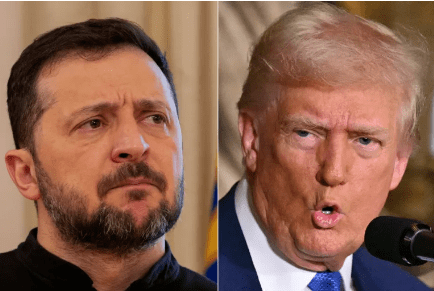
  • Trump And Zelensky Oval Office Meeting Ends In Utter Disaster In Front Of The Cameras Trump, Zelensky, and the Ukraine Peace Deal

    Trump And Zelensky Oval Office Meeting Ends In Utter Disaster In Front Of The Cameras Trump, Zelensky, and the Ukraine Peace Deal

    The provided text presents a discussion between former President Trump and President Zelensky of Ukraine, focusing on a potential peace deal between Ukraine and Russia. Trump emphasizes his ability to negotiate a favorable agreement, leveraging Ukraine’s rare earth minerals to benefit the United States while aiming to end the conflict. Zelensky stresses the need for strong security guarantees and air defense systems for Ukraine, expressing concerns about Russia’s aggression and untrustworthiness. The conversation reveals tensions, with Trump pressing Zelensky for gratitude and indicating that continued US support depends on a deal. Trump highlights his intention to act as a mediator, striving for a resolution despite the deep-seated animosity between the two countries. Ultimately, the transcript reflects the complex dynamics and high stakes involved in brokering peace in the region, highlighting the unique perspectives and priorities of the leaders involved.

    Understanding the “Trump, Zelensky, and the Ukraine Peace Deal” Transcript: A Study Guide

    I. Study Objectives

    • Understand the positions of President Trump and President Zelensky regarding the war in Ukraine.
    • Analyze the proposed “deal” and its key components, including rare earth minerals.
    • Identify the potential security guarantees discussed and their feasibility.
    • Evaluate the historical context and potential future implications of the negotiations.
    • Explore the tension and disagreements present during the discussion.

    II. Key Themes and Concepts

    • Negotiation & Compromise: The entire transcript revolves around the idea of a negotiated peace deal. Understand the compromises each side may need to make.
    • Rare Earth Minerals: This is a central component of the proposed deal for the United States. Understand its significance for US industries (AI, military, etc.) and its potential impact on the US-Ukraine relationship.
    • Security Guarantees: Ukraine seeks assurances of its security, particularly against future Russian aggression. Analyze the different forms these guarantees could take and the roles of the US and Europe.
    • Ceasefire vs. Lasting Peace: Pay attention to the distinction between a temporary cessation of hostilities and a long-term resolution of the conflict. Zelensky’s concerns about broken ceasefires are crucial.
    • Trump’s Approach to Diplomacy: Analyze Trump’s self-portrayal as a dealmaker, his confidence in his ability to negotiate with Putin, and his willingness to take a different approach from his predecessors.
    • Zelensky’s Perspective: Understand Zelensky’s unwavering focus on territorial integrity, the return of Ukrainian children, and the need for strong security commitments. Note his frustration with past agreements and Russia’s unreliability.
    • Aid and Burden Sharing: Understand the discussion surrounding financial and military aid to Ukraine from the US and Europe and Trump’s insistence on fairness and burden sharing.
    • Historical Analogies and Legacy: Note the references to historical figures and the discussion of Trump’s desired legacy as a peacemaker.

    III. Quiz (Short Answer)

    Answer each question in 2-3 sentences.

    1. What is the primary economic benefit the United States seeks from the proposed deal with Ukraine, according to President Trump?
    2. What key condition does President Zelensky emphasize is necessary to agree to a ceasefire with Russia?
    3. What is President Zelensky’s perspective on Russian President Putin?
    4. Why is Ukraine’s geographical location described as providing ‘little protection against bullets’?
    5. What historical figures does Trump compare himself to, and why does he make this comparison with a caveat?
    6. What security commitments have been made or are expected to be made by France and the UK in support of Ukraine?
    7. According to President Trump, how will the US be “protected” in this agreement?
    8. What is the primary concern raised regarding Prime Minister Storr of the UK, and how does the US plan to address it?
    9. What does President Zelensky share with President Trump concerning Russian prisons and the treatment of prisoners of war?
    10. According to President Trump, what did the Biden administration do wrong regarding the Russia/Ukraine war?

    Quiz Answer Key

    1. The United States seeks access to rare earth minerals, which are essential for various industries, including AI, weaponry, and military applications. Trump emphasizes that the US currently lacks these resources domestically and this deal would satisfy these needs.
    2. Zelensky emphasizes that any ceasefire must include strong security guarantees to prevent Russia from violating the agreement as it has done in the past. He highlights the unreliability of Putin’s word and the necessity of concrete assurances.
    3. Zelensky views Putin as a “killer and terrorist” who is untrustworthy and unwilling to stop the war. He expresses the need for a strong stance against Putin to protect Ukrainian values, freedom, and territorial integrity.
    4. Ukraine’s geography is characterized as consisting of dead-level farmland with very little protection against bullets, thus making it especially vulnerable in the conflict.
    5. Trump jokingly compares himself to George Washington and Abraham Lincoln but then dismisses the comparison. He says he doesn’t compare himself to anyone and he is there to do a job.
    6. France and the UK are expected to provide security commitments to Ukraine after a deal is reached, particularly regarding security and a possible military presence in Ukraine. Trump suggests that Europe, particularly the UK and France, are likely to station soldiers in Ukraine.
    7. The US will be “protected” via a large investment in Ukraine that will result in raw earth materials being exported to the United States. This agreement is considered a “big investment” in Ukraine that will protect the American taxpayer.
    8. The primary concern is that Prime Minister Storr’s government engages in censorship and pressures American companies to censor Americans, which contradicts the value of free speech. The US plans to address it via vigorous defense of free speech for American citizens and companies, and a belief that a common ground can be found on the matter.
    9. President Zelensky shares images of captured Ukrainian soldiers who have been beaten and malnourished. Zelensky also shares that Russian authorities have stolen 20,000 Ukrainian children and changed their names and relatives.
    10. According to President Trump, the Biden administration didn’t speak to Russia and allowed the war to continue. Trump states he would have had a deal negotiated and this war never would have happened.

    IV. Essay Questions

    Consider these questions to deepen your understanding of the source material.

    1. Analyze the potential benefits and risks of Trump’s proposed “deal” with Ukraine, considering both the economic interests of the US and the security concerns of Ukraine.
    2. Evaluate the feasibility of achieving a lasting peace in Ukraine based on the perspectives and positions of Trump, Zelensky, and Putin, as reflected in the transcript.
    3. Compare and contrast the diplomatic approaches of Trump and Biden towards Russia and Ukraine, and discuss the potential consequences of each approach.
    4. Assess the roles of the United States and Europe in providing security guarantees to Ukraine, considering the historical context and the potential implications for international relations.
    5. Discuss the ethical considerations surrounding the exploitation of rare earth minerals in Ukraine, balancing the economic benefits for the US with the potential environmental and social impacts on Ukraine.

    V. Glossary of Key Terms

    • Rare Earth Minerals: A set of seventeen metallic elements that are essential for many modern technologies, including electronics, renewable energy, and defense systems.
    • Security Guarantees: Assurances provided to a nation to protect it from potential threats or aggression, often involving military or political commitments from other countries or organizations.
    • Ceasefire: A temporary cessation of hostilities or fighting in a conflict, often as a prelude to further negotiations or a more permanent peace agreement.
    • Trilateral Summit: A meeting or conference involving three parties, in this case, the potential meeting of the United States, Russia, and Ukraine.
    • LNG (Liquefied Natural Gas): Natural gas that has been cooled to a liquid state for ease of storage or transportation.
    • Normandy Format: A diplomatic group consisting of representatives from France, Germany, Ukraine, and Russia, established to resolve the conflict in Eastern Ukraine.
    • Raw Earth: A seemingly intentional mispronunciation of ‘rare earth’ by President Trump. It seemingly refers to the same grouping of mineral resources.
    • Javelins: Portable anti-tank missile used by the Ukrainian army and supplied by the U.S.
    • The Russia Hoax: President Trump’s name for the investigation into Russian interference in the 2016 United States elections.
    • Lutnick: Reference to Howard Lutnick who served under President Trump in a variety of advisory positions.

    Trump, Zelensky, and Ukraine: A Deal for Peace?

    Okay, here’s a briefing document summarizing the main themes and important ideas from the provided source, including direct quotes where relevant.

    Briefing Document: Trump, Zelensky, and the Ukraine Peace Deal

    Executive Summary:

    This document details a conversation between former President Donald Trump and Ukrainian President Volodymyr Zelensky, ostensibly surrounding a new “deal” aimed at ending the war in Ukraine. The conversation reveals key themes around the exchange of rare earth minerals for US support, Trump’s confidence in his ability to negotiate with Putin, and Zelensky’s continued need for security guarantees and military aid. The meeting is marked by tensions, particularly regarding Zelensky’s perceived lack of gratitude for US aid and Trump’s insistence on compromise. It highlights a transactional approach to foreign policy, driven by Trump’s belief in his deal-making prowess, and raises questions about the long-term security and stability of Ukraine.

    Key Themes and Ideas:

    1. The “Deal” and Rare Earth Minerals:
    • A central element of the agreement involves Ukraine providing the US with access to rare earth minerals. Trump emphasizes the importance of these resources for US technological and military needs: “We have something that is a very fair deal and we look forward to getting in and digging digging digging and working and getting some of the rare earth but it means we’re going to be inside and it’s a it’s a big commitment from the United States.”
    • Trump sees this as a mutually beneficial arrangement: “This is an incredible agreement for UK Ukraine because we have a big investment in their country now and and what what they have very few people have and we’re able to uh really go forward with very very high-tech things and many other things including Weaponry Weaponry that we’re going to use in many locations but that we need for our country.”
    • He suggests this arrangement will fund US contributions: “we’re going to be putting some money in a fund uh that we’re going to get from the raar earth that we’re going to be taking and uh sharing in terms of Revenue so it’s going to be a lot of money will be made from the sale and from the use of raw Earth.”
    • Zelensky expresses hope the “document first document will be first step to real security guarantees for Ukraine our people our children I really count on it and of course we count that America will not stop support really for us it’s very important to support and to continue it.”
    1. Trump’s Confidence in Negotiating with Putin:
    • Trump repeatedly expresses his belief that he can secure a deal with Putin, based on his past dealings with the Russian leader. “I’ve spoken with President Putin and uh I think I mean I feel very strong I’ve known them for a long time and I feel very strongly that uh they’re very serious about it and we’ll make a deal.”
    • He attributes the war to the Biden administration’s lack of engagement with Russia: “until we came along the Biden Administration didn’t speak to Russia whatsoever they didn’t speak to anybody they just allowed this to continue.” He even declares “if I were president of this war would have never happened we would have had a deal negotiated for you without having to go through what you’ve gone through.”
    • Trump portrays himself as a peacemaker: “I hope I’m going to be uh remembered as a peacemaker uh this is this would be a great thing if we could do this I’m doing this to save lives more than anything else second is to save a lot of money but I considered that to be far less important.”
    1. Zelensky’s Concerns and Priorities:
    • Zelensky focuses on the need for concrete security guarantees, a long-term shield, and military aid, particularly air defense systems. “of course I want to discuss with you what United States will be ready to do and uh I really count on your strong position to stop Putin and uh and you said that enough with the War I think that is very important B to say these words to Putin at the very beginning at the very beginning of War because he is a killer and terrorist.”
    • He highlights the importance of allies in Europe as well as the United States being on Ukraine’s side, and the importance of American backstop of other countries promises to provide aid: “about security guarantees when the Europeans are ready for cones they need USA back stop if there will not be United States we will not never have any conion strong contigent from the Europeans because they don’t want to divide Airlines connection between the United States and the main and strongest Sal and Europeans this is crucial this is important that what we want to speak about very much this is very important and air defense so air defense really we have big deficit with all these systems and we need to provide this we need it very much otherwise Putin will never stop and we’ll go further and further.”
    • He emphasizes that he is against a ceasefire, and is looking for strong security guarantees to ensure the end of the war. “that’s why we will never accept just CE fire it will not work without security guarantees security guarantees maybe president is right about this document and other but this document is not enough strong”
    • Zelensky also stresses Russia’s atrocities, particularly the abduction of Ukrainian children and the mistreatment of prisoners of war, trying to convey the stakes involved. “this crazy Russian that they stolen 20,000 of children Ukrainian children they changed their names they changed their you know their families relatives and uh now they in Russia we want to bring them back and really it’s a big big dream task and goal for me and and our Warriors we by the way Mr we brought we exchanged we yes released more than 4,000 Warriors from Russian prison but there are thousands more in the prison.”
    1. Compromise and Potential Concessions:
    • Trump insists that compromise will be necessary to reach a deal. “I think you’re going to have to always make compromises you can’t do any deals without compromises so certainly he’s going to have to make some compromises but hopefully they won’t be as big as some people think you’re going to have to make that’s all it’s all we can do.”
    • When asked about Russia controlling areas with minerals Zelensky was hesitant that Putin would give the land back. “Some of those minerals are in the east of Ukraine not far from the front lines and in areas that Russia has occupied will you direct President Putin to to withdraw his forces from those areas if you’re there’s us interest well we’ll take a look at at the time we have a lot of area uh it’s a very big area we’re talking about so we’ll take a look I’ll study that and I’ll see”
    1. Tensions and Accusations:
    • The conversation becomes heated, with Trump and his advisors criticizing Zelensky for a perceived lack of gratitude for US aid.
    • Trump attacks Zelensky when he is told that he is against a cease fire: “Listen low soldiers it would be a damn good thing then you then you tell us I don’t want to cease fire I don’t want to cease fire I want to go and I wanted this look if you could get a ceasefire right now I tell you you take it so the bullets stop Flying and you me stop course of course we want to stop the war but I saying you don’t want a ceas said to you I want a ceas guarante because you’ll get a ceasefire faster than it agree.” He goes on to say, “you’re in no position to dictate what we’re going to feel we’re going to feel very good and very strong you will feel influence you’re right now not in a very good position you’ve allowed yourself to be in a very bad position.”
    • Trump insinuates that Zelensky campaigned against him in the US.

    Analysis:

    The conversation highlights a starkly transactional approach to international relations. Trump’s focus is on securing a deal that benefits the US (access to rare earth minerals), while Zelensky is primarily concerned with his nation’s survival and long-term security. Trump’s confidence in his personal relationships and deal-making abilities is a recurring theme, but the document raises concerns about the potential for Ukraine to be pressured into unfavorable concessions to secure an end to the conflict.

    The emphasis on rare earth minerals could also lead to further environmental concerns, depending on the method and extent of extraction that is used in Ukraine.

    Finally, the tense exchange reveals the challenges of balancing the need for international support with maintaining national sovereignty and pursuing the best interests of one’s country. The dynamic between the two leaders suggests a potentially difficult path ahead for any negotiated settlement.

    Ukraine Peace Deal: Trump, Zelensky, and U.S. Interests

    FAQ on Trump, Zelensky, and the Ukraine Peace Deal

    1. What is the core of the agreement between the U.S. and Ukraine, and how does it address U.S. interests?

    The agreement primarily focuses on U.S. access to and development of rare earth mineral resources in Ukraine. The U.S. will invest in Ukraine’s rare earth reserves, utilizing them for various purposes, including AI, weaponry, and military applications. This arrangement addresses the U.S.’s shortage of these crucial minerals and ensures a domestic supply chain, reducing reliance on foreign sources.

    2. What is Trump’s vision for ending the war in Ukraine, and what role does compromise play in his strategy?

    Trump aims to broker a deal between Ukraine and Russia to stop the fighting. He believes that any deal requires compromise from both sides. His approach is to act as a mediator, bringing the two parties to the table to negotiate an agreement that halts the loss of life and diverts resources toward reconstruction.

    3. How does Zelensky view the importance of security guarantees for Ukraine, and what kind of support does he seek from the United States and Europe?

    Zelensky emphasizes the need for strong security guarantees beyond just a ceasefire. He points to Russia’s repeated violations of past ceasefire agreements. He wants a strong air defense and appreciates Europe’s assistance, but stresses the need for the U.S. to provide backstop support, especially regarding military aid and preventing further Russian aggression. He also seeks assistance in repatriating Ukrainian children taken to Russia.

    4. What are the major obstacles to reaching a lasting peace agreement, according to Zelensky?

    Zelensky identifies Putin’s core issue as a deep-seated hatred of Ukraine and Ukrainians, coupled with a denial of Ukrainian nationhood and the desire to destroy the country. He believes Putin will not stop without strong, definitive action.

    5. What are the financial aspects of the agreement, and who will bear the costs of rebuilding Ukraine?

    The financial aspects involve a fund generated from the revenue of rare earth mineral extraction in Ukraine, which will benefit both countries. Zelensky argues that Russia, as the aggressor, should bear the primary responsibility for rebuilding Ukraine, potentially through the use of seized Russian assets in Europe.

    6. What is the long-term security strategy being developed for Ukraine under this new deal, and how does it differ from the Biden administration’s approach?

    Trump claims his deal, secured through the rare earth agreement and potential ceasefire, will effectively prevent future conflict. He criticized the Biden administration for providing financial aid without adequate security measures. Conversely, he emphasizes this agreement as a major investment in Ukraine, ensuring U.S. protection and strategic leverage in the region.

    7. How does the issue of free speech factor into the United States’ relationship with European allies, particularly the UK?

    The U.S. officials expressed concern to the UK government regarding free speech issues and censorship, particularly how those policies affect American companies and citizens. They emphasized the importance of shared values, including free speech, and vowed to defend those rights for Americans, even when disagreeing with the content of their speech.

    8. What is Trump’s message to Poland and other Eastern European nations concerned about his relationship with Putin?

    Trump asserts that he must engage with both sides, including Putin, to reach a deal and end the war. He emphasizes that he is aligned with the United States’ interests and the good of the world, not necessarily with Putin himself. He acknowledges Poland’s commitment to NATO and its importance to regional security.

    Trump-Zelensky Discussion: Ukraine-Russia Peace Deal

    The transcript provided contains a discussion between then US President Trump, Ukraine President Zelensky, and members of the press regarding a potential peace deal between Ukraine and Russia.

    Key Points of the Discussion:

    • Negotiations and Potential Deal: Trump mentions ongoing discussions with Russia, including President Putin, to bring the conflict to a close. He believes a fair deal is possible and emphasizes the importance of stopping the loss of soldiers on both sides.
    • Compromises: Trump notes that compromises will be necessary to reach an agreement.
    • Role of the United States: Trump positions himself as a mediator or arbitrator. He also criticizes the Biden administration’s approach to Russia and asserts that the war would not have happened if he were president.
    • Zelensky’s Perspective: Zelensky expresses hope that the agreement will provide real security guarantees for Ukraine. He also emphasizes the need for continued American support and expresses concerns about Russian aggression.
    • Areas of DiscussionRare Earth Minerals: Part of the deal involves the United States accessing Ukraine’s reserves of rare earth minerals.
    • LNG Terminals: Zelensky mentions the importance of LNG terminals for Ukraine’s and Europe’s energy security.
    • Air Defense: Zelensky stresses the need for air defense systems and proposes a license exchange for drone production.
    • Exchange of prisoners: Zelensky shares the status of Ukrainian prisoners in Russia. He also shares images depicting the harsh conditions and treatment of Ukrainian prisoners in Russia.
    • Security Guarantees: While Zelensky seeks security guarantees, Trump focuses on getting the deal done first, considering security a secondary issue.
    • Ending the War: Both leaders express a desire to end the war, but Zelensky insists that a simple ceasefire is not enough without security guarantees, citing previous broken agreements with Putin.
    • Trump’s Legacy: Trump hopes to be remembered as a peacemaker.
    • Aid to Ukraine: Trump states the US will continue to provide arms to Ukraine. However, he hopes it won’t be necessary if the war can be ended quickly.
    • Commitment to Eastern Europe: Trump expresses commitment to Poland and the Baltic states.

    Points of Contention/Discussion:

    • Compromises: Trump suggests compromises are necessary, while Zelensky initially states there will be “no compromises with a killer about our territories”.
    • Past Ceasefires: Zelensky claims that Putin has broken every ceasefire.
    • Blame for the War: There is disagreement regarding who is to blame for the war and who is helping Ukraine.
    • Gratitude: Trump believes Zelensky is not showing enough gratitude for the help that the U.S. is providing.
    • Alignments: Trump says he is aligned with the United States and wants to get the deal done.

    Overall, the discussion highlights the complexities and differing perspectives involved in seeking a resolution to the conflict between Ukraine and Russia.

    Russian Aggression in Ukraine: Perspectives and Evidence

    The sources address Russian aggression primarily in the context of the war in Ukraine and discussions surrounding a potential peace deal.

    Details regarding Russian aggression, according to the sources:

    • Zelensky’s perspective is that Putin is a “killer and terrorist” who initiated the war and must be stopped. He states that Russia’s aim is to destroy Ukraine, its people, and its values because Putin “hates Ukrainians” and “doesn’t respect” their nation. He cites 25 broken ceasefires prior to his presidency.
    • Evidence of atrocities comes from Zelensky, who shares images of Ukrainian prisoners of war, describing their poor condition as a result of mistreatment. He also accuses Russia of stealing 20,000 Ukrainian children and changing their identities.
    • Continued attacks despite discussions of peace are mentioned. Zelensky notes that even with ongoing conversations about a resolution, Russia continues to use ballistic missiles against Ukrainian hospitals and schools.
    • Territorial Ambitions: Zelensky says that Putin wants to bring the Baltic states back into a Russian empire.
    • Compromises and Ceasefires: Zelensky is wary of ceasefires without security guarantees, given past experiences of Russia violating such agreements.
    • Historical Context: Zelensky references the 2014 occupation of parts of Ukraine, including Crimea, as evidence of ongoing Russian aggression.
    • Casualties: Trump states that 2,000 soldiers were dying each week.
    • Trump’s perspective is that if he were president, the war would have never started. He also notes that the Biden administration didn’t speak to Russia, which allowed the conflict to continue.
    • A journalist’s perspective refers to Russia’s destruction of a significant portion of Ukraine, which occurred during the Biden administration, despite tough rhetoric from the US.

    Ukraine-Russia Peace Deal: Conflicting Views on Security Guarantees

    The sources discuss security guarantees primarily in the context of a potential peace deal between Ukraine and Russia, with differing perspectives from the leaders involved.

    Details regarding security guarantees, according to the sources:

    • Zelensky’s view:Real Security: Zelensky expresses hope that any agreement reached will provide “real security guarantees” for Ukraine, its people, and its children.
    • Continued Support: He emphasizes the importance of continued support from the United States.
    • Air Shield: He expresses Ukraine’s need for an “air shield” to ensure the nation’s calm and security, even after the war. He notes the need for air defense.
    • Contingents: He notes the need for “strong contingents” from European countries, but states that this will not be possible “without the United States back stop”. He expresses that without the United States, Europe will not be ready to be as strong as Ukraine needs.
    • Past Failures: He claims Putin has broken 25 ceasefires prior to his presidency. He insists that a simple ceasefire is not enough without security guarantees because Putin has broken his own signatures repeatedly. He states that Putin broke ceasefires, killed people and did not exchange prisoners.
    • Trump’s view:Deal First, Security Later: Trump prioritizes reaching a deal to stop the fighting and loss of life, considering security a secondary issue. He states “I don’t want to talk about security yet because I want to get the deal done…security is so easy that’s about 2% of the problem”.
    • Role of Other Nations: Trump anticipates that European countries, such as France and the UK, will provide security.
    • Alternative Security: He suggests that the presence of American workers involved in extracting rare earth minerals could serve as a form of security.
    • Rare Earth Elements (REE): Trump states that the deal involves the U.S. accessing rare earth minerals in Ukraine. He believes that once the agreement is made, fighting will cease and that the agreement is 95% of the solution. He says that the U.S. will be “digging, digging, digging, taking the raw Earth”. He states that the U.S. needs the rare earth minerals for computers, AI, weapons and the military.
    • Compromises: Trump believes that compromises have to be made in order to make any deals.
    • Lack of Gratitude: Trump feels as though Zelensky should be more thankful for the military equipment and financial assistance from the U.S.. He says that Zelensky campaigned for the opposition in Pennsylvania.

    These differing perspectives highlight the complexities of negotiating security guarantees in the context of the Russia-Ukraine conflict.

    US-Ukraine Rare Earth Agreement

    The sources discuss raw earth in the context of a potential agreement between the United States and Ukraine.

    Key points regarding raw earth, according to the sources:

    • Fair Deal: Trump describes the agreement as a “very fair deal” that involves “getting in and digging digging digging and working and getting some of the rare earth”.
    • US Commitment: The deal signifies “a big commitment from the United States”.
    • Revenue and a Fund: Money from the raw earth will be put into a fund.
    • Strategic Importance:Trump states that Ukraine has “among the best in the world in terms of R[are] Earth”.
    • The raw earth contains “just about every component” needed for computers and other technologies.
    • Securing these resources “puts us [the U.S.] in great shape”.
    • The rare earth elements are needed “for all of the things we do including AI and including weapons and the military”.
    • U.S. Needs: Trump notes that the U.S. “doesn’t have much raw Earth” and what it does have is “protected by the environmentalists”.
    • Investment: The agreement signifies “a big investment” by the U.S. in Ukraine because of the rare earth elements.
    • Security: Trump implies the U.S. workers present to extract raw earth minerals could be a form of security.
    • Location: Trump said that some of the minerals are in the east of Ukraine and that the U.S. will take a look at the area.
    • Protection: Trump was asked who would protect the minerals and he said the European agreement and the U.S. agreement would protect them.

    Trump and Zelensky: Negotiating Peace in Ukraine

    The sources discuss ending the war between Russia and Ukraine from the perspectives of then US President Trump and Ukraine President Zelensky, along with some input from journalists.

    Key points in the discussion about ending the war, according to the sources:

    • Negotiations: Trump mentions ongoing discussions with Russia, including President Putin, aimed at bringing the conflict to a close. He expresses optimism that a fair deal is possible.
    • Compromises: Trump believes that compromises will be necessary to reach an agreement. He is acting as “an arbitrator” and “mediator”.
    • Role of the United States: Trump positions himself as a mediator. He criticizes the Biden administration’s approach to Russia.
    • Zelensky’s Perspective: Zelensky hopes that the agreement will provide real security guarantees for Ukraine. He emphasizes the need for continued American support. He also says that he wants Trump to “stop Putin”.
    • “Enough with the War”: Zelensky recounts Trump saying “enough with the War” to Putin at the beginning of the war. He thinks that this is “very important”.
    • Areas of Discussion:
    • Rare Earth Minerals: Part of the deal involves the United States accessing Ukraine’s reserves of rare earth minerals.
    • LNG Terminals: Zelensky mentions the importance of LNG terminals for Ukraine’s and Europe’s energy security.
    • Air Defense: Zelensky stresses the need for air defense systems.
    • Exchange of prisoners: Zelensky shares the status of Ukrainian prisoners in Russia. He also shares images depicting the harsh conditions and treatment of Ukrainian prisoners in Russia.
    • Security Guarantees: While Zelensky seeks security guarantees, Trump focuses on getting the deal done first, considering security a secondary issue.
    • Casualties: Trump states the need to stop the loss of soldiers on both sides. He notes that 2,000 soldiers were dying each week.
    • Trump’s Legacy: Trump hopes to be remembered as a peacemaker.
    • Aid to Ukraine: Trump states the US will continue to provide arms to Ukraine. However, he hopes it won’t be necessary if the war can be ended quickly.
    • “No Compromises”: Zelensky initially states there will be “no compromises with a killer about our territories”.
    • Past Ceasefires: Zelensky claims that Putin has broken every ceasefire.
    • Ending the War: Both leaders express a desire to end the war, but Zelensky insists that a simple ceasefire is not enough without security guarantees, citing previous broken agreements with Putin.
    • Visiting Ukraine: When asked about visiting Ukraine, Trump said that he wants to talk about making a deal and getting peace, and does not want to talk about Odessa.
    • Confidence in Putin: When asked what gave Trump assurance that Putin wanted peace, Trump said that making deals is what he does his whole life and that he knows Putin pretty well. He also mentioned that Putin had to suffer through the “Russia hoax”.
    • Aligned with U.S.: Trump says he is aligned with the United States and wants to get the deal done.
    • Thankfulness: Trump says that Zelensky has to be thankful because he does not have the cards.
    • Ceasefire: When asked what if Russia breaks a ceasefire, Trump said that Putin didn’t break a deal with him.
    • Future: Trump says that Zelensky is either going to make a deal or the U.S. is out.
    Trump And Zelensky Oval Office Meeting Ends In Utter Disaster In Front Of The Cameras
    ‘You Don’t See All The Things That Led Up To This’: Rubio Defends Trump After Clash With Zelensky
    What Kaitlan Collins saw during fiery Trump-Zelensky argument
    Zelenskyy asked whether he owes Trump an apology
    Zelenskyy in UK for crucial summit after extraordinary Trump talks

    The Original Text

    well thank you very much it’s an honor to have President zalinski of Ukraine and we’ve been working very hard very close and we’ve actually known each other for a long time we’ve been uh dealing with each other for a long time and very well we had little negotiation spat but that worked out great I think for for both countries I think for the world actually Beyond both countries and we have something that is a very fair deal and we look forward to getting in and digging digging digging and working and getting some of the rare earth but it means we’re going to be inside and it’s a it’s a big commitment from the United States and we appreciate working with you very much and uh we will continue to do that we have had some very good discussions with Russia I spoke with President Putin and we’re going to try and bring this to a close it’s something that you want and that he wants we have to negotiate a deal but we’ve started the confines of a deal and I think something can happen uh the big thing is the uh number of soldiers mostly at this point but soldiers being killed you’re losing thousands of soldiers on both sides we’re losing a lot of soldiers and we want to see it stop and we want to see the money get put to different kinds of use like rebuilding the rebuilding and we’re going to be working very hard but we’ve had a lot of very good conversations I will say on until we came along the Biden Administration didn’t speak to Russia whatsoever they didn’t speak to anybody they just allowed this to continue and uh I will say that uh I’ll say in front of you you’ve heard me say it a thousand times if I were president of this war would have never happened we would have had a deal negotiated for you without having to go through what you’ve gone through but you uh your soldiers have been unbelievably Brave we’ve given them great equipment but they somebody has to use the equipment they’ve been unbeliev Brave and we give him great credit this was supposed to be over very quickly and uh here we are three years later so I give tremendous credit to your generals and your soldiers and yourself in the sense that uh it’s been very hard fighting very tough fighting they great Fighters and uh you have to be very proud of them from that standpoint but now we want to get it over with it’s enough right we want to get it over with so uh it’s an honor to have you here thank you very much for coming we’re going to sign uh the agreement at the conference in the East room in a little while right after lunch and we’ll be having lunch together we’re also discussing some other things and we appreciate everybody being here it’s a somewhat of an exciting moment but the really exciting moment is when we get a when they stop the shooting or we end up with a deal and I think we’re fairly close to getting that and uh honor to have you and please like to say something yeah thank you so much Mr President thank you for invitation and um really I hope that this um document first document will be first step to real security guarantees for Ukraine our people our children I really count on it and of course we count that America will not stop support really for us it’s very important to support and to continue it I want to discuss it with detail further during our conversation and of course the infrastructure or security guarantees because for today I understand what Europe is ready to do and of course I want to discuss with you what United States will be ready to do and uh I really count on your strong position to stop Putin and uh and you said that enough with the War I think that is very important B to say these words to Putin at the very beginning at the very beginning of War because he is a killer and terrorist I hope that together we can stop him but for us it’s very important to you know to save our country our values our freedom the democracy and of course uh no compromises with a killer about our territories but it will be later and of course I what I wanted you know we spoke about it by phone with you about the Dron production we have very good TR production I think the best one in the world for today because of the war yes and and uh of course we need very much uh the air defense you have the best air defense in the world and really you helped us under attacks of Russians and I want to speak how we can exchange the licenses we’re open to share the licenses of all our drones with you of course with the United States and we need licenses for quick production of air defense even after the war we need our nation to be calm that we are secured so that’s why we need this air shield and of course about this uh I want to speak about the contigs I think that France and UK already spoke to you and we know that Europe is ready but without the United States they will not be ready to be as strong as we need and that the last point last not least uh about exchange about our people and children and you know that this crazy Russian that they stolen 20,000 of children Ukrainian children they changed their names they changed their you know their families relatives and uh now they in Russia we want to bring them back and really it’s a big big dream task and goal for me and and our Warriors we by the way Mr we brought we exchanged we yes released more than 4,000 Warriors from Russian prison but there are thousands more in the prison I wanted to share with you some some images how how just just can can I can I now pleas some minute one minute one minute I just you to understand what in what circumstances in what situation they are and what the attitude of Russia to our prisons that guys just you before before and after and you see before and after just you to understand now thousands of such guys ladies and men there and that so they don’t eat they beat them and they you know they do a lot of a lot of you know bad things so out out of even during the war There Are Rules everybody knows There are rules during the war these guys they don’t have any rules you see that 50 60 kilog left and and a lot of such things and I didn’t want to show you what what the changes with images of children because I will share just share with you I mean it’s looking tragic yep it’s tough stuff yeah I wanted very much to to give you and you you see this is Pastor by the way they stolen pastors because it’s not Russian Church they stolen pastors and move pastors to the prison we at the end of last year we we brought three pastors and we we could exchange them but this is Pastor you see yeah just St yeah so I inan this I wanted to show you and um this so thank you very much we want to get that ended right yeah yeah of course of course we will I think we will I think we will and uh we have to of course do you have any questions please Mr President Mr thank you Mr President um with the how much money is the US going to put into the fund that that is being created today and how does this provide long-term security for Ukraine well we don’t know exactly how much because we’re going to be putting some money in a fund uh that we’re going to get from the raar earth that we’re going to be taking and uh sharing in terms of Revenue so it’s going to be a lot of money will be made from the sale and from the use of raw Earth and as you know our country doesn’t have much raw Earth we have a lot of oil and gas but we don’t have a lot of the raw Earth and what we do have is protected by the environmentalists but that could be unprotected but still it’s not very much uh they have uh F among the best in the world in terms of R so we’re going to be using that taking it using it for all of the things we do including Ai and including weapons and the military and it’s uh really going to very much satisfy our needs so something that just worked out uh really well we have a lot of oil and we have a lot of gas we have a lot but we don’t have raw Earth so uh this uh this has just about every component of the raw Earth that we need for computers for all all of the things we do this puts us in great shape and longterm security do this provide I think they’re going to have great long I think once we make the agreement that’s going to be 95% of it it’s they’re not going to go back to fighting uh I’ve spoken with President Putin and uh I think I mean I feel very strong I’ve known them for a long time and I feel very strongly that uh they’re very serious about it and we’ll make a deal and when the deal is made I don’t think we talk about security everyone’s talking about the the other day all they talked about was security I said let me make the deal first I have to make the deal first I don’t worry about security right now I got have to we have to have a deal because right now last week 2,000 soldiers died on both sides 2,000 and they’re losing a, 2,000 3,000 a week so as we sit here and we talk people are getting shot and dying on the battlefield and you know they’re not American soldiers but they’re Russian soldiers and they’re Ukrainian soldiers and we want to be able to stop it and we want to be able also to spend money on other things we don’t want to this is a tremendous amount of money and what the Biden Administration did was terrible they were giving money but he had no security on the money Europe as you know gave much less money but they had security it was in the form of a loan they get their money back and we didn’t and now at least we’re protected because the American taxpayer has to be protected too but uh this is an incredible agreement for UK Ukraine because we have a big investment in their country now and and what what they have very few people have and we’re able to uh really go forward with very very high-tech things and many other things including Weaponry Weaponry that we’re going to use in many locations but that we need for our country Mr this allows this allows us to do this but Mr President will you will you continue military agent yes go ahead please I if I can just yes in the document there is one of the very important points if we speak about business and investment we never had LG terminals in Ukraine this document will open I mean the next documents but anyway the here we see in the framework we we see we see a really good will for this LG terminals for us is very important and I think for security of European continent we have the biggest storage gas storage we have the biggest in Europe yes yes and we can use it you use for LNG use it for L and we will do it and really we we can help Europe because Europe really helped president Trump said that they made uh less support but they have our friends and they our very supportive uh Partners they really gave a lot Mr BR really they did they gave a lot but they gave much less no much less no no don’t argue no okay okay but Mr President and president pleas uh Mr President Trump you have repeatedly called the deal with Ukraine has as a historical one and as a president of the United States you make historical decision in other issues which affect America and other world so uh what place in the world history history do you want to take and do you associate yourself yourself with any famous historical figures I’d say George Washington Abraham Lincoln I would say I’m far superior to George Washington and Abraham Lincoln now you know I’m only kidding right because when I say that the fake news is going to go wild they’re going to say he considers himself to be better than Washington but you never know you never know uh I don’t compare myself to anybody I just have I’m here to do a job we’ve had a great 35 days or whatever it might be a month a little more than a month uh We’ve accomplished tremendous amounts not only this this would be a very great achievement if we could get this the war stopped and get them back to normalization I think that’s going to happen we’ve had very good talks on both sides as you know but uh I think we’ve done a very good job just generally if you look at all of the things we’ve done in 30 days they’re saying there’s never been a opening for a president the first month uh there’s never been a first month like uh like we’ve had and this is one of the very important things this to me is one of the most important things because we have tremendous death taking place as we speak and I don’t want to have that you know think of the parents think of the whether they’re in Russia or Ukraine think of the parents of all these people being killed needlessly they came to all should have never started this if I were president this would have never started Mr president president president Trump will you continue sending military aid to Ukraine after you uh the US signs this agreement with Ukraine Yeah question to president zensky do you feel like the US is on your side that the president that President Trump is on your side at this uh at this moment well what do you think he wants to know do you think that sort of a stupid question I guess I guess we wouldn’t be here if I wasn’t I think that I think that the United States on our side from the very beginning of occupation and uh I think that President Trump on our side and and of course I not I’m sure that United States President will not stop support this is crucial for us it’s important for us yes and put president speaks about the people and the soldiers which are dying but they came to our territory they came to our land they began this war and they have to stop and uh I think all this is the question with really the most important question can president Trump I hope yes with some other allies to stop Putin withdraw these enemies our and withdraw these troops from our land and I think that you asked about the history about the I think that if president or when he will stop Putin if president Trump will bring peace to our country I think he will be on this wall I we’ve had very very good uh talks to Ukraine president Mr President zilinski just said that there’ be no compromises with uh um Vladimir Putin um I just wanted to ask both of you firstly um are there compromises that you think that president zalinski is going to have to make and president zalinsky is there anything that you might you think that you may be able to offer a bring to the table for example elections thank you I think you’re going to have to always make compromises you can’t do any deals without compromises so certainly he’s going to have to make some compromises but hopefully they won’t be as big as some people think you’re going to have to make that’s all it’s all we can do I’m here as a as an arbitrator as a mediator to a certain extent between two parties that have uh been very hostile to put it mildly they’ve been very hostile has been a vicious War this been a vicious War you know it’s a very level Battlefield and uh those bullets go out and as I’ve said many times we’re talking about it with Pete uh many times the only thing stopping those bullets is a human body and in the case we’re talking about generally young human bodies are stopping a lot of bullets it’s dead level that’s what why it’s great Farmland it’s great land it’s great Farmland but there’s very little protection against the bullet that are being and other things that are being shot so all I can do is see if I can get everybody at the table and get an agreement and I think we’re going to end up with an agreement otherwise I wouldn’t probably be even here today will president pu will president have to make compromises Mr President I got two questions for you you think ultimately your legacy will be The Peacemaker and not the president that led this country into another war and ended Foreign Wars and I’ve got a a question I hope it will I mean I hope I’m going to be uh remembered as a peacemaker uh this is this would be a great thing if we could do this I’m doing this to save lives more than anything else second is to save a lot of money but I considered that to be far less important so I hope I’m going to thank you Brian for that question it was a nice question uh I hope I’ll be known and recognized as a peacemaker this this would be a great thing to solve this is a very dangerous situation you know this could lead to a third world war War this is this was headed in the wrong direction if this election were lost if we didn’t win this election and by way we won it by a lot that was a mandate we won every swing state we won the popular vote by millions and millions of votes we won everything uh the districts you look at the areas of of red take a look at a map this was a big mandate and uh this was one of the things I said we’re going to get this thing settled if we didn’t win I think this would have this could have very well ended up in a third world war and that would not that would not have been a good situation what was your second question my second question for president go do you ever why don’t you wear a suit you’re why don’t you wear a suit you’re the highest level in this country’s office and you refuse to wear a suit just want to see if you do you own a suit yeah yeah have problems I a lot of Americans have problems with you not I don’t have S uh I will wear costume after this war will finish okay yes maybe well maybe something like yours yes maybe some something better I I don’t know we will see maybe something cheaper than yeah thank you president Trump trump you said yesterday thank thank you president Trump you said yesterday that you have are you going to send more arms to Ukraine in case there’s no peace yeah we’re going to have arms to Ukraine yeah sure hopefully I won’t have to send very much because hopefully we’re going to have it finished we’re looking forward to finishing this quickly uh we’re not looking forward to sending a lot of arms we’re looking forward to getting the war finished so we can uh do other things but uh we very much appreciate the agreement because we needed what they had and we’re treating you know our country is now treated fairly Biden didn’t do that Biden didn’t he didn’t know what the hell he was doing this should have never happened this should have never started but uh you know sure the answer is yes but hopefully we won’t have to send much because I’m looking forward to get it done getting it done quickly very quickly does that mean you’ll provide security guarantees Mr President uh I don’t want to talk about security yet because I want to get the deal done you know you fall into the same trap like everybody else a million times you said over and over I want to get the deal done security is so easy that’s about 2% of the problem uh I’m not worried about security I’m worried about getting the deal done uh the security is the easy part security is very nice everybody stop shooting and now will Europe put people there I know France is going to I know the UK is going to I know other countries are going to and they happen to be right next door we haven’t committed but we could conceivably you know we have Security in a different form we’ll have workers there uh digging digging digging taking the raw Earth so that we can create a lot of great product in this country uh so in that sense you have something but we haven’t determined that yet I will say uh in speaking to French and then speaking to and they were here as you know last week and just the other day uh they have committed to a lot of security I don’t think you’re going to need much security I think once this deal gets done it’s over Russia is not going to want to go back and nobody’s going to want to go back when this deal ends I really believe this deal is is going to be over uh question yeah please go ahead go ahead Mr President thank you uhing here St at the White House this past week both of whom praised your courage and conviction to lead the pathway towards peace yes part of that involved though re-engaging Russia in diplomatic relations something that previous leaders lacked the conviction to do so what gave you the moral courage and conviction to step forward and Lead that well I love this guy who are you with one American News sir well that’s that why I like him one American News does a great job that’s very I like the question I think it’s a very good question it is it’s a pathway to peace it’s a pathway to getting something solved and I feel that as the head of this country I have an obligation to do that plus you know we’re very much involved we got involved uh it’s too bad we got involved because there should have been no involvement because there should have been no war and there shouldn’t have been October 7th that would have never happened as you know Iran was broke they had no money to give to Hezbollah they had no money to give to Hamas they would Stone Cold broke and then under Biden they became rich as hell they went from no money to $300 billion in a period of four years and they gave a lot of that money away and you see what happened and that’s a real mess also that we hope to be able to solve but uh no I I appreciate your question very much it’s just I feel I have an obligation to try and uh do something to stop the death Mr President I can if I can answer yes if I can answer sorry please please and I do like you CL yeah really even though I have to I think he’s a great guy by the way I I don’t know if you two like each other but you know what I think why I like this guy I don’t know I think he’s just beauti so I have more I have more serious things than answer on such question I will answer on more serious question if I can yeah so please uh about security guarantees and about just sis fire we can’t just speak about sis fire and speak and speak it will not work just s fire will not never War because I’m like a president I have I have this experience and not only me Ukraine before before my presidency from the 2014 Putin broken 25 times 25 times he broken his own signature 25 times he broken C fire it he never broke to me he never broke no no you were the president you were the president dur never brought in 2016 you been the president M Mr surpr You’ been the president but he for he had of course not with you but he had during those period he had conversations with our side and we had normandi for format you know the France Germany Ukraine and Russia and he broken 25 times that’s why we will never accept just CE fire it will not work without security guarantees security guarantees maybe president is right about this document and other but this document is not enough strong Army is enough because his soldiers afraid Putin soldiers afraid of our soldiers when we’re strong enough if we are not strong enough if we are empty if our storage is empty we can’t defend our our land today you know he knows that we have me all the world knows that we have meeting yes why he’s using ballistic Putin today using ballistic on our Hospital schools and Etc ballistic so he knows that we are here and that President Trump is really have good will to stop to stop this war and I and you hear now the president so why he’s using so he doesn’t want to stop he doesn’t what but I hope that we will do it really we’ll do it security when we speak about security guarantees when the Europeans are ready for cones they need USA back stop if there will not be United States we will not never have any conion strong contigent from the Europeans because they don’t want to divide Airlines connection between the United States and the main and strongest Sal and Europeans this is crucial this is important that what we want to speak about very much this is very important and air defense so air defense really we have big deficit with all these systems and we need to provide this we need it very much otherwise Putin will never stop and we’ll go further and further he doesn’t want he he hate us you know it’s not about me he hate ukrainians he thinks that we are not a nation he thinks and he shared this swords I think maybe with your team also I don’t know but with all the Europeans in media officially and not he always said that we there is no such country such Nation such language and such life like Ukrainian no he really doesn’t respect all the ukrainians and he wants destroy us we we and you are right Mr President that’s 2% this document maybe other documents it’s a very good Star very good but it will not enough to stop this person should Russia pay to rebuild Ukraine Mr President under should Russia pay to Ukraine they have to pay this is the rule this is the rule of the war this is the rule of the war during all the centuries all the history this is the rule of the war who began those pay do you agree this is the rule Putin began this war he has to pay all money for inovation he has to pay of course some Russian assets what we have in Europe about 300 billions we can use them we can use for renovation and buy military support from the United States also we can do it but it’s not enough it’s not question because I wanted to know please wait one second I want I ask this question that you didn’t like because I want you to know if you want to position yourself in the middle between Russia and Ukraine or on the Ukraine side I’m in the middle I want to solve this thing I’m for I’m for both I want to get it solved and uh it’s wonderful to speak badly about somebody else but I want to get it solved if we can solve it great if we can’t solve it they’re going to have to fight it out and who knows what’s going to happen but I want to see it get solved one more question about US troops in Europe uh after Russian invasion of Ukraine uh your predecessor sent additional troops to Eastern Europe including Poland my country are you committed to keeping this troops on the Eastern flank of NATO uh in the future I’m very committed to Poland I think Poland has really stepped up and done a great job for NATO they as you know they paid more than they had to they are one of the finest groups of people I’ve ever known uh I’m very committed to Poland what about B Poland’s in a tough neighborhood you know what about Baltic the baltics uh the baltics uh they got a lot of it’s a tough neighborhood too but we’re committed we’re going to be very committed and we’re committed to Nato but NATO has to step up and the Europeans have to step up more than they have and I want to see them equalize because they are in for far less than we’re in and they should be at least equal you understand that why is the United States we have an ocean in between why is the United States in for so much more money and other things as Europe with that being said and as you said they’ve also been obviously very helpful but we have put in far more than they have and I think they should equalize Mr President pleas about the agreement today what changed between the first time that secretary vess gave president the agreement and today for the signing we made a deal all what was the factor I’m I’m a business person we made a deal that’s what changed a lot of those minerals I didn’t think we were going to make a deal and uh we ended up making the deal so that changed a president when and how do you envision a trilateral summit with president zalinski and pu I don’t know but well they don’t like each other I can tell you that okay they do not like each other this is not a love match and it’s unfortunate that’s why you’re in this this situation the United States should not have allowed this to happen Okay the United States run by a man that didn’t know much I’m going to be very nice run by an incompetent person very incompetent person should never have allowed this to happen I’ve stopped Wars I’ve stopped many wars my people will tell you I stopped Wars that nobody ever heard about I stopped Wars before they ever started you can look at some of of uh some of I could give you a lot of Nations that would tell you right now they were probably going to war I could tell you right now there’s a nation thinking about going to war on something that nobody in this room has ever even heard about two smaller Nations but big still big and I I think I’ve stopped it but this should have never happened about uh about sorry just a second uh about the any negotiations first of all I want I want really to tell you and I think that everybody understand that Ukraine more than ukrainians nobody want to stop this war but at the future any negotiations it’s understandable that two uh sides of the war not Russia and the United States because this is not the war between Russia and the United States This Is War of Russia against Ukraine and Ukrainian people so these two sides will be at any anyway will be at the negotiation and negot ation table then of course United States like the strongest partner of the Ukraine and of course Europe I think Europe is very important I want to speak about it with the president yes Europe is very important for us because we really defend Europe for today all Europeans are really recognized that we are defend in line and they have real life and our people are dying that’s why they helped us and also it’s about the N yeah yes between like the president said you have big nice ocean yes between us but if we will not stay Russia will go further to baltics and to Poland by the way but first to the baltics it’s understandable for them because they’ve been they’ve been in the USSR you know they they’ve been one of the republics of the USSR and Putin wants to bring them back to his Empire it’s a fact and when he will go there if we will not stay you will fight your American soldiers it doesn’t matter do you have Ocean or not your soldiers will fight Mr President would are be willing to visit Ukraine may be or Odessa which is going to be a their with black SE it was my question sorry I don’t want to talk about Odessa now let’s not talk about Odessa I want to talk about making a deal getting peace we don’t have to talk about Odessa but a lot of cities have been destroyed a lot of cities that are not recognizable there’s not a building standing and a lot of a lot of things you have to come and to look no no no we have very good cities yes a lot of things been destroyed but mostly cities alive and people work and children go to school sometimes it’s very difficult sometimes closer to Front Line children have to go to underground schools or online but we live Ukraine is fighting and Ukraine lives this is where and maybe it’s Putin is sharing this information that he destroyed us he lost 700,000 people 700,000 soldiers he lost ever SE yes Mr President mineral Mr President um when did you last speak with President Putin and what did he say that couple of days ago and what what did he tell you that gave you the assurance that he wanted peace well that’s what I do my whole life is deals I know pretty good uh and I really I’ve uh I’ve known him for a long time I’ve dealt with him for a long time he had to suffer through the uh Russia hoax you know Russia Russia Russia was a hoax it was all Biden it was nothing to do with him so he had to suffer through that and he he was able to do that uh I think that uh he wants to make a deal and he like to see it end it’s all I do that’s what I do my whole life that’s what I do is make deals I’m in the middle of a mess because this is a real mess it’s a very dangerous one if this doesn’t get solved now it’s not going to get solved for a long time so I hope we’re going to I hope we’re going to get it Sol in the back please thank you Mr President uh prime minister storr claimed repeatedly that his government believes in free speech and was not engaged in censorship uh but his country’s government arrest people for memes and thought crimes and even more worrisome is pressuring uh American companies to to to censor Americans on its behalf um how can he be a reliable trustworthy partner when he says things that are demonstrably false on such an important topic well we actually spoke to him about that yesterday and we thought they took it very very much too far JD was very strong on it so was I so was Marco and we’ve been speaking to him about it Marco would you like to say something about we we we have concerns obviously with the conduct of there particularly as it impacts Americans and there’s real concern that American speech which is online could fall into the hands of British or any country’s jurisdiction and so this is a point the vice president made at Munich and and I think it’s a very compelling one that what unites us with Europe as much as anything else is these shared values and one of them being free speech and so if Americans are threatened by it we’re going to need to take action in that regard J it’s it’s actually a very important question we we spoke about this in detail with the Prime Minister the foreign secretary and others at at lunch yesterday and I know that Secretary of Commerce lutnick followed up in private meetings last night this this is really important we believe Americans have the right to speak their mind even if we in this room disagree with them they have the right to speak their mind in the Public Square which is often online these days and we’re going to defend that right as it pertains to American companies and American citizens vigorously if we have to I do think that under the president’s leadership we’re going to find common ground with our friends in the UK on this question but it remains to be seen the principle that will guide us is we believe in free speech in this country and we’ll fight for it for American citizens Mr Mr oil and gas component to the deal is it all critical little bit we’ll see on L but we’re not really looking for that so much we got a lot we have more than anybody in the world by far so no we’re not talking about it too much but a little bit I think it it it affects also but uh for the most part no and Sir is there any uh agreement from uh Ukraine to purchase uh us LNG as part of the deal or is that on the table at all no some of those we don’t need that some of those you just mentioned that you’d spoken to Vladimir Putin a couple of days ago just to be clear that’s a new call not the one that you spoken to him on numerous occasions okay and how was the latest call what did you discuss how did it go are you serious with that question I am i’ it went well I think I think we’re going to have a deal on the minerals deal Mr President some of those minerals are in the east of Ukraine not far from the front lines and in areas that Russia has occupied will you direct President Putin to to withdraw his forces from those areas if you’re there’s us interest well we’ll take a look at at the time we have a lot of area uh it’s a very big area we’re talking about so we’ll take a look I’ll study that and I’ll see and who would protect those minerals if if they are us interests would that be Ukrainian forces European agreement will protect them US forces agreement yeah we’re signing an agreement right but what if Russia tries to invade or or there’s Russian aggression in those spots what would I just told you I don’t think that’s going to happen and if that were going to happen I wouldn’t make a deal if I thought that was happen I wouldn’t make a deal some people may wonder why you know they ought to focus on CNN on Survival not asking me these ridiculous question why you have confidence that Putin won’t on Surviving because CNN’s got such low ratings I don’t think they’re going to survive people will ask why you have confidence VI deal this is already I already mentioned Poland uh Poland was under Russian control for decades after the second world war when I was a kid I looked at the United States not only as a most powerful country richest country in the world the country that has great music great movies great muscle cars but also as a Force for good do you and now I’m talking with my friends in Poland and they they are worried that you align yourself too much with Putin what’s your message for them well if I didn’t align myself with both of them you’d never have a deal you want me to to say uh really terrible things about Putin and then say hi Vladimir how are we doing on the deal that doesn’t work that way I’m not aligned with Putin I’m not aligned with anybody I’m aligned with the United States of America and for the good of the world I’m aligned with the world and I want to get this thing over with you see the hatred he’s got for Putin it’s very tough for me to make a deal with that kind of hat he’s got tremendous hatred and I understand that but I can tell you the other side isn’t exactly in love with you know him either uh so it’s not a question of alignment I have to I’m aligned with the world I want to get the things set i’m aligned with Europe I want to see if we can get this thing done you want me to be tough I could be tougher than any human being you’ve ever seen I’d be so tough but you’re never going to get a deal that way so that’s the way it goes all right one more question I want to respond to this so look for four years in the United States of America we had a president who stood up press conferences and talk tough about Vladimir Putin and then Putin invaded Ukraine and destroyed a significant chunk of the country the path to peace and the path to Prosperity is maybe engaging in diplomacy we tried the pathway of Joe Biden of thumping our chest and pretending that the president of the United States’s words mattered more than the president of the United States’s actions what makes America a good country is America engaging in diplomacy that’s what president Trump is doing can I ask you sure yeah yeah okay so he occupied it uh our parts big parts of Ukraine part of East and Crimea uh so he occupied it on 2014 so during a lot of years I’m not speaking about just Biden but those time was Obama then President Obama then president Trump then President Biden now the president Trump and God bless now president Trump will stop him but during 2014 nobody stopped him he just occupied and took he killed people you know what the contact 2015 2014 2014 2014 yeah so he killed was not here yeah but exactly right yes but during 2014 till 2022 you the what the situation the same that people have been dying on the contact line nobody stopped here you know that we had conversations with him a lot of conversation my bilateral conversation and we signed with him me like a new president in 2019 I signed with him the deal I signed with him macron and Merkel we signed ceasefire ceasefire all of them told me that he will never go we signed him gas contract gas contract yes but after that he broken this cire he killed our people and he didn’t exchange prisoners we signed the exchange of prisoners but he didn’t do it what kind of diplomacy JD you are speaking about what what you what you what do you mean I’m talking about the kind of diplomacy that’s going to end the destruction of your country yes but if you Mr Mr President with respect I think it’s disrespectful for you to come into the Oval Office and try to litigate this in front of the American Media right now you guys are going around and forcing conscripts to the front lines because you have power problems you should be thanking the president for to bring end to this have you ever been to Ukraine that you say what problems we have I have been to I’ve actually I’ve actually watched and seen the stories and I know what happens is you bring people you bring them on a propaganda tour Mr President are do you disagree that you’ve had problems what bringing people into your military and do you think that it’s respectful to come to the Oval Office of the United States of America and attack the administration that is trying to trying to prevent the destruction of your country a lot of a lot of questions let’s start from the beginning first of all during the war everybody has problems even you but you have nice ocean and don’t feel now but you will feel it in the future God bless you don’t know that God bless God bless you will not have War don’t tell us what we’re going to feel we’re trying to solve a problem don’t tell us what we’re going to feel I’m not telling you because you’re in no position to dictate that remember this you’re in no position to dictate what we’re going to feel we’re going to feel very good feel influence we’re going to feel very good and very strong you will feel influence you’re right now not in a very good position you’ve allowed yourself to be in a very bad position and he happens to be right about from the very beginning of the world you’re not in a good position you don’t have the cards right now with us you start having cards right now you don’t you playing carding you’re gambling with the lives of millions of people you’re gambling with World War I you’re gambling with World War I and what you’re doing is very dis disrespectful to the country this country back you far more than a lot of people said they should have have you said thank you once entire meeting no in this entire meeting have you said thank you you went to Pennsylvania and campaigned for the opposition in October offer some words of appreciation for the United States of America and the president who’s trying to save your country please you think that if you will speak very loudly about the war you can he’s not speaking loudly he’s not speaking loudly your country is in big trouble can I no no you’ve done a lot of talking your country is in big trouble I know you’re not winning you’re not winning this you have a damn good chance of coming out okay because of us Mr President we are staying in our country staying strong from the very beginning of the war we’ve been alone and we are thankful I said thanks you haven’t cabinet and we gave you through this stupid president $350 billion we gave you military equipment and you met are brave but they had to use our military if you didn’t have our military equipment if you didn’t have our military equipment this war would have been over in two weeks in three days I heard it from Putin in three days this is something maybe less in two weeks of course yes it’s going to be a very hard thing to do business like this I tell you thank you I said a lot of except to American people except that there are disagreements and let’s go litigate those disagreements rather than trying to fight it out in the American Media when you’re wrong we know that you’re wrong but you see I think it’s good for the American people to see what’s going on I think it’s very important that’s why I kept this going so long you have to be thankful you don’t have the cards thanful you’re buried there you’re people are dying you’re running low on solders listen low soldiers it would be a damn good thing then you then you tell us I don’t want to cease fire I don’t want to cease fire I want to go and I wanted this look if you could get a ceasefire right now I tell you you take it so the bullets stop Flying and you me stop course of course we want to stop the war but I saying you don’t want a ceas said to you I want a ceas guarante because you’ll get a ceasefire faster than it agree ask our people about this fire what they think that was matter for you what that wasn’t with me that was with a guy named Biden who was not a smart person that was that was with it was your president excuse me that was with Obama who gave you sheets and I gave you javelins yes I gave you the javelins to take out all those tanks Obama gave you sheets in fact the statement is Obama gave sheets and Trump gave javelins you got to be more thankful because let me tell you you don’t have the cards with us you have the cards but without us you you don’t have any cards one more question to Mr Vice President Sor going to be a tough deal to make because the attitudes have to change what if Russia breaks this fire what if Russia breaks his talks what do you do then understand that it’s a conversation right what are you saying she’s asking what if Russia breaks the ceasefire what if they what if anything what if a bomb drops on your head right now okay what if they broke it I don’t know they broke it with Biden because Biden they didn’t respect him they didn’t respect Obama they respect me let me tell you Putin went through a hell of a lot with me he went through a phony Witch Hunt where they used him and Russia Russia Russia Russia you ever hear of that deal that was a phony that was a phony Hunter Biden Joe Biden scam Hillary Clinton Shifty Adam shiff it was a Democrat scam and he had to go through that and he did go through it we didn’t end up in a war and he went through it he was accused of all that stuff he had nothing to do with it it came out of Hunter Biden’s bathroom it came out of Hunter Biden’s bedroom it was disgusting and then they said oh oh the laptop from hell was made by Russia the 51 agents the whole thing was a scam and he had to put up with that he was being accused of all that stuff all I can say is this he might have broken deals with with Obama and Bush and he might have broken him with Biden he did maybe maybe he didn’t I don’t know what happened but he didn’t break him with me he wants to make a deal I don’t know if you can make a deal the problem is I’ve empowered you to be a tough guy and I don’t think you’d be a tough guy without the United States and your people are very brave but you’re either going to make a deal or we’re out and if we’re out you’ll fight it out I don’t think it’s going to be pretty but you’ll fight it out but you don’t have the cards but once we sign that deal you’re in a much better position but you’re not acting at all thankful and that’s not a nice thing I’ll be honest that’s not a nice thing all right uh I think we’ve seen enough what do you think what’s this negotiation going to look like this is going to be great television I will say that all right we’ll see what we can do you everybody everybody out can you neate

    By Amjad Izhar
    Contact: amjad.izhar@gmail.com
    https://amjadizhar.blog

  • Visual FoxPro 6 Accounting, Inventory & Payroll Integrated Software PRG files Developed by Me in 1996

    Visual FoxPro 6 Accounting, Inventory & Payroll Integrated Software PRG files Developed by Me in 1996

    PRG files in Original Script.

    ACCTCODE.PRG

    • Date: 12-Feb-2017
    • Program: AcctCode.PRG
    • Program to replace AcctCode Field with C1+C2+C3 code
    • and Replace chart field with chart description

    CLEAR
    CLOSE ALL

    SET TALK OFF
    SET SAFE OFF
    SET CONFIRM OFF

    CLEAR
    @ 20, 40 SAY “Running INDEXALL.PRG” FONT “Times New Roman”,26
    DO INDEXALL.PRG

    CLEAR
    @ 20, 40 SAY “Running acctcode.PRG – ldgrcode.dbf updates” FONT “Times New Roman”,26

    USE ldgrcode EXCL

    SCAN

    MPC1 = REPLICATE('0',2-LEN(LTRIM(STR(c1))))+LTRIM(STR(c1))
    MPC2 = REPLICATE('0',2-LEN(LTRIM(STR(c2))))+LTRIM(STR(c2))
    MPC3 = REPLICATE('0',3-LEN(LTRIM(STR(c3))))+LTRIM(STR(c3))
    REPLACE acctcode WITH MPC1+"-"+MPC2+"-"+MPC3
    
    DO CASE
        CASE c1 >= 10 AND c1 <= 19
            REPLACE chart WITH "Capital / Equity"
        CASE c1 >= 20 AND c1 <= 29
            REPLACE chart WITH "Long Term Liabilities"
        CASE c1 >= 30 AND c1 <= 39
            REPLACE chart WITH "Current Liabilities"
        CASE c1 >= 40 AND c1 <= 49
            REPLACE chart WITH "Long Term Assets"
        CASE c1 >= 50 AND c1 <= 59
            REPLACE chart WITH "Current Assets"
        CASE c1 >= 60 AND c1 <= 69
            REPLACE chart WITH "Sales / Revenues"
        CASE c1 >= 70 AND c1 <= 79
            REPLACE chart WITH "Cost of Sales"
        CASE c1 >= 80 AND c1 <= 89
            REPLACE chart WITH "Expenses"
        CASE c1 >= 90 AND c1 <= 99
            REPLACE chart WITH "Appropriations"
    
    OTHERWISE
        REPLACE chart WITH "Not Applicable"
    ENDCASE
    

    ENDSCAN

    INDEX ON acctcode TAG acctcode
    INDEX ON chart TAG chart
    USE


    CLEAR
    CLOSE ALL

    CLEAR
    @ 20, 40 SAY “Running acctcode.PRG – tran.dbf updates” FONT “Times New Roman”,26

    USE tran EXCL

    SCAN

    MPC1 = REPLICATE('0',2-LEN(LTRIM(STR(c1))))+LTRIM(STR(c1))
    MPC2 = REPLICATE('0',2-LEN(LTRIM(STR(c2))))+LTRIM(STR(c2))
    MPC3 = REPLICATE('0',3-LEN(LTRIM(STR(c3))))+LTRIM(STR(c3))
    REPLACE acctcode WITH MPC1+"-"+MPC2+"-"+MPC3
    
    DO CASE
        CASE c1 >= 10 AND c1 <= 19
            REPLACE chart WITH "Capital / Equity"
        CASE c1 >= 20 AND c1 <= 29
            REPLACE chart WITH "Long Term Liabilities"
        CASE c1 >= 30 AND c1 <= 39
            REPLACE chart WITH "Current Liabilities"
        CASE c1 >= 40 AND c1 <= 49
            REPLACE chart WITH "Long Term Assets"
        CASE c1 >= 50 AND c1 <= 59
            REPLACE chart WITH "Current Assets"
        CASE c1 >= 60 AND c1 <= 69
            REPLACE chart WITH "Sales / Revenues"
        CASE c1 >= 70 AND c1 <= 79
            REPLACE chart WITH "Cost of Sales"
        CASE c1 >= 80 AND c1 <= 89
            REPLACE chart WITH "Expenses"
        CASE c1 >= 90 AND c1 <= 99
            REPLACE chart WITH "Appropriations"
    
    OTHERWISE
        REPLACE chart WITH "Not Applicable"
    ENDCASE
    

    ENDSCAN

    INDEX ON acctcode TAG acctcode
    INDEX ON chart TAG chart
    USE
    USE ldgrcode EXCL
    INDEX ON acctcode TAG acctcode
    USE

    SELECT 1
    USE tran ORDER acctcode

    SELECT 2
    USE ldgrcode ORDER acctcode

    SELECT 1
    SET RELATION TO acctcode INTO ldgrcode ADDITIVE

    REPL ALL title WITH ldgrcode.title

    CLEAR
    CLOSE ALL


    CLEAR
    CLOSE ALL

    CLEAR
    @ 20, 40 SAY “Running acctcode.PRG – master.dbf updates” FONT “Times New Roman”,26

    USE master EXCL

    SCAN

    MPC1 = REPLICATE('0',2-LEN(LTRIM(STR(c1))))+LTRIM(STR(c1))
    MPC2 = REPLICATE('0',2-LEN(LTRIM(STR(c2))))+LTRIM(STR(c2))
    MPC3 = REPLICATE('0',3-LEN(LTRIM(STR(c3))))+LTRIM(STR(c3))
    REPLACE acctcode WITH MPC1+"-"+MPC2+"-"+MPC3
    
    DO CASE
        CASE c1 >= 10 AND c1 <= 19
            REPLACE chart WITH "Capital / Equity"
        CASE c1 >= 20 AND c1 <= 29
            REPLACE chart WITH "Long Term Liabilities"
        CASE c1 >= 30 AND c1 <= 39
            REPLACE chart WITH "Current Liabilities"
        CASE c1 >= 40 AND c1 <= 49
            REPLACE chart WITH "Long Term Assets"
        CASE c1 >= 50 AND c1 <= 59
            REPLACE chart WITH "Current Assets"
        CASE c1 >= 60 AND c1 <= 69
            REPLACE chart WITH "Sales / Revenues"
        CASE c1 >= 70 AND c1 <= 79
            REPLACE chart WITH "Cost of Sales"
        CASE c1 >= 80 AND c1 <= 89
            REPLACE chart WITH "Expenses"
        CASE c1 >= 90 AND c1 <= 99
            REPLACE chart WITH "Appropriations"
    
    OTHERWISE
        REPLACE chart WITH "Not Applicable"
    ENDCASE
    

    ENDSCAN

    INDEX ON acctcode TAG acctcode
    INDEX ON chart TAG chart
    USE

    USE ldgrcode EXCL
    INDEX ON acctcode TAG acctcode
    USE

    SELECT 1
    USE master ORDER acctcode

    SELECT 2
    USE ldgrcode ORDER acctcode

    SELECT 1
    SET RELATION TO acctcode INTO ldgrcode ADDITIVE

    REPL ALL title WITH ldgrcode.title

    CLEAR
    CLOSE ALL


    • Tran-key VchNo field type Character 5-12-12345

    CLEAR
    CLOSE ALL

    CLEAR
    @ 20, 40 SAY “Running acctcode.PRG – tran-key.dbf updates” FONT “Times New Roman”,26

    USE tran-key EXCL

    SCAN

    MVCH1 = REPLICATE('0',1-LEN(LTRIM(STR(vch_type))))+LTRIM(STR(vch_type))
    MVCH2 = REPLICATE('0',2-LEN(LTRIM(STR(vch_no1))))+LTRIM(STR(vch_no1))
    MVCH3 = REPLICATE('0',5-LEN(LTRIM(STR(vch_no2))))+LTRIM(STR(vch_no2))
    REPLACE VchNo WITH MVCH1+"-"+MVCH2+"-"+MVCH3
    
    DO CASE
    
        CASE vch_type = 1
            REPLACE type WITH "Cash Receipt"
        CASE vch_type = 2
            REPLACE type WITH "Cash Payment"
        CASE vch_type = 3
            REPLACE type WITH "Bank Receipt"
        CASE vch_type = 4
            REPLACE type WITH "Bank Payment"
        CASE vch_type = 5
            REPLACE type WITH "Journal"
        CASE vch_type = 6
            REPLACE type WITH "Sales"
        CASE vch_type = 7
            REPLACE type WITH "Purchase"
    
    OTHERWISE
        REPLACE type WITH "Not Applicable"
    ENDCASE
    

    ENDSCAN

    INDEX ON VchNo TAG VchNo
    INDEX ON Type TAG type
    USE


    • Tran VchNo field type Character 5-12-12345

    CLEAR
    CLOSE ALL

    CLEAR
    @ 20, 40 SAY “Running acctcode.PRG – tran.dbf updates” FONT “Times New Roman”,26

    USE tran EXCL

    SCAN

    MVCH1 = REPLICATE('0',1-LEN(LTRIM(STR(vch_type))))+LTRIM(STR(vch_type))
    MVCH2 = REPLICATE('0',2-LEN(LTRIM(STR(vch_no1))))+LTRIM(STR(vch_no1))
    MVCH3 = REPLICATE('0',5-LEN(LTRIM(STR(vch_no2))))+LTRIM(STR(vch_no2))
    REPLACE VchNo WITH MVCH1+"-"+MVCH2+"-"+MVCH3
    
    DO CASE
    
        CASE vch_type = 1
            REPLACE type WITH "Cash Receipt"
        CASE vch_type = 2
            REPLACE type WITH "Cash Payment"
        CASE vch_type = 3
            REPLACE type WITH "Bank Receipt"
        CASE vch_type = 4
            REPLACE type WITH "Bank Payment"
        CASE vch_type = 5
            REPLACE type WITH "Journal"
        CASE vch_type = 6
            REPLACE type WITH "Sales"
        CASE vch_type = 7
            REPLACE type WITH "Purchase"
    
    OTHERWISE
        REPLACE type WITH "Not Applicable"
    ENDCASE
    

    ENDSCAN

    INDEX ON VchNo TAG VchNo
    INDEX ON Type TAG type
    USE


    • Master VchNo field type Character 5-12-12345

    CLEAR
    CLOSE ALL

    CLEAR
    @ 20, 40 SAY “Running acctcode.PRG – master.dbf updates” FONT “Times New Roman”,26

    USE master EXCL

    SCAN

    MVCH1 = REPLICATE('0',1-LEN(LTRIM(STR(vch_type))))+LTRIM(STR(vch_type))
    MVCH2 = REPLICATE('0',2-LEN(LTRIM(STR(vch_no1))))+LTRIM(STR(vch_no1))
    MVCH3 = REPLICATE('0',5-LEN(LTRIM(STR(vch_no2))))+LTRIM(STR(vch_no2))
    REPLACE VchNo WITH MVCH1+"-"+MVCH2+"-"+MVCH3
    
    DO CASE
    
        CASE vch_type = 1
            REPLACE type WITH "Cash Receipt"
        CASE vch_type = 2
            REPLACE type WITH "Cash Payment"
        CASE vch_type = 3
            REPLACE type WITH "Bank Receipt"
        CASE vch_type = 4
            REPLACE type WITH "Bank Payment"
        CASE vch_type = 5
            REPLACE type WITH "Journal"
        CASE vch_type = 6
            REPLACE type WITH "Sales"
        CASE vch_type = 7
            REPLACE type WITH "Purchase"
    
    OTHERWISE
        REPLACE type WITH "Not Applicable"
    ENDCASE
    

    ENDSCAN

    INDEX ON VchNo TAG VchNo
    INDEX ON Type TAG type
    USE


    • This Update: 12-Feb-2017
    • Prepare ChartOfAccts.XLS

    CLEAR
    @ 20, 40 SAY “Running acctcode.PRG – XLS files” FONT “Times New Roman”,26

    SELECT Acctcode,;
    Title,;
    Ldgr_bal,;
    Status,;
    Chart,;
    LEFT(AcctCode,1) AS “ChrtNo”;
    FROM LdgrCode.dbf;
    ORDER BY AcctCode;
    INTO DBF ChartOfAccts.dbf

    CLOSE ALL

    USE ChartOfAccts.dbf EXCL
    INDEX ON AcctCode TAG AcctCode
    SET ORDER TO AcctCode
    COPY TO XLS\ChartOfAccts.XLS TYPE XLS
    USE

    CLOSE ALL

    SELECT Acctcode,;
    Title,;
    SUM(Ldgr_bal) AS “Total”,;
    Status,;
    Chart,;
    LEFT(AcctCode,1) AS “ChrtNo”,;
    LEFT(AcctCode,2) AS “C1”;
    FROM LdgrCode.dbf;
    ORDER BY AcctCode;
    GROUP BY ldgrcode.c1;
    INTO DBF SumLevel_1.dbf

    USE SumLevel_1.dbf EXCL
    INDEX ON AcctCode TAG AcctCode
    SET ORDER TO AcctCode
    COPY TO XLS\SumLevel_1.XLS TYPE XLS
    USE


    CLEAR
    CLEAR ALL
    CLOSE ALL

    CLEAR
    @ 20, 40 SAY “Running acctcode.PRG – Chart_L2.dbf updates” FONT “Times New Roman”,26

    SELECT C1,C2,TITLE FROM LDGRCODE INTO DBF CHART_L2.DBF WHERE C3=0 ORDER BY C1,C2
    SELECT CHART_L2
    USE

    SELECT 1
    USE CHART_L2 EXCL
    INDEX ON STR(C1,2)+STR(C2,2) TAG ACL2

    CLEAR
    CLEAR ALL
    CLOSE ALL

    ASKPW.PRG

    • PROGRAM : ASKPW.PRG
    • WRITTEN BY AMJAD IZHAR
    • LAST REVISED ON 03-04-2001
      *————————————

    SET TALK OFF
    PUBLIC pass,mm1,Permit
    CLEAR

    pass=SPACE(9)
    mm1=space(9)
    Permit = Space(2)

    DEFINE WINDOW upper FROM 0,0 TO 22,78 NONE
    ACTIVATE WINDOW upper
    @ 1,1 SAY “Password:”

    DEFINE WINDOW inwin FROM 2,0 TO 10,20 NONE
    DEFINE WINDOW hidewin FROM 2,0 TO 8,20 NONE
    ACTIVATE WINDOW hidewin NOSHOW
    HIDE WINDOW hidewin IN WINDOW inwin

    @ 1,1 GET pass PICT “@!”
    READ COLOR 1,1

    USE Usr

    LOCATE FOR usrcode = mMenu

    DO back

    DO CASE

    CASE pass <> mm1
    
        CLEAR WINDOWS
    
        *FOR a = 1 TO 4
        *   SET BELL TO 300,1
        *   ?? CHR(7)
        *   SET BELL TO
        *   DO ACSSDEN
    
            Permit = "OK"
    
        *ENDFOR
    
    CASE pass = mm1
            Permit = "OK"
    

    ENDCASE

    CLEAR WINDOWS
    DEACTIVATE WINDOW upper
    DEACTIVATE WINDOW inwin
    DEACTIVATE WINDOW hidewin


    PROCEDURE AcssDen


    • ÖÄÄÄÄÄÄÄÄÄÄÄÄÄÄÄÄÄÄÄÄÄÄÄÄÄÄÄÄÄÄÄÄÄÄÄÄÄÄÄÄÄÄÄÄÄÄÄÄÄÄÄÄÄÄÄÄÄ·
    • º º
    • º 07/23/96 ACSSDEN.SPR 13:13:49 º
    • º º
    • ÇÄÄÄÄÄÄÄÄÄÄÄÄÄÄÄÄÄÄÄÄÄÄÄÄÄÄÄÄÄÄÄÄÄÄÄÄÄÄÄÄÄÄÄÄÄÄÄÄÄÄÄÄÄÄÄÄĶ
    • º º
    • º Author’s Name º
    • º º
    • º Copyright (c) 1996 Company Name º
    • º Address º
    • º City, Zip º
    • º º
    • º Description: º
    • º This program was automatically generated by GENSCRN. º
    • º º
    • ÓÄÄÄÄÄÄÄÄÄÄÄÄÄÄÄÄÄÄÄÄÄÄÄÄÄÄÄÄÄÄÄÄÄÄÄÄÄÄÄÄÄÄÄÄÄÄÄÄÄÄÄÄÄÄÄÄĽ

    REGION 0

    REGIONAL m.currarea, m.talkstat, m.compstat

    IF SET(“TALK”) = “ON”
    SET TALK OFF
    m.talkstat = “ON”
    ELSE
    m.talkstat = “OFF”
    ENDIF
    m.compstat = SET(“COMPATIBLE”)
    SET COMPATIBLE FOXPLUS

    • ÖÄÄÄÄÄÄÄÄÄÄÄÄÄÄÄÄÄÄÄÄÄÄÄÄÄÄÄÄÄÄÄÄÄÄÄÄÄÄÄÄÄÄÄÄÄÄÄÄÄÄÄÄÄÄÄÄÄ·
    • º º
    • º MS-DOS Window definitions º
    • º º
    • ÓÄÄÄÄÄÄÄÄÄÄÄÄÄÄÄÄÄÄÄÄÄÄÄÄÄÄÄÄÄÄÄÄÄÄÄÄÄÄÄÄÄÄÄÄÄÄÄÄÄÄÄÄÄÄÄÄĽ
      *
    • ÖÄÄÄÄÄÄÄÄÄÄÄÄÄÄÄÄÄÄÄÄÄÄÄÄÄÄÄÄÄÄÄÄÄÄÄÄÄÄÄÄÄÄÄÄÄÄÄÄÄÄÄÄÄÄÄÄÄ·
    • º º
    • º ACSSDEN/MS-DOS Screen Layout º
    • º º
    • ÓÄÄÄÄÄÄÄÄÄÄÄÄÄÄÄÄÄÄÄÄÄÄÄÄÄÄÄÄÄÄÄÄÄÄÄÄÄÄÄÄÄÄÄÄÄÄÄÄÄÄÄÄÄÄÄÄĽ
      *

    REGION 1

    @ 13,33 SAY “Access Denied!” ;
    SIZE 1,14, 0

    REGION 0

    IF m.talkstat = “ON”
    SET TALK ON
    ENDIF
    IF m.compstat = “ON”
    SET COMPATIBLE ON
    ENDIF

    RETURN


    PROCEDURE back


    *PUBLIC mm1

    STORE SUBSTR(pw,1,1) TO ncode1
    STORE SUBSTR(pw,2,1) TO ncode2
    STORE SUBSTR(pw,3,1) TO ncode3
    STORE SUBSTR(pw,4,1) TO ncode4
    STORE SUBSTR(pw,5,1) TO ncode5
    STORE SUBSTR(pw,6,1) TO ncode6
    STORE SUBSTR(pw,7,1) TO ncode7
    STORE SUBSTR(pw,8,1) TO ncode8
    STORE SUBSTR(pw,9,1) TO ncode9

    mm1 = chr(asc(“&ncode1”)+30)+;
    chr(asc(“&ncode2”)+28)+;
    chr(asc(“&ncode3”)+29)+;
    chr(asc(“&ncode4”)+21)+;
    chr(asc(“&ncode5”)+19)+;
    chr(asc(“&ncode6”)+13)+;
    chr(asc(“&ncode7”)+12)+;
    chr(asc(“&ncode8”)+18)+;
    chr(asc(“&ncode9”)+19)

    RETURN

    ATDETSHT.PRG

    • Report Program for Employee Detailed Attendence Sheet

    SET TALK OFF
    SET SAFETY OFF

    CLEAR
    CLOSE DATA

    @ 1,20 SAY “Report: Employee Detailed Attendence Sheet”
    @ 2,20 SAY “——————————————“

    PUBLIC mMnth,mMcode,mYear,Vp
    mMnth = space(10)
    mMcode = 0
    mYear = 0
    Vp = space(1)

    SELECT 1
    USE attend ORDER empno2
    STORE mcode TO mMcode
    STORE year TO mYear

    SELECT 2
    USE employee ORDER empno

    SELECT 3
    USE salary ORDER empno

    SELECT 4
    USE ovtime ORDER empno2

    SELECT 5
    USE deptt ORDER deptcode

    SELECT 6
    USE salcode ORDER salcode

    SELECT 7
    USE month ORDER mcode
    STORE month.month TO mMnth

    SELECT 8
    USE artime ORDER empno2

    SELECT 1
    SET RELATION TO str(deptcode)+str(empno) INTO employee ADDITIVE
    SET RELATION TO str(deptcode)+str(empno) INTO salary ADDITIVE
    SET RELATION TO str(deptcode)+str(empno) INTO artime ADDITIVE
    SET RELATION TO str(deptcode)+str(empno) INTO ovtime ADDITIVE
    SET RELATION TO deptcode INTO deptt ADDITIVE
    SET RELATION TO mcode INTO month ADDITIVE

    SELECT 3
    SET RELATION TO salcode INTO salcode ADDITIVE

    SELECT 1

    DO AskEmpno

    @ 12,5 SAY “Report to Printer or View (P/V) ? “
    @ ROW(),COL() GET Vp PICT “@!” VALID INLIST(Vp,’P’,’V’);
    ERROR “(P)rinter,(V)iew “
    READ

    DO CASE

    CASE Vp = "P"
    
        REPORT FORM ATDETSHT.FRX TO PRINTER NOEJECT FOR;
         deptcode = mDptCode .and. empno = mEmpNo
    
    CASE Vp = "V"
    
        REPORT FORM ATDETSHT.FRX PREVIEW FOR;
         deptcode = mDptCode .and. empno = mEmpNo
    

    ENDCASE

    CLOSE DATA


    PROCEDURE AskEmpno


    PUBLIC mDptCode,mEmpNo

    mDptCode = 0
    mEmpNo = 0

    @ 5,5 SAY “Enter Empno for which you want Detailed Attendence Sheet ? “
    @ ROW(),COL() GET mDptCode PICT “99” VALID VmDptCode()
    @ ROW(),COL() SAY “-“
    @ ROW(),COL() GET mEmpNo PICT “999” VALID VmEmpNo()
    READ

    RETURN


    PROCEDURE VmDptCode


    SELECT deptt
    LOCATE FOR deptcode = mDptCode
    IF FOUND()
    @ 8,0 TO 8,79 CLEAR
    @ 8,5 SAY “Department Name: “
    @ ROW(),COL() SAY deptname
    SELECT 1
    RETURN .T.
    ELSE
    @ 8,0 TO 8,79 CLEAR
    WAIT WINDOW “Deptt.Code Not in File! Try Again” TIMEOUT 1
    SELECT 1
    RETURN .F.
    ENDIF
    SELECT 1
    RETURN .T.


    PROCEDURE VmEmpNo


    SELECT 1
    LOCATE FOR deptcode = mDptCode AND empno = mEmpNo

    DO CASE

    CASE FOUND()
    
        @ 10,0 TO 10,79 CLEAR
        @ 10,5 SAY "Employee Name: "
        @ ROW(),COL() SAY employee.name
    
    CASE NOT FOUND()
        @ 10,0 TO 10,79 CLEAR
        WAIT WINDOW "Employee Code Not in File! Try Again" TIMEOUT 1
        SELECT 1
        _CUROBJ = 1
        RETURN .T.
    

    ENDCASE

    SELECT 1

    RETURN .T.


    ATNDV2.PRG


    • PROGRAM: ATNDV2.PRG
    • Program to paint a brow for attendence register
    • with complete 31 days
    • Programmer: Amjad Izhar
    • This update: 29-Dec-2019

    DO mainprog


    PROCEDURE mainprog


    DO iniset
    DO SetVars
    DO paintbrow
    DO endprog
    RETURN


    PROCEDURE iniset


    CLEAR
    *HIDE POPUP mainmenu
    SET TALK OFF
    SET SAFETY OFF

    ON KEY LABEL F1 DO Ord1
    ON KEY LABEL F2 DO Ord2
    ON KEY LABEL F3 DO Ord3

    SET FUNCTION F4 TO
    SET FUNCTION F5 TO
    SET FUNCTION F6 TO
    SET FUNCTION F7 TO
    SET FUNCTION F8 TO
    SET FUNCTION F9 TO
    SET FUNCTION F10 TO
    SET FUNCTION F11 TO
    SET FUNCTION F12 TO

    PUBLIC mMcode,mYear
    mMcode = 0
    mYear = 0

    SELECT 1
    USE attend.dbf
    SET ORDER TO empno

    STORE mcode TO mMcode
    STORE year TO mYear

    SELECT 2
    USE employee.dbf
    SET ORDER TO empno

    SELECT 3
    USE month
    SET ORDER TO mcode

    SELECT 4
    USE ovtime
    SET ORDER TO empno

    SELECT 5
    USE deptt
    SET ORDER TO deptcode

    SELECT 6
    USE salary ORDER empno2

    SELECT 7
    USE saldtail ORDER empno

    SET FILTER TO
    SET FILTER TO mcode = mMcode AND year = mYear

    SELECT 1
    SET RELATION TO str(deptcode)+str(empno) INTO employee ADDITIVE
    SET RELATION TO str(deptcode)+str(empno) INTO salary ADDITIVE

    SET RELATION TO str(deptcode)+str(empno)+str(mcode)+str(year);
    INTO saldtail ADDITIVE

    SET RELATION TO mcode INTO month ADDITIVE
    SET RELATION TO str(deptcode)+str(empno)+str(mcode)+str(year) INTO ovtime ADDITIVE
    SET RELATION TO deptcode INTO deptt ADDITIVE

    goto top

    RETURN


    PROCEDURE SetVars


    PUBLIC CurFld
    CurFld = space(3)
    RETURN


    PROCEDURE paintbrow


    PUBLIC Pal

    *@ 0,0,40,120 BOX

    DEFINE WINDOW b FROM 0,0 TO 24,79

    mrecord = RECNO()

    SCAN
    Pal = d1+d2+d3+d4+d5+d6+d7+d8+d9+d10+d11+d12+d13+d14+d15+;
    d16+d17+d18+d19+d20+d21+d22+d23+d24+d25+d26+d27+d28+;
    d29+d30+d31

    REPLACE present WITH OCCURS(“P”,Pal)
    REPLACE absent WITH OCCURS(“A”,Pal)
    REPLACE leave WITH OCCURS(“L”,Pal)
    REPLACE late WITH OCCURS(“T”,Pal)
    ENDSCAN

    GOTO mrecord

    BROWS FIELDS;
    Eno = str(deptcode,2)+”-“+;
    str(empno,3)+”³”;
    :R :H = “Code” :W=.F.,;
    employee.name :18 :R :W=.F.,;
    L1 = “³” :1 :R :H = “” :W=.F.,D1:H=”1 “:P=”@!”:V=UP(),;
    D2:H=”2 “:P=”@!”:V=UP(),D3:H=”3 “:P=”@!”:V=UP(),;
    D4:H=”4 “:P=”@!”:V=UP(),D5:H=”5 “:P=”@!”:V=UP(),;
    D6:H=”6 “:P=”@!”:V=UP(),D7:H=”7 “:P=”@!”:V=UP(),;
    D8:H=”8 “:P=”@!”:V=UP(),D9:H=”9 “:P=”@!”:V=UP(),;
    D10:H=”10″:P=”@!”:V=UP(),D11:H=”11″:P=”@!”:V=UP(),;
    D12:H=”12″:P=”@!”:V=UP(),D13:H=”13″:P=”@!”:V=UP(),;
    D14:H=”14″:P=”@!”:V=UP(),D15:H=”15″:P=”@!”:V=UP();
    WINDOW b;
    NOAPPEND NODELETE

    BROWS FIELDS;
    Eno = str(deptcode,2)+”-“+;
    str(empno,3)+”³”;
    :R :H = “Code” :W=.F.,;
    employee.name :16 :R:W=.F.,;
    L1 = “³” :1 :R :H = “”:W=.F.,;
    D16:H=”16″:P=”@!”:V=UP(),D17:H=”17″:P=”@!”:V=UP(),;
    D18:H=”18″:P=”@!”:V=UP(),D19:H=”19″:P=”@!”:V=UP(),;
    D20:H=”20″:P=”@!”:V=UP(),D21:H=”21″:P=”@!”:V=UP(),;
    D22:H=”22″:P=”@!”:V=UP(),D23:H=”23″:P=”@!”:V=UP(),;
    D24:H=”24″:P=”@!”:V=UP(),D25:H=”25″:P=”@!”:V=UP(),;
    D26:H=”26″:P=”@!”:V=UP(),;
    D27:H=”27″:P=”@!”:V=UP(),;
    D28:H=”28″:P=”@!”:V=UP(),;
    D29:H=”29″:P=”@!”:V=UP(),;
    D30:H=”30″:P=”@!”:V=UP(),;
    D31:H=”31″:P=”@!”:V=UP();
    WINDOW b;
    NOAPPEND NODELETE

    ON KEY
    SET INDEX TO attend.cdx
    SET ORDER TO empno

    RETURN


    PROCEDURE below && Browse When clause


    @ 22,2 SAY deptcode
    @ 22,4 SAY “-“
    @ 22,5 SAY empno PICT “@L”

    *@ 22,9 SAY employee.salutation+”.”
    @ 22,12 SAY employee.name
    @ 22,35 SAY deptt.deptname

    @ 23,9 SAY “P=”
    @ 23,11 SAY present
    @ 23,15 SAY “A=”
    @ 23,17 SAY absent
    @ 23,21 SAY “L=”
    @ 23,23 SAY leave
    @ 23,27 SAY “T=”
    @ 23,29 SAY late

    IF ovtime.totalot <> 0
    @ 23,35 SAY “Tot.OT=”
    @ 23,42 SAY ovtime.totalot
    ELSE
    @ 23,32 TO 23,48 CLEAR

    ENDIF

    @ 22,60 SAY ALLTRIM(month.month)+”,”+ALLTRIM(STR(attend.year));
    COLOR GR+/B

    @ 23,60 SAY “Payable Days: “
    @ ROW(),COL() SAY pbldays

    @ 24,9 SAY “F1=Attendence Wise F2=Emp.No Wise F3=Name Wise”

    RETURN .T.


    PROCEDURE Up


    STORE VARREAD() TO CurFld

    IF INLIST(&CurFld,’P’,’A’,’L’,’T’,’ ‘,’F’,’H’) = .F.
    WAIT WINDOW “(P)resent,(A)bsent,(L)eave,La(T)e” TIMEOUT 3
    RETURN .F.
    ENDIF

    Pal = d1+d2+d3+d4+d5+d6+d7+d8+d9+d10+d11+d12+d13+d14+d15+;
    d16+d17+d18+d19+d20+d21+d22+d23+d24+d25+d26+d27+d28+;
    d29+d30+d31

    REPLACE present WITH OCCURS(“P”,Pal)
    REPLACE absent WITH OCCURS(“A”,Pal)
    REPLACE leave WITH OCCURS(“L”,Pal)
    REPLACE late WITH OCCURS(“T”,Pal)

    PUBLIC mPblDysS,mPblDysW,mPblDysP
    mPblDysS = 0
    mPblDysW = 0
    mPblDysP = 0

    IF present <> 0
    mPblDysS = month.mdays-absent
    mPblDysW = present+late
    mPblDysP = month.mdays-absent
    ENDIF

    DO CASE
    CASE salary.mpay AND NOT employee.probation

    REPLACE pbldays WITH mPblDysS
    

    CASE salary.mpay AND employee.probation

    REPLACE pbldays WITH mPblDysP
    

    CASE salary.mpay = .f. ;
    AND salary.wrdaily = .f. AND NOT employee.probation;
    AND NOT EMPTY(salary.dwratem)

    REPLACE pbldays WITH mPblDysS
    

    CASE salary.mpay = .f. ;
    AND salary.wrdaily = .f. AND employee.probation;
    AND NOT EMPTY(salary.dwratem)

    REPLACE pbldays WITH mPblDysP
    

    OTHERWISE

    REPLACE pbldays WITH mPblDysW
    

    ENDCASE

    REPLACE saldtail.days WITH pbldays

    RETURN .T.


    PROCEDURE Ord1


    STORE RECNO() TO mRecord
    WAIT WINDOW “Changing Order to Attendence Wise” TIMEOUT 1
    SET INDEX TO attend.cdx
    SET ORDER TO empno
    KEYBOARD ‘{PGUP}’
    KEYBOARD ‘{PGUP}’
    GOTO mRecord

    RETURN


    PROCEDURE Ord2


    STORE RECNO() TO mRecord
    WAIT WINDOW “Changing Order to Emp. No. Wise” TIMEOUT 1
    SET INDEX TO attend.cdx
    SET ORDER TO empno2
    KEYBOARD ‘{PGUP}’
    KEYBOARD ‘{PGUP}’
    GOTO mRecord

    RETURN


    PROCEDURE Ord3


    STORE RECNO() TO mRecord
    WAIT WINDOW “Changing Order to Name Wise” TIMEOUT 1

    INDEX ON employee.name TO atname.idx
    SET INDEX TO atname.idx

    KEYBOARD ‘{PGUP}’
    KEYBOARD ‘{PGUP}’
    GOTO mRecord

    RETURN


    PROCEDURE endprog


    CLEAR
    CLOSE DATABASES
    CLEAR WINDOWS
    *SHOW POPUP mainmenu

    IF _DOS
    RESTORE SCREEN FROM backgrnd
    ENDIF

    RETURN


    ATNDV3.PRG

    • This update: 22-Sep-2017

    clear
    @ 0,0,21,79 BOX
    DEFINE WINDOW bratnd FROM 1,1 TO 20,78

    SET VIEW TO attend

    BROWS FIELDS;
    Ename = employee.name :H = “Employee Name”,;
    L1 = “³” :1 :R :H = “”,;
    D1 :H = “1 “,;
    D2 :H = “2 “,;
    D3 :H = “3 “,;
    D4 :H = “4 “,;
    D5 :H = “5 “,;
    D6 :H = “6 “,;
    D7 :H = “7 “,;
    D8 :H = “8 “,;
    D9 :H = “9 “,;
    D10 :H = “10”,;
    D11 :H = “11”,;
    D12 :H = “12”,;
    D13 :H = “13”,;
    D14 :H = “14”,;
    D15 :H = “15”,;
    D16 :H = “16”,;
    D17 :H = “17”,;
    D18 :H = “18”,;
    D19 :H = “19”,;
    D20 :H = “20”,;
    D21 :H = “21”,;
    D22 :H = “22”,;
    D23 :H = “23”,;
    D24 :H = “24”,;
    D25 :H = “25”,;
    D26 :H = “26”,;
    D27 :H = “27”,;
    D28 :H = “28”,;
    D29 :H = “29”,;
    D30 :H = “30”,;
    D31 :H = “31”;
    WINDOW bratnd;
    WHEN below();
    TITLE “Daily Attendence Register”;
    NOAPPEND NOEDIT

    CLEAR ALL
    CLEAR
    CANCEL

    RETURN

    PROCEDURE below

    @ 22,2 SAY deptcode
    @ 22,4 SAY “-“
    @ 22,5 SAY empno PICT “@L”

    @ 22,9 SAY employee.salutation+”.”
    @ 22,12 SAY employee.name
    @ 22,35 SAY deptt.deptname

    RETURN

    ATNDVIEW.PRG

    • this update: 22-Sep-2017

    clear
    DEFINE WINDOW fullview FROM 0,0 TO 24,79
    SET VIEW TO attend

    BROWS FIELDS;
    Ename = employee.name :H = “Employee Name”,;
    L1 = “³” :1 :R :H = “”,;
    D1;
    WINDOW fullview;
    TITLE “Daily Attendence Register”

    ATSHEET.PRG

    CLOSE DATA

    CLEA
    SET TALK OFF
    SET SAFETY OFF

    SELECT 1
    USE attend ORDER empno

    SELECT 2
    USE employee ORDER empno

    SELECT 3
    USE ovtime ORDER empno3

    SELECT 4
    USE artime ORDER empno2

    SELECT 5
    USE deptt ORDER deptcode

    SELECT 6
    USE month ORDER mcode

    SELECT 1
    SET RELATION TO str(deptcode)+str(empno) INTO employee ADDITIVE
    SET RELATION TO str(deptcode)+str(atord)+str(empno) INTO ovtime ADDITIVE
    SET RELATION TO str(deptcode)+str(empno) INTO artime ADDITIVE
    SET RELATION TO deptcode INTO deptt ADDITIVE
    SET RELATION TO mcode INTO month ADDITIVE

    CLEAR

    PUBLIC Vp
    Vp = space(1)

    @ 11,19 SAY “Report to Printer or View (P/V) ? “
    @ ROW(),COL() GET Vp PICT “@!” VALID INLIST(Vp,’P’,’V’);
    ERROR “(P)rinter,(V)iew “
    READ

    DO CASE

    CASE Vp = "P"
    
        ??? CHR(15)
        ??? CHR(15)
    
        REPORT FORM ATsheet.FRX TO PRINTER NOEJECT
    
    CASE Vp = "V"
    
        REPORT FORM ATsheet.FRX PREVIEW
    

    ENDCASE

    CLEAR
    CLOSE DATA

    ATSHEET2.PRG

    • This Update: 22-Sep-2017

    CLOSE DATA
    CLEA
    SET TALK OFF
    SET SAFETY OFF

    SELECT 1
    USE attend ORDER empno

    SELECT 2
    USE employee ORDER empno

    SELECT 3
    USE ovtime ORDER empno3

    SELECT 4
    USE artime ORDER empno2

    SELECT 5
    USE deptt ORDER deptcode

    SELECT 6
    USE month ORDER mcode

    SELECT 1
    SET RELATION TO str(deptcode)+str(empno) INTO employee ADDITIVE
    SET RELATION TO str(deptcode)+str(atord)+str(empno) INTO ovtime ADDITIVE
    SET RELATION TO str(deptcode)+str(empno) INTO artime ADDITIVE
    SET RELATION TO deptcode INTO deptt ADDITIVE
    SET RELATION TO mcode INTO month ADDITIVE

    CLEAR

    PUBLIC Vp
    Vp = space(1)

    @ 11,19 SAY “Report to Printer or View (P/V) ? “
    @ ROW(),COL() GET Vp PICT “@!” VALID INLIST(Vp,’P’,’V’);
    ERROR “(P)rinter,(V)iew “
    READ

    DO CASE

    CASE Vp = "P"
    
        ??? CHR(15)
        ??? CHR(15)
    
        REPORT FORM ATsheet2.FRX TO PRINTER NOEJECT
    
    CASE Vp = "V"
    
        REPORT FORM ATsheet2.FRX PREVIEW
    

    ENDCASE

    CLEAR
    CLOSE DATA

    ATSHEET3.PRG

    CLOSE DATA
    CLEA
    SET TALK OFF
    SET SAFETY OFF

    SELECT 1
    USE attend ORDER empno

    SELECT 2
    USE employee ORDER empno

    SELECT 3
    USE ovtime ORDER empno3

    SELECT 4
    USE artime ORDER empno2

    SELECT 5
    USE deptt ORDER deptcode

    SELECT 6
    USE month ORDER mcode

    SELECT 1
    SET RELATION TO str(deptcode)+str(empno) INTO employee ADDITIVE
    SET RELATION TO str(deptcode)+str(atord)+str(empno) INTO ovtime ADDITIVE
    SET RELATION TO str(deptcode)+str(empno) INTO artime ADDITIVE
    SET RELATION TO deptcode INTO deptt ADDITIVE
    SET RELATION TO mcode INTO month ADDITIVE

    CLEAR

    PUBLIC Vp
    Vp = space(1)

    @ 11,19 SAY “Report to Printer or View (P/V) ? “
    @ ROW(),COL() GET Vp PICT “@!” VALID INLIST(Vp,’P’,’V’);
    ERROR “(P)rinter,(V)iew “
    READ

    DO CASE

    CASE Vp = "P"
    
        ??? CHR(15)
        ??? CHR(15)
    
        REPORT FORM ATsheet3.FRX TO PRINTER NOEJECT
    
    CASE Vp = "V"
    
        REPORT FORM ATsheet3.FRX PREVIEW
    

    ENDCASE

    CLEAR
    CLOSE DATA

    ATSHEET4.PRG

    CLOSE DATA
    CLEA
    SET TALK OFF
    SET SAFETY OFF

    SELECT 1
    USE attend ORDER empno

    SELECT 2
    USE employee ORDER empno

    SELECT 3
    USE ovtime ORDER empno3

    SELECT 4
    USE artime ORDER empno2

    SELECT 5
    USE deptt ORDER deptcode

    SELECT 6
    USE month ORDER mcode

    SELECT 1
    SET RELATION TO str(deptcode)+str(empno) INTO employee ADDITIVE
    SET RELATION TO str(deptcode)+str(atord)+str(empno) INTO ovtime ADDITIVE
    SET RELATION TO str(deptcode)+str(empno) INTO artime ADDITIVE
    SET RELATION TO deptcode INTO deptt ADDITIVE
    SET RELATION TO mcode INTO month ADDITIVE

    CLEAR

    PUBLIC Vp
    Vp = space(1)

    @ 11,19 SAY “Report to Printer or View (P/V) ? “
    @ ROW(),COL() GET Vp PICT “@!” VALID INLIST(Vp,’P’,’V’);
    ERROR “(P)rinter,(V)iew “
    READ

    DO CASE

    CASE Vp = "P"
    
        REPORT FORM ATsheet4.FRX TO PRINTER NOEJECT
    
    CASE Vp = "V"
    
        REPORT FORM ATsheet4.FRX PREVIEW
    

    ENDCASE

    CLEAR
    CLOSE DATA

    BACKGRND.PRG

    • ÖÄÄÄÄÄÄÄÄÄÄÄÄÄÄÄÄÄÄÄÄÄÄÄÄÄÄÄÄÄÄÄÄÄÄÄÄÄÄÄÄÄÄÄÄÄÄÄÄÄÄÄÄÄÄÄÄÄ·
    • º º
    • º 11/18/95 BACKGRND.SPR 17:42:11 º
    • º º
    • ÇÄÄÄÄÄÄÄÄÄÄÄÄÄÄÄÄÄÄÄÄÄÄÄÄÄÄÄÄÄÄÄÄÄÄÄÄÄÄÄÄÄÄÄÄÄÄÄÄÄÄÄÄÄÄÄÄĶ
    • º º
    • º Author’s Name º
    • º º
    • º Copyright (c) 1995 Company Name º
    • º Address º
    • º City, Zip º
    • º º
    • º Description: º
    • º This program was automatically generated by GENSCRN. º
    • º º
    • ÓÄÄÄÄÄÄÄÄÄÄÄÄÄÄÄÄÄÄÄÄÄÄÄÄÄÄÄÄÄÄÄÄÄÄÄÄÄÄÄÄÄÄÄÄÄÄÄÄÄÄÄÄÄÄÄÄĽ

    REGION 0

    REGIONAL m.currarea, m.talkstat, m.compstat

    IF SET(“TALK”) = “ON”
    SET TALK OFF
    m.talkstat = “ON”
    ELSE
    m.talkstat = “OFF”
    ENDIF
    m.compstat = SET(“COMPATIBLE”)
    SET COMPATIBLE FOXPLUS

    • ÖÄÄÄÄÄÄÄÄÄÄÄÄÄÄÄÄÄÄÄÄÄÄÄÄÄÄÄÄÄÄÄÄÄÄÄÄÄÄÄÄÄÄÄÄÄÄÄÄÄÄÄÄÄÄÄÄÄ·
    • º º
    • º MS-DOS Window definitions º
    • º º
    • ÓÄÄÄÄÄÄÄÄÄÄÄÄÄÄÄÄÄÄÄÄÄÄÄÄÄÄÄÄÄÄÄÄÄÄÄÄÄÄÄÄÄÄÄÄÄÄÄÄÄÄÄÄÄÄÄÄĽ
      *
    • ÖÄÄÄÄÄÄÄÄÄÄÄÄÄÄÄÄÄÄÄÄÄÄÄÄÄÄÄÄÄÄÄÄÄÄÄÄÄÄÄÄÄÄÄÄÄÄÄÄÄÄÄÄÄÄÄÄÄ·
    • º º
    • º BACKGRND/MS-DOS Screen Layout º
    • º º
    • ÓÄÄÄÄÄÄÄÄÄÄÄÄÄÄÄÄÄÄÄÄÄÄÄÄÄÄÄÄÄÄÄÄÄÄÄÄÄÄÄÄÄÄÄÄÄÄÄÄÄÄÄÄÄÄÄÄĽ
      *

    REGION 1

    @ 24,77 SAY “°°°” ;
    SIZE 1,3, 0
    @ 1,0 SAY “°°” ;
    SIZE 1,2, 0
    @ 1,2 SAY “°°°°°°°°°°°°°°°°°°°°°°°°°°°°°°°°°°°°°°°°°°°°°°°°°°°°°°°°°°°°°°°°°°°°°°°°°°°” ;
    SIZE 1,75, 0
    @ 2,0 SAY “°°°°°°°°°°°°°°°°°°°°°°°°°°°°°°°°°°°°°°°°°°°°°°°°°°°°°°°°°°” ;
    SIZE 1,58, 0
    @ 3,0 SAY “°°” ;
    SIZE 1,2, 0
    @ 3,2 SAY “°°°°°°°°°°°°°°°°°°°°°°°°°°°°°°°°°°°°°°°°°°°°°°°°°°°°°°°°°°°°°°°°°°°°°°°°°°°” ;
    SIZE 1,75, 0
    @ 4,0 SAY “°°°°°°°°°°°°°°°°°°°°°°°°°°°°°°°°°°°°°°°°°°°°°°°°°°°°°°°°°°” ;
    SIZE 1,58, 0
    @ 5,0 SAY “°°” ;
    SIZE 1,2, 0
    @ 5,2 SAY “°°°°°°°°°°°°°°°°°°°°°°°°°°°°°°°°°°°°°°°°°°°°°°°°°°°°°°°°°°°°°°°°°°°°°°°°°°°” ;
    SIZE 1,75, 0
    @ 6,0 SAY “°°°°°°°°°°°°°°°°°°°°°°°°°°°°°°°°°°°°°°°°°°°°°°°°°°°°°°°°°°” ;
    SIZE 1,58, 0
    @ 7,0 SAY “°°” ;
    SIZE 1,2, 0
    @ 7,2 SAY “°°°°°°°°°°°°°°°°°°°°°°°°°°°°°°°°°°°°°°°°°°°°°°°°°°°°°°°°°°°°°°°°°°°°°°°°°°°” ;
    SIZE 1,75, 0
    @ 8,0 SAY “°°°°°°°°°°°°°°°°°°°°°°°°°°°°°°°°°°°°°°°°°°°°°°°°°°°°°°°°°°” ;
    SIZE 1,58, 0
    @ 9,0 SAY “°°” ;
    SIZE 1,2, 0
    @ 9,2 SAY “°°°°°°°°°°°°°°°°°°°°°°°°°°°°°°°°°°°°°°°°°°°°°°°°°°°°°°°°°°°°°°°°°°°°°°°°°°°” ;
    SIZE 1,75, 0
    @ 10,0 SAY “°°°°°°°°°°°°°°°°°°°°°°°°°°°°°°°°°°°°°°°°°°°°°°°°°°°°°°°°°°” ;
    SIZE 1,58, 0
    @ 11,0 SAY “°°” ;
    SIZE 1,2, 0
    @ 11,2 SAY “°°°°°°°°°°°°°°°°°°°°°°°°°°°°°°°°°°°°°°°°°°°°°°°°°°°°°°°°°°°°°°°°°°°°°°°°°°°” ;
    SIZE 1,75, 0
    @ 12,0 SAY “°°°°°°°°°°°°°°°°°°°°°°°°°°°°°°°°°°°°°°°°°°°°°°°°°°°°°°°°°°” ;
    SIZE 1,58, 0
    @ 13,0 SAY “°°” ;
    SIZE 1,2, 0
    @ 13,2 SAY “°°°°°°°°°°°°°°°°°°°°°°°°°°°°°°°°°°°°°°°°°°°°°°°°°°°°°°°°°°°°°°°°°°°°°°°°°°°” ;
    SIZE 1,75, 0
    @ 14,0 SAY “°°°°°°°°°°°°°°°°°°°°°°°°°°°°°°°°°°°°°°°°°°°°°°°°°°°°°°°°°°” ;
    SIZE 1,58, 0
    @ 15,0 SAY “°°” ;
    SIZE 1,2, 0
    @ 15,2 SAY “°°°°°°°°°°°°°°°°°°°°°°°°°°°°°°°°°°°°°°°°°°°°°°°°°°°°°°°°°°°°°°°°°°°°°°°°°°°” ;
    SIZE 1,75, 0
    @ 16,0 SAY “°°°°°°°°°°°°°°°°°°°°°°°°°°°°°°°°°°°°°°°°°°°°°°°°°°°°°°°°°°” ;
    SIZE 1,58, 0
    @ 17,0 SAY “°°” ;
    SIZE 1,2, 0
    @ 17,2 SAY “°°°°°°°°°°°°°°°°°°°°°°°°°°°°°°°°°°°°°°°°°°°°°°°°°°°°°°°°°°°°°°°°°°°°°°°°°°°” ;
    SIZE 1,75, 0
    @ 18,0 SAY “°°°°°°°°°°°°°°°°°°°°°°°°°°°°°°°°°°°°°°°°°°°°°°°°°°°°°°°°°°” ;
    SIZE 1,58, 0
    @ 19,0 SAY “°°” ;
    SIZE 1,2, 0
    @ 19,2 SAY “°°°°°°°°°°°°°°°°°°°°°°°°°°°°°°°°°°°°°°°°°°°°°°°°°°°°°°°°°°°°°°°°°°°°°°°°°°°” ;
    SIZE 1,75, 0
    @ 0,58 SAY “°°°°°°°°°°°°°°°°°°°” ;
    SIZE 1,19, 0
    @ 2,58 SAY “°°°°°°°°°°°°°°°°°°°” ;
    SIZE 1,19, 0
    @ 4,58 SAY “°°°°°°°°°°°°°°°°°°°” ;
    SIZE 1,19, 0
    @ 6,58 SAY “°°°°°°°°°°°°°°°°°°°” ;
    SIZE 1,19, 0
    @ 8,58 SAY “°°°°°°°°°°°°°°°°°°°” ;
    SIZE 1,19, 0
    @ 10,58 SAY “°°°°°°°°°°°°°°°°°°°” ;
    SIZE 1,19, 0
    @ 12,58 SAY “°°°°°°°°°°°°°°°°°°°” ;
    SIZE 1,19, 0
    @ 14,58 SAY “°°°°°°°°°°°°°°°°°°°” ;
    SIZE 1,19, 0
    @ 16,58 SAY “°°°°°°°°°°°°°°°°°°°” ;
    SIZE 1,19, 0
    @ 18,58 SAY “°°°°°°°°°°°°°°°°°°°” ;
    SIZE 1,19, 0
    @ 20,0 SAY “°°°°°°°°°°°°°°°°°°°°°°°°°°°°°°°°°°°°°°°°°°°°°°°°°°°°°°°°°°°°°°°°°°°°°°°°°°°°°” ;
    SIZE 1,77, 0
    @ 21,0 SAY “°°°°°°°°°°°°°°°°°°°°°°°°°°°°°°°°°°°°°°°°°°°°°°°°°°°°°°°°°°°°°°°°°°°°°°°°°°°°°” ;
    SIZE 1,77, 0
    @ 22,0 SAY “°°°°°°°°°°°°°°°°°°°°°°°°°°°°°°°°°°°°°°°°°°°°°°°°°°°°°°°°°°°°°°°°°°°°°°°°°°°°°” ;
    SIZE 1,77, 0
    @ 23,1 SAY “°°°°°°°°°°°°°°°°°°°°°°°°°°°°°°°°°°°°°°°°°°°°°°°°°°°°°°°°°°°°°°°°°°°°°°°°°°°°°” ;
    SIZE 1,77, 0
    @ 0,77 SAY “°°°” ;
    SIZE 1,3, 0
    @ 1,77 SAY “°°°” ;
    SIZE 1,3, 0
    @ 2,77 SAY “°°°” ;
    SIZE 1,3, 0
    @ 3,77 SAY “°°°” ;
    SIZE 1,3, 0
    @ 4,77 SAY “°°°” ;
    SIZE 1,3, 0
    @ 5,77 SAY “°°°” ;
    SIZE 1,3, 0
    @ 6,77 SAY “°°°” ;
    SIZE 1,3, 0
    @ 7,77 SAY “°°°” ;
    SIZE 1,3, 0
    @ 8,77 SAY “°°°” ;
    SIZE 1,3, 0
    @ 9,77 SAY “°°°” ;
    SIZE 1,3, 0
    @ 10,77 SAY “°°°” ;
    SIZE 1,3, 0
    @ 11,77 SAY “°°°” ;
    SIZE 1,3, 0
    @ 12,77 SAY “°°°” ;
    SIZE 1,3, 0
    @ 13,77 SAY “°°°” ;
    SIZE 1,3, 0
    @ 14,77 SAY “°°°” ;
    SIZE 1,3, 0
    @ 15,77 SAY “°°°” ;
    SIZE 1,3, 0
    @ 16,77 SAY “°°°” ;
    SIZE 1,3, 0
    @ 17,77 SAY “°°°” ;
    SIZE 1,3, 0
    @ 18,77 SAY “°°°” ;
    SIZE 1,3, 0
    @ 19,77 SAY “°°°” ;
    SIZE 1,3, 0
    @ 20,77 SAY “°°°” ;
    SIZE 1,3, 0
    @ 21,77 SAY “°°°” ;
    SIZE 1,3, 0
    @ 22,77 SAY “°°°” ;
    SIZE 1,3, 0
    @ 23,77 SAY “°°°” ;
    SIZE 1,3, 0
    @ 22,22 SAY “Designed & Developed by Amjad Izhar” ;
    SIZE 1,35, 0
    @ 0,4 SAY “°°°°°°°°°°°° P°°° A°°° Y°°° R°°° O°°° L°°° L°°°°°°°°°°°°°°°°°°°°°°°°°°°°” ;
    SIZE 1,72, 0
    @ 0,0 SAY “°°” ;
    SIZE 1,2, 0
    @ 0,2 SAY “°°” ;
    SIZE 1,2, 0
    @ 24,0 SAY “°°°°°°°°°°°°°°°°°°°°°°°°°°°°°°°°°°°°°°°°°°°°°°°°°°°°°°°°°°°°°°°°°°°°°°°°°°°°°” ;
    SIZE 1,77, 0
    @ 23,0 SAY “°” ;
    SIZE 1,1, 0

    REGION 0

    IF m.talkstat = “ON”
    SET TALK ON
    ENDIF
    IF m.compstat = “ON”
    SET COMPATIBLE ON
    ENDIF

    BACKGRWN.PRG

    • *
    • *
    • * 09/03/96 BACKGRWN.SPR 12:44:18
    • *
    • *
    • *
    • * Author’s Name
    • *
    • * Copyright (c) 1996 Company Name
    • * Address
    • * City, Zip
    • *
    • * Description:
    • * This program was automatically generated by GENSCRN.
    • *
    • *

    REGION 0

    REGIONAL m.currarea, m.talkstat, m.compstat

    IF SET(“TALK”) = “ON”
    SET TALK OFF
    m.talkstat = “ON”
    ELSE
    m.talkstat = “OFF”
    ENDIF
    m.compstat = SET(“COMPATIBLE”)
    SET COMPATIBLE FOXPLUS

    m.rborder = SET(“READBORDER”)
    SET READBORDER ON

    m.currarea = SELECT()

    • *
    • *
    • * Windows Window definitions
    • *
    • *
      *

    IF _DOS
    MODIFY WINDOW SCREEN ;
    AT 0.000, 0.000 ;
    SIZE 30.769,125.000 ;
    FONT “MS Sans Serif”, 8 ;
    NOFLOAT ;
    NOCLOSE ;
    NOMINIMIZE ;
    FILL FILE LOCFILE(“REDBRICK.BMP”,”BMP|ICO|PCT|ICN”, ;
    “Where is redbrick?”)
    ENDIF

    CLEAR

    • *
    • *
    • * BACKGRWN/Windows Screen Layout
    • *
    • *
      *

    REGION 1

    IF _DOS
    @ 27.308,2.000 SAY (LOCFILE(“copyrite.bmp”,”BMP|ICO|PCT|ICN”, “Where is copyrite?” )) BITMAP ;
    SIZE 1.615,4.200 ;
    STYLE “T”
    ENDIF

    DO top IN tbl_proc.PRG
    DO bot IN tbl_proc.PRG

    @ 11,58 SAY “P A Y R O L L – M A I N M E N U” FONT ‘FoxFont’,11
    @ 37,141 SAY “P a y r o l l” FONT “Times New Roman”, 14 STYLE “BIT”

    *@ 25.769,6.800 SAY “Designed & Developed By: Amjad Izhar. amjad18@yahoo.com” ;

    • FONT “Busorama Md BT”, 10 ;
    • STYLE “BT” ;
    • COLOR RGB(0,255,0,,,,)

    *@ 27.462,7.000 SAY “Dada Industries. 2015-16” ;

    • FONT “Photina”, 12 ;
    • STYLE “BT” ;
    • COLOR RGB(255,255,0,,,,)

    SELECT (m.currarea)

    REGION 0

    SET READBORDER &rborder

    IF m.talkstat = “ON”
    SET TALK ON
    ENDIF
    IF m.compstat = “ON”
    SET COMPATIBLE ON
    ENDIF

    BACKUP.PRG

    !PKZIP DBFS.ZIP *.DBF
    !PKZIP CDX.ZIP *.CDX
    !PKZIP FPT.ZIP *.FPT
    !PKZIP PRGS.ZIP *.PRG

    BHM_PROC.PRG


    • PROGRAM: BHM_PROC.PRG
    • Author: Amjad Izhar
    • Budget Heads Maintenance
    • Revised Again On : 18-01-2001

    • 1 – Budget Heads ….. Creation budg_ent
    • 2 – Budget Heads ….. Printing/Display budg_prt

    • 1 – Budget Heads ….. Creation budg_ent *

    PROCEDURE budg_ent


    CLEAR
    CLOSE ALL
    SET CONFIRM OFF

    IF _DOS
    SET COLOR TO 7/1
    ENDIF

    SELECT 1
    USE ldgrcode ORDER ac1

    SELECT 3
    USE chart ORDER crt

    STORE 0 TO MC1, MC2, MC3
    DO WHILE .T.
    CLEAR
    DO top IN tbl_proc.prg

    IF _DOS
    SET COLOR TO +7/1
    ENDIF

    @ 6, 25 SAY ‘Budget Maintenance Entry ‘

    IF _DOS
    SET COLOR TO 7/1
    ENDIF

    @ 23, 1 TO 23, 79
    SELECT 1

    IF _DOS
    SET COLOR TO 7/1
    ENDIF

    @ 24, 51 SAY ‘Press Ctrl Q To Quit ‘
    @ 8, 8 SAY ‘Ledger Head Code ‘

    IF _DOS
    SET COLOR TO /w
    ENDIF

    @ 8, 30 SAY ‘ – – ‘
    @ 8, 30 GET MC1 PICTURE ‘@z 99’

    IF _DOS
    SET COLOR TO 7/1
    ENDIF

    READ
    IF READKEY()=12
    CLEAR
    CLOSE ALL
    SET CONFIRM OFF
    RETURN
    ENDIF
    @ 24, 50 CLEAR TO 24, 78
    IF MC1=0
    LOOP
    ENDIF
    SELECT 3
    SET FILTER TO MC1>=FR.and.MC1<=TO GOTO TOP IF MC1>=FR.and.MC1<=TO
    SEEK STR(FR,2)+STR(TO,2)
    IF FOUND()
    MCH= CHART
    ENDIF
    ENDIF
    SET FILTER TO
    SELECT 1
    IF MC1<10
    @ 24, 1 SAY ‘Code C1 less than 10 not allowed.’
    WAIT ”
    @ 24, 1
    LOOP
    ENDIF

    IF _DOS
    SET COLOR TO *+7/1
    ENDIF

    @ 8, 50 SAY MCH

    IF _DOS
    SET COLOR TO 7/1
    ENDIF

    IF MC1>99.and.MC1<100

    IF _DOS
    SET COLOR TO *+7/1
    ENDIF

      @ 8, 50 SAY 'Not Defined Head      '
    

    IF _DOS
    SET COLOR TO 7/1
    ENDIF

    ENDIF
    MPC1= REPLICATE(‘0’,2-LEN(LTRIM(STR(MC1))))+LTRIM(STR(MC1))

    IF _DOS
    SET COLOR TO /w
    ENDIF

    @ 8, 30 SAY MPC1
    @ 8, 33 GET MC2 PICTURE ‘@z 99’
    READ
    MPC2= REPLICATE(‘0’,2-LEN(LTRIM(STR(MC2))))+LTRIM(STR(MC2))
    @ 8, 33 SAY MPC2
    @ 8, 36 GET MC3 PICTURE ‘@z 999’
    READ
    MPC3= REPLICATE(‘0’,3-LEN(LTRIM(STR(MC3))))+LTRIM(STR(MC3))
    @ 8, 36 SAY MPC3

    IF _DOS
    SET COLOR TO 7/1
    ENDIF

    IF READKEY()=12
    CLOSE DATA
    CLEAR
    RETURN
    ENDIF
    SELECT 1
    STORE STR(MC1,2)+STR(MC2,2)+STR(MC3,3) TO MLCODE
    SEEK MLCODE
    IF .not. FOUND()
    @ 24, 15 SAY ‘This Code Does Not Exist — Please Re-try ‘
    WAIT ”
    @ 24, 8 CLEAR TO 24, 63
    LOOP
    ENDIF
    IF MC3=0
    @ 12, 1 CLEAR TO 22, 79
    @ 12, 8 SAY ‘ Note:- Three zeros at the end of the ledger code’
    @ 13, 8 SAY ‘ will make it a consolidation head i.e you’
    @ 14, 8 SAY ‘ will not be able to Post Transactions’
    @ 15, 8 SAY ‘ directly into this head.’
    @ 16, 8 SAY ‘ Hit any key to continue ……….’
    WAIT ”
    CLEAR
    LOOP
    ENDIF
    @ 10, 8 SAY ‘Title of Ledger Head ‘ GET TITLE
    CLEAR GETS
    IF SR_NO>1
    @ 14, 17 SAY ‘Transactions already exist for this ‘
    @ 15, 17 SAY ‘Ledger Head therefore you can only ‘
    @ 16, 17 SAY ‘make changes in the Title and cannot ‘
    @ 17, 17 SAY ‘make changes in the Budget Amount ‘
    WAIT ”
    CLEAR
    LOOP
    ENDIF
    IF SR_NO=1.and.C3<>0
    @ 12, 8 SAY ‘Budget Amount Rs. ‘ GET BUDGET PICTURE ‘999999999.99’
    READ
    ENDIF
    Q= ‘ ‘
    DO WHILE .not. Q$’YN’
    @ 24, 25 SAY ‘More Data Entry – Y/N’ GET Q FUNCTION ‘!’
    READ
    ENDDO
    IF Q=’N’
    CLEAR
    CLOSE ALL
    SET CONFIRM OFF
    RETURN
    ENDIF
    MC3= MC3+1
    ENDDO

    RETURN


    • 2 – Budget Heads ….. Printing/Display budg_prt *

    PROCEDURE budg_prt


    CLEAR
    CLOSE ALL
    USE ldgrcode ORDER ac1

    IF RECCOUNT()=0
    CLEAR
    @ 12, 12 SAY ‘No Ledger Heads Exist in Data File – Press any key to return to menu …. ‘
    WAIT ”
    CLEAR
    CLOSE ALL
    RETURN
    ENDIF
    P= ‘ ‘
    DO WHILE .not. P$’PSQ’
    @ 23, 45 SAY ‘Printer/Screen/Quit – P/S/Q ‘ GET P FUNCTION ‘!’
    READ
    ENDDO
    IF P=’Q’
    CLOSE ALL
    CLEAR
    RETURN
    ENDIF
    IF P=’S’
    CLEAR
    SET PRINTER OFF
    SET DEVICE TO SCREEN
    ELSE
    CLEAR
    PANS= ‘ ‘
    do PRNCHK in tbl_proc
    IF PANS=’Q’
    CLOSE ALL
    CLEAR
    RETURN
    ENDIF
    @ 11, 20 SAY ‘Please wait … Printing in progress ‘
    SET PRINTER ON
    SET DEVICE TO PRINTER
    ENDIF
    HEADING= .T.
    PAGE= 0
    DO WHILE .not. EOF()
    IF HEADING
    L= 3
    PAGE= PAGE+1
    IF P=’P’
    DO top_prt1 IN tbl_proc.prg
    @ 3, 15 SAY CHR(18)
    @ 3, 33 SAY ‘BUDGET HEADS’
    @ 4, 32 SAY ‘————–‘
    @ 4, 65 SAY ‘Page -‘
    @ 4, 71 SAY PAGE PICTURE ’99’
    L= L+1
    ELSE
    DO screen IN tbl_proc.prg
    @ 3, 30 SAY ‘BUDGET HEADS’
    L= L+1
    @ L, 30 SAY ‘————– Page – ‘
    @ L, 70 SAY PAGE PICTURE ‘999’
    ENDIF
    L= L+2
    @ L, 7 SAY ‘Code’
    @ L, 28 SAY ‘Title’
    @ L, 52 SAY ‘Budget’
    L= L+1
    @ L, 5 SAY REPLICATE(‘-‘,72)
    HEADING= .F.
    ENDIF
    IF C3=0
    SKIP
    LOOP
    ENDIF
    IF BUDGET=0
    SKIP
    LOOP
    ENDIF
    L= L+1
    IF C2=0.and.C3=0.and.RIGHT(STR(C1),1)=’0′
    L= L+1
    MPC1= REPLICATE(‘0’,2-LEN(LTRIM(STR(C1))))+LTRIM(STR(C1))
    @ L, 5 SAY MPC1
    @ L, 7 SAY ‘-‘
    MPC2= REPLICATE(‘0’,2-LEN(LTRIM(STR(C2))))+LTRIM(STR(C2))
    @ L, 8 SAY MPC2
    @ L, 10 SAY ‘-‘
    MPC3= REPLICATE(‘0’,3-LEN(LTRIM(STR(C3))))+LTRIM(STR(C3))
    @ L, 11 SAY MPC3
    @ L, 20 SAY TITLE
    MLEN= LEN(RTRIM(TITLE))
    L= L+1
    @ L, 5 SAY REPLICATE(‘-‘,15+MLEN)
    ENDIF
    IF C3=0.and.RIGHT(STR(C1),1)<>’0′
    L= L+1
    MPC1= REPLICATE(‘0’,2-LEN(LTRIM(STR(C1))))+LTRIM(STR(C1))
    @ L, 5 SAY MPC1
    @ L, 7 SAY ‘-‘
    MPC2= REPLICATE(‘0’,2-LEN(LTRIM(STR(C2))))+LTRIM(STR(C2))
    @ L, 8 SAY MPC2
    @ L, 10 SAY ‘-‘
    MPC3= REPLICATE(‘0’,3-LEN(LTRIM(STR(C3))))+LTRIM(STR(C3))
    @ L, 11 SAY MPC3
    @ L, 20 SAY TITLE
    ELSE
    IF C3<>0
    MPC1= REPLICATE(‘0’,2-LEN(LTRIM(STR(C1))))+LTRIM(STR(C1))
    @ L, 8 SAY MPC1
    @ L, 10 SAY ‘-‘
    MPC2= REPLICATE(‘0’,2-LEN(LTRIM(STR(C2))))+LTRIM(STR(C2))
    @ L, 11 SAY MPC2
    @ L, 13 SAY ‘-‘
    MPC3= REPLICATE(‘0’,3-LEN(LTRIM(STR(C3))))+LTRIM(STR(C3))
    @ L, 14 SAY MPC3
    @ L, 20 SAY TITLE
    ENDIF
    ENDIF
    @ L, 45 SAY BUDGET PICTURE ‘999,999,999.99’
    SKIP
    IF EOF()
    IF P=’P’
    EJECT
    SET PRINTER OFF
    SET DEVICE TO SCREEN
    ENDIF
    ENDIF
    IF P=’S’
    IF L>21
    @ 24, 15 SAY ”
    XYZ= ‘ ‘
    DO WHILE .not. XYZ$’CQ’
    SET CONFIRM OFF
    @ 24, 55 SAY ‘Continue/Quit – C/Q ‘ GET XYZ FUNCTION ‘!’
    READ
    ENDDO
    IF XYZ=’Q’
    CLEAR
    CLOSE ALL
    RETURN
    ENDIF
    CLEAR
    L= 3
    HEADING= .T.
    ENDIF
    ENDIF
    IF P=’P’
    IF L>56
    EJECT
    L= 3
    HEADING= .T.
    ENDIF
    ENDIF
    ENDDO
    IF P=’S’
    @ 24, 7 SAY ‘End of Screen Printing – Press any key to return to menu…. ‘
    WAIT ”
    ELSE
    EJECT
    SET PRINTER OFF
    SET DEVICE TO SCREEN
    ENDIF
    CLOSE ALL

    RETURN


  • Visual Basic and VB.NET Books

    Visual Basic and VB.NET Books

    My Visual Basic and VB.NET books in Video Books format.

    Visual Basic & SQL Server Hitchhiker’s Guide
    Visual Basic NET Databases

    By Amjad Izhar
    Contact: amjad.izhar@gmail.com
    https://amjadizhar.blog

  • Kashmir Conflict: Origins, Exodus, and International Involvement

    Kashmir Conflict: Origins, Exodus, and International Involvement

    The provided text is a comprehensive overview of the Kashmir conflict, extracted from a Wikipedia article. It covers the historical background, including the partition, wars between India and Pakistan, and UN mediation attempts. The resource examines internal conflicts, political movements, the rise of separatism, and human rights abuses in the region. The text presents the national stances of India, Pakistan, China, and Kashmiri people regarding the region, alongside efforts to resolve the ongoing dispute. Furthermore, the resource explores Pakistan’s relationship with militants, Al-Qaeda’s involvement, and other recent developments, such as the revocation of Kashmir’s special status by India.

    The Kashmir Conflict: A Study Guide

    Quiz

    Instructions: Answer the following questions in 2-3 sentences each.

    1. What was the primary reason given by Maharaja Hari Singh for initially choosing to remain independent in 1947?
    2. What was the “Instrument of Accession” and what did it entail?
    3. What is the “Dixon Plan” and why did it ultimately fail?
    4. Describe Nehru’s initial stance on a plebiscite in Kashmir and how it changed over time.
    5. What was “Operation Gibraltar” and what was its goal?
    6. What was the initial objective of the Jammu Kashmir Liberation Front (JKLF) and how did other groups change the dynamic of the conflict?
    7. What is Article 370 of the Indian constitution, and what did it grant to Jammu and Kashmir?
    8. Briefly describe the events of the 1989 popular insurgency and militancy.
    9. What roles are associated with the Inter-Services Intelligence (ISI)?
    10. What impact has militancy had on the demographics of the Kashmir Valley?

    Quiz Answer Key

    1. Maharaja Hari Singh chose to remain independent initially because he believed that the State’s Muslims would be unhappy with accession to India, and the Hindus and Sikhs would become vulnerable if he joined Pakistan. He hoped to maintain peace and stability within his diverse kingdom.
    2. The Instrument of Accession was a legal document signed by Maharaja Hari Singh in October 1947, acceding the State of Jammu and Kashmir to the Union of India. In exchange for military assistance, the Maharaja transferred control of defense, external affairs, and communications to India.
    3. The Dixon Plan was proposed by UN mediator Sir Owen Dixon, suggesting a plebiscite be limited to the Kashmir Valley while recognizing the pro-India sentiments in Jammu and Ladakh, and pro-Pakistan sentiments in Azad Kashmir and the Northern Areas. It failed because Pakistan believed that India’s commitment to a plebiscite for the whole state should not be abandoned, and India rejected the plan and wanted to keep troops in Kashmir for security purposes.
    4. Nehru initially offered a plebiscite after law and order were restored in Kashmir, promising the people the right to decide their future. However, his stance evolved, and he later withdrew the plebiscite offer, primarily due to Pakistan’s military pact with the United States and skepticism about the plebiscite’s wisdom and practicality.
    5. Operation Gibraltar was a covert operation launched by Pakistan in 1965, involving the infiltration of Pakistani soldiers and irregulars into Indian-administered Kashmir. The goal was to incite a local rebellion and destabilize the region, leading to its annexation by Pakistan.
    6. The JKLF initially aimed for the complete independence of the former princely state of Jammu and Kashmir from both India and Pakistan. Later, other groups like Hizbul Mujahideen, supported by Pakistan, emerged with the goal of merging with Pakistan and introducing an Islamist dimension to the conflict.
    7. Article 370 granted special autonomous status to the state of Jammu and Kashmir within the Indian constitution. It specified that the State must concur in the application of laws by the Indian parliament, except those that pertain to Communications, Defence and Foreign Affairs.
    8. The 1989 insurgency erupted in the Indian-administered Kashmir Valley due to years of political disenfranchisement, alienation, and with logistical support from Pakistan. This insurgency was driven by separatist sentiments and led to widespread violence and displacement.
    9. The Inter-Services Intelligence (ISI) is Pakistan’s intelligence agency and it has been accused of having provided weapons, training, advice, and planning assistance to militant outfits operating in Jammu and Kashmir, especially in the 1990s and early 2000s. Some believe that the ISI was also coordinating the shipment of arms from the Pakistani side of Kashmir to the Indian side.
    10. The militancy in Kashmir resulted in the exodus of Kashmiri Hindus (Pandits) from the predominantly Muslim Kashmir Valley in the early 1990s, significantly altering the region’s demographic composition. A minimum of 506,000 people in the Indian-administered Kashmir Valley are internally displaced due to militancy in Kashmir, about half of whom are Hindu pandits.

    Essay Questions

    Instructions: Choose one of the following questions and write a well-organized essay addressing the prompt, using evidence from the source material.

    1. Analyze the role of external actors, specifically Pakistan and the United Nations, in shaping the trajectory of the Kashmir conflict.
    2. Discuss the evolution of Kashmiri identity and political movements from the Dogra rule to the rise of separatism in the late 20th century.
    3. Evaluate the arguments for and against holding a plebiscite in Kashmir, considering the historical context and contemporary views.
    4. Explore the human rights abuses committed by both state and non-state actors in the Kashmir conflict, and their impact on the civilian population.
    5. Assess the significance of the revocation of Article 370 in 2019 and its potential implications for the future of the region.

    Glossary of Key Terms

    • Instrument of Accession: A legal document signed by Maharaja Hari Singh in 1947, acceding the State of Jammu and Kashmir to India.
    • Plebiscite: A direct vote by eligible voters to decide on an important question, such as sovereignty or political status.
    • Line of Control (LOC): The de facto border between Indian-administered and Pakistani-administered Kashmir, established after the Indo-Pakistani War of 1947.
    • Article 370: A provision in the Indian constitution that granted special autonomous status to Jammu and Kashmir, allowing it to have its own constitution and laws.
    • Azad Kashmir: A region administered by Pakistan, also known as Pakistan-administered Kashmir.
    • Gilgit-Baltistan: A region administered by Pakistan, formerly known as the Northern Areas.
    • Kashmiri Pandits: A Hindu minority community native to the Kashmir Valley, many of whom were displaced due to militancy.
    • Militancy/Insurgency: Armed resistance or rebellion against a government or authority, often involving guerilla warfare tactics.
    • Inter-Services Intelligence (ISI): The primary intelligence agency of Pakistan.
    • Dogra Dynasty: The Hindu dynasty that ruled the princely state of Jammu and Kashmir from 1846 to 1947.
    • National Conference: A major political party in Jammu and Kashmir, initially led by Sheikh Abdullah.
    • Muslim Conference: A political party in Jammu and Kashmir that advocated for the rights of Muslims and later supported accession to Pakistan.
    • Operation Gibraltar: A covert operation launched by Pakistan in 1965, involving the infiltration of Pakistani soldiers into Indian-administered Kashmir.
    • UN Resolutions: Resolutions passed by the United Nations Security Council regarding the Kashmir dispute, calling for a plebiscite and peaceful resolution.
    • Jihad: A religious term referring to a struggle or striving, often interpreted as a holy war by some Islamist groups.
    • Razakars: Volunteers.
    • Mujahideen: Guerrilla fighters in Islamic countries, especially those who are fighting against non-Muslim forces.
    • Aburi Hakoomat: Provisional government.
    • Sadr-i-Riyasat: Constitutional Head of State.

    The Kashmir Conflict: Historical Background, Stances, and Key Issues

    Kashmir Conflict: Briefing Document

    This document provides a briefing on the Kashmir conflict based on the provided Wikipedia excerpt. It covers the historical background, key events, national stances, and ongoing issues related to this protracted dispute.

    I. Historical Background and Key Events:

    • Princely State and Partition: From 1846 to 1947, Kashmir was a princely state ruled by the Dogra dynasty under British paramountcy. “According to the 1941 census, the state’s population was 77 percent Muslim, 20 percent Hindu and 3 percent others (Sikhs and Buddhists).” Despite the Muslim majority, the Hindu Maharaja Hari Singh initially chose to remain independent after the partition of India and Pakistan.
    • Accession to India: Faced with a tribal invasion from Pakistan in 1947, the Maharaja signed the Instrument of Accession to India. “Accordingly, the Maharaja signed an instrument of accession on 26 October 1947, which was accepted by the Governor General the next day.” India accepted the accession but with the “proviso that it would be submitted to a ‘reference to the people’ after the state is cleared of the invaders.”
    • Indo-Pakistani Wars: The conflict triggered the first Indo-Pakistani War in 1947. Further wars in 1965 and 1971, and the Kargil conflict in 1999, were also linked to the Kashmir dispute.
    • Internal Conflict and Insurgency: “In 1989, an armed insurgency erupted against Indian rule in Indian-administered Kashmir Valley, after years of political disenfranchisement and alienation, with logistical support from Pakistan.” This insurgency, initially driven by Kashmiri separatists, was later fueled by Pakistan-backed Jihadist groups. The insurgency led to the exodus of Kashmiri Hindus (Pandits) and increased militarization in the region.
    • Article 370: The Indian Constitution included Article 370, granting special autonomous status to Jammu and Kashmir. This article has been a point of contention, with some advocating for its abrogation and full integration of Kashmir into India. It specified that the State must concur in the application of laws by Indian parliament, except those that pertain to Communications, Defence and Foreign Affairs. Central Government could not exercise its power to interfere in any other areas of governance of the state.
    • Post 2000s: “The 2010s were marked by civil unrest within the Kashmir Valley, fuelled by unyielding militarisation, rights violations, mis-rule and corruption,” demonstrating the ongoing tensions. Further unrest in the region erupted after the 2019 Pulwama attack.

    II. National Stances:

    • India: Considers Kashmir an “integral part” of India, based on the Instrument of Accession. India does not accept the two-nation theory and considers that Kashmir, despite being a Muslim-majority region, is in many ways an “integral part” of secular India. Willing to grant autonomy within the Indian constitution if there was consensus among political parties on this issue.
    • Pakistan: Maintains that Kashmir is a disputed territory and the “jugular vein of Pakistan”, whose final status should be determined by the Kashmiri people. Pakistan’s claims to the disputed region are based on the rejection of Indian claims to Kashmir, namely the Instrument of Accession.
    • China: China has a secondary role, controlling Aksai Chin and the Shaksgam Valley.
    • Kashmiri Views: A significant portion of Kashmiris desire independence or accession to Pakistan, while others support remaining with India with greater autonomy.

    III. UN Involvement and Settlement Formulas:

    • UN Mediation: The UN has been involved since 1948, passing resolutions calling for a plebiscite to determine the future of Kashmir. The UNCIP appointed its successor, Sir Owen Dixon, to implement demilitarisation prior to a statewide plebiscite.
    • Dixon Plan: Sir Owen Dixon proposed that a plebiscite be limited to the Valley, agreeing that people in Jammu and Ladakh were clearly in favor of India; equally clearly, those in Azad Kashmir and the Northern Areas wanted to be part of Pakistan. Pakistan did not accept this plan because it believed that India’s commitment to a plebiscite for the whole state should not be abandoned.
    • Contemporary Views: The article notes that, many neutral parties to the dispute have noted that the UN resolution on Kashmir is no longer relevant.

    IV. Pakistan’s Relation with Militants:

    • Support for Militancy: Several sources, including Pakistani officials, acknowledge Pakistan’s support for militant groups operating in Kashmir. “In 2009, the President of Pakistan Asif Zardari asserted at a conference in Islamabad that Pakistan had indeed created Islamic militant groups as a strategic tool for use in its geostrategic agenda and ‘to attack Indian forces in Jammu and Kashmir.’”
    • ISI Involvement: The British Government have formally accepted that there is a clear connection between Pakistan’s Inter-Services Intelligence (ISI) and three major militant outfits operating in Jammu and Kashmir, Lashkar-e-Tayiba, Jaish-e-Mohammed and Harkat-ul-Mujahideen, provided with “weapons, training, advice and planning assistance”.

    V. Human Rights Abuses:

    • Indian-Administered Kashmir: Accusations of human rights violations by Indian security forces, including extrajudicial killings, arbitrary arrests, and sexual violence. Popular perception holds that the Indian Armed Forces are more to blame for human rights violations than the separatist groups.
    • Pakistan-Administered Kashmir: Concerns regarding political freedoms, electoral credibility, and the status of women. “UNCR reports that the status of women in Pakistani-administered Kashmir is similar to that of women in Pakistan. They are not granted equal rights under the law, and their educational opportunities and choice of marriage partner remain ‘circumscribed’”.
    • Gilgit-Baltistan: The main demand of the people of Gilgit-Baltistan is constitutional status for the region as a fifth province of Pakistan. “Almost six decades after Pakistan’s independence, the constitutional status of the Federally Administered Northern Areas (Gilgit and Baltistan), once part of the former princely state of Jammu and Kashmir and now under Pakistani control, remains undetermined, with political autonomy a distant dream.”

    VI. Key Issues and Themes:

    • Self-determination vs. Territorial Integrity: The conflict revolves around the Kashmiri people’s right to self-determination versus India’s claim to territorial integrity.
    • Role of Pakistan: Pakistan’s involvement, both overt and covert, has significantly shaped the conflict.
    • Human Rights: The conflict has resulted in widespread human rights abuses on both sides.
    • Regional Instability: The Kashmir dispute remains a major source of tension between India and Pakistan, with the potential to escalate into larger conflicts.

    This briefing provides a foundation for understanding the complexities of the Kashmir conflict. Further research into specific events, political figures, and socio-economic factors is recommended for a more comprehensive analysis.

    The Kashmir Conflict: Frequently Asked Questions

    Frequently Asked Questions: The Kashmir Conflict

    • What are the historical roots of the Kashmir conflict?
    • The Kashmir conflict stems from the 1947 partition of British India into India and Pakistan. Princely states were given the choice to join either nation or remain independent. Jammu and Kashmir, a princely state with a Muslim-majority population ruled by a Hindu Maharaja, Hari Singh, initially chose to remain independent. However, an invasion by Pakistani tribesmen, combined with internal revolts, led the Maharaja to accede to India in October 1947. This accession is disputed by Pakistan, which argues that the Maharaja was an unpopular ruler who used force to suppress the Kashmiri population. The conflict has its origins in the tensions surrounding Partition, the indecision of the Maharaja, and the competing claims of India and Pakistan over the region. Also of note is that From 1846 till the 1947 partition of India, Kashmir was ruled by maharajas of Gulab Singh’s Dogra dynasty, as a princely state under British Paramountcy. The British Raj managed the defence, external affairs, and communications for the princely state and stationed a British Resident in Srinagar to oversee the internal administration. According to the 1941 census, the state’s population was 77 percent Muslim, 20 percent Hindu and 3 percent others (Sikhs and Buddhists).[ 56 ] Despite its Muslim majority, the princely rule was an overwhelmingly a Hindu-dominated state.[ 57 ] The Muslim majority suffered under the high taxes of the administration and had few opportunities for growth and advancement.
    • What is the Instrument of Accession and why is it significant?
    • The Instrument of Accession is the legal document signed by Maharaja Hari Singh in October 1947, acceding the state of Jammu and Kashmir to India. India considers this document the legal basis for its claim over Kashmir. The Indian government accepted the accession but stated that it would be submitted to a “reference to the people” (a plebiscite) after the state was cleared of invaders. Pakistan disputes the validity of the Instrument of Accession, arguing that it was obtained through “fraud and violence” and did not reflect the will of the Kashmiri people. They insist states should accede according to their majority population. The instrument, and its contested validity, remain central to the dispute.
    • What are the main positions of India and Pakistan regarding Kashmir?
    • India considers Kashmir an integral part of India by virtue of the Instrument of Accession. While willing to grant autonomy to the region, India rejects any external interference and views cross-border militancy as terrorism sponsored by Pakistan. Pakistan maintains that Kashmir is a disputed territory whose final status must be determined by the Kashmiri people through a plebiscite, citing the UN resolutions and the initial Indian promise of a reference to the people. Pakistan accuses India of human rights abuses and suppression of the Kashmiri population. They insist that the Maharaja was not a popular leader, and was regarded as a tyrant by most Kashmiris. Pakistan maintains that the Maharaja used brute force to suppress the population.
    • What role have UN resolutions played in the Kashmir conflict?
    • The United Nations has passed several resolutions on Kashmir, primarily calling for a plebiscite to determine the future of the region. These resolutions are based on the premise of allowing the Kashmiri people to exercise their right to self-determination. However, due to disagreements between India and Pakistan over the conditions for holding a plebiscite, such as troop withdrawal, the resolutions have never been implemented. Some argue that these resolutions are no longer relevant, as the conditions for a free and fair plebiscite can no longer be met.
    • What has been the impact of militancy and insurgency in Kashmir?
    • In 1989, an armed insurgency erupted against Indian rule in Indian-administered Kashmir Valley, after years of political disenfranchisement and alienation, with logistical support from Pakistan. The insurgency was actively opposed in Jammu and Ladakh, where it revived long-held demands for autonomy from Kashmiri dominance and greater integration with India. Spearheaded by a group seeking creation of an independent state based on demands for self-determination, the insurgency was taken over within the first few years of its outbreak by Pakistan-backed Jihadist groups striving for merger with Pakistan. The militancy has resulted in tens of thousands of casualties, including both combatants and civilians. It has also led to human rights abuses by both state and non-state actors, including extrajudicial killings, torture, and sexual violence. The militancy also resulted in the exodus of Kashmiri Hindus (Pandits) from the predominantly Muslim Kashmir Valley in the early 1990s. Counterinsurgency by the Indian government was coupled with repression of the local population and increased militarisation of the region, while various insurgent groups engaged in a variety of criminal activity. The 2010s were marked by civil unrest within the Kashmir Valley, fuelled by unyielding militarisation, rights violations, mis-rule and corruption, wherein protesting local youths violently clashed with Indian security forces, with large-scale demonstrations taking place during the 2010 unrest triggered by an allegedly staged encounter, and during the 2016 unrest which ensued after the killing of a young militant from a Jihadist group, who had risen to popularity through social media. Further unrest in the region erupted after the 2019 Pulwama attack.
    • What is the role of external actors, particularly China and the United States, in the Kashmir conflict?
    • China has a secondary role in the Kashmir conflict, administering the Aksai Chin region and the Shaksgam Valley, both of which are claimed by India. China officially opposes “unilateral actions” to resolve the Kashmir issue. The United States, while not directly involved in the dispute, has urged India and Pakistan to seek a bilateral solution. The US has also expressed concerns about the presence of Al-Qaeda and other terrorist groups in the region and their potential to destabilize the region and provoke conflict between India and Pakistan.
    • What are some of the human rights concerns in the region?
    • Both Indian-administered and Pakistani-administered Kashmir have been subject to significant human rights concerns. In Indian-administered Kashmir, these concerns include excessive use of force by security forces, extrajudicial killings, arbitrary arrests and detentions, torture, and restrictions on freedom of expression and assembly. Some surveys have found that in the Kashmir region itself (where the bulk of separatist and Indian military activity is concentrated), popular perception holds that the Indian Armed Forces are more to blame for human rights violations than the separatist groups. In Pakistani-administered Kashmir, concerns include restrictions on political freedoms, lack of an independent judiciary, and discrimination against women. UNCR reports that the status of women in Pakistani-administered Kashmir is similar to that of women in Pakistan. They are not granted equal rights under the law, and their educational opportunities and choice of marriage partner remain “circumscribed”. Domestic violence, forced marriage, and other forms of abuse continue to be issues of concern.
    • What are some of the proposed solutions to the Kashmir conflict?
    • Various solutions have been proposed over the years, including:
    • Plebiscite: Holding a plebiscite under UN supervision to allow the Kashmiri people to choose between joining India or Pakistan or becoming independent.
    • Partition: Dividing the territory along the Line of Control, with adjustments to reflect demographic realities and strategic considerations. The Chenab formula is also one of these.
    • Autonomy: Granting greater autonomy to both Indian-administered and Pakistani-administered Kashmir, with guarantees of human rights and democratic governance.
    • Joint Control: Establishing a joint Indo-Pakistani mechanism to manage the region, with the possibility of eventual self-governance.
    • No Solution: Maintaining the status quo, which neither side is willing to do.

    The Kashmir Conflict: History, Perspectives, and Resolution Efforts

    The Kashmir conflict is a territorial dispute over the Kashmir region, primarily between India and Pakistan, but also involving China. The conflict began after the partition of India in 1947, with both India and Pakistan claiming the entire former princely state of Jammu and Kashmir. The conflict has led to multiple wars and skirmishes between India and Pakistan.

    Background:

    • From 1752, the Afghan Durrani Empire ruled Kashmir until 1819 when the Sikh Empire conquered it.
    • After the First Anglo-Sikh War (1845–1846), Kashmir was ceded to the East India Company, which then transferred it to Gulab Singh, the Raja of Jammu, who became the Maharaja of Jammu and Kashmir.

    Internal Conflict & Political Movements:

    • In 1932, Sheikh Abdullah and Chaudhry Ghulam Abbas founded the All-Jammu and Kashmir Muslim Conference to advocate for the rights of Muslims in the state.
    • In 1938, the party was renamed the National Conference to represent all Kashmiris regardless of religion.

    National Stances:

    • India’s View:
    • The Instrument of Accession signed by Maharaja Hari Singh in 1947 was a legal and irrevocable act.
    • The Constituent Assembly of Jammu and Kashmir ratified the accession to India and called for a permanent merger.
    • India considers Kashmir an integral part of its secular nation, despite the Muslim-majority population.
    • India accuses Pakistan of fueling insurgency and terrorism in Kashmir.
    • Pakistan’s View: Pakistan views Kashmir as its “jugular vein” and believes the issue should be resolved according to UN resolutions, suggesting a plebiscite to allow Kashmiris to decide their future.
    • China’s View: China is also party to the Kashmir conflict, holding approximately 15% of the land area.

    Efforts to Resolve the Dispute:

    • Proposed solutions have included independence for Kashmir, formal partition between India and Pakistan, and greater autonomy for Azad Kashmir and Jammu and Kashmir.
    • The Simla Agreement of 1972 stipulates that all differences, including Kashmir, should be settled through bilateral negotiations between India and Pakistan.
    • As of 2024, there has been little meaningful dialogue to end the conflict, and India holds the territorially advantageous position.

    Human Rights Abuses:

    • There are concerns over human rights abuses in both Indian-administered and Pakistan-administered Kashmir.
    • In the Muslim-majority Kashmir Valley, there is a high rate of concern over human rights abuses, whereas, in the Hindu and Buddhist majority areas, concerns are low.

    The Kashmir Conflict: An Overview of India and Pakistan’s Dispute

    The Kashmir conflict is a major point of contention in India-Pakistan relations. The conflict began after the partition of India in 1947 when both countries claimed the entirety of the former princely state of Jammu and Kashmir. This dispute has led to multiple wars and skirmishes between the two nations.

    Historical Context:

    • The conflict’s roots trace back to the end of British rule in the Indian subcontinent in 1947, which led to the creation of India and Pakistan.
    • The British Paramountcy over the 562 Indian princely states ended and these states were left to decide whether to join India, Pakistan, or remain independent.
    • Jammu and Kashmir, the largest of these princely states, had a predominantly Muslim population ruled by a Hindu Maharaja, Hari Singh, who initially decided to remain independent.

    Accession and War:

    • After the partition of India and a rebellion in the western districts of the state, Pakistani tribal militias invaded Kashmir, leading the Hindu ruler of Jammu and Kashmir to join India.
    • The resulting Indo-Pakistani War ended with a UN-mediated ceasefire along a line that was eventually named the Line of Control.

    Points of contention for India:

    • India considers itself to be in legal possession of Jammu and Kashmir due to the accession of the state.
    • India views Pakistan’s assistance to rebel forces as a hostile act and the involvement of the Pakistani army as an invasion of Indian territory.
    • From India’s perspective, a plebiscite was meant to confirm the accession, which it considered already complete.
    • India accuses Pakistan of fueling instability through proxy wars.

    Points of contention for Pakistan:

    • Pakistan maintains that Kashmir is its “jugular vein” and that its final status should be determined by the Kashmiri people.
    • Pakistan rejects India’s claim to Kashmir, arguing that the Maharaja was unpopular and used force to suppress the population.
    • Pakistan holds that the popular Kashmiri insurgency demonstrates that the Kashmiri people no longer wish to remain within India and that Kashmir either wants to be with Pakistan or independent.
    • Pakistan views India as disregarding UN Security Council resolutions by not holding a plebiscite.

    Attempts to resolve the conflict:

    • Numerous attempts have been made to resolve the conflict, including UN mediation and bilateral agreements such as the Simla Agreement of 1972.
    • The Simla Agreement stated that the countries would settle their differences by peaceful means through bilateral negotiations while maintaining the sanctity of the Line of Control.

    Other considerations:

    • China also claims portions of the Kashmir region.
    • The conflict has had a significant impact on the people of Kashmir, with many becoming refugees or internally displaced.
    • Both India and Pakistan have been accused of human rights abuses in the region.

    Kashmir Conflict: Human Rights Concerns and Allegations

    The Kashmir conflict has a significant human rights dimension, with accusations against both India and Pakistan.

    Reports and Findings:

    • The OHCHR (Office of the High Commissioner for Human Rights) has released reports on the human rights situation in both Indian-Administered Kashmir and Pakistan-Administered Kashmir.
    • Freedom House categorizes both Indian-administered Kashmir and Pakistani-administered Kashmir as “not free”.
    • A 2010 Chatham House opinion poll found that concern over human rights abuses varied across the region, with high concern in the Muslim-majority Kashmir Valley and low concern in the Hindu and Buddhist-majority areas.

    Human Rights Abuses in Indian-Administered Kashmir:

    • Scholars and organizations have reported human rights abuses by Indian forces, including extrajudicial killings, rape, torture, and enforced disappearances.
    • Amnesty International has accused the Indian government of refusing to prosecute perpetrators of abuses and notes that no member of the Indian military in Jammu and Kashmir had been tried in a civilian court as of June 2015.
    • Armed Forces Special Powers Act (AFSPA): This act grants broad powers to the military, including the right to shoot to kill and detain individuals without charge, leading to concerns about human rights violations. Some human rights organizations have asked the Indian government to repeal the Public Safety Act, since “a detainee may be held in administrative detention for a maximum of two years without a court order”.
    • Enforced Disappearances and Mass Graves: The State Human Rights Commission (SHRC) has found thousands of unmarked graves believed to contain victims of unlawful killings and enforced disappearances.
    • Sexual Violence: Reports indicate a high incidence of sexual abuse and rape, with allegations that security forces use rape as a cultural weapon of war.
    • Kashmiri Pandits: There have been killings and displacement of Kashmiri Pandits (Hindus) due to the conflict.

    Human Rights Abuses in Pakistan-Administered Kashmir:

    • There have been instances of human rights abuses in Azad Kashmir, including political repressions and forced disappearances.
    • Lack of Freedoms: Residents of Azad Kashmir are reportedly not free, with Pakistani authorities exercising strict controls on basic freedoms.
    • Human Rights Watch has accused the ISI (Pakistan’s intelligence agency) and the military of torture.
    • Religious Discrimination: Claims of religious discrimination and restrictions on religious freedom in Azad Kashmir have been made against Pakistan.
    • Lack of Representation: Criticisms have been raised regarding the lack of human rights, justice, democracy, and Kashmiri representation in the Pakistan National Assembly.

    Kashmiri Perspectives:

    • Kashmiri scholars claim that India’s military occupation inflicts violence and humiliation, with Indian forces responsible for human rights abuses.
    • There are assertions that the Kashmiri people have not been able to exercise the right to self-determination.

    Kashmiri Perspectives on the Kashmir Conflict

    Kashmiri views on the Kashmir conflict are varied and complex, with a central theme of a desire for self-determination.

    Key aspects of Kashmiri perspectives include:

    • Historical Grievances: Kashmiris feel they have been ruled by various empires and governments, fostering a sense of not being in control of their own fate for centuries.
    • Right to Self-determination: Since the 1947 accession of Kashmir to India was provisional and conditional, Kashmiris maintain their right to determine their future. They assert that state elections do not satisfy this requirement.
    • Desire for a Plebiscite: Many Kashmiris want a plebiscite to achieve freedom. A constitutional expert, A. G. Noorani, says the people of Kashmir are very much a party to the dispute.
    • Rejection of Indian Rule: A significant portion of Kashmiris oppose Indian rule, citing broken promises of a plebiscite, violations of autonomy, and subversion of the democratic process as reasons for the 1989-1990 rebellion. Some Kashmiris believe that they were better off under Dogra rule than under Indian rule.
    • Views on Elections: Kashmiris assert that except for the 1977 and 1983 elections, no state election has been fair. The Hurriyat parties do not want to participate in elections under the framework of the Indian Constitution, viewing them as a diversion from self-determination.
    • Impact of Military Presence: Opponents of Indian rule say that India has a large military presence in Kashmir, resulting in violence, human rights abuses, and a sense of humiliation among Kashmiris.
    • Divergent Regional Views:
    • A 2007 poll indicated that 87% of people in Srinagar wanted independence.
    • In contrast, 95% of people in Jammu city felt the state should be part of India.
    • Economic Considerations: Some, like Markandey Katju, argue that secession would harm Kashmir’s economy due to its dependence on Indian markets.
    • Identity and Religion: Kashmiris have a distinct sense of identity, with Islam being an integral part of it. Some Kashmiris might prefer Pakistan due to religious affinity and socio-economic links if India and Pakistan cannot guarantee the existence and peaceful development of an independent Kashmir.
    • Views on Voter Turnout: High voter turnout is not necessarily an endorsement of Indian rule, as voters may be motivated by factors such as development and local governance.
    • Settlement Formulas: Kashmiris seek an “honourable solution” that ensures their dignity without necessarily signifying a victory for either India or Pakistan.

    Al-Qaeda and the Kashmir Conflict: Involvement and Claims

    Al-Qaeda’s involvement in the Kashmir conflict is a complex issue with various reports and claims.

    Key points regarding Al-Qaeda’s involvement:

    • Osama bin Laden’s Stance: In a 2002 “Letter to American People,” Osama bin Laden stated that one of the reasons he was fighting America was its support for India on the Kashmir issue.
    • US Intelligence Assessments: In 2002, US Secretary of Defense Donald Rumsfeld suggested Al-Qaeda was active in Kashmir, though without hard evidence. US officials believed Al-Qaeda aimed to provoke conflict between India and Pakistan, potentially forcing Pakistan to move troops to the Indian border and relieving pressure on Al-Qaeda elements in Pakistan. US intelligence analysts also suggested that Al-Qaeda and Taliban operatives in Pakistani-administered Kashmir were assisting terrorists trained in Afghanistan to infiltrate Indian-administered Kashmir.
    • Al-Qaeda’s Claims: In 2006, Al-Qaeda claimed to have established a wing in Kashmir, raising concerns for the Indian government.
    • Counterclaims: In 2007, the Indian Army stated that there was no evidence to verify media reports of an Al-Qaeda presence in Indian-administered Jammu and Kashmir. They also ruled out Al-Qaeda ties with militant groups in Kashmir, including Lashkar-e-Taiba and Jaish-e-Mohammed, though they had information about Al-Qaeda’s strong ties with these groups’ operations in Pakistan.
    • Destabilization Efforts: In 2010, US Defense Secretary Robert Gates stated that Al-Qaeda was seeking to destabilize the region and planning to provoke a nuclear war between India and Pakistan.
    • Links to Militant Groups: Fazlur Rehman Khalil, leader of Harkat-ul-Mujahideen, signed al-Qaeda’s 1998 declaration of holy war, which called on Muslims to attack all Americans and their allies.
    • Killing of Ilyas Kashmiri: In June 2011, a US drone strike killed Ilyas Kashmiri, chief of Harkat-ul-Jihad al-Islami, a Kashmiri militant group associated with Al-Qaeda. He was described as a “prominent” Al-Qaeda member and the head of military operations for Al-Qaeda.
    • New Battlefields: Waziristan became a new battlefield for Kashmiri militants fighting NATO in support of Al-Qaeda.
    • Appointment of Farman Ali Shinwari: In April 2012, Farman Ali Shinwari, a former member of Kashmiri separatist groups Harkat-ul-Mujahideen and Harkat-ul-Jihad al-Islami, was appointed chief of al-Qaeda in Pakistan.
    • Investigation Findings: A 2002 investigation by a Christian Science Monitor reporter claimed that Al-Qaeda and its affiliates were prospering in Pakistani-administered Kashmir with the tacit approval of Pakistan’s Inter-Services Intelligence agency (ISI).

    By Amjad Izhar
    Contact: amjad.izhar@gmail.com
    https://amjadizhar.blog

  • Wikipedia: A Comprehensive Overview

    Wikipedia: A Comprehensive Overview

    Wikipedia is a collaboratively edited, free online encyclopedia. The provided text gives an overview of its history, creation, governance, community, and content policies. It also addresses criticisms, such as accuracy concerns, biases, censorship, and explicit content. The text highlights Wikipedia’s language editions, its access methods, and its cultural influence including its impact on education and journalism. It details various studies about the reliability of Wikipedia content. Finally, the source also lists awards that the website has won and describes associated projects.

    Wikipedia: A Comprehensive Study Guide

    Content Overview

    This study guide covers the history, structure, policies, community, and cultural impact of Wikipedia, drawing from the provided Wikipedia article. It’s designed to help you review the key concepts and details presented in the source material.

    Key Concepts

    • History and Founding: Understand the origins of Wikipedia and its relationship to Nupedia.
    • Openness and Collaboration: Explore Wikipedia’s model of open collaboration and its consequences, including vandalism and edit wars.
    • Policies and Content: Familiarize yourself with the core content policies, including Neutral Point of View (NPOV), Verifiability, and No Original Research.
    • Governance: Learn about the roles of administrators and the Arbitration Committee in managing disputes and maintaining order.
    • Community and Diversity: Understand the demographics of Wikipedia editors and the ongoing challenges related to diversity and bias.
    • Language Editions: Explore the multilingual nature of Wikipedia and the variations in content and policies across different language versions.
    • Reception and Criticism: Consider the criticisms of Wikipedia, including concerns about accuracy, systemic bias, and discouragement in education.
    • Operation and Technology: Review the technological infrastructure, including the LAMP platform, automated editing, and mobile access.
    • Cultural Influence: Examine Wikipedia’s impact on education, journalism, and research.

    Quiz: Short-Answer Questions

    Answer each question in 2-3 sentences.

    1. What were the two main goals of Jimmy Wales and Larry Sanger in creating Wikipedia?
    2. Explain the meaning of the name “Wikipedia.”
    3. What is the “neutral point of view” policy, and why is it important to Wikipedia?
    4. Describe the role of Wikipedia administrators.
    5. What is the Arbitration Committee, and what does it do?
    6. What are some of the challenges Wikipedia faces related to diversity?
    7. List three of the largest language editions of Wikipedia by article count as of February 2025, according to the document.
    8. Explain the concept of “systemic bias” in the context of Wikipedia.
    9. What are Wikipedia bots, and what role do they play in maintaining the encyclopedia?
    10. How does Wikipedia combat misinformation about current events, like the COVID-19 pandemic?

    Quiz: Answer Key

    1. Jimmy Wales aimed to create a publicly editable encyclopedia, while Larry Sanger suggested using a wiki to achieve this goal. Together, they wanted to create a free encyclopedia of the highest possible quality, accessible to every person in their own language.
    2. The name “Wikipedia” is a blend of the words “wiki,” referring to the collaborative editing system, and “encyclopedia,” indicating its purpose as a comprehensive source of information. This combination highlights the collaborative nature of the encyclopedia.
    3. The “neutral point of view” (NPOV) policy requires articles to represent significant views fairly, proportionately, and without bias. NPOV is crucial for ensuring the encyclopedia is seen as objective and trustworthy by a global audience.
    4. Wikipedia administrators are volunteer editors who have been granted additional technical abilities, including the ability to delete pages, protect pages from editing, and block users. They help enforce policies and maintain order within the Wikipedia community.
    5. The Arbitration Committee is a group of editors elected by the Wikipedia community to resolve disputes that cannot be solved through other methods. They have the authority to issue binding rulings and sanctions to maintain the integrity of the encyclopedia.
    6. Wikipedia faces challenges related to gender, geographic, and ideological diversity among its editors and content. These challenges can lead to systemic biases in the coverage of topics and perspectives.
    7. As of February 2025, the English Wikipedia had 6,956,747 articles, the Cebuano Wikipedia had 6,116,785 articles, and the German Wikipedia had 2,989,789 articles.
    8. “Systemic bias” refers to the ways in which Wikipedia’s content and structure may reflect the perspectives and priorities of certain groups, such as Western cultures or English speakers. This bias can result in underrepresentation or misrepresentation of other cultures, topics, or viewpoints.
    9. Wikipedia bots are computer programs used to perform simple and repetitive tasks, such as correcting common misspellings, formatting articles, and detecting vandalism. These bots help maintain the encyclopedia’s quality and consistency.
    10. Wikipedia combats misinformation by relying on its community of editors to monitor and verify content, citing reliable sources, and adhering to its neutral point of view policy. It also partners with organizations like the World Health Organization to combat health-related misinformation.

    Essay Questions

    1. Discuss the impact of Wikipedia’s open editing model on the quality and reliability of its content. What are the benefits and drawbacks of allowing anyone to edit?
    2. Analyze the challenges Wikipedia faces in achieving and maintaining a neutral point of view across its diverse range of articles and language editions.
    3. Explore the criticisms of Wikipedia’s coverage of topics and the existence of systemic biases. How might these biases be addressed and mitigated?
    4. Evaluate Wikipedia’s role as a source of information in education. Should students be encouraged to use Wikipedia, and if so, how should they be taught to critically assess its content?
    5. Discuss the role and impact of Wikipedia bots on the functioning and content of the website. How do these bots help maintain the integrity of Wikipedia, and what are the potential downsides to relying on automated editing?

    Glossary of Key Terms

    • Administrator: A Wikipedia editor granted additional technical abilities, including the ability to delete pages, protect pages, and block users.
    • Arbitration Committee (ArbCom): A group of editors elected by the Wikipedia community to resolve complex disputes.
    • Bot: A computer program used to perform automated tasks on Wikipedia, such as correcting errors or reverting vandalism.
    • CC Attribution / Share-Alike 4.0: A Creative Commons license allowing users to share and adapt content with proper attribution.
    • Edit War: A content dispute on Wikipedia where editors repeatedly revert each other’s changes to an article.
    • GFDL (GNU Free Documentation License): A copyleft license for free documentation, often used in conjunction with Creative Commons on Wikipedia.
    • LAMP platform: A web service stack comprising Linux, Apache, MySQL, and PHP/Python/Perl.
    • MediaWiki: The wiki software used by Wikipedia.
    • Nupedia: A free online encyclopedia project that predated Wikipedia and served as its original inspiration.
    • Neutral Point of View (NPOV): A core content policy requiring articles to represent significant viewpoints fairly, proportionately, and without bias.
    • No Original Research: A core content policy prohibiting the inclusion of unpublished facts, ideas, or arguments in Wikipedia articles.
    • Systemic Bias: Skews in Wikipedia content resulting from the demographics and perspectives of its editors.
    • Vandalism: Deliberate attempts to disrupt Wikipedia by adding false, biased, or nonsensical content.
    • Verifiability: A core content policy requiring all material in Wikipedia articles to be attributable to reliable, published sources.
    • Wikimedia Foundation: The American nonprofit organization that hosts Wikipedia and its sister projects.
    • Wikipedians: Volunteers who write and maintain Wikipedia.
    • Wikification: The process of finding “missing” links in Wikipedia.
    • Wiki: Software that allows users to easily create and edit web pages collaboratively.
    • Wikipedia Zero: An initiative to provide free access to Wikipedia in developing countries, which was later discontinued.

    Wikipedia: History, Content, Community, and Challenges

    Wikipedia Briefing Document

    This document summarizes the main themes and important ideas presented in the provided Wikipedia article about Wikipedia itself.

    I. Overview & Key Facts:

    • Definition: Wikipedia is a “free-content online encyclopedia written and maintained by a community of volunteers, known as Wikipedians, through open collaboration and the wiki software MediaWiki.”
    • Scale: It is “the largest and most-read reference work in history” and consistently ranked among the most visited websites globally.
    • Founding & Hosting: Founded by Jimmy Wales and Larry Sanger on January 15, 2001, and hosted by the Wikimedia Foundation since 2003.
    • Governance: The Wikimedia Foundation is an American nonprofit funded by donations from readers.
    • Language Editions: As of February 2025, there are 341 language editions. The largest editions (by article count) are English, Cebuano, German, French, Swedish, and Dutch.
    • Active Users: Over 309,457 active editors, and over 117,918,423 registered users.
    • Content License: CC Attribution / Share-Alike 4.0; most text is also dual-licensed under GFDL.
    • Traffic: As of February 2023, Wikipedia attracts around 2 billion unique devices monthly, with the English Wikipedia receiving 10 billion pageviews each month.

    II. History & Development:

    • Nupedia Precursor: Wikipedia began as a complementary project for Nupedia, a free online encyclopedia with expert-written and formally reviewed articles.
    • Wiki Strategy: Larry Sanger is credited with the idea of using a wiki to create a publicly editable encyclopedia. On January 10, 2001, Sanger proposed on the Nupedia mailing list to create a wiki as a “feeder” project for Nupedia.
    • Neutral Point of View: The “neutral point-of-view” policy was established early in Wikipedia’s development.
    • Rapid Growth: The site experienced rapid growth after its launch.

    III. Openness & Community:

    • Open Collaboration: Wikipedia relies on the principle of open collaboration by a community of volunteer editors.
    • Restrictions: Certain tasks require registration, like editing protected pages or creating new pages.
    • Review of Changes: Changes are reviewed by other editors, and some pages are protected to prevent vandalism.
    • Vandalism & Disputes: Vandalism and disputes are ongoing challenges, addressed through various mechanisms, including dispute resolution processes and the Arbitration Committee.

    IV. Policies & Content:

    • Content Policies: Core content policies and guidelines exist, including the requirement for verifiable information and a neutral point of view.
    • “Five Pillars”: Wikipedia operates under five fundamental principles (not explicitly defined in the excerpt but referenced).
    • Verifiability: “Wikipedia’s verifiability policy requires inline citations for any material challenged or likely to be challenged, and for all quotations, anywhere in article space.”
    • Notability: Articles must meet specific notability criteria to warrant inclusion.
    • No Original Research: “Wikipedia does not publish original thought.” Articles should be based on reliable, published sources.

    V. Governance & Administration:

    • Administrators: Administrators have elevated privileges to manage the site and enforce policies.
    • Dispute Resolution: A formal dispute resolution process exists, culminating in the Arbitration Committee.

    VI. Language Editions & Cultural Influence:

    • Global Reach: Jimmy Wales described Wikipedia as “an effort to create and distribute a free encyclopedia of the highest possible quality to every single person on the planet in their own language.”
    • Independent Editions: While sharing global policies, language editions may diverge in policy and practice.
    • Meta-Wiki Coordination: Meta-Wiki coordinates the various language editions and provides statistics.
    • Systemic Bias: There is recognition of systemic biases, leading to efforts to address them.
    • Combatting Fake News: Wikipedia is seen as a “trusted source to combat fake news.”
    • COVID-19 Coverage: The encyclopedia has been used extensively during the COVID-19 pandemic to disseminate information and combat misinformation.

    VII. Challenges & Criticisms:

    • Accuracy of Content: The accuracy of Wikipedia’s content is a recurring topic of debate and research.
    • Discouragement in Education: Some educators discourage students from citing Wikipedia due to concerns about reliability.
    • Systemic Bias: Concerns about systemic bias exist, including gender bias, geographical bias (“Wikipedia’s view of the world is written by the west”), and ideological bias.
    • Sexism: The article highlights specific instances raising concerns about sexism, such as the initial rejection of an article about Nobel Prize winner Donna Strickland due to perceived lack of media coverage, attributed partly to gender bias in media.
    • Vandalism & Edit Wars: The website faces constant challenges of vandalism and edit warring, requiring constant moderation.

    VIII. Operation & Technology:

    • Wikimedia Foundation: The Wikimedia Foundation oversees the technical infrastructure and operations.
    • Automated Editing: “Computer programs called bots have often been used to perform simple and repetitive tasks, such as correcting common misspellings and stylistic issues, or to start articles such as geography entries in a standard format from statistical data.”
    • Mobile Access: Wikipedia is accessible through mobile apps and optimized for mobile devices.
    • Wikipedia Zero (Discontinued): An initiative to provide free access to Wikipedia in developing countries.

    IX. Cultural Influence:

    • Impact on Publishing: Wikipedia’s availability has affected the biography publishing business.
    • Research Use: Wikipedia is widely used as a corpus for linguistic research.
    • Academic Studies: Studies have explored the influence of Wikipedia on various aspects of knowledge and culture.

    X. Key Quotes:

    • “Wikipedia is a free-content online encyclopedia written and maintained by a community of volunteers, known as Wikipedians, through open collaboration and the wiki software MediaWiki.”
    • “Wikipedia is the largest and most-read reference work in history.”
    • Jimmy Wales: “an effort to create and distribute a free encyclopedia of the highest possible quality to every single person on the planet in their own language.”
    • “Wikipedia’s verifiability policy requires inline citations for any material challenged or likely to be challenged, and for all quotations, anywhere in article space.”
    • “Computer programs called bots have often been used to perform simple and repetitive tasks, such as correcting common misspellings and stylistic issues, or to start articles such as geography entries in a standard format from statistical data.”

    This briefing document provides a comprehensive overview of Wikipedia based on the provided source material, touching on its history, governance, content, community, challenges, and cultural impact.

    Wikipedia: Origins, Governance, and Impact

    How did Wikipedia originate?

    Wikipedia began as a complementary project to Nupedia, a free online encyclopedia where articles were written and reviewed by experts. Larry Sanger proposed using a wiki as a feeder project for Nupedia, leading to Wikipedia’s launch on January 15, 2001. Jimmy Wales is credited with the vision of a publicly editable encyclopedia, and Sanger with the wiki strategy.

    What are the core principles that govern Wikipedia’s content?

    Wikipedia’s content is guided by several key policies, including “neutral point of view” (NPOV), verifiability, and no original research. Articles must be written from a neutral perspective, representing significant viewpoints fairly and proportionately. All material must be attributable to reliable, published sources, and original research is prohibited. Citing sources is required for anything challenged or likely to be challenged.

    How is Wikipedia governed and how are disputes resolved?

    The Wikimedia Foundation hosts Wikipedia and oversees the project, but the community of editors plays a significant role in governance. Disputes are resolved through discussion, and when necessary, more formal mechanisms like dispute resolution processes. Administrators have the ability to enforce policies, and the Arbitration Committee is the final step in dispute resolution.

    How does Wikipedia address vandalism and ensure the accuracy of information?

    Wikipedia employs various methods to combat vandalism, including bots that detect and revert malicious edits. Edits by new or unregistered users are closely monitored, and pages prone to vandalism can be protected, restricting editing to established users or administrators. “Flagged revisions” allow for community review of changes before they are visible to all readers. Despite these measures, errors and biases can still occur.

    What is the role of bots in Wikipedia’s operation?

    Bots play a crucial role in Wikipedia by performing simple, repetitive tasks such as correcting misspellings, standardizing article formats, and notifying editors of common errors. Some bots are designed to create geography entries and other articles from statistical data. Anti-vandal bots quickly detect and revert vandalism. All bots must be approved before activation.

    How does Wikipedia address systemic bias and ensure diversity in its content?

    Wikipedia acknowledges the existence of systemic biases, including gender, geographical, and ideological biases. Efforts are underway to counter these biases, such as initiatives to increase the representation of women editors and topics related to underrepresented regions and groups. The various language editions diverge on some points of policy and practice, which can lead to differing coverage of topics.

    How is Wikipedia funded, and how can users access it?

    Wikipedia is hosted by the Wikimedia Foundation, a non-profit organization primarily funded by donations from readers. Wikipedia’s content is available under a Creative Commons Attribution-ShareAlike license, allowing free use and distribution with attribution. Content can be accessed through the website, mobile apps, and some offline versions. The Wikimedia Foundation also promotes access in developing countries.

    How is Wikipedia being utilized and how is its influence perceived in various fields?

    Wikipedia has become a widely used general reference website. It serves as a corpus for linguistic research in computational linguistics, information retrieval, and natural language processing. It is used in entity linking (wikification) and word-sense disambiguation. Some view it as a trusted source to combat fake news. Wikipedia is cited by courts and has been suggested to have influenced a drop in biography sales.

    Wikipedia: Definition, Scope, History, Content, Community, and Criticism

    Here is a discussion of the overview of Wikipedia, based on the provided source:

    • Definition: Wikipedia is a free online encyclopedia that is written and maintained by a community of volunteers known as Wikipedians. It uses open collaboration and the MediaWiki software.
    • Scope and Popularity: Wikipedia is the largest and most-read reference work in history and is consistently ranked among the top ten most visited websites. As of December 2024, it was ranked fifth by Semrush and seventh by Similarweb.
    • History:
    • Wikipedia was founded by Jimmy Wales and Larry Sanger on January 15, 2001.
    • It began as a complementary project for Nupedia, a free online English-language encyclopedia project with articles written by experts and reviewed under a formal process.
    • The name “Wikipedia” is a blend of the words “wiki” and “encyclopedia”.
    • Content and Policies:
    • Wikipedia operates under a policy of “neutral point-of-view“.
    • Entries must be encyclopedic and meet standards of “notability,” meaning the topic has been covered in mainstream media or major academic journal sources independent of the article’s subject.
    • Wikipedia aims to convey established and recognized knowledge, avoiding original research.
    • Content requires references to reliable sources.
    • Wikipedia does not take sides and strives to present information from a neutral point of view.
    • Community and Editing:
    • Wikipedia is maintained by a community of volunteers, and each article has a “talk” page for discussion, coordination, and debate.
    • The community has been described as “cultlike“.
    • Editing restrictions exist for certain controversial or vandalism-prone pages, where only registered, autoconfirmed, or extended confirmed editors can make changes.
    • Dispute Resolution:
    • Wikipedia has a semi-formal dispute resolution process.
    • Editors can raise issues in community forums, seek third opinions, or initiate a “request for comment” to determine community consensus.
    • Language Editions:
    • Wikipedia aims to create and distribute a free encyclopedia of the highest possible quality to every person on the planet in their own language.
    • Each language edition functions independently but is coordinated by Meta-Wiki.
    • Reception and Criticism:
    • Wikipedia has faced criticism regarding its reliability, systemic bias, and unevenness of coverage.
    • Some critics argue that articles can be dominated by persistent voices with an “ax to grind”.
    • However, Wikipedia has also been lauded as a valuable source of information and a means to combat fake news.
    • Cultural Influence:
    • Wikipedia’s coverage of events such as the COVID-19 pandemic demonstrates its cultural significance and role in providing information [10.2.1].
    • Operation:
    • Wikipedia is hosted by the Wikimedia Foundation, a non-profit organization funded mainly by donations.
    • It involves software operations, automated editing, and hardware support.
    • Access to Content:
    • Wikipedia’s content is available under the CC Attribution / Share-Alike 4.0 license, with most text also dual-licensed under GFDL.
    • Content can be accessed through various methods, including mobile access [9.2.1].
    • Awards and Recognition:
    • Wikipedia has received awards such as the Erasmus Prize and the Princess of Asturias Award on International Cooperation.
    • Explicit Content:
    • Wikipedia has faced criticism for allowing information about graphic content, including images and videos of sexual content.
    • The policy of “Wikipedia is not censored” has been controversial.

    Wikipedia Community Dynamics: Culture, Contributions, and Challenges

    Here’s a discussion of the community aspects of Wikipedia, based on the provided source:

    • Community Maintenance: Wikipedia is maintained by a community of volunteers. These volunteers are known as “Wikipedians” [Me].
    • Communication Channels: Each article and user on Wikipedia has a dedicated “talk” page that serves as the primary communication channel for editors to discuss, coordinate, and debate.
    • Community Culture:Wikipedia’s community has been described as cultlike.
    • There is a preference for cohesiveness, which sometimes requires compromise, even if it means disregarding credentials. This has been referred to as “anti-elitism”.
    • Becoming a Wikipedia insider involves learning Wikipedia-specific technological codes, submitting to a dispute resolution process, and learning the internal culture.
    • Editor Contributions and Activity:The English Wikipedia has a large number of registered editors, but only a fraction are considered active. An editor is considered active if they have made one or more edits in the past 30 days.
    • Editors who do not comply with Wikipedia cultural rituals may be seen as outsiders, which could affect how their contributions are received.
    • Editors who do not log in may be considered “second-class citizens” because their contributions cannot be attributed to a particular editor with certainty.
    • Community Diversity & Bias: Academic studies show that Wikipedia over-represents the views of a specific demographic, typically an educated, technically inclined, English-speaking white male from a developed Christian country in the northern hemisphere. This bias results in cultural, gender, and geographical biases on Wikipedia.
    • Dispute Resolution: Wikipedia has developed a semi-formal dispute resolution process to determine community consensus. Editors can raise issues in community forums, seek third opinions, or initiate a “request for comment”. Wikipedia encourages local resolutions of conflicts. The Arbitration Committee is the ultimate dispute resolution process, but it focuses on how disputes are conducted rather than ruling on specific views.
    • Language Editions: Although each language edition of Wikipedia functions independently, some efforts are made to supervise them all. They are coordinated in part by Meta-Wiki.
    • Wikimedia Movement Affiliates: Wikipedia is supported by independently-run organizations and groups affiliated with the Wikimedia Foundation, including Wikimedia chapters, thematic organizations, and user groups. These affiliates participate in the promotion, development, and funding of Wikipedia.
    • Editor Harassment: Editor harassment has been identified as an issue within the Wikipedia community.
    • Increasing Diversity: Increasing diversity within the Wikimedia community is a focus.

    Wikipedia Content Accuracy and Reliability

    Here’s a discussion of content accuracy on Wikipedia, based on the provided source:

    • No Guarantee of Validity: Wikipedia “makes no guarantee of validity” of its content because no one is ultimately responsible for the accuracy of the claims made in it [24, W 54].
    • Expertise vs. Open Structure: Traditional encyclopedias, such as Encyclopædia Britannica, are written by experts, giving them a reputation for accuracy. Wikipedia’s open structure allows anyone to contribute.
    • Nature Study: A peer review in 2005 of scientific entries in both Wikipedia and Encyclopædia Britannica by the journal Nature found few differences in accuracy. The study concluded that “the average science entry in Wikipedia contained around four inaccuracies; Britannica, about three”.
    • However, this study has faced criticism regarding its sample size and selection method.
    • Encyclopædia Britannica disputed the findings by Nature, and Nature issued a rebuttal.
    • Vandalism: Any change that deliberately compromises Wikipedia’s integrity is considered vandalism. Obvious vandalism is generally easy to remove from Wikipedia articles, with a median time to detect and fix it being a few minutes. However, some vandalism can take much longer to detect and repair.
    • Seigenthaler Biography Incident: In the Seigenthaler biography incident, an anonymous editor introduced false information into the biography of American political figure John Seigenthaler in May 2005, falsely presenting him as a suspect in the assassination of John F. Kennedy. It remained uncorrected for four months. This incident led to policy changes at Wikipedia for tightening up the verifiability of biographical articles of living people.
    • “Verifiability, Not Truth”: Among Wikipedia editors, the guiding principle is often phrased as “verifiability, not truth,” meaning that readers are responsible for checking the truthfulness of articles and making their own interpretations [11, W 35]. This can sometimes lead to the removal of valid information if it is not properly sourced.
    • Conflicting Views on Reliability:
    • Tyler Cowen suggests that Wikipedia may be more likely to be accurate than the median refereed journal article on economics, while also cautioning that errors are frequently found on Internet sites.
    • Amy Bruckman argues that the content of a popular Wikipedia page is actually the most reliable form of information ever created due to the number of reviewers.
    • Critics argue that Wikipedia’s open nature and lack of proper sources for much of the information makes it unreliable.
    • Editors of traditional reference works such as the Encyclopædia Britannica have questioned the project’s utility and status as an encyclopedia.
    • Use as a Source: Legal Research in a Nutshell (2011) cites Wikipedia as a “general source” that “can be a real boon” in “coming up to speed in the law governing a situation” and, “while not authoritative, can provide basic facts as well as leads to more in-depth resources”.
    • Medical Information: A 2014 article in The Atlantic stated that 50% of physicians look up conditions on Wikipedia. James Heilman of WikiProject Medicine noted that less than 1% of Wikipedia’s medical articles have passed Wikipedia’s peer review process to be classified as “good” or “featured”.
    • Combating Fake News: Wikipedia co-founder Jimmy Wales has claimed that Wikipedia has largely avoided the problem of “fake news” because the Wikipedia community regularly debates the quality of sources in articles. In 2017–18, Facebook and YouTube announced they would rely on Wikipedia to help their users evaluate reports and reject false news.

    Wikipedia’s Language Editions: Structure, Content, and Global Reach

    Here’s a discussion of language editions of Wikipedia, based on the provided source:

    • Number of Editions: There are currently 341 language editions of Wikipedia, also referred to as language versions, or simply Wikipedias.
    • Article Count: As of February 2025, the six largest editions, in order of article count, are English, Cebuano, German, French, Swedish, and Dutch.
    • Bot Contributions: The Cebuano and Waray Wikipedias owe their positions to the article-creating bot Lsjbot. As of 2013, this bot had created about half the articles on the Swedish Wikipedia and most of the articles in the Cebuano and Waray Wikipedias.
    • Million+ Article Editions: Besides the top six, twelve other Wikipedias have more than a million articles each: Russian, Spanish, Italian, Polish, Egyptian Arabic, Chinese, Japanese, Ukrainian, Vietnamese, Waray, Arabic, and Portuguese.
    • Traffic Distribution: As of January 2021, the English Wikipedia receives 48% of Wikipedia’s cumulative traffic, with the remaining traffic split among other languages. The top 10 editions represent approximately 85% of the total traffic.
    • Contributors: Since Wikipedia is web-based, contributors to the same language edition may use different dialects or come from different countries, potentially leading to conflicts over spelling or points of view.
    • Global vs. Local Policies: While various language editions adhere to global policies like “neutral point of view”, they may diverge on policy and practice points, such as the use of non-free images under fair use claims.
    • Goal: Jimmy Wales described Wikipedia as “an effort to create and distribute a free encyclopedia of the highest possible quality to every single person on the planet in their own language” [22, W 49].
    • Coordination: Though each language edition functions independently, efforts are made to supervise them, coordinated in part by Meta-Wiki. Meta-Wiki provides statistics and maintains a list of articles every Wikipedia should have, covering basic content by subject.
    • Article Availability: Articles strongly related to a particular language may not have counterparts in other editions, even if they meet notability criteria.
    • Translation: Translated articles represent a small portion of articles in most editions, partly because fully automated translation is not allowed. Articles available in multiple languages may offer “interwiki links” to counterpart articles.
    • Regional Contributions: A 2012 study estimated that North America contributed 51% of the edits to the English Wikipedia and 25% to the Simple English Wikipedia.
    • Editor Retention: The Economist noted in 2014 that the English-language Wikipedia had seen a decline in the number of editors, while non-English Wikipedias had maintained a relatively constant number of active editors.

    Wikipedia’s Cultural Impact and Significance

    Here’s a discussion of the cultural impact of Wikipedia, based on the provided source:

    • Trusted Source: Wikipedia has become a trusted source to combat fake news. In 2017–18, Facebook and YouTube announced they would rely on Wikipedia to help their users evaluate reports and reject false news.
    • Cultural Significance:
    • Wikipedia’s content has been used in academic studies, books, conferences, and court cases [33, W 122, 272, 273].
    • The Parliament of Canada’s website refers to Wikipedia’s article on same-sex marriage in the “related links” section of its “further reading” list for the Civil Marriage Act.
    • The encyclopedia’s assertions are increasingly used as a source by organizations such as the US federal courts and the World Intellectual Property Organization.
    • Content appearing on Wikipedia has also been cited as a source and referenced in some US intelligence agency reports.
    • In December 2008, the scientific journal RNA Biology launched a new section for descriptions of families of RNA molecules and requires authors who contribute to the section to also submit a draft article on the RNA family for publication in Wikipedia.
    • Wikipedia has also been used as a source in journalism, often without attribution, and several reporters have been dismissed for plagiarizing from Wikipedia.
    • Recognition:
    • In 2006, Time magazine recognized Wikipedia’s participation (along with YouTube, Reddit, MySpace, and Facebook) in the rapid growth of online collaboration and interaction by millions of people worldwide.
    • The Washington Post reported in 2007 that Wikipedia had become a focal point in the 2008 US election campaign.
    • A 2007 Reuters article reported the recent phenomenon of how having a Wikipedia article vindicates one’s notability.
    • Governmental Affairs: Wikipedia was involved in a governmental affair in 2007, when an Italian politician raised a parliamentary question about the necessity of freedom of panorama, claiming that the lack of such freedom forced Wikipedia to forbid all images of modern Italian buildings and art, damaging tourist revenues.
    • Crowdsourcing: A working group led by Peter Stone called Wikipedia “the best-known example of crowdsourcing…that far exceeds traditionally-compiled information sources, such as encyclopedias and dictionaries, in scale and depth”.
    • Open and Decentralized Web: Hossein Derakhshan describes Wikipedia as “one of the last remaining pillars of the open and decentralized web”.
    • Awards: Wikipedia has won many awards, including a Golden Nica for Digital Communities of the annual Prix Ars Electronica contest in 2004, a Judges’ Webby Award for the “community” category in 2004, the Quadriga A Mission of Enlightenment award in 2008, the annual Erasmus Prize in 2015, and the Spanish Princess of Asturias Award on International Cooperation in 2015 [37, 38, W 123, 292, 294, 295, 296].
    • Satire: Wikipedia has been the subject of satire.
    • Publishing: The most obvious economic effect of Wikipedia has been the death of commercial encyclopedias, especially printed versions like Encyclopædia Britannica.
    • Biography Publishing: Wikipedia’s influence on the biography publishing business has been a concern for some.
    • Research Use: Wikipedia has been widely used as a corpus for linguistic research in computational linguistics, information retrieval, and natural language processing.

    By Amjad Izhar
    Contact: amjad.izhar@gmail.com
    https://amjadizhar.blog

  • Pandas: Data Manipulation, Filtering, Indexing, and Grouping Essentials

    Pandas: Data Manipulation, Filtering, Indexing, and Grouping Essentials

    The source material presents a comprehensive guide to using the Pandas library in Python. It covers fundamental concepts like importing data from various file formats (CSV, text, JSON, Excel) into dataframes. The video provides instruction on cleaning, filtering, sorting, and indexing data. Also, it highlights the group by function, merging dataframes, and creating visualizations. The guide also teaches how to conduct exploratory data analysis, identifying patterns and outliers within a dataset.

    Pandas Data Manipulation: A Comprehensive Study Guide

    I. Quiz

    Answer the following questions in 2-3 sentences each.

    1. What is a Pandas DataFrame, and why is the index important?
    2. Explain how to read a CSV file into a Pandas DataFrame, including handling potential Unicode errors.
    3. Describe how to read a text file into a Pandas DataFrame using read_table and specify a separator.
    4. How can you specify column names when reading a CSV file if the file doesn’t have headers?
    5. Explain how to filter a Pandas DataFrame based on values in a specific column.
    6. Describe the difference between loc and iloc when filtering data in a Pandas DataFrame using the index.
    7. Explain how to sort a Pandas DataFrame by multiple columns, specifying the sorting order for each.
    8. How do you create a MultiIndex in a Pandas DataFrame, and how does it affect data access?
    9. Describe how to group data in a Pandas DataFrame using the groupby function and calculate the mean of each group.
    10. Explain the different types of joins available in Pandas, including inner, outer, left, and right joins.

    II. Answer Key

    1. A Pandas DataFrame is a two-dimensional labeled data structure with columns of potentially different types. The index is crucial because it provides a way to access, filter, and search data within the DataFrame, acting as a label for each row.
    2. To read a CSV file, use pd.read_csv(‘file_path’). To handle Unicode errors, prepend the file path with r (e.g., pd.read_csv(r’file_path’)) to read the path as a raw string, preventing misinterpretation of backslashes.
    3. Use pd.read_table(‘file_path’, sep=’delimiter’) to read a text file into a DataFrame. The sep argument specifies the separator between columns in the text file (e.g., sep=’\t’ for tab-separated).
    4. To specify column names when a CSV lacks headers, use pd.read_csv(‘file_path’, header=None, names=[‘col1’, ‘col2’, …]). This sets header=None to prevent Pandas from using the first row as headers and then assigns names using the names parameter.
    5. To filter by column values, use boolean indexing: df[df[‘column_name’] > value]. This selects rows where the condition inside the brackets is True.
    6. loc filters by label, using the actual index value (string, number, etc.) to select rows and columns. iloc filters by integer position, using the row and column number (starting from 0) to select data.
    7. To sort by multiple columns, use df.sort_values(by=[‘col1’, ‘col2’], ascending=[True, False]). The by argument takes a list of column names, and ascending takes a list of boolean values specifying the sorting order for each column.
    8. A MultiIndex is created using df.set_index([‘col1’, ‘col2’]), creating a hierarchical index. It allows you to select specific values based on either index (using .loc).
    9. Use df.groupby(‘column_name’).mean() to group data by a column and calculate the mean of each group. This groups rows with the same value in ‘column_name’ and computes the mean of the numeric columns for each group.
    • Inner: Returns rows with matching values in both DataFrames.
    • Outer: Returns all rows from both DataFrames, filling in missing values with NaN.
    • Left: Returns all rows from the left DataFrame and matching rows from the right, filling in missing values with NaN.
    • Right: Returns all rows from the right DataFrame and matching rows from the left, filling in missing values with NaN.

    III. Essay Questions

    1. Discuss the importance of data cleaning in the data analysis process, providing specific examples of cleaning techniques relevant to the source material.
    2. Compare and contrast the different methods for filtering and sorting data in Pandas DataFrames, illustrating the use cases for each method.
    3. Explain the concept of indexing in Pandas and how MultiIndexing can be used to organize and access complex datasets.
    4. Describe how you can perform exploratory data analysis using Pandas and relevant libraries, and why it is important.
    5. Explain the concept of joining in Pandas and how different types of joins can be used to combine related data from multiple sources.

    IV. Glossary of Key Terms

    • DataFrame: A two-dimensional labeled data structure in Pandas, similar to a table, with columns of potentially different types.
    • Series: A one-dimensional labeled array in Pandas, capable of holding any data type.
    • Index: A label for each row in a Pandas DataFrame or Series, used for data alignment and selection.
    • MultiIndex: A hierarchical index in Pandas, allowing multiple levels of indexing on a DataFrame.
    • NaN (Not a Number): A standard missing data marker used in Pandas.
    • Filtering: Selecting a subset of rows from a DataFrame based on specified conditions.
    • Sorting: Arranging rows in a DataFrame in a specific order based on the values in one or more columns.
    • Grouping: Aggregating data in a DataFrame based on the values in one or more columns.
    • Joining: Combining data from two or more DataFrames based on a common column or index.
    • Inner Join: Returns rows with matching values in both DataFrames.
    • Outer Join: Returns all rows from both DataFrames, filling in missing values with NaN.
    • Left Join: Returns all rows from the left DataFrame and matching rows from the right, filling in missing values with NaN.
    • Right Join: Returns all rows from the right DataFrame and matching rows from the left, filling in missing values with NaN.
    • Concatenation: Appending or merging DataFrames together, either horizontally or vertically.
    • Aggregation: Computing summary statistics (e.g., mean, sum, count) for groups of data.
    • Exploratory Data Analysis (EDA): An approach to analyzing data sets to summarize their main characteristics, often with visual methods.
    • Unicode Error: An error that occurs when reading a file with characters that are not properly encoded.
    • loc: A Pandas method used to access rows and columns by label.
    • iloc: A Pandas method used to access rows and columns by integer position.
    • Lambda Function: A small anonymous function defined using the lambda keyword.
    • Heatmap: Data visualization that uses a color-coded matrix to represent the correlation between variables.
    • Box Plot: A graphical representation of the distribution of data showing the minimum, first quartile, median, third quartile, and maximum values, as well as outliers.

    Pandas Python Data Analysis Tutorial Series

    Okay, here’s a briefing document summarizing the main themes and ideas from the provided text excerpts, which appear to be transcripts of a series of video tutorials on using the Pandas library in Python for data analysis.

    Briefing Document: Pandas Tutorial Series Overview

    Main Theme:

    This series of tutorials focuses on teaching users how to leverage the Pandas library in Python for various data manipulation, analysis, and visualization tasks. The content covers a range of essential Pandas functionalities, from basic data input and output to more advanced techniques like filtering, grouping, data cleaning, and exploratory data analysis.

    Key Ideas and Concepts:

    1. Introduction to Pandas and DataFrames:
    • Pandas is imported using the alias pd: “we are going to say import and we’re going to say pandas now this will import the Panda’s library but it’s pretty common place to give it an alias and as a standard when using pandas people will say as PD”
    • Data is stored and manipulated within Pandas DataFrames.
    • DataFrames have an index, which is important for filtering and searching: “as you can see right here there’s this index and that’s really important in a data frame it’s really what makes a data frame a data frame and we use index a lot in pandas we’re able to filter on the index search on the index and a lot of other things”
    • The distinction between a Series and a DataFrame is mentioned, suggesting that this will be covered in more detail in a later video.
    1. Data Input/Output:
    • Pandas can read data from various file formats, including CSV, text, JSON, and Excel.
    • The pd.read_csv(), pd.read_table(), pd.read_json(), and pd.read_excel() functions are used to import data.
    • Specifying the file path is crucial. The tutorial demonstrates how to copy the file path: “you have this countries of the world CSV you just need to click on it and right click and copy as path and that’s literally going to copy that file path for us so you don’t have to type it out manually”
    • The R prefix is used when reading files from a filepath to read the string as raw text.
    • The sep parameter allows specifying delimiters for text files: “we need to use a separator and I’ll show you in just a little bit how we can do this in a different way but with that read CSV this is how we can do it we’ll just say sep is equal to we need to do back SLT now let’s try running this and as you can see it now has it broken out into country and region”
    • Headers can be specified or skipped during import using the header parameter.
    • Column names can be manually assigned using the names parameter when the file doesn’t contain headers or when renaming is desired.
    • Imported DataFrames should typically be assigned to a variable (e.g., df) for later use.
    1. Data Inspection:
    • df.info() provides a summary of the DataFrame, including column names, data types, and non-null counts: “we’re going to bring data Frame 2 right down here and we want to take a look at some of this data we want to know a little bit more about it something that you can do is data frame 2. info and we’ll do an open parenthesis and when we run this it’s going to give us a really quick breakdown of a little bit of our data”
    • df.shape returns the number of rows and columns in a DataFrame.
    • df.head(n) displays the first n rows of the DataFrame.
    • df.tail(n) displays the last n rows of the DataFrame.
    • Specific columns can be accessed using bracket notation (e.g., df[‘ColumnName’]).
    • loc and iloc are used for accessing data by label (location) and integer position, respectively.
    1. Filtering and Ordering:
    • DataFrames can be filtered based on column values using comparison operators (e.g., df[‘Rank’] < 10).
    • The isin() function allows filtering based on a list of specific values within a column.
    • The str.contains() function allows filtering for rows where a column contains a specific string.
    • The filter() function can be used to select columns based on a list of items or to filter rows based on index values using the like parameter.
    • sort_values() is used to order DataFrames by one or more columns. Ascending or descending order can be specified.
    • Multiple sorting criteria can be specified by passing a list of column names to sort_values().
    1. Indexing:
    • The index is an important component of a DataFrame and can be customized.
    • The set_index() function allows setting a column as the index. The parameter inplace = True saves this to the existing dataframe.
    • The reset_index() function reverts the index to the default integer index.
    • Multi-indexing allows for hierarchical indexing using multiple columns.
    • sort_index() sorts the DataFrame based on the index.
    • loc and iloc are used for accessing data based on the index. loc uses the string/label of the index, iloc uses the integer position.
    1. Grouping and Aggregating:
    • groupby() groups rows based on the unique values in one or more columns. This creates a GroupBy object.
    • Aggregate functions (e.g., mean(), count(), min(), max(), sum()) can be applied to GroupBy objects to calculate summary statistics for each group.
    • The agg() function allows applying multiple aggregate functions to one or more columns simultaneously using a dictionary to specify the functions for each column.
    • Grouping can be performed on multiple columns to create more granular groupings.
    • The describe() function provides a high-level overview of aggregate functions, which is a shortcut.
    1. Merging and Joining DataFrames:
    • merge() combines DataFrames based on shared columns or indices. It’s analogous to SQL joins.
    • Different types of joins (inner, outer, left, right, cross) can be performed using the how parameter.
    • Suffixes can be specified to differentiate columns with the same name in the merged DataFrame.
    • join() is another function for combining DataFrames, but it can be more complex to use than merge().
    • Cross joins create a Cartesian product of rows from both DataFrames.
    1. Data Visualization:
    • Pandas integrates with Matplotlib for basic plotting.
    • The plot() function creates various types of plots, including line plots, bar plots, scatter plots, histograms, box plots, area plots, and pie charts, based on the kind parameter.
    • subplots=True creates separate subplots for each column.
    • Titles and labels can be added to plots using the title, xlabel, and ylabel parameters.
    • Bar plots can be stacked using stacked=True.
    • scatter() plots require specifying both x and y column names.
    • Histogram bins can be adjusted using the bins parameter.
    • Figure size can be adjusted to increase the visualization’s scale.
    • Matplotlib styles can be used to modify the appearance of plots.
    1. Data Cleaning:
    • Data cleaning involves handling missing values, inconsistencies, and formatting issues.
    • string.strip() removes leading and trailing characters from strings. Lstrip() removes leading characters, and Rstrip() removes trailing characters.
    • string.replace() replaces specific substrings within strings.
    • Regular expressions can be used with string.replace() for more complex pattern matching. The caret (^) can be used to return any character except.
    • apply() applies a function to each element of a column (often used with lambda functions).
    • Data types can be changed using astype().
    • fillna() fills missing values with a specified value.
    • pd.to_datetime() converts columns to datetime objects.
    • drop_duplicates() removes duplicate rows.
    • The inplace=True parameter modifies the DataFrame directly.
    • Columns can be split into multiple columns using string.split() with the expand=True parameter.
    • Boolean columns can be replaced with ‘yes’ and ‘no’ values to standardize responses.
    • isna() or isnull() identifies missing values.
    • drop() removes rows or columns based on labels or indices. The drop = True parameter drops a former index and creates an equivalent new one.
    • dropna() removes rows with missing values.
    1. Exploratory Data Analysis (EDA):
    • EDA involves exploring the data to identify patterns, relationships, and outliers.
    • Libraries: pandas (pd), Seaborn (sns), Matplotlib (plt).
    • info() and describe() provide high-level summaries of the data.
    • The float format can be adjusted via pd.setor_option.
    • isnull().sum() counts missing values in each column.
    • nunique() shows the number of unique values in each column.
    • sort_values() sorts the data based on specific columns.
    • corr() calculates the correlation matrix, showing the relationships between numeric columns.
    • Heatmaps (using Seaborn) visualize the correlation matrix.
    • Grouping (groupby()) and aggregation help understand data distributions and relationships across groups.
    • Transposing DataFrames (transpose()) can be useful for plotting group means.
    • Box plots visualize the distribution of data and identify outliers.
    • select_dtypes() filters columns based on data type.

    Target Audience:

    The tutorial series is designed for individuals who want to learn data analysis and manipulation using Python and the Pandas library, regardless of their prior experience with data science.

    Overall Impression:

    The series appears to be a comprehensive introduction to Pandas, covering a wide range of essential topics in a practical, hands-on manner. The instructor emphasizes best practices, common pitfalls, and useful techniques for working with real-world datasets. The inclusion of practical examples and visual aids helps make the learning process more engaging and effective.

    Pandas DataFrame: Common Operations and FAQs

    Frequently Asked Questions About Pandas Based on Provided Sources

    Here are some frequently asked questions (FAQs) about using the Python Pandas library, based on the provided text excerpts.

    1. How do I import the Pandas library and what is the standard alias?

    To import the Pandas library, you use the statement import pandas. It’s common practice to give it the alias pd, like this: import pandas as pd. This allows you to refer to Pandas functions and objects using the shorter pd. prefix, which is a widely accepted convention in the Pandas community.

    2. How do I read different file types (CSV, text, JSON, Excel) into Pandas DataFrames?

    Pandas provides specific functions for reading various file formats:

    • CSV: pd.read_csv(“file_path.csv”)
    • Text: pd.read_table(“file_path.txt”) (often requires specifying a separator, e.g., sep=”\t” for tab-separated files)
    • JSON: pd.read_json(“file_path.json”)
    • Excel: pd.read_excel(“file_path.xlsx”) (can specify a sheet name using sheet_name=”Sheet1″)

    You typically assign the result of these functions to a variable (e.g., df = pd.read_csv(…)) to create a DataFrame object, making it easier to work with the data later.

    3. What is a Pandas DataFrame and why is the index important?

    A Pandas DataFrame is a two-dimensional labeled data structure with columns of potentially different types. Think of it as a table with rows and columns. The index is a crucial component of a DataFrame; it provides labels for the rows. The index allows you to filter, search, and select data based on these labels. By default, Pandas creates a numerical index (0, 1, 2, …), but you can set a specific column as the index for better data access.

    4. How can I handle Unicode errors when reading files?

    When reading files with backslashes in the file path, you might encounter Unicode errors. To resolve this, prepend r to the file path string to treat it as a raw string. For example: pd.read_csv(r”C:\path\to\file.csv”). This ensures that backslashes are interpreted literally and not as escape characters.

    5. How can I deal with files that don’t have column headers, or if I want to rename headers?

    When reading files, Pandas may automatically infer column names from the first row. You can override this behavior using the header argument. header=None tells Pandas that there are no existing headers, using the first row as data. You can then specify custom column names using the names argument, passing it a list of strings representing the new column names.

    6. How can I filter data within Pandas DataFrames?

    You can filter rows in a DataFrame based on column values using comparison operators (>, <, ==, etc.) or functions:

    • Filtering by Column Value: df[df[“column_name”] > 10] returns rows where the value in “column_name” is greater than 10.
    • Using isin(): df[df[“country”].isin([“Bangladesh”, “Brazil”])] returns rows where the “country” column contains either “Bangladesh” or “Brazil”.
    • Using str.contains(): df[df[“country”].str.contains(“United”)] returns rows where the “country” column contains the string “United”.

    7. How can I sort and order data within Pandas DataFrames?

    Use the sort_values() method to sort a DataFrame by one or more columns. The by argument specifies the column(s) to sort by. ascending=True (default) sorts in ascending order, while ascending=False sorts in descending order. You can sort by multiple columns by providing a list to the by argument. The order of columns in this list determines the sorting priority. You can also specify different ascending/descending orders for different columns by providing a list of boolean values to the ascending argument.

    8. How can I perform groupby aggregations in Pandas?

    The groupby() method groups rows based on unique values in one or more columns. You can then apply aggregate functions (e.g., mean(), count(), min(), max(), sum()) to the grouped data.

    df.groupby(“base_flavor”).mean() # Mean ratings grouped by base flavor

    You can use the agg() method to apply multiple aggregations to different columns simultaneously. The argument to agg() is a dictionary where keys are column names and values are lists of aggregation functions:

    df.groupby(“base_flavor”).agg({“flavor_rating”: [“mean”, “max”, “count”], “texture_rating”: [“mean”, “max”, “count”]})

    Pandas Library: Data Analysis with Python

    The Pandas library in Python is a tool for data analysis, offering data structures like DataFrames and Series.

    Key aspects of Pandas:

    • Alias When importing the Pandas library, it is common to use the alias PD.
    • DataFrames Pandas uses DataFrames, which are different from standard Python. When importing files using Pandas, the data is called in as a data frame. The index is an important component of a data frame, enabling filtering and searching. Assigning a DataFrame to the variable name DF is a common practice.
    • Series The next video in this series will explain what series are.
    • File Reading Pandas can read various file types such as CSV, text, JSON, and Excel. The specific function used depends on the file type (e.g., read_csv, read_table, read_json, read_excel).
    • File Paths File paths can be copied and pasted into the read function. To avoid Unicode errors, raw text reading may be necessary.
    • Arguments When reading files, arguments can be specified, such as the file path or separator.
    • Display Options Pandas allows you to adjust the display settings to show more rows and columns.
    • Data Inspection You can use .info() to get a quick breakdown of the data, .shape to see the dimensions (rows, columns), .head() and .tail() to view the first or last few rows, and column names to select specific columns.
    • Filtering and Ordering DataFrames can be filtered based on column values, specific values, or string content. The isin() function is available to check specific values. Data can be filtered by index using .filter(), .loc[], and .iloc[]. Data can be sorted using .sort_values() and .sort_index().
    • Indexing The index is customizable and allows for searching and filtering. The index can be set using set_index(). Multi-level indexing is supported.
    • Group By Pandas has the group by function to group together the values in a column and display them all on the same row. You can then perform aggregate functions on those groupings. The aggregate function has its own function (aggregate), where a dictionary can be passed through.
    • Merging, Joining, and Concatenating Pandas enables combining DataFrames through merging, joining, and concatenating.
    • Visualizations Pandas allows you to build visualizations such as line plots, scatter plots, bar charts, and histograms.
    • Cleaning Data Pandas is equipped with tools for data cleaning, including removing duplicates (drop_duplicates), dropping unnecessary columns (drop), and handling inconsistencies in data. The .fillna() function fills empty values.
    • Exploratory Data Analysis (EDA) Pandas is used for exploratory data analysis, which involves identifying patterns, understanding relationships, and detecting outliers in a dataset. EDA includes using .info() and .describe() to get a high-level overview of the data. Correlations between columns can be identified using .corr() and visualized with heatmaps.

    Pandas DataFrames: Features, Functionalities, and Data Analysis

    Pandas DataFrames are a central data structure in the Pandas library, crucial for data analysis in Python.

    Key features and functionalities of DataFrames:

    • Definition A data frame is how Pandas calls in data, differing from standard Python.
    • Usual variable name Assigning a DataFrame to the variable name DF is a common practice.
    • Indexing The index is a customizable and important component, enabling filtering and searching. The index can be set using set_index().
    • Filtering and Ordering DataFrames can be filtered based on column values, specific values using isin(), or string content. Data can be filtered by index using .filter(), .loc[], and .iloc[]. Data can be sorted using .sort_values() and .sort_index().
    • Display Options Pandas allows adjusting display settings to show more rows and columns.
    • Data Inspection Tools like .info() provide a breakdown of the data. The .shape shows dimensions. Methods such as .head() and .tail() allow viewing the first or last few rows.
    • Merging, Joining, and Concatenating Pandas enables combining DataFrames through merging, joining, and concatenating.
    • Cleaning Data Pandas is equipped with tools for data cleaning, including removing duplicates (drop_duplicates), dropping unnecessary columns (drop), and handling inconsistencies in data. The .fillna() function fills empty values.
    • Exploratory Data Analysis Pandas is used for exploratory data analysis, including using .info() and .describe() to get a high-level overview of the data. Correlations between columns can be identified using .corr() and visualized with heatmaps.
    • File Reading When reading files using Pandas, the data is called in as a data frame.

    Pandas: Data Import Guide

    Pandas can import data from a variety of file types. When the files are imported using Pandas, the data is read in as a data frame. The specific function used depends on the file type.

    Types of files that Pandas can read:

    • CSV
    • Text
    • JSON
    • Excel

    Functions for reading different file types:

    • read_csv
    • read_table
    • read_json
    • read_excel

    Key considerations when importing files:

    • File Paths The file path needs to be specified, and can be copied and pasted into the read function.
    • Raw Text Reading Raw text reading may be necessary to avoid Unicode errors. To specify raw text reading, use r before the file path.
    • Arguments When reading files, arguments can be specified, such as the file path or separator.
    • Alias When importing the Pandas library, it is common to use the alias PD.
    • Headers The header argument can be used to rename headers or specify that there is no header in the CSV. The default behavior is to infer column names from the first row. You can set header=None if there are no column names, which will cause numerical indexes to be created.
    • Separator When reading in a file, you can specify the separator. When pulling in a CSV, it will automatically assume that the separator is a comma. When importing text files, you may need to specify the separator.
    • Missing Data When merging data, if a value doesn’t have a match, it will return NaN.
    • Sheet names When importing Excel files, you can specify a sheet name to read in a specific sheet, otherwise it will default to the first sheet in the file.

    Filtering Pandas DataFrames

    Pandas DataFrames can be filtered in a variety of ways.

    Filtering Based on Column Values

    • You can filter DataFrames based on the data within their columns. To do this, specify the column to filter on. Comparison operators, such as greater than or less than, can be used.
    • Specific values can be specified.

    Filtering Based on Index

    • You can also filter based off of the index.
    • The main ways to filter by index are the .filter() function and the .loc[] and .iloc[] indexers.

    The .filter() Function

    • With .filter() you can specify which columns to keep by using items = and then listing the columns.
    • By default, .filter() chooses the axis for you, but you can also specify the axis.
    • You can also use like = to specify a string, and it will filter by the indexed values that contain that string.

    The .loc[] and .iloc[] Indexers

    • .loc[] looks at the actual name or value.
    • .iloc[] looks at the integer location.
    • With multi-indexing, .loc[] is able to specify the index, whereas .iloc[] goes based off the initial index, or the integer based index.

    Pandas DataFrame Sorting: Values and Index

    Pandas DataFrames can be ordered using the .sort_values() and .sort_index() functions.

    Sorting by Values (.sort_values())

    • The .sort_values() function allows you to sort a DataFrame based on the values in one or more columns.
    • Specify the column(s) to sort by using the by parameter.
    • Determine the sorting order using the ascending parameter, which can be set to True (ascending) or False (descending). The default is ascending.
    • Multiple columns can be specified for sorting by passing a list of column names to the by parameter. The order of importance in sorting is determined by the order of columns in the list.
    • You can specify different ascending/descending orders for each column when sorting by multiple columns by passing a list of boolean values to the ascending parameter.
    • Example: To sort a DataFrame by the ‘Rank’ column in ascending order: df.sort_values(by=’Rank’, ascending=True).

    Sorting by Index (.sort_index())

    • The .sort_index() function sorts the DataFrame based on its index.
    • You can specify the axis to sort on and whether the order is ascending or not.
    Learn Pandas in Under 3 Hours | Filtering, Joins, Indexing, Data Cleaning, Visualizations

    The Original Text

    what’s going on everybody welcome back to another video today we are going to be learning pandas in under 3 [Music] hours so in this lesson we’re going to cover a ton of things as well as some projects at the very end you’re going to learn how you can read data into pandas and actually store it in a data frame we’ll be filtering quering grouping and a ton of other things just on that data and then we’ll be diving into Data visualization data cleaning exploratory data analysis and a ton more so without further Ado letun them on my screen and get started so the first thing that we need to do is import our pandas Library so we’re going to say import and we’re going to say pandas now this will import the Panda’s library but it’s pretty common place to give it an alias and as a standard when using pandas people will say as PD so this is just a quick Alias that you can use uh that’s what I always use and I’ve always used it because that’s how I learned it and I want to teach it to you the right way so that’s how we’re going to do it in this video so let’s hit shift enter now that that is imported we can start reading in our files now right down here I’m going to open up my file explorer and we have several different types of files in here we have CSV files text files Json files and an Excel worksheet which is a little bit different than a CSV so we’re going to import all of those I’m going to show you how to import it as well as some of the different things that you need to be aware of when you’re importing so we’re going to import some of those different file types and I’ll show you how to do that within pandas so the first thing that we need to say is PD Dot and let’s read it in a CSV because that’s a pretty common one we’ll say read CSV and this is literally all you have to write in order to call that in now it’s not going to call it in as a string like it would in one of our previous videos if you’re just using the regular operating system of python when you’re using pandas it calls it in as a data frame and I’ll talk about some of the nuances of that so let’s go down to our file explorer we have this of the world CSV you just need to click on it and right click and copy as path and that’s literally going to copy that file path for us so you don’t have to type it out manually you can if you’d like and we’re just going to paste it in between these parentheses now if we run it right now it will not work I’ll do that for you it’s saying we have this Unicode error uh basically what’s happening is is it’s reading in these backslashes and this colon and all those backslashes in there and this period at the end what we need to do is read this in as a raw text so we’re just going to say R and now it’s going to read this as a literal string or a literal value and not as you know with all these backslashes which does make a big difference when we run this it’s going to populate our very first data frame so let’s go ahead and run it and now we have this CSV in here with our country and our region now if we go and pull up this file and let’s do that really quickly let’s bring up this countries of the world it automatically populated those headers for us in the data frame but we don’t have any column for those 0 1 2 3 so if we go back as you can see right here there’s this index and that’s really important in a data frame it’s really what makes a data frame a data frame and we use index a lot in pandas we’re able to filter on the index search on the index and a lot of other things which I’ll show you in future videos but this is basically how you read in a file now if we go right up here in between these parentheses and we hit shift tab this is going to come up for us let’s hit this plus button and what this is is these are all the arguments or all the things that we can specify when we’re reading in a file and there are a lot of different options so let’s go ahead and take a look really quickly really quickly I wanted to give a huge shout out to the sponsor of this entire Panda series and that is udemy udemy has some of the best courses at the best prices and it is no exception when it comes to pandas courses if you want to master pandas this is the course that I would recommend it’s going to teach you just about everything you need to know about pandas so huge shout out to yud me for sponsoring this Panda series and let’s get back to the video the first thing is obviously the file path we can specify a separator which there is no default so when we’re pulling in the CSV when we’re reading in the CSV it’s automatically going to assume it’s a comma because it’s a comma separated uh file you can choose delimers headers names index columns and a lot of other things as you can see right here now I will say that I don’t use almost any of these uh the few that I’m going to show you really quickly in just a second are up the very top but you can do a ton of different things and I’m just going to slowly go through them so that’s what those are you can also go down here this is our doc string and you can see exactly how these parameters work it’ll show you and give you a text and walk you through how to do this again most of these you’ll probably never use but things like a separator could actually be useful and things like a header could be useful because it is possible that you want to either rename your headers or you don’t have a header in your CSV and you don’t want it to autop populate that header so that is something that you can specify so for example this header one and I’ll show you how to do this uh the default behaviors to infer that there are column names if no names are passed this behavior is identical to header equals zero so it’s saying that first row or that first index which it’s like right here that zero is going to be read in as a header but we can come right over here and we’ll do comma header is equal to and we can say none and as you can see there are no headers now instead it’s another index so we have indexes on both the x- axis and the Y AIS and so right now we have this zero and one index indicating the First Column and the second column if we want to specify those names we can say the header equals none then we can say names is equal to and we’ll give it a list and so the first one was country and what’s that second one oh region so right here that’s the first um the first row but we’ll rename it and we’ll just say country and region and when we run that we’ve now populated the country and the region uh we’re just pretending that our CSV does not have these values in it and we have to name it ourselves that’s how you do it but let’s get rid of all that because we actually do want those in there so we’re just going to get rid of those and read it in as normal and there we go now typically when you’re reading in a file what you need to do is you want to assign that to a variable almost always when you see any tutorial or anybody online or even when you’re actually working people will say DF is equal to DF stands for data frame again this is a data frame in the next video in the series I’m going to walk through what a series is as well as what a data frame is because that’s pretty important to know when you’re working with these data frames but we’ll assign it to this value and then we’ll say we’ll call it by saying DF and we’ll run it and that’s typically how you’ll do things because you want to save this data frame so later on you can do things like dataframe Dot and you can uh you know pass in different modules but you can’t really do that it’s not as easy to do it if you’re calling this entire CSV and importing it every time so let’s copy this because now we’re going to import a different type of file so now we’ve been doing read CSV but we can also import text files now you can do that with the read CSV we can import text files let’s look at this one we have the same one it’s countries of the world except now it’s a text file because I just converted it for this video I’ll copy that as a path and so now when we do this oops let me get those quotes in there it’ll say world. txt it will still work as you can see this did not import properly um we have this country back SLT region and then all of our values are the exact same with this back SLT that’s because we need to use a separator and I’ll show you in just a little bit how we can do this in a different way but with that read CSV this is how we can do it we’ll just say sep is equal to we need to do back SLT now let’s try running this and as you can see it now has it broken out into country and region we could also do it the more proper way and this is the way you should do it and I’ll get rid of these really quickly but just want to keep them there in case you want to see that but you can also do read table and let’s get rid of this separator and now we have no separators just reading it in as a table let’s run this and it reads it in properly the first time this read table can be used for tons of different data types but typically I’ve been using it for like text files um we can also read in that CSV so let’s change this right here to CSV we can read it in as a CSV but just like we did in the last one when we read in the text file using read CSV this read table to you’re going to need to specify the separator so I’ll just copy this and we’ll say comma and now it reads it in properly again you can use that for a ton of different file types but you just need to specify a few more things if you don’t want to use the more specific read uncore function when you’re using pandas now let’s copy this again we’re going to go right down here and now let’s do Json files Json files usually hold semi-structured data um which is definitely different than and very structured data like a CSV where has columns and rows so let’s go to our file explorer we have this Json sample we will copy this in as path let’s paste it right here and we’ll do reor Json again these different functions were built out specifically for these file types that’s why you know each one has a different name so now we’re reading this in as the Json let’s read it in and it it in properly now let’s go ahead and copy this and take a look at Excel files cuz Excel files are a little bit different than other ones that we’ve looked at um so let’s just do read uncore cell and let’s go down to our file explorer and let’s actually open up this workbook as you can see we have sheet one right here but we also have this world population which has a lot more data let’s say we just wanted to read in sheet one one we can do that or by default it’s going to read in this world population because it’s the first sheet in the Excel file well let’s go ahead and take a look at that let’s get out of here and let’s say oops I forgot to copy the file path let’s go ahead and copy as path and we’ll put it right here and let’s just read it in with no arguments or anything in there or no parameters when we read it in it’s reading in that very first sheet so this is the one that has all of the data now let’s say we wanted to read in that extra sheet name or the second sheet name we’ll just go comma sheet unor name say is equal to and then we can specify sheet was it sheet one like this yes it was so we just had to specify the sheet name right here and then it brought in that sheet instead of the default which is the very first sheet in that Excel now that definitely covers a lot of how you read in those files again you can come in here and hit shift Tab and this plus sign and take a look at all the documentation and you can specify a lot of different things things that I didn’t think were very important for you guys to know especially if you’re just starting out the ones that we looked at today are what I would say are like the ones that I use almost all the time so I wanted to show you those but if you’re interested in any of these other ones or you have very unique data and you need to do that um you know it’s worth really getting in here and figuring things out a few other things that I wanted to show you just in this kind of first video or this intro video on how to read in files um one thing that you may have noticed especially in this file right here is we’re only looking at the first five and then the last five so if we wanted to see all the data all the data is in these like little three dots right here right we want to be able to see that data but right now we can’t and that’s because of some settings that are already within pandas and all we need to do is change that so this one has 234 rows and four columns so obviously we can see all the columns well let’s just change the rows all we’ll say is pd. setor option now what we need to do is we’re going to change the rows we’re not going to change the columns at least not on this one so we’ll say quote display. max. rows now if we just run this for whatever data we bring in it’s going to be able to show the max rows and then we’ll say 235 although this 34 rows I’m just going to be safe let’s run this and now it has changed it so let’s read in this file again and you’ll see how it’s changed now we have all the numbers and we have this little bar on the right that allows us to go down all the way to the bottom and all the way to the top so now we can actually look and kind of skim and see our values I like that better than just having that you know shorter version um we can do the exact same thing on columns as well so if we look at this one this is our Json file has the same thing right here we have what was it 38 columns but we can only see I think it’s it’s 20 or something like that I can’t remember um but we have 38 we can only see like let’s say 15 of them or 20 of them we’ll do the exact same thing and we’ll just say pd. set options. max. columns and we’ll set that to 40 for that one when we run this oops let’s get over here when we run this one again we can now scroll over and see every single one of our columns now that one is a in my opinion a lot more useful I like being able to see every single column so definitely something that you should be using especially when you have these really large files you want to be able to see a lot of the data and a lot of the columns so when you’re slicing and dicing and doing all the things we’re about to learn in this Panda series you know you know what you’re looking at I also want to show you just how to kind of look at your data in these data frames as well so that’s also pretty important so let’s go right down here and the very last one that we imported was this one right here this read Excel so this data frame is the only one that’s going to read in let’s run it um this is the last one to be run so this variable right here DF uh it won’t be applied to all these other ones um which we can always go back and change those typically you’ll do something like data frame two you want to do something like that um so let’s keep data Frame 2 oops so what we’re going to do is we’re going to bring data Frame 2 right down here and we want to take a look at some of this data we want to know a little bit more about it something that you can do is data frame 2. info and we’ll do an open parenthesis and when we run this it’s going to give us a really quick breakdown of a little bit of our data so we have our columns right here rank CCA 3 country and capital it’s saying we have 234 values in those columns because there’s 234 scroll up here because there’s 234 uh rows that tells me that there’s no missing data in here at least not you know completely missing like null values there is something in each of those rows the count tells me it’s non null so there’s no null values and it tells me the data type so it’s ringing in as an integer an object an object and an object and it also tells us how much memory it’s using which is also pretty neat because when you get really really large data types memory usage and and knowing how to work around that stuff does become more important than when you’re working at these really small You Know sample sizes that we’re looking at we can also do oops let me get rid of that can also do data frame two and we’ll do shape and for this one we do not need the parentheses and all this is going to tell us is we have 234 rows and four columns we’re also able to look at uh the first few values or rows in each of these data frames so we can just say dataframe 2. head and if we do that it’s going to give us the first five values but we can specify how many we want we can say head 10 it’ll give us the first 10 rows right here we can do the exact same thing and let’s go right down here and we’ll say tail so they’ll give us the last 10 rows within our data frame now let’s copy this and let’s say we don’t want to actually look at all of these values or all these columns we can specify that by saying df2 and oops let’s get rid of all of this and we’ll say with a quote we’ll say Rank and now we can take just a look at the rank data now we can’t do that by doing the index or at least not like this if we want to use this index that is right here we can but there’s a very special function called L and I look for that and I’m going to have an entire video on this because it does get a little bit more complex but there’s df2 looc and there’s Lo and IO stands for location and I location that’s only for the indexes whether it’s the x axis or the Y AIS those are the indexes and for location it’s looking for the actual text the actual string of the index so if we come up here that data Frame 2 we can specify 224 and it’ll give us this information right here in a little different format so let’s go bracket and we’ll say 224 and when we run this it gives us our rank CCA country capital with our values over here kind of like a dictionary almost now let’s copy this and we’ll say df2 do IO and right now these look the exact same but we haven’t really talked a lot about changing the index and you can change the index to a string or a different column or something like that and we’ll look at that in future videos the iock looks at the integer location so even if these um let’s go right up here even if this index had changed to let’s say this rank or this CCA three or country or whatever you make this index the ILO will still look at the integer location so that 224 would still be 224 even if it was usbekistan so then when we look at this it’s going to be the exact same but if we had changed that Index this Lo is the one that we could search on and we could search whoan is that you spell us beckan hey I nailed it so that is how you use Lo IO again I just wanted to show you a little bit about how you can look at your data frame or search within your data frame hello everybody today we’re going to be looking at filtering and ordering data frames in pandas there are a lot of different ways you can filter and order your data in pandas and I’m going to try to show you all of the main ways that you can do that so let’s kick it off by importing our data set so we’re going to say data frame is equal to and we’ll say pandas and I need to import my andas so we’ll say import andas as PD that’s pretty important I think um so pd. read CSV and we’ll do R and then we’ll say the world population CSV so let’s run this all our data frame right here and this is the data frame that we’re going to be filtering through and ordering in pandas so let’s kick it off the first thing that we can do is filter based off of The Columns so the data within our columns so Asia Europe Africa or whatever data we may have in that column so let’s go right down here we’re going to say DF and then within it we’re going to specify what column we’re going to be filtering on so we’re going to say DF with another bracket and we’ll say rank so we’re going to be looking at this rank column right here and then we’ll say in that rank column we want to do greater than 10 and that’s actually going to be a lot of them let’s do less than so when we run this it’s only going to return these values that are less than 10 we can also do less than or equal to you know all of these um comparison operators so less than or equal to so now we have all of the ranks 1 through 10 now if we look at these countries we can specify by specific values almost exactly like we did here but instead of doing a comparison operator like we did right here and including those names let’s say Bangladesh and Brazil we can use the is in function almost like an in function in SQL if you know SQL so let’s go right down here and we’re going to say specific underscore countries so right now we’re just going to make a list of the countries that we want and then we’ll say Bangladesh and Brazil so let’s go right down here and we’ll say okay for these specific countries from the data frame let’s do our bracket we’ll say in this country column so we’ll do data frame and then another bracket for Country so in this country column we can do do is in and then an open parenthesis and then look for our specific countries so we’re looking at just this column and we’re saying is in so we’re looking at are these values within this column and we’re getting this error and this looks very very odd let me um this doesn’t look right there we go I just had some syntax errors I apologize made it way more complicated than it needs to be but here’s how you use this is in function so we’re looking at Bangladesh and Brazil and we return those rows with Bangladesh and Brazil really quickly I wanted to give a huge shout out to the sponsor of this entire Panda series and that is udemy udemy has some of the best courses at the best prices and it is no exception when it comes to Panda courses if you want to master pandas this is the course that I would recommend it’s going to teach you just about everything you need to know about pandas so huge shout out to you and me for sponsoring this Panda series and let’s get back to the video we can also do a contains function kind of similar to is in in except it’s more like the like in SQL as well I’m comparing a lot of this to SQL cuz when you’re filtering things I always my brain always goes to SQL but in pandas it’s called the contains so let’s do let’s actually copy this because I don’t want to make the same mistake again let’s do that and we’ll do the bracket but instead of dot is in we’re going to do string do contains and then an open parenthesis so we’re going to be looking for a string if it contain if it contains let’s do United almost like United States or or any other United so let’s run this and as you can see we have United Arab Emirates United Kingdom United States United States Virgin Islands so we can kind of search for a specific string or a number or a value within our data or within that column of country now so far we’ve only been looking at how you can filter on these columns we can also filter based off of the index as well and there’s two different ways you can do it or two of the main ways there’s filter and then there’s Lo and IO Lo stands for location and I look stands for integer location and if you’ve seen other previous videos I’ve kind of mentioned those so we can take a quick look at all of those so really quickly we need to set an index because the index right now is uh not the best we’ll set our index to Country so let’s say df2 is equal to D DF do setor index and we’ll say country I’m just doing df2 because later on I want to use that data frame again so I’m just going to assign it to another data frame so that we can just easily switch back and forth so now we have this index as the country and what we can do is use the filter function so let’s go down here we’ll say df2 filter and we’ll do an open parenthesis and now we can specify our items so these these are actually going to be specifying which columns we want to keep so we’re going to say items is equal to then we’ll make a list we’ll say continent hope that’s how we spell continent I’m always messing up with my uh my stuff here my spelling then we’ll do CCA 3 because why not you can specify whichever ones you want when we run this it’s going to only bring in those two columns Now by default it’s choosing the axis for us but we can also specify which axis we want to search on so if we say axis is equal to zero it’s actually going to search this axis this is the zero axis this is the one axis so where our columns are is one so if we go back and do one we’re searching on that one Axis or those header accesses again and this is the default but you can specify that so if you just want to search on uh you know filtering right here you can do that and let’s actually copy this and do that right down here just so you can see what it looks like but let’s let’s search for Zimbabwe and we’ll do Zimbabwe and we’ll be looking at the zero axis which is the up and down on the left hand side and when we filter on that we can filter by Zimbabwe by looking just at the country index we can also use the like just like we did before and I’ll show you the exact same demonstration that we did which you can say like is equal to and instead of having to put in a concrete um text you can just say United just like we did before and we’re searching where the AIS is equal to zero which again is this left-handed access so now we’re looking for United and it’s going to give us all of the countries or all the indexed values that have United in it like we were talking about before we also have Lo and ILO so we can say data frame 2. Loke now this is a specific value so we’ll do United States so location is just looking at the actual name or the value of it not its position so if we search for United States it’s going to give us this right here where it gives us all of the columns for United States and then all of the uh values for United States or we can do the io which is the energer location which is not the exact same because we’re looking at the string for the L we’re looking at this string but underneath it there still is a position that’s that integer location let’s do a completely Rand random one let’s just say three if we look at the third position it’s going to give us ASM which I’m not exactly sure what it is but it still gives us basically the same kind of output which is the columns and the values so that’s another way that you can search within your index when you’re actually trying to filter down that data now let’s go look at the order bu and let’s start with the very first one that we looked at let’s do data frame that’s why I kept it because I wanted to use it later now we can sort and order these values instead of it just being kind of a jumbled mess in here we can sort these columns however we would like ascending descending multiple columns single columns and let’s look at how to do that so we’ll say data frame and then we’ll do data frame look at rank again just like we were doing above and let’s do data frame where it’s less than 10 I should have just gone and copied this I apologize so now we have this data frame that is greater than 10 now we can do dot sort underscore values and this is the function that’s going to allow us to sort everything that we want to sort so we can do buy is equal to and we’ll just order it by the exact same thing that we were doing uh or calling it on we’ll do rank so now what this going to do it’s going to order our rank column and as you can see it did that 1 2 3 4 5 we can also do it with ascending or descending so if you want to you can look in here and see what you can do so we’ll do ascending we’ll say that’s equal to true and so that’s the automatic default so that didn’t change anything but if we say false it’s going to be descending from highest to lowest so now we have it in the opposite direction now we don’t have to just order or sort this on one single column we can do multiple columns and we can do that by making a list right here whoops make a list just like that and we’ll input different ones as well so now let’s input our country and when we run this it will give us rank of 9876 as well as the country of Russia Bangladesh Brazil now if you noticed the country really didn’t change because the rank stayed the exact same that’s because there’s an order of importance here and it starts with the very first one if we change this around and we look at this one and put a com right here now the country is going to to be descended and the rank would come second so it’s not going the rank isn’t going to really have any effect here so now we have the country United States Russia Pakistan and the rank really didn’t get ordered at all now if we want to see how that can actually work let’s do continent right here and actually put it right here and do country here so if we run this it’s first going to come and it’s going to organize or sort the continent then it’s going to come back and go to the country and then it’s going to sort the country so keep so keep your eye right here in this Asia area because we’re going to sort this differently than ascending so we have ascending false and that applies to both of these it’s false and false but we can specify which one we want to do we can do a false here and a true here so we’ll do false comma true and what this is going to do is it’s going to say false for the continent so the continent right here is going to stay the exact same and so that is a lot of how you can filter and order your data within pandas hello everybody today we’re going to be looking at indexing in pandas if you remember from previous videos the index is an object that stores the access labels for all pandas objects the index in a data frame is extremely useful because it’s customizable and you can also search and filter based off of that index in this video we’re going to talk all about indexing how you can change the index and customize that as well as how you can search and filter on that index and then we’re also going to be looking at something a little bit more advanced called multi indexing and you won’t always use it but it’s really good to know in case you come across a data frame that has that in it so let’s get started by importing pandas import pandas as PD now we’ll get our first data frame we’ll say DF is equal to pd. read CSV and I’ve already copied this but we’re going to do R and we’re going to put this file path so I have this world population CSV I will have that in the description just like I do in all of my other videos let’s run DF and let’s take a look at this data frame so we have a lot of information here we have rank country continent population as well as the default index from zero all the way up to 233 now if you haven’t watched any of my previous videos on pandas the index is pretty important and it’s basically just a number or a label for each row it doesn’t even necessarily have to be a unique number um you can create or add an index yourself if you want to and it doesn’t have to be unique but it it really should be unique uh especially if you want to use it appropriately for what we’re doing the country is actually going to be a pretty great index because the country you know is going to be all unique because we’re looking at every single row as a different um country as well as the population so let’s go ahead and create this country or add this country as our index now we can do this in a lot of different ways but the first way that you can do this if you already know what you are going to create that index on is we can just go right in here when we’re reading in this file and we’ll say comma index underscore oops I spelled that completely wrong index underscore column and we’ll say that is equal to and then we’re going to say quote country so we’re taking this country and we’re going to assign it as the index now let’s read this in and as you can see this is our index now it looks a little bit different we didn’t have this country header right here which is specifying that this is still the country but you can you can tell that this is the index based off the um bold letters as well as it being on the far left and all the regular columns for the data is over here while the country header is right here and it’s lower than all the others just a quick way that you can see that that is the index now before we move on I want to show you some other ways that you can do this as well but I’m going to show you how to reverse this index before we move on and we’ll say data frame so we had our data frame right here so we have data frame dot we’ll say reset unor index and then we’ll say in place is equal to True which means we don’t have to assign this to another variable and all that stuff it’ll just be true so now when we run that data frame again the index was reset to the default numbers so now let’s go down here and I’ll show you how to do this in a different way you can do DF do we’ll say setor index and then we’ll just say country so very similar to when we were reading in that file and we said set the index or that index column we said index column equals country if we do this and we run it in it works but if we say data frame right down here it’s not going to save that if we want to save it just like we did above we’re going to say in place is equal to true that is going to save it to where we don’t have to assign it another variable so now when we run this the data frame right here which is going to populate this the data frame is going to say in place is equal to true so that country will now be our index again let’s run this and there we go really quickly I wanted to give a huge shout out to the sponsor of this entire Panda series and that is udemy udemy has some of the best courses at the best prices and it is no exception when it comes to pandas courses if you want to master pandas this is the course that I would recommend it’s going to teach you just about everything you need to know about pandas so huge shout out to you me for sponsoring this Panda series and let’s get back to the video now what’s really great about this index is we’re able to search based off just this index and so we can filter on it and and basically look through our data with it and there are two different ways that you can do that at least this is a very common way that people who use pandas will do to kind of search through that index the first one is called lock and there’s lock and iock that stands for location or integer location let’s look at lock first let’s say DF do loock and then we’ll do a bracket now we’re able to specify the actual string the label so let’s go right up here and let’s say Albania so we’ll say Albania so again this is just looking at the location let’s run this now it’s going to bring up all the Albania data just like here where it’s kind of looks like a colum in a column and we can get this exact same data but using iock right here and when we ran lock we were searching based off Albania which is in the 0 one position so if we actually pull the one position for that integer the ilock we can look at the one position and this should give us the exact same data now let’s take a look at multi- indexing and we’ll come back to a little bit of this in a second so multi- indexing is creating multiple indexes we’re not just going to create the country as the index now we’re going to add an additional index on top of that so let’s pull up our data frame right now we have the country but let’s do dot reset index and we’ll say in place equals true oops oops let’s run it so now we have our data frame now let’s set our index but this time when we set our index we’re going to add the country as the index as well as the continent as an index so we’ll say data frame. setor index then we’ll do a parenthesis and instead of just doing country like we did before we’re going to create a list oops and we’ll do it like that and then we’ll say oops continent and separate by a comma so we have continent and country let’s just say in place is equal to true now when we run this we’re going to have two indexes let’s see what this looks like and let’s run this so now we have country as well as continent as our index now you may notice that these indexes are repeating themselves on this continent index we have Europe right here and Europe right here as well as Asia and Asia and it looks a little bit funky but we are able to sort these values and make they look a lot better so let’s go ahead and try this we’ll do DF do sortore index and when we run this it should sort our index alphabetically and we can also look in here and see what kind of things we can you know specify we can specify the axis but it’s automatically going to be looking at the zero this is zero and this is one so we have two axes within our data frame you choose the level whether it’s ascending or not ascending in place kind string sort remaining all of these different things the only one that I really you know think is worth looking at is the ascending we already know some of these other ones but if we look at ascending let’s run it now it’s sorted these and so now it’s kind of grouped together so we have Africa and all the African ones as well as South America and all the South American ones let’s really quickly say pd. setor option and we’ll say display. max. columns and just like this let’s run it and I need to specify whoops specify right here let’s see how many rows we have 235 so let’s do 235 let’s run this and now when we run this you can see that Africa is all grouped together and all the countries are in alphabetical order under it and then we go all the way down to Asia and again just all in alphabetical order if we wanted to we could say ascending equals true and then when we run this Oh meant to say false and then when we run this it’s the exact opposite so it starts with South America the last one and then goes in reverse alphabetical order we could also say false make it a list and do comma true and just like this and then it would sort this First Column as false and this next column as true so you can really customize it but you know for what we’re doing we don’t need any of that we just need to be able to see this right here so now when we try to search by our index like we did before we did data frame. Loke now when we did that and we said you know let’s say Angola when we specified Angola it’s not going to work properly because it’s searching in this first index for the first string that we have we can search Africa and let’s search for Africa and now we have all of the African countries and if we want to specify to Angola we can also go down another level oops by doing angle Angola and now we have what we were looking at before where we’re calling all the data within those but we couldn’t do it just based off Africa because we had an additional Index right here here so once we called both indexes now we get this view but let’s look at that I look really quick when we run this let’s just say one because right up here oh we have Angola zero and then one so you think it may pull up Angola let’s go ahead and run this and it’s still pulling up Albania let’s go right up here if you remember when we didn’t have the multiple indexes it was pulling up Albania the difference when you’re doing these multi- indexes is that the L is able to specify this whereas this one does not go based off that multi- indexing it’s going to go based off the initial index or the integer based index so that’s a lot about indexing in pandas we’ll cover even a few more things in future videos as we get more and more into pandas but this is a lot of what indexing looks like within pandas and again super important to learn how to do and know how to do because it’s a pretty important building block as we go through this Panda series hello everybody today we’re going to be taking look at the group by function and aggregating within pandas Group by is going to group together the values in a column and display them all on the same row and this allows you to perform aggregate functions on those groupings so let’s start reading in our data and take a look so we’re going to do import pandas as PD and then we’re going to say our data frame is equal equal to and we’ll say pd. read CSV we’ll do an open parenthesis R and our file path and we’re going to be looking at the flavors CSV right here so right here we have our flavor of ice cream we have our base flavor whether it was vanilla or chocolate whether I liked it or not the flavor rating texture rating and its overall or its total rating now these are all my own personal scores so you know I’ve spent years researching this so these are all very accurate but this should be a low stress environment to learn Group by and the aggregate functions so the first thing that we can do is look at our group by now you can’t Group by well you can you can Group by flavor but as you can see these are all unique values what we need is something that has duplicate values or or similar values on different rows that’ll group together so this base flavor is actually a perfect one to group it on and we’ll do that by saying DF do group by do an open parenthesis and we’ll just specify base flavor and this will then group together those values and I need to make sure I can spell properly this will group those flavors together so let’s run this and as you can see it actually is its own object so it has a group by data frame Group by object so now that we’ve grouped them let’s give it a variable so we’ll say group underscore byor frame let’s say that’s equal to Let’s copy this we’ll run it and now what we need to do is run our aggregations in order to get an output so we’re going to say mean and that’s all we’re going to put just for now just to get an output that we can take a look off and then we’ll build from there so let’s go ahead and run this and right here we have our base flavor which is now saying is the index of chocolate or vanilla and then it’s taking the mean or the average of all all the columns that have integers notice that it did not take the liked column and it did not take the flavor column because those are strings and they cannot aggregate those and we’ll take a look at that later but it took all the values that have integers and then it gave us the average of those ratings really quickly I wanted to give a huge shout out to the sponsor of this entire Panda series and that is udemy udemy has some of the best courses at the best prices and it is no exception when it comes to pandas courses if you want to master pandas this is the course that I would recommend it’s going to teach you just about every everything you need to know about pandas so huge shout out to UD me for sponsoring this Panda series and let’s get back to the video so right off the bat as averages with chocolate I have a much higher rating overall than the ones with vanilla bases now we can actually combine all of this together into one line and we can do something like this so we’ll say DF do groupby and we’ll say mean just like this and this will actually run it before we didn’t have any aggregating function on there so didn’t run but now that we combine it all into one it will run properly now there are a lot of different aggregate functions but I’m going to show you some of the most popular ones or the most common ones that you will see so let’s copy this right here so we can do dot count and when we run this we can look at the count and this will show us the actual count of the rows that were aggregated so for chocolate we had three so there going to be three all the way across and for vanilla we had six so we’re looking at a higher count of vanilla which if you’re comparing it to this mean up here that could be a big skew towards the chocolate because if you have one or two good chocolates it could really pull the numbers up whereas if you had two good vanillas but all the other ones were bad it pulls that average down so knowing the count of something is really good let’s take a look at the next one and we can do Min and Max and I’ll just run these really quickly we can do Min and when we run this the first thing that you should notice is that it now has a flavor and a liked column and that’s because Min and Max will actually look at the first letter in the string or the first set of letters if there are um you know chocolate something it’ll look at the first and then it’ll actually populate it so chocolate with the CH chocolate is the very first or the minimum value for that string and for a cake batter that is the minimum value in vanilla as well now with the liked it’s interesting because apparently I liked all the chocolate ones I’m going to go take a look so chocolate I liked chocolate I liked chocolate I like so there is no no option in this liked column so yes was the only option and now let’s look at Max whoops and it should do the exact opposite which is going to take the highest value even if it’s a string so Rocky Road the letter R comes later in the alphabet so that’s what it’s looking at and so does vanilla and then we have yes as well and then of course right here it’s taking the max value so before when we were looking at Min I just focused on those but it still does the exact same thing to these integer um columns as well so for the max value for vanilla it was mint chocolate chip that was our base so I had a rating of 10 for this vanilla row or grouping and then we can also look at the sum and there are all the sums for these and again it only does integer because we can’t add the strings here are the sum or the total values for all of them and for the total values since we had you know six rows that were grouping into this vanilla we now have a lot or much higher score for vanilla now that’s a really simple way to do your aggregations but there is actually an aggregation function and let’s take a look at this because this is um a little bit more complex although when I write it out or show you hopefully it makes a lot of sense we can do a so this is our aggregate function and what we need to pass into our aggregate function is actually a dictionary so let’s do an open parenthesis and we’re going to do a squiggly bracket and then we need to specify what we’re going to be aggregating on or what column so let’s do this flavor rating let’s copy this we’ll do flavor rating and I need to put that as a string and then we’ll do a colon and now we can specify what aggregate functions we want so we’ve done sum count mean Min and Max all of those and we can actually put all of those into here and perform all of those aggregations on just one column so let’s make a list and then let’s say mean Max count and uh what’s another one sum so let’s do all four of those only on this flavor rating column and when we run this we have our base flavor right here chocolate and vanilla but now we don’t have multiple columns we have one column with multiple Columns of our aggregations and it is possible to pass in multiple Colum like that so we’ll do texture rating and we’ll just come right here and do a comma then we’ll say uh uh texture rating and then a colon I don’t know why I spelled it out when I copied it but I did and then we’ll do the exact same ones and now when we run it we’re getting the exact same columns mean Max count and sum for flavor rating then mean Max count and sum for our texture rating now so far we’ve only grouped grouped on one column but we can actually group on multiple columns let’s go back up here to our data and I should have just copy this down here let’s go back down and just look at this so really we only grouped it on this base flavor but you can do multiple groupings or group by multiple columns so let’s do our base flavor which we did already as well as the liked column so we’re going to say DF do group by then we’ll do an open parentheses and then instead of just passing through one string we’re going to do a list and we’ll say base flavor oops comma and then we’ll do liked so now when it groups this it should put two groupings and let’s run this and just see oops I got to say let’s just do mean so now we have our chocolate and a vanilla and remember chocolate only had yes so that’s the only one that it’s going to group on but vanilla had a no and a yes so if we look at the vanilla we have our base flavor vanilla and then within liked we have no and a yes which can show us that within our vanilla when we group on these our NOS were really low but our yeses were really high we actually had a pretty similar rating or very close to the same rating as the ones we really liked in chocolate and just like we did above we can take this doag and I’m going to copy this and it’ll perform it on each of those rows let me close that and what did I do wrong oh I need the squiggly bracket and it’ll show us each of those so the mean Max count and sum for all of the chocolate and vanilla as well as the groupings of light yes and no now after we’ve looked at all that and that’s how I usually do it there is one uh shortcut function that can give you some of these things just really quickly and so let’s go back up here and take this it’s just called describe um and if you’ve ever done it it’s just going to give you some highlevel overview of some of those different aggregations so let’s run this and it’s going to give us our chocolate and vanilla and within each column it’s going to give us our count our mean our standard deviation I believe is what that is our minimum 25% 50 75 and 100 which is our Max then our count and our mean so a lot of those aggregate functions but the describe is you know a very generalized um function we can’t get as specific as we were with the previous ones that we were looking at but I just wanted to throw this out there in case this is something that you’d be interested in because it you know technically is showing a lot of those aggregate functions just you know all at one time hello everybody today we’re going to be talking about merging joining and concatenating data frames in pandas this whole video is basically around being able to combine two separate data frames together into one data frame these are really important to understand when we’re actually using the merge and the join right here we have what’s called an inner join and the Shaded part is what’s going to be returned it’s only the things that are in both the left and the right data frames then we have an outer join or a full outer join and this will take all the data from the left data frame and the right data frame and everything that is similar so basically it just takes everything we also have a left join which is going to take everything from the left and then if there’s anything that’s similar it’ll also include that and then the exact opposite of that is the right join which is going to give us everything from the right data frame and it’s going to give us everything that is similar but it’s not going to give us anything that is just unique to the left data frame so this is just for reference because in a little bit when we start merging these these become very important so I just wanted to kind of show you how that works visually so let’s get started by pulling in our files so first we’re going to say import and is aspd we’ll run this and then we’ll say data frame one and we’ll also have a data frame two and these are the different data frames the left and the right data frame that we’ll be using to join merge and concatenate so we’ll say data frame one is equal to pd. CSV read and we’ll do R and here is our file path so we have this lr. CSV that’s our Lord of the Rings CSV and let’s call that really quickly so we can see what’s in there and I’m having a dyslexic moment uh because it’s supposed to be read CSV uh I apologize for that but this is our data frame this is our data frame one we have three columns it’s their Fellowship ID 101 2 3 and four their first name froto Sam wiise gandal and Pippen and their skills hide and gardening spells and fireworks so this is our very first data frame that we’re going to be working with let’s go down a little bit let’s pull this down here and we’re just going to say data Frame 2 Data frame two and this is the Lord of the Rings 2 so let’s pull this one in now as you can see it’s very similar we have Fellowship ID 1 2 6 7 8 so we have three different IDs here we don’t have six seven and eight in this upper this First Data frame we also have the first name so froto and Sam or Sam wise are in the very first and the second data frame but now we have three new people barir Eland and legalis and now we have this age column which again is unique to just this second data frame first one that I want to look at is merge and I want to look at merge first because I think this one is the most important I use this one more than any of the ones that we’re going to talk about today the merge is just like the joins that we were just looking at the outer the inner the left and the right and there’s also one called cross and I’ll show you that one although if I’m being honest I don’t really use that one that much but it’s worth showing just in case you come into a scenario where you do want to do that so let’s go right down here and I want to be able to see these while we do it so we’re going to say data frame one and when we specify data frame frame one as the very first data frame when we say data frame. merge this is automatically going to be our left data frame then if we do our parenthesis right here and we say data Frame 2 this is our right data frame and let’s see what happens when we do this so what it’s going to do and this we didn’t specify this it’s just a default it’s going to do an inner join so it’s only going to give us an output where specific values or the keys are the same now you can’t see this but what is happening is is it’s taking this Fellowship ID and saying I have 101 here a 102 here this is the exact same as up here with this Fellowship ID and fellowship ID of 101 and 2 but when we look at 13 and 4 those aren’t in this right data frame and 678 is not in this left data frame so the only ones that match are this 101 and2 and that’s why they get pulled in down here but because we didn’t explicit itely say here’s what I want to join or merge between these two data frames it actually is looking at the fellowship ID and the first name so it’s taking in these unique values of froto and Sam wise which are the same in both which is why I pulled it over but really quickly let’s just check and make sure that we did it on the inner join because again we didn’t specify anything that was just the default so we’re going to say how is equal to and then we’ll say enter and if we run this it’s going to be the exact same because again the inner is the default but now just to show you how it’s kind of joining these two uh data frames together I’m going to say on is equal to and then I’m only going to put Fellowship ID so let’s run this now the first thing that you may have noticed is this first name undor X and this first name uncore Y what the merge does as kind of a default is when you are only joining on a fellowship ID we have this right data frame with fellow ship ID the left data frame with the fellowship ID if you’re just joining on these and you’re not joining on the first name and the first name then it’s going to separate those into an underscore X and an underscore Y and even though they have the exact same values since we are not merging on that column it automatically separates that into two separate columns so we can see the values within each of those columns if we went into this on and we make a list and let’s do it like that and we say comma and then we write first name oops first name and then we run this it’s going to look exactly like it did before again it automatically pulled in both of these columns when it was merging at the first time even though we didn’t write anything but if we actually write this it’s doing exactly what it was doing when we just had df2 we’re just now writing it out now there are other arguments that we can pass into this merge function let’s hit shift Tab and let’s scroll down here So within this merge function we have a lot of different arguments you can pass into it first we have this right which is the right data frame which is this data frame two then we have the how and the on which we’ve already shown how to do there’s a left on right on left Index right index not something you’ll probably use that much but you definitely can if you want to look into that and there’s all these doc strings which show you exactly how to use all of these so if you’re interested in looking at the left and the right and the left index it’s all in here but one that is really good is the sort and you can sort it saying either it’s false or true then we have these suffixes now if you remember when we took these out what it automatically did was it put in these underscore X andore Y you can customize that and you can put in whatever you’d like instead of the underscore X andore Y you can put in some custom um string for that we also have an indicator and a validates again all things that you can go in here and look at I’m just going to show you the stuff that I use the most so these things right here are things that I definitely use the most so now that we’ve looked at the inner join let’s copy this right down here and let’s look at the outer join and these get a little bit more tricky I think the inner join is probably the easiest one to understand let’s look at the outer this spelled o u t r i I don’t know why I always want to say o u t t r but let’s run this and see what we get so now this looks quite different the inner join only gave us the values that are the exact same this one is going to give us all of the values regardless of if they are the same so we have 1 2 3 4 six seven and eight so let’s scroll back up here so we have 1 2 3 4 1 2 and 6 7 and 8 so we don’t have a 105 and then if you notice in this data frame right here if the value doesn’t have so if we can’t join on the fellowship ID or the first name like legalis wasn’t one that we joined on or that has a similar value in the left data frame it just gives us an Nan which is not a number and it’s going to do that for any value where it couldn’t find that join or it couldn’t match uh something within that either ID or first name so in age we also have that for the ones that weren’t in the right data frame we only had 101 and 102 so we’ll have the age for both Frodo and Sam but for Gandalf and Pippen we don’t have their corresonding IDs and so it’s just going to be blank for Gandalf and Pippen and you can see that right here so again outer joins are kind of the opposite of inner joins they’re going to return everything from both if there is overlapping data it won’t be duplicated now let’s go on to the left join and I’m going to pull this down right here and now we’re just going to say how is equal to left and let’s run this so what this is going to do is it’s going to take everything from from the left table or the left data frame right here so everything from data frame one then if there is any overlap it’ll also pull the overlapped or the you know whatever we’re able to merge on from data frame two so let’s go back up to our data frame one and two so it’s going to pull everything from this left data frame because we’re specifying we’re doing a left join so everything from the left data frame will be in there we’re also going to try to bring in everything from the right but only if it matches or or is able to merge so just this information right here will come over we weren’t able to join on 1006 1007 or 1008 so really none of that information is going to come over so let’s go down and check on this so again we have 1 2 3 4 all of the data with this first name and skills everything is in here but then we are trying to bring over the age but we only have matches with 1,1 and 10002 so only these two values will come in let’s look at the right join CU it’s basically the exact opposite let’s look at the right and this is basically the exact opposite of the left in the fact that now we’re only looking at the right hand and then if there’s something that matches in data frame one then we will pull that in so this is basically just looking like data Frame 2 except we’re pulling in that skills column and since only 1 And1 and 102 are the same that’s why the skills values are here now those are the main types of merges that I will use when I’m using a data frame or when I’m trying to merge a data frame but there also is one called a cross or a cross join uh and let’s look at this one and this one is quite a bit different here we go let’s run this so this one is different in that it takes each value from the left data frame and Compares it to each value in the right data frame so for froto in this left data frame it looks at the froto in the right data frame Sam wise in the right data frame legalis elron and baromir all in the right data frame then it goes to the next value Sam wise does the exact same thing Roto Sam wise legalis Elon baromir and it does that for every single value so let’s go right back up here so it’s taking this this 101 it’s comparing it to 1 2 3 4 5 then it’s taking Sam Wise It’s comparing it to one two 3 4 five Gandalf 1 two 3 four five Pippen and then you kind of see that pattern and that’s what a cross join is um there are very few in my opinion reasons for a cross join although you’ll if you ever do like an interview where you’re being interviewed on python you will sometimes be asked on Cross joins but there aren’t a lot of instances in actual work where you really use or need a cross join now let’s take a look at joins and joins are pretty similar to the merge function and it can do a lot of the same thing except in my opinion the join function isn’t as easily understood as the merge function it’s a little bit more complicated um but let’s take a look and see how we can join together these data frames using the join function so let’s go right up here we’re going to say data frame one. join and then we’ll do data Frame 2 very similar to how we did it before and let’s try running this and it’s not going to work um when we did the merge function it had a lot of defaults for us let’s go down and see what this error is it says the columns overlap but no suffix was specified so it’s telling us that it’s trying to use the fellowship ID and the first name just like the join did except it’s not able to distinguish which is which and so we need to go in there and kind of help it out a little bit again a little bit more Hands-On than the merge let’s see what we can do to make this work let’s do comma and we’ll say on and let’s really quickly let’s open this up and kind of see what we have so this one has less options than the merge does we have other and that’s our other data frame we can do on and we’re going to specify you know what column do we want to join on and then we can look at how do we want it to be a left an inner and outer the same kind of types of joins as the merge then we have that left suffix right suffix and that’s right here is kind of part of the issue that we were just facing is that those columns are the same but if we say left suffix it’ll give us an underscore whatever we want to specify any string four columns that are both in the left and the right we can give it a unique name so it we’ll no longer have that issue and then we can also sort it like we did on the other one but anyways let’s go back to our on we’ll say on is equal to and then we’ll say Fellowship ID let’s try running this and we’re still getting an error it’s just not as simple as the merge so let’s keep going so now let’s specify the type so we’ll say how is equal to and we’ll do an outer and if we run this it still doesn’t work we’re still getting the exact same issue as the left suffix and the right suffix so now let’s finally resolve it I just wanted to show you how a little bit more frustrating it was but now let’s say uh L suffix is equal to and now it automatically when we did the merge did an underscore X but we can do let’s do underscore left and then we can do a comma we’ll do right suffix and we’ll say it’s equal to and we’ll do underscore right now when we run this it should work properly let’s run this so this is our output and obviously looks quite a bit different over here we have this Fellowship ID then we also have Fellowship ID left first name left Fellowship ID right and first name right so it just doesn’t look right now something I didn’t specify when I first started this because I kind of wanted to show you is that the join usually is better for when you’re working with indexes before when we were using the merge We Were Us using the column names and that worked really well and it was pretty easy to do but as you can see right here when we’re trying to use these column names it’s not working exceptionally well let’s go ahead and create our index and then I can show you how this actually works and how it works a little bit better when we’re working with just the index although you can get it to work just the same as the merge it’s just a lot more work so let’s go right down here and let’s go and say df4 so we’ll create a new data frame we’ll say df1 do set _ index and we’ll do an open parenthesis and we’ll say we want to do this index on the fellowship ID and then we’re going to do the join so now we’re going to say join so we’re setting an index so we’re setting that index on the fellowship ID now we’re going to join it on df2 do setor index and then we’re also going to do that on the fellowship ID and I’ll just copy this oh jeez I hate it when I do that okay now we also want to do and specify the left and the right index so I’ll just copy this as we do need to specify this now let’s try running the data frame four so really quickly just to recap we were setting the indexes we were doing the same thing above right we have this join we were joining data frame one with data Frame 2 now we’re joining data frame one with data frame two except in both instances we’re setting the index as Fellowship ID so we’re joining now on that index so now let’s run this and this should look a lot more similar to the merge than the join that we did above except now the fellowship ID right here is actually an index so it’s just a little bit different but we can still go in here and do how is equal to Outer oops let’s say outer so we can still specify our different types of joins or the different way that we can merge or join these data frames together we can still specify that again it’s just a little bit different and that’s why for most instances I’m using that merge function because it’s just a little bit more seamless little bit more intuitive the join function can still get the job done but as you can see it takes a little bit more work now let’s look at concatenate concatenating data frames can be really useful and the distinction between a merge and join versus the concatenate is that the concatenate is kind of like putting one data frame on top of the other rather than putting one data frame next to one another which is like the merge and the join so concatenating them is just a little bit different in how it’ll operate but let’s actually write this out and see how this looks let’s go up here and we’ll say pd. concat we’ll do an open parenthesis and then we’re going to concatenate data frame one comma data Frame 2 that’s all we have to write and let’s run this and so just like I said it literally took the First Data frame 1 2 3 4 and put it on top of the right data frame 1 2 6 7 8 so that is our left data frame this is our right data frame and they’re literally just sitting one on top of the other but just like when we merge either with a left or a right when you have these skills and there aren’t any values that populate for them it is going to say not a number and since we’re not actually joining we’re not joining on one and two even though this one and this one is the same rows it’s not populating that value because again we’re not joining these together we’re just concatenating and putting one on top of the other now if we go into this concat we say shift tab there are a lot of different things that we can do which if you remember the zero axis is the left-and index and the axis of one is the top index which is the columns so you can specify that and we can also do joins and this is the one that I’m going to take a look at but there are other ones that you can um look into as well but let’s look at join let’s do comma and we’ll say join is equal to and let’s do an inner join so let’s see what happens with this as you can see it is only taking the columns that are the same that’s what this inner is doing it’s joining these columns together and the ones that were different they didn’t take because again we weren’t able to combine them they aren’t similar between both data frames Let’s do an outer and now it’s going to take all of them and like I said that’s doing this on these colums right here but we can also do it on this axis as well so let’s go ahead and say a is equal to 1 and when we run this now it’s joining us on this Index right here of 0 1 2 3 4 so now these ones are being joined together and it’s putting it side by side much like a merge would so that’s how concatenate works and I’m going to show you one more thing and again it’s not up here in this you know title because it’s not one that I recommend but is one called append the append function is used to append rows from one data frame to the end of another data frame and then we can return that new data frame and so let’s do data frame 1. append do an open parenthesis and we’ll say data Frame 2 very similar to how we’ve been doing other things and let’s run this and as you can see this is almost exactly like how the concatenate did when we first did it but if we read kind of this warning it’s saying the frame. append method is deprecated and will be removed from pandas in the future version use pandas do canat instead so it’s literally warning us you know a pend is on its way out if you want to do exactly what you’re doing right here go and try concat or concatenate because that’ll do the exact same thing so I’m not really going to show you any other variations of a pend because there’s no reason it’s going to be on its way out in the next version so that is our video on merge join and concatenate and aend as well uh in pandas and I hope that that was helpful I hope that you learned something I mean this stuff is really important because often times you’re not just working with one CSV or one Json or one text file you’re working with multiple of them and you need to combine them all into one data frame and so this is a really really important concept and thing to understand hello everybody today we’re going to be building visualizations in pandas in this video we’ll look at how we can build visualizations like line plots Scatter Plots bar charts histograms and more I’ll also show you some of the ways that you can customize these visualizations to make them just a little bit better with that being said let’s go right over here start importing our libraries and we’ll start with importing pandas SPD and this one is really all you need to actually create the visualizations in pandas but we may get a little bit crazy uh and so we’re going to do a few different ones as well like import numpy as NP and then we’re going to do import matplot li. pyplot as PLT now I may or may not use this I just you know when I get into visualizations I may want to change some different things so we’re going to at least have them here in case we do want to use them let’s go ahead and run this so now let’s our data set that we’re going to be using so let’s say data frames equal to pd. read CSV and let’s get this in right here now we’re going to be doing these ice cream ratings let’s take a look at this really quickly now these values are completely randomly generated they are not real in any way um but that’s what we’re going to be using because I just wanted something kind of generic something that wouldn’t be too crazy confusing just something that we could use and you guys can understand that there’re just numerical values vales but let’s also set that index really quick so we’ll say data frame. setor index and then we’ll say date and then we’ll say that’s equal to the data frame and we have this date column right here as our index so we have uh January 1st second third fourth and then we have our ratings right here and again these are all just integers and they’re pretty easy or really easy to demonstrate how you can visualize these so that’s why we’re using it today so the way that we visualize something in pandas is use something called plot so let’s just take our data frame we’ll do data frame. plot and we’ll do our parentheses now let’s go in here really quickly let’s hit shift Tab and this is going to come up and this is pretty important because this kind of is going to tell us what we can do within this plot and unfortunately there isn’t like a quick overview we just have this dock string but we have our parameters right here these are what we can pass in to kind of customize our visualization so the data is going to be our data frame then we have our X and Y labels we can specify the kind and this one’s important because we can specify what kind of visualization do we want we can do a line plot horizontal a vertical bar plot histogram box plot and then a few others including area Pi density all these other things we can also specify if we want it to be a subplot and a lot of these things that I’m specifying you know I’m going to show you how to do you can use uh different indexes you can add titles add grids Legends Styles all these different things I mean you can go through here because there are a lot but you can specify and you know customize all of these things we won’t be going into all of them but I will show you some of the ones that I probably use the most and that I think are the most useful to know right away so let’s get out of here and we’re just going to do DF do plot and when we run this we’ll get this right here and that was super super easy created a line plot by literally doing just about nothing um but by by default it’s going to give us a line plot so if we come up here we say kind and let me get that out of the way is equal to line and we run this so by default without us actually having to input anything it’s giving us that line plot as a default so uh we can specify it’s a line plot as you can see we already have all of our data right here we didn’t have to specify anything it kind of automatically took it in it is visualizing all three of these columns and it has this little um Legend right here and we can specify where we want that uh there is an argument to be able to do that it also gave us these tick marks of 2 4 6 8 10 again it read in and it said it’s only going from 0.0 to 1.0 that is kind of the peak and so it kind of automatically gave us these ticks for us again that’s another thing that you can specify we can make it go up to 2 5 10 1,000 whatever you want it to be and then we’re doing this based off of this date value right here here really quickly I wanted to give a huge shout out to the sponsor of this entire Panda series and that is udemy udemy has some of the best courses at the best prices and it is no exception when it comes to pandas courses if you want to master pandas this is the course that I would recommend it’s going to teach you just about everything you need to know about pandas so huge shout out to you me for sponsoring this Panda series and let’s get back to the video if we wanted to break these out by the actual column we could go in here and say subplot is equal to true and it’s actually subplots whoops and now we can run that and then we can see each of those columns being broken out by themselves instead of them all being in one visualization it’s now uh three separate visualizations now let’s go right over here we’re going to get rid of the subplots I want to show you just some of the different arguments that you can use to make this look nice uh because I don’t want to do this on every single visualization I just want to show you what you can do so we have this one right here we can add a title notice there’s no title or anything really telling us what is so we can say comma idle and we’ll say ice cream ratings if we run this we now have this nice title right here now we can also customize the labels or the titles for the X and Y AIS it automatically took this date which is right here this is our date index it automatically took that for us but we can customize that if we’d like to all we have to do is comma and then we’ll say x label is equal to and so our X is the this date one right here and we can say daily rating and then we can do the Y label we’ll say y label is equal to and for this one we can say scores hope you cannot hear my dog in the background cuz they’re being insane uh but let’s go ahead and run this and now we have these daily ratings on the x- axis and on the Y AIS we have scores now let’s go right down here and start taking a look at our next kind of visualization which is going to be a bar plot so we’ll do DF do plot we’ll do kind is equal to and for this one we’re going to say bar now this is what your typical bar plot will look like and a lot of the arguments that we just did on the line plot you can also apply to this bar plot something that’s unique to the barplot is that you can also make it a stacked bar plot all we have to do is go in here we’ll say comma and we’ll say stacked is equal to true so now let going to make it a stacked bar chart instead of just you know your regular bar chart let’s go ahead and run this and as you can see this is now stacked on top of one another with each of these columns all representing the values that they have now we don’t always have to do every single column we can also specify the column that we want so let’s take the flavor rating for example we could do flavor oops flavor rating good night flavor rating and then it’s only going to take in that flavor rating column and if you notice we don’t have a legend that’s only when you have multiple values which we are only looking at this one column so all the values are right here now in this bar chart it automatically defaults to a vertical bar chart but you can change it to a horizontal bar chart let’s go ahead and take a look at how to do that bring back all of them we’ll do DF do plot Dot and then we’ll say barh and I don’t know if I can keep in that kind equals bar let me run this yeah I need to get rid of that because the bar. H is its own um this is its own function so now I’m going to run this it should just have a stacked bar chart except now it should be horizontal so now you can see this worked properly it’s basically the exact same thing as a vertical bar chart just now horizontal which may look better especially depending on if you have values like this or you know something else that just looks better being horizontal now the next one that we’re going to take a look at is the scatter plot so we’re going to say DF do plot. scatter and if we run this we’re going to get an error what we need in order to run this properly is we need to specify the X and the Y AIS in order for this scatter plot to work so let’s go here and we’ll say x is equal to and we can take any of our columns that we have up here so we’ll say x is equal to texture rating and then oops Y is equal to we’ll do overall rating now when we run this it should work properly let’s go ahead and take a look now if we go in here and we do shift tab we can also see some other things that we can specify so let’s go right down here so we have our X and we have our Y and those are the ones that we just did we can also pass through an S which is going to tell us or or change the size of the actual dots right here in our scatter plot then we can also do a c which is the color of each point let’s start with the S let’s say s is equal to and let’s just do 100 let’s see what that looks like so we have a much larger number let’s do 500 and see what that looks like so we can make these much larger on our visualization depending on what you’re looking for we can also look at the color let’s put comma C so for color we can say color is equal to and let’s do uh yellow let’s see if this works so now we’ve changed it to Yellow that looks absolutely terrible but it does work now let’s move on to the histogram histogram is always a good one it’s very similar to something like a bar chart but what’s great about a histogram is you can specify the bins um so let’s go ahead and say DF dolot doist then we’ll do an open parenthesis and let’s go ahead and hit shift tab in here take a look at this one as well so some of our parameters are the actual columns or the data frames that we want to pull in we can choose the bins and they have a default default of 10 in here and so let’s take a look at how this works so we’ll just run this as it is so this is by default what this histogram is going to look like let’s go ahead and specify our bins we’ll just say it was 10 by default let’s just do 20 see what that looks like so there are smaller columns right off the bat and remember histograms are really good for showing distribution of variables you know that’s really what a histogram is for but of course since these are completely random numbers this histogram isn’t going to make any sense at all but you can at least kind of see visually how it works and if I didn’t mention it before which I should have the bins represent how many kind of tick marks are down here so if we just do one it’s only going to be one very large uh you know histogram we could even go further down from 10 and do five so now there’s only one 2 3 four five so the distribution gets smaller and things get more compact as you spread it out again like we did 100 it’s going to spread it out a lot um and this is what it shows you know it’s showing the distribution of those bins across however many you want so the 10 by default you know it usually is pretty good for a lot of different things now let’s go down here and look at the box plot and the box plot is a pretty interesting one let’s go ahead and visualize it really quickly and then I’ll kind of explain how this one works let’s do DF dobox plot that’s r on this and really what we’re looking at is some different markers within our data this line right here is the minimum value within that column we also have the bottom of the box which is the 25th percentile of all the values within just this column this is 50% then we have 75% and then up here we have our maximum value so I can take a glance at this and see that we have a low minimum a high maximum and it definitely skews towards the lower range whereas if I look over here we have a lower minimum and a higher maximum and you can see that this medium point is at 6 versus 04 over here so this skews a lot higher now let’s go down here and take a look at an area plot we’ll do DF do plot. area and let’s just run this this is what we’re going to get by default now something I wanted to show you earlier I just haven’t gotten around to I want to show you something called Figure size or fig size um so for this it’s know it’s just looks small looks a little bit cramped let’s say we want increase the size of this and we’ll say fig size oops fig size is equal to and let’s just do a parentheses and say 10 comma 5 that should be pretty large this is going to make it a lot larger just something I wanted to throw in there I look at these area charts as pretty similar to like a line chart if we went and compared those be pretty similar um but they’re different visually and you know you absolutely can use these for different types of visualizations but I don’t use this one a lot if I’m being honest that’s why why it’s kind of towards the end of the video but you definitely can do it let’s go on to our very last one of the video that’s going to be the beautiful pie chart let’s say DF plot.py do an open parenthesis and let’s run it we’re going to get this error that’s because we need to specify what column we’re working with here so let’s just say the Y and that’s what we need me open this up for us right here we have our Y and this is our our label or our column that we’re going to plot that’s really all we need so we can just say Y is equal to flavor rating oops flavor rating let’s run this now we get this visualization right here let’s make this one a little bit bigger big size is equal to 10 comma 6 now it’s a little bit bigger it definitely depends so this Legend is going to autop populate you know you can make this as big as you want and obviously it’s going to look a little bit better if you do it larger and these colors autop populate now you can customize these colors although I found these ones to be just when you have a lot of them it’s harder to customize them as easily but you know definitely look into it these are things that everything in here is almost something that you can customize in some way although it does get a little bit tricky you definitely have to do some research and some Googling around just to kind of figure out how to do those things now one last thing that I wanted to show and something you know I could have probably done at the beginning um is you can actually change what visual this is and we can do that pretty easily within mpot lib there are different styles um and so let’s go right here let’s add a new row a new cell and we’ll say print and we’ll do PLT so that’s that map plot lib right here we’ll do PLT do style. available and what this is going to do whoops what this is going to do is show us all these different types of uh stylings that you can do to kind of change up this visualization then once we find the one that we like we’ll just do PLT do style. use and then in the parenthesis we’ll just specify which one we want now there’s all these Seaborn ones and Seaborn is a really great um really great Library let’s try Seaborn deep I haven’t tried this one at all let’s go ahead and try this and just changes some of the colors some of the visuals we can try something like like 538 let’s try this that looks quite a bit different and let’s try something like um classic I don’t know what this one looks like let’s just try it so you can try out all these different styles find one that you’d like find one that you think looks really nice and you can run with it through all your visualizations hello everybody today we’re going to be cleaning data using pandas now there are literally hundreds of ways that you can clean data within pandas but I’m going to show you some of the the ones that I use a lot and ones that I think are really good to know when you are cleaning your data sets so we’re going to start by saying import andas as PD and we’re going to run that and now we’re going to import our file so we’re going to say data frame is equal to PD so that’s pandas do read uncore and we actually have this in an Excel file so we’ll say read oops say read Excel do an open parenthesis and we’ll do R and then we’ll paste the path right here and now we’re just going to call that variable so we’ll call data frame and we’ll actually read it in and look at the data so let’s scroll down here and let’s take a look at this data frame or this Excel file that we’re reading in so right off the bat we have this customer ID that goes from 101 all the way down to20 we have this first name and everything looks pretty good here except in this last name column uh looks like we have some errors we have some forward slashes some dots some null values um so definitely going to have to clean that up because we don’t want that in the data we have a phone number and it looks like we have a lot of different formats um as well as Naas not a number um just lots of different stuff so we’re going to need to standardize that so clean it up and then standardize it to where it all looks the same um we also have address and it looks like on some of these we just have a street address but on some of the other ones we have like a street address and another location as well as a zip code in some of them so we’ll probably want to split those out we have a paying customer uh which is yes and Nos and some of those are not the same so I have to standardize that we have a do not contact kind of the same thing as the paying customer and we have this not useful column which we’ll probably just want to get rid of okay so the scenario is is that we got handed this list of names and we need to clean it up and hand it off to the people who are actually going to make these calls to this customer list so they want all the data in here standardized and cleaned so that the people who are making those calls can just make those calls as quickly as possible but they also don’t want columns and rows that aren’t useful to them so things like this not useful column we’re probably going to get rid of and then ones that say do not contact if it says yes we should not contact them we probably will want to get rid of those somehow so that’s a lot of what we’re going to be doing to clean this data set normally the very first thing that I do when I’m working with a data set most of the time except very rare cases when you’re actually supposed to have duplicates is I actually go and drop the duplicates from the data set completely all you have to do for that is say DF do dropcore duplicates so they make it super easy for you let’s just run it and up here is our original data set we have this 19 and 20 and those are obviously duplicates they have the exact same data it’s just a duplicate row that we need to get rid of if we look right down here we we no longer have that 20 we now just have one row of Anakin Skywalker and of course we want to save that so we’re just going to say DF is equal to and DF so now it’s going to save that to the data frame variable again and now when we run this our data frame Now does not have any duplicates that’s definitely one of the easier steps that we’re going to look at uh things are going to get quite a bit more complicated as we go but I’m starting out you know kind of simple so that we can kind of get a feel for it then we’ll start getting into the really tough stuff so the next thing that I want to do is remove any columns that we don’t need I don’t want to clean data that we’re not going to use so if we’re just looking through here you know they may need you know first name last name phone number for sure address might give them some information of where they’re calling to or time zone so we want that this not useful column looks like a pretty good candidate to delete and it’s very easy to do that we’re going to go right down here and we’re going to say DF do drop we’ll do an open parenthesis drop just means we are dropping that column and we can specify that by saying columns is equal to and then we’ll paste in that column that we want to delete so let’s run this and see what it looks like and it literally just drops that column exactly like we were talking about it no longer has that column again we want to save that we can always do in place equals true um if you follow this tutorial series you can always do in place equals true and that’ll save it as well but just for our workflow most of the time I’m going to assign it back to that variable um just for keeping it the same really quickly I wanted to give a huge shout out to the sponsor of this entire Panda series and that is udemy udemy has some of the best courses at the best prices and it is no exception when it comes to pandas courses if you want to master pandas this is the course that I would recommend it’s going to teach you just about everything you need to know about pandas so huge shout out to UD to me for sponsoring this Panda series and let’s get back to the video now let’s kind of go column by column and see what we need to fix and we’ll start on this left hand side this customer ID to me looks perfectly fine I’m not going to mess with it at all the first name at a glance also looks perfectly fine I don’t see anything wrong with it visually which is a good thing um although sometimes that can be deceiving and that can cause errors down the line but we’re not going to uh assume that there are errors in here now let’s look at this last name now the last name obviously I’m I’m seeing some obvious things things that we talked about when we were first looking at this data set we have this forward slash which we definitely need to get rid of we have null values so not a number right here we have some periods as well as an underscore right here so all those things I think we should clean up and get rid of it so that when the person is making these calls you know it’s all cleaned up for them so how are we going to do that we can actually do this in several different ways but let’s just copy this last name the first one I’m going to show you is strip and we’ll write it kind of like this we’ll say data frame and then we’ll specify the column that we’re working with because we don’t want to make these changes or strip all of these values from everywhere we only want to do it on just this column if we do this and we don’t specify the column name it will apply to everywhere so if we’re trying to do these yeah let’s say bum these underscores maybe that would mess with something else in another column and we don’t want that so we just want to specify just this last name so let’s go last name. string Dot strip now what strip does and let’s see if we can open this up really quickly no we can’t um but what strip does I was just I was hitting shift tab in here to see if it could bring up um you know some of the notes on it but what strip does is it takes either the left side or the right side well L strip takes from the left side R strip takes from the right side and strip takes from both but you can strip values off the left and the right hand side and we can specify those values now for what we’re doing in this column we can just use strip because as you can see this forward slash these dots as well as this um underscore are all on the far sides if there was a value Like swancore Son the strip wouldn’t work at all because it’s not on the outside of the value of the word so we can use strip I’ll also show you how to use replace and replace is another really good option for things like this but let’s start with strip and just see what it looks like and see if we can get what we need done done so let’s just run this for now see what happens so it looks like nothing has changed because again we’re not specifying any specific value just by default it’s only taking out white space so like spaces that shouldn’t be there that’s what it does by default now we can specify within this exactly what values we want to take out so let’s go ahead and do that let’s say left strip and let’s try to take out these dots real quick so we’re just going to do a parenthesis dot dot dot now let’s run this and see what it looks like for this one Potter it is now gone so those three dots were there before let’s just show it so they were there and then when I ran it like this now they’re gone that’s what the L strip does it takes it only off the left hand side now we can also do a forward slash so we’ll do something like this and it’ll get rid of the white but as you can see now we aren’t taking out these three dots so they’re still there now is it possible to do something like this where we put these values inside of a list um let’s try it so we’ll say just like this one two three let’s run it and no it doesn’t um this L strip actually sits within the the realm of regular expression so if you’ve ever worked with regular expression you know it gets very complicated very complex so you want to keep it kind of simple especially with these values where we’re just taking a few out so what we’re going to do is we’re going to do dot dot dot and we’re take it out one by one now in order to save this because we want to save this we want to take out that value we don’t just want to say data frame equals because that would be uh very bad what this would say is now this data frame is only equal to these values that we’re seeing right here we want to only apply it to this column so we’re going to go like this so now when we do it and then we call the entire data frame it’s only applying this to this one column the last name column so let’s run it and now when we go down to Potter right here it’s cleaned up so we’re going to do the same thing but for those other values and we’ll do it just like this we’ll do a forward slash and it’s a left strip and then we’ll do I’ll do the left strip on this underscore to just to show you that it won’t work and then we will go on from there so it’s not pulling it because we’re looking at the leftand side only we need to use R strip so now let’s use R strip and now that looks perfect as no underscore so that’s how you can use strip for either the left side the right side or just Strip by itself which covers both sides now I showed you all of that because I am going to show you a different way to do it um and I apologize because I somewhat lied to you earlier um let’s run this right here actually we’re just going to pull it in like this we’re going to remove the duplicates again bear with me we’re going to drop that column and then now we’re sitting with that data frame again with those exact same mistakes I just wanted to reset it for a second there is a way uh that you can do this and I just wanted to you know kind of show you how you can do it you can do this right here and we’ll say so we’re now again we’re just looking at this column just this column and we’re using strip and let’s get rid of R because we want to do apply it to everywhere you can input all of those values individually and it will clean it up so let’s say we want to get rid of numbers we’ll do 1 2 3 then we can do the dot so that’s going to be for our period or for our dot dot dot Potter we could also do the underscore and we can do the forward slash so we put it all in one string right here now let’s take a look at this we’ll get rid of this really quickly now let’s take a look and all of them were removed I showed you how to do it before because that’s at least how my mind would think about it I’d think oh I can put it in a list and run it through this L strip or this right strip and it would work um but that’s not how strip works you have to kind of combine it all into one value so uh yes I deceived you I apologize but now when we call data frame and we assign it to that column so the last name column or assigning what we just did to this last name column everything should look perfect and it does so our customer ID first name last name are all cleaned up now we’re going to come to a much more difficult one this is probably if I’m being honest the hardest one I said we were going to work up but this is probably the hardest one of the whole video working with phone numbers and look at all these different types of of formats I mean it is um it’s not going to be fun and imagine you know there’s 20,000 of these you can’t just go and manually clean those up you need something to kind of automate that so that is what we’re going to do so let’s go right down here copy the data frame and I’m going to pull it right here so now we need to clean up this phone number what we want is it all to look exactly the same unless it’s blank and we’ll keep it blank we don’t want to populate that data but we want all of them to look exactly like this one and what we’re going to do is right off the bat we’re going to take all of the non-numeric values and just completely get rid of them strip it down to just the numbers so this 1 23- 643 or forward slash will just be the numbers same with these bars and these slashes and everything all of these will just be numeric then we’ll go back and reformat it how we want to format it which will look exactly like this one um but we just want to do it for the entire column so let’s go right up here and we’re going to try replace for the first time so let’s do phone number just oops that’s not what I wanted so we’re going to do a bracket say phone number do string. replace just like we did before now we’re going to use some regular expression in here and I’ll kind of do a really high overview although I’m not going to dive super deep into the regular expression then we’re going to do a parenthesis and within there we’re going to do a bracket um I can’t remember what this is called is it called a carrot I think it’s called a carrot uh B I’m just going to call it that it may not be correct but I think it’s a an upper Arrow so it’s an upper Arrow a a d oops A- Z A- Z and then 0-9 now at a super high level what that character that first thing is doing it’s saying we’re going to return any character except and then we specify anything A to Z A to Z upper or lowercase and then actually I think this should be like this A to Z uh and then 0 to 9 so any value like a BC One Two Three those are not going to be matched it’s going to match all of them except these values and then we’re going to replace them by saying comma and we’re going to replace them with nothing so this is just an empty string so literally we’re taking everything that is not an A A B C A 1 two 3 so a letter or a number we’re replacing all of that and then we’re replacing it with nothing so let’s run this and see what it looks like and it looks like that worked properly now we do have this na because we had an n- a for I don’t remember maybe that was Creed Bratton um but it worked for basically everything else we’re going to go through the entire process and then at the end we’ll remove any values we want them to just be completely null we we don’t want them to even see n an and wonder what that is we just want it to be blank and we’ll do that at the very end so now that we know that that worked let’s assign it we’ll do DF phone number is equal to and then we’ll say data frame and this looks a lot more standardized than it did before already but now what we want to do is try to format this um and I’ve done this many many times I always use a Lambda you can definitely use a for loop I just I don’t do it that way myself so I’m going to show you how to do it using a Lambda let’s get rid of this and we’re going to say thef phone number we’ve already done that I’m just going to get rid of it now we’re going to say DF phone number then we’re going to say do apply we’ll do an open parentheses and then this is where we’re going to build out our Lambda so we’ll say Lambda X colon now this is where we’re going to kind of format it so what I want to do is I want to take the first three strings 1 2 3 then I want to add a slash and then the next three strings add a slash or a dash uh and then that be the value that’s returned so it’s not super difficult we’re just going to do X then a bracket let me get rid of that an X and then a bracket and then we want the 0 to three so it goes 01 2 so 0 1 2 it doesn’t include the three it goes up to three so 0 1 2 that’s our third first three values then we’ll do plus and do a quote and do a dash so this is our first kind of sequence and I’m just going to copy this we’ll do plus and instead of three or we are going to start at three because now it’s inclusive so we’re going to go from three and we’re going to go all the way up to six so it should be three four five our next three values then we have a dash and we’ll copy this and we’ll say plus and now we go from six all the way to 10 now let’s try running this and as you can see we get an error now I already know what the error is float object is not subscriptable which means we’re trying to um basically look at it like a string right now it’s not a string it’s actually a number so let me get rid of this for just a second I’ll going show you what it’s talking about so right now we have values that are floats and values that are strings or not even a number so we have values that are strings or not a number so if we want to actually look through it like kind of like indexing if we want to do that they all have to be strings so we need to change this entire column into Strings before we can apply this um formatting now when I was creating this if I’m being honest my first thought when I was doing this was to do it like this string DF phone number um let’s just run that this is what the values look like um and I don’t remember why or why it was doing this I can’t I can’t remember but I looked into it quite a bit and I was like oh I need to apply this string converting it to a string on each value not the entire row or not the entire column so how we can do that is actually fairly easy because we’ve already done a lot of the heavy lifting we’re just going to copy this and we’re going to say x so string of X and again Lambda is like a little anonimous function so you could do this by saying for um X in this uh column we could do a for Loop and then say for every X it equals the string of X and then it changes it to a string but a Lambda just does it a lot quicker um so we’re going to say so let’s do that really quickly and all of our values look exactly the same and that’s how we want it so we’re just going to copy this apply it good and now we’re going to take this and we’re going to run this again just ignore all my commented out stuff pretend I don’t have that um so now when we run this it should work there we go now if we look at these numbers 1 2 3- 545 D 5421 and it does that for every every single one where there’s values even when there’s n n or na it’s still adding those values but we expected that so let’s apply it says equal to and then we’ll look at the data frame and this looks almost exactly what we’re hoping for we just need to get rid of these so this n- Dash and this na Dash we need to get rid of those and that is super easy to do um we’re just going to say so now that we’ve done it and we I me it out we’ll say DF and let’s copy this ignore the messiness I do apologize for that it’s very messy um but if you’re following along with me you get what we’re doing so DF phone number so only on the phone number say string. replace parenthesis now we can specify this value so we want to take this exact value and replace it with nothing and let’s just see if that does work it does now we have these Nas and so let’s actually I’ll paste that right down here we’re going to do this is equal to and then we’re just going to take this entire string put it right here and put this value as our what we’re looking for and then replacing and then when we call that data frame it should work properly and it is perfectly cleaned so so we have every single value all the exact same they don’t have different characters or different um you know formatting and we got rid of all the ones that we don’t have or don’t need um all the ones that were just random values so this column is now completely cleaned up again definitely one of the more difficult ones um one that I’ve done a thousand times I’ve had to work with a lot of phone numbers and stuff like that this one does get very tricky especially if you have like a plus one which is like an area code um that can get tricky as well but this is on a kind of a high level this is how you can do that and it’s pretty neat how you can actually you know clean up and standardize those phone numbers so let’s go right down here uh let’s run it the next thing that we’re going to look at is this address now let’s just pretend that the people who are on the call center want all these separated into three different columns they can read it easier see what the ZIP code is where they live uh you know whatever they want it for let’s just say we want to do that and this is you know again for this use case it may not make sense but you have to do this I do this all the time um you need to split those columns now luckily all of these things are separated by a comma so we can specify that we’re going to split on this column and then we’ll be able to create three separate columns based off of this one column which is exactly what we want then we can name it as well and we can do that very easily by using this split so we’re going to say DF and we want to specify oh jeez not again so we want to specify that we’re looking at the address then we’re going to say string. split we’ll do an open parenthesis now the very first value that we need to specify is what we’re splitting on so we want to split on the comma so we want to specify that and then we need to specify how many values from left to right it should look for now we’ll just start with one and then we’ll go from there let’s just see what this looks like so it doesn’t really look like it did anything let’s do two well let’s go back to one and then let’s say expand equals true when we expand it it’s actually going to uh separated I believe okay so we’re expanding now we’re only doing this with one comma so we’re only looking at the very first comma and splitting it but in some of these well just in one there is an additional comma so we should do it up to two let’s do this okay so now we have three columns if we just save it like this it’s going to give us these 0 one2 these basically these indexed values for these columns and we don’t want that we want to specify what these actually are and we can do that by saying DF and let me just do is equal to we’ll do bracket and then within there we’re going to specify our list so we have three of them that we have so I’m going to do um the first one this is the street address so we’ll say street address the next one is and it’s sh is not a state uh but these all are state so I’m just going to say State and then for the very last one that looks like a zip code so we’ll say zip and we’ll do code in fact I also want to do streetcore address um so what this is now going to do is these three columns are going to be applied to these three names and they’ll basically be appended it’s doesn’t replace the address we’re not saying DF address equals the DF address we’re not replacing it we’re now creating different columns so let’s run it and then let’s also call it so they’re right over here on this right hand side I couldn’t see them at first but it did exactly what we needed it to do so now if we wanted to at the very end if we want to we’re not going to we could just delete this address and keep the street address the state and the zip code another really common thing that you can do this happens often again with like first name last name well you’ll have Alex freeberg but it’s Alex comma freeberg or Alex space freeberg and you can separate those out into different columns now the next one that we want to look at is this paying customer and the paying customer and do not contact are very similar um in the fact that it’s yes no NY yes no NY um and so let’s go right on down here and we’re going to say DF Dot and we we want to just replace these values as all yeses or all NOS but just with the same formatting um just to keep it consistent so let’s make anything that’s an N into a no anything that’s a a y into a yes I like it spelled out so let’s change anything that’s a yes into a y and anything that’s uh a a no into an N that’s usually how I do it just saves on data because it’s less strings although it’s be often very minimal um but let’s specify the in customer we see say DF bracket Pay customer then we’ll do string. replace so now we’re just going to look for those specific values so if it’s a y oops a capital Y then we’ll say yes now let’s run it and now we have no more y we now just have yeses although now these are yes yeses okay we don’t want to do that let’s do if we’re looking because it’s taking it’s literally looking up here and saying okay there’s here’s a y um let’s change the let’s change that Y into a y so now it’s doing ye uh we don’t want that so let’s look for the yes and change it into a y now when we run this that looks a lot better um so we’ll do D of paying customers equal to and then we’ll copy this we’ll do the exact same thing no and N then let’s call it and now that entire column looks really good except for that value right there but I’m going to leave that because I’m just going to apply it to the entire thing all at once to get rid of those at the end instead of just going column by column and then it’s literally going to be the exact same thing so I’m not even going to scroll down whoops I’m just going to put it right up here because this is the exact same thing I’m going save us all some time and when we run this this looks exactly like what we’re looking for again some not a number of values but we can get rid of that in just a second by doing our place over the entire data frame and that is basically the end of cleaning up individual columns now let’s go right down here we’re going to say DF do string. replace and then we’ll first do these values oops so we’ll do oops let me do that there we go and replace that with nothing let’s just see what it looks like oops data frame object has no value string well that’s because we were looking at columns before yeah I think I just need to get rid of this string we’re not looking it we’re just doing it across the entire data frame now let’s try that okay that worked appropriately and we’ll just say data frame is equal to and then we’ll copy this and we’ll do the NN as well and we’ll [Music] do and now when we do this it is not going to replace these because these aren’t actually a value because we’re looking for that string we actually need to use and I I completely forgot this I’m not going to lie to you um let’s get rid of this uh to get rid of those values because it’s literally not a number there it is technically empty um I forgot we can do um or we could not even specify it we’ll do DF do fillna so we’re going to fill these values if there’s nothing in them we’re going to fill it and we’re going to say blank and when we run that every value that doesn’t have something in it is going to show up blank even over here where we only had a few all of them throughout the data frame if it doesn’t have a value it is now blank so let’s apply that and and we’ll run this and now all of our cleaning we’re actually cleaning up the individual columns is completely done we’ve removed columns we’ve split columns we’ve formatted and cleaned up phone numbers we’ve also taken values off of first name or or this last name column and then we formatted in just kind of standardized paying customer and do not contact now they also asked us to only give them a list of phone number numbers that they can call so if we take a look some of these do not contacts are why which means we cannot contact them and then there are some that don’t even have phone numbers so we don’t want to give the people the call center numbers that or or people who don’t have numbers so we want to remove those now there’s a few different ways that we can do this but let’s start with and we’ll just go by do this do not contact it seems like the most obvious one now if it’s blank we want to give them a call we only want to not call them if they’ve specifically said we cannot call them so if it’s y we’re not going to call them so what we need to do it’s not anything like this we probably need to Loop through this column and then look at each row that has a value of this and drop that entire row uh and we probably will’ll need to do that based off this index instead of doing it based off just this column uh that may not make sense but let’s actually let’s actually start writing it so we’ll do 4X in and we need to look at our index so we’re just going to do let’s do in DF do index and we’ll do a colon enter and then we want to look at these indexes how do we look at these indexes we use lock that’s going to be DF do Lo and then we need to look at the value which is this x right here so each time it looks at the index it’s looking at the value but we want to look at the value of this column do not contact I don’t know if I copied this before let me copy it we only want to look at the value in this one column if we didn’t it would look at um a different value so we don’t want that so we’re looking at just that value if it’s equal to Y so if this value is equal to Y then we want to drop it so we actually need to say if so if this value X in this column is equal to Y then we want to do DF do drop and then we’ll say x and we I think we have to say in place equals true here otherwise it won’t take a fact um otherwise have to say like DF is equal to DF I don’t I don’t want to start messing with that let’s just do in place equals true um and let’s see if that works I I can’t remember if this is going to work or not invalid syntax okay neon and now let’s try to run this okay okay yeah if we look at our index we can already tell that there are ones missing the one the one is missing the three is missing um let’s see and the 18 is missing so we already got rid of those values and you can you can see that there’s no y’s in here anymore which is really good we can if we want to and we probably should we should probably populate that um really quickly um let me just go up here really quick I’ll copy this we probably should populate that and I didn’t plan on doing this so um if it’s blank oops it’s blank give it an n and we want to attribute it to do not contact do not contact whoops let’s see if that works and we probably need to do dot string let’s just see if it works so if it’s blank dude okay I don’t know why it’s giving us a triple n maybe there’s maybe I need to strip this or something uh okay never mind let’s not do that but now we basically need to do the exact same thing for this phone number um because if it’s blank we don’t want them calling it um so we can copy this entire thing go right down here and but now we’re looking at phone number so now we’re looking just at the values within phone number and we only want to look at if it’s blank so if it literally has no value we want to get rid of it let’s run this and see if it works again it should good and now our list is getting much smaller so you can see in our index a lot of um those rows were removed and and okay good actually this worked itself out because these all have ends um so right now we’re sitting really good everything looks really um standardized cleaned everything looks great I might drop this address if you want to you can drop this address but besides that this is all looking really good this pain customer doesn’t uh the yes and knows aren’t really anything um now we could and we probably should before we hand this off to the client or the customer call let’s we probably should reset this index because they might be confused as why there’s numbers missing or you know they might use this index um to show how many people they’ve called or I don’t know something like that so let’s go right down here we’re going to say DF Dot and then we’ll do reset index and let’s just see what this looks like um it does work but as you can tell it didn’t uh get rid of that index completely it actually took the index and saved that original one we do not need to save that whoops let’s put it right in here now we’re just going to do drop equals true and when we do that it just completely resets it drops the original index and gives us a new index and that is what we want let’s do DF equals and this is our final product now one thing that I you definitely could have done here um and I made this a little probably more complicated than it needed to be um that was just how my brain was working at the time when I’m you know typing this out we could could have done DF do drop an a um which is literally going to look at these null values um before we couldn’t do that with this one because these aren’t we’re not looking at na we’re looking at y’s so we couldn’t do that but because we’re looking at null values we could have also done drop na um and done subset is equal to and then done it just on this phone number and then done like this and done in place equals true so we could have also done this and then said DF equals um I can’t I mean I can run it it’s just not going to do anything I can run it on the different column but that’ll me mess everything up but this is another way you can do it and I’ll just save it in case you want to um I’ll say another way to drop null values there you go and that’ll just be a note for us in the future um but this is our final product it looks a lot different than when we first started I mean we had mistakes here completely different formatting in the phone number different address everything that we just talked about um and this looks just a lot lot better and you can tell why it’s really important to do this process because again we’re working on a very small data set I I purposely you know created this data set with these mistakes because you know when you’re looking at data that has tens of thousands 100 thousands a million rows these are all things that are going to be applied to much larger scale and you won’t be able to as easily see them um you’ll have to do some exploratory data analysist to find these mistakes and then you’re going to need to clean the data or doing it at the same time when you’re exploring the data uh so you’ll clean it up as you go but these are a lot of the ways that I clean data a lot of the things that you can do to make your data just a lot more standardized a lot more um visually better and then it really helps later on with visualizations and your you know actual data analysis so hello everybody today we’re going to be looking at exploratory data analysis using pandas exploratory data analysis or Eda for short is basically just the first look at your data during this process we’ll look at identifying patterns within the data understanding the relationships between the features and looking at outliers that may exist within your data set during this process you are looking for patterns and all these things but you’re also looking for um mistakes and missing values that you need to clean up during your cleaning process in the future now there are hundreds of ways to perform Eda on your data set but we can’t possibly look at every single thing so I’m just going to show you what I think are some of the most popular and the best things that you can do when you’re first looking at a data set the first thing that we’re going to do are import our libraries so we’ll do import andas as PD we’re also going to import Seaborn and matplot lib now during this exploratory data analysis process I often like to visualize things as I go because sometimes you just can’t fully comprehend it unless you just visualize it and it gives you a a larger broader glimpse of everything so we’re going to import and let’s do caborn oops as SNS and then we’ll import Matt plot li. pyplot as PLT let’s run this this should work okay perfect now we need to bring in our data set so we’ve worked with that world population data set that is the exact one that we’re going to use now so we’ll say dataframe equals pd. read CSV do R and we’ll paste in our CSV and this is what it should look like although your path may be different be sure to make sure that you have the correct file path then we’ll read it in now this data set should look extremely familiar if you’ve done some of my previous pandas tutorial but I did make some alterations to this one took out a little bit of data put in a little bit of data here and there um to change things up because if it was just exactly how I pulled it which I got this data set from kaggle if it was exactly how we pulled it like we’ve looked at in the previous videos it’s too simple you know we wouldn’t actually be able to do some of the things that I would like to show you so be sure to actually download this exact data set for this video because it is a little bit different but what we’re going to do now is just just try to get some highlevel information from this now if yours looks just a little bit different like your values are in scientific notation uh I have applied this so many times I think it’s um you know still applied to this you can do something and we’ll write it right down here we’re going to do pd. setor option and we’ll do an open parenthesis and we’ll say display. flator format and so we’re going to change that float format by just saying Lambda X colon and then we’re going to change basically how many um decimal points we’re looking at so let’s just do here so we do a quote sign 2f so we’re formatting it whoops 2f so we’re going to format it and we’ll do percent X this is going to format it appropriately I’m I can run it um and actually it will change it CU this is at0 one I believe last time I did it so let’s run this and then let’s run this again n it’ll change it to0 2 so that’s two I like it at 0.1 we don’t really need it any well let’s keep it at0 2 why not we’re going to keep it at0 two that’s how you change that and I like looking at it like this a lot better than scientific notation so just something to point out um let’s go down here and let’s just pull up data frame so we have this data one of the first things that I like to do when I get a data set is to just look at the info so we’re going to do do info and this gives gives us just some really high level information this is how many columns we have here are the column names here are how many uh values we have and if you notice this is where it kind of gets so we have 234 in each of these so in each of these columns we have 234 until we get to this 2022 population once we get there we start losing some values and then at the world population percentage we have all of our values all 234 of them the count tells us that it’s nonnull so it does have values in it and then we also have the data types and these come in handy later um and these are really great to know and we’ll be able to kind of use those in a few different ways later on in this tutorial really quickly I wanted to give a huge shout out to the sponsor of this entire Panda series and that is udemy udemy has some of the best courses at the best prices and it is no exception when it comes to pandas courses if you want to master pandas this is the course that I would recommend it’s going to teach you just about everything you need to know about pandas so huge shout out to UD me for sponsoring this Panda series and let’s get back to the video the next thing that I really like to do and this one is DF do describe this allows you to get really a high level overview of all of your columns very quickly you can get the count the mean the standard deviation the minimum value and the maximum value as well as your 25 50 and 75 percentiles of your values so just at a super quick glance there is a row somewhere in here and there this country their population is 510 for 2022 and in fact if you go back to 1970 it was higher was at 752 that’s just interesting then if we look at the um max population one has 1.42 billion I believe that’s China and then over here in 1970 we have 822 million again I still believe that’s China but this gives you just a really nice high level of all of these values all these different calculations that you can run on it and we can run all these individually on even specific columns but you know this just a nice high level overview one thing that we just talked about was the null values that we’re seeing in here um I’d like to see how many values we’re actually missing because that is a problem um we don’t want to have too many missing values that could really obscure or change the data set entirely and so we don’t want that so we’ll say DF do is null and then we’ll do a parenthesis we’ll say do sum and when we do this whoops dot sum there we go when we do this it’s going to give us all the columns and how many values we’re actually missing now we have 234 rows of data so we have 41477 55424 um so we have we definitely have data missing what we choose to do with it in the data cleaning process maybe we want to populate it with a median value Maybe we just want to delete those countries entirely if the data is missing um you know I don’t think you’re going to do that but these are things that you need to think about when you’re actually finding these missing values this is what the Eda process is all about we want to find different um either outliers missing values things that are wrong with the data or we can find insights into it while we’re doing this as well so this is definitely something that I would consider um when I’m actually going through that data cleaning process really important information to know now let’s go right down here go to our next cell say DF do unique and this is going to show us how many unique values and it’s actually n unique uh this is going to show us how many unique values are actually in each of these uh columns and this one makes the most sense um for continent because I think there’s only seven continents right um but we have six right here and for all of these each of these ranks countries capitals should all be unique that makes perfect sense as well as these you know these populations are such specific numbers in such large numbers I would be shocked if any of these were similar and then for these world population percentages it’s much lower and again that makes a lot of sense because when we’re looking at and we’ll pull it up right here when we’re looking at these world population percentages um a lot of them are really low 0.00 0.01 like this one um 0 .2 there are a lot of really low values for those small countries and so those are all um you know one unique value now let’s say we just have this data right here and we want to take a look at some of the largest countries and we can easily do that we could even we could say Max and take a look at the largest country but I want to be a little bit more strategic I want to be able to look at some of the top range of countries and we can do that based off this 2022 population so we’ll say DF do sort underscore values this is how we sort and um not filter but um order our data so we’ll do sort values and then we’ll do buy is equal and then we’ll specify that we want uh this 2022 population and then we’re going to say comma and we’ll say actually let’s just run this as is um but we’ll do head because we just want to look at the top values so now we’re just looking at the very top values so what we’re looking at is actually these 2022 population um that’s what we’re filtering on or sorting on basically and we’re looking at the very bottom values because it’s sorting ascending so from lowest to highest so this Vatican City in Europe is um you know 510 that’s the value that we were looking at earlier now we can do comma ascending equal to false because it was by default true we can do false whoops we can do false and then it’ll give us the very largest ones so if we just take a look at the top five largest by population we’re looking at China India United States Indonesia and Pakistan and we can even specify that we want the top 10 in this head we can bring in the top 10 and we also have Nigeria Brazil Bangladesh Russia and Mexico and you can do this for literally any of these columns whether you want to look at continent capital country um you can sort on these and look at them and you can even look at you know things like growth rate world percentage this one seems really interesting let’s just look at this one really quick before we move on to the next thing um if we look at this world percentage just China alone I believe yep just China alone is 17.88% of the world so 17.88% again just getting in here looking around that’s all we’re really doing now I want to look at something and I have always liked doing this which is looking at correlations um so correlation between usually only numeric values we can do that by saying DF docr and a parenthesis and we’ll run this and what this is is it is comparing every column to every other column and looking at how closely correlated they are so this 2022 population if we look across the board it’s very highly I mean this is a a one: one this is highly correlated to each other and that almost for all of these populations they’re very very closely tied to each other which makes perfect sense because for most countries they’re going to be steadily increasing and so they’re probably almost exactly correlated but we can look at these populations and if you look at the area it’s only somewhat correlated and that’s because in some countries you know they have a very high population but a small area or vice versa small area in a very high population so there isn’t a one toone correlation there but it’s hard to really just glance at this um and understand everything that’s there we could just visualize it and it would be a lot easier so let’s go ahead and do that let’s go down here we’re just going to visualize this using a heat map basically so we’re going to say SNS do heatmap and an open parentheses and the data that we’re going to be looking at is DF do core correlation and then we also want to say inote equals true I’ll kind of show you what that looks like in just a little bit um but let’s do PLT doow and this will be our first look and I need to say show not shot um we can get a little glimpse of what it looks like but this looks um absolutely terrible let’s change the figure size really quickly so I want to make this much larger than it already is we’ll do PLT Dot RC pams RC pams oops right there do an open parenthesis and then right here we’re going to do in quotes do figure. fig size this actually needs to be in brackets I believe just like this not parentheses we’ll say fig size is equal to and now we can specify the value that we want let’s do 10 comma 7 and see if this looks any better no no that’s doesn’t look good do 20 okay that looks a lot better and um you know this is just a quick way because it gives you basically a colorcoded system highly correlated is this tan all the way down to basically no correlation or negative correlation even which is black so when we’re looking at these 2022 populations and these are populations right down here on this axis we can see that all of these are extremely highly correlated very very quick whereas the rank really has nothing to do it’s it’s negatively correlated doesn’t really have anything to do with it then for the population and the world population percentage it again is quite correlated except for the area density and growth rate so I find that really interesting that you know the density the growth rate in the area aren’t really all that Associated or correlated with the population numbers that is I kind of of would have assumed that on some level they went hand inand the area does um would you know again make sense you know larger area larger population that kind of thing but even density um I guess I guess density and growth rate um growth rate I can see because that’s a percentile thing that could be definitely not correlated but I thought the density would be more correlated than it is all that to say is this is one way that you can kind of look at your data see how correlated it is to one another that can definitely um help you know what to analyze and look at later when you’re actually doing your data analysis let’s go right down here um something that I do almost all the time when I’m doing any type of uh exploratory data analysis like this I’m going to group together columns start looking at the data a little bit closer um so let’s go ahead and group on the continent so let’s look at it right here let’s group on this continent because sometimes when you’re doing this Eda you already know kind of what the end goal of this data set is you know kind of what you’re looking for what you’re going to visualize at the end that you really comes in handy when doing this but sometimes you don’t sometimes just going in blind and so far we’ve really just been going in blind we’re just throwing things at the wind kind of seeing some overviews um looking at correlation that’s all we’ve done now I kind of want to get more specific I want to have like a use case something I’m kind of looking for not doing full data analysis not diving Into the Depths but something we can kind of aim for so the use case or the question for us is are are there certain continents that have grown faster than others and in which ways so we want to focus on these continents we know that that’s the most important column for this use case this very fake use case um so we can group on this continent and we can look at these populations right here because we can’t really see growth you can see a growth rate but the density per uh kilometer we don’t have multiple values for that it’s just a static one single value same for growth rate same for world population percentage but we have this over a long span many many years um you know 50 years of data here so this we can see which countries have really done well or which continents have really done well so without you know talking about it even more let’s do DF Group by and then we’ll say continent oops let me just copy this I’m I’m not good at spelling I’m going to say DF Group by and then we’ll do mean and we can just do it just like this and now we have Africa Asia Europe North America Oceana and South America okay so if I’m being completely honest I knew most of these all right I’m no geography extra expert but I I knew most of these I don’t know what this ocean is um this that I don’t I genuinely don’t know what that is um so let’s just search for that value and see we’ll come back up here in just a second but I want to I want to kind of understand um what this is so we’re going to DF um and we’ll say content let me sound that out for you guys um then we’ll do do string. contains oops contains good night and then I want to look for Oceana uh and let’s let’s run this oh I need to do it like this now let’s run this so now we’re looking at our data frame we’re seeing what the values have this continent as Oceana um okay so these look like Islands I’m guessing so we have Fiji Guam um New Zealand Papa New Guinea yeah these look like all I’m I’m guessing based off the continent Oceana um Oceania o ocean Oceania guys this is tough for me okay I’m doing my best I you know this is part of the Eda process I don’t know what that means I don’t know what Oceana ocean ocean Oceania geez I’m just going to call it Oceana that’s so wrong but I’m just gonna it’s so easy for me to say you know I I now am seeing this and it looks like Islands um which would make sense because for their average they have the highest average rank um and I’m guessing that’s because they’re just mostly small continents so let’s let’s order this really quickly we’re going to do dot sortore values do an open parenthesis and I want to sort on the population we’re just doing the average population um we’ll do BU um equal so on the average population and we’ll do ascending equals false so when we’re looking at this average or the mean population Asia has the highest population on average then we have South America Africa Europe North America and then Oceana at the very bottom which makes perfect sense again small Islands um world population percentage so each of the countries each of those countries in Asia makes up about 1% on average really interesting um to know and just kind of look at this and the density in Asia is far higher than d almost double every single other continent um really really interesting actually now that I’m looking at this but you know that’s something that I would actually look into and I would be like what is this Oceana or oenia what does that mean and you know let me look into that let me explore that more because I want to know this data set I’m trying to really understand this data set well but what I want to do now is I want to visualize this um because I just feel like looking at it I don’t it’s hard to visualize and again the use case that we’re saying is is which continent has grown the fastest like it could be percentage wise it could be um you know as just a whole on average let’s take a look so we’re going to take this and let’s copy it like this let’s bring this right down here so let’s look at this so if I try to visualize this and let’s do that let’s do df2 is equal to because I’m I already know it’s not going to look good just based off how the data’s sitting um we can do df2 oops what am I doing I don’t need to do that but I will okay df2 and we’ll do df2 do lot and we’ll run it just like this um as you can see Asia South America Africa Europe North America Oceana we can kind of understand what’s happening but these are the actual um values that are being visualized not the continents which is what I wanted um in order to switch it and it’s actually pretty easy and this is something that um you know is good to know we can actually transpose it to where these these continents become the columns and the columns become the index and all we have to do is say df2 do transpose and we’ll do this parentheses right here and let’s just look at it and then we’ll save it so now all these columns are right here and all of the indexes are the columns so we’ll say df3 is equal to and I’m just doing that so I don’t you know write over the DF or my earlier data frames so now we have this data frame three so now let’s do data frame 3. plot and it should look quite a bit different uh whoops I didn’t run this let’s run this and run this and as you can see this does not look right at all and the reason is because we’re not only looking at uh the correct columns we have this density in here we population percentage rank we don’t need any of those the only ones that we want to keep are these ones right here this population now we can do that and we can just go right up here this is where we created that data frame two that we transposed we can go right up here and we can specify within this we actually only want specific values now we can go through and handr write all of these and by all means go for it but I am going to go down here I’m going to say DF do columns and I’m going to run this it’s going to give us this list of all of our columns and I’m just going to you can just copy this and you can put it right in here I need a list with I think it needs to be like this if I’m let me try running this okay so this worked properly you can do it just like this or a little shortcut if you want to do it like that if you want to do a shortcut like um I I would hope you would you would just do DF do columns just like how we looked at down here except since this is our an index we can search through it so we can just say 0 1 two okay so we can do five up to 13 so I think it’s seven and we’ll just let’s see if this works uh it may not I may actually need to go like this let’s see there we go so you can just use you know the indexing to save you some visual space gives you the exact same output so now we have this this is our df2 now let’s go down and transpose it so now we just have these populations and we have our continents right here and then now we’re going to plot it and this looks good although it’s backward um okay it’s backward so what I actually want to do is not this uh that is a quick way to do it although not the best way to do it um so I’m actually going to copy all of these and although I said it would save us time it did not at all so I’m going to put a bracket right here I’m going to paste this in here and I’m literally going to change these up I might speed this up or I might just have you sit through this because you know this is an interesting part of the process and I want you know you to get the full experience you know what now that I’m talking about it that is what we’re going to do do you guys can hang out with me this is a good time we have 2010 2015 2020 and 2022 now let’s run it what did I do oh too many brackets there we go so now it’s ordered appropriately we have 1970 all the way up to 2022 this is how we want it let’s transpose it appropriately let’s run it and now we basically have the inverted uh image of this now just at a glance and we haven’t done anything to this except for literally what we are looking at at a glance we can see that from 1970 China you know Asia and China are already in the lead by quite a bit and it continues to drastically go up especially in the 2000s like right here it explodes like just straight up then kind of starts going up and just leveling off every other continent especially oce ocean is just really low it it never has done a bunch let’s see look at green green has gone up um from you know Point let’s say 0.1 up to about 0.2 so they’ve almost doubled um in the last 50 years and again you can just get an overview a highlevel overview of each of these you know continents over the span of this time so this is kind of one way that we can you know look at that use case we’re not going to harp on that too long I just want to give you an example like you know when you’re looking at this sometimes you’ll have something in mind of what you’re looking for and you go exploring and just kind of find what’s out there and find what you see um the next thing I want to look at is a box plot now I personally I love box plots you know they’re really good for finding outliers and there’s a lot of outliers I already know this because the average the 25th 50 percentile are very low and then there’s some really just big outliers but for your data set it may not be that way and those outliers may be something that you really need to look into and box plots have been something that I’ve used a lot where I found those outliers that way and started to dig into the data to find those outliers and you know came across some stuff that I’m like oh I have to clean this up I have to go back to the source really um really really powerful and useful to be able to find these so all you have to do is DF dobox plot and let’s take a look at it and this already looks good as is maybe I’ll make it a little a little bit wider um let’s do fig size oops sorry fig size is equal to let’s try 20 by 10 um okay that didn’t help at all I apologize I thought I would but let’s keep going what this is showing us is that these little boxes down here which are actually usually much larger because you have a more equal distribution of of um numbers or values in the small value this is where our averages lie this number right here is the upper range and then all these values all these Open Circles those actually stand for outliers so we’re looking at the 2022 population there’s a lot of outliers now for our data set knowing our data set is really important outliers are to be expected especially when most countries or continents are small so we’re looking at you know all of these little dots are outlier countries um or outlier values which each value corresponds to a country so if this was a different data set I would be you know searching on these and trying to find these so that I can see what’s wrong with them if anything or if they are real um numbers like if this was Revenue everyone’s revenue is way down here and then there’s one company that’s making like 10 trillion dollar that’d be an outlier up here and it would definitely be something that you want to look into for our data set knowing that you know we’re looking at population this is more than acceptable you know oddly enough but that’s what box plots are really good for showing you some of those core tiles the upper and the lower um as well as denoting these points that fall outside of those normal ranges for you to look into so really really useful so now let’s go down here pull up our data frame again and we’ve kind of just zoomed into the whole Eda process there was one last thing that I wanted to show you and this is the very last thing that we’re going to look at we’re ending on really a low point if I’m being honest because the last kind of stuff was more much more exciting but there is something DF DOD types oops let’s do DF DOD types and we’ll run this now just like info it gave us these values but we’re actually able to search on these values now so these um object float and integer we can search on those which is really great because we can do include equal and we can use something like number and none of these are numbers right or none of them EXP say number but when we run it I’m getting an error series object not oh that’s because I’m doing um D types is for a series we need to do select underscore D types now let’s run this now it’s only returning um The Columns in this data frame where the data types are included in this number so you won’t see any you know country or any of those text or the strings if we want to do that we go in here and say object and run that and this is another really quick way where we can just filter those columns to look for specific whether it’s numeric um we could even do float in here and so now it’s not including that rank which was an integer so we can specify the type of data type and it’ll filter all of the columns based off of that which you know when you’re doing stuff like this you it is good to know what kind of data types you’re working with and look at just those types of data types because there might might be some type of analysis you want to perform on just that whether it’s numeric or just the string or integer columns within your data set so again ending on a low note I apologize um you know everything else that we looked at all those other things that we looked at are all things that I typically do in some way or another when I’m looking at a data set exploratory data analysis is really just the first look you’re looking at it you’re going to be cleaning it up doing the data cleaning process and then you’re going to be doing your actual data analysis actually finding those Trends and patterns and then visualizing it um in some way to find some kind of meaning or Insight or value from that data and again there’s a thousand different ways you can go about this it it does typically um you know depend on the data set but these are a lot of the ways that you’ll clean a lot of different data sets and so you know that’s why I went into the things that we looked at in this video so I hope that you guys liked it I hope that you enjoyed something in this tutorial if you like this video be sure to like And subscribe as well as check out all my other videos on pandas and Python and I will see you in the next video [Music]

    By Amjad Izhar
    Contact: amjad.izhar@gmail.com
    https://amjadizhar.blog

  • Building a Subscription Tracker API

    Building a Subscription Tracker API

    This course teaches backend development using Node.js and Express.js, covering topics such as building APIs, database management with MongoDB and Mongoose, user authentication with JWTs, and securing the API with Arcjet. The curriculum also includes implementing rate limiting, bot protection, and automating email reminders using Upstash. Finally, the course details deploying the application to a VPS server for scalability and real-world experience. The instruction progresses from theoretical concepts to a hands-on project building a production-ready subscription management system. Throughout, the importance of clean code practices and error handling is emphasized.

    Backend Development with Node.js and Express.js: A Study Guide

    Quiz

    Answer the following questions in 2-3 sentences each.

    1. What is the primary difference between REST APIs and GraphQL APIs, as described in the text?
    2. What are backend frameworks and why are they important in backend development? Give two examples.
    3. What are the two main types of databases, and how do they differ in terms of data storage and querying?
    4. When might you choose a non-relational database (NoSQL) over a relational database (SQL)?
    5. What does a “rate limit exceeded” message indicate in the context of an API, and why is this implemented?
    6. What is the purpose of a linter in software development, and why is it beneficial?
    7. What is the significance of using nodemon during development? How does it streamline the development process?
    8. Explain what environment variables are and why it’s crucial to manage them for different environments (development, production).
    9. What are routes in the context of a backend application, and how do they relate to HTTP methods?
    10. Briefly describe what middleware is and give an example of middleware that was mentioned in the text.

    Quiz Answer Key

    1. REST APIs often require multiple endpoints to fetch different data, while GraphQL uses a single endpoint where clients specify the exact data fields they need, making it more flexible and efficient. GraphQL minimizes over-fetching or under-fetching issues for complex applications.
    2. Backend frameworks provide a structured foundation for building servers, handling repetitive tasks like routing and middleware. This allows developers to focus on the unique logic of their application. Examples include Express.js, Django, and Ruby on Rails.
    3. Relational databases store data in structured tables with rows and columns and use SQL for querying and manipulating data. Non-relational databases offer more flexibility, storing unstructured or semi-structured data, and don’t rely on a rigid table structure.
    4. You might choose NoSQL for handling large volumes of data, real-time analytics, or flexible data models, such as in social media apps, IoT devices, or big data analytics, where relationships between data points are less complex or not easily defined.
    5. A “rate limit exceeded” message indicates that a client has made too many requests to an API within a certain time frame, which could potentially overwhelm the server. This is implemented to prevent bad actors or bots from making excessive calls that could crash the server.
    6. A linter is a tool that analyzes source code for potential errors, bugs, and style inconsistencies. It helps developers maintain a clean and consistent codebase, making it easier to scale the application and avoid future issues.
    7. Nodemon automatically restarts the server whenever changes are made to the codebase, this eliminates the need to manually restart the server each time a change is made, making development smoother and more efficient.
    8. Environment variables are dynamic values that can affect the behavior of running processes. Managing them for different environments (like development and production) allows for different settings (like port numbers or database URIs) to be used without changing the underlying code.
    9. Routes are specific paths (endpoints) in a backend application that map to specific functionalities, they define how the backend will respond to different HTTP requests (GET, POST, PUT, DELETE).
    10. Middleware in a backend application is code that is executed in the middle of the request/response cycle. For example, the error handling middleware intercepts errors and returns useful information or the arcjet middleware protects the api against common attacks and bot traffic.

    Essay Questions

    Answer the following questions in well-structured essays.

    1. Compare and contrast relational and non-relational databases. Discuss situations in which you would favor each type, and discuss benefits and challenges related to each.
    2. Describe the process of creating user authentication using JSON Web Tokens (JWTs). Explain how JWTs are created, how they are used to authorize access, and how security is maintained within the authentication process.
    3. Discuss the importance of middleware in backend application development. Provide examples of how middleware can be used to handle common tasks or security issues.
    4. Describe how you would set up and configure a virtual private server (VPS) for hosting a backend application. What are some steps that must be taken to ensure a robust and secure setup?
    5. Discuss the role of API rate limiting and bot protection in maintaining a stable and secure web application. Explain how these measures contribute to the overall user experience, and discuss the consequences of not implementing them.

    Glossary

    API (Application Programming Interface): A set of rules and protocols that allows different software applications to communicate with each other.

    Backend: The server-side of a web application, responsible for processing data, logic, and interacting with databases.

    Controller: In the MVC architectural pattern, controllers handle the application’s logic. They take user input from a view, process the information using a model, and update the view accordingly.

    CRUD: An acronym that stands for Create, Read, Update, and Delete. These are the four basic operations that can be performed on data in databases.

    Database: A system that stores, organizes, and manages data, it can be either relational or non-relational.

    Environment Variable: A named value that is set outside the application to affect its behavior without changing the code.

    GraphQL: A query language for APIs that allows clients to request exactly the data they need, avoiding over-fetching and under-fetching.

    HTTP Client: Software used to send HTTP requests to servers, commonly used for testing and interacting with APIs.

    HTTP Method: A verb (e.g., GET, POST, PUT, DELETE) that specifies the type of action to be performed in an HTTP request.

    JSON (JavaScript Object Notation): A lightweight data-interchange format that is easy for humans to read and write and easy for machines to parse and generate.

    JSON Web Token (JWT): A standard method for securely transferring information between parties as a JSON object. Used for authentication and authorization in web applications.

    Linter: A tool that analyzes source code for potential errors, bugs, and style inconsistencies.

    Middleware: Code that is executed in the middle of the request/response cycle in an application, performing specific tasks, such as request logging, data validation, and error handling.

    Model: In the MVC architectural pattern, models represent the data and business logic of the application.

    Mongoose: An Object Data Modeling (ODM) library for MongoDB and Node.js, providing a schema-based way to structure data.

    NoSQL Database (Non-Relational Database): A type of database that doesn’t follow the relational model of tables with rows and columns, often used for unstructured or semi-structured data.

    ORM (Object Relational Mapper): Software that acts as a bridge between object-oriented programming languages and relational databases allowing developers to interact with the database using objects instead of SQL.

    Rate Limiting: A technique used to control the number of requests a client can make to an API within a given time frame, preventing overuse or abuse.

    Relational Database (SQL Database): A type of database that stores data in structured tables with rows and columns and uses SQL (Structured Query Language) for querying and manipulating data.

    REST API (Representational State Transfer Application Programming Interface): An API that adheres to the REST architectural style, using standard HTTP methods (GET, POST, PUT, DELETE).

    Route: A specific path (endpoint) in a backend application that maps to a specific function, allowing an application to handle different HTTP requests and deliver content accordingly.

    Salt: Random data that is used as an additional input to a one-way function that “hashes” data like a password, preventing dictionary and rainbow table attacks.

    SQL (Structured Query Language): A standard language for accessing and manipulating data in relational databases.

    VPS (Virtual Private Server): A virtual server that operates within a larger server, often used for hosting web applications and APIs.

    Node.js Backend API Development

    Okay, here’s a detailed briefing document summarizing the provided text, focusing on key themes and important ideas, along with relevant quotes:

    Briefing Document: Building a Backend API with Node.js

    Introduction

    This document summarizes a tutorial focused on building a backend API using Node.js, Express.js, and MongoDB, covering essential concepts such as API design, database management, security measures, and deployment. The tutorial emphasizes a practical approach, guiding users through each stage of development, from setting up the environment to deploying the final application.

    Key Themes & Concepts

    1. API Fundamentals:
    • REST vs. GraphQL: The tutorial briefly introduces GraphQL as a more flexible alternative to REST APIs, allowing clients to request specific data, avoiding over-fetching.
    • Quote: “graphql apis developed by Facebook which offer more flexibility than Rest apis by letting clients request exactly the data they need instead of multiple endpoints for different data”
    • Backend Languages and Frameworks: It highlights that to build APIs, backend languages like Python, Ruby, Java or JavaScript runtimes such as Node.js are needed. Frameworks like Express, Hono, and NestJS (for JavaScript) are introduced as structured foundations for building servers, reducing repetitive tasks.
    • Quote: “Frameworks provide a structured foundation for building servers and they handle repetitive tasks like routing middleware and aor handling so you can focus on your apps unique logic”
    • API Endpoints: The text emphasizes the importance of creating well-defined API endpoints, showing how routes are handled with Express.js (e.g., app.get, app.post).
    1. Database Management:
    • Database Fundamentals: The source explains that a database is “a system that stores organizes and manages data” and emphasizes they’re optimized for speed, security, and scalability.
    • Relational (SQL) vs. Non-Relational (NoSQL) Databases: The tutorial differentiates between relational databases (using SQL, like MySQL, PostgreSQL) and non-relational databases (NoSQL, like MongoDB, Redis). It recommends SQL for highly structured data and NoSQL for more flexible models.
    • Quote: “relational databases store data in structured tables with rows and columns much like a spreadsheet… they use something known as SQL a structured query language which allows you to query and manipulate data” *Quote: “non relational databases also referred to as nosql databases they offer more flexibility and don’t rely on a rigid structure of tables they handled unstructured or semi-structured data making them perfect when data relationships are less complex”
    • MongoDB Atlas: The course uses MongoDB Atlas, a cloud-based NoSQL database service, for its convenience and free tier.
    1. Setting up the Development Environment
    • Node.js & npm: The tutorial demonstrates using Node.js with npm for package management, including installing dependencies such as Express, nodemon, and eslint.
    • Express Generator: It shows how to use the Express generator to quickly set up a basic application structure. *Quote: “simply run MPX express-g generator and add a no view flag which will skip all the front- end stuff since we’re focusing just on the back end”
    • Nodemon: Nodemon is used to automatically restart the server whenever code changes, enhancing the development experience. *Quote: “what nodemon does is it always restarts your server whenever you make any changes in the code”
    • ESLint: ESLint is employed to maintain code quality and consistency.
    • Environment Variables: The text explains the use of .env files and the dotenv package for managing environment-specific configurations.
    1. Security and Authentication
    • Rate Limiting: It introduces the concept of rate limiting to prevent API abuse, using tools like Arcjet, showing how to implement rate limiters
    • Quote: “you’ll be hit with a rate limit exceeded this means that you’ll stop bad users from making additional requests and crashing your server”
    • Bot Protection: It shows how to add a layer of bot protection to block malicious users or Bots from accessing your API.
    • Quote: “we’ll also Implement a bot protection system that will block them from accessing your API all of that using arcjet”
    • JSON Web Tokens (JWT): JWTs are used for user authentication. The tutorial demonstrates generating and verifying JWTs to protect API endpoints.
    • Password Hashing: Bcrypt is used to hash passwords, ensuring secure storage in the database.
    • Authorization Middleware: A custom middleware is introduced to verify user tokens and protect private routes.
    • Quote: “This means if at any point something goes wrong don’t do anything aboard that transaction”
    1. Application Logic:
    • Controllers: It introduces the use of controller files to house the logic for handling API routes, keeping the routes files clean.
    • Models: Mongoose is used to create data models (schemas) for both users and subscriptions, defining data structure and validation rules. The subscription model is very comprehensive, showcasing use of validators, enums and timestamps as well as pre-save hooks and virtual fields.
    • CRUD Operations: The tutorial shows how to implement Create, Read, Update, and Delete (CRUD) operations for users and subscriptions.
    • Quote: “a foundational element of every sing s Le API out there you need to be able to delete create or read or update literally anything out there”
    • Error Handling: A global error handling middleware is created to manage and format responses for various types of errors, such as resource not found, duplicate keys, and validation errors, which helps with debugging.
    1. Advanced Features:
    • Atomic Operations: The concept of atomic operations is introduced by making database transactions. This makes it so multiple operations can be treated as single units of work, preventing partial updates. *Quote: “database operations have to be Atomic which means that they either have to do All or Nothing insert either works completely or it doesn’t”
    • Upstash Workflow: The guide also introduces a system for setting up email reminders using Upstash, a platform for serverless workflows. Upstash helps set up tasks which can be triggered on a cron basis to send emails or SMS messages to a user. This also shows how to set up Upstash workflows using a local development server for testing purposes.
    • Email Reminders: NodeMailer is used to send reminder emails to users based on subscription renewal dates. This includes a nice custom email template with HTML.
    1. Deployment
    • Virtual Private Server (VPS): The tutorial uses Hostinger VPS for deploying the API, emphasizing the flexibility and control it offers.
    • Git: Git is used for version control and for transferring the code to the VPS.
    • PM2: PM2 is used as a process manager to keep the Node.js application running reliably on the VPS. The document does note that the deployment portion may have errors as it depends on the operating system chosen for the VPS but there is a free, step by step guide included to finish the deployment.

    Key Quotes

    • “to build any of these apis you’ll need a backend language so let’s explore our C to build your apis you could use languages like python Ruby Java or JavaScript runtimes like node bun or Dino”
    • “building a backend isn’t just about creating API endpoints it’s about managing data you might think well why not just store the data directly on the server well that’s inefficient and doesn’t scale as your app grows that’s why every backend relies on dedicated Storage Solutions commonly known as databases”
    • “think of a database as a specialized software that lives on a computer somewhere whether that’s your laptop a company server or a powerful machine in a remote data center just like your laptop stores files on a hard drive or an SSD databases store data but here’s the difference databases are optimized for Speed security and scalability”
    • “you should do what we’re doing in this video where you’re going to have users or subscriptions and then you can either have a specific Item ID or you can just have for/ subscriptions and get all of them”
    • “you never want to share those with the internet great in the next lesson let’s set up our routes to make your API serve its purpose”
    • “typically you needed routes or endpoints that do their job that way front-end apps or mobile apps or really any one that you allow can hit those endpoints to get the desired data”
    • “we’re basically dealing with crud functionalities right here a foundational element of every sing s Le API out there you need to be able to delete create or read or update literally anything out there”
    • “now is the time to set up our database you could use something older like postgress or or maybe something modern like neon which is a serverless platform that allows you to host postr databases online then you could hook it up with an orm like drizzle and it would all work but in this course I’ll use mongodb Atlas”
    • “models in our application let us know how our data is going to look like”
    • “we’re not keeping it super simple I got to keep you on your toes so you’re always learning something and then we also have references pointing to other models in the database”
    • “we can create another middleware maybe this one will actually check for errors and then only when both of these middle Wares call their next status we are actually navigated over to the controller which handles the actual logic of creating a subscription”
    • “what we’re doing here is we’re intercepting the error and trying to find a bit more information about it so we much more quickly know what went wrong”
    • “controllers form the logic of what happens once you hit those routes”
    • “hashing a password means securing it because you never want to store passwords in plain text”
    • “rate limiting is like a rule that says hey you can make a certain number of request in a given time and it prevents people or most commonly Bots from overwhelming your servers with two many requests at once keeping your app fast and available for everyone”
    • “not all website visitors are human there are many Bots trying to scrape data guess passwords or just Spam your service bot prot protection helps you detect and block this kind of bad traffic so your platform stays secure and functional”
    • “you’ll be able to see exactly what is happening on your website are people spamming it or are they using it politely”
    • “every routes file has to have its own controllers file”
    • “you should always validate your request with the necessary authorization procedure before creating any kind of document in your application”
    • “it’s going to say something like USD 10 monthly”
    • “you built your own API but as I said we’re not finishing here in that free guide that will always be up to date you can finish this course and deploy this API to a VPS so it becomes publicly and globally accessible”

    Conclusion

    The tutorial provides a comprehensive guide to building a backend API from start to finish. It covers many topics, including setting up a development environment, creating an API, managing a database, implementing security, and deploying the application. The step by step approach and the focus on using tools make this a useful guide for anyone trying to build their own API.

    Building and Securing GraphQL APIs

    Frequently Asked Questions:

    1. What are the advantages of using GraphQL APIs compared to REST APIs? GraphQL APIs offer greater flexibility than REST APIs by allowing clients to request the specific data they need. Unlike REST where multiple endpoints may be required for different data sets, GraphQL uses a single endpoint and clients can specify the precise fields required. This is particularly efficient for complex applications with lots of interconnected data, as it reduces over-fetching (getting more data than required) or under-fetching (not getting all the data required) of information.
    2. What are backend frameworks and why are they essential for building APIs? Backend frameworks provide a structured foundation for building servers and APIs. They handle repetitive tasks like routing, middleware, and error handling, allowing developers to focus on the application’s specific logic. This significantly reduces the amount of code needed to start, thus accelerating the development process. Popular frameworks include Express.js, Hono, and NestJS for JavaScript; Django for Python; Ruby on Rails for Ruby; and Spring for Java.
    3. Why are databases essential for backend development, and what are the two primary types? Databases are specialized systems designed for efficient storage, organization, and management of data, essential for the backend of an application. They are optimized for speed, security, and scalability. The two primary types are relational and non-relational databases: relational databases store data in structured tables with rows and columns, using SQL, and are best for structured data like in banking systems, while non-relational (NoSQL) databases like MongoDB offer greater flexibility for unstructured or semi-structured data, ideal for social media apps or real-time analytics.
    4. How do relational (SQL) and non-relational (NoSQL) databases differ, and when should each be used? Relational databases (SQL) organize data into tables with rows and columns, using SQL for querying and manipulation, making them best for structured data and complex relationships, such as in banking or e-commerce. NoSQL databases, like document-based MongoDB or key-value stores like Redis, offer greater flexibility and can handle unstructured or semi-structured data. NoSQL databases are preferred when dealing with large volumes of data, real-time analytics, or flexible data models, as often seen in social media platforms, IoT devices or big data analytics.
    5. What is rate limiting and bot protection, and why are they crucial for API security? Rate limiting is a technique used to control the number of requests a user can make within a specific time frame, preventing API spam and denial-of-service attacks. Bot protection systems identify and block malicious bot traffic, protecting the API from unauthorized access and abuse. Both are essential to maintain server stability, performance, and prevent potential system crashes due to malicious or unintended excessive use.
    6. What is middleware, and how is it utilized in the context of a backend application? Middleware in a backend application is code that is executed before or after a request is processed by your application routes. It acts as a layer to intercept, modify, or add to the request/response cycle. Some common middleware examples are authentication middleware to check authorization levels or global error handling middleware to ensure any application errors are handled gracefully. Middleware is useful to maintain modular and reusable code, implementing functionalities like logging, authorization, or data validation and transformation.
    7. What are JSON Web Tokens (JWTs) and how are they used in the provided system for authentication and authorization? JSON Web Tokens (JWTs) are a standard method for representing claims securely between two parties. In the provided system, JWTs are used for authentication and authorization. When a user signs up or signs in, the server generates a JWT containing the user ID and sends it back to the client. For subsequent requests to protected routes, clients include the JWT in the request header. The server then verifies the JWT, authenticating the user and determining whether they have the necessary authorization to access the route. If invalid or missing, the user will receive an unathorized error message.
    8. What is the purpose of using a local development server for workflows, such as those developed with Upstash, and why is it beneficial? Local development servers allow you to test and debug workflows without having to deploy code to a live environment. They simulate a production-like setup, enabling you to identify and fix potential issues. This is particularly useful with tools like Upstash, where it enables unlimited tests without incurring costs associated with running the workflows. This helps reduce costs and save time from complex setups, making the development process more efficient.

    Backend Development Fundamentals

    Backend development is crucial for the functionality of applications, handling data, security, and performance behind the scenes. It involves servers, databases, APIs, and authentication.

    Here’s a breakdown of key backend concepts:

    • The Web’s Two Parts: The web is divided into the front end, which focuses on user experience, and the backend, which manages data and logic.
    • Servers: Servers are powerful computers that store, process, and send data. They host the backend code that manages users, processes data, and interacts with databases.
    • Client-Server Communication: Clients (like browsers) send requests to servers. Servers process these requests and send back data.
    • Protocols: Computers use communication rules called protocols, with HTTP (Hypertext Transfer Protocol) as the backbone of the internet. HTTPS is the secure version of HTTP.
    • DNS (Domain Name System): DNS translates domain names (like google.com) into IP addresses (like 192.168.1.1), which are unique identifiers for devices on the internet.
    • APIs (Application Programming Interfaces): APIs allow applications to communicate with the backend. They define how clients and servers interact by using HTTP methods to define actions, endpoints (URLs for specific resources), headers (metadata), request bodies (data sent to the server), and response bodies (data sent back).
    • HTTP Methods/Verbs: APIs use HTTP methods like GET (retrieve data), POST (create new data), PUT/PATCH (update data), and DELETE (remove data).
    • API Endpoints: A URL that represents a specific resource or action on the backend.
    • Status Codes: API calls use status codes to indicate what happened, such as 200 (OK), 201 (created), 400 (bad request), 404 (not found), and 500 (internal server error).
    • RESTful APIs: REST (Representational State Transfer) APIs are structured, stateless, and use standard HTTP methods, making them widely used for web development.
    • GraphQL APIs: GraphQL APIs, developed by Facebook, allow clients to request specific data, reducing over-fetching and under-fetching, which makes them efficient for complex applications.
    • Backend Languages: Languages like Python, Ruby, Java, and JavaScript (with runtimes like Node.js) can be used to build APIs.
    • Backend Frameworks: Frameworks like Express.js (for JavaScript), Django (for Python), Ruby on Rails (for Ruby), and Spring (for Java) provide a structured foundation for building servers, handling routing, middleware, and errors, allowing developers to focus on the app’s logic.

    Databases are crucial for storing, organizing, and managing data, optimized for speed, security, and scalability. They are classified into two main types:

    • Relational Databases: These store data in tables with rows and columns and use SQL (Structured Query Language) to query and manipulate data (e.g., MySQL, PostgreSQL). They are suitable for structured data with clear relationships.
    • Non-Relational Databases (NoSQL): These databases offer more flexibility, handling unstructured or semi-structured data (e.g., MongoDB, Redis). They are useful for large data volumes, real-time analytics, or flexible data models.
    • ORM (Object-Relational Mappers): ORMs simplify database interactions by allowing queries to be written in the syntax of the chosen programming language, instead of raw SQL.

    Backend Architectures:

    • Monolithic Architecture: All application components are combined into a single codebase. It’s simple to develop and deploy but can become difficult to scale.
    • Microservices Architecture: An application is broken down into independent services communicating via APIs. This is good for large-scale applications requiring flexibility and scalability.
    • Serverless Architecture: Allows developers to write code without managing the underlying infrastructure. Cloud providers manage provisioning, scaling, and server management.

    Other important concepts include:

    • Authentication: Securing applications by verifying user identity and using techniques like JWTs (JSON Web Tokens) to authenticate users.
    • Authorization: Managing access to resources based on the user’s role or permissions.
    • Middleware: Functions that intercept requests, allowing for actions like error handling, authorization, and rate limiting.
    • Rate Limiting: Restricting the number of requests a user can make within a given time frame, preventing server overload or abuse.
    • Bot Protection: Techniques that detect and block automated traffic from malicious bots.

    In summary, backend development involves creating the logic and infrastructure that power applications, handling data storage, user authentication, and ensuring smooth performance.

    Subscription System Backend Development

    A subscription system, as discussed in the sources, involves several key components related to backend development:

    • Core Functionality: The primary goal of a subscription system is to manage users, their subscriptions, and related business logic, including handling real money.
    • Backend Focus: The backend handles all the logic, from processing data to managing users and interacting with databases, while the front end is focused on the user interface.
    • Subscription Tracking API: This API is built to manage subscriptions, handle user authentication, manage data, and automate email reminders. It includes functionalities such as:
    • User Authentication: Using JSON Web Tokens (JWTs) to authenticate users.
    • Database Modeling and Relationships: Utilizing databases like MongoDB and Mongoose to model data.
    • CRUD Operations: Performing create, read, update, and delete operations on user and subscription data.
    • Subscription Management: Managing subscription lifecycles, including calculating renewal dates and sending reminders.
    • Global Error Handling: Implementing middleware for input validation, error logging, and debugging.
    • Rate Limiting and Bot Protection: Securing the API with tools like Arcjet to prevent abuse.
    • Automated Email Reminders: Using services like Upstash to schedule email notifications for subscription renewals.
    • API Endpoints: These are specific URLs that handle different actions related to subscriptions. Examples include:
    • GET /subscriptions: Retrieves all subscriptions.
    • GET /subscriptions/:id: Retrieves details of a specific subscription.
    • POST /subscriptions: Creates a new subscription.
    • PUT /subscriptions/:id: Updates an existing subscription.
    • DELETE /subscriptions/:id: Deletes a subscription.
    • GET /subscriptions/user/:id: Retrieves all subscriptions for a specific user.
    • PUT /subscriptions/:id/cancel: Cancels a user subscription.
    • GET /subscriptions/renewals: Retrieves all upcoming renewals.
    • Data Validation: Ensuring that the data sent to the backend is correct, for example, by using validation middleware to catch any errors.
    • Database Interaction: Using queries to store, retrieve, update, and delete data in the database. Object-relational mappers (ORMs) like Mongoose are used to simplify these interactions.
    • Workflows: Automating tasks using systems like Upstash, particularly for scheduling notifications or other business logic. This includes:
    • Triggering workflows when a new subscription is created.
    • Retrieving subscription details from the database.
    • Checking the subscription status and renewal date.
    • Scheduling email reminders before the renewal date.
    • Email Reminders: The system sends automated email reminders for upcoming subscription payments, allowing users to cancel subscriptions on time.
    • Deployment: The subscription system can be deployed to a virtual private server (VPS) for better performance, control, and customization. This requires server management, database backups, and real-world deployment skills.
    • Security: Includes measures to protect the system from abuse such as rate limiting and bot protection.

    In summary, a subscription system involves building a comprehensive backend infrastructure that handles user authentication, manages subscription data, ensures data integrity, and automates notifications, all while providing a secure and scalable environment.

    Database Management in Backend Development

    Database management is a critical aspect of backend development, involving the storage, organization, and management of data. Databases are optimized for speed, security, and scalability and are essential for applications to function effectively. The sources discuss key aspects of database management, including types of databases, how applications interact with them, and methods to manage data efficiently:

    • Types of Databases:
    • Relational Databases (SQL): These databases store data in structured tables with rows and columns. They use SQL (Structured Query Language) for querying and manipulating data. Relational databases are suitable for structured data with clear relationships and are often used in banking, e-commerce, and inventory management. Popular examples include MySQL and PostgreSQL.
    • Non-Relational Databases (NoSQL): These databases offer more flexibility and do not rely on a rigid table structure. They are designed to handle unstructured or semi-structured data, making them suitable for social media apps, IoT devices, and big data analytics. NoSQL databases include document-based databases like MongoDB, which store data in JSON-like documents, and key-value pair databases like Redis.
    • Database Interactions:
    • Client-Server Communication: The client sends a request to the backend, which processes the request and determines what data is needed.
    • Queries: The backend sends queries to the database to fetch, update, or delete data. In SQL databases, queries use SQL syntax, while in NoSQL databases like MongoDB, queries are often similar to JavaScript syntax.
    • Data Retrieval: The database returns the requested data to the server, which then formats it (usually as JSON) and sends it back to the client.
    • Data Management:
    • CRUD Operations: Databases support CRUD (Create, Read, Update, Delete) operations, which are fundamental for managing resources.
    • Raw Queries: Developers can write raw queries to interact with the database, offering full control but potentially increasing complexity and errors.
    • ORMs (Object-Relational Mappers): ORMs simplify database interactions by allowing developers to write queries in the syntax of their chosen programming language instead of raw SQL. Popular ORMs include Prisma and Drizzle for SQL databases and Mongoose for MongoDB. ORMs speed up development and help prevent errors.
    • Database Selection:
    • Structured vs. Unstructured Data: The choice between relational and non-relational databases depends on the type of data and the application’s needs. Relational databases are best for structured data with clear relationships, while non-relational databases are suitable for massive, unstructured data and flexible data models.
    • Database Modeling:
    • Schemas: Databases utilize schemas to define the structure of data.
    • Models: Models are created from the schema to create instances of the data structure, for example, User or Subscription.
    • Key Considerations:
    • Speed: Databases are optimized for fast data retrieval and storage.
    • Security: Databases implement security measures to protect data.
    • Scalability: Databases are designed to handle growing amounts of data and user traffic.
    • MongoDB:
    • MongoDB Atlas: A cloud-based service that allows for easy creation and hosting of MongoDB databases, including free options.
    • Mongoose: An ORM used with MongoDB to create database models and schemas. Mongoose also simplifies data validation and other model-level operations.

    In summary, effective database management involves choosing the right type of database for the application’s needs, using efficient methods to interact with the database, and ensuring that data is stored, retrieved, and managed securely and scalably. The use of ORMs can significantly simplify these processes, allowing developers to focus on application logic rather than low-level database operations.

    API Development Fundamentals

    API (Application Programming Interface) development is a crucial part of backend development, facilitating communication between different software systems. APIs define the rules and protocols that allow applications to interact with each other, enabling the exchange of data and functionality. The sources provide a detailed overview of API development, covering key concepts, components, types, and best practices:

    • Fundamentals of APIs:
    • Definition: An API is an interface that enables different applications to communicate and exchange data. It acts like a “waiter” that takes requests from the client (e.g., a web app or mobile app) to the backend (the “kitchen”) and returns the requested data.
    • Client-Server Communication: APIs facilitate how clients and servers communicate, using protocols such as HTTP.
    • Function: APIs enable apps to fetch new data, manage resources, and perform actions on the backend.
    • Key Components of APIs:
    • HTTP Methods (Verbs): These methods define the type of action to be taken on a resource.
    • GET: Retrieves data from the server. For example, GET /users to get a list of users.
    • POST: Creates a new resource on the server. For example, POST /users to create a new user.
    • PUT/PATCH: Updates an existing resource. For example, PUT /users/:id to update a specific user.
    • DELETE: Removes a resource from the server. For example, DELETE /users/:id to delete a specific user.
    • Endpoints: These are URLs that specify a particular resource or action on the backend. For example, /users, /subscriptions and /auth/signup.
    • Headers: Headers contain metadata about the request or response, such as authentication tokens, content type, or caching instructions. For example, an authorization header often includes a bearer token for verifying the user’s identity.
    • Request Body: The request body contains the data being sent to the server, usually in JSON format. This is used in POST and PUT requests.
    • Response Body: The response body contains the data sent back by the server after processing the request, typically also in JSON format.
    • Status Codes: These codes indicate the outcome of an API call.
    • 200 (OK): Indicates a successful request.
    • 201 (Created): Indicates a resource has been successfully created.
    • 400 (Bad Request): Indicates something went wrong with the request.
    • 404 (Not Found): Indicates that the requested resource does not exist.
    • 401 (Unauthorized): Indicates that the user does not have permission to access the resource.
    • 500 (Internal Server Error): Indicates a server-side error.
    • API Design:
    • Naming Conventions: Use nouns in URLs to specify resources and HTTP verbs to specify actions. For example, use /users instead of /getUsers. Use plural nouns for resources, and use hyphens to connect words together in URLs.
    • RESTful Principles: Follow the principles of RESTful architecture which is the most common thing that you will see in web development, for example, use standard HTTP methods like GET, POST, PUT, and DELETE and maintain statelessness of requests.
    • Types of APIs:
    • RESTful APIs: These are the most common type of APIs, following a structured approach where clients interact with resources via URLs and standard HTTP methods. RESTful APIs are stateless and typically use JSON.
    • GraphQL APIs: These APIs offer more flexibility by allowing clients to request only the data they need via a single endpoint, which avoids over-fetching or under-fetching data. This approach is beneficial for complex applications.
    • API Development Process:
    • Backend Language: Use languages such as Python, Ruby, Java, or JavaScript runtimes like Node, Bun, or Deno.
    • Backend Frameworks: Utilize frameworks like Express (for JavaScript), Django (for Python), Ruby on Rails (for Ruby), or Spring (for Java) to provide a structured foundation for building servers and handling repetitive tasks such as routing, middleware, and error handling.
    • Database Management: Connect your API to a database to store and retrieve data, using either raw queries or ORMs.
    • Middleware: Implement middleware for input validation, error handling, authentication, rate limiting and bot protection.
    • Security: Implement security measures such as authorization and protection from malicious users.
    • Authorization: Ensure only authorized users can access certain routes by verifying tokens included in requests.
    • Rate Limiting: Restrict the number of requests a user can make within a specific period to prevent abuse.
    • Bot Protection: Implement systems to detect and block bot traffic.
    • Example API Endpoints:
    • /api/v1/auth/signup (POST): Creates a new user.
    • /api/v1/auth/signin (POST): Signs in an existing user.
    • /api/v1/users (GET): Retrieves a list of users.
    • /api/v1/users/:id (GET): Retrieves a specific user by ID.
    • /api/v1/subscriptions (GET): Retrieves all subscriptions.
    • /api/v1/subscriptions (POST): Creates a new subscription.
    • /api/v1/subscriptions/user/:id (GET): Retrieves subscriptions of a specific user.
    • Testing APIs:
    • Use tools like HTTP clients (e.g., HTTPie, Postman, Insomnia, Bruno) to test API endpoints and simulate requests.
    • Test with different HTTP methods and request bodies to ensure correct functionality.

    In summary, API development involves designing and building interfaces that allow applications to communicate effectively. This includes defining endpoints, choosing HTTP methods, structuring request and response bodies, handling errors, and implementing security measures. The use of backend frameworks and adherence to best practices ensure that APIs are scalable, maintainable, and secure.

    Backend Application Server Deployment

    Server deployment is a critical step in making a backend application accessible to users. It involves setting up the necessary infrastructure and configurations to host the application, making it available over the internet. The sources provide key insights into server deployment, covering essential aspects such as types of servers, deployment processes, and tools involved:

    • Types of Servers:
    • Physical Servers: These are actual machines in data centers that you can own or rent.
    • Virtual Private Servers (VPS): A VPS is like having your own computer in the cloud, offering dedicated resources, full control, and customization without the high cost of a physical machine. VPS hosting is suitable for deploying APIs, full-sta
    • ck applications, databases, and other server-side applications.
    • Cloud Servers: Cloud providers such as AWS provide servers that can be rented and configured through their services.
    • Serverless Architecture: This allows developers to write code without managing the underlying infrastructure, with cloud providers handling provisioning, scaling, and server management.
    • Deployment Process:
    • Setting up the Server: This involves configuring the server’s operating system (often Linux) and installing necessary software, such as Node.js, npm, and Git.
    • Transferring Codebase: Use Git to transfer your application’s code from your local development environment to the server. This usually involves pushing code to a repository and cloning it on the server.
    • Installing Dependencies: Install all the application’s dependencies on the server using a package manager like npm.
    • Configuring Environment Variables: Set up environment variables on the server to handle different environments such as development, staging, or production. This involves adding environment variables for databases, API keys, and other sensitive information.
    • Running the Application: Use a process manager like pm2 to ensure that the application runs continuously, even if it crashes or the server reboots. A process manager also allows for background execution.
    • Testing: After deploying the server, testing API endpoints through HTTP clients is essential to ensure the deployed application functions as expected.
    • Key Considerations for VPS Hosting:
    • Dedicated Resources: A VPS provides dedicated RAM and SSD storage for better performance.
    • Full Control: You have full control and customization over your server, allowing you to run applications as desired.
    • Real-World Skills: Hosting on a VPS provides hands-on experience with server management, database backup, and real-world deployments.
    • Cost-Effective: VPS hosting is a cost-effective alternative to physical servers and provides better performance than regular shared hosting.
    • Tools and Technologies
    • Git: A version control system for managing and transferring code.
    • npm: A package manager used for installing packages, libraries, and tools needed for Node.js applications.
    • pm2: A process manager for Node.js applications that ensures applications keep running.
    • SSH: Secure Shell Protocol is used to remotely manage the server through a terminal.
    • Operating System: Linux, like Ubuntu, is often the preferred choice for hosting servers.
    • Deployment Workflow
    • Development: Develop the application on a local machine using a code editor or IDE.
    • Testing: Test the application locally to ensure all features work as expected before deploying.
    • Code Transfer: Use Git to upload the code to a repository like GitHub, and then clone the repository to the VPS.
    • Environment Setup: Configure all necessary environment variables on the server.
    • Dependency Installation: Install all the required packages using npm install.
    • Application Execution: Run the application using pm2 to start the process and keep it running in the background.
    • Monitoring: Regularly monitor the server to ensure optimal performance and identify any potential issues.

    In summary, server deployment is a crucial process for making a backend application accessible to users. It involves setting up a server (physical, virtual, or serverless), transferring the codebase, installing dependencies, configuring the environment, and running the application. VPS hosting offers dedicated resources, full control, and real-world deployment skills, making it a valuable option for deploying backend applications. Following best practices and using the right tools will ensure a smooth and successful deployment process.

    Complete Backend Course | Build and Deploy Your First Production-Ready API

    By Amjad Izhar
    Contact: amjad.izhar@gmail.com
    https://amjadizhar.blog

  • Visual FoxPro and FoxPro for DOS Video Books

    Visual FoxPro and FoxPro for DOS Video Books

    Video books in my Library.

    Visual FoxPro 6 Language Reference by Microsoft

    Visual FoxPro 6 Language Reference by Microsoft

    Mastering FoxPro by Charles Siegel

    Mastering FoxPro by Charles Siegel

    Miriam Liskin Programming FoxPro 2.5 for DOS – Part – 1

    Miriam Liskin Programming FoxPro 2.5 for DOS – Part – 1

    Miriam Liskin Programming FoxPro 2.5 for DOS – Part – 2

    Miriam Liskin Programming FoxPro 2.5 for DOS – Part – 2

    Miriam Liskin Programming FoxPro 2.5 for DOS – Part – 3

    Miriam Liskin Programming FoxPro 2.5 for DOS – Part – 3

    Visual FoxPro 3 Codebook Yair Alan Griver

    Visual FoxPro 3 Codebook Yair Alan Griver

    FoxPro 2.6 for DOS Code Book by Yair Alan Griver

    FoxPro 2.6 for DOS Code Book by Yair Alan Griver

    Miriam Liskin Visual FoxPro Expert Solutions

    Miriam Liskin Visual FoxPro Expert Solutions

    Visual FoxPro 6 Programmer”s The Essential Guide

    Visual FoxPro 6 Programmer”s The Essential Guide

    Using Visual FoxPro 6 by Menachem Bazian

    Using Visual FoxPro 6 by Menachem Bazian

    Mastering Visual FoxPro 3 by Charles Siegel 1993

    Mastering Visual FoxPro 3 by Charles Siegel 1993

    The Revolutionary Guide To Visual FoxPro OOP Professional Development

    The Revolutionary Guide To Visual FoxPro OOP Professional Development

    Advanced Object Oriented Programming With Visual FoxPro 6 by Markus Eggar

    Advanced Object Oriented Programming With Visual FoxPro 6 by Markus Eggar

    Object Orientation In Visual FoxPro by Savannah Brentnall

    Object Orientation In Visual FoxPro by Savannah Brentnall

    Visual FoxPro 3 Unleashed by Menachem Bazian, Jim Booth, Jeb Long, Doug Norman

    Visual FoxPro 3 Unleashed by Menachem Bazian, Jim Booth, Jeb Long, Doug Norman
    Accounting Software General Ledger System GoldCoin FoxPro 2 6 for DOS
    Accounting Software Payroll System Attendance Salary Sheets Wages & other Reports
    Accounting Software GL System Reports Chart of Account Trial Balance and All other Reports
    Accounting Software GL System Chart of Accounts Level Three up to Balance Sheet Accounts
    Accounting Software General Ledger Chart of Accounts Level Three Accounts Part Two
    Accounting Software GL System Chart of Accounts Level Three Accounts Creation Part One
    Accounting Software General Ledger System Chart of Accounts Level Two Accounts Creation
    Accounting Software General Ledger System Chart of Accounts Level One Accounts Creation
    Accounting Software General Ledger System Chart of Accounts Ideas FoxPro and QuickBooks
    Accounting Software General Ledger System Voucher Entry
    Accounting Software General Ledger System Overview of Menus

    By Amjad Izhar
    Contact: amjad.izhar@gmail.com
    https://amjadizhar.blog

  • PyTorch Deep Learning & Machine Learning

    PyTorch Deep Learning & Machine Learning

    This PDF excerpt details a PyTorch deep learning course. The course teaches PyTorch fundamentals, including tensor manipulation and neural network architecture. It covers various machine learning concepts, such as linear and non-linear regression, classification (binary and multi-class), and computer vision. Practical coding examples using Google Colab are provided throughout, demonstrating model building, training, testing, saving, and loading. The course also addresses common errors and troubleshooting techniques, emphasizing practical application and experimentation.

    PyTorch Deep Learning Study Guide

    Quiz

    1. What is the difference between a scalar and a vector? A scalar is a single number, while a vector has magnitude and direction and is represented by multiple numbers in a single dimension.
    2. How can you determine the number of dimensions of a tensor? You can determine the number of dimensions of a tensor by counting the number of pairs of square brackets, or by calling the endim function on a tensor.
    3. What is the purpose of the .shape attribute of a tensor? The .shape attribute of a tensor returns a tuple that represents the size of each dimension of the tensor. It indicates the number of elements in each dimension, providing information about the tensor’s structure.
    4. What does the dtype of a tensor represent? The dtype of a tensor represents the data type of the elements within the tensor, such as float32, float16, or int32. It specifies how the numbers are stored in memory, impacting precision and memory usage.
    5. What is the difference between reshape and view when manipulating tensors? Both reshape and view change the shape of a tensor. Reshape copies data and allocates new memory, while view creates a new view of the existing tensor data, meaning that changes in the view will impact the original data.
    6. Explain what tensor aggregation is and provide an example. Tensor aggregation involves reducing the number of elements in a tensor by applying an operation like min, max, or mean. For example, finding the minimum value in a tensor reduces all of the elements to a single number.
    7. What does the stack function do to tensors and how is it different from unsqueeze? The stack function concatenates a sequence of tensors along a new dimension, increasing the dimensions of the tensor by one. The unsqueeze adds a single dimension to a target tensor at a specified dimension.
    8. What does the term “device agnostic code” mean, and why is it important in PyTorch? Device-agnostic code in PyTorch means writing code that can run on either a CPU or GPU without modification. This is important for portability and leveraging the power of GPUs when available.
    9. In PyTorch, what is a “parameter”, how is it created, and what special property does it have? A “parameter” is a special type of tensor created using nn.parameter that is a module attribute. When assigned as a module attribute, parameters are automatically added to a module’s parameter list, enabling gradient tracking during training.
    10. Explain the primary difference between the training loop and the testing/evaluation loop in a neural network. The training loop involves the forward pass, loss calculation, backpropagation and updating the model’s parameters through optimization, whereas the testing/evaluation loop involves only the forward pass and loss and/or accuracy calculation without gradient calculation and parameter updates.

    Essay Questions

    1. Discuss the importance of tensor operations in deep learning. Provide specific examples of how reshaping, indexing, and aggregation are utilized.
    2. Explain the significance of data types in PyTorch tensors, and elaborate on the potential issues that can arise from data type mismatches during tensor operations.
    3. Compare and contrast the use of reshape, view, stack, squeeze, and unsqueeze when dealing with tensors. In what scenarios might one operation be preferable over another?
    4. Describe the key steps involved in the training loop of a neural network. Explain the role of the loss function, optimizer, and backpropagation in the learning process.
    5. Explain the purpose of the torch.utils.data.DataLoader and the advantages it provides. Discuss how it can improve the efficiency and ease of use of data during neural network training.

    Glossary

    Scalar: A single numerical value. It has no direction or multiple dimensions.

    Vector: A mathematical object that has both magnitude and direction, often represented as an ordered list of numbers, i.e. in one dimension.

    Matrix: A rectangular array of numbers arranged in rows and columns, i.e. in two dimensions.

    Tensor: A generalization of scalars, vectors, and matrices. It can have any number of dimensions.

    Dimension (dim): Refers to the number of indices needed to address individual elements in a tensor, which is also the number of bracket pairs.

    Shape: A tuple that describes the size of each dimension of a tensor.

    Dtype: The data type of the elements in a tensor, such as float32, int64, etc.

    Indexing: Selecting specific elements or sub-tensors from a tensor using their positions in the dimensions.

    Reshape: Changing the shape of a tensor while preserving the number of elements.

    View: Creating a new view of a tensor’s data without copying. Changing the view will change the original data, and vice versa.

    Aggregation: Reducing the number of elements in a tensor by applying an operation (e.g., min, max, mean).

    Stack: Combining multiple tensors along a new dimension.

    Squeeze: Removing dimensions of size 1 from a tensor.

    Unsqueeze: Adding a new dimension of size 1 to a tensor.

    Device: The hardware on which computations are performed (e.g., CPU, GPU).

    Device Agnostic Code: Code that can run on different devices (CPU or GPU) without modification.

    Parameter (nn.Parameter): A special type of tensor that can be tracked during training, is a module attribute and is automatically added to a module’s parameter list.

    Epoch: A complete pass through the entire training dataset.

    Training Loop: The process of iterating through the training data, calculating loss, and updating model parameters.

    Testing/Evaluation Loop: The process of evaluating model performance on a separate test dataset.

    DataLoader: A utility in PyTorch that creates an iterable over a dataset, managing batching and shuffling of the data.

    Flatten: A layer that flattens a multi-dimensional tensor into a single dimension.

    PyTorch Deep Learning Fundamentals

    Okay, here’s a detailed briefing document summarizing the key themes and ideas from the provided source, with relevant quotes included:

    Briefing Document: PyTorch Deep Learning Fundamentals

    Introduction:

    This document summarizes the core concepts and practical implementations of PyTorch for deep learning, as detailed in the provided course excerpts. The focus is on tensors, their properties, manipulations, and usage within the context of neural network building and training.

    I. Tensors: The Building Blocks

    • Definition: Tensors are the fundamental data structure in PyTorch, used to encode data as numbers. Traditional terms like scalars, vectors, and matrices are all represented as tensors in PyTorch.
    • “basically anytime you encode data into numbers, it’s of a tensor data type.”
    • Scalars: A single number.
    • “A single number, number of dimensions, zero.”
    • Vectors: Have magnitude and direction and typically have more than one number.
    • “a vector typically has more than one number”
    • “a number with direction, number of dimensions, one”
    • Matrices: Two-dimensional tensors.
    • “a matrix, a tensor.”
    • Dimensions (ndim): Represented by the number of square bracket pairings in the tensor’s definition.
    • “dimension is like number of square brackets…number of pairs of closing square brackets.”
    • Shape: Defines the size of each dimension in a tensor.
    • For example, a vector [1, 2] has a shape of (2,) or (2,1). A matrix [[1, 2], [3, 4]] has a shape of (2, 2).
    • “the shape of the vector is two. So we have two by one elements.”
    • Data Type (dtype): Tensors have a data type (e.g., float32, float16, int32, long). The default dtype in PyTorch is float32.
    • “the default data type in pytorch, even if it’s specified as none is going to come out as float 32.”
    • It’s important to ensure tensors have compatible data types when performing operations to avoid errors.
    • Device: Tensors can reside on different devices, such as the CPU or GPU (CUDA). Device-agnostic code is recommended to handle this.

    II. Tensor Creation and Manipulation

    • Creation:torch.tensor(): Creates tensors from lists or NumPy arrays.
    • torch.zeros(): Creates a tensor filled with zeros.
    • torch.ones(): Creates a tensor filled with ones.
    • torch.arange(): Creates a 1D tensor with a range of values.
    • torch.rand(): Creates a tensor with random values.
    • torch.randn(): Creates a tensor with random values from normal distribution.
    • torch.zeros_like()/torch.ones_like()/torch.rand_like(): Creates tensors with the same shape as another tensor.
    • Indexing: Tensors can be accessed via numerical indices, allowing one to extract elements or subsets.
    • “This is where the square brackets, the pairings come into play.”
    • Reshaping:reshape(): Changes the shape of a tensor, provided the total number of elements remains the same.
    • view(): Creates a view of the tensor, sharing the same memory, but does not change the shape of the original tensor. Modifying a view changes the original tensor.
    • Stacking: torch.stack() concatenates tensors along a new dimension. torch.vstack() and torch.hstack() are similar along specific axes.
    • Squeezing and Unsqueezing: squeeze() removes dimensions of size 1, and unsqueeze() adds dimensions of size 1.
    • Element-wise operations: standard operations like +, -, *, / are applied element-wise.
    • If reassigning the tensor variable (e.g., tensor = tensor * 10), the original tensor will be changed.
    • Matrix Multiplication: Use @ operator (or .matmul() function). Inner dimensions must match for valid matrix multiplication.
    • “inner dimensions must match.”
    • Transpose: tensor.T will tranpose a tensor (swap rows/columns)
    • Aggregation: Functions like torch.min(), torch.max(), torch.mean(), and their respective index finders like torch.argmin()/torch.argmax() reduce the tensor to scalar values.
    • “So you’re turning it from nine elements to one element, hence aggregation.”
    • Attributes: tensors have attributes like dtype, shape (or size), and can be retrieved with tensor.dtype or tensor.shape (or tensor.size())

    III. Neural Networks with PyTorch

    • torch.nn Module: The module provides building blocks for creating neural networks.
    • “nn is the building block layer for neural networks.”
    • nn.Module: The base class for all neural network modules. Custom models should inherit from this class.
    • Linear Layers (nn.Linear): Represents a linear transformation (y = Wx + b).
    • Activation Functions: Non-linear functions such as ReLU (Rectified Linear Unit) and Sigmoid, enable neural networks to learn complex patterns.
    • “one divided by one plus torch exponential of negative x.”
    • Parameter (nn.Parameter): A special type of tensor that is added to a module’s parameter list, allowing automatic gradient tracking
    • “Parameters are torch tensor subclasses…automatically added to the list of its parameters.”
    • It’s critical to set requires_grad=True for parameters that need to be optimized during training.
    • Sequential Container (nn.Sequential): A convenient way to create models by stacking layers in a sequence.
    • Forward Pass: The computation of the model’s output given the input data. This is implemented in the forward() method of a class inheriting from nn.Module.
    • “Do the forward pass.”
    • Loss Functions: Measure the difference between the predicted and actual values.
    • “Calculate the loss.”
    • Optimizers: Algorithms that update the model’s parameters based on the loss function during training (e.g., torch.optim.SGD).
    • “optimise a step, step, step.”
    • Use optimizer.zero_grad() to reset the gradients before each training step.
    • Training Loop: The iterative process of:
    1. Forward pass
    2. Calculate Loss
    3. Optimizer zero grad
    4. Loss backwards
    5. Optimizer Step
    • Evaluation Mode: Set the model to model.eval() before doing inference (testing/evaluation), and it sets requires_grad=False

    IV. Data Handling

    • torch.utils.data.Dataset: A class for representing datasets, and custom datasets can be built using this.
    • torch.utils.data.DataLoader: An iterable to batch data for use during training.
    • “This creates a Python iterable over a data set.”
    • Transforms: Functions that modify data (e.g., images) before they are used in training. They can be composed together.
    • “This little transforms module, the torch vision library will change that back to 64 64.”
    • Device Agnostic Data: Send data to the appropriate device (CPU/GPU) using .to(device)
    • NumPy Interoperability: PyTorch can handle NumPy arrays with torch.from_numpy(), but the data type needs to be changed to torch.float32 from float64

    V. Visualization

    • Matplotlib: Library is used for visualizing plots and images.
    • “Our data explorers motto is visualize, visualize, visualize.”
    • plt.imshow(): Displays images.
    • plt.plot(): Displays data in a line plot.

    VI. Key Practices

    • Visualize, Visualize, Visualize: Emphasized for data exploration.
    • Device-Agnostic Code: Aim to write code that can run on both CPU and GPU.
    • Typo Avoidance: Be careful to avoid typos as they can cause errors.

    VII. Specific Examples/Concepts Highlighted:

    • Image data: tensors are often (height, width, color_channels) or (batch_size, color_channels, height, width)
    • Linear regression: the formula y=weight * x + bias
    • Non linear transformations: using activation functions to introduce non-linearity
    • Multi-class data sets: Using make_blobs function to generate multiple data classes.
    • Convolutional layers (nn.Conv2d): For processing images, which require specific parameters like in-channels, out-channels, kernel size, stride, and padding.
    • Flatten layer (nn.Flatten): Used to flatten the input into a vector before a linear layer.
    • Data Loaders: Batches of data in an iterable for training or evaluation loops.

    Conclusion:

    This document provides a foundation for understanding the essential elements of PyTorch for deep learning. It highlights the importance of tensors, their manipulation, and their role in building and training neural networks. Key concepts such as the training loop, device-agnostic coding, and the value of visualization are also emphasized.

    This briefing should serve as a useful reference for anyone learning PyTorch and deep learning fundamentals from these course materials.

    PyTorch Fundamentals: Tensors and Neural Networks

    1. What is a tensor in PyTorch and how does it relate to scalars, vectors, and matrices?

    In PyTorch, a tensor is the fundamental data structure used to represent data. Think of it as a generalization of scalars, vectors, and matrices. A scalar is a single number (0 dimensions), a vector has magnitude and direction, and is represented by one dimension, while a matrix has two dimensions. Tensors can have any number of dimensions and can store numerical data of various types. In essence, when you encode any kind of data into numbers within PyTorch, it becomes a tensor. PyTorch uses the term tensor to refer to any of these data types.

    2. How are the dimensions and shape of a tensor determined?

    The dimension of a tensor can be determined by the number of square bracket pairs used to define it. For example, [1, 2, 3] is a vector with one dimension (one pair of square brackets), and [[1, 2], [3, 4]] is a matrix with two dimensions (two pairs). The shape of a tensor refers to the size of each dimension. For instance, [1, 2, 3] has a shape of (3), meaning 3 elements in the first dimension, while [[1, 2], [3, 4]] has a shape of (2, 2), meaning 2 rows and 2 columns. Note: The shape is determined by the number of elements in each dimension.

    3. How do you create tensors with specific values in PyTorch?

    PyTorch provides various functions to create tensors:

    • torch.tensor([value1, value2, …]) directly creates a tensor from a Python list. You can control the data type (dtype) of the tensor during its creation by passing the dtype argument.
    • torch.zeros(size) creates a tensor filled with zeros of the specified size.
    • torch.ones(size) creates a tensor filled with ones of the specified size.
    • torch.rand(size) creates a tensor filled with random values from a uniform distribution (between 0 and 1) of the specified size.
    • torch.arange(start, end, step) creates a 1D tensor containing values from start to end (exclusive), incrementing by step.
    • torch.zeros_like(other_tensor) and torch.ones_like(other_tensor) create tensors with the same shape and dtype as the other_tensor, filled with zeros or ones respectively.

    4. What is the importance of data types (dtypes) in tensors, and how can they be changed?

    Data types determine how data is stored in memory, which has implications for precision and memory usage. The default data type in PyTorch is torch.float32. To change a tensor’s data type, you can use the .type() method, e.g. tensor.type(torch.float16) will convert a tensor to 16 bit float. While PyTorch can often automatically handle operations between different data types, using the correct data type can prevent unexpected errors or behaviors. It’s good to be explicit.

    5. What are tensor attributes such as shape, size, and Dtype and how do they relate to tensor manipulation?

    These are attributes that can be used to understand, manipulate, and diagnose issues with tensors.

    • Shape: An attribute that represents the dimensions of the tensor. For example, a matrix might have a shape of (3, 4), indicating it has 3 rows and 4 columns. You can access this information by using .shape
    • Size: Acts like .shape but is a method i.e. .size(). It will return the dimensions of the tensor.
    • Dtype: Stands for data type. This defines the way the data is stored and impacts precision and memory use. You can access this by using .dtype.

    These attributes can be used to diagnose issues, for example you might want to ensure all tensors have compatible data types and dimensions for multiplication.

    6. How do operations like reshape, view, stack, unsqueeze, and squeeze modify the shape of tensors?

    • reshape(new_shape): Changes the shape of a tensor to a new shape, as long as the total number of elements remains the same, a tensor with 9 elements can be reshaped into (3, 3) or (9, 1) for example.
    • view(new_shape): Similar to reshape, but it can only be used to change the dimensions of a contiguous tensor (a tensor that has elements in continuous memory) and will also share the same memory as the original tensor meaning changes will impact each other.
    • stack(tensors, dim): Concatenates multiple tensors along a new dimension (specified by dim) and increases the overall dimensionality by 1.
    • unsqueeze(dim): Inserts a new dimension of size one at a specified position, increasing the overall dimensionality by 1.
    • squeeze(): Removes all dimensions with size one in a tensor, reducing overall dimensionality of a tensor.

    7. What are the key components of a basic neural network training loop?

    The key components include:

    • Forward Pass: The input data goes through the model, producing the output.
    • Calculate Loss: The error is calculated by comparing the output to the true labels.
    • Zero Gradients: Previous gradients are cleared before starting a new iteration to prevent accumulating them across iterations.
    • Backward Pass: The error is backpropagated through the network to calculate gradients.
    • Optimize Step: The model’s parameters are updated based on the gradients using an optimizer.
    • Testing / Validation Step: The model’s performance is evaluated against a test or validation dataset.

    8. What is the purpose of torch.nn.Module and torch.nn.Parameter in PyTorch?

    • torch.nn.Module is a base class for creating neural network models. Modules provide a way to organize and group layers and functions, such as linear layers, activation functions, and other model components. It keeps track of learnable parameters.
    • torch.nn.Parameter is a special subclass of torch.Tensor that is used to represent the learnable parameters of a model. When parameters are assigned as module attributes, PyTorch automatically registers them for gradient tracking and optimization. It tracks gradient when ‘requires_grad’ is set to true. Setting requires_grad=True on parameters tells PyTorch to calculate and store gradients for them during backpropagation.

    PyTorch: A Deep Learning Framework

    PyTorch is a machine learning framework written in Python that is used for deep learning and other machine learning tasks [1]. The framework is popular for research and allows users to write fast deep learning code that can be accelerated by GPUs [2, 3].

    Key aspects of PyTorch include:

    • Tensors: PyTorch uses tensors as a fundamental building block for numerical data representation. These can be of various types, and neural networks perform mathematical operations on them [4, 5].
    • Neural Networks: PyTorch is often used for building neural networks, including fully connected and convolutional neural networks [6]. These networks are constructed using layers from the torch.nn module [7].
    • GPU Acceleration: PyTorch can leverage GPUs via CUDA to accelerate machine learning code. GPUs are fast at numerical calculations, which are very important in deep learning [8-10].
    • Flexibility: The framework allows for customization, and users can combine layers in different ways to build various kinds of neural networks [6, 11].
    • Popularity: PyTorch is a popular research machine learning framework, with 58% of papers with code implemented using PyTorch [2, 12, 13]. It is used by major organizations such as Tesla, OpenAI, Facebook, and Microsoft [14-16].

    The typical workflow when using PyTorch for deep learning includes:

    • Data Preparation: The first step is getting the data ready, which can involve numerical encoding, turning the data into tensors, and loading the data [17-19].
    • Model Building: PyTorch models are built using the nn.Module class as a base and defining the forward computation [20-23]. This includes choosing appropriate layers and defining their interconnections [11].
    • Model Fitting: The model is fitted to the data using an optimization loop and a loss function [19]. This involves calculating gradients using back propagation and updating model parameters using gradient descent [24-27].
    • Model Evaluation: Model performance is evaluated by measuring how well the model performs on unseen data, using metrics such as accuracy and loss [28].
    • Saving and Loading: Trained models can be saved and reloaded using the torch.save, torch.load, and torch.nn.Module.load_state_dict functions [29, 30].

    Some additional notes on PyTorch include:

    • Reproducibility: Randomness is important in neural networks; it’s necessary to set random seeds to ensure reproducibility of experiments [31, 32].
    • Device Agnostic Code: It’s useful to write device agnostic code, which means code that can run on either a CPU or a GPU [33, 34].
    • Integration: PyTorch integrates well with other libraries, such as NumPy, which is useful for pre-processing and other numerical tasks [35, 36].
    • Documentation: The PyTorch website and documentation serve as the primary resource for learning about the framework [2, 37, 38].
    • Community Support: Online forums and communities provide places to ask questions and share code [38-40].

    Overall, PyTorch is a very popular and powerful tool for deep learning and machine learning [2, 12, 13]. It provides tools to enable users to build, train, and deploy neural networks with ease [3, 16, 41].

    Understanding Machine Learning Models

    Machine learning models learn patterns from data, which is converted into numerical representations, and then use these patterns to make predictions or classifications [1-4]. The models are built using code and math [1].

    Here are some key aspects of machine learning models based on the sources:

    • Data Transformation: Machine learning models require data to be converted into numbers, a process sometimes called numerical encoding [1-4]. This can include images, text, tables of numbers, audio files, or any other type of data [1].
    • Pattern Recognition: After data is converted to numbers, machine learning models use algorithms to find patterns in that data [1, 3-5]. These patterns can be complex and are often not interpretable by humans [6, 7]. The models can learn patterns through code, using algorithms to find the relationships in the numerical data [5].
    • Traditional Programming vs. Machine Learning: In traditional programming, rules are hand-written to manipulate input data and produce desired outputs [8]. In contrast, machine learning algorithms learn these rules from data [9, 10].
    • Supervised Learning: Many machine learning algorithms use supervised learning. This involves providing input data along with corresponding output data (features and labels), and then the algorithm learns the relationships between the inputs and outputs [9].
    • Parameters: Machine learning models learn parameters that represent the patterns in the data [6, 11]. Parameters are values that the model sets itself [12]. These are often numerical and can be large, sometimes numbering in the millions or even trillions [6].
    • Explainability: The patterns learned by a deep learning model are often uninterpretable by a human [6]. Sometimes, these patterns are lists of numbers in the millions, which is difficult for a person to understand [6, 7].
    • Model Evaluation: The performance of a machine learning model can be evaluated by making predictions and comparing those predictions to known labels or targets [13-15]. The goal of training a model is to move from some unknown parameters to a better, known representation of the data [16]. The loss function is used to measure how wrong a model’s predictions are compared to the ideal predictions [17].
    • Model Types: Machine learning models include:
    • Linear Regression: Models which use a linear formula to draw patterns in data [18]. These models use parameters such as weights and biases to perform forward computation [18].
    • Neural Networks: Neural networks are the foundation of deep learning [19]. These are typically used for unstructured data such as images [19, 20]. They use a combination of linear and non-linear functions to draw patterns in data [21-23].
    • Convolutional Neural Networks (CNNs): These are a type of neural network often used for computer vision tasks [19, 24]. They process images through a series of layers, identifying spatial features in the data [25].
    • Gradient Boosted Machines: Algorithms such as XGBoost are often used for structured data [26].
    • Use Cases: Machine learning can be applied to virtually any problem where data can be converted into numbers and patterns can be found [3, 4]. However, simple rule-based systems are preferred if they can solve a problem, and machine learning should not be used simply because it can [5, 27]. Machine learning is useful for complex problems with long lists of rules [28, 29].
    • Model Training: The training process is iterative and involves multiple steps, and it can also be seen as an experimental process [30, 31]. In each step, the machine learning model is used to make predictions and its parameters are adjusted to minimize error [13, 32].

    In summary, machine learning models are algorithms that can learn patterns from data by converting the data into numbers, using various algorithms, and adjusting parameters to improve performance. Models are typically evaluated against known data with a loss function, and there are many types of models and use cases depending on the type of problem [6, 9-11, 13, 32].

    Understanding Neural Networks

    Neural networks are a type of machine learning model inspired by the structure of the human brain [1]. They are comprised of interconnected nodes, or neurons, organized in layers, and they are used to identify patterns in data [1-3].

    Here are some key concepts for understanding neural networks:

    • Structure:
    • Layers: Neural networks are made of layers, including an input layer, one or more hidden layers, and an output layer [1, 2]. The ‘deep’ in deep learning comes from having multiple hidden layers [1, 4].
    • Nodes/Neurons: Each layer is composed of nodes or neurons [4, 5]. Each node performs a mathematical operation on the input it receives.
    • Connections: Nodes in adjacent layers are connected, and these connections have associated weights that are adjusted during the learning process [6].
    • Architecture: The arrangement of layers and connections determines the neural network’s architecture [7].
    • Function:
    • Forward Pass: In a forward pass, input data is passed through the network, layer by layer [8]. Each layer performs mathematical operations on the input, using linear and non-linear functions [5, 9].
    • Mathematical Operations: Each layer is typically a combination of linear (straight line) and nonlinear (non-straight line) functions [9].
    • Nonlinearity: Nonlinear functions, such as ReLU or sigmoid, are critical for enabling the network to learn complex patterns [9-11].
    • Representation Learning: The network learns a representation of the input data by manipulating patterns and features through its layers [6, 12]. This representation is also called a weight matrix or weight tensor [13].
    • Output: The output of the network is a representation of the learned patterns, which can be converted into a human-understandable format [12-14].
    • Learning Process:
    • Random Initialization: Neural networks start with random numbers as parameters, and they adjust those numbers to better represent the data [15, 16].
    • Loss Function: A loss function is used to measure how wrong the model’s predictions are compared to ideal predictions [17-19].
    • Backpropagation: Backpropagation is an algorithm that calculates the gradients of the loss with respect to the model’s parameters [20].
    • Gradient Descent: Gradient descent is an optimization algorithm used to update model parameters to minimize the loss function [20, 21].
    • Types of Neural Networks:
    • Fully Connected Neural Networks: These networks have connections between all nodes in adjacent layers [1, 22].
    • Convolutional Neural Networks (CNNs): CNNs are particularly useful for processing images and other visual data, and they use convolutional layers to identify spatial features [1, 23, 24].
    • Recurrent Neural Networks (RNNs): These are often used for sequence data [1, 25].
    • Transformers: Transformers have become popular in recent years and are used in natural language processing and other applications [1, 25, 26].
    • Customization: Neural networks are highly customizable, and they can be designed in many different ways [4, 25, 27]. The specific architecture and layers used are often tailored to the specific problem at hand [22, 24, 26-28].

    Neural networks are a core component of deep learning, and they can be applied to a wide range of problems including image recognition, natural language processing, and many others [22, 23, 25, 26]. The key to using neural networks effectively is to convert data into a numerical representation, design a network that can learn patterns from the data, and use optimization techniques to train the model.

    Machine Learning Model Training

    The model training process in machine learning involves using algorithms to adjust a model’s parameters so it can learn patterns from data and make accurate predictions [1, 2]. Here’s an overview of the key steps in training a model, according to the sources:

    • Initialization: The process begins with a model that has randomly assigned parameters, such as weights and biases [1, 3]. These parameters are what the model adjusts during training [4, 5].
    • Data Input: The training process requires input data to be passed through the model [1]. The data is typically split into a training set for learning and a test set for evaluation [6].
    • Forward Pass: Input data is passed through the model, layer by layer [7]. Each layer performs mathematical operations on the input, which may include both linear and nonlinear functions [8]. This forward computation produces a prediction, called the model’s output or sometimes logits [9, 10].
    • Loss Calculation: A loss function is used to measure how wrong the model’s predictions are compared to the ideal outputs [4, 11]. The loss function provides a numerical value that represents the error or deviation of the model’s predictions from the actual values [12]. The goal of the training process is to minimize this loss [12, 13].
    • Backpropagation: After the loss is calculated, the backpropagation algorithm computes the gradients of the loss with respect to the model’s parameters [2, 14, 15]. Gradients indicate the direction and magnitude of the change needed to reduce the loss [1].
    • Optimization: An optimizer uses the calculated gradients to update the model’s parameters [4, 11, 16]. Gradient descent is a commonly used optimization algorithm that adjusts the parameters to minimize the loss [1, 2, 15]. The learning rate is a hyperparameter that determines the size of the adjustments [5, 17].
    • Training Loop: The process of forward pass, loss calculation, backpropagation, and optimization is repeated iteratively through a training loop [11, 17, 18]. The training loop is where the model learns patterns on the training data [19]. Each iteration of the loop is called an epoch [20].
    • Evaluation: After training, the model’s performance is evaluated on a separate test data set [19]. This evaluation helps to measure how well the model has learned and whether it can generalize to unseen data [21].

    In PyTorch, the training loop typically involves these steps:

    1. Setting the model to training mode using model.train() [22, 23]. This tells the model to track gradients so that they can be used to update the model’s parameters [23].
    2. Performing a forward pass by passing the data through the model.
    3. Calculating the loss by comparing the model’s prediction with the actual data labels.
    4. Setting gradients to zero using optimizer.zero_grad() [24].
    5. Performing backpropagation using loss.backward() [15, 24].
    6. Updating the model’s parameters using optimizer.step() [24].

    During training, models can have two modes: train and evaluation.

    • The train mode tracks gradients and other settings to learn from the data [22, 23].
    • The evaluation mode turns off settings not needed for evaluation such as dropout, and it turns off gradient tracking to make the code run faster [25, 26].

    Other key points about the model training process are:

    • Hyperparameters: The training process involves the use of hyperparameters, which are values set by the user, like the learning rate or the number of epochs [5, 23].
    • Experimentation: Model training is often an experimental process, with various parameters and settings being tried to find the best performing model [27, 28].
    • Data: The quality and quantity of the training data has a big effect on the model’s performance [29, 30].
    • Reproducibility: Randomness is an important part of training; to reproduce results, it is necessary to set random seeds [31, 32].
    • Visualization: Visualizing model training through metrics such as accuracy and loss curves is important in understanding whether the model is learning effectively [33-35].
    • Inference: When making predictions after training, the term inference is also used [36]. Inference uses a model to make predictions using unseen data [26, 36].

    In summary, the model training process in machine learning involves iteratively adjusting a model’s parameters to minimize error by using the techniques of gradient descent and backpropagation [1, 2, 14, 15].

    PyTorch Model Deployment

    The sources discuss model deployment in the context of saving and loading models, which is a key part of making a model usable in an application or other context. Here’s a breakdown of model deployment methods based on the sources:

    • Saving Models:State Dictionary: The recommended way to save a PyTorch model is to save its state dictionary [1, 2]. The state dictionary contains the model’s learned parameters, such as weights and biases [3, 4]. This is more flexible than saving the entire model [2].
    • File Extension: PyTorch models are commonly saved with a .pth or .pt file extension [5].
    • Saving Process: The saving process involves creating a directory path, defining a model name, and then using torch.save() to save the state dictionary to the specified file path [6, 7].
    • Flexibility: Saving the state dictionary provides flexibility in how the model is loaded and used [8].
    • Loading Models:Loading State Dictionary: To load a saved model, you must create a new instance of the model class and then load the saved state dictionary into that instance [4]. This is done using the load_state_dict() method, along with torch.load(), which reads the file containing the saved state dictionary [9, 10].
    • New Instance: When loading a model, it’s important to remember that you must create a new instance of the model class, and then load the saved parameters into that instance using the load_state_dict method [4, 9, 11].
    • Loading Process: The loading process involves creating a new instance of the model and then calling load_state_dict on the model with the file path to the saved model [12].
    • Inference Mode:Evaluation Mode: Before loading a model for use, the model is typically set to evaluation mode by calling model.eval() [13, 14]. This turns off settings not needed for evaluation, such as dropout layers [15-17].
    • Gradient Tracking: It is also common to use inference mode via the context manager torch.inference_mode to turn off gradient tracking, which speeds up the process of making predictions [18-21]. This is used when you are not training the model, but rather using it to make predictions [19].
    • Deployment Context:Reusability: The sources mention that a saved model can be reused in the same notebook or sent to a friend to try out, or used in a week’s time [22].
    • Cloud Deployment: Models can be deployed in applications or in the cloud [23].
    • Model Transfer:Transfer Learning: The source mentions that parameters from one model could be used in another model; this process is called transfer learning [24].
    • Other Considerations:Device Agnostic Code: It is recommended to write code that is device agnostic, so it can run on either a CPU or a GPU [25-27].
    • Reproducibility: Random seeds should be set for reproducibility [28, 29].
    • Model Equivalence: After loading a model, it is important to test that the loaded model is equivalent to the original model by comparing predictions [14, 30-32].

    In summary, model deployment involves saving the trained model’s parameters using its state dictionary, loading these parameters into a new model instance, and using the model in evaluation mode with inference turned on, to make predictions. The sources emphasize the importance of saving models for later use, sharing them, and deploying them in applications or cloud environments.

    PyTorch for Deep Learning & Machine Learning – Full Course

    By Amjad Izhar
    Contact: amjad.izhar@gmail.com
    https://amjadizhar.blog

  • Unity, Solidarity, and Sahih al-Bukhari by Dr Tahir-ul-Qadri

    Unity, Solidarity, and Sahih al-Bukhari by Dr Tahir-ul-Qadri

    This text comprises a lecture delivered in Pakistan celebrating the completion of a reading of Sahih al-Bukhari, a highly esteemed collection of Hadith (sayings and traditions of the Prophet Muhammad). The speaker emphasizes the importance of Muslim unity, rejecting sectarianism and promoting a return to the core principles of Islam as exemplified in the Hadith. He explores the life and scholarship of Imam Bukhari, highlighting his deep love for the Prophet and emphasizing the significance of Sahih al-Bukhari as a source of religious knowledge. The lecture also details the speaker’s own chain of transmission (isnad) linking him back to the Prophet Muhammad, thereby establishing his scholarly credentials. Finally, the speaker urges his audience to embrace the principles of justice and piety found within the Hadith.

    Sahih al-Bukhari Study Guide

    Short Answer Quiz

    1. What is the main point the speaker makes about unity in the Muslim community? He emphasizes that differences should be seen as a blessing, not a burden, and that Muslims should unite on the basis of their common love for the Prophet Muhammad and his Sunnah, rather than allowing minor differences to create division and takfir.
    2. Why does the speaker mention Imam Bukhari and the Sahih Bukhari so frequently? The speaker highlights Imam Bukhari and the Sahih al-Bukhari as central to understanding authentic hadith and as a means of fostering unity and love for the Prophet, also as an antidote to extremism by returning to primary sources.
    3. What does the speaker mean by the phrase “tear down the walls of Takfir”? He means that Muslims should stop declaring other Muslims as infidels based on minor differences in belief or practice, and instead focus on unity and common ground within the Ummah.
    4. Explain the significance of the manuscript of Sahih al-Bukhari that the speaker references. The speaker emphasizes that the manuscript is 750 years old, representing a direct link to a reliably preserved version, and that despite the age of the manuscript, it has been found to match other manuscripts with high accuracy.
    5. According to the speaker, when did the practice of holding gatherings to mark the end of reading Sahih al-Bukhari begin? He identifies Imam Ibn Hajar al-Asqalani as one of the founders of this practice and explains that this custom began after Imam Ibn Hajar completed his commentary on Sahih al-Bukhari.
    6. What point does the speaker make about Imam Bukhari’s love of the Prophet Muhammad? He emphasizes that Imam Bukhari showed great love for the Prophet, evident in his placing the book of revelation first in Sahih Bukhari and that it serves as an example of the importance of showing love for the Prophet.
    7. What does the speaker argue about the relationship between faith and prophethood? He asserts that mention of prophethood is the door to faith. He emphasizes that faith, at its core, is linked to acknowledging and following the example of Prophet Muhammad.
    8. How does the speaker connect the beginning and end of Imam Bukhari’s Sahih? He asserts that Imam Bukhari began his work by describing the prophethood of Muhammad and concluded it with an emphasis on Tawhid, suggesting a full journey of faith beginning with the Prophet and ending with God.
    9. What is the speaker’s main criticism of the Khawarij? The speaker criticizes them for their extreme interpretations of Islam, accusing them of considering themselves as superior and for creating innovation under the guise of monotheism, rejecting the Sunnah.
    10. What is the significance of the hadith with the words Subhan Allah wa bihamdihi, Subhan Allah al-Azim at the end of the Sahih? The speaker explains that this hadith emphasizes the importance of glorifying and praising Allah, which he sees as a natural progression of a journey through the hadith starting with prophethood and ending with the recognition of God’s majesty, also as the way for people of paradise.

    Essay Questions

    1. Analyze the speaker’s arguments for why it is important to emphasize unity and avoid declaring others as infidels. What historical context does he provide, and how does he use the example of Imam Bukhari to support his ideas?
    2. Discuss the significance of hadith literature, particularly Sahih al-Bukhari, in the speaker’s arguments. How does he use examples of hadith to promote specific viewpoints on spirituality and understanding?
    3. Explore the relationship between knowledge and love for the Prophet Muhammad as presented by the speaker. How does he tie together actions, intentions, and love to a greater understanding of Islam?
    4. Evaluate the speaker’s critique of extremism. How does he use historical figures and groups to illustrate the dangers of deviation from the Sunnah and the importance of moderation?
    5. Based on the content of this source, discuss what, according to the speaker, are the main elements and characteristics of true Sufism? How is this distinct from the Sufism he criticizes?

    Glossary of Key Terms

    • Hadith: A record of the words, actions, and tacit approvals of the Prophet Muhammad, considered a primary source for Islamic law and practice.
    • Sunnah: The way of life and practices of Prophet Muhammad, meant to be followed by Muslims.
    • Sahih al-Bukhari: One of the most revered collections of hadith in Sunni Islam, compiled by Imam Muhammad al-Bukhari.
    • Takfir: The act of declaring another Muslim to be an infidel, a practice the speaker strongly criticizes.
    • Ummah: The global community of Muslims.
    • Ishq wa Mohabbate Rasool: Love and devotion to the Messenger (Prophet Muhammad), a central theme in the text and in Islamic spirituality.
    • Tawhid: The concept of the oneness of God in Islam.
    • Khawarij: An early Islamic sect known for their extreme views and practice of declaring other Muslims as infidels, a group the speaker uses as a negative example.
    • Tawsal: In this context, seeking intercession or blessings through a medium, in this case, the reading of Sahih Bukhari for healing and other forms of help.
    • Rifa: The speaker states that he does not believe in rifa on earth, but that it exists in heaven, indicating some kind of ranking or status that is not possible in this world.
    • Ahl al-Sunnah wal Jama’ah: “People of the Sunnah and the Community,” a term used by the majority of Sunni Muslims to describe their adherence to traditional Islamic teachings.
    • Muhaddith: A scholar of Hadith, someone who studies and transmits the sayings and actions of the Prophet Muhammad.
    • Tasawwuf (Sufism): The mystical dimension of Islam, focused on spiritual purification and the direct experience of God.

    Unity, Hadith, and the Legacy of Imam Bukhari

    Okay, here is a detailed briefing document analyzing the provided text, focusing on its main themes and ideas:

    Briefing Document: Analysis of Excerpts from a Speech on Sahih al-Bukhari

    Overview:

    This document analyzes excerpts from a speech, likely delivered in Pakistan, centered around the completion of a lesson on Sahih al-Bukhari, one of the most important collections of hadith (sayings and actions of the Prophet Muhammad). The speaker, identified as Muhammad Tahir al-Qadri, is a prominent Islamic scholar, and his address is a passionate call for unity, moderation, and a deeper understanding of Islamic tradition, particularly the hadith. He uses the occasion to highlight key themes from the life of Imam Bukhari, the author of the text, as well as to address contemporary issues of sectarianism and extremism. The overall tone is one of reverence, scholarship, and an appeal to reason and faith.

    Main Themes and Ideas:

    1. Emphasis on Unity and Solidarity:
    • The speaker repeatedly stresses the need for unity (ittehad), solidarity (yakjehti), and making differences a source of “mercy” rather than conflict.
    • He criticizes those who use petty differences to declare other Muslims as infidels (takfir), emphasizing the need to overcome sectarian divisions and approach disagreements with moderation.
    • Quote: “It’s time to create unity, unity and solidarity, make differences a mercy, don’t make them a burden. They used to convert the disbelievers into Muslims on the basis of petty differences and personal natures. Some schools of thought make Muslims infidels because of hatred.”
    • He argues that all Islamic schools of thought contain some part of the truth, and that no single school holds a monopoly on it.
    • Quote: “It is not that all truth is limited to only one school of thought. The truth is contained in all Islamic schools of thought and religions. Everyone has some part of the right…”
    • The speaker advocates for a focus on shared heritage of Hadith and Sunnah, specifically emphasizing the love of the Prophet Muhammad ( Ishq wa Mohabbate Rasool) as the basis for unity.
    • Quote: “If we were gathered on the basis of Hadith and Sunnah, as if we gathered on the basis of Ishq wa Mohabbate Rasool.”
    1. The Importance of Hadith and Sunnah:
    • The speech places great importance on Hadith and Sunnah, the practices of the Prophet, as central to Islamic life.
    • He frames Sahih al-Bukhari as a critical resource for the understanding of these traditions, emphasizing the immense value of this particular collection. He describes it as a “boat” that saves one from sinking even if a storm comes.
    • He highlights the recitation of Sahih al-Bukhari as having spiritual and healing benefits.
    • Quote: “Recitation of Sahih Bukhari averts diseases so great…”
    • The speaker also criticizes the idea that all authentic hadith are found solely in Sahih al-Bukhari, asserting that many other authentic hadith exist. This point is emphasized multiple times with supporting quotes from classical scholars. He stresses, “Confining Sahih Hadith to Sahih Bukhari is not a form of knowledge. Ignorance is the sign of ignorance.”
    1. Reverence for Imam Bukhari:
    • The speaker expresses deep reverence for Imam Bukhari, highlighting his piety, scholarship, and love for the Prophet.
    • He shares anecdotes from Bukhari’s life, including a story of his mother’s prayers restoring his eyesight, his exceptional memory for hadith, and his intense devotion to the Quran.
    • Quote: “Imam Muhammad Bin Ismail Bukhari was still a child when his eyes started to see. Now Imam Bukhari is starting the Tazkira from here Your mother, Majda, was a very devout Abida. She cried a lot and prayed in her dreams Ibrahim (peace be upon him) was visited. Now this is the incident that I am describing.”
    • He details the numerous classical scholars who praised and admired Bukhari’s contributions to the field of hadith.
    • He mentions Bukhari’s refusal to teach in royal courts and his subsequent expulsion, drawing a parallel to contemporary issues of scholars succumbing to political pressures and selling their religious knowledge for personal gain.
    1. The History and Significance of Khatam al-Bukhari:
    • The speaker explores the history of holding gatherings to commemorate the completion (khatam) of Sahih al-Bukhari, attributing the practice to Imam Ibn Hajar al-Asqalani, whom he describes as the ‘Ameerul Momineen’ of hadith. He also mentions his own participation in one such event when he was nine years old.
    • He describes the grand scale of such gatherings and the importance they hold in the tradition of hadith study.
    1. Critique of Extremism and Takfir:
    • The speech strongly denounces extremism, particularly the practice of declaring fellow Muslims as kafir (unbeliever).
    • Quote: “Let’s tear down the walls Takfir change and tear down the walls of confusion. The ancestors used to bring non-Muslims into the circle of Islam with the blessing of their words and deeds. We were Muslims by working hard all our lives. Excluded from the circle of Islam.”
    • He connects takfir with small personal differences and differences in nature, claiming that such practices are against the spirit of Islam.
    • He criticizes the Khawarij, an early sect known for their extremism, for their flawed understanding of Tawheed (monotheism), warning his audience not to follow their interpretation. He draws on the writings of Allama Ibn Taymiyyah to support this view.
    1. Love for the Prophet Muhammad:
    • The speaker emphasizes the importance of love for the Prophet Muhammad (Ishq-e-Rasool) as a core element of faith. He believes that love should be accompanied by a genuine effort to adhere to the Prophet’s teachings.
    • He highlights various passages from Sahih al-Bukhari that showcase the Prophet’s virtues and the deep love and devotion he inspired in his companions. He draws attention to Imam Bukhari’s placement of the book on the beginning of revelation as the first book of Sahih al-Bukhari to demonstrate the importance of Prophethood.
    • He cites various instances of the Prophet’s interaction with his companions, his miracles, and his devotion to Allah as expressions of his supreme character.
    1. The Importance of Authenticity and Knowledge:
    • The speaker dedicates a section to emphasizing the high standards of authenticity and reliability within Sahih al-Bukhari. He describes the lineage of transmission and highlights various reliable transmitters of the hadith from Bukhari onwards.
    • He points out that a group of these transmitters were also great Sufis (mystics), underscoring the synthesis of knowledge and spirituality within Islamic tradition.
    • He presents numerous chains of transmission going back to classical scholars and to the Prophet Muhammad himself. These chains serve to emphasize the authenticity of the tradition and the speaker’s own legitimate authority as a teacher.
    1. Practical Application of Islamic Teachings:
    • The speaker emphasizes the practical application of Islamic knowledge to daily life.
    • He calls for justice in the lives of individuals as a path to success in this world and the next, connecting it with the final hadith in Sahih al-Bukhari. He urges scholars and religious leaders to uphold the truth, avoid selling their religion, and remain devoted to the teachings of the Prophet.
    • He emphasizes how the collection begins with the mention of Prophethood and ends with the mention of the oneness of God (Tawheed).
    1. Call for Spiritual Renewal
    • The speaker calls for a renewal of traditional Sufism by purifying it from corrupt practices and emphasizing the importance of living by the Book and Sunnah. He laments that modern-day Sufism has been reduced to ceremonies, business, and materialism, contrasting it with the true asceticism of early Sufis and the original Sufism of the Salaf-e-Saliheen.
    • He also mentions the links between Sufism and those who passed along the teachings of Sahih al-Bukhari.

    Key Quotes:

    • “It’s time to create unity, unity and solidarity, make differences a mercy, don’t make them a burden.”
    • “If we were gathered on the basis of Hadith and Sunnah, then it is as if we have gathered on the basis of love and love of the Messenger.”
    • “It is not that all truth is limited to only one school of thought. The truth is contained in all Islamic schools of thought and religions. Everyone has some part of the right…”
    • “Recitation of Sahih Bukhari averts diseases so great…”
    • “Confining Sahih Hadith to Sahih Bukhari is not a form of knowledge. Ignorance is the sign of ignorance.”
    • “The ancestors used to bring non-Muslims into the circle of Islam with the blessing of their words and deeds. We were Muslims by working hard all our lives. Excluded from the circle of Islam.”
    • “Imam Muhammad Bin Ismail Bukhari was still a child when his eyes started to see. Now Imam Bukhari is starting the Tazkira from here Your mother, Majda, was a very devout Abida. She cried a lot and prayed in her dreams Ibrahim (peace be upon him) was visited. Now this is the incident that I am describing.”

    Concluding Remarks:

    This speech presents a multi-faceted argument for a return to the core principles of Islam, rooted in a deep understanding of Hadith and Sunnah. It is a passionate plea for unity within the Muslim community, a call to abandon extremism and sectarianism, and a challenge to live a life of true devotion to Allah and His Messenger. The speaker’s detailed analysis of Sahih al-Bukhari, combined with his personal anecdotes and passionate delivery, makes it a compelling address that seeks to educate, inspire, and mobilize his audience towards a more enlightened and unified practice of Islam. The speech blends scholarship, spirituality, and an engagement with contemporary issues, making it relevant to the audience and its context.

    Unity, Knowledge, and the Legacy of Imam Bukhari

    FAQ: Unity, Knowledge, and the Legacy of Imam Bukhari

    1. What is the primary call of this discourse, and what issues does it seek to address?
    2. The primary call is for the unity and solidarity of the Muslim Ummah, emphasizing that differences should be a source of mercy, not division. The speaker argues against takfir (declaring fellow Muslims as infidels) based on minor differences in schools of thought or personal inclinations, which they see as a corruption of true Islamic teachings. The discourse aims to dismantle the walls of confusion, extremism, and hatred that have led to divisions within the Muslim community.
    3. How does the speaker view the various schools of thought within Islam, and what does this have to do with the overall theme?
    4. The speaker believes that all Islamic schools of thought contain some part of the truth and that no single school possesses the entirety of it. He argues against the notion that one school is entirely correct while all others are wrong, promoting instead a view that differences should be viewed as a mercy. This perspective is fundamental to the theme of unity, as it challenges the exclusivity that fuels division. The speaker emphasizes that focusing on the common ground, especially the love of the Messenger and the Hadith and Sunnah, is more important than using differences to create conflict. He himself identifies as Hanafi in fiqh, Ash’ari in belief, and Qadri in Tariqa.
    5. What is the significance of Sahih al-Bukhari in this discourse?
    6. Sahih al-Bukhari is presented as a central unifying factor for the Ummah. It is not just a book of hadith, but a source of knowledge, guidance, and spiritual connection to the Prophet Muhammad (peace be upon him). The speaker stresses the immense value of this collection, emphasizing its accuracy and reliability, highlighting the discovery of a 750-year-old manuscript that confirms the authenticity of its text. Reciting and studying Sahih al-Bukhari is seen as a way to avert diseases, receive blessings and connect the faithful to the Prophet Muhammad (peace be upon him). The speaker advocates for gathering on the basis of Hadith and Sunnah, embodied in Sahih al-Bukhari.
    7. What historical context is given regarding the tradition of concluding Sahih al-Bukhari with a large gathering?
    8. The tradition of holding large gatherings at the completion (Khatm) of Sahih al-Bukhari is attributed to Imam Ibn Hajar al-Asqalani, who organized a grand feast after completing his commentary on Sahih al-Bukhari, Fath al-Bari, in 842 AH. This event is used as an example of how the end of a book is not the end of its effects but an occasion for learning and unity, demonstrating that such gatherings are a tradition of knowledge, blessing, and beauty across schools of thought.
    9. What is the speaker’s view on the relationship between knowledge, piety, and actions, particularly as it pertains to Imam Bukhari?
    10. The speaker emphasizes that true knowledge is inseparable from piety, righteousness, and good actions. Imam Bukhari’s life is presented as the ideal integration of these elements, with his immense knowledge being complemented by his devotion to worship and asceticism. The speaker highlights Imam Bukhari’s extensive Quran recitations during Ramadan, emphasizing that the blessings of knowledge are greater when they are accompanied by the same level of righteous acts of worship. He also suggests a key to understanding Sahih al-Bukhari is that it begins with the mention of prophethood, and ends with the mention of Tawheed, noting that faith will remain imperfect without Tawheed and proper actions.
    11. How does the speaker discuss the importance of understanding Imam Bukhari’s personality and life to better understand his work?
    12. The speaker explains Imam Bukhari faced jealousy and hardship, and rejected the request of the ruler of Bukhara to teach Sahih al-Bukhari in his palace, saying “I do not humiliate knowledge, nor do I raise knowledge at the gates of kings”. This was not only a display of bravery, but is also presented as a great piece of advice for students of religion. The speaker notes that his actions led to him being expelled from Bukhara which highlights Imam Bukhari’s immense love for knowledge as well as his devotion and loyalty to Allah over material pursuits. The speaker highlights his struggles and ultimate glory after death to show that Imam Bukhari had a high status in life and in death, exemplifying the importance of preserving knowledge. This is also meant to underscore that the speaker values knowledge and religion over worldly gain.
    13. What does the speaker say about the unique structure and content of Sahih al-Bukhari in relation to its author’s love for the Prophet Muhammad (peace be upon him)?
    14. The speaker emphasizes that Sahih al-Bukhari is unique in its structure. Instead of beginning with the Book of Faith or purification, it starts with Bada al-Wahhi, the book about the beginning of revelation and Prophethood. This demonstrates that Imam Bukhari was a lover of the Messenger and that his book begins with a mention of Prophethood and ends with a discussion of tawheed which illustrates the core of his work and faith as being rooted in the message of Prophethood. He also discusses how Imam Bukhari repeated certain hadith related to the love and reverence for the Messenger multiple times in the text, and even highlights how Imam Bukhari ended Sahih al-Bukhari with the hadith relating to the praise and glorification of Allah.
    15. What is the significance of the speaker presenting his sanad (chain of transmission) at the conclusion of this lesson?
    16. The speaker presents his sanad as a demonstration of the connection he has with the great scholars of the past all the way up to the Prophet Muhammad (peace be upon him). He emphasizes the small number of intermediaries between himself and key figures of the past such as Shah Waliullah Muhaddith Dehlavi, Imam Ibn Hajar al-Asqalani, and Imam Jalaluddin Suyuti, as well as his direct connection with several living scholars who had direct connections to the most famous scholars in history. This highlights the value and importance of a living tradition in which knowledge is passed down, and how that same knowledge connects him to both the historical Islamic tradition as well as the Prophet Muhammad (peace be upon him). He also uses his sanad as the means to grant permission to all the listeners of the lesson to participate in this tradition of knowledge, and to show that the tradition is still alive and vibrant to this day.

    A 63-Year Journey Through Hadith

    Okay, here’s the detailed timeline and cast of characters based on the provided text:

    Timeline of Events

    • 12 Years Old (Approximately 1963): The speaker begins his journey in search of knowledge. He studies in Halmain Sharifin (Mecca and Medina), taking advantage of scholars in Masjid Nabawi and Haram of Makkah and living at a madrasa near the house of Hazrat Sayyiduna Abu Ayyub Ansari.
    • 63 Years of Journey: The speaker states he is near this age, having traveled to all corners of Arab and Islamic countries, and has spent the last 63 years of his life learning.
    • Prior to 701 Hijri: Imam Sharafuddin Union has a version of Sahih al-Bukhari prepared by his scribe.
    • 701 Hijri: Imam Sharafuddin Juni passes away, his death finalizing the reform of his manuscript of the Sahih al-Bukhari.
    • 1313 Hijri (Approximately 1895 AD): The manuscript of Sahih al-Bukhari prepared by Imam Sharafuddin Union is destroyed in Egypt, in the beginning of Rabi al-Thani.
    • 842 Hijri: Imam Ibn Hajar Asqalani organizes a grand feast (Walima) after completing his commentary on Sahih al-Bukhari, Fateh al-Bari, in Cairo. The event is attended by scholars, judges, and people of status, and is described as a very large and unprecedented gathering. Imam Sakhavi, then nine years old, also participated.
    • Before Imam Bukhari’s Birth: Imam Bukhari’s mother has a dream where she meets Ibrahim (peace be upon him), who tells her that her son’s sight will be restored due to her prayers.
    • Imam Bukhari’s Youth: Imam Bukhari starts building Milli Karamat with 1080 Hadiths from Shaykhs. In his youth, Imam Bukhari corrects a hadith during a lesson on narration from Abi Arwah and Abi Khattab that had troubled many scholars there. Imam Bukhari also finishes the Qur’an in the month of Ramadan 40-41 times through the Taraweeh prayer and prays a complete Quran each night in Tahajjud and one a day before Iftar, and was noted for keeping the blessed face of the Holy Prophet (pbuh) within his clothing.
    • Imam Bukhari’s Life: Imam Ahmad bin Hanbal states that he has not seen anyone like Muhammad bin Ismail al-Bukhari on earth. Imam Ishaq b. Rahawayh urges people to seek knowledge from Bukhari. Imam Muslim asked permission to kiss the feet of Imam Bukhari for his knowledge.
    • Compilation of Sahih al-Bukhari: Imam Bukhari compiles the Sahih al-Bukhari from 600,000 hadiths. He claims to remember 100,000 authentic and 200,000 non-authentic hadiths. He states there are only 2700 narrations in his book, excluding the repetition in hadith chains, which is also a great number.
    • Imam Bukhari’s Exile: The emir of Bukhara, Khalid bin Ahmad al-Zahli, demands Imam Bukhari teach his sons privately in the palace. Imam Bukhari refuses, citing his respect for knowledge. As a result, the emir expels Imam Bukhari.
    • Imam Bukhari’s Death: Imam Bukhari dies in the village of Khartan near Samarkand. It is said that the people could smell the scent of his grave even after several days.
    • Imam Bukhari’s Death Dream: A group of Companions are seen standing in a dream, with the Messenger of Allah (peace be upon him) waiting for Imam Bukhari. Imam Bukhari dies on the same night that this dream is seen, and the area is covered in a forest as a result of his grace after that day.
    • After Imam Bukhari’s Death: A famine occurs in Samarkand. On the advice of a righteous elder, people visit Imam Bukhari’s mausoleum and supplicate, after which rain falls. The same was often done in times of trouble, during the centuries of the Ummah.
    • 2001 AD: The manuscript version of Sahih al-Bukhari of Imam Sharafuddin Union is printed again after being hidden for 106 years.
    • Contemporary Time: The speaker is giving a lesson on Sahih al-Bukhari. He is announcing the demolition of the walls of Takfir, calling for unity and solidarity within the Ummah, and emphasizing the importance of Hadith and Sunnah. He also emphasizes the commonality of Islamic schools of thought and says the truth lies in them all. The speaker says it is time for unity, and all must come together to learn and follow the example of the Holy Prophet (pbuh) in all ways.

    Cast of Characters

    • Speaker: A scholar of Islamic studies, likely from Pakistan. He is 63 years old and has traveled extensively in pursuit of knowledge, has studied with many different scholars, and seems to be associated with various educational institutions. He identifies himself as Hanafi-ul-Madhab in jurisprudence, from Ahle Sunnat Wal Jamaat in belief and a Qadri according to the Tariqat. He is a great believer of the unity of the ummah and the teaching and following of the life of the Holy Prophet (pbuh).
    • Imam Muhammad bin Ismail al-Bukhari (RA): The author of the Sahih al-Bukhari, a highly revered collection of hadith. He is depicted as a devoted worshiper, a lover of the Prophet, and a scholar of great memory and intellect.
    • Imam Sharafuddin Union: A scholar who had a version of Sahih al-Bukhari prepared by his scribe. The speaker calls it the most reliable version and states it is 750 years old. The manuscript is destroyed in 1895 and re-printed in 2001.
    • Imam Sharafuddin Juni: Imam Sharafuddin Union’s death finalized the work in 701 Hijri.
    • Ibrahim (Peace be upon him): A prophet who appears in a dream to Imam Bukhari’s mother and promises the restoration of her son’s sight.
    • Mother of Imam Bukhari: A devout woman who prays for the restoration of her son’s sight.
    • Imam Ibn Hajar al-Asqalani: A renowned scholar and commentator on Sahih al-Bukhari. He is the author of Fateh al-Bari, a famous commentary on Sahih al-Bukhari. The speaker considers him among the founders of the ritual of gathering at the end of the lesson of hadith.
    • Imam Sakhavi: A student of Imam Ibn Hajar Asqalani who participated in the gathering on the completion of Fateh al-Bari as a child of nine years old.
    • Khalid bin Ahmad al-Zahli: The emir of Bukhara who orders the expulsion of Imam Bukhari.
    • Sayyiduna Abu Ayyub Ansari (RA): A companion of the Prophet, in whose house the madrasa the speaker lived was located.
    • Hazrat Qutiba: One of the jurisprudents of Imam Bukhari’s time, who said since his awareness, he has not cried as a great scholar as he cried when he saw Muhammad bin Ismail al-Bukhari.
    • Imam Ahmad bin Hanbal: A scholar who highly praised Imam Bukhari. He also said that seven million hadiths are authentic.
    • Imam Ishaq b. Rahawayh: A scholar who urged people to seek knowledge from Imam Bukhari.
    • Imam Muslim: A scholar of hadith, author of Sahih Muslim, who sought permission from Imam Bukhari to kiss his feet.
    • Imam Abu Bakr Muhammad bin Ishaq bin Khazima: A scholar of hadith who stated that he has not seen a greater hadith scholar than Imam Bukhari.
    • Imam Sufyan: An Imam who had a hadith narrated, that troubled the scholars in attendance, of whom Imam Bukhari clarified who had narrated it and where it came from.
    • Imam al-Hafiz Ibn Hajar Go to al-Uqlani: A scholar who did studies on the records of holding grand ceremonies for the completion of a book like the Sahih al-Bukhari.
    • Dhul-Khuwaisr Al-Tamimi: A Khawarij who is presented by Allama Ibn Taymiyyah for his lack of respect in the Prophet’s (pbuh) presence.
    • Allama Ibn Taymiyyah: A scholar whose writings on the Khawarij are quoted extensively in the text. He calls the Khawarij the founders of innovation in Islam, and says that they should not be taken for their interpretations of Tawheed.
    • Sultan Abdul Hamid Khan II: The last ruler of the Ottoman Empire, a patron of one version of Sahih al-Bukhari.
    • Allama Syed Siddiq Hasan Khan Al-Kanoji Al-Bhopali: A scholar of the Ahl al-Hadith school of thought and Muhaddith of the sub-continent of India. He is quoted for the tawassul of Sahih al-Bukhari.
    • Allama Muhammad Abd al-Rahman bin Abd al-Rahim al-Mubarak Puri: A well-known scholar, also of the Ahl al-Hadith and Salafi school of thought. He mentioned that tawasul by the Sahih al-Bukhari is a legitimate Ruqyah.
    • Imam Alauddin al-Deem Mashki: A scholar from whom a poem about Imam al-Bukhari sitting in the Ruza Muhammadi is quoted.
    • Imam Ibrahim bin Muhaq Al-Nusr Ash’arabat al-Bukhari: One of the four major narrators of Imam Bukhari, and a well known Hanafi.
    • Imam Abu Muhammad Hamad bin Shakir al-Nasfi: One of the four major narrators of Imam Bukhari.
    • Imam Abu Talha Mansoor bin Muhammad al-Bazi?: One of the four major narrators of Imam Bukhari.
    • Imam Abu Abdullah Muhammad bin Yusuf al-Furbari: The fourth and most famous of the four major narrators of Imam Bukhari.
    • Imam Abu Ali Saeed bin Uthman Ibn Suk: One of the 12 Imams and grand-disciples of Imam Farbari.
    • Imam Abu bin Ibrahim Ahmad Al-Balghi Al-Mustamil: One of the 12 Imams and grand-disciples of Imam Farbari.
    • Imam Abu Muhammad Abdullah bin Ahmad al-Sarakhi: One of the 12 Imams and grand-disciples of Imam Farbari.
    • Imam Abu al-Hasan Abd al-Rahman bin Muzaffar al-Dawoodi al-Bushanji: One of the 12 Imams and grand-disciples of Imam Farbari.
    • Imam Abu al-Hassan Muhammad bin Makki al-Kush Maini: One of the 12 Imams and grand-disciples of Imam Farbari.
    • Abu Muhammad Jafar bin Muhammad Nasir al-Khaldi: A Sufi scholar and narrator of hadith. The speaker states that the narrators of the Sahih al-Bukhari on one hand were muhaddith and on the other hand the Sufi mystics of the time.
    • Abu Hussain Noori, Ruwaym bin Ahmad Baghdadi, Samnoon bin Hamza al-Muhab: Names of Sufi scholars associated with the narration of Sahih al-Bukhari by Jafar bin Muhammad Nasir al-Khaldi.
    • Imam Junaid al-Baghdadi: A Sufi Imam who is the teacher and the Sheikh of Abu Muhammad Jafar bin Muhammad Nasir.
    • al-Hafiz Abu Dharr Abd bin Ahmad bin Muhammad bin Abdullah al-Harbi: The narrator through whom the trust of the Sahih al-Bukhari has been established in the world.
    • Imam Aboluq Abdul Awl bin Isa bin Shoaib al-Sajzi al-Sufi: A Sufi scholar and a narrator of the Sahih al-Bukhari.
    • Shaykh al-Islam Abu Ismail Al-Ansari: Imam of knowledge who was a follower of Arabic and a teacher of Imam Aboluq Abdul Awl bin Isa bin Shoaib al-Sajzi al-Sufi
    • Syedna Sheikh Abdul Qadir Jilani (RA): A revered Sufi saint, who led the funeral prayer of Imam Abu al-Taqwa Abdul Awl bin Isa bin Shoaib al-Sajzi al-Sufi.
    • Imam Dawoodi al-Bushanji: Also an ear of Akbar and a muhaddith who took from Imam Bukhari, and also a Sufi in the conduct of Sir Ila Allah.
    • Imam Ibn Al-Muzaffar al-Dabudi al-Bushanji: The author of the tradition who is mentioned by the speaker and who was both a scholar of hadith and Sufism.
    • Sheikh Abu Ali al-Daqqaq: A Sufi Sheikh in whose circle Imam Dawoodi al-Bushanji sat.
    • Abu al-Qasim al-Kashiri: A sheikh from who references can be found in Kashf al-Mu’jub in which references are made to his having the same teachers as Imam Dawoodi al-Bushanji.
    • Sheikh Nawab Siddique Hasan Khan Bhupali Al-Kanoji: A great scholar of the Ahl al-Hadith and Salafi school of thought in India.
    • Maulana Rashid Ahmad Ganguhi: A well known scholar who is quoted for his description of how much the companions loved the Holy Prophet (pbuh) in the time he lived.
    • Sayyiduna Siddiq Akbar: A companion and the first caliph of the Prophet, known for his deep love of the Prophet. His actions and response to the Holy Prophet (pbuh) on the prayer and leading of it are used to show the nature of a true lover.
    • Abu Saeed bin Maali: A companion of the Prophet, whose story about answering the call of the Prophet is used to illustrate the importance of prioritizing the Prophet’s call over other acts of worship.
    • Hazrat Abi bin Ka’b: A companion of the Holy Prophet (pbuh) whose story about God having commanded to prioritize and listen to the call of the Holy Prophet (pbuh) over prayer is brought.
    • Imam Tayyibi: The scholar whose ruling that it is permissible to speak to the Holy Prophet (pbuh) during prayer and to call out to him is brought forth.
    • Imam Shafi’i: A scholar, whose view that the dry palm preferred the hereafter to the world is quoted.
    • Imam Bayhaqeen: A scholar who related that Imam Shafi’i said the dry palm preferred the hereafter to the world, and who also quoted the conversation had between Aqa (pbuh) and the palm.
    • Imam Abu Naim: A scholar whose book was referred to in which a description of the love of the companions for the Holy Prophet (pbuh) in that they would not eat or drink before he did is quoted.
    • Imam Abdul Qadir Jilani: A scholar and mystic who is listed in the line of the transmission of the Sahih al-Bukhari.
    • Allama Dhahabi: A scholar from whose work many quotes are given in the text.
    • Ustad Maulana Abdul Baqi Muhaddith: The speaker’s grandfather and Ustad, a great Muhaddith who lived in Madinah.
    • Maulana Ziauddin Ahmad Madani: One of the teachers of the speaker who lived in Madinah.
    • Maulana Badr Alam Mirthi: One of the teachers of the speaker who lived in Madinah.
    • Maulana Fazlur Rahman Ganj Moradabadi: A scholar from whom the speaker’s father, dear Sheikh Fariduddin Al-Qadri, heard.
    • Hazrat Shah Abdul Aziz Muhaddith Dehlavi: One of the scholars in the speaker’s lineage of transmission.
    • Hazrat Shah Wali Allah Muhaddith Dehlavi: A renowned scholar of Islam, considered the greatest scholar on earth and mentioned often for his lineage and knowledge.
    • Al-Shaykh Abd al-Baqi bin Ali al-Ansari al-Muhadith al-Kanwi al-Madani: A Sheikh from whom the speaker is given an ijaza or certification.
    • Al-Shaykh Al-Mumar Fawq al-Ma’ulna Maulana Fazlur Rahman bin Ahlullah bin Al Faiz al-Kunj Murad Abadi: Another Sheikh in the chain of transmission.
    • Al-Shaykh Anbi bin Abbas al-Maliki al-Maki: A muhaddith of the Haram of Mecca and one of the speaker’s teachers, known for his line of transmission and his knowledge.
    • Sheikh Muhammad bin Alwi Al-Maliki al-Maki: Sheikh Anbi bin Abbas al-Maliki’s son and another teacher of the speaker.
    • Sheikh Alami bin Abbas Alwal: A teacher in the speaker’s lineage.
    • Imam Umar bin Hamdan al-Marsi: A great Arab scholar and also mentioned as one of the teachers of the speaker.
    • Sheikh Abdul Haib bin Abdul Kabir al-Qatani: A Sheikh who the speaker states Imam Umar bin Hamdan used to narrate from.
    • Shaykh Abdul Qadir al-Shalbi: A Sheikh who the speaker states used to narrate from Al-Trab al-Wasi.
    • Sheikh Muhammad bin Ali bin Zahir al-Watani: A Sheikh who the speaker states used to narrate from the student of Sheikh Ahmed bin Ismail al-Barzanji.
    • Al-Sheikh Abul Barakat Al Syed Ahmad Al Qadri Muhaddith Alwari: The founder of Hizbul Ananaf Lahore and one of the speaker’s teachers.
    • Anas Shah Ahmad Raza Khan Al-Barilvi: One of the speaker’s teachers, who the Sheikh Abul Barakat Ahmad Al-Qadir intimately listened to.
    • Shah Al Rasool Ahmad Almar Harwi: One of the scholars in the transmission.
    • Shaykh Ahmad bin Saleh al-Suwaidi Al-Baghdadi: A Sheikh that is mentioned in the line of transmission.
    • Ibn al-Hafiz al-Sayyid Muhammad al-Murtaza al-Zubaini: A Sheikh mentioned in the transmission.
    • Imam al-Muhammad Muhammad bin Sunnah Al-Falani: A Sheikh and Imam who lived over 100 years, and that is why his credentials became smaller.
    • Muhammad bin Abdullah al-Idrisi al-Walati: One of the scholars and imams mentioned.
    • al-Imam al-Tjab al-Din Muhammad bin Arqamash al-Shabki al-Hanafi: A well known muhaddith and one of the imams of the line of transmission.
    • Imam Al-Hafiz Ahmed Ibn Hajar Al-Asklani: Considered to be the Amir-ul-Momineen of the hadith, and one of the imams in the lineage of transmission.
    • Imam Jalaluddin Suyuti: One of the last great muhadditheen and one of the imams mentioned in the lineage of transmission.
    • Imam Shamsuddin Muhammad b Abd al-Rahman bin Ali al-Qami al-Masri: One of the Imams in the line of transmission.
    • Shaykh Muhammad al-Fatih bin Muhammad bin Muhammad bin Jafar al-Qatani: One of the Sheikhs mentioned in the line of transmission, of whom many great scholars were students.
    • Muhammad Badr al-Din bin Yusuf al-Hasani: A scholar from Syria and mentioned as a great muhaddith, and a student of Shaykh Muhammad al-Fatih bin Muhammad bin Muhammad bin Jafar al-Qatani.
    • Abi al-Makaram Amin Sabid Al-Damashqi: A student of Shaykh Muhammad al-Fatih bin Muhammad bin Muhammad bin Jafar al-Qatani.
    • Sheikh Muhammad Mustafa The famous Bama’ Al-Ainin al-Shankiti: A student of Shaykh Muhammad al-Fatih bin Muhammad bin Muhammad bin Jafar al-Qatani.
    • Sheikh Umar Bin Hamdan Al-Maarithi: A student of Shaykh Muhammad al-Fatih bin Muhammad bin Muhammad bin Jafar al-Qatani.
    • Sheikh Ahmad Ibn Ismail al-Barzanji: A Sheikh who was one of the teachers of Shaykh Umar Bin Hamdan Al-Maarithi.
    • Imam Abdullah bin Salim al-Muhadith al-Basri: A Sheikh whose teachings were used by Shaykh Muhammad al-Fatih bin Muhammad bin Muhammad bin Jafar al-Qatani.
    • Al-Sheikh Al-Sayyid Tahir Alauddin Al-Jilani al-Baghdadi: One of the speaker’s teachers, and from whom he has a chain of transmission of only 4 wastas to the Imam Al-Wasi.
    • Al-Naqeeb al-Sayyid Mahmud Asam al-Din al-Jilani al-Baghdadi: A Sheikh in the line of transmission.
    • Imam al-Muhaddith al-Naqeeb Al-Sayyid Abdul Rahman Zaheeruddin Al-Maaz Al-Jilani Al-Baghdadi: A Sheikh in the line of transmission.
    • Imam Nu’man bin Mahmood Al-Alusi: An Imam in the line of transmission.
    • al-Walada al-Imam Mahmud bin Abdullah al-Alusi Sahib Ruh al-Ma’ani: Imam Al-Wasi’s teacher.
    • Imam Yusuf bin Ismail al-Nabahani: A Muhaddith of Sham from the early parts of the last century, and mentioned as one of the speaker’s teachers.
    • Al-Sheikh Hussain bin Ahmed Asiran al-Asadi Al-Lebanani: One of the speaker’s teachers, and mentioned as one of the last students of Imam Yusuf bin Ismail al-Nabhani.
    • Al-Sheikh Abdul Moeed Abdul Maoud Al-Jilani Al-Madani: A Sheikh of the speaker, who lived over 155 years.
    • Al-Shah Imdad Abdullah Al-Muhajir al-Makki: A direct student of the Sheikh Abdul Moeed Abdul Maoud Al-Jilani Al-Madani, who is a well known figure to those of the Deoband movement.
    • Sheikh Syed Ahmed Saeed Al-Qazimi Al-Marohi: A sheikh, known from a list in which they are stated to be the student of Sheikh Mustafa Raza Khan Al Barili.
    • Sheikh Mustafa Raza Khan Al Barili: The Sheikh who is stated to be in the line of transmission of the certificate.
    • Sheikh Muhammad Sardar Ahmad Al Qadri Al-Shati: One of the scholars in the line of transmission.
    • Sheikh Hamid Raza Khan Al-Qadri: One of the scholars in the line of transmission.
    • Sheikh Muhammad Abdul Rasheed Qutbuddin Al-Rizween: One of the scholars in the line of transmission.
    • Allama Al-Sheikh Muhammad Tahir: A scholar who wrote a magazine on the permission, ease, and hadith which he held.
    • Al-Mufida and Arabic Al-Jaami al-Sahih Al-Imam al-Bukhari: A figure mentioned in the text who seems to be an allegory for those listening to the lesson.
    • Imam Abi Abdullah Muhammad bin Yusuf al-Farbari: Whose mention was also held in this meeting, for being the most famous narrator of Imam Bukhari in his time, from whom the tradition of the Sahih al-Bukhari became known around the world.
    • Abi Luqman Yahya bin Ammar bin Muqbal bin Shahan al-Khatlani: One of the eleven Sheikhs who transmit between the speaker and Imam Bukhari.

    Islamic Unity: A Call for Solidarity

    The sources emphasize the importance of unity and solidarity within the Muslim Ummah, highlighting the need to overcome sectarianism and conflict [1, 2]. Several key points about Islamic unity are discussed:

    • Common Ground: The sources stress focusing on the commonalities of Islam, such as the Quran, Hadith, and Sunnah, rather than differences in schools of thought [2]. It is noted that all Islamic schools of thought contain some part of the truth [3]. The common love and respect for the Prophet Muhammad is also emphasized as a basis for unity [1, 3].
    • Rejection of Extremism: There is a call to eliminate extremism and sectarianism, with the need for moderation and centrality emphasized [2, 3]. The sources argue that differences should be seen as a mercy, not a burden, and that Muslims should not declare each other infidels over minor disagreements [1, 4, 5].
    • Importance of Hadith and Sunnah: The sources argue that the protection and revival of religion requires focusing on the knowledge of Hadith and Sunnah. It is stated that unity is not possible without this protection [1, 2, 5]. Connecting with the righteous Salaf (early generations of Muslims) through Hadith and Sunnah is presented as a way to revive the culture of knowledge [2].
    • The Role of Scholars: Scholars are urged to promote unity and solidarity rather than division [1, 2, 4]. It is mentioned that scholars should not sell their consciences or character for worldly gain [6]. The sources emphasize that scholars and students should keep in mind that the knowledge of hadith is not limited to Sahih Bukhari alone, but is contained in other books as well [7, 8].
    • Historical Context: The sources refer to historical figures, such as Imam Ibn Hajar al-Asqalani, who organized gatherings to celebrate the completion of hadith books to emphasize the importance of knowledge and unity [9, 10]. The sources present a historical perspective on how the pursuit of knowledge and unity was a shared goal among various Islamic schools of thought. The narrators of Sahih Bukhari include both Muhaddith and Sufi mystics, showing the combination of these aspects [11-13].
    • Practical Steps: The sources call for tearing down the “walls of confusion” and “walls of Takfir,” referring to the practice of declaring other Muslims infidels [5, 6, 14]. The idea is to revive the values of religion by emphasizing the love of the Prophet and the knowledge of Hadith [4, 10, 15]. The sources also suggest focusing on commonalities and seeking the truth in all Islamic schools of thought [2-4].
    • Call to Action: The sources conclude with an announcement to tear down the walls of hatred and unite the Ummah based on the teachings of the Prophet, the Quran, and the Sunnah, while following the example of Imam Bukhari and the predecessors [1, 2, 14, 16].

    Overall, the sources present a view of Islamic unity based on shared principles, mutual respect, and a commitment to knowledge and the teachings of the Prophet. The emphasis is on moving beyond sectarianism and focusing on the common goals of the Muslim Ummah.

    Hadith, Sunnah, and Islamic Unity

    The sources discuss the importance of Hadith knowledge, its preservation, and its role in Islamic unity and practice. Here are some key points:

    • Central Role of Hadith and Sunnah: The sources emphasize that Hadith and Sunnah are essential for the protection and revival of religion [1, 2]. It’s stated that unity among Muslims is not possible without focusing on Hadith and Sunnah [1, 2]. The sources suggest that a connection to the righteous Salaf (early generations of Muslims) through Hadith and Sunnah is vital to revive the culture of knowledge [2].
    • Sahih Bukhari: The text discusses Sahih Bukhari extensively, noting its significance as a primary source of Hadith [1-28]. It highlights the meticulousness of Imam Bukhari in compiling the book, who is said to have memorized 100,000 authentic and 200,000 non-authentic hadiths [29].
    • Not Limited to One Book: The sources make it clear that Hadith knowledge is not limited to Sahih Bukhari alone [5, 30]. It is noted that Imam Bukhari himself stated that he left out many authentic hadiths to keep the book from becoming too long [5, 30]. It is also mentioned that Imam Muslim did the same, and that other books also contain authentic hadith [30, 31]. To only accept hadith from Sahih Bukhari is considered a sign of ignorance [5].
    • Importance of the Chain of Narration: The sources discuss the importance of the chain of narrators (Isnad) in verifying the authenticity of Hadith [5, 25-28, 32-36]. The transmission of Hadith through various scholars is highlighted with emphasis on the reliability of the narrators [4, 6, 8, 9, 27, 28, 33, 35, 37].
    • Love for the Prophet: The text illustrates how Imam Bukhari’s compilation of Hadith was motivated by his deep love and respect for the Prophet Muhammad [1, 11-13, 17, 18, 22-24, 38, 39]. Imam Bukhari is said to have started his book with the mention of Prophethood and ended with the knowledge of Tawheed [40, 41]. The sources contain various hadiths about the Prophet’s life, actions, and character, emphasizing his importance in the Muslim faith [4, 12, 17, 20-22, 40].
    • Practical Application: The text discusses the concept of tawassul, which is using the recitation of Sahih Bukhari as a means to seek blessings, cure diseases, and ask for help from Allah [1, 6]. The sources emphasize that the true claim of love for the Prophet (Ishq Rasool) is shown through adapting to the actions and character of the Prophet Muhammad, including following his ways in eating, drinking, praying, and other aspects of life [22, 23].
    • Levels of Authenticity: The sources describe a seven-level system for categorizing the authenticity of hadith, with Sahih Bukhari and Sahih Muslim at the top, followed by hadith recorded by either one of them, and then by other scholars who met specific conditions [31]. This highlights the meticulousness and systematic approach to hadith verification within Islamic scholarship [32].
    • Sufism and Hadith: The sources note that both Muhaddith scholars of hadith and Sufi mystics were among the narrators of Sahih Bukhari [9, 10, 33, 42]. This connection between Hadith and Sufism indicates that these two traditions were not separate and that knowledge and spirituality were both important in the preservation and transmission of Hadith [43].
    • Rejection of Extremism: The sources state that Imam Bukhari rejected the ideas of the Khawarij, an early Islamic sect, at the end of Kitab al-Tawheed, as a warning against extremism [14, 15, 44]. The Khawarij are considered the founders of innovation in the history of Islam, and the source emphasizes that Muslims should not take their interpretation of Tawheed or their ideas about who is a believer and who is not [15, 44].
    • Importance of Scholars: Scholars are portrayed as having a vital role in preserving, transmitting, and explaining the Hadith [5, 11, 14, 23, 30, 40, 43-46]. They are urged to promote unity and solidarity, and to avoid selling their principles for personal gain [23, 46].

    In summary, the sources highlight that Hadith knowledge is central to understanding and practicing Islam and that it promotes unity and love for the Prophet, while also warning against extremism and division. The sources emphasize that a true understanding of hadith comes from careful study, adherence to the chain of narration, and putting the teachings into practice.

    Sahih Bukhari: A Comprehensive Overview

    The sources discuss Sahih Bukhari as a central text in Islam, revered for its collection of hadith, and emphasize its importance in various aspects of Islamic faith and practice [1-4]. Here’s a detailed overview:

    • Compilation and Significance: Sahih Bukhari is described as one of the most reliable versions of Sahih Bukhari and is a highly respected collection of hadith [3]. It was compiled by Imam Muhammad bin Ismail al-Bukhari, who is portrayed as a great scholar, with a deep love for the Prophet Muhammad [4, 5]. Imam Bukhari is said to have memorized 100,000 authentic hadith and 200,000 non-authentic hadith [6, 7]. He selected hadith for the book from a collection of six lakh hadith [6].
    • Structure and Content:
    • The first book of Sahih Bukhari, Bada al-Wahi, begins with the mention of Prophethood and how the revelation was revealed to the Prophet Muhammad [4, 8]. This is unique, as other collections of hadith begin with other subjects, such as the Book of Faith [9].
    • The second book of Sahih Bukhari is Kitab al-Iman, or the Book of Faith. In this book, Imam Bukhari includes Bismillah, “In the name of Allah, the Most Gracious, the Most Merciful,” at the beginning of the second chapter, but did not do so in the first book, which is about the Prophet [10].
    • The last book of Sahih Bukhari is Kitab al-Tawheed, which deals with the concept of the oneness of God [11].
    • The book concludes with a condemnation of the Khawarij, an early Islamic sect considered heretical [12, 13].
    • The last hadith in the collection is on the glorification of God [11, 12].
    • The sources note that the hadith in Sahih Bukhari relate to the words and actions of the Prophet Muhammad but that the collection also includes the regulations, follow-ups, and comments of the scholars. The number of the hadith in the collection is approximately 7563, or 9082 if all the regulations, comments, and observations are counted. The number of hadith where only the words of the Prophet are recorded is 2607, with an additional 1341 pending [14].
    • The collection includes 97 books and 386 chapters [15]. The narrators in the collection number 1597, with 42 female narrators. There are 153 Companions of the Prophet who are mentioned, and 304 sheikhs who are direct teachers of Imam Bukhari [15].
    • Preservation and Transmission: The sources emphasize that the preservation of Hadith is a divine blessing. A specific manuscript of Sahih Bukhari written 750 years ago is highlighted to show the accuracy of transmission [3]. The manuscript, written by Imam Sharafuddin Union, was hidden and then rediscovered centuries later [3]. There are various manuscripts of Sahih Bukhari all over the world with little differences, which highlights its accurate preservation over time [3].
    • Commentaries and Gatherings:
    • The sources mention that scholars organize gatherings to celebrate the end of the reading of Sahih Bukhari, with the first such event held by Imam Ibn Hajar al-Asqalani [4, 16]. Such gatherings, and the recitation of the entire book, is referred to as Khatam al-Bukhari [17].
    • Commentaries on Sahih Bukhari, such as Fath al-Bari, by Imam Ibn Hajar al-Asqalani, are also discussed, highlighting the tradition of scholarly analysis of this text [16].
    • The sources note the historical practice of celebrating the completion of Sahih al-Bukhari, which involves large gatherings of scholars and other prominent people [16, 18].
    • Such gatherings are described as a way to revive the culture of knowledge [18].
    • Role in Islamic Life:
    • The recitation of Sahih Bukhari is believed to avert diseases, and to bring blessings and solutions to problems [19, 20]. The concept of tawassul, using Sahih Bukhari as a means to seek blessings from Allah is mentioned [1].
    • The text states that traveling with Sahih Bukhari can save a boat from sinking, highlighting the symbolic and spiritual value attached to the book [1, 19].
    • The sources state that Imam Bukhari included many hadith about the love of the Prophet and the importance of following the Prophet’s example [21, 22].
    • Authenticity and Scope:
    • The sources note that not all authentic hadith are contained within Sahih Bukhari [7, 23, 24]. Imam Bukhari himself is quoted as saying that he did not include all authentic hadith in his collection to keep it from being too large [7, 23]. It is emphasized that other books of hadith also contain authentic material, and that it is ignorance to limit authentic hadith to the contents of Sahih Bukhari alone [7, 23].
    • The sources discuss a seven-level system for categorizing the authenticity of hadith, which is based on which collections the hadith is found in, and whether the hadith meets the specific conditions of hadith scholars. According to this system, hadith in Sahih Bukhari and Sahih Muslim are the most authentic, but hadith in other collections may also be considered authentic [24].
    • Imam Bukhari’s Character and Methods:
    • Imam Bukhari is described as a very pious man, who was known for his devotion to prayer and reading the Quran [25]. It is mentioned that his mother prayed for him and that he was granted the blessing of having his eyesight restored.
    • The text highlights Imam Bukhari’s refusal to bring knowledge to the courts of kings, and his decision to be exiled instead, which is used as an example of how scholars should not compromise their principles for worldly gain [26, 27].
    • The text emphasizes Imam Bukhari’s love for the Prophet, as evidenced by the way he structured his book, by his selection of hadith, and by his personal devotion to the Prophet [8, 9].
    • Imam Bukhari is said to have visited the grave of the Prophet before writing his collection [19].
    • Narrators of Sahih Bukhari: The sources name various scholars who transmitted Sahih Bukhari and include both Muhaddith (scholars of hadith) and Sufi mystics [28]. The four most famous are Imam Ibrahim bin Muhaq Al-Nusr Ash’arabat al-Bukhari, Imam Abu Muhammad Hamad bin Shakir al-Nasfi, Imam Abu Talha Mansoor bin Muhammad al-Bazi, and Imam Abu Abdullah Muhammad bin Yusuf al-Farbari [15, 28]. Imam Farbari is considered the most reliable source for the text of Sahih Bukhari, and the lineage of the transmission of hadith to Imam Farbari is detailed [28].
    • Relevance to Contemporary Issues: The sources connect the importance of Sahih Bukhari to the contemporary issue of sectarianism, stating that Muslims should unite on the basis of shared beliefs and practices, as taught in the hadith. They also emphasize the need to avoid declaring other Muslims infidels [1, 2]. The text argues that the Khawarij, who are condemned at the end of Sahih Bukhari, are an example of the dangers of extremism and declaring other Muslims as infidels [12, 13].

    In summary, Sahih Bukhari is portrayed as a highly important and reliable collection of hadith, compiled by a great scholar who was deeply devoted to the Prophet Muhammad. The text emphasizes the book’s importance in Islamic life, while also cautioning against limiting Hadith knowledge to this book alone and using it to justify division and extremism [8, 9].

    Love for the Prophet Muhammad in Islam

    The sources emphasize the profound significance of love for the Prophet Muhammad (Ishq Rasool and Mohabbate Rasool) in Islam, portraying it as a core element of faith and practice, and a central theme in Sahih Bukhari [1, 2]. Here’s a detailed exploration of this concept:

    • Centrality of Love for the Prophet: The sources assert that love for the Prophet is a fundamental aspect of Islamic belief and practice [2, 3]. It is presented not just as an emotion but as a defining principle that should shape the actions and character of a believer [4, 5]. This love is not just a matter of personal devotion but also a foundation for unity among Muslims [3].
    • Manifestations of Love: The sources describe several ways in which love for the Prophet is expressed:
    • Following the Prophet’s example: True love for the Prophet is demonstrated by adhering to his teachings and emulating his behavior and character [4, 5]. This includes adopting his ways in matters of eating, drinking, praying, and all other aspects of life [5].
    • Deep respect and longing: The sources highlight a deep respect and yearning for the Prophet. Imam Bukhari is described as having a deep love for the Prophet, and this love motivated him to collect hadith [6, 7].
    • Recitation of Sahih Bukhari: The text notes that the recitation of Sahih Bukhari, which contains the Prophet’s words and actions, is a form of expressing love and seeking blessings [8, 9].
    • Gatherings and celebrations: Organizing gatherings to celebrate the end of the reading of Sahih Bukhari is seen as an expression of love for the Prophet and a way to revive the culture of knowledge [10].
    • Love for the Prophet in Sahih Bukhari: The sources highlight Imam Bukhari’s emphasis on the Prophet’s love in his collection of hadith:
    • Starting with Prophethood: Imam Bukhari begins his book with the mention of Prophethood, which is unique among other hadith collections [2]. This is presented as an indication of the Imam’s focus on the Prophet and his message [11].
    • Hadith Selection: Imam Bukhari is said to have selected hadiths that show the love of the Prophet in various contexts [2]. He emphasizes the love of the Prophet in twelve places, while also including 33 hadith about the Prophet and his family, particularly Sayyida Fatima, Sayyidna Ali, Sayyidna Imam Hasan, and Sayyidna Imam Hussain [12].
    • Recurring Themes: The sources highlight recurring themes in Sahih Bukhari that demonstrate love and respect for the Prophet. For instance, the incident of the Prophet showing his face during prayer is repeated six times, and the incident of Sayyiduna Siddique Akbar stepping aside during prayer to allow the Prophet to lead the prayer is repeated nine times in the collection [12-15]. These are seen as examples of the Imam’s emphasis on the Prophet’s importance and the love and devotion he inspired [16, 17].
    • Emphasis on the Prophet’s character: The first few hadith in Sahih Bukhari highlight the Prophet’s character, including his good behavior after the first revelation, and Sayyidah Khadijah’s description of his virtues [11].
    • The Trunk of the Date Palm: The sources describe how Imam Bukhari includes hadith relating how the dry trunk of a date palm cried when the Prophet began using a different place to deliver his sermons. This illustrates the love and connection between the Prophet and even inanimate objects [17, 18].
    • Love as a Condition of Faith: The sources stress that love for the Prophet is so important that it is essential for the perfection of faith. The hadith states that a person’s faith is not complete until they love the Prophet more than they love their own lives, parents, and children [12, 19].
    • Love and Deeds: The sources make it clear that love for the Prophet must be accompanied by righteous deeds [4, 5]. It should not be a mere claim or empty custom [4]. True love, according to the sources, manifests in adopting the Prophet’s character and following his teachings [5].
    • Avoiding Extremism: The text emphasizes that love for the Prophet must be balanced with a proper understanding of Islamic teachings. It warns against extremism and declaring other Muslims infidels. The sources condemn the Khawarij, who are presented as an example of those who are considered heretics because they did not adhere to the Sunnah and the example of the Prophet and the companions [20, 21].
    • Love as a Means to Divine Favor: The sources connect love for the Prophet with seeking divine favor and blessings from God. They highlight that those who love the Prophet and follow his example are more likely to receive Allah’s grace [4, 5].
    • Unity Through Love: The sources portray love for the Prophet as a unifying factor for the Muslim community, and they emphasize the need to focus on the common love for the Prophet and his teachings as a means of overcoming division and sectarianism [1, 22].

    In summary, the sources depict love for the Prophet Muhammad as an indispensable aspect of the Islamic faith, which is to be demonstrated through devotion, emulation of his character, and righteous deeds. This love is presented as a unifying force for the Muslim community, a means to seek divine favor, and a central theme in the teachings of Sahih Bukhari.

    Islamic Schools of Thought: Unity in Diversity

    The sources discuss religious schools of thought within Islam, emphasizing both their diversity and the need for unity despite differences. Here’s a breakdown of the key points:

    • Diversity of Schools: The sources acknowledge the existence of various Islamic schools of thought (Masalik) [1], including:
    • Schools of jurisprudence: Hanafi, Maliki, Shafi’i, and Hanbali schools of jurisprudence are specifically mentioned [2]. The speaker identifies as following the Hanafi school of jurisprudence [3].
    • Schools of belief: The speaker identifies as being from the Ahle Sunnat Wal Jamaat in terms of belief [3].
    • Sufi orders: The Qadri order (Tariqat) is mentioned [3].
    • Other groups: The text also refers to the Deoband and Bareilly schools of thought [4].
    • The text also refers to the Ahl al-Hadith or Salafi school of thought [5, 6].
    • Commonalities: Despite the differences between these schools, the sources stress that there are more commonalities than differences [7].
    • The core of the religion, the Hadith and Sunnah of the Prophet, is a common ground for all [1, 7]. The sources emphasize the need to focus on these commonalities rather than the differences to foster unity and solidarity [7].
    • Love for the Prophet is presented as the greatest common asset of the Ummah, and a basis for unity [3].
    • Validity of Different Schools: The sources suggest that all Islamic schools of thought contain some part of the truth [3, 8]. It is asserted that no single school possesses the entirety of the truth, but rather, each has a portion of it [3].
    • The speaker argues against the idea that only one school of thought is correct, stating that “the right lies in all of them” [3].
    • The speaker uses the analogy of heaven to demonstrate this point, stating it would be illogical for only one Imam to be admitted to heaven while others are excluded [8]. The speaker wonders where the Imams such as Sufyan Thori, Abdullah Bin Mubarak, Sufyan Ibn Aina, Waqi bin Al-Jarrah, Imam Bukhari and Imam Muslim will be placed if that were the case [8].
    • The text states that the truth is contained in all Islamic schools of thought and religions, and everyone has some part of the right [3].
    • Sectarianism and Conflict: The sources strongly condemn sectarianism and sub-religious conflicts, emphasizing the need to eliminate or minimize such divisions [7]. The sources express concern that differences have led to Muslims declaring each other infidels [1, 9]. The sources highlight that in the past, people used to bring non-Muslims into Islam through their good behavior, whereas now Muslims exclude each other from Islam because of minor differences [9].
    • Unity and Solidarity: The text emphasizes the importance of unity and solidarity (Ittihad wa Ittifaq) within the Ummah [1, 7]. The speaker calls for the demolition of the “walls” of division and confusion [1, 9] and for focusing on what unites Muslims, such as the love of the Prophet and the knowledge of the Hadith and Sunnah [1, 3, 7]. The sources call for unity based on the knowledge of Hadith and Sunnah [7].
    • Moderation and Centrality: The sources stress the need to create moderation and centrality within the Ummah and to eliminate extremism [3]. It is noted that there is a need to revive the culture of knowledge and connection with Hadith and Sunnah, which have been disconnected [5, 7].
    • The Importance of Knowledge: The sources see a connection between religious knowledge and unity. By focusing on commonalities through the Hadith and Sunnah, Muslims can avoid the problems of sectarianism and conflict.

    In summary, the sources advocate for a balanced approach that acknowledges the diversity of Islamic schools of thought while emphasizing the need for unity, mutual respect, and a focus on the common ground of the Hadith, Sunnah, and love for the Prophet. The sources call for setting aside differences and sectarianism for the sake of unity within the Ummah and the pursuit of common religious goals.

    By Amjad Izhar
    Contact: amjad.izhar@gmail.com
    https://amjadizhar.blog