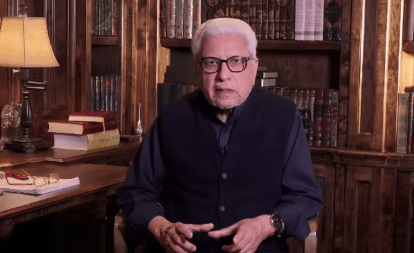
This text analyzes a Hadith in Sahih Muslim concerning the signs of the Day of Judgment, specifically focusing on the descent of the Messiah (Nazul Masih). The author questions the reliability and interpretation of certain narrations regarding the timing and nature of this event. He argues against a literal interpretation based on inconsistencies within the Hadith and Quranic verses. The author supports his claims by examining discrepancies in the Hadith’s descriptions and by referencing specific Quranic passages, particularly in Surah Al-Imran. He concludes that certain traditional interpretations are flawed and suggests alternative understandings.
Review of Doomsday Signs in Islamic Texts
Quiz
Instructions: Answer each question in 2-3 sentences.
- According to the speaker, what is the primary issue with the traditions surrounding the sign of Nazul Masih (the descent of the Messiah)?
- What two signs of Doomsday does the speaker claim were fulfilled at the time of his address, based on a conversation between Jibal Ameen and Rasulallah?
- What point does the speaker make using the verse from the Quran where Jesus states he was only a witness while among his people?
- How does the Quranic verse from Surah Al-Imran, particularly verse 55, factor into the speaker’s argument against a second coming of Masih (Messiah)?
- What does the speaker say is significant about Allah’s declaration in Surah Al-Imran that followers of Jesus would prevail until the Day of Judgment?
- In what way does the speaker claim that Allah’s decision regarding Jesus and his followers, as mentioned in the Quran, is already a sign of the Doomsday?
- What other key Quranic evidence is used by the speaker to reinforce his argument that Jesus will not descend again, and what does it state?
- What is the speaker’s explanation for why some traditions about Nazul Masih might exist if they are not correct?
- What is the main difference between the way the speaker interprets the Quran and the commonly held view of the Messiah’s return?
- What is the importance of the phrase “till the Day of Judgment” in the speaker’s analysis of Quranic verses?
Answer Key
- The speaker notes that the time of the descent of Nazul Masih has been lost in the traditions, and associated prophecies about the conquest of Constantinople have not been fulfilled. This suggests a possible error in understanding or narrating the original message.
- The speaker does not specify, instead he notes that two of the signs are fulfilled already and observable in the world.
- The speaker contends that if Jesus were to return before the Doomsday, this verse where he states he was not aware of the actions of his followers after he left would be nonsensical. He could not honestly claim ignorance of their behavior if he had just returned.
- The speaker argues that Surah Al-Imran comprehensively addresses the story of Jesus, including his death and the destiny of his followers until the Day of Judgment, without mentioning a second coming. This absence of a second coming suggests that it is not part of God’s plan.
- The speaker asserts that this declaration, made when there were very few followers, is itself a sign of the Doomsday as it confirms the continued triumph of his followers, an event which was impossible to predict at the time.
- The speaker argues that Allah’s promise to have Jesus’ followers prevail over his deniers until the Day of Judgment was declared roughly 2000 years ago when the believers were a small group, indicating the power and truth of this sign that has endured.
- The speaker references a surah where Allah declares that all will be brought before Him after the Day of Judgment, and in that context decisions will be made regarding all those who disagreed about Jesus, which according to the speaker, makes it nonsensical to state that Christ will descend again to judge.
- The speaker believes there was likely a misunderstanding or misinterpretation of the original messages, rather than the traditions being deliberate fabrications. He suggests that a different issue is at the root.
- The speaker interprets the Quran as stating Jesus will not return, arguing instead that specific Quranic verses detail his and his followers’ destiny until the Day of Judgment; the speaker thinks the view that Jesus will return relies on other sources, especially on traditions.
- The phrase “till the Day of Judgment” signifies the permanence and completion of the prophecies and promises made by God. If something is stated to last “till the Day of Judgment” there is no opportunity for a change of state, including a second coming of Jesus.
Essay Questions
Instructions: Answer each question in essay format.
- Analyze the speaker’s arguments against the tradition of Nazul Masih. How does he use logic and textual analysis to support his claims? Discuss the implications of these claims on traditional beliefs of a second coming of the Messiah.
- Compare and contrast the speaker’s interpretation of Quranic verses related to the Messiah with the more traditional interpretations. What specific verses does he utilize, and how does his reading of them differ from the conventional understanding?
- Discuss the significance of the phrase “till the Day of Judgment” in the speaker’s arguments. How does it relate to his overall interpretation of Quranic prophecies and beliefs about the End Times?
- Critically evaluate the speaker’s claim that the promise of followers of Jesus prevailing until the Day of Judgment is in itself a sign of the Doomsday. How compelling is this argument, and what are its strengths and weaknesses?
- How does the speaker’s analysis of the traditions of Nazul Masih reflect broader issues in the interpretation of religious texts? What does this text suggest about the challenges and possibilities inherent in engaging with religious authority?
Glossary of Key Terms
- Bismillah Rahman Rahim: The Islamic phrase “In the name of God, the Most Gracious, the Most Merciful.” It is often used to begin a speech, writing, or activity.
- Sahih Muslim: A collection of hadith (sayings and actions of the Prophet Muhammad) considered to be highly authentic by Sunni Muslims.
- Nazul Masih: The descent of the Messiah, a traditional Islamic belief regarding Jesus’s return to Earth before the Day of Judgment.
- Rasulallah: A title referring to the Prophet Muhammad, meaning “Messenger of God.”
- Jibal Ameen: The angel Gabriel, regarded in Islam as a highly respected messenger of God, particularly to the prophet Muhammad.
- Doomsday (Yaum al-Qiyāmah): The Islamic belief in the end of the world and the Day of Judgment, when all will be resurrected and judged by God.
- Zare Bais: Literally meaning “planted again,” used in the passage to refer to the act of worshipping others besides Allah.
- Meezan: This means “balance” in Arabic, but as used in the context, it refers to a previous book by the speaker.
- Surah Al-Imran: The third chapter (surah) of the Quran. It contains stories, laws and many moral lessons. In this passage, it is used as evidence to support the speaker’s argument.
- Masih al-Salam: The Messiah (Jesus), may peace be upon him.
- Fatah Qustu Tanaya: The conquest of Constantinople, a historical event with religious significance which is considered by some a sign of the end times.
- Peshwe Goi: Prophecy or prediction, especially related to religious texts.
Reinterpreting the Islamic Eschatology of the Messiah’s Descent
Okay, here is a detailed briefing document reviewing the main themes and important ideas from the provided text.
Briefing Document: Analysis of Excerpts on Doomsday Signs
Date: October 26, 2023 Subject: Analysis of Islamic Texts Regarding the Signs of Doomsday, Specifically Focusing on the “Nazul Masih” (Descent of the Messiah) Source: Excerpts from “Pasted Text”
Introduction
This document analyzes excerpts from a discourse on the signs of Doomsday (Qiyamah) within Islamic eschatology, specifically focusing on the concept of the “Nazul Masih” (the descent of the Messiah, Jesus). The speaker engages critically with traditional interpretations, questioning the validity of certain Hadith (prophetic traditions) in light of the Quranic text. The core argument revolves around inconsistencies and a perceived lack of Quranic support for a second coming of Jesus.
Main Themes and Key Ideas
- Critique of Hadith Narrations on Nazul Masih:
- The speaker begins by examining Hadith number 2901 from Sahih Muslim, which deals with Doomsday signs, particularly the Nazul Masih.
- He points out a key discrepancy: some narrators of the same prophetic gathering included the sign of Nazul Masih while others omitted it, mentioning a different sign instead. This discrepancy raises the question of which narration should be prioritized.
- The speaker also highlights the loss of temporal context in Nazul Masih traditions. These traditions often link the descent of the Messiah with the conquest of Constantinople (Fatah Qustu Tanaya), which occurred in 1453. The failure of this link to materialize is presented as a reason to re-evaluate these traditions’ authenticity.
- Quote: “I have said that in the traditions of Nazul Masih itself, the description of its time has been lost, that is, it has been told when it will happen and it has been told with great appreciation that this will be the day of Fatah Qustu Tanaya. If it happens immediately then it happened in 1453, now centuries have passed, nothing has happened regarding any Peshwe Goi…”
- Quranic Perspective on Jesus (Masih):
- The speaker emphasizes the Quran’s perspective on Jesus, focusing on the conversation between Allah and Jesus on the Day of Judgment as described in the Quran. The speaker is referring to Surah Al-Ma’idah [5:116-118] where Allah asks Jesus if he instructed people to worship him and his mother. Jesus’ response shows that he only instructed people to worship Allah. The speaker uses this interaction to argue that a second coming of Jesus contradicts this Quranic account.
- The speaker argues that if Jesus were to descend again, his testimony about his previous mission would be drastically different. If Jesus had returned recently, he wouldn’t say that he is unaware of his followers’ actions after he was raised up to heaven. He would say he has come back, warned them, and is aware of the misguidance they followed after he was taken up.
- Quote: “Look at this, if Masih al-Salam has come to the world once again, then this last sentence is not relevant in any way…then he should say that I have come just a few days or a few months or some time before the doomsday and warmed their ears, I have done my duty… No, I don’t know what they were doing. I don’t know. There was no such thing in my time.”
- Surah Al-Imran and the Divine Verdict:
- The discourse pivots to Surah Al-Imran (specifically verse 55) to further argue against a second coming.
- The speaker contends that this verse, which discusses Allah’s plan for Jesus, does not mention a return before the Day of Judgment. The verse outlines a divine plan stating, “Indeed, I will take you and raise you to Myself, and purify you from those who disbelieve, and I will make those who follow you superior to those who disbelieve until the Day of Resurrection.”
- He claims that if a return was intended, it would have been stated during this section discussing Allah’s decision about Masih, since that part covered everything about what was to happen with Jesus.
- He argues that this verse emphasizes that the dominance of Jesus’s followers over his deniers is a sign that will remain until the day of judgment.
- Quote: “I decided, Allah Ta’ala says, I decided, the feast was over, the community decided to kill them, on that occasion Allah Ta’ala was saying, I decided I have promised you that I will give you death, this is the first thing and I will take you towards myself and will purify you from these denies of yours or this is now a heap of filth, I will take you out from them and those who follow you i.e. those who will be born to believe in you. I will prevail over these denier till the Day of Judgment.”
- Reinterpretation of Doomsday Signs:
- The speaker proposes a reinterpretation of the sign of Masih. According to the speaker, the very existence of Masih himself is a sign of Doomsday. The fact that his true followers will be victorious until the Day of Judgement is also a sign of the Doomsday. The speaker seems to imply that it’s a sign that has already taken effect.
- The speaker argues that the Quran has explicitly stated what will happen until the Day of Judgement. Since it has been explained that his true followers will be victorious till the Day of Judgement, and then everyone is to return to Allah on the Day of Judgement, where matters will be decided, there is no space for a second coming.
- Quote: “…see how big a sign this has become. The same has been said in another Surah that Masih is a sign of the Doomsday by his existence or you can see him whenever you want…”
- Rejection of Traditional Narratives and Potential Mistranslation:
- The speaker posits that some hadith about the second coming of Jesus could be the result of mistaken interpretations or mistranslations of the Prophet’s words. He is also hinting that these hadith might have been manufactured.
- Quote: “Then can it be said that has this tradition been made by someone or do they have some other issue and my view is that no, their issue is completely different, there has been a mistake in understanding it…”
Conclusion:
The speaker presents a critical perspective on the traditional Islamic belief in the second coming of Jesus (Nazul Masih). He argues that the Quran does not support this concept and that some Hadith narrations may be unreliable or misinterpreted. He emphasizes the Quranic account of Jesus’s message, the timeline of events described in Surah Al-Imran, and the sign of the victory of his followers until the Day of Judgement. The overall message seems to be a call for a deeper reliance on the Quran and a reevaluation of Hadith when discrepancies arise. The speaker seems to argue that the sign of Masih is not the idea that he will descend from the heavens, but the fact that he existed and that his true followers will be dominant till the Day of Judgement.
Further Research:
- In-depth analysis of the specific Hadith mentioned (Sahih Muslim 2901) and related narrations.
- Comparative study of Quranic interpretations of Surah Al-Imran verse 55.
- Research on historical debates regarding the second coming of Jesus within different Islamic traditions.
This briefing document should provide a comprehensive overview of the ideas presented in the text. Let me know if you require any further clarification or analysis.
Nazul Masih and the Signs of Doomsday
The provided text discusses signs of Doomsday, particularly focusing on the sign of Nazul Masih (the descent of the Messiah) and its interpretation within Islamic tradition [1]. Here’s a breakdown of the key points:
- The Sign of Nazul Masih: The text examines narrations about the return of the Messiah as a sign of Doomsday [1]. It points out that some narrations include this sign, while others from the same gathering do not, mentioning other signs instead [1]. This raises the question of which narration to prioritize [1].
- Problems with the Nazul Masih Narrative:Time Discrepancy: The traditions of Nazul Masih have lost their time references [1]. It was said that the event would coincide with the “Fatah Qustu Tanaya” (Conquest of Constantinople), which happened in 1453 [1]. However, the Messiah’s return has not occurred, raising doubts about the accuracy of the time frame [1].
- Quranic Perspective: The Quran does not accept the concept of the Messiah’s return in the way it is presented in some traditions [1]. Specifically, a verse from Surah Al-Imran (verse 55) is cited where Allah states that He will give Jesus death, take him towards Himself and purify him, and those who follow him will prevail until the Day of Judgment [1]. This verse is interpreted as a decision about the followers of Jesus until the Doomsday, with no mention of a return before that time [1].
- The Messiah’s Testimony: The text argues that if the Messiah were to return, his testimony in the Quran would not make sense [1]. In the Quran, Jesus says that he was only a witness over his people while he was among them and that after his death, God was the watcher over them [1]. If the Messiah were to return before Doomsday, this last statement would not be relevant [1].
- Other Signs of Doomsday: The text mentions other signs of Doomsday that have been fulfilled, as told by Rasulallah, indicating that those signs are more reliable [1]. It also points out that the Quran describes the actions that will happen until the Day of Judgment regarding Masih al-Salam [1]. This indicates there is no further action of the Messiah that will happen before the Day of Judgment [1].
- Surah Al-Imran (Verse 55) analysis:
- The verse from Surah Al-Imran discusses Allah’s decision regarding Hazrat Masih [1].
- It states that Allah will cause Jesus to die, take him towards Himself and purify him [1].
- It states that those who follow Jesus will prevail over the deniers until the Day of Judgment [1]. This decree is considered a sign of the Doomsday itself [1].
- This verse indicates that the situation described in the verse will remain the same until the Day of Judgment [1].
- Reinterpretation of Traditions: The text suggests that the traditions regarding the return of the Messiah might have been misunderstood [1]. The author argues that the issue lies not in the traditions themselves but in how they have been interpreted [1].
In summary, the text critically analyzes the traditional understanding of the Messiah’s return as a sign of Doomsday [1]. It uses Quranic verses to argue that the Messiah will not return to Earth before the Day of Judgment, suggesting a different interpretation of the relevant traditions [1]. The text concludes by noting that this was explained in the Quran, and there is no room to think that the Messiah will come down from the sky to tell people about their mistakes and declare them [1].
Nazul Masih: A Critical Islamic Reassessment
The concept of Nazul Masih (the descent or return of the Messiah) as a sign of Doomsday is discussed in the provided text, with a focus on analyzing the traditional understanding of this sign within Islamic tradition [1].
Here’s a breakdown of the key points regarding Nazul Masih’s sign, as explained in the text:
- Conflicting Narrations: Some narrations about the signs of Doomsday include the return of the Messiah, while others, from the same gatherings, do not [1]. Instead, these other narrations mention different signs, raising questions about which narrations should be given more weight [1].
- Time Discrepancy: The narrations of Nazul Masih are missing time references. It was said that the return of the Messiah would happen at the time of the “Fatah Qustu Tanaya” (Conquest of Constantinople), which took place in 1453 [1]. However, since the return of the Messiah did not occur, it raises doubts about the accuracy of this time frame [1].
- Quranic Perspective: The text argues that the Quran does not support the concept of the Messiah’s return as it is described in some traditions [1].
- Specifically, a verse from Surah Al-Imran (verse 55) is cited [1]. In this verse, Allah states that He will cause Jesus to die, take him towards Himself, and purify him. Furthermore, it states that those who follow Jesus will prevail over the deniers until the Day of Judgment [1].
- This verse is interpreted as a decision about the followers of Jesus that will remain in effect until the Day of Judgment, with no mention of a return before that time [1].
- The Messiah’s Testimony: The text argues that if the Messiah were to return, his testimony in the Quran would not make sense [1]. In the Quran, Jesus says that he was only a witness over his people while he was among them, and that after his death, God was the watcher over them [1]. The text argues that if the Messiah were to return before Doomsday, this statement wouldn’t be relevant [1].
- Sign of Doomsday: The verse from Surah Al-Imran, in which Allah states that those who follow Jesus will prevail over the deniers until the Day of Judgment is itself described as a sign of Doomsday [1].
- Reinterpretation of Traditions: The text suggests that the traditions about the return of the Messiah may have been misunderstood, and the problem is not with the traditions themselves, but with how they have been interpreted [1].
- No Further Action: The Quran describes the actions that will happen until the Day of Judgment regarding Masih al-Salam and this indicates that there will be no further action of the Messiah that will occur before the Day of Judgment [1].
In conclusion, the text critically examines the traditional understanding of Nazul Masih as a sign of Doomsday, using Quranic verses to suggest that the Messiah will not return to Earth before the Day of Judgment. It presents an alternative understanding of the relevant traditions and verses, and suggests there is no room for the belief that the Messiah will come down from the sky to correct people before the Day of Judgment [1].
Nazul Masih and the Day of Judgment
The provided text focuses on specific Quranic verses, particularly Surah Al-Imran, verse 55, to interpret the sign of Nazul Masih (the descent of the Messiah) and its relation to the Day of Judgment [1]. Here’s a breakdown of the relevant Quranic verses and their interpretations as discussed in the source:
- Surah Al-Imran (Verse 55): This verse is central to the argument presented in the text [1]. It discusses Allah’s decision regarding Hazrat Masih (Jesus).
- The verse states that Allah decided to give Jesus death (“I will give you death”), take him towards Himself (“I will take you towards myself”), and purify him (“will purify you from these denies of yours”) [1].
- It also states that those who follow Jesus will prevail over the deniers until the Day of Judgment [1].
- The text interprets this verse as a declaration about the state of Jesus and his followers that will remain in effect until the Day of Judgment [1]. This is seen as a sign of the Doomsday itself, indicating that the situation described in this verse will not change [1].
- The text emphasizes the finality of the statement by Allah, specifically that the followers of Jesus will prevail until the day of judgment [1].
- Implications for the Nazul Masih: The text uses this verse to argue against the traditional understanding of Nazul Masih, the return of Jesus before the Day of Judgment [1].
- The author argues that the verse from Surah Al-Imran describes what will happen to Jesus and his followers until the Day of Judgment and this decree is conclusive [1].
- The text argues that this verse makes no mention of a return of Jesus to Earth before the Day of Judgment and no further action that the Messiah will take before the Day of Judgment [1].
- Therefore, the text suggests that the traditional belief that Jesus will return to Earth to correct people and punish them is not supported by this Quranic verse [1].
- The text states that there is no room to think that the Messiah will come down from the sky to tell people about their mistakes and declare them because the entire matter has been explained in the Quran [1].
- Significance of the Quranic description: The text highlights that the Quran has described the actions to be brought about until the Doomsday regarding Masih al-Salam and that was the opportunity to praise the words until the doomsday [1].
- The author states that when Allah is describing the things that are going to happen to Jesus and his followers until the day of judgement, this was an opportunity to state if Jesus would be sent again before the Day of Judgment. Since that was not included, there is no basis to argue that Jesus will be sent again before the day of judgment [1].
In summary, the text uses Quranic verses, especially Surah Al-Imran verse 55, to argue against the traditional interpretation of the Messiah’s return before the Day of Judgment. The author interprets the verse as a final decree regarding the fate of Jesus and his followers that remains in effect until the Day of Judgment, with no mention of a return to Earth. This interpretation challenges the traditional Islamic view of Nazul Masih as a sign of Doomsday and presents a different perspective based on these specific verses.
The Messiah and the Day of Judgment in Islam
The text discusses Masih al-Salam (the Messiah, peace be upon him), primarily in the context of his role as a sign of Doomsday and how that role is understood in Islam [1]. The text uses Quranic verses, especially Surah Al-Imran, verse 55, to argue against the traditional interpretation of the Messiah’s return before the Day of Judgment [1].
Here’s a breakdown of the key points regarding Masih al-Salam, as presented in the text:
- Traditional View of Nazul Masih: Some traditions suggest that the return of Masih al-Salam (Nazul Masih) is a sign of the approach of Doomsday [1]. This return is traditionally understood as the Messiah coming back to Earth to correct people and punish those who are misguided [1].
- Quranic Perspective: The text challenges the traditional view of Nazul Masih, using Surah Al-Imran, verse 55, as its main argument [1].
- This verse states that Allah decided to give Jesus death, take him towards Himself, and purify him. It also states that those who follow Jesus will prevail over the deniers until the Day of Judgment [1].
- The text interprets this verse as a final decree about the fate of Jesus and his followers, which will remain in effect until the Day of Judgment. This decree is seen as a sign of the Doomsday itself [1].
- The text emphasizes that because this verse describes what will happen until the Day of Judgment, and does not mention a return of the Messiah before that time, there is no basis to argue that the Messiah will return to Earth before the Day of Judgment [1].
- Masih’s Testimony in the Quran: The text argues that if Masih al-Salam were to return to Earth before the Day of Judgment, his testimony in the Quran would not make sense. The text notes that in the Quran, Jesus states that he was only a witness over his people while he was among them and that after his death, God was the watcher over them [1]. If he were to return before the Day of Judgment, the text argues, this statement would be irrelevant [1].
- No Further Action: The text states that the Quran describes the actions that will happen until the Day of Judgment regarding Masih al-Salam, and this indicates that there will be no further action of the Messiah that will occur before the Day of Judgment [1]. The author argues that when Allah is describing the things that are going to happen to Jesus and his followers until the day of judgment, this was an opportunity to state if Jesus would be sent again before the Day of Judgment. Since that was not included, there is no basis to argue that Jesus will be sent again before the day of judgment [1].
- Reinterpretation of Traditions: The text suggests that the traditions about the return of the Messiah may have been misunderstood. It argues that the issue lies not in the traditions themselves but in how they have been interpreted [1].
In conclusion, the text presents a view of Masih al-Salam that is different from traditional understandings. It argues, based on the interpretation of specific Quranic verses, that the Messiah will not return to Earth before the Day of Judgment [1]. Instead, the text highlights the Quranic description of the fate of Jesus and his followers until the Day of Judgment as the relevant sign of the Doomsday regarding the Messiah [1].
Nazul Masih and the Quranic Sign of Doomsday
The text discusses the signs of Doomsday, particularly focusing on the sign of Nazul Masih (the return of the Messiah) and how it relates to the Quranic understanding of the Day of Judgment [1].
Here’s a breakdown of the key points regarding the arrival of Doomsday as discussed in the text:
- Signs of Doomsday: The text begins by mentioning that it is studying narrations about the signs of Doomsday [1]. It specifically addresses the sign of Nazul Masih, which is the return of the Messiah, and notes that there are differing narrations about this sign [1].
- Some narrations include the return of the Messiah as a sign of Doomsday, while others from the same gatherings do not, mentioning different signs instead [1].
- This raises a question as to which narrations should be given preference [1].
- Time Discrepancy: The text points out that the traditional understanding of Nazul Masih is linked to a specific time, the “Fatah Qustu Tanaya” (Conquest of Constantinople), which occurred in 1453. However, the return of the Messiah did not happen at that time, leading to doubts about the accuracy of the time frame mentioned in these narrations [1].
- It is argued that it is not possible for the Prophet of Allah to fix a time for an event that does not come to pass [1].
- Quranic Perspective on Doomsday: The text then presents an alternative perspective based on the Quran, specifically focusing on Surah Al-Imran, verse 55 [1].
- This verse is interpreted as a declaration by Allah about the fate of Jesus and his followers, which will remain in effect until the Day of Judgment [1].
- The verse states that Allah decided to give Jesus death, take him towards Himself, and purify him and that those who follow Jesus will prevail over the deniers until the Day of Judgment [1].
- The text argues that the fact that the followers of Jesus will prevail until the Day of Judgment is itself a sign of the Doomsday [1].
- Reinterpretation of Traditions: The text suggests that the traditions about the return of the Messiah may have been misunderstood, and the problem is not with the traditions themselves, but with how they have been interpreted [1]. The author emphasizes the importance of critically analyzing the narrations of the signs of Doomsday, and comparing them with the teachings of the Quran [1].
- Masih al-Salam as a sign: According to the text, the Quranic description of the fate of Masih al-Salam and his followers is a sign of Doomsday [1].
- The text argues that since the Quran describes the actions that will happen until the Day of Judgment regarding Masih al-Salam, and it makes no mention of a return of the Messiah before that time, the Messiah will not return to Earth before the Day of Judgment [1].
- The text also notes that if the Messiah were to return, some of his statements in the Quran would not make sense, particularly the statement where he says he was a witness over his people only while he was among them [1].
In summary, the text discusses the traditional understanding of Nazul Masih as a sign of Doomsday, but argues for a different perspective based on Quranic verses, particularly Surah Al-Imran, verse 55 [1]. It presents the Quranic description of the fate of Jesus and his followers until the Day of Judgment as the relevant sign of the Doomsday regarding the Messiah [1]. The text suggests that the traditional interpretation of the Messiah’s return before the Day of Judgment is not supported by the Quran and is the result of a misunderstanding of the relevant traditions [1].
Nazul Masih: A Quranic Reinterpretation
Okay, here is a Frequently Asked Questions (FAQ) based on the information in the sources and our conversation history about the signs of Doomsday, the Messiah (Masih al-Salam), and Quranic interpretations:
Q: What are the signs of Doomsday according to the sources?
- The sources discuss various signs of Doomsday, with a particular focus on the sign of Nazul Masih, which is the return of the Messiah [1].
- Some traditions mention the return of the Messiah as a sign, while others mention different signs [1]. The text highlights a discrepancy in the narrations, questioning which ones should be given preference [1].
- The text argues that the prevailing of the followers of Jesus until the Day of Judgment as mentioned in Surah Al-Imran, verse 55, is a sign of Doomsday itself [1].
Q: What is Nazul Masih?
- Nazul Masih refers to the traditional Islamic belief in the return of the Messiah (Masih al-Salam) to Earth before the Day of Judgment [1].
- It is traditionally understood that the Messiah will return to correct people, punish the misguided, and declare the truth before the Day of Judgement [1].
Q: What is the Quranic perspective on the return of the Messiah (Nazul Masih)?
- The text presents an interpretation of the Quran, particularly Surah Al-Imran, verse 55, which argues against the traditional understanding of Nazul Masih [1].
- Surah Al-Imran, verse 55 states that Allah decided to give Jesus death, take him towards Himself, and purify him, and that those who follow Jesus will prevail over the deniers until the Day of Judgment [1].
- The text interprets this verse as a final decree about the fate of Jesus and his followers, which will remain in effect until the Day of Judgment. This decree is seen as a sign of the Doomsday itself [1].
- The text emphasizes that since the Quran describes what will happen until the Day of Judgment, and does not mention a return of the Messiah before that time, there is no basis to argue that the Messiah will return before the Day of Judgment [1].
Q: How does the Quranic perspective challenge traditional views of Nazul Masih?
- The text challenges the traditional view that the Messiah will return to Earth before the Day of Judgment [1].
- The author argues that the Quranic description of the fate of Jesus and his followers until the Day of Judgment is conclusive and does not allow for a return of the Messiah before that time [1].
- It is argued that the traditional understanding of the return of the Messiah is not supported by the Quran, and is a misunderstanding of the relevant traditions [1].
Q: What is the significance of Surah Al-Imran, verse 55, in this context?
- Surah Al-Imran, verse 55 is central to the argument presented in the text [1].
- It is interpreted as a declaration by Allah regarding the fate of Jesus and his followers, which will remain in effect until the Day of Judgment [1].
- This verse is seen as a sign of the Doomsday itself because it describes the situation that will continue until that time [1].
- The text notes that the verse makes no mention of a return of the Messiah before the Day of Judgment and the author emphasizes that the Quran could have mentioned that the Messiah would return if that were the case [1].
Q: What does the text say about the Messiah’s (Masih al-Salam) role and testimony in the Quran?
- The text argues that if Masih al-Salam were to return to Earth before the Day of Judgment, some of his statements in the Quran would not make sense [1].
- Specifically, the text points to the statement in the Quran where Jesus says he was a witness over his people only while he was among them, and that after his death, God was the watcher over them [1]. The text argues that this statement would be irrelevant if he were to return before the Day of Judgment [1].
Q: Does the text completely reject the traditions about the return of the Messiah?
- The text suggests that the traditions about the return of the Messiah may have been misunderstood [1].
- It argues that the issue lies not in the traditions themselves but in how they have been interpreted [1].
- The text emphasizes the importance of critically analyzing the narrations of the signs of Doomsday, and comparing them with the teachings of the Quran [1].
Q: What is the relationship between the conquest of Constantinople and the return of the Messiah?
- Some traditions link the return of the Messiah to a specific time, the “Fatah Qustu Tanaya” (Conquest of Constantinople), which occurred in 1453 [1].
- However, the Messiah did not return at that time, leading to doubts about the accuracy of the time frame mentioned in those narrations [1]. The author argues that it is not possible for the Prophet to fix a time for an event that does not come to pass [1].
Doomsday, the Messiah, and the Quran
Based on the provided sources, here is a timeline of events related to the signs of Doomsday and the Messiah (Masih al-Salam), with a focus on how the sources interpret these events:
- Prophet’s Time: The Prophet Muhammad is asked about the signs of the approach of Doomsday [1]. He provides two signs that the text says have been fulfilled, however the source doesn’t state what those signs are [1].
- Traditional Understanding of Nazul Masih: Narrations about the signs of Doomsday include the sign of Nazul Masih, which is the return of the Messiah [1].
- Some narrations link the return of the Messiah to the “Fatah Qustu Tanaya” (Conquest of Constantinople) [1].
- The Conquest of Constantinople occurred in 1453, but the Messiah did not return at this time [1].
- This discrepancy leads to questioning of the traditional understanding of Nazul Masih and the accuracy of the narrations that mention it [1].
- Quranic Perspective: The text introduces a different perspective based on the Quran, particularly Surah Al-Imran, verse 55 [1].
- Surah Al-Imran, verse 55 states that Allah decided to give Jesus death, take him towards Himself, and purify him, and that those who follow Jesus will prevail over the deniers until the Day of Judgment [1].
- This verse is interpreted as a final decree about the fate of Jesus and his followers that will remain in effect until the Day of Judgment [1].
- The text argues that the prevailing of the followers of Jesus until the Day of Judgment is a sign of the Doomsday itself [1].
- Reinterpretation of Traditions: The text suggests that the traditions about the return of the Messiah may have been misunderstood [1].
- The author emphasizes the importance of critically analyzing the narrations of the signs of Doomsday, and comparing them with the teachings of the Quran [1].
- The text argues that since the Quran describes the actions that will happen until the Day of Judgment regarding Masih al-Salam, and it makes no mention of a return of the Messiah before that time, the Messiah will not return to Earth before the Day of Judgment [1].
- The text also notes that if the Messiah were to return, some of his statements in the Quran would not make sense, particularly the statement where he says he was a witness over his people only while he was among them [1].
- The Day of Judgment: According to the Quranic interpretation in the text, the situation described in Surah Al-Imran, verse 55, will continue until the Day of Judgment [1]. At this time, Allah will decide about the different things among all the followers [1].
In summary, the timeline presented in the text shifts the focus from a future return of the Messiah before the Day of Judgment to an interpretation of Quranic verses that describes the existing situation as the relevant sign of Doomsday [1].

By Amjad Izhar
Contact: amjad.izhar@gmail.com
https://amjadizhar.blog
Affiliate Disclosure: This blog may contain affiliate links, which means I may earn a small commission if you click on the link and make a purchase. This comes at no additional cost to you. I only recommend products or services that I believe will add value to my readers. Your support helps keep this blog running and allows me to continue providing you with quality content. Thank you for your support!

Leave a comment