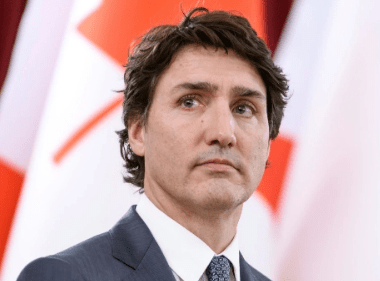
The text speculates on Canadian Prime Minister Justin Trudeau’s resignation, focusing on strained relations with India stemming from Canada’s handling of Sikh separatist issues. It highlights accusations of Canadian support for Sikh extremism, leading to diplomatic tensions and potential retaliatory actions from India. The piece also mentions Trudeau’s past political successes and challenges, including coalition governments and a difficult relationship with former US President Trump. The author suggests that these factors, along with pressure from within his own party, may have contributed to Trudeau’s decision to step down. Finally, the article contrasts Canada-India relations unfavorably with the Canada-US relationship, offering a hypothetical scenario where Canada becomes a US state to resolve conflict.
The Trudeau Resignation Study Guide
Quiz
- What is Justin Trudeau’s family connection to Canadian politics, and how does it affect his legacy?
- Describe Trudeau’s initial electoral success in 2015 and how his party’s performance changed in subsequent elections.
- What specific issue led to a major deterioration in relations between Canada and India under Justin Trudeau’s leadership?
- What specific incident in June of 2023 fueled the conflict between Canada and India?
- What is Khalistan Tehreek, and how does it contribute to the political tension between India and Canada?
- How have Western intelligence reports played a role in Canada’s investigation into the killing of Hardeep Singh Najjar?
- What is the significance of the Washington Post report regarding RAW and killings in Pakistan and elsewhere?
- What is the main demand put forth by India regarding their relationship with Canada and Justin Trudeau?
- How did Donald Trump’s comments and actions during his presidency affect his relationship with Canada and Trudeau?
- How does the author use the historical example of Pakistan’s founder Muhammad Ali Jinnah, to comment on the current state of Canada-India relations?
Quiz Answer Key
- Justin Trudeau is the son of former Prime Minister Pierre Trudeau, giving him a political legacy that both elevates and burdens him by way of his family’s political tradition. He is only the second Canadian politician to follow in his father’s footsteps.
- Trudeau’s Liberal Party achieved a major victory in the 2015 elections, but failed to achieve the same level of success in 2019 and 2021, which lead to a coalition with the New Democratic Party.
- The main issue leading to deteriorated relations between Canada and India was Canada’s perceived harboring of Sikh separatists, particularly those connected to the Khalistan movement, and the murder of Hardeep Singh Najjar.
- The killing of Sikh leader Hardeep Singh Najjar outside a Gurdwara in British Columbia in June 2023, and Trudeau’s subsequent accusations against India’s government, increased tension between the two countries.
- The Khalistan Tehreek is a Sikh separatist movement advocating for an independent Sikh state, which has caused conflict between India and Canada due to the perceived support for its members within Canada.
- Western intelligence reports, specifically from the United States and the United Kingdom, have been crucial in Canada’s investigation into the murder of Hardeep Singh Najjar and supported the accusations against India.
- The Washington Post reported that RAW, India’s intelligence agency, has been implicated in targeted killings of individuals in Pakistan and Afghanistan, adding complexity to the India-Canada tensions.
- India has effectively demanded that Justin Trudeau step down from the position of Prime Minister for relations to be restored.
- During his presidency, Donald Trump’s rhetoric and actions, like calling Trudeau “Governor” and threatening tariffs and annexation of Canada, strained relations with Canada, showing a lack of respect for his position.
- The author references Muhammad Ali Jinnah’s hope for Pakistan and India relations to be like Canada and America, to show the historic lack of success of such relationships and to note that a resolution to the problems between India and Canada may resolve other issues.
Essay Questions
- Analyze the various factors that contributed to the deterioration of relations between Canada and India under Justin Trudeau’s leadership. Consider both domestic and international political factors.
- Compare and contrast the roles of domestic and international influences on Justin Trudeau’s political career, including both his rise to power and recent challenges.
- Evaluate the significance of the Khalistan movement in shaping the dynamics between India and Canada. How has the past influenced current political tensions and challenges?
- Explore the implications of the reported intelligence suggesting foreign involvement in the killings of Sikh figures in both Canada and abroad. How might this situation impact diplomatic relations and international norms?
- Discuss the author’s use of historical examples, such as the relationship between Pakistan and India, and the role of Muhammad Ali Jinnah, to make sense of the current situation involving Justin Trudeau.
Glossary of Key Terms
- Khalistan Tehreek: A Sikh separatist movement advocating for the creation of an independent Sikh state, primarily located within the Punjab region of India.
- RAW: India’s primary foreign intelligence agency, the Research and Analysis Wing. It is accused of being involved in targeted killings in Pakistan.
- Coalition Government: A government formed when no single party achieves a majority in an election, requiring multiple parties to work together to govern.
- G20 Conference: An international forum bringing together the world’s major developed and developing economies to discuss financial and socioeconomic issues.
- Sikhs for Justice: An organization advocating for an independent Sikh state and is the target of actions for allegedly encouraging separatist movements.
- Sovereignty: The supreme authority within a territory; the right of a country to govern itself and its citizens without outside interference.
- Gurdwara: A Sikh place of worship and community gathering.
- Tariffs: Taxes or duties imposed on imported or exported goods.
- Freedom of expression: The right to share opinions and ideas, a core tenet of liberal democracy.
- Prime Minister: The head of the cabinet and the leader of the executive branch of a government, usually in a parliamentary or semi-presidential system.
Trudeau, India, and Canada’s Perilous Path
Okay, here’s a briefing document summarizing the key themes and ideas from the provided text, focusing on the situation surrounding Justin Trudeau’s political standing and Canada’s international relations.
Briefing Document: Analysis of Political Pressures on Justin Trudeau
Date: October 26, 2023 (Based on context)
Subject: Analysis of Political Turmoil surrounding Justin Trudeau and Canada’s International Relations
Sources: Excerpts from provided “Pasted Text”
Executive Summary:
This document analyzes the political pressures faced by Canadian Prime Minister Justin Trudeau, as described in the provided text. The text suggests that Trudeau’s political difficulties are a result of strained international relations, particularly with India, coupled with internal dissent within his own party. The document also touches upon the influence of the United States and historical parallels. The core issues involve accusations of harboring terrorists and a perceived lack of resolve on Canada’s part in dealing with the Khalistan movement, which has soured relations with India.
Key Themes and Ideas:
- Strained Relations with India:
- Khalistan Movement: The text highlights the central role of the Khalistan movement in escalating tensions between India and Canada. The presence of Sikh communities in Canada, some of whom are associated with the Khalistan movement, is presented as a major source of conflict. The article states “In Canada, since the Sikh community is inhabited in a special number, including there is no shortage of people affiliated with Khalistan Tehreek, whose roots are in Indian Punjab. Or not, in Canada, they propagate their separatistism very well.”
- Allegations of Harboring Terrorists: India accuses Canada of harboring individuals involved in terrorist activities, linked to the Khalistan movement, and harboring anti-India elements. “Indian officials warned him. Ignoring it was making you realize that you refrain from providing shelter to our terrorists while Justin Trudeau made it his responsibility to protect them as Canadian citizens by linking it to freedom of expression and human rights.”
- Assassination of Hardeep Singh Najjar: The killing of Sikh leader Hardeep Singh Najjar in British Columbia is a pivotal event, with Justin Trudeau accusing the Indian government of involvement. This accusation has severely damaged relations between the two countries, “Justin Trudeau stood inside the parliament and supported Modi government. Meet the Indian ambassador and agent accused. This led to a lot of problems in India-Canada relations.”
- Cold Reception at G20: The author notes the strained interaction between Trudeau and Modi at the G20 summit in Delhi, with India allegedly taking a “cold-hearted attitude” towards Trudeau.
- Internal Dissent and Instability within the Liberal Party:
- Speculation about Resignations: The text questions whether recent difficulties and apparent resignations within the Liberal party leadership, including the Deputy Prime Minister and Finance Minister, are linked to the issues surrounding India. This highlights potential divisions and a lack of unity within Trudeau’s own party. “Why are there such contradictory voices from within their Liberal Party that their own Deputy Prime Minister and Finance Minister Christia Freeland also resigned?”
- “Cursed by Modi”: The author suggests, rather speculatively, that Trudeau’s political woes are so serious that he might be seen as “cursed by Modi,” suggesting a belief that the conflict with India is the root of many of Trudeau’s problems.
- US Influence and Trump’s Approach:
- Disrespectful Interaction: The text highlights former US President Donald Trump’s disrespectful treatment of Trudeau, referring to him as a “governor” instead of Prime Minister and suggesting Canada should become the 51st state. “Trump instead of calling him Prime Minister, Governor. Addressed after saying why should we give illegal facilities to Canada?”
- Economic Threat: Trump’s threat of implementing a 25% tariff due to economic losses is another element of external pressure, emphasizing the US’s influence over Canada.
- Historical Parallels and Perspective:
- Indira Gandhi and Khalistan: The text references Indira Gandhi’s suppression of the Khalistan movement in India in the 1980s, and the subsequent violence against an Air India flight. This underscores the historical depth of the tensions and the seriousness of the security concerns. The author notes “Shrimati Indra Gandhi crushed Khalistani Movement to a great extent from Punjab in 1984, due to which she herself sacrificed her life…Sikhs blew up an Air India plane carrying 329 passengers from Montreal to Mumbai via a time bomb on 23 June 1985 in the airspace of Ireland.”
- Jinnah’s Vision: The text alludes to Muhammad Ali Jinnah’s hope for India-Pakistan relations mirroring Canada-US ties, which failed to materialize. This highlights an aspiration for peaceful and productive international relations, in stark contrast with the current geopolitical complexities.
- Accusations Against India (RAW):
- The Washington Post report is cited which accuses India’s spy agency, RAW, of carrying out targeted assassinations in Pakistan and elsewhere, with specific mentions of “mercenary killers and Afghans.” The report suggests “Indian media offers an example of Israel against general terrorism” implying a comparison with Israel’s tactics against terrorists. The author questions why, if these countries have evidence of such state-sponsored violence, the information has not been shared with its allies.
Analysis:
The text presents a picture of a Prime Minister facing immense political pressure from both internal and external sources. His foreign policy decisions, particularly regarding India and the Khalistan issue, have been the focal point of criticism and controversy. The text further emphasizes that the current political climate has led to the deterioration of relationships with key nations, in addition to internal strife in Trudeau’s government.
Conclusion:
The excerpt illustrates a complex situation where Trudeau’s government is facing significant challenges due to international disputes, accusations of harboring terrorism, and potential internal dissent. The provided document implies that resolution to these issues will require diplomatic dexterity and a clear shift in approaches to international relations. The document raises concern over the stability of Trudeau’s leadership position and indicates significant obstacles to overcome.
Trudeau, Modi, and the Crisis in Canada-India Relations
Frequently Asked Questions:
- Why has Justin Trudeau’s leadership faced significant challenges recently, as suggested by the text?
- The text implies that Justin Trudeau’s leadership has been significantly challenged due to a deterioration in relations with India, primarily stemming from Canada’s perceived support of Sikh separatists, including those affiliated with the Khalistan movement. This has led to accusations from India of harboring terrorists. Further, the text suggests internal discord within his own Liberal party and strained relations with the US under President Trump have contributed to his difficulties.
- What role has the Khalistan movement played in the strained relations between Canada and India?
- The Khalistan movement, which advocates for a separate Sikh state, has become a major point of contention between Canada and India. The text suggests that Canada is perceived to be harboring Khalistani activists, which India views as a security threat. The assassination of Sikh leader Hardeep Singh Nijjar in Canada, and the subsequent accusations against the Indian government, have exacerbated these tensions. The 1985 Air India bombing, linked to Khalistani groups, also casts a long shadow on this issue.
- How has India’s Prime Minister Narendra Modi responded to Canada’s stance on Sikh separatism?
- According to the text, Narendra Modi’s government has adopted a cold and stern attitude towards Justin Trudeau. There are suggestions of a deliberate snub during Trudeau’s visit to India for the G20 summit, including warnings about harboring terrorists and Indian officials avoiding engagement with him. The text implies that India might view Trudeau’s departure as a prerequisite for restoring amicable relations.
- What international incidents have fueled the tensions between India and Canada?
- The assassination of Hardeep Singh Nijjar in Canada, an individual considered by India to be a terrorist, is a key incident. There have also been allegations of Indian government involvement in attacks on Sikh leaders in other countries, including the US and UK. This has led to diplomatic pressure on India from several countries, including the US.
- What are the alleged actions by India’s RAW (Research and Analysis Wing) described in the text?
The text mentions a report from The Washington Post suggesting that RAW has been involved in the targeted killing of mercenaries and Afghans in Pakistan. Additionally, it mentions alleged attacks in other countries on figures deemed as threats by India. These actions are presented in the context of India acting like Israel, targeting their enemies abroad.
- What is the significance of US President Donald Trump’s attitude towards Justin Trudeau, according to the source?
The text indicates that Donald Trump treated Trudeau with disrespect, allegedly referring to him as a “governor” instead of a “prime minister.” Further, Trump reportedly suggested the U.S. might impose trade tariffs unless Canada became a U.S. state, showcasing a strained and potentially hostile relationship.
- How are internal divisions within Trudeau’s Liberal Party portrayed in the text?
- The text implies that there are significant divisions within Trudeau’s Liberal Party, symbolized by the alleged resignations of Deputy Prime Minister and Finance Minister Chrystia Freeland. These events suggest internal instability and a lack of confidence in Trudeau’s leadership.
- What comparison does the text make between Pakistan-India relations and Canada-US relations, and what is its conclusion?
- The text recalls Muhammad Ali Jinnah’s aspiration for Pakistan-India relations to mirror Canada-US ties. However, it concludes that despite decades, this hasn’t materialized. The author suggests that if Pakistan and India had relations similar to those of Canada and the US, their current issues would be resolved, which implies that strained India-Canada relations are a point of tension and comparison.
Trudeau, Modi, and the Sikh Crisis
Okay, here is a detailed timeline and cast of characters based on the provided text:
Timeline of Events
- December 25, 1971: Justin Trudeau is born in Ottawa, Canada.
- 1958: A typo, it states Justin Trudeau graduated from the University of British Columbia in 1958, this cannot be the correct year because it predates his birth. The text implies Justin Trudeau received an Education degree from the University of British Columbia, and spent some time teaching.
- 2013: Justin Trudeau is elected leader of the Liberal Party of Canada.
- 2015: Justin Trudeau leads the Liberal Party to victory, becoming the 23rd Prime Minister of Canada.
- 2019 & 2021: Justin Trudeau’s Liberal Party does not achieve the same success as in 2015, and he forms a coalition with the New Democratic Party, led by Jagmeet Singh.
- June 23, 1985: An Air India plane is blown up over Ireland by Khalistani Sikh terrorists, killing 329 people. This event is referenced as a historical event contributing to ongoing tensions.
- 1984: Indira Gandhi takes action to suppress the Khalistani movement in Punjab and is killed as a consequence.
- May 2023: Parmjeet Singh Panjwara is killed in Lahore, Pakistan.
- June 2023: Hardeep Singh Nijjar, a Sikh leader, is killed outside a Gurdwara in British Columbia, Canada. This event exacerbates tensions between India and Canada.
- 2023 (G20 Conference): Justin Trudeau attends the G20 summit in Delhi. His meeting with Narendra Modi is not amicable, and he experiences plane issues that keep him in India for an additional two days. Indian officials reportedly warned Trudeau to stop providing shelter to terrorists.
- Post-June 2023: Justin Trudeau publicly accuses India of involvement in the Nijjar killing, which is supported by intelligence from the U.S. and UK. There are protests against the Nijjar killing in several major cities, including Toronto, London, Melbourne, and San Francisco.
- Post-Nijjar Killing: The head of “Sikh for Justice” in America survives an attack. US President Joe Biden presents evidence of Indian involvement to Narendra Modi.
- Unspecified Time: A report in the Washington Post alleges that RAW has killed mercenary killers and Afghans in Pakistan, with six people targeted, including a man named ‘copper of Kling.’
- Unspecified time: Donald Trump, US President, referred to Canadian Prime Minister Justin Trudeau as a governor, offered to make Canada a US state, and threatened to impose tariffs on Canadian goods.
- Recent: The text notes speculation about Trudeau’s resignation and the possibility of him being “cursed” by Modi, leading to issues within the Liberal Party and strained relationships with both the US and India.
Cast of Characters
- Justin Trudeau: The current Prime Minister of Canada. Son of former Prime Minister Pierre Trudeau. He is described as a two-time elected Prime Minister who initially had considerable success, but later encountered challenges. The text indicates his relationship with India has significantly deteriorated.
- Pierre Trudeau: Justin Trudeau’s father. He served as the Prime Minister of Canada twice and led the Liberal Party five times.
- Narendra Modi: The current Prime Minister of India. He is portrayed as having a strained relationship with Justin Trudeau, fueled by accusations of Indian involvement in the killing of Hardeep Singh Nijjar.
- Jagmeet Singh: Leader of the New Democratic Party (NDP) in Canada, which has formed a coalition government with the Liberal Party.
- Christia Freeland: The Deputy Prime Minister and Finance Minister of Canada, is mentioned as having resigned which may be associated with the pressures felt by the Prime Minister.
- Indira Gandhi: Former Prime Minister of India, who took steps to suppress the Khalistani movement and was subsequently assassinated.
- Rajiv Gandhi: Former Prime Minister of India who had an alliance with Ms. Benazir Bhutto, Prime Minister of Pakistan to deal with terrorism in India
- Benazir Bhutto: Prime Minister of Pakistan who had an alliance with Rajiv Gandhi to deal with terrorism in India.
- Hardeep Singh Nijjar: A Sikh leader who was killed in British Columbia in June 2023. His death is a major point of contention between Canada and India.
- Parmjeet Singh Panjwara: Killed in Lahore, Pakistan in May 2023.
- Avtar Singh Khanda: Was targeted in the UK.
- Joe Biden: The President of the United States. Presented evidence to Narendra Modi relating to the killing of a Sikh leader from the organization “Sikhs for Justice”.
- Donald Trump: Former President of the United States. Is noted to have treated Trudeau disrespectfully, having called him a governor rather than a Prime Minister.
- Muhammad Ali Jinnah: Founder of Pakistan, whose quote is mentioned about the desired relationship between India and Pakistan.
Notes:
- The text appears to be biased toward the idea that India is targeting Sikh separatists, and that there is a negative impact on Trudeau’s political position.
- There is speculation that Modi cursed Trudeau.
- The text mentions events that are not well-dated and are presented as background information. For example, the Air India bombing from 1985.
- The text includes some inconsistencies like the date of Justin Trudeau’s graduation from university.
I hope this detailed timeline and cast of characters is helpful!
Trudeau’s Political Vulnerability
The sources discuss the circumstances surrounding the idea of Justin Trudeau’s resignation, though they do not explicitly state that he has resigned. Here’s a breakdown of the information provided:
- Speculation about resignation: The sources suggest that Justin Trudeau’s position as Prime Minister is in jeopardy due to strained relations with India and the U.S. [1, 2]. The deterioration of relations between Trudeau and the Modi administration has led some to believe that the only way to restore relations is for Trudeau to step down [2].
- Contradictory voices within the Liberal Party: The sources suggest internal conflict within the Liberal Party. The text specifically mentions that Trudeau’s Deputy Prime Minister and Finance Minister, Christia Freeland, also resigned [1].
- Strained relations with India:The sources indicate that relations between Canada and India have been damaged [1].
- The issue seems to stem from Canada’s stance on Sikh separatists and the Khalistan movement, which has roots in Indian Punjab [1].
- Specifically, the assassination of Sikh leader Hardeep Singh Najjar in Canada and Trudeau’s subsequent accusations against the Indian government further escalated the conflict [1].
- The sources mention that Trudeau’s visit to India for the G20 summit was not pleasant and that Indian officials have warned Canada against sheltering terrorists [1].
- The Indian government’s perspective is that Canada is providing shelter to terrorists and that Trudeau is protecting them under the guise of freedom of expression and human rights [1].
- Tensions with the United States:The sources also mention strained relations with the U.S. under the Trump administration [2].
- President Trump, instead of referring to Trudeau as “Prime Minister,” called him “Governor” and questioned why the US should provide “illegal facilities to Canada” [2, 3].
- Trump suggested imposing a 25% tariff and even proposed that Canada become the 51st state of the US to resolve these issues [3].
- Internal Political Challenges: Trudeau’s Liberal Party has not achieved the same success it did in 2015, and in recent elections, he had to form a coalition with the New Democratic Party [1]. This is due to a split vote with the Conservative party.
- Allegations of Indian Involvement in Killings: The sources discuss allegations of Indian involvement in the killings of Sikh leaders, including the killing of Hardeep Singh Najjar in Canada. They also mention similar incidents in other countries such as the UK and Pakistan [1]. There are also reports of India targeting “mercenary killers and Afghans” in Pakistan [1].
It is important to note that the sources present a complex political situation. They suggest that Trudeau’s position has become vulnerable due to international relations and internal political conflicts. However, the sources do not state definitively that he has resigned but instead speculate about the possibility of him being forced to do so.
India-Canada Relations: Crisis of Trust
The sources detail a significant deterioration in India-Canada relations, primarily stemming from Canada’s stance on Sikh separatism and the Khalistan movement [1, 2]. Here’s a breakdown of the key points:
- Root of the conflict: The core issue appears to be the presence of Sikh separatists and those affiliated with the Khalistan movement in Canada, which has roots in the Indian state of Punjab [1].
- Canada’s position: Canada has been accused of providing shelter to these individuals, with Prime Minister Justin Trudeau defending them under the umbrella of freedom of expression and human rights [1].
- Indian perspective: India views these individuals as terrorists and has warned Canada against harboring them [1].
- Escalating tensions: The situation escalated after the killing of Sikh leader Hardeep Singh Najjar in British Columbia in June 2023. Trudeau publicly accused the Indian government of involvement, which further strained relations [1].
- G20 Summit: The 2023 G20 summit in Delhi was marked by a cold attitude from Indian officials towards Trudeau, and he was seemingly ignored by Indian officials [1].
- Allegations of Indian involvement: There are allegations that the Indian intelligence agency RAW has been involved in the killings of Sikh leaders not only in Canada, but also in Pakistan and the UK [1]. There are also allegations of RAW targeting “mercenary killers and Afghans” in Pakistan [1].
- Impact on relations: The strained relationship has led to speculation that the only way to restore relations is for Justin Trudeau to step down as Prime Minister of Canada [2].
- Historical context: The Khalistan movement is not new. It was largely suppressed in India in 1984, though it has continued to operate in Canada [1]. The bombing of an Air India plane in 1985 by Sikh separatists is also cited as a major incident in the history of this movement [1].
- Comparison to US-Canada Relations: The sources also make a point of comparing the strained India-Canada relationship to the ideal relationship between the US and Canada, which was envisioned by Muhammad Ali Jinnah [3].
In summary, the sources suggest that the India-Canada relationship has been severely damaged by Canada’s perceived support for Sikh separatists, and by allegations of India’s involvement in the killing of Sikh leaders on Canadian soil [1, 2].
Khalistan Movement and India-Canada Relations
The sources discuss the Khalistan movement primarily in the context of its impact on India-Canada relations [1, 2]. Here’s a breakdown of the key information:
- Origins and goals: The Khalistan movement is a Sikh separatist movement with roots in the Indian state of Punjab [1]. The movement seeks to create an independent Sikh state called Khalistan [1].
- Suppression in India: The movement was largely suppressed in India in 1984 by Indira Gandhi, who was assassinated as a result [1].
- Presence in Canada: Despite being suppressed in India, the movement has continued to exist and operate in Canada [1]. The sources note that a significant number of people in the Canadian Sikh community are affiliated with the Khalistan movement [1].
- Terrorist activities: The sources mention that Khalistani Sikhs were responsible for the 1985 bombing of an Air India flight, which killed 329 passengers [1].
- Canada’s Stance: The Canadian government, under Prime Minister Justin Trudeau, has been criticized for allegedly providing shelter to members of the Khalistan movement [1]. Trudeau has defended these individuals by linking their presence in Canada to freedom of expression and human rights [1]. This stance is a major point of contention in the current India-Canada relationship [1, 2].
- Tensions with India: India views the Khalistan movement as a terrorist threat and has warned Canada against harboring these individuals [1]. India’s perspective is that Canada is providing a safe haven for terrorists who are actively trying to destabilize India [1].
- Impact on India-Canada relations: The Khalistan movement is a central cause of the deteriorated relations between India and Canada [1, 2]. The Indian government believes that Canada’s support for the Khalistan movement is unacceptable [1, 2]. The sources suggest that the strained relationship has led to speculation that the only way to restore relations is for Justin Trudeau to step down as Prime Minister of Canada [2].
- Recent incidents: The assassination of Sikh leader Hardeep Singh Najjar in Canada is tied to the Khalistan movement and has further escalated tensions between India and Canada [1]. There are also allegations of Indian involvement in killings of other Khalistani leaders in the UK and Pakistan [1].
In summary, the Khalistan movement is a separatist movement that has caused significant tension between India and Canada. Canada’s stance on the movement, and its perceived support for members of the Khalistan movement, is a primary cause of the deteriorating relations between the two countries [1, 2].
Modi-Trudeau Conflict: Khalistan and India-Canada Relations
The sources detail a significant conflict between Indian Prime Minister Narendra Modi and Canadian Prime Minister Justin Trudeau, primarily stemming from Canada’s stance on Sikh separatism and the Khalistan movement [1, 2]. Here’s a breakdown of the key aspects of this conflict:
- Root of the Conflict: The core issue is the presence of Sikh separatists and those affiliated with the Khalistan movement in Canada [1]. This movement, which seeks to create an independent Sikh state, has roots in the Indian state of Punjab [1, 3].
- Divergent Views on Sikh Separatists: Canada, under Trudeau, is seen as providing shelter to these individuals, defending them under the guise of freedom of expression and human rights [1]. India, under Modi, views these individuals as terrorists and has warned Canada against harboring them [1, 3].
- Escalation of Tensions:The conflict escalated significantly after the killing of Sikh leader Hardeep Singh Najjar in British Columbia in June 2023 [1].
- Trudeau publicly accused the Indian government of involvement in the assassination, further straining relations [1].
- G20 Summit: The 2023 G20 summit in Delhi was marked by a cold attitude from Indian officials towards Trudeau [1]. The sources suggest he was seemingly ignored by Indian officials, and his plane experienced a malfunction forcing him to stay in India for two extra days [1].
- Allegations of Indian Involvement in Killings: There are allegations that the Indian intelligence agency RAW has been involved in the killings of Sikh leaders not only in Canada, but also in Pakistan and the UK [1]. There are also allegations of RAW targeting “mercenary killers and Afghans” in Pakistan [1].
- Impact on Relations: The sources suggest that the strained relationship has led to speculation that the only way to restore relations is for Justin Trudeau to step down as Prime Minister of Canada [2].
- India’s Perspective: India views the Khalistan movement as a terrorist threat and believes Canada is providing a safe haven for those who are actively trying to destabilize India [1, 3].
- Comparison to US-Canada Relations: The sources make a point of comparing the strained India-Canada relationship to the ideal relationship between the US and Canada, which was envisioned by Muhammad Ali Jinnah, suggesting the current state of relations between India and Canada is far from ideal [3].
- Modi’s alleged curse: One source even suggests that Modi may have cursed Trudeau which is causing problems for Trudeau within his own party [2].
- Trudeau’s Internal Political Challenges: The sources indicate that Trudeau’s Liberal Party has not achieved the same success it did in 2015, and in recent elections, he had to form a coalition with the New Democratic Party [1]. This is due to a split vote with the Conservative party.
In summary, the Modi-Trudeau conflict is deeply rooted in differing views on the Khalistan movement and Canada’s perceived support for Sikh separatists. This has led to a severe deterioration in India-Canada relations, with accusations of Indian involvement in the killings of Sikh leaders and speculation about Trudeau’s political future.
Trump and Trudeau: A Strained Relationship
The sources indicate a strained relationship between the U.S. and Canada, particularly during the Trump administration [1, 2]. Here’s a breakdown of the key points:
- Trump’s attitude towards Trudeau: Instead of referring to Justin Trudeau as “Prime Minister,” President Trump called him “Governor” [2]. This is indicative of a lack of respect and a strained relationship between the two leaders.
- Questioning of “illegal facilities”: Trump questioned why the U.S. should provide “illegal facilities to Canada” [1]. This suggests that the U.S. under Trump did not view the relationship with Canada as mutually beneficial.
- Threat of economic action: Trump threatened to impose a 25% tariff on Canada [1]. This was presented as a potential consequence if the issues between the two countries were not resolved to Trump’s satisfaction.
- Proposal for Canada to become the 51st state: Trump proposed that Canada become the 51st state of the U.S. as a way to resolve the issues between the two countries [1]. This proposal reflects a dismissive and potentially hostile attitude towards Canada’s sovereignty.
- Comparison to India-Canada relations: The source makes a comparison to the relations between India and Canada, noting that the relationship between Canada and America was supposed to be the model for relations between Pakistan and India, and that the current relations between India and Canada are not ideal [3].
In summary, the sources suggest that during the Trump administration, the U.S.-Canada relationship was fraught with tension, characterized by a lack of respect from the U.S. president, threats of economic action, and even a proposal that Canada become part of the United States [1, 2]. The sources highlight that Trump’s approach was confrontational and did not treat Canada as an equal partner [1-3].

By Amjad Izhar
Contact: amjad.izhar@gmail.com
https://amjadizhar.blog
Affiliate Disclosure: This blog may contain affiliate links, which means I may earn a small commission if you click on the link and make a purchase. This comes at no additional cost to you. I only recommend products or services that I believe will add value to my readers. Your support helps keep this blog running and allows me to continue providing you with quality content. Thank you for your support!

Leave a comment