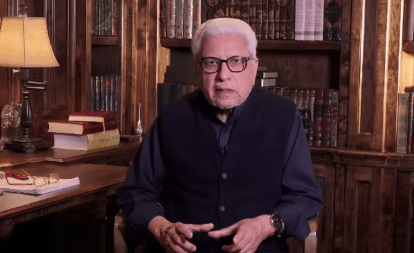
The provided text from “01.pdf” appears to be a transcription of a discussion, likely a religious or scholarly one, centered on the Islamic concept of Sunnah, particularly concerning the practice of keeping a beard. The speaker explores the historical and scriptural basis for various customs and interpretations, questioning the obligatory nature of certain practices and emphasizing the importance of understanding the underlying principles of religion found in the Quran and the Prophet’s teachings. The speaker critically examines hadith narrations and the opinions of religious scholars, advocating for a reasoned and contextual understanding of religious guidelines rather than blind adherence to tradition. Throughout the discourse, there is a recurring theme of distinguishing between core religious tenets, cultural practices, and personal expressions of faith, using the example of the beard to illustrate broader points about religious understanding and practice.
Study Guide: Examining Religious Interpretations and Practices
Quiz (Short Answer)
- According to the text, what is one observation made about the clothing and appearance of the Ulama?
- The speaker mentions being born into a community and questions their perspective. What does this questioning lead the speaker to investigate?
- What are the two primary sources of religious knowledge mentioned in the text that the speaker consults?
- Regarding the beard, what conclusion does the speaker reach based on their examination of the Quran?
- The text discusses the concept of Sunnah. According to the speaker, what is the status of the beard in relation to Sunnah?
- What is the speaker’s understanding of the main purpose (“Takiya”) of Deen (religion)?
- The speaker discusses the concept of “Mutkabbir.” How does this concept relate to physical appearance, according to the text?
- The text mentions a change in the speaker’s opinion regarding the beard as Sunnah. What prompted this change?
- The speaker uses Allama Iqbal as an example. What point is the speaker trying to make by mentioning him in the context of love for the Prophet and the beard?
- The speaker discusses human nature (“Fitri”). According to the text, how does this concept relate to religious obligations and practices?
Quiz Answer Key
- The text notes that the Ulama have special clothing, a beard, and a different attitude. The speaker observes that while beards are said to be a Sunnah of the Ambiyas (prophets), the Ulama consider their beards Sunnat.
- The speaker’s questioning of their community’s perspective leads them to investigate whether these perspectives are accepted religiously and whether they leave behind any ill-will, thus becoming a topic of investigation for the speaker.
- The two primary sources of religious knowledge that the speaker consults are the Holy Quran and the Sunnah (traditions and practices of the Prophet Muhammad).
- Based on their examination of the Quran, the speaker concludes that there is no mention of the beard anywhere in the Quran as a religious rule.
- The speaker suggests that keeping a beard is not an obligatory Sunnah in the sense of a binding religious practice established by the Prophet. Instead, it might fall under the category of a preferred practice or an expression of love for the Prophet.
- The speaker understands the main purpose (“Takiya”) of Deen as a scheme by which Allah selects people for His heaven, emphasizing purity and completeness in religious tasks.
- According to the text, “Mutkabbir” (arrogance) can manifest in behavior, style, mannerisms, and even physical appearance, such as having a long, untrimmed beard, which the Prophet did not like.
- The speaker’s opinion changed as a result of their own investigation and review of the Quran and Sunnah, leading them to question the previously accepted understanding of the beard as a necessary Sunnah.
- By mentioning Allama Iqbal, considered an “Aashiq Rasool” (lover of the Prophet) despite not having a beard, the speaker argues that the manifestation of love for the Prophet is not limited to or solely expressed through keeping a beard.
- According to the text, human nature (“Fitri”) is created by Allah with inherent moral qualities and inclinations towards good. Religious principles align with this nature, and deviating from it can be seen as going against one’s own inherent disposition.
Essay Format Questions
- Analyze the speaker’s methodology in examining religious practices. What sources do they prioritize, and what criteria do they use to evaluate the authenticity and importance of religious customs like keeping a beard?
- Discuss the speaker’s distinction between the Quran and the Sunnah as sources of religious authority. How does this distinction inform their understanding of practices like growing a beard?
- Explore the concept of “love for the Prophet” as presented in the text. How does the speaker argue that this love can be expressed beyond adopting specific physical appearances like a beard?
- Examine the role of reason and individual understanding in the speaker’s approach to religious interpretation. How does the speaker balance tradition and personal inquiry in their quest for religious knowledge?
- Discuss the socio-historical context hinted at in the text regarding the beard. How does the speaker suggest that customs and cultural practices might be mistaken for religious obligations, and what implications does this have?
Glossary of Key Terms
- Ulama: Muslim scholars recognized as having specialist knowledge of Islamic sacred law and theology.
- Sunnah: The practices, customs, and sayings of the Prophet Muhammad, which serve as a model and guide for Muslims.
- Ambiya: Prophets of God.
- Bismillah Rehman Rahim: “In the name of Allah, the Most Gracious, the Most Merciful.” The opening phrase of the Quran and a common invocation.
- Madrasa: An educational institution, typically focused on Islamic studies.
- Tasawwuf: Islamic mysticism or Sufism, focused on the inner dimensions of Islam and the pursuit of spiritual purification.
- Shar: The age of maturity or puberty.
- Talib: A seeker of knowledge.
- Dayandeep: Appears to be a reference to a specific text or source of knowledge mentioned in the discourse.
- Maji: Appears to be another reference to a specific text or source of knowledge mentioned in the discourse.
- Rivayat: Narrations or reports, often referring to hadiths (sayings and actions of the Prophet).
- Tabar: A chain of narrators authenticating a hadith.
- Mustahab: Recommended or preferred actions in Islam, but not obligatory.
- Deen: Religion, particularly Islam.
- Risalat Ma Salaah Wasallam (Rasulallah Salam): Messenger of Allah, peace and blessings be upon him (referring to Prophet Muhammad).
- Ummah: The global community of Muslims.
- Sayyedna Adam al-Salam: Our leader Adam, peace be upon him (referring to the first prophet).
- Sayyedna Ibrahim al-Salam: Our leader Abraham, peace be upon him.
- Majeed ne deen ibrahimi millat ibrahimi: The Glorious (Quran) termed this as the religion of Abraham, the community of Abraham.
- Ravaaya: Plural of Rivayat (narrations).
- Mutkabbir: Arrogant, haughty.
- Sahaba Kiram: The honorable companions of the Prophet Muhammad.
- Balmu: Could refer to a specific style or length of beard prevalent at a certain time.
- Tanij: Possibly refers to a specific action or instruction related to appearance.
- Waza: Appearance, countenance, or manner.
- Takiya: In this context, seems to refer to the underlying purpose or wisdom behind religious ordinances.
- Nafu: Essence, self.
- Akhlaq yat: Moral principles or ethics.
- Munkar: Evil, wrongdoing.
- Taqabbal: Acceptance (by God).
- Istaq Bar: To act with arrogance or pride.
- Ulubaari: Haughtiness, arrogance.
- Nagaji: Possibly refers to a specific aspect of hadith criticism or a characteristic of certain narrations.
- Billu: Possibly a reference to a specific narrator or source.
- Makruh Tanji: An undesirable or disliked act that is close to being forbidden in Islam.
- Akaam: Rulings, commandments, or ordinances in Islamic law.
- Amar: A command or imperative in Arabic.
- Fas ilaala zikr Allah: Hasten to the remembrance of Allah (a phrase from the Quran regarding Friday prayers).
- Adhan: The Islamic call to prayer.
- Juma: Friday prayer, which is obligatory for Muslim men.
- Sala Fatah: Possibly refers to the pillars or completion of the prayer.
- Makruh: Disliked or reprehensible act in Islam, though not strictly forbidden.
- Imam Shaaf: A renowned Muslim jurist and founder of one of the four major Sunni schools of Islamic law (Shafi’i).
- Imam Malik: Another renowned Muslim jurist and founder of the Maliki school of Islamic law.
- Imam Mohammed: A prominent scholar of Islamic law, a student of Abu Hanifa.
- Aara: Views, opinions.
- Asaja: Teachers, mentors.
- Jalil ul Qadr: Great and honorable.
- Imma: Leaders, guides.
- Fahm: Understanding, comprehension.
- Hadith: A report of the sayings, actions, or approvals of the Prophet Muhammad.
- Haram: Forbidden in Islam.
- Ijma: Consensus among Muslim scholars on a point of Islamic law.
- Tawar: Continuous, widespread transmission of knowledge.
- Fitri: Natural disposition or innate nature (of humans).
- Surah Room, Surah Baqarah, Sir Nisa: Chapters of the Holy Quran.
- E Maniya: Could refer to faith or a specific aspect of belief.
- La: No.
- Hanil Lawn Kam Lala: A phrase that appears to be part of a Quranic verse or related text, possibly referring to the unchanging nature of Allah’s creation.
- Monotheism: Belief in one God (Tawheed in Arabic).
- Weight of Hanifa: Following the school of Imam Abu Hanifa, another major Sunni school of Islamic law (Hanafi).
- Falala: Therefore.
- Tahu Maat: False deities or objects of worship besides Allah.
- Raf: Possibly refers to an elevated or exaggerated status.
- Zawiya: A Sufi lodge or a particular perspective.
- Tawheed: The oneness of God in Islam.
- Shirk: The sin of associating partners with God in Islam.
- Tatir: Purification.
- Fawaz: Success, triumph.
- Akhlaq Yaat: Moral ethics.
- Tabat: Things that are good and lawful to eat.
- Khabā: Things that are bad or unlawful to eat.
- Tatheer: Purification, cleansing.
- Taha: Purity, cleanliness.
- Ihram Fat: Deviations or corruptions.
- Jimny: Possibly a reference to a specific group or concept.
- Talab: A need or desire.
- Ijtima: Gathering, assembly.
- Jinn: Spiritual creatures mentioned in the Quran.
- Tabi Mafu: Possibly refers to inherent weaknesses or tendencies.
- Huzra Karam: The noble presence (often referring to the Prophet).
- Juziya: Possibly refers to a specific detail or ruling.
- Tahthir: Warning, cautioning.
- Tahr: Purification.
- Hulk: Shaving the head completely.
- Akram Sharaq: Honor one’s hair (a possible interpretation).
- Mauka Mahal: Appropriate time and place.
- Mehndi: Henna, used for dyeing hair and skin.
- Khaja Dara Hale: Possibly refers to specific practices or customs related to appearance.
- Majus: Zoroastrians, often mentioned in hadiths in the context of differing religious practices.
- Mush Keen: Polytheists or idolaters.
- Jude: Jews.
- Sarah: Possibly a variant or another group being referenced alongside Jews.
- Uncle Ba’s place: A colloquial reference that needs further context for precise meaning, possibly a well-known figure or location in the speaker’s milieu.
- Ansar: The early Muslims of Medina who helped and supported the Prophet Muhammad after his migration from Mecca.
- People of the Book: Generally refers to Jews and Christians in Islamic texts.
- Shalwar: Loose trousers commonly worn in South Asia and the Middle East.
- Janabe: Possibly refers to a specific attire or covering.
- Mausool: Connected, continuous (often referring to a chain of narration in hadith).
- Syedna Saida Ayesha: Our leader, Lady Aisha (wife of the Prophet Muhammad and a key narrator of hadith).
- Istra: Distraction, being engrossed.
- Mustar Raayat: A forgotten or recalled narration.
- Saheeh Narration: An authentic and reliable narration.
- Ravi: Narrator of a hadith.
- Sanad: The chain of narrators of a hadith.
- Hasan: Good (a classification of hadith authenticity, below Sahih).
- Shawar: Well-groomed (often referring to the mustache).
- Qureshi: The tribe of the Prophet Muhammad, historically holding leadership in Mecca.
- Surat Hal: The current situation or state of affairs.
- Maulana Sad Abla Saab Mahdood: A specific religious figure mentioned in the discourse.
- Abdul Kalam Azad: A prominent Indian scholar and political leader.
- Kazia: Possibly refers to a legal judgment or a decisive figure.
- Bha: Brother (in Urdu/Hindi).
- Fuqaha: Experts in Islamic jurisprudence.
- Farist: A list or index.
- Meezaan: The title of a book mentioned in the text, authored by the speaker or relevant to the discussion.
- Syed Qutb: An influential Egyptian Islamist thinker.
- Quaid-e-Azam: Title of Muhammad Ali Jinnah, the founder of Pakistan.
- Jana: Paradise, heaven.
- Bar Saghir: The Indian subcontinent.
- Makruh Tanzi: A disliked or reprehensible act in Islam.
- Amal: Practice, action.
- Aashiq Rasool: Lover of the Prophet.
- Hinee Mawwat: At the time of death.
- Mushaa Bahut: Great resemblance.
- Vaz: Sermon, advice, or discourse.
- Kalma: The Islamic declaration of faith.
- Istej or Iste Baaf: Terms that need further context, possibly referring to mockery or targeting someone.
- Zikr: Remembrance of God.
- Zikra: A reminder.
- Akkads: Possibly new understandings or interpretations.
- Aqam: Establishment or implementation.
- Maarf aata farmaai: Bestowed knowledge (Urdu/Persian).
- Tabula Rasa: A blank slate (Latin).
- Tamul of the mada: Possibly refers to the molding influence of the environment.
- Vaaz: Preaching, exhortation.
- Tabat and Khawas: Possibly refers to good and bad characteristics or aspects.
- Pakis: Pure ones.
- Arafat: A plain near Mecca where pilgrims gather during the Hajj.
- Yato: Further, moreover.
- Arbab Idar: Possibly refers to administrators or organizers.
- Liban: Possibly refers to the act of pollination or grafting trees.
- Dun Amur: Your worldly affairs.
- Tib: Medicine, often referring to traditional or Prophetic medicine.
- Jare bai aa gaya: Possibly an idiomatic expression indicating that something was said and people reacted to it.
- Paman: Applying something (possibly fertilizer or treatment to plants).
- Taziya: In this context, likely refers to purification and being pure.
- Asaas: Foundation, basis.
- Khalaqullah: The creation of Allah.
- Javiya Nazar: Different perspectives or viewpoints.
- Tabligh: Conveying or propagating a message (often religious).
Rethinking Beards: Quran, Sunnah, and Islamic Practice
Briefing Document: Analysis of Excerpts from “01.pdf”
This briefing document analyzes excerpts from a source labeled “01.pdf,” which appears to be a transcribed discussion or interview focusing heavily on Islamic jurisprudence, particularly concerning the religious significance of beards and the broader methodology of understanding religious texts and practices. The speaker, who identifies as a “seeker of knowledge” (“I am a seeker of knowledge”), presents a critical perspective on certain widely held beliefs and interpretations, advocating for a return to the foundational sources of Islam – the Quran and authentic Sunnah – while being wary of later interpretations and cultural influences.
Main Themes:
- Re-evaluating the Religious Status of Beards: A central theme is the detailed examination of whether growing a beard is a mandatory religious practice (Sunnah Mu’akkadah or Wajib) based on the Quran and authentic Sunnah. The speaker argues that the Quran makes no explicit mention of the beard as a religious rule: “So this would be a matter of great cruelty, right? that you understand something from speech, Allah When the Deen of Tala is described and it It is stated in the Qur’an that Allah Ta’ala tell me what this thing is and why it it has been made compulsory it is compulsory It is mustahab, it means what is deen Whenever the statement is made it is stated like this then after that you will look at the Sunnah what is the sunnah in terms of religion.”
- The speaker acknowledges the historical practice of prophets having beards (“It has been said that beards have always been There has been a Sunnah of the Ambiyas”) and that this tradition continued (“This continued in the presence of Ambiya al-Salam also”). However, the speaker differentiates between a general tradition and a religiously mandated act (“but you Beard is not considered Sunnat”).
- The speaker suggests that the emphasis on beards might stem from cultural customs or interpretations of Hadith that are not always based on a comprehensive understanding of the context and intent (“So people used to keep a work, it was a custom like this He used to keep a moustache too”).
- The speaker explores Hadith related to trimming the mustache and growing the beard, suggesting the context might relate to differentiating from the practices of other groups (like “Mutkabbir” individuals or “Jude or Sarah”). For example, “Huzoor did tanij on that waza and it I told him brother the moustache should be worn out and the beard should be worn out If you want to grow it then grow your beard look at me, beat your moustache i.e. face the person who is you have accepted his mistake…”
- Methodology of Understanding Religious Texts: The speaker emphasizes the importance of returning to the Quran as the primary source (“There is only one thing – Allah’s book, the Holy Quran”).
- The speaker criticizes interpretations of the Quran that are not based on a thorough understanding of the context, linguistic nuances, and the overall message (“The problem with the Quran Majeed is that it does not So it happened that the words of Allah Ta’ala were not accepted People made statements according to their understanding He may have given it as Allah’s own words This has reached us from all over the world”).
- The speaker stresses the need to critically examine Hadith, considering the narrators, the context of the statement, and whether it aligns with the principles and spirit of the Quran (“When Rasulallah is saying this that you guys keep your minds down and your If you grow a beard then what is the point of this sentence Is Mutkabbir I am saying that there is no one of R in your heart There should be something special in your behavior and your style…”).
- The speaker highlights the potential for misinterpretation and the influence of cultural norms on religious understanding (“Another way you can look at it is that people have stated these words after hearing Billu they turn it into mercury i.e. A part of a whole thing remains in one place the other part goes somewhere else it what is the whole thing in reality…”).
- The Purpose and Essence of Deen (Religion): The speaker suggests that the core of Deen lies in purification (Takiya), moral conduct (Akhlaq), and the principles outlined in the Quran (“When I reviewed the entire contents of I got an idea of what the purpose of Deen is Takiya”).
- The speaker identifies three types of worship and religious duties: bodily acts of worship, dietary laws (distinguishing between “Tabaat” – good/pure and “Khabat” – bad/impure), and moral excellence (“akhlaq yat”).
- The speaker connects religious obligations to innate human nature (Fitra) as described in the Quran (“That He has created you with a nature that We have to live by our nature and that nature do not change it…”). Moral principles, according to the speaker, resonate with this innate understanding of right and wrong.
- The speaker argues that practices should be evaluated based on whether they align with this core purpose of Deen.
- Historical Context and Evolution of Religious Understanding: The speaker acknowledges that understanding and interpretation of religious texts evolve over time (“So tell me what is different from this This will be the situation if someone investigates tomorrow So they will also start from here…”).
- The speaker uses the example of Imam Shafi’i’s differing views across different locations (Mecca, Baghdad, Egypt) to illustrate this evolution of understanding through investigation and reflection.
- The speaker contrasts the critical inquiry of early scholars with the tendency of later generations to blindly follow tradition (“Our Ulama have kept this principle we have adopted that whatever we I have heard it from the elders, I have heard it from my teacher if we don’t challenge him then I will I say that I have done this work”).
- Love for the Prophet (PBUH) vs. Ritualistic Adherence: The speaker distinguishes between genuine love for the Prophet and the adoption of certain practices as mere symbols of that love.
- While acknowledging the desire to emulate the Prophet (“my Prophet I had a beard, I was like my Prophet I love you, I express that love I can do many of your things by following them”), the speaker suggests that love manifests in broader adherence to the Prophet’s teachings and character, not solely in specific physical appearances.
- The speaker uses the example of Allama Iqbal and Syed Qutb, figures revered for their love for Islam despite not necessarily adhering strictly to every perceived outward Sunnah, to illustrate this point. “The manifestation of love is not in the form of a beard… can anyone tell from their relation with deen His extraordinary ability can cause disagreement One may disagree with martyrdom, but He did not have a beard so that is why we can understand this thing that what do you consider as the standard of religion This is not the standard of religion, this is what we are expressing one of love.”
Important Ideas and Facts:
- Lack of Explicit Quranic Mandate for Beards: The speaker repeatedly emphasizes the absence of a direct order or detailed description of beards as a religious obligation in the Quran.
- Distinction Between Sunnah and Custom: The speaker differentiates between the Prophet’s religiously significant practices (Sunnah) and general customs or traditions that may have existed at the time.
- Emphasis on Contextual Understanding of Hadith: The speaker stresses the importance of analyzing the context, occasion, and intent behind the Prophet’s statements in Hadith.
- Primacy of the Quran: The speaker positions the Quran as the ultimate authority in matters of religion.
- The Role of Reason and Investigation: The speaker advocates for critical thinking and independent investigation in understanding religious matters, echoing the spirit of early Islamic scholarship.
- Rejection of Blind Following: The speaker cautions against blindly adhering to interpretations without examining their foundations in the primary sources.
- Focus on the Core Principles of Deen: The speaker identifies purification, moral conduct, and adherence to Quranic principles as the essence of Islam.
- Love for the Prophet as Comprehensive Adherence: The speaker suggests that love for the Prophet is best expressed through following his core teachings and embodying his character, rather than solely focusing on specific outward appearances.
- Influence of Culture and Misinterpretation: The speaker highlights how cultural norms and incomplete understanding can lead to the elevation of certain customs to the status of religious obligations.
- The Concept of Fitra (Innate Nature): The speaker draws upon the Quranic concept of Fitra to argue that core moral and religious principles resonate with humanity’s inherent understanding.
Quotes:
- “Beard is not considered Sunnat, this is where it starts.”
- “There is only one thing – Allah’s book, the Holy Quran.”
- “The Quran Majeed is completely empty of this i.e. in the Quran Beard as a religious rule There is no mention of beard anywhere.”
- “You know your Dun Amur better than me yes and especially said that in this regard I Even if I say something, it is on the people I am proud of my knowledge and I am proud of it you will see it, you will choose it you will not adopt many such Things about which the Risalat maa you salam He learned many things from the Arab Tibet of his time.”
- “The manifestation of love is not in the form of a beard.”
- “That He has created you with a nature that We have to live by our nature and that nature do not change it…”
- “The aim of the religion is Tajiya and all its These were given with a purpose in mind, as per that simple tradition But I did it…”
Conclusion:
The excerpts reveal a critical and analytical approach to understanding Islamic jurisprudence. The speaker challenges the notion that growing a beard is a mandatory religious act based on a detailed examination of the Quran and Sunnah. The emphasis is on returning to the foundational sources, understanding them in their proper context, and prioritizing the core principles of Islam, such as purification and moral conduct. The discussion also highlights the importance of critical thinking, the potential for misinterpretation, and the distinction between genuine love for the Prophet and the mere adoption of certain cultural or customary practices. This analysis suggests a broader argument for re-evaluating various religious practices through the lens of the Quran and authentic Sunnah, free from the weight of potentially misconstrued traditions and cultural influences.
Rethinking Religious Appearance: A Quran-Centric Perspective
Frequently Asked Questions
1. The speaker mentions a contrast between his views and those of the Ulama regarding clothing, beards, and Sunnah. What is the core difference in his perspective?
The speaker questions the notion that certain outward appearances, like specific clothing or growing a beard, are inherently religious or constitute Sunnah in the obligatory sense. He emphasizes that while beards were a practice of previous prophets, their status as a binding religious duty (Sunnat) in Islam requires thorough investigation based on the Quran and authentic narrations. He believes many things given religious status are based on cultural practices or interpretations rather than explicit religious mandates.
2. The speaker discusses his journey of seeking knowledge and his initial background. How did his early life and experiences shape his current views on religious matters?
Born into a Sufi family with exposure to Islamic literature from a young age, the speaker initially accepted the prevailing religious norms. However, his self-described past as someone who felt he was born to “destroy religion” indicates a rebellious or questioning nature. His access to madrasa education provided him with the tools to critically examine religious traditions, leading him to challenge conventional understandings and seek a deeper grounding in the Quran and Sunnah. His focus on poverty and social justice also seems to have influenced his understanding of the purpose of religion beyond mere rituals.
3. The speaker emphasizes the importance of the Quran as the primary source of religious guidance. How does he view the role and authority of Hadith (narrations of the Prophet’s sayings and actions) in relation to the Quran?
The speaker holds the Quran as the ultimate and unambiguous word of Allah. He views Hadith as secondary, requiring careful scrutiny regarding their authenticity, context, and interpretation. He argues that many narrations have been passed down through human understanding, potentially leading to misinterpretations or the elevation of non-obligatory practices to the status of religious duties. He stresses the need to examine Hadith in light of the Quran’s clear principles and avoid taking isolated statements out of their original context.
4. The speaker questions the religious basis for the compulsory nature of growing a beard in Islam. What are his main arguments against it being an obligatory Sunnah derived from the Quran and authentic Hadith?
His primary argument is that the Quran does not explicitly mention the beard as a religious obligation or rule. Regarding Hadith, he points out that some narrations might reflect cultural customs of the time, personal preferences of the Prophet (PBUH), or specific situations rather than universal religious commands. He suggests that focusing on the underlying spirit of religious teachings, such as humility and good moral character, is more crucial than adhering to specific physical appearances. He also highlights instances where the Prophet (PBUH) addressed issues of pride and appearance, indicating that the intention and manner are more important than the beard itself.
5. The speaker discusses the concept of “Taziya” (purification and purity) as a central aim of Islam. How does this concept relate to his understanding of religious practices and outward appearances?
For the speaker, “Taziya” encompasses both inner moral purification and outward cleanliness. He believes that religious practices should primarily focus on achieving this state of purity in all aspects of life, including worship, ethics, and even dietary habits. He suggests that outward appearances, like growing a beard, should be evaluated based on whether they genuinely contribute to this aim of purification or if they are merely adopted as superficial rituals without deeper meaning or basis in core religious principles.
6. The speaker recounts his past alignment with the Ulama’s view on the beard and his subsequent shift in opinion. What prompted this change, and on what basis did he revise his understanding?
His initial acceptance of the beard as Sunnah was based on the prevailing understanding within the Muslim community and the teachings of religious scholars. However, his independent investigation into the Quran and Hadith led him to question this view. He emphasizes a continuous process of reviewing and re-evaluating religious matters, similar to how early Islamic scholars had differing opinions. His change was rooted in his finding that the Quran lacked explicit commands regarding the beard as a religious obligation, and that the Hadith evidence required more nuanced interpretation considering context and potential cultural influences.
7. The speaker touches upon the idea of expressing love for the Prophet (PBUH). How does he differentiate between genuine love and the adoption of certain outward appearances as a symbol of that love?
He believes that genuine love for the Prophet (PBUH) manifests in following his core teachings, embodying good moral character, and striving for spiritual growth. While imitating the Prophet’s (PBUH) practices out of love is understandable, he cautions against equating specific outward appearances, like the beard, as the sole or definitive expression of this love, especially if they lack a firm basis as obligatory religious acts. He provides examples of devoted Muslims who did not necessarily adhere to every historical custom but were deeply sincere in their faith and love for Allah and His Messenger.
8. The speaker frequently references “Fitra” (the natural disposition with which God created humanity). How does he use this concept to argue for his understanding of religious practices, particularly regarding outward appearances like the beard?
He argues that God created humans with an inherent nature (“Fitra”) that guides them towards truth and morality. He cites Quranic verses to support this idea, suggesting that religious laws should align with this natural disposition. Regarding the beard, he implies that if it were a fundamental aspect of this God-given nature or a universally binding religious requirement, it would be more clearly and explicitly stated in the Quran. He contrasts natural differences between men and women (like the growth of facial hair) with attempts to rigidly define religious identity based on such physical attributes, suggesting that the core of faith lies in aligning with the innate moral and spiritual principles embedded in human nature.
Ulama, Clothing, Beards: Religious Basis and Interpretations
Based on the excerpts from “01.pdf”, the following points can be made regarding Ulama clothing and beards:
- The Ulama are observed to have special clothing.
- It has been noted that the Ulama also have beards and a seemingly different attitude.
- The text raises a question about the foundation of the beard in religion, asking if it is described in detail in the Quran or if the Prophet made it a Sunnah in any narration.
- It is stated that the beard is not considered Sunnah by the speaker, which contrasts with the idea that beards have always been a Sunnah of the Ambiyas (Prophets).
- The Quran is described as being completely empty of any mention of the beard as a religious rule.
- There is a discussion about a saying of Rasulallah (peace be upon him) concerning growing a beard and keeping the mind down, linking a long beard with pride (Mutkabbir).
- The Prophet (peace be upon him) is mentioned as instructing to trim the moustache and grow the beard.
- Shaving the beard is considered makruh tanji (reprehensible) by some.
- Keeping a beard can be an expression of love for the Prophet (peace be upon him), as he also had a beard.
- The keeping of a beard is stated as not being in any religion as an obligatory thing, but rather a Sunnah or a preferred practice.
- A hadith mentioned in the text says to “Keep a beard, cut your moustache and kill the polytheists”.
- The concept of “nature” (Fitra) is discussed in relation to beards, with the Quran mentioning that Allah created mankind with a certain nature that should not be changed. While men naturally grow beards, this doesn’t automatically make it a religious obligation.
- There is a mention of opposing the Majus, who kept their moustaches long and shaved their beards, suggesting that keeping a beard could be a way to differentiate from other religious or cultural groups.
- The aim of religion is described as “Tajiya”, which involves purification and being pure. Actions like keeping a beard are evaluated based on whether they align with this aim.
- The authenticity and interpretation of hadith regarding the beard are discussed, including instances where narrators might have forgotten details or interpretations might differ.
- The personal journey of the speaker is mentioned, including a time when their opinion aligned with the Ulama regarding the beard being the Sunnah of the Ambiya, and the reasons for their change in opinion based on further investigation of religious texts.
The Beard: Sunnah, Love, or Nature?
Based on the excerpts from “01.pdf” and our previous discussion, let’s delve into the topic of the beard as a Sunnah of the Ambiyas (Prophets):
It is a common notion that having a beard is a Sunnah of the Ambiyas (Prophets). The source mentions that “beards have always been There has been a Sunnah of the Ambiyas”. Furthermore, it states that “all the prophets have been preaching this” in reference to a tradition given by Allah Ta’ala. This suggests a historical continuity of this practice among the prophets.
However, the speaker in the source presents a contrasting viewpoint. They state, “but you Beard is not considered Sunnat, this is where it starts“. This indicates a divergence from the widely held belief. The speaker emphasizes that the Quran is “completely empty of this i.e. in the Quran Beard as a religious rule There is no mention of beard anywhere”.
Despite this, the source acknowledges that keeping a beard can be an expression of love for the Prophet Muhammad (peace be upon him), as he also had a beard. The text poses the question, “my Prophet I had a beard, I was like my Prophet I love you, I express that love I can do many of your things by following them So this is our one in the realm of love It will make space”. This highlights a potential motivation for keeping a beard based on affection and emulation rather than strict religious obligation.
The source also touches upon the concept of earlier knowledge and traditions that existed before the revelation of the Quran. Certain practices, like Namaz, Zakat, Hajj, and Umrah, are described as having “Sunnah status” and being part of a tradition from Sayyedna Adam al-Salam and Sayyedna Ibrahim al-Salam. While the beard is discussed in the context of these earlier traditions, the speaker’s central argument remains that it is not explicitly mandated as a religious rule in the Quran.
Furthermore, the source discusses various narrations (Ravaaya) and hadith related to the beard. One such hadith mentioned states to “Keep a beard, cut your moustache and kill the polytheists“. However, the authenticity and interpretation of these narrations are also examined in the text, with the speaker highlighting potential issues with narrators forgetting details or interpretations varying.
The concept of “nature” (Fitra) is also brought up in relation to the beard. Verse number 30 of Surah Room in the Quran is mentioned, stating that Allah created mankind with a certain nature that should not be changed. While men naturally grow beards, the speaker argues that this natural inclination does not automatically translate into a mandatory religious practice.
The source also mentions the opposition to the Majus, who had a different style of facial hair (long moustaches and shaved beards). This suggests that keeping a beard could historically have served as a way for Muslims to differentiate themselves.
Finally, the speaker reflects on their own past opinion, which was initially in line with the Ulama in considering the beard as a Sunnah of the Ambiyas. Their change in perspective came about through further investigation and a critical examination of the primary religious texts.
In summary, while the idea of the beard being a Sunnah of the Ambiyas is prevalent and has historical roots, the speaker in the source challenges this notion by emphasizing the lack of explicit mention in the Quran as a religious obligation. Keeping a beard is presented as potentially an act of love for the Prophet, a continuation of earlier traditions (though not necessarily obligatory), and a natural occurrence, but not definitively a mandated Sunnah in the Islamic faith according to the speaker’s interpretation of the sources.
Poverty, Barrenness, and a Journey to Sufism
Based on the excerpts from “01.pdf”, the speaker explicitly mentions poverty and refers to their past as “barren land”.
- The speaker states, “I am a poor person“. This is a direct self-description, indicating their socio-economic status.
- They also mention, “this was my barren land that I am involved in bringing down a landlord My gram sahab father was an old Sufi“. Here, the term “barren land” appears to be used metaphorically to describe a previous state in the speaker’s life before their engagement with religious knowledge and social issues (involving bringing down a landlord). This suggests a past that was perhaps unproductive, unfulfilled, or lacking in spiritual or intellectual nourishment. The contrast with their father being an “old Sufi” and their subsequent reading of texts on Tasawwuf (Sufi mysticism) highlights a transition from this “barren land” to a more fertile ground of knowledge and understanding.
The context in which these phrases appear is significant:
- The speaker mentions their poverty while emphasizing their role as a “seeker of knowledge”. This juxtaposes their material circumstances with their intellectual and spiritual aspirations. They seem to be saying that despite being poor, their focus is on learning and understanding religion.
- The reference to “barren land” comes immediately before the speaker discusses their family background and their introduction to Sufi texts. This suggests that their involvement in trying to “bring down a landlord” and their connection to Sufism marked a turning point, moving them away from this metaphorical barrenness.
It’s important to note that the discussion around poverty and barren land in this excerpt is brief and somewhat metaphorical. The speaker does not elaborate extensively on the nature of their poverty or the specifics of the “barren land” beyond implying a lack of engagement with the religious and intellectual pursuits they later embraced. The focus of the passage quickly shifts to their intellectual journey, their exposure to religious texts, and their questioning of established religious norms, such as the Sunnah status of the beard.
Therefore, while the source does mention poverty as a current state and uses “barren land” as a metaphor for a past state before intellectual and perhaps social engagement, these concepts are introduced within the broader context of the speaker’s personal journey towards religious understanding and their critical examination of religious traditions.
Mum Tasawwuf: Bill’s Interpretation in Ida that Bill
Based on the excerpts from “01.pdf”, the interpretation of “Mum Tasawwuf” is directly linked to someone or something referred to as “Bill” within “Ida that Bill”. The speaker states, “I read the same things in Ida that Bill It is she who explains the interpretation of Mum Tasawwuf“.
This sentence indicates that:
- “Bill” is identified as the entity that provides explanations for the interpretation of “Mum Tasawwuf”. The exact nature of “Bill” (whether it’s a person, a text, or something else) is not specified within the source. Similarly, “Ida that Bill” remains undefined but appears to be a place or a source of information where the speaker encountered these explanations.
- The speaker’s engagement with “Ida that Bill” and the interpretations offered by “Bill” was significant in their formative years. They mention, “These are the things that got me into my When I reached the age of Shar, I had religion in front of me”. This suggests that the understanding of “Mum Tasawwuf” gained from “Bill” played a role in shaping their religious perspective as they reached religious maturity.
Furthermore, the speaker connects this interpretation of “Mum Tasawwuf” with specific elements of Sufi tradition:
- The speaker mentions reading “The same poetry, the same etiquette, the same Rumi, the same Sanai” in “Ida that Bill”. These are well-known figures and concepts within Sufi mysticism. Rumi and Sanai are celebrated Sufi poets, and “etiquette” (adab) is an important aspect of Sufi practice, emphasizing refined behavior and inner discipline. This suggests that the interpretation of “Mum Tasawwuf” encountered by the speaker was aligned with classical Sufi teachings and expressions.
Our conversation history also provides context:
- We previously noted that the speaker’s father was an “old Sufi”, indicating an early familial connection to Sufism.
- We also discussed the speaker’s metaphorical journey from a “barren land” to engagement with religious knowledge, which included reading texts on Tasawwuf (Sufi mysticism).
Therefore, the interpretation of “Mum Tasawwuf” that influenced the speaker was one they encountered through “Bill” in “Ida that Bill”, which encompassed classical Sufi elements like the poetry of Rumi and Sanai, and Sufi etiquette. This exposure, following their father’s Sufi background, appears to have been instrumental in their early understanding of religion. The source does not provide the specific details of “Bill’s” interpretation of “Mum Tasawwuf,” but it highlights the importance of this source in the speaker’s intellectual and spiritual development.
The Beard: Religious Rule or Revered Practice?
Based on the excerpts from “01.pdf” and our conversation history, the status of the beard as a religious rule is a complex and debated topic. Here’s a breakdown of the key points:
- Absence in the Quran: The speaker in the source explicitly states that the Quran Majeed is “completely empty of any mention of the beard as a religious rule”. This is a central argument against considering the beard a mandatory religious practice based solely on the Quran.
- Contrasting with Sunnah of the Ambiyas: While it is a widely held belief that having a beard is a Sunnah of the Ambiyas (Prophets), the speaker directly contradicts this by stating, “but you Beard is not considered Sunnat“. The source acknowledges the general idea that “all the prophets have been preaching this”, but the speaker’s interpretation diverges from this popular understanding.
- Hadith and Narrations: The sources do mention hadith related to beards. One example provided is the statement to “Keep a beard, cut your moustache and kill the polytheists“. However, the speaker critically examines such narrations, questioning their interpretation and authenticity. They highlight instances where narrators might have forgotten details or where the context of the statement is crucial for proper understanding. The speaker emphasizes the need to examine the foundation of religious statements in the Quran first.
- Sunnah Status: According to the speaker’s analysis, while the beard might be considered a Sunnah or a preferred practice, it is not an obligatory thing in religion. They differentiate between practices rooted in divine command (Quran) and those that emerged from the Prophet’s actions or earlier traditions.
- Love for the Prophet: Keeping a beard can be an expression of love for the Prophet Muhammad (peace be upon him), as he also had a beard. The source presents this as a potential motivation for the practice, separate from it being a strict religious rule.
- Nature (Fitra): The concept of nature (Fitra), as mentioned in Surah Room (verse 30), is also discussed in relation to the beard. While men naturally grow beards, the speaker argues that this natural tendency does not automatically elevate it to the status of a mandatory religious rule prescribed by Allah.
- Differing Opinions: The source mentions that shaving the beard is considered makruh tanji (reprehensible) by some, indicating that there are varying viewpoints within the Islamic tradition regarding the permissibility and status of beard cultivation.
- Opposition to Other Groups: Historically, keeping a beard might have served as a way to differentiate Muslims from other religious or cultural groups, such as the Majus who shaved their beards and kept long moustaches.
- Speaker’s Changed Perspective: The speaker recounts their own shift in opinion regarding the beard being a Sunnah of the Ambiyas. This change was driven by their in-depth investigation of religious texts and a critical evaluation of existing interpretations.
- Aim of Religion (Tajiya): The speaker introduces the concept of Tajiya (purification) as the fundamental aim of religion. Practices, including the keeping of a beard, are implicitly evaluated based on their alignment with this overarching goal.
In summary, the source presents a viewpoint that challenges the notion of the beard being a mandatory religious rule based on the Quran. While acknowledging its historical association with prophets, its presence in some hadith, and its potential as an expression of love for the Prophet, the speaker argues that it is more accurately categorized as a Sunnah or preferred practice, not an obligatory element of the Islamic faith. This perspective is based on the speaker’s interpretation of the primary religious texts and a critical examination of related narrations and common beliefs.

By Amjad Izhar
Contact: amjad.izhar@gmail.com
https://amjadizhar.blog
Affiliate Disclosure: This blog may contain affiliate links, which means I may earn a small commission if you click on the link and make a purchase. This comes at no additional cost to you. I only recommend products or services that I believe will add value to my readers. Your support helps keep this blog running and allows me to continue providing you with quality content. Thank you for your support!

Leave a comment