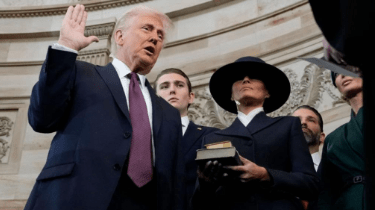
This text is a discussion about the Israeli-Palestinian conflict, focusing on a proposed solution where Palestinians in Gaza and the West Bank would be compensated for their property and relocated, potentially to other Arab countries. The conversation also touches upon the role of the United States and its foreign policy in the region, particularly concerning its support of Israel. Furthermore, the speaker analyzes the perspectives of various parties involved, including the political implications and emotional weight of the situation, referencing historical context and religious sensitivities. The speaker ultimately advocates for a peaceful resolution prioritizing the well-being of all involved, rather than focusing on national identity or territorial claims. Finally, the discussion also explores the complexities of American immigration law and the potential impact of proposed policy changes.
Understanding Geopolitical Commentary
Quiz
Instructions: Answer each question in 2-3 sentences.
What is the speaker’s initial reaction to Trump’s return to the political scene?
How does the speaker describe the previous administration of President Biden?
What is the speaker’s main concern regarding Trump’s “America First” approach?
What proposal does the speaker discuss regarding the people of Gaza?
How does the speaker believe the situation in Gaza could be resolved?
According to the speaker, what is the commonality between Muslims and the people of Palestine?
What does the speaker say about the devotion that Muslims have to Mecca and Medina?
What is the speaker’s view of the 14th Amendment of the US constitution with regard to citizenship?
What is the speaker’s explanation for the current conflict between Palestine and Israel?
What solution does the speaker propose for peace, with regard to the Palestinian people living in Gaza and Israel?
Answer Key
The speaker expresses a mix of amusement and interest, noting that Trump’s return has created a lot of buzz, not just in the US, but globally. They are intrigued by his bold statements and how they are being discussed worldwide.
The speaker describes Biden’s government as “homeopathic,” implying it was ineffective and lacked significant impact. They found it to be a quiet and uneventful period, leading to confusion about its direction.
The speaker worries that prioritizing “America First” might lead to a lack of civility and understanding in international relationships. They believe this approach treats other countries as transactional partners, overlooking cultural and diplomatic nuances.
The speaker relays a proposal that the people of Gaza either stay in Egypt or another country, which has been met with controversy and mixed reactions.
The speaker thinks the solution involves moving the people of Gaza and/or the West Bank to countries where they can be made citizens with property bought from them by the US at twice the value, and that their business and employment should be arranged.
The speaker states that the language, culture, and religion of the Palestinian people, being Arabs, are essentially the same as other Arabs; the differences are minor.
The speaker explains that Muslims have a deep devotion to Mecca and Medina, viewing them as sacred. They draw a parallel to the Jewish people’s devotion to Jerusalem and the land of the Bible.
The speaker observes that the 14th amendment is straightforward, but that Trump’s challenge to the law regarding birthright citizenship is in error.
The speaker explains the conflict is due to broken contracts, the actions of Hamas, and a failure to condemn attacks on innocent civilians, instead making one-sided propaganda.
The speaker suggests that the Gaza strip be controlled by the Muslims who are citizens of Israel, and that the security of the region should be maintained by Israel.
Essay Questions
Analyze the speaker’s perspective on international relations, particularly with regard to Trump’s “America First” policy, using evidence from the text to support your claims.
Discuss the speaker’s proposed solutions to the Israeli-Palestinian conflict. What are the strengths and weaknesses of the plan according to the text?
Explore the speaker’s understanding of identity and its connection to land and religion. How do these concepts influence their arguments in the text?
How does the speaker evaluate the role of America in the Israeli-Palestinian conflict? What historical and contemporary responsibilities does the speaker believe America should take?
Critically assess the speaker’s overall tone and the way they engage with sensitive geopolitical issues. How do their personal opinions and cultural background affect their perspective?
Glossary of Key Terms
Bilal Raza sahab: A friend of the speaker who is mentioned at the beginning of the text. He is located in Texas, America.
MBS: An acronym referring to Mohammed bin Salman, the Crown Prince of Saudi Arabia.
Homeopathic Government: The speaker uses this term to describe the Biden administration as having no visible or noticeable effect.
America First: A political ideology that prioritizes the interests of the United States above all other nations.
Gaza: A Palestinian territory located on the eastern coast of the Mediterranean Sea.
West Bank: A landlocked Palestinian territory located west of the Jordan River.
Palestine: A region in the Middle East that is claimed by both Palestinians and Israelis, with deep religious and historical significance.
Sharif of Mecca: A historical title for the ruler of Mecca, with significance in Islamic history and politics.
Bani Israel: Arabic term for the Children of Israel, a term also used in the Bible to refer to the descendants of Jacob.
14th Amendment: A constitutional amendment that establishes citizenship for anyone born on US soil.
Yasser Fatah: A former political leader from Palestine who formed an authority to administer Palestinian territories.
Mahmoud Abbas: Current president of the Palestinian Authority, the elected leader of the Palestinian people.
Global Politics, Trump, and the Middle East
Okay, here is a briefing document summarizing the key themes and ideas from the provided text:
Briefing Document: Analysis of “Pasted Text”
Date: October 26, 2023 (Based on the text’s references to current events)
Subject: Analysis of a Discussion on Global Politics, Focusing on Trump, the Middle East, and Potential Solutions
Overview:
This document analyzes a transcribed conversation where the speaker(s) delve into various interconnected geopolitical issues. The discussion is primarily driven by commentary on Donald Trump’s impact on global politics, the complex situation in the Middle East (particularly the Israeli-Palestinian conflict), and a proposed, potentially controversial solution to the latter. The analysis reveals a complex perspective that questions conventional wisdom and traditional narratives surrounding these topics.
Key Themes and Ideas:
Donald Trump’s Impact & Style:
Polarizing Figure: The speaker notes that Trump is a figure of intense global interest, with his statements analyzed by various international actors including China and Russia. “Trump is in the news these days, not only in America but all over the world, his statements are taken with great interest.”
“Disruptor”: Trump is characterized as someone who seeks to dismantle established systems and institutions (“I will break the establishment into pieces”). He’s described as a force of “change” after a “homeopathic” government under Biden.
Direct and Unconventional Diplomacy: Trump is depicted as engaging in direct and sometimes “sweet threats” in his diplomatic interactions, citing an example of his conversation with MBS regarding investments.
“America First” Ideology: The speaker references Trump’s inaugural speech where he stated, “from now on and from this moment on, America will be at the forefront, America will be first in every conversation.” The speaker interprets this as a self-centered approach.
The Israeli-Palestinian Conflict & A Controversial Solution:
Critique of Current State: The speaker describes the conflict as a source of constant bloodshed, hatred, and human suffering. “People are dying, there are problems, it is not their business to make people happy…destruction is taking place…people are passing by crying and wailing.” They see no prospect of lasting peace through the current dynamic, highlighting the failure of past efforts.
Proposed “Solution”: The most striking element of the discussion is a proposal for a solution: that Palestinians in Gaza and the West Bank should be relocated to other countries (primarily Egypt or Jordan), and that the land should be bought from them at “double the price” of their property. The speaker suggests that the financial burden of this move could be carried by the US, leveraging its vast resources.
Focus on Practicalities and Human Well-being: The speaker emphasizes the need for a solution that ensures “prosperity” and “a good life,” prioritizing practical needs (employment, housing, security) over national identities and political disputes. “What is important is your employment, your children should get two meals a day with respect, your life should be peaceful.”
Re-Evaluation of Historical Narratives: The speaker re-examines the historical formation of Palestine and its connection to the region and points out that “Palestine was formed, it has its own story.” They argue that the land’s historical claims are not as simple as commonly portrayed and also mentions that the Arabs of Mecca participated in the decision making about Israel.
Challenge to Nationalist Sentiments: The speaker challenges the idea that a country’s sovereignty is more important than the well-being of its people. They question the idea of living and dying for a nation: “country to country is the same thing, there is America, there is a good life for them there, one has his own The guy is rolling in the country, he is being humiliated, he is facing humiliation day and night.” They imply that if a better standard of living can be achieved elsewhere, that should be prioritized.
Critique of US Involvement:
Financial Spending: The speaker argues that the US has invested vast sums of money since 1948 in an attempt to maintain peace in the region without addressing the core issues. “Since the time Israel was established in 1948 till now, America has invested so much in it, all the money he has invested in it is being spent on feeding the enemies of Israel.”
“Band-Aid Solutions”: The speaker criticizes the US strategy of giving aid to neighboring countries to suppress conflict as temporary fixes, as opposed to implementing a permanent solution.
Opportunity Cost: The speaker suggests this money could have been better spent directly helping Palestinians to create a better quality of life.
Religious and Emotional Considerations:Significance of Holy Places: The speaker emphasizes the emotional attachment Jews have for Jerusalem and the associated religious sites, comparing it to the deep emotional connection Muslims have with Mecca and Medina: “A child of Juice is born in his heart and mind and the love for Jerusalem and this land is instilled in his devotion.”
Call for Empathy: The speaker calls for empathy and mutual respect among all parties, urging people to recognize and acknowledge the human emotions of everyone involved, not just their own.
Analysis of the Current Situation with Gaza:
Critique of Hamas Actions: The speaker condemns Hamas for the October 7th attack on Israel as well as the taking of hostages. “Why are those who killed 1200 innocent people and made 250 prisoners not condemned?”
Need for a Two-Sided Agreement: They argue that the existing arrangements between Israel and Palestine are a two-sided contract, and when one side violates its agreement, the entire deal needs to be addressed.
Recommendation: The speaker suggests that the authority of Gaza should be handed over to the leader Mahmoud Abbas and that an Israeli authority control security of the region.
Immigration & The American Constitution:
14th Amendment: The speaker touches on the 14th Amendment of the US Constitution, specifically the concept of “birthright citizenship.” They point out that even if Trump attempts to change this, it may not be as simple as Trump thinks. “The 14th amendment of the American law, it is clearly mentioned in it that any child who is born will have the right to citizenship, no matter how he is born, it does not mean that he will be an American legal citizen.”
Executive Orders vs. Constitutional Law: The speaker says that Trump’s executive orders cannot supersede constitutional law.
Conclusion:
The transcribed conversation presents a complex and unconventional perspective on international politics. It challenges traditional approaches to global conflicts, arguing for a focus on practical solutions that prioritize human well-being over nationalistic or ideological concerns. The speaker’s controversial proposal regarding the Israeli-Palestinian conflict, while potentially upsetting to many, stems from a desire to find a pragmatic and lasting solution to the region’s entrenched problems. The speaker’s commentary also underscores the need for empathy, critical self-reflection, and a re-evaluation of deeply ingrained biases that prevent progress. The text’s critique of US foreign policy suggests a need for a new approach that moves beyond short-term fixes towards long-term solutions.
Potential Discussion Points:
The feasibility and ethics of the proposed solution for the Israeli-Palestinian conflict.
The role of national identity in global conflicts.
The effectiveness of US foreign policy in the Middle East.
The limits of power of a US president regarding constitutional laws.
The balance between pragmatism and moral concerns in international relations.
This briefing provides a structured analysis of the key ideas and arguments in the transcribed text, providing a framework for further discussion and analysis.
A Radical Proposal for Middle East Peace
FAQ
1. What is the speaker’s perspective on Donald Trump’s political style and his approach to international relations?
The speaker views Trump’s style as a significant departure from previous administrations, specifically noting his enthusiastic and disruptive approach compared to the “homeopathic” style of the Biden government. They highlight Trump’s rhetoric about dismantling the establishment and his direct, business-like, sometimes “sweetly threatening” approach to foreign relations. The speaker perceives his focus on “America First” as potentially lacking in civility and prioritizing business interests over genuine friendship or diplomacy.
2. What is the main problem with the Israeli-Palestinian conflict and what is the proposed solution?
The speaker believes the heart of the problem lies in the ongoing conflict, displacement, and suffering of Palestinians, which has persisted for decades without a resolution. The proposed solution is to acknowledge that continued conflict and displacement are not viable. The solution suggests a significant move: Palestinians residing in Gaza and the West Bank should relocate, with America funding the purchase of their properties at double the price. The speaker suggests that Palestinians would be relocated to Egypt or Jordan, their cultural homelands. The speaker also suggests that America invest heavily in new infrastructure, homes, and businesses to provide those displaced with better lives. They argue that such a solution could end the cycle of violence.
3. How does the speaker justify the proposed displacement of Palestinians, and how might it be received in the Muslim world?
The speaker justifies the displacement by stating that Gaza and the West Bank are historically tied to Egypt and Jordan, respectively, and that Palestine as a country is a modern construct with a contested history. They argue that this solution would stop the ongoing conflict and suffering, allowing Palestinians a chance at a better life. They acknowledge the proposed solution may trigger an uproar in the Muslim world, particularly in countries like Pakistan, but suggest that a thoughtful and patient look will reveal the solution to be a positive way forward.
4. How does the speaker analyze the history of the region, specifically focusing on the creation of Israel and the displacement of Palestinians?
The speaker suggests that the current conflict stems from decisions made during the creation of Israel, often omitting the role of Arab rulers at the time. They believe the initial decision to create Israel led to long-term suffering, and the financial support from America has been used to contain conflict, rather than solve the root issues. They propose that the huge sums of money spent supporting the region since 1948 could have been used to create a prosperous society for all. The speaker also points out the lack of public knowledge around the initial decisions related to the creation of the region, as well as the role of Arab leaders at the time.
5. What is the speaker’s view on the importance of a country vs. the importance of a peaceful and prosperous life?
The speaker emphasizes that a peaceful, dignified life with employment and basic needs met is far more important than national identity or attachment to a particular territory. They use examples like the willingness of people to risk their lives to immigrate to other countries as evidence that people value a good quality of life over their original homeland, and that if opportunities were presented in better locations, the need to fight for homelands would diminish.
6. How does the speaker relate the Jewish attachment to Jerusalem to the Muslim attachment to Mecca and Medina?
The speaker draws a parallel between the deep emotional and religious attachment that Muslims have to Mecca and Medina and that Jews have to Jerusalem, arguing that this attachment is valid for both. They argue that if Muslims find it unacceptable for non-Muslims to claim ownership of Mecca and Medina, they should recognize that Jews feel the same way about Jerusalem. The speaker suggests that they wish to challenge Muslim audiences to apply their own emotions towards holy places to the emotions of other groups.
7. How does the speaker address the role of the US in the region, and what is their view on American policy?
The speaker is critical of America’s policy in the Middle East, particularly regarding its unwavering support for Israel and its use of funding to mitigate conflict rather than addressing root causes. They argue that the US has spent vast amounts of money that could have been used more effectively to foster peace and development for all, rather than only for Israel. The speaker believes America’s involvement has only perpetuated the conflict, and it now has an obligation to create a solution that allows all peoples in the region to prosper.
8. What is the speaker’s assessment of the current Palestinian leadership, and what do they suggest for a future resolution?
The speaker views the current leadership of Palestine as ineffective and potentially complicit in the conflict, particularly criticizing them for failing to uphold the conditions of agreements with Israel. They suggest that the Palestinian authority should be reformed and that Gaza should be administered in a way that prevents attacks on Israel, while providing for the welfare of the Palestinian people. They propose that a new administration should be a joint civilian and military authority with security guarantees from Israel, whilst also being responsible for welfare, infrastructure, and economic growth for all the people.
Trump’s Presidency: Disruption and Reaction
The sources discuss Donald Trump’s presidency and his impact on American politics and international relations. Here’s a breakdown:
Trump’s “America First” Approach: The sources indicate that a key aspect of Trump’s presidency was his focus on prioritizing America in all matters [1]. This involved putting American interests at the forefront of every conversation, which some viewed as neglecting other countries [1]. One source suggests that this approach was perceived as self-centered, lacking civility and primarily focused on business [1].
Disrupting the “Establishment”: Trump is described as someone who came into office with the goal of dismantling the existing political establishment [2]. He aimed to “break the establishment into pieces” and replace existing structures with new ones [2]. This approach led to significant changes, including the replacement of many officials [2].
Policy Statements and Communication Style: Trump is characterized as communicating in a friendly manner, but also giving “sweet threats” in a loving way [2]. This is exemplified by his discussions with MBS (likely referring to Mohammed bin Salman) regarding investment, where he was both friendly and directive [2].
Contrasted with Biden: The sources contrast Trump’s presidency with that of Joe Biden. Biden’s administration is described as “homeopathic,” with a silent atmosphere and no significant gains or losses [2]. Trump’s arrival is portrayed as a “big change” that brought enthusiasm and challenged the status quo [2].
Controversial Policies: The sources mention that Trump’s policies were controversial and led to discussions around the world. His statements were taken with great interest, and various countries commented on them [2]. Some policies, like those related to immigration, were challenged in court for not being in accordance with the US constitution [3].
Impact on Muslim Community: One source indicates that some of Trump’s statements, particularly those concerning the relocation of Palestinians, could cause an uproar in the Muslim community, especially in countries like Pakistan [4].
Immigration Policy: One source references the 14th Amendment of the US Constitution which grants citizenship to any child born on US soil. This source explains that Trump had challenges trying to change this law, noting that it’s not an easy process to amend the constitution [3]. It is also mentioned that some of Trump’s executive orders were not in accordance with the constitution [3].
Overall, the sources portray Trump’s presidency as a disruptive force that significantly altered American politics and international relations, and generated strong reactions around the world [1, 2, 4]. His “America First” approach, his confrontational communication style, and his challenges to the establishment were key features of his time in office [1, 2].
The Israeli-Palestinian Conflict: Perspectives and Solutions
The sources discuss the Israeli-Palestinian conflict, offering various perspectives and potential solutions. Here’s a breakdown of the key points:
Historical Context: The sources trace the conflict back to the establishment of Israel in 1948 [1]. It is noted that the land currently considered Palestine has a complex history, with some sources arguing that there was no country named Palestine before 1948 [2, 3]. One source notes that the division of land in the region was decided in consultation with Arab leaders of the time [4]. The creation of Jordan is mentioned as part of this historical context [2].
Religious and Cultural Significance: The sources highlight the religious significance of the land for both Muslims and Jews [5, 6]. It’s noted that while Muslims consider Mecca and Medina their holiest sites, Jews have a deep connection to Jerusalem and the land of Israel [5, 6]. One source emphasizes the attachment Jews have to Jerusalem, similar to the Muslim attachment to Mecca and Medina [6].
Current Situation: The sources describe the current situation as one of ongoing conflict and suffering, with people dying and facing displacement [4, 7]. It’s noted that Palestinians are living in difficult circumstances, with bloodshed, hatred, and a lack of a stable government [4]. The sources mention the division between Gaza and the West Bank, with Gaza being under the control of Hamas, while the West Bank is under the Palestinian Authority [2, 8].
Proposed Solutions: Several solutions are proposed in the sources:
Relocation and Compensation: One proposal suggests relocating Palestinians from Gaza and the West Bank to other countries, with compensation for their properties [2, 9]. This would involve paying them double the value of their properties and providing them with opportunities for a better life [2, 4]. This idea is presented with the understanding that it might be controversial [2].
Economic Development: Another proposal is to invest in economic development in the region, establishing businesses and factories to provide jobs [4].
Two-State Solution: One source notes that the current Palestinian Authority was formed on the basis that there would be no attacks on Israel [8]. Another solution proposed includes the idea of establishing a limited authority for the Palestinians with shared security responsibilities [7].
Focus on Human Needs: The sources suggest that the focus should be on improving the quality of life for people in the region, ensuring they have access to food, employment, and a peaceful life [3, 10]. It’s argued that the well-being of individuals should be prioritized over nationalistic concerns [3].
Critique of Current Approaches: The sources are critical of the current approach of funding both sides of the conflict without finding a resolution [1]. It’s argued that the money spent on the conflict could be better used to settle the issue by offering them land, property and good businesses [1].
Emotional and Human Impact: The sources emphasize the human cost of the conflict, noting the suffering of families on both sides [7]. They stress the need for empathy and understanding, urging people to consider the pain of others [7, 11]. The sources also describe the deep emotional connection that both Muslims and Jews have to their holy places [11, 12].
Overall, the sources depict the Palestinian conflict as a complex issue with deep historical, religious, and political roots. The proposed solutions range from relocation and compensation to economic development and a focus on human needs. The sources also highlight the importance of empathy and understanding in resolving the conflict.
US Foreign Policy and the Israeli-Palestinian Conflict
The sources provide some insights into US foreign policy, particularly during the Trump administration, and its impact on the Israeli-Palestinian conflict. Here’s a breakdown:
“America First” Policy: A central theme in the sources is the “America First” approach of the Trump administration [1, 2]. This policy emphasized prioritizing American interests in all international matters. According to one source, this approach was perceived as self-centered, potentially neglecting the interests and needs of other countries [2].
Transactional Approach to Relationships: The sources suggest that the Trump administration viewed international relations through a business lens [2]. This approach is characterized by a focus on deals and transactions, with an emphasis on what the United States could gain from each interaction. This is demonstrated by Trump’s interactions with MBS (likely referring to Mohammed bin Salman) where he was friendly but also directive, discussing investments in a way that indicated he wanted a specific outcome [1].
Financial Investment in the Middle East: The sources discuss the US’s financial involvement in the Middle East, particularly its funding of both Israel and its neighbors [3, 4]. It is argued that the US has been spending money to protect Israel, often by providing funds to its neighbors, including Egypt and Jordan, to maintain stability and prevent attacks on Israel [3-5]. One source suggests that this spending has been ineffective, and that the US should instead invest in a long-term solution [3, 5].
Role in the Israeli-Palestinian Conflict: The sources discuss the US role in the Israeli-Palestinian conflict, highlighting the US’s support for Israel [4, 5]. The US is portrayed as a key player in the conflict with one source mentioning that Israel sees itself as part of America [6]. The sources suggest that the US has a responsibility to address the conflict, especially given its financial and political involvement in the region [6, 7]. One source proposes that the US should use its economic power to resolve the issue by providing financial compensation to Palestinians for their properties and creating job opportunities for them [6, 7].
Critique of US Policy: The sources are critical of certain aspects of US foreign policy [3, 5]. One source suggests that the US has been foolish in its approach, spending significant amounts of money to maintain the status quo rather than finding a lasting resolution to the conflict. The source argues that the US should have focused on creating a better quality of life for the people in the region, rather than trying to manage the conflict [5]. One source implies that the US has been spending money on “feeding the enemies of Israel” rather than making genuine attempts at peace [3].
Immigration Policy: The sources mention Trump’s attempts to change US immigration policy [4, 8]. One source notes that the 14th Amendment of the US Constitution grants citizenship to any child born on US soil and that it is very difficult to change this law [4]. This is an example of how domestic US policies can intersect with foreign relations and how US laws can influence political actions in the international arena.
In summary, the sources describe a US foreign policy that, under Trump, prioritized American interests, often through a transactional approach, and maintained a significant role in the Middle East, particularly in the Israeli-Palestinian conflict. The sources offer a critical view of US actions, arguing that the US has been more focused on managing the conflict rather than finding a genuine resolution, and that a more empathetic and human-centered approach is needed.
Resolving the Israeli-Palestinian Conflict
The sources offer various perspectives and proposed solutions for achieving peace between Israel and Palestine, highlighting the complexities of the conflict and the need for a comprehensive approach.
Historical Context: The conflict is rooted in the establishment of Israel in 1948, with differing views on the historical claims to the land [1, 2]. One source argues that there was no country named Palestine before 1948 [2]. The division of the land and the creation of Jordan were decided in consultation with Arab leaders of the time [1, 3].
Religious and Emotional Significance: The land holds immense religious significance for both Muslims and Jews [4-6]. While Muslims revere Mecca and Medina, Jews have a deep connection to Jerusalem and the land of Israel [5]. This deep emotional attachment makes the conflict particularly sensitive and difficult to resolve [7]. One source notes that Jews feel a devotion for Jerusalem similar to the Muslim devotion for Mecca and Medina [5].
Current Situation: The current situation is characterized by ongoing conflict, suffering, and displacement [3]. Palestinians face bloodshed, hatred, and a lack of a stable government [3, 8]. There’s a division between Gaza, controlled by Hamas, and the West Bank, under the Palestinian Authority [9]. One source says that people are “dying and being killed” [2].
Proposed Solutions: Several solutions are proposed in the sources:
Relocation and Compensation: One proposal suggests relocating Palestinians from Gaza and the West Bank to other countries, with financial compensation for their properties, potentially at double the value [1, 3]. This would also involve providing opportunities for a better life [3].
Economic Development: Investing in economic development, establishing businesses and factories to provide jobs is another approach [3, 6]. This is to provide a better life for the people [3]. One source notes that “good property business should be started and America should set up factories there” [3].
Two-State Solution: One source mentions the current Palestinian Authority was formed on the basis that there would be no attacks on Israel [9]. Another solution is to establish a limited Palestinian authority with shared security responsibilities with Israel [8].
Focus on Human Needs: The sources argue for prioritizing the well-being of individuals over nationalistic concerns, ensuring they have access to food, employment, and a peaceful life [2, 6].
Critique of Current Approaches: The sources critique the current approach of funding both sides of the conflict without finding a resolution [10, 11]. It is suggested that the money spent on the conflict should be used to settle the issue by offering land, property, and good businesses [10]. One source notes the US has been “feeding the enemies of Israel” [10].
Emphasis on Empathy: The sources stress the human cost of the conflict, noting the suffering of families on both sides [8]. There’s a call for empathy and understanding [8], urging people to consider the pain of others, and to act with courage and respect for others’ emotions [9, 12]. One source notes that the pain felt by the families is the same, whether they are Muslim, Hindu, or Jew [8].
Role of the United States: The US is viewed as a key player with a responsibility to address the conflict given its financial and political involvement [3, 6, 10]. One source proposes that the US should use its economic power to resolve the issue by providing financial compensation to Palestinians and creating job opportunities [3, 6].
Challenges to Peace: The sources mention some challenges, including deeply rooted hatred and the refusal to acknowledge others’ rights to the land [5, 7, 12]. One source notes that the phrase “we will throw them out” creates hatred [5].
Importance of a Comprehensive Approach: The sources suggest that a lasting solution requires a comprehensive approach, addressing the historical, religious, political, and economic aspects of the conflict. In summary, the sources call for a shift in focus from managing the conflict to finding a genuine resolution, highlighting the need for empathy, understanding, and a focus on the well-being of all people involved in the conflict. [3, 8, 11].
US Foreign Policy, the Israeli-Palestinian Conflict, and Global Politics
The sources touch upon various aspects of global politics, particularly focusing on the United States’ role in international affairs and the Israeli-Palestinian conflict [1-15]. Here’s a breakdown of the key themes:
US Foreign Policy: The sources describe US foreign policy, particularly during the Trump administration, as being centered around an “America First” approach [2]. This policy prioritized American interests and was characterized by a transactional approach to international relations, focusing on deals and what the US could gain from each interaction [1, 2]. The US also has significant financial involvement in the Middle East, particularly in the Israeli-Palestinian conflict, with one source stating that the US has spent a great deal of money on funding both sides of the conflict, particularly in trying to protect Israel [5, 7, 11]. The sources are critical of this approach, suggesting the US has been focused on managing the conflict rather than finding a lasting resolution and propose that the US use its economic power to solve the conflict [4, 10].
The Israeli-Palestinian Conflict: This is a central issue discussed, highlighting its complexity and long history [3, 4, 6, 9]. The conflict is rooted in the establishment of Israel in 1948 and involves deep historical, religious, and emotional attachments to the land [3, 8-10]. The sources describe the current situation as one of ongoing conflict, suffering, and displacement, with Palestinians facing difficult circumstances [4, 15]. Various solutions are proposed, such as relocation and compensation, economic development, and a two-state solution, all with the aim of achieving peace and a better quality of life for the people [4, 10].
International Relations: The sources suggest that international relations are often driven by national interests and power dynamics [1, 2, 4]. The US is portrayed as a major player in global politics, wielding significant economic and political influence [1, 7, 11]. One source states that Israel sees itself as part of America [4]. The sources are critical of the current global political order, suggesting that it often fails to address human needs and suffering, and calls for a more empathetic and human-centered approach [4, 5, 15]. There is also a suggestion that some countries like Saudi Arabia and Egypt have been quiet about the issues in the Middle East [3].
Cultural and Religious Factors: The sources highlight the role of cultural and religious factors in shaping global politics [8, 9, 12]. The deep religious significance of the land for both Muslims and Jews is a major source of conflict, with both groups having strong emotional ties to their holy places [9, 10]. The sources also mention how this impacts how each group views the conflict [13, 15].
Immigration Policy: The sources discuss how US domestic policies, such as immigration laws, can have implications for international relations. One source mentions the 14th Amendment of the US Constitution which grants citizenship to any child born on US soil, and how this creates challenges for those seeking to change immigration policies [7]. This shows how domestic US laws can impact foreign policy and global relationships [7].
Critique of Global Political Structures: The sources offer a critique of existing global political structures, suggesting they are often ineffective in resolving conflicts and addressing human suffering [4, 5, 10, 11, 15]. The sources are particularly critical of the way that resources and power are distributed [10, 11]. They are also critical of the focus on national interests over human well-being, advocating for a more empathetic and human-centered approach to global affairs [5, 15]. One source points out that the current structures prioritize national entities over the well being of the people [6, 11].
In summary, the sources depict global politics as a complex interplay of national interests, power dynamics, and cultural and religious factors, with the US playing a significant role. The sources are particularly critical of the current global political order and its failure to address conflicts and human suffering. They call for a shift in focus towards empathy, understanding, and the well-being of all people in the world.
Affiliate Disclosure: This blog may contain affiliate links, which means I may earn a small commission if you click on the link and make a purchase. This comes at no additional cost to you. I only recommend products or services that I believe will add value to my readers. Your support helps keep this blog running and allows me to continue providing you with quality content. Thank you for your support!
This text excerpts a “Critical Companion to William Faulkner,” offering a comprehensive guide to the life and works of the Nobel laureate. The book details Faulkner’s extensive literary output, including novels, short stories, and poems, and addresses inconsistencies in his character names and spellings.Extensive biographical information is provided, tracing Faulkner’s family history and influences. The excerpts also feature synopses and critical analyses of many of his works, along with character descriptions and cross-references. Finally, the text includes a chronology of Faulkner’s life and a comprehensive index.
FAQ: William Faulkner’s Yoknapatawpha County
1. What is Yoknapatawpha County?
Yoknapatawpha County is a fictional county in north-central Mississippi created by William Faulkner as the setting for many of his novels and short stories. It is based on Lafayette County, where Faulkner lived most of his life, with the town of Jefferson representing Oxford, Mississippi. Yoknapatawpha serves as a microcosm of the American South, exploring themes of race, class, history, and family.
2. What is the significance of the Snopes family?
The Snopes family, introduced in The Hamlet, is a large, interconnected clan known for their cunning, avarice, and ambition. They represent the encroaching forces of modernity and materialism that threaten traditional Southern values and social structures. The Snopes trilogy (The Hamlet, The Town, and The Mansion) charts the family’s rise to power, particularly through the patriarch Flem Snopes.
3. Who is Thomas Sutpen, and what is his story?
Thomas Sutpen is the central character of Absalom, Absalom!, a ruthless and ambitious man who arrives in Yoknapatawpha with a grand design to establish a dynasty. His story, told through fragmented and unreliable narratives, unravels the dark secrets of his past, including his abandonment of his first wife and son because of their mixed race heritage, his attempts to secure a legitimate heir, and the tragic downfall of his family.
4. How does the theme of race influence Faulkner’s work?
Race is a pervasive theme in Faulkner’s Yoknapatawpha stories, reflecting the complex and often brutal realities of the Jim Crow South. He explores the legacy of slavery, the enduring impact of racial prejudice, and the psychological effects of miscegenation. Characters like Joe Christmas (Light in August) and Charles Bon (Absalom, Absalom!) grapple with their mixed-race identities in a society obsessed with racial purity.
5. What role do narrative techniques play in Faulkner’s writing?
Faulkner is renowned for his experimental narrative techniques, including multiple narrators, stream-of-consciousness, and fragmented timelines. These techniques, evident in novels like The Sound and the Fury and As I Lay Dying, challenge conventional storytelling and force readers to actively piece together events and interpret characters’ perspectives. They also reflect the complexities of memory, perception, and the passage of time.
6. What are some recurring locations in Yoknapatawpha County?
Several locations recur across Faulkner’s works, grounding the fictional world in a sense of place. Varner’s Store, a gathering place for men in Frenchman’s Bend, symbolizes the rural, gossipy nature of Southern society. The Sartoris Bank, founded by the prominent Sartoris family, represents the declining power of the old aristocracy. Other notable locations include the courthouse, the jail, and the Compson family home.
7. What is the significance of the Compson family?
The Compsons, prominently featured in The Sound and the Fury, are a once-powerful family whose decline mirrors the decay of the Old South. Their story, told through the fragmented perspectives of four family members, reveals their struggles with guilt, loss, and the changing social order. The Compsons embody the themes of family dysfunction, the burden of history, and the fragility of Southern tradition.
8. What is the impact of William Faulkner’s work?
William Faulkner is considered one of the most important American novelists of the 20th century. His complex narratives, innovative use of language, and exploration of Southern history and identity have had a profound influence on literature and continue to be studied and debated by readers and scholars alike. His Yoknapatawpha County, with its vivid characters and intricate stories, offers a timeless and deeply resonant portrait of the American South.
William Faulkner: A Literary Companion
Short-Answer Quiz
Instructions: Answer the following questions in 2-3 sentences.
What was the nature of Philip Stone’s influence on William Faulkner’s early writing career?
**Describe the central conflict that drives the plot of Absalom, Absalom! **
What is the significance of the setting of Frenchman’s Bend in Faulkner’s Snopes trilogy?
How does Faulkner utilize humor in his short story, “Don Giovanni”?
Explain the significance of the title “Light in August.”
What are some key stylistic characteristics of Faulkner’s writing?
How does Faulkner portray the theme of race in Light in August ?
What is the role of V.K. Ratliff in the Snopes trilogy?
Discuss the significance of the Compson family in The Sound and the Fury.
How does Faulkner explore the theme of Southern history and legacy in his works?
Answer Key
Philip Stone, a lawyer and literary enthusiast, acted as a mentor to the young Faulkner. He introduced him to a wide range of classic and modern literature, shaping his artistic viewpoint and influencing his writing style.
The central conflict in Absalom, Absalom! revolves around Thomas Sutpen’s ambition to establish a dynasty and the tragic consequences that result from his past actions, including his rejection of his mixed-race wife and son.
Frenchman’s Bend serves as a microcosm of the changing South. The arrival of the Snopes family disrupts the traditional social order and highlights the themes of greed, ambition, and the decline of Southern values.
Faulkner uses humor in “Don Giovanni” to satirize Herb’s inflated ego and misguided attempts to woo women. The story’s comedic elements emphasize the absurdity of Herb’s self-deception.
The title “Light in August” is multifaceted. It alludes to Lena Grove’s pregnancy, symbolizing new life and hope, but also references the fiery destruction of Joanna Burden’s house, representing violence and racial tension.
Faulkner’s writing is known for its complex sentence structures, stream-of-consciousness narration, multiple perspectives, and use of Southern dialect.
Faulkner portrays the theme of race in Light in August through the tragic figure of Joe Christmas, a man of ambiguous racial identity who is ostracized and ultimately destroyed by the prejudices of Southern society.
V.K. Ratliff acts as a shrewd observer and commentator on the events of the Snopes trilogy. As an itinerant salesman, he gains insights into the motivations of the various characters and serves as a voice of reason and morality.
The Compson family in The Sound and the Fury represents the decay of a once-proud Southern family. Through the fragmented narratives of the Compson children, Faulkner explores themes of loss, memory, and the disintegration of the Old South.
Faulkner consistently examines the legacy of slavery, the Civil War, and the changing social landscape of the South. His works often grapple with the complexities of race relations, class divisions, and the persistence of the past in shaping the present.
Essay Questions
Analyze the use of multiple narrators in Absalom, Absalom! How does this technique contribute to the novel’s exploration of truth, memory, and storytelling?
Compare and contrast the characters of Thomas Sutpen and Flem Snopes. What do they represent in terms of ambition, social mobility, and the changing South?
Discuss the role of women in Faulkner’s fictional world. Choose two or three female characters from different works and analyze how they challenge or conform to societal expectations.
Explore the theme of alienation and isolation in Faulkner’s works. Consider the experiences of characters like Joe Christmas, Quentin Compson, or Mink Snopes.
Analyze the use of symbolism in one of Faulkner’s novels or short stories. How do symbolic elements contribute to the overall meaning and themes of the work?
Glossary
TermDefinitionBenbow, HoraceThe protagonist of Sartoris and Sanctuary. A World War I veteran, he is an idealistic lawyer who is disillusioned with the corruption and violence he encounters in the South.Big BottomA vast wilderness area in Yoknapatawpha County. It symbolizes the untamed nature of the South and serves as a significant location in several of Faulkner’s works.Christamas, JoeThe tragic protagonist of Light in August. He is a man of ambiguous racial identity who is haunted by his past and ultimately destroyed by the racism and violence of Southern society.Compson FamilyA prominent but declining family in The Sound and the Fury. Their story represents the decay of the Old South and the loss of traditional values.Frenchman’s BendA small rural community in Yoknapatawpha County. It serves as the setting for much of the Snopes trilogy and represents a microcosm of the changing South.Jefferson, MississippiThe county seat of Yoknapatawpha County, based on Faulkner’s hometown of Oxford, Mississippi. It represents the center of Southern life and culture in Faulkner’s fictional world.Snopes, FlemThe ruthless and ambitious protagonist of the Snopes trilogy. He embodies the greed, cunning, and social climbing that characterize Snopesism.SnopesismA term coined by Faulkner to describe the disruptive and corrosive influence of the Snopes family. It represents the erosion of traditional Southern values and the rise of a crass materialism.Sutpen, ThomasThe enigmatic and ambitious protagonist of Absalom, Absalom!. His quest to build a dynasty is driven by a desire to overcome a traumatic childhood and achieve a position of power and respect.Yoknapatawpha CountyFaulkner’s fictional county, based on Lafayette County, Mississippi. It serves as the setting for most of his works and represents a complete and complex world of his own creation.
A Guide to Faulkner’s Yoknapatawpha County
Source: Excerpts from “021-Critical Companion to William Faulkner: A Literary Reference to His Life And Work”
I. Faulkner’s Life and Influences
Early Life and Mentors: This section explores Faulkner’s upbringing in Oxford, Mississippi, and the significant influence of Estelle Oldham and Philip Avery Stone on his artistic development. Stone, in particular, introduced Faulkner to various literary works and helped shape his writing style.
Yoknapatawpha County: An overview of Faulkner’s fictional county, inspired by his native Lafayette County, which serves as the setting for many of his most famous works. This section introduces the historical and geographical context of Yoknapatawpha.
II. Major Works
Absalom, Absalom!: A summary of Faulkner’s complex novel, focusing on the rise and fall of Thomas Sutpen and his ambition to establish a dynasty. This section highlights key plot points, including Sutpen’s backstory, the family’s involvement in the Civil War, and the tragic consequences of his actions.
“Don Giovanni” (Uncollected Stories): An analysis of this humorous short story, focusing on Herb, a vain widower who attempts to woo women with disastrous results. This section explores themes of self-deception and the complexities of male-female relationships.
A Fable: A brief overview of Faulkner’s allegorical novel set during World War I, highlighting key characters like General Bidet and the historical aviator Billy Bishop. This section touches on themes of war, faith, and humanity.
The Hamlet: A detailed exploration of the first novel in the Snopes Trilogy, focusing on the arrival of Flem Snopes in Frenchman’s Bend and the subsequent impact of the Snopes family on the community. This section highlights key characters, including V. K. Ratliff, Will Varner, and various members of the Snopes family.
Light in August: A summary of this complex novel, focusing on the interconnected lives of Lena Grove, Joe Christmas, and Gail Hightower in the context of racial prejudice and societal pressures. This section highlights key themes and plot points, including Christmas’s struggle with identity, Lena’s search for the father of her child, and the community’s reaction to their presence.
The Mansion: An exploration of the final novel in the Snopes Trilogy, focusing on the continued rise of Flem Snopes in Jefferson and his eventual demise at the hands of Mink Snopes. This section examines the themes of power, greed, and revenge, and highlights the roles of characters like Linda Snopes Kohl, Gavin Stevens, and V. K. Ratliff.
“Miss Zilphia Gant” (Uncollected Stories): A summary of this short story, focusing on Zilphia Gant’s upbringing under her domineering and misanthropic mother and her struggle to break free from her influence. This section explores themes of family, control, and the lasting impact of past trauma.
Mosquitoes: An overview of Faulkner’s satirical novel, focusing on a group of artists and intellectuals on a yachting trip. This section highlights key characters like Patricia Robyn, Jenny Steinbauer, and Ernest Talliaferro, and explores themes of artistic pretension and social dynamics.
“The Priest” (Uncollected Stories): An analysis of this introspective short story, focusing on an unnamed seminarian wrestling with feelings of guilt and sexual desire on the eve of his ordination. This section explores themes of faith, doubt, and the conflict between spiritual and earthly desires.
The Reivers: A summary of Faulkner’s final novel, a lighthearted tale of young Lucius Priest’s adventures with Boon Hogganbeck and Ned McCaslin. This section highlights themes of coming-of-age, rebellion, and the complexities of family relationships.
Requiem for a Nun: A blend of historical narrative and dramatic play, focusing on Temple Drake’s past and her struggles with guilt and redemption. This section highlights the key characters of Temple, Nancy Mannigoe, and Gavin Stevens, and explores themes of sin, forgiveness, and the enduring legacy of the past.
Sartoris: An overview of Faulkner’s novel that introduces the Sartoris family and their legacy in Yoknapatawpha County. This section highlights key characters like Bayard Sartoris, his grandfather Colonel John Sartoris, and explores themes of family, tradition, and the impact of the Civil War on the South.
Sanctuary: A summary of this dark and controversial novel, focusing on Temple Drake’s harrowing experience after witnessing a murder and being held captive by the bootlegger Popeye. This section explores themes of violence, innocence, and the corruption of Southern society.
“That Will Be Fine” (Uncollected Stories): A summary of this short story, narrated by a young boy named Georgie, which reveals the damaging consequences of his Uncle Rodney’s dishonesty and infidelity. This section explores themes of family, betrayal, and the loss of innocence.
The Town: An exploration of the second novel in the Snopes Trilogy, focusing on Flem Snopes’s continued rise to power in Jefferson and his manipulative tactics to achieve social and financial success. This section examines the complex relationship between Flem and Eula Varner Snopes, as well as the efforts of Gavin Stevens and V. K. Ratliff to oppose Snopesism.
The Unvanquished: A collection of interconnected stories focusing on the Sartoris family during and after the Civil War. This section highlights the exploits of Bayard Sartoris and his grandmother, Rosa Millard, during the war, and explores themes of family, loyalty, and the changing South.
“Wash” (Collected Stories): A summary of this short story, focusing on the tragic relationship between Wash Jones and Thomas Sutpen. This section explores themes of class, power, and the destructive consequences of obsession.
III. Important Concepts and Themes
Snopesism: An analysis of the term coined to describe the disruptive and invasive nature of the Snopes family in Yoknapatawpha County. This section explores the Snopeses’ methods of achieving power and wealth, often at the expense of others, and their impact on the social fabric of the community.
The Southern Past: An exploration of Faulkner’s recurring engagement with the history and legacy of the South, particularly the Civil War and its lasting effects on the region’s social and racial dynamics. This section examines how characters grapple with their inherited past and its influence on their present lives.
Family and Legacy: An analysis of Faulkner’s recurring theme of family relationships, often fraught with complexities, secrets, and conflicting loyalties. This section examines how family ties shape characters’ identities and destinies, and explores the burden of legacy in a rapidly changing world.
Race and Class: An exploration of Faulkner’s treatment of racial and social hierarchies in the South, highlighting the injustices and tensions inherent in a segregated society. This section examines how characters navigate these complex dynamics and the consequences of racial prejudice and social inequality.
IV. Characters and Locations
Major Characters: This section provides brief descriptions of significant recurring characters in Faulkner’s Yoknapatawpha County, including the Sartoris family, the Snopes family, V. K. Ratliff, Gavin Stevens, and key figures from individual novels.
Important Locations: This section outlines key fictional locations within Yoknapatawpha County, including Jefferson, Frenchman’s Bend, Varner’s Store, and other notable sites that feature prominently in Faulkner’s works.
V. Critical Reception and Legacy
Early Reviews: Excerpts from contemporary reviews of Faulkner’s major works, highlighting the initial critical responses to his innovative style and complex narratives.
Modern Criticism and Influence: This section explores the evolution of Faulkner criticism over time and his enduring influence on subsequent generations of writers and literary scholars. This section also examines the ways in which Faulkner’s works continue to resonate with modern audiences.
This table of contents provides a comprehensive guide to understanding the rich and intricate world of William Faulkner’s Yoknapatawpha County, offering insights into his life, major works, recurring themes, and enduring literary legacy.
Timeline of Events
Please note: It’s impossible to create a detailed, precise timeline from the provided source material. The excerpts offer fragmented glimpses into Faulkner’s Yoknapatawpha County, spanning decades and often alluding to events without clearly dating them. This timeline reconstructs a broad chronological framework focusing on key figures and their interconnected stories.
Early Yoknapatawpha History (pre-1800s)
Pre-colonial Era: Chickasaw inhabit the land, including the Big Bottom wilderness. Ikkemotubbe reigns as their chief.
Founding and Growth (1800s – early 1900s)
1699: Ikkemotubbe grants land to the grandson of a Scottish refugee, initiating the Compson lineage.
Early 1800s: Settlers like Louis Grenier and Dr. Samuel Habersham arrive, laying the foundation for Jefferson.
1833: Thomas Sutpen arrives in Yoknapatawpha, acquires land from Ikkemotubbe, and begins constructing his plantation, Sutpen’s Hundred.
Mid-1800s: The Civil War erupts, impacting families like the Sartoris and Sutpen. Colonel John Sartoris emerges as a war hero.
Post-Civil War: Reconstruction era brings change and upheaval. The aristocratic South declines, leading to social shifts depicted in works like “The Hamlet.”
Late 1800s/ Early 1900s: Lucius Priest establishes his bank, rivaling Colonel Sartoris’s. The Snopes family starts appearing in Frenchman’s Bend.
The Snopes Era (1900s – 1940s)
1902: Flem Snopes arrives in Frenchman’s Bend, marking the beginning of the Snopes trilogy’s timeline.
1907 (approx.): Events of “The Hamlet” unfold as Flem manipulates his way into power, eventually marrying Eula Varner.
1910s – 1920s: Flem and Eula move to Jefferson. The events of “The Sound and the Fury” (1929) take place, showcasing the decline of the Compson family.
1927: Eula Varner Snopes commits suicide.
1930s: The events of “Light in August” occur, including the arrival of Lena Grove and the tragic story of Joe Christmas. The Great Depression impacts the region.
1940s: World War II influences Yoknapatawpha life.
1946: Mink Snopes, released from Parchman, murders Flem in Jefferson, culminating the Snopes saga.
Post-Snopes Era (1950s onward)
1950s and beyond: Yoknapatawpha continues to evolve, grappling with social and racial tensions. “The Reivers” (set in 1905) offers a later perspective on the county’s past.
Cast of Characters
Note: This cast focuses on the principle individuals, offering concise summaries. Many minor characters populate the excerpts and aren’t listed here.
A
Armstid, Henry: A gullible farmer from Frenchman’s Bend, repeatedly exploited by Flem Snopes.
Avery, Philip Stone: A cultured lawyer who mentors a young William Faulkner, shaping his literary views.
B
Ball, Albert: A British World War I flying ace, referenced in Faulkner’s works.
Beauchamp, Lucas: A figure in “Go Down, Moses”, intertwined with the McCaslin family history and themes of race and inheritance.
Benbow, Horace: A lawyer and World War I veteran, features in “Sartoris” and embodies a changing South, struggling with tradition and modernity.
Binford, Dewitt: A resident of Frenchman’s Bend.
Bishop, William (“Billy”): Canadian World War I flying ace, referenced in “A Fable”.
Bookwright, Odum: A thoughtful, independent blacksmith in Frenchman’s Bend, skeptical of the Snopes family’s rise.
Brown, Joe (Lucas Burch): Lena Grove’s irresponsible lover who abandons her while she is pregnant. He later resurfaces in Jefferson, working at a planing mill under an assumed name.
Burch, Lucas: See Brown, Joe.
Burden, Joanna: A woman associated with Joe Christmas. Her house is burned down under mysterious circumstances.
C
Christmas, Joe: The protagonist of “Light in August”, a racially ambiguous and troubled man haunted by his unknown parentage. He grapples with identity, prejudice, and violence throughout his life, ultimately meeting a tragic end.
Coldfield, Ellen: Thomas Sutpen’s second wife, deeply affected by her traumatic experiences at Sutpen’s Hundred. She becomes a recluse, obsessed with the past.
Compson, Quentin: A member of the declining Compson family, features in “The Sound and the Fury”. He is deeply troubled and commits suicide, haunted by his family’s decay and Southern ideals.
D
De Spain, Manfred: A charismatic and ambitious politician from Jefferson, later becoming mayor. He has a long-standing affair with Eula Varner Snopes.
Dodge, Granby (“Smoke”): A cunning and ruthless relative of the Holland twins, he orchestrates murders to inherit their property.
E
Eckrum (Eck) Snopes: A kindhearted, simple Snopes, unlike many of his relatives. He works for Will Varner and later helps raise Ike Snopes.
F
Fairchild, Dawson: A cynical novelist in “Mosquitoes”, offering commentary on art and society.
Falkner, Jack: William Faulkner’s brother, a pilot and source of inspiration for some of Faulkner’s characters.
Falkner, John Wesley Thompson (J.W.T.): William Faulkner’s grandfather, a former Confederate colonel and author, had a significant influence on Faulkner’s life and literary ambitions.
Flem Snopes: The central antagonist of the Snopes trilogy, a quiet, scheming, and avaricious man who rises to power through manipulation and ruthlessness. His ambition and lack of morals embody the destructive force of “Snopesism.”
G
Gant, Jim: Zilphia Gant’s unfaithful father, a horse trader who abandons his family.
Gant, Miss Zilphia: The protagonist of the short story “Miss Zilphia Gant”, she is raised in isolation by her mother and struggles to break free from her controlling influence.
Gibson, Dilsey: The Compson family’s black cook and a central figure in “The Sound and the Fury”, she represents resilience, faith, and moral strength amidst the family’s decline.
Ginotta, Pete: A young man associated with bootleggers, he attends the yachting party in “Mosquitoes” with his girlfriend, Jenny Steinbauer.
Gordon: An artist and sculptor, drawn to the allure of Patricia Robyn in “Mosquitoes”.
Grinnup, Lonnie: A descendant of early Yoknapatawpha settlers, left with a small plot of land and embodies the displacement of old families.
H
Hampton, Hub: The Yoknapatawpha County Sheriff, a tough and sometimes morally ambiguous figure.
Hines, Eupheus (Doc): The fanatical grandfather of Joe Christmas, convinced that Joe has “Negro blood” and relentlessly pursues him.
Hines, Mrs.: Doc Hines’ wife, she briefly cares for Joe Christmas as a baby and later seeks him out in Mottstown.
Holston, Alexander: One of the original settlers of Jefferson.
Houston, Jack: A bitter and isolated widower in Frenchman’s Bend, he is murdered by Mink Snopes, leading to a cycle of revenge.
I
Ikkemotubbe: The powerful Chickasaw chief, a symbol of the land’s pre-colonial past. He sells a large portion of his territory to Thomas Sutpen.
J
Jameson, Dorothy: A member of the yachting party in “Mosquitoes”, she observes the social dynamics and interactions between the characters.
Jones, Wash: A poor white man who works for Thomas Sutpen. He becomes increasingly disillusioned with Sutpen and ultimately murders him in a desperate act of revenge.
K
Kohl, Linda Snopes: The daughter of Eula Varner Snopes and raised by Flem, though her biological father is Hoake McCarron. She later becomes involved in Mink Snopes’s release from prison.
L
Littlejohn, Mrs.: A resident of Frenchman’s Bend, she offers temporary shelter to Ike Snopes.
Lowe, Cadet Julian: A young soldier traveling with Joe Gilligan in “Soldiers’ Pay”, he represents the lost generation of World War I veterans.
M
Mahon, Donald: Cecily Saunders’ war-wounded fiancé in “Soldiers’ Pay”, he represents the physical and psychological toll of war.
Maurier, Mrs.; A wealthy patron of the arts who hosts the yachting party in “Mosquitoes”.
McEachern, Simon: The harsh and unforgiving foster father of Joe Christmas, he tries to instill his strict religious beliefs in Joe, but his methods only lead to rebellion and resentment.
McCarron, Hoake: The true father of Linda Snopes, conceived during his relationship with Eula Varner before her marriage to Flem.
McCaslin, Isaac (“Ike”): A member of the McCaslin family, featured in “Go Down, Moses”, he renounces his inheritance due to the family’s history of slavery and miscegenation.
Millard, Rosa: A spinster in “The Unvanquished”, determined to seek justice and reclaim her family’s honor during the Civil War.
P
Priest, Lucius: A prominent banker in Jefferson, his family represents the new wealth and power emerging in Yoknapatawpha.
Q
Quick, Ratliff: A resident of Frenchman’s Bend.
R
Ratliff, V.K.: The shrewd and observant sewing machine salesman, he acts as a key narrator and commentator on the events in the Snopes trilogy, providing insight into the characters and social dynamics.
Rivers, Reba: A madam in Memphis, running a brothel frequented by some of Faulkner’s characters.
Robyn, Patricia: The impulsive and attention-seeking young woman who organizes the yachting party in “Mosquitoes”.
S
Sartoris, Bayard (1): Colonel John Sartoris’s son and grandfather to young Bayard, embodies the old Southern aristocracy.
Sartoris, Bayard (2): Grandson of the Colonel, haunted by his family’s legacy and reckless in his actions, he becomes a pilot and dies in a plane crash.
Sartoris, Colonel John: A legendary Civil War hero and figure in Yoknapatawpha history. His actions and legacy cast a shadow on his descendants.
Sartoris, Drusilla Hawk: Colonel John Sartoris’s young war bride, she is deeply affected by the war and becomes an almost mythical figure in the family lore.
Saunders, Cecily: A young woman engaged to Donald Mahon in “Soldiers’ Pay”, she struggles with her obligations and the changing social landscape after the war.
Snopes, Ab: Flem Snopes’s father, a sharecropper who initiates the family’s presence in Frenchman’s Bend.
Snopes, Byron: A Snopes relative who works at the Sartoris bank and later robs it, fleeing to Mexico.
Snopes, Clarence Eggleston: A Snopes who climbs the political ladder through manipulation and becomes a state senator.
Snopes, Eula Varner: Will Varner’s daughter, she is a symbol of sexuality and beauty, trapped in a loveless marriage to Flem.
Snopes, I.O.: A bigamist and father to various Snopeses, often involved in shady dealings.
Snopes, Ike: A mentally disabled Snopes with a peculiar attachment to a cow. He becomes a symbol of the family’s grotesque and exploitative nature.
Snopes, Lump: A morally ambiguous Snopes, known for his petty schemes and loyalty to his family.
Snopes, Mink: Considered the “meanest” of the Snopeses, he murders Jack Houston over a perceived injustice and becomes obsessed with revenge against Flem.
Snopes, Montgomery Ward: A Snopes who served in World War I, he later runs a photography studio that fronts for pornography, leading to his imprisonment orchestrated by Flem.
Snopes, Wallstreet Panic: Eck Snopes’s son, he represents a more honest and hardworking branch of the family, unlike many of his relatives.
Steinbauer, Genevieve (“Jenny”): Pete Ginotta’s girlfriend, she attends the yachting party in “Mosquitoes”, and her presence stirs a mix of desire and discomfort among the other guests.
Stevens, Gavin: A lawyer in Jefferson, he becomes romantically obsessed with Linda Snopes. He often provides a moral and intellectual perspective on events.
Stone, Phil: See Avery, Philip Stone
Stribling, Henry (“Hawkshaw”): A man with a peculiar private life that contrasts with his public persona.
Sutpen, Henry: Thomas Sutpen’s son, he kills Charles Bon, his half-brother and friend, after learning of Charles’s mixed-race heritage.
Sutpen, Judith: Thomas Sutpen’s daughter, she is drawn to the mysterious Charles Bon, unaware of his true connection to her family.
Sutpen, Thomas: The ambitious and enigmatic founder of Sutpen’s Hundred. He is driven by a desire to establish a dynasty, but his past actions, including the abandonment of his mixed-race first wife, ultimately lead to his downfall.
T
Talliaferro, Ernest: A former department store clerk who reinvents himself as an aesthete, he seeks guidance on women from Dawson Fairchild in “Mosquitoes”, often with humorous and self-defeating results.
Trumbull: A blacksmith who works for Will Varner.
V
Varner, Will: The wealthy and influential patriarch of Frenchman’s Bend, he owns the store where Flem Snopes gets his start. He embodies the old power structure gradually overtaken by the Snopes family.
W
Winbush, Grover Cleveland: Flem Snopes’s business partner, he later becomes the town’s night marshall but is fired due to his association with Montgomery Ward Snopes’s activities.
Y
Young, Mr. and Mrs.: Caretakers of the Compson family home.
This detailed timeline and character list help navigate the complex world of William Faulkner’s Yoknapatawpha County. Remember that the fragmented nature of the source material necessitates interpretation and deduction.
Briefing Doc: Faulkner’s Yoknapatawpha County
This document reviews key themes and information from various sources on William Faulkner’s fictional Yoknapatawpha County and its inhabitants.
I. Yoknapatawpha: Faulkner’s “Little Postage Stamp”
Faulkner described Yoknapatawpha as his “own little postage stamp of native soil,” inspired by Lafayette County, Mississippi. Sartoris (1929) marked his first venture into this fictional world, populated by interconnected families whose stories unfold across numerous novels and short stories.
II. Major Families and Characters
The Sartoris Family: A declining aristocratic family grappling with the legacy of the Civil War and their role in the changing South. Key figures include:
Colonel John Sartoris: A larger-than-life figure, both revered and feared.
Bayard Sartoris (1): John’s grandson, haunted by his wartime experiences.
Bayard Sartoris (2): John’s great-grandson, struggles to find his place in a modernizing world.
Aunt Jenny Du Pre: The strong-willed sister of John Sartoris, representing traditional Southern values.
The Compson Family: Another declining aristocratic family, marked by tragedy and decay. Key figures include:
Quentin Compson: Haunted by the past and obsessed with his sister Caddy’s perceived loss of honor.
Caddy Compson: A rebellious and independent spirit, ostracized by her family.
Jason Compson: A bitter and misogynistic figure, representative of the family’s moral decline.
Benjy Compson: A mentally disabled character whose fragmented perceptions offer a unique perspective on the family’s history.
The Sutpen Family: Driven by the ambitious and enigmatic Thomas Sutpen, determined to establish a dynasty. Key figures include:
Thomas Sutpen: A self-made man with a dark secret, seeking to erase his past and build a new life.
Henry Sutpen: Torn between loyalty to his family and his rejection of his half-brother.
Charles Bon: Sutpen’s son from his first marriage, rejected by his father due to his mixed race.
Judith Sutpen: Haunted by her family’s legacy and the tragic events that unfold.
The Snopes Family: A sprawling clan of opportunistic and often unscrupulous individuals, epitomizing a new force encroaching on Yoknapatawpha. Key figures include:
Flem Snopes: The ambitious and calculating leader of the Snopeses, driven by greed and a desire for respectability.
Mink Snopes: A vengeful and violent figure, consumed by resentment and a twisted sense of justice.
V. K. Ratliff: An itinerant salesman and shrewd observer of Yoknapatawpha society, often narrating events and offering insights.
Will Varner: A wealthy landowner and patriarch of Frenchman’s Bend, representing the old order challenged by the Snopeses.
III. Key Themes
The Legacy of the Past: The Civil War, slavery, and the antebellum South cast a long shadow over Yoknapatawpha, shaping the lives and destinies of its inhabitants.
Race and Identity: The complex and often fraught relationships between white and Black characters are central to Faulkner’s work, reflecting the realities of the Jim Crow South.
Family and Community: The dynamics within families, the bonds of kinship, and the interconnectedness of communities are recurring themes, both positive and destructive.
Morality and Corruption: Faulkner explores the complexities of human nature, examining characters who exhibit both virtue and vice, and the forces that drive them towards good or evil.
Social Change and Modernity: The tension between the old ways of the South and the forces of modernization is a recurring theme, reflected in the changing economic and social landscape of Yoknapatawpha.
IV. Literary Techniques
Multiple Narrators and Perspectives: Faulkner frequently employs shifting narrators and points of view, offering fragmented and often unreliable accounts of events, challenging readers to piece together the truth.
Stream of Consciousness: Faulkner’s innovative use of stream of consciousness allows readers access to the interior thoughts and feelings of his characters, conveying their psychological complexities.
Southern Gothic: Faulkner’s writing often employs elements of Southern Gothic, including grotesque imagery, macabre events, and a fascination with the dark side of human nature.
Myth and Symbolism: Faulkner imbues his stories with rich symbolism and allusions to myth and history, adding layers of meaning and complexity.
V. Critical Reception
Faulkner’s work has been praised for its originality, complexity, and profound exploration of Southern life and the human condition. Critics have noted his innovative use of language, his masterful storytelling, and his ability to create a vividly realized world that transcends its regional setting.
Quotes from Reviews:
Malcolm Cowley, The New Republic (April 29, 1942): “Faulkner is a novelist in the great tradition, a writer who tries to discover and project the central truths of human experience.”
Richard Church, John O’ London’s Weekly (September 20, 1940): “Reading ‘The Hamlet’ is like listening to the gossip of a country store, with its cruelty, its extravagance, its tall stories, and its deadly comment upon human nature.”
This briefing doc provides an overview of the rich and complex world of William Faulkner’s Yoknapatawpha County, inviting further exploration of his groundbreaking fiction.
Recurring Themes in Faulkner’s Work
The End of Innocence: This theme appears in Faulkner’s short stories like “Adolescence” and “Miss Zilphia Gant”, where a parent figure interfering with a daughter’s relationship with a boy leads to a loss of innocence [1].
The American South’s Obsession with Race and the Past: Faulkner’s Light in August is cited as an example of his confrontation with Southern racial prejudice [2].
Man in Tension with Nature, Alienation from the Community, and Man’s Inability to Fulfill Himself Outside of the Community: These themes are present in Faulkner’s Light in August [2].
Snopesism: This theme, exploring the demoralization of a community by the Snopes family, is particularly prominent in The Hamlet and The Town [3, 4]. The character Flem Snopes is central to this theme, his actions and personality greatly impacting the community [3, 4].
The Relaxation of Social Duty: This theme, which can be seen as the need to escape responsibility, appears in “The Bear”, Go Down, Moses, and The Reivers [5].
The Changing Understanding of Work and Its Relation to Personal Profit and Community Service: This theme, alongside the relationship between grace and works, is explored in the short story “Shingles for the Lord” [6].
Motifs and Techniques
Use of Multiple Narrators: This technique, frequently used by Faulkner, enhances the realism of his novels by offering diverse perspectives on events. The Town exemplifies this, with three narrators providing differing viewpoints on Snopesism and Flem Snopes’s character [4].
Stream of Consciousness and Interior Monologue: These modernist techniques, influenced by writers like James Joyce, are used to represent the flow of a character’s thoughts and impressions [7, 8]. The Sound and the Fury is particularly noted for its use of stream of consciousness [9].
Time and the Past: Faulkner’s novels frequently feature characters grappling with their personal, familial, or regional history. The Yoknapatawpha novels, set in a fictional Mississippi county, weave real events and figures into the lives of their characters [10]. Requiem for a Nun utilizes history symbolically, illuminating the moral dimension of present events [10].
Borrowing and Recycling from Earlier Works: Faulkner often reused scenes, ideas, and characters from previous works, both published and unpublished. Mosquitoes, for example, incorporates elements from the New Orleans Sketches and the short story “Don Giovanni” [11].
Significance of Themes and Motifs
The recurring themes and motifs in Faulkner’s works provide a framework for understanding his complex narratives.
They reflect his deep engagement with the history, culture, and social issues of the American South.
Faulkner’s innovative narrative techniques, particularly his use of stream of consciousness and multiple perspectives, contribute to the richness and depth of his character portrayals.
His exploration of universal themes, such as the loss of innocence and the struggle against societal forces, gives his work a timeless quality that continues to resonate with readers today.
It’s important to note that this is not an exhaustive list of all the themes and motifs present in Faulkner’s vast body of work. However, it provides a starting point for understanding the key concerns and recurring elements that contribute to the complexity and richness of his writing.
Setting as Foundation and Driving Force in Faulkner’s Yoknapatawpha County
William Faulkner’s Yoknapatawpha County, a fictional region in Mississippi, acts as both foundation and driving force for his characters and the narratives they inhabit. This “little postage stamp of native soil” [1] is much more than a simple backdrop for Faulkner’s stories. Yoknapatawpha itself becomes a character, shaping the destinies, perspectives, and voices of those who live within its boundaries.
The very name Yoknapatawpha, though Faulkner incorrectly stated its meaning, speaks to a land “ripped or cut open for disemboweling” [2]. This violent imagery underscores the profound and often painful history embedded in the land, a history that weighs heavily on its inhabitants.
Faulkner populates Yoknapatawpha with recurring families, such as the Sartorises and the Snopeses [3], who represent opposing forces in the county’s social fabric. The Sartorises are the old, declining planter class, while the Snopeses are the “grotesque and villainous” newcomers who exploit the changing social landscape [4].
Characters like Dilsey Gibson in The Sound and the Fury rise to heroic stature amidst the suffering and defeat that permeates Yoknapatawpha [4]. Their strength, resilience, and hope stand in contrast to the darker aspects of the setting, offering a glimmer of redemption.
In Absalom, Absalom!, the setting becomes so intertwined with the narrative that it shapes the very language and consciousness of the characters. [5-7] Quentin Compson, the novel’s narrator, becomes a vessel for the story of Thomas Sutpen and his troubled legacy. [5] His understanding of Sutpen’s rise and fall is inextricably linked to the history and landscape of Yoknapatawpha. [6] The novel explores themes of race, history, and the sins of the past, all of which are deeply embedded in the setting. [8]
The specific geographical features and locations within Yoknapatawpha County also play a significant role in shaping Faulkner’s narratives.
Jefferson, the county seat, is often a place of conflict and moral decay. [9, 10] The journey from rural Frenchman’s Bend to Jefferson in As I Lay Dying becomes an odyssey filled with hardships and symbolic resonance. [9] The Bundrens’ journey highlights the challenges and complexities of life in Yoknapatawpha, where the grotesque and the heroic often collide.
Sutpen’s Hundred, the site of Thomas Sutpen’s grand design and its eventual collapse, stands as a testament to the destructive power of ambition and the enduring legacy of the past. [11]
The McCaslin plantation, featured in The Unvanquished and Go Down, Moses, represents both the beauty and the burden of the land. [11]
Faulkner’s intricate use of time further complicates the relationship between setting and narrative.
The past is ever-present in Yoknapatawpha, haunting both characters and readers. [12] Flashbacks, shifting perspectives, and the blurring of past and present create a sense of timelessness, where history continues to shape the present. [12, 13]
Characters like Quentin Compson in Absalom, Absalom! struggle to reconcile the past with the present, grappling with the weight of history and its impact on their own identities. [14] His famous line, “You can’t understand it. You would have to be born there” [14], emphasizes the profound influence of Yoknapatawpha on its people.
Ultimately, Faulkner’s Yoknapatawpha County transcends its geographical boundaries to become a microcosm of the American South and the human condition. It is a place where the past and present are eternally intertwined, where the land itself bears witness to the triumphs and tragedies of its inhabitants. Faulkner’s masterful use of setting makes Yoknapatawpha a powerful and unforgettable literary creation.
Here is how Faulkner’s exploration of race, particularly the complexities of race relations in the American South, shapes his literary works:
Faulkner’s literary works are heavily shaped by his exploration of race, particularly within the context of the American South. He uses his fictional county, Yoknapatawpha, to explore themes of guilt, shame, and racial injustice, demonstrating the corrupting influence of racism and slavery on individuals and society. [1] Black-white relations, often portrayed as easy and affectionate as long as racial boundaries are respected, turn fiercely antagonistic when those lines are crossed. [2]
This exploration of race is not superficial. Faulkner creates fully realized and sympathetic black characters, more so than any other white writer of his time. [3] Examples of such characters include:
Dilsey Gibson in The Sound and the Fury, a character who embodies loyalty, fidelity, sacrifice, and endurance while struggling to hold a white family together. [4]
Joe Christmas in Light in August, a man deeply wounded by his mixed-race heritage and whose violent actions are an attempt to break free from the societal constraints imposed upon him. [5]
Faulkner depicts the deep-seated racism of the South through the experiences of his characters. [6] For example, in Go Down, Moses, the character of Lucas Beauchamp faces resentment from the white community because he acts more like his white ancestors than a descendant of slaves. [6]
Faulkner’s work reveals the profound impact of the South’s racial history on both black and white individuals. [7, 8] The legacy of slavery and the destructive consequences of racism echo throughout his narratives. [9] He captures the transition of the South after the Civil War, highlighting the continued presence of racial tensions. [9]
Despite his insightful portrayal of race relations, Faulkner’s personal views on race were complex and sometimes contradictory. [3, 10] While he created nuanced and sympathetic black characters, he also exhibited unconscious racism in his personal life. [11] For example, he used racial slurs in correspondence with his editor. [11] Some critics also consider his treatment of African Americans condescending, particularly in his earlier works. [12] Nevertheless, Faulkner’s work, taken as a whole, offers a powerful and unflinching examination of the complexities of race in the American South.
Faulkner’s engagement with the theme of race is woven into the very fabric of his most celebrated novels. Works like Absalom, Absalom!, The Sound and the Fury, Go Down, Moses, and the Snopes Trilogy all delve into the South’s past, using it to illuminate the present and to examine the enduring legacy of slavery and racial injustice. [9] His narratives often juxtapose the idealized romanticized version of the Old South with the harsh realities of its racist past. [13]
Faulkner’s exploration of race is a defining feature of his work, adding depth and complexity to his narratives while offering a poignant commentary on the American South’s troubled history and the enduring struggle for racial equality.
Faulkner’s Troubled Relationship with His Father
The sources suggest that William Faulkner’s relationship with his father, Murry Falkner, significantly influenced his writing, particularly in shaping recurring themes of absent or inadequate fathers and family decline.
Murry Falkner struggled with alcoholism and a lack of ambition, relying heavily on his own father’s financial support. [1-3] He held various jobs, including working on the family railroad, but ultimately failed to achieve the success of his father and grandfather. [3, 4] This pattern of dependence and failure contributed to strains in his marriage with Maud Butler Falkner, who was described as “steely and determined” and critical of her husband’s drinking. [2]
William Faulkner’s childhood was marked by tension in the household, with his mother holding dominant authority. [2] His father’s struggles and seeming inability to succeed created a difficult environment for the young Faulkner. This challenging familial dynamic is reflected in many of his works, where characters often grapple with absent, inadequate, or abusive fathers.
The sources point to Murry Falkner’s favoritism towards his second son, Jack, who physically resembled the Falkner side of the family, as another source of strain in the father-son relationship. [5] Murry even nicknamed William “Snake Lips,” a derogatory comment about his physical features inherited from his mother’s side. [5] This rejection and lack of paternal approval likely contributed to Faulkner’s complex feelings towards his father.
Critics have observed that key Faulkner characters are boys or men with absent or inadequate fathers. [4] Examples include Quentin Compson in The Sound and the Fury, Joe Christmas in Light in August, and Charles Bon in Absalom, Absalom!. [4] This recurring theme suggests a deep exploration of fatherhood and its impact on individuals, likely stemming from Faulkner’s own troubled relationship with Murry.
The theme of family decline, another recurring element in Faulkner’s fiction, also seems to echo his family history. [2, 4] Both his father and grandfather experienced periods of decline and failure, casting a shadow over the once-prosperous Falkner lineage.
Despite the difficult relationship, the sources also acknowledge some positive aspects of Murry Falkner’s influence. [4] He taught his sons to ride and shoot, shared Sunday afternoon rides, and provided experiences in the “big woods” of the Mississippi Delta that Faulkner later drew upon in works like “The Bear” and The Reivers. [4] The character of Maury Priest in The Reivers is even described as an affectionate portrait of Murry. [4]
While Faulkner’s relationship with his father was complex and undoubtedly shaped by Murry’s shortcomings, it was not entirely negative. Nevertheless, the sources strongly suggest that the strained dynamic between father and son significantly influenced Faulkner’s writing, contributing to his exploration of fatherhood, family decline, and the complexities of familial relationships.
Influence of Faulkner’s Brothers on His Writing
While the sources do not directly address how Faulkner’s relationship with each of his brothers influenced his writing in detail, they do offer some insights into their relationships and how some aspects may have shaped his work.
Dean Swift Faulkner: The sources mention that William encouraged Dean to pursue flying, which ultimately led to Dean’s tragic death in an airplane crash in 1935 [1]. William deeply blamed himself for this tragedy, experiencing nightmares about it long afterward [1]. This traumatic event could have influenced the themes of guilt, responsibility, and mortality often explored in his writing, though the sources do not explicitly state this.
John Wesley Thompson Falkner III (Johncy): The sources note that Johncy published a novel, “By Their Fruits,” through Harcourt, Brace in 1941 [2]. The fact that both brothers became published authors suggests a shared interest in literature and storytelling, potentially fostering a sense of creative kinship between them. Johncy’s observation about William’s fondness for farmers and farming, quoted in source [3], indicates a level of understanding and insight into his brother’s character, though the extent to which their relationship directly impacted William’s writing is not discussed in the sources. The sources also highlight Johncy’s strong opposition to integration, contrasting with William’s more complex and conflicted views on race [4]. This difference in views could reflect a broader divergence in their perspectives, though the sources do not elaborate on how these differences might have played out in their relationship or influenced William’s writing.
Murry Charles Falkner Jr. (Jack): The sources depict Jack as a “large, bluff man” who shared his father’s physique and personality traits [5]. This contrasts with William, who physically resembled the Butler side of the family and had a more strained relationship with their father [6]. The sources describe William and Jack’s relationship as generally positive but not particularly intimate [5]. Jack’s memoir, “The Falkners of Mississippi,” is acknowledged as a valuable source of family lore [5], implying a certain level of closeness and shared history despite not being extremely close. However, the sources do not provide specific examples of how their interactions might have influenced William’s literary work.
It is important to note that the sources focus primarily on William Faulkner’s life and literary career, with limited information on the specific dynamics and impact of his relationships with his brothers. Therefore, it is difficult to definitively assess how these relationships directly shaped his writing.
However, the available information suggests a complex interplay of shared interests, familial tensions, and individual experiences that likely contributed to his understanding of family dynamics, loss, and the human condition, all of which are prominent themes in his work.
The Recurring Theme of Absent or Inadequate Fathers
The most prominent recurring theme in Faulkner’s fiction stemming from his strained relationship with his father is the presence of absent or inadequate fathers.
Murry Falkner, William’s father, is described as “feckless and alcoholic” [1], failing at most of his business endeavors and relying on his own father for financial support. [1] He was emotionally distant, favoring his other son, Jack. [1, 2] This difficult paternal figure appears to have deeply impacted Faulkner’s writing.
This strained father-son dynamic is reflected in many of Faulkner’s most famous works, where key characters are boys or men with absent or inadequate fathers. [3] Some prominent examples include:
Quentin Compson in The Sound and the Fury
Joe Christmas in Light in August
Charles Bon in Absalom, Absalom! [3]
The theme of family decline, also prevalent in Faulkner’s fiction, can be connected to his family history, where both his father and grandfather faced periods of failure and diminished status. [3]
These recurring themes suggest that Faulkner grappled with the complexities of fatherhood and the lasting impact of parental relationships throughout his literary career. His own experience with a flawed father likely fueled his exploration of these themes, providing him with rich material to examine the psychological and emotional consequences of broken families and the search for identity in the absence of strong paternal figures.
The Impact of the Old Colonel’s Decision
The sources indicate that William Faulkner’s grandfather, John Wesley Thompson Falkner (the Young Colonel), made the decision to sell the Gulf & Chicago Railroad in 1902. This decision had a significant impact on Faulkner’s father, Murry Cuthbert Falkner’s, life and career.
Murry worked for the Gulf & Chicago Railroad, holding positions as mail agent, general passenger agent, and finally treasurer and auditor [1]. He loved this job and had aspirations of eventually becoming president, following in his father’s footsteps [2].
The sale of the railroad meant Murry lost his job, forcing him to relocate to Oxford and rely on his father’s financial support [2, 3]. This loss of vocation and financial independence marked a turning point in his life, leading to a long period of decline and dependence [2, 4].
Murry’s inability to find a fulfilling and successful career after the railroad’s sale was compounded by his alcoholism [2, 4]. He attempted various businesses, such as a livery stable, a coal-oil agency, and a hardware store, but failed to achieve lasting success [2]. This pattern of failure further eroded his self-confidence and contributed to the strain in his marriage [4, 5].
The sources highlight Murry’s deep resentment of his father’s decision to sell the railroad. The loss of his job robbed him of his passion and left him feeling adrift, unable to find a suitable replacement for his beloved railroad [4]. This sense of disappointment and resentment likely contributed to his struggles with alcohol and his growing dependence on his father.
It’s important to note that the sources focus primarily on William Faulkner’s life and work, with less detail on his father’s experiences. However, the information provided clearly indicates that the Young Colonel’s decision to sell the Gulf & Chicago Railroad had a profoundly negative impact on Murry Falkner’s life, leading to job loss, financial dependence, and a downward spiral marked by alcoholism and a lack of fulfillment.
This event also plays into the recurring themes of absent or inadequate fathers and family decline that are prominent in William Faulkner’s fiction, which were discussed in our previous conversation. The sources suggest that William Faulkner viewed his great-grandfather, William Clark Falkner (the Old Colonel), as his true father figure [6]. This admiration likely stemmed in part from the Old Colonel’s success and drive, qualities that Murry lacked after the sale of the railroad. The sale, therefore, may have not only directly impacted Murry’s life but also indirectly influenced William’s perception of his father and shaped his literary exploration of fatherhood and family dynamics.
The Evolution of a Complex Relationship
The sources offer a nuanced perspective on how William Faulkner’s relationship with his father, Murry Cuthbert Falkner, evolved as he grew older. While the specific details of their interactions are not extensively explored, the sources provide enough information to suggest a complex and evolving dynamic between father and son.
Early Life: During Faulkner’s childhood, the relationship was likely marked by tension and emotional distance. Murry’s struggles with alcoholism and lack of ambition created a challenging home environment, dominated by Faulkner’s mother, Maud. [1-3] Murry’s favoritism towards his other son, Jack, who physically resembled the Falkner side of the family, added further strain to the relationship. Murry even nicknamed William “Snake Lips,” a comment about his physical appearance that highlights this preference. [3] These early experiences likely contributed to Faulkner’s later literary explorations of absent or inadequate fathers and family decline.
Adolescence: As Faulkner reached adolescence, the relationship with his father became increasingly difficult. [3] This period may have been particularly challenging, as Faulkner was developing his own identity and artistic aspirations while navigating a strained home life. The sources don’t elaborate on specific incidents from this period, but it’s likely that the existing tensions were exacerbated as Faulkner became more independent and sought his own path.
Adulthood: The sources don’t provide a detailed account of their interactions during Faulkner’s adulthood. However, some information suggests a continued distance and lack of deep understanding between them. Murry claimed to have never read any of Faulkner’s work, highlighting a disconnect between their lives and interests. [4] Faulkner, in turn, seemed to view his father as a failure, finding greater inspiration in the figure of his great-grandfather, William Clark Falkner (the Old Colonel). [5] This suggests a continued emotional gap between them, with Faulkner seeking paternal validation from a figure from the past rather than his own father.
Murry’s Death: Despite the complexities and challenges, Faulkner assumed the role of head of the family upon his father’s death in 1932. [6] This action suggests a sense of duty and responsibility, even in the absence of a close emotional bond. The sources don’t mention any specific emotional response from Faulkner regarding his father’s passing, but it’s possible that the event prompted reflection and a reevaluation of their complicated history.
Later Years: The sources point to a possible softening of Faulkner’s view of his father in his later years. The character of Maury Priest in Faulkner’s last novel, The Reivers (1962), is described as an affectionate portrait of Murry. [5] This suggests a potential reconciliation or at least a more understanding perspective on his father’s flaws and complexities. It’s important to note that the sources don’t explicitly state a change in their relationship, but this literary representation hints at a possible shift in Faulkner’s perception of his father towards the end of his life.
While the sources primarily focus on William Faulkner’s perspective, they also indicate that Murry struggled with his own insecurities and frustrations. His lack of success in business and dependence on his father likely contributed to his alcoholism and emotional detachment. [2, 4, 7] This context adds another layer to understanding the complex dynamics of their relationship. It’s possible that both father and son were trapped in a cycle of disappointment and unmet expectations, making it difficult to bridge the gap between them.
Overall, the sources suggest an evolving and multifaceted relationship between William Faulkner and his father. While early experiences were marked by tension and distance, there are hints of a possible shift in understanding and perspective in Faulkner’s later years. Nevertheless, the impact of their complex and often strained relationship is evident in the recurring themes of absent or inadequate fathers and family decline that permeate Faulkner’s literary work.
The Profound Influence of the Old Colonel
William Faulkner’s grandfather, John Wesley Thompson Falkner, significantly influenced his life, although it was his great-grandfather, William Clark Falkner (the Old Colonel), who played a more profound and lasting role in shaping both his life and literary work.
A Larger-Than-Life Figure: The Old Colonel was a charismatic and complex figure who served as a Confederate soldier, lawyer, railroad developer, and even an author. His life story, filled with ambition, violence, and entrepreneurial spirit, captured Faulkner’s imagination from a young age. The sources describe the Old Colonel as a “near-legendary figure” and Faulkner’s “spiritual father.” This admiration stemmed from the Old Colonel’s embodiment of traditional Southern values of honor, courage, and self-reliance, qualities that Faulkner found lacking in his own father, Murry.
Model for Literary Creations: The Old Colonel served as the primary model for Colonel John Sartoris, a recurring character in Faulkner’s fiction. Colonel Sartoris appears in numerous novels, including Sartoris, The Unvanquished, Go Down, Moses, Requiem for a Nun, The Hamlet, The Town, The Mansion, and The Reivers, as well as several short stories. Through this fictional representation, Faulkner explored the complexities of Southern history and identity, drawing inspiration from his great-grandfather’s life and experiences. The Old Colonel’s violent past, including killing two men in self-defense and participating in the Civil War, provided rich material for Faulkner’s exploration of violence, honor, and the legacy of the past.
Impact on Faulkner’s Father: The Old Colonel’s decision to sell the Gulf & Chicago Railroad had a profound impact on Faulkner’s father, Murry, as discussed in our previous conversation. This event not only led to Murry’s job loss and financial decline but also likely contributed to Faulkner’s perception of his father as a failure. In contrast, the Old Colonel represented success, ambition, and strength, qualities that Murry struggled to embody. This dynamic further solidified the Old Colonel’s position as a dominant figure in Faulkner’s life, influencing his understanding of masculinity and fatherhood.
Thematic Resonance: The Old Colonel’s influence extends beyond specific characters and storylines. His life story resonates with some of the central themes that permeate Faulkner’s work:
The weight of history and its impact on the present: The Old Colonel’s participation in the Civil War and his role in shaping the postbellum South provided Faulkner with a framework for exploring how the past continues to shape the present.
The complexities of Southern identity: The Old Colonel embodied both the positive and negative aspects of Southern culture, including honor, courage, but also violence and racism. Faulkner grappled with these complexities in his work, using the Old Colonel as a starting point for exploring the contradictions and challenges of Southern life.
The tension between tradition and modernity: The Old Colonel represented a bygone era of Southern aristocracy and power. His life story served as a counterpoint to the changing social and economic landscape of the South, allowing Faulkner to examine the conflict between tradition and progress.
Absence as a Catalyst: Interestingly, the Old Colonel died in 1889, well before Faulkner’s birth. This absence, rather than diminishing his influence, seems to have heightened it. Faulkner was surrounded by stories about his great-grandfather, passed down through family lore and community memory. This created a sense of mystique and legend around the Old Colonel, making him an even more potent symbol in Faulkner’s mind. This dynamic also reflects a broader theme in Faulkner’s work: the power of the past to shape the present, even in its absence.
While Faulkner’s relationship with his grandfather, the Young Colonel, was undoubtedly significant, it was the legacy of the Old Colonel that played a more defining role in his life and literary work. The Old Colonel’s larger-than-life persona, embodiment of Southern values, and complex life story provided Faulkner with a rich source of inspiration, shaping his characters, themes, and understanding of the South.
Major Themes in “The Big Shot” and Faulkner’s Later Works
The sources provide insights into how “The Big Shot,” a short story written around 1929, introduces several major themes that Faulkner would continue to explore in his later, more mature works.
The Unscrupulous Quest for Power: “The Big Shot” features Dal Martin, a nouveau riche contractor and political boss who embodies the theme of ruthless ambition and the pursuit of power at any cost. Martin’s willingness to bribe and manipulate others to achieve his goals foreshadows characters like Thomas Sutpen in Absalom, Absalom! and Flem Snopes in the Snopes trilogy. These later characters, like Martin, are driven by a relentless desire for power and control, often disregarding ethical boundaries and the well-being of those around them.
Rapacity and Materialism: The sources note that “The Big Shot” touches upon the theme of rapacity, which is prominently featured in Faulkner’s later works, particularly the Snopes trilogy. Dal Martin’s desire for wealth and social status, even at the expense of others, reflects a broader critique of materialism and its corrosive effects on individuals and communities. The sources highlight how this theme is further developed in the character of Flem Snopes, whose insatiable greed and cunning manipulation drive the narrative of the Snopes trilogy.
The Pursuit of Social Respectability and Approbation: The sources state that “The Big Shot” explores the desire for social acceptance and the lengths to which individuals will go to achieve it. Dal Martin’s efforts to secure his daughter’s inclusion in the exclusive Chickasaw Guards Ball, even through bribery, illustrate this yearning for social recognition and the validation it brings. This theme is revisited in Faulkner’s later works through characters like Flem Snopes, who seeks to mask his unscrupulous methods with a veneer of respectability.
The Corrupting Influence of Power: While not explicitly stated, the sources imply that “The Big Shot” touches upon the corrupting influence of power. Dal Martin’s willingness to sacrifice his integrity and exploit others for personal gain suggests a broader critique of power and its potential to distort moral values. This theme is more fully realized in later works like Sanctuary, where Popeye’s ruthlessness and Temple Drake’s descent into moral depravity reflect the destructive consequences of unchecked power and societal decay.
Connections to Sanctuary: The sources draw direct parallels between the characters in “The Big Shot” and those in Sanctuary. Popeye and Wrennie Martin in “The Big Shot” are described as anticipating the character traits of Popeye and Temple Drake in Sanctuary. This connection highlights how Faulkner’s early exploration of power dynamics, corruption, and the vulnerability of innocence in “The Big Shot” would later be expanded upon in the more complex and disturbing world of Sanctuary.
It’s important to note that “The Big Shot” is considered an early work, and Faulkner’s treatment of these themes would evolve and deepen in his later fiction. The sources emphasize that the reworked version of “The Big Shot,” titled “Dull Tale,” provides a more nuanced exploration of these themes. By shifting to a third-person point of view centered on Dr. Blount, Faulkner creates a more psychologically complex narrative that examines the internal struggles and moral compromises of a man grappling with the corrupting forces around him. This evolution from “The Big Shot” to “Dull Tale” exemplifies Faulkner’s growing mastery of narrative technique and his increasingly sophisticated approach to exploring the complexities of human nature.
Murry Falkner’s Decline and its Impact on William Faulkner’s Fiction
The sources offer a complex portrait of Murry Falkner, William Faulkner’s father, and his influence on the novelist’s life and work. While Murry is often described as a “hapless” and “inebriate” figure whose decline cast a long shadow over the family, his impact on William Faulkner’s fiction is multifaceted and extends beyond simple biographical parallels. [1, 2]
A Model for Absent and Inadequate Fathers: Murry’s alcoholism, lack of ambition, and dependence on his own father contributed to a strained relationship with William Faulkner. [2, 3] The sources suggest that Murry’s shortcomings as a father figure deeply affected Faulkner, leading him to explore this theme repeatedly in his fiction. [4, 5] Key Faulkner characters, like Quentin Compson in The Sound and the Fury, Joe Christmas in Light in August, and Charles Bon in Absalom, Absalom!, grapple with the absence or inadequacy of their fathers, reflecting Faulkner’s own struggles with paternal disappointment. [5]
The Theme of Family Decline: Murry’s inability to live up to the legacy of his father, the Old Colonel, contributed to a broader sense of decline within the Falkner family. [6] This decline is mirrored in Faulkner’s fictional world, where families like the Compsons, Sutpens, and McCaslins struggle to maintain their status and legacy amidst changing social and economic conditions. [7] The sources explicitly state that “the theme of family decline” runs through much of Faulkner’s work, suggesting a connection between his personal experience and his literary exploration of this theme. [4, 5]
A Source of Inspiration for Complex Characters: While Murry’s failures undoubtedly shaped Faulkner’s writing, it’s important to note that his influence wasn’t entirely negative. The sources reveal that Faulkner drew on aspects of his father’s personality and experiences to create more nuanced and sympathetic characters. [5] For example, Murry’s love of hunting, fishing, and spending time at the family cabin in the woods along the Tallahatchie River likely informed Faulkner’s vivid depictions of the “big woods” in works like “The Bear” (from Go Down, Moses) and other stories. [5] Moreover, Faulkner’s portrayal of Maury Priest, the livery stable owner in The Reivers, is described as an “affectionate portrait” based on Murry, suggesting a more complex and perhaps even forgiving perspective on his father in his later years. [5]
The Cycle of Alcoholism: Murry’s alcoholism, passed down from his own father, was a destructive force in the Falkner family. [3] This cycle of addiction is reflected in Faulkner’s fiction, where characters like Uncle Willy in “Uncle Willy” and the Young Colonel in Sartoris and Flags in the Dust grapple with the consequences of alcohol abuse. [3, 8] While the sources do not explicitly link Murry’s alcoholism to specific characters or storylines, it’s plausible that Faulkner’s personal experience with this issue informed his sensitive and often tragic depictions of alcoholic characters.
Understanding Faulkner’s Creative Choices: It’s essential to acknowledge that drawing direct causal links between Murry’s decline and specific aspects of Faulkner’s fiction is challenging. Literary creation is a complex process, and attributing creative choices solely to biographical events risks oversimplification. However, considering Murry’s struggles within the context of Faulkner’s work provides a richer understanding of the novelist’s preoccupation with themes of family, decline, and the complexities of Southern masculinity.
Murry Falkner’s decline, while undeniably a source of pain and disappointment for William Faulkner, ultimately became a wellspring of inspiration for his fiction. By exploring the consequences of paternal failure, family disintegration, and the destructive nature of addiction, Faulkner created a body of work that grapples with some of the most profound and enduring challenges of human experience.
Patterns of Alcoholism in the Falkner Family
The sources describe a clear pattern of alcoholism in William Faulkner’s family, passed down through at least three generations:
William Clark Falkner (the Old Colonel): The sources mention that Faulkner’s grandfather, a prominent figure in the family and the model for Colonel John Sartoris in Faulkner’s fiction, was a “legendary drinker” [1-3]. To deal with his alcoholism, he would periodically check himself into the Keeley Institute in Memphis for treatment [1-3].
John Wesley Thompson Falkner (the Young Colonel): The pattern of heavy drinking continued with Faulkner’s father [2]. Like his father before him, Murry Falkner also sought treatment at the Keeley Institute to address his alcoholism [1, 2]. The sources highlight that his drinking problem significantly strained his marriage and negatively impacted his career [4].
William Faulkner: The sources confirm that William Faulkner, continuing the family tradition, also struggled with alcoholism [1, 2]. His drinking escalated over time, moving from casual drinking to more serious, problematic bouts that often followed the completion of a major work or period of intense stress [5-7]. The sources note that he sought treatment at Wright’s Sanatorium in Byhalia, Mississippi on multiple occasions [7, 8].
The sources describe the Keeley Institute as a treatment center popular at the time, with the founder, Dr. Leslie E. Keeley, claiming that alcoholism was a disease and not a moral failing [9, 10]. The treatment involved injections of double chloride of gold, believed to induce a strong aversion to alcohol [9, 11]. However, both the Old Colonel and Murry Falkner relapsed despite undergoing the Keeley cure [11, 12].
The persistence of alcoholism across three generations of Falkner men suggests a possible hereditary component to the problem. Although Dr. Keeley argued against the heritability of alcoholism [9], the repeated instances within the Falkner family might have challenged his theory [12].
Beyond the direct lineage, the sources also note that other members of the extended Falkner family, like William Faulkner’s brother Dean, exhibited a penchant for risk-taking behaviors, with Dean developing a passion for flying that ultimately led to his death in an airplane crash [4, 13]. While not directly related to alcoholism, this tendency towards risky behavior might suggest a broader familial pattern of impulsivity or a predisposition towards addictive tendencies.
The Profound Influence of Caroline Barr on William Faulkner
The sources portray Caroline Barr, known as Mammy Callie, as a deeply influential figure in William Faulkner’s life, extending far beyond her role as a domestic servant. She served as a source of stability, inspiration, and cultural connection, shaping both his personal development and his literary imagination.
A “Second Mother”: Barr arrived in Oxford, Mississippi in 1902 to assist Maud Butler Falkner with her three young sons [1]. From that point on, she became an integral part of the Falkner household, providing care and support that extended beyond the typical duties of a domestic worker. The sources emphasize that Faulkner viewed Barr as a “second mother,” highlighting the depth of their bond and her significant presence in his formative years [1]. This close relationship is especially poignant considering the challenges Faulkner faced with his biological parents, particularly his father Murry’s struggles with alcoholism and lack of ambition, as discussed in our previous conversation.
A Bridge to the Past: Born into slavery in Mississippi, Barr possessed a wealth of knowledge about pre-Civil War Lafayette County and the turbulent period of Reconstruction [1]. Although illiterate, she was a gifted storyteller, sharing with Faulkner a rich oral history of the region and its people [2]. The sources suggest that these stories profoundly impacted Faulkner’s understanding of Southern history, culture, and race relations, influencing his literary exploration of these themes.
Inspiration for Iconic Characters: The sources directly connect Barr to several memorable Faulkner characters, particularly strong, resilient Black women who endure hardship and offer unwavering loyalty. Most notably, she is identified as a model for Dilsey Gibson in The Sound and the Fury, a character widely praised for her strength, compassion, and moral grounding amidst the Compson family’s decline [3]. The sources also draw parallels between Barr and Mammie Cal’line Nelson in Soldiers’ Pay and Molly Beauchamp in Go Down, Moses, further demonstrating her influence on Faulkner’s portrayal of Black female characters [3].
A Witness to Faulkner’s Life: Barr lived for almost a century, residing in a cottage behind Faulkner’s home, Rowan Oak, until her death in 1940 [1]. This extended lifespan allowed her to witness much of Faulkner’s life, including his marriage to Estelle Oldham, the birth of his daughter Jill, and the development of his literary career. She even played a role in raising Jill, further solidifying her place within the Faulkner family [1].
Faulkner’s Public Acknowledgement: The sources reveal Faulkner’s deep respect and affection for Barr, evident in his actions and words. He organized her funeral, delivered her eulogy, and even requested that a Black choral group perform “Swing Low, Sweet Chariot” at the service [3]. Additionally, he dedicated his 1942 novel Go Down, Moses to Barr, a public testament to her significance in his life [4].
While the sources focus primarily on Barr’s positive influence, it’s worth noting that her presence also reflects the complex and often problematic nature of race relations in the South during Faulkner’s time. As a Black woman born into slavery, Barr’s position within the Falkner household, even as a beloved “second mother,” was inherently shaped by the social and racial hierarchies of the Jim Crow era. This context adds another layer to understanding her role in Faulkner’s life and the potential complexities of their relationship.
The Oxford Dandy and the War Hero: Two Roles Embraced by Young William Faulkner
The sources highlight two distinct roles that William Faulkner embraced in his early life: the Oxford dandy and the war hero, both of which reveal his complex and evolving personality during his formative years.
The Oxford Dandy: This persona emerged during Faulkner’s time as a student at the University of Mississippi (Ole Miss) between 1919 and 1920. [1] The sources describe him as cultivating a deliberately fashionable appearance, earning him the nickname “Count No ‘Count” among his peers, a moniker that speaks to his perceived aloofness and lack of seriousness. [1] This period reflects Faulkner’s exploration of self-expression and a desire to stand out in a society where conformity to traditional Southern masculinity was expected. The sources note his indifference to much of college life and his preference for attending only classes that piqued his interest, further reinforcing his image as an unconventional and somewhat rebellious figure. [2]
The War Hero: This role emerged after Faulkner’s brief stint as a cadet in the Royal Air Force (RAF) in 1918. [3, 4] The sources emphasize that Faulkner, despite not seeing active combat, fabricated a more dramatic and heroic narrative of his wartime experience upon his return to Oxford. [5] He sported his British officer’s uniform, complete with unearned medals and a manufactured limp, even accepting salutes from actual veterans. [5, 6] This behavior suggests a fascination with the romantic ideal of the war hero, a figure deeply ingrained in Southern culture. The sources suggest that this role-playing was not merely for attention but may have served a deeper purpose in helping Faulkner to process his experiences, develop his storytelling abilities, and navigate the complex social dynamics of his hometown after the war. [6, 7] One biographer even proposes that his elaborate war hero persona provided a way for Faulkner to distinguish himself from his brother Jack, who had enlisted as a private soldier in the U.S. Marine Corps. [3, 7]
These two early roles, the Oxford dandy and the war hero, offer valuable insights into the young William Faulkner’s character. They demonstrate his willingness to experiment with identity, his fascination with storytelling and performance, and his struggle to find his place within the expectations and traditions of the South. These themes would later become central to his literary work as he explored the complexities of Southern identity, masculinity, and the enduring power of the past.
The Murder of William Clark Falkner and its Fictional Echoes
The sources reveal that a significant event in William Faulkner’s family history, the murder of his great-grandfather William Clark Falkner, served as inspiration for various elements in his fictional works.
The Assassination: William Clark Falkner, known as the Old Colonel, was a prominent figure in Ripley, Mississippi, serving as a lawyer, businessman, politician, and railroad builder. On election day in 1889, he was fatally shot by a business and political rival, Richard J. Thurmond [1, 2]. This event, which took place on the Courthouse Square, deeply impacted the Falkner family and became a part of local lore [2].
Fictional Transformations: The sources specifically mention two novels where Faulkner fictionalized this assassination: Sartoris (1929) and The Unvanquished (1938) [2]. These works feature characters and storylines inspired by the Old Colonel’s life and death, showcasing Faulkner’s tendency to draw upon his family history for literary inspiration.
Beyond Specific Novels: While Sartoris and The Unvanquished directly address the murder, it’s likely that this event had a broader impact on Faulkner’s writing, shaping his exploration of themes like violence, family legacies, Southern history, and the cyclical nature of revenge. The sources note that Faulkner’s work frequently explores the lingering effects of the past on the present, and the murder of his great-grandfather could be seen as a prime example of this dynamic.
Connections to Conversation History: Our previous conversation about alcoholism in the Falkner family adds another layer to understanding the significance of the Old Colonel’s murder. The sources describe him as a “legendary drinker” who underwent treatment for his alcoholism at the Keeley Institute [3]. This detail, combined with the violent circumstances of his death, highlights the potential for destructive cycles within families, a theme that resonates with Faulkner’s portrayal of the Compson family’s decline due to alcoholism, among other factors, as discussed in our previous conversation.
The murder of William Clark Falkner represents a key event in Faulkner’s family history that he transformed into literary material, demonstrating his tendency to draw upon personal experiences and family lore for his fictional creations. This event likely had a lasting impact on his writing, informing his exploration of complex themes related to violence, family legacies, and the enduring influence of the past.
The Snopes Trilogy: Chronicling the Rise of a Family
The sources identify three novels that Faulkner wrote featuring the Snopes family: The Hamlet (1940), The Town (1957), and The Mansion (1959) [1-4]. These books, collectively known as the Snopes Trilogy, chart the family’s ascent from humble beginnings as sharecroppers to positions of power and influence in the fictional Yoknapatawpha County.
The Hamlet: This first installment introduces the Snopes family and their arrival in the rural community of Frenchman’s Bend. The novel focuses on Flem Snopes, the most cunning and ambitious member of the clan, as he begins his rise to wealth and status through shrewd business dealings and manipulation.
The Town: This second book shifts the setting to the county seat of Jefferson, where Flem Snopes continues his climb to power, eventually becoming president of a bank. The novel explores the impact of the Snopes family’s growing influence on the town’s social fabric and the ways in which their ambition and greed clash with the traditional values of the community.
The Mansion: This final volume brings the Snopes saga to a close, focusing on Flem’s ultimate downfall. The novel also explores the lives of other Snopes family members, highlighting the ways in which they have both benefited and suffered from Flem’s ruthless pursuit of power.
The sources emphasize the comedic and tragic elements of the Snopes Trilogy, noting that Faulkner explores the family’s rise through a lens of both humor and pathos. He presents the Snopeses as both shrewd and cunning, capable of both great success and great cruelty. Through their stories, Faulkner offers a complex and nuanced portrait of Southern society in the early 20th century, capturing the tensions between tradition and modernity, rural and urban life, and the enduring legacy of the past.
The sources also provide details about Faulkner’s creative process in writing the Snopes Trilogy:
Early Origins: The trilogy’s roots can be traced back to the late 1920s when Faulkner started a manuscript titled Father Abraham. Although he abandoned this work, his interest in the Snopes family persisted, and he continued to develop their stories in short stories and novel fragments that he would eventually incorporate into the trilogy. [4]
“Lightning Bolt” Inspiration: In an interview at the University of Virginia in 1957, Faulkner described the moment when the full scope of the Snopes Trilogy came to him: “I thought of the whole story at once like a bolt of lightning lights up a landscape and you see everything but it takes time to write it.” [4]
Discrepancies and Revisions: The fact that the three novels were written over a 30-year period led to some inconsistencies. Faulkner acknowledged this in a note in The Mansion. James B. Meriwether, a textual critic, assisted Random House in addressing some of these discrepancies. [5]
The Snopes Trilogy stands as a significant achievement in Faulkner’s literary career, providing a sweeping and multifaceted exploration of Southern society through the lens of one ambitious and often ruthless family.
The Real-World Inspiration for Yoknapatawpha County
The sources confirm that Faulkner’s fictional Yoknapatawpha County is directly based on Lafayette County, Mississippi [1, 2]. While Yoknapatawpha County possesses unique fictional elements and diverges from Lafayette County in specific details, it is fundamentally rooted in the geography, history, and culture of this real-world location.
Geographic Similarities: The sources highlight several geographic parallels between Yoknapatawpha and Lafayette Counties. Both are situated in north-central Mississippi and feature similar landscapes, including “rich bottomlands, broad cotton fields, eroded hills, and pine barrens” [3]. The Tallahatchie River forms a significant portion of the northern border of both counties [1, 4], and the Yocona River, whose name is the basis for Yoknapatawpha, drains the southern portion of Lafayette County [1, 5].
Oxford as the Model for Jefferson: The county seat of Yoknapatawpha, Jefferson, is modeled after the real city of Oxford, Mississippi, which serves as the seat of Lafayette County [6, 7]. However, Faulkner made intentional changes to differentiate his fictional town from its real-life counterpart. For instance, he chose to keep the University of Mississippi in the town of “Oxford” in his fiction but situated it 40 to 50 miles away from Jefferson [8], whereas in reality, the University of Mississippi is located within the city of Oxford. This separation highlights Faulkner’s desire to create a distinct fictional world while still drawing inspiration from the familiar.
Historical and Cultural Influences: The sources emphasize that Yoknapatawpha County embodies a microcosm of the American South, drawing heavily on the history and culture of Lafayette County and the broader region. Faulkner weaves actual historical events and figures into his fictional narratives, including:
The Chickasaw Nation: The presence of Chickasaw Indians is prominent in both Yoknapatawpha and Lafayette Counties. The sources mention Chickasaw burial mounds found in Lafayette County [1] and note that Faulkner incorporated Chickasaw history and culture into his works, such as the characters of Issetibbeha and Ikkemotubbe who appear in several stories, including “Red Leaves” and “The Bear” [9, 10]. The very name “Yoknapatawpha” itself is derived from Chickasaw words [11].
The Civil War and Reconstruction: Our conversation history about the murder of William Clark Falkner underscores the impact of the Civil War and Reconstruction on both the real and fictional counties. The Old Colonel’s assassination, which Faulkner fictionalized in Sartoris and The Unvanquished, exemplifies the violence and social upheaval that characterized this era. The sources also mention that Faulkner’s grandfather, J.W.T. Falkner, aligned himself with the populist movement that emerged in the wake of the Civil War [12], a political dynamic that likely influenced Faulkner’s portrayal of class conflicts and social change in Yoknapatawpha County.
Beyond Exact Replication: While Yoknapatawpha County is firmly grounded in Lafayette County, it’s important to note that Faulkner did not aim for a strictly literal representation. He altered geographical details, population statistics, and historical timelines to suit his fictional purposes. The sources emphasize that Faulkner was ultimately more interested in creating a symbolic landscape that captured the essence of the South rather than adhering to a precise historical or geographical record [4, 13].
Malcolm Cowley’s Observation: Critic Malcolm Cowley’s statement in 1946 accurately summarizes the relationship between Lafayette and Yoknapatawpha Counties: “Faulkner performed a labor of imagination that has not been equaled in our time … first, to invent a Mississippi county that was like a mythical kingdom, but was complete and living in all its details; second, to make his story of Yoknapatawpha stand as a parable or legend of all the Deep South” [14]. This quote highlights how Faulkner took inspiration from a specific location but transformed it through his artistic vision into a universal symbol of the South.
In conclusion, while Faulkner drew inspiration from various sources and experiences, Lafayette County, Mississippi, serves as the undeniable foundation for his fictional Yoknapatawpha County. Through his creative lens, Faulkner transformed this real-world location into a rich and complex fictional landscape that explores the depths of Southern history, culture, and the human condition.
“Flags in the Dust”: The Precursor to Sartoris
The sources confirm that William Faulkner’s novel Sartoris (1929) was originally titled “Flags in the Dust”. [1-3]
Composition and Rejection: Faulkner completed “Flags in the Dust” in late September 1926 and submitted it to his publisher, Boni & Liveright. [1] The publisher rejected the novel, deeming it “diffuse and non-integral,” lacking plot and character development. [1] This rejection left Faulkner feeling dejected, but he quickly recovered and sought a new publisher for his work. [1]
Revision and Publication as Sartoris: Harcourt, Brace and Company agreed to publish the novel, but only on the condition that it be significantly shortened. [1, 4, 5] Faulkner, though initially reluctant, allowed his friend and agent, Ben Wasson, to make the necessary revisions. [4] This heavily edited version of “Flags in the Dust” was ultimately published as Sartoris in January 1929. [1, 3, 5]
Restoration of the Original Text: In 1973, Random House published Flags in the Dust, which aimed to reconstruct Faulkner’s original text. [2] This edition, edited by Douglas Day, was based on a composite typescript from the Faulkner collection at the University of Virginia. [2] The publication of Flags in the Dust allowed readers to experience the novel as Faulkner initially intended, restoring approximately 20,000 words that were cut from the Sartoris version. [6, 7]
Significance of “Flags in the Dust”: The sources underscore the importance of both “Flags in the Dust” and Sartoris in Faulkner’s literary development:
Yoknapatawpha County’s Genesis: Both versions mark Faulkner’s significant foray into his fictional Yoknapatawpha County, the setting for many of his most celebrated works. [1, 3, 8] These novels introduced the Sartoris family, laying the foundation for Faulkner’s exploration of Southern history, family legacies, and the complex social dynamics of the region.
Germs of Faulkner’s “Apocrypha”: Faulkner himself acknowledged that “Flags in the Dust” contained the “germ of [his] apocrypha,” referring to the interconnected stories and characters that populate his fictional world. [3, 8] The novel’s themes and characters resonate throughout his later works, showcasing the interconnectedness of his literary universe.
Marking a Turning Point: Critics see “Flags in the Dust” as a pivotal work in Faulkner’s career, revealing a significant leap in his artistry. [7] Richard Adams, in his review of Flags in the Dust, argues that the publication of the complete text offers a clearer understanding of Faulkner’s rapid development as a writer between 1926 and 1928. [7]
Connections to Our Conversation History: Our previous discussions about the murder of William Clark Falkner and the Snopes family highlight the richness and interconnectedness of Faulkner’s fictional world that began to take shape in “Flags in the Dust”:
The Sartoris Family and the Old Colonel:Flags in the Dust and Sartoris introduce the Sartoris family, whose history and dynamics are intertwined with the legacy of the Old Colonel, Faulkner’s murdered great-grandfather. [8] These novels offer a fictionalized exploration of the Old Colonel’s life and death, providing a glimpse into the ways in which Faulkner transformed personal and family history into literary material.
The Snopeses and the Sartorises: “Flags in the Dust,” with its focus on the Sartoris family, lays the groundwork for the complex social landscape of Yoknapatawpha County, a world that will later be further populated by the Snopes family in Faulkner’s Snopes Trilogy. [8] The contrasting values and ambitions of these two families highlight the tensions and transformations occurring in Southern society during this period.
In summary, William Faulkner’s “Flags in the Dust,” originally titled “Sartoris,” serves as a crucial work in his literary career. It represents a turning point in his writing and marks the genesis of his fictional Yoknapatawpha County. The publication of the complete text under the title Flags in the Dust in 1973 allows readers to appreciate the novel in its entirety, showcasing the depth and complexity of Faulkner’s vision.
Faulkner’s Self-Proclaimed Magnum Opus: A Fable
While Faulkner expressed fondness for The Sound and The Fury, calling it “the book I feel tenderest towards” due to the challenges it presented him [1], the sources definitively state that he considered A Fable to be his most significant work [2].
Extensive Writing Process: Faulkner dedicated nearly nine years to writing A Fable [2]. This prolonged effort speaks to the ambition and importance he placed on the novel. He persisted despite encountering difficulties and even sought distractions from the demanding manuscript, including taking on film work [3].
Thematic Scope and Ambition: A Fable departs from Faulkner’s typical Southern settings and instead takes place in France during World War I [3]. This shift in setting suggests an attempt to grapple with larger, more universal themes of war, faith, and humanity. The sources mention that the novel’s plot centers on a Christ-like figure [3], further indicating a desire to explore profound philosophical and spiritual questions.
Faulkner’s Own Words: While the sources don’t directly quote Faulkner on why he considered A Fable his most significant work, they do highlight his dedication to the project and the sheer amount of time and effort he invested in its creation.
Critical Recognition: A Fable received prestigious awards, including the Pulitzer Prize for fiction and the National Book Award in 1955 [2]. While not a direct measure of Faulkner’s own assessment, these accolades suggest the novel’s impact and literary merit.
Connections to Our Conversation History: While our conversation history hasn’t specifically addressed A Fable, our previous discussion of “Flags in the Dust” and Sartoris provides a helpful contrast. These earlier works marked Faulkner’s entry into his fictional Yoknapatawpha County and dealt primarily with Southern themes and history. A Fable represents a departure from this familiar territory, suggesting a conscious attempt to expand his artistic horizons and engage with wider thematic concerns.
In conclusion, the sources explicitly identify A Fable as the novel Faulkner deemed his most significant work. Although they don’t elaborate on his reasons, the extensive writing process, the shift in setting, and the ambition of its themes point to a deliberate effort to create a work of profound literary and thematic weight.
Faulkner’s “Best Failure”: The Sound and the Fury
The sources directly identify The Sound and the Fury as the novel Faulkner referred to as his “best failure.” [1] He held a deep affection for this challenging work, even expressing that it was “the book I feel tenderest towards” in a later interview. [2]
Published in 1929: The Sound and the Fury was Faulkner’s fourth published novel, following Soldiers’ Pay, Mosquitoes, and Sartoris. [3] Its experimental narrative structure and complex themes marked a significant departure from his earlier works.
Narrative Innovation: The novel is told from four distinct points of view, each offering a fragmented and subjective perspective on the decline of the Compson family. This unconventional structure likely contributed to its initial difficulty for readers and perhaps to Faulkner’s own sense of it as a “failure” despite its critical acclaim.
The Compson Family Saga: The novel centers on the Compsons, a once-prominent Southern family grappling with loss, decay, and the changing social landscape of the South. The four narrators – Benjy, Quentin, Jason, and the third-person perspective focusing on Dilsey – each offer a unique and often contradictory view of the family’s history and internal dynamics.
Caddy Compson as a Catalyst: The sources highlight Caddy Compson as a central figure in the novel’s emotional core. Faulkner explained that the initial inspiration for the story was the image of Caddy climbing a tree to peek into a window. [3] Caddy’s loss of innocence and her subsequent downfall serve as the catalyst for the family’s disintegration.
Connections to Our Conversation: While our previous conversation hasn’t directly focused on The Sound and the Fury, our exploration of Faulkner’s fictional Yoknapatawpha County offers a relevant connection. The Compson family, though not featured in “Flags in the Dust” or Sartoris, becomes a key part of the intricate web of families and histories that populate Faulkner’s fictional world. The novel’s exploration of the Compsons’ decline reflects Faulkner’s broader interest in examining the changing social order and the complexities of Southern identity.
Faulkner’s Continued Engagement: Interestingly, even after its publication, Faulkner continued to revisit and revise The Sound and the Fury. He wrote an appendix to the novel approximately twenty years later, in an attempt to further refine and clarify his vision for the story. [1] He even admitted in an interview that he was trying “to make that book … match the dream.” [1]
In conclusion, The Sound and the Fury stands out as a significant work in Faulkner’s oeuvre, and one that he considered to be both his “best failure” and the book he held the most affection for. While challenging for readers, the novel’s innovative narrative structure, complex themes, and exploration of the Compson family’s decline cemented its place as a landmark achievement in American literature.
Rejection and the Path to Publication: Understanding Faulkner’s Early Challenges
The sources offer insights into Faulkner’s early experiences with publishers, highlighting both rejections and successes. While the sources don’t explicitly detail events leading to rejections before his first published novel, Soldiers’ Pay, they do mention early rejections of specific works, offering a glimpse into the challenges he faced before gaining critical recognition.
Early Rejections:
Poetry Submissions: The sources mention that Faulkner initially tried to establish himself as a poet. The Four Seas Company, a Boston publishing house specializing in young poets, rejected a collection of his verse in June 1923. [1] This suggests that his early poetic endeavors didn’t resonate with publishers.
Submissions to Magazines: The sources indicate that Faulkner faced numerous rejections from prominent literary magazines in the 1920s. For instance, both The Saturday Evening Post and Women’s Home Companion rejected his short story “Evangeline” in 1931. [2] Similarly, Scribner’s Magazine declined several of his stories in the late 1920s, with one editor commenting that Faulkner’s writing leaned too heavily on atmosphere at the expense of a compelling narrative. [3] These rejections highlight the difficulty he had breaking into the literary market and establishing his voice in short fiction.
Factors Contributing to Rejection:
Experimental Style: While not directly cited as a reason for early rejections, Faulkner’s later success with experimental works like The Sound and the Fury suggests that his innovative narrative techniques might have been initially challenging for publishers accustomed to more conventional storytelling. The sources mention that early critics often criticized his “perplexing style.” [4]
Thematic Focus: Faulkner’s unflinching exploration of the darker aspects of Southern life, including racism, violence, and social decay, might have also contributed to early resistance from publishers. Some reviewers found his subject matter “too revolting” for their tastes. [5]
Eventual Success:
Sherwood Anderson’s Influence: A turning point came when Faulkner befriended the established writer Sherwood Anderson. Anderson’s recommendation helped Faulkner secure the publication of his first novel, Soldiers’ Pay, with Boni & Liveright in 1926. [6, 7] This initial success opened doors for him in the publishing world.
Persistence and Evolution: Despite early setbacks, Faulkner continued to refine his craft and experiment with different narrative approaches. This persistence, coupled with a growing recognition of his talent among some critics, eventually led to the publication of key works like Sartoris and The Sound and the Fury, marking his emergence as a significant literary voice.
Connections to Conversation History:
“Flags in the Dust” Rejection: Our earlier discussion of the rejection of “Flags in the Dust” by Boni & Liveright provides a concrete example of the kind of setbacks Faulkner faced early on. The publisher’s criticism that the novel lacked plot and character development suggests that his writing style might not have aligned with prevailing literary tastes at the time. [8]
Shift to Random House: Our conversation also touched on Faulkner’s eventual success with Random House, which became his long-term publisher. The sources indicate that Random House, though not always expecting blockbuster sales, recognized Faulkner’s talent and provided him with a supportive platform for his work. [9, 10] This partnership proved crucial to his later career and widespread recognition.
In summary, while the sources offer limited insight into the specific reasons for Faulkner’s rejections before Soldiers’ Pay, they do paint a picture of a young writer struggling to find his footing in the literary world. Early rejections of his poetry and short stories, coupled with later criticism of his style, suggest that publishers and readers might have initially found his work unconventional or challenging. However, his persistence, evolution as a writer, and the support of influential figures like Anderson eventually led to the publication of his novels and the beginning of his journey toward becoming a celebrated author.
Malcolm Cowley: Architect of Faulkner’s Literary Revival
The sources overwhelmingly portray Malcolm Cowley as a pivotal figure in the resurgence of William Faulkner’s literary reputation. During a period when Faulkner’s works were largely out of print and his name had become “mud” in publishing circles, Cowley recognized the author’s immense talent and embarked on a dedicated campaign to reintroduce him to the literary world [1]. This effort proved remarkably successful, elevating Faulkner from relative obscurity to the front ranks of American literature.
Recognizing Faulkner’s Undervalued Genius: In 1944, Cowley wrote to Faulkner, stating, “In publishing circles your name is mud… They are all convinced your books won’t sell. Now when you talk to writers, it’s quite a different story; there you hear almost nothing but admiration, and the better the writer the greater the admiration is likely to be” [1]. This astute observation encapsulated the disconnect between Faulkner’s critical acclaim among fellow writers and his lack of commercial success.
“William Faulkner’s Human Comedy”: Cowley initiated his “reclamation project” with the publication of a highly appreciative essay, “William Faulkner’s Human Comedy,” in the New York Times Book Review in October 1944 [2]. This widely read essay served as a powerful introduction to Faulkner’s work for a broader audience, emphasizing the depth and complexity of his fictional world.
Advocating for a Second Reading: Cowley furthered his efforts by publishing “William Faulkner Revisited” in The Saturday Review in April 1945, encouraging readers to revisit Faulkner’s novels for a deeper understanding [2]. He argued that a second reading allowed for a more nuanced appreciation of Faulkner’s “aims, his shortcomings and his achievements as a novelist” and that he deserved a “much more important place in American literature than almost any of his critics have been willing to grant” [2].
The Portable Faulkner (1946): A Turning Point: Cowley’s most significant contribution was undoubtedly his role as editor of The Portable Faulkner, published in 1946 [3]. This thoughtfully curated anthology presented a selection of Faulkner’s most important works, along with a comprehensive introduction and insightful prefaces by Cowley. The anthology served as a crucial entry point for readers who were unfamiliar with Faulkner’s complex and often challenging prose. It also helped to frame his work within a broader context, highlighting recurring themes and the interconnected nature of his Yoknapatawpha saga.
Faulkner’s Own Recognition of Cowley’s Impact: Even Faulkner himself acknowledged the transformative effect of Cowley’s efforts. In a letter to Cowley regarding The Portable Faulkner, he wrote, “The job is splendid. Damn you to hell anyway. . . . By God, I didn’t know myself what I had tried to do, and how much I had succeeded” [4]. This candid admission underscores the impact Cowley’s critical insights had on Faulkner’s own understanding of his literary achievements.
Reviving Commercial Interest: Cowley’s advocacy extended beyond the realm of literary criticism. He actively lobbied publishers to reprint Faulkner’s works, contributing to the resurgence of commercial interest in his novels [3]. This renewed attention from publishers ultimately led to increased sales and wider availability of Faulkner’s books, solidifying his position as a major literary figure.
The Nobel Prize and Beyond: While Cowley’s efforts were instrumental in laying the groundwork for Faulkner’s recognition, the author’s own talent and the growing appreciation for his work among critics ultimately culminated in his being awarded the Nobel Prize in Literature in 1949 [5]. By that time, Faulkner’s reputation was firmly established, thanks in no small part to Cowley’s tireless championing.
Connection to Our Conversation: Our earlier conversations about the early rejections of works like “Flags in the Dust” and the critical and commercial success of A Fable provide a helpful context for understanding the significance of Cowley’s interventions. During a period when Faulkner was struggling to find a consistent audience, Cowley’s efforts provided much-needed support and helped to reshape the critical narrative surrounding his work.
In conclusion, the sources clearly demonstrate that Malcolm Cowley’s criticism played a crucial role in rescuing William Faulkner from relative obscurity and establishing him as a major force in American literature. By thoughtfully analyzing and contextualizing Faulkner’s works, Cowley illuminated their significance for a wider audience and helped to pave the way for his eventual recognition as a literary giant.
Faulkner’s Family History: A Source of Literary Inspiration
The sources clearly show that William Faulkner’s family history played a significant role in shaping his literary themes, particularly those revolving around family decline, the South’s complex racial legacy, and the lingering impact of the Civil War. He drew heavily from his own ancestral narratives to craft compelling stories exploring the complexities of Southern identity and the weight of the past on the present.
The Old Colonel and the Sartoris Legacy:
Model for Fictional Characters: Faulkner’s great-grandfather, William Clark Falkner (known as the Old Colonel), served as a direct model for the fictional character of Colonel John Sartoris, a prominent figure in several of his works, including Sartoris, Flags in the Dust, and The Unvanquished [1-3]. The Old Colonel was a larger-than-life figure—a soldier, author, banker, and railroad builder who embodied the spirit of the antebellum South [1, 4]. Faulkner, who considered the Old Colonel his “spiritual father” [4], imbued his fictional counterpart with similar traits, making Colonel John Sartoris a symbol of both the South’s grandeur and its tragic downfall [3].
Congenital Recklessness and Family Decline: The sources note that Faulkner often attributed the Sartoris family’s troubles to a “congenital recklessness,” a trait passed down through generations [5]. This theme of inherited flaws leading to family decline mirrors Faulkner’s own family history. His grandfather, John Wesley Thompson Falkner, known as the Young Colonel, expanded the family’s business ventures but also struggled with alcoholism, a problem that would continue to plague his son, Murry, and eventually Faulkner himself [3, 6, 7]. This cyclical pattern of destructive behavior within a family is a recurring motif in Faulkner’s works, most notably in the tragic downfall of the Compson family in The Sound and the Fury [8-10].
The Civil War’s Enduring Shadow:
Living History and the Weight of the Past: Faulkner grew up surrounded by the stories of Civil War veterans, and the conflict’s legacy permeated his childhood in Oxford, Mississippi [11, 12]. This intimate connection to the past, particularly the South’s defeat and the enduring bitterness toward General Sherman, profoundly influenced his writing [12, 13]. The Civil War becomes more than a historical event in his novels; it transforms into a psychological force shaping the lives and destinies of his characters [14].
Family Experiences Woven into Fiction: Faulkner incorporated specific family experiences related to the Civil War into his fiction. For instance, he transformed the story of a Yankee officer’s encounter with his great-grandmother into a scene with Granny Rosa Millard in The Unvanquished [15]. Similarly, the Old Colonel’s experience as a Confederate cavalryman found its way into the character of Bayard Sartoris in Sartoris and Flags in the Dust [3, 5]. These fictional adaptations of real events highlight how Faulkner used his family history to explore the war’s lasting impact on Southern culture and individual psyches.
The Theme of “Never Forgiving”: The conversation about Quentin Compson’s line in Absalom, Absalom!, “‘Gettysburg,’ Quentin said. ‘You cant understand it. You would have to be born there’” [14], underscores the deeply personal nature of the Civil War’s legacy for Faulkner. His characters, like Quentin, are haunted by the past, unable to escape the shadow of a conflict that continues to define their present [14].
The South’s Racial Dilemma:
Early Exposure to Racial Dynamics: The sources highlight Faulkner’s early exposure to the complexities of race relations in the South. His childhood included close friendships with Black children, yet he also witnessed the stark realities of segregation and racial injustice in Oxford [16, 17]. This early awareness of the South’s “racial dilemma” [18] informed his exploration of race as a major theme in his mature works, particularly in novels like Light in August, Absalom, Absalom!, and Go Down, Moses [16].
Contradictory Views on Race: Faulkner’s own views on race were often complex and contradictory, reflecting the broader societal tensions of his time [19, 20]. The sources mention his conflicted stance on the Emmett Till case, illustrating his struggle to reconcile his personal beliefs with the ingrained racism of his upbringing [19, 20]. This internal conflict finds expression in the moral ambiguities of his characters and the often-unflinching portrayal of racial violence and prejudice in his novels.
The Absent Father Figure:
Murry Falkner’s Influence: Faulkner’s relationship with his father, Murry Cuthbert Falkner, was strained due to Murry’s alcoholism and inability to live up to the expectations set by his own father, the Young Colonel [8, 10]. This dynamic of a “feckless and alcoholic” father failing to provide a strong presence in the family [8] had a profound impact on Faulkner’s writing.
Recurring Theme of Absent Fathers: The sources note that many of Faulkner’s key characters are men with absent or inadequate fathers, reflecting this personal experience [10]. Quentin Compson in The Sound and the Fury, Joe Christmas in Light in August, and Charles Bon in Absalom, Absalom! all grapple with the emotional consequences of fatherlessness [10]. This recurring theme speaks to the profound influence of Faulkner’s own family dynamics on his literary explorations of masculinity, identity, and the search for belonging.
In conclusion, William Faulkner’s family history served as a rich wellspring of inspiration for his literary themes. He transformed personal experiences, family legends, and the historical realities of his Southern upbringing into compelling narratives that explored the enduring power of the past, the complexities of race and identity, and the universal struggles of families grappling with decline and dysfunction.
Faulkner’s Narrative Techniques: A Tapestry of Innovation
The sources illustrate that William Faulkner was a master of innovative narrative techniques, constantly experimenting with form and style to create a distinct and powerful literary voice. His works are characterized by a complex interplay of stream-of-consciousness, multiple perspectives, fragmented timelines, and a rich, evocative prose style.
Stream-of-Consciousness and Interior Monologue:
Faulkner was heavily influenced by James Joyce’s use of stream-of-consciousness, a technique that aims to capture the flow of a character’s thoughts and feelings [1, 2]. He employed this technique extensively, particularly in The Sound and the Fury and As I Lay Dying, to offer readers an intimate glimpse into the minds of his characters.
The sources highlight the use of interior monologue as a specific form of stream-of-consciousness that presents the unfiltered and often chaotic inner world of a character [1, 3]. The first three chapters of The Sound and the Fury, narrated by Benjy, Quentin, and Jason Compson respectively, are prime examples of this technique. Critics have noted the challenge posed to readers by this technique, particularly in Benjy’s chapter, which is characterized by its fragmented and non-linear structure [1].
Critics argue that Faulkner’s use of interior monologue allowed him to achieve a deeper level of characterization than in his earlier works [1, 2]. By presenting the unmediated thoughts of his characters, he could bypass traditional narrative structures and create a more direct and visceral connection between the reader and the character’s inner world.
Multiple Perspectives and Unreliable Narrators:
Faulkner frequently employed multiple narrators, each offering a unique perspective on the same events. This technique, evident in novels like Absalom, Absalom! and The Sound and the Fury, compels the reader to piece together the “truth” from a mosaic of subjective viewpoints.
Faulkner also often made use of unreliable narrators, whose biases, limitations, and agendas color their accounts of events. This technique adds layers of complexity and ambiguity to the narrative, challenging the reader to question the validity of different perspectives and to engage in an active process of interpretation.
Absalom, Absalom! is a prime example of this technique, with the story of Thomas Sutpen gradually unfolding through the fragmented memories and interpretations of Quentin Compson, Rosa Coldfield, and Shreve McCannon [4]. The novel’s reliance on multiple, often conflicting, accounts underscores the elusive nature of truth and the powerful influence of subjective perception.
Fragmented Timelines and Non-Linear Storytelling:
Faulkner’s novels often disregard chronological order, presenting events out of sequence and jumping back and forth in time [5]. This technique, sometimes referred to as non-linear storytelling, mirrors the way memory functions, with the past constantly intruding upon the present.
The sources point out that Faulkner’s approach to time is not merely chronological; it is deeply rooted in the Greek concept of kairos—time as a memorable event [5]. His narratives are often structured around key moments or turning points that reverberate throughout the lives of his characters and shape their understanding of the present.
The fragmented timelines in novels like The Sound and the Fury force the reader to assemble the narrative puzzle, actively engaging with the text to create a coherent understanding of the story. This approach to time reinforces Faulkner’s central theme: the past is not dead; it is not even past.
Rich, Evocative Prose Style:
Faulkner was renowned for his distinctive prose style—a blend of lyrical, poetic language and long, complex sentences. Critics have both praised and criticized his style, noting its capacity for both beauty and obscurity [4, 6-9].
Some critics have argued that Faulkner’s prose could be “confused and tedious” at times, particularly when applied to commonplace situations [9]. Others have defended his style as an integral part of his artistic vision, arguing that his complex sentences and evocative language are essential for conveying the nuances of his characters’ thoughts and the rich tapestry of Southern life [4, 10].
Source [4] specifically addresses the use of “prose-poetry” in Absalom, Absalom!, suggesting that Faulkner’s style attempts to capture the essence of the experience itself, going beyond what can be expressed in traditional narrative speech. This stylistic choice reflects Faulkner’s ambition to create a prose that is as emotionally and psychologically resonant as poetry.
Tall Tales and the Oral Tradition:
The sources mention Faulkner’s fascination with the Southern oral tradition and his collaboration with Sherwood Anderson and Phil Stone in crafting “tall tales” about characters like Al Jackson [11]. This influence is evident in his use of storytelling techniques that mimic the rhythms and cadences of spoken language.
The sources also note that Faulkner’s early short stories, though considered apprentice works, demonstrate his early exploration of vivid imagery, particularly in evoking the dreamlike quality of his characters’ inner lives [12]. This focus on sensory detail and the interplay between reality and fantasy would become a hallmark of his mature style.
In conclusion, William Faulkner’s narrative techniques were both innovative and deeply rooted in the literary and cultural traditions of the American South. His willingness to experiment with form, style, and perspective helped him to create a unique and powerful literary voice, one that continues to challenge and captivate readers today.
Time as a Fluid Dimension: Faulkner’s Departure from Chronological Order
The sources emphasize that Faulkner’s use of time in his novels is a defining characteristic of his style, setting him apart from authors who employ a strictly chronological approach. He manipulates time not merely as a linear progression of events, but as a fluid and multifaceted dimension that shapes the experiences and perceptions of his characters. This manipulation of time allows him to explore the complex relationship between past, present, and future in the context of the American South, particularly the enduring legacy of the Civil War, slavery, and the decline of Southern aristocracy.
Greek Concepts of Chronos and Kairos:
The sources explain that Faulkner’s understanding of time aligns more closely with the Greek concept of ** kairos—time as a significant or memorable event—rather than chronos, which refers to chronological or measured time** [1]. This distinction is crucial for understanding how Faulkner’s narratives unfold.
Instead of adhering to a linear progression, he structures his stories around key moments, often traumatic or life-altering, that reverberate throughout the lives of his characters and continue to influence their present actions and thoughts. These “moments of truth and disillusion” [2] disrupt the expected flow of time, forcing the reader to piece together a fragmented narrative and confront the lasting impact of the past on the present.
Examples of Non-Linear Storytelling:
Absalom, Absalom! serves as a powerful example of Faulkner’s manipulation of time. The novel’s central mystery, the life and downfall of Thomas Sutpen, is gradually revealed through the disjointed memories and interpretations of multiple narrators. The reader is challenged to sift through these conflicting accounts, often jumping back and forth across decades, to construct a coherent understanding of Sutpen’s story.
This non-linear structure mirrors the way memory itself operates—fragmented, subjective, and often unreliable. It also reinforces Faulkner’s belief that “the past is not dead; it is not even past.” [77, our conversation] The past continually intrudes upon the present, shaping the lives and destinies of his characters in profound ways.
Interior Monologue and the Fluidity of Time:
Faulkner’s innovative use of interior monologue, particularly in The Sound and the Fury, further disrupts chronological order and allows him to depict the inner workings of his characters’ minds as they grapple with the weight of their pasts [3, 4].
In Benjy Compson’s section, for example, time becomes completely fluid, shifting seamlessly between different periods of his life based on sensory triggers and associations. The reader experiences time as Benjy does—non-linear, fragmented, and dictated by emotional rather than chronological order.
Time as a Thematic Element:
Faulkner’s manipulation of time is not simply a stylistic choice; it’s a deliberate strategy to explore the complex themes that permeate his works. The fragmented timelines and shifting perspectives highlight:
The enduring influence of the past: The past haunts the present, shaping individual lives and the collective fate of the South.
The subjective nature of memory and truth: Multiple perspectives demonstrate how the past is constantly reinterpreted and reshaped by those who remember it.
The psychological impact of trauma: Faulkner’s characters often struggle to come to terms with traumatic events, and the non-linear structure reflects their attempts to process and make sense of their experiences.
Chronological Markers as Counterpoint:
While Faulkner’s novels are characterized by their non-linear structure, it’s important to note that he does include chronological markers—specific dates, years, and seasons—that provide readers with a framework for understanding the sequence of events [5].
These markers serve as a counterpoint to the more fluid and subjective experience of time presented through interior monologue and multiple perspectives. This interplay between chronological and psychological time creates a complex and challenging reading experience, demanding active engagement from the reader.
In conclusion, Faulkner’s use of time in his novels represents a radical departure from traditional chronological approaches. By disrupting linear order, he creates a dynamic and multifaceted temporal landscape that reflects the complexities of memory, the enduring power of the past, and the psychological struggles of his characters. This innovative approach to time is central to his unique style and his exploration of the enduring themes that define his literary legacy.
Evolution of Faulkner’s Writing Process: From Oxford Dandy to Hollywood Screenwriter
The sources provide a glimpse into how Faulkner’s writing process and work habits transformed as his career progressed, mirroring his evolving relationship with his craft, his financial circumstances, and the demands of a changing literary landscape.
Early Years: The Oxford Dandy and Disciplined Routine:
During his early years as a writer, Faulkner cultivated the persona of an “Oxford dandy,” [1] a pose that reflected his youthful experimentation with identity and his evolving artistic sensibility. He later adopted the guise of a returned war hero, further demonstrating his tendency to craft carefully constructed public images.
The sources highlight the disciplined writing routine Faulkner established early in his career. While living in New Orleans and working on his first novel, Soldiers’ Pay, he adhered to a strict schedule, rising early and dedicating his mornings to writing. [2] He described his ideal daily output as “3,000 words,” [2] a testament to his commitment to consistent creative production.
This disciplined approach is also evident in his process for writing As I Lay Dying. While working the night shift at the Ole Miss power plant, he utilized his downtime to write, claiming to have completed the novel in six weeks. [3] Although he later admitted to revising and augmenting passages, this feat underscores his ability to focus intensely and produce work even under challenging circumstances.
Financial Pressures and Hollywood Interludes:
As Faulkner gained recognition, financial pressures began to influence his writing process. He found himself caught between his artistic ambitions and the need to earn a living. The sources mention how he reluctantly turned to Hollywood screenwriting to alleviate his financial burdens, even interrupting work on major novels like Absalom, Absalom! to fulfill studio contracts. [4, 5]
Faulkner’s time in Hollywood significantly altered his work habits. Instead of the solitary routine of a novelist, he had to adapt to the collaborative nature of screenwriting, working alongside directors, producers, and other writers. [6] His studio work required him to adhere to strict deadlines and conform to the demands of the film industry, a stark contrast to the freedom he enjoyed as a novelist.
The sources note that despite his initial misgivings about Hollywood, Faulkner developed into a competent screenwriter. He received screen credit for notable films like To Have and Have Not and The Big Sleep. [6] However, he continued to view his Hollywood work as a necessary evil, a means to an end rather than a fulfilling artistic pursuit.
Later Years: Public Figure and Shifting Priorities:
As Faulkner’s literary stature grew, he transitioned from a relatively obscure Southern writer to an internationally acclaimed figure. The sources mention how he was awarded the Nobel Prize in Literature in 1949, an honor that thrust him further into the public spotlight. [7]
This newfound fame influenced his writing process in various ways. He became more conscious of his public image and began to use his platform to address social and political issues, particularly race relations in the South. [8] This engagement with public discourse is evident in his essays and letters to the editor, which reflected his evolving views on race and the changing South.
While Faulkner continued to write fiction in his later years, his output slowed considerably compared to the prolific period of the late 1920s and 1930s. [9] The sources suggest that he may have grown weary of the “Yoknapatawpha County chronicle” [10] or felt a diminished sense of urgency in his creative pursuits.
His later novels, such as Intruder in the Dust and The Reivers, reflected a shift in style and thematic focus. He adopted a more conversational and discursive prose style, a departure from the dense, lyrical language of his earlier works. [11] Thematically, his later novels often explored the complexities of race relations, social justice, and the changing South, demonstrating his evolving engagement with the issues of his time.
In conclusion, the sources paint a picture of a writer whose work habits and creative process adapted to the changing circumstances of his life and career. From the disciplined routine of his early years to the demands of Hollywood screenwriting and the public engagement of his later life, Faulkner’s writing process mirrored his personal and professional evolution. Despite these shifts, his commitment to exploring the complexities of the human condition and the enduring legacy of the South remained constant, shaping his unique and enduring literary legacy.
The Shadow of Murry: Recurring Themes in Faulkner’s Work Informed by His Father’s Struggles
The sources offer insights into the complex relationship between William Faulkner and his father, Murry Cuthbert Falkner, revealing how the latter’s struggles with alcoholism, lack of ambition, and overdependence on his own father cast a long shadow over Faulkner’s literary work. The recurring themes of absent or inadequate fathers, family decline, and the corrosive effects of alcoholism, often explored through deeply flawed characters, can be traced back to the challenges Murry faced throughout his life.
Absent and Inadequate Fathers:
The sources portray Murry as a man who failed to live up to the expectations set by his powerful and successful father, John Wesley Thompson Falkner. The abrupt sale of the Gulf & Chicago railroad, where Murry worked, robbed him of his vocation and plunged him into a state of despondency [1].
This sense of failure, coupled with his alcoholism and lack of ambition, created a strained relationship with his son William, who perceived him as “dull, uninteresting, a failure” [2]. Murry’s inability to provide a strong paternal presence left a lasting impact on Faulkner, as evidenced by the recurring motif of absent or inadequate fathers in his fiction.
Characters like Quentin Compson in The Sound and the Fury, Joe Christmas in Light in August, and Charles Bon in Absalom, Absalom! all grapple with the absence of a reliable and supportive father figure. Their struggles with identity, belonging, and moral compass can be viewed as reflections of Faulkner’s own experiences with a father who was emotionally unavailable and unable to provide guidance.
The Weight of Family Decline:
The sources note that Murry’s struggles contributed to the overall decline of the Falkner family, once a prominent force in Oxford, Mississippi. The theme of family decline, often intertwined with the loss of Southern tradition and the disintegration of the old social order, permeates Faulkner’s work.
Novels like The Sound and the Fury and Absalom, Absalom! depict the collapse of once-powerful families, tracing their downfall to internal conflicts, moral decay, and the changing social landscape of the South. The Compsons and the Sutpens serve as cautionary tales, illustrating the destructive consequences of pride, ambition, and the inability to adapt to a new era.
This preoccupation with family decline can be interpreted as a manifestation of Faulkner’s anxieties about his own family’s dwindling fortunes and the broader decline of the Southern aristocracy in the face of modernization and social change.
Alcoholism as a Destructive Force:
Murry’s alcoholism is presented as a key factor in his personal struggles and the strained dynamics within his family. The sources describe him as a “feckless and alcoholic” husband whose drinking habits created a “tense, emotionally edgy household” [1].
Faulkner, who also struggled with alcoholism throughout his life, frequently depicts the corrosive effects of alcohol on individuals and families in his work. Characters like Popeye in Sanctuary and Anse Bundren in As I Lay Dying exemplify the destructive nature of addiction, showcasing how it can lead to violence, moral decay, and the disintegration of personal relationships.
The sources acknowledge that Faulkner’s own experiences with alcoholism likely informed his portrayal of this theme, suggesting a personal dimension to his exploration of addiction’s impact on the human psyche.
The Search for Alternate Father Figures:
In contrast to his fraught relationship with his father, Faulkner developed a deep admiration for his great-grandfather, William Clark Falkner, the “Old Colonel,” a larger-than-life figure who embodied the ideals of the Old South.
The sources suggest that Faulkner came to view his great-grandfather as his “true father,” finding inspiration in his military exploits and entrepreneurial spirit [3]. This search for alternative father figures is reflected in Faulkner’s fiction, where characters often find guidance and mentorship from older, more experienced men who represent traditional values and a connection to the past.
The character of Ike McCaslin in Go Down, Moses exemplifies this dynamic. Ike learns valuable lessons about nature, morality, and responsibility from seasoned hunters and woodsmen, finding in them the paternal guidance that his own father, a descendant of the flawed Carothers McCaslin, is unable to provide.
In conclusion, while Faulkner’s literary genius cannot be solely attributed to his father’s struggles, it’s clear that Murry’s life and challenges served as a significant source of inspiration for the recurring themes that permeate his work. The absent or inadequate fathers, the weight of family decline, and the destructive force of alcoholism that populate Faulkner’s fictional world resonate with the personal experiences and anxieties shaped by his complex relationship with his father. These themes, often explored through deeply flawed and compelling characters, highlight Faulkner’s profound understanding of the human condition and the enduring impact of the past on the present.
The Historical Tapestry of Yoknapatawpha: Faulkner’s Fictional County as a Microcosm of the American South
Faulkner’s fictional Yoknapatawpha County, meticulously crafted over decades of writing, stands as a powerful reflection of the historical context of the American South. The sources reveal how Faulkner wove together elements of real-life history, family lore, and personal experiences to create a fictional landscape that captures the region’s complexities, contradictions, and enduring legacy.
The Legacy of Slavery and Racial Tensions:
Yoknapatawpha is haunted by the legacy of slavery, which continues to shape social relations and individual destinies long after its abolition. The sources emphasize how this theme permeates Faulkner’s work, reflecting the South’s ongoing struggle with racial prejudice and the deep scars left by its history.
Novels like Absalom, Absalom! and Go Down, Moses explore the complexities of race relations in the South, exposing the destructive consequences of slavery and the enduring impact of racial injustice on both black and white communities. The tragic fate of Thomas Sutpen in Absalom, Absalom!, whose grand design for a dynasty is ultimately shattered by his refusal to acknowledge his biracial son, serves as a powerful indictment of the South’s deeply ingrained racial hierarchy.
The sources note that Faulkner’s portrayal of race relations evolved throughout his career, reflecting his own changing views and the shifting social dynamics of the South. While some critics argue that his early works exhibit a degree of racial insensitivity, others point to his later novels, such as Intruder in the Dust, as evidence of his growing awareness of the complexities of racial injustice and his advocacy for social change.
The Decline of the Southern Aristocracy:
Yoknapatawpha bears witness to the decline of the Southern aristocracy, a once-powerful class grappling with the loss of its social and economic dominance in the wake of the Civil War and the rise of a new, more modern South. The sources highlight Faulkner’s fascination with this theme, which is often linked to his own family’s history and the broader transformation of the South.
The Compson family in The Sound and the Fury serves as a prime example of this decline. Once a prominent and respected family, the Compsons are reduced to poverty and despair as they struggle to maintain their social standing in a changing world. Their downfall is attributed to a combination of internal conflicts, moral decay, and an inability to adapt to the new realities of the South.
The sources mention that Faulkner’s own family, the Falkners, experienced a similar decline in fortunes. This personal connection likely informed his exploration of this theme, imbuing it with a sense of melancholy and loss that resonates throughout his Yoknapatawpha novels.
The Enduring Presence of the Past:
The sources underscore how Faulkner’s Yoknapatawpha is a place where the past is a palpable presence, constantly shaping the present and influencing the lives of its inhabitants. The Civil War, in particular, casts a long shadow over the county, its legacy evident in the physical landscape, the memories of its people, and the ongoing social and racial tensions.
Novels like The Unvanquished and Absalom, Absalom! vividly depict the impact of the Civil War on Yoknapatawpha, showcasing how its legacy of violence, loss, and social upheaval continues to haunt the region. The characters in these novels are often obsessed with the past, their present actions and motivations inextricably linked to events that transpired generations ago.
The sources draw parallels between Faulkner’s preoccupation with the past and the South’s own struggle to come to terms with its history. Faulkner’s complex and nuanced exploration of this theme reflects the region’s ongoing efforts to reconcile its past with its present, confronting the enduring legacy of slavery, the Civil War, and the changing social order.
The Transformation of the Landscape:
Yoknapatawpha undergoes a profound transformation throughout Faulkner’s fictional chronicle, mirroring the real-life changes occurring in the South during the first half of the 20th century. The sources note how the encroachment of modernity, symbolized by the arrival of automobiles, logging companies, and new industries, disrupts the traditional way of life and alters the physical landscape of the county.
In Go Down, Moses, the destruction of the Big Woods, a once-vast wilderness, serves as a potent symbol of this transformation. The loss of this pristine landscape reflects the broader environmental and social changes taking place in the South as modernization encroaches upon traditional values and ways of life.
The sources point to Faulkner’s deep connection to the land and his concern for its preservation. His portrayal of Yoknapatawpha’s changing landscape reflects his anxieties about the impact of progress on the South’s natural beauty and its traditional agrarian society.
The Power of Storytelling and Oral Tradition:
Yoknapatawpha is a place where storytelling and oral tradition hold immense power, shaping individual identities and preserving the collective memory of the community. The sources emphasize how Faulkner’s novels often employ multiple narrators, shifting perspectives, and stream-of-consciousness techniques to evoke the oral storytelling traditions of the South.
Novels like The Sound and the Fury and As I Lay Dying rely heavily on the voices and perspectives of their characters to piece together fragmented narratives and illuminate the complexities of the human condition. This emphasis on oral tradition reflects the importance of storytelling in Southern culture, where shared narratives serve to transmit history, values, and a sense of community.
The sources connect Faulkner’s innovative narrative techniques to the influence of Southern storytelling traditions, highlighting how he adapted these traditions to create a uniquely modern literary style that captures the region’s distinct voice and rhythms.
In conclusion, Faulkner’s Yoknapatawpha County stands as a powerful testament to the historical context of the American South. By weaving together elements of real-life history, personal experiences, and family lore, Faulkner created a fictional landscape that captures the region’s enduring legacy of slavery and racial tensions, the decline of the Southern aristocracy, the omnipresent weight of the past, the transformation of the landscape, and the enduring power of storytelling and oral tradition. Yoknapatawpha, with its complex characters, intricate narratives, and evocative setting, transcends the boundaries of a fictional county to become a microcosm of the American South, reflecting its struggles, contradictions, and enduring spirit.
Examining the Literary Echoes: Hemingway and Fitzgerald’s Influence on Faulkner
While the sources provide ample information about Faulkner’s life and work, there isn’t any direct evidence to suggest any notable influence from F. Scott Fitzgerald on Faulkner’s writing. However, the sources do offer some insights into the complex relationship and literary parallels between Faulkner and Ernest Hemingway.
A Relationship Tinged with Rivalry:
The sources suggest that Faulkner and Hemingway shared a relationship marked by a mixture of admiration and wariness [1]. Hemingway acknowledged Faulkner’s talent, even ranking him above himself in terms of ability, but also criticized his writing style as being uneven and undisciplined [1]. He felt Faulkner wrote too much and lacked the necessary care in his prose.
Faulkner, on the other hand, did not hold Hemingway in the same high regard [1]. While he admired Hemingway’s style, he found the underlying ideas in his work lacking in depth [2]. This difference in values, particularly the perceived absence of a “Creator” in Hemingway’s work, contributed to their literary and personal divide [2].
This rivalry is further underscored by an incident at the University of Mississippi where Faulkner, in an unguarded moment, ranked Hemingway near the bottom of a list of leading writers of their generation [3]. This public assessment, based on Hemingway’s perceived lack of artistic courage, reportedly caused a rift between the two authors [3].
Shared Themes and Divergent Approaches:
Despite their differences, both Faulkner and Hemingway grappled with similar themes, particularly the disillusionment and trauma experienced by individuals in the aftermath of World War I. Their exploration of masculinity, violence, and the search for meaning in a fragmented world reflects the shared anxieties of their generation.
However, their approaches to these themes diverged significantly.Faulkner delved into the complexities of Southern history and the psychological depths of his characters, employing experimental narrative techniques and a dense, lyrical prose style.Hemingway, on the other hand, favored a more minimalist and direct style, focusing on the actions and dialogue of his characters to convey their inner struggles.
Faulkner’s Acknowledged Debt to Joyce:
Interestingly, the sources emphasize Faulkner’s admiration for James Joyce, whose influence on his writing is well-documented [4, 5]. Faulkner saw himself as Joyce’s heir, particularly when writing The Sound and the Fury, a novel that heavily utilizes stream-of-consciousness and interior monologue techniques pioneered by Joyce [4].
This connection to Joyce further highlights Faulkner’s distinct literary path, one that embraced modernist experimentation and delved into the depths of human consciousness. While Hemingway also explored similar themes, his stylistic choices and philosophical underpinnings differed significantly from those of Faulkner and Joyce.
In conclusion, while there’s no evidence in the sources to suggest an influence from Fitzgerald, the relationship between Faulkner and Hemingway was marked by a complex mix of admiration and rivalry. Despite their shared interest in themes of disillusionment and the search for meaning, their writing styles and philosophical approaches diverged considerably. Faulkner’s acknowledged debt to Joyce, a writer who embraced modernist experimentation and psychological depth, further distinguishes his literary path from Hemingway’s.
A Literary Renaissance: Malcolm Cowley’s Pivotal Role in Resurrecting Faulkner’s Career
The sources paint a vivid picture of Malcolm Cowley’s profound impact on William Faulkner’s literary career. In the mid-1940s, Faulkner’s works were largely out of print, his reputation waning in American literary circles. Cowley, a respected critic and editor, recognized Faulkner’s genius and embarked on a mission to revive his standing in the literary world.
Recognizing Faulkner’s Undervalued Genius:
In 1944, Cowley wrote to Faulkner, stating bluntly, “In publishing circles your name is mud. They are all convinced your books won’t sell.” [1] This stark assessment highlights the extent to which Faulkner’s work had fallen out of favor with publishers and the general reading public.
However, Cowley also noted the sharp contrast in how Faulkner was perceived by fellow writers. “Now when you talk to writers, it’s quite a different story; there you hear almost nothing but admiration, and the better the writer the greater the admiration is likely to be.” [1] This observation underscores Cowley’s belief that Faulkner was an author’s author, deeply respected by his peers but largely overlooked by the broader literary establishment.
Launching the “Faulkner Boom”:
Cowley’s appreciation for Faulkner’s work extended beyond mere admiration. He actively sought to “redress the balance between his worth and his reputation.” [2] His efforts began with a series of influential essays published in prominent literary journals, including The New York Times Book Review and The Saturday Review.
These essays, which explored the thematic depth and artistic merit of Faulkner’s work, sparked renewed interest in the author. Cowley’s insightful analyses helped readers navigate the complexities of Faulkner’s prose and appreciate the interconnectedness of his novels, set in the fictional Yoknapatawpha County.
Cowley’s championing of Faulkner’s work resonated with readers and critics alike, particularly in France, where Faulkner already enjoyed a devoted following. Jean-Paul Sartre famously declared, “For the young people of France, Faulkner is a god.” [2] This growing international acclaim further fueled the “Faulkner boom” that Cowley had ignited.
The “Portable Faulkner”: A Literary Milestone:
Cowley’s most significant contribution to Faulkner’s career was “The Portable Faulkner,” an anthology published in 1946. [3] This carefully curated collection, featuring selections from Faulkner’s major works, served as an introduction to his fictional world for a new generation of readers.
Cowley’s insightful introduction and prefaces to each section provided context and guidance, helping readers grasp the thematic connections and narrative intricacies of Faulkner’s work. Faulkner himself collaborated on the project, supplying character genealogies and an updated map of Yoknapatawpha County. [3]
The “Portable Faulkner” proved to be a critical and commercial success, bringing Faulkner’s work back into print and solidifying his reputation as a major literary figure. [4] It became a gateway for countless readers into the rich and complex world of Yoknapatawpha County, introducing them to Faulkner’s distinctive style and enduring themes.
A Catalyst for Critical Acclaim and Commercial Success:
Cowley’s tireless efforts had a ripple effect on Faulkner’s career. His advocacy helped persuade Random House to publish a combined Modern Library edition of The Sound and the Fury and As I Lay Dying. [4]
While the challenging The Sound and the Fury had initially received mixed reviews, Cowley’s reassessment of Faulkner’s work helped shift critical opinion in its favor. The novel, with its innovative use of stream-of-consciousness and multiple perspectives, came to be recognized as a masterpiece of modernist literature.
The “Portable Faulkner,” along with Cowley’s essays and lobbying efforts, played a pivotal role in Faulkner’s resurgence, culminating in his being awarded the Nobel Prize in Literature in 1949. [5] This prestigious award cemented Faulkner’s place in the literary canon and brought him international recognition.
A Complex Relationship:
Despite their shared respect and mutual admiration, the relationship between Faulkner and Cowley was not without its complexities. Faulkner, a private man by nature, often bristled at the attention Cowley’s efforts brought him. [3, 6]
He declined Cowley’s request to be profiled for Life magazine, fearing the intrusion into his personal life. Faulkner’s ambivalence toward fame and publicity contrasted with Cowley’s more public approach to literary championing.
In conclusion, Malcolm Cowley’s influence on William Faulkner’s career cannot be overstated. At a time when Faulkner’s works were languishing in obscurity, Cowley’s insightful criticism, his carefully curated anthology, and his tireless advocacy efforts brought Faulkner’s genius to the forefront of American literature. Cowley’s work served as a catalyst for a literary renaissance, reviving Faulkner’s reputation and securing his place among the giants of 20th-century literature.
Philip Avery Stone: A Guiding Force in Faulkner’s Formative Years
The sources highlight Philip Avery Stone’s significant role in shaping William Faulkner’s early literary development. Stone, a lawyer and Faulkner’s senior by four years, recognized the young writer’s talent and became his friend, mentor, and ardent supporter during Faulkner’s formative years.
A Cultivator of Literary Taste and Style:
Their relationship began in 1914, when Stone, having just returned from Yale, read some of Faulkner’s early poetry [1]. Recognizing his potential, Stone became a literary guide for the aspiring writer, introducing him to classic and modern authors, including Yeats, Eliot, and Pound [1].
He engaged Faulkner in extensive discussions about literature, its purpose, and techniques, providing a level of intellectual exchange that was rare in Oxford at the time [1]. This mentorship had a profound impact on Faulkner, shaping his artistic perspective and influencing his writing style [2].
Inspiration Drawn from Local Lore and Experiences:
Stone’s influence extended beyond the realm of literary theory. He shared his knowledge of Lafayette County hill people and regaled Faulkner with tales of hunting and the Mississippi Delta wilderness [1].
Stone’s childhood experience of killing a bear at his father’s Delta hunting camp became the basis for Faulkner’s celebrated novella, “The Bear,” which explores themes of nature, family legacy, and the changing Southern landscape [1, 3].
Faulkner also drew inspiration from Stone’s family history. The names and some experiences of Stone’s uncles, Theophilus and Amodeus Potts, were given to the McCaslin twins, Theophilus and Amodeus (Uncle Buck and Uncle Buddy), in Go Down, Moses [4].
Exposure to the Mississippi Underworld:
Stone also introduced Faulkner to the seedier side of Mississippi life, taking him to gambling dens, roadhouses, and brothels in northern Mississippi and Memphis [4]. These experiences provided Faulkner with rich material that he would later use in many of his works, including Sanctuary (1931) and The Reivers (1962) [3, 4].
The character of Gavin Stevens, the Jefferson lawyer in Intruder in the Dust, is also said to be partly based on Stone himself [4].
Facilitating Faulkner’s Early Career:
Stone’s support went beyond intellectual and experiential inspiration. He actively facilitated Faulkner’s entry into the literary world, acting as his agent and promoter [5].
He had Faulkner’s poems and stories typed at his law office, edited his manuscripts, and sent them to magazines [5]. He also negotiated with publishers on Faulkner’s behalf, trying to secure publication deals for his friend [5].
Securing Publication and Financial Stability:
In 1921, Stone used his family’s influence to help Faulkner get the job of postmaster at the University of Mississippi, providing him with a steady income that allowed him to focus on his writing [6].
Stone played a crucial role in the publication of Faulkner’s first book, the poetry collection The Marble Faun, in 1924 [7, 8]. He wrote the preface, arranged for its promotion and sale, and even contributed financially to the printing costs [7, 8].
A Shift in the Relationship:
The sources suggest that their relationship became strained in the late 1920s [9]. Faulkner seemed to resent Stone’s possessiveness over his work and a loan of several hundred dollars further complicated matters [9].
Their interactions decreased, with Faulkner taking on more responsibility for typing and editing his own manuscripts [9]. The Great Depression and Stone’s marriage to a much younger woman further distanced the two friends [9].
Despite the later estrangement, Stone’s impact on Faulkner’s early literary development was undeniable. Faulkner dedicated all three novels of the Snopes Trilogy—The Hamlet, The Town, and The Mansion—”To Phil Stone,” acknowledging his friend’s enduring influence [10, 11].
In conclusion, Philip Avery Stone played a pivotal role in nurturing William Faulkner’s literary talent. He provided intellectual guidance, shared personal experiences that inspired Faulkner’s writing, exposed him to diverse social environments, actively promoted his work, and helped him achieve financial stability to pursue his literary ambitions. While their relationship eventually soured, Stone’s impact on Faulkner’s early development and his eventual success as a writer was significant and enduring.
The Downfall of Murry Falkner: A Life Marked by Loss and Disappointment
The sources present a poignant account of the events that culminated in the decline of Murry Cuthbert Falkner, William Faulkner’s father. These events, characterized by a series of professional setbacks, personal struggles, and the shadow of a powerful and successful father, paint a picture of a man grappling with unfulfilled potential and a growing sense of inadequacy.
A Fateful Sale: The Loss of the Gulf & Chicago Railroad:
Murry’s early career was promising. He followed in his father’s footsteps, working for the family-owned Gulf & Chicago Railroad. He rose through the ranks, serving as fireman, engineer, conductor, and eventually treasurer and auditor [1, 2]. He found fulfillment in this work and envisioned a future leading the company.
However, his aspirations were dashed when his father, John Wesley Thompson Falkner (the Young Colonel), unexpectedly sold the railroad in 1902 [1-3]. This decision, made without Murry’s input, left him jobless and deeply disheartened. He mourned the loss of his beloved vocation, feeling robbed of his purpose and identity.
This event marks a turning point in Murry’s life, initiating a downward spiral that he struggled to overcome.
Living in the Shadow of a Dominant Father:
The sale of the railroad forced Murry to relocate his family to Oxford, where he was financially dependent on his father [3, 4]. He felt the weight of his father’s success and struggled to establish his own independent path.
While the Young Colonel supported Murry’s various business ventures, none could replace the railroad [3]. He tried his hand at running a livery stable, a coal-oil agency, and a hardware store, but none of these endeavors brought him success or satisfaction [5, 6].
The sources suggest that Murry lacked the business acumen and drive of his father and grandfather, further contributing to his sense of failure [6]. He seemed trapped in a cycle of unfulfilled aspirations, unable to escape the shadow of his father’s legacy.
A Marriage Fraught with Strain and Incompatibility:
Adding to Murry’s woes were the growing tensions in his marriage to Maud Butler Falkner [3]. They were temperamentally mismatched: Maud was intellectual and artistic, while Murry was a more rugged outdoorsman who found solace in hunting, fishing, and drinking [3, 7, 8].
Maud detested Murry’s drinking, which became increasingly problematic [7, 8]. She resorted to sending him to the Keeley Institute in Memphis for “cures,” further highlighting the strain on their relationship [7, 9].
William Faulkner, caught in the middle of this discord, sided with his mother and came to view his father as a failure [8]. This familial discord further contributed to Murry’s sense of isolation and despair.
Alcoholism: A Coping Mechanism and a Downward Spiral:
Murry’s drinking, inherited from his father and grandfather [10, 11], escalated as his personal and professional struggles intensified [6]. It became both a symptom of his decline and a contributing factor to his worsening circumstances.
His heavy drinking ultimately led to health problems and further alienated him from his wife and children [12]. It became a destructive cycle, exacerbating his feelings of inadequacy and hopelessness.
Loss of His Final Position and Deteriorating Health:
Despite his shortcomings, Murry secured a position in the University of Mississippi’s business office in 1918 [6], likely through his father’s influence. He rose to become business manager and secretary of the university, a position that provided some stability and respite from his earlier failures.
However, this reprieve was short-lived. He lost this final job in a “political shuffle” in the late 1920s [13, 14], plunging him back into financial uncertainty and deepening his sense of defeat.
His health deteriorated rapidly in the following years, fueled by heavy drinking and despair [13]. His doctor’s warnings about the consequences of his alcohol consumption went unheeded [12].
Murry Cuthbert Falkner’s decline was a tragic culmination of interconnected events. The forced sale of the Gulf & Chicago Railroad, his inability to find success in subsequent ventures, the strain in his marriage, and his escalating alcoholism all contributed to his downfall. He died of a heart attack in 1932, leaving behind a legacy of unfulfilled potential and a son who would immortalize his struggles in his fiction.
A Complex and Evolving Relationship: William Faulkner and his Father
The sources offer glimpses into the complex and evolving relationship between William Faulkner and his father, Murry Cuthbert Falkner. While a comprehensive account of their interactions remains elusive, the available information suggests a dynamic marked by early affection, growing estrangement, and a lingering sense of ambivalence on William’s part.
Early Influences and Shared Interests:
The sources indicate that Murry played a role in shaping William’s early life, imparting knowledge of horses, horsetrading, and outdoor pursuits. These experiences, particularly those shared at the Falkners’ cabin, the “Club House,” along the Tallahatchie River, would later find expression in William’s fiction. The “big woods” of the Delta country, a setting central to the novella “The Bear” and other works, likely stemmed from these shared moments with his father [1, 2].
Despite their contrasting temperaments, with Murry drawn to more rugged pursuits and Maud favoring books and art, there were instances of shared family activities, such as Sunday afternoon rides in the trap [1, 3]. These moments suggest that the early years of William’s life were not entirely devoid of paternal warmth and connection.
Growing Estrangement and Disillusionment:
As William reached adolescence, the relationship with his father became increasingly strained. Murry’s nickname for him, “Snake Lips,” referencing his Butler features and physique, hints at a lack of paternal acceptance and perhaps even a preference for his brother Jack, who physically resembled the Falkners [1].
The sources, particularly the account of Murry’s decline, portray him as a man struggling with professional setbacks, financial dependence on his father, and escalating alcoholism [3-5]. William, witnessing these struggles and siding with his mother, likely developed a sense of disillusionment towards his father.
Murry’s claim to have never read any of William’s work further suggests a growing distance between father and son [3]. This statement, whether true or not, highlights a lack of interest and perhaps even a resentment on Murry’s part towards William’s chosen path.
Literary Representation and Ambivalence:
The sources reveal that William drew upon his relationship with his father when crafting certain characters in his fiction. Murry’s struggles with alcohol and unfulfilled potential seem to have informed the recurring theme of absent or inadequate fathers in William’s works [2, 4, 6]. Characters like Quentin Compson in The Sound and the Fury, Joe Christmas in Light in August, and Charles Bon in Absalom, Absalom! all grapple with the emotional and psychological consequences of father figures who are either physically or emotionally absent.
Despite this, William also offered a more affectionate portrayal of his father in the character of Maury Priest, the livery stable owner in The Reivers [2]. This seemingly contradictory representation suggests a lingering ambivalence on William’s part, acknowledging both the negative impacts of his father’s struggles and the remnants of early positive influences.
Reconciliation and Lasting Impacts:
There’s no indication in the sources of a direct reconciliation between William and Murry before the latter’s death in 1932. William did not attend his father’s funeral.
However, it is noteworthy that William acknowledged Murry’s positive attributes and influence in his later years, particularly in interviews and conversations with students [2, 7]. This suggests that while their relationship was complex and fraught with tension, William ultimately recognized his father’s impact on his life and art.
The sources provide a fragmented but insightful view of William Faulkner’s evolving relationship with his father. From early influences and shared interests to growing estrangement and disillusionment, their bond was marked by complexity and a degree of ambivalence that William explored in his fiction. While reconciliation may have remained elusive, William’s later reflections suggest a degree of understanding and perhaps even a grudging acceptance of the man who, despite his shortcomings, shaped his early life and ultimately influenced his literary creations.
The Enduring Legacy of the Old Colonel: William C. Falkner’s Influence on his Great-Grandson
The sources highlight the significant influence of William Clark Falkner, William Faulkner’s paternal grandfather (often referred to as the Old Colonel), on both his life and literary work. This influence, stemming from the Old Colonel’s larger-than-life personality, colorful exploits, and the weight of his legacy in Lafayette County, permeated Faulkner’s personal development and found expression in recurring themes and characterizations within his fiction.
A Larger-Than-Life Figure:
William Clark Falkner, born in 1825, led a life filled with adventure, ambition, and violence, traits that captured the imagination of his great-grandson. [1-3] He was a soldier, lawyer, businessman, farmer, railroad builder, and even an author. He epitomized the archetype of the Southern gentleman, with a touch of rogue, leaving an indelible mark on the history and folklore of Lafayette County. [1, 2]
Faulkner, who never met his grandfather (the Old Colonel died in 1889), nonetheless grew up surrounded by stories of his exploits, likely fueled by the recollections of family members, particularly his great-aunt, Alabama Leroy Falkner (“Aunt ‘Bama”). [4] The Old Colonel’s story became a foundational element in Faulkner’s understanding of his family history and the social fabric of the South. [4]
The sources suggest that Faulkner viewed his great-grandfather as a “spiritual father,” a figure who embodied the virtues and vices of the Southern past. [2] He recognized the Old Colonel’s impact on shaping the landscape of Yoknapatawpha County, both literally, through his railroad building endeavors, and figuratively, through the lasting legacy of his actions and personality. [3, 5, 6]
The Old Colonel as Literary Inspiration:
The sources explicitly state that Faulkner modeled the character of Colonel John Sartoris, a central figure in numerous novels and short stories, on his great-grandfather. [1, 3, 7-10] Sartoris, much like the Old Colonel, is portrayed as a man of action, a Confederate soldier, a railroad builder, and a force to be reckoned with in the political and social life of Yoknapatawpha County.
The character of Sartoris appears in Sartoris, The Unvanquished, Go Down, Moses, Requiem for a Nun, The Hamlet, The Town, The Mansion, and The Reivers, as well as in several short stories, including “Barn Burning” and “There Was a Queen.” [7, 8] This recurring presence underscores the profound impact the Old Colonel had on Faulkner’s literary imagination.
It is important to note that while Faulkner often explicitly linked Sartoris to his great-grandfather, the sources also suggest that some aspects of the Old Colonel’s personality might have influenced the character of Flem Snopes. [3] This connection is less direct but hints at the complexities of Faulkner’s relationship with his ancestor’s legacy, seeing in him both heroic and morally ambiguous traits.
The Shadow of History and Family Lore:
Beyond specific characterizations, the Old Colonel’s influence can be seen in Faulkner’s broader exploration of Southern history, family legacy, and the cyclical nature of violence and redemption. [11, 12] The Old Colonel’s life, marked by both triumphs and moral failings, served as a microcosm of the South’s complex and troubled past. [12]
Faulkner’s work often grapples with the lingering consequences of slavery, the Civil War, and the enduring social structures of the South. [11, 12] These themes, while not exclusive to the Old Colonel’s influence, were undoubtedly shaped by Faulkner’s understanding of his great-grandfather’s role in these historical events.
Our previous conversations about Murry Falkner’s decline also shed light on the Old Colonel’s indirect influence. Murry, living in the shadow of his dominant father, struggled to achieve success and autonomy. [13, 14] This dynamic, which mirrored the relationship between the Old Colonel and his son (Faulkner’s grandfather), suggests a pattern of generational influence that Faulkner observed and explored in his fiction.
William Clark Falkner, the Old Colonel, stands as a towering figure in both William Faulkner’s personal history and his literary universe. His legacy, passed down through family lore and woven into the fabric of Yoknapatawpha County, provided Faulkner with a rich source of inspiration and a lens through which to examine the complexities of Southern identity, the burdens of history, and the enduring power of family ties.
The Sale’s Impact on Murry Falkner: Loss, Decline, and a Broken Dream
The sources paint a clear picture of the profound negative impact the sale of the Gulf & Chicago Railroad had on William Faulkner’s father, Murry Cuthbert Falkner. The sale, orchestrated by Murry’s father (the Young Colonel) in 1902, robbed Murry of a vocation he loved and set him on a path of professional decline and personal struggle that would define much of his life.
A Beloved Vocation Lost:
Murry had a deep passion for his work on the Gulf & Chicago. He rose through the ranks, serving as fireman, engineer, conductor, and eventually treasurer and auditor [1, 2]. This wasn’t simply a job for him; it was a calling, a source of pride, and a connection to the legacy of his father and grandfather, both prominent figures in the railroad industry.
The sources state that Murry “expected to succeed his father as president” of the railroad [3]. The sale, therefore, shattered not only his present employment but also his aspirations for the future, leaving him feeling professionally adrift and robbed of a clear purpose.
The sources directly state that Murry “mourned the loss” of the railroad and that “nothing could replace his beloved railroad” [4]. This language emphasizes the depth of his attachment to the work and the sense of bereavement he experienced after the sale.
Forced Relocation and a Vetoed Dream:
The sale of the railroad forced Murry to relocate his family from Ripley, Mississippi, to Oxford, where he was compelled to live in a house owned by his father [5]. This relocation further contributed to his sense of displacement and reliance on his domineering father.
Murry, longing for a fresh start and a sense of autonomy, dreamed of moving to Texas and becoming a rancher. However, his wife, Maud, “refused to consider the idea” [5]. This thwarted dream adds another layer of frustration and disappointment to Murry’s already diminished state.
A Downward Spiral and Lasting Consequences:
The sources describe Murry’s life after the sale as a period of “long decline and defeat” compounded by “alcoholism” [3]. The loss of his vocation seems to have triggered a downward spiral, stripping him of his confidence, ambition, and ability to find fulfillment in other pursuits.
Despite attempts by his father to support him financially in various small businesses, Murry “seemed to fail at everything he attempted” [4]. This pattern of failure further eroded his self-esteem and solidified his image as a “hapless” and “inebriate” figure in the family [1].
As discussed in our previous conversation, this decline had a profound impact on William Faulkner, who witnessed his father’s struggles and likely developed a sense of disillusionment and ambivalence towards him. This dynamic would later manifest in Faulkner’s fiction, with recurring themes of absent or inadequate fathers and the psychological toll of family decline.
The sale of the Gulf & Chicago Railroad was a turning point in Murry Falkner’s life. It marked the loss of a cherished vocation, a shattered dream, and the beginning of a downward spiral that would define his later years. This event, and its lasting consequences, cast a long shadow over the Falkner family, influencing both Murry’s personal struggles and the literary themes explored by his son, William Faulkner.
Murry’s Alcoholism: A Difficult Legacy
William Faulkner’s father, Murry Cuthbert Falkner, struggled with alcoholism throughout his life, a pattern passed down from his father, the Young Colonel [1, 2]. While the sources don’t explicitly detail William Faulkner’s emotional response to his father’s drinking, they do reveal that Murry’s alcoholism contributed to a strained family dynamic, a sense of familial decline, and financial dependence on the Young Colonel, all of which likely affected William Faulkner deeply. This difficult legacy would later find expression in the themes and characterizations of Faulkner’s fiction.
A Strained Family Dynamic:
The sources describe Murry and Maud Falkner as “temperamentally incompatible” [3]. Maud, described as “steely and determined,” held dominion over the household, while Murry, “feckless and alcoholic,” seemed to recede into the background [3].
This imbalance created a “tense, emotionally edgy household” where young William Faulkner likely witnessed the detrimental effects of his father’s drinking on family life [3].
It is worth noting that the sources also mention that William Faulkner’s relationship with his father grew more difficult during his adolescence [4]. While not explicitly linked to Murry’s drinking, this strained relationship further suggests a difficult family dynamic that likely shaped William Faulkner’s emotional landscape.
Financial Dependence and the Shadow of the Young Colonel:
As discussed in our previous conversation, Murry’s decline after the sale of the Gulf & Chicago Railroad was exacerbated by his alcoholism. He struggled to find success in subsequent ventures, deepening his financial reliance on the Young Colonel [1, 3].
This dependence placed Murry firmly under his father’s control, reinforcing a pattern of generational influence that William Faulkner would later explore in his writing.
Literary Echoes and the Theme of Family Decline:
Critics have noted that key Faulkner characters are often boys or men with absent or inadequate fathers, mirroring the dynamic William Faulkner experienced in his own life [5]. Examples include Quentin Compson in The Sound and the Fury, Joe Christmas in Light in August, and Charles Bon in Absalom, Absalom! [5].
The sources also point out that the theme of family decline, a prevalent motif in Faulkner’s work, reflects the reality of the Falkner family’s trajectory [3, 5]. This decline, while not solely attributed to Murry’s alcoholism, was undoubtedly influenced by his struggles and the broader dysfunction it brought to the family unit.
Exposure to the “Cure” at the Keeley Institute:
The sources reveal that Murry, like his father before him, would check into the Keeley Institute in Memphis for treatment of his alcoholism [1, 2]. William Faulkner and his brothers would sometimes accompany their mother on these trips [6].
While the trips to Memphis don’t seem to have been unpleasant for the boys, who would enjoy streetcar excursions and other diversions [6], their exposure to the Keeley Institute likely gave William Faulkner an early awareness of the destructive nature of alcoholism and its impact on individuals and families.
While the sources don’t offer a detailed account of William Faulkner’s personal feelings about his father’s alcoholism, it is clear that Murry’s drinking contributed to a challenging upbringing. The strained family relationships, the financial instability, and the constant presence of the Young Colonel’s influence likely shaped William Faulkner’s worldview and provided him with the raw material for exploring complex themes of family, legacy, and the burdens of the past in his fiction.
Family History’s Enduring Imprint on Faulkner’s Writing
The sources and our conversation history provide numerous examples of how William Faulkner’s family history profoundly impacted his writing. Recurring themes of family decline, absent or inadequate fathers, the legacy of slavery and the Civil War, and the transformation of the South all stem from his own family experiences and the lore surrounding his ancestors. The larger-than-life figure of his great-grandfather, the sale of the family railroad, and his father’s alcoholism all served as creative fodder for Faulkner’s literary explorations of Southern identity and the complexities of the human condition.
William Clark Falkner, the “Old Colonel,” as Archetype:
The sources repeatedly emphasize the profound influence of William Clark Falkner, Faulkner’s great-grandfather, on his work. This figure, known as the “Old Colonel,” embodied the paradoxical nature of the Southern gentleman, exhibiting traits of ambition, violence, entrepreneurship, and a strong sense of personal honor.
Faulkner, although born after the Old Colonel’s death, grew up immersed in stories about him, likely passed down through family members. This created a mythic aura around the Old Colonel, making him a symbolic representation of the South’s past, with its glories and its sins.
This influence manifests directly in the character of Colonel John Sartoris, who appears in several of Faulkner’s works. Sartoris, like the Old Colonel, is a Confederate soldier, a railroad builder, and a dominant figure in Yoknapatawpha County.
The sources also suggest that aspects of the Old Colonel’s personality, particularly his ambition and ruthlessness, might have contributed to Faulkner’s creation of Flem Snopes. This connection, while less direct than the Sartoris parallel, highlights the complexity of Faulkner’s view of his ancestor, recognizing in him both heroic and morally ambiguous qualities.
The Gulf & Chicago Railroad: A Symbol of Loss and Decline:
As we discussed earlier, the sale of the Gulf & Chicago Railroad in 1902 had a devastating impact on Faulkner’s father, Murry. This event, more than a simple business transaction, represented a loss of family legacy, a broken dream, and a catalyst for Murry’s descent into alcoholism and professional failure.
This theme of decline, rooted in the family’s actual financial and social trajectory after the railroad’s sale, permeates Faulkner’s fiction. He frequently portrays families grappling with the loss of former status, struggling to maintain a semblance of order amidst a changing world.
The railroad itself, a symbol of progress and ambition, becomes a haunting reminder of past glories and the corrosive effects of time and changing fortunes. Faulkner, by fictionalizing his family’s connection to the railroad, elevates this personal experience to a commentary on the South’s broader struggle to adapt to modernity.
Murry Falkner’s Alcoholism and the Absent Father Figure:
As we explored in our previous conversations, Murry Falkner’s alcoholism contributed to a difficult family dynamic. This, coupled with Murry’s professional struggles and financial reliance on his own father, resulted in a strained relationship with William Faulkner and a sense of disappointment in the younger generation.
This experience profoundly impacted Faulkner’s writing. The absent or inadequate father figure becomes a recurring trope in his novels. Characters like Quentin Compson, Joe Christmas, and Charles Bon all grapple with the psychological and emotional consequences of lacking a strong paternal presence.
Faulkner’s portrayal of these characters often goes beyond simple condemnation of the absent father. He explores the complexities of such relationships, showing how they shape individual identity, fuel resentment, and perpetuate cycles of dysfunction.
The Civil War, Slavery, and the Burden of History:
The sources highlight the presence of the Civil War and slavery as prominent themes in Faulkner’s work. This thematic focus undoubtedly stems from his family’s deep roots in the South and their direct involvement in these historical events.
The Old Colonel’s participation in the Civil War, the burning of family properties by Union troops, and the stories passed down through generations created a vivid sense of the war’s enduring impact on the South.
Faulkner, going beyond simply recounting historical events, explored the psychological and social ramifications of this legacy. His works grapple with the guilt, the racism, the economic disparity, and the persistent social hierarchies that continued to shape the South long after the war’s end.
Oxford, Mississippi, as the Microcosm of Yoknapatawpha:
Faulkner’s childhood in Oxford, Mississippi, provided him with a rich tapestry of characters, social dynamics, and racial tensions that he would later weave into his fictional world of Yoknapatawpha County.
The sources mention specific events and locations in Oxford, such as the Opera House owned by Faulkner’s grandfather and the presence of racial segregation in schools, that directly correlate with settings and situations in his novels.
By transposing his own lived experiences onto the fictional canvas of Yoknapatawpha, Faulkner created a world that felt both specific and universal. He captured the essence of the Southern experience, not as a romanticized ideal, but as a complex and often troubling reality shaped by its history, its social structures, and its enduring contradictions.
William Faulkner’s writing is inextricably linked to his family history. He transformed personal experiences into compelling narratives that explored the complexities of Southern identity, the weight of the past, and the universal struggles of the human heart.
The Death of the Young Colonel: Shaping Faulkner’s Themes and Characterizations
While the sources provide detailed information about the impact of William Faulkner’s great-grandfather, the “Old Colonel,” on his writing, they don’t offer specific insights into how the death of his grandfather, John Wesley Thompson Falkner (the “Young Colonel”), might have directly affected his work.
However, considering our conversation history and the information provided in the sources, we can explore several potential ways in which this significant family event could have indirectly shaped Faulkner’s writing:
Shift in Family Dynamics: The Young Colonel’s death in 1922 likely brought about a shift in family dynamics. As the patriarch, his passing left a void that likely impacted the family’s social standing and financial security. This could have further contributed to the theme of family decline that runs through much of Faulkner’s work. [1-3]
Loss of a Strong Male Figure: While our conversations focused on Murry Falkner’s struggles with alcoholism, the Young Colonel emerges as a more traditionally successful figure. He expanded the family’s banking and railroad enterprises and was active in Mississippi politics. [1] His death may have further emphasized the absence of a stable and successful male role model in Faulkner’s life. [1, 2, 4] This theme of absent or inadequate fathers is prevalent in his fiction.
Financial Instability: The sources mention that Murry Falkner was financially dependent on the Young Colonel, even undertaking various businesses with his father’s backing. [1, 2] It’s possible that the Young Colonel’s death led to financial strain for the family, reinforcing the theme of decline and impacting Faulkner’s own financial stability, particularly as he was expected to become the head of the family after Murry’s death. [5]
Heightened Awareness of Mortality: The death of a close family member often serves as a stark reminder of mortality. This experience could have influenced Faulkner’s preoccupation with themes of time, death, and the past in his writing. [6, 7]
Inspiration for Characterization: While the sources primarily link the Old Colonel to the character of John Sartoris, some aspects of the Young Colonel’s personality and experiences, such as his involvement in banking and politics, might also have contributed to Faulkner’s portrayal of Sartoris and other characters in his Yoknapatawpha saga. [8]
It’s important to acknowledge that these are potential areas of influence based on the available information. Further biographical research might reveal more specific connections between the Young Colonel’s death and Faulkner’s literary output.
The Enduring Theme of Family Decline in Faulkner’s Work
The sources and our conversation history reveal a consistent and powerful theme running through much of William Faulkner’s writing: the decline of families. This theme isn’t merely a plot device; it’s deeply rooted in Faulkner’s personal experiences and the history of his own family, offering a lens through which he explores broader social and cultural shifts in the American South.
The Sale of the Gulf & Chicago Railroad (1902): This event, as we’ve discussed, marked a turning point for the Falkner family. Murry Falkner, deeply invested in the railroad, was devastated by its sale, leading to his professional and personal decline. This real-life instance of financial and social downfall echoes in Faulkner’s fiction, where families grapple with lost fortunes, diminished status, and the struggle to maintain a semblance of their former glory [1, 2].
Murry Falkner’s Alcoholism and Professional Failures: The sources depict Murry Falkner as a man trapped in the shadow of his powerful father, unable to find success in various business ventures and succumbing to alcoholism [2]. This pattern of the inadequate or absent father figure, deeply informed by Faulkner’s own experience, appears repeatedly in his novels. Characters like Quentin Compson in The Sound and the Fury and Joe Christmas in Light in August are haunted by the absence of strong paternal figures, leading to psychological and emotional turmoil, shaping their identities, and influencing their often self-destructive paths [2, 3].
The Weight of History and the Post-Civil War South: The sources emphasize Faulkner’s exploration of the Civil War’s lasting impact on the South. This thematic focus reflects his family’s history, the stories he inherited about the “Old Colonel” and the war’s aftermath. Faulkner’s novels portray families burdened by the past, struggling with guilt, racism, economic hardship, and the disintegration of traditional social structures in the wake of the Confederacy’s defeat [4, 5].
Specific Examples of Family Decline in Faulkner’s Work:
The Compsons in The Sound and the Fury: This family, once prominent, crumbles under the weight of financial mismanagement, internal conflicts, and the inability to adapt to changing times. Their decline is a microcosm of the South’s broader struggle to come to terms with its past and forge a new identity [6-8].
The Sutpens in Absalom, Absalom!: Thomas Sutpen’s ambitious plan to establish a dynasty is ultimately thwarted by his own flaws, the legacy of slavery, and the violence that permeates Southern society. His family’s downfall becomes a powerful symbol of the South’s inability to escape its history [4, 9].
The Sartorises in Sartoris and other works: While the Sartorises represent a more heroic archetype in Faulkner’s work, they too face decline, grappling with recklessness, the loss of loved ones in war, and the challenge of maintaining their legacy in a modernizing world [1, 10, 11].
Faulkner’s portrayal of family decline isn’t simply a pessimistic observation. It’s a complex exploration of human nature, societal forces, and the enduring impact of the past. Through these stories of crumbling families, he reveals the vulnerabilities of the human heart, the fragility of social structures, and the enduring quest for meaning amidst loss and change.
Absent and Inadequate Fathers in Faulkner’s Fiction: A Reflection of Personal Experience
William Faulkner’s fiction is populated with fathers who are either physically absent or emotionally inadequate, leaving lasting impacts on their children. This recurring theme stems directly from Faulkner’s own upbringing and the complex relationships he had with his father and grandfather.
Murry Cuthbert Falkner, the Model for Inadequacy: The sources paint a picture of Murry Falkner as a man who struggled to live up to the legacy of his own father, the “Young Colonel” [1, 2]. He is described as “feckless and alcoholic,” failing in business ventures and unable to provide emotional stability for his family [2]. This deeply affected his relationship with his son, William. Murry called him “Snake Lips,” a cruel reference to his physical appearance, and openly favored his other son, Jack [3].
A Legacy of Absent Fathers in Faulkner’s Work: This pattern of paternal inadequacy is mirrored in several of Faulkner’s most famous novels. For instance, Quentin Compson in The Sound and the Fury grapples with the emotional absence of his father, Mr. Compson, who offers philosophical platitudes but fails to provide genuine guidance or connection.
Joe Christmas in Light in August is an orphan raised in harsh and loveless environments, forever searching for a sense of belonging and a father figure. The lack of a stable and loving paternal presence contributes to his alienation and fuels his tragic journey.
Charles Bon in Absalom, Absalom! is another poignant example. Abandoned by his father, Thomas Sutpen, he is driven by a desperate need for recognition and acceptance, leading to devastating consequences.
Seeking Solace in the “Old Colonel”: The sources suggest that Faulkner, seeking a stronger paternal figure, embraced the memory of his great-grandfather, the “Old Colonel,” a Confederate soldier, author, and railroad builder [4, 5]. While he acknowledged the “Old Colonel’s” flaws – his violence and impulsiveness – Faulkner saw in him a source of creativity and imagination, qualities he clearly admired.
The “Old Colonel” as Inspiration for John Sartoris: This idealized version of his great-grandfather served as the model for the character of John Sartoris, who appears in several of Faulkner’s works [6]. John Sartoris, despite his flaws, embodies a sense of strength and leadership that is notably lacking in Murry Falkner and many of the other fathers in Faulkner’s fiction.
The Complexity of Faulkner’s Portrayals: It’s important to note that Faulkner’s portrayal of absent or inadequate fathers is nuanced and complex. He doesn’t simply vilify these characters; he explores the psychological and societal forces that contribute to their shortcomings.
In some cases, like Murry Falkner’s, alcoholism plays a role. In others, historical events, such as the Civil War and its aftermath, contribute to the breakdown of families and leave men struggling to find their place in a changing world.
Enduring Impact on Characters: The consequences of absent or inadequate fathers are a central focus in Faulkner’s work. His characters grapple with feelings of abandonment, worthlessness, and a longing for connection. They often make reckless choices, seeking validation and attempting to fill the void left by their fathers. This theme, rooted in Faulkner’s personal experience, speaks to the universal human need for love, guidance, and belonging.
Comparing “The Sound and the Fury” and “Hamlet”: Shared Themes and Divergent Approaches
While the sources do not directly compare and contrast “The Sound and the Fury” with Shakespeare’s “Hamlet,” they offer valuable insights into Faulkner’s work and the literary influences that shaped his writing. Additionally, our conversation history provides context regarding Faulkner’s family background and recurring themes, enabling a more informed exploration of the connections and contrasts between these two literary works.
Shared Thematic Concerns:
Family Decline and Dysfunction: Both “The Sound and the Fury” and “Hamlet” center around families in crisis, grappling with loss, betrayal, and the disintegration of their social standing.
In “The Sound and the Fury,” the Compson family, once prominent in Yoknapatawpha County, is depicted in a state of moral and financial decay, haunted by the past and unable to adapt to the changing South. [1-3]
Similarly, in “Hamlet,” the royal family of Denmark is shattered by murder, incestuous relationships, and the struggle for power, leading to a tragic cycle of revenge and death.
Absent or Inadequate Fathers: As discussed in our conversation, Faulkner’s own experiences with his father, Murry, profoundly shaped his portrayal of absent or inadequate fathers in his fiction. [4]
In “The Sound and the Fury,” Mr. Compson, the patriarch, is a detached and ineffectual figure, offering little guidance or support to his children as they navigate the complexities of life and loss.
In “Hamlet,” the ghost of Hamlet’s father reveals the betrayal and murder committed by his brother, Claudius. This absent father figure fuels Hamlet’s thirst for revenge and shapes his moral dilemmas throughout the play.
Obsession and Madness: Both works feature characters consumed by obsession and driven to the brink of madness.
Quentin Compson, in “The Sound and the Fury,” is fixated on his sister Caddy’s loss of innocence and purity, ultimately choosing suicide as a way to escape the torment of his thoughts. [2]
Hamlet, haunted by the ghost of his father and grappling with the corruption in the court, descends into a spiral of melancholy, doubt, and feigned madness as he plots his revenge.
Divergent Artistic Choices:
Narrative Perspective and Style: One of the most striking contrasts lies in the narrative strategies employed by Faulkner and Shakespeare.
“The Sound and the Fury” utilizes multiple narrators, including Benjy, an intellectually disabled character whose stream-of-consciousness narration offers a fragmented and challenging perspective. [1, 5, 6]
This experimental technique, influenced by James Joyce’s “Ulysses,” [5, 7] forces readers to piece together the events and grapple with the subjective experiences of each narrator.
In contrast, “Hamlet” unfolds primarily through dialogue and action, with a more traditional third-person perspective that allows for a clearer understanding of the plot and characters’ motivations.
Setting and Historical Context: While both works explore universal themes of family, loss, and revenge, they are rooted in distinct settings and historical periods.
“The Sound and the Fury” is deeply embedded in the American South, with its decaying aristocracy, racial tensions, and the lingering legacy of the Civil War. Faulkner uses this specific context to explore the psychological and social consequences of a society grappling with change and loss. [2, 8]
“Hamlet,” set in medieval Denmark, engages with themes of political intrigue, religious beliefs, and the nature of revenge within the framework of a royal court.
Genre and Tone: While “The Sound and the Fury” is a modernist novel known for its experimental style and bleak tone, “Hamlet” is a Shakespearean tragedy that blends elements of revenge drama, psychological thriller, and philosophical reflection.
Faulkner’s prose, at times dense and challenging, aims to capture the inner turmoil and fragmented consciousness of his characters, often using stream-of-consciousness and interior monologue. [5, 9]
Shakespeare, on the other hand, utilizes poetic language, dramatic irony, and soliloquies to reveal the depth of Hamlet’s inner conflicts and the play’s broader themes.
“Hamlet” as a Potential Influence:
While the sources do not explicitly state that Faulkner directly modeled “The Sound and the Fury” on “Hamlet,” the shared themes and the fact that Faulkner was a keen reader of Shakespeare [10] suggest a possible influence.
Thematic Resonance: The parallels in themes of family decline, revenge, and madness indicate that Faulkner might have been drawing on “Hamlet” as a source of inspiration, consciously or unconsciously.
Literary Allusions: The sources highlight Faulkner’s use of literary allusions in his work, particularly references to Shakespeare. [10] This suggests that Faulkner was engaging in a broader literary conversation, drawing on classic works to enrich his own narratives.
The Critic’s Perspective: Interestingly, one source notes that Faulkner’s complex technique in As I Lay Dying might be seen as melodramatic, but then points out that the same critique could be applied to “Hamlet.” [11] This comment implies a recognition of the shared thematic and stylistic complexity in both works.
In conclusion, while “The Sound and the Fury” and “Hamlet” are distinct works separated by genre, style, and historical context, they share a compelling thematic core. Both explore the disintegration of families, the consequences of absent or inadequate fathers, and the descent into obsession and madness. Faulkner’s modernist approach, influenced by writers like Joyce, stands in contrast to Shakespeare’s more traditional dramatic structure, yet both works offer profound insights into the human condition and the enduring power of these timeless themes.
Differentiating Interior Monologue and Stream of Consciousness in Faulkner’s Works
The sources offer valuable insights into interior monologue and stream-of-consciousness, two narrative techniques that Faulkner utilized to great effect in his fiction. While these terms are often used interchangeably, the sources emphasize a key distinction that enhances our understanding of Faulkner’s literary craft.
Interior Monologue: Unfiltered Access to a Character’s Thoughts
Definition: The sources define interior monologue as a technique that presents the reader with the unfiltered flow of a character’s inner thought processes, impressions, and sensations [1]. This method allows for a deeper, more intimate understanding of a character’s psyche than traditional narrative approaches.
Key Characteristics: Importantly, the sources point out that interior monologue often disregards basic grammatical and syntactical rules [1]. This stylistic choice mirrors the often chaotic and nonlinear nature of human thought, giving the reader a sense of immediacy and unmediated access to the character’s mind.
Examples in Faulkner’s Work: Faulkner’s use of interior monologue is particularly evident in The Sound and the Fury. The first chapter, narrated by Benjy Compson, a character with intellectual disabilities, exemplifies this technique. Benjy’s narration is fragmented, associative, and often disjointed, mirroring his unique way of experiencing the world.
Source [2] highlights the challenge that Benjy’s narration presents to readers, noting that he is “nonlingual” and that the language of the first chapter is ultimately Faulkner’s “visual representation” of Benjy’s perceptions.
Stream of Consciousness: A More Structured Representation of Thought
Definition: While similar to interior monologue, stream of consciousness, as defined in the sources, focuses on representing the fluency of thoughts, perceptions, and sensations [3]. This technique aims to capture the continuous and ever-changing flow of consciousness, but it does so in a way that generally adheres to grammatical and syntactical rules.
Key Distinction: The crucial difference lies in the level of structure and coherence. Stream of consciousness, while still representing the inner workings of a character’s mind, retains a degree of grammatical and syntactical order that distinguishes it from the more unfiltered and disjointed nature of the interior monologue.
Faulkner’s Use: The sources associate Faulkner with both techniques [3], suggesting that he skillfully employed each to achieve specific narrative effects. While The Sound and the Fury showcases his mastery of interior monologue, particularly in Benjy’s section, other works likely utilize a blend of both approaches, tailoring the technique to suit the character and narrative perspective.
Influence of James Joyce: A Pivotal Figure
Joyce’s Innovations: The sources point to James Joyce as a pioneer of both techniques, specifically highlighting his groundbreaking novel Ulysses [4]. Joyce’s experimentation with language and narrative structure profoundly influenced Faulkner and other modernist writers.
Impact on Faulkner: The sources explicitly acknowledge the influence of Ulysses on Faulkner’s The Sound and the Fury and As I Lay Dying [4, 5]. Faulkner adopted and adapted Joyce’s innovations, particularly the use of interior monologue, to create his own distinctive style and explore the complexities of human consciousness.
The Critic’s Perspective: Adding Nuance to the Discussion
Early Reviews of Faulkner’s Work: The sources include excerpts from contemporary reviews of Faulkner’s novels. These reviews offer further insights into how critics perceived his use of these techniques.
For example, some reviewers found Faulkner’s style to be “difficult” or “exasperating,” suggesting that the experimental nature of his narratives, particularly his use of interior monologue, posed challenges for readers accustomed to more traditional storytelling approaches [6, 7].
However, other critics lauded Faulkner’s ability to capture the nuances of human thought and experience, praising his innovative use of language and narrative perspective [2, 8].
Conclusion: Enhancing Our Understanding of Faulkner’s Style
By drawing this distinction between interior monologue and stream of consciousness, the sources invite us to consider the deliberate choices Faulkner made in crafting his narratives. His use of these techniques was not merely a stylistic flourish but a deliberate strategy to delve into the depths of human consciousness, laying bare the thoughts, feelings, and motivations of his characters in a way that few other writers have achieved.
It’s worth noting that some literary scholars may offer different perspectives or nuances in their interpretations of these techniques. Further exploration of critical essays and scholarly works on Faulkner would provide a more comprehensive understanding of the ongoing discussions surrounding his use of interior monologue and stream of consciousness.
The “Critical Companion to William Faulkner”: A Guide to Navigating Faulkner’s Complex World
The “Critical Companion to William Faulkner” serves as a valuable resource for readers seeking to unravel the intricacies of Faulkner’s work. It provides a range of features that enhance comprehension and offer a deeper understanding of his literary techniques, themes, and historical context. Here’s how this companion aids readers:
Explanations of Complex Prose and Narrative Techniques
Clarity and Accessibility: The companion acknowledges that Faulkner’s writing can be “bewildering at times” due to his complex prose style and narrative techniques [1]. It aims to assist students and general readers in understanding his challenging works [1].
Guidance Through Narrative Labyrinths: As we discussed in our conversation, Faulkner’s works, like The Sound and the Fury, often feature experimental techniques like stream-of-consciousness and interior monologue, multiple narrators, and fragmented timelines. The companion provides explanations and analysis of these techniques, making them more accessible to readers.
For instance, the entry for As I Lay Dying explains that despite its experimental structure, the story is not difficult to follow. It even suggests studying the appendix and chronological chart to enhance comprehension [2].
In-Depth Character Analysis and Relationships
Character Descriptions and Cross-References: The companion includes detailed descriptions of Faulkner’s numerous characters, many of whom appear in multiple works [3]. It provides cross-references to other works in which a character appears, helping readers track their development and understand their interconnectedness within the Yoknapatawpha universe.
Genealogies and Family Trees: For complex family sagas like the Compson family in The Sound and the Fury, the companion offers genealogical charts and family trees.
As noted in the entry for The Portable Faulkner, Faulkner himself provided a set of character genealogies titled “The Compsons” [4]. This feature helps readers untangle intricate family relationships and understand the impact of lineage and history on Faulkner’s characters.
Historical and Literary Contextualization
Biographical Information: The companion includes a biography of Faulkner, situating his life and experiences within the historical context of the American South [5]. This information, as highlighted in our conversation, sheds light on how Faulkner’s own family background, particularly his relationship with his father, influenced his portrayal of family dynamics and absent fathers in his fiction.
Contemporary Reviews: The companion provides excerpts from contemporary reviews of Faulkner’s major works [5]. These reviews offer insights into how Faulkner’s writing was initially received and how critical perspectives have evolved over time.
For example, the entry for Go Down, Moses includes an excerpt from a 1942 review by Lionel Trilling that acknowledges the effort required to understand Faulkner’s “literary mannerisms” but ultimately deems the work worthwhile [6].
Extensive Bibliographies and Further Reading Lists
Scholarly Resources: The companion includes extensive bibliographies and further reading lists for those who wish to explore specific works or themes in greater depth [5]. These lists point readers to scholarly articles, critical essays, and books that offer a wide range of interpretations and analyses of Faulkner’s work.
Research Tools: The companion provides a wealth of information on reference works, guides, periodicals, and online resources dedicated to Faulkner studies [7]. This comprehensive approach supports research and encourages a deeper engagement with Faulkner scholarship.
Critical Commentary and Analysis
Insights from Scholars: The companion includes critical commentary sections on Faulkner’s major works, drawing on the insights of prominent Faulkner scholars [5]. These analyses illuminate key themes, symbolism, and literary techniques, providing readers with a framework for understanding the complexities of Faulkner’s narratives.
Engagement with Critical Debates: As we discussed, certain aspects of Faulkner’s work, like his use of stream-of-consciousness and interior monologue, have generated ongoing critical debates. The companion acknowledges these discussions and provides different perspectives, encouraging readers to engage with the complexities of interpretation.
Overall, the “Critical Companion to William Faulkner” acts as a bridge between the intricacies of Faulkner’s writing and the reader’s desire for comprehension. It offers a roadmap for navigating Faulkner’s complex world, providing the tools and insights needed to appreciate his literary genius.
Purpose of the “Critical Companion to William Faulkner”
The main purpose of the “Critical Companion to William Faulkner” is to provide readers, especially students, with a clear and organized supplement to the reading of William Faulkner’s works. [1] The companion recognizes that Faulkner’s significance as a literary figure and stylistic innovator is coupled with a challenging complexity that can make understanding his plots, themes, and characters difficult. [1]
To assist readers, the “Critical Companion” offers:
Explanations of Faulkner’s challenging writing style. The companion acknowledges that Faulkner’s “complex, sometimes convoluted” prose and narrative techniques can be “bewildering” for readers. [1]
Clarification of plot, themes, and characters. The goal is to make Faulkner’s work more understandable and enjoyable, and to help readers place his work “in a larger literary and historical context.” [1]
A convenient, one-volume reference source. The companion aims to be a helpful resource for those already familiar with Faulkner’s works. [1]
As we discussed, this goal is achieved through features like:
In-depth character entries. This includes descriptions and cross-references to help readers track characters across multiple works. [2]
Critical commentary sections. These draw on the expertise of Faulkner scholars to illuminate key aspects of the works. [3]
Excerpts from contemporary reviews. These provide historical context and insight into the initial reception of Faulkner’s work. [4]
Extensive bibliographies and further reading lists. These direct readers to additional scholarly resources. [5]
The “Critical Companion” is intended to enrich the reading experience, not replace it. [6] It aims to guide readers through Faulkner’s complex world and ultimately enhance their appreciation of his artistry. [1, 6]
Collaboration and Acknowledgements in the “Critical Companion to William Faulkner”
The sources indicate that the “Critical Companion to William Faulkner” was written by A. Nicholas Fargnoli, Michael Golay, and Robert W. Hamblin. This book is an expanded and updated version of an earlier collaboration, “William Faulkner A to Z.” [1] The authors express gratitude to several individuals and institutions who provided assistance in the writing of both books.
Specific Contributors:
Eva Weber: Contributed to the entries on 39 of Faulkner’s short stories from the Collected Stories and Uncollected Stories. [1]
Don Bowden, Matthew J. Bruccoli, J. D. Chapman, Wenhui Chen, Cynthia Cox, Joan Crane, Christina Deane, Larry Donato, Kathleen Duffy, Alessandro Fargnoli, Gioia Fargnoli, Giuliana Fargnoli, Harriet Fargnoli, Sister Elizabeth Gill, O.P., Joel Greenberg, Gregory A. Johnson, Robert Kinpoitner, Mark Lerner, Robert Martin, Trisha O’Neill, Brian Quinn, Regina Rush, Norman Weil: Assisted with the preparation of the “Critical Companion.” [2]
Reference Department at the Great Neck Library: Also provided assistance with the books. [2]
Institutional Support and Acknowledgements:
Jeff Soloway: Executive editor at Facts On File, provided insights and professionalism during the project. [3]
Anne Savarese: Previous editor at Facts On File, facilitated the publication of “William Faulkner A to Z.” [3]
Committee for Faculty Scholarship and Academic Advancement at Molloy College: Provided funding for photo-reproduction costs. [3]
Southeast Missouri State University: Provided support for the project. [3]
The authors’ acknowledgements highlight the collaborative nature of scholarly research and publication, recognizing the contributions of individuals with specialized knowledge and the support of institutions that make such projects possible.
Financial Pressures and a Need for a Break from Absalom, Absalom!
The sources indicate that financial pressures and a desire for a change of pace from his work on Absalom, Absalom! prompted Faulkner to write Pylon.
Financial Difficulties: By the summer of 1935, Faulkner was facing serious financial problems and was nearing bankruptcy [1]. He needed to find a way to generate income quickly.
A Break from Absalom, Absalom!: Faulkner began working on Absalom, Absalom! in 1934 but set it aside for a period, feeling it was “not quite ripe” [1]. During this break, he wrote Pylon.
In a later interview at the University of Virginia, Faulkner stated that he wrote Pylon to get away from Absalom, Absalom! [2].
A Quick and Engaging Project:Pylon was written rapidly in the last few months of 1934 [2]. Cleanth Brooks suggests that the speed and relative simplicity of Pylon may have offered Faulkner “a sense of freshness and even release” from the demanding work of Absalom, Absalom! [2].
The sources also highlight Faulkner’s long-standing fascination with barnstorming flyers, which found expression in Pylon. He saw these aviators as modern-day gypsies, representing a fleeting and somewhat incongruous element in the evolving landscape of the American South [3].
While Pylon is generally considered a minor work in Faulkner’s canon, it reflects a convergence of financial necessity, a desire for creative respite, and an enduring interest in the transient world of early aviation.
Literary Echoes in Faulkner’s Pylon: A Blend of Modernism and Poetic Influence
The sources point to James Joyce and T. S. Eliot as significant literary influences on Pylon. This aligns with the broader context of Faulkner’s engagement with literary modernism during this period.
Joycean Techniques and Allusions
Journalistic Style: Faulkner adopts a journalistic style in certain sections of Pylon, reminiscent of the “Aeolus” episode in Joyce’s Ulysses [1]. This episode features a stream of newspaper headlines and snippets, creating a fragmented and fast-paced narrative that reflects the frenetic energy of modern life.
Portmanteau Words: Another Joycean element in Pylon is the use of portmanteau words, which are words formed by combining two or more existing words [1]. This technique reflects a playful experimentation with language and adds a layer of linguistic complexity to the novel.
The Shadow of T. S. Eliot
“Lovesong of J. Alfred Prufrock” Chapter Title: The penultimate chapter of Pylon is directly titled “Lovesong of J. Alfred Prufrock,” referencing Eliot’s famous poem [1]. This deliberate allusion suggests a thematic connection between the poem’s exploration of isolation and alienation in modern society and the experiences of the novel’s characters.
The Waste Land Imagery: The sources draw parallels between the barren setting of the airport in Pylon and the desolate landscapes of Eliot’s The Waste Land [1]. This connection highlights the sense of spiritual emptiness and societal fragmentation that permeates both works.
Pylon as a Self-Consciously Modernist Work
Modernist Lens on Aviation Heroes: Daniel J. Singal, a Faulkner scholar cited in the sources, argues that Pylon represents a self-conscious engagement with modernist themes and aesthetics [2]. He notes that Faulkner portrays the aviators, often seen as romantic heroes, in a decidedly unglamorous light. They are depicted as ordinary individuals who seek escape from the mundane through dangerous pursuits, reflecting a sense of disillusionment and the search for meaning in a rapidly changing world.
While the sources emphasize Joyce and Eliot as prominent influences, they also acknowledge that Faulkner’s poetry was influenced by other writers like A. E. Housman, Algernon Charles Swinburne, and John Keats [3, 4]. Given the overlap in style and thematic concerns between Faulkner’s poetry and Pylon, it’s possible that these poets also exerted some influence on the novel.
“Pantaloon in Black” and its Place in Go Down, Moses
The sources point to a limited connection between “Pantaloon in Black” and the other stories in Go Down, Moses, noting that this inclusion has been a subject of debate among critics.
Passing Connection: “Pantaloon” has only a passing connection to the other stories. [1] The protagonist, Rider, is one of Roth Edmonds’s tenants, just like Lucas Beauchamp in “The Fire and the Hearth.” [1] Both Rider and Lucas build permanent fires in their hearths on their wedding nights. [1]
Thematic Link of Black-White Relations: While the narrative connection is slight, “Pantaloon” shares with the other stories the overarching theme of black-white relations in the South. [1] This theme, as we’ve previously discussed, is central to Go Down, Moses and is explored through various lenses, including racial injustice, inheritance, and identity. [2]
Cleanth Brooks’s Perspective: Critic Cleanth Brooks suggests that Faulkner might have included “Pantaloon” in Go Down, Moses “simply because it reveals one more aspect of the world in which ‘The Bear’ takes place.” [1] This suggests that Faulkner may have aimed to create a broader sense of the social and racial dynamics at play in the Yoknapatawpha County of that era.
Critical Debate and Lionel Trilling’s Critique
Questioning the Story’s Placement: Some critics, including Lionel Trilling, have argued that the inclusion of “Pantaloon” weakens the novel’s coherence. [1, 3]
Trilling, in his 1942 review of Go Down, Moses, explicitly questioned why Faulkner included “Pantaloon,” finding it misplaced and not as well-conceived or executed as the other stories. [3]
Defending the Story’s Power: Despite Trilling’s criticism, the sources note that “Pantaloon” is a powerful and moving story in its own right, effectively portraying the tragedy of racial injustice in the South. [1]
The sources offer contrasting opinions on “Pantaloon,” emphasizing the critical debate surrounding its placement and significance within the larger context of Go Down, Moses.
Insights from Contemporary Reviews
Excerpts from contemporary reviews offer further perspectives on the inclusion of “Pantaloon”:
Robert Littell: In his review, Littell focuses on the complexity and sometimes confusing nature of Faulkner’s stories, suggesting that readers might feel like they’ve entered a play midway through. [4] While he doesn’t address “Pantaloon” directly, his observation highlights the challenges readers can face when encountering Faulkner’s fragmented narratives, which might contribute to the perceived lack of coherence.
Malcolm Cowley: Cowley, in his review, suggests viewing Go Down, Moses as an installment of the Mississippi legend, highlighting the cumulative effect of Faulkner’s work in building a comprehensive picture of Yoknapatawpha County. [5] This perspective suggests that “Pantaloon,” even with its limited connection to other stories, contributes to the overall tapestry of the Yoknapatawpha world.
In summary, “Pantaloon in Black,” while thematically linked to Go Down, Moses through its exploration of black-white relations, has a weak narrative connection to the other stories. Its inclusion has sparked debate among critics, with some questioning its contribution to the novel’s coherence while others find it a powerful standalone piece that enriches the portrayal of racial dynamics in Yoknapatawpha County.
Faulkner’s Life as Inspiration: From War Hero to Literary Icon
The sources provide rich insights into how Faulkner’s experiences outside of the classroom shaped his writing. While he did engage in formal study, including courses at the University of Mississippi [1, 2], his life outside academia offered a wealth of material that he wove into his fiction.
The Impact of War and Role-Playing
World War I and Storytelling: Though Faulkner never saw active combat in World War I, his time with the Royal Air Force in Canada profoundly impacted his artistic development [1]. Biographer Frederick Karl suggests that the war transformed Faulkner “into a storyteller, a fictionalist,” marking a pivotal moment in his life. This experience likely fostered his ability to create compelling narratives, even if drawn from imagination rather than direct experience.
Embracing Personas: Faulkner’s tendency to adopt different personas, starting with the “Oxford dandy” and then the “returned war hero,” is highlighted [1]. This suggests a fascination with performance and an ability to inhabit different roles, which might have informed his skill in crafting diverse and multifaceted characters in his fiction.
Family History and Southern Heritage as Literary Fuel
The Weight of Ancestry: Faulkner’s family history, particularly his connection to the “Old Colonel” [3], his great-grandfather, deeply influenced his work. The sources note that many key Faulkner characters grapple with absent or inadequate fathers, reflecting a recurring theme of family decline [4]. This suggests that Faulkner drew upon personal and familial experiences to explore complex relationships and the legacies of the past.
Confronting the South’s Past: The sources emphasize Faulkner’s profound engagement with Southern history, particularly the Civil War and the legacy of slavery [5, 6]. He recognized the South’s “sins,” including the “despoliation of the natural world” [6], and grappled with these issues in his work. His portrayal of the South was not romanticized; he presented it as morally complex and burdened by its past [7].
Everyday Life in Oxford and Beyond
Oxford and Lafayette County: The sources highlight the importance of Oxford and Lafayette County, the real-world counterparts to Faulkner’s fictional Yoknapatawpha County [3, 8]. He drew inspiration from the people, places, and events of his surroundings, transforming them into literary landscapes populated with memorable characters.
Beyond the Classroom Walls: Faulkner’s life outside the classroom was filled with activities and experiences that informed his writing. He sailed, played at farming [9], worked in a power plant [10], and spent time in Pascagoula, drawing inspiration from its coastal setting and engaging in a courtship with Helen Baird [11]. These varied experiences provided him with a broad range of material and broadened his understanding of human nature.
Alcoholism: A Destructive Force and Potential Catalyst
Alcoholism as a Family Legacy: Faulkner’s struggles with alcoholism, inherited from his father and grandfather [12], cannot be ignored. While a destructive force in his life, some speculate that he might have, at times, seen alcohol as a creative fuel, similar to the Romantic and Symbolist poets he admired [13]. It’s impossible to determine the exact role alcohol played in his creative process, but it was undoubtedly a significant presence in his life.
Conclusion: Life as the Wellspring of Faulkner’s Fiction
While Faulkner’s formal education provided him with a foundation in literature, it was his experiences outside of the classroom—his wartime service, family history, engagement with Southern heritage, and everyday life in Oxford and beyond—that truly shaped his writing. His ability to transform these experiences into powerful narratives cemented his place as a literary giant.
The Past as a Living Presence: Faulkner’s Literary Tapestry of Time and Memory
The sources illuminate how Faulkner’s work deeply engages with the past, not as a static backdrop but as a dynamic force that shapes the present. This engagement is evident in various aspects of his fiction, from character development and thematic concerns to the very structure of his narratives.
Yoknapatawpha County: A Microcosm of Southern History
The Creation of a Fictional World: Faulkner’s creation of Yoknapatawpha County, a fictionalized version of his native Lafayette County in Mississippi, serves as a primary stage for his exploration of the past. This fictional county, as described in the sources, becomes a “permanent feature of the world’s literary geography“, embodying the complexities and contradictions of Southern history [1, 2].
This fictional setting allows Faulkner to weave together historical events and social dynamics, creating a rich and layered world that reflects the enduring impact of the past on the present.
“Go Down, Moses” and the McCaslin Family Legacy: The sources provide the example of “Go Down, Moses,” a collection of interconnected stories that center on the McCaslin family and their entanglement with the legacy of slavery. Through the exploration of family history, Faulkner exposes the deep wounds and enduring consequences of the South’s racial past [3, 4].
The McCaslin family’s story becomes a microcosm of the South’s struggle to come to terms with its past and the ongoing impact of racial injustice.
The Snopes Trilogy and the Rise of Modernity: The Snopes Trilogy (The Hamlet, The Town, and The Mansion) also exemplifies Faulkner’s use of the past. The trilogy charts the rise of the Snopes family, representing the encroachment of modern commercialism on traditional Southern society [5].
The Snopeses, with their ambition and ruthlessness, embody the forces of change that disrupt the old order, signaling a shift in Southern life and values.
“Requiem for a Nun” and Historical Underpinnings: The sources note that “Requiem for a Nun” stands out in its direct use of history as a “symbolic underpinning” [6]. The novel incorporates prose passages that chronicle the history of Yoknapatawpha County and the town of Jefferson, providing a context for the moral dilemmas faced by the characters in the present.
This explicit integration of historical narrative underscores the idea that the past is not merely a collection of facts but a living force that shapes individual lives and moral choices.
Time as a Fluid and Multifaceted Dimension
Disrupting Linear Time: As we’ve discussed, Faulkner’s work often disrupts linear time, weaving together past, present, and future through innovative narrative techniques like stream-of-consciousness and interior monologue. This fluidity of time allows him to explore how memories and historical events continue to resonate in the present [7, 8].
This echoes our earlier conversation about the literary influences on Pylon, where Faulkner’s engagement with modernist techniques, particularly those of James Joyce, is apparent.
“Absalom, Absalom!” and the Reconstruction of the Past: “Absalom, Absalom!” is cited as a prime example of Faulkner’s exploration of time and memory [5, 9]. The novel, told through multiple and unreliable narrators, pieces together the tragic history of Thomas Sutpen and his family, demonstrating how the past is constantly reinterpreted and reshaped by those who inherit it.
The novel’s fragmented narrative structure reflects the difficulty of accessing a singular and objective truth about the past.
“The Sound and the Fury” and the Compson Family’s Decline: “The Sound and the Fury,” another key work, also highlights Faulkner’s use of the past. The novel, narrated by members of the declining Compson family, reveals how past traumas and family secrets haunt the present, leading to psychological disintegration and social decay [5, 10, 11].
The Compsons, like the McCaslins, exemplify how the weight of history, both personal and societal, can shape individual destinies.
The Past as a Source of Trauma and Moral reckoning
Absence of Nostalgia and Confrontation with “Sins”: It’s crucial to note that Faulkner’s use of the past is rarely nostalgic [12]. Instead, the sources emphasize his willingness to confront the South’s “sins,” including slavery and the destruction of the natural world. The past, in Faulkner’s work, is often a source of trauma and moral reckoning.
This aligns with our earlier discussion of Faulkner’s own life experiences, where his engagement with Southern history and his confrontation with the South’s troubled legacy are evident.
Modernity as a Destructive Force: Faulkner also portrays the encroachment of modernity as a destructive force that erodes traditional values and further complicates the relationship between past and present [13]. The loss of wilderness, the rise of commercialism, and the shifting social landscape all contribute to a sense of loss and displacement.
This is exemplified in “Delta Autumn,” a story in “Go Down, Moses”, where the destruction of the Big Woods symbolizes the vanishing of a way of life and the disruption of the natural order.
Beyond Regional Boundaries: Universal Themes
The Human Condition and Man’s Relationship with Nature: While Faulkner’s work is deeply rooted in the American South, the sources suggest that his concerns extend beyond regional boundaries, addressing universal themes of time, memory, guilt, and the human condition [1, 13].
Man’s Place in Nature: His exploration of man’s relationship with nature, often depicted as a casualty of progress and exploitation, has resonated with readers across time and cultures.
In conclusion, Faulkner’s work demonstrates a masterful and multifaceted use of the past. Through his fictional world of Yoknapatawpha County, his innovative manipulation of time, and his unflinching portrayal of the South’s troubled legacy, he illuminates how the past continues to shape the present, both in individual lives and in the larger fabric of society. His exploration of these themes, while rooted in the specific context of the American South, transcends regional boundaries to address enduring questions about the human condition and our relationship with the world around us.
Enduring Themes in Faulkner’s Fiction
The sources offer a compelling overview of the major themes that consistently emerge in Faulkner’s body of work. These themes, often deeply intertwined, reflect his profound engagement with the human condition, the complexities of Southern history, and the enduring power of the past.
The Weight of the Past and Southern History
The Past as a Living Presence: As we’ve discussed, Faulkner’s fiction consistently underscores the idea that the past is not simply a collection of bygone events but a potent force that shapes the present. This is evident in his portrayal of families haunted by their history, communities grappling with the legacy of slavery, and individuals struggling to reconcile their personal experiences with larger historical forces.
This theme is central to our earlier analysis of how Faulkner utilizes the past. We saw how he weaves together past, present, and future, creating narratives where time is fluid and memory plays a crucial role.
Yoknapatawpha County as a Microcosm: The creation of Yoknapatawpha County, his fictionalized version of Lafayette County, Mississippi, provides a stage for Faulkner to explore the intricacies of Southern history and its impact on the lives of his characters.
The sources describe Yoknapatawpha as a “permanent feature of the world’s literary geography,” a place where the past is vividly present and deeply intertwined with the present. [1]
The Legacy of Slavery and Racial Injustice: Faulkner confronts the “sins” of the South, including slavery and its enduring legacy, in his work. He recognizes the profound impact of racial injustice on individuals and communities, highlighting the complexities and contradictions inherent in Southern society.
This theme is powerfully explored in works like “Go Down, Moses,” which examines the McCaslin family’s entanglement with slavery and its aftermath, and “Intruder in the Dust,” which addresses racial prejudice and the search for justice in a racially charged South. [2, 3]
The End of Innocence: A recurring motif in Faulkner’s fiction is the loss of innocence, often linked to the confrontation with the harsh realities of the past, the complexities of human relationships, and the violence that permeates Southern society.
The sources highlight this theme in the context of “Adolescence” and “Miss Zilphia Gant,” where young characters experience a jarring transition from innocence to experience. [4]
The Human Condition: Struggle, Loss, and the Search for Meaning
The Complexity of Human Relationships: Faulkner’s work often centers on intricate and often dysfunctional family dynamics. He portrays families wrestling with secrets, betrayals, and the weight of generational trauma, offering insights into the enduring impact of family history on individual lives.
We see this in “As I Lay Dying,” which depicts the Bundren family’s arduous journey to bury their matriarch, Addie, exposing their hidden motives and the complexities of their relationships. [5]
The Search for Identity: Many of Faulkner’s characters embark on journeys of self-discovery, grappling with questions of identity, belonging, and purpose in a world often marked by uncertainty and disillusionment.
This theme is evident in the struggles of the Compson brothers in “The Sound and the Fury,” each trapped in their own internal world and unable to find solace or meaning in their lives. [6]
Alienation and Isolation: Faulkner’s characters often experience a profound sense of alienation from their communities and the world around them. This isolation can stem from personal trauma, social ostracism, or a sense of displacement in a rapidly changing world.
The sources note that “Light in August” explores the theme of “man in tension with nature, alienation from the community, and man’s inability to fulfill himself outside the community.” [7]
The Grotesque and the Heroic: Faulkner’s work often juxtaposes the grotesque and the heroic, revealing the capacity for both darkness and nobility within human nature. He portrays characters capable of acts of great cruelty and compassion, highlighting the complexities of morality and the contradictions inherent in human behavior.
This duality is evident in “As I Lay Dying,” where the Bundren family’s journey is described as both “heroic” and “absurd.” [5]
The Nature of Evil: Faulkner explores the nature of evil in various forms, from the casual cruelty of individuals to the systemic injustices that plague society. His work suggests that evil is not an abstract concept but a palpable force that shapes human lives and actions.
“Sanctuary” is cited as a prime example of this theme, where Faulkner examines the dark underbelly of Southern society and the destructive power of violence and corruption. [8]
Modernity and the Changing South
The Encroachment of Modernity: Faulkner’s fiction often depicts the South in a state of transition, grappling with the intrusion of modernity and the erosion of traditional values. He portrays the tension between the old order and the new, highlighting the social, economic, and cultural shifts that transform Southern life.
The Rise of Commercialism and the Snopeses: The Snopes family, introduced in “Sartoris” and featured prominently in the Snopes Trilogy, represents the rise of commercialism and materialism in the South. Their ambition, greed, and willingness to exploit others embody the forces of change that disrupt traditional social structures and moral codes. [9-11]
The Loss of Wilderness and the Destruction of Nature: Faulkner expresses a deep concern for the destruction of the natural world, often depicting the encroachment of civilization on wilderness as a symbol of moral decay and the loss of a vital connection to the land.
This theme is especially prominent in “Go Down, Moses,” where the destruction of the Big Woods represents the vanishing of a way of life and a profound sense of loss. [12, 13]
Style and Technique: Experimentation and Innovation
Stream-of-Consciousness and Interior Monologue: Faulkner is renowned for his innovative use of stream-of-consciousness and interior monologue, allowing readers access to the innermost thoughts and feelings of his characters. These techniques break from traditional narrative structures, creating a sense of immediacy and psychological depth.
As we discussed, this aspect of Faulkner’s style is likely influenced by modernist writers like James Joyce, whose influence is apparent in works like “Pylon”.
Multiple Narrators and Shifting Perspectives: Faulkner frequently employs multiple narrators and shifting perspectives within his narratives, allowing readers to piece together events from different viewpoints and challenging notions of objective truth.
“Absalom, Absalom!” is a prime example of this technique, where the fragmented and unreliable narratives of various characters contribute to the novel’s overall sense of mystery and ambiguity.
Complex Sentence Structures and Poetic Language: Faulkner’s prose style is often characterized by its complexity and poetic qualities. He uses long, intricate sentences, evocative imagery, and a rich vocabulary to create a distinctive and often challenging reading experience.
Conclusion:
Faulkner’s fiction is characterized by its exploration of enduring themes that resonate with readers across generations. His work grapples with the complexities of human nature, the weight of history, and the challenges of modernity, offering insights into the human condition that transcend regional boundaries. Through his innovative use of language and narrative techniques, Faulkner created a body of work that continues to challenge and inspire readers, inviting them to engage with his fictional world of Yoknapatawpha County and the enduring questions he raises about life, loss, and the search for meaning.
Connecting The Sound and the Fury and Hamlet
The sources make a brief but insightful connection between William Faulkner’s The Sound and the Fury and Shakespeare’s Hamlet. While they don’t offer a detailed analysis of the parallels between the two works, they suggest a shared complexity and potential for misinterpretation that invites further exploration.
Complexity as a Defining Feature: One source argues that Faulkner’s technique in The Sound and the Fury might seem overly intricate for its subject matter, leading some to simplify the story as melodrama [1]. However, the source immediately counters this point by stating that the same could be said of Hamlet [1]. This comparison implies that both works possess a depth and richness that resist easy categorization or reduction to simplistic interpretations.
Melodrama and the Human Condition: The reference to melodrama is significant, as it hints at the intense emotions, heightened conflicts, and potentially sensational elements present in both narratives. Both Hamlet and The Sound and the Fury grapple with themes of betrayal, revenge, family dysfunction, and the decay of a once-noble lineage. These themes, often associated with melodrama, are explored with psychological depth and complexity in both works, elevating them beyond mere sensationalism.
Shared Thematic Resonance: While the sources don’t explicitly detail the specific thematic connections, our previous discussion of recurring themes in Faulkner’s work provides a framework for understanding the potential parallels with Hamlet.
The Weight of the Past: Both works are deeply concerned with the impact of the past on the present. Hamlet is haunted by the ghost of his father and driven by a desire for revenge, while the Compson family in The Sound and the Fury is burdened by a history of loss, decline, and moral decay.
Family Dysfunction and Betrayal: Both narratives center on deeply troubled families. Hamlet’s family is torn apart by murder, incest, and power struggles, while the Compsons are fractured by their inability to confront their past and their destructive relationships with each other.
The Search for Meaning and Identity: Both Hamlet and Quentin Compson, one of the narrators in The Sound and the Fury, are consumed by existential angst and a sense of alienation from the world around them. They struggle to find meaning and purpose in a world that seems to have lost its moral compass.
Conclusion:
The sources’ comparison of The Sound and the Fury to Hamlet highlights the complexity and thematic depth of Faulkner’s novel. It suggests that, like Shakespeare’s tragedy, The Sound and the Fury resists simple interpretations and invites readers to engage with its intricate layers of meaning. By recognizing the potential parallels between these two works, we can gain a deeper appreciation for Faulkner’s exploration of the human condition, the enduring power of the past, and the complexities of family relationships.
New Orleans as Inspiration: Faulkner’s Mosquitoes
The sources directly connect Faulkner’s experiences within the artistic community of New Orleans to his novel Mosquitoes. He drew heavily on real-life individuals and events, creating a satirical portrait of the bohemian scene he encountered in the French Quarter during the early 1920s.
A “Roman à Clef”: The sources explicitly characterize Mosquitoes as a “roman à clef,” meaning that it uses fictional characters to represent actual people. Faulkner populates his novel with artists, writers, and socialites based on individuals he knew in New Orleans. [1]
Specific Individuals as Models:Dawson Fairchild, the Indiana novelist in the book, is clearly based on Sherwood Anderson, a well-known writer whom Faulkner befriended in New Orleans. [2, 3]
Gordon, the sculptor, might be a fictionalized version of Faulkner’s friend William Spratling, also an artist who was part of the New Orleans art scene. [2, 4]
The character of Patricia Robyn is suggested to be based on Helen Baird, a woman whom Faulkner was romantically interested in at the time. [2, 5] He even dedicated Mosquitoes to her. [6]
Setting and Atmosphere: The novel’s early scenes are set in the Vieux Carré, the historic French Quarter of New Orleans, where Faulkner lived and interacted with other artists. [7] The atmosphere of the novel reflects the intellectual and artistic ferment of this bohemian community.
Themes and Concerns:Mosquitoes is described as a “novel of ideas,” with characters engaging in lengthy conversations about literature and sex. [1] This focus on intellectual and artistic debates mirrors Faulkner’s own experiences within the New Orleans literary scene, where such discussions were commonplace.
The sources identify a number of influential writers of the time, including T.S. Eliot, James Joyce, Aldous Huxley, and D.H. Lawrence, whose works likely shaped the ideas explored in Mosquitoes. [1] This suggests that Faulkner was deeply engaged with the literary currents of the period and used his novel to explore these ideas in a satirical and often humorous way.
Beyond Direct Representation:
While Mosquitoes draws directly on Faulkner’s experiences in New Orleans, it’s important to note that the novel goes beyond simple biographical retelling.
Satire and Artistic Exploration: The novel is notable for its satirical tone and its exploration of artistic creation. Faulkner uses humor and social commentary to critique the pretensions and eccentricities of the artistic community. [1]
Narrative Techniques: The sources highlight some of Faulkner’s early experiments with narrative techniques in Mosquitoes. [8] He uses a device common in mystery novels, bringing a group of characters together in a confined setting (a yacht on Lake Ponchartrain) to facilitate interaction and dialogue. This foreshadows Faulkner’s later use of more complex narrative structures in his major works.
The Shadow of Later Work:
It’s worth acknowledging that Mosquitoes is often viewed as a lesser work in Faulkner’s oeuvre. It’s seen as an “apprenticeship” novel, showing promise but lacking the depth and sophistication of his later writing. [9, 10] Even Faulkner himself came to dismiss it. [10] However, understanding the novel’s connection to his New Orleans experiences sheds light on his artistic development. Mosquitoes can be read as a stepping stone toward the more mature and complex works that would establish his literary reputation.
Narrative Innovation in The Sound and the Fury
The sources confirm that Faulkner utilizes the interior monologue technique in The Sound and the Fury. This experimental approach, significantly influenced by James Joyce’s Ulysses, marked a departure from the narrative strategies he employed in his earlier novels.
Interior Monologue and Modernism: The sources define interior monologue as a technique that reveals the unfiltered flow of a character’s thoughts, feelings, and memories. [1] This approach, often associated with modernist literature, breaks from traditional narrative conventions by prioritizing subjective experience over objective reality. [2]
Joyce’s Influence: The sources directly link Faulkner’s use of interior monologue in The Sound and the Fury to the influence of James Joyce’s Ulysses. [3, 4] Both novels employ this technique to explore the inner lives of their characters in a fragmented and non-linear way.
Evolution from Earlier Works: While Faulkner experimented with stream-of-consciousness techniques in his earlier novels, Soldiers’ Pay and Mosquitoes, the sources suggest that his use of interior monologue in The Sound and the Fury represented a more fully realized and sophisticated application of this modernist approach. [5]
Multiple Narrators and Perspectives:The Sound and the Fury is told from the perspectives of four different narrators, three of whom – Benjy, Quentin, and Jason – deliver their narratives through interior monologue. [6, 7] This multiplicity of voices allows Faulkner to present a fragmented and multifaceted portrait of the Compson family’s decline.
Impact on Characterization: One source argues that interior monologue allowed Faulkner to overcome the “crucial problems in characterization” he faced in his first three novels (Soldiers’ Pay, Mosquitoes, and Sartoris). [5] By granting readers direct access to the minds of his characters, Faulkner could create more psychologically complex and nuanced portraits.
Narrative Indeterminacy: The interior monologue sections, particularly Benjy’s, are challenging for readers due to their non-linearity, grammatical irregularities, and the difficulty of separating the narrator’s thoughts from objective reality. [3] This ambiguity, however, is a deliberate strategy on Faulkner’s part, as it mirrors the psychological states of his characters and forces readers to actively participate in constructing meaning.
“Progression from Murkiness to Enlightenment”: One source describes the reading experience of The Sound and the Fury as a “progression from murkiness to increasing enlightenment.” [3] The fragmented and challenging nature of the interior monologue sections gradually gives way to a clearer understanding of the Compson family’s tragedy as the novel progresses.
From Experimentation to Mastery:
The sources suggest that The Sound and the Fury is a pivotal work in Faulkner’s development as a novelist. [8, 9] His use of interior monologue and multiple narrators, techniques he would refine in later works like As I Lay Dying and Absalom, Absalom!, helped him achieve a new level of narrative complexity and psychological depth.
Comparing Critical Receptions: Absalom, Absalom! and The Sound and the Fury
While both Absalom, Absalom! (1936) and The Sound and the Fury (1929) are considered major works in Faulkner’s oeuvre, their initial critical receptions differed considerably. The Sound and the Fury was met with more immediate acclaim, while Absalom, Absalom! faced a more mixed and, at times, negative response.
The Sound and the Fury: Initial Success and Modernist Recognition
Favorable Early Reviews: The sources indicate that The Sound and the Fury received a number of favorable reviews upon its release. Critic Lyle Saxon, writing in the New York Herald Tribune Books in 1929, praised the novel for its “extraordinary effect.” [1] Other critics acknowledged Faulkner’s innovative use of interior monologue and his exploration of complex themes related to family, memory, and the passage of time. [1-5]
Modernist Experimentation: The Sound and the Fury was recognized for its experimental narrative techniques and its alignment with modernist literature. The novel’s use of stream-of-consciousness, interior monologue, and fragmented perspectives challenged traditional storytelling conventions and resonated with the literary trends of the time. [6]
Joyce’s Influence: Critics acknowledged the clear influence of James Joyce’s Ulysses on Faulkner’s use of interior monologue. This connection to a major figure in modernist literature likely contributed to the novel’s critical recognition and its placement within the broader context of 20th-century literary innovation. [1, 7]
Absalom, Absalom!: Mixed Reactions and Charges of Difficulty
Mixed Early Reviews: Unlike The Sound and the Fury, Absalom, Absalom! received a mixed response from critics. While some acknowledged its ambition and power, many found it challenging, confusing, and even “boring.” [8]
Clifton Fadiman’s Scathing Critique: Clifton Fadiman, a prominent critic of the time, famously panned Absalom, Absalom! in The New Yorker. He called it “the most consistently boring novel by a reputable writer” he had encountered in a decade. [8, 9] This highly negative review likely influenced the broader critical reception of the novel.
Complaints about Complexity and Style: Reviewers frequently criticized Absalom, Absalom! for its technical complexity, its convoluted prose style, and the difficulty of following its non-linear narrative. [10] They found the multiple narrators and shifting perspectives difficult to navigate, leading to frustration and a sense of detachment from the story.
Defense of Complexity as Integral to Meaning: However, even among those who found the novel challenging, there were voices that recognized the importance of its complexity. Critics like Cleanth Brooks argued that the difficulty of Absalom, Absalom! was necessary to achieve its “power and significance.” [11] They saw the novel’s intricate structure and demanding style as integral to its exploration of complex themes related to history, race, and the legacy of the South.
Shifting Critical Perspectives and Re-Evaluation
Growing Appreciation and Recognition of Artistic Merit: Over time, the critical perception of Absalom, Absalom! shifted. As scholars and readers engaged more deeply with the novel’s intricate layers of meaning, its reputation grew. It came to be recognized as one of Faulkner’s most ambitious and accomplished works, a masterpiece of modernist literature.
Elevating to the Status of “Everest”: Faulkner biographer Frederick Karl hails Absalom, Absalom! as the “Everest” of Faulkner’s achievement and places it among the great works of modernist fiction, alongside novels by Proust, Mann, Kafka, Conrad, Woolf, and Joyce. [12]
The Role of Critics in Shaping Faulkner’s Reception: The sources suggest that critics played a significant role in shaping both the initial reception and the subsequent re-evaluation of Faulkner’s works. As critics like Malcolm Cowley championed Faulkner and provided insightful interpretations of his complex narratives, readers gained a greater appreciation for his artistry and thematic depth. [13-15]
Conclusion: Complexity as a Double-Edged Sword
The contrasting critical receptions of The Sound and the Fury and Absalom, Absalom! reveal the challenges and rewards of Faulkner’s experimental approach to storytelling. The Sound and the Fury, while innovative, remained more accessible to contemporary readers, garnering immediate praise for its modernist techniques and emotional impact. Absalom, Absalom!, on the other hand, alienated some readers with its density and difficulty. However, its challenging nature ultimately contributed to its lasting power, leading to its recognition as a landmark achievement in Faulkner’s body of work.
The sources reveal Malcolm Cowley’s motivations for undertaking a project to restore William Faulkner to a prominent position in American literature. By the mid-1940s, Faulkner’s literary standing had diminished significantly. The sources and our conversation history offer several factors that prompted Cowley to take action:
Faulkner’s Works Largely Out of Print: By 1945, most of Faulkner’s 17 published books were out of print, making them inaccessible to readers [1-3]. Only the controversial novel Sanctuary remained in print [4]. Cowley, a respected critic, recognized the irony of this situation, given Faulkner’s high regard among fellow writers [1].
Disparity Between Critical and Popular Reception: Cowley observed a significant gap between Faulkner’s critical acclaim among writers and his lack of recognition within the publishing industry. He wrote to Faulkner in 1944, stating, “In publishing circles your name is mud. They are all convinced your books won’t sell. Now when you talk to writers, it’s quite a different story; there you hear almost nothing but admiration, and the better the writer the greater the admiration is likely to be” [1].
The Impact of Negative Reviews: The sources and our conversation history highlight the impact of negative reviews on Faulkner’s reputation. For example, Clifton Fadiman’s scathing critique of Absalom, Absalom! in The New Yorker likely contributed to the novel’s mixed reception and its perception as a difficult and “boring” work [5]. Cowley sought to counter these negative assessments by offering more insightful interpretations of Faulkner’s work and highlighting its artistic merit.
Belief in Faulkner’s Literary Value: Cowley recognized Faulkner’s talent and believed that his innovative narrative techniques, exploration of complex themes, and creation of the mythical Yoknapatawpha County deserved a more prominent place in American literature. The sources note Cowley’s judgment that Faulkner performed “a labor of imagination that has not been equaled in our time” [6, 7].
Championing a Neglected Writer: Cowley’s project can be understood as an act of advocacy for a writer he believed had been unjustly neglected by the literary establishment. The sources suggest that Cowley, in his role as a critic, felt a responsibility to draw attention to Faulkner’s work and to correct the “imbalance between his worth and his reputation” [3, 4].
Cowley’s Reclamation Project: Key Strategies
Publication of “William Faulkner’s Human Comedy”: Cowley initiated his project with a series of essays, starting with “William Faulkner’s Human Comedy” published in the New York Times Book Review in October 1944. This essay presented a comprehensive and appreciative overview of Faulkner’s fictional world, highlighting its thematic unity and artistic significance [3, 4].
The Portable Faulkner Anthology: Cowley’s most significant contribution was editing The Portable Faulkner, published in 1946 [2, 3, 8, 9]. This anthology brought together selections from Faulkner’s major works, including excerpts from novels and short stories, along with a map of Yoknapatawpha County and character genealogies provided by Faulkner himself [8, 10]. Cowley’s introduction and prefaces to each section provided crucial context and interpretation, helping readers navigate Faulkner’s complex narratives and appreciate his literary achievements [5, 8].
Advocacy within the Publishing Industry: Cowley used his influence to encourage the republication of Faulkner’s works. He persuaded Random House to release a Modern Library edition of The Sound and the Fury and As I Lay Dying [11, 12].
Outcomes of Cowley’s Efforts
Renewed Interest in Faulkner’s Work: The Portable Faulkner was a critical and commercial success, introducing a new generation of readers to Faulkner’s fiction. This resurgence of interest led to the republication of many of his out-of-print works [12].
Faulkner’s Nobel Prize and Recognition: Cowley’s efforts contributed to a wider appreciation of Faulkner’s literary merit, culminating in his being awarded the Nobel Prize in Literature in 1949 [13, 14].
Conclusion
Malcolm Cowley’s project to elevate William Faulkner’s literary standing was a conscious and deliberate act of critical advocacy. He recognized Faulkner’s genius at a time when his work was largely neglected. By bringing Faulkner’s fiction back into print, providing insightful interpretation, and advocating for his recognition, Cowley played a key role in establishing Faulkner as a major figure in American literature.
Malcolm Cowley: The Architect of Faulkner’s Literary Revival
By the mid-1940s, William Faulkner’s literary reputation had fallen into decline, with most of his books out of print. Recognizing the significant disparity between Faulkner’s esteem among fellow writers and his neglect by the publishing industry, critic Malcolm Cowley initiated a project to restore Faulkner to a prominent position in American literature [1, 2].
Cowley observed that while Faulkner’s name was “mud” in publishing circles, writers held him in high regard [1]. He attributed this disconnect to several factors, including the negative impact of reviews like Clifton Fadiman’s scathing critique of Absalom, Absalom!, the inherent complexity of Faulkner’s prose style, and the unavailability of his works due to their out-of-print status [1-3].
Cowley’s “reclamation project”, as he termed it, involved several key strategies:
He published a series of essays, starting with “William Faulkner’s Human Comedy” (1944), which provided a comprehensive and appreciative analysis of Faulkner’s work [2, 4]. These essays highlighted Faulkner’s thematic unity, innovative narrative techniques, and creation of the mythical Yoknapatawpha County [2].
Cowley’s most significant contribution was editing The Portable Faulkner (1946) [2, 5]. This anthology contained selections from Faulkner’s major works, along with a map of Yoknapatawpha County and character genealogies provided by Faulkner himself. Cowley’s introduction and prefaces offered crucial context and interpretation, making Faulkner’s complex narratives more accessible to readers [2, 5].
Beyond his writing, Cowley actively lobbied within the publishing industry to bring Faulkner’s works back into print [6, 7]. He persuaded Random House to publish a Modern Library edition of The Sound and the Fury and As I Lay Dying [6, 7].
Cowley’s efforts proved remarkably successful. The Portable Faulkner was both a critical and commercial triumph, introducing a new generation of readers to Faulkner’s writing [3]. This renewed interest led to the republication of many of Faulkner’s out-of-print books and helped solidify his reputation as a major American literary figure, culminating in his being awarded the Nobel Prize in Literature in 1949 [3, 8].
Even Faulkner himself acknowledged the impact of Cowley’s work, expressing surprise and satisfaction with the way The Portable Faulkner illuminated his own artistic intentions [6].
In essence, Cowley acted as a literary archaeologist, excavating and meticulously reconstructing the then-fragmented and obscured edifice of Faulkner’s literary legacy. He provided readers with the tools and insights needed to appreciate Faulkner’s challenging yet rewarding fiction, ultimately securing his place as a giant of American literature.
Murry Falkner’s Downward Spiral: A Life Marred by Loss and Disappointment
The sources paint a poignant picture of Murry Falkner’s life, a man trapped in the shadow of his imposing father, the “Young Colonel,” and burdened by personal struggles. Several factors contributed to his decline:
Loss of Vocation: Murry’s life took a downward turn when his father sold the Gulf & Chicago Railroad in 1902 [1]. This sale robbed Murry of his position as treasurer and, more importantly, his beloved vocation. The railroad represented his identity and purpose, and its loss left him feeling adrift and demoralized.
Failed Business Ventures: Despite financial backing from his father, Murry struggled to find success in a series of small businesses [1]. His attempts to run a livery stable, a coal-oil agency, and a hardware store all ended in failure [2]. His lack of business acumen and his growing dependence on alcohol exacerbated his struggles [2].
Strained Marriage: The sources depict a troubled marriage between Murry and Maud Butler Falkner [1, 3]. Their personalities clashed: Maud, strong-willed and intellectual, found herself at odds with Murry, a feckless and alcoholic outdoorsman [1, 3]. This incompatibility created a tense and emotionally fraught home environment for their children, including the future novelist William Faulkner [1].
Alcoholism: Murry inherited a predisposition for alcoholism from his father, who regularly sought treatment at the Keeley Institute in Memphis [4, 5]. This pattern repeated itself with Murry, who endured periods of heavy drinking that necessitated trips to the same institute accompanied by his wife and children [6]. His alcoholism, far from a source of solace, contributed to his professional failures and strained his family relationships.
Living in the Shadow of his Father: Murry’s life unfolded under the domineering presence of his successful father, the “Young Colonel” [1]. This constant comparison served to highlight Murry’s shortcomings and deepen his sense of inadequacy. As William Faulkner later reflected, he considered his great-grandfather, the “Old Colonel,” to be his true father figure, a testament to Murry’s inability to fulfill that role [7].
Murry’s Influence on William Faulkner’s Fiction
Despite Murry’s personal struggles, he did have some positive influence on his son. The Sunday afternoon rides in the trap and the lessons in riding and shooting provided shared experiences that found their way into William Faulkner’s fiction [7]. Notably, the character of Maury Priest in The Reivers offers an affectionate, if somewhat ironic, portrayal of Murry as a livery stable owner [7]. However, the dominant impact of Murry’s life on his son’s writing was his role as a model for the recurring theme of absent or inadequate fathers. This motif manifests itself in characters like Quentin Compson in The Sound and the Fury, Joe Christmas in Light in August, and Charles Bon in Absalom, Absalom! [7]. The specter of Murry’s decline, his inability to live up to the legacy of his forefathers, and the consequences of his alcoholism cast a long shadow over William Faulkner’s fictional world, contributing to the recurring exploration of family decline and the search for identity in a changing South.
Murry Falkner’s Railroad Career: A Path Derailed
Before moving to Oxford, Mississippi, in 1902, William Faulkner’s father, Murry Cuthbert Falkner, worked for the Gulf & Chicago Railroad. [1-3] Murry’s career with the railroad began as a young man, and he held various positions within the company, including:
Mail agent [4]
General passenger agent [4]
Treasurer and auditor [4]
The sources emphasize that Murry genuinely loved his work with the railroad, viewing it as his true vocation. [5] His father, John Wesley Thompson Falkner, known as the “Young Colonel,” owned and operated the Gulf & Chicago Railroad, which was created by merging three smaller rail lines. [4]
However, Murry’s career was abruptly cut short when his father sold the railroad in 1902 to the Mobile, Jackson and Kansas City Railroad Company. [4] This event had a devastating impact on Murry, as it deprived him of his job and his passion. [5]
The sale of the railroad forced the family to relocate to Oxford, where Murry’s father owned property. [3] Despite attempts to establish himself in various business ventures, Murry never regained the sense of purpose he experienced during his time with the railroad. [5] His subsequent business ventures, including a livery stable, coal-oil agency, and hardware store, all failed. [5, 6]
The sources suggest that the loss of his railroad career marked a turning point in Murry Falkner’s life, leading to a decline marked by a series of failed business ventures and increasing dependence on alcohol. [5, 6] This decline significantly impacted his family life, creating a tense and strained environment for his wife and children, including William Faulkner. [5, 7] As our previous conversation established, the sources and the recurring theme of absent or inadequate fathers in William Faulkner’s fiction suggest that Murry’s personal struggles and inability to live up to his father’s legacy deeply affected the future novelist.
The Old Colonel: Faulkner’s True Patriarch
The sources and our conversation history reveal that William Faulkner considered his great-grandfather, William Clark Falkner, the “Old Colonel,” as his true father figure. This perception stemmed from the stark contrast between the Old Colonel’s dynamic and successful life and the struggles and failures that plagued his father, Murry Cuthbert Falkner.
Murry Falkner’s Decline: As we have established, Murry’s life took a downward spiral after the sale of the Gulf & Chicago Railroad in 1902. This event deprived him of his vocation and precipitated a series of failed business ventures. His growing dependence on alcohol and strained relationship with his wife, Maud, created a tense and challenging home environment for young William. [1, 2]
The Old Colonel as a Mythic Figure: In contrast to Murry’s struggles, William Clark Falkner, the Old Colonel, looms large in Faulkner family lore. He was a Confederate soldier, lawyer, railroad developer, and even an author. Faulkner explicitly stated that he drew inspiration from his great-grandfather for the character of Colonel John Sartoris, a recurring figure in his fiction. [3]
Spiritual Kinship: Faulkner evidently saw in the Old Colonel a reflection of his own creative and ambitious spirit. The sources note that Faulkner regarded the Old Colonel as his “spiritual father,” admiring his impulsiveness, energy, and creative drive. [4] This connection transcended the limitations of Murry’s role as a biological father, offering Faulkner a model for the kind of man he aspired to be. [5]
Literary Manifestations: This dynamic plays out in Faulkner’s fiction through the recurring theme of absent or inadequate fathers. Characters like Quentin Compson in The Sound and the Fury, Joe Christmas in Light in August, and Charles Bon in Absalom, Absalom! all grapple with the consequences of flawed or missing paternal figures. This recurring motif, in conjunction with Faulkner’s explicit statements about his admiration for the Old Colonel, suggests a profound longing for a strong and inspiring father figure, a void that Murry was unable to fill. [5]
In essence, William Faulkner sought and found in his great-grandfather a model of masculinity and ambition that he could admire and emulate. The Old Colonel’s legacy, passed down through family stories and embodied in the fictional Colonel John Sartoris, provided Faulkner with a source of inspiration and a framework for understanding his own place within the complex history of the South.
A Fabricated Identity: The RAF and Faulkner’s Name Change
The sources indicate that William Faulkner adopted the “u” in his last name when he enlisted in the Royal Air Force (RAF) in June 1918 [1]. However, this seemingly minor alteration was part of a larger fabrication Faulkner crafted to create a more compelling persona for his entry into the RAF.
Faulkner created an elaborate fictional biography for his RAF application, including details about his flying experience and war injuries that were entirely untrue [1, 2].
When Faulkner’s hometown newspaper, the Oxford Eagle, reported on his enlistment, it used the traditional “Falkner” spelling, suggesting the name change occurred during the application process [2].
This fabricated identity extended beyond his name. Faulkner invented a dramatically eventful (and entirely false) flying career for himself [2]. He even claimed to have downed enemy planes and sustained significant injuries, going so far as to affect a limp and attribute his drinking to the pain of these imagined wounds.
Interpretations of the Name Change
While the immediate cause of the name change was Faulkner’s desire to enhance his image for the RAF, scholars offer varying interpretations of its deeper significance:
A Symbolic Break from Family: Some scholars suggest that the change, though small, represented Faulkner’s desire to distance himself from his family, particularly his father, Murry Cuthbert Falkner. Our previous conversations highlighted Murry’s struggles with alcoholism and professional failures, casting a shadow over the Falkner name [3-5]. The “u,” therefore, could be seen as a symbolic act of rebellion and a rejection of his father’s legacy. This aligns with the recurring theme of absent or inadequate fathers in Faulkner’s fiction and his expressed admiration for his great-grandfather, the “Old Colonel” [6].
An Assertion of Artistic Independence: Another interpretation links the name change to Faulkner’s burgeoning literary ambitions. The sources note that Faulkner expressed concern about “rising on grandfather’s coat-tails” and saw the addition of the “u” as an easy way to establish his own distinct identity as a writer [7].
The sources do not definitively settle the question of Faulkner’s motivations, leaving room for interpretation. However, it is clear that the name change, like his fabricated war stories, was a deliberate choice that reflected his evolving self-perception and his desire to shape his own narrative. The “u” became a marker of Faulkner’s artistic persona, separating the writer from the family history he both embraced and sought to transcend in his fiction.
Symbolic Haven: The Meaning of Rowan Oak
While the sources directly state that Faulkner renamed the “old Shegog place” Rowan Oak after purchasing it in 1930 [1], they offer limited insight into his specific reasoning. However, drawing on our conversation history and the contextual details within the sources, we can explore some potential motivations behind this symbolic act:
Seeking Stability and Security: Our conversation revealed the tumultuous nature of Faulkner’s family history, marked by his father’s decline and his own complex relationship with his heritage. Rowan Oak, a dilapidated antebellum house, offered Faulkner the opportunity to create a stable and secure home for himself and his family, a stark contrast to the instability of his childhood. The name “Rowan Oak,” derived from Scottish folklore, signifies good fortune, safety, and security [1], suggesting Faulkner’s desire to establish a sense of permanence and grounding in his life.
Connection to Heritage: Despite his conflicted feelings towards his family, Faulkner remained deeply connected to his Southern roots. The choice of a historic antebellum house as his home reflects his fascination with the past and his desire to reclaim and reshape the legacy of his ancestors. Renaming the house with a name steeped in Celtic tradition further underscores this connection, linking his personal history to a broader cultural heritage.
Artistic Sanctuary: The sources emphasize Faulkner’s need for solitude and a space conducive to his writing. Rowan Oak, situated on the outskirts of Oxford, provided a retreat from the distractions of town life and a haven for creative exploration. The name “Rowan Oak” evokes a sense of tranquility and peace, suggesting a deliberate effort to create an environment that nurtured his artistic spirit.
Symbolic Transformation: Faulkner’s tendency to reshape reality, evident in his fabricated RAF identity and his creation of the fictional Yoknapatawpha County, extends to his renaming of his home. The act of renaming itself signifies a transformation, imbuing the house with a new identity that reflected Faulkner’s personal aspirations and artistic vision. The “old Shegog place,” with its connotations of previous occupants and their stories, became Faulkner’s Rowan Oak, a place where he could rewrite his own narrative and forge a new path for himself.
The sources present contrasting perspectives on Rowan Oak. Estelle, Faulkner’s wife, disliked the house, finding it lacking in comfort and amenities [1]. Visitors often found it “deteriorated” and “tasteless” [2]. However, for Faulkner, the house and grounds represented “shelter from a hostile world” [3], a space where he could escape the pressures of fame and the changing landscape of the South.
In conclusion, the renaming of Rowan Oak reflects a confluence of personal and artistic motivations. The name itself, imbued with symbolism, suggests Faulkner’s desire for stability, a connection to heritage, and a creative sanctuary. The house became an extension of his identity, a space where he could grapple with the complexities of the past, find solace in the present, and shape his artistic vision for the future.
A Troubling Legacy: The Inheritance of Alcoholism
The sources and our conversation history highlight a troubling pattern in Faulkner’s family: alcoholism, a problem that plagued both his father, Murry Cuthbert Falkner, and his grandfather, John Wesley Thompson Falkner (the “Young Colonel”).
The Young Colonel’s Drinking: The sources reveal that John Wesley Thompson Falkner, a successful lawyer, banker, and politician, struggled with alcohol throughout his life [1, 2]. His wife insisted he periodically seek treatment at the Keeley Institute in Memphis to address his drinking [2]. Despite his professional achievements, the “Young Colonel” grappled with the debilitating effects of alcoholism.
Murry Falkner’s Inherited Struggle: Murry Falkner, Faulkner’s father, followed in his father’s footsteps, inheriting a predisposition for alcohol abuse [1, 3]. This pattern repeated the cycle of dependence, casting a shadow over Murry’s life and significantly impacting his family.
Murry’s Decline and Its Consequences: As we discussed earlier, Murry’s life took a downward turn after the sale of the Gulf & Chicago Railroad. His inability to find fulfilling work coupled with his growing reliance on alcohol created a strained and difficult home environment for his wife and children [4, 5]. The sources suggest that Murry’s drinking played a significant role in his professional failures and personal struggles, ultimately leading to his death from a heart attack at the age of 62 [6].
Faulkner’s Own Battle: The sources also note that Faulkner himself struggled with alcoholism throughout his life, inheriting the family’s vulnerability to this destructive pattern [1, 3]. His drinking, often attributed to emotional pain and anxieties [3], had a profound impact on his relationships and creative process.
The sources underscore the cyclical nature of alcoholism within the Falkner family, revealing how this destructive pattern was passed down through generations, impacting the lives of Faulkner’s grandfather, father, and himself. The sources suggest that Faulkner, acutely aware of this inherited struggle, explored the themes of family decline, absent fathers, and the devastating consequences of addiction in his fiction.
Themes of “The Big Shot” Revisited in Faulkner’s Later Works
The sources provide insights into the thematic connections between Faulkner’s early short story “The Big Shot” and his more well-known later works. [1, 2] Specifically, the sources identify three major themes that Faulkner explored in “The Big Shot” and revisited in subsequent novels:
Unscrupulous Quest for Power: In “The Big Shot,” the character of Dal Martin embodies this theme. Martin is a ruthless contractor and political boss who uses bribery and intimidation to achieve his goals. [1] This theme resurfaces in later novels like Sanctuary with the character of Popeye, a violent and powerful gangster, and in the Snopes trilogy with the character of Flem Snopes, a master manipulator who climbs the social and economic ladder through cunning and ruthlessness. [1, 2] The sources highlight how these later characters, like Dal Martin, represent the dark side of ambition and the corrosive effects of power on morality. [2, 3]
Rapacity and Greed: This theme is interwoven with the quest for power in “The Big Shot,” as Dal Martin’s desire for wealth fuels his ambition. [1] The sources note that Faulkner revisited this theme extensively in his later works, particularly in the Snopes trilogy. [2, 3] Flem Snopes, the epitome of avarice, becomes the central figure in this exploration of greed, demonstrating how the insatiable desire for material gain can corrupt individuals and communities. [3-5] The sources also point to the short story “Centaur in Brass” as a foreshadowing of Flem’s unscrupulous greed. [3]
Pursuit of Social Respectability and Approbation: “The Big Shot” explores the lengths to which individuals will go to gain social acceptance, even if it means compromising their values. [1] Dal Martin’s desire to have his daughter, Wrennie, included in the prestigious Chickasaw Guards Ball demonstrates this yearning for respectability. [1] The sources suggest that Faulkner continued to examine this theme in later novels, exploring how societal pressures and the allure of status can influence human behavior. [2] The character of Temple Drake in Sanctuary, for example, reflects this desire for social standing, even as her choices lead her down a path of moral compromise. [2]
Faulkner’s Reworking of “The Big Shot”
It is important to note that Faulkner reworked the material from “The Big Shot” into a later short story titled “Dull Tale.” [2, 6] The sources indicate that this revision significantly improved the narrative, shifting the focus from Dal Martin to Dr. Blount, a member of the old Memphis aristocracy who is ultimately corrupted by Martin’s offer. [1, 2] This change in perspective allowed Faulkner to delve deeper into the psychological and moral complexities of his characters, foreshadowing the nuanced character development that would become a hallmark of his later novels. [2]
The sources emphasize that “The Big Shot,” despite its flaws as an early work, served as a testing ground for themes and character types that Faulkner would develop more fully in his mature fiction. [2] The unscrupulous ambition of Dal Martin, the corrosive power of greed, and the allure of social respectability all find their echoes in the richer and more complex worlds of Faulkner’s later novels.
Faulkner on The Sound and the Fury: A “Splendid Failure”
The sources reveal that William Faulkner held a complex and ambivalent view of his novel The Sound and the Fury. While he acknowledged its flaws and challenges, he also expressed a deep affection for the work, considering it a significant milestone in his artistic development.
“The Damndest Book I Ever Read”: In a letter to his great-aunt Bama in late 1928, Faulkner describes The Sound and the Fury as “the damndest book I ever read,” expressing doubt that it would be published for at least ten years [1]. This comment suggests an early awareness of the novel’s experimental nature and potential difficulty for readers.
A “Best Failure”: On multiple occasions, Faulkner referred to The Sound and the Fury as his “best failure” [1], indicating a recognition of the novel’s shortcomings while also suggesting a certain pride in its ambition and innovation. This phrase implies that the novel, though flawed, represented a significant artistic achievement for Faulkner, pushing the boundaries of traditional storytelling and exploring new narrative techniques.
The Book He “Loved the Most”: Despite its challenges, Faulkner consistently stated that The Sound and the Fury was the book he “loved the most” [1]. This sentiment reveals a deep personal connection to the work, perhaps stemming from the emotional and creative investment he poured into its creation.
Attempting to “Match the Dream”: Faulkner’s decision to write an appendix to The Sound and the Fury approximately 20 years after its initial publication further highlights his enduring fascination with the novel [2]. He explained that the appendix was another attempt at trying “to make that book…match the dream” [1], suggesting an ongoing desire to refine and clarify his vision for the novel, even decades later.
The sources provide insights into the critical reception of The Sound and the Fury. Some early reviewers, like Lyle Saxon, praised its “extraordinary effect” [3], while others criticized its obscurity and difficulty [4-7]. The sources note that the novel’s use of interior monologue, influenced by James Joyce’s Ulysses, presented readers with “serious interpretative challenges” [3], particularly in the first chapter narrated by Benjy Compson.
However, the sources also highlight that Faulkner saw the novel’s narrative complexity as a deliberate choice, allowing him to explore the psychological depths of his characters and the fragmentation of time and memory. Cleanth Brooks, a prominent Faulkner scholar, argues that the reader’s experience of the novel is “a progression from murkiness to increasing enlightenment” [3], suggesting that the initial confusion ultimately gives way to a deeper understanding of the characters and their tragic fate.
In conclusion, Faulkner’s own statements about The Sound and the Fury reveal a mixture of pride and frustration. He recognized the novel’s imperfections, referring to it as a “failure,” yet he also cherished it as his “best” and the one he “loved the most.” This seeming contradiction reflects the ambitious nature of the work and Faulkner’s willingness to experiment with narrative form, pushing the boundaries of traditional storytelling. While the novel’s complexity may have alienated some readers, it also cemented Faulkner’s reputation as a literary innovator, paving the way for his subsequent masterpieces.
Faulkner’s Yoknapatawpha County: A “Postage Stamp” with Universal Significance
The sources provide several insights into Faulkner’s intentions in creating the fictional Yoknapatawpha County. This fictional county, inspired by his real-life home of Lafayette County, Mississippi, became the setting for many of his most acclaimed works, forming a cohesive literary world that allowed him to explore universal themes through the lens of a specific place and its inhabitants.
A Literary “Cosmos” Rooted in Reality
Faulkner’s “Little Postage Stamp of Native Soil”: In a 1950s interview with The Paris Review, Faulkner described Yoknapatawpha County as his “little postage stamp of native soil,” emphasizing its connection to the actual geography and history of Lafayette County [1]. He recognized the richness of this Southern landscape, recognizing that its stories and complexities provided him with ample material for a lifetime of writing.
Exhaustive Exploration of a Familiar World: Faulkner’s assertion that he would “never live long enough to exhaust it” [1] points to his intention to create a comprehensive and multi-layered fictional world within Yoknapatawpha County. He wanted to capture the intricacies of its social fabric, its history, its people, and its enduring relationship with the past.
A “Keystone in the Universe”: In another interview, Faulkner described Yoknapatawpha as “a kind of keystone in the universe” [2]. This statement suggests that he saw his fictional county as a microcosm of the human experience, a place where universal themes of love, loss, ambition, greed, race, and the enduring power of the past played out on a smaller, more intimate scale.
Yoknapatawpha as a Stage for Exploring Universal Themes
The Human Spirit and the Universal Element of Life: The sources point to Aristotle’s concept of art as an expression of the human spirit and universal elements of life [3]. Faulkner, through the creation of Yoknapatawpha, aimed to achieve this artistic ideal. His fictional county, while rooted in the specificities of the American South, transcended geographical boundaries to touch upon timeless human experiences and dilemmas.
“The Germ of [His] Apocrypha”: Faulkner, reflecting on his earlier work, stated that both Flags in the Dust and Sartoris contained “the germ of [his] apocrypha” [1, 4]. These novels, set in the early stages of Yoknapatawpha’s development, laid the foundation for his fictional world, introducing key families like the Sartorises and the Snopeses who would populate his later works.
From Chickasaw Signal Fires to Drugstore Neon Signs: The sources highlight the vast historical scope of Yoknapatawpha, stretching from the time of Chickasaw Indians and early settlers to the modern era [5]. This historical depth allowed Faulkner to explore the changing social, economic, and racial dynamics of the South, tracing the impact of the past on the present and highlighting the cyclical nature of human behavior.
A “Parable or Legend of All the Deep South”: As Malcolm Cowley, a prominent Faulkner scholar, observed, Yoknapatawpha became “a parable or legend of all the Deep South” [6]. It transcended its fictional boundaries to become a representative landscape, embodying the complexities, contradictions, and enduring legacies of the Southern experience.
The Enduring Power of Place
A “Shelf of Books” with “Unity and Purpose”: The sources suggest that Faulkner, inspired by authors like Dickens and Balzac, envisioned Yoknapatawpha as a multi-volume project from the outset [7]. He wanted to create a cohesive body of work, linked by setting and recurring characters, that would offer a comprehensive and nuanced portrait of a particular place and time.
A “Fusion of the Real and the Imaginary”: The sources highlight the interplay of real and fictional elements in Yoknapatawpha. While inspired by Lafayette County, Faulkner made significant alterations to its geography and demographics, shaping it to suit his artistic vision [8]. He blended the familiar landmarks of his childhood with imagined towns and families, forging a unique literary space.
A “Suffering, Defeated Place” with Enduring Hope: The sources describe Yoknapatawpha as a place marked by a “troubled heritage of slavery and war,” a landscape populated by both “grotesque and villainous” characters and “ordinary men and women who rise to heroic stature” [9]. This duality reflects Faulkner’s complex view of the South, acknowledging its dark history and societal injustices while also celebrating the resilience and moral courage of its people.
In conclusion, Faulkner’s creation of Yoknapatawpha County was a deliberate and multifaceted artistic endeavor. He intended to create a self-contained literary world, grounded in the realities of his Mississippi upbringing, yet capable of encompassing universal truths about human nature and the complexities of the Southern experience. Yoknapatawpha became his canvas, a “postage stamp” of land that allowed him to paint a vast and intricate portrait of humanity grappling with history, race, identity, and the search for meaning in a changing world.
Here is a discussion of William Faulkner’s life, based on the sources provided:
William Cuthbert Falkner was born in New Albany, Mississippi on September 25, 1897. [1] He was the first child of Murry Cuthbert and Maud Butler Falkner. [1] Later in life, Faulkner changed the spelling of his last name to Faulkner. [1]
Faulkner’s great-grandfather, William Clark Falkner, was known as “The Old Colonel.” [1] The Old Colonel was a soldier, author, banker, and railroad builder, and was a near-legendary figure in the area. [1] He was the prototype for the character of Colonel John Sartoris, who appears in Faulkner’s fictional town of Jefferson, Mississippi, located in Yoknapatawpha County. [1]
The sources describe Faulkner’s fictional Yoknapatawpha County as a “permanent feature of the world’s literary geography” and note that it is a “suffering, defeated place.” [2]
Faulkner’s ancestry was mostly Scots or Scots-Irish. [2] He looked up to The Old Colonel, who was “violent, impulsive, grasping, creative,” and considered him to be his “spiritual father.” [2]
The Old Colonel was born in 1825 and migrated from North Carolina, eventually settling in Ripley, Mississippi. [2] He was a lawyer and businessman who served in the Mexican War and owned slaves. [2]
Faulkner’s father, Murry Falkner, experienced a period of decline after his father, The Old Colonel, abruptly sold the Gulf & Chicago railroad in 1902. [3] Murry had worked for the railroad and “mourned the loss” of his job. [3] Despite the fact that The Old Colonel supported Murry financially in several subsequent business ventures, Murry was never able to replicate his success with the railroad. [3]
Murry and Maud’s marriage was strained. [3] Maud’s interests were intellectual, while Murry preferred activities like hunting. [3] Maud was the dominant force in the household and, according to the sources, “Murry seemed to fail at everything he attempted.” [3] The dynamic between Murry and Maud would later be echoed in Faulkner’s fiction, where themes of family decline and weak or absent fathers feature prominently. [3]
The sources describe how in his later years, Faulkner used his fame to speak out about social issues that were important to him. [4]
Faulkner did not enjoy publicity. [5] In 1954, he was angered by a profile published in Life magazine that discussed details about his personal life. [5]
Faulkner frequently collaborated with other writers and editors, such as Saxe Commins and Malcolm Cowley. [5, 6]
Malcolm Cowley worked with Faulkner to create The Portable Faulkner, an anthology of the author’s work that was published in 1946. [6] In the introduction to The Portable Faulkner, Cowley discussed the overall unity of Faulkner’s body of work. [7] Cowley also wrote an essay in the New York Times Book Review that was an early attempt to improve Faulkner’s literary reputation. [8] The two men maintained a professional relationship until Faulkner’s death in 1962. [8]
Saxe Commins, an editor at Random House, was a friend of Faulkner’s. [5] Faulkner stayed at Commins’ home in Princeton while he was finishing his 1954 novel, A Fable. [5] A Fable, which is set in France during World War I, is the only one of Faulkner’s novels that does not take place in the South. [4]
In 1950, Faulkner won the Nobel Prize in Literature. [1, 5] He also won National Book Awards for Collected Stories and A Fable and was awarded the Howells Medal from the American Academy of Arts and Letters. [5]
Faulkner struggled with alcoholism. [9] Literary critic Frederick Karl characterizes Faulkner’s drinking as “suicidal,” speculating that Faulkner may have used alcohol as fuel for his creative process in the same way that Romantic and Symbolist poets did. [9]
Faulkner worked in Hollywood on a number of film projects, though the sources note that he did not enjoy his time there. [10]
The sources include a great deal of information about Faulkner’s literary career and the critical reception of his work, but there is relatively little information about other aspects of his life, such as his family or his personal relationships. However, it is apparent that Faulkner’s family history and his relationship with the South had a profound impact on his life and work.
An Imaginary Place Based on Reality
Yoknapatawpha County is a fictional county created by William Faulkner as the setting for many of his novels and short stories. The county is based on Lafayette County, Mississippi, where Faulkner lived for most of his life [1, 2].
Yoknapatawpha County is described as a “permanent feature of the world’s literary geography” [3].
Although based on a real place, the county differs in some details. For instance, the fictional county is more than three times larger than Lafayette County and has only two-thirds of its population [4]. In addition, the real Lafayette County never had a black majority, while the fictional Yoknapatawpha County does [4].
Faulkner first named the county in his novel As I Lay Dying [5, 6]. In the novel Absalom, Absalom!, he included a hand-drawn map of the county [7]. For the 1946 Portable Faulkner anthology, he created a second map [4, 8]. Interestingly, the routes and landmarks described in As I Lay Dying do not correspond to those in Faulkner’s other novels [9].
Yoknapatawpha County first appeared in Faulkner’s 1929 novel Sartoris. The county would go on to be featured in many of his most famous works, including:
The Sound and the Fury (1929)
As I Lay Dying (1930)
Light in August (1932)
Absalom, Absalom! (1936)
The Hamlet (1940)
Go Down, Moses (1942)
The Town (1957)
The Mansion (1959)
The Reivers (1962) [2].
The geography of Yoknapatawpha is largely consistent across these books [9]. The county seat is Jefferson, which is located near the center of the county. The Tallahatchie River forms the county’s northern border, while the Yocona River makes up the southern border [4, 9]. There are no formal eastern or western boundaries [4].
The history of Yoknapatawpha County spans roughly 170 years, from the time before 1800, when a Chickasaw agency and trading post was established, to the 1960s [10]. The county’s history reflects that of the American South, and the books set there deal with themes such as:
Native American tradition
Early exploration and settlement
The rise of the plantation system
The Civil War
The emancipation of slaves and Reconstruction
The decline of the planter aristocracy
Modern commercial culture [10].
The sources describe Yoknapatawpha County as a “suffering, defeated place” that is home to “grotesque and villainous Snopeses and Sutpens” [3]. However, the county is also populated with “ordinary men and women” who achieve heroic stature, such as Dilsey Gibson, V. K. Ratliff, and Isaac McCaslin [3].
Yoknapatawpha County represents more than just a fictional location or a microcosm of the South. Faulkner himself once called it “a kind of keystone of the universe“, stating that if it were removed, “the universe itself would collapse” [6].
Faulkner claimed that the name Yoknapatawpha comes from a Chickasaw phrase meaning “water runs slow through flat land” [6]. However, linguistic experts state that the term actually translates to “land or earth that has been ripped or cut open for disemboweling” [6].
Here are some of the literary themes present in William Faulkner’s works, based on the sources:
The Elusive Nature of Truth. The critic Michael Millgate wrote that Absalom, Absalom! is “about the inextricable confusion of fact and fiction, of observation and interpretation, involved in any account of human experience.” [1] The novel is structured around moments of truth and disillusionment that are “arrested at a particular point in time” and examined from various perspectives. [2] The use of multiple narrators in Absalom, Absalom! highlights the difficulty of arriving at a definitive understanding of the past. [3] As Faulkner biographer Joseph Blotner observed, Quentin Compson, who appears in both The Sound and the Fury and Absalom, Absalom!, is particularly sensitive to the theme of incest, due to his own complex feelings for his sister, Caddy. [3]
The Power of Art. The sources celebrate Faulkner’s artistic daring and his success in employing unconventional literary techniques. In his works, Faulkner attempts to recreate the totality of lived experience, going beyond what can be easily said in narrative speech to capture the essence of human experience. [4] Faulkner scholar and biographer Joseph Blotner pointed out that Faulkner’s innovative use of Quentin as a character was a “master stroke.” [3]
The End of Innocence. In several of Faulkner’s stories, a young couple is discovered in a compromising situation by an older, authority figure. This interference disrupts the couple’s relationship and signals the end of their innocence. [5]
The Destruction of the Wilderness. In the collection Big Woods, Faulkner examines the decline of the natural world and the way that human beings have diminished it. [6]
The Corrupting Influence of Racism. Faulkner’s works frequently engage with the legacy of slavery and the enduring power of racism in the American South. [1, 6]
The Human Heart in Conflict with Itself. One of Faulkner’s major themes is the internal struggle between competing desires and loyalties. In “Barn Burning,” for instance, the young protagonist, Sarty Snopes, is torn between his loyalty to his father and his sense of morality. [7]
The Nature of the Heroic Deed. Faulkner’s characters often engage in actions that are both heroic and absurd, such as the Bundren family’s journey to bury Addie in As I Lay Dying. [8] According to the critic Cleanth Brooks, this combination of the grotesque and the heroic creates a complexity of tone that some readers find difficult. [8]
The Relationship Between the Real and the Ideal. In the story “Barn Burning,” the protagonist’s father quotes from Keats’ “Ode on a Grecian Urn,” highlighting the challenge of finding the ideal within the real. [9]
Greed and Corruption. Several of Faulkner’s novels and stories, such as “Centaur in Brass” and “Dull Tale,” focus on characters who are motivated by greed and ambition, leading to corruption and destruction. These themes are particularly prominent in the Snopes Trilogy. [10, 11]
Sexual and Economic Opportunism. In some of Faulkner’s works, such as “Centaur in Brass,” sexual desire is intertwined with economic motives, suggesting the complex ways in which power and desire operate in society. [10]
The Aridity of Talk. In the novel Mosquitoes, Faulkner contrasts characters who are prone to endless chatter with those who act decisively. The novel suggests that words can be empty and ultimately meaningless. [12]
The Changing South. Many of Faulkner’s works reflect on the transformation of the South from a rural, agrarian society to a more modern, industrialized one. This transition is often accompanied by a sense of loss and nostalgia for the past. [13]
Modernism. Faulkner’s works often exhibit characteristics of literary modernism, such as stream-of-consciousness narration, multiple perspectives, and an interest in the workings of the human mind. [14]
Postmodernism. Some critics see Faulkner as a precursor to postmodernism, particularly in his use of self-reflexive narrative techniques and his questioning of the nature of reality. [15]
The Decline of the Planter Aristocracy. Throughout his works, Faulkner traces the decline of the old Southern families, such as the Compsons and the Sutpens, and the rise of new, often less scrupulous, figures. [13, 16]
The Storytelling Process. Faulkner’s works often draw attention to the act of storytelling itself, highlighting the role of memory, perspective, and language in shaping our understanding of the past. [17]
These are just a few of the many themes that can be found in Faulkner’s works. Faulkner’s exploration of these themes, along with his innovative use of language and narrative structure, make his writing both challenging and rewarding.
Keep in mind that the sources provided focus heavily on literary criticism of Faulkner’s work. There may be additional themes present in his works that are not discussed in these sources.
Here is a discussion of family dynamics in William Faulkner’s works, based on the sources provided.
Complicated Family Relationships
The sources provide numerous examples of the complicated family relationships found in Faulkner’s fiction. For example, in the novel As I Lay Dying, the Bundren family embarks on a difficult and often absurd journey to bury their matriarch, Addie. [1]
The family members in As I Lay Dying have hidden motives for going on the journey, and each is determined to pursue their own objectives. [2]
The critic Cleanth Brooks suggests that the combination of the absurd and the honorable in the family’s journey is one of the reasons for the novel’s literary success. [2]
Faulkner himself stated that he subjected the Bundren family to “the two greatest catastrophes which man can suffer—flood and fire”. [2]
The sources also note that Faulkner’s works often examine the corrosive effects of racism on families. For instance, in Absalom, Absalom!, the character Henry Sutpen murders his half-brother Charles Bon to prevent an interracial union between Bon and his sister, Judith. [3]
Family Conflicts
The critic Hyatt Waggoner argues that Henry’s decision to kill Bon rather than accept interracial brotherhood represents the “immemorial curse of the South.” [3]
The sources highlight the conflicts that often arise between fathers and sons. For instance, in Absalom, Absalom!, Thomas Sutpen rejects his son Charles Bon because Bon’s mother was a woman of mixed race. [4]
This act of rejection sets in motion a chain of events that ultimately leads to Sutpen’s destruction and the demise of his family. [5]
In the short story “Barn Burning,” the young protagonist, Sarty Snopes, is torn between his loyalty to his abusive father and his own developing sense of morality. [6] He eventually chooses to betray his father in order to warn a wealthy landowner that his father is planning to burn down the man’s barn. This decision signifies a break from his family and suggests the possibility of a different future for Sarty.
Generational Divide
The sources also point to the complex dynamics that exist between mothers and daughters. In Absalom, Absalom!, Rosa Coldfield blames her father for her mother’s death and dutifully takes over managing the household after her aunt leaves. [7]
Later, Rosa becomes disillusioned when Thomas Sutpen, whom she once regarded as an ogre, proposes marriage to her. [8]
In The Sound and the Fury, Caddy Compson’s promiscuity deeply disturbs her brother Quentin, who ultimately commits suicide because of his inability to reconcile his idealized view of his sister with her actual behavior. [9, 10]
Caddy’s daughter, Quentin, is raised by her grandmother, Mrs. Compson. Jason, Caddy’s brother, resents Quentin and treats her poorly. [11]
Quentin eventually runs away from home, taking a significant amount of Jason’s money with her. [10]
Family Legacies
Faulkner’s works show how family legacies can both burden and empower individuals. Characters like Quentin Compson and Isaac McCaslin are haunted by the actions of their ancestors.
The sources mention a recurring theme in Faulkner’s work of a young man’s struggle for independence from a dominant father figure.
The sources also note that Faulkner often examines the role of women in Southern society. Women are often portrayed as victims of patriarchal structures, but they can also exhibit resilience and strength in the face of adversity.
Overall, the sources provided focus on the complex and often troubled dynamics within families. Faulkner’s works explore themes of loyalty, betrayal, love, hate, and the ways in which the past can shape the present. It’s important to note that this discussion is based solely on the excerpts provided. Faulkner’s complete works likely offer a wider and deeper understanding of family dynamics in his fictional world.
Here is a discussion of the characters and plots found in the provided sources.
Characters and Plots in Faulkner’s Works
Thomas Sutpen is a key figure in Faulkner’s Absalom, Absalom!. Sutpen’s story is told in fragments and from various perspectives, revealing his ambition, cruelty, and the tragic consequences of his actions. The sources note that the novel is structured around a series of “moments of recognition, truth, and disillusion,” such as when Henry Sutpen shoots Charles Bon. [1, 2]
Quentin Compson is a significant character in both Absalom, Absalom! and The Sound and the Fury. He acts as a listener, absorbing stories about the Sutpen family and piecing together their history. The sources emphasize Quentin’s sensitivity and his struggle to make sense of the past. Quentin’s own complicated family history makes him especially aware of the destructive forces at play in the Sutpen family. [3-5]
The Snopes Family plays a central role in Faulkner’s Snopes Trilogy, which includes The Hamlet, The Town, and The Mansion. The trilogy chronicles the rise of the Snopes family and their corrupting influence on the community. The sources emphasize the amorality and greed of Flem Snopes, the central figure in the trilogy. [6-8] The sources note that Flem consistently manipulates others to achieve his goals, often exploiting family connections for his own gain.
The Short Story “Wash” is a precursor to Absalom, Absalom!. It focuses on the character Wash Jones, a poor white man who serves Thomas Sutpen. When Sutpen betrays Wash’s trust, Wash takes revenge, killing Sutpen, his granddaughter Milly, and their child. The story explores themes of class, race, and the destructive nature of revenge. [9, 10]
The Plot of “Spotted Horses”, like “Wash,” revolves around deception and exploitation. Flem Snopes tricks the residents of Frenchman’s Bend into buying wild ponies, revealing his cunning and heartlessness. [6] The sources note that “Spotted Horses” is an example of Faulkner’s use of humor to expose the darker aspects of human nature.
Multiple Narrators are a hallmark of Faulkner’s storytelling, as exemplified in Absalom, Absalom! and The Town. These narrators often offer contradictory or incomplete accounts of events, highlighting the subjectivity of truth and the difficulty of piecing together a coherent narrative. [11, 12]
Frequent Use of Flashbacks is another characteristic of Faulkner’s work. The past is often intertwined with the present, revealing how the legacy of previous generations weighs on the characters’ lives. For instance, in Absalom, Absalom!, the novel moves back and forth in time to reconstruct the history of the Sutpen family. [13-15]
Exploration of the American South, particularly Mississippi, is a central feature of Faulkner’s fiction. His works depict the complexities of Southern society, grappling with issues of race, class, and the legacy of the past. [16, 17]
Many of the plots revolve around the decline of the old planter aristocracy and the emergence of new, often less reputable, figures.
The sources frequently mention Yoknapatawpha County, Faulkner’s fictional creation, as a microcosm of the South, showcasing its unique culture, traditions, and conflicts.
Faulkner’s Style is often experimental and demanding, employing stream-of-consciousness narration, shifting perspectives, and complex sentence structures. [18, 19] Critics have both praised and criticized Faulkner’s writing for its difficulty, but his innovative approach has undeniably influenced generations of writers. The sources indicate that Faulkner’s novels and short stories often feature a sense of mystery or unresolved questions.
Faulkner’s works are populated with a diverse range of characters, whose motivations and actions drive the intricate plots. The themes of family, race, the South, and the human condition are interwoven throughout his stories, making his work both challenging and enduringly relevant.
Affiliate Disclosure: This blog may contain affiliate links, which means I may earn a small commission if you click on the link and make a purchase. This comes at no additional cost to you. I only recommend products or services that I believe will add value to my readers. Your support helps keep this blog running and allows me to continue providing you with quality content. Thank you for your support!
This video tutorial by Hannah Smolinski of Clara CFO Group provides a comprehensive guide to using the invoicing feature in QuickBooks Online. It emphasizes the importance of managing invoices within an accounting system for accurate tracking of payments and identification of errors. The tutorial details how to create, customize, and send invoices, including options for setting payment terms, adding custom messages, and utilizing payment links. Smolinski also highlights the use of the Accounts Receivable Aging report for monitoring outstanding invoices. Finally, the video demonstrates how QuickBooks automatically matches payments to invoices, simplifying the accounting process.
QuickBooks Online Invoicing: A Comprehensive Study Guide
Quiz
Instructions: Answer each question in 2-3 sentences.
Why is it beneficial to do invoicing within an accounting system like QuickBooks Online instead of a manual system?
What is the Accounts Receivable Aging Report, and why is it important for business owners to review?
Describe the basic structure of an invoice in QuickBooks Online.
What are the two primary ways a customer can pay an invoice directly through QuickBooks, and what setup is required to enable this feature?
What are some ways you can customize invoice terms, and why might a business choose to do so?
Besides manually entering data, how can you create a new invoice from an existing one, and what benefit does that provide?
What are some elements of an invoice that you can customize in QuickBooks Online under “design” and “content?”
What are some ways to share an invoice with a customer once it has been created within QuickBooks?
What advantage does having invoices within QuickBooks provide when recording payments received?
Why is it crucial to review the accounts receivable aging report on a regular basis?
Answer Key
Invoicing within an accounting system helps track what has been paid and not paid, reduces errors, and allows you to identify discrepancies more easily than a manual system. Using an accounting system also allows you to generate reports to provide valuable business insights.
The Accounts Receivable Aging Report shows which invoices are outstanding, how long they’ve been outstanding, and how long it has been since they’ve been paid. Reviewing this report is critical for managing cash flow and identifying delinquent payments.
An invoice in QuickBooks includes customer information, what was sold, the total amount due, payment options, terms, the invoice date, due date, and product and service lines. You can also include billing address.
Customers can pay directly through QuickBooks via ACH or credit card. This requires setting up a merchant services account and connecting your bank account to QuickBooks to receive payments.
You can customize invoice terms to set specific due dates, such as net 10, net 30, or by the 30th of every month. Businesses customize them to align with their industry’s standards, cash flow needs, or customer payment practices.
You can create a new invoice from an existing one by setting up a recurring transaction. This is beneficial for saving time on repetitive invoices, as well as for sending regular invoices for services that occur periodically.
Under “design,” you can add a logo, change colors, text, and font sizes, and adjust the margins. Under “content,” you can change your business information, add or remove data fields such as date or description, and customize the message to the customer.
You can share an invoice via email directly from QuickBooks, save it as a PDF, and email it manually, or share a direct link to the invoice with a client.
When invoices are within QuickBooks, the system can automatically match payments to invoices and simplify the accounting process and makes recording the payment much easier.
Regularly reviewing the accounts receivable aging report allows a business to identify unpaid invoices and take the necessary steps to collect those payments, which is critical for maintaining healthy cash flow.
Essay Questions
Instructions: Choose ONE of the following prompts to answer in an essay format.
Discuss the importance of using a system like QuickBooks Online for invoicing, detailing the risks and inefficiencies of using a manual or paper-based system.
Explain how QuickBooks Online enables businesses to customize invoices and payment terms, and why these customizations are crucial for a streamlined financial process.
Analyze the value of the Accounts Receivable Aging Report for a small business. How can this report improve cash flow and financial decision-making?
Discuss the ways QuickBooks facilitates seamless payments from customers, highlighting the various options businesses have for receiving payment, and the benefits of linking them to QuickBooks.
Imagine you are a consultant helping a small business owner who has been using a paper invoicing system. Detail the specific benefits you would emphasize when convincing them to switch to QuickBooks Online.
Glossary of Key Terms
Accounts Receivable: Money owed to a company by its customers for goods or services that have been delivered or used but not yet paid for.
Accounts Receivable Aging Report: A report that categorizes a company’s accounts receivable by the length of time an invoice has been outstanding. It is used to manage collections.
ACH (Automated Clearing House): An electronic network for financial transactions in the United States, used for direct debit and direct deposit.
Custom Terms: Payment terms on an invoice that a business can adjust to suit their industry or specific business practices.
Due Date: The date by which a payment must be received. Invoicing terms dictate when payment is due in relation to the invoice date.
Invoice Date: The date when an invoice is issued to the customer for goods or services. It’s often the start of the payment period.
Invoice Number: A unique identifier assigned to each invoice for tracking and record-keeping purposes.
Merchant Services Account: An account that allows a business to accept electronic payments like credit and debit cards and ACH. It facilitates the transaction between the customer and business.
Net Terms: Payment terms that specify how long a customer has to pay an invoice, such as “Net 30” which means payment is due within 30 days.
QuickBooks Online: A cloud-based accounting software package designed to help small businesses manage their finances, including invoicing.
Recurring Invoice: An invoice that is automatically created and sent on a regular basis. Used for repeat billing for ongoing services or subscriptions.
QuickBooks Online Invoicing Best Practices
Okay, here’s a detailed briefing document summarizing the key themes and ideas from the provided source, which is a transcript of a YouTube video about QuickBooks Online invoicing:
Briefing Document: QuickBooks Online Invoicing
Source: Excerpts from a YouTube video transcript by Hannah Smolinski of Clara CFO Group.
Date: [Implied from transcript context]
Subject: QuickBooks Online Invoicing Functionality and Best Practices
Key Themes and Ideas:
Importance of Invoicing within an Accounting System (QuickBooks Online):
Centralized Tracking: The primary argument for using QuickBooks Online (or any accounting system) for invoicing is to maintain a centralized record of invoices. This helps avoid errors and ensures nothing is missed.
Payment Tracking & Accuracy: Keeps track of what has been paid, what hasn’t been, and identifies discrepancies (underpayments, missing payments, etc.) This is much more reliable than paper-based or manual systems which have a higher chance of error.
Reporting: Using the built-in system allows for reporting, particularly the Accounts Receivable Aging report, which is critical for managing cash flow and identifying overdue payments. “We look at that report all the time…if you have lots of outstanding invoices that is a detriment to your business.”
Cash Flow Management: Unpaid invoices directly impact cash flow. The system helps track and follow up on outstanding invoices, ensuring money owed is received.
QuickBooks Online Invoicing Features:
Dashboard Overview: QuickBooks provides a dashboard view of invoices, showing outstanding, deposited, and paid invoices. You can filter this view by date, invoice number, customer, and status.
Invoice Creation:Customization: The invoicing platform is highly customizable. Users can add customer information, product/service details, invoice terms, due dates, and more.
Emailing: Invoices can be sent directly to customers via email or shared via a link, allowing for easy payment.
Payment Options: QuickBooks allows you to integrate merchant services to accept payments via credit card or ACH, streamlining the payment process, although this needs to be set up separately.
Terms and Due Dates: Terms (e.g., Net 30, Due on Receipt) and due dates are customizable.
Recurring Invoices: You can create recurring invoices, automating the process for regularly billed clients.
Tagging: Invoices can be tagged for better organization and tracking within QuickBooks.
Subtotals: You can add subtotals to the invoice to categorize different services and products if you have different categories.
Invoice Customization:Design Templates: You can choose from design templates, add a logo, and modify color and font to match branding.
Content Customization: You can customize what information is shown on the invoice (e.g., business name, phone number, address, website), and even change the name of “invoice”. You can also specify which product/service details are shown and how they are formatted (e.g. description underneath product/service line item, quantity, rate, total).
Message Customization: You can add custom messages on the invoice, for example with contact details, and customize the email sent with the invoice (either as a default message or per customer).
Workflow and Payment Process:
Sending Invoices: Invoices can be emailed directly or a link to the invoice can be shared.
Payment Recording: When payments are received through QuickBooks, the system automatically matches payments to the correct invoices, streamlining reconciliation.
Link Sharing: Invoices can be shared via links, allowing for quick access, especially in cases where email filters may prevent delivery. These links can be integrated into onboarding processes or workflows.
Flexibility: Users can save and close, save and create a new invoice, or save and send, with each having its own uses depending on if you want to send the invoice via email immediately or via another method.
Accounts Receivable Management:
Importance of AR Aging Report: The Accounts Receivable Aging report is a crucial tool for tracking outstanding invoices and understanding how long they have been unpaid. The video states that “this is a really great report you should be looking at it all the time”.
Red Flags: Invoices older than 60 days are considered a red flag and require follow-up.
Proactive Communication: Regularly check AR Aging and reach out to customers with outstanding invoices, offering convenient payment methods (e.g., links to pay via credit card).
Key Quotes:
“By keeping track of things in a system you’re going to be able to know what has been paid and what has not been paid.”
“When you do things outside of the system…it’s just has a higher likelihood of error.”
“We look at that report [Accounts Receivable Aging] all the time…if you have lots of outstanding invoices that is a detriment to your business.”
“The invoicing platform is really customizable in QuickBooks”
“All of that information is really customizable.”
“one of the reasons that we like to have this invoicing in the system is that then…when a payment comes through QuickBooks, QuickBooks will notice and recognize that hey a payment has been made for this invoice”
Overall Message:
The video strongly advocates for using QuickBooks Online’s invoicing system for its accuracy, efficiency, and reporting capabilities. It emphasizes the importance of keeping all financial processes within a centralized system to minimize errors, track payments effectively, and manage cash flow. The speaker provides detailed instruction on how to use the system and customize the invoices to suit business needs, encouraging users to adopt a professional and streamlined approach to invoicing.
QuickBooks Online Invoicing FAQ
FAQ on QuickBooks Online Invoicing
Why is it important to use QuickBooks Online (or any accounting system) for invoicing instead of a manual or separate system? Using an accounting system like QuickBooks for invoicing reduces errors and helps you track what has been paid and what hasn’t. It allows you to identify underpayments, missed payments, and helps you match recurring payments more effectively than a manual system. By keeping invoicing within the system, you can easily generate crucial reports like the Accounts Receivable Aging report, which helps you understand who owes you money and for how long. Ultimately, this leads to better financial management and reduces outstanding invoices that can negatively impact your cash flow.
How can I customize my invoices in QuickBooks Online? QuickBooks Online offers extensive customization options. You can modify the overall design by adding your logo, changing color schemes, font styles, and margins. You can also adjust the content, such as including your business’s phone number and website. You can modify labels, like changing “invoice” to “statement of work” if needed. Further, you can choose which information to display, like showing or hiding dates, product/service details, quantity, rate, or just totals. The order of information can also be adjusted and custom messages or terms can be added to the invoice. These customizations give your invoice a professional and tailored look.
What payment options can I offer through QuickBooks Online invoices? QuickBooks Online allows you to offer payment options, such as credit cards or ACH payments, directly through the invoice. To accept these payments, you need to set up a merchant services account and connect your bank account to QuickBooks. This feature allows customers to pay easily online and can make payment of invoices a smoother experience. You can control which payment methods are available on a per-invoice basis, allowing flexibility for large invoices (where you may want to use only ACH).
How can I set payment terms for my invoices in QuickBooks Online? QuickBooks Online allows you to set terms such as “due on receipt,” “net 30,” “net 60,” or custom terms (e.g., due in 10 days or by the 30th of every month). You can set up preset terms, or you can manually override the due date per invoice. This is useful to create consistency and to set expectations with clients.
How can I manage recurring invoices in QuickBooks Online? You can create recurring invoices from an existing invoice. This is beneficial if you have a regular service or product that you provide to the same client. This saves time by automating the creation of the invoice on a specified schedule.
How does QuickBooks help me track payments made against my invoices? QuickBooks recognizes payments made to an invoice in the system and automatically matches the payments to the invoice, making tracking payments more accurate and easier. This matching functionality reduces manual reconciliation of payments.
What is the Accounts Receivable Aging report, and why is it important? The Accounts Receivable Aging report shows all the outstanding invoices, categorized by how long they have been outstanding. It’s crucial because it allows you to quickly identify which customers have not paid and how long they have owed you money. This information allows you to take action and follow up on overdue invoices. It is particularly important to address invoices 60+ days overdue because those are significant detriments to a business’s cash flow.
What are some efficient ways to share invoices with customers using QuickBooks Online? QuickBooks Online offers multiple options for sharing invoices with customers, including emailing the invoice directly from the system, saving and sharing a link to the invoice that can be sent via email or other methods, or downloading a PDF copy. These options offer flexibility when sending invoices, accommodating different preferences and allowing you to resend invoices, and overcome email delivery issues.
QuickBooks Online Invoicing
QuickBooks Online has an invoicing feature that allows users to keep track of what has been paid and what has not been paid. Using the system helps to identify errors more quickly. The invoicing platform is customizable.
Key aspects of QuickBooks invoicing:
Customization: Invoices can be customized to include business information, such as phone number, address, and website. The name of the invoice can be changed. The layout of the product and service information can be customized.
Payment Options: Customers can pay via credit card or ACH, but this must be set up through a merchant services account and connected to a bank account.
Terms: Invoice terms, such as due dates, can be set and customized. Options include due on receipt, a certain number of days, or a specific date.
Email Options: Invoices can be sent directly to customers via email, and a link to the invoice can be shared. The email message can also be customized.
Recurring Invoices: Invoices can be set up to recur.
Reporting: QuickBooks can run reports, such as the accounts receivable aging report, which shows who has paid and who has not. This helps businesses to track outstanding payments.
Matching Payments: When a payment is received, QuickBooks will recognize it and match it to the correct invoice, making accounting easier.
The dashboard for invoices in QuickBooks shows the outstanding invoices and those that have been paid. The view can be filtered by date, invoice number, customer, or status.
QuickBooks Online Invoicing Guide
The invoicing process in QuickBooks Online involves several key steps, from creating and customizing the invoice to receiving and matching payments.
Here’s a breakdown of the invoicing process:
Creating an Invoice: An invoice includes customer information, what was sold, and the total amount due. The invoice date should be the date it was created or sent.
Customization: QuickBooks allows for extensive customization of invoices.
Design: Users can add a logo, change the color format, and adjust font and margins.
Content: The information on the invoice, such as business name, phone number, address, and website can be customized. The name of the invoice itself can also be changed.
Layout: Users can customize the layout of the product and service information, choosing to display the description underneath the product/service line item or remove it altogether. The quantity, rate, and total can also be customized. Subtotals can be added for different categories.
Messages: A message to the customer can be added, such as contact information or a specific note.
Payment Options:
Setup: To accept credit card or ACH payments through QuickBooks, a merchant services account must be set up and connected to a bank account.
Selection: For each invoice, users can choose whether to accept credit card or ACH payments.
Terms: Invoice terms, such as due dates, can be set and customized. Options include due on receipt, a certain number of days, or a specific date. QuickBooks can calculate the due date automatically based on the terms, but this can also be overridden.
Sending an Invoice:
Email: Invoices can be sent directly to customers via email.
Link: A link to the invoice can be shared with the customer, which is useful if the original email is lost or blocked by spam filters.
Customizable Email: The email message can be customized for each invoice, or a default message can be set for all invoices.
Recurring Invoices: Invoices can be set up to recur.
Tracking Invoices: The invoice dashboard provides a view of outstanding and paid invoices and can be filtered by date, invoice number, customer, or status. Outstanding invoices are usually displayed at the top.
Receiving Payments: When a payment is received, QuickBooks recognizes and matches it to the correct invoice, which makes accounting easier.
Reporting: QuickBooks generates an accounts receivable aging report, which shows who has paid and who has not, which is crucial for tracking outstanding payments.
In summary, the QuickBooks invoicing process is designed to be highly customizable and integrated, making it easier for businesses to manage their billing and track payments within the accounting system.
Streamlining Invoicing with Accounting Systems
An accounting system, such as QuickBooks Online, is essential for managing invoicing and tracking payments. Using an accounting system for invoicing helps businesses to avoid errors and keep track of what has been paid and what has not.
Here’s how an accounting system enhances the invoicing process:
Error Reduction: Keeping track of invoices and payments within a system like QuickBooks helps reduce the likelihood of errors that can occur with manual systems.
Payment Tracking: The system records payments, making it easier to see if a payment is missed, if someone paid less than they should have, or if there are duplicate payments.
Reporting: Accounting systems allow users to run reports such as the accounts receivable aging report, which provides insights into who has paid and who has not. This report is essential for businesses to keep track of outstanding payments and manage cash flow.
Matching Payments: When payments are received, the system can match them to the correct invoice, which streamlines accounting.
Customization: Accounting systems like QuickBooks allow users to customize invoices to include business information and the layout of product and service information.
By using an accounting system, businesses can have a more organized and efficient way to manage their invoices and payments. The system provides a dashboard view of all invoices, which can be filtered by date, invoice number, customer, or status. This allows businesses to quickly see their outstanding invoices and those that have been paid.
Managing Accounts Receivable with QuickBooks Online
Accounts receivable is a key concept in business accounting, representing the money owed to a company by its customers for goods or services that have been provided on credit. Managing accounts receivable is crucial for maintaining a healthy cash flow, and accounting systems like QuickBooks Online offer tools to effectively track and manage this aspect of business finances.
Key aspects of accounts receivable, as discussed in the sources:
Tracking Payments: An accounting system like QuickBooks Online helps to track which invoices have been paid and which are still outstanding. By keeping track of invoices and payments within the system, businesses can identify errors, such as missed payments or incorrect amounts, more quickly.
Accounts Receivable Aging Report: A key tool for managing accounts receivable is the accounts receivable aging report. This report provides a detailed breakdown of outstanding invoices, showing how long each payment has been overdue. The report is essential for understanding who owes money and how long it has been outstanding.
This report is used to identify overdue invoices, with a focus on invoices that are 60 days or more past due, which are considered a “red flag”. Businesses can use this report to proactively follow up with clients and ensure they receive payments.
Impact on Cash Flow: Outstanding invoices negatively impact a business’s cash flow because the money earned is not yet in the business. Keeping track of accounts receivable through the accounting system helps to ensure that a business collects the money it is owed.
Matching Payments: When payments are received, accounting systems like QuickBooks can automatically match them to the correct invoice. This reduces the chance of errors and streamlines the accounting process.
Proactive Measures: Businesses should use the information in the aging report to proactively contact customers with overdue payments. Providing a link to easily pay online, for example, can make it easier for customers to pay and help businesses receive money faster.
In summary, accounts receivable represents the money owed to a business, and managing this effectively using an accounting system like QuickBooks is crucial. The accounts receivable aging report is a key tool for tracking outstanding payments, and using this information can help businesses maintain healthy cash flow by ensuring that invoices are paid.
QuickBooks Online Invoice Customization
Invoice customization is a significant feature of QuickBooks Online, allowing businesses to tailor their invoices to their specific needs and branding. The customization options are extensive, covering both the design and content of the invoices.
Here’s a detailed look at the invoice customization capabilities within QuickBooks:
Design Customization:
Templates: Users can select from various templates to start with.
Logo: A company logo can be added to the invoice, enhancing brand recognition.
Color: The color scheme of the invoice can be changed to match company colors.
Fonts: The font style and size can be adjusted.
Margins: The margins of the invoice can be modified.
Content Customization:
Business Information: Businesses can customize the information displayed at the top of the invoice, such as the business name, phone number, address, and website.
Invoice Title: The name of the invoice itself can be changed, for example to “Statement of Work,” which is useful if the term “invoice” does not fit.
Invoice Number: The invoice number is included, and the user can choose to include other information.
Data Fields: Users can choose which data fields to include on the invoice, such as the date, product or service, description, quantity, rate, and total. These fields can be added or removed.
Layout: The layout of product and service information can be customized, for example, by placing the description underneath the product/service line item.
Column Widths: The width of columns can also be adjusted.
Subtotals: Subtotals can be added for different categories of products or services, which can make the invoice look more professional and organized.
Message: A custom message can be added to the invoice, such as contact information or a specific note to the customer.
Email Customization:
Message: The email that accompanies the invoice can be customized, with specific notes or a default message that is used for all customers.
Attachments: Users can select whether to include a summary of details and/or a PDF copy of the invoice in the email.
These customization options allow businesses to create invoices that reflect their brand and meet their specific needs. The ability to customize the content and layout ensures that the invoices are clear, professional, and provide all the necessary information to customers. Additionally, by customizing the email, businesses can add a personal touch and ensure their customers receive the invoice information.
Affiliate Disclosure: This blog may contain affiliate links, which means I may earn a small commission if you click on the link and make a purchase. This comes at no additional cost to you. I only recommend products or services that I believe will add value to my readers. Your support helps keep this blog running and allows me to continue providing you with quality content. Thank you for your support!
Former President Trump and Indian Prime Minister Modi held a press conference announcing strengthened ties between the U.S. and India. Key agreements included increased military sales, collaboration on artificial intelligence, and a new trade framework aiming for a more balanced relationship. Concerns over India’s high tariffs and human trafficking were also addressed. The leaders expressed their commitment to global peace and discussed strategies regarding the conflict in Ukraine and terrorism.
US-India Relations Study Guide
Quiz
Instructions: Answer each question in 2-3 sentences based on the provided source material.
What was the purpose of Prime Minister Modi’s visit to the White House, according to the text?
What specific military hardware will the US be providing to India in the future?
What is the significance of the “quad security partnership” mentioned in the text?
What was one specific example of unfair trade practices that the US identified with India?
What is the US-India agreement on energy focusing on?
What is the “Trust” initiative, and what is its focus?
What was Prime Minister Modi’s vision for a “developed India” by 2047, and how does it relate to the US?
What is the IMEC, and what is its main goal?
What is India’s position on illegal immigrants in other countries?
According to the text, what is India’s stance on the Russia-Ukraine conflict, and what actions are they taking?
Quiz Answer Key
The purpose of Prime Minister Modi’s visit was to strengthen the relationship between the US and India, including economic, military, and technological cooperation. It was also to celebrate the historic partnership between the world’s oldest and largest democracies and announce a framework for further cooperation.
The US will be increasing military sales to India by billions of dollars, and ultimately providing India with F35 stealth fighters. This indicates a significant upgrade in India’s defense capabilities with advanced US technology.
The quad security partnership involves the US, India, Australia, and Japan. It is intended to maintain peace, prosperity, and tranquility in the Indo-Pacific region, suggesting a coordinated effort to address security concerns in that area.
One specific example of unfair trade practices was India’s high tariffs on US goods, ranging from 30% to 70% or more. Notably mentioned was a 70% tariff on US cars entering the Indian market.
The US-India agreement on energy focuses on restoring the United States as a leading supplier of oil and gas to India and increasing the export of U.S. nuclear technology, with the goal of making safe, clean, and affordable energy available to Indians and increasing billions of dollars to the US civilian nuclear industry.
The “Trust” initiative stands for transforming relationships utilizing strategic technology. Under this, the focus is on establishing strong supply chains for critical minerals, advanced materials, and pharmaceuticals between India and the US.
Prime Minister Modi’s vision for a “developed India” by 2047, known as MGA (Make India Great Again), focuses on both heritage and development as the country moves forward, creating a “Mega Partnership” with the US.
The IMEC is a trade route that will run from India to Israel, to Italy, and on to the United States connecting partners by ports, railways, and undersea cables, and it’s intended to develop economic corridors and connectivity.
India believes that anyone entering a country illegally has no right to be there and is prepared to take back Indian citizens who are in the US illegally. However, India aims to combat human trafficking and those who lure the vulnerable with false promises.
India has taken a side of peace rather than being neutral. India asserts the solutions cannot be found on the battlefield, and India supports the efforts of President Trump to resolve the conflict through dialogue.
Essay Questions
Instructions: Write an essay addressing each question using information from the provided source material.
Analyze the significance of the economic agreements discussed between the US and India, including the role of tariffs, energy trade, and the goal of increasing bilateral trade to $500 billion by 2030.
Evaluate the strategic implications of the growing defense partnership between the US and India, including increased military sales, the provision of F-35 fighters, and the role of the Quad security partnership in the Indo-Pacific region.
Discuss the importance of technological collaboration between the US and India in areas such as artificial intelligence, semiconductors, and critical minerals, and the impact this could have on global technological leadership.
Examine the differing perspectives of the US and India on the issue of illegal immigration, specifically how each country aims to deal with human trafficking issues mentioned in the text.
Assess the various perspectives on the Russia-Ukraine conflict discussed in the provided text.
Glossary of Key Terms
Bilateral Trade: Commerce between two countries, involving the exchange of goods and services.
Tariffs: Taxes or duties imposed on imported goods, often used to protect domestic industries or influence trade relations.
Reciprocity: The practice of exchanging things with others for mutual benefit, especially the exchange of trade privileges between countries.
F-35 Stealth Fighters: A type of advanced military aircraft known for its stealth technology and advanced capabilities.
Quad Security Partnership: A strategic alliance between the United States, India, Australia, and Japan, focusing on security cooperation in the Indo-Pacific region.
Radical Islamic Terrorism: Acts of terrorism carried out by groups that adhere to extremist interpretations of Islam.
Extradition: The surrender of a criminal suspect or fugitive by one country to another that seeks to prosecute or punish the suspect.
LNG (Liquefied Natural Gas): Natural gas that has been cooled to liquid form for easier transport and storage.
Artificial Intelligence (AI): The simulation of human intelligence in machines that are programmed to think and learn like humans.
Strategic Minerals: Minerals essential for economic and military applications, which are often found in limited geographic locations.
Indo-Pacific: A geographic region encompassing the Indian and Pacific Oceans, and the countries surrounding them, of great strategic significance.
IMEC (India-Middle East-Europe Economic Corridor): A proposed trade corridor linking India with countries in the Middle East and Europe through ports, railways, and undersea cables.
Autonomous Systems: Systems that operate independently without direct human control, particularly in defense and technology.
Interoperability: The ability of different systems or components to operate together effectively, often in the context of defense or technology.
Denuclearization: The process of reducing or eliminating nuclear weapons.
US-India Relations: A Strategic Partnership
Okay, here’s a detailed briefing document summarizing the key themes and ideas from the provided source text:
Briefing Document: US-India Relations & Global Issues
Date: October 26, 2024 (based on the context of the dialogue)
Subject: Analysis of remarks by President Trump and Prime Minister Modi following bilateral meeting.
Introduction: This briefing summarizes the key points from a joint press conference given by former President Donald Trump and Indian Prime Minister Narendra Modi. The discussion highlights the strengthening of the US-India relationship and includes a range of topics from trade and defense to technology and global security.
Key Themes and Ideas:
Strong Bilateral Relationship: Both leaders repeatedly emphasize the strength and importance of the US-India relationship, calling it the “strongest…ever” (Trump) and a “mega partnership” (Modi).
Trump: “There is truly a special bond between the United States and India…and I believe the world’s largest country in terms of the numbers of people.”
Modi: “President Trump’s leadership has been instrumental in nurturing India-US ties and making them vibrant…the Deep Mutual trust that we share and also the resolve to attain new goals.”
Economic Cooperation and Trade: A significant focus is on strengthening economic ties but also addressing existing trade imbalances.
Reciprocal Tariffs: Trump announces a move toward reciprocal tariffs, aiming to match Indian tariffs on US goods. He says, “whatever India charges we charge them…” and notes India had previously been “just about the highest tariffed Nation anywhere in the world.”
Trade Deficit: Trump emphasizes the trade deficit with India of “almost hundred billion dollar,” and expresses a desire to address “long running disparities.”
Bilateral Trade Target: Modi sets a target to more than double bilateral trade to $500 billion by 2030.
Energy: An agreement is reached for the US to become a major supplier of oil, gas, and nuclear technology to India. Trump states, “It will be hopefully their number one supplier…” Modi also mentions “increasing cooperation on small modular reactors”
Defense and Security: A strong emphasis is placed on enhancing defense cooperation.
Military Sales: Trump announces increased military sales to India, mentioning “many billions of dollars” and paving the way for F-35 stealth fighter sales.
Quad Partnership: Both leaders reaffirm the importance of cooperation with Australia and Japan in the Quad security partnership for maintaining “peace and prosperity” in the Indo-Pacific.
Counterterrorism: Both countries pledge to work together against terrorism, specifically radical Islamic terrorism. The extradition of a plotter from the 2008 Mumbai attacks is also highlighted.
Defense Framework: They decide to launch an autonomous system industry alliance and create a defense cooperation framework for the next decade focused on joint development, joint production and technology transfer.
Technological Collaboration: Emphasis is placed on working together on advanced technologies.
Artificial Intelligence: Both nations will jointly develop AI and other advanced technologies. Trump says, “We’re going to remain at the top of the AI or artificial intelligence I think for a long time to come.”
Other Technologies: Focus is to include semiconductors, bio technology and establishing strong supply chains for critical minerals, advanced materials and pharmaceuticals.
TRUST Initiative: A new initiative named “TRUST” is announced, focused on transforming relationships by utilizing strategic technology.
Global Security and Geopolitical Strategy: The discussion touches on multiple geopolitical issues.
Indo-Pacific Strategy: The leaders discussed peace, stability and prosperity in the Indo-Pacific.
IMEC Project: Discussed their collaboration on the IMEC Project, for the development of economic corridors and connectivity, spanning from India to Israel to Italy and onwards to the United States.
Ukraine Conflict: Trump states that the conflict is a “horrible War,” and expressed confidence in negotiating a deal to end it, and says, “I know that president zalinski wants to make a deal and I also feel that I know that President Putin wants to make a deal.”
India’s Stance: Modi stated clearly that India is “not neutral,” but on the “side of peace.”
Domestic US Issues: The press conference also touched on domestic US issues, specifically addressing concerns that the world had been “set back over the last four years by the weakness of the United States” under the previous administration. Trump then declared that the country was much different now, stating, “The world has a light…they need the United States to be strong and powerful.”
Illegal Immigration: Both leaders agree that those who enter other countries illegally have “no right” to be there. Modi stated that India was prepared to take any verified Indian illegally in the US, back home to India.
Key Quotes and Analysis:
Trump on trade:“We are going to if it’s India or if it’s somebody else with low tariffs we’re going to have the same whatever India charges we’re charging them… it’s called reciprocal which I think is a very fair way.” – This signals a more assertive stance on trade from the US.
Modi on India’s global role:“India is not neutral we have taken a side and we have taken the side of peace… Solutions cannot be found on the battlefield ultimately you have to come to the negotiating table.” – This emphasizes India’s proactive role in global peace efforts and its non-aligned but not neutral stance.
Trump on the US and Global Leadership:“The weak leadership of the United States… the world has a light…they need the United States to be strong and powerful.” – This reflects Trump’s belief that America’s renewed strength is needed on the world stage, and that his administration is able to provide this strength.
Points of Note:
Tone: The overall tone is positive and optimistic, with both leaders emphasizing mutual respect and cooperation. Trump repeatedly uses superlative terms to describe his relationship with India.
Emphasis on Personal Relationship: Both leaders also emphasize the strong personal bond between them.
Potential Tensions: While the rhetoric is very positive, the focus on reciprocal tariffs does suggest a possible source of tension if trade negotiations fail to resolve long-standing disputes.
Conclusion:
The meeting and press conference signal a deepening of the US-India relationship, characterized by a commitment to increased cooperation across various sectors. The emphasis on trade, defense, technology, and global security highlights a strategic partnership aimed at addressing both bilateral and international challenges. However, the approach to trade under Trump’s administration could lead to future challenges with India and other countries. The discussion also reveals a desire by both leaders to influence global affairs significantly, with a renewed commitment to combating terrorism and finding peaceful solutions to global conflicts.
US-India Compact for the 21st Century
FAQ: US-India Relations and Global Issues
What is the “US-India Compact for the 21st Century,” and what are its key components?
The US-India Compact for the 21st Century is a historic initiative aimed at deepening every aspect of the partnership and friendship between the United States and India. Key components include increasing military sales from the U.S. to India, potentially providing F-35 stealth fighters to India, strengthening economic ties, addressing trade imbalances, restoring the U.S. as a leading oil and gas supplier to India, and collaboration in advanced technologies like artificial intelligence and nuclear energy. It also encompasses a joint effort to build a major trade route from India through the Middle East to Europe and onward to the United States. This agreement seeks to solidify a stronger and more comprehensive relationship between the two nations across several sectors.
How will the United States and India address trade imbalances, and what specific issues are being negotiated?
The US and India have agreed to address long-standing trade disparities, with a specific focus on India’s high tariffs on imported goods. The US has expressed concern over tariffs ranging from 30% to 70% on many goods, including automobiles. The negotiations will aim for a “Level Playing Field” and will involve reciprocal tariffs, where the US would charge the same tariffs as India charges on US products. The goal is to sign a mutually beneficial trade agreement, potentially making up for any trade deficit with India through the sale of US oil and gas.
What actions are being taken to combat terrorism, particularly radical Islamic terrorism?
Both the US and India are committed to working together to confront radical Islamic terrorism. The US has approved the extradition of a plotter of the 2008 Mumbai terrorist attack to face justice in India. Additionally, intelligence sharing and collaboration are expected to be crucial in this effort. Both countries are looking to ensure concrete actions to fight cross-border terrorism.
What is the significance of the revived “Quad” security partnership?
The Quad Security Partnership, which involves the United States, India, Australia, and Japan, has been revitalized. This partnership is seen as crucial for maintaining peace, prosperity, and tranquility in the Indo-Pacific region. It signifies a commitment by these countries to cooperate on security and strategic issues. The cooperation will be expanded in new areas during the upcoming Quad summit in India.
How are the US and India collaborating on energy, and what are the future prospects for this sector?
The US and India have reached a major agreement on energy that aims to restore the US as a leading supplier of oil and gas to India. India is also reforming its laws to welcome US nuclear technology, with a focus on small modular reactors. This is expected to bring safe, clean, and affordable electricity to millions of Indians and generate significant business for the US civilian nuclear industry. The agreement aims to provide reliable and diversified energy sources for India, while also creating economic opportunities for the U.S.
How will the US and India cooperate in advanced technologies, and what is the “TRUST” initiative?
The US and India have committed to joining forces in developing artificial intelligence and other advanced technologies. The “TRUST” initiative focuses on “transforming relationships utilizing strategic technology.” This involves establishing strong supply chains for critical minerals, advanced materials, and pharmaceuticals. There will also be a recovery and processing initiative for strategic minerals, like lithium and rare earths, in addition to cooperation in biotechnology and semiconductors.
What is India’s stance on the Russia-Ukraine conflict and what is its relationship with other global powers?
India clarifies that it is not neutral, but rather takes the side of peace. India maintains consistent contact with both Russia and Ukraine, advocating for negotiations and dialogues. India does not believe solutions can be found on the battlefield and supports the US efforts for conflict resolution. While emphasizing that it is a supporter of peace it also recognizes the importance of building relationships across the global stage to ensure stability. India has said it is willing to take back illegal immigrants from India who are in the US.
What is the significance of the planned trade route from India to the United States and what does this symbolize?
The planned trade route that will run from India to Israel to Italy and onward to the United States, connected by ports, railways, and undersea cables is significant as it signifies not only a major infrastructure initiative but a statement of increased collaboration and cooperation between the US, India and other strategic allies. The route is symbolic of the deepening ties and shared economic and political ambitions of these countries and aims to create interconnectedness in trade.
US-India Strategic Partnership
The United States and India share a special bond as the world’s oldest and largest democracies. Relations between the two countries are at their strongest point.
Key aspects of the US-India relationship include:
Economic ties: The US and India are working to strengthen their economic partnership.
The US seeks to address trade imbalances and what it views as high tariffs imposed by India.
India is aiming to more than double bilateral trade with the US to $500 billion by 2030.
Both countries plan to work towards a mutually beneficial trade agreement.
The US seeks a “level playing field” in trade with India.
The US aims to be the leading supplier of oil and gas to India.
Defense cooperation: Military sales to India will increase, and the US may provide India with F-35 stealth fighters.
The two countries are working towards joint development, joint production, and transfer of technology.
A defense cooperation framework is being developed for the next decade.
Technology collaboration: The US and India will collaborate on artificial intelligence, semiconductors, and biotechnology.
They will also focus on establishing strong supply chains for critical minerals, advanced materials, and pharmaceuticals.
Energy: India is reforming its laws to welcome US nuclear technology.
Cooperation in small modular reactors is also being discussed.
Counter-terrorism: The US and India will work together to confront radical Islamic terrorism.
The US has approved the extradition of a plotter of the 2008 Mumbai terrorist attack to face justice in India.
Indo-Pacific cooperation: The US and India are working together to enhance peace, stability, and prosperity in the Indo-Pacific region.
They are expanding cooperation under the Indo-Pacific Maritime Initiative.
People-to-people ties: India will open new consulates in Los Angeles and Boston to deepen ties with the US.
Indian universities and educational institutes are invited to open their offshore campuses in India.
Illegal immigration and human trafficking: India and the US agree that anyone entering another country illegally has no right to be there. India is prepared to take back any verified Indian citizen in the US illegally. Both countries seek to fight human trafficking systems that lure vulnerable people into illegal immigration.
Geopolitical Issues: India and the US are both interested in bringing an end to the war in Ukraine through negotiation.
There is a recognition that the current world situation is unstable.
There is also a shared interest in working together to make sure that advanced technologies are developed by both nations.
US-India Trade Negotiations
The United States and India are engaged in trade negotiations to address what the US views as long-standing disparities in their trading relationship. The US seeks to create a “level playing field” and to reduce the trade deficit with India.
Key points regarding the trade negotiations include:
US Concerns:The US has expressed concerns about India’s high tariffs on imported goods, which they consider unfair. These tariffs can range from 30% to 70% or even more, making it difficult for US products to compete in the Indian market.
The US trade deficit with India is almost $100 billion.
The US wants to address the long running disparities in trade relations.
India’s Perspective:India is also aiming for a mutually beneficial trade agreement with the US.
India is focused on both heritage and development as they move forward with a goal of becoming a developed nation by 2047.
India is aiming to more than double its bilateral trade with the US to $500 billion by 2030.
Negotiation Goals:The US wants to establish a reciprocal trade relationship, meaning that whatever tariffs India imposes on US goods, the US will impose on Indian goods.
Both countries plan to work towards a mutually beneficial trade agreement.
The US and India will work to achieve a “level playing field” in trade relations.
India seeks to ensure its energy security and plans to increase investment in energy infrastructure, including nuclear energy.
Areas of AgreementBoth countries agree on the importance of trade in oil and gas.
India is reforming its laws to welcome US nuclear technology.
Both countries are interested in increasing cooperation in small modular reactors.
Challenges:The US has stated that India has been a very high tariff nation and has imposed strong trade barriers.
Previous attempts to gain concessions from India on tariffs were unsuccessful, leading the US to pursue a reciprocal tariff approach.
Reciprocal Tariffs:The US is adopting a policy of reciprocal tariffs, where it will charge the same tariffs on goods from a country that it is charged by that country.
The US sees this as a fair way of doing business.
Negotiating Styles:
It has been noted that the Indian Prime Minister is a very tough and effective negotiator.
The discussions aim to resolve these issues and create a more balanced and mutually beneficial trade environment between the two countries.
US-India Counterterrorism Cooperation
The United States and India are committed to working together to combat terrorism, particularly radical Islamic terrorism.
Key points regarding their cooperation on counter-terrorism include:
Shared Threat: Both countries recognize the threat of radical Islamic terrorism as a global issue.
Extradition: The US has approved the extradition of a plotter involved in the 2008 Mumbai terrorist attacks to face justice in India.
Concrete Actions: Both countries agree that concrete actions are needed to eliminate cross-border terrorism.
Commitment to Fight Terrorism: The US and India have pledged to stand strongly together in the fight against terrorism.
In addition to this cooperation, there have been questions raised about other groups:
Separatist Groups: There have been concerns raised about anti-India voices and separatist groups in the US, and how the US plans to address them.
Allegations: There have been allegations leveled against Indian agencies by the previous US administration.
Cooperation on Crime: The US has stated they will work with India on crime and want to make the relationship good for India, as this relationship is important.
Overall, the US and India have a strong commitment to combating terrorism and are actively working together on this issue.
US-India AI and Tech Partnership
The United States and India are joining forces to ensure that artificial intelligence (AI) and other advanced technologies are developed by the two nations. Both countries recognize themselves as leaders in intellectual and technological advancement. This collaboration signifies a commitment to maintaining a leading position in AI and other technological fields.
Key aspects of this technological cooperation include:
Joint Development: The US and India will collaborate on the development of AI, semiconductors, biotechnology, and several other technologies.
Supply Chains: A key focus of this partnership is to establish strong supply chains for critical minerals, advanced materials, and pharmaceuticals.
Strategic Technology: Both countries have agreed to a framework for “transforming relationships utilizing strategic technology”. This includes a focus on critical minerals like lithium and rare earth elements.
Leadership in AI: The US considers itself the current leader in the AI field and is looking to maintain this position. The US will work with India and other countries on AI development.
This collaboration is driven by the understanding that cooperation between countries that believe in democratic values can provide new direction, strength, and opportunities to the entire world in the technology-driven 21st century. The partnership seeks to leverage the strengths of both nations to ensure they remain at the forefront of AI and other technological advancements.
US-India Energy Partnership
The United States and India have reached an important agreement on energy, with a focus on restoring the United States as a leading supplier of oil and gas to India. This agreement aims to strengthen the energy partnership between the two nations.
Key aspects of their energy cooperation include:
Oil and Gas: The US is seeking to become India’s number one supplier of oil and gas.
Nuclear Energy:
India is reforming its laws to welcome US nuclear technology into the Indian market.
This will bring safe, clean, and affordable electricity to millions of Indians and is expected to generate tens of billions of dollars for the US civilian nuclear industry.
The two countries also discussed increasing cooperation on small modular reactors.
Energy Security: India is focused on ensuring its energy security.
Infrastructure Investment: Increased investment in energy infrastructure is expected.
Trade The two countries agree on the importance of trade in oil and gas
The energy agreement is viewed as a groundbreaking development for the US nuclear industry. By working together on energy, the US and India aim to enhance India’s energy security while also creating economic opportunities for both countries.
BREAKING NEWS: Trump, India’s Modi Take Questions From Reporters At White House Press Briefing
Affiliate Disclosure: This blog may contain affiliate links, which means I may earn a small commission if you click on the link and make a purchase. This comes at no additional cost to you. I only recommend products or services that I believe will add value to my readers. Your support helps keep this blog running and allows me to continue providing you with quality content. Thank you for your support!
The provided text is a collection of articles from Al Riyadh newspaper, covering diverse topics. Significant advancements in Saudi Arabia’s aviation sector, including airport expansion and modernization, are highlighted. The evolution of charitable endowments (Awqaf) in Saudi Arabia is traced, emphasizing their historical and contemporary roles. The growing role of women in Saudi society is discussed, particularly their increased participation in the workforce and leadership positions. Finally, the articles touch on the ongoing Israeli-Palestinian conflict, focusing on demolitions and displacement in the West Bank and East Jerusalem, and other subjects like tourism in Morocco, a Saudi poetry festival, and the impact of health insurance.
Saudi Aviation Study Guide
Quiz
Instructions: Answer each question in 2-3 sentences.
What are the main goals of Saudi Arabia’s Vision 2030 regarding its airports?
Name two of the largest airports in Saudi Arabia and provide a unique fact about each.
How is Saudi Arabia using technology to improve its airports and air travel experience?
What role does the Saudi government envision for the aviation sector in the nation’s economic diversification?
What was the first official airport established in Saudi Arabia, and what year was it established?
How did the gift of a DC-3 Dakota airplane from U.S. President Roosevelt influence aviation development in Saudi Arabia?
What is the “Saudi Aviation Strategy” announced in 2022, and what is its primary goal?
How does Saudi Arabia aim to enhance the experience for Hajj and Umrah pilgrims through its airport infrastructure?
What was the significance of the Saudi Arabian Airlines’ (Saudia) new brand identity and fleet expansion in 2016?
What is the Saudi Public Investment Fund doing to develop the future of aviation in Saudi Arabia?
Answer Key
Saudi Arabia’s Vision 2030 aims to transform its airports into world-class, advanced logistical centers and to elevate the status of key airports such as King Khalid International (Riyadh) and King Abdulaziz International (Jeddah) to be among the top 10 globally. The plan also focuses on leveraging advanced technology, infrastructure, and services to improve the travel experience.
King Fahd International Airport in Dammam is the largest airport in the world by land area. King Abdulaziz International Airport in Jeddah (Terminal 1) is known for its advanced design and services, accommodating more than 80,000 pilgrims at once.
Saudi Arabia is implementing technologies like artificial intelligence, robotics, facial recognition, self-registration, and the Internet of Things (IoT) in its airports to streamline processes, enhance security, and improve the overall passenger experience. These measures are aimed at increasing efficiency, safety, and capacity.
The Saudi government envisions the aviation sector as a crucial driver for economic diversification, investment, and job creation, thereby enhancing the Kingdom’s position on the international stage. Additionally, it plays a vital role in facilitating tourism, trade, and cultural exchange, thus contributing to the overall growth of the national economy.
The first official airport established in Saudi Arabia was Jeddah’s old airport, later named King Abdulaziz Airport, which was established in 1946. It served as the kingdom’s primary air gateway.
The gift of the DC-3 Dakota aircraft prompted King Abdulaziz to consider developing the aviation sector in Saudi Arabia. It also led to the purchase of similar aircraft, laying the foundation for establishing Saudi Arabia’s first airlines.
The “Saudi Aviation Strategy,” announced in 2022, aims to transform the kingdom into a global aviation hub connecting three continents. It focuses on establishing Saudi Arabia as a global center for travel, cargo, and logistics.
Saudi Arabia enhances the experience for Hajj and Umrah pilgrims by building specialized terminals equipped with modern technology and services dedicated to their needs. They are also increasing the capacity of their facilities to accommodate the large numbers of pilgrims, and implementing technology to streamline the arrival process.
In 2016, Saudi Arabian Airlines’ (Saudia) new brand identity and fleet expansion marked a major step in modernizing the airline and aligning it with the kingdom’s Vision 2030 goals. The brand identity expansion also included new destinations as it added 126 Airbus A330-300 aircraft to its global fleet.
The Saudi Public Investment Fund (PIF) is actively participating in shaping the future of aviation in Saudi Arabia through investments and initiatives that support various aspects of the industry. This includes the development of King Salman International Airport in Riyadh, establishing aviation companies, and investing in aircraft maintenance and engineering.
Essay Questions
Instructions: Answer the following questions in an essay format.
Analyze the role of Saudi Arabia’s aviation sector in the context of its broader economic and social reforms outlined in Vision 2030, with particular attention to both international and domestic goals.
Evaluate the impact of technological advancements on Saudi Arabia’s aviation infrastructure and its contribution to enhancing passenger experience and operational efficiency, with specific examples.
Compare and contrast the historical development of the aviation sector in Saudi Arabia with its current state, analyzing the significant changes that have occurred and their implications on the nation’s global integration.
Discuss the importance of sustainability and environmental considerations in the development of Saudi Arabia’s airport infrastructure, using specific examples of eco-friendly initiatives or technologies implemented.
Assess how the increased presence of women in leadership and professional positions within Saudi Arabia is reflected in the growth of the country’s aviation sector, with a particular focus on the ways that their contributions are impacting that development.
Glossary of Key Terms
Artificial Intelligence (AI): The simulation of human intelligence processes by machines, especially computer systems. In aviation, it’s used for tasks such as baggage handling, predictive maintenance, and personalized customer service.
Cryptorchidism: A condition in which one or both testicles fail to descend from the abdomen into the scrotum during fetal development. It can be a risk factor for testicular cancer.
Internet of Things (IoT): A system of interrelated computing devices, mechanical and digital machines, objects, animals, or people that are provided with unique identifiers and the ability to transfer data over a network without requiring human-to-human or human-to-computer interaction. In aviation, it is used to connect various devices and collect data to optimize operations and passenger experience.
Logistics Hub: A location serving as a central point for the storage and distribution of goods, often characterized by efficient transportation links, warehouses, and service providers. In aviation, this often means serving as a major transfer point for people and goods.
Saudi Vision 2030: A strategic framework launched by Saudi Arabia to diversify its economy, develop public service sectors, and create a vibrant and sustainable society. In aviation, it involves significant investment in modernizing airports, and creating jobs.
Seminoma: A type of germ cell tumor originating in the testicles. It is one of the main types of testicular cancer.
Nonseminomatous: A type of germ cell tumor of the testicle that is not a seminoma. Usually faster growing, it can include various other types of tumors.
National Aviation Strategy: A comprehensive plan to transform the Saudi aviation sector into a global hub, connecting three continents and bolstering national and global connections.
Hajj and Umrah: Islamic pilgrimages to Mecca, Saudi Arabia, that draw millions of Muslims from around the world every year.
Public Investment Fund (PIF): Saudi Arabia’s sovereign wealth fund, aimed at diversifying the nation’s economy and investing in various sectors, including aviation.
Saudi Arabia’s Vision 2030: Aviation and Beyond
Okay, here is a detailed briefing document synthesizing the main themes and important ideas from the provided sources.
Briefing Document: Saudi Arabia’s Aviation Sector Transformation and Related Developments
Overview:
This briefing document summarizes key themes and facts extracted from a collection of articles predominantly focused on Saudi Arabia’s aviation sector, its development plans under Vision 2030, and broader socioeconomic developments in the kingdom. The articles cover airport infrastructure, technological advancements, tourism initiatives, economic reforms, and also touch upon cultural events, social issues, and regional political events.
I. Aviation Sector Transformation:
Vision 2030 Focus: Saudi Arabia is aggressively pursuing a transformation of its aviation sector, with the explicit goal of establishing its airports as global logistics hubs and critical nodes in the global aviation industry, aligning with its Vision 2030 goals.
“The Kingdom seeks, within Vision 2030, to transform its airports into global, advanced centers, strengthening its position as a central hub in the aviation industry.”
Infrastructure Development: A major emphasis is placed on the development and expansion of airport infrastructure, including:
Modernizing and expanding existing airports like King Khalid International Airport (Riyadh) and King Abdulaziz International Airport (Jeddah) aiming to be among the top 10 globally.
Increasing the number of international destinations and air connectivity.
Adding new runways and facilities to handle more flights.
Expanding airport capacity, like at King Abdulaziz International Airport with a goal to reach 80 million passengers annually.
Developing local airports into international airports (e.g., Abha, Taif, Al-Qassim).
“The work on transforming [airports] into global logistics centers aims to raise the ranking of King Khalid International Airport (Riyadh) and King Abdulaziz Airport (Jeddah) to be among the 10 largest airports in the world.”
Technological Advancements: Adoption of advanced technologies is central to this transformation, including:
Implementation of AI, robotics, and IoT (Internet of Things) to improve efficiency, safety, and passenger experience.
Use of facial recognition for self-check-in and smart travel technologies.
Digitizing air traffic control systems.
Focus on “smart airports” and high-quality services.
“This vision relies on advanced technology, smart infrastructure, and high-quality services, making the travel experience more efficient and comfortable.”
Strategic Location & Global Connectivity: Saudi Arabia is leveraging its strategic geographic location to become a major air transport hub, connecting the East and West.
“The Kingdom strives to become a global aviation hub, developing new flight routes and increasing capacity.”
Sustainability: There is a focus on sustainable airport designs, such as the eco-friendly design of Prince Mohammad bin Abdulaziz International Airport in Medina.
“…the Prince Mohammad bin Abdulaziz International Airport in Medina is distinguished by eco-friendly designs, being the first airport in the Middle East…”
II. Economic Reforms and Investments:
Privatization and Market Liberalization: The Kingdom is working to privatize some airports and attract new investors to the aviation market to improve service quality and generate revenue from commercial activities within airports.
“The Kingdom, in 2023, issued the economic regulations for airports, facilitating the procedures for their privatization.”
“The regulations emphasized the obligation of airport operators to adhere to regulatory controls, enabling them to increase revenue through diversifying services.”
Investment Opportunities: The articles highlight numerous investment opportunities in the aviation sector including:
Air freight services, airport catering, aircraft maintenance, aircraft manufacturing and water aircraft operations.
“It is expected that the volume of investment will exceed 23 million Saudi riyals.”
“There are opportunities to establish air transport services for smaller airports… developing a seaplane operator…”
Public Investment Fund (PIF) Involvement: The PIF is actively participating in developing the aviation sector through investments in:
The planned King Salman International Airport in Riyadh.
Aviation companies like AviLease.
Helicopter operator.
Saudi Airlines Engineering Company for aircraft maintenance.
“The Public Investment Fund is participating in shaping the future of aviation… The Fund’s investments confirm the importance of the sector in achieving the Kingdom’s goals.”
III. Tourism and Cultural Development:
Tourism Sector Growth: The aviation sector is seen as a key driver for tourism growth.
“The civil aviation sector is one of the main engines of the Kingdom’s Vision 2030.”
Aviation is considered essential to facilitating movement between cities and enabling visits to tourist attractions, including religious sites, thus boosting national tourism.
“… the civil aviation sector contributes to developing the tourism sector and increasing revenues.”
Cultural Initiatives: The articles also touch upon:
The establishment of cultural festivals like “The Poetry of Dar’iya.”
The recognition and preservation of historical and cultural sites such as “Al-Ula.”
Efforts to highlight the contributions of Saudi women in society.
“The city represents an open museum that combines natural beauty, history, and culture, providing a perfect environment to host a cultural event that strengthens the position of poetry.”
LEAP Conference: The LEAP technology conference is highlighted as a significant event that is propelling Saudi Arabia to the forefront of digital transformation.
“LEAP is not just a technological event, but a window through which we passed into the world of the future. Saudi Arabia stands on a platform of leadership in the tech world.”
IV. Socioeconomic and Political Context:
Women Empowerment: The articles highlight the increasing role of women in Saudi society and the workforce, a crucial element of Vision 2030.
“Saudi women are being granted all their rights and entering all fields of life, with many decisions improving their lives.”
Real Estate and Development: Articles discuss initiatives for real estate investments and development in various sectors.
“… launched a fund for infrastructure in the United States, with a value of 96 million dollars, focusing on data centers and digital real estate, which relies on artificial intelligence.”
Regional Politics: There are mentions of the Israeli-Palestinian conflict, specifically regarding home demolitions and settlement expansion.
“The Israeli occupation authorities have recently taken very dangerous steps that would enhance colonial settlement and fragment the Palestinian geography.”
“The Israeli occupation continues its aggression on the city of Jenin and its camp, leaving behind martyrs, injuries, and massive destruction in infrastructure and property.”
International Relations: An article mentions the EU’s efforts to regain economic competitiveness and reduce its reliance on external sources.
“The European Union is seeking to restore its dominance in the global arena through a new economic strategy, aiming to stimulate innovation, reduce bureaucracy, and strengthen clean industry.”
V. Other Noteworthy Points:
Healthcare: An article discusses the high prevalence of testicular cancer among young men and the importance of early detection.
“Testicular cancer is considered the most common tumor among young men between 20 and 40 years of age.”
Sports: There are references to major sports events being hosted in Saudi Arabia, such as the FIFA World Cup and NBA All-Star games .
Robotics: The articles also touch on innovations in robotics.
“…a quadruped robot that can travel up to 10 meters per second, approaching the speed of the world’s professional sprinters in short-distance races…”
Conclusion:
The provided articles paint a picture of a Saudi Arabia actively undergoing a significant transformation, particularly in its aviation sector. The nation is investing heavily in infrastructure, technology, and human capital, all in pursuit of a diversified, sustainable, and globally influential economy as envisioned by Vision 2030. These developments are closely intertwined with tourism initiatives, socioeconomic reforms, and Saudi Arabia’s role on the world stage. The articles also provide insights into the cultural and political context of the region, illustrating Saudi Arabia’s multi-faceted development journey.
Let me know if you’d like any specific area elaborated further!
Transforming Saudi Arabia’s Aviation Sector
Okay, here’s an 8-question FAQ based on the provided sources, formatted with markdown:
Frequently Asked Questions (FAQ) about Saudi Arabia’s Aviation Sector Transformation
1. What is the main goal of Saudi Arabia’s Vision 2030 regarding its airports and aviation sector?
Vision 2030 aims to transform Saudi Arabia’s airports into world-class centers for air transport and logistics. This includes becoming a major hub for global aviation, increasing connectivity, and improving the overall passenger experience. Key to this transformation is developing modern infrastructure, adopting advanced technologies, and implementing smart services to enhance efficiency and convenience. The plan also seeks to position Saudi airports among the world’s top, specifically aiming to elevate King Khalid International Airport in Riyadh and King Abdulaziz International Airport in Jeddah into the top 10 globally.
2. How is Saudi Arabia leveraging technology to modernize its airports and air travel experience?
Saudi Arabia is significantly investing in technology to modernize its aviation sector. This includes implementing advanced systems like Artificial Intelligence (AI) for facial recognition, self-check-in processes, and smart travel applications to expedite procedures. The Internet of Things (IoT) is being utilized for intelligent airport management, while big data analytics are used to enhance safety, efficiency, and operational capacity. Furthermore, the kingdom is focusing on digitizing air traffic control and incorporating robotics to optimize various aspects of airport management.
3. What are some of the key infrastructure projects and expansions occurring within Saudi Arabia’s aviation sector?
Saudi Arabia is embarking on numerous infrastructure projects to expand and modernize its airports. This includes the expansion of King Abdulaziz International Airport in Jeddah to increase its capacity to 80 million passengers annually, and the development of the new Riyadh airport project aiming to make it a major regional aviation hub. Additionally, several local airports are being upgraded to international status, such as Abha, Taif, and Al-Qassim airports. Runways and facilities are being built to accommodate a greater number of flights. Also, the King Fahd International Airport in Dammam is already the largest airport in the world by area.
4. Beyond upgrades, how is Saudi Arabia actively working to boost the competitiveness of its aviation sector?
The Kingdom is actively fostering a competitive aviation market. This involves a number of key strategies, including: the privatization of airport operations, enabling airport operators to set fees based on their plans, and increasing flexibility for operators to diversify their revenues. It is also streamlining the licensing process to create a fair and transparent competitive environment. In addition, Saudi Arabia is investing heavily in training programs and technology to create jobs for its citizens in this sector.
5. How has the development of Saudi Arabia’s aviation sector evolved since its inception?
The modern Saudi Arabian aviation sector began in the 1930s, initially with a focus on facilitating communication within the kingdom and with the outside world, particularly for religious pilgrimages. Key milestones include the construction of the first formal airport in Jeddah in 1946, and the establishment of Saudi Arabian Airlines. The discovery of oil led to significant investments in infrastructure and fleet expansion, allowing Saudi Arabia to become a major player in global aviation. The development of major international airports like King Abdulaziz, King Khalid, and King Fahd further solidified its position. It has since moved into an era of modernization and privatization.
6. What role do Saudi Arabian airports play in the nation’s overall economic and tourism strategy?
Airports play a crucial role in supporting the economic and tourism sectors of Saudi Arabia. They facilitate trade, investment, and movement of people, connecting Saudi Arabia with the world and supporting growing tourism initiatives. They are central to the country’s aim to become a global aviation hub and are a key component in both religious and leisure tourism by being entryways for both Hajj and Umrah pilgrims, in addition to international tourists. They also boost the digital economy by aiding in the logistics of e-commerce through facilitation of air cargo operations. Furthermore, airports help attract foreign investments and boost the national economy as a whole.
7. What makes Saudi Arabia’s airports stand out globally in terms of design and operations?
Saudi Arabia’s airports are characterized by innovative designs that blend modern technology with cultural elements and have sustainable building practices. For example, the Prince Mohammad bin Abdulaziz International Airport in Medina features eco-friendly design. King Abdulaziz International Airport stands out with its unique architecture and state-of-the-art facilities that are designed to accommodate very high volumes of passengers, including specialized facilities for Hajj pilgrims. King Fahd International airport is the largest in the world by area.
8. How is Saudi Arabia supporting the future of its aviation sector through investments and strategic planning?
Saudi Arabia is supporting the future of its aviation sector through significant investments via the Public Investment Fund (PIF). This involves participating in the establishment of new aircraft leasing companies (AviLease), developing local helicopter operators, and expanding aircraft maintenance services to create a local aviation ecosystem. Additionally, the government is strategically planning for new airport projects and focusing on sustainable development within the sector as part of the larger national Vision 2030 framework. It aims to make the country a true international aviation hub, and is positioning itself as a leading nation in the sector.
Modernization of Saudi Arabian Airports
Saudi Arabian airports have undergone significant development, transforming from small, simple airfields to modern international hubs. These airports now handle over 80 million passengers annually.
Here’s a breakdown of key aspects of Saudi Arabian airports, as described in the sources:
Infrastructure and Technology:Saudi airports feature large terminals and long runways, capable of accommodating giant aircraft like the A380.
They utilize smart technologies such as artificial intelligence for data analysis and enhanced passenger experience.
Self-service check-in, touchless travel, and smart gates are available to expedite procedures and reduce waiting times.
Robots are being used to provide services in some airports, such as King Abdulaziz Airport and Riyadh Airport.
Advanced security measures include AI, facial recognition, and surveillance cameras to ensure high levels of safety.
Airports have implemented systems to prevent illegal entry and drone attacks.
Services:Saudi airports provide special services for VIPs, passengers with disabilities, and families to make travel more comfortable.
They offer a variety of investment opportunities in supporting sectors, such as logistics and national air transport services.
There are duty-free areas within the airports, which are considered investment opportunities.
Development and Expansion:The aviation sector in Saudi Arabia has seen massive growth.
The Kingdom aims to become a global center for aviation and logistics.
There are plans to increase the number of destinations and to double the number of travelers.
Investments are being made to expand and improve airport infrastructure, including adding new runways and facilities.
King Salman International Airport in Riyadh is planned to become one of the largest airports in the world.
Key Airports:King Khalid International Airport in Riyadh, which has large terminals and long runways. This airport recorded high scores in operational flexibility from the Airports Council International.
King Abdulaziz International Airport in Jeddah, which is a major hub for travel. This airport also offers robotic services.
King Fahd International Airport in Dammam is one of the largest airports in the kingdom and serves the Eastern Province.
Other notable airports include Prince Naif bin Abdulaziz International Airport in Qassim, Abha International Airport, and Taif International Airport. There is also a new airport in NEOM.
Historical Context:The first flights in Saudi Arabia took place in the 1930s, with small planes landing on unpaved runways.
The first paved runway was created by Aramco near Jubail.
The first real launch of civil aviation was in 1945, after a Dakota DC-3 plane was gifted to King Abdulaziz.
The sector has grown significantly since then.
Economic Impact:The aviation sector is a key contributor to the national economy.
It is expected to continue to grow in the coming years.
The sector is being supported by the Saudi government through investment.
The aviation sector promotes economic development, trade and tourism.
Overall, the sources depict Saudi Arabian airports as modern, technologically advanced facilities that are playing a crucial role in the Kingdom’s economic development and its ambition to become a global hub for aviation.
Saudi Arabia’s Aviation Transformation
Air travel development in Saudi Arabia has undergone a significant transformation, marked by substantial growth and modernization. The sources highlight key aspects of this evolution:
Early Stages: Air travel in Saudi Arabia began in the 1930s with small planes using unpaved runways. A key moment was in 1945, when a Dakota DC-3 was gifted to King Abdulaziz, marking the true beginning of civil aviation.
Infrastructure Growth: The country’s aviation sector has expanded from small airfields to a vast network of over 30 international, regional, and domestic airports. This includes major hubs like King Khalid International Airport in Riyadh, King Abdulaziz International Airport in Jeddah, and King Fahd International Airport in Dammam.
Modernization and Technology: Airports have been modernized with advanced technologies such as AI for data analysis, self-service check-in, touchless travel options, and smart gates. They also utilize robotics for services and have advanced security systems.
Focus on Passenger Experience: There is a clear emphasis on improving the passenger experience by offering special services to VIPs, families, and individuals with disabilities, along with streamlined processes.
Economic Impact: The aviation sector is a major contributor to Saudi Arabia’s economy, promoting trade, tourism, and overall economic development. The sector is further supported by the government through significant investments.
Strategic Goals: Saudi Arabia aims to become a global aviation and logistics hub, with plans to increase the number of destinations and double the number of travelers. The development of King Salman International Airport in Riyadh is a key part of this strategy, with the goal of making it one of the world’s largest airports.
Sustainability: There is a growing interest in adopting greener technologies, such as hydrogen-based fuels, to align with global environmental standards.
Air Fleet Expansion: The Saudi aviation sector is also focusing on updating and expanding its fleet with the purchase of new aircraft, such as the A320-Neo and A321-Neo models, to enhance competitiveness and efficiency.
In summary, the sources depict a major transformation in Saudi Arabia’s air travel sector, driven by a combination of infrastructure development, technological advancements, and strategic investments, all aimed at enhancing the travel experience and supporting the nation’s economic growth and global aspirations.
Women’s Empowerment in Saudi Arabia
Women’s empowerment in Saudi Arabia has undergone significant advancements in recent years, marked by increased participation in various sectors and shifts in both policy and societal norms. The sources highlight key areas of progress:
Political Participation:
Women now hold prominent roles in the Shura Council (Consultative Assembly), with a number of women being appointed to discuss and formulate national policies.
They are also participating in municipal elections, which has strengthened their presence in local decision-making processes.
Women have been appointed to ministerial positions and government bodies, such as the Ministry of Education and the central bank.
Economic Empowerment:
There has been a significant rise in the percentage of women in the workforce across diverse sectors, including finance, technology, tourism and entrepreneurship.
There is increased support for women entrepreneurs through funding for startups and programs that support their businesses.
Reforms have been made to remove restrictions that previously hindered women’s participation in the workforce.
Women have been granted the right to obtain driving licenses, increasing their economic independence and mobility.
Societal and Cultural Shifts:
There is a growing recognition of the importance of women’s roles in society, with men becoming more supportive of women’s participation in both work and family life.
Despite their professional roles, women continue to emphasize their responsibilities as mothers and educators of future generations, focusing on instilling national values.
There are laws that support women’s empowerment, such as maternity leave and provisions that help women achieve a better work-life balance.
Societal pressures that previously limited women’s roles are decreasing, fostering a more supportive environment.
Saudi Arabia is becoming a model for achieving a balance between women’s aspirations and their national and family responsibilities.
Impact and Results:
The economic status of women has improved, with a noticeable increase in their participation in the labor market.
Many women are turning to entrepreneurship, which gives them more control over their time and professional achievements.
Vision for the Future:
The empowerment of women is considered crucial for the progress and prosperity of society.
With increasing opportunities and support, women are expected to continue their journey toward national achievements.
The sources also indicate that this is an ongoing process, with continuous efforts being made to further enhance women’s roles in all areas of life. The active participation of women in both the political and economic spheres is seen as essential for the nation’s overall development.
Palestinian Displacement and the Israeli-Palestinian Conflict
The sources discuss the Israeli-Palestinian conflict and related issues, including a mention of potential displacement. However, the sources do not extensively detail the historical or current state of Palestinian displacement. Here’s what can be gathered from the available sources:
A Three-Way Summit: A summit is mentioned that includes discussions of the Palestinian-Israeli conflict. This summit is considered crucial due to the central role of the Kingdom and its standing within the Arab Muslim community. The summit will address the issue of establishing a Palestinian state, as this is a key issue for the region.
Threats of Home Demolition: There’s a specific instance of a Palestinian village near Jerusalem facing home demolitions by the Israeli municipality under the pretext of lacking building permits. This village, with a population of around 200, has been established since before 1948 and has around 45 homes threatened with demolition.
Centrality of the Issue: The issue of establishing a Palestinian state is highlighted as a central concern for the Muslim and Arab communities, with the Kingdom of Saudi Arabia taking a firm stance.
Broader Context: While not directly detailing displacement, the sources reference the ongoing conflict and political tensions in the region, which serve as a broader context for understanding potential displacement issues. The sources also mention a desire for peace between the involved parties.
Important Note: The sources provided offer limited specific information on Palestinian displacement. They do, however, provide a context that alludes to the issue within the broader framework of the Israeli-Palestinian conflict. If you need more detailed information about the history, causes, or current extent of Palestinian displacement, you may want to seek external sources that specialize in this topic.
Saudi Arabia’s Sustainable Financial Future
The sources discuss financial sustainability in the context of Saudi Arabia’s economic development and the performance of specific financial institutions. Here’s a breakdown of key points:
Economic Diversification and Growth: Saudi Arabia is actively pursuing economic diversification as part of its Vision 2030. This includes developing non-oil sectors such as tourism, technology, and logistics. This diversification is intended to create a more sustainable and resilient economy.
Investments in Infrastructure: Significant investments are being made in infrastructure projects, particularly in airports and transportation networks. These investments are meant to enhance the country’s economic capabilities and support sustainable growth.
Role of the Aviation Sector: The aviation sector plays a vital role in the Saudi economy, acting as a major driver for economic development and supporting tourism and trade. Airports are being transformed into global logistics hubs, which is intended to increase their financial contribution and sustainability.
Financial Performance: The financial results of GFH Financial Group are highlighted, showing a 15.21% increase in net profit attributable to shareholders for the year 2024. This indicates the financial institution’s success and its contribution to economic sustainability. GFH manages three main business lines, with each contributing to the group’s overall growth and revenue.
Fiscal Balance Program: A program launched in 2016 aimed to reduce the budget deficit, successfully lowering it from 15.8% of GDP to 2.3% by 2024. This shows a commitment to fiscal responsibility and long-term financial health.
Real Estate Development: Innovative real estate projects, like “Outlyne,” are designed to integrate health, wellness and community, with a focus on sustainability. These projects are intended to contribute to economic development and support sustainable lifestyles.
Investment Opportunities: The Kingdom is encouraging investment in various sectors, including logistics and national air transport services, with investment opportunities exceeding 250 billion. The aviation sector also offers diverse investment prospects.
Sustainability in Airport Design: Airports are being developed with sustainability in mind, such as Prince Mohammed bin Abdulaziz International Airport in Medina, which is the first in the Middle East to achieve LEED Gold certification for green buildings. This approach includes the use of renewable energy sources like solar panels.
Reducing Carbon Footprint: Saudi Arabian airports are implementing strategies to reduce their carbon footprint and manage waste sustainably.
Financial Prudence: The government is taking a prudent approach to public finance, ensuring projects and services are delivered efficiently and with high quality, despite fluctuations in global oil markets.
In summary, the sources portray financial sustainability in Saudi Arabia as a multifaceted approach, involving economic diversification, strategic investments, fiscal responsibility, and a focus on long-term sustainable growth across various sectors including the aviation industry.
Affiliate Disclosure: This blog may contain affiliate links, which means I may earn a small commission if you click on the link and make a purchase. This comes at no additional cost to you. I only recommend products or services that I believe will add value to my readers. Your support helps keep this blog running and allows me to continue providing you with quality content. Thank you for your support!
The text comprises numerous lesson excerpts from an online English language learning platform focusing on specialized vocabulary. The lessons cover various professional fields, including business English, customer service, nursing (including palliative care and emergency situations), medical examinations and procedures, legal terminology, finance, construction, carpentry, plumbing, automotive mechanics, architecture, flooring, and fitness. Each segment provides key phrases and terms, accompanied by pronunciation guidance and example sentences. The platform also offers membership benefits such as downloadable guides and extra exercises.
Customer Service, Nursing, Medical, Legal, and Construction English Vocabulary Study Guide
Short Answer Quiz
What are three phrases that can be used to politely deny a customer’s request?
Give two examples of phrases that can be used to deliver bad news to a customer with empathy.
What are three phrases nurses can use to greet patients?
What are three phrases nurses can use when administering medication?
What are three phrases that nurses can use to help with patient hygiene?
Describe three phrases nurses use to assess a patient’s pain.
What are three phrases nurses can use when communicating with doctors?
What are two key phrases that nurses can use in emergency situations?
Name three different types of medical scans.
What are three phrases related to questioning a patient to understand their chief complaint?
Quiz Answer Key
Three phrases to politely deny a request are: “Unfortunately, we’re unable to fulfill your request at this time,” “I’m sorry, but that service is not available,” and “Due to company policy, we are unable to offer this service.”
Two examples of phrases to deliver bad news with empathy are: “I regret to inform you that there has been an issue” and “Unfortunately, we have encountered a problem.”
Three phrases nurses can use to greet patients are: “Good morning, how are you feeling today?”, “Hello, how can I assist you?”, and “Good afternoon, how can I help?”.
Three phrases nurses can use when administering medication are: “It’s time for your medication,” “Please take this pill with water,” and “Let me know if you feel any discomfort.”
Three phrases nurses can use to help with patient hygiene are “Do you need assistance with your bath?”, “Let’s get you freshened up”, and “I’ll help you with your hygiene needs.”
Three phrases nurses use to assess a patient’s pain are: “Are you in any pain?”, “Can you rate your pain on a scale from 1 to 10?”, and “Is the pain sharp, dull, or throbbing?”
Three phrases nurses can use when communicating with doctors are: “I need to update the doctor on your condition,” “Let me check with the doctor about that,” and “I need to report this symptom to the doctor.”
Two key phrases that nurses can use in emergency situations are: “We need to act quickly” and “Stay calm; we are here to help.”
Three different types of medical scans are: X-ray, MRI (magnetic resonance imaging), and CT scan (computerized tomography).
Three phrases related to questioning a patient’s chief complaint are: “What brings you in today?”, “Can you describe your symptoms?”, and “What seems to be the problem?”.
Essay Questions
Discuss the importance of using professional and empathetic language when denying customer requests and delivering bad news. Provide examples from the text and explain the potential impact of such communication on customer relationships.
Analyze the role of effective communication in nursing, highlighting how specific phrases can contribute to patient comfort, understanding, and overall care. Support your arguments with examples from the provided text.
Explore the various types of medical procedures described in the text, categorizing them and explaining the purpose of each procedure. How does an understanding of these procedures contribute to better communication between healthcare professionals and patients?
Explain the importance of knowing legal and crime-related English vocabulary. How does this knowledge enhance effective communication in legal contexts and increase awareness of law-related issues?
Discuss the significance of using correct terms related to finance, credit, and banking. Explain how this understanding of banking vocabulary can help in a day-to-day situation.
Glossary of Key Terms
Customer Service:
Fulfill (a request): To meet or satisfy a request or need.
Policy: A set of rules or guidelines established by an organization.
Capacity: The ability to hold or contain something; the ability to accommodate.
Empathy: The ability to understand and share the feelings of another person.
Clarity: The quality of being clear and easy to understand.
Nursing and Healthcare:
Vital Signs: Basic measurements of body functions, such as temperature, pulse, respiration rate, and blood pressure.
Medication Administration: The process of giving medicine to a patient, including oral pills, injections, and IV drips.
Wound Care: The process of cleaning and treating a wound to promote healing.
Patient Education: Providing information to patients about their health and treatment plans.
Discharge Instructions: Information given to patients when they leave the hospital.
IV (Intravenous): Relating to or being within a vein.
Antibiotic Ointment: A cream containing antibiotics used to prevent infection.
Hygiene: Practices that promote cleanliness and health.
Counselor: A person who provides advice and support on personal or psychological problems.
Defibrillator: A device that delivers an electrical shock to restore a normal heartbeat.
Primary Care Physician: A doctor who provides basic medical care.
Complications: A new medical problem that arises during a disease or after a medical procedure.
Low Sodium Diet: A diet that limits the amount of sodium intake, often prescribed for health reasons.
Hydrated: Having enough water in the body.
Pamplet: A small booklet containing information on a specific topic.
Medical:
MRI (Magnetic Resonance Imaging): A medical imaging technique that uses magnetic fields and radio waves to create detailed images of the body’s internal structures.
ECG (Electrocardiogram): A test that records the electrical activity of the heart.
Blood Test: A laboratory analysis of a blood sample to assess various health markers.
Endoscopy: A medical procedure that uses a flexible tube with a camera to examine the interior of organs or body cavities.
Biopsy: The removal of a small sample of tissue for examination under a microscope.
Chief Complaint: The main reason a patient seeks medical care.
Chronic: A health condition that lasts for a long time.
Laparoscopy: A minimally invasive surgical procedure using small incisions and a camera.
Costectomy: The surgical removal of the gallbladder.
Vascular Surgery: Surgery focusing on blood vessels like arteries and veins.
Appendectomy: The surgical removal of the appendix.
Hysterectomy: The surgical removal of the uterus.
Endoscopy: A procedure using a flexible tube with a camera to view the interior of the body.
Hysteroscopy: A procedure to examine and treat the lining of the uterus.
Gastric Bypass Surgery: A weight-loss procedure involving alterations to the digestive system.
Cataract Surgery: Surgery to remove a cloudy lens from the eye.
Coronary Artery Bypass Surgery: A cardiac procedure to restore blood flow to the heart.
Hip Replacement: Surgical replacement of a damaged hip joint with an implant.
Tonsillectomy: The surgical removal of the tonsils.
Carotid Endarterectomy: Surgical removal of plaque from arteries supplying the brain.
Cesarean Section: A surgical delivery method for childbirth.
Breast Biopsy: The removal of breast tissue for examination.
Cystoscopy: A procedure to examine the interior of the bladder and urethra.
Bronchoscopy: A procedure to visualize the airways and lungs.
Esophagogastroduodenoscopy (EGD): A procedure to examine the esophagus, stomach, and duodenum.
Radical Mastectomy: An extensive surgical procedure for breast cancer involving the removal of breast tissue and muscles.
Vasectomy: A surgical procedure for male sterilization.
Anesthesia: The administration of medication to induce a reversible loss of sensation or consciousness during medical procedures.
Scalpel: A surgical instrument with a small, sharp blade for making incisions.
Legal and Crime:
Affidavit: A written statement confirmed by oath or affirmation.
Alibi: A claim that one was elsewhere when a crime was committed.
Appeal: Applying to a higher court for a reversal of a lower court’s decision.
Arraignment: The act of calling someone before a court to answer a criminal charge.
Bail: The temporary release of an accused person awaiting trial, often with a sum of money.
Barrister: A lawyer entitled to practice as an advocate in higher courts.
Brief: A written statement submitted in a trial or appeal proceeding.
Defendant: The person being sued or accused in a legal case.
Evidence: Information or materials presented to prove facts in a legal case.
Jury: A group of people sworn to render a verdict in a trial.
Litigation: The process of taking legal action.
Mediation: Intervention in a dispute to resolve it.
Paralegal: A person trained in legal matters but not fully qualified as a lawyer.
Plaintiff: A person who brings a case against another in a court of law.
Plea Bargain: An agreement in a criminal case where the defendant pleads guilty to a lesser charge.
Probate: The official proving of a will.
Prosecutor: A legal representative who brings charges against a suspect.
Statute: A written law passed by a legislative body.
Subpoena: A writ ordering a person to attend a court.
Testimony: A written or spoken statement given in a court of law.
Tort: A wrongful act that leads to legal liability.
Verdict: The decision of a jury or judge.
Assault: An attempt or threat to injure another person.
Battery: The act of making contact with another person in a harmful or offensive manner.
Arrest: To seize someone by legal authority and take them into custody.
Aggravated Assault: An attempt to cause serious bodily harm with disregard for human life.
Aiding and Abetting: Helping in the commission of a crime.
Accessory: Someone who gives assistance to the perpetrator of a crime.
Arson: The willful and malicious burning of property.
Bribery: The offer or acceptance of anything of value in exchange for influence on a government or public official.
Burglary: Unlawful entry into a structure with the intent to commit a crime.
Cyberbullying: Using internet or mobile technology to harass or harm another person.
Disorderly Conduct: Behaving in a disruptive manner that presents no serious public danger.
Charge (noun): An accusation made against a prisoner brought to trial.
Charge (verb): To officially accuse someone of an offense under the law.
Press Charges: To initiate legal proceedings against someone.
Domestic Violence: Violent or abusive acts committed by one family member against another.
Fraud: Wrongful or criminal deception intended for personal gain.
Cyber Extortion: Using ransomware to encrypt files and demand a ransom.
Criminal Contempt of Court: Behavior that disrespects the authority of the court.
Hold in Contempt: A decision by a judge that someone has disrespected the court.
Drug Possession: Willfully possessing illegal controlled substances.
Drug Trafficking: Selling, transporting, or importing illegal drugs.
Driving Under the Influence (DUI): Operating a vehicle while under the influence of alcohol or drugs.
Embezzlement: The act of a person unlawfully taking the property of another for their own use.
Embezzler: A person who steals money that they are responsible for taking care of.
Extortion: Obtaining money or property by threat.
Jail: A place for short sentences and temporary confinement.
Prison: A place for felony sentences longer than a year.
Cell: A small room in which a prisoner is kept confined.
Inmate, Convict, Detainee: Synonyms for prisoner.
Forgery: The making of a fake document or signature.
Forger: A person who produces fraudulent copies or imitations.
Harassment: Repeated emotional pain, distress, or annoyance caused to another.
Stalking: The unwanted pursuit of another person.
Restraining Order: A temporary court order to prohibit an individual from approaching or contacting a specific person.
Homicide: The killing of one person by another.
Murder: The intentional and unlawful killing of a person.
Manslaughter: The killing of a person without prior intent to kill.
Identity Theft: Wrongfully obtaining and using another person’s personal data for fraud.
Indecent Exposure: Purposely displaying one’s genitals in public, causing alarm.
Insurance Fraud: Making a false or exaggerated insurance claim for financial gain.
Money Laundering: Transferring money from criminal activities into legitimate channels.
Perjury: Making misleading or false statements under oath.
Perjurer: Someone who commits perjury.
To Perjure Oneself: The verb form of perjury.
Probation: The release of an offender from detention under supervision.
Probation Violation: Breaking the terms or conditions of probation.
Public Intoxication: Being visibly drunk or under the influence of drugs in public.
Racketeering: When organized groups run illegal businesses or use legitimate organizations to embezzle funds.
Rape: Non-consensual sexual intercourse committed by force, threat, or other duress.
Rapist: Someone who commits rape.
Statutory Rape: Sexual relations involving someone below the age of consent.
Sexual Assault: Actions or contact toward another person without their consent.
Robbery: Theft accomplished by violence or the threat of violence.
Shoplifting: Theft of merchandise from a store while pretending to be a customer.
Shoplifter: Someone who steals goods from a shop while pretending to be a customer.
Solicitation: Requesting someone to engage in criminal conduct.
Tax Evasion: Intentionally failing to pay taxes or underreporting income.
Telemarketing Fraud: Committing fraud through communication over the phone.
Vandalism: Willful behavior to destroy, alter, or deface another’s property.
Vandal: A person who commits vandalism.
Finance and Banking:
Cash: Physical money in the form of coins and banknotes.
Credit: The ability to obtain goods or services before payment based on trust.
Interest: The charge for borrowing money or the money a bank will pay you on savings.
Loan: A sum of money that is expected to be paid back with interest.
Mortgage: A loan to buy a house.
Student Loan: A loan to pay for education.
Car Loan: A loan to purchase a car.
Wealthy/Rich: Having a lot of money.
Poor/Broke: Not having much money.
Budget: A plan for spending money.
Tax: Money paid to the government on goods, services, profits, and income.
Donation: Money given to charity.
Salary/Wages: Money paid to you from your employer.
Bonus: Additional payment from an employer for good performance.
Coupon: A token entitling the holder to a discount.
Voucher/Gift Certificate: A piece of paper or electronic card entitling the holder to a cash discount or it may be exchanged for goods or services.
Tip: A sum of money given to someone as a reward for a service.
Debit Card: A card allowing the holder to spend or use money directly from their personal bank account.
Chip and Pin: A way of paying for goods by debit or credit card whereby one enters one’s personal identification number into an electronic device.
Tap and Pay: A form of payment that allows a customer to tap a card or device against a card reader to pay.
Bank: A financial institution.
Branch: A division or office of a large business.
Bank Account: A record of financial deposits and expenditures.
ATM (Automated Teller Machine): A machine where you can withdraw and deposit money.
PIN (Personal Identification Number): A security code used with a debit card.
Withdraw: To take money out of an account.
Lodgement: Putting money into your bank account.
Lodge: To put money into a bank account.
Balance: The amount of money held in a bank account.
Credit Transfer: A direct payment of money from one bank account to another.
Direct Debit: An arrangement to transfer money from an account on agreed dates.
Standing Order: An instruction to make regular fixed payments.
Bank Charges: Fees charged for services by a bank.
Overdraft: A shortfall in a bank account.
Overdrawn: When you have spent more money than is available in your bank account.
Pay Off: To give a bank or person all the money you owe them.
Savings Account: A bank account where you save money.
Checking/Current Account: An account where you can deposit and spend money.
Save: To keep money for future use.
Savings: The money one has saved.
Cardholder: The person who has a credit card.
Annual Fee: A yearly charge for having a credit card.
Transaction Fees: A fee charged for using a credit card for certain transactions.
Balance (Credit Card): The amount of money you owe on your credit card bill.
Balance Transfer: A transfer of debt from one credit card to another.
Credit Limit: The maximum amount of credit a borrower can use on a credit card.
Interest Rate: The charge for borrowing a sum of money, expressed as a percentage.
APR (Annual Percentage Rate): A calculation of the overall cost of your loan.
Introductory APR: A lower interest rate offered on a new credit card.
Fixed Rate: An interest rate that does not change during the life of a loan.
Prime Rate: The rate of interest that banks charge their most favored customers.
Variable Rate: An interest rate that changes based on the moves of another rate index.
Default: The failure to pay a debt.
Default Rate: The interest rate charged when a consumer defaults on a credit agreement.
Minimum Monthly Payment: The smallest amount of money a borrower can pay towards their credit card.
Late Fee: A fee charged for paying a credit card bill after the due date.
Grace Period: A period when no interest is charged on a credit card.
Billing Cycle: The time between the last statement closing date and the next.
Cash Advance: When you withdraw money from your credit card.
Construction and Tools:
Pipe Reamer: A tool for smoothing the inside of pipes.
Pipe Bending Tool: A tool for shaping pipes without crimping them.
Tubing Bender: A tool for shaping copper and plastic tubing.
Plumbers Tape/Teflon Tape: Tape used to create leak-proof seals.
Propane Torch: A heat source for soldering and welding pipes.
Pipe Inspection Camera: A camera used to inspect pipes.
Augur: A tool for clearing blockages in pipes.
PEX Crimp Tool: A tool for securing PEX tubing.
Channel Lock Pliers: Versatile pliers for gripping and turning.
Faucet Key: A tool for turning water supply shut-off valves.
Compression Fitting Puller: A tool for removing compression fittings.
Hammer: A tool with a heavy head for driving nails.
Nail: A pointed piece of metal used to fasten objects.
Sledge Hammer: A large, heavy hammer.
Mallet: A hammer with a large, soft head.
Screwdriver: A tool for turning screws.
Flat Head Screwdriver: A screwdriver with a flat tip.
Phillips Head Screwdriver: A screwdriver with a cross-shaped tip.
Screw: A fastener with a spiral thread.
Spirit Level: A tool for checking if a surface is horizontal or vertical.
Digital Spirit Level: An electronic spirit level.
Tape Measure: A flexible ruler for measuring lengths.
Caulking Gun: A tool for applying sealant.
Sandpaper: Paper with abrasive material for smoothing surfaces.
Electric Sander: A powered tool for smoothing surfaces.
Vice: A tool for holding objects firmly.
Plunger: A tool for clearing blockages in drains.
Scissors: A tool for cutting materials.
Chisel: A tool with a sharp edge for cutting wood.
File: A tool for shaping or smoothing metal or wood.
Pliers: A tool for gripping and turning.
Wrench (US)/Spanner (UK): A tool for gripping and turning nuts and bolts.
Monkey Wrench (US)/Adjustable Spanner (UK): A wrench with an adjustable head.
Pipe Wrench: A large wrench for gripping pipes.
Nut: A small metal piece used with a bolt.
Bolt: A metal fastener used with a nut.
Ladder: A structure for reaching higher places.
Step Ladder: A small portable ladder.
Saw: A tool for cutting wood.
Hand Saw: A saw operated by hand.
Circular Saw: A powered saw with a circular blade.
Jig Saw: A saw for cutting curves and shapes.
Drill: A tool for making holes.
Power Drill: A drill operated by electric power.
Hand Drill: A drill operated manually.
Sander: A power tool for smoothing materials.
Router: A power tool used for shaping and cutting edges on wood.
Planer: A tool used for smoothing the surface of wood.
Tile Saw: A tool for cutting ceramic or stone tiles.
Chainsaw: A powerful tool for cutting tree branches and logs.
Demolition Hammer: A power tool for breaking concrete and masonry.
Heat Gun: A tool that produces hot air for stripping paint.
Concrete Vibrator: A tool for removing air bubbles in concrete.
Nail Gun/Nailer: A powerful tool for driving nails into various materials.
Engineering: The field relating to the design, building, and use of engines, machines, and structures.
Civil Engineering: The field of engineering focused on infrastructures such as roads and bridges.
Mechanical Engineering: The field of engineering relating to machinery and mechanical systems.
Electrical Engineering: The field of engineering focusing on electrical systems and devices.
CAD (Computer-Aided Design): The use of software to create detailed designs.
Prototype: An early model of a product.
Innovation: The process of introducing new ideas and products.
Sustainability: Using resources without compromising future generations.
Robotics: The design and use of robots for various tasks.
Thermodynamics: The study of heat energy transfer.
Friction: The force that opposes motion when surfaces touch.
Load-Bearing: The capacity of a structure to support weight without failing.
Voltage: A measurement of electric potential difference.
Blueprint: A technical drawing or plan for construction projects.
Current: The flow of electrical charge in a circuit.
Ampere: The unit of electrical current.
Resistance: The opposition to the flow of current in an electrical circuit.
Ohm: The unit of electrical resistance.
Circuit Breaker: A safety device that interrupts current flow in the event of an overload or short circuit.
Fuse: A safety device containing a wire that melts when there is too much current.
Wiring: A system of wires that carries electricity.
Outlet: A point in a wiring system where electrical power can be accessed.
Switch: A device used to control the flow of electricity in a circuit.
Conduit: A tube used to protect and route electrical wiring.
Transformer: A device used to step up or step down voltage levels.
Insulation: Material used to prevent the flow of electricity.
Grounding: Providing a safe path for electrical current to flow to the ground.
Ceiling: The overhead interior surface of a room.
Floor: The lower surface of a room where one stands.
Wall: A vertical structure that divides and encloses space.
Roof: The structure forming the upper covering of a building.
Foundation: The base of a building, supporting its structure.
Archway: A curved opening in a wall or structure.
Steeple: A tall, pointed structure on top of a church.
Balcony: A platform projecting from the wall of a building.
Portico: A covered entrance supported by columns.
Frieze: A decorative horizontal band on a wall.
Cornice: A decorative molding that crowns the top of a building.
Pillar/Column: A vertical support for a structure.
Window Sill: The horizontal base at the bottom of a window opening.
Sash Window: A window with two movable panels that slide vertically.
Dormer Window: A window projecting from a sloping roof.
Skylight: A window set in a roof or ceiling.
Parapet: A low protective wall or railing.
Gutter: A trough to collect rainwater on a building.
Flooring and Materials
Hardwood Flooring: Flooring made from solid wood planks.
Laminate Flooring: Flooring made from compressed fiberboard with a photographic layer.
Tile Flooring: Flooring made from ceramic, porcelain, or stone tiles.
Carpet Flooring: Flooring made from textile fibers.
Vinyl Flooring: Flooring made from synthetic materials like plastic.
Subfloor: The structural base of a floor.
Concrete Flooring: Flooring made from a mixture of cement and other materials.
Polishing: The process of grinding and smoothing the surface of the floor.
Marble Flooring: Flooring made from natural stone.
Veining: The distinct patterns in marble.
Mortar: The adhesive used to secure tiles.
Metals and Rocks
Iron: A common metal that can rust in moist air.
Gold: A precious metal often used in jewelry and electronics.
Silver: A reflective metal commonly used in mirrors.
Aluminum: A lightweight, recyclable metal resistant to rust.
Aluminium: British English spelling of aluminum.
Titanium: A strong, lightweight metal used in aerospace and medicine.
Copper: An antibacterial metal often used in wiring and plumbing.
Bronze: An alloy of copper and tin, often used in statues.
Steel: An alloy of iron and other metals, widely used in construction.
Foundry: A place where metals are made and processed.
Igneous Rock: Rock formed from cooled lava or magma.
Lava: Molten rock that reaches the Earth’s surface.
Magma: Molten rock that is underground.
Basalt: A common type of igneous rock used in construction.
Granite: A strong igneous rock commonly used in buildings and kitchen surfaces.
Obsidian: A volcanic glass with a dark appearance.
Andesite: An igneous rock used in construction and sculpture.
Pumice: A porous igneous rock used as an abrasive.
Peridotite: An igneous rock that contains diamonds.
Sedimentary Rock: Rock formed from layers of sediment.
Sediment: A material made up of small particles or matter.
Limestone: A sedimentary rock formed from calcium carbonate.
Sandstone: A sedimentary rock made up of sand.
Shale: A sedimentary rock made from mud.
Conglomerate: A sedimentary rock made of small stones and sand.
Metamorphic Rock: Rock transformed by heat and pressure.
Slate: A metamorphic rock used for flooring and roofing.
Quartzite: A metamorphic rock made from sandstone.
Marble: A metamorphic rock with a crystalline structure.
Gneiss: A metamorphic rock with a banded appearance.
Phyllite: A metamorphic rock used for decoration.
Cooling: The process of becoming less hot.
Solidification: The process of changing from liquid or gas to a solid.
Molten: Liquified by heat, especially of rock or glass.
Layer: A sheet or quantity of a material.
Mineral: A solid, naturally occurring inorganic substance.
Accumulate: To gather or acquire an increasing number of something.
Pressure: Continuous physical force.
Transformation: A change in form or nature.
Process: A series of actions taken to achieve an end.
Subject (verb): To cause something to undergo a particular treatment.
Profound: Very great or intense.
Doors
Door: A hinged, sliding, or revolving barrier used to close off an entrance.
Open (adjective/verb): Not closed; to allow access.
Close/Shut (adjective/verb): Not open; to block access.
Door Frame: The structure surrounding a door.
Keyhole: The opening where a key is inserted.
Key: A device used to operate a lock.
Key Card: A card with a magnetic strip used to unlock doors.
Lock: A mechanism for securing a door.
Unlock: To release a lock.
Door Handle: The device for opening a door.
Turn: To rotate a door handle.
Door Knob: A round handle on a door.
Doorbell: A device that rings to announce a visitor.
Door Knocker: A device used to knock on a door.
Knock: To strike a door to get attention.
Peephole: A small opening for looking through a door.
Look Through: To place one’s eyes so as to see through something.
Hinge: A joint on which a door pivots.
Front Door: The main door at the entrance of a house.
Bedroom Door: The door to a bedroom.
Patio Door: A sliding glass door leading to a patio.
Automatic Door: A door that opens automatically.
Revolving Door: A door that rotates on a vertical axis.
Metal Door: A door made from metal.
Glass Door: A door made from glass.
Houses and Architecture
Apartment: A self-contained housing unit in a building.
Flat: British English term for apartment.
Duplex: A house with two levels or stories.
Cottage: A small house, typically in the countryside.
Thatched Cottage: A cottage with a roof made of dried grass.
Bungalow: A one-story house.
Cabin: A small, usually wooden, house in a rural area.
Log Cabin: A cabin made from logs.
Chalet: A wooden house typically found in mountainous regions.
Barn Conversion: A barn converted into a house.
Farmhouse: The main house on a farm.
Mobile Home: A house that can be moved, usually on wheels.
RV (Recreational Vehicle): An American term for a mobile home.
Caravan: British term for a mobile home.
Trailer: A mobile home, often larger than a caravan.
Trailer Park: An area where mobile homes are located.
Detached House: A house that stands alone.
Semi-Detached House: A house that shares one wall with another house.
Terraced House: A house in a row that shares walls with other houses.
Villa: A style of house with a Mediterranean influence.
Manor: A large, stately house with extensive grounds.
Mansion: A very large, expensive house.
Castle: A defensive home from an earlier time.
Palace: A grand residence for royalty.
Mediterranean: Having characteristics from the Mediterranean region.
Plaster: A material used for covering walls.
Arch: A curved structural element.
Art Deco: A style with flat roofs and bright colors, often using geometric patterns.
Stucco: A type of plaster used for covering walls.
Tudor Style: Houses from 1500 to 1700 typically with gabled roofs and timber framing.
Gabled Roof: A roof with triangular end portions.
Timber Framing: A structure made with wooden beams and planks.
Casement Window: A window hinged at the side that opens like a door.
Chimney: A structure that carries smoke away from a fire.
Bungalow: American style of home with overhanging eaves and a large front porch.
Eave: The part of a roof that meets the walls of a building.
English Phrases for Professional & Healthcare Settings
Okay, here’s a detailed briefing document summarizing the key themes and ideas from the provided text:
Briefing Document: English Language Phrases for Various Contexts
Date: October 26, 2023
Overview:
This document analyzes a collection of phrases designed to improve communication in various professional and healthcare-related settings. The source material focuses on providing practical, polite, and clear language for customer service, nursing, medical examinations, legal and financial situations, and general interactions. The phrases are presented in a conversational, lesson-like format, designed for ease of learning and application.
Key Themes and Concepts:
Customer Service and Communication:
Greetings and Introductions: The source emphasizes the importance of a warm and professional greeting, providing various options like “Good afternoon, thank you for contacting Learning English Pro, how may I help you today?” and “Hi this is Jar from Learning English Pro, how can I be of service to you today?”.
Identifying Customer Needs: Focus is placed on asking open-ended questions to understand the issue, such as “Can I have your name and account number please?”, “What seems to be the problem you’re experiencing?” and “Can you give me a bit more information about the problem?”.
Confirming Information: The importance of verifying details is highlighted using phrases like “Let me verify your details please” and “Can you confirm your address and phone number for me?”.
Politely Denying Requests: Specific phrases are provided to decline requests with professionalism and empathy, such as “Unfortunately, we’re unable to fulfill your request at this time”, “I’m sorry but that service is not available” and “Due to company policy we are unable to offer this service.”
Delivering Bad News: The necessity for clear and empathetic communication is addressed with phrases like “I regret to inform you that there has been an issue”, “Unfortunately we have encountered a problem” and “I’m sorry to say that there will be a delay”.
Nursing and Patient Care:
Basic Interactions: The source provides phrases for routine care, such as “How are you feeling today?”, “Do you need help with anything?”, “Are you in any pain?” and “Can I get you anything to drink?”.
Hygiene and Assistance: Phrases focusing on assisting with personal hygiene are present: “Do you need assistance with your bath?”, “Do you need to use the bathroom?”, and “I’ll help you wash your hands afterward.”
Medication Administration: The importance of clear communication when giving medication is covered with phrases like “It’s time for your medication”, “Have you taken this medication before?”, and “Let me explain what this is for.”
Vital Signs: Phrases are included for basic medical checks: “I need to take your blood pressure,” “I’m going to check your temperature,” and “Let me measure your pulse.”
Wound Care: Phrases that are used for proper wound management: “I need to change your dressing,” “This might hurt a little,” and “The wound is healing nicely.”
Patient Education: Emphasis is placed on informing patients about their care with phrases like: “It’s important to take your medications as prescribed” and “Make sure to stay hydrated.”
Communication with Doctors: Phrases like, “I need to update the doctor on your condition,” “The doctor will be in to see you shortly,” and “I’ll inform the doctor about your pain,” are useful for nursing staff.
Emergency Situations: The need for calm and clear communication is reinforced: “We need to act quickly”, “Stay calm, we are here to help” and “Call for emergency assistance”.
Discharge Instructions: The document includes instruction phrases such as “You are ready to be discharged”, “Here are your discharge papers,” and “Take your medication as directed”.
Emotional Support: Phrases include “I’m here to listen if you need to talk,” “It’s okay to feel the way you do,” and “I’m here to support you.”
Conversation Starters Helpful conversational phrases include: “What’s your favorite book?”, “Do you enjoy any hobbies?”, and “Tell me about your family?”
Medical Examinations and Diagnosis:
Gathering Patient Information: Phrases to elicit information about the chief complaint include “What brings you in today?” and “Can you describe your symptoms?”.
Symptom Onset and Duration: Questions to understand the timeline are provided: “When did the symptoms start?” and “Has the pain been constant or does it come and go?”.
Pain Assessment: The need to understand pain levels is covered with: “On a scale of 1 to 10 how would you rate your pain?” and “Is the pain sharp, dull or throbbing?”.
Medical Terminology: Key terms are defined including “MRI,” “ECG,” “blood test,” “endoscopy,” and “biopsy.”
Medicine and Pharmacology:
Symptoms and Treatments: Phrases for inquiring about common symptoms and recommending medication like: “Do you have an infection?” and “For these symptoms, you would take a painkiller”.
Over-the-Counter (OTC) Medications: The lesson discusses common OTC treatments, such as: “Can you suggest a decongestant?”, “Could I get a antihistamine for this allergy?”, and “I need a laxative”.
Pharmaceutical Industry Vocabulary: Key terms such as “clinical trials”, “prescription drug”, “generic drug”, “drug regulatory authorities”, and “placebo” are defined.
Medication Administration: Phrases for assisting patients: “Let’s take your pills with some water” and “Remember to take this with food”.
Legal and Crime Vocabulary:
Essential Legal Terms: Definitions and example sentences are provided for terms such as “affidavit,” “alibi,” “appeal,” “arraignment,” “bail,” “barrister,” “brief,” “court,” “litigation,” “mediation,” “plaintiff,” “plea bargain,” “probate,” “prosecutor,” “statute,” “subpoena,” “testimony,” “tort,” and “verdict”.
Crime-Related Vocabulary: The lesson covers different types of crimes like: “assault and battery,” “aggravated assault”, “aiding and abetting”, “arson,” “bribery,” “burglary,” “cyberbullying,” “disorderly conduct,” “domestic violence,” and “fraud.”
Basic Banking Vocabulary: Terms include “bank”, “branch”, “bank account”, “ATM”, “PIN”, “withdraw”, “lodgment”, and “balance”.
Banking Procedures: The lesson includes phrases for interacting with banks, such as “I need to open a bank account”, “I would like to make a lodgment”, “Can you send me the money by credit transfer”, and “I will transfer the money to your account straight away.”
Plumbing Tools: The text details specific tools used in plumbing: “pipe wrench,” “pipe cutter,” “pipe reamer,” “pipe bending tool,” “tubing bender,” “plumbers tape,” “propane torch,” “pipe inspection camera,” “auger,” “PEX crimp tool,” “channel lock pliers,” “faucet key,” and “compression fitting puller.”
Engineering Vocabulary: Definitions and examples of “engineering”, “civil engineering,” “mechanical engineering,” “electrical engineering,” “chemical engineering,” “CAD,” “prototype,” “innovation,” “sustainability,” “robotics,” “thermodynamics,” “friction,” “loadbearing,” “voltage,” and “blueprint” are provided.
Electrical Terminology: Key electrical terms are defined such as “voltage,” “current,” “resistance,” “circuit breaker,” “fuse,” “ground wire,” “junction box,” “conduit,” “insulation,” “wiring diagram,” “outlet,” “switch,” “transformer,” “multimeter,” and “amp.”
Flooring materials and tools: terms relating to flooring are defined such as “hardwood flooring,” “laminate flooring,” “vinyl flooring,” “carpet,” “tile,” “subfloor,” “underlayment,” “grout,” “floor cleaner,” “vacuum,” “mop,” “concrete flooring,” “polishing concrete,” “marble flooring,” “veining,” “mortar,” and “leveler”.
Metal Types: The video covers various types of metals, including “iron,” “gold,” “silver,” “aluminum,” “titanium,” “copper,” “bronze,” and “steel,” along with related concepts like “rust,” “alloy,” and “foundry”.
Rock Types: “Igneous rock,” “sedimentary rock,” “metamorphic rock” and various types of rocks like “basalt,” “granite,” “obsidian,” “andesite,” “pumice,” “peridotite,” “sandstone,” “limestone,” “shale,” “conglomerate,” “coal,” “marble,” “slate,” “quartzite,” “gneiss,” and “phyllite” are discussed.
General Home & Living VocabularyTypes of Houses: “apartment,” “duplex,” “cottage,” “bungalow,” “cabin,” “chalet,” “barn conversion,” “farmhouse,” “mobile home,” “caravan,” “trailer,” “detached house,” “semi-detached,” “terraced house,” “villa,” “manor,” “mansion,” “castle,” and “palace”.
Door related terminology: “door,” “door frame,” “keyhole,” “key,” “key card,” “lock,” “door handle,” “door knob,” “doorbell,” “door knocker,” “peephole,” and “hinge,” as well as the many variations of doors.
House Styles: “Mediterranean,” “Art Deco,” “Tudor,” and “Bungalow” are defined.
Key Quotes:
On politely denying requests: “Unfortunately, we’re unable to fulfill your request at this time.”
On delivering bad news: “I regret to inform you that there has been an issue.”
On checking vital signs: “I need to take your blood pressure.”
On providing medication: “It’s time for your medication.”
On assessing pain: “On a scale of 1 to 10, how would you rate your pain?”
On customer service: “How can I assist you today?”
On medication: “Do you have an infection?”, “For these symptoms, you would take a painkiller”, and “Can you suggest a decongestant?”
On pharmaceutical terms: “clinical trials”, “prescription drug”, “generic drug”, and “placebo”.
On legal terms: “An alibi is a claim that one was elsewhere when a crime was committed.”
On criminal vocabulary: “Burglary is typically defined as the unlawful entry into almost any structure not just a home or business.”
On finance:“A balance is the amount of money you owe on your credit card bill.”
On banking:“A bank is a financial institution it uses money deposited by customers for investment.”
On engineering: “CAD is an acronym of computer-aided design.”
On construction:“A tool is a noun and it describes a device or Implement especially one held in the hand used to carry out a particular function”
Conclusion:
The provided material offers a comprehensive resource of phrases designed to facilitate effective communication in a variety of settings. It provides practical language for customer service, healthcare interactions, medical procedures, and legal and financial situations. The lessons are structured to be informative and practical, enabling learners to confidently use the provided phrases.
Essential Phrases for Customer Service and Healthcare Communication
FAQ: Customer Service, Healthcare, and General Communication Phrases
Q: How should I politely decline a customer’s request for a service or product? A: When denying a customer’s request, it’s essential to be polite and professional. Use phrases such as: “Unfortunately, we’re unable to fulfill your request at this time,” “I’m sorry, but that service is not available,” or “We apologize, but we cannot provide that product.” It’s also helpful to briefly explain the reason, if appropriate, like, “Due to company policy, we are unable to offer this service,” or “Regrettably, we don’t have the capacity to accommodate your request”. Always maintain empathy with phrases like “I understand your need, but we cannot fulfill it currently”.
Q: What are some phrases to use when delivering bad news to a customer? A: Delivering bad news requires empathy and clarity. Start by acknowledging the issue: “I regret to inform you that there has been an issue.” Then, clearly state the problem, using phrases like “Unfortunately, we have encountered a problem,” “I’m sorry to say that there will be a delay,” or “We regret to inform you that we cannot proceed as planned.” If applicable, explain the error or issue, and assure them that it is being worked on with phrases such as “I apologize, but there has been an error,” or “We have identified an issue and are working to resolve it”.
Q: What are some effective ways to greet and identify a customer’s needs? A: Begin with a warm greeting, such as, “Good afternoon, thank you for contacting [Company Name]. How may I help you today?” or “Thank you for calling, my name is [Name], how can I assist you today?”. To understand their needs, use phrases like “Can I have your name and account number please?” “May I know how I can assist you today?” “What seems to be the problem you’re experiencing?” “Can you please provide more details about your issue?”, or “How can I help resolve your issue today?”.
Q: How can I confirm and verify information with a customer professionally? A: To confirm information, use phrases like “Let me verify your details please,” or “Can you confirm your address and phone number for me?”. To request specific information, use phrases such as “May I have your email for verification purposes?” or “Can you please confirm your date of birth?”. Reassure the customer that this is a necessary process by stating “I’ll need to verify some information before we proceed”.
Q: What are some key phrases to use when assisting patients in a healthcare setting? A: In healthcare, use direct and clear phrases. When asking about their condition use, “How are you feeling today?”, “Are you in any pain?” or “Can you rate your pain on a scale from 1 to 10?”. Offer assistance with phrases like “Do you need help with anything?”, “Let me help you sit up” or “I will assist you to the bathroom”. When related to personal care use “Do you need help changing your clothes?”, “Would you like a blanket?”, or “Can I get you anything to drink?”. In the context of hygiene use “Do you need assistance with your bath?” or “I’ll help you with your hygiene needs?”. When assisting with toileting use phrases like “Do you need to use the bathroom?” or “I can help you get to the toilet”.
Q: What phrases are essential for nurses when administering medication and providing wound care? A: When giving medication, use phrases like “It’s time for your medication,” “Have you taken this medication before?”, “Please take this pill with water,” or “Let me explain what this is for.”. For wound care, use phrases such as “I need to change your dressing,” “This might hurt a little,” “I’m going to clean the wound now,” or “We need to keep this area dry.” Also, provide reassurance with phrases such as “The wound is healing nicely,” or “You may feel a bit of pressure.”.
Q: What are some crucial phrases for patient education and communicating with doctors? A: When educating patients, use phrases like “It’s important to take your medications as prescribed,” “You need to follow a low sodium diet,” “Regular exercise is beneficial for your health,” or “Here’s how to manage your condition at home.” For communicating with doctors, use “I need to update the doctor on your condition,” “The doctor will be in to see you shortly,” “Let me check with the doctor about that,” or “I need to report this symptom to the doctor.” Also use phrases like “The doctor has ordered some tests,” or “I’ll inform the doctor about your pain”.
Q: How can healthcare professionals effectively communicate in emergency situations? A: In an emergency, be direct and concise. Use phrases like “We need to act quickly,” “Stay calm, we are here to help,” “Call for emergency assistance,” or “I need to check your vital signs immediately.” Provide clear instructions using “Please follow my instructions,” and asking “Are you experiencing chest pain?”. Use phrases such as “We need to start CPR,” or “I need to stabilize you before the doctor arrives.” Lastly, provide reassurance with the phrase “You are in good hands”.
Mastering Business English
Business English is a form of English used in professional settings. It emphasizes clear, polite, and effective communication.
Key aspects of Business English include:
Politeness and Respect: Using courteous language is crucial when making requests, giving feedback, or interacting with colleagues and clients. For example, instead of saying “Can you do this?” use “Could you please handle this?”. Instead of saying “Hurry up,” say “Could you expedite this process?”.
Clarity and Conciseness: Business communication should be clear and to the point. Avoid vague phrases and use specific language, especially in emails. Instead of “I need more time,” say “I require additional time to complete this thoroughly”.
Professional Tone: Maintain a professional tone in all forms of communication, including emails, meetings, and presentations. For instance, instead of saying “I’ll try,” use “I will do my best to accomplish this”. Instead of saying “That’s impossible,” say “That seems highly challenging, let’s consider how we might approach it differently”.
Proactive and Solution-Oriented Approach: Show initiative and a willingness to solve problems. Instead of saying “That’s not my job,” say “I’ll see if I can assist or find the appropriate person to help”. Instead of saying “It’s not my fault,” say “Let’s identify what went wrong and how we can resolve it”.
Collaborative Spirit: Encourage teamwork and problem-solving. For example, instead of saying “That’s wrong,” use “There seems to be an error, let’s review it together”. Instead of “You didn’t tell me,” try “I wasn’t informed about this, can we discuss it now?”.
Effective Email Writing: Business emails should have a clear subject line, professional greeting, concise body, and professional sign-off. Use specific language in subject lines to give the recipient a clear idea of the email’s purpose. Start with a formal greeting like “Dear Mrs. Smith”.
Meeting Phrases: Start meetings with phrases such as “Shall we get started?” or “Let’s begin the meeting”. Use phrases to express your thoughts or ideas, such as “I’d like to make a point about” or “In my opinion, we should”. Use phrases to politely disagree such as, “I see your point, but I think…”.
Presentation Skills: Begin a presentation by greeting the audience and introducing the topic. Outline the presentation structure and use phrases to transition between points. Engage the audience by asking questions and inviting feedback. Summarize key points and end with a positive closing statement.
In general, business English focuses on creating a positive, productive, and respectful work environment through effective communication.
Mastering Customer Service Communication
Customer service is a vital aspect of business, focusing on how to assist customers politely and professionally, particularly when dealing with difficult situations. It involves using specific phrases to address customer needs, resolve issues, and maintain a positive rapport.
Key elements of customer service include:
Polite and Professional Greetings: Start interactions with a warm and welcoming greeting, using phrases such as “Good morning, how can I assist you today?”.
Understanding Customer Needs: Use phrases such as “What seems to be the problem you’re experiencing?” or “Could you please describe the issue you’re facing?”.
Empathy and Patience: Demonstrate empathy when dealing with frustrated or angry customers, using phrases like “I understand your frustration” or “I’m sorry to hear that you’re experiencing this issue”.
Apologizing for Mistakes: Use sincere apologies when mistakes happen, with phrases like “I deeply apologize for this mistake” or “We are very sorry for the error”.
Providing Solutions and Assistance: Offer concrete steps to resolve issues, using phrases like “Here’s what we can do to resolve your issue” or “I can assist you with that right away”.
Handling Complaints: Use phrases such as “I’m sorry you’re not satisfied with our service” or “Let’s see how we can make this right” when dealing with complaints.
Maintaining Professionalism with Rude Customers: Even when facing rude customers, maintain a polite and professional demeanor.
Denying Requests Politely: When you cannot fulfill a request, use phrases such as “Unfortunately, we’re unable to fulfill your request at this time”.
Explaining Bad News with Empathy: When delivering bad news, use phrases like “I regret to inform you that there has been an issue” or “Unfortunately, we have encountered a problem”.
Following Up and Confirming Details: Always follow up with customers to confirm that their issues have been resolved, with phrases such as “I’ll follow up with you in a few days” or “I’ll send you a confirmation email shortly”.
Closing Interactions Positively: End interactions with phrases like “Thank you for your time and patience” or “It was a pleasure assisting you today”.
Customer service is about providing not just basic assistance, but going above and beyond to turn negative situations into positive experiences. This involves exceeding customer expectations and using specific language to ensure they feel valued.
Specific customer service contexts include:
Cold Calling: Use specific phrases to introduce yourself and your company effectively.
Phone Interactions: Use professional language to handle calls efficiently, including booking appointments or handling inquiries.
Hotel Staff: Phrases designed to help staff create exceptional guest experiences in various roles and situations.
Flight Attendants: Phrases designed to help staff communicate effectively, from welcoming passengers to addressing medical emergencies and managing passenger complaints.
Call Centers: Use specific phrases for greetings, identifying customer needs, and providing solutions.
Sales: Use phrases to effectively greet customers, advise on choices, negotiate prices, close sales, suggest additional products, and handle objections or difficult situations.
Nursing: Using specific phrases to communicate with patients and health care staff in medical settings.
In all these areas, effective communication and the right choice of words are essential to building trust and ensuring customer satisfaction.
Mastering the Interview
Interview skills are essential for job seekers, and involve effectively communicating your qualifications and experiences to potential employers. The sources emphasize different aspects of successful interviews, including preparation, communication, and demonstrating relevant skills and experiences.
Key elements of strong interview skills include:
Clear and Relevant Communication: Candidates should clearly communicate their previous work experience, making sure it’s relevant to the job they are applying for. Answers should be concise and easy to understand.
Positive Attitude: Maintaining a positive and enthusiastic tone throughout the interview is important. This shows eagerness for the role.
Problem-Solving Skills: Demonstrating the ability to handle challenges related to the job, like multitasking or working under pressure, is crucial.
Alignment with Company Values: Candidates should show a genuine interest in the company, and make it clear how their values align with the organization’s mission.
Using the STAR Method: When answering behavioral questions, use the STAR method: Situation, Task, Action, Result. This technique ensures answers are structured, concise, and focused on what the interviewer wants to know.
Situation: Set the scene by describing the context or challenge faced.
Task: Explain the responsibility or objective in that situation.
Action: Detail the specific actions taken to address the situation.
Result: Share the outcome of the actions, focusing on positive results or lessons learned.
Preparation: Reflecting on past experiences where key skills like leadership, problem-solving or teamwork were demonstrated is an essential part of preparation.
Honesty and Specificity: Use real examples from your experience and focus on your personal contributions.
Behavioral Interview Questions: Be prepared to answer questions that ask you to describe how you’ve responded to specific situations in the past. These questions are designed to help employers understand how you’ve handled specific situations in the past and predict how you’ll perform in the future. These often start with phrases like “Tell me about a time when…” or “Give me an example of…”.
Professional Language: Use appropriate language, for example, instead of saying “I need a raise”, try saying, “I’d like to discuss my compensation based on my performance and contributions”.
Specific interview contexts include:
Store Assistant: When applying for a store assistant position, emphasize your experience in sales, inventory management, and customer service. Highlight your ability to stay calm and focused in busy environments and provide a positive experience to customers.
Restaurant Waiter: For a restaurant waiter position, highlight experience taking orders, serving food, handling payments, and ensuring guest satisfaction. Showcase the ability to thrive in fast-paced environments, prioritize tasks, and maintain a positive attitude.
Financial Analyst: When applying for a financial analyst position, focus on your experience in finance, data analysis, report preparation, and financial modeling. Highlight your problem-solving skills and attention to detail, and demonstrate how your analysis impacted business decisions.
By mastering these interview skills, job seekers can confidently present themselves as strong candidates and increase their chances of success in the job market.
Medical English: Communication in Healthcare
Medical English is a specialized form of English used in healthcare settings for clear and effective communication among medical professionals and with patients. It includes specific terminology, phrases, and communication techniques tailored to medical contexts.
Key aspects of Medical English include:
Anatomy and Physiology: Understanding the terms related to the body’s structure and functions is essential.
Medical Terminology: This includes knowing the names of diseases, disorders, procedures, medications, and medical equipment.
Diagnostic Language: This involves using phrases and questions to gather patient information, understand symptoms, and conduct examinations.
Key phrases include “What brings you in today?”, “Can you describe your symptoms?”, and “When did the symptoms start?”.
Patient Communication: Medical professionals must use clear, compassionate, and empathetic language to interact with patients, particularly when delivering bad news.
For example, when delivering difficult news use phrases such as “I’m afraid I have some difficult news to share with you”.
When providing support, use phrases such as “I understand that this is a difficult time and we’re here to support you”.
Emergency Situations: In emergencies, quick and clear communication is essential, requiring specific phrases for triaging patients, administering treatments, and coordinating with the medical team.
Examples include “Call for emergency assistance”, “We need to act quickly”, and “Stay calm, we are here to help”.
Medication Administration: Knowing the proper names and usage instructions for medications is critical.
For example, use phrases such as “It’s time for your medication” or “Please take this pill with water”.
Procedure Explanations: Healthcare providers need to explain procedures clearly and understandably to patients.
Specialized Fields: There are specific phrases and terms for various medical specialties such as:
Nursing: Includes phrases for patient admission, taking vital signs, medication administration, patient care, wound care, and communication with doctors. There are also specific phrases for emergency situations and palliative care.
Mental Health: Requires understanding terms related to psychological disorders, using empathetic language, and providing support.
Surgery: Involves understanding surgical procedures, terminology related to the operating room, and recovery.
Hospital Settings: Includes phrases for giving directions, describing symptoms, and understanding common responses from medical staff.
Medical Examination: Knowing the terms for physical examinations, diagnostic imaging, and internal examinations are necessary for effective communication.
Documentation: Medical professionals must accurately document patient information using proper terminology.
Patient Education: Medical professionals need to educate patients about their conditions, treatments, and self-care using easy to understand language.
Specific contexts of Medical English include:
Phrases for Initial Assessments: “Can you tell me more about how you’ve been feeling lately?” or “When did you first start feeling this way?”
Phrases for Showing Empathy and Support: “I’m here to listen and support you” or “Your feelings are valid”.
Phrases for Handling Sensitive Topics: “I can see that you’re feeling anxious” or “It sounds like everything is becoming too much to handle right now”.
Phrases for Medication “Have you taken this medication before?”, “Do you have any allergies?” or “Let’s take your pills with some water”.
Phrases for Patient Care: “How are you feeling today?” or “Do you need help with anything?”.
Phrases for Pain Management: “On a scale of 1 to 10, how would you rate your pain?”.
Phrases for mobility and exercise: “Let’s go for a short walk”, “Would you like to do some stretches?” or “It’s important to stay active”.
Phrases for Difficult Conversations: “I understand this is very overwhelming”, “It’s okay to feel frustrated or upset”.
Overall, effective Medical English requires a strong foundation of medical vocabulary and excellent communication skills. This helps healthcare professionals deliver high-quality, patient-centered care in diverse healthcare settings.
Essential Nursing Phrases
Nursing phrases are essential for effective communication in healthcare settings, covering various aspects of patient care, interaction with doctors, and emergency situations. The sources emphasize the importance of using clear, compassionate, and professional language in all nursing interactions.
Key categories and examples of nursing phrases include:
Patient Admission:
“Welcome to our facility, how are you feeling today?”
“Can you please fill out this form?”
“Do you have any allergies?”
“What brings you here today?”
“Can you describe your symptoms?”
Taking Vital Signs:
“I need to take your blood pressure”
“Please roll up your sleeve”
“I’m going to check your temperature”
“Let me measure your pulse”
“I need to listen to your heart and lungs”
“Your vital signs are normal”
Medication Administration:
“It’s time for your medication”
“Have you taken this medication before?”
“Please take this pill with water”
“This injection might sting a bit”
“Are you experiencing any side effects?”
Patient Care:
“How are you feeling today?”
“Do you need help with anything?”
“Are you in any pain?”
“Can you rate your pain on a scale from 1 to 10?”
“Let me help you sit up”
“Would you like a blanket?”
Wound Care:
“I need to change your dressing”
“This might hurt a little”
“I’m going to clean the wound now”
“We need to keep this area dry”
“The wound is healing nicely”
Patient Education:
“It’s important to take your medications as prescribed”
“You need to follow a low sodium diet”
“Regular exercise is beneficial for your health”
“Make sure to stay hydrated”
“If you have any questions, don’t hesitate to ask”
Communication with Doctors:
“I need to update the doctor on your condition”
“The doctor will be in to see you shortly”
“Let me check with the doctor about that”
“The doctor has prescribed a new medication for you”
“I will consult with the doctor about your treatment”
Emergency Situations:
“We need to act quickly”
“Stay calm, we are here to help”
“Call for emergency assistance”
“I need to check your vital signs immediately”
“Are you experiencing chest pain?”
“We need to start CPR”
Discharge Instructions:
“You are ready to be discharged”
“Here are your discharge papers”
“Make sure to follow up with your primary care physician”
“Take your medication as directed”
“If you experience any complications, contact us immediately”
General Courtesy:
“How can I assist you today?”
“Please let me know if you need anything”
“I’m here to help you”
“Your comfort is our priority”
“Thank you for your patience”
“I will be with you shortly”
Palliative Care
“Palliative care is focused on improving your quality of life by managing symptoms and providing emotional support”.
“We are here to ensure that you feel as comfortable as possible”.
“We will work closely with you and your family to create a care plan tailored to your needs”.
“It’s okay to talk about any fears or worries you might have, we’re here to listen and support you”.
“We’re here with you, and we’ll do everything to keep you comfortable”.
Patient Care
“Good morning, how are you today?”
“Hello, I’m [name], your nurse for today”
“Would you like help getting dressed?”
“I’ll help you get to the bathroom”
“Do you need assistance with your bath?”
“It’s time for your medication”
“I’m here to listen if you need to talk”
“Let’s go for a short walk”
“Would you like to call your family?”
“My shift is ending soon”
Emergency Situations
“What is your name and date of birth?”
“What seems to be the problem?”
“Are you in any pain right now, where does it hurt?”
“On a scale of 1 to 10, how severe is your pain?”
“I’m going to give you some oxygen to help with your breathing”
“We need to start an IV to administer fluids”
“Please stay still while we put on the neck brace”
“The patient is experiencing severe chest pain”
“We have a code blue in room three”
“I’m going to put you on oxygen to help your breathing”
“Where does it hurt the most?”
“We need to stabilize the fracture before moving”
“Your loved one is stable at the moment, and we are closely monitoring their condition”
“We’re doing everything we can to help them”
“I’m going to start an IV to give you fluids”
“You’re safe here, we’re here to help you”
“You’re stable now, but we’ll need to keep monitoring you for a little longer”
“You’ll need to rest and follow these instructions carefully once you’re home”
In addition to these specific phrases, the sources also emphasize the importance of:
Active listening: Paying attention to what patients say and showing genuine interest in their concerns.
Empathy: Understanding and sharing the feelings of patients.
Clear and concise language: Using language that is easy for patients to understand.
Professionalism: Maintaining a professional demeanor in all interactions.
By using these phrases and techniques, nurses can provide high-quality care, build strong relationships with patients, and communicate effectively with the healthcare team.
Affiliate Disclosure: This blog may contain affiliate links, which means I may earn a small commission if you click on the link and make a purchase. This comes at no additional cost to you. I only recommend products or services that I believe will add value to my readers. Your support helps keep this blog running and allows me to continue providing you with quality content. Thank you for your support!
This tutorial demonstrates building a full-stack educational application using ChatGPT as a coding assistant. The author uses ChatGPT to design the application’s architecture, generate code for various features (authentication, course browsing, and a search function), and troubleshoot coding problems. The process showcases ChatGPT’s ability to accelerate development and reduce manual coding. Different technologies like React, Next.js, Tailwind CSS, Superbase, and Prisma are integrated, and the author provides commentary and solutions to problems encountered during development. Finally, potential future improvements and applications of ChatGPT in software development are discussed.
Full Stack Development with ChatGPT: A Study Guide
Quiz
Instructions: Answer each question in 2-3 sentences.
What is one of the key benefits of using ChatGPT in full stack development as highlighted in the source material?
According to the tutorial, what are some examples of questions you might ask ChatGPT when using it as a coding assistant?
What front-end technologies did ChatGPT suggest for the educational application’s user interface?
What authentication methods did ChatGPT propose for the application?
What back-end frameworks were suggested by ChatGPT for the application’s development?
What database solutions were discussed, and what was the ultimate recommendation for a starting point?
What is Prisma, as defined in the context of the tutorial?
What is Supabase, and how is it described in relation to Firebase?
What is the purpose of environment variables, and why should they be kept out of version control?
What are some of the file structuring and naming recommendations for an Next.js application using Superbase and Tailwind?
Quiz Answer Key
One of the key benefits is its ability to accelerate the development process and make programming smoother, reducing the amount of manual coding required. This allows developers to focus on more complex tasks and allows a more seamless learning process for students.
You might ask about coding syntax, troubleshooting, learning best practices, and guidance on choosing the right tools and platforms for your project. These questions help developers quickly solve problems or discover new methods.
ChatGPT suggested using modern technologies such as React and Angular to create a responsive and user-friendly UI. These frameworks are common in web development and well suited for interactive web design.
ChatGPT proposed using OAuth, JWT, and OpenID Connect as scalable solutions for authentication. These methods are standard for securing web applications and offer a range of features from social logins to token-based access.
ChatGPT suggested using back-end frameworks such as Node.js, Django, or Laravel. These frameworks are commonly used in the full stack space and allow for a wide variety of development opportunities.
MongoDB, MySQL, and PostgreSQL were mentioned. Ultimately, PostgreSQL was chosen to use with Supabase. PostgreSQL provides a relational solution for storing data.
Prisma is described as a modern database toolkit that provides a type-safe and intuitive way to define data models. It helps in interacting with databases in various programming languages by creating a schema file.
Supabase is an open-source alternative to Firebase, offering a similar set of features for backend development. It provides a simpler, more lightweight approach to data management and hosting.
Environment variables store sensitive information such as API keys. They should be kept out of version control to prevent accidental exposure of that information to others.
Descriptive names are recommended (either camelCase or kebab-case), files should be organized by feature, and components should be capitalized. This helps to keep code clean and organized.
Essay Questions
Instructions: Answer each question in a well-structured essay format, using supporting evidence from the text.
Explain how ChatGPT can be used at each stage of full stack development, using specific examples from the tutorial to illustrate your points.
Discuss the process of choosing between relational and non-relational databases, as highlighted in the source material. Include an explanation of how ChatGPT assisted in this decision.
Analyze the step-by-step approach used in the tutorial to integrate Supabase into an Next.js application. Consider the challenges and solutions encountered.
Describe the development of the user authentication system in the application, focusing on the tools and technologies used.
Evaluate the tutorial’s methodology for leveraging ChatGPT in the design and implementation of interactive features such as search and saving courses.
Glossary of Key Terms
Full Stack Development: The process of designing and building both the front-end and back-end of a web application.
ChatGPT: A large language model developed by OpenAI, used here as an AI coding assistant.
Front-end: The part of the application that users interact with directly, typically a website or app interface.
Back-end: The server-side of the application, handling data storage and logic.
React: A JavaScript library for building user interfaces, often used for front-end development.
Angular: A TypeScript based framework for building user interfaces.
OAuth: An open standard for access delegation, often used for authentication.
JWT (JSON Web Token): A standard for creating access tokens for user authentication.
OpenID Connect: An authentication protocol built on top of OAuth 2.0.
Node.js: A JavaScript runtime environment, often used for server-side development.
Django: A high-level Python web framework used for back-end development.
Laravel: A PHP framework used to build web applications and APIs.
MongoDB: A non-relational database system.
MySQL: A relational database management system.
PostgreSQL: An open-source relational database system.
Prisma: A modern database toolkit for defining data models.
Supabase: An open-source backend platform alternative to Firebase.
Firebase: A backend-as-a-service platform that offers a wide variety of tools.
Environment Variables: System-level variables used to configure software, often storing sensitive information.
Next.js: A React framework for building server-rendered and static web applications.
Tailwind CSS: A utility-first CSS framework for styling user interfaces.
Schema: A formal description of the structure of a database, typically written in a specialized language.
Relational database: Data stored in a structured format like a table with predefined relations.
Non-relational database: Data stored in a flexible format like key-value pairs, documents, graphs, etc.
API (Application Programming Interface): A set of rules and specifications that software applications can follow to communicate with each other.
CRUD Operations: The basic database functions: Create, Read, Update, and Delete.
Junction Table: Also known as an intermediary table or linking table, a junction table is a database table that contains foreign keys to two or more tables. It is typically used to represent many-to-many relationships between tables.
Foreign key: In the database, a foreign key is a column (or a group of columns) in one table that references a column (or a group of columns) of another table. The purpose of a foreign key is to ensure referential integrity of the data. Specifically, a foreign key enforces a link between two tables, ensuring that data in the dependent table (the one with the foreign key) refers to an existing entry in the referenced table.
Unique Constraint: In SQL, a unique constraint is a database constraint that restricts data values in a column or a group of columns to be unique. This constraint ensures that there are no duplicate values in the specific column(s).
Full-Stack Development with ChatGPT
Okay, here is a detailed briefing document summarizing the key themes, ideas, and facts from the provided text, with quotes included where appropriate:
Briefing Document: Full-Stack Development with ChatGPT
Introduction: This document summarizes a walkthrough of building an educational application using ChatGPT as a coding assistant. The content focuses on leveraging ChatGPT for full-stack development, from initial architecture planning to feature implementation, emphasizing reduced manual coding and accelerated development.
Key Themes and Concepts:
ChatGPT as a Development Accelerator:
The primary theme is the use of ChatGPT to expedite the development process, with the goal of “building amazing applications with minimal manual coding.”
Judy, the presenter, emphasizes how ChatGPT makes “programming or learning process much smoother.”
This is achieved through ChatGPT’s ability to assist with various tasks including, but not limited to:
“Coding syntax”
“Troubleshooting”
“Learning best practices”
“Receiving guidance on picking the right tools and platform”
Context-Aware Prompting for Better Results:
The document stresses the importance of providing the right context to ChatGPT to get specific and relevant responses.
“When using chatgpt as a coding assistant it’s important to provide the right context. The model has been trained on various kinds of data and its default answers can be quite generic.”
This includes specifying the role for ChatGPT (e.g., “act as a software developer”) and providing details about the project.
The presenter demonstrates this by saying, “I will provide some specific information and this is where we give it indications as to what its mission is throughout this conversation which is to come up with an architecture for developing easy to use course app.”
Iterative Development and Prompt Engineering:
The approach is iterative, involving back-and-forth interaction with ChatGPT to refine requirements and code.
Examples include:
“Can you remove metadata from the table and it should uh output a new table without it”
Requesting code in table format: “I’m gonna ask it to print the output in a tableer format for better with visualization”
Asking for code in specific formats, such as a Prisma file: “I’m going to ask it to generate a Prisma file”
The document advocates for taking time to plan core functionalities but not getting stuck in analysis paralysis: “I would recommend taking enough time to think about it however don’t spend too much time on it not to delay the start of the project”
Full-Stack Application Architecture:
The tutorial focuses on building an educational application with key features including:
User authentication
Course listings and browsing with filters and sorting
Payment processing
Course details, progress tracking, and saving functionality
ChatGPT provides a suggested architecture, dividing the stack into front-end and back-end components: “It offers as you can see sections for both front-end and back-end development with suggestions for tools and approaches within each section.”
Front-end technologies mentioned include “React and angular to provide an intuitive and engaging user experience”
Back-end suggestions include “node.js Django or laravel” as frameworks.
Different authentication methods were discussed including: “os JWT and open ID connect”
Payment methods were: “stripe and PayPal”
Databases were: “mongodb in MySQL and postgresql”
Database Design with ChatGPT:
ChatGPT is used to guide database schema design: “so I’m gonna say let’s start with database how would you structure it and would you pick relational over non-relational here”
The presenter explores whether to use relational or non-relational databases. ChatGPT eventually suggests using both: “it does suggest to our question to use both”
Reasoning: “consistency and Clarity are crucial when defining relationships between entities such as profiles and courses…tracking course progress can vary significantly between user and courses therefore doesn’t require strict consistency”
ChatGPT is used to generate database schema code in various formats including Prisma and SQL, demonstrating flexibility.
The user requests code without explanation, indicating an ability to customize interactions for efficiency: “if let’s say you already have used Prisma and you don’t want extra explanations we can just use this prompt code only”
Specifics such as “how would you structure courses” are used to get targeted responses about data structure.
Integration of Technologies:
The tutorial showcases the integration of various technologies, including:
Superbase as a backend service: “how can I use this with the backend that I have picked and this will give us what Super Bass is which is an open source alternative to the Firebase”
Tailwind CSS for styling: “instead of me going into for example three different documentations because I want to use actually a super bass and Tailwind the charge Deputy should give me all the steps”
Next.js as a front-end framework
Prisma, as an ORM
Step-by-Step Guidance and Problem Solving
The tutorial adopts a step-by-step approach showing how to go from the initial architecture to implementation.
The user frequently askes clarifying questions and debugs errors with ChatGPT’s help such as “it didn’t specify which file to write this code so I’m going to ask it”
Includes the process of installing packages, setting environment variables, and creating components.
The user uses ChatGPT to identify suitable VS code extensions.
The walkthrough demonstrates a “mobile-first” approach to responsive design by using Tailwind CSS with specific breakpoints.
Specific issues that come up, like errors relating to import statements, show that the user still has to actively debug and understand code provided by ChatGPT.
User Authentication and Authorization
The user demonstrates how to setup authentication using Superbase Auth UI, and then how to protect routes using that.
Specific authentication strategies, like credential based login is explored.
A profile table that can be related to a user is created so that additional user data can be captured, such as username.
Feature implementation with ChatGPT
Demonstrates implementing core features such as:
A search input with real-time filtering.
Saving/enrolling courses and viewing a saved course list.
Category system that the courses are related to.
Code Optimization and Future Considerations
Code Optimization: The user mentions ways to utilize ChatGPT to optimize performance, such as techniques to fetch data faster or guidelines for testing component or API performance.
Technical Documentation: Leveraging ChatGPT to create a README.md or technical documentation based on the current code in the conversation.
Product Management: Using ChatGPT as a product manager to create a list of outstanding task based on code that has already been written.
Key Quotes:
“learn how to build a full stack application using chat GPT in this course you’ll learn how to Leverage The Power of chat GPT to accelerate your development process and make programming smoother”
“when using chatgpt as a coding assistant it’s important to provide the right context”
“don’t spend too much time on it not to delay the start of the project”
“it offers Advanced features Etc so it does say that just going with Super Bass and it is more suitable for smaller projects”
Conclusion:
This briefing document highlights the practical application of ChatGPT in full-stack web development. It shows how the tool can be a powerful assistant in planning, coding, problem-solving, and even in considering future enhancements to a web application. The walkthrough emphasizes the importance of iterative development, context-aware prompting, and an understanding of the underlying technologies while using ChatGPT to accelerate the development process. It is not a replacement for understanding the code, as the user often needs to debug issues themselves. It also demonstrates how ChatGPT can assist with best practices such as code optimization, technical documentation, and product management planning.
Building Full-Stack Applications with ChatGPT
How can I use ChatGPT to build a full-stack application?
ChatGPT can be a powerful tool to accelerate full-stack development. You can use it to ask questions about coding syntax, troubleshooting, learning best practices, and even receiving guidance on which tools and platforms to use. When using it, make sure to provide specific context, and you’ll get much better results. For example, you can instruct ChatGPT to act as a software developer and give it clear goals for the project, such as defining an architecture for an educational app with features like user authentication, course browsing, and payment processing.
What are some specific features I can develop using ChatGPT?
ChatGPT can assist in building various application features. In the example given, it was used to build user authentication, the ability to browse courses and course categories, user payment functionality, course search, and the ability to save courses. It can also aid with features like user profiles and progress tracking, making it a comprehensive development assistant.
What is the difference between relational and non-relational databases, and which should I use for my project?
Relational databases, such as MySQL and PostgreSQL, are structured and use tables with defined relationships between them, making them ideal for scenarios where consistency and clarity in data relationships are important, such as user profiles and course listings. Non-relational databases, like MongoDB, offer more flexibility in data structure, which may be more suitable for tracking data that doesn’t require strict consistency, such as course progress. It’s also possible to use both types in a project. The recommendation depends on your specific needs. For instance, you can use a relational database for course details and a non-relational one for tracking user progress in those courses.
What tools and technologies are commonly used for full-stack development?
For front-end development, technologies like React and Angular are popular for creating user-friendly and responsive UIs. For the back-end, frameworks like Node.js, Django, or Laravel are widely used to create APIs. Databases like MongoDB, MySQL, and PostgreSQL are all viable options. For authentication, popular choices include OAuth, JWT, and OpenID Connect. Additionally, services like Stripe and PayPal are used for payment processing. For this specific project, the presenter also used Superbase as an open-source back-end and Tailwind for styling.
How should I structure my database and what kind of information should be included?
When structuring your database, ensure that there are clear definitions for all the entities, such as users, courses and categories. You can request ChatGPT to provide structured lists for the fields, which you can then customize further. For instance, the database table for courses may include fields such as course ID (as a primary key), title, description, category, price, and other metadata. However, it’s important to only include information that is actually needed, to keep it cleaner and easier to read.
How can I use environment variables to keep my API keys secret?
To secure API keys and sensitive data, use environment variables stored in a .env.local file. This file should be excluded from your Version Control system to prevent accidental commitment. The application can read these variables at runtime, and they are not exposed in your project code or public repository.
What are best practices for file structure and naming conventions in a Next.js application using Superbase and Tailwind?
For a Next.js application, organize your pages based on features (e.g., login, signup, dashboard in the /pages directory), with sub-folders for specific features. Keep components in a dedicated /components folder, with sub-folders for components related to different parts of your application (e.g., layout, course). Use descriptive file names with PascalCase for components and either camelCase or kebab-case for other files. Consider file prefixes (e.g., courseList.jsx) to ensure clear organization. Global styles or customizations for Tailwind should be placed in their respective config files (e.g. global.css or tailwind.config.js).
What are some other useful ways I can utilize ChatGPT as a development assistant beyond this walkthrough?
Beyond code generation, ChatGPT can help with code optimization, performance analysis, testing guidelines and generation, and technical documentation. It can be instructed to act in different roles, such as a senior software architect, a product manager, or a senior tester. This flexibility makes it an extremely valuable development assistant. For instance, you could ask it how to optimize API requests, test components, or create a README file. You can also use it to generate a task list for the rest of your project, providing a clear idea of the steps that are needed to reach completion.
Full-Stack Development with ChatGPT
This course will teach you how to build a full-stack application using ChatGPT to accelerate development and make programming smoother. The course will demonstrate building an educational application, using ChatGPT to ask questions about coding syntax, troubleshooting, learning best practices, and for guidance on picking the right tools and platforms for the project.
The application will have various features, including:
Authentication
Browsing courses
Course categories
Course search
Payments
Saving courses
When using ChatGPT as a coding assistant, it is important to provide the right context so that the model can provide more specific and helpful answers. For example, you can ask it to act as a software developer and then provide information about the project.
When building the app, you can ask ChatGPT to:
Propose an architecture for the app
Provide a division of the stack with suggestions for tools and approaches within each section
Suggest front-end development tools like React or Angular for a responsive user-friendly interface
Recommend scalable solutions for authentication such as OAuth, JWT, and OpenID Connect
Suggest ways to display course listings and enable users to browse, search, and implement filters
Recommend payment processing solutions like Stripe and PayPal
Help with course details, progress tracking, and the ability to save progress
Suggest back-end frameworks such as Node.js, Django, or Laravel
Recommend databases such as MongoDB, MySQL, or PostgreSQL
Structure the database, deciding between relational or non-relational databases
Structure the courses table with fields for course information
Generate a Prisma file to define the database schema
Provide code for using the database with the chosen backend
Provide all the steps for using multiple technologies together
Recommend extensions for your code editor
Suggest a file structure for your project
Suggest naming conventions for files
Create a course card component for displaying courses
Style the course card using Tailwind
Implement authentication using Superbase
Create protected pages for authenticated users
Implement username and password authentication
Create a user table
Create a layout component
Create a header and footer
Create a sign-out function
Create a search input for courses
Add a lookup icon to the search input
Implement real-time search as the user types
Create a categories table
Link courses to categories
Update the course card to include categories
Create a profile table to store user information
Create an accounts page where users can change their information
Create a user saved courses table
Implement a function for users to enroll in courses
Create a saved courses component
Display a checkmark or bookmark icon if a user has saved a course
When building a full-stack application, it is important to have a step-by-step approach, but also not to spend too much time on one step. It can be helpful to get assistance from ChatGPT, but you should also use your own judgement and iterate on the code that it provides. ChatGPT can also point out when technologies are not compatible with each other.
ChatGPT can help with many aspects of full-stack development, including:
Code optimization
Performance testing
Technical documentation
Task management
By using ChatGPT effectively, you can accelerate your development process and build amazing applications with minimal manual coding.
ChatGPT for Full-Stack Development
ChatGPT can be used throughout the full-stack development process to accelerate development and make programming smoother. It can assist with various aspects of development including architecture, coding, and testing.
When using ChatGPT, it is important to provide the right context. For example, you can ask it to act as a software developer and then provide information about the specific project. This will help the model generate more specific and helpful responses.
ChatGPT can help with many aspects of full-stack development, including:
Proposing an architecture for the app
Providing a division of the stack with suggestions for tools and approaches within each section
Suggesting front-end development tools like React or Angular
Recommending scalable solutions for authentication such as OAuth, JWT, and OpenID Connect
Suggesting ways to display course listings and enable users to browse, search, and implement filters
Recommending payment processing solutions like Stripe and PayPal
Helping with course details, progress tracking, and the ability to save progress
Suggesting back-end frameworks such as Node.js, Django, or Laravel
Recommending databases such as MongoDB, MySQL, or PostgreSQL
Structuring the database, deciding between relational or non-relational databases
Structuring the courses table with fields for course information
Generating a Prisma file to define the database schema
Providing code for using the database with the chosen backend
Providing all the steps for using multiple technologies together
Recommending extensions for your code editor
Suggesting a file structure for your project
Suggesting naming conventions for files
Creating a course card component for displaying courses
Styling the course card using Tailwind
Implementing authentication using Superbase
Creating protected pages for authenticated users
Implementing username and password authentication
Creating a user table
Creating a layout component
Creating a header and footer
Creating a sign-out function
Creating a search input for courses
Adding a lookup icon to the search input
Implementing real-time search as the user types
Creating a categories table
Linking courses to categories
Updating the course card to include categories
Creating a profile table to store user information
Creating an accounts page where users can change their information
Creating a user saved courses table
Implementing a function for users to enroll in courses
Creating a saved courses component
Displaying a checkmark or bookmark icon if a user has saved a course
ChatGPT can also help with code optimization, performance testing, technical documentation, and task management. When building a full-stack application, it is important to have a step-by-step approach, but also not to spend too much time on one step. It can be helpful to get assistance from ChatGPT, but you should also use your own judgement and iterate on the code that it provides. ChatGPT can also point out when technologies are not compatible with each other. By using ChatGPT effectively, you can accelerate your development process and build amazing applications with minimal manual coding.
Building Educational Apps with ChatGPT
This course will teach you how to build a full-stack educational application using ChatGPT. The goal is to leverage the power of ChatGPT to accelerate the development process and make programming smoother.
Here are the key aspects of the educational application that will be developed:
Functionality: The application will allow users to take online courses on different subjects.
ChatGPT Assistance: ChatGPT will be used throughout the development process.
To ask questions about coding syntax
To troubleshoot code
To learn best practices
To receive guidance on picking the right tools and platform for the project
Features: The application will include various features, such as:
Authentication: Users will be able to create accounts and log in. The app will use a scalable solution such as OAuth, JWT, or OpenID Connect.
Course Browsing: Users will be able to browse and search for courses, with filters and sorting options.
Course Categories: Courses will be organized into categories.
Course Search: Users will be able to search for courses.
Payments: The app will process payments through Stripe or PayPal.
Saving Courses: Users will be able to save courses.
Course Details: The app will show course details and track progress.
The development process will involve using ChatGPT to assist with various tasks, including:
Architecture: ChatGPT can help propose an architecture for the app, with a division of the stack and suggestions for tools.
Front-end Development: ChatGPT can suggest front-end tools like React or Angular, focusing on a responsive and user-friendly interface.
Back-end Development: ChatGPT can recommend back-end frameworks like Node.js, Django, or Laravel.
Database: ChatGPT can recommend databases like MongoDB, MySQL, or PostgreSQL, and help structure the database and tables, including the courses table.
Database Schema: ChatGPT can generate a Prisma file to define the database schema.
Coding: ChatGPT can provide code for using the database with the chosen backend, and provide all the steps for using multiple technologies together.
File Structure and Naming: ChatGPT can suggest a file structure for the project and naming conventions for files.
UI Components: ChatGPT can assist in creating UI components, such as a course card for displaying courses, and styling it using Tailwind.
Authentication: ChatGPT can help implement authentication using Superbase, including protected pages and username/password authentication.
User Management: ChatGPT can assist with creating user tables and profile pages.
Search: ChatGPT can help create a search input and implement real-time search functionality.
Categories: ChatGPT can assist with creating categories tables and linking courses to categories.
Saved Courses: ChatGPT can help implement functionality for users to save courses and create a saved courses component.
ChatGPT can also help with code optimization, performance testing, technical documentation, and task management. It is important to have a step-by-step approach and use your own judgement to iterate on the code provided.
Full-Stack Development with ChatGPT
Full-stack development involves both front-end and back-end technologies to create a complete application. Here are some key aspects of full-stack development, drawing on the provided sources:
Development Process: The sources emphasize using tools like ChatGPT to accelerate development and make programming smoother. A step-by-step approach is recommended, but it’s also important not to spend too much time on any one step. It is important to use your own judgment and iterate on the code provided by ChatGPT.
Front-End Development: This involves creating the user interface (UI) using modern technologies such as React or Angular to provide a responsive and engaging experience. The sources discuss using Tailwind for styling.
Back-End Development: This includes the server-side logic and database management. Back-end frameworks like Node.js, Django, or Laravel are mentioned, along with databases like MongoDB, MySQL, and PostgreSQL.
Database: When structuring a database, you can choose between relational and non-relational databases. You can use tools like Prisma to define the database schema. The sources mention using Superbase as an open-source alternative to Firebase.
Authentication: Implementing secure authentication is a key part of full-stack development. Scalable solutions include OAuth, JWT, and OpenID Connect. The sources discuss using Superbase Auth for authentication.
Key Features: A full-stack application often includes features such as:
Authentication
Course browsing and searching with filters and sorting options
Course categories
Payment processing through services like Stripe or PayPal
User profile management
Saving course progress and course enrollment
Use of ChatGPT: ChatGPT can be used throughout the full-stack development process to assist with various tasks, including:
Proposing an architecture for the app
Suggesting tools and approaches for front-end and back-end development
Generating code for various features
Recommending database solutions and structure
Helping to implement authentication and user management
Creating UI components
Suggesting file structure and naming conventions
Providing guidance on using multiple technologies together
Helping to test and optimize performance
Additional Considerations:It’s important to provide the right context when using ChatGPT to get specific and helpful answers.
It’s helpful to use code editor extensions
You should also use your own judgment and iterate on the code it provides.
ChatGPT can also point out when technologies are not compatible with each other.
File Structure: The sources propose a file structure that organizes files by features, such as login, sign up, and dashboard pages within the pages folder and reusable components in the components folder. Layout components like headers and footers are also separated.
Naming Conventions: The sources recommend descriptive naming conventions for files, using either camel case or kebab case.
Code Optimization and Testing: ChatGPT can help with code optimization, performance testing, and writing technical documentation.
Task Management: ChatGPT can help in task management by creating task lists based on the code that has been generated in a conversation.
In summary, full-stack development involves a range of technologies and processes. ChatGPT can be a valuable assistant, providing guidance and generating code, while also making the development process smoother and more efficient.
ChatGPT: Full-Stack Development Assistant
ChatGPT can be used as a coding assistant throughout the full-stack development process. It can help with various tasks, including architecture, coding, and testing. The key is to provide the right context and specific instructions to get the most relevant and helpful responses.
Here’s how ChatGPT can assist with coding:
Accelerating Development: ChatGPT can accelerate the development process by generating code, suggesting tools, and providing solutions. This reduces the need for manual coding, making the programming process smoother.
Providing Architectural Guidance: It can propose an architecture for the app, suggest tools, and offer approaches for both front-end and back-end development. For example, it can recommend front-end technologies like React or Angular and back-end frameworks like Node.js, Django, or Laravel. It can also suggest databases like MongoDB, MySQL, or PostgreSQL.
Generating Code: ChatGPT can generate code for various features, such as authentication, course listings, payment processing, and user profiles. For example, it can generate a Prisma file to define the database schema.
Suggesting File Structure and Naming: It can suggest file structures and naming conventions for project files. This includes organizing files by feature, such as login, signup, and dashboard pages, and separating layout components like headers and footers.
Recommending Technologies: ChatGPT can recommend specific technologies such as React, Angular, Node.js, Django, Laravel, MongoDB, MySQL, PostgreSQL, Stripe, and PayPal. It can also suggest scalable authentication solutions like OAuth, JWT, and OpenID Connect.
Implementing Authentication: ChatGPT can help implement authentication using tools like Superbase, including creating protected pages and username/password authentication.
Creating UI Components: It can assist in creating UI components such as course cards and styling them using Tailwind.
Database Management: It can help structure databases and tables. It can also provide code for using the database with the chosen backend.
Troubleshooting: ChatGPT can assist with troubleshooting and debugging code.
Optimization and Testing: It can assist with code optimization and performance testing.
Learning Best Practices: It can provide guidance on best practices and recommend tools.
Technical Documentation: ChatGPT can assist in writing technical documentation, including a step-by-step guide on how to set up the project.
Task Management: ChatGPT can help with task management by creating task lists based on the code that has been generated in a conversation.
Pointing out Incompatibilities: ChatGPT can point out when technologies are not compatible with each other.
When using ChatGPT as a coding assistant, it’s important to remember:
Provide Specific Context: Give specific information about the project and the task you need assistance with.
Iterate on the Code: Use your own judgment to review and iterate on the code provided by ChatGPT.
Step-by-Step Approach: Follow a step-by-step approach when building an application.
Don’t Spend Too Much Time: Don’t spend too much time on one step; use ChatGPT to move the process along efficiently.
By using ChatGPT effectively, you can accelerate your development process, improve the quality of your code, and learn new skills. It can make the programming process smoother and more efficient.
Use ChatGPT to Code a Full Stack App – Full Course
Affiliate Disclosure: This blog may contain affiliate links, which means I may earn a small commission if you click on the link and make a purchase. This comes at no additional cost to you. I only recommend products or services that I believe will add value to my readers. Your support helps keep this blog running and allows me to continue providing you with quality content. Thank you for your support!
This podcast features an interview with Peggy Wong, a robotics engineer and CTO of a Y Combinator-funded startup. Wong discusses the convergence of AI and robotics, highlighting advancements in affordable hardware and AI models that enable more generalized robotic tasks. She shares her experiences at Stanford and internships at companies like Lyft and Oculus, emphasizing the increasing capabilities of AI agents in various fields. The conversation also explores the potential of AI-powered characters in video games, creating more immersive and personalized gaming experiences, and the future of self-driving cars and VR technology. Finally, Wong offers advice for aspiring robotics engineers and suggests valuable resources for staying updated in the field.
Robotics and AI: A Deep Dive with Peggy Wong
Quiz
Instructions: Answer the following questions in 2-3 sentences each, based on the source material.
According to Peggy Wong, what is narrowing the gap between simulations and reality in the context of robotics and AI?
What does Peggy identify as a significant benefit of being able to run AI models locally, rather than relying on cloud providers?
Why does Peggy think younger generations are becoming “AI natives,” and how will this impact future AI adoption?
What are two significant factors that make personal robots more accessible and affordable to consumers, according to Peggy?
How much time does Peggy estimate that a generalized household robot could save a person per week, and what specific tasks does she mention as examples?
Why does Peggy think humanoid form factor is important for household robots?
What are two major breakthroughs that have accelerated advancements in robotics?
How did Peggy’s background in Milwaukee influence her interest in robotics and coding?
What did Peggy learn from her internships at Lyft Level 5 and Oculus?
What is Ego’s vision for infinite games, and how does AI play a crucial role?
Quiz Answer Key
Peggy Wong states that the gap between simulations and reality is closing due to advancements in graphics, fidelity, and the ability to control robots in 3D simulations. When robots can be trained in simulations that closely mimic reality, they can then generalize that training to real-world tasks more effectively.
Running AI models locally, using personal hardware like Nvidia GPUs, can significantly reduce costs by eliminating per-token charges associated with cloud providers. This enables more accessible AI applications for the average person, who can pay a one-time fee to run AI models on their computers.
Younger generations are growing up using AI tools like ChatGPT for schoolwork, making them “AI natives” who are more comfortable with and open to AI adoption. This early exposure means they’ll likely continue to use AI in college and the workforce, leading to a more widespread acceptance of AI in the future.
The increasing affordability of robots is due to decreased hardware costs from advances in GPU technology and more cost-effective manufacturing. This enables personal robots with local AI processing capabilities to become more affordable for consumers.
Peggy believes a household robot could save anywhere from 2 to 10 hours per week, particularly by handling tasks like laundry, washing dishes, and cooking. She expresses how the robot would eliminate the time spent physically attending to these tasks.
Peggy thinks that the humanoid form factor is crucial because humans can do a wide variety of tasks in diverse scenarios due to their design. She suggests humanoid robots are therefore more adaptable and general-purpose for performing many common household chores and tasks.
Peggy identifies software/AI advancements as a major breakthrough, specifically generalized AI models that can do a variety of tasks. Another key factor she identifies is decreased hardware costs, which increases access and innovation in the space.
Growing up in Milwaukee, a manufacturing town, surrounded Peggy with stories of robotics in surgery, healthcare, and car manufacturing. This exposure, coupled with her school’s robotics program, sparked her interest in robotics and coding.
At Lyft Level 5, Peggy worked on behavior planning for self-driving cars, developing algorithms that controlled how cars move in various traffic scenarios. At Oculus, she worked on depth-sensing algorithms to create ground-truth depth maps that enhance the user experience.
Ego envisions infinite games as immersive, personalized virtual worlds that offer endless gameplay. AI is essential to this vision, enabling the generation of unique content, behaviors, scenarios, and human-like agents or NPCs that make those worlds dynamic and engaging based on player preferences.
Essay Questions
Instructions: Respond to the following questions with a well-developed essay that addresses the topic and uses information from the source material.
Discuss the potential impact of AI-powered humanoid robots on daily life, using examples from Peggy’s comments on household chores, time-saving, and cost reduction. To what degree is this vision aligned with, or divergent from, the vision of robotics in popular media?
Analyze Peggy Wong’s career trajectory and educational background. Discuss how her experiences, including both her early childhood, academic work, and internship experiences, shaped her goals for her startup, Ego.
Critically evaluate the role of AI and machine learning in the advancement of robotics and VR/AR technology. Refer to specific examples from Peggy’s discussion of self-driving cars, depth sensing, and AI agents in video games.
Considering Peggy’s perspective on accessibility of AI and robotics, discuss how affordability of hardware and software affect innovation in the field. How could increased accessibility broaden participation and advance the state of technology?
Examine Peggy Wong’s remarks on the convergence of the physical and digital worlds in her work and what are the ethical implications. Focus on the rise of human-like AI agents in video games and the potential of simulations that blur the line between reality and virtual experiences.
Glossary of Key Terms
AI (Artificial Intelligence): The development of computer systems that can perform tasks typically requiring human intelligence, such as learning, problem-solving, and decision-making.
AR (Augmented Reality): A technology that overlays digital content onto the real world, often through devices like smartphones or specialized headsets.
VR (Virtual Reality): A technology that creates immersive, simulated experiences, often through headsets, which can transport users into entirely digital environments.
Humanoid Robot: A robot with a body shape resembling a human, designed to perform tasks similar to those of a human.
GPU (Graphics Processing Unit): A specialized electronic circuit designed to rapidly manipulate and alter memory to accelerate the creation of images in a frame buffer intended for output to a display device.
LLM (Large Language Model): A type of artificial intelligence model that has been trained on a large amount of text data to understand, generate, and interact with human-like language.
NPC (Non-Player Character): A character in a game or virtual environment that is controlled by the computer, not by a human player.
Y Combinator: A startup accelerator that provides seed funding, mentorship, and networking opportunities to early-stage technology companies.
AGI (Artificial General Intelligence): A hypothetical type of AI that can perform any intellectual task that a human being can.
Sim-to-Real Gap: The discrepancy between simulations and real-world situations, often in the context of robotics and AI, where models trained in simulations may not perform as well in real life due to unexpected variables.
Embodied AI Agent: An AI agent that has a physical body or virtual representation and can interact with the world in a physical or virtual space.
Infinite Game: A game that, through dynamic world and character generation, offers endless gameplay without a defined end, adapting to the player’s actions and interests.
Digital Native: A person who has grown up with digital technology and is comfortable using it.
AI Native: A person who has grown up with AI technology and is comfortable using and interacting with it.
Indie Game Development: The creation of video games by small teams, individuals, or companies that operate independently of large publishers.
Procedural Generation: The automated creation of content, such as environments or characters, using algorithms rather than manual design.
Uncanny Valley: A sense of unease or discomfort experienced when a human-like figure (a robot, animation, or AI character) looks or behaves almost, but not exactly, like a real human.
Sensor Fusion: Combining data from multiple sensors (like cameras, lidar, radar, or sonar) to provide a more accurate and robust understanding of an environment.
Behavior Planning: The process of determining a sequence of actions for a robot or AI agent to achieve a goal, such as navigating a complex environment.
AI, Robotics, and the Future: A Conversation with Peggy Wong
Okay, here is a detailed briefing document summarizing the key themes and ideas from the provided podcast transcript featuring Peggy Wong, CTO and Robotics Engineer:
Briefing Document: Free Code Camp Podcast Interview with Peggy Wong
Introduction:
This document summarizes the key themes and ideas discussed in the Free Code Camp podcast interview with Peggy Wong, CTO and robotics engineer. The interview covers her personal journey into coding and robotics, her experiences at Stanford, her work in self-driving cars and augmented reality, and her current focus on AI agents in gaming. The discussion also delves into the potential future of AI, robotics, and their impact on daily life.
Key Themes and Ideas:
The Closing Gap Between Simulation and Reality:
Peggy emphasizes that advancements in graphics and AI are rapidly closing the gap between simulations and real-world applications.
Quote: “I think the gap between simulations and reality is getting closer and closer… like Graphics level like Fidelity like all of that um I actually think that the the Sim toore Gap is is closing…”
This is especially relevant for robotics. Training agents in robust simulations can lead to real-world robots with generalized task abilities within a few years.
Quote: “if you are able to like build and rig up um basically all the controls that a robot is in like a 3D video game or 3D simulation… you can actually like that Gap this simulation to reality Gap that Sim the real Gap is actually like pretty close and you should be able to generalize that to the robot in like you know a couple years.”
AI as a Key Enabler for Robotics:
Peggy believes that the biggest advancements in robotics are coming from advancements in AI.
She highlights the shift from specific AI models (e.g., object recognition) to general models (LLMs) as a parallel to the shift from specialized robots to generalized humanoid robots.
Quote: “the advancements in AI is like actually like one of the biggest unlocks for robotics…”
The Impact of Lower Hardware Costs:
The decreasing cost of GPUs (e.g., Nvidia digits) and robotic hardware is making AI and robotics more accessible for average consumers.
Quote: ” the cost of Hardware has like decreased… Jensen hang is is at the Forefront of this with Nvidia… he like is making these gpus like better are faster cheaper and that is allowing a lot of like new ability to train these like large AI models…”
This allows for the possibility of personal robots for household tasks, and local AI processing.
The Potential of Generalized Humanoid Robots:
Peggy envisions a future where a single generalized robot can perform a variety of household tasks like laundry, cooking, and cleaning.
She notes the advantage of a humanoid form factor as our living spaces are designed for humans, and these robots could potentially replace multiple specialized appliances.
Quote: “if you have a humanoid robot they’re able to kind of uh almost combine combine them and like be able to do a little bit of everything right.”
AI Native Generation:
Younger generations are adopting AI tools (like ChatGPT) early in their education, making them “AI natives” who will drive further adoption and innovation in the future.
Quote: “one of the neat things about AI adoption is that the people who like start using it and are I guess like instead of like digital natives they’re now like AI natives they’re all like younger kids they’re all students they all like use like AI to help them finish their homework assignments…”
Personalized Gaming with AI Agents:
Peggy’s startup, Ego, is focused on creating “infinite games” where AI agents generate worlds and scenarios based on players’ preferences, potentially offering highly tailored experiences.
These human-like AI agents can build relationships with players, act as companions, coaches, or even adversaries, blurring the lines between human and AI interactions in games.
Quote: “We’re building s like you know infinite games s are online where people like you can like essentially play like any game that you’re interested in and because the world and the agent will just like generate that for you while you’re playing it…”
The Importance of Personal Motivation and Story:
Peggy emphasizes the importance of personal motivation and passion in addition to academic achievements when applying to selective institutions.
Quote: ” I talked a lot about my passion for for robotics… it’s more about kind of like that story you tell and like what motivates you in addition to like all those like high test scores that are almost like a a baseline necessity.”
She also suggests that parents should nurture their children’s interests.
The State of Self-Driving Cars:
Peggy believes that the technology for autonomous driving is already good and that the main challenges lie in engineering, productionization and public acceptance.
She estimates that fully autonomous driving could be a reality in 3-5 years.
She believes that Large Language Models will help address edge cases.
The Future of VR and Immersive Experiences:
Peggy speculates that the future of VR hinges on developing ultra high resolution and fast refresh rate to create truly immersive environments.
She suggests that some of these technologies may already exist but not in a form that is affordable.
Ethical Considerations:
Peggy acknowledged the need for transparency when AI agents are used to simulate humans. There should be some form of disclosure to ensure consent.
She suggests that the human actors behind AI and their political motivations may be as important of a concern as the technology itself.
Quotes highlighting Peggy’s personal journey:
“I’ve been working in robotics since high school and then I’ve been working on AI since you know um freshman year of college and so this is like really my my life’s passion…”
“I was born in China… I moved out here uh to Milwaukee Wisconsin when I was about 2 years old…”
“I learned how to code um basically on my high school robotics team and… I came across your free free coding Camp…”
Conclusion:
Peggy Wong’s interview highlights the transformative potential of AI and robotics, driven by both technological advancements and decreasing costs. Her work at Ego demonstrates a vision of a personalized and immersive future enabled by these tools. Her story underscores the value of passion, hard work, and a willingness to explore emerging technologies. The interview also touches upon the ethical considerations that will need to be carefully considered as these technologies become increasingly prevalent.
The Future of AI and Robotics
What is driving the current advancements in robotics and AI?
The most significant advancements in robotics are being driven by progress in AI, particularly the development of generalized AI models that can perform a variety of tasks, rather than just one specific one. This parallels the shift in AI from specific, task-oriented machine learning models to large language models. Additionally, the decrease in the cost of hardware, especially GPUs and manufacturing robotics, is making AI and robotics more accessible.
How close are we to having generalized robots for everyday tasks?
The gap between simulation and reality is closing rapidly. It’s becoming increasingly feasible to train AI agents within 3D simulations (like video games) and then transfer that knowledge to physical robots in a short period of time. This combined with more affordable hardware, could lead to generalized robots that can perform a variety of household tasks within the next few years, perhaps even within this decade.
How has AI been utilized in recent technologies?
AI is being applied in many ways, most prominently in large language models like ChatGPT, which are being used by students for tasks like homework assignments. AI is also being integrated into robots, which are becoming more affordable and capable. Moreover, AI is used for depth sensing in augmented reality/virtual reality headsets and for avatar face tracking for AR.
What are the benefits of having personal robots in the home?
Personal robots could potentially save anywhere from 2 to 10 hours a week by doing chores like laundry, dishes, and cooking. They could also make healthier meals possible, and they could replace multiple appliances, saving space and maintenance costs. The ultimate goal is to create a robot that is a generalist and can do pretty much any task, versus very specific specialized machines.
Why is the humanoid form factor potentially important for these robots?
A humanoid robot is important because our homes and environments are designed with the human form factor in mind. It is also important because humans themselves are generalists capable of doing many tasks, which would require a generalist robot. This would help create a single robot that could replace multiple appliances and specialized machines. This idea is similar to the iPhone, which combined many single-purpose devices into one versatile tool.
How are games and AI becoming intertwined?
Games are becoming more realistic, often serving as effective simulation environments to train AI agents, especially for robotics and self-driving cars. AI is also being used in games to create human-like agents that interact realistically with players, potentially leading to “infinite games” that are procedurally generated by AI.
What is the vision of ego, the company that you founded?
Ego aims to build humanlike AI agents in games, ultimately creating “infinite games” where the game world and characters are generated on the fly based on the player’s preferences and interests. These agents would behave as humans would and can build relationships with the human players. This could eventually lead to personalized virtual worlds for each user, and the company has also explored the possibility of offering the software they develop to other game developers.
What advice would you give to students interested in getting into AI or Robotics?
Students should focus on computer science and AI training, in addition to robotics specifically. The AI and robotics fields will likely grow tremendously within this decade, and are both accessible for individuals interested in pursuing them. It is important to develop a passion for a specific topic, and also important to tell a compelling story about your interests, and why you want to pursue this area.
AI Applications Across Industries
AI is being applied in a variety of ways, including in robotics, gaming, and self-driving cars.
Here are some of the ways that AI is being applied, according to the sources:
Robotics: AI is being used to create robots that can perform generalized tasks, such as helping with household chores like laundry and dishes. AI is also being used to develop robots with more human-like capabilities. The development of AI is seen as one of the biggest unlocks for advancements in robotics.
Gaming: AI is being used to create human-like agents in games that can behave like real humans and can provide a variety of new applications, including serving as non-player characters (NPCs), coaching players, playing with players, and play testing games. AI can also be used to generate games based on a user’s personal interests.
Self-driving cars: AI is used in self-driving cars to enable the car to make decisions about how to drive in different scenarios. AI is used in the perception systems of self-driving cars to help them understand the environment around them. The technology for self-driving cars is improving rapidly and could be available in the next 3-5 years.
Augmented and Virtual Reality (AR/VR): AI is used in AR/VR to perform tasks like depth sensing, facial tracking for avatars, and 3D reconstruction. AI is also used to create more immersive experiences in VR environments.
Personal Use: AI is being used by students to help them complete homework assignments. AI models can be run locally, decreasing costs, with the help of personal hardware like Nvidia GPUs.
The sources also note that the cost of hardware for AI and robotics is decreasing, which is making these technologies more accessible to average consumers. The increasing accessibility of AI could lead to a variety of new applications in the future.
The Rise of General-Purpose Robots
Robotics is experiencing significant advancements, largely due to progress in AI and decreasing hardware costs. Here’s a breakdown of key developments:
AI as a Catalyst: The development of AI is considered one of the biggest unlocks for advancements in robotics. This is because AI provides the “brains” for robots, enabling them to perform complex and generalized tasks, rather than just specific, pre-programmed actions. This shift mirrors the progress in AI from specific models to general models like Large Language Models.
Generalized Robots: There’s a growing focus on creating generalized robots that can perform a variety of tasks, rather than specialized robots designed for just one function. For example, the goal is to have one robot that can do laundry, dishes, and other household chores. This is a departure from traditional industrial robots that perform the same task repeatedly.
Humanoid Robots: There is an increasing interest in humanoid robots due to their versatility and compatibility with human-designed environments. The human form factor is ideal because it can handle a wide range of tasks that humans do in their daily lives, like walking, playing sports, and using tools.
Cost Reduction: The cost of hardware for robots is decreasing. This is due to advancements in manufacturing and the development of cheaper components. The decrease in costs makes personal robots more affordable for the average consumer. For example, the development of Nvidia GPUs has made it cheaper to train large AI models.
Simulation and Training: The gap between simulations and reality is closing, allowing robots to be trained in 3D simulations and then generalized to the real world. This means that robots can be trained in virtual environments, like video games, before being deployed in the real world.
Applications:
Household chores: Robots are being developed to assist with tasks like laundry, dishwashing, and cooking.
Manufacturing: Robots are becoming more efficient at manufacturing.
Gaming: AI-powered robots with bodies are being developed for games, where they act as human-like agents.
The advancements in AI are not only making robots smarter, but also making them more adaptable and capable of performing more human-like tasks. The decreasing costs and advancements in hardware are making robots more accessible, paving the way for their integration into daily life.
Bridging the Sim-to-Real Gap in Robotics
The “sim-to-real gap” refers to the difference between simulations and real-world environments, and how well an agent trained in a simulation can perform in reality. According to the sources, this gap is closing, especially in the field of robotics.
Here’s a breakdown of the sim-to-real gap:
Closing the Gap: The sources indicate that the sim-to-real gap is getting smaller, as simulations become more realistic. For example, video games like GTA and other AAA games are becoming more like reality, with higher graphics fidelity.
Training in Simulation: Robots can now be trained in 3D video game or simulation environments. By creating simulations that are close to real-world conditions, AI agents can be trained to handle various scenarios.
Generalization: Once an AI agent is trained in a simulation, it can then be generalized to a real robot. This means that the robot should be able to perform the tasks it learned in the simulation in the real world.
Applications in Robotics: The ability to train robots in simulations is particularly useful for robotics. AI can be trained in simulations and then applied to robots to do things like household tasks. This is important because it allows for a safe and cost-effective way to develop and test AI agents before they are deployed in the real world.
Implications for the Future: The closing of the sim-to-real gap implies that robots may soon be able to operate in real-world environments with minimal additional training, allowing for the development of versatile and adaptable robots.
In summary, the decreasing differences between simulations and reality is enabling robots to be trained in virtual environments and then applied to the real world. This could make the development of robots faster and more efficient, and bring the vision of generalized robots performing a variety of tasks closer to reality.
Humanoid Robots: Capabilities and Future Impact
Humanoid robots are a significant area of focus in the field of robotics, with the goal of creating robots that resemble humans in form and function. Here’s a breakdown of their key aspects, according to the sources:
Form Factor: The emphasis on humanoid form is important because humans are able to do a wide variety of tasks in different scenarios. The design of our environments, such as houses and apartments, are also designed with the human form factor in mind. This makes humanoid robots more versatile than specialized robots designed for one task.
General Purpose: The goal of humanoid robotics is to create generalist robots that can perform many different tasks, as opposed to specialized robots that can only do one thing. This mirrors the way that humans are able to perform a variety of tasks in their personal lives.
Capabilities: Humanoid robots are designed to be able to manipulate objects in the physical space with their arms. The sources suggest that in the future, humanoid robots could potentially do a range of household tasks, such as laundry, dishes, and cooking.
AI Integration: The advancements in AI are a major driver for the progress in humanoid robotics. AI provides the “brains” that allow humanoid robots to perform a variety of tasks. The development of general AI models is also allowing for the development of generalist robots.
Cost Reduction: The cost of humanoid robots is decreasing, making them more accessible to consumers. In the past, humanoid robots cost tens or hundreds of thousands of dollars, but now some cost only a few thousand dollars.
Relationship to Other Tech: The concept of a general-purpose humanoid robot is similar to the way smartphones became a general-purpose tool, combining the functions of many different devices. The idea is that a humanoid robot could combine the functions of many different appliances, such as washing machines, dishwashers, and ovens.
Simulations: Humanoid robots can be trained in 3D simulations and video games before being deployed in the real world. This closes the simulation to reality gap and makes training the robots more efficient.
Applications: In addition to household chores, humanoid robots could also be used in games, where they could serve as non-player characters (NPCs). The sources suggest that these robots could play games with users, or act as coaches.
Future Impact: The development of humanoid robots could lead to a significant increase in leisure time for humans. By automating household tasks, humanoid robots could save people several hours per week, which could be used for other activities.
In summary, humanoid robots are a rapidly developing field that has the potential to significantly change our lives. Advancements in AI and decreasing hardware costs are making these robots more capable and accessible. The ultimate goal is to create a robot that can perform a wide range of tasks and interact with the world in a human-like way.
AI Agents: Applications and Ethics
AI agents are a central focus of current advancements in AI, particularly in the fields of robotics and gaming. Here’s a breakdown of their key characteristics and applications, based on the sources:
Definition: AI agents are essentially AI-powered entities that can perceive their environment, make decisions, and take actions to achieve a specific goal. In essence, they are AI given a form factor.
Embodiment: AI agents can be embodied in a physical robot, enabling them to interact with the real world. They can also be given a virtual “body” in a 3D space like a game, enabling interaction in that environment.
Human-like Behavior: A key focus of AI agent development is creating agents that can behave like humans. This involves not only performing tasks but also exhibiting emotions and building relationships. The source suggests that AI agents can be so human-like that they can be mistaken for real people, which can raise ethical concerns.
Applications in Gaming: AI agents are being used in gaming to create more dynamic and engaging experiences.
Non-Player Characters (NPCs): AI agents can act as NPCs in games. These characters can interact with players and adapt to their actions, making the game feel more alive.
Coaches and Companions: AI agents can serve as coaches or companions, helping players improve their skills or providing company when friends are not online.
Playtesting: AI agents can be used to playtest games, finding bugs and providing feedback to developers.
Game Generation: AI agents can also generate games based on a user’s personal interests.
Applications in Robotics: AI agents are critical for developing generalized robots that can perform many different tasks. They can help robots perceive their environment, make decisions, and take actions.
Household Tasks: AI agents can be incorporated into robots that can assist with household chores.
General Purpose: AI agents are also being developed for general purpose humanoid robots.
Training: AI agents can be trained using simulations and virtual environments, which can then be applied to robots in the real world. This helps close the sim-to-real gap.
Role in Infinite Games: AI agents are central to the concept of “infinite games,” which are games that can be played forever, where the world and characters adapt based on the player’s interests.
Cost and Accessibility: The cost of AI agents is decreasing, due to advances in hardware and manufacturing. This makes them more accessible for a variety of applications, from gaming to robotics.
In summary, AI agents are transforming both virtual and physical environments. Their ability to learn, adapt, and interact in human-like ways makes them a key technology for future advancements in gaming, robotics, and other fields. The ethical concerns surrounding AI agents, particularly those that are so human-like they could be mistaken for real people, are important to consider.
From freeCodeCamp to CTO with Robotics Engineer Peggy Wang [Podcast #159]
Affiliate Disclosure: This blog may contain affiliate links, which means I may earn a small commission if you click on the link and make a purchase. This comes at no additional cost to you. I only recommend products or services that I believe will add value to my readers. Your support helps keep this blog running and allows me to continue providing you with quality content. Thank you for your support!
President Trump and Israeli Prime Minister Netanyahu held a press conference discussing their strong alliance and focusing on the recent conflict in Gaza. Trump announced a plan for the United States to take over and redevelop the Gaza Strip, relocating Palestinians to other countries. Netanyahu supported this proposal, highlighting their shared goals of eliminating Hamas and ensuring Israel’s security. The discussion also covered Iran’s nuclear program, the Abraham Accords, and the ongoing situation in Ukraine. Both leaders emphasized their commitment to peace and stability in the Middle East, albeit through differing approaches.
Middle East Policy Study Guide
Quiz
Instructions: Answer each question in 2-3 complete sentences.
What is the significance of the Abraham Accords, according to the speakers?
According to the speakers, what actions did the previous U.S. administration take that negatively impacted the Middle East?
What is the proposed U.S. role in the Gaza Strip, as outlined in the speech?
How do the speakers characterize the October 7th attack on Israel?
What are the three stated goals of Israel in Gaza, according to the Israeli Prime Minister?
What actions has the current U.S. administration taken regarding Iran and the nuclear deal?
What is the proposed solution to the ongoing issues in the Gaza Strip?
How have the speakers characterized the current state of the U.S. and Israeli relationship?
What specific actions did the current U.S. administration take against terrorist groups?
According to the speakers, what is needed to bring peace to the Middle East?
Quiz Answer Key
The Abraham Accords are considered the most significant Middle East peace agreements in half a century, representing a major breakthrough in relations between Israel and several Arab states and a landmark achievement that ended decades without any progress in the peace process. The speakers suggest the accords will spur more peace agreements and economic development.
The previous administration is blamed for weakness and incompetence that allegedly led to grave damage, including the horrors of October 7th and other Middle East crises. They claim that the previous administration’s actions led to a lack of victories and failures in the region, causing destabilization.
The proposed U.S. role is to take ownership and responsibility for dismantling dangerous weapons, leveling the site, and creating economic development opportunities, including jobs and housing. The U.S. would ensure stability and avoid the same issues arising.
The speakers describe the October 7th attack as a savage and murderous assault on innocent civilians by Hamas, drawing parallels to the Holocaust and emphasizing the horrific nature of the actions, including beheadings, rape, and murder of babies.
Israel’s three stated goals in Gaza are to destroy Hamas’s military and governing capabilities, secure the release of all hostages, and ensure that Gaza never again poses a threat to Israel’s security, emphasizing both immediate security and long-term stability.
The U.S. administration withdrew from the Iran nuclear deal and imposed maximum pressure through aggressive sanctions, aiming to drive Iranian oil exports to zero and diminish their capacity to fund terrorist activities, as they claimed to have done during a previous administration.
The proposed solution involves relocating the Palestinians from Gaza to new sites developed by neighboring countries. The U.S. would then rebuild and secure Gaza, turning it into an international area for development and job creation.
The speakers characterize the relationship between the U.S. and Israel as unbreakable, an alliance stronger than ever before, and one of friendship, despite challenges. The US president claims that he is the greatest friend Israel has ever had.
The current administration ordered air strikes against senior ISIS leaders in Somalia, designated the Houthis as a terrorist organization, and initiated the process of deporting foreign terrorists and Hamas sympathizers from the U.S. The current US president also indicated that these terrorists came from jails and mental institutions, suggesting that they were purposely sent to America.
The speakers suggest that a long-term, more enduring peace will involve defeating Hamas, ending violence and bloodshed, and through the joint efforts of the U.S. and Israel, creating economic opportunities and stability in the region, by removing the current status quo.
Essay Questions
Analyze the role of historical narratives in shaping the speakers’ perspectives on the Israeli-Palestinian conflict. How do their interpretations of past events influence their proposed solutions for the future of the region?
Critically evaluate the proposal for the U.S. to take ownership of the Gaza Strip. What are the potential benefits and drawbacks of this approach, and how does it align with or diverge from established international norms?
Compare and contrast the leadership styles of the two speakers, as evidenced in their remarks. How do these styles reflect their respective political backgrounds and approaches to foreign policy?
Assess the speakers’ approach to terrorism in the Middle East. How do their definitions of terrorist groups and their stated strategies for combating them compare with other approaches?
Discuss the role of economic development in the proposed plans for the Middle East, according to the speakers. How do they believe this approach will contribute to long-term peace and stability, and what are potential challenges to this vision?
Glossary of Key Terms
Abraham Accords: A series of normalization agreements between Israel and several Arab states, brokered by the U.S. administration.
Hamas: A Palestinian Sunni-Islamist fundamentalist organization that controls the Gaza Strip and is designated as a terrorist group by several countries.
Gaza Strip: A self-governing Palestinian territory on the eastern coast of the Mediterranean Sea, bordered by Israel and Egypt.
Iran Nuclear Deal (JCPOA): A 2015 international agreement that sought to limit Iran’s nuclear program in exchange for relief from economic sanctions.
Maximum Pressure Campaign: A policy of using economic sanctions and other forms of pressure to coerce Iran into changing its behavior, especially in regards to its nuclear program and support for terrorism.
October 7th Attack: A surprise attack on Israel led by Hamas from the Gaza Strip, resulting in many casualties and hostage taking.
UN Human Rights Council: A United Nations body responsible for promoting and protecting human rights around the world, which has often been a target of criticism by the current US administration.
UNRWA (United Nations Relief and Works Agency): A UN agency that provides humanitarian aid to Palestinian refugees, which was defunded by the current US administration for allegedly supporting and funding terrorism.
Anti-Semitism: Hostility to, prejudice towards, or discrimination against Jewish people.
Jud Samaria: The biblical name for the land occupied by Israel, considered the biblical homeland for the Jewish people.
US-Israel Joint Press Conference: A New Middle East Strategy
Okay, here is a detailed briefing document summarizing the key themes and ideas from the provided text, incorporating quotes and structured for clarity:
BRIEFING DOCUMENT: Analysis of Remarks by US President and Israeli Prime Minister
Date: October 27, 2024 (Based on internal references within the text)
Subject: Analysis of joint press conference remarks by the US President and the Prime Minister of Israel.
Executive Summary:
This document analyzes a press conference given by the US President and the Israeli Prime Minister, highlighting their shared perspectives on key geopolitical issues, particularly concerning the Middle East. The conversation emphasizes a renewed commitment to the US-Israel alliance, a hardline stance against Iran and its proxies, a novel proposal for the future of Gaza, and a focus on achieving lasting peace in the region through unconventional strategies. The tone is assertive, with a strong emphasis on past achievements and a vision for a drastically altered future in the Middle East.
Key Themes and Ideas:
1. A Reaffirmed US-Israel Alliance:
Unbreakable Bond: Both leaders emphasized the strength and longevity of the US-Israel relationship. The President stated, “…the bonds of friendship and affection between the American and Israeli people have endured for generations and they are absolutely unbreakable.”
Stronger Than Ever: There’s a clear intent to elevate this alliance, with the President expressing, “I’m confident that under our leadership the cherished alliance between our two countries will soon be stronger than ever.”
Personal Connection: The Prime Minister specifically calls the President “the greatest friend Israel has ever had in the White House,” highlighting a personal connection and level of trust.
2. Assertive Foreign Policy and Past Achievements:
Revival of Past Policies: The President frequently references accomplishments from his previous term, including defeating ISIS, ending the Iran nuclear deal, imposing sanctions on Iran, recognizing Jerusalem as Israel’s capital, recognizing Israeli sovereignty over the Golan Heights, and brokering the Abraham Accords. He states, “In my first term, prime minister, and I forged a tremendously successful partnership that brought peace and stability to the Middle East like it hadn’t seen in decades.”
Criticism of Preceding Administration: A common theme is criticizing the prior administration for perceived weaknesses and failures, stating there was “grave damage all over the globe… the horrors of October 7th would never have happened if I were president.” The implication is that the current administration is reversing damage done in the previous term.
Maximum Pressure on Iran: The President highlights his administration’s efforts to restore a “maximum pressure policy on the Iranian regime” including driving Iranian oil exports to zero and diminishing the regime’s ability to fund terrorism. The President stated, “We had no threat when I left office. Iran was not able to sell oil… and Hamas was not being funded.”
3. The Gaza Strip: A Radical Proposal for Reconstruction and Ownership:
Gaza as a “Demolition Site”: Both leaders describe the current state of Gaza in stark terms, with the President referring to it as “a symbol of death and destruction” and “a demolition site.”
US Ownership and Redevelopment: The most striking proposal is that the US will “take over the Gaza Strip” for the purpose of dismantling unexploded ordnance, leveling the site, and establishing economic development zones. The President asserts, “The US will take over the Gaza Strip and we will do a job with it. We’ll own it and be responsible…”
Relocation of Palestinians: The plan includes relocating the 1.8 million Palestinians living in Gaza to “other countries of interest,” specifically in areas with humanitarian resources and funding from wealthy neighboring countries, instead of rebuilding Gaza. According to the president, “the only reason the Palestinians want to go back to Gaza is they have no alternative.”
International Collaboration: The intention is to turn Gaza into a world-class economic zone. The President believes “the potential in the Gaza Strip is unbelievable” and that “the entire world” will be represented there.
Rejection of the status quo: The President states that “you can’t keep doing the same mistake over and over again”. He does not believe that attempting to reconstruct Gaza while leaving Hamas and others in control will work.
4. Combating Terrorism and Anti-Semitism:
Elimination of Hamas: Both leaders are aligned on the need to eliminate Hamas and ensure Gaza never again poses a threat to Israel. The President states, “we can work together to ensure Hamas is eliminated”. The Israeli Prime Minister echoes this, mentioning the need to “destroy Hamas’s military and governing capabilities.”
Aggressive Action Against Terrorist Groups: The President highlights military actions against ISIS leadership in Somalia and the designation of the Houthis as a terrorist organization, signaling a broad approach to countering terrorism.
Deportation of Foreign Terrorists: The US will “deport foreign terrorists, jihadists and Hamas sympathizers”. This is in addition to other deportations that have taken place.
Combating Anti-Semitism: The President notes the vile wave of antisemitism following the October 7 attacks and signed an executive order to combat it.
Discontinuing support for UN agencies: The US withdrew from the UN Human Rights Council and ended funding to UNRWA, an agency that President argues “funneled money to Hamas and which was very disloyal to humanity”
5. Vision for a Broader Middle East Peace:
Expansion of Abraham Accords: The leaders express optimism for additional countries to join the Abraham Accords and believe that peace with Saudi Arabia is “feasible” and “going to happen.”
Saudi Role in Peace: The President believes that “Saudi Arabia is going to be very helpful” to the peace in the Middle East.
A Transformed Middle East: The overall vision presented is one of a transformed Middle East, with stability, economic prosperity, and peace replacing the current violence and turmoil. The Israeli PM believes that the president’s ideas will help “reshape the Middle East and bring peace.”
6. Strong Leadership and Unconventional Thinking:
“Thinking Outside the Box”: The Israeli Prime Minister praises the US President’s ability to think differently, citing his willingness to “puncture conventional thinking,” which he attributes to the success of the Abraham Accords.
Decisive Action: The President portrays himself as a decisive leader, stating “We’ll do what is necessary”, and taking ownership of the situation in Gaza. He also stated, “I’m not putting restrictions. They cannot have a nuclear weapon.” He is using similar language regarding the Ukraine situation.
Focus on Results: The emphasis is placed on achieving tangible results rather than adhering to traditional approaches.
7. Ukraine and other regions:
Ukraine: The President believes the Ukraine war is a tragedy and that it “would have never happened” under his leadership. He believes his administration is having “very good talks” to end the war.
Afghanistan: When questioned about Afghanistan, the President simply wished them luck, without going into detail.
Quotes for Emphasis:
On US-Israel Alliance:“…the bonds of friendship and affection between the American and Israeli people have endured for generations and they are absolutely unbreakable.” (US President)
On Past Successes:“In my first term prime minister and I forged a tremendously successful partnership that brought peace stability to the Middle East like it hadn’t seen in decades.” (US President)
On Gaza:“The US will take over the Gaza Strip and we will do a job with it to we’ll own it and be responsible…” (US President)
On Eliminating Hamas:“To secure our future and bring peace to our region, we have to finish the job in Gaza.” (Israeli Prime Minister)
On Iran:“Iran cannot have a nuclear weapon” (US President)
On unconventional thinking:“I believe Mr. President that your willingness to puncture conventional thinking… will help us achieve all these goals.” (Israeli Prime Minister)
Conclusion:
The remarks by the US President and the Israeli Prime Minister signal a major shift in US foreign policy in the Middle East, marked by a strong recommitment to the US-Israel alliance, a focus on assertive action, and a willingness to challenge the status quo, most notably with the proposed plan for US ownership and redevelopment of the Gaza Strip. There is a clear break from previous approaches, with a vision focused on radical change rather than incremental progress. The approach is highly assertive, and there are numerous references to the failures of previous administrations, both in the US and in the Middle East.
Rebuilding American Strength in the Middle East
FAQ: Key Themes and Ideas from the Provided Text
What is the significance of the speaker’s relationship with the Israeli Prime Minister, and how does it reflect the broader US-Israel alliance?
The speaker emphasizes a close and successful partnership with the Israeli Prime Minister, citing this as a reflection of the strong bond between the American and Israeli people. He highlights his actions in his first term, including recognizing Jerusalem as Israel’s capital, moving the American Embassy there, recognizing Israeli sovereignty over the Golan Heights, withdrawing from the Iran nuclear deal, and brokering the Abraham Accords, as evidence of his commitment to the alliance. The speaker characterizes his relationship with the Prime Minister as one of great friendship, respect and shared victories and frames this bond as essential to the enduring strength of the relationship between both countries. He suggests that the alliance has been tested but remains “unbreakable.”
What specific actions does the speaker highlight from his previous administration to demonstrate his support for Israel?
The speaker lists several concrete actions from his first term to emphasize his support for Israel. These include: Recognizing Jerusalem as Israel’s capital and moving the US embassy there, recognizing Israel’s sovereignty over the Golan Heights, withdrawing from what he calls the “disastrous Iran nuclear deal”, imposing sanctions on Iran, and brokering the Abraham Accords, which he calls “the most significant Middle East peace agreements in half a century.” He frames these actions as achievements that brought peace and stability to the Middle East and as evidence of his strong relationship with the Israeli Prime Minister. He also emphasized that he had “starved” Hamas and other Iranian proxies of resources and support.
What is the speaker’s assessment of the events of October 7th and the subsequent conflict?
The speaker describes the October 7th attacks as a “horrific” and “murderous assault” on the Jewish people and the Jewish state and describes the actions of Hamas as savage. He expresses sympathy for the Israeli people and their response to the attacks. He claims that these attacks would not have happened had he been president and strongly criticizes the previous administration for its weakness and incompetence that resulted in what he calls “grave damage around the globe.” He also criticizes what he calls a sustained and aggressive assault on all fronts against the Jewish state, which he says has resulted in kidnappings, tortures, rapes, and slaughter of innocent men, women, children and babies.
What is the speaker’s proposed solution for the Gaza Strip?
The speaker argues that the Gaza Strip, which he describes as a “hellhole,” “a demolition site,” and a place of “death and destruction,” should not be rebuilt and re-occupied by the same people. He suggests that it should be taken over by the US for the purpose of dismantling weapons, leveling the site, creating an economic development zone and then allowing “world people,” including Palestinians, to live there. He envisions that neighboring countries, which are wealthy, should finance new sites for the Palestinians living in Gaza. He argues that this plan would provide the Palestinians with a chance to live in peace and safety. He envisions a large, international, economic development zone with plenty of jobs for all, including Palestinians. He says the plan has received “tremendous praise” from other world leaders.
How does the speaker frame the role of the United States in the Middle East under his leadership?
The speaker envisions a United States actively taking a leadership role in the Middle East. This involves not only supporting Israel but also taking direct action to dismantle terrorist organizations, taking over the Gaza Strip for development, and pursuing a maximum-pressure policy on Iran. He envisions the US as a stabilizing force and a “great keeper” of the region. He emphasizes that his administration has been quickly rebuilding American strength and reestablishing the US as a respected nation after its purported decline during the last administration. He is also pursuing an aggressive policy in deporting “foreign terrorists, jihadists, and Hamas sympathizers from our soil.”
What steps has the speaker taken in the first two weeks of his administration to address the situation in the Middle East?
The speaker cites several actions taken in his first two weeks to show his commitment to rebuilding American strength and stability to the Middle East. These include ending the arms embargo on Israel, which he argues was unjustly withheld, withdrawing from the UN Human Rights Council, ending support for UNRWA which was, in his words, “disloyal to humanity”, restoring a maximum-pressure policy on Iran, and designating the Houthis as a terrorist organization. He has also ordered air strikes against senior ISIS leaders hiding in caves of Somalia. He also indicates that he signed an executive order combating antisemitism.
What are the goals of both the speaker and the Israeli Prime Minister regarding the situation in Gaza?
Both the speaker and the Prime Minister of Israel emphasize the need to eliminate Hamas and ensure that Gaza never again poses a threat to Israel. The Prime Minister lists three specific goals for his nation: Destroy Hamas’s military and governing capabilities, secure the release of all hostages, and ensure that Gaza never again poses a threat to Israel. The speaker also supports the idea of a permanent ownership role in the region and the speaker’s stated plan for the Gaza Strip is a solution to the long term instability in the region. He describes his actions as “taking it to a much higher level” that will create “a different future” for the region.
How does the speaker characterize the previous administration and their approach to foreign policy?
The speaker repeatedly criticizes the previous administration, citing “the weakness and incompetence of those years,” and blames them for the damage to global stability, for the October 7th attacks and for the Russian invasion of Ukraine. He argues that the previous administration implemented “grave damage around the globe, including the Middle East.” He juxtaposes his own leadership and accomplishments with the previous administration’s supposed failures, portraying himself as a strong leader who has restored American strength and respect on the world stage. He repeatedly claims that things were “bad” and that they have only improved since his election, even in the “fairly short period of time” since he took office.
US-Israel Alliance: A Strong and Enduring Partnership
The US-Israel alliance is described as a strong and enduring relationship, with leaders from both countries emphasizing its importance [1, 2]. Here are some key aspects of the alliance as described in the sources:
Historical Bonds: The alliance is rooted in a long history of friendship and affection between the American and Israeli people, considered unbreakable and enduring for generations [1].
Strengthening the Alliance: Both leaders express confidence that the alliance will become stronger than ever under their leadership [1]. The US has taken actions to restore trust in the alliance and rebuild American strength in the region [3].
Shared Victories: The leaders note past successes in their partnership, including defeating ISIS, ending the Iran nuclear deal, imposing sanctions on Iran, recognizing Jerusalem as Israel’s capital, opening the US Embassy in Jerusalem, recognizing Israeli sovereignty over the Golan Heights, and brokering the Abraham Accords [1, 2].
Response to Recent Challenges: In response to the October 7th attacks, the US has taken actions such as ending a de facto arms embargo on military assistance for Israel, confronting anti-Semitism, and ending support for organizations that fund terrorists [3, 4]. The US also renewed the maximum pressure campaign against Iran [4].
US Support for Israel: The US sees Israel as a strong ally and supports its right to defend itself [1, 4]. The US has been providing military assistance to Israel [3]. The US has also taken steps to counter anti-semitism and has stopped funding to international organizations that support terrorists [4].
Common Enemies: Both countries are united in their fight against common enemies, including Hamas and Iran [4]. They share a commitment to rolling back Iran’s aggression in the region and ensuring that Iran never develops a nuclear weapon [5].
Future Cooperation: Both leaders expressed optimism about the future of the alliance and the potential for further cooperation. They aim to restore calm and stability to the region and expand prosperity and opportunity for all people [2]. They also emphasize the importance of working together to achieve peace and security in the region [5].
US Role in Gaza: The US plans to take over the Gaza Strip, remove unexploded bombs, level the site, and create economic development and jobs. It is envisioned that people from around the world, including Palestinians, will live in peace in this new area [6-8].
Overall, the sources portray the US-Israel alliance as a vital and multifaceted partnership, with shared values, goals, and a commitment to working together to address the challenges facing the Middle East.
Middle East Peace: Challenges and New Approaches
Middle East peace is a complex issue with many different aspects, as discussed in the sources. Here’s an overview of the key points related to achieving peace in the Middle East, as presented in the sources:
Past Efforts and Achievements: The sources highlight past efforts to bring peace and stability to the Middle East, such as the Abraham Accords, which were described as “the most significant Middle East peace agreements in half a century” [1]. These accords saw Israel making peace with four Arab states [2]. The sources also mention the defeat of ISIS and other measures taken to promote stability in the region [1].
Challenges and Setbacks: The sources also acknowledge challenges and setbacks in the region, specifically the “grave damage” done over the past four years and the “horrors of October 7th” [3]. The recent conflict and violence is described as an “all-out attack on the very existence of a Jewish state in the Jewish homeland” [3]. The situation in Gaza is also described as a “hell hole” [4, 5] and a “demolition site” [6].
New Approaches and Ideas: There’s a strong emphasis on the need for new thinking and approaches to bring peace to the Middle East [7]. One idea is for the US to take over the Gaza Strip [6], remove dangerous weapons, level the area, and create economic development that would provide jobs and housing [6, 8]. It’s envisioned that this area would be an international place where people from all over the world, including Palestinians, could live in peace [9]. This plan is presented as a way to break the cycle of violence and create a more stable future [6, 8].
Regional Cooperation: The sources emphasize that peace in the Middle East requires cooperation from various regional actors, such as Saudi Arabia [7]. There is optimism that normalization between Israel and Saudi Arabia is feasible and may happen soon [10]. The leaders also acknowledge the importance of including Arab and Muslim nations in the peace process [2].
Eliminating Threats: The sources make it clear that achieving peace requires eliminating threats to security, specifically mentioning Hamas and Iran. The need to destroy Hamas’s military and governing capabilities and ensure that Gaza never again poses a threat to Israel is emphasized [7, 11]. The sources also discuss the need to roll back Iran’s aggression in the region and prevent them from developing nuclear weapons [7, 12]. The sources also note that maximum pressure is being applied to Iran to diminish the regime’s capacity to fund terror [8].
Addressing Humanitarian Needs: The sources express concern for the well-being of the people living in Gaza and emphasize the need to provide them with a better alternative to their current situation [5, 6]. There’s a focus on creating a safe and secure community where they can live in peace and harmony [6, 9].
Focus on the Future: The leaders express hope that the current ceasefire could lead to a more enduring peace [8]. The goal is to restore calm and stability to the region and create a future of prosperity, opportunity, and hope for all people [2]. There is emphasis on the need to learn from history and avoid repeating past mistakes [5].
Overall, the sources suggest that achieving peace in the Middle East will require a combination of eliminating threats, creating new opportunities for growth and development, and fostering regional cooperation. There is an emphasis on the need for new, creative solutions and a willingness to break from past approaches.
Rebuilding Gaza: A US-Led Vision
The sources present a vision for the future of the Gaza Strip that involves a significant departure from the status quo. Here are the key points regarding the proposed future of the Gaza Strip:
Current Situation: The Gaza Strip is described as a “hell hole,” a “demolition site,” and a place of “death and destruction” where people live under dangerous conditions [1-3]. It is also described as having been “very unlucky” and “a terrible, terrible site” [1, 4]. The current situation is characterized by destroyed buildings, fallen concrete, and a miserable existence for the people who live there [1].
US Takeover: A central element of the plan is for the United States to take over the Gaza Strip [1, 4, 5]. This would involve the US owning and being responsible for the area [1]. The US would then dismantle unexploded bombs and weapons, level the site, and get rid of the destroyed buildings [1].
Economic Development: The plan includes creating an economic development project in Gaza that would supply unlimited jobs and housing for the people of the area [1, 6]. This is presented as an alternative to the current state of destruction and violence [1]. The goal is to create something “magnificent” in a “really magnificent area” that is currently seen as a terrible place [4].
International Community: The vision is that the Gaza Strip would become an international place, with people from all over the world living there, including Palestinians [7]. This is envisioned as a way to create a diverse and vibrant community [7]. It is suggested that the “world people” would live there and that it would become the “Riviera of the Middle East” [7].
Relocation of Current Residents: The sources suggest that the current residents of Gaza should be relocated to other countries with humanitarian interests who would want to help build new domains for them [1]. The idea is that the 1.8 million Palestinians living in Gaza would move to new locations, where they would live in comfort and peace [1]. The sources state that Palestinians only want to return to Gaza because they have no alternative, and if given an option to live in a better place, they would prefer that [1]. The sources state that the US would not want the same people who have been living and fighting in Gaza to rebuild it and occupy it [1].
Regional Support: It’s suggested that neighboring countries of great wealth could pay for the development of these new areas [1]. There is an expectation that leaders of countries in the Middle East will support this idea, and that they will open their hearts and provide land to enable people to live in harmony and peace [3, 7].
Breaking the Cycle: The plan is presented as a way to break the cycle of violence and instability in Gaza [1, 4, 7]. It is argued that going back to the previous situation will only lead to a repetition of past mistakes [1, 4]. The goal is to create a new future for the region where people can live in peace and safety, and where the area is no longer a source of conflict [1, 7].
Long-term Stability: The plan envisions a long-term ownership position by the United States that would bring stability to that part of the Middle East [4]. The source argues that the US, with its stability and strength, would be a great keeper of something that is very strong, powerful, and good for the entire Middle East, not just Israel [8].
No Return to Gaza: The plan does not envision Palestinians returning to Gaza after it’s rebuilt [7]. The sources emphasize that they do not want to repeat the same cycle of violence by having the current residents return to Gaza [1, 4].
Overall, the sources propose a radical transformation of the Gaza Strip. The plan involves the US taking ownership, rebuilding the area, and creating a new international community where Palestinians and people from around the world can live in peace and prosperity. The plan would rely on the support of the global community as well as a major relocation effort.
Eliminating Hamas: A Path to Middle East Peace
The sources emphasize the need to eliminate Hamas as a crucial step toward achieving lasting peace and stability in the Middle East [1-4]. Here’s a breakdown of the key points regarding the elimination of Hamas, as described in the sources:
Hamas as a Threat: Hamas is identified as a significant threat to both Israel and the broader region [4]. The group is described as a “murderous organization” [4], and the October 7th attacks are characterized as “savage” and “horrendous” [2]. Hamas is accused of having “kidnapped, tortured, raped, and slaughtered innocent men, women, children, and even little babies” [1]. The sources also note that Hamas has made the Gaza Strip a dangerous and miserable place [4, 5].
Goals for Elimination: The sources state that Israel’s goals in Gaza are to destroy Hamas’s military and governing capabilities, secure the release of all hostages, and ensure that Gaza never again poses a threat to Israel [2]. The leaders believe that these goals are necessary to achieve lasting peace in the region [3, 4].
Military Actions: The sources indicate that military action is being taken to eliminate Hamas. The sources mention that Hamas has been “devastated” and “decimated” [2]. There are also reports that Hamas leaders have been killed [2]. The sources do not go into detail about specific military tactics but do suggest that Hamas is being actively targeted.
US Support: The US supports Israel’s efforts to eliminate Hamas and has taken actions to support those efforts [1, 6]. The US has ended a de facto arms embargo on military assistance to Israel and has stopped funding international organizations that support terrorists [2, 6]. The sources also state that the US has renewed a maximum pressure campaign against Iran, which is seen as a supporter of Hamas [6].
No Negotiation: The sources suggest that there is no possibility of peace while Hamas remains a threat. It is stated that one cannot talk about peace while “this toxic murderous organization is left standing” [4]. The sources imply that just as the allies in WWII could not make peace if the Nazis were left standing, peace in the Middle East will not be possible if Hamas is not eliminated.
Long-Term Solution: Eliminating Hamas is presented as part of a broader plan to create a more peaceful and stable future for the region [1, 6]. The sources indicate that the US, in partnership with other nations in the Middle East, is working to create a new future where the cycle of violence will not be repeated.
Ceasefire and Hostage Release: Although the goal is to eliminate Hamas, the sources also acknowledge the ongoing ceasefire and hostage negotiations. The sources express the desire to get all the hostages released, but also note that if the hostage situation is not resolved it will make the military action against Hamas more violent [5, 7].
In summary, the elimination of Hamas is seen as essential to achieving lasting peace in the Middle East. The sources describe Hamas as a brutal and dangerous organization that poses a significant threat to both Israel and the region. The sources suggest that military action and other measures are necessary to achieve this goal, and that the US is a strong supporter of these efforts. The sources suggest that, along with eliminating Hamas, a long-term approach is needed to rebuild Gaza and bring stability to the entire region.
Iran Sanctions and Middle East Stability
The sources discuss sanctions on Iran in the context of broader efforts to achieve peace and stability in the Middle East. Here’s a breakdown of the key points regarding Iran sanctions, as detailed in the sources:
Maximum Pressure Policy: The sources emphasize the implementation of a “maximum pressure policy” on the Iranian regime [1, 2]. This policy aims to enforce the most aggressive possible sanctions, drive Iranian oil exports to zero, and diminish the regime’s capacity to fund terror throughout the region and the world [1].
Past Success of Sanctions: It’s noted that previously, sanctions had brought Iran to a point where they were unable to fund terrorist activities [1, 3]. When sanctions were previously enforced, Iran was unable to sell oil, and they had no money for groups like Hezbollah and Hamas [1, 3]. The sources indicate that Iran had to focus on its own well-being during that period.
Renewed Sanctions: The sources indicate that the maximum pressure policy has been restored [1, 2]. This is presented as a way to stop Iran’s support for terrorist groups and to prevent Iran from developing nuclear weapons. The sources note that this policy was implemented in response to the increased threat posed by Iran and its proxies.
Impact on Terrorist Funding: A key goal of the sanctions is to cut off funding for terrorist groups, such as Hamas and Hezbollah [1, 3]. It’s stated that when Iran cannot sell oil, they lack the funds to support these groups [1]. This is seen as a crucial step in reducing violence and instability in the Middle East.
Negotiation with Iran: The sources suggest a desire to reach a peaceful resolution with Iran while maintaining a firm stance against nuclear weapons development [3-5]. While the sources say there is a desire to see Iran be peaceful and successful, there is a commitment to making sure they do not have a nuclear weapon [3, 5]. The sources suggest a willingness to negotiate with Iran, but also make clear that they cannot have a nuclear weapon [3-5]. The sources propose that if Iran can convince them that they will not seek nuclear weapons, it will be easy to reach a more peaceful solution [3-5].
Avoiding Catastrophe: The leaders express the desire to avoid a catastrophic situation with Iran and suggest that the sanctions are intended to prevent such an outcome [3]. The sources indicate that while they hate having to implement the sanctions, it is necessary to do so to ensure that Iran does not obtain nuclear weapons or continue funding terrorism [3].
International Cooperation: The sources imply that there is international cooperation with the US policy of sanctioning Iran. It’s stated that when the US previously enforced sanctions, other countries would not buy oil from Iran or do business with them, and that this was an effective way to limit Iran’s funding capabilities [1].
Overall, the sources portray the sanctions on Iran as a key component of a broader strategy to counter Iranian aggression, diminish its capacity to fund terror, and ultimately promote peace and stability in the Middle East. The sources suggest that while the leaders would like to avoid using sanctions, they see them as a necessary measure to prevent Iran from developing nuclear weapons and funding terrorist activities.
BREAKING NEWS: Trump, Netanyahu Take Multiple Questions From Reporters At White House Press Briefing
Affiliate Disclosure: This blog may contain affiliate links, which means I may earn a small commission if you click on the link and make a purchase. This comes at no additional cost to you. I only recommend products or services that I believe will add value to my readers. Your support helps keep this blog running and allows me to continue providing you with quality content. Thank you for your support!
The provided text is an excerpt from a book titled “The Art of Letting Go,” which features twenty quotes offering advice on moving on from difficult relationships and situations. The quotes address themes of acceptance, self-care, and finding strength in letting go. The authors of the quotes are diverse, and some remain anonymous. The overall message promotes emotional resilience and the importance of prioritizing one’s well-being. The excerpt presents these inspirational messages in a concise and readable format.
The Art of Letting Go: A Study Guide
Quiz
Answer each question in 2-3 complete sentences.
According to Deborah Reber, what is the most important aspect of letting go?
What point does the text suggest you reach before you should try to let go?
According to Robert Tew, when should you let go of people who aren’t good for you?
What does the text say that sometimes we forget when we’re struggling with letting go?
What does Shonda Rhimes suggest is the main reason for letting go?
According to the text, what is sometimes required to let go?
What point is Marilyn Monroe trying to make about letting go?
What reason does the text give as to why a person might be overlooking a chance to connect with someone?
What does the quote from F. Scott Fitzgerald suggest about expectations in relationships?
According to the text, what is letting go connected to for those who believe it?
Answer Key
According to Deborah Reber, letting go is about realizing that the only person you truly have control over is yourself. This suggests that focusing on your own actions and reactions is essential to moving on.
The text suggests that you realize you have done too much for someone before you begin to let them go. This also implies that moving on means walking away and not giving up.
Robert Tew suggests that if people weren’t good for you in the past, they will not be beneficial for you in the future. This implies that it is important to recognize patterns and not cling to relationships that are not working for you.
The text says that sometimes we forget what we feel and what we deserve when we struggle with letting go. This suggests that our sense of self-worth can be clouded and that we need to remember our value in order to let go.
Shonda Rhimes suggests that we should let go of people because trying to hold on to them might actually end up destroying the very person that we love. This highlights the need to recognize when our actions are causing harm and to prioritize the well-being of others by letting go.
The text indicates that sometimes letting go takes strength, suggesting that it’s not always easy or natural and requires a conscious decision and effort.
Marilyn Monroe indicates that sometimes letting go can lead to things falling into place much better than before, meaning that sometimes we have to let go in order to find something better.
The text suggests that when someone has been with the wrong person, they could be overlooking a better connection. This indicates that sometimes hanging on to the wrong relationships prevents us from seeing better opportunities for love and companionship.
F. Scott Fitzgerald’s quote suggests that a person shouldn’t wait for the other person and that sometimes expectations are not met. This suggests that it’s important to let go of unrealistic expectations and not hold out for someone who is not interested or who is not the right person for us.
For those who believe in it, letting go is connected to a belief in a future, implying that it’s about moving forward and that something positive awaits when we let go.
Essay Questions
Discuss the different reasons for letting go as presented in the text. How do these varied reasons contribute to a more holistic understanding of the process?
How do the quotes in this text challenge traditional views on holding on? In what ways do they suggest that letting go can be a positive and empowering act?
Analyze the recurring theme of self-awareness in the text. How does understanding your own needs and desires play a crucial role in the process of letting go?
Compare and contrast the perspectives on timing in the text. How does the right time to let go vary depending on the situation and the person?
Explore the concept of hope and future as it relates to letting go, according to the text. What role does the potential for a better future play in the ability to move on?
Glossary of Key Terms
Letting Go: The process of releasing or detaching from a person, relationship, situation, or object. It involves accepting the end of something and moving forward.
Self-Awareness: Conscious knowledge of one’s own character, feelings, motives, and desires. Recognizing the influence of your feelings.
Self-Worth: The sense of one’s own value and importance; self-esteem.
Desperation: A state of despair, typically one which results in rash or extreme behavior.
Detachment: The state of being objective or aloof; lack of emotional involvement.
Future: A time yet to come; the possibilities that lie ahead.
Growth: The process of increasing in size, number, strength, or quality; the act of learning and improving.
Control: The power to influence or direct people’s behavior or the course of events. The capability to manage one’s self and the perception of a situation.
Expectation: The belief that something will or should happen.
Resilience: The ability to recover quickly from difficulties; toughness.
The Art of Letting Go
Okay, here’s a briefing document summarizing the key themes and ideas from the provided source:
Briefing Document: The Art of Letting Go
Document Source: Excerpts from “combinepdf.pdf,” specifically “20 Quotes To Read If You Can’t Let Someone Go” by Rania Naïm
Date: 2023-10-27 (Assuming current date)
Overview: This document presents a series of 20 quotes focused on the theme of letting go, primarily in the context of relationships but also extending to broader life situations. The overarching message is that holding on can be detrimental, and that letting go, though difficult, is often a necessary and positive step toward personal growth and well-being.
Key Themes and Ideas:
Control and Self-Focus:
The quotes emphasize the importance of focusing on what one can control, primarily oneself. “Letting go doesn’t mean that you don’t care about someone anymore. It’s just realizing that the only person you really have control over is yourself”—Deborah Reber
This theme suggests a shift from trying to change or hold onto others, towards self-awareness, acceptance, and self-preservation.
Acceptance and the Inevitability of Letting Go:
A recurring idea is the need to accept situations that are not going to work out. As Quote 3 suggests “At some point you will realize that you have done too much for someone, that the only next possible step to do is to stop. Leave them alone. Walk away. It’s not like you’re giving up, and it’s not like you shouldn’t try. It’s just that you have to draw the line of determination from desperation. What is truly yours will eventually be yours, and what is not, no matter how hard you try, will never be”—Unknown
This conveys that forcing connections or situations is ultimately futile.
Letting Go as a Strength:
The document directly challenges the common assumption that holding on is a sign of strength and instead argues that letting go is an act of courage and necessary for self-growth and that sometimes holding on takes much more strength to do and it might be a better decision to let go “Some people believe holding on and hanging in there are signs of great strength. However, there are times when it takes much more strength to know when to let go and then do it”—Ann Landers
The Negative Consequences of Holding On:
Several quotes highlight the potential damage of clinging to someone or something that is no longer serving you. It is important not to “destroy the person that you love”—Shonda Rhimes, as stated in one of the quotes
This idea pushes to consider that staying in a situation could be damaging to one’s well-being.
“Sometimes you have to forget what you feel and remember what you deserve”—Unknown.
The Importance of Self-Worth and Recognizing Mismatches:
The quotes suggest that not every person or situation is meant for everyone. It is not about someone being bad, but rather a lack of compatibility.
“You can meet someone who’s just right, but he might not be meant for you. You break up, you lose things, you never find the same again. But maybe you should stop questioning why. Maybe you should just accept it and move on”—Winna Efendi
This highlights that sometimes when we can’t let go, we might be holding onto something that was never right for us.
The collection also highlights that holding onto a person can make people overlook opportunities for better people in their life “The longer you’re with the wrong person, you could be completely overlooking the chance to meet the right person”—Taylor Swift
And that keeping the wrong people in your life can take time away from other better people “Sometimes removing some people out of your life makes room for better people”—Unknown
Letting Go Opens the Door to New Beginnings and Future Happiness:
The quotes suggest that letting go is not an end but a gateway to new opportunities and healthier relationships.
“Holding on is believing that there’s only a past; letting go is knowing that there’s a future”—Daphne Rose Kingma.
The document ends with the idea of predestination and the concept that everything works out in the end. “What’s meant to be will always find a way”—Trisha Yearwood.
Time and Perspective:
There is a recurring notion that time provides perspective and helps in the process of letting go. “If they weren’t good for you in 2015, they won’t be great for you in 2016. Let them go”—Robert Tew, highlights that people change and it’s ok to not be compatible with people from your past.
The document emphasizes that even though letting go can be hard, once someone has gone through the process, they will heal and be better because of it.
Notable Quotes:
“There ain’t no way you can hold onto something that wants to go, you understand? You can only love what you get while you get it.” – Kate DiCamillo
“Life isn’t about waiting for the storm to pass, it’s about learning to dance in the rain”—Vivian Greene.
“It doesn’t matter if its a relationship, a lifestyle, or a job. If it doesn’t make you happy, let it go”—Unknown.
Conclusion:
The quotes collectively present a perspective on letting go as a necessary and positive process of self-care and growth. They emphasize the importance of self-awareness, acceptance, and the courage to move on, while recognizing the pain that can be involved with saying goodbye. They encourage readers to shift their focus from trying to hold on to what is not meant for them and be open to new and more fulfilling experiences and relationships. The overarching message is one of hope and empowerment, highlighting that letting go can lead to better outcomes and overall well-being.
The Art of Letting Go: FAQs
Frequently Asked Questions: The Art of Letting Go
What is the core idea behind the concept of “letting go”? Letting go isn’t about not caring or abandoning feelings, but rather recognizing and accepting the limits of your control, particularly in regard to other people. It is about acknowledging when you have done everything you can and then making the choice to detach, understanding that forcing something that isn’t meant to be will likely cause further pain. Essentially, it’s about prioritizing your own well-being and releasing situations and relationships that no longer serve you.
Why is it sometimes necessary to let go of someone, even if you still have feelings for them? Sometimes letting go is necessary because the person may not be good for you, or because the relationship isn’t working. It’s recognizing that despite any love you may have, or shared history, holding onto a relationship or situation that causes pain or hinders growth is detrimental. You cannot control another person’s feelings or path; thus, accepting that they may not be the right person or that the timing might be wrong is necessary for your own well-being and is critical for personal growth and moving forward.
What does it mean to “detach” when letting go, and why is it important? Detachment in the context of letting go is about creating a mental and emotional distance. It’s acknowledging that you need to move on and accepting what has happened, which involves no longer clinging to the hope of things being different. Detaching prevents you from becoming caught in patterns of rumination or desperation. It allows you to see the situation more clearly and begin to heal and reorient yourself toward a future without that person or situation.
Is the act of letting go a sign of weakness or failure? No, not at all. In fact, letting go can be a sign of significant strength and self-awareness. It takes courage to recognize when a relationship, situation, or even a particular mindset is no longer beneficial. Choosing to let go is not a failure but a conscious decision to prioritize personal growth, well-being, and future possibilities.
What are some practical steps someone can take when actively trying to let go of someone? Practical steps can include distancing yourself physically, allowing for healthy emotional release (crying, journaling, talking), and consciously choosing not to seek them out. You might need to set boundaries, stop trying to figure things out or questioning why, and most importantly, giving yourself space and time to heal. It is critical to recognize that you have done all you can do and to focus your energy on other areas of your life.
Why is holding onto something or someone that doesn’t work for you detrimental? Holding onto what isn’t meant for you can lead to suffering, stagnation, and missed opportunities. It can also prevent you from fully experiencing growth. It keeps you from moving forward, keeps you in a place of pain or dissatisfaction, and can make it difficult for new and positive experiences to enter your life. It may cause you to overlook potential connections with others.
Is letting go always a permanent process? Letting go is not always a permanent or linear process. There might be setbacks, moments of revisiting old feelings, or challenges in maintaining emotional distance. It’s not about perfection or forgetting, but about learning to accept that the relationship or situation has changed, and choosing not to let it control your happiness anymore. It’s important to acknowledge your feelings when they arise, while gently redirecting your energy toward the present and future.
What are the potential rewards of successfully letting go? Letting go can bring a sense of peace and freedom from the weight of unfulfilled expectations. It opens you up to new opportunities, allows for personal growth, and cultivates a greater ability to find happiness and self-worth independent of specific relationships or situations. This ultimately can lead to healthier relationships with yourself and others.
The Art of Letting Go
Letting go can be a difficult process, but the sources suggest it is a necessary part of life. Here are some key ideas about letting go, according to the provided text:
Letting go does not mean you stop caring [1]. It means realizing that the only person you can truly control is yourself [1].
It is important to recognize when you’ve done too much for someone and to walk away [1]. It’s not about giving up, but drawing a line of determination [1].
Sometimes you have to forget how you feel to remember what you deserve [1].
It doesn’t matter if it is a relationship, lifestyle, or job, if it doesn’t make you happy, let it go [1].
Sometimes things fall apart so better things can fall together [1].
Holding on can be a sign of strength, but there are also times when it takes more strength to let go [1].
The person you are with might not be the right one, and you could be overlooking the right person [1].
Some people make your life better [1], and conversely, some people may not be good for you [1].
Detaching yourself can be helpful when you are close to a heart break [2].
You may meet someone who’s right for you, but it may not be the right time [2]. If this is the case, you have to let the relationship go and move on [2].
Letting go is also about realizing there’s a future [2].
Life is about learning to “dance in the rain” rather than waiting for the storm to pass [2].
Someday, someone will walk into your life and help you realize what did not work out with someone else [2].
What’s meant to be will always find a way [2].
The sources suggest that letting go is not a sign of weakness, but a way to move forward and make room for better things [1, 2].
Healing Heartbreak
Heartbreak is a significant aspect of letting go, according to the sources. Here’s what the sources suggest about dealing with heartbreak:
Detaching yourself is important when you realize you are close to a heart break [1].
When you break up with someone, you lose things, and you never find the same again [1].
After a breakup, you might meet someone who seems right, but it might not be the right time for a relationship. In this case, you must accept the situation and move on [1].
The sources say that sometimes you have to forget how you feel to remember what you deserve [2].
You might be overlooking the chance to meet the right person if you are with the wrong one [2].
Some people make your life better, and conversely, some people may not be good for you [1, 2]. Letting go of people who are not good for you may be a necessary part of healing from heartbreak.
It’s important to realize that you can’t control other people, only yourself. Letting go means realizing you have done too much and it is time to walk away from a situation, even if it is a relationship [2].
Holding on can be seen as a sign of strength, but sometimes it is even stronger to let go [2].
Letting go is also about realizing there’s a future [1].
Someday, someone will walk into your life and help you realize what did not work out with someone else [1].
What’s meant to be will always find a way [1].
In summary, the sources suggest that heartbreak is a painful but ultimately necessary part of life. It’s important to detach, move on, and realize that there is a future beyond the pain of heartbreak.
Moving On: Acceptance, Detachment, and the Future
Moving on is a key theme in the sources, particularly in the context of letting go and heartbreak. Here’s a breakdown of how the sources address moving on:
Acceptance is crucial for moving on. If you break up with someone, you lose things and never find the same things again. You must accept this fact [1]. You also need to accept that even if someone seems right for you, it might not be the right time, and you have to let it go [1].
Detachment is a necessary step in moving on, especially when you are close to a heartbreak [1]. You have to detach yourself from the situation [1, 2].
Recognize when you have done too much and it is time to walk away. It’s important to draw a line of determination and not give in to desperation [2]. This is a necessary step in order to move on.
Don’t question yourself or your decisions. It’s important to stop questioning why things happened and accept that you need to move on [1].
Remember what you deserve. Sometimes you have to forget how you feel in order to remember what you deserve [2]. This can help motivate you to move on.
Letting go is necessary to move on [1, 2]. It doesn’t matter if it is a relationship, a lifestyle, or a job, if it doesn’t make you happy, you have to let it go [2].
Realize that there is a future after heartbreak or a difficult situation. Letting go is about knowing there is a future [1, 2].
It is important to focus on yourself. Letting go means realizing that the only person you can control is yourself [2].
Sometimes things fall apart so better things can fall together [2]. This can be a way of looking at your situation and using it to motivate you to move on.
Life is about learning to dance in the rain rather than waiting for the storm to pass [1]. This idea encourages you to move on and embrace the current situation.
Someone will come into your life and make you realize why it never worked out with someone else [1]. This idea suggests that moving on can lead to new and better relationships.
What is meant to be will always find a way [1]. This idea suggests that you can trust that you will find the right relationships and situations.
In summary, the sources suggest that moving on involves acceptance, detachment, self-awareness, and a focus on the future. It’s about letting go of what doesn’t serve you and embracing the possibility of something better.
Letting Go and Finding Love
Relationships are a central theme in the sources, particularly in the context of letting go, heartbreak, and moving on. Here’s a breakdown of how the sources discuss relationships:
Relationships are not always meant to last: The sources suggest that not all relationships are meant to be, and it is important to recognize when a relationship is no longer serving you [1, 2]. This could be due to not being with the right person [1], or it could just not be the right time [2].
Letting go of a relationship does not mean you stop caring: Letting go means realizing that the only person you can control is yourself [1]. It’s about recognizing when you’ve done too much and drawing a line of determination [1].
You may have to forget how you feel: Sometimes you have to forget how you feel in order to remember what you deserve [1].
It doesn’t matter if it is a relationship, lifestyle, or job: If it doesn’t make you happy, you need to let it go [1].
Sometimes things fall apart so better things can fall together: This suggests that the end of one relationship can make way for something better [1].
Holding on can be a sign of strength, but so can letting go: There are times when it takes more strength to let go of a relationship than to hold on [1].
You could be overlooking the chance to meet the right person if you are with the wrong one: This suggests that staying in a relationship that isn’t right for you may be preventing you from finding the right one [1].
Some people make your life better, and conversely, some people may not be good for you: It is important to recognize if a relationship is not good for you, and then to let it go [1, 2].
You might meet someone who’s right for you, but it might not be the right time: In this case, the sources suggest you have to accept this and move on [2].
Detaching yourself is important when you are close to a heart break, which often comes after the end of a relationship [2].
You lose things when you break up with someone, and you never find the same things again: This highlights that accepting the end of a relationship is important to move on [2].
Someday, someone will walk into your life and make you realize why it never worked out with someone else: This suggests that new relationships can provide perspective and healing after the end of a previous relationship [2].
What’s meant to be will always find a way: This suggests that you will eventually find the right relationship, so it is important to not get caught up in relationships that don’t work [2].
In summary, the sources suggest that relationships are complex and not always permanent. It is important to recognize when a relationship is not serving you, and to have the strength to let it go in order to make space for something better. It’s also important to remember that the end of a relationship does not mean that you will never be in a good relationship again, and you can have faith that what is meant to be will eventually come to pass.
Acceptance and Letting Go
Acceptance is a key theme in the sources, particularly in the context of letting go, heartbreak, and moving on [1, 2]. Here’s a breakdown of how the sources discuss acceptance:
Accepting what you cannot control: The sources emphasize that the only person you can truly control is yourself [1]. Therefore, a key part of acceptance is recognizing that you cannot control other people or situations, and you have to accept that.
Accepting the end of a relationship: The sources suggest that not all relationships are meant to last. You may have to accept that a relationship is over, even if you don’t want it to be [2]. It is important to accept that you have done all you could in a relationship, and it is time to walk away [1].
Accepting that you lose things: The sources state that when you break up with someone, you lose things and never find the same things again [2]. Accepting that you cannot go back to how things were is important for moving on.
Accepting that it might not be the right time: Sometimes you may meet someone who seems right for you, but it might not be the right time for a relationship. In this case, the sources suggest that you must accept the situation and move on [2].
Accepting that things fall apart: The sources note that sometimes things fall apart so better things can fall together [1]. This suggests that acceptance can help you see the positive possibilities in a difficult situation.
Accepting the need to move on: It’s important to accept when you have done too much for someone and it is time to walk away [1]. You have to accept that you need to move on from certain situations in order to move forward in your life.
Accepting the need to detach: Detaching yourself is important when you are close to a heartbreak [2]. Accepting the need for detachment can help you cope with the pain of heartbreak.
Accepting the importance of letting go: The sources make it clear that letting go is necessary for moving on [1, 2]. Accepting the need to let go is an important part of accepting the situation.
Accepting that new things may come: You should accept that someone will come into your life and make you realize why it never worked out with someone else [2]. You must also accept that what’s meant to be will always find a way [2]. This encourages you to accept the future and trust that you will eventually find the right relationships and situations.
Stop Questioning Why: You should stop questioning why things happened and instead accept that you need to move on [1].
In summary, the sources suggest that acceptance is about acknowledging the reality of a situation, including the end of a relationship, the loss of something, or the realization that it is time to move on. It involves accepting what you cannot control, detaching from painful situations, and embracing the possibility of a better future. Acceptance is an important step towards letting go and moving on [1, 2].
Affiliate Disclosure: This blog may contain affiliate links, which means I may earn a small commission if you click on the link and make a purchase. This comes at no additional cost to you. I only recommend products or services that I believe will add value to my readers. Your support helps keep this blog running and allows me to continue providing you with quality content. Thank you for your support!