Month: February 2025

  • The Merman King’s Bride: A Fairytale Romance by Mona Black Chapter 14 – Selina

    The Merman King’s Bride: A Fairytale Romance by Mona Black Chapter 14 – Selina

    These excerpts come from “The Merman King’s Bride: A Fairytale Romance (Cursed Fae Kings).” The text centers on Selina, who is grappling with the implications of a marriage proposal from Adar, a merman. Selina contemplates the contrast between her simple life and the grandeur of the palace, while questioning the nature of her feelings for Adar. There are conversations with Lily, Selina’s cousin, and an old woman offering cryptic advice, hinting at potential dangers and betrayals. Selina is being used as a “healer” and a “place to hide”, but she considers whether she can fight for any treasure, for anyone who owns her heart. Ultimately, she decides to proceed, accepting a token from Adar, but still plans for a different outcome.

    The Merman King’s Bride: A Study Guide

    I. Short Answer Quiz:

    1. What is Selina’s initial reaction to being chosen to marry Adar, the Merman King? Explain her internal conflict.
    2. Describe the physical condition of Adar as Selina first observes him. How is his appearance described?
    3. What “deal” or “trade” does Selina contemplate making to avoid marrying Adar, according to her internal monologue?
    4. What warning does the old woman give Selina regarding Adar and his health?
    5. What is the significance of the “Silver Mirror Lake” mentioned in the excerpt?
    6. How does the text suggest that Adar is perceived by the palace inhabitants, or by fae in general?
    7. Explain the significance of the token or bracelet Adar offers Selina. What does he claim he’ll do if she rejects it?
    8. What does Selina realize about Adar’s character and motivation after seeing him and speaking to him?
    9. How does Selina show that she might care for Adar?
    10. What sacrifice does she agree to make for him?

    Answer Key:

    1. Selina is resistant and conflicted. She questions whether she should marry for feasts and celebration or for love.
    2. Adar is described as pale, with a terrible wound across his face that seems to be splitting him in half. He is also noted to be barely breathing.
    3. Selina contemplates trading her life of luxury for a simple life as a maid, enduring hard work and hardship, if it meant she didn’t have to marry Adar.
    4. The old woman warns Selina that Adar is wounded and fading, suggesting that she needs a healer, and she should not leave him alone.
    5. The Silver Mirror Lake is where one can supposedly see their future husband’s face in the water.
    6. Adar is perceived with fear and discomfort, and it’s also mentioned he was brought to the palace.
    7. The token or bracelet is a symbol of his proposal. Adar claims that if she takes it off and throws it down, he’ll be crushed.
    8. Selina realizes Adar is trying to spare humanity and end a curse.
    9. Selina pulls a blanket over Adar’s legs in a tender gesture.
    10. Selina agrees to stay with Adar despite the curse and the unknown dangers.

    II. Essay Questions:

    1. Explore the theme of sacrifice in “The Merman King’s Bride.” How do different characters consider or enact sacrifice, and what motivates their choices?
    2. Analyze the portrayal of gender roles and power dynamics in the excerpt. How do the characters challenge or reinforce traditional expectations?
    3. Discuss the role of setting in establishing the mood and themes of the story. How do the palace, the lake, and the haunted woods contribute to the narrative?
    4. Examine the use of internal monologue in revealing Selina’s character and her evolving feelings towards Adar. How does this literary device enhance the reader’s understanding of her motivations?
    5. Compare and contrast the depiction of love presented in the excerpt. Is it a love based on duty, compassion, or something else entirely?

    III. Glossary of Key Terms:

    • Merman King: A male being, often of royal status, possessing both human and fish-like characteristics, typically ruling over a kingdom of the sea.
    • Fae (Fairy): Supernatural beings, often depicted with magical powers and residing in a realm separate from the human world.
    • Curse: A supernatural affliction or malediction, often causing suffering or misfortune.
    • Healer: A person skilled in the art of curing diseases or injuries, often possessing knowledge of herbs, potions, or magic.
    • Token: A symbol or object given as a sign of affection, promise, or commitment.
    • Silver Mirror Lake: In this context, a body of water with the reputed ability to show a person’s future spouse.
    • Haunted Woods: A forest associated with fear, danger, and the presence of malevolent spirits or supernatural forces.
    • Palace: The official residence of a royal family or head of state, often associated with luxury, power, and intrigue.
    • Internal Monologue: A character’s thoughts and reflections expressed in words, providing insight into their motivations and emotions.
    • Proposal: An offer or suggestion, often referring to a formal request for marriage.

    The Merman King’s Bride: A Cursed Fae Romance

    Okay, here is a briefing document summarizing the provided excerpts from “The Merman King’s Bride: A Fairytale Romance (Cursed Fae Kings)”:

    Briefing Document: “The Merman King’s Bride”

    Overview:

    This document summarizes key plot points, themes, and character dynamics evident in the provided excerpts from “The Merman King’s Bride: A Fairytale Romance (Cursed Fae Kings).” The story appears to involve a complex relationship between a human woman, Selina, and a cursed Merman King named Adar, set within a world where fae and humans interact, often with dangerous consequences. The excerpts highlight themes of duty versus desire, the cost of love, and the inherent risks in dealing with magical beings.

    Main Characters:

    • Selina: The female protagonist. She is conflicted between a potential arranged marriage for the good of her family/people, a growing attraction to Adar, and her own desire for love and happiness. She seems resourceful and compassionate, willing to risk herself for those she cares about. She questions societal expectations. “How could so easy life and luxury compare to having him alive and breathing?”
    • Adar: The Merman King, who appears to be under a curse. He’s described as wounded and potentially dangerous. His relationship with Selina is complicated by the curse and his perceived threat to her. “He gave me this token and Iason saw it. He was so angry.”
    • Lily: A friend or servant to Selina. She is loyal and supportive, though cautious about the dangers surrounding Adar. “You’re not listening to me. Lily will help me?”
    • Iason: Likely an antagonist or rival for Selina’s affection/alliance. He seems to have brought Adar to the palace, possibly as a political move. He seems controlling and angry, especially regarding Adar and Selina’s connection. “Maybe Iason made his first big mistake by bringing Adar to the palace.”

    Key Plot Points & Themes:

    • Duty vs. Desire: Selina grapples with the pressure to marry for practical reasons (alliance, wealth) versus her growing feelings for Adar. She questions the value of a loveless, practical marriage: “Really? I’d trade possibilities with the actual man? I’d marry someone for things that may be instead of the bond between us? I’d give up on him for the chance to have feasts and celebrations, or for a grand house and a horde of children?”
    • The Curse & Its Impact: Adar’s curse looms large, influencing his actions and his relationship with Selina. It’s unclear exactly what the curse entails, but it makes him dangerous and impacts his ability to love. “He can’t break his curse, can’t give him anything. Because I may not have known him long, cousin, but I’ve seen right through the heart of him and he’s all I ever wanted, faetail or not, wound or not.”
    • Dangerous Alliances with Fae: The story highlights the inherent risks in dealing with fae creatures. Adar is perceived as a threat, and the old woman warns Selina about the dangers of the fae. “Adar is not my lover. He’s the love of my life.”
    • Love and Sacrifice: Selina appears willing to make significant sacrifices for Adar, despite the risks. This is demonstrated in her desire to protect him from Iason and the curse.
    • Political Intrigue: The presence of Iason and the references to alliances and strategic marriages suggest a political backdrop to the romance. “This is my territory, my kingdom, my palace. This is not home, not Iason’s. I have a few allies, I have some power still.”
    • Fear and Prejudice: There’s an element of fear and prejudice towards Adar due to his nature as a merman and potentially due to the curse. This is demonstrated by the reactions of Lily and the old woman.

    Important Quotes:

    • “How could so easy life and luxury compare to having him alive and breathing?”: This quote encapsulates Selina’s internal conflict and highlights the importance of love over practical considerations.
    • “He can’t break his curse, can’t give him anything. Because I may not have known him long, cousin, but I’ve seen right through the heart of him and he’s all I ever wanted, faetail or not, wound or not.”: This shows Selina’s commitment to Adar despite his flaws and the risks.
    • “Adar is not my lover. He’s the love of my life.”: This quote highlights the depth of Selina’s feelings for Adar.

    Overall Impression:

    The excerpts suggest a dark and complex fairytale romance. The story blends elements of fantasy, political intrigue, and emotional conflict. Selina’s willingness to defy expectations and her growing love for the cursed Merman King drive the narrative, creating a compelling story about the power of love and sacrifice in the face of danger and prejudice.

    The Merman King’s Bride: Cursed Fae Kings – Story Analysis

    Frequently Asked Questions about “The Merman King’s Bride: A Fairytale Romance (Cursed Fae Kings)”

    • Who is Selina, and what are her initial circumstances in the story?

    Selina is a woman living in a palace, but seemingly not as a royal. She questions her privilege, noting the contrast between her comfortable life and the hard labor of servants. Selina seems to be unhappy in her current situation and contemplating running away to the woods.

    • What kind of arrangement or agreement is Selina considering, and why is she hesitant?

    Selina is contemplating marrying a man, possibly the Merman King, and it seems to be a transactional agreement. She wonders if she should marry him in exchange for things like feasts, a grand house, and children. She’s hesitant because she questions if she can truly love him.

    • What is the nature of Adar’s curse, and how does it affect him?

    Adar is described as a cursed Fae King, specifically a merman. The curse seems to be tied to his physical form and possibly his emotions, potentially preventing him from experiencing love or connection in a natural way. It seems to be so severe that some believe he can’t be saved, with the curse destined to ensnare humans. The curse appears to cause him pain and despair.

    • What role does the character Lily play in the story?

    Lily appears to be a maid or servant who is close to Selina. She offers help and advice, trying to understand Selina’s feelings and concerns. Lily helps Selina flee the palace and seems to be very loyal to her.

    • What is the significance of the Silver Mirror Lake?

    The Silver Mirror Lake is rumored to allow someone to see their future husband’s face in the water. It serves as a focal point for seeking information and potentially making decisions about the future.

    • What is Selina’s plan to help Adar, and what risks does it entail?

    Selina intends to help Adar break his curse. She plans to find a way to take care of him, even if he’s thrown in a cell far from water. Her plan involves using all her favors and allies, despite the potential cost.

    • What are the different perspectives about Adar and his curse portrayed by the characters?

    Some characters, like the old woman, see Adar as a dangerous creature who is more like wicked creatures than a man, suggesting that he isn’t worth saving. On the other hand, Selina believes that he can be saved and is willing to fight for him.

    • What is the significance of the token exchange between Selina and Adar, and how does it relate to the themes of love and sacrifice?

    The exchange of tokens between Selina and Adar signifies a proposal and a connection between them. However, Selina ultimately withdraws her proposal and takes back the token (a bracelet), which is then crushed. This act shows her determination to save Adar, even at the cost of their potential relationship and her own happiness. The story suggests that tokens are not what matters in love, but the love given is what matters.

    The Merman King’s Bride: Cursed Fae Kings

    The provided text discusses Fae kings in the context of “The Merman King’s Bride: A Fairytale Romance (Cursed Fae Kings)”.

    Key points about Fae kings:

    • One character is referred to as “the King” and another as Prince.
    • The old woman indicates that marrying the King will make good on a promise to her.
    • One character is referred to as a “cursed Fae”.
    • One character says that Iason made his first mistake by bringing Adar to the palace.
    • Adar is referred to as a merman and a wounded one.
    • Adar is the Fae who lives in the water.

    Lily and Adar: A Merman’s Love

    Here’s a discussion of Lily and Adar, based on the provided text:

    • Lily is going to see Adar by the lake. She takes a deep breath and looks at Lily and tells her to save him because he saved her.
    • Lily is asked if Adar still loves her, to which she responds that he loves the idea of her. She also wonders if some other Fae lurks in the water.
    • Adar is a merman and is wounded.
    • Lily thinks Adar is not like other Fae who live in the water and attack Mina.
    • Lily says that Adar is not her lover but the love of her life.
    • Lily gave Adar tokens, even as she knew they were worthless.
    • Iason made his first big mistake bringing Adar to the palace.
    • Lily loved Adar despite what it might cost.
    • Lily mentions Adar smiling at her, guarding her always.
    • Lily states she cannot break Adar’s curse even though she has tried because she can’t have him.
    • Lily states Adar is a merman, a wounded one.

    Selina’s Role in “The Merman King’s Bride”

    Here’s a discussion of Selina, based on the provided text:

    • Selina is mentioned in “The Merman King’s Bride: A Fairytale Romance (Cursed Fae Kings)”.
    • Selina’s face is described as a wrinkled plum.
    • Selina speaks to Lily and mentions helping her find justice with the King.
    • Selina says she doesn’t think Adar ever took any interest in justice, but she has always taken an interest in stability, weddings, and family.
    • Selina speaks to Lily about her future husband in the water of the Silver Mirror Lake.
    • Selina tells Lily she saw a Fae in the lake, but it couldn’t be her husband.
    • Selina tells Lily that Adar is a merman and a wounded one and that she doubts Lily could leave him to come to that event.
    • Selina says, “Pale gods, Selina. That is some curse”.

    The Merman King’s Bride: Curses, Fairies, and Love Tokens

    Here’s a discussion of the terms “curse” and “cursed” based on the provided text:

    • The title of the story is “The Merman King’s Bride: A Fairytale Romance (Cursed Fae Kings)”.
    • One character is referred to as a “cursed Fae”.
    • Selina says, “Pale gods, Selina. That is some curse”.
    • Lily states she cannot break Adar’s curse even though she has tried because she can’t have him.
    • One character says he won’t offer Lily the curse.
    • The old woman is the one who said the Selina line.
    • Lily observes that the tails split into two, cradles the bracelet to her chest, knowing that tokens are what matters in love, but this was a token given in love and in the name of love, and what doesn’t matter is if it’s crushed or not – only that it exists.

    Lily and Iason: A Marriage Proposal

    Here’s a discussion of the marriage proposal, based on the provided text:

    • Lily’s cousin has just walked in on her packing blankets and a few undergarments and stormed right out.
    • Lily says she’d marry someone for things that may be instead of the bond between them? She’d give up on him for the chance to have feasts and celebrations, or for a grand house and a horde of children. She would give it up for an easy life? Or fight for it so she could fight for any treasure, any person who owns her heart.
    • Prince Iason is proposing to Princess Selina of Aytone.
    • Iason withdraws his proposal to the Princess and says she may let men be her witnesses.
    • Iason tells Lily he didn’t tell her he wanted to marry her. He tells her to take off the bracelet, lift the pendant off her chest and let them fall in the dirt.
    • Someone asks Lily if she is still wearing the ring, but she pulls it away.
    • Lily is asked about a wedding and what about children.
    • Lily is in too much of a shock to register much more than his words and sneering face, his guards behind him: “I’m with my cousin and one more woman. I’m not alone.”.
    • Lily says “And yet I proposed to you like a fool. You’d probably been with fae before, haven’t you? The supposedly virginal Princess Selina of Aytone.”.
    • Iason asks her to leave with Adar alone.
    • Iason observes her with mock interest wondering if his lover can even function as a princess and a cursed Fae and wonders if he really couldn’t have done better than that.

    By Amjad Izhar
    Contact: amjad.izhar@gmail.com
    https://amjadizhar.blog

  • Why Love Fades 25 Silent Reasons Women Lose Interest in Their Husbands

    Why Love Fades 25 Silent Reasons Women Lose Interest in Their Husbands

    “Love doesn’t just disappear overnight; it fades in the silence of unmet needs and unnoticed efforts.” Marriage, often considered a lifelong commitment, is built on mutual respect, affection, and understanding. However, as time passes, even the strongest bonds can weaken when subtle emotional needs go unaddressed. Women, who often invest deeply in nurturing relationships, may find themselves emotionally withdrawing when these silent needs are overlooked.

    The gradual erosion of love often begins with small, unnoticed moments—a missed compliment, a forgotten ‘thank you,’ or an overlooked gesture of care. These seemingly insignificant instances can accumulate, creating a void that is difficult to bridge. According to Dr. John Gottman, renowned marriage researcher, “In the end, the little things are the big things.” When these little things vanish, women may feel unseen and unheard, leading to emotional distance.

    This blog post delves into the silent reasons women lose interest in their husbands, shedding light on the underlying causes that may go unnoticed. By understanding these subtle factors, couples can take proactive steps to nurture their marriage and prevent the silent drift that often leads to emotional disconnection. Let’s explore the first three silent reasons that can cause love to fade.

    1- Lack of Appreciation

    Feeling unappreciated in a marriage can be deeply disheartening, particularly for women who often juggle multiple roles—partner, mother, caregiver, and more. When their efforts are met with indifference, it creates a sense of invisibility. As psychologist Dr. Gary Chapman, author of The Five Love Languages, emphasizes, “Love is a choice you make every day,” and that choice often manifests in showing gratitude. Without appreciation, even the most loving partner may begin to question their worth within the relationship.

    Appreciation isn’t about grand gestures but recognizing and valuing everyday efforts. A heartfelt ‘thank you’ for preparing a meal, acknowledging her hard work, or simply expressing gratitude for her presence can make a world of difference. Research published in The Journal of Social and Personal Relationships highlights that perceived gratitude significantly enhances relationship satisfaction. When appreciation is lacking, it fosters resentment and emotional detachment, making women feel taken for granted and prompting them to emotionally withdraw.

    2- Communication Breakdown

    Clear and open communication forms the bedrock of any successful marriage. However, when communication deteriorates, misunderstandings arise, leading to frustration and emotional distance. According to Dr. Deborah Tannen, author of You Just Don’t Understand: Women and Men in Conversation, “The inability to communicate effectively is one of the most common reasons for marital strife.” Women, in particular, value emotional conversations as a means to connect, and when this connection falters, their emotional investment begins to wane.

    Effective communication goes beyond mere conversation; it involves active listening, empathy, and emotional attunement. A husband’s failure to listen or acknowledge his partner’s feelings can create an emotional chasm. Over time, women may feel isolated within the relationship, leading them to seek emotional fulfillment elsewhere or retreat into themselves. As communication breaks down, the warmth of companionship is replaced by a cold silence, signaling the slow death of intimacy.

    3- Lack of Emotional Support

    Emotional support is a cornerstone of any thriving relationship. When absent, it leaves women feeling vulnerable and alone. As Dr. Sue Johnson, creator of Emotionally Focused Therapy, notes in Hold Me Tight, “We need emotional responsiveness from our partners; without it, love withers.” Women often seek emotional support from their spouses, especially during challenging times, and the absence of such support can be profoundly damaging.

    Providing emotional support means being present, listening without judgment, and offering reassurance. When women perceive that their emotional needs are unmet, they begin to question the stability and depth of their relationship. Over time, this lack of support can lead to emotional withdrawal, creating a silent rift that becomes increasingly difficult to bridge. Without emotional anchoring, women may feel adrift, causing love to fade gradually but inevitably.

    Conclusion

    The absence of appreciation, poor communication, and lack of emotional support are subtle yet powerful forces that can erode love in a marriage. Each of these factors contributes to an emotional void that, if left unaddressed, can lead to the gradual fading of affection and interest. Recognizing and addressing these silent reasons is essential for nurturing and sustaining a loving relationship.

    A strong marriage requires continuous effort, empathy, and emotional presence. By acknowledging and valuing each other’s contributions, maintaining open lines of communication, and offering unwavering emotional support, couples can prevent love from fading and build a lasting, fulfilling partnership.

    4- Neglecting Personal Time

    In any relationship, personal time is essential for individual well-being and growth. When women are deprived of time to recharge, it often leads to emotional exhaustion and resentment. Dr. Esther Perel, renowned psychotherapist and author of Mating in Captivity, emphasizes that “the quality of relationships often hinges on the space within them.” Women need moments for self-reflection, hobbies, and relaxation, and when these moments are denied, the relationship can feel stifling rather than supportive.

    Encouraging and respecting personal time allows women to return to the relationship with renewed energy and affection. Partners who recognize the importance of personal space contribute to a healthier, more balanced marriage. Conversely, the neglect of this need creates frustration, making women feel trapped in a cycle of endless responsibilities. Over time, this emotional burnout fosters a sense of detachment, subtly weakening the marital bond.

    5- Overlooking Small Gestures

    Small, thoughtful gestures are often the glue that holds relationships together. A bouquet of flowers ‘just because,’ a handwritten note, or a morning cup of coffee can convey deep affection. As Dr. John Gottman aptly states, “Successful marriages are built on a million tiny things done every day.” When these gestures are consistently overlooked, women may feel undervalued, leading to emotional withdrawal.

    The cumulative effect of neglected small gestures can be profound. Women often interpret these daily acts as indicators of their partner’s care and attention. When these actions disappear, it signals a decline in interest and effort. Over time, this lack of consideration can create a chasm, as women begin to feel that their presence and efforts in the relationship are neither acknowledged nor reciprocated, causing emotional distance to grow silently but steadily.

    6- Financial Stress

    Financial strain is one of the most common sources of marital tension. The uncertainty and anxiety surrounding finances can amplify other relationship issues, leading to frequent disagreements and emotional disconnect. In The Meaning of Money in Marriage, Dr. Jeffrey Dew highlights that financial disagreements are a strong predictor of divorce. Women, often concerned about stability and security, may feel overwhelmed when financial stress is not addressed collaboratively.

    Handling financial stress requires open communication, mutual support, and shared responsibility. When partners fail to stand together during financial hardships, it fosters feelings of isolation and mistrust. Women may feel burdened and unsupported, leading them to emotionally retreat. This silent drift, exacerbated by unresolved financial worries, can gradually erode the emotional fabric of the relationship, making love fade under the weight of unspoken fears and unmet needs.

    Conclusion

    Neglecting personal time, overlooking small gestures, and financial stress are subtle yet potent factors that can strain a marriage. Each of these elements chips away at the emotional foundation, leaving women feeling unseen, unappreciated, and unsupported. Without attention to these critical aspects, love can quietly fade, leaving behind a void that is hard to fill.

    To nurture a lasting relationship, couples must acknowledge the importance of personal space, cherish the power of small gestures, and work together to navigate financial challenges. As with any partnership, the key lies in mutual respect, continuous effort, and unwavering support, ensuring that love not only survives but thrives.

    7- Lack of Intimacy

    Intimacy is the heartbeat of a relationship, encompassing emotional closeness, physical affection, and shared vulnerability. When intimacy diminishes, women may feel unwanted or unloved, leading to emotional detachment. According to Dr. Brene Brown, renowned researcher on vulnerability, “Connection is why we’re here; it gives purpose and meaning to our lives.” Without intimacy, a marriage can feel hollow, reducing partners to mere cohabitants rather than soulmates.

    Rebuilding intimacy requires deliberate effort from both partners. It’s about fostering emotional connection through open conversations, shared experiences, and thoughtful gestures. Physical intimacy, while important, is just one facet; emotional intimacy often holds greater significance for women. When neglected, the void left behind can be difficult to bridge, causing women to seek emotional fulfillment elsewhere or retreat into themselves, further widening the gap within the marriage.

    8- Unresolved Conflicts

    Conflict is an inevitable part of any relationship, but unresolved issues can fester like untreated wounds, silently poisoning the bond. As Dr. Harriet Lerner, author of The Dance of Anger, states, “The issue isn’t that couples fight; it’s how they fight and whether they resolve their fights that matters.” Women often value resolution and emotional closure, and the absence of these can lead to lingering resentment and emotional withdrawal.

    Addressing conflicts head-on with empathy and understanding is crucial. Avoidance only deepens the divide, making women feel unsupported and unheard. When grievances pile up without resolution, they create an emotional chasm, making women feel trapped in an endless cycle of frustration. This silent buildup of unresolved issues can gradually erode the love and respect in a marriage, leaving women feeling disconnected and disillusioned.

    9- Monotony in Routine

    While routines provide stability, monotony can drain the excitement from a relationship, turning it into a predictable cycle devoid of spontaneity. As Esther Perel notes in The State of Affairs, “Eroticism thrives on mystery, novelty, and adventure. When routine takes over, desire often diminishes.” Women, in particular, may feel stifled when life becomes a series of repetitive tasks, leading to emotional and romantic disengagement.

    Breaking the monotony requires intentional efforts to introduce novelty—whether through surprise dates, new hobbies, or travel adventures. Spontaneity keeps the relationship vibrant and engaging, fostering excitement and anticipation. Without this, the mundane nature of everyday life can make women feel stagnant, prompting them to emotionally drift away as the relationship loses its charm and allure.

    Conclusion

    Lack of intimacy, unresolved conflicts, and monotony in routine are significant yet often overlooked factors that contribute to emotional distancing in marriages. Each of these issues can silently erode the love and connection that once bound couples together, leading to a gradual and painful drift.

    To sustain a thriving relationship, couples must prioritize intimacy, address conflicts with empathy, and infuse excitement into their routines. Recognizing and actively working on these areas can prevent love from fading, ensuring that the spark remains alive and the bond grows stronger with time.

    10- Changing Priorities

    As life progresses, priorities naturally evolve, often reflecting career aspirations, personal growth, or family responsibilities. When these shifting priorities become misaligned between partners, the emotional connection can weaken. As Dr. Gary Chapman notes in The 5 Love Languages, “Love requires intentionality; it doesn’t simply happen.” When women feel that their goals and desires are sidelined or misunderstood, it creates a growing emotional gap, making them feel unsupported.

    Adapting to changing priorities requires open communication and mutual support. Partners must continuously realign their goals to ensure both feel valued and understood. Failing to do so can make women feel isolated, leading them to emotionally withdraw. The silent erosion begins when women perceive that their evolving needs are no longer acknowledged, slowly pulling them away from the relationship.

    11- Lack of Shared Interests

    Shared interests provide a foundation for connection, offering couples opportunities to bond over mutual passions. When these interests diminish or diverge, it can feel like drifting apart on separate islands. Dr. John Gottman highlights the importance of shared activities, stating, “Couples who regularly share enjoyable activities tend to have stronger relationships.” Without these common threads, women may feel disconnected, leading to emotional detachment.

    Rekindling shared interests can reignite the spark in a relationship. Whether it’s exploring new hobbies together or revisiting old ones, finding common ground is essential. The absence of shared interests creates a void, making women feel like strangers in their own relationship. This silent separation deepens when partners no longer share experiences that bring them together, weakening the emotional bond over time.

    12- Neglecting Physical Health

    Physical health is intrinsically linked to emotional well-being. When a partner neglects their health, it can create strain in the relationship, making women feel burdened and unsupported. As Dr. James Prochaska, author of Changing for Good, states, “Wellness is the complete integration of body, mind, and spirit.” Women often seek a partner who values self-care, as it reflects a broader commitment to the relationship’s overall health.

    Encouraging each other to maintain a healthy lifestyle fosters mutual respect and care. Neglecting physical health can lead to broader neglect in the relationship, causing women to feel that their partner is indifferent to their well-being. This perceived indifference can result in emotional distancing, as women may feel that their partner’s lack of self-care symbolizes a deeper disregard for the relationship’s vitality.

    Conclusion

    Changing priorities, lack of shared interests, and neglecting physical health are subtle yet impactful factors that can lead women to lose interest in their marriages. Each factor contributes to a silent drift, making women feel unsupported, disconnected, and unappreciated.

    To prevent this erosion, couples must embrace open communication, cultivate shared experiences, and prioritize holistic well-being. Recognizing and addressing these challenges ensures that love remains resilient, allowing relationships to flourish despite life’s inevitable changes.

    13- Inflexibility in Roles

    In modern marriages, flexibility is essential for fostering equality and mutual respect. When one partner rigidly adheres to traditional roles, it can feel suffocating, leaving the other feeling undervalued and restricted. Dr. Rhona Mahony, author of Kidding Ourselves: Breadwinning, Babies, and Bargaining Power, emphasizes that “flexibility in roles leads to more resilient and adaptive relationships.” Women, particularly, may feel trapped when their roles are seen as fixed, leading to resentment and emotional distancing.

    Sharing responsibilities and being open to role changes not only strengthens the partnership but also fosters an environment where both partners feel appreciated. When inflexibility prevails, women often feel burdened and unacknowledged, prompting a silent emotional drift. The inability to adapt to evolving needs within a relationship can erode the emotional connection, making women feel like mere functionaries rather than equal partners.

    14- Over-reliance on Technology

    While technology has revolutionized communication, its overuse can paradoxically lead to disconnection in relationships. Constant screen time can make women feel neglected, as digital devices often take precedence over meaningful conversations. Dr. Sherry Turkle, in Alone Together, notes, “We expect more from technology and less from each other.” This digital divide can create emotional gaps, making women feel more connected to their devices than to their partners.

    Maintaining a balance between technology use and genuine presence is crucial. Setting aside tech-free time for meaningful interactions can strengthen the emotional bond. However, when technology becomes a constant presence, it acts as a silent barrier, making women feel unseen and unheard. This emotional neglect, though often unintentional, can lead to a gradual withdrawal, weakening the marital connection over time.

    15- Emotional Unavailability

    Emotional availability is the cornerstone of a healthy relationship. When a partner is emotionally distant, it creates a void that is hard to fill. Dr. Sue Johnson, a leading psychologist in emotional attachment, asserts in Hold Me Tight that “emotional responsiveness is the key to lasting love.” Women often seek emotional connection and reassurance, and the lack of it can lead to feelings of isolation and abandonment.

    Being emotionally available means actively listening, empathizing, and offering support during vulnerable moments. When this is absent, women may feel unsupported, gradually pulling away emotionally. This silent drift occurs when emotional needs go unmet, making women feel alone even in the presence of their partner. Over time, this emotional detachment can quietly dismantle the foundation of love and intimacy within a marriage.

    Conclusion

    Inflexibility in roles, over-reliance on technology, and emotional unavailability are critical factors that can lead women to lose interest in their marriages. Each of these elements contributes to a sense of isolation, resentment, and emotional neglect, creating silent rifts that weaken the marital bond.

    To preserve and nurture love, couples must embrace flexibility, prioritize meaningful connections over digital distractions, and ensure emotional presence. Addressing these subtle yet significant challenges is vital for maintaining a strong, supportive, and enduring relationship.

    16- Jealousy and Insecurity

    Jealousy, when unchecked, can erode even the strongest relationships. It breeds mistrust and insecurity, making women feel constantly scrutinized and doubted. As Dr. Harriet Lerner, author of The Dance of Anger, observes, “Jealousy is fueled by low self-esteem and anxiety; it thrives when we feel unworthy of love.” Women in relationships plagued by jealousy often feel suffocated, as constant questioning and suspicion undermine their sense of freedom and trust.

    Building trust is essential to mitigating jealousy. Open conversations, reassurance, and mutual respect can help partners navigate feelings of insecurity. When jealousy remains unresolved, it becomes a silent wedge that drives women away emotionally, making them feel untrusted and undervalued. Over time, this emotional strain can lead to detachment, weakening the bond that once held the relationship together.

    17- Lack of Fun and Playfulness

    Playfulness and fun are vital for keeping a relationship vibrant. Without them, a marriage can feel monotonous and lifeless. Dr. John Gottman, in The Seven Principles for Making Marriage Work, emphasizes, “Couples who laugh together, last together.” When laughter and spontaneity disappear, women may feel that the relationship has lost its spark, leading to emotional disengagement.

    Incorporating humor, play, and spontaneous activities can breathe life back into a relationship. Simple acts like playful teasing, inside jokes, or surprise dates can rekindle joy. However, when fun and playfulness are neglected, relationships can become dull, making women feel emotionally distant. This silent drift occurs when the excitement fades, leaving behind a sense of boredom and dissatisfaction.

    18- Overbearing Family Influence

    While family can provide essential support, excessive interference can create tension in a marriage. Women may feel overshadowed or secondary when their partner prioritizes family opinions over their relationship. As Dr. Terri Apter, in What Do You Want from Me?, notes, “In-law relationships are delicate and can easily become a source of conflict if boundaries are not maintained.” Overbearing family influence can make women feel like their autonomy is compromised, leading to emotional withdrawal.

    Maintaining clear boundaries with family members is crucial for a healthy marriage. Couples need to foster a sense of unity and prioritize their relationship. When family influence becomes overbearing, women may feel like outsiders in their own marriage, leading to a silent emotional retreat. This detachment grows when women perceive that their partner is unable or unwilling to protect the sanctity of their relationship from external pressures.

    Conclusion

    Jealousy and insecurity, lack of fun and playfulness, and overbearing family influence are subtle yet profound reasons women may lose interest in their marriages. These factors create emotional barriers, making women feel mistrusted, bored, and overlooked.

    To nurture a lasting relationship, couples must build trust, infuse their lives with joy and spontaneity, and set healthy boundaries with family. Addressing these challenges head-on is essential for fostering a loving, supportive, and resilient marriage.

    19- Criticism and Negativity

    Criticism, when frequent and unconstructive, can wear down even the most resilient individuals. It’s like a constant drizzle that, over time, erodes the strongest rock. Dr. John Gottman, renowned for his work on marital stability, notes that “criticism is one of the Four Horsemen of the Apocalypse for relationships.” When women face relentless negativity, it chips away at their self-esteem and creates a hostile environment, leading to emotional withdrawal.

    Fostering a positive atmosphere through encouragement and constructive feedback is essential. Acknowledging efforts and celebrating small wins can create a nurturing environment. However, when criticism overshadows praise, women may feel unappreciated and inadequate, prompting them to retreat emotionally. This silent separation deepens when negativity becomes the dominant tone of communication in the relationship.

    20- Failure to Meet Expectations

    Expectations, though often unspoken, form the backbone of any relationship. When these expectations are consistently unmet, disappointment becomes inevitable. As psychologist Dr. Elizabeth Lombardo highlights in A Happy You, “Unmet expectations are the root of most relationship conflicts.” Women may feel let down when their needs and desires are overlooked, leading to a sense of emotional disillusionment.

    Aligning expectations through open dialogue is crucial. Couples need to discuss their hopes, needs, and boundaries to avoid persistent disappointment. When expectations are continually unmet, women may feel undervalued and unimportant, causing them to emotionally distance themselves. This silent drift occurs when the gap between expectations and reality grows wider, leaving women feeling unfulfilled and disconnected.

    21- Ignoring Love Languages

    Dr. Gary Chapman’s concept of love languages has revolutionized the way couples understand each other’s emotional needs. Ignoring a partner’s love language is akin to speaking a foreign dialect without effort to translate. Women who feel their love language is overlooked may feel unseen and unappreciated, leading to emotional withdrawal. As Chapman emphasizes in The 5 Love Languages, “Love is not enough. It must be expressed in a way the other person understands.”

    Recognizing and embracing each other’s love languages fosters deeper emotional intimacy. Whether it’s through words of affirmation, quality time, acts of service, gifts, or physical touch, speaking the right love language can strengthen the bond. However, when love is lost in translation, women may feel emotionally neglected, prompting a quiet detachment that can slowly erode the foundation of love.

    Conclusion

    Criticism and negativity, failure to meet expectations, and ignoring love languages are significant factors that can cause women to lose interest in their marriages. Each of these issues contributes to emotional strain, creating a sense of neglect, disappointment, and inadequacy.

    To sustain a loving and healthy relationship, couples must prioritize positive communication, align their expectations through open dialogue, and express love in ways that resonate with their partner. Addressing these challenges is essential for building a lasting emotional connection and preventing silent drift in marriage.

    22- Undervalued Achievements

    Acknowledgment of achievements is vital in any relationship. When a woman’s accomplishments are overlooked, it can feel like winning a marathon with no one at the finish line to cheer her on. As Dr. Terri Orbuch, author of 5 Simple Steps to Take Your Marriage from Good to Great, states, “Feeling appreciated is the glue that holds relationships together.” Women thrive on recognition, and when their efforts are minimized, it can lead to feelings of insignificance and emotional detachment.

    Celebrating each other’s successes not only strengthens the bond but also fosters mutual respect and admiration. When achievements are consistently undervalued, it sends a message that her contributions are insignificant, causing emotional withdrawal. This silent drift occurs when women feel unseen in their journey, leading to a growing distance in the relationship.

    23- Overlooking Self-Care

    Self-care is the foundation of emotional and mental well-being. Neglecting this need is akin to running on an empty tank, leading to exhaustion and burnout. Women often prioritize their families and responsibilities, sidelining their own well-being. As Dr. Kristin Neff emphasizes in Self-Compassion: The Proven Power of Being Kind to Yourself, “Caring for oneself isn’t selfish; it’s essential.” When partners overlook or discourage self-care, it can create resentment and emotional fatigue.

    Encouraging self-care practices like hobbies, rest, and personal growth can rejuvenate a woman’s spirit and enhance the relationship. Conversely, neglecting this need can cause emotional distance, as she may feel unsupported in her quest for well-being. This silent drift deepens when women feel their personal needs are consistently ignored.

    24- Lack of Future Planning

    A relationship without future planning is like navigating a ship without a compass. Women seek security and direction, and when future goals are not discussed, it can lead to uncertainty. As Esther Perel, renowned psychotherapist and author of Mating in Captivity, notes, “Uncertainty in relationships breeds insecurity and fear.” Women may begin to question the longevity and purpose of their relationship when future planning is absent.

    Setting mutual goals, whether for career, family, or personal growth, provides a sense of direction and reassurance. Without these discussions, women may feel adrift, leading to emotional withdrawal. This silent drift occurs when the relationship lacks a shared vision for the future, leaving women feeling uncertain and disconnected.

    Conclusion

    Undervalued achievements, overlooked self-care, and lack of future planning are silent yet potent reasons why women may lose interest in their marriages. These factors contribute to feelings of insignificance, exhaustion, and uncertainty, gradually eroding emotional intimacy.

    To prevent this drift, couples must celebrate each other’s achievements, encourage self-care, and plan their future together. Building a supportive, nurturing, and forward-looking relationship is key to sustaining love and emotional connection over time.

    25- Ignoring Boundaries

    Boundaries in a relationship are vital for emotional well-being and mutual respect. Ignoring these boundaries is akin to trespassing into someone’s personal space uninvited. Renowned psychologist Dr. Henry Cloud, in his book Boundaries in Marriage, states, “Healthy boundaries define where one person ends and the other begins, fostering respect and individuality.” When women feel that their personal boundaries are consistently disregarded, it creates a sense of discomfort and emotional strain.

    Maintaining clear boundaries through open communication is essential for building trust and respect. When boundaries are continuously crossed, women may feel disrespected and unsafe, leading to emotional withdrawal. This silent drift occurs when the lines between individuality and togetherness blur, making her feel overwhelmed and undervalued.

    Conclusion

    The final silent reason—ignoring boundaries—along with the previously discussed factors, underscores the importance of respect, communication, and mutual support in marriage. Boundaries, when respected, nurture trust, while their absence fosters emotional detachment.

    To sustain a loving and fulfilling relationship, couples must prioritize appreciation, communication, emotional support, and mutual respect. Recognizing and addressing these silent reasons can help couples rekindle their love and maintain a strong, enduring bond.

    Bibliography

    1. Cloud, Henry, and John Townsend. Boundaries in Marriage. Zondervan, 2002.
    2. Chapman, Gary. The 5 Love Languages: The Secret to Love that Lasts. Northfield Publishing, 2015.
    3. Perel, Esther. Mating in Captivity: Unlocking Erotic Intelligence. Harper Perennial, 2007.
    4. Gottman, John, and Nan Silver. The Seven Principles for Making Marriage Work: A Practical Guide from the Country’s Foremost Relationship Expert. Harmony, 2015.
    5. Orbuch, Terri L. 5 Simple Steps to Take Your Marriage from Good to Great. Random House, 2009.
    6. Neff, Kristin. Self-Compassion: The Proven Power of Being Kind to Yourself. William Morrow Paperbacks, 2015.
    7. Lerner, Harriet. The Dance of Intimacy: A Woman’s Guide to Courageous Acts of Change in Key Relationships. Harper Paperbacks, 1990.
    8. Johnson, Sue. Hold Me Tight: Seven Conversations for a Lifetime of Love. Little, Brown Spark, 2008.
    9. Hendrix, Harville. Getting the Love You Want: A Guide for Couples. St. Martin’s Griffin, 2007.
    10. Real, Terrence. The New Rules of Marriage: What You Need to Know to Make Love Work. Ballantine Books, 2008.

    This bibliography provides a robust list of essential readings for further understanding the dynamics of love, marriage, and emotional connection.

    By Amjad Izhar
    Contact: amjad.izhar@gmail.com
    https://amjadizhar.blog

  • CES 2025: Robotics, EVs, and Beyond

    CES 2025: Robotics, EVs, and Beyond

    CES 2025 showcased numerous technological advancements, primarily in robotics, with companies unveiling humanoid robots for various applications, including healthcare, education, and entertainment. Electric vehicles and sustainable transportation were also highlighted, with several companies presenting innovative concepts and prototypes. Additionally, the exhibition featured advancements in artificial intelligence, demonstrated through robots capable of complex tasks and natural interactions. Finally, innovative gadgets like robotic baristas, a flying scooter, and a unique unicycle further highlighted the breadth of technological innovation present.

    CES 2025 Study Guide

    Short Answer Quiz

    1. What were the key themes of the CES 2025 exhibition?
    2. Describe the primary features of RealBtics’ robot “Melody,” including its price.
    3. How does RealBtics’ robot “Arya” use its eyes and what is unique about its design?
    4. What is the purpose of the GR1 robot, developed by the Chinese company Forier Intelligence?
    5. How does the Mage robot pianist create music and where might it find applications?
    6. What is unique about the robotic surgeon Alfred from Engineered Arts and what roles could it fill in the future?
    7. What are the key features of the Honda Zero SUV and when is its expected release date?
    8. Describe the Aptera solar electric vehicle, including its range and charging capabilities.
    9. What makes the Sense Robot Chess unique?
    10. What are some of the key features of the Open Droids home robot R2D3?

    Answer Key

    1. The key themes of the CES 2025 exhibition included artificial intelligence, digital healthcare, energy transition, mobility, quantum technology, and sustainability.
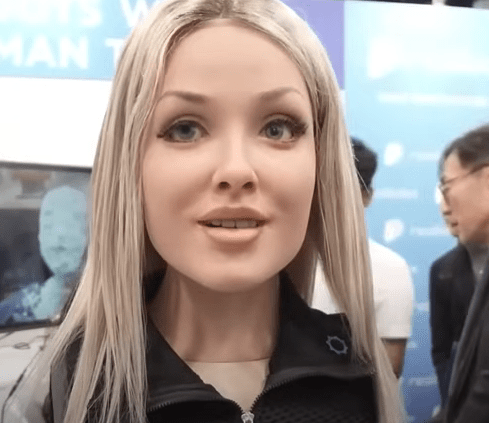
    2. Melody is a humanoid robot with enhanced functionality, adaptability, and an improved user experience, featuring patented skin technology for a realistic appearance. It is priced at approximately $150,000.
    3. Arya’s eyes are hidden cameras used for visual recognition to identify people and objects and its face is magnetically detachable for easy replacement allowing for different appearances.
    4. The GR1 robot is designed to assist in medical care, rehabilitation, and provide support for elderly individuals and people with disabilities.
    5. The Mage robot pianist uses advanced robotics and AI to analyze and reproduce music, and it could be used in educational institutions, concert halls, and museums.
    6. Alfred is an ultra-realistic robot that can engage in free conversations, understand many languages and accents, and could replace humans in fields like tourism and hotel administration.
    7. The Honda Zero SUV is a midsize electric crossover built on a new EV architecture with a minimalist design and level-three autonomous driving system. Its expected release is in the first half of 2026.
    8. The Aptera is a solar electric vehicle that can travel up to 65 km per day solely on solar energy and up to 650 km when fully charged.
    9. Sense Robot Chess adapts to the player’s skill level, offers multiple game modes, and can be used remotely with other users.
    10. The R2D3 is designed to manage household appliances, prepare meals, and learn from user preferences, integrating with smart home systems and providing voice control.

    Essay Questions

    1. Discuss the ethical implications of creating human-like robots, drawing on examples from the CES 2025 exhibits.
    2. Analyze the role of artificial intelligence in the robotic innovations showcased at CES 2025, and how AI impacts the capabilities of these machines.
    3. Compare and contrast the different types of robots presented at CES 2025, considering their purpose, design, and potential impact on society.
    4. Evaluate the significance of electric vehicle innovations presented at CES 2025 for the future of transportation and their environmental impacts.
    5. Examine how the advancements displayed at CES 2025 could address current societal challenges like healthcare, labor shortages, and mental health.

    Glossary of Key Terms

    • Artificial Intelligence (AI): The simulation of human intelligence in machines, enabling them to learn, problem-solve, and make decisions.
    • Humanoid Robot: A robot with a body shape that resembles a human, often designed to interact with human environments and perform human-like tasks.
    • Level Three Automated Driving System: A system that enables a vehicle to perform driving tasks autonomously under certain conditions, but requires the driver to be ready to take control.
    • Electric Vehicle (EV): A vehicle that is powered by electricity rather than an internal combustion engine, usually using batteries.
    • Solar EV: A vehicle that uses solar panels to recharge its batteries.
    • Bionic Prosthesis: An artificial limb or body part that incorporates electronic or mechanical components to mimic natural movement and function.
    • Tactile Feedback: The sensation of touch or pressure that is relayed back to the user through sensors, especially in robotic or prosthetic devices.
    • Generative AI: Artificial intelligence that is able to generate new content such as text, images, music, or code.
    • Mobility: The ability to move easily and freely, which is related to both transportation and the physical capabilities of robots.
    • Autonomous Robot: A robot that can operate independently without human control or intervention after initial programming.
    • Augmented Reality (AR): A technology that overlays digital information onto a user’s view of the real world, enhancing or modifying it.
    • Omnidirectional Wheels: Wheels designed to move in any direction, enabling a vehicle or robot to move sideways, forward, or at an angle.
    • Large Language Models (LLMs): A type of artificial intelligence that can learn to generate and understand language, which can improve a machine’s ability to interact with people.

    CES 2025: Future Technologies Unveiled

    Okay, here’s a detailed briefing document summarizing the key themes, ideas, and facts presented in the provided text about CES 2025:

    CES 2025: A Deep Dive into Future Technologies

    Executive Summary:

    CES 2025 showcased a plethora of innovations across various tech sectors, highlighting significant advancements in robotics, artificial intelligence (AI), sustainable energy, electric vehicles (EVs), and personal mobility. The event emphasized a move toward more human-like robots, AI-powered personal assistants, and eco-conscious transportation. The sheer scale of the event, with over 4,500 companies from 160+ countries, underscores the rapid pace of technological development and the global collaboration driving it.

    Key Themes:

    1. Robotics & Artificial Intelligence:
    • Humanoid Robots Taking Center Stage: A significant focus was on creating robots with human-like appearance, interaction capabilities, and emotional intelligence.
    • Real bics’ Melody: “The robot is designed to closely resemble humans in appearance and social interaction… a highlight of Melody is its patented skin technology… which offers an exceptionally realistic appearance and tactile feel.”
    • Real bics’ Arya: Designed to “engage in… more intimate conversations” and can be customized with interchangeable faces.
    • Engineered Arts’ Ameca: Renowned for “realistic facial expressions and advanced communication skills.”
    • Intbot’s Nyo: Designed for “personal use and interaction… with sarcasm, making Its Behavior resemble that of a teenager.”
    • AI-Powered Interaction: Robots are increasingly using AI for natural language processing, emotion recognition, and adaptive behavior.
    • NTT’s humanoid controlled by “Suzumi”: Demonstrates “advanced capabilities of generative artificial intelligence which not only understands and processes commands but also performs physical tasks.”
    • Alfred the Robotic Surgeon: Can “engage in free conversations… answer any question… and is capable of understanding almost all languages of the world.”
    • Robo Rock’s Saros z70: “Equipped with an updated navigation system… which allows it to efficiently avoid obstacles and learn to recognize new objects”.
    • Agility Robotics’ Digit: Actively exploring the integration of large language models to program itself in response to verbal commands.
    • Diverse Applications of Robots: Robots are being developed for a wide range of uses including healthcare, education, entertainment, personal assistance, industrial tasks, and even artistic performance.
    • Forier Intelligence’s GR1: “Its primary purpose is to assist in Medical Care, Rehabilitation and provide support for elderly individuals.”
    • Mage’s Robot Pianist: Capable of “Performing complex musical pieces with exceptional Precision.”
    • Tombot’s Jenny: Designed “to support individuals with dementia, depression and other mental health disorders.”
    • Enchanted Tools’ Moroi: “Moves on a spherical base, navigates spaces with precision, and can grasp objects with a success rate of 97%” and performing tasks such as delivering water and PPE at a care home.
    • Stardust Intelligence’s Robotic Baristas: Equipped with “high Precision manipulators that amazed visitors with their coffee making abilities”.
    • Advanced Robotic Capabilities: Robots showcased include enhanced movement, dexterity, emotional responsiveness, and the ability to adapt to varied environments.
    • Ethical Considerations: The development of robots with advanced human-like traits raises questions regarding their purpose, potential impact on human society, and the nature of human-robot relationships.
    1. Sustainable Energy & Transportation:
    • Electric Vehicles (EVs) Dominate: The future of transportation is clearly electric, with numerous new EV concepts and production models.
    • Honda Zero SUV and Saloon: Futuristic EV concepts with “level three automated Driving Systems.”
    • LG’s Alpha-able Concept Car: A “Digital Cave that adapts to the needs of the passengers” with customizable interior.
    • Mercedes-Benz Concept CLA Class: An “electric sedan… built on the new Mercedes-Benz modular architecture platform” with ultra fast charging capabilities.
    • Aptera Solar EV: “The ability to travel up to 65 km a day entirely on solar energy.”
    • Kia EV4: a compact electric car with up to 600km range.
    • Focus on Efficiency & Range: Emphasis on maximizing range, charging speed, and energy efficiency in EVs.
    • Mercedes-Benz Concept CLA Class: Achieves “exceptional efficiency through a 235 horsepower electric motor and an Innovative silicon oxide anode battery”.
    • Aptera Solar EV: Solar panels enable daily range while the small battery extends total range to 650km.
    • Alternative Transportation Modes: The exhibition showcased unique concepts like flying cars and electric scooters.
    • Xong Arrow’s Xun X3: “Flying car with vertical takeoff and landing capabilities… can operate both on roads and in the air”.
    • RoR’s Sky Rider X1: A “Flying electric scooter… can transform into a quadcopter.”
    • Advancements in Battery Technology: With many vehicles noting “800 volt electric system enabling Ultra fast charging,” indicating improvements in battery technology are crucial for the advancement of EVs.
    • Mercedes-Benz Concept CLA Class: “800 volt electric system enabling Ultra fast charging at up to 250 Kow adding 400 km of range in just 15 minutes.”
    1. Personal Mobility & Smart Living:
    • Home Robots & Assistants: Robots are becoming more integrated into daily life, providing convenience and assistance.
    • Open Droids’ R2D3: “Designed to simplify everyday life… managing household appliances and even preparing meals.”
    • Gai’s Mimo: “Visually it resembles a walk-in coffee table with a lamp… meant to ensure autonomy and the ability to move independently.”
    • Robo Rock Saros Z70: a robot vacuum equipped with a robotic arm to handle small objects around the home.
    • Personalized Experiences: Emphasis on creating technology that adapts to individual needs and preferences.
    • Smart Home Integration: Robots are designed to seamlessly integrate with existing smart home ecosystems.
    • Open Droids’ R2D3: integrates “seamlessly with existing smart home systems including voice assistants like Alexa and Google Assistant.”
    • Advanced Prosthetics: Progress in bionic prosthetics offer those with disabilities a high level of functionality and natural movement.
    • Psionic’s Robotic Prosthetic Hand: “Combines Advanced engineering Solutions and Innovative materials providing the user with a unique level of functionality and natural movement.”
    1. Advanced Graphics & Gaming:
    • Nvidia’s GeForce RTX 50 Series showcased the capabilities of next gen graphics cards.
    • Sony’s Exo Suit: Inspired by the video game Horizon Zero Dawn, shows “realistic movement mechanics, intricate structure and striking design”.
    1. Other Notable Innovations:
    • Sense Robot Chess: A chess playing robot with “ability to adapt to the skill level of the player.”
    • Species Corporation’s Kosaka Kakona: An “emotional robotic mannequin” that “demonstrates incredibly smooth and graceful movements”
    • In Motion’s unicycle model with a powerful motor and extended range
    • Booster Robotics’ T1: A “flexible and Agility robot… demonstrating dance movements and Kung Fu moves”.

    Key Takeaways:

    • Convergence of Technologies: The event highlights the convergence of robotics, AI, sustainable energy, and personal mobility, indicating a future where these technologies are deeply intertwined.
    • Human-Centered Design: There is a strong emphasis on creating technologies that enhance human experiences, whether through personal robots, customizable transportation, or advanced prosthetics.
    • Global Innovation: The large number of international companies participating showcases the truly global nature of technological advancement.
    • Ethical Considerations: As technologies become more powerful, ethical considerations surrounding their development and application are increasingly important.
    • The Pace of Progress: The sheer number of innovative products and technologies on display underscore the ever increasing rate of technological progress across multiple fields.

    Conclusion:

    CES 2025 provided a glimpse into the future, showcasing groundbreaking innovations poised to transform our lives in the coming years. The event highlighted the rapid advancements in robotics and AI, the push for sustainable mobility, and the growing integration of technology into our homes and personal lives. It’s clear that the tech industry is rapidly moving towards a more connected, personalized, and sustainable future. The ethical implications of these innovations remain a crucial area of discussion.

    CES 2025: Technological Innovations

    CES 2025: Frequently Asked Questions

    1. What were the major technological themes and innovations showcased at CES 2025? CES 2025 featured a wide range of innovations, with key themes including artificial intelligence, digital healthcare, energy transition, mobility, quantum technology, and sustainability. The exhibition highlighted advancements in robotics, electric vehicles, personal transportation, and AI-driven tools across various sectors, from healthcare to entertainment.
    2. Several humanoid robots were unveiled. What are some key features and differences between robots like Melody, Arya, Ameca, and GR1? Several humanoid robots made their debut, each with distinct features. Melody, by real bics, focused on realistic appearance and tactile feel with its patented skin technology and is designed for industries needing close human interaction. Arya, also by real bics, can have its face swapped, features visual recognition and is intended for more intimate conversations. Ameca by Engineered Arts is known for its realistic facial expressions and conversation skills, designed for scientific research. GR1, by Forier Intelligence, is a Chinese-developed robot focused on medical care and support for the elderly, boasting mobility and object recognition capabilities.
    3. Beyond traditional humanoid robots, what other types of robots were highlighted and what were their intended purposes? CES 2025 showcased diverse robots beyond humanoids. Examples include: a robot pianist by Mage that can perform complex musical pieces, robot baristas, and a robotic prosthetic hand by psionic with tactile feedback capabilities. There were also robots focused on home assistance such as the R2D3, and support for those with mental health issues such as Jenny, the robotic puppy. Specialized robots, such as digit, were intended for industrial and logistical uses.
    4. What were some of the most interesting innovations in personal and public transportation at CES 2025? Transportation at CES 2025 saw several groundbreaking concepts. Honda showcased prototypes of its upcoming electric crossover and sedan with advanced driver-assistance systems and a new OS, while LG presented a concept car focused on personalization and comfort. Aptera revealed a solar electric vehicle capable of traveling 65 km per day on solar power. There were flying car concepts, including the Xong X3 which has vertical takeoff and landing capabilities, and a flying electric scooter, the Sky Rider X1, which has a closed cabin that transforms into a quadcopter.
    5. How is Artificial Intelligence being integrated into the showcased technologies? AI was a core component across various CES innovations. It was used in robots for facial recognition, emotional responses, advanced language processing, and dynamic decision making. AI also powered driving systems, assisted in personalized in-car experiences, enhanced musical performances, and provided assistance for everyday tasks, emphasizing its pervasive influence across sectors.
    6. Besides the robots, what other unusual or innovative technologies were featured at CES 2025? Beyond robots and transportation, CES 2025 featured a range of unusual innovations. These included a customizable robot model named Mimo, that resembles a walk-in coffee table, an Exo Suit inspired by a game, and a chess-playing robot called Sense Robot Chess, that adapts to the skill level of its opponent. A robotic arm called Omni Grip, was included in a robot vacuum cleaner and there was also a robotic system with manipulators that can make coffee, and robotic dogs capable of jumping and performing acrobatic tricks.
    7. What advancements were made in electric vehicle technology and how are manufacturers addressing range and charging concerns? Several manufacturers, including Mercedes-Benz, Honda, and Kia presented new electric vehicle concepts. Mercedes-Benz’s Concept CLA Class included an 800 volt system allowing for 400 km range in 15 minutes, with a 750km total range. Kia showcased their EV4, emphasizing quick charging and long range options. There was an emphasis on battery technology, charging efficiency, and integration of technology, and companies demonstrated that they are increasingly focusing on improving performance and convenience for users.
    8. What role did sustainability play at CES 2025 and how was this theme integrated into various technologies? Sustainability was a notable theme at CES 2025. Solar electric vehicles, like the Aptera, showcased direct energy generation. Electric vehicles from Honda, LG, and Mercedes-Benz demonstrated an increasing shift towards environmentally friendly options. Companies also highlighted their efforts to incorporate sustainable materials, energy efficiency, and eco-conscious design principles into various technologies, emphasizing a commitment towards reducing environmental impact.

    CES 2025: Innovations in Robotics, AI, and Transportation

    CES 2025 showcased a wide array of innovations across various technology sectors. Here are some of the highlights:

    Robotics and AI:

    • Humanoid Robots: Several companies unveiled advanced humanoid robots, including RealBiotics with Melody, priced at $150,000, which has realistic skin and can be customized for different uses. They also presented Arya, a robot with swappable faces. Engineered Arts showcased Amecca, known for its realistic facial expressions, and also Alfred, a robot doctor capable of engaging in conversations and understanding multiple languages. Other notable humanoid robots include GR1 from Forier Intelligence, designed for medical care and assistance, and Nyo from intBot, a robot designed for personal interaction with emotional intelligence.
    • Other Robots: There were many other types of robots demonstrated at CES 2025. A robotic pianist from Mage, capable of playing complex musical pieces. A robotic dog from Deep Robotics that can perform acrobatic tricks and navigate complex terrain. There were also robotic baristas from Stardust Intelligence, and robotic arms for vacuum cleaners from Robo Rock. There were also robots for home and personal use, such as r2d3, from Open Droids, and moroi from Enchanted Tools. Tombot presented Jenny, a robotic puppy intended to support those with dementia, depression and other mental health disorders.
    • AI Integration: Many robots at CES 2025 utilized advanced AI. Some were integrated with language models like Suzumi, and could perform physical tasks simulating physical sensations. Agility Robotics is also exploring integrating large language models into their robot, Digit.

    Transportation:

    • Electric Vehicles: Honda presented prototypes of its electric crossover, the Honda Z SUV, and sedan, the Honda zero Saloon. LG showcased a concept car, Alpha able, with a customizable interior. Mercedes-Benz unveiled its Concept CLA Class, an electric sedan with a focus on efficiency and fast charging. There were new electric vehicle models announced from Kia, the EV4 and several concept vehicles, including the quintessenza electric pickup from eedle design .
    • Solar Electric Vehicles: Aptera Motors displayed its solar electric vehicle, the Aptera, which can travel up to 65 km per day using solar energy.
    • Flying Vehicles: Several flying vehicles were on display, including the xun X3 flying car from Xong Arrow, the AOH HT flying car, also from Xong, and the Sky Rider X1, a flying electric scooter from RoR.

    Other Notable Technologies:

    • Prosthetics: Psionic showcased an advanced robotic prosthetic hand with tactile feedback.
    • Exosuits: Sony showed off a full-size exo-suit inspired by the game Horizon Zero Dawn.
    • Home Robots: Many home robots were introduced with varied functionality, such as R2d3 from Open Droids that can manage household appliances, and mimo from gai, a customizable universal robot.
    • Gaming Robots: Sense Robot Chess was presented with an AI that adapts to the skill level of the player.
    • Graphics: Nvidia showed the capabilities of its GeForce RTX 50 Series graphics cards.

    Key Themes:

    • Artificial Intelligence: AI was a central theme, with applications ranging from humanoid robots to vehicle operating systems and even robot chess.
    • Sustainability: Many companies focused on sustainable solutions, particularly in transportation and energy.
    • Human-Robot Interaction: There was an emphasis on creating robots that can interact with humans naturally and provide support in various settings.

    This comprehensive overview should give you a solid understanding of the key innovations and trends highlighted at CES 2025.

    Humanoid Robots at CES 2025

    CES 2025 featured a diverse range of humanoid robots, each with unique capabilities and intended applications.

    Key Highlights of Humanoid Robots at CES 2025:

    • RealBiotics’ Melody: This robot is designed to closely resemble humans in appearance and social interaction. It features patented skin technology, compatibility with various AI platforms (including ChatGPT), and is priced at approximately $150,000. Melody is intended for industries requiring close human interaction, such as healthcare, education, and entertainment. RealBiotics also presented Arya, a less expensive model ($75,000) that can move and has a swappable face. Arya’s eyes are hidden cameras for visual recognition, and it is capable of more intimate conversations.
    • Engineered Arts’ Amecca: This robot is known for its realistic facial expressions and advanced communication skills. It can display a range of human emotions and engage in conversations, making it suitable for scientific research and showcasing AI potential. Amecca is priced at approximately $175,000. Engineered Arts also presented Alfred, a robot doctor, capable of free conversation and understanding multiple languages.
    • Forier Intelligence’s GR1: This Chinese-developed robot is designed for medical care, rehabilitation, and support for the elderly and people with disabilities. It stands 1.65m tall, weighs 55kg, and can move at 5 kmph, ascend stairs, and carry loads. GR1 is equipped with AI for face, speech, and object recognition.
    • IntBot’s Nyo: This robot is designed for personal use and interaction in a home environment. Nyo is notable for its ability to express emotions and communicate informally, sometimes with sarcasm, using multimodal language learning based on AI. Nyo is intended as a companion for people, providing emotional support and social interaction.
    • NTT’s Humanoid Robot: This robot is controlled by the next-generation language model Suzumi and can perform physical tasks while simulating physical sensations. It can sense its environment, bringing it closer to mimicking human movements and decision-making.
    • Agility Robotics’ Digit: This humanoid robot is designed to work alongside humans in tasks such as lifting and transporting objects. It can carry loads up to 16kg and operate autonomously for up to 16 hours. Agility Robotics is exploring the integration of large language models to allow Digit to respond to verbal commands.
    • Engine AI’s SE01, SA01, and PM01: These robots are designed for diverse tasks and markets. SE01 is a multi-purpose robot for industrial tasks, SA01 is for research and education, and PM01 is a lightweight and highly dynamic robot with an open architecture.
    • Booster Robotics’ T1: This robot demonstrated impressive flexibility and agility by performing various physical exercises such as push-ups, dance movements, and Kung Fu moves. It is equipped with high-tech sensors and a motion control system, and it can also walk, bend and kick a soccer ball. Booster Robotics suggests that this robot could replace athletes.
    • Pollen Robotics’ I2: This open source humanoid robot, also called Richi2, is designed for interaction with the environment and people. It can manipulate objects with 7-degree of freedom manipulators and can move freely using omnidirectional wheels.

    Common Themes and Features:

    • Advanced AI: Many of these robots incorporate advanced artificial intelligence for natural language processing, visual recognition, and adaptive learning.
    • Human-Like Interaction: A key focus is on creating robots that can interact with humans naturally, including the ability to understand and express emotions.
    • Diverse Applications: The robots are designed for a wide range of uses, including healthcare, education, entertainment, industrial tasks, personal assistance, and companionship.
    • Realistic Design: Many companies are focusing on making robots that look and feel more human.
    • Mobility: The robots also feature different methods of mobility, from walking and running to wheels, and a spherical base.

    These humanoid robots at CES 2025 represent significant advancements in robotics and AI, highlighting the potential for these technologies to impact various aspects of daily life and industries.

    CES 2025: Electric Vehicle Innovations

    CES 2025 showcased a variety of advancements in electric vehicle technology, with several manufacturers presenting new models and concepts.

    Key Electric Vehicles and Concepts at CES 2025:

    • Honda: Honda revealed prototypes of its upcoming electric vehicles, the Honda Z SUV and the Honda Zero Saloon. The Honda Zero SUV is a midsize crossover built on a new electric vehicle architecture and has a minimalist design. The Honda Zero Saloon is a flagship sedan characterized by a low height and wedge-shaped design. Both models will have Level Three automated driving systems and a new operating system called Asimo OS. Honda plans to begin mass production in North America in the first half of 2026, followed by Japan and Europe.
    • LG: LG presented the Alpha able concept car, a vision for future mobility that combines advanced technologies with personalization, turning the car into a “digital cave” that adapts to passenger needs. The interior of the vehicle can be reconfigured using flexible, foldable, and transparent screens. LG also introduced new solutions for electric vehicle charging, such as the Ecentric system.
    • Mercedes-Benz: Mercedes-Benz unveiled its Concept CLA Class, an electric sedan that marks a new era for the brand. This concept is built on the new Mercedes-Benz modular architecture platform and features an 800-volt electric system for fast charging, adding 400 km of range in 15 minutes. It has a total range exceeding 750 km and achieves efficiency through a 235-horsepower electric motor and a silicon oxide anode battery.
    • Aptera Motors: Aptera Motors showcased the Aptera, a solar electric vehicle covered with solar panels. It can travel up to 65 km per day on solar energy and has a total range of 650 km with a fully charged 45 kWh battery. The company is taking pre-orders for the model, which is priced at $40,000.
    • Kia: Kia introduced the EV4, a compact electric vehicle equipped with batteries that provide a range of up to 600 km. The EV4 supports fast charging, allowing the battery to recharge from 10% to 80% in 30 minutes. Production is set to begin in March 2025.
    • Eedle Design: Eedle Design unveiled the electric pickup concept Quintessenza, which is not intended for mass production but demonstrates design capabilities for potential partners. The pickup features three motors, a 150 kWh battery and can accelerate to 100 kmph in less than 3 seconds.
    • BMW: BMW showcased its Innovative Concepts from the Noya classa lineup which included a fully electric sedan and SUV. These vehicles are built on the new Noya classa platform and feature the BMW panoramic Vision system, projecting data across the entire width of the windshield. The vehicles are equipped with the sixth generation of BMW’s eDrive system with new battery architecture with round cells providing up to 30% more range and faster charging.

    Key Themes and Trends:

    • Sustainability: A significant emphasis was placed on sustainable solutions, with several companies focusing on electric and solar-powered vehicles.
    • Advanced Charging Technology: Many new electric vehicles featured fast-charging capabilities and innovative charging systems.
    • Innovative Design: Automakers showcased unique and futuristic designs that blended elegance with aerodynamic optimization.
    • Integration of Technology: Electric vehicles at CES 2025 also featured integration of technology, such as advanced operating systems, interactive displays, and automated driving systems.
    • Increased Range: Many of the new electric vehicle models have batteries that provide increased range.

    These developments highlight the continued progress in electric vehicle technology, with a focus on increased efficiency, range, and sustainability. The presentations at CES 2025 point towards a future where electric vehicles will be more practical, technologically advanced, and integrated into daily life.

    CES 2025 Robotics Showcase

    CES 2025 featured a wide array of advancements in robotics technology, showcasing innovations across various applications, from personal assistance to industrial automation.

    Humanoid Robots

    • RealBiotics unveiled Melody, a robot designed to resemble humans with advanced skin technology and AI integration, priced at $150,000. They also showcased Arya, a more affordable model at $75,000, with visual recognition and swappable faces.
    • Engineered Arts presented Amecca, known for its realistic facial expressions and communication skills, priced at $175,000, as well as Alfred, a robot doctor capable of free conversation and understanding multiple languages.
    • Forier Intelligence introduced the GR1, a Chinese robot designed for medical care and support, capable of moving, carrying loads, and interacting with people using AI.
    • IntBot’s Nyo, designed for personal use, can express emotions and communicate in an informal style, using multimodal AI.
    • NTT’s humanoid robot demonstrated the ability to perform physical tasks while simulating physical sensations, controlled by the language model Suzumi.
    • Agility Robotics’ Digit is designed to work alongside humans for tasks such as lifting and transporting objects, and it can operate autonomously for up to 16 hours.
    • Engine AI showcased three models: SE01 for industrial tasks, SA01 for research, and PM01, a dynamic robot with an open architecture.
    • Booster Robotics’ T1 demonstrated impressive flexibility and agility, performing exercises and Kung Fu, and has the potential to replace athletes.
    • Pollen Robotics’ I2, also called Richi2, is an open source humanoid robot designed for interaction with people and the environment and is capable of manipulating objects using advanced manipulators.

    Other Notable Robots

    • Mage presented a robot pianist capable of playing complex musical pieces with exceptional precision.
    • Species Corporation introduced Kosaka Kakona, an emotional robotic mannequin with 37 movable joints, designed to add a kinetic dimension to displayed clothing.
    • Tombot presented Jenny, a robotic puppy designed to support individuals with mental health disorders, acting like a real Labrador Retriever.
    • Gai displayed the customizable universal robot model Mimo featuring AI, resembling a walk-in coffee table with a lamp.
    • Open Droids unveiled R2D3, a home robot capable of managing appliances and preparing meals, adapting to the habits of its owners.
    • Enchanted Tools’ Moroi is designed for homes, hospitals, and nursing homes, capable of navigating spaces and grasping objects, and is being tested at experimental sites and research labs.
    • Stardust Intelligence showcased robotic baristas with high-precision manipulators.
    • Sense Robot Chess is a chess-playing robot that adapts to the skill level of the player, offering various game modes.
    • Kawasaki Heavy Industries presented Nyaki, an autonomous robot capable of opening doors and delivering drinks in hotels.
    • Unry Robotics displayed the quadraped robot Unitree Go2 and the humanoid robot Unitree G1, highlighting their capabilities in movement and acrobatics.
    • Deep Robotics showed a high-performance robotic dog with exceptional agility and terrain adaptability.
    • Robo Rock announced the Saros Z70 robot vacuum, equipped with a robotic arm to pick up small objects, along with an updated navigation system.

    Key Trends in Robotics Technology:

    • Advanced AI Integration: Many robots incorporate AI for natural language processing, visual recognition, and adaptive learning.
    • Human-Robot Interaction: There is a strong focus on creating robots that can interact naturally with humans, including understanding and expressing emotions.
    • Diverse Applications: Robots are being developed for a wide range of uses, including healthcare, education, entertainment, industrial tasks, personal assistance, and companionship.
    • Increased Realism: Many companies are focusing on making robots that look and feel more human.
    • Enhanced Mobility: Robots are featuring various methods of mobility, from walking and running to wheels and spherical bases.
    • Improved Functionality: Robots are being designed with an increasing number of sensors and better ways of manipulating their environments and interacting with humans.

    These advancements in robotics technology at CES 2025 demonstrate the rapid progress in the field and the potential for robots to significantly impact various aspects of daily life and industry.

    AI at CES 2025

    CES 2025 showcased significant advancements in artificial intelligence (AI), which were integrated into various technologies, from robotics to vehicles.

    Key AI Applications and Technologies at CES 2025:

    • Robotics: Many robots at CES 2025 utilized advanced AI for diverse functions.
    • RealBiotics’ Melody is integrated with AI to enhance human experiences through interaction, learning, and entertainment. It is also compatible with various AI platforms such as ChatGPT by OpenAI.
    • Engineered Arts’ Amecca uses cutting-edge AI algorithms enabling it to engage in conversations and display a wide range of human emotions through meticulously crafted facial expressions. Alfred, also by Engineered Arts, can engage in free conversations thanks to a new AI-augmented system.
    • Forier Intelligence’s GR1 uses AI to recognize faces, speech, and objects, enabling it to analyze its surroundings and interact with people in real time.
    • IntBot’s Nyo uses multimodal language learning based on AI to express emotions and communicate in an informal style.
    • NTT’s humanoid robot is controlled by the Next Generation language model Suzumi, which not only understands and processes commands but also performs physical tasks.
    • Agility Robotics’ Digit is exploring the integration of large language models in AI, enabling it to program itself in response to verbal commands in natural language.
    • Sense Robot Chess uses AI to analyze an opponent’s moves, adjust the difficulty, and provide helpful tips.
    • Gai’s Mimo uses AI to ensure autonomy and the ability to move independently within a space.
    • Language Models:
    • NTT’s humanoid robot demonstrated the capabilities of the generative language model Suzumi.
    • Agility Robotics is exploring the use of large language models to enable its robot Digit to program itself in response to verbal commands.
    • Automated Driving Systems: Several electric vehicles featured Level Three automated driving systems that are capable of autonomous driving, braking and accelerating.
    • Honda’s Z SUV and Zero Saloon will have level three automated driving systems.
    • Personalization and Adaptation:
    • Open Droids’ R2D3 adapts to the habits of its owners, learning from user preferences to perform tasks more efficiently over time.
    • BMW introduced the updated panoramic ey Drive control system that displays interactive 3D content on the windshield creating a personalized interface.
    • Emotional AI:
    • IntBot’s Nyo uses AI to express emotions and communicate informally, even with sarcasm.
    • Species Corporation’s Kosaka Kakona, a robotic mannequin, is designed to demonstrate smooth and graceful movements, adding a kinetic dimension to clothing displays.
    • Data Analysis:
    • Sense Robot Chess uses AI to analyze players’ moves, adjust difficulty, and give real-time tips.
    • Multimodal AI:
    • IntBot’s Nyo uses multimodal language learning based on artificial intelligence which allows Nyo to recognize and reproduce body language, facial expressions, eye contact and micro expressions.

    Key Trends in AI at CES 2025:

    • Integration with Robotics: AI is a key component in the functionality of many advanced robots, enabling them to interact with humans, adapt to their surroundings, and perform complex tasks.
    • Natural Language Processing: There is a focus on AI that can understand and respond to human language, allowing for more intuitive and natural interactions.
    • Emotional Intelligence: AI is being used to create robots that can understand and express emotions, enhancing their ability to interact with people on a personal level.
    • Autonomous Operation: AI is being used to make systems such as robots and vehicles more autonomous.
    • Personalized Experiences: AI is being utilized to create personalized experiences for users, whether it’s adapting to user preferences or creating customized interfaces.

    The AI advancements at CES 2025 demonstrate how the technology is becoming more integrated into different aspects of our lives, enabling more sophisticated and personalized experiences, particularly in robotics, and vehicle technology, as well as in applications that require natural interaction with human language, as well as other aspects of human interaction such as emotion and personalization.

    China’s New $2,000 Flying Shoes SHOCKED the World at CES 2025

    By Amjad Izhar
    Contact: amjad.izhar@gmail.com
    https://amjadizhar.blog

  • A Passage to India (1965) by E.M. Forster

    A Passage to India (1965) by E.M. Forster

    A dramatic courtroom scene unfolds in India, centered around a British woman’s accusation of rape against an Indian doctor. The narrative explores the complex dynamics between British and Indian cultures, highlighting misunderstandings and prejudices. The case becomes a microcosm of the broader colonial conflict, revealing the limitations of societal norms and the search for justice within a deeply divided society. The story examines themes of friendship, love, and cultural clashes, woven through the lens of a colonial setting. Ultimately, the resolution questions the nature of truth and the complexities of intercultural relationships.

    A Passage to India Study Guide

    Quiz

    1. Describe the initial encounter between Mrs. Moore and Aziz at the mosque. What is significant about this interaction?
    • Mrs. Moore enters the mosque with her shoes on, prompting Aziz to initially scold her. However, once he understands she’s taken them off and was unaware of the custom, he apologizes, showing an initial openness to cultural difference. This shows a contrast in reactions, where religious rules and cultural misunderstandings give way to human connection.
    1. What is the purpose of the bridge party, and why does Aziz seem critical of it?
    • The bridge party is meant to bring together the English and Indians in an effort to ease social tensions. Aziz is critical because he sees it as artificial and unlikely to foster true friendships, suggesting that the English are not genuinely interested in understanding Indian culture and people.
    1. What is significant about Fielding’s behavior and how he interacts with both the British and Indians?
    • Fielding is depicted as more open and unconventional than other Englishmen, treating both Indians and British with a measure of respect. His willingness to socialize with Indians as equals, to challenge British prejudices, and his personal relationships set him apart from his compatriots.
    1. Describe the events that lead to the misunderstanding at the Marabar Caves. What are the different perspectives?
    • During a picnic at the Marabar Caves, Adela Quested has an unsettling experience within a cave, which she later interprets as an assault by Aziz. There is a divide in perspectives where the British believe her version while Indians are inclined to believe Aziz is innocent.
    1. What are the significant pieces of evidence that are presented during the trial?
    • The prosecution cites Adela’s testimony of the incident, the broken field glasses found in Aziz’s pocket, and his private letters suggesting moral impropriety. The defense argues there is no physical evidence and suggests an issue with Adela’s mental state which makes her claim unreliable.
    1. How does the echo within the caves affect Mrs. Moore and Adela?
    • The echo in the caves, described as a sound that empties meaning, intensifies Mrs. Moore’s nihilistic worldview while also seemingly causing Adela’s mental state to become increasingly erratic and affecting her perception of reality. It represents the meaninglessness and chaos of life.
    1. What does Mrs. Moore realize about love and relationships after her experiences in India?
    • Mrs. Moore becomes disillusioned with the potential for genuine human connection. She observes the lack of understanding between the English and Indians and begins to see all relationships as ultimately futile. This leads to her withdrawing from the world and from her previous worldview.
    1. What does Aziz hope to achieve when he demands a written apology from Adela after being acquitted?
    • Aziz initially seeks an apology from Adela as a means of seeking justice and vindication for the harm he experienced. However, it appears that he wants a public display of humility and acknowledgement from Adela and the English generally for their unjust accusations.
    1. How does the relationship between Fielding and Aziz change by the end of the story?
    • By the end of the story, the friendship between Fielding and Aziz is strained. Their different perspectives on the events, and the social and political tensions in India, cause them to drift apart despite the personal connection they had felt previously.
    1. What does the conclusion suggest about the possibility of friendship between the English and Indians?
    • The conclusion suggests that true friendship between the English and Indians is nearly impossible within the colonial context. The socio-political realities, inherent cultural misunderstandings, and personal prejudices make genuine connection an unattainable ideal.

    Essay Questions

    1. Analyze how the setting of India, particularly the Marabar Caves, functions as a symbol in the novel.
    2. Discuss the different types of relationships depicted in the novel, including those between the English and Indians, as well as those within each group. How does the novel portray the possibility and limitations of human connection in a colonial context?
    3. Explore the concept of “truth” in the novel, especially in relation to the incident in the Marabar Caves and the subsequent trial. How does the novel present the subjective and elusive nature of truth and knowledge?
    4. Examine the role of colonial power dynamics in shaping the interactions and conflicts of the characters. How do social and political structures influence individual agency and relationships?
    5. Evaluate the character development of either Mrs. Moore, Adela Quested, or Aziz throughout the novel, paying particular attention to how their experiences in India change their perspectives and beliefs.

    Glossary of Key Terms

    • Mosque: A place of worship for Muslims. In the novel, the mosque represents a sacred space and the cultural differences between the English and Indians.
    • Bridge Party: A social gathering aimed at bridging the divide between the English and Indians, which are often portrayed as artificial and ineffective.
    • Civil Station: This refers to the British residential and administrative area in India, often segregated from the Indian part of the town.
    • Oriental: A term used by Westerners to describe people and cultures of Asia. In the context of the novel, this term reflects a Western perspective that can be condescending or exoticizing.
    • Mughal Empire: A historical Muslim empire that once ruled much of India, often romanticized and held as an ideal for some of the Indian characters.
    • Marabar Caves: A central location in the novel; a mysterious, ancient place that symbolizes the enigma and chaos of India and the limitations of human understanding.
    • Echo: A recurring motif that emphasizes the emptiness and ambiguity of life, and how it impacts characters’ perceptions of reality.
    • The Club: A social establishment exclusively for British colonists, representing their segregation and isolation from Indian society.
    • Trial: The legal proceedings that take place after Adela accuses Aziz of attempted assault. It symbolizes the clash of perspectives between the British and the Indians.
    • Raj: This term refers to the British rule in India, highlighting the power imbalance and colonial structures within the story.
    • Brahmanas: This is a term for Hindu priests and scholars of high caste, which often implies an adherence to orthodoxy.
    • “The Secret Understanding of the Heart”: The idea of true connection between people that transcends cultural and political divides which both Aziz and Fielding hope to find.

    A Passage to India: An Analysis

    Okay, here’s a detailed briefing document analyzing the provided text excerpts:

    Briefing Document: Analysis of Text Excerpts

    Overall Theme:

    The provided text excerpts offer a glimpse into the complex relationships between British colonizers and Indian natives in early 20th-century India, focusing on themes of cultural misunderstanding, racial prejudice, the search for genuine connection, and the inherent limitations of colonial power structures. The narrative revolves around a diverse cast of characters whose individual experiences highlight the systemic issues at play. The excerpts culminate in a dramatic legal case stemming from a cultural clash, showcasing the fragility of these relationships and the difficulty of bridging the divide.

    Key Ideas and Facts:

    1. Cultural Misunderstanding & Prejudice:

    • The Mosque Incident: The initial scene with Mrs. Moore at the mosque establishes a key theme: the clash between the British and Indian approaches to religion and customs. Dr. Aziz’s initial abruptness toward Mrs. Moore (“madame this is the mosque you have no right to be here”) underscores the perceived intrusion of Westerners into sacred spaces. This is contrasted with Mrs. Moore’s sincerity and willingness to learn, highlighting the possibility of connection even across cultural boundaries.
    • Social Insults & Political Injury: Dr. Aziz expresses a deep frustration with the British attitude, saying, “unless we add social insult to political injury.” This phrase becomes a recurring motif and reveals the underlying political tension that permeates even casual social interactions. The idea that social interactions can worsen pre-existing political tensions emphasizes the precariousness of the colonial context.
    • British Club vs. Indian Exclusion: The English club is presented as a space where “Englishmen don’t mind having one too many because there are no Indians there to observe them.” This points to the hypocrisy and racial segregation inherent in colonial society. The club symbolizes the exclusive nature of colonial power and its inability to foster genuine relationships.
    • Stereotyping and Generalizations: Characters frequently resort to generalizations about entire groups. For example, Mr. Heaslop asserts, “the indian in a nutshell inattention to detail the fundamental slackness that reveals the race,” exemplifying the prevalent racist attitudes of the colonizers. This tendency to define groups by perceived flaws obscures the potential for individual relationships.
    • The “Oriental” Label: The label of “oriental” is used both to categorize and to suggest a certain type of mindset, as with Mrs. Moore: “she is the first oriental european I have ever met.” This further emphasizes the way that difference becomes a rigid identity that limits understanding.

    2. The Quest for Connection and Friendship:

    • Unconventional Behavior as a Bridge: Dr. Aziz expresses a liking for “unconventional behavior,” suggesting that breaking free from rigid social norms can lead to genuine connection. Both Aziz and Fielding are shown to appreciate unconventional behavior which further highlights their potential for true friendship and connection.
    • “Secret Understanding of the Heart”: Both Dr. Aziz and Fielding yearn for a “secret understanding of the heart,” signifying a desire for a connection beyond the superficial. This quest highlights their dissatisfaction with the hollow social relations of the colonial environment and the longing for genuine connection based on feeling rather than intellect.
    • Friendship as a Challenge to the Status Quo: Dr. Aziz states, “I think friendship is possible not only possible but important,” contrasting the pervasive cynicism about the possibility of interracial connection. Fielding’s willingness to socialize with Indians challenges the status quo and the social boundaries imposed by the colonial system.
    • Limitations of Friendship: While Aziz and Fielding seem to form a bond, the final scene suggests the limitations of their friendship within the colonial context. Aziz declares that because “we are on different sides… we cannot be friends.” This underscores the pervasive impact of systemic differences and the limitations they impose on personal connections.

    3. Colonial Power Dynamics & Unequal Treatment:

    • The Imbalance of Power: There is a constant awareness of the unequal power balance between the British and the Indians. Dr. Aziz notes that, “This is the first time I have ever been invited to an Englishman’s house” outside of professional duty. This highlights the social and political inequality prevalent under colonial rule.
    • “Social Insult to Political Injury”: This phrase emphasizes how the personal sphere mirrors the political. Actions seen as social slights are inherently connected to the oppressive colonial structure. This phrase shows that social actions carry immense weight in a society marked by political inequality.
    • The Role of the Government: Government officials are presented as rigid and unsympathetic, prioritizing order over understanding. Mr. Heaslop’s inability to believe in Indian’s virtue is a key example of this system of prejudice and power.
    • The Legal System and Injustice: The trial and legal procedures reveal the biases inherent in the colonial justice system. The presence of the British women on the platform is immediately taken as a demonstration of intimidation, showing the ways in which social dynamics can lead to biased legal procedures. The court proceedings showcase how the legal system becomes a tool of oppression rather than justice.
    • The Limited Power of Indians: While Dr. Aziz has a position of respect as a doctor, his power is curtailed by his nationality and the colonial system. He is treated as a second class citizen despite his position. He lacks the legal and political power to protect himself.
    • Fear of Losing Control: The English characters demonstrate a fear of losing their power and position if they let down their guard and genuinely interact with Indians. They worry about the appearance of the loss of control and believe it will cause “trouble.” This demonstrates the instability and insecurity inherent in the colonial position.
    • Control of Narrative: The British characters aim to control the narrative about what happened at the caves. They attempt to frame Dr. Aziz in a certain light to reinforce their own sense of superiority and authority.

    4. The Marabar Caves and their Symbolic Significance:

    • Emptiness and Terror: The caves, presented as a “great wonder of the world,” are described as having a terrible quality due to their emptiness and echo. As one character says, “everything is there for in nothing that is art.” This suggests that the caves can be seen as a metaphor for the emptiness at the heart of the colonial project.
    • Subjectivity of Experience: The contrasting experiences of the characters within the cave highlights the highly subjective nature of experience. Mrs. Moore is overwhelmed and terrified by the echo while the others seem indifferent. This suggests that the way the world is experienced is dependent on individual consciousness.
    • Echo as a Symbol of Confusion: The echo described by Mrs. Moore and Adela symbolizes the confusion, ambiguity, and the inability to find meaning inherent in life. It becomes a powerful symbol for the disruption of order in the colonial context.

    5. Individual Experiences and Growth:

    • Mrs. Moore’s Revelation: Mrs. Moore’s experience in the caves leads to a profound shift in her understanding of the world. She has a moment of realization that “everything I’ve ever believed in amounted to nothing at all”. She embodies a character that challenges the assumptions of her time and social standing.
    • Miss Quested’s Shift: Miss Quested’s eventual recognition that she was mistaken represents a significant character development. She gains the courage to admit to her mistakes. Her admission to making a false accusation is a rejection of the colonial narrative and allows her to attempt to forge a more genuine relationship with India.
    • Fielding’s Struggle: Fielding struggles to maintain his liberal principles in the face of mounting pressure and groupthink. He is pushed to choose sides against his own people in an attempt to do what he believes to be just. His choice shows the high personal price of opposing the dominant paradigm.
    • Dr. Aziz’s Growing Bitterness: The injustice he faces transforms Dr. Aziz from an optimistic friend into a more cynical and anti-British character.

    Quotes to Note:

    • “unless we add social insult to political injury” – Dr. Aziz, demonstrating the inextricable link between social interactions and political power.
    • “the secret understanding of the heart” – A recurring phrase highlighting the desire for genuine connection beyond cultural barriers.
    • “everything is there for in nothing that is art” – Professor Godbole, highlighting the symbolic emptiness of the Marabar Caves.
    • “It was the echo…it said piety, pathos, courage–they exist but are identical and so is filth. Everything exists. Nothing has value.” – Mrs. Moore’s articulation of her revelation in the cave, describing the meaninglessness of existence.
    • “We are on different sides and until there is no question of sides we cannot be friends”- Dr. Aziz highlighting the ways in which systemic differences disrupt the possibility of true friendship.
    • “India is a large country it can absorb all that guilt and many other things as well”- Dr. Aziz speaking on the ability of India to bear the brunt of the colonial oppression, but still retain the capacity to absorb.

    Conclusion:

    These text excerpts offer a powerful critique of colonialism through a close examination of complex relationships. The narrative highlights the destructive nature of prejudice, the struggle for genuine connection, and the limitations of colonial power structures. The culminating legal case and aftermath demonstrate the difficulty of overcoming deeply ingrained biases and the lasting consequences of systemic injustice. The characters and their individual journeys create an insightful portrait of the human experience within a complex and contested colonial environment.

    A Passage to India: Themes and Conflicts

    FAQ: Key Themes and Ideas from the Provided Text

    1. What are the main tensions and conflicts highlighted in the text?

    The text explores multiple layers of tension, primarily focusing on the fraught relationship between British colonizers and the Indian population during the British Raj. These tensions manifest in several ways: there’s the obvious power dynamic between the ruling British and the subjugated Indians; social tensions are rampant with clear boundaries regarding race and class; individual interactions are frequently strained due to cultural misunderstandings and prejudices. Beyond the overt colonial conflict, there are also subtler tensions between different cultural perspectives, like the conflict between a more emotional and spiritual Indian outlook and a more rational and reserved British mindset.

    2. How is the theme of cultural misunderstanding portrayed in the text?

    Cultural misunderstanding is a pervasive theme, depicted through numerous interactions. The British often impose their own values and interpretations onto Indian customs and behavior. For instance, the British characters initially misinterpret the reasons behind an Indian family not sending their carriage, assuming it is due to shame instead of a simple misunderstanding. Additionally, they struggle with the concept of the Marabar Caves and their significance, unable to grasp their potential power and terror beyond their physical appearance. The characters like Mrs. Moore, who begin to question this, are few and far between. Even the well-meaning attempts at “bridging the gap” like the planned picnic, often result in further misunderstandings rather than genuine connection.

    3. What role does personal friendship play in the face of colonial and racial divisions?

    The text suggests that true friendship can potentially transcend the divisions of colonialism and race, but it is a very difficult path. Characters like Mr. Fielding and Dr. Aziz form a bond that seems to genuinely challenge the rigid social barriers and prejudices of their world. They share personal moments and express mutual respect. However, the strength and limitations of such friendships are constantly tested by the surrounding environment. The larger society is so determined to maintain these rigid lines that it makes them difficult to maintain; external pressures eventually undermine these budding relationships.

    4. How do the characters’ perceptions of India differ?

    The British characters in the text often view India through the lens of their colonial experience. They expect India to be orderly and easily understandable from a European viewpoint. They see the country as a place where they can exercise power, a space to be controlled. Mrs. Moore and Adela Quested’s initial views are largely shaped by a desire to be useful and understand India. But these desires are based in a colonial idea of ‘fixing’ India instead of learning from it. In contrast, the Indian characters possess a more nuanced and spiritual understanding of their homeland, relating to its complexity and contradictions. They perceive the British as arrogant and ignorant, highlighting the vast gulf in perspectives.

    5. What is the significance of the Marabar Caves in the narrative?

    The Marabar Caves are not just a physical location but a symbol of the profound mystery and chaos of existence. They represent something beyond human comprehension, causing disquiet among characters who expect order and reason. The echo within the caves highlights a lack of meaning and distinctiveness to human events. This experience of the caves has a powerful impact on the characters, particularly Adela Quested, challenging her preconceptions and leading to her breakdown and later withdrawal of the charges against Aziz. The caves, therefore, function as a catalyst for the story’s major plot points.

    6. How is the idea of “justice” challenged in the text?

    The text presents a cynical view of justice, particularly within the colonial setting. The legal system is revealed as biased and driven more by political and social pressures than by a genuine pursuit of truth. The trial of Dr. Aziz demonstrates how prejudice and preconceived notions can overpower facts and evidence. Justice becomes a performance, designed more to uphold the existing power structure and racial hierarchy than to achieve a fair outcome. The eventual release of Aziz is a result of Adela withdrawing her charges rather than because of any belief from the authorities that he is not guilty.

    7. What is the role of women in this story, and how are their experiences different from men’s?

    The women in this text have different roles than the men. Initially, Mrs. Moore and Miss Quested approach India with a desire to do good and understand it. The other British wives appear preoccupied with maintaining their social status. Both groups do face a sense of displacement in their roles, feeling as though they are neither British nor Indian. In contrast, the Indian women are only discussed by Aziz as traditional and domestic, suggesting a gender dynamic and social expectation that differs greatly from their counterparts.

    8. What does the ending suggest about the possibility of reconciliation between cultures?

    The ending of the text does not offer a clear resolution. Although Dr. Aziz is acquitted, he becomes disillusioned, and the relationship between Aziz and Fielding is fractured because they now see their friendship as an impossibility. The attempt to achieve reconciliation and deeper cultural understanding has ended in disappointment and bitterness, suggesting that the vast cultural and political gulf between colonizer and colonized is very difficult to bridge, at least at the time the story takes place. The text does seem to suggest that individual connection can transcend the political and cultural, but that societal systems and structures will make this difficult to achieve.

    Bridging the Divide: British and Indian Cultures in Colonial India

    Indian culture is a complex and varied topic, and the sources offer some glimpses into its diversity and how it interacts with British culture in colonial India.

    Religious and Social Customs:

    • The sources highlight the importance of religious spaces in Indian culture, such as mosques, which are considered holy places where shoes should be removed. The sources also reference Hindu temples and the practice of Hindu prayer.
    • Modesty and respect for elders are presented as key aspects of Indian culture.
    • There’s a mention of Muslim customs, such as not playing cards and the practice of arranged marriages.
    • Hospitality and generosity are shown to be highly valued, with a cultural belief that spilling food or drink is a sign of a generous heart. The concept of “giving always giving more kindness” is a value in Indian culture.
    • Family and community appear to be central, with references to the importance of children and the practice of seeking advice from friends.
    • Traditional clothing is also a part of Indian culture, and there is mention of how the British police treat those who wear Indian clothing differently from those who wear English clothing.

    Cultural Differences and Tensions with the British:

    • The sources demonstrate the existence of social divisions and prejudices between the British and Indians. For example, the English club is exclusively for Englishmen, and there is a discussion about the social insult of not being invited to English homes.
    • There is a sense that the British in India are not fully understanding of Indian culture and traditions. For example, one character, Mr. Fielding, is described as being “unconventional” for socializing with Indians as equals.
    • There is a discussion about the different approaches to problem-solving, with the British favoring order and clear systems, while Indians are said to be more informal. The English are described as liking mysteries, whereas Indians dislike them.
    • The sources refer to a common sentiment among Indians that the English have scorn for their customs and civilization. One character speaks about the “social insult to political injury” as being a regular aspect of life in India.
    • There is a sense of political injustice in the sources. It is stated that the British want “peace, good administration and comfortable life,” while those with “liberal ideas” want everyone to be treated equally, but that the British demand for equal treatment leads to trouble.
    • A character states that the English “like posing as gods”.

    Philosophy and Worldview:

    • The sources mention Hindu philosophy as being too much for some, with Muslims relying more on the heart than the intellect.
    • There’s an emphasis on the importance of feelings and the heart in Indian culture as a way to connect to God, rather than intellect.
    • The concept of “inner eye” and understanding beyond the physical world is emphasized in relation to the Marabar caves. This suggests a spiritual dimension to Indian culture.
    • The concept that “everything has two or many faces” is mentioned as being important to Hinduism, showing that both the good and the bad exist.

    Arts and Traditions:

    • There’s a reference to Indian music, with a character singing a religious song.
    • The importance of architecture and history is highlighted, with mentions of Mughal emperors, fountains, and gardens.
    • The source references the beauty of India’s landscape and its historical significance.

    Specific Examples of Cultural Interactions:

    • The dialogue about the bridge party highlights the difficulty of bridging the cultural gap between Indians and the British.
    • The picnic to the Marabar caves, designed to foster friendship and understanding, ultimately leads to a tragic incident, illustrating the challenges and misunderstandings that can occur between the two cultures.
    • The incident with the carriage not arriving is presented as a possible instance of Indians being ashamed of their homes.
    • There’s discussion about Indian servants potentially robbing their employers.

    Important Note: The sources are fictional and represent a particular perspective on Indian culture during a specific historical period. It’s important to remember that these sources may not fully encompass the richness and diversity of Indian culture.

    British Colonialism in India

    British colonialism in India is a central theme in the sources, with the text presenting various aspects of the complex relationship between the British and the Indian people during that period.

    Power Dynamics and Social Hierarchy:

    • The sources clearly show a power imbalance between the British and Indians, with the British holding positions of authority and control. The British characters are often in positions of power such as magistrates and civil surgeons, and this allows them to make important decisions about the lives of those living in India.
    • The British see themselves as superior to the Indians, a sentiment that leads to social divisions and prejudices. For instance, the English club is exclusively for Englishmen, and the British are described as not wanting to mingle socially with Indians.
    • There is a sense of the British wanting to maintain their social and political dominance in India. One character notes that the British like “posing as gods”. The British are also described as feeling that Indians should keep their place.
    • The sources suggest that many British people in India do not see Indians as equals, as evidenced by statements such as “their minds don’t work the same way” and the idea that Indians are “inattentive to detail” with “fundamental slackness”.

    Cultural misunderstandings and tensions:

    • The British characters often fail to understand or appreciate Indian culture, leading to frequent misunderstandings and conflicts. For example, the British are described as not understanding Indian customs and civilization.
    • There are numerous examples of cultural insensitivity on the part of the British. For instance, a character notes the “social insult to political injury” that is a common experience for Indians. The British also have their own set of social rules that are not applicable to the Indian culture.
    • The British have difficulty bridging the cultural gap with the Indians. A “bridge party” is described as a failed attempt at cultural connection. Even a picnic intended to foster friendship becomes a scene of misunderstanding and tragedy.
    • The sources show how the British impose their own systems and values on India. The British characters are described as liking order, systems, and tidiness. A character says that the British like mysteries, whereas Indians dislike them.
    • The sources reveal that the British often view Indians as untrustworthy. They also do not believe that Indians are loyal to them.

    Political and Social Control:

    • The British use their power to control and administer India. The British are shown to want peace, good administration, and comfortable lives in India.
    • The British also seek to maintain their economic interests, as alluded to in a statement that they do not want to be kicked out of India until “prudence subvert you”.
    • There is mention of the British police and their differential treatment of Indians wearing traditional clothes. The police are an instrument of British control in India.
    • The legal system is biased, as it is stated that an Indian would be more likely to be convicted of a crime. The British seem willing to believe the accusations of a British woman over an Indian man.

    Effects of Colonialism:

    • The sources illustrate the negative impacts of colonialism on Indian society. For instance, the text shows how British rule has caused “political injury” and a “social insult”. There is also the idea that India is used to being blamed for many things.
    • The sources also show how colonialism can lead to internalized oppression within the Indian community. For example, one character talks about how he has become “anti-British,” suggesting the effects of colonialism on his own identity.

    Resistance and Agency:

    • Despite the oppressive nature of colonialism, there are instances of resistance and agency by the Indian characters. For example, some Indians form friendships and alliances with the British to try and achieve a more equal footing in the relationship.
    • There are also examples of Indians criticizing British rule and seeking to challenge the existing power structures.
    • The character Dr. Aziz refuses to be treated as a subordinate and shows his defiance against the British rule.

    Important Note: The sources are fictional and represent a specific perspective on British colonialism during a particular historical period. It’s important to remember that these sources may not fully encompass the complexity and diversity of experiences of British colonialism in India.

    Cross-Cultural Friendship in Colonial India

    Cross-cultural friendships are explored in the sources, highlighting both the potential for connection and the challenges that arise due to the social and political context of British colonialism in India.

    Potential for Connection

    • The sources present the idea that friendship between individuals can transcend cultural differences. One character states that friendship between individuals is “bigger than all the other things” like political and cultural differences.
    • The character of Mr. Fielding is seen as “unconventional” because he treats Indians as equals. He seems to believe that friendships can be formed across cultural lines.
    • There is an emphasis on the importance of personal connection and understanding as a basis for friendship.
    • The character of Mrs. Moore is described as someone who “didn’t understand people very well but she knew how to like them or dislike them,” suggesting that genuine feelings can form the basis of friendships that cross cultural boundaries.
    • There are examples of characters seeking “the secret understanding of the heart,” which seems to be the basis of true friendship.

    Challenges and Barriers

    • Social and political structures of colonialism create significant obstacles for cross-cultural friendships. The British are described as wanting to maintain their social and political dominance in India, which creates a difficult environment for friendships to flourish.
    • There is a sense that the British in India do not see Indians as equals, which prevents them from forming genuine connections.
    • Cultural misunderstandings and prejudices create tension and make it difficult for friendships to develop. For example, one character says that the English have “scorn” for Indian customs.
    • There is a perception that the British and Indians have different ways of thinking which makes it hard to form friendships.
    • The English club’s exclusivity symbolizes the social barriers that prevent cross-cultural friendships. The club is a space for Englishmen, while Indians are excluded.
    • The sources also reveal the belief that the British and Indians are on different “sides” and until there is no such thing as sides, they cannot be friends

    Failed Attempts and Misunderstandings

    • The “bridge party” is presented as a failed attempt to bridge the cultural gap, demonstrating the difficulty of forming meaningful connections through formal events. The picnic to the Marabar Caves, which is also an attempt to foster friendship and understanding, ultimately leads to a tragic event.
    • The picnic to the Marabar caves, which is also an attempt to foster friendship and understanding, ultimately leads to a tragic event, demonstrating the challenges that can arise from these interactions.
    • The British characters are shown to be unwilling to accept responsibility for their part in the failure of cross-cultural interactions. They blame the Indians for the failure of the picnic.

    Unequal Dynamics

    • The sources suggest that cross-cultural friendships are not formed on an equal basis, with the British holding more power and privilege. This creates an uneven playing field and can lead to resentment and distrust.
    • The British often expect the Indians to conform to their expectations, rather than trying to understand and respect their culture.
    • There are power dynamics at play in interactions that are presented as friendships, with a sense that the British are in control and the Indians must conform to the British system.

    Individual Experiences

    • The sources highlight how individuals have different experiences and attitudes toward cross-cultural friendships. Some British characters are more open to forming relationships with Indians than others. Similarly, some Indian characters are more open to friendships with the British.
    • The character of Mrs. Moore is described as being the first “oriental European” that one of the characters has ever met. This comment suggests the rarity of these cross-cultural friendships and the tendency of the British and Indians to live separate lives.
    • Some of the characters believe that cross-cultural friendships are not possible in the environment of colonial India.
    • Despite the challenges, some characters maintain hope in the possibility of friendship, highlighting the resilience of the human spirit.

    Important Note: The sources are fictional and represent a particular perspective on cross-cultural friendships during a specific historical period. It is important to remember that these sources may not fully encompass the complexity and diversity of such relationships.

    A Passage to India: Social Misunderstandings in the Colonial Context

    Social misunderstandings are a significant theme in the sources, stemming from the cultural differences, prejudices, and power imbalances inherent in the colonial context of British India. These misunderstandings lead to tension, conflict, and ultimately, tragedy.

    Cultural Differences and Lack of Understanding

    • The sources show a pervasive lack of understanding between the British and Indians, with each group often misinterpreting the actions and motivations of the other. The British often fail to appreciate Indian customs, traditions, and ways of life.
    • The British are described as having “scorn” for the customs and civilization of the Indians. Conversely, Indians are shown to believe the English have no understanding of their customs and civilization.
    • There are instances of the British characters imposing their own values and systems onto the Indians, not taking the time to understand the perspectives and the culture of the Indian people. For example, the British expect the Indians to keep their homes tidy as Englishmen do.
    • The sources suggest that many British people in India do not see Indians as equals, which leads to misunderstandings based on a perceived hierarchy.
    • The idea that the British and Indians have different ways of thinking is also presented as a source of misunderstanding. For instance, one character says that “their minds don’t work the same way”.
    • Language and communication styles also contribute to misunderstandings. One character notes that Indians are “famous for talking nonsense”.

    Prejudices and Stereotypes

    • Prejudices and stereotypes are a major source of social misunderstanding. The British often hold negative stereotypes about the Indians, seeing them as inattentive, lazy, and untrustworthy.
    • The British generalize about the Indian people, with statements such as “there you have the Indian in a nutshell”.
    • The British believe that Indians are “inattentive to detail” and have “fundamental slackness”.
    • Indians, in turn, harbor their own prejudices against the British, often seeing them as arrogant and insensitive. One character says that the English have “scorn” for Indian culture.
    • The sources reveal that some British people think that the “darker races are physically attracted to the fair,” which is stated as a scientific fact but also used as a way to justify a crime.

    Failed Attempts at Connection

    • The “bridge party” is presented as a failed attempt to bridge the social and cultural gap between the British and Indians, symbolizing the difficulty in achieving meaningful connection. The bridge party is described as a “depressing little joke”.
    • The picnic to the Marabar Caves, intended to foster friendship and understanding, becomes a scene of misinterpretation and tragedy, highlighting the difficulties of cross-cultural interactions.

    Consequences of Misunderstanding

    • The social misunderstandings in the sources have significant consequences, leading to conflict, distrust, and even violence. The misinterpretation of events at the Marabar Caves leads to the false accusation of a crime, which then leads to a highly charged trial.
    • The false accusation has a devastating impact on the life of an Indian man, Dr. Aziz, with his reputation and career being ruined.
    • The misunderstandings that have occurred between an English woman and an Indian man become a “case” which is then presented in court as a “crime”.
    • The social misunderstandings also affect personal relationships, leading to estrangement and broken friendships.

    Power Dynamics and Misinterpretation

    • The social misunderstandings are often exacerbated by the power imbalances of the colonial context. The British, in positions of authority, often impose their interpretations of events onto the Indians.
    • The legal system is biased, with the British more likely to believe the accusations of a British woman than an Indian man. The British also assume that an Indian is more likely to be guilty of a crime.
    • The idea that “their minds don’t work the same way” is used as a way to dismiss the perspective of the Indians.

    Individual Perspectives

    • The sources also show how individuals within each group have different attitudes towards social misunderstandings. Some characters are more open to understanding and connecting across cultural boundaries, while others are more entrenched in their prejudices.
    • The character of Mrs. Moore is presented as an exception, as she is described as the “first oriental European” that one character has ever met, highlighting how social misunderstandings often keep the British and Indian communities apart.

    Important Note: The social misunderstandings depicted in the sources are specific to the colonial context of British India and may not be fully representative of all cross-cultural interactions.

    Personal Relationships in Colonial India

    Personal relationships are a central focus of the sources, explored within the complex social and political landscape of British India. These relationships, whether between family members, friends, or romantic partners, are often shaped and challenged by the prevailing cultural differences, prejudices, and power dynamics of the time.

    Family Relationships

    • The sources present a variety of family dynamics, some of which are strained by the colonial environment and differing cultural perspectives.
    • The relationship between Mrs. Moore and her son, Mr. Heaslop, is depicted as somewhat distant, with differing views on India and how to treat the Indian people. Mr. Heaslop’s views are presented as more aligned with the prevailing colonial attitudes.
    • One of the characters describes their own family as the “greatest joy” but also acknowledges that they can bring “anxieties”.
    • There is a clear generational divide, with older characters like Mrs. Moore holding more traditional views and her son representing the more rigid, colonial perspective.
    • The sources suggest that family relationships and loyalties can conflict with other types of relationships, like friendships, and with one’s personal and political beliefs.

    Friendships

    • The possibility of cross-cultural friendship is a recurring theme. The sources highlight the potential for connection between individuals from different backgrounds, but these friendships are often challenged by the prevailing social and political context of British India.
    • Some characters, like Mr. Fielding, believe that friendship is possible, even essential. However, these friendships are not always successful.
    • The sources also show how friendships can be affected by misunderstandings, prejudices, and differing cultural perspectives.
    • The sources describe the importance of “the secret understanding of the heart” as a foundation for strong friendships, highlighting the significance of personal connection.
    • The characters express the idea that friendship between two individuals is “bigger than all the other things”, suggesting that personal relationships can transcend cultural and political differences.
    • However, it is also suggested that friendships can be impacted by the differences in the power dynamic between the British and Indians. One character believes that they cannot be friends because they are on different “sides”.
    • The sources also suggest that some friendships are more performative than sincere, which may be a commentary on the difficulty of forming true friendships in this social environment.

    Romantic Relationships

    • The sources explore romantic relationships, often highlighting the challenges that arise from cultural and personal differences.
    • The sources also present the idea that marriage can be a source of connection, but it can also create constraints and limitations for both men and women.
    • One of the characters is planning to marry an Englishman, and this is presented as a complex choice, raising questions about the nature of love and relationships within a colonial society.
    • The engagement and then the upcoming marriage between Mr. Heaslop and Ms. Quested is a significant plot point, revealing how personal relationships are influenced by the social and political pressures of the time.
    • The sources reveal how romantic relationships can be undermined by the power dynamics at play in colonial India, and that these relationships are easily disrupted.
    • One character notes that some people marry out of fear of not being loved. Another suggests that marriage is an “excuse” people use because they are “too frightened to love”.

    Impact of Colonialism

    • The sources illustrate how the colonial context shapes and constrains personal relationships. The power dynamics, prejudices, and cultural misunderstandings inherent in colonialism often lead to conflict and misinterpretation within personal relationships.
    • The British characters often struggle to relate to the Indian characters on an equal basis, which can create tension in their personal relationships.
    • The sources suggest that colonialism can affect people’s sense of self, causing them to behave in ways that are out of character or inconsistent with their personal values.
    • The characters seem to believe that the social and political environment of India is responsible for the problems in their personal relationships. One character states that “it is India [that] does this to us.”

    Individual Experiences

    • The sources emphasize that individual characters have different experiences and perspectives on personal relationships. Some characters are more open to forming connections across cultural boundaries, while others are more entrenched in their prejudices and social biases.
    • The character of Mrs. Moore is seen as an outlier, an individual who seems to possess a deeper understanding of human connection and is able to transcend some of the cultural and social constraints.
    • The characters often grapple with their own internal conflicts and contradictions, which affect their relationships with others.
    • The sources suggest that some characters are more interested in having personal relationships based on “justice” while others are more interested in having them based on “love”.

    Important Note: As with our previous conversations, the personal relationships depicted in the sources are specific to the colonial context of British India and may not be fully representative of all personal relationships across different cultures or historical periods.

    A Passage to India by E.M. Forster

    The text excerpts depict the complex relationships between British colonizers and Indians in Chandrapore, India. A central conflict arises from a misunderstanding involving Dr. Aziz and two Englishwomen in the Marabar Caves, leading to accusations and a trial. The narrative explores themes of cultural clashes, prejudice, and the complexities of communication and intimacy across vastly different social and cultural backgrounds. Multiple perspectives are offered, revealing the biases and misunderstandings that fuel the conflict. The novel ultimately examines the lingering effects of colonialism and its impact on individual lives and relationships.

    A Passage to India Study Guide

    Short-Answer Quiz

    1. What is the central argument of Hamdullah’s long speech about English men and women?
    2. Describe Aziz’s attitude toward the English as portrayed in the first section of the text.
    3. What is the significance of Mrs. Moore’s visit to the mosque and her conversation with Aziz?
    4. Why is Adela Quested’s interest in “seeing the real India” problematic, as suggested in the text?
    5. Explain the symbolism of the Marabar Caves as suggested in the text.
    6. How does the play, “Cousin Kate” function as a metaphor in this story?
    7. Describe the encounter between the English ladies and Indian ladies at the club’s garden party.
    8. What causes the major change in the relationship between Adela Quested and Ronnie Heaslop?
    9. What is the importance of poetry in Aziz’s life and the text itself?
    10. Briefly describe the events at the Hindu Festival in the final section of the text.

    Answer Key

    1. Hamdullah argues that all English people become the same after a short time in India, adopting the same characteristics and behaviors, regardless of their initial intentions, and there are only a few rare exceptions. He seems cynical about British colonial rule and its effect on the character of those who govern.
    2. Aziz feels conflicted; he is sometimes charmed by individuals, like Mrs. Moore, but also feels deeply resentful of the English as a ruling class. He internalizes their prejudices and generalizes about them based on his experiences with their institutions and people. He feels slighted by minor social indignities, even from the wives of officials.
    3. Mrs. Moore’s visit to the mosque is significant as it establishes an unexpected connection with Aziz, based on a shared sense of spirituality and curiosity, which is a break from the usual colonial interactions. This meeting forms the basis of their friendship and is a powerful reminder of their shared humanity beyond their cultural and religious differences.
    4. Adela’s desire to “see the real India” reveals a naïve and romanticized view of the country and its people, suggesting that it’s a shallow quest based on stereotypes and a failure to engage with the reality of life in India and its people. She fails to see India as diverse, and not reducible to a tourist attraction.
    5. The Marabar Caves are portrayed as a place of mystery and profound unease, they evoke a sense of confusion and disorientation. Their ambiguous and echoing nature challenges the characters’ attempts to understand India, suggesting a deeper existential crisis in the clash of cultures.
    6. The play, “Cousin Kate,” is a metaphor for the superficiality and artificiality of British colonial society. It emphasizes the disconnect between the English living in India and the real India itself, showing the British are out of touch. The play is also a source of petty conflict and gossip, emphasizing the narrow social world that the British inhabit in Chandrapore.
    7. At the garden party, the encounter between the English and Indian ladies highlights the deep cultural divide and mutual misunderstandings. The English women show condescension and a lack of genuine interest in the Indian ladies’ culture and perspectives, even though they may make a superficial attempt to welcome them.
    8. The major change in the relationship between Adela and Ronnie is sparked by a combination of the pressure to marry and her encounter in the Marabar Caves. Adela starts to question her expectations and assumptions about life and love, and realizes she does not have genuine feelings for Ronnie which leads to the end of their engagement.
    9. Poetry serves as a form of emotional expression and a connection to a broader cultural heritage in Aziz’s life, but it also underscores the limitations of colonial relations. The text suggests that despite the tensions between Aziz and the British colonialists, there is shared humanity and potential for cross-cultural understanding, at least when in the context of something like shared art.
    10. The Hindu festival is depicted as a chaotic and confusing event. It emphasizes the diversity and muddle of India, and it serves as a counterpoint to the organized and rigid structure of British colonial life, creating a sense of hope, despite the ongoing tensions and misunderstandings.

    Essay Questions

    1. Discuss the significance of the natural environment, particularly the Marabar Caves and the Ganges River, in shaping the psychological and social dynamics of the novel.
    2. Explore the themes of friendship, betrayal, and loyalty as portrayed in the relationships between the main characters in A Passage to India, paying particular attention to the impact of colonialism on these bonds.
    3. Analyze how the novel uses humor and irony to critique the cultural and political tensions within British India, examining how these techniques contribute to a deeper understanding of the characters and their conflicts.
    4. Consider the role of women in A Passage to India, exploring how their experiences and perspectives reflect broader social and cultural issues, and why the author might have focused on the particular women portrayed in this story.
    5. Examine the novel’s ending. Is it hopeful or pessimistic, and what does the final scene suggest about the possibility for true understanding and reconciliation between the English and the Indian characters.

    Glossary of Key Terms

    • Anglo-Indian: A term used to describe people of mixed British and Indian descent, or more generally, the British community in India.
    • Burra Sahib: A term meaning “big boss” and is used to refer to a high-ranking British official in India, and implies great authority.
    • Civil Lines: The area of an Indian city where the British colonial officials and their families lived, often characterized by large bungalows and a well-planned layout that is separate from the native sections of the city.
    • Hakim: A traditional Muslim physician, and in this context, it’s associated with the traditional medical practices of India.
    • Hookah: A water pipe used for smoking, commonly seen as a social and cultural item, here it signifies status and leisure.
    • MTO Hospital: A reference to a specific hospital in the colonial setting of the novel.
    • Marabar Caves: A fictional location in the novel, these caves represent a mysterious and disturbing force, and function as a catalyst for the conflicts in the story.
    • Perda: The practice of female seclusion in some Indian cultures, where women are kept away from public view.
    • Pukka: A Hindi word used to describe something that is genuine, authentic, or of high quality.
    • Tonga: A light horse-drawn carriage, this symbolizes the modes of transport in India during the British colonial period.

    A Passage to India: An Analysis

    Okay, here is a detailed briefing document analyzing the provided text, focusing on key themes, ideas, and facts, and including relevant quotes:

    Briefing Document: Analysis of “01.pdf” Excerpts

    I. Overview

    This document analyzes excerpts from a source document (“01.pdf”) focusing on a series of interactions and conversations primarily between Indians and the British during the colonial era in India. The text explores themes of racism, prejudice, the complexities of social interaction, personal relationships, and the search for meaning within a rapidly changing and politically charged environment. The main characters include Aziz, an Indian doctor, and various British characters including Fielding, Mrs. Moore, and Adela Quested, among other recurring personalities.

    II. Key Themes and Ideas

    • Racial Prejudice and Stereotyping: The text is rife with examples of overt and subtle prejudice from both sides.
    • British Stereotypes of Indians: The British often view Indians through a lens of generalized negativity, seeing them as untrustworthy, corrupt, and inferior. Characters like Turton and his wife are presented as embodying these ingrained biases. Hamdullah observes, “I give any Englishman 2 years be he Turton or Burton it is only the difference of a letter and I give any Englishwoman 6 months all are exactly alike.” This highlights a perception that all Englishmen and Englishwomen in colonial India eventually become the same due to the influence of the system. There is also an idea that Indians are inherently dishonest when they are bribed while the British take bribes and do nothing.
    • Specific examples include the condescending way Mrs. Turton speaks to Indian women, making a show of learning their language (“she had learned the lingo but only to speak to her servants so she knew none of the politer forms and of the verbs only the imperative mood”), and the dismissal of Indian culture as “a muddle.”
    • Indian Critiques of British Character: Indians are deeply aware of the hypocrisy and injustices they face. Aziz voices frustration when the civil surgeon interrupts their dinner to show power. Hamdullah states: “when we poor blacks take bribes we perform what we are bribed to perform and the law discovers Us in Consequence the English take and do nothing I admire them we all admire them.” He further believes “all become exactly the same, not worse, not better.” This points out a cynical view that the English, upon arriving in India, lose their individualities and conform to the corrupt system.
    • Specific examples include Aziz’s experience of being ignored and having his carriage commandeered by Mrs. Leslie and Mrs. Calender; also when Aziz laments the arbitrary power of British officials who can disrupt his evenings at will and how even the simple act of eating Pan becomes a symbol of Indian identity and a source of conflict with the British. There is a general sense that the British have a sense of entitlement to their privilege that they are not willing to share or acknowledge.
    • The Difficulty of Genuine Connection: The text highlights how social barriers and ingrained prejudice make authentic human connections difficult.
    • Initial Hope for Connection: There is an initial optimism, particularly from characters like Mrs. Moore and Adela, that genuine understanding and friendship between the races is possible. Mrs. Moore’s experience at the mosque with Aziz is a pivotal moment.
    • Reality of Misunderstanding: These hopes are quickly challenged by the deep-seated biases and power imbalances of the colonial system. Interactions frequently devolve into misunderstandings, awkwardness, and disillusionment. Even small gestures of kindness can be interpreted through the lens of suspicion and contempt.
    • Exception to the rule: Mrs. Banister and Queen Victoria are presented as exceptions to the negative portrayal of the English, showing that not everyone subscribed to negative ideas about the colonized. However, “the exception does not prove the rule”.
    • Colonial Power and its Effects:Control and Oppression: The British hold significant power, shaping the social, political, and economic landscape of India. The text portrays the arbitrary nature of this control, highlighting how it impacts daily life and reinforces social inequality. The symbolic depiction of roads in the Civil lines which are “named after Victorious generals intersecting at right angles” underscores the “net Great Britain had thrown over India”.
    • Loss of Identity: Colonialism erodes cultural identity by pushing one to either accept the power structure or risk ostracization. Aziz’s deep frustration and cynicism is a product of this oppressive environment. There is a feeling of ‘us vs them’. Aziz also observes how the British view themselves as “superior to everyone in India except one or two of the ranes,” which points to the hierarchical nature of colonial society. He tries to understand his own identity by connecting to Islam and poetry.
    • The Search for Meaning and Identity:Personal and Cultural Dislocation: The characters, particularly the Indian ones, grapple with a sense of dislocation and loss of cultural identity within the colonial system. For them, the world order seems to be off balance, with little of the traditional systems left.
    • The Power of Art and Culture: In contrast to the British, the Indians connect through poetry, which “they breathed with the cool night air never stopping to analyze”. They also use poetry to reclaim “their departed Greatness” and feel young again by hearing it lamented. Aziz, specifically, uses poetry to “express what is deepest in [his] heart”. The beauty of the natural world, like the moon’s reflection in the water, acts as a reminder of a world before and outside of colonialism.
    • The Marabar Caves as a Metaphor: The Marabar caves emerge as a central, unsettling image. The mystery surrounding them and the events that occur there further highlight the themes of misunderstanding and the inability to truly grasp the reality of the other.
    • Ambiguity and Unknowability: The caves are described as “not large”, but mysterious. There is an underlying feeling that even an expert does not completely understand them.
    • Catalyst for Conflict: The events at the caves lead to heightened tensions, accusations, and a legal trial, revealing the depth of racial prejudice and the flawed nature of colonial justice.

    III. Character Analysis (brief)

    • Aziz: A complex and emotionally driven character who is often torn between his desire for acceptance and his resentment of British rule. He yearns for genuine connection and struggles with his personal identity in a society where he is constantly marginalized. He experiences intense emotion and does not understand why the British cannot feel the same.
    • Fielding: An Englishman who, while part of the colonial structure, expresses empathy and challenges the prevailing prejudices. He seeks to understand the Indian perspective and forms a genuine friendship with Aziz. He is characterized by optimism in personal relationships. He also desires an “Anchorage” in his relationships.
    • Mrs. Moore: An older woman who is initially open-minded and expresses genuine interest in India. Her visit to the mosque marks a turning point for her, but she also struggles with the complexities of the colonial situation. She eventually loses her openness and withdraws into herself because the world is too painful.
    • Adela Quested: A young, seemingly inquisitive Englishwoman who seeks authentic experiences of India. However, her experiences at the Marabar caves drastically alter her perception of reality and leave her deeply traumatized. She becomes entangled in the racial prejudice and the flawed colonial legal system, eventually admitting to her mistake.
    • Hamdullah: A more traditional Indian character, with strong personal opinions on the British, but still attempting to live a traditional life. He serves as a voice of reason and caution in this world.
    • Professor Godbole: He serves as an enigma and is very enigmatic. He seems to represent a certain kind of ancient Indian wisdom, but his true feelings or beliefs are not clearly stated. He also seems to hold back information about the caves.

    IV. Important Facts and Observations

    • The Club: The British club is presented as a symbol of colonial segregation and social exclusion. Indians are not allowed to enter.
    • The Trial: The trial of Aziz is a focal point. It reveals the underlying racism and bias of the legal system.
    • The Importance of Conversation: While the characters often talk about important topics, very little actual communication takes place between them, which leads to further misunderstanding.
    • The Significance of the Cycle: Many situations are cyclical in nature. The meeting of Aziz with Miss Moore in the mosque and their subsequent conversation mirrors his later connection with her son at the end of the story. This highlights the frustrating repetition of patterns of behaviour.

    V. Conclusion

    The excerpts from “01.pdf” offer a critical examination of the complexities of colonial India. They reveal the tensions and contradictions inherent in the interactions between colonizer and colonized, while also focusing on the personal struggles of individuals trying to navigate a deeply flawed and unfair system. The text does not shy away from the ugly truths of prejudice, and it does not paint an easy picture of friendship across racial boundaries. The themes of racism, misunderstandings, and the struggle for identity remain deeply relevant and resonant. The document does not portray an easy resolution.

    This detailed briefing doc should provide a solid basis for further discussion and understanding of the source material.

    A Passage to India: Themes and Interpretations

    FAQ: Key Themes and Ideas from the Provided Text

    • Q1: What is the significance of the recurring theme of “snubbing” in the text, especially concerning interactions between the English and Indians?
    • A: The act of “snubbing,” where English individuals deliberately ignore or disrespect Indians, serves as a powerful symbol of the racial and social inequalities prevalent during the colonial period. This behavior, whether in the form of ignoring a greeting, commandeering a carriage, or withholding information, highlights the power imbalance and the subtle forms of oppression faced by the colonized population. It underscores the pervasive discrimination and the constant reminder of the Indians’ subordinate status within their own land, revealing the deeply ingrained prejudice and condescension that marked Anglo-Indian relations.
    • Q2: How are English women depicted in the text, and what does this reveal about the author’s critique of colonial society?
    • A: English women in the text are often portrayed as either overtly prejudiced and materialistic like Mrs. Turton, or as oblivious to the realities of colonial life. Their focus on superficial social norms, their tendency to generalize and dehumanize Indians, and their participation in corrupt practices serve as a sharp criticism of the colonial system and its impact on both colonizer and colonized. Some exceptions are noted, such as Mrs. Moore, but they are consciously presented as outliers, highlighting the general lack of empathy and genuine understanding among the English community in India. The author uses these characterizations to criticize how the colonial system shapes and distorts individual character, not just in the men but also in the women.
    • Q3: What are the different perspectives on the nature of friendship, particularly between the English and the Indians?
    • A: The text explores the difficulty, if not the impossibility, of genuine friendship between the English and Indians due to the ingrained societal and racial prejudices. Characters like Fielding try to bridge the gap, but their efforts are often met with misunderstanding or even betrayal. The expectation that Indians will automatically seek friendship with the English as an act of gratitude or assimilation is also deconstructed. Indian characters, such as Aziz, fluctuate between attempts at connection and a deep-seated distrust of English motives, illustrating the challenges of overcoming historical and cultural barriers to authentic relations. Ultimately, the narrative suggests that genuine friendships are rare and difficult because power dynamics and prejudices complicate the capacity for genuine understanding and equality.
    • Q4: What is the role of Islam in the text, and how does it relate to the themes of cultural identity and national belonging?
    • A: Islam is presented as a complex aspect of cultural identity for the Muslim characters. It serves as a source of pride, comfort, and artistic inspiration, but also as a point of division within Indian society, as the Hindu characters highlight their dislike of the faith. Characters like Aziz use Islam as a framework to process their experiences of colonization and seek a way forward, but the text also questions the role of faith in constructing and maintaining a sense of national unity in the face of external domination. The decay of Islam in India is also a theme that represents the loss of glory of a once-great culture. It is important to note, that the text does not paint a unified view of Islam, but it’s shown from the perspective of various characters.
    • Q5: How does the text portray the concept of “India” and the struggle for Indian identity?

    **A:** “India” in the text is portrayed as a diverse, fragmented entity, not as a unified nation. The diverse religions, cultures, and viewpoints challenge the idea of a singular Indian identity. Characters struggle to reconcile their personal identities with their national, religious, and societal roles. They also confront the challenge of a unified India being held back by historical and societal divisions. The narrative questions the potential for a truly united India, especially under colonial rule and beyond, suggesting that the idea of “India” is not fixed but rather is a site of ongoing debate and negotiation, often defined in relation to colonial experiences.

    • Q6: What is the significance of the Marabar Caves, and what do they represent in terms of the text’s themes?
    • A: The Marabar Caves serve as a powerful symbol of mystery and misunderstanding at the core of the text. They are depicted as spaces that are ultimately unknowable and lead to different interpretations by the characters. The events that occur at the caves serve as a turning point for multiple characters’ experiences, both in relation to the assault and each others’ reaction to it. They embody the breakdown of rational understanding between the English and the Indians, and the limitations of human perception itself. They represent a reality that cannot be fully grasped, a source of confusion and disorientation that highlights the complexities of truth and experience. They also reveal the fragility of trust and the ease with which narratives can be constructed and deconstructed.
    • Q7: What does the text suggest about the nature of justice and truth in a colonial context?
    • A: The pursuit of justice and truth is consistently undermined by prejudice, misinformation, and the power dynamics of the colonial system. Characters frequently manipulate narratives to fit their preconceived biases, highlighting the unreliability of evidence and the susceptibility of the legal process to external pressures. The trial of Aziz illustrates how easily the truth can be obscured and justice can be distorted by cultural and racial biases. The narrative questions the objectivity of colonial institutions and exposes the way that justice is frequently used as a tool to maintain power rather than a vehicle for truth and fairness.
    • Q8: How does the theme of “muddle” or chaos contribute to the text’s overall message? A: The pervasive sense of “muddle” or chaos in the text is not just a reflection of the disorganized nature of daily life in India but it is also symbolic of the breakdown in communication, understanding, and logical order in the colonial context. The “muddle” extends beyond mere logistical issues and into social, interpersonal, and even spiritual realms. It underscores the sense of disorientation and uncertainty that characterizes the experience of both colonizers and the colonized, suggesting that rational understanding is often an insufficient tool for navigating the complex realities of colonial society and human relationships. The “muddle” serves as a constant reminder of the limitations of reason and the futility of imposing order on a world that is fundamentally chaotic.

    A Passage to India: Family Relationships

    Family relationships are a significant theme in the sources, explored through various characters and their interactions. These relationships are often complex and strained by cultural differences, personal biases, and individual needs.

    Marital Relationships:

    • Ronnie and Adela’s engagement: The engagement between Ronnie and Adela is a central plot point, and it highlights the complexities of relationships formed in the context of British colonialism in India. Adela comes to India to assess Ronnie and is influenced by her experiences there and her interactions with other characters. Ultimately, the engagement is broken off because they are not compatible.
    • Stella and Fielding: Fielding’s marriage to Stella is presented as a passionate but somewhat imbalanced relationship. While Fielding loves Stella deeply, he’s aware that her feelings may not be as strong. The marriage improves after a visit to a native state which seems to create a bond between them.
    • Mrs. Turton and Mr. Turton: This couple represents a more traditional, somewhat strained, Anglo-Indian marriage. Mrs. Turton is portrayed as narrow-minded and prejudiced, while her husband seems to avoid conflict with her.
    • Aziz and his deceased wife: Though not a present relationship, the memory of Aziz’s wife is very important to him. His children live with their grandmother and he sends them his entire salary and lives like a low-grade clerk.

    Parent-Child Relationships:

    • Mrs. Moore and Ronnie: The relationship between Mrs. Moore and her son Ronnie is complex. She is critical of his behavior and views, yet she also supports him. She seems to hold some reservations about his suitability to Adela. They disagree about many things, including his views on India. Mrs. Moore also feels somewhat estranged from her other children, Ralph and Stella, who are not in India at the time of the story.
    • Mrs. Moore’s relationship with Ralph: She seems to feel that he is an imbecile.
    • Aziz and his children: Although his children live with their grandmother, Aziz is shown to care for them, providing financial support and wanting them to have a good education. He also wants to be a good father and have his children speak of Fielding with affection and respect.

    Other Family Relationships:

    • Hamdullah and Hugh Banister: Hamdullah recounts his close relationship with the family of the late Reverend and Mrs. Banister, whom he considered his “father and mother”. He talks of how he carried the young Hugh Banister. However, he worries that Hugh has been influenced by other Anglo-Indians.
    • The NOAB bahadur and his grandson: The relationship is not explored in depth, but the NOAB bahadur seems tolerant and perhaps a bit exasperated with his grandson.
    • Adela and her parents: They are mentioned as having had a happy marriage, which is part of why Mrs. Moore is hopeful that Adela and Ronnie’s marriage will be a success.

    Key Themes in Family Relationships:

    • Cultural and racial tensions: These tensions frequently affect family relationships, particularly between the British and Indian characters. The British characters’ views of Indians and their culture are sometimes shown to negatively influence family dynamics.
    • Generational differences: The older generation, represented by Mrs. Moore and the NOAB bahadur, often clashes with the views and behaviors of the younger generation, exemplified by Ronnie and Adela.
    • Individualism vs. social expectations: Characters such as Adela and Fielding struggle with the social expectations placed on them, especially concerning marriage. They challenge the traditional roles and seek more meaningful connections.
    • The impact of colonialism: Colonialism’s impact on relationships is very clear with the British characters. Their prejudices and sense of superiority affects their interactions with Indians.
    • The complexities of love and affection: The sources suggest that love and affection are not simple or straightforward emotions and that relationships are often complicated by personal flaws, social circumstances, and differing needs.

    In conclusion, the sources present a detailed picture of diverse family relationships, showing the tensions and affections that are central to the characters’ lives and experiences.

    Social Interactions in Colonial India

    Social interactions in the sources are complex and often fraught with tension, reflecting the racial, cultural, and class divisions present in colonial India. The interactions reveal the power dynamics and prejudices that shape the characters’ experiences.

    Interactions Between the British and Indians:

    • Formal gatherings: The bridge party hosted by Mr. Turton exemplifies the awkwardness and underlying tensions in social interactions between the British and Indians. The Indian guests are largely ignored by the British, with the exception of a few interactions with Mrs. Moore and Miss Quested. The party highlights the artificiality of forced interactions and the lack of genuine connection between the two groups.
    • Snubs and disrespect: The sources contain numerous instances where Indians are snubbed or treated with disrespect by the British. Aziz experiences this when his carriage is taken by Mrs. Leslie, and his bow is ignored. This type of behavior is described as “the usual thing” and “inevitable” by some characters.
    • Power dynamics: The British often act with a sense of superiority, using their position of power to control and dominate social interactions. They interrupt Indian gatherings, make demands on their time, and dismiss their concerns.
    • Limited genuine connection: While there are a few characters who seek genuine connection, like Mrs. Moore, Miss Quested, and Fielding, these instances are rare. The majority of interactions are marked by formality, suspicion, and a lack of understanding.
    • Stereotyping and prejudice: Both the British and Indians are prone to stereotyping and generalizing about each other. The British often view Indians as untrustworthy, deceitful, and inferior. Indians also stereotype the British as arrogant, insensitive, and self-serving. These stereotypes prevent real understanding and connection.

    Interactions Within the British Community:

    • Social hierarchy and conformity: The British community in Chandrapore is highly structured, with a clear social hierarchy. Conformity to social norms is strictly enforced and deviating from those norms is not tolerated.
    • Gossip and judgment: The British are portrayed as being highly judgmental of each other’s actions and prone to gossip. This creates a tense and stifling atmosphere where people are afraid to express their true feelings.
    • Limited intellectual engagement: The British are shown to have a limited interest in intellectual or artistic pursuits. They are primarily concerned with their careers, social status, and maintaining the status quo.
    • Emphasis on duty and control: Many British characters, like Ronnie, see their role as being to maintain order and control. This view often justifies their prejudiced and insensitive behavior towards Indians.

    Interactions Within the Indian Community:

    • Complex social structures: The Indian community is also complex and diverse, with different social classes, religions, and cultural practices. These differences influence their interactions with one another.
    • Respect for tradition and social hierarchy: Traditional social structures are important in the Indian community, as demonstrated by the NOAB bahadur, and by the deference shown to Hamdullah.
    • Importance of hospitality and respect: Despite the tensions, hospitality and respect are highly valued in Indian social interactions, as seen in Hamdullah’s home. Even though Mr. Turton hosts the bridge party, the NOAB Bahadur believes he is compelled by his superiors to be hospitable.
    • Resentment of British rule: The sources reveal underlying resentment and resistance to British rule among many Indians. This resentment simmers beneath the surface of their social interactions with the British.

    Specific Examples of Social Interactions:

    • The interactions between Aziz and Fielding: The relationship between Aziz and Fielding highlights the challenges of intercultural friendships. Despite their genuine connection, their friendship is tested by their different backgrounds, cultural expectations, and social pressures. Their inability to discuss personal matters honestly creates distance and misunderstanding between them.
    • Mrs. Moore’s interactions with Indians: Mrs. Moore seeks authentic connections and is more willing to engage with Indians on a personal level. However, even she experiences the limitations of these interactions and struggles to fully understand the cultural differences.
    • Miss Quested’s interactions with Indians: Her interactions with Indians evolve throughout the book. She begins by wanting to “see the real India”, then struggles with her own perceptions, and then seeks real connection with individuals like Aziz and Fielding. Ultimately, Miss Quested has an experience that she is unable to explain and she recants her accusations.
    • The role of the club: The club serves as a symbol of the social divide between the British and Indians. It is a place where the British reinforce their sense of superiority and exclude Indians from their social world.

    Key Themes in Social Interactions:

    • The impact of colonialism on social dynamics: Colonialism profoundly shapes social interactions in the sources. The power imbalance, racial prejudices, and cultural misunderstandings are all products of the colonial context.
    • The challenge of intercultural understanding: The characters struggle to understand each other’s perspectives due to cultural, religious, and social differences. This lack of understanding leads to misunderstandings, tensions, and conflict.
    • The tension between individual desire and social expectations: Characters like Adela, Fielding, and Aziz grapple with the tension between their personal desires for genuine connection and the social expectations imposed upon them.
    • The role of power and prejudice: The sources demonstrate how power and prejudice shape social interactions and prevent meaningful relationships from forming.

    In conclusion, the social interactions in the sources are characterized by a mix of tension, formality, prejudice, and occasional moments of genuine connection. These interactions reflect the complex social dynamics of colonial India and highlight the challenges of intercultural understanding and relationships.

    Cultural Clashes in Colonial India

    Cultural clashes are a prominent and pervasive theme in the sources, arising from the interactions between the British colonizers and the Indian people they govern. These clashes manifest in various ways, including differing social customs, values, beliefs, and worldviews. The sources highlight the deep-seated tensions, misunderstandings, and prejudices that result from these cultural differences.

    Here are some key areas where cultural clashes are evident:

    • Social Interactions and Etiquette: The British and Indians have vastly different ideas about social interactions. The British tend to be formal and reserved, valuing structure and hierarchy, while the Indians are portrayed as more informal and expressive. These differences lead to misunderstandings, such as when Aziz is offended by the perceived rudeness of the British, or when Miss Quested and Mrs. Moore’s attempts to engage with Indian women are met with polite but impenetrable civility. The bridge party is an example of a forced social interaction that highlights these cultural divides.
    • Perceptions of Justice and Truth: The way that the British and Indian characters perceive justice, truth, and honesty is very different. The British often assume that their methods of law and order are superior, even if they are not. In the court scenes, both sides are shown to have different standards of truth. The British are often shown to prioritize their own versions of events, while the Indians have a more nuanced view of honesty and the telling of stories.
    • Religious and Philosophical Differences: The sources present clashes between the Christian beliefs of the British and the diverse religious practices of India. The British characters often view Indian religions with a sense of superiority or disdain, failing to appreciate their depth and complexity. The mosque scene, and the scene with the harmonium are examples of these religious misunderstandings. Additionally, the characters have different ideas about what it means to be “spiritual” or to have a “moral” life.
    • Views on Tradition and Modernity: The British often view Indian traditions as backward or outdated, while many Indians resent the imposition of Western modernity. The characters like Fielding and Aziz, who are somewhat caught in between these different cultures, are struggling to find their place in this environment. Aziz believes that Indians must embrace modern ideas to survive, but also has a deep appreciation for his own culture and traditions. Similarly, the British are shown to cling to their traditions even while claiming to represent “progress”.
    • Prejudice and Stereotyping: The British characters in the sources often stereotype Indians as lazy, untrustworthy, and deceitful, while the Indians see the British as arrogant, insensitive, and exploitative. These stereotypes reinforce the cultural divide and prevent any genuine understanding between the two groups. Even when they have good intentions, many of the British characters struggle to see the Indians as complex individuals.
    • Individual vs. Collective Identity: The sources reveal contrasting views on the importance of individual identity versus collective belonging. The British often prioritize individual autonomy and self-reliance, while many Indians place a stronger emphasis on their group identity, family, community, and traditions. This clash is highlighted in the way the characters form relationships as well as in the way they respond to the situations in the novel.
    • The Concept of “Home”: The British characters in India often feel alienated from the country and long for their homeland. They are described as being “in exile” and unable to truly connect with their surroundings. This feeling of displacement further exacerbates the cultural divide. Similarly, the Indian characters have a strong sense of place and belonging, even when they feel the oppression of the colonial rule. The conversations about India being a “home” are significant.
    • Language and Communication: The sources show how language can be a barrier to understanding. The characters often misinterpret each other’s words or fail to grasp the nuances of their communication. The way the characters speak to each other, using formal or informal language or making assumptions about what will be understood, highlights their differences. For example, the way the British speak to their Indian servants differs greatly from the way they speak to each other, or from how the Indians speak to one another.

    Examples of Specific Cultural Clashes:

    • The scene where Mrs. Moore and Miss Quested visit the mosque is full of cultural misunderstandings and misinterpretations of their behavior.
    • The discussions between Fielding and Aziz often reveal their different perspectives on politics, religion, and personal relationships.
    • The trial of Aziz exposes deep-seated prejudices and a clash between British and Indian concepts of justice. The way that both sides interpret what occurred, and the importance of what is said versus what is meant, are key points.
    • The way that the British community behaves at the club is contrasted to the way the Indian community behaves at Hamdullah’s house.

    Key Themes Related to Cultural Clashes:

    • The destructive nature of colonialism: The sources show how colonialism creates a system of power and oppression that inevitably leads to cultural clashes and conflict. The characters are all negatively affected by the unequal power dynamics in colonial India.
    • The difficulty of cross-cultural understanding: The sources suggest that it is extremely challenging to bridge cultural differences, even when people have good intentions. The characters are all limited by their own experiences and preconceptions.
    • The impact of cultural misunderstandings on personal relationships: Cultural clashes often lead to misunderstandings and tensions in personal relationships, highlighting the difficulty of forming meaningful connections across cultural divides.
    • The search for identity in a multicultural world: The sources show how characters from both cultures struggle to find their own identity in the face of cultural clashes and conflicting expectations. They also show how both cultures are changed by their interactions with each other.

    In conclusion, the cultural clashes in the sources are a central theme, reflecting the complex and often fraught relationship between the British colonizers and the Indian people. These clashes highlight the difficulties of intercultural understanding and the destructive impact of colonialism on individuals, relationships, and communities.

    Personal Conflicts in Colonial India

    Personal conflicts are a pervasive element in the sources, often intertwined with the broader cultural clashes and political tensions of colonial India. These conflicts arise from a variety of sources, including differing values, personal ambitions, misunderstandings, and the complex dynamics of relationships within both the British and Indian communities. The sources demonstrate how personal conflicts can be both a product of, and a contributor to, the larger societal issues.

    Here’s a breakdown of the key types of personal conflicts that arise in the sources:

    • Conflicts Within Relationships:
    • Romantic Relationships: The most obvious conflict is the breakdown of the engagement between Adela Quested and Ronny Heaslop. This conflict is fueled by Adela’s growing disillusionment with Ronny’s character, his colonial mindset, and her own evolving understanding of India. Their inability to have a “thorough talk” highlights the communication problems and fundamental incompatibilities between them. There are also suggestions that there is a romantic entanglement between Fielding and Miss Quested, or a rumour of it, which causes conflicts, especially for Aziz.
    • Marital Discord: McBride’s unhappy marriage and subsequent divorce is mentioned. Though not described in detail, it suggests personal conflicts arising from the pressures and constraints of life in Anglo-Indian society, and also due to the way the British live their lives in India as a community. Fielding’s own marriage to Stella is not without its complexities. He is passionate about her, but is aware of her distance and their differing perspectives on life in India. There is also the suggestion that she may be drawn to Hinduism, or at least, have interests different from his own.
    • Parent-Child Conflicts: Mrs. Moore struggles with her son, Ronny, over his attitudes towards Indians and his complacency about his role in the colonial administration. She sees him as an “embittered boy” whose worldview is fundamentally different from her own. There is also some sense that her relationship with Adela has become conflicted. These conflicts show the emotional impact of colonialism on family relationships and highlight the different reactions to it across generations.
    • Friendships: The friendship between Fielding and Aziz is a central focus of the sources. Their relationship is tested by misunderstandings, miscommunications, and the pressures of their different cultural backgrounds. The trial of Aziz and the rumor about Fielding’s involvement with Miss Quested create a deep rift between them. Aziz is shown to have a complex mix of affection for, and suspicion of, Fielding. Ultimately, their friendship is broken apart by their different perspectives and the wider cultural divide.
    • Internal Conflicts:
    • Moral and Ethical Dilemmas: The characters struggle with their personal beliefs in relation to the realities of colonial India. Mrs. Moore is disturbed by the behavior of the British towards the Indians and is conflicted about her role in that society. Fielding grapples with his own position as a British man who sympathizes with Indians. Miss Quested is forced to confront her own prejudices and assumptions about India, which lead her to reevaluate her engagement to Ronny and the way she sees the world.
    • Identity Crises: The characters, especially those who are caught between cultures, struggle with their own sense of identity. Aziz wrestles with his identity as an educated Indian in a colonial society. He desires to be seen as modern but does not want to give up his culture. Fielding also struggles to balance his British identity with his sympathy for the Indians. The sources suggest that those who identify with neither culture are more vulnerable and face more conflicts.
    • Conflicts Arising from Prejudice and Stereotyping:
    • Racial Prejudice: The characters are affected by the prevalent racial prejudice in Anglo-Indian society. The British characters often view Indians with suspicion and disdain, which leads to conflict and misunderstandings. The Indians, in turn, resent the British for their arrogance and sense of superiority. These prejudices cause a great deal of conflict in the sources, especially in the trial of Aziz.
    • Class and Social Hierarchy: The rigid social hierarchy of colonial India creates tensions between different groups. The British are shown to look down on the Indians, and the Indians are shown to resent the social barriers they face. Even within the Indian community there are class tensions, and the characters are aware of how their class determines what they can do. The novel portrays these social barriers and the way they affect people’s lives.
    • Conflicts Arising from Misunderstandings:
    • Communication Barriers: The characters often struggle to understand each other due to language, cultural differences, and differing perspectives. The misinterpretations of the events in the Marabar caves highlight these problems.
    • Misplaced Trust and Betrayal: The characters are often betrayed or disappointed by others, causing conflict and a loss of faith. Aziz feels betrayed by Fielding, and the way that Mrs Moore and Adela are treated in India is a form of betrayal. These betrayals result from the different agendas and assumptions the characters have about each other.

    Examples of Specific Personal Conflicts:

    • The conflict between Ronny and Adela over their relationship and their different views of India.
    • The conflict between Mrs. Moore and Ronny over his colonial attitudes and his treatment of Indians.
    • The conflict between Fielding and Aziz following the events at the Marabar caves and the trial of Aziz.
    • The conflict between Fielding and the British community over his support for Aziz.

    Key Themes Related to Personal Conflicts:

    • The impact of colonialism on personal relationships: The sources show how colonialism creates a system of power and oppression that inevitably leads to conflicts in personal relationships.
    • The difficulty of forming authentic relationships across cultural divides: The sources suggest that it is extremely challenging to bridge cultural differences, even when people have good intentions, which leads to both individual and collective conflict.
    • The role of misunderstanding and miscommunication in creating conflict: The sources show how easily misunderstandings and miscommunications can escalate into personal conflicts, even when there is no ill will.
    • The search for meaning and purpose in a complex world: The characters often struggle to find their own place in the world and to make sense of their experiences, often resulting in personal conflict and crises of identity.

    In conclusion, personal conflicts are a central theme of the sources, reflecting the complex and often fraught relationships within colonial India. These conflicts highlight the difficulties of communication, the impact of prejudice, and the search for personal meaning in a world shaped by political tensions and cultural clashes. The personal conflicts are closely linked with the cultural and political conflicts in the sources.

    A Passage to India: Romantic Entanglements

    Romantic entanglements in the sources are a significant source of personal conflict and contribute to the overall themes of cultural misunderstanding and the complexities of relationships within colonial India. The sources explore these entanglements through various relationships, often highlighting the difficulties of forming meaningful connections across cultural and social divides.

    • Adela Quested and Ronny Heaslop: Their engagement is a central focus, but it’s not a successful romantic entanglement. Adela comes to India with the intention of marrying Ronny, but she becomes increasingly disillusioned with his character and his colonial attitudes. Her experiences in India, particularly the events at the Marabar Caves, lead her to question her feelings for Ronny and ultimately break off their engagement. This highlights a conflict between romantic expectations and the realities of life in India, as well as the impact of a colonial mindset on personal relationships. The relationship is depicted as a failure due to a lack of genuine connection and shared values, rather than a romantic success.
    • Fielding and Miss Quested: There is a rumour of a romantic entanglement, or at least some kind of special relationship, between Fielding and Miss Quested, but this is not explicit in the sources. There is a suggestion that Fielding is attracted to Adela, or that others believe that he is. There is also the implication that Aziz believes this is true, and that this belief contributes to their falling out, because Aziz sees it as a betrayal. The sources suggest that there is an understanding between them, but the friendship is more important than any romantic feelings. Fielding is friendly and supportive to Adela, and is aware that the situation between them is perceived by others as scandalous.
    • Fielding and Stella: Fielding’s marriage to Stella is presented as a complex relationship. While there is a sense of physical passion, there is also a distance between them. Fielding loves Stella more than she loves him and is aware of their different perspectives on India and life. Fielding feels as if he is “pestering” Stella with his affections. The sources suggest she may be drawn to Hinduism and not in a conventional way, which adds a layer of complexity to their entanglement and may be part of what attracts Fielding to her.
    • Aziz’s Sensual Nature: The sources make it clear that Aziz is sensual and has had relationships in the past, with comments that he is a “snob” in his sensuality and has “a mistress among Motorcars if she is beautiful and among I flies if she isn’t”. He also talks about his wife and his children, who do not live with him. His view of women is described as being problematic by Fielding. This characterization of his sexuality is a source of conflict, and may contribute to the problems with Fielding and the rumors about him. The sources also imply that Aziz’s view of women is traditional, based on the idea of women’s “power in the house”, motherhood and marriage, which causes conflict in the story.
    • Other Relationships: There are other references to romantic or sexual relationships in the sources:
    • McBride’s divorce is mentioned, which indicates that there were troubles in his marriage, which was a result of an entanglement with Miss Derek.
    • There is a suggestion that some of the British men have relationships with Indian women.
    • There is reference to the “old trouble that eats the heart out of every civilization” which is described as “snobbery the desire for possessions creditable appendages”. This implies that, in the context of the sources, romantic relationships can often be a part of that desire for material possessions and status.

    Themes Related to Romantic Entanglements:

    • The Difficulty of Cross-Cultural Relationships: The sources show that romantic relationships across cultural and racial lines are fraught with challenges. Misunderstandings, prejudice, and different expectations all contribute to the difficulties of forming meaningful connections.
    • The Impact of Colonialism on Personal Relationships: The colonial setting greatly influences romantic relationships, highlighting how power imbalances and societal expectations shape them. The attitudes of the British toward the Indians are reflected in their personal relationships, which creates tension and conflict.
    • The Search for Genuine Connection: The characters are often looking for genuine connection, but the sources suggest that it is very difficult to achieve in a society marked by such deep divisions and inequalities. The characters are often left feeling isolated and misunderstood.
    • The Role of Misunderstanding in Relationship Breakdown: Misunderstandings play a key role in the breakdown of romantic relationships. Adela and Ronny fail to communicate their true feelings and expectations. Aziz misinterprets Fielding’s intentions and becomes suspicious.
    • The Importance of Shared Values: The romantic entanglements often fail because of a lack of shared values. Adela and Ronny’s differing views on India make their relationship unsustainable. Fielding’s marriage to Stella is complicated by their differing attitudes towards the culture they are living in.

    In summary, romantic entanglements in the sources are not simply about love and romance, but also about the wider themes of colonialism, cultural misunderstanding, and the challenges of human connection. These relationships highlight the personal costs of prejudice, and the struggles of the characters to find meaning in a complex and often hostile world.

    A PASSAGE TO INDIA BY E. M. FORSTER. Audiobook, full length
    A Passage to India (1965)

    By Amjad Izhar
    Contact: amjad.izhar@gmail.com
    https://amjadizhar.blog

  • The Dream Merchants (1980) by Harold Robbins Mark Harmon, Morgan Fairchild Magnum Productions

    The Dream Merchants (1980) by Harold Robbins Mark Harmon, Morgan Fairchild Magnum Productions

    The provided text is a screenplay detailing the rise of Johnny Edge, a young man from humble beginnings, in the early days of the motion picture industry. The narrative follows his journey from working in a nickelodeon to creating his own successful production company, Magnum Productions, facing challenges from powerful industry figures and personal struggles along the way. The story explores themes of ambition, family, love, and the evolving landscape of Hollywood during the transition to talking pictures. It showcases the conflicts between artistic vision and business realities, highlighting the struggles of independent filmmakers against powerful monopolies. The screenplay culminates in Johnny’s triumph, ultimately securing his place as a major player in the industry.

    Magnum Productions: A Study Guide

    Quiz

    Answer the following questions in 2-3 sentences each.

    1. What is the “combine” in the context of the film and what power do they wield over independent theaters?
    2. Describe Johnny Hedge’s background and how it shapes his early life and ambitions.
    3. Why does Peter Kessler initially see moving pictures as a “poor man’s entertainment” and what shifts his perspective?
    4. What inspires Kessler to allow Johnny to sell candy in his theater?
    5. How does Johnny convince Peter to move to New York?
    6. What is significant about the names “Johnny Edge” and “Delsey Warren” in the early stages of production?
    7. Why does the combine revoke Magnum Productions’ license?
    8. Describe the circumstances that lead to the production of “The Bandit” and how it differs from traditional films at that time.
    9. Why does Doris feel increasingly neglected in her marriage to Johnny?
    10. What prompts Johnny to return to the army?

    Quiz Answer Key

    1. The “combine” is a powerful organization that controls all aspects of the movie business, from production and equipment to distribution. They use this power to dictate what films are made and shown, stifling independent creators by controlling licenses and film stock.
    2. Johnny Hedge was raised in an orphanage, never knowing his parents and is drawn to the world of moving pictures. His past fuels his desire to escape and find something that gives his life meaning.
    3. Peter initially views moving pictures as a cheap novelty for the poor, but he begins to see their potential to tell stories and move audiences deeply when he witnesses how enthralled the viewers are.
    4. Kessler lets Johnny sell candy as a means to bring in more profit, keeps the money in the theater and so people won’t leave to buy candy elsewhere and miss the movie.
    5. Johnny appeals to Peter’s desire to make movies rather than just show them, and the potential to break free from the combine by taking control of the filmmaking process. He also uses his belief in his knowledge of what audiences want.
    6. “Johnny Edge” is revealed to be a made-up name used by a young orphan, and “Delsey Warren” is a pseudonym created for a hopeful but still undiscovered actress; both names represent the dreams and aspirations of those starting in the new industry of film.
    7. The combine revokes Magnum’s license because Magnum violates their contract by producing longer, multi-reel films instead of the standard two-reel movies, posing a threat to their control and business model.
    8. “The Bandit” is produced independently in California, away from the control of the combine. It’s envisioned as a longer, more cinematic picture that can stand up to dramatic works, pushing the boundaries of what was previously considered the standard for movies.
    9. Doris feels increasingly neglected because Johnny dedicates most of his time and energy to the studio, she’s tired of being alone and she wants a family and her own life.
    10. Johnny returns to the army after experiencing the fallout of the affair with Dulce, losing the love he had with Doris and also his frustration with the business. He feels disillusioned with Hollywood, as well as a need to do something bigger than himself.

    Essay Questions

    1. Discuss the evolution of Peter Kessler’s perspective on the movie business throughout the film, analyzing his changing attitudes towards both the art form and its commercial aspects.
    2. Analyze the portrayal of female characters in the film, focusing on Doris and Dulce. How are their ambitions and desires shaped by the world of early Hollywood and how do they navigate their relationship with Johnny?
    3. Explore the theme of ambition as it’s represented in different characters within the film, explaining how the pursuit of success shapes their choices and relationships.
    4. Analyze the film’s use of business to express the dynamics of control and conflict, exploring how it is used to drive the storyline and how it impacts the various characters.
    5. How does the film illustrate the shift from silent films to talkies, and what challenges and opportunities does it present for those involved in the industry?

    Glossary of Key Terms

    Combine: A powerful, monopolistic organization that controls all aspects of the early film industry, from production and equipment to distribution, using its power to limit independent filmmakers. Nickelodeon: An early type of movie theater, usually charging a nickel for admission. Two-Reeler: A standard length for early films, usually consisting of two reels of film. Raw Stock: Unexposed film used for shooting movies, controlled by the combine. License: A permit from the combine to operate a movie studio or theater. Magnum Productions: The movie studio founded by Peter Kessler, highlighting its ambition and scale. Talkies: Movies with synchronized sound, marking a major shift in the film industry from silent pictures. Stock (Stockholder): A share of ownership in a corporation, and someone who holds said shares in the company Restraint of Trade: Anti-competitive behavior that stifles competition, as in the way that the Combine controls the industry. Power of Attorney: A legal document that allows one person to act for another. Receivership: When a business or corporation is unable to pay its debts; the assets are taken over by a receiver to resolve any outstanding debts or loans. Extortion: Obtaining money or things of value by force or threats, sometimes under the guise of legal proceedings. Proxy: Authorization given to another person or entity to vote on behalf of shareholders at a meeting. Dream Merchant: A person who creates dreams and fantasies through entertainment, such as those in the movie business, as well as the term that Peter Kessler is referred to by Johnny.

    The Silent Film Revolution

    Okay, here is a detailed briefing document based on the provided text, highlighting the main themes and important ideas:

    Briefing Document: The Evolution of the Movie Business

    Introduction:

    This document analyzes the provided script to explore the early days of the movie industry, focusing on the transition from nickelodeons to larger studios, the struggle against monopolies, and the human stories intertwined with this technological revolution. The script provides a detailed look at the ambition, rivalries, creative drive and personal sacrifices involved in the development of cinema.

    Main Themes:

    • The Dawn of Moving Pictures: The script opens by presenting the novelty of moving pictures as a form of cheap entertainment. The early nickelodeons are depicted as spaces where people, regardless of their social standing, could escape the hardships of their daily life.
    • Quote: “a poor man entertainment for a nickel a man could sit in a warm room for 10 20 minutes escape from a some drum life”
    • The Rise of the “Combine” and Corporate Control: The script highlights the presence of a powerful entity known as “the combine” that seeks to control all aspects of the film business: production, equipment, and distribution. This monopoly stifles independent creators and forces smaller players to operate within its confines.
    • Quote: “they controlled everything that has to do with the movies the right to make them the equipment and the right to show them if you don’t do business with them you don’t do business there”
    • Ambition and the Drive to Create: The script emphasizes the passionate ambition of key characters like Johnny Edge and Peter Kessler, who yearn to make their own films and challenge the established order. This desire to create fuels their risky and often costly endeavors.
    • Quote: “I feel there’s a big future in moving pictures I want to be part of it”
    • The Conflict Between Art and Business: There is a clear tension between the artistic vision of moviemaking and the financial pragmatism of the business. Peter Kessler is driven by a desire to make quality pictures, while the combine is portrayed as being interested only in profit. This tension creates conflict and challenges the growth of smaller studios.
    • Quote: “you’ve got a glorious invention in your hand and what do you do about it nothing”
    • Personal Relationships and Sacrifices: The script delves into the complex personal lives of the characters, showing the effects of the movie industry’s demands on family relationships and romantic pursuits. The characters make difficult choices, sacrificing their own happiness and at times, their morality in pursuit of success in the film industry.
    • Quote: “a family stays together”
    • The Transition to Talking Pictures: The script culminates with the introduction of sound in movies. There is a conflict between those who embrace this change and those who fear it as a threat to what they knew as the film industry. This shift marks a significant turning point and adds a sense of urgency to the narrative as characters must adapt to the new technology.
    • Quote: “the public wants talking pictures”
    • Power and Control: Characters like Charles Slade who previously ran the “combine” are seen to be driven by power and revenge, and willing to manipulate and undermine others to get what they want. This shows how ruthless and cutthroat the business was becoming.
    • Quote: “I want Magnum but why this is more than business it’s an old score”
    • Redemption and Family: Despite the struggles, the script suggests the importance of family relationships and ultimately, the resolution leads to a form of reconciliation, with characters realizing what’s most important to them, highlighting the theme of forgiveness and connection.

    Key Characters and Their Arcs:

    • Johnny Edge: A young orphan with a passion for the movies. He is a driving force behind Magnum Productions and acts as a moral compass, constantly seeking to create quality pictures. Johnny is initially naive but gradually learns the complex realities of the movie business. He evolves from an enthusiastic dreamer to a savvy businessman, however, his love life is fraught with heartache and poor decision making.
    • Peter Kessler: A middle-aged businessman who owns a nickelodeon and is also passionate about movies. He’s fiercely independent, a visionary, and stubborn. He embodies the conflict between artistry and pragmatism in his drive to make quality pictures but also grapples with money troubles and issues with his family. He initially resists the change to “talkies” and seems to be out of step with the evolution of cinema.
    • Doris Kessler (Later Edge): Peter Kessler’s daughter who is very supportive of Johnny. She grows from a young, supportive woman to become a conflicted woman in a marriage where she feels second to the movie business. Her personal journey is marked by a longing for a more normal life, and ultimately, the painful end of her marriage.
    • Dulce Warren: A talented actress with a complex personality and a strong desire for fame. Her ambition and choices create conflict and illustrate the sacrifices people make to achieve stardom. Her relationship with Johnny is turbulent, and her choices ultimately end in heartbreak and self-imposed exile.
    • Mark Kessler: Peter Kessler’s son, initially uninterested in the film industry and content to be a mechanic. He grows into a more ambitious character, demonstrating a natural understanding of the business side of things. His journey involves him making a name for himself, though he is consistently undermined by his father.
    • Charles Slade: A manipulative businessman with a ruthless approach to power. He embodies the more corrupt side of the movie industry.

    Important Ideas and Facts:

    • Early Film Exhibition: The script accurately portrays early film exhibitions as a novel form of entertainment, accessible to people of all social classes.
    • The Power of the Monopolies: The influence of groups like “the combine” demonstrates the business realities of the early film industry.
    • The Value of the Movie-going Experience: The script shows that movies, in their early days, provided a valuable escape from everyday life.
    • The Evolution of Filmmaking: The introduction of sound is presented as a radical development that changes the industry forever.
    • Business is Cutthroat: Characters consistently betray one another in a ruthless pursuit of success.

    Conclusion:

    The script offers a multifaceted view of the early days of the movie industry, highlighting the business side as well as the human side, the ambition, the rivalries, and the sacrifices. It portrays the birth of a new form of entertainment and its impact on the lives of those who created it, and those who sought to control it. It’s a story of growth, change, and the personal costs of pursuing a dream in a rapidly evolving world.

    The Rise of Hollywood: Power, Family, and Ambition

    Frequently Asked Questions About the Rise of the Movie Industry

    • What was the initial appeal of moving pictures to the public?
    • Moving pictures, or “Nickelodeons,” provided a cheap and accessible form of entertainment. For just a nickel, people could escape their everyday lives and experience romance, adventure, and excitement in a warm room for a short period. They were a novelty and an escape, particularly attractive to the working class. The communal experience of watching moving images also fostered a sense of shared experience.
    • How did “the Combine” attempt to control the movie industry?
    • “The Combine” was a powerful organization that exerted control over all aspects of movie production and exhibition. They controlled the right to make movies, the equipment needed, and the distribution of films. They forced independent theater owners to exclusively show their films, effectively creating a monopoly where doing business outside the combine was nearly impossible. This control was maintained through contracts and threats of license revocation.
    • What were the initial challenges faced by independent filmmakers like Kessler and Edge?
    • Independent filmmakers initially faced significant challenges, primarily due to the power of “the Combine.” They struggled to obtain licenses to make movies, access to film stock, and the right to distribute their work. They lacked financial resources, and were often forced to show low-quality films and faced steep rental fees from the combine, making it difficult to compete.
    • How did the rise of “talking pictures” impact the established movie industry?
    • The advent of “talking pictures” or “talkies” marked a significant turning point in the movie industry. While initially viewed with skepticism by some, they quickly gained popularity with audiences who sought something new and engaging. The transition to sound presented challenges for both established studios and independent filmmakers and required significant financial investments in equipment and studio upgrades. This technological shift also created opportunities for companies willing to adopt and innovate, but left others behind.
    • What is the importance of the concept of “family” in the narrative?
    • The concept of “family,” both literal and found, is crucial to the narrative. Characters like Kessler, Edge, and even those involved in the studio, find a sense of belonging within their work environment. Their business partnerships often create family-like bonds with emotional ties and the need to protect and nurture each other. These family connections provide a motivation for success and a support network that helps them navigate the challenges of the industry, while simultaneously acting as a weakness when the bonds are broken.
    • How do personal ambitions and relationships conflict with professional pursuits in the movie industry?
    • The narrative explores how the intense competition and professional ambitions within the movie industry often lead to conflict and broken relationships. Characters like Johnny Edge struggle to balance their personal lives with the demands of the studio, resulting in strained romantic connections and disrupted family lives. The need to excel professionally often leads characters to make choices that harm their personal relationships. The narrative shows that both professional and personal fulfillment is very difficult to balance in this industry.
    • What role does ambition play in the story’s key characters?
    • Ambition is a central driving force in the narrative. Characters like Johnny Edge, Peter Kessler and even Dulce Warren are deeply driven by a desire to succeed in the movie industry. These ambitions fuel their creativity, drive, and determination but also contribute to conflict as characters compete with each other for success and are willing to compromise their relationships and morals in pursuit of fame and power. This ambition can drive both the best and worst choices characters make in the narrative.
    • What commentary does the story offer on the nature of business and artistic integrity?
    • The story explores the tension between business goals and artistic integrity. Characters like Peter Kessler initially emphasize quality and artistic vision but must contend with the economic realities of running a business. The Combine’s purely financial motivations highlight how commercial interests can easily take precedence over artistic ones. The narrative also points out that creative vision is essential to the long-term success of businesses in the movie industry while demonstrating how a singular focus on financial success can ultimately lead to failure.

    The Dawn of Cinema

    Moving pictures, also known as movies, are described as a “wonder of the century” and a “miracle of the age”. They are a source of entertainment and escape, providing “romance, adventure, thrills, [and] excitement”.

    Here are some key aspects of moving pictures as presented in the sources:

    • Early Exhibition: In the early days of moving pictures, they were shown in places called “Nickelodeons” where, for a nickel, people could sit in a warm room and watch for 10 or 20 minutes. These were considered a “poor man’s entertainment” and a “cheap novelty”.
    • Technological Aspects: The sources touch on some technical aspects of film production and exhibition. There is mention of film stock, cameras, and projection equipment. The sources also introduce the concept of sound in film and mention the transition from silent movies to “talkies”.
    • The Movie Business: The movie business is described as a complex industry with multiple facets including production, distribution, and exhibition. The sources refer to “the combine” which is an organization that controls various aspects of the movie business including the right to make films, the equipment and the right to show them.
    • The Content of Films: Films are described as telling stories, with examples of a “beautiful heroine betrayed by the evil villain”. The sources also discuss the idea of adapting great books for the screen. The story also discusses the production of “two-reelers” and “six-reel” films.
    • Impact on the Audience: The sources show that audiences are enthusiastic about moving pictures and that they are considered a great source of entertainment. One character states that “people will sit together and watch for an hour,” indicating that they were expected to be a popular form of entertainment.
    • Artistic Vision: Some individuals view the making of movies as an art form and not just a business, while others view it as a business first. The sources emphasize that the audience is important in deciding what kind of pictures should be made.
    • Transition to Sound: There is significant discussion of the advent of sound in movies, with some characters enthusiastic about it and others skeptical. The sources refer to the “jazz singer” which is an early example of a talkie. There is also mention of different sound systems.
    • The Future of Movies: The sources suggest that the future of movies is in “talkies,” despite some skepticism from older members of the movie business. The sources mention that some see the “talkies” as being a passing trend.

    The Movie Business: Control, Competition, and Innovation

    The sources provide a detailed look into the movie business, covering its various aspects from production to exhibition, and the challenges and opportunities that come with it.

    Here’s an overview of the movie business as depicted in the sources:

    • Control and Licensing: The movie business is portrayed as being heavily controlled by a powerful organization referred to as “the combine“. This combine controls various aspects of the business including the right to make films, the equipment, and the right to show them. To operate within the industry, individuals and companies needed to obtain a license from the combine, which could cost a substantial amount of money. The combine could also revoke licenses if companies didn’t follow their rules.
    • Production: Making movies involves many elements including stories, actors, and directors. The sources mention the adaptation of books for the screen. The production process also involves various technical elements such as cameras, film stock, and sets. The cost of making a film could vary depending on the type of production. There is mention of “two-reelers” and “six-reel” movies, and of big-budget “epics”. Producers could cut costs by renting sets from other productions.
    • Distribution: Once a movie was made, it needed to be distributed to theaters. In the early days, the combine controlled the distribution of films. As the industry evolved, some studios started to establish their own distribution systems and exchanges in major cities.
    • Exhibition: Movies were initially shown in Nickelodeons, which were considered a “poor man’s entertainment”. These were small venues where people could watch short movies for a nickel. The sources also mention larger movie houses, which indicated the growth and popularity of the industry. The sources also refer to “exhibitors”, who are people that own movie theaters.
    • Financing: The movie business required significant financial resources. Companies needed money for production, equipment, licenses, and distribution. The sources mention that companies had to take out loans, sell stock, and seek investments to finance their operations. The sources also show the challenges and risks associated with this aspect of the business, including being overextended and facing bankruptcy.
    • Competition and Monopoly: The sources highlight the competitive nature of the movie business. The combine is depicted as an organization that uses its power to control the industry and stifle competition. The combine is described as engaging in “restraint of trade”. There are attempts to break free of the combine’s control and establish independent production companies.
    • The Transition to Sound: The advent of sound in movies is a major turning point discussed in the sources. This transition from silent movies to “talkies” presented both challenges and opportunities for the industry. Some in the industry are skeptical and resistant to the idea of sound, while others embrace it and view it as the future. The sources mention that some theater owners had to “wire” their theaters for sound and that new technology was being developed to put sound directly onto film.
    • Art vs. Commerce: There was tension between the artistic and commercial aspects of movie making. Some people, like the character Mr. Kessler, believed in producing quality films, even if it meant higher costs and less profit. Others, like the combine, focused more on profit and mass-produced “two-reelers”.
    • The Human Element: The sources show the ambition, passion, and the toll of working in the movie industry. Some characters are very passionate about movies, while others are more interested in making money. The sources also touch upon issues of morality and ethics within the industry.

    Overall, the sources present a comprehensive view of the movie business during a period of significant change and innovation. They highlight the various challenges and opportunities that come with this business, from the control of large corporations to the emergence of new technology like “talkies”.

    Hollywood’s Golden Age Struggles

    The sources depict numerous struggles faced by movie studios, both large and small, as they navigate a rapidly changing industry. Here’s a breakdown of those struggles:

    • Control by the Combine: A major struggle for studios was the dominance of a powerful organization called “the combine“. This combine controlled many aspects of the movie business, including production, distribution, and exhibition, and demanded a license to operate. Independent studios had to navigate this monopoly, and could lose their license for not adhering to the combine’s rules. The combine’s control is depicted as a significant obstacle to those who wanted to make movies on their own terms.
    • Financial Difficulties: Studios frequently faced financial struggles. The costs of production, equipment, licensing, and distribution were substantial. Studios often had to take out loans, sell stock, and seek investments. The sources reveal that it was easy to become overextended and face bankruptcy.
    • Production Challenges:
    • Creative Conflicts: Studios also struggled with creative differences between those who viewed movie making as an art and those who viewed it primarily as a business. For example, some wanted to adapt great books for the screen, while others preferred to make simple, mass-produced films.
    • Production Costs: Studios had to balance the desire for quality with the need to control costs. The sources show how producers and directors might disagree on the best way to make a picture. There was also the issue of whether to spend money on new sets or use older ones.
    • Talent Management: Working with actors could also be challenging, as seen in the struggles with Craig Warren, who was resistant to adapting to film acting and was eventually replaced. Studios also had to manage the demands and desires of actors, sometimes leading to conflicts.
    • Market Changes: The movie business was constantly evolving, and studios had to adapt to stay relevant.
    • The Transition to Sound: The arrival of “talkies” posed a significant challenge. Some studios were hesitant to invest in new sound technology, while others rushed to convert their production and exhibition facilities. There was a debate over which sound system was best.
    • Shifting Audience Tastes: Studios had to understand what audiences wanted and make movies that would be successful. There was a discussion about whether people would want to watch longer movies, which lead to different standards of production. The sources show the shift in audience preference toward sound, as well as the studio’s challenges in adapting to these changes.
    • Ethical Dilemmas: The sources reveal a darker side of the movie business with unethical practices, such as attempted extortion and manipulation. The combine is portrayed as a corrupt organization that used its power to stifle competition.
    • Internal Conflicts: The sources depict internal conflicts within studios, often driven by ambition, jealousy, and differing opinions. These conflicts could disrupt the production process and threaten the stability of the studio.
    • Loss of Control: As studios grew larger, their founders sometimes faced a loss of control, and were pushed out by investors or competing companies. The sources detail how studios could become vulnerable to takeovers if they were not careful.
    • Personal Sacrifices: The sources also show the personal toll that working in the movie industry could take. It explores the impact of ambition and success on relationships, with characters sacrificing their personal lives for their careers.

    In summary, the struggles of movie studios were multifaceted. They faced external challenges such as the combine and the changing market, and internal challenges, such as financial difficulties, creative conflicts, and ethical issues. The sources show that the movie business was not always glamorous and that success was not guaranteed. Studios that could adapt to change, manage their finances, and navigate the complexities of the industry were the ones most likely to survive.

    Family Conflicts in Hollywood

    The sources depict a significant amount of family drama, often intertwined with the characters’ ambitions and the challenges of the movie business. Here’s a breakdown of the key themes and instances of family conflict:

    • Conflicting Aspirations: The sources show conflict arising from differing family members’ aspirations.
    • The Kessler Family: Mr. Kessler, a first-generation immigrant, wants his son to pursue a “profession” like being a doctor or lawyer, instead of being an auto mechanic. His son, Mark, is interested in cars, causing a recurring point of contention between them. This highlights a clash between the traditional values of the father and the son’s desire for personal fulfillment.
    • Doris’s Ambitions: Doris is initially supportive of Johnny’s dreams, but as the story progresses, she begins to resent his dedication to the movie business and how it overshadows their marriage. This creates conflict in the marriage, highlighting a struggle between family life and career goals.
    • Marital Conflicts: The sources depict several instances of marital strife, arising from a combination of ambition, infidelity, and communication issues.
    • Johnny and Doris: Johnny and Doris’s marriage faces significant challenges as Johnny becomes increasingly absorbed in his career. Doris feels neglected and unappreciated, which results in a lack of intimacy and a breakdown in communication. Her desire to have a normal family life clashes with Johnny’s focus on work.
    • Johnny and Dulce: Johnny and Dulce have a complicated relationship, marked by strong attraction and conflict. Their reunion in Hollywood leads to an affair, further complicating Johnny’s marriage. Dulce’s ambition and self-centeredness create a volatile dynamic with Johnny.
    • Mark and Dulce: The sources depict a conflict between Mark and Dulce, as Mark feels his relationship with Dulce is just a way for her to advance her career. This highlights a common theme of marriage and family being a means to an end for some characters in the film.
    • Parental Disappointment and Conflict: The sources show parents struggling with disappointment and frustration with their children.
    • Mr. Kessler’s Disappointment in Mark: Mr. Kessler frequently expresses his disappointment in Mark for not pursuing a more “respectable” profession. This highlights a generational conflict, as well as a lack of understanding between the father and son. Mark is eventually sent away to learn the business, to satisfy his father, which also drives a wedge between him and his father.
    • Mrs. Kessler’s Disappointment in Peter: Peter’s mother expresses disappointment in Peter for how he treats his son, Mark. She seems to be the one person in the family who can consistently get through to him. She also supports her children, regardless of her husband’s ambitions for them, and provides a matriarchal center of the family.
    • Sibling Rivalry: While not as prominent as other conflicts, there are hints of sibling rivalry.
    • Mark and Johnny: Mark feels resentful of Johnny for being favored by his father and for marrying into the family. The two clash over their roles in the family, which eventually leads to Mark taking on a larger role at the company.
    • Betrayal and Broken Trust: The sources also highlight instances of betrayal and broken trust within the family.
    • Johnny’s Affair: Johnny’s affair with Dulce is a betrayal of his marriage to Doris, which deeply hurts her.
    • Peter and Johnny: Peter feels betrayed when Johnny runs against him for president of Magnum, perceiving it as a personal attack. Peter also feels betrayed when he discovers Johnny’s infidelity. This shows the conflict between personal relationships and professional ambitions, and highlights how deeply they are intertwined in the film.
    • The Impact of Ambition: The characters’ ambition often leads to conflicts with their families.
    • Johnny’s Ambition: Johnny’s unwavering focus on his career in the movie business leads to him neglecting his marriage and family, causing a strain on his relationship with Doris. His ambition also drives a wedge between him and his family.
    • Dulce’s Ambition: Dulce’s pursuit of fame and stardom leads her to make selfish choices, which ultimately affect her relationships with others, including Johnny and Mark. Her ambition becomes her driving force in the film.
    • Reconciliation and Redemption: Despite the numerous conflicts, the sources also show moments of reconciliation and redemption.
    • Peter and Mark: Peter eventually comes to see the value of Mark and enlists his help to travel and learn about the business.
    • Johnny and Doris: Johnny and Doris attempt to recapture the early passion in their relationship and find ways to move beyond the infidelity.
    • Johnny and Peter: In the end, Johnny and Peter have a moment of reconciliation as Johnny realizes that the company is part of his life and his family.

    In summary, the family drama in the sources stems from conflicting ambitions, communication breakdowns, infidelity, and betrayal. The characters struggle to balance their personal lives with their professional aspirations, which often leads to conflict and heartache. Despite the numerous struggles, there are also moments of reconciliation and redemption, which highlight the importance of family and relationships in the characters’ lives.

    Hollywood’s Crucible: Personal Growth in the Movie Industry

    The sources illustrate significant personal growth among several characters, often driven by their experiences in the tumultuous world of the movie industry. Here’s a breakdown of how key characters develop throughout the story:

    • Johnny Edge: Johnny begins as a young man with a passion for movies and a desire to be part of the industry.
    • Early Naivete and Idealism: Initially, Johnny is an idealist, excited by the magic of cinema. He sees the potential of movies to tell great stories and captivate audiences. He is not focused on the financial aspects, but rather the creative potential.
    • Business Acumen and Leadership: Over time, Johnny develops strong business skills and becomes a capable leader. He learns to navigate the complexities of the movie industry, including dealing with the combine, managing production, and securing financing. He becomes increasingly savvy in his dealings, learning how to negotiate and stand up for himself and his interests.
    • Personal Growth and Maturity: Johnny’s experiences force him to confront his own flaws. His affair with Dulce reveals a selfish side to him, and he eventually realizes the impact his actions have on his marriage and family. He learns the importance of balancing his personal and professional life, as evidenced by his attempts to reconcile with Doris and his desire to spend more time with his son, Bobby.
    • Acceptance of Others: Johnny’s growth culminates in his willingness to forgive Peter and work with him again, showcasing a move toward greater empathy and understanding. He learns that success without family and meaningful relationships is ultimately empty, signaling the value he places on these aspects of his life.
    • From Idealist to Pragmatist: Johnny’s journey is one from idealism to a more grounded sense of how the world works. He retains his love for movies, but also acknowledges that the business side of things requires compromise and strategic thinking.
    • Peter J. Kessler: Peter’s personal growth is characterized by his initial struggles with flexibility and his eventual softening to see value in others’ perspectives.
    • Stubbornness and Resistance to Change: Peter is initially depicted as a stubborn and inflexible man, resistant to change and set in his ways. He has a strong vision for his studio, but is not always willing to listen to others or to adapt to changing market conditions. His focus on “quality” and his disdain for “garbage” sometimes blinds him to the need for cost-effectiveness and innovation.
    • Humility and Recognition of Value: As time passes, Peter begins to show greater humility and recognizes the value of others. He acknowledges Johnny’s contributions and comes to rely on his ideas, particularly when it comes to adapting to new technologies like sound. He eventually admits his mistakes and apologizes for his treatment of others, signaling growth in his character.
    • Importance of Family: Peter’s relationship with his family is often strained, but he eventually comes to understand their importance. His reconciliation with Johnny, and his decision to work with him again, shows his recognition of family as an essential part of his life.
    • Doris Kessler: Doris undergoes a transformation as she grapples with her own desires and the challenges of her marriage.
    • Initial Support and Patience: She begins as a supportive wife, tolerant of Johnny’s ambitions and patient with his long hours. She’s shown to be kind and generous, welcoming Johnny into their family.
    • Growing Frustration and Resentment: As Johnny’s career takes off, Doris begins to feel neglected and unappreciated. She becomes increasingly resentful of his absorption in work and longs for a more fulfilling family life. Her initial patience gives way to frustration, highlighting the impact of Johnny’s career on their relationship.
    • Assertion of Self: Doris asserts herself as an independent woman, expressing her dissatisfaction with their relationship. She shows a willingness to fight for her own happiness and refuses to be defined solely as Johnny’s wife. Her final decision to separate from Johnny highlights her determination to prioritize her own needs.
    • Mark Kessler: Mark’s personal growth involves a move away from being seen as a failure to someone who is valued and respected by his father and the family business.
    • Feeling Inadequate: Mark initially feels inadequate and overshadowed by Johnny’s success. His father’s constant criticism makes him feel less worthy than his adopted brother. This shapes his initial actions and leads to a period of unhappiness and aimlessness.
    • Acceptance and Taking Charge: Over time, Mark proves to be a valuable asset to the family business, eventually being tasked with going to other cities to manage the business. He is given the opportunity to prove himself. He eventually takes on an important role at Magnum and becomes a critical part of its future.
    • Dulce Warren: Dulce experiences growth but remains largely self-centered, as she learns the value of her own choices.
    • Ambition and Self-Centeredness: Dulce is portrayed as ambitious and self-centered, focused primarily on her career. She is willing to use others to get ahead, including manipulating Johnny and using her family connections to further her career.
    • Reality Check: She experiences a reality check when she realizes her age and the impact her choices have had on her relationships. While she asserts her independence, she does not show a willingness to change her approach to the world. Her personal growth is limited by her own ego and refusal to take responsibility for her actions.

    In summary, the characters’ personal growth is depicted through the changes they undergo, their evolving relationships, and their navigation of challenges in the movie industry. They learn valuable lessons about ambition, love, family, and the importance of staying true to their values. The sources demonstrate that personal growth is an ongoing process, and it is often marked by both successes and failures.

    The Dream Merchants (1980) Mark Harmon, Morgan Fairchild

    By Amjad Izhar
    Contact: amjad.izhar@gmail.com
    https://amjadizhar.blog

  • The Gulf: Oil, Power, and the Making of Nations

    The Gulf: Oil, Power, and the Making of Nations

    The text explores the dramatic transformation of the Gulf Emirates from impoverished, pearl-diving societies to wealthy oil-producing nations. It recounts the historical context, including British influence, the decline of the pearl trade, and the subsequent discovery and exploitation of oil. The narrative highlights the challenges of nation-building, including border disputes, internal power struggles, and the formation of the United Arab Emirates. The sources also examine the resulting social and economic changes, contrasting traditional tribal structures with the rapid modernization and wealth accumulation experienced in the region. Finally, the text considers the lasting impact of oil wealth and the geopolitical implications of the region’s newfound power.

    Study Guide: The Gulf Emirates

    Quiz

    Answer each question in 2-3 sentences.

    1. What are some of the significant changes that the Gulf Emirates have experienced since the 1970s?
    2. How did the discovery of oil and gas impact the societies of the Gulf Emirates?
    3. What was the role of the pearl trade in the Gulf Emirates’ history and economy?
    4. Explain the relationship between the Gulf Emirates and the British during the period of the British protectorate.
    5. Describe the shift in power between Sheikh Shakbut and Sheikh Zayed in Abu Dhabi and why this change was supported by the British.
    6. What was unique about Dubai’s economic growth, as opposed to other Emirates, in the early stages of its development?
    7. What were some of the challenges the Gulf Emirates faced when they considered forming a federation?
    8. Why did the British withdraw from the Gulf in 1968?
    9. How did the 1973 oil crisis impact the Gulf Emirates and the global balance of power?
    10. Describe the significance of the TBS islands in relation to the Strait of Hormuz.

    Answer Key

    1. The Gulf Emirates have experienced dramatic and unprecedented changes since the 1970s, including rapid modernization, increased literacy rates, and high rates of mobile phone usage. These transformations have been fueled by vast oil revenues, contrasting with their history of poverty and nomadic cultures.
    2. The discovery of oil and gas transformed the Gulf Emirates from impoverished societies reliant on pearl diving and fishing into wealthy nations with modern infrastructure and advanced economies. This sudden influx of wealth led to rapid urbanization, attracting foreign workers and resulting in the development of large cities.
    3. The pearl trade was a significant economic activity in the Gulf for centuries, creating opportunities for some locals to become wealthy and establishing the region’s cosmopolitan credentials. However, most profits went to Indian traders, and the industry collapsed with the introduction of cultured pearls by Japan in the 1930s.
    4. During the British protectorate, the Gulf Emirates were under British control for defense and foreign relations. The British aimed to protect strategic shipping routes by establishing treaties with local sheikhs, effectively creating a British monopoly on shipping routes in the region and a significant colonial influence.
    5. Sheikh Shakbut was initially wary of rapid development and hoarded oil revenues, which frustrated the British who favored a more progressive leader. His brother, Sheikh Zayed, was more open to change, and the British worked to facilitate his rise to power, believing him more capable of modernizing Abu Dhabi.
    6. Dubai’s economic growth was unique because it did not initially depend on oil, but on trade, attracting foreign capital and establishing the port as a free enterprise haven. It focused on strategic investments, like the dredging of the creek, establishing itself as a major global trading post.
    7. The Gulf Emirates faced many challenges in forming a federation, including concerns about losing individual sovereignty, pre-existing tribal conflicts, and unequal wealth distribution among the Emirates. The Emirates had different levels of comfort with the potential dominance of Abu Dhabi and Dubai.
    8. The British withdrew from the Gulf in 1968 due to economic crisis and decolonization efforts. They could no longer sustain the military presence in the region, leading to the end of the British protectorate.
    9. The 1973 oil crisis resulted in a huge transfer of wealth to the Gulf states, and the region began to realize its influence on the global economy. OPEC’s oil embargo demonstrated the ability of the oil-producing countries to impact the Western world, although regional security remained a concern.
    10. The TBS islands are significant because of their strategic location near the Strait of Hormuz. This strait is a critical waterway for global oil trade, which made the islands a point of strategic interest for neighboring countries and added to the challenges of establishing the Emirates’ new sovereignty.

    Essay Questions

    1. Analyze the complex relationship between tradition and modernity in the Gulf Emirates, using specific examples from the text to support your argument.
    2. Discuss the impact of British colonialism on the formation and development of the Gulf Emirates, considering both its positive and negative consequences.
    3. Compare and contrast the leadership styles and visions of Sheikh Shakbut and Sheikh Zayed, and how their approaches affected the development of Abu Dhabi.
    4. Evaluate the role of oil in the transformation of the Gulf Emirates, considering its economic, social, and political impacts.
    5. Assess the challenges and successes of the Gulf Emirates in forming the United Arab Emirates, and consider the lasting impacts of that union.

    Glossary of Key Terms

    Amir: A term for a ruler or prince, often used in the context of the Gulf Emirates.

    British Protectorate: A state or territory under the protection of a stronger power, in this case, the British government, with Britain controlling defense and foreign affairs, especially in the Gulf region.

    Cultured Pearls: Pearls grown through human intervention in pearl farming, rather than naturally occurring pearls; the proliferation of cultured pearls caused the collapse of the traditional pearl industry.

    Free Enterprise Paradise: An economic system with minimal government intervention, emphasizing free trade, open markets, and private property; Dubai sought to establish itself as one, attracting foreign capital.

    OPEC (Organization of the Petroleum Exporting Countries): An intergovernmental organization of oil-producing nations, which was formed to coordinate oil policies and prices, especially to ensure a fair deal for oil-producing countries from international companies.

    Persian Gulf: The body of water bordered by the Arabian Peninsula and Iran.

    Strait of Hormuz: A narrow waterway connecting the Persian Gulf and the Gulf of Oman, which serves as a crucial shipping route for oil and other goods.

    TBS Islands: Islands located in the Strait of Hormuz, that were a point of conflict between the newly formed UAE and Iran.

    Trucial States: The name given by the British to the Emirates of the Persian Gulf (now the UAE) during the British protectorate, referring to the truces and agreements made between the British and the local sheikhs.

    UAE (United Arab Emirates): A federation of seven emirates in the Arabian Peninsula that was formed after the British withdrew from the Gulf, in response to the new political landscape and concerns about stability in the region.

    The Gulf Emirates: From Pearls to Power

    Okay, here’s a detailed briefing document summarizing the main themes and important ideas from the provided text:

    Briefing Document: The Transformation of the Gulf Emirates

    Date: October 26, 2023

    Subject: Analysis of the rapid modernization and complex history of the Gulf Emirates, focusing on their economic transformation and political evolution.

    Sources: Excerpts from a documentary transcript detailing the history of the Gulf Emirates, with emphasis on their pre-oil past, British influence, the rise of oil wealth, and the formation of the United Arab Emirates (UAE).

    Executive Summary:

    The provided transcript offers a compelling narrative of the Gulf Emirates, highlighting their dramatic transformation from impoverished, pearl-diving societies to wealthy, modern states. The region’s history is a complex tapestry woven with tribal structures, British colonial influence, the discovery of vast oil reserves, and the challenges of rapid modernization. This document analyzes key themes: the impact of oil, the role of the British protectorate, the emergence of key leaders, and the geopolitical factors that shaped the region.

    Key Themes & Analysis

    1. Dramatic Transformation and Contradictions:
    • Rapid Modernization: The Gulf Emirates experienced unprecedented change, moving “from poverty and desert sands…to the vanguard of modern life.” This included a significant increase in life expectancy (20 years in 40 years), high literacy rates (over 90%), and widespread adoption of technology (200+ cell phones per 100 people).
    • Massive Investment: The Amirs invested “$2,000 billion on modernizing their states,” indicating the scale of transformation.
    • Clash of Old and New: The text points to a clash between “archaic societies” and modern life, creating a sense of “contradictions and confusion.” Despite modernization, underlying societal structures and tribal dynamics remained influential.
    • “Euphoria”: There’s a sense of excitement and optimism, with the region being called “Paradise,” illustrating a generally positive reaction to the changes.
    1. The Pre-Oil Era: Pearls and Poverty:
    • Limited Economy: Before oil, the economy was largely based on pearling. The text notes that “the people of the gulf were poor. Their only wealth came from the sea.”
    • Pearl Trade Disparity: Though the pearl trade brought wealth, most profits went to Indian traders in Bombay, highlighting the region’s economic vulnerability. “Most of the profits went to Indian Pearl traders in Bombay.”
    • Subsistence Living: Life was hard, characterized by “wretched conditions, the lack of schools and hospitals.” Daily life involved “houses made from from Palm frons, camels and donkeys as transportation.” The text noted “malnutrition and infant mortality were high.”
    • Devastation of the Pearl Industry: The invention of cultured pearls by Japan led to the collapse of the Gulf’s pearl trade and caused “devastating” poverty, with fishing villages turning into “ghost towns.”
    1. British Protectorate and its Lasting Impact:
    • Commercial Beginnings: British involvement initially began as a commercial presence, evolving into a more established military and political position. “What started out as a commercial presence, a trading post began to develop over time into a more established position then backed up by the military.”
    • Trucial States: The region became a British protectorate (the “Trucial States”) in the mid-19th century. The name derived from “a standstill agreement” that was “concluded in 1820 with 11 shakes.”
    • Limited British Control: While the British controlled foreign relations and defense, the local rulers maintained control over their internal governments. “We weren’t running their governments for them.”
    • Economic Influence: The British needed to pacify strategic shipping routes, granting themselves a monopoly on routes from Bahrain to Abu Dhabi.
    • Long-Lasting Marks: British domination left a “long-lasting mark on the inhabitants of the gulf,” with the region’s history and boundaries heavily influenced by the British.
    1. The Rise of Oil Wealth and its Consequences:
    • Discovery of Oil: Oil exploration began in the 1930s with discoveries being made in the 1950s. “They first discovered oil in Abu Dhabi um both onshore and then offshore.”
    • Western Influx: The oil boom led to an influx of Western engineers, scientists, managers, and others, creating a “disorganized version of imperialism.”
    • Initial Concerns: The local population was unsure about the reliability of oil wealth and feared a return to poverty. “In their minds, this Black Gold was not necessarily more reliable than pearls had turned out to be.”
    • Shik Shakbut’s Hesitancy: The ruler of Abu Dhabi, Shik Shakbut, was hesitant to rapidly develop, keeping his revenues under his bed and in the cellar, demonstrating a lack of experience with large sums. “Shakbut really had uh little appetite for uh rapid development of the Emirate.”
    • Shik Zayed’s Vision: His brother, Shik Zayed, was more ambitious and forward-thinking, favoring development and change. “His brother, Sheik Z, was if you like a more outgoing, a more open-minded person who wanted to see things change.” This eventually led to him replacing his brother.
    • Transformation of Abu Dhabi: Under Sheikh Zayed, huge sums were used to build schools, hospitals, and infrastructure, leading to a “real industrial and moral Revolution.”
    • Wealth and Western Distain: The West viewed the sudden wealth of the Gulf with disdain. “The West snears at these little Arab Nations who seem to have money to burn.”
    1. The Emergence of Key Leaders:
    • Sheikh Zayed of Abu Dhabi: He emerges as a pivotal figure, credited with spearheading the modernization efforts. “Shik Zed floods the country with huge wads of cash extracted from under his brother’s mattress”
    • Sheikh Rashid of Dubai: The ruler of Dubai who was focused on creating a modern trade and attracting foreign investment.
    • Sheikh Dr. Sultan bin Muhammad Al-Qasimi of Sharjah: A historian Amir who demonstrates both tradition and modernity in his approach.
    1. The Formation of the UAE:
    • British Withdrawal: The British announcement of withdrawal from the Gulf in 1968 created a sense of urgency for the Emirates’ future. “The British announced a withdrawal from the Gulf.”
    • Federation Idea: The idea of a federation emerged as a means to ensure stability and prosperity, led by Sheikh Zayed. “The people of the gulf should form one large Federation.”
    • Challenges to Unity: The formation of the UAE was complex, with different Emirates wary of losing influence to Abu Dhabi and Dubai. “The Emirates are not all equally rich are they ready to lose their identity and their local influence?”
    • Independence: The UAE declared independence in 1971, after complex negotiations with each Emirate. “A few weeks later the United Arab Emirates does the same nations are being born where locals remember that pearls were once the Region’s only wealth.”
    • Immediate Threats: Iran’s invasion of the Tunbs islands and the threat of Saudi border expansion highlighted the new nation’s fragility.
    1. Geopolitical Challenges and Oil’s Power:
    • Border Disputes: The newly formed UAE faced immediate threats from Iran and Saudi Arabia. “Iran immediately invades the TBS islands that it wants to reclaim from the UAE.”
    • Yom Kippur War and Oil Embargo: The 1973 oil crisis, sparked by the Yom Kippur War, saw Gulf States dramatically increase oil prices and reduce production, demonstrating their newfound global economic influence. “The Gulf States decide to increase the barrel price by 70% and OPEC reduces its output.”
    • OPEC’s Role: OPEC was influential in shifting power dynamics between oil companies and producing countries.
    • Ongoing Instability: Despite the oil wealth, the region remained vulnerable to instability, with future conflicts looming.

    Conclusion:

    The transcript provides a rich historical overview of the Gulf Emirates, illustrating how they rapidly transitioned from poverty to prosperity through a combination of oil wealth, political maneuvering, and the influence of Western powers. Despite the unprecedented economic transformation, the region continues to grapple with internal and external challenges related to its newfound power and wealth, underscoring the complexities of its modern history.

    The Gulf Emirates: Transformation and Challenges

    Frequently Asked Questions about the Gulf Emirates

    1. How have the Gulf Emirates transformed since the 1970s?
    2. The Gulf Emirates have undergone rapid and dramatic changes, transitioning from relatively poor, nomadic societies to modern, wealthy states. This transformation was largely fueled by the discovery and exploitation of vast oil and gas reserves, leading to unprecedented modernization efforts. They experienced a massive influx of wealth that enabled them to increase life expectancy, literacy rates, and infrastructure. This rapid development created a unique juxtaposition of traditional and modern life.
    3. What was life like in the Gulf region before the discovery of oil and gas?
    4. Before the oil boom, life in the Gulf was characterized by poverty, with limited economic opportunities mostly centered around pearl diving and fishing. Communities were small, often consisting of nomadic groups, oases, and fishing villages. Transportation was limited to camels and donkeys. The region was under British influence and had a long history of pearl trade, though most of the profits went to foreign traders. Conditions were harsh, with high rates of malnutrition and infant mortality.
    5. What was the British role in the Gulf region?
    6. The British initially came to the Gulf to combat piracy and protect shipping routes to India, which was part of the British Empire. Over time, this presence evolved into a protectorate, with Britain controlling defense and foreign relations while the local rulers managed their governments. The British also played a role in shaping the borders between the Emirates, leading to a sometimes complicated geographical division. By the late 1960s, however, Britain was facing pressure to decolonize and withdrew from the region.
    7. How did the discovery of oil impact the ruling families of the Gulf?
    8. The discovery of oil transformed the fortunes of the ruling families, turning them into some of the wealthiest individuals in the world. They initially struggled to adapt to the rapid changes brought on by oil revenues. For example, some leaders were hesitant to embrace rapid development, while others, like Sheikh Zayed of Abu Dhabi, actively promoted change and modernization. This new wealth also created internal power struggles and tensions. It also caused a shift in the balance of power from the old pearl trade, with new sources of revenue.
    9. What led to the formation of the United Arab Emirates (UAE)?
    10. The formation of the UAE was a direct result of the British withdrawal from the region. The ruling families recognized the need for unity to ensure their security and prosperity, leading them to negotiate a federation. Key figures like Sheikh Zayed of Abu Dhabi and Sheikh Rashid of Dubai worked to build this alliance. However, the process was complex and fraught with disagreements between the different Emirates, who had different levels of wealth and influence, and some of whom feared losing their autonomy to the larger Emirates.
    11. How did Dubai become such a prominent city in the UAE?
    12. Dubai’s prominence stemmed from its strategic focus on trade. Under the leadership of Sheikh Rashid Al Maktoum, Dubai developed as a major global trading post and a haven for foreign investment. Unlike other Emirates, Dubai’s early growth was not solely dependent on oil. Sheikh Rashid’s vision and investment into the port and infrastructure was vital in making Dubai a major trading hub.
    13. What were some of the immediate challenges faced by the newly formed UAE?
    14. The newly formed UAE faced several immediate challenges, including territorial disputes with neighboring countries. One such challenge was Iran’s invasion of the Tunbs islands. The country’s borders were often ill-defined due to the old British protectorate system. Internally, the Emirates still had to navigate the political realities of multiple families, different views on development and some degree of mistrust.
    15. How did the 1973 oil crisis impact the Gulf States?
    16. The 1973 oil crisis had a profound impact on the Gulf States, dramatically increasing their wealth and global influence. The rise in oil prices due to OPEC’s actions transformed the power dynamics, and suddenly these Emirates were major players in the global economy. This crisis also made the region aware of its leverage over the Western world, and they suddenly realized their importance in the global system. This moment was also recognized by some as the largest transfer of wealth in history.

    Gulf Transformation: From Pearls to Oil

    The discovery of oil and gas in the Gulf region led to a dramatic transformation of the area, shifting it from a state of poverty to one of immense wealth [1, 2]. This transformation occurred rapidly, with the Gulf states moving from a nomadic, pearl-diving economy to a modern, oil-based one [1, 3]. Here are some key aspects of this transformation:

    • Early Poverty and Pearl Trade: Before the discovery of oil, the Gulf region was largely characterized by poverty [1]. The main economic activities were fishing, pearl diving, and trade, with pearls being a significant commodity [3, 4]. However, the profits from the pearl trade primarily went to Indian traders, leaving the local population relatively poor [4]. The collapse of the pearl trade due to the invention of cultured pearls in the 1930s caused further economic hardship, leaving many families in poverty and some villages abandoned [2].
    • Discovery of Oil and Gas: The discovery of oil and gas in the early to mid-20th century dramatically changed the fortunes of the Gulf Emirates [1, 2]. While other nations in the Middle East, such as Persia, Iraq and Saudi Arabia, had discovered oil earlier, the Gulf states began to see their own oil resources exploited in the lead up to World War II and more substantially in the 1950s [2].
    • Influx of Western Influence: The oil boom brought an influx of Westerners, including engineers, scientists, managers, and bankers, who were attracted by the region’s newfound wealth [2]. This period saw a rapid, somewhat disorganized form of imperialism, with Western companies like Exxon, Total, and British Petroleum playing a major role in the development of the oil industry [2].
    • Rapid Modernization: The oil wealth fueled rapid modernization and development in the Gulf states. The Amirs invested heavily in infrastructure, education, and healthcare [1, 5]. This included constructing modern cities, schools, hospitals, and other infrastructure projects [1, 5, 6]. For instance, Abu Dhabi and Dubai experienced significant growth, transforming from small villages into major urban centers [6, 7]. The region’s literacy rate increased significantly, and life expectancy rose dramatically [1].
    • Economic Diversification: Some of the Gulf states, like Dubai, diversified their economies beyond oil, focusing on trade and attracting foreign investment [6]. Dubai became a major global trading post and free enterprise zone, benefiting from its strategic location and port infrastructure [6]. Former pearl traders also diversified their fortunes into sectors such as banking, jewelry, luxury car dealerships and real estate [4].
    • Political and Social Changes: The rise of oil wealth also brought significant political and social changes. The traditional tribal structures of the region began to give way to more modern forms of governance, and the influence of tribal leaders began to shift as the new wealth concentrated power in the hands of the ruling families [5, 6]. The British protectorate over the region ended, and the Gulf states began to assert their independence [4, 7, 8].
    • International Influence: The oil crisis of 1973, during which Gulf states and other OPEC members increased oil prices significantly, demonstrated the region’s newfound influence on the global stage [9, 10]. The Gulf states became major players in the world economy [10].
    • Concerns and Challenges: Despite the massive wealth, there were also concerns and challenges. There was a fear that the oil resources would eventually be exhausted, leading to a return to poverty [2]. Additionally, the rapid pace of development and modernization led to social and cultural tensions [1]. There were also concerns about regional stability and security, particularly in light of conflicts and tensions with neighboring countries [10]. Some leaders of the Emirates resisted the rapid pace of change and modernization, and initially hesitated to invest in public development [11].

    In summary, the discovery of oil and gas in the Gulf region led to a rapid and transformative period. The states went from being poor and dependent on traditional industries like pearl diving to becoming wealthy, modern and influential players on the world stage [1, 4]. This transformation included a large influx of Western influence and a massive investment in modernization, although it also brought challenges, social tensions, and concerns for the future [1, 2].

    The Transformation of the Gulf Emirates

    The history of the Gulf Emirates is marked by significant transformations, from a past of tribal societies, pearl diving, and British influence to a present of immense oil wealth and modern development [1-3]. Here’s a breakdown of that history:

    • Early History: For centuries, the Gulf region was characterized by nomadic Bedouin tribes, small fishing villages, and pearling communities [1, 2]. The area lacked significant cities, with the exception of a few trading posts like Zubara in Qatar [2]. The people were generally poor, with their primary economic activities centered around the sea [2]. The pearl trade was a crucial part of the economy, but most of the profits went to Indian merchants, not the local population [3].
    • British Influence: The British became involved in the Gulf in the 19th century, initially to suppress piracy and protect shipping routes to India [3, 4]. The British established a protectorate over the region, signing treaties with various coastal sheikhs, designating the area as the “Trucial States” [4]. Under this arrangement, the British controlled foreign relations and defense, while the local rulers maintained control over internal affairs [4]. This British influence had lasting impacts on the region, including the establishment of borders and the introduction of foreign currency, the Indian Rupee, for trade [3, 4]. The treaties with the British also meant that the local rulers could not cede any land to other foreign powers [4].
    • Collapse of the Pearl Trade: The invention of cultured pearls in the 1930s by the Japanese severely impacted the Gulf region’s economy, leading to widespread poverty and the abandonment of some villages [5]. This economic crisis occurred just before the discovery of oil in the region, which provided a new path forward [5].
    • Discovery of Oil: While other Middle Eastern countries like Persia, Iraq, and Saudi Arabia discovered oil earlier, the Gulf Emirates began to exploit their own oil resources in the lead-up to World War II and in the 1950s [5]. The discovery of oil and gas was a turning point, attracting Western oil companies and leading to significant changes [5]. This period saw an influx of Western engineers, scientists, managers, and others seeking to profit from the newfound oil wealth [5]. This led to a form of disorganized imperialism, with Western companies playing a significant role in the region’s development [5].
    • Modernization and Development: Oil wealth led to rapid modernization and development in the Gulf states [1]. The ruling families, such as Sheikh Zayed in Abu Dhabi and Sheikh Rashid in Dubai, invested heavily in infrastructure, education, and healthcare [1, 6]. This included building modern cities, schools, hospitals, and other infrastructure projects [1, 6]. Life expectancy and literacy rates improved dramatically [1]. Dubai, in particular, focused on trade and foreign investment, becoming a global trading hub [7].
    • Political Changes and Independence: As the Gulf States grew in wealth and influence, they began to assert their independence from the British [8]. In 1968, the British announced their intention to withdraw from the region, leading to discussions about forming a federation [8]. The rulers of Abu Dhabi and Dubai led these negotiations [9]. In 1971, the United Arab Emirates (UAE) was formed, uniting six of the smaller emirates into a single nation, with Qatar and Bahrain choosing to become independent nations [9]. The UAE adopted a flag that symbolized the unity of the Arab nation [9].
    • Post-Independence Challenges: The newly independent states faced several challenges [10]. Iran invaded some islands claimed by the UAE [10]. Additionally, Saudi Arabia expanded its borders at the expense of Abu Dhabi [10]. Internal power struggles within ruling families led to assassinations and changes in leadership in some areas [9]. The 1973 oil crisis saw the Gulf states increase oil prices and reduce output, which demonstrated their newfound influence in the global economy [10, 11].
    • Continued Growth and Influence: Despite the initial challenges, the Gulf Emirates have continued to grow in wealth and influence [11]. They have become major players in the world economy, using their oil wealth to invest in development and diversify their economies [1, 3]. The region has undergone dramatic social and cultural changes due to modernization and the influx of foreign workers [1, 2].

    In conclusion, the history of the Gulf Emirates is a story of transformation, from a traditional, impoverished society to a modern, wealthy, and influential region. This transformation has been driven by a combination of factors, including British influence, the discovery of oil, and the leadership of visionary rulers [1-6].

    The Fall of the Gulf Pearl Trade

    The decline of the pearl trade in the Gulf region was a significant event that had a devastating impact on the local economy and population [1]. Here’s a detailed discussion of this decline:

    • Historical Significance of Pearl Trade: For centuries, pearl diving was a major economic activity in the Gulf [2, 3]. The Gulf’s pearls were renowned for their quality and were traded across the world [3]. Pearling was one of the rare economic activities in the region, with trading routes extending from Kuwait to Dubai, and Qatar [3]. However, despite its importance, most of the profits from the pearl trade did not benefit the local population. Instead, they went to Indian pearl traders in Bombay, who then sold the pearls in Europe and America [3].
    • The Emergence of Cultured Pearls: The invention of cultured pearls by Mr. Mikimoto in Japan in the 1930s was the main cause of the collapse of the Gulf pearl trade [1, 4]. This new method of pearl production led to a rapid increase in supply, which drastically lowered the price of natural pearls [1]. The production of cultured pearls took off, and the market for natural pearls from the Gulf collapsed [1].
    • Economic Devastation: The collapse of the pearl trade had a devastating impact on the Gulf economies, which had been heavily reliant on it [1]. Many families lost their primary source of income and were plunged into poverty [1]. Some entire fishing villages became ghost towns as people were forced to abandon their homes in search of alternative livelihoods [1].
    • Attempts to Adapt: Faced with economic ruin, some people tried to return to their original resources, but many had lost their connections to the interior of the country [1]. The population faced near-starvation, and conditions were dire [1]. Former pearl divers were eventually subsidized by the government, which provided them with housing, vehicles, and gathering places [3]. They became part of the native elite [3].
    • Transition to Oil: The decline of the pearl trade occurred at the same time that oil exploration was beginning in the Middle East [1]. While the discovery of oil in the region had started earlier in the 20th century in other parts of the Middle East [1], it was not until the run-up to World War II that a glimmer of hope appeared for the Emirates [1]. The discovery of oil was a turning point, offering a new economic path for the Gulf states [1]. It wasn’t long after the collapse of the pearl trade that the massive oil fields were discovered, which led to the transformation of the region [1].
    • Long-Term Impact: The collapse of the pearl trade marked the end of an era in the Gulf’s history and the beginning of the oil-driven economy that has transformed the region [1]. While the pearl trade had established some cosmopolitan credentials [3], the discovery of oil was the true turning point [1].

    In summary, the decline of the pearl trade was a major economic disaster for the Gulf region, triggered by the advent of cultured pearls [1]. It led to widespread poverty and hardship, but it also set the stage for the region’s eventual transition to an oil-based economy and the unprecedented wealth that followed [1].

    Formation of the United Arab Emirates

    The formation of the federation in the Gulf was a complex process driven by the need for stability and security following the British withdrawal from the region [1]. Here’s an overview of that process:

    • British Withdrawal: In 1968, the British announced their intention to withdraw from the Gulf, which created a sense of vulnerability among the Emirates [1]. The British had been a significant power in the region, and their departure left the Emirates with no military support or established foreign policy [2]. The British decision to withdraw was influenced by economic difficulties and the broader trend of decolonization [1].
    • Initial Ideas: The idea of forming a federation among the Gulf states emerged as a response to the impending British withdrawal. Sheikh Zayed of Abu Dhabi and Sheikh Rashid of Dubai were the primary drivers of this initiative [1, 3]. The vision was to create a major Arab country based on stability and prosperity [1]. There was a hope that the combined power of the Emirates could create a stable and prosperous nation modeled on the European system [1].
    • Negotiations and Challenges:
    • Abu Dhabi-Dubai Axis: Sheikh Zayed and Sheikh Rashid formed a strong alliance, creating a powerful axis that was central to the formation of the federation [3].
    • Concerns and Misgivings: Not all Emirates were in agreement, and some had reservations about the proposed federation. The Amir of Raz Alima, Al kazimi, worried about the dominant position of Abu Dhabi and Dubai [3]. Similarly, the Amir of Qatar, Alani, was concerned about the sovereignty of his kingdom [3].
    • Family Matters: The negotiations were also complicated by the fact that the ruling families in the region had not always been friendly with each other [3]. There was a history of tribal conflicts and internal power struggles [2, 3].
    • Territorial Disputes: The borders drawn by the British were vague, which created territorial disputes [2]. The Emirates were not all equally wealthy and there were questions about whether they would lose their identity by joining a federation dominated by Abu Dhabi and Dubai [3].
    • Consultations and Agreements: Despite the challenges, consultations continued for over three years, with rulers meeting, signing draft agreements, and often changing their minds [3]. The British, despite no longer wanting to be a presence in the area, were in favor of grouping their former protectorates together in a larger federation [3]. However, Bahrain and Qatar chose to pursue their own paths to independence [3].
    • Formation of the UAE: In 1971, the United Arab Emirates (UAE) was officially formed, uniting six of the emirates [3]. The UAE adopted a flag that symbolized the unity of the Arab nation [3].
    • Post-Formation Challenges: Even after the formation of the UAE, challenges persisted [3, 4].
    • Iranian Invasion: Iran invaded the TBS islands, which were strategically important near the Strait of Hormuz, a vital shipping route for oil tankers [4].
    • Saudi Expansion: Saudi Arabia expanded its borders at the expense of Abu Dhabi [4].
    • Internal Power Struggles: There were internal disputes within the ruling families, including assassinations and changes in leadership [3, 4].
    • Economic Pressures: The 1973 oil crisis demonstrated the region’s newfound economic power. The Gulf states increased oil prices and reduced output, which had a significant impact on the global economy [4, 5].

    In summary, the formation of the federation in the Gulf was a complex process involving negotiations between various rulers, a need to fill the void left by British withdrawal, and the desire to form a stable and prosperous nation, although, this process was also challenged by territorial disputes, tribal conflicts, and external threats.

    Gulf Political Instability: A Complex History

    Political instability in the Gulf region has been a recurring theme, influenced by various factors including tribal disputes, power struggles within ruling families, external pressures, and the rapid socio-economic changes brought about by oil wealth [1-5].

    • Tribal and Family Conflicts: Historically, the Gulf region was characterized by tribal societies, and these tribal and family dynamics continued to play a role in political instability even after the formation of the Emirates [1, 3, 4].
    • There was a history of conflict between different tribes and ruling families [4, 6].
    • Power transfers were often violent, with examples of nephews murdering uncles and sons deposing fathers [4].
    • Internal power struggles, including assassinations and conspiracies, further contributed to instability [4].
    • British Influence and Legacy: The British protectorate, while providing some stability, also created conditions for future instability [2, 7].
    • The British drew borders that were vague and sometimes arbitrary, leading to territorial disputes between Emirates [6, 8].
    • The treaties signed with the British also meant that the local rulers could not cede any land to other foreign powers [7]. This created friction as some rulers sought more autonomy [7].
    • When the British withdrew from the Gulf in 1968, it created a power vacuum that further destabilized the region [4, 8].
    • External Threats and Interference: The Gulf states faced threats from external powers [9].
    • Iran invaded the TBS islands shortly after the formation of the UAE, highlighting the region’s vulnerability [9]. These islands are strategically located near the Strait of Hormuz, a vital shipping route for oil tankers [9].
    • Saudi Arabia expanded its borders at the expense of Abu Dhabi, demonstrating the challenges the newly formed nation faced from its neighbors [3, 9].
    • The simmering conflict between world powers over control of oil-rich lands also contributed to instability, with competing interests from the British, Americans, and others [3].
    • Internal Political Dynamics: The rapid changes brought about by oil wealth created new challenges [1, 10, 11].
    • The discovery of oil led to an influx of Westerners, including engineers and financiers, creating a form of disorganized imperialism that could have led to instability [10].
    • Some rulers were hesitant to embrace change and modernization, creating internal tensions [3, 11]. For example, Sheikh Shakur of Abu Dhabi was initially reluctant to use the banks, and this led to a transfer of power to his brother who was more forward-thinking [3].
    • The transition from traditional, tribal societies to modern, wealthy states created social and political tensions. The influx of money and modernization created a clash between traditional and modern values and created a kind of “delusions of grander” [1].
    • Post-Independence Instability: The period immediately following independence was particularly turbulent [4].
    • Qatar experienced a coup just six months after independence, where the ruling Amir was ousted by his cousin [9].
    • The Yom Kippur War and the subsequent oil crisis of 1973 highlighted the Gulf states’ economic power but also increased the risk of instability [5, 9]. The oil embargo showed how the region could influence the West but also made them targets [5].
    • General Instability: The sources emphasize that the Gulf is a notoriously unstable region that has been through three wars in the last 30 years and experienced the Islamic revolution in Iran [1]. These factors contribute to the sense of volatility and uncertainty in the region [1].

    In conclusion, political instability in the Gulf has been shaped by a complex interplay of internal and external factors. Tribal conflicts, power struggles, external threats, and the rapid socio-economic changes brought by oil wealth have all contributed to the challenges faced by the region.

    The Gulf States’ Unstoppable Growth | FULL DOCUMENTARY

    By Amjad Izhar
    Contact: amjad.izhar@gmail.com
    https://amjadizhar.blog

  • Combating False Traditions in Islamic Texts by Engineer Muhammad Ali Mirza

    Combating False Traditions in Islamic Texts by Engineer Muhammad Ali Mirza

    The provided text is a long, rambling lecture criticizing the response of some Muslims to Salman Rushdie’s The Satanic VersesThe speaker extensively quotes and interprets Islamic texts, arguing that violent reactions to the book are misinterpretations of Islamic teachings and harmful to the Muslim community. He emphasizes the importance of following authentic Islamic traditions and condemns extrajudicial actions taken against Rushdie and those who support his work. The lecture also touches on broader themes of religious tolerance and the dangers of misinterpreting religious texts to justify violence. Ultimately, the speaker advocates for a more moderate and peaceful approach within the Muslim community.

    The Satanic Verses: A Study Guide

    Quiz

    Instructions: Answer the following questions in 2-3 sentences each.

    1. What event involving Salman Rushdie is discussed as a major international issue in the text?
    2. According to the text, what was Imam Khomeini’s reaction to Rushdie’s book, “The Satanic Verses”?
    3. What claim does the speaker make about the use of “guerilla methods” in response to perceived injustices against Muslims?
    4. What does the speaker mean when he refers to “fake traditions” that were used as a basis for the book?
    5. According to the text, what is the role of the devil in relation to the recitation of the Quran?
    6. How does the text describe those who misinterpret the Quran?
    7. What was the traditional purpose of using fruits in the world according to the speaker?
    8. What point is the speaker making when discussing the story of the three goddesses of pre-Islamic Arabia?
    9. What does the speaker believe is happening when a Muslim is afraid of another Muslim?
    10. What does the text say about the future of Muslims in relation to the book and the Sunnah?

    Answer Key

    1. The text discusses the murderous attack on Salman Rushdie as a significant international issue affecting Muslims globally. It highlights the ongoing consequences and controversies surrounding Rushdie and his work.
    2. Imam Khomeini issued a price, in crores of rupees, for Rushdie’s death, which the speaker argues raised a significant issue and caused the deaths of many Muslims. This action is described as a major escalation of the controversy.
    3. The speaker argues that “guerilla methods” cause more harm to Muslims and that Muslims should use legal courts to pursue justice, rather than resorting to violence.
    4. The speaker argues that the book was written using fake traditions which are against Islam and were fabricated and then used to create a complete narrative.
    5. The devil is said to interfere with the recitation of the Quran by adding to the desires of those reciting and trying to ensure some of the messages are wrong or misinterpreted. This leads to misinterpretation and misguidance.
    6. The text asserts that those with “crooked hearts” misinterpret the Quran and that through these misinterpretations, they mislead other Muslims.
    7. The speaker suggests that Allah placed fruits in the world to symbolize and connect men and women and to give an impression of fruits of an Ashram.
    8. The speaker uses the story of the three goddesses to highlight how they had become upset towards Allah and how their people considered the birth of a girl child a disgrace.
    9. The speaker suggests that when Muslims fear other Muslims, it’s a sign that a kind of religious war is occurring within the community, rather than Muslims fearing those of other faiths.
    10. The text implies that in the future, Muslims will either follow the book and the Sunnah (the teachings and practices of the Prophet), or they will become like the clothing worshippers and lose their way.

    Essay Questions

    Instructions: Please answer the following questions using the essay format.

    1. Analyze the speaker’s perspective on Salman Rushdie’s “The Satanic Verses.” How does he connect the book to broader issues of religious interpretation and conflict?
    2. Discuss the speaker’s views on the use of violence and “guerilla methods” in addressing grievances within the Muslim community. What alternative does he propose?
    3. How does the speaker characterize the role of tradition and historical narrative in shaping religious understanding? How does he distinguish between true and “fake” traditions?
    4. Explore the speaker’s interpretation of the Quranic verses related to the interference of Satan. What does this suggest about the nature of religious truth, for the speaker?
    5. Based on the text, what does the speaker consider to be the major challenges and threats facing the Muslim community, and what solutions does he imply or propose?

    Glossary of Key Terms

    • Jhal: A term used to describe current affairs or issues of the time.
    • Gustak-e-Rasool: A term meaning blasphemer of the prophet.
    • Hadith: A collection of traditions and sayings of the Prophet Muhammad, which serves as a source of religious law and guidance.
    • Ummah: The whole community of Muslims bound together by ties of religion.
    • Tafseer: The interpretation or explanation of the Quran.
    • Surah: A chapter of the Quran.
    • Sunnah: The way of life prescribed as normative for Muslims on the basis of the teachings and practices of the Prophet Muhammad.
    • Satanic Verses: The title of the controversial novel written by Salman Rushdie, which is a major focus of discussion in the text.
    • Bukhari and Muslim: References to two of the most trusted and authoritative collections of Hadith.
    • Sahaba: The companions of the Prophet Muhammad.
    • Rasul: The messenger or prophet, referring to the Prophet Muhammad.

    Islamic Discourse, Rushdie, and Contemporary Challenges

    Okay, here is a briefing document summarizing the key themes and ideas from the provided text:

    Briefing Document: Analysis of “Pasted Text”

    Date: October 29, 2023

    Subject: Analysis of a Discourse on Islamic Tradition, the Salman Rushdie Affair, and Contemporary Muslim Issues.

    Introduction:

    This document analyzes a transcribed speech (hereafter “the text”) that tackles a range of complex topics within Islamic discourse, focusing primarily on the controversy surrounding Salman Rushdie’s The Satanic Verses, the role of hadith (prophetic traditions), and contemporary challenges facing the Muslim community. The speaker appears to be a knowledgeable individual with a strong grasp of Islamic texts, who is critically examining the actions and beliefs of various actors, both within and outside of the Muslim community. The tone is passionate, at times critical and confrontational, and uses colloquial language.

    Key Themes and Ideas:

    1. The Salman Rushdie Controversy and Its Aftermath:
    • The text frames the attack on Salman Rushdie as a significant international issue affecting Muslims globally. It references an interview with Imran Khan in The Guardian newspaper and traces the origins of the controversy back to the publication of The Satanic Verses in 1988.
    • The speaker strongly condemns the violence and the resulting deaths, stating “because of that child, dozens of Muslims have been martyred in India and Pakistan.” This illustrates the global ramifications of the issue.
    • He mentions the fatwa issued by Imam Khomeini, with a price put on Rushdie’s head, and how this has led to a long-lasting threat and violence.
    • The speaker emphasizes that even though decades have passed the issue has led to unnecessary deaths on both sides.
    • The speaker criticizes the tendency to elevate those who perpetrate violence into heroes, especially on media platforms. He argues this does more harm to the global Muslim community than good.
    • He mentions that Imran Khan was also trying to give the message that violence will do more damage to Muslims than help them.
    • He argues that rather than taking illegal actions against people like Rushdie, the better alternative would be to file legal cases against criminals.
    1. Critique of The Satanic Verses:
    • The text denounces The Satanic Verses as a deeply flawed and offensive book. The speaker describes it as “a tight American insightful book” that lacks a “filmy background” and was undeservedly elevated.
    • The book is criticized for being based on “fake traditions written in the style of 140 Manti stories” and for its focus on circumcision, which is framed as negative.
    • The speaker seems to imply that the book should not be given a platform and is surprised that is has received such attention.
    1. The Problem of Fabricated Hadith and Misinterpretation:
    • A central concern is the issue of fabricated hadith (sayings or traditions of the Prophet Muhammad). The text references hadith collections like Bukhari and Muslim, and the speaker highlights how false traditions can spread, and how they can contribute to divisions within the Muslim community.
    • He mentions the hadith about a “person who spreads a lie like me will achieve his position in hell”. This illustrates the potential for misinformation within religious discourse.
    • The speaker discusses how hadith are sometimes spread by the “Satan” in human form which are then spread by unsuspecting people.
    • The speaker also raises the issue of the interpretation of the Quran, particularly referencing Surah An-Najm. He believes that people are intentionally misinterpreting the Quran to suit their own purposes.
    1. The Dangers of Extremism and Dogmatism:
    • The speech attacks those who blindly follow dogma. The speaker states that, “those cruel people who are on the side of dogmatism, let alone those who have fallen in devotion, they are not even able to do anything.”
    • The speaker argues that those who are guided by “fanaticism” are harmful and cannot act reasonably. The speaker uses words like “dogmatism,” “fanaticism,” and “crooked hearts” to describe those he disagrees with.
    • The text highlights that many verses are being misinterpreted because of this dogmatism and are used by some Muslims to validate their violence.
    1. Internal Critique of the Muslim Community:
    • There is a strong internal critique within the text. The speaker argues that the violence and misinterpretations of Islamic texts cause harm to Muslims and misrepresent the true nature of Islam.
    • The speaker also criticizes the Muslim community for its internal divisions and for giving undue credit to those who perpetrate violence. He states that “a Muslim is afraid of another Muslim, that is, a Muslim while studying ice saying Aamir Uchi is not afraid of any Hindu, Sikh or Christian.”
    • The text mentions a fear of internal critique from fellow Muslims and the desire to avoid making comments that would lead to old issues being dug up.
    1. Emphasis on Reason and Understanding:
    • The speaker advocates for a reasoned approach to religious understanding. The text stresses the importance of critical thinking and avoiding blind acceptance of interpretations. He suggests that it is essential for Muslims to carefully analyze hadith and use their intellect to understand Quranic verses.
    • The speaker emphasizes that God has given intelligence to humans so they should use it to control themselves.
    • The speaker says that God gives opportunities for people to err so that it tests the faith of Muslims.
    • The speaker appears to be attempting to deconstruct the arguments used by extremists.

    Selected Quotations:

    • “…because of that child dozens of Muslims have been martyred in India and Pakistan.” This highlights the heavy human cost of the controversy.
    • “…a man came here and a voice came and he was the Satan.” This emphasizes how unreliable sources can propagate misinformation within religious discourse.
    • “The Quran is very deep in its essence, it is so deep in the Hakeem itself…” This points to the profound nature of the Quran and the need for careful understanding.
    • “a Muslim is afraid of another Muslim…” – This underscores the internal divisions and fear within the Muslim community
    • “So open your eyes, I had told you long ago that in the times to come, either the Muslims will be on the platform of the book and the Sunnah They will come or else they will be like this…” This calls for a return to core religious principles.

    Conclusion:

    The text offers a complex and critical perspective on the issues facing the Muslim community today. The speaker uses the Salman Rushdie controversy as a starting point to address broader issues concerning religious interpretation, the dangers of extremism, and the need for internal reform. The text is filled with a combination of concern, anger, and a desire for a more reasoned and peaceful understanding of Islam. It advocates for critical engagement with religious texts, denounces violence, and calls for Muslims to overcome internal divisions.

    This document provides a snapshot of the speaker’s perspective. Further context and analysis may be necessary for a complete understanding of the issues raised.

    The Satanic Verses Controversy and Islamic Teachings

    FAQ

    • What is the central issue discussed regarding Salman Rushdie and his book, The Satanic Verses?
    • The central issue revolves around the controversy surrounding Salman Rushdie’s book, The Satanic Verses, published in 1988. The book was considered blasphemous by some Muslims due to its portrayal of the Prophet Muhammad, which they perceived as disrespectful and insulting. This led to widespread outrage and protests in the Muslim world. The text suggests that the anger and conflict surrounding Rushdie’s book continue to have consequences even decades later. The text also critiques how the book and the reactions have been used, accusing some of exploiting the issue for their own purposes and creating division within the Muslim community.
    • What is the view of Imran Khan on the Rushdie controversy as mentioned in the text?
    • Imran Khan, according to the text, has expressed a similar viewpoint to the speaker. He believes that while Rushdie’s book is deeply problematic and offensive, resorting to violence and extra-judicial actions harms the Muslim community rather than helping it. The text suggests that both Imran Khan and the speaker advocate for addressing the issue legally and through proper channels rather than through vigilantism. They argue that such violent actions are counterproductive and provide a negative image of Islam.
    • What is the concept of “extra-judicial Mahayodha method” discussed in the context of the Rushdie controversy?
    • The “extra-judicial Mahayodha method” refers to the practice of taking matters into one’s own hands, resorting to violence and vigilantism outside of the legal system. In the context of the Rushdie controversy, it describes the actions of individuals or groups who, instead of seeking justice through courts and legal processes, choose to take violent actions against those they perceive as having insulted Islam. The text strongly criticizes this approach, arguing it is ultimately damaging to the Muslim community and a misapplication of Islamic principles. It advocates instead for pursuing legal and peaceful means of addressing grievances.
    • What is the speaker’s perspective on the use and creation of Hadith, and how does this relate to the Rushdie situation?
    • The speaker expresses deep concern about the creation and spread of false Hadith (traditions of the Prophet), stating that they are a significant cause of division and misunderstanding within the Muslim community. He mentions that Imam Muslim and other scholars have warned against this. The text argues that false traditions, similar to those used in The Satanic Verses to craft its narrative, can lead to misinterpretations of Islamic teachings and potentially justify harmful actions like the extra-judicial violence associated with the Rushdie controversy. He explains that such stories have been attributed to Satan in human form, to deceive and lead people astray.
    • What are some of the specific critiques leveled against certain traditions (Hadith)?
    • The text critiques various traditions that it deems fabricated or incorrectly interpreted. It points to examples such as a story involving the Prophet and a wish where Satan interferes, causing some to distort and misinterpret the message, as well as issues with the accounts of certain figures being martyred. Additionally, the text notes the traditions of the “daughters of Allah”, and their worship, as having upset and angered some. The speaker also mentions that interpretations of traditions must be carefully examined by experts who have had direct contact with the Prophet’s companions (Sahaba). The speaker references Ibn Kathir’s analysis of Surah Ar-Ra’d where a tradition is deemed to be completely nonsense.
    • How does the text describe the role of Satan in relation to the Quran and Islamic teachings?
    • The text describes Satan as an active force that seeks to distort and misinterpret the Quran and the teachings of the Prophet. It describes how Satan attempts to corrupt the transmission and interpretation of religious text. It suggests that Satan even tries to interject himself into the thoughts and speech of prophets, including when they recite revelations. Satan’s purpose is to mislead people, create divisions, and prevent them from following the straight path, and is a source of confusion. In this way, Satan has a very central role to play in the conflicts and misunderstandings mentioned in the text.
    • What is the core argument being made about the Quran’s message?
    • The text emphasizes that the Quran has a very specific nature and should not be read casually or interpreted outside of its historical and religious context. The Quran, it claims, should lead individuals to love and worship God through introspection and intellect. It is described as a means of strengthening one’s faith and heart, and of avoiding sin. The text argues that misunderstanding its message can lead to extremism, violence, and the creation of false traditions. The Quran is also described as being revealed piece by piece over time, not all at once, to give people time to reflect and understand it.
    • What is the speaker’s final call to action for Muslims in relation to the issues discussed?
    • The speaker’s final call is for Muslims to turn to the Quran and the Sunnah for guidance and to reject false traditions and interpretations. It urges Muslims to recognize and reject the harmful actions that are a result of the manipulation of religious texts. He encourages them to pursue legal and peaceful means to address their grievances and to avoid violence and extremism. The text suggests the speaker sees two paths, either Muslims must live according to the teachings of the book and the Sunnah or else face a chaotic and dangerous future. The speaker believes that this approach is essential for the unity and well-being of the Muslim community.

    The Satanic Verses: Controversy and its Consequences

    Okay, here is a timeline of events and a cast of characters based on the provided text. Please note that this source is very disorganized and prone to digressions, making a perfectly chronological timeline difficult. I have done my best to present it in a way that makes sense.

    Timeline of Events

    • September 1998: Salman Rushdie’s book, The Satanic Verses is mentioned as having been written, (though it was published earlier, in 1988).
    • Past (Unspecified): The text references a prior issue between India, Pakistan, and Bangladesh, which led to Rushdie’s arrest. This is not historically accurate. Rushdie’s book led to protests in many Muslim-majority countries but he was not arrested.
    • Past (Unspecified): Imam Khomeini issued a “fatwa” (religious ruling), with a monetary bounty on Salman Rushdie’s head.
    • Past (Unspecified): This fatwa has, according to the speaker, led to the deaths of “dozens of Muslims” in India and Pakistan.
    • August, some time in the past The text mentions an earlier war in August where some people survived, possibly alluding to an event or conflict.
    • Ongoing (referenced throughout the text): The controversy surrounding The Satanic Verses continues. Many Muslims are deeply offended by the book and this is described as an ongoing issue for 34-35 years from the time of the fatwa until the time this discourse was delivered.
    • October 11, 2022: A “murderous attack” on Salman Rushdie occurred.
    • Recent (Before the Speech): An interview with Imran Khan was published in The Guardian, where he offered his view on the book, the speaker also mentions having seen a clarification to it very recently.
    • Ongoing: The speaker discusses the dangers of “extra-judicial” actions against those deemed blasphemous. They express concerns about how emotional responses are glorified on TV, and the harms these actions have on Muslims.
    • Ongoing: The speaker makes various theological arguments about the nature of false traditions and interpretations, specifically mentioning those relating to the Quran and Hadith.

    Cast of Characters

    • Salman Rushdie: An Indian-born British author, who wrote the novel The Satanic Verses, which is the focal point of the discussion in the source. He is described as living but in danger because of the controversy around the book.
    • Imam Khomeini: The late leader of Iran, who issued a fatwa against Salman Rushdie for the alleged blasphemy in his book.
    • Imran Khan: The former Prime Minister of Pakistan, who is referenced for an interview published in The Guardian, in which he commented on the Satanic Verses affair, the speaker claims that his position has been clarified very recently.
    • Maula Ali: (Peace Be Upon Him) A central figure in Islam, often venerated and referenced within the Hadith and Quran. The speaker makes frequent mention to him and quotations from sayings related to him are used to support their arguments.
    • Imam Muslim: An important Islamic scholar, who is mentioned as having written about the issue of the spreading of false traditions. Specifically mentioned as author of the “Sahih Muslim” hadith collection.
    • Masood: Described as saying that the architect Satan comes in human form and narrates Hadith.
    • Hasan: A figure mentioned in regards to Islamic tradition, discussed in the context of a specific “halwa” narrative.
    • Shesh Nasruddin Albani Sisodia (Al-Albani): A scholar mentioned for writing on the tradition against Hafiz Winners Gilani.
    • Hafiz Winners Gilani: Another scholar, mentioned in contrast to al-Albani on the subject of tradition.
    • Advani: Mentioned as having written a book to cancel the spread of misinformation in Islamic tradition.
    • Ibn Kaseer: Referenced for having cancelled a story present in the book Suratul Raha, using arguments from the Quran.
    • The Devil (Satan): Referenced throughout the text as the source of deception and misguidance, particularly as a manipulator of the words of the Prophet.
    • Commissioner Arun: Referred to in the context of the current discourse, the text suggests they are in a position of authority.
    • Alam Commissioner Secretary Finance: Referred to as having put out a written statement under argument.
    • Babu: Mentioned multiple times as being sick with a fever.
    • Naveen Shamik: Mentioned as an example of a decent person.
    • Suresh Kumar Nabi: Mentioned as a prophet who is concerned about disobedience of the people.
    • Rani & Moonak: Mentioned in the text as people present at an event alongside “Kabir.”
    • Ajay: Described as having found “A House with Lion Shri Dadaji”
    • Laat, Faizabad, and Manat: Described as three deities that some worshiped as divine and used to cause girls to be considered disgraced by the community.
    • Navdeep: Mentioned as having gotten a “pass” from a “blessed tongue” controlled by the devil
    • Munna Latur: Mentioned as “fresh” and useless.
    • Rabiul Islam: Described as having recited the Quran.
    • Sultan Mirza: Mentioned in relation to the debate about the veracity of certain Islamic traditions.
    • Free Winners Gilani Mentioned in the context of the debate about the veracity of certain Islamic traditions.
    • Vijay Masood: Mentioned as having a rival and being a figure that appears on the news to make false claims about Islam.
    • Perfume Azad: Described as doing today’s history on Islam and the Prophet of Islam.
    • Lakhan Lal Kitab: Mentioned in connection to a group of “clothing worshipers.”
    • Shahrukh Khan: Mentioned in reference to leadership, and being right “against the feet.”
    • Muhammad (Rasulallah): The Prophet of Islam, central to the entire discussion, his words and actions are constantly referenced.

    Analysis of the Speaker’s Position (Implied):

    Based on their discourse, the speaker appears to be a Muslim who is:

    • Deeply concerned about blasphemy: They clearly believe that The Satanic Verses is an offensive and dangerous book.
    • Critical of violent responses to blasphemy: While they are clearly offended by the book, they also criticize violence against Salman Rushdie and others.
    • Concerned about the spread of false traditions: A significant part of their argument focuses on the importance of authentic Islamic teachings and the danger of fabricated narratives.
    • Arguing for a balanced understanding of Islam: They appear to be advocating for an interpretation of Islam that values reason, critical thought, and avoiding violence, while still upholding fundamental religious principles.
    • Critical of some contemporary interpretations and practices: The speaker is critical of some interpretations they see as having caused harm to the Muslim community, and particularly those that promote extra-judicial action.

    Important Notes:

    • Disjointed Source: This source is highly disorganized and jumps between topics. The speaker makes frequent digressions.
    • Subjective Perspective: The speaker’s views are presented, not necessarily an objective account of events.
    • Ambiguous Language: Some of the language and references are vague or unclear. Some terms are not fully translated or understandable and have been presented as is.

    I hope this is helpful. Please let me know if you have any other questions.

    The Satanic Verses and the Attack on Salman Rushdie

    The sources discuss the attack on Salman Rushdie in the context of Islamic religious issues and traditions, and the controversy surrounding his book, The Satanic Verses.

    Here’s a breakdown of the key points:

    • The attack on Salman Rushdie: The sources refer to the “murderous attack on Salman Rushdie” that took place on October 11, 2022 [1]. This event is described as a major international issue among Muslims [1].
    • Imran Khan’s interview: An interview with Imran Khan was published in the Guardian newspaper, and a clarification was given the night before [1]. It is not clear from the context what the content of this interview and the clarification are, other than they are related to the Salman Rushdie affair.
    • The Satanic Verses: The book The Satanic Verses, written in September 1998, is a central point of discussion [1]. It is referred to as a “tight American insightful book” [2]. The book is described as having used “a fake tradition written in the style of 140 Manti story as a base,” which is criticized as being “totally against” Islamic traditions [2]. The book is referred to as a “Satanic” book [3, 4] and is described as having “put his attitude in its mouth,” [4] which refers to the mouth of the Prophet.
    • Religious condemnation: The sources indicate that The Satanic Verses was condemned by some religious figures. Imam Khomeini is mentioned as having “priced it in crores of rupees,” raising an issue “in the whole world,” [1]. It is stated that because of the book, “dozens of Muslims have been martyred in India and Pakistan” [1]. This is understood as the result of a worldwide controversy and backlash over the book.
    • False Traditions and Narratives: The sources discuss how false traditions and narratives can be spread and can cause harm [5]. The text suggests that The Satanic Verses is based on such false traditions [2]. It is mentioned that the devil puts his part in the desire of those who are trying to do something (such as reciting the Quran) and will create obstacles [6]. There is a concern that false traditions are used as a basis for creating narratives that are against true religious teachings [2, 7, 8].
    • Extra-judicial methods: There is criticism of those who take extra-judicial actions, such as violence, instead of using the legal system [2]. The sources argue that such methods ultimately harm Muslims [2].
    • The role of Satan: The text speaks of the devil’s role in spreading lies and creating obstacles. It is suggested that the devil can put “his part” into the recitation of the Quran to mislead people [6].
    • Fanaticism: Fanaticism is also mentioned as a negative force [9].
    • The Quran: There are several references to the Quran. It is mentioned that some people try to interpret the verses in the wrong way [10]. There are references to specific Surahs and verses to highlight the correct interpretations of the Quran [3, 4, 7, 9, 11-15]. It is suggested that Allah protects those who have special protection and that the devil does not have any effect on them [14].

    In summary, the sources provide a perspective on the Salman Rushdie attack that emphasizes the religious context, the controversy surrounding The Satanic Verses, the dangers of false traditions and extra-judicial actions, and the importance of understanding the true teachings of the Quran.

    The Satanic Verses: Controversy and Condemnation

    The Satanic Verses is a central point of discussion in the sources, which describe it as a “tight American insightful book” [1]. The book, written in September 1998, is a major source of controversy and is connected to the attack on Salman Rushdie [1, 2].

    Here’s a breakdown of how the sources discuss The Satanic Verses:

    • Basis in False Traditions: The book is criticized for being based on “a fake tradition written in the style of 140 Manti story” [1]. This is seen as a problem because these traditions are “totally against” Islamic teachings [1].
    • Religious Condemnation: The Satanic Verses is described as a “Satanic” book, and it has been condemned by some religious figures [1]. Imam Khomeini is mentioned as having placed a large bounty on Rushdie’s head because of the book [2].
    • Cause of Violence: The sources suggest that the book has led to violence and the martyrdom of Muslims. It is stated that “dozens of Muslims have been martyred in India and Pakistan” because of the issues raised by the book [2].
    • Misinterpretation of Islam: The book is seen as a misrepresentation of Islam. The sources suggest the book has “put his attitude in its mouth” referring to the mouth of the Prophet [1].
    • Comparison to Quranic Truth: The sources emphasize that the Quran contains the true path and that The Satanic Verses promotes false traditions that are in opposition to the Quran [1, 3]. The Quran is considered to be very deep and is protected by Allah [4].
    • Role of the Devil: The sources suggest that the devil plays a role in the creation and spread of such false narratives [5]. The devil is said to create obstacles and put his part in the desire of those who are trying to do something, such as reciting the Quran, to mislead people and cause them to take the wrong actions [5, 6].
    • Extra-Judicial Actions: The sources criticize the use of violence in response to the book, arguing that such extra-judicial actions harm Muslims and that issues should be handled through the legal system [1].
    • Imran Khan’s View: Imran Khan’s view is mentioned in the sources as aligned with the idea that performing these types of activities harms Islam [1, 7].
    • Legacy and Impact: The book continues to be a topic of discussion, and it is viewed as an example of how false traditions and narratives can be used to create conflict and division [1, 2].

    In conclusion, The Satanic Verses is viewed by the sources as a controversial book that is based on false traditions and has led to violence and misinterpretations of Islam. The sources emphasize the importance of understanding the true teachings of the Quran and avoiding extra-judicial actions.

    False Traditions and The Satanic Verses

    The sources discuss the concept of false traditions primarily in the context of their connection to The Satanic Verses and their negative impact on Islam [1, 2]. Here’s a breakdown of how the sources address the issue of false traditions:

    • Definition and Nature: The sources describe false traditions as narratives that are not in accordance with the true teachings of Islam [2]. They are portrayed as being fabricated and can be spread intentionally or unintentionally [3].
    • Source of False Traditions: The sources suggest that false traditions can come from various sources. One source mentioned is the devil, who is said to put “his part” into the desire of those who are trying to do something (such as reciting the Quran), which creates obstacles and can lead to the spread of false information [4]. It is mentioned that the devil can appear in human form and spread false hadith [3].
    • The Satanic Verses as an Example: The Satanic Verses is criticized for being based on “a fake tradition written in the style of 140 Manti story” [2]. This is presented as an example of how false traditions can be used to create a narrative that is “totally against” Islamic teachings [2]. The book is described as having “put his attitude in its mouth”, referring to the Prophet, which suggests a misinterpretation of the Prophet’s teachings based on false traditions [2, 5].
    • Impact on Islam: According to the sources, false traditions can cause harm to Muslims and Islam. They can lead to misinterpretations of the Quran, violence, and division within the Muslim community [2, 6]. The sources indicate that The Satanic Verses led to the martyrdom of “dozens of Muslims” in India and Pakistan [1].
    • Distortion of Religious Texts: The sources highlight that false traditions can distort the meaning of religious texts. There is a concern that some people misinterpret the Quran and spread false traditions [7]. The sources emphasize the need to understand the true meaning of the Quran and to be wary of false narratives [5].
    • Importance of Authentic Sources: The sources emphasize the importance of relying on authentic sources, such as the Quran, and on trustworthy individuals for religious knowledge [3]. They suggest that one should look into the full context of religious texts and make interpretations that are in accordance with the true teachings of Islam [5]. The sources state that Imam Muslim wrote in the case that if there is any interpretation of a hadith, the person has to have seen the Sahiba, been in the company of the Sahaba, and has to maintain all of the evidence from the sun [3].
    • The Role of the Devil: The devil is presented as a force that actively seeks to spread false traditions and mislead people [4]. The sources state that when the Prophet is reciting a Kalam, the devil puts his part in it and the listeners start taking advantage of it and it becomes “Firoz which descends on the person” [8]. It is important to be vigilant and discerning to avoid being misled by the devil [6].
    • Critical Analysis: The sources encourage a critical approach to religious narratives, urging people to examine the origins and intentions behind them [3, 6]. It is important to not simply accept traditions at face value, but to look for evidence and context that support their validity [3, 6].
    • The danger of accepting lies: The sources cite a hadith in Bukhari that when people try to present a good picture of the untrue, those people are the ones described in the Quran as “crooked hearted people” [6].

    In conclusion, the sources present false traditions as a serious issue that can have a negative impact on the understanding of Islam, and the lives of Muslims. They emphasize the need to be discerning, to rely on authentic sources, and to understand the true teachings of the Quran to avoid being misled by false narratives. The Satanic Verses is given as an example of a book that relies on false traditions and has led to violence and misinterpretations of Islam [2].

    Quranic Interpretation: Truth, Misinterpretation, and Satanic

    The sources emphasize the importance of correct Quranic interpretation and caution against misinterpretations, highlighting the potential for false traditions to distort the true meaning of the Quran [1-3]. Here’s a breakdown of how the sources discuss Quranic interpretation:

    • Importance of Correct Interpretation: The sources stress that the Quran contains deep wisdom and is the ultimate source of truth for Muslims [4, 5]. It is crucial to understand the Quran correctly to follow the right path and avoid being misled [6-8]. The sources state that those with “crooked hearts” try to interpret the Quran in the wrong form and mislead people [8].
    • Dangers of Misinterpretation: The sources warn that misinterpreting the Quran can lead to serious consequences [9]. It can result in the spread of false traditions, violence, and division within the Muslim community [3, 5, 9]. The Satanic Verses is given as an example of a book that promotes a false narrative based on misinterpretations of Islam [1, 2, 10]. The sources suggest that the devil can influence the interpretation of the Quran [11].
    • The Role of Satan: The devil is seen as a force that actively seeks to create obstacles and mislead people in their understanding of the Quran. The sources state that when the Prophet is reciting a Kalam, the devil puts his part in it and the listeners start taking advantage of it and it becomes “Firoz which descends on the person” [6]. The sources also state that the devil used to put his part in the desire of the Prophet, that if he is reciting, then the devil will try in such a way that some wrong thing reaches the audience and they try to get a wrong result [11].
    • Authentic Sources and Context: The sources emphasize the need to rely on authentic sources for understanding the Quran and to consider the context in which verses were revealed [3, 10, 12]. It is important not to take verses out of context but to understand their meaning within the broader teachings of the Quran [12, 13]. The sources state that if there is any interpretation of a hadith, the person has to have seen the Sahiba, been in the company of the Sahaba, and has to maintain all of the evidence from the sun [3].
    • Specific Examples: The sources provide examples of specific Quranic verses and Surahs to illustrate how they should be interpreted.
    • Surah Al-Imran, verse 7, is mentioned as having the main statement that is the root of the book [14].
    • Surah Al Baqarah is mentioned as having been revealed before the ghazals changed [15].
    • Surah Al Furqan verse thirty-two is mentioned to explain that the result of prayer is that it is blurred, shaken, and the stars appear, and that the Quran was not entered collectively [12].
    • Surah Bani Israel is cited as stating that whoever is in the fire by the mouth of Allah, there is no way of Satan on them [4].
    • Surah Yunus and Surah Al-An’am are cited as places where three prophets of Allah were awakened in Tripura [4].
    • Surat Tu Najm is mentioned as containing verses that were recited by the prophet in a convention [16].
    • The sources also mention that the interpretation of a verse should not be dependent on any country, but should give the details of the division [13].
    • Strengthening the Heart: The sources mention that the Quran is a source of strength for the heart [12]. It is mentioned that Allah reveals verses to strengthen the hearts of believers and to guide them on the right path [7, 12].
    • Allah’s Protection: The sources state that Allah has special protection over those who are on the right path and that the devil does not have any effect on them [4]. This suggests that correct interpretation and adherence to the Quran can lead to divine protection.
    • No one can question Allah: The sources also state that no one can ask Allah why he did something, but Allah can ask everyone [7]. This means that it is important to accept what is written in the Quran without questioning its validity, as long as it is interpreted correctly [7].

    In conclusion, the sources emphasize that Quranic interpretation is a complex and important task that requires a deep understanding of the text, its context, and its true teachings. The sources warn against the dangers of misinterpretation and stress the importance of relying on authentic sources and being vigilant against the influence of the devil and false traditions.

    Islamic Beliefs and the Struggle Against Misinterpretation

    The sources discuss various aspects of Islamic beliefs, often in the context of contrasting them with what they consider to be false traditions and misinterpretations. Here’s a breakdown of key Islamic beliefs as presented in the sources:

    • The Quran as the Ultimate Source of Truth: The sources consistently emphasize that the Quran is the ultimate source of truth and guidance for Muslims [1]. It is considered to be the word of Allah and is seen as a complete and comprehensive guide for all aspects of life [2]. The Quran is described as very deep in its essence, and it is important to understand it correctly [1]. The sources caution against misinterpretations and emphasize the importance of relying on authentic sources and considering the context of verses [3-5].
    • The Oneness of Allah: The sources imply a belief in the oneness of Allah, with the statement that “no one can ask Allah why he did this, Allah can ask everyone” [6]. This implies a belief in the supreme authority and will of Allah. Additionally, the sources suggest that Allah’s will is the ultimate reason for things such as a woman having to go through the pain of pregnancy [6]. The sources state that Allah is alive, and that people are alive by his salvation [7].
    • Prophets as Messengers: The sources acknowledge the role of prophets as messengers of Allah [8]. They specifically mention the Prophet Muhammad (Sallallahu Alaihi Wa Aalehi Wasallam) and highlight his importance as the final prophet [1, 9]. The sources also refer to other prophets, such as Noah, and mention that Allah awakened three prophets in Tripura [1, 6]. The sources state that it is important to follow the guidance of the Prophet and to not disobey him [5].
    • The Devil as a Source of Misguidance: The sources present the devil as a real and active force that seeks to mislead people and distort the teachings of Islam [2, 8]. The devil is said to create obstacles and put his “part” in people’s desires, which can lead to the spread of false traditions [2, 8]. The devil is portrayed as a deceiver who tries to lead people away from the true path by creating confusion and doubt about their religious beliefs [10, 11]. The sources state that the devil can appear in human form and spread false hadith [9].
    • The Concept of “Crooked Hearts”: The sources mention those who have “crooked hearts” who try to interpret the verses of the Quran in the wrong form and mislead people [10, 12]. These people are described as being against autonomy and as being the source of ignorant people, such as Salman Rushdie [10]. The sources suggest that these people have an influence on the misinterpretation of the Quran [10].
    • The Importance of Hadith: The sources refer to hadith, which are the sayings and actions of the Prophet Muhammad, though they also warn about false traditions and the need for scrutiny. They state that if there is any interpretation of a hadith, the person has to have seen the Sahiba, been in the company of the Sahaba, and has to maintain all of the evidence from the sun [9]. The sources also mention a hadith in Bukhari that the Messenger of Allah Sallallahu alaihi wa alehi wa sallam said that whenever you see that people are trying to present a good picture of the untrue, those people are the ones described in the Quran as “crooked hearted people” [10].
    • The Day of Judgment: The sources suggest the belief in a day of judgment where people will be held accountable for their actions [4]. There is mention of people being sent to heaven for the good things they have done and that people who commit sins will be punished, though this information is not from the sources [4].
    • Free Will: The sources suggest the belief that people have free will and that they are not forced to follow any particular path [2]. The sources state that those who fall into sin do so of their own free will [2].
    • The Struggle Between Good and Evil: The sources present a view of the world as a battleground between good and evil [10, 13]. The forces of good are aligned with Allah and the Quran, while the forces of evil are associated with the devil and false traditions [10]. The sources emphasize that Allah has kept the dilemma of truth and falsehood [13].
    • The Importance of Intention: The sources imply that intention is important in Islam [8]. The sources state that the devil can put his part in the desire of those who are trying to do something, that if you are trying to do good, the devil will put some effort in that and create obstacles [8].

    In summary, the sources present a view of Islamic beliefs that emphasizes the centrality of the Quran, the oneness of Allah, the role of the Prophet, the existence of the devil, the importance of intention, and the struggle between good and evil. The sources also stress the importance of correct interpretation and warn against the dangers of false traditions. The sources suggest that Islamic beliefs are a source of guidance, strength and protection [1, 4].

    By Amjad Izhar
    Contact: amjad.izhar@gmail.com
    https://amjadizhar.blog

  • Bloomberg Surveillance: Market Reactions to Trump’s Tariffs

    Bloomberg Surveillance: Market Reactions to Trump’s Tariffs

    Bloomberg Surveillance discusses the market’s reaction to President Trump’s announced tariffs on steel and aluminum, along with potential reciprocal tariffs. The show features interviews with financial experts who analyze the economic implications, forecast market reactions, and debate the President’s motivations. The analysts’ opinions on the impact of these tariffs are divided, with some viewing them as a negotiating tactic while others foresee significant negative consequences. Concerns about the President’s comments regarding potential irregularities in Treasury payments are also addressed, with experts offering differing interpretations of his statements. Finally, the program covers other economic news, including consumer sentiment, inflation expectations, and the performance of various sectors.

    Financial Market Review & Analysis: A Study Guide

    Short Answer Quiz

    Instructions: Answer each question in 2-3 sentences.

    1. Why is there concern about consumer confidence despite positive economic data?
    2. What specific actions regarding tariffs did President Trump announce?
    3. What is a reciprocal tariff and why might it be more complex to implement than other tariffs?
    4. Why might the bond market be reacting so calmly to President Trump’s comments about Treasury payments?
    5. How does the current market environment compare to that of 2018 when similar tariffs were imposed?
    6. What is the main difference between the domestic and international sales performance for McDonald’s and why is it significant?
    7. What is meant by the term, “Trumponomics?”
    8. What are some of the possible reasons for the current high price of gold?
    9. What does it mean when they say, “the tariff genie is out of the bottle?”
    10. What is the current economic outlook, and what are some sectors that might perform well?

    Answer Key

    1. Despite positive economic data, some surveys show a deterioration of consumer confidence, particularly among Republicans, due to uncertainty surrounding tariffs and their potential impact on prices. This skepticism is also tied to concerns about a possible stagflationary mix.
    2. President Trump announced that he would impose a 25% tariff on all steel and aluminum imports. In addition, he will be announcing reciprocal tariffs on countries that charge the US high tariffs.
    3. A reciprocal tariff aims to match the tariff rate that another country charges on U.S. imports. It is complex because it may be applied to a weighted average or product by product, requiring specific calculations and potential for delayed effective dates by USTR and Commerce.
    4. The bond market’s calm reaction stems from the belief that Trump’s comments likely refer to specific payments or spending programs (like USAID) rather than outstanding U.S. Treasury securities. Additionally, the market recognizes the full faith in the legal system.
    5. The current market differs from 2018 because it is post-pandemic with shifted trade flows and it involves discussions of extending, not initiating, tax cuts; additionally, there is a different rate structure and a stronger positioning with overweight equities..
    6. McDonald’s domestic sales have been negatively impacted by an E. coli outbreak while international sales are exceeding expectations. This is significant because the performance highlights how sensitive consumer confidence can be to unforeseen circumstances.
    7. The term “Trumponomics” is not defined, but the references suggest it involves a focus on trade deficits, potential reciprocal tariffs, and renegotiation of trade agreements, coupled with tax cuts and deregulation.
    8. The current high price of gold could be driven by its function as a safe haven investment during times of volatility, along with Central Banks buying, and fears of inflation or deflation, or even a little bit of both.
    9. “The tariff genie is out of the bottle” signifies that the issue of tariffs is now a major and possibly unpredictable force in the market and that tariffs are expected to be an ongoing issue.
    10. The economic outlook is mixed, with strengths in consumer spending and some sectors like financials and energy, while sectors with international exposure or dependent on business investment may underperform. The financial sector is the strongest sector.

    Essay Questions

    Instructions: Answer each of the following questions in a well-structured essay.

    1. Analyze the potential economic impacts of President Trump’s proposed tariffs on steel and aluminum, considering both domestic and international consequences.
    2. Evaluate the arguments for and against the use of tariffs as a bargaining tool in trade negotiations, using specific examples from the text.
    3. Discuss how the market is balancing conflicting information, such as robust economic growth vs. concerns about inflation.
    4. Assess the challenges and opportunities faced by companies operating in the current economic and political climate, citing specific industries and their reactions to the proposed tariffs.
    5. Analyze the relationship between government policy, business decision-making, and market behavior based on the information provided in this news source.

    Glossary of Key Terms

    Basis Point: One hundredth of one percentage point. Used to describe changes in interest rates or yields.

    CPI (Consumer Price Index): A measure of the average change over time in the prices paid by urban consumers for a market basket of consumer goods and services.

    Duration: A measure of a bond’s price sensitivity to changes in interest rates.

    Executive Order: A directive issued by the President of the United States that has the force of law.

    Fiscal Policy: Government policy that uses spending and taxation to influence the economy.

    Inflation: A general increase in prices and fall in the purchasing value of money.

    PPI (Producer Price Index): A measure of the average change over time in the selling prices received by domestic producers for their output.

    Reciprocal Tariff: A tariff imposed by one country on goods imported from another country, designed to match the tariff the second country charges on imports from the first.

    Stagflation: A situation in which the inflation rate is high, the economic growth rate is low, and unemployment remains steadily high.

    Tariff: A tax on imported goods, often used to protect domestic industries, influence trade relations, or to raise revenue for the government.

    Term Premium: The extra yield investors require to hold longer-term bonds due to their greater price volatility compared to shorter-term bonds.

    Treasuries: U.S. Treasury securities, such as bonds, notes, and bills, that represent debt obligations of the U.S. government.

    USTR (United States Trade Representative): The U.S. government agency responsible for developing and coordinating U.S. international trade policy.

    Volatility: The degree of variation of a trading price series over time, often used to describe a fluctuating market.

    Trump Administration Policies and Market Reactions

    Okay, here’s a detailed briefing document summarizing the main themes and important ideas from the provided Bloomberg Surveillance transcripts:

    Briefing Document: Market Uncertainty and Trump Administration Policies

    Date: February 12, 2025 (based on context)

    Overview: This briefing summarizes key themes and market reactions to President Trump’s new administration policies, particularly focusing on trade, tariffs, and potential economic impacts. The main topics covered are:

    1. Tariff Uncertainty & Trade Policy: The market is grappling with new tariffs on steel and aluminum (25%), and the potential for “reciprocal tariffs” targeting countries with trade imbalances with the U.S. The exact implementation of these reciprocal tariffs, especially regarding weighted average or product-by-product approaches, remains unclear and is a source of concern.
    2. Consumer Sentiment & Economic Data: While the job market shows strength in consumer-facing industries, overall economic data is mixed, with concerns about inflation, especially from the University of Michigan consumer sentiment survey showing a deterioration in sentiment among Republicans as well as Democrats. CPI data this week is highly anticipated.
    3. Treasury Market & Debt Concerns: President Trump’s comments on potential irregularities with Treasury payments have caused confusion, but the bond market seems largely unconcerned, interpreting it as a possible focus on specific budget items rather than questioning the validity of U.S. debt. There’s a significant discussion on the difference between government debt and payments processed through the Treasury Department.
    4. Equity Market & Sector Performance: The equity market is showing resilience with financials leading and tech sector seeing a bifurcation (winners like Meta, losers like Google). There’s a sense that the market is “broadening out,” and more focus is being put on stock picking within sectors. Domestic U.S. exposed companies are favored.
    5. Financials & Deregulation: Financials are performing well, fueled by expectations of deregulation. The pause of the Consumer Financial Protection Bureau’s supervisory efforts is seen as a positive for the sector. M&A activity is expected to potentially pick up.

    Key Themes & Ideas:

    • Trump’s “America First” Trade Policy: The administration is prioritizing domestic production, using tariffs as both negotiating tools and potential revenue sources. There’s a focus on addressing trade deficits and “unfair” practices, especially with the EU.
    • Quote: “It’s a huge week when it comes to trade for this administration. Trump putting 25% on aluminum and steel. When it would take into effect, we don’t know. Then reciprocal tariffs, really, all direction is pointing towards Europe.”
    • Quote: “Trump says it’s an atrocity. Sounds like those tariffs will be introduced this week.”
    • The Complexity of Reciprocal Tariffs: Implementing these tariffs is operationally complex, possibly requiring a product-by-product approach. There is a discussion about whether these are negotiating tools, or are designed to be permanent.
    • Quote: “It is ambiguous whether reciprocity is supposed to apply for the weighted average tariff on the whole country or in any particular product category. The main legislative proposal on this topic from House Republicans…would go product by product.”
    • Market Reaction vs. Media Focus: While financial media focuses on tariffs and debt concerns, the market is largely stable, particularly in the bond market. Equities are performing well, suggesting that markets view the situation as fluid, and potentially as negotiating tactics, rather than a major shift in economic policy.
    • Quote: “Financial media has a big conversation about tariffs and what he meant by treasuries. Equities are up. The bond market is doing nothing. 10-year is about unchanged. Nothing to see here…based on the price action.”
    • Consumer Concerns: There are concerns about how tariffs and potential price increases will impact consumer spending and confidence.
    • Quote: “What tariff discussions could dampen consumer confidence and potentially corporate confidence?”
    • Stagflationary Mix: There are concerns about a “stagflationary mix” with hotter inflation data and a cooler growth outlook, influencing how the Federal Reserve may act. The Fed’s path is uncertain at this point.
    • Quote: “It is absolutely a stagflationary mix. It keeps the front end of the curve somewhat locked in, potentially firms people’s view the Fed has to look at cuts as a potential outcome.”
    • Fiscal Policy and Sequencing: The administration seems to be prioritizing tariffs and deregulation (areas they can act quickly on) over tax cuts and other fiscal measures, which require Congressional approval.
    • Quote: “I do not think they are sequencing it that way intentionally, although it is working out that way. The sequencing we are seeing is largely based on what the President has the authority to do quickly versus what he needs Congressional cooperation on.”
    • Shifting Supply Chains: Due to tariff concerns, companies are starting to shift supply chains out of China towards other countries. This may cause increased focus on those countries as the U.S. continues to address trade deficits.
    • Quote: “How much are you going to see not trade cut off but a huge shift toward Vietnam, Malaysia?…The trade deficit with the U.S. in those regions has skyrocketed and a lot of it has come from China with people trying to avoid tariffs.”
    • The Significance of “DOGE”: The Department of Government Efficiency (DOGE) is playing a key role in uncovering the potential issues in government spending and is a major source of the new approach of the administration.
    • Gold as a Hedge: Gold is at record highs, and is increasingly seen as a hedge to volatility and a potential safe haven asset.
    • Quote: “This is the ultimate volatility hedge at a time when you have central bank buying and the potential for inflation and deflation and it’s everything all at once.”
    • Executive Orders: The administration is relying on Executive Orders to drive policy. Their long term impacts are uncertain.

    Key Quotes:

    • On market uncertainty: “Volatility is back in you have to know you cannot react to everything.”
    • On the ambiguity of debt concerns: “There could be a problem, you have been reading about that, about treasuries. It could be a lot of these things don’t count, therefore, maybe, we have less debt than we thought.”
    • On the potential for a U.S. economic outperformance: “We continue to think the U.S. will outperform. There is more to be had and gained from the rest of the market.”
    • On Trump’s view of deficits: “He hates trade deficits…A lot of meetings start with a topline sentence, you have the trade deficit in front of you between America and that specific country. This is what is driving him.”

    Conclusion:

    The market is navigating a period of uncertainty driven by new policy initiatives from the Trump administration. While equity markets remain relatively stable, there are underlying concerns about inflation, trade disruptions, and the potential for economic impacts. The week ahead will be critical, with important data releases (CPI, PPI, Retail Sales) and Congressional testimony from Federal Reserve Chair Powell providing more clarity, while the market closely analyzes the President’s Executive Orders.

    This briefing document should be used as a guide for further analysis and monitoring of these complex and rapidly evolving issues.

    US Economic Outlook: Tariffs, Debt, and Market Reaction

    Frequently Asked Questions (FAQ)

    1. What is the current market sentiment, and why is there a sense of skepticism despite enthusiasm?
    2. The market is experiencing significant volatility and uncertainty. While there’s enthusiasm, especially in sectors like technology (highlighted by Meta’s recent performance), investors are expressing skepticism. This is due to a mix of factors: trade policy concerns (particularly tariffs), the potential for higher inflation, and unclear signals from the administration. There’s also a sense of unease regarding the administration’s handling of Treasury payments, leading to questions about the nation’s debt. This is creating a situation where investors are hesitant to fully embrace the positive gains, and are bracing for the potential of a pullback.
    3. What is the significance of the recent tariff announcements by President Trump, and what are reciprocal tariffs?
    4. President Trump has announced a 25% tariff on all steel and aluminum imports. He has also indicated that reciprocal tariffs will be imposed on countries that tax U.S. imports. Reciprocal tariffs are essentially designed to mirror the taxes or tariffs that other countries place on goods coming from the U.S., though there is ambiguity as to whether they will apply as a weighted average tariff across a country, or a product-by-product basis. These tariffs are not only seen as potential negotiating tools, but are also aimed at addressing perceived unfair trade practices, protecting certain domestic industries, and potentially generating revenue. The tariffs have sparked concerns about operational complexities, the possibility of retaliation from other countries, and the potential impact on global trade and supply chains.
    5. How are the bond and equity markets reacting to the uncertainty surrounding tariffs and government debt comments?
    6. The bond market seems relatively unfazed by the headlines about tariffs, and has shown little reaction to the President’s comments about Treasury issues, specifically when those issues might be related to line items rather than debt securities. Bond yields are generally unchanged, suggesting a lack of concern about a default on U.S. debt obligations. The equity market is positive but cautious, with certain sectors (like financials) performing well, while others show volatility. There’s a noted dispersion of performance within sectors, showing companies telling different stories, and with certain individual names (like META) showing strength. Overall, markets seem to be proceeding despite the political noise, with a focus on fundamentals.
    7. How might President Trump’s tariff policy impact U.S. exceptionalism, and what is the broader view of U.S. economic performance?
    8. The U.S. is currently viewed as economically exceptional compared to other economies, with aggressive responses to inflation and trade issues. However, the imposition of across-the-board tariffs, especially at 25%, could hinder this exceptionalism, making U.S. debt less attractive globally. The market is not currently pricing this in, but it’s a risk that could pose significant challenges for U.S. debt markets, and could bring the deficit, and potential extension of tax cuts, to the fore of discussion. There are concerns about a potential stagflationary mix – hotter inflation with slower growth – and the implications for the Fed’s monetary policy.
    9. What are the key economic indicators to watch this week, and what might they reveal?
    10. Key economic indicators this week include CPI (Consumer Price Index), PPI (Producer Price Index), and retail sales. These reports will shed light on whether inflation remains sticky or is trending upwards, consumer spending habits, and the overall health of the economy. Additionally, two appearances by Chairman Powell in front of Congress may provide clues about the Fed’s thinking regarding interest rates and the labor market. There’s a high degree of uncertainty around these figures, due to price behavior and recent revisions.
    11. How is the labor market currently positioned, and what are the areas of concern?
    12. The labor market shows a lope-sided recovery, with strength in consumer-facing industries like leisure, hospitality, and healthcare, but weakness in manufacturing and construction. Although the private sector has seen solid hiring numbers, there’s concern about a possible labor market softening and the impact of wages, especially with tariffs adding potential strain on small firms. Downward revisions to last year’s hiring rate also suggest that the labor market might be weaker than initially portrayed.
    13. What are some of the possible trade tensions brewing with the European Union (EU)?
    14. The EU is a major target for potential bilateral tariffs due to perceived unfair trade practices, particularly in the automotive industry. The U.S. administration is unhappy with how American products are taxed in the EU, where tariffs on US cars can be around 10%, while European cars face much lower tariffs (2.5%) in the United States. The reciprocal tariff policy from the administration will likely focus on addressing these disparities and could lead to higher tariffs on EU goods like automobiles. There’s a significant debate over trade deficits between the US and the EU.
    15. What are the potential economic effects of the Trump administration’s policies, particularly concerning trade and tariffs?
    16. The economic effects are uncertain, but there are several possibilities under consideration. While the administration may be focused on domestic growth by encouraging U.S. manufacturing, its policies may lead to a mix of outcomes. These include increased consumer prices due to tariffs, potential retaliation from trading partners, shifts in global trade flows, and uncertainty causing businesses to hold back on investments. There is a real question of whether the administration’s focus on trade and tariffs will overshadow potential pro-growth initiatives like tax cuts. While some sectors may benefit from deregulation or domestic focus, the overall impact of these policies on the economy is far from clear.

    US Market Outperformance: A 2024 Outlook

    Several sources discuss the idea of the U.S. outperforming other markets, particularly in equities. Here’s a breakdown of the key points:

    • General Sentiment: There’s a prevailing belief that the U.S. will continue to outperform other markets. This is tied to the idea that there’s “more to be had and gained from the rest of the market” in the U.S.. Despite enthusiasm, investors have shown skepticism, and volatility is expected.
    • Economic Factors: The U.S. is seen as continuing to outpace and outperform the rest of the world regarding growth and inflation dynamics. The U.S. is also viewed as being more fiscally driven, which is expected to boost the economy, rather than central bank rate cuts.
    • Market Performance:The S&P 500 is showing positive movement.
    • The Nasdaq 100 is also up, even in the face of tariffs and market threats.
    • Financials are leading the S&P 500, anticipating deregulation.
    • There is a belief that the U.S. equity market will outperform the rest of the world.
    • Sector Specifics:
    • Power utility companies, particularly those linked to the AI trade, are considered likely to perform well.
    • Consumer cyclicals are also expected to do well but companies with international exposure should be avoided.
    • The energy sector is also expected to perform well this year.
    • It is important to stay domestic, focusing on companies with a strong domestic presence.
    • Potential Challenges:
    • If tariffs are imposed across the board, this could make U.S. debt less attractive.
    • There is a concern that the U.S. might not remain exceptional if tariffs become too aggressive.
    • A potential negative impact on consumer confidence could be caused by tariff discussions.
    • Sectors with significant international exposure are more vulnerable and should be avoided.
    • There is concern about the potential for retaliatory tariffs, which could negatively affect sectors like autos.
    • Investment Strategy:Investors should focus on domestic companies with strong fundamentals.
    • A combination of value and growth factors should be considered.
    • Staying diversified across asset classes is also important.
    • Comparison to 2018: The current environment is different from 2018 because we are in a post-pandemic world. Also, in 2018 there was anticipation of major tax cuts whereas now, the focus is on extending those tax cuts.

    It’s worth noting that despite the positive outlook for U.S. outperformance, there are many uncertainties, particularly surrounding the impact of tariffs and how the Federal Reserve will respond to economic changes.

    US Tariffs and Economic Impacts

    Tariffs are a major topic of discussion in the sources, with significant potential impacts on the U.S. and global economies. Here’s an overview of the various aspects of tariff impacts discussed in the sources:

    • Types of Tariffs:
    • 25% Tariffs on Steel and Aluminum: President Trump announced a 25% tariff on all steel and aluminum imports into the U.S. It is not clear when these tariffs will take effect
    • Reciprocal Tariffs: The President also plans to impose reciprocal tariffs on countries that tax U.S. imports. The details of how these reciprocal tariffs would be implemented are not clear. It is unclear whether reciprocity will apply to the average weighted tariff on a whole country or to specific product categories.
    • Product-Specific Tariffs: There is discussion of tariffs being implemented on a product by product basis, particularly in the auto industry. The European Union is a major target for these tariffs because of the trade imbalance, especially in the auto industry.
    • Potential Economic Impacts:
    • Inflation: Tariffs have the potential to be inflationary. There is concern that tariffs will be passed on to consumers. The impact on inflation will depend on the pricing power of the companies being hit by the tariffs.
    • Consumer Confidence: Tariff discussions could dampen consumer confidence.
    • Trade Flows: Tariffs could lead to shifts in trade flows.
    • Retaliation: There is concern that the U.S.’s trading partners may retaliate with their own tariffs, potentially hurting U.S. businesses.
    • U.S. Exceptionalism: If tariffs are implemented too broadly, this could challenge the idea that the U.S. is an exceptional economy.
    • Debt: Across-the-board tariffs could make U.S. debt less attractive.
    • Manufacturing: Structurally, the U.S. administration wants to isolate manufacturing so that they could bring jobs home.
    • Stagflationary Mix: There are concerns that tariffs could contribute to a stagflationary mix with hotter inflation and a cooler growth outlook.
    • Volatility: The market is experiencing volatility due to the uncertainty surrounding tariffs.
    • Tariffs as a Bargaining Tool:
    • Tariffs are seen as a bargaining chip. The Trump administration may use tariffs as a negotiating tactic to achieve certain political objectives.
    • The administration may also see tariffs as a revenue source, or a way to address unfair trade practices, reduce the trade deficit and protect specific industries in the U.S..
    • One goal might be to pressure other countries to lower their tariffs on U.S. goods.
    • Specific Industries and Countries:
    • Steel and Aluminum: The 25% tariffs on steel and aluminum are a major focus of concern. The tariffs may affect prices in these industries, as well as trade flows.
    • Autos: The European auto industry is a major target for potential reciprocal tariffs. There is a significant gap between U.S. and European tariffs on autos that the administration wants to address.
    • Europe: The European Union is seen as a significant target for tariffs, in addition to China. The President has said that Europe is unfair to American companies when it comes to the auto industry.
    • Canada and Mexico: These countries may be subject to tariffs, particularly to address issues such as fentanyl. There is also discussion about the possibility of exemptions for Canada and Mexico on steel and aluminum tariffs.
    • China: China has been a target of tariffs in the past. There is discussion that the current administration wants to reach a “grand bargain” with China, and will use various tariffs to achieve that goal
    • Other Asian countries: As companies move production out of China to avoid tariffs, countries such as Vietnam, Malaysia, and the Philippines may become targets for tariffs in the future because the trade deficits with those countries will grow.
    • Market Reactions:
    • The market is currently trying to assess the potential impacts of the tariffs.
    • The market may be assuming that the tariffs will not go to the extreme, and that there will be some version of a negotiating tactic to get concessions.
    • Uncertainty:
    • There is a lot of uncertainty surrounding tariffs, including which countries will be affected, which specific products will be targeted, and when the tariffs will take effect.
    • The ambiguity of the President’s statements makes it harder to understand the scope of the tariffs.
    • The administration likes to use uncertainty to its advantage.

    In summary, tariffs are a major focus of the current administration, and their impact on the economy is still unclear. The most pressing concern is the potential for inflation, disruptions in trade, and retaliation from trading partners. The details of the President’s tariff plans are still emerging, creating uncertainty in the markets.

    Consumer Confidence and Economic Uncertainty

    Consumer confidence is a key theme in the sources, with various factors influencing its ebbs and flows. Here’s an overview of the discussion around consumer confidence:

    • Impact of Tariffs:Tariff discussions could dampen consumer confidence.
    • The potential for tariffs to increase prices may lead consumers to pull back on spending.
    • Consumer Sentiment Surveys:The University of Michigan Consumer Sentiment Survey is mentioned, but there is a debate about its reliability.
    • The survey results show a divergence in views, with Democrats seeing a higher inflation rate and Republicans seeing a lower one.
    • There has been some deterioration in sentiment among Republicans.
    • The survey is viewed by some as a political instrument that measures how displeased Democrats are with the current administration and how pleased Republicans are.
    • The University of Michigan data also shows that one-year inflation expectations have increased, while consumer confidence has decreased.
    • Consumer Spending:There is concern that consumer spending may be impacted if consumers become concerned about the effects of tariffs.
    • Consumer spending has been strong, but savings are declining.
    • The consumer sector had a very strong fourth quarter of the previous year.
    • Consumer-facing industries are showing strength in hiring.
    • Factors Affecting Consumer Behavior:Inflation expectations can quickly change consumer views.
    • The labor market and job creation are important factors in how consumers feel.
    • The data indicates that consumers in different income brackets may be impacted differently by economic changes.
    • Potential for a Shift in Sentiment:Consumer sentiment could move quickly, so the administration has to wrangle both houses of Congress to make sure that policy changes do not negatively impact consumer sentiment.
    • There is a concern that businesses may stay on hold until they get a clearer picture of the economic outlook, which could affect consumer confidence.
    • The administration may be using uncertainty to their advantage, which could also make the market and consumer sentiment volatile.
    • Retail Sales: Retail sales figures will provide insight into whether higher prices are hurting consumers.
    • The numbers from companies like McDonald’s, Dunkin’ Donuts, and DoorDash may provide a sense of whether consumers are pulling back and if they are concerned.
    • Overall Outlook:
    • The U.S. consumer is currently strong as a standalone, which is a major driver of the economy.
    • Despite the potential for negative impacts, there is an expectation that consumer spending will remain resilient.
    • There is a thought that positive asset growth such as in gold and the stock market will motivate high and middle-income consumers to spend more.

    In conclusion, consumer confidence is being influenced by various factors, including tariff discussions, inflation expectations, and the overall economic outlook. While there is still a strong consumer base, potential policy changes and uncertainties could impact consumer behavior in the near future. There are conflicting stories of consumer sentiment with some data indicating a strong consumer while other data shows weakening sentiment.

    Trump’s Treasury Comments and Market Reaction

    Treasury debt and related issues are discussed in the sources, particularly in the context of President Trump’s comments and the potential impact of his policies. Here’s an overview of the key points:

    • President Trump’s Comments:President Trump made a comment suggesting that “there could be a problem” with treasuries, and that “a lot of those things don’t count,” and “maybe we have less debt than we thought”.
    • These remarks caused a stir, with people trying to understand what the President meant.
    • There is speculation that the President’s comments may not refer to outstanding U.S. Treasury securities, but rather to specific payments, possibly related to USAID line items, or other payments processed through the Treasury.
    • Some believe he was referring to specific budget line items that his Department of Government Efficiency (DOGE) team has overturned.
    • There is also speculation that the comments relate to the idea that some payments may have been fraudulent.
    • Market Reaction:The bond market initially reacted with little concern, with yields remaining relatively stable, suggesting that the market did not interpret the President’s comments literally as a threat to outstanding U.S. Treasury securities.
    • The market seems to be treating the comments as if they reference specific payments rather than outstanding Treasury securities.
    • The market seems to be accustomed to ignoring certain aspects of the President’s comments.
    • Some were concerned that he was questioning the full faith and credit of the United States.
    • Financial Twitter was “on fire” with discussions attempting to clarify what the President meant.
    • Treasury Operations:
    • Some experts think that the President was referring to the line items from the Treasury Department that the DOGE team has been investigating.
    • The market seems to believe that the normal structure of the Treasury operations will continue.
    • Potential Implications of the Comments:If the President’s comments were indeed referring to outstanding Treasury securities, this could signal that the U.S. government may not be able to pay all of its legal debts.
    • Such a scenario could cause investors to lose confidence in U.S. debt.
    • Some believe that the 14th amendment would prevent any action that questions the validity of the debt.
    • Relationship to other policies:
    • The comments about the debt are happening in the context of other policy initiatives such as tariffs and tax cuts.
    • If the President wants to extend tax cuts, there needs to be an “accepting treasury market” or fiscal responsibility.
    • U.S. Debt and Tariffs:Aggressive across-the-board tariffs could make U.S. debt less attractive, due to the reduction in the number of U.S. reserves floating around the world.
    • The Treasury market, bond yields, and duration will be the deciding factor in whether the government can implement tax cuts.
    • Fiscal Responsibility:There is discussion about whether the President intends to cancel certain line items in order to have fiscal responsibility.
    • Some interpret the President’s comments as a way to signal a focus on the deficit.
    • Treasury AuctionsThere are some large treasury auctions coming, including $50 billion of three-year notes and $25 billion of 30-year notes.

    In summary, President Trump’s comments about treasuries have created uncertainty and speculation. While the market has largely remained calm, there is concern about the implications of his remarks, particularly in relation to the full faith and credit of the United States, and the possibility of major changes to the way the Treasury operates. The remarks also seem to be tied into other policy considerations, such as tariffs and tax cuts. It is still unclear whether his remarks refer to U.S. Treasury securities or to other payments processed through the Treasury.

    Federal Reserve Policy Outlook

    The sources discuss potential actions of the Federal Reserve (the Fed), particularly in light of economic data and policy changes. Here’s a breakdown of key points:

    • Interest Rate Policy:
    • There’s discussion about whether the Fed will cut rates, especially in the face of potential stagflationary conditions.
    • The front end of the yield curve is somewhat locked in, potentially firming views that the Fed has to look at cuts as a potential outcome.
    • If the Fed cuts rates significantly, it could indicate something is wrong with the economy.
    • Some analysts believe the Fed is not done with rate cuts and that further rate cuts have likely been pushed to the back half of the year and into 2026.
    • The Fed is likely in a wait and see mode to assess the impacts of rate cuts and tariffs.
    • The sources suggest that it may be necessary for the Fed to maintain interest rates at their current level for certain domestic companies to do better.
    • The Fed is expected to take a breather and see the impacts of rate cuts and other policy changes.
    • Inflation Concerns:
    • The Fed is expected to be concerned about the rise in inflation expectations.
    • There is a feeling that the Fed cannot cut rates anytime soon, based on short-term inflation going up.
    • The Fed is trying to keep inflation anchored at 2%, but a recent survey suggests inflation expectations are at 4.3%.
    • The sources note that the Fed is likely to stay on hold because there isn’t a clear picture of the economy.
    • The Fed will be monitoring CPI data to determine if inflation is sticky or gearing upwards.
    • Labor Market Analysis:
    • The Fed should be looking at the labor market in terms of verticals and not just overall numbers.
    • They should look at how different parts of the economy are performing, like manufacturing versus small firms.
    • The Fed will also likely be concerned about the fact that the labor market has shown sector level weakness while the job numbers are positive overall.
    • Monetary Policy Outlook:
    • The Fed is in a “wait-and-see” mode to assess the impact of tariffs and other executive orders.
    • There’s an expectation that the Fed will pause relative to other central banks.
    • The Fed may need to normalize its policies if growth starts to decline.
    • The Fed will likely move to normalize rates further if inflation is below 2.5% in the spring.
    • The Fed will be closely watching consumer expectations as well as the potential for price impacts from policies like universal tariffs.
    • The Fed is also expected to be paying attention to import price data, and PCE deflator.
    • The Fed may be influenced by a wide range of potential outcomes in the economic data reports.
    • The Fed may be spooked by the University of Michigan data, especially if it reinforces that consumers think inflation will get out of control.
    • Powell’s Testimony:
    • Chairman Powell is scheduled to testify before the Senate and the House, but it is unclear what new information he will offer.
    • He will likely face questions on the labor market, inflation and the potential impact of the Trump Administration’s policies.
    • Economic Data:
    • The Fed will be closely watching data such as CPI, PPI, and retail sales to gauge the direction of the economy.
    • The Fed will also be evaluating jobless claims and import prices.
    • There is a suggestion that the data for the current period will be the last data of the Biden administration.

    In summary, the Fed is in a complex position, balancing concerns about inflation, the labor market, and the potential impact of new tariffs and other policy decisions from the Trump administration. The Fed is expected to carefully assess the economic data and is likely to remain in a wait-and-see mode before making any major policy shifts. The Fed is expected to be concerned about the potential for rising inflation expectations and may need to normalize policy if growth starts to decline.

    Bloomberg Surveillance 02/10/2025

    By Amjad Izhar
    Contact: amjad.izhar@gmail.com
    https://amjadizhar.blog

  • Building a Chatbot with OpenAI

    Building a Chatbot with OpenAI

    This tutorial teaches front-end web development using AI, specifically OpenAI’s API. The course covers building three applications: a movie pitch generator, a GPT-4 chatbot, and a fine-tuned customer support bot for a fictional drone delivery company. Key concepts explored include: prompt engineering, using different OpenAI models, handling API keys securely, and deploying to Netlify. The final project demonstrates fine-tuning a model with custom data to create a chatbot that answers company-specific questions accurately. The instructor emphasizes hands-on coding through numerous challenges.

    AI Web Development Study Guide

    Quiz

    Instructions: Answer the following questions in 2-3 sentences each.

    1. What is the primary purpose of the movie pitch app, and what technology does it use to generate movie ideas?
    2. Explain the concept of “fine-tuning” in the context of chatbot development.
    3. What is a token in the context of OpenAI, and how does the max_tokens property affect text generation?
    4. Describe the difference between the zero-shot approach and the few-shot approach in prompt engineering.
    5. Why is it important to separate the instruction, examples, and requests when using the few-shot approach in prompt engineering?
    6. What is the purpose of the temperature property in the OpenAI API?
    7. What is the purpose of using “presence penalty” and “frequency penalty” when working with chatbots, and how do they differ?
    8. Why is a Google Firebase database useful for a chatbot application?
    9. What does it mean to persist a chat conversation, and how does Firebase achieve this?
    10. Explain the purpose of a serverless function, and why it’s important for deploying an application that uses an API with a secret key.

    Quiz Answer Key

    1. The movie pitch app turns a one-sentence movie idea into a full outline. It uses OpenAI to generate human-standard words and images, creating artwork, titles, synopses, and potential cast members from a single line of input.
    2. Fine-tuning involves uploading a custom dataset to train a chatbot to answer specific questions from that data. This skill is essential for using chatbots in specific roles, such as customer service.
    3. A token is a small chunk of text, roughly 75% of a word, used by OpenAI for processing. The max_tokens property limits the length of the text output, preventing the model from generating overly long responses.
    4. The zero-shot approach uses a simple instruction without any examples to ask for what is needed, while the few-shot approach uses one or more examples to guide the AI in providing more accurate and specific responses.
    5. Separating instructions, examples, and requests helps the AI understand that it’s dealing with different parts of the prompt. It allows the AI to recognize the context of the instruction, the expected output format based on examples, and what task it is being asked to complete, thereby improving accuracy.
    6. The temperature property controls the randomness of the text output. A lower temperature results in more predictable, factual responses, while a higher temperature results in more creative and varied outputs.
    7. Presence penalty encourages the model to talk about new topics by increasing the likelihood of talking about new ideas and concepts rather than staying on one subject, whereas frequency penalty discourages the model from using the same words or phrases repeatedly in a given text generation.
    8. A Google Firebase database is useful for a chatbot application because it can store the user’s chat history, which enables the user to start and continue conversations even after the browser is refreshed or closed. This is done by storing the user interactions.
    9. Persisting a chat conversation means saving the conversation so that it can be resumed later. Firebase achieves this by storing the conversation data in its database, allowing the application to retrieve and display the conversation when the user returns to the site.
    10. A serverless function allows you to run code in a cloud environment without managing servers. It’s important for deploying applications using APIs with secret keys because it hides the API key on the backend, thus preventing it from being exposed in the front-end code.

    Essay Questions

    Instructions: Answer the following questions in essay format, referencing information from the provided source.

    1. Discuss the evolution of prompt engineering techniques presented in the course, from basic instructions to incorporating examples, and explain how these techniques can improve the output of AI models.
    2. Explain the significance of controlling token usage and temperature in AI text generation, and how these properties affect the quality and consistency of AI-generated content.
    3. Compare and contrast the use of the create completion endpoint and the create chat completion endpoint in the context of AI chatbot development, and discuss the advantages of each approach.
    4. Analyze the process of fine-tuning an AI model with custom data, and discuss the steps involved in preparing the data, uploading it to the API, and testing the resulting model.
    5. Evaluate the importance of security measures, such as using serverless functions and environment variables, when deploying web applications that use AI APIs with sensitive information.

    Glossary of Key Terms

    API (Application Programming Interface): A set of protocols and tools for building software applications. It specifies how software components should interact.

    Chatbot: A computer program that simulates conversation with human users, either through text or voice interactions.

    Completion: The text generated by an AI model as a response to a given prompt.

    Environment Variable: A variable with a name and value defined outside the source code of an application, often used to store sensitive information such as API keys.

    Epoch: A complete pass through a dataset during training of a machine learning model. One epoch means that each sample in the training dataset has had an opportunity to update the internal model parameters.

    Fetch Request: A method in JavaScript used to make HTTP requests to a server, such as retrieving data from an API.

    Fine-Tuning: The process of training a pre-trained AI model on a specific dataset to tailor it to a particular task or domain.

    Frequency Penalty: An OpenAI setting that reduces the likelihood of the model repeating the same words or phrases.

    Few-Shot Approach: A prompt engineering technique that uses one or more examples in the prompt to guide the AI in generating the desired output.

    Hallucination: When an AI model generates an incorrect or nonsensical output that may sound plausible.

    JSON (JavaScript Object Notation): A lightweight data-interchange format that is easy for humans to read and write, and easy for machines to parse and generate.

    JSON-L (JSON Lines): A format where each line is a valid JSON object, often used for storing datasets for machine learning.

    Model: An algorithm that has been trained on data to perform a specific task, such as text generation.

    Netlify: A web development platform that provides serverless hosting, continuous deployment, and other features.

    OpenAI: An artificial intelligence research and deployment company, responsible for creating many large language models, including GPT-4.

    Presence Penalty: An OpenAI setting that encourages the model to talk about new topics by reducing the chance of repeating similar subject matter.

    Prompt: An input provided to an AI model to generate a response, often in text form.

    Serverless Function: A function that executes in a cloud environment, allowing developers to run backend code without managing servers.

    Stop Sequence: A sequence of characters in an AI prompt that signals to the model to stop generating text.

    Temperature: An OpenAI setting that controls the randomness and creativity of the model’s output.

    Token: A small chunk of text used by OpenAI, generally about 75% of a word, for processing and generating text.

    Zero-Shot Approach: A prompt engineering technique that uses a simple instruction without any examples.

    AI-Powered Web Development Projects

    Okay, here is a detailed briefing document summarizing the main themes, ideas, and facts from the provided text.

    Briefing Document: AI-Powered Web Development Projects

    Overview:

    This document summarizes a series of web development projects focused on integrating AI, specifically OpenAI’s models, into different applications. The projects progress from a movie pitch generator to a sophisticated chatbot with persistent storage and a fine-tuned customer service model. The primary focus is on practical application and prompt engineering, with a strong emphasis on understanding how different parameters influence AI responses.

    Main Themes & Concepts:

    • Leveraging OpenAI API: The core theme is using the OpenAI API to generate text and images for various purposes, including creative writing, question-answering, and image creation.
    • Prompt Engineering: The course emphasizes crafting effective prompts to guide AI models towards desired outputs, experimenting with wording, and understanding the impact of examples on the quality and format of responses. Key techniques include:
    • Zero-Shot Prompts: Simple instructions without examples.
    • Few-Shot Prompts: Providing examples within the prompt to guide the model.
    • Using separators: Triple hash marks to separate different parts of a prompt (instructions, examples, input)
    • AI Models: The course explores several OpenAI models, highlighting their strengths:
    • GPT-3.5 models (text-davinci-003): Good for long text generation and following instructions.
    • GPT-4: The latest model, used for advanced chatbots and better contextual understanding.
    • Codex models: Designed for generating computer code.
    • Tokens and Max Tokens: Tokens are fundamental units of text processed by OpenAI, and max_tokens property controls the length of the generated text. “Roughly speaking, a token is about 75% of a word. So 100 tokens is about 75 words.”
    • Temperature: Controls the randomness and creativity of the AI’s output; lower values are for more predictable, factual responses, higher values for more creative and varied outputs. “What temperature does is it controls how often the model outputs a less likely token… giving us some control over whether our completions are safe and predictable on the one hand or more creative and varied on the other hand.”
    • Fine-Tuning: Training a model with a custom dataset to achieve specific and focused responses. This section demonstrates using a customer service dataset.
    • Chatbot Specifics:
    • Conversation Context: Maintaining a conversation history to provide context for subsequent questions.
    • Avoiding Repetition: Using frequency_penalty and presence_penalty settings to control how much the chatbot repeats or stays on topic.
    • presence_penalty is used to “increase the model’s likelihood of talking about new topics” while frequency_penalty is used to reduce the likelihood of the model “repeating the exact same phrases.”
    • API Key Security: Implementing strategies for securely using API keys in front-end projects, such as storing them as environment variables and utilizing Netlify serverless functions to mask API keys during deployment.
    • Database Persistence: Utilizing Google Firebase to store chatbot conversation data, allowing users to resume conversations after refreshing or reloading the page.
    • Error Handling and User Experience: The projects include loading states, and messages to improve user experience, as well as debugging and error tracking through the console.

    Project Highlights and Key Ideas:

    • Movie Pitch Generator:Takes a one-sentence movie idea and expands it into a full outline, including title, synopsis, and potential cast.
    • Demonstrates basic API interactions with OpenAI.
    • Explores techniques to make the responses more detailed and relevant to user input.
    • “Know It All” Chatbot:Utilizes the GPT-4 model for natural language conversation.
    • Implements conversation persistence using Google Firebase.
    • Emphasizes the need for chatbots to maintain context.
    • Uses frequency_penalty and presence_penalty to control the chatbot’s output.
    • Focuses on having a configurable personality using a system instruction.
    • Fine-Tuned Chatbot:Uploads custom data (customer service interactions) to fine-tune a model for specific answers.
    • Demonstrates the importance of data formatting, including the use of separators, spacing and stop sequences to format the prompts and completions correctly.
    • Explores the concept of epochs, which determine how many times the model iterates through the training data. The text highlights the use of 16 epochs.
    • Highlights the use of the OpenAI CLI to prepare the data and run the fine-tuning process in the terminal.
    • Secure API Calls:Demonstrates masking the API keys by creating an endpoint via Netlify Functions and calling this endpoint via a fetch request instead of directly calling the OpenAI API from the front end.
    • Explores the error that is triggered by a cross-origin request, showcasing that the Netlify serverless function endpoint is secured.

    Key Quotes:

    • “Studying is more fun and more productive when it’s done together. So, why not interact with fellow students on the Discord community, encourage each other and help each other along.” (Emphasizes collaborative learning).
    • “What used to be science fiction is now science fact.” (Highlights the advanced nature of AI)
    • “You only get back as much as you put in, so it’s giving us this very boring, generic reply.” (Highlights the importance of effective prompts)
    • “An AI model is an algorithm that uses training data to recognize patterns and make predictions or decisions.” (Defines the nature of an AI model)
    • “Roughly speaking, a token is about 75% of a word. So 100 tokens is about 75 words.” (Defines tokens)
    • “What temperature does is it controls how often the model outputs a less likely token… giving us some control over whether our completions are safe and predictable on the one hand or more creative and varied on the other hand.” (Defines the function of the temperature property)
    • “The AI makes up a linguistically plausible answer when it doesn’t know the right answer. And we’ll talk more about hallucinations later in this course.” (Introduces the idea of hallucination in AI)
    • presence_penalty is used to “increase the model’s likelihood of talking about new topics” while frequency_penalty is used to reduce the likelihood of the model “repeating the exact same phrases.” (Defines presence and frequency penalties)
    • “Each completion should end with a stop sequence to inform the model when the completion ends.” (Highlights the importance of the stop sequence).
    • “when you’re working with APIs with secret keys… this solves the really big problem that we have when we’re using APIs with secret keys in front-end projects.” (Highlights the importance of keeping API keys secure).

    Next Steps & Future Applications:

    • The course encourages building upon these projects, experimenting with different prompts, models, and settings.
    • Specific recommendations include:
    • Creating more detailed character sketches with image generation.
    • Tailoring apps to specific genres.
    • Building more robust error handling.
    • Fine-tuning models with much larger datasets for production use.
    • Building apps with a very specific use case in mind.
    • Adding error handling.

    Conclusion:

    These projects offer a comprehensive introduction to using AI for web development. By emphasizing hands-on experience with prompt engineering, API interactions, and model fine-tuning, this series lays a solid foundation for further exploration and innovation in AI-driven applications. The course also highlights the importance of security, persistence, and creating a good user experience.

    Building AI Web Applications with OpenAI

    Frequently Asked Questions: AI Development and OpenAI

    • What is the main focus of the projects being developed in this course?
    • The course focuses on building AI-powered web applications using OpenAI’s large language models (LLMs). These projects include a movie pitch app that generates movie outlines from a single sentence idea, an “Ask Me Anything” chatbot named Know It All, and a customer service chatbot fine-tuned with specific data. These projects emphasize creative use of language models, user interaction, and data persistence. The course also addresses real-world scenarios, like hiding API keys and deploying projects.
    • What are the prerequisites for this course?
    • The primary prerequisite is a reasonable knowledge of vanilla JavaScript. A basic understanding of fetch requests is also beneficial, but the course will review and explain these concepts step-by-step. The focus will be on the AI aspects of the projects, rather than complicated JavaScript programming.
    • How does the movie pitch app work, and what technologies are used?
    • The movie pitch app takes a one-sentence movie idea as input and leverages OpenAI’s models to generate a full movie outline, including a title, artwork, a list of stars, and a synopsis. It uses the OpenAI API, and concepts like crafting prompts, tokens, and model training through examples are all covered in the course to build this application. It also demonstrates how to handle asynchronous requests and updates to the user interface using JavaScript.
    • What are the different types of AI models mentioned in the course, and which are used?
    • The course discusses different types of OpenAI models including:
    • GPT-3, GPT-3.5, and GPT-4 models: These are designed for understanding and generating natural language, as well as computer languages. GPT-4 is the latest model and is used for the Know It All chatbot, while text DaVinci 003 (a GPT-3.5 model) is used for other projects.
    • Codex models: These models are specifically designed to generate computer code. The course uses the text-davinci-003 model initially, and later upgrades to GPT-4. They emphasize that GPT-3.5 Turbo model can also be used as a substitute for GPT-4.
    • What is a token in the context of OpenAI, and how does max_tokens affect a completion?
    • In OpenAI, text is broken down into chunks called tokens, with one token being roughly 75% of a word. The max_tokens property controls the maximum length of the text generated by the AI model. It is particularly important to set this value to have control of how much the AI completes, and failure to set this property can cut off responses or cause inconsistent behaviors. The default limit is 16 tokens with the older text-davinci-003 model, and the course recommends setting a higher number.
    • What is the few-shot approach to prompt engineering, and why is it useful?
    • The few-shot approach involves providing one or more examples of the desired output directly within the prompt to guide the AI model’s generation. By including examples, you can significantly improve the relevance, format, and quality of the AI’s responses. This is compared to the zero-shot approach, where only instructions are given, which often leads to poor quality output for complex requests. The examples are often separated with triple hashtags or triple inverted commas.
    • How is data persistence achieved in the Know It All chatbot, and how can the chat be reset?
    • The Know It All chatbot uses Google Firebase to store the conversation history, allowing users to continue their chat even after refreshing or reloading the browser. A reset button is implemented, which clears the database and restarts the conversation from the beginning. The course reviews methods for importing the Firebase dependencies, establishing references to the Firebase database, and writing and deleting data to persist and reset chat sessions.
    • What is fine-tuning, and what steps are involved in creating a fine-tuned model?
    • Fine-tuning involves training a pre-existing large language model with a specific dataset, to get more targeted responses. The course uses a CSV formatted dataset that contains prompt-completion pairs to fine tune a customer service bot. The steps involved in fine-tuning a model include setting up a command-line interface (CLI) with Python, preparing the data using OpenAI’s data preparation tool (which will convert it into JSONL format), and using the CLI to upload and train the model on the prepared data. Also, the course addresses the concept of epochs and using the CLI to increase the epochs when creating a fine-tuned model, as well as setting the presence and frequency penalty to reduce repetition in output. Finally, the course addresses hiding the API key in the deployed project using Netlify environment variables and using serverless functions for making calls to the API to hide these keys.

    Movie Pitch App: OpenAI API Integration

    The Movie Pitch app is designed to generate creative movie ideas using the OpenAI API. Here’s a breakdown of its key features and development process:

    • Core Functionality: The app takes a one-sentence movie idea from the user and, using the power of OpenAI, generates a full movie outline, including:
    • A title
    • A synopsis
    • Artwork for the cover
    • A list of stars
    • Technology Used: The app utilizes the OpenAI API and various models including the text DaVinci 003. It also incorporates HTML, CSS, and JavaScript.
    • Development Process:Initial Setup: The app starts with a basic HTML structure, including a text area for user input and designated areas for displaying the AI-generated content.
    • API Integration: The app uses fetch requests to communicate with the OpenAI API, sending prompts and receiving responses.
    • Prompt Engineering: The course emphasizes the importance of crafting effective prompts to guide the AI’s responses. This involves:
    • Understanding how to use tokens
    • Tweaking prompts to get desired results
    • Using examples to train the model
    • Using a zero-shot approach, where a simple instruction is given
    • Moving to a few-shot approach by adding one or more examples to the prompt
    • Using separators to distinguish instructions and examples
    • Using techniques to control the length of the output such as specifying the number of words or using max tokens
    • Personalized Responses: The app is designed to provide personalized responses based on the user’s input.
    • Text Extraction: The app extracts the names of actors from the generated synopsis.
    • Image Generation: The app also utilizes the OpenAI API to generate images based on the movie concept. This involves converting the synopsis and title into a suitable image prompt.
    • Key Concepts:AI Models: The course introduces different OpenAI models, including GPT-3, GPT-3.5, and GPT-4, as well as Codex models. It explains that these models are algorithms that use training data to recognize patterns and make decisions or predictions.
    • Temperature: The course also covers the concept of temperature, a property used to control the creativity and predictability of AI completions.
    • Tokens: The course explains how the OpenAI API uses tokens and how they affect the length and cost of API requests.
    • Deployment Considerations:The course discusses the importance of securing API keys when deploying front-end projects. It uses Netlify to safely store the API key on a server.
    • Potential Improvements:The course suggests that the code could be refactored to improve reusability, and to focus more on AI and less on Javascript.
    • The course also suggests exploring the idea of having the AI generate a script for the movie
    • The course also suggests tailoring the app to a specific genre
    • Warnings:
    • The course emphasizes that while developing locally the API key is visible on the front end and anyone could steal the API key.
    • The course suggests not sharing the project with the API key or publishing it to GitHub without ignoring the API key because that will compromise the API key.

    In summary, the Movie Pitch app is an interactive project that demonstrates how to use the OpenAI API to generate creative movie concepts. It introduces core concepts in AI and prompt engineering and highlights best practices in building and deploying AI-powered applications.

    OpenAI API Guide

    The OpenAI API is a central component in building AI-powered applications, as demonstrated in the Movie Pitch app. Here’s a breakdown of key aspects of the OpenAI API as discussed in the sources:

    • API Key: To use the OpenAI API, you need an API key, which can be obtained by signing up on the OpenAI website. The API key needs to be kept secret, and the sources caution against sharing it or publishing it without taking precautions to protect it.
    • Endpoints: The OpenAI API has different endpoints for different tasks.
    • Completions Endpoint: This endpoint is used to generate text based on a prompt. It is central to the API. The API takes a prompt and sends back a “completion” that fulfills the request.
    • Chat Completions Endpoint: This endpoint is designed for chatbot applications and is used with models like GPT-4 and GPT 3.5 Turbo.
    • Create Image Endpoint: This endpoint is used to generate images based on text prompts.
    • Models:
    • OpenAI has various models geared toward different tasks.
    • GPT Models: GPT-3, GPT-3.5, and GPT-4 are used for understanding and generating natural language and can also generate computer languages. GPT-4 is the newest and most advanced model.
    • Codex Models: These models are specifically designed to generate computer code.
    • The models vary in terms of complexity, speed, cost, and the length of the output they provide.
    • The sources suggest starting with the best model available and then downgrading to save on time and cost where possible.
    • Fine-tuned models can be created using a custom dataset.
    • Prompts:
    • A prompt is a request for the OpenAI API. Prompts can be simple or complex.
    • Prompt engineering is a key skill when working with the OpenAI API. It involves crafting effective prompts to guide the AI’s responses.
    • The sources describe three approaches to prompt design:
    • Zero-shot approach: This involves giving a simple instruction or asking a question.
    • Few-shot approach: This involves adding one or more examples to the prompt to help the AI understand what is required.
    • Using separators like triple hashes (###) or triple inverted commas to separate instructions and examples within a prompt.
    • Good prompt design is key to controlling the length of the output and ensuring the text from OpenAI is of the desired length.
    • Tokens:OpenAI breaks down chunks of text into tokens for processing.
    • A token is roughly 75% of a word.
    • The number of tokens used impacts the cost and processing time of API requests.
    • The max tokens property can be used to limit the length of the completion. If not set, the model defaults to a low number, which may cause the text to be cut short.
    • Temperature:The temperature setting controls how often the model outputs a less likely token.
    • It can be used to control how creative and varied a completion is.
    • Usage and Cost:
    • OpenAI provides some free credit when you sign up, but after that, it uses a pay-as-you-go model.
    • The cost of using the API depends on the model, the number of tokens, and the number of images generated.
    • Authentication: The API requires authentication via the API key in the header of the request.
    • Security: The API key should be kept secret. It is important not to expose it on the front end when deploying applications. The sources suggest using a serverless function to hide the API key from the front end code.

    In summary, the OpenAI API is a versatile tool for building a wide range of AI-powered applications. It offers different models, endpoints, and configuration options to perform tasks like text generation, image creation, and creating chatbots. Understanding how to use tokens, craft effective prompts, and secure API keys are crucial for working with the OpenAI API.

    Building Chatbots with the OpenAI API

    Creating a chatbot using the OpenAI API involves several key steps, from setting up the API to fine-tuning the model. Here’s a breakdown of the process, based on the sources:

    • API Setup: The process begins with setting up the OpenAI API, which involves obtaining an API key and understanding the different endpoints.
    • For chatbots, the Chat Completions endpoint is used. This endpoint is designed to handle conversational exchanges.
    • The API key should be kept secure and not exposed on the front end.
    • Model Selection: The choice of model is crucial for a chatbot’s performance.
    • GPT-4 is the most advanced model at the time of recording and is well-suited for chatbot applications.
    • GPT-3.5 Turbo is also a very capable model that can be used as an alternative when access to GPT-4 is limited.
    • The models vary in terms of their ability to generate human-like text, their cost, and their speed.
    • Conversation Handling:
    • Chatbots require a memory of past interactions to maintain context and provide coherent responses.
    • Unlike the text DaVinci 003 model, the models used with the Chat Completions endpoint do not have a memory of past completions.
    • To maintain context, the entire conversation history must be sent with each API request.
    • The conversation is stored in an array of objects, where each object represents a message in the conversation.
    • The first object in the array is an instruction that tells the chatbot how to behave. This object has a role key with a value of system and a content key with a string containing the instruction.
    • Subsequent objects store the user’s input and the API’s responses. These objects have a role key with either a value of user or assistant and a content key with a string containing the message.
    • API Requests:
    • API requests are sent to the Chat Completions endpoint with the createChatCompletion method, along with a messages property holding the conversation array.
    • The API response is then added to the conversation array to maintain context for the next request.
    • The API request also needs to specify a model property.
    • Chatbot Personality:
    • A chatbot’s personality can be customized through the instruction object at the beginning of the conversation array.
    • This object can be used to tell the chatbot to be sarcastic, funny, practical or any other personality.
    • It can also be used to control the length of the responses or simplify the language.
    • Response Handling:
    • The chatbot’s response from the API needs to be rendered to the DOM and added to the conversation array.
    • The response from the API will include the role and the content.
    • Presence and Frequency Penalties:
    • Presence penalty can be used to control how likely a chatbot is to talk about new topics.
    • Frequency penalty can be used to control how repetitive the chatbot is in its choice of words and phrases.
    • The sources suggest not going over one and not going under zero for either setting.
    • Data Persistence:To make the conversation persistent, a database can be used to store the conversation array.
    • The sources use Google Firebase for this purpose.
    • The conversation is stored in the database and is loaded into the app when the page loads.
    • The user can reset the conversation using a button that removes the data from the database and clears the display.
    • Fine-TuningChatbots can be fine-tuned with a custom dataset to answer specific questions about a company.
    • A fine-tuned model is trained on a dataset that is prepared in JSONL format.
    • The data set includes prompts and completions and is prepared using the OpenAI CLI tool.
    • When using a fine-tuned model, the Completions endpoint and createCompletion method is used. The API request should also have a prompt property rather than the messages property used by models such as GPT-4.
    • When working with a fine-tuned model it is important to use a stop sequence and to end the prompt with a separator. The sources used a space and an arrow (->) as a separator and a new line character (\n) as a stop sequence.
    • The temperature setting can be used to control how creative and varied the completions are. If factual answers are desired it should be set to 0.

    In summary, creating a chatbot involves using the OpenAI API, selecting the appropriate model, managing conversation context, and handling responses. Additional steps such as fine-tuning and data persistence can be added to enhance the bot’s capabilities.

    Fine-Tuning AI Models

    Fine-tuning AI models is a way to customize them for specific tasks and datasets, as discussed in the sources. Here’s a breakdown of key concepts related to fine-tuning:

    • Purpose of Fine-tuning:
    • General-purpose AI models, like those trained by OpenAI, are trained on publicly available data. While this works well for general tasks such as Q&A or translation, it isn’t ideal for tasks that require specific information.
    • Fine-tuning is used to address the limitations of general models by providing them with a custom dataset. This allows them to answer questions specific to a company or domain.
    • Fine-tuning enables models to provide accurate responses and avoid generating incorrect answers, also called “hallucinations”.
    • Data Preparation:
    • High-quality, vetted data is essential for effective fine-tuning. The data should be relevant to the specific task for which the model is being fine-tuned.
    • The sources recommend at least a few hundred examples, and possibly thousands, for optimal results.
    • Data is formatted as pairs of prompts and completions.
    • The data should be formatted as JSON-L, where each line is a valid JSON object.
    • OpenAI’s data preparation tool can be used to convert data from CSV to JSON-L format.
    • The tool adds a separator to the end of each prompt, a whitespace to the beginning of each completion, and a stop sequence to the end of each completion.
    • Fine-tuning Process:
    • The fine-tuning process is initiated using the OpenAI command-line interface (CLI) tool.
    • The CLI tool takes the training data file and a base model as inputs.
    • The base model is the starting point, and the model is customized using the training data.
    • The sources used the DaVinci model as a base model for fine-tuning.
    • The fine-tuning process takes time, ranging from minutes to hours.
    • The CLI tool uses a command like openai fine_tunes.create -t <TRAINING_FILE> -m <BASE_MODEL>.
    • Epochs:
    • Epochs refers to the number of times the model cycles through the training data.
    • The default number of epochs is four, which might be sufficient for larger datasets but not for smaller ones.
    • The number of epochs can be specified in the fine-tuning command using the flag –n_epochs <NUMBER_OF_EPOCHS>. For smaller datasets, the sources recommend using 16 epochs for improved results.
    • Using a Fine-Tuned Model:
    • After fine-tuning, a unique model ID is provided.
    • The fine-tuned model can then be used in an application. The sources show how a chatbot was customized by using a fine-tuned model.
    • Fine-tuned models use the Completions endpoint and the createCompletion method.
    • The API request should have a prompt property rather than a messages property.
    • It is also important to use a stop sequence to prevent the bot from continuing the conversation on its own. The sources used a new line character (\n) as a stop sequence and a space and an arrow (->) as a separator.
    • Benefits of Fine-Tuning:
    • Fine-tuning allows the model to provide accurate and specific responses tailored to the training dataset.
    • It can improve a model’s ability to understand context and nuance.
    • Fine-tuning is useful when it is important for an AI model to be able to say “I don’t know” rather than make up an answer.
    • Fine-tuning can enable the model to avoid generating incorrect answers or “hallucinations”.

    In summary, fine-tuning involves preparing a custom dataset, training a model on this data, and using the new model in an application. Fine-tuning enables the AI model to give more specific and accurate responses than it could have given without fine-tuning.

    Securing OpenAI API Keys

    API key security is a crucial aspect of working with services like OpenAI, as highlighted in the sources. Here’s a breakdown of the key points related to API key security:

    • Risk of Exposure: API keys should be kept secret because they provide access to the associated service. If an API key is exposed, unauthorized individuals could potentially use the service, leading to unexpected charges or other misuse.
    • API keys can be exposed if they are included directly in front-end code.
    • When developing locally, the API key may be visible in the code, but this is acceptable for local development.
    • Sharing a project with an API key or publishing to GitHub without hiding the API key will compromise the API key.
    • Hiding API Keys: To prevent API key exposure, it’s important to keep them out of the client-side code. The sources recommend the following strategies for hiding API keys:
    • Server-Side Storage: API keys should be stored on a server, rather than on the front end. This ensures that they are not visible to users.
    • Environment Variables: API keys can be stored in environment variables on a server. This prevents them from being directly included in the code.
    • When using Netlify, environment variables can be set in the site settings.
    • Serverless Functions: Serverless functions can be used as an intermediary between the front end and the API. The serverless function can have access to the API key, while the front end does not.
    • The serverless function makes the API call and returns the data to the front end, without exposing the API key.
    • Best Practices:
    • API keys should be treated like passwords and kept confidential.
    • It is important to avoid sharing API keys or publishing them to public repositories.
    • When working with API keys, it’s important to be mindful of what you’re doing and to ensure that the keys are not being shared inadvertently.
    • API keys should only be stored in secure locations.
    • When using an API key on a front-end project, it’s vital to take steps to hide it before sharing the project.
    • Consequences of Exposure:
    • If an API key is exposed, unauthorized users could potentially use it, which could result in unexpected charges.
    • Compromised API keys can be used for malicious purposes.
    • If an API key is lost, it is best to delete it and create a new one.
    • Netlify Specific Security:
    • When using Netlify, a serverless function will only accept requests from its own domain, so other domains cannot make fetch requests to that serverless function.

    In summary, API key security is paramount when working with APIs. Storing API keys on a server, using environment variables, and utilizing serverless functions are effective strategies for hiding API keys and preventing unauthorized access.

    Build AI Apps with ChatGPT, DALL-E, and GPT-4 – Full Course for Beginners

    By Amjad Izhar
    Contact: amjad.izhar@gmail.com
    https://amjadizhar.blog

  • Women Are Trying To Force Men To Be Step-Daddies – The Baby Mama Epidemic

    Women Are Trying To Force Men To Be Step-Daddies – The Baby Mama Epidemic

    This text presents a discussion on modern dating dynamics, focusing on the perspectives of men and women. Men, it argues, are increasingly setting higher standards and prioritizing women who add value to their lives, avoiding those perceived as carrying excessive baggage or drama, particularly single mothers with multiple children from different fathers. Women, conversely, are often seen as seeking financially secure men to solve their problems, sometimes promoting the idea that motherhood inherently fosters maturity. The author ultimately criticizes this narrative as unrealistic and irresponsible, advocating for greater responsibility and planning in relationships and family formation.

    Relationships and Modern Dating Dynamics

    Quiz

    Instructions: Answer the following questions in 2-3 sentences each.

    1. According to the speaker, what are women doing that negatively impacts men’s peace, freedom, and happiness?
    2. What “baggage” do many women carry, according to the text?
    3. Why are men becoming more selective about whom they date?
    4. What does the speaker mean by a woman who “matches” a man?
    5. How does the speaker describe the concept of “value” in the context of relationships?
    6. What does the speaker say about women who are single mothers?
    7. What does the speaker mean when she says “men are not going for that?”
    8. What is the “baby mama epidemic” as described in the text?
    9. What are some of the negative things that can come with motherhood, according to the speaker?
    10. What are some specific issues men might face when dating single mothers that the speaker brings up?

    Answer Key

    1. The speaker asserts that women are attempting to control and manipulate men, hindering their peace, freedom, happiness, and financial stability. They are doing so by not allowing men to have standards and boundaries.
    2. According to the text, many women come with “baggage,” including unresolved trauma, heartache, and drama that they themselves refuse to confront and resolve.
    3. Men are becoming more selective because they have accumulated resources, status, and/or wealth and want to protect their achievements. They are seeking partners who will contribute positively to their lives, not diminish them.
    4. The speaker defines a “matching” woman as one who compliments and adds to a man’s life, rather than competing with him or being a burden. She should contribute to his empire and enhance it.
    5. “Value” in relationships, according to the text, is a woman’s ability to be an asset to a man’s life by complementing him, adding to his goals, being a helper, not creating more problems, and not diminishing his accomplishments.
    6. The speaker suggests that some single mothers are irresponsible, look for men to solve their problems, and have an agenda. She does however state that single mothers can be more mature due to the growth that occurs when raising a child.
    7. When the speaker says, “men are not going for that,” she means that men are no longer willing to date women with significant baggage or assume responsibility for children that are not theirs.
    8. The “baby mama epidemic,” as described in the text, refers to a trend of women having children with irresponsible men and then expecting other men to come in and rescue them.
    9. According to the speaker, motherhood can lead to setbacks, holding women back, and stunting their growth by requiring the dedication of all their time and energy to raising a child, and the neglect of personal aspirations.
    10. Some issues men may face when dating single mothers include having their efforts undermined, children saying “you’re not my dad,” and the single mother preventing contact with the children if there is a break-up.

    Essay Questions

    Instructions: Develop a full essay response to each of the following questions using direct examples and evidence from the text.

    1. Analyze the speaker’s perspective on traditional gender roles within relationships.
    2. Explore the speaker’s criticism of women in contemporary society, focusing on her views about single mothers and their expectations.
    3. Discuss the significance of “value” in the speaker’s view of modern dating, and consider how this concept might differ from other perspectives.
    4. Evaluate the argument made in the text that men today are becoming more selective, citing examples of what they want in a partner.
    5. What, according to the text, are the social and personal ramifications of having children outside of marriage?

    Glossary

    Baggage: Unresolved emotional issues, traumas, or past experiences that can negatively affect a person’s current relationships and life.

    Deadbeat (Baby Daddy/Mama): A parent who does not provide financial or emotional support to their child, often being absent in the child’s life.

    Empire: The metaphorical construct of a person’s life, encompassing their achievements, goals, and resources that they have built or acquired.

    Match (in the context of relationships): To complement a person’s strengths, goals, and lifestyle, rather than to compete with them or create more problems. To add value to their lives.

    Multi Baby Mama: A woman who has had children with multiple partners, often seen as a sign of irresponsibility or lack of judgment.

    Pander: To cater to or exploit the desires or interests of others, often for personal gain or approval.

    Safety Net: A person or thing that provides security or protection in times of need or when things go wrong.

    Single Mother: A woman raising a child or children without the presence of the other parent. Can be the cause of both praise for her strength and criticism for irresponsibility.

    Standards (in relationships): The criteria a person uses to evaluate potential partners, often involving expectations regarding character, values, and lifestyle compatibility.

    Value (in relationships): The positive contribution a partner can make to one’s life, which includes supporting goals, being a helper, not a hindrance, and being complementary to their aspirations.

    Modern Dating Dynamics: Men’s Shifting Preferences

    Okay, here’s a detailed briefing document analyzing the provided text, focusing on the main themes, ideas, and facts presented:

    Briefing Document: Analysis of “Pasted Text” Excerpts

    I. Overall Theme:

    The central theme of this text revolves around the changing dynamics of dating and relationships, particularly the perspective of men who are increasingly selective and strategic, especially when it comes to women with “baggage,” specifically single mothers. The speaker presents a strong argument that many modern men are rejecting the idea of being a “rescue” for women and their children, instead prioritizing women who are an asset and a complement to their already established lives. The text also criticizes the idea that being a single mother makes women inherently more mature or desirable.

    II. Key Ideas and Arguments:

    • Men’s Increased Selectivity: The speaker argues that men, especially those who have achieved a certain level of success (“men of means”), are becoming increasingly selective about their partners. They are looking for women who will enhance their lives, not complicate them. As the speaker states, they want “a woman that is going to help him to add on to his Empire, a woman that is not going to diminish deplete what he already has going on.”
    • The “Baggage” of Single Mothers: A recurring theme is the perception of single mothers as having excessive “baggage” – including past trauma, drama, children with absent fathers, and financial burdens. The speaker claims that “a lot of women today come with a lot of baggage a lot of damage a lot of Heartache a lot of trauma and drama.” There is a strong implication that these women are looking for men to “clean it up and fix it up,” rather than contributing equally to a relationship.
    • Rejection of the “Rescue” Narrative: The speaker explicitly states that men are “refusing to be Bamboozled and tricked out of their spots” by single mothers who expect them to become the sole provider and father figure for their children. They are no longer willing to “take on the additional role and responsibility” of caring for someone else’s family. This is further elaborated: “men today are refusing to be Bamboozled and tricked out of their spots especially when they do have things to lose if I have money and resources… I’m going to be very protective and highly selective.”
    • The “Helpmeet” Ideal: The speaker contrasts the concept of “matching” with men in a way that is not competitive; instead it is one where women should compliment their lives and aspirations. She argues that men are not looking for “a strong independent providing female,” but rather a “help meet,” someone who will add value to their lives and assist them in building their “empire”. This “helpmeet” role is portrayed as nurturing, caring, and supportive. She says men want a “woman that is loving nurturing caring that will be a great assistant for my lifestyle.”
    • Critique of Irresponsibility and “Pandering”: The speaker criticizes what she sees as irresponsible behavior of women who procreate without a plan or with unreliable partners and the “pandering” of single mothers by others who claim they are more mature. She is very clear in her criticisms: “a lot of these chicks out there with you know aot lot of attachments coming along with them they’re not even cute okay they’re not cute they’re not intelligent they’re not wise hence why they are in the situation that they are in and so it’s just all the way around a dead end the men are not touching it.” The speaker challenges the notion that being a single mother automatically makes a woman more mature or responsible.
    • The Danger of a “Baby Mama” Mentality: The speaker expresses concern that the narrative of single motherhood as a path to maturity and growth is harmful, particularly to young girls. She states: “this type of poisoning can essentially have it into young girls Minds that hey if I want to grow up and be mature and be a good woman it’s imperative for me to become a baby mama first and that’s not right and exact.” She emphasizes that motherhood, especially before one is prepared, can be a significant hindrance to personal growth and the pursuit of goals. She sees the promotion of single motherhood as a standard as “highly irresponsible.”
    • Family Planning and Responsibility: The speaker stresses the importance of responsible family planning, advocating for marriage before children. The emphasis is on being proactive and financially stable before starting a family. She advises to “get married first… make sure you have your money together your finances in order… and then you know go ahead and plan accordingly.” She also encourages to stop “winging” relationships and parenthood.
    • Caution against Generalizing Experiences: The speaker cautions against using individual experiences of single mothers finding good partners as proof that it is a reliable path, warning against the false idea that this will be the standard. She notes, “just because you were a baby mama that procreated with a dead beat and you just so happen to look up and find you a husband that was ready and willing to take on that responsibility of raising your children and also cleaning and polishing you up that was something that was an anomaly it was lucky.” She argues that luck is not a viable strategy.
    • Men’s Concerns About Stepparenting: A valid concern about men’s hesitation about becoming a step-parent is highlighted in that a man could invest a lot of resources only for the children to ultimately undermine his efforts with statements such as: “you ain’t my daddy so I don’t care.” She notes that “men don’t want to go through that.” She also notes that there are risks of the mother cutting the stepparent out of the children’s lives, and that men seek to avoid this as well: “oh these are my kids stay away from my kids you’re not their daddy”.

    III. Supporting Quotes:

    • “men today are refusing to be Bamboozled and tricked out of their spots”
    • “a lot of women today come with a lot of baggage a lot of damage a lot of Heartache a lot of trauma and drama”
    • “a woman that is going to help him to add on to his Empire, a woman that is not going to diminish deplete what he already has going on”
    • “men today are operating at such a high level especially the men who again have resources money status… they’re wanting to make sure that their entire Empire is solidified and and safe secure”
    • “I want a help meet I need a woman that is loving nurturing caring that will be a great assistant for my lifestyle”
    • “this type of poisoning can essentially have it into young girls Minds that hey if I want to grow up and be mature and be a good woman it’s imperative for me to become a baby mama first and that’s not right and exact.”
    • “let’s try not to be baby mamas right let’s try to save ourselves for marriage for our husbands”
    • “get married first… make sure you have your money together your finances in order… and then you know go ahead and plan accordingly”
    • “men don’t want to go through that” [being undermined or cut off from stepchildren]

    IV. Conclusion:

    This text presents a very pointed perspective on modern dating trends, specifically regarding the perception of single mothers and the expectations of some men. The speaker advocates for strategic family planning, highlighting the importance of responsible decision-making for both men and women. She argues against the idea that single motherhood is a path to maturation or a desirable state, and it frames men’s increased selectivity as a consequence of this. While it expresses some nuanced perspectives, the text’s overall message is critical of women perceived as having “baggage” and especially single mothers who may seek men as rescuers rather than partners. It emphasizes that men, especially those with resources, have become more discerning, and this perspective should be acknowledged in the dating landscape.

    Modern Dating & Single Mothers

    FAQ

    • Why are men today becoming more selective about who they date, particularly concerning women with children?
    • Men, particularly those who have achieved a certain level of success and stability, are becoming increasingly selective in their dating choices due to a desire to protect their hard-earned resources and build a secure future. They often seek women who will add value to their lives and empires, rather than detract from them. They are wary of entering relationships with women who come with significant “baggage,” such as unresolved trauma, financial instability, and children from previous relationships. They are not looking to be “rescues” or have to take on the responsibility of raising another man’s children.
    • What kind of qualities are men now prioritizing in a potential partner?
    • Rather than seeking a partner that matches them in terms of career or financial status, men are now prioritizing qualities such as being a loving, nurturing, caring and respectful woman that complements their lives and enhances their empire. They seek women who are responsible, contribute positively to their lifestyle, and will be good mothers to their children if they decide to have them in the future. They are looking for a partner that is wise, intelligent and balanced. They are looking for a woman that is an asset rather than a liability.
    • What is the concern about single mothers, according to this perspective?

    The perspective presented views single motherhood with skepticism, often highlighting the potential burdens and challenges that come with dating a woman who has children. Some concerns include the woman potentially trying to transfer her unresolved issues onto the man, the financial burden of supporting the children, the emotional complexities of dealing with a deadbeat father, and the risk of the children not respecting or accepting the new partner as a father figure. They are seen as potentially lacking in responsibility and wisdom. They are also seen as potentially looking for a man to be a “savior” and not a partner.

    • How does this source address the notion that single mothers are more mature?
    • The source challenges the idea that becoming a single mother automatically equates to greater maturity. While acknowledging that motherhood can bring about personal growth, it contends that many single mothers are not necessarily mature, and some are actually irresponsible, potentially leading to their circumstances. It emphasizes that wisdom and maturity can come from various life experiences, not just motherhood. They are pointing out that a lot of these single mothers are not actually raising their kids and leave that to grandparents or family members instead. Also, the source points out that some single mothers continue to make poor choices by having multiple children by different men indicating that they are not actually learning from their past.
    • What is the criticism of the idea that men should solely date single mothers?
    • The source criticizes the notion that men should only date single mothers as a potentially irresponsible trend. This perspective views such advice as a way for women who have made poor choices to encourage men into accepting their circumstances. It’s seen as an attempt to legitimize the idea that it’s acceptable to have children with deadbeat men. They see these women as looking to have a man rescue them from their bad decisions and not for being a real partner. They see it as unfair to the men as well, as these men are being looked at for their time, resources and energy to be dedicated to the family that they didn’t start.
    • What is the source’s stance on men who encourage irresponsible behavior among women?
    • The source strongly criticizes men who tell women that it’s ok to be reckless with their “womb” and have children with whomever because there will always be men to “polish” them and “clean them up”. They see those men as being a negative influence on women, leading them to believe that they don’t have to be responsible with family planning because there will be someone to rescue them. They are essentially seeing those men as being negative influences on both men and women.
    • How does the source view family planning and building relationships?
    • The source advocates for a proactive and responsible approach to family planning, emphasizing the importance of building a solid foundation and financial security before bringing children into the world. They also promote waiting until marriage before starting a family and building a relationship where both parties are equally committed. The text advises against “winging” parenthood and relationships. They strongly urge that people be thoughtful about whom they choose to have children with.
    • What potential negative impacts of early or unplanned parenthood are highlighted?
    • The source acknowledges that while parenthood can be a beautiful experience, early or unplanned parenthood can also have negative impacts. It can hinder personal growth, force individuals to put their goals and aspirations on the back burner, and create a situation where children are not raised in healthy, thriving environments. It also highlights how children can be put in unfair circumstances due to the parent’s immaturity.

    Men’s Standards in Partner Selection

    Men today are described as having standards and boundaries when it comes to women, and are being selective about who they allow into their lives. These standards are in place because men who have worked to achieve a certain level of success in their lives do not want to risk losing what they have built.

    According to the sources, here are some of the things men are looking for and trying to avoid in a partner:

    • Men want a woman who will add to his life and empire. They are looking for a woman who will be a great “assistant” and not diminish what he already has. Men are looking for a partner who will be a helpmeet, loving, nurturing and caring.
    • Men do not want to take on a woman’s baggage. Many women are seen as having “baggage,” such as trauma, drama, and children with “deadbeat baby daddies”. Men don’t want to deal with these issues and prefer a woman without these problems.
    • Men are seeking women who are responsible and will be good mothers to their children, and who will nurture and teach them.
    • Men want a woman who will complement them and balance them out, not try to be them. They are looking for a partner who matches them in terms of value and what they bring to the table.
    • Men are not seeking women who are liabilities. Men are cutting off women who are seen as liabilities. Men are not just looking for a “cute jump off” but a woman they can build a future with.
    • Men are avoiding women who are irresponsible, unintelligent or unwise. Some men perceive women who have children with multiple men to be irresponsible. They also may view women who have children with “deadbeat” men as being unwise and unintelligent.
    • Men do not want to be a “rescuer” for a woman and her children. Men are not interested in taking on the role of father to a woman’s children, especially when the children are not theirs. Some men feel it is unfair when single mothers seek men who do not have children.
    • Men are not falling for the idea that single mothers are more mature and grown up because they have children. Some men think this is an irresponsible idea that attempts to “pander” to women.

    In summary, the sources indicate that men today are being very selective and strategic about the women they choose to be with. They have standards and are looking for women who are assets to their lives, not liabilities, and who will complement them, not cause them problems.

    Men’s Dating Preferences and “Baggage”

    The sources discuss “baggage” that some women are seen as having, which is a major factor in men’s dating standards. This baggage is presented as a significant concern for men, who are seeking to avoid it in a partner.

    Here’s a breakdown of what is considered “baggage” according to the sources:

    • Trauma, drama, and heartache: Many women are described as coming with emotional issues they have not addressed. These issues are seen as something a man would have to “clean up and fix”.
    • Children and “deadbeat baby daddies”: A significant aspect of the baggage is having children with men who are not actively involved in their lives. This is a major deterrent for men, who do not want to take on the responsibility of raising another man’s children.
    • Being a liability: Women who come with baggage are seen as liabilities, rather than assets, who could diminish what a man has already built.
    • Multiple children by different men: Women who have children with multiple men are viewed as irresponsible and not having learned from their mistakes, and are seen as having “too much baggage”.

    According to the sources, men today are trying to avoid women with this “baggage” for several reasons:

    • Men want a partner who is complimentary and adds to their lives: Men want a woman who will be a “great assistant” and not deplete what they already have going on. They are looking for a partner who will help them build their “empire,” and women with baggage are seen as a hindrance to that goal.
    • Men do not want to be a rescuer: Many men do not want to take on the role of “rescuer” for a woman and her children. They don’t want to have to fix a woman’s problems and take on the responsibility of raising her children, especially when those children have a father who is not involved.
    • Men do not want to deal with the dysfunction and chaos: Men do not want to deal with the possibility of children disrespecting them or the mother of the children cutting them off from the children.

    In summary, the sources portray “baggage” as a significant obstacle for women in the dating world, particularly for those who have children with men who are not responsible. Men are being highly selective and strategic about who they choose to be with and are avoiding women who are seen as coming with excessive “baggage”.

    Baby Mama Drama: Men’s Perspectives on Dating

    The sources discuss “baby mama drama” as a significant issue that men are trying to avoid in relationships. The term “baby mama” is often used to describe a woman who has a child, especially outside of marriage, and is often associated with negative connotations in the context of the sources. Here’s a breakdown of the “baby mama drama” as it’s presented in the sources:

    • Men are not seeking to be a “rescuer”: Men are not looking to take on the responsibility of raising another man’s child. They do not want to “clean up” or “polish up” a woman and her children, especially if she had a child with a “deadbeat”. Men are not looking to be a replacement father figure.
    • Men are avoiding women who are seen as liabilities: Women who have children with “deadbeat baby daddies” are seen as coming with too much “baggage”. These women are seen as liabilities, not assets, and are likely to diminish what a man has already worked hard to build. Men want a partner who is going to add value to his life, not deplete it.
    • Men are not falling for the idea that having a child makes a woman more mature: The sources note that some women try to argue that being a single mother makes them more mature and better partners, but many men are not buying into this idea. They are not looking for a woman who had a child with a “deadbeat” as a way to become a better woman.
    • Men do not want to deal with the potential for conflict: Men want to avoid the potential for conflict and drama that can come with dating a single mother. They don’t want to deal with the possibility of children disrespecting them or the mother of the children cutting them off from the children. Men don’t want to invest time, energy, and resources into a child who may later say, “you ain’t my daddy”.

    The “baby mama epidemic”: The sources also suggest that there is a “baby mama epidemic”, with many women having children with irresponsible men. These women are often seen as looking for a man of means to take care of them and their children, which men are now aware of and are trying to avoid. The sources also state that many women have multiple children by different men, which is seen as a sign of irresponsibility and adds to their “baggage”.

    Men are being highly selective: Because of the “baby mama drama,” men are now being very selective and strategic about who they choose to be with. They are avoiding women who come with children and “deadbeat baby daddies”. Men are looking for a woman that is a helpmeet who will add to their lives, and who does not have a lot of extra baggage.

    Alternative viewpoints: It is noted that there are some exceptions and instances where single parents may find happiness with each other. There are also instances where a single mother with one child is not considered a hindrance to a man if she is seen as responsible. However, the main point of the sources is that most men are trying to avoid the “baby mama drama” altogether.

    In summary, the sources paint a picture of “baby mama drama” as a major deterrent for men in today’s dating landscape. Men are looking to avoid women who come with children and the potential for problems that they perceive such relationships entail.

    Responsible Parenting: Planning, Partnership, and Personal Responsibility

    The sources discuss responsible parenting, often in contrast to what they portray as irresponsible parenting, particularly in the context of single mothers and “baby mama drama”. Here’s an overview of how responsible parenting is presented in the sources:

    • Planning and preparation: The sources emphasize that responsible parenting involves planning and preparation, specifically in terms of financial stability and readiness before having children. The sources suggest that individuals should ensure they have their “money together,” and that their finances and savings are in order before starting a family, because “babies are expensive”. This implies that responsible parents don’t “wing it” when it comes to parenthood.
    • Being mindful about choosing a partner: Women are urged to be “mindful and strategic about who they choose to lay down with and procreate with”. This suggests that responsible parenting starts with making wise choices about relationships and not being “reckless” with family planning.
    • Not having children before marriage: The sources express a preference for building a family within the context of marriage. They suggest that people should “save themselves for marriage for our husbands”. The sources suggest getting married first, then planning for a family.
    • Taking responsibility for one’s children: Responsible parents take on the responsibility of raising their children. This includes being involved in their lives and not leaving them to be raised by others such as grandparents.
    • Avoiding multiple children with different partners: The sources strongly criticize women who have multiple children with multiple men, characterizing this as irresponsible. Responsible parents are not “multi baby mamas”.
    • Providing a healthy and thriving environment: Responsible parenting also involves ensuring that children are brought into healthy and thriving environments. The sources state that having children when not ready can hinder one’s growth and put hopes, dreams and aspirations on the back burner.
    • Being a good role model: Responsible parents are good role models, they are not a “cute Airhead jump off”. Instead, they are “responsible for nurturing and teaching” their children. The sources suggest that responsible parents avoid bringing children into situations where the parent is not “wise, intelligent [or] disciplined”.
    • Not relying on others to “rescue” you: Responsible parents do not expect others to take on the responsibility of raising their children or resolving their life problems. The sources criticize the idea of a woman having a child with a “deadbeat” and expecting a man to come along and “rescue” her and her child.

    In summary, the sources portray responsible parenting as a deliberate, well-planned, and conscientious endeavor that includes careful planning, choosing a partner wisely, taking personal responsibility for raising one’s children, and providing a stable environment for them. The sources emphasize that responsible parents are not reckless or selfish and that they avoid having children when they are not ready, in order to avoid the problems and “drama” associated with irresponsible parenting.

    Responsible Family Planning

    The sources discuss family planning primarily in the context of what they consider responsible versus irresponsible choices, with a strong emphasis on avoiding the pitfalls of the “baby mama” dynamic. Here’s a breakdown of family planning as presented in the sources:

    • Strategic and proactive approach: The sources advocate for a strategic and proactive approach to family planning. This involves making conscious decisions about when and with whom to have children, rather than being “reckless”. Men are described as being “very strategic and highly selective about family planning and family building”.
    • Financial stability: A key component of responsible family planning is ensuring financial stability before having children. The sources stress that individuals should have their “money together” and that their finances and savings should be in order, because “babies are expensive”. This implies that family planning should not be approached without a solid financial foundation.
    • Planning before parenthood: The sources emphasize the importance of planning before having children, rather than “winging” it. This suggests that individuals should make deliberate choices about parenthood and not just let it happen without preparation.
    • Marriage as a foundation: The sources suggest that family planning should ideally take place within the context of marriage. They promote the idea of “saving ourselves for marriage for our husbands” and getting married before starting a family. This implies that marriage provides a more stable environment for raising children.
    • Avoiding the “baby mama” scenario: A significant part of the discussion on family planning revolves around avoiding the “baby mama” scenario. The sources depict the “baby mama” dynamic as an irresponsible and chaotic situation that should be avoided through careful family planning.
    • Consequences of poor planning: The sources warn against the negative consequences of poor family planning, such as hindering personal growth, delaying personal goals and aspirations, and creating unstable environments for children. They also suggest that irresponsible family planning can lead to children being raised by grandparents or other family members rather than their parents.
    • Men’s perspective on family planning: The sources highlight that men are becoming more discerning and strategic about family planning. They are not interested in just a “cute jump off” but want someone that they can see a future with. They do not want to take on the role of a “rescuer” for a woman and her children. They are looking for a partner who is complimentary, not someone who comes with “baggage”.
    • Avoiding multiple children with different partners: The sources criticize women who have multiple children with multiple men, and advocate for women to make responsible choices to not create such situations.
    • Personal responsibility: The sources stress that women, in particular, should be mindful of their choices when it comes to family planning because they are the ones who will be primarily responsible for raising the child if they decide to keep it. They need to be “mindful and strategic about who we choose to lay down with and procreate with”.

    In summary, the sources present family planning as a critical aspect of responsible adulthood, emphasizing the importance of thoughtful decision-making, financial readiness, and a commitment to providing a stable and healthy environment for children. They strongly discourage reckless or unplanned pregnancies and the “baby mama” dynamic, arguing that such situations are detrimental to both parents and children. The sources advocate for a proactive approach to family planning, with marriage as the ideal foundation for raising a family and with men playing an active and conscious role in the process.

    WOMEN ARE TRYING TO FORCE MEN TO BE STEP-DADDIES | MEN ARE DONE

    By Amjad Izhar
    Contact: amjad.izhar@gmail.com
    https://amjadizhar.blog