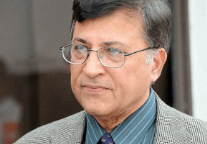
This podcast episode features an interview discussing Abdul Qadeer Khan’s role in Pakistan’s nuclear program. The interviewee details Khan’s acquisition of centrifuge technology, his collaboration with Pakistani officials, and the subsequent establishment of a global network to procure materials. The conversation also explores the geopolitical implications of Pakistan’s nuclear capabilities, the controversies surrounding Khan’s actions, and the interviewee’s personal opposition to nuclear weapons. The interviewee also shares personal anecdotes and correspondence with Khan. Finally, the discussion touches upon the lasting legacy and impact of Khan’s work on Pakistan’s national identity and international relations.
Pakistan’s Nuclear Program: A Study Guide
Quiz
Instructions: Answer the following questions in 2-3 sentences each.
- What was A.Q. Khan’s academic background, and why is it significant to understanding his role in Pakistan’s nuclear program?
- What was the primary method used by Pakistan to enrich uranium for its nuclear weapons, and how did A.Q. Khan acquire the technology for it?
- What role did China play in helping Pakistan develop its nuclear weapons program, and what did they specifically provide?
- What was the Khan network, and how did it operate?
- Why did A.Q. Khan’s actions lead to scrutiny and house arrest, and what was his official explanation for those actions?
- What is the significance of the 1971 separation of East Pakistan in the context of the nuclear program, according to the source?
- How was the uranium enrichment program connected to the Uranium Enrichment Corporation in the Netherlands?
- What was Project 706 and what was the system of secrecy employed?
- What was A.Q. Khan’s relationship to the Pakistani Atomic Energy Commission (PAEC)?
- What were the circumstances surrounding the end of US pressure on Pakistan’s nuclear weapons program?
Quiz Answer Key
- A.Q. Khan had a PhD in metallurgy, not nuclear physics or nuclear science. This is significant because his expertise was in high-tensile strength steels, crucial for centrifuge technology, not the theoretical science of nuclear fission.
- Pakistan used centrifuge technology to enrich uranium. A.Q. Khan allegedly stole the designs and supplier lists for this technology from the Uranium Enrichment Corporation in the Netherlands, where he worked.
- China provided Pakistan with the actual design for a nuclear bomb. They also supplied crucial technology, including uranium hexafluoride gas production and various electronic components.
- The Khan network was a global network of underground operatives that procured necessary parts for Pakistan’s nuclear program, circumventing international regulations. It was also a commercial operation that sold nuclear technology to other nations.
- A.Q. Khan was implicated in selling nuclear technology to various countries, leading to international pressure on Pakistan. He was then placed under house arrest after a televised apology, in which he admitted to his involvement in the nuclear proliferation.
- According to the source, the 1971 separation of East Pakistan (now Bangladesh) fueled a desire for revenge, with some in Pakistan wanting to use nuclear weapons to attack India. This event is cited as a major reason why Pakistan prioritized development of its nuclear program.
- The Uranium Enrichment Corporation in the Netherlands was where A.Q. Khan worked, and allegedly stole designs. The secrets included the plans and specifications for centrifuge technology which he translated with his wife.
- Project 706 was a code name for the highly secretive nuclear development program. It was kept tightly controlled and compartmentalized in order to prevent information from being leaked.
- The Pakistani Atomic Energy Commission insists that all the crucial work in making Pakistan’s bomb was carried out under its supervision. A.Q. Khan and his KRL were only responsible for uranium enrichment, whereas PAEC handled other key components.
- The US significantly reduced pressure on Pakistan due to the Soviet invasion of Afghanistan in 1979, when Pakistan’s role in the fight against the Soviets was prioritized over its nuclear program. After the Soviet defeat, and prior to 9/11, there were renewed pressures and sanctions. After 9/11, renewed focus on the war on terror brought Pakistan back as an ally.
Essay Questions
Instructions: Answer the following essay questions thoroughly, referencing specific examples from the provided text.
- Analyze the role of A.Q. Khan in Pakistan’s nuclear program. Was he a hero or a villain? Justify your perspective.
- Compare and contrast the perspectives of the Pakistani government (through the Atomic Energy Commission) and A.Q. Khan’s KRL regarding their contributions to the nuclear program. How did these competing claims impact the public perception of A.Q. Khan?
- Discuss the international politics surrounding Pakistan’s development of nuclear weapons. What actions by other nations influenced Pakistan’s actions, and how did the global geopolitical climate shape its decisions?
- How did the various nationalisms that emerged in the latter half of the 20th Century influence nuclear proliferation?
- Evaluate the argument that nuclear weapons ensure peace. How does this argument hold up in the context of the material presented, and what are the alternative perspectives on nuclear deterrence?
Glossary of Key Terms
- Centrifuge: A device that uses centrifugal force to separate substances, particularly used in this context for uranium enrichment.
- Metallurgy: The science and technology of metals, including their properties, processing, and uses. A.Q. Khan’s area of expertise was in high tensile strength steels for use in centrifuge construction.
- Uranium Enrichment: The process of increasing the concentration of uranium-235, which is needed for nuclear weapons and reactors.
- Nuclear Deterrent: A military strategy in which nuclear weapons are used to prevent attack from others by creating a credible threat of a retaliatory strike.
- KRL: Khan Research Laboratories, the organization founded by A.Q. Khan, responsible for nuclear research and development.
- PAEC: Pakistan Atomic Energy Commission, the governmental organization also involved in nuclear development.
- Khan Network: A global network established by A.Q. Khan used to procure parts and technology for Pakistan’s nuclear program, as well as for commercial proliferation to other nations.
- ECL: Exit Control List, a list of individuals in Pakistan who are restricted from leaving the country.
- Nuclear Nationalism: The belief that a nation’s nuclear weapons capability is a symbol of national strength and pride.
- Project 706: The codename for Pakistan’s secret nuclear weapons development program.
- IAEA: The International Atomic Energy Agency, a part of the UN which seeks to promote the peaceful use of atomic energy while preventing the proliferation of atomic weapons.
- Uranium Hexafluoride: A compound of uranium which is a gas at elevated temperatures, used in the uranium enrichment process.
- Marang Steels: Special, high tensile strength steels used in high speed centrifuge construction.
A.Q. Khan and Pakistan’s Nuclear Program
Okay, here is a detailed briefing document based on the provided text, focusing on the main themes, important ideas, and key facts, with relevant quotes:
Briefing Document: Analysis of “How Does It Work” Podcast on A.Q. Khan
Introduction:
This document summarizes a podcast episode focusing on the life, career, and legacy of Abdul Qadeer Khan (A.Q. Khan), the Pakistani metallurgist often considered the “father” of Pakistan’s nuclear program. The podcast explores his technical background, the acquisition of nuclear technology by Pakistan, the establishment of the Khan network, and the controversies surrounding his actions, including his involvement in nuclear proliferation.
Key Themes:
- A.Q. Khan’s Background and Expertise: The podcast emphasizes that A.Q. Khan was not a nuclear physicist but a metallurgist. His PhD was in “high tensile strength steels” crucial for centrifuge technology. “His PhD was in metallurgy, which he did in Germany, his professor ‘s name was Ralph Brab… his specialty was high tensile strength steels.” This corrects a “very common misconception” about his area of expertise.
- The Acquisition of Nuclear Technology: Khan’s role in obtaining centrifuge designs and supplier lists from his time at the Uranium Enrichment Corporation in the Netherlands is central. “It is alleged that he had stolen some things from the place where he was working in Netherlands.” The podcast highlights the importance of this information, noting “the centrifuge technology is a very difficult technology,” and emphasizes that “all this important information was brought by AQ Khan with him.” This act is presented as both necessary for Pakistan’s program and controversial due to the nature of classified information.
- Pakistan’s Nuclear Program: The podcast describes a complex situation: Pakistan sought a nuclear deterrent in response to the 1971 separation of East Pakistan (Bangladesh) and India’s nuclear ambitions. “We Pakistanis will eat grass, even go hungry, but we will have our own nuclear bomb because what happened to us in 71 happened to us so much.” It clarifies that Pakistan’s program relied on both indigenous efforts and external help and acquisitions.
- The Role of China: The podcast underscores China’s significant assistance to Pakistan. “The actual design used by Pakistan was of a Chinese bomb…China also gave us a lot more like yare yam hexa fluoride which is a gas.” This involved not only bomb designs, but also crucial components and technology for uranium enrichment. This aid is attributed to China’s strategic calculations aimed at containing India.
- The Khan Network: This international network is portrayed as essential for acquiring components needed for the nuclear program. “a big network had to be spread all over the world, in America, Canada, Europe as well as South Africa”. This network is described as involving underground operatives to procure “electronic parts, it could be inverter, relay” etc. It later became a conduit for proliferation, selling nuclear technology to countries like Iran, Libya, and North Korea.
- A.Q. Khan’s Proliferation Activities: The podcast discusses A.Q. Khan’s role in selling nuclear technology. “When the bomb was made…then other countries who wanted to make bombs started looking towards Pakistan.” This includes the sale of centrifuge designs and components. This led to his eventual downfall and house arrest.
- Internal Pakistani Dynamics: The podcast emphasizes a tension between A.Q. Khan and the Pakistan Atomic Energy Commission (PEC). “The people from Atomic Energy Commission will not agree with you on this matter. They say that the work done in 90 is ours.” It also discusses the involvement of the Pakistani military in the network. “The army in it, without the knowledge of the army nothing could move from the cut or from other PEC head quarters.”
- The US Perspective: The US was aware of Pakistan’s nuclear program, yet its actions were influenced by geopolitical considerations during the Cold War. “Ronald Reagan, who was the President of the US at that time, said let it go, let it go. It is more important for us to defeat the Soviet Union.” This led to a period of tacit acceptance, followed by a crackdown post-9/11 when concerns about proliferation and terror became paramount.
- A.Q. Khan’s Legacy: The podcast examines A.Q. Khan’s complex legacy as a national hero in Pakistan versus the image of a nuclear proliferator in the West. “I think that he promoted himself as much as he could So even today many people attribute the atom bomb to AQ Khan.” The speaker believes that his legacy is being “blurred” by history and the actions of others.
- Opposition to Nuclear Weapons: The host, a nuclear physicist, is presented as a longstanding opponent of nuclear weapons, influenced by scientists who helped create the first bomb. “I will always be and till my death I will be against the bomb, whether the bomb is of Pakistan, India, America or Israel.” He makes the case that the bomb does not provide true security to Pakistan since threats to the state are “internal”.
Most Important Ideas and Facts:
- Technical Expertise: A.Q. Khan’s specialization in metallurgy, not nuclear physics, is crucial to understand his contributions to the Pakistani program which required specialized steel for centrifuge rotors.
- Stolen Documents: A.Q. Khan’s acquisition of centrifuge designs from the Netherlands is framed as a critical step in Pakistan’s nuclear program, even though it was based on stolen classified information.
- Chinese Assistance: China was the most important external actor in assisting Pakistan’s nuclear project.
- Proliferation Network: The Khan network was a complex, international system involved in both acquiring components and later selling them, earning “millions of dollars, maybe they earned hundreds of millions of dollars.”
- Internal Divisions: There was a tension between A.Q. Khan and the Pakistani Atomic Energy Commission, with both vying for credit for the country’s nuclear development. The army also played a major, perhaps controlling role, in the network.
- American Geopolitical Calculations: The US was aware of Pakistan’s nuclear program but initially prioritized containing the Soviet Union over preventing proliferation.
- A.Q. Khan’s Apology and House Arrest: Following the revelation of his proliferation activities, A.Q. Khan was forced to apologize publicly and was placed under house arrest.
- A.Q. Khan’s Regrets: The podcast host had personal communications with A.Q. Khan, indicating his regret over the state of education and his disillusionment with the Pakistani military establishment. “if I had known that I would have to hand over these people to these people, I probably would not have made it, because he is a loose man.”
- Nuclear Nationalism: The program introduces the concept of nuclear nationalism and uses the speaker’s personal history to contrast the idea that nuclear arms contribute to national security and prosperity.
Quotes:
- “Americans knew that we were making a bomb…”
- “we had to take revenge for the father of Pakistan’s atomic bomb we will kill India with the bomb”
- “the rotor in the centrifuge rotates like that of a washing machine but the rotor rotates very fast, so the steels in it are of a very special kind. These are called Marang steels.”
- “The biggest challenge in making the first atom bomb was to understand its theory, so it had to be invented at that time because that theory did not exist.”
- “The actual design used by Pakistan was of a Chinese bomb, the one which The first Chinese test was conducted in Lap Nor, China.”
- “A.Q. Khan kept many centrifuges made in Malaysia, their parts and completed centrifuges were also kept inside that ship.”
- “Pakistan army judges a country”
- “he apologized in English… secondly this had to be shown to the world, it had to be shown to the whites…”
- “This is a prosperous nation, they are in danger from within.”
Conclusion:
The podcast provides a nuanced view of A.Q. Khan and the Pakistani nuclear program. It highlights the complex interplay of technical expertise, geopolitical maneuvering, international networks, and national ambitions. A.Q. Khan’s legacy remains controversial, representing both national pride and the dangers of nuclear proliferation. The podcast also introduces an alternative view that nuclear weapons do not provide true security. This briefing document provides a starting point for further analysis and discussion of this important topic.
Pakistan’s Nuclear Program: A.Q. Khan and the Khan Network
FAQ: Pakistan’s Nuclear Program and A.Q. Khan
- What was A.Q. Khan’s educational background and how did it relate to his role in Pakistan’s nuclear program? A.Q. Khan held a PhD in metallurgy, specializing in high tensile strength steels, not nuclear physics as is often mistakenly believed. His expertise in metallurgy proved vital in developing centrifuges for uranium enrichment, specifically relating to the materials used in the rotors that rotate at high speeds. He gained access to classified documents through his work at a Uranium Enrichment company, which he later used to help Pakistan in developing its nuclear program.
- How did A.Q. Khan acquire the initial designs and technology necessary for Pakistan’s nuclear program? A.Q. Khan worked for a Uranium Enrichment Corporation in the Netherlands and Belgium. He allegedly stole classified documents, including designs of centrifuges, and also the suppliers lists needed for key parts to build centrifuges. He then used these documents, alongside the help of his wife, to help him with translations. This information was instrumental in initiating Pakistan’s uranium enrichment program.
- What was the role of China in Pakistan’s nuclear weapons program? China provided Pakistan with the design for its nuclear bomb, specifically the design of the bomb that China first tested at Lop Nor, China. They also provided technology for processing uranium and other electronics and technologies. This close relationship made Pakistan’s nuclear program possible. China helped Pakistan acquire key technologies and materials necessary for its nuclear weapons development.
- What was the “Khan Network” and what was its purpose? The “Khan Network” was a global network established to procure materials and technologies for Pakistan’s nuclear program. This network had operatives worldwide whose jobs were to acquire specific components needed for centrifuge technology (like electronic parts, inverters, relays), because these items were not manufactured in Pakistan. It was later used by A.Q. Khan for personal profit. He began selling nuclear technology and materials to other countries like Libya, North Korea, and Iran.
- Why did Pakistan pursue nuclear weapons, and what was the primary motivation at the time? Pakistan’s primary motivation for developing nuclear weapons was to establish a nuclear deterrent against India, driven by historical events such as the 1971 separation of East Pakistan, and subsequent wars between the two countries, particularly the 1971 war, and India’s 1974 nuclear test. The aim was also to counter what was seen as a threat from India’s growing military capability and nuclear program. There was a desire to take “revenge” for the events of 1971.
- How did the international community, particularly the US, react to Pakistan’s nuclear program, and how did geopolitical events impact these reactions? Initially, the US was concerned about Pakistan’s nuclear program, but this concern was overshadowed by the Soviet invasion of Afghanistan in 1979. The US needed Pakistan’s help in countering the Soviet Union, so they turned a blind eye to Pakistan’s nuclear ambitions, and even provided them with substantial financial aid. This allowed Pakistan to continue developing its nuclear program with minimal external interference. After the Soviet defeat in Afghanistan, the US renewed its concerns, and placed sanctions on Pakistan, however after the 9/11 attacks, there was a new focus in the US on a war on terror and Pakistan once again became a US ally, and pressure surrounding their nuclear program subsided again.
- What happened to A.Q. Khan after his role in the nuclear program, and what were the accusations against him? After the exposure of the Khan Network, A.Q. Khan was placed under house arrest by the Pakistani government. He was accused of selling nuclear technology to other countries, which he admitted in a televised confession. Some sources suggest that A.Q. Khan was punished as a scapegoat, because the Pakistani military was also complicit in the proliferation of technology. It is also suggested by some that he also sold nuclear technology to India, however this is unconfirmed.
- What is the legacy of A.Q. Khan, and how do Pakistanis generally view his role in the nuclear program? A.Q. Khan is a controversial figure. While some view him as a national hero for developing Pakistan’s nuclear deterrent, others view him as a proliferator who sold sensitive nuclear technology to dangerous actors. Some Pakistanis continue to view him as a national hero, while others view his actions and motivations with more skepticism and criticism.
A.Q. Khan and the Making of Pakistan’s Bomb
Okay, here’s the timeline and cast of characters based on the provided text:
Timeline of Main Events:
- Pre-1971: Abdul Qadeer (AQ) Khan is born in Bhopal.
- 1971: East Pakistan separates from West Pakistan, becoming Bangladesh. This deeply upsets AQ Khan, fueling a desire for revenge.
- Early 1970s: AQ Khan is working in the Netherlands at UranCo (Uranium Enrichment Company). He is tasked with translating centrifuge designs from English/German to Dutch. His wife assists him.
- Mid-1970s:AQ Khan allegedly steals classified documents from UranCo related to centrifuge technology. He claims his boss permitted him to take the designs home for translation.
- A case is filed against him, but he escapes punishment by being in Pakistan at the time.
- AQ Khan procures a supplier list, along with other critical information related to centrifuge components
- He contacts the Pakistan Embassy and then reaches out to Zulfiqar Ali Bhutto, then Prime Minister of Pakistan, due to his belief Pakistan needed a nuclear deterrent.
- AQ Khan travels to Pakistan and immediately goes to the Prime Minister’s House, then the President’s House (Awan-e-Sadr).
- 1974: India conducts a nuclear test in Pokhran.
- Mid-Late 1970s:Pakistan attempts to acquire a reprocessing plant from France to produce plutonium, but this is blocked by pressure from the US.
- AQ Khan begins work on uranium enrichment in Pakistan, focusing on centrifuge technology. KUTA (Khan Research Laboratories, later KRL) is established, and becomes an active research facility after the arrival of AQ Khan.
- China provides Pakistan with the design for their first nuclear bomb which was tested in Lop Nor. They also provide other forms of technological assistance, including Yare Yam hexafluoride which is a gas created from mined and processed uranium.
- Late 1970s: The US is aware that Pakistan is working on a nuclear weapon program, but downplays it in public reports to maintain relations due to the Soviet Union’s invasion of Afghanistan.
- 1980s: Pakistan uses the network it created for the nuclear weapons program to purchase goods from around the globe with Pakistani government money, and the Pakistani military’s knowledge.
- 1990s: AQ Khan begins selling nuclear technology and materials to other countries through a global network. The army was also involved in the network, taking their share of profits.
- Around 1996, Munir Ahmad Khan shares that he was shown proof of Pakistan’s bomb development by US senators during his time as chairman of the Atomic Energy Commission.
- 1996: AQ Khan gets the speaker of the podcast, Parvez Hoodbhoy, placed on the ECL (Exit Control List) due to Hoodbhoy challenging a land grab AQ Khan was part of.
- Later 90s: AQ Khan’s popularity rises in Pakistan, and he is considered a hero to many.
- 1998: India conducts further nuclear tests. Pakistan responds with its own nuclear tests, which were carried out in Chaghi, Balochistan. It was a point of contention whether AQ Khan would be allowed to travel to the test site.
- 2001: After 9/11, there is renewed pressure on Pakistan over its nuclear program, however focus shifts to counter terrorism and America’s war in Afghanistan.
- 2003:A ship carrying centrifuge equipment en route to Libya is intercepted by the US. This exposes AQ Khan’s proliferation network.
- Under pressure from the US, President Musharraf forces AQ Khan to publicly confess to his role in nuclear proliferation on PTV.
- Post-2003: AQ Khan is placed under house arrest for the remainder of his life.
- Later Years: AQ Khan sends several letters to Parvez Hoodbhoy, expressing regret over his role in the nuclear program, and disillusionment with the Pakistani military. He also becomes concerned over the educational conditions in the country. The podcast host was placed on the Exit Control List in 1996, by AQ Khan, because of his involvement in a land grab dispute.
Cast of Characters:
- Abdul Qadeer (AQ) Khan: A Pakistani metallurgist, considered the “father” of Pakistan’s nuclear program. He worked at UranCo in the Netherlands before starting Pakistan’s uranium enrichment program. He is celebrated as a hero by some, while others view him as a nuclear proliferator. He is believed to have been disillusioned by his role as Pakistan’s bomb maker later in life, and felt he had not been honored adequately by the government. He also expressed regret over the state of the country’s educational system.
- Zulfiqar Ali Bhutto: Prime Minister of Pakistan who was contacted by AQ Khan for the development of nuclear weapons as a deterrent, specifically against India.
- Ghulam Ishaq Khan: Met with A.Q Khan when he first arrived in Pakistan with the stolen designs of centrifuges.
- Munir Ahmad Khan: Former chairman of the Pakistan Atomic Energy Commission.
- Riazuddin: Pakistani professor of physics who was tasked with locating information about nuclear technology in the Library of Congress and other American libraries.
- Ralph Brab: AQ Khan’s professor in Germany, whose specialization was high tensile strength steels.
- Ayub Khan: Pakistani president who was involved in the discussions about acquiring a nuclear reactor, and subsequent reprocessing plant from France.
- Professor Abdul Salam: Pakistani scientist who negotiated with France regarding the nuclear reactor acquisition for Pakistan.
- General Aslam Beg: Pakistani general who advocated for a unified nuclear block comprised of Afghanistan, Iran, and Pakistan.
- Parvez Hoodbhoy: Pakistani nuclear physicist and the host of the podcast, who opposed nuclear weapons. He had a complicated relationship with AQ Khan, marked by letters they exchanged in later years. Hoodbhoy and his friend also challenged AQ Khan in court.
- Benazir Bhutto: Pakistani prime minister who had allegedly planned to transfer a portion of Quaid-e-Azam University’s land to MNS.
- Abdul Hameed Nayyar: Friend of Parvez Hoodbhoy, also challenged AQ Khan in court.
- General Shoaib Ahmed: General who made a video against Parvez Hoodbhoy, accusing him of being responsible for AQ Khan’s death.
- Ronald Reagan: US President who did not sanction Pakistan for the nuclear weapons program due to the Soviet invasion of Afghanistan.
- General Pervez Musharraf: President of Pakistan who forced AQ Khan to confess to nuclear proliferation.
- David Albright: An American expert on nuclear weapons proliferation who was cited for comparing AQ Khan to Bin Laden.
- Katherine Collins & Douglas France: Authors of the book “Fallout”, who alleged that the CIA deliberately did not stop AQ Khan’s activities in the 70s in order to gather information.
- Young Ban (likely a misspelling of Young-Bong): South Korean scientist who assisted North Korea in its nuclear program.
- Muammar Gaddafi: Libyan leader who sought to develop nuclear weapons and acquired materials through the AQ Khan network.
- Philip Morrison, Victor Weiss, Cuff, Bernard Feld: Scientists and physicists who worked on the Manhattan Project, and went on to be advocates against nuclear weapons following their use on Hiroshima.
- Jawaharlal Nehru: Early Indian Prime Minister who was initially against India’s nuclear program, but later changed his mind following the 1962 Sino-Indian War.
Let me know if you have any other questions.
A.Q. Khan and Pakistan’s Nuclear Program
A.Q. Khan was a metallurgist, not a nuclear physicist, who played a significant role in Pakistan’s nuclear program [1]. He obtained his Ph.D. in metallurgy in Germany, specializing in high-tensile strength steels used in centrifuges [1, 2].
Here’s a breakdown of his role and activities:
- Acquisition of Nuclear Technology:
- Khan worked at the Uranium Enrichment Company in the Netherlands [2].
- He allegedly stole classified documents, including centrifuge designs, from his workplace [2, 3].
- His wife helped him translate the documents [2, 3].
- He took these secret documents to Pakistan and shared them with Bhutto [1, 3].
- The technology he brought was the uranium enrichment method, which was an alternative to plutonium extraction [4].
- Establishing Pakistan’s Nuclear Program:Khan contacted the Pakistan embassy, and this led to his meeting with Bhutto [3].
- He was instrumental in setting up the Kahuta Research Laboratories (KRL), which became the center of Pakistan’s uranium enrichment program [4].
- He brought a list of suppliers, including where to buy ball bearings and inverters, which are essential for centrifuge technology [3].
- Khan’s work was essential, as Pakistan did not have the capacity to manufacture the necessary components [5, 6].
- He utilized a global network to acquire parts for the program [6].
- Controversies and Accusations:
- Khan was accused of stealing nuclear secrets from his former employer [2].
- He was accused of selling nuclear technology to other countries including North Korea, Libya and Iran [6, 7].
- There were allegations of Khan selling nuclear secrets to Israel, America, and India, but this may not be true [1, 8].
- He was involved in a network that sold nuclear technology and components for personal gain [7].
- There is a claim that the Khan network was also sold to India, but this is not confirmed [7, 8].
- Relationship with the Pakistani Government and Military:
- The army was involved in Khan’s network, and they also took a cut of the profits from selling nuclear information [7].
- General Musharraf forced Khan to confess his wrongdoings on television [9].
- Khan was put under house arrest after his confession [10].
- Legacy:
- Khan was seen as a hero by many Pakistanis for his role in developing the country’s nuclear bomb [1, 11].
- Despite his popularity, his role in the bomb’s creation was minimal [9].
- There are differing views on his legacy; some view him as a national hero, while others see him as a “nuclear jihadist” [1, 12].
- He also expressed regret for making the bomb [13].
- Other PointsPakistan’s nuclear program was also supported by China, which provided designs and technology [5, 14].
- The actual design of Pakistan’s bomb was similar to a Chinese bomb [5].
- The program also involved the Pakistan Atomic Energy Commission (PAEC), which worked on other aspects of the bomb such as its fabrication and testing [14].
- The US was aware of Pakistan’s nuclear program but did not intervene due to the Soviet-Afghan war [8, 15].
- After the 9/11 attacks, pressure was put on Musharraf regarding Khan’s activities because of the fear he may sell nuclear material to terrorists [11].
Pakistan’s Nuclear Program: From A.Q. Khan to Global Impact
Pakistan’s development of the atomic bomb was a complex undertaking involving multiple factors, including technological acquisition, political motivations, and international relations [1-4].
- Motivations:A key motivation for Pakistan’s nuclear program was to seek revenge for the separation of East Pakistan in 1971 [2, 5, 6].
- The program was also fueled by the desire to match India’s nuclear capabilities, especially after India’s 1974 nuclear test [1, 5, 6].
- The sentiment was, “we will eat grass, even go hungry, but we will have our own nuclear bomb” [5].
- Key Figures:A.Q. Khan, a metallurgist, was pivotal in acquiring the technology and establishing the program [1]. He was not a nuclear scientist, but had a PhD in metallurgy [1, 2].
- Zulfiqar Ali Bhutto was the Prime Minister of Pakistan who supported the nuclear program and reached out to Khan [7].
- Munir Ahmad Khan, the chairman of the Atomic Energy Commission was also involved in the program [5].
- Riazuddin, a physics professor at Quaid-e-Azam University, was sent to the Library of Congress in the US to find nuclear know-how [3].
- Technological Aspects:Pakistan pursued the uranium enrichment method, as opposed to plutonium extraction [4].
- A.Q. Khan obtained centrifuge designs from his work at the Uranium Enrichment Company in the Netherlands [2, 7]. He allegedly stole these designs [2, 7].
- He also brought a list of suppliers for necessary components [7].
- China provided significant assistance, including the design of the bomb and technology for converting mined uranium into gas [3, 8]. The actual design of Pakistan’s bomb was similar to China’s first nuclear test [3].
- Pakistan used a global network to acquire the necessary parts [9].
- Secrecy and Development:The program was conducted with a high level of secrecy [6].
- The Kahuta Research Laboratories (KRL) became the center of Pakistan’s uranium enrichment program [4].
- The Pakistan Atomic Energy Commission (PAEC) was responsible for the fabrication of the bomb, its testing, and other aspects [9].
- The bomb was tested in Balochistan [10].
- International Reactions and ChallengesThe US was aware of Pakistan’s program, but did not intervene due to the Soviet-Afghan war [5, 11, 12].
- The US put pressure on France not to sell a reprocessing plant to Pakistan [4].
- After the 9/11 attacks, pressure was put on Musharraf regarding Khan’s activities because of the fear he may sell nuclear material to terrorists [13].
- Controversies:A.Q. Khan was accused of selling nuclear technology to other countries like North Korea, Libya, and Iran [9, 14]. There was a network through which this was accomplished [8].
- There were also allegations that he sold nuclear secrets to Israel, America, and India, though this is not confirmed [1, 11, 14].
- The Pakistani army was also involved in this network and took a cut of the profits [14].
- Post-DevelopmentAfter Pakistan tested its bomb in 1998, other countries started looking towards Pakistan for nuclear technology [9].
- Khan was forced to confess his wrongdoing on television and was put under house arrest [10, 13].
- There was a view that the bomb was meant to empower the Muslim community and countries. For example, General Aslam Beg said that Afghanistan, Iran and Pakistan should become united countries and nuclear powers [15].
- Legacy:A.Q. Khan was viewed as a hero by many in Pakistan but some consider him a “nuclear jihadist” [1, 16].
- Khan himself expressed some regret over making the bomb, especially because he felt that he was not sufficiently honored by the Pakistani state [15, 17].
- There is a view that Khan’s role in the bomb’s creation was minimal [10].
- The nuclear program was not a guarantee of peace, as seen by conflicts such as Kargil and the ongoing tensions with India [18].
- There is an ongoing debate as to whether or not the bomb has led to prosperity or stability in Pakistan [19].
Nuclear Proliferation: Causes, Methods, and Consequences
Nuclear proliferation, the spread of nuclear weapons, technology, and materials to countries that do not already possess them, is a significant concern that is discussed throughout the sources.
Here’s a breakdown of nuclear proliferation as it relates to the provided sources:
- Motivations for Proliferation:
- Revenge and Security: Pakistan’s nuclear program was partly motivated by a desire to retaliate for the loss of East Pakistan in 1971, and to match India’s nuclear capabilities [1-4]. The sentiment was, “we will eat grass, even go hungry, but we will have our own nuclear bomb” [3].
- Regional Power: Some countries sought nuclear weapons to enhance their regional power and influence [5]. For example, General Aslam Beg suggested that Afghanistan, Iran, and Pakistan should unite and become nuclear powers to counter the West [5].
- Deterrence: Some nations seek nuclear weapons as a deterrent against potential aggressors. However, the sources question whether a nuclear bomb is a guarantee of peace, with conflicts such as Kargil and ongoing tensions between India and Pakistan as an example [6, 7].
- Methods of Proliferation:
- Stealing Technology: A.Q. Khan allegedly stole centrifuge designs from his workplace in the Netherlands, which were crucial for Pakistan’s uranium enrichment program [2, 8].
- Global Networks: A.Q. Khan established a global network to acquire the necessary parts for Pakistan’s nuclear program [8-10]. This network was also used to sell nuclear technology to other countries [11].
- State Support: Some countries, like China, provided significant assistance to other nations’ nuclear programs. China gave Pakistan the design of the bomb and technology for converting mined uranium into gas [9, 12].
- Purchasing Technology: Countries like Libya attempted to purchase complete nuclear technology and components through intermediaries. [11, 12].
- Exploiting Existing Technology: India extracted plutonium from a nuclear reactor provided by Canada, which they then used for their first nuclear test [13].
- Examples of Proliferation:
- Pakistan: Developed nuclear weapons using a combination of stolen technology, a global procurement network and support from China. [2, 8, 9, 12, 13].
- India: Developed nuclear weapons through plutonium extraction and later tested a bomb [4, 13].
- North Korea: Was interested in centrifuges and also had a plutonium-based nuclear program [10]. They were successful in making bombs [11].
- Iran: Received outdated centrifuges from the Khan network but improved them [5]. They are now considered a potential nuclear power [6].
- Libya: Tried to purchase nuclear technology from the Khan network, but their efforts were thwarted [11].
- South Africa: Was mentioned as a possible location for a Khan network base, though no evidence of this was found [9, 10].
- Allegations of Proliferation to other countries: There were claims that the Khan network sold nuclear secrets to Israel, America, and India, but these remain unconfirmed [1, 11].
- Role of Key Individuals:
- A.Q. Khan: Played a central role in the proliferation of nuclear technology through his network that sold nuclear technology to countries like Libya, North Korea and Iran [11].
- Riazuddin: A physics professor who was sent to the US to find nuclear know-how for Pakistan [12].
- Munir Ahmad Khan: The chairman of the Atomic Energy Commission was also involved in the program [3].
- Consequences and Concerns:
- Increased Instability: The spread of nuclear weapons can heighten tensions and increase the risk of conflict in already volatile regions [6, 7].
- Arms Race: Proliferation can lead to regional arms races as countries seek to match the capabilities of their neighbors [1].
- Risk of Use: There is concern that the more countries that possess nuclear weapons, the higher the risk they may be used in conflict [6, 7].
- Terrorism: There is concern that nuclear material may fall into the hands of terrorists [14].
- The ineffectiveness of deterrence: The sources present the view that nuclear weapons are not a guarantee of peace, citing conflicts like Kargil and tensions between India and Pakistan [6, 7].
- International Response:
- Sanctions and Pressure: The US and other countries have used sanctions and diplomatic pressure to try to prevent nuclear proliferation [15].
- Monitoring and Intelligence: Agencies such as the CIA monitor the activities of countries that are trying to acquire nuclear weapons [15, 16].
- Interception of Shipments: The US intercepted a ship carrying nuclear materials destined for Libya, exposing the Khan network’s activities [11, 12].
- Debate Over Nuclear Weapons:
- The sources present differing views on the value and legacy of nuclear weapons, especially their role in peace and stability. One view is that the bomb is a necessity to ensure national security. Another view, expressed by a nuclear physicist, is that nuclear weapons do not ensure peace and that a nation’s greatest threats are often internal [6, 17].
In summary, the sources highlight that nuclear proliferation is driven by complex political, security and technological factors. The case of Pakistan shows how a combination of stolen technology, international networks and state support can lead to the development of nuclear weapons. The sources also indicate that the consequences of proliferation are far reaching and include increased regional instability, the potential for armed conflict and the risk of nuclear materials falling into the wrong hands.
Nuclear Nationalism in Pakistan
Nuclear nationalism, the belief that a nation’s identity, security, and prestige are tied to its possession of nuclear weapons, is a theme that is explored in the sources. Here’s a breakdown of how nuclear nationalism is portrayed:
- National Pride and Identity: The development of nuclear weapons was seen as a matter of national pride for Pakistan [1]. The sources indicate that after the separation of East Pakistan in 1971, there was a strong desire for revenge, and the nuclear bomb was seen as a way to achieve this. This sentiment is captured in the phrase, “we will eat grass, even go hungry, but we will have our own nuclear bomb” [2, 3].
- Hero Worship: A.Q. Khan was celebrated as a national hero in Pakistan, with his image appearing on posters and trucks [4, 5]. This hero worship highlights the extent to which nuclear weapons were seen as a symbol of national achievement. He was considered by some to be the “father of Pakistan’s atomic bomb” [1]. However, this was not the view of everyone [6].
- Equating Nuclear Weapons with Security: There is a strong belief that nuclear weapons are essential for a nation’s security, acting as a deterrent against potential aggressors [7]. The idea was that the bomb would give Pakistan “so much protection” [8]. This view was linked to the idea that Pakistan needed to match India’s nuclear capabilities [1]. However, this idea is challenged in the sources, with the argument that Pakistan’s greatest threats are internal [7].
- Regional Power and Influence: Nuclear weapons were also seen as a means to enhance regional power and influence. For example, General Aslam Beg’s view that Afghanistan, Iran, and Pakistan should unite and become nuclear powers indicates that nuclear weapons were seen as tools for regional dominance [9, 10]. This was seen as a way to counter the West [10].
- The Link Between Nuclear Weapons and National Status: There was a desire to be recognized on the world stage as a nuclear power. This is illustrated by A.Q. Khan’s disappointment at not being given the same status as Abdul Kalam of India (the “missile man” who became President), highlighting that a nuclear weapons program can be seen as an indicator of national greatness [9]. The fact that A.Q. Khan’s apology was delivered in English, for the benefit of a Western audience, speaks to how important it was for Pakistan to be seen as a nuclear power [11].
- Internal Opposition: Despite the prevailing view of nuclear weapons as a source of national pride, there were voices of opposition [5, 11]. The sources present the view of a nuclear physicist who was against nuclear weapons on principle, believing that they do not ensure peace and that a nation’s greatest threats are often internal [5, 7, 11]. This position directly challenges the notion that nuclear weapons are essential for a country’s security.
- Questioning the Benefits of Nuclear Weapons: The idea that nuclear weapons are a guarantee of national security or prosperity is questioned [7]. The sources point out that many prosperous nations do not have nuclear weapons and that nuclear deterrence has not prevented conflicts [7, 8]. This suggests that the view of nuclear weapons as a source of national security may be based on a myth rather than a reality [8].
- Blurred Legacy: The long-term legacy of nuclear nationalism is uncertain. It is suggested that historical narratives can be blurred over time, and the precise role of individuals, such as A.Q. Khan, may become distorted [10]. The sources suggest that, over time, the national narrative around nuclear weapons and the individuals who develop them is likely to change [5, 10].
In summary, nuclear nationalism is a complex concept that links a nation’s identity and pride to its nuclear capabilities. While some see nuclear weapons as a source of national security, pride, and regional power, others view them as a threat to global peace and stability. The case of Pakistan, as discussed in the sources, highlights these competing viewpoints, revealing that nuclear nationalism is not a universally accepted ideal.
Nuclear Proliferation and Regional Instability
Regional tensions are significantly heightened by nuclear proliferation and nuclear nationalism, as discussed in the sources. The pursuit and possession of nuclear weapons by some nations have led to increased instability, arms races, and the potential for conflict in several regions [1-4].
Here’s a breakdown of regional tensions as presented in the sources:
- India and Pakistan:
- Historical Conflict: The primary driver for Pakistan’s nuclear program was the desire to match India’s nuclear capabilities [3, 5]. This was partly motivated by the separation of East Pakistan in 1971, which led to a desire for revenge [1, 2]. The sentiment was that Pakistanis would “eat grass, even go hungry, but we will have our own nuclear bomb” [2].
- Arms Race: India’s nuclear program, which began in the 1960s, spurred Pakistan to develop its own nuclear weapons [3]. This has created a continuous arms race between the two countries [5].
- Kargil Conflict: Despite possessing nuclear weapons, Pakistan engaged in the Kargil conflict with India [6]. This highlights that nuclear deterrence is not a guarantee of peace, and tensions between the two countries remain high [4, 6].
- Internal Threats: The sources suggest that Pakistan’s biggest threats are internal and that the nuclear bomb has not protected the country from internal conflict and instability [4].
- China and India:
- Rivalry: China’s support of Pakistan’s nuclear program was partly motivated by its rivalry with India [7, 8].
- Border War: The 1962 war between China and India was a catalyst for India’s nuclear program [3].
- Iran and the West:
- Nuclear Ambitions: Iran’s pursuit of nuclear technology has led to concerns from the West, who fear that Iran may develop a nuclear weapon [4, 5].
- Potential for Conflict: The sources also discuss the possibility of conflict between Iran and other nuclear powers [4, 6].
- North and South Korea:
- High Tensions: The tensions between North and South Korea are highlighted, and the possibility of these tensions escalating due to nuclear proliferation is raised [6].
- North Korea’s Nuclear Program: North Korea’s successful development of nuclear weapons has created additional regional instability [6, 9, 10].
- The Middle East:
- Libya’s Nuclear Ambitions: Libya’s attempt to acquire nuclear technology through the Khan network further demonstrates the potential for regional instability [8, 11].
- General Aslam Beg’s Plan: General Aslam Beg’s view that Afghanistan, Iran and Pakistan should unite as nuclear powers to counter the West reveals the regional aspirations of some in the area [12].
- Other Regional Concerns:
- Fear of Nuclear Weapons falling into the wrong hands: The fear of nuclear weapons falling into the hands of terrorist groups is also a source of regional tension [4, 13].
- The Role of Nuclear Nationalism:
- Fueling Tensions: Nuclear nationalism, the belief that a nation’s identity and security are tied to its possession of nuclear weapons, fuels regional tensions, as countries seek to enhance their regional power and influence [14].
- Ineffectiveness of Nuclear Deterrence:
- Conflicts Despite Deterrence: The sources point out that nuclear deterrence has not prevented conflicts [4, 6]. The Russia-Ukraine conflict, and the Israel-Palestine conflict are cited as examples, along with the Kargil conflict between India and Pakistan [4, 6].
In summary, the sources demonstrate that nuclear proliferation and nuclear nationalism have significantly increased regional tensions. The pursuit of nuclear weapons by various nations has led to arms races, historical rivalries, and the potential for conflict. Despite the idea that nuclear weapons act as a deterrent, conflicts and tensions remain, suggesting that nuclear weapons do not guarantee peace or stability.

By Amjad Izhar
Contact: amjad.izhar@gmail.com
https://amjadizhar.blog
Affiliate Disclosure: This blog may contain affiliate links, which means I may earn a small commission if you click on the link and make a purchase. This comes at no additional cost to you. I only recommend products or services that I believe will add value to my readers. Your support helps keep this blog running and allows me to continue providing you with quality content. Thank you for your support!

Leave a comment