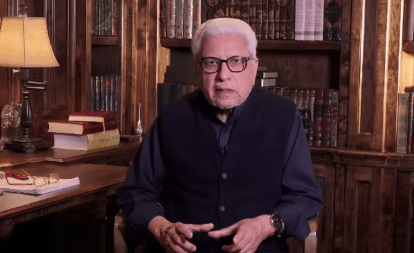
This text presents a discussion about the interpretation of a Quranic verse describing the splitting of the moon. The conversation analyzes different perspectives on whether this event was a miracle performed by the Prophet Muhammad, a sign from God unrelated to any prophetic action, or a future event described in the past tense. Scholarly opinions from various Islamic authorities are compared and contrasted, examining the textual evidence from the Quran and Hadith. The debate also considers the historical context and the possibility of corroborating scientific evidence, ultimately concluding that the event was an extraordinary sign from God, though not a miracle in the traditional sense. The discussion emphasizes careful textual analysis and the importance of considering multiple interpretations.
Shak-e-Qamar: A Deep Dive Study Guide
Quiz
Instructions: Answer the following questions in 2-3 sentences each, based on the provided text.
- In the context of the text, what is the significance of the word “ayat” when referring to the moon splitting?
- What are the two main categories of extraordinary events or “signs” from Allah, as discussed in the text?
- How does the text distinguish between a miracle performed by a prophet and a sign directly from Allah?
- According to the text, what is the primary purpose of the extraordinary signs that were revealed during the time of prophets?
- What was the specific event known as “Shak-e-Qamar” and when did the text say that it happened?
- What are some alternative interpretations of the “Shak-e-Qamar” event mentioned in the text, and why are they ultimately dismissed?
- According to the text, how did the Quranic verse about the moon splitting function to convey a warning about the Day of Judgment?
- What is the significance of the various narrations and Hadiths regarding the Shak-e-Qamar incident, as mentioned in the text?
- Why does the text argue that the Shak-e-Qamar incident was not a miracle shown on demand to the infidels?
- What explanation does the text offer for why the Shak-e-Qamar event might not be recorded in historical documents outside of Arabia?
Answer Key
- In the context of the text, “ayat” can refer to more than just a verse of the Quran; it can also refer to a sign or a wonder, either performed by a prophet as a miracle, or sent directly by Allah. The text argues that the splitting of the moon, while extraordinary, is an “ayat” in the sense of a sign, rather than just a routine natural phenomenon.
- The two main categories of extraordinary events or “signs” are: first, those that happen through the hands of a prophet (miracles performed by the prophet with Allah’s help) and second, those that are directly initiated by Allah (such as the splitting of the moon or sending down Manno Salwa).
- Miracles are performed by prophets as an act of divine power with the prophet’s hands, often involving a direct action by the prophet. Signs directly from Allah are events in which the prophet does not directly participate, which appear as extraordinary events.
- The extraordinary signs that were revealed during the time of prophets are primarily to convey a message of warning to the people (Takb), particularly regarding the coming Day of Judgment, to act as proof of the prophets’ message and divine claim, and for the protection of the prophet.
- The Shak-e-Qamar, according to the text, refers to the event where the moon split into two pieces and then rejoined. This happened around 5 years before Hijra during the 14th night of a lunar month.
- Some people interpreted the Quranic statement about the moon splitting to refer to a future event happening close to Doomsday, but this is dismissed by the text because it does not fit the context of the surrounding verses and the Hadith narrations.
- The Quranic verse about the moon splitting functioned as a sign of the coming Doomsday, a warning and reminder from God about the potential destruction of the universe. The message was that if the moon, a seemingly permanent object, could be split, then the entire universe could also be destroyed.
- The narrations and Hadiths concerning the Shak-e-Qamar incident provide detailed accounts of when, where, and how the event occurred. The multiple chains of narrators confirm that this event was considered as a factual event by many companions of the Prophet (peace be upon him).
- The text argues that the Shak-e-Qamar event was not a miracle shown on demand, because unlike other miracles, it was not requested by the infidels. It was shown as an extraordinary incident to those present, and that it was revealed by Allah, not to satisfy the Mushrikin.
- The text suggests the Shak-e-Qamar event may not be recorded outside of Arabia because it happened suddenly and there were no means of universal information dissemination at the time. The incident also would not affect celestial navigation; therefore, there would be no reason to log or record it.
Essay Questions
Instructions: Develop an essay response to the following questions, drawing upon the provided source material. Do not answer these questions here.
- Analyze the different interpretations of the “Shak-e-Qamar” incident presented in the text and explain why the text favors one over the others. How does this analysis reflect a broader approach to interpreting religious texts?
- Explore the relationship between miracles, signs, and prophethood based on the text’s discussion. How does the text explain the purpose and nature of extraordinary events within its religious framework?
- Evaluate the role of historical accounts, hadiths, and Quranic verses in understanding the significance of the “Shak-e-Qamar” event. How does the text reconcile different types of sources and resolve potential contradictions?
- Discuss the text’s arguments concerning the nature of knowledge dissemination in historical times as it applies to the Shak-e-Qamar incident.
- Considering the debates surrounding science and religion, discuss the text’s position on the possibility of scientific verification for the “Shak-e-Qamar” incident. What does the text’s approach suggest about the relationship between scientific and religious knowledge?
Glossary of Key Terms
- Ayat (آيات): In this context, “ayat” refers to both verses of the Quran and signs, wonders, or extraordinary events that signify God’s power and will.
- Shak-e-Qamar (شق القمر): The splitting of the moon, a specific extraordinary incident discussed in the text.
- Mooza (معجزہ): Miracle, an extraordinary event performed by a prophet with Allah’s help.
- Takb (تکب): The act of conveying a message of warning, often related to the day of judgment, or for proving a prophet’s claim to prophethood.
- Hadith (حدیث): Narrations of the sayings and actions of the Prophet Muhammad (peace be upon him), which form part of the Islamic tradition.
- Tafseer (تفسیر): Interpretation or commentary on the Quran, often providing context and explanation for the verses.
- Sunnah (سنت): The practices, customs and traditions of the Prophet Muhammad (peace be upon him), which serve as a model for Muslims.
- Doomsday: The Day of Judgment, the end of the world and the time when all will be judged by God.
- Hijra (هجرة): The Prophet Muhammad’s migration from Mecca to Medina, marking the start of the Islamic calendar.
- Mushrikin (مشرکین): Those who associate partners with God, polytheists, or idolaters. In this context, specifically referencing those who opposed the Prophet.
The Splitting of the Moon: A Theological Analysis
Okay, here is a detailed briefing document reviewing the main themes and important ideas from the provided text, including quotes.
Briefing Document: Analysis of “Pasted Text” on the Splitting of the Moon
Document Overview:
This document analyzes a lengthy transcribed conversation (likely from a lecture or discussion) centered around the Islamic concept of Shak-e-Qamar (the splitting of the moon). The discussion grapples with the meaning of the relevant Quranic verses, examines historical narrations, and addresses contemporary challenges to this religious concept, mainly by referencing the views of religious scholars. The discussion highlights differences in interpretation, particularly concerning whether the event was a miracle performed by the Prophet Muhammad or a sign from Allah, independent of the Prophet’s direct action.
Main Themes:
- Defining “Ayat” (Verse/Sign) in the Quran: The discussion begins by establishing the different ways the term ayat (verse or sign) is used in the Quran. The initial focus is on distinguishing between a verse as a textual passage and a sign from God in the world. They explore whether events of nature, like eclipses, or special events are ayats.
- Quote: “In the Holy Quran the word ‘aayat’ is used in which meanings and you yourself had explained that for salvation also the first question comes, the basic question is this incident of today’s destruction has been narrated by Allah in the Quran It has been termed as a verse.”
- Key Idea: The discussion moves past the idea that a verse refers only to Quranic text. It explores the concept of ayat as a sign of Allah.
- Quote: “The moon is also a verse and the sun is also a It is a verse, the coming of day and night on earth and in sky is also a verse, my existence is also a verse, all the creatures are verses…”
- Key Idea: This passage is used to illustrate that there is a difference between the ayats that are part of the natural world and the specific ayat which is the splitting of the moon.
- Miracles vs. Signs from Allah: A crucial distinction is made between miracles performed through prophets ( Moza) and extraordinary signs manifested directly by Allah. This is crucial to the analysis of the Shak-e-Qamar event.
- Quote: “One meaning of this is that on the hand of the Prophet Its origin is that a miracle was demanded from Risalat Maab Salam and Risalat Maab Salam showed this miracle…”
- Key Idea: This idea of Moza, or miracles done through the prophets, is differentiated from a sign directly from Allah.
- Quote: “The other aspect which we have seen before is that Allah himself does something extraordinary on his own behalf, that is, it does not happen through the hands of the Prophet, but through Allah.”
- Key Idea: This explanation makes clear the difference between Allah working through a prophet and Allah doing an act independent of a prophet.
- The Nature of the Shak-e-Qamar Event: The central question is whether the splitting of the moon was a miracle performed by the Prophet Muhammad as proof of his prophethood, or an extraordinary sign from Allah marking the coming of the Day of Judgement.
- Quote: “Similarly, a sign of Rasulullah It was revealed to the Tai of the angel of peace (peace be upon him) in the form of the moon bursting, that is, the sign was revealed; it was an extraordinary event from Allah Ta’ala It happened for the Tai of the Prophet Muhammad (peace be upon him) but it did not happen in the way in which the blessing of salvation is good from any prophet i.e. I did not reveal the intention of the blessing nor was it given to the Prophet, he reveals it as a gift from Allah Ta’ala himself An extraordinary thing becomes apparent.”
- Key Idea: This makes clear that this sign was given by Allah, not an act done through the Prophet, nor was it a blessing.
- Quote: “He writes, “Mo Tarjan, there are two types of arguments on this. Firstly, in his opinion, it is not possible that two pieces of a huge object like the moon break apart and the distance between them is hundreds of miles. After moving away from each other for hundreds of miles, they again joined together. That is, we try to explain how this is possible.”
- Key Idea: This addresses the seemingly impossible nature of the event and addresses the question about why people didn’t see the event globally.
- Interpretation of Quranic Text & Narrations: The discussion dives into the specific language of the Quranic verses relating to Shak-e-Qamar, examining whether the past tense implies a historical event or a future occurrence, as well as referencing hadith (narrations about the Prophet’s life) to understand the incident.
- Quote: “The question I have for you is that you always insist that the words of the Quran regarding the tongue, Jumle ki taali and Siyaq, this is the verse of the Quran in which this has been referred to, is there any denial in it that this The incident did not happen with Rasulallah but with Allah Taala or it happened far from Allah Taala, there is no proof in words for this neither of that nor of this, it has only been said there that this incident happened, i.e. the moon exploded”
- Key Idea: This passage highlights how people are using the language of the Quran to back up their opinions.
- Quote: “Many people have taken the meaning of this fable to be that the moon will burst, which means it is not that the moon has burst, rather the statement of the future has been narrated in the context of Islam, most people have taken the meaning of this fable this it is that the moon will burst but in terms of Arabic language it is possible to take this meaning i.e. this happens, it happens in Arabic language as well as in our Urdu that we call any sentence of the future as Uluberia as if it So it has happened as it happened there is good news, it is obviously a statement of the future”
- Key Idea: This passage shows a difference of opinion about whether the splitting of the moon was a past event or a future event described in the past tense.
- Addressing Skepticism & Scientific Claims: The conversation tackles modern skepticism, including lack of scientific evidence for a split moon and counter arguments from religious scholars and some scientists.
- Quote: “I have before me this from NASA’s Lunar Science Institute. There is a statement by a famous scientist, he says that no current scientific evidence reports that the moon was split into two. Similarly, many who are Muldoonians or who attack on religion say that the date of 6000 years is void of this statement that The moon had once fallen in this world…”
- Key Idea: This illustrates the conflict between modern scientific thinking and religious explanations, specifically in regard to the splitting of the moon.
- Quote: “The ground had cracked at many places in Kota, but is there any possibility of it now? If you investigate at this time, you will get to know about many things, it is possible that it may happen, so wait for it for this reason…”
- Key Idea: This explanation pushes the skeptic to not write it off completely, but instead to see that science is not the be-all end-all, and that future scientific discoveries could prove some religious claims true.
- The importance of scholarly discourse and independent thought: The discussion underscores the importance of engaging with different interpretations and coming to an understanding through reason, discourse and investigation.
- Quote: “…that if you have an elder with a different mindset or someone from your school of thought, then if his ideology appeals to you, then adopt him. We should not feel any hesitation in presenting it and considering it as our independence, this is how it is, this is the scholarly way…”
- Key Idea: This passage emphasizes the value of intellectual honesty and the willingness to consider different perspectives.
- Quote: “So what do I do, that is, what is my method, that when an issue comes before me, I will see how the people of knowledge explained it, how they saw it, then I will reveal it that when their If Aara comes forward then I will investigate about his broker.”
- Key Idea: This passage explains the method of the speaker in understanding theological issues.
Most Important Ideas/Facts:
- The Splitting of the Moon as an Extraordinary Event: The central agreement is that Shak-e-Qamar was not an ordinary astronomical event, but a unique sign from Allah.
- Distinction Between Miracle and Sign: The key point of contention is whether it was a miracle performed by the Prophet or a sign from God that happened during the Prophet’s lifetime. The speaker and referenced scholars emphasize that it was a sign from Allah, not a miracle done through the Prophet.
- The Purpose of the Sign: The event is primarily interpreted as a sign pointing to the imminence of the Day of Judgement, rather than an affirmation of the Prophet’s prophethood in the moment it happened.
- Lack of Universal Record: The text addresses why the event wasn’t recorded worldwide, arguing that awareness was localized at the time, and investigation technologies were not as sophisticated.
- Importance of Context and Narrations: The discussion highlights the importance of analyzing Quranic verses, related narrations (Hadith) and scholarly interpretations.
Conclusion:
The “Pasted Text” provides a deep dive into the theological debate surrounding the Shak-e-Qamar event. The discussion emphasizes careful analysis of religious texts, the importance of differentiating between various concepts like miracle and sign, and the need to address modern skepticism with reasoned arguments. Ultimately, the text advocates for independent thinking, informed by both traditional scholarship and scientific advancements. The event is posited as a sign from Allah, not a miracle done through the Prophet, and is an important reminder of the nearness of Doomsday.
This briefing document should provide a clear understanding of the complex topics covered in the source text.
Shaq-e-Qamar: The Splitting of the Moon
Frequently Asked Questions on the Splitting of the Moon (Shaq-e-Qamar)
- What is the incident of Shaq-e-Qamar being discussed, and why is it significant?
- The incident of Shaq-e-Qamar, or the splitting of the moon, refers to a specific event described in the Quran and Hadith where the moon is said to have split into two pieces and then rejoined. It’s significant because it is presented as a sign from Allah, an extraordinary occurrence that is debated as either a miracle shown through the Prophet or a sign directly from God signaling the approach of the Day of Judgment. It is not considered an ordinary natural event like an eclipse, but an unusual event meant to draw attention to the divine power.
- The Quran uses the word “Ayat” (verse) in different contexts. How does it relate to the Shaq-e-Qamar?
- The word “Ayat” is used in the Quran to describe various things, including verses of the Quran, natural phenomena (like the sun and moon), and extraordinary events. In the context of Shaq-e-Qamar, the Quran refers to it as a ‘verse’, but this doesn’t mean the incident itself is a verse from the Quran. Rather, it is a sign or a manifestation of God’s power that is different from ordinary signs. It’s neither a verse of the Quran nor an ordinary natural occurrence but rather a unique extraordinary sign from God. The ‘Ayat’ in this case is not meant to be taken as a verse of scripture.
- What is the difference between a ‘miracle’ performed by a Prophet and an extraordinary sign directly from Allah, as applied to Shaq-e-Qamar?
- A miracle performed by a Prophet (Mu’jiza) is usually an extraordinary act done through the Prophet’s hand or will, with God’s support, like Moses splitting the sea with his staff. These miracles are often done to support the Prophet’s message and are linked to the prophet. On the other hand, an extraordinary sign directly from Allah is an event that occurs by Allah’s will and power without the Prophet’s direct involvement. For example, Allah providing manna and quail to the Israelites. The key difference in this context is that a miracle is generally done through a prophet, while an extraordinary sign is from Allah directly, and this is the understanding of the Shaq-e-Qamar incident being discussed.
- How do scholars interpret the Quranic verses about the splitting of the moon? Is it a past event or a future event?
- While some scholars interpret the verses as referring to a future event near the Day of Judgment, the prevailing scholarly consensus in the sources given is that the verses narrate a past event that occurred during the time of the Prophet Muhammad. This incident is presented as an extraordinary sign from Allah that served to warn the people of the impending Day of Judgment and a testament to His power. The Quran uses the past tense, and the arguments based on Arabic language and the consistency of other verses indicate that it is indeed a past event.
- Why do some scholars insist that this incident of the moon splitting is not a miracle done by the Prophet but is rather a sign from Allah?
- The primary reasoning for this distinction is that there is no Quranic text or evidence that states that the prophet had anything to do with causing this to happen. The Quran typically details the miracles of other prophets very differently and this is not the case here. The Quranic text presents the splitting of the moon as a sign from Allah. Some companions who witnessed it and then spoke of it did not say that it was done through the prophet. It is seen as a sign of Allah’s power in order to underscore the nearness of the Day of Judgement. The purpose of these signs is that they are meant to complete Allah’s argument to the people, not as a proof of the Prophet’s Prophethood.
- What was the purpose behind the incident of Shaq-e-Qamar, according to the sources?
- The primary purpose of the incident, as interpreted from these sources, was to serve as a sign of the approaching Day of Judgment. It was a divine spectacle, not a miracle performed by the Prophet, intended to alert people to the end times. By displaying such an extraordinary event, Allah demonstrated His power over all creation, including celestial bodies like the moon, and to warn those who deny the Day of Judgement.
- Was the Shaq-e-Qamar witnessed globally, and what about its absence in other historical records?
- The text acknowledges that the event was likely not witnessed globally. It happened suddenly, not like an eclipse where people would anticipate it and be looking at the sky. It is said to have happened at night in Arabia, and there was no real time way of relaying this to others far away in the world. The sources also acknowledge the limitations in communication and astronomical observation at the time. Therefore, it is not surprising that the incident is not widely documented in historical records outside of the regions that could see the moon at that particular time, and it is not a requirement for the sign to have had global impact for it to have been important.
- Is the lack of scientific evidence, like geological evidence from the moon, a reason to deny the Shaq-e-Qamar incident?
- The absence of current scientific evidence is not seen as a reason to deny the event. The source highlights that this event occurred as a divine sign that was not subject to common scientific laws. Also, it states that scientific knowledge and investigation methods are much more advanced now than in the past. The sign of Allah was meant for the specific people of that time, and any future scientific confirmations are independent. The text emphasizes the importance of accepting the Quranic account and narratives from trustworthy companions, and to remain patient for science to perhaps catch up in the future. It is a matter of belief, rather than of science.
The Splitting of the Moon: A Historical and Theological Examination
Okay, here’s the timeline and cast of characters based on the provided text:
Timeline of Main Events:
- Pre-Islamic Arabia: The text establishes a context in which people are living and experiencing regular astronomical events like moon and solar eclipses.
- 5 Years Before Hijra (Approx. 617 AD): The central event of the text, the “Shak-e-Qamar” (splitting of the moon) occurs. This happens on the 14th night of the lunar month. The moon is seen to split into two pieces, with each piece appearing on either side of a mountain. The pieces then quickly rejoin.
- During the Lifetime of the Prophet Muhammad: The Prophet is present in Mina at the time the moon split and calls the people to witness it.
- Immediate Aftermath of the Moon Splitting: Some infidels (specifically referred to as the “Mushrikin”) claim the event was a magic trick performed by Prophet Muhammad. Others disagree that this could have been a trick performed on everyone and begin asking outsiders if they had seen it. Those who had seen it confirm the incident.
- Over Time: Various interpretations of the event emerge. Some consider it a miracle performed by the Prophet, while others consider it a sign from Allah, a precursor to the Day of Judgment. Some interpretations suggest it will happen in the future.
- Later Islamic Scholarship: Scholars like Ustad Imam and Maulana Syed Abla Sahib discuss the event in their commentaries on the Quran.
- Modern Times: The debate continues, with some modern, educated minds questioning the event’s historical accuracy due to the lack of scientific evidence. Scientific statements have been made claiming no evidence exists the moon has ever split.
Cast of Characters:
- Prophet Muhammad (Risalat Maab Salam): The central figure around whom the Shak-e-Qamar event occurs. He calls people to witness the splitting of the moon. He is not cited as having any hand in the event itself.
- Syedna Musa (Moses): Referenced as an example of a prophet who performed miracles through Allah’s power, like splitting the sea, which is compared to the Shak-e-Qamar in its status as an extraordinary occurrence.
- Syedna Masih (Jesus): Referenced as an example of a prophet who performed miracles through Allah’s power, like raising the dead and being born without a father, these events are compared to the Shak-e-Qamar in its status as an extraordinary occurrence.
- Ustad Imam: A scholar whose commentary on the Quran, “Tadhab Quran” is cited. He interprets the Shak-e-Qamar as a sign of punishment and a warning about the coming Day of Judgment. He is said to believe that Allah reveals signs to warn the people of doomsday and to reveal the true nature of the Prophet’s message.
- Maulana Syed Abla Sahib: A scholar who has written the commentary “Tafheem ul Quran”, where he interprets the Shak-e-Qamar as a sign of the approaching doomsday, using Quranic text and narrations. He also speaks of the event being a demonstration that the universe is not indestructible.
- Hazrat Ali: A companion of the Prophet mentioned as one of the people who witnessed and narrated the Shak-e-Qamar event.
- Hazrat Abdullah bin Masood: A companion of the Prophet mentioned as one of the people who witnessed and narrated the Shak-e-Qamar event.
- Hazrat Abdullah bin Abbas: A companion of the Prophet mentioned as a narrator of the Shak-e-Qamar event though it is noted he could not have seen it.
- Hazrat Abdullah bin Umar: A companion of the Prophet mentioned as one of the people who witnessed and narrated the Shak-e-Qamar event.
- Hazrat Huzaifa: A companion of the Prophet mentioned as one of the people who witnessed and narrated the Shak-e-Qamar event.
- Hazrat Anas bin Malik: A companion of the Prophet mentioned as a narrator of the Shak-e-Qamar event, though it’s noted he was a child at the time. His version of events is also questioned due to inconsistencies within its retelling.
- Hazrat Zubair bin Matim: A companion of the Prophet mentioned as one of the people who witnessed and narrated the Shak-e-Qamar event.
- Sultan Ghaznavi: Mentioned in reference to the claim that it was written in history books at the time of his repeated attacks on India that the moon had split, as a way to show that people all over the world had observed the incident.
- Allama Alasi: The author cited as a source claiming it was written in history that when Sultan Ghaznavi was repeatedly attacking India, then there also people wrote plaques on the buildings that the moon had split into two pieces.
- Ibn Hajar: A scholar with an expertise in hadith narration who is cited as examining several versions of the Shak-e-Qamar story and finding no evidence except from Hazrat Anas bin Malik that the incident occurred at the demand of infidels.
- Abu Nayeem: A scholar cited as an author of a work who referenced a narration of Abdullah bin Abbas that says the moon splitting was a demand made by the infidels, but it is dismissed due to a lack of validity.
- Maulana Amin Hasan Ilai: Another scholar who discussed the Shak-e-Qamar event, stating that it was an event that was local.
Key Concepts and Points:
- Shak-e-Qamar (Splitting of the Moon): The central event being discussed.
- Ayat (Verse/Sign): The Quran uses the word “ayat” in multiple ways. It can mean a verse of the Quran but also a sign or miracle from Allah.
- Mu’jiza (Miracle): The text explores whether the Shak-e-Qamar was a miracle performed by the Prophet or a sign from Allah, with scholars leaning toward the latter interpretation.
- Takdhib: The message of the prophets of Allah are given to those who have disbelief in God and seek to argue against the message.
- Doomsday: A major theme related to the splitting of the moon, with many viewing it as a sign of the approaching Day of Judgment.
- Hadith: The text references hadith, which are the recorded sayings and actions of Prophet Muhammad, as a supplementary source to the Quran.
- Tafsir: The text references the tafsir, which are commentaries on the Quran.
Let me know if you have any other questions.
The Splitting of the Moon: A Sign from Allah
The sources discuss the incident of the moon splitting (Shak-e-Qamar) during the time of Prophet Muhammad, exploring its nature, purpose, and interpretations. Here’s a breakdown of the key points:
- The Incident: The incident of the moon splitting is described as an extraordinary event, not a routine occurrence like a lunar eclipse [1-3]. It’s presented as a sign from Allah, not a miracle performed by the Prophet in the traditional sense [4-8].
- The moon is said to have split into two pieces, with each piece visible on opposite sides of a hill [9]. Then the pieces rejoined quickly [9, 10].
- The Prophet, present in Mina at the time, called people to witness the event [10].
- Some people, especially disbelievers, claimed it was magic [10, 11]. They also said that the Prophet had cast a spell on them and deceived their eyes [10].
- Interpretations of the word ‘Ayat’: The word “ayat” (verse) is used in the Quran in several ways [1, 4]:
- It can refer to common signs of Allah, like the sun, moon, and creation [4].
- It can refer to events that happen according to the common law of Allah like moon and solar eclipses [2, 4].
- It can refer to extraordinary events or miracles performed by prophets [4].
- It can refer to extraordinary events done by Allah [5].
- The splitting of the moon is considered an “ayat” in the sense of an extraordinary sign from Allah, meant to signify the approaching Day of Judgment [2, 3, 7, 12, 13].
- Purpose of the Incident: The incident served as a sign of the coming Day of Judgment [3, 7, 10, 12].
- It was not intended as a miracle to prove the Prophet’s prophethood in the way that miracles are typically understood. It was not a sign performed by the Prophet but rather an event caused by Allah [6-8, 14].
- It was not a response to a specific demand or challenge by disbelievers [15].
- Miracle vs. Sign: The sources make a distinction between miracles performed by prophets and signs from Allah [5].
- Miracles are often done through the Prophet’s actions with the power of Allah [4].
- Signs from Allah are extraordinary events done directly by Allah and not through the actions of the Prophet [3, 5, 7].
- Examples of signs include the birth of Prophet Isa (Jesus) without a father, the manna and salwa sent to the Israelites, and the cloud that shaded them [5].
- The moon splitting is presented as a sign from Allah, not a miracle performed by Prophet Muhammad [3, 5-8].
- Narrations and their Analysis: The incident is narrated in the Quran and Hadith [9, 13].
- The Quran only mentions the incident as a sign [7, 10].
- The Hadith provides details about when and how it happened [9, 13].
- Some narrations, particularly from Hazrat Anas, suggest the moon split twice, but this is not accepted by most scholars as there is only one incident mentioned in the Quran [10]. The companions of the Prophet, like Hazrat Abdullah bin Masood, Hazrat Huzaifa, and Hazrat Zubair bin Matim witnessed the incident directly [9, 15].
- Some stories about the Prophet pointing at the moon and it breaking, or a piece entering his sleeve, are considered baseless [14].
- Rejection of alternative explanations: Some people have interpreted this event as one that will happen near the Day of Judgment and not as a historical event [16]. This interpretation is rejected, as the text makes more sense when the event is interpreted as a sign that occurred during the time of the Prophet [13, 17, 18].
- Global Witness: The sources address the question of whether this event was witnessed globally [19].
- It’s argued that such an incident wouldn’t necessarily be witnessed worldwide as there was no prior announcement, and it happened suddenly [20].
- There was no technology or global communication at the time to make this a widely witnessed event [20, 21].
- Reports from the Malabar region in India suggest that the event was witnessed [20].
- Also, there are those who believe it is not possible for two pieces of a huge object like the moon to break apart and then rejoin, however this belief is not well founded [19, 20].
- Scientific Perspective: Modern scientific evidence does not support the claim that the moon was split [21].
- The sources argue that scientific verification is not necessary to prove the Quranic accounts [22].
- The lack of current scientific evidence does not invalidate the event as described in the Quran, rather it is a test of faith [22, 23].
In conclusion, the sources present the moon-splitting incident as a significant sign from Allah, an extraordinary event that occurred during the time of Prophet Muhammad, meant to signify the nearing of the Day of Judgment, and that this event does not have to be scientifically validated to be true [8].
Quranic Interpretation of the Moon Splitting
The sources discuss Quranic interpretation in the context of the moon splitting incident (Shak-e-Qamar), particularly focusing on the word “ayat” (verse) and how different scholars have approached the text [1].
Here’s a breakdown of the key aspects of Quranic interpretation discussed in the sources:
- Meanings of “Ayat”: The word “ayat” has multiple meanings in the Quran [1, 2]:
- Common signs of Allah: This includes natural phenomena like the sun, moon, and the creation of day and night, which are all considered signs of Allah [2].
- Events according to common law: This includes things like moon and solar eclipses which occur repeatedly according to the laws of nature [2].
- Miracles performed by prophets: These are extraordinary events done through the prophet by the power of Allah [2].
- Extraordinary events done by Allah: These are unusual occurrences that are not performed by a prophet [2, 3].
- In the context of the moon splitting, “ayat” refers to an extraordinary sign from Allah, not a routine occurrence or a miracle performed by the Prophet [1].
- The Incident as an “Ayat”: The splitting of the moon is considered an “ayat” in the sense of an extraordinary sign from Allah, meant to signify the approaching Day of Judgment [4, 5]. It is not a sign of the Prophet’s power but rather a sign of Allah’s power [3].
- This interpretation distinguishes it from miracles, which are typically performed by prophets with the power of Allah [2, 3].
- Contextual Analysis: The sources emphasize the importance of understanding the Quranic text within its context [6].
- The incident is presented in the Quran as a statement, not as a detailed account of a miracle performed by the Prophet [7, 8].
- The Quran does not explicitly link the moon splitting to the Prophet in the way it links miracles to other prophets like Moses and Jesus [7].
- The verses following the mention of the moon splitting refer to the Day of Judgment [9].
- Rejection of Alternative Interpretations: Some scholars have interpreted the verses about the moon splitting as a future event related to the Day of Judgment, using the past tense to describe a future event. However, this interpretation is rejected by the scholars who are referenced in the text [10, 11].
- The sources argue that the Quran’s language and the context of the verses support the interpretation that it was a past event that occurred during the Prophet’s time [11].
- Interpreting it as a future event makes the subsequent verses seem out of place [11, 12].
- The Role of Hadith: While the Quran mentions the moon splitting, Hadith provides additional details, like when and how it happened [13, 14].
- The Hadith narratives of the incident are considered to be in agreement with the Quran’s mention of the incident [13].
- The Hadith provides information regarding the time of the incident, that it was witnessed by the Prophet and other companions, and that the pieces of the moon rejoined [14, 15].
- Scholarly Differences: The sources highlight the differences in opinion among scholars regarding the nature and purpose of the moon splitting [16, 17].
- Some scholars believe that the moon splitting was a miracle performed by the Prophet in response to a demand from disbelievers. This view is considered less valid as it is based primarily on the narration of only one companion of the Prophet [16, 17].
- The dominant opinion, supported by the Quran and multiple narrations, is that it was an extraordinary sign from Allah and not a miracle of the Prophet [17].
- Importance of Scholarly Analysis: The sources emphasize the importance of relying on the interpretations of learned scholars, while also encouraging independent thought and analysis [18].
- The approach should be to consider different scholarly viewpoints, analyze their reasoning, and then form an opinion [18].
- It is important to look at the Quranic text, the context, and the supporting Hadith narratives in making the most accurate interpretation [18, 19].
In summary, the Quranic interpretation of the moon splitting incident involves understanding the word “ayat” in its various contexts, analyzing the Quranic verses within their context, and considering the relevant Hadith narratives. The sources emphasize that the incident is an extraordinary sign from Allah, not a miracle performed by the Prophet, and that its purpose is to indicate the approaching Day of Judgment.
Prophetic Miracles vs. Signs from Allah: The Case of the Split Moon
The sources discuss the concept of prophetic miracles in the context of the moon splitting incident (Shak-e-Qamar), making a clear distinction between miracles performed by prophets and signs from Allah [1-3]. Here’s a breakdown of how the sources address prophetic miracles:
- Definition of a Prophetic Miracle:A prophetic miracle, often referred to as “Moza,” is an extraordinary event or act that occurs through the hands of a prophet by the power of Allah [2].
- These miracles are usually given to prophets to protect them, to be used as an argument for their message, or to demonstrate their connection with Allah [2].
- They serve as a means of confirming the prophet’s claim to prophethood, and they are often performed in response to a challenge or demand from disbelievers [4].
- Examples of Prophetic Miracles:The sources mention the miracles of Prophet Musa (Moses), such as his staff turning into a snake and the parting of the sea [2].
- The sources also reference the miracles of Prophet Isa (Jesus), such as bringing the dead back to life [2].
- These miracles were performed by the prophets with the power of Allah, and they were a clear demonstration of their unique status [2].
- The Moon Splitting is Not a Prophetic Miracle:The sources emphasize that the moon splitting (Shak-e-Qamar) is not a prophetic miracle in the traditional sense [1, 4].
- It was not performed by Prophet Muhammad through his actions or as a response to a demand [5].
- Instead, it was an extraordinary event that was created directly by Allah [3].
- The moon splitting is presented as a sign from Allah to confirm the truth of the Prophet’s message and the nearness of the Day of Judgment, not as a miracle that establishes his prophethood [6, 7].
- Distinction between Miracles and Signs:The sources make a clear distinction between miracles (performed by prophets) and signs (done directly by Allah) [2, 3].
- Miracles are typically associated with a prophet’s actions and are often a direct response to a specific situation or challenge [2, 4]. They are also given for the protection of the prophet [2].
- Signs, on the other hand, are extraordinary events that occur through the direct will and action of Allah [3, 4]. These signs are not performed by the Prophet [3].
- The moon splitting is categorized as a sign of Allah, an extraordinary event not caused by the Prophet or through his actions [2, 4, 6].
- Other Signs from Allah:The sources list other signs from Allah that are not considered miracles, such as the birth of Prophet Isa without a father, the manna and salwa sent to the Israelites, and the clouds that shaded them [3].
- These signs are extraordinary events that happen directly through Allah and not through the hands of the prophet [3].
- Rejection of Certain Narratives:The sources reject narratives that claim the Prophet pointed at the moon, causing it to split, or that a piece of the moon entered his sleeve [7, 8]. These accounts are considered baseless and have no reliable evidence [8].
- These narratives are also rejected because they portray the moon splitting as a miracle performed by the Prophet, which is not how the incident is presented in the Quran [6].
- Purpose of the Moon Splitting Event:The moon splitting event was intended to be a sign of the nearing Day of Judgment [6, 9].
- It was not a miracle given to Prophet Muhammad in response to a challenge from the disbelievers to prove his prophethood [5].
- Quranic PerspectiveThe Quran presents the moon splitting as a sign of the Day of Judgement, and does not describe the event as a miracle of the Prophet [6].
- The Quran doesn’t mention any action of the prophet in connection with the splitting of the moon [6].
- It mentions the miracles of other prophets with a specific structure [6].
In summary, the sources clarify that the moon splitting was not a miracle performed by Prophet Muhammad, but rather a sign from Allah. The distinction between miracles and signs is important, as miracles are performed by prophets through the power of God, while signs are extraordinary events that happen directly from Allah. The moon splitting was meant to be a sign of the nearing Day of Judgment and not a proof of the Prophet’s prophethood [6, 7].
The Moon Splitting Incident: Science, Faith, and History
The sources discuss scientific evidence related to the moon splitting incident (Shak-e-Qamar) and address arguments from both those who seek scientific confirmation and those who use the lack of scientific evidence to deny the event [1]. Here’s a breakdown of the scientific evidence and related arguments:
- Lack of Current Scientific Evidence: The sources acknowledge that there is no current scientific evidence that confirms the moon was split into two pieces and then rejoined [1]. A statement from a scientist at NASA’s Lunar Science Institute is mentioned, stating that there is no scientific report that supports the moon splitting [1].
- This lack of evidence is used by some to question the validity of the event, claiming it is not possible based on current scientific knowledge [1].
- Arguments Against Scientific Impossibility: The sources present arguments against dismissing the event purely based on a lack of scientific evidence [1, 2].
- It is stated that in the past, such an event may have been considered impossible based on the scientific knowledge of the time, but that with modern understanding of celestial bodies, such an event is not impossible [3].
- The possibility of a celestial body bursting apart and then reforming is discussed. The argument is made that the moon, with its molten core, could have had an internal explosion that caused the split [3].
- The Nature of the Event: The sources emphasize that the moon splitting was an extraordinary event and a sign from Allah, not a regular, observable phenomenon [1, 4].
- It was not an event that occurred due to natural laws but by the will of Allah [5].
- The event was also brief and occurred in a specific area (Arabia and its eastern part) when the moon had risen [3]. Because the event was so brief, it is unlikely that it was witnessed all over the world [3].
- It was not an explosion that would have drawn the world’s attention, nor was there any prior announcement of the event [3].
- Limitations of Historical Observation: The sources point out that in the past, astronomical observation and record-keeping were limited [2, 3].
- There was no expectation for the entire world to observe the event at that moment [3].
- News and investigations were confined to certain regions in the past, unlike today, when they are immediately global [2].
- The lack of global historical records of the event is not proof of it not happening, since the methods of investigation and record-keeping were not as advanced as they are now [1, 3].
- Historical Accounts: Despite the lack of scientific evidence, the sources emphasize that the event was narrated in historical records, specifically in the Quran, and in Hadith by numerous companions of the Prophet [6, 7].
- The narrations came from reliable and learned people at the time, including companions of the Prophet who were present during the event [2, 7].
- Analogy to Other Historical Events:
- The sources provide an analogy to the 1935 earthquake where the ground cracked, stating that even though evidence of the event may not be visible now, that doesn’t negate the fact that it occurred [1].
- The sources also discuss the theory that land masses were once connected, and that now, through scientific investigation, evidence of those theories can be found [2].
- The Role of Faith: The sources suggest that the event should be accepted based on faith and that one should not rely solely on scientific proof [2].
- If science hasn’t confirmed it, it is a temporary limitation of science, which may or may not be resolved later [2].
- The Quran and Hadith are the primary evidence for the event, and if scientific investigation confirms those accounts, it will further validate the event [2].
- Future Discoveries: The sources suggest the possibility that future scientific exploration may find evidence related to the moon splitting [2].
- The sources posit that future scientific investigations of the moon may reveal that the moon was once in two pieces.
- This future confirmation would strengthen the existing historical evidence of the event from the Quran and Hadith.
In summary, the sources acknowledge the lack of current scientific evidence for the moon splitting incident, but they argue that the absence of scientific proof is not a reason to deny it. They highlight that the event was extraordinary and that it happened by the will of Allah, that historical observation was limited, and that the event was recorded in religious texts and narratives. The sources emphasize the importance of faith and suggest that future scientific discoveries may eventually align with the historical record of the event.
The Moon Splitting Incident: A Scholarly Debate
The sources present a detailed scholarly debate surrounding the moon splitting incident (Shak-e-Qamar), with different interpretations of the event’s nature, purpose, and implications. Here’s an overview of the key points of contention among scholars:
- Nature of the Event:
- Miracle vs. Sign: One of the primary points of debate is whether the moon splitting was a miracle performed by the Prophet Muhammad or a sign from Allah [1-3].
- Some scholars consider it a miracle, citing traditions where the Prophet points at the moon and it splits [4, 5]. They believe it was a demonstration of his prophethood [4].
- Others argue it was a sign from Allah, an extraordinary event not caused by the Prophet but by the will of Allah, meant as a sign of the approaching Day of Judgment [3, 6].
- Extraordinary Event: There’s agreement that the moon splitting was not an ordinary event like a lunar eclipse or earthquake [5-7]. It was unique and outside the normal course of nature [3, 5, 6, 8].
- Purpose of the Event:
- Sign of the Doomsday: Most scholars agree that the primary purpose was to serve as a sign of the nearing Day of Judgment [5, 6, 9, 10]. This was to warn people of the impending end of the world [6-8, 11].
- Not a Proof of Prophethood: Many scholars argue that the event was not a miracle given to the Prophet to prove his prophethood, and it was not done in response to a demand from disbelievers [4, 10]. They state that the Quran itself does not present it as a miracle of the Prophet [12].
- Instead, it was a sign from Allah directly, not through the actions of the Prophet [3].
- Interpretation of Quranic Verses:
- Past Tense: Some scholars interpret the Quranic verses describing the event as a past incident that occurred during the time of the Prophet [9, 13, 14]. Others see it as a description of an event that will occur closer to the Day of Judgment, using the past tense to describe the future with certainty [14, 15].
- Redundant Meaning: Scholars argue that if the moon splitting is interpreted as a future event, then the verses of the Quran that follow become redundant, as they refer to a sign that was shown to the people [16].
- Hadith and Narrations:
- Multiple Narrations: The sources acknowledge various narrations of the incident in Hadith, with some variations. Some narrations say the moon split twice, but others dispute that it happened only once [11].
- Reliability of Narrations: Some scholars reject narrations that claim the Prophet pointed at the moon, causing it to split, or that a piece of the moon entered his sleeve, considering them to be baseless [4]. These narratives have no reliable evidence and are not consistent with how the event is described in the Quran [4, 10].
- Consensus on the Event: The sources mention that there is consensus (Ijma) among companions of the Prophet about the event of the moon splitting, and this is narrated in the Hadith by multiple sources [17]. There are differences in the details of how it happened, but not that it happened [14, 17].
- Companions’ Testimony: The sources cite companions of the Prophet, such as Hazrat Abdullah bin Masood, Hazrat Huzaifa, and Hazrat Zubair bin Matim, as those who were present at the time of the event and testified to it [10, 17].
- Scholarly Opinions:
- Ustad Imam: Ustad Imam views the moon splitting as a sign of punishment and the arrival of the hour of punishment, a warning to the people [6-8]. He emphasizes that such signs are special and reveal the true nature of the Prophet’s message [18].
- Maulana Syed Abla Sahib: This scholar considers the moon splitting a sign of the nearing doomsday, and states that the event was real, not a talisman or an incident close to doomsday [6, 9]. He also emphasizes that it is supported by the Quran and Hadith [9]. He also clarifies that the event was not unique to Mecca, and that people in the east also witnessed the event [19].
- Rejection of Miracle Narrative: Scholars like Maulana Syed Abla Sahib argue against the interpretation of the moon splitting as a miracle given to the Prophet in response to disbelievers. They claim the Quran and other reliable narrations support this view [10, 12]. They also reject the narrative where the Prophet pointed at the moon and it split into two parts, stating it has no basis [4, 5].
- Modern Scholarly Perspectives:
- Addressing Modern Minds: Some scholars acknowledge that modern, educated minds struggle with this event as there isn’t scientific evidence [20]. They try to reconcile the religious text with the scientific view, often by explaining the limitations of science in investigating historical events [20].
- Scientific Possibility: Some modern scholars also argue that with today’s scientific knowledge, the moon splitting is not impossible [19, 21]. They argue that the moon could have broken due to some kind of internal event, and then rejoined because of its gravity [19].
- Methodological Approach:
- Emphasis on Quran and Hadith: Scholars emphasize the importance of understanding the Quranic verses and Hadith narratives in their original context to interpret the moon splitting [1, 12, 13]. They rely on the consensus (Ijma) of the companions of the Prophet on the occurrence of the event.
- Analytical Approach: Scholars analyze the text, language, and context of the verses and narratives, including the syntax, to come to a comprehensive understanding of the event [14, 16].
In summary, the scholarly debate around the moon splitting incident involves a complex interpretation of religious texts, historical narratives, and scientific understanding. Scholars agree that the event was extraordinary, but they differ on whether it was a miracle performed by the Prophet, or a sign directly from Allah. They all agree it is a sign of the nearing Doomsday. They also disagree on how to interpret the Quran and Hadith, and how to address the lack of scientific evidence. The debate continues, with scholars striving to provide a holistic understanding of the event that is consistent with both religious and intellectual frameworks.

By Amjad Izhar
Contact: amjad.izhar@gmail.com
https://amjadizhar.blog
Affiliate Disclosure: This blog may contain affiliate links, which means I may earn a small commission if you click on the link and make a purchase. This comes at no additional cost to you. I only recommend products or services that I believe will add value to my readers. Your support helps keep this blog running and allows me to continue providing you with quality content. Thank you for your support!

Leave a comment