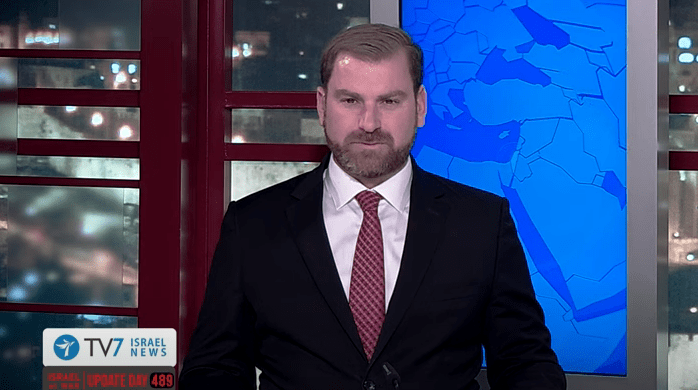
TV7 Israel, a news program, discusses President Trump’s proposed plan to relocate Gazans, sparking reactions from various nations and experts. The plan’s feasibility and legality are debated, alongside concerns about its impact on regional stability and the ongoing hostage situation. The program also examines Israel’s military goals in Gaza, Turkey’s increased involvement in Syria, and the potential threat from Iran’s nuclear program. Military and political analysts offer their perspectives, highlighting the complexities and uncertainties surrounding the situation. The program concludes emphasizing the ongoing fluidity of the situation in the Middle East.
Middle East Conflict & Geopolitics Study Guide
Quiz
Instructions: Answer the following questions in 2-3 sentences each.
- According to Dr. Rafael Baki, what is the significance of President Trump’s proposal regarding the Palestinian territories, regardless of its visibility?
- What are some criticisms leveled against Trump’s plan, as mentioned by Amir Oren?
- What evidence does Amir Oren present to suggest that Trump’s Gaza proposal was not well-planned?
- What are the three main goals of Israel’s military actions in Gaza, according to General Danan Gavish?
- What is President Trump’s stated approach to Iran’s nuclear ambitions, as explained by Dr. Baraki?
- How does Dr. Baraki characterize the situation in Syria, and what is his attitude toward Turkish involvement?
- What major concerns does Israel have regarding the situation in Syria, as outlined by General Gavish?
- What was a key point about Palestinian refugees that Dr. Baki wanted to expose with Trump’s plan?
- According to the text, what is a factor that makes the idea of moving the population of Gaza to Egypt problematic for the Egyptian government?
- What is the difference between Israel and Greece’s possible reactions to threats in the air, according to General Gavish?
Quiz Answer Key
- Dr. Baki believes the significance lies in the disruptive nature of the idea, which forces other nations to take a position and exposes the hypocrisy of those talking about Palestinian refugees. He also states that it is time to tell the truth about the situation, and that there is a sell-by date on the idea of a Palestinian state consisting of the West Bank and Gaza.
- Amir Oren mentions that some criticize Trump’s plan as not aligned with international law, using terms like “ethnic cleansing” or “forced displacement,” and being anti-American and anti-Israeli. The plan is also criticized as ill conceived and disruptive.
- Oren points to the lack of any mention of the Gaza proposal on the White House website, while other policy topics are covered in detail. He asserts this lack of official documentation is evidence that the proposal was hatched very recently.
- General Gavish lists three goals: destroying Hamas’s military capabilities and preventing their return to power, securing the return of all hostages, and preventing the Gaza Strip from posing a future threat to Israel.
- Dr. Baraki says President Trump prefers a diplomatic solution to Iran’s nuclear ambitions but has also put back the maximum pressure strategy to squeeze Iran’s economy, and if a diplomatic solution fails, military options are still on the table.
- Dr. Baraki views the situation in Syria as fluid but says Turkey is not a superpower like Russia. He would prefer Turkish involvement in northern Syria to Russian support of the existing regime.
- General Gavish says Israel’s main concerns in Syria are to prevent Hezbollah from being rearmed through Syria and that Israel needs the ability to act in Syrian territory if needed to defend against threats there.
- Dr. Baki contends that some who talk about poor Palestinian refugees often neglect to recognize that refugees by definition do not have roots in the land where they reside, while the Palestinians in Gaza are considered owners of the land.
- The text notes that Egypt has incarcerated many members of the Muslim Brotherhood. Egypt might be hesitant to take in a large influx of Palestinians from Gaza, many of whom are affiliated with the Muslim Brotherhood.
- General Gavish says that Israel is less restrained than Greece in confronting threats in the air. He implies that Israel is more willing to act proactively in the face of perceived threats, rather than waiting for them to become a clear and present danger.
Essay Questions
Instructions: Respond to the following questions in a well-organized essay format, utilizing information from the provided source material. Do not use outside resources.
- Analyze the differing perspectives on President Trump’s Gaza proposal as presented by Dr. Rafael Baki and Amir Oren, and evaluate the strengths and weaknesses of their arguments.
- Discuss the importance of both short-term and long-term goals of military actions, using the Israeli perspective in Gaza as an example.
- Examine the challenges and considerations surrounding the potential displacement of the population of Gaza, and how they are connected to both political and human rights concerns.
- Evaluate the geopolitical implications of Turkish involvement in Syria, particularly in relation to Israeli and regional security concerns, as outlined in the provided source material.
- Discuss how the various elements of the geopolitical environment of the Middle East are interconnected, using Iran, Turkey, and the Gaza Strip as examples of how these elements influence each other.
Glossary of Key Terms
- Hamas: A Palestinian Sunni-Islamist fundamentalist organization, considered a terrorist group by many, that currently controls the Gaza Strip.
- West Bank: A landlocked territory near the Mediterranean coast of Western Asia, bordering Jordan to the east and the Green Line separating it from Israel.
- Gaza Strip: A self-governing Palestinian territory on the eastern coast of the Mediterranean Sea, bordering Egypt on the southwest and Israel to the east.
- Philadelphia Corridor: A narrow strip of land along the border between the Gaza Strip and Egypt.
- Muslim Brotherhood: A transnational Sunni Islamist organization known for its political activities, whose members have been incarcerated in many countries.
- Hezbollah: A Shi’a Islamist militant group and political party based in Lebanon.
- YPG (People’s Protection Units): A mainly Kurdish militia in Syria, considered a terrorist group by Turkey.
- PKK (Kurdistan Workers’ Party): A Kurdish militant group seeking an independent Kurdistan in Turkey, Syria, Iraq and Iran, considered a terrorist group by Turkey.
- Snapback Sanctions: Refers to the reinstatement of international sanctions against Iran, notably related to its nuclear program, as agreed in UN resolutions.
- Maximum Pressure Campaign: A strategy by the U.S. to exert economic and diplomatic pressure on Iran to modify its behavior, especially regarding its nuclear program.
- MOSSAD: The national intelligence agency of Israel, responsible for covert operations, human intelligence, and counterterrorism.
- MIT (Milli İstihbarat Teşkilatı): The national intelligence agency of Turkey.
- Ethnic Cleansing: The systematic forced removal or extermination of a targeted ethnic or religious group from a given territory.
- Forced Displacement: The involuntary or coerced movement of people from their homes, often due to conflicts, violence, or natural disasters.
Trump’s Gaza Plan: A TV7 Israel Analysis
Okay, here’s a detailed briefing document summarizing the main themes and important ideas from the provided text:
Briefing Document: Analysis of TV7 Israel at War Update
Date: October 26, 2024 (based on the text referencing “day 489 since October 7th, 2023”)
Subject: Analysis of Trump’s Proposed Gaza Plan, Regional Dynamics, and Israeli Security Concerns
Introduction: This briefing document analyzes a TV7 Israel at War update, focusing on discussions surrounding a new proposal by former U.S. President Donald Trump regarding the Gaza Strip, the broader regional implications, and Israel’s perspective on these developments. The broadcast features insights from Dr. Rafael Baki (formerly Spain’s national security advisor), Amir Oren (tv7 editor), and General Danan Gavish (commander of the Israeli Air Force task force for air missile defense). The broadcast took place in Jerusalem.
Key Themes & Ideas:
- Trump’s Gaza Plan: Disruptive but Underdeveloped
- Disruptive Nature: Trump’s proposal, though not fully detailed, is viewed as “disruptive” and aimed at changing the narrative surrounding the Palestinian-Israeli conflict. Dr. Baki states, “I think just the fact that he has presented such a disruptive idea is good enough for the rest of the world to position themselves.” He believes its merit lies in exposing “the hypocrisy of many.”
- Narrative Shift: The plan challenges the traditional view of a Palestinian state composed of the West Bank and Gaza. Dr. Baki argues, “the idea that the Palestinian state is composed by the West Bank and gasa it’s over.” He suggests considering the possibility of Palestinian relocation.
- Lack of Formal Plan: Amir Oren argues it’s not a fully developed “plan” but rather an “idea.” He cites the absence of details on the White House website as evidence. He states, “one should consider it U The Germ of an idea.” General Gavish echoes this, saying, “it is not a plan yet… there is an idea.”
- Contradictory Statements: Trump’s idea seems to evolve, with an initial suggestion of a U.S. role evolving to Israel handing over Gaza to the U.S. without troops. According to Oren, “at the conclusion of the fighting… Israel will give over Gaza to the United States and no uh American troops would be needed.”
- Practical Concerns: There is no clarity on what would happen to Gazans, if they are willing to leave, who would receive them and what rights they would have. Amir Oren asks, “what is going to happen on the border between um uh the Gaza Strip in Egypt the Philadelphia Corridor will Israel be asked to U contribute and get some of those uh uhans uh in Gaza what rights are they going to have no taxation without representation right.”
- Regional Reactions and Concerns
- European Opposition: The European Union is described as “violently” opposed to the proposal, considering it illegal. However, this is perceived as a positive indicator by Baki that the plan has some merit.
- Host Countries Hesitance: No potential host country for Gazan refugees has approved of the idea, and the prospect of absorbing them raises concerns for countries like Egypt (facing its own Muslim Brotherhood challenges) and Jordan. The Jordanians are concerned about, “adding members of the Muslim Brotherhood that just won the largest share of parliament.”
- Potential for Regional Instability: The plan, if implemented, risks igniting further regional tensions by exacerbating the issues of already unstable Middle East countries.
- Israeli Perspective and Preparations
- Alignment with War Goals: General Gavish states that Trump’s idea could align with Israel’s three main war goals: destroying Hamas’ capabilities, bringing back hostages, and preventing Gaza from posing a future threat to Israel.
- Preliminary Planning: Despite a lack of formal engagement, Defense Minister Yoav Gallant has directed the IDF to begin planning for the potential “transshipment of Gazans” via air, sea, and land. This demonstrates a proactive, yet premature, approach to the possible idea.
- Hostage Crisis Neglected: Oren points out that the proposal sidelines the hostage issue. Oren states, “one problem is that the issue of the hostages has been uh set aside here… we hear nothing about it.”
- Need for International Cooperation: The importance of international involvement in shaping a plan for Gaza is stressed, with the experts noting that Jerusalem cannot act alone on this issue.
- Iran and Regional Security
- Maximum Pressure Campaign: Trump is reportedly reinstating the “maximum pressure” campaign against Iran, including potential snapback sanctions. Dr. Baki suggests that, “he is putting back the maximum pressure strategy” and that he has made it clear he will not allow Iran to obtain nuclear weapons.
- Diplomatic vs. Military Solution: Trump has stated that while he is not excluding any options he, “prefers a diplomatic solution to a military one” regarding Iran’s nuclear program. However, Dr. Baki expresses skepticism about a diplomatic solution in the long run.
- Iran as Primary Regional Threat: The importance of not overlooking the Iranian threat while dealing with Gaza is stressed. Dr. Baki suggests, “the main problem in the region is not Gaza it’s Iran.”
- Turkish Involvement in Syria
- Concerns over Turkish Actions: The recent increase in Turkish military activity in Syria, particularly directed at Kurdish groups is concerning to Israel, as this is seen as a hostile action by the Erdogan administration.
- Possible Conflict: There’s apprehension about potential clashes between Israeli and Turkish forces in Syrian airspace, potentially mirroring the disputes between Greece and Turkey.
- Preference over Russia: Dr. Baki states, “I would prefer to have turkey around in the north of Syria than having the Russians in the middle supporting the the regime.”
- Unstable Region: The situation in Syria is considered fluid and the existing regime does not have control of the territory which is seen as a cause for concern.
Key Quotes:
- Dr. Rafael Baki: “I think just the fact that he has presented such a disruptive idea is good enough for the rest of the world to position themselves.”
- Dr. Rafael Baki: “the idea that the Palestinian state is composed by the West Bank and gasa it’s over.”
- Amir Oren: “one should consider it U The Germ of an idea.”
- Amir Oren: “at the conclusion of the fighting… Israel will give over Gaza to the United States and no uh American troops would be needed.”
- Amir Oren: “what is going to happen on the border between um uh the Gaza Strip in Egypt the Philadelphia Corridor will Israel be asked to U contribute and get some of those uh uhans uh in Gaza what rights are they going to have no taxation without representation right.”
- General Gavish: “it is not a plan yet… there is an idea.”
- Amir Oren: “one problem is that the issue of the hostages has been uh set aside here… we hear nothing about it.”
- Dr. Baki suggests that, “he is putting back the maximum pressure strategy” and that he has made it clear he will not allow Iran to obtain nuclear weapons.
- Dr. Baki suggests, “the main problem in the region is not Gaza it’s Iran.”
- Dr. Baki: “I would prefer to have turkey around in the north of Syria than having the Russians in the middle supporting the the regime.”
Conclusion:
The TV7 broadcast highlights the uncertainty and complexity surrounding Trump’s Gaza proposal. While the idea is seen as potentially disruptive and may align with some Israeli goals, it lacks concrete detail and raises a multitude of practical and regional concerns. The broadcast also underscores the interconnectedness of regional issues, particularly the ongoing threat of Iran and the potential for instability from Turkey’s increased involvement in Syria. It is clear that a comprehensive and internationally supported approach will be necessary to address the complex challenges in the Middle East.
This briefing document provides an overview of the main themes and ideas from the broadcast. Further research may be necessary to fully understand the evolving situation in the Middle East and its impact on Israel and other regional actors.
Gaza Relocation Proposal: Regional Implications
FAQ: Middle East Tensions and the Proposed Gaza Plan
- What is the core idea behind the recent proposal for Gaza, often associated with President Trump, and how has it been received?
- The core idea, which is still in its nascent stages, revolves around a significant shift in the approach to Gaza, suggesting the potential temporary or permanent relocation of its Palestinian population, with a recognition that the current situation of Gaza being jointly controlled by Hamas and the Palestinian Authority is unsustainable. This has been met with a spectrum of responses. The European Union, among others, has reacted strongly against it, considering it an illegal proposition. Conversely, some believe it has merit for disrupting existing narratives and forcing a re-evaluation of long-standing assumptions about the Palestinian state and the status of refugees in Gaza, viewing it as a necessary shock to the system.
- Why is the term “plan” considered somewhat misleading when describing the recent proposal?
- The proposal is being called more of a “germ of an idea” rather than a fully formed plan. This is evident from the lack of detailed information on official White House channels, suggesting it was conceived relatively recently without extensive preparation. The idea has not been formally presented or approved by the parties most affected – Gazans and potential receiving countries. Furthermore, the specific logistical details including border management, legal implications, and the rights of those potentially relocated are not clear.
- What are the main concerns regarding the logistics and implications of relocating Gazans?
- There are significant concerns, including: the lack of consent from Gazans; the absence of approval from receiving countries; legal questions about the status of those relocated; and how border security will be handled. Additionally, the plan faces challenges due to the complex political situation involving countries like Egypt and Jordan who have a history of conflict with the Muslim Brotherhood which has considerable support in Gaza. There’s also the question of how Israel would be involved in the trans-shipment of Gazans, and what rights these individuals would have in their new locations.
- How has Israel responded to this proposal, and how does it align with its objectives in the Gaza conflict?
- Israel, while not fully endorsing the proposal, has begun preliminary planning for the movement of Gazans, as directed by the Defense Minister. The plan seems to align with the stated war goals of: destroying Hamas’s military capabilities; securing the release of hostages; and preventing Gaza from becoming a future threat to Israel. However, this is viewed as very early stage and needs a significant amount of fleshing out.
- How is Iran viewed within the context of this new proposal and the broader regional issues?
- Iran is considered the primary concern in the region, even overshadowing the situation in Gaza. President Trump aims to prevent Iran from becoming a nuclear power, primarily through a “maximum pressure” strategy that includes potentially reinstating snapback sanctions. While diplomacy is preferred, a military option remains on the table. There is also the concern that Iran’s proxies are using ceasefires to rebuild their forces and prepare for future conflicts.
- What is the main concern related to Turkey’s increased activity in Syria, and how does that affect regional stability?
- While Turkey is not seen as a superpower, there’s concern over the openly hostile stance of the Erdogan government towards Israel. The potential for conflict or friction between Israel and Turkey in Syria, particularly concerning the Kurdish YPG and PKK, is problematic. There is concern about Turkey being involved in the rearming of Hezbollah through Syria and also their growing involvement in the region.
- How do the issues of Hostages and the Iranian nuclear program fit into the overall discourse around the Gaza situation?
- The hostage situation is a matter of grave concern that is being addressed in negotiations, but often side-lined as regional events unfold. There is deep concern that the issues are not being dealt with sufficiently. There is also the issue of Iran’s nuclear aspirations which is viewed as a critical issue demanding immediate attention. The need for a peaceful resolution to the nuclear issue is considered to be a priority for the region.
- What is the general perspective on the proposed solution for Gaza among international relations and defense experts?
- Experts view the idea as something that could be aligned with the goals of the war. They view the idea as having the potential to change the narrative surrounding Gaza, forcing international discussion to evolve. However, experts agree that the proposal is very much in its early stages, is not a well defined plan yet, and faces significant logistical and political hurdles that must be overcome if it has any hope of success.
Trump’s Gaza Plan & Regional Fallout
The sources discuss the Gaza conflict from multiple angles, including the current state of affairs, potential plans for the future, and the involvement of various regional and international actors. Here’s a breakdown of key points:
- Current Situation: The conflict is ongoing, with day 489 marked since Hamas’s attack on Southern Israel. Many hostages remain in Hamas captivity. A ceasefire is in place in Gaza and Lebanon, but this is seen by some as merely a period of rebuilding for Iranian proxies, who intend to return to the battlefield.
- Trump’s Plan: There is a proposal from President Trump regarding Gaza, which is described as disruptive. It’s considered more of an idea than a fully developed plan.
- The plan suggests that Palestinians should be free to leave Gaza, temporarily or permanently.
- It has been met with strong opposition from the European Union, who view it as an illegal proposal.
- The plan has been described as a way to change the narrative and expose the hypocrisy of those who have been talking about Palestinian refugees.
- It is suggested that the idea of a Palestinian state composed of the West Bank and Gaza is over.
- The plan proposes that after the war, Israel will give over Gaza to the United States, with no American troops needed.
- It is thought the plan was hatched shortly before it was unveiled, as there is no information about it on the White House website.
- The plan has been briefed to senators.
- Jared Kushner articulated the plan on March 7, 2024.
- One aspect of the plan mentioned by Kushner included establishing a territory in the Negev desert to temporarily relocate Palestinians.
- It is unclear if the plan addresses the issue of the hostages.
- Israeli Perspective: Israel’s defense minister has directed the IDF to start planning for the transfer of Gazans. However, no one has formally approached Israel about this yet.
- The goals of the war for Israel are to destroy Hamas’s military capabilities, ensure Hamas does not return to power in Gaza, bring back all hostages and prevent Gaza from posing a future threat to Israel.
- From the Israeli perspective, Trump’s idea aligns with their goals of the war.
- Regional Concerns:
- Egypt: Egypt is concerned about the potential influx of Gazans, particularly members of the Muslim Brotherhood, given that Egypt has many members of the Muslim Brotherhood currently incarcerated.
- Jordan: Jordan is worried about its own survival and the potential for adding members of the Muslim Brotherhood, who have gained a large share of parliament.
- Syria: There is concern regarding Turkey’s increased military involvement in Syria, particularly concerning its potential conflict with the Kurds and the possibility of friction between Turkey and Israel. Turkey is seen as openly hostile toward Israel. However, it is also noted that having Turkey in northern Syria is preferable to having Russia there. The situation in Syria is fluid, and the current regime is not seen as stable.
- Iran: There are concerns about Iran’s nuclear ambitions. President Trump prefers a diplomatic solution but is also prepared to use military options to prevent Iran from becoming a nuclear power.
- Iran has stated that the war against Israel is not over and that the current ceasefire is just a period of rebuilding for their proxies.
- Other Points:
- There are ongoing negotiations for the release of hostages, with a delegation set to travel to Qatar.
- The importance of engaging the international community for any plan in Gaza is emphasized.
- The need for a detailed military plan is highlighted.
- There are concerns about the potential legal issues of the plan, including what would happen at the border between Gaza and Egypt and the rights of Gazans.
Overall, the sources present a complex picture of the Gaza conflict, with many unresolved issues and potential challenges. The “plan” is more of an idea that is creating discussion and debate.
Trump’s Gaza Plan: A Disruptive Proposal
Trump’s plan for Gaza is a disruptive idea that has sparked significant discussion and debate, though it is not yet a fully developed plan. Here’s a breakdown of what the sources reveal about it:
- Nature of the Plan: The proposal is described as more of an “idea” or the “germ of an idea” rather than a concrete plan, as it appears to have been developed shortly before it was announced. This is supported by the fact that there is no official information about the plan on the White House website. However, it has been briefed to senators and there is a detailed plan articulated by Jared Kushner from March 7, 2024.
- Core Elements of the Plan:
- The plan suggests that Palestinians should be free to leave Gaza, either temporarily or permanently, which is seen as a way to change the narrative and expose the “hypocrisy” of those who have previously spoken about Palestinian refugees.
- The plan implies that the traditional idea of a Palestinian state consisting of the West Bank and Gaza is no longer viable.
- It proposes that after the war, Israel will hand over Gaza to the United States, without the need for American troops.
- One aspect of the plan mentioned by Kushner is the possibility of establishing a territory in the Negev desert to temporarily relocate Palestinians.
- Reactions to the Plan:
- The European Union has reacted strongly against the plan, calling it an “illegal proposal”.
- The plan has been described as controversial, with some suggesting it could be considered “ethnic cleansing” or “forced displacement,” though these terms may not be legally accurate.
- From the Israeli perspective, the plan is seen as aligning with their goals for the war, which are to dismantle Hamas, ensure Hamas does not return to power, bring back all hostages, and prevent future threats from Gaza.
- Practical Considerations and Concerns:
- The plan does not have the approval of those who would be leaving Gaza and there is concern over whether they are able to voice their intentions due to the threat of Hamas.
- The plan also does not have the approval of receiving countries.
- There are several legal points to consider including the issue of the border between Gaza and Egypt, and the rights of the Gazans.
- The plan does not seem to address the issue of the hostages.
- There are logistical questions about the transfer of Gazans, including how it would happen by air, sea, or land.
- Egypt and Jordan are concerned about the influx of Gazans and members of the Muslim Brotherhood.
- Purpose of the Plan:
- The plan aims to “shake the whole discussion, change the focus, and change the narrative” surrounding the conflict.
- It is also seen as a way to expose the contradictions in the world’s view of the conflict.
- The plan is a starting point for discussions with regional and world powers about the future of Gaza.
- It is intended to be a starting point for discussion and to prompt serious thinking about the future of Gaza after Hamas.
- It is meant to challenge the status quo and force a reevaluation of the situation.
- Moving Forward:
- It’s acknowledged that to move from an idea to a plan, the plan needs to be more articulate with a clear understanding of who is doing what, when, and how.
- The international community needs to be engaged for any plan in Gaza to succeed.
- A detailed military plan is essential.
In summary, Trump’s plan is a controversial idea that seeks to dramatically alter the approach to the Gaza conflict. While it is not yet a fully formed plan, it has generated significant discussion, highlighting both the potential opportunities and challenges.
Trump’s Iran Strategy
The sources discuss Iran’s nuclear program in the context of President Trump’s approach to the Middle East. Here’s a breakdown of the key points:
- Trump’s Stance: President Trump has stated that he will not allow Iran to become a nuclear power. He prefers a diplomatic solution to the issue, but has not ruled out military options.
- Maximum Pressure Campaign: Trump has indicated that he intends to reinvigorate the maximum pressure campaign against Iran. This includes:
- Potentially bringing back snapback sanctions against Iran.
- Squeezing Iran’s oil revenues and exports to the world, including China and Russia.
- Diplomatic vs. Military Options: While Trump prefers a diplomatic resolution, he is not excluding the possibility of military action, either by the United States directly or by supporting Israel in achieving its security goals. The phrase “all options are on the table” is used to highlight that military action remains a possibility.
- Iranian Perspective:
- Iran has stated that they are willing to “go the extra mile” to accommodate the president’s wishes regarding their nuclear program, although the exact meaning of this is unclear.
- Iran has also stated that the war against Israel is not over, and the current ceasefires in Gaza and Lebanon are just a period of rebuilding for their proxies, who intend to return to the battlefield.
- Time Sensitivity: It is noted that Iran has been enriching uranium at a higher speed in recent months, which means that the time span for addressing the issue is limited.
- Regional Priority: It is suggested that while the situation in Gaza is important, the main problem in the region is Iran.
In summary, the sources portray a situation where President Trump is taking a firm stance against Iran’s nuclear ambitions, preferring a diplomatic solution but not ruling out military options. He is applying pressure through sanctions while seeking to engage in negotiations. However, there are concerns about the limited time available and Iran’s continued hostility towards Israel.
Turkey’s Syrian Intervention: Implications for Israel
The sources discuss Turkey’s involvement in the Middle East, particularly in Syria, and its relationship with other regional actors, including Israel. Here’s a breakdown of key points:
- Increased Military Involvement in Syria: Turkey is increasing its military involvement in Syria. This includes discussions with Syria to develop two Turkish military bases in Central Syria. There are also talks regarding maritime agreements.
- Focus on the Kurds: A key focus of Turkey’s discussions in Ankara is how to attack the Kurds, specifically the YPG and PKK. There have also been reports of secret negotiations between the Turkish government and the PKK, despite them being bitter enemies.
- Concerns about Turkey:
- Israel’s Perspective: Israel is concerned about Turkey’s actions because the current Turkish government is seen as openly hostile towards Israel. This is highlighted by Turkey’s past ties with Hamas.
- Potential Friction: There is a concern that increased Turkish involvement in Syria could lead to friction between Turkey and Israel.
- Military Analogy: There is an analogy drawn to the ongoing dispute between Greece and Turkey where their air forces are frequently confronting each other. This raises concerns about similar tensions potentially arising between Israel and Turkey over Syrian skies.
- Turkey’s Regional Influence:
- Turkey is not considered a superpower like Russia.
- Turkey is expected to face opposition from many Arab nations in the Gulf and North Africa.
- Despite concerns, some would prefer Turkey in northern Syria than Russia supporting the regime.
- Intelligence and Diplomacy: There is an emphasis on the need for back channels, such as between Mossad and Turkish intelligence, to solve problems before they escalate. It is noted that key figures in the Turkish government, including the head of the Turkish intelligence agency (MIT) and the current foreign minister, have strong backgrounds in intelligence.
- Syrian Instability: The situation in Syria is described as very fluid, with no stable regime currently in power. The HDS, despite support from Turkey and Qatar, does not control most of Syria and is not expected to last due to its “jihadist and Islamist aspirations”.
- Israel’s Interests: From Israel’s perspective, its main interest in Syria is to prevent Hezbollah from rearming through Syria. Israel also wants to maintain the freedom to act as needed in Syrian airspace to defend itself. Israel is focused on its enemies capabilities, not just intentions.
In summary, Turkey’s increased involvement in Syria is a source of concern for Israel due to the Turkish government’s hostility and the potential for military friction. While Turkey is not viewed as a superpower, its actions are being closely monitored. There is a focus on the need for diplomatic solutions and back channels to address potential issues and to ensure that Hezbollah is not able to rearm through Syria.
The Gaza Hostage Crisis and Trump’s Plan
The sources discuss the hostage situation in the context of the conflict between Israel and Hamas, and in relation to Trump’s proposed plan for Gaza. Here’s a summary of the key points:
- Ongoing Hostage Crisis: The sources acknowledge that there are still many hostages in Hamas captivity, dating back to the October 7th attacks. The hostage situation is an ongoing concern.
- Hostages Not Addressed in Trump’s Plan: The sources note that the issue of the hostages has been set aside in the discussion of Trump’s plan for Gaza. This is a significant point, suggesting that the plan does not directly address the immediate concern of the hostages’ release.
- Negotiations for Release: There are ongoing negotiations for the release of the hostages. A delegation was set to travel to Qatar for negotiations as part of the second stage of a deal. These discussions started after the Prime Minister of Israel met with officials in Washington.
- Lack of Information: There is a lack of information regarding the hostages. The sources state that there is no information about the list of names or the logistics involved in the hostages’ release.
- Israeli War Goals: One of the three main goals of the war from an Israeli perspective is to bring back all the hostages. This indicates the importance that Israel places on the hostages’ safe return and that this is a primary driver of the military conflict.
- Daily Reminder of Hostages: The sources mention that at least three more hostages were expected to be returned soon (the day after the recording), highlighting the ongoing nature of the issue.
In summary, the hostage situation remains a critical and unresolved aspect of the conflict. While negotiations for their release are ongoing, the sources highlight that Trump’s plan does not specifically address the issue, and there is a lack of transparency regarding the details of any potential release of the hostages. The return of the hostages is one of the main goals of the Israeli war effort.

By Amjad Izhar
Contact: amjad.izhar@gmail.com
https://amjadizhar.blog
Affiliate Disclosure: This blog may contain affiliate links, which means I may earn a small commission if you click on the link and make a purchase. This comes at no additional cost to you. I only recommend products or services that I believe will add value to my readers. Your support helps keep this blog running and allows me to continue providing you with quality content. Thank you for your support!

Leave a comment