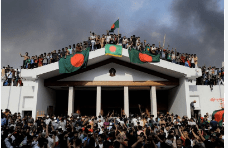
This news broadcast covers a variety of current events in Bangladesh. Key topics include government directives on law and order from Chief Advisor Dr. Mohammad Yunus, including passport issuance without police verification. BNP Acting Chairman Tarique Rahman spoke about restoring democracy. The broadcast also reports on the arrest of a suspect in a student’s murder case, the conclusion of the Biswa Ijtema with calls for Muslim unity, and medicine shortages at Meherpur General Hospital. Additional segments cover community relations, infrastructure concerns with the Basanda Bailey Bridge, and the suicide of a policeman. Finally, the broadcast includes religious commentary and concludes with an invitation to view more news online.
ATN Bangla News Review: A Study Guide
Quiz: Short Answer Questions
- What were the main instructions given by the Chief Advisor to the District Commissioners (DCs) during the conference?
- Why, according to the Chief Advisor, should police verification not be required for passport issuance?
- According to Tarique Rahman, what has the “fallen dictatorship” destroyed, and what does he urge party members to do?
- Who was arrested in connection with the Abu Sayeed murder case, and where was he apprehended?
- What is Biswa Ijtema, and what issue is causing divisions in its organization?
- Why are patients at Meherpur General Hospital having to purchase medicines and vaccines from outside?
- According to Sagar Sadhus Thakur, how are minorities faring in Bangladesh, and what is the Matua community working to ensure?
- Why is the Paili Bridge in Jhalukathi considered risky, and what are the consequences of its condition?
- What is the suspected cause of the Satkhira policeman’s suicide, and how did he commit it?
- What does Hazrat Murshede Azam urge Muslims to do, and what qualities are necessary for worship to be accepted?
Answer Key
- The Chief Advisor instructed the DCs to be strict in controlling the law and order situation, prevent harassment, and ensure public services. He wanted them to act as “captains of the administration” and maintain peace and order at any cost.
- The Chief Advisor believes a passport is a right of citizenship and that citizens shouldn’t be treated like “thieves.” He argued that since birth certificates and NIDs don’t require police verification, passports shouldn’t either.
- Tarique Rahman claims the “fallen dictatorship” has destroyed every institution of the state. He urges party members to restructure the party, establish the right of people to vote, and build the country on the basis of a 31-point plan.
- Imran Chowdhury Akash, accused in the murder case of Abu Sayeed, was arrested from his house in Islampur, Jamalpur. He is the Joint General Secretary of Chhatra League’s Begum Rokia University branch and President of Sheikh Russell Shishu Kishore Krira Chakra.
- Biswa Ijtema is a large annual Muslim gathering. Disputes between the followers of Maulana Zubair and the Shadabists are causing divisions and leading to multiple, separate Ijtema events.
- Meherpur General Hospital faces medicine shortages due to pending tenders and insufficient allocation of funds. As a result, patients are forced to buy their own medicines and rabies vaccines from outside the hospital.
- According to Sagar Sadhus Thakur, minorities are doing well in Bangladesh and that some communally-tinged incidents had been exaggerated after August 5. The Matua community is working to ensure peaceful coexistence of people of all religions.
- The Paili Bridge in Jhalukathi is risky because of a large hole in its structure and the heavy traffic it carries. Its condition poses a danger to vehicles, with locals fearing a high risk of accidents.
- The Satkhira policeman, Anupam Kumar Ghosh, is suspected to have committed suicide due to a family dispute. He hanged himself with a towel around his neck in his rented room.
- Hazrat Murshede Azam urges Muslims to perform more voluntary prayers in addition to obligatory ones. He emphasizes that humility, concentration, fear of Allah, and genuine love for the Prophet are necessary for worship to be accepted.
Essay Format Questions
- Analyze the various challenges to governance and public services highlighted in the news report, citing specific examples.
- Discuss the political climate and the roles of different political actors in the news, particularly focusing on the statements made by Chief Advisor Dr. Mohammad Yunus and BNP Acting Chairman Tarique Rahman.
- Examine the social issues presented in the news, such as communal harmony, healthcare access, and infrastructure safety.
- Evaluate the role and impact of religious gatherings like Biswa Ijtema and Shab-e-Barat in Bangladeshi society, based on the information in the news.
- To what extent does the ATN Bangla news coverage reflect the concerns, hopes, and daily lives of ordinary Bangladeshis?
Glossary of Key Terms
- DC (District Commissioner): A senior government official responsible for the administration of a district in Bangladesh.
- Biswa Ijtema: A large annual Muslim gathering (congregation) held in Bangladesh, one of the largest in the world.
- Akheri Munajat: The final prayer offered at the conclusion of Biswa Ijtema.
- Tablighi Jamaat: A global Islamic missionary movement that organizes events like Biswa Ijtema.
- Bailey Bridge: A portable, prefabricated truss bridge, often used as a temporary or emergency replacement for a damaged bridge.
- Matua Mahasangh: A religious association of the Matua community, a Hindu sect prominent in Bangladesh and India.
- Shab-e-Barat: A Muslim holiday observed on the 15th night of Sha’ban, the eighth month of the Islamic calendar. It is considered a night of forgiveness and prayer.
- Munazat: A Dua (supplication) or salutation to Allah (God).
- Harinam Mahayajna: A 24-hour or longer chanting of the Hare Krishna mantra accompanied by drums, cymbals, and other instruments.
- NID: National Identification Document.
- Chhatra League: Student League.
ATN Bangla Gramganj News: Bangladesh Governance and Current Events
Okay, here’s a briefing document summarizing the main themes and key information from the provided text excerpts, which appear to be from a Bangladeshi news broadcast (ATN Bangla’s Gramganj news):
Briefing Document: ATN Bangla News Highlights
Date: Based on the content, likely February 2024 (referencing the District Commissioners’ Conference).
Source: Excerpts from ATN Bangla Gramganj News Broadcast
Overview:
This briefing summarizes key news items covered in a recent ATN Bangla Gramganj news broadcast. The segments touch upon governance, politics, social issues, religious events, infrastructure concerns, crime, and community relations in Bangladesh. The dominant theme is the government’s focus on maintaining law and order and promoting development. The news also covers political activities, religious gatherings, and local issues.
Key Themes and Issues:
- Governance and Law & Order:
- DC Conference: Chief Advisor Dr. Mohammad Yunus addressed District Commissioners (DCs), emphasizing the importance of maintaining law and order and preventing harassment. He instructed DCs to be strict and act as “captains of the administration,” stressing that the government’s success hinges on controlling law and order.
- Quote: “Since our situation is law and order, peace and order have become a mess. How much have we progressed in this, what can we do? This is the number one consideration for us.”
- Incentives: Dr. Yunus announced a ranking system for districts, with rewards for those that perform well, particularly in maintaining peace and order.
- Passport Policy: A new policy was announced eliminating police verification requirements for passport issuance. “The Chief Advisor also said that police verification will not be required to get a passport. He said that a passport is a right of my citizenship.”
- Political Activities:
- BNP Conference: BNP Acting Chairman Tarique Rahman virtually addressed a Narail district BNP conference, criticizing the Awami League and calling for the restructuring of the party based on a “31-point” program.
- Quote: “Tarique Rahman commented that the fall of the dictatorship in Dhaka has given an opportunity to choose the right leadership through voting. He said that in addition to restructuring the party, it is time to establish the right of people to vote.”
- Rahman emphasized the need to establish democratic, political, and economic rights and urged party members to dedicate themselves to building the country.
- Social Issues & Crime:
- Abu Sayeed Murder: The arrest of Imran Chowdhury Akash, accused in the murder case of Abu Sayeed (related to anti-discrimination student movement), was reported.
- Police Suicide: A policeman in Satkhira committed suicide, possibly due to family issues.
- Medicine Shortage: Meherpur General Hospital is facing a shortage of medicines, including rabies vaccines. This is due to delays in the tendering process. Patients are forced to buy medicine from outside.
- Quote: “The hospital authorities admit that there is a shortage of vaccines. The work of the tender process is ongoing…Indent has been given, it will be arranged in a short time.”
- Religious Events:
- Biswa Ijtema: The 58th Biswa Ijtema concluded with a final prayer. There was a call to remove divisions among Muslims.
- Quote: “Devotees said that Muslims around the world are able to carry out violence in Gaza because they are not united…we urge the Muslims to organize Ijtema with the participation of all.”
- The report notes that divisions between different factions (Zubair and Shadabists) have led to multiple Ijtema events, and there were calls for unity in future gatherings.
- Shab-e-Barat: Hazrat Murshede Azam urged Muslims to perform voluntary prayers and emphasized the importance of humility and love for the Prophet in worship.
- Infrastructure Concerns:
- Risky Bridge: The Basunda Bailey Bridge in Jhalukathi is in a dilapidated state, posing a risk to vehicles and commuters. Despite being declared risky seven years ago, only temporary repairs have been conducted.
- Quote: “When a house or vehicle passes by here, the way the bridge washes, it seems like it will fall right away.”
- Locals allege embezzlement of funds allocated for repairs. The Roads and Towns Department stated that a concrete bridge is planned, pending ministry approval.
- Communal Harmony:
- Minority Relations: Sagar Sadhus Thakur, General Secretary of the Matua Mahasangh, commented on the peaceful coexistence of people of all religions in Bangladesh. He stated that incidents presented in a communal manner after August 5 are untrue.
- Quote: “The Hindu and Muslim brothers and sisters of Bangladesh have a soul-to-soul relationship with us.”
Key Figures Mentioned:
- Dr. Mohammad Yunus (Chief Advisor)
- Tarique Rahman (BNP Acting Chairman)
- Imran Chowdhury Akash (Accused in Abu Sayeed murder)
- Sagar Sadhus Thakur (Matua Mahasangh General Secretary)
- Maulana Yusuf Bin Saad (Tablighi Jamaat Cleric)
- Hazrat Murshede Azam (Religious Leader)
Concluding Notes:
The news broadcast paints a picture of a country grappling with issues of law and order, political polarization, and infrastructure challenges, while also highlighting efforts to promote communal harmony and celebrate religious traditions. The focus on government initiatives and the inclusion of statements from key political figures underscore the importance of these issues to the Bangladeshi public. The report from Meherpur General Hospital highlights the difficulties that sometimes face the public health system.
Bangladesh Affairs: Key Directives, Politics, and Social Issues
Here is an 8-question FAQ based on the provided news excerpts:
FAQ
1. What key directives were given to District Commissioners (DCs) at the District Commissioners’ Conference, and what was the overall goal?
The Chief Advisor instructed the DCs to be strict in controlling the law and order situation, emphasizing that the success or failure of the government depends on it. He urged them to work as captains of the administration, focusing on preventing harassment and ensuring public services. He also called for a competition for good work among districts, with rewards for the best performing ones, particularly those maintaining peace and order and controlling markets. The overarching goal was to build a “new Bangladesh” through coordinated efforts and a focus on improving the quality of district administration.
2. What changes were announced regarding passport issuance, and what reasoning was provided?
The Chief Advisor announced that police verification would no longer be required to obtain a passport. His reasoning was that a passport is a citizen’s right and that citizens should not be treated as potential criminals before being issued one. He argued that birth certificates and national ID cards, which are already issued without police verification, should suffice.
3. What message did BNP Acting Chairman Tarique Rahman deliver at the Narail district BNP conference, and what were his key points?
Tarique Rahman commented that the fall of dictatorship has provided an opportunity for the public to vote for the right leaders. He urged BNP members to restructure the party and focus on establishing the right of people to vote. He criticized the Awami League for allegedly destroying institutions, including the election system, and called for the establishment of democratic, political, and economic rights for the people. He emphasized the need for BNP to stand by the people and work towards economic liberation for the marginalized, ultimately building the country on the basis of 31 points.
4. What is the Biswa Ijtema, and what issues are currently affecting it?
The Biswa Ijtema is a large annual Islamic gathering. The excerpts highlight divisions between different factions (Zubair and Shadabists) within the Tablighi Jamaat, leading to the Ijtema being organized separately in recent years. There are calls for unity among Muslims to prevent exploitation by “infidels,” and for religious leaders to mediate and resolve the internal disputes so that a united Ijtema can be held in the future.
5. What issues are Meherpur General Hospital facing, and how are they impacting patients?
Meherpur General Hospital is facing a shortage of medicines due to delays in the tender process. This is forcing patients to purchase essential medicines and vaccines (like rabies vaccines after animal attacks) from outside, causing them financial distress. Nurses also report inconsistent supplies of pain injections and other necessary medications, further disrupting healthcare services.
6. What is the Matua community’s perspective on communal harmony in Bangladesh, and how is this being expressed?
The Matua community, as represented by Sagar Sadhus Thakur, emphasizes the peaceful coexistence of people of all religions in Bangladesh. They believe that incidents presented in a communal manner after August 5 are untrue. This perspective is expressed through participation in events like the Harinam Mahayajna ceremony and Mahamatua conference, where they work towards maintaining harmony and peaceful relations with people of other faiths, including Muslims.
7. What are the issues surrounding the Paili Bridge in Jhalukathi, and what actions are being taken?
The Paili Bridge in Jhalukathi is a risky Bailey bridge that has been declared dangerous for seven years. Despite being a crucial part of the Barisal-Khulna highway and experiencing increased traffic, it has not been adequately renovated. There are allegations of corruption and embezzlement related to its maintenance. Although the Roads and Townships Department is planning to build a concrete bridge to replace it, approval and implementation are pending. In the meantime, locals are forced to risk their lives using the dilapidated bridge.
8. What was reported about the policeman Anupam Kumar Ghosh, and what is the suspected cause of death?
The policeman, Anupam Kumar Ghosh, was found dead in his rented room in Satkhira, having apparently committed suicide by hanging. He worked in the Satkhira police line. Police suspect the incident may have been caused by a family dispute.
Law and Order Perspectives: Government and Public Views
The sources address law and order from the perspectives of government officials and the general population.
Key points regarding law and order:
- Maintaining law and order is crucial for the government’s success.
- Chief Advisor instructed DCs to be strict in controlling the law and order situation. The Chief Advisor wants to work as a captain of the administration and called on everyone to work as a team in building the country and to maintain law and order at any cost.
- The Chief Advisor acknowledged that the law and order situation is a mess and questioned how much progress has been made and what can be done to improve it.
- The Chief Advisor called for competition among districts to improve their quality, with rewards for those that perform well in maintaining peace and order.
- The success or failure of the government depends on controlling the law and order situation.
- BNP Acting Chairman Tarique Rahman commented that the fall of dictatorship has given an opportunity to choose the right leadership through voting. He also stated it is time to establish the right of people to vote and that the Awami League has destroyed every sector, including the election system.
- A policeman in Satkhira committed suicide, possibly due to a family dispute.
District Commissioners’ Conference: Collaboration, Law & Order, and Development
The sources discuss a District Commissioners’ (DCs) conference, addressing its purpose, key participants, and main discussion points.
Key aspects of the District Commissioners’ Conference:
- Inauguration: Yasin Rana inaugurated the three-day District Commissioners’ Conference on February 6 at the Shapla Hall of his office.
- Address by Chief Advisor: Chief Advisor Dr. Mohammad Yunus gave directions to the field administration officials to build a new Bangladesh. He emphasized that he wanted to speak as a captain, not a guest.
- Forum for Collaboration: The Chief Advisor referred to the DCs’ conference as a powerful gathering and called on everyone to work as a team in building the country.
- Focus on Law and Order: The Chief Advisor urged the DCs to maintain the law and order situation at any cost, emphasizing its importance for the government’s success. He acknowledged the existing challenges in maintaining peace and order.
- Competition and Ranking: The Chief Advisor called for a competition for good work to improve the quality of the district and announced that districts that do well in the ranking will be rewarded.
- Passport Issuance: The Chief Advisor stated that police verification will not be required to get a passport, as it is a right of citizenship.
- Discussion and Coordination: The conference served as a platform to discuss how to achieve success and avoid failure through coordination. The goal was to ensure there would be no lack of understanding after the conference.
Bangladesh Nationalist Party Restructuring: Tarique Rahman’s Directives
The sources address political restructuring, particularly in relation to the restructuring of the BNP (Bangladesh Nationalist Party) and comments on the state of democracy and institutions in Bangladesh.
Key points on political restructuring:
- Tarique Rahman’s Call to Restructure the Party: Tarique Rahman, the BNP Acting Chairman, urged the restructuring of the party and emphasized the need to build the country on the basis of 31 points. He highlighted that the fall of dictatorship has provided an opportunity to choose the right leadership through voting.
- Establishing Rights: Tarique Rahman stated that it is time to establish the right of people to vote, as well as democratic, political, and economic rights.
- BNP’s Role: Tarique Rahman said that BNP has always stood by the people during difficult times and will continue to do so in the future. He also expressed that people are looking at BNP to show direction to the country and to take Bangladesh forward. He instructed leaders and activists to dedicate themselves to building the country.
- Criticism of the Awami League: Tarique Rahman criticized the Awami League for destroying every sector, including the election system, by deceiving people in the name of votes.
Biswa Ijtema: Unity, Disputes, and Significance
The sources discuss the Biswa Ijtema, a significant Muslim gathering, and related issues.
Key aspects of the Biswa Ijtema:
- Conclusion of the Ijtema: The 58th Biswa Ijtema ended with a final prayer (Akheri Munajat).
- Prayer Conducted by Maulana: Maulana Yusuf Bin Saad, son of Tablighi Jamaat’s top cleric Maulana Saad, led the Akheri Munajat. The prayer, which lasted for 30 minutes, was filled with calls of “Amen”.
- Aspirations for Unity: Devotees expressed that violence against Muslims globally was due to a lack of unity. They called for the Tablighi Jamaat to organize Ijtema together in the future.
- Historical Significance: The World Ijtema has been held on the bank of Turak since 1966, with gatherings occurring even earlier in Kakrail. It is considered the second largest gathering of the Muslim world.
- Disputes and Division: For several years, disputes between followers of Zubair and Shadabists have led to separate Ijtema. Many have lost interest in organizing Ijtema three times a year because of the disputes.
- Call for Neutral Mediation: There was a call for religious leaders (Hazrat Ulama) to take a neutral role and mediate between the differing groups of Tablighi. It is believed that their differences could disappear in a short time with proper mediation.
- Absence of Violence: Despite the divisions, the World Ijtema concluded without any violence between the supporters of Zubair and the supporters of the Shad.
Basunda Bailey Bridge Repair and Renovation Project
The sources discuss bridge repairs, specifically focusing on the Basunda Bailey Bridge in Jhalukathi.
Key points regarding bridge repair:
- Risky Condition: A significant hole has formed in the field of the Paili Bridge in Basanda, Jhalukathi, on the Barisal-Khulna highway. The bridge is considered extremely risky, yet no alternative measures were taken for seven years.
- Repair Work: The road department is reportedly carrying out repairs on the bridge. The Jhalukathi’s Basunda Bailey Bridge has been completely repaired, allaying fears of accidents.
- Risk of Collapse: There is a danger of the bridge collapsing at any time due to the pressure of thousands of vehicles daily. The bridge is located on the Barisal-Khulna inter-divisional road, which carries a lot of traffic. The bridge’s traffic has increased several times since the opening of the new Padma and Bekutia bridges.
- Allegations of Embezzlement: There are allegations that unscrupulous officials are embezzling government money in the name of repairs.
- Lack of Alternatives: Since there is no alternative to the Bailey Bridge, locals are forced to risk their lives. Many vehicles travel on the highway every day and the locals believe there is a 90% chance of an accident.
- Need for Renovation: Locals have observed that the bridge is repaired frequently, but the repairs do not last. They say that the sleeper sinks as the car moves. They suggest that all existing bridges need to be repaired or rebuilt.
- Plans for a New Bridge: The Roads and Towns Department of Jhalukathi says that a concrete bridge will be built instead of the Bailey bridge if the ministry approves. The design work is already underway for the bridge and the hydrology, morphology, and feasibility study of the Bailey bridge has been completed.
- Broader Renovation Efforts: Not only the Basnada Bridge but also other risky Bailey bridges and culverts in the district are being renovated.
The Importance of Law and Order in Governance
Maintaining law and order is a cornerstone of effective governance, as it ensures the safety and security of citizens while fostering an environment conducive to economic and social development. In recent discussions, the Chief Advisor emphasized the critical role of District Commissioners (DCs) in upholding law and order, urging them to act as “captains of administration.” This directive highlights the need for proactive leadership at the local level to address challenges such as crime, extortion, and public unrest. By holding DCs accountable for maintaining peace and order, the government aims to create a stable environment where citizens can thrive. The Chief Advisor’s call for a competitive ranking system among districts further underscores the importance of accountability and performance evaluation in governance. Districts that excel in maintaining law and order and providing public services are to be rewarded, incentivizing officials to prioritize the well-being of their communities.
However, the success of such initiatives depends on the coordination and cooperation of all stakeholders, including law enforcement agencies, local administrators, and the public. The Chief Advisor’s announcement that police verification will no longer be required for passport issuance reflects a shift toward streamlining bureaucratic processes and reducing unnecessary hurdles for citizens. This move not only simplifies administrative procedures but also reinforces the idea that citizenship rights should be accessible and hassle-free. By focusing on both law enforcement and administrative efficiency, the government aims to build a society where justice, security, and public trust are paramount.
The Role of Democracy in Nation-Building
Democracy serves as the foundation for nation-building, providing citizens with the opportunity to choose their leaders and hold them accountable. Tarique Rahman, the Acting Chairman of the BNP, recently emphasized the importance of democratic rights, urging his party to restructure and focus on rebuilding the country based on a 31-point agenda. His remarks highlight the need for political parties to adapt to changing circumstances and prioritize the aspirations of the people. By advocating for free and fair elections, Rahman underscores the belief that voting is a fundamental right that empowers citizens to shape their future. This call for democratic reform resonates with many who feel disillusioned by the current political landscape and yearn for a system that truly represents their interests.
The fall of dictatorship, as mentioned by Rahman, presents an opportunity to rebuild democratic institutions and restore public trust in governance. However, this process requires more than just rhetoric; it demands concrete actions to address systemic issues such as corruption, inequality, and political polarization. Rahman’s virtual participation in the Narail district BNP conference symbolizes the party’s efforts to reconnect with its grassroots supporters and rejuvenate its political agenda. By focusing on economic liberation and the rights of marginalized communities, the BNP aims to position itself as a champion of the people. Ultimately, the success of democracy in nation-building hinges on the ability of political leaders to bridge divides, foster inclusivity, and deliver on their promises to the electorate.
The Significance of Unity in Religious Gatherings
Religious gatherings, such as the Biswa Ijtema, play a vital role in fostering unity and spiritual reflection among Muslims. The 58th Biswa Ijtema concluded with a powerful call for Muslims to overcome divisions and work together for the greater good. This message is particularly relevant in a world where religious and political conflicts often overshadow the shared values of faith and compassion. The final prayer, led by Maulana Yusuf Bin Saad, emphasized the need for Muslims to unite under one banner and address global challenges, such as the violence in Gaza, with a collective sense of purpose. The Ijtema serves as a reminder that spiritual gatherings can transcend cultural and geographical boundaries, offering a platform for dialogue and mutual understanding.
However, the event also highlighted the challenges of organizing such large-scale gatherings in a fragmented environment. Disputes among religious leaders have led to the division of the Ijtema into separate events, diluting its impact and diminishing its historical significance. The call for future Ijtemas to be held in a united manner reflects a desire to restore the event’s original spirit of unity and solidarity. By addressing internal divisions and fostering collaboration among different factions, the Muslim community can strengthen its collective identity and amplify its voice on the global stage. The Ijtema’s enduring legacy lies in its ability to inspire millions to reflect on their faith, seek forgiveness, and recommit to the principles of peace and brotherhood.
Challenges in Public Infrastructure and Healthcare
Public infrastructure and healthcare systems are critical components of a nation’s development, yet they often face significant challenges that hinder their effectiveness. The deteriorating condition of the Basunda Bailey Bridge in Jhalukathi is a stark reminder of the risks posed by neglected infrastructure. Despite being declared risky seven years ago, the bridge remains in use, endangering the lives of thousands who rely on it daily. The lack of alternative routes and delays in repairs underscore the need for urgent action to address such vulnerabilities. Local authorities have proposed replacing the Bailey bridge with a concrete structure, but bureaucratic delays and funding issues continue to stall progress. This situation highlights the importance of prioritizing public safety and investing in sustainable infrastructure to support economic growth and connectivity.
Similarly, the healthcare system faces significant challenges, as evidenced by the shortage of medicines and vaccines at Meherpur General Hospital. Patients injured in animal attacks are forced to purchase rabies vaccines from private sources due to the hospital’s inability to meet demand. This not only places a financial burden on patients but also undermines public trust in the healthcare system. The delay in tender processes and the mismanagement of funds further exacerbate the problem, leaving hospitals ill-equipped to provide essential services. Addressing these issues requires a comprehensive approach that includes streamlining administrative processes, increasing funding, and ensuring accountability at all levels. By prioritizing public infrastructure and healthcare, the government can improve the quality of life for its citizens and build a more resilient society.
In conclusion, the issues discussed above—law and order, democracy, religious unity, and public infrastructure—are interconnected and essential for the progress of any nation. Addressing these challenges requires visionary leadership, collective effort, and a commitment to the well-being of all citizens. By focusing on these areas, societies can create a foundation for sustainable development and a brighter future.

By Amjad Izhar
Contact: amjad.izhar@gmail.com
https://amjadizhar.blog
Affiliate Disclosure: This blog may contain affiliate links, which means I may earn a small commission if you click on the link and make a purchase. This comes at no additional cost to you. I only recommend products or services that I believe will add value to my readers. Your support helps keep this blog running and allows me to continue providing you with quality content. Thank you for your support!

Leave a comment