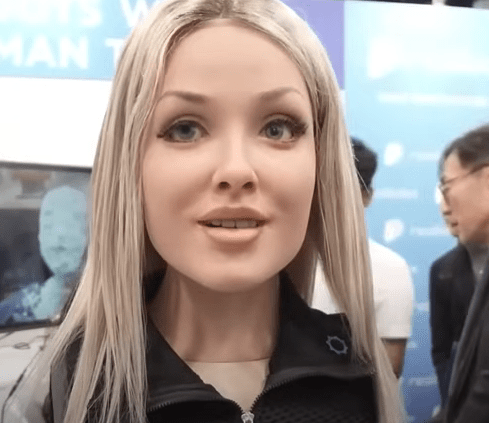
CES 2025 showcased numerous technological advancements, primarily in robotics, with companies unveiling humanoid robots for various applications, including healthcare, education, and entertainment. Electric vehicles and sustainable transportation were also highlighted, with several companies presenting innovative concepts and prototypes. Additionally, the exhibition featured advancements in artificial intelligence, demonstrated through robots capable of complex tasks and natural interactions. Finally, innovative gadgets like robotic baristas, a flying scooter, and a unique unicycle further highlighted the breadth of technological innovation present.
CES 2025 Study Guide
Short Answer Quiz
- What were the key themes of the CES 2025 exhibition?
- Describe the primary features of RealBtics’ robot “Melody,” including its price.
- How does RealBtics’ robot “Arya” use its eyes and what is unique about its design?
- What is the purpose of the GR1 robot, developed by the Chinese company Forier Intelligence?
- How does the Mage robot pianist create music and where might it find applications?
- What is unique about the robotic surgeon Alfred from Engineered Arts and what roles could it fill in the future?
- What are the key features of the Honda Zero SUV and when is its expected release date?
- Describe the Aptera solar electric vehicle, including its range and charging capabilities.
- What makes the Sense Robot Chess unique?
- What are some of the key features of the Open Droids home robot R2D3?
Answer Key
- The key themes of the CES 2025 exhibition included artificial intelligence, digital healthcare, energy transition, mobility, quantum technology, and sustainability.
- Melody is a humanoid robot with enhanced functionality, adaptability, and an improved user experience, featuring patented skin technology for a realistic appearance. It is priced at approximately $150,000.
- Arya’s eyes are hidden cameras used for visual recognition to identify people and objects and its face is magnetically detachable for easy replacement allowing for different appearances.
- The GR1 robot is designed to assist in medical care, rehabilitation, and provide support for elderly individuals and people with disabilities.
- The Mage robot pianist uses advanced robotics and AI to analyze and reproduce music, and it could be used in educational institutions, concert halls, and museums.
- Alfred is an ultra-realistic robot that can engage in free conversations, understand many languages and accents, and could replace humans in fields like tourism and hotel administration.
- The Honda Zero SUV is a midsize electric crossover built on a new EV architecture with a minimalist design and level-three autonomous driving system. Its expected release is in the first half of 2026.
- The Aptera is a solar electric vehicle that can travel up to 65 km per day solely on solar energy and up to 650 km when fully charged.
- Sense Robot Chess adapts to the player’s skill level, offers multiple game modes, and can be used remotely with other users.
- The R2D3 is designed to manage household appliances, prepare meals, and learn from user preferences, integrating with smart home systems and providing voice control.
Essay Questions
- Discuss the ethical implications of creating human-like robots, drawing on examples from the CES 2025 exhibits.
- Analyze the role of artificial intelligence in the robotic innovations showcased at CES 2025, and how AI impacts the capabilities of these machines.
- Compare and contrast the different types of robots presented at CES 2025, considering their purpose, design, and potential impact on society.
- Evaluate the significance of electric vehicle innovations presented at CES 2025 for the future of transportation and their environmental impacts.
- Examine how the advancements displayed at CES 2025 could address current societal challenges like healthcare, labor shortages, and mental health.
Glossary of Key Terms
- Artificial Intelligence (AI): The simulation of human intelligence in machines, enabling them to learn, problem-solve, and make decisions.
- Humanoid Robot: A robot with a body shape that resembles a human, often designed to interact with human environments and perform human-like tasks.
- Level Three Automated Driving System: A system that enables a vehicle to perform driving tasks autonomously under certain conditions, but requires the driver to be ready to take control.
- Electric Vehicle (EV): A vehicle that is powered by electricity rather than an internal combustion engine, usually using batteries.
- Solar EV: A vehicle that uses solar panels to recharge its batteries.
- Bionic Prosthesis: An artificial limb or body part that incorporates electronic or mechanical components to mimic natural movement and function.
- Tactile Feedback: The sensation of touch or pressure that is relayed back to the user through sensors, especially in robotic or prosthetic devices.
- Generative AI: Artificial intelligence that is able to generate new content such as text, images, music, or code.
- Mobility: The ability to move easily and freely, which is related to both transportation and the physical capabilities of robots.
- Autonomous Robot: A robot that can operate independently without human control or intervention after initial programming.
- Augmented Reality (AR): A technology that overlays digital information onto a user’s view of the real world, enhancing or modifying it.
- Omnidirectional Wheels: Wheels designed to move in any direction, enabling a vehicle or robot to move sideways, forward, or at an angle.
- Large Language Models (LLMs): A type of artificial intelligence that can learn to generate and understand language, which can improve a machine’s ability to interact with people.
CES 2025: Future Technologies Unveiled
Okay, here’s a detailed briefing document summarizing the key themes, ideas, and facts presented in the provided text about CES 2025:
CES 2025: A Deep Dive into Future Technologies
Executive Summary:
CES 2025 showcased a plethora of innovations across various tech sectors, highlighting significant advancements in robotics, artificial intelligence (AI), sustainable energy, electric vehicles (EVs), and personal mobility. The event emphasized a move toward more human-like robots, AI-powered personal assistants, and eco-conscious transportation. The sheer scale of the event, with over 4,500 companies from 160+ countries, underscores the rapid pace of technological development and the global collaboration driving it.
Key Themes:
- Robotics & Artificial Intelligence:
- Humanoid Robots Taking Center Stage: A significant focus was on creating robots with human-like appearance, interaction capabilities, and emotional intelligence.
- Real bics’ Melody: “The robot is designed to closely resemble humans in appearance and social interaction… a highlight of Melody is its patented skin technology… which offers an exceptionally realistic appearance and tactile feel.”
- Real bics’ Arya: Designed to “engage in… more intimate conversations” and can be customized with interchangeable faces.
- Engineered Arts’ Ameca: Renowned for “realistic facial expressions and advanced communication skills.”
- Intbot’s Nyo: Designed for “personal use and interaction… with sarcasm, making Its Behavior resemble that of a teenager.”
- AI-Powered Interaction: Robots are increasingly using AI for natural language processing, emotion recognition, and adaptive behavior.
- NTT’s humanoid controlled by “Suzumi”: Demonstrates “advanced capabilities of generative artificial intelligence which not only understands and processes commands but also performs physical tasks.”
- Alfred the Robotic Surgeon: Can “engage in free conversations… answer any question… and is capable of understanding almost all languages of the world.”
- Robo Rock’s Saros z70: “Equipped with an updated navigation system… which allows it to efficiently avoid obstacles and learn to recognize new objects”.
- Agility Robotics’ Digit: Actively exploring the integration of large language models to program itself in response to verbal commands.
- Diverse Applications of Robots: Robots are being developed for a wide range of uses including healthcare, education, entertainment, personal assistance, industrial tasks, and even artistic performance.
- Forier Intelligence’s GR1: “Its primary purpose is to assist in Medical Care, Rehabilitation and provide support for elderly individuals.”
- Mage’s Robot Pianist: Capable of “Performing complex musical pieces with exceptional Precision.”
- Tombot’s Jenny: Designed “to support individuals with dementia, depression and other mental health disorders.”
- Enchanted Tools’ Moroi: “Moves on a spherical base, navigates spaces with precision, and can grasp objects with a success rate of 97%” and performing tasks such as delivering water and PPE at a care home.
- Stardust Intelligence’s Robotic Baristas: Equipped with “high Precision manipulators that amazed visitors with their coffee making abilities”.
- Advanced Robotic Capabilities: Robots showcased include enhanced movement, dexterity, emotional responsiveness, and the ability to adapt to varied environments.
- Ethical Considerations: The development of robots with advanced human-like traits raises questions regarding their purpose, potential impact on human society, and the nature of human-robot relationships.
- Sustainable Energy & Transportation:
- Electric Vehicles (EVs) Dominate: The future of transportation is clearly electric, with numerous new EV concepts and production models.
- Honda Zero SUV and Saloon: Futuristic EV concepts with “level three automated Driving Systems.”
- LG’s Alpha-able Concept Car: A “Digital Cave that adapts to the needs of the passengers” with customizable interior.
- Mercedes-Benz Concept CLA Class: An “electric sedan… built on the new Mercedes-Benz modular architecture platform” with ultra fast charging capabilities.
- Aptera Solar EV: “The ability to travel up to 65 km a day entirely on solar energy.”
- Kia EV4: a compact electric car with up to 600km range.
- Focus on Efficiency & Range: Emphasis on maximizing range, charging speed, and energy efficiency in EVs.
- Mercedes-Benz Concept CLA Class: Achieves “exceptional efficiency through a 235 horsepower electric motor and an Innovative silicon oxide anode battery”.
- Aptera Solar EV: Solar panels enable daily range while the small battery extends total range to 650km.
- Alternative Transportation Modes: The exhibition showcased unique concepts like flying cars and electric scooters.
- Xong Arrow’s Xun X3: “Flying car with vertical takeoff and landing capabilities… can operate both on roads and in the air”.
- RoR’s Sky Rider X1: A “Flying electric scooter… can transform into a quadcopter.”
- Advancements in Battery Technology: With many vehicles noting “800 volt electric system enabling Ultra fast charging,” indicating improvements in battery technology are crucial for the advancement of EVs.
- Mercedes-Benz Concept CLA Class: “800 volt electric system enabling Ultra fast charging at up to 250 Kow adding 400 km of range in just 15 minutes.”
- Personal Mobility & Smart Living:
- Home Robots & Assistants: Robots are becoming more integrated into daily life, providing convenience and assistance.
- Open Droids’ R2D3: “Designed to simplify everyday life… managing household appliances and even preparing meals.”
- Gai’s Mimo: “Visually it resembles a walk-in coffee table with a lamp… meant to ensure autonomy and the ability to move independently.”
- Robo Rock Saros Z70: a robot vacuum equipped with a robotic arm to handle small objects around the home.
- Personalized Experiences: Emphasis on creating technology that adapts to individual needs and preferences.
- Smart Home Integration: Robots are designed to seamlessly integrate with existing smart home ecosystems.
- Open Droids’ R2D3: integrates “seamlessly with existing smart home systems including voice assistants like Alexa and Google Assistant.”
- Advanced Prosthetics: Progress in bionic prosthetics offer those with disabilities a high level of functionality and natural movement.
- Psionic’s Robotic Prosthetic Hand: “Combines Advanced engineering Solutions and Innovative materials providing the user with a unique level of functionality and natural movement.”
- Advanced Graphics & Gaming:
- Nvidia’s GeForce RTX 50 Series showcased the capabilities of next gen graphics cards.
- Sony’s Exo Suit: Inspired by the video game Horizon Zero Dawn, shows “realistic movement mechanics, intricate structure and striking design”.
- Other Notable Innovations:
- Sense Robot Chess: A chess playing robot with “ability to adapt to the skill level of the player.”
- Species Corporation’s Kosaka Kakona: An “emotional robotic mannequin” that “demonstrates incredibly smooth and graceful movements”
- In Motion’s unicycle model with a powerful motor and extended range
- Booster Robotics’ T1: A “flexible and Agility robot… demonstrating dance movements and Kung Fu moves”.
Key Takeaways:
- Convergence of Technologies: The event highlights the convergence of robotics, AI, sustainable energy, and personal mobility, indicating a future where these technologies are deeply intertwined.
- Human-Centered Design: There is a strong emphasis on creating technologies that enhance human experiences, whether through personal robots, customizable transportation, or advanced prosthetics.
- Global Innovation: The large number of international companies participating showcases the truly global nature of technological advancement.
- Ethical Considerations: As technologies become more powerful, ethical considerations surrounding their development and application are increasingly important.
- The Pace of Progress: The sheer number of innovative products and technologies on display underscore the ever increasing rate of technological progress across multiple fields.
Conclusion:
CES 2025 provided a glimpse into the future, showcasing groundbreaking innovations poised to transform our lives in the coming years. The event highlighted the rapid advancements in robotics and AI, the push for sustainable mobility, and the growing integration of technology into our homes and personal lives. It’s clear that the tech industry is rapidly moving towards a more connected, personalized, and sustainable future. The ethical implications of these innovations remain a crucial area of discussion.
CES 2025: Technological Innovations
CES 2025: Frequently Asked Questions
- What were the major technological themes and innovations showcased at CES 2025? CES 2025 featured a wide range of innovations, with key themes including artificial intelligence, digital healthcare, energy transition, mobility, quantum technology, and sustainability. The exhibition highlighted advancements in robotics, electric vehicles, personal transportation, and AI-driven tools across various sectors, from healthcare to entertainment.
- Several humanoid robots were unveiled. What are some key features and differences between robots like Melody, Arya, Ameca, and GR1? Several humanoid robots made their debut, each with distinct features. Melody, by real bics, focused on realistic appearance and tactile feel with its patented skin technology and is designed for industries needing close human interaction. Arya, also by real bics, can have its face swapped, features visual recognition and is intended for more intimate conversations. Ameca by Engineered Arts is known for its realistic facial expressions and conversation skills, designed for scientific research. GR1, by Forier Intelligence, is a Chinese-developed robot focused on medical care and support for the elderly, boasting mobility and object recognition capabilities.
- Beyond traditional humanoid robots, what other types of robots were highlighted and what were their intended purposes? CES 2025 showcased diverse robots beyond humanoids. Examples include: a robot pianist by Mage that can perform complex musical pieces, robot baristas, and a robotic prosthetic hand by psionic with tactile feedback capabilities. There were also robots focused on home assistance such as the R2D3, and support for those with mental health issues such as Jenny, the robotic puppy. Specialized robots, such as digit, were intended for industrial and logistical uses.
- What were some of the most interesting innovations in personal and public transportation at CES 2025? Transportation at CES 2025 saw several groundbreaking concepts. Honda showcased prototypes of its upcoming electric crossover and sedan with advanced driver-assistance systems and a new OS, while LG presented a concept car focused on personalization and comfort. Aptera revealed a solar electric vehicle capable of traveling 65 km per day on solar power. There were flying car concepts, including the Xong X3 which has vertical takeoff and landing capabilities, and a flying electric scooter, the Sky Rider X1, which has a closed cabin that transforms into a quadcopter.
- How is Artificial Intelligence being integrated into the showcased technologies? AI was a core component across various CES innovations. It was used in robots for facial recognition, emotional responses, advanced language processing, and dynamic decision making. AI also powered driving systems, assisted in personalized in-car experiences, enhanced musical performances, and provided assistance for everyday tasks, emphasizing its pervasive influence across sectors.
- Besides the robots, what other unusual or innovative technologies were featured at CES 2025? Beyond robots and transportation, CES 2025 featured a range of unusual innovations. These included a customizable robot model named Mimo, that resembles a walk-in coffee table, an Exo Suit inspired by a game, and a chess-playing robot called Sense Robot Chess, that adapts to the skill level of its opponent. A robotic arm called Omni Grip, was included in a robot vacuum cleaner and there was also a robotic system with manipulators that can make coffee, and robotic dogs capable of jumping and performing acrobatic tricks.
- What advancements were made in electric vehicle technology and how are manufacturers addressing range and charging concerns? Several manufacturers, including Mercedes-Benz, Honda, and Kia presented new electric vehicle concepts. Mercedes-Benz’s Concept CLA Class included an 800 volt system allowing for 400 km range in 15 minutes, with a 750km total range. Kia showcased their EV4, emphasizing quick charging and long range options. There was an emphasis on battery technology, charging efficiency, and integration of technology, and companies demonstrated that they are increasingly focusing on improving performance and convenience for users.
- What role did sustainability play at CES 2025 and how was this theme integrated into various technologies? Sustainability was a notable theme at CES 2025. Solar electric vehicles, like the Aptera, showcased direct energy generation. Electric vehicles from Honda, LG, and Mercedes-Benz demonstrated an increasing shift towards environmentally friendly options. Companies also highlighted their efforts to incorporate sustainable materials, energy efficiency, and eco-conscious design principles into various technologies, emphasizing a commitment towards reducing environmental impact.
CES 2025: Innovations in Robotics, AI, and Transportation
CES 2025 showcased a wide array of innovations across various technology sectors. Here are some of the highlights:
Robotics and AI:
- Humanoid Robots: Several companies unveiled advanced humanoid robots, including RealBiotics with Melody, priced at $150,000, which has realistic skin and can be customized for different uses. They also presented Arya, a robot with swappable faces. Engineered Arts showcased Amecca, known for its realistic facial expressions, and also Alfred, a robot doctor capable of engaging in conversations and understanding multiple languages. Other notable humanoid robots include GR1 from Forier Intelligence, designed for medical care and assistance, and Nyo from intBot, a robot designed for personal interaction with emotional intelligence.
- Other Robots: There were many other types of robots demonstrated at CES 2025. A robotic pianist from Mage, capable of playing complex musical pieces. A robotic dog from Deep Robotics that can perform acrobatic tricks and navigate complex terrain. There were also robotic baristas from Stardust Intelligence, and robotic arms for vacuum cleaners from Robo Rock. There were also robots for home and personal use, such as r2d3, from Open Droids, and moroi from Enchanted Tools. Tombot presented Jenny, a robotic puppy intended to support those with dementia, depression and other mental health disorders.
- AI Integration: Many robots at CES 2025 utilized advanced AI. Some were integrated with language models like Suzumi, and could perform physical tasks simulating physical sensations. Agility Robotics is also exploring integrating large language models into their robot, Digit.
Transportation:
- Electric Vehicles: Honda presented prototypes of its electric crossover, the Honda Z SUV, and sedan, the Honda zero Saloon. LG showcased a concept car, Alpha able, with a customizable interior. Mercedes-Benz unveiled its Concept CLA Class, an electric sedan with a focus on efficiency and fast charging. There were new electric vehicle models announced from Kia, the EV4 and several concept vehicles, including the quintessenza electric pickup from eedle design .
- Solar Electric Vehicles: Aptera Motors displayed its solar electric vehicle, the Aptera, which can travel up to 65 km per day using solar energy.
- Flying Vehicles: Several flying vehicles were on display, including the xun X3 flying car from Xong Arrow, the AOH HT flying car, also from Xong, and the Sky Rider X1, a flying electric scooter from RoR.
Other Notable Technologies:
- Prosthetics: Psionic showcased an advanced robotic prosthetic hand with tactile feedback.
- Exosuits: Sony showed off a full-size exo-suit inspired by the game Horizon Zero Dawn.
- Home Robots: Many home robots were introduced with varied functionality, such as R2d3 from Open Droids that can manage household appliances, and mimo from gai, a customizable universal robot.
- Gaming Robots: Sense Robot Chess was presented with an AI that adapts to the skill level of the player.
- Graphics: Nvidia showed the capabilities of its GeForce RTX 50 Series graphics cards.
Key Themes:
- Artificial Intelligence: AI was a central theme, with applications ranging from humanoid robots to vehicle operating systems and even robot chess.
- Sustainability: Many companies focused on sustainable solutions, particularly in transportation and energy.
- Human-Robot Interaction: There was an emphasis on creating robots that can interact with humans naturally and provide support in various settings.
This comprehensive overview should give you a solid understanding of the key innovations and trends highlighted at CES 2025.
Humanoid Robots at CES 2025
CES 2025 featured a diverse range of humanoid robots, each with unique capabilities and intended applications.
Key Highlights of Humanoid Robots at CES 2025:
- RealBiotics’ Melody: This robot is designed to closely resemble humans in appearance and social interaction. It features patented skin technology, compatibility with various AI platforms (including ChatGPT), and is priced at approximately $150,000. Melody is intended for industries requiring close human interaction, such as healthcare, education, and entertainment. RealBiotics also presented Arya, a less expensive model ($75,000) that can move and has a swappable face. Arya’s eyes are hidden cameras for visual recognition, and it is capable of more intimate conversations.
- Engineered Arts’ Amecca: This robot is known for its realistic facial expressions and advanced communication skills. It can display a range of human emotions and engage in conversations, making it suitable for scientific research and showcasing AI potential. Amecca is priced at approximately $175,000. Engineered Arts also presented Alfred, a robot doctor, capable of free conversation and understanding multiple languages.
- Forier Intelligence’s GR1: This Chinese-developed robot is designed for medical care, rehabilitation, and support for the elderly and people with disabilities. It stands 1.65m tall, weighs 55kg, and can move at 5 kmph, ascend stairs, and carry loads. GR1 is equipped with AI for face, speech, and object recognition.
- IntBot’s Nyo: This robot is designed for personal use and interaction in a home environment. Nyo is notable for its ability to express emotions and communicate informally, sometimes with sarcasm, using multimodal language learning based on AI. Nyo is intended as a companion for people, providing emotional support and social interaction.
- NTT’s Humanoid Robot: This robot is controlled by the next-generation language model Suzumi and can perform physical tasks while simulating physical sensations. It can sense its environment, bringing it closer to mimicking human movements and decision-making.
- Agility Robotics’ Digit: This humanoid robot is designed to work alongside humans in tasks such as lifting and transporting objects. It can carry loads up to 16kg and operate autonomously for up to 16 hours. Agility Robotics is exploring the integration of large language models to allow Digit to respond to verbal commands.
- Engine AI’s SE01, SA01, and PM01: These robots are designed for diverse tasks and markets. SE01 is a multi-purpose robot for industrial tasks, SA01 is for research and education, and PM01 is a lightweight and highly dynamic robot with an open architecture.
- Booster Robotics’ T1: This robot demonstrated impressive flexibility and agility by performing various physical exercises such as push-ups, dance movements, and Kung Fu moves. It is equipped with high-tech sensors and a motion control system, and it can also walk, bend and kick a soccer ball. Booster Robotics suggests that this robot could replace athletes.
- Pollen Robotics’ I2: This open source humanoid robot, also called Richi2, is designed for interaction with the environment and people. It can manipulate objects with 7-degree of freedom manipulators and can move freely using omnidirectional wheels.
Common Themes and Features:
- Advanced AI: Many of these robots incorporate advanced artificial intelligence for natural language processing, visual recognition, and adaptive learning.
- Human-Like Interaction: A key focus is on creating robots that can interact with humans naturally, including the ability to understand and express emotions.
- Diverse Applications: The robots are designed for a wide range of uses, including healthcare, education, entertainment, industrial tasks, personal assistance, and companionship.
- Realistic Design: Many companies are focusing on making robots that look and feel more human.
- Mobility: The robots also feature different methods of mobility, from walking and running to wheels, and a spherical base.
These humanoid robots at CES 2025 represent significant advancements in robotics and AI, highlighting the potential for these technologies to impact various aspects of daily life and industries.
CES 2025: Electric Vehicle Innovations
CES 2025 showcased a variety of advancements in electric vehicle technology, with several manufacturers presenting new models and concepts.
Key Electric Vehicles and Concepts at CES 2025:
- Honda: Honda revealed prototypes of its upcoming electric vehicles, the Honda Z SUV and the Honda Zero Saloon. The Honda Zero SUV is a midsize crossover built on a new electric vehicle architecture and has a minimalist design. The Honda Zero Saloon is a flagship sedan characterized by a low height and wedge-shaped design. Both models will have Level Three automated driving systems and a new operating system called Asimo OS. Honda plans to begin mass production in North America in the first half of 2026, followed by Japan and Europe.
- LG: LG presented the Alpha able concept car, a vision for future mobility that combines advanced technologies with personalization, turning the car into a “digital cave” that adapts to passenger needs. The interior of the vehicle can be reconfigured using flexible, foldable, and transparent screens. LG also introduced new solutions for electric vehicle charging, such as the Ecentric system.
- Mercedes-Benz: Mercedes-Benz unveiled its Concept CLA Class, an electric sedan that marks a new era for the brand. This concept is built on the new Mercedes-Benz modular architecture platform and features an 800-volt electric system for fast charging, adding 400 km of range in 15 minutes. It has a total range exceeding 750 km and achieves efficiency through a 235-horsepower electric motor and a silicon oxide anode battery.
- Aptera Motors: Aptera Motors showcased the Aptera, a solar electric vehicle covered with solar panels. It can travel up to 65 km per day on solar energy and has a total range of 650 km with a fully charged 45 kWh battery. The company is taking pre-orders for the model, which is priced at $40,000.
- Kia: Kia introduced the EV4, a compact electric vehicle equipped with batteries that provide a range of up to 600 km. The EV4 supports fast charging, allowing the battery to recharge from 10% to 80% in 30 minutes. Production is set to begin in March 2025.
- Eedle Design: Eedle Design unveiled the electric pickup concept Quintessenza, which is not intended for mass production but demonstrates design capabilities for potential partners. The pickup features three motors, a 150 kWh battery and can accelerate to 100 kmph in less than 3 seconds.
- BMW: BMW showcased its Innovative Concepts from the Noya classa lineup which included a fully electric sedan and SUV. These vehicles are built on the new Noya classa platform and feature the BMW panoramic Vision system, projecting data across the entire width of the windshield. The vehicles are equipped with the sixth generation of BMW’s eDrive system with new battery architecture with round cells providing up to 30% more range and faster charging.
Key Themes and Trends:
- Sustainability: A significant emphasis was placed on sustainable solutions, with several companies focusing on electric and solar-powered vehicles.
- Advanced Charging Technology: Many new electric vehicles featured fast-charging capabilities and innovative charging systems.
- Innovative Design: Automakers showcased unique and futuristic designs that blended elegance with aerodynamic optimization.
- Integration of Technology: Electric vehicles at CES 2025 also featured integration of technology, such as advanced operating systems, interactive displays, and automated driving systems.
- Increased Range: Many of the new electric vehicle models have batteries that provide increased range.
These developments highlight the continued progress in electric vehicle technology, with a focus on increased efficiency, range, and sustainability. The presentations at CES 2025 point towards a future where electric vehicles will be more practical, technologically advanced, and integrated into daily life.
CES 2025 Robotics Showcase
CES 2025 featured a wide array of advancements in robotics technology, showcasing innovations across various applications, from personal assistance to industrial automation.
Humanoid Robots
- RealBiotics unveiled Melody, a robot designed to resemble humans with advanced skin technology and AI integration, priced at $150,000. They also showcased Arya, a more affordable model at $75,000, with visual recognition and swappable faces.
- Engineered Arts presented Amecca, known for its realistic facial expressions and communication skills, priced at $175,000, as well as Alfred, a robot doctor capable of free conversation and understanding multiple languages.
- Forier Intelligence introduced the GR1, a Chinese robot designed for medical care and support, capable of moving, carrying loads, and interacting with people using AI.
- IntBot’s Nyo, designed for personal use, can express emotions and communicate in an informal style, using multimodal AI.
- NTT’s humanoid robot demonstrated the ability to perform physical tasks while simulating physical sensations, controlled by the language model Suzumi.
- Agility Robotics’ Digit is designed to work alongside humans for tasks such as lifting and transporting objects, and it can operate autonomously for up to 16 hours.
- Engine AI showcased three models: SE01 for industrial tasks, SA01 for research, and PM01, a dynamic robot with an open architecture.
- Booster Robotics’ T1 demonstrated impressive flexibility and agility, performing exercises and Kung Fu, and has the potential to replace athletes.
- Pollen Robotics’ I2, also called Richi2, is an open source humanoid robot designed for interaction with people and the environment and is capable of manipulating objects using advanced manipulators.
Other Notable Robots
- Mage presented a robot pianist capable of playing complex musical pieces with exceptional precision.
- Species Corporation introduced Kosaka Kakona, an emotional robotic mannequin with 37 movable joints, designed to add a kinetic dimension to displayed clothing.
- Tombot presented Jenny, a robotic puppy designed to support individuals with mental health disorders, acting like a real Labrador Retriever.
- Gai displayed the customizable universal robot model Mimo featuring AI, resembling a walk-in coffee table with a lamp.
- Open Droids unveiled R2D3, a home robot capable of managing appliances and preparing meals, adapting to the habits of its owners.
- Enchanted Tools’ Moroi is designed for homes, hospitals, and nursing homes, capable of navigating spaces and grasping objects, and is being tested at experimental sites and research labs.
- Stardust Intelligence showcased robotic baristas with high-precision manipulators.
- Sense Robot Chess is a chess-playing robot that adapts to the skill level of the player, offering various game modes.
- Kawasaki Heavy Industries presented Nyaki, an autonomous robot capable of opening doors and delivering drinks in hotels.
- Unry Robotics displayed the quadraped robot Unitree Go2 and the humanoid robot Unitree G1, highlighting their capabilities in movement and acrobatics.
- Deep Robotics showed a high-performance robotic dog with exceptional agility and terrain adaptability.
- Robo Rock announced the Saros Z70 robot vacuum, equipped with a robotic arm to pick up small objects, along with an updated navigation system.
Key Trends in Robotics Technology:
- Advanced AI Integration: Many robots incorporate AI for natural language processing, visual recognition, and adaptive learning.
- Human-Robot Interaction: There is a strong focus on creating robots that can interact naturally with humans, including understanding and expressing emotions.
- Diverse Applications: Robots are being developed for a wide range of uses, including healthcare, education, entertainment, industrial tasks, personal assistance, and companionship.
- Increased Realism: Many companies are focusing on making robots that look and feel more human.
- Enhanced Mobility: Robots are featuring various methods of mobility, from walking and running to wheels and spherical bases.
- Improved Functionality: Robots are being designed with an increasing number of sensors and better ways of manipulating their environments and interacting with humans.
These advancements in robotics technology at CES 2025 demonstrate the rapid progress in the field and the potential for robots to significantly impact various aspects of daily life and industry.
AI at CES 2025
CES 2025 showcased significant advancements in artificial intelligence (AI), which were integrated into various technologies, from robotics to vehicles.
Key AI Applications and Technologies at CES 2025:
- Robotics: Many robots at CES 2025 utilized advanced AI for diverse functions.
- RealBiotics’ Melody is integrated with AI to enhance human experiences through interaction, learning, and entertainment. It is also compatible with various AI platforms such as ChatGPT by OpenAI.
- Engineered Arts’ Amecca uses cutting-edge AI algorithms enabling it to engage in conversations and display a wide range of human emotions through meticulously crafted facial expressions. Alfred, also by Engineered Arts, can engage in free conversations thanks to a new AI-augmented system.
- Forier Intelligence’s GR1 uses AI to recognize faces, speech, and objects, enabling it to analyze its surroundings and interact with people in real time.
- IntBot’s Nyo uses multimodal language learning based on AI to express emotions and communicate in an informal style.
- NTT’s humanoid robot is controlled by the Next Generation language model Suzumi, which not only understands and processes commands but also performs physical tasks.
- Agility Robotics’ Digit is exploring the integration of large language models in AI, enabling it to program itself in response to verbal commands in natural language.
- Sense Robot Chess uses AI to analyze an opponent’s moves, adjust the difficulty, and provide helpful tips.
- Gai’s Mimo uses AI to ensure autonomy and the ability to move independently within a space.
- Language Models:
- NTT’s humanoid robot demonstrated the capabilities of the generative language model Suzumi.
- Agility Robotics is exploring the use of large language models to enable its robot Digit to program itself in response to verbal commands.
- Automated Driving Systems: Several electric vehicles featured Level Three automated driving systems that are capable of autonomous driving, braking and accelerating.
- Honda’s Z SUV and Zero Saloon will have level three automated driving systems.
- Personalization and Adaptation:
- Open Droids’ R2D3 adapts to the habits of its owners, learning from user preferences to perform tasks more efficiently over time.
- BMW introduced the updated panoramic ey Drive control system that displays interactive 3D content on the windshield creating a personalized interface.
- Emotional AI:
- IntBot’s Nyo uses AI to express emotions and communicate informally, even with sarcasm.
- Species Corporation’s Kosaka Kakona, a robotic mannequin, is designed to demonstrate smooth and graceful movements, adding a kinetic dimension to clothing displays.
- Data Analysis:
- Sense Robot Chess uses AI to analyze players’ moves, adjust difficulty, and give real-time tips.
- Multimodal AI:
- IntBot’s Nyo uses multimodal language learning based on artificial intelligence which allows Nyo to recognize and reproduce body language, facial expressions, eye contact and micro expressions.
Key Trends in AI at CES 2025:
- Integration with Robotics: AI is a key component in the functionality of many advanced robots, enabling them to interact with humans, adapt to their surroundings, and perform complex tasks.
- Natural Language Processing: There is a focus on AI that can understand and respond to human language, allowing for more intuitive and natural interactions.
- Emotional Intelligence: AI is being used to create robots that can understand and express emotions, enhancing their ability to interact with people on a personal level.
- Autonomous Operation: AI is being used to make systems such as robots and vehicles more autonomous.
- Personalized Experiences: AI is being utilized to create personalized experiences for users, whether it’s adapting to user preferences or creating customized interfaces.
The AI advancements at CES 2025 demonstrate how the technology is becoming more integrated into different aspects of our lives, enabling more sophisticated and personalized experiences, particularly in robotics, and vehicle technology, as well as in applications that require natural interaction with human language, as well as other aspects of human interaction such as emotion and personalization.

By Amjad Izhar
Contact: amjad.izhar@gmail.com
https://amjadizhar.blog
Affiliate Disclosure: This blog may contain affiliate links, which means I may earn a small commission if you click on the link and make a purchase. This comes at no additional cost to you. I only recommend products or services that I believe will add value to my readers. Your support helps keep this blog running and allows me to continue providing you with quality content. Thank you for your support!

Leave a comment