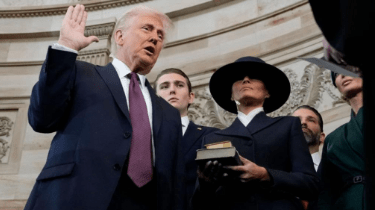
President Trump and Israeli Prime Minister Netanyahu held a press conference discussing their strong alliance and focusing on the recent conflict in Gaza. Trump announced a plan for the United States to take over and redevelop the Gaza Strip, relocating Palestinians to other countries. Netanyahu supported this proposal, highlighting their shared goals of eliminating Hamas and ensuring Israel’s security. The discussion also covered Iran’s nuclear program, the Abraham Accords, and the ongoing situation in Ukraine. Both leaders emphasized their commitment to peace and stability in the Middle East, albeit through differing approaches.
Middle East Policy Study Guide
Quiz
Instructions: Answer each question in 2-3 complete sentences.
- What is the significance of the Abraham Accords, according to the speakers?
- According to the speakers, what actions did the previous U.S. administration take that negatively impacted the Middle East?
- What is the proposed U.S. role in the Gaza Strip, as outlined in the speech?
- How do the speakers characterize the October 7th attack on Israel?
- What are the three stated goals of Israel in Gaza, according to the Israeli Prime Minister?
- What actions has the current U.S. administration taken regarding Iran and the nuclear deal?
- What is the proposed solution to the ongoing issues in the Gaza Strip?
- How have the speakers characterized the current state of the U.S. and Israeli relationship?
- What specific actions did the current U.S. administration take against terrorist groups?
- According to the speakers, what is needed to bring peace to the Middle East?
Quiz Answer Key
- The Abraham Accords are considered the most significant Middle East peace agreements in half a century, representing a major breakthrough in relations between Israel and several Arab states and a landmark achievement that ended decades without any progress in the peace process. The speakers suggest the accords will spur more peace agreements and economic development.
- The previous administration is blamed for weakness and incompetence that allegedly led to grave damage, including the horrors of October 7th and other Middle East crises. They claim that the previous administration’s actions led to a lack of victories and failures in the region, causing destabilization.
- The proposed U.S. role is to take ownership and responsibility for dismantling dangerous weapons, leveling the site, and creating economic development opportunities, including jobs and housing. The U.S. would ensure stability and avoid the same issues arising.
- The speakers describe the October 7th attack as a savage and murderous assault on innocent civilians by Hamas, drawing parallels to the Holocaust and emphasizing the horrific nature of the actions, including beheadings, rape, and murder of babies.
- Israel’s three stated goals in Gaza are to destroy Hamas’s military and governing capabilities, secure the release of all hostages, and ensure that Gaza never again poses a threat to Israel’s security, emphasizing both immediate security and long-term stability.
- The U.S. administration withdrew from the Iran nuclear deal and imposed maximum pressure through aggressive sanctions, aiming to drive Iranian oil exports to zero and diminish their capacity to fund terrorist activities, as they claimed to have done during a previous administration.
- The proposed solution involves relocating the Palestinians from Gaza to new sites developed by neighboring countries. The U.S. would then rebuild and secure Gaza, turning it into an international area for development and job creation.
- The speakers characterize the relationship between the U.S. and Israel as unbreakable, an alliance stronger than ever before, and one of friendship, despite challenges. The US president claims that he is the greatest friend Israel has ever had.
- The current administration ordered air strikes against senior ISIS leaders in Somalia, designated the Houthis as a terrorist organization, and initiated the process of deporting foreign terrorists and Hamas sympathizers from the U.S. The current US president also indicated that these terrorists came from jails and mental institutions, suggesting that they were purposely sent to America.
- The speakers suggest that a long-term, more enduring peace will involve defeating Hamas, ending violence and bloodshed, and through the joint efforts of the U.S. and Israel, creating economic opportunities and stability in the region, by removing the current status quo.
Essay Questions
- Analyze the role of historical narratives in shaping the speakers’ perspectives on the Israeli-Palestinian conflict. How do their interpretations of past events influence their proposed solutions for the future of the region?
- Critically evaluate the proposal for the U.S. to take ownership of the Gaza Strip. What are the potential benefits and drawbacks of this approach, and how does it align with or diverge from established international norms?
- Compare and contrast the leadership styles of the two speakers, as evidenced in their remarks. How do these styles reflect their respective political backgrounds and approaches to foreign policy?
- Assess the speakers’ approach to terrorism in the Middle East. How do their definitions of terrorist groups and their stated strategies for combating them compare with other approaches?
- Discuss the role of economic development in the proposed plans for the Middle East, according to the speakers. How do they believe this approach will contribute to long-term peace and stability, and what are potential challenges to this vision?
Glossary of Key Terms
Abraham Accords: A series of normalization agreements between Israel and several Arab states, brokered by the U.S. administration.
Hamas: A Palestinian Sunni-Islamist fundamentalist organization that controls the Gaza Strip and is designated as a terrorist group by several countries.
Gaza Strip: A self-governing Palestinian territory on the eastern coast of the Mediterranean Sea, bordered by Israel and Egypt.
Iran Nuclear Deal (JCPOA): A 2015 international agreement that sought to limit Iran’s nuclear program in exchange for relief from economic sanctions.
Maximum Pressure Campaign: A policy of using economic sanctions and other forms of pressure to coerce Iran into changing its behavior, especially in regards to its nuclear program and support for terrorism.
October 7th Attack: A surprise attack on Israel led by Hamas from the Gaza Strip, resulting in many casualties and hostage taking.
UN Human Rights Council: A United Nations body responsible for promoting and protecting human rights around the world, which has often been a target of criticism by the current US administration.
UNRWA (United Nations Relief and Works Agency): A UN agency that provides humanitarian aid to Palestinian refugees, which was defunded by the current US administration for allegedly supporting and funding terrorism.
Anti-Semitism: Hostility to, prejudice towards, or discrimination against Jewish people.
Jud Samaria: The biblical name for the land occupied by Israel, considered the biblical homeland for the Jewish people.
US-Israel Joint Press Conference: A New Middle East Strategy
Okay, here is a detailed briefing document summarizing the key themes and ideas from the provided text, incorporating quotes and structured for clarity:
BRIEFING DOCUMENT: Analysis of Remarks by US President and Israeli Prime Minister
Date: October 27, 2024 (Based on internal references within the text)
Subject: Analysis of joint press conference remarks by the US President and the Prime Minister of Israel.
Executive Summary:
This document analyzes a press conference given by the US President and the Israeli Prime Minister, highlighting their shared perspectives on key geopolitical issues, particularly concerning the Middle East. The conversation emphasizes a renewed commitment to the US-Israel alliance, a hardline stance against Iran and its proxies, a novel proposal for the future of Gaza, and a focus on achieving lasting peace in the region through unconventional strategies. The tone is assertive, with a strong emphasis on past achievements and a vision for a drastically altered future in the Middle East.
Key Themes and Ideas:
1. A Reaffirmed US-Israel Alliance:
- Unbreakable Bond: Both leaders emphasized the strength and longevity of the US-Israel relationship. The President stated, “…the bonds of friendship and affection between the American and Israeli people have endured for generations and they are absolutely unbreakable.”
- Stronger Than Ever: There’s a clear intent to elevate this alliance, with the President expressing, “I’m confident that under our leadership the cherished alliance between our two countries will soon be stronger than ever.”
- Personal Connection: The Prime Minister specifically calls the President “the greatest friend Israel has ever had in the White House,” highlighting a personal connection and level of trust.
2. Assertive Foreign Policy and Past Achievements:
- Revival of Past Policies: The President frequently references accomplishments from his previous term, including defeating ISIS, ending the Iran nuclear deal, imposing sanctions on Iran, recognizing Jerusalem as Israel’s capital, recognizing Israeli sovereignty over the Golan Heights, and brokering the Abraham Accords. He states, “In my first term, prime minister, and I forged a tremendously successful partnership that brought peace and stability to the Middle East like it hadn’t seen in decades.”
- Criticism of Preceding Administration: A common theme is criticizing the prior administration for perceived weaknesses and failures, stating there was “grave damage all over the globe… the horrors of October 7th would never have happened if I were president.” The implication is that the current administration is reversing damage done in the previous term.
- Maximum Pressure on Iran: The President highlights his administration’s efforts to restore a “maximum pressure policy on the Iranian regime” including driving Iranian oil exports to zero and diminishing the regime’s ability to fund terrorism. The President stated, “We had no threat when I left office. Iran was not able to sell oil… and Hamas was not being funded.”
3. The Gaza Strip: A Radical Proposal for Reconstruction and Ownership:
- Gaza as a “Demolition Site”: Both leaders describe the current state of Gaza in stark terms, with the President referring to it as “a symbol of death and destruction” and “a demolition site.”
- US Ownership and Redevelopment: The most striking proposal is that the US will “take over the Gaza Strip” for the purpose of dismantling unexploded ordnance, leveling the site, and establishing economic development zones. The President asserts, “The US will take over the Gaza Strip and we will do a job with it. We’ll own it and be responsible…”
- Relocation of Palestinians: The plan includes relocating the 1.8 million Palestinians living in Gaza to “other countries of interest,” specifically in areas with humanitarian resources and funding from wealthy neighboring countries, instead of rebuilding Gaza. According to the president, “the only reason the Palestinians want to go back to Gaza is they have no alternative.”
- International Collaboration: The intention is to turn Gaza into a world-class economic zone. The President believes “the potential in the Gaza Strip is unbelievable” and that “the entire world” will be represented there.
- Rejection of the status quo: The President states that “you can’t keep doing the same mistake over and over again”. He does not believe that attempting to reconstruct Gaza while leaving Hamas and others in control will work.
4. Combating Terrorism and Anti-Semitism:
- Elimination of Hamas: Both leaders are aligned on the need to eliminate Hamas and ensure Gaza never again poses a threat to Israel. The President states, “we can work together to ensure Hamas is eliminated”. The Israeli Prime Minister echoes this, mentioning the need to “destroy Hamas’s military and governing capabilities.”
- Aggressive Action Against Terrorist Groups: The President highlights military actions against ISIS leadership in Somalia and the designation of the Houthis as a terrorist organization, signaling a broad approach to countering terrorism.
- Deportation of Foreign Terrorists: The US will “deport foreign terrorists, jihadists and Hamas sympathizers”. This is in addition to other deportations that have taken place.
- Combating Anti-Semitism: The President notes the vile wave of antisemitism following the October 7 attacks and signed an executive order to combat it.
- Discontinuing support for UN agencies: The US withdrew from the UN Human Rights Council and ended funding to UNRWA, an agency that President argues “funneled money to Hamas and which was very disloyal to humanity”
5. Vision for a Broader Middle East Peace:
- Expansion of Abraham Accords: The leaders express optimism for additional countries to join the Abraham Accords and believe that peace with Saudi Arabia is “feasible” and “going to happen.”
- Saudi Role in Peace: The President believes that “Saudi Arabia is going to be very helpful” to the peace in the Middle East.
- A Transformed Middle East: The overall vision presented is one of a transformed Middle East, with stability, economic prosperity, and peace replacing the current violence and turmoil. The Israeli PM believes that the president’s ideas will help “reshape the Middle East and bring peace.”
6. Strong Leadership and Unconventional Thinking:
- “Thinking Outside the Box”: The Israeli Prime Minister praises the US President’s ability to think differently, citing his willingness to “puncture conventional thinking,” which he attributes to the success of the Abraham Accords.
- Decisive Action: The President portrays himself as a decisive leader, stating “We’ll do what is necessary”, and taking ownership of the situation in Gaza. He also stated, “I’m not putting restrictions. They cannot have a nuclear weapon.” He is using similar language regarding the Ukraine situation.
- Focus on Results: The emphasis is placed on achieving tangible results rather than adhering to traditional approaches.
7. Ukraine and other regions:
- Ukraine: The President believes the Ukraine war is a tragedy and that it “would have never happened” under his leadership. He believes his administration is having “very good talks” to end the war.
- Afghanistan: When questioned about Afghanistan, the President simply wished them luck, without going into detail.
Quotes for Emphasis:
- On US-Israel Alliance: “…the bonds of friendship and affection between the American and Israeli people have endured for generations and they are absolutely unbreakable.” (US President)
- On Past Successes: “In my first term prime minister and I forged a tremendously successful partnership that brought peace stability to the Middle East like it hadn’t seen in decades.” (US President)
- On Gaza: “The US will take over the Gaza Strip and we will do a job with it to we’ll own it and be responsible…” (US President)
- On Eliminating Hamas: “To secure our future and bring peace to our region, we have to finish the job in Gaza.” (Israeli Prime Minister)
- On Iran: “Iran cannot have a nuclear weapon” (US President)
- On unconventional thinking: “I believe Mr. President that your willingness to puncture conventional thinking… will help us achieve all these goals.” (Israeli Prime Minister)
Conclusion:
The remarks by the US President and the Israeli Prime Minister signal a major shift in US foreign policy in the Middle East, marked by a strong recommitment to the US-Israel alliance, a focus on assertive action, and a willingness to challenge the status quo, most notably with the proposed plan for US ownership and redevelopment of the Gaza Strip. There is a clear break from previous approaches, with a vision focused on radical change rather than incremental progress. The approach is highly assertive, and there are numerous references to the failures of previous administrations, both in the US and in the Middle East.
Rebuilding American Strength in the Middle East
FAQ: Key Themes and Ideas from the Provided Text
- What is the significance of the speaker’s relationship with the Israeli Prime Minister, and how does it reflect the broader US-Israel alliance?
- The speaker emphasizes a close and successful partnership with the Israeli Prime Minister, citing this as a reflection of the strong bond between the American and Israeli people. He highlights his actions in his first term, including recognizing Jerusalem as Israel’s capital, moving the American Embassy there, recognizing Israeli sovereignty over the Golan Heights, withdrawing from the Iran nuclear deal, and brokering the Abraham Accords, as evidence of his commitment to the alliance. The speaker characterizes his relationship with the Prime Minister as one of great friendship, respect and shared victories and frames this bond as essential to the enduring strength of the relationship between both countries. He suggests that the alliance has been tested but remains “unbreakable.”
- What specific actions does the speaker highlight from his previous administration to demonstrate his support for Israel?
- The speaker lists several concrete actions from his first term to emphasize his support for Israel. These include: Recognizing Jerusalem as Israel’s capital and moving the US embassy there, recognizing Israel’s sovereignty over the Golan Heights, withdrawing from what he calls the “disastrous Iran nuclear deal”, imposing sanctions on Iran, and brokering the Abraham Accords, which he calls “the most significant Middle East peace agreements in half a century.” He frames these actions as achievements that brought peace and stability to the Middle East and as evidence of his strong relationship with the Israeli Prime Minister. He also emphasized that he had “starved” Hamas and other Iranian proxies of resources and support.
- What is the speaker’s assessment of the events of October 7th and the subsequent conflict?
- The speaker describes the October 7th attacks as a “horrific” and “murderous assault” on the Jewish people and the Jewish state and describes the actions of Hamas as savage. He expresses sympathy for the Israeli people and their response to the attacks. He claims that these attacks would not have happened had he been president and strongly criticizes the previous administration for its weakness and incompetence that resulted in what he calls “grave damage around the globe.” He also criticizes what he calls a sustained and aggressive assault on all fronts against the Jewish state, which he says has resulted in kidnappings, tortures, rapes, and slaughter of innocent men, women, children and babies.
- What is the speaker’s proposed solution for the Gaza Strip?
- The speaker argues that the Gaza Strip, which he describes as a “hellhole,” “a demolition site,” and a place of “death and destruction,” should not be rebuilt and re-occupied by the same people. He suggests that it should be taken over by the US for the purpose of dismantling weapons, leveling the site, creating an economic development zone and then allowing “world people,” including Palestinians, to live there. He envisions that neighboring countries, which are wealthy, should finance new sites for the Palestinians living in Gaza. He argues that this plan would provide the Palestinians with a chance to live in peace and safety. He envisions a large, international, economic development zone with plenty of jobs for all, including Palestinians. He says the plan has received “tremendous praise” from other world leaders.
- How does the speaker frame the role of the United States in the Middle East under his leadership?
- The speaker envisions a United States actively taking a leadership role in the Middle East. This involves not only supporting Israel but also taking direct action to dismantle terrorist organizations, taking over the Gaza Strip for development, and pursuing a maximum-pressure policy on Iran. He envisions the US as a stabilizing force and a “great keeper” of the region. He emphasizes that his administration has been quickly rebuilding American strength and reestablishing the US as a respected nation after its purported decline during the last administration. He is also pursuing an aggressive policy in deporting “foreign terrorists, jihadists, and Hamas sympathizers from our soil.”
- What steps has the speaker taken in the first two weeks of his administration to address the situation in the Middle East?
- The speaker cites several actions taken in his first two weeks to show his commitment to rebuilding American strength and stability to the Middle East. These include ending the arms embargo on Israel, which he argues was unjustly withheld, withdrawing from the UN Human Rights Council, ending support for UNRWA which was, in his words, “disloyal to humanity”, restoring a maximum-pressure policy on Iran, and designating the Houthis as a terrorist organization. He has also ordered air strikes against senior ISIS leaders hiding in caves of Somalia. He also indicates that he signed an executive order combating antisemitism.
- What are the goals of both the speaker and the Israeli Prime Minister regarding the situation in Gaza?
- Both the speaker and the Prime Minister of Israel emphasize the need to eliminate Hamas and ensure that Gaza never again poses a threat to Israel. The Prime Minister lists three specific goals for his nation: Destroy Hamas’s military and governing capabilities, secure the release of all hostages, and ensure that Gaza never again poses a threat to Israel. The speaker also supports the idea of a permanent ownership role in the region and the speaker’s stated plan for the Gaza Strip is a solution to the long term instability in the region. He describes his actions as “taking it to a much higher level” that will create “a different future” for the region.
- How does the speaker characterize the previous administration and their approach to foreign policy?
- The speaker repeatedly criticizes the previous administration, citing “the weakness and incompetence of those years,” and blames them for the damage to global stability, for the October 7th attacks and for the Russian invasion of Ukraine. He argues that the previous administration implemented “grave damage around the globe, including the Middle East.” He juxtaposes his own leadership and accomplishments with the previous administration’s supposed failures, portraying himself as a strong leader who has restored American strength and respect on the world stage. He repeatedly claims that things were “bad” and that they have only improved since his election, even in the “fairly short period of time” since he took office.
US-Israel Alliance: A Strong and Enduring Partnership
The US-Israel alliance is described as a strong and enduring relationship, with leaders from both countries emphasizing its importance [1, 2]. Here are some key aspects of the alliance as described in the sources:
- Historical Bonds: The alliance is rooted in a long history of friendship and affection between the American and Israeli people, considered unbreakable and enduring for generations [1].
- Strengthening the Alliance: Both leaders express confidence that the alliance will become stronger than ever under their leadership [1]. The US has taken actions to restore trust in the alliance and rebuild American strength in the region [3].
- Shared Victories: The leaders note past successes in their partnership, including defeating ISIS, ending the Iran nuclear deal, imposing sanctions on Iran, recognizing Jerusalem as Israel’s capital, opening the US Embassy in Jerusalem, recognizing Israeli sovereignty over the Golan Heights, and brokering the Abraham Accords [1, 2].
- Response to Recent Challenges: In response to the October 7th attacks, the US has taken actions such as ending a de facto arms embargo on military assistance for Israel, confronting anti-Semitism, and ending support for organizations that fund terrorists [3, 4]. The US also renewed the maximum pressure campaign against Iran [4].
- US Support for Israel: The US sees Israel as a strong ally and supports its right to defend itself [1, 4]. The US has been providing military assistance to Israel [3]. The US has also taken steps to counter anti-semitism and has stopped funding to international organizations that support terrorists [4].
- Common Enemies: Both countries are united in their fight against common enemies, including Hamas and Iran [4]. They share a commitment to rolling back Iran’s aggression in the region and ensuring that Iran never develops a nuclear weapon [5].
- Future Cooperation: Both leaders expressed optimism about the future of the alliance and the potential for further cooperation. They aim to restore calm and stability to the region and expand prosperity and opportunity for all people [2]. They also emphasize the importance of working together to achieve peace and security in the region [5].
- US Role in Gaza: The US plans to take over the Gaza Strip, remove unexploded bombs, level the site, and create economic development and jobs. It is envisioned that people from around the world, including Palestinians, will live in peace in this new area [6-8].
Overall, the sources portray the US-Israel alliance as a vital and multifaceted partnership, with shared values, goals, and a commitment to working together to address the challenges facing the Middle East.
Middle East Peace: Challenges and New Approaches
Middle East peace is a complex issue with many different aspects, as discussed in the sources. Here’s an overview of the key points related to achieving peace in the Middle East, as presented in the sources:
- Past Efforts and Achievements: The sources highlight past efforts to bring peace and stability to the Middle East, such as the Abraham Accords, which were described as “the most significant Middle East peace agreements in half a century” [1]. These accords saw Israel making peace with four Arab states [2]. The sources also mention the defeat of ISIS and other measures taken to promote stability in the region [1].
- Challenges and Setbacks: The sources also acknowledge challenges and setbacks in the region, specifically the “grave damage” done over the past four years and the “horrors of October 7th” [3]. The recent conflict and violence is described as an “all-out attack on the very existence of a Jewish state in the Jewish homeland” [3]. The situation in Gaza is also described as a “hell hole” [4, 5] and a “demolition site” [6].
- New Approaches and Ideas: There’s a strong emphasis on the need for new thinking and approaches to bring peace to the Middle East [7]. One idea is for the US to take over the Gaza Strip [6], remove dangerous weapons, level the area, and create economic development that would provide jobs and housing [6, 8]. It’s envisioned that this area would be an international place where people from all over the world, including Palestinians, could live in peace [9]. This plan is presented as a way to break the cycle of violence and create a more stable future [6, 8].
- Regional Cooperation: The sources emphasize that peace in the Middle East requires cooperation from various regional actors, such as Saudi Arabia [7]. There is optimism that normalization between Israel and Saudi Arabia is feasible and may happen soon [10]. The leaders also acknowledge the importance of including Arab and Muslim nations in the peace process [2].
- Eliminating Threats: The sources make it clear that achieving peace requires eliminating threats to security, specifically mentioning Hamas and Iran. The need to destroy Hamas’s military and governing capabilities and ensure that Gaza never again poses a threat to Israel is emphasized [7, 11]. The sources also discuss the need to roll back Iran’s aggression in the region and prevent them from developing nuclear weapons [7, 12]. The sources also note that maximum pressure is being applied to Iran to diminish the regime’s capacity to fund terror [8].
- Addressing Humanitarian Needs: The sources express concern for the well-being of the people living in Gaza and emphasize the need to provide them with a better alternative to their current situation [5, 6]. There’s a focus on creating a safe and secure community where they can live in peace and harmony [6, 9].
- Focus on the Future: The leaders express hope that the current ceasefire could lead to a more enduring peace [8]. The goal is to restore calm and stability to the region and create a future of prosperity, opportunity, and hope for all people [2]. There is emphasis on the need to learn from history and avoid repeating past mistakes [5].
Overall, the sources suggest that achieving peace in the Middle East will require a combination of eliminating threats, creating new opportunities for growth and development, and fostering regional cooperation. There is an emphasis on the need for new, creative solutions and a willingness to break from past approaches.
Rebuilding Gaza: A US-Led Vision
The sources present a vision for the future of the Gaza Strip that involves a significant departure from the status quo. Here are the key points regarding the proposed future of the Gaza Strip:
- Current Situation: The Gaza Strip is described as a “hell hole,” a “demolition site,” and a place of “death and destruction” where people live under dangerous conditions [1-3]. It is also described as having been “very unlucky” and “a terrible, terrible site” [1, 4]. The current situation is characterized by destroyed buildings, fallen concrete, and a miserable existence for the people who live there [1].
- US Takeover: A central element of the plan is for the United States to take over the Gaza Strip [1, 4, 5]. This would involve the US owning and being responsible for the area [1]. The US would then dismantle unexploded bombs and weapons, level the site, and get rid of the destroyed buildings [1].
- Economic Development: The plan includes creating an economic development project in Gaza that would supply unlimited jobs and housing for the people of the area [1, 6]. This is presented as an alternative to the current state of destruction and violence [1]. The goal is to create something “magnificent” in a “really magnificent area” that is currently seen as a terrible place [4].
- International Community: The vision is that the Gaza Strip would become an international place, with people from all over the world living there, including Palestinians [7]. This is envisioned as a way to create a diverse and vibrant community [7]. It is suggested that the “world people” would live there and that it would become the “Riviera of the Middle East” [7].
- Relocation of Current Residents: The sources suggest that the current residents of Gaza should be relocated to other countries with humanitarian interests who would want to help build new domains for them [1]. The idea is that the 1.8 million Palestinians living in Gaza would move to new locations, where they would live in comfort and peace [1]. The sources state that Palestinians only want to return to Gaza because they have no alternative, and if given an option to live in a better place, they would prefer that [1]. The sources state that the US would not want the same people who have been living and fighting in Gaza to rebuild it and occupy it [1].
- Regional Support: It’s suggested that neighboring countries of great wealth could pay for the development of these new areas [1]. There is an expectation that leaders of countries in the Middle East will support this idea, and that they will open their hearts and provide land to enable people to live in harmony and peace [3, 7].
- Breaking the Cycle: The plan is presented as a way to break the cycle of violence and instability in Gaza [1, 4, 7]. It is argued that going back to the previous situation will only lead to a repetition of past mistakes [1, 4]. The goal is to create a new future for the region where people can live in peace and safety, and where the area is no longer a source of conflict [1, 7].
- Long-term Stability: The plan envisions a long-term ownership position by the United States that would bring stability to that part of the Middle East [4]. The source argues that the US, with its stability and strength, would be a great keeper of something that is very strong, powerful, and good for the entire Middle East, not just Israel [8].
- No Return to Gaza: The plan does not envision Palestinians returning to Gaza after it’s rebuilt [7]. The sources emphasize that they do not want to repeat the same cycle of violence by having the current residents return to Gaza [1, 4].
Overall, the sources propose a radical transformation of the Gaza Strip. The plan involves the US taking ownership, rebuilding the area, and creating a new international community where Palestinians and people from around the world can live in peace and prosperity. The plan would rely on the support of the global community as well as a major relocation effort.
Eliminating Hamas: A Path to Middle East Peace
The sources emphasize the need to eliminate Hamas as a crucial step toward achieving lasting peace and stability in the Middle East [1-4]. Here’s a breakdown of the key points regarding the elimination of Hamas, as described in the sources:
- Hamas as a Threat: Hamas is identified as a significant threat to both Israel and the broader region [4]. The group is described as a “murderous organization” [4], and the October 7th attacks are characterized as “savage” and “horrendous” [2]. Hamas is accused of having “kidnapped, tortured, raped, and slaughtered innocent men, women, children, and even little babies” [1]. The sources also note that Hamas has made the Gaza Strip a dangerous and miserable place [4, 5].
- Goals for Elimination: The sources state that Israel’s goals in Gaza are to destroy Hamas’s military and governing capabilities, secure the release of all hostages, and ensure that Gaza never again poses a threat to Israel [2]. The leaders believe that these goals are necessary to achieve lasting peace in the region [3, 4].
- Military Actions: The sources indicate that military action is being taken to eliminate Hamas. The sources mention that Hamas has been “devastated” and “decimated” [2]. There are also reports that Hamas leaders have been killed [2]. The sources do not go into detail about specific military tactics but do suggest that Hamas is being actively targeted.
- US Support: The US supports Israel’s efforts to eliminate Hamas and has taken actions to support those efforts [1, 6]. The US has ended a de facto arms embargo on military assistance to Israel and has stopped funding international organizations that support terrorists [2, 6]. The sources also state that the US has renewed a maximum pressure campaign against Iran, which is seen as a supporter of Hamas [6].
- No Negotiation: The sources suggest that there is no possibility of peace while Hamas remains a threat. It is stated that one cannot talk about peace while “this toxic murderous organization is left standing” [4]. The sources imply that just as the allies in WWII could not make peace if the Nazis were left standing, peace in the Middle East will not be possible if Hamas is not eliminated.
- Long-Term Solution: Eliminating Hamas is presented as part of a broader plan to create a more peaceful and stable future for the region [1, 6]. The sources indicate that the US, in partnership with other nations in the Middle East, is working to create a new future where the cycle of violence will not be repeated.
- Ceasefire and Hostage Release: Although the goal is to eliminate Hamas, the sources also acknowledge the ongoing ceasefire and hostage negotiations. The sources express the desire to get all the hostages released, but also note that if the hostage situation is not resolved it will make the military action against Hamas more violent [5, 7].
In summary, the elimination of Hamas is seen as essential to achieving lasting peace in the Middle East. The sources describe Hamas as a brutal and dangerous organization that poses a significant threat to both Israel and the region. The sources suggest that military action and other measures are necessary to achieve this goal, and that the US is a strong supporter of these efforts. The sources suggest that, along with eliminating Hamas, a long-term approach is needed to rebuild Gaza and bring stability to the entire region.
Iran Sanctions and Middle East Stability
The sources discuss sanctions on Iran in the context of broader efforts to achieve peace and stability in the Middle East. Here’s a breakdown of the key points regarding Iran sanctions, as detailed in the sources:
- Maximum Pressure Policy: The sources emphasize the implementation of a “maximum pressure policy” on the Iranian regime [1, 2]. This policy aims to enforce the most aggressive possible sanctions, drive Iranian oil exports to zero, and diminish the regime’s capacity to fund terror throughout the region and the world [1].
- Past Success of Sanctions: It’s noted that previously, sanctions had brought Iran to a point where they were unable to fund terrorist activities [1, 3]. When sanctions were previously enforced, Iran was unable to sell oil, and they had no money for groups like Hezbollah and Hamas [1, 3]. The sources indicate that Iran had to focus on its own well-being during that period.
- Renewed Sanctions: The sources indicate that the maximum pressure policy has been restored [1, 2]. This is presented as a way to stop Iran’s support for terrorist groups and to prevent Iran from developing nuclear weapons. The sources note that this policy was implemented in response to the increased threat posed by Iran and its proxies.
- Impact on Terrorist Funding: A key goal of the sanctions is to cut off funding for terrorist groups, such as Hamas and Hezbollah [1, 3]. It’s stated that when Iran cannot sell oil, they lack the funds to support these groups [1]. This is seen as a crucial step in reducing violence and instability in the Middle East.
- Negotiation with Iran: The sources suggest a desire to reach a peaceful resolution with Iran while maintaining a firm stance against nuclear weapons development [3-5]. While the sources say there is a desire to see Iran be peaceful and successful, there is a commitment to making sure they do not have a nuclear weapon [3, 5]. The sources suggest a willingness to negotiate with Iran, but also make clear that they cannot have a nuclear weapon [3-5]. The sources propose that if Iran can convince them that they will not seek nuclear weapons, it will be easy to reach a more peaceful solution [3-5].
- Avoiding Catastrophe: The leaders express the desire to avoid a catastrophic situation with Iran and suggest that the sanctions are intended to prevent such an outcome [3]. The sources indicate that while they hate having to implement the sanctions, it is necessary to do so to ensure that Iran does not obtain nuclear weapons or continue funding terrorism [3].
- International Cooperation: The sources imply that there is international cooperation with the US policy of sanctioning Iran. It’s stated that when the US previously enforced sanctions, other countries would not buy oil from Iran or do business with them, and that this was an effective way to limit Iran’s funding capabilities [1].
Overall, the sources portray the sanctions on Iran as a key component of a broader strategy to counter Iranian aggression, diminish its capacity to fund terror, and ultimately promote peace and stability in the Middle East. The sources suggest that while the leaders would like to avoid using sanctions, they see them as a necessary measure to prevent Iran from developing nuclear weapons and funding terrorist activities.

By Amjad Izhar
Contact: amjad.izhar@gmail.com
https://amjadizhar.blog
Affiliate Disclosure: This blog may contain affiliate links, which means I may earn a small commission if you click on the link and make a purchase. This comes at no additional cost to you. I only recommend products or services that I believe will add value to my readers. Your support helps keep this blog running and allows me to continue providing you with quality content. Thank you for your support!

Leave a comment