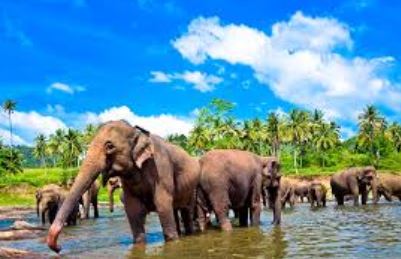
The text presents a travelogue-style video script detailing various cultural norms and unusual laws in Sri Lanka. It highlights unique customs like the “Aayan” greeting and the avoidance of saying “goodbye,” alongside restrictions on photography, leather goods in temples, and public displays of affection. The script also explores the country’s strong Buddhist traditions, its significant tea and spice industries, and its biodiversity, including rare animals and beautiful beaches. Finally, it briefly compares Sri Lanka’s safety to that of other countries like Slovenia, Japan, and Switzerland.
Sri Lanka: A Traveler’s Guide to Culture and Customs
Quiz
Instructions: Answer the following questions in 2-3 complete sentences each.
- What is “aoan,” and when should it be used in Sri Lanka?
- Why is it considered impolite to say goodbye in Sri Lanka, and what should one say instead?
- Explain the rules regarding photography in Sri Lanka, particularly at religious sites.
- Why are leather items prohibited in temples and Buddhist shrines in Sri Lanka?
- Why is it offensive to wear clothing or have tattoos depicting Buddha or demons in Sri Lanka?
- Describe the significance of feet and shoes in Sri Lankan culture, and how it affects behavior.
- Why do locals discourage giving money to beggars in Sri Lanka?
- What is the proper behavior regarding public displays of affection in Sri Lanka?
- Describe the unique cave temples found in Sri Lanka, particularly the one located near Dambulla.
- What is stilt fishing, and why is it significant to Sri Lankan culture?
Quiz Answer Key
- “Auan” is a traditional Sri Lankan greeting where one folds their hands, bows slightly, and says “aoan,” which means “may you live long.” It is a sign of respect and should be used when greeting monks or elders, reflecting a wish for prosperity and happiness.
- Saying goodbye is avoided in Sri Lanka because it’s believed to bring bad luck or unpleasant memories. Instead, people use positive and warm expressions like “until we meet again” or “have a good day” to end conversations positively.
- Photography requires permission, especially at religious sites, due to the sacredness of these locations. Poses should be respectful, avoiding turning one’s back to the Buddha or leaning on sacred statues; doing so can result in being forced to delete the photos.
- Leather items are prohibited in temples because they are seen as originating from death and thus disrespectful to Buddhist principles, which advocate for avoiding harm to all life forms and maintaining the purity of sacred spaces.
- Wearing clothing or having tattoos depicting Buddha or demons is considered disrespectful to the Buddhist faith and local beliefs, as such images on the body are deemed offensive and lacking proper reverence; individuals may be deported and cursed by locals for these actions.
- Feet and shoes are considered dirty, so it’s extremely offensive to touch anything with your feet or point them toward people or religious altars. To avoid this, people sit cross-legged or kneel and are expected to apologize if they accidentally touch someone with their feet.
- Locals discourage giving money to beggars because begging is often a criminal enterprise that exploits child labor and the disabled; thus, giving money can unintentionally support harmful practices, leading to a culture where these practices continue.
- Public displays of affection are considered inappropriate, especially in sacred places like temples in Buddhist culture. These actions are deemed disrespectful to the sacred space and religion; it is essential to be discreet when showing affection.
- Cave temples, such as the one near Dambulla, are temples carved out of rock mountains and feature intricate paintings and statues. They were sometimes used as refuges and are considered valuable historical sites that show the rich Buddhist culture and tradition.
- Stilt fishing is a traditional practice where fishermen sit on tall stilts in the sea to catch fish; each stilt is a valued possession passed down through generations, highlighting the local culture and adaptability, and now also used for tourism photography.
Essay Questions
Instructions: Answer the following questions using a full essay format.
- Analyze the ways in which Buddhist beliefs influence everyday practices and social norms in Sri Lanka, providing specific examples from the source material.
- Discuss the ethical considerations for tourists visiting Sri Lanka, focusing on the tension between respecting local customs and personal freedom and expression.
- Compare and contrast the cultural practices of Sri Lanka with those of another culture you are familiar with, highlighting specific similarities and differences.
- Evaluate the socio-economic factors that contribute to the problem of begging in Sri Lanka, and propose solutions that balance compassion with the need to address the underlying issues.
- Explore the role of tourism in preserving and promoting Sri Lanka’s cultural heritage while also respecting its unique traditions and values.
Glossary of Key Terms
- Aoan: A traditional Sri Lankan greeting that translates to “may you live long,” used as a sign of respect when greeting elders or monks.
- Buddhism: A religion and philosophy based on the teachings of Siddhartha Gautama (the Buddha); it emphasizes the pursuit of enlightenment and the cessation of suffering.
- Stilt Fishing: A traditional method of fishing in Sri Lanka where fishermen sit on wooden stilts erected in the sea to catch fish.
- Curry: A dish or sauce flavored with a blend of spices and is a staple of Sri Lankan cuisine, with numerous variations.
- Salon Tea: The famous black tea grown in Sri Lanka, renowned for its rich flavor and aroma; a key export of the country.
- Temple (Buddhist Shrine): A sacred space of religious significance in Buddhism, often requiring specific behavioral protocols and respect, including clothing restrictions.
- Ayurveda: The traditional system of medicine indigenous to Sri Lanka that promotes health by balancing the mind, body, and spirit through herbs, diet, and lifestyle.
- Dambulla Cave Temples: A series of cave temples in Sri Lanka that are known for their Buddhist paintings, carvings, and historical significance.
- Exploitation of Child Labor: The use of children in labor for monetary gain, often involving dangerous conditions and deprivation of education, common within the organized criminal begging networks.
- Public Displays of Affection: The open expression of intimacy, which may be seen as inappropriate in certain Sri Lankan cultures, especially at religious sites.
Sri Lanka: Culture, Customs, and Laws
Okay, here’s a detailed briefing document summarizing the main themes and important ideas from the provided text about Sri Lanka:
Briefing Document: Sri Lanka – Cultural Norms, Laws, and Unique Features
I. Introduction
This document summarizes key information about Sri Lanka, drawing from a video transcript that highlights the country’s unique cultural norms, laws, and attractions. Sri Lanka is portrayed as a beautiful destination with a rich culture but also one with strict regulations and unusual customs that travelers should be aware of. The briefing covers a wide range of topics, from greetings and social interactions to religious practices, legal restrictions, and notable features of the country.
II. Core Themes and Key Ideas
- Respect for Culture and Tradition: A central theme is the emphasis on respecting Sri Lankan culture, particularly Buddhist traditions. Many of the rules and prohibitions stem directly from Buddhist beliefs and practices. The video stresses the need for visitors to be mindful of local customs.
- Buddhist Influence: Buddhism deeply influences Sri Lankan society, affecting everything from etiquette to legal frameworks. The video repeatedly links specific behaviors and rules to Buddhist principles of respect, non-violence, and the avoidance of causing offense.
- Unique Etiquette: Sri Lanka has a unique set of etiquette rules and social norms that differ significantly from Western standards. These include specific greeting and farewell customs, restrictions on physical contact, and dress codes in religious spaces.
- Protection of Religious Symbols: There’s a very strong emphasis on protecting and respecting Buddhist religious symbols and sites. This includes restrictions on photography, wearing clothing with religious imagery, and even having tattoos of Buddha.
- Social Awareness and Sensitivity: Many of the described customs indicate an awareness of social harmony and the impact of one’s actions. This is evident in the prohibition of giving money to beggars due to concerns about exploitation, and in the discouragement of public displays of affection.
- Natural Beauty and Resources: Beyond the cultural specifics, the video also highlights Sri Lanka’s natural beauty, including its beaches, wildlife, and tea production. These attractions are presented as valuable aspects of the country’s identity.
- Economic and Historical Significance: Tea production, fishing practices, and gem mining are highlighted as economically and historically important for Sri Lanka, and something visitors may want to experience.
III. Key Facts and Regulations
- Greetings and Farewells:
- “Upon arriving in Sri Lanka, the first thing you must adhere to is their form of greeting… people fold their hands together place them beneath the chin slightly bow and say ‘Ayubowan’… literally means ‘may you live long’.”
- “In Sri Lanka, there’s a belief that the word goodbye can bring bad luck or unpleasant memories… they often avoid using it and instead choose other ways to end conversations positively.”
- Photography:
- “When in Sri Lanka you must always ask permission before taking photos taking pictures of locals and religious sites like temples often requires prior consent.”
- “Never pose for photos in front of a temple with your back to the Buddha or lean against a sacred statue also avoid touching or sitting on Buddha statues.”
- Leather Items:
- “If you own leather items like shoes bags or belts leave them at home before visiting Sri Lanka… bringing leather items into a temple or Buddhist Shrine is inappropriate.”
- Clothing and Tattoos:
- “Absolutely avoid wearing outfits with images of Buddha or demons when visiting Sri Lanka… tattooing Buddha on the body is considered offensive and lacking respect for the Buddhist Faith.”
- Use of Feet:
- “In Sri Lanka feet and shoes are considered dirty… never touch anything with your feet and never Point your feet towards religious altars or people.”
- Giving to Beggars:
- “Many people are actually shocked by the indifference of the locals when someone gives money to Beggars…[This is] because of the exploitation of child labor and the disabled in this country.”
- Public Displays of Affection:
- “In some countries with Buddhist culture like Sri Lanka it’s often inappropriate to show affection in public especially at sacred places like temples.”
- Buddhism:
- “Nearly 97% of Sri Lankans are Buddhist making them one of the countries with the highest Buddhist population in the world… some policies and political decisions in Sri Lanka may be influenced by factors related to Buddhism.”
- Cuisine:
- “Curry is the main ingredient for cooking in Sri Lanka… the vibrant color and pungent Aroma of Curry always appear in every dish.”
- Tea:
- “Sri Lanka is the world’s fourth largest tea exporter… Sri Lanka’s most famous is the Classic Salon tea.”
- Natural Attractions:
- “Some of Sri Lan’s beautiful beaches that you can’t miss when traveling to Sri Lanka include tangal… arugambay…upu Beach and midigama.”
- “Sri Lanka is a country with a diverse and Rich ecosystem and it is also the habitat of many rare and endangered Wildlife species.”
- Ayurveda:
- “AA the healing system indigenous to Sri Lanka has been perfected for over 5,000 years based on herbs and diet.”
- Gemstones:
- “Sri Lanka has up to 45 out of a total of 80 types of gemstones in the world including rubies sapphires Alexandrite spinels moonstones topaz aquamarine amethyst and ziron.”
IV. Conclusion
The information presented paints a picture of Sri Lanka as a fascinating, culturally rich, and beautiful country, but also one where travelers must be highly aware of and respectful of local customs and laws. The strict regulations, while potentially surprising, are deeply rooted in Buddhist traditions and social values. Understanding these nuances is essential for visitors to have a positive and respectful experience in Sri Lanka. The document encourages cultural awareness, respectful behavior, and appreciation for the unique traditions and natural beauty that the country offers. The importance of recognizing the local nuances is emphasized.
Sri Lanka Cultural Etiquette Guide
Frequently Asked Questions About Sri Lanka
- What is the traditional greeting in Sri Lanka, and why is it important? The traditional greeting is “Ayubowan,” accompanied by folding your hands together, placing them beneath the chin, and slightly bowing. This phrase translates to “may you live long” and signifies wishes for prosperity and happiness. It’s crucial to use this greeting when meeting monks or elders, as failing to do so can be seen as disrespectful.
- Why is saying “goodbye” often avoided in Sri Lanka? The word “goodbye” is believed to bring bad luck or unpleasant memories in Sri Lanka. Instead, people use positive expressions like “until we meet again” or “have a good day” to end conversations. This practice stems from a cultural belief in the power of words and their impact, and it fosters a positive and optimistic social environment.
- What are the rules regarding photography, particularly at religious sites? It is essential to ask for permission before taking photos of locals and religious sites. At temples, photography without prior consent is considered disrespectful. You must be mindful of your poses, avoiding turning your back to Buddha or touching sacred statues. If inappropriate photos are discovered, you may be asked to delete them and apologize to the Buddhist community before you can leave the country.
- Why are leather items prohibited in some areas, especially temples? The prohibition of leather items, such as shoes, bags, and belts, in temples arises from Buddhist principles of respecting all forms of life and avoiding harm. Animal leather is often associated with death, making its presence in sacred spaces disrespectful. It’s essential to leave leather items at home or outside the temple to adhere to local customs.
- What actions involving images of Buddha or demons are considered offensive? Wearing clothing or having tattoos depicting Buddha or demons is considered highly offensive in Sri Lanka. Tattoos, in particular, are seen as a lack of respect for the Buddhist faith. These actions can lead to negative reactions from locals and can be severely punished, even leading to deportation in some cases.
- Why is it considered disrespectful to use feet to touch or point at things or people? In Sri Lanka, feet and shoes are considered unclean. Using your feet to touch or point at objects, people, or religious symbols is extremely disrespectful and can be a punishable offense. It is important to sit cross-legged or kneel in temples and point feet away from sacred symbols to show respect.
- Why is giving money to beggars discouraged in Sri Lanka, especially children? While it may seem counterintuitive, giving money to beggars, especially children, is strongly discouraged because it supports a criminal industry. Organized gangs exploit child labor and disabilities for profit, often kidnapping and abusing individuals. By refraining from giving, tourists can avoid supporting this harmful practice.
- What are some of the unique aspects of Sri Lanka’s culture and geography that visitors should be aware of? Besides the cultural practices mentioned above, visitors to Sri Lanka should be aware of its rich Buddhist heritage, influencing many societal norms and laws. Additionally, the island boasts many unique natural wonders including cave temples, skilled stilt fishing, diverse wildlife, stunning beaches, and a unique tea culture. Sri Lanka’s traditional healing system, Ayurveda, is also a significant part of the country’s heritage. It emphasizes the balance of mind, body, and spirit and the use of herbs for wellness. Finally, Sri Lanka is known for the quality and variety of its gemstones as well as other beautiful products that make great souvenirs.
Sri Lankan Culture and Customs
Okay, here is a detailed timeline and cast of characters based on the provided text:
Timeline of Main Events and Cultural Practices in Sri Lanka
- Ancient Times:
- The origins of the “Ayubowan” greeting are traced back to Pali, an ancient Indian language.
- The practice of traditional Sri Lankan medicine, “Ayurveda”, began over 5,000 years ago.
- Buddhism was introduced to Sri Lanka in the 3rd Century BC.
- King Valagamba uses a rock cave for refuge in the 1st Century BC, later expanding it into the Dambulla cave temple.
- Ongoing Traditions & Cultural Practices (no specific date):
- Ayubowan Greeting: Obligatory greeting involving folded hands, a slight bow, and saying “Ayubowan” upon arrival and meeting elders/monks.
- Avoiding “Goodbye”: The word “goodbye” is avoided due to beliefs about bad luck. Other positive farewells are used.
- Photography Restrictions: Requiring permission before photographing locals and religious sites, sensitivity to religious poses (no back to Buddha).
- Leather Ban in Temples: Leather items are not allowed in temples and Buddhist shrines.
- Buddha Imagery Ban: Clothes and tattoos with Buddha or demon images are forbidden.
- Respectful Foot Use: Feet are considered unclean, never touching objects or pointing them at people or religious altars.
- No Giving Money to Beggars: Due to the exploitation of children and disabled people by organized begging rings.
- Limited Public Displays of Affection: Public affection is frowned upon, especially at sacred places.
- Cave Temples: Temples are often carved into caves.
- Stilt Fishing: Traditional fishing method using stilts, passed down through generations.
- Buddhism as a Dominant Force: Buddhism is the dominant religion.
- Curry Cuisine: Curry is a staple dish and essential flavoring in Sri Lankan cuisine.
- Tea Production: Sri Lanka is a major tea producer, particularly the “Ceylon tea”.
- Gemstone Resources: Sri Lanka has a large variety of gemstones.
- Ayurveda Tradition: The indigenous medical practice of Sri Lanka continues.
- 2004:
- Tsunami disaster nearly extinguishes the stilt fishing tradition.
- 2014:
- An English nurse was deported from Sri Lanka for having a Buddha tattoo on her arm.
- 2021:
- Sri Lanka displays a 310kg sapphire, the largest in the world.
Cast of Characters (Principal People Mentioned)
- King Valagamba: (1st Century BC) King of Sri Lanka who initially used the cave system at Dambulla for refuge, and is credited with starting the development of the Dambulla cave temple.
- Unnamed English Nurse: Deported from Sri Lanka in 2014 for having a Buddha tattoo on her arm. This is a cautionary example of the enforcement of religious laws in Sri Lanka.
Summary of Key Themes and Practices:
- Deep Religious and Cultural Respect: The main themes throughout these sources highlight Sri Lanka’s deep-seated religious and cultural traditions, most importantly rooted in Buddhism. Respect for sacred places, religious figures, and elders is paramount.
- Emphasis on Positive Interactions: The avoidance of “goodbye” and the use of positive greetings illustrate the emphasis on maintaining a harmonious and positive social environment.
- Protection of the Vulnerable: The prohibition against giving money to beggars is driven by the desire to protect vulnerable people from exploitation within the begging industry.
- Unique Customs and Traditions: The unique cultural practices, from the stilt fishing to the prohibition on certain acts, showcase the distinctive identity of Sri Lanka.
Let me know if you have any more questions or need further clarification.
Sri Lankan Customs and Laws
Sri Lanka has many unique laws and customs that may be surprising to visitors [1]. These laws are often rooted in Buddhist traditions and beliefs [2, 3].
Here are some of the unusual laws and customs in Sri Lanka:
- Greetings: Upon arrival in Sri Lanka, you must greet people with “Ayubowan,” a phrase that means “may you live long.” This is done with hands folded together, placed beneath the chin, and a slight bow [1]. This greeting is especially important when meeting monks or elders [1].
- Goodbyes: It is considered bad luck to say goodbye when leaving in Sri Lanka. Instead, people use phrases such as “until we meet again” or “have a good day” [1].
- Photography: It is necessary to ask for permission before taking photos of locals and religious sites. Taking photos without permission is seen as disrespectful [1]. You should not pose with your back to the Buddha or lean against sacred statues. If such a photo is discovered, you may not be allowed to leave Sri Lanka until it is deleted and you apologize [2].
- Leather items: Leather items, such as shoes, bags, and belts, are not allowed in temples or Buddhist shrines. This is due to the Buddhist principle of respecting all forms of life [2].
- Clothing and tattoos: Wearing clothes or having tattoos with images of Buddha or demons is forbidden [2]. In 2014, an English nurse was deported from Sri Lanka for having a tattoo of Buddha on her arm [2].
- Feet: Feet and shoes are considered dirty in Sri Lanka. You should never touch anything with your feet or point your feet toward religious altars or people. When in a temple or sacred place, you should sit cross-legged or kneel on the floor. If you accidentally touch someone with your feet, you should apologize promptly [4].
- Giving money to beggars: It is generally not advisable to give money to beggars in Sri Lanka. This is because begging has become an industry that exploits children and the disabled [4]. Organized criminal gangs often force people to beg, including children under 10 [4].
- Public displays of affection: Public displays of affection, especially at sacred places like temples, are considered inappropriate and disrespectful [5].
- Compulsory Buddhism: Most people in Sri Lanka follow Buddhism, and it is an important part of their culture [6]. Nearly 97% of Sri Lankans are Buddhist, and the religion is also an important factor in politics [6]. Many of the prohibitions and laws stem from Buddhist tradition [3].
It is important for travelers to understand and respect the cultural aspects of Sri Lanka [7]. These regulations reflect the country’s care and respect for traditional values and religions [7].
Buddhist Culture in Sri Lanka
Sri Lanka has a rich Buddhist culture that influences many aspects of daily life, and it is considered the country with the longest continuous history of Buddhism [1]. The Buddhist faith is the origin of many of the country’s unique customs and laws [2].
Here are some key aspects of Buddhist culture in Sri Lanka:
- Practitioners: Nearly 97% of Sri Lankans are Buddhist, making it one of the countries with the highest Buddhist populations in the world [1]. From birth, children are raised in a Buddhist environment [1].
- Greetings: The traditional greeting, “Ayubowan,” which means “may you live long,” is a reflection of the Buddhist values of wishing prosperity and happiness. The gesture is done with hands folded together, placed beneath the chin, and a slight bow [3].
- Temples: Temples are considered sacred spaces [4]. Many temples are built in caves, like the Golden Temple of Dambulla, which has a complex of cave temples [5]. When visiting temples, it is important to observe certain rules, such as not bringing leather items, not wearing clothes or having tattoos depicting Buddha or demons, and not pointing feet towards religious altars [4, 6].
- Respect for Life: The Buddhist principle of respect for all forms of life means that animal leather is seen as disrespectful to bring into sacred spaces [4].
- Public Behavior: Public displays of affection are considered inappropriate, especially at sacred places, due to Buddhist cultural norms [5].
- Influence on Politics: Buddhism is an important factor in Sri Lankan politics, influencing policies and political decisions [1]. Some political leaders may use the religion to strengthen their position [2].
- Traditional Medicine: A traditional healing system called AA has been practiced for over 5,000 years in Sri Lanka. This system uses herbs and diet, and it is based on the belief that health and wellness depend on the balance between mind, body, and spirit [7].
- Prohibitions: Many of the unique prohibitions stem from Buddhist traditions [2]. These prohibitions include not saying goodbye, not taking unauthorized photos, not touching anything with your feet, and not giving money to beggars [3, 6].
- Stilt Fishing: Although not directly related to religion, the traditional practice of stilt fishing is part of the cultural heritage of Sri Lanka, with each stilt being a valuable asset passed down through generations [1].
The culture of Sri Lanka is rich in tradition, and deeply connected to the Buddhist faith. It is important for visitors to respect the customs and laws that are influenced by the religion [8].
Sri Lankan Customs and Traditions
Sri Lanka has a variety of unique customs, many of which stem from its long-standing Buddhist traditions [1, 2]. These customs can be surprising to visitors, and it is important to understand and respect them [1, 3].
Here are some of the unique customs of Sri Lanka:
- Greetings: When arriving in Sri Lanka, it is customary to greet people with “Ayubowan,” which means “may you live long” [1]. This is done by folding your hands together, placing them beneath the chin, and slightly bowing [1, 4]. This greeting is especially important when meeting monks or elders [1].
- Goodbyes: It is considered bad luck to say goodbye when leaving Sri Lanka [1]. Instead, people use phrases such as “until we meet again” or “have a good day” [1]. This reflects a belief in the power of words and a desire to avoid negative expressions [1].
- Photography: It is necessary to ask for permission before taking photos of locals and religious sites [1]. Taking photos without permission can be seen as disrespectful [1, 4]. You should not pose with your back to the Buddha or lean against sacred statues [4]. If such a photo is discovered, you may not be allowed to leave Sri Lanka until it is deleted and you apologize [4].
- Leather Items: Leather items such as shoes, bags, and belts are not allowed in temples or Buddhist shrines [4]. This is due to the Buddhist principle of respect for all forms of life [4]. Animal leather is seen as originating from death, making it inappropriate for sacred spaces [4].
- Clothing and Tattoos: Wearing clothes or having tattoos with images of Buddha or demons is forbidden [4]. This is considered offensive and disrespectful to the Buddhist faith [4].
- Feet: Feet and shoes are considered dirty in Sri Lanka [5]. You should never touch anything with your feet or point your feet towards religious altars or people [5]. When in a temple or sacred place, you should sit cross-legged or kneel on the floor [5]. If you accidentally touch someone with your feet, you should apologize promptly [5].
- Giving Money to Beggars: It is generally not advisable to give money to beggars in Sri Lanka [5]. This is because begging has become an industry that exploits children and the disabled [5]. Organized criminal gangs often force people to beg [5].
- Public Displays of Affection: Public displays of affection, especially at sacred places like temples, are considered inappropriate and disrespectful [5, 6]. This is in line with Buddhist cultural norms [6].
- Stilt Fishing: Although not directly related to religion, stilt fishing is a traditional method of fishing unique to Sri Lanka [2]. Fishermen stand on stilts in the water to catch fish, and these stilts are often passed down through generations [2]. This traditional practice is an important part of Sri Lanka’s cultural heritage [2].
- Compulsory Buddhism: Most Sri Lankans are Buddhist, and it is an integral part of their culture [2]. Nearly 97% of Sri Lankans are Buddhist and it has a strong influence on politics in the country [2].
These customs are a reflection of Sri Lanka’s deep cultural and religious values [3]. Many of these traditions originate from Buddhist beliefs [2, 7].
Sri Lanka’s Wildlife: A Precious Treasure
Sri Lanka is home to many rare and endangered animal species due to its diverse and rich ecosystem [1]. The country has many natural reserves and diverse ecological areas that provide ideal habitats for wildlife [1].
Here are some of the rare and special animal species that can be found in Sri Lanka:
- Elephants [1]
- Sri Lankan leopards [1]
- Sri Lankan green parrots [1]
- Sri Lankan jungle fowl [1]
These species are difficult to find anywhere else in the world [1]. The Sri Lankan government has implemented strict regulations to conserve national natural resources, along with fundraising programs and community organizations for nature conservation [1]. The respectful treatment of nature has helped preserve a “boundless treasure” for Sri Lanka and leaves a great impression on tourists [1].
Ceylon Tea: Sri Lanka’s Exquisite Brew
Sri Lanka is renowned for its exquisite tea, particularly Ceylon tea, which is a famous black tea with a rich, delicious flavor [1].
Here are some details about Sri Lanka’s tea:
- Tea Production: Sri Lanka is the world’s fourth-largest tea exporter, following China, India, and Kenya [1]. Tea production and processing are a major part of the country’s economy [1].
- Ceylon Tea: This is a black tea grown in Sri Lanka, known for its rich and delicious flavor [1].
- Production Process: Ceylon tea is made from the leaves of the chamelia census plant. The tea leaves are harvested and processed using a specific method of fermenting, oxidizing, and drying [1].
- Growing Conditions: The tea is grown on hillsides over 1,200 meters high, with heavy rainfall and high humidity, and harvested manually [1].
- Flavor Profile: Ceylon tea has a unique and distinctive taste, with a full-bodied, slightly sweet aftertaste and a delicate aroma [1].
- Must-Try: Tasting and buying Ceylon tea as a gift is considered essential for any visitor to Sri Lanka [1].
The tea gardens in Sri Lanka are a popular destination for those who want to experience the natural beauty and local culture of the country [1].

By Amjad Izhar
Contact: amjad.izhar@gmail.com
https://amjadizhar.blog
Affiliate Disclosure: This blog may contain affiliate links, which means I may earn a small commission if you click on the link and make a purchase. This comes at no additional cost to you. I only recommend products or services that I believe will add value to my readers. Your support helps keep this blog running and allows me to continue providing you with quality content. Thank you for your support!

Leave a comment