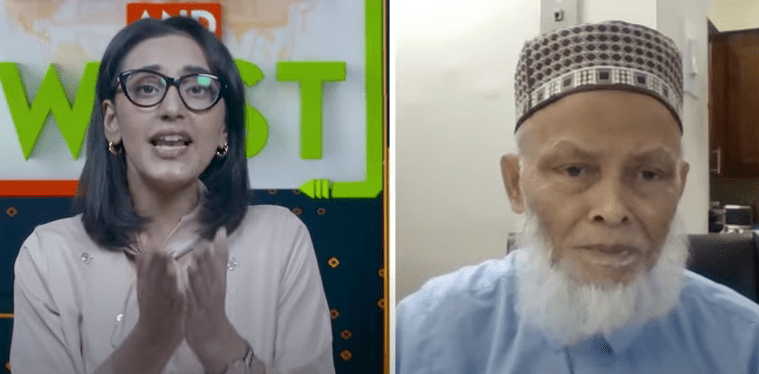
This text comprises an interview with Zan Abidin, a former Mujib Bahini commander, recounting his experiences as a freedom fighter during the 1971 Liberation War. He details his military training in India, expresses resentment towards India’s role in the conflict, and advocates for closer relations between Bangladesh and Pakistan. Abidin also discusses his career as a journalist and his efforts to expose what he views as India’s negative influence. The interview reveals his strong belief in the shared cultural and religious bonds between Bangladeshis and Pakistanis and his hope for future unity. His account offers a personal perspective on the historical events and their lasting impact on South Asia.
South Asian Geopolitics: A Study Guide
Quiz
Instructions: Answer the following questions in 2-3 sentences each.
- What was Zan Abidin’s role in the 1971 war, and what organization was he affiliated with?
- According to Abidin, what motivated the East Pakistanis to fight against West Pakistan, a nation formed for Muslims?
- Describe the military training that Abidin received in India.
- What specific event during his training in India made Abidin realize that India might not be a true friend to Bangladesh?
- What were the key deleted lines in Abidin’s drama, and why did he consider them significant?
- What does Abidin claim about Sheikh Mujibur Rahman’s actions leading up to the 1971 conflict?
- What is Abidin’s perspective on India’s current stance towards Bangladesh and the possibility of a military conflict?
- What reasons does Abidin give for why Pakistan might want to form a nuclear defense agreement with Bangladesh?
- According to Abidin, what is the prevailing sentiment of many Bangladeshis toward Pakistani people today?
- What is Abidin’s ultimate hope for the future of the relationship between Bangladesh and Pakistan?
Quiz Answer Key
- Zan Abidin was a freedom fighter and a former commander in the Mukti Bahini during the 1971 war. He received training in India and was part of the Mujib Bahini, an organization primarily comprised of students.
- Abidin states that East Pakistanis were forced to fight against West Pakistan because, despite the nation being created as a Muslim homeland, West Pakistan was oppressing East Pakistan and creating an internal conflict they never imagined.
- Abidin received military training that included instruction on grenade use, bomb-making, demolitions, and the handling of light machine guns (LMGs). He specifically chose military training over leadership training, seeing it as more beneficial for his skill set.
- During his training, Abidin wrote a drama for a cultural program, and when he saw lines had been censored by his Indian military trainers, he realized India’s possible agenda was not in the best interest of Bangladesh.
- The deleted lines in his drama were a vow to protect Bangladesh’s independence, stating they wouldn’t allow any “Hassina” to take it away and would shed more blood if needed, which Abidin feels is a symbolic indication of Indian interference.
- Abidin believes Sheikh Mujibur Rahman surrendered to Pakistan, rather than being arrested, because he never wanted to break Pakistan but wanted to become the prime minister, a point he makes to highlight the influence of external parties on the region.
- Abidin views Indian media’s rhetoric as “tall talk,” designed to maintain a strong psyche among Indian people. He does not believe that India is in a position to start a war with Pakistan or Bangladesh due to the size and strength of their respective populations.
- Abidin believes Pakistan would form a nuclear defense agreement with Bangladesh for two reasons: to seek revenge for the 1971 break-up and to prevent India from attacking Bangladesh. He believes that most Pakistanis still have resentment about the war.
- Abidin states that the sentiment of many Bangladeshis towards Pakistanis today is one of brotherhood, stemming from shared religious and cultural values. They feel a strong bond and do not harbor hatred for Pakistani people.
- Abidin hopes that Bangladesh and Pakistan will become closer, minimize their differences, and potentially unite as one nation or two brotherly nations, as he believes that it will contribute to the strength of Muslims in the region.
Essay Questions
Instructions: Answer the following questions in well-developed essay format. Do not include answers.
- Analyze Zan Abidin’s changing perspective on India and discuss how this shift reflects the complexities of post-colonial relationships in South Asia.
- Discuss the role of religious identity in the formation of Pakistan and how it influenced the events leading to the 1971 war, drawing from Zan Abidin’s personal account.
- Evaluate the significance of Zan Abidin’s personal experiences as a freedom fighter in understanding the nuanced historical narratives of the 1971 Liberation War.
- Compare and contrast the viewpoints of Zan Abidin and other historical actors that have been highlighted in the interview.
- Assess the viability of a future alliance or confederation between Bangladesh and Pakistan in light of their shared history, current geopolitical challenges, and Zan Abidin’s proposed vision.
Glossary of Key Terms
- Mukti Bahini: The Bengali guerrilla resistance movement during the 1971 Bangladesh Liberation War.
- Mujib Bahini: A student-led faction of the Mukti Bahini, formed and led by Sheikh Mujibur Rahman; Abidin was a member.
- 1971 Liberation War: The conflict that resulted in the separation of East Pakistan, now Bangladesh, from West Pakistan.
- East Pakistan: The former eastern province of Pakistan that became the independent nation of Bangladesh in 1971.
- West Pakistan: The former western province of Pakistan, now simply Pakistan, which is geographically contiguous with modern-day Pakistan.
- Hassina: A reference to Sheikh Hasina Wazed, the current Prime Minister of Bangladesh and the daughter of Sheikh Mujibur Rahman.
- Tana: A term for a police station or administrative subdivision. Used in the source to refer to a local area in Pakistan.
- LMG: Light Machine Gun, a type of firearm. Abidin mentions training on using this weapon.
- Bihari: A term for Urdu-speaking Muslims who migrated from India to East Pakistan (now Bangladesh) after the partition of India in 1947.
- OIC: The Organisation of Islamic Cooperation, an international organization founded in 1969 consisting of 57 member states.
- Sensor: In this context, it refers to the act of removing or blocking content considered harmful or against the interests of an authority, as was done with Abidin’s drama during training.
- Confederation: A form of political structure in which separate states or territories unite under a common authority but retain some degree of independence, like that of the U.S., where states retain a high level of autonomy.
A Mujib Bahini Commander’s Perspective on the 1971 War
Okay, here’s a detailed briefing document summarizing the key themes and ideas from the provided interview excerpts with Mr. Zan Abidin, a former Mujib Bahini commander:
Briefing Document: Analysis of Interview with Former Mujib Bahini Commander, Zan Abidin
Introduction:
This document analyzes excerpts from an interview with Zan Abidin, a former commander in the Mujib Bahini (MTI bahini), a student-led force that fought in the 1971 Liberation War of Bangladesh. Abidin provides a unique perspective, offering a critique of India’s role in the conflict and advocating for closer ties between Bangladesh and Pakistan. This briefing highlights key themes, claims, and potential implications.
Main Themes:
- The Unforeseen and Tragic Nature of the 1971 War:
- Abidin emphasizes that the conflict between East and West Pakistan was a devastating surprise, especially given that Pakistan was founded as a Muslim homeland.
- Quote: “It was our beyond our dream we cannot imagine that one day the country which our for parents created for the mus as a Muslim Homeland we have to fight against the same country people of West Pakistan will fight against the people of East Pakistan…”
- He believes that a united Pakistan would have been a much stronger nation and that the war resulted in a tragic loss of life among Muslims.
- Critique of India’s Role:
- Abidin asserts that India took advantage of the situation for its own self-interest, manipulating and training young East Pakistanis to fight against their own country.
- Quote: “It was India who who make us divided it is India made it divided to for his own interest”
- He describes the training he and others received in India, focusing on the military aspect of it, and his perception that it was for India’s gain.
- He claims India used figures like Sheikh Mujibur Rahman to achieve its goals.
- Quote: “…India used her (Hasina) to to capture Bangladesh how India used her to to loot Bangladesh how India used her to kill our people innocent people.”
- He expresses that his emergence as a writer, spurred during this time in India, has become a tool to “un-naked” or expose what he sees as the true, ugly face of India.
- Distrust of Indian Motives and Fears of Re-Occupation
- He expresses a strong belief that India still harbors ambitions to “capture” or “occupy” Bangladesh, citing perceived threats from Indian media and the current political climate.
- Quote: “India if makes problem with Bangladesh it will be divided in I can I can give you this guarantee if India Tes us India Beed”
- Abidin believes that India will never be able to keep Bangladesh occupied.
- Advocacy for Bangladesh-Pakistan Reconciliation and Unity:
- Abidin promotes the idea of closer ties between Bangladesh and Pakistan based on shared religious and cultural identities. He views them as one nation due to religious and cultural commonalities.
- Quote: “…all the Muslims of Bangladesh or Pakistan have the same feelings have the same feelings their brothers their sisters”
- He uses examples of personal interactions with Pakistani people to highlight a feeling of brotherhood and to denounce a sense of hatred for the people of Pakistan.
- He believes that any differences should be set aside in the interest of greater Muslim unity.
- He sees the possibility of a nuclear defense agreement between the two countries.
- Quote: “Pakistan must take revenge of breaking Pakistan in 1971”
- He discusses a potential confederation or union between Pakistan and Bangladesh, highlighting the shared faith and culture of the two countries.
- Personal Transformation and Anti-India Sentiment:
- Abidin describes his experiences in a Pakistani jail as instrumental in his development as a writer.
- His time in India, particularly his experience with censorship of his play, fueled his anti-India sentiment and strengthened his resolve to expose what he sees as India’s true motives.
- Controversial Claims and Historical Revisionism:
- Abidin makes several controversial claims that contradict widely accepted narratives, such as his assertion that Sheikh Mujibur Rahman surrendered willingly and that Hasina is a puppet of India.
- He questions widely accepted history to support his narrative.
Key Facts and Ideas:
- Mujib Bahini: Abidin was a commander in this student-led force, which was trained in India.
- Training in India: He details his experience at a training camp in Haflong, Assam, run by Indian personnel. The training included weapons handling, demolition, and leadership instruction.
- Drama: He wrote a drama while in India that he says revealed to him India’s true agenda; the censoring of this drama solidified his anti-Indian sentiment.
- Arrest in Pakistan: His imprisonment in Pakistan gave him ample time to read and develop as a writer.
- Religious Unity: He emphasizes the shared Islamic identity as a basis for unity between Bangladesh and Pakistan, noting cultural commonalities such as celebration of Eid.
- Geopolitical Analysis: He provides commentary on geopolitical issues of the area, asserting that India will ultimately be divided if they interfere in Bangladesh and that the nuclear powers will prevent open war between South Asian countries.
- Revenge Narrative: He posits that Pakistan has an interest in ‘taking revenge’ for the events of 1971.
- Pakistan as a Brother: He says that the people of Bangladesh and Pakistan are the same and that there should be no animosity between them.
Potential Implications:
- Historical Revisionism: The interview offers a revisionist perspective on the 1971 war, potentially appealing to groups that are critical of the current relationship between Bangladesh and India.
- Geopolitical Realignments: Abidin’s advocacy for closer ties between Bangladesh and Pakistan, including a potential defense agreement, could shift regional power dynamics.
- Fuel for Regional Tensions: His strong anti-India sentiments and claims of Indian manipulation could further fuel existing regional tensions.
- Impact on Internal Politics: This narrative could find resonance within some segments of the Bangladeshi population, potentially impacting the country’s internal political landscape.
Conclusion:
Zan Abidin’s interview offers a highly controversial and unique perspective on the 1971 war and its aftermath. His narrative challenges conventional wisdom, promotes closer ties with Pakistan, and raises questions about the role and influence of India. While his claims should be critically assessed, his views provide insight into the complex and often conflicting interpretations of history and geopolitics in South Asia. This perspective needs to be understood within the context of regional relations and the ongoing debates about national identity and political alignment in Bangladesh.
Bangladesh, Pakistan, and India: A 1971 Veteran’s Reflections
FAQ
- What motivated you to become a freedom fighter in the 1971 war, and what were your initial feelings towards Pakistan?
- I was a freedom fighter in the 1971 war of liberation, but it was not a path I desired. It was extremely painful because we were fighting against the same people, brothers and sisters from West Pakistan, with whom we were initially united to form a Muslim homeland. The creation of a separate Pakistan was our parents’ dream, and the idea of having to fight them was something I could not imagine.
- What was the nature of the training you received in India, and what was the organization you trained with?
- Due to a lack of weapons or military training we were compelled to seek assistance from India. The training was primarily military, focused on weapons training including the LMG, grenade making and demolitions, with another segment focusing on leadership skills. The training was under an organization called “Mujib Bahini,” which was largely composed of college students. I specifically trained in Haflong, Assam, along with many others, and it was a very secure and rigorously designed military camp. The trainers included both Indian military personnel and Bengali speakers who had separated from Pakistan previously.
- How did your experiences in India lead you to question India’s role and motives in the 1971 conflict?
- During my time in India, while in training, I wrote a drama about our cause. It was censored by the Indian military officials, which revealed to me India’s desire to control our narrative and their own self-interest. They deleted lines referencing that we will protect our independence at all costs with more rivers of blood if needed. This realization caused me to see India not as a friend, but as a foe manipulating us for their own benefit. The control over the narrative, and the censorship was an eye opener for me to how India was looking at Bangladesh.
- What are your thoughts on the current relationship between India and Bangladesh, and what do you think about the possibility of India trying to intervene in Bangladesh?
- Indian media keeps mentioning that India will intervene in Bangladesh but I don’t think India can achieve this. It’s a tall talk, just an attempt to project strength for their own population, as India is not in a position to war against either Pakistan or Bangladesh. They know it and they just say it to make it seem they are powerful. Bangladesh has a large, very well populated nation and India is surrounded by us, and the population of Bangladesh is very motivated to defend itself. If India were to try this, a new revolution would occur in South Asia and lead to many independent nations being created as India is largely comprised of many non-Indian territories.
- What are your views on the possibility of a future defense agreement between Pakistan and Bangladesh?
- A nuclear defense agreement between Pakistan and Bangladesh is absolutely a possibility. I welcome it, even the prospect of purchasing a nuclear capability, because it would bring the stability that is needed in this region with so many nuclear powers present. Pakistan would automatically come to Bangladesh’s aid, partly to seek revenge for the separation of 1971. I think such a partnership is inevitable as Pakistan will never allow India to touch Bangladesh.
- Given your sentiments, could you foresee a future confederation between Bangladesh and Pakistan?
- While the future is uncertain, there is a strong sentiment among the people of Bangladesh, particularly due to our shared Muslim religion, that we are one nation with Pakistan. We share cultural practices, we celebrate Eid on the same day, and there is no hatred towards Pakistani people. We had family problems before with each other, just like I do with my brothers but this does not affect our brotherly relations and ultimately brings us closer. Despite historical grievances, many see Pakistanis as brothers and sisters, and the unification would make both nations stronger.
- Looking back, do you believe the separation of East and West Pakistan was ultimately beneficial for Bangladesh?
- I believe India forced the separation for its own gain, rather than it being beneficial to us. If India wasn’t involved, Pakistan would still be united as one, or divided by now. India created East and West Pakistan division, If Bangladesh and Pakistan become a partner in Nuclear power this would create the strength of the region and keep India at bay. Also I believe if India continues to cause problems for Bangladesh, India itself may be divided.
- What practical steps can Bangladesh and Pakistan take to rebuild trust and work toward a better future?
- We need to minimize our problems. Issues like asset divisions are insignificant and should not hinder our future as one. We need to survive, and we need to make sure no enemy has a reason or excuse to divide us. We need to focus on being united. The past cannot be undone but a focus on cooperation and future collaboration is vital for both countries. I also believe, even as we speak, the tragedy of 1971 has been forgotten by people of both countries.
The 1971 Liberation War: A Commander’s Account
The 1971 war was a conflict that resulted in the separation of East and West Pakistan, leading to the creation of Bangladesh. A former MTI bahini Commander, Zan Abidin, provides a first-hand account of the events leading up to the war, his experiences as a freedom fighter, and his reflections on the aftermath.
Here are some key aspects of the 1971 war, based on the provided sources:
- Background: Pakistan was formed in 1947 as a homeland for the Muslims of the subcontinent. However, within 23 years, the people of East and West Pakistan were fighting against each other.
- The people of East Pakistan, who were the majority of the population of Pakistan, had to go to India to get training and arms to fight against the Pakistani army.
- It was “beyond our dream” that the country created for Muslims would become a place where they would fight each other.
- Reasons for Conflict: According to Zan Abidin, the war was the result of India’s efforts to divide Pakistan for its own interest. He also believes that India wanted to capture and occupy Bangladesh.
- He claims that if Pakistan remained united, India would have been divided.
- Role of India: India provided training and arms to the freedom fighters from East Pakistan.
- Training was conducted in places like Haflong in Assam and was primarily military training.
- The trainees were mostly students, many from degree colleges and universities.
- The training included how to use weapons, make grenades, and demolish bridges.
- Zan Abidin’s experience: Zan Abidin was a student leader and a freedom fighter who received training in India.
- He was part of Mujib Bahini, an organization primarily made up of students.
- He wrote a drama during his training that was censored by the Indian trainers, which made him realize that India was not a friend to Bangladesh.
- He was arrested in 1968 in Pakistan when he was a student, which gave him the opportunity to study books and develop as a writer.
- Aftermath and Current Views: Zan Abidin believes that the division of Pakistan was a tragedy, and that the two countries should come together again. He also believes that:
- Pakistan must take revenge for the breaking of Pakistan in 1971.
- There is a strong sentiment among Bangladeshi people that they are one nation with Pakistan because they are both Muslim.
- Bangladesh and Pakistan could have a nuclear defense agreement in the future.
- India is a threat to Bangladesh, and that India will not be able to occupy Bangladesh.
- If India makes a problem with Bangladesh, it will be divided.
- He believes that Sheikh Mujibur Rahman, the first president of Bangladesh, surrendered to Pakistan and did not want to break Pakistan.
Zan Abidin believes that his emergence as a writer started in India and he now uses his talent to expose the “ugly faces” of India. He views India as a “beggar country” and not a superpower. He states that the people of Bangladesh are ready to fight India and that India will never be able to occupy Bangladesh.
India-Pakistan Relations: Zan Abidin’s Perspective
Based on the sources, here’s a discussion of India-Pakistan relations, primarily through the lens of the 1971 war and the views of Zan Abidin:
- Historical Conflict: The 1971 war was a major point of conflict between India and Pakistan. According to Zan Abidin, India played a significant role in the separation of East and West Pakistan by providing training and arms to the freedom fighters in East Pakistan. He believes this was done to divide Pakistan for India’s own interests.
- Distrust and Enmity: Zan Abidin views India as an enemy rather than a friend to Bangladesh. He believes that India wants to capture and occupy Bangladesh. This distrust stems from his experience during the 1971 war, where he felt manipulated by Indian trainers.
- He says that during his training in India, he wrote a drama that was censored by Indian trainers, which led him to realize that India was not a friend to Bangladesh.
- He now uses his writing to “make India un-naked” and expose its “ugly faces”.
- India as a Threat: Zan Abidin believes that India is a threat to Bangladesh. He claims that India is trying to intimidate Bangladesh. He also believes that India will never be able to occupy Bangladesh, and if it tries to, it will be divided into pieces.
- He states that if India makes a problem with Bangladesh, it will be divided. He believes that a new revolution will happen in South Asia and many new nations will become independent.
- Potential for Future Conflict: Zan Abidin suggests that Pakistan would seek revenge for the breaking of Pakistan in 1971. He also states that Pakistan will not allow India to touch Bangladesh.
- Possible Alliance Between Pakistan and Bangladesh: Zan Abidin suggests the possibility of a nuclear defense agreement between Pakistan and Bangladesh in the future. He thinks that Pakistan and Bangladesh have a strong sentiment of being one nation because they are both Muslim.
- He says they should minimize their differences and work together.
- He also thinks that the people of Bangladesh do not have any hatred against the Pakistani people.
- Regional Instability: According to Zan Abidin, India is surrounded by countries that are not Indian territories. He claims that 48% of India is not Indian territory, and that places like Assam and Manipur were not originally Indian territories. He believes this will be a source of conflict in the future.
In summary, the sources highlight a relationship marked by deep-seated mistrust, historical grievances, and potential for future conflict. Zan Abidin’s perspective suggests that the 1971 war was not just a conflict between East and West Pakistan, but also a result of India’s interference. He believes that India is a threat to the region and that future alliances between Pakistan and Bangladesh are possible.
Bangladesh Liberation: Zan Abidin’s Account
The sources provide a detailed account of the Bangladesh Liberation, primarily through the experiences and perspectives of Zan Abidin, a former MTI bahini Commander and freedom fighter. Here’s a discussion of the key aspects of the Bangladesh Liberation, as described in the sources:
- Background and Causes:
- The war was the result of conflict between the people of East and West Pakistan.
- The formation of Pakistan in 1947 as a homeland for Muslims ultimately led to internal conflict.
- Zan Abidin states that the war was “beyond our dream,” as the country created for Muslims became a place where they fought each other.
- According to Zan Abidin, the conflict arose because of India’s efforts to divide Pakistan for its own interests. He believes India wanted to capture and occupy Bangladesh.
- He feels it was tragic that the Muslims of East and West Pakistan were killing each other.
- The Role of India:
- India provided training and arms to the freedom fighters from East Pakistan.
- Training took place in locations like Haflong in Assam.
- The training included military tactics, such as how to use weapons, make grenades, and demolish bridges.
- Most of the trainees were students.
- Zan Abidin says that he and others were “forced” to go to India for training because they had no other option.
- Zan Abidin’s Experiences:
- Zan Abidin was a student leader and a freedom fighter.
- He was part of the Mujib Bahini, an organization of mostly students.
- He received military training in Haflong, Assam.
- While in India, he wrote a drama that was censored by the Indian trainers, which led him to realize that India was not a friend to Bangladesh.
- The censorship of his drama made him oppose the Indian actions, but he was advised to stay quiet for his own safety.
- He acknowledges that his emergence as a writer started in India.
- Key Events and Turning Points:
- Zan Abidin recounts how he and others did not anticipate that the Pakistani army would attack on March 26.
- He states that he was arrested in Pakistan in 1968 as a student, which allowed him to study and develop as a writer.
- He notes that the longest training period they had in 1971 was 45 days.
- He explains that Sheikh Mujibur Rahman, the first president of Bangladesh, surrendered to Pakistan, rather than being arrested by the Pakistani army. He says that Sheikh Mujib wanted to become prime minister of Pakistan and not break up the country.
- Aftermath and Reflections:
- Zan Abidin views the division of Pakistan as a tragedy and believes that the two countries should unite.
- He says that Pakistan must seek revenge for the breaking of Pakistan in 1971.
- He thinks there is a strong feeling among the people of Bangladesh that they are one nation with Pakistan because of their shared Muslim faith and culture.
- He sees India as a threat to Bangladesh and says that India will never be able to occupy the country.
- He believes that if India makes a problem with Bangladesh, it will be divided.
- He discusses the possibility of a nuclear defense agreement between Pakistan and Bangladesh in the future.
- He notes that he is using his writing to “make India un-naked” and expose its “ugly faces”.
In summary, the sources highlight the complex and tragic nature of the Bangladesh Liberation, emphasizing the role of India, the experiences of the freedom fighters, and the desire for unity between Bangladesh and Pakistan. Zan Abidin’s perspective provides a critical view of India’s role and suggests that the conflict had long-lasting consequences that continue to impact the region today.
Muslim Unity in Bangladesh and Pakistan
The concept of Muslim unity is a significant theme in the sources, particularly in the context of the relationship between Bangladesh and Pakistan, and how it relates to the 1971 war and the influence of India. Here’s a breakdown of how Muslim unity is discussed:
- Shared Identity: There is a strong sentiment among the people of Bangladesh that they are one nation with Pakistan because they are both Muslim. This shared religious identity is seen as a powerful unifying factor that transcends political boundaries and historical conflicts.
- Zan Abidin notes that Muslims in Bangladesh and Pakistan share the same feelings of brotherhood and sisterhood.
- He says that culturally, they are very similar, celebrating Eid on the same day, sharing similar religious practices like namaz, salat and Ramadan.
- Overcoming Division: The sources suggest a desire to minimize differences and overcome the divisions created by the 1971 war, emphasizing the importance of Muslim unity.
- Zan Abidin believes that Muslims should not allow enemies to create divisions among them.
- He says that any differences in assets or other issues between Pakistan and Bangladesh should be resolved through dialogue.
- He says that even though there is a history of conflict, the people of Bangladesh have no hatred toward the Pakistani people.
- Religious Duty: Zan Abidin describes his Muslim faith as a central part of his identity. He states that he cannot forget his religion, which is why he believes Muslims should be united.
- He references the Quran, stating that Allah says all Muslims are brothers.
- Potential for Future Unity: There is a sense that Bangladesh and Pakistan could become closer in the future.
- Zan Abidin suggests the possibility of a confederation between Bangladesh and Pakistan, where they would share a unified defense while maintaining sovereignty in other areas.
- He also suggests a nuclear defense agreement between the two countries.
- He believes that Bangladesh and Pakistan could be “one nation, two brothers”.
- Response to External Threats: Muslim unity is also presented as a way to counter external threats, particularly from India.
- Zan Abidin believes that if Muslims are united, they will be stronger.
- He also suggests that this unity is a necessary part of the survival of Muslim nations.
- Historical Context:
- Zan Abidin mentions that many important figures of Islam have visited Bangladesh, and that Islam has been present in the region since the time of the Prophet. He sees this as evidence that Bangladesh will remain Muslim and not be threatened by India.
In summary, the sources present a vision of Muslim unity that is deeply rooted in shared religious identity and cultural practices, a desire to overcome past divisions, and a need to confront external threats. This unity is seen as a means of strengthening both Bangladesh and Pakistan and creating a more stable and prosperous future for Muslims in the region.
South Asian Instability: Zan Abidin’s Perspective
Based on the sources and our conversation history, here’s a discussion of regional stability, primarily focusing on South Asia, with an emphasis on the perspectives of Zan Abidin:
- Instability from Historical Conflicts: The 1971 war between India and Pakistan, which led to the creation of Bangladesh, is a major source of instability in the region. Zan Abidin views India as the primary cause of this conflict, accusing it of dividing Pakistan for its own interests. This historical grievance fuels distrust and animosity, particularly between India and Bangladesh.
- India as a Perceived Threat: Zan Abidin believes that India is a threat to Bangladesh. He claims India wants to capture and occupy Bangladesh. This perception of threat contributes to regional instability and the potential for future conflict. He believes that if India makes a problem with Bangladesh, it will be divided.
- Potential for Future Conflict: There is a belief that Pakistan will seek revenge for the breaking of Pakistan in 1971. Zan Abidin also claims that Pakistan will not allow India to touch Bangladesh. This creates the potential for further conflict and instability in the region.
- Nuclear Proliferation: The presence of nuclear powers in the region, namely India, Pakistan, and China, is another factor that makes the region unstable. Zan Abidin believes that no country can afford a normal war in South Asia because of the risk of nuclear conflict. He also mentions that Iran has nuclear capabilities.
- Internal Conflicts Within India: Zan Abidin claims that 48% of India is not Indian territory and that areas like Assam and Manipur were not originally Indian territories. He believes this will be a source of conflict in the future and that many new nations will become independent. He also notes the ongoing conflict in Kashmir, indicating potential for further division of India.
- Muslim Unity as a Stabilizing Force: Zan Abidin views the unity between Bangladesh and Pakistan as a way to achieve regional stability. He believes that a shared Muslim identity can transcend political and historical differences and unite the two countries.
- He suggests the possibility of a nuclear defense agreement between Pakistan and Bangladesh.
- He also proposes the idea of a confederation between the two nations, where they share a unified defense while maintaining their sovereignty.
- He emphasizes the need to minimize differences and work together, suggesting that this will prevent their enemies from dividing them.
- Economic and Political Stability: Zan Abidin highlights the importance of minimizing differences related to assets or other political matters to ensure the survival of both Bangladesh and Pakistan as Muslim nations. He suggests that by working together and overcoming historical grievances they can achieve a more stable and unified future.
In summary, the sources portray a South Asia marked by historical grievances, distrust, and the potential for conflict, particularly between India and its neighbors. However, Zan Abidin suggests that Muslim unity, specifically between Bangladesh and Pakistan, could lead to greater regional stability and counteract the destabilizing influence of India. He also believes that the internal conflicts within India make it a volatile nation that will likely be further divided.

By Amjad Izhar
Contact: amjad.izhar@gmail.com
https://amjadizhar.blog
Affiliate Disclosure: This blog may contain affiliate links, which means I may earn a small commission if you click on the link and make a purchase. This comes at no additional cost to you. I only recommend products or services that I believe will add value to my readers. Your support helps keep this blog running and allows me to continue providing you with quality content. Thank you for your support!

Leave a comment