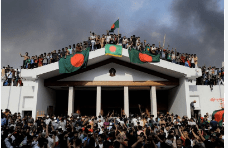
Improved relations between Bangladesh and Pakistan, following years of strained relations stemming from the 1971 war of independence, are the central topic. The shift involves increased trade, eased visa restrictions, and even military cooperation, causing concern in India, a long-time ally of Bangladesh. While some view this rapprochement as a positive step towards regional stability, others express reservations, particularly regarding historical grievances and the potential for increased regional tensions. Differing perspectives are presented by experts from Bangladesh, Pakistan, and India, highlighting the complex interplay of historical animosity, political maneuvering, and economic interests. The discussion also touches on the evolving relationships between these nations and China and Afghanistan, revealing the shifting geopolitical dynamics of South Asia.
South Asia’s Shifting Alliances: A Study Guide
Quiz
Instructions: Answer each question in 2-3 sentences.
- What historical event is the root cause of the long-standing tensions between Bangladesh and Pakistan?
- What significant change in leadership has led to a potential warming of relations between Bangladesh and Pakistan?
- How has Bangladesh’s relationship with India been affected by recent political changes and actions?
- What are some of the specific ways in which Bangladesh and Pakistan are currently improving their relations?
- What concerns does India have regarding the developing relationship between Bangladesh and Pakistan?
- What is the significance of the military leaders from Bangladesh and Pakistan meeting and calling each other “brotherly nations?”
- According to one of the speakers, what role did India play in the conflict that led to the creation of Bangladesh?
- What are some of the reasons why the citizens of the countries in South Asia might be more welcoming of one another than their politicians?
- What are the major economic issues and priorities for both Bangladesh and Pakistan currently?
- How is China’s role in South Asia evolving, particularly with its relationship to Bangladesh?
Quiz Answer Key
- The 1971 Liberation War, in which Bangladesh fought for independence from Pakistan, resulted in a brutal conflict that caused significant loss of life and created deep animosity between the two nations. This war led to decades of strained relations, with Bangladesh accusing Pakistan of severe human rights abuses.
- The interim rule of Nobel laureate Muhammad Eunice in Bangladesh, following the departure of Sheikh Hasina, has led to a shift in the country’s foreign policy and a willingness to engage with Pakistan. This change represents a move away from India and closer to both Pakistan and China.
- Bangladesh’s relationship with India has become strained due to issues such as India’s alleged interference in Bangladesh’s internal affairs and Dhaka’s demand for the extradition of Sheikh Hasina from India. Additionally, India’s perceived failure to protect its Hindu minority has also caused friction.
- Bangladesh and Pakistan are improving relations by restoring sea trade routes, easing visa rules, planning to restart direct flights, and increasing trade volumes. Furthermore, their military leaders are meeting and discussing cooperation, signaling a new, positive phase in their relationship.
- India is concerned about losing its long-time ally, Bangladesh, to its regional rival, Pakistan. There are also concerns that China is gaining influence in Bangladesh, which creates greater geopolitical instability for India.
- The meeting between the military leaders and the use of the term “brotherly nations” symbolizes a significant change in tone and a move toward closer cooperation between the two countries, particularly in the area of defense. It represents a clear break from their historically hostile interactions.
- One of the speakers claimed that India interfered in the conflict that led to the creation of Bangladesh. This is countered by another speaker, who argued that the atrocities of the war were not the result of interference but the actions of the Pakistan military and paramilitary forces.
- Many speakers believe that the underlying issues causing tension in South Asia are largely political, and that historically the peoples are from the same subcontinent. There is not a conflict between the citizens, who are welcoming and accepting, but rather with their political leaders.
- Both Bangladesh and Pakistan are dealing with economic difficulties. They hope to improve their financial situations through strengthened trade ties, increased economic cooperation, and joint business councils, specifically in areas like sugar, leather, and surgical goods.
- China is expanding its footprint in Bangladesh through trade and investment. Bangladesh’s interim foreign minister made his first foreign trip to Beijing, demonstrating the country’s willingness to strengthen cooperation with China, which is of concern to India.
Essay Questions
- Analyze the complex factors contributing to the shifting alliances in South Asia, focusing on the interplay between historical grievances, political transitions, and economic interests of Bangladesh, Pakistan, and India.
- Assess the potential benefits and risks of the emerging rapprochement between Bangladesh and Pakistan for both countries and the broader South Asian region, considering factors such as trade, security, and political stability.
- Discuss the roles and influence of external actors like India and China in shaping the dynamics of the new relationship between Bangladesh and Pakistan, and evaluate the potential geopolitical consequences of these interventions.
- Explore the internal political dynamics of Bangladesh, and their relationship to the country’s evolving foreign policy, and discuss how public opinion and domestic issues have influenced the recent changes in relations with Pakistan and India.
- Evaluate the long-term implications of the changing geopolitical landscape in South Asia, including its impact on regional security, economic development, and the potential for increased cooperation or conflict among the involved nations.
Glossary of Key Terms
- Rapprochement: The establishment or resumption of harmonious relations. In this context, it refers to the warming of relations between Bangladesh and Pakistan.
- Hegemony: Leadership or dominance, especially by one country or social group over others. In the context of the source, India is accused of seeking hegemony in South Asia.
- Interim Government: A temporary government set up during a transition period. Muhammad Eunice leads the interim government in Bangladesh.
- Razakars: In this context, a derogatory term used in Bangladesh for individuals perceived as sympathizers of Pakistan.
- Extradition: The action of deporting a person accused or convicted of a crime to the country where the crime was committed. In this context, Bangladesh wants Sheikh Hasina extradited from India to face charges.
- Bonhomie: Friendly and warm feelings; camaraderie. In the source, it refers to the friendly relationship that existed between India and Bangladesh for several years.
- Genocide: The deliberate killing of a large number of people from a particular nation or ethnic group, with the aim of destroying that nation or group. The 1971 Liberation War between Bangladesh and Pakistan involved a genocide.
- ISI: Pakistan’s Inter-Services Intelligence agency. In the source, a delegation from the ISI visiting Bangladesh was noteworthy, suggesting a shift in relations.
- SAARC: The South Asian Association for Regional Cooperation, a regional intergovernmental organization.
- Geopolitics: The study of the influence of factors such as geography and demographics on the politics and foreign policy of states.
South Asian Geopolitics: Shifting Alliances
Okay, here is a detailed briefing document summarizing the key themes and ideas from the provided text:
Briefing Document: Shifting Dynamics in South Asia – Bangladesh, Pakistan, and India
Date: October 26, 2023
Subject: Analysis of the evolving relationships between Bangladesh, Pakistan, and India, with consideration of broader regional implications.
Source: Excerpt from a news program transcript.
Executive Summary:
This document analyzes a recent shift in the geopolitical landscape of South Asia, focusing on the warming relations between Bangladesh and Pakistan after decades of animosity. This shift is occurring alongside strained ties between Bangladesh and India, and increased engagement between Bangladesh and China. These developments have the potential to significantly reshape regional dynamics, impacting trade, security, and diplomatic alliances. The core of the discussion is that historical animosity is giving way to new pragmatic relationships influenced by changing domestic politics and regional power dynamics, particularly with a rise in anti-India sentiment in Bangladesh.
Key Themes and Ideas:
- Historical Animosity and its Legacy:
- 1971 Liberation War: The brutal 1971 war for independence of Bangladesh from Pakistan, with accusations of genocide, mass rape, and displacement, created deep-seated animosity between the two nations. The source mentions “nearly 3 million people were killed” and “hundreds of thousands of women” were raped. The war fueled a lasting negative perception of Pakistan within Bangladesh.
- Derogatory Terminology: A derogatory term was coined in Bangladesh for those sympathizing with Pakistan, highlighting the depth of national sentiment against Pakistan.
- India’s Role: While Pakistanis perceive Indian interference as a key cause of issues, it’s crucial to note that most historical accounts attribute the issues to the actions of the Pakistani military itself. This point is clearly driven home by Professor Surad Dat, stating, “You didn’t rape over 200,000 women because of interference of India. There was no genocide over 3 million people because of interference from India”.
- The Thaw in Bangladesh-Pakistan Relations:
- New Leadership: The recent shift is attributed to a change in leadership in Bangladesh, with a focus on pragmatism and reconciliation. The interim government led by Nobel laureate Muhammad Eunice, is actively pursuing better relations with Pakistan.
- Restoring Ties: Concrete actions are being taken to improve relations, including restoring sea trade routes, easing visa rules, restarting direct flights, and increasing trade volume. The text states, “The two countries have restored their sea trade routes, eased visa rules, and planned to restart direct flights for the first time in over a decade.”
- Military Cooperation: There are indications of defense cooperation being discussed, although specifics remain somewhat unclear. A significant quote from the Pakistani army media states: “the enduring partnership between two brotherly nations must remain resilient against external influences”.
- Shared Identity: Some discussants emphasize that the fundamental bond between the peoples of Bangladesh and Pakistan has always been there. Tark Baziz mentions: “the relationship between the peoples of Pakistan and Bangladesh was always there in place, the issue was political”. Usma Kardar also states, “our hearts were together… we were one country”. They blame political motivation for the strained relations.
- Strained Bangladesh-India Relations:
- Extradition Demand: Bangladesh is demanding the extradition of former Prime Minister Sheikh Hasina from India to face charges of crimes against humanity. India, however, is seen as protecting her.
- Meddling Accusations: Bangladesh accuses India of meddling in its internal affairs, particularly concerning the treatment of its Hindu minority. Bangladesh states the “attacks are political in nature and not criminal” and that “India is propagating these incidents in a big way”.
- Perception of India: In Bangladesh, India is viewed by some as a domineering neighbor that has tried to impose its agenda on Bangladesh rather than act as a friendly partner, with one participant referring to the Indian position as “just like the India shasa work as a chief minister of one of the Indian Province”.
- Rise of anti-India sentiment: The participants identify a rise in anti-Indian sentiment with some portraying India as supporting fascist elements in Bangladesh.
- China’s Growing Influence:
- Economic Ties: Bangladesh is actively seeking to strengthen ties with China, particularly in trade and investment. Bangladesh’s Foreign Minister stated, “My first bilateral visit to China is a demonstration of the importance we attach to our relationship with China”. This move is seen as a way to diversify economic partnerships.
- Regional Power Dynamics:
- India’s Concerns: India is concerned about losing its longtime ally, Bangladesh, to its rival, Pakistan, and also about China’s increasing influence in the region.
- Afghanistan-Pakistan Tensions: India is engaging with the Taliban government in Afghanistan, which is seen by some as an attempt to counter Pakistan’s influence, particularly due to heightened tensions between Afghanistan and Pakistan.
- Shifting Alliances: These shifts highlight a dynamic region where historical alliances are being challenged by changing geopolitical realities, with Bangladesh and Pakistan’s shift seen by many as a response to India’s current stance with Bangladesh, and also potentially as an economic alternative to India and Western economic partners.
- Calls for Accountability and Resolution:
- Apology Demands: Bangladesh has consistently demanded an apology from Pakistan for the atrocities committed in 1971, not only during Sheikh Hasina’s tenure.
- Settling 1971 Issues: Bangladesh is pressing Pakistan to settle issues from 1971 to move forward with the relationship.
- Accountability for Atrocities: The people of Bangladesh are looking for accountability for the actions of the previous regime. They hope India will assist in bringing those responsible to justice.
Potential Implications:
- Regional Instability: The changing alliances could lead to regional instability, particularly with growing tensions between India and Pakistan.
- Economic Realignments: Increased trade and economic cooperation between Bangladesh, Pakistan, and China could alter existing trade patterns.
- Shifting Power Dynamics: The emergence of new partnerships could shift the balance of power in South Asia.
- Increased Regional Cooperation: There is a hope that this realignment can be positive, with a revival of the South Asian Association for Regional Cooperation (SAARC) for greater collaboration between countries.
Conclusion:
The situation in South Asia is fluid, with long-standing animosities and relationships being challenged by current political realities. The warming ties between Bangladesh and Pakistan, alongside strained Bangladesh-India relations and increased engagement between Bangladesh and China, represent a significant shift that has the potential to reshape regional dynamics. Further analysis and monitoring of these developments are crucial to understanding their implications for regional stability and international relations.
Shifting Geopolitics in South Asia
Frequently Asked Questions: Shifting Dynamics in South Asia
- What is the historical context of the relationship between Bangladesh and Pakistan, and how is it evolving? Bangladesh won its independence from Pakistan in 1971 after a brutal war, leading to decades of strained relations. The conflict involved significant violence, including a large number of civilian deaths and sexual violence against women, leaving a deep scar in the collective memory of Bangladesh. Recently, under new leadership, there’s been a noticeable shift towards improved relations between the two nations, with increased trade, restored sea routes, eased visa rules, and planned direct flights. This shift is seen by some as a departure from traditional alliances and is driven by a combination of factors, including changes in political leadership in Bangladesh and a desire to overcome past grievances.
- What are the key factors driving the rapprochement between Bangladesh and Pakistan? Several factors are at play. Firstly, there’s a new interim leadership in Bangladesh that seeks to normalize relations with Pakistan and move past the acrimony of the 1971 conflict. Secondly, there’s a view that the conflict was primarily between political elites and not the people, fostering a sense of shared heritage and brotherhood. Thirdly, there appears to be a desire to build stronger regional ties and reduce dependency on traditional allies, coupled with economic opportunities being pursued by both nations to cooperate. Finally, the discussion on the issues of 1971 is considered very important. The new leadership in Bangladesh is requesting for these matters to be discussed and resolved diplomatically.
- How has Bangladesh’s relationship with India changed, and what are the reasons for this shift? Traditionally, India and Bangladesh have had close ties, particularly since India supported Bangladesh during its liberation war. However, recent political developments have strained the relationship. Bangladesh accuses India of interfering in its internal affairs and of not adequately protecting its Hindu minority. Bangladesh has also asked for India to extradite former prime minister Sheikh Hasina to face charges of crimes against humanity. These issues have created a gap, allowing other powers like Pakistan and China to gain influence in Bangladesh. There also appears to be a sense that India’s position is increasingly viewed as treating Bangladesh more as a client state rather than a neighboring ally by some.
- What role is China playing in the changing dynamics of South Asia, and how does it affect Bangladesh? China is expanding its influence in the region, including in Bangladesh. Bangladesh’s interim foreign minister recently made a trip to Beijing to strengthen cooperation in trade, investment, and regional affairs. This reflects Bangladesh’s strategy of diversifying its partnerships and leveraging economic opportunities with various nations. Bangladesh seems to be interested in maintaining friendly relationships with all partners, not seeking to replace one by another. China is emerging as a key economic partner and potentially a political counterweight in a regional dynamic that is seeing historical allegiances and tensions being re-evaluated.
- What are India’s main concerns regarding the developing relations between Bangladesh and Pakistan? India is concerned about losing influence with its longtime ally, Bangladesh, to its regional rival, Pakistan. India fears that an alliance between Pakistan and Bangladesh could potentially destabilize the region. There are also concerns expressed about Bangladesh’s alleged use of its soil to attack India. Some Indian analysts view the recent developments as a deliberate attempt to undermine India’s regional power, with Pakistan and China possibly leveraging strained ties to gain an advantage. Some in India feel that these moves do not acknowledge the brutal history that led to the creation of Bangladesh.
- What are the key economic and trade agreements being discussed between Bangladesh and Pakistan, and what is their potential impact? Bangladesh and Pakistan are actively working to improve trade relations, with plans to quadruple their trade volume. A joint business council has been established to revive trade partnerships. Cooperation is planned in various sectors, including the sugar industry, leather goods, surgical goods, and chemicals. There are also plans to restore direct flights and ease visa regulations. However, some analysts believe that economic cooperation has limitations due to Pakistan and Bangladesh’s own economic struggles. If successful these developments have the potential to reshape economic interdependence in the region.
- How is the issue of the 1971 conflict and the demand for an apology from Pakistan being addressed in the new phase of relations? The 1971 conflict remains a contentious issue. Bangladesh is asking Pakistan to resolve all related issues from 1971 to move forward diplomatically. While there are ongoing discussions at the diplomatic level, it is not clear whether Pakistan will issue a formal apology. Bangladesh sees the settlement of the issues as a key step to moving past the historic animosity and building a more stable relationship with Pakistan. There appears to be a willingness to address this issue diplomatically.
- What is the broader significance of these shifts in South Asia’s geopolitical landscape? The developments in South Asia signal a reshaping of the geopolitical landscape. The region is moving from a context of primarily bilateral relationships, often defined by historical animosities and alliances, to one where new alliances, rivalries, and partnerships are emerging. India’s position is being challenged, China’s role is increasing, and even historic relationships are being re-evaluated. The key takeaway seems to be a fluid environment where economic drivers, strategic interests, and the need for regional cooperation are at the forefront, potentially changing the dynamics of power and influence.
Bangladesh-Pakistan Relations: A New Era?
Relations between Bangladesh and Pakistan have been strained since Bangladesh’s war for independence from Pakistan in 1971, but there are signs of improving relations between the two countries [1].
Historical Context
- Bangladesh won its independence from Pakistan in 1971 after a brutal conflict [1].
- The war resulted in the deaths of nearly 3 million people and the rape of hundreds of thousands of women [1, 2].
- There has been a great deal of animosity towards Pakistan in Bangladesh over the decades following the war [1].
- Bangladesh has consistently asked for an apology from Pakistan for the events of 1971 [3].
Current Relations
- There is a sense that historical animosity is turning into warmer relations between Bangladesh and Pakistan [1].
- Under the interim rule of Nobel laureate Muhammad Eunice, Bangladesh is restoring ties with Pakistan [1].
- In December, Eunice met with his Pakistani counterpart, Shehbaz Sharif, and urged him to settle the 1971 issues [1].
- The two leaders have committed to expanding relations and cooperation [1].
- Bangladesh and Pakistan have restored sea trade routes, eased visa rules, and plan to restart direct flights [1].
- A delegation from Pakistan’s top trade body traveled to Dhaka to increase trade volume [1].
- Bangladesh’s Lieutenant General Camaro Hassan met with Pakistani Army Chief Sayed Assam Munir [1].
- Pakistan’s Army media stated that the partnership between the two nations must remain resilient against external influences [4].
- A joint Business Council has been established and the countries are planning to prioritize trade partnerships and increase annual trade to three billion [5].
- Pakistan’s Deputy Prime Minister is planning a trip to Dhaka in February [6].
Factors Influencing the Relationship
- Some believe that India has been a negative influence in the relationship between Pakistan and Bangladesh [2].
- There is a sense that India wants hegemony in the region and has not accepted Pakistan’s independence [2].
- Bangladesh has asked India not to meddle in its internal affairs [4].
- Bangladesh is also seeking the extradition of Sheikh Hasina from India to face charges of crimes against humanity [3, 4].
- China is expanding its footprint in Bangladesh, strengthening cooperation in trade, investment, and regional affairs [4].
- There is no real tension between the citizens of these countries, and the issues are mostly political [7].
- The current government of Bangladesh wants to maintain friendly relationships with all its neighbors [8].
Regional Implications
- India is worried about losing its longtime ally Bangladesh to Pakistan [4].
- India’s ties with Bangladesh have been strained since August, with accusations of failing to protect the Hindu minority and meddling in internal affairs [4].
- India is engaging with Afghanistan’s Taliban government, which some see as an effort to counter Pakistan [4].
- Some believe that the shift in relations could lead to regional instability [1].
- There are concerns that Bangladesh might sacrifice some of its economic relationship with India, which could be replaced by China and Pakistan [9].
Overall The relationship between Bangladesh and Pakistan is complex and has been shaped by historical events and political factors [7]. While there are still some outstanding issues, such as the 1971 conflict, the two countries seem to be moving towards a more cooperative relationship [10]. However, it is unclear what the long-term implications of this shift in relations might be for the region [4].
Bangladesh-Pakistan Relations and Regional Stability
The evolving relationship between Bangladesh and Pakistan has sparked concerns about regional stability, particularly in relation to India’s position in South Asia [1, 2].
Key Points of Instability:
- Shifting Alliances: The warming relations between Bangladesh and Pakistan are viewed with concern by India, which fears losing a long-time ally to its rival [1, 2]. This shift is occurring alongside Bangladesh’s growing ties with China, further complicating the regional dynamic [1, 2].
- Historical Animosity: Despite the move towards improved relations, the deep-seated historical animosity between Bangladesh and Pakistan, stemming from the 1971 war, remains a sensitive issue [1, 3, 4]. The demand for an apology from Pakistan for the atrocities of 1971 has not been fully addressed, and could lead to continued tension [1, 4, 5].
- Strained India-Bangladesh Relations: Relations between India and Bangladesh have become strained, with Bangladesh accusing India of meddling in its internal affairs and failing to protect the Hindu minority [2]. India, on the other hand, is concerned about Bangladesh’s political leadership and its past use of Bangladeshi soil to attack India [2, 6].
- India’s Response: India has been engaging with the Taliban government in Afghanistan, a move seen by some as an attempt to counter Pakistan in the region [2]. This further complicates the geopolitical landscape and suggests an attempt by India to exert its influence [2, 7].
- Economic and Political Factors: The shift in alliances is driven by a mix of economic and political factors. Bangladesh is seeking to diversify its economic partnerships and reduce its dependence on India, while Pakistan is attempting to rebuild its regional influence [2, 3, 7].
- Potential for Conflict: Some observers worry that these shifts in alliances and the rise of new partnerships could lead to regional instability, especially considering the long history of conflict and tension in the region [1, 2].
Points of Stability
- People to People Ties: It is important to note that, despite political tensions, there is a sense that citizens of the involved countries want good relationships [3, 4].
- Regional Cooperation: There is a desire to re-establish the South Asian Association for Regional Cooperation (SAARC) as a platform for regional cooperation and peace [8].
- Economic Cooperation: There is a push for increased trade and connectivity, which could improve stability through mutual benefit [1, 7, 9].
In summary, while there is a move towards improved relations between Bangladesh and Pakistan, the potential for regional instability remains a concern due to shifting alliances, strained relations between other key players like India, and long-standing historical animosities [1, 2].
Bangladesh-Pakistan Relations: A Legacy of War
Historical animosity between Bangladesh and Pakistan is rooted in the 1971 war for independence, which continues to impact their relationship [1, 2].
Key points regarding this historical animosity include:
- Brutal Conflict: Bangladesh’s independence was achieved through a bloody war with Pakistan [1]. The conflict resulted in approximately 3 million deaths and the rape of hundreds of thousands of women [1, 3].
- Derogatory Terms: The war led to Bangladesh coining a derogatory term for anyone who sympathized with Pakistan [1].
- Accusations of Atrocities: The Pakistani military and its paramilitary forces were accused of committing atrocities against the Bengali population [1]. There were also 10 million refugees who had to leave the country [3].
- Demand for Apology: Bangladesh has consistently demanded an apology from Pakistan for the events of 1971 [4]. This demand is not just from the government, but from the Bangladeshi people as well [4].
- Political vs. People: While there is a history of political conflict, it is important to note that the relationship between the peoples of Pakistan and Bangladesh was always present [5]. The conflict was primarily between political leaders, not the citizens [5].
- Interference Claims: Some believe that the conflict was exacerbated by external interference, particularly from India, who they claim wanted hegemony in the region [3]. However, this view is challenged by others who highlight the atrocities committed by the Pakistani military against the Bangladeshi people [3].
- Historical Facts: It’s important to note that the atrocities committed during the 1971 war are considered historical facts, not due to external interference [3]. This includes the deaths, rapes, and the displacement of millions of people [3].
- Impact on Relations: The historical animosity has led to decades of tense relations between the two countries [1]. Even though there are signs of warming relations, the past is still a significant factor in the present dynamic [2]. The deep roots of the history cannot be ignored [4].
- Ongoing Dialogue: Despite the historical animosity, there is an ongoing dialogue between Bangladesh and Pakistan to settle the issues of 1971 [6]. Bangladesh is pressing Pakistan to make its position clear to move forward with the relationship [6].
In summary, the historical animosity between Bangladesh and Pakistan is a significant factor in their relationship, stemming from the brutal 1971 war and the atrocities committed during that time [1, 3]. While there are now attempts to move forward, the past is still a prominent issue [4, 6].
India’s Shifting South Asian Alliances
India has several concerns regarding the evolving relationship between Bangladesh and Pakistan, as well as the broader shifts in regional dynamics [1, 2]. These concerns stem from historical, political, and economic factors and are impacting India’s strategic position in South Asia [1, 3].
Key Concerns:
- Loss of a Longtime Ally: India is worried about losing Bangladesh, a longtime ally, to its rival Pakistan [1]. This concern is exacerbated by the growing relationship between Bangladesh and China [1, 2].
- Strained Bilateral Relations: India’s ties with Bangladesh have been strained since August, due to accusations that India is meddling in Bangladesh’s internal affairs [1]. Bangladesh has also accused India of failing to protect the country’s Hindu minority [1]. These issues have led to a breakdown in the previously close relationship between the two countries [4].
- Historical Issues: India has historical concerns about the use of Bangladeshi soil to attack India [3]. India feels that some in Bangladesh do not acknowledge this issue [3].
- Regional Hegemony: Some in Pakistan believe that India desires hegemony in the region and has never accepted the independence of Pakistan [3]. This perspective adds another layer of complexity to India’s relations in the region.
- Countering Pakistan: India’s engagement with the Taliban government in Afghanistan is seen by some as an attempt to counter Pakistan in the region [1]. This move indicates India’s efforts to maintain its influence and leverage its relationships amidst shifting regional dynamics [1, 2].
- Economic Impact: There is concern in India that Bangladesh might sacrifice some of its economic relationship with India, as Bangladesh seeks to diversify its partnerships and reduce its dependence on India [5, 6]. It is thought that Pakistan and China could easily replace India as trading partners [5].
- Geopolitical Messaging: The attention given to the ISI delegation in Bangladesh sent a clear message to India regarding the shifts in regional alliances [2]. This shows that India is aware that geopolitical signaling is taking place.
- Historical Amnesia: Some in India believe that there is a lack of understanding of history in Bangladesh, particularly the atrocities of the 1971 war, and that this lack of understanding drives current policy [3].
Underlying Factors:
- Historical Animosity: The historical conflict between India and Pakistan, including the wars, continues to play a significant role in the current dynamics [3]. India has also fought wars with China [2].
- Political Instability: India is concerned about the political instability in the region, with governments and alliances shifting [1, 2]. The potential for instability can be observed in India’s concern that past regimes in Bangladesh have been hostile to India [3].
- Economic Competition: Economic competition among the countries is a major factor in the shifting alliances [2, 5]. India is concerned that its economic position might be challenged.
- Shifting Regional Power: The rise of China as a major player in the region adds to the complexities [1, 2]. China is expanding its economic and political influence in Bangladesh, further challenging India’s regional dominance [1, 2].
Overall India’s concerns are multifaceted, stemming from historical animosities, political maneuvering, and economic competition. The evolving relationship between Bangladesh and Pakistan, as well as the growing influence of China in the region, is creating unease for India. The country is trying to navigate this shifting landscape by engaging with other nations in the region while keeping a close eye on its strategic interests [1, 2].
Shifting Alliances in South Asia
The sources indicate that there are significant shifts in alliances occurring in South Asia, particularly involving Bangladesh, Pakistan, India, and China [1, 2]. These shifts are driven by a combination of historical grievances, political maneuvering, and economic interests [2-4].
Key Shifts in Alliances:
- Bangladesh and Pakistan: After decades of strained relations stemming from the 1971 war, Bangladesh and Pakistan are moving towards closer ties [1, 2]. This includes restoring sea trade routes, easing visa rules, planning direct flights, and increasing trade [1]. There have also been meetings between military leaders, signaling a potential for defense cooperation [1, 2, 5]. A joint business council has also been established [6].
- Bangladesh and China: Bangladesh is also strengthening its ties with China, with the interim foreign minister making Beijing his first foreign trip [2]. This indicates a growing economic and political cooperation between the two countries [2, 7].
- India and Afghanistan: India has been engaging with the Taliban government in Afghanistan, which is seen as an effort to counter Pakistan’s influence in the region [2, 4]. This engagement is occurring despite India’s non-recognition of the Taliban government [6, 7].
- Strained India-Bangladesh Relations: Relations between India and Bangladesh have become strained [2, 8]. Bangladesh has accused India of meddling in its internal affairs and failing to protect the Hindu minority [2]. Additionally, Bangladesh has asked India to extradite Sheikh Hasina to face charges in Bangladesh [5, 8]. India, on the other hand, has concerns about the use of Bangladeshi soil to attack India [4].
Factors Driving These Shifts:
- Historical Animosity: The 1971 war between Bangladesh and Pakistan continues to impact the relationship, although there is now a push to move forward [1, 3, 4, 8]. The historical animosity between India and Pakistan also plays a role in the shifting alliances [4].
- Political Interests: Bangladesh seeks to diversify its partnerships and reduce its dependence on India [2, 7, 9]. Pakistan is attempting to rebuild its regional influence [2, 4]. Some also believe India is trying to maintain hegemony in the region [4].
- Economic Factors: Economic cooperation is a major driver of these shifts. Bangladesh is seeking to expand its trade relationships with both Pakistan and China [1, 2, 7, 9]. There are plans to increase trade between Bangladesh and Pakistan significantly [6]. India, however, is worried about losing its economic position in the region [6, 7].
- Regional Power Dynamics: The growing influence of China in the region is a major factor driving these shifts [2, 7]. China’s economic and political influence is expanding in Bangladesh, challenging India’s regional dominance [2, 6, 7].
- Internal Politics: Changes in leadership in Bangladesh have also influenced the shifts in alliances [1]. The new interim government is taking a different approach to regional relations compared to the previous regime [1]. The new government in Bangladesh seems to have different ideas about how to move forward, compared to the previous regime [1, 3].
Impact of Shifting Alliances:
- Regional Instability: The shifting alliances have caused concerns about regional instability, especially for India, which sees these new relationships as a threat [1, 2]. India is worried about losing its longtime ally, Bangladesh, to its rival, Pakistan [2, 4].
- Geopolitical Messaging: The meetings between military leaders and the attention given to the ISI delegation in Bangladesh sends a message to India about the changing regional dynamics [2, 6]. These shifts also signal to India that it is losing some of its regional influence [4, 6].
- Potential for Cooperation: Despite the concerns, there is a push for regional cooperation, including the revival of the South Asian Association for Regional Cooperation (SAARC) [10]. There are also efforts to increase trade and connectivity in the region [6, 7].
In summary, the shifting alliances in South Asia are complex and multifaceted. They are driven by historical grievances, political interests, economic factors, and regional power dynamics. These shifts have significant implications for the region, particularly for India, and they underscore the ongoing geopolitical changes taking place [1-4, 8].
The Original Text
after Decades of acrimony could Pakistan and Bangladesh finally align under new leadership following the aler of sheikina Dhaka appears poised to build better relations with Islamabad some say at India’s expense but would better ties benefit Bangladesh or cause Regional instability for all I’m Andrea sanki and today’s newsmaker is the Bangladesh Pakistan rosmont Bangladesh won its independence from Pakistan through one of the 20th Century’s most brutal conflicts that war laid the groundwork for decades of tense relations with Bangladesh coining a derogatory term for anyone who might sympathize with Pakistan when protesters rose up against former prime minister shik hassina last year she said it was those razak cars backed by Islamabad who were destabilizing the country now if she thought that would rally support in her favor she was wrong and today new leaders in Bangladesh are pulling closer to Pakistan away from India and even toward China here’s a look historical animosity is turning into warmer relations in 1971 Bangladesh fought a bloody war for independence from Pakistan in which nearly 3 million people were killed Pakistani military and its paramilitary forces were accused of raping hundreds of thousands of women the Bengali army with India’s help forced Pakistan to surrender and Bangladesh was born but over the decades to follow animosity towards Pakistan remained until the dramatic AA of shik Hena daughter of independent hero shik mujibur ramman in August last year now under the interim rule of Nobel laurate Muhammad Eunice daaka is restoring ties with Islamabad during a meeting in Cairo in December Eunice urged his counterpart shabaz Sharif to settle the 1971 issues once and for all for future Generations shareif wrote on X that the two leaders are committed to expanding their relations and cooperation and it has already started the two countries have restored their sea trade routes eased visa rules and planned to restart direct flights for the first time in over a decade a delegation of Pakistan’s top trade body traveled to Dhaka this month in an attempt to increase their trade volume fourfold and Bangladesh’s Lieutenant General Camaro Hassan met with Pakistani army Chief Sayed Assam mun after the meeting Pakistan’s Army media said the enduring partnership between two brother LLY Nations must remain resilient against external influences now India is worried about losing its longtime Ally Bangladesh to its AR rival Pakistan New Deli Daka ties have been strained since August as Bangladesh sees hena’s extradition from India to face charges of crimes against humanity India accuses Bangladesh of failing to protect the country’s Hindu minority while Daka has asked New Delhi not to meddle in its Internal Affairs these attacks are political in nature and not criminal and India is propagating these incidents in a big way we have not said that we can’t do anything we have said that we are doing everything at the same time India is engaging with Afghanistan’s Taliban government which some call an effort to counter Pakistan in the region the two sides witnessed their first highlevel meeting in January it came as tensions between the Taliban and Pakistan he sent another low with the exchange of air strikes last month and in another shift in Asia China is expanding its footprint in Bangladesh on his first foreign trip Bangladesh’s interim foreign minister flew to Beijing to strengthen cooperation in trade investment and Regional Affairs my first bilateral visit to China is a demonstration of the importance we attach to our relationship with China and our sincere willingness to take this relation to anywhere height with Bangladesh at the center resolving past adversaries new alliances and rival diplomatic engagements seem to be reshaping South Asia so where might this Bangladesh Pakistan rosmont take both countries and The Wider region while joining me now to debate that and much more are from laor member of the provincial assembly of the Punjab usma cardar from London former chairperson of the Bangladesh nationalist lawyers Forum UK Tark baziz and from New Delhi professor of international Affairs at Jindal University surad dat thanks all so much for being with me Tark I’ll I’ll start with you as a Bangladesh to tell us how attitudes in general toward pakistanis have changed over the last few years I mean Pakistan from what I’m getting is is just not the villain that it used to be thank you very much uh first I would like like to thank including you and other two guest in this discussion the important question you raised actually the relationship between the peoples of Pakistan and Bangladesh was always there in place the issue was political so we all know that the historic issue of 19 1971 Liberation War but we we we we need to remind ourselves that this conflict was not between the peoples of Pakistan and Bangladesh this was between the political leaders and those who are responsible for those things so if we if we go back after the tenure of President Z Rahman the relationship Z rman tried to maintain between the neighboring countries in a friendly manner okay so that continues during the beum Khalia regime as well it was interrupted during the fascist Hass regime in last 15 years okay and and in those 15 years though have have Bangladeshi attitudes toward India changed as well yes in these 15 years Bangladesh attitude was India towards India was it’s just not a neighbor in friendship it was you can say that India’s position was they try to treat and it’s it’s it’s the fascist regimes they want to stay in power so they use that neighboring country in that way so it was just like not like a neighboring friend just like the the the India shasa work as a chief minister of one of the Indian Province what I I would like to say so the position was so simple that the tension between India Bangladesh Pakistan I in my position I believe there is no real tension between the citizens of these countries we all are historically from the same Indian subcontinent so we are brothers we are sisters but you people are united it’s the attitude of the politicians we politicians we need to change okay and the current dilemma after the fascist regime now the fascist is in India so naturally there is a tension that whether India is supporting the facist in an open open air when the peoples of Bangladesh are clearly against this F Stadium okay so whether it is the people or the politicians though the the relationship is changing so umak kardar how fundamentally do you see the relationship changing from here on out I mean we we had the military Chiefs visiting each other and calling Pakistan and Bangladesh two brotherly Nations I mean it was a real symbol uhma of you know a change in tone to say the least uh thank you so much for inviting me to your program it is uh a pleasure uh to talk on this subject you know Bangladesh which of course was East Pakistan we were West Pakistan we started off together uh our hearts were uh together we uh you know we were one country and then the the was this um I think negative uh type of uh interference in the Affairs of Pakistan which came uh predominantly from our neighbor India because um I feel that India wants hegemony in the region and they could never swallow the fact that Pakistan gained independence in 1947 uh they still think that uh pakist will you know collapse it’ll finish and they refuse to accept the reality of Pakistan I think that it’s a it’s a new beginning it’s a new beginning for Pakistan and for Bangladesh we have a lot in common and uh now uh I think uh the 15 years which were forcibly the you know we were made to uh uh at and be apart from each other because of political motivation because of uh political uh I exploitation that era has come to an end so you agree with with t on that point obviously well let me let me move ahead to uh SRI because both of our panelists have uh said something about India and India has expressed definitely some concern with this ront between Pakistan and Bangladesh why historically as you’ve seen that we’ve had an extremely strained relationship with Pakistan and I think you know we don’t need to do a class on that to explain those details and exactly what Pakistan has Unleashed on India they’ve used Terror as a tool of for for their foreign policy and we’ve also seen in a certain uh you know particular regime of Bangladesh where they’ve used Bangladesh soil to also attack India so it’s a I mean these are all historical counted facts and figures that we are discussing I let me just add a little bit here I did hear my co-panelist with full respect for their views but the fact that they’re saying that the problem between East Pakistan and West Pakistan occurred because of interference of India is really very little understanding of History you didn’t uh rape over 200,000 women because of interference of India there was no genocide over 3 million people because of interference from India there were 10 million refugees who had to leave the country and go I mean these are because of interference I think let’s get our historical facts and figures correct here yes of course given the fact that India and Bangladesh right now don’t have the previous Bon homy which existed for the last 16 years there is a gap and naturally every country will leverage that but I I would like to recall here the foreign advisor also has mentioned that you know uh the tension continues to exist and the fact that it’s true that people all over in South Asia and and all of us who travel the world we are very much welcomed by a Pakistani Bangladeshi all citizens across you know between the citizens there is no problem at all and it is true much of the issues are political but at the same time I mean I think I don’t need to overstate the issue of the apology that you know Bangladesh has time and again demanded and this is not only during shik nazra I mean I would want to say that yes she of course ensured that there was real engagement but the historical problems that they have is a reality but yes there has been a kind of Engagement and and why not I think it’s wonderful that South Asian States should get together and find common engagement platform but let’s not forget the you know the deep roots of history and as to what played that out and one particular issue about how in general Bangladeshi have also been very wary of Pakistan is while socially we are welcoming but you know at another level and I do in you know travel all around South Asia very often and outside so uh just wanted to make that point okay uh let me return to toic then because uh as as was just mentioned Pak I mean Bangladesh has asked clearly for an apology from Pakistan and that is from the Pakistan I’m the Bangladeshi people themselves because the history is still fairly recent and it is brutal we have to be we have to be honest but they’re also asking at the same time from India you know to have sheikina extradited so she can face trial um in Bangladesh for the injustices they believe she has perpetrated there do you think you’ll get either of those uh demands delivered on thank you uh the what you said that is a clear position of Bangladesh and the people of Bangladesh and you see that recently uh Professor unus when when when met uh uh Pakistan’s prime minister and the message was clear that Bangladesh asked Pakistan to settle the issues of 1971 to help Daka to move forward with its relationship with Islamabad at the same time professor unus and also this is the position of the national the people of Bangladesh that the the fascist is in India and the regime what atrocities they did the clean ing of the youths the massacre they make during this 15 years tenure the these all need to be accounted for in the ey of law so as a neighboring country naturally Bangladesh is asking that India will assist in that regard as well but the question is that the relationship is a ongoing process it does not mean that the 1971 issues this is ongoing dialogue Bangladesh is pressing to Pakistan and asking Islamabad to make their position clear and okay this matter will be settled in diplomatically okay hope because it’s interesting that it it hopefully will be settled diplomatically diplomatically but usma let’s look at where we’re at now and as I said before we saw Pakistan and Bangladesh’s military Chiefs um we saw them meeting and making decisions face to face rather than more political uh and diplomatic meetings taking place and they’re specifically talking about boosting defense cooperation even signing some kind of nuclear treaty uh is that is that good uh I think this is a little bit of U uh misunderstanding here the first meeting uh between the prime minister of Pakistan and um uh the chief uh advisor of the interim government uh they met in uh United Nations and then SEC the second meeting they had Ino and went to Daka and then their General came to Pakistan so it is not uh just a military we are talking good but I’m asking about the military the military meeting and what was discussed there because those are some of the biggest takeway so military meeting is just one meeting and of course we can have some joint ventures there maybe uh we can have uh you know we can also uh talk about some kind of cooperation as far as the uh nuclear situation is concerned but that is something which has not been discussed right now right now what has uh happening is that the joint Business Council has been established again for 15 long years there was absolute hardly any trade with Bangladesh uh they’re now planning to prioritize the trade Partnerships raise the annual trade to three billion which is more than and there was in meeting of the officials of the Pakistan Chamber of Commerce and the bang they launched this park banglades joint Business Council so we are now talking about uh uh Revival of trade Revival of cultural delegations Sports uh you know cooperation in areas of sugar industry dangi controls you know leather goods surgical Goods chemicals it so we are talking about a lot of things we are not talking about any uh military cooperation talking about countries we want all we want to start connectivity resume the flights to Bangladesh ties also we want to strengthen with Bangladesh right there’s there’s a lot a lot on the table because there is a lot to bring back to this relationship obviously but let me go back to sadna uh because it’s important to address how much Regional Dynamics are really shifting right now I mean we have observers saying India is moving closer to Afghanistan which makes Pakistan nervous Bangladesh and Pakistan are getting closer and also moving toward China especially for greater economic ties which makes India nervous so I mean how fundamental a shift is this really especially on the economic front and if if you’d like to address the military issues as well that I know has a lot has been said about in the Indian press uh yes let me just begin with the military and I come back to the regional and the economic aspect a bit later yes the kind of photo ops that the isi delegation received uh was clearly messaging uh where on Earth have we ever seen seen isi delegation keeps moving around the world has there been so much of noise about it so clearly there’s a you know messaging that’s been conveyed to India but that’s how it is that’s how the geopolitics work but coming back to the regional uh issue yes uh uh I would actually hesitate to say that India has moved closer to Afghanistan but I think over decades one does understand that India has been in which were ways possible to provide for the people of Afghanistan uh so while there is certainly absolutely no official recognition of Taliban we certainly uh don’t we denounce it but at the same time there were several projects which includes water projects uh transport projects and many other which you know which is of great appeal to the people of Afghanistan and we think that we shouldn’t let that down because across the board in Afghanistan everybody has a very strong positive perception about India and I think that’s the way forward we want to take it and we of course understand right now there is a mix of Afghanistan Pakistan tension which is again on the boil and again of course China is a actor that constantly uh we are struggling with because of our uh security concerns that we share with them there has been some kind of a understanding at this point of time on the border but as we know these relationships and these situations are tenuous so yes as I mentioned in the very first sentence that there is a bit of a vacuum because India is not so closely engaging with Bangladesh at this point of time so it is not not surprising that external powers like Pakistan and China would find greater space to leverage that particular situation and the talk about trade as of now Bangladesh has less than 1% trade with Pakistan uh let’s not overbeat it a bit much because Pakistan given its own Financial dire conditions Bangladesh is right now who was a a miracle story till three years ago is going through a very bad economic situation themselves so clearly their limitation but that does not stop from two neighbors to engage together build connectivity together and there is a uh I think visas have been granted uh Grace Visas so these are positive uh developments and I would look at it through that because if the you know if the neighbors Prosper then the whole region prospers okay and I’ve always maintained that I think economic cooperation is certainly something that we all would appreciate I mean the glass should be half full in this case but uh totic I mean should bangladeshis at all worry about perhaps having to sacrifice some economic relationship with India or are they not thinking about that because maybe it can be easily replaced by China and and Pakistan for that matter thank you I don’t think that Bangladesh is in any way worried about anything and I don’t think that the position for Bangladesh is to dorate the relationship with India because India is a neighbor of Bangladesh and we can’t change our neighbor on daily basis so what Bangladesh want that the president Z Rahman started the relationship between India and Bangladesh and Pakistan you remember the starting point of the S South and Central Asian Regional cooperation established by President late president Z Rahman and the the all all the matters was the foreign policy for jaman was that is continuing During the kalas period as well the neighboring country India we will maintain a friendly neighborhood with them so they are our biggest neighbor and also as I mentioned earlier the relationship with Pakistan there are some historic issues that will be diplomatically dealt by the uh responsible person okay I mean we hope the relationship will continue we hope you’re right but when you have outstanding issues like like Bangladesh demanding Sheik hassina be returned and chances being very good that India will not return her and man and continue to protect her uh that doesn’t bode well for improving relations for example but I am hopeful that as a neighbor as a good neighbor India will understand that the peoples of Bangladesh were outed the Hina as a fascist and it’s it’s it’s very wide all over the world knows so India to whether India want Hina or India wants the people of Bangladesh that is their matter but from our side our position is clear we want a beautiful friendly relationship with India at the same time we want a beautiful friendly relationship with Pakistan so it’s not that we will make a relationship with Pakistan and we will go abandon India or it’s not that we will make a relationship with India and we will abandon China the simple thing Bangladesh is a progressive country and the people of Bangladesh they are always very welcoming they want to maintain as I mentioned the foreign policy of President Z that we will make a friendly win-win relationship between our neighbors good to hear usma I I can see you agreeing there but we we just have one minute left so I mean sorry S radna I can see you agreeing there but let me get back to usma quickly because a final note Pakistan’s Deputy Prime Minister is planning a trip to DACA in February what are you hoping to see out of that meeting uh the Deputy Prime Minister isak Dar is definitely visiting Daka in February and we hope for a joint economic commission to be before but in the last 15 years it was a very repressive regime and now the people of Bangladesh have spoken and I think I think all the people all the countries in the region must respect uh uh you know the will of the people and uh it is also important and this uh I think it was expressed by Dr yunas also who’s the chief advisor of the interum government that we must revive the sck uh uh again it was a regional platform where all the countries of South Asia sat together and spoke about Regional cooperation trade Commerce you know and it is vital for the peace in this region so I think now India should not have any kind of belligerent or uh you know uh any sort of hegemonic about being usma we’re gonna we’re going to have to end it there and unfortunately we keep losing uh your connection but uh that that’s going to to be the final word I’d like to thank really all three of you so much for being with us on this edition of the newsmakers and our viewers of course for joining us as well remember you can follow us on social media and do subscribe to our YouTube channel I’m Andrea sanki we’ll see you next time

By Amjad Izhar
Contact: amjad.izhar@gmail.com
https://amjadizhar.blog
Affiliate Disclosure: This blog may contain affiliate links, which means I may earn a small commission if you click on the link and make a purchase. This comes at no additional cost to you. I only recommend products or services that I believe will add value to my readers. Your support helps keep this blog running and allows me to continue providing you with quality content. Thank you for your support!

Leave a comment