A post-coup political discussion in Bangladesh is analyzed, featuring interviews with a former Member of Parliament and a political analyst. The conversation centers on the nature of the recent events—whether a revolution or a coup—and the implications for the future, including constitutional reform and upcoming elections. Disagreements arise regarding the legitimacy of the actions and the potential for meaningful political change. The panelists debate the role of political culture and the necessity of consensus for successful reform, highlighting the challenges of achieving unity amidst deep divisions. Ultimately, the discussion underscores the uncertainty and fragility of the political landscape.
Political Turmoil and the Call for Change: A Study Guide
Quiz
Instructions: Answer the following questions in 2-3 complete sentences each.
What are the main issues being discussed in this broadcast?
What is the significance of the date December 31st, 2024 in the context of the discussion?
Why does Dr. Zahidur Rahman question the use of the word “revolution” in the current context?
What is the core argument made by Barrister Rumin Farhana regarding the current political situation?
What are some examples of the changes in political culture being discussed, and why is this change seen as important?
What is the speakers’ perspective on the possibility of political reform and consensus-building?
What is the debate surrounding the existing constitution of 1972, and why are some calling for its replacement?
What specific concerns are raised about the electoral process and potential manipulation?
According to the speakers, what are the immediate priorities that need to be addressed before or alongside political reforms?
How do the speakers characterize the current state of political discourse and the potential impact of the new movement?
Answer Key
The discussion centers on the issues of dialogue, reform, and revolution declaration in Bangladesh, particularly following recent political upheaval. It addresses the validity of calling the recent events a revolution and how the current political system may or may not change.
December 31st, 2024, is a date mentioned by revolutionaries as a day to gather at Shaheed Minar, suggesting a planned event or declaration that challenges the existing political order. The broadcast mentions it to highlight the planning by opposition forces.
Dr. Rahman questions the use of the word “revolution” because it doesn’t fit the traditional definition of a revolution, and the movement has announced its proclamation five months after the events occurred. He also emphasizes that the changes are not addressing the state system and instead the system is still operating as before.
Barrister Farhana believes that the current political situation is filled with confusion, chaos, and the potential for conflict among political parties. She sees the absence of a clear and transparent path forward and expresses doubts on the long term plan of the opposition movement.
The speakers discuss the need to change the political culture, including moving away from corruption and manipulation. They also express the importance of engaging more talented people in politics to promote improvement in leadership and governance.
The speakers express mixed opinions on political reform and consensus-building. They recognize the need for these changes but also acknowledge that extreme positions and lack of unity may hinder progress, especially if there is a conflict over political parties’ agendas.
The existing 1972 constitution is being debated because it’s seen as insufficient for ensuring good governance. Some propose burying or canceling the constitution, asserting the need for a new political arrangement or a complete change in how the country operates.
There is significant concern over the potential for election manipulation, with a history of vote rigging and unfair practices being brought up. Speakers express the need for transparency and accountability in the electoral process to ensure a fair and democratic election.
Beyond major political reforms, the immediate priorities include ensuring law and order, controlling the prices of goods, and providing safety and security for citizens in their daily lives. These day to day issues are viewed as key to stabilizing the country.
The speakers characterize the current political discourse as filled with division and hatred, stemming from years of political repression. They see the new movement as a catalyst for change, but also recognize the challenges of achieving lasting reform because the interests of all political groups don’t necessarily align.
Essay Questions
Instructions: Answer the following questions in well-structured essays.
Analyze the different perspectives on the events described in the broadcast and evaluate their validity, and the impact of these perspectives on current political landscape.
Discuss the role of political culture in Bangladesh, as presented in the broadcast, and explain how changing this culture is essential for long-term democratic success.
Compare and contrast the views on the possibility of political reform and consensus-building between the various participants in the broadcast. What are the challenges to achieving reform?
Explore the complexities of revolution, as presented in the context of the broadcast. Consider the relationship between political revolution and cultural change.
Analyze the speakers’ concerns over the electoral process in Bangladesh and propose solutions for how to achieve fairer and more democratic elections in the future.
Glossary of Key Terms
Coup d’état: The sudden, illegal seizure of power from a government, often by a small group, and sometimes involving the military.
Revolution: A fundamental and often violent change in the political system, societal structure, and/or culture of a country. In the text, it’s discussed with the different implications the word can mean, i.e., industrial, political, or cultural revolution.
Political Culture: The set of shared beliefs, values, and practices that shape how people in a society engage with politics and government. In this context, it is used to indicate areas of needed reform for Bangladesh.
Interim Government: A temporary government set up to oversee the transition of power, especially during or after times of political upheaval. The interim government is discussed as not canceled even though the current system is considered to be canceled.
Shaheed Minar: A national monument in Bangladesh, often used for political gatherings, especially to pay respects to those who died in past uprisings and movements. The monument is an important location in this text.
Mujibism: A political ideology associated with Sheikh Mujibur Rahman, often seen as the founder of Bangladesh. This term is used in the text in the context of abolishing it as well as the current constitution.
Political Reform: Changes made to the political system aimed at improving governance, accountability, and democratic participation. Reforms in the context of this text include a review of the electoral process.
National Consensus: A broad agreement on critical issues among different political parties and groups, usually reached through dialogue and negotiation. The text emphasizes the difficulty of obtaining national consensus.
Anti-Discrimination Student Movement: A student movement mentioned in the broadcast that is at the forefront of the protests calling for change and are a driving force behind many of the changes being proposed.
Political Settlement: A negotiated agreement or framework designed to resolve a political conflict and establish a new order, which is being discussed in order to determine the future of the country.
Bangladesh’s Crossroads: Revolution, Reform, and the Future
Okay, here’s a detailed briefing document summarizing the key themes and ideas from the provided text:
Briefing Document: Analysis of Political Dialogue, Reform, and Revolution in Bangladesh
Date: October 27, 2024 (Based on the conversation which references a date in December 2024 and the 5 months following a July event)
Subject: Analysis of current political discourse in Bangladesh, focusing on calls for revolution, reform, and the implications for the nation’s future.
Sources: Excerpts from “Pasted Text” (Transcript of a news program featuring Babli Yasmin, Barrister Ruman Farhana, and Dr. Zahidur Rahman).
I. OVERARCHING THEMES
The Nature of Revolution: The central question revolves around what constitutes a “revolution.” The program debates whether the recent events qualify as a revolution or if it is a coup d’état. Dr. Zahidur Rahman emphasizes that true revolutions involve systemic changes, not just regime change, referring to the Chinese and industrial revolutions as examples. He argues that the recent events in Bangladesh do not appear to be a revolution because the aim is to maintain the current political framework, rather than create something new.
Political Reform vs. Revolution: A key tension exists between those advocating for radical change (“revolution”) and those favoring a more incremental approach via political reform, including electoral system reform and the rewriting of the constitution. The debate considers whether a full revolution is necessary or if targeted reforms could achieve desired results. Barrister Ruman Farhana expresses her concerns about chaos and conflict arising from a full revolution.
The Role of Political Culture: The discussion highlights the importance of changing political culture, which is seen as deeply flawed by some participants. There is recognition that long term change can only occur through evolution, not revolution. Dr. Rahman points out how the political system has been corrupted over time, and that the country needs to nurture a better kind of political leadership.
Consensus and Unity: The program emphasizes the need for national consensus on necessary reforms. However, there’s a growing concern that the potential for unity is fracturing due to extremist elements and disagreements within the involved parties.
The Constitution and Systemic Issues: The current constitution is under scrutiny, with some groups aiming to bury it while others believe it can be adapted through amendments. There is a discussion about why a constitution, and even a country with no constitution, can still have good governance depending on how the nation is led. Participants emphasize systemic issues like corruption, electoral manipulation, and extrajudicial killings which exist despite the current constitution.
The Issue of Time and Urgency: Some groups are pushing for immediate elections, while others prefer a period of transition to implement significant reforms. There’s a disagreement as to what would be most beneficial for Bangladesh, especially as the differing political parties seek to advance their own agendas.
II. KEY IDEAS & FACTS
A. The “Proclamation of July” and the December 31st Deadline: * A group associated with the Anti-Discrimination Student Movement and the Citizens’ Committee is pushing for a “Proclamation of July”, five months after the fact. * These groups are calling for a revolution on December 31, 2024, at Shaheed Minar, with the goal of creating a new political arrangement and possibly abolishing the constitution of 1972.
There is debate as to whether this is a real call for revolution or simply a rhetorical tool used by political actors.
Dr. Zahidur Rahman says this is “conflicting with our Chief Advisor in his last speech” and some tried to call the earlier events a “coup d’état” and others tried to call it a revolution.
B. Differing Views on the Nature of Change: * Dr. Rahman says, “We mean revolution very basically… basically you change the way a system works.” * Ruman Farhana states, “I see a lot of confusion ahead. I see chaos ahead. I see conflict between parties ahead.” * Dr. Rahman claims “if there was a revolution, you will come after five months and announce its proclamation and you will bury the constitution of 72 and write a new constitution, we don’t know what else to do”. * Dr Rahman claims, “… the word revolution must be added.”
Ruman Farhana says, “… the system has been challenged… its practice is a change.”
Ruman Farhana notes that “the political parties but they want a quick election… by reforming a thick spot to quickly move towards an election but those who were in the front line of this coup d’état They may be thinking because they want to see Bangladesh in a different way and want to see it in a different way.”
C. The Call for Reforms: * The program mentions six commissions that are supposed to give their reports, followed by a National Consensus Commission that will agree on reforms. This National Consensus Commission will be led by Dr. Yunus. * Specific reform areas mentioned include: * Electoral system reform * Voter list reform * Judiciary reform * Election commission formation * Administration reform
Farhana points out the need for change in the existing political culture, noting the disconnect between political leadership and highly educated citizens. “We can’t think of geniuses among those who will decide the future of people.”
D. Critique of the Existing Political Order: * The program critiques the current system and the actions of the ruling party under Sheikh Hasina, including electoral manipulation and the creation of “an unprecedented system of voting” in the 14th, 18th, and 24th elections, with the 24th “a competition of one’s own party with one’s own party”. * Dr. Rahman asserts, “Hasina has been freed from her case… but she also went to the court, went to the court and came free from the high court. Some means there is room for improvement.” * Ruman points out that “the anger of the people… the politics of eradicating hatred and division, everything has become like a pressure cooker.”
Dr Rahman questions, “… the election was an election…. Hasina has been freed from her case, what did she say, I am free from the case, no one will say anything else, but she also went to the court, went to the court and came free from the high court.”
E. Divisions and Challenges: * The discussion highlights the potential for divisions and conflict, with concerns that “extremist people” are working within both the BNP and the student movement to drive wedges between them.
Dr. Rahman says, “The biggest challenge to reform will be consensus on the national dialogue we are having but when that unity is cracking when we are facing new challenges then consensus is if If not, then how will the reform actually be?”
Ruman says that after the declaration by the government that they are “facilitators”, the student advisors of the government, seem to be disagreeing with this, “because they feel a little less powerful.”
Ruman suggests that the student groups gave “an ultimatum to Mr. Mustafa Sarwar Faruqi from the position of adviser” and they failed.
F. BNP’s Position and Actions: * BNP’s stance is somewhat unclear. They are calling for early elections but also talking about abolishing the current constitution.
BNP is taking steps within their own party to combat corruption and punish party members who commit crimes, with a request to a report to be made that is 168 pages.
Mirza Abbas says of the constitution “when the Constitution written with the blood of martyrs is said to be buried but we feel pain.”
Farhana states, “I don’t know how BNP sees it. I see a lot of confusion ahead.”
G. The Importance of an Ethical Leadership and Citizen Awareness: * Dr. Rahman argues, “Even the best constitution cannot guarantee you good governance unless you have the will and at the end of the day you have to go back to the people which Zaid repeatedly says that if the election process is not manipulated if the process continues then at the end of the day a nation stands in a state.”
Farhana states “Some Patriotism Some Honesty Some Me We Me I’m not utopian that the absolute purest people will find we are here It is not necessary but it is also a little necessary.”
Farhana states that it is up to the voters to be “more aware of the big responsibility here and look at the individual.”
The discussion noted that “in our country there was a time in our country eat seven up coca cola and get vote but not so cheap vote will decide What kind of country will your next generation and your next generation actually live in?”
III. POTENTIAL IMPLICATIONS
Political Instability: The conflicting goals and lack of consensus raise the specter of continued political instability and potential conflict.
Electoral Uncertainty: The future of elections remains unclear as parties have different priorities and ideas about the ideal system.
Risk of Violence: The program touches on the possibility of violent clashes.
Potential for Reform or Stagnation: Whether Bangladesh will achieve significant reform or will be stuck in the current system is up in the air and depends on whether unity can be achieved.
IV. Conclusion The conversation highlights a country at a crossroads, grappling with fundamental questions about its political identity and future. There are a number of voices calling for radical change, but the lack of unity and conflicting goals of the various political actors are creating uncertainty, which could lead to the failure to reach the national consensus that they seek. It is also unclear if they will see any significant reform, in either the short or long term, given the numerous political roadblocks that they are facing. This discussion is a window into the complex realities of a nation seeking political change in an environment where the current system is under scrutiny.
Bangladesh’s July Revolution: Unrest and Reform
Frequently Asked Questions: Bangladesh Political Landscape
What is the significance of the “July Revolution” mentioned, and why is it being proclaimed months after the initial events?
The “July Revolution” refers to a period of political upheaval and protests, including a student movement and civic committee action, that is now being framed by some groups as a full-fledged revolution. This reclassification months after the fact seems to be driven by a need for a more impactful narrative and to assert authority within the post-uprising political space. It’s also used to legitimize calls for radical changes, such as replacing the existing constitution. There’s a sense that those who spearheaded the initial movement, feel a need to solidify their influence, perhaps because of perceived failures or being sidelined by the current interim leadership. The timing is likely influenced by upcoming deadlines for various commission reports and the end of the year, which they see as a point to re-launch efforts.
What are the key debates and disagreements surrounding the nature of the recent political changes in Bangladesh: are they a revolution, a coup, or something else?
There is a clear debate about whether the recent political changes should be characterized as a “revolution” or a “coup d’état”. Some, initially including public intellectuals, called it a revolution from the start while others view it as a coup, a forceful change of leadership. Those who label it a revolution argue that a fundamental shift in the political and social system is underway, necessitating radical change. However, critics argue that simply overthrowing a government does not constitute a revolution, as there hasn’t been a fundamental shift in the system itself. The lack of a clear post-overthrow plan and the focus on immediate power transfer over systemic reform further cloud the situation.
What are the proposed reforms and constitutional changes being discussed, and why are they controversial?
Discussions include replacing the 1972 constitution, forming a new political arrangement, electoral reforms, and judiciary reforms. These are controversial because they represent a radical departure from existing structures and reflect differing views on what changes are necessary and how quickly they should be implemented. Some advocate for complete systemic overhaul, while others prefer a more incremental approach. The proposed scrapping of the 1972 constitution is particularly sensitive due to its historical and symbolic value. There is disagreement regarding which reforms should take priority: institutional reforms versus addressing basic needs and maintaining law and order. These differences in views make it difficult to achieve political consensus.
What is the current political climate like, and what are the major challenges facing Bangladesh in the aftermath of recent events?
The political climate is characterized by confusion, chaos, and conflict among parties. There is a lack of clear direction and a sense of instability, coupled with distrust between various groups. Major challenges include building consensus on reform, establishing a stable and legitimate government, addressing systemic corruption, and ensuring a fair and free election process. The legacy of political manipulation, corruption, and authoritarian tendencies creates significant hurdles. There are conflicting interests among different political factions – some wanting a quick election, others prioritizing reforms first, and still others wanting to establish new political parties. This lack of unity undermines the potential for positive change.
Why are the concepts of “political culture” and “cultural revolution” being discussed in this context, and what do they mean?
The concept of “political culture” is being discussed because the current system is seen as corrupt, ineffective, and resistant to genuine change. There is recognition that simply replacing leaders will not fix the core issues. “Cultural revolution,” drawing a parallel to Mao’s cultural revolution, is invoked as a way to highlight the desire for profound societal changes. However, the speakers also note that culture changes through evolution not revolution and so reforms may be more appropriate. There is a desire to create a new political ethos, based on honesty and the inclusion of talented individuals in politics. This recognition stems from a deep-seated frustration with traditional political practices, with people disliking politics altogether. There is also acknowledgment that cultural change is slow and difficult to engineer through abrupt action.
What role are the students and other activist groups playing in the current political landscape?
Student groups, like the anti-discrimination student movement, played a significant role in the recent protests and are now pushing for radical change. They see themselves as the driving force behind a broader movement for change. However, they have faced criticism from others, who see their efforts as being disconnected from the broader population’s needs. There’s also a perception that they have an inflated sense of their influence and have been increasingly sidelined. They are now trying to regain authority through calls for revolution. Their insistence on a radical overhaul puts them at odds with other political groups, who may favor a more gradual process.
How do differing opinions on the importance and timing of elections contribute to current political tensions?
There are significant disagreements on the timing of elections. Some political parties, like the BNP, want a quick election, while others believe that critical reforms need to be implemented first. This conflict is driven by political expediency: those currently out of power see elections as the best way to regain influence quickly. In contrast, some feel that rushing into elections without systemic reforms would only perpetuate the existing problems and possibly return the country to a similar state of instability. The disagreement also highlights that the various actors aren’t united on their vision and that there are internal strategic divisions.
What are the main obstacles to achieving a stable and democratic Bangladesh, and what solutions are being proposed?
Major obstacles include a lack of political consensus, deeply ingrained corruption and manipulation of the political system, a weak or coopted judiciary, and a culture of distrust. The need for electoral and judicial reforms, and a new constitutional framework are widely acknowledged. Some also call for a political and cultural shift to make politics an honorable pursuit. The proposed solutions include a national dialogue to build consensus, a charter of reforms, and a “gentlemen’s agreement” that any government in power would need to adhere to them. There’s also a recognition that true change will ultimately be determined by the people at the end of the day.
Bangladesh’s July Uprising: A Political Reckoning
Okay, here is a detailed timeline and cast of characters based on the provided text:
Timeline of Events
Pre-July People’s Uprising: The text alludes to an anti-discrimination student movement and a civic committee, suggesting these groups were active before the “July People’s Uprising.” There are references to people being involved in these movements, including some who would become the coordinators of the July Uprising.
July People’s Uprising: A significant event, though its exact nature isn’t detailed, but is referred to as a “coup d’état” by some, and as a “revolution” by others. It involved diverse groups including BNP, Jamaat and “ordinary” and “deprived” people. It culminated in Sheikh Hasina being removed from power.
Post-July Uprising (Months 1-5):The focus shifts to discussions about the nature of the uprising – was it a coup or a revolution?
Talks of a revolutionary government emerge, raising questions about whether existing structures (constitution, laws) will be cancelled.
The constitution of 1972 is mentioned as a possible target for replacement, with a new constitution being written.
The anti-discrimination student movement and the civic committee announce plans to proclaim a new republic, separate from existing systems.
The idea of a new political arrangement and potential reforms becomes prominent.
The Anti-discrimination student movement begins to feel less powerful and less valued by the Chief Advisor.
An ultimatum is given to Mr. Mustafa Sarwar Faruqi from the position of advisor.
Five Months After the Uprising (End of December 2024):A proclamation of revolution is discussed and planned by those who led the July movement.
A specific date of December 31st is mentioned for a gathering at Shaheed Minar, which is called for by Asif Mohammad Sajib Bhuiya, Sargis Alam, Asif Mahmud, and Abdul Hanan Masood.
There are plans to form a revolutionary government and potentially cancel the existing constitution.
There is talk of drafting a new constitution, possibly the one from 1972.
Six commissions are expected to submit reports that are then supposed to go to the National Consensus Commission headed by Dr. Yunus.
There is an underlying struggle over who will take credit for the revolution.
Ongoing Issues and Debates:Discussions about electoral reforms, with the London period seen as important.
Debate about the pace of reform vs. the urgency of elections.
A possible lack of unity between different factions and parties involved in the changes.
Concerns about a potential conflict between those who overthrew Sheikh Hasina and those seeking quick elections.
Concerns about potential instability and conflict between political parties.
Discussion about the need for the new regime to provide basic safety, law and order and price controls for ordinary citizens.
There is talk of a new political arrangement, but its exact details and form remain unclear.
Concerns are raised about extremists within the BNP and within the student groups in the frontline of the coup trying to create division and undermine unity.
There is concern about whether the country will be able to maintain the stability achieved under the post-coup leadership.
There is debate over whether a new constitution is actually needed.
Discussion over the failure of the ruling powers to enact criminal charges against some members of BNP who were expelled for various crimes by the party itself.
The government denies that a recent press release which spoke of the need for political reform had anything to do with the government.
Future Concerns: There is general concern about the lack of a clear vision for the future and whether it will be possible to reform the political culture of Bangladesh.
Mirza Abbas makes a statement: Mirza Abbas states that they feel pain when the constitution written in the blood of martyrs is mentioned as being buried.
Cast of Characters
Babli Yasmin: The host of the program, moderating the discussion about the political events and proposed changes.
Barrister Ruman Farhana: Former Member of Parliament of BNP. She provides insights into the BNP’s perspective on the recent political changes and the proposed new arrangements. She emphasizes the potential for confusion and chaos.
Dr. Zahidur Rahman: Member of the Electoral System Reform Commission and a political analyst. He offers a critical analysis of the post-uprising political landscape, the nature of a revolution and the possible issues and problems with the proposed new arrangements.
Asif Mohammad Sajib Bhuiya: A person calling people to Shaheed Minar on December 31.
Sargis Alam: A person calling people to Shaheed Minar on December 31.
Asif Mahmud: A person calling people to Shaheed Minar on December 31.
Abdul Hanan Masood: A person calling people to Shaheed Minar on December 31.
Nahid Islam: A government advisor, mentioned as having been questioned about the possibility of a revolutionary government.
Sheikh Hasina: The former leader, whose removal from power was the result of the July People’s Uprising, and who is seen as representing a political system that needed to change.
Mao Zedong: Mentioned in reference to the idea of cultural revolutions, and as a comparison with what some see as the needed changes in Bangladesh.
Dr. Yunus: He is mentioned as being the head of the National Consensus Commission.
Chief Advisor: The leader of the government that came to power after Sheikh Hasina’s fall. This person’s views and changing relationship with the student movement are discussed. They referred to the event as a coup in a speech on December 16.
Mustafa Sarwar Faruqi: A government adviser who was given an ultimatum.
Mirza Abbas: BNP Standing Committee member who made a statement about the current constitution.
Key Themes and Concepts
Revolution vs. Coup d’état: The central question throughout the discussion, reflecting different interpretations of the July People’s Uprising.
Constitutional Reform: A major point of discussion is the potential rejection of the current (and 1972) constitution and the development of a new one.
Political Culture: A recurring theme, with concerns about the need to reform the existing political culture and move beyond traditional, potentially corrupt, practices.
Electoral Reform: A crucial issue, with debates about the timing and nature of electoral reforms, and whether reforms can be agreed upon.
Unity and Consensus: The discussion highlights the difficulty of achieving consensus and unity among the various groups involved in the post-uprising landscape.
The Role of the People: The discussion emphasizes the need for reforms to benefit the people and to create a system that is responsive to their needs.
Instability and Uncertainty: There is a great deal of uncertainty about the future and whether the country can avoid instability.
This breakdown should provide a comprehensive overview of the events and characters discussed in the provided text. Let me know if you have any other questions.
Political Reform in Bangladesh
Political reform is a key topic of discussion in the sources, with various perspectives on its necessity, scope, and potential impact. Here’s a breakdown of the key aspects:
1. The Need for Political Reform:
There’s a general consensus that the current political culture in Bangladesh is not ideal [1, 2]. Some view it as a culture that has “gone backward” and is in need of change [2].
The existing system is described as having been “challenged” [1]. Some believe that the political system has been damaged, and needs repair [2].
There is a sense that a change in political culture is necessary [2]. There is also a desire for change from the “I hate politics generation” [3].
Some believe that the country needs a political change [2].
2. What Political Reform Entails:
Some propose a change to the entire political and social system [4]. This includes the possibility of replacing the existing constitution with a new one [4, 5].
Reforms to the electoral system are frequently discussed [1]. This includes the Election Commission, voter lists, and the judiciary [1].
There is talk of a new political arrangement to be created [4].
The idea of a revolutionary government has also been mentioned, which would mean everything including the existing constitution and laws would no longer be in effect [6].
Some call for a change in the way the system works, like the Cultural Revolution in China [2, 4].
3. Different Views on the Pace and Scope of Reform:
Some advocate for quick elections after implementing essential reforms [1].
Others think that focusing on basic reforms may result in more stable politics [2].
Some propose a longer timeframe to allow for debates and new political parties to form [1].
There are conflicting views about whether change should come through revolution or evolution [2, 7]. Some claim culture cannot be changed through revolution [2, 7]
There is a concern that creating excessively high expectations will lead to conflict and mistrust [8].
4. Challenges to Achieving Reform:
Lack of consensus among political parties is a major obstacle [3].
There is a risk of conflicts between parties [4].
The sources note that some “extremist” people within political parties are trying to prevent unity [3].
Some view political parties as not genuinely democratic [9].
The possibility of manipulation of elections is a concern [7, 8].
There is a perception of a lack of accountability from the current government [7, 10].
The source mentions that there are also disagreements about who should be given credit for the changes and who is the leader [11].
5. Specific Reform Proposals:
The idea of a National Consensus Commission to oversee reforms [1].
An agreement among parties to implement certain reforms, regardless of who comes into power [10].
Reforms to address daily concerns of citizens such as law and order and the price of goods [10].
The need for a more independent judiciary [7].
6. The Role of the People:
The importance of voters being aware of their responsibility is mentioned [9].
People should focus on ensuring that the election process is not manipulated [12].
The people ultimately apply pressure, and leaders must listen to them or they will not be re-elected [7].
7. Warnings and Concerns:
There is concern that focusing on elections without addressing underlying problems will not last [2].
There is concern that the current stability could be destroyed [11].
The sources acknowledge that even the best constitution does not guarantee good governance [12].
In summary, the sources highlight a strong desire for political reform in Bangladesh, but also significant challenges to achieving it. There is no single clear path forward and many competing ideas. The sources emphasize that true reform requires consensus, addressing core issues such as the electoral process, and the need for a more honest political culture.
Contesting the “July Revolution”
The sources discuss the “July revolution” as a complex and contested concept, with various interpretations and implications. Here’s a breakdown of the key aspects:
1. The “Proclamation of July” and its Context
The sources refer to a “Proclamation of July” [1]. This proclamation is linked to a movement, possibly a people’s uprising, and is associated with the anti-discrimination student movement and the civic committee [1, 2].
The movement is being framed as a “revolution” [1]. However, the term “revolution” is used in different ways in the sources, with some people disagreeing on whether the events constitute a revolution [1, 2].
The proclamation of the revolution is happening five months after the events that are being called a revolution [1, 2].
There were calls to meet at Shaheed Minar on December 31, associated with the revolutionary movement [1].
Some people associated with the movement are now talking about drafting a new constitution, possibly the constitution of 1972, and forming a revolutionary government [1-3].
The movement has given ultimatums and made demands, such as removing the president, that were not met [4, 5].
2. Differing Interpretations of “Revolution”
Some people, including some public intellectuals, tried to call the events a revolution from the beginning [1]. Others, including some in the sources, see it as a coup d’état [1, 3].
The sources note that the term “revolution” is used broadly to mean different things including political revolution, industrial revolution, and cultural revolution [2, 3].
The sources suggest that a revolution involves a fundamental change in how a system works, citing the Chinese revolution and Mao’s cultural revolution as examples [3, 6].
Some people question whether the events qualify as a revolution, saying that simply overthrowing a dictatorial government is not enough [2].
3. The Goals and Motivations
The movement is associated with the desire to change the existing political system [2, 3]. Some say that the existing system has been challenged [7].
The goals may include canceling the existing constitution and creating a new political arrangement [3].
Some involved in the movement may want to see Bangladesh in a different way [7].
The sources note that the movement leaders feel motivated and believe they were at the forefront of the change, despite not having the support of all the people [4].
4. The Role of Various Groups
The anti-discrimination student movement and the civic committee are associated with the push for the revolution [1, 2].
Various political parties including BNP and Jamaat, as well as ordinary people, were also part of the movement [4].
Some people from the anti-discrimination student movement may feel less powerful now and want to re-assert their authority [4, 5].
There are conflicting goals between the various parties and groups [5, 8].
5. Concerns and Criticisms
There’s skepticism about the idea of announcing a revolution five months after the fact [2].
Some question the feasibility of the revolutionary government [2].
The sources mention a lack of unity among those who are calling for revolution [9].
Some in the sources see a lot of confusion, chaos, and conflict ahead [3].
There is a concern that the movement leaders have a misperception of their level of support [4].
Some see the “July Revolution” as an attempt to claim credit for the changes [5].
6. The Constitution and the New Political Arrangement
The discussion of the July revolution raises questions about the future of the constitution [1].
Some want to bury the 1972 constitution and write a new one, while others argue that the existing constitution could be amended [2, 3, 10].
The idea of a new political settlement is also being discussed [3].
In summary, the sources portray the “July Revolution” as a contested and complex event with a variety of perspectives and interpretations. Some view it as a genuine revolution with the potential for fundamental change, while others see it as a coup or a mismanaged attempt at political reform. The sources highlight the challenges of achieving consensus and implementing lasting change, noting the various groups and conflicting goals involved.
Bangladesh’s Constitutional Crossroads
The sources discuss the idea of a new constitution in the context of the proposed “July Revolution” and broader political reforms in Bangladesh. Here’s a breakdown of the key points:
1. The Push for a New Constitution:
The idea of a new constitution is linked to the “Proclamation of July” [1, 2].
Some involved in the movement are talking about burying the constitution of 1972 and drafting a new one [1, 3].
This is part of a larger discussion about a new political arrangement [3].
The anti-discrimination student movement and civic committee have stated they will proclaim the Republic and have also mentioned a new constitution [2].
The call for a new constitution is tied to a desire to fundamentally change the way the system works [4].
The idea is to make the current constitution irrelevant [5].
2. Arguments Against a New Constitution:
Some argue that the existing constitution could be amended, making a completely new one unnecessary [5].
It’s pointed out that some countries, like Britain and Israel, do not have written constitutions [5].
The sources note that even the “best constitution” does not guarantee good governance [6].
The most important factor is electing a good ruler and implementing a good system [6].
Some think that focusing on a new constitution creates too high expectations [5].
3. The Constitution of 1972:
There is a mention that the constitution of 1972 might be drafted [1].
There is a sentiment that the “grave of Mujibism” will be written along with the constitution [3].
It is mentioned that the current constitution does not mention vote stealing, extrajudicial killings, or corruption [6].
4. The Process of Creating a New Constitution:
The sources indicate that there is a process of agreeing on reforms which will be part of a national dialogue and may result in changes to the constitution [7].
The sources say that a new constitution could be drafted if it is felt necessary [5].
The possibility of keeping parts of the current constitution in force until a new one is in place is also discussed [2].
5. Concerns and Challenges:
There are concerns that the call for a new constitution is part of a larger power grab [1, 2, 8].
Some believe that the push for a new constitution is unrealistic [5].
There is a lack of unity and consensus among the different groups involved [7].
There is concern about the possibility of conflict if there is not an agreement [3].
Some argue that the focus on the constitution is a distraction from the real problems, such as the need for honest leadership [6].
6. The Context of Change
The push for a new constitution is seen as part of a broader change in the political system [4, 9].
The movement is being called a revolution, and involves changes to political culture, and creating a new political system [4].
The sources suggest that there may be an interim government that would be in place while the new constitution is being written [2].
The sources indicate the need for political reform and possibly an electoral system reform before an election [9].
In summary, the sources present a complex picture of the debate surrounding a new constitution in Bangladesh. While some see it as a necessary step towards a new political arrangement and a fundamental change in the system, others are skeptical about its necessity and feasibility, and believe that a new constitution will not solve the real issues unless other reforms happen as well. The discussion is closely linked to the idea of the “July Revolution” and the desire for broader political reform.
Bangladesh’s Political Culture: Crisis and Transformation
The sources discuss political culture in Bangladesh as a key factor influencing the current political climate and the potential for change. Here’s a breakdown of the main points:
1. Current Political Culture
The sources suggest that the existing political culture in Bangladesh is not considered “very good” [1]. It is described as a culture that has developed over the last 50 years [1].
There is a sense that politics has become a “dirty place” [2] and that the country has gone backward [2].
There’s a concern that talented and educated people are not entering politics, and it is seen as unusual for someone from a decent, educated family to enter politics [2].
The sources mention a culture of “hatred and division,” which has created a volatile political environment [3].
The sources mention that there has been a culture of vote rigging, which is viewed as an innovation in the political culture [3, 4].
The sources suggest that there is a culture of corruption, extortion, and land grabbing [3, 5]. There are some steps to address this, such as expelling members involved in such activities, but it is not always followed by legal action [3, 5].
The sources note that democratic attitudes have not been properly developed within the political parties [6].
2. The Need for Change
There is a call for a cultural change and a political change [2].
The sources suggest that a change in political culture is necessary to prevent the country from going backward [2].
Some believe that the current political culture is preventing the possibility of genuine reform [2].
It is argued that the current system does not encourage good governance or honest leadership [6].
There is a desire to see the contribution of talented people increase in politics [7].
It is recognized that change will not happen quickly but will be a long-term process [7].
3. How Political Culture is Changed
The sources argue that political culture changes through evolution, not revolution [8].
It is argued that attempting to fix culture through revolution, such as in Mao’s Cultural Revolution, does not work [2].
The sources indicate that political culture changes over time through the democratic process, with people holding their elected officials accountable [8].
It is suggested that if people don’t want to be manipulated, they need to be more aware of the big responsibility they have as voters [6, 8].
4. Relationship to Current Events
The discussion about the “July Revolution” is connected to the idea of changing the existing political culture [1, 9, 10].
The sources indicate that the changes being discussed, such as a new constitution, are related to changes in political culture and creating a new political system [1, 10].
The sources also suggest that some people involved in the movement may be trying to change the political culture [1].
The current political culture is seen as a reason that there has been a lack of consensus between different parties [6, 7].
There is a view that the political culture has led to a series of crises, including those that happen after an uprising or revolution [5].
5. Potential Obstacles to Change
The sources indicate that there are extremist people within the political parties who are trying to create conflict, which is an obstacle to changing the political culture [7].
The sources point out that conflicts and mistrust are created when there are too many expectations for change [4].
The sources suggest that a lack of democratic attitudes within the political parties is a barrier to progress [6].
6. The Influence of Political Leaders
The sources point out that some leaders have used their power to create new ways of influencing elections [3, 4].
It is also noted that even leaders who are considered heroes may have engaged in corruption [7].
The sources suggest that political leaders have not always been accountable for their actions [5].
In summary, the sources portray political culture in Bangladesh as deeply flawed and in need of significant change. The sources suggest that this change will be gradual, through an evolutionary process, and that the existing political culture is an obstacle to progress. The sources connect the discussion of political culture with the current political climate, including the “July Revolution,” the need for a new political settlement, and the potential for reform. The sources indicate that a change in political culture is needed for any real political change to take place.
Bangladesh Electoral Reform: Challenges and Prospects
The sources discuss electoral reform in Bangladesh as a crucial aspect of the current political discussions, particularly in the context of the proposed “July Revolution” and broader political changes. Here’s a breakdown of the key points:
1. The Need for Electoral Reform:
The sources indicate a consensus that electoral reform is necessary.
The current system is viewed as flawed and in need of change.
There is a recognition that past elections have been manipulated and not free and fair [1, 2].
Some feel that the current election system is part of a broader political culture that needs to be changed.
The sources suggest that electoral reform is necessary to ensure that the next election is credible [3, 4].
2. Specific Areas of Reform:
The sources mention the need to reform the Election Commission (EC) [3].
There is also discussion of the need to reform the voter list [3].
The sources point to the need for a more independent judiciary.
The sources suggest there is a need to address the issue of vote manipulation.
The sources indicate that there are six commissions that are supposed to give reports, which may be used to inform election reforms [3].
The sources mention that the National Consensus Commission, headed by Dr. Yunus, will be used to reform things that are agreed upon.
The sources suggest that a gentlemen’s agreement between political parties about how to conduct elections may be necessary for reform to happen [5].
3. The Connection to Other Reforms:
Electoral reform is seen as part of a broader package of political reforms.
The sources suggest that electoral reform cannot happen in isolation, and is part of the need for a new political arrangement.
The sources suggest that reforms should be done to move towards an election, but that the reforms must be agreed upon [3, 5].
The sources state that some involved in the “July Revolution” want to reform the election system.
The sources suggest that there may be some disagreement regarding the extent of the reforms needed, and some may want to move quickly to elections, while others want to have more time.
4. Challenges to Electoral Reform:
The sources indicate a lack of unity and consensus between political parties, which is a major challenge to reform.
The sources point out that some political parties may be prioritizing their own interests rather than genuine reform [6].
The sources suggest that some political actors are creating conflict and mistrust, which is an obstacle to reform [7].
The sources mention the possibility that some people are trying to manipulate the process of reform to their advantage [8].
The sources indicate that there is some conflict and disagreement between the different groups regarding the timing of elections and the extent of reforms needed [8].
There is a concern that some parties may want to hold elections quickly to gain power and avoid the reforms [3].
The sources point to a history of leaders manipulating the election system [1].
5. The Role of the People:
The sources indicate that ultimately, the people will apply pressure to ensure the reforms happen.
It is suggested that voters need to be more aware of their responsibility when voting.
The sources indicate that if the election process is not manipulated, a nation will be in a stable place [6].
6. The Link to Political Culture:
The sources indicate that the current political culture has led to a flawed election system.
The sources suggest that a change in political culture is necessary for genuine electoral reform.
The sources indicate that the electoral process can be a means of changing political culture over time.
7. The Urgency of Reform:
The sources suggest that some reforms need to be implemented urgently, such as those related to law and order and the safety of daily life.
The sources suggest that some parties want to have elections soon, and therefore the reforms must be made quickly.
In summary, the sources present electoral reform as a crucial issue in Bangladesh’s current political landscape. There is a recognition of the need for change, but also significant challenges to achieving it, including a lack of consensus, conflicting interests, and a problematic political culture. The sources also link electoral reform with broader political and cultural changes that some are hoping to achieve. The sources indicate that some want to reform the election system, but they may have different goals and timelines which makes the reform process more challenging.
Affiliate Disclosure: This blog may contain affiliate links, which means I may earn a small commission if you click on the link and make a purchase. This comes at no additional cost to you. I only recommend products or services that I believe will add value to my readers. Your support helps keep this blog running and allows me to continue providing you with quality content. Thank you for your support!
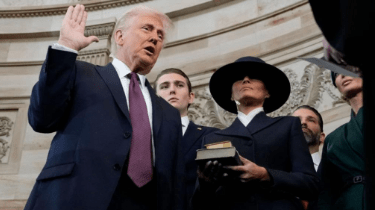
This text is a speech delivered by a newly inaugurated president. The speech focuses on a vision of restoring American greatness, emphasizing themes of national unity, economic prosperity, and border security. The president outlines ambitious plans, including executive orders to address inflation, immigration, and government efficiency. The overall tone is triumphant and patriotic, promising a brighter future for the nation.
Reclaiming America: A Study Guide for [Date]’s Inaugural Address
Quiz
Instructions: Answer the following questions in 2-3 sentences each.
What does the speaker identify as the primary crisis facing the American government?
How does the speaker characterize the previous eight years of his life and political career?
What specific actions does the speaker promise to take regarding immigration and border security?
What economic policies does the speaker outline, and what is their intended impact?
How does the speaker plan to address the issue of censorship and free speech?
What changes does the speaker propose for the US military and its role in global affairs?
What specific actions does the speaker plan to take to restore “fair, equal, and impartial justice” in the US?
What is the significance of the date January 20th, 2025 according to the speaker?
How does the speaker appeal to different racial and ethnic groups within the United States?
What vision of American exceptionalism does the speaker articulate, and how does he connect this to historical achievements?
Answer Key
The speaker identifies a “crisis of trust” in the government, arguing that a corrupt establishment has exploited citizens and left societal institutions in disrepair.
The speaker describes the past eight years as a period of intense testing and challenges, claiming he was targeted by those seeking to silence him and even faced an assassination attempt.
The speaker promises to declare a national emergency at the Southern border, halt illegal entry, deport criminal aliens, reinstate the “Remain in Mexico” policy, end catch-and-release, and deploy troops to deter illegal immigration.
The speaker aims to combat inflation by reducing overspending and energy prices. He plans to declare a national energy emergency, increase domestic oil and gas production, and end the Green New Deal and electric vehicle mandates.
The speaker pledges to sign an executive order to stop government censorship and restore free speech, arguing that state power should not be used to persecute political opponents.
The speaker plans to reinstate service members discharged for refusing the COVID-19 vaccine, protect soldiers from “radical political theories,” and strengthen the military to deter wars and defeat enemies.
The speaker aims to restore law and order by ending social engineering based on race and gender and ensuring justice is applied equally under the Constitution.
The speaker declares January 20th, 2025, as “Liberation Day,” marking the start of his term and the beginning of America’s resurgence.
The speaker directly addresses Black and Hispanic communities, thanking them for their support and promising to work towards their interests. He emphasizes unity and appeals to shared American values.
The speaker paints a picture of American exceptionalism rooted in exploration, innovation, and overcoming challenges. He cites historical achievements like westward expansion, industrialization, and technological advancements to inspire a renewed sense of national ambition and destiny.
Essay Questions
Analyze the speaker’s use of rhetoric and persuasive language in the address. Identify specific examples of techniques like repetition, emotional appeals, and the use of imagery. How do these techniques contribute to the overall message and tone of the speech?
Critically evaluate the speaker’s portrayal of the state of the United States. What evidence does he present to support his claims about the nation’s decline? How does this portrayal serve his broader political agenda?
Examine the speaker’s proposed policies on immigration, economics, and social issues. What are the potential consequences of these policies, both intended and unintended? How might these policies impact different groups within American society?
Analyze the speaker’s vision of American exceptionalism and its role in shaping his political agenda. How does this vision connect to historical narratives of American identity and progress? What are the implications of this vision for the nation’s relationship with the rest of the world?
Compare and contrast the speaker’s inaugural address with other significant speeches in American history. Consider speeches given by presidents during times of crisis or transition. What similarities and differences emerge in terms of themes, rhetoric, and the articulation of national values?
Glossary of Key Terms
National Emergency: A declaration by a government that allows for extraordinary measures to be taken in response to a perceived threat.
Criminal Aliens: A term used to describe non-citizens who have committed crimes in the United States.
Remain in Mexico Policy: A policy that requires asylum seekers arriving at the US-Mexico border to wait in Mexico while their claims are processed.
Catch and Release: A practice of releasing apprehended migrants into the US while they await immigration proceedings.
Green New Deal: A proposed set of policies aimed at addressing climate change and economic inequality.
Electric Vehicle Mandate: Regulations requiring automakers to produce a certain percentage of electric vehicles.
Tariffs: Taxes imposed on imported goods.
Free Speech: The right to express one’s opinions without censorship or government suppression.
Social Engineering: The attempt to influence or control social behavior through policies and interventions.
Manifest Destiny: A 19th-century belief that the United States was destined to expand its territory across North America.
Golden Age: A period of great prosperity, happiness, and achievement.
Briefing Doc: Inaugural Address Analysis – “The Golden Age of America Begins Right Now”
Source: Excerpts from the Inaugural Address, January 20th, 2025
Main Themes:
American Exceptionalism and Revival: The speech heavily emphasizes the return of American greatness, strength, and prosperity, positioning the inauguration as the dawn of a “Golden Age” and a “thrilling New Era.” The speaker promises to reclaim sovereignty, restore safety, and rebalance justice, positioning America as a force to be envied and respected globally.
Condemnation of the “Establishment” and Past Failures: The address paints a stark picture of a broken America plagued by corruption, incompetence, and societal decay. It blames a “radical and corrupt establishment” for extracting wealth from citizens and criticizes the government’s handling of crises, porous borders, failing public systems, and perceived anti-American sentiment in education.
National Unity and Restoration of Values: Despite outlining societal challenges, the speech emphasizes national unity and the potential for a unified America rallying behind the presented agenda. It highlights the “dramatic increases in support” across demographics and calls for restoring traditional values, including a colorblind, merit-based society and a strict definition of gender.
Action-Oriented Agenda: The address focuses on concrete actions to be taken immediately, including declaring national emergencies at the border and on energy, reinstating specific policies, and establishing new departments. It emphasizes decisive leadership and a commitment to swift change across various sectors, including trade, energy, free speech, and military strength.
Most Important Ideas/Facts:
“America First” Policy: The speech reaffirms the “America First” approach, prioritizing American interests and sovereignty above all else. This translates to policies like trade tariffs, energy independence, and a strong military presence.
Border Security and Immigration Control: Border security is a central focus, with promises to halt illegal entry, deport “criminal aliens,” reinstate the “Remain in Mexico” policy, and deploy troops to the Southern border. The address labels cartels as terrorist organizations and seeks to utilize legal frameworks like the Alien Enemies Act of 1798.
Economic Revival and Energy Dominance: The speaker outlines an economic plan centered on combating inflation, lowering prices, and achieving energy independence by aggressively drilling for oil and gas resources. The speech explicitly rejects the Green New Deal and the electric vehicle mandate.
Social Engineering and Traditional Values: The address criticizes the “social engineering” of race and gender in public life and declares a policy recognizing only two genders: male and female. This reflects a commitment to traditional values and a rejection of progressive social agendas.
Military Strength and Global Leadership: The speaker pledges to build “the strongest military the world has ever seen,” focused on both winning battles and strategically avoiding unnecessary wars. It suggests a return to a more assertive and influential role for America on the global stage.
Key Quotes:
“The Golden Age of America begins right now.” (Setting the tone and ambition)
“From this moment on, America’s decline is over.” (Declaration of a turning point)
“January 20th, 2025 is Liberation Day.” (Framing the inauguration as a moment of freedom)
“We will drill baby drill.” (Emphasizing aggressive energy production)
“The American dream will soon be back and thriving like never before.” (Promise of economic prosperity)
“We will be a nation like no other, full of compassion, courage, and exceptionalism.” (Reiterating the core values of the vision)
“Our golden age has just begun.” (Concluding with a message of optimism and progress)
Overall Impression: The address is a powerful and strongly-worded declaration of intent, outlining a vision for a revived and dominant America under the speaker’s leadership. It blends a critique of the past with a hopeful outlook for the future, grounded in specific policy promises and a strong appeal to patriotism, traditional values, and national unity. The tone is assertive and confident, reflecting a belief in the achievability of the ambitious goals set forth.
FAQ: Donald Trump’s Second Inaugural Address
1. What is the central theme of Donald Trump’s second inaugural address?
Trump’s speech centers around the idea of American restoration and rejuvenation, framing his second term as the beginning of a “Golden Age” where America will reclaim its global dominance and prosperity. He paints a picture of a nation in decline, beset by internal crises and external threats, and positions himself as the leader who will reverse this trajectory.
2. What specific challenges does Trump identify facing America?
Trump highlights several challenges, including a crisis of trust in government, a broken and corrupt establishment, a failure to protect American citizens and borders, an inadequate public health and education system, economic struggles like inflation, and a loss of national pride and unity. He attributes these issues to the actions of a “radical and corrupt establishment” that has undermined American values and interests.
3. What actions does Trump promise to take to address these challenges?
Trump outlines a series of executive orders and policy initiatives aimed at restoring American strength and prosperity. These include:
Declaring national emergencies at the southern border and in the energy sector.
Halting illegal immigration and deporting criminal aliens.
Reinforcing the border with troops.
Designating cartels as terrorist organizations.
Combating inflation and bringing down energy prices through increased domestic drilling.
Ending the “Green New Deal” and electric vehicle mandates.
Implementing protectionist trade policies to benefit American workers.
Establishing a Department of Government Efficiency.
Ending government censorship and restoring free speech.
Restoring law and order in cities.
Rejecting social engineering based on race and gender.
Reinforcing the military and ending unnecessary wars.
Reclaiming American leadership on the world stage.
4. What role does Trump assign to himself in this process of restoration?
Trump positions himself as a strong and decisive leader, uniquely capable of overcoming the challenges facing America. He emphasizes his past successes, claiming to have learned from the trials of his first term. He presents himself as a “peacemaker and unifier” who will restore faith, wealth, democracy, and freedom to the American people.
5. How does Trump appeal to different segments of the American population?
Trump attempts to appeal to various groups by emphasizing:
Economic anxieties: He promises to restore prosperity, bring back manufacturing jobs, and lower energy prices.
Concerns about national security and immigration: He pledges to secure the border, deport criminal aliens, and strengthen the military.
Social and cultural anxieties: He vows to end “political correctness,” restore traditional values, and protect free speech.
Patriotic sentiments: He appeals to national pride and the “American spirit” of resilience and exceptionalism.
6. What historical figures and events does Trump reference to support his vision?
Trump invokes the legacies of Martin Luther King Jr. and William McKinley, framing his agenda as a continuation of their pursuit of equality and American greatness. He also references historical achievements like winning World Wars, defeating communism, and landing on the moon, aiming to inspire confidence in America’s ability to overcome current challenges.
7. What is the overall tone and message of the address?
The tone is optimistic and defiant, emphasizing strength, determination, and victory. Trump aims to project an image of confidence and unwavering resolve, urging Americans to embrace a “Golden Age” of national resurgence under his leadership.
8. What is the significance of the repeated phrase “Make America Great Again”?
The repeated use of “Make America Great Again” serves as a rallying cry, encapsulating Trump’s core message of national restoration and a return to a perceived past glory. It reinforces his vision of a revitalized America, powerful and respected on the world stage, and serves as a call to action for his supporters.
American Greatness: A Vision for the Future
The sources discuss the concept of American greatness through themes of economic prosperity, military strength, territorial expansion, and national unity.
The speaker asserts that America will be “greater stronger and far more exceptional than ever before” [1]. This statement highlights a belief in American exceptionalism and the potential for future greatness.
The sources link American greatness to economic prosperity. The speaker claims that the nation will “be a rich Nation again” through policies such as energy independence and trade tariffs [2].
Military strength is also presented as a key element of American greatness. The speaker promises to “build the strongest military the world has ever seen” and emphasizes the importance of defeating enemies and ending wars [3].
Territorial expansion and the pursuit of “Manifest Destiny” are presented as aspects of American greatness. The speaker discusses renaming the Gulf of Mexico to the Gulf of America and reclaiming the Panama Canal [3, 4]. Additionally, the speaker mentions the ambition to plant the American flag on Mars [4].
The sources emphasize national unity as a foundation for American greatness. The speaker states that the nation is “rapidly unifying” behind their agenda and highlights the importance of shared values and common purpose [5, 6]. The speaker calls for Americans to “work together” to achieve their dreams and overcome challenges [6].
The sources present a vision of American greatness rooted in economic power, military might, territorial ambition, and national unity. This vision reflects a belief in American exceptionalism and the potential for the country to achieve unprecedented levels of success and influence.
American Unity: A Nation’s Cohesion and Divisions
The sources portray national unity as a crucial element of America’s strength and a prerequisite for achieving its goals. They depict a nation grappling with divisions while simultaneously striving for cohesion.
The speaker acknowledges a “crisis of trust” in the government, suggesting a fractured society where citizens feel alienated from their leaders. [1] This crisis stems from a perception that a “radical and corrupt establishment” has prioritized its own interests over the well-being of the people. [1]
The recent election is presented as a unifying force, with the speaker claiming that the nation is “rapidly unifying” behind their agenda. [2] This unity is attributed to “dramatic increases in support from virtually every element of our society”. [2] This suggests that the election has bridged some divides and fostered a sense of shared purpose.
The speaker emphasizes the importance of shared values and identity. The ideal of a “colorblind and merit-based” society is put forth as a unifying principle. [3] Similarly, the speaker highlights traditional gender roles, stating that “there are only two genders male and female”. [3] These statements suggest an attempt to define a shared national identity based on certain values and beliefs.
The sources stress the need for collective action to overcome challenges. The speaker calls for Americans to “work together” and asserts that “there is nothing we cannot do” if they unite. [4] This message emphasizes the power of unity in achieving national goals and overcoming adversity.
The speaker’s closing remarks reinforce the theme of national unity. The nation is described as “one people one family and one glorious nation under God”. [4] This language evokes a sense of shared identity and common purpose. The speaker concludes by declaring that “our golden age has just begun”, suggesting that national unity will pave the way for a brighter future. [5]
The sources present a complex picture of national unity, acknowledging divisions while emphasizing the potential for cohesion. They suggest that shared values, common goals, and a sense of collective identity are essential for overcoming challenges and achieving national greatness.
American Economic Revival
The sources present a vision of economic revival for America, centered on themes of energy dominance, revitalized manufacturing, fair trade practices, and fiscal responsibility.
Energy independence is portrayed as a cornerstone of economic renewal. The speaker declares a national energy emergency and vows to “drill baby drill,” emphasizing America’s vast oil and gas reserves. This approach aims to lower energy prices, replenish strategic reserves, and transform the nation into a leading energy exporter, ultimately creating wealth and prosperity [1].
The sources advocate for a resurgence in American manufacturing. The speaker promises that “America will be a manufacturing Nation once again” and highlights the potential for growth in the automobile industry. By revoking the electric vehicle mandate and supporting traditional auto workers, the aim is to boost domestic production and create jobs [1].
Fair trade practices are presented as essential for protecting American workers and businesses. The speaker criticizes past trade agreements for enriching other countries at the expense of American citizens and proposes a system of tariffs and taxes on foreign goods to benefit the domestic economy. The establishment of a new department within the Internal Revenue Service to collect these revenues highlights the focus on maximizing national income through trade [1].
The sources connect economic revival to fiscal responsibility. The speaker blames “massive overspending” for the inflation crisis and suggests that curbing government expenditure is crucial for economic stability [1]. While specific measures for reducing spending are not outlined, the emphasis on responsible financial management underscores its importance in achieving economic recovery.
The sources present a multi-pronged approach to economic revival, focusing on leveraging domestic resources, supporting key industries, promoting fair trade, and exercising fiscal discipline. This vision aims to restore America’s economic strength and create widespread prosperity for its citizens.
Restoring American Governance
The sources present a vision of political reform aimed at restoring trust in government, dismantling perceived corruption, and empowering the American people. This vision centers on themes of reversing harmful policies, streamlining government operations, and upholding constitutional principles.
The speaker strongly criticizes the existing political establishment, characterizing it as a “radical and corrupt establishment” that has exploited the American people. This critique suggests a need for fundamental change in the way government operates and interacts with its citizens. [1]
Reversing detrimental policies is presented as a key element of political reform. The speaker pledges to undo actions taken by previous administrations, such as ending the “catch and release” immigration policy, revoking the electric vehicle mandate, and reinstating service members discharged for refusing the COVID-19 vaccine. These actions aim to correct perceived injustices and align government policy with the speaker’s vision. [2-4]
Streamlining government operations is another focus of reform. The speaker plans to establish a new “Department of Government Efficiency” to improve effectiveness and reduce waste. This initiative highlights a commitment to making government more responsive and accountable to the people. [4]
Upholding constitutional principles and individual liberties is emphasized as a core aspect of political reform. The speaker promises to end government censorship, restore free speech, and ensure fair and impartial justice. These actions seek to protect fundamental rights and limit the power of the state over individual lives. [4]
The speaker also intends to address what they see as the “weaponization” of government agencies against political opponents. This suggests a concern about the abuse of power and a commitment to ensuring a more equitable and just political system. [1, 4]
The sources paint a picture of political reform rooted in a rejection of the status quo and a desire to return power to the people. This vision emphasizes correcting past wrongs, increasing government efficiency, and safeguarding individual liberties within a framework of constitutional principles.
National Security Strategy
The sources portray national security as a paramount concern, emphasizing a multi-faceted approach that includes strengthening borders, combating crime and terrorism, and projecting military power on the global stage.
Border security is presented as a critical element of national security. The speaker declares a national emergency at the Southern border and outlines measures to halt illegal immigration and expel criminal aliens. Reinforcing the border with troops and implementing policies like “Remain in Mexico” underscore the commitment to controlling immigration and protecting national sovereignty.
Combating crime, both domestically and internationally, is highlighted as a priority. The speaker vows to end the “sanctuary city” policies that protect undocumented criminals and pledges to deploy federal and state law enforcement to eradicate foreign gangs and criminal networks operating within the US. Designating cartels as terrorist organizations and invoking the Alien Enemies Act of 1798 demonstrate the resolve to confront transnational criminal threats.
Military strength is emphasized as a deterrent against foreign aggression and a guarantor of American interests globally. The speaker promises to rebuild the military to a level of unprecedented strength, ensuring its ability to “defeat America’s enemies.” This focus on military power reflects a belief that a robust defense is essential for national security in a volatile and unpredictable world.
While projecting military strength, the speaker also aspires to be a “peacemaker and unifier”, aiming to end wars and foster global unity.** This suggests a dual approach to national security: maintaining a strong military posture while seeking peaceful resolutions to conflicts and promoting international cooperation.
The sources present a vision of national security characterized by a robust defense, assertive border control measures, and a proactive stance against both domestic and international threats. This vision reflects a determination to safeguard American interests and project strength on the global stage while also striving for peace and stability.
Full Donald Trump inauguration speech: ‘I was saved by God, to make America great again’
thank you very much everybody well thank you very very much vice president Vance speaker Johnson Senator th chief justice Roberts justices of the United States Supreme Court President Clinton President Bush president President Obama President Biden vice president Harris and my fellow citizens the Golden Age of America begins right now from this day forward our country will flourish and be respected again all over the world we will be the Envy of every nation and we will not allow ourselves to be taken advantage of any longer during every single day of the Trump Administration I will very simply put America First our sovereignty will be reclaimed our safety will be restored the the scales of Justice will be rebalanced the vicious violent and unfair weaponization of the justice department and our government will end and our top priority will be to create a nation that is proud prosperous and free America will soon be greater stronger and far more exceptional than ever before I return to the presidency confident and optimistic that we are at the start of a thrilling New Era of national success a tide of change is sweeping the country sunlight is pouring over the entire world and America has the chance to seize this opportunity like never before but first we must be honest about the challenges we face while they are plentiful they will be annihilated by this great momentum that the world is now witnessing in the United States of America As We Gather today our government confronts a crisis of trust for many years a radical and corrupt establishment has extracted power and wealth from our citizens while the pillars of our societ Society lay broken and seemingly in complete disrepair we now have a government that cannot manage even a simple crisis at home while at the same time stumbling into a continuing catalog of catastrophic events abroad it fails to protect our magnificent law-abiding American citizens but provide sanctuary and protection for Dangerous criminals many from prisons and mental institutions that have illegally entered our country from all over the world we have a government that has given unlimited funding to the defense of foreign borders but refuses to defend American borders or more importantly its own people our country can no longer deliver basic services in times of emergency as recently shown by the wonderful people of North Carolina been treated so badly and other states who are still suffering from a hurricane that took place many months ago or more recently Los Angeles where we are watching fires still tragically burn from weeks ago without even a token of defense they’re raging through the houses and communities even affecting some of the wealthiest and most powerful individuals in our country some of whom are sitting here right now they don’t have a home in any longer that’s interesting but we can’t let this happen everyone is unable to do anything about it that’s going to change we have a public health system that does not deliver in times of disaster yet more money is spent on it than any country anywhere in the world and we have an education system that teaches our children to be ashamed of themselves in many cases to hate our country despite the love that we try so desper L to provide to them all of this will change starting today and it will change very quickly my recent election is a mandate to completely and totally reverse a horrible betrayal and all of these many betrayals that have taken place and to give the people back their faith their wealth their democracy and indeed their freedom from this moment on America’s decline is over our liberties and our nation’s glorious Destiny will no longer be denied and we will immediately restore the Integrity competency and loyalty of America’s government over the past eight years I have been tested and challenged more than any president in our 250e history and I’ve learned a lot along the way the journey to reclaim our Republic has not been an easy one that I can tell you those who wish to stop our cause have tried to take my freedom and indeed to take my life just a few months ago in a beautiful Pennsylvania field in Assassin’s bullet ripped through my ear but I felt then and believe even more so now that my life was saved for a reason I was saved by God to make America great again thank you very much that is why each day under our administration of American Patriots we will be working to meet every crisis with dignity and power and strength we will move with purpose and speed to bring back hope Prosperity safety and peace for citizens of every race religion color and Creed for American citizens January 20th 2025 is Liberation day it is my hope that our recent presidential election will be remembered as the greatest and most consequential election in the history of our country as our Victory showed the entire nation is rapidly unifying behind our agenda with dramatic increases in support from virtually every element of our society young and old men and women African-Americans Hispanic Americans Asian Americans Urban Suburban Rural and very importantly we had a powerful win in all seven swing States and the popular vote we won by millions of people to the Black and Hispanic communities I want to thank you for the tremendous outpouring of love and trust that you have shown me with your vote we set records and I will not forget it I’ve heard your voices in the campaign and I look forward to working with you in the years to come today is Martin Luther King day and his honor this will be a great honor but in his honor we will strive together to make his dream a reality we will make his dream come true thank thank you National Unity is now returning to America and confidence and pride is soaring like never before in everything we do my Administration will be inspired by a strong pursuit of excellence and unrelenting success we will not forget our country we will not forget our Constitution and we will not forget our God can’t do that today I will sign a series of historic executive orders with these actions we will begin the complete restoration ation of America and the revolution of common sense it’s all about common sense first I will declare a national emergency at our Southern border all illegal entry will immediately be halted and we will begin the process of returning millions and millions of criminal aliens back to the places from which they came we will reinstate my remain in Mexico policy I will end the practice of Catch and Release and I will send troops to the southern border to repel the disastrous invasion of our country under the orders I signed today we will also be designating the cartels as foreign terrorist organizations and by invoking the alien enemies Act of 1798 I will direct our government to use the full and immense power of federal and state law enforcement to eliminate the presence of all foreign gangs and criminal networks bringing devastating crime to us soil including our cities and inner cities as commander-in-chief I have no higher responsibility than to defend our country from threats and invasions and that is exactly what I am going to do we will do it at a level that nobody’s ever seen before next I will direct all members of my cabinet to Marshall the vast Powers at their disposal to defeat what was record inflation and rapidly bring down costs and prices the inflation crisis was caused by Massive overspending and escalating Energy prices and that is why today I will also declare a national Energy emergency we will drill baby drill America will be a manufacturing Nation once again and we have something that no other manufacturing Nation will ever have the largest amount of oil and gas of any country on Earth and we are going to use it let me use it we will bring prices down fill our strategic reserves up again right to the top and Export American Energy all over the world we will be a rich Nation again and it is that Liquid Gold under our feet that will help to do it with my actions today we will end the green New Deal and we will revoke the electric vehicle mandate saving our Auto industry and keeping my sacred pledge to our Great American Auto Workers in other words you’ll be able to buy the car of your choice we will build automobiles in America again at a rate that nobody could have dreamt possible just a few years ago and thank you to the UT workers of our nation for your inspiring vote of confidence we did tremendously with their vote I will immediately begin the overhaul of our trade system to protect American workers and families instead of taxing our citizens to enrich other countries we will tariff and tax foreign countries to enrich our citizens for this purpose we are establishing the external Revenue Service to collect all tariffs duties and revenues it will be massive amounts of money pouring into our treasury coming from foreign sources the American dream will soon be back and thriving like never before to restore competence and Effectiveness to our federal government my Administration will establish the brand new Department of government efficiency after years and years of illegal and unconstitutional Federal efforts to restrict free expression I will also sign an executive order to immediately stop all government censorship and bring back Free Speech To America never again will the immense power of the state be weaponized to persecute political opponents something I know something about we will not allow that to happen it will not happen again under my leadership we will restore Fair equal and impartial justice under the Constitutional rule of law and we are going to bring Law and Order back to our cities this week I will also end the government policy of trying to socially engineer race and gender into every aspect of public and private life we will Forge a society that is colorblind and Merit based as of today it will henceforth be the official policy of the United States government that there are only two genders male and female this week I will reinstate any service members who were unjustly expelled from our military for objecting to the covid vaccine mandate with full back pay and I will sign an order to stop our Warriors from being subjected to radical political theories and social experiments while on duty it’s going to end immediately our Armed Forces will be free to focus on their soul whole mission defeating America’s enemies like in 2017 we will again build the strongest military of the world has ever seen we will measure our success not only by the battles we win but also by the wars that we end and perhaps most importantly the wars we never get into my proudest Legacy will be that of a peacemaker and unifier that’s what I want to be a peacemaker and a unifier I’m pleased to say that as of yesterday one day before I assumed office the hostages in the Middle East are coming back home to their families thank you America will reclaim its rightful place as the greatest most powerful most respected Nation on Earth inspiring the awe and admiration of the entire world a short time from now we are going to be changing the name of the Gulf of Mexico to the Gulf of America and we will restore the name of a great President William McKinley to Mount McKinley where it should be and where it belongs President McKinley May our country very rich through tariffs and through Talent he was a natural businessman and gave Teddy Rosevelt the money for many of the great things he did including the Panama Canal which has foolishly been given to the country of Panama after the United States the United States I mean think of this spent more money than ever spent on a project before and lost 38,000 lives in the building of the Panama Canal we have been treated very badly from this foolish gift that should have never been made and Panama’s promise to us has been broken the purpose of our deal and the spirit of our treaty has been totally violated American ships are being severely overcharged and not treated fairly in any way shape or form and that includes the United States Navy and above all China is operating the Panama Canal and we didn’t give it to China we gave it to Panama and we’re taking it back above all my message to Americans today is that it is time for for us to once again act with courage Vigor and the Vitality of History’s Greatest civilization so as we liberate our nation we will lead it to new heights of Victory and success we will not be deterred together we will end the chronic disease epidemic and keep our children safe healthy and disease free the United States will once again consider itself a growing Nation one that increases our wealth expands our territory builds our cities raises our expectations and Carries our flag into new and beautiful Horizons and we will pursue our Manifest Destiny into the Stars launching American astronauts to plant the stars and stripes on the planet Mars ambition is the lifeblood of a great nation and right now our nation is more ambitious than any other there’s no Nation like our nation Americans are explorers Builders innovators entrepreneurs and Pioneers the spirit of the Frontier is written into our hearts the call of the next great adventure resounds from within our souls our American ancestors turned a small group of colonies on the edge of a vast continent into a mighty Republic of the most extraordinary citizens on Earth no one comes close Americans push thousands of miles through a rugged land of Untamed wilderness they crossed deserts scaled mountains braved Untold dangers won the wild west ended slavery rescued Millions from tyranny lifted billions from poverty harnessed electricity split the atom launched mankind into the heavens and put the universe of human knowledge into the palm of the human hand if we work together there is nothing we cannot do and no dream we cannot achieve many people thought it was impossible for me to Stage such a historic political comeback but as you see today here I am the American people have spoken I stand before you now as proof that you should never believe that something is impossible to do in America The Impossible is what we do best from New York to Los Angeles from Philadelphia to Phoenix from Chicago to Miami from Houston to right here in Washington DC our country was forged and built by the generations of patriots who gave everything they had for our rights and for our freedom they were farmers and soldiers Cowboys and Factory workers steel workers and coal miners police officers and Pioneers who pushed onward marched forward and let no obstacle defeat their Spirit or their pride together they laid down the railroads raised up the skyscraping built great highways won two world wars defeated fascism and communism and Triumph over every single challenge that they faced after all we have been through together we stand on the verge of the four greatest years in American history with your help we will restore America promise and we will rebuild the nation that we love and we love it so much we are one people one family and one glorious nation under God so to every parent who dreams for their child and every child who dreams for their future I am with you I will fight for you and I will win for you we’re going to win like never before thank you thank you in recent years our nation has suffered greatly but we are going to bring it back and make it great again greater than ever before we will be a nation like no other full of compassion courage and exceptionalism our power will stop all wars and bring a new spirit of unity to a world that has been angry violent and totally unpredictable America will be respected again and admired again including by people of religion faith and good will we will be prosperous we will be proud We will be strong and we will win like never before we will not be conquered we will not be intimidated we will not be broken and we will not fail from this day on the United States of America will be a free Sovereign and independent nation we will stand bravely we will live proudly we will dream boldly and nothing will stand in our way because we are Americans the future is ours and our golden age has just begun thank you God Bless America thank you all thank you thank you very much thank you very much thank you thank you ladies and gentlemen performing America the Beautiful please welcome the Armed Forces
Affiliate Disclosure: This blog may contain affiliate links, which means I may earn a small commission if you click on the link and make a purchase. This comes at no additional cost to you. I only recommend products or services that I believe will add value to my readers. Your support helps keep this blog running and allows me to continue providing you with quality content. Thank you for your support!
The text narrates the history of English monarchs from 1066 to the early 20th century. It highlights key figures, such as William the Conqueror and Henry VIII, and details significant events, including wars, rebellions, and changes in the relationship between the monarchy and Parliament. The narrative emphasizes dramatic personal stories, including love affairs, betrayals, and murders, interwoven with broader political and social shifts. The evolution of the monarchy’s power and the development of the British constitutional system are central themes. Finally, the account explores the enduring fascination with the British monarchy and its role in national identity.
The Kings and Queens of England: A Millenium of Surprises
Short Answer Questions
Instructions: Answer the following questions in 2-3 sentences each.
What significant event occurred in 1066 and why is it considered a turning point in English history?
How did William the Conqueror consolidate his power after his victory in 1066?
Explain the conflict between William the Conqueror’s sons after his death and how it impacted the English crown.
Describe the key elements of Henry I’s approach to governance and how it differed from his predecessors.
What events led to the period of civil war known as the Anarchy?
What were the primary aims of the Magna Carta and how did it impact the relationship between the king and his subjects?
How did Henry II and Thomas Becket’s relationship deteriorate, leading to significant tension between the crown and the church?
What led to King John’s conflict with the Pope and what were the consequences for England?
Describe Simon de Montfort’s contributions to English governance and how his actions influenced future political developments.
How did Edward I use nationalism and military force to expand his kingdom?
Short Answer Key
Answer: The Battle of Hastings took place in 1066, resulting in the death of Harold Godwinson and the victory of William the Conqueror. This marked the beginning of Norman rule in England, bringing about significant social, political, and cultural changes.
Answer: William confiscated land from English nobles, granting it to his Norman followers. He also commissioned the Domesday Book, a comprehensive survey of landholdings, to establish a system of taxation and control. This centralized power in the hands of the king.
Answer: William’s sons, Robert, William Rufus, and Henry, fought amongst themselves for control of England and Normandy. This power struggle destabilized the realm and highlighted the ongoing issue of succession. Ultimately, Henry I seized the throne, establishing a stronger hold on both territories.
Answer: Henry I focused on strengthening royal administration, relying on capable advisors and implementing legal reforms. He introduced the Exchequer system for financial management and traveled the country to personally oversee justice. This contrasted with the more militaristic approach of his predecessors.
Answer: Following Henry I’s death, the succession of his daughter Matilda was contested by Stephen of Blois, sparking a civil war known as the Anarchy. The conflict arose from questions about the legitimacy of a female ruler and ambitions of powerful nobles seeking to exploit the instability.
Answer: The Magna Carta aimed to limit the king’s power by establishing legal principles and protecting the rights of certain groups, particularly the barons. It asserted that even the king was bound by law, laying the groundwork for future constitutional development in England.
Answer: Henry II appointed Becket as Archbishop of Canterbury, hoping to control the church. However, Becket became a staunch defender of the Church’s independence, clashing with the king over legal jurisdiction and royal authority. This conflict culminated in Becket’s murder, creating a major crisis between the crown and the Church.
Answer: King John clashed with Pope Innocent III over the appointment of the Archbishop of Canterbury. John’s refusal to accept the Pope’s choice led to his excommunication and England’s placement under an interdict, suspending religious services. John was eventually forced to submit to the Pope, weakening royal authority.
Answer: Simon de Montfort, during his brief period of control, summoned a parliament that included not only barons and bishops but also knights and representatives from towns. This innovative move laid the groundwork for a more inclusive system of governance and a greater role for commoners in political life.
Answer: Edward I exploited nationalistic sentiment to garner support for his military campaigns in Wales and Scotland. He utilized brutal military force to subdue the Welsh, executing their leaders and establishing English control. He also attempted to conquer Scotland, capturing their king and removing the Stone of Destiny to London, stoking Scottish resistance.
Essay Questions
Analyze the evolving role of the English monarchy from William the Conqueror to the death of Edward I. How did the relationship between the king and his subjects change over this period? What factors contributed to these changes?
The reigns of King John and Henry III saw significant challenges to royal authority, including the Magna Carta and the rise of Simon de Montfort. Discuss the factors that contributed to these challenges and assess their long-term impact on English governance.
How did the Hundred Years War transform the nature of warfare, the role of the English king, and the relationship between the crown and Parliament?
Compare and contrast the reigns of Henry VII and Henry VIII. How did they consolidate their power? What were their major achievements and challenges? How did their approaches to religion and governance differ?
Analyze the impact of the religious and political turmoil of the 16th and 17th centuries on the English monarchy. What factors led to the English Civil War? What were the lasting consequences of the revolution and the restoration of the monarchy?
Glossary of Key Terms
Domesday Book: A comprehensive survey of landholdings in England commissioned by William the Conqueror in 1086 to establish a system of taxation and control.
Exchequer: The system of financial administration established by Henry I to manage royal revenues, a precursor to the modern treasury.
Magna Carta: A charter of rights signed by King John in 1215, limiting royal power and establishing certain legal principles. It is considered a foundational document for English constitutional development.
Parliament: A legislative body in England, initially composed of barons and bishops, later evolving to include knights and representatives from towns. It gradually gained power in relation to the monarchy, eventually becoming the supreme governing authority.
Hundred Years’ War: A series of conflicts between England and France from 1337 to 1453, primarily over control of territories in France and economic dominance. It transformed the nature of warfare and had a profound impact on the development of English national identity and the relationship between the crown and Parliament.
Reformation: A religious movement in 16th-century Europe that challenged the authority of the Roman Catholic Church, leading to the establishment of Protestant churches. In England, King Henry VIII broke with Rome, establishing himself as the head of the Church of England.
English Civil War: A series of armed conflicts from 1642 to 1651 between supporters of King Charles I and Parliament, primarily over issues of religious and political authority. It resulted in the execution of Charles I and the establishment of a republic under Oliver Cromwell.
Restoration: The return of the monarchy in 1660 with the accession of Charles II, marking the end of the republican experiment and the reassertion of royal authority.
Glorious Revolution: The events of 1688-89 that led to the deposition of James II and the accession of William and Mary, establishing Parliament’s supremacy over the monarchy and laying the groundwork for a constitutional monarchy.
Hanoverian Dynasty: The royal dynasty established in 1714 with the accession of George I, a German prince who inherited the British throne due to his Protestant lineage. The Hanoverians presided over a period of significant political and economic change, including the rise of the prime minister and the expansion of the British Empire.
Jacobite Risings: A series of rebellions in the 18th century aimed at restoring the Stuart dynasty to the British throne, primarily supported by Scottish Highlanders and some English Catholics. The risings were ultimately unsuccessful, solidifying the Hanoverian hold on power.
Prime Minister: The head of government in the United Kingdom, appointed by the monarch but responsible to Parliament. The position evolved gradually during the 18th century, becoming increasingly powerful in relation to the monarchy.
Reform Bill of 1832: A landmark piece of legislation that expanded the franchise, redistributed parliamentary seats, and reduced electoral corruption, marking a significant step towards a more democratic system of government in Britain.
Victorian Era: The period of Queen Victoria’s reign (1837-1901), characterized by rapid industrialization, social change, and the expansion of the British Empire.
Commonwealth: An association of independent sovereign states, most of which were former British colonies, that share common historical ties and values. The British monarch is the symbolic head of the Commonwealth.
Briefing Document: A Thousand Years of British Monarchy
Source: Excerpts from the documentary, “A Thousand Years of British Monarchy”
Main Themes:
The surprising and dramatic nature of British monarchical history: The documentary emphasizes the unexpected twists and turns in the lineage and evolution of the British monarchy, highlighting stories of conquest, rebellion, love affairs, religious conflict, and political maneuvering.
The transformation of the monarchy: From absolute power to a more symbolic role, the British monarchy has undergone significant shifts in its power and influence throughout history. This evolution is closely tied to the changing relationship between the monarch, parliament, and the people.
The role of personality and circumstance: The documentary explores how the personal traits and choices of individual monarchs, alongside specific historical events, have profoundly shaped the trajectory of the monarchy.
Key Ideas and Facts:
Norman Conquest and its Legacy (1066 – 1216):
William the Conqueror establishes a new form of kingdom, with the monarch owning all the land and wielding absolute power.
The issue of succession leads to power struggles and violence between William’s sons.
Henry I attempts to establish order through legal reforms and centralized government.
The tragic sinking of the White Ship throws the succession into chaos, leading to the Anarchy of Stephen’s reign and the eventual ascension of Henry II.
The struggle between Henry II and Thomas Becket underscores the conflict between secular and religious authority.
King John’s clashes with the Pope and the Barons result in the signing of Magna Carta, marking a crucial step towards limiting monarchical power.
From Magna Carta to the Tudors (1216 – 1485):
The documentary highlights the ongoing tension between the monarch and the Barons, with the Magna Carta serving as a touchstone for limiting royal authority.
The reign of Henry III sees the rise of Simon de Montfort and the first attempts at establishing a parliamentary system.
Edward I conquers Wales and lays claim to Scotland, further solidifying English power.
The reign of Edward II is marked by his controversial relationship with Piers Gaveston and his ultimate deposition.
Edward III’s claim to the French throne inaugurates the Hundred Years’ War, changing the nature of warfare and the monarch’s role.
The documentary traces the tumultuous period of the Wars of the Roses, highlighting the deposition of Richard II by Henry Bolingbroke and the eventual triumph of Henry Tudor, ending the dynastic struggle and paving the way for the Tudor era.
The Tudor Dynasty and Reformation (1485 – 1603):
Henry VII’s seizure of the throne marks a new era of Tudor rule. He shrewdly uses propaganda to legitimize his claim and establish stability.
Henry VIII’s desire for a male heir leads to the English Reformation, a dramatic break from the Catholic Church and the establishment of the Church of England with the monarch as its head.
The reigns of Edward VI, Mary I, and Elizabeth I are marked by religious turmoil and the consolidation of England’s Protestant identity.
Elizabeth I skillfully navigates complex political and religious landscapes, establishing a golden age for England and laying the foundation for a global empire.
The Stuarts and the English Civil War (1603 – 1688):
James I’s belief in the divine right of kings sparks tension with Parliament. His policies and personal life contribute to growing discontent.
Charles I’s continued clashes with Parliament over taxation and religious policies culminate in the English Civil War.
The execution of Charles I marks a radical shift, with England briefly becoming a republic under the rule of Oliver Cromwell.
The restoration of Charles II sees a return to monarchy, but with a clear understanding of the limits of royal power.
James II’s attempts to reassert Catholic influence lead to the Glorious Revolution and the establishment of a constitutional monarchy under William and Mary.
The Hanoverians and the Rise of Parliament (1714 – 1837):
The accession of the German-speaking George I marks the beginning of the Hanoverian dynasty. The rise of the Prime Minister reflects the growing power of Parliament.
The reigns of George II and George III are marked by political maneuvering and the expansion of the British Empire.
George III’s resistance to reform and his handling of the American colonies contribute to growing dissatisfaction with the monarchy.
The Regency period under George IV sees a shift towards a more symbolic role for the monarch, with the rise of popular pressure for political and social reform.
William IV’s reluctant acceptance of the Reform Bill of 1832 signifies the irreversible shift towards a more democratic system.
The Victorian Era and the Modern Monarchy (1837 – 1936):
Queen Victoria’s long reign sees the height of the British Empire and the development of a powerful image of monarchy as a symbol of national unity and stability.
Despite republican sentiment, the monarchy’s influence is bolstered through strategic marriages and the skillful promotion of imperial grandeur.
Edward VII’s reign is marked by his popularity, his social conscience, and his role in shaping international alliances.
George V navigates the challenges of World War I and the rise of socialism, using his influence to maintain stability and even secretly intervening in government during the economic crisis of the 1930s.
From Abdication to the Present Day (1936 – Present):
Edward VIII’s abdication in order to marry Wallis Simpson demonstrates the changing social mores and the limitations of royal power.
George VI provides a steadying influence during World War II, bolstering national morale.
The accession of Elizabeth II marks a new era for the monarchy, adapting to the changing world of the post-war period and the decline of the British Empire.
The documentary highlights the challenges and transformations the monarchy has faced in recent decades, from social and cultural shifts to media scrutiny and republican sentiment.
Quotes:
“England had become a new kind of Kingdom one which was owned Lock Stock and Barrel by its king.” (Regarding William the Conqueror)
“The story we’re telling through this series The Story of a thousand years of English History is the story of this alien conqueror and his successes to the throne…and how in that transformation they survived through tides of Revolution and republicanism so that today…they alone still lay claim to Majesty.”
“Henry’s coronation at Westminster was an attempt to ensure his authority to rule…as the anointed king he held special divinely granted Powers.” (Regarding Henry I)
“When they saw that the King was a good-natured and kindly man who inflicted no punishment they committed all kinds of terrible crimes.” (Regarding Stephen)
“So came the second French invasion of England in 1216. It was about the same size as the invasion of 1066 and Louie landed unopposed…and Louie got rubbed out of the list of England’s monarchs because his acclamation was with hindsight withdrawn.” (Regarding Louis, King of England for a year)
“Henry was the first king to speak English as his native tongue…but without legitimacy he was clinging to Power by his fingernails.” (Regarding Henry IV)
“The story of the Tudors…is a tale of passionate love affairs and what happens when love and high politics collide.”
“The crown of England was found lying under a bush at the end of the battle of Bosworth and placed on Henry judah’s head and Henry understood how you rule England not by winning over great Nobles…but by winning over public opinion…the pen is mightier than the sword especially when it tells the story of what happened.” (Regarding Henry VII)
“Henry was effectively all powerful…and the countryside was controlled by justices of the peace who served the government…no one needed a fortified house under the protection of a great king…and it was all at Henry’s pleasure.” (Regarding Henry VIII)
“England’s last little piece of France had been lost just before Mary’s death. England had become an island and its Queen would have to be an island too.” (Regarding Elizabeth I)
“England having failed to be a republic had failed to be a monarchy. It was a bit of a Puzzler.” (Regarding the period after James II fled England)
“The crown that had belonged to Normans, French, Plantagenets, Welsh Tudors, and Scottish Stuarts had now passed to the German Hanoverians.”
“The efficient part was headed by the queen…whose only purpose was to make people feel loyalty. The actual power was entirely held by the efficient party which he said was a secret committee called the cabinet.” (Regarding the Victorian era)
“Victoria became the logo of the British Empire…turning her into the Queen Empress.”
“Elizabeth II coming to the throne 51 years later would be the first of her successors who had no personal memory of her.”
Most Important Ideas:
The documentary challenges traditional narratives of British monarchy, presenting a more nuanced and surprising account of its history.
It emphasizes the evolving relationship between the monarch, Parliament, and the people, highlighting the gradual shift from absolute to constitutional monarchy.
The documentary explores the enduring tension between the desire for strong leadership and the need for limitations on royal power.
It demonstrates how historical events, individual personalities, and political maneuvering have shaped the trajectory of the British monarchy.
The documentary concludes with a reflection on the continued relevance of the monarchy in the modern world, acknowledging both its symbolic significance and its inherent contradictions.
FAQ: The History of the English Monarchy
1. How did the Norman Conquest of 1066 change the nature of the English monarchy?
The Norman Conquest marked a pivotal shift in the English monarchy. William the Conqueror, Duke of Normandy, claimed the English throne by right of conquest, establishing a new precedent for monarchical authority. Unlike previous English kings who were elected, William asserted ownership of the entire country, confiscating land and establishing himself as the supreme landlord. This introduced a feudal system where the king held ultimate power and land was granted in exchange for loyalty and service.
2. How did Henry I and Henry II contribute to the development of the English monarchy?
Both Henry I and Henry II played significant roles in shaping the English monarchy. Henry I, William the Conqueror’s son, focused on consolidating royal power and establishing a more organized system of government. He implemented legal reforms, introduced a centralized financial system (the Exchequer), and curtailed the power of the barons. Henry II, the first Plantagenet king, further developed the legal system with the introduction of common law and trial by jury. He also sought to reduce the influence of the Church, leading to conflict with Thomas Becket, the Archbishop of Canterbury.
3. What was the significance of the Magna Carta?
The Magna Carta, signed by King John in 1215, is a landmark document in English history and a cornerstone of constitutional law. It established the principle that the king was not above the law and that his power was subject to limitations. The Magna Carta guaranteed certain rights and liberties to the barons, including protection from arbitrary imprisonment and unfair taxation. It laid the groundwork for the development of parliament and the concept of limited government.
4. How did the Wars of the Roses impact the monarchy?
The Wars of the Roses, a series of dynastic conflicts between the Houses of York and Lancaster in the 15th century, had a profound impact on the English monarchy. The wars decimated the old nobility, weakened the power of the barons, and paved the way for the rise of the Tudor dynasty. Henry Tudor, a descendant of the Lancasters, emerged victorious and established a new era of monarchical power.
5. What were the defining characteristics of the Tudor dynasty?
The Tudor dynasty, which ruled England from 1485 to 1603, was marked by strong monarchs who asserted their authority and centralized power. Key figures like Henry VII, Henry VIII, and Elizabeth I navigated complex religious and political landscapes. Henry VIII’s break with the Roman Catholic Church and establishment of the Church of England was a defining moment. Elizabeth I, known as the Virgin Queen, oversaw a period of stability, economic growth, and cultural flourishing.
6. What led to the English Civil War and the temporary abolition of the monarchy?
The English Civil War (1642-1651) was a clash between King Charles I and Parliament over the limits of royal power. Charles I believed in the divine right of kings and sought to rule without parliamentary consent. Parliament, on the other hand, demanded more control over taxation and government policy. Religious tensions between the king’s High Anglicanism and Puritanism in Parliament exacerbated the conflict. The war ended with the defeat and execution of Charles I and the establishment of a republic under Oliver Cromwell.
7. How was the monarchy restored and what changes were implemented?
The monarchy was restored in 1660 with the return of Charles II, son of Charles I. The restoration marked a return to traditional forms of government, but with a greater understanding of the limitations of royal power. The Glorious Revolution of 1688 further solidified the principle of parliamentary supremacy. William and Mary, invited to take the throne, agreed to the English Bill of Rights, which guaranteed individual liberties and limited the power of the monarch.
8. How did the role of the monarchy evolve in the 18th and 19th centuries?
During the reigns of the Hanoverian and Victorian monarchs, the role of the monarchy gradually evolved into a more symbolic and constitutional one. The rise of parliamentary power and the development of a modern government structure led to a decline in the direct political authority of the monarch. The monarch became a figurehead, representing national unity and tradition. This shift was further solidified during Queen Victoria’s reign, when the monarchy embraced a more ceremonial and less politically active role.
A History of the British Monarchy
Timeline of Events:
Norman Conquest and Early Norman Rule:
1066: William, Duke of Normandy, invades England, defeats Harold Godwinson at the Battle of Hastings, and is crowned King of England on Christmas Day.
1066-1087: William the Conqueror consolidates his power, confiscates land, implements the Doomsday Book, and establishes Norman control over the Church.
1087: William the Conqueror dies, leaving Normandy to his eldest son, Robert, and England to his second son, William Rufus.
1087-1100: William Rufus rules England, facing challenges from his brother Robert and dealing with discontent among the barons.
1100: William Rufus dies in a hunting accident, possibly murdered by his brother, Henry.
1100-1135: Henry I becomes King of England, defeats Robert in battle, and imprisons him. He establishes a more stable and centralized government.
1120: Henry I’s son, William, dies in the White Ship disaster, throwing the succession into turmoil.
1135: Henry I dies.
The Anarchy:
1135-1154: Civil war breaks out between Henry I’s daughter, Matilda, and his nephew, Stephen, for the English throne. This period is known as “The Anarchy”.
Plantagenet Rule:
1154: Henry II, son of Matilda, becomes the first Plantagenet king of England. He restores order and strengthens royal authority.
1154-1189: Henry II clashes with Thomas Becket, Archbishop of Canterbury, over the power of the Church. Becket is murdered in 1170.
1189-1199: Richard I (the Lionheart) reigns, spending much of his time on crusade.
1199-1216: King John reigns, facing opposition from the barons and conflict with the Pope. He is forced to sign the Magna Carta in 1215.
1216: King John dies.
From Magna Carta to the Hundred Years War:
1216-1272: Henry III, a young boy, becomes king. The country is ruled by regents, including William Marshal. The Magna Carta is reissued.
1272-1307: Edward I (Longshanks) becomes king. He conquers Wales, attempts to conquer Scotland, expels the Jews from England, and develops the role of Parliament.
1307-1327: Edward II reigns, facing rebellion and conflict with Scotland. He is deposed and murdered.
1327-1377: Edward III reigns, starting the Hundred Years War with France. He establishes the Order of the Garter.
Later Plantagenets and the Wars of the Roses:
1377-1399: Richard II reigns, facing challenges from the nobility. He is deposed by his cousin, Henry Bolingbroke.
1399-1413: Henry IV, the first Lancastrian king, reigns, facing rebellions and challenges to his legitimacy.
1413-1422: Henry V reigns, successfully continuing the Hundred Years War. He wins the Battle of Agincourt.
1422-1461 (and briefly restored in 1470-71): Henry VI, a weak king, reigns during the Wars of the Roses, a conflict between the Houses of York and Lancaster for the throne.
1461-1483 (and briefly restored in 1471): Edward IV, the first Yorkist king, reigns.
1483: Edward V, a young boy, briefly reigns before disappearing in the Tower of London, along with his brother.
1483-1485: Richard III, Edward IV’s brother, reigns, but is defeated and killed at the Battle of Bosworth.
Tudor Dynasty:
1485-1509: Henry VII, the first Tudor king, ends the Wars of the Roses and consolidates royal power.
1509-1547: Henry VIII reigns, breaking with the Roman Catholic Church and establishing the Church of England. He marries six times.
1547-1553: Edward VI, a young boy, reigns, promoting Protestantism.
1553: Lady Jane Grey briefly reigns before being deposed and executed by Mary I.
1553-1558: Mary I reigns, attempting to restore Catholicism and earning the nickname “Bloody Mary” for her persecution of Protestants.
1558-1603: Elizabeth I reigns, consolidating the Church of England and overseeing a golden age of English culture and power. She defeats the Spanish Armada.
Stuart Dynasty:
1603-1625: James I of England and VI of Scotland reigns, uniting the crowns of England and Scotland. He faces conflict with Parliament and the Gunpowder Plot.
1625-1649: Charles I reigns, leading to civil war and his execution.
1649-1658: Oliver Cromwell rules as Lord Protector during the Interregnum.
1658-1659: Richard Cromwell briefly succeeds his father as Lord Protector.
The Restoration and the Glorious Revolution:
1660: Charles II is restored to the throne.
1660-1685: Charles II reigns, restoring the monarchy and enjoying a period of relative stability.
1685-1688: James II reigns, attempting to restore Catholicism and facing growing opposition.
1688: The Glorious Revolution: William of Orange and Mary II, James II’s daughter, are invited by Parliament to take the throne.
1689-1702: William III and Mary II reign jointly.
1702-1714: Anne, Mary II’s sister, reigns, presiding over the Act of Union that formally unites England and Scotland as Great Britain.
Hanoverian Dynasty:
1714-1727: George I, a German prince, becomes the first Hanoverian king.
1727-1760: George II reigns, continuing the tradition of conflict with his son, Frederick.
1760-1820: George III reigns, overseeing the loss of the American colonies and struggling with mental illness.
1820-1830: George IV reigns, known for his extravagance and unpopularity.
1830-1837: William IV reigns, reluctantly granting electoral reform.
Victorian Era:
1837-1901: Queen Victoria reigns, presiding over a period of industrial and imperial expansion. The monarchy undergoes a revival in popularity.
20th Century and Beyond:
1901-1910: Edward VII reigns, known for his lavish lifestyle and diplomatic efforts.
1910-1936: George V reigns during World War I and faces the rise of socialism and republicanism. He plays a key role in averting a naval mutiny during the Great Depression.
1936: Edward VIII abdicates to marry Wallis Simpson.
1936-1952: George VI reigns during World War II, providing a symbol of stability and resilience.
1952-present: Elizabeth II reigns, adapting the monarchy to a changing world and becoming the longest-reigning British monarch.
Cast of Characters:
Norman Dynasty:
William the Conqueror (reigned 1066-1087): Duke of Normandy who conquered England in 1066. A ruthless and ambitious ruler, he established a new political and social order in England.
William Rufus (reigned 1087-1100): Second son of William the Conqueror, known for his ruthlessness and unpopularity.
Henry I (reigned 1100-1135): Youngest son of William the Conqueror, known for his administrative abilities and his efforts to centralize royal power.
Other Key Figures in the Norman Era:
Harold Godwinson: Last Anglo-Saxon king of England, defeated and killed by William the Conqueror at the Battle of Hastings.
Robert, Duke of Normandy: Eldest son of William the Conqueror, who inherited Normandy but challenged his brother William Rufus for the English throne.
The Anarchy:
Matilda: Daughter of Henry I, who claimed the throne after his death, leading to the civil war known as “The Anarchy”.
Stephen: Nephew of Henry I, who contested Matilda’s claim to the throne, leading to the Anarchy.
Plantagenet Dynasty:
Henry II (reigned 1154-1189): First Plantagenet king of England, known for his legal reforms and his conflict with Thomas Becket.
Richard I (the Lionheart) (reigned 1189-1199): Son of Henry II, known for his military exploits on crusade.
John (reigned 1199-1216): Brother of Richard I, known for his unpopularity and for being forced to sign the Magna Carta.
Henry III (reigned 1216-1272): Son of John, who reigned during a period of baronial unrest and the reissuing of the Magna Carta.
Edward I (Longshanks) (reigned 1272-1307): Son of Henry III, known for his military conquests in Wales and Scotland, his legal reforms, and his expulsion of the Jews from England.
Edward II (reigned 1307-1327): Son of Edward I, known for his weaknesses and his eventual deposition and murder.
Edward III (reigned 1327-1377): Son of Edward II, who initiated the Hundred Years War with France and established the Order of the Garter.
Richard II (reigned 1377-1399): Grandson of Edward III, who faced challenges from the nobility and was deposed by his cousin, Henry Bolingbroke.
Key Figures in the Plantagenet Era:
Thomas Becket: Archbishop of Canterbury who clashed with Henry II over the rights of the Church and was murdered in Canterbury Cathedral.
William Marshal: Powerful baron and regent during the reign of Henry III, known for his loyalty and military skill.
Simon de Montfort: Earl of Leicester who led a rebellion against Henry III and established the first English Parliament that included representatives of the towns.
Wars of the Roses:
Henry IV (reigned 1399-1413): First Lancastrian king, who deposed Richard II but faced challenges to his legitimacy.
Henry V (reigned 1413-1422): Son of Henry IV, known for his military victories in the Hundred Years War, particularly the Battle of Agincourt.
Henry VI (reigned 1422-1461 and briefly restored in 1470-1471): Son of Henry V, a weak and pious king who lost the throne during the Wars of the Roses.
Edward IV (reigned 1461-1483 and briefly restored in 1471): First Yorkist king, who defeated the Lancastrians in the Wars of the Roses.
Richard III (reigned 1483-1485): Brother of Edward IV, who seized the throne after his brother’s death but was defeated and killed at the Battle of Bosworth.
Key Figures in the Wars of the Roses:
Margaret of Anjou: Wife of Henry VI, a fierce and determined leader who fought for her husband’s claim to the throne.
Richard Neville, Earl of Salisbury (Warwick the Kingmaker): Powerful baron who played a key role in the Wars of the Roses, switching sides and helping to install both Edward IV and Henry VI on the throne.
Tudor Dynasty:
Henry VII (reigned 1485-1509): First Tudor king, who ended the Wars of the Roses and established a strong monarchy.
Henry VIII (reigned 1509-1547): Son of Henry VII, known for his six marriages, his break with the Roman Catholic Church, and his establishment of the Church of England.
Edward VI (reigned 1547-1553): Son of Henry VIII, a sickly boy king who promoted Protestantism.
Mary I (Bloody Mary) (reigned 1553-1558): Daughter of Henry VIII, who attempted to restore Catholicism and persecuted Protestants.
Elizabeth I (reigned 1558-1603): Daughter of Henry VIII, known as the “Virgin Queen,” who consolidated the Church of England, defeated the Spanish Armada, and presided over a golden age of English culture and power.
Key Figures in the Tudor Era:
Cardinal Wolsey: Powerful advisor to Henry VIII who played a key role in the English Reformation.
Thomas Cromwell: Chief minister to Henry VIII who implemented the dissolution of the monasteries and furthered the break with Rome.
Thomas Cranmer: Archbishop of Canterbury who helped establish the Church of England and wrote the Book of Common Prayer.
Anne Boleyn: Second wife of Henry VIII, whose marriage led to the break with Rome. She was later executed on charges of treason.
Stuart Dynasty:
James I (of England and VI of Scotland) (reigned 1603-1625): Son of Mary, Queen of Scots, he inherited the English throne after Elizabeth I died, uniting the crowns of England and Scotland. He faced conflict with Parliament and the Gunpowder Plot.
Charles I (reigned 1625-1649): Son of James I, his conflicts with Parliament led to the English Civil War and his execution.
Oliver Cromwell (Lord Protector, 1653-1658): Leader of the Parliamentarian forces during the English Civil War, he became Lord Protector after Charles I’s execution and established a Puritan republic.
The Restoration and Glorious Revolution:
Charles II (reigned 1660-1685): Son of Charles I, he was restored to the throne after the collapse of Cromwell’s republic.
James II (reigned 1685-1688): Brother of Charles II, his attempts to promote Catholicism led to the Glorious Revolution.
William III and Mary II (reigned 1689-1702): William of Orange, a Dutch prince, and Mary II, daughter of James II, were invited by Parliament to rule jointly after the Glorious Revolution.
Anne (reigned 1702-1714): Sister of Mary II, she reigned during the War of the Spanish Succession and presided over the Act of Union that united England and Scotland as Great Britain.
Hanoverian Dynasty:
George I (reigned 1714-1727): A German prince who became the first Hanoverian king of Great Britain. He spoke little English and relied heavily on his ministers to govern.
George II (reigned 1727-1760): Son of George I, who continued the tradition of conflict with his heir apparent.
George III (reigned 1760-1820): Grandson of George II, his reign saw the loss of the American colonies and his struggles with mental illness.
George IV (reigned 1820-1830): Son of George III, known for his extravagant lifestyle and his unpopularity.
William IV (reigned 1830-1837): Brother of George IV, who reluctantly supported electoral reform.
Victorian Era:
Queen Victoria (reigned 1837-1901): Niece of William IV, her long reign saw a period of industrial and imperial expansion and a revival in the popularity of the monarchy.
Prince Albert: Husband of Queen Victoria, a German prince who played a key role in promoting science and technology and in shaping the image of the Victorian monarchy.
20th Century and Beyond:
Edward VII (reigned 1901-1910): Son of Queen Victoria, known for his lavish lifestyle and diplomatic efforts.
George V (reigned 1910-1936): Son of Edward VII, who reigned during World War I and faced the challenges of social and political change. He played a key role in averting a naval mutiny during the Great Depression.
Edward VIII (reigned 1936): Son of George V, who abdicated the throne to marry Wallis Simpson, an American divorcée.
George VI (reigned 1936-1952): Brother of Edward VIII, who became king unexpectedly and provided a symbol of stability and resilience during World War II.
Elizabeth II (reigned 1952-present): Daughter of George VI, the longest-reigning British monarch, who has adapted the monarchy to a changing world.
Key Figures in the 20th Century and Beyond:
David Lloyd George: Prime Minister during World War I, who implemented social reforms and negotiated the Treaty of Versailles.
Ramsey MacDonald: First Labour Prime Minister, who formed a National Government during the Great Depression.
Winston Churchill: Prime Minister during World War II, a towering figure in British history.
This detailed timeline and cast of characters should help you understand the key figures and events in the history of the British monarchy, as presented in the provided source.
A Thousand Years of English Monarchs
The English monarchy is unlike any other monarchy in the world, as the sovereign has always come from a foreign family since 1066 [1]. The monarchs of England have changed and survived through revolutions and republicanism, unlike in other parts of Europe [2].
The history of English monarchs is full of surprising events. For instance:
One of the most trusted Chronicles details a King of England’s proposal to make Islam the national religion [1].
King Louis, who ruled England for over a year, has disappeared from historical records [3].
The story of the English monarchy is a thousand years of tales of:
Lust
Betrayal
Heroism
Cruelty
Mysteries
Murders
Tragedies
Triumphs [1, 3]
The history of English monarchs is also a story of how the power of the monarchs changed over time.
William the Conqueror took all the power into his own hands, confiscating all privately owned land [4].
Henry I started to recruit government officers and judges from the church, undercutting the power of the great barons [5].
Simon de Montfort invented an entirely new form of government, based on the English principle of consent, which included a parliament with representatives of the church, the countryside, and towns [6].
Edward I presented himself as a new King Arthur to unite the country behind him [7].
Edward III needed to raise money for the Hundred Years’ War, leading to the development of new financial systems and the persecution of Jews [8, 9].
Henry VII further consolidated power in the crown, using Parliament to grant him authority as the Supreme Head of the Church in England [10].
The Glorious Revolution of 1688 redefined the basis of royal power, limiting the power of the monarchy and giving more power to Parliament [11].
By the time of Queen Victoria, the monarchy had transitioned from being a powerful political force to a more symbolic and ceremonial role [12].
The history of the English monarchy also highlights the importance of legitimacy and public opinion.
Henry VII understood the need to win over public opinion and carefully crafted the narrative of his reign to secure his legitimacy [13].
Queen Elizabeth I, unable to marry and produce a male heir, carefully cultivated her image as the Virgin Queen and relied on the support of her people [14].
The Hanoverian monarchs struggled to maintain popularity due to their German origins and their political maneuvering [15, 16].
George III’s attempts to assert his authority led to the American Revolution and contributed to the rise of republicanism [16, 17].
Queen Victoria’s long reign and carefully managed public image helped to restore the popularity and stability of the monarchy [18].
The relationship between the monarchy and Parliament has been central to English history.
From the Magna Carta onwards, there has been a struggle to define the limits of royal power [19].
The English Civil War and the Glorious Revolution established the principle of parliamentary sovereignty [11, 20].
The modern monarchy has adapted to this constitutional framework, playing a more symbolic and ceremonial role while leaving the actual exercise of power to elected politicians [21].
The story of the English monarchy is one of constant adaptation and evolution. From absolute rulers to constitutional monarchs, from warrior kings to symbolic figureheads, English monarchs have had to change with the times in order to survive. The future of the monarchy remains uncertain, but it is clear that the institution will need to continue to adapt in order to remain relevant in the 21st century [21].
English Royal Succession: Power, Legitimacy, and Evolution
Royal succession has been a complex and often contentious issue throughout the history of the English monarchy. The sources illustrate how different methods of succession have been used, leading to disputes, power struggles, and even civil war.
Here are some key points and examples from the sources regarding royal succession:
Early Succession: The crown of England was not initially inherited but awarded [1]. When King Edward died, Harold Godwinson had himself elected king [1], but William Duke of Normandy claimed he had a right to the throne based on a promise Harold had made [2]. This dispute led to the Norman Conquest of 1066 [1, 2].
Succession Disputes and Violence: The sources are rife with examples of succession disputes leading to violence and war. When William the Conqueror died, he divided his lands, giving Normandy to his eldest son, Robert, and England to his younger son, William Rufus [3]. This sparked a struggle for power among the brothers, with Henry, the youngest, constantly changing sides [3].
The question of succession remained a matter of brute force [4]. Henry I tried to secure the succession of his daughter Matilda [5], but after his death, his nephew Stephen of Blois claimed the crown, leading to a period of civil war known as the Anarchy [6].
Role of Parliament and Recognition: Over time, Parliament began to play a more significant role in determining the succession. When Henry IV, the first Lancastrian king, seized the throne from Richard II, Parliament confirmed his right to rule, even though he was not the direct heir [7]. This set a precedent for Parliament’s involvement in legitimizing monarchs.
Legitimacy and Propaganda: Henry VII, the first Tudor king, understood the importance of public perception and historical narrative in securing his claim to the throne. He married Elizabeth of York, daughter of Edward IV, to unite the warring houses of York and Lancaster [8]. He also went to great lengths to destroy documents that challenged his legitimacy or supported the claims of rivals, such as the Act of Parliament that declared Richard III the rightful king [9].
Shifting Principles of Inheritance: The principle of hereditary succession was not always straightforward. In some cases, as with Matilda, attempts were made to establish female inheritance [5, 6], but these were often met with resistance. The concept of primogeniture, where the eldest son inherits, was not always strictly followed. John inherited the throne despite having older brothers [10].
The Act of Settlement and Protestant Succession: The Act of Settlement in 1701 established that the crown would pass to the Protestant descendants of Sophia, Electress of Hanover, ensuring a Protestant succession [11]. This led to the Hanoverian dynasty, with George I becoming the first Hanoverian king of Great Britain [12].
The sources demonstrate that the rules and practices of royal succession in England evolved significantly over time. Force and power played a major role in the early centuries, but the importance of legitimacy, public opinion, and Parliament’s recognition grew over time. The story of English monarchs is intertwined with the ongoing development of the concept of succession.
The Evolution of English Kingship
The power of the English king has been a central theme throughout English history, evolving dramatically from absolute authority to a more limited and symbolic role. The sources showcase this evolution through various examples and events, highlighting the constant push and pull between the monarch, the nobility, the church, and, eventually, Parliament.
Early Kings and Absolute Power:
William the Conqueror established a system of absolute monarchy, seizing all privately owned land and making its occupants tenants of the crown. His power was virtually unchecked, as demonstrated by his brutal punishment of the north of England for their rebellion. [1]
Checks on Royal Authority:
Even in the early period, there were limits to the king’s power. William the Conqueror recognized the need for the English to keep the country running, upholding the laws of King Edward and respecting old traditions. This established the precedent of a king’s oath to uphold existing laws, a concept that would become fundamental to English coronations. [1]
Henry I further limited the power of the great barons by recruiting government officers and judges from the church. This marked a shift towards governance by a system rather than solely by the king’s will. [2, 3]
Magna Carta and the Limits of Power:
King John’s reign saw the signing of the Magna Carta in 1215, a landmark document that codified limits on royal power, particularly in terms of taxation and legal charges. The Magna Carta, largely driven by the Archbishop of Canterbury, Stephen Langton, introduced the idea that the king, like everyone else, was bound by the law. [4]
Parliament and the Rise of Shared Power:
Simon de Montfort’s establishment of Parliament in 1265, with representatives from the church, the countryside, and towns, marked a significant shift towards a more inclusive and representative form of government. This challenged the king’s absolute authority and introduced the concept of government by consent. [5]
Edward I’s need to raise funds for his military campaigns led to increased reliance on Parliament. He recognized the value of having merchants in Parliament to agree to taxes, further solidifying Parliament’s role in financial matters. [6]
The Hundred Years’ War under Edward III necessitated a professional army, shifting the king’s role from a feudal warlord to a professional commander. This change required new financial systems and highlighted the king’s dependence on Parliament for funding. [7, 8]
Religious Authority and the Reformation:
Henry VIII’s break from the Roman Catholic Church during the Reformation significantly expanded royal power. He declared himself the Supreme Head of the Church in England, granting him control over religious matters and immense wealth. [9, 10] This solidified the king’s authority within England, eliminating the competing power structure of the papacy.
The English Civil War and the Redefinition of Kingship:
The English Civil War (1642-1651) dramatically reshaped the relationship between the king and Parliament. Charles I’s attempts to assert his absolute authority led to conflict with Parliament, ultimately resulting in his execution. [11-13]
The Interregnum period, following Charles I’s execution, demonstrated the country’s struggle to define its governance without a monarch. The instability of the republic, particularly under Cromwell’s military rule, highlighted the enduring desire for a traditional system of governance, albeit one with limitations on the king’s power. [13-15]
The Glorious Revolution of 1688 solidified the principle of parliamentary sovereignty, establishing clear limits on royal power and ensuring that no monarch could rule without the consent of Parliament. [16]
Modern Monarchy and Symbolic Power:
Since the Glorious Revolution, the power of the monarchy has continued to decline, transitioning from a powerful political force to a more symbolic and ceremonial role. The modern monarch, as exemplified by Queen Victoria and subsequent monarchs, has focused on maintaining public image and representing national unity. [17-20]
While the modern monarch retains some influence and plays a role in advising the Prime Minister, their power is primarily symbolic. The sources highlight the evolution of this symbolic power, from the carefully crafted narrative of Henry VII to the media-driven image management of the 20th and 21st centuries. [19, 21, 22]
The sources illustrate the dramatic transformation of the king’s power throughout English history. From absolute authority to limited and symbolic power, the monarchy has adapted to changing political landscapes and societal expectations. The struggle to define the limits of royal power has been a central theme, shaping the relationship between the monarch and the people, and ultimately contributing to the development of the unique constitutional monarchy that exists in Britain today.
A History of the British Monarchy
English history, as depicted in the sources, is a captivating tapestry woven with threads of invasion, conquest, religious upheaval, power struggles, and societal transformations. It is a story of how a small island nation evolved from a feudal kingdom to a global empire, grappling with questions of power, legitimacy, and national identity along the way.
The Norman Conquest and Its Legacy:
The Norman Conquest of 1066 marks a pivotal turning point, ushering in a new era of English history. William the Conqueror’s victory at the Battle of Hastings reshaped the political landscape, establishing a system of absolute monarchy and introducing Norman culture and language. This event set the stage for centuries of interaction and integration between Anglo-Saxon and Norman traditions.
Consolidation of Royal Power and Early Challenges:
The sources highlight how William the Conqueror and his successors consolidated royal power. They confiscated land, established a centralized administration, and exerted their authority over the church. However, challenges to royal power emerged early on. Succession disputes, rebellions, and the enduring influence of the Anglo-Saxon legal system served as checks on absolute monarchy.
Magna Carta and the Limits of Royal Authority:
The signing of Magna Carta in 1215 stands as a landmark moment in English history. It established the principle that the king was not above the law and guaranteed certain rights and liberties to the nobility. This document, born out of a power struggle between King John and his barons, laid the groundwork for the development of constitutional monarchy in England.
The Rise of Parliament and Shared Governance:
The emergence of Parliament in the 13th century marked a significant shift towards a more representative form of government. Simon de Montfort’s “parliament,” which included knights and burgesses, broadened political participation. Edward I further solidified Parliament’s role by seeking its consent for taxation, particularly to fund his wars. This growing reliance on Parliament for financial and political support gradually eroded the king’s absolute authority.
Religious Upheaval and the Reformation:
The Reformation in the 16th century dramatically impacted English history. Henry VIII’s break from the Roman Catholic Church had profound religious, political, and social consequences. It led to the establishment of the Church of England, the dissolution of monasteries, and the seizure of church lands. This upheaval also fueled tensions and conflicts, including rebellions and the persecution of those who resisted the king’s religious authority.
The English Civil War and the Redefinition of Kingship:
The English Civil War (1642-1651) represents a defining moment in the evolution of English monarchy. The conflict between Charles I and Parliament over the limits of royal power culminated in the king’s execution and the establishment of a republic under Oliver Cromwell. This period highlighted the deep divisions within English society regarding the role of the monarchy and the balance of power between the crown and Parliament.
The restoration of the monarchy in 1660 under Charles II did not fully reverse the changes brought about by the Civil War. The Glorious Revolution of 1688 further solidified the principle of parliamentary sovereignty, establishing that the monarch ruled by the consent of Parliament and was bound by the law.
From Empire to Constitutional Monarchy:
The 18th and 19th centuries witnessed the rise of Britain as a global empire, fueled by industrialization, trade, and naval power. This period saw the development of a sophisticated system of parliamentary government, with the monarch’s role gradually shifting from active political involvement to a more symbolic and ceremonial role. Queen Victoria’s long reign (1837-1901) exemplified this transition, as she became a symbol of national unity and imperial grandeur.
The Modern Monarchy:
The 20th and 21st centuries have presented new challenges and opportunities for the British monarchy. The loss of empire, the rise of mass media, and evolving social values have forced the monarchy to adapt to maintain its relevance. The modern monarchy, as embodied by Queen Elizabeth II, has navigated these changes by emphasizing its role as a symbol of national identity, continuity, and stability, while respecting the principles of constitutional monarchy.
Themes of Continuity and Change:
The sources emphasize the dynamic interplay between continuity and change that has shaped English history. While the monarchy has endured for over a thousand years, it has undergone profound transformations in its power, function, and relationship with the people. The enduring appeal of the monarchy, despite these changes, speaks to its adaptability and its ability to resonate with deeply rooted cultural and historical sentiments.
English Royal Families: Power, Succession, and Legacy
The history of royal families in England, as presented in the sources, is a complex narrative filled with power struggles, shifting alliances, and the enduring quest for legitimacy. From the Norman Conquest to the modern House of Windsor, royal families have shaped the political and social landscape of England, leaving an indelible mark on the nation’s identity.
The Sources Highlight Several Key Themes in the History of Royal Families:
Conquest and the Establishment of Dynasties: Royal families often emerged through conquest, imposing their authority on existing power structures. William the Conqueror’s victory in 1066 established the Norman dynasty, replacing the Anglo-Saxon monarchy. This pattern repeated throughout English history, with new royal families often claiming the throne through military might and strategic marriages.
Succession and Power Struggles: The issue of succession has been a constant source of tension and conflict within royal families. The sources provide numerous examples of disputes over the rightful heir to the throne, often leading to civil wars and bloodshed. The Wars of the Roses, for instance, epitomize the brutal consequences of succession crises within a royal family. The lack of a clear and universally accepted system of inheritance created opportunities for ambitious rivals to challenge the ruling monarch, often resulting in violence and instability.
Marriage as a Tool of Power and Diplomacy: Royal marriages have rarely been simply matters of the heart. The sources demonstrate how royal families used marriage as a strategic tool to forge alliances, secure territories, and enhance their power and prestige. Examples include:
Henry I’s marriage to Edith, daughter of the King of Scotland, aimed to improve relations with Scotland.
Henry II’s marriage to Eleanor of Aquitaine, who brought vast territories in France under his control.
Henry VII’s marriage to Elizabeth of York, uniting the warring houses of Lancaster and York.
Victoria’s strategic arrangement of her children’s marriages, creating a network of royal connections across Europe.
The Role of Legitimacy and Public Image: The sources underscore the importance of legitimacy for royal families. Establishing and maintaining a credible claim to the throne was essential for securing power and ensuring dynastic continuity. Royal families employed various strategies to bolster their legitimacy, including:
Propaganda and historical revisionism, as seen in Henry VII’s efforts to legitimize his claim to the throne by rewriting history to his advantage.
The manipulation of religious authority, with monarchs like Henry VIII leveraging religious power to solidify their position.
The cultivation of a favorable public image, with monarchs increasingly relying on public perception and popularity to maintain their authority.
The Evolution of Royal Power:
The sources illustrate how the power of royal families has evolved over time. From the absolute authority of early monarchs like William the Conqueror to the more limited and symbolic role of the modern monarchy, royal families have adapted to changing political and social contexts. The rise of Parliament, the Reformation, the English Civil War, and the Glorious Revolution all contributed to a gradual erosion of royal power, leading to the development of a constitutional monarchy where the monarch’s authority is constrained by law and custom.
Royal Families and National Identity:
The sources suggest that royal families have played a significant role in shaping English national identity. From promoting a unified language and culture to serving as symbols of national pride and continuity, royal families have become intertwined with the historical narrative of England. Their stories, filled with triumphs and tragedies, have captured the public imagination and contributed to a sense of shared history and collective memory.
The Enduring Fascination with Royal Families:
Despite the decline in their political power, royal families continue to fascinate the public. Their lives, filled with grandeur, drama, and scandal, provide endless fodder for media speculation and popular culture. The sources, particularly in their discussion of modern monarchs like Victoria and Elizabeth II, highlight the enduring appeal of the monarchy as a source of entertainment, national symbolism, and a connection to a rich historical past.
1,000 Years Of English Monarchy In 4 Hours
The Original Text
[Music] the story of the kings and queens of England is more surprising than you might think it’s a fine drama a thousand years of tales of lust and betrayal of heroism and cruelty of mysteries murders tragedies and triumphs but there’s more than that for example one of the most reliable Chronicles describes how a king of England proposed adopting Islam as the national religion this episode the first of six includes that tale it tells the story of the English crown from 1066 to 1216 from one French Invader William to the next Louie yes Louie another surprise a king of England who’s pretty much disappeared from history it’s easier to say where the history of the English Monarchy ends than where it begins it ended on the 14th of October 1066 here at what became battle Abbey on senlac Hill near Hastings we all know that this was where Harold was killed and replaced by William the Conqueror and Harold was the last Englishman to be crowned King from then on the The Sovereign would always be from a foreign family right down to Queen Elizabeth II so a history of the kings and queens of England isn’t like the history of kings and queens anywhere else in the [Music] world what happened here on that October day started a completely new history which is why it’s the one date in history that everybody knows 1066 the story of that day was spelled out in a strip cartoon probably stitched for Williams brother Odo by English seamstresses here’s Our Hero’s first appearance in the story that’s William Duke of Normandy about 37 years old in 1064 he’s being told that Harold godwinson Earl of wesix at the time has been Shipwrecked on the French Coast one of these guys is godwinson I think it’s the chap with the handlebar mustache he’s about 6 years older than William and the most powerful man in England after King Edward these are both pretty hard men survivors in a very tough [Music] World Williams spent his whole life fighting for survival and was good at it by the time he was 20 he’d established complete control over Normandy for from then on he was fighting to hang on to what he had he got Harold to help him in one of those battles capturing mon Sam Michelle and then apparently as the price of letting him go home had Harold swear to support him in becoming the next king of England which as the tapestry very clearly shows is not what happened [Applause] [Music] when Old King Edward died Harold as we all know had himself crowned instead actually to be a bit more precise he had himself elected King the crown of England in those days was not inherited but awarded in William’s view this had all gone very badly wrong so he set about putting it right the Norwegian ruler Harold hardrada took a similar view there was an old Norwegian claim to England which he decided to revive by launching an invasion of his own their two fleets arrived within a few days of each other one in the north of England one in the South both fleets were probably about the same size about 500 ships King Harold rushed North and destroyed hadad’s Army only about 34 ships made it back back to Norway then he rushed South and this time of course he failed to pull it off we don’t know for sure that the man with the arrow in his eye is Harold but he certainly died at the Battle he and his ax wielding spear carrying Army of Danish and Anglo-Saxon noblemen were simply Swept Away in their place were the new rulers of England Normans on Horseback and William was their master Master of the country he owned [Music] it he was not an elected King when he went to London to be crowned on Christmas Day the population thinking that was their Duty now tried to elect him they claimed him with loud shouts the Normans not knowing what was going on thought this was some kind of Uprising they rushed out of Westminster ABY and burned London down England had become a new kind of Kingdom one which was owned Lock Stock and Barrel by its king the story we’re telling through this series The Story of a thousand years of English History is the story of this alien conqueror and his successes to the throne it’s the story of how they changed England and changed with it eventually to turning into puppet rulers symbols of power they cannot wield and how in that transformation they survived through tides of Revolution and republicanism so that today while they’re not quite the only surviving Royals in Europe they alone still lay claim to Majesty now how did that happen the story of Williams Reign is really the story of a warrior Lord taking all power into his hands he confiscated all the privately owned land in the country its new occupiers were tenants of the king bound to him people of the north of England with their Viking Capital at York were much more bound to Scandinavia than to Normandy they refused to submit he punished them by destroying all animals and all crops between York and Durham according to the Chronicles he C celebrated Christmas 1070 in the ruins of York the inhabitants were reduced to starvation even cannibalism 16 years later when all the land in England was accounted for and valued in his doomsday survey there were places in North Umbria that were still utterly worthless the church too was made Norman and old Anglo-Saxon and ways crushed at glastenbury archers were stationed inside the Abbey and orders given that the old chant should be replaced by new ones from France 21 monks were shot and yet there were limits to his power a few thousand Normans most of them not even understanding the language of their new country couldn’t run the place they needed the English to keep everything working and William understood that perfectly well his coronation he made an oath to uphold the laws of king Edward to uphold good law and renounce bad the old courts would continue to function and old traditions would normally be respected this oath would become fundamental to the coronation of any King the question though would be who got to wear the crown when William died bloated and exhausted at the ripe age of 60 his attendants stripped his body and Scattered What mattered now was who would hold the land he’d conquered and how it had all been his and it was he who decided on his deathbed in Normandy he handed out the spoils he gave his eldest surviving son Robert his duy of Normandy but it was the younger son the redhair William William Rufus who the Conqueror willed should be acclaimed King of England and the youngest Henry was told he would have to be content with £5,000 but Henry was his father’s son content with £5,000 was that [Music] likely the key to the plotting that followed was that of of course none of the brothers was content Henry stirred The Brew of resentment that made Robert try to take the kingdom of England from William and William tried to take the duy of Normandy from Robert and Henry was always changing sides weakening them both eventually Robert tiring of the whole struggle decided it would be more satisfying to fight sarin than his brothers and went off on Crusade William was now secure and Powerful and Henry changed his policy he was now William rufus’s very best best friend the bishop of linol later said that when Henry praised anyone he was sure to be plotting that person’s destruction it does seem as though Henry concentrated on quietly stirring up discontent among churchmen and Barons in England which was not hard as William Rufus needed their money and had little to offer in return except to give to some what he’d taken from others others and besides William Rufus wasn’t their kind of chap he didn’t marry he had no children and as one Chronicle puts it all things that are loathsome to God and to Earnest men were customary in this land in his time and therefore he was loathsome to well nigh all his people and abominable to God which is of course homophobic Chronicles speak for being gay on the 2nd of August in the year 11 00 both William and Henry were hunting separately in the New Forest it was the last day of William rufus’s life His companion Chell immediately fled and disappeared abroad William’s body was abandoned where it lay at a spot still marked by this Stone the next day local peasants took it in a cart to Winchester Henry had arrived before them Winchester was where the Royal treasure was kept he demanded the treasury keys from the guards they refused to hand them over saying that Robert his elder brother was the rightful Heir Henry Drew his sword and declared that no one should stand between him and his father’s scepter resistance collapsed and when the peasants arrived with their cart the Lords of England were busy electing Henry as their King the the first elected ruler of England since Harold [Music] godwinson the bishop of Winchester refused to give the corpse a Christian burial out of respect for his Royal status William Rufus was nevertheless interred under the cathedral Tower and when that collapsed a few years later everyone said told you sir Henry’s coronation at Westminster was an attempt to ensure his authority to rule he was 32 years old his father had won the country by force of arms and his Barons backed him for Rich rewards but why would anyone want to King now alongside his sanctification by the church he issued a charter promising that he would not overtax the church or his tenants in Chief and that they must treat their tenants as he treated them he claimed that the crown changed his nature he was no longer an ordinary human being as the anointed king he held special divinely granted Powers his touch was supposed to cure scrofula swollen neck glands from tuberculosis this magic power which became known as touching for the king’s evil was practiced by English monarchs for the next 700 years as proof of of their Divine Authority he also quite smartly understood that it was a good idea to promote new people to positions of power those who were already great Barons didn’t need a king but men on the make would support him by the time Robert was able to mount a challenge to Henry it stood no chance he agreed to recognize Henry as king of England in exchange rep pension of course it didn’t last Henry ended up invading Normandy in 1106 and imprisoning his brother for the rest of his life this is his tomb in gler Cathedral the question of who was entitled to succeed to the crown was still when you came down to it a matter of Brute Force but Henry’s Victory had a profound symbolic meaning because it changed the status of the English crown under his father England had been a property seized and owned by the Duke of Normandy now Normandy was a property seized and owned by the king of England Henry was a naturally cheery person just after his coronation he married Edith the daughter of an English woman and of the King of Scotland and he encouraged the Normans he was promoting to marry English women the great Barons regarded this with contempt and referred to their king and queen as godric and gadiva a style statement which roughly translates as siden Gladis as sturdy Warriors they also didn’t appreciate the fact that he was literate in three languages his other nickname HRI boair means Henry the SWAT but those great Barons were having their power undercut as Henry recruited his government officers and judges from the church he supervised his kingdom by moving his court from one Center to another it was a great traveling performance like a circus with no permanent home he spent half his time in Normandy but when he was away the kingdom was run by a totally reliable civil servant Roger the bishop of Salsbury who was called the justiciar the idea of government by a system rather than by a man was beginning to take shape he sent judges on their own tours of the country and enforced the laws harshly which seems to have been quite popular according to the chroniclers but his punishments were often based on the idea that people were guilty until proved innocent and there was no time to do that were England’s Lanes really full of blinded and mutilated men muttering um but fair you’d think so from the sources we have they liked a strong King and he managed to keep the treasury well stocked with money which meant he could buy loyalty when he needed to the key to this was his system for checking his income twice a year sheriffs and Royal officials from all over England had to bring their money to be counted by being shunted around in piles on a checkered cloth like a chess board checked it was called the ex Checker the system worked so well that the cabinet minister in charge of the nation’s finances is still called the chancellor of the ex cheer and we still use paper chits called checks by a combination of force and diplomacy he controlled and to some extent colonized Wales relations with Scotland were fine three of his wife’s Brothers became Kings there England was becoming a peaceful stable and successful Kingdom Henry sent his young daughter Matilda to Germany to marry the Holy Roman Emperor and in 11:16 he held a great assembly at Salsbury where all the Barons Nobles and Bishops swore homage to his son William as his successor to the crown in 1120 young William was a star an enthusiastic Warrior a keen Huntsman and The Heir Apparent he’d been in Normandy with his father fighting the king of France and the whole party was returning to England William and his Pals were traveling in a brand new ship the white ship they were the 12th century English Jet Set the millionaire nightly lads who were heirs to most of England and Normandy once they got on the ship there was a terrific party alcohol was taken and how soon it became really Rowdy the huray Henry’s yelling at one another and throwing off a bunch of priests who’d come to bless the voyage William’s cousin Steven of BL had an upset stomach and he felt he needed a bit of peace and quiet so he decided to go ashore and take a later Ship by the time they got to see it was already dark and the other ships were way ahead the wind was light William decided to catch up with the King and ordered the chaps to start rowing the master was as drunk as anyone else so they began to speed into the dark 50 ORS pushing this state-of-the-art Longboat at a terrific lick that was when they sailed straight into a rock and smashed the ship [Music] open the rock of parur was a well-known Hazard to navigation the cries of the drowning company were heard onshore and on the king ship but everyone thought the party was still in full swing in fact the future of England had just been destroyed in the equivalent of a drunken car crash it’s said that Henry never smiled again you can see why six years after the fatal crash not knowing what else to do Henry obliged the Barons Nobles and Bishops of England to swear fty to his daughter Matilda as his successor just as he’d had them swear to his son but there was of course a huge difference no woman had ever ruled in her own right in either England or Normandy her husband the emperor was dead but for strategic reasons he had Matilda marry the son of the count of onju this was not a family with a power base in England Henry’s sleep was filled with nightmares of peasants and Barons complaining that he’d failed them all and then Henry went and died of a surfit of lampis how does that happen a lampri is a Paris fish that looks as if it belongs in a bush Tucker trial Henry loved him his doctor had put him on a diet that involved not eating lampas and he got a fever and died after ignoring the advice and the doctor said as doctors do I warned him by the time Henry died in 1135 it was all falling apart he was 67 years old and he’d gone a long way towards defining the job of a king of England but the fundamental problem who was entitled to that job had still not been [Music] solved Matilda was in onju with her husband and then up popped Steven of bla who sailed from Normandy to England and claimed the crown Steven who’ been saved from drowning on the white Ship by an urgent need for a lavatory he was the son of Henry’s sister a legitimate grandson of William the Conqueror he’d also been the leading Baron to swear fty to Matilda as the air apparent but that was then and this was now he was 38 years old backed by his very tough mother and one of his brothers was the bishop of Winchester with the keys to the Royal treasury the wife of the count of onju was not a popular choice with the Barons Steven was a Norman this besides he seemed a malleable sort of chap brave enough and high-spirited he was also generous courteous and affable and would probably do as he was told which was of course a recipe for disaster according to the Anglo-Saxon Chronicle when they saw that the King was a good-natured and kindly man who inflicted no punishment they committed all kinds of terrible crimes all had done homage and sworn Oaths of fty but were [Music] kept meanwhile Matilda was enraged and of course had her own supporters England was moving rapidly to Civil War Steven was insecure he surrounded himself with people from near BL Flemings which didn’t go down well with the Barons he bought loyalty until he had emptied the treasury and then began confiscating property so that he could pay his supporters by the time Matilda landed to claim her throne in 1141 Steven was trying to put down Rebellion after Rebellion he was a brave even ferocious fighter but his support melted away and he was captured in a battle at Lincoln Steven was Matilda’s prisoner a church Council declared that he was deposed by the Manifest Judgment of God and recognized Matilda as Queen Matilda proceeded to Westminster and was all set to be crowned and then something went peculiarly wrong something that carries an extraordinarily clear message about the job of being the monarch of England all Matilda’s understanding of monarchy had been learned in Germany where she’d been Empress since she was 12 years old she had been popular and successful there after the emperor’s death when Henry the had brought her back to England some German princes of the Empire followed her to demand her back as their Sovereign but the sovereignty she had Learned was absolute power the emperor’s will was law the only possible higher law was the church that was not how it worked in England even the Conqueror had promised at his coronation to respect the laws of England but Matilda flatly refused she didn’t need a coronation to be Queen in her view she already was she behaved imperiously which might mean magnificently in German but meant int ably in English and when the citizens of London petitioned her for a renewal of King Edward’s laws she not only refused to listen but demanded a heavy tax from them so they threw her out Steven was released from prison and resumed his battered kingship in fact he had a second coronation Matilda roamed around the Midlands in the west country fighting for a throne that she was entitled to but could never have in 114 3 just before Christmas Steven finally had her trapped and Starving in Oxford Castle but unbelievably Matilda and three nights got away it had snowed and that night dressed entirely in white they dropped over the walls to the frozen water below they moved silent and invisible in the fresh snow right through Steven’s [Music] Camp it was another 5 years before Matilda gave up and returned to Normandy but she simply handed the torch to her son Henry who came to England when he was 16 to carry on the struggle and so the fighting went on year after year and the country was in effect without law and without government as the Anglo-Saxon Chronicle said castles were filled with devils and evil men Christ and all his saints were asleep Steven naturally intended his own son Eustace to succeed him but in 1153 both Eustace and Steven’s wife fell ill and died Steven had had enough at the end of the year Steven and Henry rode together into London there the king proclaimed a new foundation for the kingdom Henry was now his own adopted son and would be his successor as king of England although Steven would remain King For Life Henry would take over the government [Music] immediately the next year utterly worn out king Steven retired to his grave on the 19th of December 1154 there was a double coronation in Westminster Abbey the 21-year-old Henry III was crowned King and his 33-year-old wife Ellen was crowned queen consort Elena Duchess of aquatan knew all about being a queen when she was 15 orphaned and the richest Damsel in France she was married to the heir to the French throne and a few days later the pair became king and queen of France the king of France was a saintly figure with perhaps a rather low sex drive Ellena came from a family of lordly troubadors whose Court was dedicated to interesting love affairs she later said that she thought she’d married a man but had married a monk she had a series of Affairs including one with Matilda’s husband Jeffrey ofu he rather dashingly wore a sprig of broom plantag genista in his hat so people called him plantagenet eventually all the anvin the whole family line wore it on their Crest she then had an affair with Jeffrey’s son the attractive young Henry a bright well-educated athlete with Vitality intelligence freckles and money according to a contemporary chronicler Henry’s father had warned his son off her saying that she’d been his lover and she was the wife of Henry’s Overlord Henry was Duke of Normandy but Jeffrey died in 1151 and in 11:52 Henry got Ellena pregnant Louie who probably didn’t know that detail had their marriage anull and she married her Toy Boy of course she did all she could to encourage his efforts to become king of England and make her a queen again the coronation of 1154 must have been most satisfying for her he didn’t make his mother’s mistake of claiming to be above the law instead maintaining proper form he issued a charter confirming all the Liberties that were in force under his grandfather Henry I the combination of his lands and elers meant that this king of England ruled more than half of France though as the vassel of the French King it would have been too much for all almost anyone but Henry was a man of extraordinary Restless energy who traveled vigorously around his Realms and would order his court to hit the road with no notice whatever he got England up and running with astonishing speed he had all newly built castles destroyed so that individual Lords could not stand against him and got the law functioning again he organized government into Ministries with the chancellor of the exch playing the role we would now recognize as prime minister the chap in question was the son of a London Merchant he was Henry’s closest friend and colleague they joked and drank together and he lived as the greatest Lord in the country Thomas Becket between them they reformed the currency Finance government and began the changes in the judicial system that would lead to the system of trial by jury England was beginning to develop a commercial life towns were growing the population was becoming better educated the new system for running Royal courts asked groups of local people often peasants to report and decide the facts of the case the system that had worked for the Conqueror allowing the people to run their own country was at the heart of Henry’s way of getting everything up and running again perhaps that was why he needed a Londoner at the heart of his government the next stage in his reforms was to reduce the power of the church which had been become the only functioning judicial institution during the chaos of Steven’s Wars anyone accused of a crime who could read a line of Latin was deemed to be a church man that made them immune from the Royal Court they could only be judged and punished by the church of course the church wouldn’t agree to give up its privileges so when the Archbishop of Canterbury died in 1162 it seemed a smart idea to install Thomas as the new Archbishop then he would deliver the church to Henry actually it seemed a pretty terrible idea to Matilda who warned Henry not to do it what did his mother know look what a mess she’d made of things Elena was also against it and she hadn’t made a mess of anything she’d been a very competent Regent when Henry had been abroad and must have seen what Henry had not seen that Thomas Beckett’s driving force was not loyalty to Henry oh surely not she was just jealous that Henry spent more time with Thomas than with her Henry was sure it was a really good idea of course it was a really bad idea why did Becket become fanatically committed to the church as soon as he got the job why did he wear Hessian underwear with lice and lash his body why did he oppose the king’s plans more fiercely than any other Bishop he ended up excommunicating the Bishops of London and Salsbury and sacking the Archbishop of York for not opposing the king he’d already acquired all the Earthly power and wealth possible now he had a bigger ambition he was arguing that The Church Must rule everyone including the king this was especially dangerous as Becket was hugely popular Henry was given to rages and the situation was bound to enrage him who will rid me of this turbulent priest on the 29th of December 1170 four of Henry’s loyal Knights did just that slicing off the top of his head at the altar of his cathedral in the words of an eyewitness the red of the blood mixed with the white of the brains like white of the Lily and the red of the Rose this was shocking Henry had to distance himself from becket’s murder and win the hearts and minds of his subjects [Music] Beckett was immediately the most popular martyr in the country a 100,000 pilgrims flocked to the sight of his death he would obviously be made a saint as soon as possible the danger of course was that the pope would excommunicate Henry and pronounce an anathema against him as the murderer of England’s primate the population would turn against him in England and the King King of France would seize his vast lands across the channel Henry immediately fasted went into extravagant mourning and bended Penance prostrating himself before the Canterbury altar he was publicly lashed by a monk it worked he saved his kingdom from the pope saving it from Elena was much more difficult elanar and Henry had drifted apart partly because of his love affairs and partly because she feared that Henry’s adventure with Becket threatened her own beloved aquatan she had gone back there she set up her own Court the court of love and that was where she raised her sons as romantic Warriors and plotted against him Henry imprisoned her there for 16 years but her plots continued unabated she supported her older Sons in Rebellion against Henry trying not only to ensure her control over her own life land but to take over from him the only one who remained loyal was John the youngest in 1189 the oldest surviving son Richard inflicted a major defeat on his father Henry met Richard near the Lis to arrang peace terms but when they publicly embraced Henry quietly growled may the Lord spare me until I’ve taken Vengeance on you back in his own shadow Henry asked for for all Richard’s supporters to be read out the first name on the list was John’s Henry was heartbroken he died in Delirium a few days [Music] later Elena’s imprisonment was over Henry had recognized Richard as his Heir and Richard intended Ellena to rule inland he had more important things to do [Music] Crusade Elena had been on Crusade when she was young as the wife of the king of France but also as the leader of her own feudal Army and now the sarens had reconquered Jerusalem Richard the Romantic Richard the lionart was a totally Fearless Warrior whose whole upbringing had been B based on ellena’s idea of chivalry poet and swordsman Christian Knight and tournament hero a handsome and dashing leader of armies Richard tried to live out the Fantasy Life of one of the heroes of Arthurian literature from the stories told and sung in the court of [Music] love he came to London for his coronation but only so that he could collect the funds to pay for his great crusade to recover Jerusalem from Saladin he went off on his Crusade declaring that he would sell London if he could find a [Music] buyer The Crusade itself the Third Crusade was a sequence of great heroic and daring actions that completely failed to conquer Jerusalem associated with bursts of extreme brutality Saladin quite rightly pointed out that while Richard might be able to get an army into the city if he wanted to hold on to it he would have to spend the rest of his life there the two men never met but they fascinated and respected each other when Richard was Ill Saladin sent his doctor the final truce ensured that Christian pilgrims would be free to visit the holy city but that had actually been saladin’s policy before the Crusade even began Richard typically decided to make the journey home in 1192 into an adventure traveling alone and IND disguise that was how he got captured and ended up imprisoned by dukee Leopold of Austria a man he’d repeatedly insulted during the Crusade the king of England had been found in an inn in Vienna unconvincingly disguised as a kitchen Nave The Ransom leopo demanded was £1,000 about 8 years income to the ex cheer Richard’s recklessness was crippling for the kingdom and eventually fatal for him as a storybook hero he always seems to have expected a happy ending and would sometimes even forget to put on Armor that was how he got killed in the end taking a stupid chance at an unimportant Siege in 1199 a crossbow bolt wound became infected while he was dying the man who’d loosed the shot was captured and delivered to him and Richard carried on behaving as though he was in a story book making a great gesture of releasing the man and giving him money Richard had no Heir he named his brother the 32-year-old JN as his successor Richard aged 41 died in his mother’s arms England’s hero King who detested the country and had spent six months of his Reign there and the man who’ killed him was rearrested and flayed alive [Music] his little brother John was never meant to be king his father had called him John Lackland because there was originally no part of the huge Anin Empire left for him and the three problems that lurked at the core of monarchy in England now became crises how did succession work what was the balance between the king of the church and what legal limits existed on Royal power especially when it came to taxes to begin with was he really Richard’s proper successor one of his Elder Brothers Jeffrey had died leaving a son Arthur and there were Barons in Oru and Maine who argued that this 13-year-old was the proper successor they were supported by Philip King of France the only way to settle a succession dispute was by violence so John went to war his men captured the boy and he was never seen again it was generally believed that John Dr him which was the wrong way to solve the problem it guaranteed that Arthur would not be king but it left a very nasty smell it didn’t stop the king of France from keeping the war going and by 1205 John was driven out of most of France including aquatan and even Normandy the issue of church power also came up again it was John’s bad luck to be confronted by an exceptionally militant and aggressive Pope Innocent III innocent maintained that Kings had to submit to popes when the Archbishop of Canterbury died innocent announced that Steven Langton who happened to be English was the new Archbishop John refused to accept the Pope’s man Rome wouldn’t give ground and neither would John in 129 the Vatican excommunicated the king of England and his whole Kingdom back in England John attempted to carry on regardless the pope declared John deposed and that anyone who even spoke to him was excommunicated according to one chronicler John decided at this point to join the enemy in 1213 he sent a delegation to the Emir of Morocco offering to adopt Islam and turn England into an Islamic country in return for protection that would have turned history upside down is it true the Emir according to the story told the envoys not to be so silly in fact John was reduced to Total surrender the pope demanded that he submit himself as a vassel of the church and that England should become a Papal Thief instead of a sovereign Kingdom so in 1213 Steven Langton the new Archbishop of Canterbury took up his post as a repres reprentative of the new Overlord of England in that capacity he decided to sort out the third issue the limits of the king’s power over his subjects Barons were now virtually an organized political party this is the Seal of the Barons of London Langton presented them with the charter issued by Henry I and suggested that they demand something along the same lines but a bit clearer the Magna this famous document was signed in June 1215 John and Richard had both tried to meet their costs by Massive increases in feudal dues and legal charges and most of the Magna carter is an effort to reverse [Music] these but there are also other Clauses that show that Langton and the Barons thought that laws must bind the king himself as well as everyone else there was a notion of proper kingship in England and the Magna cataa tried to spell out what that meant if lton had not been an Englishman the magnata would probably have looked very different and it was certainly incomprehensible to Pope Innocent who saw it as a baffling and immoral limitation on the absolute power of the feudal Lord of England who was of course himself so innocent issued a bull excommunicating anyone who stood by or tried to carry out Magna carter and Steven Langton found himself suspended from his job and recalled to Rome and job marched through England at the head of an army composed largely of foreign troops crushing the Barons and destroying their property and that’s why the Barons went to France and got a new king of their own Louie the son of the king of France [Music] and so came the second French invasion of England in 1216 it was about the same size as the invasion of 1066 and Louie landed unopposed he was greeted with General enthusiasm and was hailed as king of England in a high mass at St Paul’s Cathedral he set up his own government and his army began its pursuit of John’s dwindling forces John was assembling an army to Stage the great final battle and was traveling along the seashore from Lynn to Lincolnshire a miscalculation of the tide was all he needed his whole baggage train was washed away including his treasure and the crown Jew s distraught broken he made his way to an ABY at swine’s head where he was comforted with the Monk’s latest experiment in beer making which seems to have brought on dentry fever and death [Music] the story of the kings and queens of England is more surprising than you might think it’s a fine drama a thousand years of tales of lust and betrayal of heroism and cruelty of mysteries murders tragedies and triumphs but there’s more than that this episode begins with a king of England who ruled for over a year but who simply vanished from the record and it ends with a boy whose claim to the throne was based on fictions that became historical Orthodoxy we begin in the year 1216 in the reign of King Louie of England yes King Louie not the most famous King of England at the request of the Barons and with the enthusiastic support of the population of London he’d come to England from France to take over the crown from John and John struggling to fight back had fallen ill and died Louie who’ been acclaimed King at a mass in St Paul’s Cathedral now had the throne to himself he had no coronation as the Bishops had been excommunicated but rulers are created in England by acclamation not coronation which is why the uncrowned Edward VII was a king and Lady Jane gray who did have a coronation was not Queen and Louie got rubbed out of the list of England’s monarchs because his acclamation was with hindsight withdrawn that was because the Barons had not expected Louie to appoint his friends from France and Flanders as his chief counselors they’d expected to be given much more control over what went on and then they thought there’s a better option John had a 9-year-old son Henry of course no child had ever been King but there’s a first time for everything and if the King was a child and one of the Barons was Regent then the Barons really would be running things of course Louie controlled London but the child was at cor castle and they could at least get him to the nearest Abbey Gloucester to Crown Him of course they didn’t have the crown but they could use his mother’s gold neckband actually they didn’t have an Archbishop available to do the coronation never mind the bishop of Winchester was available and had the keys to the treasury it wasn’t a well attended ceremony not even all of John’s Executives could get there but it would have to do [Music] naturally little Henry III was not actually exercising the powers of King that was the job of a baron the Regent the chat that got the job was a 70-year-old Earl of Pembrook William Marshall a safe Pair of Hands if ever there was one Old Faithful Marshall had long ago been a bold young Knight in in the days of Henry the the child’s grandfather he’d worked his way up the greasy pole of advancement by the simple if very unusual principle of loyalty to his Lord and total trustworthiness everyone trusted him and now the Barons expected him to get rid of Louie and rule on behalf of little Henry and Louie was roundly defeated in the end he agreed to go back to France and agree he’d never been King of England at all and all the Barons and Bishops who declaimed him as king agreed that they’d never done anything of the sort everyone became patriotic for the first time since the Norman Conquest the French were being described as foreigners looting the English the Barons all spoke French and they had nothing in common with the villains on their lands but they were beginning to feel English and William Marshall reissued Magna carter and said that all the old laws and rights of England were exactly what Henry III wanted to uphold William Marshall died the grand old hero of England in 1219 and Henry was given a proper coronation at Westminster the following year as Henry grew up the Barons and Bishops had no intention of letting him get away from them he learned to do as he was told and that pretty much defined him as a king what the Barons and the Bishops hadn’t thought about was that one one day he would be listening not to them but to his wife perhaps one of them should have married him instead in 1236 he married Elena a younger daughter of the count of provance he was 29 she was about 19 and she wrapped him round her finger she arrived with her Uncle who immediately started running the King’s life and carted huge amounts of treasure off to his homeland then she got another Uncle installed as Archbishop of Canterbury her physician became the bishop of Durham and large sums of money supposedly going to her mother were actually funding the wars of her brother-in-law the Duke of onju she was inevitably staggeringly unpopular and however little money the king had he always seemed able to support her relatives abroad paying for their courts and their armies in 1263 the population of London Rose in Rebellion their target were Flemish Bankers Jewish financiers and queen Ellena she was in the Tower of London London’s Royal Palace and got away from the Watergate to slip down the TS to Windsor as her boat approached London Bridge she was pelted with missiles by a crowd shouting drown the witch she managed to get back to the safety of the tower the kingdom had become ungovernable at least by this king and queen this was not the same same country it had been in 1066 towns had grown trade had grown London had grown with The Baron’s losing influence and londoners angry the crown itself was in danger England was on the edge of Revolution enter the Revolutionary a Frenchman on the make the Charming clever younger son of a powerful and ruthless Norman Lord a chancer with style Simon De monford France was now ruled by King Lou’s Widow on behalf of their young son she was a shrewd woman who decided that young Simon was dangerous stuff and forced him to escape abroad he’d come to England in 1231 when he was about 23 intending to recover land his family had lost years ago and he was really good at it he became the best of friends with the impressionable Henry in no time and Henry’s sister fell for him in 1238 they were married and he was given back those lost family lands he was Earl of Leicester the English were suspicious of foreigners so Simon completely converted into an Englishman in 1239 Henry and Elena had a son Simon sponsored the baptism they chose the name Edward after the great Anglo-Saxon King Edward the Confessor this French royal family had adopted England English patriotism but as the political crisis deepened Simon became increasingly committed to the total reform of government eventually the crisis became a full-blooded Civil War and by the time the war ended in 1264 Henry and his son Edward were Simon’s prisoners and he took over the country Simon Now set about inventing an entirely new form of government one which was based on the deeply rooted English principle of consent in 1265 he summoned a meeting of the country a parliament at Westminster to endorse his government he summoned not only Barons and Bishops but also two knights from each Shire and most extraordinary representatives from all the burs the towns he said he was acting in the king’s name but the king didn’t have much to do with what was going on in fact Simon had established what we might see as a modern State there was a written Constitution a symbolic King a powerful leading Minister and there was a parliament with representatives of the church the countryside represented by great land owners and gentry and of towns we might see it like that they didn’t to most people at the time this was clearly the tyranny of Simon De monford by now Prince Edward was a grown man 25 years old and it was his job to overthrow this tyranny and restore the crown first of course he had to escape imprisonment at heret Castle the prince was allowed to exercise his horse on the common so he wore out his guard’s horses racing with them and then jumped onto a fresh horse that had been brought for the purpose and disappeared into the distance what followed is known as the battle of eam at the end of which Simon De monford was chopped up into pieces Henry was back on his throne but it was Edward who was now running the country This Tall muscular Warrior he was called long Shanks had the military skill to crush the remaining Rebels and the good sense not to punish them afterwards he understood how to make peace and accepted the proposition that the king must respect legal limits on his power and consult with the nation he also habitually spoke English the first Royal to do so since 1066 Parliament made him the steward of England deont for’s Revolution had left its [Music] Mark the Old King died in 1272 having reigned for 56 years Edward’s main interest in life was chivalry and warfare his natural costume was armor it had been since he was a child when Henry Died Edward was out of the country on Crusade he came home to be crowned with his Queen yet another Elena in 1273 the daughter of the king of Castile she’d already borne Edward six children they would have 10 more England now had something like a settled system of government Edward confirmed the existing Charters including Magna carter and was able to leave the business of government and Justice to his Council and judges his main concern was how to gather the money to conduct his military interests without provoking more rebellions in 1190 the monks of glastenbury had found Graves which were believed to be those of King Arthur and queen gwy the bones had been placed in the lady Chapel now 88 years later King Edward carried the bones of Arthur and queen Elena those of gwiin they put the legendary remains in a magnificent tomb in the main Church Edward presented himself as a new Arthur all this was part of a wider campaign to give his kingship the power of myth and so unite the country behind him him this Unity was going to be needed when he claimed Supremacy over all Wales it worked when the Welsh princes rejected his claim he was able to raise the money to make an enormous military effort he became the first English king to totally conquer this mountainous territory one of its princes thellin was killed in battle his head was mounted on the Tower of London the other David was put on trial treason before Parliament and sentenced to be drawn hanged beheaded and quartered this was a savagery previously unknown in English law the English system of shes and hundreds was now extended to cover all Wales and the conquest was emphasized by huge state-of-the-art royal castles like this one at canaran Edward’s warchest was based on a new source of Royal Finance in 1275 Parliament granted him the right to charge customs duties on wool see how useful it was having a parliament with Merchants to agree to taxes nevertheless popular Rhymes suggested trouble was brewing the king he wants to get our gold the queen would like our lands to hold his War chest had come from Jewish money lenders but now they had no more to give never mind the Jews could serve another purpose Italian Bankers would provide advances on the customs duties and collect the taxes themselves and Edward could unite the country behind him in persecuting the Jews 650 years later the Third Reich would adopt his entire program first Edward decreed that they were a threat to the country their movements and activities were restricted to identify them easily all Jews were obliged to wear a yellow patch in the shape of a star next he arrested all the heads of Jewish households over 300 were taken to the Tower of London and executed While others were murdered in their homes finally in 1290 the king banished all Jews from the country by now the armored Overlord was a national hero when his wife Queen Elena died in the same year worn out by child births his own grief was turned into a major display of national mourning her body was ceremonially carried from Lincoln to Westminster and a memorial cross erected at every one of the 12 resting places including here at Charing in London Charing Cross it was time to enlarge the kingdom again in 1296 he led an army to enforce his claim to Scotland Edinburgh was seized and the King of Scotland stripped of his crown was imprisoned in the Tower of London Scottish Kings were crowned enthroned on the stone of schoon or stone of Destiny Edward had it moved to London and put in the coronation chair in Westminster Abbey Edward appointed a trio of Englishmen to run the country actually his rule in Scotland was not noticeably harsh or unjust but that was beside the point his own Conjuring of the de of nationalism was turning against him ordinary Scots began to discover a feeling of national identity a popular Scottish resistance movement grew led by William Wallace better known nowadays outside Scotland at least as Braveheart most of Scotland had broken free before he was defeated and then in 1306 Rebellion began again and Robert the Bruce was crowned King of Scotland by now Edward the Hammer of the Scots was old and sick he tried to lead an army back into Scotland but it became obvious he’d never get there a few miles north of carile on his deathbed he gave instructions to his 23-year-old Heir Edward Prince of Wales a 100 Knights were to Crusade carrying his heart the Army should carry his bones to defeat Scotland and the prince was not to have anything further to do with his very very close friend pierce gaveston the King was dead Edward II was ready to party Edward was physically tall and muscular but his similarity to his father ended there he had no interest in being a warlord his father had taken him on campaign but the prince traveled with a pet lion and a troop of genoise Fiddlers Edward the first had tried to change his character by assigning him a charismatic Squire who was good at tournaments this had backfired [Music] spectacularly Edward and Pier gavon had fallen in love gston was banished but obviously he was now coming back gavon was an elegant Charming artistic Man Who Loved showing off his power over Edward and could still easily beat more Macho men in tournaments this was a recipe for a short life before his coronation Edward married Isabella the sister of the king of France then gavon was seen wearing Isabella’s wedding jewelry at the coronation he showed up carrying the crown wearing royal purple and purples some of the Barons wanted to kill him on the spot eventually of course they did kill him here at blacklow Hill in warshire having chased the king and peers round the country and then then Robert Bruce Renegade King of Scotland set about completing his war of independence he captured Edinburgh and besieged the last English stronghold Sterling in 1314 Edward II set out to relieve the city the battle at vanern just outside the castle was a total disaster for the English Edward’s troubles were made worse by the fact that the climate which had been benign for about 100 years took a dramatic and long-term turn for the worst in 1315 as harvests failed and cattle died the Barons said that his extravagance and lack of Direction was intolerable so the grown-ups took over the Earl of Lancaster head of the council was now acting as king keeping Edward on a daily allowance of £10 but he still had friends he turned to Hugh dispencer and his son dispenser was the only nobleman who had supported gavon eventually they managed to help him break free of the power of Lester and the other great Nobles but no one had a solution to the unending run of bad harvests and the apparent enthusiasm of the dispensers to enrich themselves made Edward’s rule deeply unpopular especially with his Queen Isabella in 1325 she got away to France and refused to come home and unless the dispensers were thrown out worse she’d Fallen passionately in love with an ally of lesters who was hiding out in France Roger Mortimer Isabella and Mortimer gathered an army and invaded England in September 1326 as homophobia turned into mob rule Isabella and Mortimer were joyously welcomed to London in a few months it was all over the Elder dispenser almost 90 years old was hanged without being given time to take off his armor the younger had his genitals cut off then he was disembed the object was for Isabella and Mortimer to rule in the name of her 14-year-old son but the boy refused to accept the crown without his father’s consent so Edward dressed in black was deposed in a solemn ceremony the steward of his household broke his staff of office he broke down and cried he was eventually moved to Barkley castle where he was encouraged to die as soon as possible he was denied sufficient food and clothing he was prevented from sleeping he was crowned with a crown of hay and shaved with Ditch waterer Isabella generally known as the She Wolf of France reproved the guards for their mild treatment popular homophobia had allowed Isabella and her lover Mortimer to brutally and illegally depose Edward II that didn’t make them Heroes for long Edward III in whose name they ruled was their prisoner but in 1320 when he was 18 he broke free they were staying in Nottingham and he put together a plot to lead a band of armed men into the castle through an underground passage They seized Mortimer and Isabella Mortimer was hanged Isabella shut away in Castle rising in Norfolk and England had a king again law and proper government would be resumed under a handsome young man properly entitled to the throne who also happened to be a fine chivalrous Knight who spoke English French and German and who was already married with a baby son what could be better than that oh how about a good War Edward decided on the most extraordinary and significant military campaign since the Norman Conquest he announced that by the laws of inheritance he was the rightful successor to the throne of France it was rubbish wasn’t but he certainly meant to be and in 1337 he began preparing his invasion actually there were two genuine reasons for this and neither had anything to do with the law of succession one was that the French were supporting the Scots and so long as that continued the king of England would never be master of Scotland and Northern England would be constantly threatened by Raiders looters and Scottish armies the other was that England was now a busy commercial country selling wool to Flemish Weavers in 1336 Philip of France decided to take control of this trade he he arrested all English merchants in Flanders and took away the Privileges of the Flemish towns and the craft guilds English merchants pointed out that they lost their income the king had lost his customs duties the kingdom had lost its foreign trade the coast on the far side of the channel was vital to English security and prosperity whatever the cost it must be kept open the same imperative would force Britain to war against Napoleon against the Kaiser against Hitler Edward was the first to have to face it his solution was to claim France and break it this little campaign is known to history as the 100 Years War but this war actually changed the nature of the king’s job because it required a new kind of army ever since William the Conqueror the idea had been that in exchange for their landholding Lords and knights were supposed to turn up in arms and fight for the king when they were needed but this didn’t work very well for a war over seas firstly a night’s service was only meant to be for 40 days at a time that doesn’t work with 100 Years War secondly many Knights felt that they shouldn’t be obliged to go overseas at all they were probably right and thirdly they weren’t necessarily fighting men anymore so Edward needed to have a professional arm Knights who didn’t want to serve didn’t have to they could pay a tax called scoot that would allow Edward to hire professionals mercenaries were quick to see the opportunity for plunder and Ransom and joined up and freed from the need to Pander to Nightly good manners on the battlefield Edward hired thousands of effective deadly archers from the lower classes instead of being a feudal Warlord the King was now a professional Commander he invaded Normandy in 1346 and his professionals destroyed the old-fashioned feudal Knights of France at cresy opening up that vital Coast Cal held out and when it eventually surrendered Edward announced that it must be punished the city Keys must be handed over by Six leading Burgers Barefoot with nooses round their necks to be hanged when they arrived the the queen publicly fell on her knees and pleaded for the Burger’s lives which of course Edward granted this Splendid pantomime was part of the theater of royalty which Edward was now developing to a magnificent art the life of the King was being turned into a public performance his court was the home of chivalry and his Lords and knights were given Parts in the drama it was a brilliant device for Binding Together War Taxation and loyalty the queen was as important in this as the king she led the ladies of the Court the judges of chivalric behavior and she was the source of Mercy tempering her husband’s Justice this was a religious image people were encouraged to show Devotion to the Virgin Mary the Queen of Heaven who would intercede and offer protection against Divine judgment intercession was desperately need needed by people who believed that God punished them with death death arrived at wouth in June 1348 Black Death in less than a year the whole country was stricken no one could have understood what was happening once a person was infected large foul smelling swellings developed in the groin neck and armpit death followed within 2 or 3 days the disease killed killed more than a third of the population and by 1350 the population of England was half that of 1315 in the midst of the dying the theater of royalty grew grander Edward created the order of the gter where two tournament teams played out in Arthurian drama based on St George’s Chapel at Windsor the castle was rebuilt for the show with the nobility bound to him by chivalric dream and the shes and towns granting funds for the war in Parliament the French War could still go on another decisive victory at pitier in 1356 brought France to the point of disintegration but by now the war couldn’t be ended the nobility and troops saw endless vistas of plunder while the king’s only chance of income came not from his withered population but from Rich ransoms this war would last 100 years by the time Edward died in 1377 65 years old the townsmen and peasants of England were sick of the whole thing the king’s oldest son Edward the black prince had been the flower of chivalry and hugely popular but he died a year before the king the successor to the throne was the Black Prince’s 10-year-old son Richard real power though lay with Richard’s Uncle John of [Music] gaun the war had by now turned against England the French were ravaging the English Coast the shrunken working population demanded proper wages they had no interest in performing feudal duties on the land while desperate land owners needed more than ever to enforce them ga’s government needed money and tried to raise it from a pole tax not understanding that the population was Far smaller than before when they failed to raise the money they’ expected they tried again and England erupted Lords Nobles bishops get rid of them all who needs them when Adam delved and Eve span who was then the gentle man the so-called peasants Revolt of 1381 was actually an uprising of the respectable people of towns and Villages across England its aim at least for the rebels that captured London was an end to lordship in church and state just one Archbishop and a king specifically not they added a king called John they detested John of gaunt who went into hiding the dramatic moment of course was the meeting of Richard and the rebels at Smithfield on the 14th of June the rebel leader watt Tyler was talking to the king when the mayor of London cut him down the rebels immediately Drew their bows and the King now 14 years old rode forward to calm them I will be your captain come with me into the field and you shall have all you ask and they dispersed as he told them it was an astonishing lesson in the mysterious power of kingship the rebels should never have trusted him of course once the danger was passed the ring leaders were hunted down and killed villain ye are and villain ye shall remain years later when Richard would need popular support he would find he had none but Richard had been given a dramatic vision of himself he seems to have been convinced that the basis of his power lay in the special authority of sovereignty he was the first English king to have portraits made instead of Wars he offered tournaments accompanied by music and dancing with the ladies of the court but Richard’s choice of companions were not the kind of men that most Barons approved of and above all Richard abandoned the war with France leaving France in control of Flanders unpleasant references were made to Edward II and look what happened to him he found himself up against a group of noblemen who called themselves the Lord’s appellant appealing to have his closest advisor removed and take over the government which is what happened Richard was effectively dethroned he was able to recover power in 1397 as part of his efforts to secure his throne he exiled Henry Bolingbrook John of ga’s son but Bolingbrook came back with a vengeance and Richard found that wherever he turned for support it simply wasn’t there balling Brook captured him demanded his voluntary abdication and then sat on his throne Richard disappeared into a prison in pontif Castle where he was murdered Richard had no children the line of the black prince Edward III’s El son had come to an end the proper heir to the throne was an 8-year-old boy called Edmund living in Ireland the great grandson of King Edward’s Second Son Henry’s father was the third son so Henry was certainly not heir to the [Music] throne but he was a big man with a big red beard and a big army and he was sitting right there in England on the throne not in Ireland not 8 years old so Parliament decided that he was very definitely fully entitled to be king of England oh yes Edmund spent the whole of Bing Brook’s reign as a well-maintained prisoner Henry was the first king to speak English as his native tongue he was personable Brave and a very capable leader in battle but without legitimacy he was clinging to Power by his fingernails anyone who doubted Bing Brook’s right to be king of England could expect to be part hanged and then have their intestines pulled out before being killed his regime became ever more repressive as he became more worried there was an uprising in the north which he put down with real ferocity it was said that he personally killed 30 men in battle and the air hung heavy with the smoke of burning flesh as the English church under this new regime began burning Heretics the usurper needed to rule by fear but the most frightened person in England was him government was taken over by his son also called Henry a young man who’d grown up fighting on his father’s behalf in fact Parliament suggested that the king abdicate in his son’s favor which he refused to do in 1413 the Grim Reaper came with a more convincing offer he was only 45 years old and the 26-year-old Henry V was crowned in April in the [Music] snowstorm Henry VI did all he could to get the country back onto a stable footing he gave Richard II’s remains a proper burial and of course he got back back to the important business of invading France France was still in a state of disintegration ruled by Charles I 6 a man with a severe mental disturbance in a fit of derangement he’d slaughtered his own attendance now he believed that he was made of glass and about to break he actually had iron rods stitched into his clothing it was easy meet and Henry’s overwhelming victory at aenor in 1415 destroyed much of France’s aristocracy the English king was now in control of Paris Charles very fragile agreed to acknowledge Henry as heir to the French throne this meant disinheriting his own son the Doan and Henry took Charles’s sister cathine de Vala as his bride what a great place to end the story England safe Edward III’s plan to take over France France brought to fruition a genuinely popular King and they all lived happily ever after not in 1422 Henry V not yet 35 years old contracted dentry and died England had a new King Henry and Katherine’s son Henry V 6 6 weeks later the king of France also died and Henry V 6 became king of France just one problem his majesty King Henry V 6 was only 10 months old the Duke of Bedford was appointed Regent of France and the Duke of Gloucester Regent of England and the baby’s kingdoms especially France were in serious [Music] trouble the DOA wanted his kingdom back and everything the English had done ravaging the countryside destroy ing all authority and stability and could have been calculated to create a passionate nationalism it was entirely natural for people to believe that jonov AR was on a Divine mission to drive the English out of France and give it its rightful King under her inspirational leadership the doans forces took over oon and Rees and he was crowned King of France in Reams in 1429 little Henry had still not been crowned King Of Anything something obviously had to be done about that so later the same year now 7 years old he had a coronation in Westminster Abbey the idea was then to get him to Reams where kings of France are supposed to be crowned but that just wasn’t safe so he ended up being crowned King of France in Paris it was all a mess in fact English forces were now fighting a losing battle the new factor in the equation was Gunpowder Cannon and handguns changed the whole nature of Warfare and Henry did not grow up to be a warrior a quiet studious young man he never felt it was his job to lead the English forces in battle they were finally destroyed at Cason in 1453 the 100 Years War was over England was left with no possessions in France except C but Henry’s problems had barely begun the taxes needed to fight the war and Corruption among Royal officials meant the country was disheartened and angry and the issues of legitimacy that had Lain pretty dormant in England since Henry Bolingbrook usurped the throne were now coming out of the woodwork Richard II had been the last legitimate King of England if there was such a thing he’d been succeeded by his murderer Henry Bolingbrook the father of Henry V the grand grandfather of Henry V 6 they were all descended from John of gaun dukee of Lancaster but that wasn’t the legitimate line of descent JN of gaun had an elder brother whose descendants were still alive the rightful King of England had not been Henry IV but Edmund the Earl of March and now that Edmund was dead it was his nephew Richard Duke of York Edmund had carefully and probably wisely never made a point of making his claim Henry IV and Henry V had been seriously powerful men but Henry V 6 wasn’t in the same league his interest was not in war but in learning he founded Eaton and King’s College Cambridge and he was a gentle Pious man there were many who believed that he was more a saint than a king Richard Duke of York now 40 years old decided that it was time for the crown to fall into his hands his claim was supported by most of the Barons of Southern England the northern Barons felt all this was codswallop they had the right to choose their King not be passed like slaves to whoever inherited them and then quite suddenly in the summer of 1453 the king went mad he’d probably inherited the strain of Madness in his mother’s family the illness that had racked Charles I 6 the True Legacy of ainor was not the crown of France but a recurring disease that would afflict members of the English royal family for centuries he lost his memory he lost control of his body he lost the ability to speak coherently or understand what was said to him his wife gave birth to their only son but he knew nothing about it with the King incapacitated government needed to be handed to a regent and the man with the backing in the South to take over the Reigns was Richard juk of York the inevitable and disastrous outcome was Civil War Lancaster against York their badges the red rose of Lancaster and the white rose of York gave history the wars of the Roses to begin with it was a war for control not of the crown but of the King Richard didn’t want to be crowned while Henry was still alive nor did he want to kill him but he did want to control the government and be recognized as Henry’s successor the king made a partial recovery but was quite incapable of taking charge of his own defense his Queen made an impressive effort to do it for him Margaret commanded in the Battle of Wakefield in 1460 when Richard of York was killed Richard’s son Edward of York had none of his father’s quals about taking the crown in March 1461 Edward without any parliamentary approval had himself crowned Edward IV [Music] Henry was still alive a husk and became a refugee with his Queen the deposed royal family hid in Scotland then Henry was captured and became a prisoner in London in 1470 an extraordinary upheaval backed by the king of France drove Edward the for from London and Henry was rescued from prison and restored to his throne it’s said that while Edward plotted his return from Exile in Holland Henry had a curious interview with one of his distant relatives a boy of 14 Henry Tuda after the death of his father Henry VI 6’s mother Katherine de valois had an affair with one of her servants a Welshman Owen up maradu upt it was probably King Henry who arranged the marriage of their son Edmund Tudor to Margaret bord a great grandchild of John of gaunt Margaret became pregnant immediately but the bord family were disbarred by ancient Royal Charters from ever succeeding to the throne so why did she call her baby Henry no bord had ever been called Henry no chuda had ever been called Henry it was a king’s name name it suggests that Owen had great plans for the boy and that was obviously what Edward of York thought as soon as he had Owen chudder in his power in 1461 he had his head chopped off his head was displayed lit up with a 100 candles Henry chuda aged four had been taken prisoner but now young chuda was free and according to later stories was looked on as an important figure in the line of succession according to Shakespeare Henry V 6 looked at the boy and said Lo surely This Is He To whom both we and our adversaries shall Hereafter give place the following year Edward IV made his Counterstrike King Henry’s son was killed at the Battle of chesy and Henry V 6 himself was captured a few days later he was murdered in the Tower of London the wars of the Roses were over the competition between England’s Barons for control of the Kingdom had ground to a bloody end with most of the great families of nobles having been slaughtered Henry Tudor was now head of the House of Lancaster he had no claim to the throne of course coming from the debar bowett family so Edward should not have regarded him as a threat in theory just to be on the safe side he fled to Brit Britany but Henry chuda would be back and he would make sure he controlled how the story was [Music] written the story of the kings and queens of England is more surprising than you might think it’s a fine drama a thousand years of tales of lust and betrayal of heroism and cruelty of mysteries murders tragedies and [Music] triumphs and all these figure in the story I’m telling now the story of the [Music] tuders above all though the story of this great dynasty of rulers is a tale of passionate love affairs and what happens when love and high politics collide [Music] [Music] The Story begins with Owen Tudor a hugely ambitious and very handsome young man his father was an outlaw hiding out in the the Welsh Hills but Owen managed to get employed as a servant in the household of the infant Henry V 6 now this household was run by Henry’s mother Queen Katherine de valoir a very sexy Widow who fell for Owen completely there’s no record that they ever got married but they did have five children when Catherine died in 1437 Henry VI 6 was still only 13 and the Barons who ran the kingdom in his name put Owen in prison but when Henry came of age he brought his stepfather Owen chuda back to court and gave eroms to his Step Brothers Edmund and Jasper chudo Owen ensured Edmund’s marriage to a girl from Henry’s family Edmund died very soon after the marriage but his 13-year-old bride Margaret boett was already pregnant their son was born at pemr Castle he was named after the King Henry [Music] Judah and Owen had a grandson with a blood connection to the House of Lancaster the family of the king they weren’t actually the legitimate line Henry of Lancaster Henry Bolingbrook had deposed his cousin Richard II in 1399 to become Henry IV the Thrones of his son and Grandson Henry vith and 6th rested on that shaky Foundation which crumbled in the wars of the Roses when the true heirs to the throne the house of York began to battle for their inheritance Owen chuda stood squarely with the Henry’s the lancastrians that after all was where he had invested all his hopes he fought for them and in 1461 died for them beheaded by yorkist in Herford Marketplace he was the last Tudor to lose his head but as we all know the chuds would take up this approach to problem solving themselves you might say with a [Music] Vengeance Edward of York seized the throne Edward IV and Owen’s four-year-old grandson Henry chuda began what would be Decades of living on the run or as a refugee but 3 years later King Edward did something that would eventually give Henry chuda everything Owen had wished for he fell in love and that began a chain of events which altered all England’s history when Edward was about 20 he was whay by an attractive Widow of about 25 who was trying to recover her late husband’s property Edward 6’3 tall and really very good-looking wanted to help and he became boted it seems she persuaded him to secretly enter into a contract to marry her her name was Elena Butler about a year later in 1464 another attractive Widow 26 years old pulled the same stunt and Edward did it again unbelievable this time the lady was called Elizabeth Woodville and this time it wasn’t just a contract to marry it was a full marriage to a commoner when Elizabeth Woodville was crowned in Westminster Abbey the whole of Europe was scandalized marriage was all about alliances of power and property marrying a penniless woman for love was simply disgusting the negotiators trying to arrange a proper Royal marriage were humiliated and when Edward heaped honors wealth and titles on Elizabeth’s relatives the River Family the nobility of England were outraged they were quite frankly getting completely above themselves if anyone had known about Edward’s promise to marry Elena Butler things would have been even worse but she was quietly shut up in a Convent and died in 1468 as it was Edward lost so much support that in 1470 he was actually driven out of England and Henry V 6 came back to the throne a few months later Edward came back into London and regained the crown thanks to the strong support of London merchants to whom he owed money and even more it was said of their wives and daughters who really seemed to have found him romantically interesting which face it Henry V 6 certainly wasn’t unless you fancied an elderly saintly scholar who’d lost his mind in the battles that followed Henry’s son another Edward was killed and King Henry himself captured disappeared into a prison and was never seen again the whole male line of the House of Lancaster the descendants of the sons of John of gaun was now extinct except for one fragile thread Margaret bord and her 15-year-old son Henry chuda not that they had any claim to the crown of course the Lancaster Dynasty had begun by simply usurping the throne but on top of that Margaret’s grandfather was illegitimate a law had been passed to make him legitimate but it also so barred him and his descendants from the succession and that would probably have been that if it hadn’t have been for Edward’s little secret which didn’t emerge until Edward himself was dead he was only 41 when he fell ill and died his son the Prince of Wales also called Edward was just 12 years old everyone refers to this young man as Edward V but he was never crowned [Music] the dead King’s will was clear Prince Edward would be his successor of course but he would be in the care of a guardian and protector of the Kingdom that person was Edward IV’s Brother Richard Duke of Gloucester we all know him as the most evil King in English History the war oped and twisted Richard III Richard had been in effect King Edward’s Vice Regent in the north based in the city of York and no one at that time said anything bad about him at all but the queen thought there was someone even better to run her son’s Kingdom her King Edward IV had died at Westminster Elizabeth immediately sent her brother and other members of her household rushing up to Ludo where Prince Edward was staying the idea was to hustle him to London and install him before Richard even knew what was going on then she and her family the rivers would have control of everything Richard of course did find out what was going on and said he would meet up with the party as they brought the prince through Northampton okay okay except that when he got to Northampton he found that the rivers didn’t have the prince with them alarmed Richard took them prisoner and found their baggage stuffed with arms and armor there was plainly an attempt being made at a coup Richard nipped it in the bud he found they’d secreted the prince in Stony Stratford Elizabeth’s family home this was before blue plaques had been invented Richard escorted the prince to London and installed him in the Tower of London while he set about organizing the coronation and then came the bombshell the dead King’s contract to marry Ellena Butler had been made in front of a priest who now decided it was time to speak oops if Edward really had been betrothed to Elena his marriage to Elizabeth Woodville was bigamy and the Young Prince couldn’t be king because he was illegitimate was this true this man Robert sington was no ordinary priest Edward had promoted him and trusted him making a bishop and Keeper of the privy seal and then Chancellor of England but then stillington became awfully friendly with King Edward’s ambitious brother the Duke of Clarence and Clarence could not be trusted an inch if Edward’s children were illegitimate Clarence would be next in line to the throne Edward quickly had his brother sentenced to death and executed in private with no chance to make a public statement instead the world was told clar had drowned in a butt of Momsy a barrel of sweet wine such a sad accident and stillington spent a year locked in the tower after his release perhaps nervous of the power of strong drink he kept his mouth shut until Edward was dead but now he spoke and Parliament believed him with Edward’s children illegitimate and clarence’s disinherited when he was executed Richard was left as the proper successor he reluctantly accepted well he [Music] accepted and the Tower of London changed from the prince of wales’s Palace into his prison he shared it with his brother neither was ever seen again did Richard have them killed no one knows but later the evidence was going to be shaped as far as possible to make him guilty he’s been said to have personally killed Henry V 6 and Henry’s son whose Widow he married and done the dirty deed with Clarence and the momy quite apart from the murder of the princes in the tower the picture of Richard that’s come down to us the hunchbacked Sinister and ruthless Tyrant is a caricature painted after he’d been deposed and immortalized by the chuda’s greatest propagandist William Shakespeare one of the buildings inside the Tower of London was even given the name the bloody Tower to associate it with Richard’s foul murder of the princes though they almost certainly were in a different building anyway he’d certainly been a popular figure in the north of England where his brother had charged him with healing the divisions of the wars of the Roses but it only took 4 months for a rebellion to emerge against him the Rival candidate was of course the boy across the water now not such a boy Henry chuda the house of York was now as extinct as the House of Lancaster Henry chuda was all there was for disappointed yorkists as well as lancastrians and there were plenty of disappointed yorkists Richard gave positions power and wealth to Men He trusted whom he’d got to know in the north of England leaving a lot of Southerners out in the cold who thought they could do much better under a more sympathetic figure and now he came with a force of 2,000 refugees and French soldiers oen chuda’s grandson landed at Milford Haven in Wales on the 1st of August 1485 3 weeks later when he came to do battle at Bosworth his Force had grown by just 3,000 men Richard came to the battlefield as rightful King of England before the battle began he held a coronation ceremony restating his right of true succession to the crown Crown a right which Henry Judah did not possess at all the crown of England was found lying under a bush at the end of the battle of Bosworth and placed on Henry judah’s head and Henry understood how you rule England not by winning over great Nobles they’d pretty well all been wiped out but by winning over public opinion the pen is mightier than the sword especially when it tells the story of what [Music] happened firstly he must not be accused of killing a king So Richard III was not King on the day of the battle of Bosworth Henry chuda dated his Reign from the day before the battle it was Richard who’d been fighting against the king not Henry Henry was King it was Richard who was the traitor got that secondly he must deal with the question of his legitimacy as a ruler so he married Edward IV’s daughter she was the legitimate line of descent from William the Conqueror a true plantagenet their son when they had one would be the legitimate Heir by every possible standard well so long as Edward IV’s daughter was legitimate so that had to be dealt with all documents ments relating to the business of Edward’s marriage to Elizabeth Woodville being invalid were destroyed all documents relating to the illegitimacy of their children were destroyed including the act of Parliament that had spelled out why Richard should be king these orders were carried out so efficiently that only one copy of the ACT has ever been found that’s how we know about it other evidence may have existed destroyed even more efficiently and if the children were not illegitimate then of course Prince Edwood had been the true king of England and Richard was a regicide what a villain assuming of course that Richard had been responsible for the boy’s death well he couldn’t be alive because if he were he and not Henry Juda would be the rightful King there are some nasty people who suspect that if the princes in the tower were still alive before the Battle of Bosworth Henry would have disappeared them Richard III became the Saddam Hussein of chudah propaganda never mind the legitimacy of the war to destroy him it did the world a favor of course the consolidation of power was not only a matter of creating favorable propaganda it also involved getting rid of a few people Clarence for example the Momsy drowner had a young son the Earl of Warick a nephew of both Edward IV and Richard III he had been barred from the succession but so had the man now on the throne so there was no security in that he went straight into prison in the Tower of London but then a priest in Ireland suddenly produced a 10-year-old boy who he said was the rescued Earl the boy looked right spoke right had all the right manners he was solemnly crowned in Dublin Cathedral as Edward v 6 and a force of Irish supporters backed by Flemish troops then landed in the north of England they were supported by the Earl of Lincoln John de lapole who was also a nephew of Edward IV and Richard III he was their sister’s son in fact Richard iiii who had no children had designated John as heir to the throne John knew perfectly well that the child was an impostor called Lambert simel who had been carefully trained for the project and the rebels had obviously assumed that Henry had killed the Earl of Warick so wouldn’t be able to prove that simnel was an impostor they were wrong The Prisoner still alive was put on public display and the rebels were crushed but never missing a trick Henry forgave the child and gave him a job in the Royal Kitchen he grew up to be a royal Falconer another imposter appeared in 1492 this time claiming to be the younger of the princes in the tower Richard Duke of York his real name was Perkin warbeck and he stayed on the continent collecting support from anyone who fell out with Henry Henry had persuaded Parliament to set up a special Court to try members of the nobility who were a threat to the crown a number of warbeck supporters suddenly found themselves arrested tried for treason and facing execution this court was to become the notorious Court of the Star Chamber Perkin was a constant irritant first trying to invade from Ireland then teaming up with the King of Scotland and finally in 1497 he raised a rebellion in Cornwall which Henry crushed and promising leniency persuaded Perkin to surrender Perkin was imprisoned in the tower which of course already housed clarence’s son the Earl of wari and of course it wasn’t long before evidence appeared that the pair of them were plotting a joint escape and that was the end of both of them the there was one other person with a claim to the throne Henry chuda’s mother Margaret in fact whatever claim he had she must have a better one but no woman had ever ruled England in her own right and Henry needed a son to inherit the throne his eldest was named Arthur this child of the blood Royal was to be linked not just to the plantagenets but to patriotic English Legends but Arthur died in 1502 leaving his younger brother brother Henry as the chudah heir and in 1509 when the 52-year-old King died Henry VII succeeded to the [Music] throne he was the perfect king a king out of the story books he was 17 years old extremely well educated extremely good-look with polished manners and the style and physique of an athlete he also had an unchallengeable claim to the crown and to secure the succession Henry VII married the woman to whom he’d been betrothed for seven years Katherine of aragan his dead brother’s widow the Spanish worried that this was against Church rules and so the pope granted a dispensation in fact this was all rubbish while the Bible specifically forbids a man from sleeping with his brother’s wife he’d actually insists that he must marry his brother’s widow anyhow 2 years later Catherine gave birth to a son but the infant soon died so did the next in fact the marriage only produced one child that lived a girl called Mary Henry was effectively all powerful there were no great Barons anymore in England and his father had left a well stocked treasury Parliament consisted to a large extent of men who depended one way or another on Royal favor and the countryside was controlled by justices of the peace who served the government you can see the change in the very nature of power from the home of Henry’s Chancellor 50 years earlier Edward IV’s Chancellor had been a Neville the son of the Earl of Salsbury in those days an englishman’s home had been his castle Middleton Castle actually it was his father’s home and that great Lord had also been Chancellor independently powerful men based in a mighty fortified Palace but under the chuds the great power of the Nevels had been broken Middleton Castle was in the hands of the king when Henry VII’s Chancellor woy built himself a home it certainly wasn’t a castle it was This Magnificent Palace Hampton Court glass windows instead of Arrow slits and chimneys instead of crenellations no one needed a fortified house under the protection of a great king and it was all at Henry’s pleasure if Woolsey didn’t deliver what the king wanted he was entirely dispensable and that of course is what [Music] happened the Royal marriage was haunted by the ghost of their dead Sons by the end of the 1520s Katherine was in her late 40s had stopped getting pregnant and there was still no male Heir just a daughter and England had never been ruled by a woman woman Henry determined to have a male air must get rid of his wife then he would be free to take a younger bride and make a baby boy the bride in question and berin was already well installed in Henry’s life Henry who’d already enjoyed her sister as his mistress had wooed Anne with enthusiasm he married her in 1533 her coronation didn’t seem to impress londoners their entwined initials on the banners produce shouts of haha she was visibly pregnant and gave birth to a child trat another girl she was named Elizabeth and little Mary was declared illegitimate the legality of this marriage must be sorted out before her next baby that was wse’s job he had to persuade the Pope that his predecessor should never have allowed the marriage to Catherine Henry fancied himself as a theologian he’d written an attack on Luther which became a bestseller and the pope had declared him a defender of the faith a proud boast which he stuck on the coinage and has remained there ever since every English Monarch is FID deaf so he told woy exactly how the argument should be put to the pope woy could probably have swung it if he’d been left alone as it was he failed and lost his job and the pope had also failed so Henry the defender of the faith filed the pope to achieve this dras IC act having himself legally declared the Supreme head of the church in England required an extraordinary shift in power he had to find a way of giving the nation a voice so that it could say what he wanted that way was through Parliament the church’s wealth and power was hugely unpopular the notion of no longer paying Church taxes to Rome was really very cheery but it wasn’t as simple as that some people believe that the Pope really did represent Divine Authority and for many others there was a fear that the pope might excommunicate their customers on the continent if they continue trading with him with the effective help of a new chief minister Thomas Cromwell and a new Archbishop of Canterbury Thomas cranmer parliament passed the necessary acts by the end of 1534 the king of England had become legally the total overall supreme ruler of the whole shibang he closed down all the monasteries and nunneries there weren’t all that many people in them less than 10,000 over the whole country but there may have been 10 times that number dependent on them and in areas such as Lincolnshire and Northumberland there was armed Rebellion one of the Rebel leaders was John Neville from that great old family of Barons but the Nevels were no threat to the modern crown the rebellions were [Music] crushed and monastic lands were sold off cheap to bolster the treasury make Henry more popular and allow successful businessmen to turn themselves into grateful country Gentry who would loyally support the crown the old struggle for power between the papacy and the monarchy had now been decisively settled Becket the 12th century Archbishop whose defense of church power had led to his martyrdom had been the most popular Saint in England Henry ordered Becket to be declared no saint to be tried and convicted of treason and for his bones to be burned burned and the dust scattered in the air who’s in charge now eh what’s more in 1536 Catherine of aragan died meaning that the problem of the ex- queen had gone away he and amberin dressed in bright yellow to celebrate but four months later he was told that Anne had committed adultery Henry was surrounded by courtiers jockeying for influence forming alliances factions to do down those who might damage them and Anne became a victim of an organized campaign by those who felt endangered by her faction whether it was true or not no one knows because Henry’s Fury was so total that her trial and those of her supposed lovers was a travesty she might indeed get pregnant with a boy but then its parentage would be in doubt and she might not she’d miscarried at least twice since Elizabeth’s birth without a legitimate son it had all been for nothing Anne was imprisoned in the Royal lodgings in the Tower of London Henry had extended them before their coronation and now she was occupying them for the first time not as his wife but as his prisoner after 18 days she was beheaded and Henry married Jane [Music] Seymour England after the death of amberin was a kingdom like no other Henry ruled in England as head of the church as well as king like some Pagan priest king he was the judge of heresy as well as crime he held the keys to Heaven as well as to Earthly promotion that chap in the Vatican was now just referred to as the bishop of Rome to even think the wrong thoughts in this Kingdom could be treason that was how the new Chancellor Thomas Moore found himself imprisoned in the bell tower of the Tower of London not for what he did or even what he said but for thinking that the king should not be head of the church he was publicly executed on Tower Hill Henry was terrifying magnificent generous dangerous and in most people’s eyes the best King England had seen in a very long time and Jane had a son Edward sadly she died in childbirth but the throne was safe his only problem was abroad and by 1539 it did begin to look as though the bishop of Rome might be lining up some muscle against him but there were now well established and Powerful Protestant princes in Germany and on the fine old principle that my enemy’s enemy is my friend Henry married into their world he got Anne of cleaves for a wife the defender of the faith intellectual scourge of the lutherans had married one actually neither of them was much interested in in theology or in each other Henry now fat with an ulcerating leg and a vicious temper thought his 23-year-old wife was plain smelly and lacking in all The Graces he called her a flanders’s mayor and they both quickly agreed the marriage was a terrible mistake fortunately it was soon discovered that she had a pre-contract of marriage with someone else and so there never had been a valid marriage to Henry the only casualty was Thomas Cromwell who’d set the whole thing up and who now went to the block well him and one of Anne’s ladies in Waiting Katherine Howard her destruction began when Moors ended she was a kind of well-connected Monica Linsky figure a teenager with sex on her mind who wanted to seduce the most powerful man around and he fell for her and married her and when she carried on being sexy and had had sex with other men he flew into another tempestuous rage and had her beheaded her Lover’s heads were mounted on London Bridge Henry then decided to marry John Neville’s Widow Katherine par she was extremely nervous but had no choice she worked hard at trying to keep Henry’s temper in check moderating his ferocity towards people he thought were traitors or Heretics and persuading him to acknowledge Mary and Elizabeth as his legitimate children his death 4 years later in 1547 was obviously a huge [Music] relief Henry had succeeded in leaving a son but only just Jane’s son Edward v 6 9 years old was a sickly child he was educated as a Renaissance Prince a human and as a Protestant far more so than his father he was only a child and government was in the hands of a council but in a world of Royal tyranny this child wielded terrifying power he was precocious much too interested in Theology and not nearly interested enough in other people he had a child’s indifference to signing death warrants he died in 1553 when he was 15 having declared declared his successor to be Lady Jane gray uh who Lady Jane gray King Edward’s closest adviser was a chap called John Dudley duuke of Northland he like everyone else knew that the next in line to the throne was Edward’s older sister Mary and Mary was a committed Roman Catholic which meant that when she came to power John Dudley would be in serious trouble well dead actually so John had been talking things over with his Royal little highness and they cooked up this bizarre proposal to hand the throne to John Dudley’s daughter-in-law the 15-year-old Jane gray she was Edward’s first cousin once removed not exactly next in line for the throne but Protestant the hereditary principle was a bit well a bit medieval don’t you think give that girl a crown Jane knew absolutely nothing about what was being planned for her and when she found out that she was to be Queen She fainted in shock England had been swindled and knew [Music] it Jane came to London as Queen but was she everyone’s eyes turned to Mary throughout all that had happened since Henry had disowned her Mary had very publicly maintained her Catholic faith and the public celebration of the mass she’d become a symbol of resistance to tyranny and whenever she appeared in public she was mobbed and cheered and now Mary announced that she was the proper heir to the throne and she was going from her home in framlington in Su to be crowned in London the journey Was A procession through Villages and towns filled with cheering crowds she entered London to the greatest Street party the city had ever seen the dancing drinking and bell ringing went on all night after just 9 days as the first woman to rule England Jane was placed under arrest by her own father who was supposed to be her Chief Defender she was imprisoned and Mary felt obliged in the end to have Jane executed it didn’t help that her father joined a rebellion against Mary but by then 6 months after her Triumph many people were ready to rebel against Mary the defiant woman who’d stood against tyranny was now on the tyrant’s throne the English didn’t actually like the papacy but Mary did the English didn’t like Spain but Mary did she married its King Philip II and the English didn’t like being forced to subscribe to religious belief on pain of death Mary had 277 people burned alive because of their religious opinions Bloody Mary unable to have children a bitter invalid England’s second queen died in 1558 42 years old the most detested ruler in all England’s history there were celebrations almost as fervent as had greeted her arrival 5 years before [Music] [Music] her sister Elizabeth came to sit in that terrible seat and be crowned by the grace of God Queen of England France and Ireland defender of the faith and supreme head of the Church of England and Ireland even though there was not a single yard of French soil actually ruled by England C England’s last little piece of France had been just before Mary’s death England had become an island and its Queen would have to be an island too she couldn’t marry because that would create a king who would be either a foreigner like philli or an opportunist courtier who’d come trailing faction and enemies in his wake she would be both queen and king the Virgin Queen ruling from a tyrant’s throne over a people whose support was essential monarchy in England was a paradox and Elizabeth’s solution to the Paradox was wholly bizarre the Tuda monarchy had been shaped by the need to create a line of valid legitimate male successors that had not materialized and now Elizabeth would choose to have no child at all how would the crown survive in fact her survival through Mary’s Reign had depended on her being free of any association with anyone else the slightest hint of her involvement with other people could have made her seem to be connected with plots against Mary and would have led to her execution she stayed mute giving no sign of a religious political or emotional attachment that might destroy her by the time she came to the throne the persecutions of her predecessors had left it a stark and lonely Place nine Bishop Ricks were vacant there was only one Duke Left Alive and the treasury was empty she had no clo close relatives Left Alive the heir to the throne was her aunt’s granddaughter Mary Queen of Scots a Roman Catholic no one knew whether Elizabeth was a Roman Catholic or a Protestant the first test came over the oath of Allegiance Elizabeth insisted that like her father people must acknowledge her as head of the church the Bishops Roman Catholics appointed by Mary said that in that case none of them would allow her a coronation well all except for the bishop of carile he did the honors and the popular acclamation for the new Queen was terrific and she shouted back God have mercy good people Elizabeth interpreted her religious role in a new way she declared that she didn’t mind whether her subjects were catholic or Protestant so long as they were loyal she’d survived by being very careful about what she said and did and that was how she coped with sovereignty she dared not marry or be touched by Scandal but her every move was watched like any modern Royal maybe more so to the extent that her laundresses were bribed by ambassadors who wanted to know whether her periods had stopped in case she was [Music] pregnant she made herself look Splendid held magnificent pageants and eventually seemed to be holding the kingdom together without the rebellions persecutions and massacres that had become regular features of English life she managed this in partnership with an immensely loyal and capable Minister William cile and constantly teasing the world with a showy flirtation with the Earl of Lester Robert Dudley but the love affair she really encouraged was to have the nation adore her in poetry paintings and theater she was Gloriana the magical Beauty to whom loyalty and love were equally due and who had no lover or husband to distract her gaze the main threat facing her was the possibility of a Catholic plot to replace her with one of the grandchildren of Henry VII’s Sister Margaret either Mary Stewart Queen of Scots or Henry Stewart The Earl of darnley both of them had a valid claim as Not only was Elizabeth excommunicated she was arguably illegitimate they were carefully encouraged to maneuver themselves into helplessness Mary was the more dangerous she’d been queen of France until her husband’s death and the ruler of Scotland who had French backing would be a danger to England even without the religious issue but Mary’s education had been unlike Elizabeth’s she’d not lived in fear of her life but in the indulgent French Court this was not a good preparation for life in Britain a land of conspiracies and killings darnley was a weak man in a weak position a good-look unstable lout what happened next looks like a cunning plan Elizabeth pretty much much obliged the 19-year-old Darley to visit the 22-year-old Widow Mary having ordered him not to marry her the result was totally predictable and Darley was a total liability to Mary dimwitted and resentful of his lack of power he was also furiously jealous and when he thought her adviser Rito was having an affair with Mary he joined a plot that had Rito murdered in front of her she now view darnley the Patsy in all this with hatred and contempt and was herself complicit in the plot that murdered him with an explosion she ended up fleeing her own kingdom and throwing herself on Elizabeth’s Mercy ultimately a bad place to be Elizabeth was half the time sure that Mary should be executed to deprive Catholic plotters of a candidate for the throne and half the time sure that she should do no such thing ruling Queen were rarer than hen’s teeth for one to kill another really wasn’t good she signed the death warrant but in a state of real distress Mary and darnley had a son James and he was now the virtually incontrovertible heir to Elizabeth’s Throne she wrote to him confirming that and apologizing for what she’d done to his mother the very idea that it was legitimate to kill a crown Sovereign was extremely dangerous Elizabeth was deeply concerned with the rights and Powers the prerogatives of The Sovereign she was very wary of parliament which in her view treated every request for taxes as a blackmail opportunity to give itself powers of government so she tried very hard not to ask for taxes and her government was parsimonious mean as possible and then some she was determined to protect Royal Authority she refused to allow Parliament refer to England as a state she said it sounded too much like something to do with the states General the Parliamentary body that ruled the Dutch Republic that Republic born out of a rebellion against the king of Spain was in Elizabeth’s eyes an unfortunate novelty it was her Ally in her struggle to keep England out of Spain’s clutches but she was nervous that its political ideas might be catching England was a kingdom it happened to be ruled by a queen but as she famously said one who had the heart and stomach of a king of course Elizabeth’s greatest moment was when she managed to see off the Spanish Armada when Philip II by far the most powerful ruler in the world assembled a vast Fleet to collect an invasion Army from the low countries and bring England back into the Roman Catholic Church the English Fleet genuinely patriotic genuinely daring skillfully harried the Armada to prevent it finding a safe Anchorage where it could make contact with the landing [Music] Force when the Spanish decided to sail home they were hit by strong winds and Heavy Seas that were too much for many of these Mediterranean cargo vessels so far as the English and the Dutch were concerned God had blown them away Philip himself saw it as a baffling defeat that meant God was not on his side but Elizabeth was still not prepared to ask Parliament for the money to pay her Victorious sailor wages they were not due to be paid until they came ashore so their queen left them rotting at anchor and when Messengers came to court to plead for the starving men who’d saved England they arrived in the middle of extravagant celebrations of the Victory and were turned away Elizabeth died the grand grandest of all England’s rulers in 16003 her successor was Mary’s son James Stewart already ruler of Scotland he had inherited Glory but with it an empty Treasury and an isolated [Music] Kingdom the story of the king and queens of England is more surprising than you might think it’s a fine drama a thousand years of tales of lust and betrayal of heroism and cruelty of mysteries murders tragedies and triumphs and the story of the Stewarts is when you think about it the most surprising of all it’s the story of a country deciding that it should abolish the monarchy and become a republic and then then without any outside force or pressure overthrowing the Republic and making itself a monarchy again that never happened anywhere else why did it happen here James became King of Scotland when his mother Mary fled to England in 1567 he was one year old when he was crowned James I 6 he grew up learning how to steer a path between religious Fanatics and the violent Scottish nobility and at the same time acquired a serious scholarly education he was very proud of that he pleaded for his mother’s life but accepted the fact of her execution by the English Queen Elizabeth business was business and he had no memory of Mary he’d been taught that she was a Scarlet woman and she had after all murdered his father and taken a lover he was the recognized heir to the English crown and he wasn’t going to put that in danger and so in 16003 when Eliz isabeth the Virgin Queen eventually died the oldest monarch England had ever had he came from Edinburgh to London for his [Music] coronation he was openly bisexual the word in London was that Elizabeth had been a king and now they had James the queen in Latin of course by the accident ident of heredity England and Scotland were now United in a single Kingdom Britain everyone had high hopes of James especially the Roman Catholics who thought that his distaste for bossy Scottish Presbyterians would encourage him to lift Elizabeth’s restraints on their worship they were wrong about that so A group of well-connected Roman Catholic terrorists plan to blow up the entire political structure at the the opening of parliament in 16005 they brought over an explosives expert from the low countries he organized placing 2 and 1/2 tons of gunpowder in a Cellar under the Palace of Westminster it’s a sign of how secure England became that for the last 200 years November the 5th the anniversary of guy folks’s capture has been simply an excuse for a fun night of pretty explosions today of course in the shadow of 9/11 511 has a more chilling resonance alqaeda terrorism has tainted many people’s idea of Muslims which perhaps makes it easier to understand how Fork’s terrorism affected people’s idea of Roman Catholics actually James himself was more sympathetic to high Church than to low because the followers of protestant sects did not want priests and Bishops to do religion on their behalf in the Protestant View The Godly man has his own Bible the devil’s agent is a priest with a Catholic prayer book James felt that people who didn’t have respect for hierarchy in church would be equally disrespectful of authority in general no Bishop no King was his fear and the authority of the King was very dear to him he spelled out his ideology in masks theatrical balls in his new banqueting house in whiteall his intellectual take on the job was that he was God’s deputy and that he ruled by divine right as the absolute Sovereign power in England having been raised in Scotland he was rather baffled by the idea of common law the notion that law was in the hearts and minds of the people expressed through the presidents of the courts and their juries of ordinary folk but this was the essence of the English system it had been a essential for the Normans to operate that way as foreign rulers in a land they didn’t know and it had become embedded in the fabric of English life Henry VII and Elizabeth had the position of tyrants but their tyranny required popular consent they had to be popular in order to rule James wasn’t good at being popular he was head of a court a place of factions and favorites and was Grand in a very private way one example of his sense of power and Duty was in his treatment of tobacco it had been introduced from America by water Ry and Elizabeth had felt rather alarmed by it it made her feel [Music] ill she bet Ry that he couldn’t weigh the smoke that came out of a pipe Ry knew how to perform he weighed an ounce of tobacco smoked it weighed the Ash and the missing weight was the smoke Elizabeth laughed and paid up saying she’d seen men turn their gold into smoke but this was the first time she’d seen smoke turn to Gold James’s whole approach was different he disliked smoking and felt it was his duty to protect his subjects but he was a rational man a teacher so he wrote a pamphlet count a blast to Tobacco explaining that it was loathsome to the eye hateful to the nose harmful to the brain dangerous to the lungs and in the black stinking fume thereof nearest resembling the horrible stigant smoke of the pit that is bottomless he wanted to persuade people by the force of his argument so he published it anonymously of course no one took any notice so as the white wise and kindly father of his people he banned the growing of tobacco in England and increased the customs duty on Tobacco by 4,100 per. and reissued the pamphlet with his name on it his whole approach was based on rational thought not an English habit and what he saw as the absolute authority of a king also rather foreign to them and his author was not backed by any army and his income was too small to run both the court and the government the regular Royal income came from rents on lands feudal dues and customs duties but the flood of gold and silver coming to Europe from the new world had created inflation reducing the real value of that income medieval government was designed for rather static farming economies and vast Estates towns run by Common folk with special Liberties granted in Chargers had been useful little add-ons but now International and InterContinental trade had blossomed the Nobles had declined the towns had become major Financial Centers inflation the growth of protestantism a lack of respect for traditional Authority the emergence of assertive members of parliament none of this was restricted to England but in England it had a slightly different flavor everywhere else the ruler made the law he was the law but not in England kingship existed under the law James simply didn’t understand this he was certain that the job of King meant being Above the Law and being James he not only understood this was the problem but said so as a matter of principle and when the Lord chief justice disagreed the Lord chief justice got the sack James W’s people said the wisest fool in chrom he needed to raise taxes but taxation was always regarded as a special event taxes might be levied if there was an emergency need for cash but the law said that this could not be done without the agreement of parliament which gave the commons the chance to present demands to him they expected what was called redress of grievances before granting him supplies and these were exactly the kind of people who tended to be Puritans low church with no real sense of proper deference to people better born than themselves so he avoided that as much as possible his way of life didn’t help either his diversions were hunting an obsession and pretty young men another Obsession right at at the start of his Reign he took up with a pretty young Scott who’d been his page Robert Carr was given the estate of the executed water Ry and quickly became a vicount and a privy counselor when Carr decided to Wed the married 17-year-old Countess of Essex who hated her husband James helped to sort out the divorce the countess’s family the Howards detested car but realized this was the best way to get into favor at court car’s close friend Sir Thomas overbury tried to warn him off that filthy bass woman which annoyed the Countess so the sweet young couple poisoned Sir Thomas which opened the door eventually to the Howard’s enemies who exposed the murder plot to James while providing him with another very beautiful young man George Villas to take Carr’s Place Carr and his wife were sentenced to death and Villers whose legs were wonderful became the dukee of Buckingham and the murderous couple were pardoned by the time King James died age 58 in 1625 the king and the Puritans were set on course for a direct collision and his son Charles wasn’t going to change direction the new King was 25 years old go with a nervous stammer but deeply conscious of his place as God’s anointed ruler of Britain the new new father figure and he played the part of absolute ruler as well as he possibly [Music] could of course it was not the part that the Puritan merchants and gentry wanted played they refused to Grant taxes without being allowed a roll in government so Charles tried to manage on the sources of revenue that didn’t need parliamentary approval the most celebrated example was when he levied ship money an ancient law was Unearthed obliging sea ports to provide ships in times of War true there was no war but there were pirates weren’t there in 1634 Charles made his demand and told the ports they could pay cash instead ship money this engraving was published to make people proud of paying up and then the next year he extended the demand to Inland communities otherwise it would be unfair it was obvious that if he got away with this he’d have reinvented taxation under another name and would never need Parliament at all the entire nation had steam coming out of its ears one wealthy buckinghamshire man John hamen MP refused to pay and was hauled into the court of exer hundreds of people tried to jam into the court to watch of the 12 judges seven found for the king and five for Hampton since the king had thought he controlled the Judiciary this was a moral victory for hamon things were made worse by Charles’s actions as head of the church he regarded puritanism as fundamentally seditious which made many people think he was really a closet Roman Catholic he wasn’t but he was determined to impose a uniform system of worship which was decidedly High Church and that simply added to the anger of a growing Puritan class and in Scotland it was met by direct [Applause] Rebellion without the money to hire reliable troops and with popular hostility in London making life positively dangerous Charles had to accept restrictions on his power which were to him intolerable in 1641 he agreed acts of parliament which took many powers from him including the right to olve Parliament and the right to raise customs duties without its consent in January 1642 in a state of confused desperation he tried to arrest five members of The Commons by actually turning up there with armed guards he failed and faced with violent anger in the streets he fled from London in November the now inevitable Civil War [Music] began people were called upon to choose between their King’s determination to break the pretensions of Parliament and parliament’s determination to limit the power of the king most people actually didn’t think they wanted to get involved but the war grew with a murderous logic of its own and gradually became more bitter and more [Music] inescapable it’s now reckoned that possibly a quarter of a million people died in battle of starvation of disease as a result of the fighting out of a population of about 5 million that’s a far higher death rate than in the first world war when the war ended in 1646 with the defeat of Charles’s forces an attempt was made to negotiate a settlement but Charles was a dishonest negotiator simply using this opportunity to try and organize the conquest of England from Ireland and Scotland and then something quite new happened in the brief and decisive second war the Parliamentary Army developed a revolutionary will of its own when Charles was recaptured in 1647 Parliament tried to disband its forces but General Fairfax and his men proclaimed that they were not a mere mercenary Army and flatly refused to go home their job wasn’t finished the revolution had to be completed they said it had to be established that the House of Commons was the supreme authority of England and the King was but at the most the chief public officer of this Kingdom and accountable to this house that was in September 1648 the commons said don’t be so silly you are exceedingly deceived for God gives the king his authority the Army wasn’t happy with that so it crushed Parliament it occupied London used some Pauls as the Cavalry stables and looted the treasury 45 MPS were arrested 146 were barred the rump that remained were in effect the members chosen by the Army who would do what it wanted which was to put Charles on trial for treason for levying war against the Parliament and Kingdom of England the rump Parliament as people called it resolved that they could make laws without the consent of the king or of the House of Lords and then passed a law setting up a court to try the King Charles said that he didn’t recognize the court that someone needed to explain to him what Authority it possessed on the 27th of January 1649 this court condemned him to death Charles was taken to the banqueting house that theatrical set built by his father for dramatic presentations in which the scripts were all about the glory of royal power it was no longer used for those masks Charles had commissioned Rubin to make paintings for the ceilings and they were too precious to be damaged by candles smoke the ideology of the performances had now been put on permanent display by rubben the painting celebrated James’s absolute rule casting out war and Discord bringing peace Harmony order and prosperity to grateful [Applause] people Charles the small dignified stuttering man who’ commissioned the work and presided over the reality that flowed from it was marched out through a window onto a specially constructed platform he wore a thick vest so that he would not shiver with cold which might be mistaken for Terror and on that stage he knelt with calm dignity and his head was cut off Britain no longer had a [Music] king a week after the execution Charles II was proclaimed King in Scotland but Charles the First’s 18-year-old son wasn’t there he was in the Netherlands he’d fled to France with a group of supporters four years earlier and his one brief attempt to provide military help to his father in the second Civil War had been a failure his object now was to find a way of recovering his father’s throne and to hell with that stuff about being an absolute monarch he landed in Scotland in 1651 and was prepared to sign up to whatever was asked of him including agreeing to his father’s blood guilt and his mother’s idolatry and becoming Presbyterian if that’s what it took to be proclaimed King do it the new English Republic wasn’t going to stand for this of course the Army commanded by Cromwell took over Scotland Charles’s forces were finally defeated at Worcester if he’d been caught he would probably have been killed the story of his Escape disguised as a Worcester yokul became a famous Legend at one point he spent all day hiding with a companion in an oak tree while the roundhead searched for him below it became a celebrated story in a way that didn’t bode well for the Republic Charles looked dashing and daring while The Roundheads looked ridiculous incompetent and heavy-handed after the execution of Charles I England was a republic look at what happened to the design of the Great Seal the official mark on statutes and proclamations here’s Charles’s seal the Seal of a king he cans on Horseback with his Greyhound running alongside and the Latin motto means Charles by the grace of God King of Great Britain France and Scotland defender of the faith after his execution the new Republic was in theory ruled by the House of Commons so instead of a king’s seal the Great Seal was the Seal of the House of Commons it shows the Commonwealth a map of Britain and on the other side are the commons themselves and the motto simply says 1651 in the third year of Freedom by God’s blessing restored in English didn’t last though because the real power wasn’t the House of Commons it was the Army for a while the Army was too busy to take much notice of England it was occupied with the destruction of Ireland where a large part of the population were irredeemably loyal to Catholicism and the monarchy but when it finally turned round and looked at England it found that there still hadn’t been a thoroughgoing Puritan [Music] Revolution so in 1653 Cromwell the Army’s most powerful General cleared the Commons at sword point and installed a new Parliament which he thought would be more capable of bringing about a revolutionary transformation of society his own chamber of righteous Puritans the so-called nominated Parliament turned out to be no more to his liking and he dismissed that too installing himself as the Lord protector and the Great Seal was now his own it shows Oliver Cromwell on Horseback just like Charles but stepping out very stately rather than cantering with a greyhound and the motto says by the grace of God the Republic of England Scotland and Ireland and the protector Oliver in in in what sense was this a republic however unwillingly and he kept protesting his unwillingness Cromwell was driven by his own belief in the divine right of Revolution to run the country as a militarized kingdom for Puritan Saints there were now 11 districts each run not by the people but by Major generals these military Ayatollah collected taxes ran the courts and controlled public morality theaters were closed along with brothel and gambling dens horse racing and fights were banned everyone had to go to church stay sober and morally upright Pagan festivities like Christmas were banned mince pies were forbidden oh it must have been great in 1656 a newly elected Parliament made it clear they wanted to return to the old Constitution they reopened the House of Lords and offered Cromwell the title of King he seriously considered it and although he turned it down perhaps because the Army would have turned against him two years later on his deathbed he nominated his eldest surviving son as his successor like any other king very few people cheered Lord protector Richard Cromwell who was he not crowned not acclaimed not the leader of an army people called him Tumbl down dick and that’s pretty much what happened early in 1660 one of his father’s commanders General monk seized London and summoned a special Parliament to invite Charles II to return to the throne if you’re going to have a king it might as well be one with the right credentials tumbled down dick became a private citizen he changed his name and became a lodger in chant 30 years later he wrote to his daughter that his safety was to be retired quiet and Silent he would have made a good constitutional Monarch but while the English may not have been quite sure what they did want they now knew exactly what they didn’t want anything run by soldiers or Puritans no matter what else would happen in the world England would never again let a military man have any political power and a deep and abiding suspicion had been created of anyone who looks like a revolutionary or a religious Enthusiast actually this explains a lot about English History most countries were at some time in the last 300 years infected by revolutionary fervor or ideological passion but England it seems has been vaccinated it’s been pretty much immune to political feverishness still is I [Music] think Charles was really a very popular King his manner was light and easy his court dissolute and cheerful his sexual enthusiasms generous and very very unur as those great historians sers and yatan put it in 1066 and all that not so much a king more a monarch the years since his father’s execution were called the interregnum and the idea was to pretend that nothing much had really happened the Parliamentary records for those years were torn up an act of parliament gave the new king control of the Armed Forces and Parliament agreed to give him an inadequate annual revenue turn of the people people who’d been involved in the execution and trial of Charles I were themselves put on trial and then hanged drawn and quartered Cromwell and three other military commanders of the Parliamentary Army were also put on trial they didn’t put up a very convincing defense being dead their bodies were dug up and hung in Chains at tyburn it was all good popular entertainment and theaters reopened and mapoles were back in business merry England had been restored Charles had given a written promise of Pardons AAR of army pay and what was called Liberty of tender consciences in religious matters he also confirmed land purchases made during the internum which helped maintain stability but was a bit of a blow to Cavaliers who’d lost their wealth and their land by being on the wrong side in a way the sense of a new beginning was strengthened by the destruction of the cap Capital by plague and fire plague was a Swift and grotesque disease which had erupted frequently before but in 1665 it took a firm grip and killed about 20% of the City’s population London was largely turned into a ghost city as the survivors [Music] fled the king who’d moved to Hampton Court gave £1,000 a week to London charity and then London began to burn the king returned to the city with his brother James the Duke of York to take personal charge of firefighting in the streets everyone knew that the mayor had been too timid to pull down houses that might have created fire breakes until he was directly ordered to do so by Charles it certainly helped the Royal image though it didn’t help London much the old rotting disease structure was purified by an inferno that simply burned the place away as thoroughly as if it had been blasted by a nuclear weapon and a lot more cleanly and the new city that arose was a classic image of the political settlement of the restored monarchy the old medieval structures had gone but Christopher Ren’s plan for a brand new city of patas and arcades was rejected [Music] that was the sort of Renaissance princely City that existed on the continent they were the stages on which state ceremonies could be impressively performed by Grand leaders not needed here Ren was allowed to build a new modern Cathedral and a s of churches in which altar pulpit and congregation are positioned to be equally important not too Roman Catholic not too Puritan but the the old Street plan was retained everyone could rebuild their own place on their own plot and the narrow streets and little alleys of medeval London that still existed in everyone’s memories regrew From the Ashes even now neither German bombs nor modern developers have quite destroyed them there mustn’t be another fire laws would insist on flat fronts no overhangs more brick but the old city that had no overall plan not even a basic map reappeared with modern improvements designed not for a new life but for a better continuation of the old one exactly there was a general desire to better continue things as they had once been rather than invent something new or imitate something foreign there was one other marker in the rebuilt London that showed what kind of country this now was this fine column it marks the site where the fire had begun it shows the destruction of the city there’s Charles surrounded by Liberty genius and science giving directions for its restoration and there was originally an inscription explaining that the fire had been deliberately begun by papists in order to the carrying on their horrid plot for extera the Protestant religion and our English Liberty and the introducing popery and slavery it was nonsense but a French watchmaker was hanged for his part in the non-existent plot Robert Uber he wasn’t in London when it happened there was a pathological fear of papists awkward Charles had a pension from the King of France given when he’d promised to convert to Roman Catholicism the trick to being a king in this situation was Charles understood very well not to say exactly what his job was there was a parliament and it was beginning to form parties one pro- Monarch one anti but Parliament didn’t actually rule the country that was done by the king’s ministers a kind of Cabinet Government referred to as a cabal which meant that Charles wasn’t seen as entirely responsible for things going wrong which they quite often did the Earl of Rochester wrote a mock epito on Charles’s bed chamber door here lies our Sovereign Lord the king whose words no man relies on who never said a foolish thing nor ever did a wise one Charles saw it next morning and said quite right my words are my own but my acts are the acts of my ministers Charles died in 1685 54 years old on his deathbed he he converted to Roman Catholicism he had no legitimate Child Left Alive the next in line to the throne was his brother James who was already a Roman Catholic this really wasn’t going to [Music] work the restoration of the monarchy had obviously not been welcomed by everyone in the southwest especially Puritan religious feeling remained strong and suspicious especially with a Roman Catholic King Charles II had an illegitimate son the Duke of Monmouth who was a Protestant rumors began to spread that he was actually legitimate the true heir to the throne Mammoth came over from the low countries and began AR rising in the Southwest where he was proclaimed King MTH the rebellion was crushed James determined to make an example of the rebels ordered the arrest and Punishment of everyone involved at each center Dorchester Taunton exitor Bristol Wells people were rounded up for a special Court known as the bloody assis punishing not just Rebels but anyone who was accused of even helping the wounded [Music] around 230 people were executed some hanged drawn and quartered and about 850 were sent to labor in the West Indies for 10 years and many more of course were fined and had property confiscated and James did not disband the army that had been formed to put down the rebels England had a standing army again just as it had under Cromwell and he appointed Roman Catholic officers to run it people began to murmur and when the House of Lords expressed discontent he dissolved Parliament and as he continued to appoint Roman Catholics to public and church offices public support began to EB away from him at his instigation for instance all the fellows of morling College Oxford were dismissed and the college was turned into Catholic Seminary James had two daughters who were both Protestants the Elder girl Mary was married to William of Orange ruler of the Dutch a Protestant head of state the heir to the throne would reverse James’s whole policy but early in 1688 James’s Queen gave birth to a son who would be raised as a Catholic this was he thought excellent news it made him more secure he was wrong it sealed his fate well that and the fact that he seemed to be preparing for a joint war with Catholic France against the Protestant Dutch and now it became evident that the Civil War really had changed the place of the king in England he ruled by permission of Parliament and Parliament wasn’t going to put up with this one a group of leading members of parliament sent a secret invitation to William of Orange to save the country from a Catholic takeover by bringing them military assistance William brought over a fleet carrying a large professional Army James tried to block it with his own Fleet but the winds were against him and William landed unopposed in November 1688 at T Bay the West country had its own score to settle with James and James simply panicked the Army wasn’t behind him Parliament wasn’t London wasn’t he was going the same way as Tumbl down dick in the middle of the night he scurried out of whiteall Palace by a secret passage he got down to shess throwing the Great Seal into the temps on the way H that’ll Fox him didn’t Fox anyone he was captured by local fishermen eventually William gave him permission to go to France and no one had the faintest idea what to do next William hadn’t come to depose James but to give military backing to Parliament in their quarrel with him James had quite obviously quit abdicated gone taking his son with him England having failed to be a republic had failed to be a monarchy it was a bit of a Puzzler perhaps William should declare himself King by right of Conquest he didn’t think so Parliament wanted Mary to take the crown James’s daughter after all but she insisted that her husband was boss and he didn’t intend to play the Duke of Edinburgh role two paces behind the ruling lady this short stooping asthmatic man with bad teeth was tough and shrewd he was himself a grandson of Charles the first and wouldn’t make a humble consort in the end a deal was struck they would both be sovereigns Mr and Mrs King and Queen by the inv ation of [Music] Parliament and they had to sign up to some basic rules no standing army unless Parliament agreed to it no raising of money without parliament’s approval no royal power to lay down the law the king and queen couldn’t appoint or punish judges they couldn’t make war without parliament’s consent and Parliament would decide who could could have the crown and it wouldn’t be a Roman Catholic all the questions posed by the Civil War were finally answered and it was called the Glorious Revolution because in the end the whole basis of royal power was redefined without anyone being killed at all except in Ireland of course James with French backing decided to make a comeback through Ireland it was after all one part of Britain where a Catholic King could expect some enthusiasm Protestant settlers had been brought into ster and they held londondary and Enis skillin against the Catholic regiments eventually in 1690 there was a showdown between Williams anglo-dutch Danish Army and James’s Franco Irish one at the river Bo James was beaten in a battle which has cast a gresly long Shadow over ster the annual celebration there of the Protestant victory has never lost its 17th century passion the irony is that this was not a religious War at all it was a war to contain the Ambitions of France and the pope was actually firmly on the side of William of Orange the Vatican was more anti-f French than it was anti-protestant the orange men at the Battle of the bo were actually fighting for the pope as well as king Billy and Billy of course was not exactly English his native tongue was Dutch William a serious man ended up spending much of his time on the continent so in effect Mary did become The Sovereign of England but at the end of 1694 she died of small [Music] poox England was now in effect ruled by an oligarchy through Parliament the king had a role but by no means commanding one part of that role as he saw it was to push forward religious tolerance in a fundamentally intolerant country another part was to smash the French who were obviously a danger to everyone and everything tolerance does have its limits at his death in 1702 the question of the succession had already been agreed and settled the crown passed to Mary’s Sister Anne [Music] Anne was married as Mary had been to a foreign Prince but her husband Prince George of Denmark was no William of Orange He was a lazy alcoholic and while Anne was willing to let him be naturalized as an Englishman and notional head of the Army and Navy she was was Queen and he was a subject no married Queen had ever ruled alone before an and she played it very regly she was very keen on the ceremonial and quasim magical position of royalty holding ceremonies where she touched people with scrofula swollen neck glands from tuberculosis it was called The King’s evil and the power to cure it was supposedly the magical sign of true royalty she was the last Monarch to try it Kings had male favorites and had female favorites the first and closest was Sarah Churchill the wife of the dukee of marbor they called each other by pet names the queen was Mrs Freeman Sarah was Mrs moley Mrs moy’s husband was England’s leading military commander and the architect of a stunning victory at the Battle of Blen him that placed England in a dominant position in Europe but England’s Queen did not decide who to fight or when to fight or how to fight politics was no longer really her business even when in 1707 England and Scotland were formally and permanently United by the act of Union it was not an’s doing but parliament’s and did it was true refused to sign one act of parliament at around that time but it was a very minor technical issue not a real challenge to the power of the politicians her life was spent more playing cards chatting being ill and having 19 pregnancies these pregnancies were watched with Fascination by an elderly lady in Hanover Sophia The electrc Duchess of Brunswick lunberg she was James I’s granddaughter and because there were so few Protestants of the blood Royal Left Alive she was by Act of parliament next in line to the throne If Anne died childless and if she lived long enough one by one Anne’s pregnancies came and went 14 miscarriages and still births five live births but by the time Anne was widowed in 1708 all of them were dead Sophia aged 78 now just had to outlive the 43-year-old Anne to become Queen of England Anne was a sick woman soia was tough as an old boot she knew she could do it but in 1714 sopia received an outrageous letter from Anne Anne had somehow got the impression that sopia was going to secretly send her son George to England in some kind of plot and she told sopia that would not be allowed sopia now 84 was shocked and the shock killed her just nine weeks before Queen Anne died sfia had failed but her son George would now be king in theory a very weak constitutional Monarch but that hardly explains why 65 years later English men launched a new war against Royal tyranny and thousands were [Music] killed the story of the kings and queens of England is more surprising than you might think it’s a fine drama a thousand years of tales of lust and betrayal of heroism and cruelty of mysteries murders tragedies and triumphs and it’s also quite unlike the history of other countries royalty the thing about the kings and queens of England is that they’re totally different from anywhere else which probably explains why they’re still in business when almost everywhere else they’ve either been given the chop or have stopped being Regal this program looks at England’s monarchs from the death of Queen Anne to the ession of Victoria well Britain’s monarchs actually and if you look at Europe at the start of this story in 1714 you’ll see just what I mean a European king is an absolute ruler Louis the 14th Peter the Great Philip I of Spain Frederick William of Prussia all men of unlimited power it’s not like that in Britain Queen Anne has died there are no Protestant Stewarts left the Protestant line to the English Throne now passes through James’s granddaughter Sofia who had married a German Prince with the title of elector of Hanover and then from her to her son George Lewis who’s inherited that Antiquated title into one quarter of the royal coat of arms pops the amazingly complicated device of a 54-year-old German prining and when he comes to England for his coronation he knows perfectly well that he’s not going to be anything like those other rulers he will be most powerless so it really doesn’t matter that he can’t speak a word of English at the opening of parliament King George stood in silence while his words were read by the Lord Chamberlain the crown that had belonged to Normans French plantagenets Welsh Judas and Scottish stewards had now passed to the German hanoverians the new King’s son George Augustus arrived from herrenhausen to take his seat in the House of Lords as duke of rothy heir to the throne before leaving Germany he proudly declared I have not a drop of blood in my f which is not English Ry of course is a Scottish jum George Augustus did share one trait with his father’s English subjects a hearty dislike of King George and for the same reason 20 years before George became king of England something very mysterious had happened to his wife’s best friend The Dashing count konigsmark his wife Princess Sophia Dortha had come to detest her husband who spent his time either engaged in Endless European Wars or enjoying his various Mistresses kernig’s Mark tried to help her escape from Hanover he failed the count simply disappeared from the face of the Earth actually his body was shoved under the floorboards of the princess’s dressing room and the princess was banished and imprisoned her son George Augustus never forgave his father in fact fatherson detestation would be the defining Mark of the hanian dinasty they thrived on it the English weren’t too keen on that sort of behavior either they might have been more sympathetic if they’d approved of the two mistresses that George brought with him but they called them the mapole and the elephant and decided they were simply greedy Germans with their snouts in the trough and there were Scottish noblemen who thought that with George lacking support in England this might be an opportunity to hand the throne back to the Stuart family and in particular to James the second’s son living in France and known as The Pretender the French thought this would be a great idea Louis the 14th’s mistress Madame de Mantino even presented him with a song to be sung on his accession it had originally been written for Louie to celebrate his recovery from a surgical procedure on his bottom she translated it for the man who should she thought be James II of Scotland and why not James III of England God save gracious King Long Live a no King God Save the King the song turned out to be a bigger hit than the man Jacobite rising of 1715 was a complete flop and after spending a couple of months wandering around the highlands James went home to France George’s Throne was safe he spent every winter in Hanover and left the government of England to his ministers his own work was done by a new figure the Prime Minister a politician acting as a king’s substitute the first man to take on this role was Robert Walpole since Walpole didn’t speak German the pair of them communicated in school boy Latin King George died a sudden death in 1727 while in Hanover age [Music] 67 his son was living in Richmond forbidden by the old man to take any part in court life or even to see his own children when Walpole came with the news of his father father’s death George II appears to have regarded it as a wind up that is one big lie but the outcast Prince was indeed now George II by the grace of God King of Great Britain France and Ireland defender of the faith elector of Hanover Duke of brunsick lunberg and Duke of cah when he’d been convinced he came here to leester square at the time it was Lester house where he’d been running his own Court and here he was attended by the Archbishop of Canterbury who formerly presented him with his father’s will Royal Wills had once been the most powerful documents in the world when William the Conqueror and Henry II died their Wills established who would rule after them George took his father’s will and instead of opening it shoved it in his pocket it was never seen again to the great disappointment of his father’s Mistresses George II’s wife Queen Caroline had very firm ideas on what should happen next and her husband was quite obedient the result was that everyone who’ been hoping for their own promotion in a changed government was disappointed Walpole remained prime minister he’d promised her that she would get a personal Grant of £100,000 a year double the offer his opposition came up with and very little actually changed at all that included the traditional hostility between anyone called King George and his his son the son in question was now of course the son of George II Prince Frederick according to Queen Caroline he was the greatest ass the greatest liar the greatest Canali and the greatest beast in the whole world and we heartedly wish he was out of it she would have said it in German George agreed with the queen and refused to allow Frederick to marry princess Willamina of Prussia on the entirely sensible grounds that I did not think that engrafting my halfed cockcum upon a mad woman would improve the breed Prince Frederick’s view of his father was by contrast quite balanced and objective he’s an obstinate self-indulgent miserly martinette with an insatiable sexual appetite obstinate yes self-indulgent a fair point Miser well he had SL Frederick’s allowance to make him less of a social Rival martinette Well certainly a man of Relentless and determined regular routine and the sexual appetite we assume that is his right for instance he began seriously lusting after the beautiful young wife of the count of voden when he met her in Hanover in 1735 and he told the queen that you must loves valm for she loves me the popular viewer of the King was that he was a Randy buffoon he seems to been flattered by the jokes about his sexual efforts as his father had once done Frederick ran his own alternative Court which was far more popular than the king’s King George the second didn’t like that my God popularity always makes me sick but this makes me vomit the pair of them even patronized rival operatic outfits the king and his Entourage went to see h at the Hay Market handle had written George’s coronation anthems his music was Grand and glorious altogether suitable for magnifying the greatness of a self-important royal [Music] personage The Prince and his crowd stayed away they went instead to the theater Royal in Lincoln in fields that was where Opera was being transformed into popular musical theater the biggest hit was the beggar’s Opera a vigorous tale of the criminal classes which lots of people said was intended as a satire on the court and walpole’s government when you send the age be cautious and Sage lest the cautious offended should be if you mention VI so bribe T So Pat to all the tribe each cries that was leveled at me it was all very entertaining watching royalty playing out their family quarrels but they were not quite reduced to the level of powerless performers King George was a fighting man like his father head of the army and very much engaged in the quarrels between the rulers of Continental Europe Walpole tried hard to keep him out of Wars but in 1739 the king got his way and England went to war with Spain this was the start of a steadily growing involvement in the past struggle between France Prussia and the hapsburg Empire its culmination for George came in June 1743 he found himself under attack by the French at a German Village called deham his horse bolted but George stood in front of his troops waved his sword and made a rather ponderous but actually rather Brave Little speech now boys now for the honor of England F and behave bravely on the French with soon run and so he became the last English king to lead his troops in battle it was a fierce fight and George emerged a bit of a hero but he didn’t rule the country governments of ministers came and went not because he wanted them but because Parliament wanted them in fact George called himself a prisoner on the throne in 1745 he played no part in the battles of Preston pans or kudon which were far more important to the throne than in the Battle of dettingen after all they were battles for the throne itself Bonnie Prince Charlie to his supporters Charles Casmir was 25 years old pale thin romantic and brave and he decided that George was so unpopular it would be a dodle to take over he turned up at his own expense in the herdes and some of the Scottish Clans most of them responded but out of a combination of loyalty and Des operation rather than [Applause] conviction but things went rather well for the rebels they were enthusiastically welcomed into Edinburgh and roundly defeated the government Army at Preston pans the news created a passion of patriotism when it reached London the city might have lampooned the court and sneered at it but this was different that evening the King was visiting the theater The King’s theater Drury Lane and the orchestra struck up a tune which they just got hold of God gra King Long Live a no King God save the the audience loved it none of them knew that it had been the old Pretenders music or the king of France’s the song had changed sides and became the national anth [Applause] [Music] actually it became everybody’s anthem at one time or another Frenchmen Germans Russians Swiss Len Steiners swedes Danes and Americans have all swelled with patriotic Pride to exactly the same tune but when God saved the king became London’s big hit it was because no one could see how the king would be saved any other way Marshall Wade the best officer in the government Army said that Scotland was lost and England would fall prey to the first Comer Lord grant thatall Wade May by thy Mighty a victory bring may he SED hush and like a t Rush rebellious gos to crush God Save the King the rebels took Manchester then Derby London trembled but not as much as the clansmen they marched expecting England to rise in their support and the French to invade instead they had no support at all most fundamentally they realized that the English would never accept a Roman Catholic King they’d outflanked a large English army but it was now on their tail and another was coming up from London so back they went and the clansmen were finally slaughtered Ed in their thousands at kadon in April 1746 Charles hid out for months in the Scottish islands hunted through the mountains by troops and with a price on his head but protected by tribal loyalties until he finally escaped back to France and the clan culture of the Highlands was systematically and ruthlessly exted clans were dispersed their leaders imprisoned or executed plaid and weaponry and bag pipes were banned the Woodby Charles III made a bizarre secret return to England in 1750 where he converted to protestantism and expected this would encourage his supporters to have more hope they were more impressed by his degree of attachment to the bottle not so much the king over the water as the king under the table King George was in no danger now George also found his other great enemy removed his son Frederick died in 1751 he’d been hit hard in the stomach by a tennis ball and the resulting abdominal ulca burst and killed him the new heir to the throne was a 12-year-old child Frederick’s son George but the great problems of the Kingdom were outside the king’s grasp his country was now a great Imperial trading power with huge involvements in India the East Indies North America and the Mediterranean so was France at the same time Continental Europe was constantly boiling over into war and Hanover was in the middle of that in 1756 the great Powers finally locked horns in a Do or Die struggle that would girdle the whole world this would become the Seven Years War it was truly the first world war Britain fought in the name of its king but that King now neither directed policy nor took part in the battles a new world in fact Affairs were so far out of the king’s control that when he dismissed ministers he didn’t like they came right back again so far as the English were concerned this was just how things ought to be Englishmen were entitled to Liberty the despots were on the other side Catholic France and Austria their whole life Commerce industry and fighting force was directed by Royal tyrants who ruled over starving and Powerless peasants and on the other side Protestant Britain whose commerce was run by men of business whose industry was directed by free Tradesmen whose Army and Navy were run by Heroes and manned by Proud free men and whose Court was the center of society not of autocratic power and that was how many of the British really did see it of course they were also fighting on the side of despotic Prussia but that was a minor detail the general perception was that this was a war of free Britains against European despots poor George died at the height of the war in 1760 and it didn’t matter at [Music] all his grandson now George III was 22 years old he had been brought up by his mother a German princess in her imitation of the very differential Court of Hanover he learned the European idea of what a king should be an enlightened despot whose power was absolute and was to be used for the benefit of mankind this was of course very far from the English notion of kingship in which the King was the leading figure in society but whose power was entirely controlled by Parliament he immediately set to work as a bossy quick-speaking managerial King deliberately folish I will have no Innovations in my time what what he read widely he was fascinated by machinery and agriculture he was a man delighted by the Agricultural and Industrial revolutions and he was determined to restore the crown to what he saw as its proper position a position abandoned in his view by George’s 1 and two unlike them he’d been born in England and spoke good English even if his grasp of grammar was ropey and he had no old or young Pretender to challenge him at the opening of his first Parliament he declared born and educated in this country I glory in the name of Britain Parliament was controlled by one party the wigs effectively an oligarchy of rich men who ran the country by a system of bribery patronage and nepotism George felt that it was his job to improve matters and so began the most catastrophic Reign since James II if it hadn’t been for George II’s attempt to turn back the clock the inhabitants of New York might still be using British passports and the inhabitants of Los Angeles and Miami Spanish ones now there’s a thought to break the power of the wigs he set about creating what was almost his own political party a group of MPS known as the king’s friend friends he took back the power of Distributing positions and favors from the government and did it himself so he soon built up a collection of political dependents his first objective was to bring an end to the war he didn’t at all share the anti-french views of the wiek Prime Minister William pit it took a lot of political manipulation but in 1763 with pit removed from Power a peace treaty was signed by this stage the war had actually been won Pit’s policies had resulted in Britain becoming the dominant colonial power in the world Britain was more or less Undisputed ruler of North America India the Caribbean and much besides and George took the credit the glory and tried to take control at the end of the S Years War in 1763 the king of England ruled over more of the world than any man since genis Khan an empire about five times larger than Rome of course he wasn’t in the position of an Asiatic Tyrant or even your common or garden European despot his control would have to be through Parliament his power was limited to choosing ministers and even that wouldn’t work if Parliament and the country wouldn’t stomach them as George kept finding out his solution was to do all he could to increase his own influence in Parliament in effect get stuck right into Political intrigues since it was illegal to report parliamentary debates people became very suspicious I of what was going on he spent huge sums on trying to influence elections and would even personally go out canvasing on one occasion for instance bustling into a draper shop saying the queen wants a gown wants a gown announcing who to vote for and rushing out again and since George was closely engaged in politics people naturally blamed him personally when things went wrong when Parliament rejected a a bill that would have helped the spittle fields Weavers the Weavers marched off to find the king at Wimbledon shaded of the peasants Revolt George listened to their complaints and persuaded them to go back home but when they realized he wasn’t going to help they rioted and he personally ordered out the troops he said he would put himself at the head of the army or do anything else to save his country he also had a hand in creating the notorious Stamp Act of 1765 which tried to make the English colonists in America pay attacks on paper this was the moment at which the whole language of politics began to change one Virginia colonist declared Caesar had his Brutus Charles I his Cromwell made George III profit from their example the cromwellian revolution of the previous Century had certainly been driven by the connection between Taxation and Liberty the issue now was that the 13 English colonies in America had their own government run by their own local oligarchies and raising their own taxes the idea that they could be taxed by the oligarchy in London headed by the King was totally outrageous they would have no way to influence what was done or what they had to pay colonists who supported the government were threatened by their compatriots some were tarred and feathered and by the time the ACT came into effect there wasn’t a single person who’d accepted the job of commissioner to collect the tax it had to be repealed there was similar alarm in England as in his attempt to control Parliament George arrested his leading critic there John wils mobs rioted in the name of wils and Liberty and threatened the King wils was released and it was established that there was a legal right to report and criticize what happened in Parliament but by 1770 he had created the political system he wanted the political parties had collapsed and he had a docile chief minister Lord North with a parliamentary majority through whom he could run things the way he thought they should be George liked running things popularly known as farmer George he took a very close interest in modern farming methods developing animal breeds and new crops these were the same modern farming methods which by enclosing common lands and creating large self-contained Farms were breaking up Village communities all over England and creating creting a new class of half starved landless wage laborers bad Harvest didn’t help nor did a collapse in trade the colonists in America were showing their anger by refusing to import anything from Britain Lord North decided the best thing to do was repeal all the taxes on them except for a symbolic tax on tea 3 years later he arranged another Act of parliament to try to help the East India Company sell more tea in America and radicals in b Boston retaliated with a symbolic tea party at which men dressed as Native Americans dumped the tea in the harbor the reaction in England stirred by the popular press was that the colonist must be punished George certainly shared that view blows must decide whether they are to be subject to this country or independent misunderstanding the strength of feeling and of organization against them the Government tried to use too little force and triggered a fullscale rebellion the rebel colonists proclaimed their independence in 1776 and with the backing of a large part of popular opinion in England George was determined to fight them and crush them the result as many less warlike Englishmen had been warning was disaster for England even Lord North wanted out but George was in charge the American Revolutionary War became a campaign not against unjust government or English rule but against the very principle of monarchic government George’s determination to be active in government and place himself at the heart of politics created a new Republican movement a language in which to attack the rule of Kings the pece of Versailles in 1783 forced Britain to recognize the United States of America six years later their host at versailes Louis V 16th of France was himself self called on by a revolutionary crowd who carried him off and set up their own Republic the process of destroying monarchy was underway did George understand what he’d done he certainly Fred about the American disaster and perhaps it was his own sense of failure that made him display signs of mental disturbance in 1788 talking incessantly and behaving oddly his doctor thought making him bleed would help when that failed the Prince of Wales took over the treatment the Prince of Wales was 26 years old a dashing if rather fat man about town and in the grand tradition of their Hanoverian ancestors King George and his son hated each other the prince lived in the house bought for his mother the Duke of Buckingham’s magnificent home near St james’ park it was still called Buckingham house he liked it so much he eventually built a the dull Palace around it when he came of age he’d set up his home in clarence’s house taken his seat in the House of Lords and set about being a thorn in Daddy’s flesh partly by opposing his father’s ministers and partly by his wildly extravagant social life in the course of which he secretly married a glamorous Widow Mrs Fitz Herbert after a passionate wooing process that included theatrically stabbing himself to safely produce as much blood as possible the marriage was illegal he wasn’t allowed to Wed without the king’s consent it was also significant that the lady was a Roman Catholic in 1780 anti-catholic riers stirred up by Lord George Gordon had taken over London for a week eventually dispersed by troops on the king’s orders the Gordon riots ended with 290 people dead and 25 ring leaders hanged not of course Lord George priny as his friends called him spent his time in gambling clubs in the company of dandies like Bo brumel and put much energy into building the bizarre and spectacular Pavilion in Brighton that’s where he was when he heard that the King was mentally ill and he hurried off to Windsor to take over 28 years old he was going to be Regent when the king saw his son he physically attacked him he threw priny against the wall the poor boy burst into tears there was then a huge political battle over what powers the regent would be allowed to have his own bunch of politicians led by Fox on one side and the Kings led by pit on the other Fox’s supporters saw pit as a sort of fungus with as many arms as an octopus growing on and taking over the Royal dungill and the prince of Wales brought in his own physician to treat the king or torture him the Royal Physicians blistered the king’s forehead to draw the poison out of his his brain forced him to take useless drugs ordering servants to sit on the King when he resisted and refused to let him have a fire in his room during the terribly cold winter all this when the country was anticipating French invasion and radical revolution and volunteer regiments were being formed as a desperate line of defense very desperate finally new Physicians were brought in who gave the king gentler treatment and he recovered in 18 1901 before the arguments over how the Regency would function had been resolved the King was back in charge but not in the way he had been the American defeat had been a personal disaster for him and dramatically weakened his political position in an effort to reassert it he’d installed a 24y old as prime minister and Chancellor of the exer thinking that here at least was a politician he could control but William Pit’s son pit the younger was shrewd capable and fully understood that George depended on him so he held all the cards and it was pit who had to decide how to deal with the spread of revolutionary Republican ideas from America and France into England the same ideas that had been voiced in America about no taxation without representation were being heard in England where huge new manufacturing towns had grown up which had no Member of Parliament 3 years after the French Revolution political reform societies called corresponding societies were founded in England riots were breaking out in the Midlands in East Anglia in Scotland attempts were made to kill the king he was booed and stoned in London and the French legislature passed a fraternal decree offering Aid to all people seeking to throw off the chains of tyranny the king himself was actually quite popular he was generally seen as a kind-hearted slightly buffer is sort of a person but he was still ultimately in charge of what was going on and when even pit insisted that Catholics would have to be allowed the same rights as Protestants and permitted to stand for Parliament George forced him to resign the issue had come to the four because of Ireland if england had some potential revolutionaries how many more had Ireland a land where an oppressed Catholic majority were ruled by imported Protestant colonists and an ideal staging post for a French invasion in 1801 Ireland was incorporated into Great Britain creating the United Kingdom it was an attempt to make Ireland more secure the fact that at the same time the king forly abdicated his meaningless title of King of France shows exactly where the threat was coming from but if Ireland was to be truly United with England there would have to be Catholic emancipation and King George wouldn’t have it whatever might have happened could not have been worse than what did Ireland still bleeds now the shadow of George III Lies Over The History of the World more Darkly than most people realize as with the American disaster it seems as though one part of his mind was determined to make him feel the full weight of his responsibility and once more his mental state degenerated he made a slow recovery enough to sack his ministers in 1805 when they tried to lift the restrictions on Catholics becoming Military Officers but he was becoming blind and infirm and in 1810 his mind finally collapsed no one’s quite sure what was wrong with him but a strain of hereditary Insanity had run through the royal family ever since Henry VI’s marriage to cathine De valoir blind and deaf suffering from abdominal pains and dementia his body lived on but his Reign was over priny took over at [Music] Last by this time European monarchy had been transformed the enlightened despots had fallen Napoleon’s empire had swallowed them up replacing them with dict haters from his own family or under his control even Hanover had been overwhelmed the SAR still survived but Napoleon was about to invade Russia Britain stood virtually alone and in Britain the ancient principle of the royal prerogative was now in the fat clammy hands of a gambling massively indebted roly poly Dandy with a passion for show and splendor but the military Genius of Wellington and Nelson didn’t need a king to guide it so under his uninspiring even ridiculous leadership Napoleon Was Defeated and the de crowned heads of Europe were brushed down and put back on their Thrones why the ruler of the United Kingdom even became king of Hana priny had been against everything his father stood for but now he was in power he suddenly adopted all his father’s political principles especially his determined opposition to letting Catholics have civil rights and to any reform of parliament elections were basically a fast with some MPS representing constituencies with almost no voters and the vast majority of people unrepresented the king thought this was fine lots of other people didn’t and this became a desperate issue in the years after the Napoleonic War there were thousands of unemployed ex soldiers there was an agricultural depression made worse by the the terrible summer of 1816 and there was increasing unemployment due to the use of new machinery and the prince of wales’s appetite for luxurious silverware and Furniture grew mountainous graffiti appeared saying death or the Regent’s head at the end of 1816 there was a fullscale riot in London aimed at setting up a radical government the next month the prince Regent’s Carriage was mobbed on his way to open Parliament the Grim apparatus of repression was revived the death penalty was restored for unlicensed public meetings printers of seditious material were to be seized there was plenty of seditious material the prince Regent was a laughing stock the flood of caricatures and satires was Unstoppable his extravagance was spectacular a few years earlier the government had agreed to clear his hugee debts on condition that he made a legal marriage the victim selected was his cousin Caroline of Brunswick a Charming friendly and unassuming young lady who was also a bit of an exhibitionist he spent the wedding night drunk after 9 months to the day Caroline gave birth to her daughter but by then her husband had long abandoned her he devoted himself to the pursuit of motherly Mistresses and treated Caroline with a cold brutality which really defined his personal style he was more of a passer than a regent and the Brighton Pavilion made that declaration loud and clear George III finally died in 1820 having notionally reigned for 60 years the longest Reign until Victoria and he was 81 the longest life of any British ruler so far [Music] priny was now King his wife Caroline now decided to come to England from her Exile on the continent and take her place at her husband’s coronation an immediate attempt was made to pass an act of parliament divorcing the royal couple but it was dangerously unpopular and had to be abandoned she turned up for the coronation at Westminster Abbey but the door was closed in her face the coronation fabulously expensive was performed in complete privacy she went away brokenhearted and died Less Than 3 weeks later her body was to be returned to Brunswick for burial the king nervous of a riot insisted that the coffin should not be transported through the city of London but it was seized by londoners who staged their own funeral procession with it and were gunned down by the house guards at hide Park [Music] Corner afraid of being attacked and afraid of being laughed at because of his great swollen body from 1823 King George IV avoided being seen in public he even built a tunnel to allow him to get from his rooms in Brighton Pavilion to the riding school in private and of course it was said ever since that it connected to his mistress’s house it became essential for the government to break the king’s opposition to reform especially with regard to Catholics but he held the power of veto the arguments went on hour after hour day after a day with the King becoming more enraged and more ill until finally he broke by February of 1830 he was partially blind and raving convinced that he’d commanded a division at watero and ridden a winning race at Goodwood and so he died and they found 50 years of coats boots and pantaloons and countless bundles of women’s love letters of women’s gloves of locks of his many mistress’s hair why on Earth did Britain need a king what use was he to man or beast why in Heaven’s name wasn’t there a revolution the truth is no one knows some historians think it was a result of methodism becoming popular diverting poorer people’s energy from politics into religion some think it was patriotism in the Age of Empire that king and country was a slogan that helped people pull together against Napoleon but perhaps given the riots rebellions and mutinies it was due more to the efficiency of the police state and the forcefulness of repression and lurking at the back of people’s minds was the distant memory of what it had been like when there had been a revolution the Grim rule of cromwell’s major generals echoed and made more Terrible by the vision of the guillotine in France always keep a hold of nurse for fear of finding something worse despite George’s enthusiastic sexual Enterprise he had only produced One legitimate child and she died in childbirth the heir to the throne was his brother William who was [Music] 54 he had been sent into the Navy as a Young Man where he developed into a severe disciplinarian and a stickler etiquette after he left he took an actress Mrs Jordan as his mistress had lots of illegitimate children and was given to making tactless speeches with not much intelligence he eventually had made a royal marriage to another German Protestant Princess and Mr King and Mrs Queen lifted bushy to the north of London like a quite ordinary couple William in insisted that his coronation should only cost a tenth of his brothers and he was known to give people a lift in his Carriage all this made him rather popular but when it came to parliamentary reform he turned out to be as resistant as any other hanian King by now the popular pressure for changing the voting system into something more representative was virtually irresistible giving more men the vote having MPS for the new towns and secret ballots this would give the commons more power so the House of Lords was resisting it and Williams sided with them by 1832 there seemed a real possibility of civil war or revolution it’s possible that if the royal family were part of the aristocracy as in every other country with a king that would have happened but the king and queen had their family roots in Germany and there was no natural alliance between them and the great aristocratic families will was weak and was forcefully persuaded to give way and Britain was started on the road to democracy after the Reform Bill of 1832 with no more rotten burrow and greatly reduced scope for electoral corruption it was no longer possible for the king to play politics inside Parliament to the same extent the monarchy would now be forced back into its constitutional box and it was no longer sufficiently dangerous to be worth the trouble of a revolution when he died in 1837 William’s legitimate children were already dead the heir to the throne was the daughter of his brother Edward a young girl of 18 she would make a demure and pretty little Queen who could leave the business of running England to the professionals couldn’t she [Music] the story of the kings and queens of England is more surprising than you might think it’s a fine drama a thousand years of tales of lust and betrayal of heroism and cruelty of mysteries murders tragedies and [Music] triumphs oh you’re probably thinking that applies to medieval kings all right but this programs about the modern monarchy from Victoria to the home life of our own dear Queen and there’s not much of that sort of thing going on here oh really keep watching what you may Wonder did lust have to do with the matronly Queen Victoria well she was young once and her husband Prince Albert gave his name to more than just a bridge a concert hall and a memorial no other British royal has a body piercing named after him and we can’t show you where the ring goes in a Prince Albert you’ll just have to get yes kept Victoria happy nine children and this isn’t only a collection of Royal trivia for the tabloids we can reveal for the first time on television that the present Queen’s grandfather George V actually took over the running of the country secret personal rule for a few days in 1931 he believed it was the only way to save the country from Revolution most of the papers relating to this are still how much do we really know about what goes [Music] on in 1867 Walter Bader wrote a book on the British constitution which said that it had two parts the efficient part and the dignified part the dignified part was headed by the queen it was a piece of theater whose only purpose was to make people feel loyalty the actual power was entirely held by the efficient party which he said was a secret committee called the cabinet everyone believed bad’s book the government encouraged people to believe it so did the royal family then and now well they would wouldn’t they the truth has been rather different obviously when the 18-year-old Victoria came to the throne in 1837 she wasn’t in much of a position to try to run the country she’d had a rather odd upbringing her father had been a brother of George IV and William IV but he died when she was a baby her mother was a straight-laced German princess who was determined that her daughter should not be part of the disreputable life of the court or murdered as her mother thought possible by one of her terrible uncles who wanted the throne himself she was brought up in isolation in Kensington Palace which in those days was rather cut off from London her main interest on becoming Queen was to finally cut free of her mother and supervisor and move out of her mother’s bedroom and when she was 19 she fell hopelessly utterly in love with her first cousin the 20-year-old younger son of the Duke of sax cobber [Music] go he’s excessively handsome such beautiful eyes my heart is quite going he certainly tried hard to look good that notorious ring piercing if it did exist no one can be quite sure was attached to a chain to assist in smoothing the line of his Brites they married in 1840 she wasn’t hugely popular at the time headstrong willful she actually blocked a change of government because it would have upset her domestic Arrangements the Prime Minister Lord Melbourne had given her the wives and Daughters of his own own supporters as the ladies of her bed chamber when his wig government fell and Robert Peele came to power Peele insisted that the queen should replace at least some of the ladies so that the court wasn’t a complete one party State Victoria refused Peele felt forced to resign and Melbourne came briefly back to Power people didn’t like what she was doing they didn’t like her and they didn’t like the stiff German Prince Albert peel came back to Power and refused to Grant him much more than half the allowance Victoria demanded saying that people were very hard up which they were the position of the throne seemed pretty shaky it didn’t seem likely that this would become the most secure and richest monarchy in the world how did that happen when Victoria came to the Throne all she had as her own was the revenue of the duche of Lancaster £27,000 a year the Sunday Times rich list for 1990 showed Elizabeth II as being worth £ 6.7 billion that’s nearly 10 billion in today’s money the richest person in the land by a huge margin it’s true that the latest rich list shows her being worth a mere 250 million has she lost 97% of her money on the horses did she give it all the way to charity no the latest figure is a guess based on an instruction to the Sunday Times not to count anything she holds on trust for the nation obviously she can’t sell the crown jewels and pocket the proceeds but actually most rich people hold much of their wealth in trust yet it’s still treated as theirs because they have the use of it the Royal move into profit began when Albert took charge of the royal finances he wasn’t allowed to be king there was deep suspicion of him but Victoria let him manage her own Affairs and he did an astonishing job of it the Royal household was an incredible Gothic antique to clean a window in Buckingham Palace was a job for the Lord Chamberlain staff unless it was a kitchen or scullery window then they had to call on the Lord Steward and neither could touch the outside of the glass which was looked after by the office of woods and forests laying a fire was the Lord Stewart’s job but lighting it the Lord Chamberlain’s as their staff were not on good terms the queen froze other Palace staff were paid for jobs whose very purpose and even existence had been forgotten enter Albert with boiling water and a hatchet he sorted that lot out and cut Victoria’s costs dramatically he had a huge capacity for work and organization so when he came up with the idea for a great exhibition of the world’s arts and Industry no one should have doubted that he could make it happen of course they did doubt it they had no confidence in the exhibition Hall the Crystal Palace a giant Greenhouse erected by a gardener and when they realized that thousands would congregate there they thought that it would be a rallying point for revolutionaries the opening of the great exhibition on May the 1st 1851 was a thrilling day for the nation and for Victoria the royal couple began to be viewed with some enthusiasm and it was quite understandable that the next year an eccentric Miser should leave the queen half a million pound in his will Albert’s influence in Government Rose visibly which of course soon put an end to his popularity by 1854 it was generally believed that Albert The Foreigner was a traitor in League with Russia forcing loyal ministers out of office crowds gathered around the tower under the impression that Albert and Victoria had been arrested for treason that frenzy died down but at the back of it were two things that were going to be permanent problems one was that the queen and her consort must have some role in running the country but that couldn’t be squared with any kind of representative government and the other was that people were realizing that the Monarch was making a profit and they didn’t like it the solution was to conceal what was really happening under a cloak of secrecy and that cloak is still in place when I was researching a book on the most sensitive part of this story I needed to see some papers that should have been released by the ministry of Defense the then Navy Minister David Owen read the file and released it but the crucial documents weren’t there he suggested they would have been treated as the private property of the crown and kept in the Royal archive private I wasn’t allowed in Albert’s own role was pretty secret he was in reality acting as king of England but that was behind the scenes the title he was eventually given in 1857 was just prince consort when Albert died Victoria uttered a terrible shriek she never recovered she retired to Scotland and went into what seemed to be Everlasting mour she and Albert had built a number of Retreats for themselves Osborne on the aisle of white Sandringham in norfol and her favorite balm here she hid for months at a time with the faithful Highland retainer John Brown he was allowed enough familiarity for the queen to be widely referred to as Mrs Brown Victoria herself could see no reason to take part in public ceremonies like the opening of parliament she thought that her hidden role as the head of her government was enough but that of course led many people to wonder why they had to pay for her upkeep at all she received as she had done from the start of her Reign £385,000 a year from the government it was more than she needed her Court was nowhere near as expensive as for instance George IV’s had been and without her being visible many people could see no point in her having this money by the 1870s there was a strong Republican movement expressing itself in newspapers large public meetings and in Parliament the nature of the country was changing dramatically new industrial cities were darkening the landscape with smoke and soot a new kind of society was formed a society of factory workers and lowp paid Artisans of Builders and Miners and Metal Workers these were people outside the political world with no natural attachments to traditional political structures and there were a lot of them the anti-royalist head of steam built up every time Parliament was asked for extra grants to Victoria’s children when they came of age or married but in fact it was very probably these children who saved her throne no British Statesman wanted to see the royal family given its marching orders when their marriages offered such a useful back door into the chancellor of Europe Victoria’s eldest daughter was married to the heir to the Kaiser of the new German Empire and was a strong and use useful influence on her husband and a thorn in Bismark flesh the heir to the British throne Albert Edward had married Alexandra daughter of the king of Denmark and sister of the king of Greece the Greek Crown had actually been offered to another of Victoria’s Sons Alfred the Greeks had sacked their own King and held a national vote on who should get the throne 95% of them voted for Alfred who was at the time an 18-year-old Shipman in the Royal Navy the government made him turn it down because they had promised to keep their hands off Greece never mind it went as a sort of hand me down to the son of England’s good friend the king of Denmark and in 1874 Alfred married the daughter of tar Alexander II which was Jolly useful given the anglo-russian competition on the edges of India these were marriages that would produce many many well-distributed children by the time Victoria died in 1901 she had over 90 living descendants it was a full-time job just getting them birthday presents the rulers of Germany Greece Romania Norway Russia Yugoslavia Spain and Sweden would all Trace their descent from this Stout little lady there was a downside to all this Royal intermarriage Victoria was a carrier of Hemophilia the condition that prevents blood from clotting and the Spanish Russian and Russian royal families were consequently affected by it but even if the British government had known about that they wouldn’t have shed many tears over it as a system for exercising influence abroad the monarchy was well worth the money it also ought to have the advantage at home of inducing people to be loyal to their country even if they detested its government which was obviously very useful if you ran that government but to sell monarchy to the British public that monarchy needed Rebrand ing enter in 1867 a new Tory prime minister Mr Disraeli just the man to do it he flattered flirted and lured Victoria out of mourning and back to public life creating her Empress of India turning her into the queen Empress Britain was now a world power with an international trade that dwarfed all others its Navy dominated the oceans and its Empire expanded on the simple principle that trade follows the flag and if the Union Jack is flying in each remote corner of the globe then other flags aren’t the problem was for a small country with a very small army to rule ever more of the Earth’s surface that rule couldn’t be maintained by force it required the consent of the Govern and the grand theatricality of disraeli’s Victorian imperialism invited people throughout the Empire to take pride in being subjects not of a bunch of industrialists and politicians but of a prim and matronly great [Music] Sovereign Victoria became the logo of the British Empire her portrait spread all over the world thanks especially to the introduction of postage stamps her statue would appear in virtually every ambitious town and city of the British Empire and where there was no statue there would certainly be a Victoria Street or Victoria Park or Victoria something the whole process came to a glorious climax in her golden jubilee of 1887 the great processions in London of Representatives of her dominions were followed by an eruption of ugly public Halls clock towers fountains and statues disfiguring public spaces over about a quarter of the planet by the time Victoria died hardly anyone even remembered that her throne had once seemed endangered and she’d reigned so long 64 years that hardly anyone could even remember any other Sovereign her death in 1901 22 days into the new century seemed portentous she’d become synonymous with Britain and its Empire and now Britain would leave the 19th century without the security of the great mother hen [Music] Victoria would cast a long Shadow Elizabeth II coming to the throne 51 years later would be the first of her successors who had no personal memory off her her oldest son Albert Edward the new King Edward iith was already 59 years old the funeral of the queen empress and Edward’s coronation involved a huge invention of traditions and ceremonies and in this atmosphere it’s not surprising that Edward was granted an annual allowance even greater than Victorious a few voices said that it was unnecessary for the king to have as big an income as Andrew carnegi the Bill Gates of his day but no one took much notice Edward had been given a miserable and oppressive childhood Victoria had measured him by The Impossible yard stick of her hero worship of the perfect man his father naturally young berti had rebelled of course his first visit to a prostitute shocked his parents deeply it happened to be followed by Albert’s fatal illness which Victoria had inevitably blamed on her Wicked son she had arranged his marriage shortly afterwards in the hope that domestic discipline would Reign him in Princess Alex of Denmark was beautiful but she was also deaf and dull company with nothing much else to do berti had become the living epitome of the life of the Bell Pock a life of champagne drinking cigar smoking horse racing gambling and entertaining show girls and pretty married ladies he was naturally drawn to the company of Outsiders not just Shady characters but Jews and Catholics bankers and foreigners and he was outspokenly outraged by the Casual racism of the Empire because a man has a black face and a different religion than our own there is no reason why he should be treated as a brute he sat on a commission on workingclass housing and even invited a member of the working class to stay at Sandringham admittedly the man in question was an MP and a fellow member of the commission and he had to eat in his bedroom because he didn’t have the right clothes to come down to dinner but still by the time Edward came to the throne he was a big fat old man with a social conscience and a comforting mistress Alice Keel who understood him perfectly Edward saw himself as something like a nursery rhyme Monarch magnificent and jolly caring and helpful in 1903 completely ignoring his government he went to France and started negotiations for a treaty that would become The onon Cordial isolating Germany he detested his nephew the Kaiser he persuaded the press and then the government to back a treaty which guaranteed that if Germany attacked France Britain would go to war so that’s what happened in 1914 he determinedly resisted any increase in democracy in Britain and was a firm opponent of votes for women the crunch over his reactionary views came when Lloyd George planned to introduce old age pensions in 1909 to raise the cash there would have to be new taxes on income the Tory majority in the House of Lords voted down what was called The People’s budget and when the liberal government Drew up legislation to take that power away from the Lords they voted that down too obviously so the Prime Minister told the king he needed to create about 250 new peers to swing the vote Edward was not enthusiastic would he actually defy the government in May 1910 in in the middle of the battle he died in 1910 Edward’s 44-year-old son George inherited the [Music] throne he was the late King’s Second Son he’d worked as a commander in the Navy to which he was deeply attached but in 1892 his elder brother Clarence had died died and he’d unexpectedly become heir to step into his brother’s shoes he’d left his job and married the woman who’d been betrayed the Clarence a relative called Princess Mary of tech he now inherited a fortune worth around 140 million in today’s prices and a political crisis as part of the deal with the government to pass the budget and cut the powers of the House of Lords it was agreed that the crown could stop paying any income tax in return the king would pay for his own trips abroad the new constitutional deal drew the teeth of the House of Lords whatever the elected government in the Commons decided to do it now could do the only possible break on its power was now the king and the question was of course whether he would ever exercise it and what would happen if he tried at first the crown was too weak to try when War began with Germany in 1914 George was seen naturally enough as a German which he was he kept a bit quiet about his courtesy titles of field Marshall general of the Prussian Army and admiral of the Imperial German Navy to make himself seem more British and therefore more secure in July 1917 George felt forced to change his family name from sax cobber Goa to Windsor and stopped being a German Prince and Duke of Saxony Revolution was a real danger cousin Nikki the saw of Russia was deposed in February 1917 the new Russian government asked Britain to give him Asylum and Lloyd George agreed to it but King George was terrified of being associated with a man now labeled Tyrant by revolutionaries so he forced the government to withdraw the offer the Bolsheviks took over Russia in October and Nicholas and his family was slaughtered to protect the king’s reputation it was put about that Lloyd George had refused to rescue them despite the king’s pleading then in November 1918 a German Revolution forced the Kaiser cousin Willie to abdicate and Germany gave up the war the whole political landscape had been transformed there had been six Emperors when George was crowned by 1925 he was the only one left and his world was not exactly safe most of the Southern Irish were committed Republicans attempts to hold that country by force were disastrous and in 1922 the Irish free state had come into being King George had lost a considerable chunk of his kingdom the wealth of the royal family continued to grow due largely to Queen Mary’s enthusiasm for collecting valuable trinkets at special prices the romanovs hadn’t been allowed to join the British Royals but a substantial chunk of their jewelry did people began hiding their Treasures if the queen was coming to call as she would hint strongly that she expected to be given them and sometimes take them anyway so that embarrassed AIDS had to quietly return them later in 1924 Ramsey McDonald became Britain’s first labor prime minister the old political establishment had been given a kicking no one knew where this might lead and then came the Wall Street crash of 1929 and financial disaster the government needed huge loans which were conditional on Cuts in unemployment benefit and the pay of public servants and the armed forces the labor cabinet wouldn’t do it and McDonald went to the king to resign George was pretty sure sure this was a decisive moment if these harsh policies were forced through by conservatives class war would probably break out everything including himself might very well be swept away so he refused to accept the resignation he persuaded Ramsey McDonald that it was his patriotic duty to stay on as the leader of a new coalition government to force through the cuts that way they were more likely to be accepted this was an extraordinary exercise of royal power and it wasn’t over yet when the cuts were announced in September 1931 the entire Atlantic Fleet went on strike this was the most powerful military force in the world and it was gathered at inor there was total panic in the admiralty Mutiny the intelligence Services warned that it was a communist plot and that the sailors were going to march to London rallying all the disaffected including the police on the way the financial markets went into a tail spin and the bank of England was forced to stop exchanging pounds for gold going off the gold standard the admiralty Drew up plans to bombard the mutinous fleet from the land and sink its own ships and the King decided he had to save the Navy and the country he knew Sailors they weren’t revolutionaries they just needed to be spoken to in the Right Way in complete secrecy he took control appointing a retired Admiral to deal with the situation Admiral John Kelly was not appointed by the government or the admiralty and was instructed not to report to them but directly to King George he offered the sailers a deal if they sailed back to their home ports the king would see to it that their grievances were taken seriously and they would not be punished it was a sensible approach and it worked but all evidence of the king’s role and Kelly’s appointment was hidden we’re not supposed to know what power royalty can wield of course the bit about mutineers not being punished was a lie once the danger was passed the leaders were identified and quietly removed the following year 1932 King George gave the first Christmas radio message he was now a presence in homes throughout his Empire the Empire had changed its form of course and in 1931 the dominions the white bits of the Empire Canada Australia and so on had become legally independent of Westminster they were the Commonwealth and The Sovereign was its institutional core as part of his program to make the monarchy seem British and so he hoped more secure he decreed that his children need not marry partners of royal descent this would indeed transform the position of the monarchy but not in the way he expected in 1936 when George was 70 and dying his doctor Lord Dawson decided to ensure that the death would not be reported first in the vulgar evening papers you’ve heard of Lord dwson of Penn he’s killed any number of men and that’s why we sing Oh God Save the King from Bertrand Lord Dawson of Penn Lord dwson met the times’s deadline by giving the King a fatal injection called a whizbang George was told he would soon be convalescing in Bogner his last words were bugger Bogner the times was told he’d said how is the [Music] Empire his successor his son Edward was 38 the poorly educated child of rather dysfunctional parents the queen had been completely distant and King George famously said my father was frightened of his father I was frightened of my father and I’m damn well going to see to it that my children are frightened of me Edward had escaped by traveling widely and as the world’s most eligible bachelor enjoyed affairs with a number of married women culminating in the love of his life the twice married elegant American Wallace Simpson at the time of Edward’s succession the affair was in full swing and her husband had resigned himself to a divorce the British press completely censored the whole subject while the rest of the world was fascinated by it Edward insisted that he was going to marry Wallace and make her Queen the Prime Minister and the Archbishop of Canterbury said the country wouldn’t stand for it were they right probably not Edward was actually pretty popular he wanted to go on the radio and appeal to the nation but he wasn’t allowed to do that he was told it would be unconstitutional without a written document the Constitution is what the government can get away with they had their reasons these went beyond the court gossip that Wallace was said to be a lesbian or a man engaged in a sedom masochistic relationship with Edward The crucial issue wasn’t even that the head of the church shouldn’t marry a divorce or that SEC investigators had reported that Wallace Simpson had two other lovers a car salesman and an Irish peer the real reason only came to light in 2002 secret documents show that the FBI told the British government that Wallace had another lover the German ambassador Von ribbon trop in fact the FBI said she was a Nazi agent that was why the government insisted Edward must give her up to keep the throne Edward chose love rather than the Crown he abdicated and took Mrs Simpson to live in France the coronation went ahead but with his brother Albert sitting on the [Music] throne Al Albert was crowned as King George V 6 he was 18 months younger than Edward and completely lacked his brother’s social Grace he stammered he was shy but at least he was safely married to Elizabeth Bose lion the daughter of a minor Scottish Aristocrat the first Royal to legally marry a commoner since Henry VII [Music] George V 6 and Queen Elizabeth that’s the woman we remember as Elizabeth the Queen Mother refused to allow themselves any doubt as to the outcome of the second world war when Buckingham Palace was bombed the queen said she was glad it meant she could look the East End in the face at least it meant the royal couple wouldn’t be booed anymore when they visited other people’s bombed out homes actually while they spent their days in London they retreated for the night to Windsor which was considerably safer nevertheless they did have one really narrow Escape as the war went on the royal couple became more and more identified with Churchill as the spirit of Britain dogged in their determination to see Nazism defeated when the victory celebrations came in 1945 it seemed natural that they should revolve around Buckingham Palace by the time of his premature death from smoking in 1952 this shy Country Gentleman and his Queen had gone a very long way to restoring the monarchy to its central place in British life it had vanished virtually everywhere else there had been 16 monarchies on the continent of Europe when Victoria died now there was only Sweden monarchs were restored to Belgium Holland Norway and Denmark but as a pale shadow of the old European royalty [Music] the new Queen the 25-year-old Elizabeth II seemed to be a fairy tale remnant of a lost world of Glamour her coronation was a celebration of pageantry itself in a country that was a vast bomb site four houses out of 10 had been damaged or destroyed it was even shown on the new medium of Television though the Archbishop of Canterbury feared men would watch in pubs without removing their hats by her side in the coronation coach rode her husband like Albert he would never be crowned Philip dukee of Edinburgh was from the Greek and danish Royal House of sches Holstein sonenberg glurg he had no surname he was was given the name of one of the branches of Elizabeth’s family Mount [Music] baton there was no question of the queen becoming a modest Suburban Sovereign like the restored European Royals George’s Widow was sure her daughter should be Regal and Grand royalty required flunkies and castles and palaces and golden coaches she herself made do with six cars three chauffeurs five chefs two pages three footmen two dressers and 30 secretaries Maids treasurers and housekeepers and she was absolutely dead set against royalty paying tax for a long time this was met with an extraordinary degree of complicity from the governments of the day in 1947 when labor came to power amid all the nationalizations and the class war Declarations of We Are The Masters now had come in agreement that the government would take over the cost of running Buckingham [Music] Palace now the conservatives said the government would take over the cost of the royal train and Royal visits abroad and freed the queen from paying tax on property apart from rates on Sandringham and Balm moral in Edward Heath’s time as prime minister it was officially stated for the first time that the queen pays no tax in 19 1973 she was Exempted from the new companies bill that could force shareholders to identify themselves even if they hid behind the names of nominees her Shares are hidden in a company called the bank of England nominees which can only be used by heads of state and is uniquely exempt from disclosure laws and in 1965 when a labor government introduced capital gains tax they declared that the queen is exempt under these Arrangements immense and unknowable riches were built up she has for example 600 works by Leonardo da Vinci we’re told these riches are not really hers because she’s not free to sell them but most of the royal collection is never publicly displayed why whose interest is being served it obviously means the monarchy can put on a heck of a show that goes far beyond their demand on the public purse and they don’t need to run the risk of asking us to fund the whole thing from taxes we each contribute 61 p a year at the last count that money just over £ 36 million is not enough to put on the grand Regal show which the British Monarchy seems to be about certainly for a very long time it was simply not permitted to suggest that the monarchy should be anything less than Grand in 1957 Lord Lord Ultram wrote an article arguing for a modernized monarchy he called the court complacent and out of touch said the queen was a priggish school girl and said that the monarchy should not be as it was intimately associated with the upper classes wow the dukee of argil said that he should be hanged drawn and quartered and the BBC immediately dropped him from any questions in fact alram had got it wrong lavish Splendor was just what most of the public wanted from their monarchy they would have despised a queen on a bicycle they wanted to be deferential they probably still do and there were 20 more years of this kind of thing to come in 1977 the year of the Queen’s Jubilee The Sex Pistols Anthem God Save the Queen and her fascist regime was banned from being broadcast even when it outsold all other records the puzzle becomes even more intriguing when you look at the Apparently shrinking role of the crown in public affairs the Imperial title had already disappeared in the days of George V 6 when India and Pakistan became independent the Empire became the Commonwealth and of the 58 past and present members of that vague organization only 16 have Elizabeth as their head of state and falling why did it matter so much to protect and sustain royalty partly perhaps it’s more to do with the queen herself than the institution of monarchy Elizabeth the Victoria Elizabeth II the rule of elderly matriarchs seems to be particularly proper to the English and it may provide important social glue as the population of Britain became more heterogeneous with substantial immigration from commonwealth countries by people who feel excluded from political life and often from the legitimate economy perhaps there was a hope that the queen would be a focus of patri otic attachment after all she’s the lynchpin of the Commonwealth its graciously enthusiastic figurehead and promoting the image of a glamorous and golden royalty above and outside politics that is synonymous with Britain may be a very useful way of creating legitimacy for a state that might otherwise look rather shabby the last great moment of this ceremonial Royal progress through history came on July the 29th 1981 the wedding of the heir to the throne Prince Charles and Lady Diana Spencer over 700 million people watched the 20-year-old princess descend from a glass coach to marry her 32- year-old Prince the wedding had been arranged by the Queen Mother and Diana’s grandmother each of them felt for their own reasons that it was the best arrangement possible it turned out Charles was having an affair with a married woman Mrs Camila Parker bols Alice ke’s great-granddaughter Diana said that on the honeymoon he was more interested in Reading eight books by lawren Van depost than in her and he wore Charles Camila cufflinks and when she became distressed she felt strongly that the royal family turned against her in 1992 it all blew apart in what the queen called her anos horis her second son Andrew separated from his wife Sarah Fergus who was pictured topless being kissed by her financial advisor her daughter Princess Anne divorced Captain Mark Phillips Charles and Diana split up with spectacular accusations being made in the press and on television and Windsor Castle caught fire that was when the ground really began to shift at least when it was explained that the 40 million repair bill would be paid by the public there was a huge Collective breath of no it won’t and so the queen decided it would be much the wisest thing to offer to pay 70% of the cost she opened up some of her homes to the public to raise the cash there was still astonishingly little direct criticism of the queen in an age when television and the Press have the power to pull down anyone the queen and her mother were treated with respect even devotion but the rest of the royal family had become fair game and were subjected to a ferocious assault of public humiliation why did we support the royal family and all their wealth why were we giving them all this money the Press pack was baing at their heels that’s when the queen agreed that she should voluntarily start paying income tax and refund the Parliamentary allowances received by other members of the royal family but things didn’t get any better and the Queen herself began to be criticized in 1997 when Princess Diana was killed in a car crash in Paris we all remember the shock and horror and the debate about the lack of public reaction by the senior members of the royal family there was a widespread feeling that at that moment they were not in fact part of the nation was the program started by George V of integrating the monarchy into the life of the nation coming unrest Tred instead of the Monarch playing the role of warning and Advising the Prime Minister which is supposed to be her constitutional role the Prime Minister warned and advised The Sovereign to take public action she had to be seen to grieve or the monarchy itself might be in danger and now we wait to see what happens next the heir to the throne and his mistress are forever tainted with the image of the princess that was publicly destroyed the queen is an old lady with a Reign that begins to rival Victoria in length can anyone be certain that the country would accept her son as king there’s always been a bargain at the heart of monarchy in this country the Monarch has always been dependent on the people that bargain has been the key to survival it began when William the Conqueror realized that he and his friends couldn’t actually run a country where they didn’t speak speak the language or know the laws Traditions or even the geography it was restated in a series of crises in which monarchs who tried to rule without consent were simply dumped Matilda Jane gray Richard Cromwell James II and to give that consent people need to feel that The Sovereign is entitled to be there and respects laws even though no court can enforce them laws which today probably incl include having to pay tax partly of course the institution is sustained by the character of the queen herself faced with enormous pressures and a job from which there is no possibility of rest she has retained a calm resilience and exquisite constitutional carefulness which guarantees her a respectful place in history then what the British Monarchy is certainly a great addition to the gayety of Nations partly as a soap opera partly as a walking talking anachronism that makes other heads of state visibly uneasy but it does come at a price and whether the price is too high for the continued survival of this most extraordinary form of government well that of course will be the surprise ending [Music] oh [Music] oh [Music]
Affiliate Disclosure: This blog may contain affiliate links, which means I may earn a small commission if you click on the link and make a purchase. This comes at no additional cost to you. I only recommend products or services that I believe will add value to my readers. Your support helps keep this blog running and allows me to continue providing you with quality content. Thank you for your support!
Few things resonate as deeply as a love story that unfolds on the silver screen. American romance films have long held a special place in cinematic history, weaving unforgettable tales that touch on the highs and lows of human connection. These films transport us into worlds where love triumphs, falters, and evolves in beautifully unpredictable ways. For decades, Hollywood has been the birthplace of some of the most iconic romantic narratives, blending humor, drama, and heartfelt moments that linger in the hearts of viewers.
From sweeping epics to quirky modern tales, American romance films have a unique way of mirroring our own relationships. They explore universal themes of vulnerability, passion, and longing, making them relatable to audiences worldwide. These timeless stories are not just about romance; they are about personal growth, self-discovery, and the transformative power of love. No matter the setting or era, they remind us that love is both a journey and a destination.
In this blog, we delve into 10 American romance films you simply cannot miss. Each movie offers a unique perspective on love, proving that while the stories may vary, the emotions they evoke remain timeless. Whether you’re a fan of heartfelt classics or modern love tales, this selection is guaranteed to captivate your heart and leave you reaching for the popcorn.
1- Pretty Woman by Garry Marshall (1990)
Garry Marshall’s Pretty Woman is a quintessential romance that has charmed audiences for over three decades. At its core, the film explores the transformative power of love, as the seemingly mismatched Vivian and Edward navigate their differences to find a deep connection. Julia Roberts’ luminous performance as Vivian and Richard Gere’s stoic yet vulnerable portrayal of Edward create an irresistible on-screen chemistry that transcends social barriers. The narrative, though rooted in a modern fairy tale, resonates with universal truths about self-worth and acceptance.
The film also serves as a commentary on societal norms and class distinctions. Through Vivian’s journey, we see how love can redefine personal identity and challenge preconceived notions of success. Pretty Woman is more than a romance; it is a celebration of resilience and the human capacity for change. As scholar Timothy Corrigan notes, “Films like Pretty Woman demonstrate the enduring appeal of love stories that challenge societal conventions while affirming individual agency.”
2- The Holiday by Nancy Meyers (2006)
Nancy Meyers’ The Holiday is a heartwarming exploration of second chances and the unexpected paths to finding love. Set against picturesque backdrops in England and Los Angeles, the film juxtaposes two women’s journeys of self-discovery and emotional healing. Cameron Diaz and Kate Winslet deliver standout performances, portraying characters who embrace vulnerability and take bold steps toward happiness. The film’s unique premise of a house swap adds an element of whimsy while highlighting the importance of stepping out of one’s comfort zone. As the characters encounter love in unfamiliar circumstances, The Holiday reminds viewers that sometimes, love is found in the most unexpected places. Drawing inspiration from its themes, David Thomson’s book The Big Screen: The Story of the Movies underscores how romance films like The Holiday reflect personal transformation through love and risk-taking.
3- 500 Days of Summer by Marc Webb (2009)
500 Days of Summer stands apart as a modern romance that dares to deconstruct the idea of a “happily ever after.” Through its non-linear storytelling, the film captures the raw complexity of relationships, making it a poignant and relatable watch. Joseph Gordon-Levitt’s portrayal of Tom, a hopeless romantic, and Zooey Deschanel’s nuanced performance as Summer, a pragmatic free spirit, provide a refreshing departure from traditional love stories.
The film’s realistic portrayal of heartbreak and self-discovery is a testament to its depth. By exploring the ebb and flow of emotions in a relationship, 500 Days of Summer emphasizes the importance of understanding oneself before seeking love. As film critic Roger Ebert noted, “This is not a love story, but it is a story about love—and one of the best of its kind.” Readers interested in exploring more about unconventional storytelling in film can turn to Kristin Thompson’s Storytelling in Film and Television.
Conclusion
These three films showcase the diversity and depth of American romance cinema. Whether it’s the fairy-tale allure of Pretty Woman, the heartfelt journeys in The Holiday, or the raw realism of 500 Days of Summer, each film offers a unique lens through which to view love. They remind us that love is not a one-size-fits-all experience but a multifaceted journey that shapes who we are.
Together, these movies underscore the timeless appeal of romance on screen, captivating audiences with stories that feel both intimate and universal. As you explore these cinematic gems, you’ll find yourself not only entertained but also inspired to reflect on the enduring power of love in all its forms.
4- Crazy, Stupid, Love by Glenn Ficarra and John Requa (2011)
Crazy, Stupid, Love is a brilliant blend of comedy and heartfelt emotion, exploring the nuances of modern relationships and the many forms love can take. At its heart is Cal, a middle-aged man thrust into the unfamiliar world of singlehood after his wife ends their marriage. Steve Carell brings depth and humor to Cal, while Ryan Gosling’s Jacob provides a charismatic foil as a confident ladies’ man who teaches Cal the art of attraction. The film masterfully balances its comedic elements with poignant moments of self-discovery and redemption.
The film also tackles themes of vulnerability and forgiveness, showing how love can evolve and heal even the deepest wounds. Jacob’s transformation, catalyzed by his connection with Hannah (played by Emma Stone), reflects the idea that love has the power to change even the most resistant hearts. Glenn Ficarra and John Requa craft a story that resonates because of its authenticity and relatability. As critic David Bordwell notes in Narrative in the Fiction Film, the movie’s interwoven storylines showcase the intricate dynamics of human connection, making it both engaging and thought-provoking.
5- Hitch by Andy Tennant (2005)
Andy Tennant’s Hitch is a charming exploration of romance and self-perception, with Will Smith delivering a charismatic performance as Alex “Hitch” Hitchens. As a professional “date doctor,” Hitch helps men overcome their insecurities to find love. However, the tables turn when he meets Sara Melas, a sharp and independent journalist played by Eva Mendes. Their relationship becomes a delightful battleground where vulnerability and authenticity triumph over calculated moves.
What sets Hitch apart is its focus on breaking down romantic stereotypes. It emphasizes that true connection arises from sincerity rather than manipulation. The film’s humor and heartfelt moments underscore the universality of love, making it a relatable narrative for audiences across the spectrum. As The Art of Seduction by Robert Greene suggests, romance often requires a blend of confidence and vulnerability—a theme that Hitch encapsulates with wit and charm.
6- The Proposal by Anne Fletcher (2009)
Anne Fletcher’s The Proposal combines humor, romance, and personal growth in a delightful tale of opposites attracting. Sandra Bullock shines as Margaret Tate, a high-powered editor whose icy demeanor is matched by Ryan Reynolds’ Andrew Paxton, her sarcastic assistant. Forced into a fake engagement to avoid deportation, their journey from mutual disdain to genuine affection is both comedic and touching.
The film explores themes of identity and compromise, showing how love can break down barriers and reveal hidden vulnerabilities. Margaret’s transformation from a rigid perfectionist to a woman capable of letting go is a testament to the redemptive power of love. Andrew’s willingness to embrace the unexpected further underscores the idea that love often thrives in the most unplanned circumstances. Readers interested in the dynamics of opposites in romance can find further insights in Deborah Tannen’s You Just Don’t Understand: Women and Men in Conversation.
Conclusion
These three films—Crazy, Stupid, Love, Hitch, and The Proposal—offer a fresh perspective on love, highlighting its complexities, humor, and transformative power. Each story illustrates that while love can be messy and unpredictable, it is also deeply rewarding. From rediscovering self-worth to embracing vulnerability, these narratives capture the essence of romantic connection in unique and memorable ways.
Together, these movies remind us that love is as diverse as the people who experience it. Whether it’s navigating a midlife crisis, breaking down emotional barriers, or finding common ground amidst conflict, these stories celebrate the beauty of love in all its forms. They encourage us to laugh, reflect, and believe in the magic of connection, no matter the circumstances.
7- 10 Things I Hate About You by Gil Junger (1999)
Gil Junger’s 10 Things I Hate About You is a clever modern retelling of Shakespeare’s The Taming of the Shrew, set in a high school context. The film’s brilliance lies in its witty adaptation of a classic story into a contemporary romance that resonates with younger audiences. Julia Stiles delivers a fiery performance as Kat Stratford, a fiercely independent and sharp-tongued teenager, while Heath Ledger’s Patrick Verona captivates with his charm and rebellious spirit. Their evolving relationship transforms the antagonism into an unexpected romance that feels both authentic and timeless.
The film also explores themes of identity, sisterhood, and personal growth. Kat’s journey toward vulnerability and Patrick’s ability to look beyond his initial motives create a narrative that balances humor with genuine emotion. By combining Shakespearean wit with modern sensibilities, 10 Things I Hate About You remains a standout teen romance. For those interested in how Shakespeare’s works continue to inspire modern cinema, consider reading Shakespeare and Modern Culture by Marjorie Garber.
8- The Notebook by Nick Cassavetes (2004)
Nick Cassavetes’ The Notebook is a quintessential romance that has become a cultural touchstone for love stories on film. Based on Nicholas Sparks’ bestselling novel, the film follows Noah and Allie, two lovers separated by societal expectations but united by an enduring passion. Ryan Gosling and Rachel McAdams deliver heartfelt performances, portraying the depth and intensity of young love while also capturing the tender, bittersweet moments of aging and loss.
The film’s structure, with its dual timeline narrative, adds emotional weight as we see the couple’s story through the eyes of an elderly Noah reading to his wife, who suffers from Alzheimer’s. The Notebook poignantly reminds us of the power of love to transcend time and memory, making it a deeply moving experience. As the philosopher Alain de Botton writes in Essays in Love, “The heart of romance lies not just in grand gestures but in the quiet moments of connection that define a relationship.”
9- When Harry Met Sally by Rob Reiner (1989)
Rob Reiner’s When Harry Met Sally is a timeless exploration of whether men and women can ever truly be just friends. Billy Crystal and Meg Ryan bring Harry and Sally to life with their impeccable chemistry and razor-sharp dialogue, penned by Nora Ephron. The film’s witty and insightful conversations about relationships, commitment, and gender dynamics make it as much a social commentary as it is a romantic comedy.
The story’s structure, interspersed with interviews of older couples recounting their love stories, adds depth and authenticity, making the narrative universally relatable. When Harry Met Sally has become iconic not just for its memorable one-liners but for its exploration of how friendships can evolve into deep romantic bonds. As Nora Ephron wrote, “In the end, what makes a relationship work is not just love but also a deep, abiding friendship.” For readers wanting to delve deeper into the art of screenwriting, consider Syd Field’s Screenplay: The Foundations of Screenwriting.
Conclusion
The films 10 Things I Hate About You, The Notebook, and When Harry Met Sally showcase the rich tapestry of romance cinema, each offering a unique perspective on love’s challenges and triumphs. From Shakespeare-inspired wit to enduring passion and friendship-turned-romance, these movies highlight the diversity of romantic experiences. These stories remind us that love can be fiery, tender, or deeply humorous, but it is always transformative. They inspire viewers to embrace the complexities of relationships and the beauty of connection. As you immerse yourself in these cinematic treasures, you’ll find yourself reflecting on the many forms love can take and the timeless truths it reveals.
10- Titanic by James Cameron (1997)
James Cameron’s Titanic is a monumental cinematic achievement, blending romance, history, and tragedy into an unforgettable narrative. Leonardo DiCaprio and Kate Winslet deliver iconic performances as Jack Dawson and Rose DeWitt Bukater, two individuals from vastly different social classes who find love amidst the opulence and impending doom of the ill-fated ocean liner. Their chemistry and the richly detailed world of the Titanic create a story that is as captivating as it is heartbreaking.
The film explores themes of love, sacrifice, and the fragility of life, with the Titanic serving as both a literal and metaphorical vessel for human ambition and hubris. Cameron’s meticulous attention to historical detail enhances the story’s impact, making it a poignant reminder of the lives lost in one of history’s greatest maritime disasters. As scholar Deborah Cartmell notes in Adaptations in the Sound Era: 1927-37, Titanic exemplifies how cinema can transform historical events into deeply personal and emotional experiences.
Conclusion
From the Shakespearean roots of 10 Things I Hate About You to the epic romance of Titanic, these films demonstrate the incredible range and depth of American romance cinema. Each story takes a unique approach to love, highlighting its joys, challenges, and transformative power across different contexts and eras.
Together, these films remind us why love remains a timeless theme in storytelling. They capture the magic of connection, the resilience of the human spirit, and the beauty of shared moments. Whether set in a high school, a nursing home, or aboard a doomed ship, these stories resonate because they reflect the universal truths of love and its profound impact on our lives. As you explore these cinematic masterpieces, prepare to laugh, cry, and, most importantly, believe in the enduring power of love.
Bibliography
Bordwell, David.Narrative in the Fiction Film. University of Wisconsin Press, 1985.
A seminal work exploring storytelling techniques in cinema, with insights into how narratives create emotional resonance.
Cartmell, Deborah.Adaptations in the Sound Era: 1927–37. Bloomsbury Academic, 2015.
This book examines how historical events and literary works are adapted into cinematic narratives, offering context for films like Titanic.
Ephron, Nora.I Feel Bad About My Neck: And Other Thoughts on Being a Woman. Knopf, 2006.
A witty exploration of relationships and aging, providing context to her work in romantic storytelling such as When Harry Met Sally.
Field, Syd.Screenplay: The Foundations of Screenwriting. Bantam Dell Publishing, 2005.
An essential guide for understanding the structure of film scripts, particularly for romance-driven narratives.
Garber, Marjorie.Shakespeare and Modern Culture. Pantheon Books, 2008.
A detailed analysis of how Shakespeare’s works continue to influence modern storytelling, including films like 10 Things I Hate About You.
Greene, Robert.The Art of Seduction. Viking Penguin, 2001.
A psychological and historical exploration of romance and attraction, with parallels to the dynamics explored in films like Hitch.
Sparks, Nicholas.The Notebook. Warner Books, 1996.
The novel that inspired the film, offering a deeper understanding of the themes and emotions behind the story.
Tannen, Deborah.You Just Don’t Understand: Women and Men in Conversation. Ballantine Books, 1990.
A landmark study on gender communication dynamics, relevant to films exploring romantic and platonic relationships.
Thompson, Kristin.Storytelling in Film and Television. Harvard University Press, 2003.
A comprehensive examination of narrative techniques in visual media, providing insights into unconventional love stories like 500 Days of Summer.
Thomson, David.The Big Screen: The Story of the Movies. Farrar, Straus and Giroux, 2012.
A history of cinema, including its evolution in portraying romance and human relationships.
This bibliography offers resources for a deeper exploration of the themes, techniques, and cultural significance of romance in American cinema.
Affiliate Disclosure: This blog may contain affiliate links, which means I may earn a small commission if you click on the link and make a purchase. This comes at no additional cost to you. I only recommend products or services that I believe will add value to my readers. Your support helps keep this blog running and allows me to continue providing you with quality content. Thank you for your support!
Multiple Bangladeshi news sources report on the aftermath of a July 2024 coup d’état, focusing on the formation of an interim government led by Professor Muhammad Yunus. Key events covered include a planned December 31st declaration by a student movement to invalidate the 1972 constitution, ongoing investigations into a secretariat fire, land disputes, and the upcoming Bangladesh Premier League (BPL) cricket season. Political discussions center on the Awami League’s potential participation in future elections and the need for national unity. Social issues such as journalist accreditation cancellations and the trial of those involved in the July violence are also highlighted.
Bangladesh Political Study Guide
Quiz
What is the Anti-Discrimination Student Movement planning to announce on December 31st, and where will this announcement take place?
Why are the journalist accreditation cards being cancelled, and what is the justification for allowing some journalists temporary access to the Secretariat?
What is the BPL, and what are some key details about the opening of Season Eleven?
What action has been taken regarding privately owned land in Bhaluka, Mymensingh, and what does this reveal about corruption?
What is the interim government’s position on the July Revolution declaration and the role of the anti-discrimination student movement in this political climate?
What is the state of commodity prices, and what steps has the government taken to address this issue?
What are some of the key concerns or criticisms that have been articulated about the actions of the interim government and its advisors?
What is the main grievance of the families of the martyrs of the July revolution?
What are the concerns of Bangladesh citizens bordering Myanmar, and what is the government doing about it?
What are the key elements of the manifesto being developed by the anti-discrimination student movement, and what is its stated intention?
Answer Key
The Anti-Discrimination Student Movement is planning to announce a manifesto declaring the end of the Mujibist constitution and the irrelevance of the Awami League. This declaration is scheduled to take place at the central Shaheed Minar on December 31st.
The journalist accreditation cards are being cancelled as part of a policy change. Temporary access is granted to some journalists to prevent misconceptions while new cards are issued and a new policy is being implemented that will require a selection process.
BPL is the Bangladesh Premier League, a popular franchise cricket league. Season Eleven began with matches between Barisal and Rajshahi, and Rangpur Riders defeated Capitals in their opening match.
Privately owned land in Bhaluka, Mymensingh has been seized by land robbers and unscrupulous officials of the Forest Department despite a High Court order prohibiting it, highlighting corruption and disregard for the rule of law.
The interim government views the July Revolution declaration as a private initiative with which it has no involvement. However, the anti-discrimination student movement played a key role in overthrowing the previous government and is now a major part of this political landscape.
The commodity prices are not being controlled, and the Chief Advisor urged field administrators to bring them under control. The government is also trying to monitor the distribution of agricultural products and fertilizers to help stabilize the market.
Key criticisms include a lack of national unity, distrust of advisors, a fear of being a long term interim government, and the potential for political parties and the student movement to diverge from one another.
The main grievance of the families of the martyrs of the July revolution is not a lack of financial support but the absence of justice for the murders of their family members. They blame the police for having been directly involved.
Bangladesh citizens bordering Myanmar are concerned about the sounds of gunfire and their safety. The government is maintaining communication with the Myanmar government and Arakan Army, and it has temporarily closed fishing in the area.
The manifesto, based on the people’s uprising, is a declaration for the future of Bangladesh after the fall of a long dictatorship. It aims to address the desires of the public and end rotten politics through a new political arrangement and a new Bangladesh exchange.
Essay Questions
Analyze the role and influence of the Anti-Discrimination Student Movement in the current political landscape of Bangladesh, focusing on its relationship with the interim government and other political parties.
Evaluate the significance of the planned December 31st declaration, including its intended purpose, symbolism, and the potential impacts on the political system and national unity.
Discuss the challenges and conflicts facing the interim government, including the management of commodity prices, land disputes, and the push for political and constitutional reforms.
Assess the effectiveness and legitimacy of the interim government in Bangladesh, focusing on the perceptions of various stakeholders, the role of consensus, and its transition towards a free, fair and impartial election.
Examine the role of media, particularly the issues around journalism accreditation and access to the Secretariat, and how they reflect broader political tensions and power dynamics.
Glossary of Key Terms
Interim Government: A temporary government established after the fall of a previous regime, tasked with managing the state during a transition period, often towards new elections.
July Revolution: A popular uprising that overthrew the previous government, which was led by a student movement in July of 2024.
Anti-Discrimination Student Movement: A student-led organization that played a key role in the July revolution and is now heavily involved in planning for the country’s future.
Mujibist Constitution: Refers to the Constitution of 1972, which is associated with Sheikh Mujibur Rahman, and is viewed as foundational by some and oppressive by others.
BPL: Bangladesh Premier League, the country’s popular franchise cricket league.
Shaheed Minar: A national monument in Bangladesh, central to important political and cultural events.
Accreditation Card: An official identification card for journalists to access government buildings and events.
Land Robbers: Individuals or groups involved in illegally seizing land, often with corrupt officials.
Constituent Assembly: A body formed to create a new constitution for a country.
Referendum: A vote on a specific issue, in this case, a new constitution or changes to existing governing documents, to determine the will of the people.
National Unity: A state of cohesion and agreement among different groups and political parties within a country.
Fascism: A political ideology characterized by authoritarian leadership, suppression of dissent, and strong nationalism; an important factor in the rise of the Anti-Discrimination Student Movement.
Weighted Average Method: A process of giving more weight to the opinions or votes of larger political parties when trying to reach consensus and make a decision.
National Dialogue: Formal discussions between all the interested parties (political or otherwise) when trying to address a national issue.
July Declaration: Refers to a proclamation or manifesto created after the July revolution, meant to be a foundational document for a new Bangladesh.
DSA (Digital Security Act) & CSA (Civil Security Act): Laws viewed as restricting freedom of speech and often used to suppress dissent.
Genocide Trial: A legal process aimed at prosecuting those responsible for mass killings, a particularly significant focus of the current government as it relates to the previous regime.
Bangladesh’s July Revolution: A Nation in Flux
Okay, here is a detailed briefing document analyzing the provided text excerpts:
Briefing Document: Analysis of Political & Social Events in Bangladesh
Date: October 26, 2024 (Assumed based on the content’s internal timeline)
Introduction:
This briefing document analyzes a series of news reports, discussions, and political statements, primarily from “Channel I” and “ATN Bangla” news sources, providing insight into the complex political landscape in Bangladesh following a recent coup or “July Revolution” that ousted Sheikh Hasina’s government. The reports cover a range of issues, from the formation of a new interim government to land disputes, BPL cricket, and the ongoing political and social ramifications of the revolution. A key focus is the planned December 31st declaration by the Anti-Discrimination Student Movement.
Key Themes and Issues:
The July Revolution & Interim Government:
Coup Context: The texts reveal that a coup or “July Revolution” led to the ousting of Sheikh Hasina’s government, which fled on August 5th. The movement was spearheaded by students, and it included violent clashes. As Abdul Hannan Masood, a coordinator for the Anti-discrimination student movement, said, “This is a one-party movement in July. It has happened through a bloody conflict. The government has fallen. Sheikh Hasina has fled.”
Interim Government: Following the coup, Dr. Muhammad Yunus has been appointed as Chief Adviser to an interim government. This government’s legitimacy seems to stem from a consensus among political parties and student groups. Yunus himself urges field administration to work on “the objectives of the coup.” There is some disagreement on the formal process of its recognition. As Abdul Hannan Masood says, “This responsibility was given to the government on August 8. We did not give any official recognition to the government. Dr. Mohammad Yunus has been called upon to form the government of this country.”
Government Objectives: The Interim Government’s priorities include maintaining law and order, controlling commodity prices, addressing corruption, and preparing for free, fair and impartial elections. According to a news report, the Chief Advisor also stressed “maintaining law and order in their respective areas and maintain communal harmony” and directed them “to work intensively to ensure the preservation of agricultural products, supply of fertilizers and peace and order in the industrial areas.”
Reform Commissions: Fifteen commissions were set up for reforms. Some of these commissions are expected to submit their reports soon.
The Anti-Discrimination Student Movement and the December 31st Declaration:
Central Role: This student movement played a critical role in the July Revolution, with students giving their lives on the streets. They aim to dismantle the “Mujibist constitution,” referring to the 1972 constitution that they believe perpetuates an unjust system. As Abdul Hannan Masood said, “We want this Mujibist constitution to be buried. The declaration will be made from the very place where the one-point declaration was made, the grave of the Mujibwadi 72 Constitution will be written.”
December 31st Manifesto: The movement is planning a significant declaration on December 31st at the Shaheed Minar, which is presented as a historic moment. They are preparing a “manifesto of the people’s uprising” based on a national consensus. The event aims to present a vision for a new Bangladesh based on the desires of those who participated in the uprising. As Sardis Alam, a coordinator of the movement, states, “This manifesto of ours can contain the hopes and aspirations of all. It is the manifesto of the future Bangladesh.” The Chief Organizer, Abdul Hannan Masud, says there may be 250,000 students participating.
Rejection of the 1972 Constitution: The students see the 1972 constitution as flawed and a source of oppression. They claim it is not aligned with the spirit of the Liberation War, claiming that it was not what their forefathers intended. Abdul Hannan Masood argues: “The spirit of the liberation war in the constitution of 1972 is the spirit that has taught us the spirit of the liberation war. I am taking position against the spirit of Mujibii spirit.”
Historical Document: The planned declaration is intended to be a historical document that recognizes the sacrifices made during the July Revolution and outlines the goals of the movement. As Abdul Hannan Masood stated, “It should be clear to the nation that it should remain as a historical document.” They intend to record the goals of the movement in this declaration.
Political Divisions & Tensions:
National Unity vs. Disunity: While the initial coup saw some national unity, cracks are beginning to show between the student movement and political parties. The student movement is accused by some politicians of being “garbage” who are trying to claim all the credit. There are conflicting views on how the country should be governed post-revolution, and some political parties are seemingly suspicious of the student movement’s goals.
Concerns over the Student Movement’s Approach: Some established political figures, like Dr. Mizanur Rahman, argue that the student movement’s call to dismantle the 1972 constitution threatens the foundations of the state, especially since the interim government was formed under it. They advocate for a more collaborative approach. Abdul Latif Samrat says, “If any such declaration is to be made then all the political parties have to sit together and a national declaration can be made from among them.” The student movement has also been criticized for being inflexible and not engaging in proper dialogue with political parties before creating their proclamation.
BNP Concerns: The BNP appears to be cautious, expressing concern that actions should not delay elections. Mirza Abbas, a BNP leader, stated, “The attempt to abolish the constitution is regrettable and can be amended.” They are also wary of the government or student movement trying to benefit from the political turmoil.
Accusations of Conspiracy: Legal adviser Asif Nazrul stated that there were “many conspiracies going on to question the government.” Rezwan Ahsan urged citizens to not create differences among themselves.
Media & Censorship:
Accreditation Cancellation: Over 3,000 journalist accreditation cards have been cancelled, raising concerns about press freedom. Information Adviser Nahid Islam said that journalists were initially not allowed into the secretariat. Temporary passes are being issued, and the government is implementing policy changes.
Temporary Media Closure: The text mentions a temporary closure of media, including private outlets, following the coup. While media access has been restored, there’s a sense of unease and questions about the government’s long term relationship with the press.
Other Social Issues:
Land Grabbing: There are reports of land grabbing by “land robbers and unscrupulous officials” in Bhaluka, Mymensingh, defying a High Court order. The forest department is implicated in the corruption.
Commodity Prices: The interim government is focused on controlling commodity prices in the lead-up to Ramadan.
Environmental Concerns: Illegal hill cutting in Sylhet is causing environmental damage and loss of life. There are also concerns over the lack of coordination, political influence, and protracted legal processes that allow this activity to continue.
BPL Cricket: The start of the Bangladesh Premier League (BPL) is covered, highlighting its significance in the national consciousness.
Key Quotes:
On the Revolution: Abdul Hannan Masood: “This is a one-party movement in July. It has happened through a bloody conflict. The government has fallen. Sheikh Hasina has fled.”
On the 1972 Constitution: Abdul Hannan Masood: “We want this Mujibist constitution to be buried…the grave of the Mujibwadi 72 Constitution will be written.”
On the Manifesto: Sardis Alam: “This manifesto of ours can contain the hopes and aspirations of all. It is the manifesto of the future Bangladesh.”
On the nature of the interim government: Abdul Latif Samrat: “An unelected government cannot stay in power for long and that creates a crisis and you see that crisis.”
Analysis:
The situation in Bangladesh is highly volatile. The initial euphoria of the coup and the establishment of the interim government is being challenged by political disagreements. The student movement, while playing a pivotal role in the revolution, faces pushback from established political forces who see their plan to dismantle the 1972 constitution as too radical.
The planned declaration of December 31st has the potential to be a significant event. The success or failure of this declaration, along with the ability of the interim government to navigate these challenges and maintain consensus, will significantly impact the country’s future. The ongoing issues of land grabbing, media censorship, and environmental destruction highlight the deep-seated problems that the new government must address. There are also concerns that the government has not made enough progress and that their decisions have been undermined. As Mizanur Rahman states, “The press conference was held. Now today, students, I will add a little bit to you. Honorable Chief Adviser, Press Secretary made a comment that the government has nothing to do with it, but if you see an adviser to the government, Mr. Nahid Islam, he is the press secretary.”
Conclusion:
The news reports and discussions indicate a nation in flux. The anti-government revolution has given rise to new challenges: the formation of a functioning interim government, a major constitutional debate, and political division. The success of the interim government and the ultimate outcome of the planned December 31st declaration remain uncertain, but they will likely determine the future of Bangladesh’s political and social landscape.
Bangladesh’s July Revolution and its Aftermath
FAQ:
What is the “July Revolution” and what led to it? The “July Revolution” refers to a mass uprising led by an anti-discrimination student movement that resulted in the overthrow of the previous government, with Sheikh Hasina fleeing. This coup was sparked by widespread dissatisfaction with the existing political system and a desire for a new political arrangement, as the people had given their lives and their children’s lives to see the system overthrown. The movement claims the previous government had been in power for 16 years, manipulated elections and was corrupt, thereby needing to be overturned and replaced.
What is the significance of the December 31st declaration by the anti-discrimination student movement? The December 31st declaration is intended to be a historical document that solidifies the goals and aspirations of the July Revolution. It will be presented at the Shaheed Minar, a place of great significance, and will address the desire for a new political structure in Bangladesh. A central component of the declaration is the symbolic “burial” of the 1972 constitution, which they argue has been corrupted and used to justify oppression and they will be making it clear to the nation that this is a document of the Bangladeshi people. This declaration aims to present a manifesto for the future of Bangladesh, aiming to be a document that reflects the aspirations of everyone, not any single group.
What is the role of the interim government led by Dr. Mohammad Yunus? The interim government, led by Dr. Mohammad Yunus, was formed after the coup, and took power after three days of no government. It is tasked with stabilizing the country, restoring law and order, controlling commodity prices, and preparing for free and fair elections. This government does not intend to stay in power indefinitely but is focused on necessary reforms in order to have fair elections. The interim government is intended to be a consensus government, in that it came to power with the support of the students and the political parties.
Why are journalists’ accreditation cards being canceled and what is the situation regarding access to the Secretariat? Over 3000 journalists’ accreditation cards are being canceled as part of a policy review, and it may be in part due to the government wanting to control the narrative of information that is being distributed. The government is taking this step to ensure only genuine journalists receive accreditation with the intention of ensuring no misconceptions by those with improper access. Initially, about 200 journalists with temporary passes are being allowed entry into the Secretariat with more to be granted passes after review. These passes are valid until new cards are issued.
What are the allegations of land grabbing and how is the government responding? There are reports of land grabbing by “Bhoomidyu Chakra” (land mafia) and corrupt forest department officials, who are allegedly seizing privately owned land and leasing it anonymously, ignoring High Court orders. There have been claims of the government actually being behind these seizures. The government has formed commissions to investigate these allegations and is taking action to ensure there is no state bias and to ensure the public gets justice by bringing all those involved in corruption to justice.
How does the anti-discrimination student movement view the 1972 constitution and the concept of the “spirit of the liberation war”? The anti-discrimination student movement sees the 1972 constitution as fundamentally flawed and believes it has been twisted by successive governments. They argue it has been used to justify oppression and corruption, therefore they want to “bury” it. They feel that the “spirit of the liberation war” has also been hijacked and distorted to serve the interests of those in power, which they see as fundamentally undermining the original principles of the war. They feel that this government needs to get rid of this corrupted version of the liberation war spirit.
What are the main concerns regarding the transition to a new government and the process of reform? There are concerns that the process of transition and reform may lack coordination between the student movement, political parties, and the government. There is discussion about whether the new government is working with the right groups or that the government may be doing its own bidding. There are disagreements on the timing and extent of reforms, with some advocating for a quicker timeline and others urging a more cautious approach to ensure representation for the majority of the country. There is discussion on whether the political parties can come together with this anti-discrimination movement in order to maintain a proper national unity.
What is the current situation of the BPL and what does it mean for the future of Bangladeshi cricket? The Bangladesh Premier League (BPL) Season XI has started with much fanfare and excitement, with several teams featuring international stars. There is optimism that the BPL will bring out new talented cricketers and provide a boost to Bangladeshi cricket. The tournament includes free water for spectators and will hold games in memory of the martyrs of July and August and it has been noted that spectator safety and security has been emphasized.
Bangladesh: 2024 Political Upheaval and its Aftermath
Okay, here is a detailed timeline of the main events and a cast of characters based on the provided sources:
Timeline of Events
July 2024
July Coup/Revolution: A mass uprising/coup occurs, led by an anti-discrimination student movement, resulting in the fall of the previous government and the reported fleeing of Sheikh Hasina. The exact date within July is not specified but a “July Revolution” is consistently referred to throughout the texts. The student movement makes clear that they will not recognize the constitution formed as a result of this revolution.
Formation of Interim Government: Dr. Mohammad Yunus is called upon to form and lead an interim government after the collapse of the previous government. This government is not officially recognized in the texts.
August 2024
August 5: The previous government is said to have fallen and fled. The formation of a national unity among political parties and especially student organizations is noted to have occurred after this date.
August 8: The student movement claims they gave responsibility to the government to rebuild the state, but did not give official recognition to it.
Early August: The anti-discrimination student movement proposes a national government to Tariq Rahman and all political parties. They do not agree, leading to Dr. Yunus’s interim government.
Late 2024
Ongoing: Land grabbing and illegal expropriation of land is reported in Bhaluka, Mymensingh, with officials defying High Court orders and continuing to lease land to individuals (specifically the case of Nazmul Islam).
Ongoing: BPL Season XI is organized, with preparations and matches taking place at various locations throughout the country. BPL matches are to be held at Mochad corner grounds as a memorial for the martyrs of July and August.
Ongoing: The Secretariat Fire; Offices of five ministries are burnt down. An investigation is launched. Journalist accreditation is cancelled and then replaced by temporary passes.
Ongoing: Commission is formed by the government to look into reforms and their recommendations are expected by December.
Ongoing: Ongoing issues relating to land grabbing and the illegal cutting of hills and dunes.
November 2024: Reports of food cooking training in Narayanganj as an initiative to build self-reliance among women.
Late 2024: The Chief Advisor urges officials to keep prices normal during Ramadan, to act in the spirit of the mass uprising, and to complete reform peacefully.
December 2024
December 30: The deadline for the submission of the investigation into the fire at the secretariat.
December 31: Anti-discrimination student movement to announce “Declaration of Revolution” at the Shaheed Minar, including the declaration that the 72′ constitution and Awami League are irrelevant. They also plan to present a manifesto outlining a roadmap for the future of the country, based on the July coup. They plan for 250,000 students at this event. The goal is to “end sack politics.”
December 31: The government publicly states it has nothing to do with the July declaration or the student movement’s event.
End of Year: Thousands of tourists visit Cox’s Bazar to see out the year.
General/Recurring Events:
Political Unrest: A general state of political flux is implied throughout the texts, with competing political factions, accusations of conspiracy, and calls for unity.
Land Issues: Repeated reports of illegal land occupation, particularly in Mymensingh.
Media Restrictions: Temporary bans and new accreditation policies are established for journalists in the secretariat.
BPL Season XI: The Bangladesh Premier League’s 11th season is highlighted, showing the popularity of cricket in the country, with mentions of the teams, key players, and ticket issues.
Cast of Characters
Key Political Figures:
Dr. Mohammad Yunus: The Chief Advisor of the interim government formed after the July coup. He is tasked with leading the country through reforms and preparing for free and fair elections.
Sheikh Hasina: Former leader of the overthrown government. She is accused of genocide by student protesters. She is implied to have fled the country, but there is no specific confirmation.
Tariq Rahman: A political figure to whom the anti-discrimination student movement proposed a national government.
President (Unnamed): Administered the oath of office to Dr. Mohammad Yunus.
Sheikh Abdur Rashid: Cabinet Secretary under the interim government.
Advisors to the Interim Government:
Nahid Islam: Information and Broadcasting Advisor; also the Press Secretary for the Chief Adviser. He initially cancels journalist accreditations.
Rafiqul Bashar: Information Advisor
Shafiqul Alam: Chief Adviser’s Press Secretary, who announces the manifesto based on the national consensus.
Jahangir Alam Chowdhury: Home Affairs Advisor.
Asif Nazrul: Public Law Advisor, who states the Legal Aid Cell has been formed and notes that there are “conspiracies” against the government.
Syeda Rezwan Ahsan: Advisor who states there are conspiracies to question the government, and urges for justice for the martyrs.
Anti-Discrimination Student Movement Leaders:
Abdul Hannan Masud: Coordinator of the anti-discrimination student movement and chief organizer of the December 31st declaration. He is the most prominent student leader.
Sargis Alam: One of the coordinators of the anti-discrimination student movement. He is also the General Secretary of the July Shaheed Smriti Foundation.
Hasnat: Convener of the anti-discrimination student movement.
Tara Masur Shakeel: A young leader of the anti-discrimination student movement.
Abdullah: Member of the anti-discrimination student movement.
Other Political Figures:
Ruhul Kovid: Senior Joint General Secretary of an unnamed party, asking for vigilance.
Rezvi: Member of an unnamed party, stating that opponents of the liberation war are trying to cause trouble.
Mirza Abbas: Member of an unnamed party who states the attempt to abolish the constitution is regrettable.
Advocate Ruhul: Senior Joint Secretary General of BNP.
Abdul Latif Samrat: Committee member of the Bangladesh Nationalist Party (BNP). He is also a former President of United States BNP.
Dr. Mohammad Mizanur Rahman: General Secretary of a public forum.
Dr. Abdul Moin Khan: Member of the BNP Standing Committee.
Anam Ehsanul Haque Milon: Former Minister of State for Education.
Other Individuals:
Nazmul Islam: Owner of land in Bhaluka, Mymensingh, who is targeted by land grabbers.
Ashraful Alam Sal: Bit official involved in the illegal expropriation of Nazmul Islam’s land.
Alim Al Raji: Channel I reporter covering the land grabbing issue.
Enayetur Rahman: Channel I representative from Patuakhali.
Sadiqur Rahman Sakir: Channel I representative from Sylhet.
Afroja Hasi: Channel I reporter from Sylhet.
Arpan Barua: Channel I representative from Cox’s Bazar.
Maria Shimu: Channel I News presenter.
Mr. Mustafa: Channel I News presenter.
Tariqul Islam Masum: Channel I host.
Roni: Channel I reporter working with Alim Al Raji.
Shamsul Arefen: Desk Report ATN News.
Mohammad Nabi: Captain of Fortune Barisal BPL team.
Risad: Fortune Barisal BPL Player.
Myers and David Malan: International stars on the Barisal BPL team.
Aizaz Ahmed: Coach of Durbar Rajshahi BPL team.
Thisara Pera: Captain of the Dhaka Capitals BPL team.
Liton Das: Player on Dhaka Capitals BPL team.
Mehdi Hasan Mirza: Captain of the Khulna Tigers BPL team.
Dr. Hussam Abu Safia: Director of the hospital who was arrested by international aid groups.
Kamal Adwan: Person calling on Israel to release the director of the hospital.
Dr. Shafiqur Rahman: Gives a speech at Birganj Upazila Government College in Dinajpur.
Dr. Enamul Haque: Jamaat Secretary General.
Mohammad Rashidunnabi: Sramik Kalyan Federation District Branch Vice President.
Zakia Akhter: Channel I reporter in Narayanganj.
Mohammad Saidur Rahman: Secretary of the Ministry of Health and Family Welfare.
Professor Sabira Khatun: President of GOSB.
Prof. Abu Jafar: Director General of Health Department.
Zareen Karim: Managing Director of Orion Pharma Ltd.
Prof. Farhana Dewani: President of OGSB.
Prof. Rehana Parveen: Vice President of GOSB.
Mehdi Hasan: Player for the Rangpur Riders BPL team.
Iftekhar: Player for the Rangpur Riders BPL team.
Saif: Player for the Rangpur Riders BPL team.
Khush Dil Shad: Player for the Rangpur Riders BPL team.
Tanjid Hasan: Player for the Dhaka Capitals BPL team.
Mahmudullah Riyad: Player for the Fortune Barisal BPL team.
Fahim Ashraf: Player for the Fortune Barisal BPL team.
Nurul Sohan: Player for Rangpur Riders BPL team.
Let me know if you have any other questions.
Secretariat Building Fire Investigation
The sources discuss a fire that occurred in building number seven of the secretariat [1]. Here’s a breakdown of what the sources reveal about this incident:
Investigation: An investigation into the fire was conducted and a report was to be submitted to the Chief Adviser [1, 2]. The investigation was initially given a deadline of December 30th, but this was extended because the investigation was not complete [3].
Preliminary Report: A preliminary report was to be given to the Chief Counsel [2]. The investigation work was said to be progressing successfully and an audit was planned [2]. The committee investigating the fire is still meeting [1].
Cause: The sources indicate that the cause of the fire is still under investigation [1].
Damage: The fire affected the offices of five ministries, which were temporarily moved to other locations [4].
Impact on Access:Initially, journalists were temporarily banned from entering the secretariat after the fire [1, 5].
Later, temporary passes were issued to a limited number of journalists (around 200 initially), allowing them access until new accreditation cards were issued [2, 5].
There were concerns that the fire could be a planned event, leading to the implementation of long-term reforms and a new detention card for journalists after a selection process [5].
Security Concerns: There was concern inside the Secretariat that the fire might be part of a plan, leading to the need for long-term reform [5].
Ongoing Restrictions: Even after journalists were allowed to enter, restrictions for visitors remained in place [1].
Ministry Operations: While the affected offices were not operational, other ministries and departments opened as usual [4].
Eyewitness accounts A reporter was able to show the burnt areas of building number seven and ash [1].
Relevance to Larger Issues: The fire is mentioned in connection with other events, including the cancellation of journalist accreditation and the broader political climate [2, 4, 6].
The sources suggest the fire is a significant event, prompting security concerns and changes to access procedures for the secretariat while an investigation into the cause was conducted [1, 2, 5].
Journalist Accreditation Overhaul Following Secretariat
The sources discuss journalist accreditation in the context of a recent fire at the secretariat and other political events. Here’s a breakdown of the key points regarding journalist accreditation:
Cancellation of Accreditation: Over 3000 journalist accreditation cards were canceled [1-3]. The Information Adviser announced this cancellation [3].
Temporary Ban: Initially, journalists were temporarily not allowed to enter the secretariat [2, 4]. This ban was implemented due to security concerns after the fire [5].
Temporary Passes: To address the access issues, temporary passes were issued to journalists [1]. About 200 journalists were initially granted these passes [1]. These temporary passes allowed entry from the day after the announcement [1, 2]. These passes were to remain valid until new cards were issued and reviewed, and were intended for genuine journalists [1].
New Accreditation Cards: New accreditation cards were planned to be issued [1]. The process for issuing these cards was to involve a selection process [4].
Policy Changes: The sources indicate there would be some changes in policy regarding journalist access [4].
Restrictions: There were issues with journalist access for four months prior to these changes [4].
Press Conferences: The Press Wing of the Chief Adviser planned to hold its first press conference on a Sunday afternoon [1]. The new accreditation cards were also to be issued at an open press conference center [1].
Reasons for Changes: The cancellation of the old passes and the introduction of new ones were due to the issues faced by journalists in the last four months and the need to avoid misconceptions [4].
Journalist Organization: There is a journalist organization that works within the secretariat [5].
In summary, the sources indicate a significant overhaul of the journalist accreditation process, driven by security concerns after the secretariat fire and other issues. This included a mass cancellation of old cards, a temporary ban on access, and the subsequent issuance of temporary passes, with a plan to issue new accreditation cards under a revised policy.
The Bangladesh July Revolution
The sources discuss the “July Revolution” as a significant event that led to a change in government and is associated with various political and social actions. Here’s a detailed breakdown of the key aspects of the July Revolution as described in the sources:
Overthrow of Government: The July Revolution involved the overthrow of the previous government and the flight of Sheikh Hasina [1, 2]. A new government was formed, led by Dr. Mohammad Yunus, after a popular coup [2, 3].
Student Leadership: The anti-discrimination student movement played a crucial role in leading the mass uprising that resulted in the July Revolution [1, 3, 4]. Student leaders are recognized as having mobilized people and political parties [5].
Declaration of July: A key aspect of the revolution is the Declaration of July, a manifesto that is intended to serve as a historical document reflecting the goals and objectives of the movement [1, 2, 5].
This declaration is meant to be a roadmap for the future of Bangladesh [1].
The declaration is intended to express the desire of the people after the fall of a long dictatorship and to establish a new political arrangement [4, 6].
It is expected to contain the hopes and aspirations of all people [1].
The declaration is to be presented to the nation soon [4].
The declaration aims to dismantle the old foundations of the government and rebuild them [5].
Rejection of the 1972 Constitution: A significant part of the July Revolution is the rejection of the 1972 constitution, which is seen as the foundation of a system that needs to be dismantled [1, 5].
The constitution is considered a document of the liberation war, which some want to bury [7].
The anti-discrimination student movement aims to declare the 1972 constitution invalid [3, 7].
December 31st Program: The anti-discrimination student movement plans to re-enact the coup on December 31st at the central Shaheed Minar [3]. This is the same place where the one-point declaration was made [1]. This day is intended to be a historic day, ending the country’s “sack politics” [4].
Interim Government: The interim government, formed after the coup, is seen as a result of the popular uprising and the national unity that followed [3, 8, 9].
This government is tasked with restoring law and order, controlling commodity markets, and preparing for free and fair elections [10].
There are differing views on how the interim government should function and whether it is truly aligned with the spirit of the revolution [11, 12].
National Unity: The sources discuss the national unity that emerged after August 5th, involving various political parties and student organizations [7, 8]. There are concerns about this unity fracturing [7, 13].
Reforms and Changes: The revolution aims at significant reforms in the country’s political and social systems [14, 15]. The interim government is expected to make these reforms visible [10]. These include reforms to the police force [14, 16].
Martyrs and Justice: The July Revolution resulted in casualties, and the families of the martyrs are seeking justice [1, 16, 17]. There are calls for the trial of those responsible for the killings [6, 16, 18]. The government has formed a legal aid cell to assist the families of the martyrs [16].
Criticism and Opposition:Some political parties express concerns about the lack of coordination and consultation in the process of the revolution [7, 13].
There is criticism about the role of bureaucrats and their resistance to the reforms [12].
Some accuse the anti-discrimination student movement of undermining the spirit of the liberation war by rejecting the 1972 constitution [7, 19].
Public Support The people are described as supporting the movement with sacrifices and lives [5, 6]. They are demanding a new political system and end to “rotten politics” [6].
In summary, the July Revolution is portrayed as a transformative event driven by a popular uprising, particularly led by students, with the aim of dismantling the existing political system and establishing a new order. The Declaration of July is central to this process, aiming to capture the spirit of the revolution and guide the country’s future. There are calls for unity, justice, and significant reforms, along with criticisms and concerns about the revolution’s direction and implementation.
Land Grabbing in Bangladesh: The Bhaluka Case
The sources describe several instances of land grabbing, primarily focusing on a case in Bhaluka, Mymensingh, and also mentioning broader issues of land acquisition. Here’s a breakdown of the key points regarding land grabbing:
Bhaluka, Mymensingh Case:
Private Land Seized: Land grabbers and unscrupulous officials from the Forest Department are accused of seizing privately owned land in Bhaluka, Mymensingh, despite a High Court order prohibiting such actions [1, 2].
High Court Order Defied: The land grab is occurring in defiance of a High Court declaration and prohibition [1-3].
False Claims: The Forest Department falsely claimed that Nazmul Islam’s land was forest area [2, 3]. A survey and sketch map later confirmed the land was not part of the forest [2, 3].
Landowner Labeled a Land Robber: Despite owning the land, Nazmul Islam was labeled a land robber by officials [4, 5].
Anonymous Leasing: The land was anonymously leased to another party, even though it was privately owned [4, 5].
Use of Force: Caretakers of the land were beaten, signboards with High Court instructions were removed, and security gates were broken by those seizing the land [4, 5]. Water was also thrown to prevent access to the land [4, 5].
Gang Involvement: The land was seized with the help of a gang and a Bit official named Ashraful Alam [4, 5].
Ongoing Problem: This issue has been ongoing, with the land owner facing problems since 2006 [2, 3]. The problem recurred in 2017 and again in 2022 [2, 4, 5].
No Action Against Officials: Despite accusations, the accused officials could not be found for comment [4, 5].
Landowner’s Plight: The landowner, Nazmul Islam, has lost his property including tin houses and steel gates and is facing constant harassment by the land grabbers [2, 3, 5].
General Land Grabbing Practices:
Unscrupulous Officials: The sources mention that dishonest officials are involved in land grabbing [3].
Violation of Court Orders: Land is being occupied publicly in violation of court orders [1-3].
Anonymous Leasing: Land is being leased anonymously to others after being seized [4, 5].
Corruption: Land grabbing is linked to corruption among government officials [3].
Connection to Other Issues The land grabbing issue is connected to other issues mentioned in the sources such as:
Government Corruption Land grabbing is linked to dishonest government officials [3].
High Court Land grabbing occurs in defiance of a high court order [1-3].
Police Impunity: There is no indication that the police are intervening to stop the land grabbing or protect the landowner.
Political Instability: Land grabbing may reflect the broader instability after the July revolution, and a disregard for the rule of law by some actors.
In summary, the sources highlight a significant problem of land grabbing, with the case in Bhaluka, Mymensingh, serving as a detailed example of how private land is seized by unscrupulous officials and land grabbers, despite court orders and the owner’s legal rights. The incident showcases the impunity with which such actions are carried out, the use of force and intimidation, and the complicity of corrupt officials. The sources also suggest a broader problem of land grabbing and corruption, indicating this is not an isolated incident.
Affiliate Disclosure: This blog may contain affiliate links, which means I may earn a small commission if you click on the link and make a purchase. This comes at no additional cost to you. I only recommend products or services that I believe will add value to my readers. Your support helps keep this blog running and allows me to continue providing you with quality content. Thank you for your support!
The text comprises excerpts from a passionate speech, possibly a sermon, delivered by a religious figure, likely Muslim. The speaker discusses the importance of respect, contrasting worldly respect based on wealth with true respect derived from faith and adherence to religious principles. He relates personal anecdotes to illustrate the concept of respect, including interactions with animals and people. Finally, he expands on spiritual themes, recounting the Prophet Muhammad’s Night Journey (Miraj) and emphasizing the importance of prayer, honesty, and familial love as pathways to spiritual elevation.
Respect: The Essence of Islam
Short Answer Questions (2-3 sentences each):
What does the speaker believe is the source of true respect in today’s era, and why does he disagree?
Describe the two stories about animals that the speaker uses to illustrate the importance of respect, even towards creatures.
According to the speaker, how does respect manifest in the context of marriage and family life?
What does the speaker emphasize about the nature of Allah’s rule over the universe?
Explain the significance of the phrase “I swear by your Lord” used by Allah when addressing the Prophet.
What role did the Prophet Muhammad play in the prayer (namaz) during the Mi’raj?
What is the greatest blessing of Paradise, according to the speaker, and why?
Describe the conversation between Prophet Muhammad and Musa (Moses) regarding the number of daily prayers.
According to the speaker, what are the four things one should always do to embody the teachings of the Prophet?
How does the speaker connect respect with the treatment of Muslims and non-Muslims in the country they reside in?
Answer Key:
The speaker believes that people wrongly equate respect with wealth in today’s era. He argues that true respect comes from Allah and is earned through righteous actions and adherence to Islamic principles.
The speaker tells a story about a horse that refused to move after being unjustly struck by a servant and another about a bull that stopped eating after being mistreated. These stories highlight that even animals have a sense of dignity and deserve respectful treatment.
The speaker emphasizes the importance of kind words, expressing love, and spending quality time with one’s spouse and children. He criticizes the overuse of mobile phones, which can distract from nurturing family relationships.
The speaker highlights the absolute and all-encompassing nature of Allah’s rule, extending over the entire universe, from the movement of celestial bodies to the control of natural elements like seawater.
The phrase “I swear by your Lord” signifies the depth of Allah’s love and respect for the Prophet Muhammad. It emphasizes the weight of the message being conveyed and highlights the Prophet’s special status in Allah’s eyes.
During the Mi’raj, the Prophet Muhammad led all the prophets in prayer, demonstrating his role as the leader and the final messenger of Allah.
The speaker describes the greatest blessing of Paradise as being able to see Allah. This emphasizes the spiritual fulfillment and ultimate reward of a righteous life devoted to worshipping and pleasing Allah.
Initially, Allah decreed 50 daily prayers, but upon Musa’s advice, the Prophet Muhammad repeatedly requested a reduction, ultimately resulting in five obligatory prayers while still being rewarded for fifty. This shows the Prophet’s concern for the ease of his followers while maintaining the importance of prayer.
The four actions emphasized by the speaker are speaking the truth, never cheating or deceiving anyone, being kind and apologizing when necessary, and avoiding rudeness or interrupting others.
The speaker urges Muslims to be grateful for the opportunities and facilities provided to them in their country of residence and to treat non-Muslims with fairness and generosity, avoiding any form of cheating or disrespect.
Essay Questions:
Analyze the speaker’s argument regarding the relationship between wealth and respect in contemporary society. Do you agree with his perspective? Why or why not?
Explore the concept of respect in Islam, drawing upon specific examples and teachings from the provided text.
Discuss the significance of the Prophet Muhammad’s Mi’raj, focusing on its spiritual implications and the lessons learned during his ascension.
Analyze the speaker’s emphasis on the importance of family relationships and the potential negative impact of technology. How do his recommendations reflect Islamic values and principles?
What are the key takeaways from the speaker’s message regarding interfaith relations and the responsibilities of Muslims living in non-Muslim countries?
Glossary of Key Terms:
Allah: The Arabic word for God, the one and only God in Islam.
Mi’raj: The Prophet Muhammad’s miraculous night journey and ascension to heaven.
Bismillah: An Arabic phrase meaning “In the name of Allah.”
Prophet: A messenger chosen by Allah to convey his message and teachings to humanity.
Imam ul Ambiya: The leader of the prophets, a title attributed to the Prophet Muhammad.
Sidratul Muntaha: A Lote tree marking the boundary of the seventh heaven, where the Prophet Muhammad received divine revelations.
Baitul Ma’moor: A heavenly house above the Kaaba, visited by angels.
Jannatul Firdaus: The highest level of Paradise in Islam.
Hajj Kausar: A river in Paradise.
Deobandi, Barelvi, Ahl Hadith, Shia: Different sects within Islam.
Ummah: The global community of Muslims.
Kalma: The Islamic declaration of faith: “There is no God but Allah, and Muhammad is his messenger.”
Namaz (Salah): The five daily prayers in Islam.
Zakat: An obligatory charity given by Muslims to help the poor and needy.
Halal: Permissible or lawful according to Islamic law.
Haram: Forbidden or unlawful according to Islamic law.
Briefing Doc: Respect, Humility, and the True Path in Islam
Main Themes:
The Importance of Respect: The source emphasizes the inherent desire for respect within all beings, from humans to animals. Respect is not tied to wealth or status, but rather is a divine right bestowed by Allah.
True Humility: The source contrasts worldly pursuits of power and prestige with true humility, advocating for a life of service and obedience to Allah.
The Path of the Prophet: The source positions the Prophet Muhammad as the ultimate example of respect and humility. Following his teachings is presented as the path to true honor and spiritual elevation.
Key Ideas and Facts:
Respect is Innate: The speaker uses anecdotes about animals demanding respect to illustrate the universality of this desire. This sets the stage for understanding respect as a fundamental right, not earned but given by Allah.
“Even animals demand respect. Let me tell you two stories…”
Modern Misconceptions: The source critiques the modern obsession with money and status as false measures of respect.
“In today’s era, our knowledge has gone wrong. We understand that all this respect is in money. If you have money, you will be respected more than if you don’t have money.”
Allah as the Ultimate Bestower of Respect: The source emphasizes that true respect comes from Allah, who can grant or withhold it as He sees fit. Worldly power is fleeting, while Allah’s power is absolute.
“Allah says… ‘I am the King over the whole universe. … Give the kingship to whomever I want… I will give respect to whomever I want and whoever I want I will humiliate.’”
Following the Prophet’s Path: The source highlights various episodes from the Prophet’s life, demonstrating his humility and the respect he received from Allah. The message is clear: to gain true respect, one must follow the Prophet’s example.
“The way of my prophet will take you to the extent of respect… My master gives me this respect by walking on the path that Allah declares…”
“…the biggest blessing of heaven is the sight of Allah… Allah gave all the beauty of Yusuf al-Salam, showed the beauty, and all the glory of his prophet. If the beauty of our Prophet was hidden, had Allah shown me, my eyes would have gone blind, my liver would have burst.”
The Miraj and the Gift of Prayer: The source recounts the Prophet’s ascension to heaven (Miraj), focusing on the gift of prayer and its importance as a connection to Allah. The speaker stresses the need to prioritize prayer despite modern distractions.
“What did [the Prophet] bring after going to the skies? Namaz.”
“Be a Mohammadi and show yourself to Allah… There are five prayers in the prayer… Read it before going to sleep, Allah will accept it.”
Practical Advice for Living a Respectful Life: The source offers specific guidance for living a more respectful and fulfilling life, including speaking truthfully, treating others kindly, and fostering strong family relationships.
“Always tell the truth, never lie. Say never cheat anyone, don’t commit fraud. Don’t do any double work with anyone, never be rude to anyone.”
“Give time to your children… Give time to your wife as well… If you have parents, give them time… But it should not happen that after getting into it, you become oblivious to all the other things…”
Overall Impression:
The source delivers a passionate message about the true meaning of respect in Islam. It urges listeners to reject worldly notions of power and status, focusing instead on humility, service to Allah, and emulation of the Prophet Muhammad. This message is interwoven with personal anecdotes, historical examples, and direct quotes from the Quran, making it both engaging and impactful.
Respect and Humility in Islam: An FAQ
1. Why is respect so important in Islam?
Respect is deeply ingrained in Islamic teachings. It stems from the recognition that all beings are created by Allah and deserve to be treated with dignity. The Prophet Muhammad emphasized kindness and respect in all interactions, even with those who held differing beliefs. The Quran states that Allah has bestowed humans with honor, highlighting the inherent worth of each individual. This concept extends beyond human interactions to include animals and the environment.
2. How does wealth affect respect in modern society?
The speaker expresses concern that modern society often equates respect with wealth. This materialistic view distorts the true Islamic concept of respect. True respect in Islam comes from piety, good character, and righteous actions, not from financial status. The speaker cautions against chasing worldly validation through wealth, emphasizing that true respect comes from Allah.
3. What can we learn from the story of the horse and the bull?
The stories of the horse and the bull illustrate that even animals have a sense of dignity and respond to respectful treatment. The horse, mistreated by a servant, refused to move until the speaker showed him respect by placing his turban at the horse’s feet. The bull, similarly, refused to eat until the person who had struck him was reprimanded. These stories serve as a powerful reminder that respect transcends human interaction, and we should treat all living beings with kindness and consideration.
4. Does Allah control everything, including our successes and failures?
Yes, the speaker emphasizes that Allah has absolute power and control over the universe, including the distribution of wealth and success. He cites examples of the sun, moon, and stars operating according to Allah’s command, highlighting His omnipotence. The speaker stresses that recognizing this truth cultivates humility and encourages reliance on Allah for all matters.
5. What is the significance of the phrase “Sarat Al Mustaqeem”?
“Sarat Al Mustaqeem” translates to “the straight path” and refers to the path of righteousness and obedience to Allah’s guidance. The speaker explains that this path leads to true respect and elevation, both in this life and the hereafter. Following the teachings of the Prophet Muhammad is presented as the key to staying on this path.
6. What is the meaning of the oath “By your Lord”?
The speaker highlights the profound significance of the phrase “By your Lord” in the Quran. He explains that this oath, taken by Allah Himself, demonstrates the deep love and esteem Allah holds for the Prophet Muhammad. The phrase underscores the Prophet’s elevated status and the importance of following his teachings.
7. What can we learn from the Prophet’s experience in Taif?
The Prophet Muhammad’s experience in Taif, where he was rejected and physically abused, exemplifies his perseverance and unwavering faith in Allah’s message. Despite facing immense hardship and humiliation, he continued to preach with compassion and forgiveness. The speaker uses this story to encourage resilience in the face of adversity and emphasizes the power of relying on Allah’s support during challenging times.
8. How can we live a more fulfilling and balanced life?
The speaker advocates for a balanced approach to life, emphasizing the importance of family, truthfulness, and kindness alongside our worldly pursuits. He encourages spending quality time with loved ones, avoiding dishonesty, and fostering a harmonious home environment. The speaker stresses that these principles lead to a more meaningful and spiritually fulfilling life. He also highlights the importance of being good citizens in the countries that have welcomed Muslims, advocating for honesty, generosity, and respect towards non-Muslims.
Allah’s Sovereignty Over Creation
Allah is the king and ruler over the entire universe. [1-3] His rule has existed since before the universe, when there was nothing. [2] Everything in the universe, from humans to animals to the oceans, is under Allah’s control. [1-8] Nothing happens without Allah’s will. [2]
Here are some examples of Allah’s rule over the universe, as described in the sources:
Allah controls the oceans. [5, 7] He decides where the waves go, and he made the water salty to benefit people. [5, 7]
Allah controls the sky and earth. [2] If they were not held in place by his power, they would collide. [2]
Allah made the sun 1.2 million times bigger than the earth and controls its movement, even though it is made of gas and travels at 576,000 miles per hour. [2, 3]
Allah controls who is rich and poor. [1] He gives kingship to whomever he wants and takes it away when he wants. [1, 6]
Allah decides who has respect. [1, 9] True respect comes from following the path of the Prophet Muhammad. [10-13]
The sources emphasize that even though humans have free will, ultimately everything is in Allah’s hands. [2, 3] No power in the world can stop Allah’s will. [1, 6] He gives respect to whomever he wants, and he humiliates whomever he wants. [1, 6]
Divine Respect: Following the Prophet’s Path
The sources argue that true respect comes from Allah and is found in following the path of the Prophet Muhammad. [1-3] Respect is not earned through worldly achievements like wealth, status, or power. [1, 3, 4] The speaker emphasizes that in today’s era, people have a misconception that respect is tied to money. [3, 4] However, the sources stress that this is a flawed understanding.
The sources offer several points to support this argument:
Allah is the ultimate king and ruler, and he decides who has respect. [4-6] He can bestow respect upon anyone, regardless of their worldly standing, and he can take it away just as easily.
Following the path of the Prophet Muhammad leads to the highest level of respect. [2, 7, 8] The Prophet himself was given immense respect by Allah, even though he faced hardship and rejection from many. His followers, the companions, also gained respect by adhering to his teachings.
Even animals have a sense of honor and demand respect. [9, 10] The speaker shares anecdotes of a horse and a bull that were mistreated and subsequently refused to cooperate until they felt their honor was restored. This illustrates that respect is a fundamental need, present even in creatures other than humans.
The speaker urges listeners to reject the pursuit of worldly respect and instead focus on earning Allah’s favor by following the path of the Prophet. [1-3] This path, they argue, is the only way to attain true and lasting respect.
The Prophet’s Miraj: Ascension and Divine Command
The sources describe the Prophet Muhammad’s journey to the heavens, known as the Miraj, as a miraculous event where he was taken from the sacred mosque in Mecca to the Al-Aqsa Mosque in Jerusalem and then ascended through the seven heavens to the presence of Allah. This journey, according to the sources, highlights the Prophet’s high status and the unique honor bestowed upon him by Allah.
The Miraj is described as a physical journey taken on the back of Buraq, a creature smaller than a mule but larger than a donkey. The Prophet travels to different locations, offering prayers at each stop:
Mecca to Jerusalem: The Prophet is miraculously transported from Mecca to the Al-Aqsa Mosque in Jerusalem, where he leads the other prophets in prayer, demonstrating his role as the final and most important prophet.
Through the Seven Heavens: Accompanied by the Angel Jibril, the Prophet ascends through the seven heavens, meeting different prophets at each level. They welcome him with joy and express their love and respect. Notably, Musa (Moses) expresses concern that the Prophet’s followers might not be able to uphold the initially mandated fifty daily prayers, leading to a negotiation with Allah that reduces the number to five.
Sidrat al-Muntaha and Beyond: The Prophet reaches Sidrat al-Muntaha, a boundary marking the end of the known world. Jibril cannot go further, but the Prophet continues, ultimately reaching the presence of Allah. There, he receives the command for Muslims to perform five daily prayers.
The sources emphasize the special treatment the Prophet receives throughout his journey. Doors open for him without knocking, he is greeted with honor and love by the prophets, and Allah directly addresses him, signifying his elevated status. This journey serves to reinforce the message that true respect comes from Allah and is earned by following the path of the Prophet Muhammad. His ascension to the divine presence and the mandate for prayer highlight the importance of his message and the central role of prayer in Islam.
Nurturing Faith Through Relationships
The sources emphasize the importance of building strong and loving relationships with family and community members, while warning against the pitfalls of prioritizing worldly pursuits over meaningful connections. The speaker uses the Prophet Muhammad’s teachings and personal anecdotes to illustrate the significance of nurturing these relationships:
Family Relationships:
Spouses: The speaker stresses the importance of expressing love and appreciation to one’s spouse. Even the Prophet, who had a high spiritual standing, used affectionate nicknames for his wife Aisha. This highlights that expressing love is a vital aspect of a healthy marriage, regardless of one’s spiritual achievements.
Children: The sources urge parents to prioritize spending quality time with their children and showing them affection. The speaker recounts a personal anecdote of seeking his father’s love and attention, emphasizing the impact of parental affection on a child’s well-being. He also shares a story of a child who wished to be a cell phone to receive more attention from his parents, illustrating the negative consequences of neglecting children in favor of technology. The speaker warns that failing to give children time and attention can lead them astray, potentially towards drug addiction or other destructive paths.
Parents: While the speaker focuses primarily on the parent-child dynamic, he also mentions giving time to parents as part of living a balanced life.
Community Relationships:
Respect and Tolerance: The speaker emphasizes treating others, especially within the Muslim community, with respect and tolerance. He denounces labeling and dividing Muslims based on sects (Deobandi, Barelvi, Ahl Hadith, Shia), advocating unity and understanding within the Ummah. He also encourages Muslims to be patient and forgiving with each other, resolving disputes peacefully and apologizing when necessary.
Kindness and Support: The speaker advocates for embodying kindness and support within the community. Visiting the sick, comforting the sad, and congratulating those who are happy are all encouraged as ways to strengthen bonds.
Honesty and Generosity: The sources highlight the importance of honesty and generosity in all dealings. The speaker condemns cheating and fraud, especially against the country that has offered Muslims refuge and opportunity.
The speaker connects the importance of strong relationships to the broader theme of respect. Just as respect comes from Allah and is found in following the Prophet’s path, so too is nurturing healthy relationships a reflection of this path. The sources suggest that focusing on building loving and supportive connections with family and community members is not only beneficial in this life but is also in alignment with Allah’s will and the teachings of Islam.
Following the Prophet’s Path: Islamic Teachings on Respect and Fulfillment
The sources highlight a variety of Islamic teachings, emphasizing the importance of following the path of Prophet Muhammad to gain Allah’s favor and achieve true respect. These teachings encompass prayer, truthfulness, kindness, and unity within the Muslim community.
Prayer: The Miraj, the Prophet’s ascension to heaven, is central to Islamic belief. During this journey, the Prophet received the commandment for Muslims to perform five daily prayers, a cornerstone of Islamic practice. The sources stress that prayer is a gift from Allah and a way to connect with him directly.
Truthfulness: The sources emphasize the importance of honesty in all aspects of life. The Prophet’s teachings encourage Muslims to always speak the truth and avoid lying, cheating, and fraud. This principle extends to interactions with family, community members, and even those outside the faith.
Kindness and Respect: The Prophet’s path is characterized by kindness, compassion, and respect. Muslims are encouraged to treat everyone with respect, especially within the Muslim community. The sources denounce sectarianism and emphasize the importance of unity and tolerance among different Muslim groups. Acts of kindness, such as visiting the sick and comforting those in need, are highly valued in Islam.
Family and Community: The sources underscore the significance of strong family ties and community bonds. Muslims are urged to nurture loving relationships with their spouses, children, and parents. Spending quality time with family, expressing affection, and offering support are crucial aspects of Islamic teachings. Extending this kindness and respect to the broader community is also essential.
Generosity and Contentment: The sources advise against the relentless pursuit of wealth and status, emphasizing that true respect comes from Allah, not worldly possessions. Muslims are encouraged to be generous with their wealth, paying Zakat and helping those in need. The sources also advocate for contentment with what Allah has provided, focusing on living a balanced life that prioritizes spiritual growth and meaningful relationships.
The sources present these teachings as interconnected and essential for living a fulfilling life that is pleasing to Allah. They emphasize that true success lies not in worldly achievements but in striving to follow the Prophet’s example and embodying Islamic values in daily life.
Bayan at Birmingham by Molana Tariq Jamil | 22 Feb 2023
O Allah, to whom have you handed me over? gave load O Allah, have you handed me over to strangers? who has made me like this My feet and calves have become red with pain When the pain reached its limit, then the respect also reached its limit I’m going to give you heaven on the day of judgement The key will be in my hand I have taken the flag of Allah in my hand I will be in the doomsday in today’s era our guess was wrong we understand that all this respect is in money If you have money, you will be respected more than if you don’t have money If it happens then who will ask you my beloved I need your Rab I swear, tell this to the people of Birmingham, until Not your slave I will come, I will not accept anything of theirs How will I do water from Allah’s unseen nature would have been 600 have been put behind them because they are leaving There were 36 thousand people behind and put their horses where If a horse got tired then there would be no place for the ground The piece would come out and on top of it The horse would stand and rest, then swim The biggest blessing of heaven begins the sight of allah and showed all the beauty of his Prophet If all the beauty of our Prophet was hidden If Allah showed me beauty then my eyes would become blind My heart is bursting [music] go [music] Assalam waalekumm rahmatullah barakāt al hamdulillah Rough Sama Natural Val Christian Khalla Intention Vasva Mayli Jalali La Ilaha Illallah La Shari Art by Ana Sadna and Maulana Mohammad Abad Rasool Amma after Billah min Satan Razi bismillah rahman Rahim flower and Kalayan hatya is the image of Sajar Mala Yazd Fi Anas Haran Mein ma vay sallim Taslima wa kaal of the prophet sallallahu taala alehi wasallam or aba Sufiyan Jito Kum B Karamat Duniya wakhra period of the prophet sallallahu taala alahi wasallam INCOME LET ME EARN Earn a name and reputation This is the reason why Nah L Birth Abdasa Does he want to live a respectable life or nature is nature and cannot tolerate humiliation demands respect from him If it is within the Shariat then it is his right He goes out of the Shariat and starts seeking Takb Insult others to build yourself up so that’s his crime Having more Even animals demand respect Let me tell you two stories from my home Of Our father Rahmatullah has to keep horses fond of tha dog al op dog and Horses There was a horse of white color would that servant hit him with a stick If I had hit him, he would have stood up proudly When I’m walking I’ve got to sleep why did you kill There will be a time when me and my younger brother Mashallah we both are doctors in Lahore Small It was a small dirt road S Early S Key The thing is that our servant who drove the horse carriage He hit him with a stick so hard that he standing if so, his method would have been that he pulling the reins If it seemed to him, he would leave He felt it and held it in his teeth, so now he If he pulls then she also pulls Otherwise this would have happened in two or three minutes When they called, the money for the horse carriage was They used to turn him around two or three times from here to there If you turn it hard, you would feel the force behind it If he had started walking then he would have killed two or four men call and He pushed the leg, not her I tried everything but now I can’t do it look into eyes and tell After that he took off his turban I took it off and placed it at his feet and God bless me Hon To Tor Pao I see this then she caught it I picked him up, placed him on my head and pulled the reins, then the horse Ambulatory had Even animals feel insulted Then we have another bull In those days there used to be bulls Agriculture He stopped eating all the fodder the servant gave it to me on the second day and on the third day told that If the bull is not eating the fodder then please call the doctor I called him when my home town was in front of me He looked at the tall one and said something to him No is there any reason why he is not eating this fodder If no one was ill then there was a local doctor My father, who belonged to our community, had horses But he sent a servant to go and pick him up Come on, if he brings it then I can’t eat the ringworm in our tongue They say this bull is not eating he took the fodder He looked at him carefully and then said, Miya sahab no friend who feeds it They called him the son of a tooth Jeera caught hold of him and made him sit in front of the bull and I took off my shoe and hit him four times on the head then He says if he gets the chance to eat then he starts eating When I went there my father was very surprised Started saying same affair so he said your servant hit him I killed him and this one ate it Now it won’t take revenge If he could, he left the feed in anger So when I hit him with two or four Then he found out that I have taken revenge I eat So Allah has given this to the animal also I kept my self-respect It is a big thing to insult someone’s honor sin So in today’s era we have become aware of it We understand that all this respect is in the money If you have money, you will be respected more than if you don’t have money If you have no money then who will ask you? If it happens then no one will write about you on their shoes If you don’t have money, your children will There won’t be any relationships if there isn’t a good home The idea of who will come for the relationship may be wrong It went totally wrong Went Both Muslims and non-Muslims are on the same pitch while standing If you have money then you have everything, if you don’t have money Anything no allah says in his book Malik tomorrow tell this to the people of Birmingham that I am the whole universe Badshah Tol Mulk Me Give the kingship to whomever I want, my country, my desire I can snatch the kingdom from anyone I want and that is my intention I will give respect to whomever I want and whoever I want humiliate the desire to humiliate him, fakir You don’t have to make him to give him respect It is his decision that he does not have to become rich Give this woman and this man respect Give me your respect by coming to his door as a slave She will stand up, humiliate her with disgrace the tut would be put around his neck and No power in the world can stop us Country, land, desire, whoever wants kingship I will give it to you and then I said I won’t give it to anyone I want I told the one whom I want The I can snatch away anyone’s wish No one leaves this chair of the mosque If he becomes a member then he does not leave the membership Chair No one leaves the chair if someone throws it Allah says that I will pray to the world Chair from under the one whom I want I’ll take it out and pull it out Am So Allah is the king over the whole universe Hukam ila lillah only god’s rule Since when has this universe existed? Lilla amro man kabal When there was nothing in mind then I prayed to Allah When there was nothing left, then it was Allah’s rule There will be rule no matter how much science there is today of allah Is La only and only and only Allah alone reign of the emperor No one in the world can say that we whether to do Show me how to hold your urine Do whatever you want, give me diarrhea, just stop it Inshallah give me alms, my trousers are completely torn will go there is only one allah Maaisha, whatever your Lord wants will happen. mother shana ila ayesha allah rabbul aalameen Here whatever your God wants happens all power is in the hands of allah All power is in the hands of Allah of Allah over all the heavens and the earth The sky and the earth are occupied by the fire if Allah has stopped it then If the lock loses sight of the other, then it collides with each other May everything be destroyed, Amas Tej the man has the sun driven and tied up Allah has made it 12 lakh times bigger than the earth The sun is 12 lakh times bigger than the earth And they are gases, they are not solid things, they are gases And its speed is 9 lakh kilometer per hour If you travel miles then it is 6 lakh miles Its speed is 5 hours and it is a gas and allah is saying Shame The sun has no strength to move from its place appear a bit different The moon does not have the power to increase the incidence Stop me and show me that the stars don’t have the power that you stop and see the whole universe is running The race stay tuned we raised the skies and we they are spreading it they are spreading it This universe is spreading, it is spreading So the mind of a Muslim is La ilaha illallah that everything belongs to my Allah, whatever he says that la happened, that la also happened in it, juj la happened What happened then if Allah happened then may allah give respect to allah badshahi ala Many Pharaohs Rule gave Namrud the rule If you give me power, you can give respect to whoever you want here comes from here from his heart then Allah Ta’ala gave him a The law is told, first keep in mind that here Everything is easy in the hands of your God those seas have been tamed Who is it that brings the waves of the ocean to the shore? Come and stop me and show me who it is Who is the one who lifts the water with emotion If the sea water was not bitter then there would be no rain in the world there would be no rain If the sea water was sweet then the whole The world is dying because of the stink of this water You go all around in the sea if yes then try the attack first If the water was sweet then there would be dirt in it the stink is born, the stink is born She would destroy everyone, Allah has made her bitter I made it, added salt and made it to add salt Work is in our favor If all of England got salt then it would get even less No one stays to die after crossing the sea Should I sacrifice myself for that emperor or not? This is his rule that how can salt be added to the sea puts Have you ever thought about all the rivers that flow above downwards it draws the salt from the ground They keep walking and Allah has put salt in the ground The river kept flowing till the doomsday ended If it won’t be then he comes from the edges of the ground, from beneath the ground The salt is pulled by river water and trucks trucks carrying tons of waste and dumping it in the sea and the salt rivers all around they take it and throw it into the sea because of which Its water is bitter and because of that We are safe and if it rains then Allah has given us First it was made known that everything here in the hand of allah If she is a very beautiful woman then how will she get respect rectangle yes yes the Sarat Aaliya Mustakeem this road is straight to me It should be done according to Arabic rules Wine I must say ila and the other side says ala This is the path towards the top, O Sarat Al Mustaqim This is Gujarati’s direct attack on me Is And the method of writing Maulana Umar Sahab Rahmatullah always used to say in his statements I wrote on it, I wrote on it, then he wrote on it He wrote a letter to me in Gujarati like this It would have been possible, they would have translated it into Urdu like that I wrote a letter on it, it was strange for us it feels like naa waate ki I have found this path, this sure path is on my side straight but allah has brought a al must be Allah in this has explained the meaning very beautifully The path that leads to me is beautiful There is respect hidden in it so if Ila had said then this meaning would not have been fulfilled ala height It is in the mind of heights, it is in the mind so my Allah is saying Al Mustaqeem if If you follow my path then this is the path Respect will take you to great heights and all the heights will bring you down will remain and you will be on top if You will follow my path and my Lord’s What is the way? It is Muhammadu Rasulallah That is why I read the verse in the letter O my beloved, I swear by your Lord that what a strange oath Is I swear by your God it feels like an oath The God who will lift me up is someone else and I have taken an oath on his behalf That God is someone else, I am missing your God if you swear then But what is the style of this word that I like? I swear by your lord this is in Arabic The guess is adopted where I have to say a lot of love so there this method is in our Urdu not a phrase it is there in Farsi and it is not there in English Not even it is not in any language except Arabic that my lord is saying to me so and so You yourself are the one who takes the oath in the name of your Lord And you are saying to him, Gul Mohammad I am yours of the Lord I swear if this expression is love then Allah is saying to me by your Lord Our Prophet has no other god than Allah are you understanding my point ho to sharta shake it you understand what i am saying What the one who says no is saying is God himself He is taking oath himself and saying your Rab I swear by this expression My beloved is the last thing I love of your Rabb I swear, tell this to the people of Birmingham, until Not your slave I will come, I will not accept anything of theirs I will have to submit myself to the slavery of Mohammed If you are loyal to me then I am yours, this world is yours is it your pen is it do this I will get the flower of yours my love I swear by God Lion, I do not accept their faith, Hatayama Be a master until he agrees to your decision I don’t accept their faith So my lord showed us the way The way of my prophet will take you to the extent of respect he will take your honour to its extreme Hazrat Safina Raz Allah Taala An Ek will give companion Rome was captured in the war for one night When he got the chance he ran away and crossed the river ahead Now I don’t know where the next thing is The lion came, the lion made a little sound if he says so then he will say Asad you will say Mouli sahab I don’t know that This is the life of the throat, it is not a small mobile Has anyone ever thought of strangling a 30 year old Earlier that wire was connected to Allah cell Asad Maula Rasulallah Sallallahu Alaihi Wasallam O lion, I am the slave of the Prophet of Allah I have the way If I saw a lion, it would have been enough how to wag your tail wag your tail to do like having pet dogs and dogs at home When they shake their lions they do it like this pushed and started to wag his tail and move forward I started walking walking walking while the companion ‘s army was present there and after reaching there Then I stood up and started looking like this, I have no leave hey go away i told him to hold on and go back I have received this respect Dar Mustafa From by the sea shore The enemy has reached ahead, There is an island in the doorway, there are no other boats If the boats are built, the enemy is ready If there is going to be a war then what should we do? Ban Hazrat Raj Allah Taala get down from the horse Recite Nafal and not any long prayer like us I asked for two nafal prayers, Ya Alim Ya Haleem Ya Alim Or Ajam called Allah with four names Ajna Give us the way, we have to reach the enemy If I am going for you then I am going to the sea the water disappears go and join me in reciting Bismillah and jump Go, Abu Hurara says, we have seen him I said Bismillah at that time, I sent my camel I threw it in the sea Aslana and Samandar also saved our camel’s feet no water Respect comes from the sky and it comes Mohammed Mustafa Sallallahu Alaihi in the manner of Wasallam on his path My master gives me this respect when I walk on the path that Allah declares the whole universe to be musar If yes, then all the correctness is inside the pen and all Allah is the way to reach the treasures of the universe the lock hid it is on the banks of the Tigris I reached Tigris, Tigris is a river in Iraq There was a flood in it. The Arabs were afraid of water. which there is no water so now where to go There are no boats, the bridge has broken The people of Iran became Hazrat Saad Abi Waqas Amir He started saying brother I have to cross the river Is Now what is the method, make an announcement in the entire Lashkar If someone is about to commit a serious sin, then do it take pity on yourself listen brother make a gun or a boat, don’t think about that True brother, if someone commits a big crime So there are small crimes and some are big crimes Big sins are forgiven by repentance be forgiven like that If they had gone, there would not have been even one Kabira in the group of 36 Hajj not guilty I was there and told you to just say Bismillah first 600 men are ready Go So Asam bin Amar Ansari RAZ Allah Tala stood yes i am ready 7600 are ready when When they reached the shore they said 60 men Jump first and then you become a Huzar (friend) Tala and with him 49 men 59 men we They put the horses in when They bought horses if you pour it, then the water of Allah’s unseen nature how would it be tamed 600 have been put behind them because they are leaving There were 36 Hajj people who left their horses wherever they could If a horse got tired, a piece of land would be put there would come out and on top of it that horse I would stand and rest, and then swim further starts off There was a companion whose cup was made of wood He was tied to a rope and the water started to swell The rope was weak The rope broke The cup moved forward When he left, his companions began to say that it seems There was something wrong with your intentions, Allah took the cup and said I swear there is nothing wrong with my intentions And then you know how he talks to Allah I say O Allah, I will be the first one to stand for my first Give a talk where there is a claim If it had happened we would not have believed that my Dua, I don’t even listen to saree, yes saree Does not even listen Yes, first be sure that God listens So he said, I swear by Allah my condition is O Allah, this army has not changed, only Don’t target me and my cup might get lost If this river is going now then the cups I have to go here, there is a wooden cup here I have to go, this is how we’re going to the shore When I reached there the cup was lying in front of me Who took me there like this If you read the life of your prophet Gaya then you will You will know how Allah has opened the doors of respect for the companions who those who follow your faith and a Bedouin He came and said O Mohammed you said Labbaik Now no one would resent it, even strictly I used to call you, I don’t mind Were So some of the things you said are weird, what did you say? The parrot says, leaving the days of our forefathers, we are yours How is it possible that we will come on the day it is good and you say Is this as big as Iran and personal umpire Roman This is an empire, my friends will conquer it all You did not give me bread or naan in this big government You are telling me the dream of getting success, well you I say I will die and then I will turn into dust If anyone ever comes today they will be brought back alive You said that inshallah you will remain alive and You will see that the whole of Arabia will recite my Kalma and You will see that Iran and Rome will be conquered The third thing is about waking up on the doomsday I held your hand and you remembered that day I will assure you that whether it has happened or not, the death has happened after getting up is not a good idea I am not Manata went back When Mecca was conquered, the whole of Arabia became Muslim I went to say that the first one was wrong and then Hazrat Umar When the era of Persian umpire came, even the Persian umpire broke down And the Roman umpire also broke down and started saying take it even if the mistake has happened then it has to happen anyway Do not come to Medina without reciting Kalma being afraid When he came to the mosque Hazrat Umar was present If he had, he would have stood up for him So all the friends were worried that they should go to Madh I am a devotee for Hazrat Umar Khalo Jaan Din Why do they stand for this Hazrat Umar saw the question in his eyes and said You must be thinking that I am from this village Why do I stand in this gathering The prophet of Allah spoke to him in I was present at the gathering in which you It was said that when the doomsday comes then your I will hold your hand and remind you of doom whose hand my prophet held on the day of Never before have I reached paradise If you leave it, this is sure heaven This is for sure heaven in our hands brothers and sisters free him and hand him over to Mohammed Mustafa Two My Lord also gave spiritual heights to his beloved You bestowed me with physical height also Did your Imam saheb lead the namaz or not? When he came after reading it, he recited it in my ears A voice came Subhan Aldi Asra bahi Lal Minal Masjid Haram is a mosque and I have to bear it Came Basir, it is in my mind that I should eat some food first I do not know after reading that I am making this statement today I will make this statement without any preparation When I come she will recite the verse in my ears I remembered that it is the night of 27th Rajab Tonight my prophet has experienced Miraj I am connecting all my content with her If you want heights, respect If you want then you don’t have to buy rice everyday Very You won’t get this respect by building a big house There is no respect in earning millions and billions of pounds I swear by Allah only Mohammed will get it will be found in Mustafa’s slavery because The giver is Allah sitting above and He has made the promise It is said that if you become Mohammadi then you will not get it then you will not get the rest of the money give it to Allah keep giving He kept giving to his own people as well as to strangers My prophet came with two stones tied to his stomach and the key to heaven is in my hand Is So Hazrat Khadija Razi Allahu Taala Anha Prophethood died in the 10th year of First Hazrat Abu Talib died and after 10 days After that Hazrat Khadija died, then you be absolutely helpless G So your uncle Abu Lahab was He felt a little proud and came and said, nephew don’t worry no one can touch you I will watch over you I will watch over you When Abu Jahal finds out, he will come well will you keep an eye on the nephew who says that’s when you start to feel The one whose Quran is telling you this If you keep an eye on him, his meter will run in reverse direction. if you get it then you But the beating you received and the stones you got hit by and all this that you’ve been dragged into Death of Hazrat Khadija and Hazrat Abu Talib If it happened after then I am scared of you I thought that maybe the people of Taif would accept my words I saw the place where you were stoned and saw the spot where you fell unconscious And you will find Zaid there under a tree Zaid ibn Sabit gave you shelter there and there your slaves who There were so many stones that all your The calves became bloody and the shoes were bleeding I froze and The shoe has become so tight that it is difficult to take it off it was getting hard to get off was and you Seeing Qutba bin Rabiya the known enemy The one who held the flag in his hand in the battle of Badr When I saw it I started saying what happened to hi’s son The relationship was so close that he quickly He plucked grapes and placed his slaves on a plate take this to Adas and tell him I have to swear on our relationship, don’t cancel it If the enemies feel pity for them then they take it came and placed it in front of you If you eat after reciting Bismillah then say Aadas I felt like no one says Bismillah here where did you learn this from he said I am the prophet of Allah This is what Allah taught me So he has faith in you and recited the Kalma After that you prayed to Allah what of Ila Manat said, let me tell you a sentence O Allah, to whom have you handed me over? Aden This is my bad name, O Allah, you have made me a stranger who handed me over to those who have made my condition like this I have done this to such an extent that even my feet have become heavy with lust Even the calves were such a painful prayer that Allah that the pride got excited and Jibreel arrived or Rasool Allah along with another angel are these mountains is the angel of now rule over them I met the mountains and ground them like a mill If I keep it then I will sacrifice myself for Rahmatul On Alamein you have He said, if this is not the case then their progeny has faith when we bring it Your helplessness reached its limit and when you If you come close to the corn, you will fall into the corn not entered so much fear So you sent a message to Akhn bin Sharq Give me shelter I want to come in He refused and then sent a message to Mut bin Adi send me shelter i want to come in I am not there without the ship, a message to the ship without the ship send me shelter i want to come in He also refused Then he sent a message to Suhail ibn Amr Give me shelter I want to come in Then you refused to give it to Mut bin Adi I sent a message to give me shelter and come inside If I wanted, he would go out with his kids and brought you under the protection of swords And I came to Mecca and announced that I have given them Abu Jahl said, I have given you shelter, his Kalma I did not read it or say it like that, I I did not read it, I said okay I am seeking your shelter I agree when this condition has become yours that It is impossible to enter your city and your home It happened so that same night you Your sister of Hazrat Ali Razi Allah Taala A You are lying down in their house Jibril comes is it or a messenger Allah up istqbal all items are complete you are called by god When the pain reaches its limit, then the respect I came to the end, told you where to go, took you along And Hatim who remained outside Baitullah like this there’s a wall there you gotta lay down and this one here This place is a little deeper, put your finger here I kept it here and the whole stomach from here to the navel You did not even chew a drop of blood came out and nothing was cut, just on the top When he did this, his chest opened up There was a plate of Zam Zam water that warmed your heart washed it, after that there was a plate in which there was light and There was wisdom, then he put wisdom in your heart and the light and then the heart which If there is a heart operation then the heart must be treated first connect it with the machine and make the heart pump He does it and my brother is a doctor, he tells me The heart doctor lives here, my prophet I took out my heart and placed it outside and you can see are you looking at are that what is happening You’ve taken your heart out and you You are alive, you are breathing, your blood is flowing there the whole blood is converted on the machine She runs the machine because the heart put a stop to it for a while then it was washed once washed once He was cut in it, then wisdom and The faith was filled and then it was taught and someone else There is no mark where the heart is Jibril kept it like this, so all the veins came to life He was bigger than a donkey and bigger than a mule It was small which is called Buraq so you can ride on it When he mounted the horse, he jumped a little, then Jibril Said, do you know the greatest thing about the universe When celebrity has taken over you then you will start sweating He started sweating and bowed his head like this and then said Let’s go, O Messenger of Allah, let’s fly Buraq again He took me there and said, here is the answer and two more nafal Read it, you said which place is this? Jibril said This is your place of migration for a time it will come that you have to migrate and come here Then he picked me up from there and took me with him Further ahead we came to a place where it was said that this is the answer and Read two negatives here and you will get two negatives there Read it then you asked what is this that this Jesus It is the birthplace of Salam, then he said Let us go further and take you to another place, there is no fruit here Read it, if you read Nafal then what is this Ibrahim It is the birthplace of Al Salam then you He came to Baitul Maqd with it, in Baitul Maqd It is happening that the servant at night When I close the door it’s not closing he is not stopping so he He called the engineer of that era He told that this iron was there in those days So if it didn’t happen then we would have made dots like this He said its dot is loose and it has come over the door then I will see it I will fix it in the morning if it cannot be done now then The Imam of that mosque at that time He also came and asked what happened If yes then I told you, you are saying this in this way No, it is not a matter of rebuke, the last prophet has come today the door was kept open to welcome him are you here Then all the prophets were brought in one tradition that all The Prophet was present and in a narration it is said that after I am with all the prophets When you come, the whole mosque is full and you can also go there When you stood up, Jibril gave you such a shoulder I placed my hand on his footsteps, O Rasool Ala, O Rasool Ala move ahead what happened namaz You teach Imam ul Ambiya Our Prophet is the Imam ul Ambiya of the Prophets He is also a prophet, Ana Nabeel Ambiya, I am the prophet of all the prophets. Too Nabi Mafaa Jannat Bay Mal Qayam Day of Resurrection The key to heaven will be in my hands I have brought the flag of Allah in my hand on the Day of Judgment and upon all the prophets Paradise is forbidden until I leave and Paradise is forbidden for the entire Ummah until my ummat did not work If you go, you should study namaz and leave the Buraq there gave Burak but did not go ahead Burak only It is for Darul Asbab, it has to be brought from Mecca Quds Till Baitul Maqd, there tied the evil Then you went up with Jibril But Jibril did not give you I picked you up, not made you sit on my shoulders You did not make me sit on your wings, Gabriel is with you He is also with me, my God is saying this Subhan Haram Lal Mosque Aqsa the rule of arabic language If there is a word of Asra, then it will not be eternal will happen now Abad and If ba if it happens then there will be no effect it will happen again if there is a word then first it will be Subhan Aldi Sara that’s fine and if there is no one then you got a copy of his arabic I am telling you the law of his lust, Subhan asra abd subhan asra Ebad Pak is he and he who took his man here There is Ba, there is also Alif, there is also Ba, there is also Alif This means that I have given my hubby a Jibril was called up with a special protocol I did not need anyone, Jibril is with me Jibril is walking along but Jibril’s I did not need anyone, O Messenger of Allah, Didn’t Jibreel take you up? Khidmat Going along for the going up when When the first sky comes, Jibreel knocks if yes then the sound comes from inside Who is Jibril? mama who is with you muhammad sallallahu al wasallam and seila Has he been called, Jibril said [music] Name Hello, welcome to the Prophet (peace be upon him) Greetings to you It is better to come and it is better if you come, Adam Al-Salam, I am standing in front of you I am saying this with a garland of flowers and a hug They call and say my son has come My noble prophet came and after that you were there rise higher than the other member also I was again pressed taken me up then took me up Went Isa Salam and Yaya Salam are standing in front with flowers by taking the necklace of And he is saying name of nabi marhab bi nabi sale marhab bil Welcome, welcome, the good prophet has come, welcome Our brothers came from there and then the third the third sky when Idris al died Salam, garland of flowers, garland of flowers, hadith no Understand that someone may destroy you Well, I am saying from my side that we too Cars stand with garlands of flowers But they throw flowers so that’s why I call them Tabak I have been So Idris al-Salam welcomes you ahead did I rise from there So Yusuf al-Salam on the third heaven You said I welcomed Yusuf If you look at it, then you will see that all the people in the world Only Yusuf got her beauty met one and two and the scholars say that Allah has The whole beauty of Yusuf Al Salam was shown and hid all the beauty of his prophet If Allah had shown the beauty of our Prophet Eyes turn pale, heart bursts If you go, you will reach the fourth sky and then move ahead Idris al-Salam stood up welcome did that then reached the fifth heaven There was a knock on the door, look at this respectable life That’s it, you should knock on the phone first today Ask today’s knock whether it is on the phone first Ask if I can come to you can get I am here so that the next person does not face any difficulty being asked again hey a selah have they been called so Jibril says you have been called open the door When Haroon goes to the fifth heaven he He was standing and welcoming you, then When you go to the sixth heaven, then to the door Knock knocking on every sky knocking A voice comes from inside saying who are you Who is with Jibreel and Qahat, they say Muhammad Sallallahu Wasallam then asks what They have been called and then they say they have been called He has gone then he opens the door and then goes ahead Musa Salam was standing and he started saying Nemal Maji Greetings to you Prophet and we welcomed you and I sent him forward and started crying So the angels asked why are you crying Where should I cry over the fact that if this prophet comes then my It will happen later but their Ummah is my Ummah much more than Then the voice will reach the seventh heaven Who has come with Jibril and who is with Mohammed Sallallahu A leaned against the wall like this Kerr was sitting and he even had a beard If you are sitting like this up to your navel then the rest of the angels were standing before were standing before but jo ibrahim a salam If there is any such member then it is fine Make it, Soni Masjid went right behind You are making the members also gold Build and spend on a mosque, this is your paradise If there is a stock of it then Ibrahim al-Salam is like this were sitting doing so Ibrahim our prophet asked this old man Who is the white beard guy? Is he your grandfather? Ibrahim al-Salam then you proceed further then Hazrat Ibrahim Salam stood up and hugged you. I said my dear son has come The noble prophet has come and no other prophet didn’t say that I’m in Birmingham right now While his trees are alive, Subhan Allah Alhamdulillah la ilaha illallah Allah Akbar, a tree on every rosary may allah put you in paradise if so then from there onwards If you go then come to Sidratul Muntaha Gaya Sidratul Muntaha in front of Baitul Ma’moor There is a Baitullah in whose seat whose angels are performing tawaf and my The Prophet said that millions of angels perform Tawaf When they leave, others come again Lakhs come third, then lakhs and then This Tawaf will continue till the Doomsday and Tawaf will continue, it will not end It must have been many years ago that I went on Hajj It so happened that a friend of mine was offering Zohar namaz came after reading the Haram Sharif He started saying to me that Maulana sahab is very big today I was joking and said, it’s alright, I will go to Tawaf was doing a thing with me Pathan started accompanying me while I do Tawaf If I saw someone in Pakistani attire then he would tell me Bhai saheb when will this tawaf end If yes, then I asked how many rounds you had I don’t know about the dizziness, I have come after praying Fajr It just stops No, I started after praying Fajr, it just ended It’s not happening when will it end Baba, after seven rounds your Tawaf will happen You are finished, then go for 7 Hajj rounds The son is of that Baitullah whose Tawaf is over If it happens then millions of others come and third Till doomsday comes, my turn won’t come again Then his Sidratul Muntaha p which is the world’s Boundary aa Malk goes ahead, Malku’s world begins When she goes Jibreel starts saying O Rasool Allah did not go that high, I was burning be ashes I will go then you said Suf B has now transformed into Laz It’s done, the one coming first is also taking me up I was taken forward and here’s the rough B because Jibril is not with me here only my prophet is going up how can he go Allah knows Allah’s prophet who knows and the doors of heaven are open for you are open and Allah’s throne rejoices and you step on the throne and Between Allah and Allah’s beloved There are countless curtains so Allah blesses all the curtains removing all the curtains By removing the greatest blessing of Paradise from Allah I swear by Allah, all blessings are small his food, his house, his palace, his fairies His wives eat everything small It is a blessing, the biggest blessing is when it Sinful eyes to that Allah See what that moment is A beautiful face will attract you And if you keep looking at the beauty The owner is there, what will happen when he removes the curtain If it would have happened then Allah would have removed such curtains and He said Assalam alka o nabi Rahmatullah wa barakatahu Allah Akbar, if you think of the glory of your prophet then this Here people are boasting about reaching the moon And that too after spending so many billions of dollars go and my prophet is without without any missile of any kind and without any He went without a car and without any fuel kurta and chaadar merged into tehmat and kurta I am tied up, I read that a long time ago that one Khalai dress which is prepared costs one billion If it is prepared in dollars then now it is 20 2 I just remembered something I read a year ago If it has come nowadays then it is more expensive than that And my prophet will be in the same kurta and the same sheet I am going to give everything to Allah he is telling you to bow down my prophet is coming bow down go my prophet is coming and my prophet says athiya la O my Lord, my everything is for you Living, dying, devotion, prayer, promise, all of them have failed yours For Then our prophet says: O Allah, you have Ibrahim al-Salam was made Khalili by Musa al Made Salam a Kalim And softened the iron for Dawood al-Salam The wind of Tabi for Suleiman Al Salam flying with his throne Was and Musa al Salam to you Kalam He said that he made him the Kaleem and the follower of Isa al-Salam. If you brought the dead back to life with my hands then what is it for Then Allah Ta’ala said, O my beloved, I have given you what No one diya what is that or allah it is that Your name has been linked with my name ever since not disassembled will happen la ilaha illallah La ilaha illallah Ras la ilaha illallah mohammed’s messenger this I can’t cut it, I can’t separate it from me My beloved, your name is linked with my name Even the blast of doom couldn’t separate it I’ve given you the best thing that could Your name got linked with mine Then Allah Ta’ala said that you are 50 I perform namaaz as my duty, take it as a gift If you go, our prophet did not utter a single word Come back and Allah said to Musa as Salam You must have erected it yourself, right? I need that Allah who will save me Habib has gone silent, read this No one can read the Panchvi Go ahead Masa Salam was standing there saying what is this Rasool how was the meeting with allah allah It was good that Allah made 50 prayers compulsory it doesn’t seem like this O Rasul Allah will go back and read a little So our prophet went back to Yala a little If you reduce it then tell me at the same time 45 Forgiveness for telling the greatness and importance of prayer for my prophet five I am sorry, please come back again, how much is it, I told you 45 It’s done, I said no, I won’t read it again go and then 5 were forgiven, 40 became 5 again the pardon became 35 then five pardons became 30 and Look where my prophet is going from where is it coming where is it going where is it coming from Then five were forgiven and it became 30 Then five were forgiven, it became 25 and then again five When I got pardoned, it became 20 and then I got five pardoned So it became 15, then I got five pardoned and it became 10. Then I got five waived off and it became five again When he came back then Musa al-Salam was standing there O messenger of Allah, Alhamdulillah got five Yes, O Messenger of Allah, is there anyone with the glass? I did not read my call Look, if you read this Friday prayer then you will make a big mistake nobody Go back and read, our Prophet said that moses five five getting forgiven now if i If I go, what if these five are forgiven My Ummah will be deprived of me now I feel ashamed, I won’t go back when If you proceed from Masa al-Salam, then from behind The voice of Allah came my beloved speak our words There is only one, your Ummah will be five more I will write 50 Subhan allah what fun I will read five namaz and write 50 women Read, man read, traveler read, small read read bigger Namaz, what did you bring after going to the skies, Namaz And with what cruelty have we missed our prayers I am not just talking about your England yes, same is the condition of islamic countries The mosques have become totally deserted and to read namaz are getting fewer and fewer My faith is refreshed after seeing you that is the first time I came England in 1982 So my Be a Mohammadi and show yourself to Allah give it to me the mercy of allah like rain There are five prayers in the prayer, let it be missed So read it before going to sleep, Allah accept it take fasts come after a year if you are sick keep it for later if you are travelling keep it for later Look, Zakat has become compulsory today till next year give whenever you want Hajj has become compulsory in two lives when If you want you can go and perform Hajj, how easy it is for you, Allah And speak the truth in your 24 hours of life don’t lie Speak the truth, do not lie, one of my prophet I am narrating a hadith, you said do four things Take it all, it’s yours, do all four things something is yours always tell the truth never lie Say never cheat anyone, don’t commit fraud Don’t do any double work with anyone never be rude to anyone If you can do a job with good morals then apologize especially the fights that happen at home yes this is very disliked by allah Because life here is bigger than seeing It looks beautiful but it is very I am facing a very stressful life Now 82 and now 43 It’s been 41 years since I came to Europe More than 80 in the US and Canada In the countries Allah has given me If you turn around and get tensed later, then Even a little thing seems more special Keep your words sweet in your home turn off your mobile two hell won’t happen switch off your mobile Sit with your kids and your wife Sit down and switch off your mobile, you will get a lot of benefit The love between you and husband and wife will increase May your children and your love grow while talking your phone will go the bell of The bell rang and you said to your wife sorry I will take the call I hope you didn’t say anything to him and the wife says sorry it is very important time she has gone and said goodbye to the throat Ignored the child because of my phone Back then you scolded your child This is the incident from Faisalabad There was a school teacher who was checking the papers So I started crying while checking. Her husband went and asked what happened and why If she was crying then he gave her a paper I told you to read this, my name is not written in it there would have been a roll number only the teacher should know whose it is So he read the heading, what do you want to become? Want so that kid had written I am a cellphone want to become I want my mom and dad to pay attention to me Do not give much importance to the phone [music] You don’t care about me, you take care of my phone They do it too much and scold me If I talk in between then my life Then he wants me to become a cell phone His throat said then what is there to cry about The thing is that this is your and my child who wrote it is your and my son who wrote this I want to be a mobile phone hmm this is for need go home then it Shut it down, no doomsday will come, shut it down Give me some more time to be free and sit with your children Sit with your wife and love Sit down and express your love If a companion passes by, send a message to my prophet The companions were sitting and started saying O Rasul Allah I love you more than you said You never told him to go Come tell me I love you so much Big dose Kids have this say that I love you khaav ka biwi tell the wife that I love you tell khaav this is a huge dose now this The expression of love between wife and husband has vanished so much Especially that someone should tell his wife that I love you you will say it’s ok Is anybody sitting okay, is there anybody there or not If you call your wife Khand then Khand will say Ishala well Even if my prophet does not express it, used to beat his beg Hazrat Ayesha is fondly called by this Humaira Ayesha had a red complexion so she Mamera says to the one with red complexion or Humaira and sometimes with nick name or Aayesh or Ayesha and once said Ayesha since I know You have taken me to heaven, you are my wife dying made easy For one who has seen Allah, there is a wife what is the status of this just to teach us I have taken it from my children, my wife from hers Expressing love to children and husband and parents Love Express your love, it is a great medicine It is a very big medicine, giving them a lot of respect Big medicine yes my father was there Rahmatullah that landlord was very bitter mood swings When I was a kid I used to be scared of them, so I was a kid I was studying in school It was summer and the sun was shining so when I got home When I entered I was standing in front of you Look at me red and sweating He immediately hugged me and was very Love The next day I deliberately came out in the sun that my father will love me again but Hiko Wari Hoya I kept roaming around The Lane with this desire every time Bearing the heat, he comes away from the shade of the trees I feel that if my father sees me then I will not love The way of expressing love for your life become cheerful give and taunt toting or your ruining one’s life will give you the tolerance If you learn, your life will be beautiful will be beautiful Give time to your children, Inshallah Be a very good Muslim if you have If you don’t give them time then they can become anything How many of our children are victims of drugs? How many are there who are selling it, this is business If a Muslim child is a Muslim child and he How big is the talk of selling drugs? how many more homes will be ruined Desolation The parents who will give time to their children at home They do not give it even if they live in Madina kids got spoiled and those who give time to their kids He will also be in Birmingham so will his children Brothers, you are on the right path, normal life Live a normal life in which the children Give time to your wife and also to your parents If they are there then give them time and also give time to your job Give it but it should not happen that it gets stuck inside him if you become oblivious to everything else So what is the fun of life with your earnings What’s the fun if you’re not making a profit yourself Life were at a place to eat so in Pakistan there is a very He was the chairman of a big party, so there was no food When he broke the nava, the phone came and he heard the sound apply it and eat the food All the food was left over, no call came Muki now he was looking at me that I am good If I am not looking at you with my eyes then To get rid of his embarrassment, he started saying the real thing I came back from Germany. I am from Germany. Had the call come from Medina but it did not come what kind of a life is this that you earn billions of rupees you’re the owner and you don’t even eat properly Eat You can make your life natural, don’t run away Its Allah will give you whatever is destined for you inshallah and with mutual love and affection Let there be no religious hatred, we are Deobandi They are Barelvi, Ahl Hadith, Shia, these are my These are the things that destroy the religion of the Prophet We are Muslims, how wonderful it is, Allah We have been given names in the Quran and are very soft Muslim, we have named you O Muslims, your belief is correct If you understand then follow it, but in this next do not create hatred for Do it with the heart that has hatred in it Allah’s mercy goes away even if he hates Whether it is because of the world or because of religion So read the Quran yourself and you will know Allah What do you want, read the life of your prophet You will know what Allah wants when I was working for four months, it was in 1971 We had a group in a village, so everyday It was a month so we walked a lot and reached there tired As soon as I went I lay down, there was a small mosque If you fall asleep then there is a rattling sound for a while When I came my eyes opened and the one who was before me Our rich man had his eyes open The person sitting there was Urdu speaking and That was the area, it was my jungle language I woke up and said hey brother Tariq Jameel look look look what they are doing We have koladiya in our hands, these are the things we like they will tell you talk to them on call hill someone stabs someone toka chch foot de Brother I am listening to you, it’s very good Punjabi I heard the mistake, I don’t know why you are making noise There is no one to chase except Miswak If you give me your saree then listen to each other to see like this One person said okay listen to it where did you come, go and make them sit and your I invited them in pure wild language start giving After a while a man got up and came out Koha came back after keeping it aside, then picked up another knife the third one picked up the toka and came back he came back the fourth one picked up the knife and came back I went and when I finished talking, I gave you water. When I finished speaking Pani started saying ji Tonight I will have iftaar before why do you want to touch come on tu sadiya botia to iftaar karo ki achaar This is such a man, such a Maulvi has finally come ii aa Gun He who recites Kalma gets respect Make decisions about heaven and hell, I did not whether you do it or not, I don’t know what Allah has to say Who likes what style and Allah blesses him Forgive me and we will keep it like that If you go, live among yourselves as Muslims, Ummah be patient and tolerate each other Respect for each other, respect for each other’s strength give respect 2. If someone falls ill, his condition may be If someone is sad, console him If someone is happy then congratulations to him give it a go This country has given you a passport Every facility has been given to you, do not cheat them Don’t cheat them, treat them with generosity Come on, you go to any Islamic country and live there for 50 years. Spend five days here, you won’t get a passport If you spend seven years, I’ll give you a passport How good it is to be with you do these This spitting is very bad thing and a boarding a train happened to cheat someone the thing is laugh go train g b hasi I am sitting near my friend’s neck, let him laugh Today I went to the railway station I fooled the railway people I am Yes if you buy a return ticket also then there is no problem in coming don’t cheat anyone cheat yourself Give And if we had fought, forgive me After some time a fight breaks out between husband and wife and And if they make peace, all their past sins will be forgiven I would have forgiven Allah for letting me sleep like this If you like it then be a human being But if it happens, forgive me and apologize forgive me, allah loves people very much sorry and especially in your home and never stop anyone on the spot never stop anyone on the spot toko he will reverse he will reply back Let him pass from there with love Explain wife and kids at home Don’t interrupt anyone on time and keep quiet by tolerating it do it and when the time passes then it If you talk, Inshallah your words will be taken into consideration All the brothers decide yes we are Kamala Mohammed earn Mother, O Allah, welcome the arrival of all these brothers and sisters Confessions All the women present in the gathering Hazrat, be agreeable to everyone, everyone’s sins will be forgiven Please forgive all the previous, new and old Please tell us, please put an end to your mutual animosity Create love and affection amongst us O Allah, please remove this enmity which is causing trouble He is a victim of this, please relieve him of his hardship halal risk de kusha risk de halal risk Give Kusha and give health to those who are sick Those who have young children, their noble O Allah, grant me the destiny of the relationship which is a debt I am stuck in my debt to them because of my gab Create this prosperity in the form of payment Please give me both this world and the hereafter O Allah, grant us prosperity as much as possible The brothers arranged all this so that they could Please give me a very good judgement and all the brothers The sisters have raised their hands to their hearts All the desires that I have, you are seeing, you are listening O Allah, please fulfill it with your unseen I don’t know what’s in my heart I wish you knew everything about us Fulfill your legitimate needs and prohibit illegitimate things and in our hearts Give peace and tranquility to that which is based on faith His status was elevated when he was buried in this land Please grant me a place in Jannatul Firdaus when our When the time comes to go, wherever death comes, Destroy us, cool our graves Bless us with the water of Hajj Kausar, the water of the throne Please give me your shelter, I am seeking the intercession of my beloved give us luck make the night easy for us Saved from the heat of the court from the darkness of the grave Save our graves and make them luminous O Allah, create it without any accounting Please grant us a place in Jannatul Firdaus May Allah be pleased with all of us [music] Prophet [music] Oh God, for whom have you kept me? handover Dia Ela Aden O Allah, have you handed me over to strangers? who has made me like this My feet and calves have become red with pain When the pain reached its limit, then the respect also reached its limit I Mafa Jannat Mal Kiyama on the Day of Judgment The key will be in my hand lol Qiyama Allah’s flag will be in my hand Our knowledge about the Day of Judgment in today’s era Gone wrong we understand that all this respect is in money If you have money, you will be respected more than if you don’t have money If it happens then who will ask you my beloved I swear by your lord Tell this to the people of Birmingham until your not in slavery I will come, I will not accept anything of theirs How will I do water from Allah’s unseen nature would have been 600 have been put behind them because they are leaving There were 36 thousand people behind and put their horses where If a horse got tired then there would be no place for the ground would come out and on top of it that horse I would stand and rest, and then swim further I would have started the biggest blessing of heaven of allah Deedar Allah gave all the blessings of Yusuf al-Salam showed the beauty and all the glory of his prophet If the beauty of our Prophet was hidden Had Allah shown me, my eyes would have gone blind liver burst go [music] assalaam alaikum rahmatullah wa barakāt al hamdulillah Rough Sama Natural Val Mush Lakla RAD Vasva jaali wa ashad ala ilaha illallah wahd la Shari tomorrow no sadna and maulana mohammed abd Rasool Amma after Billah min Satan Razi bismillah rahman Rahim Falavar Kalayan killed Maj Su Mala Yazd Fee An Fsam Rajan Mama when was salem Taslima wa kaal of the prophet sallallahu taala alahi wasallam or aba Sufiyan Jito Kum B Karamat Duniya wakhra period of the prophet sallallahu taala alahi wasallam income la taman kama name earn money I am happy that this is the reason Sunha l paradise Bada Lanar Abdasa every in the world A person wants to live a life of respect his nature is nature and cannot tolerate humiliation demands respect from him If it is within the Shariat then it is his right be out of the Shari’ah and that Takbbal Humiliate others to make yourself great for this is his crime Having more Even animals demand respect Let me tell you two stories from my home Of Our father Rahmatullah Al has horses was fond of keeping and the dog al op dog and The horse was a white horse would that servant hit him with a stick If I had hit him, he would have stood up proudly When I’m walking I’ve got to sleep why did you kill So once upon a time me and my younger brother Mashallah we both are doctors in Lahore small-small These were unpaved roads on the horse carriage S Early S 0’s The thing is that our servant who drove the horse carriage He hit him with the stick in such a way that he hit him with the stick he is standing When he went, his method would have been that he pulled the reins If it seemed to him, he would have left If he holds the reins in his teeth then now he If he pulls then she also pulls Otherwise it would have been two or three men When they called, the money for the horse carriage was They used to turn him around two or three times from here to there If you turn it hard, you would feel the force behind it If he had started walking then he would have killed two or four men call and he pushed the leg he didn’t I tried my best but now I am unable to do this telling what I saw with my eyes After that he took off his turban I took it off and placed it at his feet and God bless me Honnat Tur Pao I see this then she caught it I raised my head and pulled the reins and the horse started Even the animal felt its honour being insulted maintains Then we have another bull In those days there used to be bulls Agriculture He stopped eating all the fodder If given then on the second day on the third day in the servant told that Live bull does not eat fodder Abba ji called the doctor Home town was in front of me He looked at the tall man and said, “Nothing happens to him.” is there any reason why he is not eating this fodder If no one was ill then there was a local doctor My father, who belonged to our community, had horses But he sent a servant to go and pick him up Come on, bring him along Farya Khanda is not in our tongue They say this bull is not eating he took the fodder He looked at him carefully and then said, Miya sahab No, who wears the strap and who feeds it? if so They called him Dat ka Sai that ji oh re came and caught him and made him sit in front of the bull and I took off my shoe and hit it four times on my head then He says if he gets any boy then he starts eating When I went there my father was very surprised Started saying same affair so he said your servant hit him If I hit him then he ate my butt Now it won’t take revenge If he could, he left the feed in anger So when I hit him with two or four Then he came to know that my revenge has been taken. hone i eat Allah has given this to the animal also I kept my self-respect It is a big thing to insult someone’s honor it is a sin So in today’s times our knowledge has gone wrong we understand that all this respect is in money If you have money, you will be respected more than if you don’t have money If you have no money then who will ask you? If it happens then no one will write about you on their shoes If you don’t have money, your children will There won’t be any relationships if there isn’t a good home The idea of who will come for the relationship may be wrong It went totally wrong Both Muslims and non-Muslims have the same pitch stood on the If you have money then you have everything, if you don’t have money Anything no allah says in his book Kulla Mali tomorrow this country is Birmingham people that I of the whole universe Badshah Tol Mulk Whoever I want, give me kingship, my country I have the intention to snatch the kingdom from whoever I want Give respect to whoever you want and weigh your intention Insult anyone you wish to You don’t need to become a beggar to give respect He does not need to make himself wealthy for This is the decision, give this woman respect Give respect to a man by becoming a slave She will come and stand at his door, feeling humiliated Put the shame of humiliation around his neck and no power in the world will stop it won’t be able to In my country, water, land, whoever I want, I want kingship and then I said I won’t give it to anyone I want I told the one whom I want The real mind whose desire I can snatch away No one leaves this chair of the mosque If one becomes a member then it does not leave the memory Chair No one leaves the chair if someone throws it Allah says that you are the main one then I I wish I could pull the chair out from under him I pull it Allah is the King over the whole universe inal hukam illa lillah only of allah Since when has this universe been under rule, Lilla Amro After some time when there was nothing then It was Allah’s rule when nothing would remain may allah rule All the science that exists today is Allah’s rule Ikam Ila Lillah only and only and only alone rule of king allah No one in the world can say that we whether to do Show me how to hold your urine Do whatever you want, Daria, stop it a bit also inshallah fill the whole body one allah will go Hey Maaisha whatever your Lord wants will happen Oh Lord, I am the one who worships Allah Here whatever your God wants happens all power is in the hands of allah In All power is in the hands of Allah The heavens and the earth are under the control of Allah This is the universe, the earth and the sky are stopped If Allah has cast his eyes on you If you move away, they will collide with each other and get destroyed Let it be a miracle the man has the sun driven and tied up Allah has made this 12 lakh times greater than God The sun is 12 lakh times bigger than the earth And they are gases, they are not solid things, they are gases And its speed is 9 lakh kilometer per hour If you travel miles then it is 6 lakh miles Its speed is 5 hours and they are gases And Allah is saying lame The sun has no strength to move from its place appear a bit different The moon does not have the power to increase the incidence Stop me and show me that the stars don’t have the power that you stop and see the whole universe is running KuF The Sama made We have raised the heavens and we have made them they are spreading they are spreading they are spreading This universe is spreading, it is spreading So the mind of a Muslim is La ilaha illallah that everything belongs to my Allah, whatever he says that la happened, that la also happened in it, juj la happened What happened then if Allah happened then may Allah give respect to you may Allah give you His Majesty Many Pharaohs Rule gave Namrud the rule If you give me power, you can give respect to whoever you want here comes from here from his heart then Allah Ta’ala gave him a The law is told, first keep in mind that here Everything is in the hands of your Lord Who is it that has controlled the oceans? Stopping the waves of the sea by coming to the shore Shows who is who Who is it that turns water into steam and raises it? If the sea water was not bitter then there would be no rain in the world there would be no rain If the sea water was sweet then the whole The world is dying because of the stink of this water You go all around in the sea if yes then try the attack first If the water was sweet then there would be dirt in it the stink is born, the stink is born She would destroy everyone, Allah has made her bitter I made it, added salt and made it to add salt The work would be in our hands All the people of England get salt and no less there is no point in carrying the oceans around to be dead I would sacrifice myself for that emperor Is it his rule that there is salt in that sea how to put have you ever thought that all the rivers flow From top to bottom he removes the salt from the ground They are pulling us along and Allah has put them on the ground The river kept flowing till the doomsday when the price of salt was decided if the salt doesn’t finish from the edges of the ground, from beneath the ground The salt is pulled by river water and trucks trucks carrying tons of waste and dumping it in the sea and the salt rivers all around they take it and throw it in the sea because of which its water is bitter And because of that we are safe and the rain if it happens then Allah first created this person that everything here in the hand of allah If she is a very beautiful woman then how will she get respect rectangle hey yes the sun has come This path is straight towards me It should be done according to Arabic rules the situation is such that it is said that the sirat is firm ko and ala say above ha sarat al This is the path that’s straight for me of the Gujaratis Is That way of writing Maulana Umar sahab Rahmatullah always used to say in his statements I wrote a letter to him and he wrote to me He wrote a letter to me in Gujarati like this It would have been like that, they would have adapted it into Urdu I wrote a letter on it, it was strange for us it seems that na and date I have found here, this is the sure path on my side straight but Allah has brought a al must So Allah is in this has explained the meaning very beautifully The path that leads to me is beautiful There is respect hidden in it so if Ila had said then this meaning would not have been fulfilled ala height It is in the mind of heights, it is in the mind so my Allah is saying Al Mustaqeem if Follow my path So this path will take you to heights he will give you respect, he will deliver it to you and all The heights will remain below and you will be on top you will become if you follow my path and What is the path of my Lord? He is Mohammed Rasulallah, that is why I recited the verse in the Khutba flourished in O my beloved, I swear by your God that what a strange oath I swear by your Lord it feels as if The God who takes the oath is someone else and the one whose oath is The God who is picking me up is someone else, your God if I swear to But what is the style of this word that I like? I swear by your Lord, this is the style in Arabic language It is adopted where there is a lot of If you want to express more love then this is the way There is no such idiom in our Urdu it is there in Farsi and it is not there in English Not even it is not in any language except Arabic So my God is saying to me so and so Lord you are my God that you yourself are the one who takes the oath in the name of God and You are telling him Gul Mohammad I am your God of I swear if this expression is love then Allah is saying to me by your Lord Our Prophet has no other god than Allah are you understanding my point ho to sharta shake it, are you understanding what I’m saying What the one who says no is saying is God himself He is taking oath himself and saying your Rab I swear by this expression My beloved is the last thing I love of your Rabb I swear, tell this to the people of Birmingham, until Not your slave I will not accept anything of theirs I shall fall into slavery If you are loyal to Mohammed then I will be yours Where is this thing, is this your pen? to do will have to O my beloved, I swear by your God Lion, I do not accept their faith Become a master until it agrees to your decision I don’t accept their faith So my Lord has shown us the way The way of my prophet will take you to the extent of respect he will take your honour to its extreme Hazrat Safina Razi Allah Taala An Ek will give companion Rome was captured in the war So one night he got a chance and ran away There was a river, I crossed it, now I don’t know what’s next Where do you want to go? The lion has come in front of you. raise your voice a little He says thud then Asad you will say Maulvi sahab I don’t know that Why are you cutting my throat, this has happened, if there is no mobile then I will die Did anyone ever think that he would strangle me for 30 years Earlier that wire was connected to Allah cell Asad Mala Rasulallah Sallallahu Alaihi Wasallam Slave of Allah’s prophet in the lion I have the way If you see a lion, it’s just like that, it’s just like that how to wag your tail shake it as if the dog is at home If they shake their breath then the lions come to them like this He pushed and started wagging his tail And I kept on moving forward, moving forward, where The army of companions was present and reached there that he stood up again and started looking like this It is a holiday, I should go, I told him to go here went back I have received this respect Dar-e-Mustafa from the seaside The enemy has reached ahead, There is an island in the world and there are no boats anywhere else If the boats are built, the enemy is ready If there is going to be a war then what should we do? Ban Hazrat Raj Allah Taala get down from the horse Recite Nafal and not any long prayer like us I asked for two nafal prayers, Ya Alim Ya Haleem Ya Alim Or ajam called allah with four names ajaz na Give us the way, we have to reach the enemy If I am going for you then I am going to the sea the water disappears I went and said, “Recite Bismillah at the time and Jump, Abu Huraira says we are trapped I said Bismillah, time is ours and we The camels were thrown into the sea Asana and Samandar also protected our camels’ feet no water Respect comes from the sky and it comes Mohammed Mustafa Sallallahu Alaihi in the manner of Wasallam on his path My master gives me this respect by walking on the path that Allah declares the whole universe to be musar If yes, then all the correctness is inside the pen and all Allah is the way to reach the treasures of the universe the lock hid it is on the banks of the Tigris I reached Tigris, Tigris is a river in Iraq There was a flood in it. The Arabs were afraid of water. Because there is no water, so now I have to go There were no boats for them, the bridge was broken The people of Iran became Hazrat Saad Abi Waqas Amir He started saying brother I have to cross the river Is Now what is the method, announce it to the whole army If someone is going to commit a major sin then he should repent do it Subhan bhai make a water pot, not a boat think carefully brother if someone commits a big crime Some crimes are small and some are big It is a sin, big sins are forgiven by repentance little one please forgive me If he had gone, there would not have been even one Kabira in the army of 36000 was not a criminal So he said, just do Bismillah first 600 man is ready Go So Asam bin Amar Ansari RAZ Allah Tala stood He said, I am ready, 7600 are ready When he reached the shore he said 60 If the man jumps first then Adi Rajla becomes the master yes and with them 49 men 59 men we are the first They put the horses in when They bought horses if you pour it, then water from Allah’s unseen nature how would it be tamed 600 have been put behind them because they are leaving There were 36 Hajj people who left their horses wherever they could If a horse gets tired then there is no place for the ground The piece would come out and on top of it The horse would stand and rest and then move forward begins to swim There was a companion whose cup was made of wood He was tied to a rope and the water started to swell The rope was weak The rope broke The cup moved forward When he left, his companions began to say that it seems There was something wrong with your intentions, Allah took the cup and said I swear there is nothing wrong with my intentions And then you know how he talks to Allah I say to Allah that I am the first one standing for you my first Give a talk where there is a claim If it had happened we would not have believed that my If the prayer is rotten then don’t listen to it, if you feel like it then listen to it No Yes, first be sure that God listens Is Then he said, I swear by Allah, this is not my condition Oh Allah, in this army, only me is changed By not aiming, my cup might get lost So this river is flowing so the cup has turned this way I have to go there is a wooden cup go here We’re going like this, when we reach the shore the cup lies ahead Who took me there like this Went If you read the life of your prophet then you will know It will be seen how Allah has given respect to You have opened the doors for the companions who respect you walkers of and a Bedouin He came and said Mohammed you said Labbaik you No one used to resent it strictly I used to call you, I don’t mind were so So some of the things you said are weird, what did you say? Then I say, I have left the religion of my forefathers and am yours How is it possible that we will come on the day it is good and so he says Is this as big as Iran and Person umpire Roman There is an umpire, my friends will conquer all this You are not going to conquer a big kingdom without eating naan roti what are you dreaming about ok come and you say We will die, we will turn into dust and then we will be brought back to life Will you go today, has anybody ever come, you said You will remain alive and you will see The whole of Arabia will recite my Kalma and you will see Iran and Rome will be conquered, the third position remains If it comes to getting up on the doomsday then your hand I will catch you and remind you that day Did it happen to rise after death or not He is not a good guy either, not me Manata went back when Mecca was conquered The whole of Arabia became Muslim, that was the first mistake Then came the time of Hazrat Umar and then The umpire also broke down and the Roman umpire also broke down He started saying, look what happened, it happened wrong too It is going to happen, don’t be afraid after reciting the Kalma don’t come to madina Went When he would come to the mosque Hazrat Umar would be present then stand up for him When I was there all my friends used to get worried that Mada Go, this is my friend for Hazrat Umar Khalo I wonder why they stand for this Hazrat Umar saw the question in his eyes He said, you must be thinking that I am from this village Why do I stand up for this in the gathering The prophet of Allah spoke to him in I was present at the gathering in which you It was said that when the doomsday comes then your I will hold your hand and remind you of doom The day whose hand my prophet held Never before have I reached paradise If you leave it, this is sure heaven This is for sure heaven in our hands brothers and sisters after being freed, into the hands of Mohammed Mustafa May my Lord grant spiritual heights to his beloved You also gave me physical height He said, did your Imam sahab lead the namaz or not? So when you came after reading it, the recitation reached my ears The voice came Subhan Aldi Asra Bab Lal Minal Masjid Haram I am babble If Basir is like Mayana then this is me in my mind No one comes before studying that I am here today I will state this I will state this When I come prepared, it rings in my ears When I read the verse, I realized that this is 27 Tonight is the night of Rajab, so my Prophet All this content of mine has been merged with her I am adding if you want heights If you want respect then don’t buy rice everyday will Respect is not respect by building a big house You will get this by earning billions of pounds I swear by Allah you will not get any respect will be found in the slavery of Mohammed Mustafa because the giver is sitting above Allah and He has promised that if you become a Mohammadi then If you don’t get it, you won’t get it, pay the rest of the money god keeps on giving I have been giving to my own people as well as to strangers My prophet has two stones tied to his stomach and the key to heaven is in my hand Is So Hazrat Khadija Razi Allahu Taala Anha Prophethood be dead for 10 years First Hazrat Abu Talib died and after 10 days After that Hazrat Khadija died, then you be absolutely helpless G So your uncle Abu Lahab was He felt a little proud and came and said, nephew don’t worry no one can touch you I will watch over you I will watch over you When Abu Jahal finds out, he will come Good nephew monitor You will do whatever he says The one whose Quran is telling you this If you keep an eye on him, his meter will run in reverse direction. if you get it then you But the beating you received and the stones you got hit by and all this that you’ve been dragged into Death of Hazrat Khadija and Hazrat Abu Talib If it has happened after then you should get scared of it and try to fight it. I thought that maybe the people of Taif would accept my words I saw the place where you were stoned and saw the spot where you fell unconscious And you will find Zaid there under a tree Zaid ibn Sabit gave you shelter there and there your slaves who There were so many stones that all your The calves became bloody and the shoes were bleeding I froze and The shoe has become so tight that it is difficult to take it off Is happening It was hard to get off was and you Seeing Qutba bin Rabia I knew the enemy was fighting The one who was holding the flag in his hand saw He asked, ‘What about Abdullah’s son?’ When the situation happened, the relationship was close He quickly plucked the grapes and placed them on the plate. Keep your slave called Adas and take this Go and tell him that you swear on this relationship Eat it and don’t reject it, those who have pity on the enemies If he came then he brought it, you should place it in front of you If you eat after reciting Bismillah then say Adaas I felt like no one says Bismillah here where did you learn this from he said I am the prophet of Allah This is what Allah taught me So he has faith in you and recited the Kalma After that you prayed to Allah of What I said, let me tell you a sentence, Ila, please touch my heart Yalla, to whom have you handed me over Adan Remix Go and Ila Bai Din means O Allah you have given me who handed over this to me to strangers The situation has become such that my face has become like a lohan Even my feet and calves were so painful that Allah’s pride was excited and Jibreel came Oh Messenger of Allah, another angel has gone with him He is the angel of the mountains, now give orders to them I met the mountains above like a mill If I grind it, I will sacrifice myself On Rahmatul Alameen you said this if not Their breed is faith when we bring it Your helplessness reaches me and when you are If you come close, you will not enter Mecca yes so much fear So you sent a message to Anas bin Sharq Give me shelter I want to come in He refused and then sent a message to Mut bin Adi send me shelter i want to come in I am not there without the ship, a message to the ship without the ship send me shelter i want to come in He also refused Then he sent a message to Suhail ibn Amr Give me shelter I want to come in Then you refused to accept Matam bin Adi I sent a message to give me shelter and come inside If I wanted, he would go out with his kids and brought you under the protection of swords And I came to Mecca and announced that I have given them Abu Jahl said, I have given you shelter, his Kalma I did not read it or say it like that, I I did not read it, I said okay I am seeking your shelter I agree when this condition has become yours that It is impossible to enter your city and your home It happened so that same night you Your sister of Hazrat Ali Razi Allahu Taala Ah You are lying down in their house Jibril comes is it or a messenger All the things required for the welcome above are complete you are called by god When the pain reaches its limit, then the respect Intiah came and told me where to go, I took you along And Hatim who remained outside Baitullah like this there is a wall there i made you lie down and this one here This place is a little deeper, point your finger here I kept it here and the whole stomach from here to the navel I broke it like this without even a drop of blood came out and nothing was cut, just on the top When he did this, his chest opened up There was a plate of Zam Zam water that warmed your heart washed it, after that there was a plate in which there was light and There was wisdom, then I put that wisdom in your heart and to the light and then to the heart, this heart which When an operation is to be done, the heart is first put on a machine and gets the heart pumping and my brother is a doctor and he keeps telling The heart doctor is here, the heart of my prophet I took it out and put it outside and you are looking at it you are watching are that what is happening You’ve taken your heart out and you You are alive, you are breathing, your blood is flowing The whole blood is being processed there They convert it and run the machine because the heart stops for a while would have put then it was washed once it was washed once Once it was cut open, then wisdom was found in it And the faith was filled and then it was sewn and there is no trace where the heart is Jibreel placed it there in such a way that the whole vein She came and met me on her own and stroked my chest So the whole chest got joined, there was no mark Open the chest of all those who have been bypassed Look, there are such thick scars that they would have sealed it with a needle there is no trace of you after that came out and there was an animal bigger than a donkey And it was smaller than the Khachar which was called Buraq If you ride on it, it will become a little When he jumped up, Jibreel said, do you know The greatest being in the universe is riding on you If it happened then I became completely sweaty and like this I bowed my head and then said, “Let’s go, O Messenger of Allah.” Then they flew away with Buraq and said here The answer is read two more questions and you said who is this There is a place like this then Jibreel said This is your place of migration for a time it will come that you have to migrate and come here Then he picked me up from there and took me with him There came a place ahead and it said, get down here and here Read two nafal So you read two nafal there Then you asked what is this, is this a salam is the birthplace of then said Let us go further to another place where it will not be successful Read Nafal then what is this Ibrahim Al This is the birthplace of Salam, then take you He came to Baitul Maqd, this happened in Baitul Maqd It is being said that the servant at night is at the door When I close it, it is not happening. I close it It was not stopping so she called him He told the engineers of the time that This iron above would have been there in those days If it wasn’t there then we would have made dots like this he said Its dot has become loose and is stuck on the door It has come up so I will fix it in the morning If it cannot happen now then the one who is near that mosque Time Imam He too came and asked what happened If yes then I told you, why are you saying it this way There was no issue of rebuke from the last prophet today I have to keep the door open to welcome him Went are you here Then all the prophets were brought in one tradition that all The Prophet was present and in a narration it is said that after I am with all the prophets When he came the whole mosque was full And you also went and stood there, then Jibreel said You should put your hand on my shoulder like this or Rasool or Rasool go ahead what happened namaz You teach Imam ul Ambiya Our Prophet is the Imam ul Ambiya of the Prophets He is also a prophet, Ana Nabeel Ambiya, I am the prophet of all the prophets. Too Prophet Muhammad was granted the heavenly abode The key will be in my hand Qiyama Allah’s flag will be in my hand Paradise on the Day of Judgment and all the Prophets It is haram until I leave and all Paradise is forbidden for those Umm as long as I The ummat did not go If you go there, you will have to offer namaz and Buraq will be placed there Barak left but did not proceed further It is only for Darul Asbab, take it from Mecca Quds has to come till Baitul Maqdat tied Buraq there Then you went up with Jibril But Jibril did not give you I picked you up, not made you sit on my shoulders I did not make you sit on my wings, Gabriel is with you My God is telling this to be with me, listen mosque in lal minal Aqsa the rule of arabic language if there is a word of Asra then there is no word will happen abd h will happen abd h and If ba if it happens then there will be no effect it will happen again it will happen If there is a word then the first one would be Subhan Aldi sarah that’s fine and if there is no one then You will learn his Arabic I am telling you the law of his lust, Subhan asra abd subhan asra Now it is Pak and whoever took his man here There is Ba also there is Alif also there is Ba also there is Alif This means that I have given my hubby a Jibril was called up with a special protocol I did not need anyone, Jibril is with me Jibril is walking along but Jibril’s I did not need anyone, O Messenger of Allah, Didn’t Jibreel take you up? Khidmat And you’re going up Are When the first heaven comes, Jibril knocks When we give it, a voice comes from inside Who is Jibril? mama who is with you Muhammad sallallahu alaihi wasallam and the selah Has he been called, Jibril said [music] Name Hello, welcome without a prophet Happy birthday to you It is better to come and it is better if you come, Adam Slam is standing in front, I am on my side I am saying this with a garland of flowers and a hug They call and say my son has come My noble prophet came and after that you were there rise higher than second hundred and twenty five also to me again taken me up then took me up Went Isa as-Salam and Yaya Salam are standing ahead flower necklaces taking And they are saying namal nemal nabi marhab bi nabi sale marhab bil Welcome, welcome, the good prophet has come, welcome Our brothers came from there, then the third the third sky when Idris al died Salam, garland of flowers, garland of flowers, hadith no Understand if someone destroys you Well, I am saying from my side that we too Cars stand with garlands of flowers But they throw flowers so that’s why I call them Tabak So further Idris Al Salam has given you I welcomed him and rose from there So Yusuf al-Salam on the third heaven You said I welcomed Yusuf If you look at it, then you will see that all the people in the world Only Yusuf got her beauty met one and two and the scholars say that Allah has Showed all the beauty of Yusuf al-Salam and If the prophet hid all his beauty If Allah had shown the beauty of our Prophet Eyes turn pale, heart bursts If you go, you will reach the fourth sky and then move ahead Idris al-Salam stood up welcome did that then reached the fifth heaven There was a knock on the door, look at this respectable life is that you should knock and go, today’s knock is that First ask on the phone that today’s knock is this: Please call first to ask if I can come I can come and meet you I am here so that the next person does not face any difficulty being asked again Hey, have they been called then Jibreel They say they have been called and the door opens When he reached the fifth heaven, Haroon al-Salam stood He was welcoming you, then on the sixth If you go towards the sky then knock on the door They’re knocking on every sky A voice comes from inside and says – Jibril He asks who is with him and says Mohammed Sala Sallam then he asks whether they were called then he says he has been called again When he opens the door, Musa as Salam is standing in front of him They started saying Nemal Maji Marhab Babi saale and welcomed him and took him forward he turned away and started crying So the angels asked why are you crying Where should I cry over the fact that if this prophet comes then my They are later but their Ummah is my Ummah much more than Then the voice will reach the seventh heaven Who is Jibreel and who is with Mohammed Salahu alaihi wasallam has been called yes I have been called, the door is open, so go ahead ibrahim al salaat Wasalam Ibrahim Al Greetings! Your close grandfather is Adam Al Salam in relation to He should not do this with the wall of Baitullah I was sitting with my back resting like this and till here He had a beard up to his navel and was sitting like this The rest of the Ambiyas were already standing were standing but the one who is Ibrahim al-Salam And Please make some other member like this if yes then just walk back Gaya Masjid Soni, you are making members also Sona Build and spend on a mosque, this is your paradise If there is a stock of it then Ibrahim al Salam will go ahead like this were sitting doing Ibrahim our prophet asked this old man Who is this white beard? Is he your grandfather? Ibrahim al-Salam then you proceed further and Hazrat Ibrahim al-Salam stood up and hugged you. I said my dear son has come The noble prophet has come and no other prophet did not say what I just started to tell I said Son, my greetings to your community To say that no prophet gave this message Ibraahim al-Salam said that his Ummah give my regards to them and tell them that Paradise is an open field with as many trees as you want Plant its trees while you are in Birmingham hain subhan allah alhamdulillah la ilaha illallah allah akbar every one Allah would have planted a tree in heaven if so then from there onwards If you go then come to Sidratul Muntaha Gaya Sidratul Muntaha in front of Baitul Ma’moor There is a Baitullah in whose seat whose angels are performing tawaf and my The Prophet said that millions of angels perform Tawaf When they leave, others come again Millions The third comes in millions and then till doomsday This Tawaf will continue and may the Day of Judgment prevail Tawaf will not end It must have been many years ago that I went on Hajj it happened to me that one of Friends came to Haram Sharif after offering Zohar prayers He started saying to me that Maulana sahab is very big today I was joking and said, well I am doing it there was one with me When the Pathan did Tawaf he came along with me If I saw someone in Pakistani attire then he would tell me Bhai saheb when will this tawaf end If yes, then I asked how many rounds you had I don’t know about the dizziness, I have come after praying Fajr y stops No, I started after praying Fajr, it just ended It’s not happening when will it end will be He said Baba, after seven rounds your Tawaf You are finished, then go on 7 Hajj trips The son is that of the Baitullah whose Tawaf is over If it happens then millions of others come and third Come on, their turn won’t come again until doomsday Then on Sidratul Muntaha which is the world’s Boundary aa Malk goes ahead, Malku’s world begins If she goes then say Jibreel or Rasul Allah If I go this high, I will burn to ashes When I go, you said that Suf B will now be transformed into L The first love coming all took me up I was taken forward and the rough here too Because Jibril is not with me here only my prophet is going up how can he go Allah knows Allah’s prophet Who am I to tell and the doors of heaven are for you are open and Allah’s throne rejoices and you step on the throne and Between Allah and Allah’s beloved There are countless curtains so Allah blesses all the curtains removing all the curtains By removing the greatest blessing of Paradise from Allah Deedar Surely all blessings are small, by Allah his food, his house, his palace, his fairies His wives eat everything small There are blessings, the greatest blessing is when this Sinful eyes to that Allah See what that moment is A beautiful face will attract you Now if we keep looking at the beauty The owner is there, what will happen when he removes the curtain If so, Allah removed such curtains and said Assalam Aleka the prophet Rahmatullah and barakat allah Akbar, if you think of the glory of your prophet then this Here people are boasting about reaching the moon And that too after spending so many billions of dollars let’s go and my prophet is without without any missile of any kind and without any without a car and without any fuel the dhoti went away and the kurta went away and I have tied a sheet that I had tied a long time ago I had read that a Khalai dress which was prepared if it is prepared in one billion dollars then Now, I read this about 20-2 years ago. It happened just now that I remembered it, nowadays it is even more than that It will be more expensive and my prophet will wear the same kurta And he is going through everything in the same sheet Allah is subduing you, bow down my prophet bow down my prophet is coming and my prophet says athiya tola My God, I live everything for you My death, my devotion, my prayer, my vows are all for you For Is Then our prophet says: O Allah, you have Ibrahim al-Salam became Khalil Khalil and Moses Made Al-Salam a Kalim And softened the iron for Dawood al-Salam The wind of Tabi for Suleiman Al Salam used to fly with his throne and Moses Salam to you Kalam He said that he made him the Kaleem and Isa Salam If you brought the dead back to life with my hands then for what If yes then Allah Ta’ala said that O my beloved, I have given you what No one diya what is that or allah it is that Your name has been linked with my name ever since not disassembled will happen la ilaha illallah muhammad Rasulallah La Ilaha Illallah Muhammad Rasulallah La Ilaha Illallah Muhammad Rasulallah this cannot be cut, it cannot be separated can my lover your name be my name It also got a doomsday blast attached to it I can’t separate you from the rest I’ve made you the best given the thing that Your name got linked with mine if so then Allah has He said, I perform 50 prayers, it is a gift Take If you go then our prophet did not say a single word came back and Allah thought that Moses You must have raised the salute yourself, right? What do I need brother, that Allah saves me that my hubby has gone silent and tore it apart paniya panjvi if there is no one then take the paw Go ahead, Musa as Salam was standing or Rasool how was the meeting with allah allah It was good that Allah made 50 prayers compulsory It doesn’t seem like this, O Rasul Allah, it isn’t will read go back a little So our prophet went back to Yala a little If you reduce it, then I told you to keep saying it at the same time 45 Forgiveness for telling the greatness and importance of prayer well my prophet five I am sorry, please come back again, how much is it, I told you 45 It’s done, I said no, I won’t read it again go and then 5 were forgiven and it became 40 then five the pardon became 35 then five pardons became 30 and Look where my prophet is going from where is it coming where is it going where is it coming from Then five were forgiven, it became 30 and then five were forgiven If it happened then it became 25 then if I got five waived off It became 20, then I got five waived off and it became 15 Then I got five waived off and it became 10 and then another five I got you pardoned, it became five, then when you come back Then Musa al-Salam stood up and asked him to become a prophet. Allah said Alhamdulillah I got five Yes, O Messenger of Allah, is there anyone who can hold the glass? No, I did not read it, you wrote to me Take If I just pray this Friday then it would be a big mistake Ina nobody Go back and read, our Prophet said that moses five five getting forgiven now if i If I go, what if these five are forgiven My Ummah will be deprived of me now I feel ashamed, I won’t go back when If you proceed ahead of Masa Salam then from behind The voice of Allah came my beloved speak our words There is only one, your Ummah will be five more I will write 50 seconds ala what fun I will recite five namaz, I will write that 50 women should recite Man reads, traveller reads, small reads, big reads Read What did Namaaz bring after going to the skies? Namaaz and due to which cruelty we missed our namaaz It’s not just about your England I am doing the same for Islamic countries too The mosques have become totally deserted are those who offer namaz getting less and less My faith is refreshed after seeing you this is the first time i came England 1982 In So my Be a Mohammadi and show yourself to Allah give it to me God’s mercy is like rain There are five prayers in the prayer, let it be missed So read it before going to sleep, Allah accept it But I come every year if I am sick keep it for later if you are travelling keep it for later Look, Zakat has become compulsory today till next year give whenever you want Hajj has become compulsory in two lives when If you want, go and perform Hajj, it is so easy, O Allah And speak the truth in your 24 hours of life don’t lie Speak the truth, do not lie, one of my prophet I am narrating a hadith, you said do four things Take it all, it’s yours, do all four things something is yours always tell the truth never lie Say never cheat anyone, never fraud Don’t do any double work with anyone never be rude to anyone If you can do a job with good morals then apologize especially the fights that happen at home yes this is very much liked by allah because It is a beautiful sight to see life here it comes but it is very I am facing a very stressful life now 82 and now It’s been 43-41 years since I came to Europe More than 80 in the US and Canada In the countries Allah has given me If you turn around and get tensed later, then Even a little thing seems like too much So especially in your home, be careful about your words keep it sweet turn off your mobile two hell won’t happen switch off your mobile Sit with your kids and your wife Sit down and switch off your mobile, you will get a lot of benefit The love between you and husband and wife will increase May your children and your love grow while talking your phone will go the bell rang And you said to your wife, sorry, I will call you you yelled at him and the wife says sorry it is very important time she has gone after gnawing the throat I ignored the child using my phone You had licked your child behind Gave this incident of Faisalabad There was a school teacher who was checking the papers So I started crying while checking. When she went there her husband asked what happened why are you crying then he gave her a paper If you read the diya then your name is not written in it The roll number would be only the teacher should know whose it is So he read the heading, what do you want to become? Want so that kid had written I am a cellphone want to become I hope my mom and dad pay attention to me Do not give much importance to the phone [music] They don’t care about me, they don’t take care of my phone They do it too much and scold me If I talk in between then my life Then he wants me to become a cell phone Her husband said then what is there to cry about The thing is that it is your and my child who wrote hey it’s your and my son who wrote this I want to be a mobile phone hmm this is for need go home then it Shut it down, no doomsday will come, shut it down Give me some more time to be free and sit with your children Sit with your wife and love Sit down and express your love When a companion passed by, my prophet had a The companions were sitting and started saying O Rasul Allah I love you more than you said You never told him where to go come and tell her that I love you huh such a big dose Kids have this tell me that I love you, Khand ka biwi tell the wife that I love you tell khaav this is a big deal now this The expression of love between husband and wife has vanished so much Someone should especially tell his wife I love you then you will say that it is ok Is anyone sitting okay? Is anyone gone? If you ask your wife to eat then the food will say ishala khair It happens that my prophet does not do this, he expresses it were your own bag Hazrat Ayesha is fondly called by this Humaira Ayesha had a red complexion so she Humaira is called the one with red complexion or Humaira and sometimes with the nickname or Aayesh or Ayesha and once said Ayesha since I know You have taken me to heaven, you are my wife dying made easy For one who has seen Allah, there is a wife what is the status of this just to teach us I have taken it from my children, my wife from hers Expressing love to parents by eating with children Express your love, it is a great medicine It is a very big medicine, giving them a lot of respect Big medicine yes, my father was there Rahmatullah he was responsible very bitter mood swings When I was a kid I used to be scared of them, so I was a kid I was studying in school It was summer and the sun was shining so when I got home When I entered I was standing in front of you Look at me red and sweating He immediately hugged me and was very loved The next day I deliberately came out in the sun My father will love me again but Hiko Wari It happened that I kept roaming around with this desire every time Bearing the heat, he comes away from the shade of the trees I feel that if my father sees me then I will not love The way to express love to your life become cheerful give and taunt, toting, this is yours ruining one’s life will give you the tolerance If you learn, your life will be beautiful you are beautiful If you go and give time to your kids then this Inshallah you will become a very good Muslim If you don’t give them time then it won’t matter How many of our children can become drug addicts There are many more victims who are selling them This has become the business of Muslims how old is the child and he sells drugs that the thing itself will be destroyed and How many houses were destroyed The parents who will give time to their children at home Even if he lives in Madina he does not give kids got spoiled and those who give time to their kids He will also be in Birmingham so will his children Bhayo, normal life will be on the right path Live a normal life in which children are also included Give time to your wife as well if you have parents Give them time, give time to your job too But it should not happen that after getting into it If you become oblivious to all the other things then How much fun do you have in life with your earnings? What’s the fun if you’re not making a profit yourself Life were at a place to eat so in Pakistan there is a very chairman of a big party If he broke the knot, he would get a call When he went, he put the phone to his ear and started eating. And all the food got left over, not in the end Muki was now looking at me thinking I was good If I am not looking at you with my eyes then To get rid of his embarrassment, he started saying the real thing Did I get a call from Germany? I had received a call from Madina but it did not come what kind of a life is this that you earn billions of rupees you’re the owner and you don’t even eat properly Eat You can make your life natural, don’t run away Its Allah will give you whatever is destined for you inshallah and with mutual love and affection Stay Religious hatred is also common, Deobandi is Barelvi They are Ahl Hadith and Shia, these are my Prophet We are the things that break the religion of We are Muslims, how beautiful Allah has given us Name given in Quran and Sama Komal Muslim, we have named you O Muslims, your belief is correct If you understand then follow it, but in this next do not create hatred for Do it with the heart that hates Allah’s mercy goes away even if he hates Whether it is because of the world or because of religion then read quran yourself you will know What does Allah want from the life of his prophet? Read it and you will know what Allah wants. It was 1971 when I was working for four months. So we had a group in a village, so everyday It was the month of so we walked a lot to reach there I was tired and lay down as soon as I went It was a mosque, I fell asleep, so I rattled for a while When I heard the sound, my eyes opened and I The person who was our rich earlier, his eyes are open he was sitting he was Urdu speaking And that area was jungle, my language When I got up I said, hey brother wire Jameel look look what are they doing They have axes in their hands, these are thieves we will send you back, talk to me on any call bone any coal knife any coal toka chch foot Brother I am listening to you, it’s very good Punjabi I Tomorrow I don’t know if someone will shake it and rot away There is none except Miswak If you give me your saree then listen to each other to see like this If someone says ok then listen to it what did you do come on sit them and your I invited them in pure wild language start giving After a while a man got up and came out I came to live after keeping the money
Affiliate Disclosure: This blog may contain affiliate links, which means I may earn a small commission if you click on the link and make a purchase. This comes at no additional cost to you. I only recommend products or services that I believe will add value to my readers. Your support helps keep this blog running and allows me to continue providing you with quality content. Thank you for your support!
The text chronicles the rise and fall of the British Empire, tracing its expansion from a small Anglo-Saxon kingdom to a global power spanning centuries. It details key military conflicts and political maneuvers, including the conquest of Wales and Ireland, the defeat of the Spanish Armada, and the Seven Years’ War. The narrative also explores the establishment of numerous colonies across the Americas, Africa, Asia, and Australia, alongside the brutal realities of colonization, such as slavery and the displacement of indigenous populations. Finally, it covers the Empire’s decline, marked by independence movements and the eventual dissolution of its vast territories.
The British Empire: A Study Guide
Quiz
1. What were the initial motivations behind English expansion into Ireland in the 12th century?
2. How did the War of the Roses influence England’s trajectory towards becoming a global empire?
3. Compare and contrast the approaches of John Hawkins and Francis Drake in establishing England’s presence in the New World.
4. What was the significance of the Act of Supremacy and its impact on England’s religious and political landscape?
5. Explain the role of the “Sea Dogs” in challenging Spanish dominance and expanding English power.
6. What were the key factors that led to the failure of the Roanoke colony?
7. How did the defeat of the Spanish Armada impact England’s imperial ambitions?
8. What were the motivations and consequences of the Nine Years War in Ireland?
9. Compare and contrast the development and challenges faced by the Jamestown and Plymouth colonies.
10. How did the British East India Company establish its presence in India, and what were the long-term implications of their actions?
Answer Key
1. King Henry II sought to expand his kingdom and assert his authority over Ireland, driven by strategic and territorial ambitions. He aimed to subdue the Irish kings and establish English control, ultimately making Ireland England’s first colony.
2. The War of the Roses, a protracted conflict between the Houses of Lancaster and York, weakened England and kept it preoccupied with internal struggles, delaying its engagement in overseas exploration and colonization for a period.
3. John Hawkins focused on the lucrative slave trade, capturing and selling Africans to Spanish colonies in the Caribbean, while Francis Drake engaged in privateering, raiding Spanish ships and settlements, amassing wealth and challenging Spanish dominance.
4. The Act of Supremacy severed England’s ties with the Roman Catholic Church, establishing the Church of England with the monarch as its head. This move had profound religious and political implications, solidifying the monarch’s power and shaping England’s distinct religious identity.
5. The “Sea Dogs” were privateers authorized by Queen Elizabeth I to raid Spanish ships and settlements. They played a crucial role in weakening Spain’s naval dominance, amassing wealth for England, and paving the way for the establishment of British colonies.
6. The Roanoke colony failed due to a combination of factors, including harsh environmental conditions, disease, food shortages, strained relations with Native Americans, and a lack of consistent support from England.
7. The defeat of the Spanish Armada marked a turning point in England’s imperial ambitions. It solidified England’s naval dominance, weakened Spain’s grip on the seas, and emboldened England to pursue further overseas colonization.
8. The Nine Years War in Ireland was motivated by English desires to consolidate control over the island and impose English law and culture. The war resulted in the devastation of Ireland, the Flight of the Earls, and the Plantation of Ulster, fostering long-lasting resentment and conflict.
9. Both Jamestown and Plymouth were early English colonies in North America facing harsh conditions. Jamestown, focused on economic profit, struggled initially with disease, starvation, and conflict with Native Americans before finding success with tobacco cultivation. Plymouth, founded by Pilgrims seeking religious freedom, faced similar challenges but prioritized community and faith, establishing a more stable foundation.
10. The British East India Company established its presence in India through trade, initially establishing trading posts with the permission of Mughal emperors. They gradually expanded their influence, exploiting political instability and utilizing military force, ultimately leading to the establishment of British colonial rule in India.
Essay Questions
Analyze the role of religion in shaping the motivations and outcomes of English colonization, exploring specific examples from different colonies and periods.
Evaluate the impact of English colonialism on the indigenous populations of the Americas, Africa, and Asia, considering both the negative and potentially positive consequences.
To what extent did economic factors drive English expansion and colonization? Provide specific examples to support your argument.
How did the evolution of English governance and policies impact the development and eventual decline of the British Empire?
Assess the legacy of the British Empire, considering its impact on global politics, economics, culture, and the ongoing debates surrounding its historical significance.
Glossary of Key Terms
Anglicanism: The official religion of England, established by King Henry VIII through the Act of Supremacy, breaking from the Roman Catholic Church.
Assiento de Negros: A contract granted to the English by the Spanish, giving them the right to transport and sell enslaved Africans to Spanish colonies in the Americas.
Black Hole of Calcutta: A small dungeon in Fort William, Calcutta, where 146 British prisoners were held in inhumane conditions, resulting in the deaths of most of the prisoners.
Board of Control: A committee established by the British government to oversee the political and administrative affairs of the East India Company in India.
British Raj: The period of direct British rule over India, following the dissolution of the East India Company in 1858.
Doctrine of Lapse: A policy implemented by the British East India Company that allowed them to annex territories of Indian states if the ruler died without a male heir.
East India Company: A powerful British trading company that played a key role in establishing British control over India through trade, diplomacy, and military force.
Proclamation of 1763: A British decree that prohibited American colonists from settling west of the Appalachian Mountains, aiming to prevent conflict with Native American tribes.
Sea Dogs: English privateers authorized by Queen Elizabeth I to attack Spanish ships and settlements, playing a crucial role in challenging Spanish dominance and amassing wealth for England.
Seven Years’ War: A global conflict that spanned multiple continents, pitting Great Britain and its allies against France, Spain, and other European powers, resulting in significant territorial changes and the expansion of the British Empire.
Sepoy Mutiny: A rebellion of Indian soldiers (sepoys) in the British East India Company army, triggered by controversial rifle cartridges greased with animal fat, leading to widespread unrest and ultimately the demise of the East India Company.
Treaty of Waitangi: A treaty signed between the British Crown and Māori chiefs in New Zealand, establishing British sovereignty over the islands while guaranteeing Māori rights to their lands and other possessions. However, differing interpretations and breaches of the treaty led to conflict and land confiscations.
The Rise and Fall of the British Empire: A Detailed Briefing
This briefing document analyzes the main themes and key facts presented in the provided text, which recounts the history of the British Empire. The document highlights the Empire’s origins, expansion, key conflicts, colonial practices, and eventual decline, using quotes from the original source where relevant.
Key Themes:
Exploration and Domination: The narrative emphasizes the British Empire’s remarkable story of exploration, fueled by a desire for new trade routes, resources, and ultimately, world domination.
Triumph and Tragedy: The text acknowledges both the remarkable achievements of the Empire, including scientific discoveries and advancements in infrastructure, alongside its darker side marked by exploitation, violence, and the transatlantic slave trade.
Religion and Power: Religious motivations played a significant role in the Empire’s formation and evolution, from the initial conflicts with Vikings and the establishment of the Church of England to the Puritan migration to America and the persecution of Catholics in Ireland.
Economic Imperialism: The pursuit of wealth and resources was a driving force behind the Empire’s expansion, leading to the exploitation of colonies for raw materials, labor, and markets. The text details the lucrative, yet morally reprehensible, transatlantic slave trade and its impact on the Americas and Africa.
Colonial Resistance and Rebellion: The narrative acknowledges various instances of resistance and rebellion against British rule, highlighting the struggles of indigenous populations in the Americas, Africa, and Australia, as well as rebellions in Ireland and India.
Important Ideas and Facts:
Early Foundations:
The text traces the roots of the Empire to the unification of England under Anglo-Saxon kings, followed by the conquest of Wales and Ireland, establishing early colonial ambitions.
“Making Ireland the first colony of England long before anyone knew they would be a global Empire” illustrates the early seeds of expansion.
Age of Exploration and Colonization:
The Age of Exploration spurred British ventures across the globe, fueled by the desire for new trade routes and resources. John Cabot’s voyage to North America marked the beginning of English claims in the New World.
The establishment of Jamestown, Virginia, as the first permanent English settlement in North America, and the founding of colonies in the Caribbean, laid the foundation for future expansion.
“The race for overseas land was on, so Queen Elizabeth commissioned an army of seafarers to discover this planet.” This encapsulates the competitive spirit of the era.
Rise of Global Dominance:
The defeat of the Spanish Armada in 1588 cemented British Naval dominance and paved the way for further expansion.
“The English realized that if they wanted to grow as an Empire, they would need to establish a colony in the New World.” This signifies the shift from exploration to establishing a permanent colonial presence.
The formation of the British East India Company in 1600 marked the beginning of British dominance in India, leveraging trade and political maneuvering to gain control of vast territories.
Transatlantic Slave Trade:
The text details the brutal realities of the transatlantic slave trade, highlighting the role of key figures like John Hawkins and Francis Drake. “Slavery was a lucrative business, and the English would do anything to protect it.” This underscores the economic motivation behind the trade.
The impact of the slave trade on the demographics and economies of the Americas and Africa is discussed, showcasing the devastating human cost.
Colonial Conflicts and Rebellions:
The narrative recounts numerous conflicts and rebellions that challenged British rule, including the Nine Years War in Ireland, Pontiac’s Rebellion in North America, and the Sepoy Mutiny in India.
These rebellions highlight the resistance faced by the Empire and the often brutal responses employed by British forces to maintain control.
The American Revolution:
The American Revolution, fueled by growing discontent with British policies and fueled by the ideal of “No taxation without representation,” led to the loss of the thirteen colonies and the birth of the United States of America.
“The colonies of the Americas were founded on the principles of Freedom…they were the ones who rejected [British] rules.” This encapsulates the colonists’ desire for self-governance.
Height of the Empire:
Despite losing the American colonies, the British Empire continued to expand its global reach in the 19th century, acquiring new territories in Africa, Asia, and the Pacific.
The discovery and colonization of Australia and the expansion into India solidified the Empire’s position as a global power.
Decline and Dissolution:
The text highlights the factors that contributed to the Empire’s decline, including the rise of nationalism in colonies, the two World Wars, and the changing global order.
The granting of independence to India in 1947 marked a turning point, ushering in an era of decolonization.
“As the Sun finally sets on the British Empire, the world has forever changed.” This signifies the end of an era and acknowledges the lasting impact of colonialism on the world.
Legacy of Colonialism:
The text concludes by acknowledging the lasting legacy of British colonialism, both positive and negative.
“From the land stolen from the natives, the lines drawn in Africa, to the stolen artifacts held in the British museums, the effects of colonization could still be felt around the world.” This encapsulates the complexities of the Empire’s legacy and the enduring consequences of its actions.
This briefing provides a comprehensive overview of the main themes and key events presented in the text, emphasizing the complexities and contradictions inherent in the history of the British Empire. It underscores the Empire’s significant impact on the world, leaving behind a legacy that continues to shape global politics, economics, and culture.
Frequently Asked Questions About the British Empire
1. What were the key factors that led to the rise of the British Empire?
Military Prowess: The British Empire’s military strength, particularly its navy, was instrumental in establishing dominance overseas. Victories in conflicts like the Spanish Armada, the Seven Years’ War, and the Napoleonic Wars allowed Britain to secure key territories and weaken rivals.
Exploration and Colonization: The British were driven by a desire for exploration, trade, and expansion. The voyages of explorers like John Cabot, Francis Drake, and James Cook opened up new lands and trade routes, leading to the establishment of colonies in North America, the Caribbean, Africa, and Australia.
Trade and Economic Dominance: The British East India Company played a crucial role in expanding British influence, particularly in India. The company’s trade in goods like textiles, spices, and tea generated immense wealth, which was reinvested in expanding its operations and political influence.
Political and Religious Factors: Religious tensions and political events within Britain also played a role. The English Reformation led to religious persecution, prompting groups like the Puritans and Pilgrims to seek refuge in North America.
2. What role did slavery play in the growth and prosperity of the British Empire?
The transatlantic slave trade was a horrific chapter in British history, and it played a significant role in the economic growth of the Empire. The British were heavily involved in the trade, transporting millions of Africans to work on plantations in the Caribbean and the Americas. The profits from slave labor fueled the growth of industries like sugar production, contributing to the accumulation of wealth within the Empire.
3. How did the British Empire manage to control such a vast and diverse territory?
Military Power and Administration: The British maintained a powerful military presence in its colonies, using force to quell rebellions and maintain order. They also established administrative structures, appointing governors and officials to oversee colonial affairs.
Divide and Rule: The British often employed a “divide and rule” strategy, exploiting existing divisions among different ethnic or religious groups within their colonies to weaken resistance.
Economic Control: The British controlled the economies of their colonies, dictating trade policies and extracting resources for the benefit of the metropole. They established monopolies, like the British East India Company, to manage trade and ensure profits flowed back to Britain.
Cultural Influence: The British introduced their language, education system, and legal framework in their colonies, aiming to assimilate colonial subjects into British culture and create a sense of loyalty to the Crown.
4. What were some of the key turning points that led to the decline of the British Empire?
American Revolution: The loss of the American colonies in the late 18th century was a major blow to the British Empire, demonstrating the limits of colonial control and inspiring independence movements elsewhere.
Rise of Nationalism: Nationalist movements gained momentum in the 19th and 20th centuries, as people in colonized territories increasingly sought self-determination and independence.
World Wars: The two World Wars weakened Britain’s economic and military power, making it difficult to maintain control over its vast empire. The wars also fueled the growth of anti-colonial sentiment.
Indian Independence: The independence of India and Pakistan in 1947 marked a significant turning point, as it was the jewel in the crown of the British Empire. The loss of India signaled the beginning of a rapid decolonization process.
5. What were some of the lasting impacts of British colonialism on the world?
Political Boundaries and Systems: The political boundaries of many countries today are a direct result of British colonialism. Many former colonies adopted British-style parliamentary systems and legal frameworks.
Language and Culture: English remains a global language spoken in many former British colonies. British cultural influences are also evident in literature, music, art, and sports in these regions.
Economic Inequality: Colonial exploitation left many former colonies economically disadvantaged, contributing to global wealth disparities.
Social and Racial Divisions: British colonial policies often exacerbated existing social and racial divisions, leading to lasting tensions in some former colonies.
6. What is the legacy of the British Empire?
The British Empire’s legacy is complex and multifaceted. It left a profound impact on the world, shaping political systems, economies, and cultures. While the Empire achieved significant advancements in technology, exploration, and infrastructure, its history is also marked by exploitation, violence, and oppression. Understanding the legacy of the British Empire involves acknowledging both its achievements and its dark side.
7. How did British colonialism affect indigenous populations in its colonies?
Land Dispossession: Indigenous populations were often forcibly removed from their ancestral lands to make way for European settlements and plantations.
Disease and Depopulation: European diseases decimated indigenous populations who lacked immunity.
Cultural Suppression: British colonial policies often sought to suppress indigenous cultures, languages, and religious practices, aiming to assimilate them into British society.
Forced Labor and Slavery: Indigenous people were often subjected to forced labor, indentured servitude, and in some cases, outright slavery.
8. What are some of the challenges faced by former British colonies in the post-colonial era?
Economic Development: Many former colonies continue to struggle with poverty, underdevelopment, and economic dependency on former colonial powers.
Political Instability: Some former colonies experienced political instability, corruption, and conflicts, often stemming from legacies of colonial rule.
Social and Racial Inequalities: Social and racial divisions created or exacerbated during colonial times continue to pose challenges in some former colonies.
Reclaiming Cultural Identity: Many former colonies are engaged in efforts to reclaim and revitalize their indigenous cultures and languages, which were suppressed during the colonial era.
A History of the British Empire
The British Empire’s story is one of exploration, domination, achievement, and the dark side of humanity. Its roots lie in England, with the powerful British Monarchy leading the way [1]. Over four centuries, the Empire expanded to a worth of over $600 billion, encompassing parts of the Americas, Asia, Africa, and Australia [1].
Beginnings
The foundations were laid long before global aspirations. In 878 AD, King Alfred the Great defended his Anglo-Saxon kingdom against Viking invaders, culminating in a victory that secured peace and began the process of unifying the Anglo-Saxon kingdoms [1]. His grandson, Athelstan, completed the unification in 927 AD, becoming the first king of England [1].
Expansion began with Henry II’s assertion of authority over Ireland in 1171 [2]. The Senate of Cashel recognized him as the sovereign, marking Ireland as England’s first colony [2]. Edward I conquered Wales in the late 13th century, strategically solidifying control through fortresses to quell Welsh resistance [2].
However, England faced setbacks with the Hundred Years’ War against France (1337-1453) and the internal War of the Roses (1455-1487) [2].
The Age of Exploration
The discovery of America in 1492 ignited British desire for land in the New World [3]. John Cabot, under King Henry VII, claimed land in North America, laying the groundwork for future colonization [3].
Religious Upheaval marked the 16th century. Henry VIII’s desire for a male heir led to his break from the Roman Catholic Church, establishing the Church of England in 1534 [4]. This fueled religious tensions, with Mary I attempting to restore Catholicism and Elizabeth I reasserting Protestantism [4].
Queen Elizabeth I commissioned privateers, known as “Sea Dogs,” to challenge Spanish dominance on the seas [5]. One notable figure, John Hawkins, engaged in the transatlantic slave trade, capturing and selling Africans for profit in the Caribbean [5].
Colonial Expansion
Sir Francis Drake’s circumnavigation of the globe (1577-1580) fueled English ambition for a colony in the New World [6]. However, early attempts at Roanoke Island (1585 and 1587) failed [6].
The defeat of the Spanish Armada in 1588 solidified English naval dominance [7].
Ireland remained a point of contention. Hugh O’Neil’s Nine Years’ War (1594-1603) aimed to resist English control but ultimately ended in defeat, leading to the destruction of Gaelic language and culture and the imposition of English customs [8, 9].
Jamestown, established in 1607, marked a turning point in North American colonization, though it faced hardships [9].
The East India Company established a presence in India in 1608, securing trading rights from Emperor Jahangir [10].
Conflict and Revolution
Religious tensions continued in the 17th century. The Puritans, seeking religious freedom, founded the Massachusetts Bay Colony in 1630, spreading their influence across New England [11]. Cecil Calvert established Maryland in 1632 as a haven for Catholics [12].
Conflict continued in Ireland, fueled by land redistribution to English and Scottish settlers. The Irish Rebellion of 1641, marked by atrocities on both sides, led to further instability [13].
In England, Charles I’s conflict with Parliament culminated in the English Civil War (1642-1651) [14]. The Parliamentarians, led by Oliver Cromwell, ultimately triumphed, leading to Charles’ execution and the establishment of the Commonwealth [15, 16].
Cromwell extended his influence to Ireland and Scotland, brutally suppressing resistance and imposing English customs and religious practices [16, 17].
He also challenged Spanish dominance in the Caribbean, capturing Jamaica in 1655 [18].
Restoration and Expansion
The restoration of the monarchy in 1660 under Charles II brought renewed focus on colonization [18]. He established the Company of Royal Adventurers Trading into Africa, granting it a monopoly on the slave trade [18]. In North America, he founded the Province of Carolina as a buffer against Spanish expansion [18].
Conflicts with the Dutch led to the capture of New Amsterdam in 1664, renamed New York [19]. The Treaty of Breda (1667) solidified English control of the former New Netherlands [19].
Exploration continued. Pierre Radisson and Médard des Groseilliers established trade in the Hudson Bay region, leading to the founding of the Hudson’s Bay Company [20].
Growing Power and Tensions
By the late 17th century, the Massachusetts Bay Colony had grown significantly [20]. King Philip’s War (1675-1678) highlighted tensions with Native Americans, resulting in widespread devastation [21].
William Penn founded Pennsylvania in 1682 as a haven for Quakers, promoting religious tolerance and equality [21].
James II’s Catholic leanings led to the Glorious Revolution in 1688. His overthrow and the ascension of William and Mary established Parliamentary supremacy and protected individual rights [22]. These events had repercussions in the American colonies, where Protestant settlers revolted against Catholic governors [22].
Global Conflicts and Shifting Power
The Nine Years’ War (1689-1697) saw England aligned against France in a global conflict [23]. Battles raged across Europe, North America, and even India, where the East India Company clashed with the Mughal Empire [23, 24].
Queen Anne’s reign (1702-1714) saw further consolidation of power. The Acts of Union 1707 united the Scottish and English Parliaments, creating Great Britain [24].
The War of the Spanish Succession (1701-1714) resulted in significant territorial shifts, including the acquisition of Nova Scotia and the Asiento de Negros, granting England control of the transatlantic slave trade [25, 26].
South Carolina implemented the Slave Codes of 1712, outlining the brutal legal framework for slavery [26].
Consolidation and Challenges
Georgia was founded in 1732, initially intended as a colony without slavery [27].
The War of Austrian Succession (1740-1748) and the subsequent Treaty of Aix-la-Chapelle (1748) reaffirmed British control of key territories, including Madras in India [27]. However, conflicts over territory and influence with the French continued.
Tensions in North America escalated, culminating in the French and Indian War (1754-1763), part of the global Seven Years’ War [28, 29]. Key battles, including the Battle of Plassey in India and the capture of Montreal in Canada, solidified British dominance [29, 30].
Dominance and Rebellion
The Treaty of Paris (1763) granted Britain vast territories, including Canada, Florida, and control over Bengal in India [31]. The Proclamation of 1763 attempted to regulate westward expansion in North America, but was largely ignored [31].
The East India Company gained taxation rights (dewani) in Bengal, Bihar, and Orissa, further consolidating control over India [32].
However, the Stamp Act of 1765, aimed at raising revenue in the American colonies, sparked protests and calls for “no taxation without representation,” highlighting growing discontent [32].
Exploration, Expansion, and the American Revolution
James Cook’s voyages in the 1760s and 1770s led to the discovery and mapping of Australia, laying the groundwork for future colonization [33].
By the late 18th century, the British Empire encompassed a vast global network [34]. However, tensions with the American colonies reached a breaking point.
The Declaration of Independence in 1776 marked the beginning of the American Revolutionary War [34]. General George Washington led the Continental Army against British forces, ultimately securing American independence [34].
The 19th Century: Reform, Expansion, and Challenges
The loss of the American colonies led to a shift in focus. Australia became a penal colony in 1788, with the arrival of convicts at Sydney Cove [35]. Sierra Leone was established as a settlement for freed slaves in 1792 [36].
The Irish Rebellion of 1798, fueled by continued resentment against British rule, was brutally suppressed [36].
The East India Company expanded its control in India, defeating Tipu Sultan in 1799 and annexing Mysore [37].
In 1801, the Irish Parliament was dissolved and merged with the British Parliament, creating the United Kingdom of Great Britain and Ireland [37].
Napoleonic Wars and Global Dominance
The Napoleonic Wars (1803-1815) saw Britain emerge as a dominant naval power. The Battle of Trafalgar in 1805 cemented British control of the seas [38].
Economic warfare and the impressment of American sailors led to the War of 1812 between Britain and the United States [39].
Expansion in India continued. The British East India Company defeated the Maratha Confederacy in 1818, further solidifying control [40].
Singapore was established as a trading post in 1819, expanding British influence in Southeast Asia [41].
Expansion, Reform, and Growing Resistance
The First Anglo-Burmese War (1824-1826) led to British control of territories in Burma [41].
Social reforms in Britain included the Roman Catholic Relief Act of 1829, allowing Catholics to serve in Parliament [41].
Colonization efforts intensified. Victoria was established in Australia in 1837 [42]. In China, the Opium Wars (1839-1842 and 1856-1860) resulted in British control of Hong Kong and the opening of Chinese ports to trade [42].
In New Zealand, the Treaty of Waitangi (1840) led to British annexation, though translation discrepancies and land confiscations fueled conflict with the Maori people [43].
Consolidation, Rebellion, and the Height of Empire
The Sikh Wars (1845-1846 and 1848-1849) resulted in the annexation of Punjab into British India [44, 45].
The Doctrine of Lapse was implemented, enabling the British to annex Indian states without heirs, further expanding their control [45].
The Indian Rebellion of 1857, sparked by discontent among sepoys (Indian soldiers) in the British East India Company army, challenged British rule but was ultimately suppressed [45, 46].
The rebellion’s aftermath saw the establishment of the British Raj in 1858, bringing India under direct British crown rule [46].
In New Zealand, the New Zealand Settlements Act (1863) allowed for land confiscation from Maori tribes deemed rebellious, escalating tensions [47].
Jamaica experienced the Morant Bay Rebellion in 1865, led by Paul Bogle in response to social and economic injustices [47].
Late 19th Century: Imperialism and Conflicts
The Dominion of Canada was established in 1867, uniting British North American colonies [48].
The Ashanti Wars in West Africa (1823-1900) resulted in British control of the Gold Coast [48].
Fiji became a British colony in 1874 [49].
The purchase of shares in the Suez Canal in 1875 gave Britain strategic control over this vital waterway [49].
The Anglo-Zulu War (1879) and the First Boer War (1880-1881) highlighted British expansion and conflicts in South Africa [49, 50].
British intervention in Egypt in 1882, driven by concerns over the Suez Canal, led to British control [50].
The Berlin Conference of 1884 established rules for European colonization in Africa, leading to further British expansion [51].
Conflicts with indigenous peoples continued, including the Matabele Wars in Rhodesia (1893-1894 and 1896-1897) and the Benin Expedition of 1897 [52].
The Fashoda Incident (1898) brought Britain and France close to war over control of the Nile River, but was resolved diplomatically [53].
The Second Boer War (1899-1902), marked by brutal scorched earth tactics and the use of concentration camps, ended with British victory and the annexation of the Boer republics [54].
The 20th Century: Decline and Transformation
By the early 20th century, the British Empire reached its peak, encompassing vast territories across the globe [54].
However, the 20th century saw the rise of nationalist movements and the gradual decline of colonial empires.
The Imperial Conference of 1907 granted self-governing status to Canada, Australia, New Zealand, South Africa, and Newfoundland, marking a shift towards decolonization [54].
The Anglo-Persian Oil Company (later BP) was formed in 1909, highlighting British interests in the Middle East [55].
World War I (1914-1918) marked a turning point. The conflict strained resources and fueled nationalist sentiments in colonies. The Treaty of Versailles led to the redistribution of German colonies, further expanding the British Empire [56].
The End of Empire
In India, the Jallianwala Bagh massacre in 1919, where British troops fired on unarmed civilians, sparked outrage and fueled the independence movement [57].
Ireland experienced a War of Independence (1919-1921), leading to the partition of the island in 1921, with the south gaining independence as the Irish Free State [57, 58].
Mahatma Gandhi’sSatyagraha movement in India, employing nonviolent resistance, challenged British rule. The Salt Satyagraha of 1930 highlighted the injustices of colonial policies [59].
World War II (1939-1945) further weakened the British Empire. India’s role in the war effort intensified calls for independence [60].
The post-war era witnessed a wave of decolonization. India and Pakistan gained independence in 1947, marking the end of the British Raj [60].
The Gold Coast became independent Ghana in 1957, setting a precedent for other African colonies [61]. Malaya achieved independence in the same year, later forming Malaysia [61].
By the late 20th century, most British colonies had gained independence. The handover of Hong Kong to China in 1997 symbolized the end of the British Empire [61].
The legacy of the British Empire, with its complexities and contradictions, remains a subject of ongoing debate and study.
A History of British Colonial Expansion
Colonial expansion, driven by the pursuit of wealth, resources, and power, dramatically reshaped the global landscape.
The British Empire’s colonial expansion began in the 12th century with the conquest of Ireland. [1] King Henry II sought to expand his kingdom, and after securing the submission of Irish leaders, Ireland became the first English colony. [1]
The quest for colonial domination continued in the 13th century with the conquest of Wales by Edward I. [1] Edward I constructed a network of fortresses across Wales to solidify English control and suppress Welsh resistance. [1]
Further expansion led to conflicts such as the Hundred Years’ War with France and the War of the Roses, ultimately weakening England. [1]
After the discovery of America, England sought to establish colonies in the New World. [2] John Cabot’s exploration led to the claim of Newfoundland for England. [2] The race for overseas land intensified with Spain, Portugal, and France establishing colonies in South America, the Brazilian Coast, and North America. [3]
Queen Elizabeth I commissioned privateers, known as the Sea Dogs, to challenge Spanish dominance. [3] John Hawkins, a member of the Sea Dogs, engaged in the lucrative but inhumane practice of capturing and selling Africans into slavery. [3]
Francis Drake’s voyages expanded English influence, including the establishment of a colony in Roanoke, which later failed. [4, 5]
The defeat of the Spanish Armada in 1588 marked a turning point, solidifying England’s naval power and paving the way for further colonial expansion. [6]
The establishment of Jamestown in 1607 marked a significant step in English colonization of North America. [7] Colonists faced challenges like disease, hunger, and conflicts with Native Americans, but the introduction of tobacco cultivation brought prosperity to the struggling colony. [8]
In India, the English East India Company established a trading post in Surat in 1612, marking the official beginning of England’s trade relations with India. [9] The company’s influence grew, ultimately leading to the acquisition of dewani rights, granting them control over Bengal, Bihar, and Orissa’s revenue administration. [10]
Religious intolerance in England fueled the migration of Puritans to the New World, leading to the establishment of the Massachusetts Bay Colony. [11, 12] Seeking religious freedom, Puritans established colonies throughout New England, including Connecticut and Rhode Island. [12]
The desire for religious freedom also prompted Cecil Calvert to establish Maryland, a colony that offered refuge for Catholics. [12]
Conflict persisted in Ireland, with the Irish Rebellion of 1641 highlighting the ongoing tensions between English rule and Irish resistance. [13] The rise of Oliver Cromwell led to the brutal suppression of Irish Catholicism and the redistribution of Irish land to English and Scottish settlers. [10, 14]
Colonial expansion continued under King Charles II, with the establishment of the Company of Royal Adventurers Trading into Africa and the Province of Carolina in North America. [15]
England’s rivalry with the Dutch played out in both Africa and America, leading to the capture of Dutch forts in Africa and the takeover of New Amsterdam, which was renamed New York. [16]
The quest for fur trade drove expansion into the Hudson Bay Area, culminating in the establishment of the Hudson Bay Company. [17]
Conflict with Native Americans continued in New England, with King Philip’s War showcasing the devastating consequences of colonial expansion and the struggle for control over land and resources. [18]
William Penn’s establishment of Pennsylvania aimed to create a haven for Quakers and a society based on equality and religious tolerance. [19]
Political and religious turmoil in England, marked by the Glorious Revolution and the ascension of William and Mary, had repercussions in the American colonies, where Protestant settlers revolted against Catholic governors. [20]
The Nine Years’ War further fueled global conflict, with battles spanning Europe, America, and India. [21] The war resulted in territorial shifts and solidified England’s dominance, particularly in India. [22]
Under Queen Anne, the Scottish and English parliaments merged, creating the Parliament of Great Britain and further consolidating power. [22]
The War of the Spanish Succession once again pitted England against France, with battles unfolding in Acadia and resulting in territorial changes in North America. [23]
The Treaty of Utrecht in 1713 granted England control over the lucrative asiento de Negros, allowing them to dominate the transatlantic slave trade. [24]
The desire for profit led to the establishment of the notorious slave codes in South Carolina, further solidifying the brutal system of slavery in the American colonies. [24]
The founding of Georgia by James Oglethorpe aimed to create a colony for the “worthy poor,” initially banning slavery. However, economic pressures eventually led to the legalization of slavery in Georgia. [25, 26]
Conflict continued in the Americas, with the War of Jenkins’ Ear highlighting ongoing tensions with Spain. [27] The war also spilled over to India, showcasing the growing global nature of colonial rivalry. [28]
The Ohio Company’s exploration of the Ohio Valley, spearheaded by George Washington, led to clashes with the French and Native American tribes, ultimately sparking the Seven Years’ War. [26, 29]
The Seven Years’ War, a global conflict spanning Europe, America, and India, saw the British emerge victorious, solidifying their control over vast territories. [30-32]
The aftermath of the war led to increased tensions with Native Americans in North America, culminating in Pontiac’s Rebellion. [32]
Facing financial burdens, Britain imposed taxes on the American colonies, leading to widespread resistance and fueling the flames of revolution. [33]
James Cook’s voyages in the 1760s led to the discovery of Australia, expanding the British Empire’s reach to the South Pacific. [34]
The American Revolution, sparked by colonial resistance to British rule, culminated in the Declaration of Independence in 1776. [35, 36]
The victory at Saratoga in 1777, a turning point in the American Revolution, secured French support for the American cause. [36]
The Siege of Yorktown in 1781, a decisive victory for the American and French forces, led to the surrender of British General Lord Charles Cornwallis and paved the way for American independence. [37]
The Treaty of Paris in 1783 formally recognized American independence, ending the war and redrawing the map of North America. [37]
After the loss of the American colonies, Britain focused on consolidating its power in India, passing the East India Company Act of 1784, which granted greater control over political decisions to the British government. [38]
The establishment of a penal colony in Australia in 1788 marked the beginning of British settlement on the continent. [38]
The influx of British Loyalists to Canada after the American Revolution led to the division of the colony into Upper and Lower Canada, aiming to accommodate the cultural and linguistic differences between the English and French populations. [39]
The abolition of the slave trade in 1807 marked a significant step towards ending the transatlantic slave trade. [40]
The War of 1812 between the United States and Great Britain, stemming from maritime disputes and tensions related to the Napoleonic Wars, resulted in no significant territorial changes. [40, 41]
British expansion in India continued with conflicts against the Gurkhas in Nepal and the Maratha Confederacy, further solidifying British control over the subcontinent. [41, 42]
The establishment of a British trading post in Singapore in 1819 marked a strategic move to control trade routes in Southeast Asia. [43]
Conflict with the Konbaung dynasty of Burma led to the First Anglo-Burmese War, resulting in territorial gains for the British and a weakened Burmese treasury. [43]
Religious tensions eased in Britain with the passage of the Roman Catholic Relief Act in 1829, allowing Catholics to serve in Parliament. [43]
Colonial expansion continued in Australia with the recognition of the colony of Victoria in 1837. [44]
The Opium Wars in China, sparked by British attempts to protect their opium trade, demonstrated the growing power of the British Empire and its willingness to use force to secure its economic interests. [44]
The Treaty of Nanjing in 1842, a consequence of the First Opium War, granted Britain significant concessions, including the cession of Hong Kong. [44]
The annexation of the Punjab region in India in 1849, following conflicts with the Sikh Empire, further expanded British control over the subcontinent. [45]
The Sepoy Rebellion of 1857, a major uprising against British rule in India, led to the dissolution of the East India Company and the establishment of direct British rule through the British Raj. [46]
The New Zealand Settlements Act of 1863 allowed for the confiscation of Maori land, furthering British control over the colony. [47]
The Morant Bay Rebellion in Jamaica in 1865, sparked by social and economic injustices, highlighted the ongoing struggle for equality in the aftermath of slavery. [47]
The creation of the Dominion of Canada in 1867 unified British colonies in North America, marking a step towards greater autonomy within the Empire. [48]
Conflicts with the Ashanti people in the Gold Coast in the 1870s demonstrated British efforts to secure control over resource-rich regions in Africa. [48]
The annexation of Fiji in 1874, following a voluntary cession of sovereignty, showcased the expanding reach of the British Empire. [49]
The purchase of shares in the Suez Canal in 1875 solidified British control over this strategic waterway. [49]
Conflict with the Zulu Kingdom in South Africa in 1879, culminating in the Anglo-Zulu War, further expanded British influence in the region. [49]
The First Boer War in 1880-1881 demonstrated the resilience of the Boers in resisting British expansion in South Africa. [50]
British intervention in Egypt in 1882, driven by concerns over the Suez Canal and the rise of nationalist sentiment, led to the establishment of a British protectorate. [50]
The Berlin Conference of 1884-1885 established rules for European colonization in Africa, formalizing the scramble for African territories and paving the way for further British expansion. [51]
British expansion in Africa continued with the acquisition of territories such as Bechuanaland (Botswana), the establishment of the British East Africa Company, and the formation of the British South Africa Company. [51]
Conflicts with indigenous populations in Africa, such as the Ndebele and Shona people in Rhodesia, highlighted the brutal realities of colonial rule. [52]
The Benin Expedition of 1897, launched in response to the killing of British officials, resulted in the annexation of the Kingdom of Benin and the looting of its cultural treasures. [52]
The Second Boer War in 1899-1902, a brutal conflict marked by scorched-earth tactics and the establishment of concentration camps, solidified British control over South Africa. [53]
The Imperial Conference of 1907 granted greater self-governance to dominions like Canada, Australia, and New Zealand. [53]
The Anglo-Persian Oil Company’s formation in 1909 marked Britain’s growing interest in securing access to oil resources in the Middle East. [53]
World War I, a global conflict fueled by imperial ambitions and rivalries, saw the British Empire confront Germany and the Ottoman Empire. [54]
The post-war period witnessed a wave of independence movements across the British Empire, with colonies in Africa, Asia, and the Caribbean gaining independence. [55]
The decline of the British Empire in the 20th century marked a significant shift in the global power balance. [55]
Britain’s Rise and Fall: A Global Empire
The concept of global dominance has been a recurring theme throughout history, with empires rising and falling as they vie for control over resources, trade routes, and political influence. The sources provide a detailed account of the British Empire’s journey to achieving a dominant position on the world stage.
The Beginning of Dominance
Naval power played a critical role in the British Empire’s rise. The defeat of the Spanish Armada in 1588 solidified England’s naval dominance and paved the way for further colonial expansion [1].
After this pivotal victory, England began to establish a presence in the New World. The founding of Jamestown in 1607 marked a significant step in the colonization of North America [2].
Around the same time, the English East India Company established a trading post in Surat in 1612, marking the official start of England’s trade relationship with India [3].
Expansion and Consolidation
The British Empire continued to expand throughout the 17th and 18th centuries, acquiring territories in North America, the Caribbean, and India through conquest, treaties, and shrewd business deals [3-12].
Wars with rival European powers, such as the Nine Years’ War and the War of the Spanish Succession, further solidified British dominance and led to significant territorial gains [13, 14].
The Treaty of Utrecht in 1713 was particularly advantageous for the British, granting them control over the lucrative asiento de Negros and allowing them to dominate the transatlantic slave trade [12].
The Seven Years War and its Aftermath
The Seven Years War (1756-1763) marked a turning point in the quest for global dominance. This first truly global conflict, spanning three continents, saw Britain emerge victorious, solidifying their control over vast territories [15, 16].
The Treaty of Paris in 1763 saw France cede Canada to Britain, while Spain traded Havana for Florida [17].
These victories established Britain as the world’s leading colonial power.
Exploiting India for Global Control
The British East India Company’s influence in India continued to grow, eventually leading to the acquisition of dewani rights in 1765, which gave them control over Bengal, Bihar, and Orissa’s revenue administration [18].
The company’s exploitative practices, coupled with British military superiority, solidified their control over vast swathes of the Indian subcontinent [19-24].
Challenges to British Dominance
Despite their global reach, the British faced numerous challenges to their dominance.
The American Revolution, sparked by colonial resistance to British rule, resulted in the loss of the 13 American colonies and the rise of a new, independent nation [25-27].
Revolts and uprisings, such as the Sepoy Rebellion in India, highlighted the resentment and resistance to British rule in their colonies [24, 28].
Zenith of the Empire
At the beginning of the 20th century, the British Empire was at its zenith, encompassing territories on every continent and boasting a vast network of colonies, dominions, and protectorates [29].
The phrase “the sun never sets on the British Empire” accurately reflected this global reach [25].
Control over strategic resources, such as the Suez Canal, and access to lucrative markets further solidified British dominance [30].
The Beginning of the End
However, the seeds of the Empire’s decline were already sown.
World War I, though ultimately a victory for Britain, significantly weakened the nation and contributed to the rise of nationalist movements in its colonies [31, 32].
The rise of new global powers, particularly the United States, further eroded British influence.
The Indian independence movement, led by Mahatma Gandhi, gained momentum, employing non-violent resistance to challenge British rule [33].
The Fall of an Empire
World War II delivered the final blow to the British Empire.
Though Britain played a pivotal role in the Allied victory, the war left the nation financially and militarily exhausted [34].
In the post-war era, a wave of independence movements swept across the globe, leading to the dismantling of the British Empire.
Colonies in Africa, Asia, and the Caribbean gained independence, marking the end of British colonial dominance [35].
Legacy of the Empire
While the British Empire has ceased to exist in its former form, its legacy continues to shape the world today. The political, economic, and cultural impact of British colonialism can be seen in the languages spoken, the legal systems in place, and the globalized nature of the world.
However, the British Empire’s history is not solely a tale of triumph and dominance. It is also a story of exploitation, oppression, and the lasting impact of colonialism on former colonies. Recognizing this complex and often troubling legacy is crucial for understanding the world we live in today.
Colonial Wars: Conquest, Dominance, and Resistance
Colonial wars, driven by ambitions of territorial expansion, resource control, and global dominance, have left lasting scars on the world. The sources offer a glimpse into the brutal reality of these conflicts, highlighting the devastating impact on both colonizers and colonized populations.
Wars of Conquest and Expansion:
Ireland: The sources depict a long and tumultuous history of English attempts to control Ireland, beginning with Henry II’s assertion of authority in the 12th century [1]. The Nine Years War (1594-1603) saw fierce resistance from Irish lords like Hugh O’Neill, ultimately leading to Irish defeat and the Treaty of Mellifont, which imposed English law and customs on the Irish population [2, 3].
Wales: Edward I’s conquest of Wales in the late 13th century involved a multi-pronged strategy, including military force and the construction of imposing fortresses to solidify English control [1]. Welsh resistance persisted, but Edward I’s determination ultimately led to Wales’ incorporation into the English kingdom.
North America: The colonization of North America was marked by conflict with Native American tribes. King Philip’s War (1675-1676) in New England saw brutal clashes between English colonists and the Wampanoag Confederacy, resulting in widespread destruction and loss of life on both sides [4].
Caribbean: The quest for control over lucrative sugar-producing islands in the Caribbean led to bloody conflicts with indigenous populations. The massacre of the Kalinago people on St. Kitts in 1626, driven by fear and the desire for labor, is a chilling example of the brutality of colonial expansion [5].
Africa: The sources describe the gradual expansion of British influence in Africa, driven by the slave trade and later by the desire for resources and control over strategic territories. Conflicts like the Ashanti Wars in the Gold Coast (modern-day Ghana) demonstrate the lengths to which the British were willing to go to secure their interests [6].
Wars for Global Dominance:
Seven Years’ War (1756-1763): This global conflict, spanning three continents, saw Britain clash with France and other European powers for control over colonial territories and trade routes. Victories in North America, India, and the Caribbean cemented Britain’s status as the world’s leading colonial power [7-12].
Napoleonic Wars (1803-1815): While not strictly colonial wars, these conflicts had a significant impact on the British Empire. The naval blockade of France, the War of 1812 with the United States, and the expansion of British influence in India demonstrate the global nature of the struggle for dominance [13-17].
Wars of Resistance and Rebellion:
American Revolution (1775-1783): The 13 American colonies revolted against British rule, ultimately winning independence and establishing a new nation. This successful rebellion marked a turning point in the history of colonialism, inspiring other movements for self-determination [18-20].
Sepoy Rebellion (1857-1858): Sparked by a controversial rifle cartridge greased with animal fat, the Sepoy Rebellion in India challenged British rule. The brutal suppression of the rebellion and the subsequent establishment of the British Raj highlight the lengths to which the British were willing to go to maintain control [21].
Consequences of Colonial Wars:
Loss of Life: Colonial wars resulted in the deaths of millions of people, both colonizers and colonized. The sources provide examples of massacres, brutal reprisals, and the devastating impact of disease and famine.
Displacement and Dispossession: Native populations were often displaced from their ancestral lands, forced into reservations, or subjected to policies of assimilation and cultural erasure.
Economic Exploitation: Colonial wars were often fought to secure access to resources and lucrative trade routes, benefiting the colonizers at the expense of the colonized.
Legacy of Conflict: The arbitrary borders drawn during the colonial era, coupled with the legacy of exploitation and oppression, continue to fuel conflicts and instability in many parts of the world.
The sources, while primarily focused on the British Empire, offer a glimpse into the broader history of colonial wars. These conflicts, characterized by violence, exploitation, and resistance, have shaped the world we live in today. Understanding the motivations, consequences, and lasting impact of colonial wars is crucial for addressing the challenges facing post-colonial societies.
The Fall of the British Empire
The sources document the rise and fall of the British Empire, culminating in its eventual decline and dismantling in the 20th century. Several factors contributed to the Empire’s end, marking a significant shift in global power dynamics:
World Wars: The two World Wars, while ultimately victories for Britain, significantly weakened the nation both financially and militarily. [1, 2] The wars also contributed to the rise of nationalist movements in British colonies, as people yearned for self-determination and freedom from colonial rule. [1]
Rise of New Powers: The emergence of new global powers, particularly the United States and the Soviet Union, challenged British dominance on the world stage. [2] The United States, a former British colony, emerged as a superpower following World War II, further eroding British influence.
Economic Strain: Maintaining a vast empire became increasingly costly for Britain, especially after the economic devastation caused by the World Wars. The financial burden of administering and defending its colonies became unsustainable.
Independence Movements: Across the globe, independence movements gained momentum, fueled by the desire for self-rule and inspired by the successes of other anti-colonial struggles. [3] The Indian independence movement, led by Mahatma Gandhi, played a pivotal role in dismantling the Empire. [1, 4] Gandhi’s philosophy of satyagraha, a form of non-violent resistance, proved highly effective in challenging British rule. [4]
Shifting Global Attitudes: After World War II, there was a growing international consensus against colonialism. The United Nations and other international organizations supported the right to self-determination for colonized peoples, further weakening the legitimacy of empires.
The process of decolonization was gradual, spanning several decades. Colonies in Africa, Asia, and the Caribbean gained independence, marking the end of British colonial dominance. [3]
Some key moments in the Empire’s end include:
Indian Independence (1947): The partition of India and Pakistan marked a significant turning point, signifying the end of British rule in the subcontinent.
Ghanaian Independence (1957): Kwame Nkrumah led the Gold Coast to independence, becoming the first sub-Saharan African nation to break free from British rule, inspiring other independence movements across the continent.
Malayan Independence (1957): The Federation of Malaya gained independence, paving the way for the formation of Malaysia.
Hong Kong Handover (1997): The return of Hong Kong to China symbolized the end of the British Empire’s last major outpost.
The decline and fall of the British Empire was a complex process driven by a confluence of factors. It marked a significant shift in the global balance of power and contributed to the rise of a new world order characterized by the emergence of independent nations and a rejection of colonial rule. While the British Empire no longer exists in its former form, its legacy, both positive and negative, continues to shape the world today.
A Timeline of the British Empire
Here is a timeline of key events in the history of the British Empire, as discussed in the sources:
Early Expansion and Consolidation (9th-15th Centuries)
878 AD: King Alfred the Great defeats Viking forces at the Battle of Edington, laying the foundation for the unification of England.
927 AD: King Æthelstan conquers Northumbria, effectively uniting England under his rule.
1171: King Henry II asserts English authority in Ireland, marking the beginning of English colonial involvement in the region.
1277-1283: Edward I conquers Wales, incorporating it into the English kingdom.
Age of Exploration and Early Colonization (16th-17th Centuries)
1497: John Cabot explores the coast of North America, claiming land for England.
1585: Sir Walter Raleigh establishes the Roanoke Colony, the first English settlement in North America (later abandoned).
1588: The English defeat the Spanish Armada, securing English naval dominance.
1607: The Virginia Company establishes Jamestown, the first permanent English settlement in North America.
1624: The English establish a colony on St. Kitts in the Caribbean.
1630: The Massachusetts Bay Colony is founded by Puritan settlers seeking religious freedom.
1632: Cecil Calvert, the second Lord Baltimore, establishes the colony of Maryland.
Growth and Conflict (18th Century)
1707: The Acts of Union unite the kingdoms of England and Scotland, creating the Kingdom of Great Britain.
1712: South Carolina passes the Slave Codes of 1712, codifying the brutal treatment of enslaved Africans.
1754-1763: The Seven Years’ War sees Britain clash with France for global dominance, resulting in British victories in North America, India, and the Caribbean.
1775-1783: The American Revolution leads to the independence of the 13 American colonies, marking a significant setback for the British Empire.
Height of Empire and Imperial Expansion (19th Century)
1801: Ireland is formally incorporated into the United Kingdom, creating the United Kingdom of Great Britain and Ireland.
1814-1816: The Anglo-Nepalese War results in Nepal ceding territories to the British.
1817-1818: The Third Anglo-Maratha War dismantles the Maratha Confederacy, solidifying British control over India.
1824-1826: The First Anglo-Burmese War leads to British expansion in Southeast Asia.
1833: The Slavery Abolition Act abolishes slavery throughout the British Empire.
1839-1842: The First Opium War forces China to open its ports to British trade.
1845-1846: The First Anglo-Sikh War results in the British gaining control of territory in Punjab.
1848-1849: The Second Anglo-Sikh War leads to the annexation of Punjab by the British East India Company.
1857-1858: The Sepoy Rebellion in India challenges British rule, resulting in the establishment of direct British rule under the British Raj.
Decline and Decolonization (20th Century)
1914-1918: World War I weakens the British Empire, despite its eventual victory.
1919: The Jallianwala Bagh massacre in India sparks outrage and fuels the Indian independence movement.
1921: The Anglo-Irish Treaty grants partial independence to Ireland, but partition creates Northern Ireland, which remains part of the United Kingdom.
1930: Mahatma Gandhi leads the Salt Satyagraha, a non-violent protest against the British salt tax, further galvanizing the Indian independence movement.
1939-1945: World War II further weakens the British Empire, despite its role in the Allied victory.
1947: India and Pakistan gain independence, marking a significant turning point in the dismantling of the British Empire.
1957: Ghana and Malaya gain independence, inspiring other colonies to seek self-rule.
1997: Hong Kong is returned to China, symbolizing the end of the British Empire’s last major outpost.
The sources provide a detailed account of the British Empire’s evolution, from its early expansion and consolidation to its eventual decline and decolonization. The timeline highlights the key conflicts, events, and individuals that shaped the Empire’s trajectory, showcasing its profound impact on global history and the lasting legacies of colonialism.
The ENTIRE History of The British Empire
The Original Text
a single Empire in Europe would take over a quarter of the planet’s land and population the foundations began on the lands of England with a powerful British Monarchy igniting an extraordinary story of exploration and world domination the British Empire saw the greatest stories of human achievement and Triumph but also saw the worst sides of humanity after the discovery of America around 500 years ago they ventured out into the oceans the British would encounter unknown civilizations creating historic Partnerships and rivalries within four centuries the Empire would be worth over $600 billion but how did an Empire that owned parts of the Americas Asia Africa and even Australia eventually come to an end we must start from the beginning [Music] long before the knowledge of far-flung places a man by the name of King Alfred the Great had to defend his small Anglo-Saxon Kingdom from the invading Danish Vikings in 878 ad the Vikings under Guam launched a massive Invasion and Alfred was forced to retreat to the marshin of some Somerset where he sought refuge on the aisle of athy Alfred used this time to regroup and gather loyal followers he formed a strong Army and in a decisive battle at Edington he defeated the Viking leader Guam the victory forced Guam to sign the Treaty of wedmore which established the Dane law a region of England where Viking rule was officially recognized but also secured peace between the Vikings and the Anglo-Saxons he then began the process of unifying all of the Anglo-Saxon Kingdom which his grandson athlan would finish in 924 when athlan ascended to the throne of Wessex his rule faced opposition and challenges from rival claimants particularly from the Viking controlled areas of North Umbria and Mera despite these obstacles athlan proved to be a capable and determined leader in 927 ad aan managed to conquer North Umbria and effectively unite England under his rule which led a Stan to be the first king of England 200 years later that Battleground would be set when English King Henry II wanted to expand his kingdom to Ireland in the spring of 1171 King Henry II accompanied by a retinue of knights and soldiers sailed from England to Waterford Ireland upon his arrival he quickly set about asserting his authority demanding the submission of various Irish Kings and Chieftains to his rule Henry was determined to establish English control over Ireland and firmly believed that the Irish Kings should acknowledge his sovereignty as news of King Henry’s arrival spread across the island reactions among the Irish leaders were mixed however when various Irish Bishops and clergymen met at the Senate of Cashel in 1171 these religious leaders recognized Henry II as The Sovereign ruler of Ireland acknowledging his authority to rule the island making Ireland the first colony of England long before anyone knew they would be a global Empire another hundred years later in 1277 King Edward I of England wanted to bring Wales under his control and incorporated into his kingdom his desire to conquer Wales was driven by strategic political and territorial motivations the journey towards the conquest of Wales began with the first Welsh war in 1277 Edward the launched a determined Invasion into gwynned the hardland of Welsh resistance in North Wales his forces clashed with the Welsh Defenders though Fierce and Relentless the Welsh were eventually defeated and their ruler Prince lellan was compelled to submit to Edward’s Authority having established his dominance in gwynned Edward the set out to solidify his control over Wales he understood that military might alone not be enough to subdue the Welsh Spirit of resistance so he devised a multi-prong strategy one of the critical components of his plan was to construct a network of imposing fortresses across Wales to maintain English dominance and keep the Welsh in check despite the initial show of force Welsh resistance persisted and in 1282 a second conflict erupted known as the second Welsh War the war was fierce and hardfought but fate was not on the side of the Welsh with the Welsh resistance large ly quelled Edward I swiftly solidified his Conquest making Wales part of the English Kingdom England’s War struggles aren’t done yet from 1337 to 1453 The 100-year War Began with England and France the Everlasting conflict weakened both Empires and kept England tied to their tiny Island right after the 100 Years War England was amid Another War this time it was between the the House of Lancaster and the house of York in the infamous War of the Roses from 1455 to 1487 the lancastrians won and King Henry V 6 was declared King the rest of the world was starting to open up Christopher Columbus sailed the ocean blue in 1492 and landed in the Bahamas after his initial Landing Columbus explored several other islands in the Caribbean including Cuba and Hispanola now shared between the Dominican Republic in Haiti he also explored the coasts of present day Central and South America including Venezuela and Panama this discovery of a massive landmass led the British government to desire land on this new continent when Italian Giovani kaboto sought support from King Henry iith to explore this new continent and find a direct route to Asia King Henry was intrigued and granted kaboto a patent Which authorized him to explore and claim any lands he might discover for the English crown Giovani changed his name to John cbat and he was ready to go in May 1497 cabat sets sail from Bristol England and hopes to find a passageway to Asia he led a crew of about 18 men aboard a small ship called the Matthew their journey across the Atlantic was challenging as they faced treacherous weather conditions and unknown dangers after several weeks at Sea on June 24th 1497 C and his crew finally spotted land they had arrived somewhere along the eastern coast of North America in an area later named New Finland as it was Newfound land cat and his crew were greeted by an unfamiliar landscape and encountered indigenous people likely the Bic or mkma who had lived in the region for thousands of years cabat claimed the land for England planting the English flag on the shore and taking possession of the newly discovered territory the exact duration of cabat stay in the new world is uncertain but it is believed that he explored the coastline briefly before returning to England arriving back in Bristol in August 1497 where he was celebrated as a hero for his achievements cat’s Discovery spread quickly throughout Europe generating great excitement and interest his successful Voyage provided the English with hope of finding a western route to Asia and competing with other European powers in the lucrative trade markets of the East encouraged by his success Cat made a second voyage in 1498 possibly intending to explore further and solidify England’s claim to the new found lands however the details of this Expedition are lost to history some reports suggest that the voyage was successful While others claim it ended in disaster with cat and his crew lost at sea while back in England King Henry VII was married to his first wife Katherine of Aragon during their beginning years of marriage everything was going fine like any King at the time he was forced to be loyal to the Catholic church and yearned for a strong and legitimate heir to secure his dynasty however Henry’s heart grew heavy with a troubling dilemma as the years passed his marriage to Catherine of Aragon had only yielded a single surviving child Princess Mary the king’s Des desperate desire for a male Heir began to consume him and he became increasingly convinced that his marriage was invalid in the eyes of God turning to the pope for a solution Henry beseeched the holy C to Grant him an annulment of his marriage to Catherine he argued that the marriage was unlawful for Karen had previously been married to his older brother Arthur who had passed away according to the Old Testament marrying one’s brother’s widow was strictly forbidden and Henry believed this was why he lacked a male heir however fate had other plans the pope influenced by Katherine’s powerful nephew Emperor Charles I of Spain refused to Grant the analment frustration and Desperation gripped the king’s heart and he made a momentous decision in a bold and unprecedented move Henry VII decided to break away from the Roman Catholic church and establish his own church within England so in 1534 the English parliament passed the act of Supremacy formally severing England’s ties to the papacy and officially creating the Church of England with King Henry VII to be its spiritual leader and anglicism was born after King Henry divorced and beheaded his other wives his daughter from Catherine Mary the became Queen and was nicknamed Bloody Mary through her Killing Spree to reestablish Catholicism but her Reign was shortlived as her half-sister Elizabeth I would soon take over and redeclare England to be a Protestant State Elizabeth passed the act of Supremacy in 1559 which made Elizabeth Supreme governor of the Church of England she also passed the act of uniformity establishing the book of common prayer as the official liturgy however outside of England the race for colonization has already begun under King Phillip the the Spanish established colonies across the South American continent the Spanish were expanding their wealth from the former capital of the Aztec tooch tlon to Machu Picchu in Peru and the Andes Mountains in Chile along the Brazilian Coast the Portuguese had several settlements like Sal viente pambuko and Rio de Janeiro the French established northern colonies in Quebec and some small territories in Florida called Fort Caroline the race for overseas land was on so Queen Elizabeth commissioned an army of seaf farers to discover this planet the group colloquially known as the Sea Dogs was given legal access to pillage and loot all Spanish ships they saw with the hopes of creating British dominance on the global stage one of her first appointees was John Hawkins a pardoned killer who saved his life by joining the Royal Navy in 1561 Hawkins made a voyage down to the Canary Islands a Spanish Island colony off the coast of Africa Hawkins saw a process that would make him wealthy and hurt human beings he learned about how to capture and sell people into slavery with his new knowledge in 1562 Hawkins set sail traveling along the African Coast to Sierra Leon where he captured 300 Africans and trapped them in their ship from there he sailed to the Caribbean he did not have permission from either Spain or Portugal to trade with their colonies so he sold his enslaved people in Isabella Porto deada and Monte Christi places where the local authorities did not enforce government trade embargos the enslaved people were traded for pearls hides and sugar the trade was so prosperous that when he returned to England he was United and to be called Sir in October 1564 Hawkins went on another Voyage back to Sierra Leon he took over 4 enslaved people from Africa some he bought from the Portuguese others he kidnapped directly by raiding the coast he left Africa on January 29th 1565 on April 3rd 1565 Hawkins arrived at borbera and Venezuela as trade was prohibited he carried out a fake threat of force with the local Governor’s collusion he then traveled to Rio de laasha where he used power to ensure the deals he thought were Fair he sold 300 enslaved people he was paid in Gold Silver and other precious items and took further orders to trade enslaved people on a future Voyage his third slave Voyage wasn’t as easy as the first two when he arrived on the African Coast he could not gather any enslaved people because of a Portuguese embargo he attempted to capture and kidnap the inhabitants of a village near Cape verd but he was wounded and had to retreat Hawkins recruited a local King in Sierra Leon to help him forcibly kidnap people capturing over 500 people on February 7th 1568 he set sail across the Atlantic Ocean to sell these people he sold some of his captives in Margarita Province and others in borara at Rio de laasha the governor refused him permission to trade so Hawkins and his assistant Francis Drake Shot at his house and they took over the town before selling the enslaved people on his Retreat though the Voyage ran into the Spanish Port of San wandu alua because of a storm the Spanish cannons roared to life in the middle of peace talks sending cannonballs hurdling through the air towards the English ships though outnumbered Hawkins Fleet maneuvered skillfully evading the deadly projectiles and returning fire with cannons the battle raged on and the English Sailors fought with Fierce determination however amid the chaos Hawkins and his men had a choice Retreat or or spend the rest of their lives in a Spanish Galley 114 men became prisoners while Hawkins and 15 others returned to England and made a handsome profit regardless of the morals slavery was a lucrative business and the English would do anything to protect it that’s when in 1577 she sent Francis Drake to find a new trade passage to Asia unlike previous explorers Drake knew of the existence of America and wanted to find a way around the massive land mass so they could reach the lands of Asia Drake’s first destination was around Cape Horn the southern tip of South America the fierce winds roared and the waves towered like mountains testing the crews resolve and camaraderie but Drake’s steady leadership and unwavering determination carried them through and they emerged from the street of mellin into the boundless Pacific Ocean the world was their oyer as they sailed northward along the western coast of South America the Landscapes were a tapestry of Untamed Beauty and the wildlife fascinated and intrigued them as they journeyed onward they reached a land of Wonder the present day coast of California here they made a landfall in a place of beauty and Bounty naming it Nova albian in honor of England their beloved Homeland their Voyage then stretched through the Pacific and took them to Indonesia which was aptly called The Spice Islands at the time a treasure Trove of fragrant Delights here they traded with the welcoming locals exchanging goods and stories from distant lands the journey Homeward was challenging the vastness of the Indian Ocean and the unpredictable Seas tested them but Drake’s Ingenuity and determination guided them safely around the Cape of Good Hope the southern tip of Africa finally after nearly 3 years of Adventure and Discovery the Golden Hind returned to England in September 1580 and was United as Sir Francis Drake looking upon this new world the English realized that if they wanted to grow as an Empire they would need to establish a colony in the New World in 1584 Queen Elizabeth I granted Sir Walter Raleigh a charter to explore and colonized the lands of the new world Raleigh dispatched an expedition led by Sir Richard Grenville to Rowan Oak Island off the coast of present day North Carolina the group consisted of about a 100 men including soldiers scientists and Artisans they arrived in 1585 and began building a fort and interacting with the local Native American tribes the relationship between the English colonists and the Native Americans was initially positive as they traded goods and exchanged knowledge however tensions Rose over time and the Region’s harsh conditions including disease and food shortages strained the colonists morale amid the challenges Sir Francis Drake on his way back to England after another successful privateering Expedition offered to take the colonists back with him disheartened by the hardships many of the settlers accepted the offer and returned to England in 1586 leaving the Rano colony to fail Raley tried again A year later in 1587 with 118 settlers but yet it was found abandoned just 3 years later in 1588 Spanish King Philip thei felt he had a moral duty to take over England in the name of Catholicism so he sent the Spanish Armada which wasn’t just an ordinary Naval force it was arguably one of the scariest ones in history the Armada consisted of around 130 ships among these ships were galliens which were the principal warships of the Armada gallions were large heavily armed vessels that were the backbone of the Spanish Fleet during that period accompanying the fleet were more than 30,000 soldiers Sailors and Marines who were part of the Expedition the soldiers were seasoned veterans while the sailors were experienced Navigators and crew members many of whom had participated in previous Naval campaigns the Spanish Armada was intended to be a formidable Force capable of overpowering any opposition and and making England a colony of the Spanish Empire on the other side of the English Channel Queen Elizabeth and her advisers were well aware of the impending threat she called upon her Naval Commander Sir Francis Drake and her vice admiral Charles Howard to prepare the English Fleet for the upcoming battle despite being outnumbered and having fewer and smaller ships the English Navy had a significant advantage in maneuverability and Firepower in the late spring of 1588 the Spanish Shada sailed towards England confident of its superiority however the English had a cunning plan using smaller more agile ships they sacked the Armada as it made its way along the coast of England the English ships would attack from the rear firing salvos at the larger slower Spanish vessels and then quickly Retreat making it difficult for the Armada to respond effectively as the Spanish Fleet approached the English Channel the English sent eight fire ships vessels loaded with flammable materials and set of Blaze towards the Armada the sight of the fiery infernos heading their way unnerved the Spanish Sailors who broke formation to avoid the risk of being consumed by the Flames this disruption further weakened the Spanish Fleet and allowed the English to gain a tactical Advantage the decisive battle of grav lines came on July 29th 1588 off the coast of grav lines France the English Fleet engaged the Spanish Armada and a Fierce and prolonged battle the English employed Innovative Naval tactics including Ship boarding techniques involving grappling hooks and Small Arms fire to engage the Enemy At Close Quarters after a full day of intense fighting the Spanish Armada battered and disoriented attempted to regroup however the English were Relentless in their Pursuit with dwindling supplies and morale the Armada began to retreat trying to navigate back to Spain the journey back to Spain was a harrowing one for the Spanish Armada harsh storms and strong currents took their toll on the already weakened Fleet by the time the remnants of the Armada reached Spain it was but a shadow of its former self while closer to home England wanted to expand their power over Ireland at the time Ireland was divided into two main regions the pale and the GIC Irish regions the pale which is located under the greater Dublin region was under English control and Authority while the gelic Irish regions were largely autonomous and operated under traditional Brian law in the Gaelic Irish regions the English ought to assert more control over the island and imposed policies that threatened the Irish way of life leading to Rising tensions and discontent among the Gaelic Lords U O’Neal the Earl of Tyrone was in the middle of this Brewing storm he was a man of noble birth and strong convictions torn between his loyalty to the English CR crown and his love for the land and its people as the Earl of Tyrone he held significant sway over the province of olster located in the north of the country he though was tired of all the power-hungry demands of the English Empire and could not bear to see his beloved Ireland suffer under the Yoke of foreign rule it was time for a rebellion H O’Neal raised his Banner calling upon other Gaelic Lords to join him in a resistance among those who rallied to his cause was Hugh odonnell the Earl of Turon a Fierce and Noble warrior in his own right United in purpose the two Lords formed a formidable Alliance determined to face the storm that awaited them the English crown responded swiftly sending forth armies led by seasoned commanders like Sir Henry bagenal battle after battle ensued each Skirmish leaving the countryside scarred with the remnants of the struggle as the days turned into months and then into years the Rebellion earned the name of the 9 years war the Irish people and the English suffered for the conflict brought Untold hardships to both sides as the Irish were near defeat in 1601 a glimmer of hope appeared on the horizon when a small Spanish expeditionary Force arrived to Aid the Irish Rebels it was a welcome respit and the tide seemed to turn in their favor for a moment but fate had other plans the Turning Point came at the Battle of kinel where the Irish and Spanish forces suffered a crushing defeat the dream of Independence disappeared and the rebellion’s Fate hung in the balance in3 the Rebellion came to an end the Irish forces tired and depleted surrendered to the English crown the terms of the Treaty of melant granted pardons to the rebels allowing them to retain some of their lands and religious freedoms however the treaty also LED for the language of Gaelic to be systematically destroyed Catholicism was to be strongly discouraged only anglicanism Ireland was to be transformed into England to no longer be a Gaelic country but one of the Anglo-Saxons however England didn’t just want to be the master of its neighbors it wanted control over the new world so in 1606 the Virginia Company of London was founded to find wealth and a passage to the paciic Pacific with the blessing of King James on December 20th 16006 104 settlers left the river temps in London and throughout the cold blistery winter went off to the new world after a grueling winter on Sea on the fateful day of May 13th 1607 the settlers arrived on a marshy peninsula in a town they’ve named Jamestown after their King upon reaching the shores of the new world the colonists marveled at the breathtaking ing beauty of the untamed land the lush green forests crystal clear waters an abundant Wildlife promised a paradise but Paradise quickly turned into a harsh reality the unfamiliar environment presented numerous challenges with its Relentless heat and humidity the Virginia climate proved unbearable for many disease spread among the settlers taking its toll on their health and strength malaria and dissenter ran and rampant claiming many lives and making each day a struggle for survival the colonists faced another formidable adversary hunger they had arrived when crops were not yet ready for Harvest with dwindling supplies and no fertile soil to plant the settlers found themselves on the brink of starvation their situation was Dire but the settlers Spirits were not quickly broken they toiled day and night determined to find a way to survive and thrive in this new land they explored the surroundings hoping to find sustenance and establish relations with the native inhabitants the poh hatan Confederacy however the initial interactions with the poh hattans were fraught with misunderstandings and mistrust the settlers struggled to communicate and negotiate leading to clashes and heightened tensions the poh hattans understandably cautious of these strangers did not readily embrace the newcomers leadership within the colony also faced challenges with shifting power dynamics and a lack of solid Direction the settlers grappled with maintaining unity and order the departure of their bold leader John Smith further exacerbated the situation leaving them a drift in the harsh winter of 1609 known as The Starving time the colonists faced their darkest hour Food Supplies ran out and Desperation set in they ate whatever they could find even horses pets and leather but it was was never enough The Colony population dwindled as hunger disease and conflicts with the poh hattans took their toll Despite All Odds a glimmer of hope emerged a young and Innovative settler John Ralph introduced tobacco cultivation to Jamestown the crop thrived in the Virginia soil and climate bringing financial prosperity to the struggling Colony tobacco quickly became a valuable commodity attracting more settlers and rejuvenating jamestown’s fortunes with their determination renewed the settlers worked tirelessly to build a better future they established better relations with some of the pow hattans learning from each other’s ways and Building Bridges of understanding an English colony was finally able to be established on American soil while Jamestown was burgeoning as a colony Merchant William Hawkins was sent to establish trade in India in 1607 he sailed from the port of Plymouth England aboard the hector accompanied by a fleet of three ships the crew was a mix of experienced Sailors Traders and diplomats carrying various Goods to trade with distant lands after a perilous Voyage fraud with storms and rough Seas the fleet arrived at the Cape of Good Hope in South Africa marking a significant milestone in their Journey they entered the vast Indian Ocean and made their way towards the western coast of India Hawkins arrived in the port of suret in 1608 one of the most important trading centers on the Indian West Coast the Mughal Emperor jongar who ruled over a vast Empire showed a keen interest in foreign trade and welcomed the English visitors Hawkins first meeting with Emperor Jan garur in augra near the famous Taj Mahal through skilled interpreters they engaged in discussions about trade politics and culture the emperor was intrigued by the English goods and desired further interaction and trade with England the negotiations between Hawkins and the Mughal Emperor resulted in a favorable agreement granting the English East India Company the privilege to establish a Trading Post in suret this marked the official beginning of England’s trade relations with India by 1612 The suret Trading Post was an entire operation where the English would begin trading for various Indian Goods such as textiles spices and indigo in exchange for English weapons and metalware in 1615 an English Diplomat of the name Sir Thomas row arrived at the Grand Court of emperor jangir of the Mughal Emperor as Sir Thomas row stepped into the opulent Halls of the Mughal Court he was greeted with a display of cultural Grandeur unmatched in the west the colorful Fabrics the exquisite jewelry and the sweet Aroma of incense filled the air the English Envoy was mesmerized ized by the Splendor of the Mughal Empire amidst the Regal surroundings Sir Thomas row presented King James I’s letter to Emperor Janar a token of goodwi and friendship in return He gave a collection of rare English Goods marveling at the Mughal appreciation for luxurious Commodities over the 3 years Rose spent in Jong Gear’s Court England increased trade and influence in the lands of India while back in England King James made his religious expectations very clear everyone must be Anglican if you do not comply leave that’s when the idea of America came to spark in their minds a place where they can openly practice whatever they choose without any say by the government if one wanted to practice a religion they could of course most people wouldn’t leave their homes for an unknown place if they weren’t genuinely convicted of their beliefs only the most faithful and those who genuinely deserve desire religious freedom would dare go on this Voyage the people who did were called pilgrims so in mid July 1620 the English Mayflower ship and the Dutch Speedwell ship were set to depart from Southampton but yet shortly after the crews were about to depart the speed well sprung up a leak forcing it to return to Dartmouth for repairs they made a new start after the repairs but more than 200 M Beyond Land’s End at the southwestern TI of England Speedwell spring another leak it was now early September and they had no choice but to abandon Speedwell and decide on which passengers however this decision was not easy because while the speed well was making repairs the other pilgrims on the Mayflower were eating all of the rations that were supposed to last until they made it to the new world during the time of repair the passengers never left the ship after 3 months of delay the Mayflower sailed from Plymouth England alone on September 16th 1620 the chances of the Mayflower making it to the new world was low because it was built to transport wine between England and Bordeaux not across the Atlantic Ocean yet they were driven by a purpose the purpose of creating a new civilization for God their beliefs gave the passengers strength to crouch in semi Darkness below deck with waves tossing the boat in different directions men held on to their wives who themselves had on to their children children water was soaking everyone and everything above and below the deck in mid ocean the ship came close to being totally disabled and may have had to return to England or risk sinking a storm badly damaged its main beam that even the sailors despaired by A Stroke of Luck one of the colonists had a metal Jack screw he had purchased in Holland to help construct the new settler homes they used it to secure the beam which kept it from cracking further thus maintaining the vessel’s seaworthiness despite the crowding unsanitary conditions and seasickness they somehow made it to Cape Cod on November 21st with only one fatality establishing the colony of Plymouth however their luck will soon fade because by December most of the passengers had become ill coughing violently and suffering from the effects of scurvy by March only 47 colonists had survived survived but yet the pilgrims were resilient people who could build houses and didn’t die off completely shortly after the establishment of Plymouth Explorer Thomas Warner wanted to grow the Empire down to the tropical Caribbean islands on January 28th 1624 they landed on the island and established the colony of St Christopher which is now called St kits today in 1625 French Captain Pierre Balan Des Sanuk joined the English and established a joint Colony between the two countries the reason Warner accepted the newcomers was nothing but benevolent he was beginning to fear the native Kingo tribe of the kib people Kingo leader ubo tegron held a secret meeting in 1626 with the other heads and decided to attack the Europeans on the night of the next full moon the plan was revealed to the Europeans by an igner woman named Barb She was recently brought to St kits as a slave wife after the Kingo raided an Arawak Island the English and French joined forces and attacked the kalinago at night the colonists killed between 100 and 120 carobs in their beds that night with only the most beautiful kalinago women spared to serve as slaves the following day the French and British settlers rounded up the roughly 4,000 kalinago Natives and killed them while attempting to surrender after the massacre piles and piles of dead rotting B lingered throughout the point the bloody point the river was red with blood the bloody River the remaining kalinago people fled to neighboring islands with all of the kalinago people dead a nasty problem has arrived who was supposed to do the labor intensive tobacco farming it wasn’t going to be the Europeans instead they looked to Africa and thus the slave trade was in high demand while the English weren’t done colonizing in the Caribbean in 1625 they settled in Barbados in 1627 they had Nevis in 1632 they settled in monserat and an UA the British were not going anyway and they were determined to make a profit in the Caribbean while back in England the religious atmosphere for extreme religious groups looked Bleak for the Puritans when King Charles I had ascended the throne in 1625 he doubled down on his hatred for non- anglicans his atmosphere of intolerance LED Puritan religious and Business Leaders to consider immigration to the new world as a viable means to escape persecution in March 1629 King Charles dissolved Parliament beginning 11 years of rule without it the Puritans were livid they wanted Freedom yet Charles was a dictator that’s why under the leadership of Minister John Winthrop they’ve decided to leave on April 8th 1630 11 ships left the aisle of white carrying winthrip and 700 other settlers when the settlers landed in Salem Massachusetts later that Year John Winthrop gave a sermon a model of Christian charity that would change American history the Massachusetts Bay Colony wasn’t just another money-making Expedition like Jamestown or St kits they viewed themselves as the people who would change the world their strict moral code would impress upon God and shine them to the center of History throughout the next 10 years about 20,000 Puritans immigrated from England to Massachusetts and the neighboring colonies during the Great Migration however due to the sudden influx of Puritan settlers and slight religious differences they migrated all across New England Thomas Hooker established the Connecticut colony while Thomas Williams established the colony of Rhode Island allowing for the growth of the Puritan religion and creating more cities on a hill the Puritans weren’t the only ones struggling with anglicanism Cecil Calbert the second Lord Baltimore pursued an audacious plan as the holder of the title he was granted a charter by King Charles I in 1632 for lands in the new world this Charter recognized his right to establish a colony north of Virginia which he named Maryland in honor of the Catholic Queen Henrietta Maria Cecil Al never set foot in Maryland but his influence was deeply felt under his guidance in 1634 two ships the ark and the dove carried the first settlers across the Atlantic these Pioneers a mix of Catholics seeking religious freedom and Protestants hoping for economic opportunities established the colony’s first settlement St Mary City while the Americans weren’t the ones struggling with anglicanism even though Scotland was a neighbors with the English they had their own religious Traditions called the Presbyterian Church of Scotland while King Charles I was focused on converting Scotland to anglicanism the Scottish Covenant or Army was ready to defend as Charles sent 20,000 soldiers to Edinburgh he could not penetrate the Scottish Army of 16,500 men in the Border Town of Berwick Charles joined his troops at Berwick on May 30th 1639 announcing he would not invade Scotland as long as the Scottish coven her Army remained 10 Mi north of the border for now there will be peace in Scotland while across the world in India the British East India Company was growing in influence trade between the sects of the world was eclipsing what the rest of Europe intended this created the desire for a tiny parcel of land within the Indian subcontinent so in 1639 the British East India Company dispatched two of its agents Francis day and Andrew kogan to the shores of the coramandel coast day and kogan arrived in the bustling Port of muli poam a central trading Hub of the VJ yanara Empire they came with ambitions to establish a foothold in the region to secure their trade interests and compete with other European powers vying for control over these lucrative Waters negotiations with the local niyak rulers were complex after months of discussions and an exchange of gifts a deal was struck the British East India Company secured attractive land a mere stretch of coastal dunes and palm trees which they intended to develop into a trading post the company could have spent more time with a modest parcel of land under their control they began constructing a humble Trading Post consisting of a few warehouses and shelters for Traders the initial goal was to facilitate the exchange of goods primarily textiles spices and precious metals between the Indian subcontinent and England the site was named Fort St George as a nod to England’s patron saint St George the name held religious significance and underscored the company’s intent to establish a lasting presence as trade flourished so did the security concerns the shifting alliances and rivalries among European powers in the region such as the Portuguese and Dutch prompted the company to rethink the nature of its Trading Post the simple structures began to transform into more substantial buildings and defensive walls started to encircle the settlement this transformation was more than just a matter of protection it was a tangible manifestation of the company’s growing Ambitions Ford St George was becoming more than just a trading post it was a strategic center of influence while back in the aisle of Ireland the Irish Catholics were forced to give up their lands to British and Scottish settlers these lands were redistributed to English-speaking Protestants with the remainder going to deserving native Irish Lords and clans so naturally this led to an Irish rebellion in 1641 a faction of the Irish Gentry led by figures like roro Moore and Sir phalam O’Neal attempted a coup in Dublin the plan was to seize Dublin Castle a symbol of English power but the plot was discovered forcing the conspirators to act prematurely leading to ultimate failure however O’Neal and the Catholics were not done in November 1641 the rebels tried to attack the town of lisnagarvey but failed upset and angry they lashed out in portadown a town that was once home to the McAn clan that was now resettled with new settlers the Irish forces managed to overpower the British defenses and in the aftermath anger got the best of the British on that chilling day the Irish forced the Protestant prisoners to a wooden bridge that was intentionally broken in the middle the Protestant prisoners were stripped and forced off the bridge into the cold River below those who tried to swim to safety were shot with muskets it’s estimated that around 100 settlers met this Grim fate at the bridge their cries echoing long after the waters had silenced them in retaliation in Island McGee two dozen Catholics were murdered in retaliation the arrival of a Scottish covenantor Army and olster in April 1642 led to further such atrocities on rathlin island Scottish soldiers from Clan Campbell were encouraged by their commanding officer sir Duncan Campbell to kill the local Catholic McDonald’s who were related to the Campbell’s enemies in Scotland Clan McDonald they threw hundreds of McDonald women over Cliffs to their deaths the killings were brought under some degree of control by Owen row O’Neal Who in July 1642 was in command of Irish forces in olster and hanged several Rebels for attacking civilians there was no Unity among the Catholic leaders they all acted upon their will in order to win a war you need to work together so that’s when all the Catholic leaders met in Kill Kelly where the Confederate Catholics of Ireland were born their goal was clear to create an Irish Catholic State loyal to the English King Charles I but autonomous in its functioning because they knew it was their best chance for peace the Confederation crafted its own governmental structure an assembly to debate and make decisions a council to oversee administrative functions and a military arm to protect their interests one of the confederation’s defining moments was the creation of an oath this oath symbolized their dual loyalty to the Catholic church and King Charles I members swore to uphold the rights of the church in Ireland ensuring its prominence and protection within a few months of the rebellion’s outbreak almost all Catholic Gentry joined it local Lords and land owners raised armed units of their dependence to control the violence that engulfed the country fearing that after the settlers were gone the Irish peasantry would also turn on them secondly the long parliament the Irish Administration and King Charles made it clear that Irish Catholics who did not demonstrate their loyalty would be held responsible for the rebellion and killing of settlers and would confiscate their lands as stated in the adventures Act of 1642 this apparent Act of appeasement would not last though as the British Isles were now at War on the fateful day of January 4th 1642 King Charles attempted to arrest five members of parliament these five members John Pim John Hampton Denzel Hollis Arthur Hassel rig and William Strode were known for opposing the king’s policies and support for parliamentary rights Charles I accused them of treason and other offenses which led to a standoff between the King and Parliament on June 4th 1642 Parliament members sent a demand letter to King Charles called the 19 propositions which would reform how Parliament and the monarchy would work Parliament would grow in power if passed while the monarchy would be weakened within the proposition positions Parliament is demanding various line items such as number two matters that concern the public must be debated in Parliament not decided based upon the advice of private advisers six laws against Jesuits Catholic priests and Catholic recusants must be strictly enforced seven the vote of Catholic Lords shall be taken away and the children of Catholics must receive a Protestant education 18 Charles must clear the five members of the House of Commons along with Lord kimbolton of any wrongdoing though the Catholics in the Irish Confederation may be loyal to Charles Parliament was angered by Charles’s blatant disregard for the Anglican church so they demanded he change his stance in response Charles would write for all these reasons to all these demands our answer is no lumus le Anglia Matari we are unwilling to change the laws of England with tensions escalating both sides began to gather support and muster their forces by Autumn the rolling Countryside near Edgehill became the stage for a pivotal clash between the royalist forces loyal to King Charles I and the parliamentarian troops supporting the cause of parliamentary Supremacy as the sun rose on October 23rd the two sides arrayed against each other in a tense and charged atmosphere the royalist Cavalry led by Prince rert of the Ry was known for their daring and fearless charges on the opposite Robert deu the Earl of Essex a seasoned general commanded the parliamentarians Rupert’s Cavaliers launched a ferocious charge that shattered the parliamentarian Left Flank as the battle commenced the royalists gained the upper hand however the royalist Infantry was unable to capitalize on the Cavalry success the parliamentarian forces while in disarray managed to regroup and Counterattack the battle raged with Fierce hand-to-hand combat pitting brother against brother and friend against friend but yet after 2 days of fighting there was no decisive winner the war was set in motion with neither side willing to relent the following year the royalists booed by early optimism tasted victory in the south at braic down they swiftly defeated the parliamentarians further success followed at Stratton consolidating their hold over Cornwall riding this wave Prince rert showcased his military prowess at chal grve field even though the event was marred by the death of the parliamentarian icon John Hampton the royalist cause seemed Unstoppable and this was further confirmed with their victories at ad Wald and Moore and roundway down by the end of the year even the key City of Bristol had fallen into their hands however 1644 marked a shift the parliamentarians learning from their defeats mounted a challenge their efforts culminated at Marston Moore a vast expans that bore witness to a dramatic turnaround here under the watchful eyes of generals like Oliver Cromwell the royalist forces faced a crushing defeat relinquishing their grip over the north later that year the two sides met again at the first battle of Newbury much like Ed Hill neither could claim an outright win however a turning point was on the horizon the Battle of nasby as Dawn broke on June 14th 1645 a palpable tension filled the air both armies faced each other a mere few miles apart the royalists confident and seasoned from earlier victories anticipated another win the parliamentarians however had been reorganizing and were now more formidable than ever especially with Oliver cromwell’s New Model Army a force known for its discipline and strategic prowess the battle commenced with the customary Roar of cannons sending plumes of smoke into the morning Sky initially the royalists seemed to have the upper hand with their Horsemen charging effectively against the parliamentarian flanks but Cromwell with his strategic Acumen had a card up his sleeve his iron sides a Cavalry Regiment known for its staunch discipline and unwavering courage as the royalist Cavalry believed they were gaining ground they were met with a fierce countercharge by the iron sides the parliamentarians with resounding shouts and unparalleled coordination began to turn the tide cromwell’s forces pushed back cutting through the royalist ranks capturing King Charles himself and making him a prisoner Charles was later put on trial for high treason in Westminster Hall Charles I defended his actions but the trial ended with a guilty verdict on a winter morning the Fallen Monarch faced the Executioner blade marking the shift from absolutism to a new era of governance the era of Oliver Cromwell Oliver Cromwell was a pitan and like his brethren in Massachusetts believed that the Anglican Church was corrupted by Charles and the way of the royalists so in the new Parliament known as the rump Parliament Cromwell was able to be a general to attack the Irish Confederacy in his mind the Catholic belief was denying the Primacy of the Bible and needed to be quelled after he landed in Dublin on August 15th 1649 Cromwell took the Fortified Port Towns of draa and Wexford to secure logistical supplies from England at the siege of draa in September 1649 his troops killed nearly 3,500 people after the town’s capture around 27 00 royalist soldiers including some civilians prisoners and Roman Catholic priests in October another Massacre took place in Wexford and killed 2,000 Irish troops and 1500 Irish civilians Wexford was burned to ashes Cromwell left Ireland in May 1650 after Scotland proclaimed Charles II the son of Charles the first to be king with this act of so-called treason Cromwell felt the only action was war on September 3rdd 1650 unexpectedly Cromwell smashed the main Scottish Army at the Battle of Dunbar killing 4,000 Scottish soldiers taking another 10,000 prisoners and then capturing the Scottish capital of Edinburgh the following year Charles II and his Scottish allies attempted to invade England and capture London while Cromwell was engaged in Scotland Cromwell followed them South and caught them at w on September 3rd 1651 and his forces destroyed the last major Scottish royalist Army at the Battle of Worcester under the generals Henry Orton and Edmund Ludo back in Ireland the Irish were sieged into ablivion the last Catholic Helltown gallway surrendered in April 1652 and the latest Irish Catholic troops capitulated in April 1653 in County Cavin in the wake of the Commonwealth conquest of the island of Ireland the public practice of Roman Catholicism was banned and Catholic priests were killed when captured all Catholic owned land was confiscated under the act for the settlement of Ireland of 1652 and given to Scottish and English settlers parliament’s Financial creditors and parliamentary soldiers presbyterianism was deemed illegal in Scotland and they were forced to be a part of the Anglican Church Oliver Cromwell was decorated as Lord protectorate in 1653 with his position he tried to make the rest of the British Isles more like England he hated the Scottish Clan system up in the partial Jungle of the Highlands so he destroyed it before Cromwell there was no idea of land ownership in the highlands a clan would live on the land and together they would survive off the resources communally together they would have a chief however that would often change however Cromwell gave the titles of land to these Chiefs saying that they individually owned the land rather than the whole group this in turn created a Scottish Noble class of those who arbitrarily got the deed to the land and built a castle of impoverished nonland owning scotsmen this changed the entire function of Scottish Society the landowners wanted to make a profit rather than survive as a community following English ideals the land owners wanted to make as much profit as humanly possible so they started cutting down giant swaths of Scottish trees this once prospering rainforest turned into a hilly grassy field seemingly overnight then came the Sheep over time with these Bare Grass mountainous Fields the land owners realized they could make more profit by raising sheep than by farming so sheep were given endless land to graze while the old clan members were forced to work parts of the land and were impoverished is Cromwell thought that making Scotland more English would be more civilized and enlightened that English society is just so perfect that it must be spread all across the world to truly help those people who live in a world filled with cultural differences that the English way is the only way Cromwell thought he was doing Scotland a favor but some see it as he ruined their entire Society instead he wouldn’t be the last Brit to do just that While most of Cromwell focused on the British Isles he still wanted to have control against the Spanish in South America so he launched the Western design Armada in the Caribbean in April 1655 General Robert venol led the English Armada in an attack on Spain’s Fort at Santo Domingo Hispanola however the Spanish quickly defended against this poorly executed Siege of Santa Domingo and the English troops were soon decimated by by disease veniales not wanting to be a failure went to the only Spanish colony in the area that did not have defensive capabilities the sparsely populated island of Jamaica in May 1655 around 7,000 English soldiers landed near Jamaica’s Spanish Town Capital the English Invasion Force soon overwhelmed the 2,500 residents and it became an English colony of course the Spanish wanted to regain the island but were ultimately never able to gain a foothold in the island Cromwell used the island to send prisoners of war and anyone who disobeyed his rule by making them indentured servants forced to help grow the Island’s sugar cane production however tropical disease and harsh conditions made it hard for the colony to grow in the year 1660 the reign of Cromwell was over and the colonization race was on under new leadership King Charles II was given power and the British Monarchy was restored Charles II was dead set on bringing England to the rest of the world in Africa he established the company of royal adventures trading into Africa Charles II granted the company a complete Monopoly of the gold trade and in 1663 access to the ever lucrative slave trade while in the Americas Charles established the province of Carolina which he named after himself the charter gave eight English Nobles land access to lands that were part of modern-day Alabama Florida Georgia Mississippi North Carolina South Carolina and Tennessee it was set up to be a buffer between the growing Spanish land grab in the swamps of Florida back in Africa the English weren’t the only ones trying to pillage Africa for their resources the Dutch had established many settlements across the lucrative coast and the English did not like it captain Robert Holmes was given authority to take over any Dutch Fort he could so on January 22nd 1664 he took the fort of goray on March 28th he took over vrin on April 10th he captured the principal Dutch base caped Coast Castle in West Africa slightly after in America the English were looking to overtake the Dutch colony of New Amsterdam situated on the southern tip of Manhattan on May 25th 1664 colonel Richard Nichols set out from Portsmouth with four warships and 300 soldiers when they arrived on August 27th he sent Dutch director Governor Peter stent a letter of lenient terms of surrender the Dutch colonists would still be guaranteed possession of their property rights enjoyment of religious freedom and that all pubs would remain open they would not have to follow the puritanical rules of Massachusetts rather they would be their own colony the people of New Amsterdam accept Ed and the colony was renamed to New York the Dutch in Europe were unhappy with this English conquering so they sent out experienced Naval Lieutenant Admiral Michael deyer to defeat the English first he started in Africa where he quickly reconquered all former Dutch forts the English conquered except Cape Coast after that he sailed over to the Americas in April 1665 he arrived off the coast of Barbados destroying various English ships on the way however his army was weakened and even though he was ordered to retake New York he knew that his Fleet could not handle it fighting that battle would result in imminent death so in 1665 he went back to the Netherlands in 1667 the Treaty of braa was signed where the English would have an absolute claim of the former New Netherlands while the Dutch would regain control of the colony Surinam which is in South America with the Netherlands out of the picture the path to further colonization in the Americas was at its Forefront but it wasn’t without its controversies because up in the No Man’s Land of Canada laid the unambitious French colony of Montreal the French were more hesitant to expand outside their predefined areas they had their places where they would hunt Furs and they were to stay on that path the French sustained all their colonial efforts from fur trading which was in high demand in Europe however two French fur Traders Pierre rpr Rison and matter de grossier learned from the Native cre peoples that the ultimate place for premium fur pellets was in the north and west of Lake Superior the duo knew their opportunity and if they wanted to be rich they would have to go against the will of the French as they set off into this mysterious land most thought they wouldn’t make it but when they returned a year later to Montreal with premium first evidence of the potential of the Hudson Bay Region they were arrested by French authorities for trading without a license and fined and their Furs were confiscated by the government determined to establish trade in the Hudson Bay Area Rison and grer approached a group of English Colonial merchants in Boston Massachusetts to help Finance their Explorations eventually the two met and gained the sponsorship of Prince rert the cousin of King Charles II in 1668 the English Expedition acquired two ships the nonsuch and the eaglet to explore possible trade into Hudson Bay grossier sailed on the nonsuch commanded by Captain Zachariah Gillum while the eaglet was commanded by Captain William Stannard and accompanied by Rison on June 5th 1668 both ships left port at depford England but the eaglet was forced to turn back off the coast of Ireland the nonsuch continue to James Bay the southern portion of Hudson Bay where its explorers founded in 166 at the first fort on Hudson Bay Charles Fort at the mouth of the rert river after a successful trading Expedition over the winter of 1669 nonsuch returned to England on October 9th 1669 with the first cargo of fur resulting from trade in Hudson Bay the bulk of this Hall was sold to London’s most prominent Furrier Thomas Glover for 1,233 L calculating for inflation the value of the Furs would be worth 188,000 in today’s pounds after establishing viability and profitability in the company King Charles II granted a monopoly over the region drained by all rivers and streams flowing into Hudson Bay to the Hudson Bay Company a company that still exists today while back in New England the English colony started to grow at an increasingly accelerated rate in 1624 the Massachusetts Bay Colony only was home to 180 people now in 1675 it was the home of 64,000 with more people the demand for more space resources and food increased so the colonists began expanding outside their tiny settlements to produce what they needed their deao Capital Plymouth was right in the center of the ancestral lands of the wampo Confederacy a Native American tribe at first the Wampanoag were friendly towards pilgrims but their relationship began to sour over time they tried to negotiate territorial boundaries however their fundamental differences in how land and property worked made it nearly impossible the English viewed land as something an individual with the right deed could own while the natives believed land was a communal resource to be shared for all so when the English tried to buy land from the natives it was met with confusion and a lack of understanding for all the wampo new their new neighbors stole their land unjustly in 1675 a single event ignited the Powder King three Wampanoag men were executed by English authorities accused of the murder of a christianized Native American named John Sassaman this series of executions caused outrage among the wampanoags led by metacom with the English name of King Phillip metacom LED his Warriors and attacked the Plymouth Colony starting at swans in going to Taunton Brookfield and Deerfield the winter months did little to quell the conflict both sides endured harsh conditions facing disease starvation and exposure battles raged with Native American tribes joining metacom’s alliance against the colonists the English launched counterattacks leading to the infamous Battle of Great Swamp where a Naran said Fort was captured with heavy casualties on both sides as the conflict escalated a alliances shifted like sand in the wind English authorities negotiated a treaty with the Mohawk Tribe hoping to gain a strategic advantage against metacom’s forces Native American villages were raised lives lost and families torn apart metacom’s leadership kept the alliance together but his death in 1676 marked a turning point he was assassinated by one of his best friends John Alderman who was known as the praying Indian because of his Christian belief with metacom’s death the Native American Alliance faltered resistance dwindled and the War Began to wind down in August 1676 the war officially ended leaving both Native American communities and English settlements devastated lives were lost property destroyed and cultures forever altered the war ended with the Treaty of Casco which allowed the English to remain on all Native lands however they were required to pay a light tribute of one PEC of corn per English family settled on native land a PEC is equivalent to two dry gallons or 16 dry pints a relatively insignificant amount for the farmers of Massachusetts Bay while back in England another religious group was challenging the tenants of anglicanism the Quakers one of their most controversial ideas was the concept of Inner Light which states that there is a Divine Spark within each individual that allows for direct communication with god without needing a state-appointed bishop or a king they also rejected all formal titles spanning from your highness to mother every Quaker was to be referred to by their first name regardless of status King Charles would be referred to as Charles Quaker kids would call their mother by their first name this mere concept of rejecting hierarchical titles put them on the outskirts of British Society so William Penn made it his mission to find a place for his church to go it also helped that King Charles II was indebted to William Penn’s father for £16,000 or £ 2.8 million today instead of receiving cash William Penn asked for land in the new world to house his fellow Quakers on March 4th 1681 Charles signed the order creating the colony of Pennsylvania when William Penn arrived at his Colony on the ship welcome in October 1682 he went to a tiny settlement and named it in Greek fileo adelphos which would translate into English the City of Brotherly Love a city where all people regardless of race Creed religion or gender could Prosper a place where no one would be unfairly prosecuted a place in theory where a white man and a black man could shake hands as equals as pen would refer to it this was a holy experiment because he believed belied in a famous Quaker tenant that all people are equal under the eyes of God however the English Empire was in turmoil once again after King Charles II died in 1685 his successor James II was a staunch Roman Catholic who took the throne he thought it was important to Grant rights of religious freedom across the land however the Anglican majority were livid when James appointed Catholic to powerful positions violating the test act which made that very act illegal to do so but the birth of an heir truly set the Kingdom on edge James’s second wife Mary of M bore him a son a Catholic Heir who threatened to establish a line of monarchs devoted to the Catholic faith fears of a Catholic Dynasty ran rampant shaking the Protestant establishments core in the shadows a group of Nobles and political leaders known as the mortal 7 whispered their concerns they felt the kingdom was hurling towards absolutism with the monarchy overshadowing the power of Parliament and the rule of law they knew something had to be done to protect their beliefs their hopes turned to Prince William of Orange James’s Protestant son-in-law to quell his father-in-law’s desire for religious Acceptance in 1688 William’s Fleet sailed to the shores of England his arrival was met with a surprising lack of resistance as many of james’ supporters defected to his side James II’s grasp on power weakened as his supporters dwindled fearing for his safety he fled to France in the dead of night leaving a kingdom in turmoil in an uncertain future with a throne vacant William and Mary protestantism’s chosen protectors accepted the leadership mantle Parliament seized the moment to enact lasting change in 1689 they passed the Bill of Rights a Cornerstone of constitu tional principles that established the supremacy of parliament over the monarchy curbed the Monarch’s power and protected individual rights however once the news spread to America the Protestants were ready to revolt in April 1689 news of the Glorious Revolution in England reached the American colonies Protestant settlers in New York revolted against the Catholic Governor Jacob ller seizing control of Fort James they established a provisional government in the name of William and Mary around the same time in Massachusetts the English in Boston overthrew the Catholic Governor Sir Edmund Andross who had imposed unpopular policies they arrested Andross and restored their previous political structure declaring loyalty to William and Mary the French Catholics seeing this as an attack on their faith in the will of the papacy decided to fight back however much to France’s surprise most of Europe was pinned against them England the Dutch Republic the Holy Roman Empire and Spain were all aligned to stop the French and what was referred to as the Grand Alliance on a bloody day in 1690 the Battle of furus saw the French secure Victory against the Grand Alliance forces in the Spanish Netherlands this battle solidified Fran’s hold on key territories in the region across the seas in Ireland the battle of the bo marked a clash between the forces of the deposed Catholic King James II and those of his Protestant successor King William III William emerged Victorious securing his hold on the English and Irish Thrones however the war was not just a European battle it spanned the entire world in 1690 a series of clashes erupted including the Battle of Port Royal English forces attempted to capture the French stronghold in aadia present day Nova Scotia but their efforts were thwarted French and abanaki forces launched raids against English settlements in the province of Maine sowing fear and uncertainty among the settlers battles like the siege of pemaquid showcase the complexities of alliances as indigenous tribes aligned with European powers to further their interests in the Battle of Quebec saw an English Expedition attempt to capture the critical French stronghold in Canada despite their efforts the English forces were unsuccessful in their endeavor ever creating a firm boundary between the two Nations colonies on September 20th 1697 the Treaty of risewick was signed marking the end of the 9 years war in this treaty it was officially declared that William of Orange was the leader of England it also stopped the French offensive while the nine-year was underway in Europe and the Americas the English were in their first war in India because at the time the English East India Company had a trade Monopoly in the area the company wanted to obtain ownership of Chittagong establish a fortified Enclave throughout the region and attain Independence of the surrounding soba from the mugal territory by bringing the local Governors and the hugly river to their control however Mughal Emperor ordin Zeb refused these desired English terms so the East India Company Navy blockaded several Mughal ports on the western coast of India and engaged the Mughal Army in battle the blockade started to affect cities like Chittagong madas and Bombay which resulted in the intervention of Emperor Arden zip who seized all the factories of the company and arrested members of the East India Company Army in 1690 the Mughal Fleet from Hira commanded by City yakob blockaded the East India Company Fort in Bombay after a year of resistance and famine in the fort the company surrendered and the company sent envoys to ardan zeb’s court to plead for a pardon and to renew the trade the company’s envoys had to prostrate themselves before the emperor paid a hefty Imperial fine of 150,000 rupees the equivalent of 4.4 million today Emperor Ordon Zeb then ordered City yab to lift the siege of Bombay and the company subsequently reestablished itself in Bombay and set up a new base in Kolkata while back over in England when Queen Anne took over for William in 1702 the structure of the government within the British Isles was quite unique there were four kingdoms three parliaments and one Monarch Scotland had their own Parliament and set of laws while they were still under the power of the British monarch Ireland also had their own Parliament with statutes and still abiding the British monarch England and Wales shared a parliament as whals was more assimilated into English culture that of course still followed the British monarch in 1707 though Scotland was dealing with the economic turmoil of corruption resource depletion and an increasingly powerful Elite the wealthy knew that they could increase their power if they combined Parliament many Scottish officials were bribed such as Earl of Glasgow David Bole and second Duke of Queensbury James Douglas who received around 20,000 4 million pounds today to end the Scottish Parliament the poor hated this but they were ignored so on May 1st 1707 the Scottish and English Parliament combined to form the parliament of Great Britain based in the Palace of Westminster which housed the old English Parliament as any semblance of Scottish independence was gone anger spread throughout Scotland but nothing was done about it however for England this uniting of parliament created the term Great Britain was the beginning of the empire though the Treaty of risewick was designed to keep the peace between England and France it was shortlived in 1707 they were again fighting over the colonies in America due to a succession issue in Spain the Spanish King Charles II was dying of ill health without any children two rival claims emerged to seize the Spanish Crown Arch Duke Charles of Austria a Habsburg Canan and Philip of onju a b Prince and possible successor to France’s King Louis the 14th the English feared a United French and Spanish Throne because it would increase catholicism’s power worldwide so the English staunchly declared war even though this war started about who should be king of Spain it ended by restructuring European colonization the first battle on American soil was in Fort Albany where French Commander Claude de ramse and his men wanted to knock out the English Trading Post Fort albany’s wooden walls and Palisades stood as barriers separating The Defenders from the impending storm inside the fort English Traders and soldiers braced for the confrontation that was about to unfold but the fort was no match to heavy French cannon fire and was later surrendered to the French however the English weren’t done because English and French settlers wrestled over territorial boundaries in the rugged Wilderness of Acadia upon leaving England commanders Francis Nicholson and Samuel vetch came to Acadia to gain the territory for the crown upon the rocky shores of Port Royal the battle for dominance unfolded English warships loomed on the horizon their cannons primed and ready the colonial troops Resolute and purpose embarked Upon A Siege of the French stronghold within the fortifications governor Daniel dogger D subber case led a valant French Garrison days turned to nights as The Siege pressed on the thought of cannonballs in the Roar of muskets reverberating through the air amid the chaos negotiations began on a crisp October day White flags of truce fluttered above the ramparts Governor subber case recognizing the inevitable surrendered on October 5th 1710 the gates of Port Royal swung open and the English entered Victorious the French colors lowered replaced by the Union Jack aadia once French was now under English control Annapolis Royal it was named a tribute to the queen whose Reign witnessed this turning point in history as the war was ending the Treaty of otre was signed in the Netherlands declaring King Philip I the rightful King of the Spanish Throne however the other provision the asento de Negros gave the English immense economic power for context the Spanish were never really the people who went through the process of transferring enslaved people from Africa instead they export Ed the labor of it in a Monopoly called asiento D Negros before the treaty the French had the contract but part of the peace deal that contract went to the English so they could be a leader in the lucrative and dehumanizing practice of the transatlantic slave trade the treaty caused the French to seed the territories of Nova Scotia New Finland and territories in Rupert’s land in North America the Spanish seeded the colonies of Gibralter and Minorca in the Caribbean while global politics were being discussed in the Netherlands the Carolinas reshaped their society instead of being one United Carolina they split up into a North and South Carolina South Carolina was fertile great for sugar cane production and had access to more raw materials North Carolina on the other hand was slightly less fertile and economically less valuable so South Carolina became a jewel for the British Empire which led to the need for more more and more production of raw Goods to produce these Goods they needed to increase their power over slaves so in 1712 South Carolina passed the notorious slave codes of 1712 though it is quite hard to hear this nasty document outlined the viewpoints of slave awning colonists and what they felt they had the right to do the code States Negroes and other slaves brought unto the people of this province for that purpose are of barbarous wild Savage natures and such as renders them wholly unqualified to be governed by the laws customs and practices of this province this code created a quite harsh set of rules that included practices such as slaves were forbidden to leave the owner’s property unless they were accompanied by a white person or had permission if a slave leaves the owner’s property without permission every white person is required to chastise whip such slaves any slave attempting to run away and leave the colony receives the death penalty any slave who evades capture for 20 days or more is to be publicly whipped for the first offense branded with the letter R on the right cheek for the second offense and lose one ear if absent for 30 days for the third offense and cash traded for the fourth offense this code became the Forefront of slave treatment within the American colonies and and the rest of the world to the people of Carolina’s slaves were nothing more than tools for Farmland to make a profit for their owners at the time though there were approximately 40,000 slaves in North America however down south in the Caribbean islands of Barbados Jamaica and the leeward Islands the need for slaves in British colonies grew exponentially because of the profitable yet labor intensive crop of sugar cane to cultivate a simple stock of sugar cane first slaves would have to clear the space of all other vegetation in 100 plus degree heat 38° Celsius to create a clear farming surface then you had to put little sugar cane stocks into the soil repeatedly once planted slaves would have to weed hoe and maintain the crops on a massive Plantation that Spann hundreds of Acres slaves would also have to build canals to ensure the sugar cane was adequately hydrated while they barely had enough to drink then after 12 to 18 months slaves used machetes to cut off the stocks and farm an adult sugar cane this process was so physically grueling as they were often malnourished overheated and forced to work 18h hour plus days that slaves would die left and right that’s why the English would enslave and transport around 200,000 Africans from 1710 to 1720 to the Americans so they could always have fresh labor sugar doesn’t always taste that sweet while back in England James oglethorp wanted to create a colony home to the worthy poor individuals who struggled financially in England so that they could have a fresh start overseas English citizens convicted of owing debt had a choice go to prison or go to the swamps of Georgia in November 1732 144 colonists including oglethorp boarded the and engrav send English and sailed to Savannah on February 12th 1733 unlike their neighbors in the Carolinas Georgia banned all slavery in the colony instead of having these massive plantations Georgians would Farm their own small farms where they could make enough food for their families ogal Thorp wanted the colonists to create a comfortable living but not be incredibly wealthy the other main fear of introducing slavery would be that the Spanish colony of Florida offered freedom to any African slave who went to their border and joined their army if slavery was permitted there would be very little to stop the slaves from feeding the Spanish Army and expanding their American interests however that wouldn’t stop the two nations from going to war because before Georgia was even a colony in 1731 British Merchant Robert Jenkins was Notorious for raiding Spanish ships and stealing their resources one day a Spanish Privateer captured Jenkins and as punishment severed his ear Jenkins then proceeded to present the ear to Parliament and the outraged English demanded retribution for 8 years the two Nations tried to solve this conflict peacefully but in January 1740 ogal Thorp and his men invaded and seiz two Spanish forts Fort Picola and Fort San Francisco to Poo the Georgian General wanted to go further in Florida and capture Fort St Augustine but but quickly realized he didn’t have enough forces and retreated back to Georgia all logal Thorp could do was fortify and prepare for the incoming Invasion that assault came in the summer of 1742 after landing on the southern tip of St Simon’s Island the Spanish assembled to attack the English Fort of Frederica English Rangers encountered a scouting party and oglethorp led the charge against the Spanish soldiers who hastily fled the scene while oglethorp returned to frto Rica his men fortified the road to the Fort to prevent further incursions a second Skirmish ensued an event later known as the Battle of Bloody Marsh when the Spanish Advanced another regiment English forces sent the Spanish fleeing to the coastline and from there retreating to St Augustine the war of Jenkins ear wasn’t just an American Affair it also spanned over to the carnatic region of Southern India the English with their Indian allies led by nudin supported the claim to the carnatic throne on the other side under the leadership of the ambitious governor general duplex the French had forged an alliance with chandes sahib a contender for the throne of the carnatic the tensions escalated in 1744 when a spark ignited the powder cig of colonial rivalry the Battle of Ajar was a pivotal moment where the French defeated the English forces with their Superior military tactics it was a resounding victory for the French and their influence in the carnatic seemed Unstoppable boobied by their success the French laid Siege to the English controlled city of madis in 1746 the English outnumbered and outmaneuvered had no choice but to surrender the city to the triumphant French but all of this was about to change because of the primary battle in the disputed territory of Austria the prussians Dutch Spanish French and Independence movements claimed this territory the English not wanting to be left out of it decided to Ally with the Dutch and try to put them in power in the summer of 1747 the Battle of laf Feld occurred where the British Dutch and Austrian forces led by Duke Cumberland tried to infiltrate the French defense however they could not go through the French security led by Maurice thex allowing the battle to end in stalemate but nevertheless diplomacy is sometimes where the real battles are fought by the time all parties were done fighting in 1748 a favorable peace deal for the British emerged with the Treaty of eyelash Chappelle they agreed to restore almost all territorial shifts to their pre-war status quo this means madis was back in English hands even though they lost it in battle the peace treaty also officially created an English and French border between Georgia and Florida and the St John’s river in the Americas also Austria succeeded and became its own country under the leadership of Maria Teresa after the war in Georgia the question of slavery was returned to the table ogal Thorp remained adamant that slavery not be allowed but with the unenforcable nature of the illegal importation of slaves from South Carolina it quickly became a lost cause the worthy poor didn’t want to be poor they wanted to be rich like their neighbors so on January 1st 17 51 slavery was permitted with a code almost identical to South Carolina’s and passed this change though ultimately hurt the worthy poor ogal Thorp designed Georgia to help because the South Carolinian migrants enjoyed a significant wealth advantage over the original settlers of Georgia they quickly established socioeconomic structures and relationships nearly identical to those they had known in their colony within 20 years some 60 Planters who owned roughly half the colony’s rapidly increasing enslaved population dominated the Apex of low country Georgia’s rice economy however not all of America was a slave colony in the forests of North America laid the Ohio Valley a swath of 300,000 Acres home to forests fur pelts and the opportunity to expand hence the Ohio Company of Virginia was founded by Augustine Washington George Washington father to find a way to make a profit from the natural landscape a young George Washington was tasked with surveying and mapping the company’s land Holdings in the region what he found though was concerning from a British perspective the land was already home to the Shaunie and Delaware tribes both of which were unhappy about the British expansion into the colony the French were also present in the region with their lucrative fur trading business the land was littered with French forts such as the fort ukan constructed at the intersection of the alagan and manaila rivers in modern-day Pittsburgh by April 1754 when tensions between the English and French were boiling 22-year-old George Washington was sent out with a small Detachment of troops determined to secure the valley deep in the heart of the Wilderness Washington’s party stumbled Upon A secluded Glenn known as jville Glenn in this Hidden Grove Washington’s men stumbled upon a small French Force led by a man named Joseph kulon D janville a French enlisted man tensions were high and the forest was thick with suspense no one knew what lay ahead on the Fateful morning of May 28th 1754 in a way clouded by the mysteries of War Joseph was killed the English would say his death occurred amid battle but the French would say it was a calculated assassination attempt the French seeking revenge for the death of juman were incensed they surrounded Washington and his men who had retreated to a makeshift Fort called Fort Necessity trapped and outnumbered Washington was forced to surrender on July 3rd 1754 among the terms of surrender was Washington’s acknowledgement that he had assassinated jenville the ball of war was rolling in Saxony Europe Prussian King Frederick II invaded Saxony which put the world on notice as this bloody worldwide conflict began the Seven Years War was our planet’s first world war it expanded over three continents the Americas Europe and India the European powers were trying to gain control for their civilization to have worldwide influence while the local nations were fighting for survival the tides were shifting and the world was now completely Global the war did not start off great for the British when the governor of Bengal saraj ullah captured Fort William in Kolkata the home of the British East India Company when the bengalese soldiers entered the fort they imprisoned 146 Englishmen into a tiny dungeon where they were supposed to be transferred in the morning however these conditions were so appalling and dismal that according to John Howell one of the prisoners 123 of the 146 people died in that dungeon the smell of death raked throughout the fort and as they opened the door to the black hole of Kolkata when the news got around the English were determined to restore the fort and gain revenge on the victims of the black hole however their traction was quickly fleeting and they needed to do anything to keep their foot on the wheel in India that’s when British officer Robert Clive rounded up his British soldiers to take down SJ in the village of plassy and Bengal as the two armies faced each other on that fateful day in June saraj udala held the ADV vage his forces outnumbered cves and the Heat of the Indian Sun bore down upon the battlefield but appearances can be deceiving Clive had a secret weapon in his Arsenal betrayal he had forged alliances with local officials discontented with saraju dala’s rule among them was Mir Jafar a man with ambitions of his own the battle began and it quickly became apparent that San shola’s forces were poorly coordinated meanwhile Mir Jafar and his supporters were ready to make their move as the battle raged Mir jafar’s forces defected turning the tide in favor of the British the British forces secured victory that day saraj ullah was captured and promptly executed Mir Jafar was installed as the new governor a puppet ruler under British influence while a few short months later in September a naval and Land Battle would occur at negapatam within the Morata territory as the French made their way to neap podum under the leadership of kti deali the Allied English and marata forces were ready for action the battle commenced with Naval clashes off the coast of negapatam as the British and French fleets locked horns in a fierce contest of cannon fire and Naval maneuvering on land the British and maratas advanced against the well fortified French positions determined to rest control of the Strategic stronghold the combined might of the British and maradas bolstered by their meticulous planning and coordinated attacks proved overwhelming the superior British Naval power military prowess and the marat’s formidable presence bore fruit the French were decimated and left with a weakened Army in the Indian theater while in America though the French were ready to defend however they did not expect the British under General Jeffrey Amhurst to attack lisberg on the Eastern shores of Canada the naval bombardment began cannonballs tearing through the air with thunderous Roars as British ships unleash their fury on the Fortress day after day the Relentless barrage continued breaching walls and weakening the Defenders within on June 23rd 1758 the assault reached its climax British troops stormed the breached walls muskets firing bayonets fixed the Defenders fought bravely but the Relentless British Advance proved Unstoppable Street by Street Bastion by Bastion the for Fortress was rested from French hands 2 weeks later on July 8th British general James abber cromy devised an audacious plan to capture the Fortress of corillian in modern-day New York with their large amount of troops and Military planning they felt they were ready to take over however French Commander Louie Joseph de monom had fortified Caroline well the Fortress stood amidst a Labyrinth of dense woods and rugged terrain it was not just a fortress it was a natural stronghold the battle began with a determined British assault cannons roared muskets cracked and The Clash of Steel filled the air the British and American Colonial troops pressed forward but the French defenses were formidable General montc colm’s troops fighting with resolve held their ground the British and Colonial forces could not breach the French defenses despite repeated attempts The Fortress of carolon remained impregnable as casualties mounted Major General labber cromby made a difficult decision to order a retreat next year in 1759 the British were back at Fort carolon determined to take it over this time under General Amherst and through meticulous planning and luck the English could take over the fort easily and renamed it Fort taond deroga this created a new Target for the British Quebec at first Major General James wolf and Admiral Charles Saunders tried to besiege the city of Quebec however they were unprepared and retreated within Quebec montc colm’s French Defenders prepared for the inevitable Showdown the fateful day came on September 13th 1759 wolf hatched a daring plan under the cover of night British troops scaled these seemingly insurmountable Cliffs and descended upon the plains of Abraham like ghosts the battle of the Plains of Abraham began in the dim light of dawn in a brief but Furious Clash the fate of Quebec hung in the balance both leaders wolf and Montcalm fell wounded In the Heat of the battle wolf mortally injured gazed upon the victory he had secured with his last breath as the dust settled news reached wolf that the British had emerged triumphant The Plains of Abraham were theirs but it came at a heavy cost wolf had given his life for victory with their City surrounded and supplies dwindling the French forces had no choice but to surrender on September 18th 1 1959 Quebec the Bastion of New France fell into British hands India while all the way across the world in madis the French under General Thomas lindal’s leadership sought to eliminate England from the continent the French forces bolstered by Indian allies from the myor kingdom descended upon the city with a fervor matched only by the sweltering heat cannons roared muskets crackled and the battlefield was enveloped in a tumultuous cloud of smoke and dust the fate of madis hung in the balance under the command of Colonel erot the British Defenders put up a tenacious resistance wave after wave of French assaults crashed against their determined ranks the battle raged on for hours and the outcome remained uncertain as the sun began its descent a momentous Turning Point occurred a British Counterattack led by Colonel cot struck at the heart of the French lines the British soldiers resolve their disciplined musket fire volleys and the Cannon’s Thunder broke the French Advance the French forces battered and weary were forced to withdraw as the year turned the Battleground shifted to Wanda wasat a region in southern India now a seasoned Commander General erot faced off against the French under com deali tandal yet again despite their determination the French were weakened by attrition disease and dwindling resources from the prolong long Siege of wyw General cot seizing the moment orchestrated a well-coordinated assault the British forces pressed forward with unwavering resolve as the day Drew to a close the outcome became clear the French defenses crumbled before the Relentless British Advance K dalali tandal was captured the only remaining French city in North America was the stronghold of Montreal which was the target of attack a year later British general Jeffrey Amhurst planned a multi-pronged campaign to encircle Montreal Columns of British troops moved precisely one advancing along the St Lawrence River another ascending Lake Champlain and a third pushing northward from Lake Ontario however the French were easily outnumbered the news tightened around Montreal as days turned into weeks weary and without hope of relief the French Garrison finally capitulated on September 8th 1760 marking the end of French colonial rule in Canada while a similar fate was in store for the French in the Indian subcontinent as in the heart of the coramandel coast the British forces laid Siege to the mighty city of pacher the city was fortified its defenses formidable but as months and The Siege continued relentlessly British cannons bombarded the city over and over again until January 15th 1761 when pondicherry was capit UL ated later the Army would continue capturing the nearby French enclaves of kerol and yanam the British army would continue through the Malibar Coast near the Arabian Sea capturing the French town of Mah while in the myor region British forces in the Kingdom of Hyderabad clashed with the French and myuran troops near seringapatam the outcome was clear the British and their allies emerged triumphant eliminating French power in the subcontinent however the British were not done in the Caribbean the British were able to capture the islands of guadaloop Dominica martinque St Lucia and Granada from the French and Havana from the Spanish it was clear to the world that the English were the ones to be in control from the Caribbean to North America to India the world was British flying under the Union Jack due to their military success the British was quite triumphant when it came to peace talks in Paris France agreed to seed Canada to the British Empire as long as the rights of French Roman Catholics in Canada were protected the Spanish still wanting to control Havana made a trade England couldn’t refuse Havana would return to Spanish control in exchange for the swamplands of Florida in the American South for India the treaty reaffirmed British control of Bengal madis and Bombay the British were were on top of the world the English reeling in debt and collectively weak wanted to maintain peace in North America with the natives so they passed the Proclamation of 1763 which created a boundary line across the Appalachian Mountains from Nova Scotia to Florida Westward Expansion by American colonists Beyond this line was strictly prohibited the British hoped to avoid costly conflicts with Native American tribes by creating a buffer Zone however the Ohio company under George Washington blatantly ignored such regulations because they were already there nevertheless the English Parliament was right because the war chief of the Odawa tribe Pontiac and his allies were gearing up to attack in May 1763 the Native Americans laid Siege to Fort Detroit which would be followed by the sieging of Fort michilla maano and Fort sanduski the British were stunned by the coordination and ferocity of these attacks as the conflict escalated the British under Colonel Henry Boke devised a plan to break The Siege at Fort pit formerly Fort Duan the Battle of Bushy Run in 1763 was fierce but it showcased British resilience and signaled that they could effectively counter Native American assaults Pontiac however was not just a warrior he was a diplomat as well he crisscrossed the Wilderness forging alliances and building build a loose Coalition among the tribes his leadership was instrumental in keeping the Rebellion Alive by 1764 the Rebellion began to lose momentum many tribal leaders recognized that continued fighting might not achieve their desired outcomes negotiations commenced and eventually there was peace after over a hundred years of dealing with the British East India Company the Mughal Empire was in a state of Decline and near collapse while the English were able to get rights to India through the Treaty of Paris hence in 1765 England signed the Treaty of alah habid with the Mughal Empire which changed British relations in the subcontinent this treaty granted the English East India company dewani rights or the right to collect taxes this means the company was given the right to collect Revenue land Revenue Administration on behalf of the Mughal Emperor sha Alam II in the provinces of Bengal Bahar and orisa essentially the company gained control over these territories economic and financial Administration in return for the dewani rights the British East India Company agreed to pay an annual tribute of 2.6 million rupees to the Mughal Emperor this was seen as a symbolic gesture to maintain the appearance of Mughal sovereignty in principle though they were now colonies of the British even with the Treaty of alah habid the British were in financial debt after the Seven Years War so in America they passed the Stamp Act of 1765 which required American colonists to place an embossed Revenue stamp on virtually all printed documents the way to receive this stamp is by paying money directly to the British government as Direct Tax the purpose of this act was for the British military to pay their troops after the 7-year War however the colonists detested this new policy so they came up with the slogan no taxation without representation since they were not included in the English Parliament due to this immediate backlash from the tax it was repealed and replaced by the declaratory act which says Parliament had hath and of right ought to have full power and authority to make laws and statutes of sufficient force and validity to bind the colonies and people of America in all cases whatsoever the British felt they had the right to do whatever they wanted with their colonies the question remained what would the American colonies do about it while the Americans were upset about taxation the English were not done expanding when James Cook in 1768 embarked on the HMS Endeavor he was sent on a mission to explore the mysterious and vast South Pacific with sails billowing in the wind cook and his crew departed from Plymouth England and August their destination was the farthest reaches of the known world where the boundaries of Science and Discovery blurred into the infinite Blue Horizon after years of arduous sea travel they made it to the southern hemisphere where in April 1770 they discovered an unexpected landmass before this part explorers thought they had the entire world figured out but yet James Cook just stumbled upon the continent of Australia cook and his crew made their first landfall at a place now known as Botany Bay in what would become New South Wales Australia stepping ashore they encountered a landscape unlike any they had seen before exotic flora and fauna greeted them as did the indigenous people who had called This Land home for Millennia Cook’s mission was not just to claim the land for Britain but also to record the area cook and his crew spent months meticulously charting the Eastern Coastline of this vast continent they sailed northward their Maps growing more detailed with each passing day cook was a skilled Navigator whose precise measurements and cartography were unrivaled as they ventured farther north they encountered a range of environments from dense rainforests to pristine beaches and coral reefs to Kangaroos and koalas to venomous snakes and crocodiles the world’s newest and most dangerous Frontier was discovered with the East Coast of Australia thoroughly mapped and explored cook formerly claimed possession of the Eastern Shore for Great Britain naming it New South Wales with hopes of one day making it a formal Colony his declaration would set in motion a new chapter in the history of this land the Empire that spans the world this newfound Discovery has made the British Empire a pinnacle for the world as an Irishman and the governor of Granada George McCartney would write this vast Empire on which the Sun never sets and whose bounds Nature has not yet ascertained from the french-speaking colony of Quebec to the Quaker City of Philadelphia to the slave plantations of Georgia to the islands of Granada and Jamaica to the neighbor of Ireland to the homeland of England to Cape Coast in Africa to the province of Bengal to the newly discovered land of New South Wales wherever you go the sun will always shine on the British Empire but sometimes the sun can shine too bright because a Revolution was on the horizon in the 13 colonies of America on July 4th 1776 a famous letter was signed in Independence Hall in Philadelphia titled the Declaration of Independence with the words that Echo throughout America today we hold these truths to be self-evident that all men are created equal that they are endowed by their creator with certain unalienable able rights that among these are life liberty and the pursuit of happiness however this document wasn’t just a Battle Cry for the American colonists rather it was a scathing letter directed towards King George III with 27 reasons why they were revolting as the American founding fathers would put it the colonies of the Americas were founded on the principles of Freedom the original colonists moved to America because they objected to the current religious or economic situation within the British Mainland they were the ones who rejected their rules they were the ones who wanted to create their own way and so when John Hancock signed his name in giant letters followed by 55 of his compatriots a war for Freedom was on General George Washington and his men were in Long Island New York desperate to defend the American Home Front his continental army composed mainly of civilians turned soldiers now bore the weight of America’s new found Freedom they held a fervent belief in Liberty but lacked the seasoned experience of their adversaries across the water British General William how prepared for a swift Victory a professional soldier with a record of Battlefield successes how was determined to put this colonial Rebellion to rest with his disciplined British soldiers hired hessan mercenaries and Loyalists supporting him the stage was set for a grand military display as Dawn broke on August 27th 1776 the Serene Landscapes of Brooklyn were ruptured by the sounds of warfare utilizing their Superior training the British soldiers executed an ingenious flanking maneuver the American Defenders were taken by surprise and forced to retreat allowing the British to retake New York however by December George Washington wasn’t ready to give up his new Target was the hessen camp in Trenton New Jersey with 2400 men in tow Washington began the dangerous Crossing navigating treacherous ice flows and fighting exhaustion they reached New Jersey shores with the darkness as their cloak they marched towards treton muskets at the ready spurred on by the promise of Dawn and the element of surprise as the first light of December 26th broke the Continental Army descended on the Sleepy town of Trenton the hessin caught entirely off guard scrambled to their positions their muskets dampened by the cold failed to fire while the booming voices of American sergeants echoed orders in the early morning air the hessin overwhelmed and outmaneuvered surrendered to the resurgent Americans however the British were not done by September 1777 General John bergoin hatched a plan to sever New England from the rest of the colonies but the Americans under the leadership of General Horatio Gates and Benedict Arnold stood stood in defiance Saratoga became the stage where the fate of Two Worlds would be decided at Freeman’s Farm the first encounter saw the Americans pushed back but it wasn’t a clear victory for beroy his forces were heavily bruised a few weeks later at beamus Heights the British would taste the full Wrath of the American Spirit against the odds the Continentals held firm repelling the British assault by October 17th a shocked and humiliated bergo surrendered his entire Army the Americans won news traveled to the corners of the world including the versa’s place in Paris King Louis V 16th who was bitter at the French humiliation during the Seven Years War saw his chance to defeat and weaken the British the victory of Saratoga was undeniable proof that America could win this war which allowed Diplomat Benjamin Franklin to convince King Louis the 16th to join the war against their Mutual enemy their franco-american Alliance was the united front of the Americans in the siege of Yorktown in 1781 the esteemed British general Lord Charles Cornwallis had led his troops into Yorktown the peninsula he believed was a stronghold its access to the York River meant the British Navy could quickly reinforce or evacuate them but as he set about fortifying his position little did he know that the web of of Fate was unweaving against him they knew what to do once General George Washington and French General Jean Baptist R Shambo heard of corn Wallace’s location to lay Siege to Yorktown as September wore on corn Wallace began to sense the encroaching danger Washington and Rambo’s forces had begun their Relentless March and soon the outskirts of Yorktown echoed with the march of thousands of boots but the true shock for corn Wallace came from the the French had bested the mighty British Fleet his Lifeline the York River and the Chesapeake Bay were no longer his escap routes they were traps The Siege began with an intensity That Shook the very foundations of Yorktown day after day the American and French cannons fired weakening the British defenses the morale of corn Wallace’s men plummeted as Provisions ran low and hope grew dimmer by mid October the situation for corn Wallace grew desperate his defenses crumbled his men were demoralized and Escape Routes were sealed on the morning of October 17th a white flag Rose over Yorktown corn Wallace sought a seiz fire and surrendered 2 years later the Treaty of Paris 1783 was signed in Paris and America was officially independent creating a physical border between the free Americans and the British colonies of Quebec the once enemies are now neighbors the English might have lost America but their power in India was only growing with many Indian providences including Bengal going through a famine the need for financial wealth grew so in 1784 English Prime Minister William pit could redefine the anglo-indian relationship Again by passing the East India Company Act of 1784 the English East India Company was still able to retain Financial control over benal madis and Bombay however critical political decisions would be left for a secret six-person Council selected by the king to rule over the Indian colonies without any form of representation from the Indian people this committee was aptly named the board of control learning from their failur in America they kept it top secret with minimal oversight and Records the board of control was able to do anything they pleased in a continent they barely knew with the Americas officially not a British colony anymore the British needed to find a new place to send their Prisoners the choice was obvious the unhospitable desert land of Australia was discovered just a mere two decades ago Captain Arthur Phillip guided 1,400 people half of whom were convicts to the newly discovered New South Wales so on May 13th 1787 Captain Arthur Phillip guiding 700 convicts and 700 free settlers left Portsmouth England and took a journey of over 24,000 km and 8 months to botney Bay New South Wales once they landed Arthur Phillip quickly realized that botney bay would be a horrible place to set up a settlement the bay was open and unprotected the water was too shallow to allow the ships to Anchor close to the shore fresh water was scared and the soil was poor first Contact was made with the local aora people who seemed suspicious of the newcomers the area was studded with enormously strong trees when the convicts tried to cut them down their tools broke and the tree trunks had to be blasted out of the ground with gunpowder Philip decided to explore further he discovered a more promising spot just a few kilometers North Port Jackson at Sydney Cove with its deep Waters sheltered Coes and more favorable conditions for a budding settlement Philip would write it is the finest Harbor in the world in which a thousand saale of the line May ride in the most perfect Security on January 26th 1788 the fleet weighed anchor and sailed to Port Jackson the site selected for the Anchorage had deep water close to the shore was sheltered and had a small stream flowing into it Philip named it Sydney Cove after Lord Sydney the British Home Secretary this date is celebrated as Australia day however this too was not enough to stop the incoming famine these Europeans were not used to Australia’s harsh unpredictable climate nor knew how to feed themselves The Colony struggled to survive but that did not stop the English from sending more and more prison hulks to the shores of Australia as the colony could not support themselves they continued to grow and struggle the English may have lost America but their strangle hold over the continent was not done as the Americans were creating the Constitution and testing out this idea of democracy many of the British Loyalists and former slaves who disagreed with American ideals fled to British colonies of Canada however Quebec was still home to many French people who had their own culture and wanted to ensure it was protected nevertheless as more and more British loyalists were about to move in the French Canadians were ready to fight however instead of starting a new law the British Parliament created the Constitution Act of 1791 which divided Canada into two colonies Upper and Lower Canada Upper Canada in modern-day Southern Ontario was quickly anglicized they would adopt British common law anglicanism and were home to many escaping loyalists Lower Canada on the other hand maintained French civil law French Catholicism and the French language even though they may be under the rule of the English they were able to keep their culture entirely separate the ACT also allowed Upper and Lower Canada to have a legislative assembly for both colonies however they still did not have any parliamentary representatives for the former slaves who fought for Britain in exchange for freedom in the American Revolution found life in Canada to be quite hard they may have been freed they were not equal they were still discriminated against and were quite poor they had expected a better life better prospects and true Freedom that’s why in the crisp winter of 1791 abolitionist and British naval officer John Clarkson proposed a new African town called Freetown a place where the slaves would not have to deal with the cold harsh Canadian Winters and even harsher discrimination so on February 26th 179 2 more than 1,00 former slaves got on a ship that sailed out of Nova Scotia back to their ancestral Homeland on March 9th they landed on the coast where they created the small town of Freetown as part of the Sierra Leon company while Sierra Leon was being founded the Dutch rule of the cape colony was ending the cape a seemingly remote Outpost at the southern tip of Africa was more than just a refreshment station for weary sailors it was the gateway to the east a strategic Jewel that every European power coveted for the Dutch it was home where they had laid Roots mingled with indigenous cultures and built a life for over a century but as the winds from the north grew more robust they brought British ships on the horizon Admiral Elfin Stone leading the British Fleet knew the staks control the cape and you control the Seas to the East Indies so the British troops moved in and took over the colony from the Dutch back in Isles Ireland was tired of being under the thumb of British rule yet again the decimation of their ancient language of Gaelic and their religious beliefs of Catholicism were being stripped in other colonies the British were becoming more tolerant however they refused such Acceptance in Ireland so in May 1798 the flame of rebellion was lit from the Lush fields of Wexford to the rocky shores of antrum Ireland Rose a young farmer named sha O’Brien led a band of rebels fighting pitched battles against well-trained British forces they faced victories and defeats moments of camaraderie and heart-wrenching losses in one poignant moment a top Vinegar Hill after a fierce battle Shawn looked over the land his land despite the British victory that day he saw not the end but the beginning of a long struggle for Freedom the Rebellion reached its climax when French forces es allies in the Irish cause landed on the shores of County Mayo it felt as if Liberation was Within Reach but the seasoned British forces proved too formidable the French along with their Irish allies suffered defeat another failed Irish Rebellion while in the sultanate of myor in India the British were gaining influence and power tipu Sultan the leader of the myor people contacted the French asking to be allies to destroy the English like how they did in America but yet France did not help this time forcing the myuran people to defend for themselves the news of tpo’s secret correspondence with the distant French engulfed the world in Flames due to the British vast spy Network the governor general Richard Welsley saw the potential danger of a Franco myuran front determined to nip this threat in the bud the British sought allies in the nisam of Hyderabad and the formidable maradas as the British and their allies began their March closing in on fortresses and territories the atmosphere in myor grew tense the roads leading to singap podum maor’s Proud Capital echoed with the march of British boots and the rumbles of their cannons tepo cloud in his Royal attire frequently consulted with his generals the map of his empire spread out before him marked with strategies and plans the weight of a Kingdom’s hope rested on his shoulders the climax approached as the British forces led by General Harris and a young yet notable officer Arthur Welsley surrounded seringa podum with its stone walls and swirling River the Mighty Fortress City had stood tall for years now it was the last Bastion of resistance against the British advance for days cannons gunfire and battlecries filled the air the people of myor prayed for their Sultan their Tiger but on May 4th 1799 tragedy struck as British forces stormed the Fortress TPU Sultan fighting fiercely in defense of his beloved city fell with his death the resistance crumbled myor was divided with large swaths of its territory taken by the victors the wyar dynasty once rulers of the region before Tep’s rise were restored to the throne but only as puppet monarchs to the British with the failure of the Irish Rebellion the English wanted to find a way to ensure the Irish would never Revolt again so the United Kingdom Parliament which already involved Wales England and Scotland would include Ireland for the first time on the eve of January 1st 1801 the Irish Parliament was dissolved and merged with the rest of Great Britain Wales England Scotland Ireland four kingdoms One Union One Great Britain major General Richard Welsley wasn’t done expanding the English influence in India on September 23rd 1803 Welsley and his 7,000 troops crossed the kaituna river and faced the fragmented marada Confederacy with an army of over 40,000 soldiers and an Untold amount of battle elephants the British aimed to flank the maradas but soon realized they were up against the entire marada force leading to direct engagement the maradas were known for their Cavalry and Guerilla Warfare tactics the Swift charges of the Morata Cavalry posed a severe challenge to the British infantry squares meanwhile the mara artillery relentlessly pounded the advancing British troops however the British had two advantages Superior training and discipline of their troops and a more coordinated use of artillery as the battle intensified the British artillery began to find its Mark wreaking havoc on the marata formation as the days went on both sides had considerable losses but the maratas had to withdraw and sign the Treaty of diogon this saw marata Chieftain ragi II give the territories situated north of the Warda gilar and narnala to the British along with the District of cak however back in Europe the British would be put on the defensive by Napoleon bonapart the ambitious French Emperor who had his eyes on conquering Europe Napoleon needed control over the waves to secure his dominion over Europe which meant breaking the British Naval blockade the French and their Allied Spanish Fleet had been harbored and cadis together they would clear the English Channel allowing Napoleon’s armies to invade Britain however Admiral Lord Horatio Nelson was aware of their planned attacks so as the sun climbed the Horizon Nelson aboard the HMS Victory made a daring Choice es skewing traditional tactics he ordered his Fleet to split into two columns and charged directly at the Franco Spanish line it was a bold move one that risked everything the Thunder of cannons broke the morning silence amidst the D and smoke the two navies clashed the British ships notably the victory in the ire bore down upon the enemy with Nelson’s tactic aiming to slice through their line creating chaos as the hours wore on the superior training and tactics of the British began to tell one by one Franco Spanish ships were either captured or rendered combat ineffective by Sunset the British had established their dominance of Europe when you can’t win by fighting you tend to take the battle to the realm of trade in 1806 Napoleon passed the Berlin Decree which declared that the British Isles were to be in a constant state of blockade and barred all trade with Great Britain in response Great Britain passed the orders and Council any English controlled colony was barred from trade with France also if you complied with the Berlin Decree or tried to evade the British military your ship would be seized as well any ports that follow the Napoleonic decree were blockaded and not allowed to have vessels enter and leave the battle of the blockades was on as the English and French fought about trade Great Britain changed the game one once again in 1807 the British Parliament passed the abolition of the slave trade act which made it illegal to engage in the slave trade within the British colonies however slavery was still legal you could still own a slave you couldn’t trade them internationally most English fighting during the Napoleonic Wars occurred on the Spanish peninsula in the water such as the Battle of Risa the Battle of vomero and the Battle of Corona Napoleon who was spreading out his resources across the continent didn’t have enough to fight the British he just allowed his Navy to get decimated by the British while the British were more successful in battle they still needed more recruits for the Royal Navy under the order in council the British seized 400 American Merchant ships in their cargos between 1807 and 1812 and drafted them to the Royal Navy also France and England creating sanctions for one another made it impossible for Americans to receive any trade from the rest of Europe so on June 18th 182 The Young Nation of America declared war against its former colonizer they wanted their merchant ships to be free and to have fair trade across Europe so American General William Hull went into the inlands of Upper Canada trying to capture it however he was unsuccessful and retreated back to Fort Detroit this led British Major General ISAC Brock and their Shaunie allies under tumsa to Target Detroit tumsa had his Warriors parade in and out of the woods multiple times creating the illusion of a much larger Force this along with the intimidating war cries and other deceptive tactics made Hull believe he was vastly outnumbered meanwhile Brock sent a demand for surrender hinting that if a battle began he might be unable to control the native Warriors from attacking American civilians and soldiers alike this psychological Ploy preed on H’s fears without a shot being fired from the British cannons and with minimal direct engagement hul surrendered Fort Detroit to the British on August 16th 1812 the war wouldn’t get any easier for the Americans because on January 18th 1813 a small American Army wanted to reclaim Detroit initially they did but on January 22nd British Colonel Henry PR Proctor leading a combined force of British Canadians and Native Americans Unleashed a fury of gunfire shouts and war cries shattering the winter silence the Americans were caught off guard especially on their Left Flank which quickly crumbled under the pressure on January 23rd the Americans surrendered however their surrender wasn’t accepted and they were killed on the spot by Native American soldiers the Americans enraged attack the capital city of York modern-day Toronto on April 27th the American Force was quickly able to outnumber and defeat the British upon capturing York the discipline of the American troops broke down despite the orders of their officers they looted and set fire to several buildings including the parliament of Upper Canada a year later the British and Canadian armies would get their Revenge when the British and American forces clashed at the Battle of Bladensburg Maryland despite the Americans having a numerical advantage and a defensive position they were swiftly defeated and the British marched into Washington DC entering the capital the British were initially cautious expecting some trap or a significant American defense but they found Washington largely abandoned important buildings including the White House the capital and other government buildings were set a light the fires could be seen Miles Away the destruction was systematic and targeted primarily at public and governmental structures the British occupation of Washington was brief and they left just a day later as Napoleon was falling apart in Europe due to their constant losses against Russia and the rest of Europe he signed the Treaty of Paris 1814 which restored the French monarchy to King Louis VI 18th England thought about sending more forces to the American Theater however they knew that the Americans were too rebellious to follow their will again so the day before Christmas on December 24th 1814 the Treaty of gent was signed which stated that all territories captured in the war would be returned to their pre-war owners which means no borders were to be changed it was also reaffirmed that America was its own nation and Canada would always be separate from that instead they focused on the Himalayas and the kingdom of Nepal governed by the girka soldiers the giras renowned for their courage and Military prowess had expanded their territories but to their South another giant was growing the British East India Company which had begun to see Nepal as a strategic buffer against potential Chinese incursions the initial spark for conflict was the shared interest in the terai region a fertile belt between the Himalayas and the plains of India border disputes and territorial Ambitions from both both sides culminated in the British East India Company declaring war on Nepal in 1814 the battle began at nalapani near dadun the Fortress there defended by the brilliant girka Commander Amar sing tapa resisted British advances for over a month giving the giras their first taste of the formidable might they were up against however the British unaccustomed to Mountain Warfare and underestimating the giras found themselves repelled repeatedly the giras employed Guerilla tactics in various encounters leveraging their knowledge of the local terrains however the British had Superior numbers Advanced weaponry and strategic depth over the months critical areas like the cadm do Valley were threatened and the giras felt the strain of the war despite their bravery and dedication by early 1815 it was evident that the giras though Fierce and admirable in their resistance couldn’t stem the tide PE talks commenced leading to the Treaty of shali in 1815 Nepal was forced to seed a significant portion of its Western and Eastern territories to the British redrawing the borders of the two Powers as the marata Confederacy was struggling to survive the British saw the chance to knock the final blow to this Empire the marada pasuwa which translates roughly into foremost leader baji R II knew that his power was relatively minimal after the Treaty of deagon and he was just a pawn the marata Chiefs the hul cars of indor the bone Souls of ngur the cindia of guer and the gay quads of Baroda had their own Ambitions and differences internal squabbles often overshadowed their Collective power on the other hand the British under governor general Lord Hastings saw an opportunity amidst this Discord baji R II hoping to restore some of the Lost Prestige began secretly building up his military might and tales of his preparations soon reached British ears their intelligence was impeccable seeing the peshwas actions as a treaty violation which had assured the British of his non-aggression Lord Hastings believed in Striking first the Battle of khadki near Puna saw British forces led by General Smith clashed fiercely with the maradas after intense fighting the British emerged Victorious capturing Puna and neutralizing pesa’s power but the war was far from over to the Northeast in nagpur raghoji II bonsul LED his forces against the British the Battle of cudy was brutal with both sides taking heavy casualties the maradas fought valiantly but the disciplined and welle equipped British troops under the command of Colonel Scott prevailed simultaneously the hul cars were gearing up to face the British in central India the confrontation resulted in several skirmishes with neither side gaining a decisive Advantage however the sheer Persistence of the British forces gradually wore down the Morata resistance then there were the CNAs of guer understanding the overwhelming odds against him daad Rous cindia decided to remain neutral this was a significant blow to the marada and caused the eventual surrender as they signed the Treaty of madisar in 1818 the roic Confederacy was dismantled and its territories were annexed by the British the peshwa title was abolished and baji ra II was exiled to bther ending a once great Confederacy as the English were expanding they needed another Fort to help navigate the Waters of Asia so Sir Thomas Stamford Raffles was tasked with finding a new place to create a Trading Fort eventually Raffles settled on the island of Singapore because of its position at the southern tip of the Malay Peninsula near The Straits of Mala and its excellent natural Harbor freshwater supplies and Timber for repairing ships raffle’s Expedition arrived in Singapore on January 29th 1819 putting this strategic Island under British control while in India the British weren’t done expanding they saw the con bang dynasty of Burma as a threat to British expansion it began with the Burmese occupation of the island of shuri in 1824 for the British this was a sign of looming Burmese encroachments of Bengal responding the British struck decisively with a two-pronged Invasion quickly capturing the port of rangon they had expected the fall of this significant City to bring the burmes to the negotiating table but the kbang dynasty was resilient rather than engaging an open battle they adopted Guerilla Warfare relying on the monsoon Reigns and the Den forests to wear down the foreign invaders for nearly 2 years the jungles of Burma witnessed a strategic game of cat and mouse with neither side willing to yield though Superior in equipment and Naval power the British were tested by the unfamiliar terrain and the Relentless burmes resistance finally in 1826 with both Powers exhausted and drained diplomats met to draft the Treaty of yandabo Burma recognized British claims over Assam manapur kachar and janha while seeding iraan in tasarim coastal regions a heavy silver Indemnity would be paid to the British further straining the Burmese treasury while back in Parliament Great Britain was going through culturally its own troubles in 1829 they passed the Roman Catholic Relief act of 1829 which allowed Catholics legally serving in Parliament for the first time within days Irish Catholic Daniel oconnell was able to take his seat in the House of Commons the countless Wars resettlements and prejudice against anglicanism and Catholicism were starting to be resolved religious acceptance was growing in the aisles however acceptance of the Aboriginal people of Australia was not part of the plan the island of Van Demon’s land now known as Tasmania had been inhabited by the indigenous palawa people for thousands of years however the British arrival and the ever increasing number of settlers made it hard for the palawa people to survive this resulted in the palawa in their bid for survival occasionally raiding settler farms for food the settlers feeling threatened often retaliated with violence as time went on confrontations became more frequent reports of violent skirmishes kidnappings and killings became Common Place the settlers turned these confrontations the black War as tensions escalated the colonial Administration under Lieutenant Governor George Arthur declared martial law allowing settlers to kill palawa on site in a large scale attempt to resolve the issue 1830 saw the formation of the black line it was a human chain comprising settlers convicts and troops meant to Traverse the island and drive the remaining palawa into the tasmin peninsula where they would be isolated this line was largely ineffective and costly by 1831 under the guise of Christianity all of the remaining palawa were moved to flenders Island where most died due to disease malnutrition and despair history is never black or white because on August 28th 1833 the slavery abolition Act was passed the ACT gradually emancipated all slaves throughout the British Empire within 6 years also the ACT gave 20 million approximately 2 billion today to compensate slave owners for losing their property the former slaves did not receive any of this money for themselves instead they were forced defend for themselves with no assets in 1835 in Australia a man named John Batman found a place unknown to his fellow colonies that he aptly named bad Mania under a questionable Batman’s treaty with the local Aboriginal people the culin nation Batman claimed to purchase 600,000 Acres the dubious agreement involved simple trinkets in exchange for vast lands in 1836 the colony of South Australia was officially proclaimed and with grand fanfair Adelaide was born meanwhile to the east in New South Wales the Relentless Explorer major Thomas Mitchell ventured further into the southeast e painting Tales of fertile lands coaxing more settlers to dream of new beginnings 1837 the colony of Victoria named after Queen Victoria was officially recognized the name of the city bad Mania was changed to Melbourne while in China the British were facing an issue they loved the taste of Chinese tea all across the Empire people wanted to drink the luxurious te the only problem was that the British didn’t have anything worth that the Chinese desired except for Indian opium the highly addictive drug ruined lives and the Ching Dynasty did not want it in their empire so the Ching Dynasty appointed Lin jayju to eradicate all opium trading within China his approach was unwavering confiscate and destroy the beaches of guano soon bore witness to an immense p with tons of confiscated op set a blaze sending dark plumes of smoke skywards the message was clear China would no longer be a silent spectator this act was not taken lightly by the British the far-reaching British Empire saw it as a violation of trade rights their Navy bolstered by Ironclad steampowered gunboats was sent with an order to protect British interests the Waters of China especially near its treasured ports became a theater of Naval skirmishes and confrontation s soon the British forces proved too formidable for the Ching Dynasty using their Superior Naval power they made strategic advancements along the coast the Chinese defenses steeped in traditional Warfare were IL equipped against the Firepower of the British gunboats the two Nations found themselves at a negotiating table in Nan King as the dust settled the resulting treaty of Nan King was heavily skewed in favor of the British a bitter pill for the Chinese the treaty saw them seeding the island of Hong Kong paying a hefty Indemnity and opening up their ports to the British so that they could legally sell their [Music] opium off the coast of Australia lies the attractive island of New Zealand many British settlers moved from Australia to the neighboring Island to establish their homes however the islands were not empty they were inhabited by the Maui people an Aboriginal tribe that has been there for thousands of years Lieutenant Governor William Hobson had the task of securing British sovereignty over New Zealand so he wrote the Treaty of wangi in a matter of days in English and then shortly after it was translated into Maui on February 6th when 500 Maui citizens debated the treaty they thought they discussed the same document however the translation was inaccurate which caused future tension in the English version Maui seed the sovereignty of New Zealand to Britain Mai give the crown an exclusive right to buy lands they wish to sell and in return are guaranteed full rights of ownership of their lands forests fisheries and other possessions Maui are given the rights and privileges of British subjects however in the Maui version the word sovereignty was translated as katonga which means governance the Maui people thought they were giving up their right to government they did not realize they were giving supreme power to the crown to do whatever they pleased another translation error was that the English version guaranteed undisturbed possession of all their properties at the same time the Maui version says Tino ranga tianga Tonga which translates into full authority over Treasures that may be intangible this slight difference meant the British believe they had exclusive rights to purchase land from the Maui and sell it to settlers however the Maui thought they would have full authority over their land and treasures and were not required to do such things 40 Maui Chiefs including hon Hoke signed the treaty and the English enforced their version of the treaty As Time passed the English bought the land without the mai understanding since the English boted based on the European system and the Maui didn’t have the idea of land owners ship in their society that’s when hon hokei realized sunning was a mistake the Maui were no longer independent so in a bold Act of defiance hecky with the help of his allies felled the Union Jack on Mikey Hill not once but four times the kwiti settlement of koraa modern-day Russell soon became the Battleground in March 1845 honi and the formidable Chief to Ruki kwiti devised a plan as hecki engaged the British forces and their Maui allies drawing their gaze and might they were prepared to strike the British directly the battle that ensued saw the streets of Kara turn from bustling Lanes of trade to Avenues of conflict The Echoes of musket fire reverberated mixing with the thunderous Roars of cannons from the British naval ship HMS Hazard when the ship’s Captain met his end at the hands of a Maui sniper the tide began to turn koraa under the weight of the onslaught began to crumble the British realizing the town’s precarious position initiated a retreat evacuating its residents as they withdrew Flames consumed parts of the city painting the sky of fiery orange after a series of battles the English started to send more troops because they knew the fighting with the Maui wasn’t done while in the Indian subcontinent the siik empire in pun job was going through a succession crisis after the death of Maharaja Ranjit Singh the seik Army called the Kaa gained all the power and turned it into a military State the CSA moved towards the subedge river the border between the seik Empire and British India the British interpreting this as provocative were quick to respond the first military engagement at mka in December 1845 pitted the British troops led by Sir Hugo and Governor General Sir Henry Harding against the siks with their artillery Advantage the British managed to secure a victory but not without considerable losses a few days later at fer roasa the British once again faced the seek forces this confrontation was intense spanning two days of fierce combat the British faced a grim scenario on the first day with their troops exhausted and ammunition low yet with reinforcements and a Resolute Counterattack on the second day they claimed another hard-fought victory in the aftermath the Treaty of lore was drafted the seeks were made to seed the valuable region between the bees and suage rivers pay reparations and recognize a British resident in lore however the piece was shortlived because under sik’s leaders Maharaja dulip Singh and danan MJ wanted their land back after many battles were fought the Battle of gurat was underway the British forces Unleashed a concentrated artillery bombardment against the seek positions the Relentless Firepower coupled with a coordinated infantry and Cavalry assault broke the seek lines leading to a decisive British Victory this led to the second Treaty of lore in March 1849 Maharaja dulip Singh the young ruler of the seik empire was formally deposed and the empire was annexed into the British East India company’s territories Punjab was officially under British control the British weren’t satisfied with their dominant control of India they wanted it all that’s when the governor general of India Lord James delusi created the doctrine of laps policy this policy declared that if any ruler of a dependent State died without a direct Heir or the ruler was incompetent the British would be given full control of the territory he and his Queen Ronnie lmai did not have surviving bi ological children however before his death the Maharaja adopted a child named damodar ra Ronnie Lakshmi by presented the young dador raal to the British officers as the heir to the throne of Johnny however governor general Lord dousei invoking the doctrine of laps refused to recognize the adopted child as the legitimate Heir instead they were annexed by the British and lost all autonomy regions in princely states such as satara jadur sabalpur nagpur and Awad were all annexed this way at the time the British East India Company Army was mostly made of Indian soldiers called SEO these seys were paid less and treated poorly and they had enough of being under British rule so in March 1857 a SEO named mongal pondi mutinied against his British officers at barakpur for which he was subsequently hanged however the spark had been SED and on May 10th 1857 in mirit 85 SE rebelled they broke rink stormed the jail and released their 85 imprisoned comrades but their rage didn’t stop there the Mutiny rapidly expanded killing several British officers Europeans and Christian Indians in the Cantonment buildings were set on fire and mirit was in chaos by Nightfall many of the mutineers decided not to stay in Merit knowing they couldn’t hold the Garrison town they began an overnight march to Delhi which they reached the following day their sudden and unexpected arrival surprised the small British Garrison in the city the local infantry unit stationed in Delhi and a large section of the city’s civilian population joined the MERS they targeted British officers civilians and anyone associated with the East India company’s Administration the Strategic Red Fort the residence of the Mughal Emperor bajador sha Zafar was soon in their control however the British weren’t ready to surrender by early June British forces a mix of Europeans and loyal Indian regiments assembled outside Delhi General Archdale Wilson a seasoned military man looked at the formidable City walls respectfully and determinedly Delhi had to be retaken for the rebels within the defense of Delhi was more than just a military strategy the city was a symbol it was about honor a shared Legacy and a dream of Freedom under their control the streets resonated with both hope and Zeal but this Hope was soon to be tested as days progressed British cannons from the ridge a strategic High Ground north of Delhi began their Relentless bombardment the city responded in kind with its own guns roaring painting the sky with Trails of smoke then in early September the British had their break General John Nicholson l troops to storm the cashmir gate using explosives to breach this formidable entry point as the dust settled British forces began pouring in delhi’s narrow alleys turned into Mazes of combat Rebel sniper shots from hidden rooftops British bayonet charges and Street to- Street combat characterized the following days every corner of chadney chow every gate of the fort became a testament to The Bravery and the brutality of War by SE September 20th the British had a firm grip on Delhi the Red Fort was once again under their control bajador sha Zafar thei the leader of the rebellion was captured shortly after marking a poignant end to the seise rebellion and the rule of the Mughal Dynasty in the aftermath British retribution was Swift and unforgiving many Rebels met their end at The Gallows and parts of the city were left scarred and desolate the Indian Rebellion wasn’t just isolated to Delhi but covered the entire subcontinent however just like Delhi the British quickly obliterated their opponents and forced them to surrender as the gunshots ended Britain passed the government of India act 1858 which ended the British East India Company and replaced it with the British Raj which meant the Indian people were under the direct control of the Monarch Queen Victoria there was no illusion of self-governance or financial companies they were a colony of Britain under the queen a council of India was created the council which consisted of 15 people who did not speak any of the Native Indian languages were given tyrannical controls of all political Powers within the colony British individuals were declared governors of different regions English schools were set up so that the whites in India could still get educated and rule over the Indians the English did everything they could to be politically economically and socially in control in their minds just by being British they were Superior and had the right to rule over all of India now with the implementation of the Raj their power has only grown in New Zealand the Maui faced a similar fate when in 1863 the British Empire passed the New Zealand settlements act which allowed the government to confiscate Land from the Maui tribes deemed to have have rebelled against the crown the Maui tried to unite and fend off the Brits in battles throughout the wo War both the tanaki wars and the tudis war however nothing could fend off the British across the world in Jamaica with the abolition of slavery decades ago the island was populated mainly by poor former slaves due to the right to vote being tied to landowners during the election of 1864 fewer than 2,000 black men could vote out of a black population of 420,000 while 10,000 men were given the privilege this happened while Jamaica was in a drought dealing with chalera and small poox tensions were high when on October 11th 1865 a minor altercation outside a courthouse in Morant Bay escalated into a major confrontation a black man was imprisoned for trespassing on a long abandoned Plantation when a bystander protested the arrest police tried to apprehend him leading to skirmishes Paul Bogle a Baptist Deen and activist led a March of hundreds from the village of Stony gut to morand Bay the protest quickly turned violent with the courthouse being burned down and several officials and militia members killed Governor Edward John a declared martial law in response to the Rebellion over a few weeks as many as 1,000 black Jamaicans were killed killed by British forces and many more were fogged or punished Paul Bogle and George William Gordon a mixed race legislator and critic of the governor accused of conspiring in the Rebellion were hastily tried and executed after the Rebellion the British government dissolved the Jamaican House of Assembly and replaced it with a British appointed Governor this allowed Great Britain complete control of all Jamaican policies while in Canada the British restruct Ed the six separate colonies of Upper Canada Lower Canada New Brunswick Nova Scotia Prince Edward Island and British Colombia into a singular territory the Dominion of Canada however the Ashanti peoples in the Gold Coast modern-day Ghana felt they could take Land from the British the fany region was between the Ashanti and the British a buffer that kept the two empires at Bay the Ashanti saw the fany territory as part of their sphere while the British viewed them under their protection this tenuous balance was about to be disrupted under King Kofi kiari the Ashanti people lowed a campaign into the fanty lands they laid Siege to the coastal Fort of elmina and soon the British colonial Capital Cape Coast felt the weight of Ashanti ambition pressing upon it it wasn’t long before sir Garnet wolsley a battle hardened British officer armed with modern rifles and cannons landed on the Gold Coast soon they met at the Village of a moao which the Ashanti had turned into a fortress that seemed impenetrable when wolley’s men reached the village the Ashanti Warriors used the dense underbrush for stealthy gorilla attacks their ambushes were deadly their knowledge of the terrain unparalleled but wolsley had a plan he dispatched his forces in multiple columns to surround and squeeze the Ashanti out of their defenses as DUS approached the village of amoa came under British control after witnessing Fierce combat the Ashanti Warriors had to retreat the following year Kofi kiari signed the Treaty of fomina which renounced the Ashanti claims to the fany territories and that Kofi would abdicate the Ashanti became a British protectorate though they retained some internal autonomy the word of England might have spread like the plague and some Kings knew they should vault voluntarily surrender to the English for their people Chief Kabal the king of the Fiji islands knew his Islands were targets of the British facing internal pressures mounting debts and the looming threat of involuntary annexation Kabal saw a potential solution incing sovereignty voluntarily he believed becoming a British protectorate could ensure internal stability and guard against other Colonial Powers after negotiations on October 10th 187 4 gabal formerly joined the British Empire some areas could just be bought with money the Suez Canal was completed in a French Egyptian joint project in 1869 the Suez Canal was a revolutionary because the Waterway offered direct Maritime passage between the Mediterranean and the Red Sea slashing the duration of The Voyage to the British Raj in India however building such a canal put is my Pasha the cive ruler of Egypt in extraordinary debt so British prime minister Benjamin Disraeli raised 4 million to buy 44% of the canal shares the value of this would be £ 378 million today with the transaction finalized in 1875 the balance of power over the Suz Canal tilted decisively in Britain’s favor sometimes other countries would be asked to join in December of 1878 Sir Henry Bartle FR sent an ultimatum to the Zulu King setuo FR felt that Zulu’s was getting too strong and needed to be stopped so he told the Zulu to surrender or go to war saido chose to fight so on January 22nd 1879 on the plains of is induana the two forces first clashed with Unforgettable Fury using traditional tactics and shields the disciplined imp overran the British camp in an unprecedented Victory leaving over 1,300 British soldiers lifeless on the battle field however Spears and shields made out of cowhide can’t beat muskets and helmets in the long run on March 29th the Zulu warriors faced a setback at comola and by April 2nd at gingen lovu it was evident that British technological superiority was beginning to tell July 4th marked the Final Act of this drama at the Royal crawl of ulandi British and Zulu forces clashed for the last time the British under Lord Chelmsford dealt a decisive blow capturing the Zulu Capital allowing Britain even more control in South Africa however the British weren’t done in South Africa because in December 1880 the bores declared the gold Rich region of transval independent challenging the might of the British a series of Confrontation ations ensued using their intimate knowledge of the terrain the bores ambushed British troops at BR hars spruit delivering a stinging blow the British faced a Monumental defeat at Top majuba Hill in February 1881 losing their Commander Major General Sir George pomoy coli the intensity of boer’s resistance forced the British into reconciliation by March 1881 the Treaty of ptor was signed returning the transval to the bores but under British susanty Egypt the once great country filled with pyramids and Pharaohs is now in debt to foreign bankers with little future Prosperity Ahmed Arabi a young and charismatic officer in the Egyptian Army was ready for a change born into a peasant family he had risen through the military ranks not because of any privileged Birthright but due to sheer determination and skill he saw the disparity daily the autom and Egyptian Elite reveling in luxuries at the same time ordinary Egyptians toiled hard sweat and blood feeding the elites and foreign bankers dreams Arabi met with fellow officers on a fateful day in a discreet Tea House their passionate and heated conversations revolved around the pervasive European influence the Suez Canal’s control and the need to restore dignity to the Egyptian people that evening casual musings evolved into an emotional vow to spark change as word of his objective spread his cause quickly found resonance with the broader population the Grievances of the military mirrored that of the ordinary Egyptian resentment against the ruling Elite and the intrusive European powers this broad-based support transformed Ur robi’s movement from a military Mutiny into a nationalist Revolt the message was clear Egypt for Egyptians free from foreign dominance however Britain deeply vested in Egypt due to the Suz Canal strategic importance viewed the Arabi Leed movement as a threat in 1882 alarmed by the Nationalist fervor British forces launched an intervention the climax came at the Battle of Tel Kabir where British troops defeated rabi’s Army decisively the aftermath was predictable ammed urabi was exiled to India and while Egypt remained ostensively an ottoman Province it became a def fact British protectorate the geopolitical realities of the Suz canal and Britain’s Imperial designs meant that Egypt would remain under British influence for decades to come on November 15th 1884 chancellor of Germany Otto von bismar invited 14 representatives to Berlin to discuss the looming issue colonization of Africa at the time it was politically necessary to spread the influence of your country country over to the lands of another because your regime would seem more powerful the more ground you could control since Europe had access to better military technology they readily took over giant swaths of land the issue at least in the European Minds was that they didn’t want to go to war with one another Peace within Europe was the best way for them to reach Prosperity so as the 14 Nations met at the Berlin Conference they decided to set the ground rules for how to colonize during the conference Germany had this idea that no colonial power should have any legal right to a territory unless the state exercised solid and effective political control and if so only for a limited period essentially an occupational Force however since England has been on the continent since the days of the slave ships of John Hawkins in 1562 they had a different idea like their colonies in India they wanted to gain as much land on the as possible with minimal responsibility to make as much money as possible Britain represented by Edward Baldwin Mallet got the conference to agree that any European nation could claim whatever land it liked with no repercussions of course at this conference there was no representation of Africa no one at the meeting knew of their unique cultures how the different tribes operated and how they weren’t all the same at the conference of Berlin Africa was just a map that needed more European flags trades were made Germany acknowledged Britain’s claim over Zanzibar and Britain acknowledged Germany’s claim over Tanzania this helped the British gain massive control within the African continent the protectorate of bushan land was formed in modern-day Botswana the British East African company oversaw an area of 246,000 square miles from modern-day Somalia to Kenya while in the South the British South Africa company wanted to expand the company from Cape to Cairo however this was never truly realized instead they were relegated to the lands of modern day Zimbabwe and Zambia more handshakes and Deals were to be made in the heligoland Zanzibar treaty Germany seated control of the sultanate of Zanzibar territories that would make up Kenya and the kingdom of Uganda in exchange for heligoland an island off the coast of Germany the caprivi strip and large parts of togoland and Cameroon and West Africa soon enough the British found themselves in control of the British nizal land present day Malawi through the British central Africa protectorate the formal colonization status of Uganda and the British East Africa company to include most of the Kenyan regions as the British Drew these lines conflicts with the native Africans were bound to happen however when the British forces were holding Maxim guns the predecessor of the machine gun and the ell people who were famous for their Warfare consisted of traditional Spears and Tall Shields the battle would be quickly decided the British under Cecil Road surrounded the indell capital of buo and renamed the city to rodesia the indelli people revolted again 3 years later in 1896 despite their known technological disadvantage the revolts caught the settlers off guard and they took refuge in Forts like r IIA however as the months passed the company bolstered by reinforcements from the British Empire began to turn the tide the rebellion was brutally suppressed leaders were captured and a new era of dominance in Britain the indell people weren’t the only ones to face the wrath of physical force in 1897 acting Consul General James Phillips believed he could reform the kingdom of Benin modern-day Nigeria ending practices like Human Sacrifice without formal authorization he ventured towards Benin city with a small party even though he was warned of the risks during the Kingdom’s sacred season his audacity met a tragic end at ugine Village where an ambush led by the Benin Warriors claimed his life and those of most of his party Britain’s response was Swift and brutal Admiral Sir Harry rosson armed with the maxim guns Marshall dis forces the goal was clear retri ution for Phillips and the annexation of the Kingdom with their asag guys and age-old strategies the benine Warriors stood little chance against the British Onslaught within weeks the once Majestic Benin city was a flame its sacred bronzes pillaged and carried off to far away lands as trophies of Conquest Benin was annexed into the British Empire however this line drawing sometimes led to conflict with other European powers the remote settlement of foda and sedan was clearly claimed by the British however that didn’t stop French Captain Jen Baptist marshand from placing the French flag at fota when they arrived when British General Sir Herbert kiter saw the flag he knew something had to be done because of this transgression a 10 standoff ensued both marshand and Kitchener representing the interests of their Nations realized that a single gunshot on this remote Riverbank could ignite a war between two two of the world’s great Powers yet neither wished for conflict in the sticky heat the two commanders met Marshon spoke of Fran’s claim an arduous Journey while Kitchener underlined Britain’s strategic interests in the Nile despite the gravity of the situation both exhibited a certain respect for each other understanding the stakes at hand back in Europe news of the Vota incidents send ripples through the corridors of power neither country wanted War especially over a dist Outpost diplomats scrambled negotiations began and after some time an agreement was reached France would withdraw from fota marking the end of their Eastward Ambitions in Africa meanwhile in the grasslands of South Africa the gold was found in the territories of the bores by October 1899 these tensions erupted into open conflict the bores leveraging their deep understanding of the local ter adopted Guerilla tactics they secured early victories besieging key British held towns like lady Smith Kimberly and maing the British initially underestimating the bors found themselves on the defensive as the war raged on the bores primarily Farmers by trade but Fierce Fighters by necessity were deaf in Guerilla Warfare striking quickly and melting back into the vast South African landscape traditional military strategies failed against such tactics leading British commanders to believe that the key to defeating the bores was to Target their logistical and moral support in pursuit of Victory Field Marshal Lord Roberts and later General Lord kiter sanctioned a policy called scorched Earth the strategy involved the widespread burning of bore farms and the destruction of their crops the policy didn’t stop at Burning Farms to ensure that the bore population couldn’t Aid their Fighters the British began relocating Boris civilians predominantly women children and the elderly to concentration camps these camps were not designed for large-scale habitation and soon became notorious for their deplorable conditions Mal nutrition poor sanitation and diseases like typhoid fever decimated the camp populations leading to the deaths of tens of thousands despite its high humanitarian cost the scorched Earth policy War found the bore resistance in May of 1902 after long hardfought years and amidst the landscape scarred by War the two sides came together the Treaty of verah hang was signed and the bore republics became a part of the British Empire as the years turned the clock to the 20th century the British Empire spanned all across the globe from the Dominion of Canada to Jamaica and St kits in the Americas to Cape Colony the Gold Coast and Sierra Leon in Africa to British India to Singapore to Hong Kong and Asia to Australia New Zealand and Fiji in Australia Britain embodied the phrase the sun will never set in 1907 the British tried to change their relationship with their subjects with some of their colonies during the Imperial conference the colonies of Canada Australia New Zealand South Africa and New Finland were given unprecedented rights to rule themselves while still being under the prowess of the crown while in Persia the angl Russian Convention of 1907 divided Persia into spheres of influence the north under Russian influence and the southeast under British influence with the central region remaining neutral while those in the Middle East were just now starting to be of interest to the British Empire in 1908 the Persian city of midi sulaman 1180 ft below the desert was a large oil Reserve able to make any Empire a fortune in 1909 the Anglo Persian oil company was formed and within 30 minutes all of their initial public offering stocks were sold out the British needed to increase their control in the region their neighbors of Persia were the Ottomans a fledgling Empire trying to retain its former glory but the British knew they could take their lands and continue growing their empire that’s why they needed a World War most people will claim that on June 28th 1914 Arch duuk fron Ferdinand of Austria Hungary and his wife were assassinated in Saro by gilo prin a Bosnian Serb nationalist started the war however the war was a battle of worldwide colonization the tripon taunt which featured France Russia and Britain faced off against the Triple Alliance which featured Germany Austria Hungary and the Ottomans Germany wanted to expand their empire the British wanted to expand their empire France wanted to expand their empire the Ottomans tried to keep it as the War Began the British expeditionary Force bef was dispatched to the continent where they confronted the Germans at the Battle of Ms this initial conflict was marked by a robust British defense stalling the German advance and commencing trench warfare enduring Grim nature the Western Front was a tangle of trenches but the Allies sought to make strategic gains elsewhere this led to the initiation of the galipoli campaign British Australian and New Zealand forces aimed to secure the dardanel straight hoping to knock the Ottoman Empire out of the war however instead of the anticipated Swift Victory the campaign became a drawn out ordeal with rugged terrains stiff enemy resistance and immense casualty as the war was in a stalemate the British and French had a secret agreement of what to do in the Middle East after the war in this syes picket agreement France would gain the territories of modern-day Syria and Lebanon while the British would get the lands of Jordan Southern Iraq and much of modern-day Israel the Western Front saw another significant Endeavor to break the stalemate the battle of the S initiated in July this battle became one of the war’s most significant engagements machine guns and fortified defenses thwarted hopes of a breakthrough while some ground was gained it came at a high cost rendering the psalm a symbol of the war’s futility and Devastation the war’s deadlock led to repeative offensives including the Battle of Aras while initial gains were promising it eventually became another battle of attrition later in the year the Battle of passionale became notorious for its muddy Wasteland making any advance on almost impossible and leading to immense casualties the war reached a turning point when Germany launched its spring offensive A desperate attempt to break through unau lines initially the Germans made significant gains pushing the unau back however by summer resilience fresh American troops and logistical strains on the Germans set the stage for the 100 days offensive this series of Allied attacks gradually pushed the Germans back eventually leading to the Armistice in November silencing the guns and marking the war’s conclusion when the Treaty of Versailles was signed in 199 Germany was forced to surrender all their colonial territories losing tanganika modern-day Tanzania to the British Cameroon and togoland to a joint French British Coalition in the Pacific Naru and the German colonies in New Guinea were placed under the joint Mandate of Britain and Australia while in the Middle East the ottoman Empire was fully dissolved the syes picket agreement was fully realized and the British Empire stood at its peak but yet little did they know the sun was finally setting the day always turns into night and the end of the British Empire was upon us the end of colonization was imminent when one faces resistance one must fight back in the aftermath of World War I India grew tired of being ignored by their colonial rulers they wanted to speak out and fight but in 1919 the Imperial legislative Council in Delhi passed the rolet ACT which allowed the police to arrest anyone without reason there would be no trials there would be no rights and the accused wouldn’t even know the evidence brought against them the implementation was quick two non-violence leaders Sai fooden kitu and Dr Satia Paul Singh were arrested shortly after that but instead of fighting with their swords they fought with their actions under the guidance of Mahatma Gandhi a new philosophy in resisting oppression was created called saag graha a Sanskrit word that means polite insistence on truth instead of getting angry and causing a war politely resisting is the best way to fight when the arrest of kitu and Singh was made public thousands of Indians flocked to julan Vala bog and Punjab to protest peacefully against the rowlet Act and the release of the activists wrongly in jail jail instead Brigadier General Reginald Edward Harry Dyer surrounded the people with 50 Riflemen his men blocked the exit and then ordered them to shoot as the protesters tried to flee Dyer and his Riflemen continued to fire until they ran out of ammunition and 1,500 people lay dead this led to the question is nonviolence really the answer Ireland would test out their theory in their way in the 1918 election Irish voters had a choice do they want to follow the radical nationalist party called the shin fine or do they still want to be in the British Empire the unequivocal Demand by Shin Fine’s leader Ean deera was for a United and independent Ireland they won 73 of the 105 Irish seats in the British Parliament in the election by January 199 they declared themselves independent and recreated their Parliament with their Parliament they created the Irish Republican Army Ira to resist British rule in Ireland under the rule of Michael Collins in response the British sent soldiers nicknamed the black and tans to fight and quell the Irish resistance the first battle struck solo head big tiporary on a crisp January two unsuspecting black and tans fell to an IRA Ambush this marked the first Blood of a war that would rage on for 2 years in November 1920 the event was dubbed Bloody Sunday it would change the face of the war in the early hours the IRA acting on Michael Collins intelligence targeted British agents across Dublin leaving 14 British officers dead in retaliation later that day the black and tan stormed into Dublin’s croak Park during a football match killing 14 civilians in Revenge angry Tom Barry and his 36 men from the IRA took positions along the mro dunman way Road near kilmichael they anticipated the movement of the black and tans Barry’s strategy was simple but daring allow the first Lori of auxiliaries to pass by targeting the second to create a buffer preventing any immediate Retreat or forward charge camouflaged by the roadside the men waited in tension as the first Lori passed it all happened in a Flash the men launched a ferocious up close attack on the second vehicle catching the ug auxiliaries off guard fighting was intense and hand-to-hand combat ensued the first Lori soon realized the situation and returned only to be met by a Relentless barrage when smoke cleared 17 auxiliaries lay dead the IRA had three casualties but British forces humiliated and angered by The Audacity Of The Ambush and the scale of the loss were quick to retaliate barely 2 weeks after kill Michael they attacked the city of cork they began by looting businesses and then escalating to arson residents awoke to an apocalyptic site the once thriving heart of cork smoldered in ruins the river Lee reflecting the Embers of Destruction the sky was an eerie Hue of orange with dark plumes of smoke blotting the dawn however in 1921 Iman de Valera negotiated a treaty with the British like the Confederation Catholics of Ireland in 1642 they created a parliament that swore an oath of allegiance to the British monarch however they would govern themselves as independent not all of Ireland agreed with the treaty the six Northern Anglican counties decided to remain part of the British Empire so they formed their own country and were still represented in the British Parliament Ireland was now separated while back in India the British Raj was struggling to hold power to make money the Raj imposed a salt tax making it a legal for Indians to produce or sell salt without a colonial license this simple oppressive Act was a stark reminder of a colonial rule that had its grasp over the most fundamental aspects of Indian life on the morning of March 12th 1930 Mahatma Gandhi and 78 ashram residents went on a protest March 240 Mi to the coastal town of Dandy on the March they practiced saag graha showing respect and refusal to be V violent against their oppressors Gandhi and his group journeyed through Dusty roads and met with swelling crowds in every village in town people gather to catch a glimpse hear him speak and join in this act of Defiance the group grew their footsteps echoing a rhythm of change their path lined with flowers and accompanied by songs of Freedom with his walking stick in hand Gandhi spoke fervently about nonviolence and the Injustice of the salt tax he painted a vision of an India free from the shackles of colonial rule urging his followers to embrace Civil Disobedience but always to remain peaceful after 24 days the sea came into view the salty Breeze hinted at their Journey’s End on April 6th as the first rays of dawn touched Dandy’s Shores Gandhi bent down scooped up a handful of mud and salt and declared with this I am shaking the foundations of the British Empire Mass Civil Disobedience spread throughout India as Millions broke the salt laws by making or burying illegal salt salt was sold illegally all over the coast of India not ready to give up the British government arrested over 60,000 people by the end of the month what had begun as a salt sadag graha quickly grew into a mass saaga British clothes and goods were boycotted unpopular Forest laws were defied in the Bombay myor and Central provinces Gujarati peasants refused to pay tax fearing losing their crops and land in midnapore bengalis took part by refusing to pay the chokidar tax the British responded with more laws including censorship of Correspondence and declaring the Congress and its associate organizations illegal none of those measures slowed the Civil Disobedience movement the people were willing to fight for their actions and 5 years later in 1935 the refer were starting to pay off the government of India act allowed India to rule itself partially for the first time since the establishment of the Raj an Indian representative was allowed to have power in 1937 they had their first election however India would be placed on the back burner as Germany under Adolf Hitler was invading Poland Britain upholding its guarantee to the Polish state declared War The Echoes of those War declarations paired with prime minister Neville Chamberlain’s Grim voice over the radio permeated British households but for most this war was initially distant with no significant ground conflicts leading many to call it the phony War however the illusion of a remote war was shattered in 1940 as the German war machine Blitz through Europe British forces were quickly pushed back to the beaches of dunker the situation seemed dire yet across the English Channel an armada of vessels ranging from Navy ships to fishing boats sailed to rescue stranded soldiers and what became known as operation Dynamo families across Britain rejoiced as 338,000 troops returned but the Triumph was shortlived the Battle of Britain saw the skies above London and other cities transformed into war zones night after night families huddled in underground stations as the LOF Waf dropped their deadly payloads the spirit of defiance was captured in Churchill’s voice declaring that Britain would never surrender 1941 brought hope though not yet in the war America began supporting Britain with vital supplies under the leas Lend agreement by December following the attack on Pearl Harbor the US joined the Allies bolstering British morale the war’s Tides began turning in 1942 General Montgomery’s troops faced rl’s forces in the vast deserts of North Africa the pivotal Battle of L alamain led to a sweeping Allied Victory but the joy was bittersweet as news from the East arrived Singapore had fallen to the Japanese in the subsequent years Britain participated in a series of crucial operations from the hot Sands of Sicily to the snowy Landscapes of the Netherlands the pivotal moment came in 1944 with the D-Day Landings British for forces alongside their American and Canadian allies stormed the beaches of Normandy initiating the beginning of the end for Hitler’s Europe yet even as victory in Europe was celebrated in May 1945 with jubilant crowds flooding London streets the war raged on in the East it wasn’t until August after the devastating atomic bombs were dropped on Hiroshima and Nagasaki that the war ended with the fall of Hitler the interest in large Colonial Empires was done even though Great Britain may have won the war it was the final bullet in the Empire their former Colony America who revolted in 1776 would become the next great Empire on a colonial stage as the British Empire was winding down in the heart of Delhi sir Lewis mountbatten the last British Viceroy of India gazed at the vast subcontinent on the cusp of monumental change soon the tricolor flag of India and the green Crescent of Pakistan would fly high signaling the end of British rule in India years passed and as the 1950s dawned optimism and determination washed over the African continent in the Gold Coast quq Kuma passionately spoke of self-rule and Destiny by 1957 jubilant Gans danced in the streets of Acra celebrating the birth of an independent Ghana over in Malaya amidst the dense rainforests tungul Abdul Raman a prince and Statesman rallied his people they sang songs that dreamt of unity and in 1957 Malaya stood independent later forming a larger Union known as Malaysia but Freedom’s Journey wasn’t without its trials in Cyprus tension brewed between the Greeks and Turks often pulling British soldiers into the fry the Island’s Beauty was Often overshadowed by the sporadic bursts of violence that threatened its peace as the sun set in the 1960s the African continent transformed Flags bearing new symbols and colors Rose in Nigeria Uganda Kenya and Beyond African leaders educated at home and in the very heart of the Empire LED their nations with a blend of traditional wisdom and modern insights the Caribbeans wasn’t Left Behind the rhythmic beats of Reggae and Jamaica echoed the nation’s Newfound Freedom while in Trinidad and Tobago the fusion of culture heralded The Birth of a Nation by the 1980s far from the African savanas and Caribbean beaches the British grappled with a different challenge in Zimbabwe then Southern Rhodesia Robert mugabi and his gorillas waged a war against British rule the result was a free Zimbabwe albeit with scars that would take time to heal but perhaps the most poignant moment came in 1997 in the bustling city of Hong Kong the Union Jack was lowered and the red star of China took its place watching alongside the city’s leaders Prince Charles represented an Empire bidding farewell to its last significant Outpost as the Sun finally sets on the British Empire the world has forever changed from the land stolen from the natives the lines drawn in Africa to the stolen artifacts held in the British museums the effects of colonization could be still felt around the world as the darkness of the night covers the London Sky who knows what’ll be in store for the United Kingdom their history is still being written
Affiliate Disclosure: This blog may contain affiliate links, which means I may earn a small commission if you click on the link and make a purchase. This comes at no additional cost to you. I only recommend products or services that I believe will add value to my readers. Your support helps keep this blog running and allows me to continue providing you with quality content. Thank you for your support!
Mastering the art of cooking chicken can elevate your culinary skills and transform everyday meals into unforgettable experiences. From delicate, juicy breasts to robustly flavored thighs, chicken offers a world of possibilities when handled with expertise. But are you truly unlocking its full potential?
Whether you’re a seasoned chef or a beginner in the kitchen, achieving that perfect balance of flavor, moisture, and texture is both a science and an art. With countless techniques and tips to explore, understanding the nuances of selecting, preparing, and cooking chicken is key to turning it into a show-stopping dish.
In this guide, we present 38 expert tips for cooking chicken to perfection every time. From selecting high-quality meat to using time-tested cooking methods, these insights are designed to make your chicken dishes irresistible, regardless of the occasion. So, sharpen your knives and ready your pans—your journey to poultry perfection begins here.
1- Buy Good Quality Chicken
The foundation of an exceptional chicken dish starts at the source. Opting for high-quality chicken isn’t just about taste; it’s also about supporting ethical farming practices and ensuring better nutrition. Free-range chicken, for instance, is not only richer in flavor but also free from harmful additives. A study by Dr. Marion Nestle in Food Politics emphasizes that “the quality of ingredients defines the quality of the dish.” Always inspect the labels for indications such as “organic,” “free-range,” or “antibiotic-free” to ensure your purchase aligns with the highest standards.
Moreover, beware of deceptive packaging practices. Frozen chicken often contains added water or saline solutions to bulk up weight, which can dilute flavor and affect cooking outcomes. For the freshest results, buy locally sourced chicken from reputable butchers. Books such as The Omnivore’s Dilemma by Michael Pollan delve deeper into the importance of ethical and sustainable choices in food sourcing.
2- Leave the Skin On
Chicken skin often gets a bad rap, but it’s a secret weapon for retaining moisture and enhancing flavor during cooking. When left intact, the skin creates a barrier that locks in natural juices while crisping up beautifully. This is especially vital when cooking lean cuts like chicken breasts, which tend to dry out quickly. Renowned chef Julia Child famously stated, “Fat gives things flavor,” and in the case of chicken, the skin does just that. If you’re health-conscious or prefer not to consume the skin, remove it post-cooking. This way, you reap the benefits of moisture retention without the added fat in your meal. For an even better result, consider seasoning the skin generously with salt, herbs, or spices before cooking—it infuses the meat underneath with additional depth and aroma.
3- Give Thighs a Go
Chicken thighs are an underrated hero of the poultry world. Their slightly higher fat content makes them more forgiving and flavorful compared to their leaner counterparts. Whether you’re slow-cooking, grilling, or baking, thighs stay tender and succulent, even when slightly overcooked. Food writer Nigel Slater, in his book Tender, praises thighs for their “rich, earthy flavor that can elevate any dish.”
Not only are thighs versatile, but they’re also economical. With rising food costs, switching from chicken breasts to thighs can save money without compromising on quality. Plus, their robust texture makes them ideal for marinades and bold seasonings. Add them to stews, curries, or stir-fries, and you’ll see why chefs and home cooks alike swear by this cut.
Conclusion
By focusing on the basics—choosing high-quality chicken, making the most of its natural properties, and experimenting with cuts like thighs—you set the stage for culinary excellence. Each of these steps is integral to crafting dishes that are not only flavorful but also ethically conscious and cost-effective.
Cooking chicken to perfection doesn’t require elaborate techniques or expensive tools. With a thoughtful approach and attention to detail, even simple adjustments can yield remarkable results. As you continue your journey, remember that every great dish begins with great ingredients and a willingness to experiment.
4- Use Plenty of Salt
Salt is the cornerstone of seasoning, and chicken, in particular, benefits immensely from its transformative power. Salting before cooking does more than just enhance flavor—it draws out moisture from the skin, allowing it to crisp up beautifully during roasting or frying. As chef Thomas Keller emphasizes in The French Laundry Cookbook, “Proper seasoning is the foundation of great cooking.” When roasting a whole chicken, don’t forget to salt the cavity as well, which allows the flavor to permeate the meat from the inside out.
Beyond surface seasoning, consider brining as an advanced technique for adding depth to your chicken. A simple brine made of water, salt, and a touch of sugar can infuse the meat with moisture and flavor, resulting in a juicier, more tender dish. Experiment with additional aromatics like garlic, bay leaves, or citrus in your brine to elevate your chicken to restaurant-quality perfection.
5- Experiment with Big Flavors
Chicken’s mild taste makes it a blank canvas for bold, adventurous flavor combinations. Pair it with fresh herbs like thyme, rosemary, or sage for a classic profile, or venture into more daring territory with spices like harissa or jerk seasoning. The beauty of chicken lies in its ability to absorb marinades and rubs, amplifying flavors with every bite. Chef Yotam Ottolenghi, in Plenty More, advocates for using vibrant ingredients like preserved lemons or chili to create unforgettable dishes.
Sauces can also transform a dish from ordinary to extraordinary. Sticky honey-mustard glazes offer a balance of sweetness and tang, while creamy garlic butter adds richness to grilled or roasted chicken. The possibilities are endless—don’t hesitate to try global flavors like Korean gochujang, Indian garam masala, or Mexican adobo to keep your meals exciting and diverse.
6- Pat It Dry
The key to achieving that coveted crispy, golden-brown skin lies in a simple but often overlooked step: patting the chicken dry. Excess surface moisture prevents proper browning and can lead to soggy skin, especially when frying or roasting. By using a paper towel to dry the meat before seasoning, you allow the natural fats to render and caramelize during cooking.
This step is equally important for marinated chicken. Before applying any marinades, ensure the chicken is thoroughly dried to help the flavors adhere evenly. Drying also improves texture when grilling or searing, resulting in a better overall dining experience. As Harold McGee explains in On Food and Cooking, moisture is the enemy of crispness—removing it ensures your chicken achieves the perfect balance of tenderness and crunch.
Conclusion
Mastering the seasoning and preparation process is crucial to unlocking chicken’s full potential. Using plenty of salt ensures the meat is flavorful throughout, experimenting with bold seasonings adds a unique twist, and properly drying the chicken guarantees the perfect texture every time.
These steps, though simple, can dramatically elevate your chicken dishes, making them both professional and satisfying. By incorporating these practices into your cooking routine, you’ll not only enhance the flavor and texture but also develop a deeper appreciation for the versatility of this beloved ingredient. Let these techniques guide you as you explore endless possibilities in the kitchen.
7- Marinade for Maximum Impact
Marinating chicken is a game-changer when it comes to flavor and tenderness. A well-crafted marinade infuses the meat with a depth of taste that’s hard to achieve through seasoning alone. Ingredients like lemon juice, buttermilk, yogurt, or vinegar introduce acidity, which helps break down proteins in the meat, resulting in a softer, more succulent texture. Even a quick 20-minute soak can make a noticeable difference, while a couple of hours ensures the flavors fully penetrate the meat. As highlighted in The Science of Good Cooking by Cook’s Illustrated, marinating is “a blend of chemistry and creativity, with acids and oils working together to transform meat.”
To achieve maximum impact, balance your marinade with aromatics such as garlic, herbs, and spices. Sugar or honey can add a touch of sweetness and aid in caramelization during cooking. Avoid over-marinating, especially with highly acidic blends, as this can break down the chicken excessively, leading to a mushy texture. Mastering the timing and composition of a marinade will elevate your chicken dishes to new heights.
8- Always Preheat the Pan
A hot pan is essential for achieving crispy, golden-brown chicken skin when frying. Placing chicken into a cold or lukewarm pan causes the fat to render too slowly, leading to soggy, unappetizing skin. Instead, ensure the pan and oil are thoroughly preheated before adding the chicken. A light vegetable oil, with its high smoke point, is ideal for frying, while a drizzle of olive oil after cooking can provide a finishing touch of flavor.
Test the oil’s readiness by sprinkling a few drops of water into the pan; if it sizzles immediately, it’s time to cook. Preheating isn’t just about skin texture—it also promotes even cooking and prevents the chicken from sticking. As culinary expert James Peterson advises in Cooking, “A hot pan is a cook’s ally, turning what could be a dull dish into one with vibrant flavor and perfect texture.”
9- Don’t Overcrowd the Meat
When frying chicken, overcrowding the pan is a common mistake that compromises quality. Packing too many pieces together reduces the heat of the pan, causing the chicken to steam rather than brown. This not only affects the texture but also prevents the development of that rich, caramelized crust that makes fried chicken irresistible. To avoid this, cook the chicken in batches, leaving enough space for air and heat to circulate around each piece.
Overcrowding also affects food safety. Uneven cooking may leave some pieces undercooked, posing a health risk. By taking the time to cook in smaller batches, you ensure consistent doneness and flavor. As Julia Child once said, “The only time to crowd a pan is when you’re deglazing it.” This principle holds especially true for frying chicken—patience and spacing yield superior results.
Conclusion
Perfectly cooked chicken isn’t just about the recipe—it’s about attention to detail. Marinating introduces complexity and tenderness, preheating the pan ensures crispy skin, and avoiding overcrowding guarantees even cooking. These small yet impactful techniques separate amateur cooking from professional-quality results.
By incorporating these expert tips into your repertoire, you’ll not only improve the flavor and texture of your chicken but also refine your overall approach to cooking. Mastery comes from understanding the science and art behind each step, turning everyday chicken dishes into culinary triumphs.
10- Cook Breasts with a Heavy Grill Pan
For restaurant-quality chicken breasts, a heavy grill pan is an indispensable tool. The ridges on the pan create appealing grill marks that elevate the dish’s presentation and add a subtle smoky flavor. The weight of a grill pan ensures even heat distribution, helping the chicken cook uniformly without burning. Pair this with a light brush of oil on both the pan and the meat to prevent sticking and enhance caramelization.
Using a grill pan also allows for creative seasoning. Before cooking, rub the breasts with a blend of spices or herbs, and consider finishing with a squeeze of lemon or drizzle of balsamic glaze. In Essentials of Classic Italian Cooking, Marcella Hazan suggests that cooking chicken with a grill pan adds a rustic charm that’s perfect for Mediterranean-inspired recipes. This simple swap in cookware can transform your chicken from ordinary to extraordinary.
11- Leave It to Cook
One of the most common mistakes when cooking chicken is excessive flipping or stirring. Allowing the chicken to cook undisturbed is essential for developing a flavorful, crispy exterior. When shallow-frying or grilling, turning the chicken too frequently disrupts the browning process, preventing the formation of a rich crust that locks in moisture. As noted by Harold McGee in On Food and Cooking, “The Maillard reaction, which gives browned food its distinctive taste, requires time to develop fully.” A good rule of thumb is to only flip the chicken once it releases easily from the pan. If it sticks, it’s not ready yet. This patience pays off with a beautifully browned surface and perfectly cooked meat. Trust the process, and your chicken will thank you with impeccable flavor and texture.
12- Poach Chicken in Stock
Poaching chicken doesn’t have to result in bland, dry meat—if done correctly, it can be a tender, flavorful cooking method. The secret lies in using a well-seasoned poaching liquid. Chicken stock infused with onions, garlic, peppercorns, and bay leaves creates a fragrant bath that imparts depth to the meat. Cooking at a gentle simmer, rather than a rolling boil, ensures the chicken remains tender and doesn’t overcook.
For an added twist, try enriching the poaching liquid with wine, citrus zest, or fresh herbs. Once cooked, the chicken can be shredded for salads, sandwiches, or soups, retaining its moisture and delicate flavor. In The Joy of Cooking, Irma S. Rombauer emphasizes that poaching is one of the most versatile methods for preparing chicken, offering a blank canvas for countless culinary creations.
Conclusion
Achieving professional-quality chicken at home is all about technique and tools. Using a heavy grill pan elevates the humble chicken breast with visual appeal and even cooking, while patience during cooking enhances flavor and texture. For a lighter, healthier option, poaching in a flavorful stock ensures moist, delicious results every time.
These methods demonstrate that small changes in your approach can yield significant improvements. By investing in quality equipment and mastering foundational cooking principles, you can take your chicken dishes to the next level, making them worthy of any restaurant table.
13- Try a Chicken Tray Bake for a Low-Effort Dinner
A chicken tray bake is the ultimate low-effort, high-reward meal that’s perfect for busy weeknights or casual entertaining. By combining chicken with a variety of vegetables, herbs, and flavors on a single sheet pan, you create a dish that’s both convenient and bursting with flavor. The key to a great tray bake is balance: pair juicy chicken breasts or thighs with complementary ingredients like cherry tomatoes, potatoes, and soft cheeses such as taleggio or mozzarella for a harmonious blend of textures and tastes.
This method also allows for easy customization. For a Mediterranean twist, add olives, artichokes, and a drizzle of pesto. Prefer something heartier? Toss in sweet potatoes, carrots, and a dusting of smoked paprika. The beauty of a tray bake lies in its simplicity: prep everything in advance, pop it in the oven, and let the magic happen. As Jamie Oliver notes in 5 Ingredients: Quick & Easy Food, tray bakes are a time-saving solution that delivers maximum flavor with minimal effort.
14- Bake Chicken in Foil
For moist, tender chicken every time, baking in foil is a foolproof method. By individually wrapping chicken breasts in foil, you create a sealed environment that traps steam, locking in moisture and flavor. Enhance this technique by adding a light sauce or aromatic ingredients before sealing the foil. A mix of chicken stock, lemon juice, olive oil, and herbs creates a simple yet flavorful base that elevates the dish.
Foil-baking isn’t just practical—it’s versatile. You can go sauce-free by seasoning the chicken with a dry rub or spices, relying on the foil to preserve its natural juices. Alternatively, experiment with wine, garlic, and butter for a more luxurious result. This method also allows for easy cleanup, making it a favorite for busy cooks. As recommended in The Complete Cooking for Two Cookbook, foil-wrapped chicken is a great way to ensure consistent, juicy results with minimal hassle.
15- Wrap It in Parma Ham
For an elegant twist on baked chicken, consider wrapping the meat in Parma ham or bacon. This technique not only keeps the chicken moist but also adds a rich, savory flavor and an attractive presentation. Before wrapping, stuff the chicken breasts with soft cheeses like cream cheese, ricotta, or goat cheese for added creaminess and a burst of flavor in every bite.
The salty, smoky notes of the Parma ham complement the chicken beautifully, while the outer layer crisps up in the oven for a satisfying texture. Pair this dish with a side of roasted vegetables or a light salad to create a meal that feels indulgent yet balanced. In Simple Cooking, Antonio Carluccio highlights how wrapping chicken in cured meats enhances its depth of flavor, making it ideal for special occasions or when you want to impress with minimal effort.
Conclusion
These innovative baking techniques showcase the versatility of chicken and the ease with which it can be transformed into a gourmet meal. Whether you opt for a no-fuss tray bake, moisture-locking foil wraps, or flavor-packed Parma ham, each method brings something unique to the table. The simplicity of preparation doesn’t compromise on taste or presentation. By using these techniques, you can elevate your chicken dishes into sophisticated meals that are both practical and delicious. With these tips in your culinary toolkit, even the busiest weeknight dinner can become a masterpiece.
16- Don’t Be Intimidated by a Whole Chicken
Roasting a whole chicken is one of the most satisfying and rewarding culinary skills to master. Perfect for feeding a crowd or meal-prepping for the week, a well-cooked roast chicken delivers unmatched flavor and versatility. Achieve crispy, golden skin by generously rubbing the bird with olive oil or softened butter before seasoning with salt, pepper, and your favorite spices. For a unique twist, try a combination of smoked paprika, ground ginger, and a squeeze of lemon—this adds warmth and brightness to the dish and pairs beautifully with condiments like ginger mayonnaise.
Roasting a whole chicken also allows for customization. Add aromatics like garlic, rosemary, and lemon slices inside the cavity to infuse the meat with extra flavor. To ensure even cooking, place the chicken on a rack or a bed of vegetables. Julia Child, in Mastering the Art of French Cooking, famously stated, “Roasting is the simplest, most delicious way to cook a chicken, and one of the best ways to savor its true flavor.”
17- Cook Stuffing in a Separate Dish
While stuffing is a beloved companion to roast chicken, cooking it inside the bird can lead to uneven results. When placed in the cavity, the stuffing absorbs juices from the chicken, which slows the cooking process and increases the risk of undercooked filling. Cooking stuffing separately in a baking dish ensures that it reaches the proper temperature and retains a light, fluffy texture.
Separate stuffing also offers the opportunity for experimentation. Add ingredients like chestnuts, cranberries, or fresh herbs to elevate its flavor. If you miss the richness of cavity-cooked stuffing, drizzle it with chicken drippings or stock before baking. Food safety guidelines, such as those highlighted in The New Food Lover’s Companion, recommend this method to avoid potential health risks while preserving the delicious flavor of both the chicken and the stuffing.
18- Let Roast Chicken Rest Before Carving
Patience is key when it comes to carving a roast chicken. Cutting into it immediately after removing it from the oven causes the flavorful juices to escape, leaving the meat dry. Allowing the chicken to rest for about 15 minutes, loosely covered with foil, lets the juices redistribute throughout the meat, ensuring each bite is tender and moist.
This resting period is also the perfect time to prepare your final touches, such as making gravy from the drippings or assembling your side dishes. Resting isn’t just for practicality—it enhances the overall dining experience. As explained in The Food Lab by J. Kenji López-Alt, “Resting meat allows the muscle fibers to relax and reabsorb some of the liquid that was driven out during cooking.” This simple step can make the difference between a good roast chicken and a great one.
Conclusion
Mastering the art of roasting a whole chicken involves both technique and attention to detail. From seasoning generously to embracing the benefits of separate stuffing and resting the meat, each step contributes to a flavorful, moist, and visually stunning result.
These tips demystify the process, making it approachable even for novice cooks. By applying these practices, you can create a roast chicken that is not only a centerpiece-worthy dish but also a versatile staple for your weekly meals. With a little patience and preparation, the humble roast chicken becomes a testament to the joys of home cooking.
19- Set Aside Time to Make Fried Chicken
There’s nothing quite like the irresistible crunch and juiciness of homemade fried chicken, but perfection requires time and care. For truly crispy, flavorful Southern-style fried chicken, marinating the meat is a must. Start with a buttermilk-based marinade infused with spices like cayenne, garlic powder, and paprika. Allow the chicken to soak for several hours or, ideally, overnight. This step tenderizes the meat and infuses it with bold flavors, setting the foundation for a memorable meal.
When it’s time to fry, double-coat the chicken for an extra-crispy crust. Dredge the marinated pieces in a seasoned flour mixture, dip them back into the buttermilk, and then coat again with flour. Fry in batches, ensuring the oil remains hot and the chicken cooks evenly. In Fried & True: More Than 50 Recipes for America’s Best Fried Chicken, Lee Brian Schrager emphasizes the importance of patience and preparation in achieving the golden, crispy perfection that defines great fried chicken.
20- Use a Meat Mallet to Make Pieces Even
Uneven chicken pieces can lead to uneven cooking, with thinner sections drying out before thicker parts are done. Using a meat mallet or rolling pin to flatten chicken breasts ensures uniform thickness, making them cook more evenly and quickly. This technique is especially useful for dishes like chicken schnitzel, where thin, consistent pieces are key to achieving a crisp, golden crust.
Pounding chicken also tenderizes the meat, resulting in a more succulent bite. To maintain hygiene, place the chicken between sheets of plastic wrap or inside a sealable bag before flattening. This step not only prevents the spread of bacteria but also keeps your workspace clean. In The Science of Good Cooking by Cook’s Illustrated, the authors highlight that even thickness is crucial for ensuring that all parts of the chicken reach the proper internal temperature without overcooking.
21- Use Buttermilk to Tenderize Chicken
Marinating chicken in buttermilk is a classic technique that yields juicy, tender meat. The acidity in buttermilk breaks down proteins in the chicken, softening the meat while enhancing its flavor. Just two hours of marination can make a noticeable difference, but for best results, let it sit overnight. The buttermilk not only tenderizes but also acts as a binding agent, helping the coating stick to the chicken.
For a healthier twist on fried chicken, bake the buttermilk-marinated meat instead of frying it. Coat the chicken in a seasoned flour mixture, spray lightly with oil, and bake until crispy and golden. This method works wonders for chicken burgers or tenders, delivering all the satisfaction of fried chicken with less guilt. The combination of buttermilk’s tenderizing properties and a well-balanced seasoning blend is praised in Soul Food Love by Alice Randall and Caroline Randall Williams, where they celebrate the role of buttermilk in Southern cuisine.
Conclusion
Fried chicken and its variations hold a special place in culinary traditions, and with a few simple techniques, you can achieve restaurant-quality results at home. Setting aside time for marination, ensuring even thickness with a meat mallet, and leveraging buttermilk’s tenderizing powers are key steps toward perfecting this iconic dish.
These methods not only enhance flavor and texture but also make the process approachable for home cooks. Whether you’re crafting crispy fried wings or baking buttermilk-marinated chicken for a healthier spin, these tips ensure consistent and delicious results. By combining preparation with a touch of patience, you’ll create chicken dishes that are both classic and unforgettable.
22- Choose the Right Coating
The coating on fried chicken defines its texture and flavor, and preferences for it vary widely among cooks. Some swear by the classic seasoned flour method, enriched with a blend of paprika, garlic powder, and cayenne for added spice. Others opt for breadcrumbs or panko for extra crunch, while a combination of flour and cornstarch provides a light, crispy finish. Whether you dip the chicken in egg, buttermilk, or even mayonnaise before coating is another decision that depends on personal taste and desired texture.
Experimenting with coatings can help you discover your signature style. For instance, a Japanese-inspired twist might use tempura batter for an airy crispness, while Southern-style chicken often relies on a spiced buttermilk marinade followed by a seasoned flour coating. As noted in The Food Lab by J. Kenji López-Alt, achieving the perfect crust requires balancing flavor, moisture retention, and texture, making the coating one of the most important elements in fried chicken preparation.
23- Get the Oil Hot Enough
Maintaining the right oil temperature is essential for perfectly fried chicken. The initial heat should be around 360°F (180°C) to create an instant sear that locks in moisture and forms a golden crust. As the chicken cooks, the oil temperature may drop slightly, but it should remain between 300°F to 325°F (150°C to 160°C) to ensure even cooking without burning the exterior. Using a thermometer is the best way to monitor oil temperature and avoid the guesswork.
Equally important is the amount of oil in the pan. Overfilling can cause oil to bubble over, creating a safety hazard, while underfilling might lead to uneven cooking. The pan should be no more than one-third full to allow the chicken to fry properly and minimize the risk of accidents. In Deep-Fried Goodness, Harold McGee emphasizes the importance of consistent oil temperature, noting that temperature fluctuations can compromise the quality of both the crust and the meat.
24- Don’t Use Paper Towels
After frying, how you drain the chicken plays a key role in preserving its crispy texture. While many home cooks reach for paper towels, this creates steam as the hot chicken rests, which can make the crust soggy. Instead, place the chicken on a wire cooling rack set over a baking sheet. This setup allows air to circulate, keeping the crust crisp and preventing the chicken from sitting in excess oil.
For an added touch, consider sprinkling the chicken with a light dusting of salt immediately after it comes out of the oil. This enhances the flavor and ensures the seasoning adheres to the hot crust. In Perfect Pan-Fried Chicken, author Diana Henry explains that using a cooling rack for draining is a simple yet effective way to maintain the integrity of fried chicken’s golden, crunchy exterior.
Conclusion
Perfecting fried chicken is an art that relies on attention to detail, from selecting the right coating to maintaining oil temperature and ensuring proper draining techniques. These elements work together to create a dish that’s crispy, juicy, and full of flavor.
By experimenting with coatings, closely monitoring frying conditions, and avoiding common pitfalls like paper towels for draining, you can elevate your homemade fried chicken to restaurant-quality standards. Armed with these expert tips, you’ll be well on your way to mastering a beloved classic that never fails to impress.
25- Avoid the Microwave
Reheating leftover fried chicken can be a challenge if you want to preserve its crispy texture. The microwave, while quick and convenient, is notorious for turning crispy fried chicken into a soggy mess. The moisture trapped inside the chicken steams the coating, causing it to lose its crunch and become unappetizing.
To properly reheat fried chicken and maintain its crispy exterior, use the oven. Preheat it to a high temperature (around 400°F or 200°C), place the chicken on a wire rack set over a baking sheet, and heat it for about 20 minutes. This method allows air to circulate around the chicken, ensuring the coating stays crisp while the chicken reheats evenly. As suggested in The Best of America’s Test Kitchen, using a wire rack allows excess fat to drain away while the chicken gets hot without compromising its texture.
26- Give Homemade Nuggets a Go
Who says fast food-style chicken nuggets are only for takeout? You can create just as crispy and flavorful nuggets at home with a few simple ingredients. Start by cutting chicken breasts or thighs into bite-sized chunks. Coat them first in seasoned flour, then dip them in egg, and finally coat with breadcrumbs or panko for an extra-crispy crunch. Fry the nuggets in vegetable oil for around eight minutes or until golden brown.
Homemade nuggets offer endless customization opportunities—try adding different spices to the flour mixture or experimenting with the breadcrumbs for different textures. Not only can you control the quality of ingredients, but you can also adjust the seasoning to suit your taste. As noted in The Ultimate Chicken Nugget Cookbook by Sarah Henry, the key to great nuggets is not just the coating but the balance between seasoning the chicken and the exterior for a mouthwatering experience.
27- Make Naked Nuggets
For those looking for a healthier alternative, try making “naked” nuggets that skip the breading altogether. This method uses boneless chicken thighs, which are blended with spices, herbs, and flavorings such as garlic, ginger, and cumin. After processing the mixture into a smooth dough-like consistency, form small nugget shapes and fry them using a light spray of cooking oil.
These Indian-spiced nuggets offer a deliciously unique twist, combining lean meat with bold, aromatic flavors. They are a great option for those following a low-carb or gluten-free diet but still craving something crispy and satisfying. As detailed in Indian Cooking Unfolded by Raghavan Iyer, using ground chicken thigh ensures the nuggets remain moist and flavorful, while the spices elevate the taste without the need for heavy breading.
Conclusion
Whether reheating leftovers, making homemade nuggets, or trying out a healthier alternative, each approach to preparing chicken has its own merits. By avoiding the microwave, you preserve the crispy coating on fried chicken, while creating homemade nuggets gives you control over the ingredients and flavor. Naked nuggets provide a healthy, flavorful option that skips the breading, offering a satisfying bite with fewer calories.
With these expert tips, you can enjoy chicken in all its forms, from crispy fried pieces to flavorful, health-conscious nuggets. These methods offer variety without compromising on taste, ensuring that every chicken dish is a success, no matter how you choose to prepare it.
28- Clean Your Grill
Before you fire up the grill for a smoky chicken feast, make sure your grill is in top condition. Even if it looks clean, there may be leftover grease, residue, or charred bits from previous grilling sessions that can affect the flavor and texture of your chicken. These residues can not only make your meat stick to the grill, but they can also impart unpleasant flavors to your chicken.
To ensure your grill is ready for action, start by scrubbing the grates with a wire brush to remove any accumulated debris. Follow up by wiping the grates with a damp cloth or paper towel to get rid of any remaining grime. Additionally, check the drip trays and clean any grease buildup that could cause flare-ups or affect the even heat distribution. The Barbecue! Bible by Steven Raichlen emphasizes the importance of proper grill maintenance for the perfect barbecue, as even the best chicken recipes can be spoiled by a dirty grill.
29- Have a Go at Beer-Can Chicken
For a fun and flavorful way to cook a whole chicken on the grill, try beer-can chicken. This method involves placing a half-full can of beer inside the chicken’s cavity and setting the chicken upright on the grill. As the beer heats up, it creates steam inside the chicken, keeping the meat moist and juicy while infusing it with a subtle beer flavor.
To get the best results, season your chicken with your favorite spices and let it rest for a few minutes before placing it on the grill. The beer can acts as a support, ensuring the chicken cooks evenly while staying moist. For a truly flavorful experience, use a flavorful beer, such as a pale ale or stout, which will add unique undertones to the chicken. According to Grilling with Beer by Krista and Sandi, beer-can chicken can become a party favorite, impressing guests with its tenderness and smoky flavor, all while being incredibly easy to prepare.
30- Spatchcock for Quicker Cooking
When you’re short on time but still want to cook a whole chicken with crispy skin and tender meat, spatchcocking is the way to go. This technique involves removing the chicken’s backbone, allowing it to lay flat. This not only speeds up cooking time but also ensures that the meat cooks more evenly. Whether grilling or roasting in the oven, spatchcocking guarantees that both the dark and white meat cook at the same rate, preventing dry breasts and undercooked thighs.
To spatchcock, you can ask your butcher to remove the backbone, or you can use kitchen shears to cut it out yourself. Once the chicken is flat, season it generously and place it on the grill or in the oven. If you’re using a grill without a lid, spatchcocking is especially helpful as it helps the chicken cook more evenly, reducing the chances of the exterior burning before the inside is fully cooked. In Chicken: The Complete Guide to Cooking Chicken by America’s Test Kitchen, the authors explain that spatchcocking not only speeds up the cooking process but also enhances flavor, as the bird is exposed to heat more evenly.
Conclusion
Grilling chicken is a time-honored tradition that can be elevated with just a few expert techniques. Cleaning your grill before cooking ensures a better-tasting meal, while beer-can chicken brings a fun twist to traditional barbecue, infusing the meat with moisture and flavor. Finally, spatchcocking a chicken helps it cook faster and more evenly, making it perfect for a quick yet impressive dinner.
By mastering these grilling methods, you can create juicy, flavorful chicken every time, whether you’re preparing a simple weeknight meal or hosting a backyard barbecue. With the right preparation and techniques, grilling chicken can be a rewarding and delicious experience.
31- Avoid Charred Chicken
One of the common pitfalls when grilling or cooking chicken is ending up with charred, overcooked skin while the meat inside remains undercooked. This often happens when smaller pieces like wings are cooked over direct heat, where the high temperature causes the exterior to burn quickly. To avoid this, maintain a steady heat and cook the chicken at a medium temperature rather than directly over an intense flame.
If you’re using a sticky barbecue sauce or teriyaki glaze, it’s best to wait until the final stages of cooking to baste the chicken. Sauces with high sugar content tend to caramelize and burn quickly, especially when applied too early in the cooking process. As recommended by The BBQ Bible by Steven Raichlen, apply the sauce during the last 10 minutes of cooking to give the chicken time to cook thoroughly while preventing the sauce from burning, resulting in a beautifully caramelized glaze rather than a bitter, charred finish.
32- Make a Blue Cheese Dip for Buffalo Wings
Buffalo wings are synonymous with bold heat, but sometimes, that spicy kick can be overwhelming. A classic blue cheese dip provides a rich, creamy counterbalance to the heat, making it an essential accompaniment. The tanginess of the blue cheese complements the fiery Buffalo sauce, cooling the palate with every bite.
To make the perfect blue cheese dip, simply mix crumbled blue cheese with sour cream, mayonnaise, a touch of garlic powder, and a splash of lemon juice. The creaminess of the dip not only cools the heat but also adds another layer of flavor to the wings. As Hot Sauce! by Dave DeWitt suggests, the contrast of flavors between the spicy wings and the creamy dip makes for a dynamic culinary experience that is hard to beat.
33- Don’t Ignore Chicken Livers
Chicken livers may not be as popular as other cuts of chicken, but they are an incredibly flavorful and affordable option that shouldn’t be overlooked. Rich in iron and nutrients, chicken livers can be a delicacy when prepared properly. However, they require a delicate touch—overcooking them can result in a bitter, grainy texture that ruins their natural flavor.
A simple yet delicious way to prepare chicken livers is by cooking them with mushrooms in a creamy sauce and serving them on toast. This dish is both hearty and elegant, making it a perfect appetizer or light meal. As The Chicken Cookbook by James Peterson explains, the key to cooking chicken livers is to ensure they are cooked through but remain tender and moist, achieving the right balance between flavor and texture.
Conclusion
Mastering chicken cooking techniques isn’t just about the basics; it’s also about paying attention to the small details that make all the difference. Avoiding charred chicken ensures a more evenly cooked piece of meat, while a tangy blue cheese dip can elevate the flavor profile of spicy Buffalo wings. Lastly, don’t let chicken livers go unnoticed—they are a fantastic, cost-effective protein when cooked with care.
By implementing these expert tips, you’ll be able to cook chicken with precision, whether you’re grilling, frying, or experimenting with less conventional cuts. These methods bring out the best in every dish, helping you to create flavorful, perfectly cooked chicken every time.
34- Check Out Vegan Alternatives
Not all delicious chicken dishes need to involve chicken itself. Vegan substitutes like seitan, Quorn, and tofu have gained popularity due to their impressive textures and ability to mimic the flavor and mouthfeel of chicken. Whether you’re preparing fried “chicken” and waffles, a hearty chicken burger, or crispy chicken nuggets, these plant-based alternatives can satisfy your craving without compromising on taste or texture.
Seitan, which is made from wheat gluten, is known for its meaty texture and is often used as a direct substitute for chicken in many dishes. Tofu, on the other hand, takes on the flavors of whatever it’s cooked with, making it incredibly versatile in a wide range of recipes. As Vegan Cooking for Everyone by Isa Chandra Moskowitz suggests, with the right seasoning and preparation, these substitutes can provide a satisfying, cruelty-free alternative to traditional chicken.
35- Store Chicken Safely
Ensuring food safety is crucial when handling and storing chicken. Raw chicken should always be stored in the refrigerator at or below 40°F (4°C) to prevent the growth of harmful bacteria. When purchasing chicken, check that it is well-sealed and stored under refrigeration, especially if buying pre-packaged chicken from the store. Always avoid buying chicken that is past its sell-by date or has any signs of damage to the packaging.
Once you’re home, store raw chicken separately from other foods, especially items that won’t be cooked, such as fruits and vegetables, to prevent cross-contamination. The USDA’s Food Safety and Inspection Service provides guidance on proper food handling, emphasizing that keeping chicken in a sealed container and properly maintaining refrigerator temperatures can significantly reduce the risk of foodborne illnesses.
36- Don’t Cook It from Frozen
While cooking chicken from frozen might seem convenient, it’s not the best approach for food safety or quality. Cooking frozen chicken can lead to uneven cooking, with the outside becoming overcooked before the inside reaches a safe temperature. For best results, always defrost chicken in the refrigerator overnight, allowing it to thaw evenly and safely.
If you’re in a rush, you can also use the microwave’s defrost setting, but ensure that the chicken is cooked immediately after thawing to minimize any risk of bacterial growth. The USDA’s Poultry Guidelines recommend defrosting chicken either in the refrigerator or by using cold water, but avoid leaving it on the counter, as this can lead to bacterial growth. By following these defrosting guidelines, you’ll ensure that your chicken cooks properly, remaining both safe and delicious.
Conclusion
Incorporating safety and care into your chicken cooking routine goes beyond just the preparation; it’s about ensuring that the meat is stored and defrosted correctly, too. Vegan alternatives offer delicious options for those seeking a cruelty-free take on chicken dishes, while proper storage of raw chicken reduces the risk of foodborne illness. Finally, always remember to thaw chicken safely before cooking for the best taste and texture.
By implementing these tips, you’re not only enhancing the flavor of your chicken dishes but also ensuring that you’re cooking safely and creatively. Whether you’re trying new plant-based options or handling meat with care, these expert strategies will help you cook chicken—or its alternatives—perfectly every time.
37- Don’t Rinse Chicken
Rinsing chicken before cooking is a common practice, but it’s one that can actually do more harm than good. Contrary to the belief that washing the chicken will remove germs and bacteria, doing so can spread harmful pathogens around the kitchen. Water droplets from rinsing chicken can easily splash onto countertops, utensils, and other cooking surfaces, potentially contaminating them with dangerous bacteria like Salmonella or Campylobacter.
As The Food Safety and Inspection Service (FSIS) from the USDA advises, cooking chicken to the correct internal temperature is the most effective way to kill harmful bacteria, not rinsing it. Instead of washing chicken, simply pat it dry with a paper towel to remove excess moisture before seasoning or cooking. This helps avoid unnecessary contamination and ensures a safer cooking environment.
38- Make Sure It’s Fully Cooked
One of the most important tips for cooking chicken safely is ensuring it’s fully cooked before serving. Undercooked chicken poses a significant risk of foodborne illness, as harmful bacteria can survive in the meat if it isn’t cooked through. It’s essential to check that the juices run clear and that the meat, especially the breast, is an even white color throughout. The safest way to confirm that your chicken is fully cooked is by using a meat thermometer.
A thermometer is an invaluable tool for checking the internal temperature, which should reach 165°F (75°C) for safe consumption. According to The Chicken Bible by America’s Test Kitchen, this ensures that all the harmful bacteria have been killed and the chicken is safe to eat. By taking the extra step of verifying the internal temperature, you’ll avoid serving undercooked chicken and ensure that it is both safe and delicious.
Conclusion
Ensuring that chicken is properly cooked and not rinsed before cooking are two crucial steps to maintaining food safety in the kitchen. Rinsing can spread bacteria, and undercooked chicken is a health hazard, so always use a thermometer to check for the proper internal temperature. These simple practices will safeguard your meals while also ensuring that your chicken is as delicious and safe to eat as possible.
By following these expert tips, you’re not only improving your cooking technique but also prioritizing health and safety in the kitchen. With a few thoughtful precautions and the right tools, you can cook chicken perfectly every time while keeping your meals both tasty and safe.
Here’s a bibliography with key resources that can deepen your understanding of cooking chicken and food safety:
Offers a thorough exploration of chicken cooking techniques, from roasting and grilling to frying and poaching.
Moskowitz, Isa Chandra.Vegan Cooking for Everyone. Hachette Books, 2016.
Provides vegan alternatives for classic dishes, including chicken substitutes such as seitan, tofu, and tempeh.
DeWitt, Dave.Hot Sauce! William Morrow Cookbooks, 1998.
This book explores hot sauce recipes and pairings, with an emphasis on enhancing spicy dishes like Buffalo wings with appropriate dips.
Food Safety and Inspection Service (FSIS), USDA.Poultry and Food Safety. United States Department of Agriculture, 2020.
A reliable resource for food safety guidelines, especially regarding poultry handling, cooking temperatures, and safe storage.
America’s Test Kitchen.The Chicken Bible: Say Goodbye to Boring Chicken with 500 Foolproof Recipes. America’s Test Kitchen, 2020.
A detailed collection of recipes and techniques focused on chicken, offering tips on flavor, safety, and preparation methods.
USDA Food Safety and Inspection Service.Safe Minimum Internal Temperature Chart. United States Department of Agriculture, 2021.
A helpful guide to understanding the necessary internal temperatures for different meats, with a focus on poultry.
Patton, Ben.The MeatEater Fish and Game Cookbook: Recipes and Techniques for Every Hunter and Angler. Spiegel & Grau, 2020.
While focused on wild game and fish, this book includes valuable tips for safely preparing poultry and other meats.
By consulting these works, you can refine your chicken cooking skills and better understand food safety, enhancing your culinary practice with expert advice.
Affiliate Disclosure: This blog may contain affiliate links, which means I may earn a small commission if you click on the link and make a purchase. This comes at no additional cost to you. I only recommend products or services that I believe will add value to my readers. Your support helps keep this blog running and allows me to continue providing you with quality content. Thank you for your support!
This podcast features Dr. Francesca Bcka, an expert in neurocognitive psychology, systematic neuroscience, and Islamic psychology, discussing the European Enlightenment’s portrayal of Islam. Bcka contrasts the overwhelmingly negative medieval Christian perspective with the more varied Enlightenment views, highlighting figures like Goethe, who showed a genuine interest in Islam, and Hegel, whose approach was more systematic and historical. She examines orientalist scholarship’s intertwining with colonialism, emphasizing its role in shaping Western perceptions of Islam and its continued influence. Bcka also critiques the Western misconception of a closed “door of ijtihad” in Islamic jurisprudence and recommends several books offering alternative perspectives on the topic. Finally, she stresses the importance of understanding these historical perspectives to better engage with contemporary issues surrounding Islam in the West.
The Enlightenment & Orientalism: A Study Guide
Quiz
Instructions: Answer the following questions in 2-3 sentences each.
According to Dr. Franchester Bcka, why is the term “Enlightenment” potentially misleading for Muslims?
How did the Enlightenment’s view of Islam differ from that of the Middle Ages?
What are the two main problematic lines in B. d’Herbelot’s entry on Muhammad in his Bibliotheque Orientale?
How did Ludovico Maracci’s introduction to his Latin translation of the Quran characterize Islam?
What was unique about Goethe’s approach to and appreciation for Islam during the Enlightenment?
What were some significant actions that suggest Goethe’s private affinity for Islam?
How did Hegel’s approach to Islam differ from Goethe’s?
How did the study of the Orient and Islam become intertwined with colonialism during the Enlightenment and beyond?
What does the concept of istihad mean, and what is the myth of its “closing” in Islamic thought?
According to the discussion, what are two crucial books that can help Muslims understand the continuing influence of the Enlightenment and Orientalism today?
Quiz Answer Key
The term “Enlightenment” can be misleading because it evokes positive imagery of light, which might suggest a similarity with Islamic concepts of knowledge as light. However, the Enlightenment’s “light” is a hyper-focused form of reasoning that rejects religion.
The Enlightenment saw a shift from the medieval period’s purely negative and mythical views of Islam. Some Enlightenment thinkers began to look at Islam directly, acknowledging that it had merits or, in some cases, was more rational than Christianity.
First, d’Herbelot did not analyze Islam objectively, claiming the falsehood of the doctrine. Second, he used Western schemes to understand Islam without adopting indigenous terminology or ways of understanding, which greatly damaged the understanding of Islamic traditions.
Maracci’s introduction positioned Islam as embracing superstitions and being more readily embraced by idolators than the Christian faith. His intent was to distance his translation from Christian heresy and please the Inquisition.
Goethe’s approach was a deep engagement with Islam that went beyond intellectual curiosity. He learned Arabic, sought to understand the Quran, and was even privately practicing some Islamic rituals.
Goethe’s private letters detail his effort to live as a Muslim, his careful recording of Ramadan’s beginning and ending, his Arabic language study, and the fact he kept a Quran on his nightstand. These actions suggest a personal adoption of the Islamic faith.
Hegel focused on the historical reality of Islam and what Muslim societies had accomplished and perceived Islam as an incomplete historical phenomenon, whereas Goethe focused on the Quran itself and viewed the prophet as truthful rather than an imposter.
The study of the Orient was closely tied to colonialism, as Western academics often helped justify colonial endeavors by creating a narrative of the Orient as savage, disorganized, and needing the West’s guidance. Academia was the first servant of colonialism in this context.
Istihad means independent legal reasoning in Islamic law. The myth of its “closing” is a Western invention; the concept of tajdid or renewal of the faith within the prophetic traditions shows how Muslims are always engaging with new contexts through reason.
The two books are Muslims in Western Imagination by Sophia Rose Arjana, which discusses the process of monsterification of Muslims in the Western imagination, and The New Orientalism: Postmodern Representations of Islam from Foucault to Baudrillard by Ian Almond, which demonstrates the Orientalist thinking persists in contemporary thinkers in the West.
Essay Questions
Instructions: Respond to the following questions in an essay format.
Analyze the diverse and often contradictory views of Islam during the Enlightenment period. How did these views represent a shift from the Middle Ages, and what factors influenced these different perspectives?
Compare and contrast the approaches to Islam taken by Goethe and Hegel. How did their differing worldviews affect their interpretations of Islamic faith and history?
Discuss how the European Enlightenment contributed to the rise of orientalism. How did Orientalist ideas intertwine with colonialism? Provide examples.
How has the legacy of the Enlightenment and Orientalism continued to shape Western perceptions of Islam today? Consider the influence of these ideas in contemporary academic, political, and cultural spheres.
Explore the concept of “ambiguity” in Islamic thought, as presented by Thomas Bauer. How does this perspective challenge Western notions of clarity and certainty, and what implications does this have for understanding the nature of Islam?
Glossary of Key Terms
Enlightenment: An 18th-century European intellectual movement that emphasized reason, individualism, and skepticism of traditional authority.
Orientalism: A Western style of thought that creates a binary between an imagined “East” or “Orient” and “West” and often uses stereotypes to justify colonial practices.
Bibliothèque Orientale: A significant encyclopedic work by Barthélemy d’Herbelot (published in 1697) that attempted to document Arab, Turkish, and Persian sources but included biased analysis of the Islamic religion.
Istihad: In Islamic jurisprudence, the process of independent legal reasoning or using one’s intellect to solve problems of religious law.
Tajdid: In Islamic thought, the concept of renewing or renovating the faith, with the understanding that a renewer of the faith will come each century.
Positivism: A philosophical system that emphasizes the role of empirical data in understanding phenomena, which has influenced the way science is practiced.
Wonder: A state of awe, admiration, and curiosity regarding the beauty and mystery of the world, often associated with the spiritual aspects of life.
Monsterification: A process by which people from other cultures or religions are constructed to be monstrous and outside of the realm of acceptable humanity.
Ambiguity: The quality of being open to more than one interpretation; an idea that different perspectives, although they appear mutually exclusive, can be integrated on a deeper level.
Deconstructionism: A school of thought which suggests that meanings are not fixed and that they come from cultural context and the ways texts are interpreted; the text is not a fixed entity, but has an openness to interpretation.
Enlightenment, Orientalism, and Islam
Okay, here is a detailed briefing document summarizing the key themes and ideas from the provided text, with quotes included.
Briefing Document: The European Enlightenment and Islam
Introduction:
This document summarizes a discussion between the host of “Blogging Theology” and Dr. Francesca B, a scholar with expertise in neurocognitive psychology, systematic neuroscience, and Islamic psychology. The conversation explores the European Enlightenment, its perception of Islam, and the legacy of these views on contemporary Western and Islamic thought.
Key Themes and Ideas:
The Deceptive Nature of “Enlightenment” from an Islamic Perspective:
The term “Enlightenment” (and its equivalents in European languages) carries connotations of “light,” which might initially seem analogous to the concept of knowledge (“knowledge is a light,” according to Imam Malik).
However, the “light” of the Enlightenment is a “torch” that illuminates a specific type of reasoning, focused on rationalism and positivism. This approach tends to dismiss religion and spirituality as “superstitions.”
This “hyperfocused thought… when applied to the study of Islam gave really birth to orientalism.”
Shifting Western Perceptions of Islam:
The medieval period was characterized by profoundly inaccurate and myth-based views of Islam, often portraying it negatively. “The views of Islam is the worst thing ever…completely based on myth and era.”
The Enlightenment saw a paradigm shift, with some writers attempting to understand Islam based on its actual teachings, moving away from medieval myths. There was a shift from “almost unanimously negative view of the medieval High Christian period…breaking into the so-called reason rationality.”
However, despite this shift, early Enlightenment scholars (like d’Herbelot) still approached Islam with biases, claiming “the falsehood of this Doctrine,” and using Western frameworks instead of indigenous terminology, “without adopting indigenous terminology and Indigenous ways of understanding.”
Early Orientalist Approaches and Bias:
Even figures attempting scholarly engagement, such as Ludovico Maracci (one of the first translators of the Quran into Latin) framed his work with bias. In his introduction to the translation he states “that Superstition contains everything that is credible and probable regarding the Christian religion … therefore modern idolators more readily Embrace sarasin law than the Evangelical law.”
This illustrates a tendency to see Islam through a Christian lens, labeling it “superstition” or “idolatory.”
Contrasting Figures: Goethe vs. Hegel
Goethe:A unique figure in the Enlightenment, Goethe had a deep appreciation for Islam, learning Arabic, and studying the Quran.
He was “an extraordianary figure” who, “at a young age…wrote a poem in appreciation of the prophet sallallahu alaih wasallam”
He “exerted himself to live as a Muslim.” and “when he died, it is reported he had a Quran on his nightstand.”
Goethe saw the Quran as “something really uh unexplainable with words and it is an eternal guide because of its action.”
He openly stated, “I never considered him an impostor I always consider what he said to be truth” – a form of shahada (declaration of faith).
Hegel:Hegel, another key figure, approached Islam as a historical phenomenon rather than a religion. He stated that Islam is a “complete abandonment”.
He was more interested in Muslim kingdoms and societies, less so with the religious aspects.
He viewed Islam as having a tendency towards “fanatism” and as an incomplete faith.
Unlike Goethe, Hegel “completely ignores the figure of the prophet.”
Orientalism and Colonialism:
The study of Islam in the Enlightenment was intertwined with colonialism. Academia became “the first servant of colonialism.”
Early Enlightenment thinkers like Brian perpetuated racist stereotypes, viewing Arabs as “soldiers without a captain, their citizens without a law.” These stereotypes became embedded in colonial narratives.
Authors like Rudyard Kipling portrayed colonized people as “half devil and half child,” justifying colonial rule as a “white man’s burden.”
Orientalist Art and Literature:
Orientalist paintings often presented a distorted view of the Muslim world, focusing on “erotic” and “bored” subjects, reinforcing stereotypes. “Orientalism painting becomes a way to sell like let’s say art which is more like erotic than actually related to what they were seeing in the Muslim world.”
The “1001 Nights” (Arabian Nights) became a key text in shaping European perceptions of the “harem” as a place of boredom and pleasure, although not accurate at all.
The Myth of “Closing the Doors of Ijtihad”:
The idea of a definitive closing of the doors of ijtihad (independent legal reasoning) is a Western construct not supported by Islamic texts. “There is no inid babad, which would be the Arabic term for that in Arabic manuscripts.”
The concept of tajdid (renewal) in Islam, promises a “renewer of the faith” every century. This negates the idea that legal interpretations are fixed.
The Importance of “Ambiguity”:
Thomas Bauer’s work, “A Culture of Ambiguity,” highlights Islam’s tolerance for diverse interpretations and practices.
Islam, according to Bauer, favors “multifold openness” unless there is a reason to close them.
Western modernity’s desire for “clarity” and “one right answer” is contrasted with Islam’s more nuanced, tolerant approach.
Contemporary Implications:
The legacies of the Enlightenment and Orientalism continue to affect contemporary Western perceptions of Islam.
Books like “Muslims in Western Imagination” by Sophia Rose Arjana, and “The New Orientalism” by Ian Almond, demonstrate how historical biases persist in current discourse and even the work of contemporary theorists like Zizek.
The “monsterification” of Muslims in the Western imagination connects to modern forms of dehumanization.
Recommendations/Discussion Points:
Critically analyze Enlightenment texts, avoiding a naive acceptance of their claims to objectivity.
Understand the historical context and biases behind Western interpretations of Islam.
Recognize the enduring impact of orientalist stereotypes in both Western and Muslim societies.
Reclaim and promote the richness and complexity of Islamic intellectual traditions, including its tolerance for multiple interpretations.
Consider the epistemology of the Enlightenment vs the epistemology of Islam.
Be aware of the ways that the European Enlightenment continues to affect the way the West treats Muslims, people of color, and so on and how these implicit biases should be exposed and overcome.
Conclusion:
The discussion highlights the need to critically examine the complex relationship between the European Enlightenment and Islam. The Enlightenment, while claiming to promote reason and progress, also laid the foundation for many biases and distortions that continue to shape our understanding of Islam today. By understanding this history, Muslims and non-Muslims can work toward a more informed and respectful engagement with each other.
Enlightenment and Islam: A Critical Perspective
Frequently Asked Questions About the European Enlightenment and Islam
What is the European Enlightenment from an Islamic perspective?
The term “Enlightenment” can be misleading for Muslims. While it evokes positive connotations of light and knowledge, similar to Islamic concepts, the Enlightenment’s “light” is a specific type of reasoning. This reasoning prioritizes a hyper-focused, positivist, scientific analysis, dismissing prior religious thought as superstition. It views reason as the sole source of truth, leading to a rejection of traditional religious frameworks and a reinterpretation of other worldviews, including Islam, through a Western lens.
How did the Enlightenment’s view of Islam differ from the medieval Christian view?
During the medieval period, Western perceptions of Islam were overwhelmingly negative, filled with myths and inaccuracies, with figures like Prophet Muhammad being portrayed as a false prophet. The Enlightenment, while still often biased, marked a shift towards examining Islamic texts and doctrines directly. However, this was often done through Western philosophical and cultural frameworks, misinterpreting core beliefs and practices by applying Western categories rather than understanding them on their own terms. Though some figures emerged with a more positive view, a general problem persisted of not engaging on Islam’s terms, but rather imposing Western agendas.
Who were some of the key figures in the Enlightenment who attempted to understand Islam more accurately?
Johann Wolfgang von Goethe is a prime example of someone who attempted to understand Islam on its own terms. He displayed deep interest in the Islamic faith, learning Arabic and immersing himself in the Quran. He wrote poems expressing appreciation for Prophet Muhammad and reportedly kept a Quran by his bedside. His approach was driven by a genuine interest in Islam as a world heritage and his intellectual honesty led him to respect and even live out Islam’s tenets privately.
How did other Enlightenment figures, like Hegel, approach Islam compared to Goethe?
While both Hegel and Goethe engaged with Islam, they had vastly different approaches. Hegel was primarily interested in the historical and societal aspects of Islam, while largely ignoring the religious and theological dimension and labeling its core beliefs as “incomplete”. He viewed it through a historical framework, interpreting Muslim societies as driven by fanaticism and applying a systemization framework, whereas Goethe’s engagement was much more deeply spiritual and focused on the Quran, which he saw as something that defies written descriptions and a continuing guide, as well as the figure of the Prophet, whom he considered as truly a prophet and never an imposter.
How did Orientalism shape Western perceptions of Islam, and how was it connected to colonialism?
Orientalism is the practice of studying and representing the East, often through a Western lens that portrays it as exotic, inferior, and in need of Western guidance or control. This was heavily tied to colonialism as academics began to serve imperial ambitions by framing Muslim societies as needing to be ‘civilized’, or under direct control due to their supposed backwardness. Orientalist paintings, for instance, often depicted Muslims as passive, exotic, and eroticized, distorting reality to fit Western stereotypes and justify colonial rule, in addition to also contributing to a general sense of disengagement of the world, that was then followed by the ‘enlightened’.
What are some persistent myths about Islam that originated during or were perpetuated by the Enlightenment?
One pervasive myth is that the “doors of ijtihad” (independent reasoning) were closed long ago in Islam, suggesting a rigid, static legal system that is incapable of adapting to contemporary issues. This idea is actually completely foreign to Islamic intellectual history and a creation of the Western imagination. This false narrative is used to portray Islamic thought as backward and stagnant, although actual Islamic history has seen regular tajdid (renovation) or renewal of the faith, not stagnation.
What does the concept of “ambiguity” mean in Islamic thought, as explored by Thomas Bauer?
Bauer’s idea of a “culture of ambiguity” highlights Islam’s historical tolerance for multiple, sometimes conflicting, interpretations of scripture and Islamic law. This is a very different approach than a typical Western desire for clarity, certainty, and a single correct answer, a perspective the West has imposed on other systems of thought. This multiplicity doesn’t indicate weakness but reflects an openness to diverse perspectives within a broad framework of faith and practice.
Are there any positive aspects of the Enlightenment that Muslims can incorporate, or should it be considered primarily a European phenomenon?
While the Enlightenment provided an important foundation for modern Western society, it is fundamentally at odds with the Islamic worldview, particularly in its epistemology, which was a hyper-rational, scientific mode of knowing and thus incapable of engaging with aspects of Islamic understanding of the world. The very idea of “reforming” Islam in the manner of the Enlightenment ignores the core values and intellectual traditions of Islam. However, understanding the roots of the Enlightenment and its impact can help Muslims to critically engage with contemporary Western thought and challenge persistent stereotypes about Islam, whilst also being mindful about adopting Western views which aren’t in accordance with the Islamic framework.
Western Perceptions of Islam: A Historical Overview
Okay, here’s a detailed timeline and cast of characters based on the provided text:
Timeline of Main Events & Ideas
Pre-Enlightenment (Medieval Period):
Western views of Islam are primarily based on myth, error, and negative stereotypes. These views are propagated through repeated tropes, often with little to no basis in actual Islamic teachings. Examples include myths of Muhammad worshipping three gods.
Islam is perceived in a completely negative light.
Late 17th Century:
1697: Barthélemy d’Herbelot publishes Bibliothèque Orientale, a significant work referencing Arab, Turkish, and Persian sources. Although it shows a move towards primary sources, it still portrays Islamic figures through a Western, critical lens (e.g., calling Muhammad a “false prophet”).
Early 18th Century:
Ludovico Marracci translates the Quran into Latin. His introduction, written to distance himself from the text and avoid issues with the Inquisition, claims that Islamic law is based on superstition, credible matters, and natural laws, but rejects mysteries of faith, and thereby is inferior to Christianity.
Some Enlightenment thinkers start to see Islam as more rational than Christianity. Islam starts to be included as one of humanity’s great achievements, and in “wonder cabinets” (rooms of curiosities).
18th Century – Late 18th Century / Early 19th Century:
Voltaire writes a play about the Prophet Muhammad which is considered by many to be extremely negative and was not translated into German by Goethe due to it’s content.
Second half of 18th century through early 19th century: Johann Wolfgang von Goethe develops a profound interest in Islam. He writes a poem in appreciation of the Prophet at the age of 20, practices some Islamic rituals, learns Arabic, and dedicates his final work to the Quran. He engages with the Quran as a literary and philosophical text. He sees the Prophet Muhammad as not an impostor, but as a truthful man.
Late 18th Century/Early 19th Century:
Georg Wilhelm Friedrich Hegel develops his systematic philosophy of history, considering Islam as a historical phenomenon but not as a religion of particular interest. Hegel views Islam as an incomplete philosophy and highlights elements of “fanaticism.”
He focuses on the historical impact of Muslim kingdoms and societies, rather than the religious teachings. He sees the religion as an historical event and not a timeless guide, and disregards the prophet.
19th Century Onward (Colonialism and Orientalism):
Academia becomes increasingly intertwined with colonial agendas, with scholars and intellectuals such as Brian portraying the Arabs as a fallen civilization, which is used as an excuse to colonise them.
Orientalist art emerges, often sexualizing and misrepresenting Muslim culture, depicting it as a place of boredom, inactivity, and eroticism. Popular prints show Muslims as collections of different costumes, further stripping away the respect and authority that was earlier granted in portraits such as those by Bellini.
The concept of “closing the doors of ijtihad” is formulated in the West and not found in the sources of that time, often incorrectly attributing it to specific historical Islamic figures and incorrectly using the word Ijtihad itself.
Colonialism and Orientalism becomes deeply entrenched. Authors such as Rudyard Kipling write about the white man’s burden, with racist undertones depicting the colonized as half devil and half child, thus dehumanising them.
Napoleon enters Egypt declaring himself as a real Muslim in an attempt to gain allies for his army during the Egyptian campaign. He gives specific reasons why he is to be seen as a better Muslim than local Muslims.
Modern Era
The effects of Enlightenment thinking still impact the perception of Islam, often as a consequence of the orientalist tradition, and is evident in political and social life.
Contemporary authors reframe and deconstruct orientalist representations, aiming to show their effect in the modern world.
Muslims begin engaging with orientalist tropes, deconstructing them, and reclaiming their history.
Cast of Characters
Dr. Franchesca Bck: The interviewee. She has a master’s degree in neurocognitive psychology, a PhD in systematic neuroscience, and a diploma in Islamic psychology. She works on Muslim identity in Italy, is the author of “The Italian Islam Manifesto,” and is the director of the Ibn Rushd Islamic Studies Institute.
Paul: The interviewer of the podcast Blogging Theology.
Barthélemy d’Herbelot: (1625-1695) A French Orientalist and author of the Bibliothèque Orientale, a notable encyclopedic work on the Middle East, although still from a heavily westernized perspective, despite the use of primary sources.
Ludovico Marracci: (1612-1700) An Italian Catholic priest and translator of the Quran into Latin. He distances himself from the Quran in his introduction to the text due to the ongoing Inquisition.
Voltaire: (1694-1778) A French Enlightenment writer and dramatist, known for his controversial opinions on Islam, particularly in his play about the Prophet.
Johann Wolfgang von Goethe: (1749-1832) A German poet, writer, and intellectual. He had a deep appreciation for Islam, studied Arabic, learned the Quran, wrote poetry praising Muhammad, and privately adhered to some Islamic practices. He viewed the Quran as something unexplainable with words and an eternal guide.
Georg Wilhelm Friedrich Hegel: (1770-1831) A German philosopher whose ideas about Islam focused on the historical impact of Muslim societies and a systematic, negative view of Islam. He dismissed the religious and philosophical value of Islam, and described it as fanatic, destructive and harsh. He largely ignored the figure of the prophet.
Rudyard Kipling: (1865-1936) An English author known for his colonial and racist views on the colonized people of the East, notably the poem “The White Man’s Burden.”
Napoleon Bonaparte: (1769-1821) A French military and political leader who attempted to portray himself as a true Muslim in Egypt for strategic purposes. He argued he was a better Muslim than locals due to the actions taken by the French against the Pope.
Victor Hugo (1802-1885) A French poet and author, who wrote several poems on the Prophet Muhammad, however, these poems are flawed in their psychological characterisations of Islam.
Thomas Bauer: A German scholar and author of “A Culture of Ambiguity,” who uses the term “ambiguity” to describe the multi-layered nature of Islamic thought. He challenges the Western obsession with uniformity and certainty.
Sophia Rose Arjana: An academic and author of “Muslims in the Western Imagination” she analyses the process of ‘monsterfication’ of Muslims in the Western imagination, leading up to the dehumanization of Muslims in contemporary life.
Ian Almond: An academic and author of “The New Orientalists”, who details how contemporary western thinkers still present a fundamentally orientalist understanding of Islam.
Jean Baudrillard (1929-2007) A French postmodernist, philosopher and intellectual who’s work is analysed by Ian Almond as being fundamentally orientalist despite not mentioning it explicitly.
Slavoj Zizek (1949-Current) A Slovenian philosopher and psychoanalyst, whose work is also shown to be orientalist by Ian Almond.
Let me know if you need any further clarification or details!
Enlightenment, Orientalism, and Islam
The European Enlightenment was a period of intellectual and philosophical development that had a significant impact on how the West viewed Islam [1, 2]. Here’s a breakdown of key aspects, according to the sources:
What the Enlightenment Was
The Enlightenment is often associated with “light,” but it represents a specific type of reasoning, prioritizing analysis and science, often at the expense of religion or “superstitions” [1, 2].
This hyper-focused approach to understanding the world led to the development of orientalism when applied to the study of Islam [2].
The Enlightenment saw a paradigm shift from the medieval period’s almost entirely negative view of Islam [2].
During the medieval period, Western perceptions of Islam were largely based on myths and misinformation [2].
Enlightenment thinkers began to engage with what Islam actually taught, although this was not a uniform trend [2].
Early Enlightenment Views on Islam
Some of the first steps in the Enlightenment included attempts to understand Islam through primary sources [3].
For example, the Bibliothèque Orientale of B. d’Herbelot (1697) used Arab, Turkish, and Persian sources directly [3].
However, this work still showed bias, with d’Herbelot claiming that Muslims attributed praises to Muhammad that were similar to those given to Jesus Christ by heretics, while denying Muhammad’s divinity [3].
Ludovico Marracci, one of the first translators of the Quran into Latin, also showed bias in his introduction, arguing that Islam was more readily embraced than Christianity because it was not as mysterious [3].
Despite this, some Enlightenment authors praised Islam for being more rational than Christianity [3].
There were diverse views, and some figures like Voltaire wrote negatively about the Prophet Muhammad [4].
Figures Who Sought to Understand Islam
Johann Wolfgang von Goethe is presented as a significant figure who attempted to understand Islam on its own terms [4].
At a young age, Goethe wrote a poem in appreciation of the Prophet Muhammad [4].
He exerted himself to live as a Muslim, learned Arabic, and had a Quran on his nightstand when he died [4, 5].
Goethe’s approach to Islam was through the encyclopedias published during the Enlightenment, as he did not have access to Arabic manuscripts, except the Quran [5].
Goethe’s private writings reveal an adherence to Islam, which was not widely known or published [6].
Goethe saw the Quran as an “eternal guide,” and he considered the Prophet Muhammad to be truthful rather than an impostor [7].
Gerta viewed the world with wonder, whereas Hegel viewed it as a system [8].
Other Notable Figures
Hegel, while a major figure in European philosophy, approached Islam differently than Goethe [7, 8].
He focused on the historical reality of Islam, rather than its religious aspects [7].
Hegel repeated the idea of “fanaticism” in his works when characterizing Muslim societies [7, 9].
Hegel largely ignored the figure of the Prophet Muhammad [7].
Napoleon also engaged with Islam in a unique way, declaring himself to be a “real Muslim” when entering Egypt [10].
Napoleon’s actions were a political move to gain support, and also involved bringing orientalist scholars to Egypt [9].
Victor Hugo wrote poems about the Prophet Muhammad, which were a mix of accurate historical details and horrible psychological characterizations [9].
The Connection Between Enlightenment and Colonialism
The Enlightenment’s academic approach became a tool of colonialism [11].
Early Enlightenment figures like d’Herbelot presented Arabs as people who had fallen from a civilized state, a narrative that has roots in the Zionist movement [11].
Figures such as Rudyard Kipling, with his poem “The White Man’s Burden,” portrayed colonized people as “half devil and half child,” justifying the need for Western civilization [11].
Orientalist paintings often depicted Muslims in a way that was both erotic and inactive, reinforcing stereotypes [12].
The Myth of the Closed Doors of Ijtihad
The idea that Islam closed the doors of ijtihad (independent legal reasoning) is a Western concept not found in historical Islamic texts [13, 14].
The Islamic concept of tajdid (renewal) every century contradicts the idea that the doors of ijtihad are closed [14].
Orientalists and Islamic Studies scholars have taken the word ijtihad out of context, applying a negative connotation to the systemization of Islamic knowledge by figures such as al-Shafi’i and al-Ghazali [14].
Ambiguity in Islam
Thomas Bauer’s Culture of Ambiguity explores how Islam historically has tolerated multiple interpretations and understandings [15].
Bauer’s work suggests that Islam leaves issues open unless there is a clear reason to close them [15].
Islam has historically accommodated a variety of mutually incompatible viewpoints, at different levels of understanding [15].
This tolerance for ambiguity is in contrast to the Western preference for clarity and certainty [16].
Critiques and Contemporary Relevance
The legacy of the Enlightenment and orientalism continues to affect how Islam is viewed in the West [17].
Books such as Muslims in Western Imagination by Sophia Rose Arjana highlight the process of “monsterification” of Muslims in Western thought and its connection to dehumanization [17, 18].
The New Orientalism by Ian Almond shows how contemporary Western thinkers continue to hold orientalist views of Islam [18].
It is important for Muslims to understand the roots of the Enlightenment and orientalism to combat current biases and dehumanization [18].
In conclusion, the European Enlightenment was a complex period with diverse views on Islam, but it also laid the groundwork for orientalist perspectives that still persist today [2, 18]. While some figures like Goethe sought to understand Islam on its own terms, others perpetuated stereotypes and biases [4, 7]. The legacy of the Enlightenment remains relevant for Muslims today, who need to be aware of the historical roots of these perspectives [17].
Goethe and Islam: A Private Faith
Johann Wolfgang von Goethe is presented in the sources as a unique figure within the European Enlightenment who attempted to understand Islam on its own terms, rather than through the lens of orientalist stereotypes [1, 2]. Here’s a detailed look at his perspective:
Early Appreciation and Engagement:
At a young age, around 20 years old, Goethe wrote a poem in appreciation of the Prophet Muhammad [2].
He demonstrated a deep personal engagement with Islam, even exerting himself to live as a Muslim [2].
Goethe learned Arabic and practiced his handwriting in the language, showing a genuine love for the language and culture [2, 3].
He had a copy of the Quran on his nightstand when he died, indicating a sustained personal connection with the faith [3].
Private Adherence to Islam:
Goethe’s private letters and diaries, which have been preserved, contain explicit expressions of his adherence to Islam [4].
He recorded the beginning and ending of Ramadan in his diary, which suggests a personal practice of Islamic rituals [4].
These personal writings were not widely published, and his private spiritual interests have been somewhat overlooked in the public perception of Goethe [3].
Goethe’s personal archive contains fragments that are quite explicit about his adherence to Islam [4].
Approach to Studying Islam:
Goethe’s access to Islamic texts was limited, and he primarily relied on encyclopedias published during the Enlightenment and the Quran itself [3].
He did not have access to Arabic manuscripts and lived outside the main intellectual centers of the time [3].
Despite these limitations, he made efforts to understand Islamic concepts and arguments, even making schemes to understand various viewpoints [3].
Goethe viewed the Quran as an “eternal guide” [5]. He considered the Prophet Muhammad to be truthful and not an impostor [5].
He also saw Islam as a way to experience “wonder” in the world, unlike Hegel, who viewed it as a system [6].
Goethe’s Understanding of Islam Contrasted with Others:
Goethe differed significantly from contemporaries like Hegel, who focused more on the historical and social aspects of Islam rather than its religious and spiritual dimensions [5].
Hegel was not very interested in the religion, viewing it as incomplete, and focused on historical realities like Muslim kingdoms [5].
Unlike Hegel, Goethe did not ignore the figure of the Prophet Muhammad. In fact, he explicitly stated that he considered Muhammad’s words to be the truth [5].
Goethe’s approach was also distinct from those who held strong orientalist biases, seeking to understand Islam on its own terms without imposing Western categories [2].
Goethe’s perspective was more about “unconditional abandonment,” while Hegel’s was “complete abandonment,” and while they might sound the same, they had different approaches to Islam [5].
Impact and Legacy:
Despite Goethe’s significant personal engagement with Islam, his views were not widely known or acknowledged [4].
His writings were interpreted in ways that did not recognize his deep interest in and adherence to Islam [3].
Goethe’s private life and beliefs about Islam are still not widely known or acknowledged [3, 4].
In summary, Goethe’s perspective on Islam was marked by a sincere effort to understand the faith on its own terms, a deep personal engagement, and a spiritual connection with Islamic teachings and the Prophet Muhammad. He stands out as an exception among many of his contemporaries during the Enlightenment, who often approached Islam with bias or misunderstanding. His private writings and actions suggest an adherence to Islam that is often overlooked in mainstream discussions of his life and work [2-4].
Hegel, Goethe, and Islam: A Comparative Study
Hegel’s philosophy, as presented in the sources, offers a contrasting perspective to that of Goethe regarding Islam and the world in general. Here’s a detailed look at key aspects of his philosophy:
1. Emphasis on System and Reason:
Hegel viewed the world as a system that could be understood through reason and analysis [1].
He believed that history follows a logical progression and can be understood as a series of interconnected events. This contrasts with Goethe’s view that emphasized wonder and awe [1].
Hegel’s philosophy is characterized by a systematic approach, where everything fits into an overarching framework of historical development [2].
Unlike Goethe, who found “wonder” in the world, Hegel aimed to remove it, seeing the world as a system that could be rationally understood [1].
2. View of Islam:
Hegel’s primary interest in Islam was its historical and social aspects rather than its religious or spiritual dimensions [2].
He focused on the actions of Muslim kingdoms and societies, rather than the theological aspects of the religion [2].
Hegel considered the religion of Islam to be “incomplete” and not particularly interesting [2].
He used the term “fanaticism” to describe certain aspects of Islam [2]. This term was also used by Voltaire.
Hegel did not focus on the figure of the Prophet Muhammad, viewing him simply as a founder figure rather than a spiritual leader [2]. This contrasts sharply with Goethe’s view of Muhammad as a truthful and important figure [2].
3. Comparison with Goethe:
While both Hegel and Goethe discussed similar themes regarding Islam, their approaches differed significantly [2].
Hegel focused on the historical and societal impact of Islam, whereas Goethe was deeply interested in the Quran and the spiritual aspects of the faith [2].
Hegel’s view of Islam was more detached and analytical, whereas Goethe’s was personal and deeply appreciative [2].
While both used terms like “abandonment” to describe Islam, their understanding of it was different [2]. Hegel saw it as “complete abandonment” while Goethe’s was more of an “unconditional abandonment” [2].
4. Legacy and Influence:
Hegel’s philosophy significantly impacted European thought in the 19th century and beyond [1].
Despite not being widely followed today, his ideas remain influential in discussions about the modern world [3].
Karl Marx, famously, took up Hegel’s thought and turned it upside down, leading to the development of Marxism [3].
Hegel is considered difficult to read, leading to a situation where many can claim to be Hegelian without fully understanding his work [3].
Hegel’s philosophy is still very relevant to modern discussions of consumer capitalism and the nature of existence [3].
5. Critiques and Considerations
Hegel’s views are critiqued in the sources for ignoring the spiritual aspects of Islam and not being very interested in the religion itself, unlike Goethe [2].
Hegel is criticized for characterizing Islam in negative terms, such as using the word “fanaticism”, reflecting an orientalist perspective [2].
In summary, Hegel’s philosophy emphasizes a systematic understanding of the world and history, and his view of Islam was primarily focused on its historical and social manifestations. He stands in contrast to Goethe, who approached Islam with a deep personal appreciation and spiritual interest. Hegel’s legacy includes a significant influence on subsequent European thought, including the development of Marxism. However, his philosophy, including his view on Islam, is critiqued in the sources for its lack of spiritual depth and its potentially orientalist undertones.
Islamic Ambiguity: Openness and Plurality in Islamic
The concept of “ambiguity” in Islam, as discussed in the sources, particularly in reference to the work of German scholar Thomas Bauer, is presented as a key aspect of Islamic intellectual and religious tradition. It contrasts sharply with the Western, and particularly Enlightenment, emphasis on clarity and certainty. Here’s a breakdown of Islamic ambiguity, as presented in the sources:
1. Definition of Ambiguity
In the context of Islam, “ambiguity” as discussed in the sources, should not be understood as a negative or unclear concept. Rather, it refers to a “multifold openness” [1].
This openness allows for multiple interpretations and understandings, which are considered valid as long as they connect back to a sound basis, such as established legal or interpretative precedents [1].
2. Contrast with Western Thought
The Western mindset, especially since the Enlightenment, tends to favor clear, definitive, and univocal answers, often seeking one right interpretation or understanding [2].
This need for certainty is in contrast to the Islamic tradition, which has historically tolerated various, sometimes mutually incompatible, ways of understanding [1].
3. Manifestations of Ambiguity in Islamic Thought
Quranic interpretation: The existence of multiple accepted readings of the Quran demonstrates this openness, with scholars allowing different interpretations as long as they are supported by valid reasoning and methodology [1].
Legal reasoning (ijtihad): While the West has often misunderstood ijtihad, thinking that its doors have been closed, the sources suggest that this is a misconception. Ijtihad is one of the ways in which jurists can work, emphasizing the possibility for renewal and flexibility in Islamic law [3]. The idea of tajdid, or renovation, promised by the Prophet Muhammad, also supports this idea of continuous engagement with and reinterpretation of the faith [3].
Halal/Haram Dichotomy: The principle that everything is permissible unless there is a valid reason to prove it is forbidden reflects the general attitude of openness and acceptance of different understandings within Islam [1].
4. The Impact of Western Thought on Muslims
The Western preference for clarity and certainty has, to some extent, influenced some Muslims, leading to a focus on rigid interpretations and a neglect of the historical openness and ambiguity of Islamic tradition [2].
Some Muslims now seek singular, definitive interpretations of religious texts, neglecting the possibility that the same texts can mean different things in different contexts, which is a more traditional approach [2].
There is a tendency among some Muslims to focus on minute details, such as the exact measurements of clothing, while neglecting the broader, more open aspects of the faith [2].
5. The Value of Ambiguity
The concept of ambiguity can be seen as a middle path between the extremes of rigid certainty and postmodern relativism [2]. It allows for a balance between the need for structure and the acceptance of complexity and variety.
By focusing on the openness of Islamic thought and tradition, Muslims can develop a deeper love, attachment, and understanding of their faith [2]. This approach emphasizes the process of intellectual and spiritual engagement over the imposition of rigid, fixed interpretations.
6. Critiques of Western Impositions
The idea that Islamic law and thought need to be reformed in line with Enlightenment principles is an external imposition and is not in line with Islamic epistemology [4, 5]. This is because the epistemology of Islam is not compatible with that of the Enlightenment [5].
In summary, Islamic ambiguity, as presented in the sources, is not a deficiency but a strength that allows for a rich and diverse understanding of the faith. It provides an alternative to the Western obsession with clarity and certainty, offering a more nuanced approach to religious, intellectual, and legal matters. By understanding and embracing this ambiguity, Muslims can draw on a deeper engagement with Islamic tradition.
Affiliate Disclosure: This blog may contain affiliate links, which means I may earn a small commission if you click on the link and make a purchase. This comes at no additional cost to you. I only recommend products or services that I believe will add value to my readers. Your support helps keep this blog running and allows me to continue providing you with quality content. Thank you for your support!
The text chronicles major historical events from the early 1800s to the end of World War II, focusing on the rise and fall of empires and the concurrent rise of nationalism and liberalism. It examines key revolutions and uprisings across Europe, including the Serbian, Greek, and Spanish Revolutions, as well as the Revolutions of 1848. The narrative then shifts to the unifications of Italy and Germany, discusses imperialism in Africa and Asia, and concludes with a detailed account of World War I and World War II, including the Holocaust and the rise of fascism. Finally, it briefly touches upon the post-war restructuring of Europe and the emergence of the Cold War.
European and World History 1800-1945: A Study Guide
Short Answer Questions
Instructions: Answer each question in 2-3 sentences.
How did Napoleon’s invasion of Portugal indirectly contribute to the rise of Brazilian independence?
What was the Carbonari, and what role did it play in early 19th-century Italian politics?
How did the Reform Act of 1832 change the political landscape of Great Britain?
What were the key factors that led to the Crimean War?
Explain the significance of Giuseppe Garibaldi in the process of Italian unification.
What was Otto von Bismarck’s “Realpolitik”, and how did he use it to achieve German unification?
Describe the role of technology and media in the Crimean War.
What were the major consequences of the Russo-Turkish War of 1877-78?
How did the Bosnian Crisis of 1908 contribute to the tensions leading up to World War I?
Explain the significance of Simón Bolívar in the context of South American independence movements.
Short Answer Question Key
Napoleon’s invasion forced the Portuguese royal court to flee to Brazil. This elevated Brazil’s status and exposed Brazilians to new ideas, fostering a sense of autonomy that eventually led to their independence.
The Carbonari was a secret society in Italy that advocated for liberal reforms and Italian unification. It played a key role in organizing uprisings and promoting nationalist sentiments in the early 19th century.
The Reform Act of 1832 expanded the electorate, redistributed parliamentary representation, and abolished “rotten boroughs” in Great Britain. It marked a significant step towards a more democratic system, empowering the middle class and diminishing the power of the aristocracy.
The Crimean War was caused by a complex interplay of factors, including Russian expansionism, Ottoman weakness, religious tensions over the Holy Land, and the strategic interests of Britain and France in containing Russian influence.
Giuseppe Garibaldi was an Italian general and nationalist who played a pivotal role in unifying Italy. His leadership of the “Expedition of the Thousand” in 1860 resulted in the conquest of the Kingdom of the Two Sicilies, which was later merged with the Kingdom of Piedmont-Sardinia to form the Kingdom of Italy.
Otto von Bismarck’s “Realpolitik” was a pragmatic approach to politics that emphasized power and national interest over ideology and ethics. He used it to maneuver Prussia into advantageous positions, orchestrating wars and alliances to achieve German unification under Prussian leadership.
The Crimean War saw the use of new technologies like the telegraph for communication and photography for documenting the conflict. Media coverage, particularly newspaper reporting, shaped public opinion and increased awareness of the war’s realities, including the horrors of battlefield conditions and the inadequacy of medical care.
The Russo-Turkish War led to the decline of Ottoman influence in the Balkans, the rise of new nation-states like Bulgaria, Serbia, and Montenegro, and increased tensions between Russia and Austria-Hungary over control of Bosnia and Herzegovina.
The Bosnian Crisis of 1908, triggered by Austria-Hungary’s annexation of Bosnia, heightened tensions in the Balkans by fueling Serbian nationalism and provoking Russian opposition. It intensified the rivalry between Austria-Hungary and Serbia, contributing to the volatile atmosphere that led to World War I.
Simón Bolívar was a Venezuelan military and political leader who played a key role in the independence movements of several South American countries. He is known as “El Libertador” for leading the liberation of Venezuela, Colombia, Ecuador, Peru, and Bolivia from Spanish rule.
Essay Questions
Compare and contrast the processes of Italian and German unification in the 19th century. Consider the roles of key figures, ideologies, and the use of diplomacy and warfare.
Analyze the impact of the Industrial Revolution on European society during the 19th century. Discuss both its positive and negative consequences, including changes in economic structures, social classes, and living conditions.
To what extent did the rise of nationalism contribute to the outbreak of World War I? Evaluate the role of nationalist sentiments, alliances, and imperial rivalries in the events leading up to the war.
Discuss the causes and consequences of European imperialism in Africa during the 19th century. Consider the motivations of European powers, the impact on African societies, and the legacies of colonialism.
How did the experiences of World War I shape the political and social landscape of Europe in the interwar period (1919-1939)? Analyze the rise of new ideologies, the challenges to traditional systems of government, and the economic and social upheavals of the time.
Glossary of Key Terms
Carbonari: A secret society in early 19th-century Italy that advocated for liberal reforms and Italian unification.
Realpolitik: A pragmatic approach to politics that emphasizes power and national interest over ideology and ethics.
Crimean War: A conflict (1853-1856) fought primarily in the Crimean Peninsula between Russia and an alliance of the Ottoman Empire, France, Britain, and Sardinia.
Giuseppe Garibaldi: An Italian general and nationalist who played a key role in unifying Italy through his leadership of the “Expedition of the Thousand” in 1860.
Otto von Bismarck: A Prussian statesman who orchestrated the unification of Germany under Prussian leadership through his “Realpolitik” strategy.
Russo-Turkish War (1877-78): A conflict between the Russian Empire and the Ottoman Empire fought primarily in the Balkans, leading to the decline of Ottoman influence in the region and the emergence of new nation-states.
Bosnian Crisis (1908): A diplomatic crisis triggered by Austria-Hungary’s annexation of Bosnia, which fueled Serbian nationalism and increased tensions in the Balkans.
Simón Bolívar: A Venezuelan military and political leader who played a crucial role in liberating several South American countries from Spanish rule, earning him the title “El Libertador.”
Tanzimat: A period of reforms in the Ottoman Empire (1839-1876) aimed at modernizing the state and society.
Zionism: A movement that sought to establish a Jewish homeland in Palestine, culminating in the creation of the State of Israel in 1948.
Balfour Declaration (1917): A statement by the British government expressing support for the establishment of a “national home for the Jewish people” in Palestine.
Mandate System: A system established by the League of Nations after World War I to administer former Ottoman territories, including Palestine, Iraq, and Syria.
Fascism: A far-right, authoritarian, and nationalist political ideology and movement that emerged in Europe in the early 20th century, characterized by dictatorial power, suppression of opposition, and strong regimentation of society and the economy.
Nazism: A form of fascism that incorporated scientific racism and anti-Semitism, leading to the Holocaust.
Blitzkrieg: A military tactic emphasizing speed and surprise, using coordinated air and ground assaults to overwhelm enemy defenses.
Holocaust: The genocide perpetrated by Nazi Germany and its collaborators against Jews and other groups during World War II.
Cold War: A period of geopolitical tension (1947-1991) between the United States and its allies and the Soviet Union and its allies.
Yalta Conference: A meeting in February 1945 between the leaders of the United States, the United Kingdom, and the Soviet Union to discuss the post-war order of Europe.
This study guide provides a framework for reviewing key concepts, figures, and events in European and world history from 1800 to 1945. It is intended to be a starting point for your studies, and further research and exploration are encouraged. Good luck!
Europe in Turmoil: A Detailed Briefing from 1800 to 1945
This briefing document analyzes key themes and events from 1800 to 1945, drawing insights from the provided source material. The period witnessed dramatic shifts in power, ideologies, and global landscapes, shaped by revolutions, industrialization, and ultimately, two world wars.
I. The Rise of Nationalism and Liberalism (1800-1871)
A. Revolutions and Reform: The 19th century was a period of upheaval, spurred by the ideals of the French Revolution. Liberalism, advocating for individual rights and representative government, clashed with traditional monarchies. Nationalist sentiments surged, uniting people based on shared language, culture, and history.
European Revolutions of 1820 and 1830: Inspired by liberal ideals, these revolutions aimed to establish constitutional monarchies and limit the power of monarchs. Notably, the Reform Act of 1832 in Britain expanded the electorate, marking a “Monumental step towards a more democratic Britain.”
“The Reform Act of 1832 redrew the electoral map. It abolished rotten boroughs, created new constituencies, and expanded the electorate. Though far from granting universal suffrage, it was a Monumental step towards a more democratic Britain.”
Revolutions of 1848: The Springtime of Peoples: This wave of revolutions across Europe, fueled by economic hardship and calls for liberal reforms, was largely unsuccessful but demonstrated the growing power of these ideologies.
Italian Unification (1848-1870): Italy, divided into multiple states, yearned for unification. Driven by figures like Giuseppe Garibaldi, and the cunning diplomacy of Count Cavour, Italy finally achieved unification under Victor Emmanuel II in 1861.
“In 1861, unification was finally achieved and Italy was proclaimed as a kingdom under the Savoy king Victor Emanuel II.”
German Unification (1864-1871): Under the leadership of Otto von Bismarck, Prussia’s “blood and iron” policy led to the unification of the German states. Through shrewd diplomacy and strategic wars, Bismarck forged a powerful German Empire, excluding Austria from German affairs.
“Otto von Bismarck’s approach to statecraft, known as Realpolitik, was characterized by a pragmatic and practical approach to politics with a focus on the realities of power rather than ideals or ethical considerations.”
B. The Crimean War (1853-1856): This conflict, primarily between Russia and the Ottoman Empire, exposed the inadequacies of traditional military tactics and highlighted the power of modern technology. The war had lasting consequences for the balance of power in Europe, weakening Russia and leading to reforms in military medicine, spearheaded by Florence Nightingale.
“The Crimean War’s significance lies not only in its immediate outcomes but also in its demonstration of the power of modern technology and media in Warfare.”
C. The Eastern Question: The decline of the Ottoman Empire, dubbed the “sick man of Europe,” created instability in the Balkans, attracting the attention of European powers seeking to expand their influence. This competition for territory and control would be a key factor leading to the First World War.
II. The Age of Imperialism (1871-1914)
A. The Scramble for Africa (1881-1914): European powers, driven by economic and strategic motives, rapidly colonized Africa, dividing the continent among themselves with little regard for existing political and social structures. This period witnessed brutal exploitation of resources and people, shaping the continent’s future.
British Expansion: The British Empire, fueled by the ambition of figures like Cecil Rhodes, established vast territories in Africa, from Egypt and Sudan to South Africa, creating tensions with rival powers and leading to conflicts like the Boer War.
“Rhodes dreamed of a massive project, the Cape to Cairo Railway, linking South Africa to Egypt.”
The Berlin Conference (1884-1885): This conference regulated European colonization and trade in Africa, formalizing the partition of the continent and solidifying European dominance.
B. Imperialism in Asia: European powers, particularly Britain, established control over vast regions of Asia, exploiting resources and influencing political structures.
British Raj in India: Following the Sepoy Mutiny of 1857, the British crown took direct control of India, implementing reforms but also solidifying its colonial grip.
“India remained The Jewel of the crown and the British Empire spared no effort to protect its prized possession from potential threats.”
The Great Game: The rivalry between Britain and Russia for influence in Central Asia, particularly in Afghanistan, led to espionage, political maneuvering, and military clashes.
French Indochina: France gradually established control over Vietnam, Laos, and Cambodia, creating a valuable colonial possession and contributing to tensions with other European powers.
C. Japanese Imperialism: Following the Meiji Restoration, Japan embarked on its own imperial expansion, seeking to establish itself as a dominant power in East Asia.
Sino-Japanese War (1894-1895): Japan’s victory in this conflict against China demonstrated its growing military strength and resulted in the acquisition of Taiwan and influence in Korea.
Russo-Japanese War (1904-1905): Japan’s shocking victory over Russia established it as a major world power and marked the decline of Russian influence in East Asia.
“The treaty recognized Japan’s Paramount interests in Korea and ceded Russia’s lease on Port Arthur and the Leung Peninsula to Japan.”
D. The Ottoman Empire’s Decline: The Ottoman Empire continued to weaken, facing internal challenges and external pressures from European powers. Nationalist movements within the empire, such as the Arab Revolt and the rise of Turkish nationalism, further contributed to its decline.
III. World War I and its Aftermath (1914-1939)
A. The Great War (1914-1918): Triggered by the assassination of Archduke Franz Ferdinand, a complex web of alliances drew European powers into a global conflict characterized by unprecedented levels of violence, technological advancements, and devastating consequences.
Trench Warfare: The Western Front devolved into a bloody stalemate, characterized by trench warfare and massive casualties. The introduction of new technologies, such as tanks, machine guns, and poison gas, transformed warfare and led to unprecedented levels of destruction.
“These trenches became the enduring Grim setting for hundreds of thousands of soldiers over the next 3 years as the initial hopes for a quick Victory turned into a protracted, nightmarish conflict unprecedented in history.”
The Russian Revolution (1917): Amidst the war, Russia experienced two revolutions. The February Revolution overthrew the Tsarist regime, and the Bolsheviks, led by Vladimir Lenin, seized power in the October Revolution, establishing the world’s first communist state.
The United States Enters the War (1917): Germany’s unrestricted submarine warfare, including the sinking of the Lusitania, and the Zimmerman Telegram, proposing an alliance between Germany and Mexico, prompted the United States to declare war on Germany, tipping the balance in favor of the Allies.
The Treaty of Versailles (1919): The treaty that ended the war imposed harsh punishments on Germany, including territorial losses, disarmament, and significant reparations, contributing to resentment and instability in the postwar era.
B. The Interwar Period: The years between the two world wars were characterized by political and economic instability, the rise of totalitarian ideologies, and the failure of collective security efforts to prevent another global conflict.
The Rise of Fascism and Nazism: In Italy and Germany, economic hardship, political turmoil, and resentment towards the Treaty of Versailles contributed to the rise of fascist and Nazi movements, led by Benito Mussolini and Adolf Hitler, respectively. These ideologies emphasized extreme nationalism, authoritarianism, and racial purity, ultimately leading to the Second World War.
“National Socialism instead emphasized Unity among all racially pure Germans transcending class differences for the sake of national unity.”
The Great Depression (1929-1939): The global economic crisis further exacerbated political and social tensions, contributing to the appeal of extremist ideologies.
Japanese Expansionism: Japan continued its expansionist policies, invading Manchuria in 1931 and engaging in a full-scale war with China in 1937.
Appeasement: The policy of appeasement adopted by Britain and France towards Nazi Germany, hoping to avoid war through concessions, ultimately failed to prevent Hitler’s aggression.
IV. World War II and its Aftermath (1939-1945)
A. The Second World War (1939-1945): Triggered by Germany’s invasion of Poland, the Second World War was a global conflict of unprecedented scale and brutality, resulting in millions of deaths and reshaping the world order.
Blitzkrieg: Germany’s lightning war tactics, utilizing coordinated air and ground assaults, allowed for rapid conquests in Europe, overwhelming opponents and expanding the Nazi empire.
The Holocaust: The systematic, state-sponsored persecution and extermination of Jews by the Nazi regime and its collaborators, resulting in the deaths of an estimated 6 million Jews.
“The systematic, state-sponsored persecution and extermination of Jews by the Nazi regime and its collaborators, resulting in the deaths of an estimated 6 million Jews.”
The Battle of Britain (1940): The air campaign waged by Germany against Britain, seeking to achieve air superiority and pave the way for an invasion, ended in failure, marking the first major defeat for Nazi Germany.
“The Battle of Britain marked the first major defeat for Hitler’s military forces demonstrating that Germany could be resisted.”
Operation Barbarossa (1941): Germany’s invasion of the Soviet Union, aiming to conquer vast territories and destroy the Soviet state, turned into a protracted and brutal conflict, ultimately contributing to Germany’s defeat.
Pearl Harbor and the Pacific War (1941): Japan’s surprise attack on Pearl Harbor brought the United States into the war, expanding the conflict to the Pacific theater.
The Allied Victory: The combined efforts of the Allied powers, including the United States, the Soviet Union, Britain, and others, ultimately led to the defeat of the Axis powers.
B. The Postwar World: The end of World War II marked the beginning of a new era, characterized by the Cold War rivalry between the United States and the Soviet Union, the emergence of new superpowers, and the process of decolonization.
The Cold War: The ideological conflict between the United States and the Soviet Union, each seeking to expand its influence and promote its respective political and economic systems, shaped global politics for decades.
Decolonization: Following World War II, European colonial empires began to disintegrate, leading to the independence of numerous nations across Africa, Asia, and the Middle East.
The Formation of the United Nations: The United Nations was established in 1945 with the goal of maintaining international peace and security and promoting cooperation among nations.
This briefing document provides a glimpse into the complex and tumultuous period from 1800 to 1945. The events discussed have shaped the world we live in today, highlighting the enduring impact of nationalism, ideology, and the consequences of global conflicts.
FAQ: The Long Nineteenth Century (1789-1914)
1. What major political and social changes occurred in Europe during the early 19th century?
The early 19th century was a period of significant upheaval in Europe, marked by the rise of liberalism, nationalism, and revolutionary fervor. The Napoleonic Wars (1803-1815) had a profound impact, spreading revolutionary ideas and challenging the existing political order.
Key developments included:
Liberalism: This ideology emphasized individual rights, constitutional government, and economic freedom. It gained traction in countries like Portugal and Spain, leading to the adoption of constitutions and attempts at reform.
Nationalism: A sense of shared identity and the desire for national unification or independence fueled movements across Europe. Italy, divided into multiple states, saw the rise of secret societies like the Carbonari advocating for unification.
Revolutions: Inspired by the American and French Revolutions, uprisings broke out in various parts of Europe, demanding political and social change. The Revolutions of 1820 and 1830, though ultimately suppressed, demonstrated the growing desire for reform and popular sovereignty.
2. How did the Revolutions of 1848 shape the political landscape of Europe?
The Revolutions of 1848, also known as the “Springtime of Peoples,” were a series of widespread uprisings across Europe fueled by economic hardship, political discontent, and the desire for liberal reforms and national unification. Though ultimately unsuccessful in achieving their immediate goals, they had a lasting impact on the political landscape:
Spread of Liberal Ideas: The revolutions further popularized liberal ideals, leading to the adoption of constitutions in some states, and prompting reforms even in those where uprisings were suppressed.
Rise of Nationalism: The desire for national unification was a driving force in many revolutions, particularly in the Italian and German states. Though unification was not achieved immediately, the revolutions laid the groundwork for future nation-building efforts.
Weakening of Traditional Powers: The revolutions challenged the authority of traditional monarchies and empires, contributing to the gradual decline of these systems in the long term.
3. How did the Crimean War (1853-1856) impact the balance of power in Europe?
The Crimean War, fought primarily between Russia and an alliance of the Ottoman Empire, France, Britain, and Sardinia, had significant repercussions for the balance of power in Europe:
Weakening of Russia: Russia’s defeat in the war diminished its influence in European affairs. The Treaty of Paris imposed restrictions on Russia’s military presence in the Black Sea, highlighting its diminished power.
Emergence of New Powers: The war provided an opportunity for Piedmont-Sardinia to gain international recognition and play a role on the European stage. This paved the way for its future leadership in Italian unification.
Shifting Alliances: The war strained relations between Russia and Austria, as Austria remained neutral, leading to a shift in alliances. This realignment contributed to the eventual unification of both Germany and Italy.
4. What were the key factors leading to the unification of Italy and Germany?
The unification of Italy and Germany in the 19th century was a complex process driven by a combination of factors:
Italy:
Nationalism: A shared cultural and linguistic heritage fueled the desire for a unified Italian state.
Leadership of Piedmont-Sardinia: Under King Victor Emmanuel II and his chief minister, Count Camillo di Cavour, Piedmont-Sardinia played a pivotal role in orchestrating unification through diplomacy, strategic alliances, and military campaigns.
Role of Garibaldi: Giuseppe Garibaldi’s charismatic leadership and his Expedition of the Thousand in 1860, liberating Sicily and Naples, contributed significantly to the unification movement.
Germany:
Prussian Leadership: Prussia, under the leadership of Otto von Bismarck, played a dominant role in German unification. Bismarck’s “Realpolitik” – a pragmatic, power-based approach – guided his strategy of using diplomacy and carefully calculated wars to achieve unification.
Military Strength: Prussia’s powerful military, modernized and expanded under Bismarck, was crucial in defeating Austria and France, paving the way for unification.
Nationalism: A growing sense of German identity, fostered by shared language, culture, and the desire for a strong, unified nation, played a significant role.
5. How did industrialization and urbanization transform European society during the late 19th century?
The Industrial Revolution, which began in the late 18th century, accelerated in the 19th century, leading to profound social and economic changes:
Industrialization: Technological innovations, particularly in textiles, iron production, and steam power, led to mass production, factory systems, and the growth of industrial cities.
Urbanization: People migrated from rural areas to cities seeking work, leading to rapid urban growth and the emergence of new social classes – a large industrial working class and a growing middle class.
Social Changes: Industrialization and urbanization created new challenges, including poverty, overcrowding, and social unrest. Labor movements and socialist ideas emerged as workers sought to improve their living and working conditions.
6. What were the major characteristics of imperialism in the late 19th century?
The late 19th century witnessed a wave of European imperialism, driven by a complex interplay of economic, political, and ideological factors. Key characteristics of this “New Imperialism” included:
Competition for Colonies: European powers competed fiercely for colonies in Africa, Asia, and the Pacific, driven by the desire for raw materials, markets for their manufactured goods, and strategic advantages.
Economic Exploitation: Colonies were often exploited for their resources and labor, with profits flowing back to the colonizing powers.
Racial Ideology: Imperialism was often justified by racist ideologies, with European powers claiming a moral duty to “civilize” and uplift non-European peoples.
Military Domination: European powers used their superior military technology and organization to conquer and control their colonies, often facing resistance from indigenous populations.
7. How did the rise of Japan as a major power impact the global balance of power in the late 19th and early 20th centuries?
Japan’s rapid modernization and emergence as a major power in the late 19th and early 20th centuries significantly altered the global balance of power:
Meiji Restoration: The Meiji Restoration of 1868 led to a period of rapid modernization, industrialization, and military buildup, transforming Japan into a formidable force in East Asia.
Victory in the Sino-Japanese War (1894-1895): Japan’s decisive victory over China demonstrated its military strength and marked its ascendance as a regional power.
Russo-Japanese War (1904-1905): Japan’s stunning victory over Russia, a major European power, shocked the world and established Japan as a global force to be reckoned with.
8. What were the major factors leading to the outbreak of World War I?
The outbreak of World War I in 1914 was the result of a complex interplay of long-term factors and a series of immediate events:
Nationalism: Intense nationalism, particularly in the Balkans, fueled tensions and rivalries between European powers.
Imperialism: Competition for colonies and resources heightened tensions and created a climate of distrust.
Militarism: A build-up of armies and navies created an atmosphere of fear and suspicion.
Alliance System: A complex network of alliances obligated countries to come to each other’s aid, escalating local conflicts into wider wars.
Assassination of Archduke Franz Ferdinand: The assassination of Archduke Franz Ferdinand of Austria-Hungary in Sarajevo by a Serbian nationalist on June 28, 1914, triggered a chain reaction of events that led to war.
A Global History: 1800-1945
Timeline of Main Events
1800s
Early 1800s:Napoleonic Wars end, leading to the Congress of Vienna and the restoration of monarchies in Europe.
Latin American Wars of Independence begin, with figures like Simón Bolívar and José de San Martín leading the charge against Spanish rule.
The Industrial Revolution begins to transform Europe and the United States, leading to social and economic changes.
1820s:Liberal revolutions erupt in Europe, including Portugal, Spain, and the Italian states, demanding constitutional reforms.
The Greek War of Independence begins, with support from European powers.
The first wave of Jewish immigration to Palestine, known as the First Aliyah, begins.
1830s:The Reform Act of 1832 expands the electorate in Britain.
Slavery is abolished in the British Empire.
The Texas Revolution sees Texas declare independence from Mexico.
1840s:The First Opium War between Britain and China sees Britain gain control of Hong Kong.
The “Springtime of Peoples” brings another wave of revolutions in Europe, fueled by nationalism and liberalism.
The Mexican-American War results in the United States gaining vast territories from Mexico.
1850s:The Crimean War pits Russia against the Ottoman Empire, Britain, and France.
The Second Opium War further weakens the Qing Dynasty in China.
The Indian Rebellion of 1857 leads to the British Crown taking direct control of India.
1860s:The Unification of Italy under the House of Savoy.
The American Civil War sees the end of slavery in the United States.
Otto von Bismarck orchestrates the unification of Germany under Prussian leadership through a series of wars.
1870s:The Russo-Turkish War leads to the weakening of the Ottoman Empire and the independence of several Balkan states.
The Scramble for Africa begins, with European powers vying for control of the continent.
1880s:The Meiji Restoration in Japan sees the modernization and Westernization of the country.
European powers establish colonies in Southeast Asia, including Burma and Indochina.
1890s:The Sino-Japanese War results in Japan gaining control of Taiwan and Korea.
The Spanish-American War leads to the United States acquiring Cuba, Puerto Rico, and the Philippines.
The Boer War sees Britain gain control of South Africa.
1900s
1900s:The Boxer Rebellion in China sees an uprising against foreign influence.
The Russo-Japanese War sees Japan defeat Russia, marking the rise of Japan as a major power.
1910s:The Mexican Revolution overthrows the dictatorship of Porfirio Díaz.
The Balkan Wars lead to the further decline of the Ottoman Empire and increased tensions in the region.
World War I (1914-1918):The assassination of Archduke Franz Ferdinand triggers a chain reaction of alliances, plunging Europe into war.
Trench warfare on the Western Front leads to a bloody stalemate.
The Russian Revolution sees the Bolsheviks seize power and withdraw Russia from the war.
The United States enters the war on the side of the Allies, tipping the balance in their favor.
The Central Powers are defeated, leading to the Treaty of Versailles and the redrawing of the map of Europe.
1920s:The League of Nations is formed in an attempt to prevent future wars.
The Ottoman Empire collapses, leading to the creation of the Republic of Turkey.
The rise of fascism in Italy under Benito Mussolini.
The Roaring Twenties sees economic prosperity in the United States and parts of Europe.
1930s:The Great Depression leads to economic hardship worldwide.
The rise of Adolf Hitler and the Nazi party in Germany.
Japan invades Manchuria and begins its expansionist campaign in East Asia.
The Spanish Civil War sees a conflict between the Republicans and the Nationalists, with support from foreign powers.
Germany annexes Austria and Czechoslovakia, escalating tensions in Europe.
1940s:World War II (1939-1945):Germany invades Poland, triggering the start of the war.
The Battle of Britain sees the Royal Air Force defend Britain against the Luftwaffe.
Germany launches Operation Barbarossa, invading the Soviet Union.
Japan attacks Pearl Harbor, bringing the United States into the war.
The Holocaust sees the systematic extermination of Jews and other minorities by the Nazi regime.
The Allied forces defeat the Axis powers in Europe and Asia.
The war ends with the atomic bombings of Hiroshima and Nagasaki, Japan.
Cast of Characters
1. Political and Military Leaders
Simón Bolívar (1783-1830): Venezuelan military and political leader, instrumental in the liberation of several South American countries from Spanish rule. Known as “El Libertador” (The Liberator).
José de San Martín (1778-1850): Argentine general and key figure in the South American Wars of Independence. Contributed to the liberation of Argentina, Chile, and Peru.
King João VI of Portugal (1767-1826): Ruler of Portugal who fled to Brazil during the Napoleonic Wars. Accepted a constitutional monarchy upon his return.
Ferdinand I of the Two Sicilies (1751-1825): King of Naples and Sicily, known for his autocratic rule and resistance to liberal reforms.
Charles Albert of Sardinia (1798-1849): King of Sardinia-Piedmont who granted a constitution and supported Italian unification.
Field Marshal Radetzky (1766-1858): Austrian military leader who successfully defended Austrian interests in Italy during the revolutions of 1848.
Napoleon III (1808-1873): Emperor of France who initially ruled autocratically but later liberalized his regime. Supported Italian unification and engaged in conflicts such as the Crimean War.
Victor Emmanuel II (1820-1878): King of Sardinia-Piedmont who became the first king of a unified Italy.
Camillo Benso, Count of Cavour (1810-1861): Prime minister of Sardinia-Piedmont, instrumental in the unification of Italy through diplomacy and strategic alliances.
Giuseppe Garibaldi (1807-1882): Italian general and nationalist who played a key role in the unification of Italy, particularly through his leadership of the Expedition of the Thousand.
Wilhelm I of Prussia (1797-1888): King of Prussia who became the first German emperor after the unification of Germany.
Otto von Bismarck (1815-1898): Prussian statesman known as the “Iron Chancellor.” Orchestrated the unification of Germany through diplomacy and military campaigns.
Abraham Lincoln (1809-1865): 16th president of the United States, known for leading the Union through the American Civil War and ending slavery.
Andrew Jackson (1767-1848): 7th president of the United States, known for his populist policies and expansionist agenda.
Santa Anna (1794-1876): Mexican general and politician who served as president on multiple occasions. Known for his role in the loss of Texas and the Mexican-American War.
Queen Victoria (1819-1901): Queen of the United Kingdom, presiding over a period of significant industrial, economic, and imperial expansion.
Theodore Roosevelt (1858-1919): 26th president of the United States, known for his progressive policies, conservation efforts, and role in international affairs.
Nicholas II of Russia (1868-1918): Last Tsar of Russia, forced to abdicate during the Russian Revolution. Known for his autocratic rule and resistance to reforms.
Vladimir Lenin (1870-1924): Leader of the Bolshevik Revolution and first head of the Soviet Union. Implemented communist policies and withdrew Russia from World War I.
Leon Trotsky (1879-1940): Key figure in the Bolshevik Revolution, responsible for organizing the Red Army and serving as foreign minister. Later exiled and assassinated.
Joseph Stalin (1878-1953): Successor to Lenin as leader of the Soviet Union, ruled with an iron fist, implementing a totalitarian regime and overseeing rapid industrialization and collectivization.
Benito Mussolini (1883-1945): Italian dictator and founder of fascism. Led Italy into World War II as an ally of Nazi Germany.
Adolf Hitler (1889-1945): Leader of the Nazi party and dictator of Germany. Orchestrated the Holocaust and led Germany into World War II.
Franklin D. Roosevelt (1882-1945): 32nd president of the United States, known for his New Deal programs during the Great Depression and leadership during World War II.
Winston Churchill (1874-1965): Prime Minister of the United Kingdom during World War II, known for his leadership and defiance against Nazi Germany.
Emperor Hirohito (1901-1989): Emperor of Japan during World War II. His role in the war remains a subject of debate.
General Douglas MacArthur (1880-1964): American general who played a key role in the Pacific theater of World War II and the occupation of Japan.
Mao Zedong (1893-1976): Leader of the Communist Party of China, founder of the People’s Republic of China. Implemented communist policies and oversaw the Great Leap Forward and the Cultural Revolution.
Mohandas Gandhi (1869-1948): Leader of the Indian independence movement, known for his philosophy of nonviolent resistance. Played a key role in India’s independence from British rule.
Jawaharlal Nehru (1889-1964): First Prime Minister of India after independence. Played a key role in shaping India’s domestic and foreign policies.
Muhammad Ali Jinnah (1886-1948): Leader of the Muslim League in India, advocate for the creation of Pakistan. Became the first Governor-General of Pakistan.
2. Intellectuals, Reformers, and Activists
Florence Nightingale (1820-1910): British nurse and social reformer, known for her pioneering work in modern nursing during the Crimean War.
Cecil Rhodes (1853-1902): British businessman and politician, instrumental in the expansion of the British Empire in southern Africa.
Theodore Herzl (1860-1904): Austro-Hungarian journalist and founder of the Zionist movement, advocate for the establishment of a Jewish state.
Sun Yat-sen (1866-1925): Chinese revolutionary and founder of the Kuomintang (KMT). Played a key role in the overthrow of the Qing Dynasty and the establishment of the Republic of China.
Hassan al-Banna (1906-1949): Egyptian schoolteacher and Islamic scholar, founder of the Muslim Brotherhood.
Gamal Abdel Nasser (1918-1970): Second president of Egypt, known for his pan-Arabist and socialist policies. Nationalized the Suez Canal and played a leading role in the Arab world.
3. Others
The Carbonari: A network of secret revolutionary societies in Italy that advocated for liberal reforms and Italian unification.
The Slavophiles: A group of intellectuals in Russia who believed in Russia’s unique path of development based on its own culture and traditions.
The Westernizers: A group of intellectuals in Russia who advocated for the adoption of Western ideas and technologies to modernize the country.
The Boers: Descendants of Dutch settlers in South Africa who clashed with the British over land, resources, and political control.
The Zulu: A powerful African kingdom in southern Africa, known for its military prowess under the leadership of Shaka Zulu.
The Meiji Oligarchs: A group of leaders in Japan who orchestrated the Meiji Restoration and modernized the country.
The Zaibatsu: Powerful family-controlled corporate conglomerates that dominated the Japanese economy during the Meiji period and beyond.
The Young Turks: A reformist movement in the Ottoman Empire that aimed to modernize the country and implement constitutional reforms.
This list is by no means exhaustive. Countless individuals played crucial roles in shaping the course of history during this period. These are merely some of the most prominent figures mentioned in the provided text.
The Serbian Revolution: From Uprising to Autonomy
The Serbian Revolution, sparked by the Ottoman Empire’s brutal treatment of the Serbian people, unfolded in distinct phases. [1] For centuries, the Serbian people endured oppression under Ottoman rule, facing heavy taxation and cultural suppression. [1] The massacre of 72 Serbian nobles by Ottoman janissaries ignited a firestorm of resistance, giving birth to the Serbian Revolution in 1804. [1]
The first uprising initially achieved success, establishing a revolutionary Serbian government. [1] However, Ottoman forces reasserted control by 1813, imposing even harsher measures. [1] Despite the setback, the second uprising in 1815, spearheaded by Miloš Obrenović, led to the creation of the autonomous Principality of Serbia. [1] This victory challenged both the Ottomans and Habsburgs. [1]
The Serbian Revolution’s significance extends beyond the establishment of an autonomous principality. It marked the beginning of the dismantling of Ottoman control in the Balkans, paving the way for future uprisings and the eventual emergence of independent Balkan states. [1]
The Greek War of Independence
Like the Serbian Revolution, the Greek War of Independence was a pivotal moment in the dismantling of the Ottoman Empire’s control in the Balkans. The Greeks, yearning for freedom after centuries of Ottoman oppression, rose up in 1821, fueled by heavy taxation, cultural suppression, and a burning desire for liberty. [1]
The flame of revolution was fanned by secret societies, notably the Filiki Eteria, which played a critical role in organizing and preparing for the uprising. [1] The cry of “Freedom or Death” echoed throughout Greece as people from all walks of life took up arms against their oppressors. [1]
The Ottoman response was brutal, exemplified by the horrific massacre at Chios. However, Greek determination only strengthened in the face of such atrocities. [1] The Greeks’ valiant struggle captivated Europe, drawing support from Philhellenes inspired by the Greek cause and its connection to ancient Greek ideals. [1] Lord Byron, the renowned poet, became a symbol of this international support, ultimately sacrificing his life for the cause of Greek freedom. [1]
The Greek War of Independence became intertwined with the geopolitical interests of European powers. Britain, France, and Russia eventually intervened, driven by a combination of sympathy for the Greek cause and a desire to weaken the Ottoman Empire. [1] Naval victories, particularly the decisive Battle of Navarino in 1827, where the combined fleets of the Great Powers crushed the Ottoman-Egyptian armada, paved the path to Greek independence. [2]
In 1832, the Treaty of Constantinople recognized Greece as an independent state. [2] The Great Powers, however, exerted their influence on the nascent nation, delineating its borders and installing a Bavarian Prince, Otto, as the first King of Greece. [2] This choice of a non-Greek ruler aimed to maintain the European balance of power and establish a government favorable to their interests in the Eastern Mediterranean. [2] The birth of modern Greece marked a significant shift in the geopolitical landscape of the region, signaling the decline of Ottoman power and the rise of new, independent nation-states. [2]
Liberal Revolutions in 19th-Century Europe
The 1820s and 1830s witnessed a wave of liberal revolutions across Europe, challenging the conservative order established by the Congress of Vienna. These uprisings were fueled by a potent mix of Enlightenment ideals, burgeoning nationalism, and economic discontent. While some achieved temporary success, others were brutally suppressed, underscoring the persistent struggle between liberalism and conservatism in 19th-century Europe.
In Spain, the return of King Ferdinand VII in 1814 marked the beginning of a clash between absolute monarchy and liberal aspirations. Ferdinand, eager to reassert his authority, abolished the liberal constitution adopted by the Cortes of Cádiz during his absence, plunging Spain into repression. However, in 1820, Rafael del Riego led a military uprising, demanding the restoration of the constitution. Ferdinand, under duress, agreed, ushering in the Trienio Liberal, a three-year period of liberal rule.
The Trienio Liberal witnessed a series of reforms, including freedom of the press, reduction of monastic orders, and the establishment of a parliamentary regime. However, it faced challenges from conservative factions and the clergy, who opposed the secularization of education and land. Moreover, the Holy Alliance, a coalition of conservative European monarchies, viewed Spain’s liberal experiment with suspicion.
In 1823, at the behest of the Holy Alliance, French troops invaded Spain, effectively crushing the liberal dream. Ferdinand was restored to absolute power, and a wave of retribution followed. The Trienio Liberal, though short-lived, left an indelible mark on Spanish history, highlighting the persistent tension between liberalism and conservatism that would continue to shape Spain’s political landscape.
Portugal also experienced a liberal revolution in 1820. Inspired by events in Spain, a liberal uprising in Porto demanded a constitutional framework. King John VI, having returned from Brazil after the Napoleonic Wars, reluctantly accepted the new constitution. Portugal’s first constitution, adopted in 1822, reflected liberal and Enlightenment ideals, mirroring developments in other parts of Europe. However, Portugal’s path to liberalism was marked by instability and conflict, including a civil war (the Miguelist Wars) following King John’s death in 1826.
The 1830s brought another wave of liberal uprisings, notably the July Revolution in France. Charles X, seeking to reassert absolute monarchical power, issued the July Ordinances in 1830. These ordinances, seen as an assault on liberal gains, ignited public fury, leading to “Three Glorious Days” of protests and clashes in Paris. The uprising forced Charles X to abdicate, ending the Bourbon monarchy’s restoration.
Louis Philippe, Duke of Orléans, was proclaimed King of the French, establishing a constitutional monarchy that reflected the aspirations of the liberal bourgeoisie. The July Revolution’s impact reverberated across Europe, inspiring liberal movements and demonstrating the potential for popular uprisings to challenge conservative regimes.
Great Britain, in contrast to the continental revolutions, experienced a more gradual path to liberal reform. The Reform Act of 1832, though not granting universal suffrage, was a landmark achievement, expanding the electorate and redistributing parliamentary representation. This act addressed the growing demands of the middle and working classes for greater political participation, averting the kind of mass upheaval that gripped other European nations.
Across Europe, the liberal revolutions of the 1820s and 1830s left an enduring legacy. They demonstrated the growing power of liberal and nationalist ideas, the potential for popular uprisings to challenge the established order, and the need for governments to address the demands for greater political participation and social justice. These revolutions set the stage for further struggles and reforms in the decades to come, shaping the political landscape of Europe and paving the way for the more widespread revolutions of 1848.
The Risorgimento: Unification of Italy
The unification of Italy, or the Risorgimento, was a complex process that unfolded throughout the 19th century, culminating in the establishment of the Kingdom of Italy in 1861. The sources provide insight into the key players, events, and challenges that shaped this transformative period in Italian history.
Prior to unification, Italy was a fragmented patchwork of states, many under foreign control. The Austrian Empire held significant sway in the north, controlling Lombardy and Venetia. The Kingdom of Piedmont-Sardinia, ruled by the House of Savoy, emerged as a leading force for unification. [1]
Early attempts at unification, such as the Carbonari uprisings in the 1820s, were met with suppression by Austrian forces. [2] These uprisings, driven by liberal and nationalist ideals, highlighted the desire for a unified and independent Italy, but lacked the necessary coordination and military strength to succeed.
The Revolutions of 1848, inspired by liberal and nationalist fervor sweeping across Europe, reignited the hopes for Italian unification. [3] Uprisings erupted in various Italian states, including the Kingdom of the Two Sicilies, where calls for independence and a constitution challenged Bourbon rule. [3] In the Austrian-controlled north, the Five Days of Milan witnessed the expulsion of Austrian forces from the city. Venice declared itself a republic, defying Austrian control. [3]
Charles Albert of Piedmont-Sardinia, seizing the opportunity, engaged in a war against Austria, aiming to unite Northern Italy under his rule. [3] However, despite initial successes, the revolutionary momentum waned due to a lack of coordination among the Italian states and the military might of Austria. [4]
The Crimean War (1853-1856) provided a crucial turning point for Italian unification. Victor Emmanuel II, King of Piedmont-Sardinia, skillfully positioned his kingdom on the side of the victorious British and French, gaining international recognition and strengthening his position. [5]
The appointment of Count Camillo Benso di Cavour as Prime Minister of Piedmont-Sardinia in 1852 was instrumental in orchestrating unification. [5] Cavour, a shrewd diplomat and pragmatist, pursued a strategy of alliances and calculated risks. He forged a crucial alliance with Napoleon III of France, recognizing that Piedmont-Sardinia alone could not defeat Austria. [5]
Cavour cleverly provoked Austria into attacking Piedmont-Sardinia in 1859, triggering the Second War of Italian Independence. [5] With French support, Piedmont-Sardinia defeated Austria, gaining Lombardy. This victory fueled nationalist sentiment across Italy. [5] Several Northern Italian duchies, inspired by the Piedmontese success, overthrew their governments and joined Piedmont-Sardinia. [5]
Giuseppe Garibaldi, a charismatic revolutionary leader, played a pivotal role in unifying Southern Italy. [6] In 1860, Garibaldi and his legendary “Expedition of the Thousand” conquered the Kingdom of the Two Sicilies, further galvanizing the movement for unification. [6] Garibaldi’s decision to hand over his conquests to Piedmont-Sardinia solidified the path to a unified Italian kingdom. [6]
In 1861, the Kingdom of Italy was proclaimed under Victor Emmanuel II, marking a major milestone in Italian unification. [6] However, unification was not yet complete. Venetia remained under Austrian control, and the Papal States, encompassing Rome, resisted unification.
Italy’s alliance with Prussia in the Austro-Prussian War of 1866 resulted in the acquisition of Venetia. [7] The Franco-Prussian War of 1870, which saw French troops withdrawn from Rome, allowed the Italian army to seize the city, completing Italian unification and establishing Rome as the capital. [8]
The unification of Italy had profound implications for the country and the European balance of power. However, the newly unified nation faced challenges, including regional disparities, political divisions, and the need to forge a national identity from a mosaic of diverse regions. Despite these challenges, the Risorgimento represented a triumph of nationalist aspirations and a pivotal moment in the shaping of modern Italy.
The Unification of Germany
Similar to the unification of Italy, the unification of Germany during the 19th century was a complex and multifaceted process, driven by a combination of nationalism, political maneuvering, and military might. The sources provide insight into the key figures, events, and challenges that culminated in the establishment of the German Empire in 1871.
Before unification, the German-speaking territories were divided into a multitude of states, loosely connected under the German Confederation, a fragile entity dominated by Austria. The Revolutions of 1848, inspired by liberal and nationalist aspirations, witnessed attempts to forge a unified German nation-state. However, these efforts faltered due to internal divisions and the resistance of conservative powers, notably Prussia and Austria.
Prussia, under the leadership of King Wilhelm I and his astute Prime Minister, Otto von Bismarck, emerged as the driving force for unification. Bismarck, a master of realpolitik, understood that the path to unity lay in Prussian military strength and strategic diplomacy.
Bismarck’s approach, known as Realpolitik, prioritized pragmatic considerations and the pursuit of national interests over idealistic principles. He famously declared that the “great questions of the time will be decided by iron and blood,” signaling his willingness to use force and strategic maneuvering to achieve his goals.
Bismarck orchestrated a series of wars that ultimately led to German unification. The Danish War of 1864, fought alongside Austria, secured the duchies of Schleswig and Holstein, territories with significant German populations. This conflict served as a prelude to Bismarck’s grander design.
In 1866, Bismarck skillfully maneuvered Austria into the Austro-Prussian War, a conflict that lasted a mere seven weeks. Prussia’s decisive victory at the Battle of Königgrätz shattered the old German Confederation and allowed Bismarck to establish the North German Confederation, a Prussian-dominated entity that excluded Austria from German affairs.
The Franco-Prussian War of 1870-1871 proved to be the final catalyst for unification. Bismarck, exploiting a diplomatic dispute over the Spanish throne, provoked France into declaring war. The South German states, bound by alliances with Prussia, joined the conflict, demonstrating their commitment to a unified Germany.
Prussian and allied forces decisively defeated the French army, capturing Emperor Napoleon III himself. The siege of Paris and the subsequent German victory led to the annexation of Alsace-Lorraine, a territory with a mixed German and French population, further fueling Franco-German animosity.
The culmination of Bismarck’s strategy came on January 18, 1871, in the Hall of Mirrors at Versailles, where the German princes, recognizing King Wilhelm I of Prussia as their Emperor, proclaimed the German Empire. The unification of Germany under Prussian leadership had profound implications for the European balance of power.
The newly unified Germany, with its growing industrial and military might, emerged as a dominant force on the continent. Bismarck’s Realpolitik and the unification process itself set the stage for future conflicts and the complex web of alliances that would lead to World War I.
From Empires to World War (c. 1800 – 1945) | Late Modern World History Full Documentary
The Original Text
[Music] [Music] a time of Revolution a time of imperialism and a time when the seeds of conflict were swn join us as the era of Peace descend into the era of World War during the end of the last period the face of Europe changed wind and water was replaced with coal and steam small workshops with gigantic factories this this was the era of the Industrial Revolution it was a time when the slow rhythmical pace of agrarian life gave way to the Relentless heartbeat of machines when rural societies were uprooted migrating towards the Smoky Horizons of burgeoning cities and when Innovations in technology transportation and communication rewrote the possibilities of human existence most historians agree that the beginnings of the Industrial Revolution began around 7 1960 in Great Britain why Britain new agricultural advances led to less workers needed for farming adding to this Britain along with the rest of Europe was experiencing a population boom providing a larger Workforce the rise of private banking and the lack of an absolutist ruler also kept economic Affairs in the hands of more people a major factor was Britain’s Colonial Supremacy and their supplanting of the Dutch and French in the forging of a global Empire this gave industrialists access to markets all over the world further in Britain’s favor was its supplies of coal and iron ore which would become widely used in manufacturing processes the Catalyst for revolution though was the growing demand for cotton cloth textiles and woven fabrics the process involved two major parts spinning and weaving in 1733 John K patented the flying shuttle which sped up the weaving process with this Weavers could double their output on their looms by the late 1700s Edmund cartrite patented a mechanized Loom that could be powered by water further speeding up the weaving process but faster weaving led to shortages in yarn so the spinning process needed to be increased as well by 1768 James harre perfected the spinning jenny which allowed a single spinner to work multiple spools of thread simultaneously dramatically increasing the amount of yarn produced compared to the traditional Spinning Wheel the introduction of the spinning jenny not only augmented yarn production but also contributed to the growth of textile factories as these machines were more productive when grouped in larger numbers Richard arcrite exemplified this shift setting up his own Mill in 1769 using his patented water frame to spin cotton thread the water frame produced stronger yarn than the spinning jenny and needed to be placed beside a water source for power later Crompton combined the best elements of both the spinning jenny and the water frame into the spinning mule capable of producing both strong and fine Yarns in Greater quantities Britain was blessed with its access to water which led to the building of canals for easier transport and trade within a decade he had workers in waterp powerered Mills all over Britain arite was eventually granted a Knighthood for his Ingenuity and he died a fabulously wealthy man this shift led to changes in labor patterns with workers increasingly leaving homebased workshops to work in larger more efficient factories but soon after a breakthrough in technology pushed textile production through the roof in the 1760 s James Watt a Scottish engineer built an engine that was powered by steam it was able to pump water from mines much more efficiently than a previous engine model by Thomas nemman and this allowed miners access to more coal Coal was dense with energy so could be fired up and the heat it produced would in turn power the steam engine in 1782 watt’s introduction of the rotary engine expanded the utility of the steam engine far beyond pumping soon cotton Mills powered by the steam engine emerged all over Britain cotton products shot up exponentially in just 100 years and by the mid 1800s British cotton goods were being sold all over the world life in the factory was quite mundane and often dangerous many of the workers were from rural communities where work had always been diverse and at their own pace in a Factory the owners had more power than ever and were able to find their workers for different infractions from being a few minutes late to coming to work drunk larger offenses could result in immediate dismissal iron production also changed fairly rapidly after centuries of very little change a process developed called puddling the most efficient way to make rought iron out of crude iron in 1804 Richard Trevi built a locomotive for the penid Daran Iron Works in South Wales to transport iron this locomotive was the first to successfully haul a load on a railway soon after George Stevenson and his son built their own called Rocket which opened in 1830 connecting Liverpool to Manchester becoming the first public Railway Britain would soon be filled with thousands of miles of Railways by the tail endend of the Industrial Revolution around the mid- 1800s Britain was arguably the richest state on Earth this marked a shift in which Europe emanating from Britain emerged as the global economic and Industrial leader overtaking regions such as China and India which had historically been large and influential economies this is called the Great Divergence while there is no historical consensus a variety of factors are used to explain it the most obvious is the Industrial Revolution itself but it wouldn’t have been possible without Britain’s wealth of iron and coal and its easy access to water they also built off their intellectual movements in the Scientific Revolution and Enlightenment as well as the large amounts of wealth accumulated in their large Colonial Empire the great Divergence is a crucial aspect of this period and its effects can still be felt today now the dominant Powers Austria Prussia Russia and Britain met at the Congress of Vienna in [Music] 1814 Prince metage foreign minister of Austria endorsed the principle of legitimacy aiming to restore monarchs and traditional structures that Napoleon had displaced this was part of a conservative response to the Revolutionary changes that occurred in France and elsewhere the Congress was a complex diplomatic event lasting until 1815 but was only the beginning of widespread conservative reaction to the radical changes of the French Revolution many monarchs deposed by Napoleon were restored like the Bourbons in France and Spain and the maintenance of aristocratic and monarchical Rule became Paramount over all other systems conservatism became the norm throughout Europe the peace was maintained through the concert of Europe which was based on the principle that the major powers of Europe initially Austria Russia Prussia Great Britain and later France would work together to solve international disputes and maintain peace and stability while conservative governments contined to rule throughout the 1800s other ideologies lay under the surface liberal and nationalist revolutions would come to dominate the post-napoleonic era in separate waves but the first major one began in the early 1800s in the heart of the Balkans for over 300 years the Serbian people endured the Yoke of of the Ottoman Empire a renegade group of Ottoman janises assassinated 72 members of the Serbian nobility displaying their lifeless heads in public this sparked forceful resistance and in 1804 the Serbian Revolution began the first Uprising was initially successful with a revolutionary Serbian government set up but by 1813 the Ottomans had reasserted control imposing even stricter me measur es while the initial Revolt wasn’t successful the second uprising of 1815 led by Milos the great saw the establishment of the autonomous principality of Serbia upsetting both the Ottomans and habsburgs it was later recognized as fully independent after the Ottomans were expelled and by 1882 Serbia was established as an independent Kingdom Under Milan the nearby the land of Plato and Aristotle lay under two centuries of Ottoman rule but the spirit of freedom kindled in the hearts of the Greek people was about to ignite a revolution that would Echo Through the Ages Greece a land with a glorious past suffered under the weight of Ottoman oppression heavy Taxation and cultural suppression were the bitter realities of the day but the flame of Liberty was found by secret societies among them the filik ataria founded to liberate Greece played a pivotal role in organization the call for Freedom or death became the rallying Cry of a Nation yearning for Independence in 1821 after a few setbacks the revolution erupted from the pelones to the mountains of epirus Greeks of all walks of life took up arms and the Greek war of independence had begun the ottoman response was brutal exemplified by the massacre at chios yet the Greek resolve only strengthened fueling their fight for liberty the Greek struggle captivated Europe Phil helin inspired by the Greek cause joined the fight the poet Lord Byron became a symbol of this international support eventually the geopolitical interests of Britain France and Russia led to their intervention Naval victories and the decisive battle of navarino in 18 27 where the combined Fleet of the great Powers crushed the ottoman Egyptian Armada paved the way for Greek Independence In 1832 the Treaty of Constantinople recognized Greece as an independent state the great Powers decided on the borders of the new state and installed a Bavarian Prince Otto as the first king of Greece a non- Greek was chosen so as not to disturb the European balance of power and to establish a friendly government in the East Mediterranean the birth of modern Greece marked the end of one struggle and the beginning of another the building of a Nation From the Ashes of foreign rule in the 1820s Europe was met with its first major wave of liberal Revolutions in 1814 King Ferdinand iith returned to Spain a nation weary from war and occupation but he found that during his absence the Cortez of cadth a new Parliament adopted a liberal constitution in 1812 quick to reassert absolute power he abolished the Constitution plunging Spain into a period of repression in January 1820 Raphael Del rgo a charismatic army officer led a military Uprising demanding the restoration of the Constitution Ferdinand was forced to restore the constitution ushering in the trio liberal 3 years of liberal rule reforms were initiated like freedom of the press reduction of monastic orders and the establishment of a parliamentary regime but the revolution faced challenges as conservative factions resisted and the clergy opposed the secularization of education and land abroad the holy Alliance of conservative European monarchies viewed Spain’s liberal experiment with suspicion in 1823 at the behest of the Holy Alliance French troops TRS known as the 100,000 sons of St Louie invaded Spain the Battle of trokadero marked the end of the liberal dream Ferdinand was restored to absolute power and retribution against liberals followed though brief the trio liberal left an indelible mark on Spanish history it was a harbinger of the persistent struggle between conservatism and liberalism which would continue with a series of Civil Wars known as the carlist Wars in Portugal the Royal Court had fled to Brazil during Napoleon’s invasion after his defeat a liberal Revolution began spreading from Porto in 1820 King Joel v 6 who returned to Portugal in 1821 after the Brazilian Declaration of Independence accepted the new constitutional framework albeit reluctantly Portugal’s first constitution was adopted in 1822 it was influenced by liberal and Enlightenment ideals mirroring similar developments in other parts of Europe like the Spanish constitution of 1812 after the death of King joa in 1826 Portugal plunged into a civil war known as the megalist or liberal Wars early 19th century Italy was still a land either divided or controlled by foreign powers to the north the regions of Lombardi and venetsia were were combined into a single Kingdom but in reality were Crown lands of the Austrian Empire in the Northwest was the kingdom of pedman Sardinia it comprised the island of Sardinia but the more important region was pedant on the mainland run from Turin by the house of seavoy central Italy continued to be dominated by smaller duches and the Papal States but in the South lay the largest Italian Kingdom of the time the kingdom of the two sicilies initially this was two separate kingdoms the kingdom of Naples and the kingdom of Sicily which had been part of the massive Spanish Empire under Charles I of the Habsburg Dynasty but after the war of Spanish succession it came under control of the Spanish Bourbons when King Charles became King Charles III of Spain in 1759 he had to renounce his claims to Naples and Sicily giving the throne to his son Ferdinand Ferdinand f Naples during the Napoleonic Wars but was restored in the aftermath just in time for another revolution in this era of uncertainty a secret society emerged from the Shadows the carbonari or charcoal burners were a network of secret revolutionary societies spread across Italy perhaps an offshoot of the Freemasons composed mainly of intellectuals students and Military Officers they were United by a desire for Itali Italian Independence and liberal reform in 1820 discontent in Naples reached a boiling point the carbonari seizing the moment ignited an uprising they demanded a constitution and liberal reforms and Under Pressure King Ferdinand agreed emboldened by the success in Naples the Revolutionary fervor spread to pment and other Italian regions but the carbonari call for change resonated too loudly challenging the restored monarchies Austrian troops marched into Italy determined to restore order and suppress any challenge to the conservative status quo in the end the revolts in Italy were unsuccessful the carbonari faced persecution and many were forced into Exile or underground despite the suppression their legacy endured inspiring the Next Generation to continue the struggle for Italian unification in the vast Empire ruled by the romanovs a simmering unrest was stirring under Zar Alexander the first Russia was a land of Stark contrasts opulent royalty and impoverished surfs despite an era of military Glory the Zars failure to implement meaningful reforms fueled discontent among the educated Elite though Alexander had been one of the foremost factors in Napoleon’s defeat it was perhaps the little Corporal who’d have the last laugh during the Napoleonic Wars the ideals of the Enlightenment and Revolution were exposed to Russian officers and Aristocrats influenced by these liberal and constitutional ideals they planned to create a Russia free from despotism and they soon got their chance in December 1825 Emperor Alexander died unexpectedly leaving a void on the throne a succession crisis ensued his brother Constantine was next in line but had secretly renounced his claim to the throne so the throne went to San Nicholas another of Alexander’s brothers on December 14th 1825 the deists who supported Constantine made their stand in Senate square but they found themselves outnumbered and out maneuvered the Revolt was poorly organized and lacked widespread support Zar Nicholas I determined to maintain order and his authority responded decisively the Revolt was suppressed by the military and the leaders were arrested in the aftermath five of the Revolt leaders were executed and many others were exiled to Siberia the next decade brought more Revolution and more reform as nationalism and liberalism broke down the old conservative structure arguably the most significant of the 1830 uprises risings occurred in Paris France the spirit of Revolution once ignited in 1789 was about to flare up again the bourbon monarchy restored after the fall of Napoleon faced a nation yearning for change after Louis VI 18th died Charles I 10th came to the throne in 1824 seeking to reestablish the absolute power of the monarchy his Reign marked by conservative and reactionary policies alienated many especially the burgeoning Bourgeois and liberal thinkers in July 1830 Charles I 10th issued the July ordinances dissolving the Chamber of deputies restricting the press and altering the Electoral laws these acts seen as a direct assault on liberal gains sparked immediate public outcry Paris erupted barricades Rose and the streets filled with protesters the people of Paris from workers to the bouris united in defiance against the monarchy the three Glorious Days of 27th to the 29th of July were marked by Fierce clashes the tricolor flag symbol of the Revolution flew over barricades the Insurrection ended with the abdication of Charles I 10th and the fall of the bourbon monarchy in the revolution’s aftermath Louis Philipe Duke of oron was proclaimed claimed King of the French he was called the bouro Monarch because of his popularity among the upper middle class a constitutional monarchy was established reflecting the aspirations of the liberal Bourgeois the July Revolution had profound implications it redefined the French political landscape and inspired liberal movements across Europe following the Congress of Vienna in 18155 the Austrian Netherlands had been part part of the United Kingdom of the Netherlands set up as a buffer State against France but in this region both Dutch speaking Flemings and french-speaking walloons both predominantly Catholic were discontent under Dutch rule in August 1830 a performance at the Brussels Opera House ignited revolutionary fervor the nationalistic Opera louet dep portii resonated with the audience sparking a passionate demonstration that quickly escalated into a full-blown Uprising Brussels erupted in defiance with barricades erected and clashes with Dutch troops King William I first of the Netherlands attempted to quell the uprising with military force but without success in September revolutionaries formed a provisional government declaring independence a new nation was born amidst the cheers of its people the kingdom of Belgium the London Conference of 1830 to 1831 recognized Belgian Independence leading to its establishment as a constitutional monarchy Leopold I of saxberg was chosen as the first king of the belgians marking the start of a new era Britain took a different path in 1798 the Irish influenced by revolutionary fur from France and led by the Society of United Irishmen sought to end British rule an establish an independent Irish Republic the uprising was violently suppressed but it highlighted the fragility of the political situation and the potential for future unrest this was a major Catalyst for the act of Union which United Great Britain and Ireland into the United Kingdom but apart from the growing nationalism in Ireland Britain had always remained more liberal than most states on the continent appeasing their growing Bourgeois class King George III died in 1820 aged 81 as the longest reigning British monarch until that point and Still Remains the longest reigning male he oversaw many significant military conflicts including the Seven Years War the American Revolutionary War and Napoleonic Wars all of which you can check out in our last video George the fourth then took the throne after having acted as Regent during his ailen father’s final years but it was Parliament who controlled most matters as George had no surviving heirs it was his 64-year-old brother William IV sometimes known as the Sailor King who succeeded him his Reign oversaw a number of significant reforms passed by parliament under the parliamentary system representation was grossly unequal rotten burs usually more wealthy but with few voters send the same number of MPS to Parliament as large cities as the middle and working classes grew in number and influence so did their demand for representation in response the wigs under prime minister Lord gray introduced the Reform Bill it proposed sweeping changes to the electoral system aiming to make parliamentary representation more Equitable the House of Commons the lower house passed the bill but it faced resistance in the House of Lords the Upper House amidst growing public unrest King William I fourth stepped in threatening to create new peers to pass the Bill he pressured the Lords into relenting in June 1832 the Reform Act became law to widespread a claim the Reform Act of 1832 redrew the electoral map it abolished rotten burrowers created new constituencies and expanded the electorate though far from granting Universal suffering it was a Monumental step towards a more democratic Britain it was also during this government that slavery was abolished within most of the Empire and that child labor was restricted but the other nationalist uprisings in Europe didn’t succeed polish forces failed to liberate themselves from Russian Rule and Austria quelled the uprisings in the Italian states these were but the faint murmurs of a bigger revolutionary movement in the late 18 40s the springtime of peoples 1848 the culmination of a decade of bad harvests an economic downturn and The Surge of liberalism and nationalism Italy stood at the crossroads of change though divided into multiple States the Italian people were still joined by the common dream of a United independent Italy in the Kingdom of the two sicilies Ferdinand I’s Reign ended in 182 5 and after King Francis who mostly kept out of politics his son Ferdinand II proved to be popular problems began during his violent suppression of liberal calls for a constitution in 1848 Kohls instead called for a revolt against bourbon rule completely declaring independence by April they would remain independent for 16 months before ferdinand’s troops invaded and subdued the island further north in the Kingdom of Sardinia King Charles Albert granted a constitution the albertine statute and took up the cause of Italian unification even the Papal States and Tuscany granted constitutions in the Austrian controlled North the 5 days of Milan were a significant Victory as the austrians were expelled from the city Venice declared itself a republic under Daniel aanin defying Austrian rule the Austrian Empire determined to maintain its grip on the Italian territories responded with military force Charles Albert of Sardinia pedman took this as an opportunity to unite Northern Italy under his Rule and engaged in the war against Austria field Marshall radetzki a seasoned Commander played a pivotal role in suppressing the uprisings despite initial successes the Revolutionary momentum waned the lack of coordination among the Italian States and the military might of Austria led to a series of defeats Charles Albert abdicated in favor of his son Victor Emanuel II and an Armistice was signed this was just the first war of Italian Independence but it played a crucial role in placing the kingdom of Sardinia as the foremost Contender for unification in France amidst The Growing Pains of industrialization political discontent and social injustice set the stage for change under the rule of King Louis Philipe the bouris flourished but the working class and peasantry languished under economic hardship he promised to be a more Centrist leader than the Bourbons following a just Mia the banquet campaign a series of political Gatherings calling for reform gained momentum but when the government banned a major banquet in February 1848 The public’s frustration boiled over into open revolt from February 22nd to 24th Paris erupted barricades Rose and the people clashed with troops faced with widespread unrest Louis Philipe abdicated and fled to England following the fall of a monarchy the second French Republic was proclaimed it was based on Liberty equality and fraternity the same principles of the First Republic set up during the French Revolution the new government implemented various reforms including the establishment of universal male suffrage the abolition of slavery in French colonies and the introduction of social workshops for the unemployed in the presidential election held in December the winner was a somewhat familiar name Charles Louie Napoleon bonapart the nephew of the last ruler of France who dared to Crown himself Emperor but within a few years Napoleon followed the same path aoup in 1851 and the establishment of the second French Empire in 1852 he named himself Napoleon theii recognizing his uncle as Napoleon the first and the brief reign of his cousin Napoleon II France once again had an authoritarian Emperor after the Napoleonic Wars and the dissolution of the Holy Roman Empire the German Confederation formed in Central Europe a patchwork of principalities and kingdoms here began a series of revolutions that would shake the very foundations of German Society inspired by the February revolution in France the flame of Revolt ignited in the German states their demands rooted in National Unity liberal reforms and the establishment of constitutional governments the middle class workers professors and students alike rose up in cities like Berlin mus and Vienna in a groundbreaking move the Frankfurt Parliament convened a symbol of Hope for a United Germany delegates from across the Confederation gathered to draft a constitution for a unified nation state but the task proved daunting the conservative Powers particularly Prussia and Austria resisted the tide of Change by 1849 the revolutions faltered and the Frankfurt Parliament dissolved its dream of Unity unfulfilled so German unification was to remain on the back burner for now after Austrian Emperor Francis also the last Holy Roman Emperor died in 1835 his son Ferdinand the first took the throne but proved to be a somewhat passive ruler due to his severe epilepsy but in 1848 nationalist aspiration simmered among the Empire’s varied peoples apart from the German and Italians which we touched on already there were Bohemians poles ukrainians hungarians and many others each yearning for autonomy and rights in March Vienna exploded into protest as students and workers took to the streets demanding liberal reforms the powerful Chancellor metage symbol of the old order resigned and fled marking the end of an era in Hungary the charismatic loyo poo led a revolution for Independence and a democratic Constitution the Hungarian Revolt became one of the most formidable challenges to Habsburg Authority simultaneously in the Italian and Bohemian land of the Empire revolts also erupted the Habsburg monarchy unwilling to relent responded with military force Emperor Ferdinand abdicated the throne in December and under the leadership of the next Habsburg Emperor Frank Joseph the revolts were brutally suppressed with the help of 300,000 Russian troops the austrians put down the Rebellion by 1849 imposing martial law in the wake of the revolutions the Habsburg Empire moved towards a more centralized and absolutist regime under France Joseph Ireland had been joined with Great Britain forming the United Kingdom in 1801 but the majority Catholic agricultural workers of the island found themselves underrepresented in Parliament as Protestant landowners held the political power in 1829 after a decade’s long emancipation movement led by Daniel o’ Connell the Roman Catholic Relief act finally allowed Catholics into Parliament but taking inspiration from the French some Irish elements remained more radical at first this movement called young Ireland wasn’t well received but during the 1840s disaster struck a potato blight devastated potato crops for several years casting down a period of mass starvation disease and immigration this was the Great Famine or great hunger the potato was the staple food for a large portion of the population particularly the rural Poe the famine led to the death of approximately 1 million people and the immigration of another million significantly reducing the Island’s population British response to the famine was widely criticized for being inadequate and in some cases exacerbating the problem this contributed to a growing resentment against British rule in Ireland the young Ireland movement a political and cultural organization was inspired by the wave of Revolutions in Europe in 1848 under the leadership of figures like William Smith o’ban the movement rebelled against British rule partly motivated by the desire for Irish Independence and partly by frustration with the British response to the famine the rebellion was relatively small scale and was quickly suppressed by the British authorities the leaders of the Rebellion were arrested and convicted of sedition despite many failures the Revolutions of 1848 had profound long-term implications they highlighted The Growing Power and discontent of the work and middle classes the strength of nationalist sentiments and the need for social and political reform during this time the industrial revolution had spread from Britain to the continent firmly gaining a hold after the Napoleonic Wars France and the German states set up engineering and other technical schools during the 1800s governments were much more involved in these projects than in Britain and grants were awarded to investors who built long stretches of iron Railways and canals connecting Europe at a scale never before seen during the course of the Industrial Revolution because of less disease and less devastating Wars Europe’s population almost doubled reaching around 250 million leading to an increase in urban centers because of the influx of inhabitants to the urban centers most workers lived in terribly cramped conditions industrial towns had roow houses for workers to live near their work site Reports say up to five or six people had to share a single bed Outdoors wasn’t much better Urban Roads had open drains and apart from the horrid smell were quite unhealthy and quick to spread disease industrial capitalism changed the nature of the middle class it was originally just a person who lived in the city a burger from where we get the term Bourgeois these could be artist an or Merchants lawyers writers and others soon joined this group with the rise of banking and commerce but after industrialization the new bouris became those who built factories and bought the machines for their workers to run the Bourgeois became wealthy over time but were still not considered part of the landed nobility and they considered themselves marginalized compared to the upper class of society they were still well ahead of the very workers they employed though A working class which came to be dominated by Factory workers known as the proletariat these workers were often subjected to miserable work conditions working shift 6 days a week from 12 to 16 hours with just a short time for lunch and dinner wages would have been a meager pittance as minimum wage still did not exist life at the cotton mill was especially dirty working in intense summer heat locked inside for 14 hours a day still even worse than the Mills were the mines men would dig the mine and dig for the coal while women children and horses would transport the coal to a lift death was common due to cave-ins explosions and Suffocation women and children also commonly worked in factories as both had worked in pre-industrial societies this wasn’t seen as novel or strange child labor became much more more extreme though being placed in dangerous situations or small areas only they could fit due to their smaller hands they were especially useful in the spinning of cotton and crawling under the machines to grab loose ends you could find children as young as seven enduring 15-hour days in the intense heat of these Mills they were also much cheaper to hire than an adult male by 1830 women and children made up the majority of those work working in Cotton Mills in 1833 though the parliament of the UK introduced the factory act which served as a regulatory law it restricted working hours for those under 18 years old and outright prohibited work for those under nine child labor decreased but children still work to help support their families women ended up replacing much of the child Workforce the Dismal conditions in the mines Factor and even housing conditions gave rise to a reform movement called socialism this early socialism was based not on competition but cooperation the word itself is derived from the Latin meaning to share the proponents of this approach were termed utopian socialists because they tended to conceptualize ideal societies without necessarily detailing the Practical means to achieve them they generally believed that Society could be transformed PE pefully and through the Goodwill and moral conviction of people including the wealthy and Powerful utopian socialism would be criticized by later analysts like KL Marx changes occurred among a workers as well who formed labor organizations in order to ensure better wages and working conditions skilled workers like coal miners and iron workers were some of the first to create trade unions as banding together was the only way to Garner any power against the bouris some even withheld their labor what’s known as a strike in order to gain improvements for themselves and others in their industry these unions sometimes became National the largest in the mid 1800s being The Amalgamated Society of Engineers formed in Britain in 1851 in exchange for Union Jews trade unions were able to provide unemployment benefits to their workers back in the East the weakening of the Ottoman Empire now often referred to as the sick man of Europe created a power vacuum and made them a target of Russian expansionist Ambitions uncertainties arose over the fate of Eastern Europe and the unstable balance of power what became known as the Eastern question the spark ignited over the rights to the Christian holy sites in the ottoman controlled Holy Land Russia asserting itself as the protector of Eastern Orthodox Christians now had their rationale to go on the offensive in July 1853 the Russians occupied the danubian principalities of Valia and mavia territory under ottoman Susy leading to an ottoman declaration of war in October the start of the Crimean War the war witnessed early Naval engagement in the Black Sea including the Battle of sinop in November where a Russian Fleet destroyed an ottoman squadron at Harbor killing 3,000 outrage mounted in Britain and France and soon they declared war against Russia in March 1854 the Western Powers didn’t want the massive Empire to supplant the ottoman presence in the East and upset the balance of power the most famous phase of the war saw the Allied Forces of the British French Ottomans and later sardinians Landing Crimea and lay Siege to the Russian naval base at sasap pole The Siege lasted almost a year and involved several major battles including the battles of balaclava and inan the Battle of balaclava has lived on in infamy because of a military action involving British light Cavalry the British Light Brigade commanded by Lord cardigan was supposed to pursue and harass a retreating Russian Artillery unit but due to a miscommunication the Brigade was sent into a different Valley where they were confronted by well-prepared Russian Artillery and Infantry despite the obvious danger the Light Brigade charged down the valley with over 600 cavalrymen they faced intense fire from the Russian forces positioned on the surrounding Hills although they reached the Russian Artillery they were forced to retreat under heavy fire resulting in heavy casualties it remained a tactical failure and the Russians won the battle at balaclava but the misstep became emblematic of the bravery and discipline of the Cavalry and the futility of war the story was immortalized in a famous poem by Alfred Lord Tennyson The Charge of the Light Brigade which emphasized the Valor of the cavalryman in the face of certain death despite the setback saster pole fell in September 1855 and the conflict ended with the Treaty of Paris in March 1856 Russia conceded to a neutral black sea prohibiting warships and fortifications along its coasts the return of of all conquered territories and recognition of the Ottoman Empire the Crimean War’s significance lies not only in its immediate outcomes but also in its demonstration of the power of modern technology and media in Warfare it exposed the inadequacies in military command and medical treatment leading to several reforms most famously nursing care reforms led by Florence Nightingale she improved sanitation conditions and helped make nursing a professional middle class occupation Russia having lost territories and suffered casualties with almost half a million dead didn’t interfere in European Affairs for the rest of the period Britain on the other side of the continent also wrew from European Affairs Austria having stayed neutral was seen as a betrayal in St Petersburg and Austria lost what allies it had the balance of power was crumbling leaving a power vacuum this was the perfect time for the birth of two great Powers after the Italian states failed in the Revolutions of 1848 it seemed like the Italian Peninsula would never become a unified entity the seavoy king of pedman Sardinia Victor Emanuel II brought his kingdom to prominence by aiding the French and British forces against the Russians during the Crimean War his appointment of the count of cavor as his prime minister in 185 2 brought Swift economic changes that allowed Revenue to go into the military despite this kavo knew his Italian kingdom was still too weak to take on the austrians on their own so he formed an alliance with Napoleon III at that point the emperor of France cavor then cleverly provoked the austrians into attacking pedman in 1859 the French came to their aid and defeated the austrians after this second war of Italian Independence the French came away with Nissan seavoy while the kingdom of pedman Sardinia gained Lombardy from the austrians later many Northern Italian duches like Tuscany Palmer and Moda driven by a sense of nationalism overthrew their governments and joined pedman uniting in what came to be called the United provinces of central Italy in southern Italy The Saga of unification truly caught fire with the exploits of JP p garab Baldi a name that would echo through history as a symbol of courage and freedom garabaldi with a heart fiercely devoted to the Italian cause led the legendary expedition of the thousand in 1860 this band of volunteers seemingly Against All Odds conquered the kingdom of the two sicilies their victory was a beacon a rallying call to unification to further the Nationalist Italian cause garabaldi handed his conqu quests to pedman in 1861 unification was finally achieved and Italy was proclaimed as a kingdom under the seavoy king Victor Emanuel II yet like all great Tales the unification of Italy or rento was but a beginning unification was still not complete Venicia or venetsia the region to the Northeast where lay the large city of Venice was under Austrian control and the small region of the Papal States remained under the pope though the Germans also failed to unite during the 1848 revolutions their time came later looking to the prussians to lead them in the unification effort Prussia under the hoenor became quite a powerful Kingdom both politically and militarily during the 1860s vilhelm the first became the official Prussian king after the death of his brother and immediately came to blows with the more liberal land tag a representative assembly introduced to Prussia after the 1848 revolutions to facilitate his attempts of enlarging the Army and political power he appointed as his prime minister a certain man cementing a partnership that would accomplish tremendous Feats enter Otto von bismar a Prussian nobleman turned Statesman with a vision that would Forge a nation Through Blood and iron appointed as the Minister President of Prussia he saw the fragmentation of German territories not as a medley of charming diversity but as an anvil awaiting the hammer to craft a unified empire bismar was willing to ignore parliamentary proceedings and use tax revenues to strengthen the Army utto Von bism Mar’s approach to statecraft known as Ra politique was characterized by a pragmatic and practical approach to politics with a focus on the realities of power rather than ideals or ethical considerations the term itself translates roughly to the politics of reality and it emphasized the use of power and the national interest of the state above all else pragmatism over reality Wars only for specific goals and the maintenance of power bismar knew that the path to Unity was through the might of Prussia and astute diplomacy entwined with the careful timing of War his eyes turned first to the north where the Danish war of 1864 became the Prelude to his his Grand Design the first of three short but very significant Wars with Austrian assistance the prussians stood side by side to rest the duches of sches and holin from the kingdom of Denmark’s grasp but this Alliance was only temporary in 1866 bismar goed the austrians into war the austr Prussian war of 1866 known as the 7even weeks War erupted over the administration of these conquered territories prussia’s victory was Swift and decisive beating the austrians at congrats leading to the dissolution of the old German Confederation and the establishment of the north German Confederation with Prussia uncontestably at its Helm while Austria was excluded from German Affairs the southern German states mostly Catholic instead remained independent but Allied themselves with Prussia because of their fear of the French to their West Italy sided with the prussians during this war and after their Victory Italy was awarded Venetia leaving only the Papal States left to complete Italian unification Prussia now in control of the north German Confederation soon saw France as a threat themselves bismar took advantage of a dispute over the Throne of bourbon Spain and provoked the French under Napoleon III into declaring war Napoleon III’s rule in France was initially authoritarian with tight control over the Press public expression and political dissent despite this his regime also ushered in new Public Works and the modernization of the French economy in the 1860s Napoleon theii began to liberalize his regime allowing for more public debate and legislative power the core legislative gained a greater role in the legislative process with increased powers of debate and Amendment but still its powers remained limited compared to the executive authority of the emperor during Napoleon’s rule the French economy grew rapidly with the expansion of the Railway Network significant investment in industry and the promotion of the banking sector the narrow medieval streets and Alleyways were replaced with spacious boulevards and larger public squares and plazas an underground sewer system was built along with street lights powered by gas the period of the Second Empire is often remembered for its contributions to the modernization of France including significant urban renewal in Paris under the direction of George Eugene hosman often referred to as housem maniz which gave Paris much of its modern form once the Franco Prussian War began in 1870 cleverly provoked by the M dispatch it stirred a wave of nationalistic fervor that swept across the South German states who honored their Alliance and joined the north German Confederation under the leadership of vilhelm King of Prussia and bismar the more numerous and modernized Prussian forces along with their allies in the Confederation halted the French advance and made their own way toward Paris the German side was much too strong and at sadan captured Napoleon the third himself soon after Paris fell Rome was under the protection of the French but they withdrew from the city during the war allowing the Italian Army to March into the stored City and Annex it in September Italy was finally unified as the Kingdom of Italy for the first time in history and Rome became the new Italian capital in France Emperor Napoleon’s forces were vanquished and Paris lay besieged as a poignant symbol for the humbled French the German princes recognized King vilhelm of Prussia as their emperor in the opulent Hall of Mirrors at versailes and a new Empire was proclaimed on January 18th 1871 the German Empire a patchwork of States under Prussian Supremacy was born they annexed alus Lorraine from the French and the second French Empire crumbled the war brought a period of turmoil in a battered France before the establishment of the third French Republic a system of government that would last until World War II the new German State meant the Triumph of military authoritarianism and the failure of a liberal constitutional system Bismark the Iron Chancellor the architect of this Grand edifice would later say the great questions of the time will be decided by Iron and blood and at this moment he was correct this period was marked by the unifications of Italy and Germany but the other European powers went through their own significant changes after the Revolutions of 184 48 in Great Britain Mass upheaval was averted because of more liberal reform not to be overlooked was Britain’s enormous economic expansion thanks to the Industrial Revolution which also kept Rebellion tempered the industrial middle classes obtained significant wealth and though the working class still lived in deplorable conditions their wages increased after King William Queen Victoria granddaughter of George III came to the throne at 18 and ruled for over 63 years the second longest reign of any British monarch at that time the Victorian era named after her was a period of great industrial cultural political scientific and Military change within the United Kingdom and was marked by a great expansion of the British Empire a sense of Duty and morality was entwined with British national pride and this reached down to the work class the wigs or today’s liberals had been responsible for the Reform Act of 1832 and the Tories or conservatives passed additional reform legislation in the Reform Act of 1867 passed under Benjamin Israeli still though while this significantly expanded voting rights Universal male suffrage was still decades away the Austrian Empire was one of the states that succeeded in suppressing the Revolutions of 1848 stifling the Nationalist fervor in their territories they restored their autocratic rule without reform but they were weakened after their loss to the prussians in 1866 this gave the hungarians a chance to rise up once again negotiations began and the result came just a year later the orlik refers to the compromise of 1867 a political agreement that restructured the Habsburg Empire it created a new political entity that aimed to balance the power between the Austrian Germans and the hungarians establishing the dual monarchy of Austria Hungary both Austria and Hungary were to have their own governments and legislatures and their own capitals the Austrian Capital remained at Vienna and the Hungarian Capital was at Buddha the head of both States would still be the Emperor of Austria who also became king of Hungary the orlik was meant to bring stability by giving Hungary more autonomy but it also created new tensions other nationalities within the Empire sought similar Arrangements leading to complex internal Politics the compromise did not fully satisfy any of the national groups and often led to gridlock in the administration of the Empire further east Russia remained an autocratic Society with most still living rurally and relying on an agricultural economy Nicholas I took the throne amid the decemberist revolt and his Reign is often characterized by his Stern and conservative rule focused on the doctrine of autocracy Orthodoxy and nationality he was known for his reactionary policies stringent censorship and a vast secret police Network that suppressed descent after the emperor’s death and Russia’s defeat in the Crimean War in 1856 many realized conservative ideals needed to soften and Make Way for modernization and reform this was accomplished under the next Emperor Alexander II Alexander is perhaps best known for his emancipation reform of 1861 which freed the Surfs who were bound to the land and to the nobility peasants were also expected to repay the state through installments paid to the local meia or Village commune Alexander also modernized the military education and the Russian economy but despite these reforms his Reign was not without descent radical groups believed the reforms did not go far enough and sought more dramatic change this discontent led to several assassination attempts and on March 13th 1881 Alexander II was killed by members of the revolutionary group The People’s will Alexander II’s death profoundly affected Russian history leading to a period of coun reforms under his son Alexander iiii who revers many of his father’s liberal policies in favor of increased autocracy this part of the long 19th century also brought about new cultural and intellectual movements which challenged earlier ideals alongside the Industrial Revolution neoclassicism a powerful artistic and cultural movement emerged in the mid 18th century that sought to revive the classical art and architecture of ancient Greece and Rome it was a response to the baroan roko Styles favoring Clarity Simplicity and enduring Elegance in the Age of Enlightenment A Renewed interest in classical Antiquity took hold archaeological discoveries such as those at Pompei and herculanum fueled fascination with the ancient world philosophers and artists turned to classical models for inspiration valuing rationality and symmetry in painting artists like Jack Louie devid embraced neoclassicism depicting scenes of classical history and mythology with a focus on realism and moral virtue sculpture under artists like Antonio Canova returned to the grace and simplicity of ancient Greece and Rome architecture underwent a classical Revival neoclassical buildings characterized by Grand columns domes and clean lines Rose across Europe and America these structures symbolized democratic ideals order and as was becoming more clear a Timeless Beauty neoclassicism extended its reach beyond the Arts influencing fashion with Empire waistlines and classical draping apart from neoclassicism the 1800s saw the Revival of many former European Styles in the form of neogothic Neo Renaissance Neo barok and roko Revival seeking to balance the rational and reasoned methods of the Enlightenment with the human elements of emotion and Imagination the artistic and intellectual movement of Romanticism emerged Romanticism celebrated individual emotion personal values and Imagination as the highest forms of human experience it emphasized subjectivity and the uniqueness of each person romantic artists and thinkers frequently position themselves in opposition to the rationalism of the Enlightenment and the industrialization of society nature was often seen as a refuge from the artificial walls of civilization so romantic artists and writers had a deep fascination with it viewing nature as a source of beauty and a manifestation of sublime power that could evoke a and wonder there was also a strong interest in national identity and the preservation of folk Traditions languages and histories emerging in the form of romantic nationalism this was partly a reaction against the universalism of the Enlightenment and the Cosmopolitan culture of the urban Elite Romanticism was intrigued by the mystical the mysterious and the supernatural this is evident in the literature and art of the time which often explored Gothic themes The Uncanny and the transcendental this Gothic literature took shape in what is regarded as the first science fiction novel Mary Shell’s Frankenstein and in more Chilling Tales like those works by Edgar aleno others look to history and figures they deemed more exotic like karid kublan many romantic authors experimented with cocaine opium or other drugs in order to alter their state of mind and Consciousness the Romantic Movement included many artistic disciplines and included poets like Lord Byron novelists like Mary shell and composers like ludig van Beethoven in the visual arts Romanticism led to new styles that emphasized Vivid colors and free expression a Spanish painter and print maker Francisco goyer is often considered the last of the Old Masters and the first of the moderns his works such as the 3rd of May 1808 reflect both the romantic interest in the individual experience and a critical eye on Society Eugene deac was a French romantic artist famous for his use of expressive brush strokes and study of the optical effects of color his painting Liberty Leading the People is an iconic image of the era embodying the spirit of the July Revolution and the emphasis on emotion and nationalism Caspar David Friedrich a German landscape painter is best known for his allegorical Landscapes which typically feature contemplative figure silhouetted against night skies morning Mists Baron trees or gothic ruins his paintings like wander above the Sea of fog epitomize romanticisms preoccupation with the sublime and the individual’s relationship with nature out of Romanticism a rejection emerged called realism realism was characterized by a focus on ordinary people and everyday situations rather than the idealized heroic or exotic subjects typical of Romanticism realist artists and writers strove for detailed and accurate depictions of the world around them they aim to portray subjects truthfully without idealization and with attention to the nuances of everyday life many realist Works were critical of social structures and Norms often highlighting the lives of the working class the poor and other marginalized groups the British novelist Charles Dickens is most known for his realist novels Focus focusing on the working classes during Britain’s industrial age his stories depict the harsh conditions of urban areas in a realistic and often jarring way realism made it into the visual arts as well especially during the latter half of the 1800s the movement was led primarily by the French whose realist paintings depicted Real World scenes and the commoner place in it paintings were made to reflect a more accurate snapshot of daily life this is exemplified with Gustav Corb the most prominent realist painter regular people became the focus and were depicted on a grand scale shining a light on those who had previously been neglected it is no surprise then that Corb was a staunt socialist involved in the Paris commune of the 1870s he justified his work by his famous words I have never seen either Angels or goddesses so I am not interested in in painting them as to be expected his work like the stone Breakers was not generally accepted among the higher classes as they saw no value in the highlighting of mundane work just as important the results of the scientific and Industrial revolutions once again fed into more scientific advancements Louie pter a French biologist had a massive breakthrough in human health with his germ theory of disease while in chemistry the Russian scientist Dimitri Mev classified all known elements on earth into a periodic table based on their atomic weights Michael Faraday made several key discoveries in electromagnetism including the principles of electromagnetic induction diamagnetism and electrolysis his invention of the electric generator or Dynamo laid the foundation for the use of electricity as a practical power source Charles Darwin’s on the orig of species and Descent of Man introduced the idea of natural selection and that humans were descended from an animal species dramatically changing the way scientists understood the development of life on Earth from the 1870s onwards there was a period of Rapid Industrial Development primarily in Western Europe North America and Japan this was the Second Industrial Revolution following the first which focused on Steam steam engines textile manufacturing and iron production this subsequent phase was characterized by technological socioeconomic and cultural changes a newer material became favored steel steel became used to create smaller and lighter machines so was useful for Railways ships and weapons a new form of energy began to be harnessed as well a form that could easily be converted into heat light and motion this was electricity in just a few decades factories and private homes had access to a common electrical power source new inventions came out of this like the light bulb credited to Joseph Swan and Thomas Edison but also worked on earlier by Humphrey Davy and Warren delu by the end of the 1800s electric powered street cars and Subways ran in Europe communication were revolutionized thanks to Alexander Graham Bell inventing the telephone in 1876 and Marone who sent the first radio waves across the Atlantic in 1901 using gasoline and oil the internal combustion engine made possible the development of sea travel in large ocean liners an air travel with planes the first successful recorded flight was in 1903 by Brothers Orville and Wilbur Wright and within a decade the first passenger service was established faster land travel came with the invention of the automobile often credited with building the first self-propelled mechanical vehicle was Nicholas Joseph cuno 1769 Fier aaper it was a three-wheeled steam powered tractor intended for military use but its practicality and efficiency were limited in 1885 Carl Benz built the Benz patent motor vargon often acknowledged as the first true automobile around the same time as Benz gotlib Daimler working with vilhelm maybar was making similar advances in 1886 Daimler converted a stage coach by adding a gasoline powerered engine an approach differing from benz’s purpose-built model by 1900 worldwide car production still stood at only 9,000 but American industrialist Henry Ford revolutionized the automobile with the mass production of the Model T by 1916 his factories were producing over 700,000 cars per year the rise in worker wages in the latter half of the 1800s and the availability of newer products made for a new consumer Society transportation and manufacturing of goods was cheaper so the average person was able to purchase electric light bulbs sewing machines clocks bicycles and more during this second revolution Germany supplanted Britain as the dominant industrial power in Europe and most of Western and Central Europe became a more advanced industrial core with a higher standard of living those areas to the south and east like the Mediterranean States balans and Russia were still mainly agrarian economies providing the modernized states with food and other raw materials in Russia Sergey vitty a finance minister led the government to a railway construction project that created tens of thousands of miles of track Russia’s steel production also grew significantly along with its oil production which grew to export half of the whole world’s output the Second Industrial Revolution made it possible for more women to gain employment with the increase of more products department stores and other businesses emerged everywhere and as the men generally worked in the factories employers could employ women for a newer set of White Collar jobs these were the file clerks typists secretaries and other less physically demanding jobs and were generally lower paid though conditions were generally better in White Collar positions the majority of industrial workers still had shameful work and living conditions during the late 1800s many political parties and labor unions formed based on the ideals of of a new kind of socialism written about in the works of German philosopher KL Marx the working class and a multitude of left-wing factions unified across state lines through the iwa or First International but it dissolved soon after due to infighting between marxists and anarchists marxists themselves were internally divided with pure marxists Vine to overthrow capitalism and set up a socialist State through violent revolution while the revisionist which came to be known as Democratic socialists believed the proletariat should gain support within the current system and transition to a socialist State through Democratic means politically this period from the 1870s onwards marked a shift in Europe where the more Nationalist and liberal elements won out over autocracy with the expansion of votes came a period of mass politics and the rise of a number of political parties but Western Europe’s experience was quite different from the east in the late Victorian period Britain stood as a global power with a vast Empire industry and Technology continued to advance bringing new Comforts the era was also rich in arts and literature with figures like Oscar wild and Thomas Hardy capturing the complexities of Victorian society with the ascent of king Edward iith in 1901 the Edwardian era began continuing the period of peace and prosperity the period is noted for its cultural Elegance advancements in fashion and the rise of the middle class which began to challenge the traditional social hierarchy the era witnessed significant social and political changes as the familiar two-party system evolved the wigs which broadened their base and became the Liberal Party along with the conservatives were joined by a third rival the labor party with the rise in trade unions and labor party membership the two traditional parties began taking the workingclass more seriously and with the Liberals in power they implemented reforms giving the workingclass sickness and unemployment benefits along with pensions and workplace injury compensation the late Victorian and Edwardian era is considered a golden age in Britain and it coincided with a similar occurrence in France label aoch la Bel aoch translating to the beautiful era was a time characterized by optimism economic prosperity and cultural flourishing in France though the term is sometimes used for all of Europe but following the fall of the second French Empire France went through a period of political turmoil soldiers of the French national guard attempted to set up a revolutionary government called the Paris commune but it only lasted a mere 2 months before the French army suppressed it during a week marked by Bloodshed by 1875 a constitution was established establishing A bamal legislature with the Senate as the upper house and the Chamber of deputies as the lower the president which was to serve terms of 7 years served as the executive branch a prime minister was appointed by the president and held more power in day-to-day Affairs the third Republic would remain highly unstable though because of the presence of over 10 political parties and Coalition making was the only way to stay in power to the South Italy was finally unified as the Kingdom of Italy but it still suffered from factionalism National Unity was challenged by the disparity between the standard of living in the industrialized North and the poverty levels of the south in Germany in the East the older ways persisted after the reign of vilhelm I which lasted over 7 years the German Empire passed to Frederick III in 1888 but he died less than 100 days later and vilhelm II ascended the throne marking 1888 as the year of three Emperors or Kaisers government legislature was run by a byic Camal system with the lower house or rack and the Upper House the bundesrat the most important Minister was the chancellor who was responsible only to the emperor himself while the emperor was responsible for the military and foreign policy during Vil Helm’s Reign Germany continued as an authoritarian State and came out of the period as a strong military and Industrial power most workers had given up agricultural work for jobs in industry and the urban class Rose significantly in Austria Hungary a parliamentary system was introduced to Austria but the emperor Francis Joseph was a more reactionary ruler and resisted constitutional rule as the Germans were a ruling minority in Austria they needed to deal with the various groups in their empire like the Czechs poles and other Slavic groups over in Russia the westernizers were a group of intellectuals who believed Russia’s development hinged on adopting Western European technology and liberal governmental structures they advocated for industrialization and for other Western ideas to be implemented the slavophiles were a group of intellectuals who opposed the westernizers they believed that Russia should follow a path of development based on its own history culture and Orthodox Faith rather than imitating Western European models slavophiles celebrated the Russian peasantry for its communal Spirit which they saw as a manifestation of Russian collectivism and spirituality in contrast to the individualism of the West yet another group rejected both sides choosing a more radical approach the main group among these were the anarchists who believed that revolutionaries could cause the fall of the state through more violent means like strategic assassinations one of these groups which we mentioned earlier even succeeded in the killing of Alexander II in 1881 the pendulum then swung in the opposite direction under Alexander III now more convinced than ever that reform wasn’t an option he went after all reformers and revolutionaries and when he died in 1894 he urged his son Nicholas the second to preserve the power of the Empire after the wars of unification though Europe mostly remained at peace from the 1870s into the early 1900s by the turn of the century European Society was significantly changed and with material change came a new outlook on life the sense was that with the Improv M ments of Technology both from the first and second industrial revolutions and the advances of Enlightenment thought progress would be linear and inevitable but this is when newer ideas challenged this worldview in the field of the Sciences the foundations of classical physics are shaken as Max plank introduced quantum theory challenging long-held Notions about the nature of energy the deterministic Newtonian Universe fails at a subatomic level quantum mechanics in contrast introduces inherent uncertainties and is probabilistic for example the exact position and momentum of a particle cannot be simultaneously known with complete Precision a principle known as the Heisenberg uncertainty principle in 1905 Albert Einstein contributed to the hypothesis proposing that light could be described as discrete packets of energy which were later called photons this work was pivotal in establishing the concept of wave particle duality a core principle of quantum mechanics Einstein’s contributions to Quantum Theory however were complex as he later became a Critic of the Theory’s probabilistic nature famously stating God does not play dice with the universe he would become more famous for his work the electrodynamics of the moving bodies the special theory of relativity the main tenant of this Theory is that the speed of light is constant So the faster you move the more time slows down a process called time dilation for example if you left the planet in a spaceship traveling near light speed and returned you would find that less time has passed for you compared to everyone on Earth and it would feel like you travel to the Future his famous equation tells us that mass or M and energy or E are two forms of the same thing and and can be converted into each other this proved to be the key into unlocking the power contained in atoms leading to the atomic age just as the old views of physics were being challenged so too were the views on the human mind as Austrian physician Sigman Freud developed theories of the unconscious part of the human process of which they were unaware the field of Arts also evolved with the Advent of a new philosophical and artistic movement called modernism a break from from the realism that dominated the mid 1800s but modernism had its precursors in two movements from the late 1800s the first impressionism which developed in the 1870s in France marked a significant departure from the principles of realism unlike realists who focused on depicting the world as it objectively was Impressionists used loose brush work to capture fleeting moments and the transient effects of light in color Impressionists often painted Outdoors to capture their immediate impressions of the scene before them some of the most influential were Camille pisaro who claimed impressionist art is subjective to the individual artists and that impressionism need not the precise Strokes of realist paintings and Claude Mane whose painting scene here gave the movement its very name art moved even further from realism with the post-impressionist movement post-impressionism while building on impressionism diverged by emphasizing more structured compositions symbolic content and personal expression artists like van go and seisan took impressionism use of color and light but added more personal emotion and structure to their paintings they focus not just on how a scene looked at a moment but also on expressing deeper feelings or ideas using Bolder colors and distinct brush strokes and often distorting or simplifying form forms for emotional or symbolic effect in the early 1900s Pablo Picasso and George bra co-founded cubism a movement that radically broke from traditional perspective and representation further pushing the boundaries of what would become modernist art cubism significantly abstracted and fragmented reality it broke objects into geometric shapes and reassembled them in a way that depicted the subject from multiple viewpoints simultaneous ously a major step towards abstraction in art abstract art was a complete departure from any visual reality vasel Kandinsky was a pioneering Russian abstract painter often credited as one of the first artists to create purely abstract Works around 1910 to 1914 Kandinsky began to create paintings that did not depict any recognizable objects focusing instead on abstract forms and colors he believed that colors and shapes could be used to express spiritual and emotional experiences the shift away from realism mirrored the findings in The Sciences placing less emphasis on universal truths and became more centered on individuality by the end of the long 19th century Society had shifted into something new the start of what sociologists call Mass Society Mass Society is a concept that refers to a society character cized by large scale impersonal and somewhat homogenized social structures and institutions at the core of this was urbanization and industrialization the more people that moved to the city the more people were available to work at the factories leading to a surge in production this mass production led to mass consumption the urban influx forced governments to step into provide more housing reforms requiring new buildings to have running water and drainage systems some governments began building their own governmental housing as well mass media like newspapers radio and later the television played a critical role in shaping public opinion disseminating information and creating a shared cultural experience Mass education established standardized often state-run education systems to manage various aspects of society including cluding governance Health and Welfare the shift from autocracy to democracy led to the involvement of all classes called Mass politics Universal male suffrage was already implemented in Europe by the turn of the century but women still couldn’t vote women’s rights slowly churned on First on property rights and divorce and later with expanded employment opportunities in teaching and nursing while the women’s vote was still Beyond reach in this period Finland was the first European state to Grant women’s suffrage in 1906 new forms of leisure also emerged with mass Leisure because the work schedule was more strict and regular Leisure Time became almost exclusively during the evenings and end of the week leisure activities often involved the new devices and Technologies of the late 1800s the new street cars and Subways meant people were able to travel relatively far distances within a city to watch athletic events or head on to the amusement park Sports became part of mass Leisure with the introduction of structured leagues we also saw the rise of numerous world’s fairs also known as International expositions or World Expos these events showcase the latest advancements in technology culture and the Arts and were often centered around themes of industrialization and progress the first recogniz ized was the great exhibition of 1851 in the specially constructed Crystal Palace in London the expos unel in Paris was famous for the unveiling of the Eiffel Tower this Fair celebrated the Centennial of the French Revolution and showcased French industrial achievements the exposion in 1900 debuted the Paris Metro and showcased art Novo this Fair also featured the first appearance of motion picture and escalators these world’s fairs were not only platforms for national pride and competition but also exhibitions of technological innovation and cultural Exchange in the minds of most there was a sense of progress and wonder European conflict mostly took place abroad during this time but on the continent the unification of Germany caused a major shift in the European balance of power and bismar knew this fearing the other European States creating alliances among themselves the Germans preemptively formed a defensive alliance with Austria Hungary in [Music] 1879 the 1879 alliance between Germany and Austria Hungary formerly known as The Duel Alliance was a defensive Alliance where both countries agreed to come to each other’s Aid if they were attacked by Russia it also stipulated that they would remain neutral if one of them was attacked by another the European power this Alliance was a Cornerstone of German foreign policy under Chancellor bismar and was aimed at isolating France and maintaining peace in Europe by deterring aggression from Russia in 1882 Italy joined the alliance seeking support against France ever the pragmatist bismar also signed a different treaty with Russia but in 1890 Emperor vilhelm II dismissed the chancellor and adopted a more aggressive foreign policy he also abandoned the treaty with Russia but this just drove the French and Russians to Ally with one another and they formed an official Alliance in 1894 the duel untuned or Franco Russo Alliance during the next decade Britain’s relations with France greatly improved forming the anank cordel by 1907 the United Kingdom French third Republic and the Russian Empire were in informal military alliance called the triple untuned Europe was now divided into two major camps but crisis was still not inevitable in 1905 a wave of mass political and social unrest spread throughout the Russian Empire it included worker strikes peasant unrest and Military mutinies it led to Emperor Nicholas granting more civil liberties albeit reluctantly and the establishment of a limited constitutional monarchy this created the state Duma the multi-party system and the Russian constitution of 1906 the unrest was partially precipitated by Russia’s defeat in a war to the east the Russo Japanese war the Russo Japanese War Began just a year prior against the Empire of Japan over Imperial Ambitions in manua and Korea the war was marked by the defeat of the Russian Baltic Fleet at the Battle of tsushima and the siege of Port Arthur which showcased Japan’s emergence as a modernized military power and signaled the decline of Russia’s influence the unrest of 1905 is often referred to as the first Russian Revolution which set the stage for the more famous Bolshevik Revolution which we will get to in a later episode of this series so be sure to subscribe the Ottomans continued their rule in the borans but just like in the austr Hungarian Empire it had to deal with the ing nationalism within the many different groups living within its borders this was an Empire fraught with corruption and a military that had fallen behind the modernization of most European armies Christian uprisings began all over the borans but the Ottomans intervened to quell them in 1876 the Ottomans had brutally suppressed a rebellion in Bulgaria called the April Uprising and this led to increased pressure on Russia to intervene Russia still had political motivations to weaken the Ottoman Empire and gain access to the Mediterranean Sea and the panss Slavic movement also played a role in pushing the country towards War the conflict began the next year when Russia declared war on the Ottomans in April 1877 the start of the Russo Turkish War Russian forces along with those of its allies Romania Serbia and Montenegro Advanced into the Balan territories of the Ottoman Empire the war was fought on two main fronts in the borans and in the Caucasus Romania seeking independence from the Ottoman Empire fought alongside Russian forces the fall of plva in December 1877 was a turning point in the war after a prolonged Siege the ottoman forces led by Osman pasia surrendered clearing the way for Russian advances towards the ottoman capital the war ended with a Treaty of San Stefano in March 1878 this treaty significantly reduced ottoman influence in the borans by the summer it was modified by the Congress of Berlin and the Boran map was redrawn fearing a large Bulgarian State under Russian influence the Berlin Congress reduced its size splitting it to create the autonomous province of Eastern rumelia although both still nominally remained part of the Ottoman Empire though within a decade Bulgaria would still Annex this territory apart from this Bosnia and herina was placed under austr Hungarian Administration and the independence of Serbia Montenegro and Romania was recognized with Austria Hungary occupying Bosnia Herzegovina they fully annexed it in 1908 in order to create a buffer State between their empire and the Slavic States the immediate trigger for the annexation was the Young Turk revolution in the Ottoman Empire which aimed to modernize the Empire and Implement constitutional reforms sensing that the new ottoman government might attempt to reassert authority over Bosnia Austria Hungary moved to formerly Annex the territories the annexation significantly heightened tensions in the borans what’s known as the Bosnian crisis it angered Serbian nationalists who wished to Annex Bosnia the M themselves for access to the Adriatic coast and increased ethnic tensions in the region contributing to the outbreak of more war the Russian Empire also a Slavic State sided with Serbia in opposing the Austria Hungarian annexation the serbs with Russian support then prepared for war but Austria Hungary had allies as well German Emperor vilhelm the second stepped in claiming a war with the austr hungarians would also bring war with the German Empire’s military machine the Russians still reeling from the Russo Japanese war backed down and accepted the Bosnian annexation with the Ottomans in an even more weakened State Serbia Bulgaria Greece and Montenegro banded together to form the Boran League declaring war to drive out the Ottomans once and for all this was the Boran war of 1912 the league achieved rapid success with significant victories such as the siege of adrianople in Bulgaria and the Battle of kumanovo led by the serbs the war ended with the Treaty of London in May 1913 the Ottoman Empire lost almost all of its European territories with significant gains for the Boran League Albania also declared its independence during this time tensions among the former allies over the division of The Spoils of the Boran War particularly the region of Macedonia escalated into conflict in June 1913 Bulgaria attacked its former allies Serbia and Greece in a bid to revise the division of territories this led to the second ban War Bulgaria quickly found itself fighting on multiple fronts against Serbia Greece Montenegro and even Romania who attacked from the north they also faced renewed ottoman attacks the Bulgarian forces were overstretched and suffered several defeats the war ended with the Treaty of Bucharest in August 1913 and the Treaty of Constantinople between Bulgaria and the Ottoman Empire Bulgaria lost much of the territory it had gained in the first Balan War to Serbia Greece and Romania the Ottoman Empire regained some territories in eastern thce Serbia was angered at its inability to create a larger Kingdom and blamed the austrians while austro Hungary still feared Serbian expansion the Russians were also still angered at the Germans and vowed Vengeance against the austrians Austria and its allies Italy and Germany prepared for conflict while Russia and its allies Britain and France waited as well with all eye centered on Bosnia and Serbia and in 1914 the long 19th century finally came to an end with the gunshot heard round the world in this episode we move away from Europe to focus on the new beginnings across the pond in the Americas in the early 1800s Latin America was still largely under control of the Portuguese in Brazil and the Spanish in the Spanish Americas governed through their viceo check out our last Mega documentary for the background of the this region in the previous period by 1800 the Spanish Americas were divided into four large Vice royalties New Spain was the largest and most important region of the Spanish Empire it largely encompassed present day Mexico Central America parts of the Caribbean the Philippines and many current American states like California and Texas at this point Society was dominated by the Creo Yos those of full Spanish descent born in the Americas and the peninsulas those born in Spain who came to join them in the colonies but some Creos had been influenced by Enlightenment and nationalist ideals often from studying abroad at European universities this was a period when the United States had recently won its independence the French overthrew their monarchy and the Haitians had overthrown their French slave masters in 1808 after Napoleon forced the dation of the Spanish King many regions in Latin America established hunters or councils to govern in the name of the deposed Monarch a step that laid the groundwork for the assertion of full Independence the Creos and peninsulas began vying for control the start of the Latin American wars of Independence in 1810 the Mexican war of independence began in a small town in the early morning of September 16th Catholic priest Miguel ad algo eosa rang his Bell and gave a call to Arms elgo to Dolores Italo’s claran call was against Spanish rule aiming to end slavery and the tribute system affecting indigenous and myo populations who were in the midst of a famine idalgo gathered a large but poorly equipped indigenous and myo army they managed to capture several cities but were defeated in 1811 at the Battle of Calderon Bridge idalgo fled but was later captured and executed by the Spanish after idalgo execution leadership passed to other revolutionary leaders including Jose Maria Morelos another priest who convened the Congress of chil pan Singo to formally declare independence and draft a constitution Morelos was captured and executed in 1815 leading to a period of Guerilla Warfare though leaders like Vicente Guerrero and Guadalupe Victoria caused headaches for the royalist powers they were never seen as a significant threat to Spanish rule but in 1820 King Ferdinand of Spain was forced to adopt a liberal Constitution alienating many of the more conservative Creos in New Spain in a surprising turn of events a conservative royalist military leader agustine D toid switched sides to join the independence cause siding with Guerrero they settled on the plan of agar which promised the three guarantees Independence under a constitutional monarchy equality for peninsulas and Creos and the protection of the Catholic Church MOS the indigenous and other mixed groups would implicitly also be offered social equality in a new multiethnic state E Today knew a tactical Alliance could ensure independence from the Spanish liberal Constitution while also satisfying Guerrero’s supporters the alliance between IID and Guerrero known as the army of the three guarantees successfully pressured the remaining Spanish forces and the vicroy signed the Treaty of Cordoba on August 24th 1821 recognizing Mexico’s independence on September 27th the army of the three guarantees marched into Mexico City and the first Mexican Empire was established with theab crowned emperor in 1822 but it was clear from the start the Empire wasn’t to last eBay’s leadership style was increasingly autocratic he dissolved Congress and ruled through a hunter which alienated many of his initial supporters guad Lupe Victoria orchestrated a coup and Under Pressure EAB abdicated and was executed the monarchy was abolished in 1823 while Central America broke off to create their own Federation ated Republic after a short provisional government a new Mexican First Republic was established with Victoria as its first president by 1829 Vicente Guerrero became president through a peaceful transition of power becoming the first president of African descent on Mainland North America Independence in the rest of Spanish America took a similar form Peru was initially the only Vice royalty in South America but by the early 1800s it shared the continent with new Granada which lay to the north and Rio DEA platter in the south in South America the key figure would come to be known as El liberador The Liberator this was Simon Bolivar born in 1783 in the captaincy general of Venezuela an autonomous division of new Granada he spent his youth as many wealthy Creos did studying abroad in Europe there the young B went on a grand tour of Italy witnessing Napoleon’s Italian coronation and then the sacred mount in Rome the inspirational sight of the first secession of the plebs when he returned to Venezuela Bolivar was set on independence from Spain and he got his chance once the peninsula War began in Europe the Venezuelan war of independence began on April 19th after an Insurrection in Caracus forced the abdication of the captain General by 1811 Venezuela became the first Spanish colony in the Americas to formally declare independence and the First Republic was established but just a year later the unforeseen occurred the devastating earthquake of 1812 hit mainly Republican regions and was portrayed by the royalists as Divine Providence against the Rebellion much of the population switched sides and the captaincy was reestablished in 18 193 Bolivar led the admirable campaign a military offensive that resulted in the liberation of the western part of Venezuela he became known as The Liberator from the Grateful citizens of Caracus and the second Republic of Venezuela was established but this to was reoccupied by the Spanish just a year later the Patriot forces became too arrogant and suffered a massive defeat against a royalist army composed of irregular troops the devastating Una Rose after this Turning Point Bolivar and 2/3 of the population fled the capital resulting in another major setback during Exile he wrote of how a true Republic might not even be possible to succeed and leaned more towards an oligarchic system as a Creo himself he warned of the dangers of rule by the mixed ethnicities and feared the social tensions that would arise after the war bolivar’s ultimate Vision was of a United Latin America America and the coordination of Defense economy and policy upon his return he changed tactics and instead of striking Venezuela he managed a daring crossing of the Andes Mountains to strike at new Granada present day Panama and Colombia on August 7th 1819 at the Battle of boa boliva liberated new Granada this victory was pivotal leading to the eventual establishment of the independent nation of grand Colombia Grand Colombia became a republic that briefly United much of Northern South America the Congress of angura in 1819 laid the foundation for this new nation aiming to unify the Spanish colonies into a single sovereign state and elected Bolivar as president Bolivar continued his campaign against Spanish rule leading to the decisive battle of carabobo on June 24th 1821 which secured the independence of Venezuela boliva then sent his trusted General Antonio Jose duuk to secure the liberation of Kito now Ecuador which was achieved after the battle of pincha on May 24th 1822 this Victory led to the incorporation of Keto into Grand Colombia the Crux of grand Colombia comprised the territories of the modern countries of Venezuela Colombia including Panama at the time Ecuador and parts of Northern Peru Guyana and Northwestern Brazil while Bolivar was liberating the north there was yet another liberating the South Jose Des San Martin was born in the vice royalty of Rio De La Plata his family moved to Spain when he was a child where he later joined the Spanish Army and fought in various battles including against the Napoleonic forces in Spain his experiences in Europe particularly witnessing the Spanish resistance against Napoleon and the liberal ideals of the time influenced his revolutionary ideas mirroring the April revolution in Venezuela the May Revolution deposed the vice Roy creating what would become the United provinces of Rio De La Plata precursor to the Argentine State and beginning the Argentine war of independence Paraguay once part of the Rio DEA platter declared independence in 1811 and in the vice royality of Peru to the West Chile declared independence overthrowing their own captaincy General San Martin returned to his native land now part of the United provinces of the Rio DEA platter and became a leader in the independence movement he led the army of the north against royalist forces and Independence was declared in 1816 but San Martin realized that a more strategic approach was needed to secure his position he proposed and executed the crossing of the Andes to attack the Spanish from a less defended Direction This daring and difficult maneuver is considered one of the greatest military Feats in history most of his horses and mules died along the journey and many soldiers froze to death many endured under heavy gasps from the lack of oxygen after the crossing San Martin and his forces defeated the Spanish at the Battle of chabuk and the Battle of myu effectively securing Chilean Independence he placed Bernardo o Higgins one of his military leaders a supreme director of Chile in 1817 with Chile as a base San Martin then led a naval expedition to Peru Landing in 1820 his diplomatic and Military efforts in Peru contributed significantly to the Declaration of Peruvian Independence in 1821 after the capture of Lima from the Spanish San Martin was named protector of Peru a position he held while seeking to establish a stable government San Martin met with Bolivar in Gill to discuss the future of Peru and the broader South American independence movement the details of their discussions remain a matter of historical debate but San Martin resigned his position in Peru shortly after leaving Bolivar to continue the fight for independence bolivard took the Revolutionary fight to the South leading campaigns in uper for Peru and Peru his forces achieved a decisive victory at the Battle of hunin the last piece of The Grand Design came on the morning of December 9th 1824 on the high andian plains near ayacucho this became the stage for the battle that would etch itself into the annals of history as the decisive end to Spanish colonial rule in South America led by General sucra this was not merely a confrontation of armies but a clash of IDE theology marking the final chapter in the continent’s long and arduous struggle for Independence in the aftermath the capitulation of aaucha was signed sealing the end of the Spanish Empire’s rule in South America after the wars of Independence the region of upper Peru was renamed Bolivia in honor of Bolivar who drafted a constitution for the new nation this act recognized his contributions and the respect he commanded across the liberated territories by the time of King ferdinand’s death in 1833 the only Spanish Holdings in the Americas were Cuba and Puerto Rico in the Caribbean in Brazil the largest state on the continent Independence came much more peacefully most saw ties to Portugal as advantageous as they provided slaves and were more fair in Brazilian economics and policy than the Spanish were in their colonies during Napoleon’s invasion of Portugal the Royal Court fled to Brazil moving the capital from Lisbon to Rio De Janeiro and raising the colony to the status of a kingdom after the 1820 liberal revolts in Portugal Don Joel v 6 returned to Portugal in 1821 amid demands from Portuguese liberals that the court return to Lisbon and restore Brazil’s Colonial status he left his son Don Pedro as Prince Regent in Brazil responding to the growing call for Independence and the pressure from Lisbon for his return Don Pedro also driven by personal ambition aligned himself with Brazilian nationalists on September 7th 1822 standing by the uranga river Don Pedro famously declared Brazil’s Independence reportedly shouting Independence or death a moment immortalized as the Cry of uranga the Declaration of Independence was followed by a relatively brief conflict with Portugal as Brazilian troops engaged Portuguese forces in various parts of the colony by 1823 Brazil had effectively secured its independence and Don Pedro was crowned emperor of Brazil Portugal formerly recognized Brazil’s Independence in 1825 scandals both political and sexual forced Pedro to leave Brazil for Portugal abdicating his throne to his son Don Pedro II who would Reign for over for 58 years Brazil’s monarchal system was quite different from the rest of Latin America by the 1830s the vast majority of South America was independent from European powers but instability was a recurrent theme Grand Colombia wared with Peru before breaking apart into new Granada Venezuela and Ecuador sucra and Bolivar also met their end in 1830 through assassination and disease the cisplatine war between Rio de La Plata later Argentina and the Empire of Brazil ended in stalemate as well before both States agreed to the independence of a buffer state with the treaty de mon Vio this became the independent Uruguay the paraguayan war or War of the Triple Alliance involved Paraguay against an alliance of Brazil Argentina and Uruguay it resulted in significant territorial losses and a catastrophic loss of population for Paraguay with up to 300,000 dead soldiers and civilians ranking it as the deadliest Interstate conflict in Latin American history by the end of the wars South America begins to look strikingly similar to today although border disputes would continue throughout the 1800s the newly independent nations faced significant challenges in establishing stable governance leading to the emergence of strong men called cios these were military or political leaders who often ruled in an authoritarian manner similar to a warlord Guan Manuel D rois was a dominant figure in Argentine politics during the first half of the 19th century ruling buenos iries Province and effectively Argentina with interruptions from 1829 to 1852 roses was known for his authoritarian methods including censorship political persecution and the use of force to maintain power his Masa was a parap police that killed thousands of civilians and his regime became totalitarian as all aspects of his Society became controlled including elections he is often compared to Lopez D Santa Anna his contemporary in Mexico desanta Ana served as president on 11 non-consecutive occasions between 1833 and 1855 he is often criticized for his role in the loss of Texas and the territory seeded after the Mexican-American War both of which we will get to later in this video Jose Antonio parz was a key leader in the Venezuelan independence movement and later became one of the country’s most influential calos serving as president in various terms between 1830 and 1863 known for his role in the separation of Venezuela from Grand col Colombia Paris initially enjoyed considerable support for his efforts in stabilizing the country and fostering economic growth he was a champion of the conservative cause focusing on the development of Agriculture and the military although his later years were marked by opposition to his Rule and eventual Exile Raphael Carrera was a significant figure in the history of Guatemala and Central America during the 19th century his period of influence particularly from the 1830s to his death in 1865 was marked by his efforts to consolidate power preserve Guatemala’s Independence and shaped the country’s political and social landscape though foreign military intervention was averted much of Latin America became a source of raw materials for Europe and the United States coffee along with tobacco and sugar became the main exports corruption was rampant on these plantations called henders those with political power were often landholders themselves so their policies promoted others of the landed aristocracy they were able to buy more land and expand their farms and plantations well beyond their means of using it and much of the land lay unused and fallow as those who did not own land lived in poverty by the latter half of the 19th century Latin American export steadily increased and the British began investing heavily in the trading infrastructure through Railways street cars and Mining projects slavery became abolished by the 1850s throughout the former Spanish colonies and Brazil abolished slavery by 1888 in Mexico once D Santa Ana’s dictatorship was overthrown In 1855 liberals enacted the constitution of 1857 which introduced significant liberal reforms aimed at modernizing Mexico based on enlightenment ideals and a federalist government several key pieces of legislation known collectively as the reform laws were enacted by the liberal government led by figures like Bonito huarez who would later become one of Mexico’s most renowned presidents these laws included the L quarz which curtailed the Privileges of the military and clergy the Le Leo which mandated the sale of property held by the church and communal indigenous lands and the Leia glaciers which regulated Church fees to prevent abuses this divided the country leading to the reform war with conservatives establishing a rival government the conflict was characterized by a series of battles and sieges across Mexico but the Liberals gradually gained the upper hand thanks in part to the leadership of huarez and the support of the United States which provided Arms and Supplies to the liberal forces on December 22nd 1860 the the Liberals achieved their decisive Victory and by January president harez and the Liberals left their Holdings in verac Cruz and triumphantly marched into Mexico City but the conflict weakened the country economically and militarily leaving it vulnerable to foreign intervention due to its severe financial crisis Mexico suspended foreign debt payments in 1861 France along with Britain and Spain signed the convention of London forming a tripartite Alliance to demand repayment and protection of their national interests in Mexico while Britain and Spain negotiated settlements and withdrew France under Napoleon III pursued a more aggressive policy and an invasion was launched aiming to establish a friendly monarchy in Mexico that would support French interests the initial French campaign suffered a significant setback on May 5th 1862 when Mexican forces led by General ignasio Saragosa defeated the French army at the Battle of Puebla this Victory is celebrated annually as CCO Deo despite the setback at Puebla French forces reinforced and supported by conservative Mexican factions captured Mexico City in 1863 dissolving the federal republic and allowing them to proceed with their plan to establish a monarchy the second Mexican Empire leadership was offered to Maximillion of the habsburgs and with assurances of support from Napoleon and Mexican conservatives he accepted becoming Emperor maximilan I of Mexico in 1864 the regime of maximilan faced resistance from the start led by Republican forces under President Bonito huarez the French and Imperial forces controlled much of the country initially but faced Guerilla Warfare and lacked widespread popular support the United States opposing European intervention pressured France to withdraw facing military setbacks in Europe and growing resistance within Mexico Napoleon began withdrawing French troops in 1866 with the withdrawal of French support maximillian’s regime quickly crumbled he was captured by Republican forces tried and executed in 1867 marking the end of the second Mexican Empire EMP and the French intervention Bonito huarez and the Republicans regained control restoring the Mexican Republic and reinforcing the 1857 Constitution and the reform laws the intervention and the Empire left Mexico deeply divided and financially ruined but it also fostered a sense of national unity and resistance against foreign intervention but not even a decade later another military leader seized power poerio Diaz would come to rule Mexico in 1876 barring a brief interlude until 1911 under a dictatorship known as the poyato his leadership brought stability and economic growth attracting foreign investment and modernizing Mexico’s infrastructure however this progress came at a significant cost the wealth Gap widened indigenous lands were seized and political descent was ruthless suppressed the majority of Mexicans especially rural workers and the indigenous population lived in abject poverty the spark for Revolution was lit when Diaz rening on earlier promises to step down manipulated elections to secure another term in office in 1910 Francisco ignasio Madero a wealthy landowner who believed in democracy and social reform challenged Diaz’s presidency after being jailed during the elections Madero fled to the United States calling for an armed Uprising against Diaz on November 20th 1910 The Call to Arms against the conservative order was heeded by various leaders across Mexico including more radical elements representing the lower classes like Pancho Vier in the north often Associated as a modern-day Robin Hood and amelo saata leading a peasant rebellion in the South with the rallying Cry of tiara ilber Hadad or land and Liberty demanding land redistribution the initial phase of the Revolution was successful and by May 1911 Diaz resigned and went into Exile the liberal Madero was officially elected in October but his moderate policies satisfied neither those who benefited from the old conservative order nor the lower class who demanded land reform in 1913 a coup led by General victoriano werter with support from conservative factions and the US ambassador overthrew Madero who was subsequently assassinated to give the coup the appearance of legitimacy he had madero’s foreign secretary assume the presidency first and then appoint wera to the government as the next in line before resigning this made Pedro Lan’s presidency lasting anywhere from 15 to 56 minutes the shortest presidency in history this ushered in the next phase of the Revolution as liberals of the new constitutionalist Army like vastano coranza and alvro oon joined forces with Pancho via and Emiliano Zapata to counter W’s regime by 1914 WTA was ousted leading to a brief period where coranza sought to consolidate power the convention of agas Calientes in 1914 attempted to reconcile the differences among the revolutionary leaders but It ultimately failed the caransa and oon Wing defeated Pancho via and saata in 1915 karanza eventually emerged Victorious becoming president and promulgated the constitution of 1917 which included significant reforms such as the breakup of large Estates and land redistribution labor rights and restrictions on foreign ownership of Mexican resources despite these advances the revolution continued in various forms until the 1920s with ongoing skirmishes and resistance Revolution also spurred a cultural renesance with artists like Diego Rivera Jose Clement o Rosco and David aloro ceros using their work to depict the social and political changes of the era but by 1928 all five of the major revolutionaries would be killed Madero met his end during the 10 tragic days in 1913 Zapata was lured into an ambush and assassinated on April 10th 1919 by forces loyal to president karanza who saw Zapata as a threat to his regime president karanza was assassinated in 1920 after a Fallout with other revolutionary leaders like his former Ally oon via retired in 1920 but was assassinated in 1923 auan of the new Social Democratic laborist party was elected in 1920 and again in 1928 but was assassinated before he could begin his second term around the turn of the century it wasn’t only Europe that had a keen interest in Latin America the early 1900 saw the rise of a new superpower one which supplanted European foreign investments to Latin America this was the United States when we last left the United States they had just won their independence from the British during the Revolutionary Wars and by 1789 ratified their constitution intense debate between Federalists who supported a strong central government and Anti-Federalists who feared the concentration of power would lead to tyranny marked the beginnings of the Federalist era George Washington’s election as the first president of the United States in 1789 and John Adams as vice president set the stage for the the Federalist party’s influence Washington though nonpartisan was sympathetic to the Federalist cause and his administration with Alexander Hamilton as the Secretary of the Treasury implemented a series of financial policies aimed at stabilizing the nation’s economy these included the federal Assumption of State debts the establishment of a national bank and the imposition of a tariff system to encourage domestic manufacturing but these measures sparked controversy and laid the foundation for the nation’s first political parties and the first party system Thomas Jefferson’s Democratic Republican party opposed Hamilton’s financial plan advocating for State’s rights and a focus on The Agrarian worker the Federalist era also witnessed the establishment of the US Judicial System including the creation of the Supreme Court and the enactment of the Judiciary Act of 1789 foreign policy challenges such as the French Revolution and the subsequent war between Britain and France tested the Young Nation Hamilton and the Federalists favored neutrality while Jeffersonian sympathized with revolutionary France following the American Revolution the United States found itself in possession of the vast territory seeded by Britain Vermont which had been an independent state since 1777 joined the Union in 1791 the indigenous population were not parties to the Treaty of Paris that ended the Revolution and did not recognize American claims to their lands so the stage was set for conflict as American settlers pushed into the Western frontier leading to increasing clashes with the native inhabitants the Catalyst for the first major open conflict was the United States attempts to confirm its claims in the Northwest Territory which was planned to be turned into a number of new states in the union but a confederation of Native societies including the Miami sha Delaware and others came together under the leadership of formidable Warriors such as little turtle of the Miami and blue jacket of the Sha this native Confederation represented a significant military force capable of challenging United States efforts to assert control over the Northwest Territory the conflict saw several key engagements including the battles of the war bash in 1791 where the United States suffered a devastating defeat with General Arthur Sinclair’s forces being soundly beaten by the native Confederation this battle remains one of the worst defeats in US Army history the loss shocked the Young Nation and led to a re-evaluation of its military strategies and policies towards Native Society no more would they be underestimated in response President Washington appointed General Mad Anthony Wayne to lead a newly trained and disciplined Force the Legion of the United States Wayne’s approach combined military force with efforts to secure Native American lands through negotiation the Turning Point came at the Battle of Fallen Timbers in 1794 where Wayne’s forces defeated the native Confederation leading to the Treaty of Greenville in 1795 this treaty marked a significant session of Native American territory to the United States establishing a boundary line between native lands and those open to American settlement John Adams presidency continued the Federalist dominance but was marred by internal party divisions and opposition to his policies like the Alien and Sedition Acts which aimed to strengthen National Security but were criticized for infringing on civil liberties the acts became a major point of contention and contributed to the decline of the Federalist party’s popularity the Federalist era concluded with the election of 1800 a bitter contest between Adams and Jefferson resulting in Jefferson’s victory and the peaceful transfer of power from one political party to another a testament to the strength of the nation’s constitutional framework the Jeffersonian Era spanning from 1801 to 1815 represented a significant shift in American politics and Society marking the ascendancy of the democratic Republican party under Thomas Jefferson’s leadership this period is characterized by its commitment to agrarian society state rights and a more decentralized federal government diverging from the Federalist vision of a strong centralized Authority it encapsulates Jefferson’s two terms as president and the presidency of his close Ally James Madison often considered the climax of the era Jefferson envisioned a nation of independent yman Farmers seeing agriculture as the backbone of the economy and the embodiment of virtuous citizenship he believed in a limited Federal government’s role emphasizing the importance of individual liberties and state sovereignty one of the most significant achievements of Jefferson’s presidency was the Louisiana Purchase in 1803 for $15 million the United States acquired approximately $820 8,000 square miles of territory from France doubling the size of the nation this acquisition which Jefferson pursued despite concerns about its constitutionality fulfilled his vision of expanding Westward providing ample land for agriculture and furthering The Agrarian foundation of the Republic to fully explore the newly acquired western territories President Jefferson commissioned the Lewis and Clark Expedition which culminated in a journey all the way to the the Pacific coast Saka jaia a shason woman played a crucial role as a guide and interpreter her knowledge of the geography and her diplomatic presence among indigenous societies proving invaluable to their success Jefferson also worked to reduce the national debt and streamline the federal government he repealed Federalist policies such as the excise tax on Whiskey and reduced the size of the military however Jefferson maintained the Bank of the United States recognizing its importance in stabilizing the economy a pragmatic move that showed his flexibility in governance a landmarked case of the Supreme Court Marbury V Madison was also decided in 1803 establishing judicial review giving courts the power to invalidate laws that go contrary to the Constitution Foreign Affairs posed significant challenges during the Jeffersonian Era the barbery wars fought against North African States marked the first overseas military engagements by the United States aiming to protect American shipping from piracy after the second war in 1815 the Menace of the barbery Pirates was quelled and American ships were safe to access the Mediterranean James Madison Jefferson’s successor continued many of the same policies but faced escalating tensions with Britain leading to what some call the second war of independ dependence the war’s Origins can be traced to the Seas where American Merchants attempting to trade with both Waring sides in Europe were caught in the crossfire of British and French restrictions on neutral trade the British policy of impressment seizing American Sailors and forcing them into service on the pretext that they were deserters from the Royal Navy was particularly agrees inflaming American public opinion and igniting calls for War by this point the Northwest Territory had been divided into the territories of Illinois Indiana and Michigan as well as the state of Ohio encroaching on the terms of previous treaties there was renewed resistance and the start of a new war against American settlers from native communities who weren’t part of the treaties and were supported by British Arms and Supplies furthering tensions this conflict came to a head in the Battle of tipik Cano in 1811 where future president will Henry Harrison defeated a confederation of tribes led by tumpa further straining relations with Britain despite the Federalist party’s opposition primarily in New England where trade with Britain was an economic Cornerstone President James Madison signed a declaration of war against Great Britain on June 18th 1812 but the United States was ill-prepared its Army was still small and inexperienced and its Navy was significantly out matched by the Royal Navy the world’s largest and most powerful the first major battle was at Queenston Heights in 182 where the Americans were repelled by the Anglo Canadian Army a major victory came though in 1813 with the burning of York modern-day Toronto but the British and Canadians managed to maintain control over upper and lower Canada at Sea the United States Navy despite its smaller size achieved notable victories against the British including the USS Constitution’s defeat of HMS gerer these victories boosted American morale and demonstrated the effectiveness of American ship design and Naval tactics takuma’s Confederacy having sided with the British continued the fight but tumsa met his death against the Americans at the Battle of the temps in 1813 and the Confederacy dissolved in 1814 during the Chesapeake campaign the British launched a successful raid against Washington DC burning the White House and the capital in retaliation for the American attack on York but their subsequent attempt to take Baltimore was repelled in the Battle of Fort McKenry inspiring Francis Scott Key to write the Star Spangled Banner the Treaty of gent signed on December 24th 1814 and ratified by the US Senate in February 1815 effectively ended the war but news had not yet reached the armies in the South and the Americans took a final decisive victory at the Battle of New Orleans in January 1815 where General Andrew Jackson’s forces defeated a much larger British Army the war’s outcome boosted American nationalism paved the way for westward expansion and marked the beginning of the end for the Federalist Party which had opposed the war the Federalist Party effectively dissolved as a National Force as their opposition to the war and the disastrous Hartford Convention where some Federalists hinted at secession alienated them from mainstream American politics in 1817 James Monroe was elected president and made his Goodwill tour in the aftermath of the War of 1812 and the Napoleonic Wars Monroe’s time in office was driven by a sense of national purpose and a desire for Unity among Americans the Federalist Party had all but disappeared leaving the Democratic Republican party as the dominant force in American politics political stability and the lack of parties in Conflict led a newspaper to famously coin this the Era of Good Feelings Monroe’s Administration is perhaps best known for the Monroe Doctrine a Cornerstone of American foreign policy that declared the Western Hemisphere off limits to European colonization and interference dur in man Rose tenure disputes with Spanish Florida increased as escaped American slaves fled across the border leading to slave owners conducting raids to retrieve them this escalated tensions with the native seols and after skirmishes the American Army marched into Spanish Florida and occupied Pensacola by 1819 the Spanish transferred the burdensome region to the Americans with the adamonis treaty which redefined the borders between the expanded United United States and New Spain Monroe also focused on internal improvements supporting the construction of roads and canals to facilitate Commerce and bind the nation more closely together this focus on infrastructure development was part of the larger American System proposed by Henry Clay which also included support for a National Bank and protective tariffs to promote American industry the introduction of new technologies and the expansion of the factory system also contributed to economic growth particularly in the Northeast in 1820 the United States had 11 free states and 11 slave states maintaining a balance between the North and the South Missouri’s request for admission to the Union as a slave state a territory acquired in the Louisiana Purchase threatened to upset the balance between states that allowed and prohibited slavery the Missouri Compromise admitted Missouri as a slave state but also Maine formerly part of Massachusetts as a free state while Banning slavery in the remainder of the Louisiana perches territory north of latitude line 3630 this held the balance at 12 States each maintaining equilibrium in Congress but it would only be a temporary solution underscoring the Deep divisions that were beginning to fracture the union the Era of Good Feelings also witnessed a surge in cultural nationalism with Americans taking pride in their country’s achievements and potential the period saw the establishment of new educational institutions including public schools and universities and the emergence of distinctly American themes in art and literature technological innovations and improvements in transportation and communication such as the steamboat the Eerie Canal and the early railroads transformed the American economy and Society in 1829 Andrew Jackson a war hero and populist became the seventh president of the United States ushering in the Jacksonian era which continued until 1849 under his successors van buin Harrison Tyler and poke one of the Hallmark features of the Jacksonian era was the expansion of democracy an increased political participation among white male citizens this was facilitated by the elimination of property qualification for voting in many states allowing a broader segment of the population to vote and hold office the irsur surgin voter turnout and the rise of mass political parties which mobilized voters through new campaign tactics like rallies parades and barbecues the Jacksonian era also saw the crystallization of the second party system the Democratic Republican party of Jefferson’s time coalesced into Jackson’s democratic Party founded in 1828 and his opponents coalesced into the wig party the Democrats Champion states rights limited government and policies favorable to Farmers and the working class while the wigs had a more middleclass base of entrepreneurs and urban professionals and supported a more active role for the federal government in promoting Economic Development including a national bank and protective tariffs Jackson’s presidency was marked by significant economic policies including his famous battle against the Second Bank of the United States Andrew Jackson’s opponents labeled him a jackass for his populist beliefs and stubbornness but he instead embraced the insult and the image of the strong willed donkey later became associated with the Democratic party in 1830 he signed the Indian Removal Act which authorized the forced relocation of what the Americans called the five civil ized tribes from their ancestral lands in the Southeast to territories west of the Mississippi River in what was called Indian Territory present day Oklahoma the removal most infamously the Trail of Tears resulted in the death and suffering of thousands of Native Americans and remains a dark chapter in American history the Jacksonian era was also characterized by intense debates over state rights most famously the Nullification Crisis of 18 32-33 which saw South Carolina challenge Federal Authority regarding tariffs before a compromise was reached the era also saw pivotal developments which would have long-term implications the first began earlier but culminated during this time a powerful religious revival called the Great Awakening this movement was characterized by large emotional Revival meetings where thousands gathered to hear sermons convert and renew their faith it had a profound impact on American society encouraging a wave of Evangelical fervor and the growth of new denominations some preachers called circuit Riders would travel on Horseback to spread Methodist teachings across Rural America and remote communities adventism had its Origins during this time the faith originated from William Miller who predicted the second coming of Jesus would occur between 1843 and 1844 leading to the great disappointment in New York state Joseph Smith formed the Church of Christ later to be called The Church of latterday saints it was based on the Book of Mormon published in 1830 which Smith stated he translated from Golden Plates he found in Upstate New York the plates were said to contain the religious history of an ancient American civilization including its Origins conflicts and teachings this religious revival emphasized individual piety and personal Salvation And it democratized American Christianity by suggesting that salvation was accessible to all moreover it spurred many to engage in social reforms including movements for temperance women’s rights and particularly the abolition of slavery Manifest Destiny was a term coined in 1845 by journalist John Ellis Sullivan to describe the belief that the United States was divinely ordained to expand across the North American continent from the Atlantic to the Pacific Ocean it Justified Westward Expansion as a noble Endeavor promoting democracy and civilization and played a crucial role in shaping American policy and attitudes in the 19th century the concept of manifest destiny was not without controversy as it became entwined with the debate over slavery’s expansion into new territories and states moreover it led to the displacement and mistreatment of Native American populations and conflicts with other nations over territorial claims the region of Texas had originally been part of New Spain a vast and sparsely populated land after the Latin wars of Independence it came to be controlled by Mexico and slavery was outlawed during the 1820s large numbers of anglo-american settlers began moving into Texas drawn by land grants offered by The Mexican government to empresarios who were land agents and developers Steven F Austin was among the most successful of these founding colonies that brought 300 families into Texas by the mid 1820s by 1830 concerns over the growing American influence in Texas and their import of slaves led the Mexican Government to Outlaw further American Immigration and impose stricter laws increasing t ions between Anglo settlers and the Mexican Government the escalating tensions culminated in the Texas Revolution in 1835 erupting from San Antonio battles like the siege of the Alamo a successful 13-day Siege by the Mexicans and the decisive texian victory at the Battle of San jinto became iconic in the rebel struggle against Mexican forces shortly before War’s end the texian rebels formerly declared independence from Mexico forming the Republic of Texas the Republic of Texas existed as an independent nation until 1845 it was recognized by several countries including the United States but faced continuous threats from Mexico which never formerly acknowledged its independence on December 29th 1845 Texas was admitted as the 28th state of the United States leading to the first and most significant war between America and Mexico the Mexican-American war was a direct outcome of the ideology of manifest destiny president poke a strong proponent of expansion used a border dispute as a pretext to declare war aiming to secure not only Texas but also New Mexico and California the United States emerged victorious in the conflict and the Treaty of guad Lupe idalgo forly ended the war forcing mexic me to seed an enormous portion of its Northern Territories to the us including present-day California Nevada Utah and portions of New Mexico Colorado and Wyoming during the Jacksonian era the great migrations to the West took place along three important trails in the 1830s an over 2,000m route that came to be known as the Oregon Trail began to funnel a steady stream of wagons across the American continent from the Missouri River to the fertile valleys of Oregon Oregon Country a large region in the Pacific Northwest had been jointly claimed by the British and Americans with the British calling it Colombia District the Oregon Trail was blazed by fur Traders and explorers but it was the promise of abundant land rich in resources that Drew families farmers and Pioneers Westward Travelers face challenges such as disease severe weather difficult terrain and occasionally conflicts with Native American tribes whose lands they altered forever though president poke wanted a majority of the territory incorporated into the United States his administration entered into negotiations with the British the result was the Oregon Treaty of 1846 in which the United States and Great Britain agreed on the 49th parallel with some adjustments to maintain Vancouver Island’s British continuity as the boundary between British North America and the United States it became Oregon territory in 1848 present day Oregon Washington and Idaho the Mormons after leaving New York had migrated to resettle in their Promised Land Missouri but their lifestyle which included polygamy and communal living worried the non-mormon population and tensions escalated into war the Mormons were expelled and settled in Illinois after flourishing in their new home old disputes resurfaced and both Joseph Smith and his brother were arrested and later killed by a mob it was clear this was no home for members of the LDS church and after further tensions sometimes known as the Mormon Illinois War the community LED an exodus to the West along what came to be known as the Mormon trail destination Salt Lake Valley in Utah territory further west the discovery of gold at Sutter’s Mill in Coloma California in January 1848 would ignite the most famous gold rush in American history prompting further migration as news of the discovery spread it Unleashed a torrent of gold Seekers known as 49ers referring to the peak year of 1849 from across the United States and around the world they abandoned Farms left families and jobs and embarked on a journey to the promise of wealth in the goldfields of California the Gold Rush transformed California from a remote Outpost into a bustling Center of Commerce and population almost overnight San Francisco Grew From a small settlement to a major city and towns sprang up across California the influx of wealth contributed to Rapid social Economic and infrastructural Development but it also led to significant environmental changes and devastating impacts on Native populations these Western migrations and subsequent territorial acquisition completed the Continental expansion and vision by Manifest Destiny but also exacerbated the contentious issue of slavery in new territories contributing to the sectional tensions that would escalate into an era of Civil War by the 1850s cotton constituted about 50% of all US exports underscoring its importance to the National economy the South produced more than 2third of the world’s cotton Supply fueling the global textile industry particularly in Britain and France the use of slave labor significantly contributed to the wealth of the southern states and their land owners by the mid- 1800s the market value of enslaved people increased dramatically making them the South’s largest single financial asset the Compromise of 1850 similar to the Missouri Compromise was a new series of laws aimed to balance the interests of the slaveholding South and the free North it included the admission of California as a free state the establishment of Utah and New Mexico territories with the question of Slavery to be decided by popular sovereignty and the enactment of a stricter Fugitive Slave Law while temporarily quelling tensions the compromise ultimately sowed further Discord by 1854 the Kansas NE Nebraska Act proposed by Senator Steven A Douglas allowed the territories of Kansas and Nebraska to decide the issue of slavery based on popular sovereignty the ACT effectively repealed the Missouri compromises prohibition of slavery north of latitude 3630 and led to Violent conflicts in Kansas known as Bleeding Kansas as Pro and anti-slavery settlers clashed this sparked outrage in the north leading to the creation of a new party which Champion anti-slavery this was the Republican Party the wig party had dissolved by the mid 1850s but the new Republican party became the main opposition of the Democrats the election of Abraham Lincoln as the 16th president of the United States on a platform of preventing the expansion of slavery into new territories was the final straw for the Southern States because of the South’s heavy Reliance on slave labor they feared the institution of slavery was under threat in December 1860 South Carolina repealed their ratification of the Constitution soon six more Southern States followed seceding from the union before Lincoln’s inauguration forming the Confederate States of America this would reach 11 states total after the outbreak of the deadliest conflict in American history Jefferson Davis senator from Mississippi became president of the newly formed Confederacy in April 1861 Confederate forces fired on Fort Sumpter in Charleston Harbor South Carolina forcing its surrender these were the first shots of the Civil War both the union and Confederates initially underestimated the war’s duration and cost many Southerners and large landowning Aristocrats had a much more robust military tradition than the North which was more focused on business and assumed a the defense of the South would be far easier than the North’s goal of reconquest they also believed that economics would win the day and that both European and the northern manufacturers would take their side for continued access to their cheap cotton the early years of the war saw several key battles including the First Battle of Bull Run which shattered any hopes of a quick Union victory the war dragged on with a significant Union victory at antium in 18 62 in Maryland and later Confederate victories at the battles of Fredericksburg and Chancellorsville in Virginia on January 1st 1863 President Lincoln issued the Emancipation Proclamation which declared all slaves in Confederate held territory to be free while it did not immediately free all slaves it transformed the war’s purpose into a fight to end slavery and allowed African-Americans to join the Union Army and Navy the year 1863 saw two major turning points the Battle of Gettysburg which ended General Robert Lee’s invasion of the north and The Siege of Vicksburg which gave the union control of the Mississippi River these victories were crucial in Shifting the momentum of the war in favor of the Union the final phase of the war was marked by Union general ulyses es Grant’s Relentless pursuit of the Confederate Army leading to the surrender of General Lee at aam matic’s courthouse on April ail 9th 1865 the war Remains the deadliest conflict in American history with between 6 750,000 soldiers left dead from war and disease and an undetermined number of civilians now came the daunting task of rebuilding the shattered southern economy integrating freed slaves into American society and restoring the southern states to the union spanning from 1865 to 1877 this was the Reconstruction Era the assassination of President Lincoln mere days after the Civil War’s end left Vice President Andrew Johnson in charge of the Reconstruction process unlike Lincoln Johnson was a southern Democrat while remaining loyal to the union he initially pursued a lenient approach to reconstruction president of the Confederacy Jefferson Davis was imprisoned for 2 years but there were no trials for treas Johnson’s policies instead aim to quickly restore the southern states to the union with minimal changes to their pre-war societal structures apart for the abolition of slavery as mandated by the new 13th Amendment officially ratified in December 1865 Johnson’s approach allowed the quick formation of new state governments in the South which enacted what were collectively called Black Codes laws designed to control the freed africanamerican population and maintain a system of racial subordination these laws and the lenient reintegration of former Confederate states sparked outrage in the Republican dominated Congress in response to the southern states resistance Radical Republicans in Congress took control of reconstruction in 1867 this period known as radical or Congressional reconstruction sought to protect the rights of freed slaves and ensure their integration as equal citizens Congress passed the Reconstruction Act which divided the South into military districts governed by Union Generals requiring southern states to draft new constitutions that guaranteed blackmail suffrage states were required to ratify the 14th Amendment which granted citizenship to all persons born or naturalized in the United States including former slaves the 15th Amendment ratified in 187 further protected voting rights by prohibiting the denial of the right to vote based on race color or previous condition of servitude these amendments Mark significant strides towards legal and civil equality for African-Americans but loopholes for discrimination still remained reconstruction faced significant challenges and opposition white supremacist groups like The K Klux Clan emerged using violence and intimidation to suppress African-American political participation and restore Supremacy the federal government’s efforts to combat these groups were initially robust but waned over time due to political and public fatigue as the years rolled on the economic rebuilding of the South was also a formidable task the Southern economy heavily reliant on slavery was devastated and efforts to rebuild it and integrate freed slaves were met with resistance sharecropping and tenant farming became prevalent often trapping African-Americans and the poor in cycles of debt and poverty the 1876 presidential election between Republican Rutherford B Hayes and Democrat Samuel Tien became hotly disputed the compromise of 1877 secured Hayes’s presidency in exchange for the withdrawal of federal troops from the south effectively ending Federal enforcement of reconstruction policies the end of Rec construction marked the beginning of the Jim Crow era characterized by the systematic disenfranchisement of African-Americans and the establishment of laws enforcing racial segregation back out west the completion of the Transcontinental Railroad in 1869 revolutionized Transportation facilitating the movement of settlers cattle and goods a journey that could take months now only took days there was more Westward Movement of set settlers the displacement of Native American tribes the rise of cattle ranching and Mining Industries and the mythologizing of the frontier lifestyle this was the apex of the American frontier often romanticized as the old west the federal government encouraged settlement through laws like the Homestead Act of 1862 which offered 160 Acres of public land to settlers for a small fee provided they improve the land by building a dwelling and cultivating crops this led to a wave of homesteading where families moved West to claim land and build new lives but life on the frontier was challenging with settlers facing isolation harsh weather and conflicts with Native societies and outlaws the open ranges of the West gave rise to the cattle industry which became a Cornerstone of the frontier economy Cowboys drove vast herds of cattle along Trails such as the Chism Trail to rail heads in Kansas where the cattle was shipped to markets in the East this period of the so-called cattle kingdom was shortlived as overgrazing harsh Winters and the spread of barbed wire fencing restricted the Open Range leading to its decline by the late 1880s the discovery of Gold Silver and other minerals led to mining booms in States like California Nevada and Colorado Town sprang up overnight around mines drawing a diverse population of Prospectors entrepreneurs and those looking to profit from the miners while some struck it rich many others faced hardship and disappointment the rapid growth of Frontier towns often outpaced the establishment of formal law enforcement leading to periods of lawlessness what we know today as the wild west famous lawmen and outlaws such as Wyatt up Billy the Kid and Jesse James became Legends embodying the themes of justice and rebellion in the old west the expansion into the West led to numerous conflicts with Native American societies whose lands were increasingly encroached upon by settlers and miners this period saw a series of Wars west of the Mississippi as the US government sought to relocate natives to reservations to open up land for American use in the southwest particularly in New Mexico the Navajo had already been in conflict with the Spanish subsequent Mexican government and now found themselves against the United States once they claimed the territory in the 1840s the Navajo Wars against the Americans culminated in the Long Walk of the Navajo in 1864 where thousands of Navajo were forcibly relocated to BOS Redondo a devastating march that resulted in many deaths the Apache Wars occurred in Arizona New Mexico and Texas leaders such as cooches Victorio and gono became well known for their resistance efforts between 1876 and 1886 jono eluded capture and led a series of raids against us and Mexican settlements but the US Army pursued gono and his band jono’s final surrender in 1886 marked the end of the Apache Wars although minor clashes continued for decades longer longer in the Great Plains there were a series of conflicts between the United States and various factions of the sue people including the Dakota war of 1862 in Minnesota but the climax came during the Great Sue war of 1876 to 77 also known as the Black Hills War it erupted over us violations of the Treaty of Fort laramy which had granted the Black Hills of Dakota territory to the Lakota Sue but the discovery of gold in the Black Hills in 1874 led to an influx of American Prospectors prompting the US government to seek control of the area the Sue led by Sitting Bull and Crazy Horse refused to seed their sacred lands leading to a series of battles a pivotal moment in the war was the Battle of the Little Big Horn in June 1876 where leftenant Colonel kuster and his seventh Cavalry were decisively defeated by a coalition of Sue and cheyen warriors despite this Victory the Sue could not withstand the sustained military campaigns by the Army by 1877 the war had ended with the US seizing the Black Hills and many Sue were forced onto reservations Crazy Horse surrendered in 1877 while Sitting Bull retreated to Canada but returned and was captured in 1881 tensions between the Sue and the US government had escalated due to the spread of the Ghost Dance Movement which the US military feared as a potential Rebellion when the seventh Cavalry attempted to disarm a band of Minik conju a tribe of the Lakota near wounded KNE Creek on the Pine Ridge Indian Reservation a gun discharged accidentally leading to indiscriminate firing by the soldiers over50 Lakota men women and children were killed with many more wounded the Wounded Knee massacre in 1890 is often considered the last major conflict of the Sue Wars marking a tragic end to the American Indian Wars on the Great Plains the era of the American frontier is often considered to have ended in 1890 when the US Census Bureau declared that the frontier line no longer existed this map shows us the various territorial Acquisitions that were gained in less than a century cementing America’s presence from sea to shining sea even the north wasn’t exempt from American expansion the Alaska Purchase of 1867 was negotiated by Secretary of State William H Seward to purchase Alaska from the Russians for $7.2 million it was a transaction that was initially mocked to Seward’s folly or Seward’s ice box due to the perception of Alaska as a Barren and worthless land but surprisingly the acquisition of Alaska proved to be of imense strategic and economic value once gold was discovered in the neighboring Yukon Alaska played a significant role as a gateway to the kondy goldfields after reconstruction a new era began marked by rapid economic growth especially in the north and west driven by industrialization the expansion of railroads and technological innovations this was the Gilded Age a term coined by Mark Twain while it was a time of great wealth and opulence for some it also highlighted the Stark growing inequalities between the poor and those who became wealthy from industrialization Innovations in technology and production methods led to increased efficiency and the mass production of goods this period also witnessed the rise of titans of industry and finance such as John D Rockefeller Andrew Carnegie and JP Morgan whose vast fortunes were built on monopolies and the control of major sectors of the American economy by 1900 the Carnegie Steel company alone was producing more steel than the entirety of Great Britain many of these men became synonymous with the robber baron a term for a Cutthroat businessman who engaged in crony capitalism want and destruction of Natural Resources wage slavery and building of monopolies to control the market these industrialists were coined the novo reach meaning they made their wealth dur during their own lifetimes not from inheritances Carnegie believed that New Wealth should be given back to the community and stressed the importance of philanthropy in the face of the growing inequality New York Boston and Philadelphia swelled in size not only from domestic migrations but immigrants from Europe and Asia who poured into the United States in search of economic opportunities and freedom settling in urban areas and often working in low-paying laboring intensive jobs this period saw the emergence of ethnic neighborhoods and contributed to the rich cultural diversity of American cities the first true waves were during the mid 1800s with immigrants fleeing the famine in Ireland and the upheaval of the 1848 Revolutions in Germany the immigrants of the late 1800s came in through New York greeted by the iconic Statue of Liberty a gift from the French commemorating America’s abolishment of SL slavery many Chinese and Irish immigrants worked on the Transcontinental Railway connecting the East and West just as we saw in Europe the rapid industrialization and the harsh working conditions in factories led to the growth of Labor movements workers organized strikes and formed unions such as the American Federation of Labor to demand better wages shorter work days and safer working conditions although membership numbers remained quite low notable labor conflicts including the great Railroad Strike of 1877 and the Haymarket Riot of 1886 highlighted the tensions between labor and capital the pinkertons often acted as private security and were criticized for acting as hired enforcers for big business against labor movements and Strikes the Gilded Age also exposed the underside of American Prosperity with widespread poverty child labor and squalid living conditions in crowded Urban tenaments reformers and journalists known as mut rers exposed corruption inequality and social injustices the era was also marked by political corruption and patronage exemplified by powerful political machines such as tamy Hall in New York City whose leader Boss Tweed defrauded the city of millions of dollars in response to the era’s corruption and inequality po the seeds of Reform were planted the populist movement which emerged from rural discontent in the South and West called for stronger government intervention in the economy to support farmers and workers against the monopolies while the populists were not successful in all their Endeavors their efforts contributed to the broader push for reform that would characterize the early 20th century over in the Pacific American settlers and missionaries had been present in Hawaii since the early 19th century gradually exerting influence over the lucrative sugar economy and Hawaiian monarchy in 1893 a group of American businessmen with the support of the United States minister to Hawaii an armed US Marines overthrew Queen Liu okalani who had sought to strengthen the monarchy and reduce foreign influence the provisional government established by the coup leader sought annexation by the United States but president Gro over Cleveland viewing the overthrow as illegal initially refused to Annex the islands but Hawaii’s importance would soon be reassessed in 1898 under President William McKinley the United States officially annexed Hawaii through a joint resolution of Congress making it a US Territory this change of heart came from Hawaii strategic importance in a conflict that had recently started the Spanish American War it all began with Cuba’s struggle for Independence and the brutal methods used by the Spanish to suppress it including a reconcentration policy a precursor to concentration camps this was Amplified by American economic interests and sensationalist journalism that swayed public opinion the mysterious sinking of the USS Main in Havana Harbor escalated tensions leading to direct us intervention under the guise of liberating Cuba in April 1898 President McKinley pushed by public opinion and the aggressive stance of Congress reluctantly asked for a declaration of war against Spain there were two main theaters of operation in the Caribbean particularly Cuba and in the Pacific especially the Philippines which was another Spanish colony in the Caribbean the most notable battle was the land and naval battle of Santiago de Cuba which resulted in a decisive us Victory and the destruction of the Spanish Caribbean Squadron in the Pacific Commodore George dy’s Fleet achieved a swift victory at the Battle of Manila Bay destroying the Spanish Pacific Squadron and demonstrating the United States Naval power this Victory paved the way for the eventual capture of Manila and exerted US influence in the Pacific the war concluded with the Treaty of Paris signed on December 10th 1898 Spain seeded its sovereignty over over Cuba and transferred ownership of its Pacific and Caribbean colonies to the United States including Puerto Rico Guam and the Philippines the transfer of the Philippines acquired for $20 million sparked debate within the United States about the merits and morals of imperialism the war also left a legacy of unresolved issues including the struggle for Philippine Independence which led to the Philippine American War and the complex Pro process of establishing a stable and independent Cuba this left the United States as one of the great world powers ushering in an age of domestic progress the Progressive Era spanning from the late 1890s to the early 1920s became a period of widespread social political and economic reform progressives aimed to address the issues of the Gilded Age through government intervention advocating for changes that would improve democracy and promote Justice the fourth party system saw the Republicans and Democrats as the major parties still with the Republicans dominating until the election of 1912 Theodore Roosevelt a veteran of the Spanish American war became president after the assassination of McKinley in 1901 he firmly planted the Americans on the world stage chairing peace negotiations abroad sending American warships on a tour around the world and overseeing the construction of the Panama Canal linking the Atlantic and Pacific Oceans much more easily for trade at home Progressive sought to mitigate the impact of poverty improve working conditions and protect consumers from unsafe products the settlement house movement led by figures such as Jane Adams provided essential services and education to Urban poor communities aiming to uplift immigrants and the working class labor reforms were a significant focus with legislation introduced to regulate child labor limit working hours and improve safety conditions in factories and mines the establishment of the Department of Labor in 1913 underscored the growing recognition of workers rights and the need for a government role in labor relations the federal Meat Inspection Act passed in 1906 to standardize and regulate slaughter houses and meat processing plants the Pure Food and Drug Act further added more consumer protections as the unregulated markets often use dangerous chemicals in food and medicines for infants often included alcohol or opium antitrust laws became more enforced leading to the breakup of monopolies like American Tobacco and standard oil and the establishment of the Federal Trade Commission for further consumer protections under woodro Wilson banking reforms were also implemented Colman ating in the creation of the Federal Reserve System in 1913 which aimed to stabilize the economy by regulating the supply of money and serving as a lender of Last Resort his presidency also saw the enactment of a graduated federal income tax the women’s suffrage movement a critical part of the Progressive Era achieved a significant Victory with the ratification of the 19th amendment in 1920 granting women the right to vote this success was the result of Decades of activism by suffragists who used both state and National strategies to advance their cause conservation of Natural Resources also became a Hallmark of the Progressive Era led by figures like President Theodore Roosevelt and conservationist John mior the movement aimed to balance Economic Development with the preservation of wilderness areas leading to the establishment of national parks forests and Wildlife refugees the Antiquities Act of 1906 allowed the president to designate national monuments protecting significant natural and historical sites the progressive era was a time of significant change and reform that reshaped American society when American values shifted to democracy environmentalism and justice for all classes in just a bit over a century the United States considered itself the dominant power in the Western Hemisphere and Pacific soon to rival even the long stored European States like Britain but what of the British to the north those who remained on the continent after the American Revolution following the independence of the 13 American colonies up to 100,000 loyalists fled North to the British territories in what is now Canada their arrival significantly increased the population of the British North American colonies and led to the creation of new settlements to accommodate the flux the British government divided the province of Quebec into Upper Canada and Lower Canada with the constitutional act of 1791 establishing separate governments for each with elected assemblies to accommodate the English-speaking Loyalists and french-speaking Canadian the War of 1812 between Britain and the United States had significant repercussions for Canada American invasions were repelled by British forces local militias and indigenous allies fostering a sense of unity and identity among the residents of British North America the war’s outcome which solidified Canada’s boundaries was instrumental in shaping Canadian identity and its distinct path from the United States the rest of the early 19th century was marked by economic growth driven by the fur trade Agriculture and Timber but also by political unrest the 1830s were a tumultuous political period in Upper and Lower Canada culminating in the rebellions of 1837-38 in both colonies reformers sought responsible government and an end to the autocratic rule of the colonial Elites known as the family compact in Upper Canada and the Chateau click in Lower Canada although the rebellions were quashed they highlighted the need for political reform in response the British government sent Lord Durham to investigate the causes of the unrest his report led to the act of Union 1840 which United Upper and Lower Canada into the province of Canada and implemented reforms that moved the colony toward responsible government where the executive branch had to have the support of the elected assembly to govern but issues arose concerning defense against the expansionist United States while economic interests pushed for the construction of a transcontinental Railway calling for a union of all the British North American colonies in the East apart from the new province of Canada this included Newland Nova Scotia New Brunswick and Prince Edward Island the Charlotte Town conference in 1864 initially convened to discuss a maritime Union became the setting for broader discussions about a Federation of all the British North American colonies these discussions continued at the Quebec conference later that year and the London conference in 1866 culminating in the British North America act on July 1st 1867 the Dominion of Canada was created uniting the province of Canada which split into Ontario and Quebec with New Brunswick and Nova Scotia into a federal system with a central government while retaining significant powers for the provinces Newland remained a British colony for the time being the new nation of Canada was granted self-government although Foreign Affairs remained under British control John a McDonald a leading figure in the Confederation movement became the first Prime Minister the early years of Confederation saw Canada’s expansion Westward with the purchase of Rupert’s Land from the Hudson’s Bay Company in 1869 and the entry of Manitoba in 1870 British Colombia in 1871 and Prince Edward Island in 1873 the promise of a transcontinental Railway was a key factor in British Colombia’s decision to join leading to the construction of the Canadian Pacific Railway completed in 1885 which was instrumental in the settlement and development of the Canadian West the railway also brought the provinces of Alberta and Saskatchewan into the Dominion of Canada by 1905 but as in the United States Westwood expansion brought conflict the Red River Rebellion from 1869 to 1870 and the Northwest rebellion of 1885 led by matey leader Lou Riel highlighted the tensions between the federal government and the matey as well as other indigenous peoples whose lands and rights were increasingly encroached upon by settlement and government policies economically Canada experienced growth and diversification with the expansion of agriculture in the Prairies the development of Industries in the central provinces and the growth of urban centers there were still major tensions between the French population and English-speaking majority but this temporarily subsided once Wilfred Lauer became the first French Canadian Prime Minister in 1896 during his time in office industrialization increased and Canada welcomed hundreds of thousands of European immigrants to settle the west by 1914 Canada had developed a distinct national identity albeit one still close ly tied to its British colonial Roots this episode we move away from the Americas to set our gaze back out east we will first explore Central Asia and the Indian subcontinent southeast Asia and Beyond to Oceania and finally Africa what do all these locations have in common they were all Targets of what became known as New imperialism this wasn’t the same as the colonial structure of old which died out with the declining Spanish Empire instead of European ships arriving to trade their gold and silver for spices this imperialism was driven by industrialization and the extraction of raw materials if you’d like some background on these themes check out the age of Discovery video from our last Mega documentary where we go over the beginnings of European Colonial expansion in some of the regions we’ll talk about today the shift began as a result of the Industrial Revolution which required an abundance of resources from abroad there were different motivations for the push for imperialism for the French which had a tumultuous long 19th century with constant revolutions and War imperialism was seen as a way to Anchor itself as one of the great European powers lest It Fall Into Obscurity for Britain the main center of the Industrial Revolution many imperialists adopted a stance of social Darwinism survival of the fittest but with human societies many believed the great civilizations of the past were built upon the bones of those inferior and that it was just the Natural Way of the World others still Justified imperialism as a moral obligation and the expansion and spread of Christianity democracy and capitalism was simply a gift to those less civilized apart from European powers the United States engaged in its own imperialistic Endeavors which we spoke about last time as well as the Japanese which we will cover next episode the colonial system was often done through indirect rule where local rulers cooperated with imperialist powers this was the case in many parts of Africa the Indian subcontinent and the Malay Peninsula if there was resistance though imperialist Powers would overthrow the governing body and establish direct rule like in Algeria the Dutch East Indies and Vietnam when we last left the Indian subcontinent the British East India Company had achieved victory in the Bengal and against the maratas and Kingdom of myo after the French gave up their claims in the region the EIC was the dominant power the mugal emperor once dominant in the early modern remained only a figurehead in Delhi with nominal Authority his true power limited the British East India Company controlled much of India either directly or through subsidiary alliances with local rulers during the 1800s the British implemented various reforms across the subcontinent some of which by consequence improved the life of those upper class Indians a new school system was established and later a postal service and Telegraph system the first Railway in India was inaugurated on April 16th 1853 covering a distance of 34 km about 21 Mi between Bombay and tan industrialization increased with the opening of textile mills but trade remained uneven benefiting the British the British also cracked down on the wandering gangs of thuggy Bandits and abolished the practice of Sati in which a widow would be made to sacrifice herself on her deceased husband’s funeral P to simplify the process of Revenue collection in the vast and diverse territories under British control a class of land owners known as Zas became responsible for collecting taxes from The Peasants who worked the land they were required to pay a fixed annual tax to the British East India Company in return they could retain the Surplus Revenue but they were also responsible for any shortfall this system incentivized zedas to increase agricultural production but also led to widespread exploitation of peasants as zamars often resorted to high rents and and harsh measures to ensure their own profits and meet the fixed Revenue demands British women’s arrival in larger numbers during the 19th century led to the establishment of more defined racial and social barriers as the British aimed to recreate a version of British Society in India in line with Victorian morals and values by 1857 the British grip on India was both formidable and unyielding but in the dusty Garrison town of meot there was unrest among the ranks of the Native soldiers serving under the British East India company’s Banner these Indian soldiers were known as SE they were fueled by the heavy-handed policies of annexation the disrespectful treatment of local rulers and the introduction of new military practices that clashed with the SEO religious beliefs the spark that ignited the Powder Keg was the introduction of the new Enfield rifle rumors spread like wildfire among the SEO ranks that the cartridges for the rifle were greased with cow and pig fat substances abhorrent to the Hindu and Muslim soldiers for religious reasons to load the rifle seys had to bite off the end of the cartridge an act that would defile them despite protests the concerns of the seys were dismissed by their British commanders a mistake that would soon prove costly on the 10th of May 1857 the resentment turned into open Rebellion the SE of miror rose up against their British officers unleashing a fury that had accumulated over years of subjugation the Revolt quickly spread across the northern and Central parts of India engulfing cities such as Delhi where the Aged Mughal Emperor anestine poet bahad sha Zafar was proclaimed the leader of the Rebellion symbolizing the desire to restore India’s past but lack of coordination among the Indian provinces and tensions between the Hindu and Muslim population gave the advantage to the British the East India company’s Vengeance was Swift and merciless aimed at quelling the uprising with all means necessary and with Superior military tactics and reinforcements from back home they gradually regained control the capture of Delhi in September 1857 marked the Turning of the tide and by mid 1858 the Rebellion had been largely suppressed the aftermath of the rebellion was a turning point in Indian history history the British crown took Direct Control of India from the East India Company ushering in a new era of British imperialism on the subcontinent the British Raj the Mughal Empire though in Decline for decades was dissolved reforms were introduced to address some of the Grievances that had fueled the uprising and efforts were made to win back the Loyalty of the Indian people with the British crown in Direct Control they reformed the military relying more on those soldiers loyal to the British like the siks from the Punjab and the giras Nepali speaking Indians from the Himalayas despite reforms the scars of the Rebellion ran deep giving rise to a nationalism that would eventually lead to India’s struggle for Independence India remained The Jewel of the crown and the British Empire spared no effort to protect its prized possession from potential threats but in Central Asia Russia was gradually expanding its territory and influence in response to the perceived Russian threat Britain sought to strengthen its borders in India and extend its own influence into Afghanistan and Iran aiming to create buffer States between India and the advancing Russian Empire this rivalry became known as the great game Afghanistan became a central Battleground the British engaged in several Anglo Afghan Wars to establish a friendly and stable regime that could resist Russian advant es but resistance was too strong and the British were hampered by difficult terrain nonetheless the Emirate of Afghanistan and kajar Iran were increasingly encroached upon by the British and Russians respectively both Empires sent spies and diplomats to map terrain Forge alliances with local rulers and gather intelligence in a subversive dance of Espionage the anglo-russian convention of 1907 is often cited as the end of the great game an agreement that resolved many territorial disputes and allowed both Empires to maintain a united front against a more pressing issue in Europe The increased aggression of Germany nearby in Southeast Asia colonization efforts continued by the start of our timeline in 1800 Southeast Asia was still relatively free of European colonization with only the Philippines under the Spanish the Dutch in the East Indies who had taken over from the Dutch East India Company in in 1799 and the Portuguese in teamour but while the British were consolidating power in the subcontinent they also wared with neighboring Burma when we last left Burma current day Myanmar it was under the control of the tangu Empire which at its peak was the most powerful Southeast Asian Empire but constant Rebellion weakened the Empire and in 1740 the mon the indigenous austroasiatic people of the region restored their own Kingdom and by 1752 overthrew the tangu Empire establishing themselves in lower Burma but the burmes under the Kong Dynasty went to war with the mon Kingdom and annexed their territory by 1757 the Kongs remained a Powerhouse in the region constantly Waring with the Siamese in Atia leading to its collapse and fending off invasions from the Ching to the north the Kong Dynasty itself was eventually defeated by the Bri in a series of three Anglo Burmese Wars leading to the complete annexation of Burma by the British Empire in 1885 when it was added to British India under direct rule by this time the British had also come to control Malaya part of the Malay Peninsula and Singapore giving them access to the important straight of Mala and later Northern Borneo after treaties with the Dutch Britain’s sudden expansion in key areas of South and Southeast Asia frightened longtime Rivals France they looked to Vietnam which already had a presence of French missionaries we last left Vietnam during our last series during the reign of Kong Trang of the tan Dynasty who restored prosperity to Vietnam after Civil War but Kong trang’s Heir wasn’t as capable a leader and one of the exiled win Lords regained power with the help of a French missionary in 1802 the nwin dynasty was established under Emperor yam and by 1804 he had D viet’s name changed to Vietnam symbolizing the unification of the North and South under Napoleon thei the second French Empire launched a campaign in 1858 with the help of Spain and set up a colony in the mikong River delta in southern Vietnam in 1862 called French coach in China by the end of the century the French had established control over all of Vietnam and the neighboring Cambodia and La forming French Indochina as their main economic interest was in the South they established direct rule there while tonin in the north and Anam in the central region were made into protectorates with the emperor retaining nominal Authority Cambodia and La were also placed under indirect Rule the Kingdom of AA had collapsed to the Burmese in 1767 and broke into five Waring States but sayam was soon reunified by taxin the great of the tomuri Kingdom in 1782 amidst growing concerns about King toxin’s rule and his alleged Insanity a palace coup was orchestrated his friend and military leader Tong dwang took the throne on April 6th 1782 marking the beginning of the rattin aosen kingdom and the Chri Dynasty which continues to rule Thailand to this day he established his capital crossed the river from tonburi and took the regnal name of King Rama I the beginning of a new golden age for Thailand there he ordered the construction of the Grand Palace and Temple of the emerald Buddha signifying the establishment of Bangkok as the new capital the move to ratanakosin also symbolized a fresh start for the kingdom distancing it from the brief yet turbulent reign of King taxin Rama’s Reign focused on consolidating his power reforming the administ ministration compiling the legal codes and promoting religion and culture laying the foundations for the modern Thai State he also continued the defense of Siam against Burmese aggression securing the Kingdom’s Independence and sovereignty under later rulers Rama IV and his son Rama V F Siam kept Western powers from invading through a series of treaties opening up their ports and liberalizing foreign trade through the end of the 1800s and beginning of the 1900s Siam became more westernized as European Styles mixed with their art and culture and the upper classes received a European styled education by 1900 Cam’s diplomacy had kept it as the only independent Southeast Asian State both the surrounding French and English acknowledge Siam as a buffer State between British India and French Indochina by the end of the century the United States also entered Southeast Asia supplanting the Spanish in the Philippines from Southeast Asia the British shipped out Teakwood from Burma for ship building and luxury furniture and rubber from Malaya for the burgeoning new automobile industry in Indochina the French exported rice from the Mong River delta in southern Vietnam and coal from the north the Dutch continued exporting spices from the malakas along with coffee and palm oil the Portuguese on tour FOC focused on Sandalwood valued for its scent and medicinal uses despite being there for the raw materials some Western po Justified occupation as what was popularized by the turn of the century as The White Man’s Burden a moral obligation to civilize those deemed less civilized similar to the concept of manifest destiny from last episode some cities grew and modernized like Saigon in Indochina but it was mostly only the upper classes who profited the common native citizen did not benefit from the educational reforms and the middleclass merchants often had less opportunities as trade became not only controlled by the Europeans but many markets came under the control of wealthy Indian or Chinese Merchants though a new Urban culture emerged most still worked as agricultural laborers many worked for European plantation owners for poverty wages a consequence of colonial rule was that Sanitation and infrastructure increased resulting in a stark decrease in child mortality and a population surge many peasant families who usually had many children to offset early death grew so large that many had to relocate to the larger cities to work in the new factories forming a class of urban poor still as more were born more came into poverty as the economic wealth was extracted for the benefit of the mother nation back in Europe and workers had to go through all the hardship of the new Factory life and Industrial Revolution as in Europe but without any of the rights or Liberties peasant revolts and anti-colonial movements became common in Burma nationalist movements sprang up around the turn of the century like the ymba by the 1930s the first large Insurrection against the government took place with the saan Rebellion it was a major peasant Uprising against British rule led by Salah San a physician and former monk who declared himself King although the rebellion was crushed it highlighted the widespread discontent with British economic policies and inspired later nationalist movements in Indochina after being dethroned by the French in aou Emperor hangi fled to the mountains of central Vietnam from where he issued the caning edict calling on the people of Vietnam to rise up against the French occupiers the movement brought together various segments of Vietnamese Society spearheaded by Scholars along with peasant support it involved Guerilla Warfare and represented a broad-based resistance against French colonialism one of the most notable leaders of the Insurgency was fanden fun A Confucian scholar who led several successful engagements against French forces in Central Vietnam the movement faced strong military retaliation from the French who deployed substantial resources to suppress the uprising the movement was gradually weakened by French military campaigns internal divisions and eventually the capture of emperor hangi in 1888 who was then exiled to Algeria further south British explorers most notably Captain James Cook undertook extensive voyages mapping many islands in the Pacific and claiming eastern Australia for Britain in 1770 following the loss of the American colonies after the American war of indep dependence Britain needed a new location to relieve overcrowded prisons in Britain and to establish a strategic base in the Pacific region the First Fleet carrying convicts soldiers and settlers arrived at botony Bay in January 1788 but soon relocated to Port Jackson to establish the first European settlement on the continent named New South Wales Captain Arthur philli was the colony’s first governor over the following decade additional settlements were established across the continent including in Tasmania then known as van Demon’s land Western and South Australia Victoria Queensland and the Northern Territory the colonization process involved the exploration and mapping of the continent claiming land for agriculture and settlement the arrival of Europeans had a devastating impact on indigenous Australians including displacement introduction of diseases and violent conflict over land indigenous populations were significantly reduced and dispossessed of their land without treaty negotiations the British expanded their influence in Oceania annexing New Zealand in 1840 through the Treaty of wangi and later establishing control over Fiji in 1874 and parts of Papua New Guinea France also established a presence in the Pacific French explorers such as Lou L antoan de bugville and Ron frad de Gallup made significant voyages France took control of various territories including New Caledonia in 1853 and Tahiti became the center of the French establishments in Polynesia Germany annexed parts of Papua New Guinea and several Island groups including the Marshall Islands the Hawaiian Islands were first visited by Europeans in the late 18th century with Captain James Cook arriving in 1778 throughout the early 19th century Hawaii became a strategic stop for wailing ships Traders and missionaries from Europe and the United States the influence of these groups especially American missionaries grew over time after years of conflict King Kamehameha I unified the islands under his rule by 1810 the Kingdom of Hawaii entered into treaties with various countries and became an important center for the Pacific wailing industry sugar production and trade but the growing influence of American and European settlers especially in the economic sphere led to increasing control over Hawaiian lands and politics and in 1898 Hawaii was officially annexed by the United States in Africa European intervention had been limited apart from the initial small scale raids into the interior during the 1500 00s Traders later mainly dealt with African rulers on the coast by the 1800s the transatlantic slave trade was in Decline as more States took measures to abolish slavery which included both legal measures and active enforcement this helped suppress the slave trade itself but slavery continued in many major States until the mid 1800s being abolished in the British Empire in the 1830s and the French colonies by 1848 the Brazilian Empire was the last Western power to abolish slavery in 1888 in West Africa with humans off the market trade in other Goods gained prominence gold remained a major export joined by peanuts to produce oil palm oil for soaps and cooking Ivory for piano keys and Timber for ship building and furniture with the decline of the Portuguese Empire the British and French established their own settlements along the coast Sierra Leon was established as a colony for freed slaves in 1787 and freet toown the colony’s Capital became a British crown colony in 1808 Sierra Leon served as a base for the British Navy’s West Africa Squadron which was tasked with efforts to intercept illegal slave ships and suppress the transatlantic slave trade the early 19th century also saw the British consolidate their influence on the Gold Coast president present day Ghana primarily through trade the British encroachment led to a series of wars with the Ashanti Empire and Aken people living further Inland the first conflict began as a result of ashany efforts to enforce their claims over territories that paid tribute to them including areas under the influence of the British on the coast the war was triggered by Ashanti incursions into coastal areas and in 1824 Governor Charles McCarthy LED an exp Expedition against them but he was defeated and killed in battle and his head was reportedly used as a drinking cup by the Ashanti the war ended in a stalemate with no formal treaty signed the second war was a brief conflict primarily over the refusal of the Ashanti to recognize a treaty Britain had made with the fante a coastal people under Ashanti domination the British launched a punitive Expedition but were forced to retreat due to disease and logistic issues resulting in an inconclusive end to the conflict the third War began after the Ashanti invaded the British protectorate of the fante in 1873 following disputes over tribute and territory the British led by Sir ganet wolsley launched a well-prepared Expedition that reached Kumasi the Ashanti capital in January 1874 the Ashanti were defeated and their Capital was briefly occupied and looted the Treaty of fira ended the war with the Ashanti agreeing to British demands including the payment of a large Indemnity the fourth conflict was sparked by the Ashanti refusal to abide by the terms of the treaty ending the third war particularly the stipulation forbidding them from deploying their army without British permission the British expeditionary Force quickly overran the Ashanti facing minimal resistance and Kumasi was occupied again the war ended with the Ashanti king prea I being captured and exiled and the Ashanti Empire becoming a British protectorate the final Conflict also known as the yah asanwa war was triggered by the British Governor’s demand for the symbolic and sacred golden stool which represented the Ashanti Nation sovereignty yah Assan Taya the Queen Mother of eisu led the Ashanti in a rebellion against British rule despite initial successes including the siege of the British Fort at Kumasi the uprising was suppressed by British forces the war resulted in the formal annexation of the Ashanti Empire by the British Empire in 1902 incorporating it into the Gold Coast colony and Y asanwa and other leaders were exiled to the seels despite the victory the British never captured the golden sto which remained hidden throughout the war the French had been present in Sagal since the 17th century focusing on trade particularly in slaves Gum arabic and later peanuts during the early 19th century French control was Consolidated in Sagal serving as a base for further exploration and expansion into West Africa Liberia was established by the American Colonization Society in 1822 as a settlement for freed africanamerican and Caribbean slaves and declared its independence in 1847 becoming Africa’s First Republic the America liberians descendants of these freed slaves dominated the country’s political economic and social systems often at the expense of the indigenous African populations the British and French also showed great interest in North Africa and had for a while the land of the pyramids had stood at the crossroads of three continents and greater than any natural resource Egypt was home to the small Swampy ismos between the Mediterranean and the Red Sea Napoleon attempted to control the crucial region during his expedition in 1798 and even toppled the reigning mamluks but was eventually driven out after British interference in the power vacuum the Ottomans attempted to reassert control while the mamlock attempted to continue their centuries long rule but some ottoman troops had been sent by the Empire to ask the remaining French one of the faction included an Albanian Commander by the name of Muhammad Ali after a drawn out civil war between the three factions Muhammad Ali was appointed as the ottoman Governor or Wally of Egypt and recognized as Pasha Muhammad Ali implemented extensive agricultural reforms transforming Egypt into a major cotton producer this shift was partly inspired by the global demand for cotton especially from industrial countries like Britain he modernized the Egyptian Army introducing new training conscription and weaponry partly based on European models Muhammad Ali also reformed the administrative system to centralize power and improve efficiency reducing the power of traditional Elites and the influence of the Ottoman Empire over Egypt efforts were made to establish educational institutions including schools and Technical institutes to support his modernization programs infrastructure improvements such as the construction of canals and Roads facilitated economic growth Muhammad Ali sought to expand his territory engaging in military campaigns in the Sudan Syria and the Arabian Peninsula his successful conquest of the hijaz and Sudan extended Egypt’s influence significantly his expansionist policies led to conflict with the Ottoman Empire and European powers notably in the Greek Greek war of independence and the Egyptian ottoman War the latter saw Egyptian forces Advance deep into ottoman territory on the path to Istanbul itself before European powers intervened to maintain the balance of power in the region Muhammad Ali’s Ambitions in the Levant and control over the Eastern Mediterranean trade routes alarmed Britain and France leading to increased European intervention in Egyptian Affairs the convention of London in 1840 forced Muhammad Deli to withdraw from most of his territorial gains in exchange for hereditary rule over Egypt and Sudan marking the beginning of the dynasty that would rule Egypt until the mid1 1950s his Reign ended in 1848 after Contracting tuberculosis but Egypt was soon raised to a new rank the Kate the title kiv was a rank introduced by the Ottoman Empire A step above paser and granted to the Viceroy of Egypt it’s signified a higher degree of autonomy while still acknowledging the sovereignty of the Ottoman Sultan the title was first bestowed upon isma Pasha a grandson of Muhammad Ali in 1867 by the ottoman Sultan abdulaziz during his Reign the construction of the Suez Canal by French engineer Ferdinand leps that began in 1859 further increased European interest and involvement in Egypt particularly that of France and Britain who bought in into the project by 1875 its completion benefited Egypt very little and cost thousands of Egyptian laborers their lives as well as putting the government into extreme debt in 1881 an army Revolt broke out against the cadan foreign intervention but in 1882 Britain invaded Egypt under the pretext of stabilizing the country amidst the Nationalist uprisings marking the start of British occupation but even greater revolt were Brewing to the south in Sudan the Revolt was led by Muhammad Ahmed who proclaimed himself the Mii the prophesied Redeemer of Islam in 1881 he called for a Jihad against the Egyptian government criticizing its corruption and the influence of foreigners the start of the Mii Revolt the Mii and his followers known as Mists quickly gained support among Sudanese factions discontented with Egyptian rule They seized vast territories including the significant capture of carum in 1885 where the British Egyptian Governor General Charles Gordon was killed the Revolt significantly weakened Egyptian control over Sudan the British concerned about the stability of the region and the safety of the sez Canal intervened militarily General Herbert Kitchener LED British and Egyptian forces to recapture Sudan culminating in the the decisive battle of Andaman in 1898 the Mii state was defeated and Sudan came under direct British Egyptian rule called Anglo Egyptian Sudan which lasted until Sudan’s Independence in 1956 back in Egypt the British soon viewed the kiv as increasingly hostile and he was deposed for his Pro ottoman positions after the start of World War I to the West the Ottomans still had nominal control of the rest of the North African Coast through the Regency of alers Ottoman Tunisia and ottoman tripolitania what was known to Europe as the barbery coast it was from here that corses and Pirates launched raids throughout the Mediterranean and along the West African Coast in 1830 France invaded Algeria with a desire to expand French territory and suppress piracy in the Mediterranean by 1837 the French had solidified their control over Coastal Algeria and over the following decades they expanded their control Inland fully annexing the territory and ending ottoman influence there it became a destination for hundreds of thousands of European settlers whose descendants became known as the pioir Tunisia under the rule of the hus Dynasty maintained a degree of autonomy as an ottoman vasle state but by the mid 19th century tunisia’s strategic location and econ economic potential attracted European interest particularly from France and Britain the Bay of Tunisia attempted modernization and reforms through the introduction of the 1861 Constitution but these efforts led to increased debt and economic dependence on European powers in 1881 France established a protectorate over Tunisia through the Treaty of BAU effectively bringing it under French control and significantly reducing ottoman influence over in East Africa slavery remained more common particularly under the Omani Empire the Omani Empire’s involvement along the Swahili Coast is a story of gradual expansion with significant periods of influence starting in the 17th century taking over from Portuguese heemy but the most notable period of Omani Resurgence and consolidation of control in the region occurred during the 19th century under the rule of side bin Sultan who became Sultan of of Oman in 1804 in the early 19th century side shifted his Focus towards the island of Zanzibar off the coast which became increasingly important due to its strategic location for trade particularly in spices and slaves and its potential for Agricultural Development In 1832 side officially moved his capital from Muscat Oman to Zanzibar making it the center of his empire under the Sultan’s rule the influence of the Omani Empire extended over the Swahili Coast including parts of what are today Kenya and Tanzania and further into the interior regions after Sultan saad’s death in 1856 his empire was divided between two of his sons to wiy bin sad became the Sultan of Oman and Majid bin sad became the Sultan of Zanzibar but it was under their father’s Reign that Omani influence in East Africa reached its Zenith with Zanzibar becoming a wealthy trading Hub and the cultural and economic center of the Swahili Coast the continued slave trade provoked European abolitionists including the Scottish physician missionary and Explorer David Livingston Livingston was one of the first Europeans to undertake a transcontinental journey across Africa after initial Explorations in southern Africa he undertook an expedition across the continent from luander on the Atlantic coast Coast to kimman on the Indian Ocean near the mouth of the zambesi river exploring much of interior Africa previously unknown to Europeans while searching for the source of the Nile Livingston is credited with the discovery of numerous geographical features most famously Victoria Falls In 1855 which he named after Queen Victoria his detailed observations also added substantially to Western knowledge of African geography Flora FAA and the social organization of the African societies he encountered Livingston promoted the three seas Christianity Commerce and civilization and was a fervent opponent of the slave trade he helped raise awareness in Britain and around the world to its atrocities and in 1873 under pressure from Britain the Zanzibar slave market was officially closed and slavery was abolished by the end of the century so far we’ve looked at Central West Northern and Eastern Africa but it was the South which had the most complex and unique interactions with Europeans the Dutch VOC had established Cape Colony at the Cape of Good Hope in the mid 1600s and their descendants became known as BS The Colony remained Dutch controlled until the Napoleonic Wars when the British seized it at the Battle of blauberg with the Dutch giving up its claims in 1814 there were increased tensions between the Dutch and English from the start but once the British abolished slavery in their empire in the 1830s it sparked a mass Exodus called the Great Trek as many bore migrants called four trekers migrated northward via Wagon Train but moving further Inland brought them into conflict with a formidable African Kingdom this kingdom was founded in 1816 by King Shaka Zulu who reigned from its Inception until 1828 as the the leader of the Zulu Kingdom he transformed a relatively small group into a formidable and expansive Empire through a combination of military Innovation strategic prowess and ruthlessness Shaka revolutionized Zulu Warfare by popularizing the short stabbing spear the eir in place of the traditional throwing spear emphasizing close combat Effectiveness although some Scholars claimed this change predated Shaka he also reorganized the Army into more disciplined and efficient units and regiments called imp PE which were based on age groups but not lineage breaking down traditional social structures to ensure loyalty to him personally through a series of military campaigns Shaka significantly expanded the territory under Zulu control absorbing or displacing many neighboring groups his expansionist policies and Military conquests led to the creation of a centralized state with a strong monarchy Shaka fought against various groups and Kingdoms in the region the wars and displacements caused by shaka’s expansion contributed to the EK leading to widespread upheaval the formation of new societies and migrations across southern Africa this period reshaped the demographic and political landscape with effects reaching as far as present day Zimbabwe and Malawi Shaka was assassinated by his half brothers dingan and amang ganar in 182 28 amidst growing dissatisfaction with his rule especially following the death of his mother nandi his death led to succession struggles with dingani eventually becoming King as the BS expanded further northward in search of new lands they came into conflict with the endell in a series of encounters during the early to mid 19th century the endell another Bantu group were originally part of the Zulu Kingdom but migrated North under the leadership of of mzilikazi founding a new kingdom in what is now Zimbabwe the most significant of these conflicts were the battles in 1837 and later conflicts in the 1840s the wars with the Zulu culminated in the Battle of blood River where a four treer Commando group led by Andre pretorius decisively defeated a large force of Zulu warriors this battle was a turning point in the great Tre leading to the establishment of the Natalia Republic by the Wars although it was later annexed by the British but their other established B republics the orange free state and transval became officially recognized and remained throughout the 1800s the koan who lived in the area well before even the Banu speakers also resisted the B seizing their grazing land But as time went on the indigenous populations were slowly resettled on reservations though European presence significantly increased inreased during the 1800s it was nothing compared to what would occur during the final sliver of the century as Africa went from this to this just a few years later this was the Scramble for Africa before the scramble European presence in Africa was mostly limited to Coastal trading posts engaged in Commerce including gold Ivory spices and slaves interior exploration was limited due to geographical barriers diseases like malaria and resistance from African societies improvements in navigation built on the charts by David Livingston and the Portuguese Sera Pinto steam ships to master the African waterways advances in medicine notably quinine for malaria and weaponry like the Maxim gun gave Europeans a significant advantage over local populations facilitating deeper penetration into the African interior by this time there was intense National rivalries among European powers particularly between the UK France Germany and Belgium which drove a competitive urge to acquire territories to enhance National Prestige and power the small Kingdom of Belgium under King Leopold II was the first to take advantage Henry Morton Stanley an Explorer and journalist was secretly sent by leopole to Central Africa to form treaties with numerous Chiefs along the Congo River by 1882 he had enough land to form the basis of the Congo free state privately owned by King Leopold himself this gave him access to vast amounts of ivory palm oil and especially rubber while work conditions on plantations were always harsh they were particularly brutal under King Leopold forc labor atrocious punishments and mass killings were common sleeping sickness and small poox also destroyed entire communities serving as the instrument of Leopold’s control over this vast African territory the force pque a military and police force tasked with securing the state’s economic interests particularly in rubber and ivory was responsible for most of the atrocities it comprised an officer core mainly of Europeans and relied on Africans as soldiers and mercenaries they were Infamous for their brutal methods of enforcing labor and quelling dissent among the congales population including the use of violence and mutilation the shikat a bull whip was the least of a worker’s concern as dismemberments were common with severed hands and feet being used as trophies family members were forced to kill each other as entire Villages were burned cannibalism was officially outlawed but it was allowed in certain cases among the soldiers with one Belgian officer calling it horrible but exceedingly useful and hygienic in just over 20 years the estimated population of 16 million was reduced by half leading to International pressure to intervene the British casement commission led the investigations in 1904 and by 1908 King Leopold was relinquished of the Congo free state and it came under the control of the government as the Belgian Congo in the end the camera turned out to be the only witness Leopold couldn’t bribe nearby the French also established themselves at brazaville creating the smaller French Congo spurred by King Leopold’s intervention in the Congo German Chancellor Otto von bismar convened the Berlin Conference in 1884 where European powers divided up the rest of the African continent among themselves in an effort to avoid war with one another during the next couple of decades Africa was either annexed or indirectly ruled ruled by the Europeans one piece at a time their goal of avoiding confrontation with each other a success from their base in Sagal the French had conquered most of West Africa during the 1880s and 1890s against powerful states such as the tuul Empire leading to the establishment of French Sudan modern-day Mali the kingdom of dhomi in present day Benin was conquered in 1894 following several military Expeditions fren French control was established over the area of modern Guinea by the late 1890s the French declared a protectorate over Co Divo in 1843 but actual control over the interior was only established in the late 19th and early 20th centuries Upper Volta present day Burkina Faso and niga were gradually brought under French control with significant resistance from local leaders by the early 1900s this was a Federation of eight col called French West Africa from their base in the French Congo in central Africa the French also created a Federation of four colonies called French equatorial Africa this region was also reportedly administered with similar atrocities as the Belgian free state with mutilations executions and human burnings although on a smaller scale the Berlin Conference helped Europeans avoid direct conflict with each other for over a decade but France is Ambitions were to create an empire from west to east from the Atlantic to the Red Sea while for the British they dreamed of an Empire from north to south and it was at this intersection in 1898 at foda in Sudan that the British and French met and it seemed War would be unavoidable but the British army backed up by the Egyptians outnumbered the French almost 10 to1 and after a standoff the French backed down their dreams of Empire relegated to the West in North Africa apart from Algeria and Tunisia France also had claims to Morocco with the tacit approval of other European powers including Britain but Germany under Kaiser vilhelm twice undermined France’s Authority in the first and second Moroccan crisis putting European powers on the brink of War conflict was averted through diplomatic means but it further worsened relations between France and Germany in 1912 Sultan abdelhafid signed the Treaty of Fez establishing a French protectorate over Morocco this treaty marked the official beginning of French colonial rule although Spanish control over certain northern and southern regions was also recognized like the French the Germans also had a presence in West and central Africa in today’s Togo and Cameroon they were more established in German Southwest Africa present day Namibia where they subdued the native herero in the herero wars which led to mass genocide in German East Africa the region of tanganika today’s Tanzania the Germans quailed a Revolt by native Muslims and Indigenous Africans called the Magi Rebellion just to their North were the British protectorates of British East Africa and Uganda the British also removed the sultanate on the island of Zanzibar in as little as 38 minutes in the Anglo zanar bar War to date this was to be the shortest recorded war in all of history the United Kingdom retained the most colonies on Africa by this point holding onethird of the continent apart from the aforementioned Egypt Sudan and East Africa they held colonies in what was collectively called British West Africa but their most valuable and Troublesome Ventures would come in the South before the scramble this region was still home to the Zulu Kingdom the two bore republics and the British Cape Colony diamonds were discovered further Inland in 1867 but the discovery of diamonds on the farm of Nicholas and dedric deir near the present day Kimberly initiated a fullscale Diamond Rush Prospectors flooded the area and several large diamonds were found leading to the establishment of the kimbery mine the wealth generated by the diamond mines and the Strategic importance of the region led to increased British interest and influence in the interior of southern Africa leading to further tensions the diamond mining industry quickly became dominated by powerful individuals like cesil rhs who founded deer’s Consolidated mines in 1888 effectively gaining control over the diamond production in Kimberly and establishing a monopoly that would influence the global Diamond market for decades to come roads dreamed of a massive project the Cape to Cairo Railway linking South Africa to Egypt in reference to the Colossus of Roads one of the Seven Wonders of the Ancient World the concept was sazed as the roads Colossus depicting the entrepreneur as a giant holding a telegraph line standing over Africa from Cairo to Cape to avoid conflict the British attempted to form a confederation with the BS modeled on that of the English and French provinces of the new nation of Canada but the BS refused in 18 77 the British officially annexed the transval despite having previously acknowledged its independence it was met with little opposition as the neighboring Zulu remained a threat to the BS and financial mismanagement left transval on the verge of bankruptsy if they were to remain independent with the British in control they expanded further to minimize the Zulu presence it was around this time that the British dealt the final blow to the corser after several conflicts with the bonu people the Corsa after the Zulu were the major ethnic group in South Africa they engaged in a series of nine different Wars spanning a century against both the B and British Empire after the ninth War and the death of Chief sanday the corser lands fell into British hands the British invaded zulul land in January 1879 under the pretext of a dispute over the succession to the Zulu Throne along Ong with British demands that were deliberately impossible for the Zulu King keto to meet the Anglo Zulu War is renowned for the early Zulu victory at the Battle of is andana where the Zulu forces surrounded and decisively defeated the British army the defeat was so disastrous that the British lost more officers here than at the Battle of watero against Napoleon despite the setback the British ultimately prevailed culminating in the capture of King Kwo and the an F ation of the Zulu Kingdom after the threat was over the transval BS inspired that the British might not be as Invincible as they once seemed declared their independence and resisted British forces in the bore war or transval Rebellion the British significantly underestimated the fighting capabilities motivation and resilience of the Rebel Fighters the BS were skilled marksmen familiar with the terrain and utilized Guerilla tactics effectively against British forces the bore victory at the Battle of majba Hill in February 1881 led to the signing of a peace treaty and the Petoria convention this agreement granted the transval self-government under British suty marking a rare defeat for the British in their colonial conquests now with German West Africa on one side and encroachment from the transval on the other the British government needed to prevent these groups from interrupting the land Cor oror between the British colonies in the South and North various tuana leaders the major ethnic group in the area including Chief K III of the bangat appealed to the British for protection against both the bore encroachment and internal conflicts in response to these concerns and to safeguard their strategic interests the British declared betu analand a protectorate in 1885 modern day Botswana British Administration here was Rel ly light as it was meant more as a buffer State rather than for settlement and development but just a few years later the discovery of gold in the vitv round Basin in transval led to one of the largest gold rushes in history and the founding of Johannesburg which grew rapidly as a result of the influx of Prospectors and miners called iteland the itel Landers mainly British resented their lack of political rights and representation in the transval under cesil roads who became prime minister of Cape colony in 1890 and later British governments there was a push for greater British influence and control in southern Africa aiming to unite the region under British rule the eyelander Grievances was to be their pretext for war the second B war was a much larger and more brutal conflict than the first involving the British Empire against the two bu republics the South African Republic or transval and the orange free state it began with bore offensives into British territories leading to early bore successes at L Smith Kimberly and maiking but this time the British responded with a large-scale military buildup by February 1900 they had taken Bloom Fontaine the capital of Orange Free State and by June Petoria fell the capital of the transval but Guerilla Warfare continued for another 2 years under Lou boa the British response was quite brutal with the relocation of over 100,000 BS to what became the world’s first concentration camps where between 26 to 28,000 perished mostly women and children there were also camps for black Africans which were kept in even worse condition the war finally concluded In 1902 resulting in British Victory and the annexation of both republics into the British Empire the war had devastating effects on the bore civilian population and marked the beginning of British dominance in southern Africa laying the groundwork for the union of South Africa in 1910 which merged the British Cape colony and Nal with the two buor republics to form a self-governing Dominion similar to Canada and Australia at the time to appease the BS for their loss the British only allowed voting rights to the white minority which made up around 20% of the population this played the groundwork for the formal aparte system introduced during the 1940s separate from the union remaining autonomous protectorates of Britain were basutoland and swand present day lutu and eswatini under the leadership of King mushes I first the Basu people effectively resisted attempts by both the B and the British to conquer their territory in the early to mid 19th century but became a British protectorate in 1868 at the request of the king swazer land inhabited by the swazi people was primarily valuable for its mineral resources and as a buffer State between the British bores and the Portuguese in mosambique to the north similar to King mushes where the swazi Monarch engaged in diplomacy to play European powers against each other seeking protection while maintaining a level of sovereignty swaziland’s economic value did not necessitate full annexation and its role as a buffer was sufficiently served by making it a protectorate in 1902 after the second B War further north the British under CLE roads British South Africa company also established themselves in northern and southern rodesia present day Zambia and Zimbabwe the British central Africa protectorate was established in 1891 which encompassed the area of present day Malawi the protectorate was renamed nasand in 1907 7 while not one of the big four Italy’s foray inter African colonization began in Earnest in the last two decades of the 19th century driven by a desire for fresh economic opportunities and to address their poverty and overpopulation problems Italy’s first significant Colonial acquisition was in the Horn of Africa where it purchased the Bay of asab from there they expanded Inland in military campaigns against the neighboring Ethiopian Empire King menelik II faced a war on two fronts as the mest uprising to the West seeped into Ethiopia so a treaty was made with the Italians and they officially established the colony of Eritrea in 1890 but the Italians failed in their colonial attempts in Ethiopia itself as king menelik and his army decisively defeated the invading Italian and Eritrean forces along with Liberia these were the only two African states to Main main their independence Italy also established a foothold in parts of what is now Somalia signing treaties with local Sultans in the 1880s and 1890s to gain control of the beneda coast the Italian Somalia colony was gradually expanded through further agreements and military action in North Africa Italy invaded Libya in 191 and by 1912 through the Treaty of losan the Ottomans formerly seeded it to ital Italy ending over three centuries of Ottoman presence in the region PA’s Britannica which translates to British peace refers to the period of relative peace in the 19th and early 20th centuries roughly 1815 to 1914 facilitated by the British Empire’s Global dominance and Naval Supremacy during this era Britain acted as a global policeman enforcing free trade and addressing international disputes through its powerful Royal Navy which helped maintain open and secure sea routs critical for Commerce this period saw significant economic globalization technological progress and the spread of British political and cultural influences worldwide although it was also marked by Colonial expansion and competition with other Imperial Powers while this phase of imperialism was a brutal period for the native populations of Africa there were also some positive consequences like improved infrastructure and efforts to control disease but the period of new imperialism will still forever be known for its exploitation of natural resources and human labor cultural suppression and new systems of racial hierarchy and segregation which would last well into the 20th century altering the life of millions in the midst of these colossal shifts the decline of once Mighty Empires like the Ottomans signaled a changing order the weakening of the sick man of Europe was a foreshadow shadowing for those empires of the past as imperialist ambition and competition also cast a shadow over the Ching in the Far East the next stop on our journey in this episode we turn our Focus to East Asia to the Ching Empire in China and Tokugawa shogunate in Japan and what would come to replace them check out our last Mega documentary where we go over these regions during their height but from 1800 on W both would face significant challenges domestically the Ching rule over China had become peaceful and prosperous especially under Emperors Ki and chenlong though the devastating White Lotus rebellion was quelled in the early 1800s under Emperor jaring it was but the first sign that not all was well within the celestial Empire a population surge outpaced agricultural production and Corruption became more rampant in court causing greater in deficiencies in responding to any challenges even throughout the Dynasty’s height there were still ethnic tensions between the Manchu ruling minority and the majority Han Chinese population by the early 1800s China’s military and technological capabilities had fallen behind and their failure to modernize would be their Doom Ching rulers had allowed the Western powers to trade only at the Port of Canton but the British had a massive trade deficit with China primarily due to the high demand for Chinese tea silk and Porcelain which had to be paid for with silver George McCartney failed in opening up China in 1793 and William amher governor general of India attempted once again in 1816 but he too refused to cow and was refused entry to Beijing so the British took another approach as they were addicted to Chinese tea they decided to start trading with China something even more addicting from the fields of Bengal on the subcontinent the British shipped out their special trade good opium soon with silver bullion flowing back into their coffers the British merchants became Rich while the Chinese became addicted opium had been used in small amounts for medicinal purposes but had been banned since 1729 a form blended with tobacco into a substance called madic as opium addiction became more widespread through British Imports it began to have severe social impacts more concerning for the emperor was the outpouring of silver bullion which was Central to the Ching economy in response the government led by Emperor daang decided to take strong measures against opium in 1839 he appointed ly zesu as the Imperial commissioner tasked with eradicating the Opium problem commissioner Lynn cracked down on users and then local dealers but with little success so he targeted The Source itself he wrote an appeal to Queen Victoria directly but his letter was mysteriously lost and never reached her royal hands as All Imports still had to come through the port A desperate commissioner Lynn then blockaded Canton trapping British merchants and seizing over 20,000 chests of opium in June the supply was publicly destroyed at a nearby Beach tensions continued to escalate once a Chinese villager was found dead killed during a brawl with two British Sailors in present day Hong Kong commissioner Lynn commanded the culprits to be handed over for Chinese justice but the British refused so Chinese junk set up a food sales embargo until they complied after initial skirmishes near the mouth of the Pearl River a British expeditionary Force arrived in June 1840 they sailed along the Chinese Shoreline and arrived at the chusan islands just off the mainland negotiations with the chusan officials were fruitless as they had no association with commissioner Lynn and refused British demands by the next morning the Battle of Juan was underway with the British capturing the import Harbor of dinghai from here the British split their forces sending ships northwards to begin negotiations at the capital while the rest sailed back to the Pearl River to start a new campaign waiting there was their newest and largest iron warship the Nemesis it first saw action at the Battle of chenpi making short work of the Chinese junks with its rocket fire with this Victory the British claimed Hong Kong commissioner chishan Lin jesu’s replacement entered into an agreement with the British a formal truce which would reopen trade at Canton British troops at juusan were also evacuated back to Hong Kong but the Furious Ching Emperor refused to acknowledge the agreement and the British remained blocked off from Canton so Her Majesty’s Fleet moved north towards the port capturing the Chinese forts at the Battle of the Bogue and the Battle of first bar by March 1841 the British had successfully captured Canton and hoisted the Union Jack over the city another truce was called and the British gave up control of the city but news soon leaked that the emperor had ordered Canton officials to destroy all British troops reclaim Hong Kong and drive the foreigners out of China once and for all they readded their artillery in secret and during a night in late May the Ching launched a surprise attack on the British the Second Battle of Canton saw the Ching put up more of a fight but the result was the same another British Victory led to another truce where the British were paid a large Indemnity Canton itself was spared and a conflict with local civilian militias helped convince the British to accept a large payment to withdraw their troops to Hong Kong when the news was presented to the Ching Emperor it was embellished and framed as a victory leaving the emperor unaware of the looming danger but this still was not the end of the war after a change of leadership the British again traveled North along the shoreline to put further pressure on Beijing on the way they scored another victory in August at the Battle of heroy by October the British scored further victories in central China retaking chusan and stopping at chinai before resupplying for the winter in Spring 1842 the British continued taking more ports and by the summer began sailing up the yansi towards nanji the Ching mounted a last defense under a group of Mongol and Manchu banam men at Jen Jang but the city ultimately fell with many soldiers and their families committing suicide instead of being captured continuing up the yany the British blocked off the Grand Canal disrupting grain shipment and what was once the vital link between the North and South at ning the Ching called it quits and in 1842 a treaty was signed included were significant concessions to Britain including the session of Hong Kong opening of additional ports for trade and a large Indemnity of 21 million silver Tales worst of all for the Chinese the opium trade continued the loss cemented the beginning of what would later be called the century of humiliation meanwhile more Western Powers negotiated their own treaties with the Ching granting them access to more ports while while the British continued in their trade of opium over the next decade but in October 1856 Chinese officials barded the British registered ship Arrow arresting its crew under accusations of piracy and smuggling though the prisoners were released the Chinese refused to apologize the British claimed this was a violation of the Treaty of naning and once again skirmishes broke out the start of the second Opium War by late 1857 the British had again captured Canton France had joined the war earlier in the year motivated partly by the execution of a French missionary in China while the United States and Russia joined as well but played lesser roles the Allies captured several taku forts near tiangen in May 1858 in June the Ching sued for peace and the Treaty of tinson was signed by China and the Western Powers which included provision for the legalization of the opium trade opening of additional ports and the establishment of foreign embassies inside Beijing but the Ching Emperor hesitated to ratify the treaty and obstructed the establishment of the foreign embassies the taku fors were again reinforced with Chinese artillery and even repelled a British attack in 1859 but after suppressing the Indian Rebellion the British reinforced their own troops and an anglo-french Force launched another attack on the taku fors in 1860 and captured tiangen with Beijing in their sights they continued their March West as the emperor fled the capital there was some discussion among British officials to destroy the Forbidden City Center of the entire Ching Empire but it was ruled out instead the old Summer Palace outside the city was looted and destroyed in October and said to have burned for 3 days and three nights the officially surrendered with the convention of pay King where the Treaty of tinson was formally ratified the terms included the cowon peninsula across from Hong Kong to be seeded to Britain payment of indemnities the opening of additional ports and the legalization of the opium trade outer mansuria was also seeded to the Russians Western influence trade and missionary activities greatly expanded throughout China iron ically one of the Ching’s most significant internal challenges also originated from Western influence in Canton a young school teacher named Hong Shuan was first exposed to Christian teachings around 1836 when he obtained a set of pamplets from a Protestant missionary named Edwin Stevens these pamphlets included portions of the Bible and other Christian texts translated into Chinese by leang far China’s first Protestant evangelist Hong was deeply troubled after failing the Imperial Civil Service examinations multiple times which were crucial for securing a government position and social status in Ching China in 1837 following another examination failure Hong fil and experienced a series of Visions over the course of several days in these Visions he saw himself in the Heavenly realm fighting evil spirits and being charged by a heavenly father an elder brother whom he later identified as God and Jesus Christ to cleanse the world of demons and restore the worship of the true God he came to believe that he was the younger brother of Jesus Christ destined to establish God’s Kingdom on Earth he founded the god- worshiping Society a syncretic form of Christianity which included elements of Daoism and traditional Chinese beliefs the population surge had left many peasants as landless laborers while Ching corruption provided less and less government services leading to his rapid recruitment of followers especially among the disaffected and impoverished they were drawn by his promise of social reform land redistribution and salvation in 1850 local officials attempted to suppress the religious movement in the southern province of Gangi but this Unleashed more resistance and unrest and the start of the typing Rebellion soon after Hong and his followers motivated by a mixture of religious deal peasant unrest and opposition to the Ching Dynasty declared the creation of the typing Heavenly Kingdom in January 1851 the typing forces moved North from Gangi capturing major cities including naning which they made their capital in 1853 the capture of nanging was a significant Victory giving the typing a substantial power base the Manu men were all killed first and the Manu women and children burned alive out outside the city to fortify their position in the Southeast the taiping sent expeditions north towards Beijing which ended in failure and West along the yansi where they saw more success in 1856 after the typing broke aqing Siege on their Capital there was a power struggle and attempted coup among Hong’s Army commanders leaving all dead but one the chaos cost the typing most of their popular support and began the decline of the heavenly Kingdom the Ching Dynasty though weakened by internal corruption and in the midst of the second Opium War with Western Powers began to muster strength and mount counter offensives they were supported by loyalist forces and foreign mercenaries such as the ever Victorious Army led by Charles Gordon relying on local decentralized militias the Ching effectively pushed back into typing territory and with the aid of British and French military advisers besieged naning and the city fell in July effectively marking the end of the typing Rebellion Hong Shuan died during The Siege from an illness and his remaining followers were either captured or killed the suppression of the typing Rebellion resulted in massive loss of life with estimates ranging from 20 million to 30 million deaths mostly civilians making it one of the deadliest conflicts in human history around the same time other rebellions under the Ching Authority and drained Imperial coffers like the peasant uprisings in the north and uprisings by ethnic minorities in the South and Northwest by the mid 1800s the Ching Dynasty had restored its control over China but at what cost though the Ching endured a difficult period the constant war and Rebellion exposed deep vulnerabilities in the imperial system it was clear China was in need of reform China had had its own industrial revolution of sorts during the Song Dynasty and had its own age of exploration during the early Ming but centuries of isolation had left the nation stagnant in the iching one of the oldest Chinese Classics it is written that the superior man makes himself strong from here was born a set of reforms to save the Ching from their tail spin the guiding principle was East as the essence West for practical use reflecting a pragmatic approach to modernization that aimed to strengthen China without undermining its cultural identity the self-strengthening movement began under Jang gufan a military General that was instrumental in suppressing the typing rebellion and Prince Gong who served as Prince Regent for the Toni Emperor from 1861 to 1865 their initial Focus was on Military modernization with the establishment of arsenals and shipyards to manufacture modern weapons and ships following China’s defeat in the Opium Wars the second phase began around 1872 led by Statesman Lee Hong Jong focusing more on industry Commerce and agriculture the Ching supervised private Enterprises involving shipping Mining and telegraphs one of the great military achievements of the movement was the creation and growth of the bayang fleet which came to be the biggest in all of Asia by 1890 and top top 10 in the entire world but while the self-strengthening movement led to some successes it was insufficient to fully transform Chinese Society or defend itself from the interference of foreign powers from the 1880s onwards the Ching’s tenuous grasp on its expansive Empire vanished Russian expansion saw it encroach into the Northwest while the British and French incursions into Burma and Vietnam ended vassalage to the Ching Tibet one of the central areas of the great game also became autonomous though still nominally part of the Empire Japan had Imperial Ambitions in the east as well which we will get to later in this video the self-strengthening movement ultimately did not address fundamental issues such as Land Reform civil service reform or the modernization of the entire educational system and China still remained an agrarian economy it was clear more radical changes were needed including in ideology by 1897 Germany also entered the fry demanding the session of Shandong province in retaliation for the murder of two of its missionaries prompting other Europeans into a Scramble for China much akin to the Scramble for Africa in response Kang yoi a Confucian scholar but with more radical ideas convinced emperor guanghu that more dramatic change was needed during the 100 days reform from June to September 1898 the emperor issued edicts for cultural political and educational change but the Intensive reforms were just a bit too much for more conservative elements in the Ching Court one of these was the empress da jersi the emperor’s aunt and the dominant power behind the Chinese government though initially receptive to both the self-strengthening movement and even the 100 days reform she grew wary that Western IDE ology was a direct threat to the dynastic fabric of China and ultimately her own position later in 1898 she staged a coup executing the reformers and placing the guangshu emperor under house arrest until his death it seemed China would take the same path as Africa carved up and partitioned as European powers established their own spheres of influence along Chinese Shores but in 1899 the US Secretary of State John Haye proposed the open door policy it was thought the Ching’s collapse was imminent but instead of fighting each other to lay claims over the Chinese market of 400 million people this policy called for equal trade opportunities between Western powers and to maintain the Ching’s legitimacy it was a non-binding agreement but served to lessen tensions between the European powers but though imperialist Ambitions were tempered for now it was too little too too late in northern China near the Yellow River a secret society gathered the Society of the righteous and harmonious fist because of their physical training and martial arts similar to taiqi they were known to English speakers as boxers after droughts and economic hardship there was a rising anti- forign sentiment and opposition Among The Peasants to the spread of Western and Japanese influence the start of what became known as the Boxer Rebellion began in the Shandong Province and the North China plane when the boxers began by attacking Chinese Christians and missionaries while gradually gaining support from peasants disillusioned with Ching governance and the impact of foreign treaties the boxers activities escalated from local skirmishes to coordinated attacks against foreign Nationals and Chinese Christians they destroyed Railways Telegraph lines and churches which symbolized foreign control Ro in a pivotal shift the empress daet sishi the Ching Regent offered support to the boxers reversing her initial stance against them in June the Ching government declared war on the foreign powers aligning officially with the boxers as they marched into Beijing believing their Spirit was invulnerable to Western Weaponry the boxers anqing Imperial troops besieged the Beijing legation quarter where many foreign diplomats citizens and a significant ific number of Chinese Christians sought Refuge The Siege lasted for approximately 55 days and became the focal point of international attention highlighting the severity of the crisis in China an International Coalition consisting of Japan Russia Britain France the United States Germany Italy and Austria Hungary formed the eight Nation Alliance to relieve The Siege and protect their Nationals the alliance launched a military exped ition that quickly moved towards Beijing it faced sporadic resistance but benefited from Superior military technology and coordination in August 1900 the alliance forces captured the capital lifting the siege of the legations and bringing immediate relief but the presence and actions of the alliance forces which included looting and acts of Retribution further exacerbated anti- forign sentiments among the Chinese populace in 190 1 the Ching Dynasty signed the boxer protocol with the foreign powers agreeing to severe penalties that included the execution of government officials who had supported the Boxer Rebellion payment of indemnities and the right for foreign troops to be stationed in Beijing by the turn of the century Chinese Society looked quite different than just a generation earlier European presence and influence was felt all along the ports and major river deltas in Central and Southern China Confucian ideals and traditional Chinese values waned Empress da jishi acknowledging reform was necessary implemented a series of changes to modernize China the Civil Service examinations were abolished and replaced with a western styled education and the establishment of schools for women legislative assemblies were implemented at the provincial level and by 1910 elections were held for a National Assembly women also became more liberated and sought out new positions in the factories and cotton Mills the practice of footbinding which had spread to about half the female population by the mid 1800s was actively discouraged by the government during the close of the century in 1906 Chio Jin a feminist and revolutionary returned to China from Japan where she had joined other revolutionaries to overthrow the Ching once back on the mainland she founded a feminist magazine in Shanghai and established a girl school in shaing secretly training her students in the martial arts and preparing them for a revolutionary movement but in 1907 Cho Jinn was involved in a failed Uprising against the Ching government she was captured tortured for information and subsequently executed by beheading at the age of 31 she is sometimes called the Chinese Joan of Arc one of the groups she joined was the tumang H founded by this man sonat sen born in Canton in 1866 sonat senen spent his early schooling years in Hawaii but returned to China in 1883 where he went on to study medicine and converted to Christianity in 1896 he founded the revive China Society a revolutionary group which sought to fund groups to overthrow the Manu and reclaim China for the hand he then United many other anti- Ching factions and reformers into the tum mangu the Revolutionary Alliance it was based on the three principles of the people nationalism democracy and livelihood smallscale revolts from many different groups were often quickly suppressed but it wasn’t until 1911 that all conditions became favorable the Ching sought to nationalize and sell its Railway projects to foreign bankers which was met with stiff resistance especially in Sichuan Mass protests formed and the Ching mobilized its Army from Hub to suppress protesters but during the Army’s absence a bomb accidentally exploded in a revolutionary Warehouse which alerted the government to their plan and revealed a list identifying the revolutionaries including those in the military with their backs against the wall fearing arrest and execution revolutionaries mutinied and launched an armed revolt against the Ching government setting up their own military government as the Revolution spread to different provinces but as s yaten was in the United States at this time there was an overall lack of leadership the Ching appointed Yuan shakai an esteemed semi-retired General to suppress the revolution but he began instead by opening negotiations with the rebels they offered him a presidential role in the new Chinese State and seeing the Turning tide Yuan shakai abandoned the Ching by December 1911 a total of 15 provinces had seceded from the Ching Empire various provisional governments were established with the most significant one being in naning which elected son yatsen as its provisional president in December 1911 by this point the Ching was on its last legs the empress daer had died in 1908 a day after the guangshu emperor leaving the 2-year-old Pui on the throne by the time of the 1911 Revolution he was the ripe age of five facing widespread defections and diminishing power the Ching Court began negotiations with the revolutionaries and on February 12th 1912 Pui abdicated marking the official end of the Ching Dynasty which had ruled China for 276 years the Republic of China was officially established with sanat senen as its provisional president before handing over the presidency to Yuan shakai signaling the formal end of over 2,000 years of Imperial rule in China Japan was also on the verge of a major transformation by the early 1800s the tokigawa Shogun 8 had ruled over Japan from their Capital at Edo for a peaceful and prosperous 200 years though the Shogun 8 implemented soku an isolationist policy that banned foreigners an urban culture emerged alongside a thriving manufacturing economy despite political stability the shogunate faced economic difficulties due to a rigid class structure corruption and financial mismanagement these issues were compounded by the tempo famines in the 1830s and a later series of earthquakes leading to Peasant uprisings and discontent among the lower Samurai the most critical event of this period was in 1853 with the arrival of commodore Matthew Perry from the United States he brought with him a letter from American president Millard Filmore asking for the two countries to open up relations Perry’s mission was to open Japan to American Trade through diplomacy or Force if necessary his arrival with technologically advanced steamships was a shock to the Japanese more conservative elements believed opening up would expose Japanese Society to more immorality others were Keen to see where where a relationship would lead although in the end it was gunboat diplomacy that won the day the year following his initial visit Commodore Perry returned to Japanese Waters this time commanding an imposing Fleet of eight Black Ships aiming to showcase the overwhelming might of the United States Navy this was in fact a threat he would not depart without securing a treaty to further negotiations The Americans presented the Japanese with a miniature steam locomotive whiskey firearms and other various gifts in exchange they received bronze ornaments silk porcelain and a collection of seashells for Perry himself both sides displayed cultural performances with the Americans demonstrating technological innovations and the Japanese performing a sumo wrestling show to which Perry was reportedly unimpressed a month of tense negotiations ensued but the shogun’s representatives finally presented Perry with the Treaty of peace and Amity though Perry rejected some of its terms it paved the way for formal diplomatic relations between Japan and the United States the agreement was celebrated with a kabuki play from the Japanese and a Minstrel show from the Americans within just 5 years of the initial treaty Japan had embarked on a new diplomatic path signing treaties with several other Western Nations marking a significant shift in its International posture many tazama Dao those outside Lords who were marginalized from most Affairs in Edo resented the new policies a political movement called Sono jooy emerged calling to expel the Western barbarians overthrow the shogunate and restore the emperor it grew strongest in the regions furthest from Edo the Western domains of satsa joosu and to tensions mounted in 1862 when a British Merchant was killed by the satsa Regent in the namam mumi incident justified by kirisu Gomen the right given to Samurai to strike or kill anyone of lower class who disrespected or Dishonored them the British demanded compensation but were instead fired upon from kushu they responded by bombarding the port in 1863 and the shogunate reluctantly paid reparations nearby Over The Straits of shimono ski the chu also fired on foreign Traders and were retaliated against by a coalition of Dutch British French and Americans despite being Rivals satsa and choshu mediated by the TOA domain entered into the satcho alliance together with the goal of deposing the Shogun and elevating the emperor in 1866 a new Shogun was chosen tokuga yoshinobu and he began initiating reforms with the help of Western Powers when it was clear the reforms would fail the tosa offered the Shogun a compromise if he resigned a Shogun he could preside over a new governing Council of Dao yoshinobu took them up on the offer and formally stepped down on November 9th 1867 but the more radical satsa and choshu faction opposed the Tokugawa retaining any sort of power so in early January 186 8 marched into the imperial capital of Kyoto and influenced the young Emperor Magi to assert his authority for nearly 700 years the emperor’s role remained largely ceremonial but that was all about to change the next day the emperor issued a declaration that stripped yoshinobu of all his power and land this became known as the Magi restoration and the foundation of the Empire of Japan with Imperial power restored Yosh noou vehemently opposed this and later in January repealed his resignation and sent forces towards Kyoto forces loyal to the tokigawa shogunate faced off against the pro-imperial satcho alliance near Kyoto at the Battle of Toba Fushimi the start of what would be the bin War the Imperial forces were better equipped and more motivated and the shogunate troops were defeated the loss significantly weakened the shogunate’s position and led to yoshinobu retreating to Edo Castle Imperial forces Advanced towards Edo and the shogunate surrendered without a fight in April 1868 this peaceful surrender was negotiated to avoid destruction of the city Tokugawa yoshinobu the last Shogun was placed under confinement and the City of Edo was renamed Tokyo becoming the new imperial capital the remnants of the shogunate’s forces and their allies regrouped in Northern h continuing the resistance against the new Magi government so Imperial forces marched on a northern campaign scoring victories at the Battle of hokuetsu and the Battle of bonari pass the Imperial forces eventually defeated the Northern Alliance in the Battle of ASU the last significant stronghold of the Tokugawa loyalists was in hakodate the largest city on the Northern island of Hokkaido the holdouts including a number of French military advisers fortified the city and fought the final major engagement of the war after a protracted Siege the shogunate forces surrended in May 1869 marking the end of the bin War and solidifying the power of the Magi government the emperor moved to Tokyo and in contrast to the Ching the new government immediately embarked on a series of reforms to modernize Japan along Western lines the promise of modernization was made through the charter oath in 18 68 which declared the establishment of deliberative assemblies involvement of all classes in state affairs the abolition of outdated customs and the pursuit of knowledge throughout the world to strengthen the foundations of Imperial rule in December 1871 the iwakura mission commenced a Japanese diplomatic Journey around the world led by iwakura tomomi aiming to renegotiate the unequal treaties with Western powers and to study modern industrial a educational and Military systems abroad also in 1871 the Emancipation edict abolished hereditary Privileges and gave people equal legal status breaking down the rigid social hierarchies of the Edo period and aligning Japan more closely with the egalitarian ideals emerging in Western Nations the burakumin the hereditary slave class also became legally free although social discrimination continued the hand system or feudal domain system was abolished as well and replaced with centrally controlled prefectures land was seized from the Dao in exchange for government bonds and it was given directly to those who farmed it in exchange for a land tax with the new funds Japan was able to modernize at a rapid Pace without a Reliance on foreign investments they were able to develop infrastructure such as railroads telegraphs and ports and the the establishment of modern Industries for textiles and ship building government built up and sponsored business and industry and once it was profitable it was transferred to private ownership this incentivized more conservative businessmen to undertake new challenges with the feudal system abolished there was no more need for any vestages of the old system the 1873 H Jo edict led to the deconstruction of Japanese castles in just a few years over 100 out of Japan’s 170 Edo period castles were dismantled it wasn’t until the end of the century that there grew an interest in preserving the historic value of these great fortresses and many were rebuilt during the 20th century as replicas with the Dao and castles left in the past all that remained was the old warrior class the samurai the Dao Samurai relationship was replaced with a national conscripted Army modeled after Western military structures particularly those of France and Germany with their economic base eroded and their social status diminished many Samurai were forced to find new ways to make a living some turned to farming which was often unsuccessful due to lack of experience others entered the burgeoning commercial administrative or industrial sectors where they had to compete on equal footing with those they formerly ruled the Samurai’s right to wear swords and enjoy certain class privileges were also eventually abolished the 1876 hio edict specifically prohibited their wearing of swords in public and their traditional samurai hairstyle which was a symbolic blow to their status and identity as a warrior class the dissatisfaction among the samurai manifested in several uprisings the most famous being the satsa rebellion of 1877 led by by saigo takamori the Rebellion proved to be the last gasp for the samurai class but it ended in defeat further solidifying the demise of the Samurai’s traditional role in Japanese Society there was no room for this symbol of feudalism in the new Japanese empire just like in Europe there was a rise in new political parties some embraced a more Western system with power maintained in a representative Parliament other sought the full authority of the emperor in the end a more balanced approach was agreed upon with power shared by the Prime Minister legislature and Judiciary but with ultimate Authority given to the emperor the emperor was still viewed as Divine because of his ancestry and had the right to dismiss his government officials he also was solely in command of the new Imperial Army and Navy the Magi constitution of 1889 confirmed the empire of Japan as a parliamentary semic constitutional monarchy the following year the Magi government promoted State Shinto which involved the emperor’s Divinity and a reorganization of religious practices to emphasize Shintoism distancing the state from Buddhism which had been closely linked with the shogunate this structure allowed for the modernization and westernization of Japan’s political system while maintaining traditional aspects of Japanese governance under the Imperial figure the Magi government also issued the Imperial rescript on education in 1890 the primary goal of the rescript was to instill a sense of moral duty and National loyalty among the Japanese people it emphasized the confusion virtues such as filial piety loyalty to the state and Devotion to the emperor the rescript was read at important school events and ceremonies and a copy of it often elaborately framed was hung in every school classroom across Japan it became a central document in Japan’s education system guiding the moral education of generations of students this period also marked a dramatic transformation in culture as Japan sought to learn from an incorporate Western ideas while also striving to maintain its unique cultural identity the adoption of Western architectural Styles particularly for public and government buildings was prevalent this included the construction of brick and stone buildings in Styles ranging from neoclassical to Barack like the Tokyo Station and the bank of Japan building the introduction of new materials such as concrete and steel allowed for larger structures than traditional wood constructions permitted allowing the building of the first skyscrapers in Japan some Architects sought to blend eastern and western Styles creating a fusion that reflected Japan’s modern but distinct identity for instance the rokuan was designed in a style that combined Western architectural elements with Japanese spatial Arrangements the introduction of the western novel influen Japanese literature leading to new genres such as the modern novel and romantic poetry writers like natam SOI and Mario guy were significant figures who studied abroad and Incorporated Western literary techniques and themes into their Works literature became a medium for debating modernity and Japan’s future many Works addressed issues such as individualism democracy and the role of tradition the art World in Japan split into two main schools yoga or western style painting and nonga Japanese style yoga artists adopted Western techniques and subjects using oil paints and perspective drawing nonga artists meanwhile sought to maintain traditional Japanese Tech techniques using ink mineral pigments and gold leaf but often Incorporated themes and styles influenced by Western Art the Magi government actively promoted art through the establishment of art schools and exhibitions the Magi period also saw the flourishing of crafts and decorative Arts with traditional crafts such as Ceramics Lac aware and textiles incorporating Western technology and Aesthetics to appeal both to domestic and international markets exchange went both ways as Japanese Styles had a significant and well documented influence on Western artists a phenomenon often referred to as japon artists like Claude Mane Alfred Stevens Edgar dear and many others created stunning Japanese inspired art in the realist impressionist and post-impressionist styles the style affected not just painting but also the decorative Arts architecture and even fashion in the west with rapid industrialization and a modern political system society and education Japan was still missing just one thing from its Western counterparts the wealth and power that came through their colonies Japan’s next mission was to expand they began close to their Shores with the hermit Kingdom of joson throughout the first half of the 1800s the central joson government faced significant issues with corruption factional infighting and ineffective governance these problems combined with natural disasters and famines led to widespread suffering and periodic peasant rebellions in 1864 King gojong took the throne at the age of 12 but his father hungan dungun Grand Eternal Prince took the Regency and initiated a series of reforms to strengthen Royal Authority and to purify the government Administration the josor kingdom faced increasing pressure from Western Nations to open up for trade and diplomatic relations similar to what had occurred in China and Japan but the dungun was known for his stringent policies to keep Korea isolated from foreign influences to maintain the traditional Korean social structure but once King go Jong became of Age The Dun was removed from Power this period saw the initial steps towards modernization and opening up to the outside world similar to Japan’s experience with Perry Korea was forced to sign the ganga treaty with Japan in 1876 which marked the beginning of Korea’s forced opening to International Trade soon the kingdom became the center of the power struggle between the ching and Japan in 1894 the dong haak peasant Rebellion erupted in the rural regions of Josan both Ching China and Japan sent troops to Korea under the pretext of helping to suppress it as permitted by previous treaties but despite initial agreements to withdraw troops simultaneously Japan decided to establish a more substantial foothold leading to a breakdown in negotiations the start of the Sino Japanese war the war officially began with the naval battle of pundo on July 25th 1894 where the Japanese Naval forces defeated a Chinese ship escorting troop transports following their Naval Victory Japanese forces quickly landed on the peninsula taking control of soul and installing a pro- Japanese government which then nullified Korea’s vassel status with China the new Japanese military machine truly seemed Unstoppable the next significant blow came as Japanese forces defeated the Chinese Army in pongyang confirming Japanese control over the entire Korean peninsula in September the naval Battle of the yalu river resulted in a decisive Japanese Victory allowing Japan to gain control of the Yellow Sea and begin operations in mansuria the bayang fleet the greatest of the Ching’s modernized navies was soundly defeated and near the point of total Destruction by November Japanese Ground Forces captured the Strategic Port Arthur though the subsequent Massacre of civilians and surrendered troops tarnish Japan’s International reputation after the capture of Port Arthur the next strategic move was to hit the Ching Naval Base on the Shandong Peninsula at Wei Highway regarded as virtually impregnable the Japanese coincided their attack with the Chinese New Year and combined their attack by both land and sea the remnants of the bayang fleet were annihilated leaving Japan in total Naval control with both the lindong and Shandong peninsulas and Beijing in Striking Distance by this point most major battles had ended but the Japanese continued to advance into mansuria from Korea and Port Arthur and launched an invasion to the pungu islands to capture Taiwan with its military severely weakened and its Navy virtually destroyed the Ching sued for peace the Treaty of shimonoseki was signed on April 17th 1895 China recognized the independence of Korea seeded Taiwan and the pangu islands to Japan and agreed to pay a large Indemnity Japan also gained additional trading rights and territories in mainland China they had also gained the important laung Peninsula the location of Port Arthur but Western Powers forced Japan to return it with the weakening of China King gojong cemented his State’s independence with the establishment of the Korean Empire in 1897 this was alongside the gangmu reforms which abolished the class system and modernized the military infrastructure and industry but as China’s influence waned Japan had to deal with the growing presence of another more powerful foe when Japan was forced to return Port Arthur to China it was later least to the Russian Navy it was valuable to the Russians as it was their only warm water port on the Pacific and able to be used year round Russia’s Imperial Ambitions in the Far East was exemp ified by the construction of the seemingly interminable Trans Siberian Railway linking European Russia to the Far East Russia’s goals were to claim manua and the northern half of Korea and after diplomatic efforts to resolve these issues with Japan broke down both sides prepared for war in February 1904 Japan launched a surprise strike on the Russian Pacific Fleet stationed at Port Arthur following the initial attack Japanese forces imposed a blockade on the port aiming to neutralize Russia’s Naval power in the Pacific concurrent with the siege Japanese forces landed in Korea and manua rapidly advancing towards Russian positions The Siege lasted for several months with heavy casualties on both sides despite Fierce Russian resistance The Fortress at Port artha fell to the Japanese in January 1905 in manua significant ific land battles occurred including the battle of the yalu river and the Battle of leoy Yang both of which ended in Japanese victories but failed to decisively defeat the Russian forces but the first decisive blow in manua came in late winter 1905 at the Battle of mton one of the largest land battles of the war this engagement involved over half a million troops the Japanese victory at mton was a critical blow to Russia despite this Emperor Nicholas II believed the Russian Navy could still earn some strategic victories and win the war but by this point Russia did not have a sufficiently powerful navy in the Pacific capable of challenging Japan alone the nearest and most viable force was stationed in the Baltic Sea literally on the other side of the world the Baltic Fleet embarked on a journey that would take it from the Baltic Sea around Europe down the west coast of Africa across the Indian Ocean and through the South China Sea to reach the Pacific The Voyage covered approximately 18,000 nautical miles or 33,000 km and took more than 7 months starting in October 1904 and arriving in the tsushima straight in May 1905 for a final decisive engagement though the Russians had more battleships the Japanese destroyers and torpedo boats under Admiral Togo heiro were far faster newer and used their maneuverability to their advantage the Russian Admiral was knocked unconscious during the initial action and within just a day the Russian fleet was defeated this battle of tsushima effectively ended Russia’s Naval presence in East Asia and was a stunning demonstration of Japanese Maritime capability mediated by US president Theodore Roosevelt the Treaty of Portsmouth was signed in September 1905 the treaty recognized Japan’s Paramount interests in Korea and seeded Russia’s lease on Port Arthur and the Leung Peninsula to Japan it also granted Japan rights in Southern manua and the balance of power in East Asia significantly shifted now favoring Japan it also sparked unrest in Russia contributing to the 1905 Russian Revolution the Korean Empire became a protectorate of Japan and King go Jong was was forced to abdicate in 1907 held as a prisoner until his death in August 1910 Korea was fully annexed into the Japanese empire the United States Japan’s new ally were the first to recognize the annexation in exchange for Japanese recognition of the American claims to the Philippines and for Japan to respect the open door policy with China but both Powers remained wary of each other Japan had proven itself as a the new imperialist power on the world stage transforming itself from an isolationist feudal society into a modern industrialist Nation all in just a few decades just in time for the first world war this iconic image has become synonymous with the start of the Great War it was to become the deadliest conflict in Europe since the 30 years war in the mid 1600s the seeds that though were planted decades prior during the 1800s and you can find out all about it in this video from earlier in our series after the unification of Italy and Germany Europe had been relatively peaceful as it became more concerned with its imperialist aspirations overseas alliances and agreements kept Europeans from each other’s throats as disputes were sold diplomatically but still garnered resentment and antagonism with no major clashes in decades European arsenals were able to build up to a massive scale the Russian army became the biggest followed by France and Germany with bigger armies the Armed Forces garnered greater influence in the state Administration and its policies the culture of militarism lastly the rise of socialism during the latter half of the century also created Discord for the ruling classes fearing a revolution or other political instability a push for war would significantly weaken the growing threat of socialism and divide it further into pro-war and pacifist factions the rise of nationalism that had brought about numerous revolutions reforming government and the creation of new nation States during the long 19th century was also still alive and well ethnic minority still remained within larger Empires Ireland was still merged into the United Kingdom while the poles were still part of the Russian Empire apart from austrians Austria Hungary was full of hungarians slovaks checks and others all vying for more autonomy nearby the Boran States had broken free of the Ottomans and Serbia had become a focal point of Slavic nationalism many serbians hoped to see the Slavic territories of Austria Hungary including Bosnia and herina unified with Serbia Bosnia was South Slavic but multi-religious comprised of bosniacs primarily Muslim Bosnian serbs primarily Christian Orthodox and the Catholic Bosnian Cowarts but Austria had annexed Bosnia in 1908 to act as a buffer region between Austria and Serbia it led to the Bosnian crisis which we went over during this episode and destroyed any good relations between Austria Hungary and the slaves including Russia but by 19114 it seemed like if a war would occur it would only be a small scale conflict between Austria Hungary and Serbia but that all changed in the summer of 1914 old France Joseph now well into his 80s had been the reigning Austrian Emperor for over six decades The presumptive Heir was Arch duuk France Ferdinand the emperor’s nephew France Ferdinand and his wife Sophie Duchess of hurg were in Saro capital of Bosnia Herzegovina to inspect the Imperial armed forces the visit scheduled in late June coincided with vidon the Feast of St Vitus an important day in Serbian history commemorating the Battle of Kosovo in 1389 against the Ottomans this choice of date for his visit was seen as provocative by Serbian nationalists given the significant historical and emotional importance of vidovdan in Serbian culture as the arch duuke and his wife traveled in their M through Saro one of the conspirators nelo chabanov threw a grenade in their Direction but it exploded behind them injuring occupants of the following car instead of the archdukes after a reception at Town Hall the motate added a visit to the hospital to meet those wounded from the earlier attack on their way there the driver took a wrong turn and in an unbelievable turn of Fate coincidentally stopped the car right in front of gillo prip another conspirator seizing the opportunity princip stepped forward and shot France Ferdinand and Sophie at close range both died within a short time after the shooting the Assassins were made up of a group of primarily Bosnian serbs part of a revolutionary student group called young Bosnia made up of mostly intellectual males much like other contemporary movements like young Ireland and young Italy they sought a union with Serbia and a wider South Slavic Union or Yugoslav State they worked with a secret nationalist military group called The Black Hand Who provided the Assassins with the weapons with the arch duuke now dead the austrians had cause for war although they were wary of the involvement of Russia which had positioned itself as the protector of Slavic peoples throughout the borans so they asked their own allies Germany for backing the German Empire unified less than 50 years had managed to surpass Britain in industry and grew increasingly militaristic it began expanding its Navy challenging British Naval Supremacy and interfering with France’s Authority during the Moroccan crisis Kaiser vilhelm reigning since 1888 oversaw Germany’s transition into a colonial Empire with territories and protectorates as far as the Pacific when the austrians came to him for support after the assassination he was all too eager to help Kaiser vilhelm guaranteed unconditional German support through what became known as the blank check but the Germans insisted on speed to quickly dismantle the serbs before the Russians could get involved the austrians instead deliberated throughout July before offering Serbia an ultimatum on the 23rd though the term were harsh Serbia responded to the ultimatum accepting most but not all of Austria hungary’s demands Serbia began mobilizing its Army the same day anticipating a possible military response from Austria Hungary on July 28th after being unsatisfied with Serbia’s response Austria indeed declared war Russia had been tied to Serbia through the pans Slavic movement and their Orthodox Christian faith under Zar Nicholas II the Russian Empire had been the last absolute monarchy in Europe but social unrest during the 1905 Revolution led to the establishment of the state Juma although its power was still severely limited despite lagging behind in industrialization Russia’s Army was the largest in Europe and prepared for possible War Russia then mobilized its Army in response but Austria’s Ally Germany threatened the Russians if they didn’t cease the Russians ignored the ultimatum and by August 1st Germany had declared war on Russia and less than a week later France Joseph followed suit dating back to the duang tank Russia had been allies with France mostly as a measure to contain Germany between them in France the rise of a prosperous middle class LED to what was called the beautiful era under center right president Raymond pener France’s alliance with Russia became less defensive and more focused on retaking the Lost territories of alus Lorraine but the Germans were aware of this and had already prepared an offensive strategy back in 1905 the schan plan the schan Plan called for a minimal troop deployment against Russia in the east as the majority of the German Army would invade France in the west this would be a rapid Invasion not across their common border but through the flat terrain of Belgium and the Netherlands to attack France from the Northeast after France fell they would redeploy all forces East against Russia despite Russia being the first to mobilize the schan plan required an attack on both of its neighbors so by August 3rd Germany had declared war on France as well allied with Russia and France was the United Kingdom King Edward iith continued the Golden Era seen under his mother Queen Victoria after his death in 1910 his son George V took the throne because Victoria’s children married into different royal families she was called the grandmother of Europe as her grandchildren now controlled some of the most powerful Nations on the continent George V of Britain Nicholas II of Russia and Kaiser vilhelm II of Germany were all cousins perhaps if the queen still lived cooler head would Prevail the United Kingdom while part of the triple untar with Russia and France wished to avoid conflict and offered mediation but feared the possibility of a German conquest of France leaving them isolated using the German violation of Belgian neutrality as a rallying call the British declared war on Germany on August 4th the diplomacy that had been used over the last half century couldn’t save Europe on this occasion it was time for the Great War though only occurring a month prior the assassination in Saro was a distant memory apart from the Crimean War the European Wars of the post-napoleonic era had been few and short counted in months rather than years and there was no reason to expect this to be different certainly a speedy offensive was the basis for Germany’s entire military strategy if everything went according to the lean plan Germany would have achieved a total Victory by Christmas despite the heroic resistance of the Belgian Army The Invasion began with success as the Germans captured leage on August 16th and Brussels just Days Later a small British Force quickly crossed the channel to support Belgium on August 23rd at the Battle of mons the British army fought a successful action against a larger German Force before retreating meanwhile while the French launched their own mobilization and deployment effort called plan 17 this strategy was aimed at defending the franco-german border and retaking alus line but the French misjudged the German defenses on the border and suffered defeats at the battles of Malo and Lorraine and fell victim to offensives in the north along with another French defeat at the Aden Forest these battles are collectively called the battle of the Frontiers a victory for Germany in response the French redirected their efforts northward toward Belgium the Germans aimed to encircle Paris by sweeping Westward but resistance in Belgium and northern France confined them to the east of the capital by early September with the Germans nearing Paris the French government relocated to Bordeaux but taking advantage of a German error a predominantly French Force Under General Joseph jofra halted and then repelled the German Advance at the first battle of the man a short distance from the capital this crucial battle saved Paris and kept France in the war and allowed the French government to return to the capital the battle resulted in approximately half a million casualties and led to the start of what became synonymous with the first world war trench warfare this was a unique time where the strength of arms had become quite powerful but without the mobility this meant that the defensive position had the edge so for protection both sides dug in to maintain shelter these trenches became the enduring Grim setting for hundreds of thousands of soldiers over the next 3 years as the initial hopes for a quick Victory turned into a protracted nightmarish conflict unprecedented in history on the Eastern front where Warfare remained much more mobile the Russians invaded Eastern Germany diverting some of vilhelms Western arm to deal with the threat but the quick Russian mobilization left it without enough support and heavy arms and they were pushed back at the battles of tannenburg in August and at the majuan Lakes which ejected Russia from Germany the Russians other Advance towards Austrian Poland was more successful as they defeated the austrians at the Battle of Galicia meanwhile Austria had started its campaign against the other initial player in the war Serbia they invaded in August but were repeatedly repelled and though they captured Belgrade a Serbian counter offensive expelled the austrians giving the Slavic State a huge morale boost in Spring 1915 the third piece of the Triple Alliance Italy broke off to join France Russia and the UK together now commonly known as the Allies Italy’s alliance with Austria Hungary and Germany had only been intended for defensive purposes not offensive invasions negotiations were made in secret with the Allied powers to give Italy the italian-speaking regions of the austro Hungarian Empire after the war but though the Triple Alliance faded away the Germans had asked another power for assistance enter the Ottomans Enver paser the minister of war was one of the principal architects of the Ottoman Empire’s entry into World War I he was a fervent Nationalist and believed that aligning with Germany and Austria Hungary would help revive ottoman power and secure territorial gains Sultan Meed V agreed out of economic necessity calling for Jihad against the allies and the Ottomans joined what became known as the Central Powers by mid 1915 the Germans regrouped and sent troops to Aid Austria against the Russians recapturing most of Galicia and pushing deep into Russian held territory including parts of Poland and the Baltic states as the Russians retreated Russian casualties stood at over 1 million and the Great Bear went into hiber nation in the borans Bulgaria agreed to join the Central Powers as the fourth member they had territorial Ambitions in the borans after losing territory to Serbia Greece and Romania during the second borcan war in 1913 territory in which many bulgarians still lived now sandwiched between their enemies the serbians were conquered within a month and the remnants of their army fled to Greece Serbia was then divided between Austria Hungary and Bulgaria with Russia successfully pushed back on the Eastern Front Germany then turned back West by this point lines of trenches reached from the English Channel to Switzerland maintaining a stalemate the areas between the Allied and German trenches were referred to as no man’s land it was a Barren and dangerous territory leaving soldiers completely vulnerable to Heavy Artillery and machine gun fire those on the offensive would be at a significant disadvantage and casualties remain severe even in successful Crossings in the search for new ways to break the deadlock the Germans introduced over 150 tons of poison gas to the battlefield in 195 a violation of international law despite this it was soon also used by the Allies while it failed to change the Dynamics of trench warfare it became the most feared weapon on the battlefield due to the painful death in its Vapor but safety couldn’t even be found in the trenches themselves deplorable conditions led to the spread of disease and infections which also caused Much Death lice Rats the dismembered the dead they all shared the same tight quarters the Battle of Verdon lasting over 9 months in 1916 was estimated to have cost both the French and Germans over 700,000 lives with some estimates amounting 900,000 making it one of the most deadly battles in human history the eventual French Victory showed the determination of the French army despite losing more soldiers the battle of the S also in 1916 was even worse as an Allied British French army finally went on the offense though it was short than Verdan casualties reached almost half a million for the Germans while the British troops suffered over 400,000 and the French 200,000 it became the single deadliest battle in the war though it remained inconclusive it forced German troops away from the Battle of Verdon allowing the French a defensive Victory there there were also new surprises on land sea and even air on land 1916 saw the introduction of the first rudimentary armored fighting Vehicles these were the first tanks the British Mark 1 was the first tank to be used in combat but it wasn’t until the more maneuverable markv and Mark 5 that tanks became more of a factor at Sea battles were largely small scale though Germany had early Naval success harassing British Merchant and Troop ships in the Indian Ocean it became clear at the Battle of dogger bank that the British Navy still reigned Supreme Germany soon shifted its Naval strategy to focus on submarine warfare the first victim of these German undersea boats or uots was the British merchant ship gliter in October 1914 by February 1915 Germany declared the waters around the British Isles a war zone where even neutral ships were at risk a significant event occurred in May 1915 when the British passenger lineer Lusitania was sunk by a German uboat off the coast of Ireland resulting in over a thousand civilian deaths including 128 Americans the United States attempting to distance itself from the politics of the old world and with a large multiethnic population with ties to both the allies and Central Powers had been neutral until this point but this incident began to shift American public opinion towards the Allies the only major major sea Battle of the war the Battle of Jutland took place in early summer 1916 the German Fleet attempted to lure a large British Fleet into a trap but a series of accidents and intercepted messages thwarted their plans in a chaotic encounter both sides claimed Victory with the Germans losing fewer men and ships but the British maintaining control of the North Sea this was also the first major war where the skies themselves became battle grounds Zeppelins were large airships used by the Germans as bombers they repeatedly bombed Britain with the most devastating attack occurring in Autumn 1916 when tens of thousands of bombs screamed out of the air to hit London as small reconnaissance planes began encountering each other they started to be outfitted with synchronized machine guns and developed into the first fighter planes the German Ace Manfred Von rck hofen became famous for shooting down 79 British aircraft before being killed in action earning him the name of Red Baron taken from his aristocratic background and the visual impact of his red aircraft as fighter planes improved Zeppelins became vulnerable leading to the development of heavy bombers which saw use by 1918 back on the Eastern Front Russia took almost a year to regroup after their Last Retreat under General bruer off the Russians marched on Austria Hungary in summer 1916 in one of the most successful Allied offensives of the war it inflicted heavy losses on the austr Hungarian forces and took pressure off the French and British on the Western Front and the Italians fighting Austria in the South encouraged by the success of the brusela offensive and the weakening of the austrians Romania joined the war on the side of the Allies in August opening a new front their goal was the annexation of Transylvania a region with a significant ethnic Romanian population that was then part of the austr Hungarian Empire by the end of 1916 another blow came for Austria after a reign of almost 68 years Emperor France Joseph died at the age of 86 after developing pneumonia next in line for the throne was the emperor’s Grand nephew Carl I a devout Catholic and well aware of his Empire’s fragmentation Emperor Carl made secret arrangements with the Allies to make peace and end the war but the Allies had promised the Italian region of the Empire to Italy after the war and Carl was unwilling to give them up so talks began to stagnate while we’ve spent most of the time looking at the European theaters of War we have to remember this was Global and had many theaters it was still a time of Empires and colonies bringing most of the world into the fold the Ottomans though largely kicked out of Europe still held most of the Middle East opening another theater of war looking for a solution to the deadlock the British and French initiated another campaign in the east in galipoli to knock out the Ottomans from the war it would alleviate pressure and allow supplies to the Russians from the Black Sea as well as securing the sewers Canal The Invasion Force launched in 195 15 but after 8 months the Ottomans proved Victorious and the Allies withdrew it is considered a great victory for the declining Empire and brought about the prominence of General Mustafa Kamal atat Turk later to become the first president of the Republic of Turkey apart from galipoli the Middle Eastern theater saw other major campaigns involving ottoman territory the Caucasus campaign started with Russian offensives into ottoman territory from the Caucasus leading to a significant Turkish defeat at the Battle of sarikamish Russian forces then launched successful offensives over the next two years capturing key positions in eastern Anatolia with the goal of capturing Constantinople and settling Northern Anatolia with cacs nearby in neutral Persia Russian and ottoman forces VI for control occupying the north the British became more involved here aiming to secure oil supplies and strategic positions further in the heart of the Middle East were two other major campaigns the Mesopotamian campaign began with the British landing and Rapid taking of Barra to secure their oil supplies in nearby Persia the majority of British forces here were from the Raj in India Baghdad became the new Target and initial advances were successful but the campaign faced a significant setback during the siege of K alamara where British forces were besieged and eventually surrendered following this disastrous setback later called the worst defeat of the Allies the British reorganized and launched A Renewed offensive capturing C Again by early 1917 and then Baghdad soon after the Sinai and Palestine campaign to the West began with ottoman attempts to seize the sewers Canal but they were repelled by British forces in 1915 and 1916 the British under General archal Murray and later General Edmund Allenby then Advanced across the Sinai Peninsula securing victories at Romani and magaba in 1917 British forces moved North into Palestine capturing key positions through battles at Gaza and taking Jerusalem by the end of the year the Final Phase involved major Allied offensives as they marched further up the Levant culminating in the decisive battle of midd which led to the collapse of Ottoman defenses and the capture of Damascus by 1918 the Ottomans were surrounded and worse lost control of their Arab territories with the backing of Britain Arab vassals of the Ottomans led by Hussein IBN Ali and supported by British officer T Lawrence revolted by successfully disrupting ottoman supply lines their goal was to establish a unified Arab state from Aleppo in the north to Aiden in the South which the British promised to recognize Lawrence earned International Fame and is now more commonly known as Lawrence of Arabia the sin and Palestine campaign ended in Allied Victory contributing significantly to the ottoman Empire’s eventual collapse Africa newly carved up by the scramble also became a theater of war early on the German colonies in Africa became targets Togo and Cameroon fell quick ly but Tanzania saw prolonged resistance led by Paul Von Leta vbec who conducted an effective Guerilla campaign for years until the war’s end the new British Dominion of South Africa also conquered an Annex German Southwest Africa by 1915 by the end of the war Germany had effectively lost all control on the continent Africans were also used as laborers and Soldiers with the French recruiting almost 200,000 from French West Africa to fight in the trenches of the Western Front over in the East Japan’s Magi era had ended in 1912 and Emperor Tao took over from his father the Empire of Japan entered the war due to an alliance with Britain meant to prevent Russian expansion in the East Japan also had a strong interest in acquiring German territories in China and the Pacific they had already acquired Taiwan the Korean Peninsula and the Strategic for Arthur and look to expand their empire further in September 1914 Japanese forces besieged and captured German chinga in Northeast China after 2 months of fighting the Japanese Navy also took over German islands in the Pacific including the Marianas Carolines and Marshall Islands 1917 was a tough year for the Allies on the Western Front roer Nel replaced Joseph jofra as commander of the French army his Nel offensive was made to decisively break through the German lines with a focused attack on their defenses on the N River all within 48 hours and with less than 10,000 casualties while the British forces were successful in their mission to capture The High Ground and redirect German troops including the Canadian victory at VII Ridge the French attack at the end failed despite initial high hopes the offensive dragged on for weeks until late spring resulting in heavy French casualties around 180,000 and little territorial gain to show for it leading to widespread mutinies within the French army Nel was replaced with General Petain who returned to a defensive position in late summer the British Le offensive at passendale resulted in massive casualties with minimal strategic gains the battle fought in terrible conditions symbolized the futility and High human cost of trench warfare on the Italian front there was more trouble for the Allies in October the Battle of caporetto saw the austr Hungarian and German forces achieve a decisive victory over Italy forcing a significant Retreat and causing heavy Italian losses this defeat shook Italian morale and stability but the worst blow would come for the Allies in the east Russian armies were numerous but not as armed nor as efficiently supplied as the Germans and they had been pushed back on the Eastern front by the midpoint of the war up to 8 million Russian soldiers had been killed wounded or taken as prisoners of War over the years Zan Nicholas II stripped the legislative powers of the Duma reasserting autocratic control as a consequence favor fell back on the landed gentry and conservative elements sign significantly reducing the representation of the working class peasants and minorities after the start of the war Nicholas left the capital to lead his armies in battle leaving his german-born wife Serena Alexandra to take care of issues at home she had come under the influence of a stanic a Wanderer or Pilgrim from a small Siberian Village this was a Christian Mystic Gregory Rasputin Alexandra and Rasputin had met in 1906 and became close as he claimed to be a Healer and the only one able to stop the bleeding of her hemophiliac son Alexis after a severe seizure in 1912 Alexis began to recover after following Rasputin’s advice reinforcing the Imperial family’s faith in him despite his crude Behavior unkempt appearance and scandalous lifestyle Rasputin remained influential Terina Alexandra as a German born princess naturally became a figure of hatred at the start of the Great War by 1916 there was widespread agreement in the capital that change was essential ranging from a palace coup to Revolution in December 196 three members of the Imperial family plotted to murder Rasputin Legend has it that poison had no effect on this holy man and he even survived a shot through the chest but later all top es seemed to show a single shot through the skull was all that was needed after a cold winter workers in St Petersburg which was renamed to petrograd to sound less German began striking in large numbers protesting against poor working conditions low wages and food shortages women were fed up of waiting in the interminable bread lines and on International women’s day they initiated a mass strike and demonstration demanding bread and peace this protest Drew in workers from other factories and sectors escalating the unrest Nicholas still away from St Petersburg ordered senior generals to march on the capital to restore order but it was too late the Mutiny had spread and the military defected to join the protesters once Nicholas returned his generals convinced him that the only way for the Empire to continue was if he abdicated in favor of his brother miky however Grand Duke miky witnessing the anti-imperial sentiment in petrograd declined the crown marking the end of 300 years of Romano rule the Romano still had support among the elites so to remove them from the equation Nicholas and his family were captured and exiled the Duma the Legislative Assembly proclaimed itself the provisional government in the meantime the vast majority of Russians hoped for a speedy end to the war against Germany but the provisional government was determined to continue the war driven by national pride and obligations to the Allies an attempt to boost morale with a major summer offensive ended disastrously falling apart within just a few days and the Central Powers regaining territory on the Eastern front as the Russians retreated leading to further political instability and Mutiny as a result the provisional government lost legitimacy and was unable to govern effectively with no Emperor and an ineffective provisional government Authority fell on the petrograd Soviet a Soviet was an informal Council of local workers representing factories workshops and military units Soviets were initially set up to organize strikes manage supplies and coordinate activities among workers one of the parties in the Soviet was the Russian Social Democratic labor party or rsdlp which had split earlier in the century one faction the Bolsheviks advocated for immediate and direct action from a disciplined party or Vanguard to lead a socialist Revolution the menic faction favored a more democratic and broad-based party with gradual reforms and were more willing to work with the Bourgeois classes the primary leader and ideologue of the Bolshevik faction was a man by the name of Vladimir ulanov he became known to into history as Lenin Lenin had been living in Exile in Switzerland but once the Zar was toppled the Germans provided him safe passage back home hoping his return would destabilize the Russian government and take them out of the war Lenin was greeted enthusiastically when he arrived in petrograd in 1917 his first time in Russia in over a decade Leon Trotsky another prominent revolutionary arrived back in Russia month later aligning himself with the Bolshevik he was elected chairman of the petrograd Soviet and became a key leader in the movement the provisional government had established a formal Russian Republic by September but it did little for their cause as Bolshevik membership dramatically increased Lenin prepared for an armed Insurrection on the night of November 6 or October 24th in the Julian calendar the Bolsheviks began their uprising they took control of strategic locations in petrograd including Bridges the telegraph office and the railway stations by evening of the next day they had surrounded The Winter Palace the seat of the government the palace was stormed and with the help of the red guards and loyal troops the Bolsheviks took power with relatively little resistance arresting the remaining members of the government the short-lived Republic had fallen and in its place was the Russian Soviet federative Socialist Republic or Russian sfsr formerly the world’s first socialist State Lenin established the Council of people’s commissars as the highest executive body with himself as chairman and Trotsky in charge of Foreign Affairs and policy in March 1918 the Bolshevik party officially changed its name to the Russian Communist party as they sought to distinguish themselves from other socialist and Social Democratic factions and emphasized ing their goal of achieving a classless stateless society the same month in keeping with his promise of Peace Lenin forly withdrew Russia from the world war signed with the Central Powers the Treaty of bre lovk seeded substantial Russian territory including the Baltic states and parts of Poland and bellarus to Germany the transcaucasus to the Ottomans and recognized the independence of Finland and Ukraine the Bolsheviks agreed to the harsh condition in order to prioritize internal issues under the treaty Russia lost territories holding over a third of its population and the vast majority of its coal Fields but borders meant little to Lenin who believed a global proletarian Revolution was imminent particularly in Germany and that the terms of the treaty would eventually be nullified to further distance themselves from the war the capital was moved from petrograd formerly St Petersburg to Moscow but Lenin still had enemies and soon Russia was overcome by Civil War the withdrawal of Russia freed up large numbers of German troops from the Eastern Front to deal with the stalemate in the west and the scales tipped in favor of the Central Powers at Sea the unrestricted German submarine warfare was sinking over 400 Allied and neutral ships per month a quarter of all Merchant vessels leaving British ports never returned this tactic aimed to starve the Allies into submission by the end of the year but the British countered this Threat by organizing Merchant ships into convoys which proved more effective the convoy system combined with armed escorts significantly reduced the number of ships sunk the Allies also took aggressive measures against the German Subs laying vast numbers of mines in the English Channel and North Sea American German relations were already damaged over their discriminate submarine warfare and Germany wanted to stay a step ahead of the Americans in case they entered the war Germany solicited America’s Southern neighbor Mexico to join the Central Powers Alliance offering them their former territories of Texas Arizona and New Mexico after the war this secret negotiation the ziman telegram was intercepted and decrypted by Britain it proved to be the final incentive needed for the American an and soon after in April the United States declared war on Germany Eric ludendorf commanding the German armies needed to strike quickly before the arrival of American troops now outnumbering the Allies the Germans launched a swift spring offensive launching a series of attacks on different parts of the front and succeeded as few others had done in three long years of war during the offensive the Germans unveiled their secret weapon soon Paris was being hit directly the French assumed they were attacks from Zeppelins but the skies remained clear some assumed they were bombs planted by spies but upon closer inspection these appeared to be artillery shells 120 km or 75 M from the capital was the cause of the panic with a barrel of 34 m in length unable to shoot 40 km or 20 5 miles into the stratosphere the Paris gun was responsible for hundreds of injuries and deaths as the shells could reach the city center including targets that were previously considered out of range it caused widespread confusion and panic but it remained more of a psychological weapon than a tactically effective one due to its size and immobility but the offensive stagnated a supply line to food and ammunition broke down and after critical reverses the allies stabilized the front once again American contingents began trickling in by summer throughout late 1917 and early 1918 they continued to arrive and undergo training in France General persing focused on building up his forces and ensuring they were adequately trained before being deployed to the front lines African-American soldiers also represented the United States but due to segregation the few who saw action were instead integrated with the French army like the 369th Infantry Regiment commonly referred to as the Harlem Hell Fighters the majority though were in non-combat roles as laborers and support Personnel like musicians these military bands brought a new kind of music to Europe Jazz would be the sound that defined the next decade after the arrival of American troops and under the Unified allly command of French General Ferdinand forch the Allies made extremely effective use of tanks in the Second Battle of the man and the Germans had no answer by late Summer reinvigorated by the arrival of American troops and with British troops having returned from other fronts of the war fosch returned the favor to the Germans starting the 100 days offensive the Germans were pushed back at the Battle of Amun and were driven back for good in the East Allied troops in Greece Advance North with the Serbian forces reclaiming the region and forcing Bulgaria to seek an Armistice in the Middle East the British had taken Damascus by October as the Arab Revolt continued disrupting ottoman forces in Mesopotamia as the British neared mosul the Ottomans finally sued for peace despite the Armistice the British continued on to occupy the city a few days later that same month on the Italian in front the Kingdom of Italy pushed the austrians back to the north it triggered the Nationalist movement of the Empire as the hungarians in Budapest the Czechs in Prague and the slaves in Zagreb all declared independence and the austr Hungarian Empire was dissolved by the end of the month the austrians were out of the war and only Germany remained they initially handled the early Allied push during the 100 days offensive but after the arrival of of American troops the Allies soon broke through the Hindenberg line the Pinnacle of German defensive engineering a demoralized ludendorf seeing No Way Out knew this was the end generals Hindenberg and ludendorf recommended seeking an Armistice and the newly appointed Chancellor Max von Barden opened negotiations with President Wilson in early October but as negotiations began Germany was experiencing significant inter Eternal unrest on October 29th 1918 Sailors stationed at Keel refused orders to engage in a final potentially suicidal battle against the British royal Navy the Mutiny quickly spread to other Naval bases and to the general population sparking widespread unrest and demonstrations against the war and the Kaiser inspired by the Russian Revolution workers and soldiers councils were formed across Germany these councils aimed to take control of local governments and military units the councils demanded an end to the war the abdication of the Kaiser and significant social and political reforms Social Democratic Party leaders along with moderate political and Military figures realized that the Kaiser’s abdication was necessary to prevent further Chaos on November 9th under intense pressure Chancellor Max von Barden announced the abdication of Kaiser vilhelm II and handed over chancellorship to SPD leader Friedrich Ebert on the same day Philip shyman another mspd leader proclaimed the German Republic From a Balcony of the rag building in Berlin preempting a similar Proclamation by the more radical socialist KL lick later that day a provisional government known as the Council of people’s Representatives was formed consisting of members from the mspd and the uspd a more radical group friederick Eber became the head of this government vilhelm had not only lost the war but his entire Empire and spent the rest of his days in Exile in the [Music] Netherlands Germany and the Allies officially signed the Armistice in a railroad Carriage on November 11th just after 500 a.m. with a document stating that hostilities would see 6 hours later and so it was at the 11th Hour of the 11th day of the 11th month that bugle Melodies pierced the air and celebrations enveloped the continent as demanded Germany endured the economic effects of a continued Allied blockade until a formal peace treaty was signed renounced the advantageous treaty with Russia and confirmed the deposition of the Kaiser and the dissolution of the Empire the terms were so much harsher than expected that during negotiations General endorf advocated for even continuing the war no war up to that point in history had brought such a high cost in human life the dead are usually estimated at around 20 million total with another over 20 million wounded including civilians Germany Russia and France were hit hardest leading to a Lost Generation of young men adding to the devastation an influenza pandemic broke out in the Autumn of 1918 causing widespread death among troops and civilians alike during the war the Ottomans suspected Christian communities might collaborate with the Invaders leading to the massacre and displacement of hundreds of thousands of Armenians in what is now known as The Armenian Genocide by the end of the war estimates of Armenian death standed anywhere from half a million to 1.5 million further atrocities were committed against Greeks and Assyrians also with deaths in the hundreds of thousands as they were displaced beyond the Anatolian borders over the next few months the Allies met at the Paris peace conference to finalize the terms for the end of the war American President Wilson wished to implement his 14 points his vision for a fair and enduring peace he believed that harsh treatment of Germany would lead to resentment and possibly sew the seeds for future conflicts his points instead emphasized self determination for all nations free trade and disarmament and his only goal was to move past the era of militarism and absolutism but British Prime Minister David Lloyd George was newly elected on a platform of Vengeance against Germany French prime minister George clemo especially wanted harsh punishment as his country had borne the brunt of the German attacks Italy was also at this conference but didn’t play a major role and Russia could not attend because of their own crisis the new German government was excluded from the conference until the end when they were presented a draft of the Treaty of Versa as a done deal the Germans were quite unhappy with the treaty especially article 231 which forced Germany to accept sole blame for the war under duress they signed the treaty on June 28 1919 in the Hall of Mirrors the same room where the German Empire had been proclaimed in 1871 in a victory over France which now seem so distant despite initial hopes the actual Treaty of vessi diverged significantly from the 14 points leaving many Germans feeling betrayed Wilson compromised on his plan but pushed through a new international system for peace the Forerunner of the UN this assemblage was called the League of Nations based in Geneva because of its neutrality the league was similar to the concert of Europe assembled after the Napoleonic Wars but sought to maintain a balance of power throughout the entire world despite the American president being its architect Congress decided to remain isolationist and the United States never joined weakening The credibility of the organization in the end Germany’s national Frontiers were restored with some exceptions France regained alus Lorraine in the west while much of the East was seeded to a newly independent po land the Rin land was demilitarized and occupied by the Allies including the highly industrialized saw which became a distinct political entity from Germany for over a decade German overseas territories were formerly seeded to the Allied Nations as mandates German Sailors scuttled their ships so they would not be transferred to the Allies while their land Army was to be permanently reduced they were not allowed an Air Force War reparation were eventually settled at 132 billion gold marks today over 500 billion us with the final symbolic payment made in 2010 many Americans felt the treaty was too punitive and the reparations much too high French General fch on the other hand believed the treaty was not harsh enough just enough to brew a deep resment in Germany he prophetically remarked this is not a peace it is a Armistice for 20 years World War II started 20 years and 64 days later after the war the map of Europe changed significantly from parts of Germany and Russia Poland once again became an independent nation Austria Hungary disintegrated succeeded by the separate nations of Austria a republic Hungary a constitutional monarchy and a new nation Czechoslovakia Italy also also formerly gained both Italian and German speaking territory from Austria Hungary while Romania gained Transylvania Austrian Emperor France Joseph had died during the war and his Habsburg Heir was later dethroned and exiled and enlarge Serbia became the kingdom of Yugoslavia the union of serbs croats and slovin in the Middle East the Ottoman Empire was also in its final days its Center in Anatolia would eventually become the Republic of Turkey in Arabia the Saudis stayed out of the Arab Revolt setting them up to become the strongest Arab Kingdom on the peninsula and the beginning of a campaign for unification further north Iraq Palestine and trans Jordan became British mandates and France were mandated Lebanon and Syria mandates were similar to Colonial administrations but they were intended to develop the territory to benefit the native population as they were deemed not able to stand by themselves under the strenuous conditions of the modern world many Arabs felt betrayed by British and French promises made during the war the partitioning of the map was made with little regard for cultural differences and it was turmoil that became the most abundant fuel in the region with effect still felt today the fragmentation of the Ottoman Empire is a pivotal period in Middle Eastern history Imperial German Holdings in Africa were formerly transferred to France Britain and its dominions while in the Pacific Japan picked up German territory as well though they were forced to return the Shandong Peninsula back to China their territorial gains contributed to the Empire of Japan’s growing influence in the asia-pacific region and set the stage for its future expansionist policies the United States emerged from the war as a new Global power the US dollar found a new place on the world stage for trade but politically for the most part the country retreated back into isolationism the 1920s was a decade of optimism and cultural change giving it the nickname of the Roaring 20s this was a time of jazz and movies speakes and Flappers Who challenged the traditional look and role of women embodying youth fashion and financial Independence Henry Ford’s assembl line systems spread to other Industries leading to a rise in productivity providing Americans with more Automobiles and new household appliances like vacuums and refrigerators with more Leisure Time Americans were able to listen to the radio or head out to the baseball game movies became the most significant Leisure product with the American film industry thriving in Hollywood the location hit the trifecta as it was blessed with good weather year round land was still cheap and spacious and it provided a rich diversity of Landscapes the 18th Amendment and the Volstead Act which enforced prohibition led to the illegal production and distribution of alcohol commonly referred to as bootlegging what they do with all these gra well my father buys them to make great je organized crime groups seized this opportunity to supply the demand for alcohol establishing extensive bootlegging operations the competition for control of the illegal alcohol market led to Violent turf wars between rival gangs Mobsters like Al Capone in Chicago and other Infamous gangsters used bribery and intimidation to corrupt law enforcement and political figures ensuring the protection of their illegal activities President Harding died during his term and was succeeded by his Vice President Calvin kulage who remained in power for the rest of the decade the economic boom led to overconfidence easy credit and heavy gambling on the markets by the end of October 1929 the stock market experienced a crash leading to the Great Depression it resulted in an enormous loss of market value with the Dow Jones falling nearly 89% from its peak in 1929 to its low in 1932 Europe was soon dragged into a similar depression as US Banks recalled loans under the new president Herbert Hoover the crisis worsened as Congress passed more protectionist measures which significantly reduced International Trade Hoover’s measures such as spending on infrastructure projects like the Hoover Dam were more effective but still insufficient to prevent widespread suffering after one term America decided to take a new more hopeful path electing Franklin Roosevelt in 193 3 with almost 90% of the electoral vote in stark contrast to Hoover’s L aair philosophy Roosevelt’s New Deal expanded Public Works and infrastructure implemented economic reforms and created millions of new jobs it is credited for America’s recovery despite being paralyzed from the waste down by polio his presidency would go on to become one of the most successful in US history back over in Europe the social and political fabric of the United Kingdom was forever changed in 1917 due to extreme anti-german sentiment King George V changed the name of the royal house from sax cobber and goar to Windsor women kept the country running while the men were off at War and by 1917 women were also serving in the armed forces the tide had turned in favor of women’s suffrage and in 1918 women were granted the right to vote and allowed to become members of parliament soldiers who were lucky enough to return from the war were greeted by mass unemployment and low wages leading to strikes the conservative government couldn’t deal with the crisis and was voted out in the next election giving Britain its first labor government in 1924 under Ramsey McDonald British Soviet relations were normalized under this government but a suspicious letter from Russia made it seem that the Bolsheviks would use the labor party as a springboard for the Communists to radicalize the British workers Into Revolution the letter is generally accepted Now by historians to have been a forgery but it helped the conservatives retake Parliament by the end of the year but workers still struggled especially in the mining industry after going on strike the trades Union Congress called a general strike in solidarity around 3 million workers responded and Britain became paralyzed as transport and Industry shut down but the government was prepared calling on volunteers from the middle class to maintain essential services like food distribution and driving the buses the general strike was called off over a week later leaving the miners to continue the strike by themselves but after months without progress the miners were broken and forced to accept lower wages es with the new territories gained after the end of the War the British Empire reached its Zenith even its dominions of South Africa and Australia were given mandates of their own over former German territory along with Canada and New Zealand most dominions gained greater autonomy and recognition as independent states within the British Commonwealth Ireland still part of the UK continued taking steps toward self-governance in 1916 the Easter Rising became a bold But ultimately unsuccessful Rebellion against British rule by Irish nationalists while the pivotal Insurrection failed it led to increased support for Independence after World War I the Irish war of independence followed featuring a Guerilla campaign by the Irish Republican Army or IRA against British forces culminating in the anglo-irish treaty and partition of Ireland this created the Irish free state a self-governing Dominion with Northern Ireland opting to remain part of the UK the signing of the treaty led to the Irish Civil War which erupted as anti-treaty factions continued to fight for a fully independent Irish Republic but this ended in Victory for the prot treaty side the Civil War left deep scars on Irish society and while it left Ireland as a Dominion of the crown steps toward Independence would continue over the next two decades the Great Depression hit Britain while it was still in economic difficulty and exacerbated the rise in unemployment despite this culture blossomed like through the Bloomsbury group a loose Association of English writers intellectuals philosophers and artists fiction writer Virginia wolf and her sister Vanessa Bell a post-impressionist painter were part of this Collective along with a certain economist John mayard ke in 1936 ke published general theory on employment where he disagreed with the prevailing notion that during depressions the free market should be left alone to work itself out this came from the idea that overproduction caused depressions but Keen argued it was instead a decline in demand as a remedy he suggested governments stimulate the economy by creating jobs that would improve infrastructure or other public work even if it meant a deficit though Keynesian economics wasn’t implemented by Britain during the Depression deficit spending became more popular in the following decades although it remained controversial by the mid 1930s Britain was on the road to recovery the French third Republic bore the brunt of the German offensives during the war losing almost 4 and a half% of its total population added to this were millions of wounded veterans and a sense of Despair the flow of War reparations from Germany played a crucial role in strengthening French finances supporting a vast reconstruction program in the destroyed areas and funding the construction of the magal line along the German border when Germany began missing payments French and Belgian troops occupied the German ruer Valley in 1923 seizing their industrial assets in 1926 former president raymon penare of the curite national block was asked to return as prime minister with extreme Powers he restructured the tax system strengthened the bank of France and stabilized the Frank his tenure is often credited with saving the third Republic from potential economic collapse and setting the stage for a period of relative prosperity in the late 1920s the Great Depression was delayed in France but it hit full force in 1932 despite the economic downturn France remained a cultural Hub as modernist art continued to flourish Andre Breton became the leader of the surrealism movement it sought to explore the unconscious mind our dreams and the irrational influenced by the writings of Sigman Freud it aimed to liberate thought from rational constraints often using dreamlike imagery Fantastical elements and unexpected juer positions probably the most famous surrealist painting is from Salvador Dary the Persistence of memory but Max Ernst also became a notable figure the liberal atmosphere of Paris attracted foreign writers like Ernest Hemingway and F Scott Fitzgerald the city also gained a cuttingedge reputation for its night life following a desire for luxury and modernity another movement was officially introduced in 1925 a the international exhibition of modern decorative and Industrial arts in Paris taken from the exposed title Kmart Deco characterized by bold geometric shapes Rich colors and lavish ornamentation Art Deco influenced architecture interior design fashion and graphic arts it quickly spread internationally symbolizing elegance and sophistication in the rapidly modernizing world like with the Empire State Building and Chrysler Building in New York but as the Great Depression chugged along the style came out of favor replaced by the more mass-produced and lighter modern buildings over in Russia the Bolsheviks faced a multitude of enemies ready to take down their Communist Regime supporters of the Old Guard aristocrats the boura class and other socialist parties formed a loose Coalition called the white Army in the East Alex alander kchek named himself supreme commander of Russia in a coup and led the white forces from Siberia but he was captured and executed in early 1920 General Nikolai yudenich LED campaigns in the Northwest against the former capital of St Petersburg but these failed fairly early on the greatest threat to the bulvik came from the south led by General Anton denkin and later pea Wrangle in response to the threat Lenin implemented a policy of War communism which nationalized all industry rationed food and mandated requisition of grain surpluses the romanovs the former royal family were still in Exile but had support among the elites on a night in mid July 1917 in a village in the urals the Romano family and their attendants under orders from the eural Soviet were led into the basement and executed by firing squad and bayonets their bodies were destroyed to prevent identification and their deaths were covered up for years reacting to assassination attempt against Lenin his secret police the Checker rounded up whoever were deemed class enemies including the clergy and bouris executing or exiling them to labor camps with estimates ranging from 50 to 200,000 deaths this Red Terror was modeled after the reign of terror that took place during the French Revolution ution Bolshevik counter offensives had managed to push back the white armies on all three fronts by late 1920 there were other factions in the Civil War including intervention from the Allies but they withdrew support for the whites once the tide began to turn opposing both the red and white armies were the mnist sometimes called the black Army these were Ukrainian anarchists who attempted to set up their own stateless self-regulate society and while they sometimes cooperated with the Red Army against the whites the Bolsheviks turned on them once the bigger threat was dealt with though secure in power Lenin still faced opposition among peasants and workers which led to widespread unrest during a famine where over 5 million perished acknowledging the failure of harsh requisition policies Lenin implemented the New Economic Policy which allowed peasants to keep Surplus production and lifted the market back revitalizing rural trade it was a mixed economy allowing private ownership of small and medium-sized businesses while the government kept control of the heavy industry Banks and foreign trade by 1922 the NEP had saved the Russian economy and the famine was over though the Soviets had largely subdued the white armies there was still the issue of regaining Russia’s former territories after the russan Russian Revolution and Treaty of bre lovk many regions of the former Empire had declared independence and some gained greater autonomy after the defeat of Germany like Poland Ukraine and bellarus but the Polish having not had a state of their own since the late 1700s wanted to expand from more favorable borders while the Russians wanted to use Poland as their bridge to Germany and a potentially fully communist Europe the Polish push Eastward brought them into conf ICT with the Russians Westward reconquest leading to war after initial polish advances they managed to capture Kiev by May 1920 but Soviet counter offensives pushed the Polish Army back all the way to Warsaw at their Last Stand known as The Miracle on the Vistula polish forces successfully defended waro against the advancing Red Army and in the end Ukraine and bellarus were partitioned between both Nations the Soviets had less success in the Baltic as they attempted to reintegrate Estonia lvia Lithuania and Finland but with foreign aid they repelled the invasions and maintained their independence in the Caucasus the Red Army also invaded the new republics of Georgia Armenia the first Armenian State since the Middle Ages and aaban the first secular Democratic Republic in the Muslim World in 192 22 Russia formed a closer Union with these Soviet Socialist republics this was the Soviet Union within a couple of years most European countries recognized the USSR and foreign trade reemerged like the rest of Europe Russia developed its own modern artistic style constructivism was an artistic and Architectural philosophy that rejected the idea of autonomous art it favored art with a social purpose emphasizing abstract geometric forms and modern materials it aimed to break down the barriers between the elite and the masses making art a collective experience rather than an exclusive one the Russian Civil War along with the struggles of consolidating and maintaining power had taken its toll on Lenin in 1922 he suffered a stroke after a partial recovery he suffered a second and third stroke leaving him incapacitated before his death in January 1924 Trotsky founder of the Red Army and part of the pollit bureau the collective presidency of the state was seen as the likely successor to Lenin but was challenged by another man Joseph Stalin had also been a member of the poit bureau but he only started garnering influence in 1922 when he was appointed as general secretary he used this position to appoint thousands of his his own supporters as officials Lenin returned from his first stroke to find Stalin had created an informal alliance with two other members of The pollit Bureau a triumvir at or troa with Lev carev and Gregory zinoviev the three wish to consolidate power and marginalize all rivals especially Leon Trotsky widely seen as a detached intellectual Trotsky was a Critic of Lenin’s New Economic Policy viewing it as too capitalist and was a proponent of permanent proletarian Revolution across the globe established in 1919 the Comm turn aimed to promote this goal and coordinate communist movements worldwide but once it was clear revolution in Germany wasn’t in the cards Stalin began to prioritize the defense and consolidation of the Soviet Union over immediate Global socialism Lenin began the processes to ensure Trotsky succession only to suffer his second stroke while incapacitated Lenin dictated his Testament a document that included critical evaluations of leading Communist party members including Joseph Stalin Lenin suggested that Stalin be removed from his position as general secretary due to his authoritarian Tendencies but Stalin used his position to isolate Lenin from other party members and restricted visitation and Lenin’s Testament was suppressed after Lenin’s death Stalin was strong enough to outmaneuver Trotsky and both his allies in the troa and by 1926 all three were removed from the polit bureau and expelled from the Communist party the following year the old Bolsheviks were defeated and it was Stalin who would lead the USSR into a new era after the war Germany lay broken and ruined with up to 2.8 million total deaths there was food as many in the food and agricultural industry were transferred to the military though the Kaiser was expelled the German Revolution was still not over the mspd the more moderate socialists had Consolidated power but they encountered opposition from their Rivals the Spartacus League led by Carl lick and Rosa Luxembourg was a radical Marxist group that split from the uspd in 1918 to form the KPD or Communist Party of Germany the spartacists aimed for a proletarian Revolution similar to the Bolshevik Revolution in Russia and attempted to overthrow the mspd Le provisional government to establish a socialist republic their Uprising was centered in Berlin but the government led by Friedrich Ebert called upon the frore paramilitary units composed of War veterans and irregular militias to suppress the Revolt the uprising was crushed within a few days and its leaders lick and Luxembourg were captured and executed later elections for the National Assembly were held the first in which women could vote this elected assembly convened in the town of viar to avoid the unrest in Berlin and began the process of creating the viar Constitution this constitution established a democratic framework for Germany throughout 1919 Germany continued to experience significant social unrest including strikes by workers demanding better conditions and political reforms various regions including Bavaria and the ruer experienced their own uprisings and attempts to establish socialist governments but Ebert officially elected as president backed by the central government and the frore suppressed the far-left movements the viar Republic reluctantly accepted the treaty of Versa but this event left a dangerous Legacy fueling a conspiracy theory that the German Army was not defeated but stabbed in the back by liberals socialists and Jews in March 1920 a coup attempt This Time by the right led by wolf ganap and the frore aimed to overthrow the viar Republic and establish an autocratic government the coup failed due to a general strike but further radicalized the nation the the situation became even more dire in 1923 as the French and belgians occupied the ruer valley Germany’s industrial Heartland German Workers in the region responded with passive resistance including strikes and non-cooperation with the occupying forces the government promised to continue paying the workers wages and compensate businesses but this led to inflation but by the end of 1923 hyperinflation reached its peak with prices rising exponentially at the height of the crisis the German Mark became virtually worthless and the economic chaos severely impacted the German population leading to widespread poverty and social unrest but from 1924 Germany made a stunning recovery sometimes called the Golden Age or Golden Years thanks to the Diplomatic skills of foreign minister Gustaf stresman inflation was curbed by in producing a new currency the reiches mark the doors’s plan in 1924 and the young plan in 1929 were arranged to lessen the burden on German reparations and extended the payment period And The locano Pact in 1925 confirmed the post toward German borders allowing the new Republic to be admitted into the League of Nations a year later a significant step in its reintegration into the International Community Paul Von hinder Berg was elected president in 1925 largely because of his status as a war hero and a unifying figure for conservatives initially he aimed to uphold the Constitution and stabilize the Republic but remained deeply conservative and held monarchical sympathies favoring the restoration of the old order over the Democratic principles of the viima Republic enabling a shift towards authoritarianism during the 1930s the post-war period also saw the flourishing of new forms of modernist art originating in Zurich Switzerland Dada was a reaction against the horrors of the Great War and the perceived absurdity of the modern world it embraced chaos irrationality and anti-bourgeois sentiments often through absurd and provocative art performances and writings in a sense it was more of an anti-art movement building on the abstract art from earlier in the century in 1919 the stat lias bow house a German Art School emerged first in viar founded by architect Walter gropus the bow housee aim to unify art craft and Technology focusing on functionalism and the integration of art into everyday life it emphasized clean lines geometric forms and the use of modern materials it aimed to unify the visual arts promoting rational and minimalistic Design and went on to influence later modernist architecture though Germany was stabilized during the viar Golden Age The Great Depression halted progress Germany was once again in dire crisis as businesses boarded up and unemployment soar the economic downturn was the second in just a few years and in response to the failures of liberal democracy the radical and extremist parties awoke from their Slumber a story you can check out later in this series after the end of the Great War Europe lay transformed forever but it also had unforeseen and far-reaching consequences the growing nationalism in different parts of the world brought about a growing desire for sovereignty in India nationalism ramped up after the SEO rebellion of the mid 1800s and the British response which you can check out in our previous episode like in Europe nationalists in British India were often of the educated middle classes and preferred reform to outright Revolution Bal gangar tilu or lockmania was one of the first advocates for sarage or self-rule a more decentralized and communal rule by Indians British colonial authorities dubbed him the father of Indian unrest kapal Krishna golay was another leader although more moderate attempting reform by work within the existing government structure as the British were unwilling to provide anything more than superficial change a group of Indian nationalists met in Bombay and formed the Indian National Congress or Inc these were mainly High cast Indians educated in the western style while they did agree with many of Britain’s policies against some of India’s traditional practices they also fought for more governance and economic power for all Indians regardless of relig or economic status in 1905 the British vicroy Lord Ken partitioned the Muslim majority Bengal region for administrative purposes but also to effectively divide and weaken the Nationalist movement on religious grounds the partition sparked widespread protests and marked the beginning of the seshi movement which advocated for the boycott of British goods and the promotion of indian-made products handloom weaving spinning and other traditional crafts were revived as most Inc leaders were Hindu the all India Muslim League was established in 1906 to represent the interests of the Muslim population by 1907 the Inc had only garnered small concessions from the British and generally wanted more governance within the British Empire but a more radical extremist group split from the Inc moderates wanting to expel the British completely the movement was a success and the partition was eventually repealed in 1911 a few years later a lawyer returned to India after living in South Africa since 1893 his name was Mohandas Gandhi and he quickly became a leading figure in the Inc after studying in London Gandhi faced discrimination in South Africa famously being thrown off a train for refusing to move from a first class compartment reserved for whites this incident was a turning point in his life making him aware of the racial injustices faced by Indians he founded the Nal Indian Congress to fight discrimination against the Indian Community at this time his activism initially focused on improving the status of Indians often to the exclusion of black Africans it was there that Gandhi developed and refined the concept of Sati agraha or truth Force which advocated for non-violent resistance to Injustice this philosophy became the Cornerstone of his later work with the Inc he implemented the Sati agrar as a rallying call to unite Hindus and Muslims against the British supporting their own anti-british movements he believed the British didn’t have the numbers to rule by force and that they only succeeded thus far through cooperation by the end of the year Britain passed the 1919 government of India act in response to Growing nationalist demands and India significant contributions during World War I the reform benefited millions of Indians but it also pushed many members of the Inc to become more friendly to the idea of full Independence in the perceived threat from nationalists the British implemented the rollat ACT emergency measures which allowed indefinite detainment and imprisonment without trial protests against the ACT were most prominent in the Punjab which resulted in the massacre of over 1,500 non violent protesters at the hands of the British India Army Gandhi launched his next movement in 1920 the non-cooperation movement encouraging Indians to withdraw from British institutions return honors and titles and boycott British goods in resistance to British textile Imports he began making his own simple clothing with the spinning wheel the spinning wheel became a symbol of resistance and brought women to the Forefront the movement saw widespread participation but a violent incident unfolded in 1922 at Chi chor where protesters retaliated against policemen killing around 23 of them and three civilians due to the violence the movement was soon called off by Gandhi in 1927 the British government appointed the Simon commission to report on the political situation but it faced significant opposition as it had no Indian members the slogan Simon go back became popular during protests against the Commission in 1930 in response to the raising of the salt tax and prohibition of Indians collecting their own salt Gandhi launched the Civil Disobedience movement with the famous Salt March to Gandhi on the Arabian Sea where he broke the British laws by making salt from seawater Gandhi was arrested once again the movement saw widespread participation and civil disobedience including non-payment of taxes and boycott of British goods the dallat or Untouchables he coined as harons children of God he campaigned to improve their conditions in 1933 and was arrested yet again in total Gandhi was arrested at least seven times since he returned not including his run-ins with the authorities in South Africa by the 1930s a newer face would emerge in the Inc this was javah Halal neru son of a prominent leader of the National Congress under his father moelo the Inc issued the neru report an attempt by Indian leaders to draft a constitution for India as a Dominion within the British Commonwealth offering it more Independence while still remaining within the Empire but the report was rejected by the Muslim League and other groups highlighting the growing divide between different sections of Indian Society javah Halal envisioned a new phase where Independence would be based on both Western and Indian values emerging of tradition and religion with progressivism and secularism over time the Muslim League became less represented and they advocated for a separate Muslim Nation to be formed called the land of the Pure or Pakistan but it would be over a decade still before this came to pass while tensions remained High the Middle East remained more complicated the Ottomans had gone through the 1800s in a state of decline they attempted to modernize through the tanzimat or reorganization a period of extensive reforms implemented from 1839 but the Ottomans were also struck by nationalist movements from the diverse groups within their empire to lessen the Nationalist further the Ottomans promoted the idea that all subjects of the empire regardless of ethnicity or religion should have equal rights and responsibilities a political ideology called ottomanism it encouraged the notion of a common ottoman citizenship to replace the traditional milet system which categorized people by religion despite its inclusive ideals ottomanism faced significant challenges from nationalist movements within various ethnic groups such as the Greeks serbs Armenians and Arabs who sought Independence or greater autonomy in 1876 the young Ottomans a secret society of intellectuals and writers wanted more aggressive reform than the tanzimat they overthrew the sultan and pushed through the first constitution making the Ottoman Empire a constitutional monarchy with a legislative assembly Abdul hammed was made Sultan but after just 2 years he suspended Parliament and reestablished authoritarian rule the this lasted until the early 1900s until a more radical group called the Committee of Union and progress a faction of a newer reformist group called The Young Turks took power The Young Turks started off as a more modern pan ottoman Movement Like The Young Ottomans but eventually became less concerned with religion as a unifying factor and began favoring Turkish nationalism with heavy support from Military Officers they forced the sultan to restore the constitution in what became known as the Young Turk Revolution a string of assassinations forced Abdul hammed to abdicate by 1909 and his brother Meed I took the throne as Monarch through the political instability Rebellion sprang up and those in the borans fought for their independence with the territorial decline of the Empire The Young Turks began to view themselves in more nationalistic terms as well and strove for a state in Anatolia for ethnic Turks the f final nail in the coffin for the Empire came with World War I as discussed last episode the Ottomans had joined the Central Powers and were besieged by Allied Forces during a series of three campaigns in the Caucasus Mesopotamia and Sinai and Palestine during the latter British intelligence officer TE Lawrence who came to be known as Lawrence of Arabia encouraged Arab nationalist sentiment against the Ottomans leading to the Arab revolt in 1916 the kingdom of hes declared independence allying with the British against the Ottomans with the promise for a unified Arab state after the war the Ottomans couldn’t handle the Allied offensives and by the end of the war the once Mighty Empire was minimized to the Anatolian Peninsula once the war ended the ottoman Empire’s former territories in the Middle East were occupied and planned to be redistributed among the Allied Powers Greek forces occupied ismir in 1919 sparking outrage and galvanized Turkish Spirit once again this was represented by war hero Mustafa Kamal Kamal commanded the ottoman forces that repelled the Allied invasion during the gulp Campaign which we went over last episode he later left the ottoman Army and now Turkish nationalists banded behind him in a war of independence to create a new state he spent the summer amassing support and uniting various nationalist groups opposed to the occupation and ottoman compliance Mustafa Kamal established the Grand National Assembly in ankora as a rival government to the ottoman sultanate in Istanbul this assembly took over the leadership of the independent movement in summer 1920 the Treaty of SRA confirmed the disintegration of the Empire with Provisions for the mandate system it planned to partition the Empire among the Powers granting significant portions of its territory to Greece Italy France and Britain and recognizing Armenia and Kurdistan as independent regions but Mustafa Kamal stripped the signatories of authority and went to war Turkish forces resisted French and Armenian advances in the South by early 1921 agreements were reached and French forces withdrew from cicia in the East the treaty of alexandr and the Treaty of KHS settled conflicts with Armenia and secured turkey’s Eastern borders the war to the West with the Greeks was of most consequence under is met inonu Turkish forces repelled Greek advances at the battles of inonu in January and March 1921 while Turkish forces under Mustafa kamal’s command halted the Greek Advance at the Battle of sakaria that summer the final and decisive offensive by Turkish forces culminated in the recapture of ismir on September 9th 1922 securing the peninsula the Grand National Assembly abolished the ottoman sultanate soon after ending centuries of Ottoman rule in July 1923 the Allies had to renegotiate and sign the Treaty of laan recognizing the sovereignty of the new Turkish State and establishing its modern borders at the end of October Mustafa Kamal had Turk was declared the first president of the Republic of Turkey marking the official establishment of the new Turkish State a secular Republic Mustafa Kamal now known as Ataturk or far Turk implemented a set of reforms based on European models a strong sense of Turkish nationalism was promoted through education language reform and cultural initiatives the old Ottoman titles of nobility like Bay or Pasa were abolished and citizens were required to choose hereditary surnames the Hat law required the abandonment of the traditional Fez in favor of western style hats symbolizing a break from the ottoman past Arabic script used for writing Turkish was replaced with a modified Latin alphabet making literacy more accessible and aligning turkey more closely with the West the state established and operated various Enterprises in key sectors such as trans Transportation Banking and Manufacturing to drive Economic Development efforts were made to industrialize the country through the establishment of factories infrastructure projects and the promotion of local Industries land reforms aim to modernize agriculture redistribute land and improve productivity secularism was a Cornerstone of atat Turk’s reforms ensuring the separation of religion from state affairs and promoting a secular national identity the succession of the caliphate dating back to Muhammad which the Ottomans had claimed from the abids in the 1500s was abolished law was based on the Swiss civil code which replaced the Islamic Sharia law modernizing family law and granting women equal rights in marriage divorce and inheritance women were granted the right to vote and stand for election in 1934 and reforms were introduced to promote gender equality in education and the workforce religious influence on public life was minimized with measures such as the closure of religious courts and dervish lodges and the prohibition of religious attire in public institutions by ataturk’s death in 1938 the Ottoman Empire had been replaced by the new modern Turkish Nation just to the east was Iran a nation that stayed neutral during the Great War since 1789 9 it continued to be ruled by the kajar dynasty who established their Capital at Teran in a more easily defended mountainous region throughout the 19th century Iran suffered significant territorial losses to Russia in the Caucasus region the kajar rulers later faced increasing interference from the British who sought to extend their influence in Iran as part of the great game by the early 1900s growing dissatisfaction with corruption and foreign infuence led to the Constitutional Revolution intellectuals merchants and clerics demanded reform and in 1906 the kajar Sha was forced to accept a constitution leading to the establishment of the Magus or Parliament and a constitutional monarchy but the discovery of oil reserves further strengthened foreign presence with profits being siphon to British investors Iran declared neutrality during World War I but the country became a Battleground for ottoman Russian and British forces causing significant social and economic disruption in 1921 resak Khan a military officer led a coup against the weak kajar government and by 1925 he had Consolidated power and was crowned rashar establishing the parvi dynasty rashar quickly implemented a series of modernization and secularization reforms including the development of infrastructure structure centralization of government Authority and the reduction of clerical power he introduced western style legal codes changed the traditional dress code and encouraged the adoption of Western customs and education in 1935 he forly had the name of the nation changed from Persia requesting All Foreign delegates to refer to it as Iran though formerly a constitutional monarchy rasa’s rule ended up being an authoritarian military dictator stship as he bypassed Parliament and suppressed political descent and ethnic minorities over to the West in the land between the rivers Mesopotamia had been under ottoman rule since the 1600s divided into three main provinces mosul Baghdad and Barra the region was ethnically and religiously diverse including Arabs Assyrians and Kurds in the northern mountains by the end of the war British forces had occupied most of the region ending centuries of Ottoman control when the League of Nations established the mandate system to administer former ottoman territories they allocated the Mandate of Mesopotamia to Britain but widespread dissatisfaction with British rule led to the Iraqi Revolt of 1920 involving various tribes and communities the Revolt was suppressed by British forces but it highlighted the need for changes in governance and the mandate for Mesopotamia was scrapped in favor of the creation of the kingdom of Iraq which still remained heavily under British influence to gain local support and stabilize the region the British installed fisel iban Hussein as the king of Iraq in 1921 the British and the new Iraqi government signed the Anglo Iraqi treaty in 1922 establishing a constitutional monarchy under fisel and outlining the terms of British influence and Military presence in the new Iraqi Kingdom but throughout the 1920s nationalist sentiments continued to grow among Iraqis demanding full independence from British control further negotiations led to new agreements in 1926 and 1927 progressively reducing British control and Paving the way for Independence 1932 was momentous as on October 3rd Iraq was officially granted Independence and admitted to the League of Nations ending the British mandate this marked the establishment of the kingdom of Iraq as a fully sovereign state under King fisel I 1 fisel had been part of the House of hashemite and had been instrumental in the Arab Revolt during World War I but there had been major anti-imperial movements dating back to the 1700s especially in the Rolling Sands of Arabia the Ottomans had nominal control of the Arabian Peninsula but struggled to maintain control over the interior which was still governed by different Arab societies the most prominent of these was led by the house of Saud established in the 18th century by Muhammad bin Saud this would become the royal family that would form Saudi Arabia the first Saudi state was founded in 1744 in Alliance with the religious leader Muhammad iban Abdul wahab he advocated for a puritanical form of Islam now known as wahabism it called for a return to the pure and original practices of Islam rejecting What was seen as Corruptions and Innovations this state was centered in derria but it grew too large and alarmed the Ottomans once the holy cities of Mecca and Medina were captured ottoman Sultan mmud II ordered Muhammad Ali paser in Egypt to suppress the Saudi rebellion and restore ottoman control and by 1818 the first Saudi state was dissolved but not even a decade later the house of Saud reestablished control in 1824 forming the second Saudi state with Riad as its capital this state called the Emirate of Ned was Far weaker and never captured the hijas region it struggled from internal conflicts and rival tribes leading to Civil War and its collapse in 1891 In 1902 abdulaziz ibin sa began his own campaign campaign over the next three decades to unify the Arabian Peninsula he started by recapturing Riad while annexing the rich Oasis of alhassa from the Ottomans by 1913 during World War I ibin sad remained neutral in the hashimite Le Arab Revolt as they Consolidated power they crushed the hail former vassals who brought about the end of the second Saudi state in 1891 by 1921 this gave IM sod control over the central area as well called The NED by late 1925 he had conquered the kingdom of hijas including the holy cities of Mecca and Medina from the hashemites giving him hegemony over the majority of the peninsula in September 1932 IAD unified the kingdom of Ned and the kingdom of hijas into the Kingdom of Saudi Arabia the culmination of the third and longest lasting Saudi state the alliance between the house of Saud and the wahhabi religious establishment continued to be a central aspect of Saudi governance and wahabism was established as the dominant form of Islam in the Kingdom influencing both religious and political life I inad centralized power established a national government and began to modernize the administrative structure of the country Saudi Arabia’s early economy was primarily based on agriculture trade and pilgrimage revenues to Mecca and Medina but everything changed in 1938 after a year of drilling damam number 7 struck oil in March marking the beginning of Saudi Arabia’s transformation into a global economic power north of the Arabian Peninsula was mandated to the French the mandates of Syria and Lebanon which were subsequently divided up based on demographics but of more consequence though was the region of the Southern Levant the land of Palestine by the late 19th century the weakening of the Ottoman Empire and Rising nationalism led to increased European interest in the region this took form in the rise of the Zionist movement which sought to establish a Jewish homeland in Zion or Jerusalem initial Zionist movements were spiritual or cultural in nature encouraging Jews to settle agricultural communities in Palestine as a precursor to the coming of the Messiah the lovers of Zion was a movement that emerged in Eastern Europe in the late 19th century largely in response to pams and anti-semitic violence particularly in the Russian Empire lovers of Zion played a significant role in the first alar the first major wave of Jewish immigration to Palestine from 1881 to 1903 by the turn of the century Theodore Herzel a Jewish austr Hungarian journalist organized the first Zionist Congress in barel Switzerland this Congress marked the formal launch of the Zionist movement and established the world Zionist organization to coordinate efforts towards creating a Jewish State unlike earlier forms of Zionism that were more culturally or religiously oriented herzl’s Vision was explicitly political he aimed to achieve the establishment of a Jewish State through diplomatic and political means recognizing the need for negoti iation and was open to Solutions in the interim for example he explored the possibility of establishing a temporary refuge for Jews in other regions such as Uganda still controlled by the British and even Argentina which was vast with fertile land and a relatively small population but these proposals were ultimately rejected by the majority of the Zionist movement after the kishinev pram of 1903 the second alah brought thousands more Jews to Palestine between 1904 and 1914 this wave saw the rise of a more left-wing form of Zionism which emphasized the importance of Jewish labor and the establishment of a socialist society in Palestine creating agricultural settlements like kibot and moshavim in 1917 a letter from the British foreign secretary Arthur balur to Lord Rothschild a leader of the British Jewish community expressed the British government’s support for the establishment of a national home for the Jewish people in Palestine this Bal for Declaration was seen as a significant victory for the Zionist movement providing political legitimacy and encouragement for Jewish immigration to Palestine Britain would be able to facilitate more immigration as they soon were mandated to the region after the war following the Declaration Jewish immigration to Palestine increased particularly during the the third aliar from 1919 to 1923 and fourth aliar from 1924 to 1928 but there was one major problem during World War I the British had made various promises to Arab leaders to gain their support against the Ottoman Empire promising the hashimite king of hijas an independent Arab state but the exact region was deliberately left ambiguous it was interpreted by the Arabs to include most of the Arabian penins and the Levant from Aleppo in the north to Aiden in the South but the British reneged on their promise and signed a secret treaty with France to divide up these former ottoman lands between themselves these borders were slightly changed and finalized after the mandate system and Turkish war of independence but they became the basis for the modern Middle East mandatory Palestine was a strategic geopolitical location as it was between the Suez Canal and the oil Rich area of the Middle East and it also allowed them to support and facilitate Jewish immigration at the end of the War the British attempted to rectify the situation with the hashemites by supporting Hussein’s rule in the hijas and the establishment of his sons as rulers in newly created states with Iraq under fil and the creation of trans Jordan under the leadership of Abdullah the Arab population in Palestine opposed the balur Declaration fearing that the establishment of a Jewish National home would lead to their displacement and loss of political control the result was increased tension between Jews and Arabs protests and violent clashes the first major outbreak of violence occurred during the nebbi Musa Festival in 1920 in Jerusalem further violence erupted in Jaffa in 1921 after a confrontation between two rival Jewish socialist groups was joined by the local Arab population Arab leaders and communities organized to oppose the balfor Declaration and Jewish immigration the Arab High committee under prominent leaders like Grand Muti Amin al-husseini emerged as a political force advocating for Arab rights the Zionist movement organized through the Jewish agency which coordinated immigration land purchases and settlement activities lobbying the British government and International Community but the broader promise of an independent and unified Arab state was not honored leading to Lasting tensions and disputes in the region nearby the Kate of Egypt had been occupied by the British from 1882 although it remained nominally under ottoman sovereignty during this period the British focused on modernizing Egypt’s infrastructure particularly the sewers Canal often at the benefit of British interests more than the local population as the occup ation and Rise of violent incidents increased there was a rise in Egyptian nationalist movements demanding greater autonomy and independence from British control Egypt’s strategic importance increased during World War I the British declared martial law an imposed conscription leading to increased resentment among Egyptians abas II kiv of Egypt became closer with the Ottomans and instead supported the Central Powers but while out of the country he was deposed by the British and they abolished the cavate proclaiming the sultanate of Egypt fully severing ties to the Ottomans after the war many Egyptians believed that the British protectorate was just a temporary wartime measure and that Egypt would be fully independent afterwards but despite Egyptian contributions to the allies and the destabilization it caused this wasn’t the case Saad zagor emerged as a prominent nationalist leader and head of the waft party which became the main political force advocating for complete Independence and parlamentary democracy the British ordered his Exile but this resulted in the Nationwide 1919 Egyptian revolution though the British suppressed it it was costly and negotiations began in 1922 Britain unilaterally recognized Egypt’s Independence Britain still retained control over key areas such as defense Foreign Affairs Sudan to the South and the protection of foreign interests and minorities Egypt Sultan became king fua the first of the New Kingdom of Egypt a new constitution was promulgated in 1923 establishing a constitutional monarchy with a parliamentary system it aimed to balance the powers of the king and the elected Parliament the waft party won a majority in the 19 24 parliamentary elections and zaglul became prime minister but tensions between the waft and the monarchy as well as British interference led to political instability in 1924 sir Lee stack the British governor general of Sudan and commander of the Egyptian Army was assassinated by Egyptian nationalists this led to a British ultimatum and the resignation of zaglul as prime minister zaglul died sooner after leaving a power vacuum one which would become filled in the following decades in 1928 in the Su Canal Zone a school teacher and Islamic scholar Hassan albana founded what would become known as the Muslim Brotherhood the Brotherhood aimed to revive Islamic teachings and Implement Sharia as the basis for personal conduct and societal governance the Brotherhood focused on establishing schools mosques hospitals and welfare services to address social issues and promote Islamic values while initially avoiding direct political involvement the Brotherhood gradually became more politically active advocating for the end of British colonial rule and the establishment of an Islamic State by the late 1930s and early 1940s it had established branches throughout the Middle East King faruko 10th King of the Muhammad Ali Dynasty succeeded his father in 19 36 and oversaw the implementation of the Anglo Egyptian treaty negotiated earlier to resolve some of the issues of British control it provided for the withdrawal of British troops from most of Egypt except the sewer Canal Zone and acknowledged Egypt sovereignty while maintaining British influence in defense and Foreign Affairs it was a step towards full Independence but it would take decades more to come to fruition alongside nationalism another ideology was slowly spreading that of Marxism initially its spread outside of Europe was sluggish as it didn’t yet resonate with agrarian workers or those under colonial rule but after the formal establishment of the first socialist state in 1917 Lenin altered an expanded Marxist theory in 1920 after the failure of revolution in Europe Lenin began to Target non-western regions of the world allying with the new anti-imperial movements taking shape Lenin devised a strategy to Ally with the lower classes and Unite with the middle classes and Bourgeois in order to first get rid of the imperialist powers and create their own National liberal democracy only then would the working class be in a position for proletarian Revolution against the bisi to spread his ideology to the working classes outside of Europe he used agents of the Communist International or comington its primary goal was to promote and support a global Revolution and to coordinate the activities of communist parties worldwide the Comm turn supported anti-colonial movements and Liberation struggles in Asia Africa and Latin America by the mid 1920s most Asian States had a Marxist party the one that would become the most consequential was in the Far East we had last left China after the fall of the ching and birth of the Republic the Republic of China was officially established with Yuan shakai a former Ching General succeeding S yaten as president in 1912 despite the establishment of the Republic China still remained fragmented Yuan shakai and his bayang government attempted to consolidate power and in 1915 he declared himself Emperor signaling a rebirth of the Chinese Empire but his actions led to widespread opposition sanat Sen’s party now called the quman Tang or nationalist party launched a second revolution in 1913 but it was poorly planned and failed with many of its leaders including s yaten fleeing to Japan following yuan’s death in 1916 China entered a period of political fragmentation and Chaos known as the warlord era officers in his beang army and Regional Warlords wielded significant power leading to continuous conflict during this time in response to the Republic’s instability and failure to modernize a group of intellectuals from ping University promoted a new form of progressive thought called the new culture movement it aimed to leave confusion ideals in the past and make Chinese Society more egalitarian and Democratic founded in 1915 the new youth was an influential magazine that became the primary platform for new culture movement intellectuals to disseminate their ideas it published essays critiques and literary works advocating for reform and modernization it became popular with the urban middle class and young intellectuals but never resonated with the majority of the Chinese population who remained Rural and were more concerned with their daily routine marriages became less Bound by Duty and roles and the concept of family and filial piety was criticized women began taking work positions alongside other men though these Trends grew tradition still remained the status quo for even most of the urban middle class the new culture movement also borrowed heavily from Western Art with artists and writers making work depicting the everchanging culture and embracing it from this came further cultural and political change this began on May 4th 1919 with student protests in tianamen square in Beijing against the Treaty of verai which awarded the German held territories in China to Japan rather than to China the May 4th movement marked a national Awakening and turning point in Chinese history as the new culture movement soon split with some shifting their focus from cultural and intellectual reform to more immediate political and nationalistic goals power was still decentralized after Yuan shikai’s death but in the vacuum ssen returned from Japan seeking to unify the country and continue the Revolutionary cause as the imperialist powers didn’t want to see China become unified against them the kmt had to seek out assistance from the Soviet Union the Chinese Communist party or CCP was founded in July 1921 in Shanghai influenced by the success of the Russian reevolu ution and Marxist leninist ideology the CCP initially faced significant challenges operating underground and struggling to gain Mass support at the urging of Comm turn agents the CCP sought out an alliance with the nationalists part of Lenin’s strategy sunat Sen’s goals were foremost to reunite China and drive out the imperialist forces coinciding with the CCP so in 1923 an alliance between the two parties was made they trained an army and in 1926 they marched out to unify China and end the rule of the Warlords this was known as the northern Expedition s yaten had died in 1925 but was succeeded by Chang Kai Sheek he was much more hostile to leftists and in 1927 Chang kek launched a purge against the Communists in Shanghai leading to a civil war between the kmt and the CCP many fled into the city some like a young maong fled to the hills the CCP attempted to Stage uprisings including the Autumn Harvest Uprising led by Mao but these were largely unsuccessful the CCP retreated to rural areas to reorganize and build support Mao believed if a socialist Revolution was to come to China as it had in Russia it needed to be based more on the peasantry and Farmers than on the factory workers a revolution from the country not the city Mao himself was from the countryside and attempted to organize rural Villages for revolution during the northern Expedition by 1928 the kmt had successfully unified most of China establishing a government at naning marking the beginning of the nanging decade Chang kek then aimed to crush the CCP for good he drove most party leaders out of Shanghai by 1931 as they fled to join Mao in his rural base the CCP stronghold was established in Southeastern China the Juni Soviet it implemented land reforms and built a base of support among the peasantry the kmt initiated a series of encirclement campaigns but were repeatedly repelled by the CCP on the fifth campaign the nationalists Chang tactics aiming to wear down the Communists advancing and fortifying with blockhouses slowly tightening their position but in the face of defeat the CCP embarked on the Long March a strategic Retreat from the Juni Soviet to travel to yangan in shanii Province they trekked on foot for over 9,000 kilm or 5.6 th000 Mi traversing some of China’s most challenging terrain including mountains swamps and rivers which caused many deaths due to harsh environmental conditions and disease out of the up to 100,000 who began the journey including Ma’s Red Army support personnel and their families the CCP arrived at their destination with only 7 to 8,000 remaining surely it seemed the CCP was all but squashed despite the heavy losses the successful completion of the Long March became a simp symb of the resilience and determination of the Communist forces the arduous Journey solidified Ma’s leadership within the CCP and it served as a powerful propaganda tool inspiring future recruits and consolidating the party’s base but Chang kek still maintained governance from naning he began a program based on sanat Sen’s three stages of Revolution which first called for establishing control and eliminating warlordism after that there was to be a period of what he called political tutelage political tutelage was to be an intermediary point between authoritarianism and democracy where the populace was to be educated to create the necessary condition suitable for a western style government the last phase was implementing full Democratic governance based on a constitutional framework but under political tutelage the kmt government pursued a centralized authoritarian form of governance suppressing free expression opposition and descent as the Communists were still seen as a threat despite the lack of freedoms there was still progress the government focused on modernizing infrastructure including Railways roads and Public Works to support economic development in 1934 CH kek and his wife suing launched the new life movement aimed to promote confusion values social discipline and moral Improvement it sought to counter both the influence of Western individualism and communism offering the best from east and west but this program met with failure as traditional Confucianism failed to meet anyone’s needs during this time Chang became too Western for the Common Man and too authoritarian for the urban middle classes soon after by the 1930s and in the wake of global econ economic distress from the Great Depression Chang kek had to deal with an even more pressing problem coming from the East the new Empire of Japan was thriving with its modernization efforts under Emperor Magi and the Magi Constitution once he died Japan entered the Tao period named after Emperor Tao who reigned from 1912 to 1926 the TA show period saw a shift towards a more parliamentary style of government the diet Japan’s byic Camal legislature gained greater influence over National policy and political parties played a more prominent role in governance the power of the Prime Minister and the cabinet increased relative to the emperor in 1918 Hara tekashi leader of the sayuki party became prime minister marking the first time a commoner and Christian held the position but his moderate positions put him in the cross head of ultranationalists and he was assassinated in 1921 by a railroad worker one of the reasons for a rise in Japanese nationalism was their treatment at the Paris peace conference after World War I Japan proposed an amendment to the Covenant of the League of Nations that would affirm the principle of racial equality this proposal was motivated by Japan’s desire for equal treatment on the world stage and to counteract racial discrimination against Japanese Nationals abroad Bo despite a majority of Nations voting in favor including France and Italy woodro Wilson rejected the proposal as it was strongly opposed by the United States and the British dominions where Racial equality would thwart the status quo back at home public opinion of America had soured as the Japanese having modeled themselves after the West realized they would never be viewed as equals the Japanese were later forced to return to territory on the Shandong Province back to China an important region they took from the Germans during the war the move further escalated nationalist sentiment in September 1923 the great Kanto earthquake struck the Tokyo and Yokohama areas of Japan causing widespread destruction and resulting in the deaths of approximately 140,000 people the earthquake with an estimated magnitude of 7.9 triggered deast stating fires landslides and a tsunami profoundly impacting Japanese society and infrastructure Decades of progress had been wiped out but the Japanese retained their unity and determination they would rebuild in 1925 the general election law was enacted granting Universal male suffrage to all men aged 25 and older significantly expanding the electorate this reform marked a major step towards democratization although women were still excluded from voting Japanese culture became a hodg podge of creativity from all ideological spheres the I novel or shisho setsu was a shra of Japanese literature with an autobiographical nature and introspective style this genre often blurred the line between fiction and reality as authors Drew heavily from their own personal experiences emotions and inner lives to craft their narratives often considered the master of the I novel shigi now’s works such as at kinosaki and a dark nights passing are seminal examples of the genre Japan experienced an economic boom after World War I benefiting from increased industrial production and exports rivaling Western Powers who had been at the Forefront for over a 100 years one of the main drivers of this economic success was the financial click or zart the zaibatsu refers to family controlled corporate conglomerates that dominated the Japanese economy from the mag period zatsu conglomerates banned multiple Industries like banking manufacturing mining shipping and trade this diversification helped them mitigate risks and capitalize on various economic opportunities some major zatsu included Mitsubishi mitsui tumomo and Yuda the zaibatsu wielded considerable political power influencing government policies and decisions their leaders often held key positions in government advisory councils and other influential bodies as Banking and Industry boomed more peasants left the countryside to move to the cities for work leading to a surge in the urban poor during the 1920s Japan’s foreign policy has been dubbed shidahara diplomacy an approach primarily associated with foreign minister shidahara kijo shidahara diplomacy was based on a commitment to International cooperation peaceful resolution of conflicts and adherence to International agreements shidahara supported Japan’s participation in the Washington Naval conference which aimed to prevent Naval arms races and promote stability in the Pacific region the conference resulted in the five power treaty which limited Naval capacity I ities among major Powers including Japan in 1928 Japan signed the Kell O’Brien pact which condemned War as a means of resolving international disputes and promoted peaceful diplomacy though shidahara diplomacy maintained peace it faced significant opposition from militarists and nationalists within Japan who favored a more aggressive and expansionist foreign policy industrialists who had profited from Japan’s imperialism depended on the raw materials and resources found abroad these groups criticized shidahara diplomacy as weak and detrial to Japan’s national interests The Tao era ended with the death of Emperor Tao in 1926 and the subsequent rise of heroo or Emperor shower marking the beginning of the shower period with the onset of the Great Depression Japan’s more moderate policies had fallen by the wayside leading to the decline of support for shidahara diplomatic approach ultranationalists industrialists and Military Officers took the Reigns advocating for a break with the United States and Britain and more aggressive expansionism Tao democracy instead of a stepping stone towards liberalism was fleeting as its fragile Democratic gains were quickly undone by the Resurgence of authoritarian and militaristic forces the final stop on our global Journey this episode will be Latin America where nationalism took a slightly different form Latin America was mostly free of colonial governance after the wars of Independence which you can check out here their economy relied mostly on agricultural exports rather than industry in the vast pastures of Argentina cattle were raised to produce beef while the Caribbean relied on sugar cane Central America would come to be known for its banana production and its Nations colloquially called banana republics during the early 1900s the US imposed its International economic power on Latin America through what was called Dollar Diplomacy this policy was particularly prominent during the administration of President William Howard Taft and continued in various forms in the 1920s it aimed to promote American Commercial interests stabilize Latin American economies and reduce European influence in the Western Hemisphere during World War I European investment dropped and American businesses and Banks increased their Investments a series of American Military interventions and occupations took place in Cuba the Dominican Republic Haiti Honduras and Nicaragua to protect American interests and Investments and would prop up friendly local dictators like fheno Batista of Cuba or Vicente Gomez of Venezuela collectively these eventually became known as the banana Wars similar to Asia and the Middle East the growing influence of the US in Latin American economies and politics sparked nationalist movements that resisted American control and sought to reclaim national resources and industries the Great Depression of the 1930 severely impacted global trade and Latin American countries heavily reliant on exports to the US by this point faced significant economic hardship as American Investments decreased sharply in response to the economic and political turmoil President Franklin D Roosevelt introduced The Good Neighbor policy in the 1930s which aimed to improve relations with Latin American countries through non-intervention and mutual respect the military was recalled and for the first time in decades Latin America was free of American occupation the depression forced Latin American government ments to diversify their industry at the turn of the century Argentina experienced significant economic growth driven by agricultural exports particularly beef and wheat foreign investment mainly from Britain played a crucial role in developing infrastructure such as Railways and ports the country enjoyed relative political stability under the oligarchic rule of the conservative National autonomist party which dominated politics through a restricted El Al system the radical Civic Union or UCR a liberal party led by eito iroan emerged as a significant Force advocating for Democratic reforms and greater political participation the science Pena law of 1912 introduced Universal male suffrage and the secret ballot and the result was the ucr’s Electoral victory in 1916 ioan became the first popularly elected president ioan’s first terms are efforts to address social inequalities and improve working conditions though his reforms were limited by resistance from conservatives and large land owners the Great Depression severely affected Argentina’s export-driven economy leading to economic hardship and social unrest in 1930 during his second term ioan was overthrown in a military coup led by General Jose Felix uru and the national Easter this coup marked the end of the era of political reform and the beginning of a period of conservative military regime the start of the infamous decade from 1930 to 1943 Argentina was marred by political instability electoral fraud economic difficulties and social unrest the instability ended with yet another military coup on June 4th 1943 led by the United officers group a nationalist faction within the military among the coup leaders was Colonel Juan Domingo Pon who soon Rose to power as a left-wing populist Pon Ascent to power marked the end of the conservative era and the beginning of a new political movement focused on labor rights and social justice just to the north was Brazil the Brazilian Empire had dissolved with the deposition of Emperor Pedro II after a reign of 58 years this led to the creation of of the Old Republic Brazil’s first Republican government though nominally it was a constitutional democracy power was centralized in the hands of local Coronel powerful landowners and political influencers the state became an oligarchic Republic dominated by the coffe growing Elites of sa Paulo and the Dairy Farmers of minus Sherice known as the coffee with milk Politics the economy was heavily dependent on coffee exports which accounted for a significant portion of Brazil’s Revenue the rubber industry based in the Amazon basin declined sharply due to competition from Southeast Asian rubber plantations which were more efficient and coste effective while World War I disrupted coffee exports prompting Brazil to diversify its economy as well industrialization began to take root particularly in textiles and Manufacturing urbanization and the growth of the workingclass led to increased social tensions and demands for labor rights a political and economic crisis led to the revolution of 1930 which resulted in the overthrow of President Washington Luis Julio Vargas a populist leader and lawyer emerged as the new president the Vargas era lasted over 15 years this was Brazil’s second Republic during this time Vargas implemented significant social and economic reforms including labor laws social welfare programs and efforts to industrialize the economy aiming to modernize Brazil and reduce its dependence on coffee exports a new constitution was adopted in 1934 and Vargas maintained his power by balancing various political factions while suppressing both radical left and right-wing groups in 1937 in the face of growing communist movement M ments and the instability caused by the Great Depression Vargas staged a coup on his own government extended his term and established the estad novo or third Brazilian Republic a dictatorial regime he dissolved the Congress suspended the Constitution and ruled by decree this authoritarian government suppressed political opposition censored the media and used propaganda to maintain control amid growing demands for Democratic reforms Vargas was forced to resign in 1945 leading to the fourth Brazilian Republic and the reestablishment of democratic governance and elections over in Mexico we had gone over the PO forato and Mexican Revolution in a previous episode of this Mega documentary by the 1920s the center-left laborist party began to consolidate power under Alvaro oon and later plutarco Elias kayes who played crucial role roles in stabilizing the country and implementing constitutional reforms a violent conflict the Cristo War erupted in 1926 between the Mexican Government and Catholic insurgents opposed to the secularization policies of the K government which aimed to minimize Church influence in public life the rebels known as cheros were predominantly peasants and devout Catholics who took up arms to defend their religious rights the government responded with brutal repression including Mass executions and the destruction of villages suspected of supporting the Christ Aros in total around 100,000 perished not including civilians among the deceased was former president obon who had been reelected to take office by the end of the year but was seen as a continuation of K secularization policies it ended with a mediated agreement that eased some of the restrictions on the church but left in during tensions several Cho leaders were later canonized by the Catholic church for defending their freedom of religion in 1929 after oon was assassinated K founded the national revolutionary party or PNR a Centrist catch all party which would dominate Mexican politics for decades in 1934 General cardinas was elected president and began one of the most transformative periods in modern Mexican history championing labor rights better wages and working conditions and the right to strike he redistributed 44 million acres of land to the peasantry establishing aidos communal land Holdings this reform aimed to address the deepr rooted issues of land inequality and Rural poverty by 1938 cardinas nationalized the oil industry expropriating foreign British and American oil companies this move move was in response to the company’s refusing to comply with Mexican labor laws President Roosevelt honored his Good Neighbor policy and did not intervene although American oil companies were eventually compensated the nationalization led to the creation of PMX a state-owned oil company this move was highly popular among Mexicans and is considered a milstone in asserting National sovereignty over natural resources cardinas also National ized the railroads another key industry to improve infrastructure and reduce foreign control over critical National Assets cultural initiatives that celebrated Mexico’s indigenous Heritage were also supported fostering a sense of national identity and pride cardinas reorganized the PNR into the party of the Mexican Revolution later to be renamed the institutional revolutionary party Latin American culture and art from the early 19 1900s until the 1930s was marked by a dynamic interplay of indigenous Traditions European influences and modernist Innovations this period saw the rise of cultural movements like indigenismo and muralism indigenismo helped revive interest in and respect for indigenous cultures and traditions contributing to a richer and more inclusive national identity in many Latin American countries muralism aimed to create accessible public art that conveyed social and political messages often with a focus on revolutionary themes and the struggles of the working class large-scale murals adorned public buildings and depicted scenes from Mexican history indigenous culture and social struggles as nationalism and socialism grew as a response to imperialism we will head back to Europe where the seat of discontent and unresolved tensions quietly took root next episode The fin Al of our Mega documentary World War II Europe the 1930s after World War I it was supposed to be the end of History the end of Wars it should have been the Triumph of liberal democracy over authoritarianism but the Clock Was ticking and the thread holding the world together was about to snap economic hardship led to a loss of faith in government with the tragic loss of a generation leaders began urging a return to tradition for women to return to the home and have children the spread of Communism instead of easing economic tensions spawned fear in the middle and upper classes as they instead look to strong men to take the helm as a Bull workk against it by the end of the decade the only major Nations to remain Democratic were the United Kingdom and France the others Germany Italy Spain and Eastern Europe had all fallen into dictatorship soon totalitarianism emerged garnering even more power than authoritarian regimes this was exemplified in three major States after World War I Italy faced severe economic problems including high unemployment inflation and a burden of War debts though Italy was part of The Winning Side laying claim to former austr Hungarian territories its government was weak and fragmented with frequent changes in leadership and ineffective Coalition governments there was widespread dissatisfaction with the liberal political system and the war had left Italian Society deeply divided socialists and Communists gained support among the workingclass and peasants while conservative and nationalist groups feared a socialist revolution in 1919 Bonito musolini a former socialist journalist who became became more radicalized during World War I founded the Italian fasis of combat which later became the national fascist party the party’s platform combined nationalism militarism and antisocial ISM the term fascism has its roots in the Italian word fascismo which itself is derived from the Latin word fasis in ancient Rome the fasis were a bundle of rods typically surrounding an axe symbolizing the authority of the magistrates it displayed unity and strength through the combination of individual rods into a single unbreakable bundle musolini organized the black shirts or Squad Rey paramilitary groups to use violence and intimidation against socialists Communists and trade unions the black shirts carried out violent attacks strikes and demonstrations to create a sense of chaos and disorder melini made strategic Alliance with conservative politicians the military and the monarchy positioning himself as a defender of Law and Order in October 1922 melini and his followers organized the march on Rome a mass demonstration intended to intimidate the government into giving them power thousands of fascists converged on Rome demanding that melini be appointed prime minister King Victor Emanuel III fearing Civil War and believing that musolini could rest store order refused to declare martial law and instead invited melini to form a government and on October 31st musolini was appointed prime minister of Italy over the next few years musolini gradually dismantled Democratic institutions and established a dictatorship he passed laws that gave him extensive Powers suppressed political opposition and controlled the media by the mid 1920s musolini had established a regime under the fascist party declaring himself uch the leader and eliminated all political opposition musalini deemed his State totalitarian seeking to control nearly every aspect of public and private life totalitarian regimes often employed extensive surveillance propaganda and state Terror to achieve this level of control but despite their efforts old Italian institutions remain separate like the Catholic church and the monarchy which held control over the military just to the north of Italy totalitarianism became much more total at the end of World War I Kaiser vilhelm II was exiled and the German Empire dissolved in its place the newly established Vima Republic faced significant challenges including political instability economic crisis and a lack of popular support one of those who had fought in the Great War was an Austrian with superb oratory skills Adolf Hitler still enlisted in the Army he was sent to gather intelligence on an obscure political organization based in Munich the German Workers Party or dap it was still a fringe group with limited membership primarily composed of disgruntled World War I veterans radical nationalists and anti-communists but Hitler came to agree with a lot of the Nationalist and anti-marxist rhetoric he later joined the party and by 1921 Rose the ranks and took control renaming it the National Socialist German Workers Party or nsdap from the German pronunciation of the first part of their name we get the term na Hitler turned the old dap from a small Debate Club into a political movement the term National Socialist was meant to broaden their appeal especially among the working classes but instead of marxist socialism to unify workers national socialism instead emphasized Unity among all racially pure Germans transcending class differences for the sake of national unity in just two years membership went from the hundreds to the tens of thousands taking cues from musolini and fascist Italy Hitler adopted their Roman salute which we now associate with the Nazis despite claims that the salute originated in ancient Rome there is sparse evidence for this and its prominence in the fascist movement is mostly attributed to Gabriel Danio an Italian poet and Aristocrat Hitler also attempted to mirror melini’s coup the march on Rome with his own governmental Takeover in 1923 around 2,000 Nazis descended on the city center of Munich with the goal of taking the city as a base to launch a march on the viar government but the coup called The Beer Hall P failed and Hitler was arrested Ed soon after during his imprisonment Hitler wrote mine camp or my struggle outlining his political ideology which included extreme nationalism anti-Semitism anti-communism and the desire for leban Ram living space for the German people he also came to the conclusion that the Nazi party would have to come to power by legal means not by overthrowing the government in a coup although the coup failed and Hitler was imprisoned it brought significant national attention to the Nazi party and its leader upon his release he reorganized the party and by 1929 it was expanded all over Germany the Nazi party propagated the idea that the viar Republic was a Jewish Republic blaming Jews for Germany’s defeat in World War I and subsequent economic and social troubles this fact was exploited to suggest that Jews had disproportionate influence over the viar government furthermore the fear of bolshevism exacerbated by the Bolshevik Revolution in Russia and the spartacist uprising in Germany led to the Nazi portrayal of the Republic as weak and unable to protect Germany from a Communist Revolution Nazi propaganda fused anti-Semitism and anti-communism into the concept of judeo bolshevism suggesting a conspiracy between Jews and Communists to destroy Germany Hitler frequently linked Jews and Communists in his speeches and writings resonating with many Germans disillusioned with the viar Republic similar to the black shirts in Italy the Nazis relied on their own paramilitary Wing the SA or brown shirts that used violence and intimidation against political opponents in the July 1932 elections the Nazis became the largest party in the r stack but they did not have an outright majority political instability continued with frequent changes in government and no party able to secure a stable majority key conservative leaders including former Chancellor Von papen and president Paul Von Hindenberg believed they could control Hitler and use his popularity to stabilize the government despite initial reluctance Hindenberg appointed Hitler as Chancellor on January 30th 1933 and so Hitler and the Nazi party became head of government using the Democratic viar framework without a coup with the Nazis in power this was the start of the third German Empire the Third Reich the rice stack fire on February 27th 1933 allegedly said by a lone Dutch communist was blamed on the entire Communist party and used by Hitler to push for the rice stack fire decree which suspended civil liberties and allowed for the arrest of political opponents after the r stack passed the enabling Act on March 23rd 1933 Adolf Hitler was granted dictatorial Powers allowing him to enact laws without parliamentary approval this act effectively dismantled the Democratic structure of the viima Republic and is often considered the start of Nazi Germany the Nazis quickly moved to eliminate political opposition Banning political parties dissolving trade unions and arresting or killing opponents in June 1934 during the night of the Long Knives Hitler ordered The Purge of the sa leadership and other potential Rivals consolidating his control over the military and the Nazi party following president hindenburg’s death in August 1934 Hitler combined the roles of Chancellor and president assuming the title of fura and becoming the Undisputed leader of Germany with the Parliamentary state old Hitler established a totalitarian regime entirely under Nazi control Joseph Geral as minister of propaganda orchestrated a massive campaign to glorify Hitler and promote Nazi ideology the regime controlled all media including newspapers radio film and literature ensuring a uniform message Across the Nation the Gusto secret State Police and the SS originally Hitler’s personal bodyguards played crucial roles in maintaining control through surveillance intimidation and elimination of descent the SS led by Heinrich himler became a powerful organization overseeing the police concentration camps and security forces political opponents including Communists socialists and trade unionists were brutally suppressed and the Concentration Camp system expanded to imprison and eliminate those who opposed the regime Hitler’s image was cultivated as the infallible leader and savior of Germany with loyalty to him being a central aspect of Nazi ideology and His Image only presentes in public life the 1936 Olympics were held in Berlin in August these games became highly political serving as a propaganda tool for Hitler and the Nazi regime to showcase the supposed superiority of the Arian race and the strength of Nazi Germany the event was marked by grandiose displays of Nazi symbolism and extensive use of modern technology for broadcasting making it the first Olympics to be televised the Germans did win the total medal count but despite the Rim’s intentions the game but the hosting of both the summer and earlier Winter Games in 1936 restored Germany’s Pride on the world stage the regime sought to indoctrinate the population from a young age the education system was overhauled to emphasize racial Purity nationalism and loyalty to Hitler youth organizations such as the Hitler Youth and the league of German girls were used to inculcate these values in the younger generation though women were allowed to work in certain Fields like nursing or social work they were expected to primarily be bearers of children and housekeepers the regime imposed strict controls on culture including art Music Theater and film to ensure they aligned with Nazi values viar Germany was the center of the European modern artistic movements like the bow house but modernist and avanguard art were condemned as degenerate from July to November 1937 the degenerate art exhibition was organized as part of a broader campaign to vilify and eliminate modern art that did not align with Nazi ideology and aesthetic values Modern Art movements such as expressionism dorismar were condemned as reflective of a morally Decay Society the exhibition orchestrated by Joseph Geral the minister of propaganda featured artworks confiscated from German museums and private collections the display was deliberately chaotic with paintings and sculptures accompanied by derogatory graffiti and labels mocking the artists and their work the exhibition attracted over 2 million visitors generating significant public interest and inadvertently exposing many to Modern Art For the First Time following the exhibition many of the artworks were destroyed sold abroad or hidden away as the Nazis continued their campaign of cultural repression the Nazis instead promoted a conservative and classical aesthetic that celebrated traditional Germanic values and German nationalism they promoted traditional techniques and subjects that were easily understandable and depicted in a clear literal manner approved subjects included Landscapes portraits depictions of the German peasantry soldiers and glorification of the Aryan race this concept of the Aryan race was a central tenet of Nazi ideology combining pseudoscientific racial theories with mythological and historical references to create a narrative of racial superiority the idea of the Aryan race emerged from 19th century linguistic and anthropological studies over time these linguistic theories were distorted into racial theories with the Aran being portrayed as the original Superior race that spread civilization across Europe and Asia this pseudo scientific idea was increasingly linked to the belief in the racial superiority of Europeans particularly Northern Europeans the fish movement in Germany and Austria emerged near the turn of the century embracing the idea of Aryan racial superiority this movement combined nationalism racial Purity and a romanticized view of ancient Germanic culture the Aryan myth became Central to felish ideology with the belief that the Germanic peoples were the purest descendants of the Aryan race this ideology often included anti-semitic and anti-slavery on Norse and Germanic mythology to build their racial ideology using figures like Thor and Odin as well as the heroic sagas of the Norse gods and warriors to exemplify Aryan virtues of strength bravery and Purity the medieval tonic Knights and other Germanic warriors were romanticized as precursors to the Nazi movement symbolizing a pure and Noble Aryan past the swastika an ancient symbol used in various cultures including Hinduism and and Buddhism was adopted by the Nazis as the emblem of the Aryan race and the Nazi party though used in the west as a symbol of good luck one of the first significant uses linking the swastika with anti-Semitism is attributed to the Gman and Ordon a German Nationalist and anti-semitic secret society founded in 1912 an offshoot of the Gman nordon was the occultist Tula Society named after a mythical Northern realm which continued using the swastika as a nationalist symbol this Society was more political and sponsored the German Workers Party which eventually became the Nazis the swastika was officially adopted by the Nazi party in 1920 with a design featuring a black swastika within a white circle on a red background the Nazis also appropriated runes and other symbols from Germanic and nor Traditions to evoke a sense of ancient Aryan Heritage and power massive Public Works project such as the construction of the autoban and Military rearmament programs were implemented to reduce unemployment and prepare for conflict while the Nazis allowed private ownership and profit making they exerted significant control over the economy industrialists and businesses were expected to align with State goals particularly in the rearmament effort the nurburg laws of 1935 institutionalized racial discrimination against Jews stripping them of citizenship and prohibiting marriage and sexual relations between Jews and non-jews these were in part based on discriminatory laws in the United States at the time but ended up far beyond their American precedence Jews were increasingly marginalized persecuted coerced to immigrate and eventually imprisoned or targeted for extermination the laws eventually expanded to other groups and soon the regime persecuted other undesirables including Romani people afro Germans disabled individuals political dissidents homosexuals and others these groups fac discrimination forc sterilization imprisonment and Death on November 7th 1938 a young polish jew shot and fatally wounded a German Diplomat in Paris the Nazi regime used their diplomat’s death as a pretext to incite a violent prgram against Jews on the night of November 9th 1938 Nazi paramilitary forces both the sa and SS and German civilians attacked Jewish homes businesses synagogues and institutions in a coordinated and widespread assault over 200 synagogues were destroyed and thousands of Jewish owned shops and homes were ransacked and looted the name Christal KN or Knight of broken glass refers to the shards of broken glass that littered the streets from the smashed Windows cemeteries schools and hospitals were also targeted and vandalized around 30,000 Jewish men were arrested and sent to concentration camps where many were subjected to brutal treatment in the aftermath the remaining Jews in Germany faced increasing pressure to immigrate as the country entered a new and more violent era of anti-Semitism and persecution alongside fascist Italy and Nazi Germany was another totalitarian state although this took a different form the Communist Party of the Soviet Union was the only legal party and all political power was concentrated in its hands the party controlled the government the military and all aspects of society Stalin the Soviet leader developed a cult of personality presenting himself as the infallible head of state and the embodiment of Soviet strength and unity His Image was omnipresent and he was portrayed as a genius and savior of the nation the state controlled all aspects of the economy through Central planning the first 5-year plan in 1928 and second 5year plan in 1933 aimed to rapidly industrialize the Soviet Union and collectivize agriculture industrial goods and oil production increased substantially but private Farms were eliminated replaced with Collective and State Farms this process was accompanied by significant violence and resulted in widespread famine particularly the Hol domore in Ukraine where 3.5 to 5 million perished from the policies the nkvd the people’s commissariat for internal affairs played a central role in maintaining State Terror and enforcing Stalin’s policies it conducted Mass surveillance arbitrary arrests and execution during the Great Purge up to 1.2 million people including party members military leaders intellectuals and ordinary citizens were executed or sent to the gulag labor camps in Siberia the purges aimed to eliminate potential Rivals and denters and consolidate Stalin’s power the old Bolsheviks were the first to go along with Trotsky supporters Trotsky himself was assassinated in his Mexico City home during Exile in 1940 many European intellectuals artists and left-wing sympathizers who had previously admired the Soviet experiment became disillusioned as reports of the purges reached the West given the priorities of the 5-year plans and the drive for rapid industrialization there was a strong emphasis on science technology engineering and mathematics education technical skills were crucial for building building the industrial base and advancing military capabilities though easy access to education led to more social Mobility the stalinist era remained oppressive over in Japan the 1920s had remained moderate during the era of Tao diplomacy but Japan’s parliamentary system was characterized by frequent changes in government between the two main parties the moderate Center left Mino and the moderate center right Rick Ken seuk Kai this fragmentation made it difficult for civilian leaders to effectively address the country’s problems and weaken public confidence in Democratic institutions corruption scandals and perceived incompetence further eroded trust in the civilian government the global economic downturn of the Great Depression in 1929 severely affected Japan’s economy exports plummeted an unemployment soord leading to widespread social unrest and dissatisfaction with the government’s ability to manage the crisis many farmers and Rural communities faced extreme poverty and hardship exacerbating social tensions and making radical Solutions more appealing prime minister inukai suoi managed to slash prices in order to restore export levels but more Japanese became disillusioned and Ultra nationalists were galvanized on May 15th 1932 a group of young naval officers assassinated the Prime Minister advocating for a more aggressive foreign policy and greater military control over the government a string of assassinations ensued targeting those promoters of shidahara diplomacy a policy promoting peace and pacifism during the 1920s the powerful industrial conglomerates or zatsu had close ties with the military and provided them with significant economic and political support facilit ating Japan’s rise in militarism the Japanese military enjoyed a degree of autonomy from civilian control with the Army and Navy ministers having direct access to the next Emperor heroo this Independence allowed military leaders to pursue their own agendas a strong sense of nationalism and belief in Japan’s Destiny as a leading Asian power fueled militaristic Ambitions military leaders industrialists and nationalists believed that Japan needed to expand its territory to secure resources and living space particularly in East Asia this expansionist Vision was seen as essential for Japan’s survival and prosperity though much of Southeast Asia was still the domain of the British French Dutch and Americans there was widespread resentment towards Western countries the perceived unequal treaties and rejection of the racial equality Clause at the end of World War I along with subsequent racial discrimination against Japanese immigrants fueled a desire to assert Japan’s power and Independence in the Pacific back in Europe the relative pece of the 1920s was about to change melini’s regime sought to recreate the glory of the Roman Empire through territorial expansion this was a policy of spatio Vitali or living space Italy aimed to avenge its previous defeat at the Battle of ad in 1896 and strengthen its position in East Africa by linking its existing colonies in Eritrea and somal land a skirmish between Italian and Ethiopian forces at the wwal Oasis in December 1934 provided musolini with a pretext for Invasion on October 3rd 1935 Italian forces under General Emilio debono crossed from Eritrea into Ethiopia facing Little Resistance and captured key towns musolini intensified the campaign with modern military tactics including tanks aircraft and chemical weapons violating International conventions demonstrating the weakness of the League of Nations Britain and France were weary from the last war and were strained by administering former Ottoman and German territories and did not intervene by early 1936 Italian forces had Advanced deep into ethiop iian territory and on May 5th they entered the capital Emperor Hil salasi fled into Exile and Italy declared Victory annexing Ethiopia and integrating it into Italian East Africa along with erria and Italian somal land the occupation was marked by brutal reprisals and ongoing resistance from Ethiopian Guerilla Fighters called the arbec KN in Germany Hitler looked to the East and saw the greatest enemy to his Aran Master race he saw millions of slaves living on vast reaches of land if he could conquer this land Hitler envisioned establishing German settler colonies in the East where ethnic Germans would live on large Estates managed in a feudal likee system maintained as an expanded Reich the regions identified for expansion were primarily in Eastern Europe particularly the vast agriculturally Rich lands of the Soviet Union Poland and other Slavic count Ries were also targeted despite Hitler’s power within his State Germany itself remained weakened by the restrictions of the Treaty of Versa but Hitler took measures to dismantle it bit by bit in October 1933 Hitler withdrew Germany from the League of Nations and the disarmament conference rejecting the post-war International order in March 1935 Hitler reintroduced conscription openly defying the Treaty of Versa the size of the German Army was expanded beyond the 100,000 troop limit the Cs marine and the LT vafer the Navy and Air Force were rebuilt in March 1936 German troops reoccupied the Rhineland violating the treaty’s demilitarization Clause the Bold move alarmed France but was met with Little Resistance from Britain further emboldening Hitler Britain was dealing with domes IC issues of its own after leading his country during the Great War King George V after a reign of over 25 years was dead he was succeeded by his son who became Edward VII Edward’s desire to marry Walla Simpson an American divorce a with two living ex-husbands led to a constitutional crisis the British government church and public opinion were largely against the marriage Edward had to choose between the marriage and the throne and shockingly he abdicated his position to marry Simpson becoming the first British monarch to voluntarily relinquished the crown his younger brother Albert ascended the throne as King George V 6 Edward’s later tour of Nazi Germany and photos with Hitler led to rumors that he was a Nazi sympathizer King George’s Ascension helped stabilize the monarchy after the abdication crisis he was seen as a modest and dedicated Monarch in stark contrast to his brother the period saw Stanley Baldwin as prime minister until 1937 followed by Neville Chamberlin Neville Chamberlin’s government is still particularly known for its policy of appeasement towards Hitler’s Germany this policy aimed to avoid war through diplomatic concessions hoping for peace or at least gain time in order to better rearm and prepare for a war Hitler was quick to take advantage of this perceived weakness the March West ended for now as Hitler sought allies of his own and he looked to Annex his own Homeland Austria after the dissolution of the Empire after World War I Austria was established as a republic there remain deep divisions between social Democrats and conservatives in 1932 angelbert Dolphus of the Christian social party became Chancellor and after a brief Civil War the social Democrats were suppressed and banned dolus then established the Federal state of Austria a one- party ostra fascist regime under the Fatherland front ostra fascists differed from the Nazis in that they promoted Austrian nationalism Catholicism and the preservation of Austrian Independence in the face of the predominantly Protestant Germany unlike their Nazi neighbors the austrians were not concerned with racial ideology ology and fully aligned with the Catholic church but Austria had Nazis too hoping to seed their independence to Germany in July 1934 dolas was assassinated during an attempted coup by these Austrian Nazis the coup failed but underscored their growing influence Kurt shush Nik succeeded dolas as Chancellor and continued ostra fascist policies but faced increasing pressure from Nazi Germany musolini who sought to maintain Austria as an independent buffer State between Italy and Germany initially opposed Hitler’s moves to anex Austria musolini initially viewed Hitler with some skepticism but recognized the potential for a powerful Alliance over time melini’s stance softened partly due to increasing International isolation and the realization that Italy and Germany could benefit from closer cooperation the first demonstration of Germany and it ital’s Cooperative strength was in the aid of another authoritarian in Spain Spain had remained a monarchy until 1931 when it formed a republic but it had been politically unstable and economically troubled for years leading to deep polarization between left-wing factions advocating for reforms and right-wing groups seeking to maintain traditional structures a military coup against the democratically elected second Spanish Republic led by General Francisco Franco and other nationalist officers aimed to overthrow the leftist government the coup’s partial success resulted in a fullscale civil war between the Republicans who supported the government and the nationalists who backed the coup the conflict quickly Drew International involvement with the Republicans receiving limited support from the Soviet Union but Britain and France fearing a greater war did not intervene many leftists from outside Spain came to to help the Republicans like the international brigades and foreign volunteers including George Orwell who went on to write animal farm and 1984 both Hitler and musolini supported Francisco Franco’s nationalist forces in the Spanish Civil War further aligning their interests Hitler and musolini provided troops tanks and aircraft which played a crucial role in the Nationalist advances the Battle of Madrid the Battle of harama and the battle of the Ebro are intense fighting with both sides committing atrocities against civilians the bombing of gika by German and Italian aircraft became a symbol of the war’s brutality the Civil War was a perfect test for Hitler’s new Panza tanks and Luft vaer but more than this it showed Britain and France’s reluctance to confront him as the war progressed leftist infighting and inexperience gave the nationalists the upper hand Barcelona fell in January and Madrid in March effectively ending the war Francisco Franco declared Victory on April 1st 1939 as the Republican government fled Franco then established his own dictatorship and ruled Spain for nearly 40 years despite overtures from Germany and Italy for an alliance the Civil War had taken its toll and Franco was focused on rebuilding and reliant on Western a on October 25th 1936 Italy and Germany made their Alliance official with the Rome Berlin AIS agreement the term axis began as an informal alignment of ideology rather than an official Alliance describing the relationship between Rome and Berlin as the axis around which European politics would revolve when musolini visited Germany a year later he was thoroughly impressed by Nazi military parades and Industrial output both nations would later enter a more formal alliance called The Pact of Steel Germany and Japan also entered an agreement pledging to oppose the spread of Communism Italy joined this pact as well further solidifying the alliance between the three nations by 1938 the Austrian Nazi party supported by Hitler agitated for ancho the joining of Germany and Austria in an attempt to counter the growing Nazi influence shush announced a plebis it on Austrian Independence to be held on March 13th 1938 but under immense pressure from Hitler including threats of invasion shush Nik canceled the plebis it and resigned on March 11th the next day German troops marched into Austria without facing resistance and many austrians welcomed them Austria was then officially annexed into Nazi Germany and renamed orar a new NAA controlled plebis was held in April overwhelmingly approving the anlu the next Target in Hitler’s path was a country with a substantial German minority Czechoslovakia had established itself as a parliamentary democracy with tomash massri as its first president becoming known for its Democratic institutions and relatively Progressive policies the new country inherited a substantial amount of the former Austrian Empire’s industrial base particularly in the Czech lands they also inherited its ethnic diversity including a substantial minority of Germans living in the Sudan land the Sudan German party advocated for greater autonomy for the German minority and maintained close ties with Nazi Germany in 1938 Hitler intensified his demands for the Sudan land leading to International pressure on Czechoslovakia from Britain and France who sought to avoid avoid Another War the Munich conference in late September saw Britain France Germany and Italy agree to allow Germany to Annex the territory Hitler promised this would be the end of his territorial Ambitions Czechoslovakia was excluded from the negotiations following the Munich agreement German troops occupied the Sudan land in October 1938 seizing vital industrial and defensive infrastructure without military resistance the remaining land was briefly reconstituted into a second Republic but the country’s political and territorial integrity was severely weakened and Slovak nationalist leaders sought to break away from Czechoslovakia Hitler now convinced of the weakness of the western Powers went after even non-german territories in March 1939 Nazi Germany invaded the Czech lands partially annexing and occupying the regions as the protector of bohemia and Moravia Slovakia declared independence but was forced to Ally with Nazi Germany as a client State the Treaty of Versa had established the free city of Danzig as a semi-autonomous citystate under the protection of the League of Nations it was not part of Germany or Poland but was primarily inhabited by ethnic Germans who favored reunification with Germany this was Hitler’s next Target Poland was granted certain rights in the city including the use of the port and control over the Customs as Danzig was an important economic hub for Polish trade in 1939 Hitler intensified diplomatic pressure on Poland to allow the return of Danzig to Germany he also demanded the construction of an extr territorial Highway and Railway through the Polish Corridor to connect East Prussia with the rest of Germany Poland backed by guarantees from Britain and France refused Hitler’s demands recognizing that conceding to these demands would severely weaken its sovereignty and security despite an intense Mutual lack of trust England and France turned to the only Power capable of preventing German hostility towards Poland Stalin and the Soviet Union but the Soviets were making deals of their own on August 23rd 1939 Germany and the Soviet Union signed the molotto ribbon trop pact a non-aggression treaty that included secret protocols dividing Eastern Europe into spheres of influence this pact cleared the way for Germany to act aggressively toward Poland without fear of Soviet intervention and on September 1st 1939 Germany invaded Poland Britain and France could no longer stay silent days later they declared war on Germany the star part of World War II while these initial moves were occurring in Europe in the East conflict had begun much earlier in seeking to address its economic woes and secure resources for its burgeoning population Japan looked to the Asian mainland the first significant move came in 1931 with the invasion of resourcer Manchuria in northeastern China the pretext for the invasion was the mton incident a staged event where Japanese soldiers blew up a section of the South mansurian Railway and blamed Chinese dissidents using this fabricated excuse the Japanese quaning Army swiftly occupied manua facing minimal resistance by 1932 Japan had established the puppet state of manchukuo installing the last Ching Emperor Pui as its figurehead ruler this move was met with International condemnation particularly from the Le of Nations which deemed Japan’s actions illegal but Japan simply withdrew from the league in 1933 signaling its commitment to an expansionist agenda meanwhile within the Republic of China Chang kek and the kmt nationalists were too preoccupied with the Communist threat to deal with Japanese encroachment Chang Kai Sheek was kidnapped by Chinese Warlords in 1936 and convinced to instead negotiate with the Communists in in order to deal with the more pressing Japanese threat once again the nationalists and Communists formed a united front against a common foe in 1937 tensions between Japan and China escalated at the Marco Polo Bridge incident near Beijing and erupted into a massive invasion of China and the start of the second C Japanese war the Japanese moved quickly capturing the old capital of Beijing one of the earliest and most significant battles was the Battle of Shanghai where Fierce Urban combat resulted in heavy casualties before the city fell to the japanes the fall of nanging in December 1937 the capital led to the infamous nanging Massacre where Japanese troops committed widespread atrocities including Mass executions and sexual violence resulting in the deaths of hundreds of thousands of Chinese civilians and disarmed soldiers despite initial Japanese victories the war soon became a protracted and grueling conflict Chang kek and the Nationalist government retreated to the interior establishing a new capital in chungqing and continuing to resist meanwhile Mao and the Communist armies mobilized local populations and conducted Guerilla raids against Japanese forces Japan’s aggressive expansionism continued into the early 1940s they sought to create the the greater East Asia co-prosperity sphere a concept promoting Japanese leadership over a block of Asian Nations free from Western influence this Vision involved not only the conquest of China but also the annexation of Southeast Asian territories rich in natural resources such as Rubber and Tin from Malaya and oil from the Dutch East Indies but this region was still under the influence of European and American Powers would Japan be up to the challenge in Europe Germany was on the March Germany’s invasion of Poland in 1939 involved a combination of Rapid coordinated air and ground assaults this was the blitz Greek strategy or lightning War German forces attacked from multiple directions from the north east Prussia the West Germany and the South Slovakia which had allied with Germany this multi prault over overwhelmed polish defenses in the east in accordance with their pact with the Germans the Soviet Union took control of their own sphere of influence apart from Eastern Poland the Soviet Union launched a large-scale invasion of Finland in November the start of the winter War despite the overwhelming size of the Soviet Force Finnish troops utilized their knowledge of the terrain and the harsh winter conditions to employ effective Guerilla tactics and defensive strategies notably on the fortified manaheim line The Finnish forces under the leadership of field Marshall Gustav manaheim managed to achieve significant victories against Soviet forces sometimes up to five times as large the Soviets initially unprepared for the severe winter with temperatures reaching minus 43° C faced logistical challenges and low morale but by February they had reorganized and reinforced their troops la launching a renewed offensive that eventually breached the finnished defenses on the carelian ismos facing the threat of total occupation Finland entered into peace negotiations Finland had to seed approximately 11% of its territory but it maintained its independence by 1940 the Soviets had moved into the Baltic states and Eastern Romania and suffered no push back from the Germans due to their pact on April 9th 1940 Germany launched operation vubon the invasion of Denmark and Norway Denmark capitulated almost immediately offering minimal resistance the invasion of Norway was more challenging involving Fierce fighting between German forces and Norwegian British and French troops despite the Allied attempts to defend Norway Germany succeeded in occupying key ports and cities by June 1940 Sweden remained neutral during the war but allowed the transit of German troops through Swedish territory to Norway as well as continuing trade with Germany including the export of crucial iron ore which was vital for the German war industry but they also aided and negotiated with the Allies playing a delicate Balancing Act in May Germany finally looked West to take care of France and Britain as France had built the defensive majino line the Germans bypassed it by attacking from the low countries the British and French expecting a repeat of the first world war once again dug trenches and once again prepared for the Menace of gas attacks but the time of static war was long dead lightning war was the order of the day on the day of the invasion May 10th Luxembourg fell quickly while German paratroopers and ground units overwhelmed the Dutch defenses and they surrendered soon after the bombing of Rotterdam this Drew in the British and French forces to take up a defensive position on the river dial in Belgium but while the Allies were engaged there the main German thrust Army group a targeted another area entirely the lightly guarded Arden region it was hilly and heavily forested the French never thought heavily armored units could make it through quickly but for the Germans it bypassed both the Mao line to the South and the Allies to the north Army group a then broke through the French lines and executed a rapid Advance Westward toward the English Channel this effectively cut off the Allied armies from the rest of France with the Allied Forces trapped the British government executed a plan to evacuate the British French and Belgian soldiers from the port of dunker though over 300,000 soldiers were successfully evacuated it was a Hasty Affair and most equipment was left behind for German hands after the Dunkirk evacuation the Germans shifted their focus Southward the French army demoralized and disorganized was unable to mount a significant defense against the advancing German forces the French government declared Paris an open City to avoid its destruction and German forces entered Paris on June 14th without resistance in just 3 days France sought an Armistice at Hitler’s insistence it was signed in compen in the same Railway Carriage where the 198 Armistice had been signed the country was divided into a German occupied Zone in the North and the vishy regime a puppet authoritarian government in the South led by French World War I hero Marshall Philip peten Pen’s government dismantled the Democratic institutions of the French third Republic and established an authoritarian Arian regime peten assumed extensive powers and promoted a conservative nationalistic agenda under the slogan work family Fatherland in less than a year the Swift Blitz Greg attacks gave Hitler control of both Central and Western Europe now all that stood between Hitler and victory was the lonely island of Britain Winston Churchill became prime minister of the United Kingdom in May succeeding Neville Chamberlain who had lost the confidence of parliament due to his handling of the war an amphibious invasion was planned Operation Sea Lion in preparation for the assault the Luft vafa targeted shipping convoys and ports in the channel attempting to lure out the Royal Air Force but the RAF maintained its defensive posture avoiding heavy losses the German shifted to a new phase called eagle attack intensifying bombings on RAF airfields and Communications networks despite significant damage to airfields the RAF under Hugh daing managed to keep most of its airfields operational and continue to defend effectively thanks to the resilience of its Pilots ground Crews and the use of a new early warning device this was chain home a coastal radar system to mislead the Germans and others about the effectiveness of their radar Network the British circulated alternative EXP explanations for their success one such story was that British Pilots were consuming large quantities of carrots to improve their night vision diverting attention from the role of radar in detecting enemy aircraft the myth about eating carrots to help your vision persisted well after the war despite this the RAF was stretched thin and was at its Breaking Point guring ordered his bombers to begin night raides as well to put the nail in the coffin but on a night in mid- August a group of bombers went Wayward and hit London the first strike on a non-military Target the if hit back soon after striking Berlin in a rage Hitler ordered further attacks on London and other cities the blitz on London began in early September targeting both civilian areas and Industrial sites hoping to break civilian morale but all it did was give the weary I crucial time to recuperate by October 1940 it became clear that the Luft vaer had failed to achieve air superiority the Battle of Britain would die down and the focus of operation shifted to Nightly bombing raids continuing the blitz on London and other cities though tens of thousands of civilians were killed and millions of residences destroyed British morale did not break as Hitler had hoped by May 1941 the Luft vafer had largely abandoned its campaign against Britain as they prepared for another invasion in the East the Battle of Britain marked the first major defeat for Hitler’s military forces demonstrating that Germany could be resisted more than this it ensured that Britain remained a base for future Allied operations in Europe but Britain knew it couldn’t hold on to Europe alone and there was just one country left that could make the difference the United States had made a miraculous turnaround after the Great Depression thanks to the efforts of President Roosevelt who had just been reelected for a third term he and Churchill had written correspondence and became friends over their shared experiences in their respective navies though the American public remained firm in their neutrality the government shipped supplies to Britain over the Atlantic by May 1941 under the Lend leas act Roosevelt was supplying Britain China and later other Allied nations with food oil and military equipment at no charge but this became quite dangerous as the Germans used OTS to create a blockade around the aisles to starve Britain into submission though the Germans were instructed not to Target American ships some were struck accidentally lucky for Hitler public opinion in the United States still preferred neutrality for now musolini and the Italians aimed to expand their influence elsewhere in the Mediterranean Africa and the balans the Mediterranean had been dominated by Britain as a gateway to the Suz canal and their territories in Asia but melini’s claims of M nostrom or our sea meant the British had to be driven out Italy needed to keep their supply lines to Libya while the British needed Theirs to Egypt initial skirmishes remain inconclusive but that soon changed after a night in November 1940 the British launched an air raid at Tanto severely crippling several Italian battleships and weakening melini’s Naval power in March at the Battle of Cape matapan off the coast of Greece the Royal Navy sunk several more ships and the Italian Navy would cease to be a problem but Hitler decided to send men to Aid the Italians they had unsuccessfully been trying to capture the island of Malta a British colony and key to controlling the central Mediterranean the island endured intense bombing by the German and Italian Air Forces but despite being heavily damaged it held out due to resupply efforts and the resilience of its Defenders it remained a vital base for disrupting axis supply lines to North Africa this was crucial as the Italians had opened a new campaign in the region in September 1940 Italian forces launched an invasion into Egypt hoping to seize the British controlled sewers Canal they made it to Sidi bani a small coastal town in December the British launched operation Compass a counter offensive to push back the Italians commanded by General Richard aonor British and Commonwealth forces swiftly defeated the Italians capturing key positions like bardia and T by February 1941 the British had Advanced deep into Libya taking Benghazi and capturing tens of thousands of Italian troops to support the faltering Italian forces Hitler sent the Africa core led by General Owen rumel to North Africa in February rumel quickly regained the initiative launching a series of counterattacks and retaking much of the territory lost to the British as the British were driven back to the border of Egypt the Africa core cut off an Australian Le Garrison in the Libyan Port of T Brook rumel laid Siege to the city as the Garrison took up defensive positions underground and in caves earning them the moniker of the Rats of T Brook it came to be taken as a badge of Pride they held out for over 7 months before being relieved by the British in the east African campaign Italian forces initially gained ground but a determined Allied country offensive including troops from South Africa India and East African colonies recaptured key territories in Eritrea and Ethiopia leading to the restoration of Emperor Hy salasi the Italians also initiated attacks in the borans they had already annexed Albania in 1939 and in October 1940 musolini launched an invasion of Greece from his puppet state The Invasion quickly stalled and the Greek army mounted a successful counter offensive pushing the Italians back into Albania frustrated by Italy’s failure and concerned about the Strategic implications Hitler decided to intervene Yugoslavia had initially attempted to remain neutral but a coup in March brought a pro-british government to power in response Germany along with Italian and Hungarian forces invaded Yugoslavia and quickly dismembered the country partitioning it among the Axis powers and their allies following the invasion of Yugoslavia German forces turned their attention to Greece despite Fierce resistance from Greek and British Commonwealth forces Athens also fell creit was invaded in May through a massive Airborne assault and the region was secured for the axis now the Germans turned their focus back to the east to fulfill Hitler’s ultimate goal of the destruction of the Soviet Union he aimed to conquer vast territories in the East to secure land and resources for the German people despite still being allies on paper the fer viewed the Soviet Union as a Bastian of judeo bolshevism and a major ideological enemy believing that the destruction of the Soviet state would eliminate the threat of Communism and solidify Nazi dominance in Europe This operation was originally named Operation Otto after the first emperor of the Holy Roman Empire but Hitler praised yet another according to Legend Frederick Barbarosa one of the great leaders of medieval Europe did not die on his journey to the Crusades but was instead sleeping in a hidden Cavern and would one day awaken to restore Germany to Greatness Hitler invoked the legend and symbolism associated with the emperor to inspire and legitimize his grand plan so the invasion was named after him operation barbar Rosser aimed for a rapid and decisive Victory the Red Army was bigger and a prolonged War would only make things harder for the Germans though scheduled for the spring the operation had to be postponed because of the troubles in the borans but Hitler had no doubts the giant would fall as long as they were hit quickly over its course operation Barbarosa saw the deployment of around 3.8 million military personnel and over 3,000 tanks and a aircraft it was to be the largest Invasion force in history the Luft vaa began with extensive bombing raids on Soviet airfields destroying much of the Soviet Air Force on the ground and providing air superiority for all advancing units the invasion was divided into three main thrusts Army group South mve towards Ukraine aiming to capture Kiev and secure the rich Agricultural and Industrial regions Army Group North Advanced towards Leningrad now sent Petersburg to capture the city and secure the northern flank an army group Center targeted Moscow aiming for a quick and decisive blow to the Soviet leadership and infrastructure the initial stages of the invasion saw rapid advances by German forces using Blitz Greek tactics to encircle and Destroy large Soviet formations the Luft varer attacked simultaneously and quick dominated the skies Stalin responded by issuing a scorched Earth policy instructing Soviets and Farmers to destroy any infrastructure or resources that could be useful to the Germans as well as calling for total mobilization for the war effort key cities such as Minsk and smolin were captured by Army group Center setting them up to march on Moscow but instead of continuing towards the capital Hitler ordered them to Aid Army group South in Ukraine first in Ukraine German armies were greeted as liberators freed from Soviet oppression Army group South then continued towards the crimine peninsula and laid Siege to sevastopol aided by their massive 80 cm Railway gun the heavy Gustav within a few months Crimea 2 was theirs in the meantime Army Group North had reached Leningrad The Siege was one of the longest and most devast stating in history enduring for 872 days the city faced severe shortages of food and fuel there was immense suffering and deaths of an estimated 1 million civilians from starvation exposure and shelling despite the dire conditions Leningrad Defenders and residents showed remarkable resilience maintaining the city’s defense against German and Finnish fighters by October 1941 Army group Center was closing in on Moscow but logistical issues stretched supply lines thin the Autumn rains caused what the Russians called Rasputia the season of Bad roads relying on a swift Advance the Germans were sucked into a muddy Quagmire and it delayed their Advance just enough for another Soviet Ally to come to their aid winter had come early transport Vehicles stalled in freezing temperatures and some officers wanted wanted to wait until spring to resume the attack but in December the Soviets received reinforcements primarily consisting of well-trained and well equipped divisions from the Soviet Far East and Siberia they launched a major counter offensive pushing the Germans back from the outskirts of Moscow and the advance was halted but the question remained whether this was enough to win the Eastern Front perhaps Hitler needed more allies by mid 1941 Hitler was already allied with Italy and a number of Balan States but the most consequential Ally Came From The Far East in 1940 the Empire of Japan joined the Axis powers Through The tripartite Pact this Alliance further emboldened Japan’s militaristic Ambitions in the Pacific the same year they occupied Northern French Indochina to cut off supplies to Chinese forces this move alarmed the United United States and other Western Powers as it signaled Japan’s intent for Domination in 1941 Japan’s expansion reached a critical juncture the US imposed economic sanctions and an oil embargo aiming to curb its aggression facing a crippling shortage of resources Japanese leaders decided to strike against Western Colonial powers in Southeast Asia and the Pacific to secure the necessary supplies this was done under the guise of liberating southeast Asia from Western imperialism Japan planned a quick strike hoping to eliminate American presence and forc them to acknowledge Japanese hegemony in the Pacific on December 7th 1941 Japan struck launching a surprise attack on the US Naval Base at Pearl Harbor in Hawaii it was planned for 8:00 a.m. on a Sunday just as the Americans were either relaxing or enjoying the Sun but soon soon that same Sun turned blood red waves of Japanese aircraft including bombers torpedo planes and Fighters descended upon the unsuspecting base within the span of 2 hours they Unleashed devastating blows on American battleships destroyers and aircraft over 2,400 Americans were killed including a small number of civilians the attack on Pearl Harbor brought the United States fully into World War II soon after the US declaration of war on Japan Hitler claiming Roosevelt was controlled by the Eternal Jew declared war on the United States by the end of 1941 Britain was alone no longer but United with the Soviet Union and United States as the Allies but still on the front foot a series of Rapid Japanese conquests across the Pacific followed they soon seized Hong Kong the Philippines British Burma and Malaya Singapore the Dutch East Indies and numerous Pacific Islands establishing a vast Empire stretching from the uan islands in the north to New Guinea in the South American General Douglas MacArthur stationed in the Philippines was ordered to evacuate but he vowed to return in Japan prime minister hiedi Tojo celebrated as the emperor looked on but their attack on the US Pacific Fleet wasn’t as crippling as they had hoped ships were bombed or sunk in the shallow Waters of the harbor and were retrievable and their aircraft carriers the USS Enterprise Lexington and Saratoga were all absent during the attack and remained unscathed soon the Stars once scattered and distant would converge to eclipse the sun over the course of the war the German home front was marked by extensive mobilization in an increasingly oppressive regime but Hitler knew domestic morale was Paramount if he was to avoid the mistakes of the first world war he relied on his Blitz Greg strategy to strike quickly so less ammunition needed to be produced this kept production of consumer goods high once he occupied a new territory he would use those materials instead of those from the home front as the war continued Hitler continued to build his Nazi New Order his vision for a restructured Europe under the dominance of Nazi Germany built on a foundation of racial hierarchy and totalitarian control his concept of laams real or living space was coming together as Germany had now acquired vast territories in Eastern Europe to provide land and resources for the German population the general plan a a secret Nazi plan detailed the resettlement of millions of Germans in these conquered territories with the ultimate goal of germanize the region and securing its resources the New Order also involved the extensive use of foreign labor to support the German war effort and economy millions of civilians from occupied countries were forcibly conscripted into labor working in harsh and often brutal conditions in German Industries farms and infrastructure projects these foreign workers were essential to maintaining Germany’s production level while the German men were fighting on the front lines in Eastern Europe the Nazi occupation was particularly brutal the implementation of General plan a involved Mass expulsions executions and the destruction of entire communities to make way for German settlers the hunger plan aimed to starve millions of slaves by redirecting Food Supplies to Germany causing widespread famine and suffering the einat’s group and mobile killing units followed the German Army’s Advance Eastward conducting mass shootings of Jews Communists and other targeted groups Jews were rounded up and forced to live in urban ghettos in the major cities until they could figure out how to be dealt with at the van conference in January 1942 the Germans formalized the final solution the plan to systematically annihilate the Jewish population of Europe Heinrich himler commander of the SS thought bullets became too costly and too slow to use so they turned to gas this was part of one of the most horrific aspects of the Nazi New Order the Holocaust the systematic genocide of 6 million Jews and millions of others including Romani people disabled individuals political dissidents and other minority groups deemed undesirable by the regime six extermination camps were set up in Poland alongside work camps where Jews from all over Europe were sent men went to the work camps and worked to death while the old the women and children straight to the gas Chambers despite the severe repression an active resistance movement emerged in Poland the home Army was the largest resistance organization conducting sabotage intelligence gathering and Guerilla Warfare against the Germans the war ghetto was established in November 1940 it was one of the largest ghettos in Nazi occupied Europe with more than 400,000 Jews crammed into a small area of the city many residents were deported to extermination camps in response to the mass deportations and the horrific conditions resistance groups formed within the ghetto the two primary groups were the Jewish combat organization and the Jewish military Union their most significant Act of resistance occurred in April 1943 the day before the Jewish holiday of Passover as the Germans launched a final operation to liquidate the ghetto Jewish Fighters launched a coordinated attack against the German forces using homemade weapons smuggled firearms and Molotov cocktails despite being vastly outnumbered and outgunned the Jewish Fighters employed Guerilla tactics utilized the ghetto underground bunkers and tunnels the German forces responded with overwhelming Force systematically destroying buildings and set the ghetto on fire the uprising officially ended after a month on May 16th when the Germans declared Victory and blew up the great synagogue of warsa as a symbolic act by this time much of the ghetto was in Ruins and the remaining Fighters and residents were either killed or captured the Japanese occupation of Southeast Asia was brutal in its own right Japan aimed to extract the Region’s Rich natural resources like rubber oil and rice to support its war effort this involved reorganizing occupied territories for maximum production and forcing millions of locals into labor politically Japan established military governments to enforce strict control replacing Colonial administrations and promoting the idea of the greater East Asia co-prosperity sphere to gain local support culturally Japan attempted to impose its language and traditions using schools and media for propaganda while suppressing local Customs the occupation saw numerous Japanese war crimes and atrocities including massacres summary executions and the forced conscription of women as comfort women for Japanese troops Force labor on the Burma Thailand Railway resulted in tens of thousands of deaths due to malnutrition disease and mistreatment despite these harsh conditions resistance movements emerged across southeast Asia engaging in Guerilla Warfare sabotage and covert operations in the Philippines the hukbalahap guerillas fought against the Japanese while in Malaya The malan People’s anti-japanese Army played a significant role resistance movements often United diverse ethnic and political grp groups such as the cooperation between communist and nationalist factions in the Vietnamese resistance led by the vietman initially Japan’s early victories in Southeast Asia and the Pacific bolstered National confidence the government led by prime minister hiedi Tojo employed extensive propaganda to foster a sense of unity and purpose among the populace the government instituted strict rationing of food Fuel and other Essentials to support the military and the public was encouraged to conserve resources and contribute to war efforts through campaigns such as metal collection drives in the Soviet Union the battle on the home front was known as The Great Patriotic War when Germany launched operation Barbarosa in June 1941 the Soviet Union suffered significant territorial losses and massive actuations with millions of citizens and key Industrial Enterprises relocated to the east this led to the centralization of the Soviet War economy overseen by the state defense committee which redirected all resources toward military production factories were dismantled and reassembled beyond the Ural Mountains ensuring continued production despite the proximity of the front lines during the war industrial output increased remarkably under the Soviet labor force which included women children and the elderly despite the these efforts Soviet civilians faced severe rationing and scarcity of food clothing and essential supplies housing and infrastructure were destroyed by bombing raids and battles forcing many to live in inadequate and overcrowded conditions to maintain morale and Foster a sense of patriotism the Soviet government launched extensive propaganda campaigns posters films radio broadcasts and newspapers highlighted Soviet heroism and unity against the fascist Invaders the stanite movement was promoted to encourage extraordinary productivity among workers while cultural mobilization saw writers artists and musicians contributing to the war effort through their work following the attack on Pearl Harbor in December 1941 which prompted the US entry into the war the nation swiftly transformed its economy to meet the demands of a global conflict the federal government played a crucial role in directing the war effort agencies such as the war production board and the office of War mobilization coordinated the conversion of peacetime Industries to wartime production this shift led to an unprecedented increase in industrial output with the US producing more war materials than any other Allied Nation the labor force expanded to meet the demands of wartime production millions of men enlisted in the armed forces leading to labor shortages that were filled by women and minority workers over a million black Americans and other minorities left the rural South to industrial cities in the north although they continued to face discrimination and segregation the double V campaign sought Victory against fascism abroad and racism at home highlighting the ongoing struggle for civil rights women to entered the workforce in large numbers taking on roles in factories shipyards and offices the iconic figure of Rosie the Riveter symbolized the vital contributions of female workers the government introduced rationing programs for food gasoline Rubber and other essential materials to ensure that enough resources were available for the military Victory Gardens were promoted as patriotic duties while scrap driv supplemented the supply of materials war bonds were sold to finance the war effort and prop Ganda campaigns encouraged Americans to invest in these bonds to support the troops in the west of the country over 100,000 Japanese Americans the majority born in the United States were imprisoned in what were called interment camps despite the Loyalty of many Japanese Americans to the United States this policy driven by wartime hysteria remains a dark chapter in US history though the claims were that the Japanese could have been wor working for the axis Italian and German Americans were not given the same treatment the rationale was that it was simply easier to trust those of Italian or German Heritage but America did have Nazi sympathizers the Bund was a pro-nazi organization founded in 1936 promoting Nazi ideology including anti-Semitism and supported Adolf Hitler’s regime in Germany one of their most infamous events was a r at Madison Square Garden in New York City on February 20th 1939 which attracted around 20,000 participants and featured anti-semitic speeches and propaganda following the United States entry into the war the US government cracked down on the Bund and it went into decline in the realm of Science and Technology a letter from physicists Albert Einstein and Leo silar to President Roosevelt warned about the potential for Germany to develop a devast daating new weapon in response the Manhattan Project a top secret initiative was forly established in 1942 and brought together some of the greatest scientific minds and the result would be nuclear though the Americans entered the war it was not as desperate a situation as in 1917 and victory for Germany was still very much in the cards though it looked dire for the Allies they finally brought about a series series of crucial victories which shifted the momentum of the war by mid 1943 the Allies had gained the upper hand in the battle of the Atlantic as sustained Allied offensives against ubot bases and production facilities further weakened the German submarine Fleet in the North African campaign neither side could overpower the other an exasperated Churchill then visited Egypt and gave Regional command to Harold Alexander and command of the eighth Army to General Bernard Montgomery a few months later in October the British and Germans clashed once more at L alamen this time the Allies were aided by the arrival of new Sherman tanks sent from the United States Montgomery then chased rumel through Libya as the German Commander retreated to Tunisia this was the Allies first major victory that broke the stalemate marking a turning point in North Africa following this the first mass of American troops entered the war their first mission was Operation Torch this was a major Allied amphibious assault involving Landings in French North Africa in early to mid November General Dwight D Eisenhower was appointed as the supreme commander of the Allied Forces for the operation though French North Africa was nominally under control of the vishi regime the soldiers including many Moroccans and algerians fought alongside the Allies the successful Landings combined with subsequent advances trapped axis forces in a Piner movement between the Allied Forces advancing from the west and the British eth army pushing from the East leading to the eventual surrender of axis forces in Tunisia in May 1943 thereby ending the North African campaign meanwhile on the Eastern Front Hitler shifted Focus to the South sending an army to secure the oil fields of the Caucasus and another to capture Stalingrad an important industrial city housing factories that produced military equipment Stalingrad was also a key position to secure the northern flank of the advancing German armies moving towards the Caucasus from August 23rd 1942 the Battle of Stalingrad was one of the deadliest and most crucial battles of the war it quickly devolved into intense Urban Warfare with Soviet forces employing a strategy of Close Quarters combat to counter the German Superior Firepower but the Germans captured key positions in the city and reached the vulga the vulga river was essential for moving oil from the Caucasus to other parts of the Soviet Union despite severe losses the Soviets managed to keep pockets of resistance within the city while Soviet General jukov amassed an Army on the other side of the vulga the turning point came with a massive Soviet counter offensive launched in November 1942 which aimed to encircle the German Army by attacking the weaker Romanian Hungarian and Italian forces on the flanks this successful maneuver trapped General paulus and approximately 300,000 German and axis troops inside Stalingrad the encircled German forces were ordered by Hitler to hold their ground but in the face of harsh winter conditions dwindling Supply and Relentless Soviet attacks the situation had become desperate General Paulis surrendered on January 31st and the remaining German forces capitulated on February 2nd the Battle of Stalingrad is sometimes regarded as the deadliest battle in all human history with estimates of up to 3 million casualties total this defeat marked the first major loss for the German Army and significantly weakened their forces on the Eastern Front this momentum was further solidified by the Battle of KK in July and August 1943 the largest tank battle in history the Soviets relied on their t-34s the backbone of their Armed Forces but the Germans upgraded their own Panza tanks introducing the panther a counter to the Soviet tanks and the tiger one capable of destroying any Allied tank at long range but despite the extensive Firepower this battle would not be won through strength but intelligence the British had shared decrypted German Enigma codes with the Soviets and they were well aware of the German plans the Red Army constructed extensive defensive lines including multiple layers of minefields anti-tank ditches barbed wire trenches and fortified bunkers after withstanding the German assault the Soviet counter offensive established air superiority and picked off the German tanks the Soviet victory at K thwarted the last major German offensive on the Eastern Front following the attack on Pearl Harbor Japan sought to eliminate the United States as a strategic power in the Pacific thereby securing its dominance in the region the Japanese aimed to lure American aircraft carriers into a trap and Destroy them thereby solidifying their control over the Pacific US Navy cryptanalysts have had broken Japanese Naval codes and were aware of the planned attack on the island of Midway allowing Admiral Chester Nimitz to prepare an ambush the battle primarily involved aircraft launched from carriers the US had three against Japan’s four on June 4th Japanese aircraft bombarded Midway Island but American planes launched from their carriers found and attacked the Japanese Fleet American dive bombers in a a series of well-coordinated strikes managed to hit and syn three Japanese carriers in quick succession the fourth carrier was later found and destroyed Japanese Pilots ran out of fuel and only the ocean was there to greet them the Battle of Midway was a decisive victory for the United States the Japanese carrier fleet was depleted and Japanese expansion in the Pacific was halted Shifting the balance of Naval power to the allies this was Japan’s first major defeat and stalled their expansion the Allies primarily made up of US Marines then went on the offensive their first Target was guad canal in the Solomon Island where a Japanese Airbase posed a direct threat to the US Australia and New Zealand the Marines landed on August 7th 1942 capturing the Airfield that was still under construction control of the Airfield was fiercely contested with several major battles and repeated Japanese offensives to retake it both sides fa challenges in maintaining supply lines and reinforcing their troops both sides also had to deal with crippling disease but the allies with better Logistics and air superiority gradually gained the upper hand the successful Allied campaign at guadal Canal marked the beginning of a series of of offensive operations that pushed Japanese forces back across the Pacific the Battle of Midway and the guad canal campaign were critical turning points in the Pacific War the Teran Conference held from November 28th to December 1st 1943 was the first Major meeting between the big three Allied Leaders Roosevelt Churchill and Stalin it took place in the Iranian capital and focused on coordinating the military strategy against the Axis powers the primary military objective was to plan the opening of a second front in Western Europe which led to the agreement on Operation Overlord the Allied invasion of Normandy Additionally the leaders discussed the future of Easter Europe with Stalin emphasizing Soviet security concerns and seeking recognition of Soviet influence in the region particularly Poland the conference also laid the groundwork to establish an international organization to replace the failed League of Nations and maintain peace and security after the war following the defeat of axis forces in North Africa the Allies turned their attention to Italy there were two major routes to Invasion either through Sardinia or through Sicily the Allies decided to go up through Sicily they tricked the Germans dumping the corpse of a homeless man off the shore disguised as a Royal Marines officer with papers claiming the Invasion would instead be through Sardinia but that the Allies would fake an attack on Sicily the invasion of Sicily itself codenamed operation husky began in July because of the deception the island was easily captured by the next month opening the Mediterranean for Allied Shipping and Paving the way for the invasion of Mainland Italy the fall of Sicily led to a crisis in Italy Bonito musolini was deposed and arrested Marshall Petro bolio assumed power and began secret negotiations with the Allies in September the British eth army under General Montgomery crossed the straight of MSA and landed in Calabria followed by the main Landings at saleno in September Italy officially surrendered to the Allies but German forces quickly moved to disarm Italian troops and take control of key positions continuing the fight against the Allies despite Fierce German resistance reinforcements and Naval gunfire support helped secure the beach head concurrent with The saleno Landings British forces conducted operation slapstick landing at the Port of Tanto in southern Italy and encountering Little Resistance the German defensive line known as the Gustav line ran across Italy and included the stronghold at Monte Casino the Allies launched several assaults on Monte Casino between January and Main 1944 facing intense German resistance the town and the historic Benedictine Monastery were heavily bombed and destroyed during the battle but in May polish and other Allied troops succeeded in capturing the hilltop breaking through the Gustav line concurrently to bypass the Gustav line the Allies conducted an amphibious landing at anzio just south of Rome on January 22nd initially The Landings were successful but the subsequent Advanced sters German forces launched strong counterattacks leading to a protracted and bloody struggle the Allies eventually broke out of the anzio beach head in May following the Breakthrough at Monte casino and anio Allied Forces Advanced towards Rome which was liberated on June 4th 1944 after the fall of Rome the Allies continued their Advance northward encountering strong German defensive positions along the gothic line despite harsh conditions and fierce resistance they pushed through and captured Florence and bolognia by 1945 the Allies had achieved victory in Italy musolini was shot and killed by Italian partisans and his corpse strung upside down in Milan in planning for the invasion of Nazi occupied Europe the Western allies led by the United States the United Kingdom and Canada developed a strategy to open a western front to relieve pressure on the Soviet Union and push towards Germany Churchill and Roosevelt met and agreed on a time and place the code name for the operation would be Overlord it would eventually be set for summer 1944 the Germans had built a series of fortifications along the shoreline covering the beaches with mines barbed wire an artillery Hitler had anticipated an invasion on the European Mainland but could do little without knowing where or when the Ally settled on one of two locations the shortest distance from Britain pad Cal or the beaches of Normandy as pad Cal was the most obvious choice Normandy was chosen as The Invasion point the British came up with ingenious devices to swiftly break through the German fortifications including machines to destroy mines and barbed wire create firm pathing clearing ditches and building makeshift Bridges to deceive the Germans the Allies built up a completely fake army unit in Kent just across from pad cal part of a deceptive planning operation called bodyguard American Dwight Eisenhower was given the Supreme command of the Allied Forces for The Invasion after a short postponement the first Allied plane flew over Normandy on June 6th 1944 soon Allied ships emerged from the night Mists as well around 156,000 Allied troops landed on five beaches Utah Omaha gold Juno and sword despite rough weather and fierce resistance particularly at Omaha Beach the Allies established Beach heads and began their Advance Inland by the end of June over 850,000 had landed at Normandy in desperation Hitler struck back by attacking civilian sites in Britain with a new weapon this was the first of a new series of cruise missiles fittingly called Vengeance the first of these was a flying bomb called the Vengeance weapon one or V1 they had to be fired from the shorelines in northern France buzzing into London and exploding in unpredictable locations situated on the shorelines these were soon dismantled after the Allied invasion but on the heels of the V1 was the much more potent V2 capable of reaching Britain from much further away these remained a problem until the Allies pushed the German lines back enough until they were out of range that summer the Americans Head West to secure chair Borg in the meantime British and Canadians launched a series of operations to capture the city of KH though the British were repeatedly repelled they eventually took the city by the end of July but stiff German resistance meant they couldn’t continue any further luckily the intense battle served as a distraction and allowed American troops to execute their breakout in the west operation Cobra soon the Americans found out and encircled the Germans in a pocket near the town of FILA an estimated 10,000 German soldiers were killed and 40 to 50,000 captured and the Allies had won Normandy in the meantime in southern France another Landing was conducted operation Dragon the operation began with an amphibious assault on the French Riviera The Landings involved a combined force of American free French and British troops supported by Naval and air bombardments the German forces in the region were caught off guard and quickly overwhelmed the Allies encountered relatively light resistance enabling a rapid Advance Inland Marse and tulon were liberated by the end of August with French forces playing a significant role in these operations by summer 1944 the Allies in the north reached Paris German forces in the city had their hands busy with the French Resistance and Paris was liberated quickly as the Germans disobeyed Hitler’s orders and surrendered The Liberation of France paved the way for the establishment of the provisional government of the French Republic led by General Charles deal it restored French sovereignty and laid the foundation for post-war reconstruction and the Fourth Republic the elderly Philip peten hero of the first world war who turned Nazi collaborationist was tried for treason and spent the rest of his days imprisoned back in the East the German sense of inevit able Victory had eroded after Stalingrad Hitler wasn’t the same and some even noticed differences in his appearance due to a stark decline in both physical and mental health some even believed he had been replaced with a lookalike Dr Theodore Morel Hitler’s personal physician documented many of Hitler’s symptoms which were seemingly consistent with Parkinson’s disease Morel prescribed dozens of medication to Hitler throughout the war in including methamphetamine barbituates opiates and cocaine ey drops Joseph gal’s Declaration of Total War called for the full mobilization of all resources and the population to support the war effort under Albert spar’s Direction Germany’s war production peaked despite the growing strain from Allied bombing campaigns from 1943 onwards the Allied strategic bombing campaigns brought severe destruction to German cities leading to significant civilian casualties and displacement cities like Hamburg Berlin and Dron were targeted to disrupt industrial production Transportation networks and civilian morale though the Germans updated their radar networks during the war the bombers launched bursts of aluminum strips to jam their radar but it wasn’t long before the Germans counted it and there was stalemate once more American bombers like the B17 Flying Fortress were more accurate than the British night bombers so preferred to attack strategic German infrastructure but the British with less accurate bombers resorted to a strategy of carpet bombing both the British and Americans conducted a particularly devastating bombing at Dron that winter over 1,200 bombers dropped incendiary bombs that created a firestorm destroying much of the city and killing an estimated 25 to 35,000 people the bombings left German cities in Ruins and displaced Millions but for all the Death nothing was accomplished and it gave the Germans a new rallying call against the enemy but not everyone stood by the fura many high-ranking officers in the German military including members of the general staff were disillusioned with his leadership they believed that his refusal to listen to military advice and his insistence on holding untenable positions were leading Germany to ruin they believed that removing Hitler was necessary to restore Germany’s Honor on July 20th 1944 during a meeting at the wol slair headquarters in East Prussia Claus Von Stenberg an army officer placed a bomb in a briefcase near Hitler the bomb exploded but due to a heavy oak table Hitler was shielded from the full force of the blast he survived with minor injuries Not only was the furer still alive he used the event to justify purges and tighten his grip on the military and government rumel The Desert Fox became implicated and forced to commit suicide meanwhile Allied Forces liberated much of Belgium and Luxembourg in the late summer and fall of 1944 but the liberation of Western Europe continued with operation Market Garden in September and ambitious plan to capture bridges in the Netherlands and create a pathway into Germany from the north by passing the German defensive line and finishing the war by Christmas although it failed to achieve its ultimate goal of a swift entry into Germany the Allies gained some strategic territory in the Netherlands which helped facilitate subsequent operations in the region in December 1944 Germany launched a counter offensive in the Aden intending to split the Allied lines to to capture the vital Port of antp and encircle and Destroy several Allied armies the Allies were taken completely off guard the initial German assault achieved significant success penetrating deep into the Allied lines and creating a large outward protrusion or bulge in the front line this bulge extended Westward through the Arden forest and into Belgium giving the battle its name initially it seemed like Hitler’s gamble would pay off but as the weather improved the Allies were able to bring their air superiority to bear attacking supply lines enemy troops and armored units supply lines were already overextended and the Germans didn’t have enough fuel to sustain the offensive the Germans failed to achieve their strategic objectives and were pushed back but this battle which lasted until January 1945 was the largest and bloodiest battle fought by the United States in this war on the Eastern Front the Soviet Union had turned the tide against the Germans at the battles of Stalingrad and K by the end of the year the Soviets executed the neocar paean offensive to retake Ukraine and other Eastern European territories as the Germans retreated they to scorched the Earth destroying railroads Bridges and other infrastructure to hamper the Soviet advance but by November the Soviets recaptured Kiev pushing the Germans out of Ukraine and towards Romania and Poland Stalin was able to turn his attention towards the north where Leningrad was still under blockade and the population starving after a Siege of 2 and a/2 years Leningrad former capital of Russia was finally liberated soon after the Soviets had also retaken Crimea in June 1944 Stalin launched operation Ron named after pea Barron a Russian general during the Napoleonic Wars like Stalin he was also of Georgian origin with the Germans now fighting on two fronts against three formidable foes the Germans began losing ground in the east at a record Pace German Army group Center was destroyed and the Soviets recaptured much of bellarus and parts of Poland pushing Westward to the Vistula River by late summer as the Red Army rolled on they uncovered the first ghastly SES of the Nazi extermination camps in Poland there is evidence the Allies had knowledge of the Holocaust prior to this but the full scale could not have been known nearby in wara the Polish resistants attempted to liberate the city from the German occupation despite being nearby the Soviet Red Army did not provide assistance the Polish home Army was anti-communist so for Stalin it was better to let enemy clash with Enemy by October the Germans regrouped and defeated the Polish home Army destroying the city and mass murdering up to 200,000 civilians during the wait the Red Army shifted their goals North capturing the Baltic states and South to spread communism to the balans here lay the axis allies of Romania Bulgaria and the States from the partitioned Yugoslavia Romania was the first to fall as the Red Army captured Bucharest and secured its oil production next red armies marched on Bulgaria and Yugoslavia as German troops in Greece retreated to avoid being surrounded by late 1944 the Soviets had moved into most of the Baltic states the balans and Poland creating their communist buffer State between them and Germany in the Pacific the Japanese still reigned supreme but after Midway and guadal Canal the tide shifted the Allied strategy in the Pacific known as island hopping aimed to bypass heavily fortified Japanese positions and capture strategically important Islands the strategy aimed to isolate and bypass heavily fortified Japanese positions facilitating the Allies Advance toward the Philippines and ultimately Japan operation cartwheel launched in mid1 194 3 with the primary goal of neutralizing the significant Japanese base on New Britain Island near Papua New Guinea the operation consisted of two main phases the seizure of the central Solomons including new Georgia and Bugan Ville and advances in New Guinea soon the majority of the Marshall Islands were also captured the next Island Hop was to the maranas at the Battle of sapan in summer 194 4 the Americans aimed to secure the Mariana Islands as a base to launch bombing raids straight at the Japanese Homeland the location was also crucial in blocking Japan from their colonies in Southeast Asia the Japanese High command recognized the American Invasion as a direct threat to the Japanese Homeland and launched a counter offensive this culminated in a major Fleet engagement at the Battle of the Philippine Sea in which the Imperial Navy hoped to destroy a significant portion of US aircraft carriers this encounter resulted in a decisive and lopsided victory for the United States allowing the Allies to capture the Mariana soon after with the near tootal destruction of their carriers the Japanese could no longer conduct large-scale air operations instead of moving on to the next Island Taiwan the Americans decided on liberating the Philippines from Japan first after all General MacArthur had made his promise to return 3 years earlier in late October 1944 American troops landed on Le in the East and quickly secured the island but the Japanese attempted a Counterattack resulting in one of the largest naval battles in history the battle resulted in the near complete destruction of the Imperial Japanese Navy as an effective fighting force these losses were Irreplaceable for Japan which struggled with depleted resources and Industrial capacity this battle also marked the first organized use of the Divine win special attack unit or kamakazi these were Japanese volunteers who brought back the old sense of Japanese honor pledging to die in a blaze of glory in order to help the empire in a desperate gamble to stop the Fearsome US Navy kamakazi units would fly their aircraft into American warships causing a great explosion kamakazi attacks also occurred on land as the Japanese strapped bonds to themselves and launched their bodies underneath American tanks the Battle of L would last another 2 months before the Americans secured the entire Island soon American troops landed on the main island and marched towards the capital of Manila the Japanese remained in the city and fought to the death once a beautiful city the the historic Capital was reduced to Rubble while over 100,000 civilians were killed it Remains the largest urban battle fought by the United States the battle for the Philippines was one but the cost was high Japan was now in Allied sites but how would they invade the yelta Conference held in February 1945 in crier was a crucial meeting between Roosevelt Churchill and Stalin as the war neared its end Britain and the United States were encroaching from the West while the Soviets from the East and it was clear Germany had no recourse the focus shifted from strategy to post-war reconstruction and the political reorganization of Europe the leaders agreed to divide Germany into occupation zones controlled by the United States the United Kingdom the Soviet Union and France with Berlin also divided into different sectors discussions about the political future of Eastern Europe were extensive as the Americans again championed a nation’s self-determination while the Soviets wanted more territory within their sphere of influence Roosevelt also asked Stalin for military assistance against the Japanese in the east in exchange for territories on the coast and railroad rights in manua the structure and function of a new organization was developed which would later become the United Nations but Roosevelt would not live to see it back in Western Europe the Allies had assembled on the Rind with a ticket to Germany Hitler had ordered all the bridges to be destroyed using the Rin as his last natural defense but as American armies explored the South they were astonished to find the ludendorf bridge still intact as the demolition failed to destroy the bridge completely seizing the moment American troops quickly moved to cross the bridge over the Ry the bridge finally collapsed on March 17th but by then the Allies had established a strong position across the river American General George Patton also conducted a quick nighttime Crossing in the south facing minimal resistance it came just a day before the British Crossing reportedly to take some of the luster from it as intense rivalries brewed between Montgomery and American generals Montgomery’s Crossing was further north from the Netherlands where the rhyme was much wider so the famous king of set peace operations prepared a meticulous three army assault including bombers paratroopers and artillery the Germans fought back ferociously knocking gliders out of the air but the crossing enabled the 21st Army group to push into the ruer industrial Heartland of Germany back in the East the Soviet Steamroller continued their capture of Poland and then split its forces one group raced West towards Berlin while another went South towards Hungary and another rolled into East Prussia to the north as they blitzed across Poland they uncovered and liberated the awit extermination camp bringing to light the full extent of the Holocaust as the Red Army crossed into Germany it created mass panic and with good cause as they moved West the Soviets committed atrocities of their own including the target of civilians and refugees and the shipment of Germans back to the Soviet Union to work in labor camps to the South the Red Army had easily taken Hungary and was moving north towards Vienna the Austrian Capital prior to annexation Germany was now thoroughly surrounded and the final offensive against Berlin was about to begin instead of a straight Dash towards the capital the Allies could not afford the losses a direct attack would bring and con cated on capturing strategic locations in western and southern Germany such as the ruer industrial region as the Americans advance to the South the Canadian first Army part of Montgomery’s British Army group launched operations to liberate the remaining areas of the Netherlands in the north and west as the news tightened Hitler became increasingly more erratic and confined to the funker beneath the Reich chancell as Berlin braced for its inevitable fall the allies found themselves mourning the loss of a towering figure while sitting for a portrait President Franklin Roosevelt suffered from a terrible headache he was carried to his bedroom and doctors were immediately summoned but the immense stress and workload of leading the nation through the war took a significant toll on his health President Roosevelt had suffered a stroke and passed away on the afternoon of April 12th his over 12 years in office is Testament to why he is widely regarded as one of the greatest American Presidents but the death of the leader of one of the three major Allied Powers gave Hitler a small sense of hope but by mid April the Soviets had destroyed it the Berlin suburbs were attacked from the south by General Ki while Zuko’s Army in the East started shelling the city on April 20th Hitler’s birthday Stalin deliberately encouraged competition between the two Marshals suggesting that the first to reach Berlin would receive the most Glory it only took 5 days for them to encircle the city as the Western armies continued pushing East the Americans and Soviets finally met at the river Elba it was a momentous occasion as soldiers from very different worlds celebrated a moment of warmth and solidarity If Only They knew as they clasped hands in unity that the very German ground beneath their boots would soon become the fault line of a divided World German forces including remnants of the Army and the SS along with local militias and Hitler Youth units mounted A desperate defense combat was brutal a soldiers fought from house to house and Street to Street the German Defenders were vastly outnumbered and outgunned the rice stack building was captured by Soviet troops and the red flag hoisted for all to see Adolf Hitler confined to the fur bunker beneath the chancell was helpless on April 30th 1945 as Soviet troops closed in Hitler knowing the end was near committed suicide he’s unwavering final statement denouncing International jury Eva Brawn his longtime mistress and wife of just a day died alongside him with their dog Blondie a German Shepherd propag Ganda Minister Geral committed suicide with his wife Magda after poisoning their six children Magda so praised the fura that all her children had names that began with the letter H Germany surrendered unconditionally on May 7th 1945 at Supreme Allied Commander Eisenhower’s headquarters in France marking the end of the war in Europe to satisfy the Soviet demand for a more formal surrender process a second surrender ceremony was held in Berlin a day later hostility ceased as of midnight on May 8th which became victory in Europe day upon the announcement of Germany surrender celebrations erupted in Allied countries people took to the streets in cities across the United States the United Kingdom and other Allied Nations celebrating the end of the war in Europe and the defeat of Nazi Germany now was the time to rebuild back in Asia the war still raged on on the Southeast Asian mainland the Allies including British Indian Chinese and American forces launched several counter offensives from 1943 to 1945 during the Burma campaign earlier in the war the Japanese had captured rangon severing the Burma Road a vital Supply route to the Chinese forced to retreat to India Allied Forces regrouped under General William slim planning counter offensives and Guerilla operations early Allied attempts to recapture coastal areas in the iraan region failed but subsequent campaigns in 1944 achieved progress Special Forces including the chindits and american-led Chinese troops conducted disruptive missions behind Japanese lines the Turning Point came with the battles of impal and Co during the Spring and Summer where Allied Forces broke a Japanese Siege halting their Advance into India and weakening their hold on Burma in late 1944 the Allies launched operations to recapture Northern and Central Burma and later the capital of rangon in the South by March 1945 William Slim’s forces captured Mandalay securing Central Burma Chinese forces recaptured the Northeast but were halted by the monsoons as the British continued south crossing the irawadi river and approaching rangon by May there they were joined by other Imperial British troops including giras and Indian Fighters but as they entered Rangoon they discovered the Japanese had abandoned it they retook the city with Little Resistance the successful Burma campaign restored control over the region and reestablished vital supply routes the next stop was a planned offensive on Malaya but the war in the Pacific would change Allied plans in the Pacific surrounded and blocked off from raw materials it was now Japan itself that was under threat iojima became strategically important for both the United States and Japan the island hosted two Japanese airfields and a third was under construction on February 19th 1945 US Marines landed on its beaches but they were heavily fortified with the Japanese employing a network of bunkers hidden artillery and extensive tunnels the Japanese strategy involved allowing the Americans to land with minimal opposition and then engage them with well-prepared defensive positions but the Americans kept fighting across all kinds of barriers both Japanese and natural one of the most iconic moments of the battle occurred on February 23rd when US Marines raised the American flag on Mount cachi the highest point on the island this event was captured in a famous photograph and became a symbol of American perseverance and victory it was again recreated using a bigger flag despite the symbolic Victory fighting continued for several more weeks the Japanese Defenders used the Island’s network of caves and tunnels to launch counterattacks and ambush es But ultimately failed to resist the Americans the capture of iojima provided the US with a base for fighter escorts and an emergency landing site for bombers attacking Japan before an inevitable Invasion but out of the 21,000 Japanese soldiers only 216 were taken prisoner it was clear that Japanese were willing to defend their territory to the last man this made the Americans rethink the potential costs of an invasion of the Japanese home Islands they decided to use a tactic scene on the Western Front in Europe strategic bombing Japan had been out of range of American bombers but an upgrade to the B17 Flying Fortress was introduced just in time this was the b29 Super Fortress it was used sparsely in 1944 and wasn’t very effective until the Americans switched to incendiary bombs the raid on Tokyo on March 9th resulted in one of the deadliest and most destructive bombings in history as the wooden domiciles in the Japanese Capital erupted in flame this raid called operation meeting house is considered the single most destructive bombing raid in history with an estimated 100,000 civilians killed and over a million more left homeless the raids on Osaka occurring a few days later also caused extensive damage and further weakened Japan’s ability to continue the war but as the American bombers had no escorts and needed to fly at low altitude they were easily countered by Japanese Fighters though they had secured iojima it was clear the Strategic bombing campaign wouldn’t work the Americans resigned themselves to the one thing they had hoped to avoid a fullscale Invasion Okinawa was the largest of the ryuku islands and provided a strategic location for the Allies to launch a planned invasion of the Japanese home Islands capturing Okinawa would give the Allies a base for air operations and a staging area for troops and supplies after a week of bombardment US forces began landing on the beaches of okanawa on April 1st or L day the initial Landings were met with surprisingly light resistance as Japanese forces had withdrawn to the interior of the island to prepare for a more tenacious defense the Japanese strategy under the command of General mitsuru USI Jima involved a deep defense in the southern part of the island this included a network of caves tunnels and fortified positions designed to inflict maximum casualties on the attacking forces the battle saw some of the fiercest fighting of the Pacific War the Japanese once again launched extensive kamakazi attacks against the Allied Fleet supporting The Invasion causing significant damage to ships and resulted in considerable loss of life among Allied Sailors despite Fierce resistance US forces gradually Advanced capturing key positions and inflicting heavy casualties on the Japanese Defenders the battle concluded with the capture of the Southern portion of Okinawa and the defeat of the remaining Japanese forces by June 22nd General mitsuru USI Jima committed suicide the battle of Okinawa became the deadliest battle in the Pacific with over 50,000 Allied casualties and over 100,000 for the Japanese the Allies now had the daunting task of invading the Japanese Homeland but despite suffering heavy losses and facing defeat Japan showed no signs of surrendering intelligence reports suggested that Japan Was preparing for a massive defense including mobilizing civilians it was estimated that an invasion could cost hundreds of thousands of lives vice president Harry S Truman was sworn in as the 33rd president of the United States the same day as Roosevelt’s death and took on the responsibility of leading the country through the final stages of the war doing so meant making difficult decisions faced with the prospect of a costly invasion of Japan and seeking to force a quick end to the war President Truman decided to use the fruits of the Top Secret Manhattan Project initiative this was the program to develop atomic bombs harnessing the power unleashed when an atom was split under the leadership of J Robert Oppenheimer and general lesie Groves and with contributions from the UK and Canada the project had achieved significant scientific breakthroughs by mid 1945 two types of bombs were successfully created faced with the prospect effect of a costly invasion of Japan and seeking to force a quick end to the war President Truman decided to use the new weapon a final ultimatum for unconditional surrender was ignored by the Japanese and a week later on August 6th 1945 the first atomic bomb nicknamed little boy a uranium bomb was dropped on Hiroshima an estimated 70,000 to 880,000 people died instantly tens of thousands more Di within the following days and weeks Truman issued another ultimatum for Japan to surrender but there was radio silence on August 9th the second atomic bomb fat man a plutonium bomb was dropped on Nagasaki though it fell far from its Target it was much more powerful than little boy and resulted in approximately 40,000 to 75,000 immediate deaths the Americans again threatened continued bombings and to make matters worse the Japanese had to deal with an old enemy on August 9th the Soviets launched a multipronged defensive into manchukuo inner Mongolia and Northern Korea the invasion was part of the Allied strategy to defeat Japan and fulfill the promises made at the yelta conference where the Soviet Union agreed to enter the war against Japan the Japanese quanton Army was significantly weakened by the transfer of many units to to other fronts and lacked its earlier strength the combined shock of the atomic bombings and the rapid Soviet Advance into mansuria shattered the Japanese military’s confidence in their ability to continue the war the Japanese High command realized that their strategic situation had become untenable Japanese leadership including Emperor heroo faced intense pressure to find a way to end the war on August 14th 1945 after intense discussions and debates within the Japanese government Emperor heroo intervened to urge acceptance of the Allies terms for unconditional surrender Japan forly surrendered on August 15th 1945 which became known as victory over Japan or VJ Day heroo announced Japan’s unconditional surrender in a radio broadcast the first time the Japanese people had heard his voice the formal surrender ceremony took place on September 2nd aboard the USS Missouri in Tokyo bay where representatives of the Japanese government signed the instrument of surrender officially ending World War II despite the end of the war the Soviets continued their Advance capturing as much territory as they could the Soviet Red Army swiftly occupied Japanese controlled mansuria dismantled Japanese military and Industrial infr structure and shipped assets back to the Soviet Union the Soviets eventually withdrew and the Chinese Communist forces took control of the region bolstering their position in the Chinese Civil War which we will get to in our final Mega documentary Korea annexed by Japan back in 1910 was also occupied by Soviet forces north of the 38th parallel this line was agreed upon with the United States which occupied the southern part of Korea the division laid the groundwork for the establishment of two separate states later to become North and South Korea World War II resulted in staggering casualties and immense human suffering across the globe it Remains the deadliest war in human history with up to 85 million wiped out the majority of these were civilians anywhere from 50 to 55 million Dead with 20 to 27 million total deaths the Soviet Union suffered the most out of any other power Poland between both the Nazis and Soviets lost around 177% of its population roughly one in six after the war millions of ethnic Germans who had settled in Eastern Europe particularly in Poland Czechoslovakia Hungary Romania and the Baltic states were forcibly expelled as part of the effort to redraw National boundaries the pots Dam Conference of 1945 sanctioned these population transfers and approximately 12 to 14 million ethnic Germans were displaced many faced harsh conditions during their journey and resettlement with significant numbers dying from malnutrition disease and violence those who survived were resettled in post-war Germany often in dire circumstances similarly Japanese settlers and colonists were expelled from territories Japan had occupied during the war including Korea Taiwan mansuria and various Pacific Islands a significant consequence of the second world war was the accelerated decolonization in British and French colonies enormous Financial strain on Britain and France left them heavily indebted and struggling with reconstruction costs and it was clear they no longer had the ability to maintain overseas colonies many colonized people served in Allied Forces gaining military experience and a broader perspective on global politics which fueled nationalist aspirations for self-determination the pots Dam Conference held from July 17th to August 2nd 1945 in Germany included President Truman who had succeeded Roosevelt Churchill later replaced by Clement Atley after the UK general election and Stalin this conference took place after Germany fell fell but before the Japanese surrender the leaders confirmed the division of Germany and Berlin and agreed on the demilitarization densification and democratization of Germany as well as the reparations to be paid but beneath the smiles was an underlying sense of animosity as Truman had revealed to Stalin that America had developed a terrifying new weapon Stalin on the other hand was determined to secure Soviet interests in Eastern Europe and in sure that the Soviet Union would not face future threats from Germany or the West the conference highlighted the growing divide between the Soviet Union and the Western allies setting the stage for another type of War which would dominate global politics for the next several decades but for now the Allies had achieved their Victory and the world was at peace but for how long for
Affiliate Disclosure: This blog may contain affiliate links, which means I may earn a small commission if you click on the link and make a purchase. This comes at no additional cost to you. I only recommend products or services that I believe will add value to my readers. Your support helps keep this blog running and allows me to continue providing you with quality content. Thank you for your support!