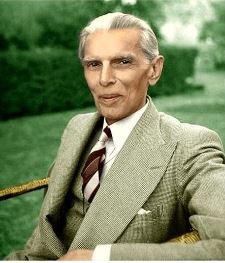
Muhammad Munir’s From Jinnah to Zia (1979) is a controversial post-partition history of Pakistan examining the country’s shifting ideologies and the conflicts between secularism and theocracy. The book explores the evolution of Pakistan’s political landscape from Jinnah’s vision to Zia-ul-Haq’s military rule, analyzing the role of political parties, military interventions, and interpretations of Islamic law. Munir critically assesses the implementation of Islamic principles in Pakistani law and society, discussing issues such as the treatment of minorities and the application of hadd punishments. He further examines the impact of these ideological shifts on Pakistan’s domestic and foreign policies, including the country’s relations with neighboring countries and its strategic importance during the Cold War.
Jinnah to Zia: Pakistan’s Ideological Evolution
From Jinnah to Zia: A Study Guide
Quiz
Instructions: Answer the following questions in 2-3 sentences each.
- What was the original vision of Pakistan as conceived by Rahmat Ali?
- What was the main point of contention for Jinnah regarding the Cabinet Mission Plan of 1946?
- Describe one of the key arguments Jinnah presented to the Boundary Commission regarding the allocation of Lahore.
- How did Jinnah distinguish between being a communalist and advocating for the two-nation theory?
- What was the author’s (Muhammad Munir) first encounter with the term “Ideology” in the context of Pakistan?
- According to the author, why is subordinating the acquisition of knowledge to any ideology detrimental?
- How did Jinnah envision the new state of Pakistan in his addresses to civil and military officials in 1947?
- What significant point did Jinnah make in his Dacca speech in 1948 regarding the ownership and governance of Pakistan?
- What concern did the author express regarding the influence of various Islamic sects and their differing interpretations of Islam in the newly formed Pakistan?
- What was the primary purpose of the Court of Inquiry constituted after the 1953 disturbances in Punjab?
Answer Key
- Rahmat Ali’s Pakistan envisioned a unified Muslim state encompassing Punjab, Afghanistan (NWFP), Kashmir, Sindh, and Baluchistan, based on the shared Muslim identity of these regions.
- Jinnah’s main contention was the plan’s rejection of immediate Pakistan, instead proposing a federation with a delayed option for sub-federations to opt-out after ten years, which he believed undermined the urgency and importance of a separate Muslim state.
- Jinnah argued that Lahore, despite significant Hindu ownership of businesses and properties, was an integral part of the region’s irrigation system and therefore culturally and economically belonged to the Muslim-majority areas.
- Jinnah argued that his advocacy for the two-nation theory stemmed from the inherent differences between Hindus and Muslims, not from a communalist perspective of promoting one religion over another. He believed these differences warranted separate states for the two groups to thrive.
- The author encountered the term “Ideology” during his inquiry into the 1953 Punjab Disturbances, where it was used in relation to the demands made against the Ahmadis based on the Objectives Resolution.
- The author argues that limiting knowledge acquisition by ideological constraints restricts intellectual exploration and prevents a comprehensive understanding of the world, as knowledge knows no bounds.
- Jinnah envisioned Pakistan as a state where its citizens could live freely and independently, develop their own culture, and establish a society based on the principles of Islamic social justice.
- Jinnah emphasized that Pakistan belonged to all its citizens, regardless of their regional or ethnic background, promoting a unified national identity over regional or provincial affiliations.
- The author expressed concern that the presence of numerous Islamic sects with often conflicting interpretations of Islam could lead to disunity and potentially impede the development of a cohesive national identity based on a shared Islamic ideology.
- The Court of Inquiry was tasked with investigating the causes of the 1953 Punjab Disturbances, the circumstances necessitating the imposition of Martial Law, and the effectiveness of measures taken to quell the unrest.
Essay Questions
- Analyze the evolution of the concept of “Pakistan” from Rahmat Ali’s initial vision to its eventual realization in 1947. What were the key factors that shaped this process, and how did the final form of Pakistan differ from its initial conception?
- Critically evaluate Jinnah’s two-nation theory. What were its strengths and weaknesses as a basis for the creation of Pakistan? Consider its historical context, its impact on inter-community relations, and its legacy in contemporary South Asia.
- Explore the challenges faced by Pakistan in defining and implementing its national ideology. How did the differing interpretations of Islam by various religious groups affect the process? Analyze the implications of this debate for the country’s political and social development.
- Discuss the author’s critique of the “Nizam-i-Mustafa” and his arguments for a more progressive and inclusive interpretation of Islamic principles in the context of modern nation-building. Do you agree with his perspective? Provide evidence from the text to support your answer.
- Evaluate the role and influence of the Ulama in shaping the political discourse and governance of Pakistan. How did their relationship with political leaders like Jinnah and Zia impact the country’s trajectory?
Glossary of Key Terms
Ahmadis: A religious group originating in 19th-century India, often considered a sect of Islam. They face persecution in Pakistan, where they are officially declared non-Muslims.
Baitulmal: Public treasury in an Islamic state, traditionally used for communal welfare and not for personal use by the ruler.
Cabinet Mission Plan (1946): A British proposal to keep India unified after independence, with a federal structure and provisions for Muslim majority provinces. It was ultimately rejected by both Congress and the Muslim League.
Darul Harb: Literally “house of war,” a term in Islamic jurisprudence referring to territories not under Islamic rule.
Darul Islam: Literally “house of Islam,” a term in Islamic jurisprudence referring to territories under Islamic rule.
Deobandis: A Sunni Islamic revivalist movement originating in Deoband, India, known for its emphasis on Islamic law and adherence to traditional interpretations.
Diyat: Monetary compensation paid to the victim or their family in cases of injury or death, as per Islamic law.
Hadd: Prescribed punishments for specific crimes in Islamic law, considered mandatory and fixed in their application.
Hijrat: Migration, specifically referring to the Prophet Muhammad’s migration from Mecca to Medina.
Ijma: Consensus among Islamic scholars on a particular issue, often considered a source of Islamic law.
Ijtihad: Independent reasoning and interpretation of Islamic law, allowing for flexibility and adaptation to changing circumstances.
Islam: A monotheistic religion based on the teachings of the Prophet Muhammad and the Quran, emphasizing submission to the will of God.
Jizyah: A tax historically levied on non-Muslim citizens in Islamic states, often in lieu of military service.
Kalima: The Islamic declaration of faith, “There is no god but Allah, and Muhammad is his messenger.”
Kafir: A term in Islam referring to a non-believer or one who rejects the tenets of Islam.
Khaksar: A Muslim nationalist organization in British India, known for its paramilitary structure and advocacy for Islamic social reform.
Khatim-ul-Nabiyeen: The seal of the prophets, a title bestowed upon the Prophet Muhammad, signifying that he was the final prophet sent by God.
Khums: One-fifth of war booty or spoils, traditionally allocated for specific purposes in Islamic law.
Lahore Resolution (1940): A resolution passed by the Muslim League demanding autonomous Muslim-majority provinces in British India, widely seen as the genesis of the Pakistan movement.
Mujtahid: A highly learned scholar in Islamic law, qualified to interpret and issue rulings (fatwas) based on Islamic sources.
Muslim League: A political party in British India founded in 1906, advocating for Muslim interests and eventually leading the movement for the creation of Pakistan.
Nizam-i-Mustafa: The system of governance and societal order based on the Prophet Muhammad’s model, often used in contemporary Islamic discourse to advocate for a theocratic state.
Objectives Resolution (1949): A resolution passed by the Constituent Assembly of Pakistan, outlining the guiding principles for the country’s constitution and emphasizing Islam as a foundational element.
Qisas: Retaliation in kind for certain crimes, such as murder, as per Islamic law.
Quran: The holy book of Islam, believed to be the word of God revealed to the Prophet Muhammad.
Shariat: Islamic law, encompassing a wide range of legal, moral, and social precepts derived from the Quran and other Islamic sources.
Sunnah: The traditions and practices of the Prophet Muhammad, considered a primary source of Islamic guidance and law.
Two-Nation Theory: The idea that Muslims and Hindus in British India constituted two distinct nations, necessitating separate states for each. This theory formed the basis for the demand for Pakistan.
Ulama: Islamic scholars and religious authorities, often influential in interpreting Islamic law and shaping public opinion.
Zakat: A mandatory charitable tax in Islam, calculated as a percentage of one’s wealth and allocated for specific charitable purposes.
Zimmi: A non-Muslim citizen living under the protection of an Islamic state, historically granted certain rights and responsibilities.convert_to_textConvert to source
Pakistan: From Jinnah to Zia
Pakistan: From Jinnah to Zia – A Briefing Doc
This document summarizes and analyzes the main themes and arguments presented in excerpts from “From Jinnah to Zia [Pakistan 1979].pdf”. The book offers a critical perspective on the evolution of Pakistan from its inception to the late 1970s, focusing heavily on the role of Islam and the complexities of defining an Islamic state.
Key Themes:
- The Unfulfilled Promise of Pakistan: The author contends that the Pakistan that emerged in 1947 deviated significantly from the vision of its founders, particularly Rahmat Ali and Muhammad Ali Jinnah. The inclusion of only a portion of Punjab, the non-accession of Muslim-majority Kashmir, and the eventual separation of East Pakistan (Bangladesh) are presented as evidence of this deviation.
“But this was not a state as he [Rahmat Ali] had conceived it.”
- The Two-Nation Theory and Its Aftermath: The author analyzes Jinnah’s argument for the two-nation theory, based on the inherent differences between Hindus and Muslims. While acknowledging the validity of this theory in the context of pre-partition India, the book questions its relevance in shaping Pakistan’s identity and governance.
- The Elusive Definition of an Islamic State: A central theme of the book is the struggle to define and implement an Islamic state in Pakistan. The author critiques various attempts to Islamicize the legal and political systems, highlighting the conflicting interpretations of Islamic principles and the practical challenges of applying ancient legal concepts to a modern nation-state. The author delves into debates around key Islamic concepts like hadd, qisas, tazir, baitulmal, zakat, ushr, and jizya.
- The Role of Ulama and Political Islam: The author examines the influence of various Islamic groups and scholars (Ulama) on Pakistan’s political landscape. He highlights their differing interpretations of Islam and their often conflicting visions for the country. The Ahrar, Jamaat-i-Islami, Jamiat-ul-Ulama-i-Islam, and Deobandis are some of the groups analyzed, with a particular focus on their stances on key issues like the definition of a Muslim, the role of non-Muslims in an Islamic state, and the legitimacy of participating in a secular government.
“The net result of all this is that neither Shias nor Sunnis nor Deobandis nor Ahl-Hadith nor Barelvis are Muslims and any change from one view to the other must be accomplished in an Islamic State with the penalty of death if the Government of the State is in the hands of the party which considers the other party to be Kaffirs.”
- Secularism vs. Theocracy: The author presents a nuanced view of the debate between secularism and theocracy in Pakistan. While acknowledging the desire for a state rooted in Islamic principles, the author cautions against a rigid interpretation of Islamic law that could stifle progress and marginalize minorities. He advocates for a system that balances Islamic values with modern principles of governance and human rights.
“The Quaid-i-Azam wanted a modern secular democratic State based no doubt on Islamic principles. He was not against Hindus and Sikhs, as they were to be equal citizens of Pakistan.”
Important Ideas and Facts:
- The author criticizes the implementation of hudud ordinances, particularly punishments like amputation for theft and stoning for adultery, as inhumane and inconsistent with the forgiving nature of Islam.
- He highlights the lack of consensus among religious scholars on fundamental issues, making it difficult to establish a universally accepted Islamic legal framework.
- The author argues that a strict adherence to the interpretations of ancient jurists could stagnate the evolution of Islamic thought and impede Pakistan’s progress. He advocates for the revival of ijtihad (independent reasoning) to adapt Islamic principles to contemporary challenges.
- The author challenges the notion of an interest-free economy, questioning its feasibility and potential impact on economic development.
- He expresses concern about the potential for religious extremism and intolerance to undermine the vision of a pluralistic and inclusive Pakistan.
- The author analyzes the political maneuverings of different political parties, highlighting how some exploited religious sentiments for political gain.
Overall, “From Jinnah to Zia” presents a critical and insightful analysis of the challenges faced by Pakistan in its quest for an Islamic identity. The book raises important questions about the role of religion in a modern state and the complexities of reconciling faith with the demands of contemporary governance.
The Making of Modern Pakistan
FAQ: The Making of Modern Pakistan
1. What were the original geographical boundaries envisioned for Pakistan, and how did they differ from the final outcome?
Rahmat Ali, who coined the term “Pakistan,” initially envisioned a state encompassing Punjab, Afghanistan (specifically the North-West Frontier Province), Kashmir, Sindh, and Baluchistan. This vision was based on the idea of uniting regions with a Muslim majority. However, the final partition in 1947 resulted in a “truncated” Pakistan, including only parts of Punjab and Bengal, along with Sindh, Baluchistan, and the North-West Frontier Province. Kashmir’s status remained disputed, and Afghanistan was not part of the equation.
2. What is the two-nation theory, and how did it influence the creation of Pakistan?
The two-nation theory, championed by Muhammad Ali Jinnah, posits that Hindus and Muslims constitute distinct nations with incompatible social, cultural, and religious values. This theory served as the ideological foundation for the Pakistan movement. It argued that a unified India would inevitably lead to the marginalization of Muslims, thus necessitating a separate Muslim-majority state.
3. What was the Cabinet Mission Plan, and how did it affect the trajectory towards Pakistani independence?
The 1946 Cabinet Mission Plan, proposed by the British government, aimed to create a united India with a federal structure. It envisioned three sub-federations, one for Muslim-majority areas, thereby indirectly addressing the demand for Pakistan. However, the plan ultimately failed due to disagreements between the Congress and the Muslim League, particularly concerning the degree of autonomy for the sub-federations. This failure further solidified the demand for a separate Pakistan.
4. How did Islamic ideology contribute to political turmoil and debates about the nature of the Pakistani state?
From the outset, the role of Islam in Pakistan was a point of contention. Different interpretations of Islamic principles, ranging from secular to theocratic visions, led to numerous political and social upheavals. The Objectives Resolution of 1949, which declared Pakistan’s commitment to Islamic principles, further fueled these debates. Various religious groups, like the Jamaat-i-Islami, Ahrar, and Jamiat-ul-Ulama, held divergent views on the application of Islamic law and the definition of a Muslim, influencing the political landscape and contributing to social divisions.
5. What were the six points of the Awami League, and how did they reflect the growing discontent in East Pakistan?
The Awami League, the dominant political force in East Pakistan, put forward six points in 1966 demanding greater autonomy for the eastern wing. These points included fiscal autonomy, separate currencies, control over foreign exchange, and a separate militia. The six points underscored the economic and political marginalization felt in East Pakistan, eventually culminating in the secessionist movement and the creation of Bangladesh in 1971.
6. How did the concept of Nizam-i-Mustafa (Islamic system of governance) influence Pakistani politics and legal systems?
Nizam-i-Mustafa, advocating for governance based on Islamic principles, has been a recurring theme in Pakistani politics. Different leaders, including General Zia-ul-Haq, attempted to implement their interpretations of Nizam-i-Mustafa, resulting in the introduction of Islamic laws and institutions. These efforts, however, were often met with resistance and criticism due to varying understandings of Islamic principles and concerns about their practical implementation.
7. How did different Islamic scholars and leaders define a “Muslim,” and what implications did these definitions have for Pakistani society?
Defining who qualifies as a Muslim became a contentious issue in Pakistan. Various Islamic scholars and leaders presented divergent definitions, some based solely on belief, others emphasizing practice and adherence to specific interpretations of Islamic law. These conflicting definitions impacted legal frameworks, social dynamics, and contributed to sectarian tensions, particularly regarding the status of Ahmadis.
8. What challenges did Pakistan face on the international stage as it sought to establish its identity as a Muslim-majority nation?
Pakistan’s foreign policy was shaped by its desire to forge alliances within the Muslim world. However, this proved challenging due to regional conflicts and differing political ideologies among Muslim-majority countries. Pakistan also navigated a complex relationship with India, marked by the unresolved Kashmir dispute and other historical tensions. Balancing its national interests with its aspiration to be a leader in the Muslim world has been a defining aspect of Pakistan’s foreign policy.
Pakistan’s Ideological Evolution
Timeline of Main Events:
1930s:
- 1930s: Rahmat Ali, a student at Cambridge University, coins the word “Pakistan” and proposes a separate Muslim state encompassing Punjab, Afghanistan (NWFP), Kashmir, Sindh, and Baluchistan.
1940s:
- 1940: The Muslim League, under the leadership of Muhammad Ali Jinnah, adopts the Lahore Resolution, calling for the creation of independent Muslim states in the subcontinent.
- 1946: The British Cabinet Mission Plan proposes a federation for India with three sub-federations, rejecting the idea of Pakistan.
- August 1947: Pakistan gains independence, but with a truncated territory compared to Rahmat Ali’s vision. Kashmir’s accession remains disputed, leading to conflict.
- October 19, 1947: Jinnah delivers an address in Karachi describing the new state as one where people can live freely and develop according to their own lights and culture, with Islamic social justice playing a central role.
- March 21, 1948: Jinnah addresses a public meeting in Dacca, emphasizing the unity of Pakistan and rejecting the notion of a theocracy.
1950s:
- 1953: Anti-Ahmadiyya riots erupt in Punjab, leading to the imposition of Martial Law.
- 1953-1954: Justice Muhammad Munir heads a Court of Inquiry into the Punjab disturbances, investigating the role of Islamic ideology in the unrest.
- 1954: The Munir Report is published, generating controversy and receiving praise internationally for its analysis of Islamic thought and its implications for a modern state.
1970s:
- 1971: Javed Iqbal publishes “Ideology of Pakistan,” criticizing aspects of the Munir Report.
- 1971: East Pakistan secedes after a war, becoming Bangladesh.
- 1973: A new Constitution is adopted, but faces challenges from various religious groups.
- 1977: Zulfikar Ali Bhutto, who championed Islamic socialism, is overthrown in a military coup led by General Zia-ul-Haq.
- 1979: General Zia-ul-Haq announces his intention to implement Nizam-i-Mustafa (Islamic system) in Pakistan.
- 1979: Zia-ul-Haq promulgates a series of ordinances, including the Prohibition Order and the Offence of Zina Ordinance, aiming to Islamize Pakistan’s legal system.
- 1979: The Iranian Revolution, led by Ayatollah Khomeini, raises questions about the nature of an Islamic republic and its compatibility with democracy.
Cast of Characters:
Rahmat Ali: A Cambridge student who coined the term “Pakistan” in the 1930s, advocating for a separate Muslim state in South Asia.
Muhammad Ali Jinnah (Quaid-i-Azam): Leader of the Muslim League and founding father of Pakistan. He advocated for a separate Muslim state based on the two-nation theory but envisioned a modern, secular democracy.
Allama Iqbal: Poet and philosopher who is considered the spiritual father of Pakistan. His writings and speeches influenced the movement for an independent Muslim state.
Sir Cyril Radcliffe: Chairman of the Boundary Commission responsible for dividing Punjab and Bengal between India and Pakistan. His decisions on the border demarcations remain controversial.
Justice Muhammad Munir: Headed the Court of Inquiry into the 1953 Punjab disturbances. His report, the Munir Report, critically examined the role of differing interpretations of Islamic ideology in the unrest.
Justice Kayani: Member of the Court of Inquiry alongside Justice Munir.
Khawaja Nazimuddin: Prime Minister of Pakistan during the 1953 Punjab disturbances.
Maulana Abul Ala Maududi: Founder of the Jamaat-i-Islami, a prominent Islamist political party in Pakistan. He advocated for an Islamic state based on Sharia law.
Maulana Amin Ahsan Islahi: A prominent member of the Jamaat-i-Islami who provided his definition of a Muslim during the Munir Inquiry.
Maulana Abul Hasanat Syed Muhammad Ahmad Qadri: President of Jamiat-ul-Ulama-i-Pakistan. He offered his views on the position of non-Muslims in an Islamic state during the Munir Inquiry.
Syed Attaullah Shah Bukhari (Amir-i-Shariat): A religious leader who argued against the legitimacy of a legislature in an Islamic state.
Mian Tufail Muhammad: Member of the Jamaat-i-Islami who became the party’s Amir (leader) later on. He advocated for Muslims’ refusal to serve under non-Muslim governments.
Javed Iqbal: Son of Allama Iqbal, he published “Ideology of Pakistan” in 1971, offering a different perspective on Pakistan’s ideological foundations and critiquing aspects of the Munir Report.
Zulfikar Ali Bhutto: Prime Minister of Pakistan (1973-1977) who promoted a vision of Islamic socialism and nationalized industries. He was overthrown and executed by General Zia-ul-Haq.
General Zia-ul-Haq: Led the military coup against Bhutto in 1977. He declared his intention to implement Nizam-i-Mustafa and introduced a series of Islamic ordinances, significantly altering Pakistan’s political and legal landscape.
Ayatollah Khomeini: Leader of the Iranian Revolution in 1979. His vision of an Islamic Republic sparked debate about the nature of Islamic governance and its relationship with democracy.
Shah Waliullah: An 18th-century Islamic scholar from India who revived the concept of Ijtihad (independent reasoning in Islamic law) and advocated for social and political reforms based on Islamic principles.
Sir Syed Ahmad Khan: A 19th-century Muslim reformer and educator who founded the Aligarh Movement. He promoted modern education and interpreted Islam in a way that emphasized its compatibility with reason and science.
This timeline and cast of characters provide a framework for understanding the complex evolution of Pakistan’s ideology and its ongoing struggle with defining the role of Islam in a modern state.
The Creation and Evolution of Pakistan
Pakistan’s history begins in the 1930s when Rahmat Ali, a student at Cambridge University, coined the word “Pakistan.” [1] He envisioned uniting Punjab, Afghanistan (specifically the North-West Frontier), Kashmir, Sindh, and Baluchistan into a separate Muslim state. [1] In 1947, his vision came to fruition with the establishment of the state of Pakistan. [2] However, the state of Pakistan did not include all of the territories he envisioned. [2]
The Creation of Pakistan:
- The Lahore Resolution, moved by Bengali leader Mr. Fazl-i-Haq, envisioned independent sovereign states in the Muslim-majority areas in both eastern and western zones of British India. [3]
- The Muslim League initially agreed to the Lahore Resolution, but before the state of Pakistan was created, the League decided to make East Bengal a part of Pakistan instead of an independent state. [3]
- The Indian Independence Act provided that after British rule ended, Indian states could join either India or Pakistan. [4] Many Muslim-ruled states with non-Muslim majorities joined India, and Junagarh and Manawar (Muslim-ruled with non-Muslim majority populations) joined Pakistan but were taken by India by force. [5] Only Bahawalpur and Khairpur joined Pakistan without dispute. [5]
- The question of whether Kashmir should join India or Pakistan remains unresolved, though Pakistan holds a portion of Kashmir for administrative purposes. [5]
- Many critics believed that the truncated Pakistan would collapse under the weight of its own problems. [6]
- The early years of Pakistan were marked by widespread communal violence in the Punjab. [7] An estimated one to one and a half million Muslims were killed, and approximately 12 million were displaced. [7]
- The creation of Pakistan also sparked a mass exodus of people from their homes, making it difficult for them to find new homes. [7]
The Rationale for Pakistan:
- The two-nation theory argues that Muslims and Hindus are distinct nations, making it impossible for them to live together. [8] Muslim League leader Muhammad Ali Jinnah used the two-nation theory to support the establishment of Pakistan. [8] He believed that Muslims in India were in danger of losing their culture. [9]
- Some people believed that the real goal of the Muslim League’s struggle to create Pakistan was for Muslims to be free from Hindu domination and to have their own government. [10]
- The Indian Independence Act gave both India and Pakistan full control over their affairs, including the right to leave the Commonwealth. [11]
Ideological Shifts in Pakistan:
- Jinnah envisioned Pakistan as a secular democratic government where people of all religions had equal rights. [12] This vision is clearly articulated in his August 11, 1947 speech to the Constituent Assembly. [12, 13]
- After Jinnah’s death, Prime Minister Liaquat Ali Khan moved the Objectives Resolution in the Constituent Assembly, which was passed unanimously by Muslim members while Hindu members boycotted the session. [14]
- The Objectives Resolution declared that sovereignty over the universe belongs to Allah and that the authority exercised by the people of Pakistan is a sacred trust. [15] This resolution is viewed by some as a significant shift away from Jinnah’s vision of a secular state. [16]
- The Objectives Resolution also led to confusion about who is a Muslim and what rights non-Muslims have in Pakistan. [16] It fueled demands from religious groups for an Islamic state, leading to debates over which version of Islam should be adopted. [17]
Pakistan After Jinnah:
- Following Jinnah’s death, various leaders and regimes have interpreted Pakistan’s identity in different ways. [18]
- Leaders like Ghulam Muhammad and Chaudhri Muhammad Ali focused on economic and political stability. [6]
- Ayub Khan tried to balance Islamic principles with modern governance, leading to the 1962 Constitution that enshrined some Islamic provisions. [19, 20]
- Yahya Khan emphasized “Islamic ideology” in his Legal Framework Order, further solidifying religion’s role in politics. [21]
- Zulfikar Ali Bhutto introduced socialist economic policies while also appealing to Islamic sentiments. [20, 22] His 1973 Constitution declared Islam as the state religion. [22]
- General Zia-ul-Haq committed to enforcing Nizam-i-Mustafa, which led to the introduction of Islamic laws and institutions. [23]
Geographical Changes and the Separation of East Pakistan:
- Initially, Pakistan was divided into West and East Pakistan, separated by 1,000 miles of Indian territory. [3] The distance and differences in language, customs, and lifestyles contributed to tensions. [3, 24, 25]
- Bengali dissatisfaction grew over perceived exploitation by West Pakistan. [26] Mujibur Rahman’s six-point movement demanded greater autonomy for East Pakistan. [27]
- The 1971 war with India resulted in the separation of East Pakistan, which became Bangladesh. [28, 29]
Challenges and Future Prospects:
- Pakistan has faced economic challenges, political instability, and social divisions throughout its history. [30]
- The country continues to grapple with questions of Islamic identity, democracy, and the role of religion in public life. [31, 32]
- The resurgence of Islam in the region and global geopolitical shifts further complicate Pakistan’s path. [33]
The sources offer a glimpse into the complexities of Pakistan’s history, highlighting the ongoing debates surrounding its identity and future direction. The country’s evolution has been shaped by a combination of factors, including the vision of its founders, the influence of religious groups, political maneuvering, economic realities, and regional dynamics.
Islamic Ideology in Pakistan
The sources present a complex and multifaceted view of Islamic ideology, particularly in the context of Pakistan. While there is a general agreement on the importance of Islam in shaping the country’s identity, there is significant disagreement about what exactly constitutes “Islamic ideology” and how it should be implemented.
Here are some key points about Islamic ideology as discussed in the sources:
- The Definition of a Muslim: One of the most contentious issues is defining who qualifies as a Muslim. This debate has significant implications for citizenship, rights, and the nature of the state. [1-3] According to the sources, some Ulama argue that specific beliefs and practices are essential for being considered a Muslim. [2] The lack of a universally accepted definition has led to accusations of apostasy and calls for the death penalty for those deemed to have deviated from “true” Islam. [4, 5]
- The Role of the State: Another central question is the role of the state in enforcing Islamic principles. Some advocate for a strict interpretation of Islamic law, arguing that the state should actively implement Quranic injunctions in all aspects of life, including politics, economics, and social behavior. [6] They believe that Pakistan was created to be an Islamic state and that its laws and institutions should reflect this. [7, 8] This view contrasts with the vision of a secular state where religion is a private matter. [9, 10]
- Nizam-i-Mustafa: The concept of Nizam-i-Mustafa, or the system of governance established by the Prophet Muhammad, is frequently invoked in discussions about Islamic ideology. Proponents of this system often argue for a return to the practices and laws of early Islam, believing them to be the ideal model for a Muslim society. [11-13] However, critics argue that rigidly adhering to interpretations from centuries ago is impractical and incompatible with the complexities of modern life. [14-17]
- Democracy vs. Islamic Governance: The sources reveal a tension between the concept of democracy and the ideal of an Islamic state. Some argue that democracy, with its emphasis on popular sovereignty and individual rights, is fundamentally incompatible with the idea of God’s sovereignty. [15, 18] Others attempt to reconcile the two, suggesting that certain aspects of democracy can coexist with Islamic principles. [9, 12]
- The Role of Ijtihad: The concept of Ijtihad, or independent reasoning and interpretation within Islamic law, plays a crucial role in navigating the challenges of applying Islamic principles to contemporary issues. Modernists advocate for a more flexible and context-aware approach, arguing that the door of Ijtihad should remain open to address the evolving needs of Muslim societies. [16, 19-21] Traditionalists, on the other hand, often resist reinterpretations, emphasizing adherence to established interpretations of Islamic law. [22-24]
- The Impact on Non-Muslims: The sources also highlight the impact of Islamic ideology on non-Muslim minorities in Pakistan. The concept of Jizya, a tax historically levied on non-Muslims in Islamic states, is mentioned as a potential consequence of implementing a strict interpretation of Islamic law. [25, 26] The rights and status of non-Muslims in an Islamic state are debated, with some arguing for equal citizenship while others advocate for a subordinate position. [27-30]
The sources underscore that Islamic ideology is not a monolithic concept but rather a subject of ongoing debate and interpretation. Different groups and individuals within Pakistan hold varying views on what it means to be an Islamic state and how Islamic principles should be applied in practice. These varying interpretations have significant implications for the country’s political system, legal framework, and social fabric. The sources illustrate the challenges of reconciling traditional Islamic beliefs with the realities of modern governance and the need to navigate the diverse perspectives within Pakistani society.
Pakistani Political Parties: Ideology, Religion, and Governance
The sources depict political parties in Pakistan as entities grappling with the legacy of the country’s creation and the ever-evolving interpretations of its Islamic identity. They highlight several key aspects of political parties:
- Shifting Ideologies: Political parties in Pakistan have often adapted their ideologies based on the prevailing political climate and the need to secure popular support [1]. For example, the Ahrar party initially aligned with the Congress, then embraced nationalism, and finally, upon the establishment of Pakistan, transformed into a religious party with political motives [2]. This tendency to shift ideological stances underscores the pragmatic nature of Pakistani politics and the fluid nature of party platforms.
- Exploitation of Religion: The sources criticize political parties, particularly religious parties, for exploiting religious sentiments for political gain [3, 4]. This manipulation of religious issues is portrayed as a recurring theme in Pakistani politics, contributing to societal divisions and undermining genuine attempts at implementing Islamic principles in governance.
- Relationship with Jinnah’s Vision: The sources reveal a complex relationship between political parties and the vision of Pakistan’s founder, Muhammad Ali Jinnah. While many parties invoke Jinnah’s name and claim to uphold his legacy, their actions and ideologies often diverge from his vision of a secular democratic state [5]. This discrepancy highlights the gap between rhetoric and reality in Pakistani politics, where parties often use Jinnah’s legacy as a tool for legitimacy without necessarily adhering to his principles.
- Coalition Politics: The fragmented nature of Pakistani politics, with a multitude of parties vying for power, often necessitates the formation of coalition governments [6]. However, these coalitions are often fragile and prone to instability due to ideological differences and competing interests among the participating parties. The sources suggest that coalition governments may struggle to effectively govern due to a lack of consensus and coherence in their decision-making.
- Impact of Martial Law: Pakistan’s history is punctuated by periods of martial law, which have significantly impacted the development and functioning of political parties [7]. Military interventions have often led to the banning of political activities, the dissolution of parties, and the imposition of restrictions on political expression. These disruptions have hindered the growth of stable and democratic political institutions in the country.
- Challenges of Defining Islamic Governance: A major challenge facing political parties, particularly those with religious orientations, is defining what constitutes an “Islamic” system of governance [8]. The sources highlight the lack of consensus on key issues like the role of democracy, the interpretation of Islamic law, and the status of non-Muslims in an Islamic state. This lack of clarity creates a fertile ground for ideological clashes and hinders the formulation of coherent policies.
- Separate Electorates: The issue of separate electorates for minorities has been a subject of debate and controversy [9]. Some argue that separate electorates ensure minority representation, while others criticize them for entrenching religious divisions and undermining national unity. The sources suggest that the adoption of separate electorates reflects a departure from Jinnah’s vision of a unified Pakistani nation with equal rights for all citizens.
The sources portray a political landscape in Pakistan where parties struggle to navigate the complexities of Islamic ideology, national unity, and democratic principles. They suggest that the legacy of Jinnah’s vision remains a powerful force, but its interpretation and implementation are subject to ongoing debate and manipulation by various political actors. The challenges of coalition politics, the impact of martial law, and the lack of consensus on Islamic governance further complicate the dynamics of political parties in Pakistan.
Islamic Democracy: A Contested Concept
The sources, particularly in their discussion of “Islamic Democracy,” delve into the definition of democracy, contrasting it with the systems of governance found in early Islamic history. Here’s a breakdown of democracy’s definition as presented in the sources:
- Western Origins: The sources emphasize that democracy, as it is commonly understood and demanded, is fundamentally a Western concept. [1, 2] They trace its roots to historical developments in England, France, and America, highlighting milestones like the Magna Carta and the American Revolution. [2]
- Key Characteristics: The sources identify several key features that define modern democracy:
- Adult Franchise: The right of all adults to participate in the electoral process. [3, 4]
- Periodic Accountability: Regular elections that hold elected officials accountable to the people. [3, 4]
- Multi-Party System: The existence of two or more political parties that compete for power, providing voters with choices and ensuring a diversity of viewpoints in the political arena. [3, 4]
- Educated Electorate: A citizenry that is informed about political issues and can make reasoned judgments when casting their votes. [3, 4]
- Contrasting with Nizam-i-Mustafa: The sources draw a clear distinction between modern democratic principles and the system of governance during the Prophet Muhammad’s time and the early Caliphate (often referred to as Nizam-i-Mustafa). [1, 3, 5, 6] They argue that none of the defining features of modern democracy existed in Nizam-i-Mustafa. For instance:
- Succession to leadership was not based on elections or a fixed term. [5]
- There were no political parties. [4]
- Women did not have voting rights. [7]
- Challenges of Islamic Democracy: The sources point out the inherent tension between the concept of democracy and certain interpretations of Islamic ideology. [4, 6, 8] They raise questions about:
- The Sovereignty of God vs. Popular Sovereignty: The notion of God’s sovereignty in Islam is sometimes seen as conflicting with the concept of popular sovereignty, a cornerstone of democratic thought.
- The Role of Religious Law: The implementation of Islamic law (Sharia) is often viewed as a central goal in an Islamic state, which could potentially restrict individual liberties and limit the scope of democratic decision-making.
- The Assimilative Capacity of Islam: Despite these challenges, some argue that Islam possesses the capacity to assimilate certain aspects of democracy. [7, 9] For example, they cite the adoption of women’s suffrage in some Muslim-majority countries as evidence of this adaptability. However, the sources also acknowledge the existence of divergent views on the compatibility of democracy and Islamic governance with figures like Khomeini rejecting democracy outright as a Western import. [6, 9, 10]
In conclusion, the sources present a nuanced view of democracy, acknowledging its Western origins and its key features while highlighting the challenges of reconciling democratic principles with certain interpretations of Islamic ideology. The debate on whether and how democracy can coexist with Islamic governance is ongoing, with no easy answers or universal consensus. The sources underscore that the very definition of democracy is contested within the context of Islamic thought.
Religious Freedom in Pakistan
The sources grapple with the concept of religious freedom, particularly in the context of Pakistan’s aspirations to be an Islamic state. They highlight the complexities and contradictions surrounding this fundamental right.
- A Basic Right, Conditionally: The sources acknowledge that religious freedom, encompassing the right to profess, practice, and propagate one’s religion, is a fundamental right in modern constitutions. However, they also emphasize that this right is not absolute and is subject to limitations imposed by law. This qualification stems from the potential for religious practices to clash with public order, morality, and the rights of others.
- Potential for Conflict: The sources acknowledge that in a multi-religious society like Pakistan, the public practice, profession, and propagation of religion can potentially lead to communal tensions and violence. This potential for conflict necessitates legal safeguards to maintain peace and order. For instance, laws against indecent exposure might restrict certain religious practices that could be deemed offensive or disruptive.
- Restrictions on Propagation: The sources express concern over potential restrictions on the propagation of non-Islamic religions in Pakistan. While acknowledging the need to prevent hate speech and incitement to violence, they caution against any attempts to completely prohibit the peaceful sharing of religious beliefs. Such restrictions, they argue, would contradict Islam’s inherent tolerance and set back progress towards interfaith harmony.
- Historical Examples: The sources draw on historical examples to illustrate varying approaches to religious freedom within Islamic societies:
- Tolerance under Mughal and Moorish Rule: They point to the Mughal Empire in India and the Moorish rule in Spain, where Muslim rulers governed for centuries without imposing restrictions on other religions. These examples are presented as evidence of Islam’s capacity for coexistence and tolerance.
- Caliph Mamun’s Approach: The reign of Caliph Mamun, an Abbasid ruler known for his intellectual openness, is cited as another example of tolerance within Islamic history.
- Conflicting Contemporary Views: However, the sources also point to conflicting views within contemporary Pakistan. While the President extended greetings to Christians on Christmas, other figures like Subhi-Sadiq advocated for the elimination of non-Islamic nationalities from the country. This contrast highlights the ongoing debate and the lack of consensus on the limits of religious freedom in Pakistan.
- The Quranic Basis for Tolerance: The sources emphasize that Islam, at its core, is a tolerant religion that values freedom of thought. They point to specific verses in the Quran, such as Surah-ul-Kafirun and the La Ikraha verse, as evidence of this principle. These verses are interpreted as advocating for peaceful coexistence and rejecting compulsion in matters of faith.
The sources ultimately present a nuanced perspective on religious freedom. While upholding it as a fundamental right, they recognize the need for legal limitations to prevent abuses and maintain societal harmony. The sources express concern over potential restrictions on the propagation of non-Islamic faiths, warning that such measures would contradict Islam’s inherent tolerance. They emphasize the importance of interpreting religious freedom in a way that respects both individual rights and the need for peaceful coexistence in a diverse society.
Jinnah’s Pakistan: Secular Vision and its Contradictions
The sources provide a multifaceted view of Muhammad Ali Jinnah’s vision for Pakistan’s governance, emphasizing his commitment to a secular democratic state while also acknowledging the complexities and contradictions that emerged after his death.
Jinnah’s Core Principles:
- Secularism: Jinnah consistently advocated for a secular state where religion would be a personal matter and not a basis for governance. He explicitly stated that Pakistan would not be a theocracy and envisioned a nation where citizens, regardless of their faith, would have equal rights. This vision is clearly articulated in his speech to the Constituent Assembly on August 11, 1947 [1, 2], where he emphasized the need to bury the hatchet and create a state where people could live and work together harmoniously, transcending religious differences.
- Democracy: Jinnah believed in a democratic system where sovereignty rested with the people and where leaders would be chosen through free and fair elections. He envisioned a government based on the principles of equality, justice, and tolerance, reflecting the values he believed were inherent in Islam. He saw democracy as a means to ensure the well-being of the people, particularly the masses, and to create a progressive society.
- Islamic Principles as a Moral Framework: While advocating for a secular state, Jinnah also stressed the importance of grounding Pakistan’s governance in Islamic principles of social justice, equality, and brotherhood. He envisioned a society where these principles would guide policy and ensure a fair and equitable system for all citizens. He believed that Islam’s emphasis on social responsibility and ethical conduct could serve as a moral compass for the nation.
Challenges and Contradictions:
- The Objectives Resolution: The sources highlight the Objectives Resolution, introduced by Prime Minister Liaquat Ali Khan after Jinnah’s death, as a significant departure from Jinnah’s vision. This resolution, which declared the sovereignty of Allah and emphasized the Islamic character of the state, laid the groundwork for the interpretation of Pakistan as an Islamic republic, a concept that Jinnah had explicitly rejected [3-5].
- The Role of Religious Parties: The emergence of religious parties, such as the Jamaat-i-Islami, and their increasing influence in Pakistani politics further complicated the realization of Jinnah’s vision. These parties, often promoting a theocratic model of governance, directly challenged Jinnah’s secular ideals and advocated for the implementation of Islamic law in its entirety [6-9]. Their interpretation of Islam often clashed with Jinnah’s more inclusive and tolerant approach.
- Shifting Political Landscape: Pakistan’s political history, marked by periods of martial law and unstable coalition governments, has hindered the consistent implementation of Jinnah’s vision. Military interventions disrupted democratic processes and often led to the imposition of policies that contradicted Jinnah’s secular principles. The frequent changes in leadership and the fragmentation of the political system created an environment where political expediency often overshadowed adherence to Jinnah’s original ideals.
Jinnah’s Legacy:
Despite these challenges, Jinnah’s vision for Pakistan remains a potent force. His speeches and writings continue to be invoked by political leaders and scholars, often selectively, to support various interpretations of Pakistan’s identity and governance. The debate on the true nature of Jinnah’s vision and its relevance to contemporary Pakistan is ongoing. The sources suggest that Jinnah’s legacy is complex and multifaceted, open to interpretations that both support and contradict his original ideals. His vision for a secular democratic state, rooted in Islamic principles of social justice, continues to inspire some while being challenged or reinterpreted by others.
Jinnah’s Pakistan: Secular Vision vs. Islamic Reality
Muhammad Ali Jinnah envisioned a secular, democratic Pakistan, but subsequent interpretations, often influenced by political expediency and the rise of religious parties, have diverged from his original vision. Here’s a breakdown of those key differences:
- Sovereignty: Jinnah advocated for popular sovereignty, where the people would be the ultimate source of authority. He believed in a democratic system with free and fair elections, reflecting the will of the people. This is evident in his August 11, 1947, speech, where he stated, “you will find that in course of time Hindus would cease to be Hindus and Muslims would cease to be Muslims, not in the religious sense…but in the political sense as citizens of the State” [1].
- However, after his death, the Objectives Resolution of 1949 declared that sovereignty belonged to Allah, a significant departure from Jinnah’s concept of popular sovereignty [2]. This resolution paved the way for interpretations of Pakistan as an Islamic republic, which contradicted Jinnah’s secular ideals.
- Role of Religion in Governance: Jinnah envisioned a secular state where religion would be a personal matter and have no direct influence on governance. He believed in equal citizenship for all, regardless of religious affiliation. He explicitly stated that Pakistan would not be a theocracy [1], envisioning a society where citizens could coexist harmoniously despite religious differences.
- However, the rise of religious parties like the Jamaat-i-Islami promoted a theocratic model, advocating for the implementation of Islamic law (Sharia) as the basis for governance. They viewed Jinnah’s secular vision as incompatible with their understanding of an Islamic state [3]. This interpretation clashed with Jinnah’s intention of creating a nation where Muslims and non-Muslims could live together with equal rights, as demonstrated in the Liaquat-Nehru Pact of 1950, which guaranteed equal rights to minorities in both India and Pakistan [4].
- Focus on Islamic Principles: While advocating for a secular state, Jinnah believed in grounding Pakistan’s governance in Islamic principles of social justice, equality, and brotherhood [5]. He saw these principles as a moral framework for creating a just and equitable society.
- Subsequent interpretations, however, often focused on the ritualistic aspects of Islam, emphasizing the implementation of specific Islamic laws and punishments, rather than the broader principles of social justice that Jinnah had envisioned. For instance, the later introduction of Hudood Ordinances under Zia-ul-Haq’s regime, with their strict punishments for offenses like adultery and alcohol consumption, exemplified a shift toward a more literal and rigid interpretation of Islamic law [6]. This contrasted sharply with Jinnah’s emphasis on a more progressive and inclusive approach to Islamic principles.
- Nature of Democracy: Jinnah believed in a modern democratic system with a multi-party system, periodic elections, and adult franchise. He saw democracy as essential for ensuring accountability and representing the diverse voices of the Pakistani people.
- Later interpretations of “Islamic democracy” often sought to reconcile democratic principles with Islamic law, leading to debates about the limits of individual freedoms and the role of religious scholars in the political process [7]. Figures like Ayatollah Khomeini in Iran outright rejected democracy as a Western concept [8], further illustrating the divergence of views on the compatibility of democracy and Islamic governance.
In conclusion, Jinnah’s vision for Pakistan as a secular democratic state, grounded in the principles of social justice, has been subject to varying interpretations since his death. The Objectives Resolution, the influence of religious parties, and the shifting political landscape have contributed to a departure from his original ideals. The debate on the true nature of Jinnah’s vision and its relevance to contemporary Pakistan continues, reflecting the complexities of reconciling his secular aspirations with the demands of an Islamic state.
The Genesis of Pakistan
The sources offer several interconnected reasons for the creation of Pakistan, combining the desire for political autonomy, economic justice, and cultural preservation for the Muslim population in British India.
Here’s a breakdown of the primary objectives:
- Freedom from Hindu Domination: The most prominent objective was to liberate the Muslim majority areas from what many perceived as impending Hindu political and economic control. The sources repeatedly highlight the historical tensions and differences between the two communities, viewing the creation of Pakistan as a necessary step to ensure Muslim self-determination and prevent their subjugation under a Hindu-majority independent India. [1-5]
- Economic Justice: The sources reveal concerns about the economic exploitation of Muslims by Hindu businesses and landowners. Jinnah and other leaders argued that a separate Muslim state would allow for the development of a fairer economic system, where Muslims could control their resources and uplift the impoverished masses. This desire for economic empowerment is evident in the anxieties surrounding the potential inclusion of Lahore, a major economic center, within India during the partition process. [6-8]
- Preservation of Muslim Culture and Identity: The sources underscore a deep-seated anxiety among Muslims about the potential erosion of their distinct cultural and religious identity within a unified India. The creation of Pakistan was seen as a means to safeguard Islamic practices, traditions, and values, enabling Muslims to live according to their own beliefs and legal systems without fear of assimilation or suppression. This cultural objective is often intertwined with the political and economic arguments, reflecting the multifaceted nature of the motivations behind Pakistan’s creation. [5, 7, 9]
It’s important to note that the relative emphasis on each objective has been subject to debate and interpretation over time. While Jinnah’s initial vision stressed secular governance and equal citizenship for all, subsequent interpretations, influenced by religious parties and political events, have shifted the focus towards a more explicitly Islamic state. Nevertheless, the core objectives of political freedom, economic justice, and cultural preservation remain central to understanding the historical context of Pakistan’s creation.
Jinnah’s Vision for Pakistan
Muhammad Ali Jinnah’s vision for Pakistan’s governance was deeply rooted in the principles of secularism and democracy, aiming to create a state where Muslims could prosper and practice their faith freely while ensuring equal rights for all citizens, regardless of religion.
Here’s a breakdown of his key ideas:
- A Secular State: Jinnah consistently emphasized that Pakistan would not be a theocracy. He envisioned a modern, democratic state where religion would remain a personal matter and not interfere with the administration of the state. This secular vision is explicitly stated in his address to the Constituent Assembly on August 11, 1947:
“Now I think you should keep that in front of us as our ideal, and you will find that in the course of time Hindus would cease to be Hindus and Muslims would cease to be Muslims, not in the religious sense, because that is the personal faith of each individual, but in the political sense as citizens of the State.” [1]
- Democracy as the Foundation: Jinnah firmly believed in a democratic system where the people would be the ultimate source of authority. He envisioned a government based on the principles of equality, justice, and tolerance, representing the diverse voices of the Pakistani people. He saw free and fair elections as crucial to ensuring accountability and responsiveness to the needs of the citizens. [2, 3]
- Islamic Principles as Guiding Values: While advocating for a secular state, Jinnah also highlighted the importance of grounding Pakistan’s governance in the spirit of Islamic principles. He envisioned a society where Islamic values of social justice, equality, and brotherhood would inform policy and create a just and equitable system for all. However, he never advocated for a rigid implementation of Islamic law or a theocratic system where religious leaders would dictate governance. [4, 5]
Jinnah’s vision sought to create a Pakistan where Muslims could flourish while ensuring a just and inclusive society for all. His emphasis on secularism, democracy, and Islamic principles as a moral compass aimed to establish a nation that was both modern and rooted in the values he believed were essential for its success.
Pakistan’s Objectives Resolution: Ideology and its Impact
The Objectives Resolution, passed in 1949, played a pivotal role in shaping Pakistan’s ideology, marking a significant departure from Jinnah’s initial vision of a secular state and laying the groundwork for a more religiously-influenced political system. While the resolution didn’t explicitly advocate for a theocracy, its language and underlying principles set the stage for interpretations that diverged from Jinnah’s secular ideals.
Here’s a breakdown of the resolution’s key impacts:
- Shifting Sovereignty: The Objectives Resolution declared that sovereignty belongs to Allah, a stark contrast to Jinnah’s emphasis on popular sovereignty. This declaration opened the door for interpretations of Pakistan as an Islamic republic where the ultimate source of authority resided in divine law rather than the will of the people. This tension between popular sovereignty and divine sovereignty has continued to shape debates about the nature of Pakistan’s governance. [1]
- Elevating Islamic Principles: The resolution stressed that the Muslims of Pakistan should be enabled to lead their lives according to Islam. This provision, while seemingly benign, provided ammunition for religious parties to argue for a greater role of Islam in the public sphere and for the implementation of Islamic laws and practices. This emphasis on Islamic principles contrasted with Jinnah’s vision of a secular state where religion would be a personal matter, not a basis for governance. [2]
- Formalizing Islamic Identity: By incorporating Islamic terminology and principles into its framework, the Objectives Resolution effectively enshrined Islam as a central component of Pakistan’s national identity. This move, while appealing to some segments of the population, created anxieties among religious minorities who felt their status as equal citizens was being undermined. The resolution’s language created a space for interpretations that favored a distinct Islamic character for the state, paving the way for future debates about the rights of non-Muslims and the extent to which Islamic law should influence the legal system. [1, 3]
The Objectives Resolution, while not a blueprint for an Islamic state, provided a foundation upon which later leaders and political movements built arguments for a more religiously-influenced Pakistan. Its impact is undeniable, setting in motion a trajectory that has shaped the country’s political and social landscape. The debates about the true nature of Pakistan’s ideology—secular or Islamic—can be traced back to the interpretations and implications embedded within this foundational document.
Pakistan’s Ideological Evolution
Pakistan’s history has been marked by significant ideological shifts, reflecting the ongoing struggle to define the nation’s identity and reconcile competing visions of its governance. These shifts represent a complex interplay of political maneuvering, religious interpretations, and societal dynamics that have shaped the country’s trajectory.
Here’s an exploration of the key ideological shifts in Pakistan’s history:
From Jinnah’s Secularism to the Objectives Resolution:
- Jinnah’s vision for Pakistan, articulated in his August 11, 1947 speech, centered around a secular, democratic state where religion would be a personal matter and all citizens would enjoy equal rights regardless of their faith. He envisioned a Pakistan that embraced modernity and progress, drawing inspiration from Islamic principles of social justice but not adhering to a strict theocratic model [1, 2].
- However, Jinnah’s untimely death in 1948 created a vacuum that allowed for differing interpretations of his vision. The passage of the Objectives Resolution in 1949 marked a crucial ideological shift, declaring that sovereignty belongs to Allah and emphasizing the need for Muslims to live according to Islam [3, 4]. This resolution, while not explicitly advocating for a theocracy, provided a foundation for a more religiously-influenced political system and sparked debates about the role of Islam in governance [3, 4].
The Rise of Religious Parties and the Demand for an Islamic State:
- The Objectives Resolution emboldened religious parties like the Jamaat-i-Islami, which had initially opposed the creation of Pakistan, to assert their influence in shaping the nation’s ideology. These parties advocated for the implementation of Islamic law (Sharia) as the basis of governance, viewing Jinnah’s secular vision as incompatible with a true Islamic state [5, 6].
- This rise of religious parties and their push for an Islamic state led to growing pressure on subsequent governments to incorporate more Islamic elements into the legal and political framework. The 1956 Constitution declared Pakistan an Islamic Republic, further solidifying the role of Islam in the state’s identity [7].
Ayub Khan’s Modernization and the Resurgence of Islamic Sentiment:
- General Ayub Khan’s rise to power in 1958 ushered in a period of modernization and economic development. Ayub Khan favored a pragmatic approach to Islam, focusing on its broader principles rather than strict legalistic interpretations [8]. His 1962 Constitution initially omitted the word “Islamic” from the state’s name, reflecting his desire for a less religiously-focused system [8].
- However, Ayub Khan’s modernization drive met with resistance from religious groups, who saw it as a threat to Islamic values and a return to secularism. This resurgence of Islamic sentiment forced Ayub Khan to reinstate the Islamic provisions in the Constitution to appease his critics [8].
The Separation of East Pakistan and the Rise of Bengali Nationalism:
- The separation of East Pakistan in 1971, resulting in the creation of Bangladesh, highlighted the complex interplay of religious and national identities. While religion had served as a unifying factor in the creation of Pakistan, it proved insufficient to overcome the cultural, linguistic, and economic disparities between the two wings.
- The rise of Bengali nationalism, which prioritized cultural and linguistic identity over religious affiliation, challenged the very notion of Pakistan as a solely religion-based state [9-11]. This event further complicated the debate about Pakistan’s ideological foundation and its ability to accommodate diverse identities.
Zia-ul-Haq’s Islamization and the Legacy of His Policies:
- General Zia-ul-Haq’s regime (1977-1988) marked a decisive turn towards Islamization, aiming to reshape Pakistan’s society and governance according to his interpretation of Islamic principles [12]. He implemented strict Islamic laws, including the Hudood Ordinances, which introduced harsh punishments for offenses like adultery and alcohol consumption [11].
- Zia-ul-Haq’s Islamization policies had a profound and lasting impact, further cementing the role of Islam in the public sphere and legal system. His legacy continues to shape contemporary debates about Pakistan’s identity, the rights of minorities, and the relationship between religion and state.
The ideological shifts in Pakistan’s history represent an ongoing negotiation between secular and Islamic visions for the nation. This tension is reflected in the various constitutions, the influence of religious parties, and the policies of different leaders. The debate about the true nature of Pakistan’s ideology continues to shape the country’s political and social landscape, reflecting the complex challenges of balancing religious aspirations with the demands of a modern, pluralistic society.
Pakistan’s Objectives Resolution: A Multifaceted Legacy
The Objectives Resolution, passed in 1949, played a complex and multifaceted role in Pakistan’s development. While it was intended to articulate the guiding principles of the newly formed nation, it also sparked controversy and had long-lasting impacts on the country’s political, social, and legal landscape.
Here’s an assessment of its role, drawing on the provided sources and our previous discussion:
1. Shift from Jinnah’s Secular Vision:
The Objectives Resolution marked a significant departure from Muhammad Ali Jinnah’s vision of a secular Pakistan, as outlined in his August 11, 1947, speech to the Constituent Assembly [1]. Jinnah had emphasized a modern, democratic state where religion would be a personal matter and all citizens would have equal rights regardless of their faith [1]. However, the Objectives Resolution, passed after Jinnah’s death, declared that “sovereignty over the entire Universe belongs to Allah Almighty alone” [2]. This declaration introduced the concept of divine sovereignty, challenging the notion of popular sovereignty that Jinnah had espoused.
2. Catalyst for Islamic Provisions in Constitutions:
The Objectives Resolution’s emphasis on enabling Muslims to live according to Islam [3] laid the groundwork for incorporating Islamic provisions into subsequent constitutions. The 1956 Constitution, for instance, declared Pakistan an Islamic Republic and included provisions aimed at enabling Muslims to order their lives according to the Quran and Sunnah [4, 5]. Even Ayub Khan, who initially omitted the word “Islamic” from the state’s name in his 1962 Constitution, was eventually forced to restore Islamic provisions due to pressure from religious groups [6]. The Objectives Resolution thus served as a catalyst for the increasing Islamization of Pakistan’s legal and political framework.
3. Empowering Religious Parties and Demands for an Islamic State:
The Objectives Resolution emboldened religious parties like the Jamaat-i-Islami, which had opposed the creation of Pakistan, to demand a greater role for Islam in governance [7, 8]. These parties viewed the resolution as a mandate to establish an Islamic state based on Sharia law. The demands of these religious groups led to ongoing debates and conflicts about the interpretation and implementation of Islamic principles in Pakistan’s laws and institutions. The Objectives Resolution, therefore, contributed to the rise of religious politics and the ongoing struggle to define the nature and extent of Islam’s role in Pakistan’s development.
4. Anxiety Among Minorities and Questions of Equality:
The Objectives Resolution, with its focus on Islam, created anxiety among religious minorities in Pakistan [9]. They feared that their rights and status as equal citizens would be diminished in a state increasingly defined by Islamic principles. The resolution’s language, despite referencing the protection of minorities [2], fueled concerns about discrimination and the potential for a second-class status for non-Muslims. This tension between Islamic aspirations and the rights of minorities remains a challenge in Pakistan’s development.
5. Long-Term Impacts and Ongoing Debates:
The Objectives Resolution’s impacts continue to reverberate in contemporary Pakistan. The debate about whether Pakistan was meant to be a secular state, as envisioned by Jinnah, or an Islamic republic continues to shape political discourse and influence policy decisions [10]. The resolution’s legacy is evident in the ongoing efforts to Islamize laws and institutions, the influence of religious parties, and the challenges of balancing religious sentiments with the rights and needs of a diverse population.
In conclusion, the Objectives Resolution, while articulating a vision for Pakistan grounded in Islamic principles, also set in motion a series of complex and often contentious developments that have shaped the country’s trajectory. Its role in Pakistan’s development is multifaceted, characterized by both its intended purpose and its unintended consequences, leaving a legacy that continues to influence the nation’s political, social, and legal landscape.
Bangladesh and the 1971 War: Geographic Consequences
The 1971 war had a profound impact on Pakistan’s geography, resulting in the secession of East Pakistan and the creation of Bangladesh. This event dramatically altered the country’s territorial boundaries and reduced its size, transforming its geopolitical standing. Here’s a breakdown of the key geographical consequences:
- Loss of East Pakistan: The most significant geographical impact was the loss of East Pakistan, which comprised the eastern wing of the country. This region, separated from West Pakistan by over 1,000 miles of Indian territory, had always posed a geographical challenge for Pakistan’s unity. The 1971 war led to the independence of Bangladesh, effectively severing this eastern wing and leaving Pakistan with its current geographical boundaries, encompassing the western provinces. [1-3]
- Reduced Size and Population: The separation of East Pakistan significantly reduced Pakistan’s size and population. Before the war, Pakistan was the fifth largest country in the world in terms of population. After the war, it lost a substantial portion of its population, which resided in East Pakistan. This demographic shift had major implications for the country’s political and economic landscape. [3, 4]
- Altered Geopolitical Dynamics: The creation of Bangladesh altered the geopolitical dynamics of the region. Pakistan’s influence in South Asia was diminished, and it faced a new neighbor with its own set of interests and alliances. The emergence of Bangladesh as an independent nation also changed India’s strategic position, giving it greater leverage in the region. [5]
- Kashmir Dispute: The 1971 war, while primarily focused on East Pakistan, had implications for the ongoing Kashmir dispute. India’s victory bolstered its position on Kashmir, and Pakistan’s defeat weakened its claims to the disputed territory. The war further solidified the Line of Control, dividing Kashmir between India and Pakistan, a legacy that persists to this day. [5]
The 1971 war, culminating in the birth of Bangladesh, irrevocably changed Pakistan’s geographical map. The loss of East Pakistan was a defining moment in the nation’s history, with lasting consequences for its size, population, geopolitical standing, and the unresolved issue of Kashmir.
Pakistan’s Shifting Borders: A Historical Geography
Pakistan’s geographical boundaries have undergone significant transformations since its creation in 1947. These changes reflect a complex interplay of political decisions, international conflicts, and the dynamics of regional power. Here’s a breakdown of the key geographical changes that impacted Pakistan’s boundaries:
1. Partition and the Initial Boundaries:
The most fundamental change occurred at the very moment of Pakistan’s birth. The Partition of British India in 1947 resulted in the creation of two independent states: India and Pakistan. The Radcliffe Line, hastily drawn to demarcate the boundaries, divided the Punjab and Bengal provinces, leaving Pakistan with a geographically separated West and East wing.
- West Pakistan: Included parts of Punjab, Sindh, Baluchistan, and the North-West Frontier Province.
- East Pakistan: Consisted of East Bengal and Sylhet, separated from West Pakistan by a vast expanse of Indian territory.
This initial partition was marked by widespread violence and displacement, with millions of people migrating across the newly drawn borders. The process of defining and securing these boundaries was fraught with challenges, contributing to ongoing tensions between India and Pakistan, particularly over the disputed region of Kashmir.
2. Absorption of Princely States:
In the aftermath of Partition, Pakistan’s boundaries were further shaped by the integration of several princely states. These states, ruled by local monarchs, were given the option to join either India or Pakistan. The accession of states like Bahawalpur and Khairpur to Pakistan expanded its territory, particularly in the western region. However, the issue of Kashmir’s accession remained unresolved, leading to conflict and a long-standing dispute that continues to impact the region’s stability. [1, 2]
3. One Unit Policy and Its Reversal:
In 1955, the Pakistani government implemented the One Unit Policy, which amalgamated all the provinces of West Pakistan into a single administrative unit. This policy aimed to create a more balanced power structure between the two wings of the country. However, this move proved unpopular, particularly among the smaller provinces that felt marginalized by the dominance of Punjab. The One Unit Policy was dissolved in 1970 by General Yahya Khan, restoring the original four provinces in West Pakistan. [3, 4]
4. The Separation of East Pakistan and the Creation of Bangladesh:
The most dramatic change to Pakistan’s boundaries came in 1971 with the secession of East Pakistan and the birth of Bangladesh. This event was a culmination of long-standing political, cultural, and economic grievances between the two wings. The 1971 war, fought between India and Pakistan, resulted in the defeat of Pakistani forces and the independence of Bangladesh. [5-7]
The separation of East Pakistan had profound consequences:
- Reduced Pakistan’s landmass and population: It transformed Pakistan’s geographical footprint, reducing it to its present-day western provinces.
- Altered regional geopolitics: The creation of Bangladesh significantly shifted the balance of power in South Asia and created a new nation with its own distinct identity and foreign policy. [7]
5. Current Boundaries and Ongoing Disputes:
Pakistan’s current boundaries reflect the legacy of these historical changes. The country shares borders with India, Afghanistan, Iran, and China.
While some border disputes have been resolved, notably the settlement with China in 1962, the issue of Kashmir remains a major point of contention between India and Pakistan. The Line of Control, established after the 1971 war, continues to divide the region, with both countries claiming sovereignty over the entire territory. [8, 9]
In conclusion, Pakistan’s geographical boundaries have been shaped by a series of historical events, including partition, the integration of princely states, internal political decisions, and international conflicts. The loss of East Pakistan and the ongoing Kashmir dispute have had lasting impacts on the country’s territorial integrity and geopolitical standing. Understanding these geographical changes is crucial for comprehending Pakistan’s political, social, and economic development.
Pakistan’s Islamic Ideology: The Objectives Resolution
The Objectives Resolution, passed by the Constituent Assembly of Pakistan on March 12, 1949, played a pivotal role in shaping Pakistan’s ideology, marking a significant shift from the secular vision articulated by its founder, Muhammad Ali Jinnah. The resolution, introduced by Liaquat Ali Khan six months after Jinnah’s death, declared that “sovereignty over the entire Universe belongs to Allah Almighty alone,” a principle fundamentally different from the secular, democratic principles that Jinnah had outlined in his August 11, 1947 speech [1, 2].
The Objectives Resolution’s declaration of Allah’s sovereignty had profound implications for Pakistan’s ideology, as it established Islam as the cornerstone of the nation’s identity and governance. This shift toward an Islamic framework is evident in the following aspects:
- Islamic Provisions in Constitutions: The Objectives Resolution laid the groundwork for incorporating Islamic provisions into subsequent Pakistani constitutions. The 1956 Constitution, for instance, declared Pakistan an Islamic Republic and included provisions aimed at enabling Muslims to order their lives according to the Quran and Sunnah [3]. Even Ayub Khan, who initially attempted to adopt a more secular approach, was eventually forced to restore Islamic features to the Constitution due to pressure from religious groups [4].
- Empowerment of Religious Parties: The resolution emboldened religious parties like the Jamaat-i-Islami, which had initially opposed the creation of Pakistan, to demand a greater role for Islam in governance [5]. These parties viewed the Objectives Resolution as a mandate to establish an Islamic state based on Sharia law, leading to ongoing debates and conflicts about the interpretation and implementation of Islamic principles [6, 7].
- Debate over the Definition of a Muslim: The Objectives Resolution, with its focus on Islamic principles, also raised questions about who could be considered a Muslim in the newly formed state. The inquiry into the Punjab Disturbances of 1953, led by Justice Munir, revealed the lack of consensus among religious scholars on the definition of a Muslim, further complicating the task of establishing an Islamic state [8, 9].
The Objectives Resolution, while articulating a vision for Pakistan grounded in Islamic principles, also set in motion a series of complex and often contentious developments that have shaped the country’s trajectory. Its role in Pakistan’s ideology is multifaceted, characterized by both its intended purpose and its unintended consequences, leaving a legacy that continues to influence the nation’s political, social, and legal landscape.

By Amjad Izhar
Contact: amjad.izhar@gmail.com
https://amjadizhar.blog
Affiliate Disclosure: This blog may contain affiliate links, which means I may earn a small commission if you click on the link and make a purchase. This comes at no additional cost to you. I only recommend products or services that I believe will add value to my readers. Your support helps keep this blog running and allows me to continue providing you with quality content. Thank you for your support!

Leave a comment