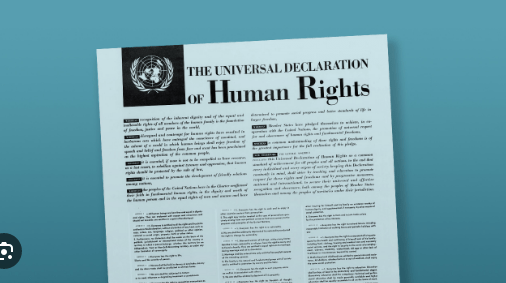
The text is an essay celebrating the Universal Declaration of Human Rights’ adoption on December 10th, 1948. It details the document’s historical context, tracing its roots from ancient Greece to modern influences like the Magna Carta and the American Constitution. The author emphasizes the declaration’s importance as a cornerstone of human progress and global peace, urging its implementation and widespread education. The essay also critiques the author’s nation’s laws, arguing they insufficiently align with the declaration’s principles and suggesting this contributes to social unrest and emigration. Finally, it calls for greater adherence to the declaration’s ideals to foster a more just and equitable society.
FAQ: Universal Human Rights Charter
1. What is the Universal Human Rights Charter?
The Universal Human Rights Charter, also known as the Universal Declaration of Human Rights, is a groundbreaking document adopted by the United Nations General Assembly on December 10, 1948. It outlines fundamental human rights that are universally applicable to all individuals, regardless of their background, beliefs, or circumstances.
2. What is the historical context behind the creation of the Universal Human Rights Charter?
The Charter was drafted in the aftermath of World War II, a time marked by unprecedented human suffering and atrocities. The global community recognized the urgent need to establish a common standard of human rights to prevent future tragedies and promote peace and justice.
3. What are some key principles enshrined in the Universal Human Rights Charter?
The Charter proclaims that all human beings are born free and equal in dignity and rights. It emphasizes fundamental rights such as the right to life, liberty, and security of person; freedom from slavery and torture; freedom of thought, expression, and religion; the right to education and work; and the right to participate in government.
4. How does the Universal Human Rights Charter relate to national laws and constitutions?
While the Charter itself is not a legally binding treaty, it has served as a foundation for numerous international human rights treaties and has influenced the development of national constitutions and legal frameworks worldwide. It sets a universal standard that countries are encouraged to uphold and incorporate into their domestic laws.
5. What role does the media and society play in promoting the principles of the Universal Human Rights Charter?
Open discussion and awareness are crucial for the realization of human rights. The media and civil society play a vital role in educating the public about the Charter, monitoring human rights violations, advocating for policy changes, and promoting a culture of respect for human dignity.
6. How does the author view the compatibility of the Universal Human Rights Charter with religious or cultural beliefs?
The author argues that while respecting diverse cultural and religious traditions is important, the principles of human rights should be universally upheld. When cultural practices or interpretations conflict with fundamental human rights, the latter should take precedence.
7. What challenges exist in implementing the Universal Human Rights Charter globally?
Despite its widespread recognition, the full implementation of the Charter faces various challenges, including political instability, armed conflicts, poverty, discrimination, and lack of access to education and justice.
8. What is the significance of the Universal Human Rights Charter in the 21st century?
The Charter remains as relevant today as it was in 1948. In an increasingly interconnected world facing complex challenges, the principles of human rights serve as a moral compass and a framework for building a just and equitable society for all.
The Universal Declaration of Human Rights: A Study Guide
Glossary of Key Terms:
- Universal Declaration of Human Rights (UDHR): A foundational document adopted by the United Nations General Assembly in 1948, outlining fundamental human rights that are universally applicable to all individuals.
- Magna Carta: A charter of rights agreed to by King John of England in 1215, considered a foundational document in the development of human rights.
- Habeas Corpus: A legal principle that protects individuals from arbitrary detention by requiring authorities to present a valid reason for imprisonment before a court.
- Geneva Conventions: A series of treaties that establish international standards for humanitarian treatment during war, protecting the rights of non-combatants, prisoners of war, and wounded soldiers.
- Secular: Relating to worldly matters, not religious or spiritual.
- Liberal: A political and philosophical ideology that emphasizes individual rights, freedoms, and the rule of law.
Short Answer Quiz:
- Briefly describe the process of drafting and adopting the Universal Declaration of Human Rights.
- What is the significance of the date December 10th in the context of the UDHR and the Nobel Prize?
- According to the article, what historical events and documents influenced the development of the UDHR?
- How does the author relate the UDHR to “human culture and civilization”?
- What is the author’s perspective on the role of the media in promoting awareness and discussion of human rights?
- The author highlights certain aspects of the UDHR that “clash with our customs, society and our constitution.” What are some of these aspects?
- How does the author compare the implementation of human rights in Pakistan with India?
- What is the author’s argument for aligning Pakistani law with the UDHR rather than prioritizing a particular religious belief?
- What are the potential consequences, according to the author, if Pakistan fails to uphold the principles of the UDHR?
- What is the significance of the author’s observation that educated youth choose to migrate to Western countries rather than “pure Islamic countries”?
Answer Key:
- The UDHR was drafted by an eight-member committee representing major world powers, with Eleanor Roosevelt as the chairperson. The first draft was presented in Geneva in September 1948 and the final declaration was adopted in Paris on December 10th, 1948.
- December 10th is celebrated as Universal Human Rights Day, marking the adoption of the UDHR. It is also the day on which the Nobel Prizes are announced, highlighting the connection between human rights and achievements in various fields.
- The article mentions influences such as the philosophy of ancient Greek and Roman civilizations, the Magna Carta of 1215, the principle of Habeas Corpus, the French Revolution, the American Constitution, and the abolition of slavery by Abraham Lincoln.
- The author views the UDHR as a manifestation of human progress, dignity, and the advancement of culture and civilization. It represents a step toward achieving a more just and equitable world.
- The author criticizes the lack of open discussion about human rights in Pakistani media and society. They believe the media should play a role in raising awareness and facilitating dialogue on these critical issues.
- The article suggests that certain aspects of the UDHR, such as the emphasis on equality and non-discrimination based on religion or belief, clash with existing customs, societal norms, and potentially even the Pakistani constitution.
- The author contrasts Pakistan’s approach to human rights with India’s, arguing that India incorporated the principles of the UDHR into its constitution, while Pakistan has prioritized certain religious beliefs over universal human rights.
- The author argues that aligning Pakistani law with the UDHR would ensure a more just and equitable society for all citizens, regardless of their religious beliefs. This would also prevent the potential for discrimination and marginalization of minority groups.
- The author warns that failing to uphold the UDHR principles could lead to further societal unrest, a decline in human well-being, and a continued desire among young people to emigrate from Pakistan seeking better opportunities and freedoms elsewhere.
- The author’s observation highlights a perceived discrepancy between the ideals of “pure Islamic countries” and the values of freedom and opportunity sought by educated youth, implying a critique of the social and political conditions in those countries.
Essay Questions:
- Analyze the author’s argument that prioritizing religious beliefs over the principles of the Universal Declaration of Human Rights is detrimental to Pakistani society. What evidence does the author provide to support this claim?
- How does the author connect the history of human rights, from ancient Greece to the present day, to the significance of the Universal Declaration of Human Rights?
- To what extent do you agree with the author’s critique of the Pakistani media’s role in promoting awareness and discussion of human rights? How could the media play a more effective role in this regard?
- The author suggests that certain aspects of the UDHR “clash with our customs, society and our constitution.” Explore the potential tensions and challenges that arise when universal human rights principles intersect with specific cultural and societal contexts.
- Considering the author’s concluding point about the emigration of educated youth, what responsibility do governments have in ensuring that the ideals enshrined in the Universal Declaration of Human Rights are realized for all citizens?
Table of Contents: The Universal Declaration of Human Rights and its Impact
Source: Excerpts from “Pasted Text” by Fiza Rohan
I. Introduction: The Genesis and Significance of the Universal Declaration of Human Rights
- This section introduces the Universal Declaration of Human Rights, its historical context (post-WWII and the formation of the UN), and its approval in 1948.
- Rohan emphasizes the Declaration as a monumental achievement for humanity, laying the foundation for progress, dignity, and human pride.
II. Historical and Philosophical Roots of the Declaration
- This section traces the philosophical and historical underpinnings of the Declaration, linking it to ancient Greek philosophy, Roman civilization, and key milestones in Western legal history.
- Rohan highlights the Magna Carta, the principle of Habeas Corpus, the French Revolution, the American Constitution, and the contributions of figures like Thomas Jefferson and Abraham Lincoln in shaping the principles of human rights.
III. The Declaration as a Sacred Document for Humanity
- This section positions the Universal Declaration of Human Rights as a sacred document for a modern, secular world striving for peace, love, and progress.
- Rohan argues that its implementation and dissemination are crucial duties for all UN member states and their citizens.
IV. A Call to Action: Embracing and Implementing the Declaration’s Principles
– This section urges readers to study the Declaration in depth, assess its relevance in the 21st century, and confront the challenges to its implementation.
– Rohan points to the disparity between the Declaration’s ideals and the reality of human rights violations, calling for action against forces that threaten human dignity.
V. The Declaration’s Impact on National Laws and Constitutions
– This section examines the Declaration’s influence on national legal frameworks, specifically referencing its integration into the Indian Constitution.
– Rohan contrasts India’s approach with that of her own nation, criticizing the prioritization of religious beliefs over universal human rights principles.
VI. A Plea for Reform and Alignment with the Declaration
– This section advocates for legal and societal reforms that prioritize the principles enshrined in the Universal Declaration of Human Rights.
– Rohan expresses concern about the desire of young people to leave their country due to the lack of respect for human rights, urging for a shift toward a society that embraces the values of the Declaration.
Briefing Document: Universal Human Rights Charter – A Call for Reflection
This briefing document analyzes an excerpt from an article titled “In the name of humans” by Fiza Rohan, published in Daily Jang on December 10th (likely commemorating Human Rights Day). The article provides a passionate plea for Pakistan to critically examine its societal practices in light of the Universal Declaration of Human Rights (UDHR).
Key Themes & Ideas:
- Historical Significance of the UDHR: Rohan emphasizes the historical weight of the UDHR, calling it “the greatest achievement of humankind till date.” She traces its philosophical roots to ancient Greece and Roman civilizations, highlighting milestones like the Magna Carta, Habeas Corpus, and the American and French Revolutions. This contextualization underscores the UDHR as a culmination of centuries of struggle for human rights.
- Universality vs. Cultural Context: The author acknowledges potential conflicts between the UDHR’s principles and “our customs, society and our constitution.” She uses India as a positive example, praising their constitutional alignment with the UDHR despite potential clashes with traditional beliefs. This comparison implicitly critiques Pakistan’s legislative approach which, she argues, prioritizes religious considerations over universal human rights.
- Call for Societal Introspection and Reform: Rohan urges Pakistan to engage in open dialogue about the UDHR and its implications. She criticizes the lack of media coverage and societal discussion, stating: “Why is this world not allowed in the media and our society so that we can discuss all these issues openly?” This highlights the need for a national conversation to bridge the gap between international commitments and domestic realities.
- Consequences of Ignoring the UDHR: The author warns of dire consequences if Pakistan continues to disregard the UDHR. She points to the younger generation’s desire to emigrate to Western countries, implying that this exodus is driven by a yearning for societies that better uphold human rights. This paints a bleak picture of Pakistan’s future if it fails to address its human rights shortcomings.
Important Facts & Quotes:
- Adoption and Content: “The Universal Human Rights Charter or Declaration was approved in Paris on 10 December 1948. … This charter of human rights consisting of 30 articles is a step towards progress and a manifestation of human culture and civilization.”
- Core Principle: “In the first paragraph of the Universal Charter itself it has been said that all human beings are born equal and free with rights and dignity.”
- Criticism of Pakistani Law: “Why did our lawmakers not respect this rule? Why did they consider it necessary to write that here no law can be made for or against a particular belief, although it should have been written that here no law can be made…against the UN Universal Human Rights Charter.”
- Impact on Youth: “Most of our young generation wants to leave this country and run away to Europe and America. No educated youth wants to go to the pure Islamic countries of Arabistan, Afghanistan or Iran.”
Conclusion:
Fiza Rohan’s article serves as a powerful call for Pakistan to critically assess its commitment to the UDHR. She argues that aligning national laws and societal practices with this document is crucial for progress, societal harmony, and the well-being of future generations. The article’s publication on Human Rights Day further underscores the urgency of this message.
Human Rights: A Discussion Based on the Provided Source
The provided source asserts that the Universal Declaration of Human Rights (UDHR) stands as a landmark achievement, symbolizing the pursuit of progress, dignity, and human pride. This document, comprising 30 articles, was adopted on December 10, 1948, marking a significant step towards a world where fundamental human rights are recognized and upheld.
The source highlights the historical and philosophical foundations of the UDHR, tracing its roots back to:
- Ancient Greek philosophy.
- Roman civilization.
- The Magna Carta of 1215.
- The principle of Habeas Corpus (1188).
- The Bill of Rights (1679).
- The French Revolution.
- Contributions of American figures like Thomas Jefferson and Abraham Lincoln, who championed the abolition of slavery.
The UDHR was influenced by the American Constitution, and its principles are further refined by documents such as the Geneva Conventions. The source emphasizes the importance of upholding the UDHR as a means of achieving world peace, fostering human love, and establishing a global society based on brotherhood.
It calls upon all UN member states and their leaders to:
- Promote and implement the ideals enshrined in the UDHR.
- Combat forces of oppression, terrorism, and bigotry that hinder the progress of humanity.
The source underscores the universality of the UDHR, noting its translation into over 500 languages and advocating for its inclusion in educational curricula worldwide.
The source analyzes the first article of the UDHR, which proclaims the inherent equality and freedom of all human beings, endowed with conscience and reason to foster fraternity. It critiques societal practices and constitutional provisions that contradict these principles, drawing a comparison with India, where the constitution aligns with the UDHR despite differing religious and cultural contexts.
The source argues that adherence to the UDHR is crucial for societal harmony and progress. It concludes by emphasizing the urgency of embracing these humane principles to prevent further societal deterioration and address the desire of the younger generation to seek a better life in countries that uphold human rights.
The Universal Declaration of Human Rights: A Cornerstone of Human Progress
The sources emphasize that the Universal Declaration of Human Rights (UDHR), adopted on December 10, 1948, represents a momentous accomplishment in the pursuit of human dignity and progress. This declaration, comprised of 30 articles, serves as a universal standard for the recognition and protection of fundamental human rights across the globe.
Genesis of the UDHR: Historical and Philosophical Roots
The sources trace the origins of the UDHR back to a rich tapestry of historical and philosophical influences:
- Ancient Greek and Roman philosophies: The UDHR inherits the legacy of classical thought that emphasized the inherent worth and dignity of the individual.
- Magna Carta (1215): This landmark document, which limited the power of the English monarchy and asserted certain individual rights, serves as an important precursor to modern human rights concepts.
- Principle of Habeas Corpus (1188): This legal principle, which safeguards individuals against unlawful detention, further solidified the foundation for the protection of individual liberty.
- Bill of Rights (1679): This English document expanded individual rights and placed further constraints on the power of the monarchy, contributing to the evolution of human rights principles.
- French Revolution: This revolutionary upheaval, driven by ideals of liberty, equality, and fraternity, profoundly influenced the development of modern human rights discourse.
- American Figures: The contributions of American figures like Thomas Jefferson, a key author of the Declaration of Independence, and Abraham Lincoln, who abolished slavery, are acknowledged as crucial milestones in the advancement of human rights.
- American Constitution: The UDHR drew inspiration from the American Constitution, particularly its emphasis on individual rights and limited government.
The UDHR in a Global Context
The sources highlight the UDHR’s global significance:
- Geneva Conventions: The UDHR’s principles are further refined and elaborated upon by international legal instruments like the Geneva Conventions, which address the protection of human rights during armed conflicts.
- Universality and Translation: The UDHR’s universality is underscored by its translation into over 500 languages, making it accessible to diverse cultures and societies worldwide.
- Dissemination through Education: The sources advocate for the inclusion of the UDHR in educational curricula, emphasizing its importance in shaping the values and understanding of future generations.
Key Principles of the UDHR
The sources analyze the first article of the UDHR, which proclaims the fundamental principles upon which the entire declaration is based:
- Inherent Equality: All human beings are born free and equal in dignity and rights, irrespective of any distinctions.
- Endowment with Reason and Conscience: Humans possess the capacity for reason and moral judgment, enabling them to act ethically and build a just society.
- Brotherhood: Individuals should treat one another with a spirit of fraternity, recognizing their shared humanity and interconnectedness.
Challenges and Criticisms
The sources acknowledge that the implementation of the UDHR faces challenges and criticisms, particularly when its principles clash with existing societal norms, cultural practices, or legal frameworks.
However, they argue that adherence to the UDHR’s principles is crucial for fostering social progress and addressing the aspirations of future generations.
The sources emphasize the need for ongoing dialogue and engagement to ensure that the UDHR’s ideals are realized in practice.
Human Dignity: A Central Theme in the Universal Declaration of Human Rights
The sources highlight the concept of human dignity as a cornerstone of the Universal Declaration of Human Rights (UDHR). The UDHR itself asserts that all human beings are born free and equal in dignity and rights. This inherent dignity is presented as the foundation for all the rights and freedoms articulated in the declaration.
Human Dignity as the Basis for Human Rights
The recognition of inherent human dignity is not merely a philosophical abstraction; it serves as the basis for a concrete set of rights and freedoms. The UDHR outlines these rights and freedoms in its 30 articles, encompassing civil, political, economic, social, and cultural rights. The sources emphasize that these rights are essential for individuals to live a life worthy of their inherent dignity.
Historical and Philosophical Underpinnings
The sources trace the concept of human dignity back to various historical and philosophical influences, including Ancient Greek and Roman philosophies, which emphasized the inherent worth of the individual. The Magna Carta, the principle of Habeas Corpus, and the Bill of Rights are also cited as historical milestones in the recognition and protection of individual rights and, by extension, human dignity.
Challenges to Human Dignity
The sources acknowledge that the full realization of human dignity faces numerous challenges in the 21st century. The text specifically points to societal practices, cultural norms, and legal frameworks that contradict the principles of the UDHR. It criticizes the tendency to prioritize certain beliefs or traditions over the universal principles of human rights, arguing that this undermines the inherent dignity of all individuals.
The Importance of Upholding Human Dignity
The sources argue that upholding human dignity is not only a moral imperative but also essential for societal harmony and progress. They advocate for the widespread dissemination and implementation of the UDHR, urging individuals, governments, and institutions to work towards a world where the inherent dignity of every human being is recognized and respected.
Exploring the Universal Charter: The Universal Declaration of Human Rights
The sources discuss the Universal Charter, primarily referring to it as the Universal Declaration of Human Rights (UDHR). This document, adopted on December 10, 1948, serves as a foundational text for the recognition and protection of human rights worldwide. The sources emphasize its significance as a landmark achievement in humanity’s pursuit of progress, dignity, and individual worth.
Historical and Philosophical Foundations
The sources highlight the diverse historical and philosophical influences that shaped the UDHR. These include:
- Ancient Greek and Roman thought: The UDHR draws upon the classical emphasis on the inherent value of the individual and the concept of natural law.
- Key Legal Developments: The Magna Carta (1215), the principle of Habeas Corpus (1188), and the English Bill of Rights (1679) are cited as important milestones that contributed to the development of modern human rights concepts.
- Enlightenment Ideals: The sources acknowledge the profound influence of the French Revolution and its ideals of liberty, equality, and fraternity on the development of human rights discourse.
- American Influences: The contributions of figures like Thomas Jefferson and Abraham Lincoln, along with the framework of the American Constitution, are noted as significant inspirations for the UDHR.
Key Principles and Provisions
The sources analyze the first article of the UDHR, which articulates the foundational principles upon which the entire document rests:
- Inherent Equality: The UDHR proclaims that all human beings are born free and equal in dignity and rights. This principle rejects any notion of inherent hierarchy or discrimination based on factors such as race, religion, gender, or social status.
- Reason and Conscience: The declaration recognizes that humans are endowed with reason and conscience, enabling them to make moral judgments and act ethically. This capacity is seen as essential for building a just and humane society.
- Brotherhood: The UDHR emphasizes the importance of fraternity, urging individuals to treat one another with respect and recognizing their shared humanity.
Significance and Global Impact
The sources portray the UDHR as a document of profound global significance. It has been translated into over 500 languages, making it accessible to a vast array of cultures and societies worldwide. The sources advocate for its inclusion in educational curricula to ensure that future generations are informed about its principles and committed to upholding them.
Challenges and Ongoing Relevance
The sources acknowledge that the implementation of the UDHR’s principles faces challenges in the 21st century. Societal practices, cultural norms, and legal frameworks may sometimes conflict with the universal principles enshrined in the declaration. However, the sources argue that the UDHR remains a vital document for promoting human dignity, social progress, and global harmony. They stress the need for continued dialogue, education, and advocacy to ensure that its ideals are realized in practice.
World Peace: A Goal Supported by Human Rights
The sources, while primarily focused on human rights, connect the concept to the broader goal of world peace. They suggest that the Universal Declaration of Human Rights (UDHR) can be seen as a roadmap towards achieving this peace.
The sources argue that the UDHR, through its emphasis on human dignity, equality, and brotherhood, lays the foundation for a more peaceful world. By promoting respect for these fundamental values, the UDHR aims to address the root causes of conflict and violence, such as discrimination, oppression, and intolerance.
The sources highlight the following points that connect human rights and world peace:
- Combating Forces of Oppression: The sources explicitly state that achieving world peace requires actively combating “forces of oppression, terrorism, and bigotry.” This indicates that the UDHR’s focus on protecting individuals from such threats is directly linked to the pursuit of global peace.
- Fostering Human Love and Construction: The sources connect the implementation of the UDHR to the goal of “fostering human love and construction.” This suggests that creating a society where human rights are respected is essential for nurturing a culture of peace and cooperation.
- Establishing a Global Society Based on Brotherhood: The sources envision the UDHR as a tool for establishing a “global society or brotherhood”, implying that the realization of human rights is crucial for building bridges between different cultures and nations, thereby contributing to a more peaceful world order.
While the sources do not provide a detailed plan for achieving world peace, they imply that the principles enshrined in the UDHR are essential building blocks for a more peaceful and just world. The text suggests that by upholding human rights, promoting dialogue, and combating forces that threaten human dignity, we can move closer to the ideal of world peace.
Eleanor Roosevelt: A Leading Figure in the Creation of the Universal Declaration of Human Rights
The sources highlight Eleanor Roosevelt’s pivotal role as the chairperson of the committee responsible for drafting the Universal Declaration of Human Rights (UDHR). This committee, comprised of representatives from major world powers, was tasked with developing the foundational document for the protection of human rights worldwide.
The sources specifically mention that Eleanor Roosevelt, the wife of former US President Franklin D. Roosevelt, led this committee. Her leadership in this capacity underscores her significant contribution to the creation of this landmark document.
While the sources do not detail the specifics of her contributions to the drafting process, her position as the committee’s head suggests that she played a crucial role in shaping the content and direction of the UDHR. Her commitment to human rights and social justice, evident in her broader public life, likely informed her approach to this monumental task.
The Primary Goal of the Universal Declaration of Human Rights: Promoting Dignity, Peace, and Progress
The sources strongly suggest that the primary goal of the Universal Declaration of Human Rights (UDHR) is to promote and protect the inherent dignity of every human being. This goal is clearly articulated in the first article of the UDHR, which asserts the equality and inherent rights of all individuals. The sources present the UDHR as a foundational document for establishing a world where individuals can live with dignity, free from oppression and discrimination.
Recognizing Human Dignity as the Basis for Rights and Freedoms
The sources emphasize that the UDHR’s focus on human dignity is not merely a theoretical concept; it serves as the basis for a comprehensive set of rights and freedoms outlined in its 30 articles. These rights encompass civil, political, economic, social, and cultural spheres, reflecting a holistic understanding of human dignity and its requirements.
Human Dignity as a Pathway to World Peace
The sources connect the UDHR’s emphasis on human dignity to the broader goal of world peace. They argue that by promoting respect for fundamental human rights, the UDHR seeks to address the root causes of conflict and violence. The sources highlight the importance of combating forces that threaten human dignity, such as oppression, terrorism, and bigotry, as crucial steps towards building a more peaceful world.
Fostering a Global Society Based on Brotherhood
The sources envision the UDHR as a blueprint for a global society founded on the principles of brotherhood and mutual respect. They suggest that by recognizing the inherent worth of every individual, regardless of their background or beliefs, the UDHR aims to foster a sense of global community and interconnectedness. This, in turn, contributes to a more harmonious and peaceful world order.
The UDHR as a Tool for Progress and Development
The sources portray the UDHR as a catalyst for human progress and development. They argue that by ensuring the protection of fundamental rights and freedoms, the UDHR creates conditions necessary for individuals and societies to flourish.
In summary, the sources present the primary goal of the Universal Declaration of Human Rights as a multi-faceted endeavor aimed at:
- Recognizing and protecting the inherent dignity of every human being.
- Establishing a world based on peace, justice, and equality.
- Fostering a global society founded on respect, understanding, and brotherhood.
- Promoting human progress and development.
The Universal Declaration of Human Rights (UDHR) was adopted on December 10, 1948 in Paris. This adoption was part of the 58th UN Convention. The UDHR’s approval came after a process that began in 1945, following World War II. A committee, composed of members from various world powers, was formed to draft the declaration. Their first draft was presented in September 1948 in Geneva.
Eleanor Roosevelt’s Leadership in Drafting the Universal Declaration of Human Rights
The sources identify Eleanor Roosevelt, wife of former US President Franklin D. Roosevelt, as the chairperson of the committee responsible for drafting the Universal Declaration of Human Rights (UDHR). This committee, representing diverse world powers, was formed in 1945 after World War II to create a foundational document for global human rights protection.
While the sources don’t detail her specific contributions during the drafting process, her leadership role suggests she significantly shaped the UDHR’s content and direction. This aligns with her known commitment to human rights and social justice, likely influencing her approach to this task.
The Universal Declaration of Human Rights (UDHR) consists of 30 articles. This information is explicitly stated in source, which mentions that “on this day 30 articles are given for consensus. The Universal Human Rights Charter or Declaration was approved.”
The sources consistently refer to the UDHR as a comprehensive document outlining various human rights and freedoms. The fact that it encompasses 30 distinct articles underscores its breadth and depth in addressing the fundamental rights and freedoms that every human being is entitled to.
Navigating the Complexities: The Universal Declaration of Human Rights and Cultural or Religious Practices
The sources, while praising the Universal Declaration of Human Rights (UDHR), acknowledge the potential for tension between its universal principles and the diversity of cultural or religious practices worldwide. This tension arises from the UDHR’s aim to establish a global standard for human rights while recognizing that societies have different customs, traditions, and beliefs.
Source specifically highlights this challenge by pointing out that some aspects of the UDHR “clash with our customs, society, and our constitution.” This statement suggests that certain cultural or religious practices might not align perfectly with the rights and freedoms articulated in the UDHR, leading to potential conflicts or disagreements.
The sources provide an example of this tension by referencing the legal frameworks in countries like India, where despite the presence of long-standing religious traditions, the constitution aligns with the principles of the UDHR. This approach prioritizes the universality of human rights over specific cultural or religious practices that might contradict those rights.
The sources argue that signing the UDHR implies a commitment to upholding its principles, even if they challenge existing cultural or religious norms. This suggests that countries and societies are expected to adapt their practices to ensure compliance with the UDHR’s standards, even if it requires reinterpreting or modifying certain aspects of their traditions.
However, the sources do not offer specific solutions for resolving such conflicts or provide detailed guidance on navigating the complexities of balancing universal human rights with cultural or religious sensitivities.
Historical Context: The Genesis of the Universal Declaration of Human Rights
The sources provide a compelling historical context for the emergence of the Universal Declaration of Human Rights (UDHR), emphasizing its roots in Western legal and philosophical traditions while acknowledging the potential for tension with diverse cultural and religious practices. The UDHR, adopted on December 10, 1948, represents a pivotal moment in the global quest for human dignity and equality.
World War II’s Impact
The sources highlight the profound impact of World War II on the creation of the UDHR. The horrors of the war, including genocide and widespread human rights abuses, galvanized a global movement to prevent such atrocities from recurring. The formation of the United Nations in 1945 provided a platform for this movement, with the UDHR serving as a cornerstone of its mission to promote peace and international cooperation.
Western Legal and Philosophical Roots
The sources underscore the influence of Western legal and philosophical traditions on the UDHR’s development. They specifically mention:
- Magna Carta (1215): This English document limited the power of the monarchy and recognized individual rights, including the right to due process.
- Habeas Corpus (1188): This legal principle protects individuals from unlawful detention by requiring judicial review of their imprisonment.
- English Bill of Rights (1679): This act further strengthened individual rights in England, including freedom of speech and the right to petition the government.
- American Influences: Thomas Jefferson’s ideas on natural rights, enshrined in the US Declaration of Independence, are cited as influential. Abraham Lincoln’s abolition of slavery is also presented as a key moment in the advancement of human rights.
- French Revolution (1789): The ideals of liberty, equality, and fraternity that emerged from the French Revolution had a global impact on the understanding of human rights.
- U.S. Constitution: The sources mention that the U.S. Constitution, with its emphasis on individual rights, was reviewed during the UDHR’s drafting.
Eleanor Roosevelt’s Leadership
The sources emphasize the crucial role of Eleanor Roosevelt, wife of former US President Franklin D. Roosevelt, as the chairperson of the UDHR drafting committee. Her leadership and commitment to human rights significantly shaped the document’s content and direction. The committee, composed of representatives from diverse world powers, worked to synthesize various legal and philosophical traditions into a universal framework for human rights protection.
Tensions with Cultural and Religious Practices
While celebrating the UDHR’s achievements, the sources recognize the potential for tension between its universal principles and the diversity of cultural or religious practices globally. They note that certain aspects of the UDHR may conflict with local customs or beliefs, raising complex questions about balancing universal rights with cultural sensitivity.
The UDHR’s Legacy
The sources present the UDHR as a monumental achievement, a testament to humanity’s aspiration for a world based on dignity, equality, and justice. It has served as a foundation for numerous international human rights treaties and has inspired social movements and legal reforms worldwide. Despite the challenges of implementation and the complexities of navigating cultural differences, the UDHR stands as a beacon of hope and a powerful tool for promoting human rights globally.
The Universal Declaration of Human Rights (UDHR) is composed of 30 articles. This is explicitly stated in the sources, which mention that “on this day 30 articles are given for consensus. The Universal Human Rights Charter or Declaration was approved.”
The sources frequently emphasize the UDHR’s comprehensive nature in outlining a wide spectrum of human rights and freedoms. The inclusion of 30 distinct articles underscores the document’s thoroughness in addressing fundamental rights and freedoms that every individual is entitled to.
Universal Declaration of Human Rights and Cultural Relativity: Points of Friction
The sources acknowledge the potential for conflict between the Universal Declaration of Human Rights (UDHR) and the diverse cultural and religious practices that exist globally. While the UDHR aspires to establish a universal standard for human rights, it also recognizes the reality of differing customs, traditions, and belief systems across societies. This creates a point of tension where universal principles might clash with specific cultural or religious norms.
The sources specifically point to this challenge by noting that certain elements of the UDHR “clash with our customs, society, and our constitution”. This suggests that some cultural or religious practices might not perfectly align with the rights and freedoms outlined in the UDHR, leading to potential disagreements or conflicts.
For example, the UDHR advocates for gender equality and freedom of choice, including in matters of marriage and family life. However, certain cultural or religious traditions might endorse practices that could be interpreted as discriminatory or restrictive, such as arranged marriages, limitations on women’s roles, or restrictions on religious conversion.
The sources argue that by signing the UDHR, countries and societies implicitly commit to upholding its principles, even if they challenge existing cultural or religious norms. This suggests an expectation that nations will adapt their practices to ensure conformity with the UDHR’s standards, even if it requires reinterpreting or modifying certain traditional aspects.
This expectation can lead to difficult debates and decisions. How much adaptation is required? Who decides which practices are incompatible with human rights? These are complex questions without easy answers.
The sources, while highlighting this tension, do not offer concrete solutions for resolving these conflicts or provide detailed guidance on how to balance universal human rights with cultural and religious sensitivities.
It’s important to note that the conversation history and sources primarily focus on Western historical influences on the UDHR. This perspective might not fully capture the complexities of how different cultures and societies globally engage with the concept of universal human rights.
Furthermore, the sources, while acknowledging the potential for tension, also emphasize the UDHR’s importance as a document promoting human dignity and equality. They suggest that the UDHR’s principles, even when challenging existing norms, can ultimately contribute to a more just and equitable world.
Reconciling Cultural Practices with the UDHR: A Call for Adaptation and Dialogue
The sources, while acknowledging the inherent tension between the Universal Declaration of Human Rights (UDHR) and diverse cultural practices, advocate for a process of adaptation and dialogue to bridge the gap between universal principles and local customs. They stop short of offering specific solutions, but suggest a path forward that emphasizes both the universality of human rights and the need for contextual understanding.
Adaptation of Cultural Practices
The sources argue that signing the UDHR signifies a commitment to upholding its principles, even when they challenge existing cultural or religious norms. This implies an expectation that countries and societies will actively work to align their practices with the UDHR’s standards.
This alignment might involve:
- Reinterpreting Traditions: The sources suggest that some cultural practices might be reinterpreted or reframed in a way that aligns with the UDHR’s principles. For instance, certain cultural traditions related to marriage or family life could be reinterpreted to emphasize consent, individual choice, and gender equality.
- Modifying Customs: In cases where cultural practices directly conflict with the UDHR’s core values, the sources imply that modification might be necessary. Practices that violate fundamental human rights, such as those that involve discrimination, coercion, or violence, would likely require adjustments to comply with the UDHR.
- Legal Reforms: The sources suggest that legal frameworks should be reviewed and reformed to ensure consistency with the UDHR. This might involve repealing or amending laws that discriminate against certain groups or violate fundamental freedoms.
Dialogue and Education
While adaptation is essential, the sources also hint at the importance of open dialogue and education to foster understanding and navigate the complexities of cultural relativity.
- Open Discussions: Engaging in honest and respectful discussions about the UDHR and its implications for different cultural contexts is crucial. These dialogues should involve diverse stakeholders, including government officials, civil society organizations, religious leaders, and community members.
- Public Education: Raising awareness about the UDHR and its principles within societies is essential. Educational programs can help people understand the universality of human rights and how they intersect with cultural practices.
Challenges and Limitations
The sources acknowledge that reconciling cultural practices with the UDHR is a complex and ongoing process. Several challenges remain:
- Defining the Boundaries: Determining which cultural practices are incompatible with human rights and require adaptation is a challenging task. The sources do not provide specific criteria or a clear framework for making these judgments.
- Balancing Universalism and Relativism: Finding the right balance between universal human rights standards and respect for cultural diversity is a delicate issue. The sources do not delve deeply into this philosophical debate.
- Power Dynamics: The process of adapting cultural practices can be influenced by power dynamics within societies. Marginalized groups might face challenges in advocating for changes to practices that disadvantage them.
A Call for Ongoing Engagement
The sources, while not providing definitive answers, call for ongoing engagement with the complex interplay between the UDHR and cultural practices. They suggest that through a process of adaptation, dialogue, and education, societies can work towards a more just and equitable world that upholds both the universality of human rights and the richness of cultural diversity.
The Author’s Perspective on the UDHR’s Impact on Pakistan: A Critical Assessment
The author presents a critical view of Pakistan’s engagement with the Universal Declaration of Human Rights (UDHR), highlighting a perceived gap between the document’s principles and the nation’s practices. They argue that while Pakistan, as a UN member state, has formally endorsed the UDHR, there’s a lack of genuine commitment to fully integrating its values into the country’s legal framework and societal norms.
Contradictions Between the UDHR and Pakistani Practices
The author points out specific areas where Pakistani customs, societal norms, and even the constitution appear to clash with the UDHR’s provisions. They contend that certain elements of Pakistani culture and legal interpretations run contrary to the UDHR’s emphasis on individual rights, equality, and freedom of choice.
While the sources do not explicitly detail these contradictions, previous turns in our conversation shed light on potential areas of friction. We’ve discussed how the UDHR advocates for gender equality and freedom of choice, which could be at odds with certain cultural or religious practices in Pakistan, such as limitations on women’s roles or restrictions on religious conversion.
Criticism of Pakistani Legal Framework
The author explicitly criticizes Pakistan’s legal framework for failing to prioritize the UDHR’s principles. They draw a comparison with India, highlighting how the Indian constitution, despite the country’s own diverse cultural and religious landscape, has demonstrably incorporated the UDHR’s core values.
The author suggests that Pakistani lawmakers have prioritized religious considerations over the UDHR’s universal principles, leading to a legal system that does not adequately protect fundamental human rights. This critique implies that certain laws in Pakistan may either directly contradict the UDHR or fail to provide sufficient mechanisms for its enforcement.
Call for Reform and Alignment with UDHR
The author concludes with a strong call for reform within Pakistan, urging the nation to genuinely embrace the UDHR’s principles and adapt its practices accordingly. They believe that a failure to do so will have detrimental consequences, particularly for the younger generation who, according to the author, increasingly seek opportunities in countries where human rights are better protected.
The author emphasizes that aligning with the UDHR is not about abandoning Pakistan’s cultural or religious identity; rather, it involves reinterpreting and adapting certain practices to ensure they uphold the fundamental dignity and rights of all individuals.
Criticisms of Pakistan’s Human Rights Record: A Look at Shortcomings and Calls for Reform
The sources offer a pointed critique of Pakistan’s human rights record, highlighting inconsistencies between the nation’s practices and the principles enshrined in the Universal Declaration of Human Rights (UDHR). The author perceives a lack of genuine commitment from Pakistan in translating the UDHR’s values into tangible action and systemic change.
- Disparity Between Principles and Practices: The author argues that while Pakistan has formally endorsed the UDHR as a UN member state, there’s a disconnect between this endorsement and the reality on the ground. They point to instances where cultural norms, societal practices, and legal interpretations in Pakistan appear to contradict the UDHR’s emphasis on individual rights, equality, and freedom of choice.
- Prioritizing Religious Considerations over Universal Rights: The sources suggest that Pakistani lawmakers have often prioritized religious considerations over the UDHR’s universal principles when shaping the nation’s legal framework. This, according to the author, has resulted in a legal system that doesn’t adequately safeguard fundamental human rights for all citizens.
- Lack of Legal Protection for Core UDHR Principles: The author contends that certain Pakistani laws may either explicitly conflict with the UDHR or fail to provide effective mechanisms for its enforcement. This critique implies a lack of legal protection for the core tenets of the UDHR within the Pakistani legal system.
- Negative Consequences for Younger Generations: The author expresses concern that Pakistan’s failure to fully embrace the UDHR is having a detrimental impact, particularly on younger generations. They suggest that the youth are increasingly disillusioned by the lack of human rights protections in Pakistan and are seeking opportunities in countries where these rights are better upheld.
The sources also offer a comparison with India, highlighting how India’s constitution, despite the nation’s complex cultural and religious diversity, has demonstrably incorporated the UDHR’s core values. This comparison serves to underscore the author’s belief that Pakistan has fallen short in its efforts to align its legal framework and societal practices with the principles of the UDHR.
Contrasting Approaches: Pakistan and India’s Engagement with the UDHR
The sources highlight a stark contrast between Pakistan and India’s approaches to integrating the principles of the Universal Declaration of Human Rights (UDHR) into their respective legal frameworks and societal practices. While acknowledging India’s complex cultural and religious landscape, the author lauds India’s constitutional commitment to upholding the UDHR’s core values. Conversely, the author criticizes Pakistan for prioritizing religious considerations over universal human rights principles, resulting in a perceived gap between the nation’s formal endorsement of the UDHR and its actual implementation.
India: Embracing UDHR Principles in Law and Practice
The sources portray India as a nation that, despite its own rich and diverse cultural tapestry, has successfully woven the UDHR’s principles into the very fabric of its legal system. The author suggests that the Indian constitution demonstrates a clear and deliberate effort to incorporate the UDHR’s core values, ensuring that the nation’s laws protect fundamental human rights for all citizens. This approach is presented as a model for other nations to emulate, particularly those grappling with reconciling universal human rights standards with their unique cultural and religious contexts.
Pakistan: A Disconnect Between Endorsement and Implementation
In contrast to India’s perceived success, the sources paint a critical picture of Pakistan’s engagement with the UDHR. The author contends that Pakistan, while formally endorsing the UDHR as a UN member state, has fallen short in translating these principles into concrete action and systemic change. The sources point to several factors that contribute to this perceived disconnect:
- Prioritizing Religious Considerations: The author asserts that Pakistani lawmakers have often prioritized religious considerations over the UDHR’s universal principles when crafting legislation. This has resulted in a legal system that, according to the author, does not adequately protect fundamental human rights for all citizens.
- Inconsistency Between Laws and the UDHR: The sources imply that certain Pakistani laws might either directly contradict the UDHR’s provisions or fail to provide effective mechanisms for its enforcement. This suggests a lack of legal protection for core UDHR principles within the Pakistani legal system.
- Influence of Cultural Norms: While not explicitly stated, the sources hint at the influence of cultural norms and societal practices in hindering the full realization of the UDHR’s values in Pakistan. This suggests that certain traditional practices might conflict with the UDHR’s emphasis on individual rights, equality, and freedom of choice.
The Consequences of Divergent Approaches
The sources suggest that these contrasting approaches have tangible consequences for the citizens of both nations. While India is presented as a nation striving towards upholding universal human rights, Pakistan is portrayed as struggling to bridge the gap between its formal commitment to the UDHR and the lived experiences of its people. This perceived failure has led to growing disillusionment, particularly among younger generations who, according to the author, are seeking opportunities in countries where human rights are better protected.
Ideal Implementation of the Universal Declaration of Human Rights: A Pakistani Perspective
The text doesn’t explicitly lay out a step-by-step plan for the ideal implementation of the Universal Declaration of Human Rights (UDHR). Instead, it offers a critique of Pakistan’s current approach to human rights, drawing a comparison with India to illustrate how the principles of the UDHR can be more effectively integrated into a nation’s legal framework and societal practices. From this critique, we can glean the author’s vision for a more ideal implementation of the UDHR in Pakistan.
Constitutional Enshrinement of UDHR Principles: The author implicitly suggests that a key element of ideal UDHR implementation involves enshrining its principles within a nation’s constitution. By drawing a comparison with India, the text highlights how a constitution can serve as a cornerstone for protecting human rights. The author seems to advocate for a Pakistani constitution that explicitly and unequivocally upholds the core values of the UDHR, ensuring that the nation’s legal foundation is firmly rooted in the principles of individual rights, equality, and freedom of choice.
Harmonizing Legal Frameworks with the UDHR: The author’s critique of Pakistan’s legal system suggests that ideal UDHR implementation requires a thorough review and potential reform of existing laws to ensure their alignment with the declaration’s principles. This might involve:
- Identifying and amending laws that contradict the UDHR’s provisions, such as those that discriminate based on gender, religion, or other protected characteristics.
- Enacting new legislation to address gaps in legal protection for specific human rights outlined in the UDHR.
- Establishing robust enforcement mechanisms to ensure that the principles of the UDHR are upheld in practice and that violations are addressed effectively.
Shifting Societal Attitudes and Practices: While the text primarily focuses on legal and constitutional aspects, it also hints at the importance of societal transformation for the successful implementation of the UDHR. The author’s criticism of certain cultural norms and societal practices in Pakistan suggests that a shift in attitudes and behaviors is crucial for creating a society where human rights are truly respected and protected. This could involve:
- Promoting education and awareness about the UDHR and its principles to foster a culture of respect for human rights.
- Challenging and reforming traditional practices that conflict with the UDHR’s values, particularly those that perpetuate discrimination or inequality.
- Encouraging dialogue and engagement across different communities to build understanding and bridge divides that hinder human rights progress.
The text emphasizes that adapting to the UDHR is not about abandoning Pakistan’s cultural or religious identity but about reinterpreting and adapting certain practices to ensure they uphold the fundamental dignity and rights of all individuals.
Empowering Younger Generations as Agents of Change: The author’s concern for Pakistan’s younger generations reveals their belief in the power of youth to drive positive change. By highlighting the disillusionment and desire for greater human rights protections among young people, the author implicitly suggests that they should be empowered to play a key role in pushing for the ideal implementation of the UDHR in Pakistan. This could involve encouraging their participation in:
- Human rights advocacy and activism to raise awareness and demand reforms.
- Educational initiatives focused on human rights principles and their application in Pakistani society.
- Community engagement and outreach to promote dialogue and understanding across different groups.
By fostering a generation that is well-informed and passionate about human rights, the author envisions a future where Pakistan moves closer to the ideal implementation of the UDHR, creating a society that is just, equitable, and truly respectful of the inherent dignity and worth of all its citizens.
Influences on the UDHR’s Development
The sources identify several historical documents and philosophical movements as having significantly influenced the development of the Universal Declaration of Human Rights (UDHR). These influences span centuries and diverse geographical locations, highlighting the UDHR’s status as a culmination of long-standing struggles for human rights.
- Ancient Greek Civilization and the Magna Carta: The sources trace the UDHR’s ideological foundations to ancient Greek philosophy and the Magna Carta of 1215. The Magna Carta is specifically mentioned as a key historical precedent. While the exact nature of the connection to ancient Greek philosophy is not detailed, the implication is that the concepts of individual rights and liberties, central to both, formed a basis for later human rights movements.
- The British King’s Acceptance of Parliament’s Authority (1037 AD): The sources cite this event as a significant early step toward limiting the power of the monarch and acknowledging the rights of the governed, pre-dating the Magna Carta by over a century.
- Habeas Corpus (1188): The establishment of the principle of Habeas Corpus is mentioned as another important milestone in the evolution of human rights, guaranteeing the right to due process and preventing arbitrary detention.
- The Bill of Rights (1679): The English Bill of Rights, passed by Parliament in 1679, is presented as a crucial step in the development of legal protections for individual rights, particularly against the arbitrary actions of the monarchy.
- The American and French Revolutions: The sources explicitly link the UDHR to the American and French Revolutions. The American Constitution and the ideals of thinkers like Thomas Jefferson are highlighted, emphasizing the importance of principles such as individual liberty and self-governance. The French Revolution is similarly acknowledged as a significant contribution to the development of human rights thinking.
- Abolition of Slavery: The contributions of Abraham Lincoln, who abolished slavery in the United States, is referenced as a particularly significant event in the ongoing struggle for human rights.
- The Geneva Conventions: Although not directly described as an influence on the UDHR’s development, the sources mention the Geneva Conventions as an area that will continue to be shaped and refined alongside it, suggesting a common thread of human rights ideals and a future of ongoing development in this arena.
In summary, the sources indicate that the UDHR is not a document born in isolation but rather a culmination of centuries of struggle for human rights and the legal protections ensuring those rights. The influences cited range from ancient philosophical concepts to significant historical events and documents that progressively expanded and reinforced the understanding and recognition of fundamental human rights.
Adoption of the Universal Declaration of Human Rights (UDHR)
The sources provide the date and location of the UDHR’s adoption. Specifically, the document states that the Universal Declaration of Human Rights was approved on December 10, 1948, in Paris, France. This event is described as the culmination of a process that began in 1945 following the Second World War, with the formation of the United Nations and the establishment of a committee dedicated to drafting the declaration.
Implementing the UDHR: A Call for Comprehensive Reform in Pakistan
The author doesn’t lay out a precise roadmap for implementing the UDHR. However, by comparing Pakistan’s approach to human rights with India’s, the author implicitly suggests a multifaceted strategy for more effectively realizing the UDHR’s principles within Pakistan.
Prioritizing Constitutional Alignment: The author strongly implies that enshrining the UDHR’s principles within Pakistan’s constitution is crucial. By contrasting Pakistan’s approach with India’s, where the constitution is lauded for its commitment to human rights, the author advocates for a similar constitutional foundation in Pakistan. This would entail ensuring that the nation’s highest law explicitly and unambiguously guarantees the core values of the UDHR, creating a solid legal bedrock for protecting human rights.
Reconciling Legal Frameworks with the UDHR: The sources argue that Pakistan’s current legal system needs to be critically examined and potentially reformed to align with the UDHR. This involves identifying and amending any laws that contradict the declaration’s provisions, particularly those that enable discrimination based on factors like gender, religion, or other protected characteristics. Additionally, the author suggests enacting new legislation to address any gaps in legal protection for specific human rights articulated in the UDHR. Finally, establishing robust enforcement mechanisms is crucial to ensure that the principles of the UDHR are not just theoretical ideals but are actively upheld and that violations are met with appropriate legal action.
Addressing Societal Norms and Fostering Education: While the primary focus is on legal and constitutional reform, the author also hints at the importance of societal transformation to fully implement the UDHR. The critique of certain cultural norms and practices in Pakistan suggests that changing attitudes and behaviors is essential for creating a society where human rights are genuinely respected and protected. The author seems to advocate for educational initiatives aimed at raising awareness about the UDHR and its principles, aiming to cultivate a culture of respect for human rights across Pakistani society.
Embracing the UDHR within Pakistan’s Identity: The author emphasizes that aligning with the UDHR does not require Pakistan to abandon its cultural or religious identity. Instead, it calls for a thoughtful reinterpretation and adaptation of certain practices to ensure they uphold the fundamental dignity and rights of all individuals. This approach acknowledges the importance of cultural context while also emphasizing the universality of human rights principles.
Summary: The passage discusses the creation and significance of the Universal Declaration of Human Rights, adopted by the United Nations in 1948.
Explanation: The Universal Declaration of Human Rights, a document outlining fundamental rights for all people, was adopted on December 10, 1948. The passage details its development, starting with the formation of the UN after World War II and the subsequent creation of a committee to draft the Declaration. Led by Eleanor Roosevelt, the committee included representatives from major world powers. The Declaration was presented in Geneva and approved in Paris. The passage emphasizes the Declaration’s importance as a milestone for human progress and dignity, drawing parallels to historical milestones like the Magna Carta, the Habeas Corpus Act, and the abolition of slavery in the US. The Declaration, with its 30 articles, is seen as a testament to human civilization’s evolution towards recognizing and upholding individual rights, laying the foundation for future advancements in human rights protections.
Summary: This passage discusses the Universal Declaration of Human Rights (UDHR) as an important document for ensuring basic rights and freedoms for all people around the world, regardless of their background. It emphasizes the importance of upholding the principles of the UDHR, even when they conflict with local customs or beliefs.
Explanation: The passage argues for the significance of the Universal Declaration of Human Rights by drawing parallels with historical figures and events like the French and American Revolutions, Abraham Lincoln, and the Geneva Convention. It emphasizes the UDHR’s role as a symbol of progress in human civilization and a cornerstone for peace, love, and a global sense of community. The author stresses the responsibility of UN member states and their citizens to promote and uphold the principles of the UDHR, especially in combating forces like terrorism and bigotry. The passage acknowledges the potential conflict between the UDHR and local customs or beliefs but highlights the commitment made by nations to prioritize the universal rights outlined in the document. It emphasizes the importance of education and awareness about the UDHR, urging readers to study it thoroughly and reflect on its relevance in the 21st century. The passage concludes by highlighting the UDHR’s core principle of equality for all human beings and its impact on national and international laws, emphasizing the role of the judiciary in safeguarding these rights.
Key Terms:
- Universal Declaration of Human Rights (UDHR): A historic document adopted by the United Nations in 1948 that outlines the fundamental rights and freedoms to which all human beings are entitled.
- Geneva Convention: A series of international treaties that establish standards for humanitarian treatment in war.
- Secular: Not connected with religious or spiritual matters.
- Bigotry: Intolerance towards those who hold different opinions from oneself.
- Propaganda: Information, especially of a biased or misleading nature, used to promote a particular political cause or point of view.
Summary: The passage argues that all countries, including those with strong religious traditions, should prioritize upholding the UN Universal Declaration of Human Rights to ensure a just and equitable society.
Explanation: The author contends that societal customs and traditions should not supersede basic human rights as outlined in the UN Declaration. They use the example of India, where despite a long-standing dominant religion, the constitution was crafted to be in harmony with the UN Charter, ensuring equal rights for all citizens. This adherence to human rights principles, the author argues, is crucial for societal stability and progress. They warn that neglecting these principles will lead to societal unrest and a desire among young people to emigrate to countries where human rights are respected, as evidenced by the preference for Western countries over some Islamic nations. The author concludes by emphasizing the urgency of embracing universal human rights to avoid further societal deterioration.
Key terms:
- UN Universal Declaration of Human Rights: A historic document adopted by the United Nations in 1948 that outlines fundamental human rights to be universally protected.
- Constitution: The fundamental principles and laws of a nation or state that determine the powers and duties of the government and guarantee certain rights to the people.
- Mashallah: An Arabic phrase meaning “what God has willed” often used to express admiration or appreciation.
- Arabistan: A historical term sometimes used to refer to the Arabian Peninsula.
- Muashar: An Arabic word meaning “society” or “community.”
The Universal Declaration of Human Rights: A Call for Pakistan to Uphold its Principles
The source is an opinion piece advocating for the full implementation of the principles enshrined in the Universal Declaration of Human Rights (UDHR) within Pakistan. The author begins by outlining the historical context of the UDHR, highlighting its adoption on December 10, 1948, in Paris, following World War II. They emphasize the declaration’s significance as a landmark achievement in recognizing and codifying fundamental human rights for all individuals, regardless of background.
The author then connects the UDHR to a broader historical narrative of progress in human civilization, drawing parallels to milestones such as the Magna Carta (1215), the principle of Habeas Corpus, the abolition of slavery by Abraham Lincoln, and the Geneva Conventions. The UDHR is presented as a culmination of these efforts, representing a collective commitment to upholding human dignity and fostering global peace.
The core of the author’s argument focuses on the need for Pakistan to fully embrace and implement the UDHR’s principles. They critique what they see as a gap between Pakistan’s commitment to the UDHR in theory and its actual implementation. To illustrate this point, they contrast Pakistan’s approach with India’s, praising India’s constitution for explicitly incorporating and upholding the UDHR’s principles. This comparison serves as an implicit call for Pakistan to undertake similar constitutional reforms, ensuring that its legal framework aligns with the declaration’s guarantees of fundamental rights.
Beyond constitutional reform, the author suggests a multifaceted approach to implementing the UDHR in Pakistan. This includes:
- Reconciling Legal Frameworks: Identifying and amending any existing laws that contradict the UDHR’s provisions, particularly those that perpetuate discrimination based on factors like gender, religion, or other protected characteristics. This also involves enacting new legislation to address any gaps in legal protection for specific human rights articulated in the UDHR.
- Addressing Societal Norms: Recognizing that legal reforms alone are insufficient, the author highlights the need for broader societal transformation. They critique certain cultural norms and practices within Pakistan that conflict with the UDHR’s principles, suggesting that changing attitudes and behaviors is essential for creating a society where human rights are genuinely respected.
- Promoting Education and Awareness: The author advocates for widespread educational initiatives to raise awareness about the UDHR and its principles, aiming to foster a culture of respect for human rights across Pakistani society. This includes incorporating the UDHR into educational curricula and disseminating its message through various media.
The author concludes by emphasizing that embracing the UDHR does not require Pakistan to abandon its cultural or religious identity. Instead, they call for a thoughtful reinterpretation and adaptation of certain practices to ensure they align with the fundamental dignity and rights of all individuals. They urge readers to carefully study the UDHR, reflect on its relevance in the 21st century, and actively advocate for its implementation in Pakistan. This call to action reflects a belief that upholding the UDHR is not only a moral imperative but also essential for societal progress and stability.
Key Arguments:
- The UDHR is a landmark achievement in the history of human rights, reflecting a global commitment to upholding human dignity and fostering peace.
- Pakistan needs to bridge the gap between its theoretical commitment to the UDHR and its actual implementation.
- Constitutional reform is crucial, ensuring that Pakistan’s legal framework aligns with the UDHR’s guarantees of fundamental rights.
- Societal transformation is necessary, involving a critical examination and potential modification of cultural norms and practices that contradict the UDHR’s principles.
- Education and awareness-raising initiatives are essential to foster a culture of respect for human rights across Pakistani society.
- Embracing the UDHR does not require abandoning cultural or religious identity but rather a thoughtful adaptation to ensure alignment with universal human rights principles.

By Amjad Izhar
Contact: amjad.izhar@gmail.com
https://amjadizhar.blog
Affiliate Disclosure: This blog may contain affiliate links, which means I may earn a small commission if you click on the link and make a purchase. This comes at no additional cost to you. I only recommend products or services that I believe will add value to my readers. Your support helps keep this blog running and allows me to continue providing you with quality content. Thank you for your support!

Leave a comment