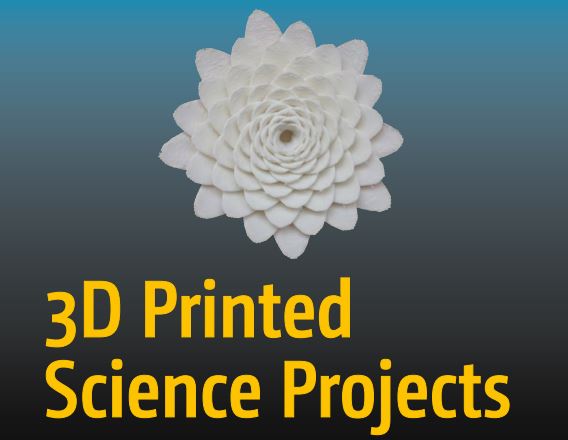
3D Printed Science Projects FAQ
1. What is OpenSCAD and how can I use it to create 3D printable models of mathematical functions?
OpenSCAD is a free, open-source software for creating solid 3D CAD models. It uses a scripting language to define objects, making it ideal for creating models based on mathematical equations.
To create a 3D printable model of a surface, you define a function f(x,y) that represents the surface’s height (z) at each point (x,y). OpenSCAD then generates a mesh of points based on this function, which can be exported as an STL file for 3D printing.
For instance, the code snippet below defines a saddle point surface:
function f(x, y) = ((x – 50) * (y – 50)) / 100 + 30;
2. How do I adjust the scale and resolution of my 3D printed surface model in OpenSCAD?
You can control the scale and resolution of your model by modifying parameters within your OpenSCAD script.
- Scale: You can scale the entire model by multiplying your function f(x,y) by a constant. For example, to scale down by half, multiply the function by 0.5.
- Resolution: The number of points in the x and y directions determines the resolution of the model. These are defined by the xmax and ymax variables. Increasing these values results in a smoother surface but increases rendering time.
3. What are some considerations for 3D printing the surface models generated by OpenSCAD?
- Overhangs: Ensure your function doesn’t create steep overhangs that are difficult to print without support structures.
- Minimum Thickness: Ensure the model is thick enough to be printed. Scaling down the model may require increasing the initial thickness parameter.
- Surface Texture: You can achieve different surface textures by setting the blocky parameter. blocky = true creates a rough surface, while blocky = false results in a smooth surface.
4. How can I 3D print a model representing the interaction of light waves?
You can represent light wave phenomena like diffraction and interference using trigonometric functions in OpenSCAD.
For example, to model the intensity pattern of a double-slit experiment, you could use a function that combines the sinc function (for single-slit diffraction) and a cosine function (for interference between the two slits).
The z value of the function represents the intensity of the light at that point, resulting in a 3D model where the height visually represents the intensity pattern.
5. How can I create a 3D printed model of a gravity well?
A gravity well can be modeled by representing the gravitational potential as a function of position.
For example, for a two-body system like the Earth and Moon, the gravitational potential at any point is the sum of the potentials due to each body.
This can be represented in OpenSCAD using the formula for gravitational potential, with the z value representing the potential and the x and y values representing the position in the 2D plane.
6. What parameters can I modify to design different airfoil shapes in OpenSCAD?
You can design various airfoils by modifying parameters in the NACA four-digit airfoil equation used in the OpenSCAD model. These parameters include:
- Maximum Camber: Controls the curvature of the airfoil.
- Camber Location: Determines where the maximum camber occurs along the chord.
- Maximum Thickness: Sets the thickness of the airfoil as a percentage of the chord.
- Sweep Angle: Defines the angle at which the wing is swept back.
- Taper Ratio: Controls the change in chord length from the wing root to the tip.
7. How can I model molecular structures using OpenSCAD?
Molecular structures can be created by modeling individual atoms and then assembling them into molecules.
For example, a carbon atom model could consist of a sphere representing the nucleus and lobes representing the orbitals. You can create separate 3D models for different atoms and then use OpenSCAD’s transformation functions to position and connect them into molecules.
8. How can I use OpenSCAD to design and print models of simple machines like screws and pulleys?
OpenSCAD is well-suited for creating models of simple machines due to its ability to create precise geometric shapes and combine them.
- Screws: Use the rotate_extrude() function to create helical threads by extruding a 2D profile along a spiral path.
- Pulleys: Combine basic shapes like cylinders and circles to create pulley wheels and frames. Use the difference() function to create the groove for the rope or cable.
OpenSCAD’s parameterization capabilities make it easy to adjust dimensions and features to design a variety of simple machine models.
3D Printed Science Projects: A Study Guide
Short Answer Questions
Instructions: Answer the following questions in 2-3 sentences each.
- What is the purpose of the OpenSCAD code provided in Listing 1-1?
- How can you scale the size of the 3D print generated by the OpenSCAD code in Listing 1-1?
- Explain the difference between setting the blocky parameter to true or false in the OpenSCAD code.
- What is the advantage of using a Python program to generate data for a 3D printed surface?
- Describe the mathematical function sinc(x) and its significance in the context of 3D printing wave patterns.
- How is the concept of a “gravity well” helpful in understanding the gravitational interactions between celestial bodies?
- Explain the significance of the vis-viva equation in modeling orbital velocity.
- What are the four digits in a NACA four-digit airfoil code and what do they represent?
- Explain the concepts of taper and sweep in the context of wing design.
- What is Reynolds number and why is it an important consideration in aerodynamics?
Short Answer Key
- The OpenSCAD code in Listing 1-1 generates a 3D printable model of a surface defined by a mathematical function z = f(x, y). It allows you to create a 3D representation of a mathematical surface.
- You can scale the size of the 3D print by adjusting the xmax and ymax parameters in the OpenSCAD code, which control the number of points plotted in the x and y directions. Additionally, you can scale the entire piece in your 3D printing software after generating the STL file.
- Setting blocky to true creates a rough surface composed of discrete cuboids, while setting it to false generates a smooth surface using triangular faces for interpolation. The blocky setting results in a more tactile print but requires more rendering time in OpenSCAD.
- A Python program can generate complex data sets and save them to a file that can be imported into OpenSCAD. This allows for the creation of intricate surface designs based on mathematical algorithms or experimental data that would be difficult to define directly in OpenSCAD.
- The sinc(x) function is defined as sin(x)/x. In 3D printing wave patterns, it is used to model the intensity distribution of light or other waves diffracted through a single slit. It is significant because it describes the characteristic pattern of a single-slit diffraction experiment.
- A “gravity well” is a visual metaphor representing the gravitational potential field around a celestial body. The deeper the well, the stronger the gravitational pull. It helps to visualize the relative forces of several planets and their tendency to move towards regions of lower gravitational potential.
- The vis-viva equation relates the orbital velocity of a celestial body to its distance from the central gravitating body and the semi-major axis of its elliptical orbit. It is significant because it allows us to calculate the instantaneous velocity of a planet or moon at any point in its orbit.
- The four digits in a NACA four-digit airfoil code represent:
- First digit (a): Maximum camber as a percentage of the chord.
- Second digit (b): Location of maximum camber along the chord, in tenths of the chord.
- Third and fourth digits (cd): Maximum thickness as a percentage of the chord.
- Taper refers to the change in chord length along the wingspan. A tapered wing has a narrower chord at the tip than at the root. Sweep refers to the angle at which the wing is angled backward or forward relative to the fuselage.
- Reynolds number (Re) is a dimensionless quantity that describes the ratio of inertial forces to viscous forces in a fluid flow. It is important in aerodynamics because it determines the flow regime (laminar or turbulent) around an object. Different flow regimes have significantly different effects on lift, drag, and other aerodynamic properties.
Essay Questions
Instructions: Answer the following questions in essay format, providing detailed explanations and examples.
- Discuss the process of 3D printing a surface defined by a mathematical function using OpenSCAD. Include explanations of key parameters, coordinate systems, and potential challenges.
- Explain how trigonometric functions are used to model wave phenomena in OpenSCAD. Provide examples of different wave patterns and their corresponding mathematical representations.
- Describe how the concepts of gravitational potential and orbital velocity are used to create 3D printed models of celestial systems. Discuss the limitations of these models and potential areas for further exploration.
- Explain the design principles and mathematical equations used to generate 3D printable models of NACA four-digit airfoils. Discuss the aerodynamic parameters that affect wing performance and how they can be incorporated into the models.
- Explore the applications of 3D printing in designing and building scientific models. Discuss the advantages, limitations, and ethical considerations of using 3D printing in scientific research and education.
Glossary
- 3D Printing: A manufacturing process that creates three-dimensional objects by depositing materials layer by layer based on a digital design.
- Airfoil: The cross-sectional shape of a wing, propeller blade, or other aerodynamic surface.
- Camber: The curvature of an airfoil’s upper and lower surfaces.
- Chord: The straight line distance from the leading edge to the trailing edge of an airfoil.
- Gravity Well: A visual metaphor representing the gravitational potential field around a celestial body.
- Hybridization: The process of combining atomic orbitals to form new hybrid orbitals with different shapes and energies.
- NACA Airfoil: A series of standardized airfoil shapes developed by the National Advisory Committee for Aeronautics (NACA).
- OpenSCAD: A free and open-source software for creating solid 3D CAD models.
- Orbital Velocity: The speed at which a celestial body orbits around another body.
- Reynolds Number (Re): A dimensionless quantity that describes the ratio of inertial forces to viscous forces in a fluid flow.
- STL File: A file format commonly used for 3D printing, representing the surface geometry of a 3D object as a mesh of triangles.
- Sweep: The angle at which a wing is angled backward or forward relative to the fuselage.
- Taper: The change in chord length along the wingspan of an airfoil.
- Trigonometric Functions: Mathematical functions that relate the angles and sides of a right triangle, including sine, cosine, and tangent.
- Truss: A structural framework composed of interconnected members that are typically arranged in triangles.
- Vis-viva Equation: An equation that relates the orbital velocity of a celestial body to its distance from the central gravitating body and the semi-major axis of its elliptical orbit.
3D Printed Science Projects: A Table of Contents
Chapter 1: 3D Math Functions
- Introduction: Introduces the concept of using 3D printing to visualize mathematical functions and sets the stage for the chapter.
- Making a Smooth Surface with a Flat Bottom: Explains how to create a 3D printable model of a mathematical surface with a flat bottom using OpenSCAD. Discusses scaling and provides an example of a “saddle point” structure.
- Printing Considerations: Covers practical aspects like scaling, thickness, and potential issues with the height of the printed model.
- Very Simple Model to Make a “Blocky” One-Sided Surface: Presents a simpler OpenSCAD model for creating a rough-textured surface. Briefly discusses rendering time considerations.
- OpenSCAD Math Functions: Explains the use of mathematical functions in OpenSCAD, highlighting differences from conventional mathematical notation and providing resources for further exploration.
- Example: Using a Python Program to Generate Data for a Thin Surface: Demonstrates how to generate data for a complex surface using a Python program and import it into OpenSCAD for printing.
- Trigonometric Functions: Briefly reviews essential trigonometric functions and the sinc function, emphasizing the definition used in this context.
Chapter 2: Light and Other Waves
- Introduction: Sets the context for visualizing wave phenomena using 3D printing, connecting to concepts from physics and astronomy.
- Point Sources and Plane Waves: Introduces the principle of superposition and demonstrates how to model the interaction of point sources and plane waves using OpenSCAD.
- Two Interacting Sources: Expands on the concept of superposition by modeling the intensity pattern resulting from two interacting point sources.
- Diffraction: Introduces the phenomenon of diffraction and explains how to model single-slit and double-slit diffraction patterns in OpenSCAD.
- One-Slit Intensity Function: Focuses on modeling the intensity distribution for a single-slit diffraction pattern, discussing the use of the sinc function.
- The “Empty Space” Inverse of the One Slit Case: Explores a negative-space representation of the single-slit intensity function and its relationship to the double-slit pattern.
- Limitations and Caution: Addresses limitations of the models and points out the need to avoid undefined mathematical expressions like sinc(0).
Chapter 3: Gravity
- Introduction: Transitions to the topic of gravity and its visualization through 3D printed models of gravitational potential fields and orbits.
- Gravity Wells: Explains the concept of gravitational potential and how it relates to the forces between celestial bodies.
- Earth-Moon System Model: Provides an OpenSCAD model for visualizing the gravitational potential field around the Earth and Moon, discussing scaling and parameters.
- Orbits: Introduces the concept of orbits and how planets and stars move within a gravitational potential field.
- Modeling Orbital Velocity: Presents an OpenSCAD model for representing the orbital velocity of planets and moons along their elliptical paths, utilizing the vis-viva equation.
- Limitations and Considerations: Discusses the limitations of the orbital velocity model and the need to consider the complexities of multi-body systems.
- Summary: Summarizes the key concepts covered in the chapter and suggests further exploration of gravitational phenomena and orbital dynamics.
Chapter 4: Airfoils
- Introduction: Introduces the concept of airfoils and their importance in aeronautics, setting the stage for 3D printing airfoil models.
- NACA Airfoils: Explains the NACA airfoil numbering system, detailing how the digits correspond to camber, thickness, and location of maximum camber.
- The Camber Line: Delves into the mathematical equations used to define the camber line of a NACA four-digit airfoil, using two parabolas.
- The Thickness Equation: Presents the equation for determining the thickness of the airfoil at any point along the camber line, considering perpendicularity.
- Coordinate Transformation and OpenSCAD Implementation: Explains how to transform the thickness equation into x and y coordinates and how OpenSCAD’s rotate() function simplifies the modeling process.
- Rhomboids and Convex Hulls: Describes the use of rhomboids and the hull() function in OpenSCAD to create the airfoil profile.
- Other Aerodynamic Parameters: Introduces additional factors like sweep and taper that influence wing performance and provides modifications for the OpenSCAD model.
- 3D-Printed Airfoil Models: Measuring Lift: Discusses practical aspects of 3D printing airfoil models, including adding a sting for mounting and calculating lift.
- Building a Student Wind Tunnel: Provides resources and suggestions for building a simple wind tunnel to test 3D printed airfoils.
- Reynolds Number: Introduces the concept of Reynolds number and its significance in fluid dynamics, discussing its implications for scaling and testing models.
Chapter 5: Simple Machines
- Introduction: Sets the context for exploring simple machines and their visualization using 3D printing.
- Screws: Focuses on the screw as a simple machine, demonstrating the creation of a 3D printed vise model using OpenSCAD.
- Detailed Screw Thread Creation: Explains the process of creating the screw thread using OpenSCAD, employing mathematical functions and geometric transformations.
- Wheels and Pulleys: Explores wheels and pulleys as simple machines and presents an OpenSCAD model for creating a system with multiple pulleys of varying sizes.
- Model Customization and Assembly: Discusses the various parameters that can be adjusted in the pulley model, such as the number of pulleys, diameters, and spacing.
Chapter 6: Plants and Their Ecosystems
- Introduction: Transitions to the topic of plants and ecosystems, emphasizing the use of 3D printing for visualization and modeling.
- The Golden Ratio: Introduces the concept of the golden ratio and its significance in plant morphology, highlighting its mathematical properties and aesthetic appeal.
- Modeling Flowers: Presents an OpenSCAD model for creating stylized flower petals using the golden ratio and customizable parameters for shape and arrangement.
- Parameter Variations and Examples: Explains the various parameters that can be modified in the flower model, showcasing different flower designs achieved by adjusting these values.
- Jungle Plant Leaves: Provides an OpenSCAD model for generating leaves with drip tips, characteristic of plants found in tropical rainforests.
- Model Customization and Assembly: Discusses the parameters that can be adjusted in the leaf model, including size, hole size, and waviness.
Chapter 7: Molecules
- Introduction: Introduces the topic of molecules and their representation using 3D printed models, providing a brief chemistry background.
- Chemistry Background: Explains the basics of atoms, electrons, chemical bonds, and the octet rule, setting the stage for understanding molecular structures.
- Basic Orbital Shapes: Delves into the concept of electron clouds and orbitals, describing their shapes and how they determine the bonding behavior of atoms.
- Carbon Atom Model: Presents a 3D printable OpenSCAD model of a carbon atom, highlighting its nucleus, s orbitals, and p orbitals.
- Hybridization: Introduces the concept of hybridization and explains how it leads to the formation of different types of covalent bonds.
- Water Molecules: Focuses on the structure and unique properties of water molecules, emphasizing their hydrogen bonding behavior.
- Water Molecule Model: Provides a 3D printable OpenSCAD model of a water molecule with connectors for assembling an ice lattice.
- The Carbon vs. Water Molecule Model: Compares the carbon atom model and the water molecule model, highlighting their differences in terms of representation and functionality.
Chapter 8: Trusses
- Introduction: Introduces the concept of trusses as structural elements and sets the stage for creating 3D printed truss models.
- 2D Trusses: Explains the principles behind 2D trusses and presents an OpenSCAD model for creating a simple planar truss with customizable parameters.
- 3D Trusses: Introduces the concept of 3D trusses and their applications in various structures.
- Tensegrity Structures: Expands on the concept of trusses by discussing tensegrity structures, where tension and compression forces work together to provide stability.
- Tensegrity Structure Model: Provides an OpenSCAD model for creating a basic tensegrity structure, highlighting the interplay between tension and compression elements.
- Icosahedron Model: Presents a more complex 3D printed truss model in the form of an icosahedron, a regular polyhedron with 20 triangular faces.
Timeline of Events
This text focuses on explaining concepts and providing instructions for 3D printing various scientific models rather than narrating a sequence of events. Therefore, a traditional timeline is not applicable.
However, we can outline a conceptual timeline based on the progression of topics:
- Introduction to 3D Math Functions & Printing: The text starts by introducing basic mathematical functions in OpenSCAD and how they can be used to create 3D printable models of surfaces.
- Exploring Light & Other Waves: It then moves on to applying these principles to model light wave phenomena like diffraction and interference, using examples like single and double-slit experiments.
- Understanding Gravity & Orbits: Next, the concept of gravity wells and orbital mechanics are introduced, with models demonstrating the Earth-Moon system and elliptical orbits.
- Designing Airfoils: The focus shifts to aerodynamics, explaining the structure and properties of airfoils, including camber, thickness, and concepts like taper and sweep. Instructions are provided for 3D printing airfoil models with varying parameters.
- Building Simple Machines: The text then explores simple machines, focusing on screws and pulley systems. 3D printable models are presented to illustrate these concepts.
- Modeling Plants & Ecosystems: The application of 3D printing extends to biological models, showcasing the creation of plant structures like flowers and leaves, incorporating concepts like the golden ratio and Fibonacci sequences.
- Visualizing Molecules: Finally, the text delves into the microscopic world, providing instructions for creating models of atoms and molecules, with a focus on carbon and water. Concepts like hybridization and orbital shapes are explained.
Cast of Characters
The source text primarily focuses on scientific concepts and 3D printing techniques. Therefore, it does not feature a traditional “cast of characters” in a narrative sense. However, we can identify key figures whose work is referenced in the text:
1. Joan:
- Bio: A contributor to the text, specifically mentioned for creating a Python program to generate data for a 3D printable surface model (Listing 1-3).
- Role: Demonstrates the use of external data and programming in 3D modeling.
2. Johannes Kepler:
- Bio: (1571-1630) German astronomer known for his laws of planetary motion, which describe the elliptical orbits of planets around the Sun.
- Role: His work is referenced in the section on orbits, highlighting his contribution to understanding celestial mechanics.
3. Isaac Newton:
- Bio: (1643-1727) English physicist and mathematician who developed calculus, the laws of motion, and the law of universal gravitation.
- Role: His work is essential to understanding gravity and orbital mechanics discussed in the text. The development of calculus is mentioned as crucial for analyzing these phenomena.
4. Niels Bohr:
- Bio: (1885-1962) Danish physicist who made significant contributions to understanding atomic structure and quantum mechanics. He proposed the Bohr model of the atom, which depicts electrons orbiting the nucleus in specific energy levels.
- Role: His model of the atom is mentioned as a helpful visualization tool, though the text acknowledges its limitations in representing the complexities of electron behavior.
5. Erwin Schrödinger:
- Bio: (1887-1961) Austrian physicist known for his contributions to quantum mechanics. He formulated the Schrödinger equation, which describes the wave function of a quantum-mechanical system.
- Role: His work is referenced in explaining the shapes of electron orbitals, highlighting the role of quantum mechanics in understanding atomic structure.
6. NACA (National Advisory Committee for Aeronautics):
- Bio: The predecessor to NASA, NACA was a US federal agency founded in 1915 to undertake, promote, and institutionalize aeronautical research.
- Role: The text focuses on NACA airfoils, a series of standardized airfoil shapes developed by NACA, demonstrating their importance in aerodynamic design.
3D Printed Science Projects: A Briefing Document
This document reviews key themes and information from excerpts of “3D Printed Science Projects” focusing on utilizing 3D printing and OpenSCAD software to model scientific concepts.
I. 3D Math Functions:
- Visualizing Mathematical Surfaces: The book explores creating tangible 3D models of mathematical surfaces using OpenSCAD. It begins with a basic model for printing a flat-bottomed “slice” of a surface defined by the equation z = f(x,y).
- “The function in this example is z = f (x, y) = 0.01 (x – 50) (y – 50) + 30, and the 3D print will go from x = 0 to 99 and y = 0 to 99. This creates a “saddle point” structure.”
- Controlling Surface Texture: The “blocky” parameter in the code allows for creating smooth or rough-textured surfaces. While rough surfaces offer tactile benefits, they require longer rendering times in OpenSCAD.
- Scaling and Thickness Considerations: The book emphasizes scaling considerations to ensure printability. For instance, maintaining a minimum thickness of 2mm is crucial when scaling down models.
- “If you scale the surface, you have to be sure that the piece remains at least 2 mm or so thick after scaling.”
- External Data Integration: The authors demonstrate utilizing external data files generated by Python code to create complex surfaces, showcasing the versatility of OpenSCAD.
- “Listing 1-3 is a file Joan created in the Apple Python 2.7.8 Integrated Development Environment (IDE) that creates a 100 by 100 point matrix of two superposed radial cosine waves and stores it in the file sinusoids.dat.”
- Importance of Trigonometric Functions: Familiarity with trigonometric functions is highlighted, particularly for applications involving waves and oscillations.
- “This chapter assumes you are pretty comfortable with trigonometric functions like sine, cosine, and tangent and their inverses (asin, acos, atan).”
II. Light and Other Waves:
- Visualizing Wave Phenomena: This section focuses on visualizing complex wave phenomena like interference and diffraction using OpenSCAD models.
- Superposition Principle: The book utilizes OpenSCAD to demonstrate the principle of superposition, showing how multiple waves combine to form a resultant wave.
- “Two Interacting Sources What happens if we have two interacting point sources at one edge of the plane we are modeling? The model for that is given in Listing 2-2, and the model we printed is in Figure 2-4.”
- Double-Slit Experiment: OpenSCAD models are used to simulate the classic double-slit experiment, visualizing the resulting interference patterns.
- “In Listing 2-3 we have a function sintheta(x,y). This function computes the sine of the angle theta (θ) from the geometry.”
- Diffraction and Intensity: The book dives into modeling single-slit diffraction, representing the intensity pattern as the square of the amplitude.
- “In this case, we are printing a model in which z represents the square of the amplitude of the sum of the waves generated by these two sources. As we will see in the next section, this is also an equivalent of the time average of the intensity pattern”
III. Gravity:
- Gravity Wells: The book delves into modeling gravity wells using OpenSCAD, representing the gravitational potential field around celestial bodies.
- “The gravitational potential, though, adds up all the forces and gets a single number (a scalar) for any particular point in space and time. This addition uses the calculus function of “integrating” the forces.”
- Earth-Moon System: A practical example showcases an Earth-Moon gravity well model, illustrating the concept of gravitational potential.
- Orbital Mechanics: The authors explore modeling orbital velocity of planets and stars, utilizing the vis-viva equation to represent instantaneous velocity.
- “Use the vis-viva equation to calculte the height to represent instantaneous velocity.”
- Limitations of Orbital Models: The book acknowledges limitations of simplified orbital models, particularly in multi-body systems where interactions are complex.
IV. Airfoils:
- Understanding NACA Airfoils: The book explains the NACA four-digit airfoil classification system, outlining the meaning of each digit and its relation to airfoil geometry.
- “First digit (a): the maximum distance the camber profile goes above the chord (in what we are calling the y direction), as a percentage of the chord.”
- Camber Line and Thickness: OpenSCAD models are used to illustrate the camber line and thickness distribution of NACA airfoils, highlighting key geometric features.
- Modeling Airfoil Geometry: The authors provide detailed OpenSCAD code for generating accurate airfoil profiles, incorporating camber line, thickness equation, and coordinate transformations.
- “To get it in terms of x and y, we want to figure out what direction is perpendicular to the line. An easy way to do this (if you have had calculus) is to take the derivative (the slope) of the tangent line.”
- Additional Aerodynamic Parameters: Concepts like wing sweep, taper, and aspect ratio are introduced, demonstrating how these factors influence wing performance.
- Practical Experiments: The book suggests building a student wind tunnel for testing 3D-printed airfoil models and measuring lift and drag.
- Reynolds Number: The importance of Reynolds number in aerodynamic modeling is discussed, emphasizing its role in scaling and comparing model results to real-world scenarios.
V. Simple Machines:
- Modeling Mechanical Systems: This section focuses on creating 3D-printed models of simple machines, illustrating their principles of operation.
- Screw and Vise Model: The book provides a detailed OpenSCAD model of a vise, highlighting the screw mechanism and demonstrating thread generation in OpenSCAD.
- Pulley Systems: A model for creating pulley systems is presented, allowing for customization of pulley size, count, and spacing.
- Importance of Mechanical Advantage: The concept of mechanical advantage is introduced through pulley systems, showing how they amplify force.
VI. Plants and their Ecosystems:
- Modeling Plant Structures: This chapter explores modeling intricate plant structures using OpenSCAD, focusing on replicating petal and leaf shapes.
- Flower Model: A customizable OpenSCAD model for generating various flower shapes is presented, allowing control over parameters like petal length, width, thickness, and pointiness.
- “The variables that you need to enter are the following:”
- Jungle Plant Leaves: A model for creating leaves with drip tips is presented, showcasing the use of OpenSCAD to generate organic shapes.
- Golden Ratio: The book introduces the golden ratio and its application in plant structures, demonstrating its presence in the arrangement of petals and leaves.
VII. Molecules:
- Atomic Structure and Bonding: The book provides a basic overview of atomic structure, chemical bonding, and the role of electrons in molecule formation.
- “Atoms form chemical bonds with one another through an interaction between their electrons.”
- Orbital Shapes: The concept of electron orbitals is introduced, explaining how electrons occupy specific regions around the nucleus.
- Carbon Atom Model: A 3D-printable model of a carbon atom is presented, showcasing its nucleus, s orbitals, and p orbitals.
- Hybridization: The book explains different types of orbital hybridization (sp, sp2, sp3), demonstrating how they influence molecular geometry.
- Water Molecule and Ice Lattices: A detailed model of a water molecule with connectors is provided, allowing for the assembly of ice lattices, illustrating hydrogen bonding and crystal structures.
- “A water molecule consists of two hydrogen atoms bonded to one oxygen atom. Hydrogen bonds tend to be dynamic, and the hydrogen atom bonds to one oxygen atom covalently, but also wants to bond with nearby other oxygen atoms too.”
VIII. Trusses:
- Principles of Truss Design: This section introduces the concept of trusses, explaining their structural advantages and highlighting common configurations.
- “A truss is defined as an assembly of members such as beams, connected by nodes, that creates a rigid structure.”
- 2D and 3D Truss Models: OpenSCAD models are presented for creating both 2D and 3D trusses, demonstrating how to build basic triangular units and assemble them into larger structures.
- Tensegrity Structures: The book explores tensegrity structures, a unique type of truss where tension and compression forces are balanced, providing models for printing simple tensegrity prisms and icosahedrons.
IX. 3D Printing:
- Introduction to 3D Printing: The book provides an overview of 3D printing technology, explaining filament-based printing and highlighting relevant file formats (STL, OBJ).
- Using MatterControl Software: Step-by-step instructions for utilizing MatterControl software are provided, covering download, installation, basic navigation, and key settings for 3D printing.
- OpenSCAD Basics: The book introduces OpenSCAD software, a powerful tool for creating 3D models using code. It highlights OpenSCAD’s unique features, potential challenges, and the basics of scripting geometry.
- Printing Considerations: General advice and tips for 3D printing are included, covering topics like supports, rafts, infill, and troubleshooting common printing issues.
This briefing document summarizes the key themes explored in the excerpts of “3D Printed Science Projects.” The book utilizes OpenSCAD software and 3D printing technology to bring complex scientific concepts to life, providing readers with a hands-on approach to understanding various scientific principles across different disciplines.
This response describes the different types of 3D-printed models presented in the book “3D Printed Science Projects,” and how they are intended to be used for educational purposes.
3D-Printable Models For Science Education
- 3D Math Functions: The book begins with a chapter on 3D printing mathematical functions, which are used as an underlying tool in other chapters [1]. This chapter provides instructions on how to create models of:
- Polynomial surfaces with a flat base [2].
- Double-sided surfaces [3].
- “Blocky” one-sided surfaces with a rough texture [4].
- Surfaces generated from an external data file using Python code [5, 6].
- The book emphasizes that creating and handling these models can provide mathematical insights beyond traditional 2D representations [7, 8].
- Light and Other Waves: This chapter uses sinusoidal waves to model phenomena like light, magnetism, and wave interactions [9]. The models represent wave amplitude as height in the z-direction, and can be used to visualize concepts like:
- Wave geometries and overlaps [10].
- Constructive and destructive interference [10].
- Young’s double-slit experiment [11].
- The chapter also provides tips for printing thin objects with detail on their side [12].
- Gravity: This chapter presents models exploring the concept of gravity, including:
- Gravity wells representing the gravitational potential around planets [13].
- Models of the Earth-Moon system [13].
- Models of planetary and cometary orbits, including a model of Halley’s Comet [14, 15].
- A model demonstrating the relationship between orbital velocity and distance from a central body [15].
- Airfoils: This chapter focuses on historic airfoils, particularly the NACA four-digit profiles [16, 17]. The models allow users to:
- 3D print and study wings with classic airfoil shapes [16].
- Experiment with changing airfoil parameters like camber and thickness [18].
- Build a simple test stand (sting) for measuring lift [19].
- Simple Machines: This chapter covers six simple machines: the pulley, screw, wheel and axle, inclined plane, wedge, and lever [20]. The models are intended to:
- Provide hands-on demonstrations of each machine [21].
- Allow users to vary critical dimensions and observe the resulting effects [21].
- Encourage the creation of compound machines using multiple simple machines [21].
- Plants and Their Ecosystems: This chapter explores how plants grow and adapt to their environment [22]. The models simulate:
- Plant growth patterns based on mathematical principles [23].
- Desert and jungle plant structures [23, 24].
- Flower structures with spiral arrangements of petals [25, 26].
- The models aim to demonstrate how plant form evolves in response to ecosystem conditions and pollinator interactions [24, 25].
- Molecules: This chapter focuses on visualizing chemical bonding and crystal structures [27]. The models provide minimalist representations of:
- Carbon atoms with their electron orbitals [28].
- Water molecules with their bonding capabilities [29].
- Crystal lattices for two types of ice (ice 1c and ice 1h) [29].
- Trusses: This chapter examines trusses, structures that use triangular arrangements to carry loads efficiently [30]. The models feature:
- A 2D truss with simulated pin joints [31, 32].
- Elements for building a 3D tensegrity structure [33, 34].
Educational Applications
The sources describe how these 3D-printed models can be used for educational purposes:
- Hands-on Learning: The models provide tactile experiences that help students visualize abstract concepts in mathematics, physics, chemistry, botany, and engineering [27, 35-40].
- Experimentation: The models can be used to conduct experiments and test hypotheses, such as measuring lift on different airfoil designs or observing the behavior of trusses under load [41-44].
- Curriculum Integration: The sources suggest aligning the models with specific science standards at various grade levels, providing teachers with resources for integrating 3D printing into their curriculum [37, 38, 40, 45, 46].
- Science Fair Projects: The book encourages the use of 3D printing in science fair projects, suggesting ideas for further exploration based on the presented models [42, 44, 47-49].
- Promoting Maker Education: The sources advocate for a “learning by making” approach, where students design, build, and experiment with physical models to deepen their understanding of scientific principles [1, 50-55].
Overall, the book aims to provide a valuable resource for educators and students seeking to incorporate 3D printing into science education, fostering creativity, problem-solving, and a deeper understanding of scientific concepts through hands-on exploration.
Here are some ways the examples of 3D printed models in the source reflect the evolution of scientific understanding in different fields:
- The authors provide a history of scientific inquiry in several places, noting how more recent discoveries or technologies have changed how people think about a problem. For example, the chapter on airfoils starts with how people designed wings in the 1930s and contrasts that with modern approaches [1].
- 3D printing allows people to model more sophisticated problems with a lot less mathematical overhead. For example, in the 1930s, people used wind tunnels to study how wings work, but now anyone can create a 3D printed model of a wing and study it with a simple fan [2].
- 3D printing can be used to create models that are difficult or impossible to create with traditional manufacturing techniques. For example, the vise model in Chapter 5 includes a knob that is printed in place, which would be difficult to create with traditional manufacturing techniques [3].
- 3D printing is also a powerful tool for education. Students can use 3D printed models to visualize complex scientific concepts [4].
- 3D printing can also be used to create models for scientific research. Researchers can use 3D printed models to test hypotheses and gather data [5].
- The source emphasizes the importance of building intuition through hands-on experimentation. The authors encourage readers to use 3D printing as a way to explore scientific concepts and develop a deeper understanding of the world around them [6].
The source also notes some of the limitations of 3D printing:
- 3D printing is not a perfect substitute for real-world experiments. For example, the authors note that 3D printed truss models should not be stressed to failure because the plastic is brittle and the layer lines may introduce unexpected stresses [7].
- 3D printing can be time-consuming and expensive. The authors note that some of the models in the book can take many hours to print [8].
Overall, the source presents 3D printing as a powerful tool for scientific exploration and education. The authors believe that 3D printing can help people of all ages to learn about science and develop a deeper understanding of the world around them. The authors also acknowledge the limitations of 3D printing, and they encourage readers to use 3D printing as a complement to other forms of scientific inquiry.
Limitations of 3D Printed Models for Scientific Concepts
While 3D printed models offer a valuable tool for visualizing and understanding scientific concepts, they have limitations that should be considered and addressed. These limitations stem from the nature of 3D printing technology, the inherent complexities of scientific phenomena, and the challenges of representing abstract concepts in physical form.
Technical Limitations of 3D Printing
- Overhangs and Support Structures: 3D printers build objects layer by layer, typically from the bottom up. When a model features overhanging sections, support structures are often required to prevent these sections from collapsing during printing [1]. Support structures can be difficult to remove cleanly and may leave imperfections on the final model.
- Mitigation: Designing models with minimal overhangs or orienting the model during printing to reduce the need for supports can help [2].
- Scaling and Tolerances: Scaling down models can lead to issues with tolerances, where small features become too thin or delicate to print reliably [3]. Conversely, scaling up can increase printing time and material costs.
- Mitigation: The scaling parameters within the OpenSCAD model should be adjusted instead of relying solely on scaling functions in 3D printing software [4].
- Material Properties: The materials used in 3D printing, like PLA, have limitations in strength, flexibility, and heat resistance. These limitations may restrict the types of scientific concepts that can be accurately represented.
- Mitigation: Selecting appropriate materials based on the specific application, like flexible filaments for models requiring bending, can improve accuracy.
- Surface Finish and Detail: 3D printed models often have a layered surface finish, which may obscure fine details. The resolution of most consumer-grade printers is limited, making it challenging to depict intricate structures accurately.
- Mitigation: Post-processing techniques, such as sanding and painting, can improve the surface finish. Higher-resolution printers can enhance detail, but they may be more expensive.
Representational Challenges of Scientific Concepts
- Dynamic Phenomena: Many scientific concepts involve dynamic processes that unfold over time. Static 3D models can only capture a snapshot of these processes, potentially oversimplifying or misrepresenting the underlying dynamics.
- Mitigation: Designing models that highlight key stages or features of the process, or creating a series of models to illustrate different stages, can enhance understanding.
- Abstract Concepts: Certain scientific concepts, like electron orbitals or magnetic fields, are inherently abstract and difficult to visualize in three dimensions. Trying to represent these concepts with physical models can lead to oversimplifications or inaccuracies.
- Mitigation: Focusing on models that represent the overall behavior or relationships rather than literal depictions can improve conceptual understanding. Incorporating visual aids like arrows or color-coding can represent directional properties, as in magnetic fields [5, 6].
- Simplification for Accessibility: To make 3D models accessible for educational purposes, complex scientific concepts often need to be simplified. These simplifications, while helpful for initial understanding, may omit crucial details or nuances.
- Mitigation: Emphasizing the model’s limitations and highlighting areas where simplification was necessary can promote a deeper understanding. Using the models as a starting point for further exploration and discussion can encourage students to seek out more detailed information.
Key Takeaways
3D printed models are powerful tools for engaging with scientific concepts, but their limitations require thoughtful consideration. Acknowledging these limitations and employing strategies to mitigate them can enhance the effectiveness of these models in education and research. Choosing appropriate models, carefully considering scale and materials, and emphasizing conceptual understanding over literal representation are crucial for maximizing the benefits of 3D printing in science.
3D Printing in Science Education and Research
3D printing has emerged as a transformative technology with broad applications in various fields, including science education and research. The sources, primarily excerpts from the book 3D Printed Science Projects: Ideas for Your Classroom, Science Fair, or Home, provide a comprehensive overview of how 3D printing can be leveraged to enhance learning and facilitate scientific exploration.
The sources emphasize the use of 3D printing to create tangible models that help visualize abstract scientific concepts. These models enable hands-on learning experiences, allowing students to interact directly with complex structures and phenomena. For instance, the book details how to print models of mathematical functions, wave interactions, gravity wells, airfoils, simple machines, plant structures, molecules, and trusses. Each model serves as a physical representation of a scientific principle, fostering deeper understanding and engagement compared to traditional 2D illustrations or textbook descriptions.
Beyond visualization, the sources advocate for using 3D printing to promote experimentation and inquiry-based learning. The book encourages users to modify existing models and design their own, enabling them to test hypotheses, observe outcomes, and draw conclusions. This approach aligns with the “learning by making” philosophy, empowering students to actively participate in the scientific process. For example, the chapter on airfoils guides readers through creating a simple wind tunnel setup using a 3D printed wing and sting, allowing for practical exploration of aerodynamic principles.
The sources also highlight the historical context of scientific progress and how 3D printing allows for a more accessible and nuanced understanding of these advancements. By comparing historical design methods with modern approaches, students gain insights into the evolution of scientific thinking. For instance, the book contrasts the design process of airfoils in the 1930s with contemporary methods, showcasing how technology has influenced scientific practice.
While recognizing the numerous advantages of 3D printing in science, the sources acknowledge its limitations. Factors such as overhangs, support structures, scaling issues, material properties, and surface finish can impact the accuracy and fidelity of 3D printed models. The book provides practical tips for mitigating these limitations, encouraging users to carefully consider design choices, printing orientation, and post-processing techniques.
Importantly, the sources emphasize that 3D printed models should not be considered a replacement for real-world experiments or in-depth theoretical understanding. Instead, they serve as valuable tools for supplementing traditional teaching methods, fostering curiosity, and enhancing conceptual understanding. By incorporating 3D printing into science education, educators can create more engaging and interactive learning environments, empowering students to explore the wonders of science in a hands-on and meaningful way.
Engaging with Scientific Concepts Through 3D Printed Science Projects
The sources, excerpts from 3D Printed Science Projects: Ideas for Your Classroom, Science Fair, or Home, provide a framework for using 3D printing technology to create engaging science projects. The book emphasizes the hands-on aspect of learning, encouraging readers to design, print, and experiment with 3D models to better understand a variety of scientific concepts.
Project Ideas Highlighted in the Sources
The book offers numerous project ideas across different scientific disciplines:
- Mathematics: Visualizing complex mathematical functions in three dimensions provides a tangible representation of abstract concepts. The models can be used to explore the relationships between variables and observe how changes in parameters affect the shape of the surface [1-4].
- Physics:Light and Waves: Creating models of wave interactions, like diffraction patterns and interference, helps visualize phenomena that are often difficult to grasp conceptually [5, 6].
- Gravity: Building models of gravitational potential wells and planetary orbits provides insights into the forces governing celestial bodies [7-9].
- Airfoils: Designing and printing airfoils, coupled with simple wind tunnel experiments, allows for exploration of aerodynamic principles and the factors influencing lift and drag [8, 10].
- Engineering:Simple Machines: Printing and assembling models of simple machines, like levers, pulleys, and screws, demonstrates mechanical advantage and how forces can be manipulated [8, 11].
- Trusses: Building 2D and 3D truss models, including tensegrity structures, illustrates how these structures distribute loads and maintain stability [12-14].
- Biology:Plants: Creating models of plants based on mathematical principles like the Fibonacci sequence helps understand how plant structures optimize sunlight absorption and resource management [8, 15].
- Chemistry: Building models of atoms, molecules, and crystal lattices provides a visual and tactile understanding of chemical bonding, molecular geometry, and the arrangement of atoms in solids [12, 16].
Using 3D Printing to Enhance Science Fair Projects
While the book primarily focuses on classroom and home projects, the concepts and models presented can be easily adapted for science fair projects. The key is to extend the basic ideas and incorporate elements of inquiry and experimentation:
- Data Collection and Analysis: Encourage students to collect data from their 3D printed models. For instance, they could measure lift and drag on different airfoil designs, or analyze the load-bearing capacity of various truss configurations.
- Hypothesis Testing: Frame science fair projects around testable hypotheses. Students could investigate the effect of different parameters on the performance of a 3D printed model, comparing their results to theoretical predictions.
- Real-World Applications: Connect the science fair project to real-world applications. For example, students could research how trusses are used in bridge design or explore the role of airfoils in aircraft performance.
Key Considerations for 3D Printed Science Projects
When embarking on 3D printed science projects, it’s important to consider:
- Safety: Ensure safe handling of 3D printing materials and equipment. Some materials may require ventilation during printing.
- Design Complexity: Start with simpler models and gradually increase complexity as skills develop.
- Model Accuracy: Be mindful of the limitations of 3D printing, such as overhangs and scaling issues.
- Conceptual Understanding: Emphasize the scientific principles being illustrated by the model, going beyond just the physical representation.
By incorporating these considerations, 3D printed science projects can be a powerful tool for sparking curiosity, fostering creativity, and deepening understanding of scientific concepts.
Exploring Simple Machines Through 3D Printing
The sources, specifically Chapter 5 of the book 3D Printed Science Projects, provide a hands-on approach to understanding simple machines using 3D printing technology. The chapter begins by defining simple machines as devices that modify the magnitude or direction of a force, making work easier. The six classic simple machines are the pulley, screw, wheel and axle, inclined plane, wedge, and lever.
The sources emphasize that most complex machines we encounter daily are essentially combinations of these simple machines, called compound machines. For example, a wheelbarrow combines the wheel and axle for movement with a lever for lifting.
Understanding Mechanical Advantage
A key concept in the study of simple machines is mechanical advantage, which refers to the factor by which a machine multiplies the input force. The sources explain that simple machines often achieve mechanical advantage by trading force for distance. This means applying a smaller force over a longer distance to achieve the same work as applying a larger force over a shorter distance.
3D Printed Models for Each Simple Machine
The chapter provides detailed instructions and OpenSCAD code for creating 3D printed models of each simple machine. These models allow for hands-on exploration of how each machine functions and how different parameters affect its mechanical advantage.
- Inclined Plane and Wedge: The source provides a single model that prints both an inclined plane and a wedge. The mechanical advantage of an inclined plane is determined by the ratio of its length to its height—a longer, shallower ramp provides a greater mechanical advantage. A wedge, closely related to the inclined plane, is used to separate objects or hold them in place. [1-3]
- Lever: The lever model allows for experimentation with all three classes of levers by adjusting the position of the fulcrum. The source explains that Class 1 levers have the fulcrum between the effort and the load, Class 2 levers have the load between the fulcrum and the effort, and Class 3 levers have the effort between the fulcrum and the load. The mechanical advantage of a lever is determined by the ratio of the distances from the fulcrum to the effort and the load. [4-6]
- Screw: The screw model demonstrates how rotational motion is converted into linear motion. The sources point out that the mechanical advantage of a screw is related to the distance between its threads (pitch). A screw with a smaller pitch has a higher mechanical advantage. [7]
- Wheel and Axle: The wheel and axle model, combined with the pulley option, highlights how a larger force at the axle translates to a smaller motion at the rim of the wheel, providing mechanical advantage. [8]
- Pulley: The source explains that a single pulley primarily changes the direction of force. However, using multiple pulleys in systems like a block and tackle creates a mechanical advantage by distributing the load over multiple sections of rope. [9]
Printing and Using the Models
The chapter provides printing suggestions for each model, emphasizing the importance of proper orientation, support structures (if needed), and material selection. The models are designed to be assembled and manipulated, encouraging users to experiment with different configurations and observe how changes in parameters affect their function.
Beyond the Models
The chapter encourages readers to go beyond the basic models, suggesting ideas for further exploration and experimentation:
- Compound Machines: Explore how simple machines can be combined to create complex mechanisms.
- Real-World Applications: Identify simple machines in everyday objects and analyze how they are used.
- Efficiency and Friction: Investigate the impact of friction on the efficiency of simple machines and explore methods to minimize frictional losses.
By combining 3D printing technology with the principles of simple machines, the sources provide an engaging and interactive approach to understanding fundamental concepts in physics and engineering.
Visualizing Math Functions in Three Dimensions with 3D Printing
Chapter 1 of the sources, from the book 3D Printed Science Projects: Ideas for Your Classroom, Science Fair, or Home, focuses on using 3D printing to create physical models of mathematical functions. This approach allows for a tangible and interactive exploration of mathematical concepts that are often difficult to visualize in two dimensions.
Challenges in 3D Printing Math Functions
The sources acknowledge that directly printing an equation using a 3D printer is not as straightforward as it might seem. Simply tracing the path of a function would lead to collisions with previously deposited material. Instead, the chapter outlines a method for creating a 3D printable model by representing the function as a surface.
OpenSCAD: A Tool for 3D Modeling
The sources advocate for using OpenSCAD, a free and open-source 3D modeling software, to create the printable models. OpenSCAD utilizes a scripting language to define shapes and structures, making it particularly well-suited for generating models based on mathematical equations.
Creating Printable Surfaces
The chapter provides detailed instructions and OpenSCAD code for generating 3D printable surfaces from mathematical functions of the form z = f(x, y), where:
- x and y represent coordinates on the printer’s build platform.
- z represents the height of the surface at a given (x, y) coordinate.
Types of Printable Surfaces
The chapter outlines two main methods for creating printable surfaces:
- Smooth Surface with a Flat Bottom: This method creates a solid model with a flat base, suitable for printing directly on the build platform. The model is generated using OpenSCAD’s polyhedron module, which constructs a 3D shape from a set of points and faces.
- Two-Sided Smoothed Surface: This method creates a thin, two-sided surface that is typically printed on its side to avoid the need for excessive support structures. This approach is particularly useful for visualizing functions with intricate details on both sides.
Scaling and Limitations
The sources emphasize the importance of scaling the function appropriately to ensure that the resulting model fits within the printer’s build volume. The chapter also cautions that the provided code does not include error checking for mathematical anomalies like functions that approach infinity or have discontinuities. Users are advised to independently verify the behavior of the function before printing.
Printing from External Data
The sources also discuss a method for generating 3D printable surfaces from data created in external programs like Python. This approach allows for the visualization of complex data sets and simulations that might be difficult to represent directly in OpenSCAD. The external data is saved in a specific text file format that OpenSCAD can then read and interpret using its surface module.
Educational Benefits
The chapter highlights the pedagogical value of 3D printed math models:
- Tangibility: Physical models make abstract concepts more concrete and accessible.
- Interactivity: Students can manipulate the models, observing how changes in parameters affect the shape of the surface.
- Customization: Students can modify the provided code or create their own models based on their own mathematical explorations.
Beyond Visualization
The chapter emphasizes that 3D printed models should not be seen as a replacement for a deep understanding of the underlying mathematics. Rather, they serve as valuable tools for enhancing conceptual understanding, fostering curiosity, and inspiring further exploration of mathematical concepts.
3D Printed Plant Models for Exploring Ecosystems
Chapter 6 of the sources, titled “Plants and Their Ecosystems,” explores how 3D printing can be used to create plant models that highlight the relationship between plant structure and environmental adaptation. The chapter begins by emphasizing the unique challenges plants face in adapting to changing environments, given their inability to relocate like animals. It then introduces the concept of ecological niche function, which refers to the role a species plays in its ecosystem.
Key Factors for Plant Survival
The sources identify six essential factors that influence plant growth and survival:
- Light: Plants require sunlight for photosynthesis, the process by which they convert light energy into chemical energy. However, different plants have varying tolerance levels for sunlight intensity. Some thrive in full sun, while others are adapted to shady conditions.
- Water: Water is crucial for plant structure and physiological processes. Plants in arid environments have evolved water conservation mechanisms, while those in water-rich areas have developed ways to shed excess water.
- Gases: Plants exchange gases like carbon dioxide and oxygen with the atmosphere for photosynthesis and respiration.
- Temperature: Plants have specific temperature ranges for optimal growth and development.
- Mineral Nutrients: Plants absorb essential minerals from the soil, and different species have varying nutrient requirements.
- Mechanical Support: Plants need structural support to grow upright and compete for resources like sunlight.
The chapter focuses primarily on the interplay between light and water availability, illustrating how plant structures reflect adaptations to these key environmental factors.
Mathematical Principles of Plant Growth
The sources introduce mathematical principles that govern plant growth patterns, particularly the arrangement of leaves and flower petals. These principles optimize resource utilization and minimize self-shading.
- Meristem: Plant growth typically occurs at the meristem, a region of specialized cells that produce new plant material.
- Phyllotaxis: This term refers to the arrangement of leaves on a stem. The sources explain that efficient leaf placement maximizes sunlight exposure while minimizing overlap.
- Golden Angle: The golden angle (approximately 137.5 degrees) plays a crucial role in phyllotaxis. By placing subsequent leaves at the golden angle relative to the previous leaf, plants achieve a spiral arrangement that avoids direct overlap and ensures even distribution around the stem.
- Fibonacci Sequence: The sources highlight the connection between the golden angle and the Fibonacci sequence (1, 1, 2, 3, 5, 8, 13…), where each number is the sum of the two preceding numbers. Many plants exhibit a number of leaves or flower petals that corresponds to a Fibonacci number.
3D Printed Models of Plants
The chapter provides two distinct OpenSCAD models for creating 3D printed plants:
- Desert Plants and Flowers: This model generates plants with leaves or petals radiating from a central base, mimicking the growth patterns of desert plants like aloes and agaves, as well as the structure of many flowers. The sources emphasize that desert plants often have structures that minimize overhangs, making them relatively easier to print.
- Tropical Jungle Plants: This model separates the leaves from the stem and base, allowing for the creation of large, flat leaves with “drip tips” characteristic of plants in wet environments. The sources note that these leaves are challenging to print directly on stems due to their orientation and the need for extensive support structures.
Exploring Ecosystems Through 3D Models
The sources encourage readers to use the 3D printed models as a starting point for exploring broader ecological concepts:
- Plant Communities: Design and print models representing different plant species within a community, considering their light, water, and nutrient requirements.
- Invasive Species: Introduce an “invasive species” model into a balanced community and observe the potential impacts on other plants.
- Climate Change Impacts: Modify environmental parameters (light, water availability) and observe how the plant models might adapt or struggle to survive.
Considerations for Printing and Using the Models
The chapter provides detailed instructions for printing the models, including:
- Support Structures: Some models, particularly those with overhanging features like the tropical jungle leaves, may require support structures during printing. The sources recommend using slicing software like MatterControl that can automatically generate support.
- Variable Settings: The OpenSCAD models include various parameters that can be adjusted to create plants with different characteristics (leaf size, curvature, petal spacing, etc.). The sources caution that some combinations of settings may lead to printing difficulties or even crash the OpenSCAD software.
Learning Like a Maker
The chapter emphasizes the iterative process involved in designing and refining the 3D printed plant models. The authors highlight the importance of:
- Observing Real Plants: Carefully studying the structure and adaptations of real plants provides valuable insights for creating realistic models.
- Experimentation: Adjusting model parameters and observing the resulting printed structures leads to a deeper understanding of how plant forms relate to function.
- Connecting Math to Nature: The models demonstrate how mathematical principles like the Fibonacci sequence and the golden angle manifest in the natural world.
By combining 3D printing technology with botanical concepts and mathematical principles, the sources provide a hands-on and engaging approach to understanding plant adaptations and the dynamics of ecosystems.

By Amjad Izhar
Contact: amjad.izhar@gmail.com
https://amjadizhar.blog
Affiliate Disclosure: This blog may contain affiliate links, which means I may earn a small commission if you click on the link and make a purchase. This comes at no additional cost to you. I only recommend products or services that I believe will add value to my readers. Your support helps keep this blog running and allows me to continue providing you with quality content. Thank you for your support!

Leave a comment